
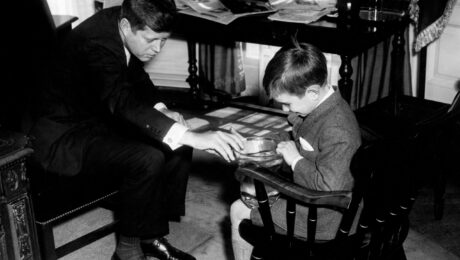
The End of Camelot at Last
Tuesday, November 25 2025
Clay contemplates the enduring JFK Camelot myth and our longing for a Kennedyesque savior to restore constitutional order, norms, and mutual respect in our current state of the republic.
- Published in Features

Jefferson and Slavery: Ken Burns on MS-NOW
Tuesday, November 25 2025
Clay considers Ken Burns' recent portrayal of Thomas Jefferson in a recent interview, where Burns suggests the Declaration's "all men are created equal" applied only to propertied white males, urging a more nuanced look at Jefferson's universal ideals, racial suspicions, and his own contradictions as a slaveholder.
- Published in Dispatches from the Road
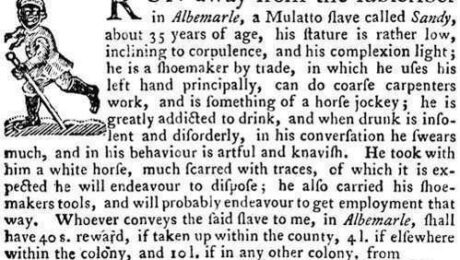
America at 250: The Racial Divide
Monday, November 17 2025
Last week, I spoke at a symposium on race and the American Revolution. This essay is the result of my deliberations for that event and is one in a series of essays I’m writing reflecting on a range of issues as America approaches its 250th birthday.
- Published in Features
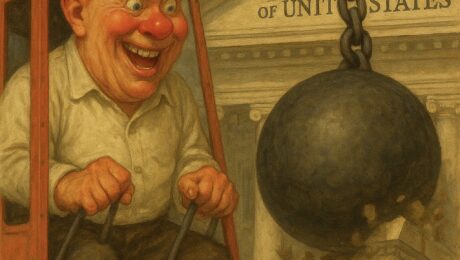
The Wrecking Ball Presidency
Tuesday, November 04 2025
The demolition of the East Wing of the White House is a clear metaphor for our “CEO” president.
- Published in Features

The World of Error in a Galaxy of Facts
Tuesday, October 28 2025
Clay ponders the “Truth Taser.” The best invention since the Veg-O-Matic?
- Published in Features
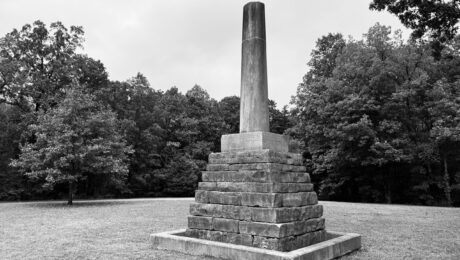
Visiting Meriwether Lewis’ Grave on the Natchez — The End of the Trail
Monday, October 20 2025
Completing a year following the Lewis and Clark Trail, Clay visits the lonely gravesite where the 35-year-old Meriwether Lewis is buried.
- Published in Features

Humor on Trial in an Age of Disruption
Monday, September 22 2025
Free speech and the future in context.
- Published in Features
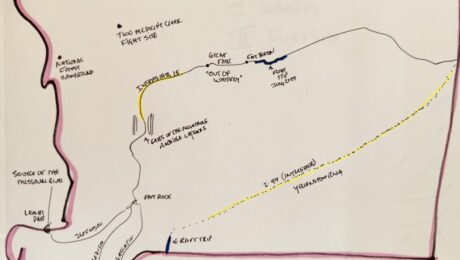
My Montana Summer
Monday, August 11 2025
Clay Jenkinson reports on his month-long adventure crisscrossing Montana in the long-since-passed footsteps of Lewis and Clark and their Corps of Discovery.
- Published in Dispatches from the Road
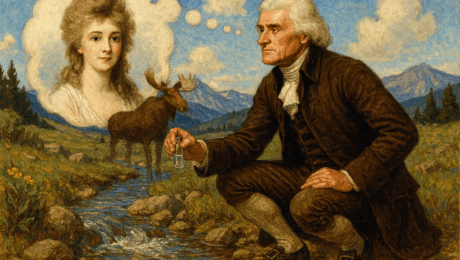
Hunting Rivers’ Sources on the Upper Missouri
Monday, August 04 2025
Thomas Jefferson, Meriwether Lewis, and Clay Jenkinson all share a fascination with the origins of rivers.
- Published in Features

What Does It Mean to Listen to America?
Tuesday, July 01 2025
The art of listening and genuine communication to a thriving democracy.
- Published in Features