
I don’t know exactly what I expected from my personal downsizing campaign, but something really interesting is happening to me.
I write about it here, not because I reckon you are interested in my struggles and resolutions, but because I think you might want to undertake something similar yourself, no matter where you are in your own journey of accumulation. In many respects, I am taking the Henry David Thoreau challenge: pare down your material life and your soul’s life will exfoliate.
Can that be true?
So far, I have given away 3,000 books and about a ton (literally) of other stuff. And I’m only at the beginning of this long process. I do feel some liberation. I feel real satisfaction. I feel better about myself. I’m a little better organized, on my way to becoming much better organized, if only because now I have some empty space in shelves, cupboards, and closets to put the appropriate things in.
All of that was predictable, though it took me a very long time to take the first crucial step. What I did not see coming was the way this process has unlocked parts of my brain that have been under the radar. Culling an over-swollen library (and house) has required me to make a kind of mind map. Of all the subjects I have bought books about — from classical tragedy to Native American literature to the making of the atomic bomb, etc., what lives sufficiently deep in my brain, memory, consciousness, and heart is why I want to hold on to those books when it is clear that I cannot ever read all that I would like to read or (to use a favorite metaphor) spin all those plates much longer? So I’m giving away most of my books on World War I, on current events of the last 20 years, on the Little Bighorn. Before I make any of these decisions, I do some hard thinking about what matters to me and (now) how much. Five times out of 10, I wind up stopping to read in a book on that subject for an hour or two, and then I close the book with a kind of tentative finality. (And of course I always keep at least 10 other books on every subject!)
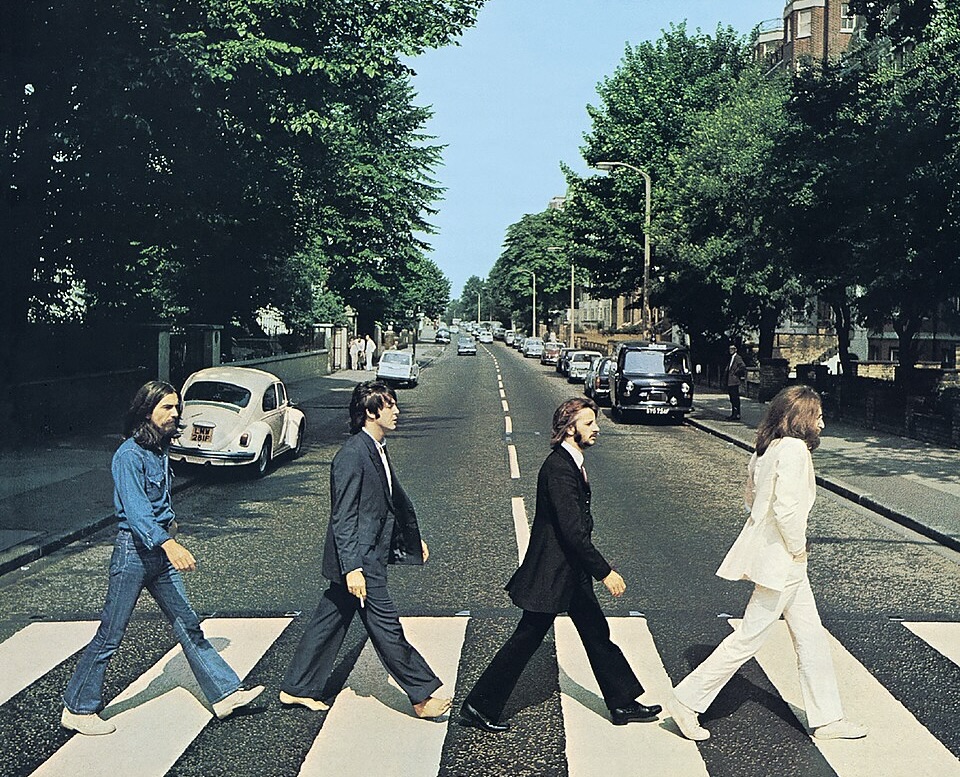
But it gets even better than that. It’s been an awakening, a re-awakening. Yesterday, home and weary from a long week elsewhere, I sat down to read a chapter or two of a recent book about the Beatles. One of the chapters was on Abbey Road, issued in 1969, when I was deep in the miasma of my adolescence. It is exceedingly painful for me to read about the Beatles’ breakup. Back then, we were told it was Yoko, but even then, we sensed it was more complicated than that. Now, when we read serious books about those disintegrating years (1966-1969), we see that it was mostly about John and Paul, not the women they loved. I can hardly stand to watch the first hours of Peter Jackson’s Get Back documentary. The book I was reading yesterday “places” certain songs within the larger narrative of those years and indicates how each song, in some way, embodies the crisis. Embodies, too, the genius of the Beatles, even in the nightmare of breaking up the most successful and influential band of all time.
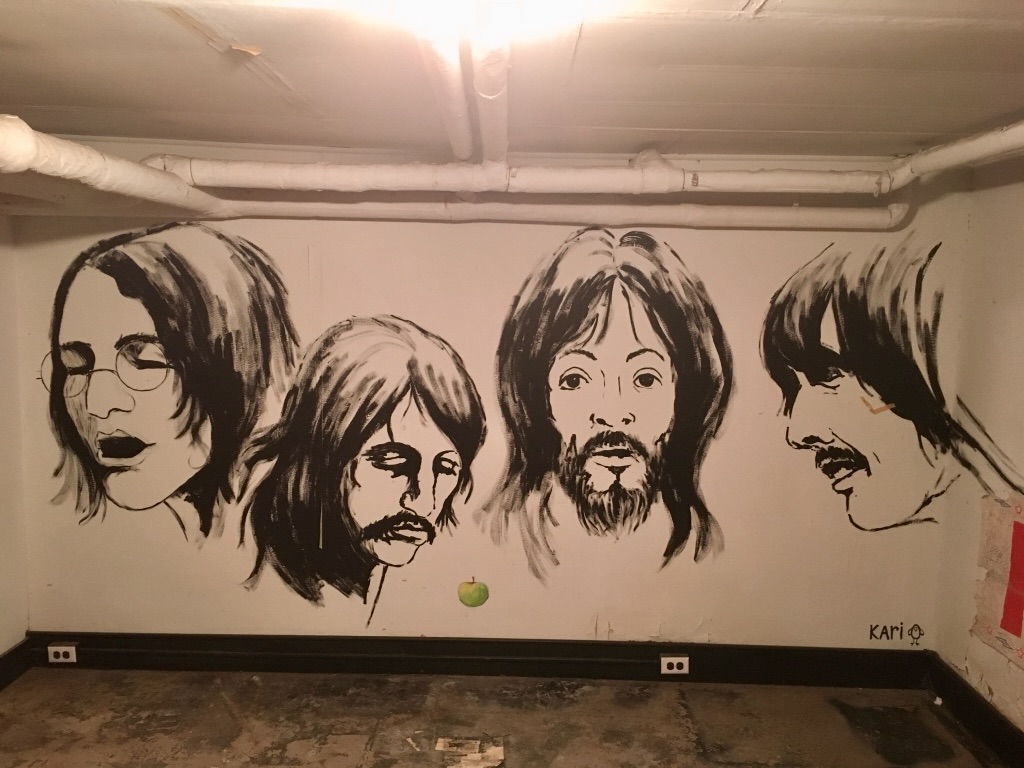
So I stopped reading and played Abbey Road — loud, to fill the house. I suppose each of us has a song or album that made the difference. Abbey Road exists at the intersection of my childhood and my early manhood, where I was just beginning to understand that adults are pretty flawed (and in some respects unreliable). I was slowly becoming aware that adulthood is a flux of mystery and self-confusion, and there is no adequate roadmap. The Beatles of Abbey Road spoke to me like nothing else in my life ever had. I can see myself lying on my back on the plush carpet in my parents’ living room (a room off limits except for Christmas and their cocktail parties). I placed the 33rpm disc on the stereo platen and carefully lowered the crystal needle. I found my spot on the carpet, shut my eyes, and just listened. I can remember the moment, long ago in that living room, where the medley that ends with “She came in through the bathroom window” registered in my consciousness for the first time. (Who knows what it means?)
I won’t go into embarrassing detail, but yesterday, as I listened to Abbey Road with all that memory — the hundreds of times I have listened to it over the years, some purposefully, some accidentally, beginning a few weeks after its release — I fell into a kind of fugue state. I sang, I wept, I even danced for a few dozen seconds. Afterward, I went down into my main library and found all the Beatles books I have (15 or so), most of them in the right place, and only then ordered one or two more (for research!!).
Forgive me, Henry, for I have sinned.
The same has been true over the last two weeks as I have reread Thoreau’s Walden. It has spoken to me in new ways, after all this time. The same is true of the novels of Jane Austen, which I am reading through. And of Homer’s Iliad, which I am reading in a new translation (B+). In shedding things that are no longer essential to my sense of myself and the world, freeing up shelf space and head space, I am rediscovering things that have been dormant (or crowded out) for a while, some for a long while. It’s a rich, rich experience. A recovery.
Some of this, of course, comes from knowing I am in the seventh inning of my life. But most of it is about a long-overdue spring cleanup.
Meanwhile, I have been trying to develop a few new daily habits to increase my health and productivity, with considerable (albeit preliminary) success.
Thoreau says that when you take charge of your life and learn to live deliberately, you will cross an invisible boundary, and things will never be quite the same again. I don’t pretend that I have crossed it, nor that I will reach it, but I know that my old skepticism about Thoreau’s downsizing assurances was wrong.
Is there any more agreeable love song by the Beatles than George Harrison’s “Something”?