
This week, Clay has been leading his fourth Jefferson in France Cultural Tour. Thomas Jefferson served as an American minister to France in the late 1780’s and considered it some of the happiest times of his life.
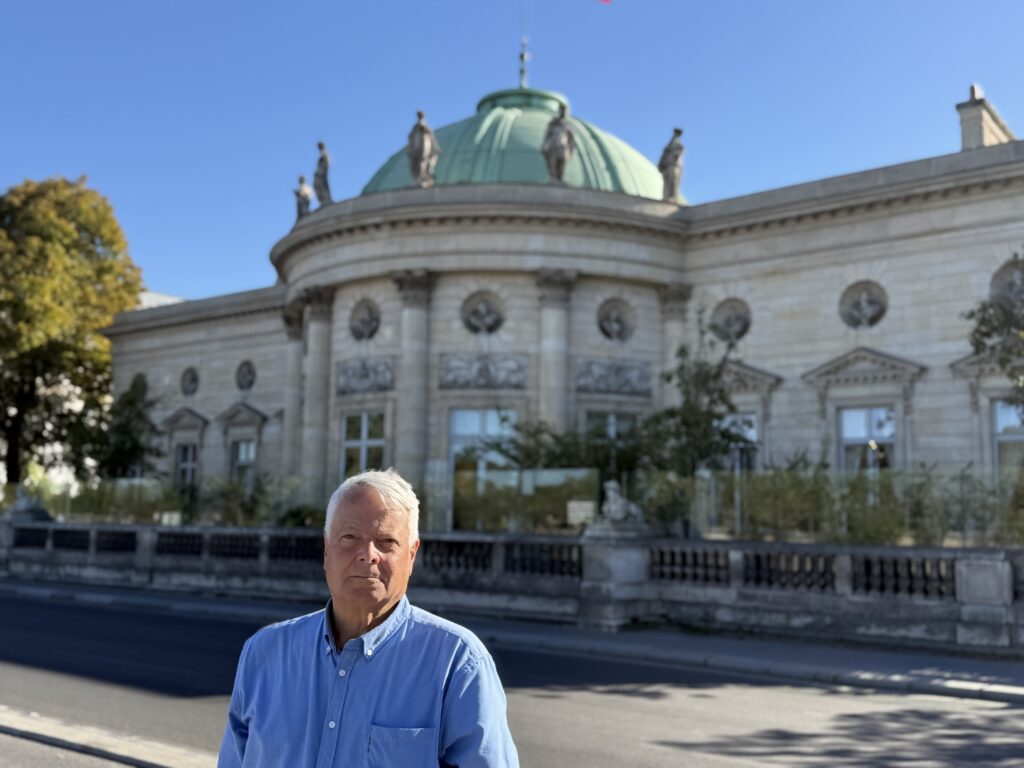
Dijon, France — We are at the halfway point of our Jefferson in France cultural tour. Three days in Paris, followed by two in the Loire Valley, where we toured Leonardo da Vinci’s last residence and ate at a restaurant in a cave. Yes, a cave. Today we head to French wine country — Beaune and Dijon (Burgundy), where Jefferson spent some time in early March 1787 on his three-month agriculture (and wine) tour of France.
Jefferson served as an American minister to the Court of Louis XVI from August 1784 to late September 1789. He was in Paris during the first, relatively bloodless, phase of the French Revolution, which he regarded as the logical next step of a world liberation movement that began in Philadelphia, Pennsylvania, on July 4, 1776. Jefferson’s years in Paris and France were among the happiest of his life. This is my fourth Jefferson-in-France tour.
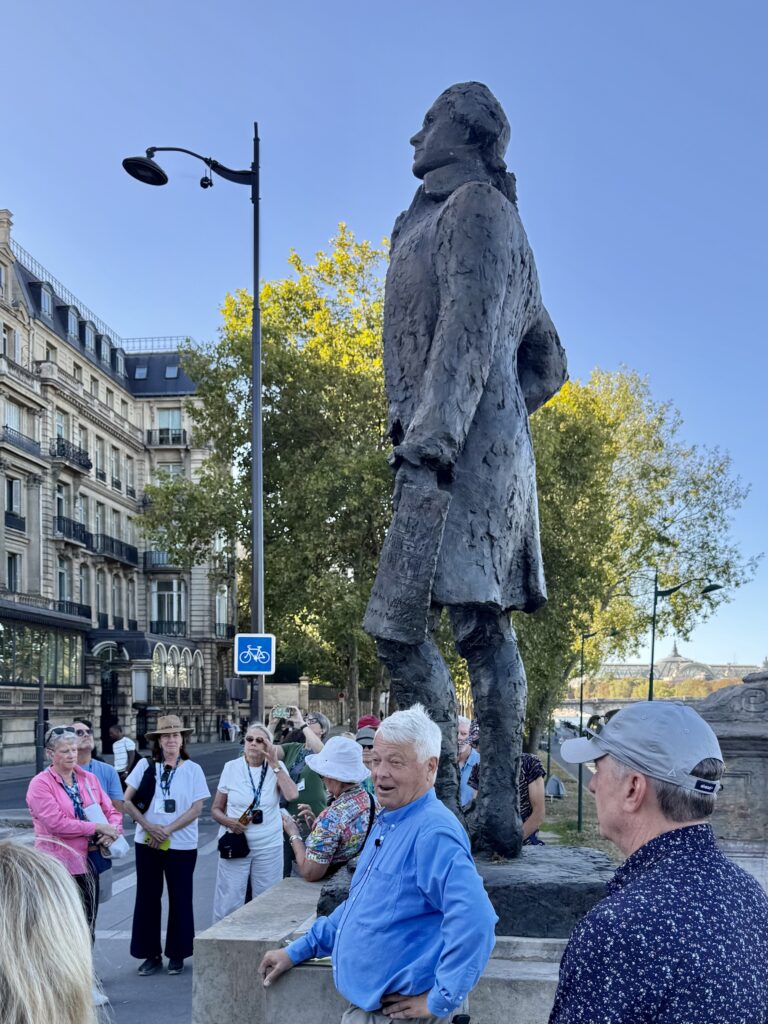
When you travel with a group of several dozen people, you necessarily have to arrange three meals per day at restaurants that can accommodate a large group. If I were traveling alone, I would eat one substantial meal each day and, at some point, buy a jambon-et-fromage sandwich at a kiosk. We also inevitably spend a fair amount of time on the coach — luxurious by American standards, but nevertheless a bus. From the front of the bus, our French guide J.P. talks cheerfully about French social customs, cracks jokes, and calls us “my little ones.”
After the long evening dinners, we are generally too tired to party on. Everyone scatters to their rooms to fret about doing laundry soon, connect with home, and wind down. I generally turn on the television to catch up with the news. CNN International is available in most hotels, and a couple of BBC stations. I watch for 20 or 30 minutes, then begin to read for a couple of hours, but usually fall asleep after 15 minutes or so.
Rinse and repeat.
We have a great group on this journey, with the usual bell curve exceptions.
Every time I come to Europe, I wind up writing much the same words about the stark contrast between Euro-life and American life. Almost everyone here speaks several languages. Only two or three in our group can say more than bonjour in French. There is very little obesity in Europe, and when you see it, you almost always are looking at an American. Europeans walk much more than we do — and it shows. Many French people now dress for the street like people in Boston or Kansas City — colorful running shoes, slacks, T-shirts. But every 10th person you meet is elegantly dressed, men and women, and for a moment you wish you, too, were an exemplar of good taste and carefully cultivated manners. Then you see a gelato shop and give up the quest.
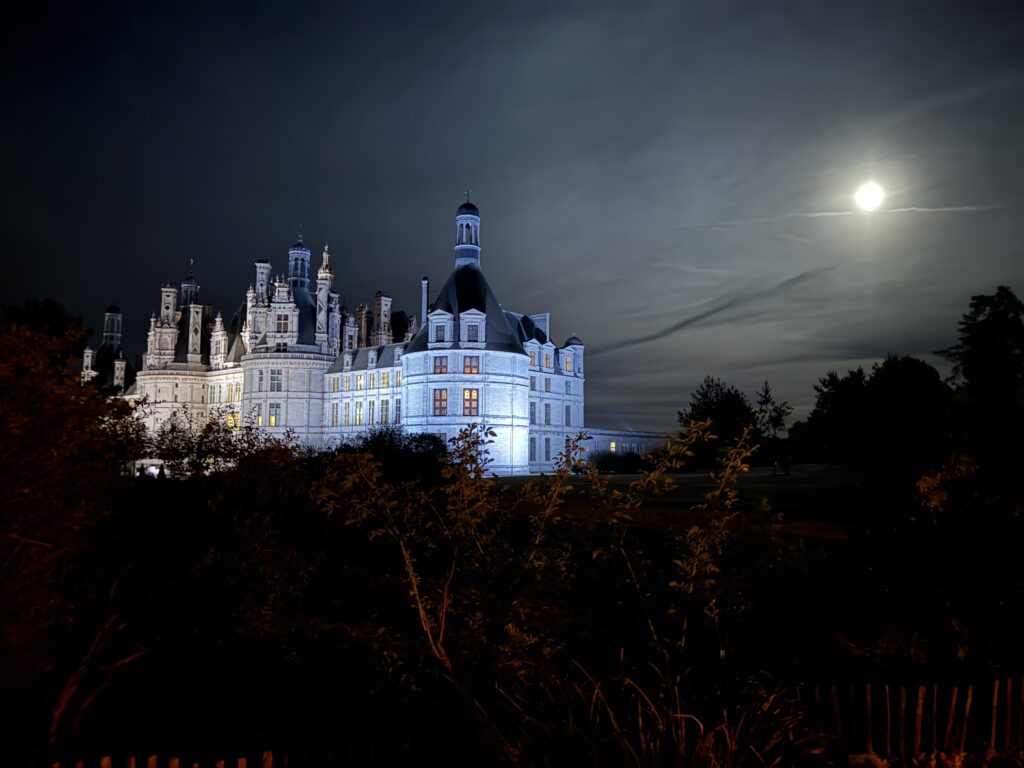
The Americanization of the planet continues to overwhelm local style and customs everywhere. I have a friend who traveled the Silk Road 30 years ago and again two years ago. He reports that the authentic costumes of Tibet, Mongolia, and Afghanistan have mostly yielded to “the universal uniform” of the planet. T-shirt, ball cap, tennis shoes. Alas. It’s all “caascz” as one of my young friends puts it, since saying the full word “casual” is apparently too great a linguistic burden.
Americans like to complain that French waiters and shop owners are rude and haughty. Still, we have found that they are almost always friendly and agreeable, especially if you begin by saying, “bonjour,” and adding something like, “May I speak in English? I don’t know French.” A few years ago one of my favorite guests got crosswise with a male French waiter (straight out of central casting) at the famous Les Deux Margots restaurant on the Left Bank, frequented in the 1920s by the Lost Generation of American writers. He ordered an omelet. The waiter asked what he wanted in the omelet besides eggs. My friend — trying to be agreeable — said, “Oh, whatever, whatever you put in it will be fine.” This brought on a perfect display of the legendary French hauteur — a turned-up nose and indignation so pronounced that the other three of us just wanted to slither away and never pollute that restaurant or France again.
News Coverage
You don’t need to watch international news coverage in Europe long before you realize how narrow and sensational American media have become. The European news stations have spent many hours this last week covering the gathering of world leaders at the United Nations, while we continue to obsess over the ballroom, the Kennedy Center, the reflecting pool, the president’s day naps, sex scandals, and other things dramatically less important than the future of world civilization. The soundbite of a European news broadcast is at least double that insisted upon in America. Instead of putting five experts on a broadcast segment, each getting about a minute, European stations usually focus on a single expert guest, or two. The graphics are simpler and more understated. Serious authors are given enough time to explain the theses of their books.

I’ve been watching some segments of Al Jazeera, the Qatar-based news channel that reflects a view of the world that isn’t purely American. It is surprisingly good. It is also surprisingly fair. It has far less anti-West and anti-American bias than commercial American media exhibit in their anti-Arab bias. Al Jazeera’s lens is far wider than American media’s. It reminds us that America is not the world, and much of the world lives outside American cultural and political hegemony.
The French Social Contract
Our guide J.P. knows half a dozen languages or more. He has traveled the world. Yesterday during a fairly long bus ride he explained the French social welfare system to us. Free education straight through graduate school, with annual “fees” for graduate students at about 150 Euros per year. Outstanding national health care, with most services “free” and modest co-pays for elective procedures. Long annual paid vacations. Subsidized day care. Paid parental leave. Excellent old age pensions (social security). A relatively small national debt. State ownership of 51% of key industries, whose revenues help pay for the welfare state. Tax bills itemized by each person’s “subscription” to health care and other specific services, so that you know exactly where your tax dollar is going. Commercial trucks banned on weekends so that families can travel the French roads without congestion. And on average, French citizens pay about the same level of taxation (much of it sales tax, V.A.T.) as an American, when you add up federal and state income taxes, property taxes, and sales taxes. Hmm.
Back in capitalist USA, we are incessantly told that socialism is evil, as if it were a method of oppressing the people. The American fear of socialism (often conflated with communism) is not only irrational but just plain foolish. And yet the fear is deeply rooted in the American soul, as if Vladimir Lenin were about to confiscate your home and reduce you to begging. I’m sure there are problems with the French (or German or Finnish) social welfare systems, but our guide said, “Nobody in France ever has to wonder if he can afford health care. She knows that if something goes wrong she is going to get the care she needs without any fuss, without being condemned to the emergency room like a beggar.” One in five Americans has no health care options except the emergency room. The French (and most Europeans) regard a vibrant and comprehensive social welfare system as the just price of modernity, the basis of social stability, and the foundation of a healthy society. They believe that every human being is entitled to a life of sufficiency and dignity: Liberté, égalité, fraternité.
No gun violence. No mass shootings. No AR-15s in the public square. No active shooter drills.
Gas prices here are about $10 per gallon, thanks to America’s undeclared war against Iran. That’s up about $2 since February 28, 2026. Yet Europeans are surprisingly friendly to Americans. Some work to reassure us that it is only our government, and especially this president, they despise, but they want us to know the American people are welcome. I have heard at least two top-tier officials of the EU say in speeches that the world’s most important democracy has succumbed to a near-authoritarian regime. These European diplomats don’t speak in an undisciplined manner. This is how Europe now sees us. We are watching in real time the collapse of the post-World War II liberal world order (NATO, America’s forward bases in Europe and Asia, America as the patroller of the world’s sea lanes). Europeans cannot understand why our president has treated our historic friends and allies like enemies and our historic adversaries like trusted friends.
Don’t Get Me Wrong
I hope it does not appear that I prefer Europe to the United States. I love America. The minute I get home and burn all my clothes, I’ll get into my Airstream trailer and head out for some much-needed R&R in the vast American West. When I have lived abroad, the thing I have missed most about America is our western landscapes, including the Great Plains. But I don’t understand why we so stubbornly cling to our haphazard and often heartless approach to human welfare, whose motto at times seems to be: “I’ve got mine; up yours!” I would think we Americans would want to fan out across the planet to observe how other nations and cultures do their collective business and adopt best practices wherever we see them, without throwing easy, sloppy, prejudicial terms at those practices, like “socialized medicine!” We do some things better than any other nation on earth: apparently Ranch Dressing is one of them. Most of the world still loves America or at least the idea and promise of America. Every journey to a foreign land is a mirror we are invited to hold up to our ways and means.
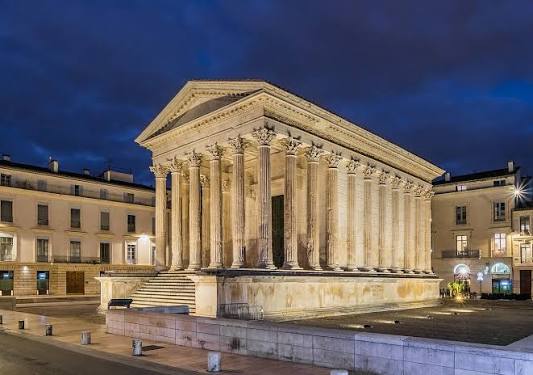
Tomorrow we take a bullet train (200+ mph) to Nîmes, where Mr. Jefferson sat for hours staring at a classical building “like a lover at his mistress,” as he put it. This was the Maison Carrée, a temple built in the first century AD, which Jefferson convinced Virginia to use as the model for its new state capitol, 1785-1788.
I feel so fortunate to live in a time when first-world prosperity and mobility make it possible to visit the Louvre, the Pont du Gard, the Maison Carrée, the vineyards of Burgundy, and the celebrated Canal du Midi.
But I am eager now to sit under the golden cottonwoods of the Little Missouri River valley with a good book, a notebook, and a flask of Bordeaux wine I’m packing in my return luggage.
There’s no place like home.