
Clay has debated constitutional scholars and historical impersonators in and out of costume across the United States; addressed 27 state legislatures; Supreme Court summer conferences; and humanities conferences across America. After reading Jill Lepore’s new book, We the People, and following the third of four weekly online classroom sessions, he stepped back to write this week’s essay.
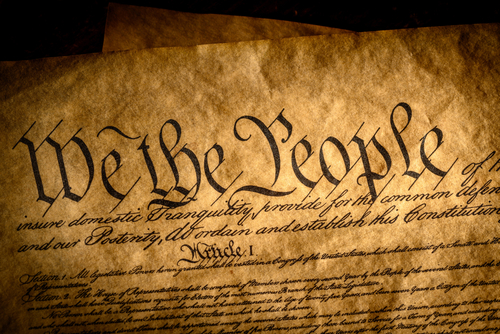
Americans are deeply conservative about the U.S. Constitution. It has been our national charter since March 4, 1789. It’s now 236 years old, and it has been amended only 27 times, most recently in 1992, a full 33 years ago. That amendment (#27) was of no particular consequence. We were all stirred up about congressional salaries back then. Thus the amendment prevented any sitting Congress from raising its salary until the next election, so we the people could throw the rascals out if they were seen to be raiding the public treasury.
Twenty-seven is not a very large number of amendments, and even that number is a bit misleading. The first 10 amendments (ratified December 15, 1791) constitute the Bill of Rights. They should be seen not as amendments but as a kind of addendum to the Constitution. Those 10 don’t amend anything. They enshrine what the all-male cast of the time called “the Rights of Man.” James Madison, who shepherded the Bill of Rights through Congress but who was lukewarm about their necessity, called them merely “parchment guarantees.” He was never more wrong. If we had to choose between the Constitution and the Bill of Rights, I would choose the Bill of Rights every time. Jefferson was right as usual. We need actual constitutional texts we can invoke when our rights are being suppressed (think of the Fifth Amendment, reminding us that we do not have to answer questions that would incriminate us in a court of law). Think of what the Second Amendment means to tens of millions of Americans.

That leaves just 17 amendments after the Bill of Rights. In my view, only 11 of those were substantive, and 6 were of no great consequence. They came in waves. Nothing from 1804 to 1865: 61 years. Then we got, in rapid succession, the three Civil War amendments — XIII, outlawing slavery (1865); XIV, defining citizenship with the all-important “equal protection under the law” clause (1868); and XV, giving Black men the right to vote (1870).
Then another drought (1870–1913: 43 years), followed by the four Progressive Era amendments: XVI, federal income tax (1913); XVII, direct election of senators (also 1913); XVIII, prohibition (1919); and XIX, women’s suffrage (1920).
Then a shorter drought from 1920 to 1933: 13 years. Two New Deal–era amendments: the XX, moving up the inauguration of a new president from March 4 to January 20 (1933), and the XXI, repealing prohibition (also 1933).
To prevent another outsized presidency of the sort FDR experienced, the XXII Amendment was ratified in 1951, two terms only.
Then came the extraordinary ’60s. The XXIII Amendment, giving residents of the District of Columbia a role in the Electoral College vote (1961); XXIV, outlawing the poll taxes that had been used to suppress or eliminate the Black vote in the South (1964); XXV, clarifying presidential succession and impairment in the aftermath of Eisenhower’s serious health issues in his White House years and the assassination of JFK (ratified 1967); and XXVI, granting 18-year-olds the right to vote (1971).
Because we are living through the era of two octogenarian presidents, Trump–Biden–Trump, the XXV Amendment is now frequently part of the national conversation. Both Biden and Trump are objectively perceived as having lost a significant amount of mental acuity during their time in the White House. Ronald Reagan was clearly suffering from Alzheimer’s disease in his second term (1984–88). To his credit, he admitted it. Woodrow Wilson was debilitated by a severe stroke for the last 17 months of his presidency (1919–20), and his wife Edith handled many of his executive decisions and functions. Edith Wilson was essentially the first woman president.
Finally, XXVII (1992), preventing members of Congress from lining their pockets from the federal treasury (they had to find other ways to do so).
Almost all of these amendments were important, but only one of them — direct election of senators — altered the basic mechanism of the Constitution as ratified in 1788.
Why Not More?
There are two reasons why there have not been more amendments. First, the American people are surprisingly conservative about making changes to the national Constitution — while at the same time being quite willing to amend or rewrite state constitutions. State constitutions, on average, last only 40–45 years. They are frequently amended (on average once every two years). A number of states have had many constitutions: Georgia 10, Louisiana 11, South Carolina 7, Virginia 7, and Pennsylvania 4. Amendments proliferate. Alabama has ratified more than 900 amendments, California more than 500, and South Carolina more than 500. On average, a state constitution has been amended between 100 and 150 times. Why? Because we need to keep those constitutions attuned to the changing nature of American society — technology, demographics, social mores, unprecedented changes in the way we conduct public affairs, increased representation of previously marginalized groups, etc.
The second reason for so few federal amendments is that the Founders set the bar too high. It requires a two-thirds majority in both houses of Congress, followed by ratification by three-quarters of the states. That means it is now essentially impossible to amend the U.S. Constitution, given the deep partisan divides of our era and refusal to compromise. It’s almost impossible now to ratify a treaty (two-thirds of the Senate), much less amend the Constitution. The Equal Rights Amendment cleared Congress in 1972 — no mean feat — but it did not reach the three-quarters of states threshold before the 1982 deadline.
We are stuck.
Likely a strong majority of constitutional scholars believes we must lower the amendment bar — perhaps to 60% of both houses of Congress, followed by two-thirds or three-fifths of the states. But here’s the great paradox, the Catch-22 of our straitjacketed system. To change the ratification trigger, we would have to amend the Constitution — and since it is impossible to amend the Constitution, we cannot bring about that simple reform, which would make it possible to amend the Constitution as needed.
We are really stuck.
It Wasn’t Supposed To Be This Way.

As Harvard professor Jill Lepore notes in her new book, We the People: A History of the U.S. Constitution, the Founding Fathers — those 55 white males who crafted our current constitution during the summer of 1787 — uniformly believed that the charter they produced was necessarily imperfect. It was the product of very difficult, even ugly, compromises in Philadelphia. Among other things, they kicked the problem of slavery down the road. Result: at least 620,000 dead in the Civil War, and that didn’t really end real and virtual enslavement anyway. The Founders reckoned the Constitution’s imperfections would become clear as the nation attempted to govern itself under its protocols. They regarded what they had done as a good start. They were sure the Constitution would need to be amended as its imperfections were discovered over time, and that it would be revised or replaced not very many decades into the future. George Washington himself reckoned the 1787 Constitution would be good for about 25 years. The Founders wanted us to have the boldness and creativity to rewrite the Constitution with some frequency to meet the needs and challenges of our times — with a reverent glance at their great work in Philadelphia, but without a slavish adherence to a charter written by an all-male cast of privileged white men who wore buckled shoes and wigs in a three-mile-per-hour world. Thomas Jefferson warned us that “laws and institutions must go hand in hand with the progress of the human mind . . . institutions must advance and keep pace with the times. We might as well require a man to wear still the coat which fitted him when a boy, as civilized society to remain ever under the regimen of their barbarous ancestors.” Amen.
Thomas Jefferson wasn’t a delegate to the constitutional convention. The future third president was in France, serving as the American minister to the Court of Louis XVI. As he watched France descend into a vicious revolution — dramatically more cataclysmic than our comparatively benign independence movement (1774–1783), what might be called a separation more accurately than a revolution — he did some hard thinking about the foundations of a society. While his friends and frenemies in the U.S. were moving in a more conservative direction, especially following Shays’ Rebellion in western Massachusetts in 1786, Jefferson was being radicalized by his time in Europe. He wrote letters to his closest friend and political partner James Madison about how we (on the innocent side of the Atlantic) could avoid the problems that had made late-monarchical France a failed state. Among other things, he declared to Madison that once the West was fully settled (no more free land), we would have to find ways to redistribute property from time to time, to make sure that nobody born in America would be deprived of the opportunity to achieve modest economic satisfaction.
Jefferson’s Most Radical Letter
In a letter of September 6, 1789, Jefferson declared to Madison that no constitution was really valid after the generation that produced and ratified it was dead. Each rising generation should tear up the constitution it had inherited and write a new one that addressed its needs, challenges, and opportunities. This was his famous “Earth Belongs to the Living” letter, one of the most radical he ever wrote, one certain to give poor Madison headaches and tear out the last of his thinning hair.
“No society,” Jefferson wrote, “can make a perpetual constitution, or even a perpetual law. The earth belongs always to the living generation. Every constitution then, and every law, natural expires at the end of 19 years. If it be enforced longer, it is an act of force, and not of right.” Jefferson worked with actuarial tables to determine that a generation lasted about 19 or 20 years. The rising generation, he reckoned, would almost certainly reaffirm much of what was in the existing constitution, but make the changes required to keep it current with the dynamics of the most innovative, restless, and rapidly evolving nation on earth.
It would have been interesting to have a Madison-Cam to record James Madison’s reaction when he read this visionary letter at Montpelier. He was more conservative than Jefferson. He had just completed the most important work of his life, shepherding the 1787 Constitution through its very difficult birth pangs, requiring (and somehow achieving) a series of painful compromises he did not think could ever be achieved again. He regarded what one scholar has called the 1787 “Miracle in Philadelphia” as a once-in-a-millennium accomplishment, a black swan event, and he did not believe it could be successfully replicated. Among other things, the wise Madison knew that slavery was going to break the republic.
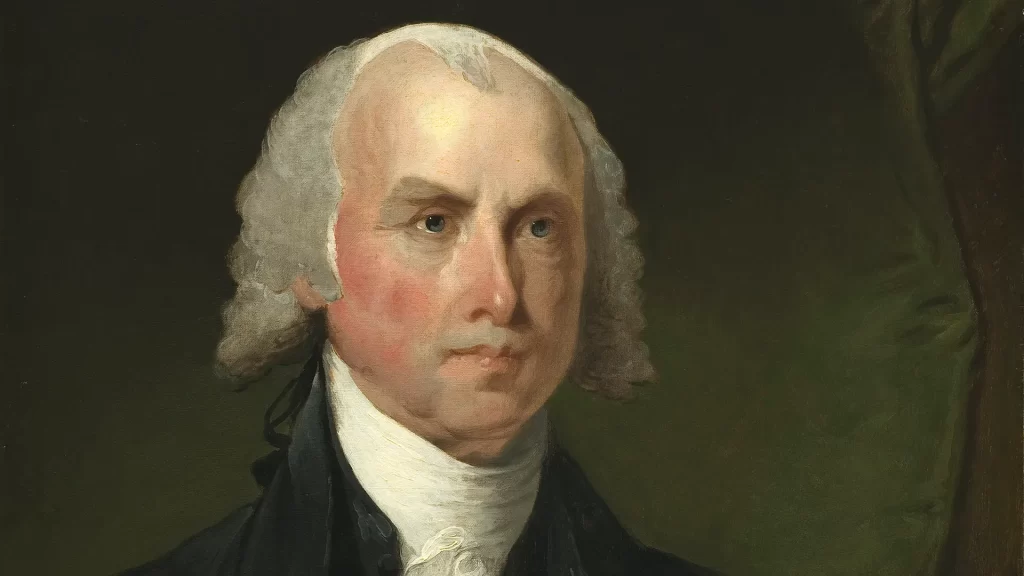
Madison also believed that the Constitution, a new charter for a new republic, needed to be endowed with some veneration, with a deep and unquestionable credibility. If we expect people to accept the Constitution and voluntarily coordinate their lives to its strictures, Madison wrote, it needs to inspire considerable reverence in the people, to have a kind of sacred aura. Madison acknowledged that Jefferson’s argument — the earth belongs to the living not the dead, the people are sovereign, no generation has the right to bind its children and grandchildren with its constitution, laws, or its national debt — makes sense in theory, but he believed it would be deeply problematic in practice. Better to amend when necessary.
Unfortunately, amendment has always been difficult and is now apparently impossible.
The Urgency of Now
And yet we truly need to address certain fault lines, fissures, flashpoints, and vulnerabilities in the Constitution we still attempt — with varying degrees of reverence, not much by the current executive — to live by. The short list of things we need to clarify includes: the pardon clause (Article II, Section II); the emoluments clause (Article I, Section IX); the impeachment clause (Article II, Section IV); the vital importance of habeas corpus (Article I, Section IX); the war powers (Article I, Section VIII); the Electoral College (Article II, Section I); the House of Representatives’ unique power of the purse (Article I, Section IX); and such penumbra in the Bill of Rights as what we mean by an “establishment of religion” (Amendment I); cruel and unusual punishments (Amendment VIII); illegal searches and seizures (Amendment IV); the definition of a government “taking” (Amendment V); the right to privacy (Amendment IX?); and the future of the Second Amendment that is (in my opinion erroneously) now perceived in some quarters as requiring us merely to wring our hands after every mass shooting — 394 in 2025 alone, according to the Gun Violence Archive. (The FBI tallies gun violence in a different manner reflecting far lower numbers. Both the FBI and GVA show fewer “mass shootings” occurred in 2025 than in 2024.).
We are severely stuck. We cannot go on like this. Our refusal to revise the Constitution puts vast and undeserved power in the hands of the president (thus the Unitary Executive, government by executive order) and in the nine members of the Supreme Court (unelected, unimpeachable, unaccountable to the American people and serving for life!).
The greatest gift we could give ourselves as we observe the 250th birthday of the United States would be to craft a new constitution suitable to our times — building stronger guardrails, addressing dynamics and issues the Founding Fathers were entirely unable to anticipate (cyber warfare, AI, the pace of modern life, globalization, the atomic bomb, the digital revolution).
I don’t suppose we will do this — revise and rewrite, if only in a non-binding experiment — which means that our beleaguered and practically unamendable 18th-century Constitution will be stretched and strained and frayed as it is forced to attend to things that would have made even Jefferson faint (though he would be quick to order a MacBook Pro and a smartphone, on credit). Nature abhors a vacuum, and recent presidents, none more than the current incumbent, have rushed into the breach, in a way that the Founders explicitly and emphatically tried to prevent. We’d be a better nation in every way if we had the creative audacity to do the hard work of forming a “more perfect union.” If not at 250, when?
I’m with Jefferson, who wrote to Samuel Kercheval on July 12, 1816:
Some men look at constitutions with sanctimonious reverence, and deem them like the ark of the covenant, too sacred to be touched. They ascribe to the men of the preceding age a wisdom more than human, and suppose what they did to be beyond amendment. I knew that age well; I belonged to it, and labored with it. It deserved well of its country. It was very like the present, but without the experience of the present; and forty years of experience in government is worth a century of book-reading.
When I first started studying Jefferson decades ago, I regarded this earth-living and nineteen-year stuff as a little quirky. Now I see his proposal as profound, in fact essential to our future as a republic.
Note: Our Senior Editor Clay Jenkinson is now teaching his fifth online course on the U.S. Constitution: Flashpoints and Vulnerabilities. Two more are in the works. The first will attempt to determine how we could have a constitutional convention in our time, addressing the problems of 24–7–365 media, the impossibility of doing this behind closed doors, lobbyists and interest groups, etc. Among other things, he will work with AI experts to determine if we could select a truly representative sample of the American people to serve as delegates: white and Black, urban and rural, of different religions, men and women, Native Americans, etc. The third course will be an online experiment in generating a new constitution in real time (four Saturdays), and determining at the end of the process if we have done anything useful.