
As much as the United States confronts monumental challenges, there is much to celebrate as the nation turns 250.

Like a spent marathoner, we have lurched and crawled over the finish line. The mood of the country is not, for the most part, celebratory in the summer of 2026. Henry David Thoreau famously said, “the mass of men lead lives of quiet desperation.” I’d amend that to say the mass of Americans in 2026 lead lives of quiet unrest and perplexity. There is a near-universal feeling that this is not America’s best moment, that we may be an empire and nation in decline. According to the Pew Research Center, approximately 59% of Americans believe America’s best years are now behind us. Congress is mostly paralyzed and it has lately abdicated its constitutional responsibility to check and balance the other two branches of the national government, especially the executive. Many Americans agree with the Duke of Gloucester in Shakespeare’s King Lear: “we have seen the best of our times.”
And yet there is so much to celebrate.
Freedom
I don’t know if we are the freest people on earth, but we enjoy a staggering amount of personal freedom in America. We can live where we wish. We have mobility unprecedented in world history. We are free to worship as we please, or not at all; to speak, write, meme, and publish virtually whatever we please, without prior restraint and no matter how rude. We are not bound by law or tradition to live where our parents live(d) or to fill the same niche in the economy they did. There is still plenty of upward mobility in America for those with the gumption to make their run and “take their shot.”
Technology
America still leads the world in technological ingenuity. Even in my lifetime, there has been a breathtaking series of technological developments in the U.S.: cell phones, then smartphones, the internet, cameras, scanners, robotics, software, video conferencing (Zoom Zoom!), computers, space exploration, health care devices, space telescopes, genetic engineering, and green technologies. China is beginning to overtake us in some of these areas, however, and most Americans are mostly unconcerned.
Prosperity
The vast wealth of America is almost incalculable, and though it is appallingly mal-distributed, the average American lives better than anyone in human history, better in the most basic ways than the Sun King Louis XIV. We take all this for granted, but we shouldn’t. America still ranks second (after Switzerland) in wealth per capita, but if you factor out the wealthiest 5% of Americans, we rank just 15th in the world.
Longevity
Thanks to water treatment, sanitation, hygiene, transportation safety, improved medicine, abundant food, and government regulations, the average life expectancy in America rose by 30 years in the last century. If we would only take better care of ourselves, we could increase our longevity on average by five or more additional years. Today, the average American lives to 78.7 years, women more, men less. The global intellectual Yuval Harari’s prediction that we will soon live to be 300, by replacing one spent organ after another with spare parts, seems unrealistic, but it seems certain that life expectancy will continue to rise. AI will be a huge part of that. In 1968, America’s great novelist John Steinbeck died of heart disease at the age of 66. If he were 66 and ailing today, with access to our current health care system (for those who can afford it), he would almost certainly live another 10 or 15 years.
Book Culture
In spite of the notion that America has entered a post-literate era, the facts suggest otherwise. Approximately 340,000 books are published every year in the United States; compared to 82,000 in Germany, 188,000 in the United Kingdom, 21,000 in Poland, 14,600 in Canada, 25,000 in Egypt, 3,800 in Pakistan, and just 1,138 in Syria. Unfortunately, readership statistics are pretty depressing. Almost 40% of Americans report that they have not read a single book in the last year. The average among active readers is eight books per year. And 19% of adults in America read 82% of all books. The digital revolution may be killing off print newspapers, but most Americans still prefer book books to eBooks.
Soft Power
Our national brand as the world’s primary exemplar of freedom and the pursuit of happiness is tattered these days, but most of the rest of the world still loves the energy, creativity, entrepreneurism, and individualism of America, not to mention the splendor of our outback and scenic wonders. American movies, television programs, video games, music, and fads continue to dominate the world’s entertainment, and American products — manufactured elsewhere — are evident on every continent, as far flung as Mongolia and Burkina Faso. The word “America” has become somewhat tarnished of late, but it continues to be one of the most alluring and magical words worldwide. It continues to represent freedom, opportunity, Enlightenment ideals, and sublime landscapes, particularly west of the Mississippi River.
Higher Education
Our colleges and universities continue to be regarded worldwide as amongst the best in the world. The privileged of almost every other country send their children to America for higher education. Well more than half of American high school graduates enroll in colleges and universities. We used to rank second in worldwide college enrollment and lately we have dropped to 15th. Until we address the problem of obscene university costs, we will continue to fall in the global scale.
National Security
Thanks in part to a 3,000-mile moat on one side and 12,000 miles on the other, with an exceedingly friendly neighbor to the north and an increasingly stable neighbor to the south, we enjoy more real security than any other nation on earth. Since February 28 the United States has flown more than 12,000 sorties over installations in Iran, killing (according to the BBC) more than 3,000 Iranians, including 499 women, but so far no Iranian drone or missile has struck within the United States. Not counting the War of 1812, the United States has been involved in five declared wars and scores of smaller conflicts in our short history, yet we have really only been attacked twice — Pearl Harbor 1941, and September 11, 2001 — for a total loss of just 5,380 lives. Given our bellicose approach to much of the rest of the world, we have been astonishingly lucky in not being subjected to much retaliation in our far-flung empire, and almost none inside the borders of the United States. The loss of four Americans in Benghazi in 2012 brought on a national political crisis. Only 16 Americans have died so far in the war against Iran, a number that most Americans find intolerable.
The Rule of Law
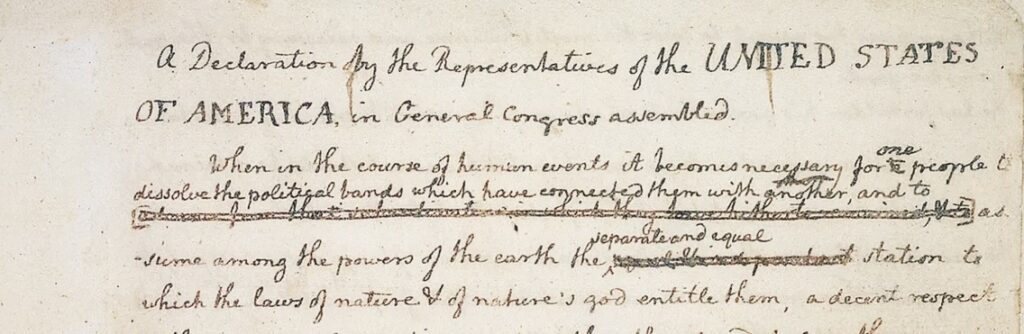
In spite of recent erosions of due process, habeas corpus, and the rule of law, you’d rather be arrested in the United States than in any other country. Just ask Brittney Griner. Until the miniature reign of terror of the Immigration and Customs Enforcement (ICE), there have been very few extra-judicial disappearances in the United States, and the American people have expressed their deep hostility to these violations of human rights loud and clear. In his first inaugural address on March 4, 1801, Jefferson wrote, “I believe this … the strongest Government on earth. I believe it the only one where every man, at the call of the law, would fly to the standard of the law, and would meet invasions of the public order as his own personal concern.” In his Thoughts on Government in 1776, John Adams declared, “the very definition of a republic is an empire of laws, and not of men.” This is no longer precisely true, but it continues to be the standard against which our periodic lapses must be measured.
Who’s In?
When Thomas Jefferson became the third president of the United States in 1801, only white males with a certain amount of property could vote or hold public office, about 10% of the total population of 5.4 million (one in five a slave). By the 1830s most property requirements had been removed for white men. In 1870 the 15th Amendment gave African American men the right to vote (theoretically). The 19th Amendment in 1920 granted women full citizenship rights. The 1924 Snyder Act made American Indians full citizens of the United States. The U.S. armed forces were integrated in 1948, when President Harry S. Truman signed Executive Order 9981. Poll taxes were outlawed by the 24th Amendment in 1964, followed by the Civil Rights Act (1964), and the Voting Rights Act in 1965. In 1971, 18-year-olds were granted the right to vote by the 26th Amendment. Today any American over 18 years old is legally entitled to vote in America. In this, as in so many other arenas, the United States has led the world towards greater and greater enlightenment.
Just consider the revolutionary change in the rights and opportunities for women in the last century. As late as the 1960s most women were not permitted to open their own checking accounts or apply for credit cards without the endorsement of their husbands. In 1960 women made up only 39% of America’s undergraduates, today nearly 60%. In 1960 only 3.5% of law school students were women, today 56%. Princeton University did not admit women until 1969; Brown 1971; Dartmouth 1972; the military service academies 1976, and Columbia 1983! In 1960 only 1% of American judges were women, today 34% and rising. Men are being left behind, not by affirmative action or DEI policies, but because they have lost their way.
When I was growing up in the 1960s and early 1970s, America still practiced apartheid, though not by that name. As late as 1961-62 the University of Alabama football team had no black athletes. Because of that UCLA refused to play against Alabama in the coveted Rose Bowl in Pasadena. But rather than begin to integrate, Alabama accepted an invitation to send its all-white team to the Sugar Bowl instead, in strictly segregated New Orleans. It wasn’t until 1947 that Jackie Robinson broke the “color line” in Major League Baseball. It wasn’t until 1955 that Rosa Parks refused to give up her seat to a white person in Montgomery, Alabama. As late as the 1970s African Americans who visited most Las Vegas casinos were met by security personnel who advised them that “they would have a better experience at some other casino down the road.” When the Beatles refused to perform in segregated arenas in the American South, they got death threats. John Lennon feared that snipers would shoot him on stage. Racism (including structural racism) continues to be a blot on American ideals, but the lives of most African Americans are dramatically better today than at the Bicentennial of the U.S. in 1976.
Now that we have mostly taken our boots off the necks of Native Americans, and the very worst of reservation poverty has been alleviated, the 9.7 million Indigenous men and women in the United States have made extraordinary strides in language restoration, cultural renewal, and political engagement. The 575 federally recognized American Indian tribes are increasingly sending their children to college, to law and medical schools, and to MBA programs. The rising professional class of Native Americans is asserting Indigenous rights with greater frequency than before, and they are winning more and more cases in the federal court system. Land Back programs are still in their infancy, but we can expect considerably more Native victories in the decades ahead.
We’ve come a long way. There is much more to do. America continues to be a highly imperfect nation, but the arc of justice and equality does in fact bend towards justice.
The Public Lands
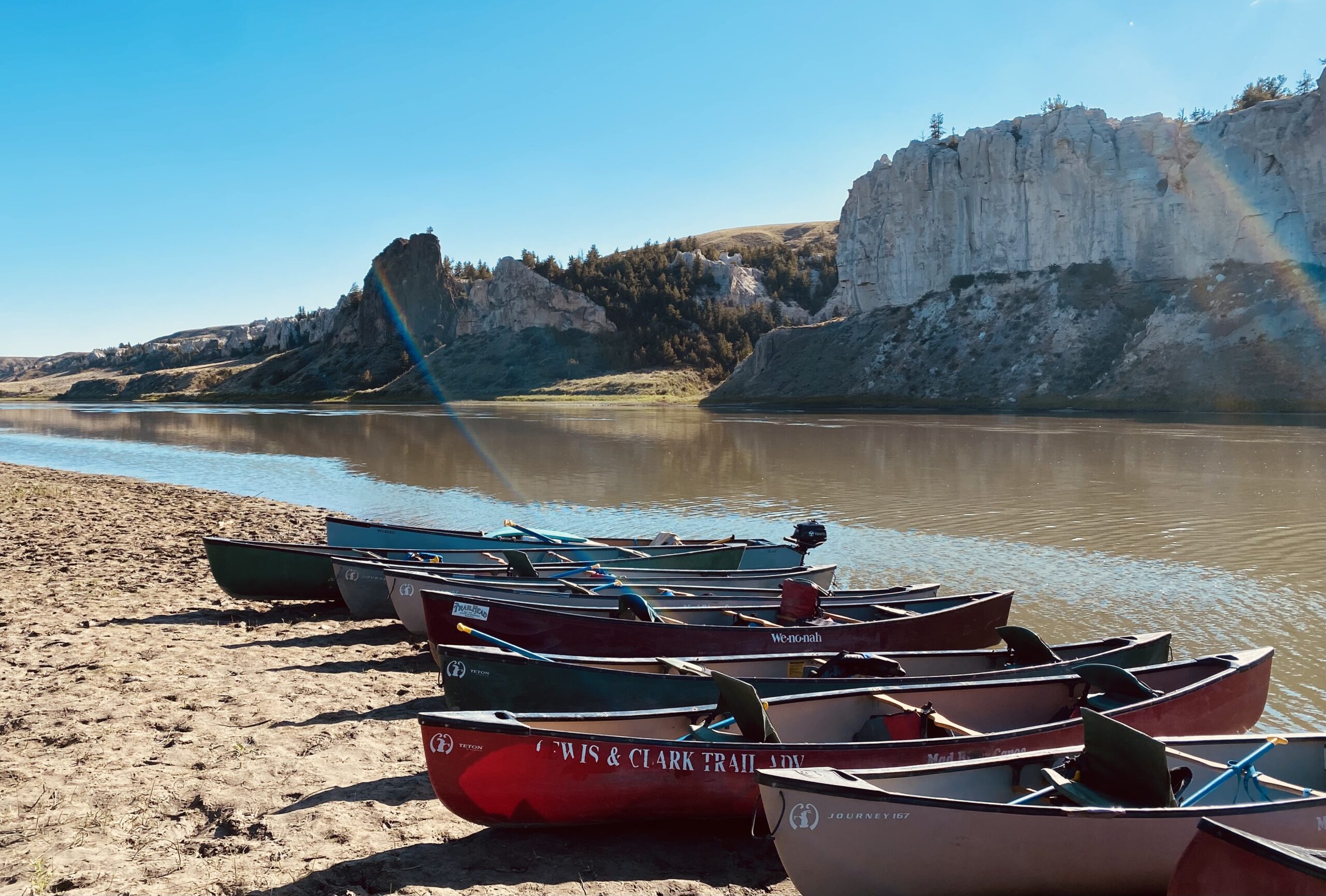
Even though there are 340 million Americans, our vast continental landscape is still lightly populated, and we have (since the coming of Theodore Roosevelt) set aside 640 million acres for federal protection from the worst of industrial extraction. The federal public lands make up 28% of the 2.27 billion acres in the United States. Another 199 million acres are conserved by state and local governments. This adds up to about a third of the continent. Even though we are “loving our National Parks and Monuments to death,” our conservation system remains the envy of the world. Thanks to Theodore Roosevelt our public lands are accessible by the whole spectrum of the American population, in contradistinction to Europe and the rest of the world where most of the landscape treasures are fenced off for the exclusive use of insiders and elites. Tens of millions of Europeans and Asians visit America to enjoy our National Parks (63), National Monuments (155), National Game Preserves, National Recreation Areas (19) National Wildlife Refuges (573), and federally protected National Wilderness Areas (806).
Fuel Costs
This is perhaps not the best moment to bring this up, but gasoline prices in America are among the lowest in the world. Europeans routinely spend at least twice what we do to fill their gas tanks. This enables mobility and productivity on an unprecedented scale.
Material Opulence
If material success is your measure, America is bursting with stuff — the Walmarts, Target stores, Costcos, supermarkets, electronic equipment stores, and sporting goods stores are chock full. Material abundance in the United States is so pronounced that Americans host between six and 10 million yard sales per year, 165,000 individual yard sales per week. Meanwhile, even though the average American home has more than tripled in size since 1960, a full 13% of American families rent storage space in the more than 50,000 self-storage facilities across the nation. There are fewer than 11,000 self-storage facilities in all of Europe and they tend to be much smaller than their American counterparts. Canada has only about 3,500 self-storage facilities.
Entertainment
The average American has viewer access to more than 200 “channels” — movies, documentaries, television series, game shows, reality dramas, cooking shows, hunting shows, most of them now on demand. When I was growing up The Wizard of Oz was shown on television once per year and if you missed it, well, wait another 365 days. Today, if you were so disposed you could watch a superb documentary film every evening for the rest of your life. There are few movies that are not now available on demand, with more coming online every month. There are now more than 300 million flat screen TVs in America’s 115 million households, and there are now more than 35 million home theaters.

Conclusion
We continue to be the wealthiest, most powerful, most influential, and most consequential nation in the world. In spite of our current national bad mood, and though a high percentage of Americans tell pollsters the country is heading in the wrong direction, the American people remain vibrant, resilient, friendly, and personally optimistic. We take American democracy so much for granted that we are asleep at the wheel as some of our most sacred institutions and habits are being corroded all around us. From one point of view, as Prime Minister Harold Macmillan told the Brits in 1957, “we’ve never had it so good.” But from another perspective, we seem to be in slow-motion collapse and enduring a national nervous breakdown.
For all of that, I thank God I was born an American. If things broke down entirely here or if we descended into autocracy and I felt the need to leave, I would slip over the border into Canada, which in many respects is a kinder, gentler, more peaceful, more tolerant, less volatile “America.” Winnipeg, Regina, Calgary, Vancouver, Edmonton, Moose Jaw. Runners up would be Finland, Portugal, Spain, France, Denmark, and Germany, though they are decidedly not putting out the welcome mat and keeping the light on for us. Ideally, I would choose Great Britain above all other options, because it is the country whose literary and historical traditions I prize most (in some ways more than ours), but Britain is in palpable decline, and its per capita productivity (can this be true?) is now the size of Mississippi’s?!
But I would rather stay and fight for America than abandon it, no matter how severe the provocation. I would not want to live without the American West to wander in with awe and an immense sense of freedom. I love America. I believe our best days are ahead, but only if we look into the mirror, suck it up, get our act together, face and resolve the potent lingering issues of our national experiment, and find a way to reconcile with those we think are damaging our prospects.
NOTE: I realize that for each of the categories I have described in this essay, there are 1) serious exceptions; 2) those left behind; 3) uneven protections; and 4) important, even essential, caveats and qualifications. But hey, we’re celebrating here!
Happy birthday, America!!