
After a rental car odyssey, trekking 215-miles southwest of Istanbul, Clay spends a magical afternoon at the site of Homer’s epic, the Iliad.

The gods didn’t make it easy. I should have known. In Homer’s world, the citadel at Troy was said to be impregnable. When the ancient Greeks were preparing to cross the Aegean Sea to carry retribution to Troy, before the war began, violent winds kept them in port at Aulis. The Greek war leader, Agamemnon, asked a seer what he needed to do to secure favorable winds. The holy man determined that Agamemnon must sacrifice his daughter Iphigenia or he’d never leave the mainland. After some hesitation, Agamemnon cut Iphigenia’s throat at the shrine of the goddess Artemis. Funnily enough, his wife, her mother, Clytemnestra, never got over it.
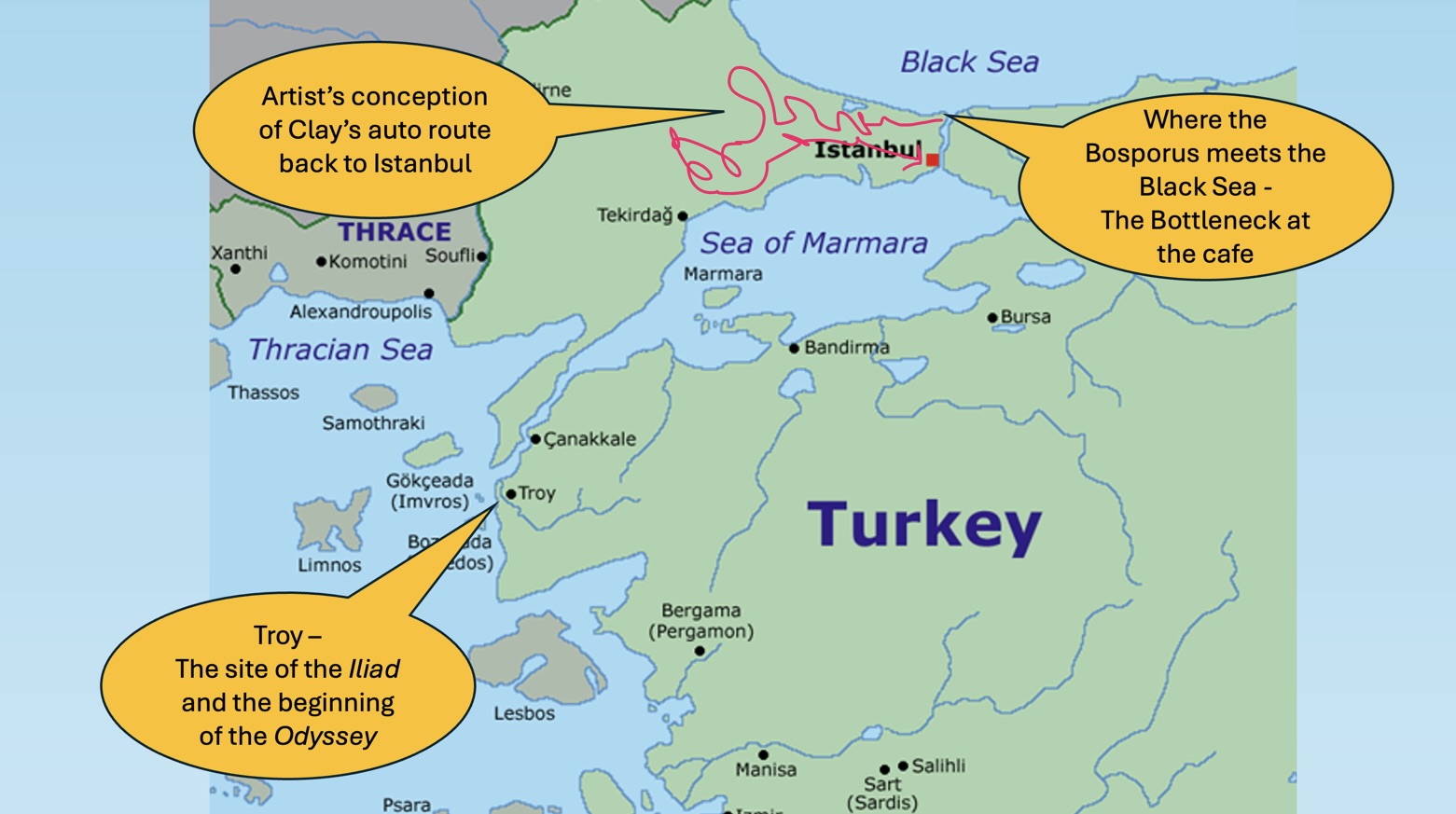
Troy is located in a very remote corner of Turkey, near the town of Çanakkale. Unless you sail over from the Greek mainland — which apparently comes at quite a cost! — you need to start the day in Istanbul, rent a car, and drive 215 miles west and slightly south to the ancient site. This involves driving across the longest suspension bridge in the world — over the Hellespont, the waterway that links the Mediterranean to the Black Sea. Easy enough, once you get on the excellent rural highways, but first you have to get out of Istanbul! And I repeat, the gods don’t make that easy. At Avis, we opted for the ruinously expensive maximum rental car insurance plan, but within half an hour, we would have turned back to buy double-secret additional rental insurance, except that going back would be just as difficult as going forward.
Once you clear the city, Turkey’s national roads are outstanding, better maintained than the American interstate highway system. We surged along toward Troy, on eerily empty highways, gabbing the whole time about the Homeric epics. The Iliad and the Odyssey were composed orally in a meter called dactylic hexameter, the result of decades or even centuries of open-sourced collaboration, including by the master poet Homer, and they were finally written down using the new Greek alphabet sometime around 700 BCE. The Iliad is the epic story of a heroic quarrel within the Greek camp at the tail end of a heroic decade-long struggle between West and East, between the Greeks (the aggressors) and the Trojans (the defenders), ostensibly over who gets to possess the most beautiful woman on earth, Helen, first Helen of Greece, then Helen of Troy. Helen, as you might expect, was a little self-conscious about touching off a ghastly war that ended with the utter destruction of Troy.
We finally got to Troy about 5 p.m. Fortunately, the site was open until 8, including a newish visitors center. We parked the car. We bought tickets. We stopped off at the W.C. We ran our tickets through the stanchions.
Troy at Last

And there it was. Troy. Troy of the Iliad and the Odyssey. Troy of the Trojan Horse. Troy, the home of King Priam and Queen Hecuba, Prince Hektor, the irresponsible playboy Paris, and the royal princess Cassandra, cursed by the god Apollo with the capacity to predict the future with 100% accuracy, and yet fated never to be believed.
The story of the Trojan War remains a core element of our common cultural inheritance, alongside Gulliver’s Travels, Robinson Crusoe, the assassination of Julius Caesar, and the star-crossed love of Romeo and Juliet. Everyone knows the basics of the story: the irresistible Helen, the trick wooden horse, the wanderings of the Greek hero Odysseus after the war (soon to be a major Hollywood film — again), Odysseus’ descent into Hades to consult the blind prophet Tiresias, blinding the Cyclops Polyphemus, and the tragic life of swift-footed godlike warrior Achilles, invulnerable except at his Achilles heel.
There are more than 400 sports teams in America that call themselves the Trojans, which is a little ironic considering that the original Trojans were fated to lose the big game. Depending on how you count, only two American sports teams call themselves Greeks. There is also a line of condoms called Trojans, even more ironic as a brand for a technology where failure is not an option. In the computer world, a “Trojan Horse” is malicious software that tricks you into downloading it before you realize it will crash your system. The word “odyssey” is part of our common vocabulary, signifying a long and challenging journey.
A Far Corner in the Universe
For us, venturing to Troy was just such an odyssey. It’s not on the way to anything else. You have to want to go there. Five years in the planning, rescheduled at least twice, expensive, pointless from a certain point of view, improbable from any point of view, and a perfect embodiment of everything that matters to me in life.
As we stood together, gazing in wonder at the remains of Troy, in a moment of perfect joy and harmony, I wanted to say, as Simeon did in the New Testament, “nunc dimittis” (Luke 2:29-32), “now you may dismiss me, for I have been fulfilled.” I had visited Troy once before, when I was 40 or so and the world was mostly still before me. Now I was back decades later at the other end of life, at the other end of the planet, with the person I most care about in the world. It cannot get any better than that.
But here comes some archaeological heresy. (I’m a mere humanities scholar.) From a certain point of view, the Idea of Troy is more interesting than what’s left. It’s not the Colosseum in Rome. It’s not the Parthenon in Athens. It’s not the Greek theater at Epidaurus. It’s not even Mycenae in the Greek Peloponnese, with its cyclopean walls and the famous Lion’s Gate. There are no standing structures. It’s a ruin. It’s a many-layered and jumbled set of walls, gates, palaces, towers, and pathways, worn down to their nubs like prehistoric teeth. It’s mostly rubble, and its many-layeredness (at least 10 rebuilds over several thousand years) makes it hard to “read.” The interpretive panels are excellent on the wooden walkway that encircles the site, but you have to bring your full imagination to the enterprise, and it helps if you have just finished rereading the Iliad, which, fortunately, I had.

Ah, but close your eyes and muse on all that happened here sometime around 1,184 BCE. Agamemnon, the greatest warrior in the world, quarreling over honor and a slave woman. The gods descending from Mount Olympus to help their mortal favorites in battle. Scenes of bloody slaughter humanized by Homer’s famous extended similes that compare battle situations to homely domestic activities, as when Athene brushes away an arrow from Menelaus the way a mother brushes a pesky fly from her sleeping infant’s face (IV: 131-132). The climactic single combat between the enraged Achilles and the protector of the city, Hektor, after Achilles chases him three times around the walls of Troy. War-drunk Achilles dragging the corpse of Hektor face down around the grave mound of his closest friend Patroclus, until the gods intervene and persuade him to return the body to Hektor’s grieving parents.
In the ancient world, everybody who was anybody made the pilgrimage to the ruins of Troy: Xerxes (480 BCE), Alexander the Great (334 BCE), Julius Caesar (48 BCE), the Roman poet Ovid (25 BCE), the emperor Augustus (20 BCE), the emperor Hadrian (124 CE), and that classicist Brad Pitt (2004).
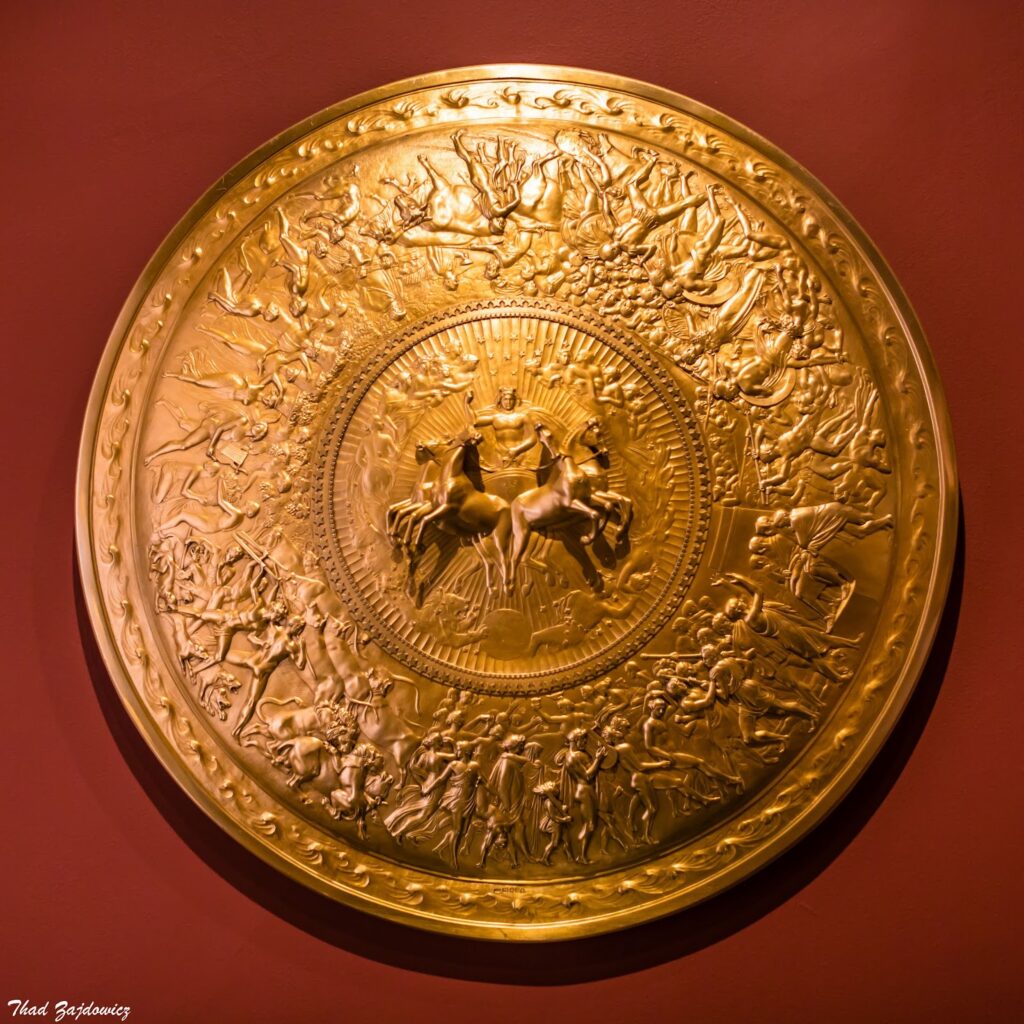
I closed my eyes and mused on my own life trajectory, too. First encounter with the Iliad in college, overlooking the Mississippi River. Strenuous efforts to learn enough ancient Greek to read the epics in the original at Oxford. The many times I have taught Homer in a range of translations. Seeing Robert Flaxman’s magnificent bronze sculpture of the Shield of Achilles for the first time at the Huntington Library in Pasadena. The Iliad’s and Odyssey’s place among the handful of books that have made the difference in my experience. The capacity of great literature to redeem one’s life. A lifetime of literary pilgrimages (not to mention the world’s largest ball of twine in Cawker City, Kansas).
What a long, strange trip it’s been.
Nunc dimittis.
It was an absolutely perfect evening. Although thousands visit Troy every year, it was late in the day and at the beginning of the season, so there were no more than 20 other people at the site (and no buses) while we lingered there for a couple of hours. The temperature was about 75 degrees with a light wind coming off the Aegean Sea, where the Greeks landed their 1,000 ships 3,210 years ago. We took photographs of Heinrich Schliemann’s famous crude excavation trench, an outrage according to today’s careful and systematic archaeologists, and we tried to decide how to evaluate great individuals of history who had deep (and increasingly conspicuous) flaws at the core of their achievement.

In the perfect evening light, the quietude of the site took on a kind of magical aura, made more powerful by the thousands of red poppies that were blooming in every direction — a linkage somehow between two colossal wars separated by 3,099 years: Troy of the 12th century BCE and Flanders Field in 1915, France.
Per my vow, I circumambulated the site three times. I won’t say I ran like swift-footed Achilles, but I did complete the circuit without crying out, “CPR, CPR, my kingdom for some CPR!” I also poured a little libation to the messenger god Hermes, who had assisted me materially in the hectic run-up to my flight from Denver.
A Bridge Too Far?
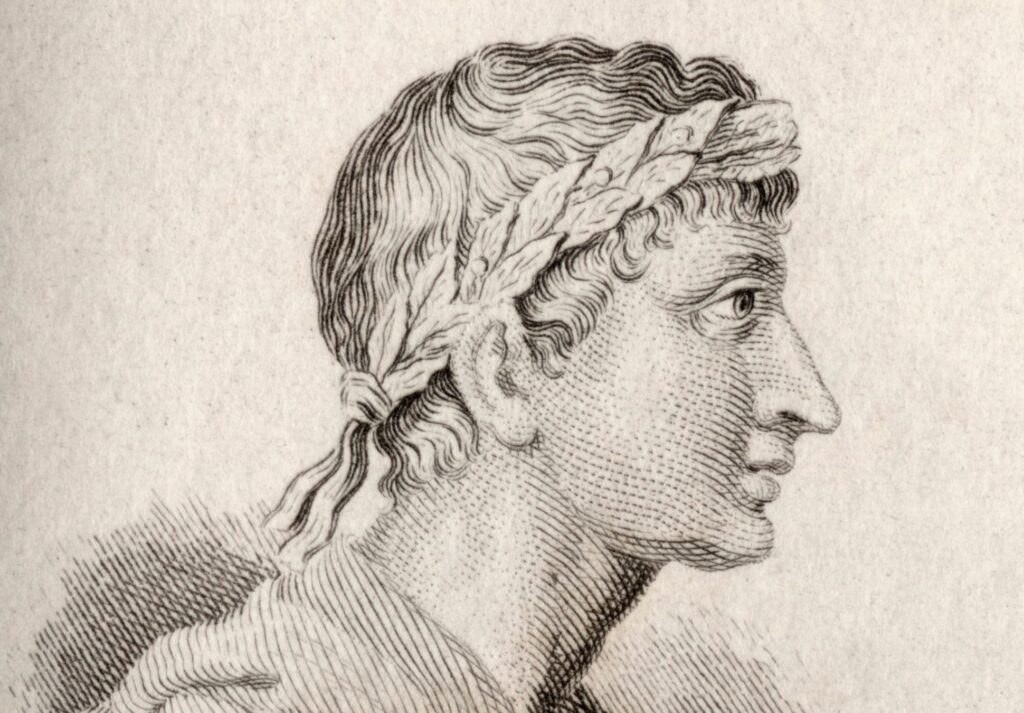
Having now conquered Troy and clearly possessed by some mischievous god, we decided on a whim to travel all the way back past Istanbul to the shore of the Black Sea. Why? Because it is the Black Sea! Where the Roman poet Ovid was banished by the emperor Augustus for the last years of his life. Where the Crimean War (1853-58) occurred, including the famous “Charge of the Light Brigade” immortalized in Tennyson’s poem of that name. The Black Sea of Odessa, the Crimea, the luxury dachas of the Russian elite. One arena of Ukraine’s ordeal.
To fly halfway across the planet to visit Troy, experiencing all such a journey involves (planes, ships, trains, automobiles, taxis, subways, Ubers; and money, time, planning, coordination, reservations, background reading, packing and unpacking, and the usual endless delays), and — having accomplished that, having scrambled three times around the walls of Troy chasing the ghosts of Achilles and Hektor, having finally fulfilled that endlessly anticipated quest … and then to cook up a knuckleheaded spontaneous add-on side trip to the Black Sea, that is the definition of the Greek concept of hubris — getting a little cocky, getting out ahead of oneself, one toke over the line, inviting failure or even retribution. And that is precisely what we did. With glee.

Getting to the vicinity of the Black Sea proved to be easy. Getting to the Black Sea was more challenging. Eventually, we found a great overlook with a terrace café. We reckoned we would park there, order a salad and some sparkling water, and then walk down to the shore. But when we got there through serpentine nerve-crunching streets, often single-track, with horn-blaring local drivers zipping around us with rage in their hearts, we discovered that a huge fuel truck had gotten itself wedged against a seaside retaining wall at a hairpin curve just below the cafe. That truck wasn’t going anywhere for a long time. In Homeric terms, it was becalmed. We ate our salad quickly and then somehow extricated ourselves from that predicament, not without some moments of terror. Half an hour later, we found a little cove of the Black Sea where we could park, and we waded out a bit to say we had.
The drive back to central Istanbul, only 51 kilometers away, proved to be the most harrowing of my long life of crazy automobile adventures. I do not think I exaggerate when I say there were at least five moments in those two hours when I was pretty sure we were going to have a head-on crash, be swept over a cliff without guardrails, be arrested by a Turkish SWAT team, rear-ended by a professional tailgater, pistol-whipped by a local law enforcement officer, or crumpled like an old sheet of aluminum foil. It felt more like Dante’s Inferno than Homer’s Odyssey. My only goal in life in those hours was to get the rental car back to Avis in one piece — and ourselves, too, if possible. Without Google Maps, we’d still be there, in a foreign land where the language is not only not English, but not even Indo-European, blocked by a goat herd or force-loaded onto a ferry bound for Odessa. And yet those same Google Maps seemed to punish our hubris by sending us on the most labyrinthine and purely mad routing imaginable. By the time we got to the city, I was a nervous wreck. And that’s where the rush hour traffic began! It was like driving a rodeo clown car in Cairo plus Rome plus the L.A. freeway on a bad morning, with hundreds, maybe thousands, of motorcycles buzzing around us like horseflies in a cattle feedlot. And “optional” traffic lights.
All the way, I kept mumbling, like W.C. Fields in the 1940 movie The Bank Dick, “The resale value of this car is going to be nil.”
Somehow, we deposited the car unscathed at the tricky Avis return lot in the heart of Istanbul and took an Uber to our hotel. Only I was scathed. The attendant who checked us in inspected the car as if it were his new Rolex. He pointed to a scratch that had been there when we rented the vehicle (and which we had photographed at the time). If I had had a Turkish phrase book handy, I would have said, “Buddy, you are lucky this thing still has a chassis.”
Two days later, I woke up in Istanbul (population 15.7 million) and yet slept in my own bed just three flights and 5,645 miles away in North Dakota. If that’s not an industrial miracle, what is?
Now I am home in North Dakota, and Troy is behind us. It’s unlikely that I will return to Troy. It could never be more purely satisfying than it was last week; part of its appeal was valedictory. I will, however, most assuredly return to Istanbul, one of the most vibrant cities on earth.