
What is our American Story as the nation’s 250th birthday approaches?
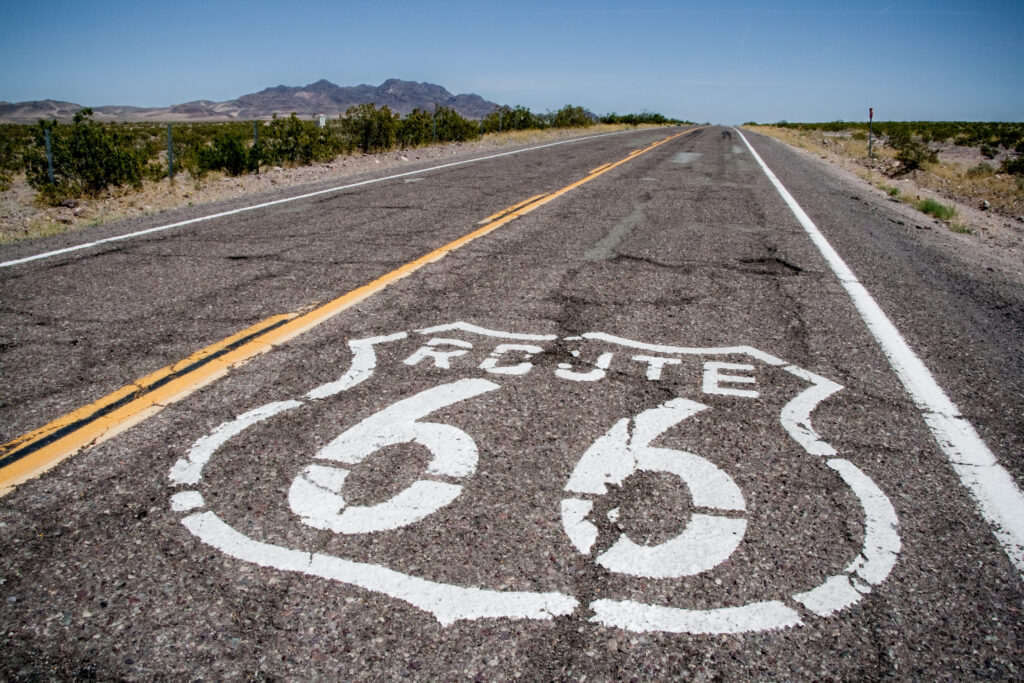
The 250th birthday of the United States is upon us. We can expect to be bombarded with logos, patriotic commercials, parades, songs, product lines, Happy Meals, American flags the size of football fields, speeches by Ken Burns and Doris Kearns Goodwin, and fireworks displays over the Potomac, over New York Harbor (silhouetting the Statue of Liberty), over San Francisco Bay. Tapes of Ray Charles singing America the Beautiful.
Think of the great trajectory. In 1776, we were a tenuous wartime coalition of 13 lightly populated Anglo-American colonies huddled on the eastern seaboard. A fresh, fragile nation of family farmers attempting to become (of all things) a republic. Population 2.5 million, one in five a slave. The world was all before us.
We have become the richest nation in human history, the most powerful, the most consequential, and the most globally essential. From that point of view, our national trajectory has been simply breathtaking. In 1800, when Jefferson was elected president, we were a harmless upstart nation of no consequence in the global arena. And now we are the colossus of the world, but depending on a number of factors, not for much longer. Our soft power permeates the most remote corners of the planet. Someone in the Brazilian jungle or eastern Angola is dressed in running shoes and a t-shirt, uses the internet, and watches American movies. There has been nothing like it in human history, not even at the height of the British Empire.
Now 250 years later, we are a vast multicultural nation of 340 million consumers straddling the continent and squinting at Canada and Greenland. Fragile in a whole new existential way. The world’s weary hegemon. A nation in retreat from global leadership. Obesity rate 41%. One in six Americans takes coping drugs. One in five of our children goes to bed hungry. We own 398 million guns, 290 million registered vehicles. The average credit card debt is $6,500 per person. The highest incarceration rate in the world, 4–7 times that of other developed nations. A spotty and irrational national health care “system.”
Questions We Should Ask
Who were we then (1776–1787)? What was their dream of America? How well have we embodied that dream? Does it matter anymore what the Founders had in mind for us? Where are we headed? What binds us together? Are we in decline? Do we have a collective vision of the American future? Can we recover? Are we still one nation? Why is there so much angst in America, the most blessed of all countries in history? Why are we at each other’s throats? What is all the shouting about? What broke us?
The parades and fireworks are going to be great, but these are the questions we need to ask ourselves. What we really need is a thoughtful, evidence-based national conversation about who we are, how we got here, and where we are headed. If you don’t step back on a date this big (a quarter of a millennium) and do a national reality check, take a hard look in the mirror, when will you do so? 2034? Wait until 2076?
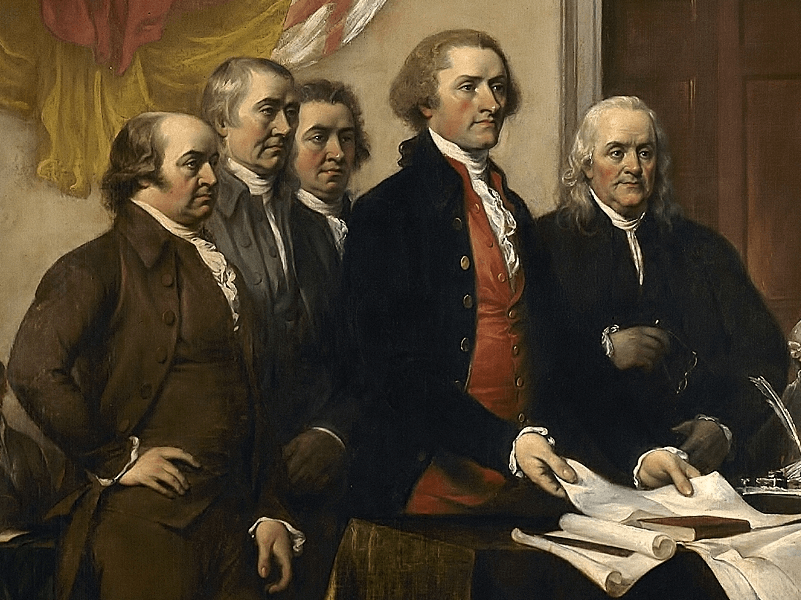
Flawed though they were, the Founding Fathers created the world’s first intentional nation. Other nations just burble up. We were born in Enlightenment documents. We were also born in Roman classics like Plutarch’s Lives, the Annals of Tacitus, and Livy’s Ab Urbe Condita; and in John Locke’s Second Treatise on Government and Montesquieu’s Spirit of the Laws. The Founders hammered out an unprecedented set of principles on human rights, equality, liberty, republican political protocols, and the restraints on the power any entity or individual should have. A great vision that we have never quite achieved, and now seem to be backing away from.
Why? In my view, it’s largely because we have lost our national narrative.
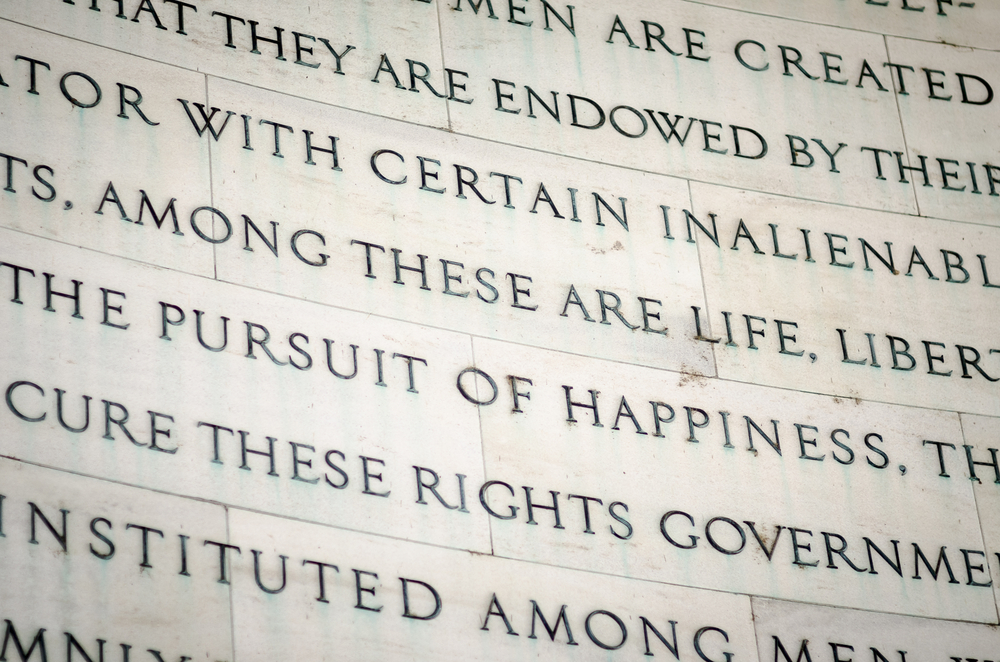
What is the American Story? What is the Story of America?
The Old Narrative
Jamestown 1607. Plymouth Rock 1620. The quest for religious freedom. Colonial restiveness. The Boston Tea Party. Committees of Correspondence. Ben Franklin and his kite. Lexington and Concord. The Declaration of Independence. Washington crosses the Delaware on Christmas night. Yorktown. Lafayette.
Andrew Jackson and the Trail of Tears — as if that were a one-off. The social dynamism of the frontier. Covered wagons. Manifest Destiny. The Pony Express. The gobbling up of Texas and then half of Mexico. 54–40 or Fight. The Gold Rush and the Oregon Trail. The coming of the transcontinental railroads. The Civil War. The Emancipation Proclamation and the end of slavery. The Homestead Act. The Indian Wars. Wounded Knee. Hawaii, Guam, Puerto Rico, the Philippines, and not quite Cuba. The end of the frontier and the coming of the American Century. The two Roosevelts. The U.S. was drawn into two world wars against its will. The Marshall Plan. And then the Cold War. The Great Society. The triumph of the capitalist democracies. The Berlin Wall comes down.
That’s what I learned growing up in the second half of the 20th century.
But we Americans had our own Cultural Revolution between the 1960s and the Millennium — the British poet Philip Larkin says the revolution (including the sexual revolution) began “Between the end of the Chatterley ban / And the Beatles’ first LP.” Women’s studies, Chicano studies, Black studies, Native American studies, Environmental studies, Queer studies, Global studies. Think of the seminal texts: Dee Brown’s Bury My Heart at Wounded Knee (1970), Patricia Limerick’s Legacy of Conquest (1987), Betty Friedan’s The Feminine Mystique (1963), Norman Mailer’s Why Are We in Vietnam? (1967), Vine Deloria’s Custer Died for Your Sins (1969), The Autobiography of Malcolm X (1965), Seymour Hersh’s My Lai reporting and The Dark Side of Camelot (1969, 1997), The Pentagon Papers (1971), Rachel Carson’s Silent Spring (1962), Robert Putnam’s Bowling Alone (2000).
Once we graduated from the old triumphalist paradigm (“America has made some mistakes, but on the whole …”), things became much more complicated, problematic, unsettling, and less tidy.
Which brings us to the new academic narrative (the left’s alternative narrative): Not Jamestown 1607 but Hampton 1619, with the first shipload of African slaves to North America. The unbearable hypocrisies of the Founding Fathers. Did any of them actually believe that all men are created equal? Or women? The ruthless dispossession of Native Americans — cultural genocide, sometimes edging into biological genocide, and editorial calls for extermination. Let’s call it a Trail of Broken Treaties (370) and two centuries of ethnic cleansing. Heedless hectic extraction — furs, lumber, buffalo hides, gold, silver, lead, iron ore, copper, water, coal, oil, natural gas, uranium. Profound maldistribution of wealth. An intentional American global empire, forget the phony rhetoric. Japanese Internment. A tenacious underlying core of white supremacy. Extraordinary renditions. My Lai, Abu Ghraib, Guantanamo. Trayvon Martin, Breonna Taylor, and George Floyd. ICE raids. The killing of the planet.
If that’s how you see America, count me out. It’s arguably some of that, but it is so much more than that.
I can no longer subscribe to the narrative of my childhood and formation. (We know too much now.) Nor can I subscribe to the postmodern “America is a bunch of lies” narrative. I’d be somewhere in between (and closer to the idealist than the jaded end of the spectrum), but how do you reconcile the beauty of the Homestead Act and the National Parks with our awareness (now inescapable) that these great official American land distribution programs were possible only with the dispossession of the indigenous sovereign peoples whose lands we appropriated without compensation and usually without even consultation? And how do you reconcile the narrative of steady racial progress with the heartbreaking fact that Black parents have to give their sons the cautionary “driving while Black” lecture every time they leave the house? And how do we square the national narrative of enlightenment with the global environmental disaster (called “climate change”) we’re still half-unwilling to acknowledge, much less address?
America at 250. Celebration? — Commemoration? — Observance? — Wake?
What binds us together as Americans? What values do we share? Are we still one nation or two — or more? What does it mean to be an American on July 4, 2026? More than 70% of all Americans say they are dissatisfied “with the way things are going,” according to a variety of respectable polls. Americans have lost respect for nearly everything: Congress, the presidency, media, the Supreme Court, policing, K-12 education, higher education, the Justice Department, even organized religion.
If I had to nominate a term for where we are now, I’d say this is the Age of Disillusionment.
I repeat: we urgently need a civil but rigorous national conversation with everyone at the table for once. We need to talk about the public lands. We need to talk about America’s place in the world. We need to talk about immigration and national identity. We need to talk about the health of our environment. We need to talk about the health of the American people. We need to talk about the dispossession of Native Americans. We need to discuss the health of the U.S. Constitution. We need to talk about race. And we need to talk about creating an affordable educational system that will prepare our children and grandchildren for the world they are about to inherit — as Woody Allen says — “right in the teeth.”
If we really think America is the world’s most extraordinary experiment, the best way we could celebrate our 250th birthday is to get serious about renewal.
If I had the talent, I would try to write a new national narrative that might possibly achieve consensus. Ken Burns has done his part. The myths we have lived by feel threadbare at this point in our history. Where is that epic poet who will help to make us new?