Free speech and the future in context.
“Truth is great, and will prevail if left to herself, that she is the proper and sufficient antagonist to error, and has nothing to fear from the conflict…”
Thomas Jefferson
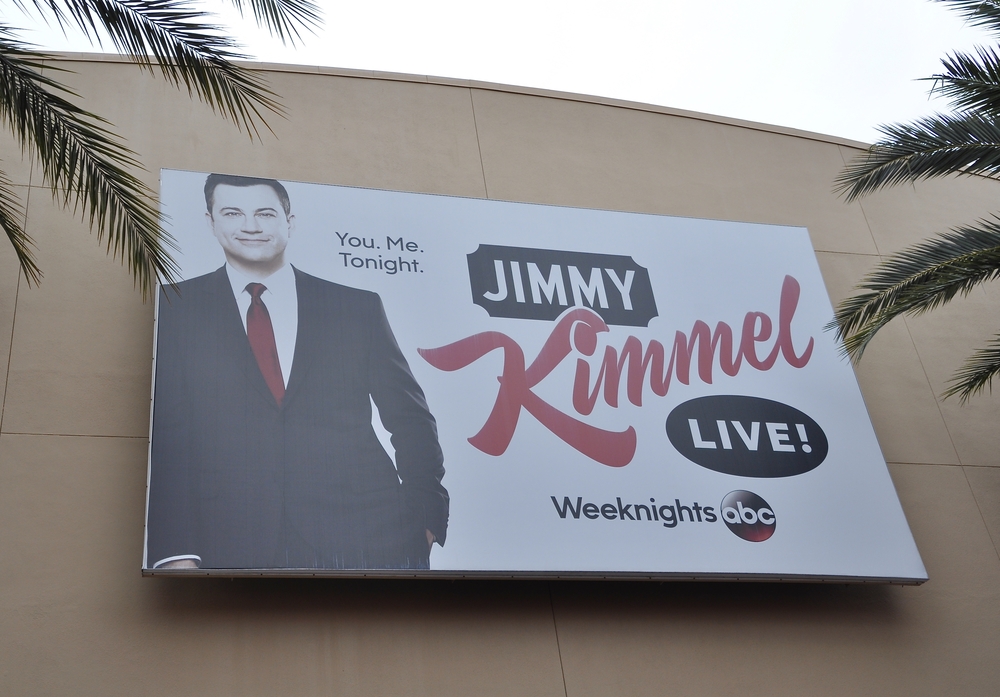
I don’t normally watch late-night television. These days, it just postpones sleep without much enlightenment or even entertainment. Mostly, I have lost interest in the late-night monologues of Stephen Colbert, Jimmy Kimmel, Jimmy Fallon, and Seth Meyers because they have become so political. After spending too much of my alert time throughout the day listening to political rancor and the Culture Wars, I’m not really looking for more of it at bedtime. Meanwhile, the talk show lineups these days are at least half made up of actors and musicians I have never heard of, which proves either that I am entirely out of touch or that what passes now for celebrity has left me and many others high and dry.
First, there was the cancellation (effective May 2026) of Stephen Colbert’s The Late Show by CBS, bowing to pressure from the Trump administration. Now ABC’s Jimmy Kimmel has been suspended indefinitely, thanks to the same political pressures, for a joke he made in the wake of the murder of Charlie Kirk on September 10 in Orem, Utah. Now, Brendan Carr, the Director of the Federal Communications Commission, is talking about reviewing the licenses of television networks that criticize President Trump.
I decided to watch a YouTube clip of Jimmy Kimmel’s monologue from Monday, September 15, to see what all the fuss was about. The monologue, as usual, was filled with anti-Trump jokes and jabs, but the utterance that precipitated his suspension was: “We hit some new lows over the weekend, with the MAGA gang trying to characterize this kid who killed Charlie Kirk as anything other than one of them and doing everything they can to score political points from it.” Not much of a joke. It was an angry political accusation, embedded in a humorous monologue, disguised as a joke. If it had been funny, it might not have brought down the hammer on Kimmel, because laughter breaks the tension and signals that what is being said may not be strictly true. It might have been better, at so tense and volatile a moment in our frayed republic, for Kimmel’s writers to veer away from any joke that approached the Charlie Kirk shooting in any way, especially so soon after the incident, but what Kimmel said does not seem to me to be particularly offensive. It may be inaccurate. There were early reports that the young man who shot Kirk (Tyler Robinson) was enraged that Kirk was not right-wing enough.
That may have been the underlying basis of the joke. We have since been informed that this was not true. It certainly is true, however, that many MAGA commentators, including the President of the United States, immediately blamed the Left for Kirk’s murder. The Right has indisputably been attempting to score political points in the wake of the assassination.
In doing so, the Right conveniently ignores the brutal assault on Paul Pelosi (October 28, 2022), the arson attack on Democratic Governor Josh Shapiro’s home (April 13, 2025), the killing of Minnesota Democratic legislator Melissa Hortman and her husband (June 14, 2025), or the sacking of the U.S. Capitol on January 6, 2021. America is descending into another period of political violence — and it is clearly nonpartisan.
Representative Steve Scalise was nearly killed at a Congressional softball game practice on June 14, 2017. He’s a Republican. Representative Gabby Giffords was shot in the head at a constituency event on January 8, 2011. She’s a Democrat.
The “joke” Jimmy Kimmel delivered on September 15 was a dubious political jab. For which Kimmel should be suspended?! If tastelessness were sufficient reason to cancel commentators and comedians, “who shall scape whipping?” Comedians live at the edge of tastelessness. And when we laugh at their jokes, we are momentarily complicit in their transgressions. That’s the nature of humor.
It always seems weird to me when any political faction goes nutzoid about the content of a television show. Why not just change the channel or shut off the television altogether? That’s how the market makes program decisions. If half of Colbert’s or Kimmel’s audience drifted away in disgust, the networks would replace them in short order. Nobody forces a right-wing person to watch Colbert or Kimmel or Bill Maher or MSNBC or 60 Minutes or Saturday Night Live. This is not (yet) George Orwell’s 1984, where every dwelling has a telescreen that bombards the nation’s people with the pronouncements of Big Brother, and there is no way to change the channel. These days, there are essentially an infinite number of programs to watch on television or your smartphone at 10 p.m. No one is required to watch Real Time with Bill Maher any more than anyone is required to watch Mark Levin’s Life, Liberty & Levin. If it offends, turn away. Turn away in disgust.
Humor is edgy. Humor is transgressive. Humor offends. Humor nudges up to and sometimes crosses the line. We need humor to survive. It helps to bleed off the terrible tensions of being alive (in bed, in the office, in the kitchen, in the political arena), in part because it acknowledges things that “in polite society” we have a hard time admitting. Here’s a tasteless joke from 1980 when Massachusetts Senator Ted Kennedy challenged incumbent President Jimmy Carter for the Democratic nomination: “Did you hear that Amy Carter won her school’s spelling bee? She was the only student who could spell Chappaquiddick.” By 1980, the tragic incident at Chappaquiddick was more than a decade in the past, but who makes humor about the drowning of a young woman in a late-night car accident? When did it become OK to name a band the Dead Kennedys? Before the 1996 presidential election, Jay Leno delivered the following joke: “There are signs that Clinton is getting overconfident; he’s started dating again.” Within days of the horrific space shuttle Challenger disaster in 1985, this joke circulated widely but under the media radar. “What color were Christa McAuliffe’s eyes? Blue: one blew this way and the other blew …”
The idea that political humor is largely left of center is partly true, I suppose, but there is no shortage of satire aimed at the two Clintons (“Twin Air Bags,” said one inspired bumper sticker), Joe Biden, Barack Obama, Al Gore (the “lock box”), Howard Dean (shrieking his political ambition, January 19, 2004), and others. In the depths of the Bill Clinton scandals in 1998, I remember watching an episode of The Tonight Show with Jay Leno. A full 15 minutes of the monologue consisted of more than a dozen blow-job jokes.
Political humor serves to vent our frustration in our recognition that many (most?) politicians are pontificating, self-righteous hypocrites who make promises they have no intention of keeping, attack their real and perceived enemies for corruptions they practice themselves, pretend to be looking out for their constituents when they are mostly looking out for themselves, intone pieties they don’t actually feel, trot out party talking points they don’t necessarily endorse in private, and wrap themselves in God and the flag as if they held the patent for true patriotism.
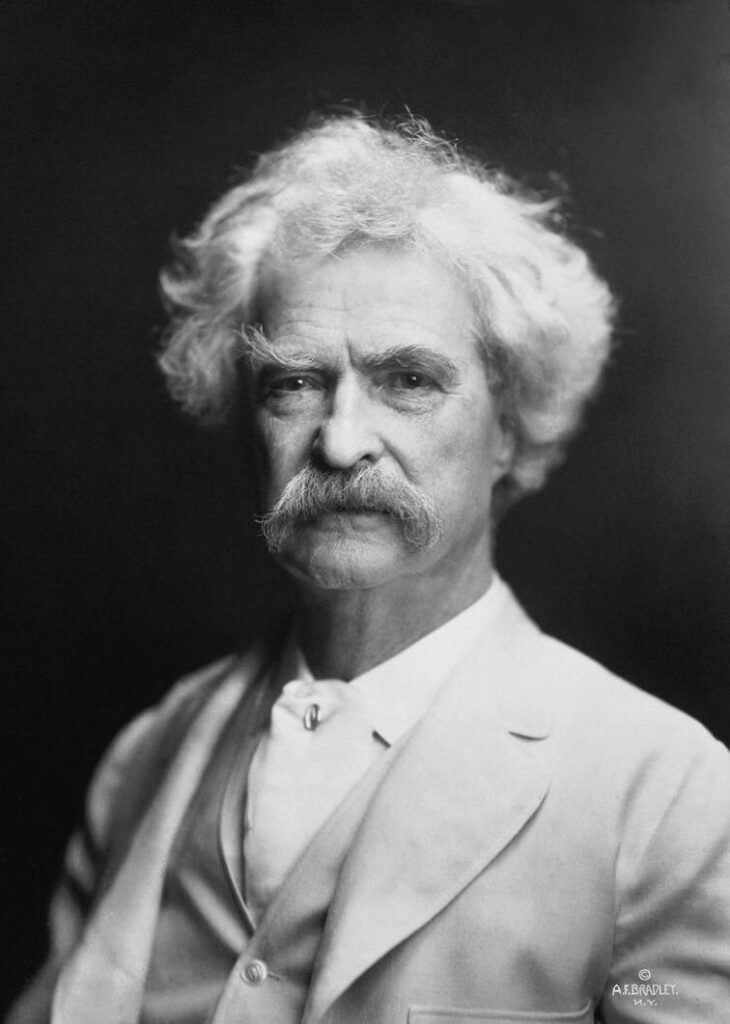
Our greatest American humorist, Mark Twain, had a single word for all of this: humbug. But he also quipped, “It could probably be shown by facts and figures that there is no distinctly native American criminal class except Congress.” That one’s funny.
Kimmel’s failed joke lives somewhere in this sensible principle: neither party should be using something as horrific and appalling as the death of Charlie Kirk to ramp up its fundraising efforts or to score cheap political points against their opponents. The problem with Kimmel’s joke is that he was doing just that: using the assassination to excoriate MAGA Republicans. The joke needed to be more universal to rise to the level of humor. Twain spoke of “Congress,” not the Republicans. And Kimmel’s joke was definitely too soon.
We’re living through one of the most disturbed, tense, and volatile moments in American political history. No matter what your party affiliation, we are going to need humor to get through this. You cannot watch a single hour of cable “news” television — MSNBC, FOX, Newsmax — without hearing a load of laugh-out-loud humbug. The great humorists are ecumenical in their targeting, and they make jokes even about political figures they support. Why? Because humans are, as Twain knew better than anyone, humbug. He frequently targeted himself: “Giving up smoking is the easiest thing in the world. I know because I’ve done it thousands of times.
In his 1897 satire The Mysterious Stranger, Twain wrote, “Your race, in its poverty, has unquestionably one really effective weapon — laughter. Power, money, persuasion, supplication, persecution — these can lift at a colossal humbug — push it a little — weaken it a little, century by century; but only laughter can blow it to rags and atoms at a blast. Against the assault of laughter, nothing can stand.” In other words, laughter is more likely to expose hypocrisy and cravenness, and change the world for the better, than solemnity and pious homilies. It’s one of freedom’s most essential tools.
The great satirist David Letterman, who knows something about transgressive humor, got it exactly right. When he was asked to react to the silencing of Jimmy Kimmel, he said, “This is a misery. I feel bad about this because we all see where this is going, correct? It’s managed media. It’s no good. It’s silly. It’s ridiculous. And you can’t go around firing somebody. … That’s just not how this works.” Key words here: we may be heading toward managed media, i.e., state media, the modus operandi of countries whose censorship and human rights abuses we deplore, such as Russia, North Korea, the People’s Republic of China, and Viktor Orbán’s Hungary. Key phrase: “That’s just not how this works.” In other words, Letterman was centering the current controversy in humanity’s ancient and healthy tradition of transgressive humor. “A Cro-Magnon walks into a bar …”
American presidents are notoriously thin-skinned about being criticized. Still, until now, they have mostly just whined about it, put in calls to publishers and producers (LBJ was notorious for this), and grudgingly acknowledged that the First Amendment protects one of the most cherished values in a free society. As with so many other sacred norms of American life, Donald Trump is deliberately charting a more authoritarian course. At this point, I’m not particularly surprised that his administration seeks to silence its critics and crush free speech it finds offensive. What surprises me is that the American people are not taking to the streets to protest these repressive actions. It’s hard to conceive of anything more important to a free society than freedom of expression, even when it is obnoxious, outrageous, irresponsible, offensive, irreligious, or obscene.
The First Amendment is firm on this principle. This key provision of the Bill of Rights (our national list of human rights off limits to government, any government) was not crafted to protect polite speech or responsible speech. The Founding Fathers understood that a free society cannot thrive without its critics, its dissidents, its media watchdogs. Every American — the children of liberty — should be alarmed at any administration’s attempts to squash or punish freedom of expression.
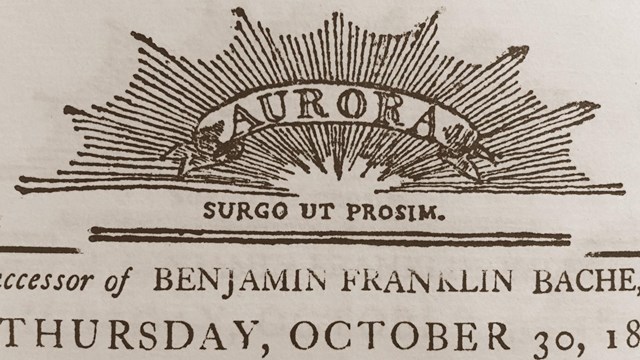
The 2000-year road to the First Amendment was long, bloody, and uncertain. As late as 1725, the great French exemplar of the Enlightenment, Voltaire, was beaten up by thugs in the employ of an aristocrat he insulted — in response to an insult hurled at Voltaire by that same member of the nobility. Here in the United States, the editor of the Philadelphia Aurora, Benjamin Franklin Bache, was arrested in 1798 under provisions of the unconstitutional Sedition Act for describing President John Adams as “the blind, bald, crippled, toothless, querulous Adams.” Mostly true, by the way, if a little impolite. During the Red Scare of World War I, the radical commentator Kate Richards O’Hare was convicted under the Espionage Act of 1917 for saying, in Bowman, North Dakota, that “American women who did not oppose the war and resist the Government in taking young men for the purpose of war were no better than the American brood sow.” She went to federal prison in Missouri, where she became a strenuous advocate for prisoner rights.
Already, I have observed the chilling effect that the Trump administration’s censorship pressures are having on American discourse. Tens of thousands of commentators, columnists, news anchors, reporters, influencers, scriptwriters, and comedians are being quietly warned by their sponsors and parent companies to pull back from any utterance that might lead to legal or other reprisals. The whole commentator class (except those on the right) is now walking on eggshells. This should alarm and even terrify every lover of the U.S. Constitution and “the rights of man.” Any survey of the history of free speech in America will immediately indicate that it is always a mistake to censor one’s critics, even in times of war. And what we are witnessing now is political censorship, the worst kind.
By this time, we are all a little numb from the norm-bashing disruptions of recent years, and mostly we wring our hands or shrug as one cherished tradition after another is shouldered off the stage of American life. But this is the big one, without which the rest of our freedoms are meaningless.
I believe that Charlie Kirk would deplore the Trump administration’s assault on freedom of expression. He was, after all, venturing into the often-hostile American college and university circuit to debate his critics. The standard of American life should be to cherish (and fight for) Voltaire’s famous (perhaps apocryphal) riposte: “Madam, I disagree with what you say but will defend to the death your right to say it.”
As usual, Thomas Jefferson said it perfectly: “Truth is great, and will prevail if left to herself, that she is the proper and sufficient antagonist to error, and has nothing to fear from the conflict, unless by human interposition disarmed of her natural weapons free argument and debate, errors ceasing to be dangerous when it is permitted freely to contradict them.”
Free speech can be terribly annoying, but the alternative is: tyranny.