
Last month, the Crow Canyon Archaeological Center, in collaboration with Listening to America, hosted a Cultural Explorations program titled Monumental Decisions: The Antiquities Act of 1906. To learn more about this joint Cultural Tour, listen to Clay’s recent podcast #1725 — Mesa Verde, Bears Ears and National Monuments.
Editor’s Note: We are pleased to share this guest essay by Dr. Susan C. Ryan, Executive Vice President of the Research Institute at the Crow Canyon Archaeological Center in Cortez, Colorado.
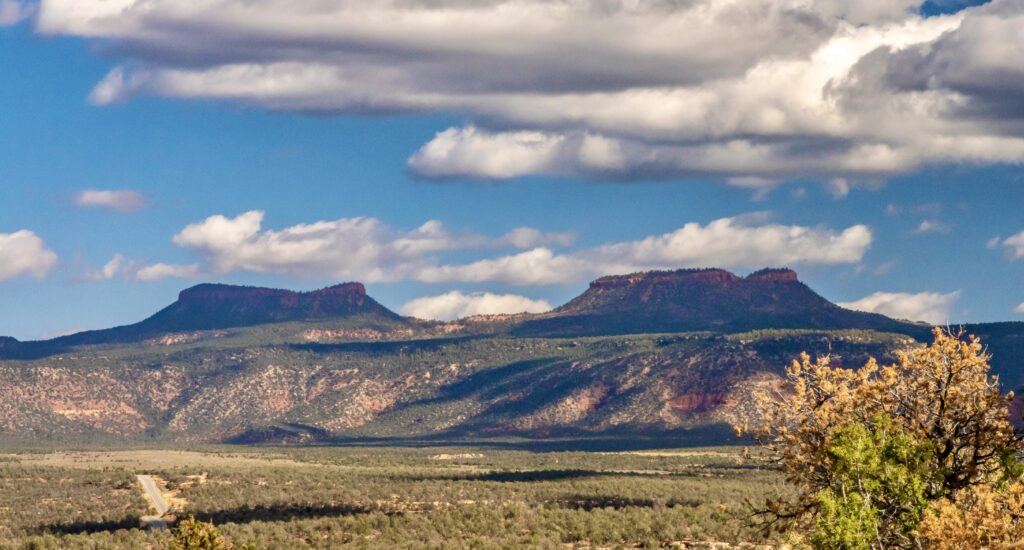
Over several days, a group of 19 participants from across the country traveled through Mesa Verde National Park, the Bears Ears National Monument, and Canyons of the Ancients National Monument, experiencing firsthand landscapes unlike any other in the United States.
As we stood among ancestral villages, rock imagery panels, seep springs, red-rock canyons, and table-top mesas, conversations moved beyond archaeology and scenery to explore larger questions about public lands, cultural heritage, tribal sovereignty, conservation, recreation, resource development, and the changing political climate surrounding federal land management. Participants encountered the diverse perspectives of the many stakeholders connected to these natural and cultural landscapes and gained a deeper appreciation for why decisions about these places inspire such passionate debates.
Those discussions revealed an essential truth: Bears Ears is different.
Across the United States, debates over national monuments often focus on maps, acreage, and presidential authority. Yet Bears Ears stands apart. It is not simply a place on a map. It is a living cultural landscape, a sacred homeland, and a place where Indigenous peoples have maintained enduring relationships with a place since time immemorial.
For tribal nations, Bears Ears is not a collection of archaeological sites or scenic vistas. It is an interconnected landscape where culture, memory, spirituality, ecology, and identity converge. That distinction is what makes the July 2026 reduction of Bears Ears National Monument incredibly consequential. While public discussions have centered on boundaries and the Antiquities Act, the impacts extend far beyond acreage. The decision created a nationally significant breach in tribal-federal collaboration and challenges one of the most impactful approaches to public land stewardship since the Antiquities Act was signed into law in 1906.
More Than Archaeological Sites
Many Americans think of national monuments as places that protect cliff dwellings, historic structures, rock imagery, fossils, or scenic landscapes. Bears Ears certainly contains all of these. But for the Indigenous peoples whose ancestors have lived in and cared for this region for countless generations, it is much more.
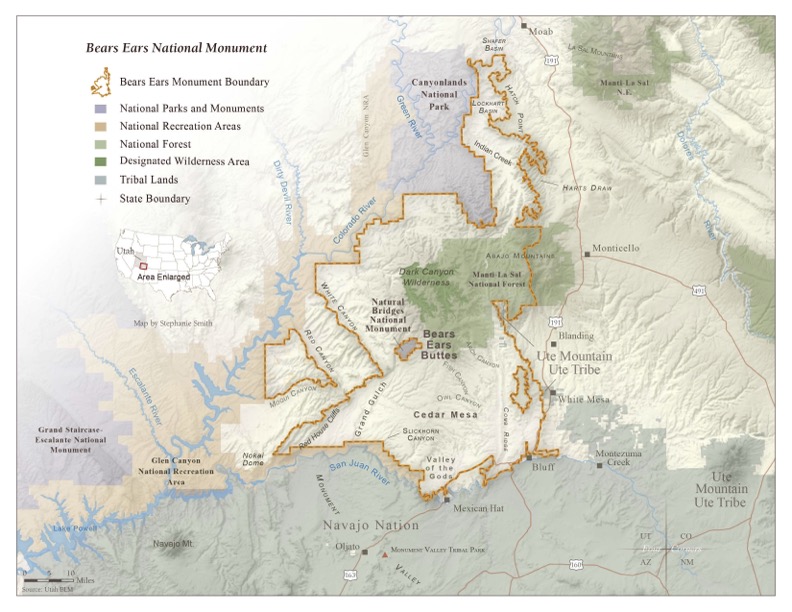
The Bears Ears Commission was composed of representatives from five sovereign tribal nations: the Hopi Tribe, Navajo Nation, Ute Indian Tribe of the Uintah and Ouray Reservation, Ute Mountain Ute Tribe, and the Zuni Tribe. Together, they advocated for the protection of Bears Ears as an ancestral homeland and living cultural landscape.
These Tribes have consistently described Bears Ears as an interconnected system of sacred places, traditional foods, medicinal plants, water sources, migration routes, stories, songs, and ceremonies. The significance of the landscape lies not only in individual locations but in the relationships among them. Protecting Bears Ears therefore means protecting an entire cultural system, not simply preserving isolated places or objects.
This perspective explains why changes to Bears Ears resonate so deeply among tribal communities. The question is not simply how much land remains protected. It is whether a living cultural landscape can continue to be cared for as a whole.
A Landmark Model of Co-Stewardship
Bears Ears became nationally significant not only because of the natural and cultural “resources” it protected but because of how it was managed.
Founded in July of 2015, the Bears Ears Commission worked alongside the Bureau of Land Management and the U.S. Forest Service through a collaborative management framework that combined traditional Indigenous knowledge and Western science. More importantly, the Commission represented a historic acknowledgment that tribal nations are not merely “stakeholders” with an interest in the land. They are “powerholders” as sovereign governments with enduring responsibilities to their ancestral homelands.
The resulting partnership became one of the most important models of public-land co-stewardship in the United States. The Bears Ears Resource Management Plan demonstrated how tribal leadership and federal agencies could work together to protect cultural resources, ecological values, wildlife habitat, and public access while honoring Indigenous relationships to place. In many ways, this became a model for the future, showing what is possible when Indigenous peoples help shape and implement management decisions rather than simply comment on them.
The Impact of the July 2026 Reduction
On July 13, 2026, the Trump administration issued a proclamation substantially reducing Bears Ears National Monument and terminating the Bears Ears Commission, reversing key elements of the collaborative framework established a decade prior. For many observers, the reduction represents another chapter in the long-running debate over the Antiquities Act and presidential authority. For the tribes connected to Bears Ears, however, the effects are far more immediate.
The decision weakens one of the nation’s most visible examples of tribal co-stewardship and disrupts a management structure built through years of collaboration and relationship and trust-building. It also raises concerns about the future protection of sacred places and the loss of a formal mechanism that ensured Indigenous peoples played a significant role in land management decisions.
The implications extend beyond Utah and the Bears Ears. Across the country, tribes, conservation organizations, public land managers, and communities have looked to Bears Ears as evidence that traditional Indigenous knowledge and Western science can work together to strengthen stewardship. The reduction therefore affects not only a monument but also a nationally recognized model of collaborative governance.
The Commission’s Mission Continues
Yet a presidential proclamation cannot erase thousands of years of connection, responsibility, and care. The tribal nations that united to advocate for Bears Ears did so long before the monument was established in 2016. Their cultural, spiritual, and ancestral relationships with the landscape do not depend on federal designations or administrative boundaries.
In responding to the July 2026 decision, the Bears Ears Commission reaffirmed its commitment to protecting Bears Ears and advancing tribal leadership in stewardship of their ancestral homeland. The principles that guided the Commission, respect for Indigenous knowledge, protection of sacred places, intertribal collaboration, and responsibility to future generations, remain unchanged. While government decisions may alter official structures, they cannot extinguish the enduring responsibilities that tribal nations hold toward this place. The Commission’s work will continue through education, cultural preservation, public engagement, and advocacy for meaningful tribal consultation.
Why Bears Ears Matters
The story of Bears Ears has never been only about monument boundaries or executive authority under the Antiquities Act. At its heart, Bears Ears asks a deeper question: Who has the legal right to make decisions about the places that remain sacred to living communities? The legal and political debates will continue. Boundaries may change. Policies will shift. But the cultural significance of Bears Ears does not expand or contract with a presidential proclamation.
This is why Bears Ears is different.
It is not simply a national monument. It is a living cultural landscape, an ancestral homeland, and a place where the past remains present in the lives of contemporary Indigenous communities. It reminds us that co-stewardship is not merely about managing land. It is about sustaining long-term, meaningful relationships between people and place.
And regardless of decisions made in Washington, D.C., the tribal nations that formed the Bears Ears Commission will continue the work they have always done: caring for the land, protecting its stories, honoring ancestors, and carrying forward their responsibilities to future generations.
Note: This article was originally published on the Crow Canyon Archaeological Center site here.