
After decades of close study and a year following their trail, Clay remains dogged by the many unknowables surrounding the famous American expedition.
My mind has been fixated on Lewis and Clark this summer. Although I think of myself as “an English major,” and the literature of the 17th century in Britain was my first intellectual love, it was pointed out to me earlier this year that I have now been talking about Lewis and Clark for almost 50 years. That’s a daunting statistic. One would think you could master a subject in five decades of hard study, but no. Thanks to the summer just ended, I know more about the Lewis and Clark expedition than ever before, but “mastery” is a word I wouldn’t even pretend to have earned for all of this “throwing about of brains,” as Hamlet puts it.
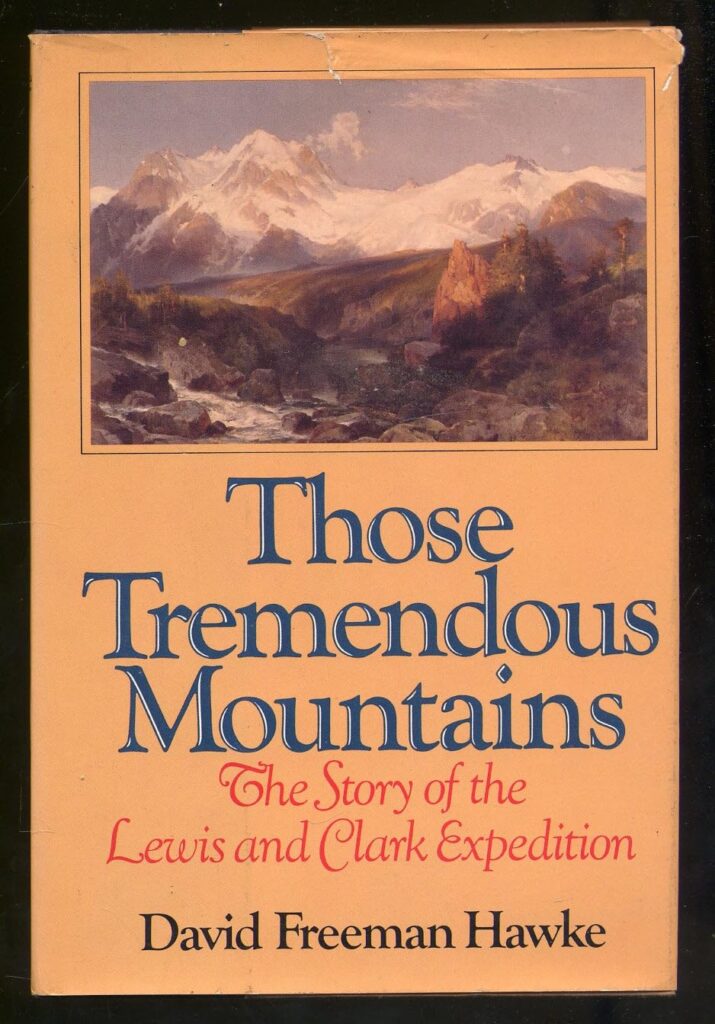
I first became obsessed with the Lewis and Clark story in the early 1980s, when I read David Freeman Hawke’s recently published Those Tremendous Mountains: The Story of the Lewis and Clark Expedition. At some point, I turned a page and learned that Meriwether Lewis committed suicide at the age of 35, just three years after returning from the journey, at a dismal frontier inn on the Natchez Trace. This came as a huge shock. Why would Lewis kill himself? Why would the president’s friend, an American hero, one of the great explorers of history, put a gun to his head? What brought him to this terrible end?
I have been trying to make sense of Lewis’ suicide ever since. I’ve written about it, lectured about it, puzzled endlessly over it, retraced his life’s journey in a range of ways, consulted psychotherapists and historians of suicide, read and reread and re-reread the journals searching for clues to his fragility. But a satisfying explanation continues to elude me — and everyone else — which is perhaps why a substantial segment of the Lewis and Clark community still refuses to believe he died “by his own hand.”
American Epic
The Lewis and Clark expedition is the great epic story of the early national period of American history. It’s a fabulously multicultural adventure — white army officers, enlisted men and volunteers, some of them with mixed-blood DNA; an African American slave; a Shoshone-Hidatsa woman and her infant son; French watermen; and more than 50 distinct Native tribes. It’s also the story of a journey through unfamiliar landscapes (the Great Plains, the Columbia Plateau, the Northwest rainforest), described for the first time ever by dedicated journalists. It is also, as the great historian James Ronda put it a quarter-century ago, America’s first great road story.
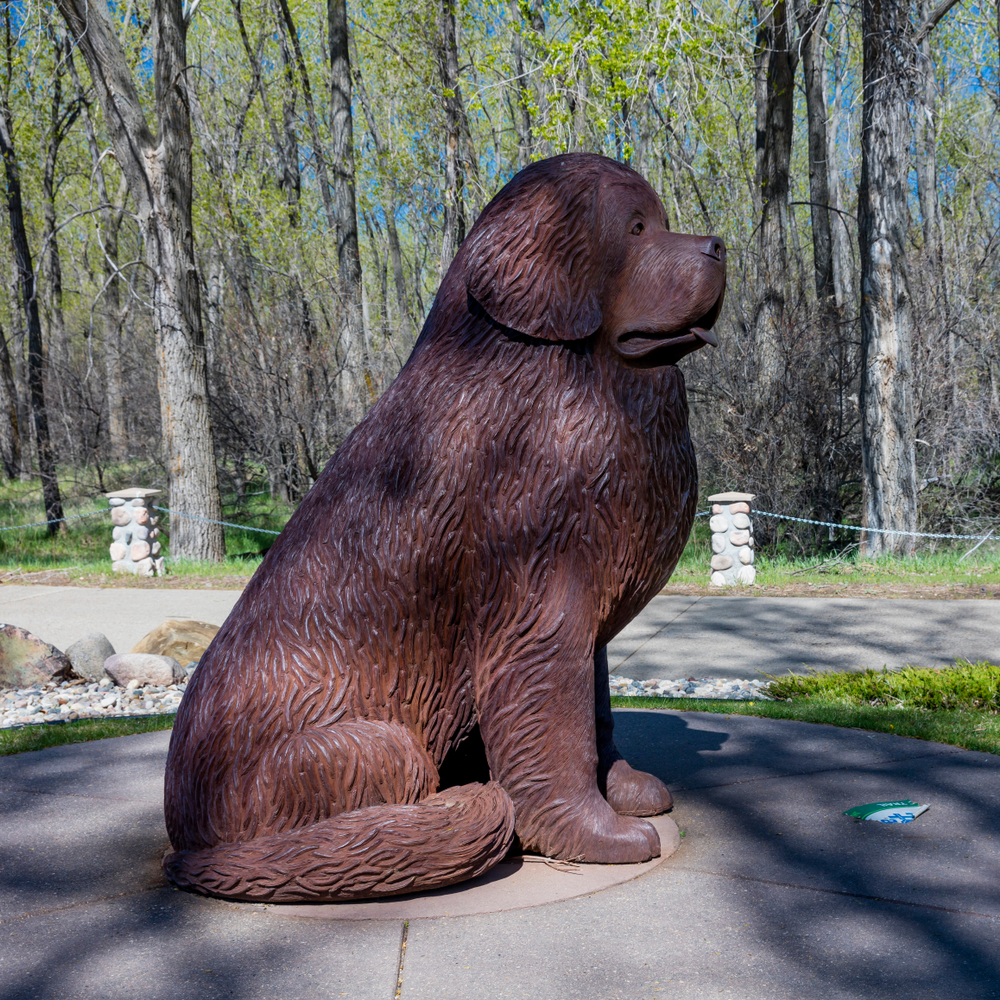
Whenever I speak to groups about the Lewis and Clark expedition, I begin by reminding myself and them that “they didn’t know we’d care.” The men (and one woman) who made this 7,689-mile journey from St. Louis to the Pacific Ocean and back again, did not know that 230 years later we would be so interested in their story that we would fixate over every detail: how many pairs of moccasins they wore out; precisely where the campsite they called “Dismal Nitch” was located; what happened to Seaman the Newfoundland dog; what their master trailsman George Drouillard did in Iowa that brought a severe rebuke from the captains; what religious activity, if any, occurred during the course of the expedition. If they had known that we’d be so profoundly interested (a quarter of a millennium later), they would have answered some of our questions: what did Sacagawea look like? What happened to all the equipment of the expedition after they returned successfully to St. Louis on Sept. 23, 1806? Are there missing journals and other documents that once existed but somehow were lost or destroyed along the way?
Etc.
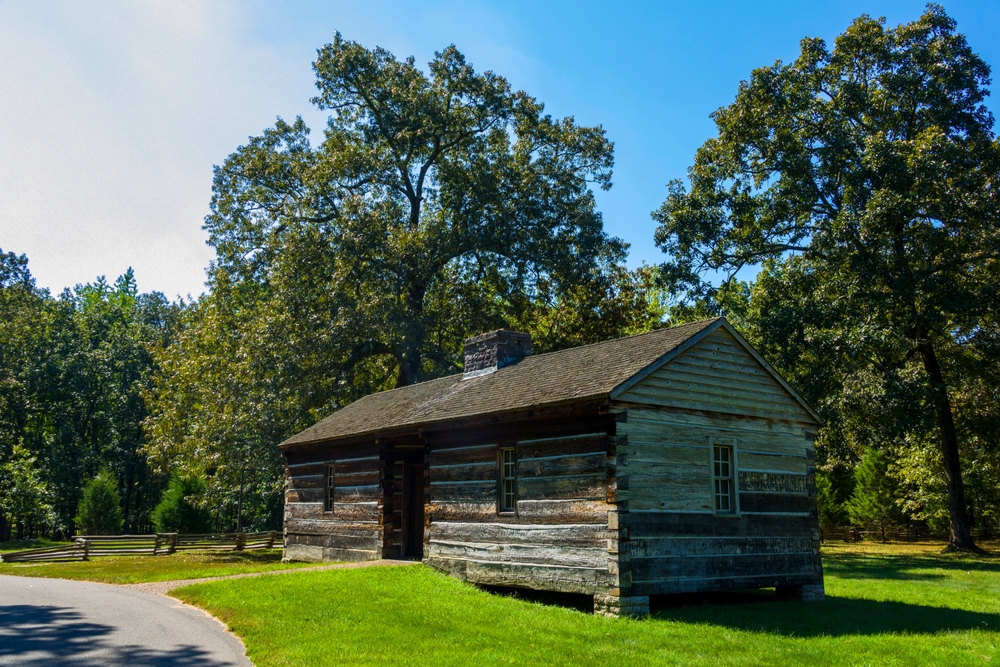
There are so many things I still don’t know about Lewis and Clark. We don’t know just what befell Lewis at a lonely inn on the Natchez Trace in the early morning hours of Oct. 11, 1809. We know that Meriwether Lewis died that day from two gunshot wounds, one to the head and the other to his abdomen. He left no suicide note. After decades of endless study and speculation, I have a hunch about why Lewis came undone after the expedition, but in the absence of definitive documentation, it’s impossible to know for sure.
We don’t know when or where Sacagawea died. It was probably in December 1812, and at a place called Fort Manuel on the North Dakota-South Dakota border. But since she is also buried on the Wind River Indian Reservation near Lander, Wyoming, and both stories can’t be true, we are left to try to sort it out with the limited documentary evidence we have. Although Sacagawea is the most statued woman in America and the third most important figure in American memory of the expedition, we have far more questions about her than answers.
Even after all this time, with countless scholars combing public records for information about every member of the expedition (45 or so at the start, 33 in the permanent party after the winter at Fort Mandan), we still don’t know very much about the great majority of those who participated in the journey. What do even professional Lewis and Clark scholars know about Thomas Howard, Robert Frazer, Hugh Hall, William Werner, Peter Weiser, John Thompson, or Richard Windsor, among others? Except for Lewis, Clark, Sacagawea, York, John Colter, and perhaps a couple of others, most of the men of the expedition are mere ciphers to us. They were born somewhere, joined the expedition, performed their tasks, returned safely, got their back pay and some land, and then disappeared into frontier life.
To learn what little can be ascertained about these lesser and yet stalwart members of the expedition, we comb the journals for clues. Richard Windsor, for example, took charge of several grizzly bear cubs the hunters had orphaned. This humanizes him a little. He traded the cubs to some coastal Natives in exchange for wapato root. This insipid swamp potato was a necessary staple of the expedition’s diet in the lower Columbia basin. William Bratton experienced severe lower back problems at Fort Clatsop during the winter of 1805-06. Lewis worried that he might die. During his illness, Bratton got a lot of attention in the captains’ journals. When he recovered, he dropped back below the radar again. The aforementioned Thomas Howard holds the distinction of being the last man court-martialed on the journey (Feb. 10, 1805). Beyond that, Howard did nothing particularly memorable — nothing that the five journal keepers thought worthy of writing up in their daily accounts of the expedition.
If we combed all 13 volumes of the journals for every interesting detail of every member of the expedition except the captains and the inner circle, the result would be thin gruel. If the great journey were to occur today, there would be reunions (as with Theodore Roosevelt’s Rough Riders), transcripts, a multitude of photographs, post-expedition interviews, documentaries, and memoirs. Reality shows. It’s maddening to want to know so much and be marooned with so little — scattered among 13 fat volumes of journal entries.
Ballooning in on the Corps
I often wonder what it would be like to drop in on the Lewis and Clark expedition for a few days, somewhere in Montana, Idaho, or Oregon. Archaeologists sometimes say that we could learn more about Homeric Greece by spending one day in residence at Troy in 1180 B.C. than in all the artifacts and prints of scripts that have been unearthed. This is an exaggeration, but you get the point. One of the key insights about Lewis and Clark is that the journals, though voluminous, do not tell the whole story of the expedition. Nor did they attempt to.
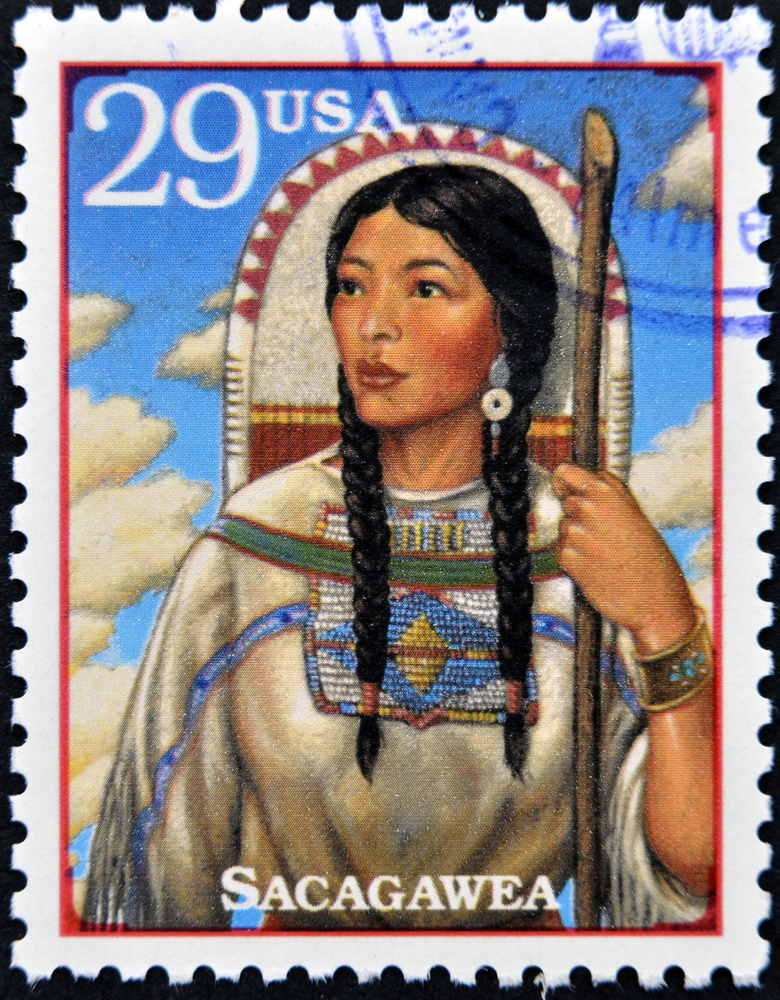
Visiting the 1804-06 expedition today, we’d be much more attentive to Sacagawea and her baby boy, Jean Baptiste Charbonneau (“Pomp”), than the journal keepers of 1805 and 1806. They reported her serious illness at the great falls of the Missouri in Montana. They found it amusing that she demanded at Fort Clatsop to be included in a reconnaissance party that ventured to the coast to see a whale that had washed up there. In November 1805, she relinquished a blue beaded belt that the captains needed to trade for a handsome sea otter robe. Above all, she plucked some essential items out of the Missouri River when her inept and cowardly husband, Toussaint Charbonneau, nearly sank the expedition’s command module, the white pirogue, on May 14, 1805. Beyond that, not so much. A visitor from today, air ballooning into the expedition camp, would come back with priceless information:
– What did she look like?
– Was she short or tall, lean or not?
– How much did she communicate with expedition members who were not her husband — and how, exactly?
– Was she cheerful or sullen or gregarious or stoic?
– What was her relationship with her much older husband, by all accounts not a very admirable man?
– What was her attitude toward this military expedition into the heart of sovereign Indigenous territories?
– We know her son, Jean Baptiste, was a favorite of William Clark. What about the rest of the men?
We cannot answer these questions. We are left with the fragmentary information that found its way into the expedition’s journals, official army records written by exhausted men in camps exposed to the elements. Because the pickings are so slim, we are compelled to make more of every incident and every data point than perhaps is deserved. We have no choice but to take what little the journals give us and cling to it, normalize it, stereotype it, and make it seem representative of a whole person we know almost nothing about. The most famous case is that of the youngest member of the expedition, George Shannon, who got lost in a big way once (for 16 days in South Dakota) and sorta-kinda lost for a couple of days at the upper reaches of the Missouri River near Three Forks, Montana. This enterprising young man, just 18 years old, is now forever typecast as “Shannon the forever lost.” Maybe this epithet doesn’t get at the core of Shannon’s character or identity at all. It is certainly unjustly reductionist. Surely Shannon was more than the boy who got lost.
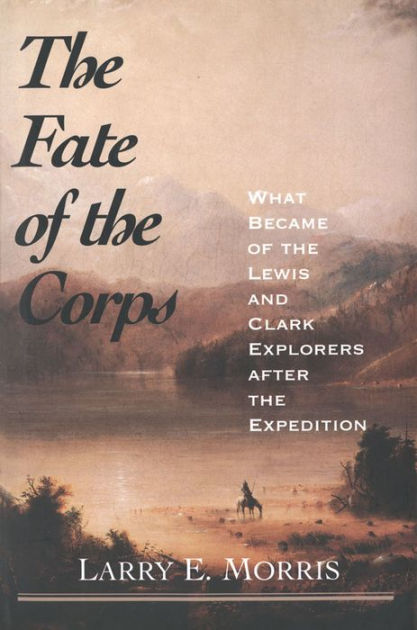
Desperate for biographical information, we are fortunate to have a book of painstaking genealogical research by historian Larry Morris: The Fate of the Corps: What Became of the Lewis and Clark Explorers After the Expedition (2004). In a long labor of mind-numbing research, Morris gathered up all the information he could find about each member of the party before and after the expedition. It’s an essential starting point for anyone who wants to know about the men who made the journey, but Morris’s extraordinary research still leaves us with thin gruel.
If we ballooned into the expedition carrying today’s sensibilities, we’d be observing Clark’s enslaved body servant, York, with obsessive scrutiny. We know he was a large man. We know that he had been assigned to William Clark at a very early age. We know that he was allowed to carry a gun in the wilderness. We know that York pulled his master, Clark, and Sacagawea and her child to safety during a flash flood at the Great Falls. We know that York clowned it up among the Mandan and Hidatsa, chasing children around the village and presenting himself as a wild creature domesticated by William Clark. They shrieked, sometimes with delight.
How did the other men treat York? In the course of the expedition, were they able to overlook (or overcome) his race and economic status? Or did they regard him as an inferior being who, in the infamous words of the 1857 Dred Scott decision, “had no rights which the white man was bound to respect?” Surely there were racists among the Corps of Discovery. From a structural point of view, they were all or almost all racists.
If I Could Hitch a Ride Into the Heart of the Lewis and Clark Story, Here’s What I Would Be Studying:
First, the relations between Meriwether Lewis and William Clark. If the journals are any indication, the two captains went all the way out and all the way back in “the most perfect harmony.” There is only the slightest evidence of the two leaders disagreeing. But we now know that they were quite distinct — Clark calmer, more stable, better in the day-to-day management of the expedition; Lewis high-strung, excitable, burdened under the pressures of “the mission.” I’d want to watch their interplay very carefully.
Second, the social dynamics. I’d look for clusters or factions among the men. Surely it was not invariably “all for one and one for all” on a 28-month camping trip! There must have been gravitations. Who were the jokesters? Who were the grumblers? Who jumped into action when action was required, and who shirked those responsibilities? Were there fistfights out beyond the scrutiny of the officers? Were there prayer groups? Was there sex? Which men were the most intense loyalists and which, if any, maintained a jaundiced view of the expedition’s purposes and leadership?
Third, did the men observe anything odd or troubling in Captain Lewis? Did they regard Lewis as aloof or distracted? Did the men quietly speculate on his complexities? Did they hold him in a kind of awe as the friend and protégé of the President of the United States? Did they find him accessible or inaccessible? Clearly, they respected Lewis; did they like him?
Fourth, did the captains have a private stash of alcohol? Because Thomas Jefferson observed a drinking problem in Lewis before and after the expedition, it stands to reason that we would want to know if he was nipping in the privacy of his tent. It’s more likely from a group solidarity perspective that the captains did not have a private supply of whiskey. Still, it is likely, given our understanding of Lewis’ burdens and his characteristic coping mechanisms, that he did.
Fifth, what was the social role of Lewis’ Newfoundland dog, Seaman? Was he the camp mascot, moving from buckskinned man to buckskinned man in search of caress or a morsel of food? Or was he exclusively Lewis’ dog, feverishly loyal to his owner and less interested in everyone else?
Finally (though the list could go on and on), would it be possible to observe anything in Meriwether Lewis that would provide any insight into his later decline and suicide? For those who accept that he committed suicide in October 1809, there are two schools. One believes that his decline and death were entirely unrelated to the great journey. This was the late Stephen Ambrose’s view that nothing in or on the expedition is a useful clue to his sad end. I belong to the other end of the spectrum, that surely his tragic and untimely death is somehow related to “what happened to him out there.” But what? This was the view of the late essayist Barry Lopez, who asked, “How far can you go out and still come back?”
A scholar can only do so much. In the short term, I have determined to try to learn everything I can from the journals about a young man named Joseph Field, one of the so-called “Nine Young Men from Kentucky.” He was the first to kill a buffalo. He was bitten by a rattlesnake on the Fourth of July 1804 near Atchison, Kansas. He was a Lewis favorite, along with his brother Reuben Field. Lewis took them on the most difficult and perilous missions of the expedition and singled them out for praise in his final report to the secretary of war. The Field brothers were at the killing field up at Two Medicine Creek near today’s Glacier National Park when the expedition’s contingent of four killed at least one of the eight young Blackfeet men who were trying to steal their guns and horses. Joseph Field died in 1807, only one year after the expedition’s return — by way of violence, we think — but that is the total of all we know about his untimely end.
Meanwhile, the trail-worn journals grace one of my library shelves. After five decades of scrutiny, I’m not nearly done with them yet.