
Clay considers Ken Burns’ portrayal of Thomas Jefferson in a recent interview — where Burns suggests the Declaration’s “all men are created equal” applied only to propertied white males — urging a more nuanced look at Jefferson’s universal ideals, racial suspicions, and his own contradictions as a slaveholder.

I watched an interview MS-NOW’s Nicolle Wallace conducted with Ken Burns a few nights ago. He was there to promote his new six-part documentary series on the American Revolution. He was his usual articulate, passionate, optimistic, and charismatic self. I believe Ken Burns is a true genius. Nobody has done more to bring both the drama and the nuances of American history to the American public than Ken Burns. He’s America’s greatest documentary filmmaker.
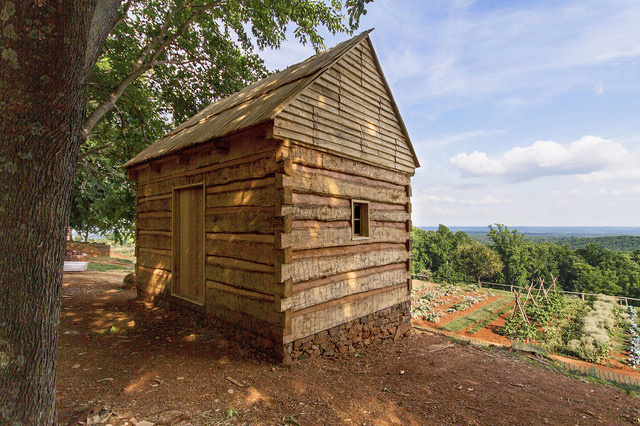
In the Nicolle Wallace interview Burns spoke of Jefferson and the Declaration of Independence. He said when Jefferson wrote “all men are created equal,” he meant only white males who owned sufficient property to be allowed to vote. With due respect for Ken Burns, I do not think this is true. Actually, I think he knows better, but television interviews force sometimes imprecise soundbites. The story of the Declaration of Independence is complicated. As an immediate practical matter, Jefferson had probably been thinking of propertied white males. But I don’t believe that Jefferson, if asked, would say that his great pronouncement was limited to privileged white males like himself. I believe he really meant what he wrote — that every human being born into the world, irrespective of race, sex, country of origin, tribe, or religion is entitled under natural law to [this is how he saw it, as baked into the universe] be regarded as equal with every other human being, from kings to paupers, at least at birth. In other words, Jefferson articulated a universal ideal in the birth certificate of the United States. Abraham Lincoln understood this. On April 6, 1859, he wrote, “All honor to Jefferson — to the man who, in the concrete pressure of a struggle for national independence by a single people, had the coolness, forecast, and capacity to introduce into a merely revolutionary document, an abstract truth, applicable to all men and all times, and so to embalm it there, that to-day, and in all coming days, it shall be a rebuke and a stumbling-block to the very harbingers of re-appearing tyranny and oppression.” In my view, that is the best possible interpretation of the key sentence in the Declaration.
It is fashionable these days, in the Age of Disillusionment, to make Jefferson the poster child for the unfinished, unresolved race issues of American history. And though he richly deserves this sort of historical scrutiny, it seems to me just a bit too convenient, too pat, to make Jefferson the principal scapegoat. Jefferson was a very complicated man. It is nearly impossible to come to a definitive understanding of his life as a plantation owner, a slaveholder, a race theorist, and the putative father of Sally Hemings’ children.
The Same in a Different Zip Code
A few months ago I was at Jefferson’s Monticello for I suppose the twentieth time in my life. I went incognito, of course, and I took the standard tour. Our Monticello docent spent a fair portion of time in the lobby, Jefferson’s Indian Hall, explaining his wide-ranging achievements. But when we entered the next room, on our way to Jefferson’s celebrated library and study, he said, “Jefferson believed that African Americans were inferior.” I did not raise my hand to object, but later when I got an evaluation survey, I explained that this was unfair. What Jefferson actually wrote, in his only book, Notes on the State of Virginia, was, “I advance it therefore as a suspicion only, that the blacks, whether originally a distinct race, or made distinct by time and circumstances, are inferior to the whites in the endowments both of body and mind.” This is not much better, but there is an important distinction. Jefferson went on to say that he hoped his proposition, which he put forward cautiously “as a suspicion only,” would be refuted by more careful observation of the lives of Black Americans under better circumstances — in other words, outside of the pressure cooker of slavery. In 1791 Jefferson wrote, in response to increasing evidence of Black cultural achievement (as defined by whites), “I shall be delighted to see these instances of moral eminence so multiplied as to prove that the want of talents observed in them [Black slaves] is merely the effect of their degraded condition, and not proceeding from any difference in the structure of the parts on which intellect depends.”

The docent should have known better, perhaps does know better, but he said something that afternoon that doesn’t help us make sense of one of the most bedeviling issues of American history. Back in 1980 when I first visited Monticello, the docents treated slavery in Jefferson’s life as if he were an “accidental slaveholder,” as if slavery had been foisted upon him by mysterious outside forces beyond his control. That was a widely held view back then, but it was far too soothing and defensive to fit the known facts. Now the vagaries of American historiography have buffeted Jefferson to the opposite end of the spectrum. I think it’s important to acknowledge that the new view — that Jefferson was a racist, an apartheidist, an often complacent slaveholder, and a sexual predator — is in my opinion closer to the truth than the “pass” he got on these questions fifty years ago, when the docents at Monticello would wax indignant (“well, I nevah!”) if anyone asked about Sally Hemings.
In his new biography of Jefferson, historian Andrew Burstein writes, “Even Jefferson’s unpalatable racist logic, as fiercely as he clung to it, was not so overwhelming in his mind as to lead him to rationalize denying to Africa-descended Americans the same liberty, the same self-determinative power, as whites.”
In other words, when he wrote “all men are created equal,” he meant it — but maybe not quite yet.