
Thomas Jefferson’s view of war was shaped by a deep study of history and hope for a new path for a young American nation.
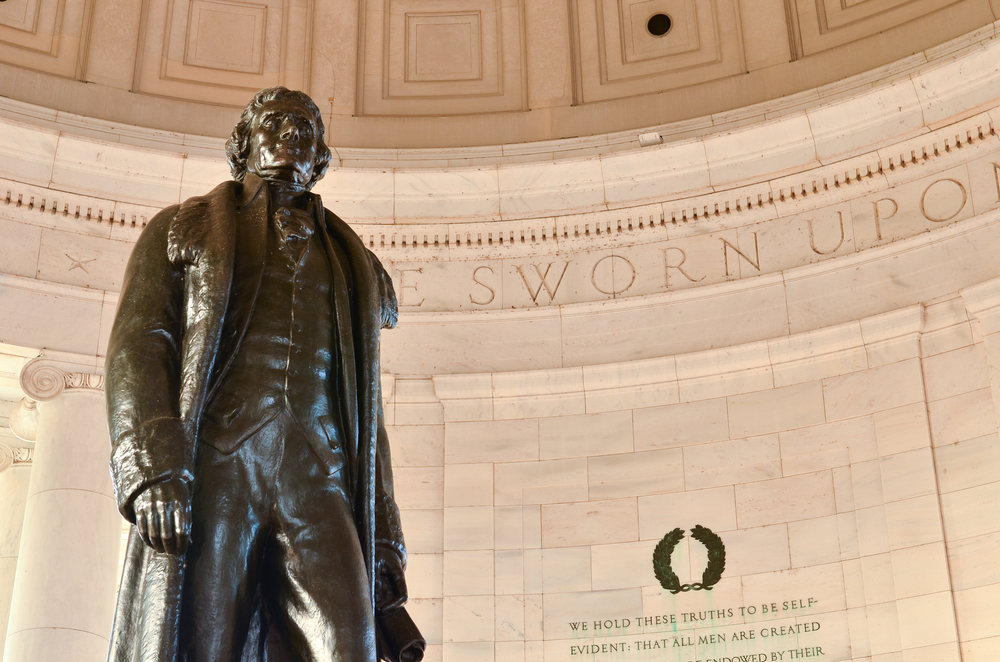
Thomas Jefferson detested war for all sorts of good reasons. “Peace is my passion,” he declared. Although he did not articulate his view of the calamity of war as well as his distant successor, General Dwight David Eisenhower, the views of the third president were perfectly summarized by the 34th:
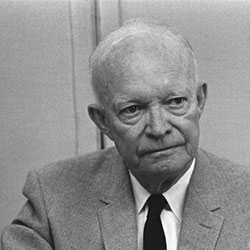
“Every gun that is made, every warship launched, every rocket fired signifies, in the final sense, a theft from those who hunger and are not fed, those who are cold and are not clothed. This world in arms is not spending money alone. It is spending the sweat of its laborers, the genius of its scientists, the hopes of its children.”
Both as a moralist and a pragmatist, Jefferson believed it was too late in the world’s history to solve international conflicts through bloodshed. Whenever the clouds of war gathered, he and his secretary of state, James Madison, preferred an economic embargo to armed conflict. Jefferson regarded war as barbarism, a lingering echo of the Dark Ages and Old World autocratic regimes (kings, dukes, priests, and warlords). Jefferson believed that humans are born good and capable of what he called “indefinite perfectibility.” To which John Adams said (I paraphrase): “Have you looked around much?!”
In his only book, Notes on the State of Virginia, Jefferson wrote:
“Never was so much false arithmetic employed on any subject, as that which has been employed to persuade nations that it is in their interest to go to war. Were the money which it has cost to gain, at the close of a long war, a little town, or a little territory, the right to cut wood here, or catch fish there, expended instead in improving what they already possess, in making roads, opening rivers, building ports, improving the arts, and finding employment for their idle poor, it would render them much stronger, much wealthier and happier. This I hope will be our wisdom.”
Jefferson made it clear that he was not on the whole fond of military men, especially if they were as gung-ho as Alexander Hamilton, whose confession in his first extant letter (November 11, 1769), written when he was no more than 14 years old — “I wish there were a war” — pretty well sums up his character. Whenever there was even a whiff of possible war in the air, Hamilton, like his later admirer Theodore Roosevelt, prepared to suit up and spring into action, including if that meant marching a federal army through Jefferson’s Virginia. Jefferson opposed the creation of the post-revolution Society of the Cincinnati (for military veterans only), because he believed it would glorify war and perhaps help create a military aristocracy in the United States.
In his first inaugural address, on March 4, 1801, Jefferson declared that America was blessed because she was “kindly separated by nature and a wide ocean from the exterminating havoc of one quarter of the globe.” In other words, America’s peace and security were more or less guaranteed by the 3,000-mile “moat” that stood between America’s experiential republic and the madness and havoc of the Old World. In that inaugural address, one of the two or three finest in American history, Jefferson called for “equal and exact justice to all men, of whatever state or persuasion, religious or political; peace, commerce, and honest friendship with all nations, entangling alliances with none.”
Jefferson was a key figure in the Enlightenment. He was a very serious student of history, and he knew that most wars have spilled the blood of young men and bankrupted nations for no justifiable reason: the vanity of kings, insults to their mistresses, negligible differences in religious doctrine, access to foreign markets, mistranslation of geopolitical communiqués, or a perceived or real slight in diplomatic discourse. Jefferson agreed with the great Irish-English satirist Jonathan Swift’s definition of a soldier: “a soldier is a Yahoo hired to kill, in cold blood, as many of his own species, who have never offended him, as possibly he can.”
The Founders (Mostly) Agreed
Most of the Founding Fathers were in general agreement with Jefferson on questions of war and peace, if a little less idealistic, and like Jefferson they rejoiced that the Atlantic Ocean separated the United States from the incessant wars of the Old World. Jefferson (perhaps naively) hoped that the Europeans who emigrated to America would have left most of humanity’s bad habits back in Europe. The admiring French essayist Hector St. John de Crèvecœur asked rhetorically in 1782, “What is this American, this New Man,” who was dedicated to agrarianism, tolerance, co-existence, peace, and modest prosperity, rather than power and glory and world dominion? That was exactly Jefferson’s view: America was, he said, “something new under the sun.” He essentially agreed (at least in his most optimistic moments) with his friend Thomas Paine. Here in America, “we have it in our power to begin the world over again.”
The Founders’ distaste for war found its way into the Constitution of the United States. Their study of history taught them that the best way to avoid war was to erect guardrails to prevent any American president from unilaterally taking the United States to war, as kings and dictators had routinely done throughout European history. The Founders attempted to kennel the dogs of war by insisting (Article I, Section 8) that all armed engagements had to be debated and pre-authorized by Congress (in other words, by the People) to make sure they were “just wars” that had obtained the support of the American people. If an American president broke that sacred code and took us to war without consulting Congress, the Founders reckoned that the House of Representatives’ power of the purse would deny him funds and, if necessary, he could be impeached and removed from office before he ran America over a geopolitical precipice.
That was then.
Status Quo Ante Bellum
Jefferson’s critique of war as an instrument of state was grounded in his exhaustive reading of history. His conclusion was that war almost never really settles anything. In fact, most wars end with the restoration of the status quo ante bellum, “the state of things before the war.” The madness of ending a war by returning to the state of things before the war is bad enough, but Jefferson also understood that meanwhile oceans of blood have been spilled — the flower of youth and the future — and untold treasure has been expended, without really resolving anything. Jefferson regarded every war as a setback for the cause of Civilization and a more immediate and visceral setback for the nations that have let themselves be drawn into armed struggle. Every dollar spent on cannonballs and gunpowder, military uniforms, siege engines, and gunboats is a dollar that cannot be spent on libraries, schools, agricultural improvements, public architecture, and the arts. Jefferson believed that nations are judged by their cultural achievements, not by the body bags of their enemies.
You would think that the grim historical record of war results would have a chastening effect on the world’s political and military leaders. The evidence, however, including the war against Iran, which appears to be concluding, suggests that humans learn nothing from history.
Here are just a few examples:
The War of 1812
Usually regarded as the second war of American independence, the War of 1812 produced 35,000 deaths on all sides and cost the United States approximately $105 million (roughly $1.5 billion–$2 billion in today’s currency), ballooning the national debt and precipitating a post-war economic depression. In 1814, the British invaded and burned the U.S. Capitol on the Potomac, and President and First Lady Dolley Madison fled along separate routes to safety. The result: a draw. No territory changed hands. No reparations were made in either direction. The United States gained some confidence in having stood up (again) to the world’s most powerful nation. The war propelled Andrew Jackson into the presidency (1828) and invigorated the westward movement. When all the mayhem was over, the two belligerents accepted the status quo ante bellum and essentially concluded never to go to war against each other again.
Was it worth it?
The Falklands War
Great Britain’s war to reclaim the Falkland Islands after Argentina invaded them in 1982 ended with Britain regaining control of the Falklands for no discernible economic or strategic advantage. The motive was wounded national pride. The Falklands are located just 300 miles from Argentina and 8,000 miles from the British Isles, and they are of no strategic importance to either country. History will probably regard the Falklands War as the last sad gasp of the once-global British Empire. Total area of the Falkland Islands: 4,700 square miles. Population: 3,700, mostly British expats. Cost of war for Britain alone: approximately $1.8 billion. Total deaths on both sides: about 1,000. An equal number wounded. As usual, the war ended with the status quo ante bellum.
Vietnam
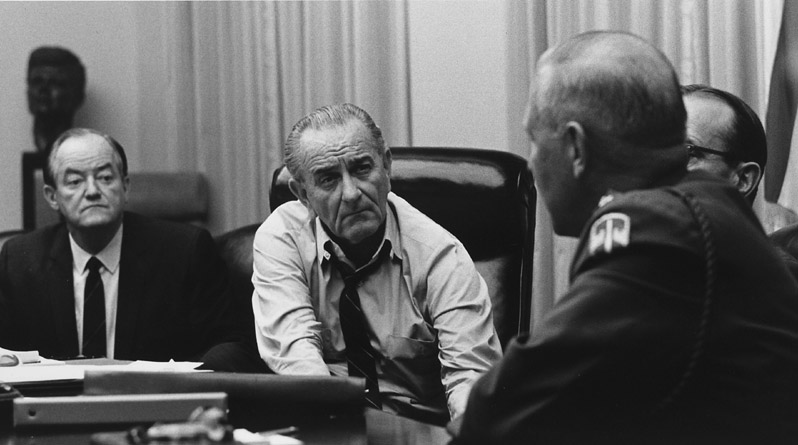
The United States undertook the war in Vietnam in the early 1960s to prevent communist North Vietnam, a satellite of the U.S.S.R., from absorbing the non-communist South Vietnam, a corrupt and anti-democratic regime propped up by the U.S. After several million Vietnamese had been killed, the country devastated by defoliants and napalm, and 58,200 Americans killed and another 153,303 seriously wounded, the United States withdrew in ignominy on April 30, 1975. Almost overnight, North Vietnam overran the South, occupied Saigon, and changed its name to Ho Chi Minh City.
What did we gain? And at what cost? Indeed, at what cost to our standing in the world?
And Now Iran
Not only does the war against Iran appear to be concluding with the return of the status quo ante bellum, but in fact that status quo ante bellum is much worse for the United States than before February 28, 2026. To extricate ourselves from this debacle, we have had to lift sanctions, release impounded Iranian funds, pledge hundreds of billions of dollars to the Iranian regime, and kick the can of Iran’s nuclear ambitions down the road (as always). The Strait of Hormuz will inevitably reopen soon, but almost certainly under terms advantageous to Iran — a strategic defeat for the United States. Thanks to the war, Iran is now in a position to charge exorbitant transit tolls, and the regime has proved that it can close the Strait any time it chooses to punish America or destabilize the world economy.
If this is in fact how the war against Iran ends, it will represent an undeniable defeat for the United States, no matter how President Trump and his closest advisers choose to characterize it. It would be a tragic irony if the eventual settlement proves no better — and probably worse — for the United States than the Joint Comprehensive Plan of Action (JCPOA), painstakingly negotiated in 2015 by John Kerry, Barack Obama, and five allied nations, which candidate Trump denounced in the most vicious and sarcastic terms and then tore up once he became president in January 2017.
Meanwhile, President Trump’s unilateral bombing campaign against Iran, undertaken without the slightest effort to consult Congress or ask for a war powers resolution, without consulting the United Nations or our NATO allies, and without even attempting to explain his war goals to the American people (the sovereign), now officially renders the war powers clauses of the Constitution and the 1973 Congressional War Powers Law defunct. This spring, the U.S. Senate entertained and then rejected nine war powers resolutions that would channel and constrain the president’s actions as commander in chief. The House of Representatives finally passed a war powers resolution on the fourth try on June 3, 2026, but the Senate has so far refused to play its essential constitutional role under the checks-and-balances doctrine upon which our constitutional order depends.
So much for the status quo ante bellum. Gasoline prices are up and not coming down any time soon. The United States is diminished in the world’s arena. Our bewildered and enraged closest allies are beginning to make other plans for their security. Iran has gained stature in the region and around the world. And Israel is in a much graver existential crisis than it was on February 27.
Jefferson had it right. The fact that there are still wars in the mid-21st century would surprise and depress him. Maybe John Adams was right. There may be something “new under the sun” in our Founders’ national rhetoric, but our actual behavior looks a great deal like the same old madness but with infinitely more lethal weapons. The idealist Jefferson thought the peaceful ways and means of the new American republic would teach the world that there is almost always a better path than war.
These are not the best auspices for America’s milestone 250th birthday: blood sports on the White House lawn; the paint peeling from the bottom of the reflecting pool on the Mall; and a ruinous undeclared (and therefore unconstitutional) war halfway around the world with no measurable post-war advantage for the United States.
We are better than this.