
I’m spending the 4th of July at the Great Falls of the Missouri River in north-central Montana, where Lewis and Clark visited on the same day in 1805.
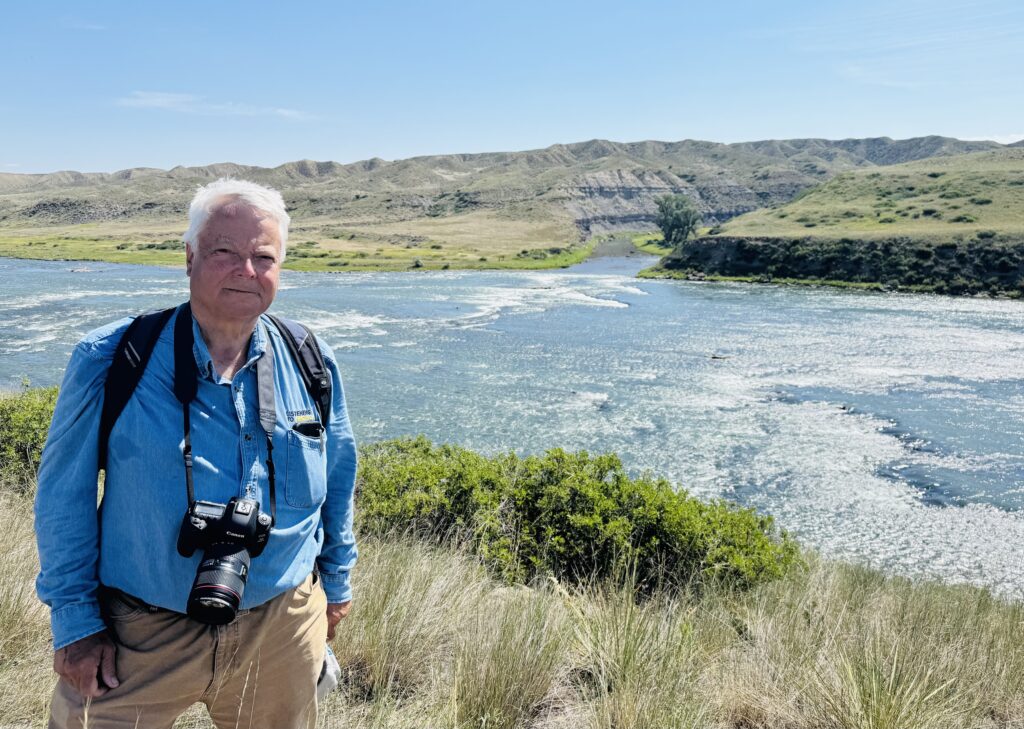
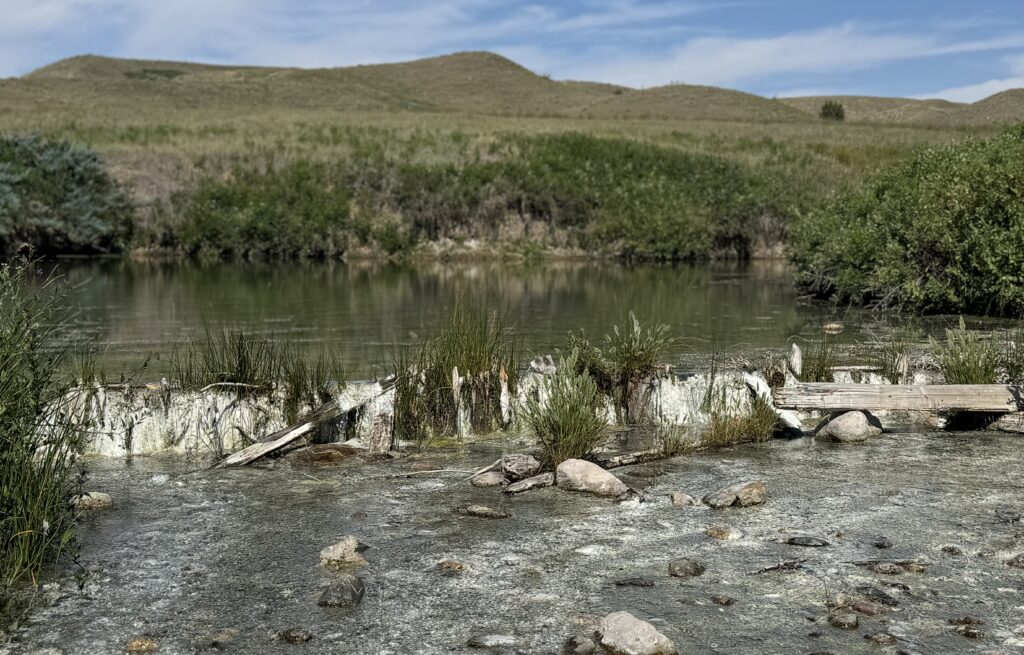
Great Falls, Montana, July 5, 2025 — It’s a great joy to read the journals of Lewis and Clark at the locations where they were written 220 years ago. I’m spending a couple of days at the Great Falls of the Missouri in north central Montana. Yesterday, my friend Dennis and I hiked out to Sulphur Spring, located near Belt Creek, where Lewis obtained mineral water for the gravely ill Sacagawea to drink, hoping it would improve her condition. She had some pelvic inflammatory condition that the journal keepers were a little shy about describing in detail. When they gave her a poultice to “draw” the toxins, they said it was placed on her “region.” How genteel. Sacagawea survived, undoubtedly more because she was young, healthy, fit, and full of the life force than from the wilderness medical methods Clark and Lewis applied to her.
Today, I will visit West Bank Park, where Meriwether Lewis had his encounter with a grizzly bear on June 14, 1805, and then proceed to the superb interpretive center located on the south bank of the Missouri River.
Yesterday, my small group of friends (three in number) and I planned to celebrate the 249th birthday of the United States by cooking cheeseburgers on the RV camp grill. I cut up eight large potatoes in preparation for making fried potatoes for dinner. Dennis bought two half watermelons, and I made a batch of my North Dakota friend’s famous “cowboy beans.” At the grocery store, I bought some high-end black cherry ice cream “by way of a treat” (June 26, 1805), as Lewis put it when he made each man a suet dumpling here at the Great Falls — with flour carried all the way from St. Louis! Lewis was serving as a temporary cook because he needed all able-bodied young men to transport the expedition’s many tons of supplies over the 18¼-mile portage around the five waterfalls at today’s Great Falls, Montana.
Unfortunately, it rained just at the time we were about to start our Fourth of July supper. It rained hard. While I was in a store trying to buy a spare fuel canister, my mates decided we had better make reservations at a restaurant in case the rain did not abate. And that’s what we wound up doing.
Before that, however, we had cheese, crackers, and drinks in Dennis’s Airstream, which was longer and more luxurious than mine by a magnitude. We kept the door open and the screen door, and listened to the rain on the aluminum roof and the camp street outside. It was purely joyful — cozy, good conversation, laughter, old stories and new, music instantly acquired from Apple Music and played beautifully on Dennis’s sound system. We were reluctant to pile into the pickup and venture into downtown Great Falls in search of the rib and steak emporium. After a good dinner, we saw a mermaid.
Rain at the Great Falls on the Fourth of July. That’s precisely what happened to the Corps of Discovery. In fact, as I read the journals this morning before we visit the Charlie Russell Museum, I see that it rained more days than not during the expedition’s month-long portage around the five waterfalls here. Unlike us, they endured violent rains, flash floods, and hail the size of tennis balls. When you are traveling in an Airstream (or any other metal vehicle), the last thing you want is a hailstorm, even a puny one. The only benefit Lewis and Clark received from the hail was that they used it to cool their drinks.
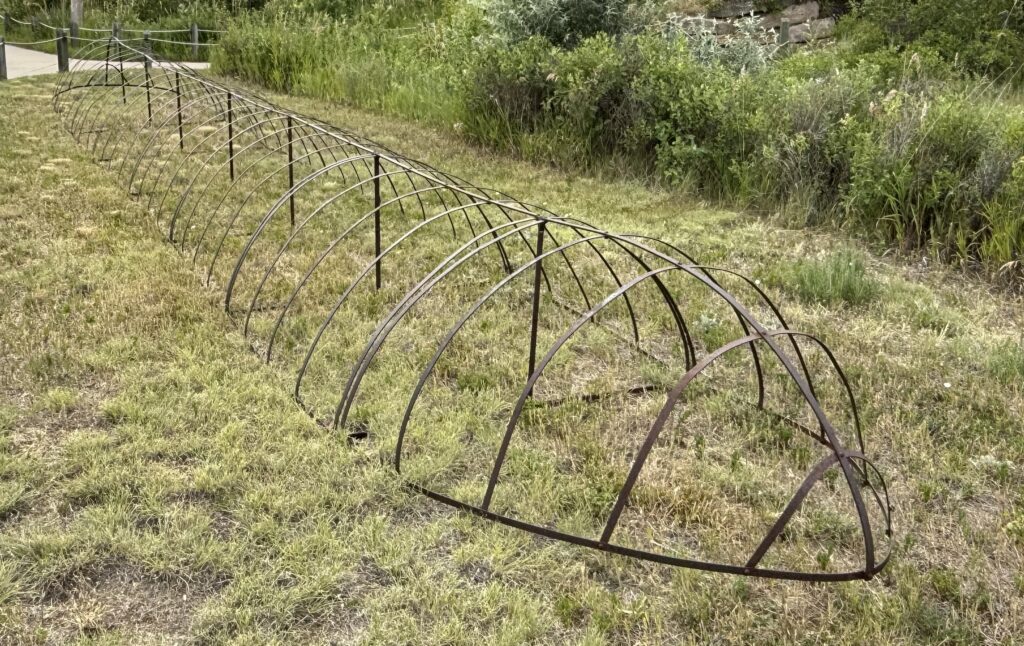
On Lewis and Clark’s Fourth of July 1805, most of the men worked to finish Lewis’s experimental iron-framed boat. It was an experiment that failed dramatically. Within a few journal sentences, Lewis reported that the leather-covered boat “floated like a perfect cork in the water,” and that it almost immediately sank because they had nothing with which to seal the seams of the 28 elk and three buffalo skins — all the time a dozen men spent hunting and preparing the hides had come to nothing. Meanwhile, they had not been making dugout canoes. This seems to be what upset William Clark, who had supervised the back-breaking portage and now realized that he would have to take a group of men to find suitable trees and carve out new canoes. This would delay the expedition’s departure from the falls. The two captains usually got along superbly, but there were a few hints of frustration. But heck, you try to go on a 28-month camping trip and see how tempers hold up.
At night on July 4, 1805, they celebrated the 29th birthday of the United States. Here’s Lewis’s excellent summary:
“our work being at an end this evening, we gave the men a drink of sperits, it being the last of our stock, and some of them appeared a little sensible of it’s effects the fiddle was plyed and they danced very merrily untill 9 in the evening when a heavy shower of rain put an end to that part of the amusement tho’ they continued their mirth with songs and festive jokes and were extreemly merry untill late at night. we had a very comfortable dinner, of bacon beans, suit dumplings & buffaloe beaf &c. in short we had no just cause to covet the sumptuous feasts of our countrymen on this day.”
So tonight, July 5, 2025, we will try again to assemble our campground picnic. Notice how little has changed. We will have: buffalo burgers (check!), beans with bacon (check!), a few ardent spirits (check!), plus watermelon, ice cream (thanks to Thomas Jefferson), fried potatoes, and other camp delicacies.
I doubt that we will dance. Nobody among us brought a fiddle. We may play some music downloaded from the digital cosmos. We will surely have jests and stories.
About 4 p.m. today, we will visit West Bank Park to finish off our scant supply of whiskey in precisely the manner of Lewis and Clark. Fortunately, our keg only holds a quart, and it now contains less than a pint of fine whiskey. We’ll pour the last of it in gill cups and count our blessings to live in the United States of America with its staggering freedom and abundance. Note: There are no serious drinkers among us. The end-of-the-whiskey ritual is merely our attempt at historical reenactment.
And so begins the countdown to the 250th birthday of the United States, one year from now.