
Answer: we are Rome … but are we doomed to suffer the Republic’s fate? Clay parallels the Republics (Rome’s and our own) considering ways to avoid Rome’s calamitous end.

The more you study the history of the rise and fall of the Roman Republic (509–27 B.C.), the more you realize that while it is not an exact analogy for the course of human events in America, it is nevertheless the best mirror we can look into as we make the transition from a Madisonian American republic to whatever it is that we now are becoming.
Two major factors in the collapse of the Roman Republic are, first, the grotesque influx and inequality of wealth that followed the wars of the mid-second century against Carthage and Greece; and, second, the inability of a “constitution” crafted for a city-state with some regional reach to embrace the new social, economic, demographic, military, and political dynamics of a growing world empire: first Sicily, then north Africa and Greece, then France (Gaul), etc. Trying to govern an empire with a “constitution” designed for a smallish and localized population proved to be impossible. The political and legal strains were enormous; nobody knew how to make it work; and the Romans failed to step back and reconstitute their system in accordance with the new “facts on the ground.”
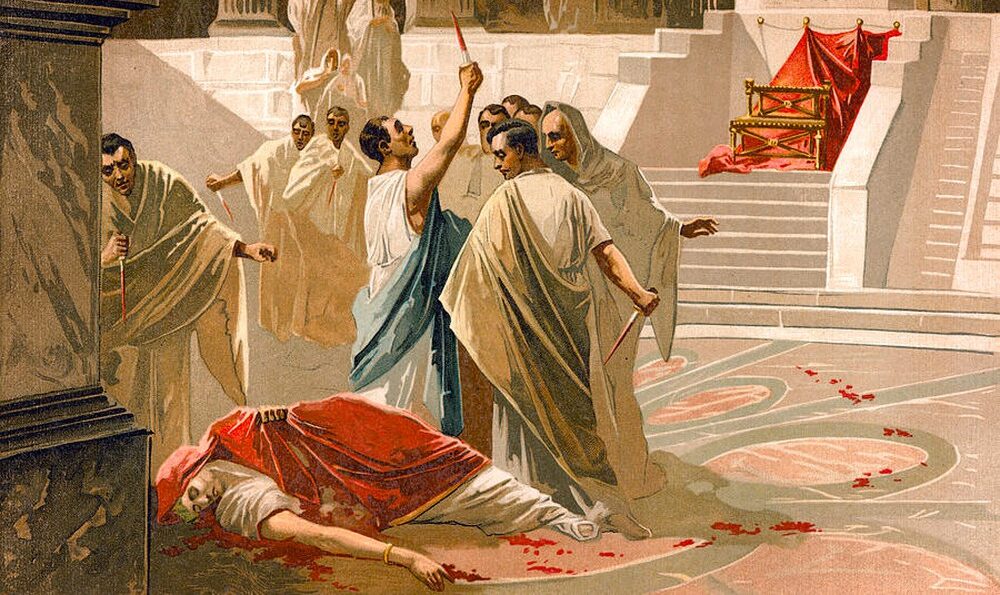
Into the vacuum rushed power-hungry men like Caesar, Pompey, Marius, Clodius, Sulla, Marc Antony, and Caesar Augustus. They achieved their aims — such aims as they achieved — by way of armed gangs of partisans who intimidated, roughed up, and sometimes killed their enemies, and by way of lavish outpourings of wealth in the form of gladiatorial entertainments, triumphs, public buildings, clientage, and bribery.
The Founding Fathers of the United States were deeply, even profoundly, influenced by the rise and the collapse of the Roman Republic. They knew their Plutarch, their Livy, their Polybius, and their Tacitus (especially Jefferson). John Adams considered himself the American Cicero, George Mason the American Cato, and George Washington the American Cincinnatus. The upstart Americans named their upper legislative body the Senate after the Roman Senatus. They called their national political headquarters the Capitol, per Rome’s Capitoline Hill. When they moved the capital to the District of Columbia they renamed Goose Creek the Tiber — much to the disgust and amusement of the pompous British ambassador Anthony Merry. When the president negativized Congressional legislation (from Rome: lex = law), they called it a veto (Latin: “I forbid”). And Thomas Jefferson not only designed neoclassical buildings like his riff on the Maison Carrée at Nîmes for Virginia’s new capitol in Richmond, but established a tradition of neoclassical capitols all over the country.
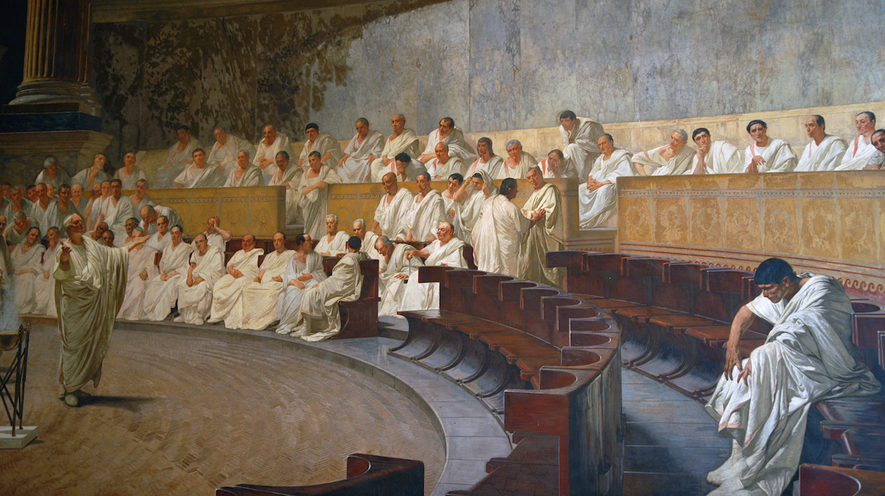
The Founders knew, therefore, what was at stake. And because they knew what was at stake, they wrote a Constitution in 1787 designed to absorb some of the best ideas of the Roman Republic when it worked, and to prevent here what happened in Rome. The fall of the Roman Republic was one of their central fixations. They associated the fall of Rome with too much luxury, the rise of political violence, too much concentration of power in the hands of charismatic demagogues, armed gangs in the employ of power politicians, urbanization, and the sorrows of empire. They worked hard to ensure that none of that could happen here.
Until my childhood in the 1960s, most Americans were aware of the basic dynamics of Roman republican history. They knew and revered Cicero, who is now mostly forgotten outside academic circles and more frequently derided than admired in academic discourse. They knew the allure and danger of Julius Caesar and later his grandnephew Octavius (Augustus). We knew the warning signs of republican collapse.
Today’s Americans, young and old, know almost nothing about Rome, except what they glean from the Gladiator movies. It shows. The Rome analogy may be imperfect but it is nevertheless the best mirror we Americans can look into as our own swollen republic breaks down. The rich in Rome — a tiny handful of unbelievably wealthy kleptocrats — fattened on the backs of the Roman proletariat and even the middle class (small though it was), and ruthlessly stripped the subject territories (Spain, north Africa, the Middle East, much of Europe) of their wealth and resources, not for the common good of Rome but mostly for themselves. They privatized the public lands. They starved the people into insurrection and then “restored order” with appalling ruthlessness.
If this generation of Americans knew the history of Rome the way Washington, Madison, Jefferson, John Adams, George Mason, Abigail Adams, and George Wythe did, or even as well as our great-grandparents did, they would not have permitted our aging republic to disintegrate. But we no longer know what is at stake. How many American schoolchildren (K-12) know any of this? How many university students encounter the ancient world in any meaningful way today?
The commonest historical cliché is Santayana’s “those who do not learn from history are doomed to repeat it.” This is a much-overused sentence, but it merits application here. If the American people were well-enough educated and informed to know what brings on a failed state, we probably would be able to step back from the brink. At least we would try. To the exceedingly well-informed Gore Vidal is attributed the insight: “The American people are the least well-educated and informed people in history to be the world’s hegemonic power.” The distinguished British historian Niall Ferguson has argued that the American people are too lazy, ill-informed, and hedonistic to understand what’s at stake, not only in the world’s arena, but even at home. He calls us an “empire in denial.” My friend the historian Joseph Ellis says most Americans could not pass the citizenship test we require of immigrants who wish to be naturalized Americans.
Nero fiddled while Rome burned. The American people are fiddling with their video games and the reels on their smartphones while the American republic disintegrates all around them, and their only large concern seems to be consumerist: keep it coming, keep the Walmarts full and inexpensive gasoline at the pumps.
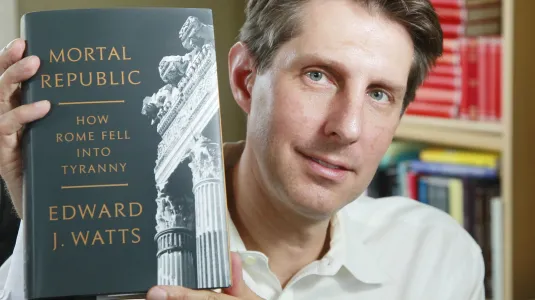
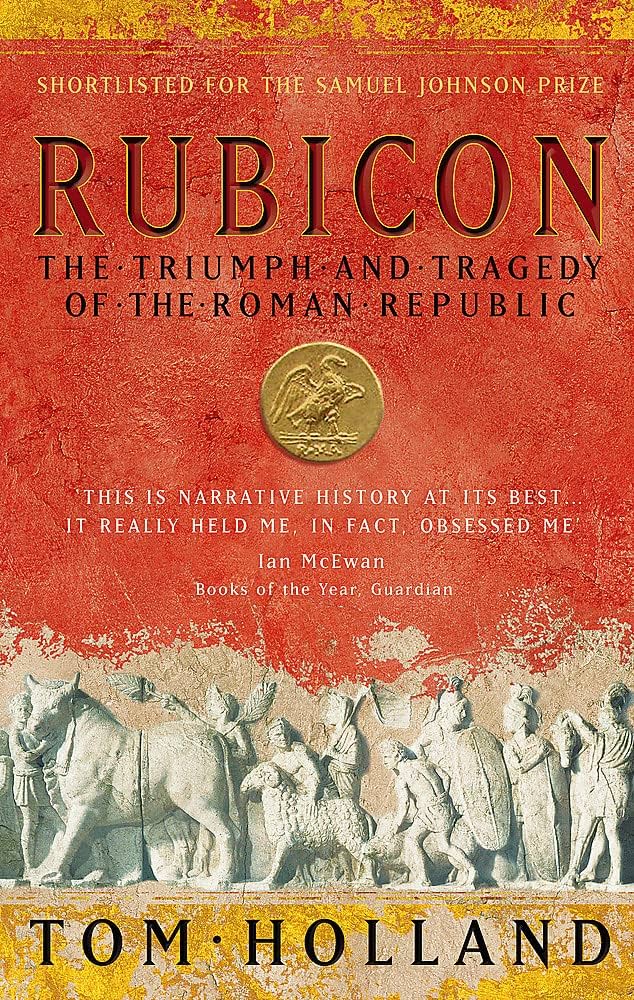
Can we turn this around? Well, it begins in my view with some reading. Here are two easy ways in: Tom Holland’s Rubicon: The Last Years of the Roman Republic; and Edward Watts’ extraordinary 2018 Mortal Republic: How Rome Fell into Tyranny. The last American president who really knew these things was William Jefferson Clinton and, well, he spent a lot of time fiddling.
Are we doomed? Probably not. But if the republic falls it will be on us.