
Recently, I wrote about what is great about America at 250. This week, I reflect on what I see as palpable American decline. I do not enjoy criticizing America, but if we don’t, on our 250th birthday, step back to reflect on what we have achieved, how we got here, what remains unresolved, and where we seem to be headed, when will we do so?
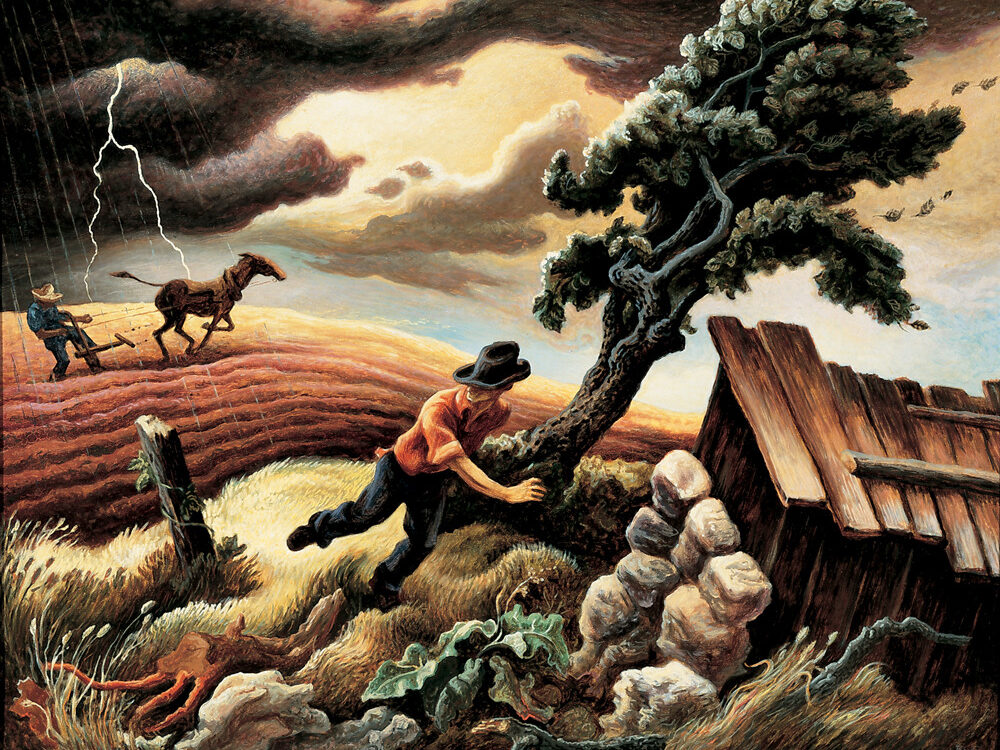
“We have it in our power to begin the world over again.”
Thomas Paine
Either you believe in American exceptionalism, or you don’t. Either you believe that America has a special destiny in the world owing to our birth at the high water mark of the Enlightenment, or you regard the United States as just another — albeit extremely wealthy and powerful — nation in the great family of nations, larger and richer but no better than France, Finland, or Canada. I continue to believe we have a secular-sacred national mission, grounded in the dreams of James Madison and Thomas Jefferson, to be a template for human aspirations, human possibility, human rights, equality of opportunity, and self-government. The Founding Fathers certainly believed they were laying down the standards for the future of the human project all over the globe, even though we know they were all of them, perhaps chiefly Jefferson, imperfect exemplars. Thomas Paine famously wrote, “We have it in our power to begin the world over again.” Shortly after wresting the presidency from the Federalists in the election of 1800, Jefferson wrote to his English friend Joseph Priestley to declare, on March 21, 1801, that we represent “something new under the sun.”
What has happened to us?
When Hamlet’s father (the ghost) appears to Hamlet in Act III of Shakespeare’s greatest tragedy, he declares that he has come to “whet your almost blunted appetite.” How did we descend from the Founders’ disciplined small-government republic to the bloated, complacent, corrupted world empire we have become?
I don’t think anyone assessing the United States in 2026 can avoid the conclusion that we have betrayed our extraordinary founding vision. I spoke with an eminent constitutional historian a couple of weeks ago and asked him whether our republic will survive. He scoffed: We have not been a republic for a very long time. The better question, he said, is whether our constitutional order will survive. I asked him what he thought it would take to turn America around, to restore the high ideals of our founding. His answer: a catastrophe.
I’m not nearly so pessimistic, but I do believe we are going to have to face the facts of America’s decline, make a sober assessment of the problems we must address, suck it up, and recommit ourselves to the highest American ideals. In short, if we are going to reclaim our national destiny, we will have to wrestle with and resolve a number of fundamental issues.
My list:
Economic Inequality
At the top of my list is economic inequality.
The top 1% of Americans now own 27% of the country’s wealth.
So Elon Musk becomes the world’s first trillionaire. In 1982, there were just 13 billionaires in America. Today, there are more than 1,000, and the number is growing fast. The current combined wealth of America’s billionaires is approximately $8 trillion, which is larger than the GDP of every nation on earth except the USA and China. In 1965, CEOs were paid 21 times as much as their typical employees. Today, they are paid more than 300-to-1. The median compensation for Fortune 500 CEOs is now about $18 million per year. The average salary of an American worker today is less than $65,000 per year.
Thomas Jefferson took great joy in the fact that most Americans of his time were of the middle class. In a letter to Thomas Cooper on September 10, 1814, Jefferson wrote: “We have no paupers. The great mass of our population is of the laboring class. Our rich, who can live without labor, either manual or professional, are few.” Jefferson knew that obscene inequality was the major cause of the French Revolution. From Paris, he wrote a letter to his closest friend, James Madison, on October 28, 1785, arguing for the careful redistribution of property from time to time to prevent the rise of an American economic aristocracy. “The consequences of this enormous inequality producing so much misery to the bulk of mankind,” he wrote, “legislators cannot invent too many devices for subdividing property, only taking care to let their subdivisions go hand in hand with the natural affections of the human mind.” Jefferson had in mind a graduated tax system to ensure that every hard-working American earned a living wage.
In the last 20 years, Congress has routinely written tax law to transfer wealth upward from the rest of America to the wealthiest Americans. Although the people are routinely assured that the new “reform” tax laws benefit middle-class and lower-class Americans, the greatest beneficiaries are at the other end of the economic spectrum.
I believe the appalling gap between rich and poor in America is one of the principal causes of social alienation, disillusionment, cynicism, and despair. For most Americans, the system appears to be rigged. If we worked hard but carefully to shrink the growing divide, to widen the ranks of the middle class, and to prevent obscene accumulations of wealth, I believe the country would cheer up, become more productive, and regain its social confidence.
I’m not sure I entirely agree with the proposition that every billionaire is a policy failure, but I do strongly believe that every hard-working and fiscally responsible American is entitled to a living wage. I reckon that a living wage will mean somewhat different things in different regions, but I don’t believe that any willing American should find it extremely difficult or impossible to make ends meet. If this sounds utopian or radical, we had better abandon the American Dream once and for all, for certainly it cannot mean that a handful of people will live like gods on earth while the middle class narrows and declines, and tens of millions are barely able to live modestly satisfying economic lives. That was not the promise of America.
Representation
The essence of America is majority rule. But thanks to the fossilized Electoral College, equal representation in the Senate, the filibuster and cloture, the skewing of the primary system, gerrymandering, and our winner-take-all electoral system, tens of millions of Americans are effectively disenfranchised. Think of California. Of the 40 million residents, 38% vote Republican, but because it is a Blue State, all of its 54 electoral votes go to the Democratic winner, meaning that 15.2 million Californians (more than the populations of each of the 40 other states) are effectively disenfranchised. The same is true of Republicans in New York and Massachusetts, etc. We could easily fix the system by adopting ranked-choice voting, proportional representation, district-based rather than statewide vote tallying (as in Maine and Nebraska), abolishing the Electoral College, significant reforms to the primary system, and a federal law requiring purely scientific, nonpartisan redistricting in every state. We should probably also increase the size of the House of Representatives, where currently each Congressperson represents 761,000 people. Although equal representation in the Senate is deeply embedded in the Constitution, perhaps we should move to a more fluid system in which every state gets at least one senator, many get two, some get three, a handful get four, and at least three get five. If every American believed their vote truly counted, citizen engagement would rise, and the United States would move towards a much greater and more equitable democracy.
African Americans
Slavery and its myriad legacies are the original sin of American history. You cannot have a mission statement that declares, without qualification, that “all men are created equal” and holds about a fifth of the population in hereditary slavery. Thomas Jefferson owned as many as 200 slaves at any given time; George Washington, 317; James Madison, 120; James Monroe, 75-80; Andrew Jackson, 150; Patrick Henry, 60-70. George Mason, who wrote the Virginia Declaration of Rights, owned several hundred human beings.
This was an exceedingly unpropitious start.
We’ve had our share of opportunities to wrestle the problems of race and slavery to the ground. The 55 men who drafted the U.S. Constitution in 1787 kicked the can down the road by perpetuating slavery and installing in our national charter the fugitive slave clause, the 3/5 clause, and the postponement, even of the abolition of the slave trade. After the adoption of the great post-civil war amendments, 13 (abolishing slavery), 14 (insisting on equal protection of all citizens), and 15 (permitting black males to vote), the American government stood by as the former Confederate states systematically violated these new guarantees with Jim Crow legislation, Black Codes, poll taxes, literacy tests, and vagrancy laws, enforced by lynching, and perversions of justice by all-white juries. When the Supreme Court demanded the integration of America’s public schools in 1953, southern states pulled white students out of the system and created “private” all-white schools, leaving the underfunded and often dilapidated public schools (black schools) to fend for themselves.
The wanton killings of Medgar Evers (1963), Emmett Till (1955), Malcolm X (1965), Martin Luther King (1968); more recently Trevon Martin (2012), Michael Brown (2014), Breonna Taylor (2020), George Floyd (2020), and countless others, coupled with the high incarceration rates for African American men, economic inequality, and persistent structural racism in our basic institutions, remind us of how much more there is to do to achieve Dr. King’s dream (an American Dream) that every person in the United States will be judged by the content of their character rather than the color of their skin.
No white parents have to give their son the stern lecture on what to do and not to do if stopped by a white policeman while driving. Until this is no longer so, we have not achieved racial equality.
Native Americans

As I have grown older, I have found it increasingly hard to justify America’s dispossession of its Indigenous people. When Columbus bumped into the New World in 1492, the entire western hemisphere was peopled by Indigenous communities. By 1942, only 3% of America was sovereign to Native Americans. My pragmatic and conservative friends essentially say, “Too bad, too sad, we stole it fair and square, get over it already, and get on board with the American dream.” Or, if they are more enlightened, they express genuine regret but throw up their hands in wonder, just what we should do about our grotesque history of ethnic cleansing? Some of my friends say the stealing of Native American land is just a recent and more visible version of a human migration pattern that has always been the case, that technologically stronger and more ambitious peoples invariably roll over the weaker ones, and though this may be deplorable and uncomfortable to contemplate, it is what it is. The Romans rolled over the Gauls. The Anglos and Saxons rolled over the primitive Britons.
I detest whataboutism in all of its forms, and I hate the excuse that “they all do it, always have done it, nothing much to do about it,” because we are not the Mongols of the 13th and 14th centuries. We are America. We were born self-consciously in the Age of Reason and the Age of the Rights of Man. We told the world we would live by higher standards — higher than any previous civilization.
There are many things we could do to take full responsibility for what happened (and, in some cases, continues to happen) and begin to heal as a nation. We can start by acknowledging the theft of America — and such specific atrocities as the Trail of Tears, the Sand Creek and Marias and Wounded Knee massacres, the long litany of deliberately broken treaties — and taking careful steps to demand justice for Native Americans, and ameliorate the condition of their lives by assisting in language restoration, cultural renewal, land re-acquisition, “Indian health,” educational scholarships, and much more. But it begins with a frank acknowledgment that what happened between 1492 and 1942 is incompatible with America’s self-proclaimed ideals.
Education
A recent article in the distinguished British journal The Economist argues that educational standards in the English-speaking world plummeted during the 2022-2023 pandemic and were already in unmistakable free fall before Covid disrupted the world. The point is that education, including education in the humanities, is not merely ornamental but essential to economic prosperity and national security. The historian Niall Ferguson has argued that we Americans are the least well-educated, well-informed empire in history—and it shows. The American people are increasingly ignorant of the geography and history of the rest of the world and of the civic infrastructure of their own country. Reading competency has severely declined. Critical thinking skills have yielded to an alarming increase in conspiracy theories. Thomas Jefferson understood that maintaining a republic in America would depend on a well-educated, well-informed, skeptical, and vigilant citizenry. On January 6, 1816, Jefferson wrote: “If a nation expects to be ignorant & free, in a state of civilization, it expects what never was & never will be.” Demagogues depend on ill-educated, ill-informed subjects who don’t have the capacity to discern false logic and hypocrisy. Black slaves in America were forbidden to learn to read because once they could read and draw their own conclusions about the American social structure, they became, in the words of Frederick Douglass, “unmanageable.” Douglass defied his owners and scrambled to learn to read under almost impossible circumstances. “From that moment,” he wrote, “I understood the path from slavery to freedom.”
It is hard not to conclude that in our troubled time, tens of millions of Americans across the political and social spectrum, no longer understand such simple things as how a bill becomes a law, why the popular vote and the Electoral College do not always agree, the functions of the Supreme Court, the purposes of NATO and the United Nations, and such Constitutional niceties as the pardon clause, the emoluments clause, the war powers restraints, the function of impeachment, or the Founders’ insistence that Congress (especially the House of Representatives) control the power of the purse.
A recent survey indicated that more Americans could name the characters in the cartoon show The Simpsons than list the rights guaranteed in the First Amendment. You’ve all seen the surveys. A 2009 survey of Oklahoma high school students indicated that only one in four could name George Washington as the first president. A 2018 Woodrow Wilson National Fellowship Foundation survey found that 72% of respondents could not name the 13 original states. A full 37% of those respondents thought Benjamin Franklin invented the light bulb. Etc.
“If a nation expects to be ignorant & free …”
Accountability
I meet scores of Americans who are appalled by the corruption, self-dealing, grift, conflict of interest, and cronyism of our politics. And yet the incumbency re-election rate in the United States is staggering. In 2024, fully 95% of incumbents were returned to office nationwide. Until we begin to hold our leaders accountable for bribery, sexual malfeasance, insider trading, indifference to the actual needs of their constituents, open lying, and conflict of interest, including members of the Supreme Court, we cannot restore health to American democracy. Jefferson thought a few cheerful impeachments would freshen our politics. He believed the people needed to shake things up from time to time and make sure our elected officials serve us, not the other way around. If the American people retired all 435 members of the House of Representatives in the coming November midterms, and all 33 Senators seeking re-election, we’d get their attention immediately and take back the country.
Money in Politics
We’re going to have to cut money out of our elections. Attempts in the 1970s to limit campaign contributions were evaded even then, but with the Supreme Court’s ruinous Citizens United ruling in 2010, the doors were thrown open to unlimited campaign spending. The total spending for the 2024 presidential election was $5.5 billion. If Monsanto, ExxonMobil, the Koch Brothers, and Elon Musk (to name just a few examples) can contribute tens of millions (sometimes hundreds of millions) to a political candidate, it should be clear to us all that they don’t do this out of a sense of civic altruism. When I am in dispute with the North American Mining Corporation and their CEO, and we each leave a message with my three-member Congressional delegation, whose call do you think is returned? Our political system is now characterized by open bribery, disguised (normalized) as routine campaign contributions.
We have the longest, most expensive, and most irrational election system of any major nation in the world. We could fix this, if only by always voting for the candidate who accepted less (or no) funding from special interests and gazillionaires. We could insist on exclusively publicly funded election campaigns that last no more than 90 days.
In the last 60 years, we have ceased to be a republic and, in some ways, a democracy, and, while we were largely asleep at the wheel, have become an oligarchy bordering on a kleptocracy. Remember the cluster of the world’s richest individuals who sat in the front row at Mr. Trump’s second inauguration? What did that mean to signify?
ETC.
And health care. And immigration policy. And America’s deteriorating place in the world arena. And loss of civility. And the vulgarization of language and popular culture. And the growing demographic and economic crisis in rural America. And the already unfolding AI revolution. And the ongoing opioid crisis. And the hottest summers of recorded human history. And the obscene cost of higher education. And the coming collapse of Social Security.
We the people are going to have to wake up and address these grave issues with what amounts to a spiritual Manhattan Project. It’s up to us, because (as Jefferson understood) the men and women in power are not going to reform the system. We the people are going to have to shake things up peacefully, but with extraordinary insistence, with a spirit of mutual respect, and, above all, with a spirit of compromise. Are we equal to this challenge, or will the next 250 years toss us into the same sad bin of failed states and failed empires: Babylon, Rome, the British Empire, the U.S.S.R.?
How forward, United States of America? Please write and let me know your thoughts at feedback@LTAmerica.org.