
A recent visit to northwest Colorado reminds me of the paradox of Manifest Destiny and our American history.
How do you take the continent from indigenous people? You’re planning to take it one way or another, but you understand the optics, and you have a conscience and some residual self-respect. And yet you are bent on taking the continent, come what may. This paradox has been one of the central thrusts of American history. As we step back to commemorate the 250th birthday of the United States, we need to wrestle with this question.
I’ve been reading the story of America’s “manifest destiny” all my life and for a very long time I did not question it much. But “how many a man can date a new era in his life from the reading of a book,” Henry David Thoreau asked in Walden. That was the effect of Dee Brown’s 1970 Bury My Heart at Wounded Knee, which I read when I was just 17. From the moment you let yourself know the story of the confiscation of the Americas by European colonial powers and the “great dispossession” of Native Americans between 1607 and 1934, you can never feel quite the same way about the American experiment again. In 1809, Thomas Jefferson dressed up the goal as “an empire for liberty” such as the world had never previously seen, but Jefferson, like most other white people, could not really contemplate sharing the empire with the indigenous people whose sovereign lands were unfortunately in the way.
Enter Nathan Meeker
At the moment, I am in Meeker, in northwest Colorado, considering the Meeker “massacre” of September 29, 1879.
Born in Ohio in 1814, Nathan Meeker was a stern utopian who needed money and therefore angled to become an Indian agent. Think of that. Meeker wasn’t interested in “the Indian question.” He did not have a vision of how two so very different cultures could find a way to share the American West, even though whole swaths of it were seen as economically “useless” from a white point of view. He needed a job. He was in debt. His creditors were hounding him, threatening legal action. So he got the gig as the Indian agent for the Ute people of western Colorado, headquartered here in Meeker at the White River Indian Agency. He reckoned he could pay off his debts in a couple of years and move on to other opportunities in the West.
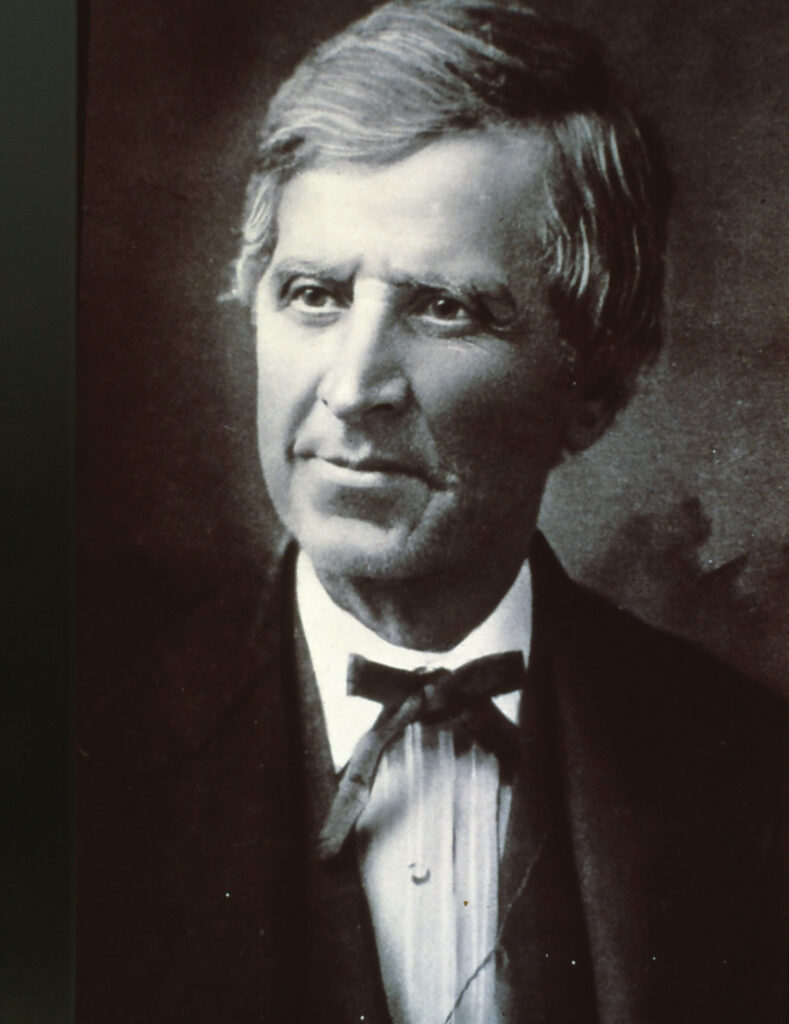
Beware of utopians. Almost all of them turn out to be visionaries with an authoritarian streak: Plato, Calvin, Thomas More, the Reverend Jim Jones … Meeker. The British philosopher Isaiah Berlin calls them “single-minded monists, ruthless fanatics, men possessed by an all-embracing coherent vision.” Almost all utopians wind up being disappointed by the people they try to save. Berlin writes, “No perfect solution is, not merely in practice, but in principle, possible in human affairs, and any determined attempt to produce it is likely to lead to suffering, disillusionment and failure.”
Once he had secured the job, Meeker decided to convert the Ute people into trousered Americans. He reckoned he could persuade them to give up their ancient lifeway and adopt some impoverished version of ours. They were to speak English, give up the Sun Dance and every other pagan ritual, wear Levis and flannel shirts and calico dresses, forgo polygamy, send their children to faraway boarding schools, pray only to Jesus, plow the semi-arid ground, cease hunting and gathering, upend the entire social structure upon which their culture was based, cede whatever lands white people might decide to covet, control their hotheads, turn the other cheek when white folks whipped them in public, acquiesce when white men raped or stole their women or liquored the leaders up to make them more willing to sell their lands for a keg of whiskey. … The list is much longer than that.
To begin to make sense of the Meeker “Massacre,” we have to acknowledge that Anglo-Americans were invading the sovereign homeland of the Ute nation and shoving them out of the way as peacefully as possible and as viciously as necessary. In 1868 the U.S. government had negotiated a solemn treaty with the Utes, “granting” them the western third of Colorado forever, if they would just drift west and away from the booming non-native settlements, mining camps, and ranching enterprises in the rest of the state.
Forever.
Five years of forever later, the U.S. broke the 1868 treaty when gold was discovered in the Utes’ San Juan Mountains. Accordingly, government agents inevitably persuaded the Utes to cede another 3.5-4 million acres in what is known as the Brunot Agreement — for an annual annuity payment of $25,000 and temporary hunting rights in some of the ceded lands. And with the promise that there would be no more attempts to acquire Ute lands.
Kill the Indian, Save the Man
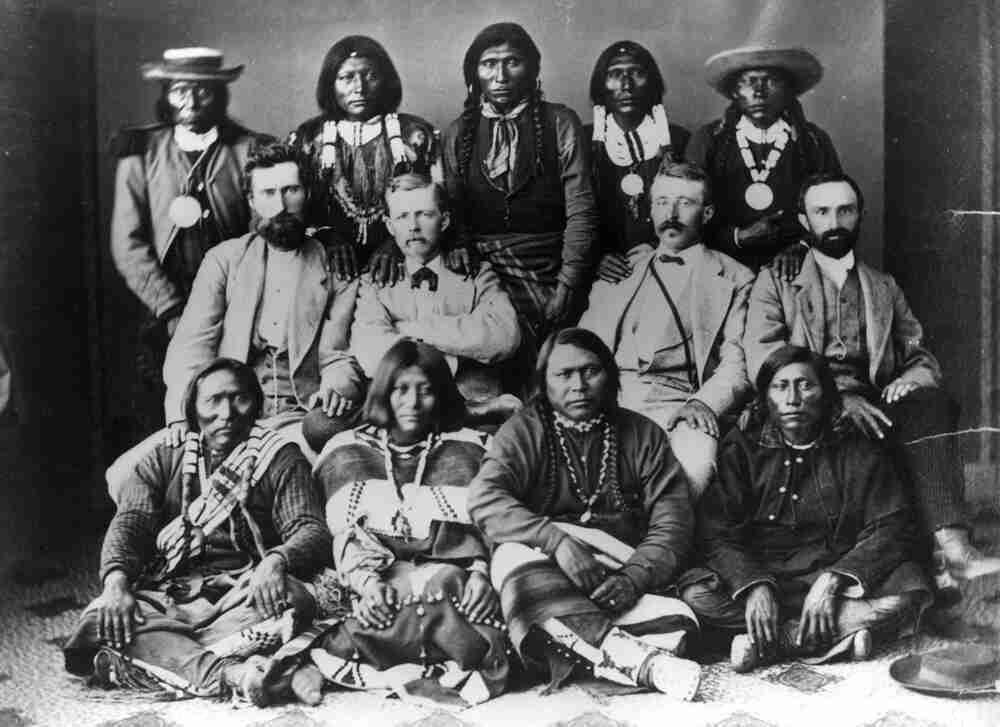
It offended Meeker deeply that the Utes preferred not to be assimilated. The Ute leader Ignacio said, “We do not want to be made white men. We only want to remain Indians.” And the distinguished Ute leader Ouray said, “The Utes want to live as their fathers did.”
We should not be very surprised that they resisted and, under severe pressure, struck back. All the usual provocations drove the Ute to the limit of their patience. Delayed and spoiled rations, inadequate allocations, broken promises, settler encroachments, newspaper editorials calling for their eradication, etc. The Ute finally reached the breaking point (given all of the above) when Meeker decided to plow up a lovely valley (the Coyote Basin) where they raised, grazed, and raced their horses.
At some point, the frustrations of a beleaguered people pass a trip wire (just ask the Palestinians, the Jacobins of the French Revolution, or the Jews of the Warsaw Ghetto in April 1943).
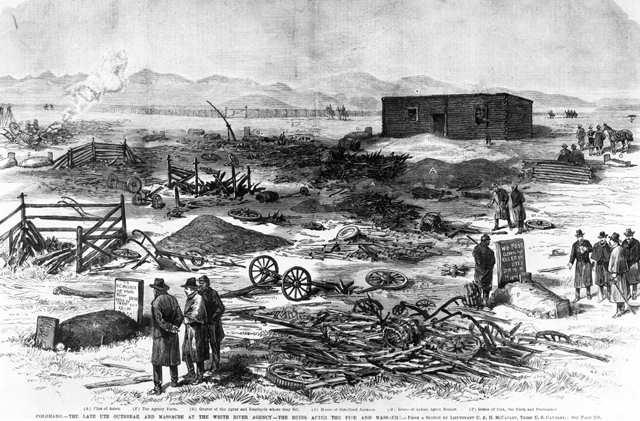
On September 29, 1879, a small number of Utes killed Nathan Meeker and 10 others at the agency post (here in Meeker) and took Meeker’s wife Arvilla and his 22-year-old daughter Josephine as hostages, along with the wife of an agency employee and their two children. The hostages were held for 23 days until the Ute leaders Ouray and his wife Chipeta helped arrange for their release. Josephine Meeker later testified that she had been raped by Ute men.
It was that “fate worse than death” that so enraged white Americans that they called for the most severe possible retribution, including perhaps extermination.
It’s not that Meeker had it coming, though you could make the case that he had it coming, not only serving as the occupying imperial agent of the United States government on Ute land, but stubbornly committed to his assimilation program, and using his leverage with rations and other desperately needed and treaty-guaranteed compensations to coerce the Utes into doing things they knew beyond question they did not want to do. Like most utopians, Meeker was a poor listener.
After the Meeker “Massacre,” the United States government settled the score by confiscating an additional 12,000,000 acres of the Ute homeland and expelled them out of Colorado and into Utah. How big is 12 million acres? That’s an area twice the size of Massachusetts, larger than Vermont, and about the size of Maryland. In August 1881, approximately 1,400 Utes were escorted by the U.S. cavalry to their “new home” 350 miles west of Meeker. Now white farmers and ranchers were permitted to homestead most of western Colorado as “surplus” land, if they could get there before the land investment capitalists grabbed it first.
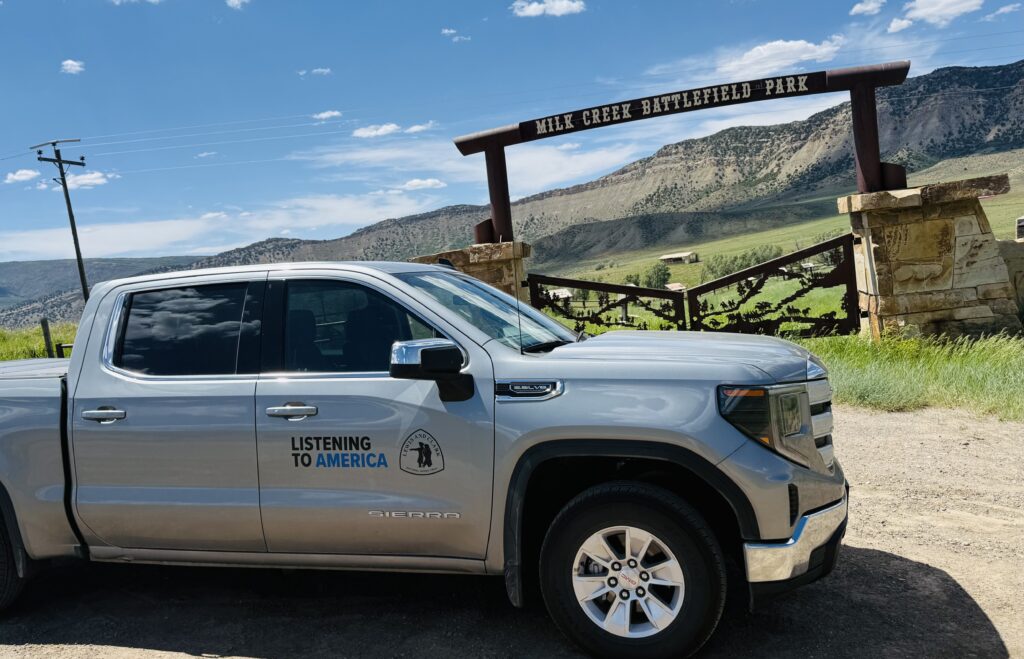
I visited the “massacre”-related Milk Creek Battlefield site this afternoon. One reason for the attack on the White River Agency was that Meeker had panicked and requested military backup in his effort to force assimilation on the restive Utes. Accordingly, Major Thomas T. Thornburgh left Fort Steele, Wyoming, on September 21, 1879, with a company of approximately 190 soldiers and civilian contractors. He was repeatedly warned by Ute leaders that crossing the boundary into their permanent treaty land would be regarded as an act of war. In the seven-day battle, approximately 35 Utes were killed and 13 whites, including Major Thornburgh.
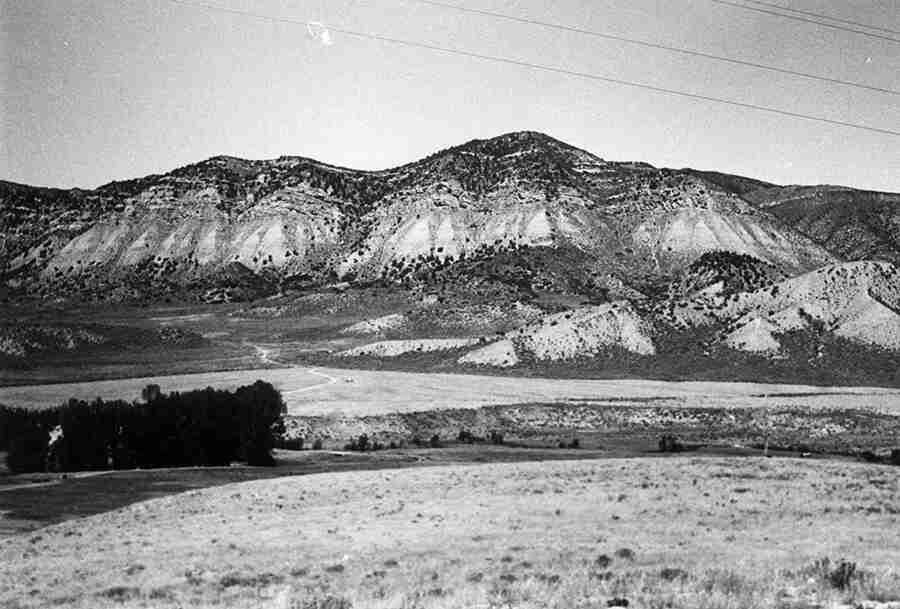
It’s about a 15-mile drive through magnificent, rugged low mountain and wide valley country northeast of Meeker on a good gravel road. The interpretive site is well organized. I counted 14 thoughtful and well-designed interpretive signs. The cultural politics of the signage were firmly, though not intensely, sympathetic to the Indigenous point of view. Still, I’m sorry to say that on the first panel I had to encounter this historical document on a panel exhibiting white attitudes towards the Ute:
“The Utes are actual, practical communists, and the government should be ashamed to foster and encourage them in their idleness and wanton waste of property. Living off the bounty of a paternal but idiotic Indian Bureau, they actually become too lazy to draw their rations in the regular way but insist on taking whatever they want wherever they find it. Removed to Indian Territory, the Utes could be fed and clothed for about one half of what it now costs the government.”
“Nathan Meeker went to the agency in the firm belief that he could manage the Indians successfully by kind treatment, patient precept and good example. But utter failure marked his efforts and at last he reluctantly accepted the truth of the broader truism that the only truly good Indians are the dead ones.”
In other words, we did what we could for them. This was a letter published in the Denver Tribune in 1878 by newspaperman and “historian” William Vickers, advising Colorado governor Frederick Walker Pitkin to be tough. Pitkin adopted the slogan, “The Utes Must Go.”
I’m sure Nathan Meeker thought he was doing the right thing. He knew that Native Americans were not going to be permitted to retard white people from taking over the entire continent. So they had three choices. They could resist with violence and force the U.S. government to take very stern measures with them, sometimes bordering on genocide. They could just slowly fade away or live like paupers on a few grim enclaves “generously reserved” for them, as long as they ceased interfering with the divinely-mandated manifest destiny of the American people. Or they could adopt white folks’ ways and live uneasily on the margins of white civilization.
I’m sorry, but that’s it. That was the de facto American frontier mission statement.
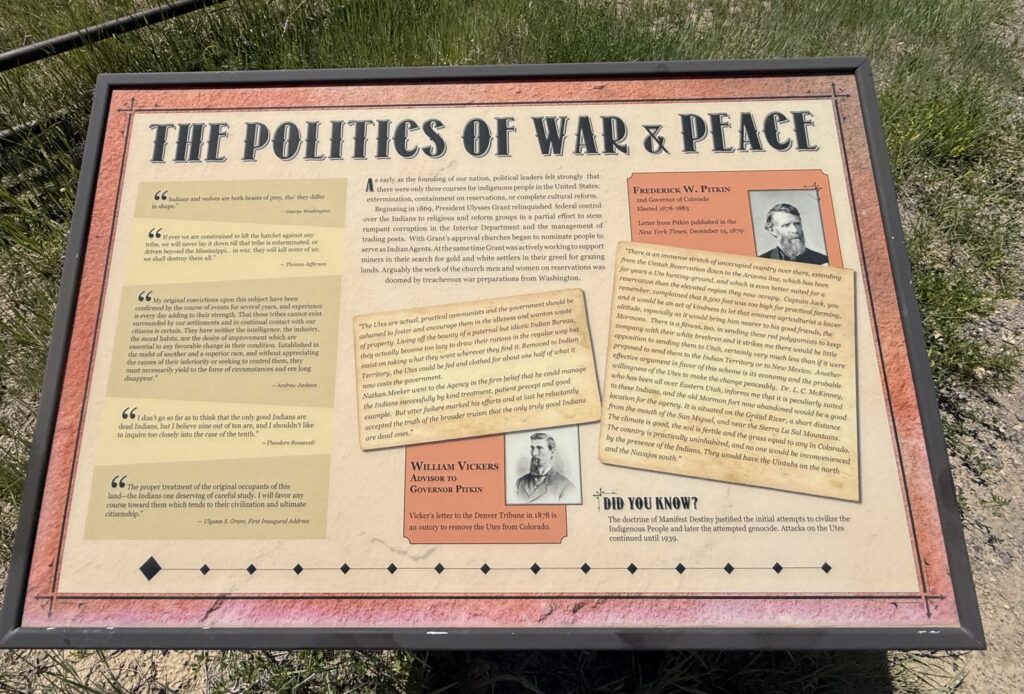
The signage at the Milk Creek battlefield is truly enlightened. I’m frankly a little surprised that there is not more local outrage at the basically pro-Ute interpretation at the site — no bullet holes in the interpretive panels.
The three-building White River Museum at the center of Meeker is a little less generous to the Ute. The exhibits express some modest sympathy for their plight and there is a fascinating (and racist) painting of the “massacre,” but mostly the museum is a three dimensional snapshot of the white history of Meeker, complete with rooms full of army uniforms; rooms housing frontier medical and dental equipment; an area with a linotype machine and a one-sheet printing press; the usual arrays of dolls, razors, firearms, and arrowheads, some used as mosaics depicting generic Natives in headdress; patent medicine bottles; old washers and typewriters and butter churns; photo galleries of roundups and rodeos, with large framed prints of some of the first fathers and first mothers of the town; several carefully framed shadow boxes of bullets, spent and otherwise; a full size cutout (an adult paper doll) of John Wayne. And so much more.
I love these museums.
I went into the museum looking for a display about Theodore Roosevelt, who hunted mountain lions here twice, once in January and February 1901 as he was waiting to be sworn in as William McKinley’s vice president, and a second time in April and May 1905 at the beginning of his second term as president. The museum had a half-hearted display about Roosevelt, praising his love of nature and his commitment to conservation, but it mostly ducked the most interesting story: that he had his most successful mountain lion hunt here in 1901 with his favorite hunting guide, John Goff. The hunting team killed around 14 (maybe 17) cougars, 12 by Roosevelt himself. For science.
That story is better told in the lobby of the historic Meeker Hotel on Main Street, where TR lodged during the hunt. Every wall in the lobby is covered with hunting trophies. It feels like a slightly dusty version of the American Museum of Natural History.

I’ll have more to say about Roosevelt’s hunting adventures in northwestern Colorado soon, but it was the Meeker Incident (as it is now more often described) that forced me to face some of the least admirable dynamics of the American story. Meeker couldn’t listen. Custer wouldn’t listen. The U.S. government wouldn’t listen — and when it did, didn’t much care. White nationalism is both an attitude and an ongoing fact of American history. If we are going to figure out who we are, how we got here, what we owe to the Founders, what we value as Americans, what is unresolved in our national experience, and where we are headed in the next 250 years, we are going to face some very troubling facts.
Further Reading
If you want to learn more, I suggest the following books, beginning with the somewhat outdated Bury My Heart at Wounded Knee.
Ned Blackhawk. The Rediscovery of America: Native Peoples and the Unmaking of American History.
Peter Cozzens. The Earth is Weeping: The Epic Story of the Indian Wars for the American West.
Claudio Saunt. Unworthy Republic: The Dispossession of Native Americans and the Road to Indian Territory.
Ralph K. Andrist. The Long Death: The Last Days of the Plains Indian.