
How would you answer the question of which U.S. president was indispensable to the Republic?
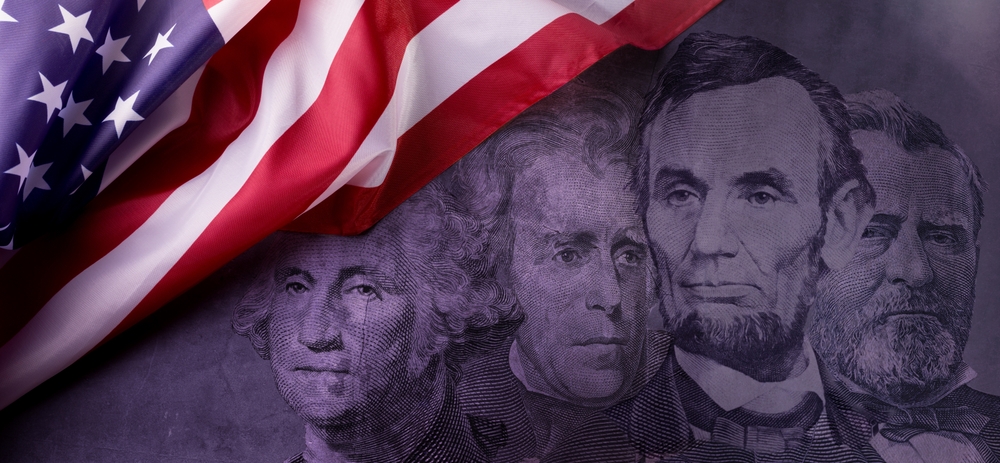
My friend, the writer and historian Lindsay Chervinsky, and I have been debating who was the most indispensable president of the United States. I suppose that is not quite the same as who was the greatest president.
We’ve had 47. Most American presidents have been what might be called caretakers — they presided over the country for four or eight years, didn’t do any particular damage to the republic, but didn’t really advance us toward something better than what they found when they moved into the White House. Think of Gerald Ford, Calvin Coolidge, Grover Cleveland, Benjamin Harrison and Jimmy Carter, to name just a handful of the caretakers.
A few presidents have been disastrous. James Buchanan usually gets this prize. The fundamental showdown over slavery was clearly on the horizon when he took the oath of office on March 4, 1857, but Buchanan did nothing to avert the cataclysm — eventually more than 650,000 dead Americans and a many-decades-long setback for the 11 states of the Confederacy. Andrew Johnson is usually included on lists of the worst presidents, along with Warren Harding and Franklin Pierce. I feel particular animus toward Andrew Johnson for undermining Reconstruction after the Civil War.
Only a handful of presidents have been truly consequential. George Washington tops the list for laying down the basic presidential protocols and norms that we’ve been abiding by ever since (until now) — the cabinet, executive orders and the informal two-term limit (now enshrined by the 22nd Amendment of 1951). Thomas Jefferson joins the ranks of the consequential for doubling the size of the United States with the Louisiana Purchase in 1803. Four decades later, James K. Polk added more than a million square miles to the United States during his single term, including lands that fill all or part of Arizona, Utah, Nevada, California, Oregon, Idaho, Washington, much of New Mexico, and portions of Wyoming, Montana and Colorado.
The 16th president, Abraham Lincoln, held the Union together against essentially impossible odds and issued Proclamation 95, the Emancipation Proclamation, on Jan. 1, 1863. In my calculus, Lincoln is the greatest U.S. president. He was also the greatest writer among presidents. The Second Inaugural Address is one of the finest things ever written in America … 702 words. Among them:
“Neither party expected for the war the magnitude or the duration which it has already attained. … Each looked for an easier triumph, and a result less fundamental and astounding. Both read the same Bible and pray to the same God, and each invokes His aid against the other. It may seem strange that any men should dare to ask a just God’s assistance in wringing their bread from the sweat of other men’s faces, but let us judge not, that we be not judged. The prayers of both could not be answered. That of neither has been answered fully. The Almighty has His own purposes.”
Abraham Lincoln
John Wilkes Booth thought he was serving the Confederacy when he shot President Lincoln in the back of his head at Ford’s Theater on April 14, 1865. But most Southerners immediately realized that Booth had extinguished their best chance for a humane and generous post-war settlement with the Union.
Most presidents are diminished by the terrible burden of office. Washington, Jefferson, Nixon, LBJ, Wilson. Very few grow in office. Lincoln is the chief among them.
The 26th president, Theodore Roosevelt, dragged us into the world arena, sometimes kicking and screaming, between 1901 and 1909. He also set in motion a century of presidential conservation achievements, with his 150 national forests, 51 bird sanctuaries, five new national parks and 18 national monuments. When I try to imagine America without Roosevelt’s conservation achievement, I shudder.
TR’s cousin, Franklin Delano Roosevelt, led the United States through the two existential crises of the 20th century: the Great Depression (with its cousin, the Dust Bowl), and World War II. Social Security alone is one of the greatest things that ever happened in America. And rural electrification. FDR was the first president to offer Native Americans a New Deal in which assimilation was no longer the de facto policy of the government of the United States.
I believe Richard Nixon and Lyndon Johnson will fare better as American history marches on.
But who is the most indispensable president? Lindsay Chervinsky wins our public debates by wrapping herself in the mantle of George Washington, while I am left to try to make the case for poor Mr. Jefferson, America’s Da Vinci, our one true Renaissance Man, the father of American paleontology, father of American library science, father of the American wine industry, father of American public architecture, and one of our most talented diplomats. Second-best writer among presidents — including the 35 most important words in the English language, beginning with, “We hold these truths …” Not to mention, of course, his own short list of achievements: the Declaration of Independence, the Virginia Statute for Religious Liberty, and the University of Virginia. But who’s counting, LINDSAY!
Alas. She’s right (as always?) George Washington was a greater man than Jefferson. He was also a greater president. Jefferson may have written the nation’s mission statement, but it was Washington who somehow got us through the War of Independence. While Washington was kneeling in the snow at Valley Forge, praying for national deliverance, Mr. Jefferson was taking twice-daily temperature readings at his beloved retreat, Monticello. At the end of his life, Washington attempted to do something enlightened about slavery. Jefferson merely delivered his beautiful bromides. Touché, Lindsay.
But Here’s Why I Vote for Thomas Jefferson
He was the one true dreamer among the Founders, the one who replaced John Locke’s “life, liberty, and property” with “life, liberty, and the pursuit of happiness.” He is the philosopher of American exceptionalism, the idea that we occupy a unique place in the history of the human project and that the world is counting on us to exemplify what is best in the human spirit going forward. He believed reasonably well-educated average citizens are up to the challenge of governing themselves. He believed in the modest perfectibility of humankind. He believed we can rise to become our best selves if we commit to it with discipline. Jefferson sang the Song of America. I call it the Jefferson Music — of sublime landscapes, the most extraordinary river network in the world, the sheer fertility of the Mississippi River Valley, of an enterprising citizenry who exhibit more self-reliance and gumption than any other people of history. In his first inaugural address Jefferson called us a fortunate people “possessing a chosen country, with room enough for our descendants to the hundredth and thousandth generation,” and in one of his late letters to his old friend John Adams, he wrote, “and so we have gone on, & so we shall go on, puzzled & prospering beyond example in the history of man.” Amen.
It’s true that we have been slipping lately, and it’s been dramatic. We need Jefferson now more than ever to remind us of our historic mission to show the world the way. Like Hamlet’s father, Jefferson needs to “whet [our] almost blunted purpose.” There is still time.
Jefferson was a utopian pragmatist and a pragmatic utopian. Every nation needs such a visionary, especially up near its headwaters. George Washington was not wired that way. Grumpy old John Adams certainly wasn’t that man. No president believed in the possibilities of America more than Thomas Jefferson.
Jefferson set the bar very high for the American experiment. That he himself did not always live up to that standard only discredits him, not his vision. Jefferson articulated a dream of America that we have not yet reached and perhaps will never quite reach, but one that we can never abandon.
We hold these truths to be self-evident, that all men are created equal, that they are endowed by their Creator with certain unalienable Rights, that among these are Life, Liberty and the pursuit of Happiness. That to secure these rights, Governments are instituted among Men, deriving their just powers from the consent of the governed, — That whenever any Form of Government becomes destructive of these ends, it is the Right of the People to alter or to abolish it, and to institute new Government, laying its foundation on such principles and organizing its powers in such form, as to them shall seem most likely to effect their Safety and Happiness.
Thomas Jefferson
OK, dear Lindsay, offer up one of George Washington’s greatest quotations. Oh, yeah, there aren’t any. Jefferson had, as John Adams acknowledged, a “peculiar felicity of expression.” And he used his great gift to articulate the American Dream.
There is still time.