
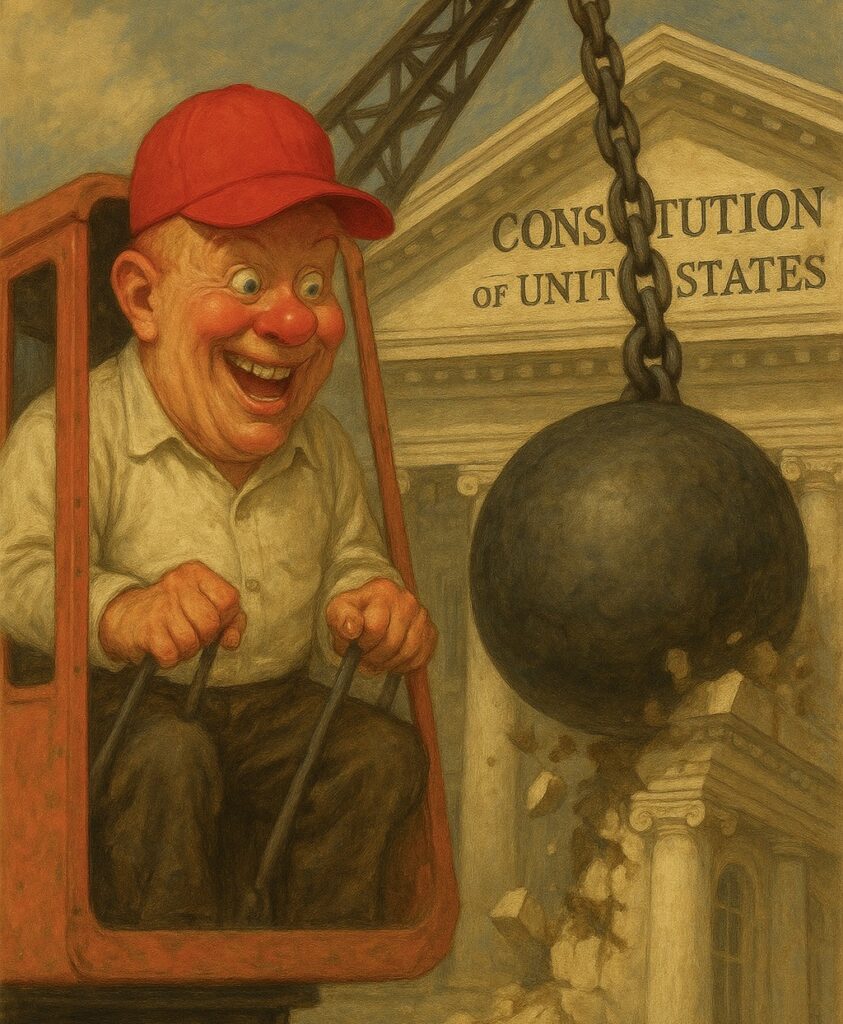
The demolition of the East Wing of the White House is a clear metaphor for our “CEO” president.
T.S. Eliot (1888-1965) was an influential literary critic and one of the great poets of the 20th century. His masterpiece, The Waste Land (1922), is a difficult work of poetic genius, central to any understanding of modernism, and a dark evocation of the aftermath of the Great War (WW I). In his famous (dismissive) essay on Shakespeare’s Hamlet, Eliot coined the term “objective correlative,” by which he meant the “set of objects, a situation, a chain of events which shall be the formula of that particular emotion.”
Photographs of heavy equipment bulldozing the East Wing of the White House may turn out to be the objective correlative of the entire Trump presidency.
For simplicity’s sake, let’s call such photographs a symbol of the Trump presidency, a metaphor for the wrecking ball he has taken to a wide range of important constitutional norms (traditions not codified in the 4,543 words of the Constitution) and to some key provisions of the Constitution itself, like Habeas Corpus, the Emoluments Clause, and the Pardon Clause. (Note: none of this is political interpretation; President Trump has cheerfully explained that this is precisely what he is doing, exactly what America needs.)
We all woke up one day not long ago to discover that, without warning, debate, process, or serious deliberation, the East Wing of the White House was being reduced to rubble. For many of us, photographs of the demolition were literally the first we heard about this major … er “renovation.” The White House is many things — an administrative office building, the private residence of the First Family, a national “commons” where treaties are signed, deceased presidents lie in state, catastrophes commiserated, Nobel Prize winners are feted (JFK, April 29, 1962), and major national and international policy pronouncements are made.
The White House is also an important American museum. It is an essential symbol of our republic, along with the Capitol, and the Washington, Jefferson, and Lincoln memorials. It is also, as we all (almost all?) know, the People’s House. It belongs to all of us, not just the temporary occupant, and we are entitled, through our system of representative government, to weigh in on important changes to the structure and function of the building.
Until now, the White House has been a painstakingly curated structure, protected by public reverence and a long and sometimes tragic tradition, supervised by a dedicated staff of career professionals whose duty it is to protect it, preserve it, and keep it functional, historical, and tasteful, all at the same time. They work hard at this, and they are entitled to our collective respect.
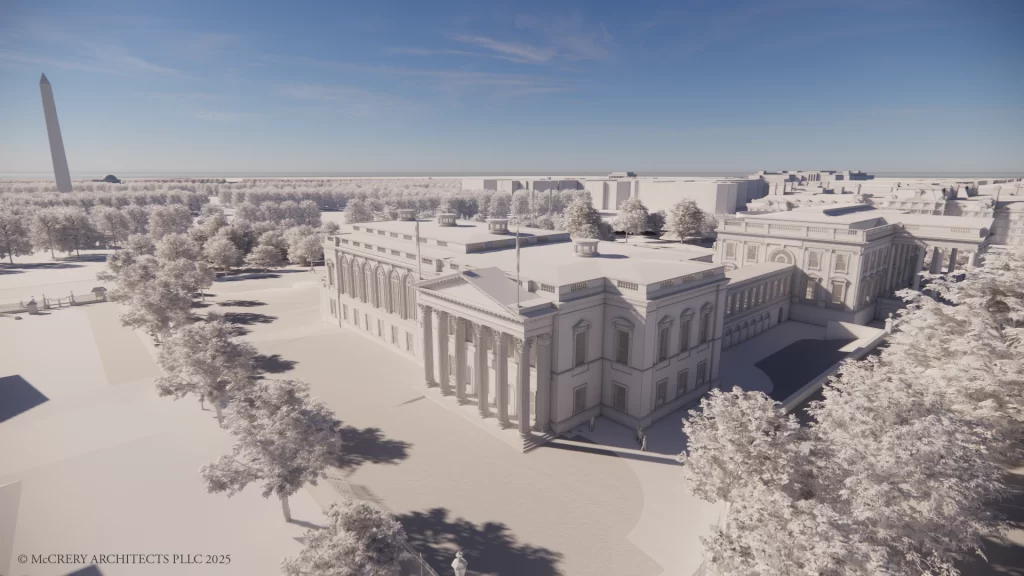
Other presidents have made serious changes to the White House. The difference is that they began their refashionings by consulting the appropriate congressional committees, engaging in serious deliberation with the White House Historical Association, and inviting input from historians of architecture. Previous presidents have worked hard to involve the nation’s most respected architects when they contemplate remodelings and refashionings. Their avowed commitment was to minimize alterations to the White House footprint and to ensure that the wisest individuals in the historical preservation profession were involved at every stage of the process.
Process? That’s not how this president operates.
The reason why this action — one that will fundamentally change the look, the symmetry, and the function of the White House — might be called the objective correlative of the Trump presidency is that it reveals a profound indifference to norms and processes (and sometimes the law itself). It will probably be remembered as the most visible example of how Donald Trump conceives of his reign and his modus operandi.
By now, we all should have learned these truths:
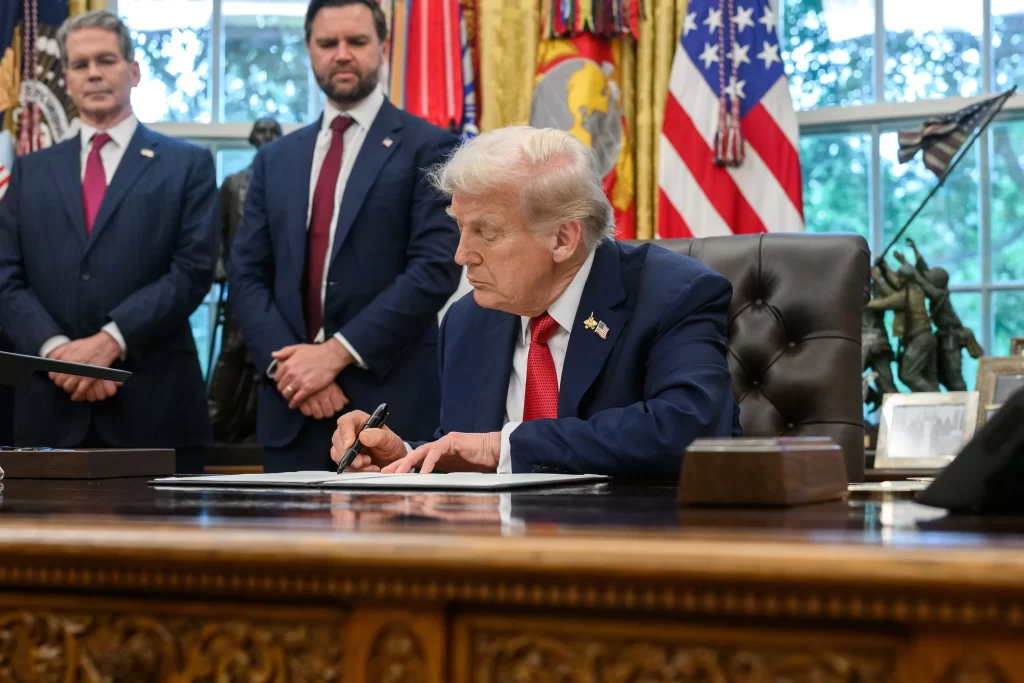
1. Donald Trump sees himself as the CEO of a family-owned business, which he calls the United States. He makes decisions like a corporate CEO who never has to answer to a board of trustees. If he wants to accept a gift of a $400+ million luxury Boeing 747-8 aircraft from Qatar, he does it. If he wants to rename the Department of Defense the War Department, he does it. If he wishes a federal weather chart conformed to his erroneous idea of the trajectory of a hurricane, he whips out his Sharpie. If he wants to pave the Rose Garden, he pours cement.
This is how he has always operated. He seems never to have fully accepted that this is not how a democratic republic works. The sluggish process of American constitutionalism frustrates him intensely, and (I say this earnestly) it is not clear that he really understands the basic civics of how our Montesquieuian system is meant to work. He has told autocrats from the rest of the world — Putin, Xi, Erdoğan, Orbán — that he envies their ability to dictate decisions and watch everyone around them scurry to implement whatever they have unilaterally decided to do. Trump has openly told us — We the People — that he finds the slow legislative process intolerable, and may have to defy the Constitution to achieve his aims. We have been warned. And he was re-elected.
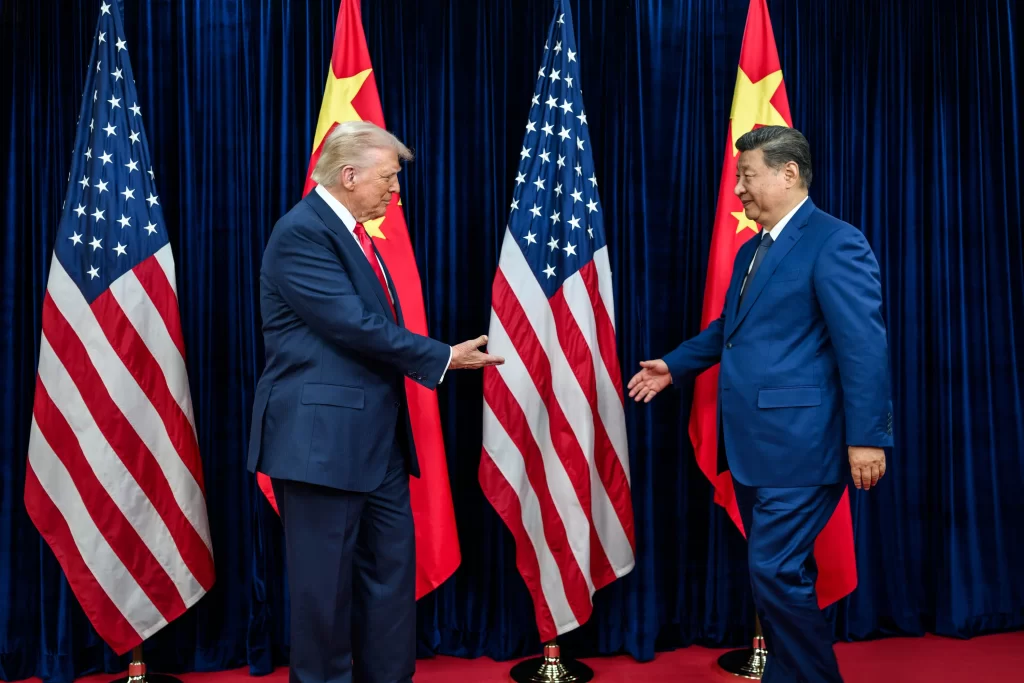
2. Mr. Trump really does believe he is the world’s greatest practitioner of the “Art of the Deal.” Suddenly, he declares that we are imposing steep tariffs on China on such and such a date. China attempts to negotiate. The deadline passes. Trump extends the deadline. Extends it again. Eventually, China retaliates. Trump threatens to up the ante. Then he meets with Chairman Xi, because he believes his force of personality is irresistible in a face-to-face bargaining showdown. He reports that he and Xi are close friends, that they had a “perfect” meeting. It turns out the Chinese concede far less than Trump demanded, and the U.S. makes concessions the president repeatedly ruled out. Still, he declares victory.
He holds a summit with Vladimir Putin in Alaska, declares success, assures us a ceasefire in the war against Ukraine is in the works, but within hours, Putin unleashes the dogs of war as a direct act of defiance. The Russian army intensifies the war and drops a vicious flurry of bombs on Ukrainian civilians, including children. The war grinds on.
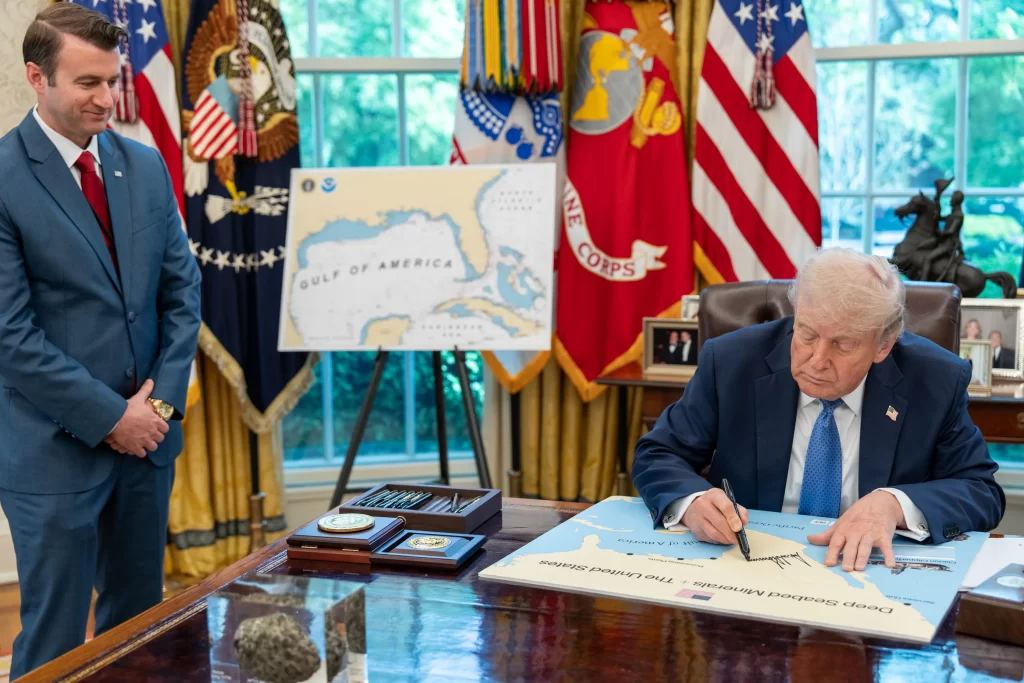
3. Trump despises and disdains experts. They just slow things down and get in the way. Previous presidents have also been frustrated by legislative, bureaucratic, and constitutional processes, but, with few exceptions, they have conformed to American law and traditions. Why? Because they know that becoming president puts them in an extremely serious trust relationship with the American people and with American history. We all remember that Donald Trump assured us, back in July 2016, that “I alone can fix it.” He has assured us he knows more about tariffs than professional economists, knows more about grass than anybody else in America (golf courses), knows more about taxes than anyone “maybe in the history of the world,” knows more about renewable energy than anyone, knows “more about ISIS than the generals do,” etc., etc., etc. ad infinitum. So far, he has not declared that he knows more about quantum physics than Niels Bohr and Albert Einstein, but we are still in the first half of his second term. He may call Albert Einstein a phony at any time.
I’m willing to believe that Trump’s style and his deal-making may work in some instances, but North Korea did not back away from its nuclear and ICBM missile development after Trump and Kim Jong Un became best friends. There is no peace in the Middle East, though Trump assured us he would end that war on Day One of his second term; no peace in Ukraine (same claim); no “big beautiful Wall on the Mexican border,” and Mexico did not pay for those chunks of the wall he has built or mostly rebuilt.
These things take time. And process. And patience. And great attention to detail.
These are not Mr. Trump’s character strengths. He’s used to buying a decayed building in NYC, razing it ASAP, and putting up something that harmonizes with his personality and his sense of style, then calling it the most beautiful building in America.
Without Precedent
It’s certainly true that previous presidents have renovated the White House. Some of those changes have been major.
Thomas Jefferson convinced Congress to appropriate funds to finish and furnish the still-unfinished White House. This included landscaping the property and constructing a set of durable stairs so people could get into the building! Theodore Roosevelt undertook a major renovation in 1902, and the U.S. government hired the country’s most reputable architectural firm to do it right. William Howard Taft added the Oval Office, so beautifully integrated into the original design that the American public has long since forgotten that it was not there for the administrations of Washington, Lincoln, or even Theodore Roosevelt. Harry S. Truman actually moved out of the White House for a full 3.5 years (November 1948-March 1852) while the building was carefully dismantled on the inside to strengthen sagging timber and to bring it up to post-war standards of plumbing, electricity, and security.
Jacqueline Kennedy, who fancied herself a woman of exquisite taste (and was one), enhanced the White House’s elegance and artistic appeal with the most extraordinary attention to tradition and detail.
President Richard Nixon covered over FDR’s White House swimming pool (essential for FDR’s physical therapy due to his polio) and turned it into a much-needed press room.
William Jefferson Clinton presided over a major refurbishing of the Blue Room — in the (French) Empire Style. Perhaps more importantly, the Clintons brought computers and the internet to the White House. This was one initiative in what Bill Clinton called his “bridge to the 21st century.”
The eminent columnist Tom Friedman recently said of Trump, “He tends to view NATO as a Trump-owned shopping center where not enough tenants are paying enough rent.” Fill in the blank. He views virtually everything as something he can redesign or repurpose at will. And he always “knows better.” It must be acknowledged, of course, that he won the 2024 election decisively; elections matter, and tens of millions of Americans approve (mostly) of what he is doing.
The Wrecking Ball Trope
The argument can be made that the American government is “broken” — swollen, inefficient, out of touch, too “woke,” etc. — and that we will need some tough love to turn things around, particularly if we decide to take the national debt seriously. Trump adviser Steve Bannon has argued that the only way to fix America is to blow up the whole thing and start again after the rubble has cleared. Maybe so. But if that blunt demolition were to happen, it would require a long and candid national conversation, the development of consensus (or at least a super-majority) to give it legitimacy, perhaps a plebiscite of the American people, and probably an enabling amendment to the Constitution. But with the support of only about 39% of the American people, no president has enough consensus or authority to crush the Department of Education, shatter the ways and means of the Justice Department, impound Congressionally appropriated funds, abrogate treaties, rename geographic features and military bases, or remake the White House in his own image.
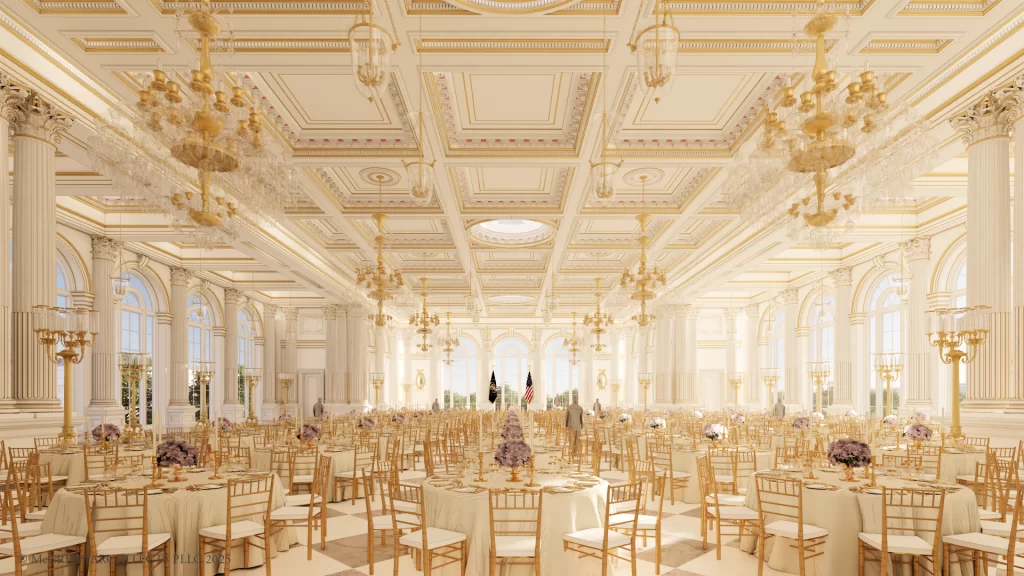
Arguably, we needed a grand ballroom annex to the White House. However, you have to wonder why we have been able to get by all this time (225 years) with the existing building, including the huge East Room, where Abigail Adams (the first First Lady to inhabit the house) hung her laundry to dry, where Meriwether Lewis lived for two years before he explored the American West, and where seven presidents have lain in state. The East Room has hosted scores of state dinners and other large ceremonials. But assuming that a huge new ballroom would make it easier to host large White House events, you’d want to bring in a large number of experts and committees to talk about how the new building could be made to harmonize with the existing historical structure, how that new facility will change the “footprint” of the White House, what structures will have to be erased to permit this gargantuan thing to be built, how big is big enough and how big is too much, and many other pertinent questions. In short, a deliberative process.
But no. That’s not how this president works.
The current edition of our political habit of “what-aboutism” is that Barack Obama turned the White House Tennis Court into an all-purpose facility that could accommodate his love of basketball. Horrors! And yet, no bulldozers were needed, no load-bearing walls torn down to make that relatively modest change, and there was, as you might expect, a careful process. Fake news entities are declaring that Obama demolished important parts of the White House to service his (“urban,” “Black”) love of hoops. One right-wing website pretended that a 1934 photograph of structural changes was taken in 2009 — and, strangely, in black and white. Another site accused Obama of spending $376 million to build his basketball court.
One final point: if we accept the need for a new White House ballroom (unclear) and accept that it needs be so massive (unclear), my principal remaining concern is what the finished structure is going to look like inside and out — inside more than out if Trump is faithful to his preference for neoclassical buildings rather than the architectural styles of our time. Gold faucets? Glittering chandeliers? Will it be Mar-a-Lago north? A tinselly American version of Versailles? The style changes Trump has already made to the Oval Office are so over-the-top, so gaudy and ostentatious, that I now actually have to turn away when I see video or stills of Oval Office meetings. It’s like a scene out of the Roman satirist Petronius’ parody of the vulgarities of the nouveau riche, The Satyricon. The Oval Office now looks like what a fourth-tier Saudi prince would create for himself in Beverly Hills.
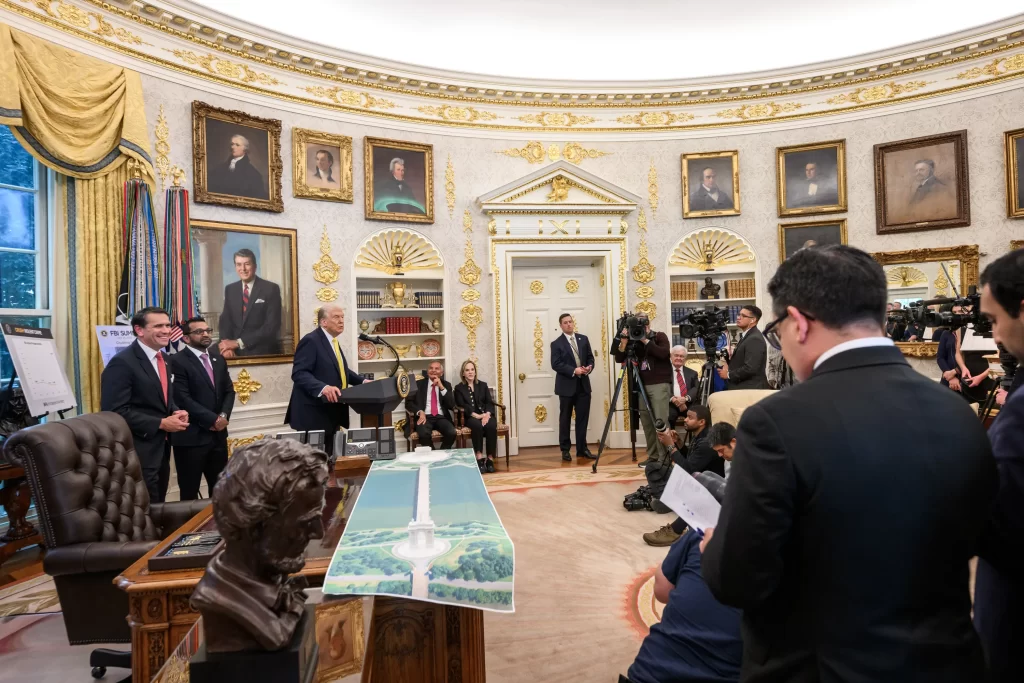
President Trump assures us the new ballroom will be funded with private money. That may sound praiseworthy, but remember that in spending non-Congressionally appropriated money, the president shields himself from fiscal or any other kind of public accountability. Congress holds the power of the purse, but that is not the purse Mr. Trump wants to tap — too much oversight and paperwork.
We’ll survive this, of course. Sometimes a ballroom is just a new ballroom, and this is the 21st century, not the 18th. But I believe Mr. Trump has provided future textbooks with one of the handful of most reproduced images of his two-term presidency.