# Listening To America
> Generated by All in One SEO Pro v5.0.5.1, this is an llms-full.txt file, used by LLMs to index the site.
## Posts
### [Blog](https://ltamerica.org/?page_id=303)
**Published:** July 25, 2017
**Author:** Francisco Molina
---
### [O Brave New World That Has Such Reading Tools](https://ltamerica.org/o-brave-new-world-that-has-such-reading-tools/)
**Published:** November 10, 2026
**Author:** Clay Jenkinson
**Excerpt:** A weary public humanities scholar settles in for a winter of reading and writing. We work him hard here at Listening to America, but in truth he is always clamoring for more. Here he reflects on the frustration of staring at a mountain of books he needs to read.
**Content:**
## *A weary public humanities scholar settles in for a winter of reading and writing. We work him hard here at Listening to America, but in truth he is always clamoring for more. Here he reflects on the frustration of staring at a mountain of books he needs to read.*
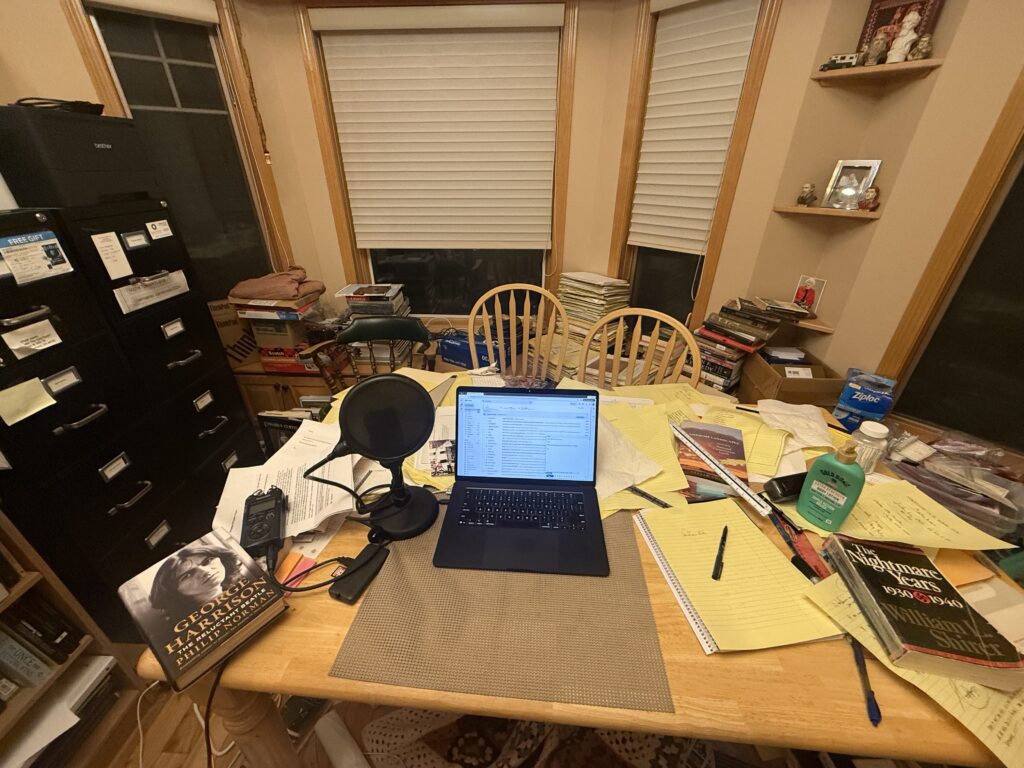Clay’s desk, etc.
Home after a crazy year of professional and some personal travel, I have been regrouping. That means cleaning out the vehicles, rolling up the hoses, putting books and notebooks in order, and above all, reading. At the moment I’d guess I have 20-30 books that I must read, not all stacked in one place, and a great deal of writing to do. Typically, in late October or November, at the end of a hard season of professional work, almost all of which requires airplane travel, I get sick. Usually it is strep throat. My body knows what it needs; at some point, it shuts me down for a few days or a week for rest and routine maintenance. My body tends to cooperate by postponing the reckoning until most of the travel year is over, then hitting me hard. Not so this year. I’m worn out but not down and out.
As I sit at my dining room desk — my favorite work spot because a: I live alone and don’t have to answer to a more civilized human being and b: because large bay windows embrace almost half of the room and bathe it with lovely daylight, I can put my hands on about 50 books without getting out of my chair, and many more within easy sight. There are probably 20 pens (of several colors and including big black Sharpie and little black Sharpie) scattered about on my table, and at least three footlong rulers (for underlining and back scratching), a fabulous heavy vintage stapler I have had for 60 years (a white collar crime perpetrated by my father), three or four notebooks, half a dozen yellow legal pads, a large bottle of aspirin, copies of letters in and letters out, various Post-its, a small audio recorder, some errant flash drives and SD cards, a few Ziplock bags (humanity’s greatest invention, with the possible exception of Ginsu knives), two maps of the American Southwest, and a large professional microphone complete with a p-pop filter screen, and — I’m sorry to report — quite a bit more. When people see this and are trying to be nice, they say, “Well, it’s not such a big deal because you are mentally organized.” Sure I am.
More or less at the same time I am reading a new book on the Bureau of Land Management and the ongoing disputes about America’s public lands; a book on Renaissance alchemy (a spiritual precursor to modern chemistry); the third of the six Jane Austen novels I will be featuring in [one](https://ltamerica.org/2027-winter-retreat-the-novels-of-jane-austen/) of my three humanities retreats out at the venerable Lochsa Lodge west of Missoula come January; books about the Beatles, currently Tim Riley’s outstanding biography of John Lennon; and several books “for fun,” including the CBS journalist William L. Shirer’s three-volume autobiography. I take extensive, exhaustive notes on almost everything I read, even a Dickens novel (why?), but just where all those notes wind up is a problem. I’m not one of those “execs” who leave their desk clear and clean at the end of the business day. If I won the lottery, among the first things I would do would be to hire a personal assistant whose sole duty would be to bring order to all of this so that when I said, “Athena, do you remember where I put those 143 pages of notes on Thoreau’s *Walden* after last year’s retreat?” she would look at me with pity and contempt and say, “Yes, although they are in your file cabinet under the letter T, allow me to fetch them for you.”
As I sit here gazing at the books I know I need and want to read, I am often reduced to a kind of paralysis. Even a low-level depression. Where to start? How much can I realistically read in a week, a month, a year? (I sometimes do the math: if I could read 52 books per year, and let’s say I live another 20 years. …). Why is it that when I read a book I have previously read — in this case A.C. Grayling’s *The Age of Genius: The Seventeenth Century & the Birth of the Modern Mind* — I come upon passages I have previously underlined but don’t remember reading? Still, it is clear that I did read the book and that I found certain passages worthy of remembering. I wish I had an assistant who would go through my books at the end of the week and copy out all those paragraphs into what, in Thomas Jefferson’s time, was called a Commonplace Book. But no.
If **Sadness #1** is that there will never be enough time to read all that I truly *need* to read, much less all that I *want* to read, and less still than what *I should by now have read*, with more excellent books being published in a month, every month, than I can read in a year or more, **Sadness #2** is that I seem to retain so little of what I have read. For the most part, my reading brain feels like a very leaky bucket. On the many occasions when I come upon a passage that really impressed me, perhaps only two or three years ago, and I don’t remember reading it at all, I sometimes throw up my hands or get up from my chair roughly and ask myself, “What’s the point?” “What’s the point of all this lifetime of serious reading when much, even most, of it slips away into oblivion, like your room number from a hotel three weeks after you fly home?” What’s my actual retention quotient? Why not just work in a tree nursery or watch old reruns of *I Dream of Jeannie*?
Truly.
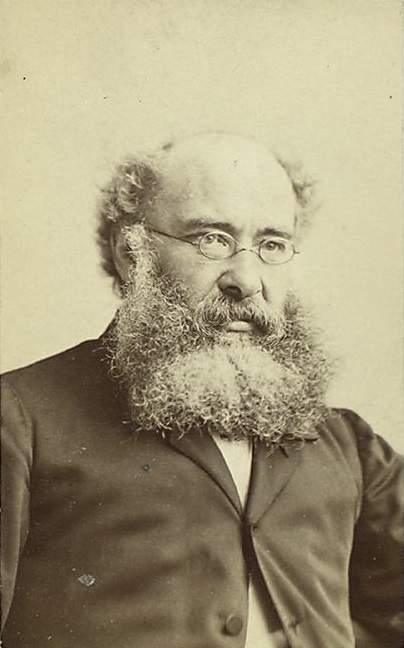Anthony Trollope was an English writer and Victorian-era civil servant who wrote over 47 novels, as well as short stories and travel books. (Portrait of Trollope by Napoleon Sarony)
I wish I were one of those great readers, the readers who appear to have read everything. Among them were Theodore Roosevelt, Erasmus of Rotterdam, Dr. Samuel Johnson, the literary critic George Steiner, and, alive today, Bill Gates, who somehow manages to read 50 books per year, and Warren Buffett, who is said to read 500 pages a day. I don’t disbelieve that, but my immediate response is, by acronym, AYFKM, the first words of which are “Are you” and the last “kidding me!?” President William Jefferson Clinton was a great reader when he wasn’t exacting pleasure the old-fashioned way. I studied with a young scholar named Julian at Oxford University long ago who came back from the long summer vacation and asked me what I had read over the “long vac,” as it is called. I said I had read Sir Thomas Mallory’s *Morte d’Arthur* and Homer’s *Iliad*, some of it in ancient Greek. I was pretty self-impressed. When I asked him what he had read, Julian said, without a hint of triumph, “I read Anthony Trollope novels.” “Which ones?” I innocently asked. “Well, all of them.”
Well, all of them means 47 novels, at about 460 pages per novel. That’s about 5 million words. Trollope (1815-1882) worked for more than 30 years for the British Post Office, and he wrote all his novels before breakfast. Julian had read them all, and his retention was staggering. He went on to score the highest First Class Distinction in our final exams, and he is now one of the world’s leading experts on Trollope, an emeritus fellow at Regent’s Park College, Oxford University, so I guess it was time well spent. All I remember is wanting to slink away and work in a butcher shop.
In Shakespeare’s comedy *Twelfth Night*, the dissolute aristocrat Sir Andrew Aguecheek laments: “I would I had bestowed that time in the tongues \[i.e. foreign languages\] that I have in fencing, dancing, and bear-baiting. O, had I but followed the arts!” Indeed. If I had all the time back that I have spent watching late-night television (and bear-baiting, of course), I could read the complete works of Dostoevsky (11 major novels) and Tolstoy, too (four colossal novels, including the world’s greatest novel, *Anna Karenina* (a mere 364,000 words, a pamphlet compared to *War and Peace* at 587,287 words).
I have tried several times to master the art of speed-reading. I have known one or two people who can comfortably read 100 pages per hour, but my efforts have inevitably miscarried, which always makes me remember Woody Allen’s quip: “I took a speed-reading course and *read War and Peace in 20 minutes*. It involves Russia.”
I have always thought it would be a great achievement to have read the complete works of a single great writer. Choose carefully and don’t let it be Trollope! I think I can say I have read all of J.D. Salinger, all of Harper Lee, and Boris Pasternak (just one novel, *Dr. Zhivago*), but you don’t want to choose Stephen King (60 novels) or Barbara Cartland (600+). I can’t even say I have read the complete works of Henry David Thoreau, because though he published only a couple of books, he also kept his famous journal for 24 years: 2 million words, 10,000 manuscript pages, 47 handwritten manuscript volumes. He died at 44 on May 6, 1862. Just imagine if he had lived to 78, like his problematic mentor Ralph Waldo Emerson. I knew an itinerant park ranger at Rocky Mountain National Park who was one of those admirable and annoying minimalists. The only books he took with him from one National Park to the Next (always living in perfectly spartan park housing) were a complete print edition of Thoreau’s journals. You know those people you love and hate at the same time. I’ve read plenty in Thoreau’s journals, but not nearly enough. In some of it, truthfully, the great naturalist sees so much of the “world in a grain of sand” that my mind wanders from berry to stamen and then into thin air, and then all I want to do is get a bucket and go a huckleberrying.
## **My Pampered and Privileged Life**
How Clay’s AI assistant “Athena” would organize Clay’s desk.
It is not all bad news, of course. First, somehow the universe has granted me a life of reading (and talking and writing), which is fundamentally different from my grandparents who worked endlessly on their modest dairy farm in western Minnesota. My grandfather toiled outside in the Minnesota climate, and my grandmother toiled both inside and out, with a half-acre garden, 500 quarts of canned produce per year, and when she wasn’t busy, when the evening news came on or Johnny Carson, she crocheted, knitted, and darned socks. Yes, darned socks! When I was studying at Oxford, she wrote me wonderful handwritten letters on onion skin to save postage. One time she reported that she had “put up” 45 apple pies over the weekend. I thought, great, I read Act II of *King Lear* this weekend. My pampered and privileged life has involved no heavy lifting. I haven’t had to go out at 3 a.m. to pull a calf in a raging blizzard or get the crop in through the night before the coming storm, and I have seldom had to punch a clock. So I have no room to whine.
Second, we now have such marvelous tools. First there was the Internet, so common now that we have dropped the capital I. Then Wikipedia. Then Google searching. Now AI. And AI (the most revolutionary tool of them all) makes what we do infinitely easier. Take Trollope, for example: please! If, back in 1980, I had wanted to know how many books he wrote and how many words, I might have found the book count in the Encyclopedia Britannica. Still, I would have had to get my hands on at least three of his novels to begin to ascertain the average number of pages per book. I might have had to drive to a library, and even then it might have taken a full day to find what I needed.
## **Then Versus Now**
I used to ask my college students to find answers to 20 questions all typed out on my IBM Selectric III (a primo instrument!) and copied on a Spirit Master mimeograph machine (ah, that wonderful smell, and those slightly damp pages). Questions like: How many acre-feet in the Aral Sea? What is the highest peak in Finland? Where is former baseball player Rod Carew now? How many times does Shakespeare use the term “scruple”? What was the seventh of Luther’s 95 theses? Etc. I just now chose these questions at random. It took my students a full week to track such things down. Some threw up their hands and changed their major to astronomy. Now they are billionaires with yachts, and I eat generic ramen. That was then. Today this little research assignment, designed to teach them how to use the library to root out information, is pointless. Let’s see: Aral Sea, 850 million acre-feet; Finland, Mount Halti, 4,344 feet, located in Finnish Lapland; Carew, now 81 years old, living in southern California, lifetime batting average .328; Shakespeare, scruple, 28 times, 23 singular, five plural; and Luther, “God remits guilt to no one whom He does not, at the same time, humble in all things and bring into subjection to His vicar, the priest.” I just looked all this up, and the whole assignment took less than four minutes!
AYFKM? That would have taken forever in 1985. I learned, too, that Rod Carew had a heart and kidney transplant back in 2016.
I can also tell you when “scruple” entered the English language: AI told me it appeared in the 15th century, from the Latin word *scrupulus*, meaning a small, sharp stone or pebble, which is lovely to know. Etymology is one of my favorite hobbies. A scruple is a little nagging concern of conscience, like a pebble in your sandals! Excellent. But I was not satisfied with “15th century,” so I had to get up out of my chair (effort), walk to my upstairs library to find volume XI of the Oxford English Dictionary (OED), find a magnifying glass (old eyes, small print), to learn that it was in 1526 that the word first was used in this sense in the English language. Still, not far below that in the OED’s illustrative sentences, Shakespeare’s “some craven scruple / Of thinking too precisely on th’ event” from *Hamlet* (1602) appeared. Violà. That one factoid took a full 10 minutes to track down, and if I hadn’t had all 13 volumes of the OED within 20 feet of my desk, I would have given up.
Maybe AI is going to decide that the human race is a terrible invasive species (a view held only by the jaded) and snuff us out, but in the meantime I am going to find ways to tame it and use it. Thanks to the digital revolution, I could tell you in less than 10 minutes how many different (i.e., distinct) words Trollope used in those 47 novels. Well, actually, it took less than 30 seconds, and AI only told me it might be as many as 30,000+ distinct words, depending on what you mean by distinct. That was pretty disappointing, but I did learn that almost all of Trollope has now been digitized, which means it will soon be possible to get much closer than the vague and suspicious 30K+. I did learn, however, that a New York-based fellow by the name of Peter Fink has done the definitive study of chapter length in Trollope: *“The Evolution of Order in the Chapter Lengths of Trollope’s Novels*,” which was published in *Literary and Linguistic Computing*, Volume 21, Number 3 (September 2006), pages 275–282. For all I know, this Fink probably won an award for this cutting-edge scholarship or earned tenure on the basis of it.
Which leads me to my last point. If you asked these questions of Wikipedia, you’d maybe get your answer. After all, Wikipedia now contains 7,621,000 articles *in English alone*, compared to the pitiful 65,000 articles in the 32 volumes of the print edition of Encyclopedia Britannica. But my AI companions (free or very nearly so) not only answer my questions, usually within seconds, but also offer a menu of further fun facts and searches they would be happy to do for me. For example, AI actually suggested that I contact the aforesaid Fink and offered me his email address. Yikes. One AI provider even says that if I am a college student, it would be quite happy to write a “draft” (sure, just a draft!) of the essay that is due tomorrow. Meanwhile, my AI companion, whom I’ll call “Athena,” suggested that I compare Trollope’s vocabulary to that of Shakespeare, Dickens, and Jane Austen. Why? Because it knows that I have been working on Dickens (*David Copperfield)* and Austen (all six novels). This is a bit unsettling. What else does it know about me?
Notice that in all of this I have not quoted a single sentence of Trollope, not even from his masterpiece, *The Way We Live Now* (1875), and I have said absolutely nothing about his purposes as a novelist, or the themes he wrestled with in those gazillion words. Beware. AI is going to revolutionize everything, but it is not necessarily going to make us a jot wiser. First use of the word “jot” in English: 1562.
Yes, my friends, this is my life. To which the only sensible response is:
AYFKM?
---
## ***Discover more on these topics at Listening to America***
[Republics](https://ltamerica.org/tag/republics/ "1 topics")[Utah](https://ltamerica.org/tag/utah/ "11 topics")[Thomas Jefferson](https://ltamerica.org/tag/thomas-jefferson/ "34 topics")[Reading](https://ltamerica.org/tag/reading/ "1 topics")[New Mexico](https://ltamerica.org/tag/new-mexico/ "3 topics")[Wyoming](https://ltamerica.org/tag/wyoming/ "4 topics")[north daktoa](https://ltamerica.org/tag/north-daktoa/ "0 topics")[Poetry](https://ltamerica.org/tag/poetry/ "1 topics")[Pennsylvania](https://ltamerica.org/tag/pennsylvania/ "1 topics")[Oregon](https://ltamerica.org/tag/oregon/ "4 topics")[North Carolina](https://ltamerica.org/tag/north-carolina/ "3 topics")[Space Exploration](https://ltamerica.org/tag/space-exploration/ "8 topics")[paintings](https://ltamerica.org/tag/paintings/ "0 topics")[Sports](https://ltamerica.org/tag/sports/ "2 topics")[South Carolina](https://ltamerica.org/tag/south-carolina/ "1 topics")[Road Trips](https://ltamerica.org/tag/road-trips/ "18 topics")[South Dakota](https://ltamerica.org/tag/south-dakota/ "16 topics")[Travel](https://ltamerica.org/tag/travel/ "1 topics")[Wisconsin](https://ltamerica.org/tag/wisconsin/ "0 topics")[New England](https://ltamerica.org/tag/new-england/ "1 topics")[Virginia](https://ltamerica.org/tag/virginia/ "7 topics")[Ohio](https://ltamerica.org/tag/ohio/ "2 topics")[Theodore Roosevelt](https://ltamerica.org/tag/theodore-roosevelt/ "16 topics")[Vermont](https://ltamerica.org/tag/vermont/ "1 topics")[State Parks](https://ltamerica.org/tag/state-parks/ "2 topics")[Steinbeck Travels](https://ltamerica.org/tag/steinbeck-travels/ "75 topics")[Podcast](https://ltamerica.org/tag/podcast/ "1 topics")[U.S. Constitution](https://ltamerica.org/tag/u-s-constitution/ "1 topics")[The Constitution](https://ltamerica.org/tag/the-constitution/ "1 topics")[William Shirer](https://ltamerica.org/tag/william-shirer/ "1 topics")[Rivers](https://ltamerica.org/tag/rivers/ "3 topics")[Oppenheim](https://ltamerica.org/tag/oppenheim/ "0 topics")[Walden](https://ltamerica.org/tag/walden/ "1 topics")[Rome](https://ltamerica.org/tag/rome/ "1 topics")[U.S. Presidents](https://ltamerica.org/tag/u-s-presidents/ "71 topics")[Washington](https://ltamerica.org/tag/washington/ "2 topics")[Tennessee](https://ltamerica.org/tag/tennessee/ "1 topics")[Thoreau](https://ltamerica.org/tag/thoreau/ "5 topics")[Texas](https://ltamerica.org/tag/texas/ "4 topics")[Oppenheimer](https://ltamerica.org/tag/oppenheimer/ "1 topics")[Video](https://ltamerica.org/tag/video/ "51 topics")[Water in the West](https://ltamerica.org/tag/water-in-the-west/ "24 topics")[New York](https://ltamerica.org/tag/new-york/ "8 topics")[North Dakota](https://ltamerica.org/tag/north-dakota/ "53 topics")[Republic](https://ltamerica.org/tag/republic/ "0 topics")
**Categories:** Features
**Tags:** Books, Humanities
---
### [It’s Election Day. Oh My, What Choices?](https://ltamerica.org/its-election-day-oh-my-what-choices/)
**Published:** November 2, 2026
**Author:** Clay Jenkinson
**Excerpt:** As voters head to the polls this week, Clay broods on the current state of our national endeavor.
**Content:**
## As voters head to the polls this week, Clay broods on the current state of our national endeavor.
(Shutterstock)
It’s election day in America. The time when “all elections are local” (Tip O’Neill’s insight) is over. This one, in particular, is a national referendum on President Donald Trump. It looks like he’ll get a thumping, but in the Trump era the polls have often proved unreliable. I’ll be very surprised if the Republicans keep control of both houses of Congress, but I’ll be equally surprised if the Democrats sweep back into power in a giant blue wave.
What I am hearing as I travel the country and listen to a wide range of “news sources,” is that the Democrats are likely to win back the House and possibly the Senate (unlikely, I think). Still, the voters who are fleeing the Republican Party at least temporarily are voting for the Democrats not because they like the Democrats (national approval rating 42%), but because gas and grocery prices are high. They are angry that Trump broke his promises: no new wars and a better, well-managed economy.
Except for several tens of millions of diehards, the American people have gotten weary of Donald Trump. They have heard all the grievances before ad infinitum. *The 2020 election was stolen*. *The Dems want open borders*. *Sanctuary cities are insane*. *Journalists are the enemy of the people*. *Transgender athletes are lurking in the girls’ locker rooms. Europe doesn’t pay its share*. When he is not descending, often incoherently and with slurred speech, into genuinely weird digressions that have nothing to do with anything, Trump is now mostly a broken record. He can still inspire a few hundred in his audience to chant “Lock her up! Lock her up!” if he mentions Hillary Clinton. But that was a full 10 years ago now, and even Trump diehards want something better to chant about.
In desperation, you can declare that the Democrats are leading us to Sharia Law and/or communism, but does anyone really believe that?
Measurable bipartisan Trump fatigue exists in America — and the Trump we now see on the campaign trail himself seems weary of the game. He is like a vaudeville comedian well past his prime. His audience is no longer ardently enthralled by him. They come to his rallies with nostalgia for that golden moment when he offered himself as their tribune and turned the broken American political system upside down. It’s like going to one of the last performances of Red Skelton in Las Vegas.
To win, Donald Trump needs his entire base plus disaffected Democrats and a significant percentage of independents. The president has made no effort to secure these voters’ continued support. In fact, he appears to have gone out of his way to frustrate and alienate them. He has held about 27 rallies in the last two months, but most have taken place in the reddest districts of the reddest states. The venues are getting smaller, and whole sections of the auditoriums are roped off to concentrate smaller crowds where they will be visible on TV. In other words, Trump seems to be speaking almost exclusively to his hard-core base rather than the millions of other Americans who voted for him in 2024. His logic seems to be that if he can whip his base into a retributive frenzy, and make sure they don’t sit this election out at home, he might squeak by: at least keep the Senate and just possibly the House. In my non-scientific calculation, this strategy does not lead to victory, but we have all learned that it is never safe to dismiss Trump’s gut political instincts. He has defied the odds again and again in the last 12 years. There may be method in his madness, but the madness is increasingly obvious to everyone.
If the Democrats were a just slightly left-of-center party whose polar star was common sense and a spirit of compromise, if they understood the most salient fact of American politics, that the great majority of the American people are far more conservative than the trendiest Democratic candidates, far more comfortable with Kentucky Governor Andy Beshear and Virginia Governor Abigail Spangerger than with AOC, Zohran Mandani, and Abdul El-Sayed, I believe they would win today’s election emphatically, along the lines of Lyndon Johnson’s 1964 victory over Barry Goldwater. But most Americans are not ready for a single-payer Medicare for All health care system. Most Americans are quietly glad that President Trump has slowed the flood of undocumented foreigners across our southern border. Most Americans feel that the DEI agenda went too far. Most Americans are bewildered by any concept of gender construction that seems to ignore the binary biology of being born male or born female.
Ironically, Donald Trump has lost the issue that propelled him into the presidency in the first place. He wanted to stem the flow of immigrants across the southern border of the United States. Since his re-election in 2024, he has effectively closed the border. All he can say now is that if the Democrats return to power, they are likely to open the floodgates again, but I think even most Democrats are secretly ok (for the time being, at least) with tighter border restrictions.
If there hadn’t been a perception of wide-open borders back in 2016, I doubt Trump would ever have won the presidency of the United States. Without that semi-racist fear-mongering (caravans massing at the Rio Grande) as his number one campaign issue, much of Trump’s appeal has attenuated. What’s he promising us now? More support for Putin and Russia against Ukraine? More verbal assaults on Canada and our European allies? Further monkeying with punitive tariffs? An ever-receding end to the war he started against Iran with all the calamities that have followed? Trump’s Republican supporters are forced to trot out the unconvincing argument that higher gas and food prices “will have been worth it” if the endless war prevents Iran from getting a nuclear weapon. They don’t believe it. It’s just the only possible justification for waging an unwinnable war against a proud nation-state that has calculated it can take more economic disruption than the narcissistic American public.
But here’s the most important point I wish to make as people line up at the polls today. If the Democrats do win control of both houses of Congress, our severe political troubles do not disappear. If the past is any indication, inevitable congressional investigations will stall when Trump administration officials defy subpoenas and refuse to appear before oversight committees. The president will veto any laws he doesn’t like. With virtually unlimited presidential immunity (Trump v. United States, 2024), with no one in his inner circle willing to check his wilder notions, and fiercely embracing the concept of the Unitary Executive — i.e., that a president has essentially unlimited power, no matter what the Constitution seems to say — Trump is likely to prove every bit as disruptive in the next two years as in the last six (four then plus two now). Perhaps even more erratic as his physical and mental health continue to decline.
Congressional opposition to Trump has only three highly imperfect weapons: the power of the purse; investigations designed to stall whatever is left of Trump’s agenda; and impeachment. Thin gruel. In other words, the greatest impediment to Trump’s power will come not from the hoary “checks and balances” doctrine of the 18th-century Constitution, but from his own diminished energies and his obsession with a gold-plated legacy of interior decorations in Washington, D.C.
For tens of millions of Americans, this is a hold-your-nose and vote election. Hold your nose and vote Republican because no matter how robotic the Republicans in Congress are in surrendering to Trump’s erratic political agenda, no matter how far they have drifted from anything that can be called conservative, they are at least better than the alternative, even if we will have to hear about the ballroom, the arch, the Kennedy Center, and the reflecting pool for the next two years. Or hold your nose and vote Democrat because no matter how much you disagree with the wokeism, anti-Israelism, and “socialism” of some members of the Democratic Party, Trump has to be stopped before he does terminal damage to our constitutional order.
This is no way to run a republic. We deserve better. The vast majority of Americans live somewhere in the middle of the political spectrum. They believe in common sense. They believe in compromise. They are uneasy with the lunatic fringe of both parties, and they are very tired of voting “the lesser of two evils” in election after election.
But vote we must.
We need a new Common Sense Party that will embrace the 70% of the American people who are looking at the ballot today with sorrow and misgiving because they see no really satisfying alternative. While we are at it, we probably need to revise or replace the Constitution to make it resonate with the way public power actually works in the 21st century.
No joy in Mudville.
---
## ***Discover more on these topics at Listening to America***
[Travel](https://ltamerica.org/tag/travel/ "1 topics")[Republics](https://ltamerica.org/tag/republics/ "1 topics")[Wyoming](https://ltamerica.org/tag/wyoming/ "4 topics")[New Mexico](https://ltamerica.org/tag/new-mexico/ "3 topics")[Virginia](https://ltamerica.org/tag/virginia/ "7 topics")[Water in the West](https://ltamerica.org/tag/water-in-the-west/ "24 topics")[State Parks](https://ltamerica.org/tag/state-parks/ "2 topics")[William Shirer](https://ltamerica.org/tag/william-shirer/ "1 topics")[Thomas Jefferson](https://ltamerica.org/tag/thomas-jefferson/ "34 topics")[The Constitution](https://ltamerica.org/tag/the-constitution/ "1 topics")[Thoreau](https://ltamerica.org/tag/thoreau/ "5 topics")[Rivers](https://ltamerica.org/tag/rivers/ "3 topics")[Ohio](https://ltamerica.org/tag/ohio/ "2 topics")[Space Exploration](https://ltamerica.org/tag/space-exploration/ "8 topics")[New York](https://ltamerica.org/tag/new-york/ "8 topics")[Steinbeck Travels](https://ltamerica.org/tag/steinbeck-travels/ "75 topics")[North Dakota](https://ltamerica.org/tag/north-dakota/ "53 topics")[South Carolina](https://ltamerica.org/tag/south-carolina/ "1 topics")[Reading](https://ltamerica.org/tag/reading/ "1 topics")[New England](https://ltamerica.org/tag/new-england/ "1 topics")[Road Trips](https://ltamerica.org/tag/road-trips/ "18 topics")[Washington](https://ltamerica.org/tag/washington/ "2 topics")[Oregon](https://ltamerica.org/tag/oregon/ "4 topics")[Rome](https://ltamerica.org/tag/rome/ "1 topics")[Wisconsin](https://ltamerica.org/tag/wisconsin/ "0 topics")[Tennessee](https://ltamerica.org/tag/tennessee/ "1 topics")[North Carolina](https://ltamerica.org/tag/north-carolina/ "3 topics")[Republic](https://ltamerica.org/tag/republic/ "0 topics")[Pennsylvania](https://ltamerica.org/tag/pennsylvania/ "1 topics")[U.S. Presidents](https://ltamerica.org/tag/u-s-presidents/ "71 topics")[north daktoa](https://ltamerica.org/tag/north-daktoa/ "0 topics")[Podcast](https://ltamerica.org/tag/podcast/ "1 topics")[Sports](https://ltamerica.org/tag/sports/ "2 topics")[Oppenheim](https://ltamerica.org/tag/oppenheim/ "0 topics")[Poetry](https://ltamerica.org/tag/poetry/ "1 topics")[paintings](https://ltamerica.org/tag/paintings/ "0 topics")[Theodore Roosevelt](https://ltamerica.org/tag/theodore-roosevelt/ "16 topics")[South Dakota](https://ltamerica.org/tag/south-dakota/ "16 topics")[Video](https://ltamerica.org/tag/video/ "51 topics")[Vermont](https://ltamerica.org/tag/vermont/ "1 topics")[Texas](https://ltamerica.org/tag/texas/ "4 topics")[Walden](https://ltamerica.org/tag/walden/ "1 topics")[U.S. Constitution](https://ltamerica.org/tag/u-s-constitution/ "1 topics")[Oppenheimer](https://ltamerica.org/tag/oppenheimer/ "1 topics")[Utah](https://ltamerica.org/tag/utah/ "11 topics")
**Categories:** Dispatches from the Road
---
### [Frank Lister — A Native Son and Great Soul of America's West](https://ltamerica.org/frank-lister-a-native-son-and-great-soul-of-americas-west/)
**Published:** November 1, 2026
**Author:** Clay Jenkinson
**Excerpt:** The Listening to America team lost a trusted colleague and dear friend last week. Frank Lister, our chief scout, passed away on October 27, 2026. Frank made us all happy to be alive. He will be profoundly missed.
**Content:**
## The Listening to America team lost a trusted colleague and dear friend last week. Frank Lister, our chief scout, passed away on October 27, 2026. Frank made us all happy to be alive. He will be profoundly missed.
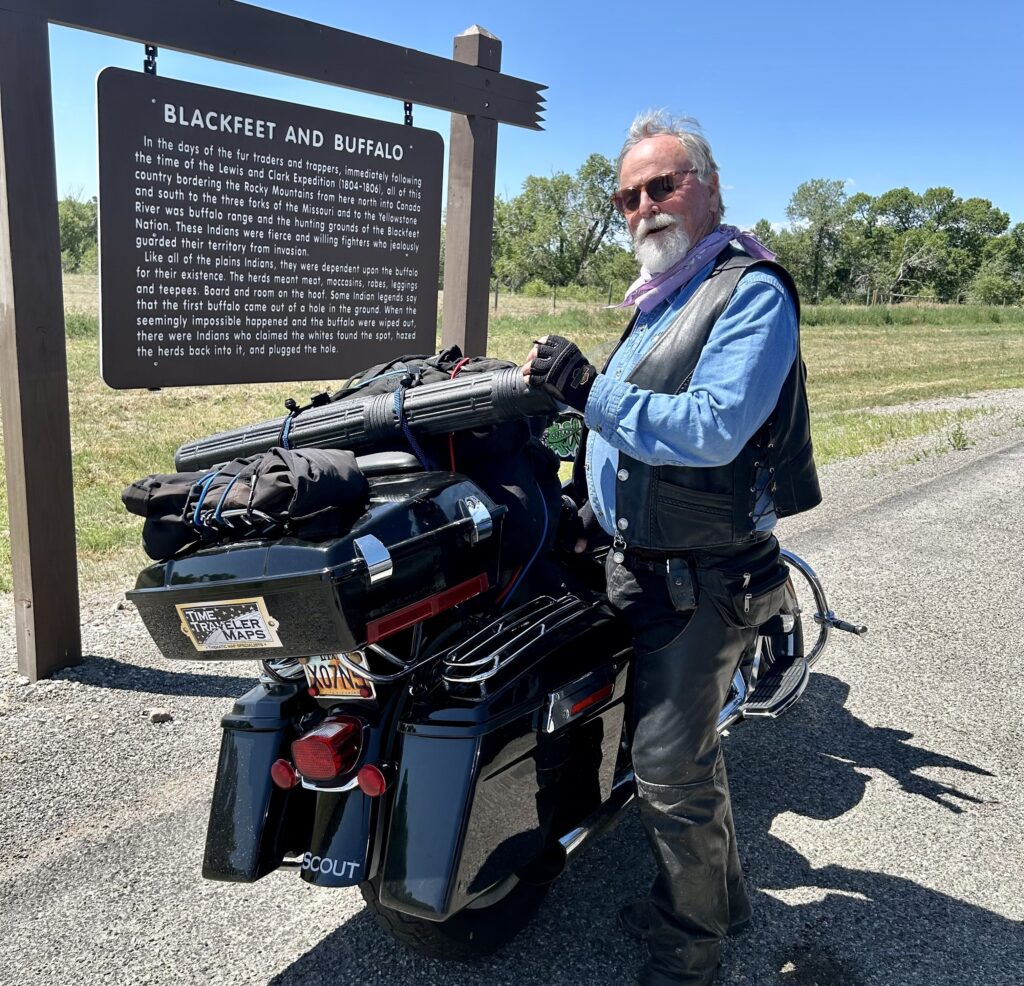Frank Lister, chief scout for Listening to America, on the road north of Great Falls, Montana, in July, 2025. Frank, who lived in Escalanete, Utah, passed away on October 27, 2026. (Photo J. McKenna)
*Editor’s Note: Listening to America lost a trusted colleague and dear friend last week. For the last several years, Frank Lister served as chief scout for LTA and was instrumental in planning many of Clay’s Airstream journeys throughout the West. Based in the town of Escalante, in the heart of the Grand Staircase National Monument in Southern Utah, Frank had a long, rich history in the Four Corners region. Frank’s parents were the noted archaeologists [Robert and Florence Lister](https://crowcanyon.org/lister-fellowship/), and Frank spent his early years on archaeological digs in the Southwest and around the world. Over his [colorful career](https://www.insiderutah.com/articles/from-boulder-to-boulder-and-beyond/), Frank was an adventurer, archaeologist, National Park ranger, tribal advisor, international mountain bike guide, and founder/publisher of the popular [Time Traveler Maps series.](https://www.timetravelermaps.com/) Frank died on October 27, 2026. The entire LTA team, along with his many friends and family throughout the American West, will miss Frank deeply. Clay wrote the following tribute to Frank Lister.*
## **Frank Lister Had Such a Zany, Variegated, and Unconventional Life That It Always Seemed Too Good To Be True.**
Frank has been everywhere, knew everyone or someone who knew everyone, frequented a favorite trading post near Mexican Hat or Farmington, and worked with Tony Hillerman and Louis L’Amour. No matter what subject in the history and culture of the American West might come up, Frank had once worked with a guy whose father had built the dam, a guy who was on the set of John Wayne’s film *Stagecoach* in Monument Valley, a guy who had a lucrative luxury boat rental business in Page, Utah, a guy who gave Wayne Newton his start. It got to the point where you couldn’t bring up a single thing without Frank saying, “Funny you should say that because in the late 60s …” Now, this may sound like Cliff on *Cheers*, but Frank had solid, fascinating information about every project he’d ever been a part of, every group with which he had an affiliation. He told his gazillion stories concisely and without flourish. He was very funny. He never boasted. All the stories were told in an “oh, shucks, how lucky was I?” manner. He was just that interesting. He knew the world of horses, Navajo blankets, motorcycles, river runners, and county commissioners, cartography, Western cinema, and Native American studies.
I could never tell whether Frank was a bullshit artist or the real thing; but as time went on, I realized that he had indeed lived many lives, all of them adventurous, some of them abroad. He is best known for his beautiful [Time Traveler Maps](https://www.timetravelermaps.com/) (Lewis and Clark, John Wesley Powell, Tony Hillerman’s Southwest, the Colorado Plateau, etc.). And as Listening to America’s Scout. The list of Frank’s enterprises, lost causes, and affiliations would fill a passport book.
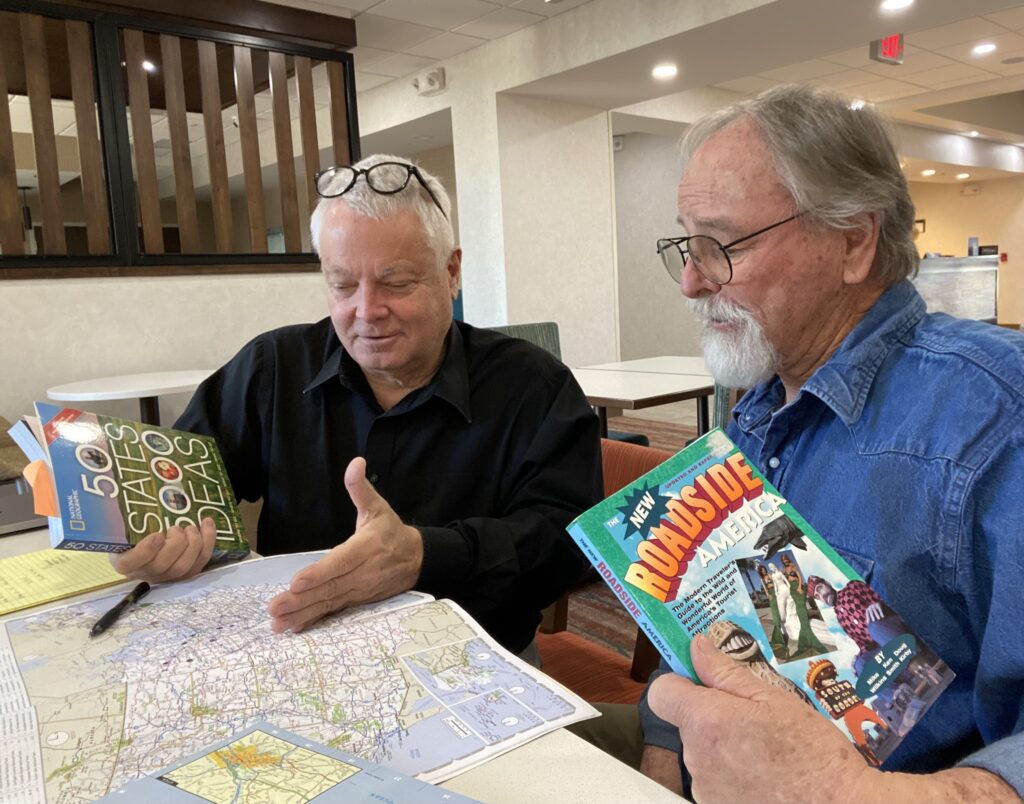Clay Jenkinson, left, and LTA Chief Scout Frank Lister in 2024, planning Clay’s first John Steinbeck Airstream excursion the old-fashioned way.
Before my first year of hauling my Airstream trailer around the country, I met with Frank the Scout in a northern suburb of Phoenix to plan the itinerary, the distances, the likely campgrounds, etc. He brought maps. I brought an atlas. I brought my cellphone (with all of its cartographical apps). Frank brought a geometric compass, a measuring tape and a pencil. The evening before, we went to a nice restaurant and talked life rather than shop over a glass or two of beer. Now, with the hotel’s breakfast horde come and gone, we found a large white table and spread out notebooks, maps, RV campground guides, Frank’s maps, and our measuring tools. I’d say, “What if I tried to drive from Billings to Laramie in a single day?” Frank would start using his compass to measure zigs and zags in the road, and I’d consult Google Maps. Frank was unimpressed with what billion-dollar algorithms can do. He added up the road distances and announced his results. They were always spot on, and his weird Luddism made me laugh out loud.
So we were there, coffee’d up, all spread out, trading great road trip stories, when a young mother came in with her two daughters from the pool. They were all wrapped up in hotel blankets on their way to the elevator. The mother was 35 or so, and one daughter was 10, the other 7. The mother and her youngest daughter kept walking, but the 10-year-old studied Frank and me for a few seconds, recognized what strange thing was transpiring, and said, “Old school.”
It was perfect. It was a perfect moment with Frank Lister.
Eventually I learned that Frank’s mastery of the desert Southwest (Edward Abbey country) and his extraordinary network of acquaintances (“Yeah, I worked with him about 30 years ago on the Paradise Valley project. His son is an astronaut.”) did have some limits, somewhere just west of the Mississippi River. He didn’t know as much about the country of [Burkina Faso](https://www.britannica.com/place/Burkina-Faso) or Florence in the 16th century as he did Blanding and Moab, but he knew what he knew. He had fascinating, colorful, often hilarious stories to tell about people he had known and scrapes he had been in. I have never met anyone who had more contacts in every corner of the Southwest than Frank.
Frank could never be boring.
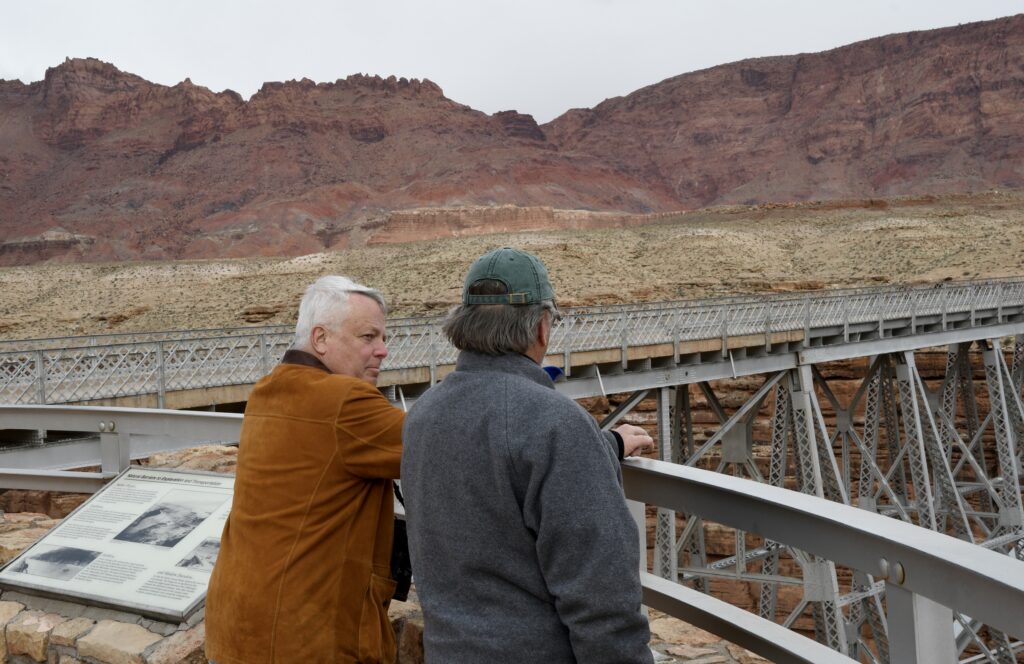Clay and Frank at Navajo Bridge near the Grand Canyon in Arizona. (Photo D. McKenna)
The thing that I admired about Frank the most — actually it flabbergasted me — was his capacity to mosey up to complete strangers and start up a conversation, wherein, of course, they realized they knew other people in common, that this man’s aunt had dated Frank’s younger brother at university (or something) just before the war. There were three of us once at [Navajo Bridge](https://www.nps.gov/glca/learn/historyculture/navajobridge.htm), that fabulous steel bridge over the Colorado River downriver from Lee’s Ferry. It’s 470 feet over the Rio Colorado, and though it was built with steel, it looks a little flimsy over such a trench into the earth. Dennis went into the shop to grab a cup of coffee; I walked back and forth on the bridge taking photographs with several lenses, and Frank just disappeared. When I got back to the side of the bridge where we were parked, Frank was leaning over a strut, talking to a guy whose father he knew (truly), who was now officially counting young condors on or near the bridge. Frank came back after a 10-minute conversation with a wealth of details about the river, the bridge, the birds, the research project, the state of government funding in the West, and much more, including where we should eat later in Kanab. Something of just this sort happened wherever we went. I’m an introvert, Dennis is a normal human being, and Frank finds instant rapport with every sort of person, no matter where. When I get to an RV campground, I walk the perimeter, maybe exchanging a few sentences with a couple of fellow campers. But take Frank on that walk, and he’ll find a way to get it down to two degrees of separation. Frank is completely disarming. People sense he is going to be fun to spend a few minutes with.
Frank was all upbeat. When our mutual friend Dennis and I would get going about the decline and fall of the American republic, Frank would listen for a minute or so and then check out of the conversation. He was never rude about it, but his mind worked in a different arena. He was as aware of America’s crisis as anyone, but he reckoned it didn’t do much good to linger there. Vote the right way and make your views known if asked, but without drama. Meanwhile, get on with your life.
We had a glorious adventure with Frank in northwestern Montana. Dennis was there. I was there. Frank had ridden his motorcycle all the way from Escalante to Cut Bank (949 miles) to meet us. I’d arranged with my friend Larry Epstein of Cut Bank for us all to go out to the Lewis and Clark “fight site,” where on July 26-27, 1806, Lewis and three of his men got into a skirmish with eight young Piegan Blackfeet men, and wound up killing at least one and probably two of the young Natives. It was one of those Four Wheel Drive adventures: opening and closing fence gates, getting out to check how deep the ruts were, parking on a slope, and walking a mile to the actual site. My friend Jack Gladstone, a Blackfeet songwriter and storyteller, came, too. Sitting on a cottonwood log, the three of us Lewis and Clark scholars discussed the incident from four or five points of view. It was a beautiful, high-blue-sky Montana day, perfect temperature. By the time we got to supper, we were all tired in that most satisfying “long day in the American West” way.
Frank could be cagey. When Dennis and I, plus our mutual friend Dr. Susan Ryan, decided it would be a good idea to hike out to the exact confluence of the Colorado and Green Rivers (five miles each way, some light scrambling), Frank said he had a pesky hangnail. Still, he would be glad to find a good restaurant for our victory meal later. And he did. And he was not sorry he was not on the hike, and though we missed him, one of the things we really liked about Frank was that he knew what he wanted to do and what he did not want to do, and what he wanted to do surprisingly often involved a motor vehicle of two or four wheels.
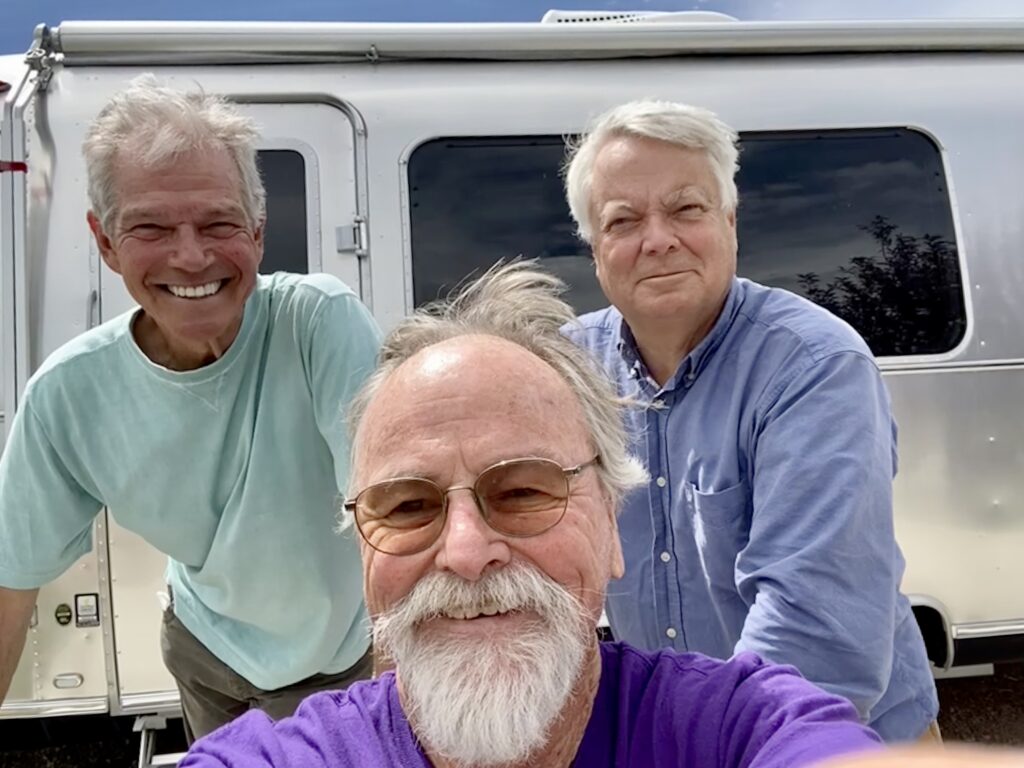Frank (center) takes a selfie with Dennis, (left) and Clay, taking delivery of the LTA Airstream near Silt, Colo. in 2023.
## **Lest You Regard Frank as a Hero**
I loved Frank, but if I may, I need to get something pretty serious off my chest. Forgive me, but I am unable to suppress the pain any longer. A couple of years ago, Dennis, Frank, and I were driving through the Four Corners area, investigating the Western water crisis and listening to all sorts of people talk about the state of things — in the West and in America. The night before, as we were poring over maps at dinner, I said to Dennis and Frank, “I would like to stop at Four Corners tomorrow just for a few minutes. I know you two sophisticates think it’s cheesy and kitschy and that we may as well keep moving to our destination, but I really want to see it. To be this close and fail to stop! That’s un-American. So let’s do the pilgrimage. Is that ok?”
They looked at each other helplessly, because of course they did not want to shatter my spirit or rein in my excitement at being out in the heart of the American West with trusted friends \[well, we’ll see about trust\]. So, Dennis, the diplomat, said, “So let’s definitely keep it on our list of options but play it by ear in case there are high winds tomorrow or an ice storm or something.” How’s that for enthusiasm?
I hardly slept that night, in sheer excitement to be about to see Four Corners for the first time, this monument to Jeffersonian rectilinearity and the Sage of Monticello’s desire that new western states be square or rectangular. How Jefferson would love to stand at the exact meeting point (for there is only one) of Arizona, Utah, Colorado, and New Mexico! His whole life was characterized by a rage for order, and because of that we have square states, the cadastral rectangular survey grid system of square miles, section lines, and townships. Four Corners may be the most Jeffersonian place in America. No wonder I couldn’t sleep.
But I also had a hard time sleeping because I’m pretty sure I heard the two of them mumbling in the kitchen about 3:17 a.m. I so wanted to trust them.
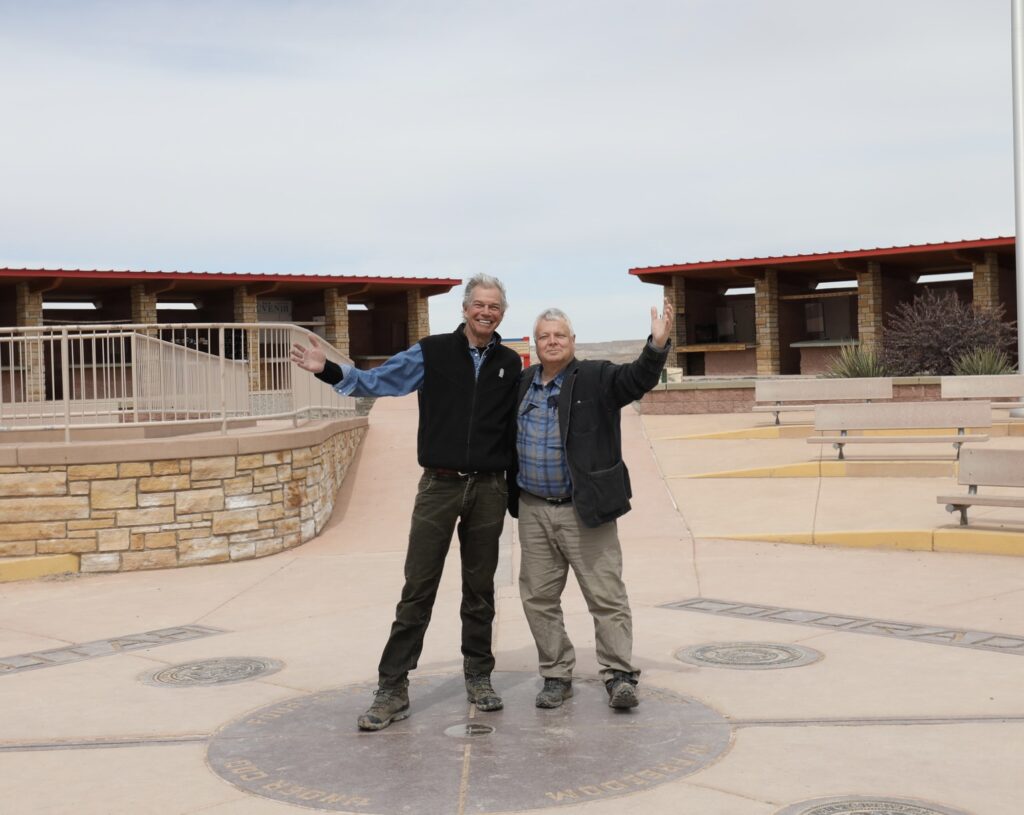Dennis McKenna (left) and Clay Jenkinson at Four Corners, where the states of Utah, Colorado, Arizona, and New Mexico meet. Photo by Frank Lister.
So the next day we drove to Four Corners. I tried not to be over-eager, so I mentioned it only five or six times per hour. At 11:15 a.m., when we were about 45 minutes from the Four Corners turnoff, they looked at each other (have I mentioned that neither one of them ever asked if I minded being stuck in the back seat for many hours per day, day after day after day!) and Dennis said, “I’m suddenly hungry. I’ve got to eat some food. Frank, you don’t know a good restaurant around here, do you?”
“Well,” Frank replied, “I don’t know if they qualify as restaurants, but I know a couple of cafes, if that is ok with you.” Frank could be snarky, especially when he sensed that Dennis and I were being urban snobs. So we weren’t allowed to ask the server (a 20-year-old in a blue jean skirt) at the Rim Rock Café, “Tell us about your white wines?” Frank frowned on that sort of behavior.
So we drove another couple of minutes and voilà, there was the All You Can Eat: We Mean It Café and a mostly empty parking lot. Apparently, the great noon rush hadn’t come yet. All through the meal, Frank kept saying to me, “Hey. Go get another plate. The fried chicken is outstanding here. And don’t forget biscuits and gravy. Try the onion rings.” The meal was delicious.
So we got back into the car after eating approximately three times the suggested daily amount. To tell the truth, I was a little tired after that big lunch. In spite of my great joy in being out with my trusted friends in the Southwest, with plenty of time to explore this great region, and though I fought it, I soon put my head back and fell asleep.
A few minutes passed, and I half came out of my postprandial coma. I heard my two close friends up front leaning in to each other. “You saw me put the Nyquil tablet in his coffee back there. If he stays asleep for 24 more miles, when he wakes up we can say we’re too far down the road now, no time to turn around; we felt that if you really wanted to stop you would not have taken a nap. That kind of stuff.” “I like it,” the other one said. “Watch out for potholes. He’s a light sleeper.”
You see how mobs work? I don’t think either one of them would have done this dirty deed alone, but high above the road in a Ford F-150 Turbo, hogging the front seat, they formed a dangerous elixir.
I waited about two minutes and then “woke up,” sat up straight, looked at the mile markers and my map, and said, “Oh, I’m so relieved. We’re just about there. I need to get into my boots. I thought maybe I had slept through the turnoff.”
Dennis said, “We would have awakened you.” Frank said, “What he said.” I could tell Frank was lying because it was the first three-word sentence he had ever spoken.
So I had to let it go. But trust, once broken, is a hard circle to repair.
To shame them, I bought each of them a souvenir hand-carved (and hand-painted) wood keychain with the four states clearly marked on it.
Frank Lister was the kind of man you were just always happy to be around. He made us all happy to be alive.
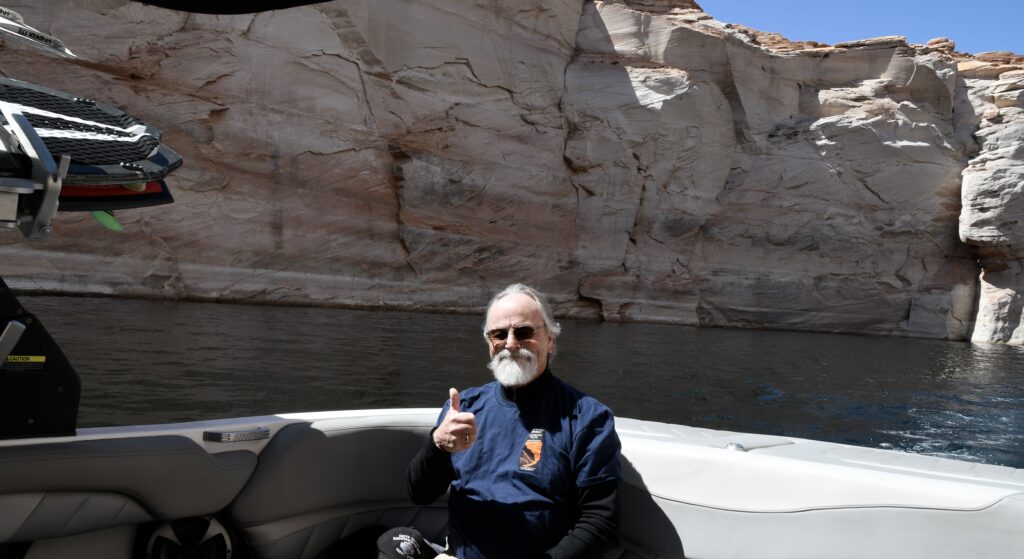Frank Lister, leading an LTA scout on Lake Powell in 2023. (Photo D. McKenna)
**Categories:** Features
**Tags:** Lewis and Clark, National Parks, Utah, Water in the West
---
### [“This Mass of Trash” — Jane Austen and Thomas Jefferson](https://ltamerica.org/this-mass-of-trash-jane-austen-and-thomas-jefferson/)
**Published:** October 26, 2026
**Author:** Clay Jenkinson
**Excerpt:** You find Jane Austen fans in the most unexpected places. Though not likely Thomas Jefferson.
**Content:**
## You find Jane Austen fans in the most unexpected places. Though not likely Thomas Jefferson.
Perhaps a scene from a Jane Austen novel?
My friend David Nicandri of Tumwater, Washington, is a scholar of the history of exploration. He has written a couple of Lewis and Clark books, including the acclaimed *[River of Promise: Lewis and Clark on the Columbia](https://wsupress.wsu.edu/product/river-of-promise/),* and two on Captain James Cook, the greatest explorer of the Age of Enlightenment. Nicandri is one of the last people I would have suspected to be seduced by Jane Austen. But so it is.
Apparently, a year or two ago, he and his wife Chris watched a PBS drama about Austen, which led him to try *Pride and Prejudice*. (Somehow Nicandri got through the first six decades of his life without encountering Jane Austen.) Now, as he reports, he was “hooked.” He has now read them all, all six novels: *Sense and Sensibility*, *Pride and Prejudice*, *Emma*, *Northanger Abbey*, *Persuasion*, and *Mansfield Park*. Only when he starts reading Austen’s juvenilia will I begin to worry about him.
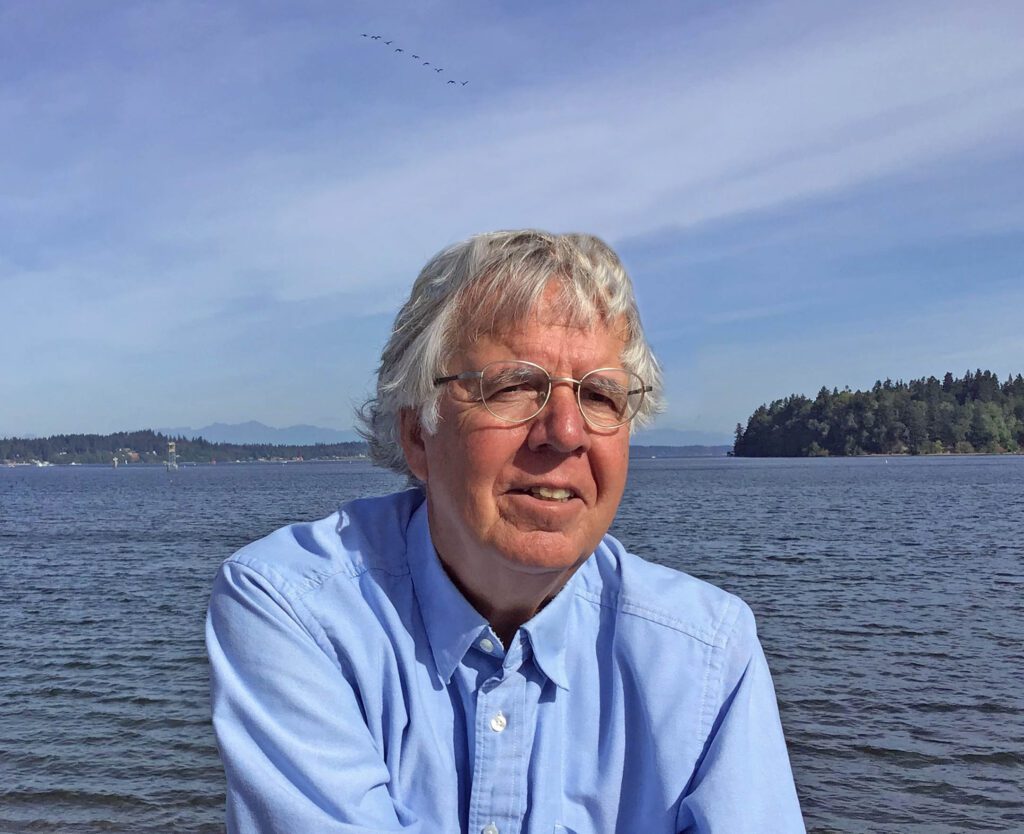Author, historian (and Jane Austen fan), David Nicandri.
He has already written two learned articles about Austen and James Cook in a journal called *[Cook’s Log](https://www.captaincooksociety.com/about-us/cooks-log)*. Soon, I imagine, he will give up tailgating with his pals at Oregon State football games all around the country and instead attend the annual Jane Austen conference, which I spoke at once long ago. Imagine the tailgate party at a Jane Austen gathering. Horse-drawn carriages, wicker picnic baskets, valets in lavender livery, the minuet at halftime, “aristocrats” working the parking lot in wigs and sedan chairs, Bath buns and clotted cream, plus Cornhole, a game so tedious it must have been invented in the 18th century.
I’m not sure whether I should have lost or gained respect for Nicandri for surrendering so immediately and enthusiastically to the world of Jane Austen. Still, since he’s one of my best friends and she has been one of my favorite novelists for decades, I am delighted to add that to the range of subjects we can debate.
In my lectures, podcasts, and even performances as the third president of the United States, I often say, when talking about the formal manners of the era, “you have to understand that Jefferson basically lived in a Jane Austen novel, where nobody ever says what is really on their minds or in their hearts until it is almost too late.” In a typical Austen novel, a handsome but impoverished young woman meets a somewhat older bachelor who owns extensive property. Though the reader knows from the first chapter that they are going to wind up together at the end, their romance has to get over a number of hurdles (often comic). They nearly lose their chance at happiness because neither one will ever say, “Where are we headed here? Do you love me and, if so, what’s our plan? And why did you appear to be flirting with Fanny?” There is always a character named Fanny.
The Enlightenment was a time of exquisite manners, politeness, formality, and euphemism. Madison and Jefferson — “besties,” we would say today — probably called each other, even when alone, “Mr. Madison,” and “my esteemed friend Mr. Jefferson.” Hard to imagine Jefferson and his wife Martha brushing their teeth side by side in their bathrobes (he flossing), and deciding whether it’s ham and peas or beef and turnips for dinner.
I’m now rereading all of Austen’s novels, not to keep up with Nicandri, who seems to read them in part to comb out the handful of references to the Royal Navy, Captain Cook, exploration, Plymouth, or the “season” at Bath, usually attended by naval officers in search of pleasure (i.e., women with whom to dance and dally, seduce or marry), but because I am hosting a five-day humanities retreat on the novels at Lochsa Lodge west of Missoula in January. But you can bet I’m on alert for any mention of the Royal Navy!
The great English spa at Bath (pronounced Baaahth), dating back to the Roman Empire (Roman baths), appears in four of Austen’s six novels. Privileged people in England before and after Austen’s time (1775-1817) ventured to Bath to “take the waters,” restore their health, dance at the almost nightly balls, parade in gorgeous dress-up clothing and high-piled wigs, and socialize. Bath was a kind of combination of the Lake Chautauqua Institute in upstate New York, and a luxury spa in Sedona.
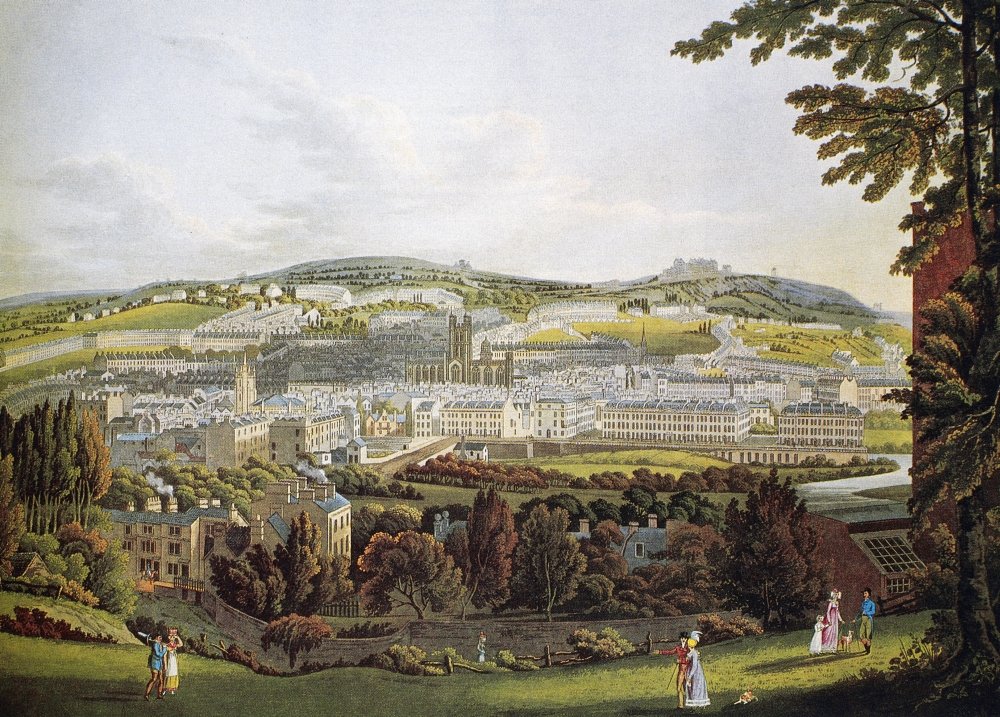Spa city Bath, England, from an 1805 engraving.
Jefferson was not a spa sort of person. His view of the good life, expressed in a letter to his daughter Martha (Patsy), May 21, 1787, was, “Determine never to be idle. No person will have occasion to complain of the want of time who never loses any. It is wonderful how much may be done if we are always doing.” It’s hard to imagine him, during his most productive years, spending weeks, or even many days, hanging out at one of America’s spas, Warm Springs, Berkeley Springs, and White Sulfur Springs in Virginia, Saratoga Springs in New York, or Yellow Springs, Pennsylvania. It’s hard to imagine Jefferson queuing up for a lecture on the history of the curtsy at the Pump Room. Jefferson was one of the best-organized and productive individuals in American history. He would not allow a deck of cards at Monticello. Jefferson was “always doing” — making charts, conducting efficiency studies, grafting plants, taking down weather conditions twice a day, planning the next remodeling project at Monticello or Poplar Forest, re-organizing his library, determining the height of the Peaks of Otter, writing an Anglo-Saxon grammar, or comparing vocabularies of Native American languages, with an exhausting set of etceteras in every direction except geology — no time for whist.
## **Nevertheless**
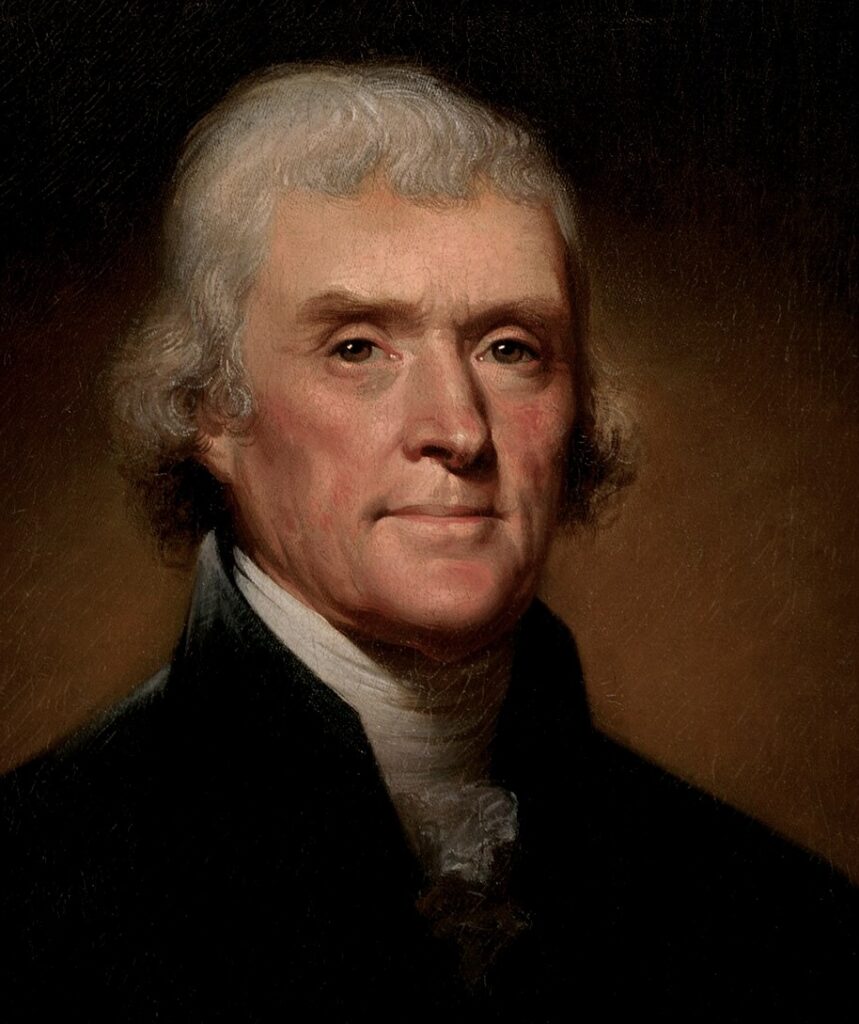Thomas Jefferson by Rembrandt Peale.
Jefferson “took the waters” twice in his 83-year life, once in France, once in western Virginia. After he dislocated (perhaps broke) his right wrist in some sort of romantic tumble with Maria Cosway in Paris in 1786, he was advised to go to Aix-en-Provence to soothe his pain in its famous mineral pools. The waters of Aix gave him no relief, but he redeemed the experience by taking notes on the baths’ temperature! To make sure the spa visit wasn’t a complete waste of time, Jefferson made Aix just one stop on his famous wine and classical ruins tour of France in 1787 — Dijon, Aix, Marseilles, the Canal du Midi, Bordeaux, the Pont du Gard, and Nimes, the site of what he regarded as the “most precious morsel of antiquity,” the exquisite first-century Roman Maison Carree, which Jefferson used as the template for the new state capitol at Richmond, Virginia.
He made his second spa visit to Warm Springs, Virginia, in the summer of 1818, when he was 75 and suffering from stiff joints. He was out in that part of the state for other reasons, but, concerned for his declining health, as advised by his doctor, he lingered at least three weeks at Warm Springs undergoing a formal treatment program, three 15-minute douches (i.e., soakings) per day. Unfortunately, far from easing his pain, the mineral waters caused his backside to break out in painful boils and what were then called imposthumes. It got so bad that he could only sit on the narrow edge of a chair. He complained that the experience ruined his health and possibly shortened his life. “I am lately returned from the Warm Springs,” he wrote, “with my health entirely prostrated by the use of the waters.” He told former Secretary of War Henry Dearborn that the spa treatments brought him to “death’s door.” Worse perhaps, for Jefferson, he found the entire experience unspeakably boring. “So dull a place, and so distressing an ennui I never before knew.”
## **The Joy of Reading Jane Austen**
> *“A great obstacle to good education is the inordinate passion prevalent for novels, and the time lost in that reading which should be instructively employed.*“
>
> Thomas Jefferson
This week I have been reading Austen’s gothic novel *Northanger Abbey* (1817) perhaps only for the second or third time since the year (the day, actually) I bought all six of her novels, in splendid orange Penguin paperback editions, at Blackwells Bookstore in Oxford. This was so long ago that my Penguins would by now have cracked spines, if the splendid Penguin paperbacks ever succumbed to such imprecise binding. I’m not embarrassed to confess that if I won the lottery, the first thing I would do is contact Viking Penguin and order a brand-new copy of every book on their publication list (about 2,300 titles).
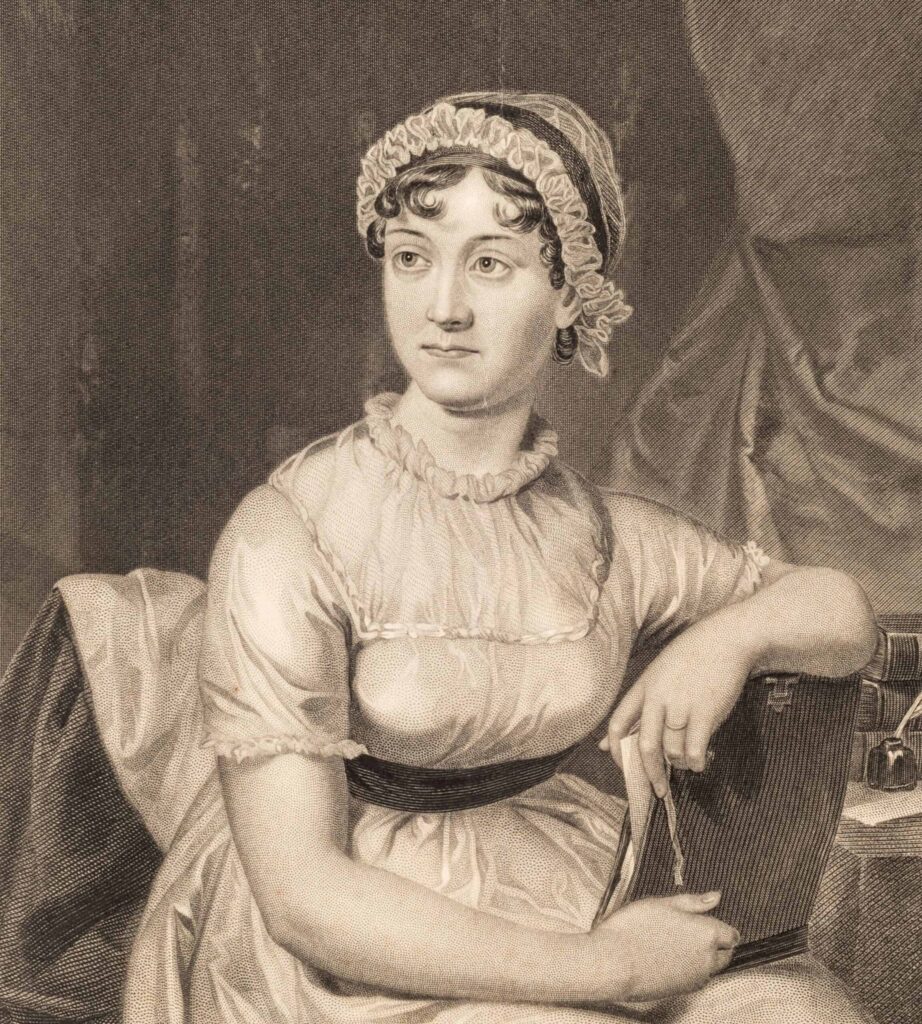Portrait of Jane Austen, done by her sister Cassandra Austen, circa 1810.
Jane Austen would not have known of Thomas Jefferson. Her few references to the new American republic were not positive. She might arguably have heard of the Declaration of Independence or the Louisiana Purchase. Jefferson visited England as she approached adolescence, but there is no evidence she knew of him. As I was reading Austen’s Gothic novel *Northanger Abbey* (1817) today, I thought of Jefferson when I came (in chapter five) upon her spirited defense of the novel as a literary genre. Among other things, she writes, “Let us leave it to the Reviewers to abuse such effusions of fancy at their leisure, and over every new novel to talk in threadbare strains of the trash with which the press now groans. … Although our productions have afforded more extensive and unaffected pleasure than those of any other literary corporation \[i.e., genre\] in the world, no species of composition has been so much decried.” Jefferson was precisely the sort of grumpy critic she was defending the novel against. In a[ letter to Nathaniel Burwell](https://teachingamericanhistory.org/document/letter-to-nathaniel-burwell/) in 1818, Jefferson issued a diatribe against prose fiction:
*“A great obstacle to good education is the inordinate passion prevalent for novels, and the time lost in that reading which should be instructively employed. When this poison infects the mind, it destroys its tone, and revolts it against wholesome reading. Reason and fact, plain and unadorned, are rejected. Nothing can engage attention unless dressed in all the figments of fancy; and nothing so bedecked comes amiss. the result is a bloated imagination, sickly judgment, and disgust towards all the real businesses of life.”*
OK, no monthly book club (wine, lasagna, and a smattering of book conversation) for Mr. J.
Jefferson was exceedingly well-read, but in his tens of thousands of letters, he never mentions Jane Austen. In spite of his animadversions (if I may employ a Nicandrism) against the novel, Jefferson greatly admired a handful of classics: Cervantes’ *Don Quixote* (which he also read in Spanish); Laurence Sterne’s experimental *Tristram Shandy*; *Gulliver’s Travels* (Jonathan Swift); and Daniel Defoe’s *Robinson Crusoe*. He would have frowned on Austen’s obsession with marriageability, dowries, balls, and economic security, but I think he would have admired her sometimes biting social satire. He would have found her discussion of entail and primogeniture (land tenure protocols that severely controlled property inheritance) intriguing, confirming that he was right to convince the House of Delegates in Virginia to abolish both feudal codes (1776, 1785).
A Penguin Classics Jane Austen collection.
Austen’s first novel, *Sense and Sensibility* (1811), explores many of the same themes as Jefferson’s famous 1786 love letter to Mrs. Cosway, “My Head and My Heart.” Should we govern our lives according to the effusions of the Heart or the dictates of the Head? Austen agrees with Jefferson — the heart should make only occasional and tightly controlled visitations to a sane person’s life. “Do not bite at the bait of pleasure,” he wrote in his letter to Maria Cosway, “till you know there is no hook beneath it.” In the famous dialogue, Jefferson’s Head declares unequivocally, “The art of life is the art of avoiding pain: and he is the best pilot who steers clearest of the rocks and shoals with which it is beset. Pleasure is always before us; but misfortune is at our side: while running after that, this arrests us. The most effectual means of being secure against pain is to retire within ourselves, and to suffice for our own happiness.” That might be a little too strong for Miss Austen. She believed the head should govern one’s choice of a husband or wife — the pragmatics of where the income will come from — but that, under the right circumstances, there is also room for romantic love in these transactions, or at the very least compatibility and mutual esteem.
Austen has a great nose for human hypocrisy and self-love. I wonder what she would have thought had she spent a year at Monticello. There was plenty of drama at Monticello in Jefferson’s late years, and plenty to satirize. Austen does not address slavery much in her novels. Still, such references as exist, together with statements in her private correspondence, indicate that she was in sympathy with the anti-slavery movement in England. What would have bothered her most in Jefferson’s world, I think, is that the sexual exploitation of enslaved women and miscegenation were rampant in states where slavery was still legal. Yet, the white population of those states maintained the polite fiction that those mixed-race children of black women somehow didn’t implicate the men of the slave-owning family. She probably would have found Jefferson a rich subject for satire — his reputation for benevolence conveniently ignoring the fact that he owned hundreds of his fellow human beings, all of whom were presumably “born equal.” I think, however, she would also have found much to admire in Jefferson, particularly the generous and thoughtful grandfather and the lover of English gardens.
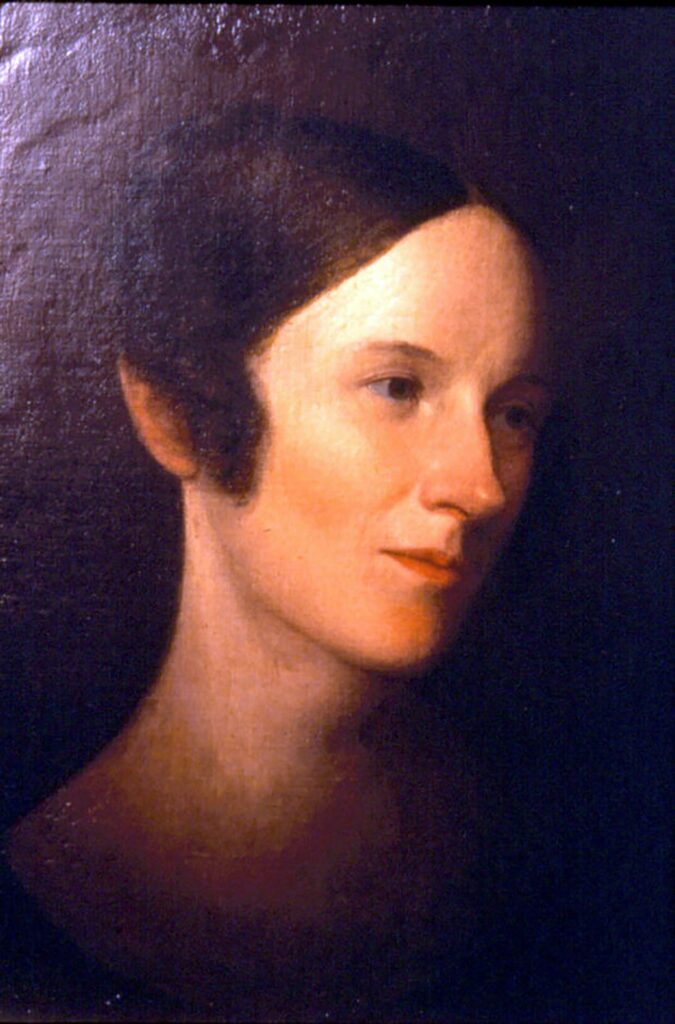Ellen Wayles Randolph Coolidge (1796–1876), granddaughter of President Thomas Jefferson — Francis Alexander, 1836.
These are questions I will put to my friend Nicandri — if I can pry him away from the Royal Navy. I think talking with him about Austen’s novels will help us both think about Jefferson, and vice versa. That’s the glory of the humanities. They let us contextualize our lives and the questions we wrestle with through the lens of great art and literature. The humanities triangulate human experiences separated by thousands of miles and long spans of time, offering insights we might not reach in any other way. In other words, Jane Austen still has much to teach us in the disillusioned 21st century, even though we no longer take snuff, employ wig makers, dance the minuet, or promenade into the ballroom under the direction of the pompous but infinitely suave Master of Ceremonies Richard “Beau” Nash.
Jefferson’s favorite granddaughter Ellen Randolph (1796-1876) lived in England for a time in 1838, a dozen years after her beloved grandfather’s death. While he was alive, they exchanged letters like characters out of an Austen novel. Ellen was an excellent diarist and prolific letter writer, a young woman with keen (and often wry) observational skills, and she wasn’t afraid to be a little sardonic as she viewed the hypocrisies and artificial manners of her time. I would like to think she knew the novels of Jane Austen. If the timing had been a bit different, she might even have convinced her grandpapa to read *Sense and Sensibility.*
Jefferson and Jane Austen may not have known of each other, but her defense of the novel reads as if it were crafted as a direct response to Jefferson’s intense critique, written at precisely the same time. Somewhere Jefferson said that, on occasions when he couldn’t fall asleep, he would spend a few minutes devising the plot of a gothic novel he might write. He said this automatically made him drowsy enough to sleep. We would give a great deal to know more about that. We have just this one tantalizing reference to his fantasy of writing a murder mystery. Alas, Jefferson is maddeningly silent about the workings of his heart, his conscience, his imaginative effusions, his doubts and insecurities, and the waywardness of the human spirit.
I’m sure my friend Nicandri knows well that in Jane Austen’s novels, it’s always the louts of the Royal Navy who run off with the silliest but pretty daughter of a respectable family to seek a Las Vegas-style wedding at Gretna Green just across the Scottish border.
---
*Editor’s note: Clay met with LTA book club members last week. They decided to read three books together over the next year, starting with Jane Austen’s* Sense and Sensibility *(partly to coincide with the new film version of the novel). The next two books will probably be non-fiction. You can learn more about our Listening to America book club [here](https://ltamerica.org/membership-2/).*
**Categories:** Features
**Tags:** Books, Humanities, Thomas Jefferson
---
### [Why Bears Ears National Monument Is Different](https://ltamerica.org/why-bears-ears-national-monument-is-different/)
**Published:** October 23, 2026
**Author:** Editor
**Excerpt:** Last month, the Crow Canyon Archaeological Center, in collaboration with Listening to America, hosted a Cultural Explorations program titled Monumental Decisions: The Antiquities Act of 1906.
**Content:**
## Last month, the [Crow Canyon Archaeological Center](https://crowcanyon.org/), in collaboration with Listening to America, hosted a Cultural Explorations program titled Monumental Decisions: The Antiquities Act of 1906. To learn more about this joint Cultural Tour, listen to Clay’s recent podcast #1725 — Mesa Verde, Bears Ears and National Monuments.
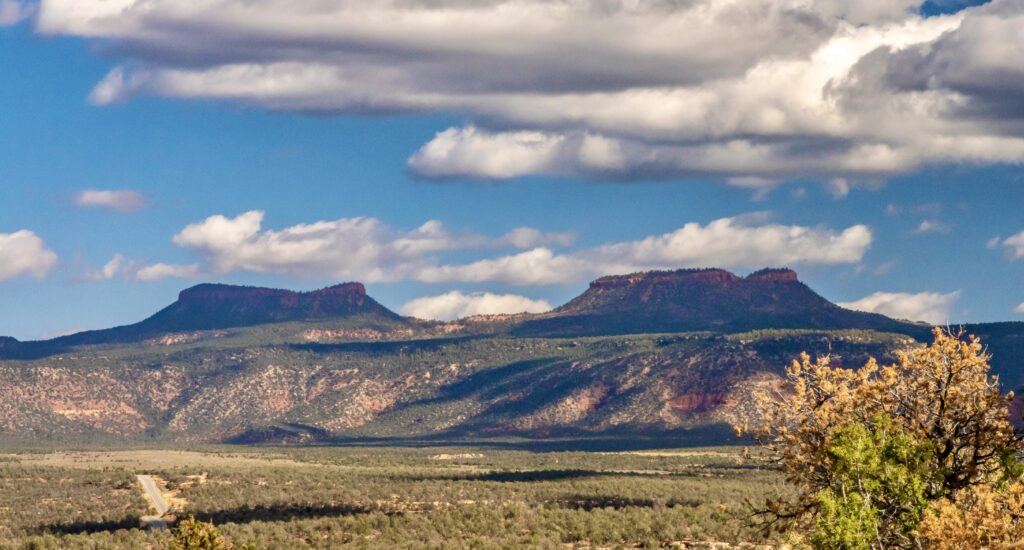Bears Ears National Monument gets its name from the two distinct buttes that tower over the Southeastern Utah landscape and resemble a bear’s ears. (Shutterstock)
*Editor’s Note: We are pleased to share this guest essay by Dr. Susan C. Ryan, Executive Vice President of the Research Institute at the [Crow Canyon Archaeological Center](https://crowcanyon.org/) in Cortez, Colorado.*
Over several days, a group of 19 participants from across the country traveled through Mesa Verde National Park, the Bears Ears National Monument, and Canyons of the Ancients National Monument, experiencing firsthand landscapes unlike any other in the United States.
As we stood among ancestral villages, rock imagery panels, seep springs, red-rock canyons, and table-top mesas, conversations moved beyond archaeology and scenery to explore larger questions about public lands, cultural heritage, tribal sovereignty, conservation, recreation, resource development, and the changing political climate surrounding federal land management. Participants encountered the diverse perspectives of the many stakeholders connected to these natural and cultural landscapes and gained a deeper appreciation for why decisions about these places inspire such passionate debates.
Those discussions revealed an essential truth: Bears Ears is different.
Across the United States, debates over national monuments often focus on maps, acreage, and presidential authority. Yet Bears Ears stands apart. It is not simply a place on a map. It is a living cultural landscape, a sacred homeland, and a place where Indigenous peoples have maintained enduring relationships with a place since time immemorial.
For tribal nations, Bears Ears is not a collection of archaeological sites or scenic vistas. It is an interconnected landscape where culture, memory, spirituality, ecology, and identity converge. That distinction is what makes the July 2026 reduction of Bears Ears National Monument incredibly consequential. While public discussions have centered on boundaries and the Antiquities Act, the impacts extend far beyond acreage. The decision created a nationally significant breach in tribal-federal collaboration and challenges one of the most impactful approaches to public land stewardship since the Antiquities Act was signed into law in 1906.
## **More Than Archaeological Sites**
Many Americans think of national monuments as places that protect cliff dwellings, historic structures, rock imagery, fossils, or scenic landscapes. Bears Ears certainly contains all of these. But for the Indigenous peoples whose ancestors have lived in and cared for this region for countless generations, it is much more.
The Bears Ears Commission was composed of representatives from five sovereign tribal nations: the Hopi Tribe, Navajo Nation, Ute Indian Tribe of the Uintah and Ouray Reservation, Ute Mountain Ute Tribe, and the Zuni Tribe. Together, they advocated for the protection of Bears Ears as an ancestral homeland and living cultural landscape.
These Tribes have consistently described Bears Ears as an interconnected system of sacred places, traditional foods, medicinal plants, water sources, migration routes, stories, songs, and ceremonies. The significance of the landscape lies not only in individual locations but in the relationships among them. Protecting Bears Ears therefore means protecting an entire cultural system, not simply preserving isolated places or objects.
This perspective explains why changes to Bears Ears resonate so deeply among tribal communities. The question is not simply how much land remains protected. It is whether a living cultural landscape can continue to be cared for as a whole.
## **A Landmark Model of Co-Stewardship**
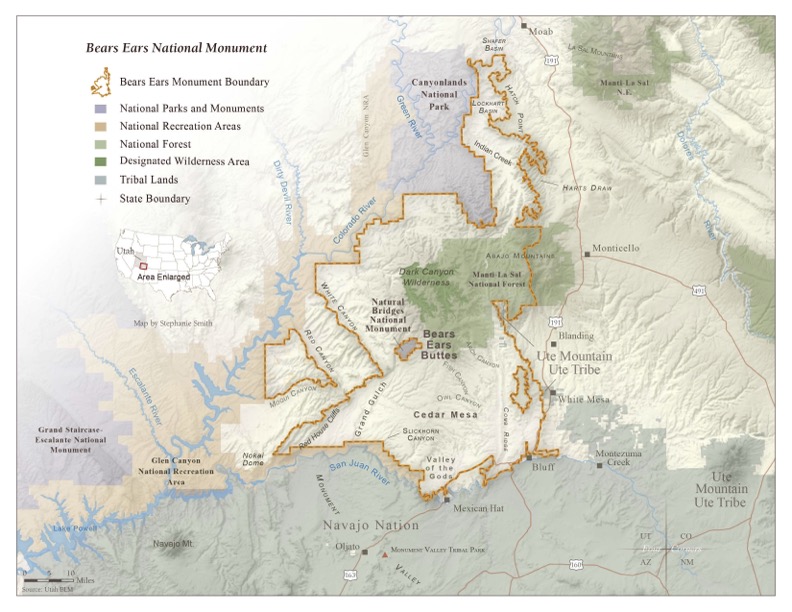Map of Bears Ears National Monument, prior to 2026 reductions by U.S. Dept. of the Interior. (Grand Canyon Trust)
Bears Ears became nationally significant not only because of the natural and cultural “resources” it protected but because of how it was managed.
Founded in July of 2015, the Bears Ears Commission worked alongside the Bureau of Land Management and the U.S. Forest Service through a collaborative management framework that combined traditional Indigenous knowledge and Western science. More importantly, the Commission represented a historic acknowledgment that tribal nations are not merely “stakeholders” with an interest in the land. They are “powerholders” as sovereign governments with enduring responsibilities to their ancestral homelands.
The resulting partnership became one of the most important models of public-land co-stewardship in the United States. The Bears Ears Resource Management Plan demonstrated how tribal leadership and federal agencies could work together to protect cultural resources, ecological values, wildlife habitat, and public access while honoring Indigenous relationships to place. In many ways, this became a model for the future, showing what is possible when Indigenous peoples help shape and implement management decisions rather than simply comment on them.
## **The Impact of the July 2026 Reduction**
On July 13, 2026, the Trump administration issued a proclamation substantially reducing Bears Ears National Monument and terminating the Bears Ears Commission, reversing key elements of the collaborative framework established a decade prior. For many observers, the reduction represents another chapter in the long-running debate over the Antiquities Act and presidential authority. For the tribes connected to Bears Ears, however, the effects are far more immediate.
The decision weakens one of the nation’s most visible examples of tribal co-stewardship and disrupts a management structure built through years of collaboration and relationship and trust-building. It also raises concerns about the future protection of sacred places and the loss of a formal mechanism that ensured Indigenous peoples played a significant role in land management decisions.
The implications extend beyond Utah and the Bears Ears. Across the country, tribes, conservation organizations, public land managers, and communities have looked to Bears Ears as evidence that traditional Indigenous knowledge and Western science can work together to strengthen stewardship. The reduction therefore affects not only a monument but also a nationally recognized model of collaborative governance.
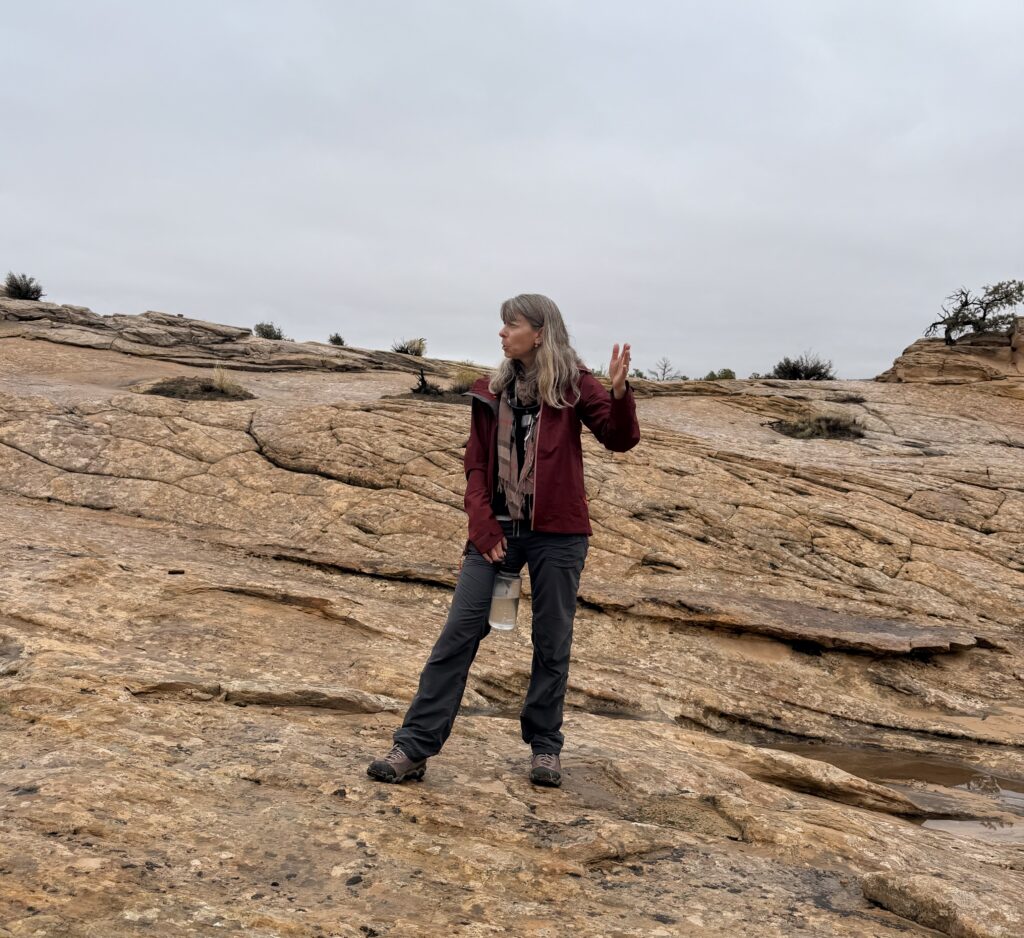Archaeologist Dr. Susan Ryan, Executive Vice President of the Research Institute at the Crow Canyon Archaeological Center, led a cultural field trip through the Four Corners area with Clay Jenkinson this September, focused on the history and future of the National Monuments and Antiquities Act.
## **The Commission’s Mission Continues**
Yet a presidential proclamation cannot erase thousands of years of connection, responsibility, and care. The tribal nations that united to advocate for Bears Ears did so long before the monument was established in 2016. Their cultural, spiritual, and ancestral relationships with the landscape do not depend on federal designations or administrative boundaries.
In responding to the July 2026 decision, the Bears Ears Commission reaffirmed its commitment to protecting Bears Ears and advancing tribal leadership in stewardship of their ancestral homeland. The principles that guided the Commission, respect for Indigenous knowledge, protection of sacred places, intertribal collaboration, and responsibility to future generations, remain unchanged. While government decisions may alter official structures, they cannot extinguish the enduring responsibilities that tribal nations hold toward this place. The Commission’s work will continue through education, cultural preservation, public engagement, and advocacy for meaningful tribal consultation.
## **Why Bears Ears Matters**
The story of Bears Ears has never been only about monument boundaries or executive authority under the Antiquities Act. At its heart, Bears Ears asks a deeper question: Who has the legal right to make decisions about the places that remain sacred to living communities? The legal and political debates will continue. Boundaries may change. Policies will shift. But the cultural significance of Bears Ears does not expand or contract with a presidential proclamation.
This is why Bears Ears is different.
It is not simply a national monument. It is a living cultural landscape, an ancestral homeland, and a place where the past remains present in the lives of contemporary Indigenous communities. It reminds us that co-stewardship is not merely about managing land. It is about sustaining long-term, meaningful relationships between people and place.
And regardless of decisions made in Washington, D.C., the tribal nations that formed the Bears Ears Commission will continue the work they have always done: caring for the land, protecting its stories, honoring ancestors, and carrying forward their responsibilities to future generations.
*Note:* *This article was originally published on the Crow Canyon Archaeological Center site [here](https://crowcanyon.org/news/why-bears-ears-is-different/).*
---
## ***Discover more on these topics at Listening to America***
[Texas](https://ltamerica.org/tag/texas/ "4 topics")[North Dakota](https://ltamerica.org/tag/north-dakota/ "53 topics")[Theodore Roosevelt](https://ltamerica.org/tag/theodore-roosevelt/ "16 topics")[Video](https://ltamerica.org/tag/video/ "51 topics")[Wisconsin](https://ltamerica.org/tag/wisconsin/ "0 topics")[Rome](https://ltamerica.org/tag/rome/ "1 topics")[Republics](https://ltamerica.org/tag/republics/ "1 topics")[paintings](https://ltamerica.org/tag/paintings/ "0 topics")[Virginia](https://ltamerica.org/tag/virginia/ "7 topics")[Tennessee](https://ltamerica.org/tag/tennessee/ "1 topics")[New Mexico](https://ltamerica.org/tag/new-mexico/ "3 topics")[Steinbeck Travels](https://ltamerica.org/tag/steinbeck-travels/ "75 topics")[U.S. Presidents](https://ltamerica.org/tag/u-s-presidents/ "71 topics")[Ohio](https://ltamerica.org/tag/ohio/ "2 topics")[Rivers](https://ltamerica.org/tag/rivers/ "3 topics")[U.S. Constitution](https://ltamerica.org/tag/u-s-constitution/ "1 topics")[Oppenheimer](https://ltamerica.org/tag/oppenheimer/ "1 topics")[Walden](https://ltamerica.org/tag/walden/ "1 topics")[Utah](https://ltamerica.org/tag/utah/ "11 topics")[State Parks](https://ltamerica.org/tag/state-parks/ "2 topics")[Travel](https://ltamerica.org/tag/travel/ "1 topics")[Thomas Jefferson](https://ltamerica.org/tag/thomas-jefferson/ "34 topics")[Oppenheim](https://ltamerica.org/tag/oppenheim/ "0 topics")[Podcast](https://ltamerica.org/tag/podcast/ "1 topics")[The Constitution](https://ltamerica.org/tag/the-constitution/ "1 topics")[South Dakota](https://ltamerica.org/tag/south-dakota/ "16 topics")[Road Trips](https://ltamerica.org/tag/road-trips/ "18 topics")[Reading](https://ltamerica.org/tag/reading/ "1 topics")[Sports](https://ltamerica.org/tag/sports/ "2 topics")[Oregon](https://ltamerica.org/tag/oregon/ "4 topics")[Poetry](https://ltamerica.org/tag/poetry/ "1 topics")[William Shirer](https://ltamerica.org/tag/william-shirer/ "1 topics")[Pennsylvania](https://ltamerica.org/tag/pennsylvania/ "1 topics")[Vermont](https://ltamerica.org/tag/vermont/ "1 topics")[South Carolina](https://ltamerica.org/tag/south-carolina/ "1 topics")[New York](https://ltamerica.org/tag/new-york/ "8 topics")[Thoreau](https://ltamerica.org/tag/thoreau/ "5 topics")[Republic](https://ltamerica.org/tag/republic/ "0 topics")[north daktoa](https://ltamerica.org/tag/north-daktoa/ "0 topics")[Wyoming](https://ltamerica.org/tag/wyoming/ "4 topics")[New England](https://ltamerica.org/tag/new-england/ "1 topics")[Water in the West](https://ltamerica.org/tag/water-in-the-west/ "24 topics")[Space Exploration](https://ltamerica.org/tag/space-exploration/ "8 topics")[Washington](https://ltamerica.org/tag/washington/ "2 topics")[North Carolina](https://ltamerica.org/tag/north-carolina/ "3 topics")
**Categories:** Features
**Tags:** National Parks, Native Americans
---
### [America's Enlightenment Crisis](https://ltamerica.org/americas-enlightenment-crisis/)
**Published:** October 20, 2026
**Author:** Clay Jenkinson
**Excerpt:** Recent events, including the proposal that the federal government live-stream the public execution of a convicted terrorist, are corroding our nation’s long enlightenment heritage.
**Content:**
## Recent events, including the proposal that the federal government live-stream the public execution of a convicted terrorist, are corroding our nation’s long enlightenment heritage.
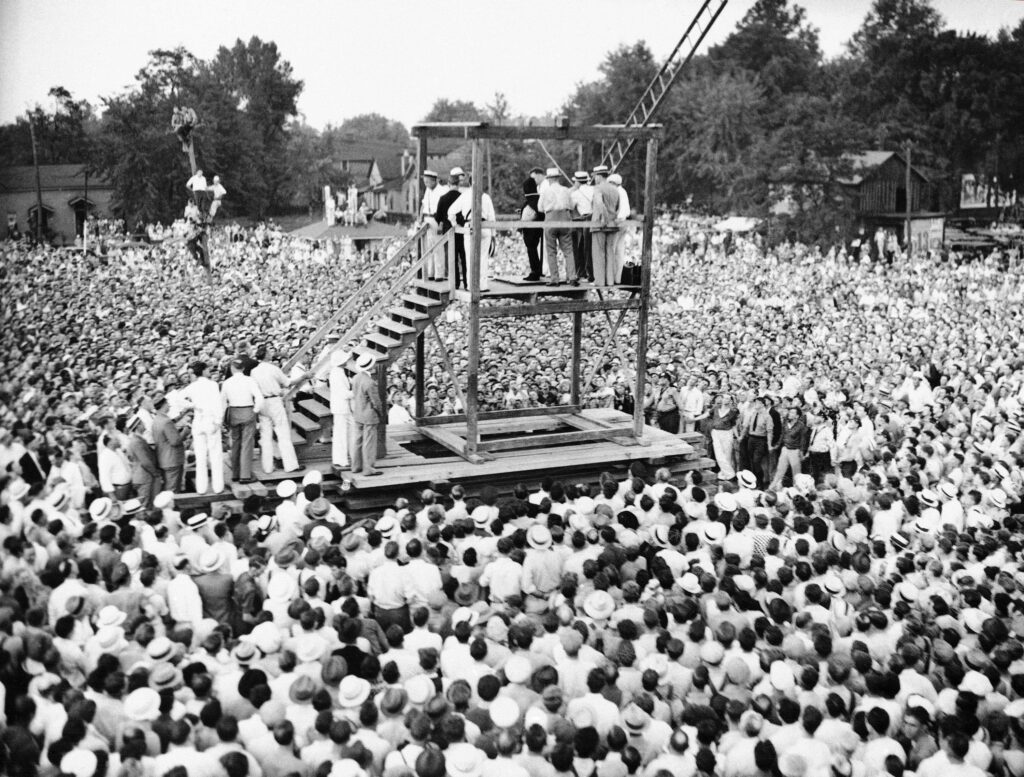The 1936 public execution of a 22-year-old Black man, Bethea, convicted of the rape and robbery of a 70-year-old white woman. An estimated 10,000 to 20,000 spectators gathered around the wooden scaffold in a public courtyard. Widespread public disorder and criticism surrounding the spectacle led Kentucky (and other states) to ban public executions, making Bethea’s hanging widely recognized as the last officially sanctioned public execution in the United States.
We can now officially say farewell to American Exceptionalism. The idea that the United States is a uniquely enlightened nation, seeking to build a shining city on a hill as a template for the rest of the world, has always been self-serving and more than a little hypocritical. Still, at the moment the concept is so threadbare as to be ludicrous — if it weren’t just tragic.
America is:
— waging an undeclared war against another sovereign nation — including the killing (decapitation) of its leadership — begun while diplomatic negotiations were underway. Sneak attacks, like Japan’s on the American fleet at Pearl Harbor in 1941, used to be regarded as days that “will live in infamy.” The current administration’s air war against Iran violates the war powers clauses of the Constitution and the 1973 Congressional War Powers Resolution. (Undeclared wars indeed have, since President Truman’s “police action” in Korea beginning in 1950, been the rule rather than the exception, but they violate one of the most important principles of our constitutional order);
— infiltrating our cities with masked and unidentified federal agents who pluck people (some of them American citizens) off the streets without warrants, and occasionally kill unarmed individuals who are deemed to be resisting arrest or interfering with immigration enforcement. In addition to warrantless searches (one of the precipitating causes of the American Revolution), these extrajudicial arrests and detainments violate a foundational principle of Western civilization: habeas corpus, which dates back at least to the 12th century. Some of the detainees are then shipped off to countries to which they have no affiliation, to be locked up in prisons that have an international reputation for brutality.
— using the Justice Department to harass and indict domestic political “enemies,” merely to please the president of the United States. What have Arizona Senator Mark Kelly or former White House aide Cassidy Hutchinson done to deserve institutional assault by the U.S. Justice Department? Or, for that matter, Olympic athlete David Hearn, for allegedly vandalizing the defective new liner of the reflecting pool on the Washington Mall? The charges against Hearn were so flimsy that one of the current president’s croniest cronies, U.S. Attorney Jeanine Pirro, refused to prosecute the case.
— and, more recently, announcing the United States government’s intention to live stream the public execution of a convicted terrorist.
## **Is This Your America? Is This the America You Want To Live In?**
> *“I believe that a sight so inconceivably awful as the wickedness and levity of the immense crowd collected at that execution could be imagined by no man.* … *It was so loathsome and repulsive that I came away with a belief that the sight was totally depraving to everyone who looked at it.*
>
> Charles Dickens in letter to Times of London, 1849
Almost every other first-tier nation, in fact, almost every nation on earth, has suspended or abolished capital punishment. Nations that still execute criminals, some of them in public, include China, Iran, Saudi Arabia, Yemen, Egypt, Kuwait, Singapore, Somalia, and North Korea. Is this the club of nations we want to belong to?
First, there was the bungled execution (by lethal injection) of a woman named Christa Gail Pike on September 30, 2026, at Riverbend Maximum Security Prison in Nashville. Twice injected, still alive, and mad as hell, as you might expect. This isn’t the first time this has happened. To cite just one example, on May 21, 2026, a man named Tony Carruthers survived his execution (also in Tennessee) when his executioners failed to locate the necessary veins in his body. After 90 minutes, the execution was abandoned — at least for a year. Insane though this may sound, a firing squad may be a more humane way to end another person’s life.
A few weeks ago, the U.S. Defense Department announced that it planned to live stream the execution of convicted terrorist Nidal Malik Hasan, who killed 13 and wounded 32 others at Fort Hood in Texas on November 5, 2009. More recently, after nearly universal condemnation of this horrifying plan, President Trump announced that Hasan’s execution will go ahead on December 3, but it will not be live-streamed.
We should not feel relieved that the Trump administration has decided not to stream the execution of Hasan. We should feel appalled and outraged that the idea was announced to the American people (and the world). We should feel outraged that the idea was considered — even for an instant — in the darkest corners of the Defense Department and Pete Hegseth’s black soul. If we were a truly enlightened nation, Hegseth’s blasphemous announcement should at least have cost him his job as Secretary of Defense and (if we were a parliamentary system) one can imagine it even bringing down the government.
How did we descend into this kind of barbarism?
The whole world is watching. None of our allies abroad are talking about a “shining city on a hill” on this side of the Atlantic. Our closest friends in the world are shocked, bewildered, sickened, and aghast. What moral standing in the world do we retain in the face of a government that appears to appease our enemies and pick ugly fights with our traditional friends? What kind of nation attempts to lower short-term (self-inflicted) diesel fuel prices by degrading the ability of Ukraine to defend itself against Russian aggression?
Who are we now?
The Eighth Amendment prohibits “cruel and unusual punishments.” In what tortured view of constitutional “originalism” is live streaming an execution by firing squad regarded as not-cruel and not-unusual?
## **Born in the Enlightenment**
The United States was born at the Enlightenment’s high-water mark (1680-1826). The aim was to create the most rational, humane, just, equal, inclusive, and free political system in human history. The great French encyclopedist Denis Diderot declared, “Everything must be examined. Everything must be shaken up, without exception and without inhibition.” Thomas Jefferson, who prided himself on exploring the best Enlightenment thinking, said all human constructs and institutions must be reformed “with a single eye to reason and for the good of those for whose government it was framed.”
America’s Founding Fathers were indebted to the pioneering judicial reforms of the Italian humanist [Cesare Beccaria ](https://ltamerica.org/views-of-the-american-dream-from-milan-italy/)(1738-1794), who published his groundbreaking *Dei delitti e delle pene (On Crimes and Punishments)* in 1764, at age 26. Thomas Jefferson leaned heavily on the treatise when he revised the entire Virginia law code between 1777 and 1781. Beccaria was the first person in Western civilization to argue that capital punishment should be abolished altogether.
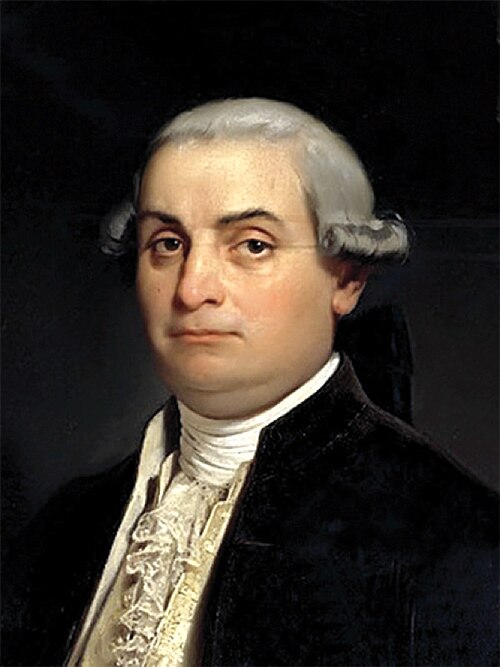Italian writer and philosopher, Cesare Beccaria.
Beccaria’s argument against capital punishment:
— The purpose of a penal system is not to seek revenge against the perpetrator, but to discourage crime. The state must never be vindictive, even against the most hardened criminals. (Are you listening, Mr. Hegseth?)
— The swiftness and the certainty of punishment are a more effective deterrent than state violence.
— Execution is less effective in discouraging crime than prolonged imprisonment.
— Capital punishment brutalizes and coarsens a society that permits it.
— The state should use the least punishment needed to protect the health and order of the society it superintends.
If you add to Beccaria’s seemingly irrefutable logic that we now know, thanks to DNA and other sophisticated forensic advancements, many individuals have been executed in America for crimes they did not commit; that our use of capital punishment has been disproportionately employed against African Americans (all other things being equal); and that the often interminable delay between sentencing and the carrying out of capital punishment violates the fundamental principle that punishment swift and certain is a much greater deterrent than punishment endlessly postponed — it would seem both sane and humane to discontinue capital punishment once and for all in the United States.
In 2025, there were 47 executions in the United States, 19 in Florida alone. Lethal injection is the most common — 39 of the 47 in 2025. Lethal gas was used in five executions. There were three by firing squad (all in South Carolina). None were executed by electrocution or hanging in 2025. Of the 47 executed individuals, 32 were white, 13 Black, one Latino, and one person of mixed race.
Mr. Hegseth might wish to know that the last public execution in the United States occurred on August 14, 1936 (90 years ago), when a 26-year-old Black man named Rainey Bethea was hanged for raping and murdering a 70-year-old white woman. Later investigations have confirmed that Bethea probably committed both crimes. The electric chair would have executed him, but the white establishment in Owensboro, Kentucky, pushed hard for a public hanging, which was then legal in cases of rape. People traveled long distances to witness the hanging, including whole families with young children. More than 20,000 spectators crowded into the killing field to see a Black man die. Refreshments were sold. Part of the sensation was that the local sheriff was a woman, Florence Thompson, though (to the disgruntlement of some) she did not spring the trap door.
Even then, there was sufficient public outrage that two years later Kentucky abolished public executions.
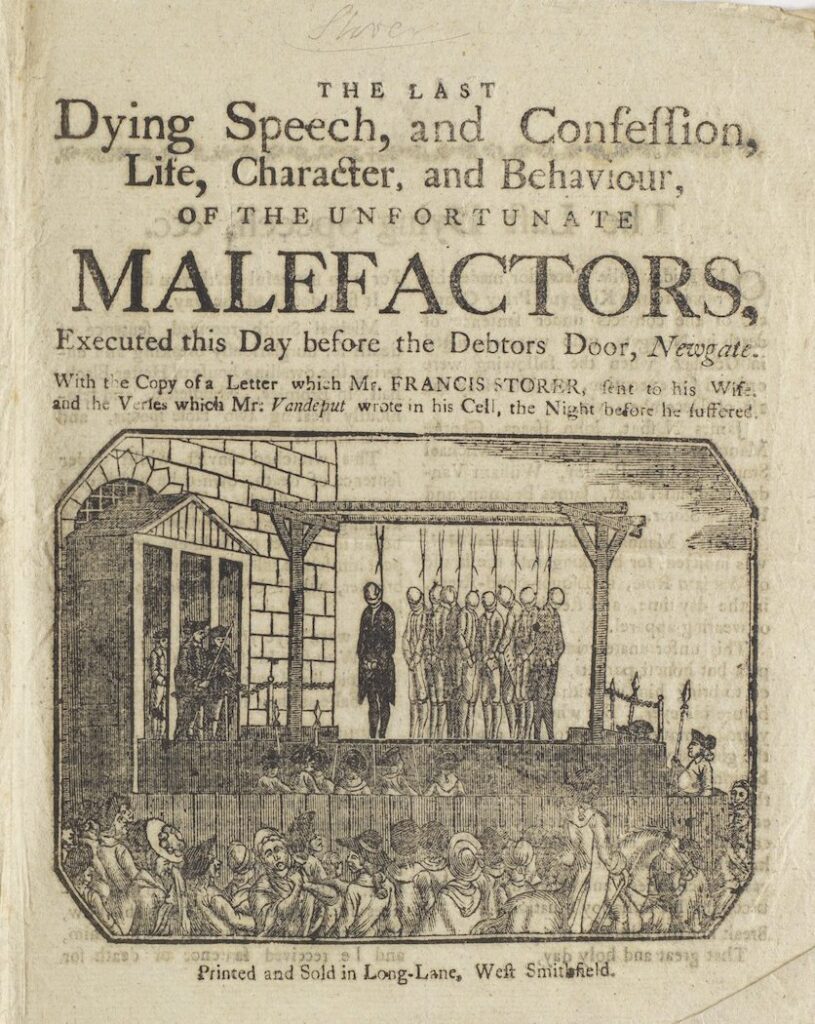An 18th-century British execution broadside, titled *The Last Dying Speech, and Confession, Life, Character, and Behaviour*, of the Unfortunate Malefactors printed around 1785, regarding executions outside Newgate Prison.
My long study of English literature provides ample evidence of the coarsening effect of public executions. The great English diarist Samuel Pepys (1633-1703) witnessed the brutal execution of one of the men who had condemned King Charles I to a public beheading in 1649. On October 13, 1660, after the Restoration of Charles II, Pepys watched as Thomas Harrison was hanged, drawn, and quartered before a large crowd. Afterward, Pepys took two friends to the Sun Tavern for an oyster dinner.
Another English diarist, James Boswell (1740-1795), biographer of Dr. Johnson, was squeamish, sensitive, and neurotic, but he could not resist a public execution. Thanks to what he called an “irresistible impulse,” he attended at least 21 public hangings in his lifetime, involving at least 57 individuals. Group hangings were quite popular then. In some cases, the “drop” did not break the condemned man’s neck. Some twisted and writhed for many minutes before they were finally asphyxiated. On a number of occasions, friends and families of the condemned came forward to grab and pull on his legs to tighten the noose and shorten the agony. Boswell reports that cold sweat nightmares typically haunted him for a week or weeks following one of these grotesque spectacles. On one occasion in 1763 he begged his friend Andrew Erskine to sleep in the same bed with him: “gloomy terrors came upon me so much, as Night approached, that I durst not stay by myself; so I went and had a bed or rather half a one from honest Erskine, which he most kindly gave me.”
The great English novelist Charles Dickens (1812-1870) attended public hangings in 1840 and 1849. Appalled by the gleeful reactions and general festivity of these executions, Dickens wrote a famous letter to the Times of London:
*“I believe that a sight so inconceivably awful as the wickedness and levity of the immense crowd collected at that execution could be imagined by no man. When the two miserable creatures who attracted all this greeting and sport came out upon the scaffold, the people passed through a web of horror and disgusting behavior that I cannot separate from the place. It was so loathsome and repulsive that I came away with a belief that the sight was totally depraving to everyone who looked at it. Long before dawn, the streets surrounding the gallows were choked with a surging mass of humanity. Hot dog vendors pushed through the throngs, and children sat on their parents’ shoulders for a better view. When the trapdoor finally sprung, a wild cheer went up from the crowd. People rushed the scaffold, tearing at the black hood that had covered the condemned man’s face to collect scraps of it as souvenirs.”*
Britain abolished public hanging in 1868.
I mean no cheap shot when I suggest that if Pete Hegseth’s public persona is a true mirror of his character, I doubt that he would lose any sleep after watching a group of U.S. Army riflemen shoot the life out of Nidal Malik Hasan at Fort Hood.
How much further are we willing to repudiate the Enlightenment and descend into the abyss?
---
## ***Discover more on these topics at Listening to America***
[The Constitution](https://ltamerica.org/tag/the-constitution/ "1 topics")[Thoreau](https://ltamerica.org/tag/thoreau/ "5 topics")[Podcast](https://ltamerica.org/tag/podcast/ "1 topics")[North Carolina](https://ltamerica.org/tag/north-carolina/ "3 topics")[Poetry](https://ltamerica.org/tag/poetry/ "1 topics")[North Dakota](https://ltamerica.org/tag/north-dakota/ "53 topics")[Republics](https://ltamerica.org/tag/republics/ "1 topics")[Rivers](https://ltamerica.org/tag/rivers/ "3 topics")[Theodore Roosevelt](https://ltamerica.org/tag/theodore-roosevelt/ "16 topics")[New York](https://ltamerica.org/tag/new-york/ "8 topics")[New England](https://ltamerica.org/tag/new-england/ "1 topics")[Virginia](https://ltamerica.org/tag/virginia/ "7 topics")[Thomas Jefferson](https://ltamerica.org/tag/thomas-jefferson/ "34 topics")[Road Trips](https://ltamerica.org/tag/road-trips/ "18 topics")[U.S. Constitution](https://ltamerica.org/tag/u-s-constitution/ "1 topics")[Oppenheim](https://ltamerica.org/tag/oppenheim/ "0 topics")[Steinbeck Travels](https://ltamerica.org/tag/steinbeck-travels/ "75 topics")[Oregon](https://ltamerica.org/tag/oregon/ "4 topics")[Travel](https://ltamerica.org/tag/travel/ "1 topics")[Republic](https://ltamerica.org/tag/republic/ "0 topics")[Wisconsin](https://ltamerica.org/tag/wisconsin/ "0 topics")[Walden](https://ltamerica.org/tag/walden/ "1 topics")[Wyoming](https://ltamerica.org/tag/wyoming/ "4 topics")[north daktoa](https://ltamerica.org/tag/north-daktoa/ "0 topics")[Space Exploration](https://ltamerica.org/tag/space-exploration/ "8 topics")[U.S. Presidents](https://ltamerica.org/tag/u-s-presidents/ "71 topics")[South Carolina](https://ltamerica.org/tag/south-carolina/ "1 topics")[Tennessee](https://ltamerica.org/tag/tennessee/ "1 topics")[Washington](https://ltamerica.org/tag/washington/ "2 topics")[Vermont](https://ltamerica.org/tag/vermont/ "1 topics")[Water in the West](https://ltamerica.org/tag/water-in-the-west/ "24 topics")[Reading](https://ltamerica.org/tag/reading/ "1 topics")[Texas](https://ltamerica.org/tag/texas/ "4 topics")[William Shirer](https://ltamerica.org/tag/william-shirer/ "1 topics")[Sports](https://ltamerica.org/tag/sports/ "2 topics")[Video](https://ltamerica.org/tag/video/ "51 topics")[Oppenheimer](https://ltamerica.org/tag/oppenheimer/ "1 topics")[State Parks](https://ltamerica.org/tag/state-parks/ "2 topics")[Pennsylvania](https://ltamerica.org/tag/pennsylvania/ "1 topics")[Utah](https://ltamerica.org/tag/utah/ "11 topics")[New Mexico](https://ltamerica.org/tag/new-mexico/ "3 topics")[Rome](https://ltamerica.org/tag/rome/ "1 topics")[paintings](https://ltamerica.org/tag/paintings/ "0 topics")[South Dakota](https://ltamerica.org/tag/south-dakota/ "16 topics")[Ohio](https://ltamerica.org/tag/ohio/ "2 topics")
**Categories:** Features
**Tags:** America at 250, Humanities, U.S. Presidents
---
### [Serendipity and Ancient Rome](https://ltamerica.org/serendipity-and-ancient-rome/)
**Published:** October 13, 2026
**Author:** Clay Jenkinson
**Excerpt:** The new historical novel Agrippa, by bestselling author Robert Harris, brings to life the engineering marvels of Classic Rome, many of which still stand today.
**Content:**
## The new historical novel *Agrippa*, by bestselling author Robert Harris, brings to life the engineering marvels of Classic Rome, many of which still stand today.
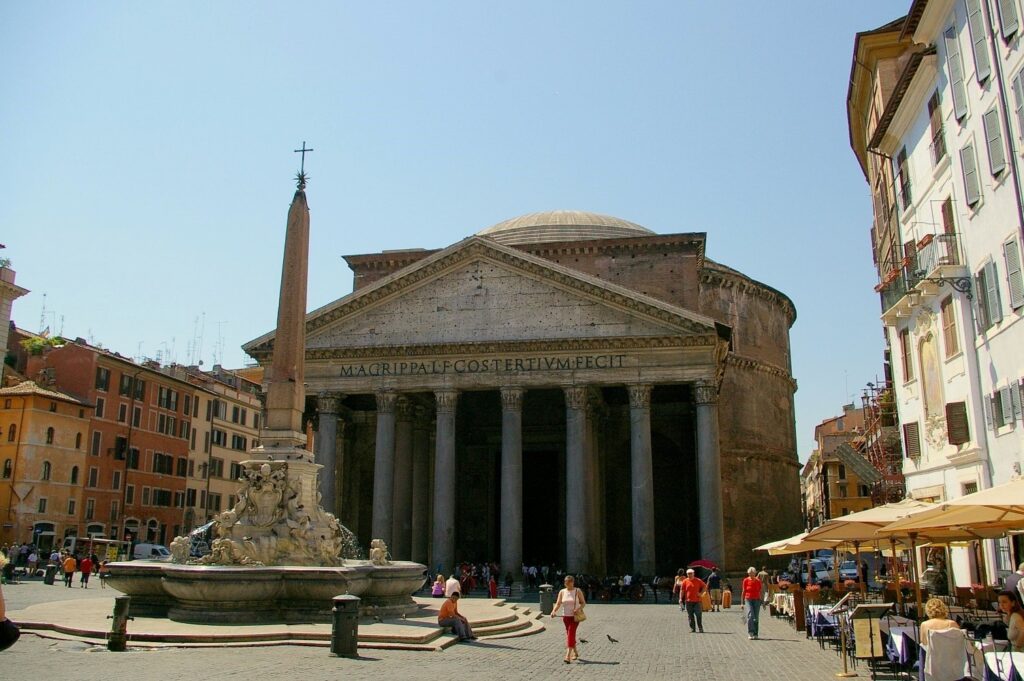The Pantheon in Rome, Italy, originally built by Marcus Agrippa, Emperor Augustus’s right-hand man, is an architectural masterpiece completed in 25 B.C.E.. The inscription at the entrance reads, “Made by Marcus Agrippa, the Son of Lucius, During his Third Consulship.” (Photo Wikimedia)
Serendipity is a strange phenomenon, akin to déjà vu and other non-rational experiences that are hard to explain. Driving across the whole of Montana yesterday (talk about irrational), I listened to the audio version of Robert Harris’ latest book, *[Agrippa: A Novel of Rome’s Descent into Despotism](https://www.penguinrandomhouse.com/books/813007/agrippa-by-robert-harris/).* I don’t usually read historical fiction, mostly because I am afraid what is fictional will perhaps register in my mind as fact. Then I’ll mischaracterize the historical moments I’m trying to understand. But a close friend urged me to listen to the book, and I always take his suggestions seriously.
[Robert Harris i](https://www.penguinrandomhouse.com/authors/12040/robert-harris/)s best known for his [trilogy of novels](https://www.penguin.co.uk/series/CICTRI/cicero-trilogy) about the great Roman senator and last-gasp Roman republican Marcus Tullius Cicero, as well as many other historical fiction bestsellers.
[Marcus Vipsanius Agrippa](https://www.britannica.com/biography/Marcus-Vipsanius-Agrippa) (63-12 B.C.E.) was one of the ancient world’s greatest military strategists, public administrators, and engineers. He was also the emperor Augustus’ closest friend. Because he is less colorful (or infamous) than Pompey the Great, Julius Caesar, Marcus Junius Brutus, Cleopatra, Cato the Younger, Cicero, or Augustus, Agrippa often gets overlooked in accounts of the last years of the Roman Republic and the advent of the Roman Empire. He deserves better.
Agrippa, by Robert Harris.
Where does serendipity come in? During the cultural tour I led in Thomas Jefferson’s France a couple of weeks ago, we visited the [Pont du Gard](https://whc.unesco.org/en/list/344/), the great aqueduct near Nîmes, one of the wonders of the ancient world. Agrippa did not build that one — he had been dead for 30 years when it was constructed — but it was based on the process he and others had used to build the Aqua Julia (33 B.C.E., 14 miles) and the Aqua Virgo (19 B.C.E., 13 miles), both of which supplied water to the city of Rome. According to legend, the Aqua Virgo was so named because a young girl showed Roman soldiers the location of the spring that supplied the water. The Aqua Virgo has been delivering water into the heart of Rome continuously for more than 2,000 years! If you have ever been to the famous Trevi Fountain in Rome, you are seeing the legacy of the emperor’s right-hand man.
Although Augustus (Octavian) was Rome’s first and arguably greatest emperor, he was not, like his great-uncle Julius Caesar, an outstanding warrior or military strategist. He was not physically robust. His genius lay in administration, not war. His fragile health meant he could not participate vigorously in the wars he undertook, first against Julius Caesar’s assassins, Brutus and Cassius, and later against Marc Antony and Cleopatra. Agrippa won the battle of Actium against Antony and Cleopatra in 31 B.C.E., the decisive battle that propelled Augustus to sole control of the Roman Empire.
Agrippa had to live in Augustus’s shadow. We don’t know how much this bothered him, if at all, but Harris’ novel explores that central question. Like most leaders in history, Augustus took credit for all the positive achievements under his rule, even those in which he played a minor or subordinate role. However, absent evidence to the contrary, Agrippa seems content to subordinate his ego to that of the great man who was his lifelong friend and patron.
It is unlikely that Augustus could have defeated his many rivals and risen to the top of the Roman world without Agrippa at his side. He certainly could not have won those pivotal battles without a lieutenant of Agrippa’s military genius. It is certain that we would never have heard of Agrippa if Octavian (before he was Augustus) had not plucked him from social obscurity. Augustus’s primary advantage in life was that his great-uncle Julius Caesar adopted him as heir in 45 B.C.E., just six months before his assassination. He could never have risen to power without that unexpected, somewhat surprising, endorsement.
When you gaze at the Pont du Gard or any other fragments of the ancient aqueducts, you are amazed at their strength, durability, and beauty — surprising, considering they are essentially water conduits — but their perfection as engineering projects is most impressive. They were built to exceedingly exacting specifications.
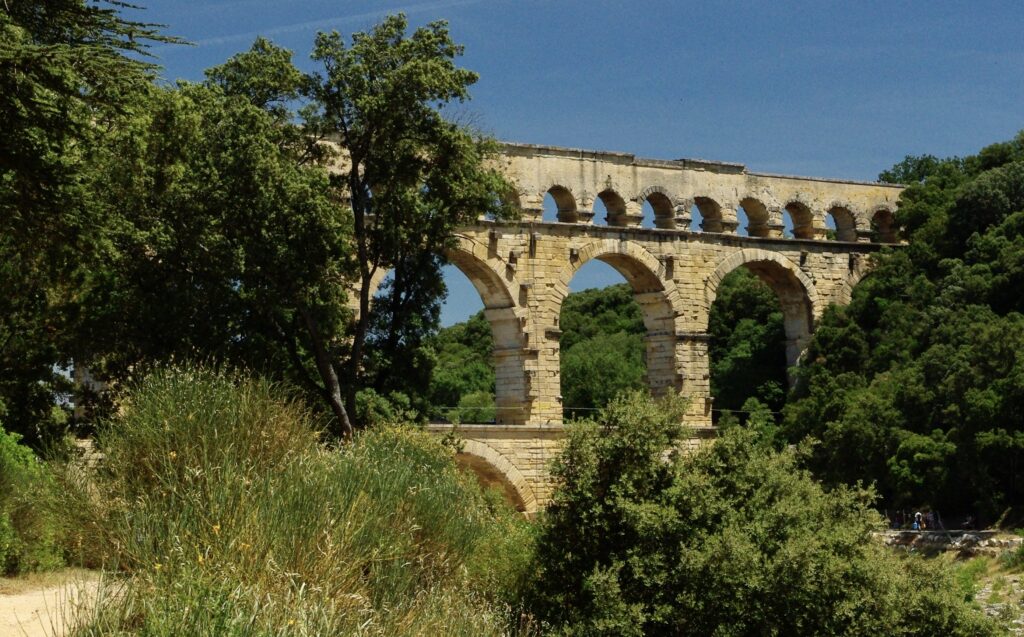The Pont du Gard, the Roman aqueduct near Nîmes, France, is one of the wonders of the ancient world and one of Rome’s many engineering marvels. (Photo D. McKenna)
The Pont du Gard, for example, is 31 miles long, but it drops only 56 feet in that entire transit, 1.8 feet per mile. The Romans built aqueducts without pumps, so they operated entirely by gravity. So, for 31 miles, following the irregular contours of the hills and valleys it flows through, the water has to make a careful, gradual descent to its final destination. Make the gradient too slow, and the water never gets to town. Make it too steep, and the water will accelerate out of control and break up the aqueduct. To see what can happen, just Google the Tacoma Narrows Bridge collapse in 1940, when winds generated wave forms known technically as aeroelastic flutter. Welcome to the challenges of fluid dynamics.
Building an aqueduct would be difficult using modern tools and materials — lasers, theodolites, slide rules, calculators, and computer modeling; seamless metals and plastics; not to mention cranes, bulldozers, backhoes, forklifts, explosives, and a range of other machines made possible by the internal combustion engine, first available around 1860, just 2,000 years after the Romans created these public works the old-fashioned way — with slave labor numbering in the tens of thousands per project. Add to that the challenge of the Roman Numeral system. For example, how do you multiply XXXIII by DCCXLIII (the 743 Roman miles from Nîmes to Rome)? Europe didn’t use the infinitely superior Arabic numeral system until at least 976 (A.D.).
A newish Pont du Gard interpretive center sits on the site. It’s one of the best museums I have ever visited. If you give it a full day (or two), you can learn an enormous amount about Roman engineering. It is aesthetically and historically superb. If your question is, “how were they able to build this thing?” you will learn what you need to know in this museum.
I’ve been to the Pont du Gard several previous times — Thomas Jefferson was enamored of it, and all the Roman ruins in southern France — but this time we were permitted to walk (with a guide) through the former water tunnel at the top of the aqueduct, from one side of the Gardon River to the other. It was thrilling, and even a little unsettling, to be in that tunnel through which 10 million gallons of water flowed per day.
## **Ah, but the Pantheon**
Agrippa’s masterpiece is the Pantheon in Rome, finished in 25 B.C.E., partly to celebrate Augustus’s victory at Actium. It’s the first place I visit whenever I return to Rome. In fact, about noon every day, I sit at one of the cafes in the piazza across from the Pantheon and order a modest plate of Cacio e pepe, a bit of bread (with oil) and a glass of house red wine. As you gaze at what one historian calls “the greatest of all surviving structures of ancient Rome, you see, emblazoned just below the pediment, “M \* Agrippa \* L \* F \* Cos \* Tertium \* Fecit,” which translates, “Made by Marcus Agrippa, the Son of Lucius, During his Third Consulship.” The Romans were just like us: Wrigley Field, MetLife Stadium, etc.
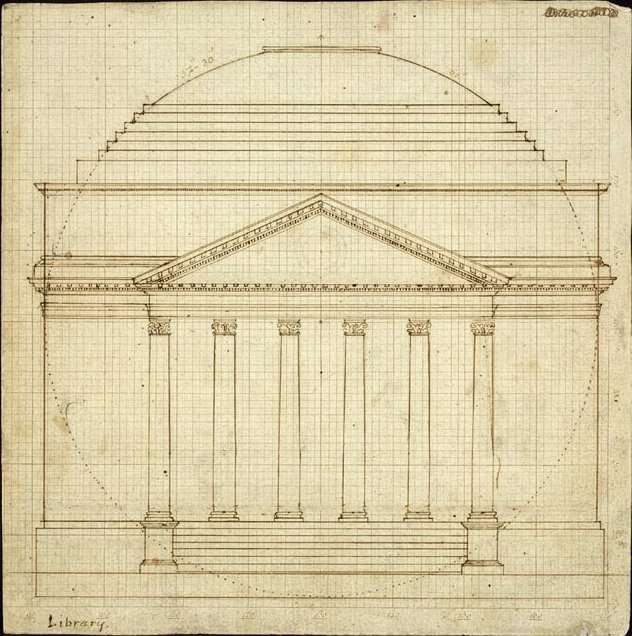An ink-and-pencil architectural drawing by Thomas Jefferson showing the South Elevation of the Rotunda at the University of Virginia.
Everything about the Pantheon (a temple to “all the gods”) is monumental and magnificent, especially the dome — the largest unreinforced concrete dome in the world, even now. Jefferson, who loved classical symmetry and balance, understood that the Pantheon is a globe (sphere) inscribed in (embedded in) a cube, two perfect solids. Classical and neoclassical designs aim to evoke the cosmos’s underlying order. In creating the Pantheon, human architects paid homage to the universe’s deep geometric structures, not only to achieve beauty, but also to encourage individuals and cultures to seek order, regularity, and harmony in all they do.
The great dome has never collapsed, despite weighing 5,000 U.S. tons (9.9 million pounds), because it was built with something called hydraulic concrete. This was a kind of super concrete made with lime, rubble, mortar, and a sandy, highly reactive volcanic ash (called Pozzolana) that was mined near Mt. Vesuvius at Pompeii. It is unlikely that today’s typical concrete could withstand the enormous pressures of an unreinforced dome. We use rebar; they used pounded volcanic ash.
Agrippa did not invent hydraulic concrete, but he used it boldly, particularly in creating the Portus Julius on the northwestern shore of the Gulf of Naples in 37 B.C.E. Roman engineers somehow poured concrete underwater to build harbors and bridges. The Romans also figured out that this concrete formula hardened over time in seawater through a spontaneous chemical and mineral replacement process.
Note: The Pantheon we see today is not the one Agrippa built. That one burned in 80 A.D. (decades after his death), was rebuilt by Emperor Domitian, burned again in 110 A.D., and was rebuilt in its current form by Emperor Hadrian in 125 A.D. It would be interesting to see the original. However, the experts say Hadrian did what he could to honor Agrippa’s design, including giving Agrippa proper credit for the building on the façade.
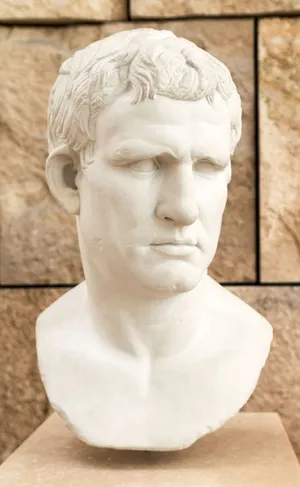Marble bust of [Marcus Vipsanius Agrippa](https://www.britannica.com/biography/Marcus-Vipsanius-Agrippa) (63-12 B.C.E.) was one of the ancient world’s greatest military strategists, public administrators, and engineers.
Harris’ *Agrippa* is only partly about these engineering achievements, of course, but I found those passages particularly satisfying after my recent visits to southern France and (last December) Rome. I love serendipity in all of its visitations. Hundreds, perhaps thousands, of books cover the last years of the Roman Republic and the rise of the Roman Empire, including my friend Edward Watts’ outstanding (and thoroughly readable) *Mortal Republic: How Rome Fell into Tyranny*. Other favorites include Tom Holland’s *Rubicon* and his sequel, *Dynasty*. It is also worth reading anything by the English classicist Mary Beard (see *SPQR: A History of Ancient Rome).* But *Agrippa: A Novel of Rome’s Descent into Despotism* is the first book to examine this fascinating (and unfortunately too relevant) period of history through Agrippa’s lens. Harris contextualizes Augustus without diminishing him (the Emperor) — not an easy achievement — and he makes us aware of the profundity of Roman engineering — aqueducts, ports, temples, bridges, war machines, and of course the famous Roman roads, a fragment of which I saw in Narbonne two weeks ago. I sat on the pavement stones of that bit of road (the Via Domitia) for half an hour. Then I went into the amazing Narbonne covered market and ordered lunch at a place where butchers literally toss raw cuts of meat to the chef.
The one thing I disliked about Harris’ novel is his assertion that Agrippa was probably the natural son of Julius Caesar. There is absolutely no evidence to support this notion. If it were true, it would help explain why Caesar befriended Agrippa (who did not come from the senatorial class) and why Agrippa ended up at the same boarding school as the young Octavian. But at a time when people on both sides of the Atlantic are addicted to conspiracy theories and unsubstantiated mythologies, this gambit not only damages the novel for me, but forces any historian to wonder what else Harris has imagined and for what purpose. Still, I am so glad I listened to the novel. The minute I got home last night, I fetched four or five books on the last years of the republic from my library.
Now I’m scheming my next visit to Rome and Florence.
---
## ***Discover more on these topics at Listening to America***
[Water in the West](https://ltamerica.org/tag/water-in-the-west/ "24 topics")[Republics](https://ltamerica.org/tag/republics/ "1 topics")[Rivers](https://ltamerica.org/tag/rivers/ "3 topics")[Virginia](https://ltamerica.org/tag/virginia/ "7 topics")[Pennsylvania](https://ltamerica.org/tag/pennsylvania/ "1 topics")[North Dakota](https://ltamerica.org/tag/north-dakota/ "53 topics")[Utah](https://ltamerica.org/tag/utah/ "11 topics")[Washington](https://ltamerica.org/tag/washington/ "2 topics")[South Dakota](https://ltamerica.org/tag/south-dakota/ "16 topics")[Theodore Roosevelt](https://ltamerica.org/tag/theodore-roosevelt/ "16 topics")[Steinbeck Travels](https://ltamerica.org/tag/steinbeck-travels/ "75 topics")[Oppenheim](https://ltamerica.org/tag/oppenheim/ "0 topics")[New England](https://ltamerica.org/tag/new-england/ "1 topics")[Video](https://ltamerica.org/tag/video/ "51 topics")[paintings](https://ltamerica.org/tag/paintings/ "0 topics")[North Carolina](https://ltamerica.org/tag/north-carolina/ "3 topics")[Wisconsin](https://ltamerica.org/tag/wisconsin/ "0 topics")[William Shirer](https://ltamerica.org/tag/william-shirer/ "1 topics")[South Carolina](https://ltamerica.org/tag/south-carolina/ "1 topics")[Texas](https://ltamerica.org/tag/texas/ "4 topics")[Podcast](https://ltamerica.org/tag/podcast/ "1 topics")[Oppenheimer](https://ltamerica.org/tag/oppenheimer/ "1 topics")[Travel](https://ltamerica.org/tag/travel/ "1 topics")[The Constitution](https://ltamerica.org/tag/the-constitution/ "1 topics")[Republic](https://ltamerica.org/tag/republic/ "0 topics")[Wyoming](https://ltamerica.org/tag/wyoming/ "4 topics")[State Parks](https://ltamerica.org/tag/state-parks/ "2 topics")[Poetry](https://ltamerica.org/tag/poetry/ "1 topics")[Road Trips](https://ltamerica.org/tag/road-trips/ "18 topics")[Space Exploration](https://ltamerica.org/tag/space-exploration/ "8 topics")[Sports](https://ltamerica.org/tag/sports/ "2 topics")[U.S. Presidents](https://ltamerica.org/tag/u-s-presidents/ "71 topics")[Ohio](https://ltamerica.org/tag/ohio/ "2 topics")[Rome](https://ltamerica.org/tag/rome/ "1 topics")[Walden](https://ltamerica.org/tag/walden/ "1 topics")[Thoreau](https://ltamerica.org/tag/thoreau/ "5 topics")[New York](https://ltamerica.org/tag/new-york/ "8 topics")[New Mexico](https://ltamerica.org/tag/new-mexico/ "3 topics")[Tennessee](https://ltamerica.org/tag/tennessee/ "1 topics")[north daktoa](https://ltamerica.org/tag/north-daktoa/ "0 topics")[Reading](https://ltamerica.org/tag/reading/ "1 topics")[Oregon](https://ltamerica.org/tag/oregon/ "4 topics")[Thomas Jefferson](https://ltamerica.org/tag/thomas-jefferson/ "34 topics")[U.S. Constitution](https://ltamerica.org/tag/u-s-constitution/ "1 topics")[Vermont](https://ltamerica.org/tag/vermont/ "1 topics")
**Categories:** Books
**Tags:** Books, Humanities, Thomas Jefferson
---
### [Americans in Paris: Clay's Thomas Jefferson in France Tour](https://ltamerica.org/americans-in-paris-clays-thomas-jefferson-in-france-tour/)
**Published:** September 29, 2026
**Author:** Clay Jenkinson
**Excerpt:** This week, Clay has been leading his fourth Jefferson in France Cultural Tour. Thomas Jefferson served as an American minister to France in the late 1780’s and considered it some of the happiest times of his life.
**Content:**
## This week, Clay has been leading his fourth Jefferson in France Cultural Tour. Thomas Jefferson served as an American minister to France in the late 1780’s and considered it some of the happiest times of his life.
Clay in front of the historic Palais de la Légion d’Honneur, on the Left Bank of the River Seine in Paris, France.
**Dijon, France** — We are at the halfway point of our Jefferson in France cultural tour. Three days in Paris, followed by two in the Loire Valley, where we toured Leonardo da Vinci’s last residence and ate at a restaurant in a cave. Yes, a cave. Today we head to French wine country — Beaune and Dijon (Burgundy), where Jefferson spent some time in early March 1787 on his three-month agriculture (and wine) tour of France.
Jefferson served as an American minister to the Court of Louis XVI from August 1784 to late September 1789. He was in Paris during the first, relatively bloodless, phase of the French Revolution, which he regarded as the logical next step of a world liberation movement that began in Philadelphia, Pennsylvania, on July 4, 1776. Jefferson’s years in Paris and France were among the happiest of his life. This is my fourth Jefferson-in-France tour.
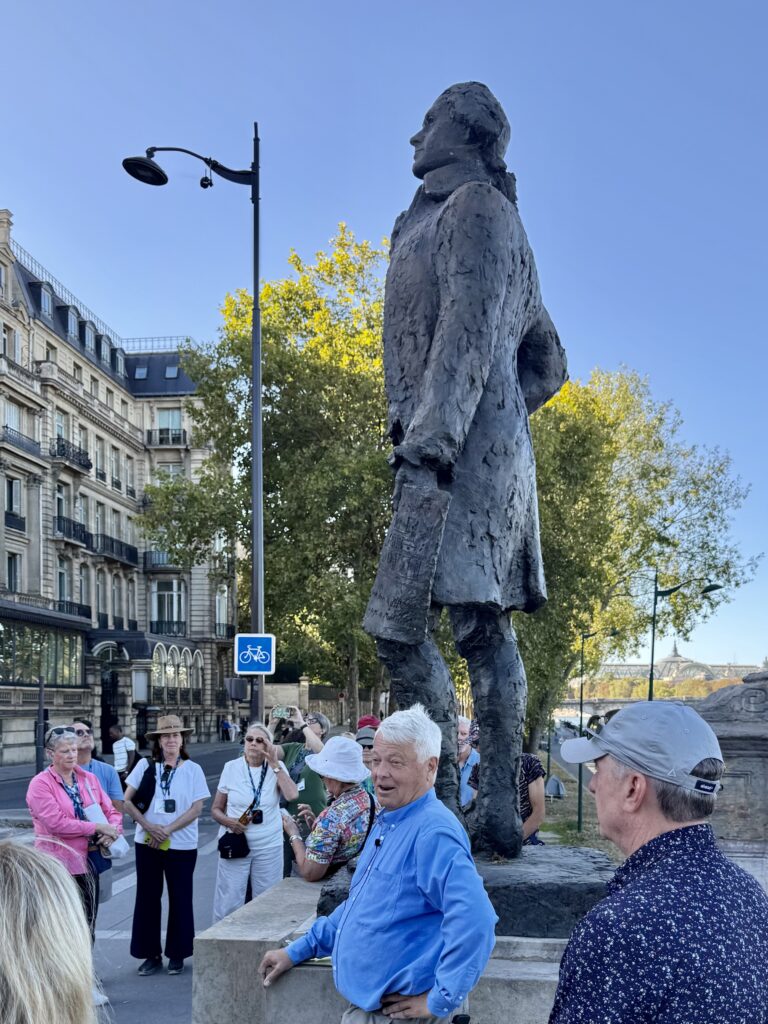Clays speaks to attendees of his France Cultural Tour in front of a statue of Thomas Jefferson near the Seine River in Paris.
When you travel with a group of several dozen people, you necessarily have to arrange three meals per day at restaurants that can accommodate a large group. If I were traveling alone, I would eat one substantial meal each day and, at some point, buy a jambon-et-fromage sandwich at a kiosk. We also inevitably spend a fair amount of time on the coach — luxurious by American standards, but nevertheless a bus. From the front of the bus, our French guide J.P. talks cheerfully about French social customs, cracks jokes, and calls us “my little ones.”
After the long evening dinners, we are generally too tired to party on. Everyone scatters to their rooms to fret about doing laundry soon, connect with home, and wind down. I generally turn on the television to catch up with the news. CNN International is available in most hotels, and a couple of BBC stations. I watch for 20 or 30 minutes, then begin to read *for a couple of hours*, but usually fall asleep after 15 minutes or so.
Rinse and repeat.
We have a great group on this journey, with the usual bell curve exceptions.
Every time I come to Europe, I wind up writing much the same words about the stark contrast between Euro-life and American life. Almost everyone here speaks several languages. Only two or three in our group can say more than bonjour in French. There is very little obesity in Europe, and when you see it, you almost always are looking at an American. Europeans walk much more than we do — and it shows. Many French people now dress for the street like people in Boston or Kansas City — colorful running shoes, slacks, T-shirts. But every 10th person you meet is elegantly dressed, men and women, and for a moment you wish you, too, were an exemplar of good taste and carefully cultivated manners. Then you see a gelato shop and give up the quest.
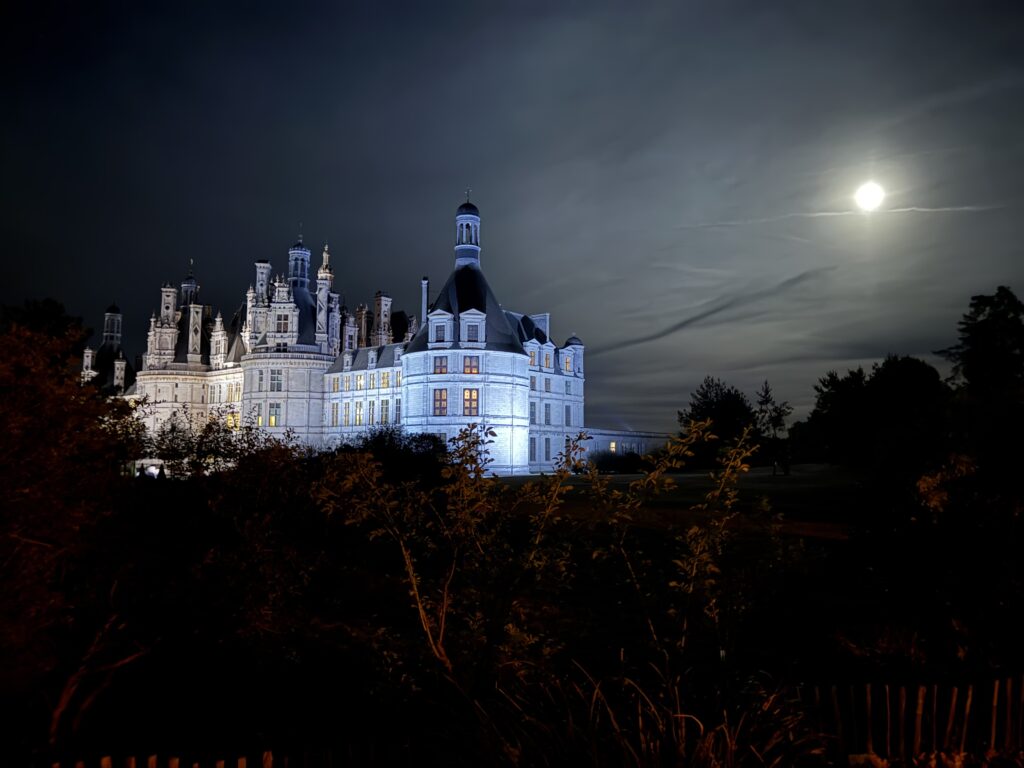The Château de Chambord, located in the Loire Valley in north-central France. (Photo Russ Eagle)
The Americanization of the planet continues to overwhelm local style and customs everywhere. I have a friend who traveled the Silk Road 30 years ago and again two years ago. He reports that the authentic costumes of Tibet, Mongolia, and Afghanistan have mostly yielded to “the universal uniform” of the planet. T-shirt, ball cap, tennis shoes. Alas. It’s all “caascz” as one of my young friends puts it, since saying the full word “casual” is apparently too great a linguistic burden.
Americans like to complain that French waiters and shop owners are rude and haughty. Still, we have found that they are almost always friendly and agreeable, especially if you begin by saying, “bonjour,” and adding something like, “May I speak in English? I don’t know French.” A few years ago one of my favorite guests got crosswise with a male French waiter (straight out of central casting) at the famous Les Deux Margots restaurant on the Left Bank, frequented in the 1920s by the Lost Generation of American writers. He ordered an omelet. The waiter asked what he wanted in the omelet besides eggs. My friend — trying to be agreeable — said, “Oh, whatever, whatever you put in it will be fine.” This brought on a perfect display of the legendary French hauteur — a turned-up nose and indignation so pronounced that the other three of us just wanted to slither away and never pollute that restaurant or France again.
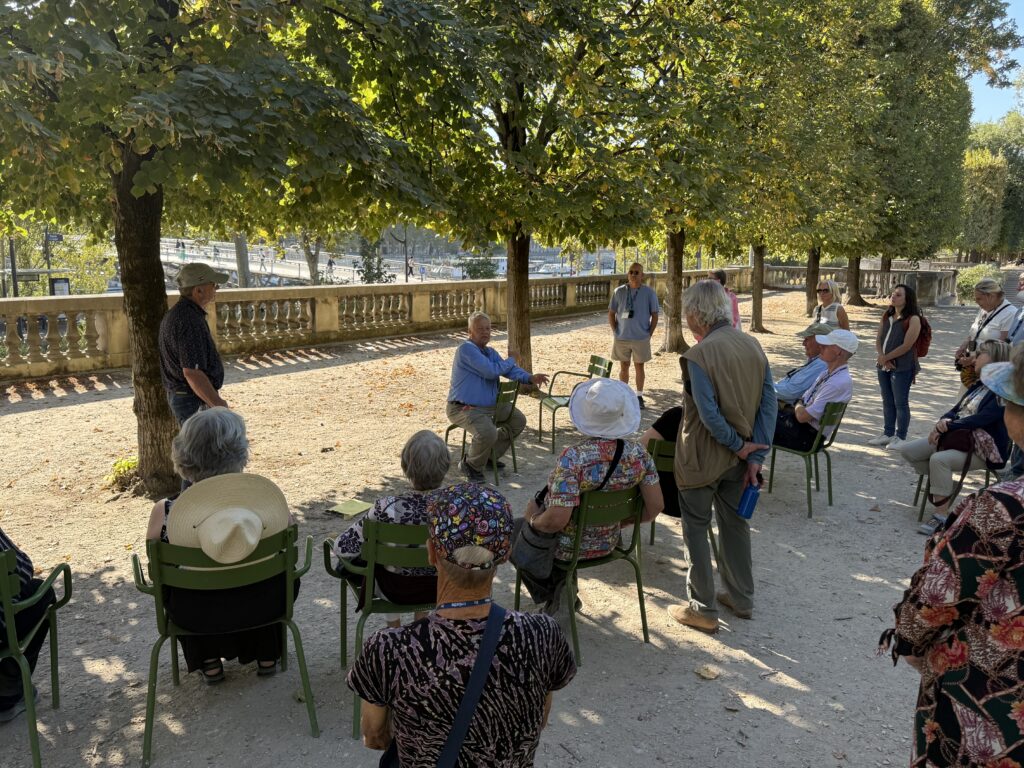Clay talks of Thomas Jefferson’s time in Paris and other parts of France.
## **News Coverage**
You don’t need to watch international news coverage in Europe long before you realize how narrow and sensational American media have become. The European news stations have spent many hours this last week covering the gathering of world leaders at the United Nations, while we continue to obsess over the ballroom, the Kennedy Center, the reflecting pool, the president’s day naps, sex scandals, and other things dramatically less important than the future of world civilization. The soundbite of a European news broadcast is at least double that insisted upon in America. Instead of putting five experts on a broadcast segment, each getting about a minute, European stations usually focus on a single expert guest, or two. The graphics are simpler and more understated. Serious authors are given enough time to explain the theses of their books.

I’ve been watching some segments of Al Jazeera, the Qatar-based news channel that reflects a view of the world that isn’t purely American. It is surprisingly good. It is also surprisingly fair. It has far less anti-West and anti-American bias than commercial American media exhibit in their anti-Arab bias. Al Jazeera’s lens is far wider than American media’s. It reminds us that America is not the world, and much of the world lives outside American cultural and political hegemony.
## **The French Social Contract**
Our guide J.P. knows half a dozen languages or more. He has traveled the world. Yesterday during a fairly long bus ride he explained the French social welfare system to us. Free education straight through graduate school, with annual “fees” for graduate students at about 150 Euros per year. Outstanding national health care, with most services “free” and modest co-pays for elective procedures. Long annual paid vacations. Subsidized day care. Paid parental leave. Excellent old age pensions (social security). A relatively small national debt. State ownership of 51% of key industries, whose revenues help pay for the welfare state. Tax bills itemized by each person’s “subscription” to health care and other specific services, so that you know exactly where your tax dollar is going. Commercial trucks banned on weekends so that families can travel the French roads without congestion. And on average, French citizens pay about the same level of taxation (much of it sales tax, V.A.T.) as an American, when you add up federal and state income taxes, property taxes, and sales taxes. Hmm.
Back in capitalist USA, we are incessantly told that socialism is evil, as if it were a method of oppressing the people. The American fear of socialism (often conflated with communism) is not only irrational but just plain foolish. And yet the fear is deeply rooted in the American soul, as if Vladimir Lenin were about to confiscate your home and reduce you to begging. I’m sure there are problems with the French (or German or Finnish) social welfare systems, but our guide said, “Nobody in France ever has to wonder if he can afford health care. She knows that if something goes wrong she is going to get the care she needs without any fuss, without being condemned to the emergency room like a beggar.” One in five Americans has no health care options except the emergency room. The French (and most Europeans) regard a vibrant and comprehensive social welfare system as the just price of modernity, the basis of social stability, and the foundation of a healthy society. They believe that every human being is entitled to a life of sufficiency and dignity: *Liberté, égalité, fraternité.*
No gun violence. No mass shootings. No AR-15s in the public square. No active shooter drills.
Gas prices here are about $10 per gallon, thanks to America’s undeclared war against Iran. That’s up about $2 since February 28, 2026. Yet Europeans are surprisingly friendly to Americans. Some work to reassure us that it is only our government, and especially this president, they despise, but they want us to know the American people are welcome. I have heard at least two top-tier officials of the EU say in speeches that the world’s most important democracy has succumbed to a near-authoritarian regime. These European diplomats don’t speak in an undisciplined manner. This is how Europe now sees us. We are watching in real time the collapse of the post-World War II liberal world order (NATO, America’s forward bases in Europe and Asia, America as the patroller of the world’s sea lanes). Europeans cannot understand why our president has treated our historic friends and allies like enemies and our historic adversaries like trusted friends.
## **Don’t Get Me Wrong**
I hope it does not appear that I prefer Europe to the United States. I love America. The minute I get home and burn all my clothes, I’ll get into my Airstream trailer and head out for some much-needed R&R in the vast American West. When I have lived abroad, the thing I have missed most about America is our western landscapes, including the Great Plains. But I don’t understand why we so stubbornly cling to our haphazard and often heartless approach to human welfare, whose motto at times seems to be: “I’ve got mine; up yours!” I would think we Americans would want to fan out across the planet to observe how other nations and cultures do their collective business and adopt best practices wherever we see them, without throwing easy, sloppy, prejudicial terms at those practices, like “socialized medicine!” We do some things better than any other nation on earth: apparently Ranch Dressing is one of them. Most of the world still loves America or at least the idea and promise of America. Every journey to a foreign land is a mirror we are invited to hold up to our ways and means.
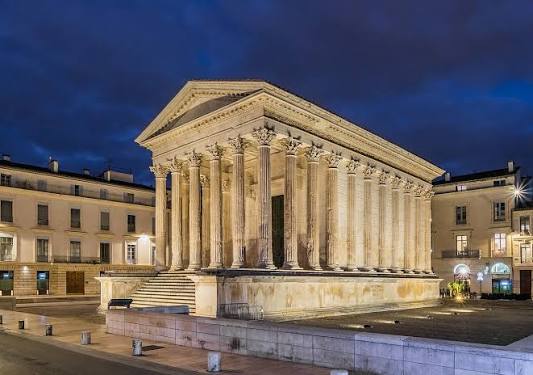The ancient Roman temple in Nîmes, France known as the Maison Carrée.
Tomorrow we take a bullet train (200+ mph) to Nîmes, where Mr. Jefferson sat for hours staring at a classical building “like a lover at his mistress,” as he put it*.* This *was the* Maison Carrée, a temple built in the first century AD, which Jefferson convinced Virginia to use as the model for its new state capitol, 1785-1788.
I feel so fortunate to live in a time when first-world prosperity and mobility make it possible to visit the Louvre, the Pont du Gard, the Maison Carrée, the vineyards of Burgundy, and the celebrated Canal du Midi.
But I am eager now to sit under the golden cottonwoods of the Little Missouri River valley with a good book, a notebook, and a flask of Bordeaux wine I’m packing in my return luggage.
There’s no place like home.
---
## ***Discover more on these topics at Listening to America***
[Sports](https://ltamerica.org/tag/sports/ "2 topics")[Oppenheimer](https://ltamerica.org/tag/oppenheimer/ "1 topics")[North Dakota](https://ltamerica.org/tag/north-dakota/ "53 topics")[Rome](https://ltamerica.org/tag/rome/ "1 topics")[North Carolina](https://ltamerica.org/tag/north-carolina/ "3 topics")[South Carolina](https://ltamerica.org/tag/south-carolina/ "1 topics")[State Parks](https://ltamerica.org/tag/state-parks/ "2 topics")[Pennsylvania](https://ltamerica.org/tag/pennsylvania/ "1 topics")[Utah](https://ltamerica.org/tag/utah/ "11 topics")[Thoreau](https://ltamerica.org/tag/thoreau/ "5 topics")[Virginia](https://ltamerica.org/tag/virginia/ "7 topics")[U.S. Presidents](https://ltamerica.org/tag/u-s-presidents/ "71 topics")[Oregon](https://ltamerica.org/tag/oregon/ "4 topics")[Poetry](https://ltamerica.org/tag/poetry/ "1 topics")[Travel](https://ltamerica.org/tag/travel/ "1 topics")[Ohio](https://ltamerica.org/tag/ohio/ "2 topics")[Reading](https://ltamerica.org/tag/reading/ "1 topics")[Space Exploration](https://ltamerica.org/tag/space-exploration/ "8 topics")[paintings](https://ltamerica.org/tag/paintings/ "0 topics")[Rivers](https://ltamerica.org/tag/rivers/ "3 topics")[Texas](https://ltamerica.org/tag/texas/ "4 topics")[Republic](https://ltamerica.org/tag/republic/ "0 topics")[Wyoming](https://ltamerica.org/tag/wyoming/ "4 topics")[Washington](https://ltamerica.org/tag/washington/ "2 topics")[north daktoa](https://ltamerica.org/tag/north-daktoa/ "0 topics")[Video](https://ltamerica.org/tag/video/ "51 topics")[William Shirer](https://ltamerica.org/tag/william-shirer/ "1 topics")[U.S. Constitution](https://ltamerica.org/tag/u-s-constitution/ "1 topics")[Republics](https://ltamerica.org/tag/republics/ "1 topics")[Road Trips](https://ltamerica.org/tag/road-trips/ "18 topics")[South Dakota](https://ltamerica.org/tag/south-dakota/ "16 topics")[Water in the West](https://ltamerica.org/tag/water-in-the-west/ "24 topics")[New York](https://ltamerica.org/tag/new-york/ "8 topics")[Podcast](https://ltamerica.org/tag/podcast/ "1 topics")[Wisconsin](https://ltamerica.org/tag/wisconsin/ "0 topics")[Tennessee](https://ltamerica.org/tag/tennessee/ "1 topics")[The Constitution](https://ltamerica.org/tag/the-constitution/ "1 topics")[New Mexico](https://ltamerica.org/tag/new-mexico/ "3 topics")[Theodore Roosevelt](https://ltamerica.org/tag/theodore-roosevelt/ "16 topics")[Steinbeck Travels](https://ltamerica.org/tag/steinbeck-travels/ "75 topics")[New England](https://ltamerica.org/tag/new-england/ "1 topics")[Walden](https://ltamerica.org/tag/walden/ "1 topics")[Oppenheim](https://ltamerica.org/tag/oppenheim/ "0 topics")[Thomas Jefferson](https://ltamerica.org/tag/thomas-jefferson/ "34 topics")[Vermont](https://ltamerica.org/tag/vermont/ "1 topics")
**Categories:** Dispatches from the Road
**Tags:** America at 250, Humanities, Thomas Jefferson
---
### [Reading Charles Dickens at the End of My Endless Summer](https://ltamerica.org/reading-charles-dickens-at-the-end-of-my-endless-summer/)
**Published:** October 5, 2026
**Author:** Clay Jenkinson
**Excerpt:** I write this as a personal letter to all of you who read my work. My work is exceedingly important to me — these weekly essays — and writing them is one of the principal joys of my life.
**Content:**
## I write this as a personal letter to all of you who read my work. My work is exceedingly important to me — these weekly essays — and writing them is one of the principal joys of my life.
The Canal du Midi is a 150-mile historic waterway in Southern France that connects the Atlantic to the Mediterranean Sea. Built between 1667 and 1681, it is celebrated as one of the greatest civil engineering achievements of the 17th century. Originally built to bypass the long, hazardous trade route around the Iberian Peninsula for shipping wheat and wine, the canal now serves river tourism and recreation. Thomas Jefferson spent nine days on the canal in 1787. (Photo D. McKenna)
My endless summer finally ended Friday evening when I arrived back in Bismarck, North Dakota, after just under two weeks in Thomas Jefferson’s France. I awoke Friday at Carcassonne in southwestern France, took a bus to Toulouse, a regional plane to Amsterdam, a huge plane to Minneapolis, and a modest regional jet to Bismarck. I began the day in France and (after three hops at 38,000 feet) ended it in my own bed in the U.S. No matter how often I do this — begin the day in a European city and end it in my own bed in a faraway place in America — I marvel at what the modern industrial world has made possible.
I’m totally and appallingly exhausted. Just spent. I’ve been on the road since mid-April. I’ve flown to Europe four times this summer. I’ve had so little time at home that when I do return, I barely open the parcels and do the laundry before I depart for the next thing, the next cultural tour, the next lecture, the wedding, a whimsical pilgrimage to Homer’s Troy in Turkey. I’ve co-hosted one cultural tour this summer (archaeological) and led two others. I have done my usual performing of historical characters here and there, including in Milan, Italy, over the Fourth of July, and I have done two of my four annual humanities residencies at Vail, Colorado, including on-stage conversations with Judy Woodruff and the incomparable Doris Kearns Goodwin. I spent weeks in my Airstream in Montana and Wyoming. I’ve recorded weekly podcasts.
Dog tired. Bone tired. Hopelessly over-stimulated. Numb.
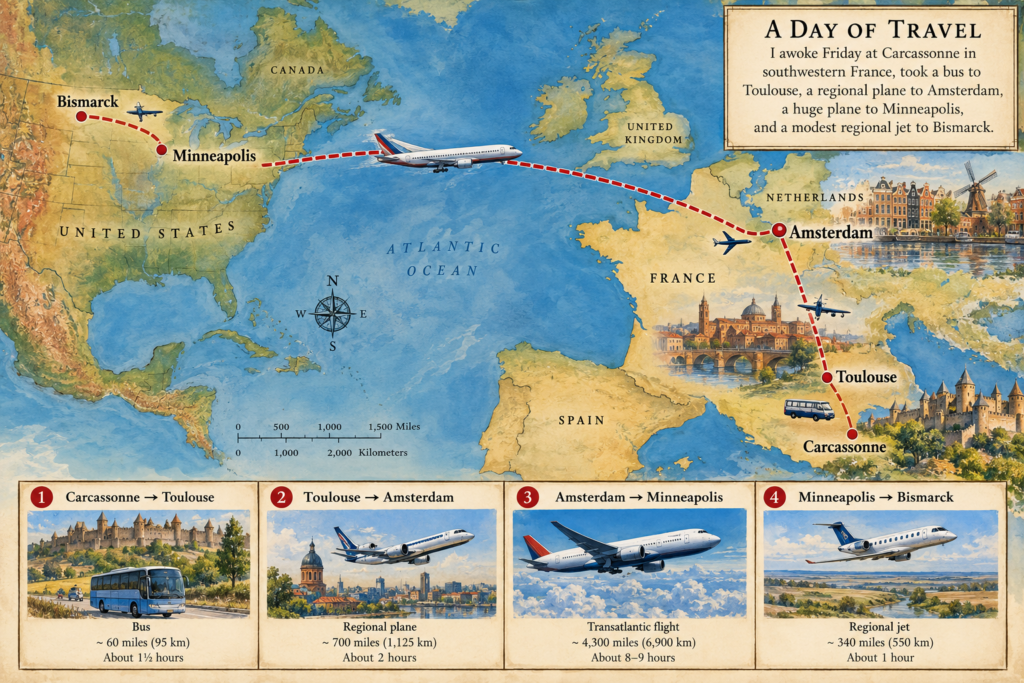Carcassonne to Bismarck: A Day of Travel
## **Home**
On one of the last days in France, we did a four-hour barge excursion on the Canal du Midi, the 17th-century canal that links Marseilles (the Mediterranean Sea) and Bordeaux (the Atlantic Ocean). When lunch was announced downstairs in the air-conditioned dining room, all one hundred people on board basically stampeded for the food. I stayed — all alone, it turns out — up on deck as the boat slowly glided down the canal towards Toulouse. I remembered what Thoreau said at the end of *Walden:*
> “I did not wish to take a cabin passage, but rather to go before the mast and on the deck of the world, for there I could best see the moonlight amid the mountains. I do not wish to go below now.”
That’s just how I felt. It was serene up there. I had an hour to myself in this magical place. The Canal du Midi was Europe’s first great canal, completed in 1681. Thomas Jefferson spent nine happy days on it in the late spring of 1787, taking extensive notes so that he could better advise the construction of canals in the United States. My long summer was ending. There is a kind of exhaustion that is actually quite agreeable — there is certainly no restlessness in being that tired. I sat, gazed, and occasionally closed my eyes to daydream. The fall colors had brought all their autumnal beauty to Provence, my favorite part of France. As I sat there sipping a glass of white wine, I could see the end of the 2026 madness.
The question was: how to manage my re-entry? How could I come off six months of pell-mell travel and more plate-spinning than I’m accustomed to, and re-enter life on the northern Great Plains without just holing up and watching sitcoms for a few days?
## **Dialogue With Self on the Canal Boat**
Q: So how do you see the next couple of months?
A: Not sure, but I know I’ve got to get back to reading. It has been a poor summer for reading.
Q: Got anything in mind?
A: Well, there are a dozen or more books I *need* to read, so they don’t count. Honestly, I think I want to read something of no immediate professional value, a literary classic, something from which I can derive pure pleasure.
Q: Name your poison.
A: I don’t know why, but I am thinking Dickens’ *David Copperfield*. I haven’t read it in six or seven years?
Q: You’re kidding, right? It’s an 865-page book, even in small print. If you start to read *David Copperfield*, and get sidetracked, and not finish it, you’ll be disappointed in yourself. Pick something small like *To Kill a Mockingbird*.
A: You are right, but I have a serious hankering for some Dickens humor, irony, insight, satire, and his incomparable power with the English language. No, I’m going to make a run at *David Copperfield*.
As I said these words, I was pretty sure I would fail. But I am determined to reset my life, rebalance it, and reestablish it.
So, once we were wheels up from Amsterdam, I opened *David Copperfield* on my eReader and started in. Because I had nowhere to go, I wound up reading for eight straight hours, even while eating my adequate tortellini and stale bread roll.
I know Charles Dickens (1812-1870) is not everyone’s cup of tea. Most of my closest friends do no more than pay lip service to Dickens. They trot out the usual litany: contrived plots, passages of almost nauseating sentimentality, endless descriptive passages of the slums of London, and really eccentric characters. I think they are full of beans, but so it goes.
At some point in the flight, about when young David meets Mr. Micawber on the streets of London, I somehow slipped into The Zone — reading’s highest summit, when you are no longer conscious of the words on the page, or even of turning pages, and the genius of the author has drawn you into another cosmos, another world. You do not tire, get distracted, fidget, cut your nails, check your email, or watch a bit of cable news. You realize you could read forever. You want to read forever. You have entered a mystical zone of one corridor of Heaven. This almost never happens. I read my way into The Zone once a year at most, even when my enjoyment of the book is high. There are things you can do to get there, but that doesn’t guarantee you will.
If I could find the pill that brings on The Zone, I would swallow it once a month at the very least. For someone who identifies himself with the humanities, it’s a kind of ecstasy. It’s one of many Zones, of course — in music, dance, mountaineering, running, etc. — but it’s the one I most cherish.
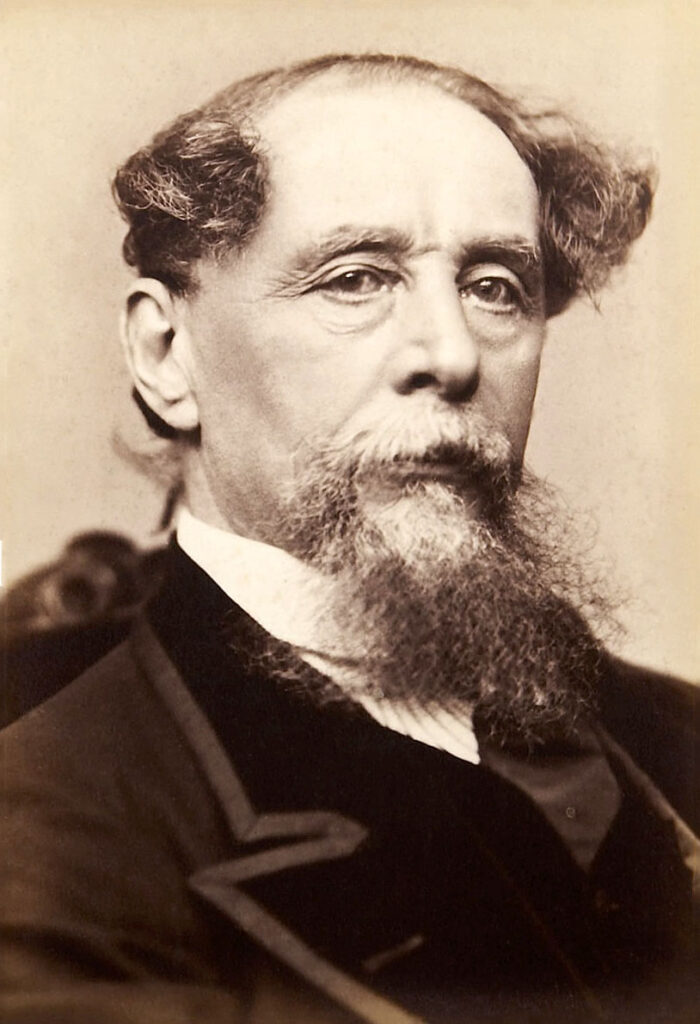The writer Charles Dickens. Portrait by Jeremiah Gurney c. 1867-1868.
So there I was with hours of uninterrupted time to wallow in one of my top-10 works of literature. Flying in seat 40-C on a full airplane, right at the choke point of the path to the toilets, could make for a very frustrating day. But thanks to Dickens and The Zone, the day floated by, and I never thought, “for goodness sake, how much longer does this take?”
It’s such a magnificent book. There are several plot lines, but they all orbit around young David Copperfield, who grows up an orphan in a world of wicked stepfathers, brutal school masters, cheating innkeepers, urban homelessness, alcoholism, mental illness, and casual violence. David makes many mistakes along the way, but he becomes a professional success, gets married right on the second try, and lives to see his various tormentors destroyed by karma.
As we flew across the Atlantic, I laughed, I cried, I snorted, I took some notes, I wept, and at least a dozen times. I put down the book and said, out loud, probably to the consternation of my aisle-mate (a perfect stranger), “The *genius* of Charles Dickens, the unbelievable *genius* of Charles Dickens!” (In my defense, she was watching *Below Deck: Mediterranean*, so she probably didn’t hear me raving.)
*David Copperfield* is a very long book. I’m a slow reader. When we landed in Minneapolis, I was only 42% of the way through it. But for some reason — I think for a very important reason — I didn’t put it down and start in on the large to-do list that awaited my return. I knew I had to see it through or it would be yet another instance of fragment reading. Accordingly, and with great pleasure, I spent most of Saturday reading it in several of my favorite chairs. By the time I fell asleep on Saturday night, I was down to about 250 pages, and on Sunday morning, jet-lagged at oh dark thirty, I sat down and finished the novel.
It gives me such deep satisfaction to have read one of the world’s classics by way of jumping off the 2026 treadmill or bandwagon. The novel has so many amazing things: Dickens’ capacity to see the world through a child’s eyes; the villainy of Mr. Murdstone; lone, lorn Mrs. Gummidge; Dora’s lapdog Jip; and, above all, Wilkins Micawber.
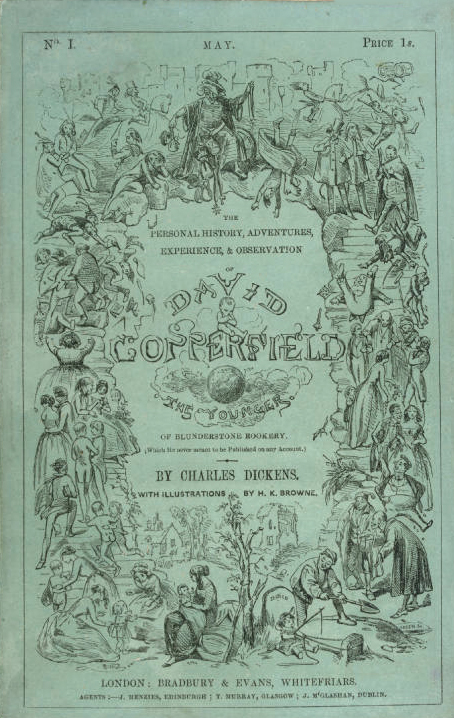
Micawber is my favorite Dickens character — among at least a dozen near-rivals. He’s a grandiloquent, melodramatic, comic masterpiece in tights and a walking stick with a perfectly bald head shaped like an egg. Perpetually in debt, unwilling to work for a living and therefore always fighting off debtors’ prison, a master mixer of English punch, an inveterate writer of letters, crushed by despondency and almost simultaneously the exemplar of mirth, Micawber pawns his furniture to host an elaborate dinner party.
Great books are greatly new each time you encounter them. At some points in this my eighth or ninth time through *David Copperfield*, I noticed things I have never noticed before or (worse), forgotten. I saw connections and foreshadowing I had never noticed before. I interpreted some key scenes in a new way. I liked some characters more and some less. Above all, I found it possible to groove on Dickens’ comic writing and his incredible wit without losing sight of the deeper tragedy of London life for the masses in Dickens’ era.
Now it’s over. I finished several days ahead of what I expected. I’m going to read some Dickens criticism and write more extensively about the novel. I’m so tempted to start right in on *Great Expectations* or *Bleak House*, two of my other favorite Dickens novels, but I reckon I’d better not push my luck. I did have a sudden fantasy of reading all of Dickens’ novels in succession, straight through, doing nothing else, absolutely nothing else, between now and Christmas. That would be a good retirement project, but I know I will never retire.
I’m with Jefferson: “I cannot live without books.” What would life be without the humanities? A dreary thing (at least for me).
So, tomorrow: the to-do list. I knew that when I gave myself this luxury, I would have to pay the piper.
But it was so worth it.
---
## ***Discover more on these topics at Listening to America***
[Sports](https://ltamerica.org/tag/sports/ "2 topics")[Podcast](https://ltamerica.org/tag/podcast/ "1 topics")[Water in the West](https://ltamerica.org/tag/water-in-the-west/ "24 topics")[Walden](https://ltamerica.org/tag/walden/ "1 topics")[The Constitution](https://ltamerica.org/tag/the-constitution/ "1 topics")[north daktoa](https://ltamerica.org/tag/north-daktoa/ "0 topics")[Wyoming](https://ltamerica.org/tag/wyoming/ "4 topics")[Poetry](https://ltamerica.org/tag/poetry/ "1 topics")[Rivers](https://ltamerica.org/tag/rivers/ "3 topics")[Oregon](https://ltamerica.org/tag/oregon/ "4 topics")[New England](https://ltamerica.org/tag/new-england/ "1 topics")[Republics](https://ltamerica.org/tag/republics/ "1 topics")[New Mexico](https://ltamerica.org/tag/new-mexico/ "3 topics")[North Dakota](https://ltamerica.org/tag/north-dakota/ "53 topics")[Steinbeck Travels](https://ltamerica.org/tag/steinbeck-travels/ "75 topics")[Thomas Jefferson](https://ltamerica.org/tag/thomas-jefferson/ "34 topics")[Republic](https://ltamerica.org/tag/republic/ "0 topics")[Pennsylvania](https://ltamerica.org/tag/pennsylvania/ "1 topics")[Virginia](https://ltamerica.org/tag/virginia/ "7 topics")[South Dakota](https://ltamerica.org/tag/south-dakota/ "16 topics")[Space Exploration](https://ltamerica.org/tag/space-exploration/ "8 topics")[Washington](https://ltamerica.org/tag/washington/ "2 topics")[paintings](https://ltamerica.org/tag/paintings/ "0 topics")[New York](https://ltamerica.org/tag/new-york/ "8 topics")[Vermont](https://ltamerica.org/tag/vermont/ "1 topics")[North Carolina](https://ltamerica.org/tag/north-carolina/ "3 topics")[Reading](https://ltamerica.org/tag/reading/ "1 topics")[Utah](https://ltamerica.org/tag/utah/ "11 topics")[U.S. Constitution](https://ltamerica.org/tag/u-s-constitution/ "1 topics")[William Shirer](https://ltamerica.org/tag/william-shirer/ "1 topics")[Rome](https://ltamerica.org/tag/rome/ "1 topics")[Tennessee](https://ltamerica.org/tag/tennessee/ "1 topics")[Wisconsin](https://ltamerica.org/tag/wisconsin/ "0 topics")[Thoreau](https://ltamerica.org/tag/thoreau/ "5 topics")[South Carolina](https://ltamerica.org/tag/south-carolina/ "1 topics")[Video](https://ltamerica.org/tag/video/ "51 topics")[U.S. Presidents](https://ltamerica.org/tag/u-s-presidents/ "71 topics")[Oppenheim](https://ltamerica.org/tag/oppenheim/ "0 topics")[Oppenheimer](https://ltamerica.org/tag/oppenheimer/ "1 topics")[Texas](https://ltamerica.org/tag/texas/ "4 topics")[Ohio](https://ltamerica.org/tag/ohio/ "2 topics")[Travel](https://ltamerica.org/tag/travel/ "1 topics")[State Parks](https://ltamerica.org/tag/state-parks/ "2 topics")[Road Trips](https://ltamerica.org/tag/road-trips/ "18 topics")[Theodore Roosevelt](https://ltamerica.org/tag/theodore-roosevelt/ "16 topics")
**Categories:** Dispatches from the Road
**Tags:** Books, Humanities
---
### [Field Report: History and Current Challenges to Western Public Lands](https://ltamerica.org/field-report-history-and-current-challenges-to-western-public-lands/)
**Published:** September 22, 2026
**Author:** Clay Jenkinson
**Excerpt:** Alongside archaeologist Dr. Susan Ryan, Clay co-hosted a recent cultural tour of the Four Corners region to help guests get an “on-the-ground” look at the past and future of the National Monuments and Antiquities Act.
**Content:**
## Alongside archaeologist Dr. Susan Ryan, Clay co-hosted a recent cultural tour of the Four Corners region to help guests get an “on-the-ground” look at the past and future of the National Monuments and Antiquities Act.
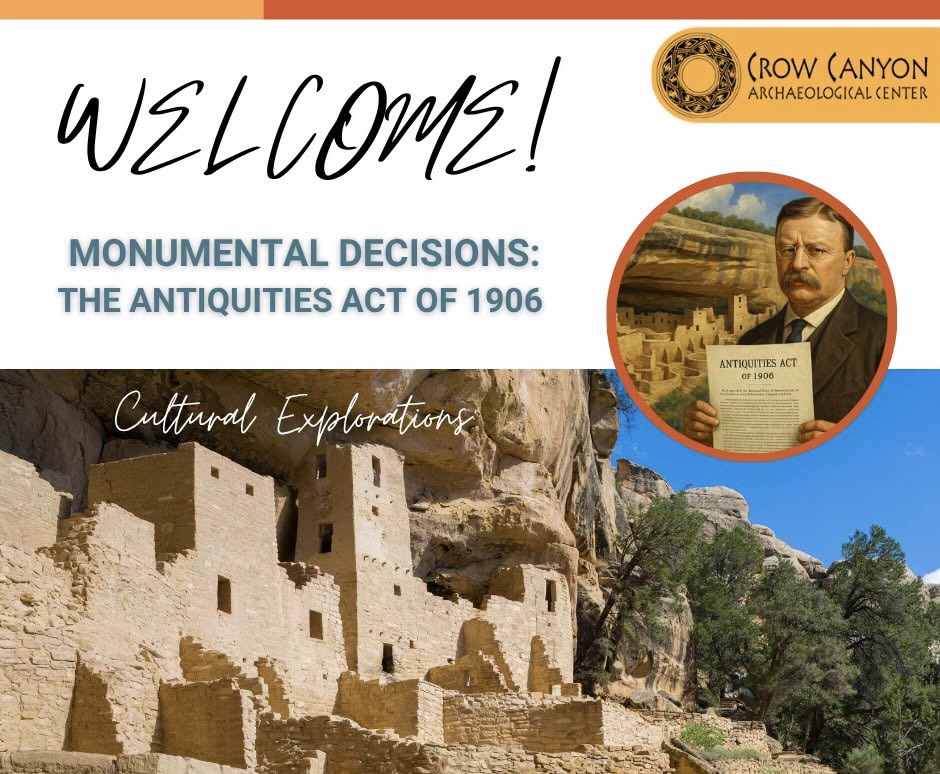
Last week I had the pleasure of co-hosting [a five-day cultural field trip](https://ltamerica.org/crow-canyon-tour/) in southwestern Colorado and southeastern Utah with Dr. Susan Ryan of the [Crow Canyon Archaeological Center ](https://crowcanyon.org)in Cortez, Colorado. Our subject was the history and future of the [National Monuments and Antiquities Act ](https://www.nps.gov/subjects/archeology/antiquities-act.htm)from its inception in June 1906 to today, when our public lands are in crisis. Dr. Ryan did most of the lecturing and commentary. She was spectacular. We had 19 curious, well-informed guests from across the United States, plus one from Great Britain.
The 1906 Antiquities Act gave the president of the United States unilateral power to designate National Monuments of any size by executive order alone. Although the legislation was probably intended to protect relatively small parcels, “in all cases … confined to the **smallest area compatible with the proper care and management of the objects to be protected**,” its first great practitioner, Theodore Roosevelt, broke open the gates with his 1908 creation of Grand Canyon National Monument at more than 818,000 acres. Whether a subsequent president has the authority to reduce or abolish a National Monument is not altogether clear. In reducing the acreage of Bears Ears National Monument and Grand Staircase Escalante National Monument by more than 90% each, President Trump has muddied the waters of one of America’s most extraordinary conservation tools.
Earlier Supreme Court cases and a 1938 Justice Department General Opinion indicate that a president is not authorized to reduce or eliminate monuments except under very particular circumstances. President Trump is no friend to legal or moral precedent. Whether this Supreme Court will take up the issue is unclear, but it would not surprise disconsolate public land advocates if the court affirmed Trump’s assault on the National Monuments.
When Dr. Ryan and I planned this cultural exploration program 18 months ago, we did not know the Antiquities Act would be endangered when we gathered in September 2026. Still, the current public lands crisis brought a lovely intensity to our weeklong deliberations and site visits.
Archaeologist Dr. Susan Ryan, Executive Vice President of the Research Institute at the Crow Canyon Archaeological Center, led a cultural field trip through the Four Corners area with Clay Jenkinson this September, focused on the history and future of the National Monuments and Antiquities Act.
After a session at the center in which Dr. Ryan explained the origins of the Antiquities Act and I portrayed the 26th president of the United States, Theodore Roosevelt, we took to the road in a minibus and two extended vans. In the course of four days, we visited the Shields Archaeological Site northwest of Cortez; spent a day and a half at Mesa Verde National Park, established by Congress in 1906, including time in the Mesa Verde archives; visited a uranium mill at White Mesa; visited several sites in Bears Ears National Monument, including the Bears Ears Education Center in Bluff, Utah; and lingered at midday Friday at Canyon of the Ancients National Monument, established by President Bill Clinton at the end of his second term.
Our conversations were spirited, civil, probing, and thoroughly enlightening. I learned far more than I taught, and came away certain that these Utah monuments at their full embrace are a credit to American enlightenment, and no actual threat to any rational person.
Dr. Ryan’s commentary throughout was so outstanding that I hesitated to speak, lest I get in the way of her masterful discourse. She holds a PhD from the University of Arizona in archaeology. She has been at Crow Canyon Archaeological Center for 28 years. Her commentary is never abstruse or abstract. Everyone listened to her with rapt attention.
## **The Bears Ears Yoyo Nonsense**
Bears Ears National Monument was established by executive order on December 28, 2016, in the last days of President Barack Obama’s second term. Fully authorized by the 1906 law, Mr. Obama set aside 1.35 million acres of public land in Utah to protect one of America’s most archaeologically rich landscapes. Under Obama’s leadership, a pioneering coalition of Native Americans, U.S. government employees, and other stakeholders was created to co-steward Bears Ears NM. Dr. Ryan informed us that there are well more than 100,000 ancestral Puebloan sites in the monument. You can hardly throw a pebble in the Four Corners area, she said, without striking an ancestral site.
When Donald Trump first became president of the United States, he reduced the Bears Ears footprint by 85%. That was December 4, 2017. On October 8, 2021, President Joe Biden restored the original acreage and added a bit more. When Trump returned for round two of his presidency after the 2024 election, he reduced Bears Ears by more than 90%. He also reduced Grand Staircase Escalante National Monument by more than 90%. President Bill Clinton established Grand Staircase NM on September 18, 1996.
The yo-yo effect of one president establishing a National Monument and a subsequent one reducing it (and back again and back again) is bad policy, confusing to the public, hurtful to Native Americans, and frustrating to those beleaguered BLM and other government employees whose duty it is to balance a range of interests in managing National Monuments.
## **Motives**
Why would President Trump (and his unquestioning Secretary of the Interior Doug Burgum) reduce the size of these two National Monuments so severely? Here are a few possibilities. Choose the one(s) you think most likely to explain his actions.
- They were just too big. We met a couple of local mill employees with deep roots in the region who said the monument footprints were too large and that the most important sites fall within the jurisdiction of the remnant monuments.
- In the name of national security, we are told, we are going to need uranium from the region as well as rare earths if we are going to compete successfully with China. (Note: since Mr. Trump’s executive order on July 13, 2026, there have already been 16 filings for mining leases on the acreage he returned to basic Bureau of Land Management (BLM) status. Protecting archaeological sites is important — so the logic goes — but national security is paramount.
- Even though at least 60% of the people of Utah support the full acreage of Grand Staircase and Bears Ears and take pride in being a state of extensive National Parks, Monuments, Wildlife Refuges, parcels of wilderness, National Forests, and segments of Wild and Scenic Rivers, Governor Spencer Cox, the Utah legislature, and the Utah congressional delegation strenuously oppose any more “federal intrusion” within their state and express their satisfaction in the reductions. President Trump is undoubtedly listening to those political figures rather than the citizens of Utah (and beyond).
- There is now, and always has been, intense opposition to “federal occupation” of western states among some segments of the people of the American West. Some argue — erroneously — that federal public lands properly belong to the states, should be returned to them, and that the national government has no business holding a single acre that would benefit private parties. This widespread phenomenon is usually subsumed under the title Sagebrush Rebellion.
- As he campaigned in 2024, Donald Trump declared, “I am the retribution.” His loathing of Joe Biden and particularly Barack Obama is well known. Although 18 out of 21 presidents — of both political parties — have established National Monuments since 1906, there is a right-wing perception (or propaganda point) that it is liberal progressives who seek to “lock up the West.” If George W. Bush had established Bears Ears and Grand Staircase Escalante, I doubt that President Trump would be so determined to cut them down to size.
It’s one thing to discuss these things in a classroom; it’s entirely different to get out onto the land to look for ourselves.
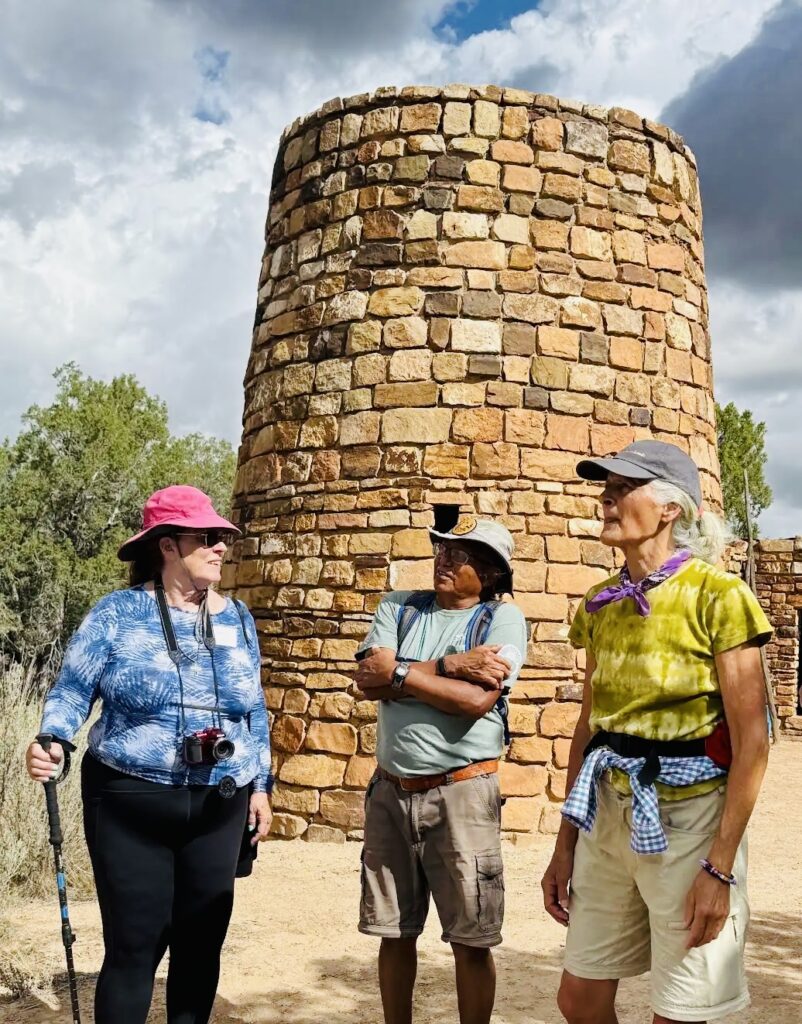There are literally thousands of archeological sites throughout the Four Corners region.
We expected hot, dry weather, but we were graced with cooler temperatures and several days of intermittent rain. It is amazing to see the desert lands perk up when they get a drink of water. Suddenly, the landscape became gentler and more welcoming. Autumn colors exfoliated across the vast distances we covered. Water puddled on the ground. Creeks began to flow after months of bone dryness. Overnight, the San Juan River began to flow bank to bank, sodden with silt and partly clogged with detritus. The low cloud cover gave the landscape an enchanted aura. Water is life in the desert. It was a perfect time to visit Bears Ears and other protected sites in the Four Corners region.
Many false notions about the public lands of the American West persist. One of the most toxic of them is the idea that National Monument designation prevents other uses. In most cases, heritage grazing is protected, as well as recreation (including motorized), oil and gas extraction, and even mining. Monument status increases our collective ability to protect sensitive archaeological sites, limit the construction of new roads, and ensure that all of us who cross the boundaries into these Monuments understand that we are invited to show heightened respect for the land and the ancestral (and contemporary) peoples whose homelands we are visiting. The descendants of the ancestral Puebloans who built the great halls, the cliff palaces, the pit houses, the kivas, the apartment complexes, and the celestial observatories still consider this broad landscape their home.
The takeaway for me in all of this is that the Four Corners area is riddled with ancestral sites, that it is in our national and cultural interest to protect as much of this landscape as possible, and that Native people should play a much greater role — a pivotal role — in interpreting and managing these lands. Utah has plenty of land, including plenty of public BLM land. A 1.35 million-acre monument sounds colossal in the abstract. Still, once you drive through the rugged, arid landscapes, you realize the highest and best use of this parcel of the American West is to protect it from adverse industrial activity and simply let it be.
## **My Limited Contribution to The Week**
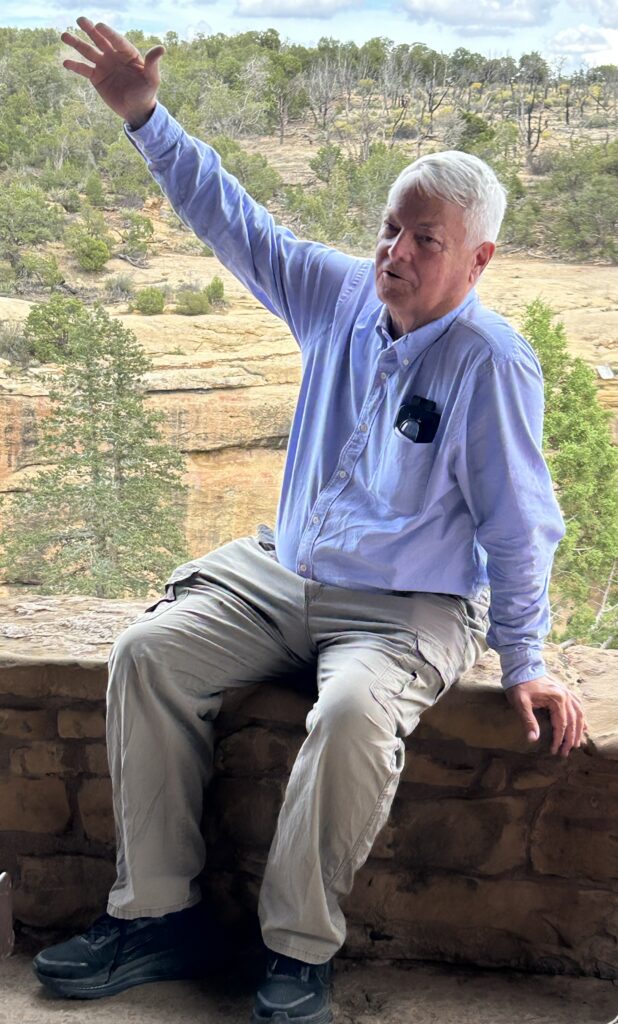Clay at Mesa Verde National Park.
My expertise, such as it is, is in the life and achievement of Theodore Roosevelt. God bless him. In the course of his seven years, 171 days as the 26th president, he set aside 230 million acres of the public domain for permanent protection under various headings. He set an important precedent by reading the Antiquities Act as broadly as possible. In subsequent U.S. history, no president has attempted to break the system. Until now.
The American people love their public lands: National Parks, National Recreation Areas, National Game Preserves, National Monuments, Wilderness, National Forests, and Wild and Scenic Rivers. Our public domain is the envy of the world.
My week with the excellent staff of Crow Canyon Archaeological Center and particularly Dr. Ryan gave me joy and hope. Joy to spend time among so many individuals intensely committed to the healthy future of the public lands. Joy to work with someone as talented as Dr. Ryan, and hope that the American people will pay attention to what is going on out there in the West and make their views known to their representatives. In any fair fight, America’s National Parks, National Monuments, and their other federal conservation cousins will win every time.
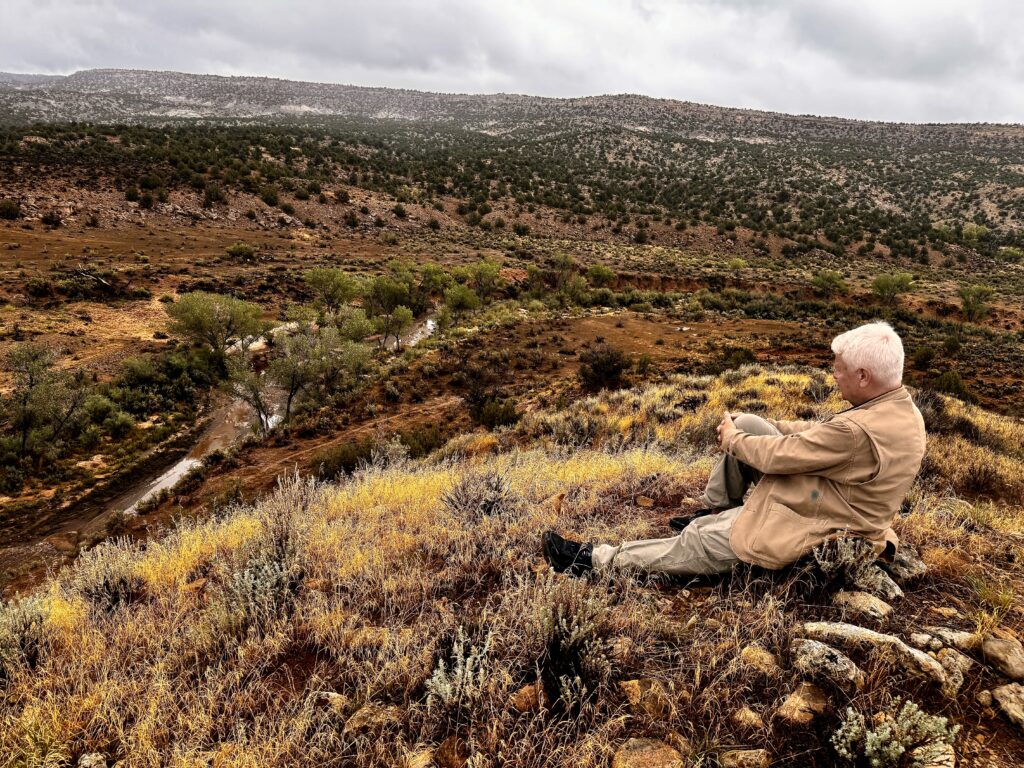
---
## ***Discover more on these topics at Listening to America***
[Podcast](https://ltamerica.org/tag/podcast/ "1 topics")[Oregon](https://ltamerica.org/tag/oregon/ "4 topics")[Utah](https://ltamerica.org/tag/utah/ "11 topics")[Wyoming](https://ltamerica.org/tag/wyoming/ "4 topics")[New England](https://ltamerica.org/tag/new-england/ "1 topics")[Water in the West](https://ltamerica.org/tag/water-in-the-west/ "24 topics")[Vermont](https://ltamerica.org/tag/vermont/ "1 topics")[Video](https://ltamerica.org/tag/video/ "51 topics")[Texas](https://ltamerica.org/tag/texas/ "4 topics")[Theodore Roosevelt](https://ltamerica.org/tag/theodore-roosevelt/ "16 topics")[Travel](https://ltamerica.org/tag/travel/ "1 topics")[north daktoa](https://ltamerica.org/tag/north-daktoa/ "0 topics")[State Parks](https://ltamerica.org/tag/state-parks/ "2 topics")[paintings](https://ltamerica.org/tag/paintings/ "0 topics")[Oppenheimer](https://ltamerica.org/tag/oppenheimer/ "1 topics")[William Shirer](https://ltamerica.org/tag/william-shirer/ "1 topics")[Rivers](https://ltamerica.org/tag/rivers/ "3 topics")[The Constitution](https://ltamerica.org/tag/the-constitution/ "1 topics")[Walden](https://ltamerica.org/tag/walden/ "1 topics")[Oppenheim](https://ltamerica.org/tag/oppenheim/ "0 topics")[U.S. Presidents](https://ltamerica.org/tag/u-s-presidents/ "71 topics")[North Carolina](https://ltamerica.org/tag/north-carolina/ "3 topics")[Thomas Jefferson](https://ltamerica.org/tag/thomas-jefferson/ "34 topics")[Pennsylvania](https://ltamerica.org/tag/pennsylvania/ "1 topics")[Wisconsin](https://ltamerica.org/tag/wisconsin/ "0 topics")[Reading](https://ltamerica.org/tag/reading/ "1 topics")[Road Trips](https://ltamerica.org/tag/road-trips/ "18 topics")[Ohio](https://ltamerica.org/tag/ohio/ "2 topics")[North Dakota](https://ltamerica.org/tag/north-dakota/ "53 topics")[Poetry](https://ltamerica.org/tag/poetry/ "1 topics")[Republic](https://ltamerica.org/tag/republic/ "0 topics")[Rome](https://ltamerica.org/tag/rome/ "1 topics")[South Dakota](https://ltamerica.org/tag/south-dakota/ "16 topics")[South Carolina](https://ltamerica.org/tag/south-carolina/ "1 topics")[U.S. Constitution](https://ltamerica.org/tag/u-s-constitution/ "1 topics")[Space Exploration](https://ltamerica.org/tag/space-exploration/ "8 topics")[Tennessee](https://ltamerica.org/tag/tennessee/ "1 topics")[Steinbeck Travels](https://ltamerica.org/tag/steinbeck-travels/ "75 topics")[New Mexico](https://ltamerica.org/tag/new-mexico/ "3 topics")[Washington](https://ltamerica.org/tag/washington/ "2 topics")[New York](https://ltamerica.org/tag/new-york/ "8 topics")[Sports](https://ltamerica.org/tag/sports/ "2 topics")[Thoreau](https://ltamerica.org/tag/thoreau/ "5 topics")[Republics](https://ltamerica.org/tag/republics/ "1 topics")[Virginia](https://ltamerica.org/tag/virginia/ "7 topics")
**Categories:** Dispatches from the Road
**Tags:** America at 250, National Parks, Native Americans, Theodore Roosevelt
---
### [Where Is Bernard DeVoto When We Need Him?](https://ltamerica.org/where-is-bernard-devoto-when-we-need-him/)
**Published:** September 15, 2026
**Author:** Clay Jenkinson
**Excerpt:** Struck by the breathtaking speed of change in American life since World War II, Clay is writing a series of essays about what has transpired within a single humanities scholar’s lifetime. This week he writes about how our media channels shape our sense of history, current events, and national outlook.
**Content:**
## Struck by the breathtaking speed of change in American life since World War II, Clay is writing a series of essays about what has transpired within a single humanities scholar’s lifetime. This week he writes about how our media channels shape our sense of history, current events, and national outlook.
Harper’s Magazine January 1947, featuring the title *The West Against Itself* by Bernard Devoto.
Not long ago, I purchased a new biography of Bernard DeVoto, an American historian and “man of letters” who was a key figure in the Lewis and Clark world. The book is entitled *[This America of Ours: Bernard and Avis DeVoto and the Forgotten Fight to Save the Wild](https://www.harpercollins.com/products/this-america-of-ours-nate-schweber?variant=40896204046370)*. In 1953, after completing an award-winning trilogy of books about the westward movement in America, DeVoto agreed to edit the journals of Lewis and Clark in a one-volume abridgement. The result was his *Journals of Lewis and Clark*, the first book that gave the reading public access to what Lewis and Clark actually wrote in their journals. Before that, the only readily accessible account of their heroic 1804-1806 transcontinental journey of exploration was a polite paraphrase of the journals first published in 1814.
Finally, we could read the authentic journals of William Clark, one of the worst spellers in American history, and Meriwether Lewis, who had a strangely compelling sense of humor and who often wrote with a kind of explorer’s grandiloquence. Savor Clark’s *“Musquetors excessively troublesom so much so that the men complained that they could not work at their Skins for those troublesom insects. and I find it entirely impossible to hunt in the bottoms, those insects being so noumerous and tormenting as to render it imposseable for a man to continue in the timbered land”* (August 4, 1806), and *“!O how Tremendious is the day. This dredfull wind and rain Continued with intervales of fair weather”* (November 28, 1805); and then Lewis’s entry for April 7, 1805, as the expedition entered what he regarded as terra incognita: *“we were now about to penetrate a country at least two thousand miles in width, on which the foot of civillized man had never trodden.”*
Clark spelled mosquito 17 different ways, and Sioux more than 25.
No mere paraphrase can do justice to the journals or the journey. Until the University of Nebraska published its 13-volume definitive edition of the *Journals of Lewis and Clark* (1983-2001), DeVoto’s one-volume abridgment *was* the standard Lewis and Clark.
## **The Rest of the Story is Even Better**
Bernard and Avis DeVoto circa 1930s. (Wallace Stegner Photograph Collection, Special Collections, The University of Utah)
But this impressive work on Lewis and Clark was a relatively minor part of Bernard DeVoto’s amazing achievement. Schweber’s subtitle prepares the way: *Bernard and Avis DeVoto and the Forgotten Fight to Save the Wild*. It is the story of a great marriage and literary partnership. Avis DeVoto was no helpmate. She typed and edited her husband’s manuscripts, provided incisive creative input, hosted salon dinner parties at their home in Cambridge, Massachusetts, and handled almost all of his voluminous correspondence. Avis joined Bernard (Bennie, as his friends called him) on western adventures, including a life-changing 1946 auto reconnaissance along the Lewis and Clark Trail, at a time when the roads were primitive out West, and the hospitality infrastructure dicey. When Julia Child, from Paris, responded to a magazine column by Bernard DeVoto, by sending him a fan letter (and a high-quality kitchen knife!), Avis replied for her husband. Thus began a 30-year friendship between the two talented women, hundreds of letters of which are now available in *As Always, Julia: The Letters of Julia Child & Avis DeVoto*.
## **Welcome to the New Land Grab**
*This America of Ours* could not have appeared at a more critical time. Public lands were under attack by the forces of economic greed then (1946-1951), and they are under attack again now (2016- ). Schweber’s book is an important reminder that this is not the first time a cadre of resource-extraction agents has attempted to privatize public lands and gut regulatory protocols to line the pockets of their “friends.”
During their 1946 auto trek through the American West, DeVoto learned that a group of political conservatives, led by Senator Patrick McCarran of Nevada, Wyoming Congressman Frank Barrett, and a few others, were attempting to gut grazing regulations on federal property, return much of the public land to individual states, and strip the National Forest System of any lands on which cattlemen (many of them absentee “landlords”) might graze their critters. McCarran and his army of property-obsessives might have succeeded if not for DeVoto.
Sound familiar?
*This America of Ours* by Nate Schweber.
DeVoto made it his quest to stop what he called the western land grab. Employing his pen alone, he took on the forces of economic extraction in the pages of *Harper’s Magazine*. At the time *Harper’s* had a circulation of about 140,000, but it was one of the most influential journals in America. In the next few years, DeVoto wrote a series of great essays, including the still relevant *The West Against Itself* (January 1947), which did more than anything to arouse public condemnation of the behind-the-scenes legislative maneuvering of McCarran and his buddies. DeVoto’s essays between 1946 and 1951 were so effective in galvanizing public outrage that the privatization movement largely failed. He had not acted alone, of course, but Secretary of Agriculture Clinton Anderson declared that DeVoto had single-handedly stopped the land grab cold. Senator Richard Neuberger of Oregon called DeVoto the greatest (i.e., most effective) conservationist of the 20th century.
Attempts to privatize public lands, turn them over to individual states, or hollow out federal public-lands regulations come in waves in American history. Fueled by the “liberty” rhetoric of Project 2025, the Trump Administration has reduced two of America’s most recent National Monuments by more than 90% — Bears Ears and Grand Staircase Escalante. Secretary of Interior Doug Burgum, formerly the governor of North Dakota, when he is not misaccusing innocent individuals of vandalizing the Washington, D.C., reflecting pool, is trying to carve out a portion of Yosemite National Park to help a developer “improve” a proposed private resort in the park. There is talk of oil and gas extraction within the National Parks. And more.
I know there are principled individuals who believe that the public lands should be returned to the states, that our public lands are over-regulated, that we probably have enough National Monuments, that the liberal-environmental-complex is trying to lock up whole swaths of the American West, and that we are going to need less restrictive resource development to maintain our economy and national security. Unfortunately, I believe forces of runaway capitalism are using these honest citizens in the way DeVoto outlined in his essay, *The West Against Itself.*
## **The Medium is the Message**
Bernard DeVoto
Who is our Bernard DeVoto today? What writer (or, for that matter, podcaster) has ‘voice’ and the platform to change the trajectory of American life? Or even to call the full nation’s attention to the crisis?
Who are the contemporary analogues to Reinhold Niebuhr, George F. Kennan, Walter Lippman, Martin Marty, Rachel Carson, James Baldwin, William H. Buckley, Jr., Robert Penn Warren, Norman Mailer, Gore Vidal, Lewis Mumford, and Lionel Trilling today? At one time, The *New Yorker, The Saturday Evening Post, The Nation, The New Republic, The New York Review of Books,* and *Harper’s Magazine* established and clarified the national conversation.
How is it that DeVoto, who wrote for a journal with under 150,000 subscribers, was so much more influential than, say, Heather Cox Richardson, who has 2.9 million subscribers?
The answer is mostly about technology and partly about the over-stimulation of the American public. Throw a corn kernel in any gathering of 25 or more people today and you are likely to hit an influencer or a podcaster. Does anyone today *not* have a blog or a podcast? The digital revolution has made it possible for everyone to publish their views, thoughtful or moronic, factual or deliberately misleading, well-researched or just spewed from the reptilian core of the brain. Heather Cox Richardson may be one of our best national commentators. Still, she has to compete with 10,000 or a hundred thousand others, all competing for attention with increasingly sensationalist postings.
Meanwhile, we have found a gazillion ways to distract ourselves. When I was growing up in a small town on the Great Plains, we had AM radio and two television channels — and you had to get up out of your chair to change the channel. Then came basic cable (13 at the beginning) and soon hundreds of options. And that was before streaming on demand made virtually everything in media available — for a price. Today most young people don’t need or want television sets. Their portal to the world is a 6×3-inch screen. They will watch *Lawrence of Arabia* or *Titanic* on a smartphone. You can, if you want, watch the complete films of Stanley Kubrick in the course of a single week, when in my youth you had to wait the whole year to see *The Wizard of Oz* on a Sunday afternoon in the spring — and if you missed it, well, there was next year. If you had told the American social thinker Reinhold Niebuhr in 1948 that the time would come when you could watch 15-22 episodes of *Real Housewives of Dallas* (five seasons, 81 episodes) or any of the 10 other *Real Housewives* series, he would have said the End Times are approaching. But if you had told P.T. Barnum that you could watch every episode of *Honey Boo Boo* or *Mama June: From Hot to Not* on demand, he would have demanded of the cosmos why he had died so soon (1891).
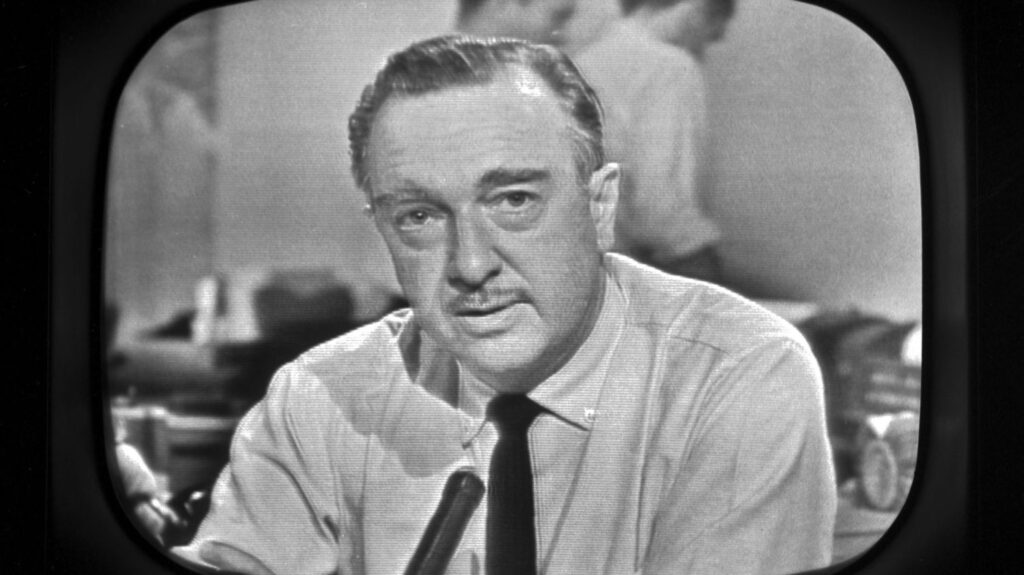CBS News anchor Walter Cronkite reports that President John F. Kennedy was assassinated in Dallas on Nov. 22, 1963.
When I was growing up in the late ’60s and ’70s, we made sense of public events (elections, catastrophes, wars, social trends, riots, and assassinations) by watching the one-hour (after 1963) evening news on CBS, NBC, and (later) ABC. When something big happened we wanted to hear what John Chancellor had to say on NBC, or Huntley and Brinkley, and on CBS Walter Cronkite, who was voted “most trusted man in America.” We waited for Cronkite to turn to Eric Sevareid (my fellow North Dakotan), and say, “For perspective on the Watts riots, we turn to our colleague Eric Sevareid. Eric?” Sevareid and Chancellor were essentially America’s Greek chorus in those years — the clearinghouse for intelligent, largely nonpartisan, and often wry commentary on the unsettled world around us.
Where do we turn today? Sean Hannity? Laura Ingraham? Jesse Watters? Chris Hayes? Lawrence O’Donnell? Chris Cuomo? Mark Levin? Some of these commentators are better (and of course worse) than the others, but where would we turn now for a reliable, thoughtful, centrist analysis of public events? The siloing of American public discourse exacerbates our political divisions, reinforces narrow thinking, demonizes the other faction, and (above all) ignores the 60-70% of the American people who live in the disenfranchised middle of the political spectrum, who are not sure what they think about most issues, but are willing to be convinced by honest and civil argument. There is so much disinformation now that we are beyond fact-checking.
We want to believe what Ralph Waldo Emerson is said to have said, “Build a better mousetrap, and the world will beat a path to your door.” We want to believe that if we had a brilliant social commentator today who wrote excellent prose, they would rise to national prominence and save the republic. One of the last commentators whose analysis would make us stop and listen was George Will, now 85. There was also Susan Stamberg on NPR. Or Cokie Roberts. In my view, Bernard DeVoto wouldn’t stand a chance today. Nor would Eric Sevareid.
Marshall McLuhan was right: the medium is the message. The message today, such as it is, is hopelessly fractured and fragmented, sensationalized and trivialized, accompanied by heroic graphics (“Breaking News: Apple Releases a New Smartphone”). Where should a thoughtful American turn for wisdom? In this media universe, “the best lack all conviction, while the worst are full of passionate intensity,” as the poet Yeats wrote in 1919.
The leaders of the groundswell to save our public lands today will come from the bottom up, not the top down. But we are not going to save the republic between episodes of *Love After Lockup.* The most important thing to remember about public lands is that once they are divvied up to the highest private bidder, they are gone forever.
## **The Problem Is Much Bigger Than the Public Lands**
Politics are politics, but the revolution in the way we sort out the great questions of modern life has been damaged by the sheer proliferation of pundits, platforms, posts, and commentary threads that bombard us until we are reduced to numbness and a kind of weary indifference. My point in these essays is to try to assess how the world has changed in the last 75 years — in technology, in our social structure, our national narrative, our social interactions, in our mobility, in the ways we communicate with each other, in our stature in the world’s arena, in the ways we wage war, and in how we entertain ourselves.
If you are looking for escape, I suggest the journals of Lewis and Clark (DeVoto’s abridgment is still available). On any given day, William Clark is infinitely more interesting than the luckless aspirants on *Real Housewives* or *Storage Wars*.
***Note**: I’ve been writing a long essay about the achievement of Bernard DeVoto for the Lewis and Clark quarterly journal We Proceeded On. I’m the editor. You can subscribe to WPO by joining the [Lewis and Clark Trail Alliance ](https://lewisandclark.org/category/we-proceeded-on/)at lewisandclark.org. The price is right! $40 per year. See you on the Trail.*
---
## ***Discover more on these topics at Listening to America***
[Sports](https://ltamerica.org/tag/sports/ "2 topics")[Oppenheimer](https://ltamerica.org/tag/oppenheimer/ "1 topics")[Space Exploration](https://ltamerica.org/tag/space-exploration/ "8 topics")[Poetry](https://ltamerica.org/tag/poetry/ "1 topics")[The Constitution](https://ltamerica.org/tag/the-constitution/ "1 topics")[Steinbeck Travels](https://ltamerica.org/tag/steinbeck-travels/ "75 topics")[William Shirer](https://ltamerica.org/tag/william-shirer/ "1 topics")[Tennessee](https://ltamerica.org/tag/tennessee/ "1 topics")[Virginia](https://ltamerica.org/tag/virginia/ "7 topics")[Wisconsin](https://ltamerica.org/tag/wisconsin/ "0 topics")[Reading](https://ltamerica.org/tag/reading/ "1 topics")[north daktoa](https://ltamerica.org/tag/north-daktoa/ "0 topics")[Washington](https://ltamerica.org/tag/washington/ "2 topics")[Wyoming](https://ltamerica.org/tag/wyoming/ "4 topics")[Republics](https://ltamerica.org/tag/republics/ "1 topics")[Video](https://ltamerica.org/tag/video/ "51 topics")[Vermont](https://ltamerica.org/tag/vermont/ "1 topics")[New Mexico](https://ltamerica.org/tag/new-mexico/ "3 topics")[Oregon](https://ltamerica.org/tag/oregon/ "4 topics")[South Dakota](https://ltamerica.org/tag/south-dakota/ "16 topics")[North Carolina](https://ltamerica.org/tag/north-carolina/ "3 topics")[Pennsylvania](https://ltamerica.org/tag/pennsylvania/ "1 topics")[Thoreau](https://ltamerica.org/tag/thoreau/ "5 topics")[Water in the West](https://ltamerica.org/tag/water-in-the-west/ "24 topics")[Utah](https://ltamerica.org/tag/utah/ "11 topics")[Rivers](https://ltamerica.org/tag/rivers/ "3 topics")[Thomas Jefferson](https://ltamerica.org/tag/thomas-jefferson/ "34 topics")[New York](https://ltamerica.org/tag/new-york/ "8 topics")[New England](https://ltamerica.org/tag/new-england/ "1 topics")[State Parks](https://ltamerica.org/tag/state-parks/ "2 topics")[South Carolina](https://ltamerica.org/tag/south-carolina/ "1 topics")[Rome](https://ltamerica.org/tag/rome/ "1 topics")[Travel](https://ltamerica.org/tag/travel/ "1 topics")[Theodore Roosevelt](https://ltamerica.org/tag/theodore-roosevelt/ "16 topics")[Republic](https://ltamerica.org/tag/republic/ "0 topics")[U.S. Constitution](https://ltamerica.org/tag/u-s-constitution/ "1 topics")[Road Trips](https://ltamerica.org/tag/road-trips/ "18 topics")[North Dakota](https://ltamerica.org/tag/north-dakota/ "53 topics")[Texas](https://ltamerica.org/tag/texas/ "4 topics")[Podcast](https://ltamerica.org/tag/podcast/ "1 topics")[Walden](https://ltamerica.org/tag/walden/ "1 topics")[paintings](https://ltamerica.org/tag/paintings/ "0 topics")[Oppenheim](https://ltamerica.org/tag/oppenheim/ "0 topics")[Ohio](https://ltamerica.org/tag/ohio/ "2 topics")[U.S. Presidents](https://ltamerica.org/tag/u-s-presidents/ "71 topics")
**Categories:** Features
**Tags:** America at 250, Books, Humanities, In My Life, National Parks
---
### [Reporting From Switzerland: a Euro-Bison Comeback. Who Knew?](https://ltamerica.org/reporting-from-switzerland-a-euro-bison-comeback-who-knew/)
**Published:** September 7, 2026
**Author:** Clay Jenkinson
**Excerpt:** Iconic to the American West, I was surprised to learn of a British preservation program for European bison.
**Content:**
## Iconic to the American West, I was surprised to learn of a British preservation program for European bison.
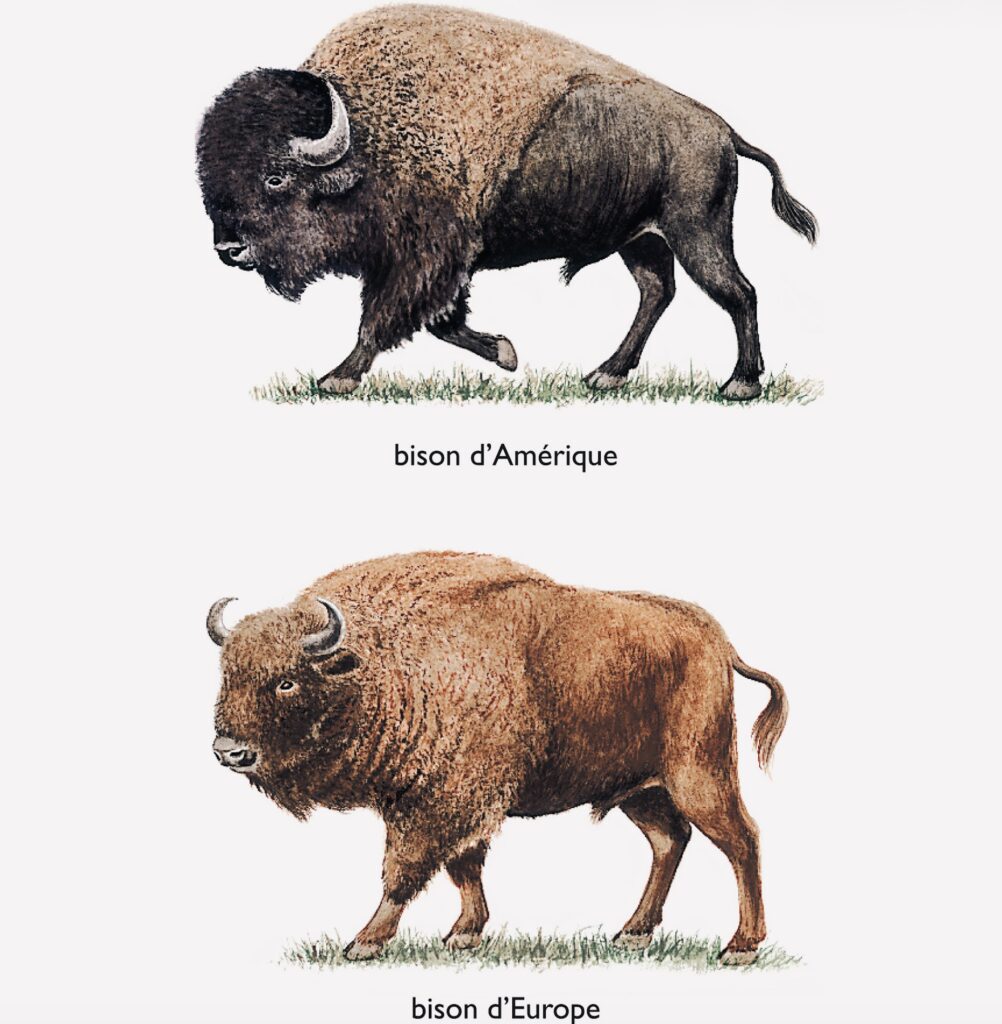American and European Bison.
Jet-lagged, alone, I was scrolling through the hundreds of television channels in my very modest hotel in Vevey, Switzerland, the other evening, looking for anything in English. I happened on one of the three BBC channels. After a commercial for Weetabix cereal, there was a special report from Cumbria, up near the Lake District of England, about the release of a handful of bison (five) into a small “wild” landscape.
My ignorance was 100% —
1\) There are bison in Britain? Answer: yes, exactly nine: four in Kent (south) and now five in Cumbria (north). They are considered “wild,” in that they are not kept in cages, but their free range is, by American standards, minuscule.
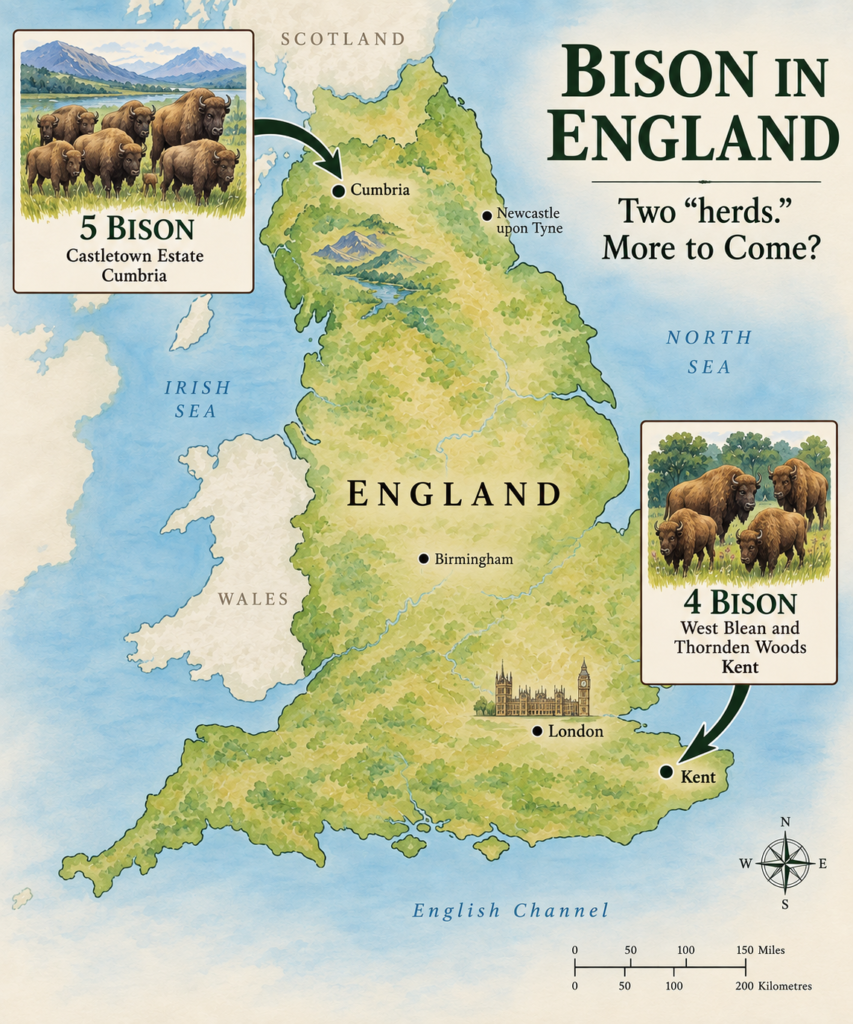
The British are very and rightly proud of this achievement — the bison comeback story.
2\) Are the British bison the same species (*bison bison)* as the American buffalo? Answer: No. They belong to a separate species, *bison bonasus*. We Americans often call our creature a buffalo. The British sometimes use the term Wisent, after an old Germanic word.
3\) What’s the difference? Answer: The Euro-bison is longer, more spindly, with a smaller head and a less pronounced hump. The American bison is shorter, bulkier, and sports a fuller beard.
Today there are merely 12,209 bison in all of Europe, descended from a DNA pool of just 12 “founders.” Russia has 3,073; Poland 3,060; Belarus 2,927; Germany 643; Ukraine 480; Lithuania 339; and about another hundred-plus scattered about.
At one time, long, long ago, there were as many as half a million (“modern,” not paleo) Euro-bison. By 1927 they had effectively been extirpated, with a puny remnant maintained in zoos. It was the low population density of the American heartland that permitted such greater numbers to survive (mostly on the Great Plains), and the fact that Native American cultures were and are more committed to sustainability and sacrament than the Anglo-American extraction mania — and, at a certain point, a near-official “Indian Policy” of species genocide. In 1873, Secretary of the Interior Columbus Delano wrote, “I would not seriously regret the total disappearance of the buffalo from our western plains, in its effect upon the Indians.” In 1867, Colonel Richard Irving Dodge is reported to have said, “Kill every buffalo you can! Every buffalo dead is an Indian gone.”
## **John Locke: “In the Beginning All the World Was America”**
We all know the basic story of the American bison. When Columbus accidentally bumped into the New World, there were between 40 and 60 million buffalo in North America, and their range stretched from the Appalachians in the east (and a little beyond) to the Rocky Mountains in the west (and quite a little beyond).
The whimsical Thomas Jefferson was actually hoping to establish a nature park on his private mountain in Virginia, along the lines of the European “deer parks” maintained by wealthy squires. According to a 1771 memo Jefferson intended to thin the forest at Monticello and then “keep in it deer, rabbits, Peacocks, Guinea poultry, pigeons, etc. let it be an asylum for hares, squirrels, pheasants, partridges, and every other wild animal (except those of prey) … procure a buck-elk, to be, as it were, monarch of the wood; but keep him shy, that his appearance may not lose its effect by too much familiarity. A buffalo might be confined also.”
There is no evidence that he ever obtained a buck elk, shy or otherwise, or a bison. Lewis and Clark did send back (from Fort Mandan in North Dakota) a small menagerie of live critters: four magpies, a sage grouse, and a prairie dog. By the time this precious cargo traveled from North Dakota to St. Louis, from St. Louis to New Orleans, by merchant ship from New Orleans around the tip of Florida to the Chesapeake and on to Baltimore, and then in the back of a wagon overland to the White House (4,500 miles, 129 days), the grouse was dead as well as three of the magpies. But Jefferson was thrilled by the live prairie dog (the “barking squirrel”), which he showed off to White House dinner guests before eventually sending it to Philadelphia, where his friend Charles Willson Peale displayed it for the remainder of its short life.
Lewis and Clark sent buffalo robes to Jefferson (some painted by the Mandan people), but no live buffalo! Not so long after that, the explorer Zebulon Pike brought two live grizzly bear cubs to President Jefferson, who kept them for a time in cages near the entrance to the White House. Not wishing them for his nature park at Monticello (!), Jefferson soon enough shipped them, too, to Peale (America’s first museum director), where he displayed them until one escaped and terrorized Peale’s home (kitchen). It soon became clear that they would both have to be euthanized. Peale knew taxidermy and displayed all these creatures at his extraordinary museum.
When Lewis and Clark reached central Montana in May-June 1805, they discovered essentially an infinite number of buffalo. On July 11, 1805, Lewis wrote “when I arrived in sight of the whitebear \[grizzly bear\] Islands the missouri bottoms on both sides of the river were crouded with buffaloe I sincerely belief that there were not less than **10 thousand buffaloe within a circle of 2 miles arround that place …** the bulls keep a tremendious roaring we could hear them for many miles and there are such numbers of them that there is **one continual roar**.”
A week later, Lewis wrote, “we passed immence herds of buffaloe on our way in short for about 12 miles it appeared as one herd only the whole plains and vally of this creek being covered with them.”
On the return journey in 1806, on the Yellowstone River, Clark wrote about the seemingly-infinite herds day after day and then finally gave up: “For me to mention or give an estimate of the differant Species of wild animals on this river particularly Buffalow, Elk Antelopes & Wolves would be incredidable. I shall therefore be silent on the Subject further.”
American bison in a paddock behind the Smithsonian Institution Building, Washington, D.C. circa 1887.
During the 19th century, white Americans (and Euro-tourists) brought the tens of millions of buffalo to the brink of extinction. The great conservationist [William Hornaday](https://siarchives.si.edu/history/featured-topics/stories/william-temple-hornaday-saving-american-bison) (1854-1937) conducted a scientific survey in the last years of the century and estimated that no more than 500 (possibly 1,000) bison remained. Hornady made it his life quest to “save the buffalo,” which he accomplished with the help of President Theodore Roosevelt, George Bird Grinnell, Charles and Molly Goodnight, Scotty Philip, the Pend d’Oreille native Samuel Walking Coyote, and a few others, including — ironically — Buffalo Bill Cody.
Today the American buffalo is out of danger — a success story if you regard a collapse from 50-60 million to a few hundred thousand in a century and a half as a success story. The largest free-range herd in the United States now is in the Lamar Valley of Yellowstone National Park: ca. 5,900 critters minding their own business and sport-tossing a foolish tourist from time to time. If the audacious[ American Prairie project](https://ltamerica.org/a-struggle-for-the-public-commons-buffalo-the-department-of-interior-american-prairie-reserve/) succeeds in northern Montana — no thanks to the current U.S. Department of Interior — it will provide fence-free space for up to 35,000 undomesticated buffalo. American Serengeti. No pun intended, but Europeans and Asians will flock to that. If the American Prairie Project succeeds against the forces of shameless mythology, the deliberate misreading of Bureau of Land Management regulations, and greed, it will immediately become one of the Wonders of the World. That’s the America I want to live in!
If I survive this crazy, zany, hyperventilating summer and early fall of 2026, I will light out in early October for the territories. I have two Thoreauvian cabins 2 miles from the NE portal of Yellowstone National Park. Within an hour’s drive from my front porch there, I can be among the largest existing buffalo herd in North America.
There is so much that is wrong with the United States of America right now — believe me, I have been doing a great deal of explainin’ over the last week in Switzerland — but we mustn’t forget that there is also so very much that is fabulous, wonderful, inspiring, and admirable about America, too. Let two examples suffice for the moment. First, our public lands: the National Parks (envy of the world), the National Monuments (under political fire, alas), National Wildlife Refuges, National Forests, National Recreation Areas, National Game Preserves; state parks; vast open spaces extending hundreds of miles in every direction. … And somehow, we have managed to save some of the magnificent wild species (including the bison) that Europe extinguished or nearly so over the last 5,000 years, especially since the Industrial Revolution.
Second, thanks to the influx of global visitors during the recent World Cup, the rest of the world has forgiven America and fallen in love with us again (a bit), thanks to our greatest invention: Ranch Dressing. I carried several giant bottles of the stuff in my luggage as contraband.
What do you call five Euro-bison in the English Lake District? A start.
---
## ***Discover more on these topics at Listening to America***
[South Carolina](https://ltamerica.org/tag/south-carolina/ "1 topics")[Thoreau](https://ltamerica.org/tag/thoreau/ "5 topics")[Republics](https://ltamerica.org/tag/republics/ "1 topics")[Oppenheim](https://ltamerica.org/tag/oppenheim/ "0 topics")[Utah](https://ltamerica.org/tag/utah/ "11 topics")[Reading](https://ltamerica.org/tag/reading/ "1 topics")[Texas](https://ltamerica.org/tag/texas/ "4 topics")[Road Trips](https://ltamerica.org/tag/road-trips/ "18 topics")[Rivers](https://ltamerica.org/tag/rivers/ "3 topics")[Space Exploration](https://ltamerica.org/tag/space-exploration/ "8 topics")[Vermont](https://ltamerica.org/tag/vermont/ "1 topics")[Travel](https://ltamerica.org/tag/travel/ "1 topics")[Oppenheimer](https://ltamerica.org/tag/oppenheimer/ "1 topics")[U.S. Constitution](https://ltamerica.org/tag/u-s-constitution/ "1 topics")[New York](https://ltamerica.org/tag/new-york/ "8 topics")[Podcast](https://ltamerica.org/tag/podcast/ "1 topics")[Poetry](https://ltamerica.org/tag/poetry/ "1 topics")[Thomas Jefferson](https://ltamerica.org/tag/thomas-jefferson/ "34 topics")[Walden](https://ltamerica.org/tag/walden/ "1 topics")[Steinbeck Travels](https://ltamerica.org/tag/steinbeck-travels/ "75 topics")[Washington](https://ltamerica.org/tag/washington/ "2 topics")[Wyoming](https://ltamerica.org/tag/wyoming/ "4 topics")[Rome](https://ltamerica.org/tag/rome/ "1 topics")[Republic](https://ltamerica.org/tag/republic/ "0 topics")[New England](https://ltamerica.org/tag/new-england/ "1 topics")[Tennessee](https://ltamerica.org/tag/tennessee/ "1 topics")[William Shirer](https://ltamerica.org/tag/william-shirer/ "1 topics")[Virginia](https://ltamerica.org/tag/virginia/ "7 topics")[Water in the West](https://ltamerica.org/tag/water-in-the-west/ "24 topics")[New Mexico](https://ltamerica.org/tag/new-mexico/ "3 topics")[South Dakota](https://ltamerica.org/tag/south-dakota/ "16 topics")[Sports](https://ltamerica.org/tag/sports/ "2 topics")[Ohio](https://ltamerica.org/tag/ohio/ "2 topics")[Pennsylvania](https://ltamerica.org/tag/pennsylvania/ "1 topics")[North Dakota](https://ltamerica.org/tag/north-dakota/ "53 topics")[State Parks](https://ltamerica.org/tag/state-parks/ "2 topics")[Oregon](https://ltamerica.org/tag/oregon/ "4 topics")[north daktoa](https://ltamerica.org/tag/north-daktoa/ "0 topics")[Video](https://ltamerica.org/tag/video/ "51 topics")[North Carolina](https://ltamerica.org/tag/north-carolina/ "3 topics")[Theodore Roosevelt](https://ltamerica.org/tag/theodore-roosevelt/ "16 topics")[The Constitution](https://ltamerica.org/tag/the-constitution/ "1 topics")[paintings](https://ltamerica.org/tag/paintings/ "0 topics")[Wisconsin](https://ltamerica.org/tag/wisconsin/ "0 topics")[U.S. Presidents](https://ltamerica.org/tag/u-s-presidents/ "71 topics")
**Categories:** Dispatches from the Road
**Tags:** America at 250, Humanities, Lewis and Clark
---
### [An Extraordinary Couple and Their Front Row Seat to America’s Tumultuous 1960s](https://ltamerica.org/an-extraordinary-couple-and-their-front-row-seat-to-americas-tumultuous-1960s/)
**Published:** September 1, 2026
**Author:** Clay Jenkinson
**Excerpt:** Clay interviewed noted historian and author Doris Kearns Goodwin at the Vail Symposium on August 25, 2026, about her newest book, An Unfinished Love Story: A Personal History of the 1960s.
**Content:**
## Clay interviewed noted historian and author Doris Kearns Goodwin at the Vail Symposium on August 25, 2026, about her newest book, *An Unfinished Love Story*: *A Personal History of the 1960s.*
Pulitzer Prize-winning historian Doris Kearns Goodwin and her late husband Richard Goodwin. Her most recent book, *An Unfinished Love Story: A Personal History of the 1960s*, offers a front-row seat to some of the most central events of 1960’s America.
Last week I had the immense good fortune to spend 90 minutes on stage in Vail, Colorado, with one of America’s greatest historians, [Doris Kearns Goodwin](https://doriskearnsgoodwin.com/about-doris/). She’s the author of nine highly regarded books, including her 1994 *No Ordinary Time: Franklin and Eleanor Roosevelt: The Home Front in World War II*, which won the Pulitzer Prize for History.
I’ve had the honor of working with her film production company twice — once on her 2022 two-part History Channel documentary miniseries *[Theodore Roosevelt](https://www.history.com/shows/theodore-roosevelt)*, and more recently on her History Channel eight-part series, *[Kevin Costner’s The West.](https://www.history.com/shows/kevin-costners-the-west)*
Her most recent book, *An Unfinished Love Story*: *A Personal History of the 1960s*, is outstanding in every way. Never judge a book by its cover — or its title. When I first heard of a book by Doris Kearns Goodwin entitled *An Unfinished Love Story*, I groaned inwardly, but I read it immediately merely because she is one of my favorite authors. I loved it. I read it again recently, and now I am *in love* with it!
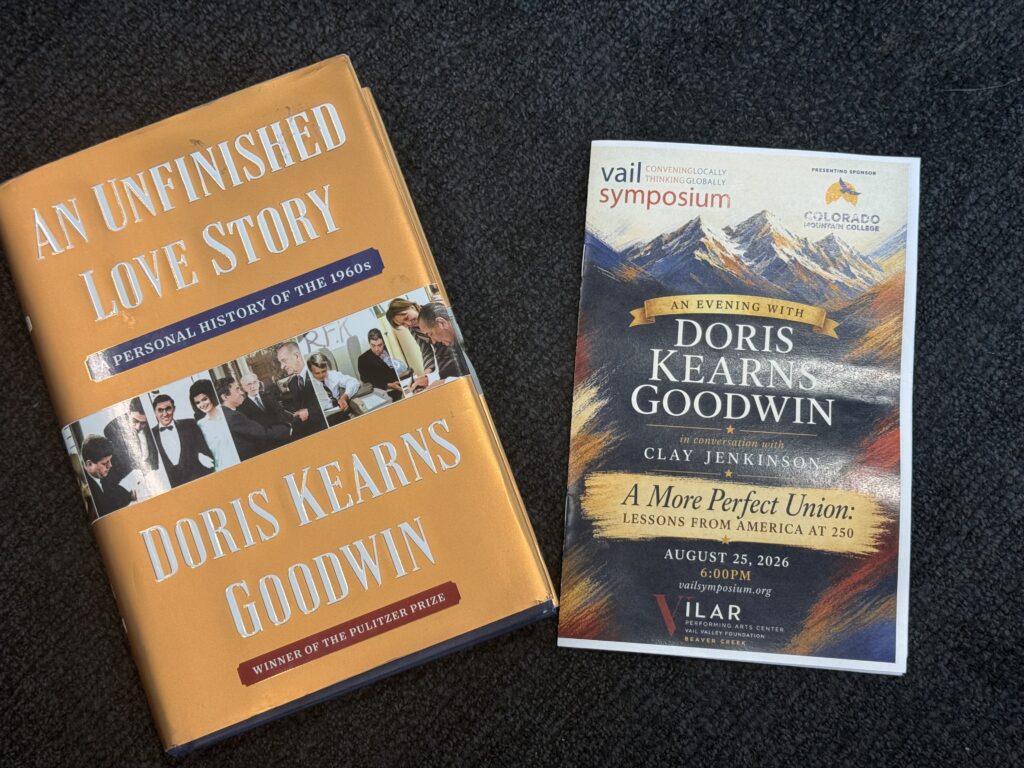Clay interviewed noted historian and author Doris Kearns Goodwin at the Vail Symposium on August 25, 2026.
I recommend it without hesitation to anyone who wants to know more about the 60s, Lyndon Baines Johnson, the Kennedys, and what an exceedingly successful, mutually generous, mutually productive, and happy marriage can be. *Unfinished Love Story* is a celebration of the life and achievement of her husband Richard Goodwin (1931-2018), a principal adviser and speechwriter for two presidents and several other top-tier political figures of that amazing, chaotic, and violent era.
In truth, Goodwin was one of the great men of the post-World War II period in American history. He deserves a much more prominent place in American memory. Fortunately, he married a woman who could remind us of the stature he deserves in a single, splendid volume, full of great, often amusing, anecdotes, and the best kind of “you are there with us in the room” lucidity.
To call Richard Goodwin a speechwriter does serious injustice to his genius. He wrote most of LBJ’s greatest speeches, including “[the Great Society](https://billofrightsinstitute.org/activities/johnson-great-society-annotated/)” (May 22, 1964), the magnificent “We Shall Overcome” speech (March 15, 1965), and “To Fulfill These Rights” (June 4, 1965). The day after LBJ delivered the “We Shall Overcome” speech, Dr. Martin Luther King sent the president a telegram:
> *“Your speech to the Joint Session of Congress last night was the most moving, eloquent, unequivocal and passionate plea for human rights ever made by any president of this nation.”*
>
> Dr. Martin Luther King
Richard Goodwin didn’t just transform Johnson’s deep passion for social, economic, and racial justice into English prose. He invented the phrase “Great Society,” and fastened on the last line (“we shall overcome”) of the president’s great civil rights speech after hearing it sung on the streets around the White House after spending almost an entire night composing the joint address to Congress. To call Goodwin a speechwriter is like calling him a “wordsmith.” There are hundreds of speechwriters, but only a handful of the truly great ones who find a way to embody the soul of their boss at the same time they discern the dynamics of the zeitgeist — Peggy Noonan, Theodore Sorenson, and Goodwin. Goodwin was himself a passionate idealist who worked with two idealistic presidents, one a cool and somewhat detached idealist (JFK), the other a man who was not a natural orator, certainly not a rhetorician, but who believed in American justice much more viscerally than did his predecessor (LBJ). It’s one thing to write a competent speech for a political leader, but it is a far greater gift to be able to find the language to make another person’s most authentic vision of the world soar off the teleprompter. LBJ was not (much) exaggerating when he said Goodwin was “my voice, my alter ego, my mind.”
President Lyndon Johnson presents a signing pen from the Voting Rights Act to Richard Goodwin. August 6, 1965. (Photo Yoichi Okamoto/Courtesy of LBJ Library)
Goodwin was a Forrest Gump figure for the 1960s. He spent 60 days on the campaign plane Caroline as John F. Kennedy crisscrossed the country in quest of the Democratic nomination for president. “It was 60 straight days, unremitting, sleepless nights,” Goodwin wrote, “on the Caroline, which was a twin-engine propeller-driven plane, bouncing around the country.” He helped prep JFK for the critically important and (it turns out) consequential first debate with Richard Nixon. He played a role in the early development of the Peace Corps, one of JFK’s greatest New Frontier programs. He helped to shape and implement JFK’s [Alliance for Progress](https://www.jfklibrary.org/learn/about-jfk/jfk-in-history/alliance-for-progress), his attempt to reset U.S. relations with Central and South America. While attending a conference in Montevideo, Uruguay, on August 17, 1961, Goodwin met for more than three hours in the middle of the night with the Argentine-born Cuban revolutionary Che Guevara. This was just after America’s disastrous participation in the Bay of Pigs invasion on the south coast of Cuba. Guevara, whose immediately recognizable visage graced the dorm walls of about half of America’s college students in the 1960s, especially young men, told Goodwin that the Bay of Pigs fiasco was actually a blessing for Cuba, because the Cuban people immediately rallied around Fidel Castro and solidified his regime.
Goodwin was in the White House (not Dallas) when John F. Kennedy was assassinated on November 22, 1963, and at Jacqueline Kennedy’s indirect request sprang into action to make sure the funeral echoed Abraham Lincoln’s April 1865 funeral as closely as possible, including the construction of a nearly identical catafalque in the East Room. He also scrambled heroically to meet her request that an eternal flame be ready (on impossibly short notice) to light at the burial in Arlington National Cemetery. He was with Robert Kennedy at a Malibu beach house on the day of the critical California Democratic primary just hours before Sirhan Sirhan killed the New York Senator. He witnessed the mayhem of the Democratic National Convention in Chicago in the summer of 1968.
And so on. And the question you inevitably ask after reading all of this is how JFK’s speechwriter Theodore Sorenson can be so well remembered and Goodwin not so much. WE are fortunate that Doris KG has rebalanced our understanding of the decade.
Richard Godwin and Robert Kennedy on the campaign plane in 1968.
They were married for 42 years. He died in 2018 before they could work through all the 300 boxes of his “papers.”
I’ve spent the last months trying to think of another person who has done greater service for a deceased spouse than Doris Kearns Goodwin. She has resurrected Dick Goodwin from the oblivion that one of our mutual heroes, Theodore Roosevelt, said engulfs virtually every historical figure, no matter how exceptional, except perhaps (said TR) Napoleon, Julius Caesar, Lincoln, or George Washington. In doing so she has also provided one of the best windows we have on the fabulous and tumultuous 1960s, and despite all the really horrific things that happened during that decade (assassinations of JFK, RFK, Martin Luther King, Malcolm X; the catastrophe of Vietnam; the race riots that burned out the core of the majority of major American cities, the use of vicious dogs and fire hoses against nonviolent protestors in Birmingham and Selma. …) has written a deeply compelling and delightful memoir.
Who could have revived our admiration of Dick Goodwin better than Doris KG? I’ve read several of his books (including *[Promises to Keep: A Call for a New American Revolution](https://books.google.com/books/about/Promises_to_keep.html?id=uzF3AAAAMAAJ)*), and though they are good, the fact is that his spouse is a better writer than he was, at least of full-length books. (I can hear her scolding me a little for this opinion, but it’s true.) I read her first book, *Lyndon Johnson and The American Dream,* when I was still a college student, and was shocked to learn how crude and bullying such a great man could be (among other things, conducting meetings, including with her, while he was relieving himself on the toilet). I’ve read every one of her books now, some twice, and I can attest that she has become a better and better writer over the decades. By the way, according to Google Analytics, she has published 5,389 pages and 1,795,000 words — so far. And yet, she has not written a book about the Founding Fathers, including one of the best of them, Thomas Jefferson. There is still time, Doris!
Richard Goodwin had a reputation (well deserved, apparently) of being brash, aggressive, sometimes arrogant, and he was rarely seen not chomping even on the cigars he hadn’t lit. I try to imagine how such a lovely, generous, self-effacing, and decent woman negotiated a successful relationship with a man with such an oversized personality (it’s none of my business, of course). Still, I think Dick Goodwin’s larger-than-life soul contributed to Doris’ intellectual toughness and rigor.
But here’s the amazing thing about her memoir, *The Unfinished Love Story*. It would have been a great book even if she never mentioned her late husband. Doris Kearns witnessed that revolutionary decade even before she fell in love with Dick Goodwin. Here’s just one of *her* origin stories.
Doris Kearns Goodwin, a 24-year-old White House Fellow, with President Johnson in 1968. (Photo Yoichi Okamoto/LBJ Presidential Library)
At the beginning of her career, at age 24, while she was still finishing up her doctoral program at Harvard, she was selected as a White House Fellow. She, too, was a young radical, deeply committed to civil rights, becoming alarmed by the escalation of America’s colonial war against North Vietnam, and the way the war distracted from the promise of the Great Society. Just when she was selected for the prestigious fellowship (one of the tiny handful of women at the time), she had co-written a snarky op-ed piece for the *New Republic* that the left-leaning journal chose to print (May 13, 1967) under the incendiary title, “How to Remove LBJ in 1968.” Doris was deeply embarrassed, certain that her fellowship would be rescinded, and worried, too, that LBJ might cancel the whole White House Fellows program in a pique of rage. Instead, at an introductory dinner for the Fellows, LBJ danced with her, made it clear that he was aware of her insurgency, and told her she would be going to work for *him*.
He told an aide, “Oh, bring her down here for a year, and if I can’t win her over, no one can.”
Thus was launched the career of one of America’s best-loved historians.
During her thoughtful and often enchanting commentary in Vail, Doris was interrupted by strenuous applause a dozen times, and at the end she received a thunderous standing ovation.
In all that time, she did not say a single negative thing about anyone, including Richard Milhouse Nixon. That takes some real grace! The audience of thoughtful, prosperous, and centrist Colorado citizens was visibly relieved to hear her essential message — we will get through this — from someone who has written about some of the most challenging moments in American history — the Civil War (*Team of Rivals*), World War II (*No Ordinary Time*), and the calamitous 60s.
There is no Pollyanna in Doris Kearns Goodwin. She is fully aware of how serious the current crisis is — a runaway presidency, a paralyzed Congress, media tribalism, a distracted and bewildered public, loss of public respect for almost every national institution, and a 40 trillion dollar national debt that is going to eat the American economy. But her profound understanding of our history suggests to her that we will, to invoke a trope not used by Richard Goodwin — see light at the end of the tunnel one of these days.
Afterward, at a small reception in one of Vail’s *House Beautiful* mountain homes, I quoted her old friend Sanford Levinson, one of America’s premier scholars of the Constitution. We brought Levinson (now emeritus at the University of Texas at Austin) to Vail a few months ago to talk about the crisis of the U.S. Constitution (“Is It Broken?), along with my close friend Beau Breslin of Skidmore College in New York, who has written excellent books on the subject and is a regular guest on our podcast Listening to America. They both believe the U.S. Constitution is broken.
As we closed a spirited evening conversation about the Constitution, I asked Levinson what it will take to turn the American republic around (assuming we can still call whatever this is a republic). He paused for a moment and said one word: catastrophe. The audience gasped and laughed nervously, but he meant it. It would take economic collapse or a serious war (serious for us!) or something even more grave than 9-11 to inspire (force?) the American people to get serious again.
Doris Kearns Goodwin shook her head. “I have great respect for Sandy, and I see him from time to time when he is teaching or lecturing at Harvard, but I don’t agree with him on this.”
We must all hope she is a great prophet as well as a great historian.
---
## ***Discover more on these topics at Listening to America***
[Wyoming](https://ltamerica.org/tag/wyoming/ "4 topics")[Thoreau](https://ltamerica.org/tag/thoreau/ "5 topics")[Virginia](https://ltamerica.org/tag/virginia/ "7 topics")[Republics](https://ltamerica.org/tag/republics/ "1 topics")[Road Trips](https://ltamerica.org/tag/road-trips/ "18 topics")[The Constitution](https://ltamerica.org/tag/the-constitution/ "1 topics")[north daktoa](https://ltamerica.org/tag/north-daktoa/ "0 topics")[Vermont](https://ltamerica.org/tag/vermont/ "1 topics")[Texas](https://ltamerica.org/tag/texas/ "4 topics")[North Carolina](https://ltamerica.org/tag/north-carolina/ "3 topics")[U.S. Constitution](https://ltamerica.org/tag/u-s-constitution/ "1 topics")[Steinbeck Travels](https://ltamerica.org/tag/steinbeck-travels/ "75 topics")[New York](https://ltamerica.org/tag/new-york/ "8 topics")[Theodore Roosevelt](https://ltamerica.org/tag/theodore-roosevelt/ "16 topics")[State Parks](https://ltamerica.org/tag/state-parks/ "2 topics")[William Shirer](https://ltamerica.org/tag/william-shirer/ "1 topics")[paintings](https://ltamerica.org/tag/paintings/ "0 topics")[Washington](https://ltamerica.org/tag/washington/ "2 topics")[Utah](https://ltamerica.org/tag/utah/ "11 topics")[U.S. Presidents](https://ltamerica.org/tag/u-s-presidents/ "71 topics")[Video](https://ltamerica.org/tag/video/ "51 topics")[Rivers](https://ltamerica.org/tag/rivers/ "3 topics")[Oregon](https://ltamerica.org/tag/oregon/ "4 topics")[Wisconsin](https://ltamerica.org/tag/wisconsin/ "0 topics")[Reading](https://ltamerica.org/tag/reading/ "1 topics")[North Dakota](https://ltamerica.org/tag/north-dakota/ "53 topics")[Thomas Jefferson](https://ltamerica.org/tag/thomas-jefferson/ "34 topics")[Space Exploration](https://ltamerica.org/tag/space-exploration/ "8 topics")[New Mexico](https://ltamerica.org/tag/new-mexico/ "3 topics")[Ohio](https://ltamerica.org/tag/ohio/ "2 topics")[New England](https://ltamerica.org/tag/new-england/ "1 topics")[Republic](https://ltamerica.org/tag/republic/ "0 topics")[Rome](https://ltamerica.org/tag/rome/ "1 topics")[Podcast](https://ltamerica.org/tag/podcast/ "1 topics")[Oppenheimer](https://ltamerica.org/tag/oppenheimer/ "1 topics")[South Dakota](https://ltamerica.org/tag/south-dakota/ "16 topics")[South Carolina](https://ltamerica.org/tag/south-carolina/ "1 topics")[Travel](https://ltamerica.org/tag/travel/ "1 topics")[Oppenheim](https://ltamerica.org/tag/oppenheim/ "0 topics")[Water in the West](https://ltamerica.org/tag/water-in-the-west/ "24 topics")[Tennessee](https://ltamerica.org/tag/tennessee/ "1 topics")[Sports](https://ltamerica.org/tag/sports/ "2 topics")[Pennsylvania](https://ltamerica.org/tag/pennsylvania/ "1 topics")[Poetry](https://ltamerica.org/tag/poetry/ "1 topics")[Walden](https://ltamerica.org/tag/walden/ "1 topics")
**Categories:** Books
**Tags:** America at 250, Books, U.S. Presidents
---
### [Weakening Generational Commitments That Protect Wetlands Is Bad for Farmers, Wildlife, and Future Generations](https://ltamerica.org/weakening-generational-commitments-that-protect-wetlands-is-bad-for-farmers-wildlife-and-future-generations/)
**Published:** August 20, 2026
**Author:** Editor
**Excerpt:** Prairie pothole wetlands are shallow, freshwater marshes scattered across the Great Plains of North America. Formed by retreating glaciers 10,000 years ago, this immense number of small, pocket-like water bodies fill with spring snowmelt and rain, creating a “duck factory” ecosystem.
**Content:**
## Prairie pothole wetlands are shallow, freshwater marshes scattered across the Great Plains of North America. Formed by retreating glaciers 10,000 years ago, this immense number of small, pocket-like water bodies fill with spring snowmelt and rain, creating a “duck factory” ecosystem.
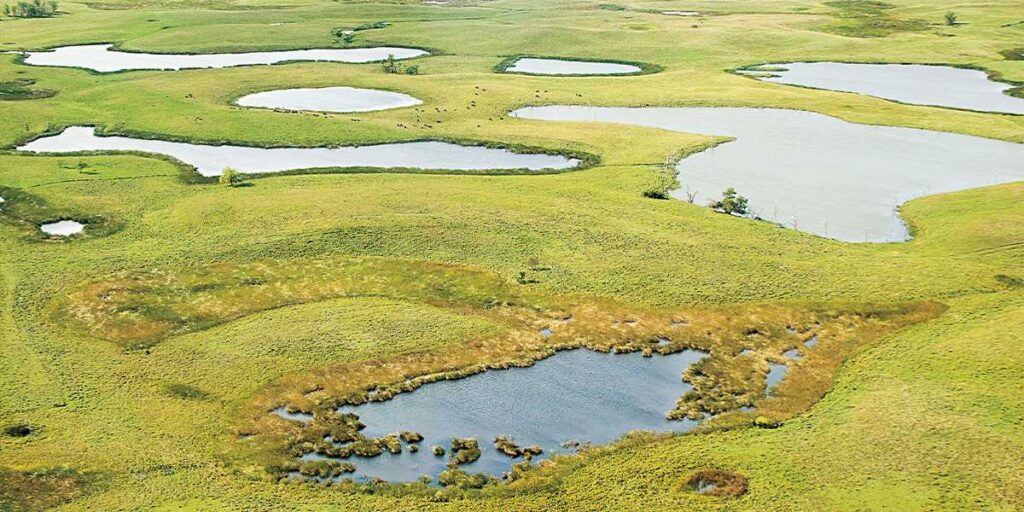Prairie pothole wetlands provide vital waterfowl habitat. According to the EPA, about half of all prairie potholes have been drained or altered for agricultural use. (Photo Ducks Unlimited Stan Buman)
*Editors Note: We’re pleased to share a guest essay by Troy and Sara Vollmer, who operate a Black Angus ranch northeast of Bismarck where conservation and sustainability are at the heart of their decisions. Troy and Sara have been friends with Clay for many years. Clay frequently cites Sara as his political barometer in American life. Troy is the third-generation steward of the family farm in northeastern Burleigh County, North Dakota and their ranch has earned a conservation award. They have three daughters, all rodeo competitors. Sara is also a dean at Bismarck State College and a member of the Listening to America board. An edited version of this essay was published in the Washington Post on August 7, 2026.*
Not long ago, the *Washington Post* published an opinion piece called “[Government easements are putting prairie potholes over farmers](https://www.washingtonpost.com/opinions/2026/07/29/government-easements-are-putting-prairie-potholes-over-farmers/).” It argued that federal protections for Prairie Pothole wetlands have gone too far and are unfair to producers. As a family who have spent a lifetime working the land, we see things differently.
There’s a conversation happening right now about [conservation easements ](https://www.fws.gov/service/wetland-easements)in the Prairie Pothole Region, and a lot of folks are missing an important fact. These easements weren’t forced on landowners. They were voluntary agreements entered into by people who understood the value of protecting wetlands and grasslands, while keeping farms and ranches productive. For our family, those easements have been a blessing. They helped us strengthen our ranch so we can hopefully pass it on from one generation to the next. Because of the opportunities they provided, our children will have a chance to be the fourth generation on this place. That’s something every farm family hopes for.
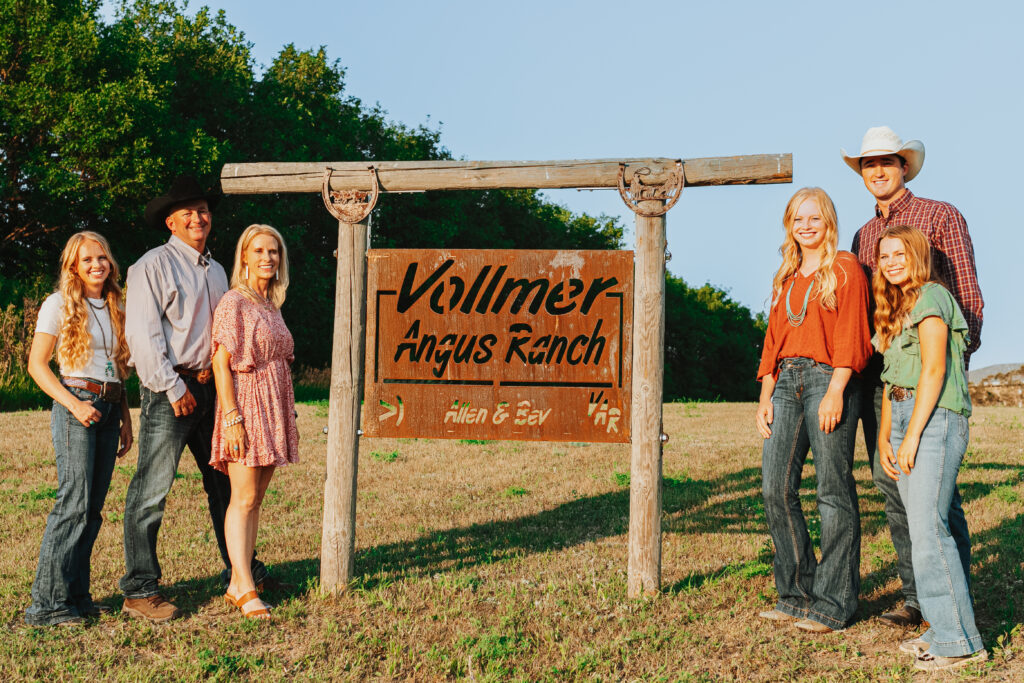Troy and Sara Vollmer and family operate a Black Angus ranch northeast of Bismarck, North Dakota.
For more than 60 years, the U.S. Fish and Wildlife Service has interpreted these easements to mean that protected wetlands can’t be drained. Administrations from both parties have supported that understanding because it’s consistent with the purpose of the agreements that landowners voluntarily signed.
The public has skin in the game, too. Generations of hunters, anglers, and conservation-minded Americans have invested in these wetlands through [Duck Stamp purchases,](https://www.fws.gov/service/buy-duck-stamp-or-electronic-duck-stamp-e-stamp) hunting licenses, and conservation funding. Hunting friends of mine and their dollars helped create one of the greatest conservation success stories this country has ever seen.
If protections for these easements are weakened, the consequences won’t stop at the fence line. Wetlands that were purchased and protected for conservation could be drained. Once they’re gone, they’re gone for good. That means fewer nesting areas for waterfowl, less wildlife habitat, and fewer opportunities for future generations to enjoy the outdoors. We’ve seen that with native grasslands that people in our business have depended on to pasture their cattle; when the grass goes, they’re gone, and so is the habitat. We’re keenly aware that we need more grass and water, not less, to rebuild the American cow herd and meet the demand for beef that the market is showing.

We’ve already seen warning signs of habitat loss. Duck populations are facing pressure from diminished habitat and drought across important breeding grounds. Conservation easements have helped keep enough habitat — water and grass — on the landscape to support healthy populations. Weakening those protections now would send us in the wrong direction.
Farmers and ranchers face enough uncertainty as it is. Markets change. Weather changes. Input costs rise. We don’t need additional uncertainty about agreements that families have relied on for decades, and when hundreds of families are still interested in and hoping for an easement offer. The current rule strikes a fair balance. It protects wetlands that Americans have already paid to conserve while giving landowners workable, science-based guidance. It’s common sense.
We want our children and grandchildren to experience the same things we did growing up: ducks rising from prairie wetlands at sunrise, cattle grazing a hillside at sunset, healthy working lands, and a way of life built on caring for what we’ve been given. Those are values shared by farmers, ranchers, hunters, and conservationists alike.
The U.S. Fish and Wildlife Service should maintain its longstanding approach and keep the current rule in place. Doing so honors the commitments made by landowners, respects the investments made by taxpayers and sportsmen, protects critical wildlife habitat, and ensures that future generations inherit a healthy prairie.
That’s not just good conservation. It’s good stewardship.
---
## ***Discover more on these topics at Listening to America***
[Poetry](https://ltamerica.org/tag/poetry/ "1 topics")[Oregon](https://ltamerica.org/tag/oregon/ "4 topics")[Travel](https://ltamerica.org/tag/travel/ "1 topics")[Video](https://ltamerica.org/tag/video/ "51 topics")[North Dakota](https://ltamerica.org/tag/north-dakota/ "53 topics")[New Mexico](https://ltamerica.org/tag/new-mexico/ "3 topics")[Sports](https://ltamerica.org/tag/sports/ "2 topics")[Texas](https://ltamerica.org/tag/texas/ "4 topics")[State Parks](https://ltamerica.org/tag/state-parks/ "2 topics")[New England](https://ltamerica.org/tag/new-england/ "1 topics")[Rome](https://ltamerica.org/tag/rome/ "1 topics")[Oppenheim](https://ltamerica.org/tag/oppenheim/ "0 topics")[New York](https://ltamerica.org/tag/new-york/ "8 topics")[Road Trips](https://ltamerica.org/tag/road-trips/ "18 topics")[Virginia](https://ltamerica.org/tag/virginia/ "7 topics")[Steinbeck Travels](https://ltamerica.org/tag/steinbeck-travels/ "75 topics")[U.S. Constitution](https://ltamerica.org/tag/u-s-constitution/ "1 topics")[South Dakota](https://ltamerica.org/tag/south-dakota/ "16 topics")[William Shirer](https://ltamerica.org/tag/william-shirer/ "1 topics")[Rivers](https://ltamerica.org/tag/rivers/ "3 topics")[South Carolina](https://ltamerica.org/tag/south-carolina/ "1 topics")[Theodore Roosevelt](https://ltamerica.org/tag/theodore-roosevelt/ "16 topics")[Utah](https://ltamerica.org/tag/utah/ "11 topics")[The Constitution](https://ltamerica.org/tag/the-constitution/ "1 topics")[Thomas Jefferson](https://ltamerica.org/tag/thomas-jefferson/ "34 topics")[Washington](https://ltamerica.org/tag/washington/ "2 topics")[Podcast](https://ltamerica.org/tag/podcast/ "1 topics")[Tennessee](https://ltamerica.org/tag/tennessee/ "1 topics")[Republics](https://ltamerica.org/tag/republics/ "1 topics")[paintings](https://ltamerica.org/tag/paintings/ "0 topics")[north daktoa](https://ltamerica.org/tag/north-daktoa/ "0 topics")[Republic](https://ltamerica.org/tag/republic/ "0 topics")[Water in the West](https://ltamerica.org/tag/water-in-the-west/ "24 topics")[Oppenheimer](https://ltamerica.org/tag/oppenheimer/ "1 topics")[Space Exploration](https://ltamerica.org/tag/space-exploration/ "8 topics")[Reading](https://ltamerica.org/tag/reading/ "1 topics")[Pennsylvania](https://ltamerica.org/tag/pennsylvania/ "1 topics")[Wyoming](https://ltamerica.org/tag/wyoming/ "4 topics")[Thoreau](https://ltamerica.org/tag/thoreau/ "5 topics")[Vermont](https://ltamerica.org/tag/vermont/ "1 topics")[North Carolina](https://ltamerica.org/tag/north-carolina/ "3 topics")[Wisconsin](https://ltamerica.org/tag/wisconsin/ "0 topics")[Walden](https://ltamerica.org/tag/walden/ "1 topics")[Ohio](https://ltamerica.org/tag/ohio/ "2 topics")[U.S. Presidents](https://ltamerica.org/tag/u-s-presidents/ "71 topics")
**Categories:** Features
**Tags:** Guest Essay, North Dakota
---
### [A Lament for the Snail-Mail Letter — A Great Technological Casualty?](https://ltamerica.org/a-lament-for-the-snail-mail-letter-a-great-technological-casualty/)
**Published:** August 25, 2026
**Author:** Clay Jenkinson
**Excerpt:** During my lifetime, I have witnessed the death of the letter. Future historians will have to sift through an infinite number of mostly inane cellphone texts, with little real revelation of the individuals and the periods they are studying.
**Content:**
## During my lifetime, I have witnessed the death of the letter. Future historians will have to sift through an infinite number of mostly inane cellphone texts, with little real revelation of the individuals and the periods they are studying.
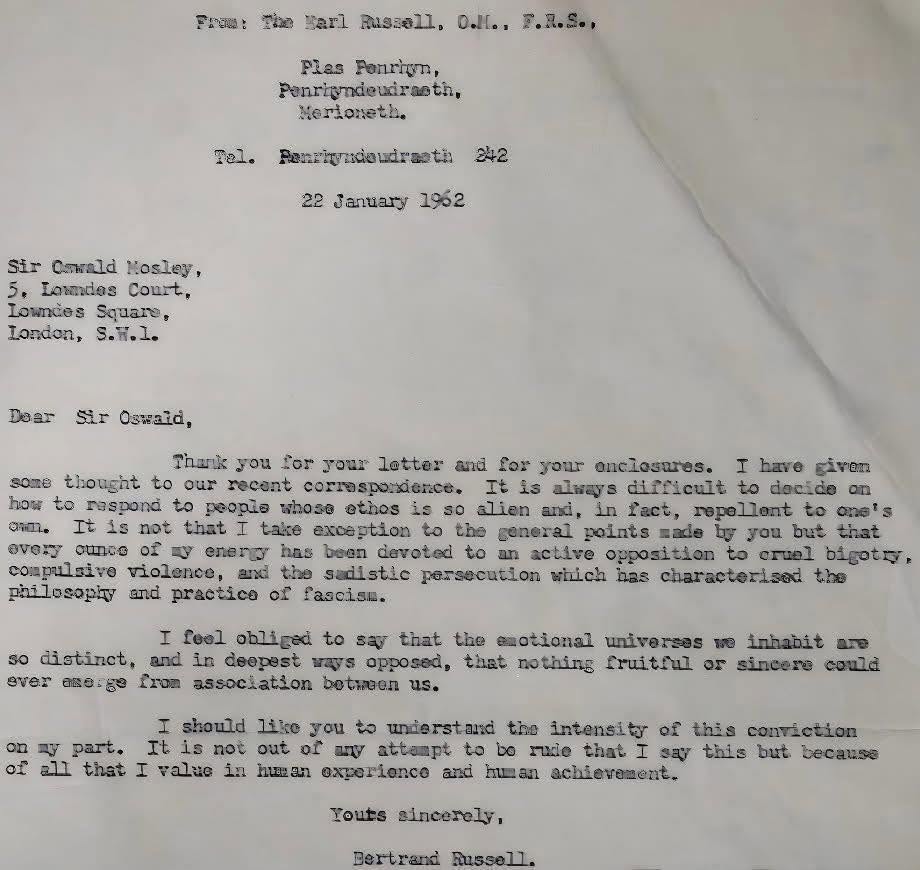A January 22, 1962 letter from 89-year-old philosopher Bertrand Russell to Sir Oswald Mosley, founder of the British Union of Fascists, declining his repeated invitations to a public debate.
While cleaning out my mother’s house in western North Dakota, where she had lived for more than 60 years, we were about to lock the doors for the final time when I found, tucked away in the attic behind a partition, a 10x16x12 inch box. At this point, after a long, grimy day, all I wanted was a cold drink and a hot shower — perhaps a little sand blasting — and I was tempted to toss the box into the garbage tip, but I opened it to take a quick peek. Inside were all the letters I ever sent my parents, beginning with my departure for college when I was 18, until the digital revolution shattered that paradigm.
A wave of bittersweetness swept through me. At the top of the stack was a postcard, written within two weeks of my arrival at Oxford University for several years of study, announcing to my parents that I had met an extraordinary woman on a ship heading to Britain and I had fallen in love for the first time. At that point in the family attic, 40 years later, I tucked the postcard (with a photo of Oxford’s famous spires on the front) back into the box, sealed it up with strapping tape, and took it carefully out to my car.
That was 10 years ago. I have not opened it since. I am a little afraid to go through all that mail. I’m not sure I want to encounter my young self, with all that searching for identity, beginning and then later ending this first intense romantic relationship, struggling with my studies, dreams and plans for the future, travelogues, pretentious interpretations of *Hamlet* and Chaucer’s *[The Wife of Bath’s Tale](https://historyreclaimed.co.uk/the-wife-of-bath-a-biography/)*, late adolescent sorties into wit and irony, questions about next year’s Christmas plans, concerns about money.
I’m not saving these letters for posterity (my daughter is my only posterity), but I am not ready to throw them away, either.
Until well into the second half of the 20th century, if you wanted to communicate with your brother in some other city or country, you sent a letter through the U.S. Postal Service. If the message was urgent, you sent a telegram. Or you placed an expensive long-distance call. Today you can text, send email and eCards, send audio or video messages or a sea of emojis, post on one of more than a dozen social media platforms, schedule FaceTime, Zoom, and other video calls, produce and share an electronic scrapbook of your vacation photos, or perhaps pick up the phone. The last century has revolutionized interpersonal communication. Facebook alone has 3.1 billion users worldwide, just a bit more than WhatsApp and Instagram, which have 3 billion users. Some people “text” hundreds of times per day. There is not much room in this brave new world for the traditional letter (paper plus envelope plus postage stamp).
## **There Were Manual Typewriters?**
For high school graduation, my parents gave me a [Hermes 3000](https://www.classictypewriter.com/typewriter-shop/hermes-3000-vintage-typewriter-for-sale?srsltid=AfmBOooREEMe5NZkcYlvy0BXNCM0Lylck8J_MK0tIk6bqAC7msyszyEw) gray-green plastic portable manual typewriter. I picked it out at the nearby office supply store, the small-town kind that has for sale a handful of cash registers, business forms and pencil sharpeners, a few manual and electric typewriters, and a copy machine or two. Right next to the Coast to Coast hardware store, one block off the heart of downtown.
My friend Curt Pavlicek got a Corvette for graduation. But who’s counting?
A Hermes 3000 Vintage Typewriter. (Photo The Classic Typewriter Company)
I loved my Hermes 3000. I still love it. When I want to send a letter that I regard as extremely important, I fetch out my H-3000, find some typing paper, and bang it out. I’ve only done this four or five times in the last 20 years — going back to my pre-digital roots — and the sad truth is that the recipients respond with indifference or bewilderment. Why use a clunky old technology when flawless tech support is available, with no need for White Out or xxxxing out mis-strikes? I wrote one of those Hermes 3000 letters in May. I suppose I will continue to do so on what I regard as the most important occasions, but if life is a feedback loop, I may as well desist.
I’m out of practice with a manual typewriter, so it’s a bit of a struggle to get things right. I line up two sheets of typing paper (one to protect the platen), scroll them into place, position the carriage, and begin banging away. It takes about four times as long as a letter written on a laptop keyboard, but there is something deeply satisfying about it. When I have finished, I pull the letter up out of the platen (a great sound), fold it into thirds, as I was taught in typing class in high school, and place it in a business envelope. Then I search for a stamp and a return address label (supplied in great quantities by St. Jude’s Children’s Hospital), hand-print the recipient’s address (which I usually have to search for), and then carry it out to the mailbox, where I lift the red flag to alert the mailman. And then wait. Think of all those steps — no wonder virtually everyone prefers to tap out a quick email, push send, and get up for more coffee. These days my mailman is a contract worker, not an official U.S. Postal Service employee, and I can report that there is no sense of mission among such workers that evokes the old motto: “neither snow nor rain nor heat nor gloom of night stays these couriers from the swift completion of their appointed rounds.”
I was once a prolific letter writer. Before the coming of word processing (ca. 1990), I wrote hundreds of letters on my travels and from the universities I attended — to my parents, my sister, my mentors, my close friends, colleagues, and women I was dating. I generally kept carbon copies of my correspondence, using a special brand of carbon paper that produced a better facsimile than the usual ash carbons. Most of those carbon copies are long gone or marooned in manila files in banker’s boxes in the garage; so they are effectively lost to me.
My university studies were in English literature. The great figures in literature were great letter writers: John Keats, John Donne, Francis Bacon, Dr. Samuel Johnson, Thomas Jefferson, Ernest Hemingway, John Steinbeck, Virginia Woolf, Mark Twain, Sylvia Plath, Bertrand Russell, Willa Cather. … What we know about the early modern period in Britain (the Elizabethan and [Jacobean](https://www.britannica.com/art/Jacobean-age) period) comes largely through the long letters they all wrote to each other. Here in America, when John and Abigail Adams were apart and when Jefferson and his closest friend James Madison were apart, they wrote remarkable letters to each other. These letters illuminate their characters and their views of the trajectory of the American republic, but also provide invaluable newsy information about the world around them. Our understanding of history would be deeply impoverished without those letters. Not to have saved them and neatly filed them away in the British Library or the National Archives (and now increasingly digitized for home viewing) would have been a cultural catastrophe. Try to imagine John Adams responding to one of Jefferson’s elegant epistles with just this: ROTFLMAO (rolling on the floor laughing my ass off).
## **Incalculable Loss**
During my lifetime, I have witnessed the Death of the Letter. Future historians and biographers will have to sift through an infinite number of mostly inane cellphone texts, with very little real revelation of the individuals and the periods they are studying. Sample:
LOL Great flick
It was fire. It was sick.
Did you apologize to S?
Naa. CU nxt wk at thng
Who is going to annotate this? What flick? Does “sick” mean good? Who is S? What is the thng? Good luck, future historians? And don’t even bring up emojis.
By way of contrast, here is a letter I love from the archives of the *Times* of London.
*Sir,*
*Today, entirely without human intervention, I successfully opened a packet of biscuits.*
*I feel it only right to share this momentous triumph with your readers, given that modern packaging is seemingly designed to withstand a small nuclear blast. After bypassing several useless pull-tabs, avoiding the immediate shredding of the plastic wrapper, and escaping with the top biscuit entirely intact, I believe I have reached the absolute peak of human domestic achievement.*
*I am now resting quietly, awaiting contact from the Cabinet Office regarding my well-deserved knighthood.*
*Yours faithfully,*
In a single lifetime, we have cheerfully and mostly unthinkingly cut off one of civilization’s primary and richest traditions, dating back to [Cicero](https://iep.utm.edu/cicero-roman-philosopher/) (a Senator during the last years of the Roman Republic), who wrote thousands of letters in Latin, 850 of which have somehow survived. Theodore Roosevelt wrote at least 155,000 letters in his strenuous lifetime. Without them, we’d be denied access to one of the most interesting individuals in American history. Needless to say, Roosevelt, the letter writer, was a different being from TR, the often bombastic public figure. His illustrated letters to his children are priceless for assessing “the whole Roosevelt.” When I am feeling melancholy on a Saturday night, I sometimes just read 50 or 100 of the sprightly, puckish, and fascinating letters of the English philosopher Bertrand Russell. They invariably cheer me up.
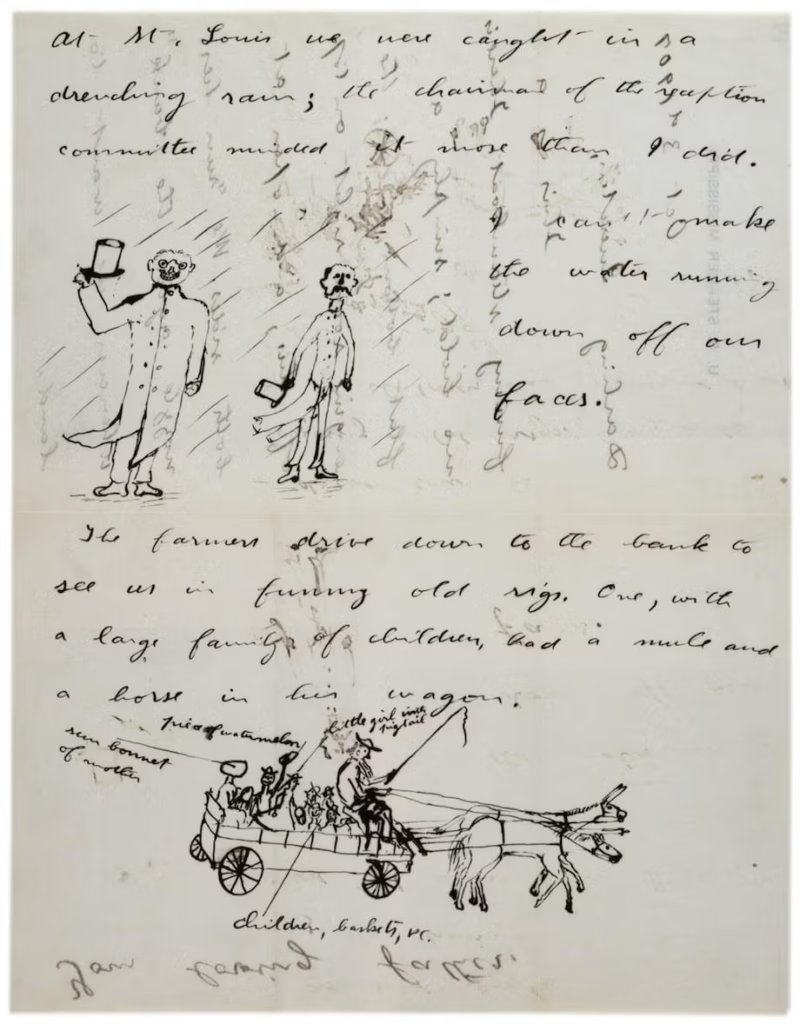A letter from Teddy Roosevelt to his 10-year-old son Quentin.
Imagine if we had no letters whatsoever in any archive, but instead just a complete file of all the telegrams ever sent. That would be a very rich archive, indeed, but a telegram is necessarily short, tight, void of nuance. The telegraph has been called “The Victorian Internet” for good reason. When you paid by the word, you pared your message down to bare bones. When Martin Luther King, Jr. was jailed for nonviolent protest, Muhammad Ali sent a seven-word telegram of support: “HOPE THAT YOU ARE COMFORTABLE NOT SUFFERING.” When the first hydrogen bomb was successfully tested on the island of Elugelap in the Pacific on November 1, 1952, the commander merely telegraphed, “IT’S A BOY.”
**The Joy of Letter Writing**
Ah, but when you sit down to write a genuine letter, a letter that matters to someone who matters, you have the opportunity to think about what you want to say and how you want to say it instead of just thumbing some quick telegraphic message into the cosmos between subway stops. In a genuine letter you can play with words (or punctuation), and with your prose style. You can step back, reread what you have written so far**,** and adjust the tone, the level of directness, the approach, and the structure. Or start over. People like Thomas Jefferson wrote drafts of their letters, walked away for a short time, and then wrote out the fair copy in a cleaner penmanship, often with significant adjustments. You have permission in a letter to someone who matters to reveal things you would never put into a text and may not be willing to speak out loud to that person on the phone or in a chair next to you. You can dream or daydream in a letter, confess, reveal, probe, disclaim, explain, or apologize.
All that is being lost — apparently forever, because (under the iron rule of technological innovation) steam engines replace the horse, the telegraph kills off the Pony Express instantly, the internal combustion engine replaces the buggy, DVD replaces VHS, the SD card replaces 35mm film; and few if any would really want to return to a world of what is derisively called “snail mail.” I hate that term. But it is a loss of incalculable significance.
The Postal Service reported that in 2000 Americans sent approximately 2 billion personal letters to friends or relatives. By 2011 it was down to 715 million. In 2012, it was down to 650 million. And you can imagine the decline in the last 15 years. Most of these “personal letters” are greeting cards or postcards from the Eiffel Tower or St. Peter’s to one’s mother.
Now in the third decade of the 21st century, I send 400 or 500 letters (usually notes) per year, 99% of them through email. But I very seldom labor over an email letter the way I would if I were typing it out to print and put into the mailbox. We all know that an email is not held to the same standards for punctuation, spelling, grammar, or logical consistency as a letter. I receive many hundreds of emails. In a limited sense, I am more prolific than I ever was with traditional mail, and there is no frustrating post-composition search for stamps, envelopes, etc. No agonizing wait for a response — one week, three weeks. But it is not the same. Some very important part of the pleasure of correspondence has been lost. A letter produced on a word processor with autocorrect and grammar functions, flawlessly printed, with no crossings out, no words careted in above the line, no handwritten note at the bottom, no squiggles or doodles, no genuine signature, is in some essential way sterile, no matter what the subject or the passion of the writer.
The death of the physical postal service letter is one of the saddest developments of my lifetime. But as with so many other American rituals, procedures, and habits of the heart, it’s clearly irreversible, and nostalgia won’t move the needle or return “the golden age.” May as well make the case for cuneiform or hieroglyphics. There is no use in my trying to buck the trend, because when I do send an actual letter, even one composed on a laptop, the recipient’s response is usually something along the lines of WFT, not gratitude.
Still, even now, when I go out to check the mail and begin tossing 95% of the junk (including political postcards, COSTCO catalogs, shopper’s guides, solicitation letters from banks and credit card companies, etc.) and then come upon a hand-addressed letter in an actual envelope, I am thrilled. Someone somewhere has taken the time to write me an actual old school letter. I sit down in a good chair and read it through, usually more than once.
One of these days, I am going to open the box that contains my early-to-mid-life letters, painstakingly saved by my parents. I expect it to be both a joyful and at times a painful experience. I’ll be interested to learn how much of that correspondence is illuminating and how much is gibberish. I’m prepared to blush, wince, grimace, cry, laugh out loud, and smile wanly across the decades at that pre-digital hyper-purposeful young man.
My purpose in writing about this topic, as in all of these essays reviewing the staggering changes of the last 75 years, is not autobiography and it is not lament. I do deeply, profoundly lament the death of the letter, but my purpose here is to contextualize the world we live in now within the larger trajectory of history. I find this exercise fruitful, and I hope you do, too. Let me know. And please suggest topics for me to explore.
---
## ***Discover more on these topics at Listening to America***
[New York](https://ltamerica.org/tag/new-york/ "8 topics")[Steinbeck Travels](https://ltamerica.org/tag/steinbeck-travels/ "75 topics")[The Constitution](https://ltamerica.org/tag/the-constitution/ "1 topics")[Video](https://ltamerica.org/tag/video/ "51 topics")[Washington](https://ltamerica.org/tag/washington/ "2 topics")[Thoreau](https://ltamerica.org/tag/thoreau/ "5 topics")[Republic](https://ltamerica.org/tag/republic/ "0 topics")[Oppenheimer](https://ltamerica.org/tag/oppenheimer/ "1 topics")[South Carolina](https://ltamerica.org/tag/south-carolina/ "1 topics")[Travel](https://ltamerica.org/tag/travel/ "1 topics")[William Shirer](https://ltamerica.org/tag/william-shirer/ "1 topics")[New Mexico](https://ltamerica.org/tag/new-mexico/ "3 topics")[Walden](https://ltamerica.org/tag/walden/ "1 topics")[State Parks](https://ltamerica.org/tag/state-parks/ "2 topics")[Podcast](https://ltamerica.org/tag/podcast/ "1 topics")[North Dakota](https://ltamerica.org/tag/north-dakota/ "53 topics")[Wisconsin](https://ltamerica.org/tag/wisconsin/ "0 topics")[Utah](https://ltamerica.org/tag/utah/ "11 topics")[Tennessee](https://ltamerica.org/tag/tennessee/ "1 topics")[New England](https://ltamerica.org/tag/new-england/ "1 topics")[Wyoming](https://ltamerica.org/tag/wyoming/ "4 topics")[Republics](https://ltamerica.org/tag/republics/ "1 topics")[north daktoa](https://ltamerica.org/tag/north-daktoa/ "0 topics")[Vermont](https://ltamerica.org/tag/vermont/ "1 topics")[Pennsylvania](https://ltamerica.org/tag/pennsylvania/ "1 topics")[Poetry](https://ltamerica.org/tag/poetry/ "1 topics")[U.S. Presidents](https://ltamerica.org/tag/u-s-presidents/ "71 topics")[Oppenheim](https://ltamerica.org/tag/oppenheim/ "0 topics")[Road Trips](https://ltamerica.org/tag/road-trips/ "18 topics")[U.S. Constitution](https://ltamerica.org/tag/u-s-constitution/ "1 topics")[Theodore Roosevelt](https://ltamerica.org/tag/theodore-roosevelt/ "16 topics")[Rome](https://ltamerica.org/tag/rome/ "1 topics")[Texas](https://ltamerica.org/tag/texas/ "4 topics")[Rivers](https://ltamerica.org/tag/rivers/ "3 topics")[Ohio](https://ltamerica.org/tag/ohio/ "2 topics")[Reading](https://ltamerica.org/tag/reading/ "1 topics")[Oregon](https://ltamerica.org/tag/oregon/ "4 topics")[South Dakota](https://ltamerica.org/tag/south-dakota/ "16 topics")[Sports](https://ltamerica.org/tag/sports/ "2 topics")[Thomas Jefferson](https://ltamerica.org/tag/thomas-jefferson/ "34 topics")[North Carolina](https://ltamerica.org/tag/north-carolina/ "3 topics")[Water in the West](https://ltamerica.org/tag/water-in-the-west/ "24 topics")[paintings](https://ltamerica.org/tag/paintings/ "0 topics")[Space Exploration](https://ltamerica.org/tag/space-exploration/ "8 topics")[Virginia](https://ltamerica.org/tag/virginia/ "7 topics")
**Categories:** Features
**Tags:** America at 250, Humanities, In My Life
---
### [The Great Buffalo Roundup](https://ltamerica.org/the-great-buffalo-roundup/)
**Published:** October 17, 2023
**Author:** Clay Jenkinson
**Excerpt:** On September 29th over 1,400 bison were rounded up at Custer State Park in western South Dakota. The remarkable event, now in its 58th year, drew over 20,000 visitors from around the world
**Content:**
## On September 29, cowhands rounded up 1,400 bison that roam South Dakota’s 71,000-acre Custer State Park. The roundup of one of the world’s largest public herds of bison drew over 20,000 visitors from around the globe. *Listening to America’s* Frank Lister, chief scout and new roving correspondent, was also there to witness the rare event.
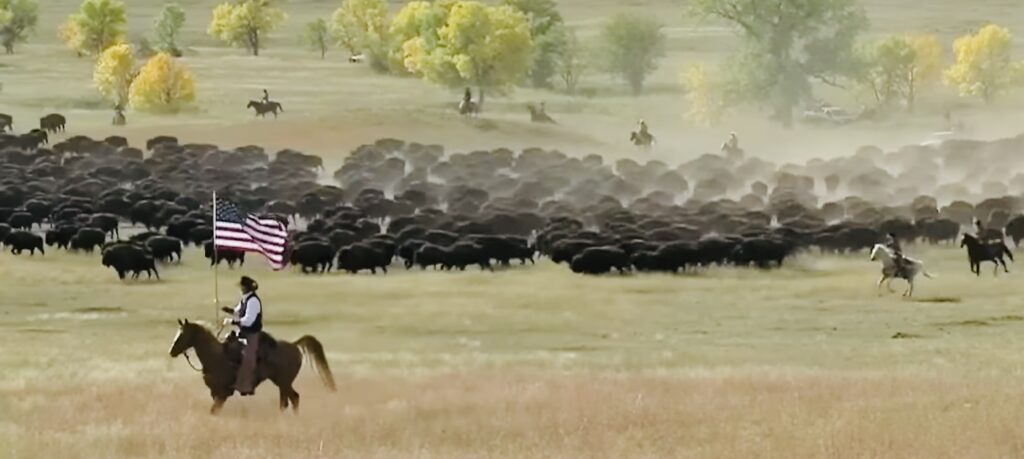Over 1,400 bison are rounded up at Custer State Park in western South Dakota. The late September remarkable event, now in its 58th year, drew over 20,000 visitors from around the world. (Image, South Dakota Public Broadcasting)
Last spring, I joined up with the Listening to America team when I helped scout their Water in the West project. Due to my deep knowledge and contacts around the Colorado Plateau, we brought together experts to explore the water situation of this drought-stricken region’s past, present, and future. Clay aptly recounted our travels in his early [series of dispatches](https://ltamerica.org/beyond-the-apocalypse-and-bathtub-rig-a-colorado-river-journey-we-begin-2/) for LTA.
Recently, Clay asked if I would head up to the South Dakota Black Hills and scout a genuinely American event, the [annual roundup](https://gfp.sd.gov/pages/buffalo-roundup/) of nearly 1,400 bison at [Custer State Park](https://gfp.sd.gov/parks/detail/custer-state-park/). The bison and Great Plains are a current focus at LTA in part due to the interest around Ken Burns’ new documentary *[The American Buffalo](https://www.pbs.org/show/the-american-buffalo/),* in which Clay is a commentator. I would become the first correspondent for LTA — no pressure there!
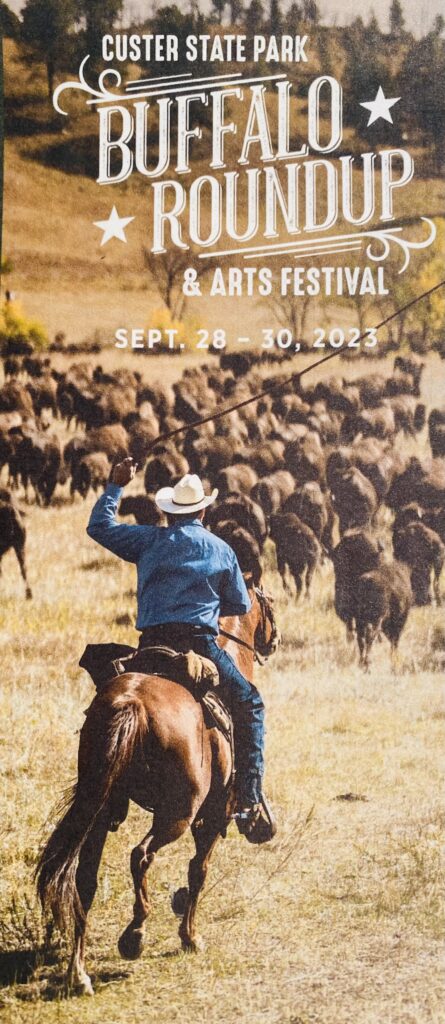In its 58th year, the annual Buffalo Roundup and Arts Festival now draws over 20,000 visitors from around the world to western, S.D.
I live in southern Utah, near Bryce Canyon, in one of the most remote places in the continental U.S. The drive to the Black Hills would take me diagonally across Wyoming and cover about 900 miles. Along the way, I visited historic sites, museums, visitor centers, oil fields, and National Grasslands.
I arrived in [Keystone, S.D.](https://www.blackhillsbadlands.com/cities-towns/keystone), the day before the roundup. Keystone is three miles from Mt. Rushmore and a busy tourist-driven town full of t-shirt vendors, curio shops, and other tourist-based businesses. I stayed at a local motel and, after checking in, decided to drive into the Custer State Park to get my bearings and see where I should be for the event the following day. The park is massive, over 71,000 acres. It contains rugged hills, densely wooded, with large open meadows. The aspen and cottonwoods are in full fall colors; the country was breathtaking! The park was packed with fall foliage sightseers.
I ended up at the [Bison Center](https://gfp.sd.gov/csp-bison-center/) and the roundup hub in my wanderings. Here were the numerous corrals that will be used to hold the buffalos while they are inspected by vets, weighed, measured, and vaccinated. The purpose of the roundup is to do a medical check on the herd as well as reduce the resident population from about 1,400 to 1,000 head. The 1,000 number is the optimum carrying capacity for the park’s range-land but still allows forage space for other critters like elk, antelope, and smaller animals. Roughly 400 buffalo will be culled from the herd, auctioned off, sold to the public and tribes, and harvested.
As I arrived at the corrals, I noticed a large group of cowboys and cowgirls under a giant circus tent receiving directions for the next day. Roughly 60 riders will participate in the roundup, divided into three groups.
## **The Roundup**
A long line of vehicles make the pre-dawn trek to Custer State Park. (Photo Frank Lister)
My alarm went off at 4 am! I layered up because it’s fall in the Black Hills, and mornings are chilly. It was still dark when I headed out. As I drove towards Custer State Park, the line of headlights and taillights behind and in front of me grew longer and longer. By the time I reached the park’s interior, the line of visitors going to the roundup was miles long. And then we all stopped! The gates to the parking areas would not open until around 6 am. We all sat in our vehicles for nearly an hour. Fortunately, we were all under a huge full moon. It lit up the landscape as it traveled across the sky above us. It was beautiful!
When I finally reached the north viewing area, I along with hundreds of other cars, was ushered into a massive hillside parking area. Thousands of roundup watchers were already there. Park volunteers had set up a large tent near the overlook, and to the crowd’s delight, were serving a pancake and sausage breakfast. And, of course, there were dozens of port-a-potties. Ultimately, the gathering would swell to over 20,000 folks with 20,000 lawn chairs.
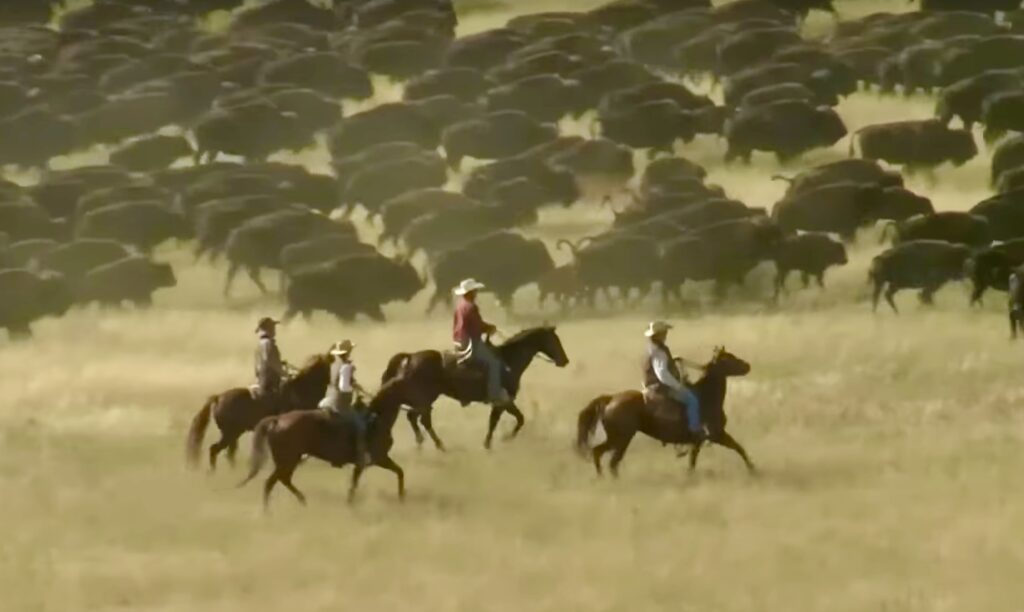Some 60 cowboys and cowgirls are selected each year to participate in the annual bison roundup. (Image, South Dakota Public Broadcasting)
At about 10 am, a black swarm of buffalo came into view over a ridge several miles away. It grew slowly and went out of sight into a ravine that separated us. I couldn’t help but think of what it was like for Native American scouts to witness such a herd in the distance. The buffalo were life to them. Soon, the herd came into full view as it approached the thousands of roundup enthusiasts sitting on a south-facing hillside. Dust was hanging over the massive group as they came our way. A 6-foot high steel fence stood between us and the oncoming buffalo.
The wranglers herded the 1,400 buffalo, cows, calves, and young bulls in front of the 20,000 onlookers. They didn’t bring along the older bulls. They are problematic to herd, don’t need to be vaccinated annually, and tend to go wherever they want, regardless of what a cowboy might desire. The cowhands hooted, hollered, and popped their bullwhips as they drove the herd toward giant corrals where they would remain for several days while a team of South Dakota Fish and Game veterinarians checked them out. It was quite an occasion to see and hear.
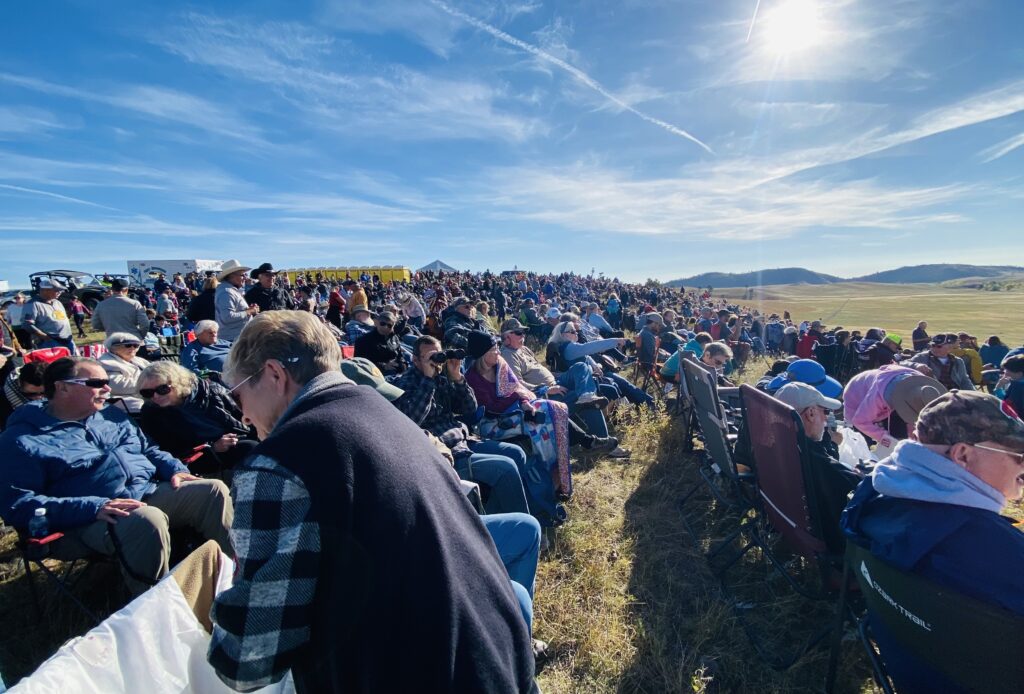Lots of people and lawn chairs on hand for the rare roundup of 1,400 bison. (Photo by Frank Lister)
When the roundup was over and the bison were enclosed in the corrals, the fun began: getting out of there! I decided to walk the couple of miles to the corrals rather than face miles of slow-moving vehicles. I had a choice to wait and catch a bus to the corrals or walk. I chose to walk; it was a beautiful sunny day, and the cottonwoods along the route were at maximum fall brilliance.
The corral area was a mob scene. Everyone wanted a close-up view of these iconic creatures. Having worked on ranches and been around livestock for many years, I realized these bison are domesticated. Sure, they are wild animals, but they are familiar with humans. However, they are massive; the bulls can weigh over 2,000 pounds, and cows can weigh over 1,000 pounds. They can also move fast, clocking in at speeds of 35 mph. The wooden corrals consisted of long, connected narrow chutes. The animals were herded from pen to pen by a tractor with a large steel shield on the front of it. This is a sign that it is too dangerous for cowboys on horseback to work the buffalo in such a small, enclosed area.
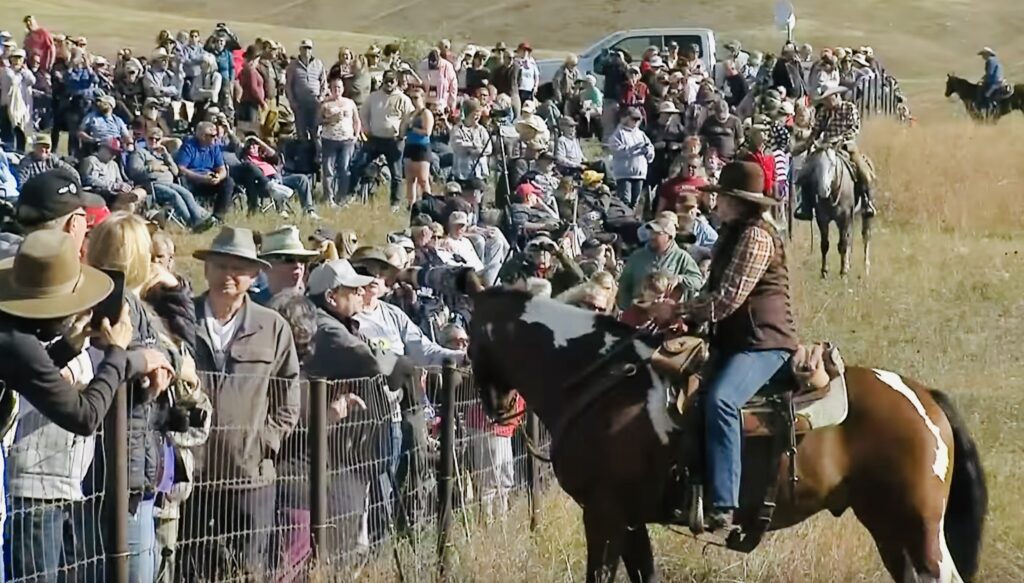Cowhands greet the onlookers at Custer State Park. (Image, South Dakota Public Broadcasting)
I left the roundup with an appreciation for the vast number of volunteers and staff of the South Dakota State Parks Department it takes to pull off such an event. After more than 50 years of running the roundup, they have it together. And, of course, the main attraction was the buffalo herd — healthy and well cared for. Custer State Park is a “must-visit” park. The Civilian Conservation Corps constructed the infrastructure of roads, bridges, and many buildings in the 1930s. Their legacy of fine craftsmanship adds to the overall quality of the park.
You can watch a recorded livestream of the Custer State Park 58th Annual Buffalo Roundup from South Dakota Public Broadcasting [here](https://www.youtube.com/watch?v=CeS95dj4spE).
Play
2023 Custer State Park Buffalo Roundup (Live Stream) \| SDPB
---
## ***Discover more on these topics at Listening to America***
[Oppenheim](https://ltamerica.org/tag/oppenheim/ "0 topics")[Thomas Jefferson](https://ltamerica.org/tag/thomas-jefferson/ "34 topics")[Oregon](https://ltamerica.org/tag/oregon/ "4 topics")[Tennessee](https://ltamerica.org/tag/tennessee/ "1 topics")[South Dakota](https://ltamerica.org/tag/south-dakota/ "16 topics")[Thoreau](https://ltamerica.org/tag/thoreau/ "5 topics")[paintings](https://ltamerica.org/tag/paintings/ "0 topics")[Virginia](https://ltamerica.org/tag/virginia/ "7 topics")[Steinbeck Travels](https://ltamerica.org/tag/steinbeck-travels/ "75 topics")[Water in the West](https://ltamerica.org/tag/water-in-the-west/ "24 topics")[The Constitution](https://ltamerica.org/tag/the-constitution/ "1 topics")[Poetry](https://ltamerica.org/tag/poetry/ "1 topics")[Video](https://ltamerica.org/tag/video/ "51 topics")[North Dakota](https://ltamerica.org/tag/north-dakota/ "53 topics")[Republic](https://ltamerica.org/tag/republic/ "0 topics")[Texas](https://ltamerica.org/tag/texas/ "4 topics")[U.S. Constitution](https://ltamerica.org/tag/u-s-constitution/ "1 topics")[Walden](https://ltamerica.org/tag/walden/ "1 topics")[Wyoming](https://ltamerica.org/tag/wyoming/ "4 topics")[Washington](https://ltamerica.org/tag/washington/ "2 topics")[Road Trips](https://ltamerica.org/tag/road-trips/ "18 topics")[Republics](https://ltamerica.org/tag/republics/ "1 topics")[New England](https://ltamerica.org/tag/new-england/ "1 topics")[Vermont](https://ltamerica.org/tag/vermont/ "1 topics")[Rome](https://ltamerica.org/tag/rome/ "1 topics")[New York](https://ltamerica.org/tag/new-york/ "8 topics")[Space Exploration](https://ltamerica.org/tag/space-exploration/ "8 topics")[Oppenheimer](https://ltamerica.org/tag/oppenheimer/ "1 topics")[Utah](https://ltamerica.org/tag/utah/ "11 topics")[north daktoa](https://ltamerica.org/tag/north-daktoa/ "0 topics")[Podcast](https://ltamerica.org/tag/podcast/ "1 topics")[Rivers](https://ltamerica.org/tag/rivers/ "3 topics")[U.S. Presidents](https://ltamerica.org/tag/u-s-presidents/ "71 topics")[Theodore Roosevelt](https://ltamerica.org/tag/theodore-roosevelt/ "16 topics")[State Parks](https://ltamerica.org/tag/state-parks/ "2 topics")[Wisconsin](https://ltamerica.org/tag/wisconsin/ "0 topics")[New Mexico](https://ltamerica.org/tag/new-mexico/ "3 topics")[North Carolina](https://ltamerica.org/tag/north-carolina/ "3 topics")[Travel](https://ltamerica.org/tag/travel/ "1 topics")[Pennsylvania](https://ltamerica.org/tag/pennsylvania/ "1 topics")[Reading](https://ltamerica.org/tag/reading/ "1 topics")[South Carolina](https://ltamerica.org/tag/south-carolina/ "1 topics")[William Shirer](https://ltamerica.org/tag/william-shirer/ "1 topics")[Ohio](https://ltamerica.org/tag/ohio/ "2 topics")[Sports](https://ltamerica.org/tag/sports/ "2 topics")
**Categories:** Dispatches from the Road
**Tags:** Guest Essay, National Parks, South Dakota
---
### [In My Life: The Beatles and Global Connectivity](https://ltamerica.org/in-my-life-the-beatles-and-global-connectivity/)
**Published:** August 18, 2026
**Author:** Clay Jenkinson
**Excerpt:** I tuned in, along with over 300 million others from around the globe, on that landmark day when popular music connected with the space age and changed the world forever.
**Content:**
##
I tuned in, along with over 300 million others from around the globe, on that landmark day when popular music connected with the space age and changed the world forever.
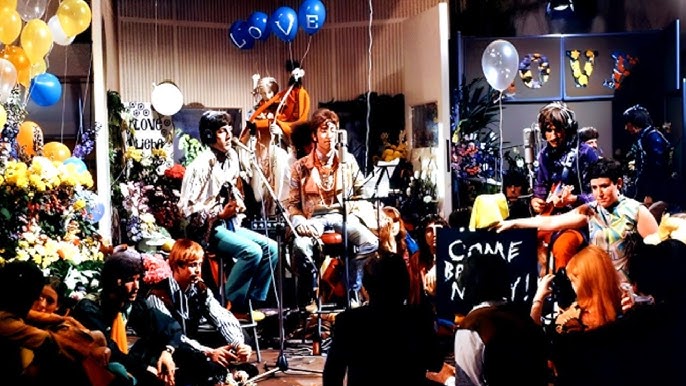The Beatles perform *All You Need Is Love* during the historic live global satellite television broadcast *Our World at Abbey Road Studios* on June 25, 1967. Between 350 and 450 million people worldwide watched the broadcast.
*Note: Over the next year or so, I will occasionally write about events of the last 75 years that helped define a remarkable era in modern American history. I will only write about myself as a conduit to one of the most turbulent and exciting times to have been alive. My goal is to attempt to understand, for myself, the monumental changes that have taken place in my lifetime (no wonder the Constitution is straining). I hope you will follow along and send me thoughts.*
June 25, 1967, was a landmark in the history of technology. It marked the confluence of the space age and popular music. On that day, for the first time in human history, music and other audio were beamed from around the world up to a few communications satellites and then simultaneously beamed back down into television sets in more than a dozen countries on five continents. The purpose of the experimental broadcast, a joint effort by the BBC and the European Broadcasting Union, was to showcase the emerging satellite technology that would soon knit the world together as never before — and forever. It was called *[Our World](https://www.thebeatles.com/25-june-1967-our-world-was-broadcast)*. It might just as well have been called *Our Brave New World: Like It or Not, Here It Comes*.
## **Featuring … The Beatles**
At the time, the Beatles were not in entirely good standing with the venerable BBC. In 1965, *Time* magazine called the BBC the “sonorous, serious, slightly stuffy voice of England’s Oxbridge-accented Establishment.” The staid British network had recently refused to play *A Day in the Life* from the just-released *Sgt. Pepper* album and had grave concerns about *Lucy in the Sky with Diamonds,* which many at Broadcasting House thought was a code for LSD. Still, the directors at the BBC had the good sense to realize that if they were going to beam representative British entertainment to every corner of the globe in the summer of 1967, it had to be the Beatles and not Basil Rathbone reciting soliloquies from *Hamlet* and *Richard II* or Dylan Thomas’ *Do Not Go Gentle into That Good Night*. The only stipulation was that the performance (at least most of it) had to be live.
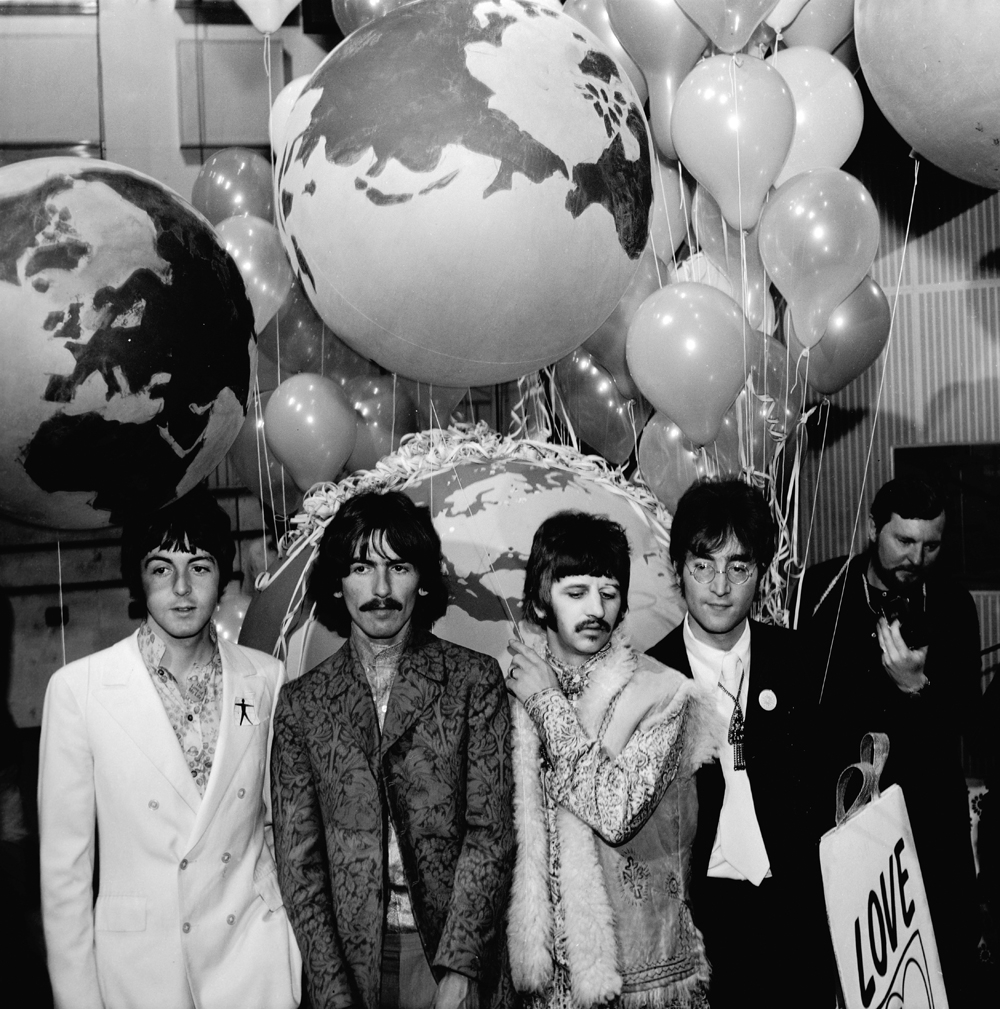
On February 28, 1967, the BBC wrote to Beatles’ manager Brian Epstein that the scheduled broadcast would “show man’s greatest current achievements in the field of art and entertainment.” And, to accomplish that, the BBC “would like to offer Britain the subject of The Beatles at work … in a recording studio making a disc.”
George Harrison later said the other countries participating in the broadcast were showing things like “knitting in Canada, or Irish clog dancing in Venezuela. So, we thought we’d sing *All You Need Is Love* because it’s a subtle bit of PR for God.”
The June 1967 broadcast of *All You Need Is Love* from Studio II at Abbey Road wasn’t the Beatles’ best performance or their best song, but that doesn’t really matter, because the song — written for the occasion — was beamed instantaneously all across planet Earth. It was plenty good, and though John wrote it (in his usual procrastinating and dilatory fashion), it reflected not only his core sensibility but that of all four of the Beatles (perhaps especially Paul). Somewhere between 350-450 million people worldwide watched the broadcast. I was one of them — a 12-year-old kid in a backwater town in a backwater state somewhere on the northern tier of the United States. Most of those approximately 400 million people were hearing the Beatles for the very first time. And the message was simple: *All You Need Is Love*.
## **Sputnik and Beyond**
We forget how big a deal it was. We take satellite technology and instantaneous communication for granted, as if it had always been there. Young people under 50 have known no other reality, and they assume — perhaps without ever once thinking about it — that this is just how the world works. Flip a switch: the light comes on. Turn on a faucet: hot water. Turn on a car’s ignition: drive to Nashville. Turn on your television: watch the Berlin Wall come down or witness mass protests at Tiananmen Square. Use the app on your smartphone: start your car from five miles away. The protestors at the Chicago Democratic Convention in 1968 meant it when they chanted, “The whole world is watching.” Of all the revolutions we have been living through in the last 75 years, the revolutions in communication — the way almost everything in our civilization is disseminated — have been the most breathtaking.
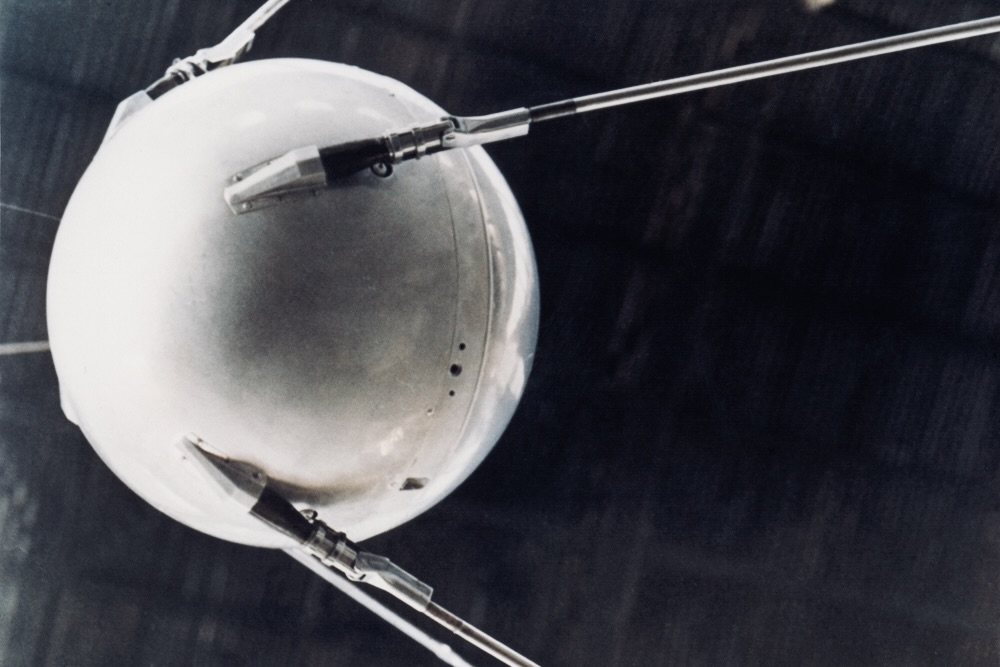A model of Sputnik 1, the first human-made object in space. The Earth-orbiting artificial satellite was launched by the Soviet Union on October 4, 1957. (Shutterstock)
The world’s first artificial satellite, Sputnik, was launched by the Soviet Union in October 1957, shocking the world with Russian technological superiority and seeming to threaten nuclear annihilation. All Sputnik did was beep a short-lived radio signal, but on that day the Space Race began. America’s Telstar I, launched in 1962, received microwaves from Earth and transmitted them back. In 1964, thanks to Syncom 3, a limited number of television images of the Tokyo Olympics were transmitted across the Pacific Ocean for viewing in America’s living rooms. In April 1965, Intelsat I (popularly known as “Early Bird”) routinized the transmission of low-resolution television images across the Atlantic. With that, the age of commercial satellite connectivity had begun. In January 1967, Intelsat II (F-2) linked the United States with the Pacific, and by June 1967 the multi-satellite infrastructure was in place in space to enable the global *Our World* broadcast.
The Beatles’ manager Brian Epstein had immediately accepted the BBC’s offer to feature the band on the broadcast, but the Beatles themselves were not sure they wanted to do it. They had just spent five grueling but exhilarating months producing the most revolutionary album in rock history: *Sgt. Pepper’s Lonely Hearts Club Band*. They needed a break. They had quit doing live performances after a harrowing tour year that ended with a concert at Candlestick Park on August 29, 1966. Hard though it is to believe, they were nervous about performing live again. To break the tension and make the broadcast a “happening,” they convinced their friends, rivals, and lovers to attend: Mick Jagger, Keith Richards, Eric Clapton, Marianne Faithfull, Keith Moon, Graham Nash, Gary Leeds; wives Cynthia Lennon, Pattie Harrison, Maureen Star, and Paul’s girlfriend Jane Asher. The studio was festooned with balloons (including globes), placards, posters, and colorful Carnaby Street attire. Lead vocalist Lennon, who had poor eyesight but refused to wear glasses, chewed gum throughout the performance and nearly fumbled the simple lyrics. As usual, McCartney bailed him out.
Producer George Martin performed his usual magic (as the Fifth Beatle) in proposing pre-recorded backing tracks for the “live” performance. This included a 13-piece orchestra, harpsichord, banjo, horns, a string bass, and violin. The Beatles made 58 takes over five days to perfect the backing tracks, without which the live song would probably have sounded thin or even trite. To ensure the song would truly evoke globalism, Martin opened the performance with a few bars from the French national anthem *La Marseillaise*.
## **All We Need Is Love**
Some critics have detected weariness in John’s performance of the vocals; some have seen it as parody of the band’s early *She Loves You* phase. Maybe, but the BBC and manager Brian Epstein told the Beatles the song must be simple so people all over the world could understand it. When he listened to John’s song for the first time several weeks earlier, George was heard to mumble, “Well, it’s certainly repetitive.”
In my view, it was much more than that, for all of its simplicity. The Beatles recorded 213 songs before the breakup in 1970. If you had to distill their essential message from all that wild and sometimes experimental variety over a seven-year period, the message is — however trite this may seem — love. An estimated 42% of their songs are about love (not always happy love), and love is mentioned in their songs 613 times, an average of three times per song. From *I Saw Her Standing There*, *Please Please Me*, *Love Me Do*, *P.S. I Love You*, and *Baby It’s You*, of their first album (March 22, 1963) to *The End* at the end of *Abbey Road* (September 26, 1969), “the word is love.” In fact, the most constant, consistent, and profound word of their body of music is love. It appears 76 times in *All You Need Is Love*.
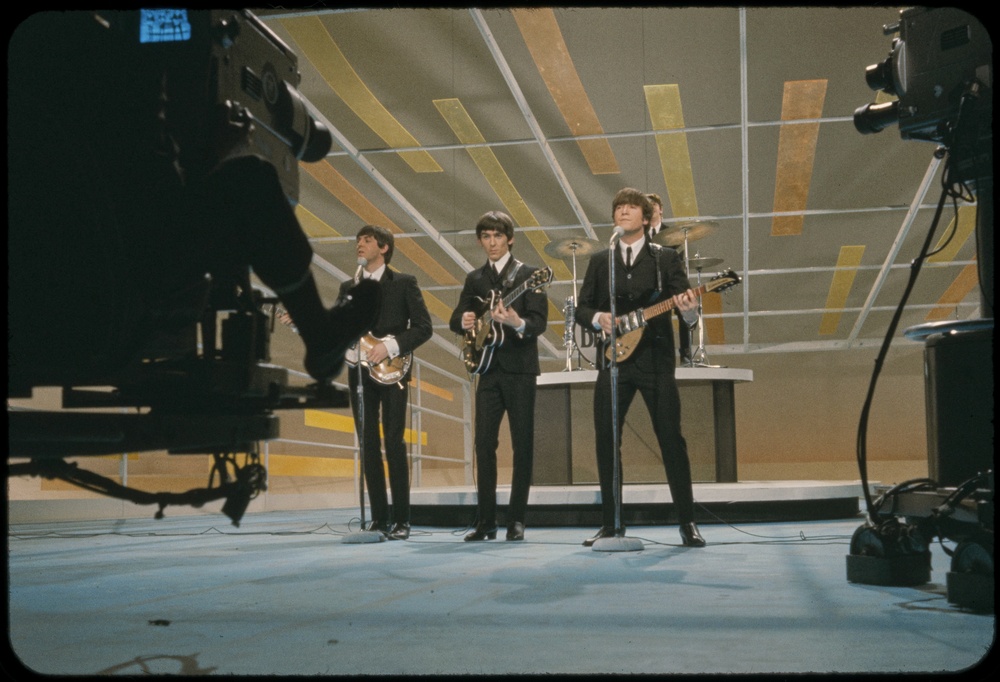The Beatles perform on *The Ed Sullivan Show* in 1964. (Photo Bernard Gotfryd/Shutterstock)
And there is that moment of pure genius at the end of the broadcast, as “all you need is love” is repeated 10 times in a row, with some of the studio audience joining in. As the song fades out, either John or Paul twice sings over the refrain the first line of *She Loves You*:
“She loves you yeah yeah yeah
She loves you yeah yeah yeah”
It’s a perfect mix of sweet nostalgia, parody, and a sense of how much has changed since those early days in the identical suits. And some loss.
When you hear it, you either burst into tears or laughter or both, because it carries you back to July 1, 1963, when the Beatles were just beginning to conquer the world, when they were still “troubadours of the innocent,” before they grew out their hair, when the ’60s had not yet turned sour, when the American cities weren’t burning, when John F. Kennedy was still alive, and Vietnam was still a minor police action.
It was exactly the song the world needed to hear.
One of the Beatles’ best chroniclers, Mark Lewisohn, has written, “In what has since been described, with some justification, as the greatest single moment in the history of popular music, the Beatles, now at their absolute zenith, performed *All You Need Is Love* … From playing skiffle music in an abattoir workers’ social club back in 1957 to instructing 350 million people, live across the globe 10 years later that ‘love is all you need’ is a leap in scale so colossal that it’s still hard to comprehend.”
When NPR’s Terry Gross interviewed Michael Pollan after the release of his book *How to Change Your Mind*, about his experimentation with psychotropic drugs, she asked him to sum up what he had learned. Two things, he said. First, you cannot achieve peace and enlightenment until you wrestle your ego to the ground once and for all.
“And second?” she asked.
“It sounds trite, but the Beatles had it right: “The love you take is equal to the love you make.”
---
## ***Discover more on these topics at Listening to America***
[Steinbeck Travels](https://ltamerica.org/tag/steinbeck-travels/ "75 topics")[Ohio](https://ltamerica.org/tag/ohio/ "2 topics")[Thomas Jefferson](https://ltamerica.org/tag/thomas-jefferson/ "34 topics")[Washington](https://ltamerica.org/tag/washington/ "2 topics")[Podcast](https://ltamerica.org/tag/podcast/ "1 topics")[U.S. Constitution](https://ltamerica.org/tag/u-s-constitution/ "1 topics")[north daktoa](https://ltamerica.org/tag/north-daktoa/ "0 topics")[North Carolina](https://ltamerica.org/tag/north-carolina/ "3 topics")[Poetry](https://ltamerica.org/tag/poetry/ "1 topics")[Wyoming](https://ltamerica.org/tag/wyoming/ "4 topics")[The Constitution](https://ltamerica.org/tag/the-constitution/ "1 topics")[Sports](https://ltamerica.org/tag/sports/ "2 topics")[South Carolina](https://ltamerica.org/tag/south-carolina/ "1 topics")[Rivers](https://ltamerica.org/tag/rivers/ "3 topics")[Theodore Roosevelt](https://ltamerica.org/tag/theodore-roosevelt/ "16 topics")[Video](https://ltamerica.org/tag/video/ "51 topics")[Republic](https://ltamerica.org/tag/republic/ "0 topics")[Oregon](https://ltamerica.org/tag/oregon/ "4 topics")[Rome](https://ltamerica.org/tag/rome/ "1 topics")[Walden](https://ltamerica.org/tag/walden/ "1 topics")[New England](https://ltamerica.org/tag/new-england/ "1 topics")[Thoreau](https://ltamerica.org/tag/thoreau/ "5 topics")[Vermont](https://ltamerica.org/tag/vermont/ "1 topics")[Road Trips](https://ltamerica.org/tag/road-trips/ "18 topics")[Texas](https://ltamerica.org/tag/texas/ "4 topics")[Oppenheim](https://ltamerica.org/tag/oppenheim/ "0 topics")[Travel](https://ltamerica.org/tag/travel/ "1 topics")[New York](https://ltamerica.org/tag/new-york/ "8 topics")[Pennsylvania](https://ltamerica.org/tag/pennsylvania/ "1 topics")[Reading](https://ltamerica.org/tag/reading/ "1 topics")[Utah](https://ltamerica.org/tag/utah/ "11 topics")[State Parks](https://ltamerica.org/tag/state-parks/ "2 topics")[Republics](https://ltamerica.org/tag/republics/ "1 topics")[North Dakota](https://ltamerica.org/tag/north-dakota/ "53 topics")[U.S. Presidents](https://ltamerica.org/tag/u-s-presidents/ "71 topics")[Virginia](https://ltamerica.org/tag/virginia/ "7 topics")[New Mexico](https://ltamerica.org/tag/new-mexico/ "3 topics")[paintings](https://ltamerica.org/tag/paintings/ "0 topics")[Oppenheimer](https://ltamerica.org/tag/oppenheimer/ "1 topics")[William Shirer](https://ltamerica.org/tag/william-shirer/ "1 topics")[South Dakota](https://ltamerica.org/tag/south-dakota/ "16 topics")[Space Exploration](https://ltamerica.org/tag/space-exploration/ "8 topics")[Water in the West](https://ltamerica.org/tag/water-in-the-west/ "24 topics")[Tennessee](https://ltamerica.org/tag/tennessee/ "1 topics")[Wisconsin](https://ltamerica.org/tag/wisconsin/ "0 topics")
**Categories:** Features
**Tags:** America at 250, Humanities, In My Life
---
### [The Grim and Goofy Anthropology of Garage Sales](https://ltamerica.org/the-grim-and-goofy-anthropology-of-garage-sales/)
**Published:** August 11, 2026
**Author:** Clay Jenkinson
**Excerpt:** There are between 6 and 9 million garage sales per year in the United States, approximately 165,000 per week, with total sales of $220 million annually. Such affairs seem especially popular here in North Dakota.
**Content:**
## There are between 6 and 9 million garage sales per year in the United States, approximately 165,000 per week, with total sales of $220 million annually. Such affairs seem especially popular here in North Dakota.

**Bismarck, North Dakota** — My friend Eileen across the street is my favorite neighbor. She has been living in Bismarck for 25 years now. It’s the rural health story. She and her husband were farmers in an isolated part of North Dakota south and east of Bismarck — what is affectionately known as the Sauerkraut Triangle because it was settled mostly by Germans from Russia — German nationals who were lured, beginning in 1762, by Catherine the Great to settle on the steppes of Russia. When some of their most cherished privileges were revoked in the 1870s, they emigrated to the steppes of America (and Canada).
Eileen and her husband moved to Bismarck about the same time I did, not because they were finally ready to enjoy the vibrant night life of the state capital — the jazz dives, avant-garde galleries, clothing boutiques, independent cinema, the Nigerian, Tasmanian, Samoan, and Sicilian restaurants, and the opium dens — but because his health was failing and driving 90 miles to clinic appointments three days per week had become a burden. She has told me many times that they would have preferred to live out their life on the farm or in the nearest town — a typical rural North Dakota town of about 1,200 people. Unfortunately, he died four or five years after they moved to the metropolis. After the funeral, Eileen decided to stay in Bismarck, in the big new house, and she has been my subdivision pal ever since. If I’m home and it snows, I often shovel her driveway, though that is something of a competition among several of us neighbors.
For the past five days Eileen has been up to no good in her garage. I’ve been wondering what she is doing over there. It dawned on me a day or two ago that she’s been prepping for a yard sale. Now today, an early Saturday in August, there has been more traffic on my street than in the entire last year. I don’t know what it is like elsewhere, but here in Dakota people flock to these yard sales. You would think Eileen had put a gold coin at the bottom of one of the 300 plastic bins now gracing her driveway. It’s a feeding frenzy over there. It must have been advertised for 8 a.m. today because by 7:15 there were 10 cars parked in front of her house and mine, on both sides of the street. It was like the Oklahoma Panhandle Land Run of 1889. It was like Black Friday, but with a bunch of superannuated stuff Eileen is trying to get rid of.
Meanwhile, I have been doing some necessary spring cleaning on my side of the street. This is not quite the right word because it is so profoundly understated, but I have been “tidying up” my house for a visit from a friend whose eyebrows, I reckon, are poised for subtle expressions of bewilderment and derision. (And he’s only junior runner-up of the supercilious.) I’ve been gone more or less continuously since late April (and not much home before that), so things have gotten a little out of hand, even for me. After each extended trip, I tend to dump a bunch of things in my entryway, wash a few loads of clothes, open the score of Amazon boxes, half-empty one giant suitcase or just pluck another out of the garage, reload, head to the airport, or hit the blue highways of America. The only thing I always know how to locate in the house is my passport, because without it, I’m toast.

Sometimes, if I leave my front door unlocked when I am taking a friend or my daughter on a daylong errand, they say, “Aren’t you going to lock your door?” To which I invariably reply: “No, I just want to put up a sign on the front door saying, ‘Take whatever you want and be sure to tell your friends.’”
A big thing is happening at my house on December 19, so that gives me approximately 130 days to restore order. I’ve been working like a dervish for four days now, and as I walk around the house I feel like Winston Churchill on November 10, 1942: “Now this is not the end. It is not even the beginning of the end. But it is, perhaps, the end of the beginning.”
As I look around, I estimate that if a magic and very decent tornado lifted the roof off my house and three car garage carefully (and set it aside) and then randomly whisked away a full half of everything I own (dishes, sheets, books, notebooks, camping gear, electronic gizmos, posters and other artwork, clothes, and furniture), and then carefully replaced the roof, the following conclusions would be inevitable:
1\) Upon returning home, it is not clear that I would notice that anything was missing.
2\) If the insurance company promised to pay full replacement value of every item I could itemize on a spreadsheet, and “library” was considered a single item, I’d be flummoxed after a few pages. Most of what I once owned would never be reimbursed because I would not be able to list more than a small percentage of what I own and once purchased and later stuffed into a nook, a cranny, a closet, or a garage bay.
3\) The house would still be much too full of stuff, not including books.
And yet, I regularly lead seminars, online courses, and retreats about my hero Henry David Thoreau, that annoying minimalist.
I could, I suppose, have a giant garage sale, but the idea of hauling all that stuff out onto the driveway, front yard, side yards, back yard, and the empty lot I own behind my house sounds like a 13th labor the Greek god Hercules would reject. He cleaned the Augean Stables, but my house is more like Hydra: clean one room and two more seem to spring up magically. It would be smarter to wait until next year and have a garage sale every Saturday for 12 weeks.
There are days when I think a smarter plan would be to rent a large U-Haul, put everything in it I just have to keep — everything I would be terribly sad to let go — and then pour kerosene over the house and light a match. It would have to be very cleverly done to avoid jail time, not to mention fool the insurance company, but I think I would actually be quite relieved. Everyone who is ever asked about this says the one thing they would grab is the photo albums. Well, I have 247,000 photographs on my smartphone, so all I need to grab is my phone charger.
Most of my adult life I have entertained fantasies of starting completely over — pointing that U-Haul south and west and finding a town of about 35,000 people with a small college or university, buying a modest townhouse, changing my name to Diedrich Straus, and taking language courses without ever divulging a single fact of my previous life. That would solve some problems, for me, and especially for my daughter, who — when she visits — looks around with a long series of sighs, because the moment is coming when she will have to deal with all of this and the tool she will need is not a shovel or even a wheelbarrow, but a Bobcat skid steer. One man’s treasure is the next person’s junk.
## **Across the Street**
Meanwhile, all day minivans and pickups have rolled up on both sides of the street, and groups of two, three, and sometimes five have jumped out with what looks like well-rehearsed zeal. A few people walk up her driveway timidly, and others lunge at the nearest table to snatch up bargains before someone else arrives. Since I began writing this essay, at least 20 cars have rolled up, and so far nobody has left without hauling a bin or a pile of stuff to their car and taking it home to add to the glut of their own house. Undoubtedly they are planning a garage sale for next summer about this time.
I just looked it up on the internet. There are between 6 and 9 million garage sales per year in the United States, approximately 165,000 per week, with total sales of $220 million annually.
I see wives seductively gesturing before end tables, rocking chairs, dressers, and table lamps to persuade their less excited spouses that what their house most needs, what their house has always most needed, is someone else’s old 78 rpm console stereo or a cutting board in the shape of Alaska. Who doesn’t need a giant plastic closet shoe organizer? Who can live without a bin full of Readers Digest Condensed Books? “Hey, there’s the *Odyssey* in just forty pages!” Just now, a husband has been working overtime to convince his wife that they need a 4-foot beer stein depicting German maidens in lederhosen looking very agreeable. “The wife,” as she is frequently called in North Dakota, finally frowned her acquiescence and he is now very quickly putting the stein into the trunk of their car before she can change her mind.
Even if I could convince myself to have a garage sale, I’d probably still balk, because I would find it hard to see waves of strangers picking through my possessions and — as often as not — indifferently tossing them back onto the pile. “Hey, I bought that Guayabera shirt in Little Havana in Miami. How dare you just toss it down. At least refold it, wouldja?”
I remember when my grandfather, a Minnesota dairy farmer, got too old to work the 80-acre farm anymore. They had a giant farm auction — vintage tractors, seeders, old boxes of paper quarts of oil, nicked and greasy tools, rolls of baling twine, milk cans, spare parts still in their boxes, faded red five-gallon gas cans. … Everything that others might want, and some things that you’d think nobody would want, and yet they all still sold.
But when it came to auctioning off the 16 Holstein dairy cows, cows with names like Petunia, Pal, Daisy, Brownie, Ginger, Whitey, Rose, and Delilah, my grandfather — famous for his gruffness and at times roughness — broke down and walked silently up into the old farmhouse and into bed.
When my mother died 10 years ago, my daughter and I cleaned out her house. We each kept a few things (strangely, not her complete 63-year run of *TV Guide*), gave away what we could to Goodwill, and threw away a very large amount of what might be summarized as “stuff.” As we did so, we knew that my mother, were she still alive, would be shaking her fist at us with sometimes real and sometimes mock anger. My daughter said, “You’re lucky. If you predeceased grandma, she would just have hired five of those giant trash container units for your driveway and saved nothing except your Lewis and Clark books and a few things she’d claim you borrowed many years ago and never returned.” To which I replied, “Is that what you are planning to do when I croak?” “No, I cannot believe you think I am that kind of daughter. What do I need with a bunch of old Lewis and Clark books?”

A few final anthropological notes from across the street in a typical Great Plains community on a Saturday in August:
— So far as I can tell, not a single poor person has appeared today in this quintessentially American pageant. All the cars are new or newish, many with automatic hatch openers to absorb the merch.
— The yard sale uniform for a couple is wife in shorts and flip-flops looking as if she at least thought about it, husband in an old t-shirt and what might be called the trademark North Dakota man-shorts — tan, boxy, extending so far down the leg, well over the knee, that they might pass for capris, ending only a few inches above black socks.
— The average stay is about 17 minutes.
— So far today, nobody has left without a purchase.
— Occasionally, some long-suffering husband just stays in the car scrolling. After about 10 minutes, he performs a quick warning honk. Time’s up, dear.
— There has been some haggling, but on the whole it appears that the seller subscribes to the “no reasonable offer refused” philosophy of downsizing.
— Even though North Dakotans are law-abiding folks, very few cars leave by driving around the block. Most perform what must be an approved U-turn, perhaps to shorten the drive to the next yard sale on the list.
## **The Yard Sale Addiction**
I know people — friends of mine — who spend part of every single Saturday between May and October spending three or four morning hours driving all over Bismarck and Mandan to every promising yard sale. (Most have done their homework.) This is their standard weekend habit, followed by brunch at Cracker Barrel or the locally owned Kroll’s Kitchen.
Here in Bismarck, twice a year, one day in October and one in April, the garbage people will haul away almost anything you can lug out to the curb — old refrigerators, black and white tube type television sets, a plethora of “lightly used” exercise equipment, including — of course — rowing machines, mattresses, lawn mowers, old printers, sewing machines, dead Barcaloungers. …
If I’m in town, I always take advantage of this amazing community service. The good news about this biannual ritual is that the rest of the population trolls the whole city street by street for three or four days looking for things to take possession of. I love this redistribution system. What could be better than repurposing things to homes where they will be better appreciated? Once, when I hauled an outdated wide screen television out to the curb (it no longer interfaced with my cable system), a man knocked on my door and demanded to know if “there’s anything wrong with it. I’m not taking it if it don’twork.” It was a pretty rude question, if you think about it. I had to suppress my inner *Mad Magazine* “Snappy Answers to Stupid Questions” impulse. “Sir, it works perfectly. It’s such a beautiful day I just thought it needed a bit of sun.” “Sir, thanks for alerting me. I don’t know how it got out here. I guess it’s trying to make a run for it.” “Sir, you’ll find my limited 15,000-mile drivetrain guarantee taped to the back.” “Sir, it works just fine. Every year I vow to quit watching TV for the rest of my life. This is getting very expensive.”
He took the TV.
## **All Things Must Pass**
The day grows late. Dusk is approaching. The traffic is down to two or three cars every 10 minutes. No more double parking. Several times today I have had the urge to stroll across the street to inspect the wares. But I knew if I did, I’d not be trying to find a place in my house for a paperweight from the 1964 World’s Fair and the 16-volume set of Life’s *History of Mechanical Transportation.*
---
## ***Discover more on these topics at Listening to America***
[Tennessee](https://ltamerica.org/tag/tennessee/ "1 topics")[Wyoming](https://ltamerica.org/tag/wyoming/ "4 topics")[Road Trips](https://ltamerica.org/tag/road-trips/ "18 topics")[Space Exploration](https://ltamerica.org/tag/space-exploration/ "8 topics")[Washington](https://ltamerica.org/tag/washington/ "2 topics")[U.S. Presidents](https://ltamerica.org/tag/u-s-presidents/ "71 topics")[Video](https://ltamerica.org/tag/video/ "51 topics")[U.S. Constitution](https://ltamerica.org/tag/u-s-constitution/ "1 topics")[Utah](https://ltamerica.org/tag/utah/ "11 topics")[The Constitution](https://ltamerica.org/tag/the-constitution/ "1 topics")[Steinbeck Travels](https://ltamerica.org/tag/steinbeck-travels/ "75 topics")[Texas](https://ltamerica.org/tag/texas/ "4 topics")[Water in the West](https://ltamerica.org/tag/water-in-the-west/ "24 topics")[Walden](https://ltamerica.org/tag/walden/ "1 topics")[Oppenheim](https://ltamerica.org/tag/oppenheim/ "0 topics")[Republics](https://ltamerica.org/tag/republics/ "1 topics")[New York](https://ltamerica.org/tag/new-york/ "8 topics")[State Parks](https://ltamerica.org/tag/state-parks/ "2 topics")[South Carolina](https://ltamerica.org/tag/south-carolina/ "1 topics")[North Dakota](https://ltamerica.org/tag/north-dakota/ "53 topics")[Reading](https://ltamerica.org/tag/reading/ "1 topics")[Rome](https://ltamerica.org/tag/rome/ "1 topics")[William Shirer](https://ltamerica.org/tag/william-shirer/ "1 topics")[Oppenheimer](https://ltamerica.org/tag/oppenheimer/ "1 topics")[New England](https://ltamerica.org/tag/new-england/ "1 topics")[South Dakota](https://ltamerica.org/tag/south-dakota/ "16 topics")[Vermont](https://ltamerica.org/tag/vermont/ "1 topics")[Virginia](https://ltamerica.org/tag/virginia/ "7 topics")[Thomas Jefferson](https://ltamerica.org/tag/thomas-jefferson/ "34 topics")[Poetry](https://ltamerica.org/tag/poetry/ "1 topics")[Rivers](https://ltamerica.org/tag/rivers/ "3 topics")[Republic](https://ltamerica.org/tag/republic/ "0 topics")[paintings](https://ltamerica.org/tag/paintings/ "0 topics")[Sports](https://ltamerica.org/tag/sports/ "2 topics")[Oregon](https://ltamerica.org/tag/oregon/ "4 topics")[Theodore Roosevelt](https://ltamerica.org/tag/theodore-roosevelt/ "16 topics")[New Mexico](https://ltamerica.org/tag/new-mexico/ "3 topics")[north daktoa](https://ltamerica.org/tag/north-daktoa/ "0 topics")[Pennsylvania](https://ltamerica.org/tag/pennsylvania/ "1 topics")[Thoreau](https://ltamerica.org/tag/thoreau/ "5 topics")[Ohio](https://ltamerica.org/tag/ohio/ "2 topics")[Travel](https://ltamerica.org/tag/travel/ "1 topics")[Podcast](https://ltamerica.org/tag/podcast/ "1 topics")[Wisconsin](https://ltamerica.org/tag/wisconsin/ "0 topics")[North Carolina](https://ltamerica.org/tag/north-carolina/ "3 topics")
**Categories:** Features
**Tags:** America at 250, North Dakota
---
### [White Cliffs of the Missouri River: Same Time Next Year!](https://ltamerica.org/white-cliffs-of-the-missouri-river-same-time-next-year/)
**Published:** August 3, 2026
**Author:** Clay Jenkinson
**Excerpt:** I’ve just wrapped up the 26th summer leading my Lewis and Clark cultural tour. Days canoeing remote sections of the Missouri River and hiking the Bitterroot Mountains in the footsteps of Lewis and Clark never fail to inspire in me the majesty and promise of America.
**Content:**
## I’ve just wrapped up the 26th summer leading my Lewis and Clark cultural tour. Days canoeing remote sections of the Missouri River and hiking the Bitterroot Mountains in the footsteps of Lewis and Clark never fail to inspire in me the majesty and promise of America.
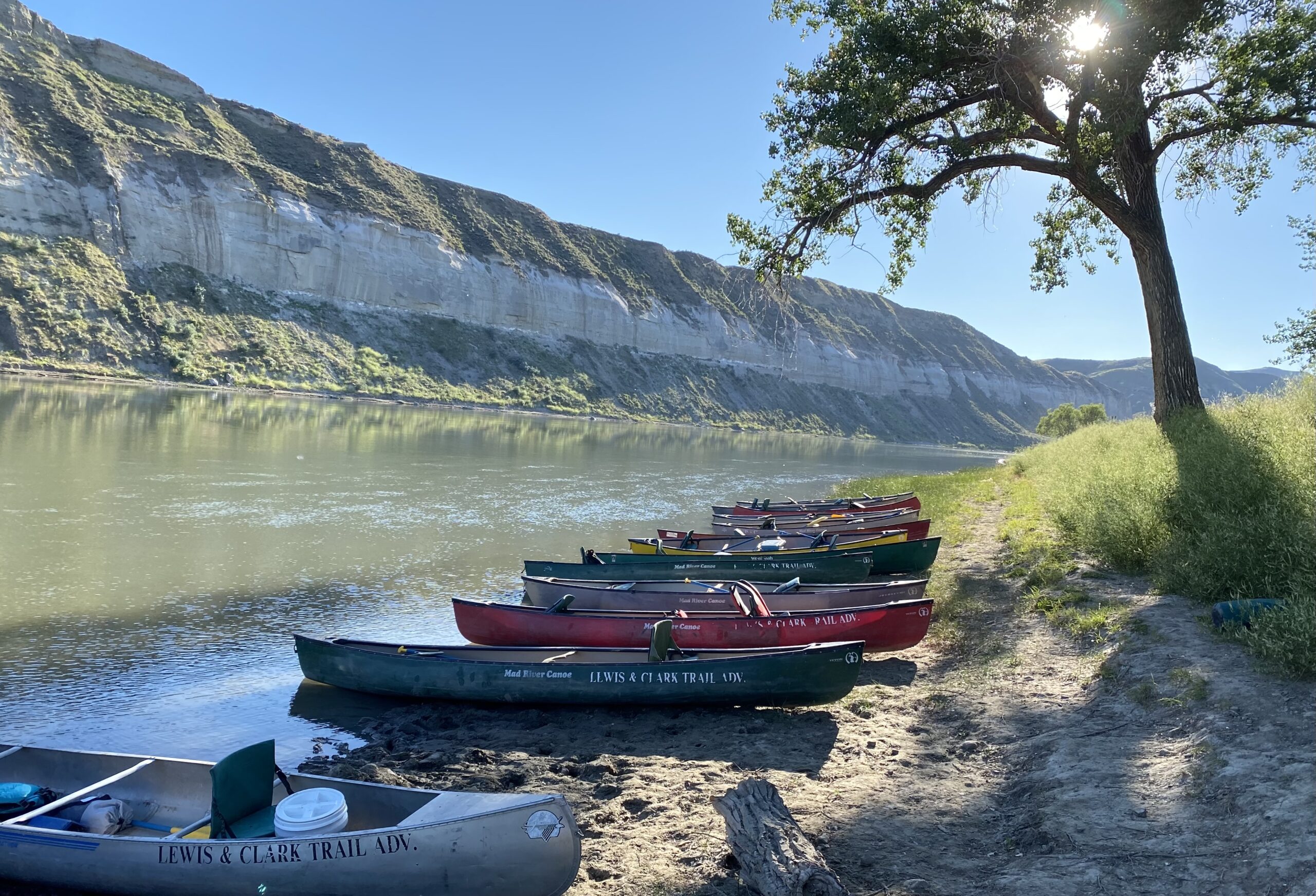White Cliffs, Upper Missouri River, Montana. (Photo Dennis McKenna)
It was the Greek presocratic philosopher Heraclitus (ca. 500 BCE) who said you can never walk into the same river twice. You are a different person, and you are wading into a different river. I have been a lover of rivers all my life. I grew up on a miserable little plains creek called Heart River in western North Dakota. But only 35 miles to the west flows the magical Little Missouri, which is where I feel the spirit of place most intensely. The Little Missouri is a tributary of the Missouri River proper, which, depending on how you count, is the longest river in America and the fourth or fifth largest in the world. The Little Missouri starts at Devils Tower in Wyoming and disembogues into the mighty Missouri at Twin Buttes, North Dakota. I have walked it in its entirety, with one more coming.
As I write this, I’m sitting in the “library” of a log cabin lodge on the Lochsa River in eastern Idaho. For the past 10 days I have been leading my 26th annual Lewis and Clark Cultural Tour in Montana and Idaho. We had 22 guests this year, all of them new to the experience. One woman, from Japan, had never been camping before, had never been in a sleeping bag, had never used an outhouse, had never slept in a tent (had never zipped up a tent!). Welcome to America, Grace! What she was doing with us is unclear, but she seems to have had a great time, and we very much enjoyed her presence among us.
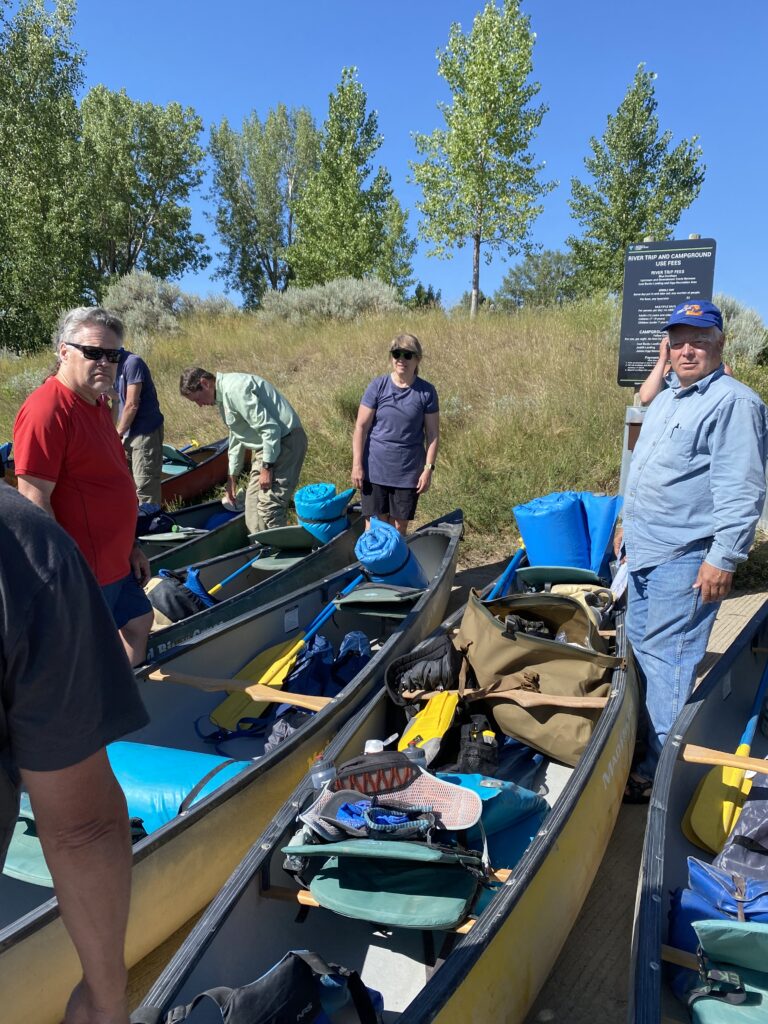Almost ready to shove off from Coal Banks Landing, Montana. Russ in red on left, Clay in blue shirt and cap. (Photo Dennis McKenna)
So, 26 summers in a row I have canoed from Coal Banks Landing (near Fort Benton, Montana) to Judith Landing. This is easily the most beautiful section of the entire Missouri River, and the one that still looks more or less as it would have looked to Meriwether Lewis in 1805. He famously called the White Cliffs “scenes of visionary enchantment.” He likened the white cliffs to ancient ruins of castles and fortifications. I’m always happiest on the second day on the river, a 22-mile float, when in mid-afternoon the ambient temperature is about 90 degrees (zero humidity) and the water is just cool enough to be bracing. At every stop we wade out into the river to cool off. Up here you could walk all the way across the Missouri River if you really wanted to, though the current in the middle is brisk. I’m happiest when the winds are calm, and we could drift down the river towards Bismarck, North Dakota, Pierre South Dakota, Sioux City, Iowa, Omaha, Nebraska, Kansas City and St. Louis, Missouri and then on to New Orleans, Louisiana and the sea. The vast primordial silence of Montana is broken only by the occasional light hum of a commercial airplane at 38,500 feet.
My canoe partner Russ is a brainy taciturn fellow. He likes to keep moving. We spent 12 hours together on the canoe portion of the cultural tour, he in front, I in back, with only our dry bags and diet beverages as freight. I don’t think we exchanged more than five minutes total of talk this year. That’s a very good friendship. He pretends to be grumpy, and I pretend to be quiet.
The second part of the journey is up on the Lolo Trail (the Nez Perce Trail) through the northern neck of Idaho, west of Missoula, Montana but short of Orofino, Idaho. After a good night of food, drink, and rest at Lochsa Lodge, we are driven to the put-in point for the annual ordeal, what I call the Wendover Death March (with sincere apologies to families of men who endured the Bataan Death March in April 1942). The WDM is 7.5 miles more or less straight up from the Lochsa River to the Lolo Trail, 3,500 feet higher in the Bitterroot Mountains. Captain Lewis was not the sort of explorer who employed switchbacks, so the hike is always difficult and it can be something of an ordeal. I joke with our guests that every time I complete the hike I vow “never again,” but that is not really true. I will continue to lead this annual tour until I can’t hack it anymore. But at my age, I have to spend part of my day on that hike wondering if it is for the last time. That day is surely coming.
Clay hiking the Lolo Trail.
I regard the Wendover hike as my “same time next year” moment, when I step back to assess the state of my mind, body, heart, and spirit. This year’s hike was not as hard as some in previous years, but I can definitely feel the dynamics of physical decline. It kills me to think that you apparently have to use your body to keep it alive! Every year about halfway up the mountain I vow to 1) lose weight; 2) get fit; 3) do serious training; 4) take practice hikes up steep hills; 5) and next year scamper up that trail with only a couple of hydration stops, and then perform some Rocky Balboa victory gestures at the top. Then suddenly it is the week before the hike and I wonder if I will collapse halfway up.
For a range of reasons, my spirit is in a happy and expansive state. My mind is alive and well, except for the increasingly prolonged episodes of memory lapse, in which I spend an hour trying to remember the name of a book or an author or a musician or an actor. A few months ago it took me an hour and 20 minutes to remember the name of Whoopi Goldberg, even though I don’t care a bit about Whoopi Goldberg, but refused to look it up no matter if it was the last brain freeze of my life.
We’ve been off the grid. For the last 10 days I have not spent a single moment dwelling on the national situation — the political paralysis, the partisan wrangling, the degradation of civility, the culture of grievance and retribution, the Crisis of the Reflecting Pool, etc. When I turned my phone on again this morning, I immediately encountered the headline: “Trump Holds Off Airstrikes in Hopes of an Early Agreement.” Hey, I could have seen that exact headline a week ago, a month ago, five months ago. So this is no Venezuela. Not much changes when you shut down the newsfeed for a few days. Oh, and LeBron has broken Cleveland’s heart again. And Christopher Nolan’s *Odyssey* is getting mixed reviews.
## **The American Assurance**
This year, more than any other in 26 years, I have been aware of what a blessing it is to live in the United States of America, where we had the foresight to set aside significant chunks of the national landscape, especially in the West, for permanent protection from industrial extraction and intrusion. Our National Parks, Monuments, Forests, Game Preserves, and Wildlife Refuges are the envy of the world. We are a very young country compared to our European counterparts. It was too late in the history of those nations to preserve their most sublime landscapes when America invented the National Parks and Monuments system just after the Civil War. Yellowstone National Park 1872.
I know that if I fetch a backpack out of my garage, and stuff it with a sleeping bag, a miniature cooker, some freeze dried food packets, a headlamp, some camp moccasins, and a bar of soap, and strap my kayak on top of my vehicle, I can within a couple of hours be all alone in the badlands of North Dakota, where there are plenty of places to camp and scores of places to sit in the Little Missouri River with or without a book. Within a day’s drive of my home in Dakota, I can go to the White Cliffs in Montana, Black Elk Peak in the Black Hills of South Dakota, Glacier National Park, the Boundary Waters in northern Minnesota, or Grasslands National Park in Saskatchewan.
Theodore Roosevelt was certain that urbanized men and women need to have wild places to visit to clear their minds, refresh their souls, get back to basics, and renew their love of America. He set aside 230 million acres of the public domain for permanent protection. We owe TR more than we can possibly acknowledge. When I hear people who seek to condemn Roosevelt for a few of the less attractive qualities of his life and mind, I think of what America would be like without his five National Parks and 18 National Monuments, 150 million acres of National Forest, and 51 Wildlife Refuges. Roosevelt did what William McKinley did not do, what William Howard Taft didn’t do, nor Woodrow Wilson, nor Calvin Coolidge, nor William Harding, nor Herbert Hoover. The thing I have most missed about America when I am abroad is the West — Monument Valley, the Yellowstone River cottonwoods in early October, Chaco Canyon, the Little Bighorn, the stunning abruptness of the High Sierra, the redwoods. … Yes, in most English villages you can buy the complete works of Charles Dickens or Jane Austen at a convenience store, but where in England can you stare down into the abyss of the Grand Canyon or gaze up at Mount Shasta?
## **Public Lands Under Assault**
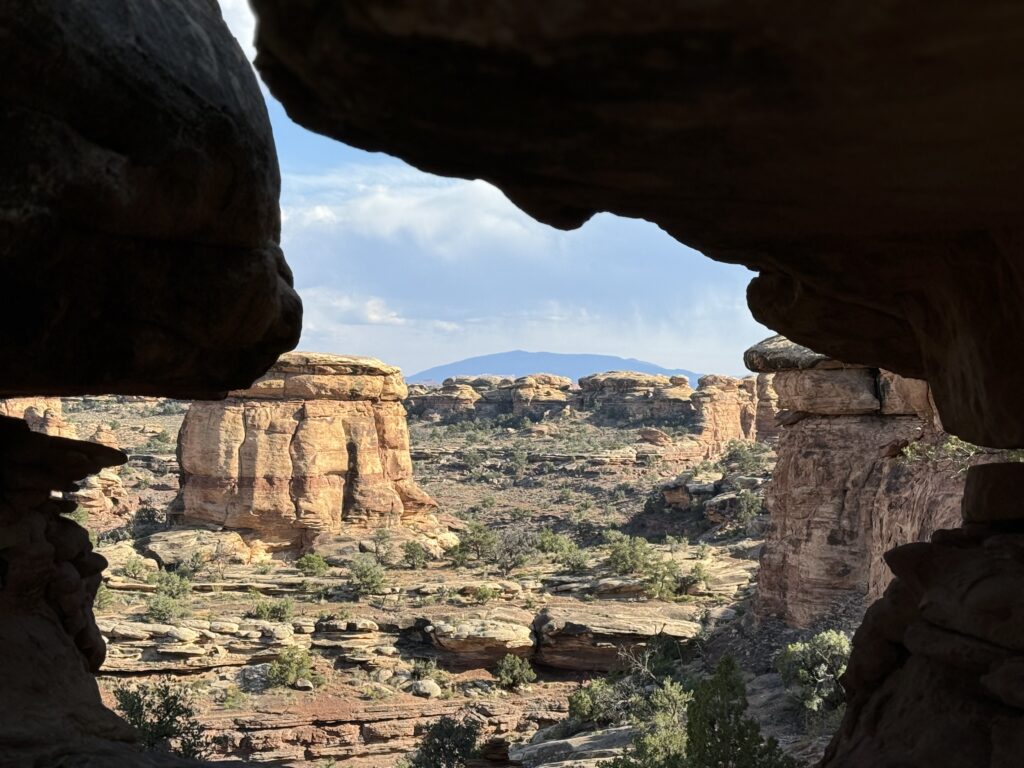The Needles District in Canyon Lands National Park, Utah. (Photo D. McKenna)
I am particularly attuned to America’s public lands this summer because they are under attack. There are forces on the far right of the American political spectrum that seek to reduce or eliminate some of our National Monuments, permit mineral extraction in the National Parks, and privatize parcels of the public domain that promise extractive wealth. They are completely serious about shattering the public lands “settlement” of the last 150 years, selling off some of the most beautiful places in the West to their gazillionaire cronies to be gated off for their own private enjoyment. And they have friends in very high places.
To permit them to get away with this land grab would be a national tragedy. Even if you don’t visit Grand Teton National Park in Wyoming or Big Bend in Texas, you are saner and better off knowing they are there waiting for you to drive through their portals with a sigh of anticipation. In my opinion, America without its carefully protected landscapes is just a wealthy country with a diminished soul. If they allowed jet skis and motorboats through the White Cliffs of the Missouri River, they would destroy it. We saw viewsheds on the Wendover hike that would make a great place for a five-star resort — if your vision of America were of privileged people locking up the best of it for their exclusive pleasure grounds.
I know this. Americans love their National Parks and Monuments. In any honest plebiscite, the American people would vote overwhelmingly to preserve all of the public domain, appropriate more money for the maintenance of these treasures, and declare the public lands off limits to the forces of greed and exploitation. This does not guarantee that the “developers” will accept the will of the American people. We live in a time when the idea of democracy is endangered and the most potent and self-satisfied economic entities are gunning to take what is left to turn the American Eden into luxury subdivisions or uranium mines.
We, lovers of the American outback, are going to have to make our voices clear, unambiguous, and — if necessary — loud. Once you privatize a parcel of the West, you can never return it to its primordial glory. No small group of greedy individuals can be allowed to dictate the future of America’s public lands. Thoreau said, “In wildness is the preservation of the world.” There is infinite blessing in sitting around a campfire way beyond the reach of the grid, drinking camp coffee, eating bacon and scrambled eggs, maybe taking a snort of some powerful beverage, looking up to see the constellations as they wake up the night, and listening for the freedom-call of the coyotes and talking about Life.
I’ll be back to the Wendover Death March at the end of July 2027. I’ll be fit as a fiddle, strong as a bull moose, muscled up, and ready for any contingency. … Or perhaps just as slipshod and pathetic as this last week! And yet I have never whined about the strain, not once in a quarter century.
Same time next year.
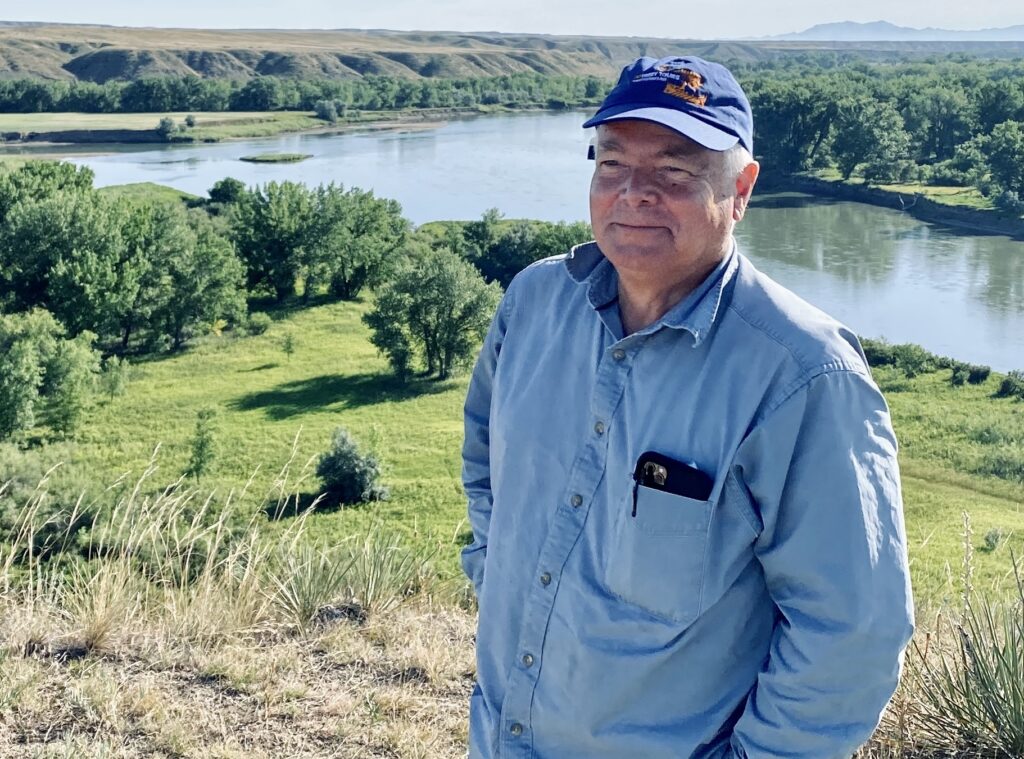Clay at confluence of the Marais and Missouri Rivers east of Fort Benton, Montana.
---
## ***Discover more on these topics at Listening to America***
[Theodore Roosevelt](https://ltamerica.org/tag/theodore-roosevelt/ "16 topics")[New York](https://ltamerica.org/tag/new-york/ "8 topics")[South Dakota](https://ltamerica.org/tag/south-dakota/ "16 topics")[Poetry](https://ltamerica.org/tag/poetry/ "1 topics")[Oppenheimer](https://ltamerica.org/tag/oppenheimer/ "1 topics")[State Parks](https://ltamerica.org/tag/state-parks/ "2 topics")[Walden](https://ltamerica.org/tag/walden/ "1 topics")[north daktoa](https://ltamerica.org/tag/north-daktoa/ "0 topics")[Wisconsin](https://ltamerica.org/tag/wisconsin/ "0 topics")[Wyoming](https://ltamerica.org/tag/wyoming/ "4 topics")[Texas](https://ltamerica.org/tag/texas/ "4 topics")[Podcast](https://ltamerica.org/tag/podcast/ "1 topics")[Reading](https://ltamerica.org/tag/reading/ "1 topics")[Rivers](https://ltamerica.org/tag/rivers/ "3 topics")[Video](https://ltamerica.org/tag/video/ "51 topics")[Washington](https://ltamerica.org/tag/washington/ "2 topics")[William Shirer](https://ltamerica.org/tag/william-shirer/ "1 topics")[Thomas Jefferson](https://ltamerica.org/tag/thomas-jefferson/ "34 topics")[Utah](https://ltamerica.org/tag/utah/ "11 topics")[Vermont](https://ltamerica.org/tag/vermont/ "1 topics")[Ohio](https://ltamerica.org/tag/ohio/ "2 topics")[Virginia](https://ltamerica.org/tag/virginia/ "7 topics")[Pennsylvania](https://ltamerica.org/tag/pennsylvania/ "1 topics")[Water in the West](https://ltamerica.org/tag/water-in-the-west/ "24 topics")[Rome](https://ltamerica.org/tag/rome/ "1 topics")[Thoreau](https://ltamerica.org/tag/thoreau/ "5 topics")[Republics](https://ltamerica.org/tag/republics/ "1 topics")[Steinbeck Travels](https://ltamerica.org/tag/steinbeck-travels/ "75 topics")[North Carolina](https://ltamerica.org/tag/north-carolina/ "3 topics")[Travel](https://ltamerica.org/tag/travel/ "1 topics")[North Dakota](https://ltamerica.org/tag/north-dakota/ "53 topics")[Republic](https://ltamerica.org/tag/republic/ "0 topics")[New Mexico](https://ltamerica.org/tag/new-mexico/ "3 topics")[U.S. Presidents](https://ltamerica.org/tag/u-s-presidents/ "71 topics")[Tennessee](https://ltamerica.org/tag/tennessee/ "1 topics")[Oregon](https://ltamerica.org/tag/oregon/ "4 topics")[Road Trips](https://ltamerica.org/tag/road-trips/ "18 topics")[Space Exploration](https://ltamerica.org/tag/space-exploration/ "8 topics")[paintings](https://ltamerica.org/tag/paintings/ "0 topics")[South Carolina](https://ltamerica.org/tag/south-carolina/ "1 topics")[Sports](https://ltamerica.org/tag/sports/ "2 topics")[U.S. Constitution](https://ltamerica.org/tag/u-s-constitution/ "1 topics")[Oppenheim](https://ltamerica.org/tag/oppenheim/ "0 topics")[The Constitution](https://ltamerica.org/tag/the-constitution/ "1 topics")[New England](https://ltamerica.org/tag/new-england/ "1 topics")
**Categories:** Dispatches from the Road
**Tags:** America at 250, Lewis and Clark, National Parks, Theodore Roosevelt
---
### [A Review of Christopher Nolan's The Odyssey](https://ltamerica.org/a-review-of-christopher-nolans-the-odyssey/)
**Published:** July 27, 2026
**Author:** Clay Jenkinson
**Excerpt:** I rushed from Missoula, Montana, to Billings the other day to see Christopher Nolan’s Odyssey at a modified limited IMAX theater. This was the same theater where I first saw Nolan’s Oppenheimer three years ago. Quick take: I liked Oppenheimer better, but read on ...
**Content:**
## I rushed from Missoula, Montana, to Billings the other day to see Christopher Nolan’s *Odyssey* at a modified limited IMAX theater. This was the same theater where I first saw Nolan’s *Oppenheimer* three years ago. Quick take: I liked *Oppenheimer* better, but read on … (note: spoiler alerts ahead).
Matt Damon as the hero Odysseus in Christopher Nolan’s new film epic *The Odyssey*. (Photo Melinda Sue Gordon/Universal Pictures)
The theater was full almost to the last seat. I’m not sure what brought all the others to the viewing. I tried to imagine what the audience, mostly young people, knew about the *Odyssey*. Is it still taught in schools? Are the stories of the one-eyed Cyclops, Scylla and Charybdis, and the Trojan Horse still part of our general cultural inheritance? What do young people today know about the *Iliad* and the *Odyssey*? Matt Damon is always a draw. Charlize Theron is stunning as the semi-divine Calypso. Director Nolan is a hot commodity. Moreover, *The Odyssey* is the story of war, epic battles, monsters, and shipwrecks, so it resonates with the Marvel Comics obsession of current Hollywood. I hope that some of those who watched the film rushed afterward to the local bookstores to buy a copy of *The* *Odyssey*, like those who have encountered their first Jane Austen “novel” in a movie theater and then purchased the book.
As I looked around at several hundred others enduring previews of coming attractions, I reckoned that I was the only person in that Montana theater who had been to Troy. That seemed certain. I have visted Troy twice, separated by 30 years, and each time I have run “three times around Troy wall” in homage to swift-footed godlike Achilles, the hero of the *Iliad*. Troy is not one of those places you happen upon in your travels. The ancient ruin is in the far northwest corner of Turkey and getting there is not easy.
The famous Mask of Agamemnon, a golden funerary mask found by archaeologist Heinrich Schliemann in 1876 in Mycenae, southern Greece. Schliemann believed it belonged to the legendary King Agamemnon.
I reckoned, too, that I was the only person in that AMC theater who had read Homer in the original Greek. Not well and not recently, but several decades ago I struggled through quite a bit of the *Iliad* in Homeric Greek and some of the *Odyssey*. My limited background in ancient Greek would not be unique in a Boston or Berkeley theater. Still, I’m guessing nobody else on a Sunday evening in Billings, Montana, had wrestled with Homer’s [dactylic hexameter](https://www.poetryfoundation.org/education/glossary/hexameter), as I did for about six hours a day for most of a year — in another life.
On four or five occasions I have spent time at Mycenae in the Peloponnese in southern Greece, home of Agamemnon, the leader of the Greek army at Troy; at Crete, home of the Greek leader Idomeneus; at Pylos, the home of the ancient Greek counsellor Nestor; and at the National Archaeological Museum in Athens, which conserves the famous “Mask of Agamemnon” unearthed at Mycenae by the German Homer idolater Henrich Schliemann on November 30, 1876.
I’ve read the *Iliad* in various translations 20 or more times and the *Odyssey* a dozen or more. I’ve taught both epics to university students.
I’m not sure any of that gives me any advantage.
## **Love-Hate**
When I saw *Oppenheimer* in 2023, I expected to hate it. I know a lot about J. Robert Oppenheimer, the making of the atomic bomb, and the decision to use the weapon of mass destruction at Hiroshima and Nagasaki. But I loved Nolan’s *Oppenheimer*, especially Robert Downey Jr.’s outstanding performance as Oppenheimer’s principal antagonist, Lewis Strauss. Because of that deeply satisfying experience, I expected to love *The Odyssey*.
Mostly but not entirely.
In the weeks leading up to the film’s release, I read some of the conservative whining about casting a black Helen of Troy (Lupita Nyong’o) and casting Elliot Page (a transgender actor) as Sinon, an essential figure in the story of the Trojan Horse. I don’t suppose it is worth reminding these folks that Helen (the most beautiful woman in the world, “the face that launched a thousand ships”) is an entirely fictional character, not a historical figure; that we have no more idea of what she would have looked like than we do of Jesus or Moses or Eve; that she was certainly not Nordic; and that she and her sister Clytaemnestra (also portrayed by Lupita Nyong’o) were hatched from swan’s eggs! (Read Yeats’ [*Leda and the Swan*](https://www.poetryfoundation.org/poems/43292/leda-and-the-swan) for the back story.)
Talk about snowflakes! These cultural conservatives blow a fuse whenever they perceive (or invent) that the liberal cultural establishment is betraying them. Lupita Nyong’o is extraordinarily beautiful. Nolan’s point, certainly, is that beauty is not necessarily white and white is not necessarily beauty. In the 2004 film *Troy,* Helen, portrayed by Diane Kruger, was beautiful (as Helen must be), but in a conventional Hollywood sort of way. Nobody will forget Nolan’s Helen. His casting may drive certain conservatives nuts, but he is asking us all to rethink our simplistic assumptions about history, mythology, and beauty. Elliot Page is superb as Sinon, who is a liminal figure in the Trojan story.
None of this troubled me in the slightest. Frankly, I did not know anything about Elliot Page’s gender status, but the performance was compelling.
Vase circa 480–470 BC of Odysseus and the sirens. (British Museum)
I entered the theater more worried about Matt Damon. I’ve long admired his work (especially *The Martian* and *True Grit*), but I thought he “called it in” as the irascible SOB Leslie Groves in Nolan’s *Oppenheimer*. In that film, I was never unaware that it was Matt Damon playing Groves; I never was able to suspend my disbelief. But I was very pleasantly surprised in Billings. Damon was excellent as Odysseus, no longer too cute or too young for the part. In the famous Sirens scene — the other men rowing with wax in their ears, Odysseus tied to the mast so that he could hear the Sirens’ fatally alluring music and still survive to tell the tale — Damon’s Odysseus was reduced to uncontrollable bawling, as if his consciousness was right on the lip of total nervous collapse. I’m guessing there was a lot of pre-filming debate about how to portray this quintessential Homeric moment, the subject of one of the [greatest of all Greek vases](https://www.worldhistory.org/image/998/odysseus-and-the-sirens/), and the very embodiment of the playwright Terence’s maxim, “*homo sum, humani nil a me alienum puto, “nothing that humans experience is alien to me.”*
In Homer, it is Odysseus’ irrepressible curiosity that gets him into most of his scrapes, and his desire to maintain his status as war hero and a man so clever that he can get himself out of virtually any trap.
In *Oppenheimer*, Nolan violated the historical record by suggesting that Robert Oppenheimer cooperated in his 1954 fall from grace — public humiliation and the loss of his security clearance — as a way of distancing himself morally from the appalling weapon he created. There is no evidence for that interpretation in the historical record. In my opinion, that distortion damages an otherwise outstanding film. In *The Odyssey*, Nolan makes Odysseus a man of guilt and sorrow, who comes to believe that his Trojan Horse trick was unheroic and unethical and believes that he has failed his responsibility in not bringing his men home safely. There is no such hand wringing in the Homeric original. However, we can assume implicitly that returning to Ithaka after 20 years without even one of the men he recruited for the war against Troy would be hard to explain to his comrades’ relatives. Moreover, at the end of the film Odysseus and Penelope — finally reunited — sail west into exile to avoid the wrath of the kin of the suitors he and his son have murdered: the wastrels who have been harassing Penelope and devouring the king’s estate by way of continual orgiastic feasting.
A director adapting a book — especially a classic — into a movie has three options: 1) attempt to transfer everything in the book as literally as possible to the screen, with necessary allowances for the difference in mediums (think of BBC adaptations of Dickens or Jane Austen); 2) use the book merely as a starting point and springboard and do whatever she or he wishes with it (Spiderman); or 3) make adjustments in detail and even plot, but work earnestly to be faithful to the essential themes and “meaning” of the book. In making Odysseus a man of remorse — with a long PTSD-laced monologue near the end of the film about how his actions at Troy have brought on the collapse of the [Bronze Age](https://www.history.com/articles/bronze-age) and the beginning of the long Greek Dark Ages — Nolan has violated the essential meaning of Homer’s Odyssey. Homer’s Odysseus returns home after 20 years disguised as a beggar, meets his son, kills the disreputable suitors, cleanses his house, restores order, and reunites with his long-suffering wife. He decidedly does not wring his hands about all the things he had to do to survive the war and return home safely to Ithaka. In my view, a director taking on one of the world’s classics has a duty to get the basic meaning right, to be faithful to the intention of the author. If Homer could meet Christopher Nolan over a glass of [Pramnian wine](https://afianeswines.gr/en/our-wines/wine-tradition/christopher-nolan-odyssey-pramnian-wine-ikaria/) at the Chateau Marmont in Hollywood, he’d want to know why Nolan darkened the ending of his great work of fiction. The reunion of Odysseus and Penelope is a moment of unalloyed satisfaction. What’s the point of coming home after 20 years if you and your wife have to go into exile?
## **A Major Omission**
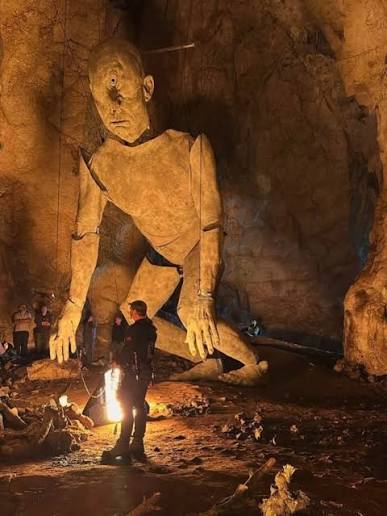Cyclops in *The Odyssey.*
Nolan’s Cyclops Polyphemus was repulsively intriguing, much more than his wormlike Scylla, who seems to be dressed in costumes leftover from the 1990 Kevin Bacon film *Tremors*. Why Nolan brought the murderous armored Laestrogonians into the film is unclear, since they play a very minor role in the Homeric epic. Samantha Morton was magnificent as the sorceress Circe, who transformed all of Odysseus’ men into pigs to reveal their essential bestiality. Nolan’s CGI handling of the metamorphosis of Odysseus’ companions is one of the most arresting moments in the film. And yet here Circe is an older woman terrified that Odysseus’ men will rape her, whereas in Homer she is a bewitching sorceress who beds Odysseus for a full year before finally sending him on his way.
Even in a 2-hour and 52-minute film, any director is going to have to leave out a great deal in the telling. The long opening scene of the foolish Trojans dragging the giant horse statue on rollers through the city gates (“beware of Greeks bearing gifts”) is impressive, but it must have been ruinously expensive to produce. Nolan could have saved a million dollars (or more) with a simple jump cut.
Nolan left out what I regard as an essential episode of the *Odyssey* — the shipwrecked Odysseus washing up on the island of the Phaeacians, more dead than alive, and being discovered on the beach by the nubile princess Nausicaa. This, in book six, is one of the finest and most delicate scenes in all of literature. Nausicaa almost immediately decides that the bedraggled stranger would make a great husband, and her parents (the king Alcinous and queen Arete) agree. After all his troubles — 10 years of ruinous war, another 10 of an exceedingly difficult attempt to get home — Odysseus suddenly has the opportunity to begin a new life with a young and beautiful woman, on an island where he would be honored, wealthy, and powerful. In contrast, he has no idea whether his wife Penelope back at Ithaka is still alive or whether she has been faithful during his two-decade absence. Nausicaa amounts to the “last temptation of Odysseus.” In some respects, he’d be a fool not to accept the Phaeacians’ offer, but he declines with enormous grace, and makes his way home at last. In none of the previous film versions of *The Odyssey* has this great scene been given the delicate treatment it deserves, and Christopher Nolan was exactly the right director to bring it to life. This, in my view, was a serious directorial mistake, and I don’t think I speak as a Homeric purist or pedant in making this judgment. In the course of the epic, Odysseus has declined two previous chances to spend eternity with forever-young goddesses. Now he has the opportunity to start a new life with a young, beautiful, clever, and willing woman on a magical, Edenic island. He declines. He wants to go home. He wants to reunite with Penelope.
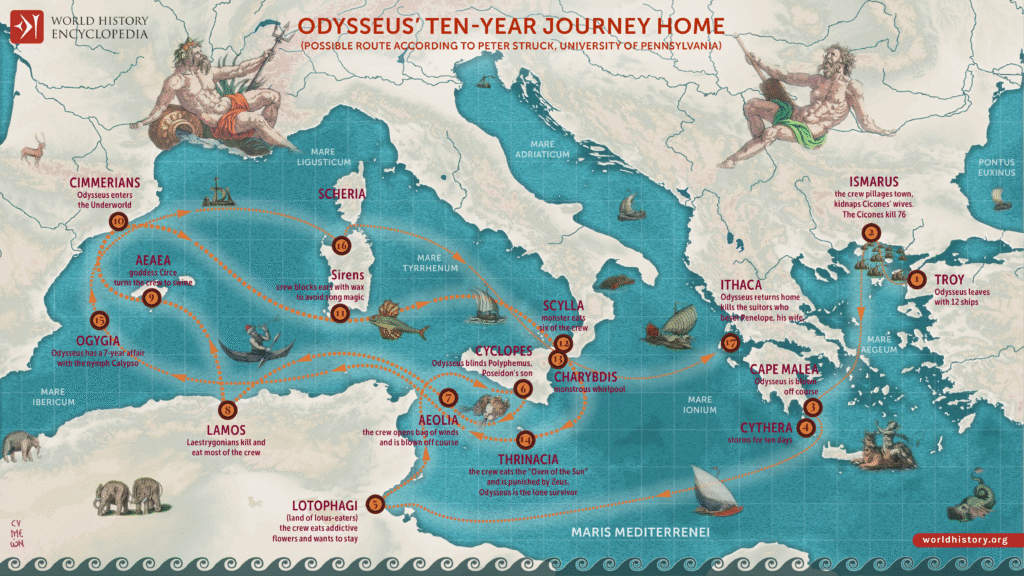Map showing Odysseus’s 10-year journey home across the eastern Mediterranean. (World History Encyclopedia)
## **It’s a Fairy Tale**
Here, in my view, is the major problem of the film. Homer’s *Odyssey* is a fairy tale. It is the story of a man who left for the war soon after his only child was born; spent 10 futile years besieging the impregnable walls of Troy; finally won the war with a highly improbable hollow horse trick; offended the gods in the sacking of Troy; was punished for a full 10 years by the gods, principally Poseidon (the wrong god to offend on a sea voyage); met (and survived) horrific monsters, witches, and lusty goddesses along the way; arrived home (after 20 years!) disguised as a broken down beggar; performed the impossible dozen-axes archery test; killed the 108 suitors who were trying to steal his amazingly faithful wife; then was “tested” by his wife with a bed-identification quiz to make sure he was truly Odysseus. … Fairy tales are better left to the imagination. Nobody wants to see *Snow White* or *Cinderella* performed by human actors. When you try to cast and costume fairy tale heroes on a Hollywood set, you invariably come up against very challenging and difficult-to-film episodes (the slaughter of the suitors feels like a Jackie Chan movie), and you inevitably drain some of the magic out of the story.
In some respects, [Wolfgang Peterson’s 2004 *Troy*](https://www.imdb.com/title/tt0332452/) was a less problematic story to try to turn into a movie, because it is about single combat, battles, the existential problem of being a warrior for someone else’s cause, and a quarrel between two of the principal Greek leaders. Peterson wisely left the gods out of *Troy*, and there was nothing supernatural to contend with. Hollywood is good at epic battle scenes.
## **Still …**
It may seem as if I disliked the film. Actually, I loved it despite what I regard as its weaknesses. I guess my point is that Christopher Nolan could have made a much better film if he had concentrated more on Homer’s exploration of a post-heroic Odysseus and less on spectacle.
I will see *The Odyssey* again, and again, and maybe again. As soon as I got home, I fetched out my copy of Allen Rogers Benner’s [*Selections from Homer’s Iliad*](https://www.oupress.com/9780806133638/selections-from-homers-iliad/), and then laughed a big Homeric laugh at the likelihood that I will get very far into the Greek text at this late juncture of my life. But I agree with Thomas Jefferson that it is worth learning some ancient Greek if only to read Homer in the original.
---
## ***Discover more on these topics at Listening to America***
[Wyoming](https://ltamerica.org/tag/wyoming/ "4 topics")[Tennessee](https://ltamerica.org/tag/tennessee/ "1 topics")[Virginia](https://ltamerica.org/tag/virginia/ "7 topics")[Oppenheim](https://ltamerica.org/tag/oppenheim/ "0 topics")[Ohio](https://ltamerica.org/tag/ohio/ "2 topics")[Poetry](https://ltamerica.org/tag/poetry/ "1 topics")[The Constitution](https://ltamerica.org/tag/the-constitution/ "1 topics")[Rivers](https://ltamerica.org/tag/rivers/ "3 topics")[William Shirer](https://ltamerica.org/tag/william-shirer/ "1 topics")[Oregon](https://ltamerica.org/tag/oregon/ "4 topics")[Video](https://ltamerica.org/tag/video/ "51 topics")[Sports](https://ltamerica.org/tag/sports/ "2 topics")[paintings](https://ltamerica.org/tag/paintings/ "0 topics")[U.S. Presidents](https://ltamerica.org/tag/u-s-presidents/ "71 topics")[Vermont](https://ltamerica.org/tag/vermont/ "1 topics")[Pennsylvania](https://ltamerica.org/tag/pennsylvania/ "1 topics")[Republic](https://ltamerica.org/tag/republic/ "0 topics")[Walden](https://ltamerica.org/tag/walden/ "1 topics")[New England](https://ltamerica.org/tag/new-england/ "1 topics")[Washington](https://ltamerica.org/tag/washington/ "2 topics")[Thomas Jefferson](https://ltamerica.org/tag/thomas-jefferson/ "34 topics")[Steinbeck Travels](https://ltamerica.org/tag/steinbeck-travels/ "75 topics")[Travel](https://ltamerica.org/tag/travel/ "1 topics")[Republics](https://ltamerica.org/tag/republics/ "1 topics")[Reading](https://ltamerica.org/tag/reading/ "1 topics")[Theodore Roosevelt](https://ltamerica.org/tag/theodore-roosevelt/ "16 topics")[Texas](https://ltamerica.org/tag/texas/ "4 topics")[Wisconsin](https://ltamerica.org/tag/wisconsin/ "0 topics")[South Carolina](https://ltamerica.org/tag/south-carolina/ "1 topics")[New Mexico](https://ltamerica.org/tag/new-mexico/ "3 topics")[U.S. Constitution](https://ltamerica.org/tag/u-s-constitution/ "1 topics")[North Dakota](https://ltamerica.org/tag/north-dakota/ "53 topics")[South Dakota](https://ltamerica.org/tag/south-dakota/ "16 topics")[Oppenheimer](https://ltamerica.org/tag/oppenheimer/ "1 topics")[North Carolina](https://ltamerica.org/tag/north-carolina/ "3 topics")[New York](https://ltamerica.org/tag/new-york/ "8 topics")[Water in the West](https://ltamerica.org/tag/water-in-the-west/ "24 topics")[Utah](https://ltamerica.org/tag/utah/ "11 topics")[north daktoa](https://ltamerica.org/tag/north-daktoa/ "0 topics")[Rome](https://ltamerica.org/tag/rome/ "1 topics")[State Parks](https://ltamerica.org/tag/state-parks/ "2 topics")[Thoreau](https://ltamerica.org/tag/thoreau/ "5 topics")[Podcast](https://ltamerica.org/tag/podcast/ "1 topics")[Space Exploration](https://ltamerica.org/tag/space-exploration/ "8 topics")[Road Trips](https://ltamerica.org/tag/road-trips/ "18 topics")
**Categories:** Features
**Tags:** Books, Humanities
---
### [A Plea for the Public Lands](https://ltamerica.org/a-plea-for-the-public-lands/)
**Published:** July 21, 2026
**Author:** Clay Jenkinson
**Excerpt:** On July 13, 2026, President Trump issued orders reducing Bears Ears and Grand Staircase-Escalante national monuments for a second time. Grand Staircase-Escalante was reduced by approximately 1.69 million acres, representing a 90% reduction of the monument's land area, shrinking its total size from roughly 1.87 million acres to 181,541 acres. Bears Ears National Monument was reduced from 1.36 million acres to 121,100 acres.
**Content:**
## On July 13, 2026, President Trump issued orders reducing Bears Ears and Grand Staircase-Escalante national monuments for a second time. Grand Staircase-Escalante was reduced by approximately 1.69 million acres, representing a 90% reduction of the monument’s land area, shrinking its total size from roughly 1.87 million acres to 181,541 acres. Bears Ears National Monument was reduced from 1.36 million acres to 121,100 acres.
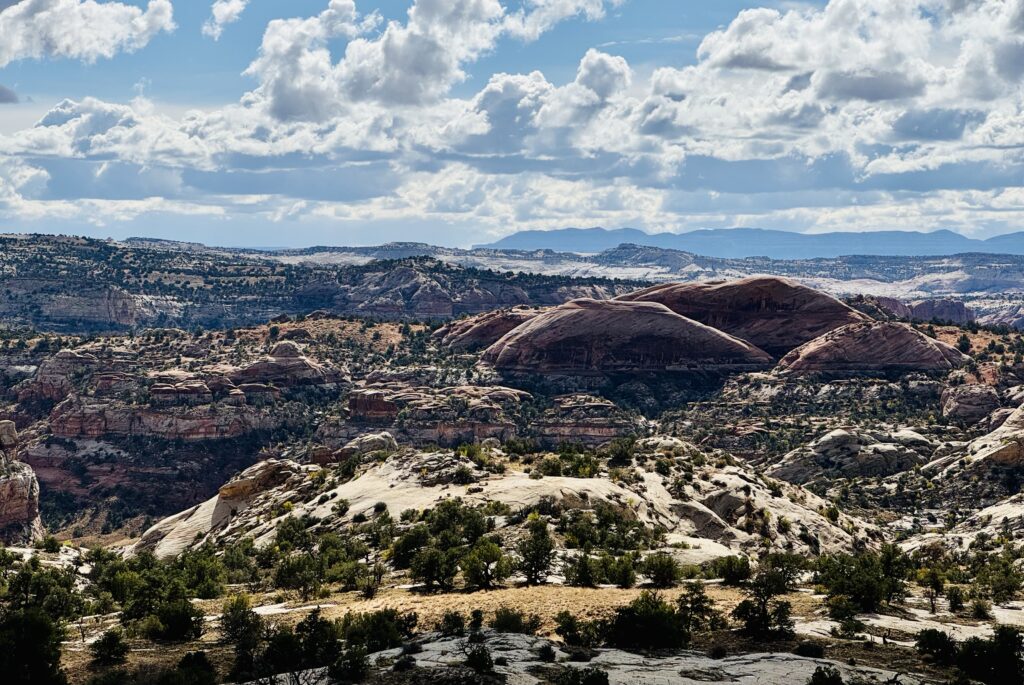The Grand Staircase-Escalante National Monument. (Photo Dennis McKenna)
I was terribly saddened to learn that President Trump has signed proclamations reducing the Grand Staircase-Escalante National Monument from 1.87 million acres to just 181,500 acres, and reducing Bears Ears National Monument from 1.36 million acres to just 121,500 acres. Both are in Utah. He’s also going after the protective perimeter around one of America’s greatest Indigenous community sites: [Chaco Culture National Historic Park ](https://ltamerica.org/the-solar-eclipse-of-2024-a-view-from-chaco-canyon/)in northwestern New Mexico.
This follows Secretary of Interior Doug Burgum’s earlier 2026 arbitrary withdrawal of existing Bureau of Land Management (BLM) grazing permits for the fabulous [American Prairie project ](https://ltamerica.org/a-struggle-for-the-public-commons-buffalo-the-department-of-interior-american-prairie-reserve/)in north-central Montana, a public-private partnership that seeks to create a free-range pasture for up to 35,000 bison — bison that could live their entire lives without encountering a fence.
These arbitrary and probably illegal executive actions come straight out of the right wing’s [Project 2025](https://static.heritage.org/project2025/2025_MandateForLeadership_FULL.pdf) playbook, which seeks to allow dramatically greater mineral extraction from America’s public lands (your lands), including on National Monuments and National Parks, and seeks also to privatize swaths of the public domain.
Here are a few things to think about.
**First**, it is not clear that President Trump’s proclamations reducing these National Monuments are legal. The landmark [Antiquities Act](https://ltamerica.org/the-great-but-forgotten-conservationist-john-f-lacey/), passed by Congress and signed into law by President Theodore Roosevelt on June 8, 1906, gives the president of the United States unilateral authority to designate National Monuments. Roosevelt named the first 18. Now we have more than 160. Nothing in the enabling legislation gives another president the power to reduce or abolish a National Monument once designated. A 1938 clarifying ruling by then Attorney General Homer Cummings declared that later presidents do not have the right to abolish National Monuments, but Trump’s Justice Department has issued an opinion saying the power to create is also the power to rescind. At some point the Supreme Court will weigh in on this issue. Given the current makeup of the Court, I would not be surprised if they uphold President Trump’s authority to shrink these and other National Monuments. I believe that would be a clear violation of the language and the spirit of the Antiquities Act. And a national tragedy.
Formerly Governor of North Dakota, Doug Bergum is currently Secretary of the Interior.
Interior Secretary Burgum, formerly Governor of North Dakota, has argued that the [Antiquities Act](https://www.nps.gov/subjects/archeology/antiquities-act.htm) was intended to protect small parcels, what he calls “Indiana Jones-type” archaeological sites. This is clearly nonsense. It is true that Section II of the Antiquities Act specifies that National Monuments “shall be confined to the smallest area compatible with the proper care and management of the objects to be protected,” but just what constitutes the “smallest area compatible” is in the eye of the beholder and has never been made more specific by federal court interpretation or Congressional amendment. Presidents of both political parties have been quite willing to define “smallest area compatible” in very expansive terms. Theodore Roosevelt created Grand Canyon National Monument on January 11, 1908, at 818,560 acres. In 1918, Woodrow Wilson named Katmai National Monument in Alaska, at 1,080,000 acres. Jimmy Carter named Wrangell-St. Elias National Monument in Alaska in 1978, at 10,950,000 acres. George W. Bush designated the Papahānaumokuākea Marine National Monument on June 15, 2006, encompassing 89.5 million acres near the Hawaiian Islands. Bill Clinton named Grand Staircase-Escalante National Monument in 1996, and Barack Obama named Bears Ears National Monument in 2016.
Secretary Burgum not only misunderstands or deliberately misinterprets the Antiquities Act (and the history of monument designation), but one would hope that the cabinet official in charge of managing America’s public lands would have a better understanding of the science of archaeology than what can be gleaned from a Hollywood action-adventure movie.
One of the glories of America’s public lands designations has been that they have been almost entirely nonpartisan in nature. The public lands are one of the handful of greatest treasures of the United States. Filmmaker Ken Burns called the National Parks “America’s Best Idea,” and that of course includes National Monuments, National Forests, National Wildlife Refuges, National Game Preserves, and Roadless and Wilderness Areas. Theodore Roosevelt famously said that the Grand Canyon, the redwoods, the Rocky Mountains, and other scenic wonders are “America’s cathedrals,” and they should be protected with as much loving care as the French lavish on Notre Dame or the Italians’ St. Peter’s.
The forces of economic development do not sleep. Until recently, we have counted on the government of the United States to cherish and protect the public lands. It is now clear that the American people are going to have to fight to protect these magical and spectacular landscapes.
Perhaps it is time for Congress to reconsider the Antiquities Act’s vagueness about how much acreage should be protected by presidential order alone, but that debate should be careful and systematic, based on expert testimony, respectful of precedent, and grounded in the historical background of the 1906 legislation. Any review of the Antiquities Act should be conducted by Congress, not by a handful of anti-conservation bureaucrats of a single and unpopular presidential administration, and only after a genuine and prolonged national conversation about the status and future of the 640 million acres of America’s public lands. Before any rash decisions are made, Congress needs to convene extensive listening sessions throughout the United States and gather testimony from all the stakeholders: Native Americans, Sagebrush Rebels, conservationists, state government officials, mining corporations, ranchers, recreationists, historians, philosophers, and the outstanding superintendents and rangers who manage the public domain.
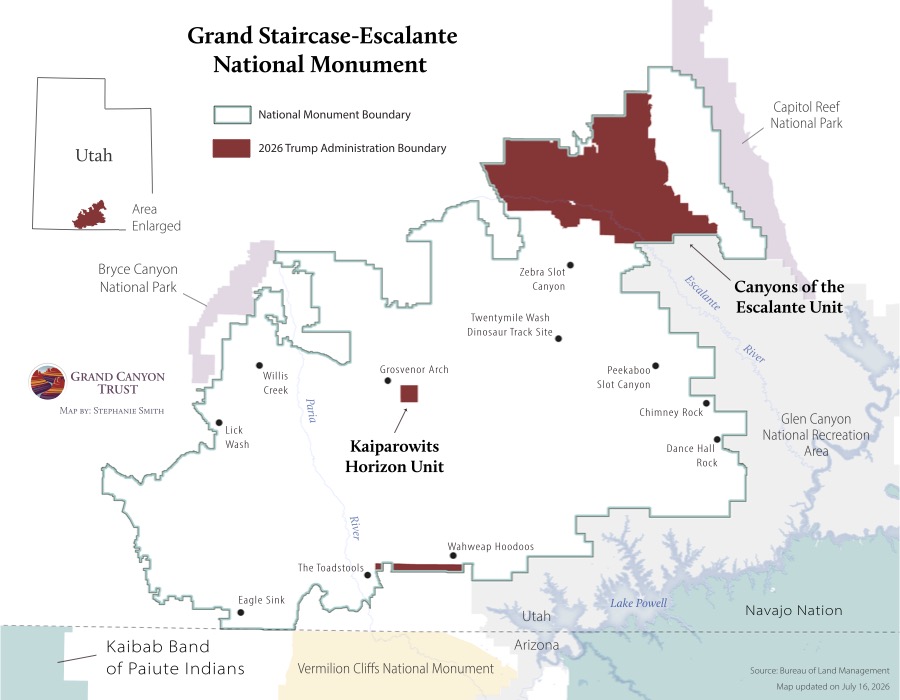Map showing reduction in boundaries to the Grand Staircase-Escalante National Monument as a result of President Trump’s January 13, 2026 executive order. (Grand Canyon Trust)
**Second**, what President Trump has done to these National Monuments feels mostly like retribution. In 2023, he proclaimed to a conference of MAGA Americans, “I am your warrior. I am your justice. And for those who have been wronged and betrayed: I am your retribution.” In my view, he is clearly more interested in “giving it to the libs” than in rational public lands policy. He severely reduced Grand Staircase-Escalante and Bears Ears National Monuments during his first term. His successor, Joe Biden, restored the monuments to their full size. Now, Trump has reduced them much more severely than in his first term: Grand Staircase-Escalante is now down to just 10% of the original designation and Bears Ears to just 9%. Trump is clearly playing to his base and the fiercest advocates of the Sagebrush Rebellion, who resent any federal authority over lands within the western states.
Trump’s view seems to be that if there is wealth to be extracted from the public lands (oil, natural gas, coal, grass, uranium, heavy metals), the government of the United States should strew roses before the bulldozers of the extraction industries and tell the rest of us to go jump in the lake. What Donald Trump actually knows about the fragility of America’s public lands and the compelling reasons to protect them from grotesque economic exploitation would not fill a Dixie Cup. His idea of nature ends on the 18th hole of a golf course. His hatred of all things Obama is unmistakably clear. His view of America has no room for the idea that natural places have a right to be left alone. We have spent more than 100 years learning how to protect a small fraction of American landscapes from adverse economic development. To undo that hard-fought, decades-long national conservation settlement (the envy of the world) is perverse, vindictive, irrational, and mean-spirited.
The American people love their public lands for a variety of good reasons. If we conducted a national plebiscite on this question, the response would be resounding. Keep Your Hands Off the Public Lands!
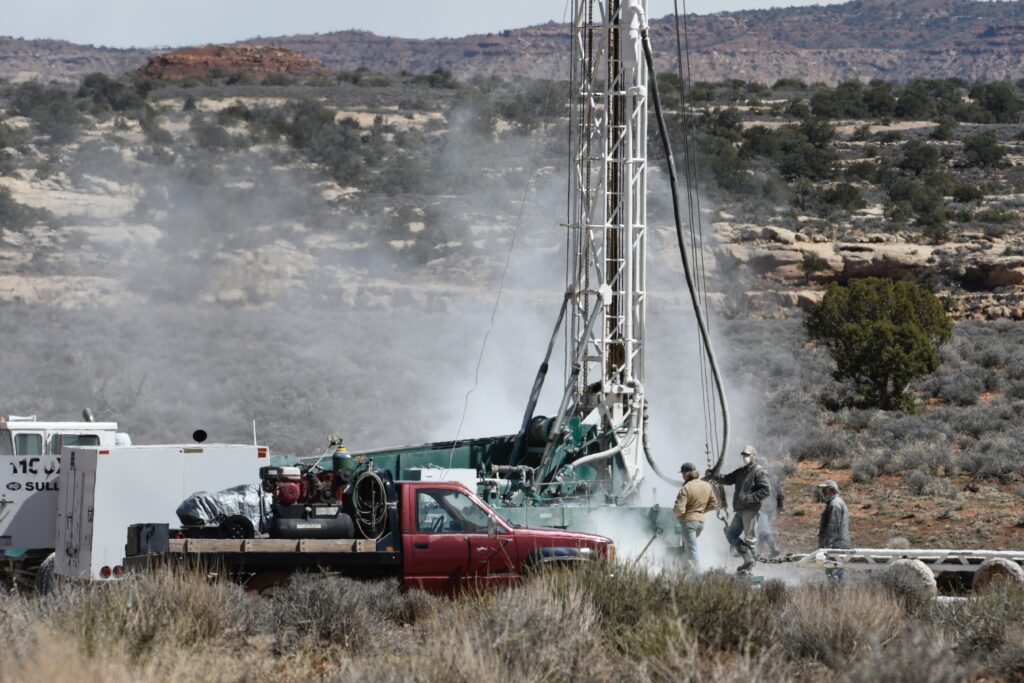A drilling rig near Glen Canyon in Southern Utah. (Photo Dennis McKenna)
**Third**, the yoyo effect of recent presidential proclamations (designate, reduce; re-designate; re-reduce) creates intolerable confusion for public land managers, the American public, recreationists, and Native Americans. I have a good friend who creates maps of the American Southwest. He’s afraid to include the boundaries of the Grand Staircase-Escalante and Bears Ears National Monuments on his excellent maps for fear they will be obsolete after the next presidential election. This is no way to run the railroad. We need stability in our understanding and designation of public lands. How can public lands managers perform their duties when they don’t know whether the lands they protect will be withdrawn, their site budgets gutted without consultation, or their jobs DOGE’d by an unelected crony of the president?
**Fourth**, President Trump’s public lands retribution campaign is especially offensive to Native Americans. Bears Ears and Grand Staircase-Escalante embrace tens of thousands, literally, perhaps hundreds of thousands of important Indigenous sites, many of them sacred, all of them endangered by industrial extraction. At a time when the American people are finally ready to engage in deliberate healing actions with Native Americans our forebears shouldered off their sovereign homelands in pursuit of what we used to call our “manifest destiny.” The president’s attack on some of the most important archaeological treasures of North America is as cynical as it is indifferent to their legitimate concerns. The “Indian Wars” continue, this time by way of executive orders.
We are better than this.
My hope is that the Supreme Court will take up the issue of whether reducing or eliminating National Monuments is constitutional as soon as possible. Since much of the Trump agenda finds its way to the court’s queue-breaking “[shadow docket,](https://www.scotusblog.com/cases/interim-docket/2024/)” I hope the court will soon invalidate these monument reductions and instruct Congress to take up the issue in the deliberate way of democracy, rather than acquiescing in yet another unitary executive power grab.
If, as some legitimately believe, we have over-designated the size of National Monuments or if “we have enough of them, already,” then we should address these issues in a responsible, deliberate, sane, and generous way. Not by a quadrennial roller coaster regimen. And not by vindictive proclamation from the set of a Harrison Ford movie.
---
## ***Discover more on these topics at Listening to America***
[Wyoming](https://ltamerica.org/tag/wyoming/ "4 topics")[State Parks](https://ltamerica.org/tag/state-parks/ "2 topics")[Utah](https://ltamerica.org/tag/utah/ "11 topics")[Podcast](https://ltamerica.org/tag/podcast/ "1 topics")[New Mexico](https://ltamerica.org/tag/new-mexico/ "3 topics")[Video](https://ltamerica.org/tag/video/ "51 topics")[Thoreau](https://ltamerica.org/tag/thoreau/ "5 topics")[Road Trips](https://ltamerica.org/tag/road-trips/ "18 topics")[Sports](https://ltamerica.org/tag/sports/ "2 topics")[North Dakota](https://ltamerica.org/tag/north-dakota/ "53 topics")[Water in the West](https://ltamerica.org/tag/water-in-the-west/ "24 topics")[Wisconsin](https://ltamerica.org/tag/wisconsin/ "0 topics")[Washington](https://ltamerica.org/tag/washington/ "2 topics")[South Dakota](https://ltamerica.org/tag/south-dakota/ "16 topics")[Reading](https://ltamerica.org/tag/reading/ "1 topics")[Vermont](https://ltamerica.org/tag/vermont/ "1 topics")[North Carolina](https://ltamerica.org/tag/north-carolina/ "3 topics")[Republics](https://ltamerica.org/tag/republics/ "1 topics")[Pennsylvania](https://ltamerica.org/tag/pennsylvania/ "1 topics")[New York](https://ltamerica.org/tag/new-york/ "8 topics")[Rivers](https://ltamerica.org/tag/rivers/ "3 topics")[Texas](https://ltamerica.org/tag/texas/ "4 topics")[U.S. Presidents](https://ltamerica.org/tag/u-s-presidents/ "71 topics")[north daktoa](https://ltamerica.org/tag/north-daktoa/ "0 topics")[U.S. Constitution](https://ltamerica.org/tag/u-s-constitution/ "1 topics")[South Carolina](https://ltamerica.org/tag/south-carolina/ "1 topics")[New England](https://ltamerica.org/tag/new-england/ "1 topics")[Steinbeck Travels](https://ltamerica.org/tag/steinbeck-travels/ "75 topics")[Rome](https://ltamerica.org/tag/rome/ "1 topics")[Republic](https://ltamerica.org/tag/republic/ "0 topics")[Virginia](https://ltamerica.org/tag/virginia/ "7 topics")[Ohio](https://ltamerica.org/tag/ohio/ "2 topics")[Theodore Roosevelt](https://ltamerica.org/tag/theodore-roosevelt/ "16 topics")[Oppenheim](https://ltamerica.org/tag/oppenheim/ "0 topics")[The Constitution](https://ltamerica.org/tag/the-constitution/ "1 topics")[paintings](https://ltamerica.org/tag/paintings/ "0 topics")[Oppenheimer](https://ltamerica.org/tag/oppenheimer/ "1 topics")[Space Exploration](https://ltamerica.org/tag/space-exploration/ "8 topics")[William Shirer](https://ltamerica.org/tag/william-shirer/ "1 topics")[Poetry](https://ltamerica.org/tag/poetry/ "1 topics")[Travel](https://ltamerica.org/tag/travel/ "1 topics")[Tennessee](https://ltamerica.org/tag/tennessee/ "1 topics")[Thomas Jefferson](https://ltamerica.org/tag/thomas-jefferson/ "34 topics")[Walden](https://ltamerica.org/tag/walden/ "1 topics")[Oregon](https://ltamerica.org/tag/oregon/ "4 topics")
**Categories:** Features
**Tags:** America at 250, National Parks, Native Americans, U.S. Presidents
---
### [Is There an Answer to American Decline?](https://ltamerica.org/is-there-an-answer-to-american-decline/)
**Published:** July 13, 2026
**Author:** Clay Jenkinson
**Excerpt:** Recently, I wrote about what is great about America at 250. This week, I reflect on what I see as palpable American decline. I do not enjoy criticizing America, but if we don’t, on our 250th birthday, step back to reflect on what we have achieved, how we got here, what remains unresolved, and where we seem to be headed, when will we do so?
**Content:**
## Recently, I wrote about [what is great about America at 250](https://ltamerica.org/happy-250th-birthday-america/). This week, I reflect on what I see as palpable American decline. I do not enjoy criticizing America, but if we don’t, on our 250th birthday, step back to reflect on what we have achieved, how we got here, what remains unresolved, and where we seem to be headed, when will we do so?
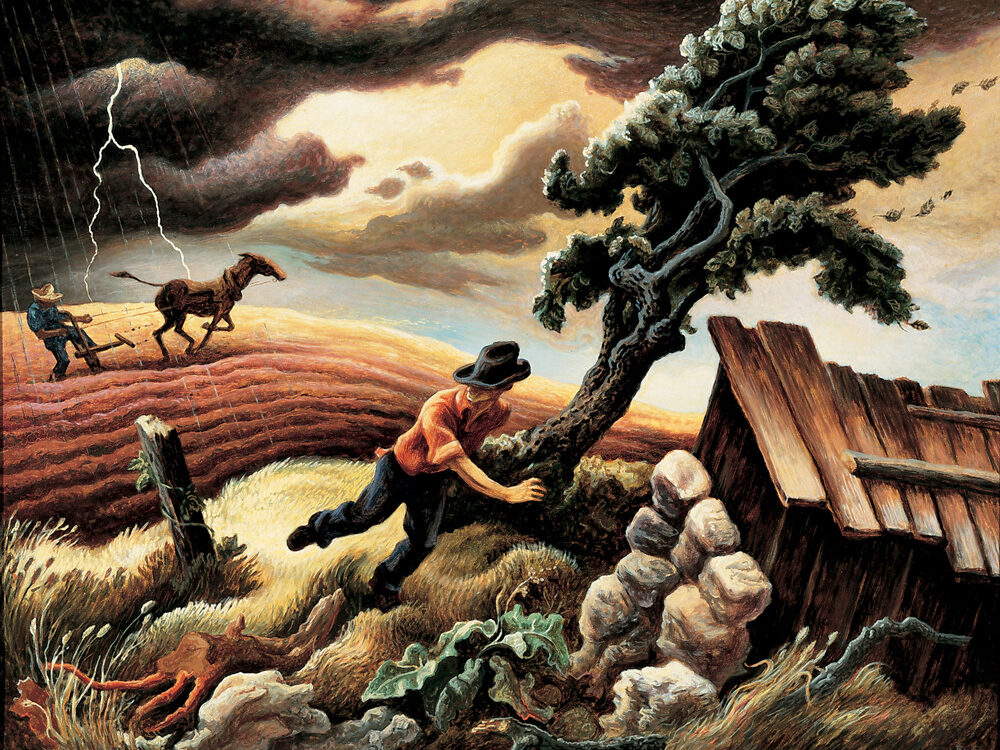“The Hailstorm” by Thomas Hart Benton, 1940.
> “We have it in our power to begin the world over again.”
>
> Thomas Paine
Either you believe in American exceptionalism, or you don’t. Either you believe that America has a special destiny in the world owing to our birth at the high water mark of the Enlightenment, or you regard the United States as just another — albeit extremely wealthy and powerful — nation in the great family of nations, larger and richer but no better than France, Finland, or Canada. I continue to believe we have a secular-sacred national mission, grounded in the dreams of James Madison and Thomas Jefferson, to be a template for human aspirations, human possibility, human rights, equality of opportunity, and self-government. The Founding Fathers certainly believed they were laying down the standards for the future of the human project all over the globe, even though we know they were all of them, perhaps chiefly Jefferson, imperfect exemplars. Thomas Paine famously wrote, “We have it in our power to begin the world over again.” Shortly after wresting the presidency from the Federalists in the election of 1800, Jefferson wrote to his English friend Joseph Priestley to declare, on March 21, 1801, that we represent “something new under the sun.”
What has happened to us?
When Hamlet’s father (the ghost) appears to Hamlet in Act III of Shakespeare’s greatest tragedy, he declares that he has come to “whet your almost blunted appetite.” How did we descend from the Founders’ disciplined small-government republic to the bloated, complacent, corrupted world empire we have become?
I don’t think anyone assessing the United States in 2026 can avoid the conclusion that we have betrayed our extraordinary founding vision. I spoke with an eminent constitutional historian a couple of weeks ago and asked him whether our republic will survive. He scoffed: We have not been a republic for a very long time. The better question, he said, is whether our constitutional order will survive. I asked him what he thought it would take to turn America around, to restore the high ideals of our founding. His answer: a catastrophe.
I’m not nearly so pessimistic, but I do believe we are going to have to face the facts of America’s decline, make a sober assessment of the problems we must address, suck it up, and recommit ourselves to the highest American ideals. In short, if we are going to reclaim our national destiny, we will have to wrestle with and resolve a number of fundamental issues.
My list:
## **Economic Inequality**
At the top of my list is economic inequality.
The top 1% of Americans now own 27% of the country’s wealth.
So Elon Musk becomes the world’s first trillionaire. In 1982, there were just 13 billionaires in America. Today, there are more than 1,000, and the number is growing fast. The current combined wealth of America’s billionaires is approximately $8 trillion, which is larger than the GDP of every nation on earth except the USA and China. In 1965, CEOs were paid 21 times as much as their typical employees. Today, they are paid more than 300-to-1. The median compensation for Fortune 500 CEOs is now about $18 million per year. The average salary of an American worker today is less than $65,000 per year.
Thomas Jefferson took great joy in the fact that most Americans of his time were of the middle class. In a letter to Thomas Cooper on September 10, 1814, Jefferson wrote: “We have no paupers. The great mass of our population is of the laboring class. Our rich, who can live without labor, either manual or professional, are few.” Jefferson knew that obscene inequality was the major cause of the French Revolution. From Paris, he wrote a letter to his closest friend, James Madison, on October 28, 1785, arguing for the careful redistribution of property from time to time to prevent the rise of an American economic aristocracy. “The consequences of this enormous inequality producing so much misery to the bulk of mankind,” he wrote, “legislators cannot invent too many devices for subdividing property, only taking care to let their subdivisions go hand in hand with the natural affections of the human mind.” Jefferson had in mind a graduated tax system to ensure that every hard-working American earned a living wage.
In the last 20 years, Congress has routinely written tax law to transfer wealth upward from the rest of America to the wealthiest Americans. Although the people are routinely assured that the new “reform” tax laws benefit middle-class and lower-class Americans, the greatest beneficiaries are at the other end of the economic spectrum.
I believe the appalling gap between rich and poor in America is one of the principal causes of social alienation, disillusionment, cynicism, and despair. For most Americans, the system appears to be rigged. If we worked hard but carefully to shrink the growing divide, to widen the ranks of the middle class, and to prevent obscene accumulations of wealth, I believe the country would cheer up, become more productive, and regain its social confidence.
I’m not sure I entirely agree with the proposition that every billionaire is a policy failure, but I do strongly believe that every hard-working and fiscally responsible American is entitled to a living wage. I reckon that a living wage will mean somewhat different things in different regions, but I don’t believe that any willing American should find it extremely difficult or impossible to make ends meet. If this sounds utopian or radical, we had better abandon the American Dream once and for all, for certainly it cannot mean that a handful of people will live like gods on earth while the middle class narrows and declines, and tens of millions are barely able to live modestly satisfying economic lives. That was not the promise of America.
## **Representation**
The essence of America is majority rule. But thanks to the fossilized Electoral College, equal representation in the Senate, the filibuster and cloture, the skewing of the primary system, gerrymandering, and our winner-take-all electoral system, tens of millions of Americans are effectively disenfranchised. Think of California. Of the 40 million residents, 38% vote Republican, but because it is a Blue State, all of its 54 electoral votes go to the Democratic winner, meaning that 15.2 million Californians (more than the populations of each of the 40 other states) are effectively disenfranchised. The same is true of Republicans in New York and Massachusetts, etc. We could easily fix the system by adopting ranked-choice voting, proportional representation, district-based rather than statewide vote tallying (as in Maine and Nebraska), abolishing the Electoral College, significant reforms to the primary system, and a federal law requiring purely scientific, nonpartisan redistricting in every state. We should probably also increase the size of the House of Representatives, where currently each Congressperson represents 761,000 people. Although equal representation in the Senate is deeply embedded in the Constitution, perhaps we should move to a more fluid system in which every state gets at least one senator, many get two, some get three, a handful get four, and at least three get five. If every American believed their vote truly counted, citizen engagement would rise, and the United States would move towards a much greater and more equitable democracy.
## **African Americans**
Slavery and its myriad legacies are the original sin of American history. You cannot have a mission statement that declares, without qualification, that “all men are created equal” and holds about a fifth of the population in hereditary slavery. Thomas Jefferson owned as many as 200 slaves at any given time; George Washington, 317; James Madison, 120; James Monroe, 75-80; Andrew Jackson, 150; Patrick Henry, 60-70. George Mason, who wrote the Virginia Declaration of Rights, owned several hundred human beings.
This was an exceedingly unpropitious start.
We’ve had our share of opportunities to wrestle the problems of race and slavery to the ground. The 55 men who drafted the U.S. Constitution in 1787 kicked the can down the road by perpetuating slavery and installing in our national charter the fugitive slave clause, the 3/5 clause, and the postponement, even of the abolition of the slave trade. After the adoption of the great post-civil war amendments, 13 (abolishing slavery), 14 (insisting on equal protection of all citizens), and 15 (permitting black males to vote), the American government stood by as the former Confederate states systematically violated these new guarantees with Jim Crow legislation, Black Codes, poll taxes, literacy tests, and vagrancy laws, enforced by lynching, and perversions of justice by all-white juries. When the Supreme Court demanded the integration of America’s public schools in 1953, southern states pulled white students out of the system and created “private” all-white schools, leaving the underfunded and often dilapidated public schools (black schools) to fend for themselves.
The wanton killings of Medgar Evers (1963), Emmett Till (1955), Malcolm X (1965), Martin Luther King (1968); more recently Trevon Martin (2012), Michael Brown (2014), Breonna Taylor (2020), George Floyd (2020), and countless others, coupled with the high incarceration rates for African American men, economic inequality, and persistent structural racism in our basic institutions, remind us of how much more there is to do to achieve Dr. King’s dream (an American Dream) that every person in the United States will be judged by the content of their character rather than the color of their skin.
No white parents have to give their son the stern lecture on what to do and *not to do* if stopped by a white policeman while driving. Until this is no longer so, we have not achieved racial equality.
## **Native Americans**
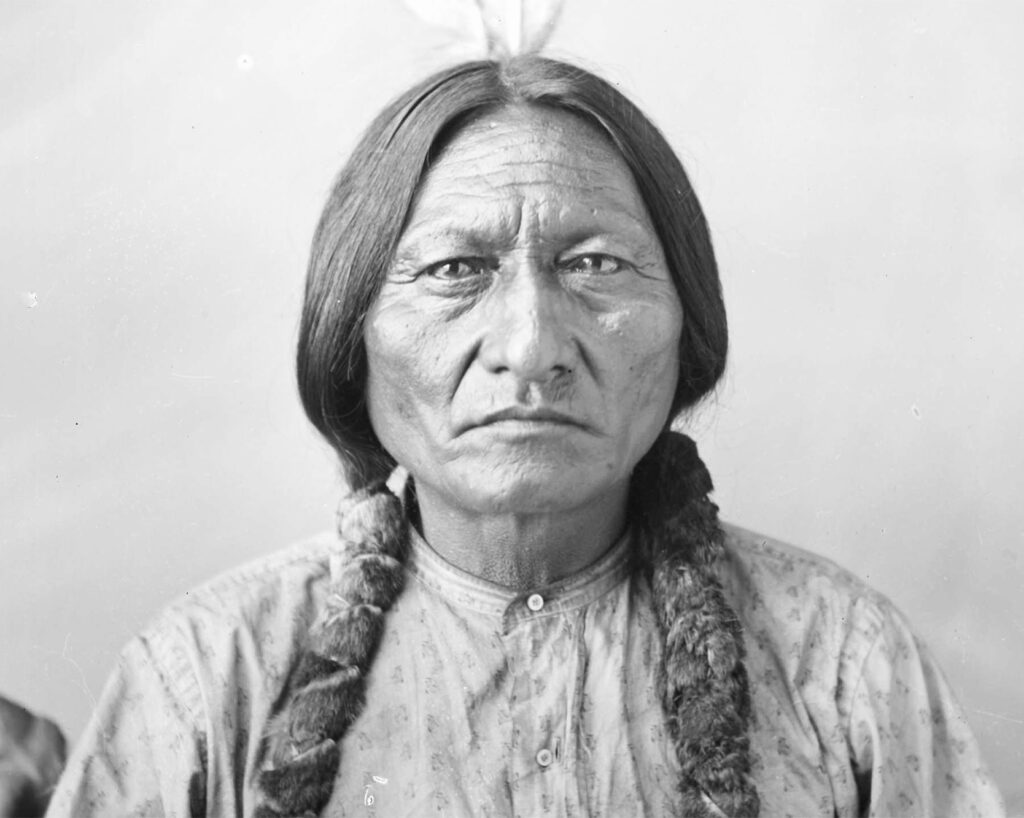Hunkpapa Lakota leader Sitting Bull, photographed David Francis Barry circa 1883 in the Dakota Territory.
As I have grown older, I have found it increasingly hard to justify America’s dispossession of its Indigenous people. When Columbus bumped into the New World in 1492, the entire western hemisphere was peopled by Indigenous communities. By 1942, only 3% of America was sovereign to Native Americans. My pragmatic and conservative friends essentially say, “Too bad, too sad, we stole it fair and square, get over it already, and get on board with the American dream.” Or, if they are more enlightened, they express genuine regret but throw up their hands in wonder, just what we should do about our grotesque history of ethnic cleansing? Some of my friends say the stealing of Native American land is just a recent and more visible version of a human migration pattern that has always been the case, that technologically stronger and more ambitious peoples invariably roll over the weaker ones, and though this may be deplorable and uncomfortable to contemplate, *it is what it is*. The Romans rolled over the Gauls. The Anglos and Saxons rolled over the primitive Britons.
I detest whataboutism in all of its forms, and I hate the excuse that “they all do it, always have done it, nothing much to do about it,” because we are not the Mongols of the 13th and 14th centuries. We are America. We were born self-consciously in the Age of Reason and the Age of the Rights of Man. We told the world we would live by higher standards — higher than any previous civilization.
There are many things we could do to take full responsibility for what happened (and, in some cases, continues to happen) and begin to heal as a nation. We can start by acknowledging the theft of America — and such specific atrocities as the Trail of Tears, the Sand Creek and Marias and Wounded Knee massacres, the long litany of deliberately broken treaties — and taking careful steps to demand justice for Native Americans, and ameliorate the condition of their lives by assisting in language restoration, cultural renewal, land re-acquisition, “Indian health,” educational scholarships, and much more. But it begins with a frank acknowledgment that what happened between 1492 and 1942 is incompatible with America’s self-proclaimed ideals.
## **Education**
Fredrick Douglas.
A recent article in the distinguished British journal *The Economist* argues that educational standards in the English-speaking world plummeted during the 2022-2023 pandemic and were already in unmistakable free fall before Covid disrupted the world. The point is that education, including education in the humanities, is not merely ornamental but essential to economic prosperity and national security. The historian Niall Ferguson has argued that we Americans are the least well-educated, well-informed empire in history—and it shows. The American people are increasingly ignorant of the geography and history of the rest of the world and of the civic infrastructure of their own country. Reading competency has severely declined. Critical thinking skills have yielded to an alarming increase in conspiracy theories. Thomas Jefferson understood that maintaining a republic in America would depend on a well-educated, well-informed, skeptical, and vigilant citizenry. On January 6, 1816, Jefferson wrote: “If a nation expects to be ignorant & free, in a state of civilization, it expects what never was & never will be.” Demagogues depend on ill-educated, ill-informed subjects who don’t have the capacity to discern false logic and hypocrisy. Black slaves in America were forbidden to learn to read because once they could read and draw their own conclusions about the American social structure, they became, in the words of Frederick Douglass, “unmanageable.” Douglass defied his owners and scrambled to learn to read under almost impossible circumstances. “From that moment,” he wrote, “I understood the path from slavery to freedom.”
It is hard not to conclude that in our troubled time, tens of millions of Americans across the political and social spectrum, no longer understand such simple things as how a bill becomes a law, why the popular vote and the Electoral College do not always agree, the functions of the Supreme Court, the purposes of NATO and the United Nations, and such Constitutional niceties as the pardon clause, the emoluments clause, the war powers restraints, the function of impeachment, or the Founders’ insistence that Congress (especially the House of Representatives) control the power of the purse.
A recent survey indicated that more Americans could name the characters in the cartoon show *The Simpsons* than list the rights guaranteed in the First Amendment. You’ve all seen the surveys. A 2009 survey of Oklahoma high school students indicated that only one in four could name George Washington as the first president. A 2018 Woodrow Wilson National Fellowship Foundation survey found that 72% of respondents could not name the 13 original states. A full 37% of those respondents thought Benjamin Franklin invented the light bulb. Etc.
“If a nation expects to be ignorant & free …”
## **Accountability**
I meet scores of Americans who are appalled by the corruption, self-dealing, grift, conflict of interest, and cronyism of our politics. And yet the incumbency re-election rate in the United States is staggering. In 2024, fully 95% of incumbents were returned to office nationwide. Until we begin to hold our leaders accountable for bribery, sexual malfeasance, insider trading, indifference to the actual needs of their constituents, open lying, and conflict of interest, including members of the Supreme Court, we cannot restore health to American democracy. Jefferson thought a few cheerful impeachments would freshen our politics. He believed the people needed to shake things up from time to time and make sure our elected officials serve us, not the other way around. If the American people retired all 435 members of the House of Representatives in the coming November midterms, and all 33 Senators seeking re-election, we’d get their attention immediately and take back the country.
## **Money in Politics**
We’re going to have to cut money out of our elections. Attempts in the 1970s to limit campaign contributions were evaded even then, but with the Supreme Court’s ruinous Citizens United ruling in 2010, the doors were thrown open to unlimited campaign spending. The total spending for the 2024 presidential election was $5.5 billion. If Monsanto, ExxonMobil, the Koch Brothers, and Elon Musk (to name just a few examples) can contribute tens of millions (sometimes hundreds of millions) to a political candidate, it should be clear to us all that they don’t do this out of a sense of civic altruism. When I am in dispute with the North American Mining Corporation and their CEO, and we each leave a message with my three-member Congressional delegation, whose call do you think is returned? Our political system is now characterized by open bribery, disguised (normalized) as routine campaign contributions.
We have the longest, most expensive, and most irrational election system of any major nation in the world. We could fix this, if only by always voting for the candidate who accepted less (or no) funding from special interests and gazillionaires. We could insist on exclusively publicly funded election campaigns that last no more than 90 days.
In the last 60 years, we have ceased to be a republic and, in some ways, a democracy, and, while we were largely asleep at the wheel, have become an oligarchy bordering on a kleptocracy. Remember the cluster of the world’s richest individuals who sat in the front row at Mr. Trump’s second inauguration? What did that mean to signify?
## **ETC**.
And health care. And immigration policy. And America’s deteriorating place in the world arena. And loss of civility. And the vulgarization of language and popular culture. And the growing demographic and economic crisis in rural America. And the already unfolding AI revolution. And the ongoing opioid crisis. And the hottest summers of recorded human history. And the obscene cost of higher education. And the coming collapse of Social Security.
We the people are going to have to wake up and address these grave issues with what amounts to a spiritual Manhattan Project. It’s up to us, because (as Jefferson understood) the men and women in power are not going to reform the system. We the people are going to have to shake things up peacefully, but with extraordinary insistence, with a spirit of mutual respect, and, above all, with a spirit of compromise. Are we equal to this challenge, or will the next 250 years toss us into the same sad bin of failed states and failed empires: Babylon, Rome, the British Empire, the U.S.S.R.?
How forward, United States of America? Please write and let me know your thoughts at [feedback@LTAmerica.org](mailto:feedback@LTAmerica.org "mailto:feedback@ltamerica.org").
---
## ***Discover more on these topics at Listening to America***
[North Carolina](https://ltamerica.org/tag/north-carolina/ "3 topics")[Republic](https://ltamerica.org/tag/republic/ "0 topics")[Texas](https://ltamerica.org/tag/texas/ "4 topics")[Vermont](https://ltamerica.org/tag/vermont/ "1 topics")[State Parks](https://ltamerica.org/tag/state-parks/ "2 topics")[Thomas Jefferson](https://ltamerica.org/tag/thomas-jefferson/ "34 topics")[Sports](https://ltamerica.org/tag/sports/ "2 topics")[New Mexico](https://ltamerica.org/tag/new-mexico/ "3 topics")[William Shirer](https://ltamerica.org/tag/william-shirer/ "1 topics")[Pennsylvania](https://ltamerica.org/tag/pennsylvania/ "1 topics")[Utah](https://ltamerica.org/tag/utah/ "11 topics")[Steinbeck Travels](https://ltamerica.org/tag/steinbeck-travels/ "75 topics")[U.S. Constitution](https://ltamerica.org/tag/u-s-constitution/ "1 topics")[Oppenheimer](https://ltamerica.org/tag/oppenheimer/ "1 topics")[New England](https://ltamerica.org/tag/new-england/ "1 topics")[Reading](https://ltamerica.org/tag/reading/ "1 topics")[Road Trips](https://ltamerica.org/tag/road-trips/ "18 topics")[Walden](https://ltamerica.org/tag/walden/ "1 topics")[Rivers](https://ltamerica.org/tag/rivers/ "3 topics")[Video](https://ltamerica.org/tag/video/ "51 topics")[Poetry](https://ltamerica.org/tag/poetry/ "1 topics")[Thoreau](https://ltamerica.org/tag/thoreau/ "5 topics")[Republics](https://ltamerica.org/tag/republics/ "1 topics")[Water in the West](https://ltamerica.org/tag/water-in-the-west/ "24 topics")[Wisconsin](https://ltamerica.org/tag/wisconsin/ "0 topics")[Theodore Roosevelt](https://ltamerica.org/tag/theodore-roosevelt/ "16 topics")[New York](https://ltamerica.org/tag/new-york/ "8 topics")[U.S. Presidents](https://ltamerica.org/tag/u-s-presidents/ "71 topics")[Rome](https://ltamerica.org/tag/rome/ "1 topics")[Oppenheim](https://ltamerica.org/tag/oppenheim/ "0 topics")[North Dakota](https://ltamerica.org/tag/north-dakota/ "53 topics")[The Constitution](https://ltamerica.org/tag/the-constitution/ "1 topics")[Wyoming](https://ltamerica.org/tag/wyoming/ "4 topics")[north daktoa](https://ltamerica.org/tag/north-daktoa/ "0 topics")[Travel](https://ltamerica.org/tag/travel/ "1 topics")[Podcast](https://ltamerica.org/tag/podcast/ "1 topics")[Tennessee](https://ltamerica.org/tag/tennessee/ "1 topics")[South Dakota](https://ltamerica.org/tag/south-dakota/ "16 topics")[Space Exploration](https://ltamerica.org/tag/space-exploration/ "8 topics")[Virginia](https://ltamerica.org/tag/virginia/ "7 topics")[Ohio](https://ltamerica.org/tag/ohio/ "2 topics")[Washington](https://ltamerica.org/tag/washington/ "2 topics")[South Carolina](https://ltamerica.org/tag/south-carolina/ "1 topics")[paintings](https://ltamerica.org/tag/paintings/ "0 topics")[Oregon](https://ltamerica.org/tag/oregon/ "4 topics")
**Categories:** Features
**Tags:** America at 250, Native Americans, U.S. Presidents
---
### [Views of the American Dream From Milan, Italy ](https://ltamerica.org/views-of-the-american-dream-from-milan-italy/)
**Published:** July 6, 2026
**Author:** Clay Jenkinson
**Excerpt:** Surprisingly, I did not spend the Fourth of July in America this year. But being thousands of miles away made the promise of our exceptional nation clear.
**Content:**
## Surprisingly, I did not spend the Fourth of July in America this year. But being thousands of miles away made the promise of our exceptional nation clear.
The Villa Rotonda, outside of Milan, designed by Andrea Palladio, an Italian architect who more than anyone else inspired Thomas Jefferson and American neoclassicism architecture. (Photo By Clay Jenkinson)
**Milan, Italy —** America is a great nation going through a rough patch, if I may put it in the least pessimistic way. We’ve always been an unfinished and perplexing republic. Somehow, we have lost our way, perhaps even our confidence. And yet the American people are so energetic, creative, enterprising, inventive, and essentially optimistic that I believe we will — to use Thomas Jefferson’s favorite metaphor — soon enough right the ship and sail into an amazing future.
I’ve been making notes about the unresolved issues in American life — the widening gap between the few and the many, the corrosive power of money in our politics, the continuing racial divide, the unaffordability of the American Dream for tens of millions of younger Americans, our broken Constitution, the ways that our breathtaking technology gets ahead of our moral compass and values, our suddenly uncertain role in the world arena, etc. But that’s for next week, after the last bottle rockets and Roman candles are tucked away for another year.
Italian writer and philosopher, Cesare Beccaria.
I did not spend the Fourth of July in America this year, which may seem perverse, given that it is our 250th birthday. I was invited to Italy to engage in an imaginary dialogue between Jefferson and the Italian humanist [Cesare Beccaria (1738-1794),](https://www.britannica.com/biography/Cesare-Beccaria) who was the first person in Western civilization to denounce the death penalty. The conversation took place at the Hall of Justice in Milan, a monumental stone building that bears the architectural style of Italian fascism.
Beccaria talked about his famous treatise *On Crime and Punishment* (1764), which inspired and influenced the American Founding Fathers. Jefferson, Madison, and Franklin, in particular, were deeply inspired by Beccaria.
Jefferson delivered up the American mission statement — “All men are created equal”; the blessings of self-government; freedom of the press, freedom of speech, freedom of conscience, the illimitable progress of the human mind, the magnificence of the American landscape, particularly west of the Appalachian Mountains, a unique American destiny that will be played out to the hundredth and the thousandth generation. … “All eyes are open or opening to the rights of man.”
As I spoke these words, I became deeply moved by their capacity to inspire and empower the human project. I got choked up before 75 intelligent Milanians gathered to discuss America and the destiny of nations. I thought, *maybe we are actually equal* to the challenge of the human project. Maybe reason and good sense, science and civil discourse, a determination to try to live up to the standard of our best selves and to subordinate our self-interest to the higher values of the commonwealth — maybe we can, as Abraham Lincoln put it at Gettysburg, commit ourselves to a rebirth of freedom of, by, and for the people. As I looked out on friendly but skeptical Europeans, I could see that they, too, were inspired as I articulated these Jeffersonian ideals, but they were all slightly shaking their heads as they thought about the currently debased state of American democracy and our international recklessness.
Afterward, several Italian men and women told me over dinner that they still believe in America’s destiny and the American Dream. They said they love America and the American people, but they don’t understand how we have walked away from Europe and our closest allies and friends, how and why we have elected leaders (not just the current president) who seem determined to deconstruct (or implode) the golden vision of America and its Founding principles. They reminded me that the ideals of America were *conceived* on this side of the Atlantic in the European Enlightenment (1680-1826), but were first *actually planted* in the New World. In the fertile soil of America. They noted that America has a historical duty (a sacred destiny) to prove that “liberty,” “equality,” “peace,” “civility,” “progress,” and the “dignity of the common citizen” are not just lofty rhetoric but the actual mission of life on earth. As Jefferson put it in his last, still breathtakingly optimistic letter in June 1826, these great ideals will eventually triumph, in some places sooner, in some places later. Not without rivers of blood as their price, but eventually everywhere, from Idaho to Istanbul, from Paris to Peru, from Cleveland to Calcutta.
These thoughtful citizens of Italy said that the whole world is watching to see whether we Americans will vindicate or squander the great dream of mankind.
## **The Architecture of the Architect of the American Dream**
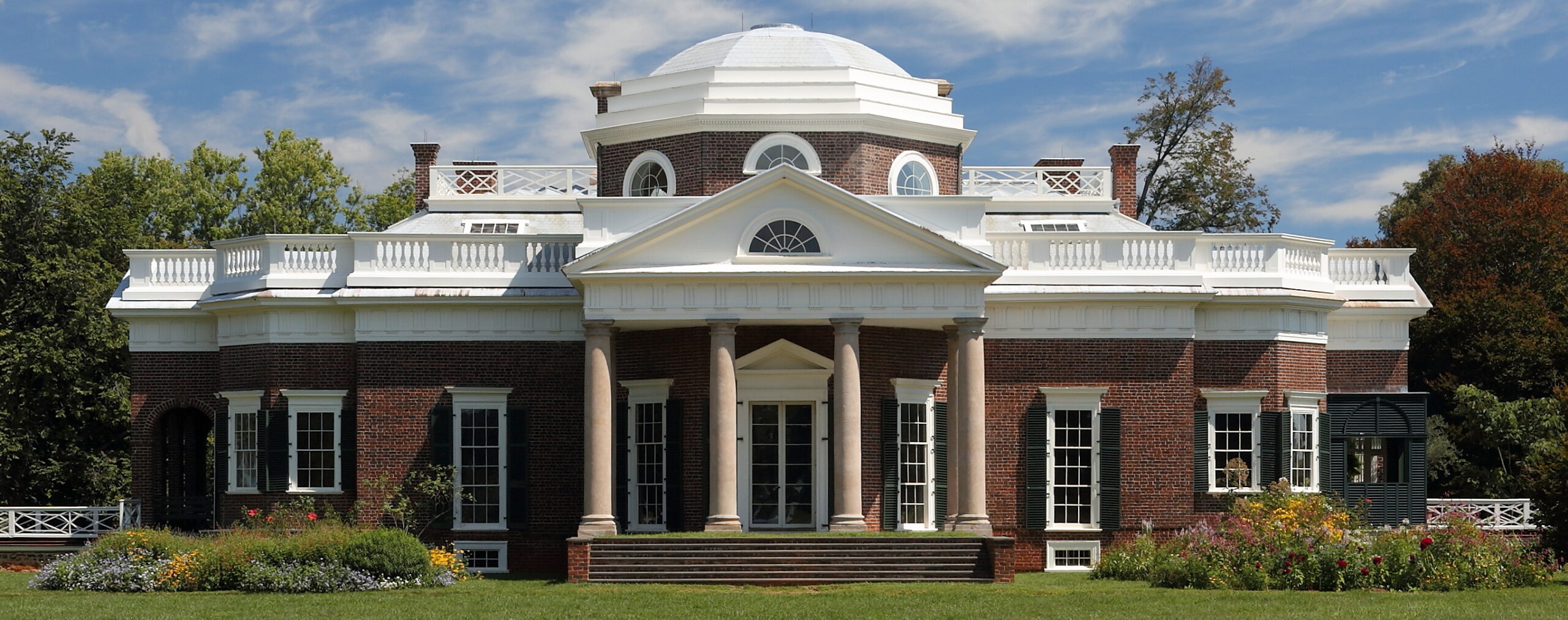Jefferson’s home at Monticello, which he continuously redesigned and expanded for more than 40 years. (Wikimedia)
Thomas Jefferson not only envisioned the American republic but also sought to design the physical template for a free and enlightened people. He gave us our decimal coinage system — pennies, dimes, dollars, etc. — so that the average person could compute his wages and not be cheated by his employers. He gave us the cadastral rectilinear land survey system that divided and subdivided our vast landscape into square and orderly townships, section lines, quarter sections, etc. He wanted every state west of the Appalachians to be perfectly square or at least rectangular — think of Four Corners, where Colorado, New Mexico, Utah, and Arizona meet. He gave us a city design according to the checkerboard — straight streets and square blocks, with plenty of green space within the city limits.
And he gave us our neoclassical monumental architecture. He designed the Capitol of Virginia at Richmond, based on the [Maison Carree at Nimes](https://whc.unesco.org/en/list/1569/) in southern France — the “most precious morsel of antiquity,” he said. He gave us the Rotunda, the masterpiece of his last great creative project, the University of Virginia, based on the [Pantheon in Rome](https://www.pantheonroma.com/en/home-eng/). He even submitted a design for the President’s House in Washington, DC, which would have been red brick with a neoclassical dome, like Monticello. Unfortunately, he submitted that design anonymously so as not to win the competition merely by his reputation as America’s first great architect — and lost to the less pleasing design of our current White House by the Irish-American architect James Hoban.
Fully 39 of our 50 state capitols have domes. That’s the influence of Jefferson. My North Dakota has an 18-story Capitol tower — snarky visitors from elsewhere swear it looks like an insurance building in Des Moines, Iowa. Nebraska, Louisiana, and Florida also have towers. The rest: neoclassical.
## **And So to the Source**
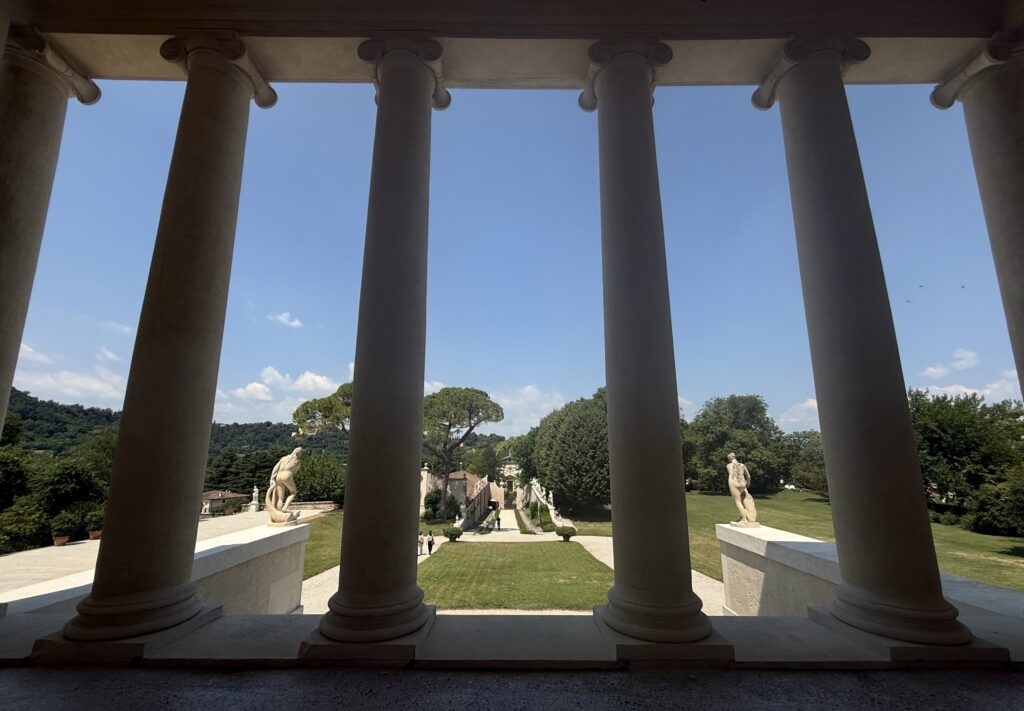A view looking out from the Villa La Rotonda. (Photo Clay Jenkinson)
So on the Fourth of July my great friend Marzio Mian of Milan, who just won his fifth award for his latest book, *[Volga Blues: A Journey into the Heart of Russia](https://ltamerica.org/book-review-volga-blues-a-journey-into-the-heart-of-russia/)*, declared that he was taking me to see the [Villa Rotonda at Vicenza, Italy](https://www.villalarotonda.it/en/), one of the masterworks of Andrea Palladio (1508-1580), the Italian architect who more than anyone else inspired Jefferson and American neoclassicism. I have wanted to see the Palladian villas in northern Italy for 30 years. Now it was finally happening. It was a long drive during which we gabbed incessantly about America and the future of the human project, while Marzio’s favorite classical radio station lifted our thoughts into a rarified atmosphere. Just the way to spend the Fourth of July — talking earnestly about the possibilities of the human search for more perfect unions and the pursuit of public happiness. Our fireworks were all linguistic. Marzio’s English is pretty good. My Italian is, well, imperfect. I can say “spaghetti” and “Boccaccio!”
When we finally negotiated a huge roundabout and saw the Villa Rotonda for the first time (he, too), I nearly swooned. The strange thing is that Jefferson came from Paris to northern Italy in the spring of 1787, got as far as Milan, but somehow did not visit Vincenza. He spent a whole day watching the manufacture of Parmesan cheese in Milan, and *he* fell into a swoon over a strain of upland rice, but he did not venture to the motherload of Palladian villas. He said he only allowed himself “a peep into Elysium.” Think of that. Jefferson turned back for Paris because, as a public servant (the American ambassador to France) he did not want to pursue private interest at public expense! I guess he read the emoluments clause of the new U.S. Constitution!
The Villa Rotonda is sublime. Marzio and I toured it inside and out — on a hot, humid day with a million cicadas providing a sense of the uncanny. Villa Rotonda is a square edifice of blond stone on a hill, with six Ionic columns on each side and a lovely dome. Jeffersonian! The inside is a bit too ornate for the spare and classical Jefferson, but the outside (which he only saw in Palladio’s magnificent volume, *Four Treatises on Architecture*) is everything he admired: rectilinear, symmetrical, rational, orderly, proportional, clean in its lines.
I took a gazillion pictures. We made plans to return next year (or at least soon) to take the Brenta River Cruise to see dozens of Palladian villas or Palladian-inspired buildings in a single afternoon and evening.
Lunch, the Italian way. (Photo Clay Jenkinson)
Afterward, we stopped in the nearest village and had a superb light luncheon of pasta with mushrooms and truffles, an excellent glass each of a local light red wine, and just-made gelato with blackberry sauce.
It was one of the most Jeffersonian days of my life, and yet I was 4,300 miles from Jefferson’s Monticello, 4,895 miles from Bismarck, North Dakota. North Dakota was once the most Jeffersonian state in America, back when we gave our lives to family farming. Our state motto then might have come from Jefferson’s *Notes on the State of Virginia*: “those who labour in the earth are the chosen people of God.” And we were an equal distance from Mount Rushmore, where the current president of the United States said our greatest enemy is communism. Communism? I thought that all ended in 1989. I’m with Abraham Lincoln:
*“At what point then is the approach of danger to be expected? I answer. If it ever reach us it must spring up amongst us. It cannot come from abroad. If destruction be our lot, we must ourselves be its author and finisher. As a nation of freemen, we must live through all time, or die by suicide.”*
In the last few days, I have seen buildings and ruins of buildings now 2,000 years old. America is a new country. At 250, we are, in some sense, just beginning. Time to get our act together and prove to the world that we deserve to be the hegemon and to extend “the blessings of liberty” to everyone who finds their way to our shores.
And so begins the second quarter of the millennium.
---
## ***Discover more on these topics at Listening to America***
[South Carolina](https://ltamerica.org/tag/south-carolina/ "1 topics")[South Dakota](https://ltamerica.org/tag/south-dakota/ "16 topics")[Water in the West](https://ltamerica.org/tag/water-in-the-west/ "24 topics")[The Constitution](https://ltamerica.org/tag/the-constitution/ "1 topics")[Texas](https://ltamerica.org/tag/texas/ "4 topics")[Sports](https://ltamerica.org/tag/sports/ "2 topics")[Oppenheimer](https://ltamerica.org/tag/oppenheimer/ "1 topics")[U.S. Presidents](https://ltamerica.org/tag/u-s-presidents/ "71 topics")[Rivers](https://ltamerica.org/tag/rivers/ "3 topics")[Wisconsin](https://ltamerica.org/tag/wisconsin/ "0 topics")[Washington](https://ltamerica.org/tag/washington/ "2 topics")[Reading](https://ltamerica.org/tag/reading/ "1 topics")[Podcast](https://ltamerica.org/tag/podcast/ "1 topics")[Utah](https://ltamerica.org/tag/utah/ "11 topics")[Tennessee](https://ltamerica.org/tag/tennessee/ "1 topics")[paintings](https://ltamerica.org/tag/paintings/ "0 topics")[New Mexico](https://ltamerica.org/tag/new-mexico/ "3 topics")[Poetry](https://ltamerica.org/tag/poetry/ "1 topics")[Space Exploration](https://ltamerica.org/tag/space-exploration/ "8 topics")[New York](https://ltamerica.org/tag/new-york/ "8 topics")[Ohio](https://ltamerica.org/tag/ohio/ "2 topics")[Republic](https://ltamerica.org/tag/republic/ "0 topics")[Pennsylvania](https://ltamerica.org/tag/pennsylvania/ "1 topics")[Oregon](https://ltamerica.org/tag/oregon/ "4 topics")[U.S. Constitution](https://ltamerica.org/tag/u-s-constitution/ "1 topics")[Thoreau](https://ltamerica.org/tag/thoreau/ "5 topics")[State Parks](https://ltamerica.org/tag/state-parks/ "2 topics")[Rome](https://ltamerica.org/tag/rome/ "1 topics")[Oppenheim](https://ltamerica.org/tag/oppenheim/ "0 topics")[Theodore Roosevelt](https://ltamerica.org/tag/theodore-roosevelt/ "16 topics")[William Shirer](https://ltamerica.org/tag/william-shirer/ "1 topics")[Video](https://ltamerica.org/tag/video/ "51 topics")[Road Trips](https://ltamerica.org/tag/road-trips/ "18 topics")[New England](https://ltamerica.org/tag/new-england/ "1 topics")[Wyoming](https://ltamerica.org/tag/wyoming/ "4 topics")[Walden](https://ltamerica.org/tag/walden/ "1 topics")[North Dakota](https://ltamerica.org/tag/north-dakota/ "53 topics")[Thomas Jefferson](https://ltamerica.org/tag/thomas-jefferson/ "34 topics")[north daktoa](https://ltamerica.org/tag/north-daktoa/ "0 topics")[Travel](https://ltamerica.org/tag/travel/ "1 topics")[Republics](https://ltamerica.org/tag/republics/ "1 topics")[Steinbeck Travels](https://ltamerica.org/tag/steinbeck-travels/ "75 topics")[Virginia](https://ltamerica.org/tag/virginia/ "7 topics")[North Carolina](https://ltamerica.org/tag/north-carolina/ "3 topics")[Vermont](https://ltamerica.org/tag/vermont/ "1 topics")
**Categories:** Dispatches from the Road
**Tags:** America at 250, Thomas Jefferson, U.S. Presidents
---
### [Happy 250th Birthday, America](https://ltamerica.org/happy-250th-birthday-america/)
**Published:** June 30, 2026
**Author:** Clay Jenkinson
**Excerpt:** As much as the United States confronts monumental challenges, there is much to celebrate as the nation turns 250.
**Content:**
## As much as the United States confronts monumental challenges, there is much to celebrate as the nation turns 250.
(Shutterstock)
Like a spent marathoner, we have lurched and crawled over the finish line. The mood of the country is not, for the most part, celebratory in the summer of 2026. Henry David Thoreau famously said, “the mass of men lead lives of quiet desperation.” I’d amend that to say the mass of Americans in 2026 lead lives of quiet unrest and perplexity. There is a near-universal feeling that this is not America’s best moment, that we may be an empire and nation in decline. According to the Pew Research Center, approximately 59% of Americans believe America’s best years are now behind us. Congress is mostly paralyzed and it has lately abdicated its constitutional responsibility to check and balance the other two branches of the national government, especially the executive. Many Americans agree with the Duke of Gloucester in Shakespeare’s *King Lear*: “we have seen the best of our times.”
And yet there is so much to celebrate.
## **Freedom**
I don’t know if we are the freest people on earth, but we enjoy a staggering amount of personal freedom in America. We can live where we wish. We have mobility unprecedented in world history. We are free to worship as we please, or not at all; to speak, write, meme, and publish virtually whatever we please, without prior restraint and no matter how rude. We are not bound by law or tradition to live where our parents live(d) or to fill the same niche in the economy they did. There is still plenty of upward mobility in America for those with the gumption to make their run and “take their shot.”
## **Technology**
America still leads the world in technological ingenuity. Even in my lifetime, there has been a breathtaking series of technological developments in the U.S.: cell phones, then smartphones, the internet, cameras, scanners, robotics, software, video conferencing (Zoom Zoom!), computers, space exploration, health care devices, space telescopes, genetic engineering, and green technologies. China is beginning to overtake us in some of these areas, however, and most Americans are mostly unconcerned.
## **Prosperity**
The vast wealth of America is almost incalculable, and though it is appallingly mal-distributed, the average American lives better than anyone in human history, better in the most basic ways than the Sun King Louis XIV. We take all this for granted, but we shouldn’t. America still ranks second (after Switzerland) in wealth per capita, but if you factor out the wealthiest 5% of Americans, we rank just 15th in the world.
## **Longevity**
Thanks to water treatment, sanitation, hygiene, transportation safety, improved medicine, abundant food, and government regulations, the average life expectancy in America rose by 30 years in the last century. If we would only take better care of ourselves, we could increase our longevity on average by five or more additional years. Today, the average American lives to 78.7 years, women more, men less. The global intellectual Yuval Harari’s prediction that we will soon live to be 300, by replacing one spent organ after another with spare parts, seems unrealistic, but it seems certain that life expectancy will continue to rise. AI will be a huge part of that. In 1968, America’s great novelist John Steinbeck died of heart disease at the age of 66. If he were 66 and ailing today, with access to our current health care system (for those who can afford it), he would almost certainly live another 10 or 15 years.
## **Book Culture**
In spite of the notion that America has entered a post-literate era, the facts suggest otherwise. Approximately 340,000 books are published every year in the United States; compared to 82,000 in Germany, 188,000 in the United Kingdom, 21,000 in Poland, 14,600 in Canada, 25,000 in Egypt, 3,800 in Pakistan, and just 1,138 in Syria. Unfortunately, readership statistics are pretty depressing. Almost 40% of Americans report that they have not read a single book in the last year. The average among active readers is eight books per year. And 19% of adults in America read 82% of all books. The digital revolution may be killing off print newspapers, but most Americans still prefer book books to eBooks.
## **Soft Power**
Our national brand as the world’s primary exemplar of freedom and the pursuit of happiness is tattered these days, but most of the rest of the world still loves the energy, creativity, entrepreneurism, and individualism of America, not to mention the splendor of our outback and scenic wonders. American movies, television programs, video games, music, and fads continue to dominate the world’s entertainment, and American products — manufactured elsewhere — are evident on every continent, as far flung as Mongolia and Burkina Faso. The word “America” has become somewhat tarnished of late, but it continues to be one of the most alluring and magical words worldwide. It continues to represent freedom, opportunity, Enlightenment ideals, and sublime landscapes, particularly west of the Mississippi River.
## **Higher Education**
Our colleges and universities continue to be regarded worldwide as amongst the best in the world. The privileged of almost every other country send their children to America for higher education. Well more than half of American high school graduates enroll in colleges and universities. We used to rank second in worldwide college enrollment and lately we have dropped to 15th. Until we address the problem of obscene university costs, we will continue to fall in the global scale.
## **National Security**
Thanks in part to a 3,000-mile moat on one side and 12,000 miles on the other, with an exceedingly friendly neighbor to the north and an increasingly stable neighbor to the south, we enjoy more real security than any other nation on earth. Since February 28 the United States has flown more than 12,000 sorties over installations in Iran, killing (according to the BBC) more than 3,000 Iranians, including 499 women, but so far no Iranian drone or missile has struck within the United States. Not counting the War of 1812, the United States has been involved in five declared wars and scores of smaller conflicts in our short history, yet we have really only been attacked twice — Pearl Harbor 1941, and September 11, 2001 — for a total loss of just 5,380 lives. Given our bellicose approach to much of the rest of the world, we have been astonishingly lucky in not being subjected to much retaliation in our far-flung empire, and almost none inside the borders of the United States. The loss of four Americans in Benghazi in 2012 brought on a national political crisis. Only 16 Americans have died so far in the war against Iran, a number that most Americans find intolerable.
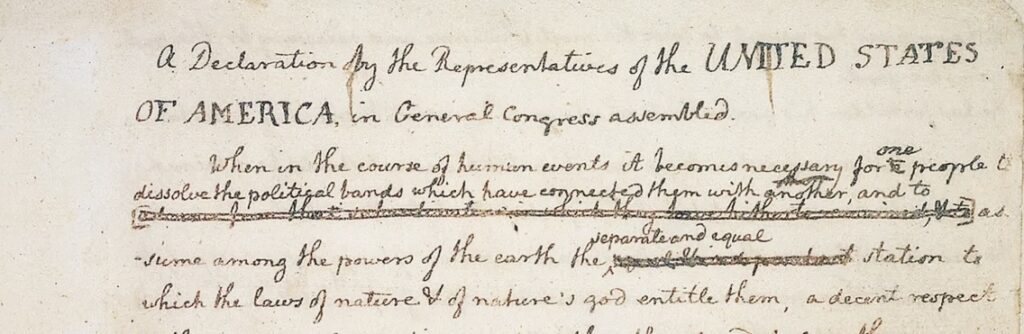
## **The Rule of Law**
In spite of recent erosions of due process, habeas corpus, and the rule of law, you’d rather be arrested in the United States than in any other country. Just ask Brittney Griner. Until the miniature reign of terror of the Immigration and Customs Enforcement (ICE), there have been very few extra-judicial disappearances in the United States, and the American people have expressed their deep hostility to these violations of human rights loud and clear. In his first inaugural address on March 4, 1801, Jefferson wrote, *“I believe this … the strongest Government on earth. I believe it the only one where every man, at the call of the law, would* *fly to the standard of the law, and would meet invasions of the public order as his own personal concern.”* In his *Thoughts on Government* in 1776, John Adams declared, *“the very definition of a republic is an empire of laws, and not of men.”* This is no longer precisely true, but it continues to be the standard against which our periodic lapses must be measured.
## **Who’s In?**
When Thomas Jefferson became the third president of the United States in 1801, only white males with a certain amount of property could vote or hold public office, about 10% of the total population of 5.4 million (one in five a slave). By the 1830s most property requirements had been removed for white men. In 1870 the 15th Amendment gave African American men the right to vote (theoretically). The 19th Amendment in 1920 granted women full citizenship rights. The 1924 Snyder Act made American Indians full citizens of the United States. The U.S. armed forces were integrated in 1948, when President Harry S. Truman signed Executive Order 9981. Poll taxes were outlawed by the 24th Amendment in 1964, followed by the Civil Rights Act (1964), and the Voting Rights Act in 1965. In 1971, 18-year-olds were granted the right to vote by the 26th Amendment. Today any American over 18 years old is legally entitled to vote in America. In this, as in so many other arenas, the United States has led the world towards greater and greater enlightenment.
Just consider the revolutionary change in the rights and opportunities for women in the last century. As late as the 1960s most women were not permitted to open their own checking accounts or apply for credit cards without the endorsement of their husbands. In 1960 women made up only 39% of America’s undergraduates, today nearly 60%. In 1960 only 3.5% of law school students were women, today 56%. Princeton University did not admit women until 1969; Brown 1971; Dartmouth 1972; the military service academies 1976, and Columbia 1983! In 1960 only 1% of American judges were women, today 34% and rising. Men are being left behind, not by affirmative action or DEI policies, but because they have lost their way.
When I was growing up in the 1960s and early 1970s, America still practiced apartheid, though not by that name. As late as 1961-62 the University of Alabama football team had no black athletes. Because of that UCLA refused to play against Alabama in the coveted Rose Bowl in Pasadena. But rather than begin to integrate, Alabama accepted an invitation to send its all-white team to the Sugar Bowl instead, in strictly segregated New Orleans. It wasn’t until 1947 that Jackie Robinson broke the “color line” in Major League Baseball. It wasn’t until 1955 that Rosa Parks refused to give up her seat to a white person in Montgomery, Alabama. As late as the 1970s African Americans who visited most Las Vegas casinos were met by security personnel who advised them that “they would have a better experience at some other casino down the road.” When the Beatles refused to perform in segregated arenas in the American South, they got death threats. John Lennon feared that snipers would shoot him on stage. Racism (including structural racism) continues to be a blot on American ideals, but the lives of most African Americans are dramatically better today than at the Bicentennial of the U.S. in 1976.
Now that we have mostly taken our boots off the necks of Native Americans, and the very worst of reservation poverty has been alleviated, the 9.7 million Indigenous men and women in the United States have made extraordinary strides in language restoration, cultural renewal, and political engagement. The 575 federally recognized American Indian tribes are increasingly sending their children to college, to law and medical schools, and to MBA programs. The rising professional class of Native Americans is asserting Indigenous rights with greater frequency than before, and they are winning more and more cases in the federal court system. Land Back programs are still in their infancy, but we can expect considerably more Native victories in the decades ahead.
We’ve come a long way. There is much more to do. America continues to be a highly imperfect nation, but the arc of justice and equality does in fact bend towards justice.
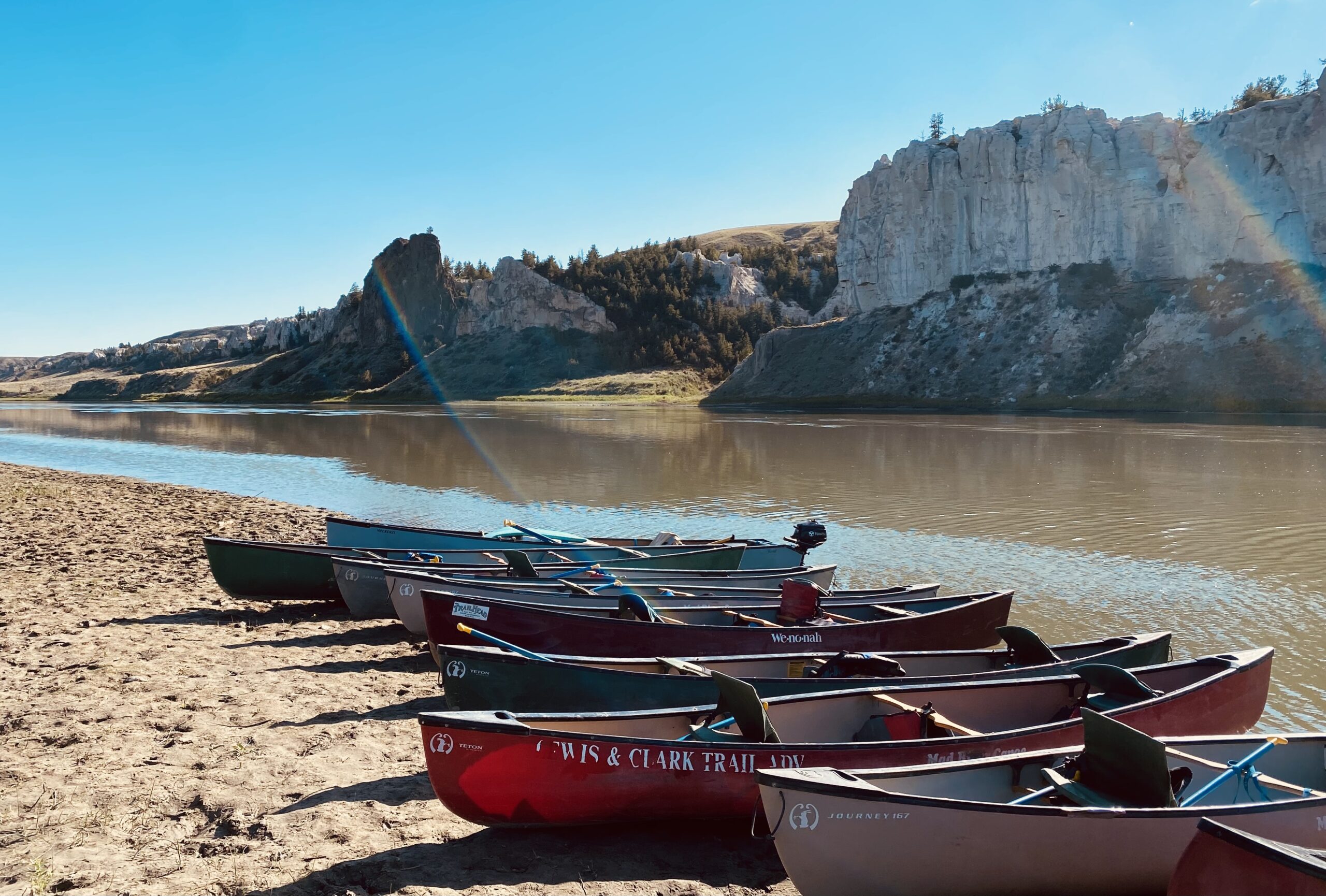Canoes on the Upper Missouri River.
## **The Public Lands**
Even though there are 340 million Americans, our vast continental landscape is still lightly populated, and we have (since the coming of Theodore Roosevelt) set aside 640 million acres for federal protection from the worst of industrial extraction. The federal public lands make up 28% of the 2.27 billion acres in the United States. Another 199 million acres are conserved by state and local governments. This adds up to about a third of the continent. Even though we are “loving our National Parks and Monuments to death,” our conservation system remains the envy of the world. Thanks to Theodore Roosevelt our public lands are accessible by the whole spectrum of the American population, in contradistinction to Europe and the rest of the world where most of the landscape treasures are fenced off for the exclusive use of insiders and elites. Tens of millions of Europeans and Asians visit America to enjoy our National Parks (63), National Monuments (155), National Game Preserves, National Recreation Areas (19) National Wildlife Refuges (573), and federally protected National Wilderness Areas (806).
## **Fuel Costs**
This is perhaps not the best moment to bring this up, but gasoline prices in America are among the lowest in the world. Europeans routinely spend at least twice what we do to fill their gas tanks. This enables mobility and productivity on an unprecedented scale.
## **Material Opulence**
If material success is your measure, America is bursting with stuff — the Walmarts, Target stores, Costcos, supermarkets, electronic equipment stores, and sporting goods stores are chock full. Material abundance in the United States is so pronounced that Americans host between six and 10 million yard sales per year, 165,000 individual yard sales per week. Meanwhile, even though the average American home has more than tripled in size since 1960, a full 13% of American families rent storage space in the more than 50,000 self-storage facilities across the nation. There are fewer than 11,000 self-storage facilities in all of Europe and they tend to be much smaller than their American counterparts. Canada has only about 3,500 self-storage facilities.
## **Entertainment**
The average American has viewer access to more than 200 “channels” — movies, documentaries, television series, game shows, reality dramas, cooking shows, hunting shows, most of them now on demand. When I was growing up *The Wizard of Oz* was shown on television once per year and if you missed it, well, wait another 365 days. Today, if you were so disposed you could watch a superb documentary film every evening for the rest of your life. There are few movies that are not now available on demand, with more coming online every month. There are now more than 300 million flat screen TVs in America’s 115 million households, and there are now more than 35 million home theaters.
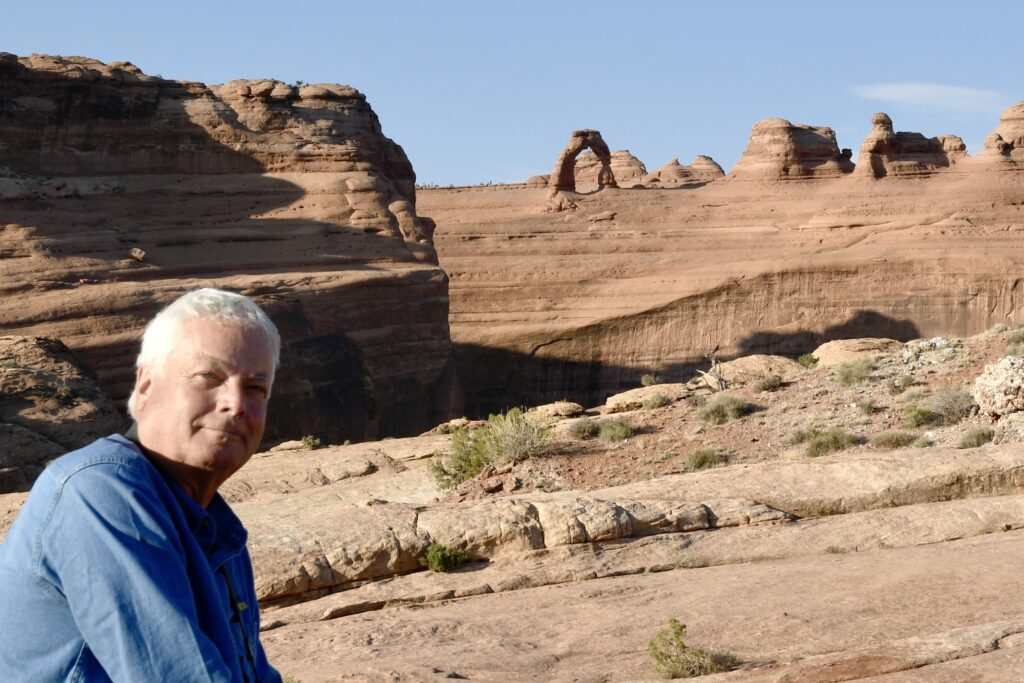Clay near Delicate Arch in Arches National Park, outside of Moab, Utah. (D. McKenna Photo)
## **Conclusion**
We continue to be the wealthiest, most powerful, most influential, and most consequential nation in the world. In spite of our current national bad mood, and though a high percentage of Americans tell pollsters the country is heading in the wrong direction, the American people remain vibrant, resilient, friendly, and personally optimistic. We take American democracy so much for granted that we are asleep at the wheel as some of our most sacred institutions and habits are being corroded all around us. From one point of view, as Prime Minister Harold Macmillan told the Brits in 1957, “we’ve never had it so good.” But from another perspective, we seem to be in slow-motion collapse and enduring a national nervous breakdown.
For all of that, I thank God I was born an American. If things broke down entirely here or if we descended into autocracy and I felt the need to leave, I would slip over the border into Canada, which in many respects is a kinder, gentler, more peaceful, more tolerant, less volatile “America.” Winnipeg, Regina, Calgary, Vancouver, Edmonton, Moose Jaw. Runners up would be Finland, Portugal, Spain, France, Denmark, and Germany, though they are decidedly not putting out the welcome mat and keeping the light on for us. Ideally, I would choose Great Britain above all other options, because it is the country whose literary and historical traditions I prize most (in some ways more than ours), but Britain is in palpable decline, and its per capita productivity (can this be true?) is now the size of Mississippi’s?!
But I would rather stay and fight for America than abandon it, no matter how severe the provocation. I would not want to live without the American West to wander in with awe and an immense sense of freedom. I love America. I believe our best days are ahead, but only if we look into the mirror, suck it up, get our act together, face and resolve the potent lingering issues of our national experiment, and find a way to reconcile with those we think are damaging our prospects.
NOTE: I realize that for each of the categories I have described in this essay, there are 1) serious exceptions; 2) those left behind; 3) uneven protections; and 4) important, even essential, caveats and qualifications. But hey, we’re celebrating here!
Happy birthday, America!!
---
## ***Discover more on these topics at Listening to America***
[Podcast](https://ltamerica.org/tag/podcast/ "1 topics")[Sports](https://ltamerica.org/tag/sports/ "2 topics")[Vermont](https://ltamerica.org/tag/vermont/ "1 topics")[Poetry](https://ltamerica.org/tag/poetry/ "1 topics")[Oppenheim](https://ltamerica.org/tag/oppenheim/ "0 topics")[Pennsylvania](https://ltamerica.org/tag/pennsylvania/ "1 topics")[Water in the West](https://ltamerica.org/tag/water-in-the-west/ "24 topics")[Space Exploration](https://ltamerica.org/tag/space-exploration/ "8 topics")[Texas](https://ltamerica.org/tag/texas/ "4 topics")[The Constitution](https://ltamerica.org/tag/the-constitution/ "1 topics")[Theodore Roosevelt](https://ltamerica.org/tag/theodore-roosevelt/ "16 topics")[Tennessee](https://ltamerica.org/tag/tennessee/ "1 topics")[Utah](https://ltamerica.org/tag/utah/ "11 topics")[South Dakota](https://ltamerica.org/tag/south-dakota/ "16 topics")[Rome](https://ltamerica.org/tag/rome/ "1 topics")[Travel](https://ltamerica.org/tag/travel/ "1 topics")[paintings](https://ltamerica.org/tag/paintings/ "0 topics")[Republics](https://ltamerica.org/tag/republics/ "1 topics")[Road Trips](https://ltamerica.org/tag/road-trips/ "18 topics")[north daktoa](https://ltamerica.org/tag/north-daktoa/ "0 topics")[New England](https://ltamerica.org/tag/new-england/ "1 topics")[Rivers](https://ltamerica.org/tag/rivers/ "3 topics")[U.S. Presidents](https://ltamerica.org/tag/u-s-presidents/ "71 topics")[Oregon](https://ltamerica.org/tag/oregon/ "4 topics")[Wisconsin](https://ltamerica.org/tag/wisconsin/ "0 topics")[Washington](https://ltamerica.org/tag/washington/ "2 topics")[North Dakota](https://ltamerica.org/tag/north-dakota/ "53 topics")[South Carolina](https://ltamerica.org/tag/south-carolina/ "1 topics")[Ohio](https://ltamerica.org/tag/ohio/ "2 topics")[U.S. Constitution](https://ltamerica.org/tag/u-s-constitution/ "1 topics")[Walden](https://ltamerica.org/tag/walden/ "1 topics")[Republic](https://ltamerica.org/tag/republic/ "0 topics")[New Mexico](https://ltamerica.org/tag/new-mexico/ "3 topics")[William Shirer](https://ltamerica.org/tag/william-shirer/ "1 topics")[Oppenheimer](https://ltamerica.org/tag/oppenheimer/ "1 topics")[Thoreau](https://ltamerica.org/tag/thoreau/ "5 topics")[Virginia](https://ltamerica.org/tag/virginia/ "7 topics")[Wyoming](https://ltamerica.org/tag/wyoming/ "4 topics")[New York](https://ltamerica.org/tag/new-york/ "8 topics")[North Carolina](https://ltamerica.org/tag/north-carolina/ "3 topics")[Reading](https://ltamerica.org/tag/reading/ "1 topics")[Steinbeck Travels](https://ltamerica.org/tag/steinbeck-travels/ "75 topics")[Video](https://ltamerica.org/tag/video/ "51 topics")[State Parks](https://ltamerica.org/tag/state-parks/ "2 topics")[Thomas Jefferson](https://ltamerica.org/tag/thomas-jefferson/ "34 topics")
**Categories:** Features
**Tags:** America at 250, Humanities
---
### [History in Context: Thomas Jefferson on War](https://ltamerica.org/history-in-context-thomas-jefferson-on-war/)
**Published:** June 22, 2026
**Author:** Clay Jenkinson
**Excerpt:** Thomas Jefferson’s view of war was shaped by a deep study of history and hope for a new path for a young American nation.
**Content:**
## Thomas Jefferson’s view of war was shaped by a deep study of history and hope for a new path for a young American nation.
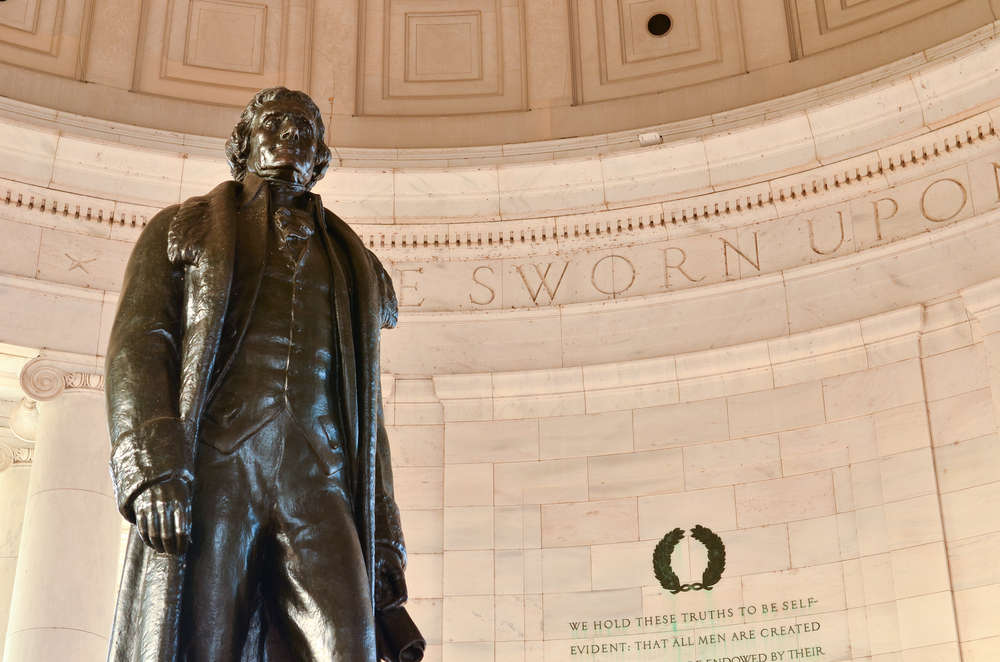Jefferson Memorial, Washington D.C. (Shuttertstock)
Thomas Jefferson detested war for all sorts of good reasons. “Peace is my passion,” he declared. Although he did not articulate his view of the calamity of war as well as his distant successor, General Dwight David Eisenhower, the views of the third president were perfectly summarized by the 34th:
Dwight D. Eisenhower
*“Every gun that is made, every warship launched, every rocket fired signifies, in the final sense, a theft from those who hunger and are not fed, those who are cold and are not clothed. This world in arms is not spending money alone. It is spending the sweat of its laborers, the genius of its scientists, the hopes of its children.”*
Both as a moralist and a pragmatist, Jefferson believed it was too late in the world’s history to solve international conflicts through bloodshed. Whenever the clouds of war gathered, he and his secretary of state, James Madison, preferred an economic embargo to armed conflict. Jefferson regarded war as barbarism, a lingering echo of the Dark Ages and Old World autocratic regimes (kings, dukes, priests, and warlords). Jefferson believed that humans are born good and capable of what he called “indefinite perfectibility.” To which John Adams said (I paraphrase): “Have you looked around much?!”
In his only book, *Notes on the State of Virginia*, Jefferson wrote:
“Never was so much false arithmetic employed on any subject, as that which has been employed to persuade nations that it is in their interest to go to war. Were the money which it has cost to gain, at the close of a long war, a little town, or a little territory, the right to cut wood here, or catch fish there, expended instead in improving what they already possess, in making roads, opening rivers, building ports, improving the arts, and finding employment for their idle poor, it would render them much stronger, much wealthier and happier. This I hope will be our wisdom.”
Jefferson made it clear that he was not on the whole fond of military men, especially if they were as gung-ho as Alexander Hamilton, whose confession in his first extant letter (November 11, 1769), written when he was no more than 14 years old — “I wish there were a war” — pretty well sums up his character. Whenever there was even a whiff of possible war in the air, Hamilton, like his later admirer Theodore Roosevelt, prepared to suit up and spring into action, including if that meant marching a federal army through Jefferson’s Virginia. Jefferson opposed the creation of the post-revolution Society of the Cincinnati (for military veterans only), because he believed it would glorify war and perhaps help create a military aristocracy in the United States.
In his first inaugural address, on March 4, 1801, Jefferson declared that America was blessed because she was “kindly separated by nature and a wide ocean from the exterminating havoc of one quarter of the globe.” In other words, America’s peace and security were more or less guaranteed by the 3,000-mile “moat” that stood between America’s experiential republic and the madness and havoc of the Old World. In that inaugural address, one of the two or three finest in American history, Jefferson called for “equal and exact justice to all men, of whatever state or persuasion, religious or political; peace, commerce, and honest friendship with all nations, entangling alliances with none.”
Jefferson was a key figure in the Enlightenment. He was a very serious student of history, and he knew that most wars have spilled the blood of young men and bankrupted nations for no justifiable reason: the vanity of kings, insults to their mistresses, negligible differences in religious doctrine, access to foreign markets, mistranslation of geopolitical communiqués, or a perceived or real slight in diplomatic discourse. Jefferson agreed with the great Irish-English satirist Jonathan Swift’s definition of a soldier: “a soldier is a Yahoo hired to kill, in cold blood, as many of his own species, who have never offended him, as possibly he can.”
## **The Founders (Mostly) Agreed**
Most of the Founding Fathers were in general agreement with Jefferson on questions of war and peace, if a little less idealistic, and like Jefferson they rejoiced that the Atlantic Ocean separated the United States from the incessant wars of the Old World. Jefferson (perhaps naively) hoped that the Europeans who emigrated to America would have left most of humanity’s bad habits back in Europe. The admiring French essayist [Hector St. John de Crèvecœur](https://www.learner.org/series/american-passages-a-literary-survey/spirit-of-nationalism/j-hector-st-john-de-crevecoeur-1735-1813/) asked rhetorically in 1782, “What is this American, this New Man,” who was dedicated to agrarianism, tolerance, co-existence, peace, and modest prosperity, rather than power and glory and world dominion? That was exactly Jefferson’s view: America was, he said, “something new under the sun.” He essentially agreed (at least in his most optimistic moments) with his friend Thomas Paine. Here in America, “we have it in our power to begin the world over again.”
The Founders’ distaste for war found its way into the Constitution of the United States. Their study of history taught them that the best way to avoid war was to erect guardrails to prevent any American president from unilaterally taking the United States to war, as kings and dictators had routinely done throughout European history. The Founders attempted to kennel the dogs of war by insisting (Article I, Section 8) that all armed engagements had to be debated and pre-authorized by Congress (in other words, by the People) to make sure they were “just wars” that had obtained the support of the American people. If an American president broke that sacred code and took us to war without consulting Congress, the Founders reckoned that the House of Representatives’ power of the purse would deny him funds and, if necessary, he could be impeached and removed from office before he ran America over a geopolitical precipice.
That was then.
## **Status Quo Ante Bellum**
Jefferson’s critique of war as an instrument of state was grounded in his exhaustive reading of history. His conclusion was that war almost never really settles anything. In fact, most wars end with the restoration of the *status quo ante bellum*, “the state of things before the war.” The madness of ending a war by returning to the state of things before the war is bad enough, but Jefferson also understood that meanwhile oceans of blood have been spilled — the flower of youth and the future — and untold treasure has been expended, without really resolving anything. Jefferson regarded every war as a setback for the cause of Civilization and a more immediate and visceral setback for the nations that have let themselves be drawn into armed struggle. Every dollar spent on cannonballs and gunpowder, military uniforms, siege engines, and gunboats is a dollar that cannot be spent on libraries, schools, agricultural improvements, public architecture, and the arts. Jefferson believed that nations are judged by their cultural achievements, not by the body bags of their enemies.
You would think that the grim historical record of war results would have a chastening effect on the world’s political and military leaders. The evidence, however, including the war against Iran, which appears to be concluding, suggests that humans learn nothing from history.
Here are just a few examples:
## **The War of 1812**
Usually regarded as the second war of American independence, the War of 1812 produced 35,000 deaths on all sides and cost the United States approximately $105 million (roughly $1.5 billion–$2 billion in today’s currency), ballooning the national debt and precipitating a post-war economic depression. In 1814, the British invaded and burned the U.S. Capitol on the Potomac, and President and First Lady Dolley Madison fled along separate routes to safety. The result: a draw. No territory changed hands. No reparations were made in either direction. The United States gained some confidence in having stood up (again) to the world’s most powerful nation. The war propelled Andrew Jackson into the presidency (1828) and invigorated the westward movement. When all the mayhem was over, the two belligerents accepted the status quo ante bellum and essentially concluded never to go to war against each other again.
Was it worth it?
## **The Falklands War**
Great Britain’s war to reclaim the Falkland Islands after Argentina invaded them in 1982 ended with Britain regaining control of the Falklands for no discernible economic or strategic advantage. The motive was wounded national pride. The Falklands are located just 300 miles from Argentina and 8,000 miles from the British Isles, and they are of no strategic importance to either country. History will probably regard the Falklands War as the last sad gasp of the once-global British Empire. Total area of the Falkland Islands: 4,700 square miles. Population: 3,700, mostly British expats. Cost of war for Britain alone: approximately $1.8 billion. Total deaths on both sides: about 1,000. An equal number wounded. As usual, the war ended with the status quo ante bellum.
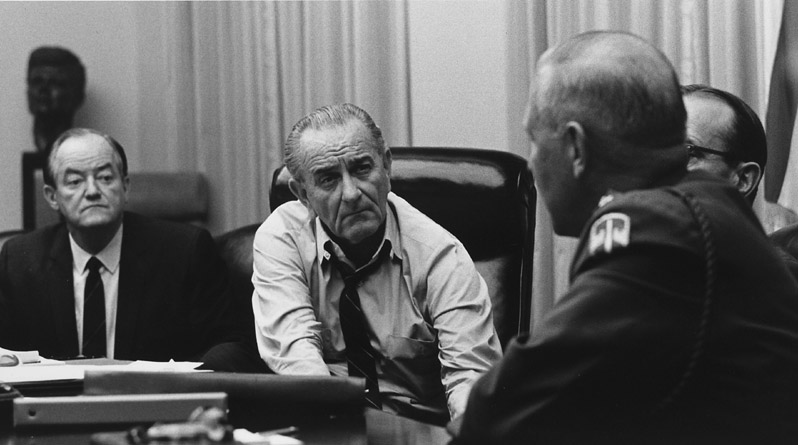President Johnson listens to Gen. Creighton Abrams, then U.S. military commander in Vietnam, during a National Security Council meeting in March 1968, four days before announcing his decision not to run for reelection. (LBJ Library)
## **Vietnam**
The United States undertook the war in Vietnam in the early 1960s to prevent communist North Vietnam, a satellite of the U.S.S.R., from absorbing the non-communist South Vietnam, a corrupt and anti-democratic regime propped up by the U.S. After several million Vietnamese had been killed, the country devastated by defoliants and napalm, and 58,200 Americans killed and another 153,303 seriously wounded, the United States withdrew in ignominy on April 30, 1975. Almost overnight, North Vietnam overran the South, occupied Saigon, and changed its name to Ho Chi Minh City.
What did we gain? And at what cost? Indeed, at what cost to our standing in the world?
## **And Now Iran**
Not only does the war against Iran appear to be concluding with the return of the status quo ante bellum, but in fact that status quo ante bellum is much worse for the United States than before February 28, 2026. To extricate ourselves from this debacle, we have had to lift sanctions, release impounded Iranian funds, pledge hundreds of billions of dollars to the Iranian regime, and kick the can of Iran’s nuclear ambitions down the road (as always). The Strait of Hormuz will inevitably reopen soon, but almost certainly under terms advantageous to Iran — a strategic defeat for the United States. Thanks to the war, Iran is now in a position to charge exorbitant transit tolls, and the regime has proved that it can close the Strait any time it chooses to punish America or destabilize the world economy.
If this is in fact how the war against Iran ends, it will represent an undeniable defeat for the United States, no matter how President Trump and his closest advisers choose to characterize it. It would be a tragic irony if the eventual settlement proves no better — and probably worse — for the United States than the Joint Comprehensive Plan of Action (JCPOA), painstakingly negotiated in 2015 by John Kerry, Barack Obama, and five allied nations, which candidate Trump denounced in the most vicious and sarcastic terms and then tore up once he became president in January 2017.
Meanwhile, President Trump’s unilateral bombing campaign against Iran, undertaken without the slightest effort to consult Congress or ask for a war powers resolution, without consulting the United Nations or our NATO allies, and without even attempting to explain his war goals to the American people (the sovereign), now officially renders the war powers clauses of the Constitution and the 1973 Congressional War Powers Law defunct. This spring, the U.S. Senate entertained and then rejected nine war powers resolutions that would channel and constrain the president’s actions as commander in chief. The House of Representatives finally passed a war powers resolution on the fourth try on June 3, 2026, but the Senate has so far refused to play its essential constitutional role under the checks-and-balances doctrine upon which our constitutional order depends.
So much for the status quo ante bellum. Gasoline prices are up and not coming down any time soon. The United States is diminished in the world’s arena. Our bewildered and enraged closest allies are beginning to make other plans for their security. Iran has gained stature in the region and around the world. And Israel is in a much graver existential crisis than it was on February 27.
Jefferson had it right. The fact that there are still wars in the mid-21st century would surprise and depress him. Maybe John Adams was right. There may be something “new under the sun” in our Founders’ national rhetoric, but our actual behavior looks a great deal like the same old madness but with infinitely more lethal weapons. The idealist Jefferson thought the peaceful ways and means of the new American republic would teach the world that there is almost always a better path than war.
These are not the best auspices for America’s milestone 250th birthday: blood sports on the White House lawn; the paint peeling from the bottom of the reflecting pool on the Mall; and a ruinous undeclared (and therefore unconstitutional) war halfway around the world with no measurable post-war advantage for the United States.
We are better than this.
---
## ***Discover more on these topics at Listening to America***
[Water in the West](https://ltamerica.org/tag/water-in-the-west/ "24 topics")[Theodore Roosevelt](https://ltamerica.org/tag/theodore-roosevelt/ "16 topics")[Steinbeck Travels](https://ltamerica.org/tag/steinbeck-travels/ "75 topics")[Republics](https://ltamerica.org/tag/republics/ "1 topics")[Thoreau](https://ltamerica.org/tag/thoreau/ "5 topics")[Oppenheim](https://ltamerica.org/tag/oppenheim/ "0 topics")[Pennsylvania](https://ltamerica.org/tag/pennsylvania/ "1 topics")[Road Trips](https://ltamerica.org/tag/road-trips/ "18 topics")[Vermont](https://ltamerica.org/tag/vermont/ "1 topics")[Texas](https://ltamerica.org/tag/texas/ "4 topics")[New Mexico](https://ltamerica.org/tag/new-mexico/ "3 topics")[Podcast](https://ltamerica.org/tag/podcast/ "1 topics")[Wisconsin](https://ltamerica.org/tag/wisconsin/ "0 topics")[New England](https://ltamerica.org/tag/new-england/ "1 topics")[Oregon](https://ltamerica.org/tag/oregon/ "4 topics")[South Dakota](https://ltamerica.org/tag/south-dakota/ "16 topics")[Rivers](https://ltamerica.org/tag/rivers/ "3 topics")[The Constitution](https://ltamerica.org/tag/the-constitution/ "1 topics")[Sports](https://ltamerica.org/tag/sports/ "2 topics")[Poetry](https://ltamerica.org/tag/poetry/ "1 topics")[State Parks](https://ltamerica.org/tag/state-parks/ "2 topics")[New York](https://ltamerica.org/tag/new-york/ "8 topics")[Reading](https://ltamerica.org/tag/reading/ "1 topics")[William Shirer](https://ltamerica.org/tag/william-shirer/ "1 topics")[Rome](https://ltamerica.org/tag/rome/ "1 topics")[Utah](https://ltamerica.org/tag/utah/ "11 topics")[paintings](https://ltamerica.org/tag/paintings/ "0 topics")[Virginia](https://ltamerica.org/tag/virginia/ "7 topics")[Oppenheimer](https://ltamerica.org/tag/oppenheimer/ "1 topics")[North Carolina](https://ltamerica.org/tag/north-carolina/ "3 topics")[Wyoming](https://ltamerica.org/tag/wyoming/ "4 topics")[Space Exploration](https://ltamerica.org/tag/space-exploration/ "8 topics")[Travel](https://ltamerica.org/tag/travel/ "1 topics")[South Carolina](https://ltamerica.org/tag/south-carolina/ "1 topics")[Republic](https://ltamerica.org/tag/republic/ "0 topics")[U.S. Presidents](https://ltamerica.org/tag/u-s-presidents/ "71 topics")[North Dakota](https://ltamerica.org/tag/north-dakota/ "53 topics")[north daktoa](https://ltamerica.org/tag/north-daktoa/ "0 topics")[Ohio](https://ltamerica.org/tag/ohio/ "2 topics")[Video](https://ltamerica.org/tag/video/ "51 topics")[Tennessee](https://ltamerica.org/tag/tennessee/ "1 topics")[Walden](https://ltamerica.org/tag/walden/ "1 topics")[Washington](https://ltamerica.org/tag/washington/ "2 topics")[Thomas Jefferson](https://ltamerica.org/tag/thomas-jefferson/ "34 topics")[U.S. Constitution](https://ltamerica.org/tag/u-s-constitution/ "1 topics")
**Categories:** Features
**Tags:** America at 250, Thomas Jefferson, U.S. Presidents
---
### [Crazy Horse and His Massive Memorial in South Dakota's Black Hills](https://ltamerica.org/crazy-horse-and-his-massive-memorial-in-south-dakotas-black-hills/)
**Published:** June 18, 2026
**Author:** Clay Jenkinson
**Excerpt:** Clay shares his thoughts on the Crazy Horse Memorial begun in 1948, a privately funded monument under construction in the Black Hills of South Dakota. The monument depicts Oglala Lakota warrior Crazy Horse on horseback, pointing toward his tribal lands. Once completed, it will be the largest mountain carving in the world, at 641 feet long, 563 feet high — larger than nearby Mount Rushmore.
**Content:**
## Clay shares his thoughts on the Crazy Horse Memorial begun in 1948, a privately funded monument under construction in the Black Hills of South Dakota. The monument depicts Oglala Lakota warrior Crazy Horse pointing toward his tribal lands. Once completed, it will be the largest mountain carving in the world, at 641 feet long, 563 feet high — larger than nearby Mount Rushmore.
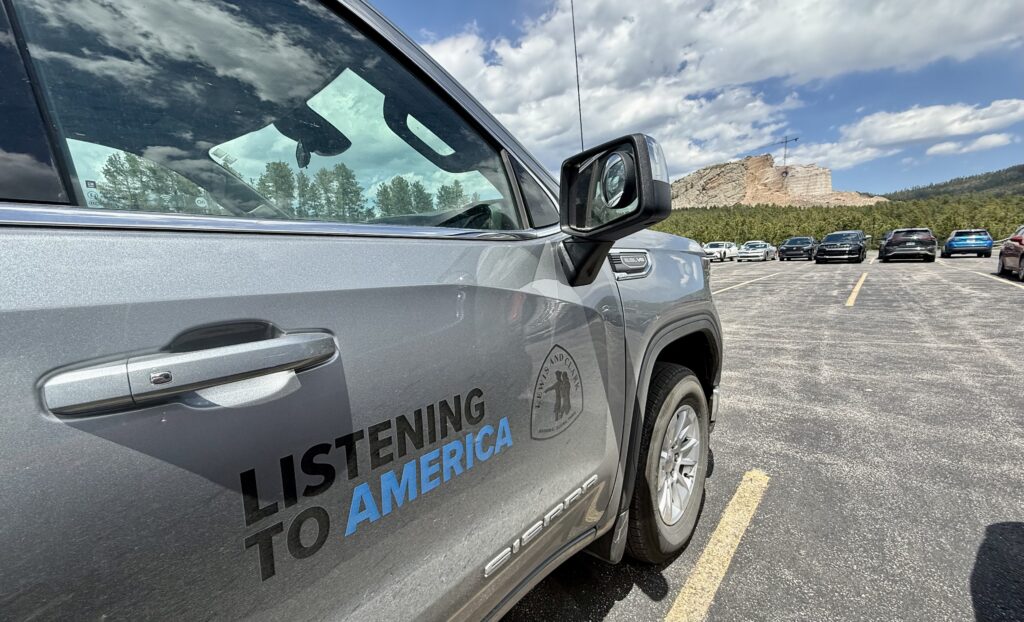Clay visits the under construction Crazy Horse Memorial, in the Black Hills of South Dakota. (Photo Clay Jenkinson)
I have been visiting or just driving by the [Crazy Horse Memorial](https://crazyhorsememorial.org) in the Black Hills of South Dakota for 30 years or more, watching the Oglala war leader’s visage slowly emerge from the granite of Thunderhead Mountain. Even assuming you think the monument is a good idea, I’m not sure that it will ever, even if finished, capture the spirit of Crazy Horse (ca. 1840-1877), one of the principal figures in the Native American resistance in the 19th century.
There are no known photographs of Crazy Horse.
We don’t know what Crazy Horse looked like, except that he was not particularly tall, eschewed ornamentation, lived quietly, was not particularly social, had brown hair and a relatively fair complexion, and he had a scar on his face from a pistol bullet fired at close range by the angry husband of a woman Crazy Horse was courting.
If it is true that Crazy Horse refused to have his photograph taken, wouldn’t we want to honor that principle (and his privacy) in another artistic medium? If he didn’t want to hold still for 30 seconds in front of a wet or dry glass plate camera (a shadow catcher), how would he feel about being frozen for eternity in a colossal conjectural image carved with dynamite by the culture that stole the Black Hills and murdered him in a bungled arrest gambit on September 5, 1877?
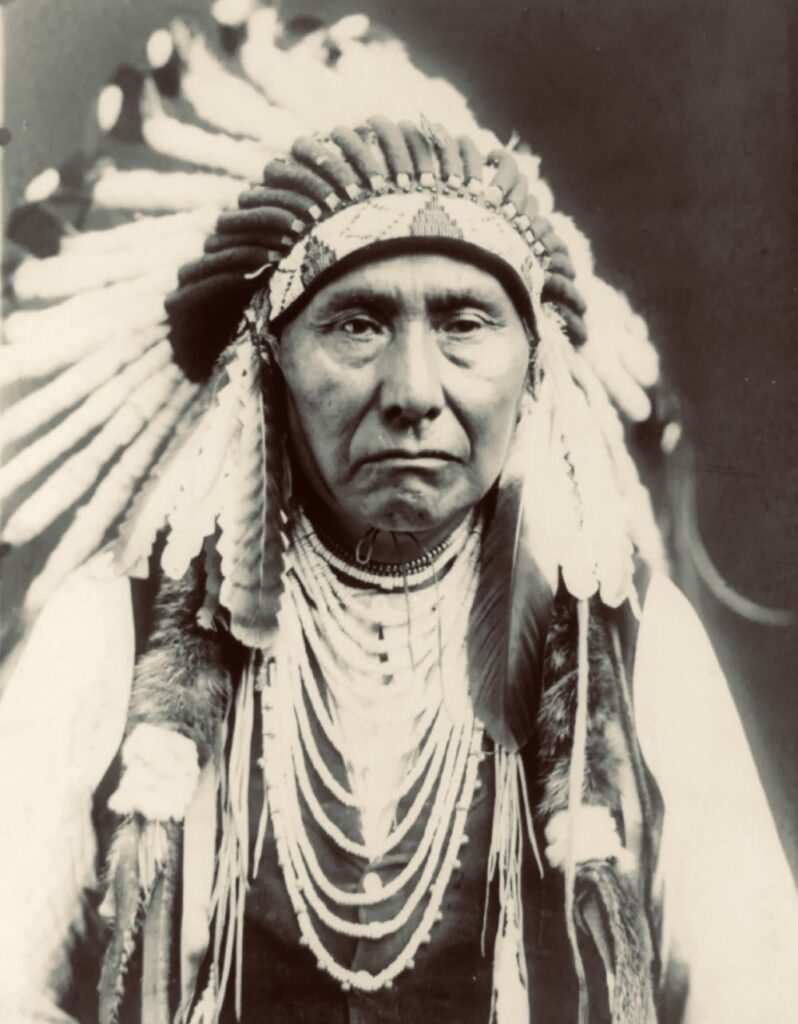Nez Percé Chief Joseph, photographed by Edward S. Curtis in 1903.
Is this the highest and best use of the Lakota homeland?
We have excellent photographs of Chief Joseph of the Nez Perce (Nimiipuu), Sitting Bull of the Hunkpapa Lakota, Geronimo of the Apache, and Red Cloud of the Oglala Lakota. A sculpture of one of them would be immediately recognizable in the Black Hills or elsewhere, but nobody seeing this visage for the first time without any historical background would say, “Oh, that must be Crazy Horse.” For most, it would appear to be a “generic Indian.” To my mind, what’s emerged so far looks a bit like a leaner Russell Means (1939-2012), who fought for the Black Hills every bit as passionately as Crazy Horse.
If Crazy Horse had been asked how America should honor him with a memorial, he would almost certainly have said, “How about get out of the Black Hills and the Powder River Country and don’t come back?” He would likely have agreed with the Connecticut painter and traveler George Catlin (1796-1822), who in the 1830s suggested that the entire Great Plains be set aside as a vast “Nations Park” for Indigenous people to live in their traditional lifeway, along with buffalo, grizzly bears, pronghorn antelope, bighorn sheep, elk, wolves, mule deer, and prairie dogs. In other words, America’s “manifest destiny” would find a way to work around a huge interior pan-Indian reservation. Catlin wrote:
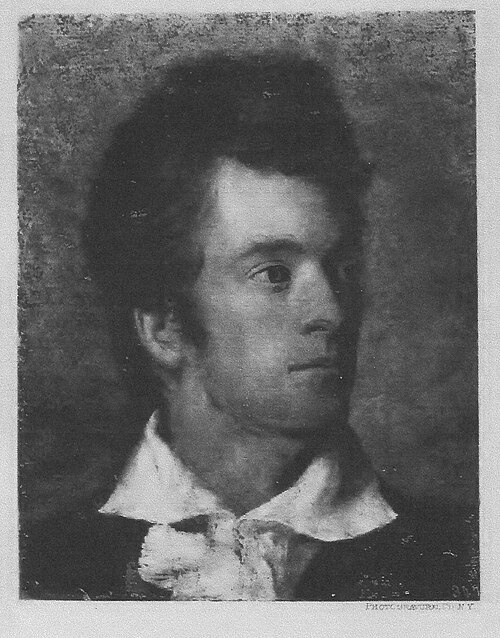Self portrait of the American artist George Catlin at age 28.
*“And what a splendid contemplation too, when one … imagines them as they might in future be seen (by some great protecting policy of government) preserved in their pristine beauty and wildness, in a magnificent park, where the world could see for ages to come, the native Indian in his classic attire, galloping his wild horse, with sinewy bow, and shield and lance, amid the fleeting herds of elks and buffaloes. What a beautiful and thrilling specimen for America to preserve and hold up to the view of her refined citizens and the world, in future ages! A Nations Park, containing man and beast, in all the wild and freshness of their nature’s beauty!”*
Try to imagine that America for a moment. Catlin may have been a dreamer, but he was not the only one. You have to shake your head at the idea that this is something that might possibly have happened. Imagine how different the history of the West would be if America had decided to share the continent with some of its Native sovereigns.
Ask yourself this. If we had asked Crazy Horse how well he would like a mountain in the Black Hills blasted into something like his likeness, what would he have said? Shouldn’t that count?
## **That Was Then, This Is Now**
I don’t in any way wish to impugn the honorable intentions of those who undertook this massive project, and persevered over seven tough decades to bring it partway to fruition. I believe their hearts were good, that their purpose was and is to honor Crazy Horse and the Lakota people, and, in part, to offer a Native counterpoint to the four white men carved into a similar mountain on a smaller scale, just 10 miles away. The Crazy Horse project was conceived a very long time ago at the end of a simpler era in American history, just as white triumphalism was diminishing. It is impossible to imagine any family or entity today getting legal permission to dismantle a mountain in the Black Hills with bulldozers and dynamite. It was an audacious idea in 1939 (with Mount Rushmore still two years from completion), born of respect and without any commercial intent.
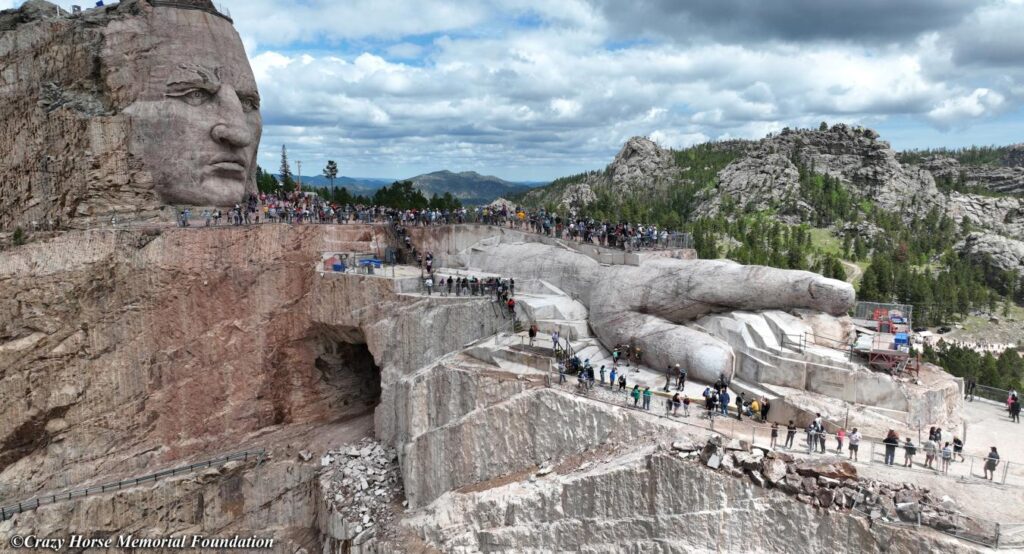Crazy Horse Memorial. (Photo © Crazy Horse Memorial Foundation)
That was on the other side of the American Cultural Revolution, which widened the aperture of the American consciousness to embrace the lives and experiences of Native Americans, African Americans, Hispanic Americans, Asian Americans, women, gay Americans, disabled Americans, and Americans on the spectrum.
Our national cultural sensitivities are far more acute now. The objectification (on a gigantic scale) of an Indigenous person we can only depict in some generic way because we are not sure what he looked like would today be regarded as very problematic. Add to that, a giant statue of an Indigenous person who did not want to be depicted and who is not here to be consulted.
We should be very charitable in our approach to this question and value all perspectives, even those we *think* we have transcended.
I can actually imagine a scenario in which the Crazy Horse project is halted, partly because to complete it would take scores of years or even a century or more and the amount of rock that would have to be removed is staggering; partly because in some respects the monument would be more compelling left in a kind of unfinished, abstract state, like Michelangelo’s late[ *Prisoners* or *Slaves*](https://www.galleriaaccademiafirenze.it/en/artworks/atlas-michelangelo/). Maybe — in the name of postmodernism — even leave some scaffolding and a crane up on the site to signify our ambivalence about such public monuments: just as Crazy Horse is frozen in time, so too his monument. We could halt further excavation because we think about these things differently now and we regard an unfinished Crazy Horse Monument as a valuable artifact in the history of public memorialization.
If Crazy Horse Monument does get completed sometime in the 22nd century, it will attract hundreds of thousands of people from all over the world, and every one of them will inevitably enter into some sort of conversation about the relationship between Native people and the Black Hills. Visitors will recall what they once learned about Custer, the fight for the Black Hills, and what subsequently happened at the Battle of the Little Bighorn. Imagine how many children in the back seat will ask, “Why is there that huge Indian?” and their parents will try to explain. Talk about a conversation piece! “When will it be finished?” “Probably never.” “Why?” “Because we’ve changed our mind about whether it was such a good idea?” “Can we get some ice cream?”
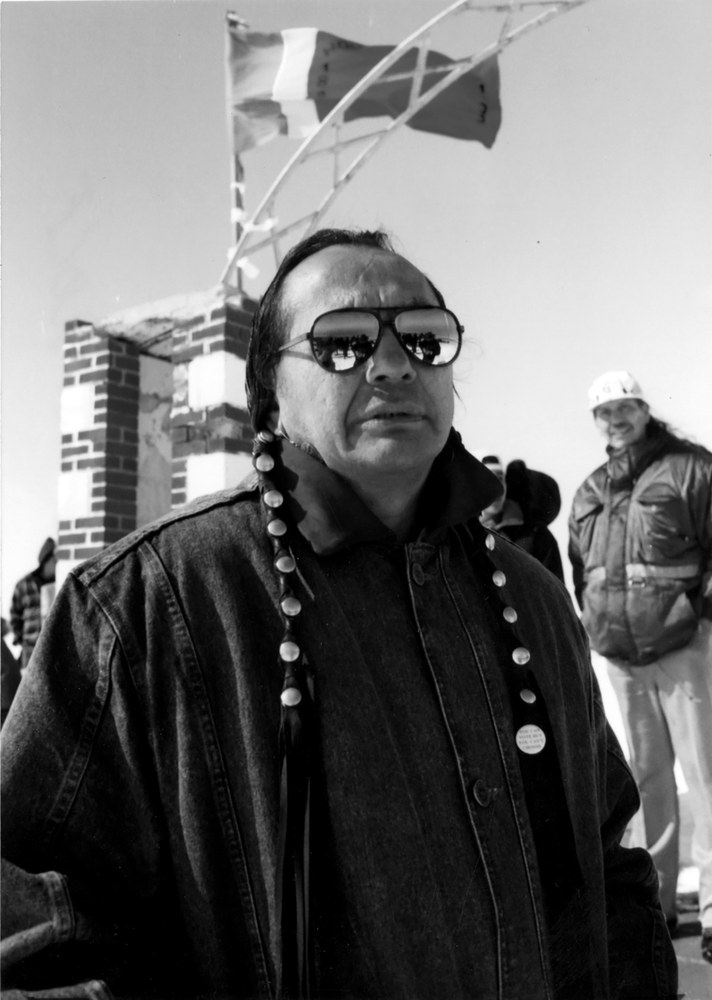Russel Means, an Oglala Lakota activist, actor, and author, was a leader of the American Indian Movement (AIM). (Photograph © 1993 Marvin J. Wolf, from South Dakota State Historical Society)
Russell Means spoke for many, but not all, of the Lakota people when he said, “The Crazy Horse Monument is a farce. … It’s a goddamn stone face in the Holy Land.”
So far the monument has cost more than $250 million, all of it private funding. So far we can see his face and his outstretched fingers. If the sculptors are determined to see this project through, to carve his chest all the way down to his narrow waist, to sculpt his hair flowing behind him, and his horse’s head, flowing mane, and muscled chest, the cost is going to be calculated in the billions, not hundreds of millions. And the timeline will span generations and centuries.
As I passed through the Black Hills a week or two ago, I decided to visit the site, pay my fee, and take a look around. It had been at least a decade since I was last there. I won’t say that the monument is nearly finished — in my view it will never be finished — but it has come a long way. The interpretive center has dozens of large-scale photographs showing the progress of the sculpting decade by decade. So far the “sculptors” have removed 10 million tons of mountain using the very industrial tools that enabled the United States to crush Native resistance between 1865 and December 29, 1889 (Wounded Knee). The paradoxes abound.
The Crazy Horse Monument campus has a restaurant and a snack bar, several museums and art galleries, an outdoor stage, and an educational and cultural center. As I approached the plaza, World Champion Hoop Dancer Jasmine Pickner-Bell (Hunkpati Oyate) and her family were performing a series of spirited hoop dances on the stage, accompanied by excellent historical commentary and Lakota drum music. Most of the hundred or so white people on the benches watched and listened with joy and awe, but a few tourists behind talked about recent and projected meals and gas costs, laughed in a forced way, and high-fived through the concert of what they apparently regarded as “performing Indians.” I was ashamed.
The indoor galleries are fascinating, in part because there is such a variety of good, bad, and indifferent paintings, a few of them velvet, mosaics, busts, vests, headdresses, etc. The collection just needs a refresh to make sure all the art is by Native Americans. The bookstore and souvenir shop is outstanding.
## **The Fight for the Black Hills**
In 1868, after the Lakota defeated the U.S. Army in the War for the Bozeman Trail (Red Cloud’s War), the United States entered into a treaty with the Lakota that “granted” them the western half of today’s South Dakota in perpetuity, unless future U.S. government agents could convince three-quarters of all the adult males of the tribe to sign any new agreement. This has never happened. Six years later, Lt. Colonel George Armstrong Custer “discovered” gold during his problematic 1874 reconnaissance of the Black Hills. Prospectors immediately flocked to the hills. The U.S. government half-heartedly attempted to chase the miners off for a few months and then just gave up. Soon commissioners arrived from Washington, D.C. — in the usual way — to buy the Black Hills from the Lakota. But the Lakota wouldn’t sell *Paha Sapa* at any price. So the U.S. just took the Black Hills. Because it could.
In 1980 the U.S. Supreme Court, in an 8-1 decision, determined that the American government had illegally taken the Black Hills from the Lakota. Since the value of the Black Hills in 1877 had been estimated at $17.1 million, at 5% annual interest the money owed them (for a Fifth Amendment taking) had come to $105,994.52. That was 1980. At the moment, the U.S. owes the Lakota well over a billion dollars — and counting.
The Lakota refuse to take the filthy lucre. The Black Hills are not for sale. The 1868 Treaty is still in force. They vow never to cash the check. Crazy Horse refused to attend treaty negotiation meetings with white people. When he was asked by intermediaries if he would sell the Black Hills, he picked up a handful of earth and said, “One does not sell the earth upon which the people walk.”
The growing national [Land Back Movement](https://landback.org) is going to catch up with the Black Hills one of these days. Most white people bristle (to put it mildly) at the idea of returning the Black Hills to the Lakota and Cheyenne, treaty or no treaty, on the basis of the “we stole it fair and square” principle. But since fully 60% of the 1.5 million acres in the Black Hills are publicly owned, it would be quite possible to deed large portions of it back to the Lakota without dispossessing the non-Natives who own the private 40%. At the very least, the public lands in the hills designated as National Monument, National Park, and National Forest could be co-managed by the Lakota Nation and the United States. Co-management is already practiced at Canyon de Chelly in Arizona, Bears Ears National Monument in Utah, and Glacier Bay National Park, among others.
## **What Now?**
I know this will sound ornery to some, but I’d be happiest if Thunderhead Mountain had been left in its rugged geological state with a modest sign on the side of the road that said, “We thought of carving Crazy Horse on this Black Hills mountain, but then we realized that the greatest tribute we could offer him would be to leave the mountain alone, inviolable forever, as a sacred site belonging to the Indigenous people of America.”
What’s been done over the last 78 years cannot be undone. You cannot glue the mountain back together. Whatever we do next — finish it or leave it unfinished — we can agree to proceed with the utmost delicacy and respect, and to make sure that the Lakota are always at the table for any decisions we make together about what comes next.
---
## ***Discover more on these topics at Listening to America***
[U.S. Presidents](https://ltamerica.org/tag/u-s-presidents/ "71 topics")[New Mexico](https://ltamerica.org/tag/new-mexico/ "3 topics")[Oppenheimer](https://ltamerica.org/tag/oppenheimer/ "1 topics")[Travel](https://ltamerica.org/tag/travel/ "1 topics")[Ohio](https://ltamerica.org/tag/ohio/ "2 topics")[The Constitution](https://ltamerica.org/tag/the-constitution/ "1 topics")[Wisconsin](https://ltamerica.org/tag/wisconsin/ "0 topics")[South Carolina](https://ltamerica.org/tag/south-carolina/ "1 topics")[north daktoa](https://ltamerica.org/tag/north-daktoa/ "0 topics")[Wyoming](https://ltamerica.org/tag/wyoming/ "4 topics")[Republics](https://ltamerica.org/tag/republics/ "1 topics")[Sports](https://ltamerica.org/tag/sports/ "2 topics")[Rome](https://ltamerica.org/tag/rome/ "1 topics")[Texas](https://ltamerica.org/tag/texas/ "4 topics")[Thomas Jefferson](https://ltamerica.org/tag/thomas-jefferson/ "34 topics")[Oregon](https://ltamerica.org/tag/oregon/ "4 topics")[Space Exploration](https://ltamerica.org/tag/space-exploration/ "8 topics")[Steinbeck Travels](https://ltamerica.org/tag/steinbeck-travels/ "75 topics")[Washington](https://ltamerica.org/tag/washington/ "2 topics")[Oppenheim](https://ltamerica.org/tag/oppenheim/ "0 topics")[Podcast](https://ltamerica.org/tag/podcast/ "1 topics")[North Carolina](https://ltamerica.org/tag/north-carolina/ "3 topics")[Vermont](https://ltamerica.org/tag/vermont/ "1 topics")[Thoreau](https://ltamerica.org/tag/thoreau/ "5 topics")[paintings](https://ltamerica.org/tag/paintings/ "0 topics")[U.S. Constitution](https://ltamerica.org/tag/u-s-constitution/ "1 topics")[Water in the West](https://ltamerica.org/tag/water-in-the-west/ "24 topics")[Pennsylvania](https://ltamerica.org/tag/pennsylvania/ "1 topics")[Virginia](https://ltamerica.org/tag/virginia/ "7 topics")[Utah](https://ltamerica.org/tag/utah/ "11 topics")[Reading](https://ltamerica.org/tag/reading/ "1 topics")[Theodore Roosevelt](https://ltamerica.org/tag/theodore-roosevelt/ "16 topics")[Video](https://ltamerica.org/tag/video/ "51 topics")[Republic](https://ltamerica.org/tag/republic/ "0 topics")[Walden](https://ltamerica.org/tag/walden/ "1 topics")[Road Trips](https://ltamerica.org/tag/road-trips/ "18 topics")[New York](https://ltamerica.org/tag/new-york/ "8 topics")[Poetry](https://ltamerica.org/tag/poetry/ "1 topics")[Tennessee](https://ltamerica.org/tag/tennessee/ "1 topics")[North Dakota](https://ltamerica.org/tag/north-dakota/ "53 topics")[South Dakota](https://ltamerica.org/tag/south-dakota/ "16 topics")[Rivers](https://ltamerica.org/tag/rivers/ "3 topics")[New England](https://ltamerica.org/tag/new-england/ "1 topics")[William Shirer](https://ltamerica.org/tag/william-shirer/ "1 topics")[State Parks](https://ltamerica.org/tag/state-parks/ "2 topics")
**Categories:** Features
**Tags:** America at 250, Native Americans
---
### [Planning America’s 25th Anniversary Celebration — Long Lost Document Discovered?](https://ltamerica.org/planning-americas-25th-anniversary-celebration-long-lost-document-discovered/)
**Published:** June 15, 2026
**Author:** Clay Jenkinson
**Excerpt:** Researchers at the National Archives recently made a startling discovery, uncovering a portion of a document that appears to discuss event planning for America’s 25th Anniversary.
**Content:**
## *Researchers at the National Archives recently made a startling discovery, uncovering a portion of a document that appears to discuss event planning for America’s 25th Anniversary.*
A gander pull from an illustration by Frederic Remington.
***Editor’s Note****: This historical document recently surfaced in a routine check of National Archives files marked “Behind the Scenes at the American Revolution.” Needless to say, this might change the way we think about the Early National Period in American history. We hasten to concede, however, that the authenticity of this document has not been independently verified.*
*There were four participants in the conversation that follows: Thomas Jefferson, the third president of the United States; James Madison, Jefferson’s closest friend and secretary of state; Aaron Burr, Mr. Jefferson’s vice president until 1805. And the irrepressible Alexander Hamilton, formerly the secretary of the treasury. Unfortunately, all we have is a fragment of what must have been a very interesting conversation.*
*Finally, as a historical note: eye gouging contests were common on the near-western frontier, often leading to the actual plucking out of the opponent’s eye(s), and gander pulling was also an actual early 19th-century rural sport. You should know, too, that Alexander Hamilton had an adulterous affair with a woman named Maria Reynolds during his time as secretary of the treasury, and it became a national scandal and source of much satire. Maria and her husband actually set up the susceptible Hamilton for a blackmail scheme that nearly ended his public career. Hamilton’s susceptibility to dueling led to his death in July 1804 on the west bank of the Hudson River.*
Life-size replica of Cheshire’s (Massachusetts) Mammoth Cheese that was presented to President Thomas Jefferson at the White House, January 1, 1802, weighing some 1,235 pounds.
**JEFFERSON**: Gentlemen. As you know, the 25th anniversary of American Independence is coming in a few months. We need to host an event on the White House lawn to commemorate this important moment in the history of human liberty. I wonder if you have any suggestions about what sort of thoughtful and dignified event we could host?
**MADISON**: I was thinking about a lovely reception with French wines and your celebrated Baked Alaska recipe. You could read the Declaration or maybe just the preamble. And we could wheel out what’s left of the World’s Largest Cheese that was made for you a couple of years ago by the republican farmers of the Cheshire Hills of Massachusetts. If we cut away all the mold, the thing would still weigh more than 700 pounds.
**AARON BURR**: Geeze, Jemmy, why don’t you just give everyone a sleeping potion and a copy of the *Complete Works of John Adams*? We don’t want a snooze-fest, Mr. President. You know that cheese was disgusting even when it was fresh. Wine? Do you think wine is the preferred drink of the American people? Fill a few horse watering troughs with applejack and hand out some “I Bought Louisiana Territory” mugs and you’ll get yourself a proper celebration.
**JEFFERSON**: Sir, I have never been intoxicated in the whole course of my life.
**BURR**: It shows, Tom. Don’t you know your Shakespeare, your *Twelfth Night*: “Does thou think because thou art virtuous there will be no more cakes and ale?”
**JEFFERSON**: I saw a French operatic version of *Twelfth Night* at the Palais Royale in Paris in 1785. It was exquisite. My head and my heart were both gratified. The temperature at showtime was 73 degrees Fahrenheit. I checked and noted it in my weather log. I hear you, Mr. Burr, but what if the wine we offered was Château d’Yquem 1743? Nobody can resist that.
**BURR**: With all due respect, Mr. Jefferson, I don’t think you understand the genius of the American people. They do not all live in Palladian villas and sip wine in four-ounce glasses.
**JEFFERSON**: Perhaps you are right, Mr. Burr. I realize that I may be slightly out of touch with average Americans. There are so few of them up on my mountain in Virginia. What do you think would be more in keeping with the cultural moment we are in?
**BURR**: I was thinking an eye-gouging match.
**JEFFERSON**: Eye gouging?

**MADISON**: Maybe a chess exhibition in which you, blindfolded, simultaneously play against 13 challengers, one for each of the original 13 states.
**BURR**: Wow. That guy will never be president.
**JEFFERSON**: I played against Dr. Franklin once or twice in the Philadelphia years. The best I did was end one game with a draw.
**BURR**: Have you ever seen a good eye-gouging match, Mr. President? It’s one of the favorite pastimes on the western frontier. The rules are stricter now. Each contestant has to sign a one-eye limit. Man, I once saw a grudge match between the Tennessee Tumbler and the Cincinnati Cyclops on Blennerhassett Island on the Ohio River. You don’t want to be squeamish if you attend a good one. They say Andrew Jackson might become world champion one day. Besides, an eye-gouging exhibition would be easy to stage. Remember, your secretary of education is the former CEO of the AFEG?
**JEFFERSON**: AFEG? Sounds like a heart disease to me.
**BURR**: No, AFEG, the American Federation of Eye Gouging. It’s banned only in Rhode Island.
**JEFFERSON**: That’s Rhode Island. Wouldn’t sign the Constitution. How did the AFEG CEO become a U.S. cabinet member? That sounds like a really poor choice for a job as important as education.
**MADISON**: Surely, Vice President Burr, you can think of something less violent and bloody for this august occasion. We are commemorating one of the most important moments in the history of human aspiration at the White House. It will tell our own citizens and the rest of the world who we are and what we value.
**BURR**: Believe me, the people prefer human perspiration to human aspiration, Jim Bob. But OK, if you are going to be prissy about it, how about a good old gander pulling contest?
**JEFFERSON**: I’m not sure what that is?
**BURR**: Boy, you are out of touch. It’s the fastest growing sport in Tennessee and Kentucky. There is a rumor that George Rogers Clark was so drunk that he fell off his horse at last year’s finals.
**JEFFERSON**: I guess we should have reimbursed George Rogers Clark for his heroic actions in the Great Lakes country during the Revolution. Not much I can do at this point, but I’m planning to throw a bone to his kid brother Bill Clark one of these days. Maybe a quest up the Missouri River?
**BURR**: So this is how the gander pull is done: you build a scaffold and dangle a dead goose by its legs just about out of reach for a man on a horse. Except in Mississippi, the goose is dead, of course, because we wouldn’t want to do anything inhumane. Then they lard up the neck and head of the goose with whale oil. Contestants line up, and one after another they gallop towards the goose, try to grab it with their right hand, and tear its head and neck off. Oh, my, it’s hilarious to watch. Most of the bystanders bet on it. (That kind of betting can lead to eye gouging, by the way.) Most people on a full gallop can’t even grab the neck. And even those who do get a grip on it have a very hard time holding on long enough to wrench the head off. It’s much harder than you think. Imagine being pulled off your horse in front of your peers by an oiled goose!

**JEFFERSON**: Interesting. Loathe though I am to thwart the will of the people, Mr. Vice President, I am going to veto this one. How about something less barbaric?
**BURR**: Okay! Here’s a perfect idea. What about a mock-duel? You know, dueling pistols loaded with blanks. No live ammo. The combatants at 20 paces. I think the former Treasury Secretary Alexander Hamilton might come all the way from New York to participate. He’s been involved in 10 affairs of honor already, and he’s only in his early 40s.
**MADISON**: I was thinking about dueling harpsichords, and maybe Dolley could organize a peacock feather hat style show.
**JEFFERSON**: Colonel Burr, tell me more about the dueling, I mean mock-dueling. I’m intrigued. Do you think Alexander Hamilton would really be willing to be a part of this? He hates me, you know, called me an intellectual voluptuary.
**BURR**: Wow, what an insult. That must have left a mark! Hamilton’s sense of honor is so prickly that he once challenged the moon to a duel for rising and interrupting one of his trysts in the garden of the Treasury Department. He tried in the 90s to goad your man Monroe into a duel. If ever a man had a hair trigger, it’s Hammy.
**JEFFERSON**: Hamilton is still dueling? I thought he had gained some maturity in recent years, now that he’s retired from government and back in private practice in New York.
**BURR**: I’m sorry to say you’re right. His dueling has been way down lately. I think he had only three affairs of honor last year. Mrs. Reynolds has taken some of the starch out of him — or has she starched him up all the way to the bank! Ha ha ha. Am I right? You guys need to listen to me. We can do a full mock-duel re-enactment on the White House lawn. We’ll call it **Take Your Shot.** I’ll be happy to square off with Hamilton … in a playful manner, of course. I can supply the pistols and bullets, too.
**JEFFERSON** Gentlemen, gentlemen, please. You are in danger of forgetting what this celebration is about. What America is about. We broke from England. We dedicated our lives, our fortunes, and our sacred honor to the cause of liberty. We are the first people ever to try to govern ourselves using only reason, justice, and good sense as our guides. If our republican experiment succeeds, and of course it will, humanity will come to regard July 4, 1776, as the climacteric in human history, when man finally threw off the chains of servitude and misery and took his rightful place in the course of human events. Our revolution was not born in ruffianry, my friends, but from the works of Plutarch and Tacitus, Montesquieu and Voltaire. We Americans are attempting to vindicate human possibility, rationality, due process, the rights of man, and above all the idea that this is a nation of laws and not men. We don’t have kings here. No Kings. My hope is that every subsequent president understands — surely they will — that the whole world is watching to see whether we — and thus they — are up to it. The rest of humanity must be inspired by our high-mindedness, our studied decorum, our commitment to grammar and good sense, the modesty of our foreign policy, our modest neoclassical taste in architecture and interior design, our love of peace, our distaste for war, our civility, and the civic virtue of our leaders. There is no room for blood sports on the lawn of the White House!
*Suddenly the door swings open violently, and Mr. Jefferson’s lovely speech is interrupted. In rushes Alexander Hamilton, looking breathless, buttoning up his breeches.*
**HAMILTON**: Did I hear right? There’s gonna be a duel? Tell me there’s gonna be a duel! Count me in. Who will be our seconds? Who will referee?
**MADISON**: If men were angels, no referees would be necessary. What is dueling but the greatest of all reflections on human nature?
**HAMILTON**: Enough jibber jabber. Whoa, you’re tedious Mr. Madison. But who will dare to face off against me in this mock-duel? Oh, how I wish my friend George Washington were here to see this.
**JEFFERSON**: OK, heeere we go! Washington, Washington, Washington. We’ve heard it all a thousand times, Colonel Hamilton.
**BURR**: I’m your huckleberry, Colonel Hamilton.
**MADISON**: Maybe the cheese afterward. And some Bach.
*Editor’s Note: Unfortunately, at this point the document trails off. The bottom of the page has been torn away. We are unsure of what sort of commemorative event was held on the White House lawn to celebrate America’s birth. Perhaps a disciplined search of the files at the Library of Congress might turn up the lost pages. We feel sure Mr. Jefferson prevailed, as always. And that the event was dignified.*
---
## ***Discover more on these topics at Listening to America***
[Republics](https://ltamerica.org/tag/republics/ "1 topics")[Space Exploration](https://ltamerica.org/tag/space-exploration/ "8 topics")[Podcast](https://ltamerica.org/tag/podcast/ "1 topics")[Sports](https://ltamerica.org/tag/sports/ "2 topics")[Rome](https://ltamerica.org/tag/rome/ "1 topics")[paintings](https://ltamerica.org/tag/paintings/ "0 topics")[Water in the West](https://ltamerica.org/tag/water-in-the-west/ "24 topics")[Poetry](https://ltamerica.org/tag/poetry/ "1 topics")[Steinbeck Travels](https://ltamerica.org/tag/steinbeck-travels/ "75 topics")[South Dakota](https://ltamerica.org/tag/south-dakota/ "16 topics")[William Shirer](https://ltamerica.org/tag/william-shirer/ "1 topics")[Travel](https://ltamerica.org/tag/travel/ "1 topics")[Oppenheimer](https://ltamerica.org/tag/oppenheimer/ "1 topics")[Reading](https://ltamerica.org/tag/reading/ "1 topics")[Thomas Jefferson](https://ltamerica.org/tag/thomas-jefferson/ "34 topics")[Pennsylvania](https://ltamerica.org/tag/pennsylvania/ "1 topics")[The Constitution](https://ltamerica.org/tag/the-constitution/ "1 topics")[Wisconsin](https://ltamerica.org/tag/wisconsin/ "0 topics")[Tennessee](https://ltamerica.org/tag/tennessee/ "1 topics")[Utah](https://ltamerica.org/tag/utah/ "11 topics")[State Parks](https://ltamerica.org/tag/state-parks/ "2 topics")[Thoreau](https://ltamerica.org/tag/thoreau/ "5 topics")[U.S. Presidents](https://ltamerica.org/tag/u-s-presidents/ "71 topics")[Video](https://ltamerica.org/tag/video/ "51 topics")[Vermont](https://ltamerica.org/tag/vermont/ "1 topics")[New Mexico](https://ltamerica.org/tag/new-mexico/ "3 topics")[Oregon](https://ltamerica.org/tag/oregon/ "4 topics")[Oppenheim](https://ltamerica.org/tag/oppenheim/ "0 topics")[New York](https://ltamerica.org/tag/new-york/ "8 topics")[U.S. Constitution](https://ltamerica.org/tag/u-s-constitution/ "1 topics")[Washington](https://ltamerica.org/tag/washington/ "2 topics")[Texas](https://ltamerica.org/tag/texas/ "4 topics")[Road Trips](https://ltamerica.org/tag/road-trips/ "18 topics")[North Dakota](https://ltamerica.org/tag/north-dakota/ "53 topics")[Virginia](https://ltamerica.org/tag/virginia/ "7 topics")[South Carolina](https://ltamerica.org/tag/south-carolina/ "1 topics")[Theodore Roosevelt](https://ltamerica.org/tag/theodore-roosevelt/ "16 topics")[New England](https://ltamerica.org/tag/new-england/ "1 topics")[Walden](https://ltamerica.org/tag/walden/ "1 topics")[north daktoa](https://ltamerica.org/tag/north-daktoa/ "0 topics")[Rivers](https://ltamerica.org/tag/rivers/ "3 topics")[North Carolina](https://ltamerica.org/tag/north-carolina/ "3 topics")[Ohio](https://ltamerica.org/tag/ohio/ "2 topics")[Republic](https://ltamerica.org/tag/republic/ "0 topics")[Wyoming](https://ltamerica.org/tag/wyoming/ "4 topics")
**Categories:** Features
**Tags:** America at 250, Thomas Jefferson, U.S. Presidents
---
### [In a Far Corner of Colorado: One Chapter in the Great Dispossession](https://ltamerica.org/in-a-far-corner-of-colorado-one-chapter-in-the-great-dispossession/)
**Published:** June 8, 2026
**Author:** Clay Jenkinson
**Excerpt:** A recent visit to northwest Colorado reminds me of the paradox of Manifest Destiny and our American history.
**Content:**
## A recent visit to northwest Colorado reminds me of the paradox of Manifest Destiny and our American history.
Clay visits the [Milk Creek Battlefield Park](https://coloradoencyclopedia.org/article/battle-milk-creek) in northwest Colorado, the site of a violent and tragic engagement between U.S. cavalry troops and the Ute people in 1879. (Photo Clay Jenkinson)
How do you take the continent from indigenous people? You’re planning to take it one way or another, but you understand the optics, and you have a conscience and some residual self-respect. And yet you are bent on taking the continent, come what may. This paradox has been one of the central thrusts of American history. As we step back to commemorate the 250th birthday of the United States, we need to wrestle with this question.
I’ve been reading the story of America’s “manifest destiny” all my life and for a very long time I did not question it much. But “how many a man can date a new era in his life from the reading of a book,” Henry David Thoreau asked in *Walden*. That was the effect of Dee Brown’s 1970 *Bury My Heart at Wounded Knee*, which I read when I was just 17. From the moment you let yourself know the story of the confiscation of the Americas by European colonial powers and the “great dispossession” of Native Americans between 1607 and 1934, you can never feel quite the same way about the American experiment again. In 1809, Thomas Jefferson dressed up the goal as “an empire for liberty” such as the world had never previously seen, but Jefferson, like most other white people, could not really contemplate sharing the empire with the indigenous people whose sovereign lands were unfortunately in the way.
## **Enter Nathan Meeker**
At the moment, I am in Meeker, in northwest Colorado, considering the Meeker “massacre” of September 29, 1879.
Born in Ohio in 1814, Nathan Meeker was a stern utopian who needed money and therefore angled to become an Indian agent. Think of that. Meeker wasn’t interested in “the Indian question.” He did not have a vision of how two so very different cultures could find a way to share the American West, even though whole swaths of it were seen as economically “useless” from a white point of view. He needed a job. He was in debt. His creditors were hounding him, threatening legal action. So he got the gig as the Indian agent for the Ute people of western Colorado, headquartered here in Meeker at the White River Indian Agency. He reckoned he could pay off his debts in a couple of years and move on to other opportunities in the West.
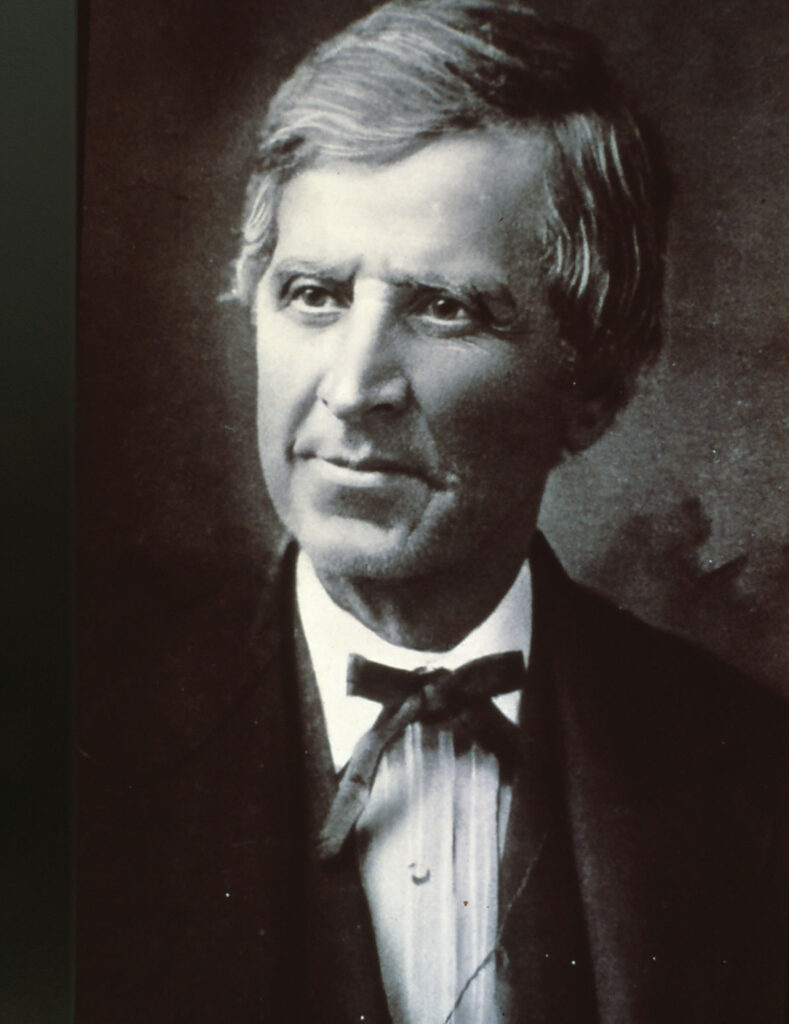Nathan Meeker
Beware of utopians. Almost all of them turn out to be visionaries with an authoritarian streak: Plato, Calvin, Thomas More, the Reverend Jim Jones … Meeker. The British philosopher Isaiah Berlin calls them “single-minded monists, ruthless fanatics, men possessed by an all-embracing coherent vision.” Almost all utopians wind up being disappointed by the people they try to save. Berlin writes, “No perfect solution is, not merely in practice, but in principle, possible in human affairs, and any determined attempt to produce it is likely to lead to suffering, disillusionment and failure.”
Once he had secured the job, Meeker decided to convert the Ute people into trousered Americans. He reckoned he could persuade them to give up their ancient lifeway and adopt some impoverished version of ours. They were to speak English, give up the Sun Dance and every other pagan ritual, wear Levis and flannel shirts and calico dresses, forgo polygamy, send their children to faraway boarding schools, pray only to Jesus, plow the semi-arid ground, cease hunting and gathering, upend the entire social structure upon which their culture was based, cede whatever lands white people might decide to covet, control their hotheads, turn the other cheek when white folks whipped them in public, acquiesce when white men raped or stole their women or liquored the leaders up to make them more willing to sell their lands for a keg of whiskey. … The list is much longer than that.
To begin to make sense of the Meeker “Massacre,” we have to acknowledge that Anglo-Americans were invading the sovereign homeland of the Ute nation and shoving them out of the way as peacefully as possible and as viciously as necessary. In 1868 the U.S. government had negotiated a solemn treaty with the Utes, “granting” them the western third of Colorado *forever*, if they would just drift west and away from the booming non-native settlements, mining camps, and ranching enterprises in the rest of the state.
Forever.
Five years of forever later, the U.S. broke the 1868 treaty when gold was discovered in the Utes’ San Juan Mountains. Accordingly, government agents inevitably persuaded the Utes to cede another 3.5-4 million acres in what is known as the [Brunot Agreement](https://coloradoencyclopedia.org/article/brunot-agreement) — for an annual annuity payment of $25,000 and temporary hunting rights in some of the ceded lands. And with the promise that there would be no more attempts to acquire Ute lands.
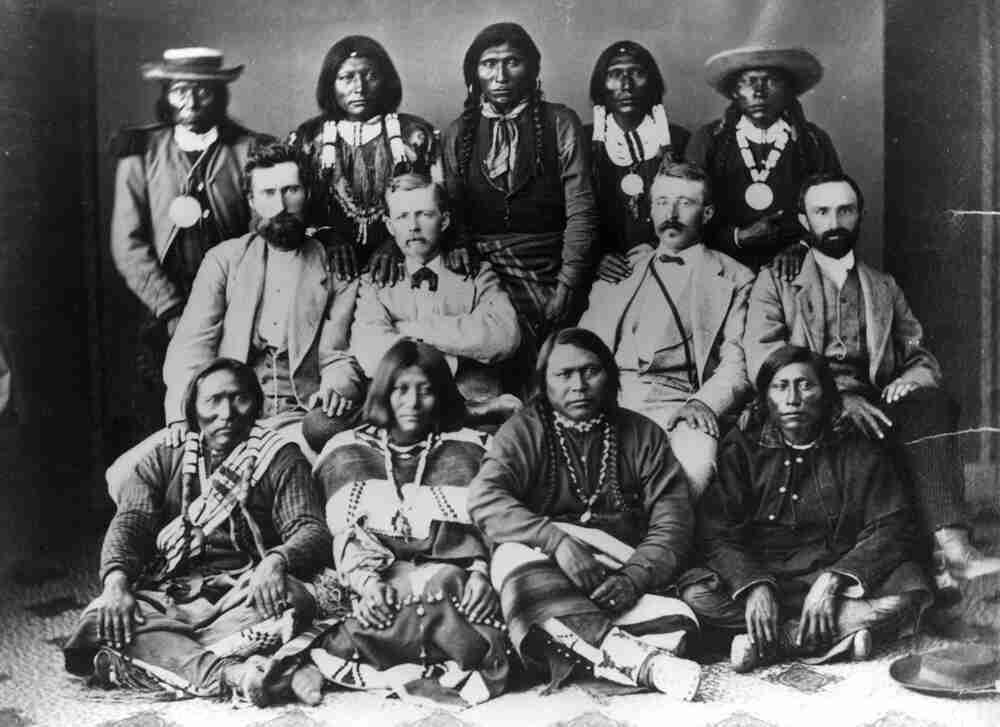Ute leader Ouray and subchiefs with Indian agents in Washington, DC after conclusion of the 1873 Brunot Agreement. Front row, left to right: Guero, Chipeta, Ouray, and Piah; second row: Uriah M. Curtis, James B. Thompson, Charles Adams, and Otto Mears; back row: Washington, Susan (Ouray’s sister), Johnson, Jack, and John. (From ColoradoEncyclopedia.org)
## **Kill the Indian, Save the Man**
It offended Meeker deeply that the Utes preferred not to be assimilated. The Ute leader Ignacio said, “We do not want to be made white men. We only want to remain Indians.” And the distinguished Ute leader Ouray said, “The Utes want to live as their fathers did.”
We should not be very surprised that they resisted and, under severe pressure, struck back. All the usual provocations drove the Ute to the limit of their patience. Delayed and spoiled rations, inadequate allocations, broken promises, settler encroachments, newspaper editorials calling for their eradication, etc. The Ute finally reached the breaking point (given all of the above) when Meeker decided to plow up a lovely valley (the Coyote Basin) where they raised, grazed, and raced their horses.
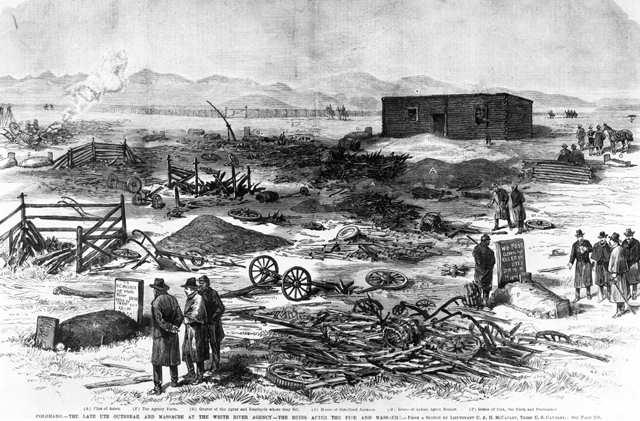A reproduction of a sketch of soldiers surveying the damages after a battle with the Ute people on September 29, 1879 at the White River Indian Agency. (From ColoradoEncylopedia.org)
At some point, the frustrations of a beleaguered people pass a trip wire (just ask the Palestinians, the Jacobins of the French Revolution, or the Jews of the Warsaw Ghetto in April 1943).
On September 29, 1879, a small number of Utes killed Nathan Meeker and 10 others at the agency post (here in Meeker) and took Meeker’s wife Arvilla and his 22-year-old daughter Josephine as hostages, along with the wife of an agency employee and their two children. The hostages were held for 23 days until the Ute leaders Ouray and his wife Chipeta helped arrange for their release. Josephine Meeker later testified that she had been raped by Ute men.
It was that “fate worse than death” that so enraged white Americans that they called for the most severe possible retribution, including perhaps extermination.
It’s not that Meeker had it coming, though you could make the case that he had it coming, not only serving as the occupying imperial agent of the United States government on Ute land, but stubbornly committed to his assimilation program, and using his leverage with rations and other desperately needed and treaty-guaranteed compensations to coerce the Utes into doing things they knew beyond question they did not want to do. Like most utopians, Meeker was a poor listener.
After the Meeker “Massacre,” the United States government settled the score by confiscating an additional 12,000,000 acres of the Ute homeland and expelled them out of Colorado and into Utah. How big is 12 million acres? That’s an area twice the size of Massachusetts, larger than Vermont, and about the size of Maryland. In August 1881, approximately 1,400 Utes were escorted by the U.S. cavalry to their “new home” 350 miles west of Meeker. Now white farmers and ranchers were permitted to homestead most of western Colorado as “surplus” land, if they could get there before the land investment capitalists grabbed it first.
I visited the “massacre”-related [Milk Creek Battlefield](https://coloradoencyclopedia.org/article/battle-milk-creek) site this afternoon. One reason for the attack on the White River Agency was that Meeker had panicked and requested military backup in his effort to force assimilation on the restive Utes. Accordingly, Major Thomas T. Thornburgh left Fort Steele, Wyoming, on September 21, 1879, with a company of approximately 190 soldiers and civilian contractors. He was repeatedly warned by Ute leaders that crossing the boundary into their permanent treaty land would be regarded as an act of war. In the seven-day battle, approximately 35 Utes were killed and 13 whites, including Major Thornburgh.
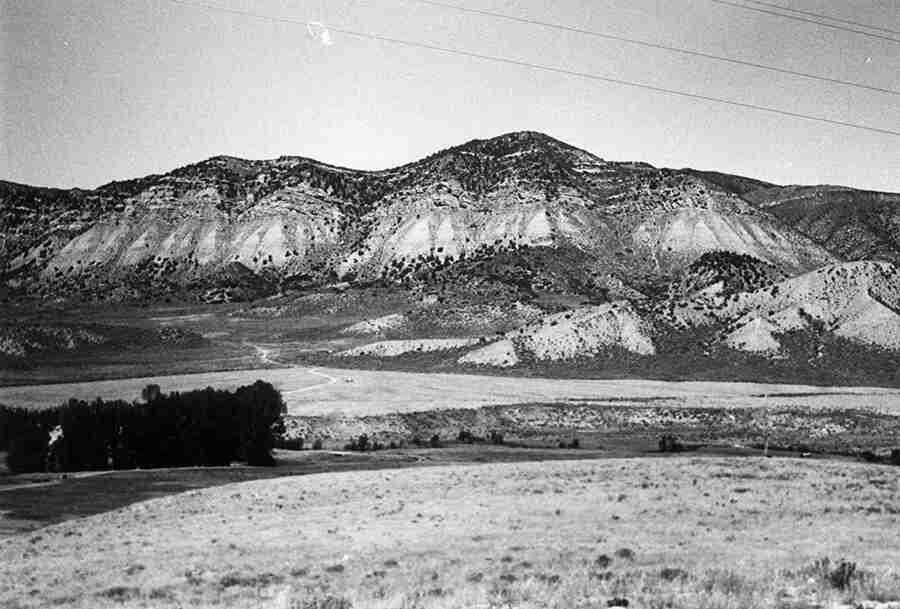The Battle of Milk Creek began on September 29, 1879, when U.S. Army Major Thomas Thornburgh advanced his cavalry onto the Ute Reservation in northwest Colorado. Thornburgh was ordered to the White River Ute Agency to protect Indian Agent Nathan Meeker. (From ColoradoEncylopedia.org)
It’s about a 15-mile drive through magnificent, rugged low mountain and wide valley country northeast of Meeker on a good gravel road. The interpretive site is well organized. I counted 14 thoughtful and well-designed interpretive signs. The cultural politics of the signage were firmly, though not intensely, sympathetic to the Indigenous point of view. Still, I’m sorry to say that on the first panel I had to encounter this historical document on a panel exhibiting white attitudes towards the Ute:
*“The Utes are actual, practical communists, and the government should be ashamed to foster and encourage them in their idleness and wanton waste of property. Living off the bounty of a paternal but idiotic Indian Bureau, they actually become too lazy to draw their rations in the regular way but insist on taking whatever they want wherever they find it. Removed to Indian Territory, the Utes could be fed and clothed for about one half of what it now costs the government.”*
*“Nathan Meeker went to the agency in the firm belief that he could manage the Indians successfully by kind treatment, patient precept and good example. But utter failure marked his efforts and at last he reluctantly accepted the truth of the broader truism that the only truly good Indians are the dead ones.”*
In other words, we did what we could for them. This was a letter published in the *Denver Tribune* in 1878 by newspaperman and “historian” William Vickers, advising Colorado governor Frederick Walker Pitkin to be tough. Pitkin adopted the slogan, “The Utes Must Go.”
I’m sure Nathan Meeker thought he was doing the right thing. He knew that Native Americans were not going to be permitted to retard white people from taking over the entire continent. So they had three choices. They could resist with violence and force the U.S. government to take very stern measures with them, sometimes bordering on genocide. They could just slowly fade away or live like paupers on a few grim enclaves “generously reserved” for them, as long as they ceased interfering with the divinely-mandated manifest destiny of the American people. Or they could adopt white folks’ ways and live uneasily on the margins of white civilization.
I’m sorry, but that’s it. That was the de facto American frontier mission statement.
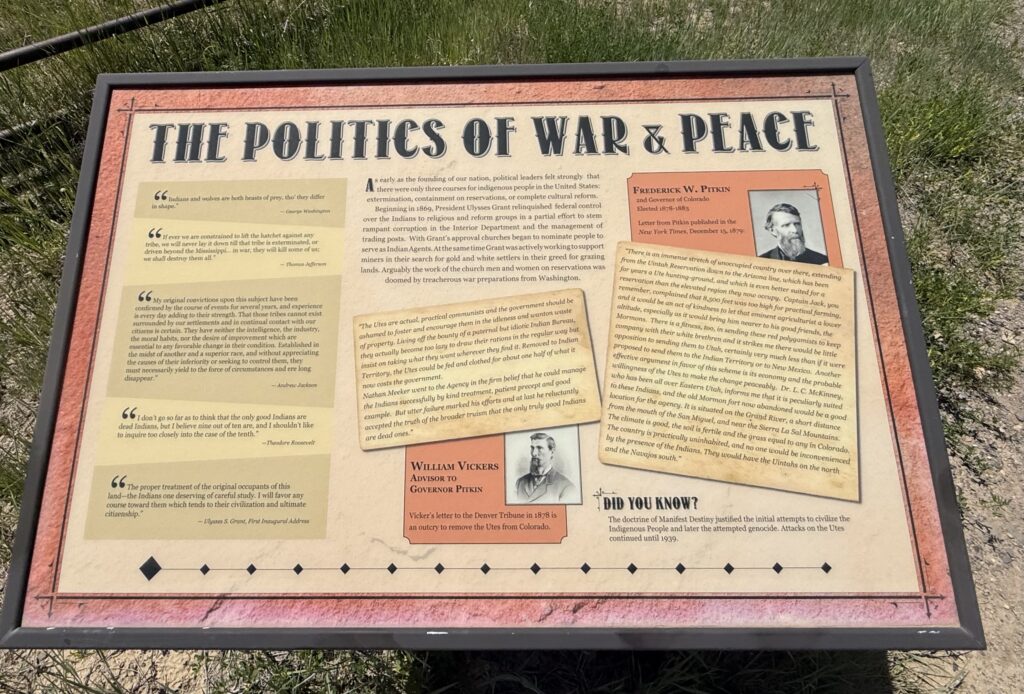Signage at Milk Creek battle site. (Photo Clay Jenkinson)
The signage at the Milk Creek battlefield is truly enlightened. I’m frankly a little surprised that there is not more local outrage at the basically pro-Ute interpretation at the site — no bullet holes in the interpretive panels.
The three-building White River Museum at the center of Meeker is a little less generous to the Ute. The exhibits express some modest sympathy for their plight and there is a fascinating (and racist) painting of the “massacre,” but mostly the museum is a three dimensional snapshot of the white history of Meeker, complete with rooms full of army uniforms; rooms housing frontier medical and dental equipment; an area with a linotype machine and a one-sheet printing press; the usual arrays of dolls, razors, firearms, and arrowheads, some used as mosaics depicting generic Natives in headdress; patent medicine bottles; old washers and typewriters and butter churns; photo galleries of roundups and rodeos, with large framed prints of some of the first fathers and first mothers of the town; several carefully framed shadow boxes of bullets, spent and otherwise; a full size cutout (an adult paper doll) of John Wayne. And so much more.
I love these museums.
I went into the museum looking for a display about Theodore Roosevelt, who hunted mountain lions here twice, once in January and February 1901 as he was waiting to be sworn in as William McKinley’s vice president, and a second time in April and May 1905 at the beginning of his second term as president. The museum had a half-hearted display about Roosevelt, praising his love of nature and his commitment to conservation, but it mostly ducked the most interesting story: that he had his most successful mountain lion hunt here in 1901 with his favorite hunting guide, John Goff. The hunting team killed around 14 (maybe 17) cougars, 12 by Roosevelt himself. For science.
That story is better told in the lobby of the historic Meeker Hotel on Main Street, where TR lodged during the hunt. Every wall in the lobby is covered with hunting trophies. It feels like a slightly dusty version of the American Museum of Natural History.
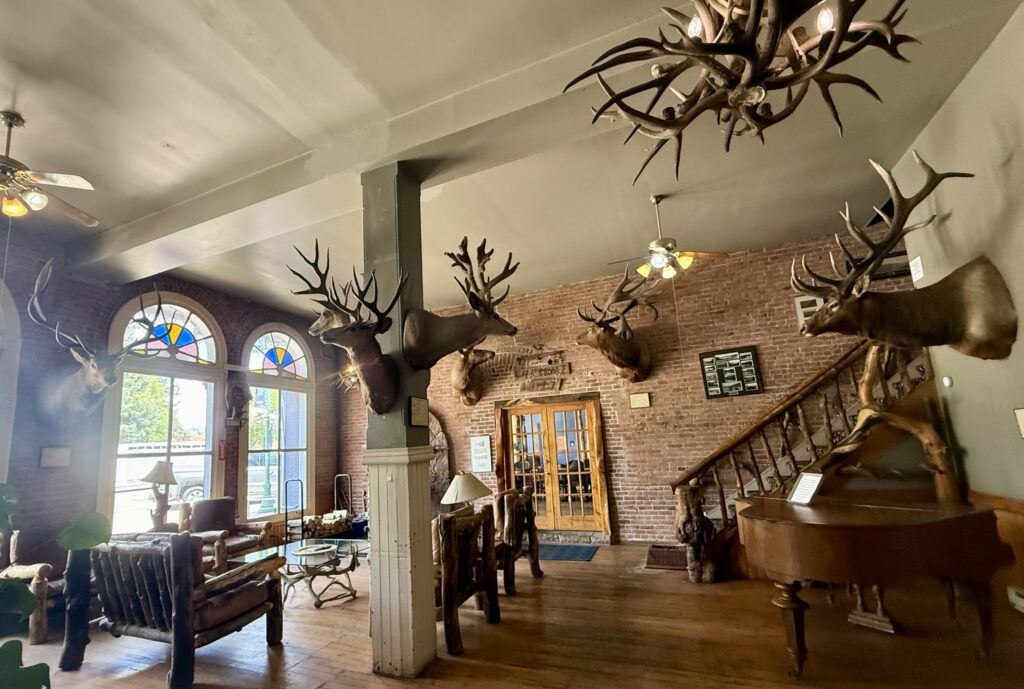The lobby of the historic Meeker Hotel, where Teddy Roosevelt stayed while hunting mountain lions in the region in the early 1900s. (Photo Clay Jenkinson)
I’ll have more to say about Roosevelt’s hunting adventures in northwestern Colorado soon, but it was the Meeker *Incident* (as it is now more often described) that forced me to face some of the least admirable dynamics of the American story. Meeker couldn’t listen. Custer wouldn’t listen. The U.S. government wouldn’t listen — and when it did, didn’t much care. White nationalism is both an attitude and an ongoing fact of American history. If we are going to figure out who we are, how we got here, what we owe to the Founders, what we value as Americans, what is unresolved in our national experience, and where we are headed in the next 250 years, we are going to face some very troubling facts.
## **Further Reading**
If you want to learn more, I suggest the following books, beginning with the somewhat outdated *Bury My Heart at Wounded Knee.*
Ned Blackhawk. *The Rediscovery of America: Native Peoples and the Unmaking of American History.*
Peter Cozzens. *The Earth is Weeping: The Epic Story of the Indian Wars for the American West.*
Claudio Saunt. *Unworthy Republic: The Dispossession of Native Americans and the Road to Indian Territory.*
Ralph K. Andrist. *The Long Death: The Last Days of the Plains Indian.*
---
## ***Discover more on these topics at Listening to America***
[Washington](https://ltamerica.org/tag/washington/ "2 topics")[Rivers](https://ltamerica.org/tag/rivers/ "3 topics")[Texas](https://ltamerica.org/tag/texas/ "4 topics")[Ohio](https://ltamerica.org/tag/ohio/ "2 topics")[Podcast](https://ltamerica.org/tag/podcast/ "1 topics")[New York](https://ltamerica.org/tag/new-york/ "8 topics")[Poetry](https://ltamerica.org/tag/poetry/ "1 topics")[Wisconsin](https://ltamerica.org/tag/wisconsin/ "0 topics")[Republics](https://ltamerica.org/tag/republics/ "1 topics")[Oppenheim](https://ltamerica.org/tag/oppenheim/ "0 topics")[Thomas Jefferson](https://ltamerica.org/tag/thomas-jefferson/ "34 topics")[South Dakota](https://ltamerica.org/tag/south-dakota/ "16 topics")[New Mexico](https://ltamerica.org/tag/new-mexico/ "3 topics")[Utah](https://ltamerica.org/tag/utah/ "11 topics")[north daktoa](https://ltamerica.org/tag/north-daktoa/ "0 topics")[The Constitution](https://ltamerica.org/tag/the-constitution/ "1 topics")[Vermont](https://ltamerica.org/tag/vermont/ "1 topics")[Theodore Roosevelt](https://ltamerica.org/tag/theodore-roosevelt/ "16 topics")[Space Exploration](https://ltamerica.org/tag/space-exploration/ "8 topics")[Oppenheimer](https://ltamerica.org/tag/oppenheimer/ "1 topics")[Republic](https://ltamerica.org/tag/republic/ "0 topics")[Sports](https://ltamerica.org/tag/sports/ "2 topics")[Oregon](https://ltamerica.org/tag/oregon/ "4 topics")[New England](https://ltamerica.org/tag/new-england/ "1 topics")[South Carolina](https://ltamerica.org/tag/south-carolina/ "1 topics")[U.S. Presidents](https://ltamerica.org/tag/u-s-presidents/ "71 topics")[Virginia](https://ltamerica.org/tag/virginia/ "7 topics")[Thoreau](https://ltamerica.org/tag/thoreau/ "5 topics")[North Dakota](https://ltamerica.org/tag/north-dakota/ "53 topics")[U.S. Constitution](https://ltamerica.org/tag/u-s-constitution/ "1 topics")[Walden](https://ltamerica.org/tag/walden/ "1 topics")[Road Trips](https://ltamerica.org/tag/road-trips/ "18 topics")[Travel](https://ltamerica.org/tag/travel/ "1 topics")[William Shirer](https://ltamerica.org/tag/william-shirer/ "1 topics")[Pennsylvania](https://ltamerica.org/tag/pennsylvania/ "1 topics")[North Carolina](https://ltamerica.org/tag/north-carolina/ "3 topics")[State Parks](https://ltamerica.org/tag/state-parks/ "2 topics")[Wyoming](https://ltamerica.org/tag/wyoming/ "4 topics")[Tennessee](https://ltamerica.org/tag/tennessee/ "1 topics")[Steinbeck Travels](https://ltamerica.org/tag/steinbeck-travels/ "75 topics")[Rome](https://ltamerica.org/tag/rome/ "1 topics")[Reading](https://ltamerica.org/tag/reading/ "1 topics")[Video](https://ltamerica.org/tag/video/ "51 topics")[paintings](https://ltamerica.org/tag/paintings/ "0 topics")[Water in the West](https://ltamerica.org/tag/water-in-the-west/ "24 topics")
**Categories:** Features
**Tags:** America at 250, Books, Colorado, Native Americans, Theodore Roosevelt, U.S. Presidents
---
### [My Close Encounter With Devils Tower](https://ltamerica.org/my-close-encounter-with-devils-tower/)
**Published:** June 2, 2026
**Author:** Clay Jenkinson
**Excerpt:** I’ve loved Devils Tower since I first close encountered it four decades ago. President Theodore Roosevelt established Devils Tower as the nation's first National Monument in September 1906. Roosevelt would establish 18 National Monuments during his two terms. Today we have 138.
**Content:**
## I’ve loved Devils Tower since I first close encountered it four decades ago. President Theodore Roosevelt established Devils Tower as the nation’s first National Monument in September 1906. Roosevelt would establish 18 National Monuments during his two terms. Today we have 138.
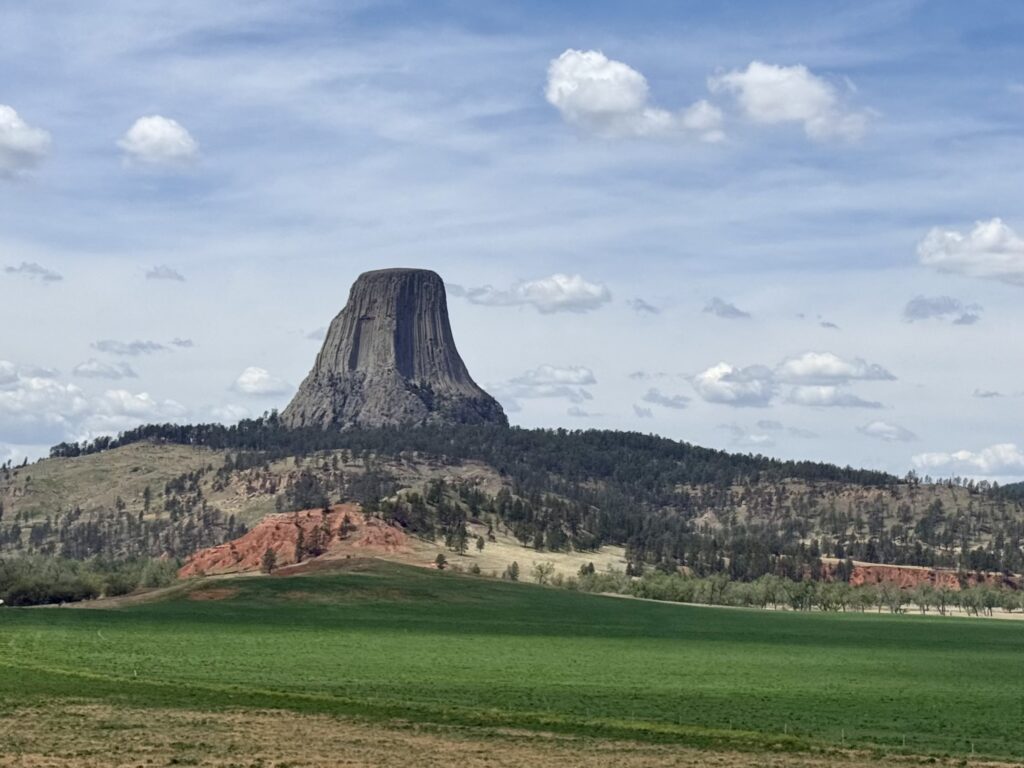President Theodore Roosevelt named Devils Tower in northeastern Wyoming his first National Monument on September 24, 1906. (Photo Clay Jenkinson)
The Kiowa writer [N. Scott Momaday](https://www.arts.gov/honors/medals/n-scott-momaday) got it exactly right. *“A dark mist lay over the Black Hills, and the land was like iron. At the top of the ridge I caught sight of Devils Tower upthrust against the gray sky as if in the birth of time the core of the earth had broken through its crust and the motion of the world was begun. There are things in nature that engender an awful quiet in the heart of man; Devils Tower is one of them.”*
President Theodore Roosevelt made Devils Tower his first National Monument on September 24, 1906. There would be 18 altogether during his two terms. Today we have 138. Think about that. Roosevelt named almost one in seven of our National Monuments. Not only was Devils Tower Roosevelt’s first National Monument, it was also America’s first. And what a fabulous (and uncontroversial) first selection it was. Spectacular and unique, Devils Tower had no economic value beyond tourism. The amount of land that would be needed to envelop and protect it (1,153 acres) was well within the spirit of the [National Monuments and Antiquities Act](https://www.nps.gov/subjects/archeology/antiquities-act.htm), passed by Congress in June 1906. For these reasons, it would be unlikely to provoke blowback from those who wanted the government to get out of the way so that the immense public domain of America could be subjected to every possible form of unrestrained resource extraction.
The spirit of the Antiquities Act may have been to protect parcels of modest size (like a cluster of cliff dwellings), but the legislative language, from Roosevelt’s point of view, was deliciously ambiguous. The law directed that monument designations should be “confined to the smallest area compatible with proper care and management of the objects to be protected.” The word “confined” certainly suggests a minimalist approach, but the phrase “compatible with proper care and management” gives the president who signs the order enormous discretion. Theodore Roosevelt was a maximalist in his philosophy and practice of power. If Congress had decreed that a prospective National Monument must not exceed 5,000 acres of public land, the history of the 20th-century West would have been dramatically different. We can thank one of conservation’s unsung heroes, [Congressman John Lacey](https://ltamerica.org/the-great-but-forgotten-conservationist-john-f-lacey/) of Iowa, for quietly building enormous elasticity into the language of the Antiquities bill.
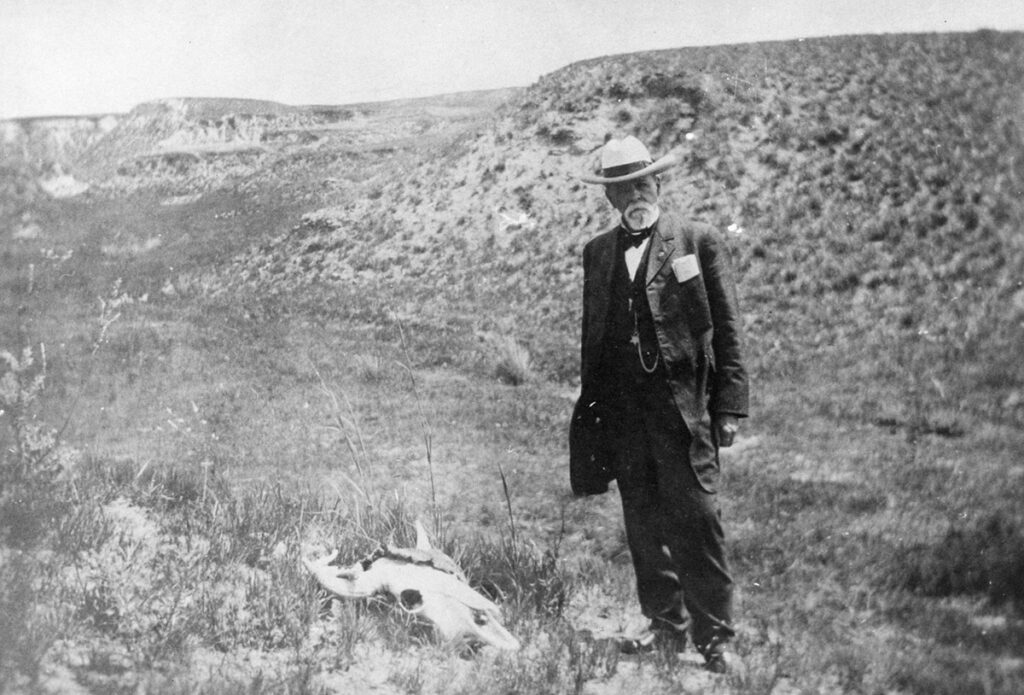Congressman John F. Lacey, August, 1906, in Goodnight, Texas. Lacey was a member of the U.S. House of Representatives from 1890-1908. (Boone & Crockett Club)
Roosevelt’s conservation confidence grew with success. On January 11, 1908, he established — with a single stroke of his pen — Grand Canyon National Monument, with a modest footprint of only 818,560 acres! Clearly, TR saw this acreage as “the smallest area compatible with proper care and management.”
Today, half a million people visit Devils Tower per year, and 4.5 million visit Grand Canyon National Park, which attained national park status in February 1919.
## **American Sublime**
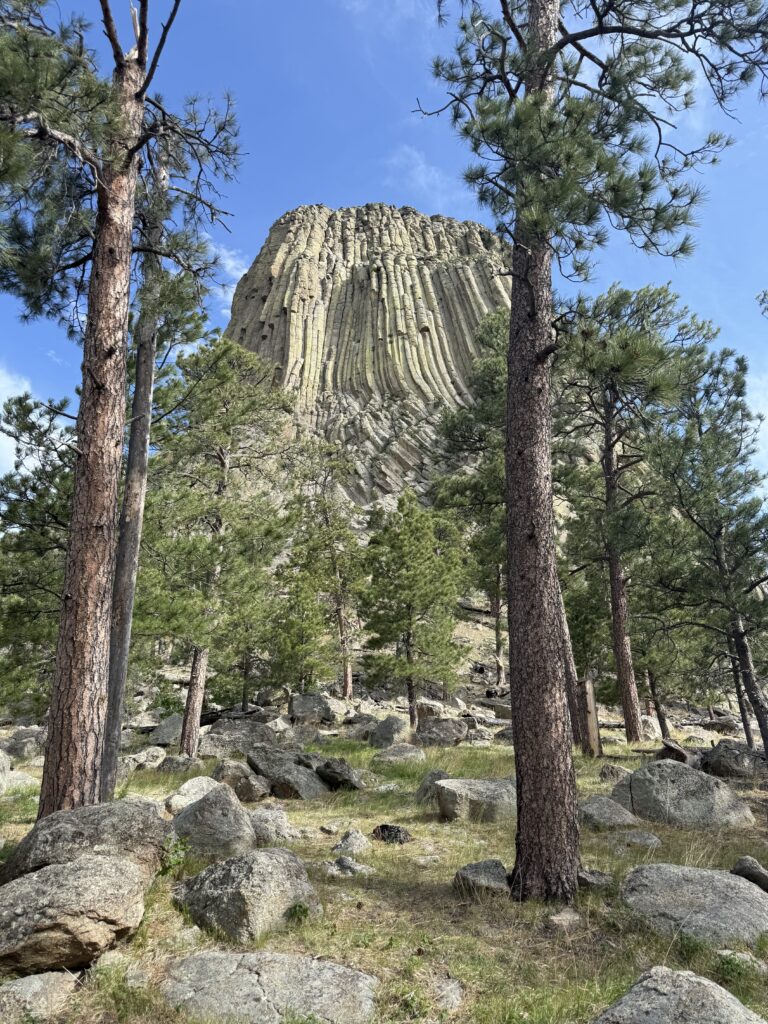Devils Tower through the trees. (Photo Clay Jenkinson)
I’ve loved Devils Tower since I first close encountered it four decades ago. I’ve been back a dozen or more times. Every year now, I intend to begin my summer Airstream travels by way of a pilgrimage to Devils Tower. I spent three nights there last week, fanning out to visit other places part of the time, but always sitting out under the tower in a camp chair in the evening to let the awe have its way with me.
You have to imagine geologic time to fully experience the inrush of wonder. Approximately 50 million years ago, a gigantic volume of molten rock (like the kind that spills out of Hawaiian volcanoes) pushed up through a fracture in the earth into something like the shape we see today, then cooled in place. Back then, the formation was well beneath the surface sediment, but over time the softer surface materials have eroded away, exposing the formation as a blunt 867-foot tower that dominates the landscape in every direction. Technically, Devils Tower is a laccolith, like its neighbors, the Missouri Buttes or Bear Butte at the other end of the Black Hills.
As I gaze at the tower, I try to imagine the dynamism of deep-time Earth history. Think of the heat, the pressures, the energy, the force, the destructiveness, and the geomorphological drama that erected Devils Tower. This was not routine earth dynamics. What happened here was catastrophic in the best sense of the word!
What’s unique about Devils Tower is that it is just naked rock. It’s a treeless igneous colossal tower (or plug) of bare rock standing out in stark relief on Wyoming’s endless plains. It is cylindrical, not conical like a volcano. And it’s grooved all around, as if some gigantic creature — the Lakota say a bear — was trying to climb its face, and its ferocious claws had incised the entire surface. Nothing like it in America. Nothing like it in the world. A great first National Monument.
No wonder the aliens found it in *Close Encounters of the Third Kind*. It’s a mind-blowing geological phenomenon. There are higher formations nearby. One peak of the Missouri Buttes, just a handful of miles west of Devils Tower, is 262 feet higher. Still, nobody notices because the Missouri Buttes are more conical and more forested than the bald columnar stump of Devils Tower.
I strolled around the 1.3-mile circle trail at the base of the tower, stopping every hundred yards to gaze at it from a different angle. When I got there at 7:45 a.m., there were only a handful of cars in the huge parking lot. Devils Tower is so beloved that there are now timed entries at the height of the tourist season. Alas. When humanity gathers at such outdoor precincts, perhaps especially vacationing families, there is going to be chatter. Last year, I jotted down a few of the topics of conversation I heard during my 40-minute walk. Best episodes of *Friends*? How cousin Bert ruined the wedding. Young Gorgeous Elvis or Old Fat Elvis? I hope we are not going to eat at that retro café again tonight; the food sucked. Remember the time we had the flat tire at Yellowstone? Tiger Woods is finished. I’m hot; how long is this stupid hike?
On an average summer day, scant evidence of Momaday’s “quiet in the heart of man.” But this time I was virtually alone on the trail. The experience is so much deeper in silence. The breeze in the Ponderosa pines was heavenly.
## **The Unfinished Work of the American Outback**
Only three things bothered me at Devils Tower. I’m relatively ok with people climbing it, though I’d rather they didn’t, since it is sacred to a number of Native tribes. I certainly see its appeal to the climbing community. But one result of the climbing is that average people strolling along the perimeter trail end up standing in clusters, trying to spot climbers with the naked eye and sometimes binoculars. And they invite anyone who comes along to join them in the scrum. I heard one man say, “It’s a woman climber!” and then three or four others crowded around to see for themselves. It is indisputable that such folks spend much of their time at Devils Tower watching recreationists interface with the Tower hundreds of feet up its seemingly vertical surface. These tourists give little or no time to the spectacular pines that envelop the Tower below the reach of the rockfalls. Nor to the crystalline nature of the Tower’s composition. Nor to the beauty of the Belle Fourche River (red banks, perfect sinuosity), threading its way through the plains below. Or the subtle but amazing freshness of the breeze in the pines. I like to lie on my back under a cluster of trees and let the gentle sway of the pine tops lift me into a meditative state.
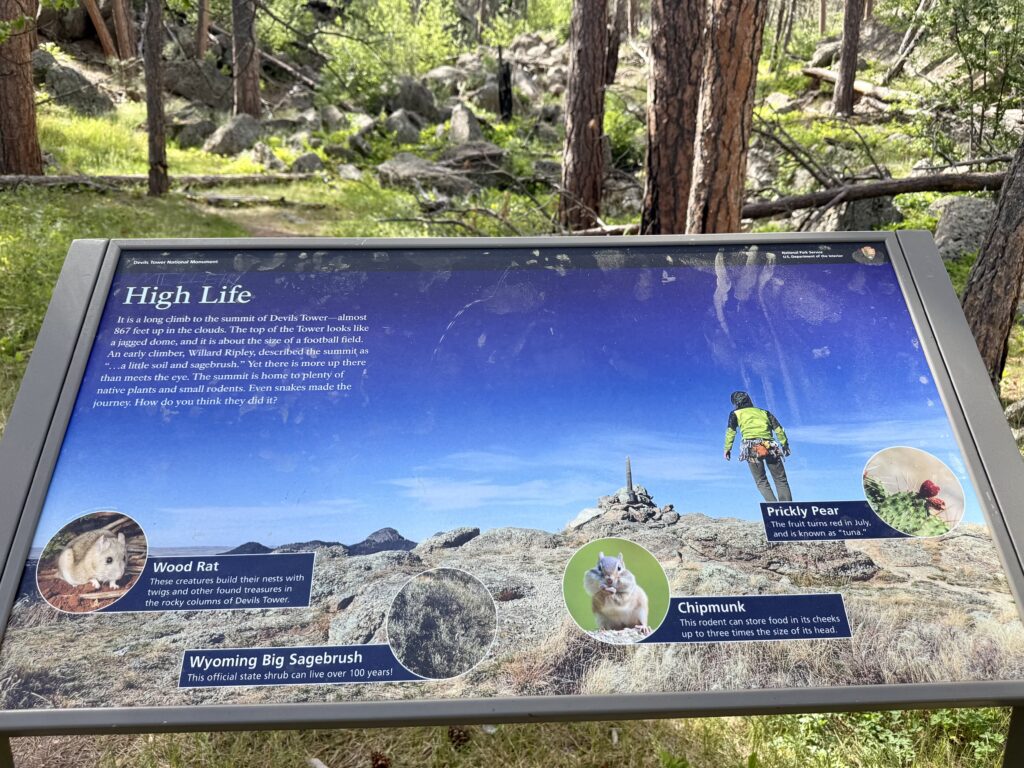Signage about what’s up top of Devils Tower. (Photo Clay Jenkinson)
When I got back to my Airstream and the internet, I looked up some climber sites. Photographs of the summit show men and women smiling in well-deserved triumph next to a four-foot post or summit marker, which is, of course, taller than Devils Tower. This is what humans do. We replay the Tower of Babel story again and again. Our hubris is remarkable: Anything you (Nature) can do, we can do a little higher. We can never leave nature alone in its primordial dignity. Climb Everest, leave a flag.
The second thing that bothered me on that otherwise serene morning was a member of the park staff blowing pine needles off the sidewalk and parking lot with a leaf blower. We all know that the leaf blower is one of humanity’s most annoying inventions. To make matters worse, another staff member was cutting grass and weeds down to size with an industrial-strength weed whacker, the second most annoying invention of the industrial era. On an average Saturday in my subdivision in north Bismarck, North Dakota, the whole day is lost to the whine of lawn mowers, leaf blowers, and weed whackers. I wish the otherwise listless neighborhood association would require all lawns to be mowed simultaneously in a two-hour window on the same day every week. Ah, but we Americans chafe at that which cramps our freedom. Surely a broom and hand clippers would be more appropriate at Devils Tower.
The third thing that bothers me is the name. Different tribes had different names for the formation, as well as different oral traditions about its origin and its grooved surface. None of them used their words for devil, demon, or malignant spirit. The term Devils Tower was coined by Colonel Richard Irving Dodge in 1875 during his exploration of the Black Hills region. Somehow, he got it into his Anglo head that Natives called it “bad god’s tower,” which was soon shortened to Devils Tower. In fact, Native names almost all invoke the bear: Bear Lodge, Bear Rock, Home of the Bear. The Lakota term is Mato Tipila (Bear Lodge). No doubt Colonel Dodge made an honest mistake, but white men have had a habit of translating indigenous terms for “spirit,” “medicine,” “mystery,” or “touched by the divine” as Devils this or Devils that. Devils Lake, North Dakota. Devils Gate, Wyoming. Devils Postpile, California. Devils Kitchen, Calif. An Arapahoe sacred site is “Hell’s Half Acre” to those who displaced them.
Such 19th-century terms sometimes carry a whiff of racism. Back in the horrendous days of the “Indian Wars,” white newspapermen, politicians, and army officers spoke of Native Americans as “Red Devils” and frequently urged their extirpation. Victorian puritans considered Indigenous people heathens, who must be converted to Christianity before they could be accepted into the American family. This was a primary function of the notorious boarding schools.
Native prayer bundles at Devils Tower National Monument. (Photo Clay Jenkinson)
The list of American placenames that are now regarded as insensitive, racist, sexist, or cringeworthy is long. Some of them tenaciously resist renaming, but I would be very pleased if the name of this extraordinary sacred place at the edge of the Black Hills were changed to something proposed by the tribes who have had the closest relationship with it. The current non-Native view is that Devils Tower is a freak of nature, a must-visit Scenic Wonder of America, a unique geologic phenomenon, one of the great selfie backdrops in the West. If it were renamed Bear Lodge Tower or (for that matter) Mato Tipila, I believe almost everyone who came to visit the site would approach it in a new, better, quieter, more enlightened, and more satisfying way. I believe, too, that this National Monument and many others in the system should be co-managed by the National Park Service and the tribes who have known it far longer than Euro-Americans. The newish interpretive signs along the loop trail are outstanding for their focus on Native American oral traditions, lifeways, resource engagement, and concerns.
Along the loop trail, there are thousands, perhaps tens of thousands, of colorful prayer bundles left by Native people. Typically, these round bundles are made of squares of cotton cloth (sometimes handkerchiefs) in which a small quantity of tobacco has been tied. In other words, Devils Tower is an active Indigenous prayer site. So, too, are Black Elk Peak (formerly Harney Peak), the highest point in the Black Hills, and Bear Butte, where the young Oglala Lakota man Crazy Horse vowed never to yield to the white invaders of the Black Hills and the Powder River country. Because these are prayer sites, we non-Natives should treat them with heightened respect.
## **The Shadow of One Great Man**
Thank God for Theodore Roosevelt, or thank goodness, or thank the stars. What would America’s public lands be without him? During his presidency, TR set aside 230 million acres of the public domain for permanent federal protection. He had some serious faults (like the rest of us), but his achievements as a conservationist are truly astounding. He was not only a very serious amateur naturalist and conservationist, but one who got his hands on the levers of power at exactly the right moment in American history, and of all the many ways he could have used his power and charisma, he chose to make a long series of presidential actions on behalf of conservation almost his signature achievement. And that includes the Panama Canal, the Great White Fleet, and the antitrust suits. Take Roosevelt out of the picture between 1898 and 1919, but particularly between September 1901 and March 1909, and what would the public landscape of the United States look like? The best you can say is that we would have saved some fraction, probably a modest fraction, of what he achieved. Ralph Waldo Emerson said, “An institution is the lengthened shadow of one man.” I think it can be said that the panoply of National Parks, Monuments, Wildlife Refuges, Forests, and Game Preserves of the American West we so cherish — the envy of the world — is largely the work of Theodore Roosevelt. And what he did not achieve himself in his seven years, 171 days as president, he inspired in those who followed, including his fifth cousin, Franklin Roosevelt, who also achieved an impressive record in conservation, though somewhat differently defined.
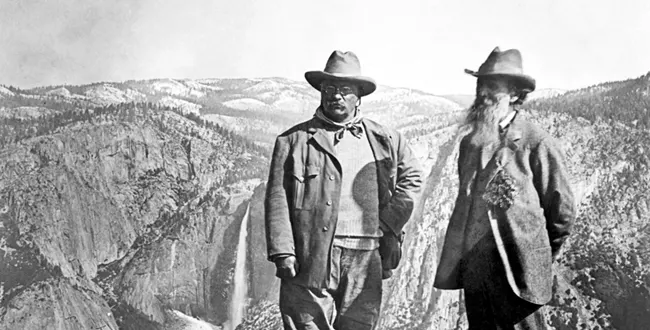Theodore Roosevelt and John Muir stand at Glacier Point, Yosemite National Park, during their 1903 visit, with Yosemite Falls in the background. (Library of Congress)
I plan to visit all 18 of Roosevelt’s National Monuments this year. What a start! The more you examine Roosevelt’s conservation achievements, the more impressive they become. If he had done nothing else but this, we would have ample reason to cherish his spirit and his foresight.
---
## ***Discover more on these topics at Listening to America***
[South Dakota](https://ltamerica.org/tag/south-dakota/ "16 topics")[U.S. Presidents](https://ltamerica.org/tag/u-s-presidents/ "71 topics")[North Carolina](https://ltamerica.org/tag/north-carolina/ "3 topics")[New Mexico](https://ltamerica.org/tag/new-mexico/ "3 topics")[Virginia](https://ltamerica.org/tag/virginia/ "7 topics")[The Constitution](https://ltamerica.org/tag/the-constitution/ "1 topics")[Rivers](https://ltamerica.org/tag/rivers/ "3 topics")[Thoreau](https://ltamerica.org/tag/thoreau/ "5 topics")[Oppenheimer](https://ltamerica.org/tag/oppenheimer/ "1 topics")[Travel](https://ltamerica.org/tag/travel/ "1 topics")[New York](https://ltamerica.org/tag/new-york/ "8 topics")[north daktoa](https://ltamerica.org/tag/north-daktoa/ "0 topics")[U.S. Constitution](https://ltamerica.org/tag/u-s-constitution/ "1 topics")[Reading](https://ltamerica.org/tag/reading/ "1 topics")[Podcast](https://ltamerica.org/tag/podcast/ "1 topics")[South Carolina](https://ltamerica.org/tag/south-carolina/ "1 topics")[Space Exploration](https://ltamerica.org/tag/space-exploration/ "8 topics")[Utah](https://ltamerica.org/tag/utah/ "11 topics")[William Shirer](https://ltamerica.org/tag/william-shirer/ "1 topics")[Washington](https://ltamerica.org/tag/washington/ "2 topics")[Texas](https://ltamerica.org/tag/texas/ "4 topics")[Theodore Roosevelt](https://ltamerica.org/tag/theodore-roosevelt/ "16 topics")[Oppenheim](https://ltamerica.org/tag/oppenheim/ "0 topics")[State Parks](https://ltamerica.org/tag/state-parks/ "2 topics")[Road Trips](https://ltamerica.org/tag/road-trips/ "18 topics")[Oregon](https://ltamerica.org/tag/oregon/ "4 topics")[Walden](https://ltamerica.org/tag/walden/ "1 topics")[paintings](https://ltamerica.org/tag/paintings/ "0 topics")[Thomas Jefferson](https://ltamerica.org/tag/thomas-jefferson/ "34 topics")[Steinbeck Travels](https://ltamerica.org/tag/steinbeck-travels/ "75 topics")[Ohio](https://ltamerica.org/tag/ohio/ "2 topics")[Sports](https://ltamerica.org/tag/sports/ "2 topics")[Water in the West](https://ltamerica.org/tag/water-in-the-west/ "24 topics")[Pennsylvania](https://ltamerica.org/tag/pennsylvania/ "1 topics")[Wyoming](https://ltamerica.org/tag/wyoming/ "4 topics")[Republics](https://ltamerica.org/tag/republics/ "1 topics")[Video](https://ltamerica.org/tag/video/ "51 topics")[North Dakota](https://ltamerica.org/tag/north-dakota/ "53 topics")[Republic](https://ltamerica.org/tag/republic/ "0 topics")[Rome](https://ltamerica.org/tag/rome/ "1 topics")[Poetry](https://ltamerica.org/tag/poetry/ "1 topics")[Wisconsin](https://ltamerica.org/tag/wisconsin/ "0 topics")[Vermont](https://ltamerica.org/tag/vermont/ "1 topics")[New England](https://ltamerica.org/tag/new-england/ "1 topics")[Tennessee](https://ltamerica.org/tag/tennessee/ "1 topics")
**Categories:** Features
**Tags:** America at 250, National Parks, Theodore Roosevelt, Wyoming
---
### [Wind Cave National Park](https://ltamerica.org/wind-cave-national-park/)
**Published:** June 2, 2026
**Author:** Clay Jenkinson
**Excerpt:** Our roving humanities scholar Clay S. Jenkinson is typically dedicated to the truth and nothing but the truth, but his visit to Wind Cave National Park seems to have addled his brain. No other visitor on his recent tour reported meeting Dante and Virgil at the Seventh Circle of the cave.
**Content:**
## Editor’s Note: Our roving humanities scholar Clay S. Jenkinson is typically dedicated to the truth and nothing but the truth, but his visit to Wind Cave National Park seems to have addled his brain. No other visitor on his recent tour reported meeting Dante and Virgil at the Seventh Circle of the cave.
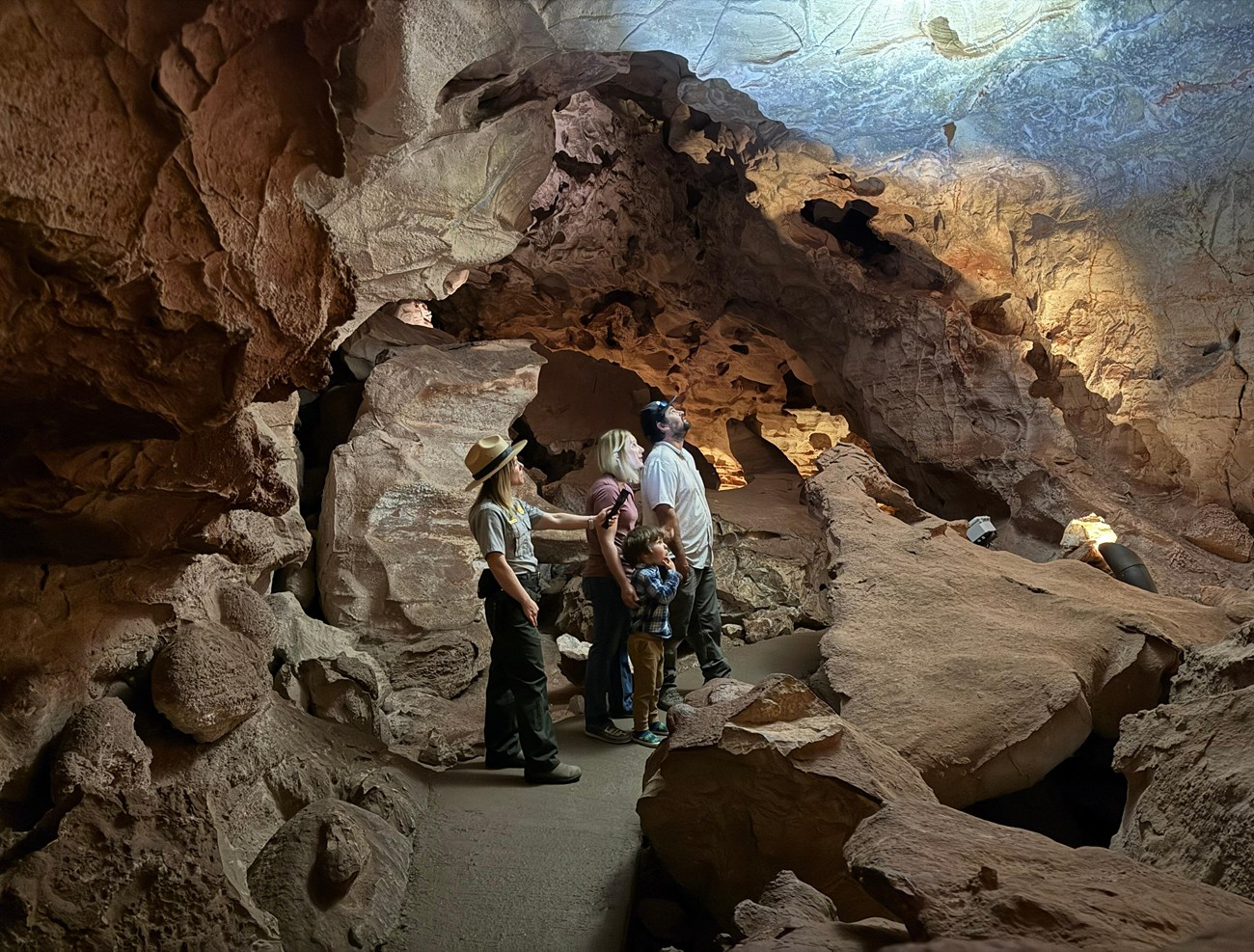Inside Wind Cave National Park in southwestern South Dakota. (Photo NPS)
My Phase One Roosevelt Conservation plan is to visit TR sites in South Dakota, Wyoming, and Colorado. A three-week tour. I write this four days into that journey. Phase Two will be in Montana and Idaho in July. Phase Three in the Four Corners area in October.
So on Night One, I slept in the southern badlands in a place Roosevelt traversed dozens of times during his years in the North Dakota badlands. [See last week’s article](https://ltamerica.org/on-the-road-westward-with-teddy-roosevelt/). The second night, I stayed in Spearfish, South Dakota, not far from the Roosevelt Friendship Tower, built in honor of TR soon after his death by his old cowboy friend, Seth Bullock. TR died on January 6, 1919, in his home on Long Island. His son Archie cabled the other children: “The old lion is dead.” Seth Bullock represented to Roosevelt “a true Westerner, the finest type of frontiersman.”
On the third night, I camped at a small family RV park a few miles from **[Wind Cave National Park](https://www.nps.gov/wica/index.htm)**. I would have camped in the park’s sole campground, but these days it is harder to reserve a national park campsite than a table at Delmonico’s.
Wind Cave National Park was my first significant stop in my quest to visit as many Theodore Roosevelt conservation sites as possible in the American West. Wind Cave was the second of Roosevelt’s five national parks, which he added to the original five established during the presidencies of his predecessors: Rainier, Sequoia, Yosemite, Yellowstone, and General Grant. Only Congress can establish a National Park. Roosevelt would have created many more if Congress had cooperated. That’ s one reason he quipped, “It would be so much easier to run this country without Congress.” The Speaker of the House of Representatives, Joseph Cannon of Illinois, said, “Not one cent for scenery.” When Congress balked, Roosevelt designated some of his favorite western landforms as National Monuments, which he was legally entitled to do under the 1906 National Monuments and Antiquities Act. He came to see National Monument status as a first step towards later graduation to full National Park status.
Congress established Wind Cave National Park on December 3, 1902.
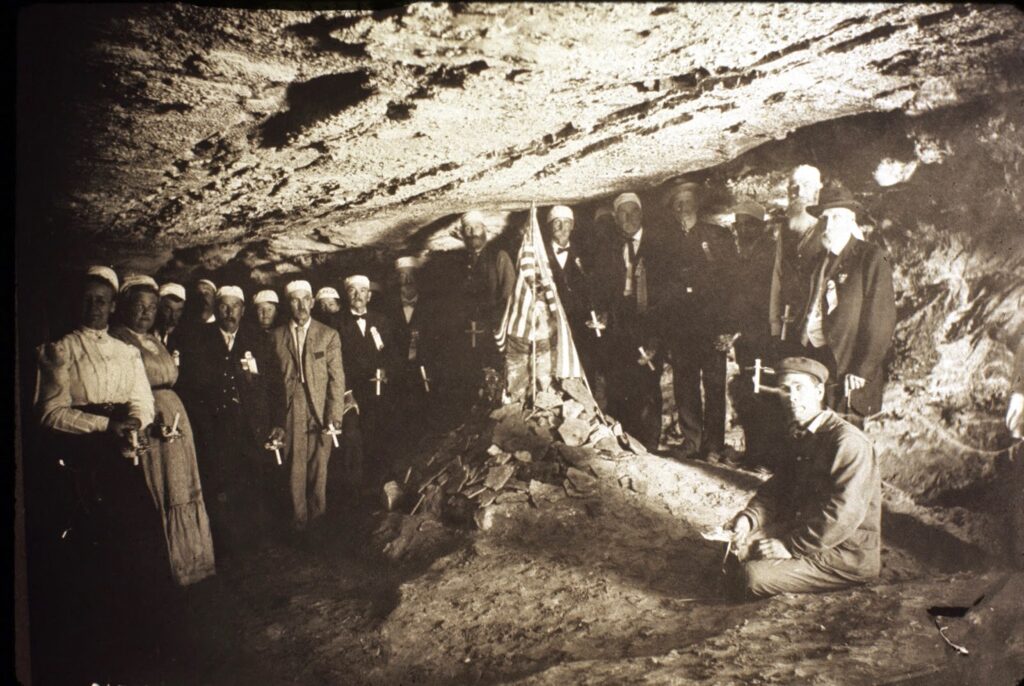Earlier visitors to Wind Cave. (Photo NPS)
At the Wind Cave NP interpretive center, I carefully studied the exhibits and signed up for the last cave tour of the day at 5 p.m. During the interim, I ventured to the Crazy Horse Monument site 28 miles away. More on that in a week or so here at LTAmerica.org.
We gathered at 4:50 p.m. at the portal of the cave, a motley group of about 25, including people in every physical condition, most of them wearing the official uniform of the American tourist: shorts and t-shirts, some of the shirts letting the rest of us know great places they have been (Cappadocia, Sedona, Four Corners, the National Tabasco Sauce Museum), some of them rude, along lines of “Don’t Blame Me: I Didn’t Vote For Him,” or “Bankers Do It With Interest.” The foreign tourists were all dressed respectfully.
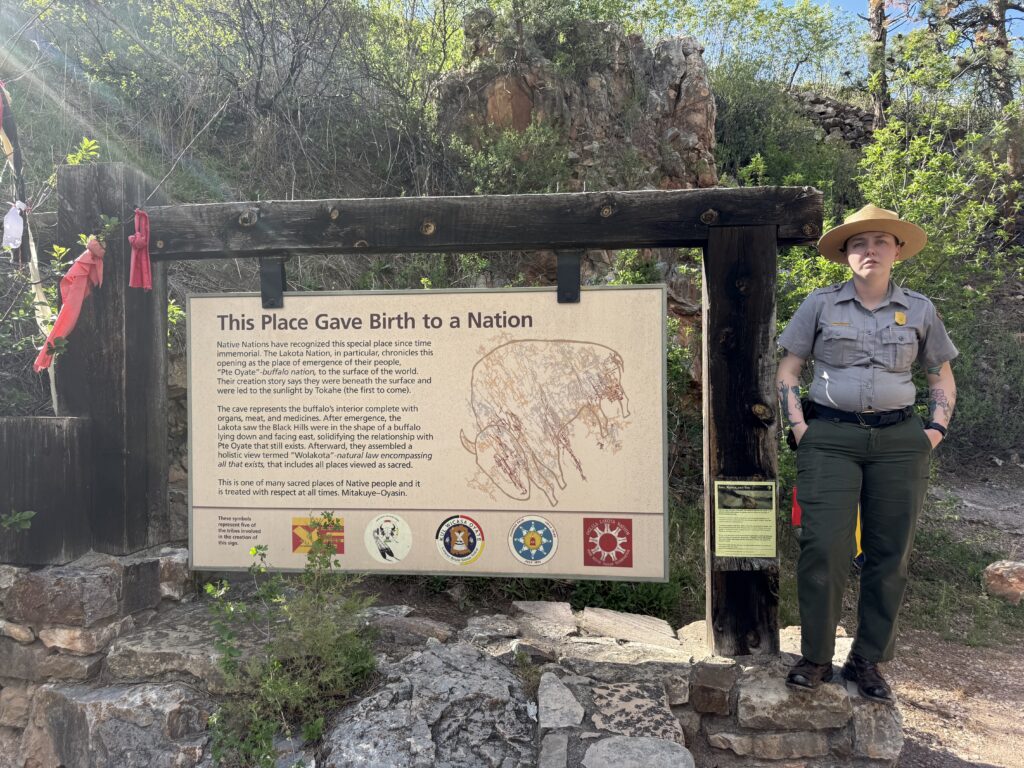Park Ranger preparing for Wind Cave tour. (Photo Clay Jenkinson)
A very sparky young woman appeared in full National Park Service uniform to serve as our Ranger guide. Her fourth year at Wind Cave. Loves it. Wasn’t a spelunker before, but now is getting into it. She uttered some stern commandments about not straying, not touching anything on penalty of federal prison time, and not collecting samples. Thus chastened, we entered the great cave. I had been there once before, many decades ago, on a disastrously satisfying family vacation, but fortunately, I had repressed all memories of the actual cave tour.
Our ranger told us six or seven (hundred?) times that the boxwork lace is the true treasure of Wind Cave. In fact, 90% of all the world’s boxwork lace is within Wind Cave. It looks as delicate as fine porcelain. It resembles a honeycomb. She offered an outstanding simile. “It’s as if they built a brick wall with elongated sugar cubes held in place with cement mortar. Water has dissolved the sugar cubes and left the hard mortar in place.” A trope worth remembering.
Somehow, I had it in my addled brain that a good cave is a horizontal thing. You enter from the side of a bluff or mountain and then move back into the heart of the cave at or just below ground level. If there were any ups and downs, it would be no more strenuous than living in a New York apartment on the third floor with no elevator. I did not remember that Wind Cave cannot really be experienced unless you descend a rather long distance into what might be called “the bowels of the earth.” The descent is like walking down the stairs of a 16-story skyscraper. We went down a few preliminary flights of stairs, carved out of limestone and, as often as not, wet and slippery. All this with no more illumination than your bathroom nightlight.
Every five stories or so, we would stop in some large underground amphitheater to do a body count and to hear more about the world’s great concentration of boxwork lace. Our ranger routinely ended her commentary by asking if there were any questions. We all had only one question, but we were afraid to utter it: How the *\##@X%X* are we ever going to get out of here?
You can see endless examples of “boxwork” throughout the cave. (Photo Sutterstock)
Our questions were lugubrious. How many people have died in here? How many people have gotten lost and were never seen again? How often are there cave-ins? Are the bats rabid? Are the bats mean? Are there vampire bats? Has anyone been murdered in here? Were any of them pesky rangers? And so on.
And then down some more steep dark stone stairs to the next nearly identical amphitheater with a brilliant display of … well, boxwork lace. Now I don’t want to appear to be a speleological philistine, and I’m sure I am now inviting the most horrendous rebukes, and it’s true that I’ve only been in six or seven caves in the whole course of my life, but at about 45 minutes into the tour I had concluded that when you have seen one array of boxwork lace you have pretty much seen them all (ad nauseum); and I’m very nearly of the same opinion on caves per se. I suppose this is as ignorant as saying there is only one type of desert or only one type of volcano.
My memory may be faulty, and at some point, I seem to have lapsed into a fugue state, perhaps from oxygen deprivation, but it seemed to me that we just kept descending into the abyss farther and farther from all that makes life worthwhile. At one point, we passed Grendel licking his wounds after his ordeal with Beowulf. Then the Loch Ness Monster swam by in one of the many underground lakes in Wind Cave, and half an hour after that, we passed Dante and Virgil debating whether they were in the seventh circle of the Inferno or the eleventh. We passed a plaque on the wall: “Jules Verne turned back here, said he just couldn’t take it any more.” And we saw a plexiglass case containing 10 taxidermied canaries. A little girl asked her mother why they were there. Her mother said, “I’ll tell you when we get to the resort.”
## **It Was a long Way Down**
I kept hoping for some big climax — an amphitheater the size of the Coliseum, or the world’s finest pure echo chamber, or at least a light show, a prayer for world peace, and some Lee Greenwood. But no.
Our excellent guide explained two versions of the Lakota origin story involving the cave, and provided the usual early National Park narrative:
— Sacred to indigenous people.
— White ranchers happened upon it one day, and the out-rush blew their cowboy hats off, literally. Our ranger said the hat part may be apocryphal.
— These pioneers fought off two distinctive American species: the Scenic Wonder Opportunist, who tried to wrest control of the cave to commercialize access; and the speculative miners who explored every nook and cranny in search of gold.
— The pioneer family explored the cave whenever possible, and generously took anyone who turned up down into the cave.
— Somebody finally said, “Hey, maybe we should bring government in to preserve this scenic wonder from base economic exploitation.”
Voila.
Some version of this is the narrative of dozens of National Parks and Monuments, including Mesa Verde National Park, established by Congress on June 29, 1906, during Roosevelt’s second term.
On January 9, 1903, President Roosevelt signed the enabling legislation for Wind Cave National Park. He had little to do with this one, but he was eager to create new National Parks during his tenure, and he liked the idea of expanding the definition of National Park from geyser-like scenic wonders to unusual phenomena scientists could study to advance knowledge and better understand the Earth’s dynamics. Roosevelt never visited Wind Cave.
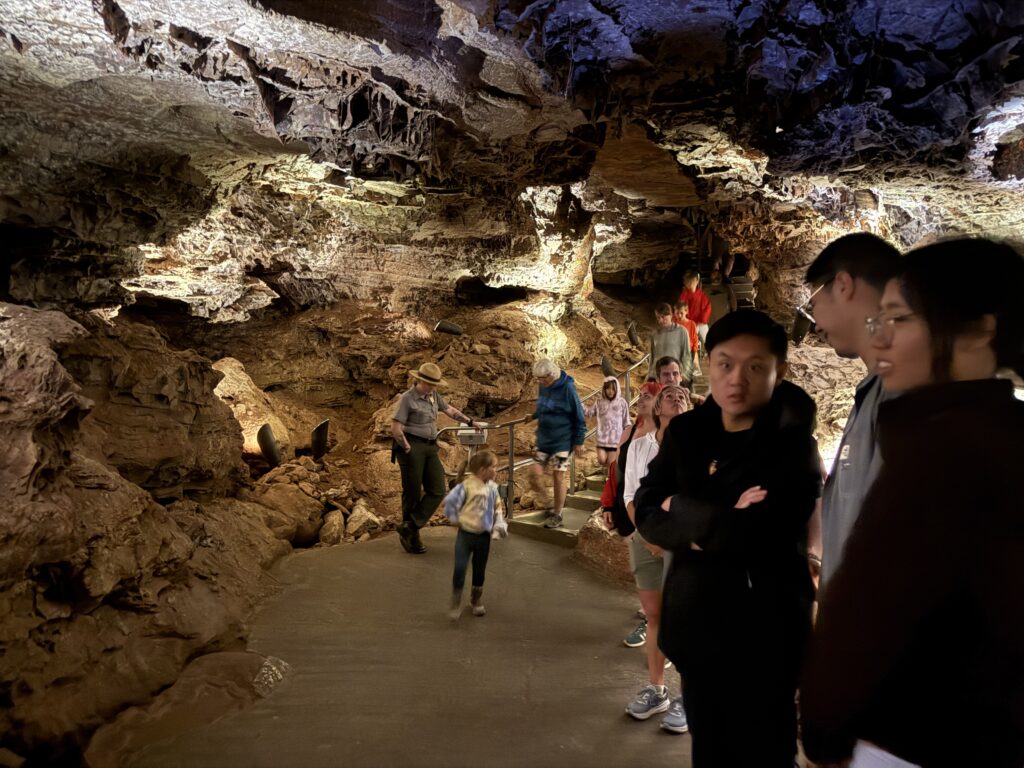Down inside the enormous Wind Cave. (Photo Clay Jenkinson)
Our ranger talked about all the early white people who glommed onto Wind Cave (for purposes high and low), and she noted that scientific teams are still exploring the Wind Cave complex, with only 10% (at most) of it properly investigated. But at no point did she say the name Theodore Roosevelt, the 26th president of the United States, on whose watch this National Park was established, who set aside 230 million acres of the American West for permanent federal protection during his tenure. William McKinley wouldn’t have done it. William Howard Taft wouldn’t have done it. Woodrow Wilson wouldn’t have done it. Warren Harding wouldn’t have done it. Close your eyes and try to imagine America’s public lands if Theodore Roosevelt had never been born.
I felt mildly aggrieved that in all that commentary, Roosevelt was never invoked. I did not clear my throat and sing his praise. But the next time she waxed on about the glories of boxwork lace, I snorted. Take that.
I know there are people who like to visit underground structures — the catacombs in Rome and Paris, the St. Peter Scavi Tour at the Vatican (excellent), salt mines turned into museums, sections of the London Underground that were developed and never used — now a site for quirky weddings, sometimes in Klingon. My interest in the subterranean is limited. As perhaps is evident. I don’t suppose my enthusiasm was increased by all the recent news about the seven individuals trapped in a flooded cave in Laos. Until this crisis, I had never even heard of the National Cave Rescue Association, but there wouldn’t be such an entity unless humans pretty frequently got lost or trapped in caves. Still, I was glad I did the tour. If you go to Wind Cave National Park and decline the cave tours, you are not really bringing the right spirit to these adventures.
At some point, as we approached the Center of Earth, our ranger uttered one more encomium to the boxwork and announced that we would descend no farther. Turns out there is an elevator to shoot us out of the cave and back onto terra firma. I stopped in the gift shop, and nearly bought a souvenir that said, “I Came from Europe to Visit Wind Cave, and All I Got Was Carbon Monoxide — and This T-shirt.”
> **“Leave it as it is. The ages have been at work on it, and man can only mar it.”**
>
> **Teddy Roosevelt**
It was a beautiful evening. One of the unintended benefits of the creation of Wind Cave National Park is that the rolling hills on the surface — the perimeter of the park footprint — preserve some of the most beautiful remaining unplowed plains grassland in America. The park is home to more than 300 buffalo, as well as plenty of prairie dogs, burrowing owls, pronghorn antelope, coyotes, and several species of deer. If there were no cave, it would still be worth visiting for the lovely little Serengeti of the surface. President Roosevelt believed that Wind Cave NP needed an additional draw for visitors, so he pushed for the American Bison Society to place 15 bison from the Bronx Zoo on the surface acreage. Not only did this increase the appeal of the national park, but the park sanctuary was instrumental, too, in bringing the buffalo back from the brink of extinction.
The next day, I visited Jewel Cave National Monument, about an hour west of Wind Cave. Here, the interpretive center paid solid tribute to Theodore Roosevelt, including a facsimile of his executive order establishing the monument. Jewel Cave was his 12th National Monument (February 7, 1908), just after Pinnacles in California, now a National Park, and just before Natural Bridges in Utah. Fortunately, the Jewel Cave tours were booked up until 2029, or so, so I did not have to face the shame of declining a second journey to the core of the Earth.
We live in the Age of Disillusionment. Theodore Roosevelt is taking some hits these days for some of the things he wrote about Native Americans, for his supposed jingoism and warmongery, for his very brief flirtation with the pseudoscience of eugenics, and for his sometimes-excessive hunting habits. Fair enough, but the truth is that Roosevelt evolved on questions of race and indigenous peoples, moved some distance toward treating a camera only as his principal hunting tool, left eugenics behind long before most of his contemporaries, and won the Nobel Peace Prize in 1906 for helping to end the Russo-Japanese War. Very few presidents grow in office. TR was one of those few. It would be a mistake to judge his character and achievement by a list of some of his least attractive pronouncements, most of which he uttered as a young hothead.
Roosevelt’s conservation achievement is stunning. Not only did he co-found the first national conservation organization in the United States, the Boone and Crockett Club (1887), and convene the first National Governors’ Conservation Conference in 1908, but he and the Smithsonian’s William Hornaday played a critically important role in saving the bison from extinction. He wrote some of the finest prose about the Little Missouri River badlands in western North Dakota — prose so superb that it is constantly quoted by those who love the badlands but can’t improve on his descriptions. He told us correctly that the redwood forests, the Tetons, the Grand Canyon, and Yosemite “are America’s cathedrals,” which we must cherish with as much care and sensitivity as Notre Dame and Chartres. And at the Grand Canyon, which he saw for the first time on May 6, 1903, he said, “Leave it as it is. The ages have been at work on it, and man can only mar it.”
That should be the motto over the entrance station of every National Park. There have been many heroes in the history of the public lands in America, but none achieved more than Theodore Roosevelt.
---
## ***Discover more on these topics at Listening to America***
[William Shirer](https://ltamerica.org/tag/william-shirer/ "1 topics")[Water in the West](https://ltamerica.org/tag/water-in-the-west/ "24 topics")[New England](https://ltamerica.org/tag/new-england/ "1 topics")[Wisconsin](https://ltamerica.org/tag/wisconsin/ "0 topics")[Theodore Roosevelt](https://ltamerica.org/tag/theodore-roosevelt/ "16 topics")[Walden](https://ltamerica.org/tag/walden/ "1 topics")[Steinbeck Travels](https://ltamerica.org/tag/steinbeck-travels/ "75 topics")[Podcast](https://ltamerica.org/tag/podcast/ "1 topics")[paintings](https://ltamerica.org/tag/paintings/ "0 topics")[Pennsylvania](https://ltamerica.org/tag/pennsylvania/ "1 topics")[Texas](https://ltamerica.org/tag/texas/ "4 topics")[Republic](https://ltamerica.org/tag/republic/ "0 topics")[Rivers](https://ltamerica.org/tag/rivers/ "3 topics")[Utah](https://ltamerica.org/tag/utah/ "11 topics")[North Carolina](https://ltamerica.org/tag/north-carolina/ "3 topics")[Travel](https://ltamerica.org/tag/travel/ "1 topics")[Wyoming](https://ltamerica.org/tag/wyoming/ "4 topics")[Ohio](https://ltamerica.org/tag/ohio/ "2 topics")[Oregon](https://ltamerica.org/tag/oregon/ "4 topics")[Rome](https://ltamerica.org/tag/rome/ "1 topics")[Thoreau](https://ltamerica.org/tag/thoreau/ "5 topics")[Republics](https://ltamerica.org/tag/republics/ "1 topics")[U.S. Presidents](https://ltamerica.org/tag/u-s-presidents/ "71 topics")[north daktoa](https://ltamerica.org/tag/north-daktoa/ "0 topics")[South Dakota](https://ltamerica.org/tag/south-dakota/ "16 topics")[North Dakota](https://ltamerica.org/tag/north-dakota/ "53 topics")[Reading](https://ltamerica.org/tag/reading/ "1 topics")[The Constitution](https://ltamerica.org/tag/the-constitution/ "1 topics")[South Carolina](https://ltamerica.org/tag/south-carolina/ "1 topics")[Road Trips](https://ltamerica.org/tag/road-trips/ "18 topics")[New Mexico](https://ltamerica.org/tag/new-mexico/ "3 topics")[Space Exploration](https://ltamerica.org/tag/space-exploration/ "8 topics")[Thomas Jefferson](https://ltamerica.org/tag/thomas-jefferson/ "34 topics")[U.S. Constitution](https://ltamerica.org/tag/u-s-constitution/ "1 topics")[Poetry](https://ltamerica.org/tag/poetry/ "1 topics")[Video](https://ltamerica.org/tag/video/ "51 topics")[New York](https://ltamerica.org/tag/new-york/ "8 topics")[State Parks](https://ltamerica.org/tag/state-parks/ "2 topics")[Oppenheim](https://ltamerica.org/tag/oppenheim/ "0 topics")[Tennessee](https://ltamerica.org/tag/tennessee/ "1 topics")[Oppenheimer](https://ltamerica.org/tag/oppenheimer/ "1 topics")[Vermont](https://ltamerica.org/tag/vermont/ "1 topics")[Washington](https://ltamerica.org/tag/washington/ "2 topics")[Sports](https://ltamerica.org/tag/sports/ "2 topics")[Virginia](https://ltamerica.org/tag/virginia/ "7 topics")
**Categories:** Dispatches from the Road
**Tags:** National Parks, South Dakota, U.S. Presidents, Water in the West
---
### [On the Road! Westward With Teddy Roosevelt](https://ltamerica.org/on-the-road-westward-with-teddy-roosevelt/)
**Published:** May 26, 2026
**Author:** Clay Jenkinson
**Excerpt:** Memorial Day weekend 2026, Clay and the LTA Airstream hit the trail, following Teddy Roosevelt’s legacy in the American West.
**Content:**
## Memorial Day weekend 2026: Clay and the LTA Airstream hit the trail, following Teddy Roosevelt’s legacy in the American West.
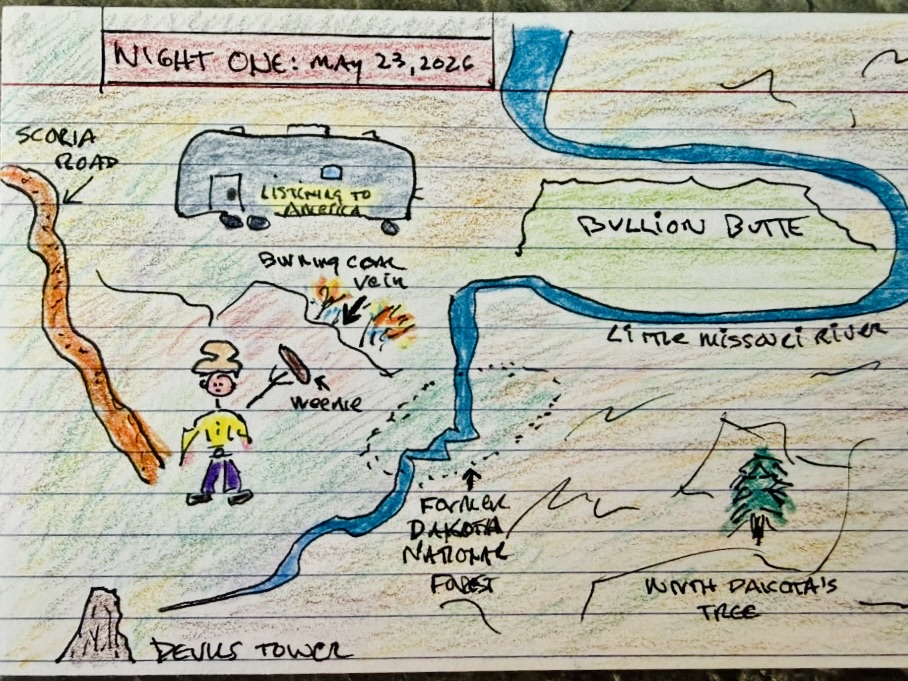Clay’s map from evening one on his 2026 exploration of Teddy Roosevelt’s West, in Burning Coal Vein National Forest, N.D., between Bullion Butte and Devils Tower.
**First night in Theodore Roosevelt’s West** — I write this first summer dispatch of 2026 from the [Burning Coal Vein National Forest](https://www.fs.usda.gov/r01/dpg/recreation/burning-coal-vein-campground) campground in the southern badlands of North Dakota. Many western states have badlands of greater and lesser badness. South Dakota is the home of Badlands National Park, one of 63. North Dakota’s kinder, gentler badlands embrace the Little Missouri River — sacred to me — which flows north from Devils Tower in Wyoming (Roosevelt’s first National Monument) up through edges of South Dakota and Montana, before carving its way to its confluence with the Missouri River at Twin Buttes, North Dakota.
I left Bismarck about 1 p.m. Saturday, hauling the rig for the first time in eight months, drove 150 miles west and then south, through Amidon (which competes for the honor of being the first or the second smallest county seat in America, population ca. 18), and then 13 miles on gravel roads up to the Burning Coal Vein campground. I arrived about 4 p.m. Mountain Daylight Time, found the campground empty, and “practiced” my trailer backing-up skills (for about 45 minutes!) and settled in.
I chose this site for my first night out for two reasons. First, Roosevelt was here several times during the 1884-06 period, and Roosevelt’s conservation agenda is my theme for this summer’s travels. He came out to Dakota Territory in September 1883, age 24, to kill a buffalo, got one not 30 miles from here after a comically difficult hunting campaign, and meanwhile fell in love with the broken landscape. He considered this patch of the West — 175 miles long, 25 or so wide, on both sides of the Little Missouri — as one of the last remnants of the American frontier. He believed (along with Frederick Jackson Turner) that the frontier was the most important dynamic in the shaping of the American character. His boyhood heroes were men like Daniel Boone and Davy Crockett. Roosevelt wanted to get a transfusion of frontier dynamics before it was too late. He impulsively established first one and then (next year) another ranch along the Little Missouri, and later declared that he would never have become president of the United States had it not been for his time in North Dakota.
My second reason for choosing this campground for my first night out is that I love it here. I first came here as a callow youth of 17, with my mentor Mike Jacobs, North Dakota’s foremost journalist. He explained that the narrow lignite coal seams in badlands outcroppings occasionally catch fire, usually due to lightning strikes, and then burn for two days, two months, two years, or 20 years, until they burn themselves out. When I was growing up in North Dakota, there were three or four burning coal veins smoldering at various points in the badlands. Now they are all extinguished.
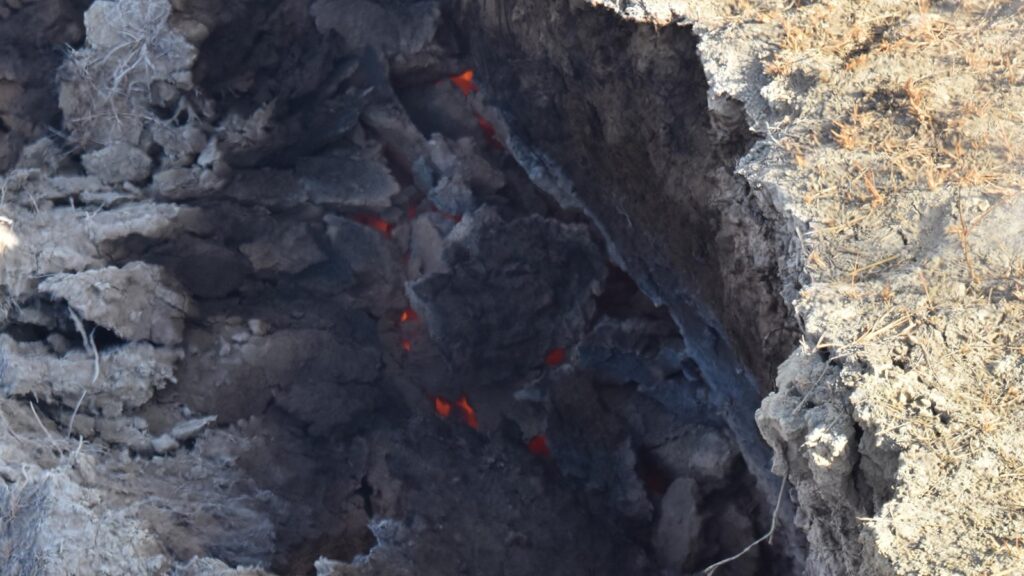Burning coal vein in Theodore Roosevelt National Park. These natural fires can be started by lightning, prairie fires, or even spontaneous combustion. (Photo National Park Service/A. McCann)
So here I am nestled in a handful of trees not far from Bullion Butte, the largest grass mesa in North Dakota. (Up here, we call them buttes.) It was on the northwest face of Bullion Butte that Roosevelt killed his first bighorn sheep. The giant butte forces the Little Missouri River to make a huge detour around its base. On his horseback journeys from Medora, North Dakota, to the ranch where he had headquartered during the 1883 buffalo hunt, Roosevelt typically took a cutoff on the western flank of the butte, but once he rode all 45 miles around the base just for the fun of it.
When Theodore Roosevelt wrote to extoll “the strenuous life,” he meant it. He lived it. In his 60 short but hectic years of adventure, he banged up his body in all sorts of ways, never with any regret.
The Burning Coal Vein campground is adjacent to the legendary [Logging Camp Ranch](http://loggingcampranch.com), owned by close friends of mine, one of the valley’s most historic ranches, now both a working and a guest ranch.
You should know that North Dakota is the most treeless state in the United States. And yet, President Roosevelt designated a bit of the zone where I am camped as the Dakota National Forest (November 24, 1908). This is what might be called an *aspirational* forest nomination. Not far from here, the forest service established a tree nursery organized in the manner of the later Civilian Conservation Corps (CCC) camps. The next president, Woodrow Wilson (not a man of the West), withdrew the National Forest designation.
So, in my 2026 summer and autumn quest to visit Theodore Roosevelt Conservation properties in the American West, I have begun propitiously in the southern badlands of North Dakota.
- He got his first buffalo near here.
- He later shot his first bighorn sheep here.
- Not far from this campsite in June 1884, he was measured for “an authentic buckskin shirt” (a TR obsession) by a strenuous frontier woman named Mrs. Maddox. You can see photographs of him in that shirt in all the books about his adventures in the West.
- As president, he created a patch of the Dakota National Forest here.
- He rode his horse, Manitou, around the base of Bullion Butte on a lark and would have passed within a mile of my campsite.
A good start!
## **Not Universally Loved Out West**
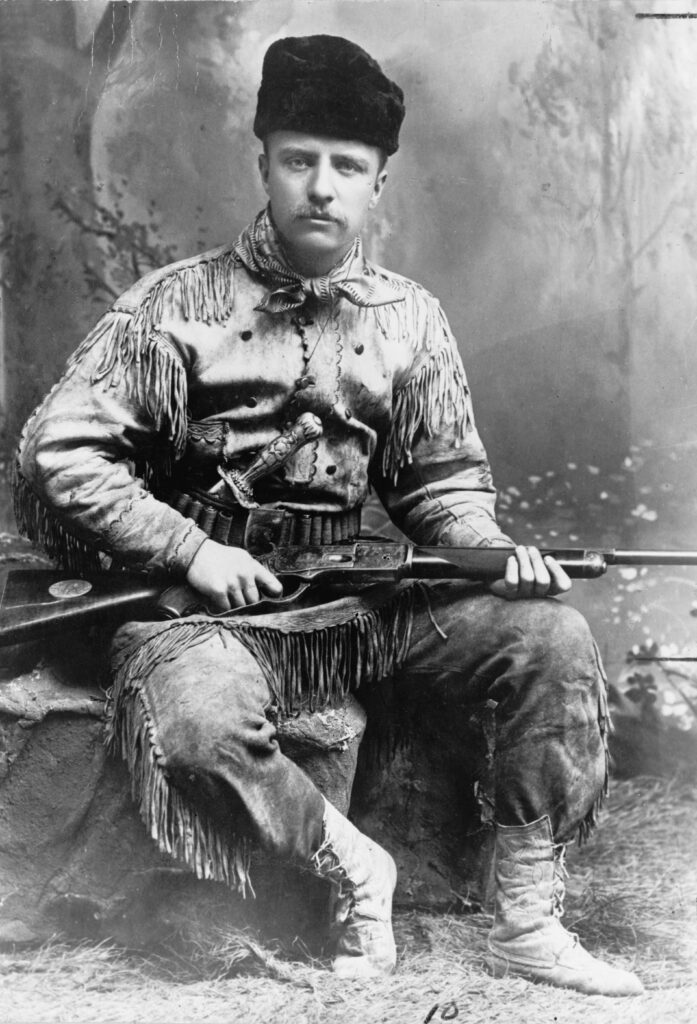Teddy Roosevelt, 1885, outfitted for the wild west.
Roosevelt was not (and in fact is not) universally loved out here. Many of the hardened true pioneers of this region regarded him as yet another wealthy outsider rolling in to “play cowboy” until the hard times came. He was ridiculed for his accent, his Harvard-derived language, the falsetto quality of his voice when he got excited (and, of course, he was always excited), and his thick spectacles. They called him Four Eyes and Storm Windows. He insisted that every one of his friends out here all call him Mr. Roosevelt.
One of his detractors operated a great horse ranch just a few dozen miles from here. His name was A.C. Huidekoper. For some reason, Huidekoper, a serious frontiersman who was possessed of a strong sense of self, became an immediate Roosevelt skeptic. There was always a whiff of the ridiculous about TR. From an early time in his adult life, he became something of a caricature of himself — rattling on about dime novels, his training as a pugilist, and the place of authentic buckskin tunics in the saga of America; a bespectacled chap with outsized teeth, sporting a Bowie knife hand-engraved by Tiffany’s, prone to bite off phrases like “Dee-lighted to meet you,” “hasten forward quickly there,” bully this and bully that. For the tough actual pioneers who were trying to prove up this difficult segment of the West, men and women who could not simply hop the train out of here whenever something back east caught their attention, Roosevelt seemed at first like a slightly silly New York dude. An interloper. Much later, Huidekoper fulminated against President Roosevelt’s conservation agenda, which he said locked up whole swaths of the American West, including here (the short-lived Dakota National Forest).
Roosevelt’s great conservation achievement — 230 million acres of the public domain set aside for permanent protection — and the resistance of those who deplore federal protections of public lands, then and now, will be one of the themes of my articles, dispatches, and video contributions over the next months. Roosevelt signed into law the [National Monuments and Antiquities Act in 1906](https://www.nps.gov/subjects/archeology/antiquities-act.htm), and named the first 18 (by executive order); invented the [National Wildlife Refuge System](https://www.fws.gov/story/beginners-guide-national-wildlife-refuge-system) (then called Federal Bird Sanctuaries), and named the first 51 (by executive order). He designated 150 million acres of National Forest (by executive order), created four national game preserves, and welcomed five new National Parks into the system, though each of those had to be established by Congress.
This summer and fall, I intend to visit all 18 TR National Monuments, many of the National Forests in the West, plus his five National Parks, beginning (this week) at Wind Cave NP in South Dakota. If you want to read along, the best book on the subject is Douglas Brinkley’s [Wilderness Warrior: Theodore Roosevelt and the Crusade for America](https://douglasbrinkley.com/books/the-wilderness-warrior/).
## **On the Road Again**
A [Western Meadowlark](https://www.allaboutbirds.org/guide/Western_Meadowlark/sounds), the characteristic bird of the Great Plains. (Photo Shutterstock)
After I set up camp, by which I mean pulled a folding camp chair out of my pickup and poured myself a gin and tonic, I sat out reading a fabulous book about Antarctic exploration: Aspley Cherry-Garrard’s *The Worst Journey in the World*. (Boy, was it!) The evening light was perfect. For whole quarters of an hour, I put down the book and simply gazed at the outlier bluffs of Bullion Butte, the perfect early summer sky, and the badlands cuts and coulees in every direction. And listened to the silence, by which I mean the absence of industrial noise.
Roosevelt was one of America’s great ornithologists; I one of its least. I was serenaded with the sounds of a half dozen different birds, only one of which I recognized. The Western Meadowlark is the characteristic bird of the Great Plains. It has a beautiful, [instantly recognizable liquid bird call](https://www.allaboutbirds.org/guide/Western_Meadowlark/sounds). Whenever I am driving home from somewhere else in America, the Meadowlark’s song is my homing signal. When I first hear it every year, it makes me ache with joy and nostalgia.
At some point, I warmed up a simple can of soup for dinner, along with a few crackers and a square of sharp cheddar cheese. I was going to bring a bottle of wine, but when I stopped at a big gas station-convenience store in Belfield, there were only three different wines among a vast sea of beer and the no-nonsense hard stuff. One of the wine options was Mogan David, the others at $6.99 and not very inviting.
Before the last squibs of the sunset faded, I was in bed — clean sheets, my *own* sheets! — with the *[Norton Book of American Autobiography](https://wwnorton.com/books/The-Norton-Book-of-American-Autobiography)*. I read for most of an hour, and when the book fell from my hands onto my chest for the fourth time, I reckoned it was time for sleep.
## **Morning**
Once I finish this report, I will fry an egg or something, work on my calendar for the next three weeks, and then drive south towards Buffalo, South Dakota, where I will probably spend the night. If you have followed my Airstream travels over the last two years, you know that[ John Steinbeck raced around the perimeter](https://ltamerica.org/tag/steinbeck-travels/) of the United States in 1960, covering 11,500 miles, often seeming to be in a hurry. Last year, I[ retraced the Lewis and Clark expedition](https://ltamerica.org/tag/lewis-and-clark/) from Poplar Forest in Virginia to Astoria, Oregon, and back again. This year, I intend to adopt a less hurried pace so I can read, write, muse, hike, daydream, draw, and listen to America.
By the time I write to you next week, I’ll be at Devils Tower, TR’s first and one of my very favorite National Monuments.
See you down the trail.
---
## ***Discover more on these topics at Listening to America***
[Wyoming](https://ltamerica.org/tag/wyoming/ "4 topics")[Theodore Roosevelt](https://ltamerica.org/tag/theodore-roosevelt/ "16 topics")[Texas](https://ltamerica.org/tag/texas/ "4 topics")[Wisconsin](https://ltamerica.org/tag/wisconsin/ "0 topics")[Video](https://ltamerica.org/tag/video/ "51 topics")[Republics](https://ltamerica.org/tag/republics/ "1 topics")[U.S. Constitution](https://ltamerica.org/tag/u-s-constitution/ "1 topics")[New York](https://ltamerica.org/tag/new-york/ "8 topics")[paintings](https://ltamerica.org/tag/paintings/ "0 topics")[Republic](https://ltamerica.org/tag/republic/ "0 topics")[Sports](https://ltamerica.org/tag/sports/ "2 topics")[Pennsylvania](https://ltamerica.org/tag/pennsylvania/ "1 topics")[Washington](https://ltamerica.org/tag/washington/ "2 topics")[U.S. Presidents](https://ltamerica.org/tag/u-s-presidents/ "71 topics")[Thomas Jefferson](https://ltamerica.org/tag/thomas-jefferson/ "34 topics")[New England](https://ltamerica.org/tag/new-england/ "1 topics")[Tennessee](https://ltamerica.org/tag/tennessee/ "1 topics")[Poetry](https://ltamerica.org/tag/poetry/ "1 topics")[Thoreau](https://ltamerica.org/tag/thoreau/ "5 topics")[Virginia](https://ltamerica.org/tag/virginia/ "7 topics")[Travel](https://ltamerica.org/tag/travel/ "1 topics")[Steinbeck Travels](https://ltamerica.org/tag/steinbeck-travels/ "75 topics")[Podcast](https://ltamerica.org/tag/podcast/ "1 topics")[Utah](https://ltamerica.org/tag/utah/ "11 topics")[Vermont](https://ltamerica.org/tag/vermont/ "1 topics")[William Shirer](https://ltamerica.org/tag/william-shirer/ "1 topics")[Walden](https://ltamerica.org/tag/walden/ "1 topics")[Rivers](https://ltamerica.org/tag/rivers/ "3 topics")[North Dakota](https://ltamerica.org/tag/north-dakota/ "53 topics")[Water in the West](https://ltamerica.org/tag/water-in-the-west/ "24 topics")[Oppenheim](https://ltamerica.org/tag/oppenheim/ "0 topics")[South Dakota](https://ltamerica.org/tag/south-dakota/ "16 topics")[Ohio](https://ltamerica.org/tag/ohio/ "2 topics")[Oppenheimer](https://ltamerica.org/tag/oppenheimer/ "1 topics")[Road Trips](https://ltamerica.org/tag/road-trips/ "18 topics")[State Parks](https://ltamerica.org/tag/state-parks/ "2 topics")[The Constitution](https://ltamerica.org/tag/the-constitution/ "1 topics")[Rome](https://ltamerica.org/tag/rome/ "1 topics")[Reading](https://ltamerica.org/tag/reading/ "1 topics")[north daktoa](https://ltamerica.org/tag/north-daktoa/ "0 topics")[Space Exploration](https://ltamerica.org/tag/space-exploration/ "8 topics")[South Carolina](https://ltamerica.org/tag/south-carolina/ "1 topics")[North Carolina](https://ltamerica.org/tag/north-carolina/ "3 topics")[New Mexico](https://ltamerica.org/tag/new-mexico/ "3 topics")[Oregon](https://ltamerica.org/tag/oregon/ "4 topics")
**Categories:** Dispatches from the Road
**Tags:** America at 250, National Parks, North Dakota, Theodore Roosevelt
---
### [Homer and Hubris in a Turkish Rental Car](https://ltamerica.org/homer-and-hubris-in-a-turkish-rental-car/)
**Published:** May 18, 2026
**Author:** Clay Jenkinson
**Excerpt:** After a rental car odyssey, trekking 215-miles southwest of Istanbul, Clay spends a magical afternoon at the site of Homer’s epic, the Iliad.
**Content:**
## After a rental car odyssey, trekking 215-miles southwest of Istanbul, Clay spends a magical afternoon at the site of Homer’s epic, the *Iliad*.
Archaeological site of Ancient Troy showing stone ruins with a circular well and rectangular structures. (Photo Clay Jenkinson)
The gods didn’t make it easy. I should have known. In Homer’s world, the citadel at Troy was said to be impregnable. When the ancient Greeks were preparing to cross the Aegean Sea to carry retribution to Troy, before the war began, violent winds kept them in port at Aulis. The Greek war leader, [Agamemnon](https://www.worldhistory.org/Agamemnon_(Person)/), asked a seer what he needed to do to secure favorable winds. The holy man determined that Agamemnon must sacrifice his daughter Iphigenia or he’d never leave the mainland. After some hesitation, Agamemnon cut Iphigenia’s throat at the shrine of the goddess Artemis. Funnily enough, his wife, her mother, Clytemnestra, never got over it.
Troy is located in a very remote corner of Turkey, near the town of Çanakkale. Unless you sail over from the Greek mainland — which apparently comes at quite a cost! — you need to start the day in Istanbul, rent a car, and drive 215 miles west and slightly south to the ancient site. This involves driving across the longest suspension bridge in the world — over the Hellespont, the waterway that links the Mediterranean to the Black Sea. Easy enough, once you get on the excellent rural highways, but first you have to get out of Istanbul! And I repeat, the gods don’t make that easy. At Avis, we opted for the ruinously expensive maximum rental car insurance plan, but within half an hour, we would have turned back to buy double-secret additional rental insurance, except that going back would be just as difficult as going forward.
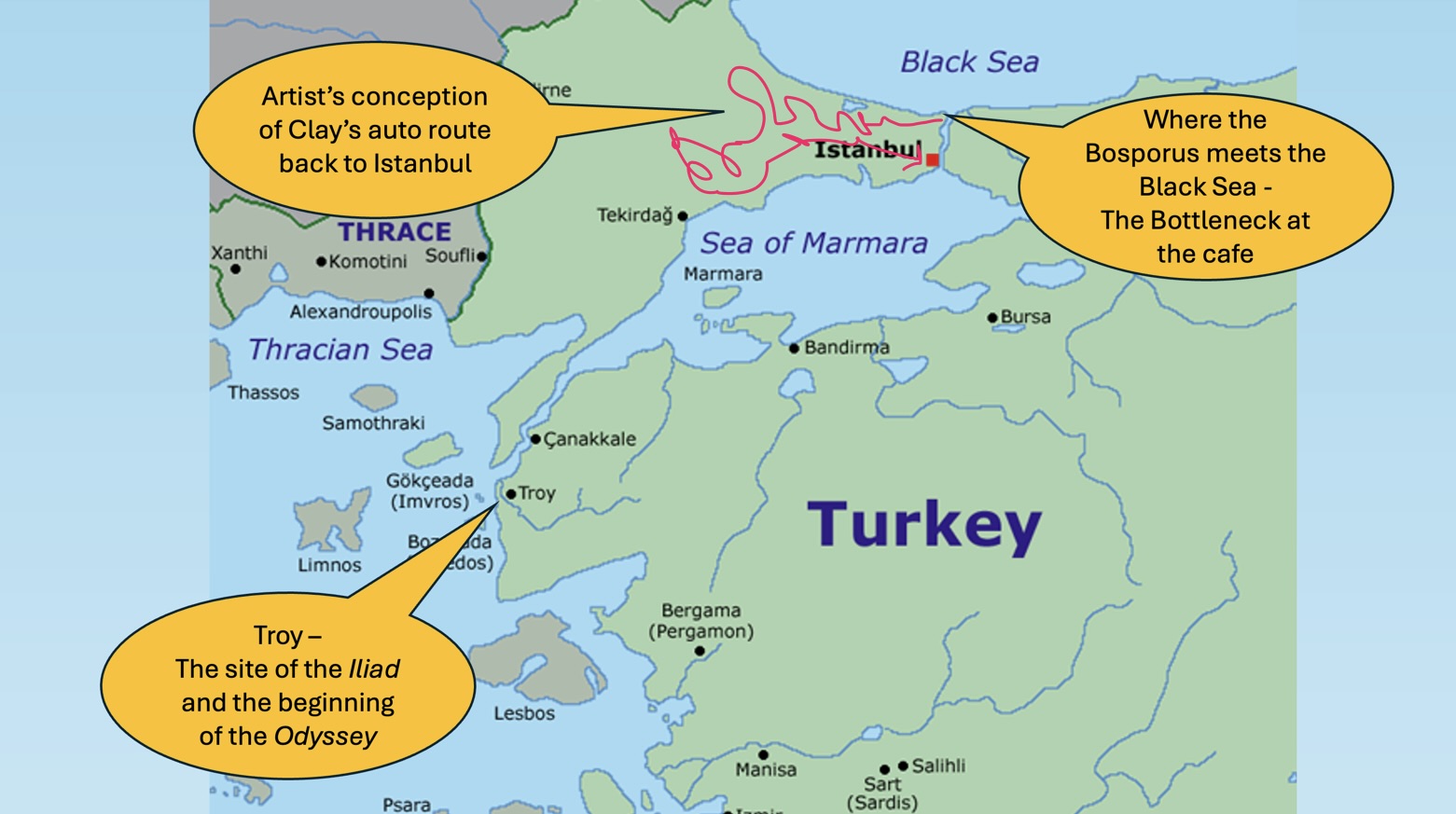Map of Turkey, with Clay’s travel notes.
Once you clear the city, Turkey’s national roads are outstanding, better maintained than the American interstate highway system. We surged along toward Troy, on eerily empty highways, gabbing the whole time about the Homeric epics. The *Iliad* and the *Odyssey* were composed orally in a meter called dactylic [hexameter](https://www.poetryfoundation.org/education/glossary/hexameter), the result of decades or even centuries of open-sourced collaboration, including by the master poet Homer, and they were finally written down using the new Greek alphabet sometime around 700 BCE. The *Iliad* is the epic story of a heroic quarrel within the Greek camp at the tail end of a heroic decade-long struggle between West and East, between the Greeks (the aggressors) and the Trojans (the defenders), ostensibly over who gets to possess the most beautiful woman on earth, Helen, first Helen of Greece, then Helen of Troy. Helen, as you might expect, was a little self-conscious about touching off a ghastly war that ended with the utter destruction of Troy.
We finally got to Troy about 5 p.m. Fortunately, the site was open until 8, including a newish visitors center. We parked the car. We bought tickets. We stopped off at the W.C. We ran our tickets through the stanchions.
## **Troy at Last**
Ruins of Ancient Troy. (Photo Clay Jenkinson)
And there it was. Troy. Troy of the *Iliad* and the *Odyssey*. Troy of the Trojan Horse. Troy, the home of King Priam and Queen Hecuba, Prince Hektor, the irresponsible playboy Paris, and the royal princess Cassandra, cursed by the god Apollo with the capacity to predict the future with 100% accuracy, and yet fated never to be believed.
The story of the Trojan War remains a core element of our common cultural inheritance, alongside *Gulliver’s Travels, Robinson Crusoe*, the assassination of Julius Caesar, and the star-crossed love of *Romeo and Juliet*. Everyone knows the basics of the story: the irresistible Helen, the trick wooden horse, the wanderings of the Greek hero Odysseus after the war (soon to be a major Hollywood film — again), Odysseus’ descent into Hades to consult the blind prophet Tiresias, blinding the Cyclops Polyphemus, and the tragic life of swift-footed godlike warrior Achilles, invulnerable except at his Achilles heel.
There are more than 400 sports teams in America that call themselves the Trojans, which is a little ironic considering that the original Trojans were fated to lose the big game. Depending on how you count, only two American sports teams call themselves Greeks. There is also a line of condoms called Trojans, even more ironic as a brand for a technology where failure is not an option. In the computer world, a “Trojan Horse” is malicious software that tricks you into downloading it before you realize it will crash your system. The word “odyssey” is part of our common vocabulary, signifying a long and challenging journey.
## **A Far Corner in the Universe**
For us, venturing to Troy was just such an odyssey. It’s not on the way to anything else. You have to want to go there. Five years in the planning, rescheduled at least twice, expensive, pointless from a certain point of view, improbable from any point of view, and a perfect embodiment of everything that matters to me in life.
As we stood together, gazing in wonder at the remains of Troy, in a moment of perfect joy and harmony, I wanted to say, as Simeon did in the New Testament, “nunc dimittis” (Luke 2:29-32), “now you may dismiss me, for I have been fulfilled.” I had visited Troy once before, when I was 40 or so and the world was mostly still before me. Now I was back decades later at the other end of life, at the other end of the planet, with the person I most care about in the world. It cannot get any better than that.
But here comes some archaeological heresy. (I’m a mere humanities scholar.) From a certain point of view, the Idea of Troy is more interesting than what’s left. It’s not the Colosseum in Rome. It’s not the Parthenon in Athens. It’s not the Greek theater at Epidaurus. It’s not even Mycenae in the Greek Peloponnese, with its cyclopean walls and the famous Lion’s Gate. There are no standing structures. It’s a ruin. It’s a many-layered and jumbled set of walls, gates, palaces, towers, and pathways, worn down to their nubs like prehistoric teeth. It’s mostly rubble, and its many-layeredness (at least 10 rebuilds over several thousand years) makes it hard to “read.” The interpretive panels are excellent on the wooden walkway that encircles the site, but you have to bring your full imagination to the enterprise, and it helps if you have just finished rereading the *Iliad*, which, fortunately, I had.
Clay walks the walkway that encircles the Troy archeological site.
Ah, but close your eyes and muse on all that happened here sometime around 1,184 BCE. Agamemnon, the greatest warrior in the world, quarreling over honor and a slave woman. The gods descending from Mount Olympus to help their mortal favorites in battle. Scenes of bloody slaughter humanized by Homer’s famous extended similes that compare battle situations to homely domestic activities, as when Athene brushes away an arrow from Menelaus the way a mother brushes a pesky fly from her sleeping infant’s face (IV: 131-132). The climactic single combat between the enraged Achilles and the protector of the city, Hektor, after Achilles chases him three times around the walls of Troy. War-drunk Achilles dragging the corpse of Hektor face down around the grave mound of his closest friend Patroclus, until the gods intervene and persuade him to return the body to Hektor’s grieving parents.
In the ancient world, everybody who was anybody made the pilgrimage to the ruins of Troy: Xerxes (480 BCE), Alexander the Great (334 BCE), Julius Caesar (48 BCE), the Roman poet Ovid (25 BCE), the emperor Augustus (20 BCE), the emperor Hadrian (124 CE), and that classicist Brad Pitt (2004).
I closed my eyes and mused on my own life trajectory, too. First encounter with the *Iliad* in college, overlooking the Mississippi River. Strenuous efforts to learn enough ancient Greek to read the epics in the original at Oxford. The many times I have taught Homer in a range of translations. Seeing Robert Flaxman’s magnificent bronze sculpture of the Shield of Achilles for the first time at the Huntington Library in Pasadena. The *Iliad’s* and *Odyssey’s* place among the handful of books that have made the difference in my experience. The capacity of great literature to redeem one’s life. A lifetime of literary pilgrimages (not to mention the world’s largest ball of twine in Cawker City, Kansas).
What a long, strange trip it’s been.
Robert Flaxman’s bronze sculpture of the Shield of Achilles, commissioned in 1810 by the royal goldsmiths Rundell, Bridge & Rundell. It is a reconstruction of the legendary shield described by Homer in Book 18 of the *Iliad*.
*Nunc dimittis.*
It was an absolutely perfect evening. Although thousands visit Troy every year, it was late in the day and at the beginning of the season, so there were no more than 20 other people at the site (and no buses) while we lingered there for a couple of hours. The temperature was about 75 degrees with a light wind coming off the Aegean Sea, where the Greeks landed their 1,000 ships 3,210 years ago. We took photographs of Heinrich Schliemann’s famous crude excavation trench, an outrage according to today’s careful and systematic archaeologists, and we tried to decide how to evaluate great individuals of history who had deep (and increasingly conspicuous) flaws at the core of their achievement.
Poppies in bloom at Ancient Troy. (Photo Clay Jenkinson)
In the perfect evening light, the quietude of the site took on a kind of magical aura, made more powerful by the thousands of red poppies that were blooming in every direction — a linkage somehow between two colossal wars separated by 3,099 years: Troy of the 12th century BCE and Flanders Field in 1915, France.
Per my vow, I circumambulated the site three times. I won’t say I ran like swift-footed Achilles, but I did complete the circuit without crying out, “CPR, CPR, my kingdom for some CPR!” I also poured a little libation to the messenger god Hermes, who had assisted me materially in the hectic run-up to my flight from Denver.
## **A Bridge Too Far?**
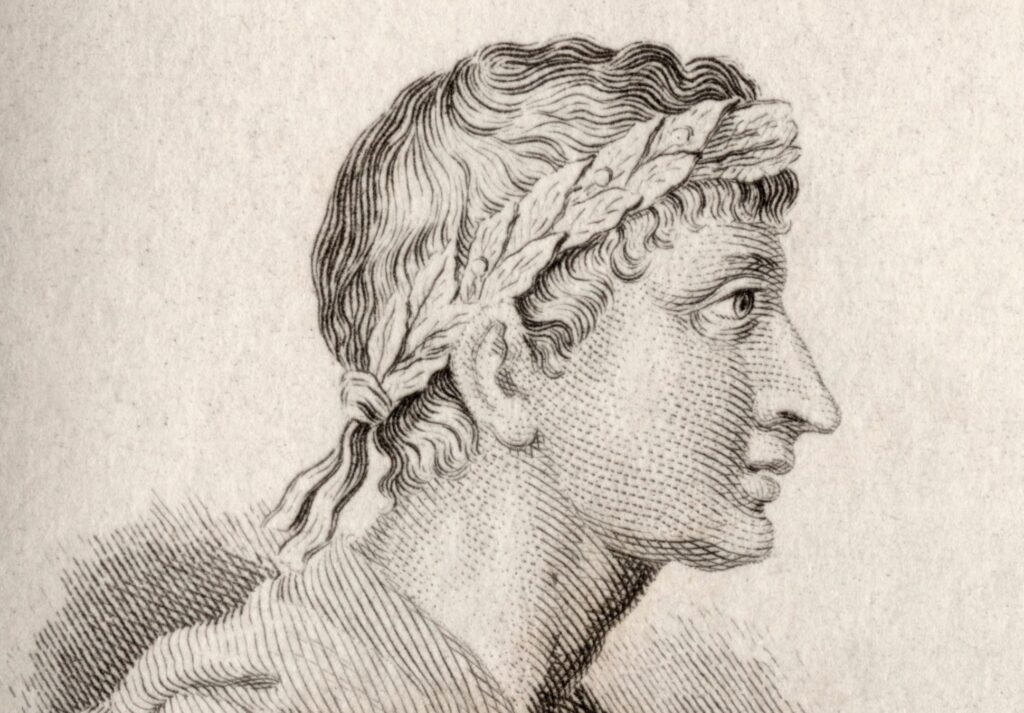Roman poet Ovid
Having now conquered Troy and clearly possessed by some mischievous god, we decided on a whim to travel all the way back past Istanbul to the shore of the Black Sea. Why? Because it is the Black Sea! Where the [Roman poet Ovid](https://www.poetryfoundation.org/poets/ovid) was banished by the emperor Augustus for the last years of his life. Where the Crimean War (1853-58) occurred, including the famous “Charge of the Light Brigade” immortalized in Tennyson’s poem of that name. The Black Sea of Odessa, the Crimea, the luxury dachas of the Russian elite. One arena of Ukraine’s ordeal.
To fly halfway across the planet to visit Troy, experiencing all such a journey involves (planes, ships, trains, automobiles, taxis, subways, Ubers; and money, time, planning, coordination, reservations, background reading, packing and unpacking, and the usual endless delays), and — having accomplished that, having scrambled three times around the walls of Troy chasing the ghosts of Achilles and Hektor, having finally fulfilled that endlessly anticipated quest … and then to cook up a knuckleheaded spontaneous add-on side trip to the Black Sea, that is the definition of the Greek concept of hubris — getting a little cocky, getting out ahead of oneself, one toke over the line, inviting failure or even retribution. And that is precisely what we did. With glee.
Clay with the Black Sea in the background.
Getting to the vicinity of the Black Sea proved to be easy. Getting to the Black Sea was more challenging. Eventually, we found a great overlook with a terrace café. We reckoned we would park there, order a salad and some sparkling water, and then walk down to the shore. But when we got there through serpentine nerve-crunching streets, often single-track, with horn-blaring local drivers zipping around us with rage in their hearts, we discovered that a huge fuel truck had gotten itself wedged against a seaside retaining wall at a hairpin curve just below the cafe. That truck wasn’t going anywhere for a long time. In Homeric terms, it was becalmed. We ate our salad quickly and then somehow extricated ourselves from that predicament, not without some moments of terror. Half an hour later, we found a little cove of the Black Sea where we could park, and we waded out a bit to say we had.
The drive back to central Istanbul, only 51 kilometers away, proved to be the most harrowing of my long life of crazy automobile adventures. I do not think I exaggerate when I say there were at least five moments in those two hours when I was pretty sure we were going to have a head-on crash, be swept over a cliff without guardrails, be arrested by a Turkish SWAT team, rear-ended by a professional tailgater, pistol-whipped by a local law enforcement officer, or crumpled like an old sheet of aluminum foil. It felt more like Dante’s *Inferno* than Homer’s *Odyssey*. My only goal in life in those hours was to get the rental car back to Avis in one piece — and ourselves, too, if possible. Without Google Maps, we’d still be there, in a foreign land where the language is not only not English, but not even Indo-European, blocked by a goat herd or force-loaded onto a ferry bound for Odessa. And yet those same Google Maps seemed to punish our hubris by sending us on the most labyrinthine and purely mad routing imaginable. By the time we got to the city, I was a nervous wreck. And that’s where the rush hour traffic began! It was like driving a rodeo clown car in Cairo plus Rome plus the L.A. freeway on a bad morning, with hundreds, maybe thousands, of motorcycles buzzing around us like horseflies in a cattle feedlot. And “optional” traffic lights.
All the way, I kept mumbling, like W.C. Fields in the 1940 movie *The Bank Dick*, “The resale value of this car is going to be nil.”
Somehow, we deposited the car unscathed at the tricky Avis return lot in the heart of Istanbul and took an Uber to our hotel. Only I was scathed. The attendant who checked us in inspected the car as if it were his new Rolex. He pointed to a scratch that had been there when we rented the vehicle (and which we had photographed at the time). If I had had a Turkish phrase book handy, I would have said, “Buddy, you are lucky this thing still has a chassis.”
Two days later, I woke up in Istanbul (population 15.7 million) and yet slept in my own bed just three flights and 5,645 miles away in North Dakota. If that’s not an industrial miracle, what is?
Now I am home in North Dakota, and Troy is behind us. It’s unlikely that I will return to Troy. It could never be more purely satisfying than it was last week; part of its appeal was valedictory. I will, however, most assuredly return to Istanbul, one of the most vibrant cities on earth.
---
## ***Discover more on these topics at Listening to America***
[Thomas Jefferson](https://ltamerica.org/tag/thomas-jefferson/ "34 topics")[Rome](https://ltamerica.org/tag/rome/ "1 topics")[Pennsylvania](https://ltamerica.org/tag/pennsylvania/ "1 topics")[Republic](https://ltamerica.org/tag/republic/ "0 topics")[paintings](https://ltamerica.org/tag/paintings/ "0 topics")[Water in the West](https://ltamerica.org/tag/water-in-the-west/ "24 topics")[Wisconsin](https://ltamerica.org/tag/wisconsin/ "0 topics")[William Shirer](https://ltamerica.org/tag/william-shirer/ "1 topics")[North Carolina](https://ltamerica.org/tag/north-carolina/ "3 topics")[Utah](https://ltamerica.org/tag/utah/ "11 topics")[South Carolina](https://ltamerica.org/tag/south-carolina/ "1 topics")[Video](https://ltamerica.org/tag/video/ "51 topics")[Travel](https://ltamerica.org/tag/travel/ "1 topics")[The Constitution](https://ltamerica.org/tag/the-constitution/ "1 topics")[Oppenheim](https://ltamerica.org/tag/oppenheim/ "0 topics")[South Dakota](https://ltamerica.org/tag/south-dakota/ "16 topics")[Texas](https://ltamerica.org/tag/texas/ "4 topics")[Reading](https://ltamerica.org/tag/reading/ "1 topics")[north daktoa](https://ltamerica.org/tag/north-daktoa/ "0 topics")[New England](https://ltamerica.org/tag/new-england/ "1 topics")[Vermont](https://ltamerica.org/tag/vermont/ "1 topics")[Oregon](https://ltamerica.org/tag/oregon/ "4 topics")[New Mexico](https://ltamerica.org/tag/new-mexico/ "3 topics")[North Dakota](https://ltamerica.org/tag/north-dakota/ "53 topics")[Road Trips](https://ltamerica.org/tag/road-trips/ "18 topics")[Podcast](https://ltamerica.org/tag/podcast/ "1 topics")[State Parks](https://ltamerica.org/tag/state-parks/ "2 topics")[Thoreau](https://ltamerica.org/tag/thoreau/ "5 topics")[Theodore Roosevelt](https://ltamerica.org/tag/theodore-roosevelt/ "16 topics")[Sports](https://ltamerica.org/tag/sports/ "2 topics")[Steinbeck Travels](https://ltamerica.org/tag/steinbeck-travels/ "75 topics")[Wyoming](https://ltamerica.org/tag/wyoming/ "4 topics")[U.S. Constitution](https://ltamerica.org/tag/u-s-constitution/ "1 topics")[Republics](https://ltamerica.org/tag/republics/ "1 topics")[U.S. Presidents](https://ltamerica.org/tag/u-s-presidents/ "71 topics")[Washington](https://ltamerica.org/tag/washington/ "2 topics")[Poetry](https://ltamerica.org/tag/poetry/ "1 topics")[Oppenheimer](https://ltamerica.org/tag/oppenheimer/ "1 topics")[Virginia](https://ltamerica.org/tag/virginia/ "7 topics")[Rivers](https://ltamerica.org/tag/rivers/ "3 topics")[New York](https://ltamerica.org/tag/new-york/ "8 topics")[Space Exploration](https://ltamerica.org/tag/space-exploration/ "8 topics")[Walden](https://ltamerica.org/tag/walden/ "1 topics")[Tennessee](https://ltamerica.org/tag/tennessee/ "1 topics")[Ohio](https://ltamerica.org/tag/ohio/ "2 topics")
**Categories:** Dispatches from the Road
**Tags:** Books, Humanities
---
### [Dispatch from the Coast of Turkey](https://ltamerica.org/dispatch-from-the-coast-of-turkey/)
**Published:** May 11, 2026
**Author:** Clay Jenkinson
**Excerpt:** Clay and his daughter make a long-planned pilgrimage to Troy, the site of the ancient epic the Iliad.
**Content:**
## Clay and his daughter make a long-planned pilgrimage to Troy, the site of the ancient epic the *Iliad*.
Map of the World of the *Iliad*, c. 1200 BCE. (World History Encyclopedia)
**Saturday, May 7, 2026 – 9:37 a.m. somewhere north of Ephesus, Turkey**: Today we will sail between Lesbos and the coast of Turkey, and we will pass close enough to the island of Chios to see it, perhaps. Chios is the traditional home of the poet Homer, the most likely of several birth locations that have claimed him through the millennia. We have ventured so far from the American heartland because of our love for two books that reach back to the beginnings of Western civilization: the *Iliad* and the *Odyssey*. It is often said that “all literature is a footnote to Homer.” Not quite, but close.
Our initial destination is Istanbul (early tomorrow), the ancient capital of the Ottoman Empire, situated right up against the entrance to the Black Sea. And then on to Troy, where the action of the *Iliad* takes place over a 51-day period in the 10th year of a siege that won’t finally end until Odysseus comes up with the lame Trojan Horse trick. But hey, it worked. After Troy was sacked, its warriors slaughtered, women and children carried into slavery, and the famous beauty Helen was taken back to Sparta in Greece, where she and her long-suffering husband Menelaus patched their marriage back together with a little help from a mind-numbing drug called pharmakon.
A bit of geography. The Mediterranean is a long, horizontal sea that opens out into the Atlantic at Gibraltar. It is about 2,500 miles long and on average 500 miles wide. The east end butts up against Turkey, Syria, Lebanon, Israel, and Egypt. Western Civilization’s origin stories began in the greater Mediterranean world — the Old and New Testaments of the Israelites and the early Christians; the Greece of Socrates, the Parthenon, the Peloponnesian War, city-states, Plato and Aristotle; and the Roman Republic and later Empire. To all of these people, the Western Hemisphere simply didn’t exist. It took Columbus to bump up against the Americas in 1492 and the Mormon visionary Joseph Smith to connect those dots (March 26, 1830).
Map: Mediterranean Sea (Shutterstock)
Ancient Troy was strategically located at the point where the Mediterranean meets a series of waterways that eventually link up to the Black Sea in the heart of Eurasia. From west to east: the Hellespont (also called the Dardanelles), the Sea of Marmara, the narrow channel of the Bosporus, and then the Black Sea, once a freshwater lake, now not. The Black Sea touches Turkey, Bulgaria, Romania, Ukraine, Russia, and Georgia.
These days, we’re all aware of the importance of choke points in the world’s shipping lanes: the Strait of Hormuz, for example! The Panama and Suez canals, Gibraltar, and the Dardanelles, among others. Ancient Troy was situated to manage and dominate trade at the point where the Black Sea meets the Mediterranean.
After the filming of the movie *Troy*, the wooden horse used as a prop was donated to the city of Canakkale, Turkey. (Shutterstock)
## **Historicity Versus Myth**
The ancients believed that the Trojan War was an actual armed conflict between Greek and Asian armies. The two greatest Greek historians, Herodotus (ca. 484-425 BCE) and Thucydides (ca. 460-400 BCE), both believed the Trojan War had actually occurred and attempted to determine when it had happened. Herodotus, basing his estimate on the passage of generations and obscure divine matters, said the war occurred 800 years before his time, or about 1,250 BCE. Thucydides threw up his hands and opted for “the distant past.” But neither disbelieved. The traditional date of the Fall of Troy, 1,184 BCE, was given by the Greek polymath Eratosthenes in the third century BCE. Among other things, Eratosthenes was the first person to determine the size of the Earth.
Beginning with the Renaissance, for a very long time it was thought that the Trojan War was merely a mythological tale about the abduction of the world’s most beautiful woman — Helen of Sparta — and its aftermath, as famously invoked in Christopher Marlowe’s Dr. Faustus: “Was this the face that launched a thousand ships and burnt the topless towers of Ilion \[Troy\]?”
Scholars and literature lovers in Thomas Jefferson’s time assumed the Trojan War was a fairy tale, though Jefferson insisted that the *Iliad* was the greatest work of literature. People like Jefferson didn’t really care whether the Trojan War ever occurred or not. Jefferson could read Homer in the original Greek (of course!), but he also read it in English in the rhymed couplets of
> Alexander Pope’s 1715-1720 translation:
>
> The wrath of Peleus’ son, the direful spring
> Of all the Grecian woes, O Goddess, sing!
> That wrath which hurled to Pluto’s gloomy reign
> The souls of mighty chiefs untimely slain,
> Whose limbs, unburied on the naked shore,
> Devouring dogs and hungry vultures tore:
> Since great Achilles and Atrides strove,
> Such was the sovereign doom, and such the will of Jove!
The 18th-century English classicist Richard Bentley reportedly told Pope, “It is a pretty poem, Mr. Pope, but you must not call it Homer.” Every translation has its limitations; every translation evokes its own time and sensibility.
I first encountered the *Iliad* at the University of Minnesota in Richmond Lattimore’s magnificent 1951 translation. Then, for the next four or five years, I struggled to read parts of it in Homeric Greek — one of the hardest and most satisfying challenges of my life. In the summer of 1978, beginning at dawn, I spent six hours a day in a 17th-century farmhouse in Wiltshire (England) memorizing Homeric vocabulary and hacking my way through the Greek dactylic hexameter verse.
I’ve taught Homer in translation a dozen or more times over the years. To get ready for this trip, I have read it again in three separate translations and devoured an outstanding book by my Oxford University contemporary, Caroline Alexander: *[The War That Killed Achilles](http://amazon.com/War-That-Killed-Achilles-Homers/dp/0143118269)*. So you can see that I am heavily invested in this Greek and Turkish adventure.
## **Archaeological Vindication**
Archaeological Site of Troy (Turkey) showing ancient stone ruins with a circular well and rectangular stone structures. (Photo UNESCO)
Until after the American Civil War, the events at Troy were seen as mere fiction or — at best — a heavily fictionalized and embellished account of something that may or may not have happened at the Hellespont a zillion years ago and certainly not a war over a woman.
Heinrich Schliemann (1822–1890), German businessman and pioneering archaeologist.
Then came Heinrich Schliemann (1822-1890), a German banker, amateur [philologist](http://merriam-webster.com/dictionary/philologist), and intense lover of the Homeric epics. Schliemann’s great heart convinced him that the Homeric epics were real. The experts scoffed and raised their supercilious eyebrows, as they always do. After amassing several fortunes, Schliemann ventured to the putative location of Troy (as described in Homer) and began to dig, not with much scientific precision or decorum, but with iron determination and plenty of money for bribing local officials. Turns out he was right (mostly). In May 1873, he dug up what he called the Treasury of Priam (the king of Troy), smuggled the golden artifacts out of the Ottoman Empire, and draped them on his Russian wife Sophie to take photographs. Schliemann was vindicated. He, and later more careful archaeologists, discovered that one of many “Troys” at the site was indeed destroyed at about the right time. It is today known as Troy VIIa. That’s where I’m headed Monday.
Later, Schliemann dug up an equally impressive treasury at Mycenae in the Peloponnese in southern Greece. One of the most fabulous pieces he unearthed was a beaten gold mask of an elderly man, one of the greatest archaeological discoveries ever made. Schliemann erroneously thought the mask preserved the visage of Greece’s Trojan War commander Agamemnon. He is said to have sent one of the most famous telegrams of history to King George I of Greece: “Today I have gazed upon the face of Agamemnon.” Schliemann later named his first son Agamemnon. Today, the [Mask of Agamemnon](http://namuseum.gr/en/collection/syllogi-mykinaikon-archaiotiton/) is one of the treasures of the National Archaeological Museum in Athens.
I’ve been to Mycenae five or six times in the last few decades, and the thrill never diminishes.
The famous Mask of Agamemnon, a golden funerary mask found by archaeologist Heinrich Schliemann in 1876 in Mycenae, southern Greece. Schliemann believed it belonged to the legendary King Agamemnon.
## **Today in Real Time**
It’s 4:33 p.m. At this exact moment, we have sailed past the site of Troy, on the Asian side of the Hellespont, and the nearby village of Çanakkale, where we will stay a couple of nights from now when we drive back west to the Ancient Troy Interpretive Center from Istanbul. In other words, we’re visiting Troy both by sea (now) and by land (soon). Our plan is to venture to Troy by rental car (in Turkey, what could go wrong?!) and walk the grounds with maps and guidebooks (and Homer’s epic).
It would be difficult for me to express how excited I am to be visiting Troy and the Hellespont with a copy of the *Iliad* in hand. The equivalent joy for a lover of the NFL would be to have prime seats at the Super Bowl between the Dallas Cowboys and the Buffalo Bills. For a lover of tennis, Wimbledon. For a lover of opera, Wagner’s 18-hour Ring Cycle at the [Bayreuth Festspielhaus](http://bayreuther-festspiele.de/en/). For a lover of Shakespeare, a backstage pass to meet Sir Laurence Olivier playing Hamlet at the Old Vic. For a space junkie, the launch of Apollo 11 on July 16, 1969, was a memorable event. For a golf lover, the 1997 Masters, when Tiger Woods won there for the first time. He was 21 years old. Talk about anticipation.
Troy is one of those places that is not easy to get to. You really have to want to make the pilgrimage, which makes it all the more valuable. It’s a bit like driving the Dalton Highway (Alaska Rt. 11) from Fairbanks to the Arctic Circle or walking the sacred Little Missouri River from Devils Tower to Medora. Or canoeing from Three Forks to New Orleans, an insane adventure recently completed by my British friends Nat and Mikey.
I’m planning to run (by which I mean lurch) three times around the ruined walls of Troy in the footsteps of Homer’s Achilles to honor the humanities, to honor hopeless romantics like Heinrich Schliemann, to honor a vow taken long ago, to come full circle, and to pass the torch to my favorite person in the world.
Stay tuned.
---
## ***Discover more on these topics at Listening to America***
[North Carolina](https://ltamerica.org/tag/north-carolina/ "3 topics")[Ohio](https://ltamerica.org/tag/ohio/ "2 topics")[Sports](https://ltamerica.org/tag/sports/ "2 topics")[North Dakota](https://ltamerica.org/tag/north-dakota/ "53 topics")[Video](https://ltamerica.org/tag/video/ "51 topics")[Texas](https://ltamerica.org/tag/texas/ "4 topics")[Oppenheimer](https://ltamerica.org/tag/oppenheimer/ "1 topics")[Wyoming](https://ltamerica.org/tag/wyoming/ "4 topics")[Space Exploration](https://ltamerica.org/tag/space-exploration/ "8 topics")[Rivers](https://ltamerica.org/tag/rivers/ "3 topics")[Washington](https://ltamerica.org/tag/washington/ "2 topics")[Virginia](https://ltamerica.org/tag/virginia/ "7 topics")[Reading](https://ltamerica.org/tag/reading/ "1 topics")[paintings](https://ltamerica.org/tag/paintings/ "0 topics")[Poetry](https://ltamerica.org/tag/poetry/ "1 topics")[Road Trips](https://ltamerica.org/tag/road-trips/ "18 topics")[William Shirer](https://ltamerica.org/tag/william-shirer/ "1 topics")[Travel](https://ltamerica.org/tag/travel/ "1 topics")[Steinbeck Travels](https://ltamerica.org/tag/steinbeck-travels/ "75 topics")[Vermont](https://ltamerica.org/tag/vermont/ "1 topics")[New Mexico](https://ltamerica.org/tag/new-mexico/ "3 topics")[South Dakota](https://ltamerica.org/tag/south-dakota/ "16 topics")[New England](https://ltamerica.org/tag/new-england/ "1 topics")[Podcast](https://ltamerica.org/tag/podcast/ "1 topics")[Republics](https://ltamerica.org/tag/republics/ "1 topics")[The Constitution](https://ltamerica.org/tag/the-constitution/ "1 topics")[U.S. Presidents](https://ltamerica.org/tag/u-s-presidents/ "71 topics")[Oppenheim](https://ltamerica.org/tag/oppenheim/ "0 topics")[Water in the West](https://ltamerica.org/tag/water-in-the-west/ "24 topics")[Rome](https://ltamerica.org/tag/rome/ "1 topics")[Thoreau](https://ltamerica.org/tag/thoreau/ "5 topics")[New York](https://ltamerica.org/tag/new-york/ "8 topics")[Republic](https://ltamerica.org/tag/republic/ "0 topics")[Theodore Roosevelt](https://ltamerica.org/tag/theodore-roosevelt/ "16 topics")[Pennsylvania](https://ltamerica.org/tag/pennsylvania/ "1 topics")[U.S. Constitution](https://ltamerica.org/tag/u-s-constitution/ "1 topics")[State Parks](https://ltamerica.org/tag/state-parks/ "2 topics")[Thomas Jefferson](https://ltamerica.org/tag/thomas-jefferson/ "34 topics")[Utah](https://ltamerica.org/tag/utah/ "11 topics")[Walden](https://ltamerica.org/tag/walden/ "1 topics")[Oregon](https://ltamerica.org/tag/oregon/ "4 topics")[South Carolina](https://ltamerica.org/tag/south-carolina/ "1 topics")[Tennessee](https://ltamerica.org/tag/tennessee/ "1 topics")[Wisconsin](https://ltamerica.org/tag/wisconsin/ "0 topics")[north daktoa](https://ltamerica.org/tag/north-daktoa/ "0 topics")
**Categories:** Dispatches from the Road
**Tags:** Books, Humanities
---
### [Who Knows What to Believe (Or Rule Out) These Days?](https://ltamerica.org/who-knows-what-to-believe-or-rule-out-these-days/)
**Published:** May 5, 2026
**Author:** Clay Jenkinson
**Excerpt:** The Destabilization of Truth may be the epitaph of the American republic.
**Content:**
## The Destabilization of Truth may be the epitaph of the American republic.
Image from Butler, Pennsylvania, assassination attempt, July 13, 2024. (Shutterstock)
A good friend of mine and I were talking yesterday about the shooting incident that terminated the 2026 White House Correspondents’ Dinner in Washington, DC. No one died in the incident. The shooter is in custody. His “manifesto” is being studied by the appropriate law enforcement entities. One officer was shot in the chest, but fortunately, he was wearing a bulletproof vest. He will be fine.
Poor Wolf Blitzer of CNN blundered into the shooting scene and was wrestled to the ground by law enforcement agents to protect him from harm. Blitzer, a veteran journalistic hero of many war zones, who rose to national prominence in the aftermath of the September 11, 2001, World Trade Center attacks, was so shaken up by the Correspondents’ Dinner incident that he had a hard time maintaining his characteristic journalistic stoicism in the hours that followed. In the course of the endless live coverage, Blitzer told CNN and the world so often that he was scared, that it was a very frightening thing, that it was a really terrifying experience, that I found myself saying, out loud, “Time to retire, Wolf. You’ve earned it.” He looked like a stricken old man. He is 78 years old, and he looked as if he had aged 10 years in five minutes.
As I watched the coverage, my mind flashed to October 6, 1981, when Egyptian president Anwar Sadat was gunned down sitting on a dais in front of a large crowd in Cairo. And Malcolm X, who was gunned down on February 21, 1965, while preparing to speak at the Audubon Ballroom in the neighborhood of Washington Heights in New York. A dais is sitting duck land.
Imagine if Saturday’s gunman, Cole Tomas Allen, had managed to burst through the door of the ballroom at the Washington Hilton and start shooting at the worthies at the head table: the president and first lady, Vice President J.D. Vance, Stephen Miller, press secretary Karoline Leavitt, and mentalist Oz Pearlman, with hundreds of others in his line of sight. That he got that close is appalling. And now poor Oz Pearlman has to spend the rest of his life hearing everyone taunt him: “didn’t see *that* coming, did you?”
A little hesitantly, my friend asked me if I had heard the rumor that the Correspondents’ Dinner shooting was an act of political theater staged to get the American people to support President Trump’s big beautiful ballroom, which has been held up in court battles and doesn’t yet have widespread support outside Trump’s most ardent supporters. It is true that President Trump, safely back at the White House on Saturday night, brought up the ballroom — a little sheepishly, I thought — as a place where security would be adequate to any public or private event, a place where something like this couldn’t happen.
So the question was, could this incident have been political theater?
My sense was no. So, too, my friend. Things are crazy in America in 2026, we agreed, but they are not that crazy … are they … surely not … is it possible … could it be … no … certainly not.
But the fact that we had this conversation, the fact that we *had to have* this conversation, is a sad barometric reading of where we now are as a nation. You cannot rule out that the whole thing was planned (no one killed) to give the president another opportunity to look brave in the face of danger, to promote the high-security ballroom he has been obsessing about for the past few months, and perhaps even to allow his most ardent supporters to declare that he must really want to be the savior of this country if he is willing repeatedly to face such unprecedented danger. I remember meeting a woman in Idaho after the Butler, Pennsylvania, assassination attempt (July 13, 2024) who gushed about the saintly character of Mr. Trump. “After all we have put him thorough, the fake Russia investigation, the baseless impeachments, and now this, it’s a wonder that he is even willing to face such threats — assassinations and character assassinations — when he could just be golfing and enjoying his wealth in his final years. He’s doing this to save America. He’s fulfilling a divine plan, and God is sparing him so he can make us great again.”
As my friend and I mused about all of this, I said, “Think of how far we have fallen. Fake news, a media that is regarded by millions as “the enemy of the people,” “alternative facts,” tens of thousands of palpable lies, and an unprecedented descent into various acts of political theater, have so destabilized our sense of reality that we now have no choice but to ask such questions, even when we are sure (are we sure?) they are baseless. You cannot utterly rule out that what happened on Saturday night was a carefully planned moment of political gamesmanship.
## **How Did It Ever Come to This?**
Senator Frank Church holds CIA poison dart gun at a committee hearing with Vice Chairman John Tower on September 17, 1975. (Source: U.S. Capitol, photo by Henry Griffin)
And then we went deeper.
My friend asked if any part of me wonders whether the assassination attempt in Butler was staged to help re-elect Donald Trump. On a scale of one to 100, where 100 signifies it was certainly a stunt, where do I find myself, he asked. I paused for half a minute to think about this proposition and then said, “I’d give it 5-10 on a scale of 100. In other words, I think it was a genuine assassination attempt. To think otherwise is to lose all touch with reality.”
“But what about his ear?,” said my friend. “We’ve all seen the post-shooting photographs, and his ear seems just fine, and that sort of cartilage does not grow back. And why has Mr. Trump been so nonchalant about the incident, where his life was spared by a millimeter or two? You would think he’d be haunted by it, or humbled by it, or something. Transformed somehow.”
We agreed that the fact that a random man in the crowd, 50-year-old Corey Comperatore, was killed in the Butler incident was a strong indication that this was not a political stunt. Surely no fake assassination would end the life of an innocent bystander! That’s insane, right? But (we both asked as we looked at each other), what if that’s exactly what happened, because that would add deep credibility to the “incident.” What if some really dark conspiracy was directing the incident, and the conspirators who planned and executed the shooting convinced themselves that the killing (sacrifice) of a bystander would seal the deal, would make everyone believe this was a genuine and random assassination attempt by the usual Oswaldian nutjob? Are we willing to say with certainty that the darkest forces representing the richest and most powerful people in the world (the oil barons, the Illuminati, Opus Dei, the international banking conspiracy, rogue Rotarians!) would shy away from killing an innocent man to consolidate their control of the planet, with trillions and gazillions of dollars at stake? In our skepticism, are we sane, or are we fundamentally naïve?
As I wrote these words just now, I actually had to get up out of my chair because I am not susceptible to conspiracy theories. I find the notion that Mr. Comperatore had to die to re-elect Donald Trump preposterous. But that’s the point, right?
It’s not as if there is no evidence for such things. The Frank Church Senate Hearings of 1975 forced the American people to face the fact that the CIA and other (darker) entities of the government of the United States precipitated and paid for coups d’etat in Central and South America; that agents of the U.S. government destabilized and sometimes coordinated the assassinations of other nations’ leaders; that we tried to eliminate Cuba’s Fidel Castro by way of exploding cigars, infected diving suits, and LSD ruffies.
In November 1964, FBI director (and cross-dresser) J. Edgar Hoover sent an anonymous letter (enclosing a doctored audio tape) to Martin Luther King, Jr., urging him to commit suicide before the full extent of his womanizing came to light. How did Hoover know about King’s private life? Illegal wiretaps authorized by U.S. Attorney General Robert F. Kennedy.
## **What Is Possible? What Is Not Possible?**
What do you not rule out? Or rather, is there anything you categorically rule out?
I had dinner with William Webster (1924-2025) in Williamsburg long ago. He had been director of the CIA and FBI. I leaned across the table and asked him, “If I knew what you know, would I be able to sleep tonight?” He looked at me for a moment, smiled, and said, “Of course.” But I thought I saw a wink in there somewhere.
For the record, I believe that Thomas Crooks was the lone gunman at Butler, Penn. (which puts the Secret Service in a pretty bad light). For the record, I believe that Cole Tomas Allen was the lone gunman (and an inept one — a shotgun to decapitate the government of the United States?) at the Correspondents’ Dinner last week. For the record, I believe that lone gunman Tyler Robinson killed Charlie Kirk in Utah on September 10, 2025. For the record, I believe that Stephen Paddock was the lone gunman in the 2017 Harvest festival shooting in Las Vegas that killed 60 and injured hundreds more.
And for the record, I feel 80% sure that there was at least one second gunman when John F. Kennedy was killed in Dallas on November 22, 1963. And from that toxic seed — from the failure of the Warren Commission report — a sad garden of conspiracy theories has taken root over the last 60 years.
But what bothers me most is that Truth has been so destabilized — so systematically destabilized — in the last 20 years, that we have no choice now but to at least ponder the possibility that the world has become a much murkier place than our common sense is willing to believe.
The Destabilization of Truth may be the epitaph of the American republic.
---
## ***Discover more on these topics at Listening to America***
[Video](https://ltamerica.org/tag/video/ "51 topics")[Utah](https://ltamerica.org/tag/utah/ "11 topics")[Oppenheimer](https://ltamerica.org/tag/oppenheimer/ "1 topics")[Water in the West](https://ltamerica.org/tag/water-in-the-west/ "24 topics")[Thomas Jefferson](https://ltamerica.org/tag/thomas-jefferson/ "34 topics")[Road Trips](https://ltamerica.org/tag/road-trips/ "18 topics")[north daktoa](https://ltamerica.org/tag/north-daktoa/ "0 topics")[Republics](https://ltamerica.org/tag/republics/ "1 topics")[State Parks](https://ltamerica.org/tag/state-parks/ "2 topics")[Sports](https://ltamerica.org/tag/sports/ "2 topics")[U.S. Presidents](https://ltamerica.org/tag/u-s-presidents/ "71 topics")[The Constitution](https://ltamerica.org/tag/the-constitution/ "1 topics")[Texas](https://ltamerica.org/tag/texas/ "4 topics")[Rome](https://ltamerica.org/tag/rome/ "1 topics")[Tennessee](https://ltamerica.org/tag/tennessee/ "1 topics")[Wisconsin](https://ltamerica.org/tag/wisconsin/ "0 topics")[Travel](https://ltamerica.org/tag/travel/ "1 topics")[Ohio](https://ltamerica.org/tag/ohio/ "2 topics")[Republic](https://ltamerica.org/tag/republic/ "0 topics")[New England](https://ltamerica.org/tag/new-england/ "1 topics")[William Shirer](https://ltamerica.org/tag/william-shirer/ "1 topics")[North Carolina](https://ltamerica.org/tag/north-carolina/ "3 topics")[Space Exploration](https://ltamerica.org/tag/space-exploration/ "8 topics")[Steinbeck Travels](https://ltamerica.org/tag/steinbeck-travels/ "75 topics")[Oregon](https://ltamerica.org/tag/oregon/ "4 topics")[South Dakota](https://ltamerica.org/tag/south-dakota/ "16 topics")[Poetry](https://ltamerica.org/tag/poetry/ "1 topics")[Washington](https://ltamerica.org/tag/washington/ "2 topics")[Rivers](https://ltamerica.org/tag/rivers/ "3 topics")[Oppenheim](https://ltamerica.org/tag/oppenheim/ "0 topics")[paintings](https://ltamerica.org/tag/paintings/ "0 topics")[South Carolina](https://ltamerica.org/tag/south-carolina/ "1 topics")[Vermont](https://ltamerica.org/tag/vermont/ "1 topics")[Podcast](https://ltamerica.org/tag/podcast/ "1 topics")[New Mexico](https://ltamerica.org/tag/new-mexico/ "3 topics")[Wyoming](https://ltamerica.org/tag/wyoming/ "4 topics")[New York](https://ltamerica.org/tag/new-york/ "8 topics")[Walden](https://ltamerica.org/tag/walden/ "1 topics")[U.S. Constitution](https://ltamerica.org/tag/u-s-constitution/ "1 topics")[North Dakota](https://ltamerica.org/tag/north-dakota/ "53 topics")[Thoreau](https://ltamerica.org/tag/thoreau/ "5 topics")[Virginia](https://ltamerica.org/tag/virginia/ "7 topics")[Reading](https://ltamerica.org/tag/reading/ "1 topics")[Pennsylvania](https://ltamerica.org/tag/pennsylvania/ "1 topics")[Theodore Roosevelt](https://ltamerica.org/tag/theodore-roosevelt/ "16 topics")
**Categories:** Features
**Tags:** America at 250, U.S. Presidents
---
### [Who Was the Indispensable President?](https://ltamerica.org/who-was-the-indispensable-president/)
**Published:** April 27, 2026
**Author:** Clay Jenkinson
**Excerpt:** How would you answer the question of which U.S. president was indispensable to the Republic?
**Content:**
## How would you answer the question of which U.S. president was indispensable to the Republic?
(Shutterstock)
My friend, the writer and historian [Lindsay Chervinsky](https://www.lindsaychervinsky.com/), and I have been debating who was the most indispensable president of the United States. I suppose that is not quite the same as who was the greatest president.
We’ve had 47. Most American presidents have been what might be called caretakers — they presided over the country for four or eight years, didn’t do any particular damage to the republic, but didn’t really advance us toward something better than what they found when they moved into the White House. Think of Gerald Ford, Calvin Coolidge, Grover Cleveland, Benjamin Harrison and Jimmy Carter, to name just a handful of the caretakers.
A few presidents have been disastrous. James Buchanan usually gets this prize. The fundamental showdown over slavery was clearly on the horizon when he took the oath of office on March 4, 1857, but Buchanan did nothing to avert the cataclysm — eventually more than 650,000 dead Americans and a many-decades-long setback for the 11 states of the Confederacy. Andrew Johnson is usually included on lists of the worst presidents, along with Warren Harding and Franklin Pierce. I feel particular animus toward Andrew Johnson for undermining Reconstruction after the Civil War.
Only a handful of presidents have been truly consequential. George Washington tops the list for laying down the basic presidential protocols and norms that we’ve been abiding by ever since (until now) — the cabinet, executive orders and the informal two-term limit (now enshrined by the 22nd Amendment of 1951). Thomas Jefferson joins the ranks of the consequential for doubling the size of the United States with the Louisiana Purchase in 1803. Four decades later, James K. Polk added more than a million square miles to the United States during his single term, including lands that fill all or part of Arizona, Utah, Nevada, California, Oregon, Idaho, Washington, much of New Mexico, and portions of Wyoming, Montana and Colorado.
The 16th president, Abraham Lincoln, held the Union together against essentially impossible odds and issued Proclamation 95, the Emancipation Proclamation, on Jan. 1, 1863. In my calculus, Lincoln is the greatest U.S. president. He was also the greatest writer among presidents. The Second Inaugural Address is one of the finest things ever written in America … 702 words. Among them:
> “Neither party expected for the war the magnitude or the duration which it has already attained. … Each looked for an easier triumph, and a result less fundamental and astounding. Both read the same Bible and pray to the same God, and each invokes His aid against the other. It may seem strange that any men should dare to ask a just God’s assistance in wringing their bread from the sweat of other men’s faces, but let us judge not, that we be not judged. The prayers of both could not be answered. That of neither has been answered fully. The Almighty has His own purposes.”
>
> Abraham Lincoln
John Wilkes Booth thought he was serving the Confederacy when he shot President Lincoln in the back of his head at Ford’s Theater on April 14, 1865. But most Southerners immediately realized that Booth had extinguished their best chance for a humane and generous post-war settlement with the Union.
Most presidents are diminished by the terrible burden of office. Washington, Jefferson, Nixon, LBJ, Wilson. Very few grow in office. Lincoln is the chief among them.
The 26th president, Theodore Roosevelt, dragged us into the world arena, sometimes kicking and screaming, between 1901 and 1909. He also set in motion a century of presidential conservation achievements, with his 150 national forests, 51 bird sanctuaries, five new national parks and 18 national monuments. When I try to imagine America without Roosevelt’s conservation achievement, I shudder.
TR’s cousin, Franklin Delano Roosevelt, led the United States through the two existential crises of the 20th century: the Great Depression (with its cousin, the Dust Bowl), and World War II. Social Security alone is one of the greatest things that ever happened in America. And rural electrification. FDR was the first president to offer Native Americans a New Deal in which assimilation was no longer the de facto policy of the government of the United States.
I believe Richard Nixon and Lyndon Johnson will fare better as American history marches on.
Historian and author, Lindsay Chervinsky.
But who is the most indispensable president? Lindsay Chervinsky wins our public debates by wrapping herself in the mantle of George Washington, while I am left to try to make the case for poor Mr. Jefferson, America’s Da Vinci, our one true Renaissance Man, the father of American paleontology, father of American library science, father of the American wine industry, father of American public architecture, and one of our most talented diplomats. Second-best writer among presidents — including the 35 most important words in the English language, beginning with, “We hold these truths …” Not to mention, of course, his own short list of achievements: the Declaration of Independence, the Virginia Statute for Religious Liberty, and the University of Virginia. But who’s counting, LINDSAY!
Alas. She’s right (as always?) George Washington was a greater man than Jefferson. He was also a greater president. Jefferson may have written the nation’s mission statement, but it was Washington who somehow got us through the War of Independence. While Washington was kneeling in the snow at Valley Forge, praying for national deliverance, Mr. Jefferson was taking twice-daily temperature readings at his beloved retreat, Monticello. At the end of his life, Washington attempted to do something enlightened about slavery. Jefferson merely delivered his beautiful bromides. Touché, Lindsay.
## **But Here’s Why I Vote for Thomas Jefferson**
He was the one true dreamer among the Founders, the one who replaced John Locke’s “life, liberty, and property” with “life, liberty, and the pursuit of happiness.” He is the philosopher of American exceptionalism, the idea that we occupy a unique place in the history of the human project and that the world is counting on us to exemplify what is best in the human spirit going forward. He believed reasonably well-educated average citizens are up to the challenge of governing themselves. He believed in the modest perfectibility of humankind. He believed we can rise to become our best selves if we commit to it with discipline. Jefferson sang the Song of America. I call it the Jefferson Music — of sublime landscapes, the most extraordinary river network in the world, the sheer fertility of the Mississippi River Valley, of an enterprising citizenry who exhibit more self-reliance and gumption than any other people of history. In his first inaugural address Jefferson called us a fortunate people “possessing a chosen country, with room enough for our descendants to the hundredth and thousandth generation,” and in one of his late letters to his old friend John Adams, he wrote, “and so we have gone on, & so we shall go on, puzzled & prospering beyond example in the history of man.” Amen.
It’s true that we have been slipping lately, and it’s been dramatic. We need Jefferson now more than ever to remind us of our historic mission to show the world the way. Like Hamlet’s father, Jefferson needs to “whet \[our\] almost blunted purpose.” There is still time.
Jefferson was a utopian pragmatist and a pragmatic utopian. Every nation needs such a visionary, especially up near its headwaters. George Washington was not wired that way. Grumpy old John Adams certainly wasn’t that man. No president believed in the possibilities of America more than Thomas Jefferson.
Jefferson set the bar very high for the American experiment. That he himself did not always live up to that standard only discredits him, not his vision. Jefferson articulated a dream of America that we have not yet reached and perhaps will never quite reach, but one that we can never abandon.
> We hold these truths to be self-evident, that all men are created equal, that they are endowed by their Creator with certain unalienable Rights, that among these are Life, Liberty and the pursuit of Happiness. That to secure these rights, Governments are instituted among Men, deriving their just powers from the consent of the governed, — That whenever any Form of Government becomes destructive of these ends, it is the Right of the People to alter or to abolish it, and to institute new Government, laying its foundation on such principles and organizing its powers in such form, as to them shall seem most likely to effect their Safety and Happiness.
>
> Thomas Jefferson
OK, dear Lindsay, offer up one of George Washington’s greatest quotations. Oh, yeah, there aren’t any. Jefferson had, as John Adams acknowledged, a “peculiar felicity of expression.” And he used his great gift to articulate the American Dream.
There is still time.
---
## ***Discover more on these topics at Listening to America***
[The Constitution](https://ltamerica.org/tag/the-constitution/ "1 topics")[Pennsylvania](https://ltamerica.org/tag/pennsylvania/ "1 topics")[Ohio](https://ltamerica.org/tag/ohio/ "2 topics")[Thomas Jefferson](https://ltamerica.org/tag/thomas-jefferson/ "34 topics")[Utah](https://ltamerica.org/tag/utah/ "11 topics")[north daktoa](https://ltamerica.org/tag/north-daktoa/ "0 topics")[New England](https://ltamerica.org/tag/new-england/ "1 topics")[William Shirer](https://ltamerica.org/tag/william-shirer/ "1 topics")[Vermont](https://ltamerica.org/tag/vermont/ "1 topics")[Wisconsin](https://ltamerica.org/tag/wisconsin/ "0 topics")[Oppenheimer](https://ltamerica.org/tag/oppenheimer/ "1 topics")[Wyoming](https://ltamerica.org/tag/wyoming/ "4 topics")[New Mexico](https://ltamerica.org/tag/new-mexico/ "3 topics")[North Dakota](https://ltamerica.org/tag/north-dakota/ "53 topics")[North Carolina](https://ltamerica.org/tag/north-carolina/ "3 topics")[Thoreau](https://ltamerica.org/tag/thoreau/ "5 topics")[Video](https://ltamerica.org/tag/video/ "51 topics")[Oppenheim](https://ltamerica.org/tag/oppenheim/ "0 topics")[Space Exploration](https://ltamerica.org/tag/space-exploration/ "8 topics")[Virginia](https://ltamerica.org/tag/virginia/ "7 topics")[Travel](https://ltamerica.org/tag/travel/ "1 topics")[Sports](https://ltamerica.org/tag/sports/ "2 topics")[Rivers](https://ltamerica.org/tag/rivers/ "3 topics")[South Carolina](https://ltamerica.org/tag/south-carolina/ "1 topics")[U.S. Presidents](https://ltamerica.org/tag/u-s-presidents/ "71 topics")[New York](https://ltamerica.org/tag/new-york/ "8 topics")[Poetry](https://ltamerica.org/tag/poetry/ "1 topics")[Reading](https://ltamerica.org/tag/reading/ "1 topics")[paintings](https://ltamerica.org/tag/paintings/ "0 topics")[Podcast](https://ltamerica.org/tag/podcast/ "1 topics")[Steinbeck Travels](https://ltamerica.org/tag/steinbeck-travels/ "75 topics")[Republic](https://ltamerica.org/tag/republic/ "0 topics")[Theodore Roosevelt](https://ltamerica.org/tag/theodore-roosevelt/ "16 topics")[Washington](https://ltamerica.org/tag/washington/ "2 topics")[U.S. Constitution](https://ltamerica.org/tag/u-s-constitution/ "1 topics")[Republics](https://ltamerica.org/tag/republics/ "1 topics")[Tennessee](https://ltamerica.org/tag/tennessee/ "1 topics")[Water in the West](https://ltamerica.org/tag/water-in-the-west/ "24 topics")[Road Trips](https://ltamerica.org/tag/road-trips/ "18 topics")[Walden](https://ltamerica.org/tag/walden/ "1 topics")[Oregon](https://ltamerica.org/tag/oregon/ "4 topics")[South Dakota](https://ltamerica.org/tag/south-dakota/ "16 topics")[Rome](https://ltamerica.org/tag/rome/ "1 topics")[State Parks](https://ltamerica.org/tag/state-parks/ "2 topics")[Texas](https://ltamerica.org/tag/texas/ "4 topics")
**Categories:** Features
**Tags:** America at 250, Thomas Jefferson, U.S. Presidents
---
### [Edward Abbey — Now More Than Ever, Even With All His Faults](https://ltamerica.org/edward-abbey-now-more-than-ever-even-with-all-his-faults/)
**Published:** April 21, 2026
**Author:** Clay Jenkinson
**Excerpt:** A recent visit to Arizona had me thinking about the legacy and prescience of Edward Abbey. With warts and all, he’s a kind of modern-day Henry David Thoreau.
**Content:**
## A recent visit to Arizona had me thinking about the legacy and prescience of Edward Abbey. With warts and all, he’s a kind of modern-day Henry David Thoreau.
> “The modern American lives in a society which is not free … a society dominated by technology, bureaucracy, and centralized power … a society in which the individual has been reduced to a unit in a mass, a statistic, a cog in a machine.”
>
> Edward Abbey
I write this from Edward Abbey country, the Four Corners area of the American Southwest. Abbey has been dead now for nearly 40 years, but his voice continues to dominate our national environmental discourse. His warnings about environmental degradation and industrial tourism have more bite today than they did in his own time. Only 24,000 people visited Arches National Monument in 1957, when he was the park’s lone ranger. He considered that level of visitation excessive, and he assiduously pulled up the stakes that marked a proposed new entrance road. In 2025, 1,511,740 people visited Arches National Park, some of them after waiting in miles-long queues for many hours. Surely Abbey is rolling over in his grave, wherever that might be.
He wrote some of the best things ever written about the American outback, particularly the Southwest, which he loved with fierce and unyielding passion. He was the 20th century’s answer to Henry David Thoreau, equipped with a chainsaw (for billboards) and a much more pitiless strain of satire than his New England hero. He was, as he put it, a voice crying in the wilderness, and though he was not always polite or measured (in fact, seldom either), we revere him for defending America’s last wild places with as much zeal as the dam builders, mining corporations, power plant operators and home builders associations brought to their schemes to transform the West into profit.
*Desert Solitaire* by Edward Abbey was first published in 1968.
*Desert Solitaire* remains an environmental anthem almost 60 years after its 1968 publication. In my opinion, it’s the only book that deserves to be shelved alongside *Walden*, which it has outsold two to one in a third of the elapsed time. Thoreau can be preachy and peevish, but his prose is chaste and civil compared to Abbey on full rant. “Industrial tourism,” he wrote, “is a threat to the national parks. But the worst thing about it is that it is such a bore. It is a monumental vulgarity, a kind of spiritual obesity. The motorized tourists — pilgrims of the automobile — come to the parks not to experience the desert but to consume it, to gobble it up as they would a hamburger. … They are not really seeing the parks at all. What they see is a reflection of themselves — air-conditioned, deodorized, packaged, and controlled.”
The women in Thoreau’s *Walden* leave posies on the small desk of his cabin. The women in Abbey’s world leave their knickers — and their hearts.
It’s amazing that Abbey has survived the increased cultural sensitivities of our time. He said terrible things about Mexicans and all brown immigrants. Sometimes he sounds like a white nationalist, and in some respects, he was one. In *Am I a racist?* he wrote. “I suppose I must be, in the eyes of some, since I oppose mass immigration from Mexico. But I would call myself not a racist but a cultural conservationist.” On September 9, 1983: “Am I a racist? I guess I am. I certainly do not wish to live in a society dominated by blacks, Mexicans, or Orientals. Look at Africa, at Mexico, at Asia.” And he wrote, “Stop every campesino at our southern border, give him a handgun, a good rifle, and a case of ammunition, and send him home. He will know what to do with our gifts and good wishes.” He urged the United States to close its borders.
But he hated jazz, too. And conformity. And hypocrisy. And beatniks. The list is long.
In *Desert Solitaire*, Abbey wrote two chapters called *Cowboys and Indians*. In the second chapter, he describes Native Americans as victims of American colonialism and he admires the long and ingenious history of the Indigenous peoples of the American Southwest, dating back to the European Dark Ages. But he also ladles out deplorable stereotypes. “The Navajos sink ever deeper into the culture of poverty, exhibiting all of the usual and well-known symptoms: squalor, unemployment … broken families, disease, prostitution, crime, alcoholism, lack of education, too many children, apathy and demoralization, and various forms of mental illness.” At times, Abbey chooses to see these characteristics as inherent in the Navajo soul rather than the result of centuries of colonial oppression. Such generalizations seemed cringeworthy (to some) in 1968. They are merely deplorable now.
And then there are the legions of Abbey’s women. He took up with his fifth and last wife Clarke, when she was under 30. He was in his mid-50s. On March 21, 1975, with 14 years to live, he wrote, “The tragic fallacy of \[the book\] *Joy of Sex* and all other such training manuals is that what a man really desires is not 144 different positions, but 144 different women.” That’s probably a conservative estimate of his lifetime “achievement.”
That Edward Abbey was a sex addict who slept with as many new women as would have him doesn’t particularly bother me, but I do feel real sorrow for the women whose hearts he broke along the way, particularly his five long-suffering wives. He expresses some remorse for his infidelities in his *Confessions* and acknowledges waves of guilt, but that never stopped him from his priapic quests. Here’s a particularly stark and uninterrupted juxtaposition, his journal entry from January 1, 1980:
*Renee walks out. Disaster. Catastrophe. (Etc.) “I’ll miss you,” she said. A straw for a drowning man. ‘Come visit me,’ she (L.) says.*
Not much grieving time there. L. turns out to be the next (temporary) woman. Less than a month later, he writes, *“Just spent a week here \[Jackson Hole\] with L., a beautiful, generous, brave, talented and clever woman. I first met her in Moab nearly three years ago.”* As he might say, always keep one in the wings.
On a previous occasion (June 1968), he reflected on his life in the third person. “He loved them all, that was the trouble. Could never willingly give up any of them, could never forget. He wanted them all around him, all his life. Never did he want to lose one for another. But they, of course, never understood.” Actually, most of them understood perfectly well, at least in time.
Ok, so he was a cad. And at times, a racist. And perhaps even in some rare moments, a white supremacist. We have to acknowledge all of that and try to give such issues the weight they deserve in any final evaluation of his life and work.
## **And Yet**
> “Let your life be a counter-friction to stop the machine.”
>
> Henry David Thoreau
For all of that — and these are very serious matters — I believe we would lose more than we gained by jettisoning him.
— What he said about industrial tourism — loving our National Parks and Monuments to death by overwhelming the most beautiful landscapes of America with soulless bourgeois recreational intrusion — is more pertinent now than it was in his own time. By magnitudes.
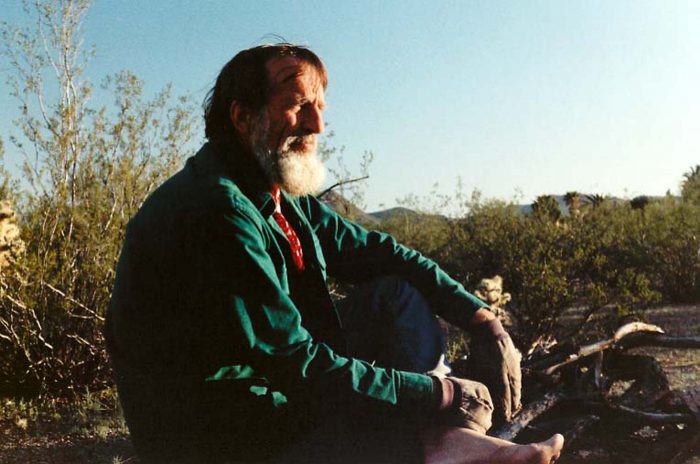
— His reform formula for the National Parks has proved to be prescient: No cars in the National Parks; No new roads in the National Parks; And put the rangers back to work on their legs rather than in government vehicles. The ranting demands of Abbey 1968 are being implemented in many of our National Parks today.
— If you think he was hard on Moab back then (i.e., 1968), imagine what Abbey would say now? (Well, at least it’s easier to get a drink these days.) I’ve been to Moab a dozen times in my life, at about four-year intervals. Each time I visit, there is more to deplore. I accept that Americans have wildly different views of what constitutes recreational pleasure, and to some extent, to each their own, of course, but the sheer number of off- and back-road outfitters and vehicles along the long main street is depressing. Main drag, he’d call it. One bookstore, 30 ATV rental outfits. I’m with Abbey that this is no way to explore the sublime. To let the whine of the internal combustion engine hover anywhere near the confluence of the Green and the Colorado rivers — one of the most stunning landscapes on earth — is travesty. For Abbey, the internal combustion engine is just another form of wilderness extraction, different in degree but not in kind from other varieties of industrialization — uranium mines, gold mines, gravel pits, ridgeline subdivisions, helicopter excursions over the canyons, dirt bike trails (and off-trail violations). The noise pollution alone is appalling.
If he had world enough and time, I’m guessing Abbey would have poured sugar or salt into the gas tanks of every ATV in Grand County, Utah. “Thermite, dynamite, sugar in the gas tank. Falling billboards, falling in flames. D.A.C. — direct action committee. What else can we do?” In Abbey’s view, an alpha male roaring and gear-grinding around on what’s left of the American outback in an ATV is as great a plague as a uranium miner or an absentee land developer. Wheeled locusts. Abbey told us we cannot experience the Southwest through the window of a car or pickup. You have to walk the land, sleep on it, gaze up at the stars, call back to the coyotes.
In his remarkable journals — misnamed *Confessions of a Barbarian* — Abbey declares that walking is the only forward transport that we don’t do sitting down: horses, cars, airplanes, snowmobiles, etc. He credits only those outback experiences we earn with our feet. He is surely right, except for the disabled, and I’m guessing he would say something snarky about that demographic, too.
## **The Continuity of Abbey and Henry David Thoreau**
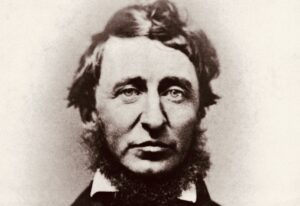Henry David Thoreau
Abbey’s fascinating relationship with Henry David Thoreau is everywhere apparent in his writings. *Desert Solitaire* is full of direct and indirect references to Thoreau, particularly *Walden*. His famous essay, *Down the River with Henry Thoreau* (1980), is a sustained tribute to the master, with significant reservations. Abbey loved the anarchist in Thoreau, the philosopher of civil disobedience, and the hints of monkey wrenching in *A Week on the Concord and Merrimack Rivers*. He loved the pond-side smart-aleck who wrote such sentences as, “as if you could kill time without injuring eternity,” and “we do not ride on the railroad, it rides upon us,” and “thus men will lie on their backs, talking about the fall of man, and never make an effort to get up.”
But Abbey could not forgive Thoreau for being a celibate. He calls him a “poet-spinster” and makes it clear that he can never fully endorse an ascetic. It seems that Abbey was not so much contemptuous as simply mystified by Thoreau’s (or anyone’s) apparent sexlessness. He wondered how any vigorous man could not want to get laid as often as possible. Abbey was not alone (including in his trailer at Arches) nearly as much as he wants us to believe. He wrote his first wife, Rita (and their child), out of the final draft of *Desert Solitaire*, though she was with him there a good deal of the time, as were other … er visitors. Thoreau meant it when he wrote, “I never found the companion that was so companionable as solitude.” Abbey sometimes tried to imagine himself as a man of solitude, but his lust for life kept creeping in. In *Down the River with Henry Thoreau*, he ridicules the great chapter on “Higher Laws” in *Walden*. Chastity, vegetarianism, distaste for the animal in us, abstention from carnal appetites, an aversion to sensuality — in Abbey’s mind, what’s left? He accused Thoreau of puritanical sermonizing and made it clear he would have admired him more if he had welcomed overnight guests at his cabin.
## **We Need Him Now More Than Ever**
In some respects, we need Edward Abbey now more than ever. It’s not just the glut of automobiles that are degrading the very idea of a National Park, but the RVs of our time bear almost no resemblance to the modest trailers he found so annoying 60 years ago. The $300,000-$500,000 coach RV is more luxurious than 95% of all the dwellings on earth. It is like dragging your dream house into the wilderness for the weekend. All you have to do is hook up your own sewer line! With more prosperous visitors come carping demands for greater amenities. And less time under the stars. Imagine what he would say about French drip coffee and frothing gizmos in the wilderness. Or solar cell phone chargers so we can check the stock market.
The author of *The Monkey Wrench Gang* would be delighted to see Glen Canyon Dam and Lake Powell fail. Not by way of environmental terrorism, though he fantasized about that, but because there is not enough water in the Colorado River system to keep both Lake Powell and Lake Mead viable, given climate change and the historic overallocation of the river’s flow. I’ve talked with water masters, irrigationists, and others who know the Colorado River watershed intimately. They agree that it might now actually make sense, hydrologically, to pluck Glen Canyon Dam down, or just let the water pass through the dam on its way to Lake Mead. Abbey would unquestionably regard the breaching of Glen Canyon Dam as one of the greatest achievements of the environmental movement, the fulfillment of the dream of hundreds of thousands, if not millions, of wilderness lovers worldwide. To the conservation community, it would represent the healing of the greatest development wound of the 20th century, David Brower’s sacrifice of Glen Canyon (The Place No One Knew) to save Dinosaur National Monument in 1956.
## **The Fierce Urgency of Now**
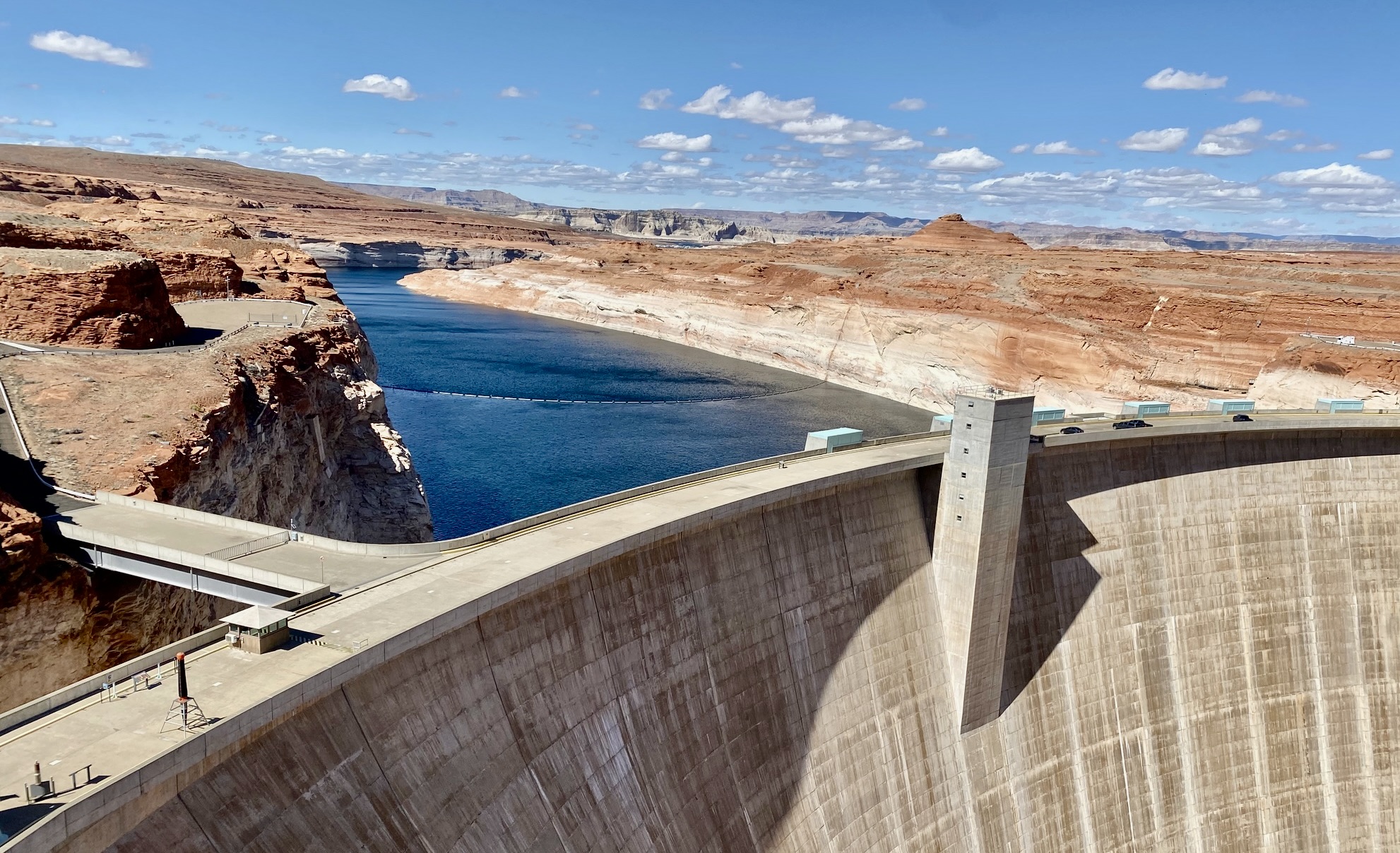Glen Canyon Dam holds back the Colorado River creating Lake Powell in Page, Arizona. The whitewashed sandstone visible on the right of the canyon wall, often called the lake’s “bathtub ring”, indicates the dropping water level in the reservoir. (Photo by Dennis Mckenna)
Perhaps most significantly, Abbey would be ringing the town bell like Thoreau in Concord, and manning the rhetorical barricades as the current administration (inspired by Project 2025) attempts to privatize some of the public lands, scale back a number of National Monuments, and permit much greater resource extraction on BLM, National Forest, National Grasslands, and even National Monuments lands, while squinting too at the National Parks. He distrusted government at least as much as corporate capitalism. In *Down the River*, he wrote, “The government I call my own … is remote, anonymous, inscrutable, unresponsive … a colossal bureaucracy which has lost all sense of purpose except its own perpetuation.” And he wrote, “The modern American lives in a society which is not free … a society dominated by technology, bureaucracy, and centralized power … a society in which the individual has been reduced to a unit in a mass, a statistic, a cog in a machine.”
Where is that cog when we need it most?
For Thoreau, the issues were slavery and the Mexican War. For Abbey, it was saving what’s left of wild America from “improvement.” In his famous essay *On Civil Disobedience*, Thoreau wrote, “Let your life be a counter-friction to stop the machine.” That was essentially Edward Abbey’s mission statement, and along the way, he wrote more than 20 books, floated all the wild rivers of the American West, loved scores of women, and threw down his sleeping bag under the stars in desert places as often as possible.
---
## ***Discover more on these topics at Listening to America***
[Texas](https://ltamerica.org/tag/texas/ "4 topics")[North Dakota](https://ltamerica.org/tag/north-dakota/ "53 topics")[Wisconsin](https://ltamerica.org/tag/wisconsin/ "0 topics")[Virginia](https://ltamerica.org/tag/virginia/ "7 topics")[Oregon](https://ltamerica.org/tag/oregon/ "4 topics")[Podcast](https://ltamerica.org/tag/podcast/ "1 topics")[New Mexico](https://ltamerica.org/tag/new-mexico/ "3 topics")[Poetry](https://ltamerica.org/tag/poetry/ "1 topics")[Republics](https://ltamerica.org/tag/republics/ "1 topics")[Road Trips](https://ltamerica.org/tag/road-trips/ "18 topics")[New York](https://ltamerica.org/tag/new-york/ "8 topics")[Video](https://ltamerica.org/tag/video/ "51 topics")[Oppenheim](https://ltamerica.org/tag/oppenheim/ "0 topics")[Rivers](https://ltamerica.org/tag/rivers/ "3 topics")[Oppenheimer](https://ltamerica.org/tag/oppenheimer/ "1 topics")[The Constitution](https://ltamerica.org/tag/the-constitution/ "1 topics")[North Carolina](https://ltamerica.org/tag/north-carolina/ "3 topics")[Pennsylvania](https://ltamerica.org/tag/pennsylvania/ "1 topics")[Ohio](https://ltamerica.org/tag/ohio/ "2 topics")[north daktoa](https://ltamerica.org/tag/north-daktoa/ "0 topics")[Walden](https://ltamerica.org/tag/walden/ "1 topics")[Theodore Roosevelt](https://ltamerica.org/tag/theodore-roosevelt/ "16 topics")[South Carolina](https://ltamerica.org/tag/south-carolina/ "1 topics")[paintings](https://ltamerica.org/tag/paintings/ "0 topics")[Tennessee](https://ltamerica.org/tag/tennessee/ "1 topics")[Steinbeck Travels](https://ltamerica.org/tag/steinbeck-travels/ "75 topics")[Wyoming](https://ltamerica.org/tag/wyoming/ "4 topics")[Sports](https://ltamerica.org/tag/sports/ "2 topics")[Reading](https://ltamerica.org/tag/reading/ "1 topics")[Space Exploration](https://ltamerica.org/tag/space-exploration/ "8 topics")[Travel](https://ltamerica.org/tag/travel/ "1 topics")[State Parks](https://ltamerica.org/tag/state-parks/ "2 topics")[Thomas Jefferson](https://ltamerica.org/tag/thomas-jefferson/ "34 topics")[Thoreau](https://ltamerica.org/tag/thoreau/ "5 topics")[New England](https://ltamerica.org/tag/new-england/ "1 topics")[Utah](https://ltamerica.org/tag/utah/ "11 topics")[Vermont](https://ltamerica.org/tag/vermont/ "1 topics")[U.S. Constitution](https://ltamerica.org/tag/u-s-constitution/ "1 topics")[South Dakota](https://ltamerica.org/tag/south-dakota/ "16 topics")[Republic](https://ltamerica.org/tag/republic/ "0 topics")[William Shirer](https://ltamerica.org/tag/william-shirer/ "1 topics")[U.S. Presidents](https://ltamerica.org/tag/u-s-presidents/ "71 topics")[Rome](https://ltamerica.org/tag/rome/ "1 topics")[Washington](https://ltamerica.org/tag/washington/ "2 topics")[Water in the West](https://ltamerica.org/tag/water-in-the-west/ "24 topics")
**Categories:** Features
**Tags:** America at 250, Books, National Parks, Native Americans
---
### [The Torch Has Been Passed — A New Era of Space Exploration ](https://ltamerica.org/the-torch-has-been-passed-a-new-era-of-space-exploration/)
**Published:** April 13, 2026
**Author:** Clay Jenkinson
**Excerpt:** It felt like old times on Friday night as we all watched the splashdown of the Artemis II Moon mission.
**Content:**
## It felt like old times on Friday night as we all watched the splashdown of the Artemis II moon mission.
NASA’s Orion spacecraft under parachutes as it lands in the Pacific Ocean off the coast of California, Friday, April 10, 2026. (Photo: (NASA/Joel Kowsky)
The four-member Artemis II crew plunked into the Pacific Ocean near San Diego at 8:07 p.m. EDT after a flight of nine days, one hour, 32 minutes, and 15 seconds. They traveled a total of 695,081 miles and ventured farther from the surface of the Earth (by a few tens of thousands of miles) than any previous humans. They got to spend some time gazing at the elusive backside of the moon, something you and I will never see through our own eyes.
I don’t bite my fingernails, but I was essentially doing just that during the last hour of the flight. I was as fidgety as Huck Finn on the raft when he and Jim are looking for the mouth of the Ohio River. On CNN Friday evening, engineers sounded slightly anxious about the heat shield that had to endure temperatures of up to 5,000 degrees Fahrenheit, half the temperature at the surface of the Sun. The shield on the unmanned Artemis I mission (November–December 2022) had cracked, and a large number of pieces had fallen off, a potentially fatal problem in a manned mission.
Astronaut Frank Borman, command pilot for the Gemini-7. (Photo NASA)
So many things can go wrong on a space mission, especially at launch and at re-entry. When NASA decided in 1968 to leap ahead of several planned Earth-orbit flights and send Apollo 8 all the way to the moon, mission commander Frank Borman’s wife, Susan, drove over to mission control to demand that Director of Flight Operations Christopher Kraft level with her. What was the likelihood that she would ever see her husband again? “Was Frank coming back this time?” she asked. Don’t hold back. Kraft’s response: his survival chances were no more than 50-50. That actually calmed Susan Borman a little because finally someone was willing to tell her the truth. Still, she was so worried that she actually wrote Frank’s eulogy at the kitchen table during the mission.
Note: Frank Borman (Gemini 7, 1965, and Apollo 8, 1968) died quietly in Billings, Montana, on November 7, 2023, at the age of 95. Susan and Frank Borman were married for 71 years.
I also remember hearing, back in Saturn V days, that the rocket alone had 5.6 million parts and the Apollo command module another 2 million. If only 1% of those parts failed (5,600 parts for the rocket alone), the mission could end in disaster. When Alan Shepard was sitting atop his Redstone rocket in Mercury 7 before becoming America’s first man in space (sub-orbital) on May 5, 1961, he said, “I looked at the instrument panel and realized that every one of these parts was supplied by the lowest bidder on a government contract.”
Gallows humor is one of humanity’s best coping mechanisms. Benjamin Franklin, August 2, 1776: “We must, indeed, all hang together, or most assuredly we shall all hang separately.” Dr. Johnson, hearing that a preacher on death row was writing the best sermons of his career, said, “Depend upon it, sir, when a man knows he is to be hanged in a fortnight, it concentrates his mind wonderfully.” The Gravedigger in *Hamlet*: “Who builds stronger than a mason, a shipwright, or a carpenter?” Answer, “a grave-maker. The houses he makes last till doomsday.”
NASA astronauts Victor Glover, Artemis II pilot, left, and Christina Koch, Artemis II mission specialist, sitting on a Navy MH-60 Seahawk on the flight deck of USS *John P. Murtha* after they and fellow crew mates were recovered from Orion spacecraft after splashdown. (Photo: (NASA/Bill Ingalls)
#### A Space Geek All My Life
As a space geek all of my life, I fretted in several directions Friday night as I sat on the edge of my chair in my home in Bismarck. My concerns:
– Would they get the exceedingly unforgiving re-entry angle wrong and skip off into space like a frisbee, forever? Experts say it’s like threading a needle from miles away while hurtling at 25,000 mph.
– Would the heat shield crack and disintegrate? NASA has had trouble with heat shields from the beginning. John Glenn’s orbital flight in 1962 was shortened when a warning light indicated that the heat shield on his Mercury capsule may have come loose. False alarm. It was damaged heat shield panels that caused the Space Shuttle Columbia to break up over Texas on February 1, 2003, killing all seven astronauts. NASA engineers feared the Apollo 13 heat shield might have been damaged. It was fine. The problem is that it is impossible to see (and assess) the heat shield at re-entry from either the crew capsule or Earth.
– Would the parachutes fail to open, and the astronauts hit the water at 300-plus miles per hour? It is quite possible that the seven Space Shuttle Challenger astronauts survived the rocket explosion 73 seconds after liftoff on January 28, 1986, but died a short time later when their crew cabin slammed into the Atlantic at 200-plus miles per hour. Cosmonaut Vladimir Komarov died instantly when his Soyuz 1 spacecraft crashed near today’s Kazakhstan border on April 24, 1967, after his parachutes failed to deploy properly.
– Would the capsule sink like Gus Grissom’s Liberty Bell 7, July 21, 1961, after his splashdown in the Atlantic? To this day, nobody is quite sure whether the hatch of his Mercury capsule blew off prematurely all by itself or whether Gus Grissom, in the words of Tom Wolfe, “screwed the pooch,” i.e., panicked and blew the hatch prematurely. The capsule flooded and sank. Grissom was lucky not to have drowned when ocean water spilled into his heavy flight suit, and the recovery team seemed more interested in saving the capsule than securing the astronaut. The capsule sank to the bottom of the Atlantic, 16,000 feet down. Thirty-eight years later, in 1999, a team funded by the Discovery Channel located the sunken capsule and winched it up. It’s now on permanent display at the Kansas Cosmosphere and Space Center in Hutchinson, Kansas.
– Would the hull have cracked from the re-entry pressures, and the astronauts have died from asphyxiation? This happened to three Russian Soyuz 11 cosmonauts on June 30, 1971, when a pressurization equalization valve opened prematurely. During the splashdown of the Apollo-Soyuz international goodwill flight on July 24, 1975, toxic fumes (nitrogen tetroxide and hydrazine) were accidentally sucked into the Apollo cabin. The crew was overcome. They had to be hospitalized in Hawaii for two weeks with chemically induced pneumonia before they recovered enough to go home.
What can go wrong, indeed?
At least 21 men and women have died on U.S. and Russian space missions since 1960. Most of them were Americans. It would not have been particularly surprising if three or four times that number had been killed on the approximately 320 crewed U.S. and Russian space missions so far. During the 10 days of the Artemis II mission, I pondered again and again what the effect would be if the crew members died on the journey. That it would be another blow to American prestige is certain. Whether it would have shut down our space exploration agenda is unclear. One of the most persistent space mantras — that robots can do anything humans can do in space at a fraction of the cost, and do it better and without risk of death — would have been revived.
The Artemis II astronauts did not land on the moon. That will be the work of Artemis III, a couple of years from now, if all goes well. The Artemis II crew did not even make one complete orbit of the moon. They emulated the Apollo 8 and Apollo 13 missions in using the moon’s mass and gravity to “slingshot” the capsule back to Earth. I remember the first time I learned about the “slingshot effect.” I was a freshman in high school, reading Arthur C. Clarke’s *2001: A Space Odyssey*, where the crew uses the massive gravity of Jupiter to slingshot and accelerate the spacecraft (Discovery One) toward the end of the solar system and beyond. The more you think about gravity, the more interesting and stupefying it gets.
Except for the Space Shuttle missions, in which the aircraft landed on an elongated runway either in California or Florida like a boxcar with stub wings, all American astronauts in NASA capsules have splashed down into the ocean. Scores of U.S. astronauts returning in Soyuz capsules from the International Space Station have landed on land in Kazakhstan in the last three decades. During the Mercury-Gemini-Apollo era, the emphasis was on the spacecraft and their crews, not on the U.S. Navy recovery efforts. But on Friday night, I was amazed at how dangerous and complicated the recovery was: four helicopters dangerously winching the crew up to safety one by one, capsule collars, Navy frogmen battling the wake turbulence from helicopter rotors, floating porch rafts, chemical detection monitors, health care professionals, camera crews, and the USS *John P. Murtha* only 2,000 yards away.
Artemis II crew members recovered from Orion spacecraft and loaded onto an inflatable raft, called the front porch, following splashdown in the Pacific Ocean near San Diego. (Photo NASA/James Blair)
Once the capsule splashed down, the Navy recovery crew had to perform some difficult tasks in choppy water. First, approach the capsule with sniffing equipment to ensure there are no toxic gases that might endanger both the rescue team and the astronauts. Second, conduct a very rudimentary health check on the three men and one woman inside. Third, open the hatch so that the crew could get some fresh air and feel less trapped inside the capsule. Recovery teams from Apollo 10 and Apollo 11 were overwhelmed by the stench they encountered after opening the hatch. They called the aroma “recoil-inducing.” Think of four individuals locked in a panel van for 10 days with exceedingly rudimentary toilet facilities and nowhere to put the human waste. Fourth, attach the flotation collars and egress porch. Fifth, carefully extricate the astronauts. Sixth, more preliminary health checks. Seventh, winch them one by one to helicopters overhead. Eighth, deposit the astronauts safely on the undulating deck of the USS Murtha.
The U.S. Navy deserves enormous praise for its flawless labors off the coast of San Diego.
The four astronauts crawled out of the bobbing capsule with a little help from their friends. They were wobbly from the muscle atrophy of weightlessness, from 10 days of wild assaults on their inner ears (sudden up, zero gravity, and then suddenly 4 gs or more during the descent), and probably from some degree of seasickness.
I was so enthralled by all of this that I watched the Houston news conference that began shortly after the astronauts were safely ensconced in medical bays on the USS *Murtha*. NASA Associate Administrator Amit Kshatriya spoke first. He made the American people aware of how many tens of thousands of dedicated individuals (and hundreds of corporations, teams, and nonprofit organizations) it takes to send men and women to the moon. Kshatriya made it clear that it would be a terrible mistake to land humans on the moon again, to prove we can do it and do it first, and then walk away the way we did after the Apollo program. This time we are going to the moon and staying, he said.
The Artemis II crew embrace during a return event, Saturday, Apr. 11, 2026, at Ellington Field in Houston. (Photo NASA/John Kraus)
Then Lori Glaze spoke. She is the acting associate administrator for the Exploration Systems Development Mission Directorate (ESDMD) at NASA. Her speech was shorter and less “heroic” than Administrator Kshatriya’s, but it was still fabulous. She paid proper respect to the “standing on the shoulders of giants” trope (Shepard, Glenn, Armstrong, Aldrin, etc.), but then she explained that that was then and this is now, more than 50 years later, and that we should not see the Artemis missions (and what follows) as a continuation of the First Space Age. This is a brand new, breathtaking era of exploration. She said, “This is OUR Moonshot!” That couldn’t have been more perfect. Translation: you Boomers have reason to feel pride in what you did back then (JFK, “not because it’s easy but because it’s hard,” Walter Cronkite at the Cape, Armstrong’s “one small step …”), and we all honor your pioneering work. But people born after 1972 didn’t experience those great moments of American history in person. Until now, we have had to live that experience vicariously. But now we get our own space age. You had yours; it’s OUR Moonshot now.
Time for the gerontocracy to shuffle off to Buffalo, “exit stage left.” That’s what John Kennedy said to a different gerontocracy in his famous Inaugural Address on January 20, 1961:
> Let the word go forth from this time and place, to friend and foe alike, that the torch has been passed to a new generation of Americans — born in this century, tempered by war, disciplined by a hard and bitter peace, proud of our ancient heritage.
Onward and upward: to infinity and beyond.
---
## ***Discover more on these topics at Listening to America***
[Ohio](https://ltamerica.org/tag/ohio/ "2 topics")[South Carolina](https://ltamerica.org/tag/south-carolina/ "1 topics")[paintings](https://ltamerica.org/tag/paintings/ "0 topics")[Wyoming](https://ltamerica.org/tag/wyoming/ "4 topics")[Texas](https://ltamerica.org/tag/texas/ "4 topics")[New York](https://ltamerica.org/tag/new-york/ "8 topics")[Wisconsin](https://ltamerica.org/tag/wisconsin/ "0 topics")[Oppenheim](https://ltamerica.org/tag/oppenheim/ "0 topics")[Theodore Roosevelt](https://ltamerica.org/tag/theodore-roosevelt/ "16 topics")[Sports](https://ltamerica.org/tag/sports/ "2 topics")[Rome](https://ltamerica.org/tag/rome/ "1 topics")[Oregon](https://ltamerica.org/tag/oregon/ "4 topics")[U.S. Constitution](https://ltamerica.org/tag/u-s-constitution/ "1 topics")[Vermont](https://ltamerica.org/tag/vermont/ "1 topics")[Poetry](https://ltamerica.org/tag/poetry/ "1 topics")[The Constitution](https://ltamerica.org/tag/the-constitution/ "1 topics")[Water in the West](https://ltamerica.org/tag/water-in-the-west/ "24 topics")[Reading](https://ltamerica.org/tag/reading/ "1 topics")[Steinbeck Travels](https://ltamerica.org/tag/steinbeck-travels/ "75 topics")[Republic](https://ltamerica.org/tag/republic/ "0 topics")[Pennsylvania](https://ltamerica.org/tag/pennsylvania/ "1 topics")[Tennessee](https://ltamerica.org/tag/tennessee/ "1 topics")[Utah](https://ltamerica.org/tag/utah/ "11 topics")[Thoreau](https://ltamerica.org/tag/thoreau/ "5 topics")[New Mexico](https://ltamerica.org/tag/new-mexico/ "3 topics")[New England](https://ltamerica.org/tag/new-england/ "1 topics")[William Shirer](https://ltamerica.org/tag/william-shirer/ "1 topics")[Podcast](https://ltamerica.org/tag/podcast/ "1 topics")[Virginia](https://ltamerica.org/tag/virginia/ "7 topics")[U.S. Presidents](https://ltamerica.org/tag/u-s-presidents/ "71 topics")[South Dakota](https://ltamerica.org/tag/south-dakota/ "16 topics")[Republics](https://ltamerica.org/tag/republics/ "1 topics")[North Carolina](https://ltamerica.org/tag/north-carolina/ "3 topics")[Walden](https://ltamerica.org/tag/walden/ "1 topics")[State Parks](https://ltamerica.org/tag/state-parks/ "2 topics")[Video](https://ltamerica.org/tag/video/ "51 topics")[Road Trips](https://ltamerica.org/tag/road-trips/ "18 topics")[north daktoa](https://ltamerica.org/tag/north-daktoa/ "0 topics")[Travel](https://ltamerica.org/tag/travel/ "1 topics")[Space Exploration](https://ltamerica.org/tag/space-exploration/ "8 topics")[Washington](https://ltamerica.org/tag/washington/ "2 topics")[Oppenheimer](https://ltamerica.org/tag/oppenheimer/ "1 topics")[Thomas Jefferson](https://ltamerica.org/tag/thomas-jefferson/ "34 topics")[Rivers](https://ltamerica.org/tag/rivers/ "3 topics")[North Dakota](https://ltamerica.org/tag/north-dakota/ "53 topics")
**Categories:** Dispatches from the Road
**Tags:** America at 250, Space Exploration
---
### [What Might Theodore Roosevelt Say About America’s Current War in Iran?](https://ltamerica.org/what-might-theodore-roosevelt-say-about-americas-current-war-in-iran/)
**Published:** April 13, 2026
**Author:** Clay Jenkinson
**Excerpt:** As a longtime student of President Theodore Roosevelt, historian Clay Jenkinson considers how TR might have approached current events in Iran.
**Content:**
## As a longtime student of President Theodore Roosevelt, historian Clay Jenkinson considers how TR might have approached current events in Iran.
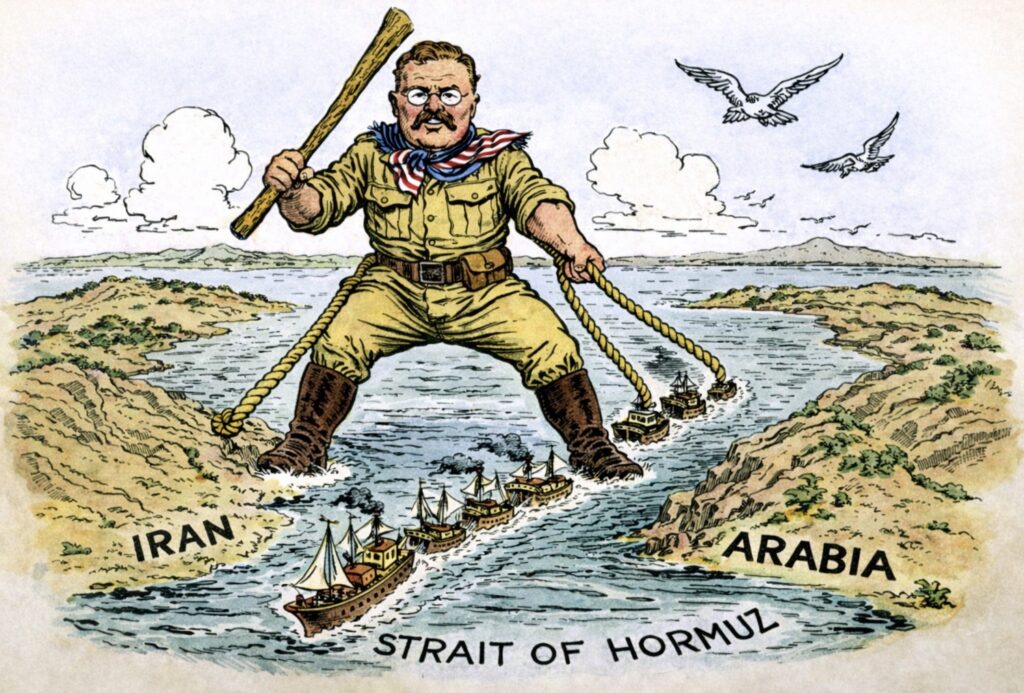TR and his big stick. (Clay Jenkinson and Chat GPT)
Somebody asked me the other day how Theodore Roosevelt would have handled the war against Iran. I should point out first that although Roosevelt has a well-deserved reputation as someone friendly to war — “All great nations have been warring nations,” “I should welcome almost any war, for I think this country needs one” — the 26th president of the United States presided over seven years and 171 days of peace (mostly — there was the continuing Philippines occupation). And in 1906, he became the first American president to win the Nobel Peace Prize — for helping to bring about a settlement in the Russo-Japanese War.
Roosevelt was what by today’s standards would be regarded as a committed constitutionalist. He did not violate the Constitution, though he stretched his executive authority as far as he dared without crossing the line of the rule of law. He would not have been afraid to attack an enemy without the formal congressional approval required by the Constitution, if the circumstances had necessitated it, if the threat were truly imminent. But he would first have talked things over at length with his closest friends in Washington, including such key senators as Henry Cabot Lodge and Nelson Aldrich. Roosevelt made a habit of listening to his trusted advisers. He would have sought full congressional authorization in any protracted war, even though he did not have much respect for most members of Congress. He spoke of the Senate as “a shrill concatenation of impotent shrieks.” He said privately, “I could run this country very much better if I did not have to bother with Congress.” And when William McKinley hesitated to declare war on Spain in 1898, TR reportedly said McKinley had “the backbone of a chocolate éclair.” That’s certainly what he meant, and the remark is quintessentially Rooseveltian.
If Roosevelt decided to take America to war — the gravest thing a president must ever do — he would have used the bully pulpit to full effect. Nobody was better at this than Roosevelt, who invented the term “bully pulpit.” He would have given speeches around the country (traveling by train) explaining Iran’s criminal behavior, its open threats to the existence of another sovereign nation, and its sponsorship of terrorism all over the region. He would have given four or five 90-minute speeches in different cities, each outlining a different perspective on the threat from Iran. He would have urged young American men to enlist in the military or form volunteer “Rough Rider” groups to do some of the work of the war, including at the front. He would have urged Congress to ensure the War Department (as it still was) had all the munitions and funds it needed to prosecute the war successfully.
Roosevelt had one truly great advantage over almost any subsequent president, including Dwight David Eisenhower. He had read deeply in the history of warfare: Caesar, Alexander, Napoleon, Horatio Nelson, Xerxes, John Paul Jones. As a child, he used to stage famous battles in the family’s house on 28 East 20th Street in New York, deploying battalions of miniature metal soldiers and maps. Probably no president has had a deeper knowledge of the history of warfare — including what can (and often will) go wrong. And remember, his first serious book was *The Naval War of 1812*, a book he wrote entirely himself (are you listening, Theodore Sorensen?), one that was still used at the U.S. Naval Academy deep into the 20th century.
## **A Voracious Student of History**
Roosevelt read a book a day his entire life. He had a near-photographic memory. He wrote approximately 40 books, depending on how you count, and all without ghostwriters.
After spending many hard-listening hours with his closest advisers, including his remarkable sister Bamie, and after consulting with key members of key committees in Congress, Roosevelt would next have made an address to the people of the United States. Unfortunately, that was not fully possible in his time, because television was decades away and radio was just in its infancy, not quite ready for anything like a national broadcast. He would therefore have delivered speeches that were printed in full in the nation’s newspapers, with photographs, and he would have traveled the country as much as pressing war-related business allowed.
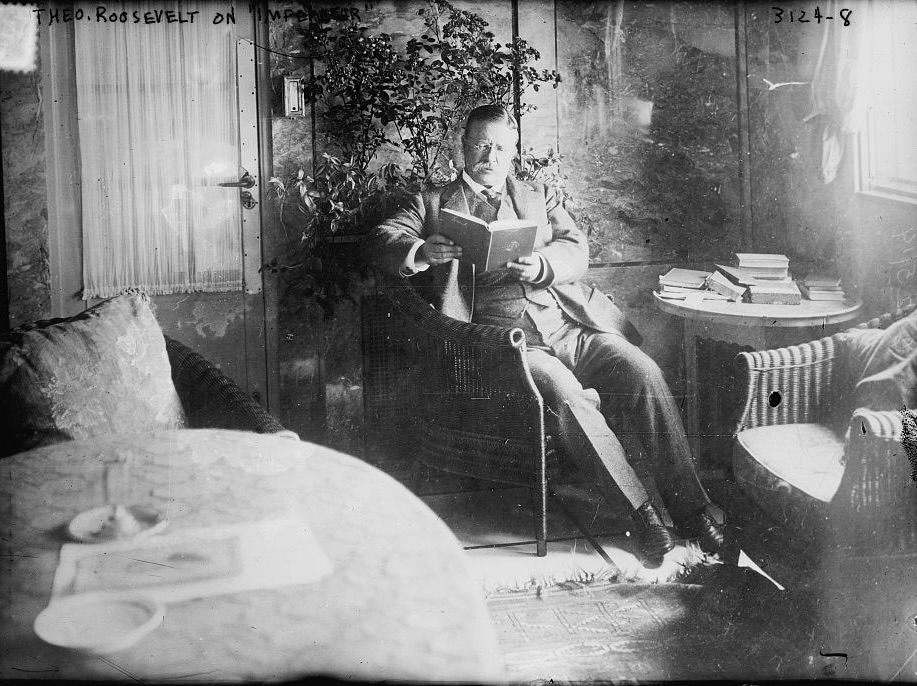Theodore Roosevelt was a voracious reader throughout his life.
Roosevelt probably would have lamented that, as president, he could not gather up another harum-scarum group of Rough Riders to lead heroically against the enemy. Iran is not Cuba, and 2026 is not 1898.
## **What Might TR Have Said?**
Here is approximately what his address to the people of the United States would have been if he could have spoken to the entire nation from his White House office:
> My fellow citizens. I interrupt your lives because we are in the unhappy position of needing to go to war against the Islamic Republic of Iran. I want to begin by acknowledging that Iran has a glorious history dating back at least to 550 BCE. The Persians created one of the great civilizations in history. We have no quarrel with the 93 million people of Iran. We commiserate with them for the tyranny under which they are forced to live by Islamic fundamentalists who do not represent the will of most Iranians and are not committed to the rule of law as we are. If we had the power to do so we would come in and set things right for the beleaguered Iranian people, but my study of history, particularly of the many 19th-century Middle East debacles of the British Empire, indicates that nothing short of a wholesale invasion of Iran and an occupation of five to 25 years would secure for the Iranian people the kinds of rights and security we enjoy in the United States. That is not in our national interest. I heartily agree with Secretary of State John Quincy Adams’ Fourth of July speech in 1821. America, he said, “goes not abroad, in search of monsters to destroy.” The Iranian people are responsible for their own destiny, as we are for ours.
>
> If there were any alternative to this war, believe me, I would be pursuing it. I now again extend my hand to the government of Iran to say we would prefer to be at the negotiating table. We believe our demands are reasonable and that it would be in Iran’s best interest to meet them. We will only wage war if we absolutely have to. But it is decidedly in our national interest, and it is my responsibility to protect American lives and American interests all over the globe. If Iran behaved like the other responsible nations of the world, we would never think of waging war against it. Unfortunately, Iran’s record of killing American soldiers, bombing our ships, incarcerating journalists and other Americans, torturing many of them, and attacking America’s friends in the region using tactics that violate all of the nobility and honor of a just war, forces me to take decisive action.
>
> I want to assure you that I have consulted the books in my library about the long, sad history of the Middle East and particularly of Persia; books about the differences between Shia and Sunni Muslims, books about the sea-borne traffic lanes of the region; and, particularly, the history of British and French incursions into the region.
>
> In addition, I have consulted every member of Congress who could help me make this difficult decision, including some who disagree strenuously with me. I would never attempt to carry the United States into war unilaterally.
>
> There will be casualties. That is the fundamental fact of war. Some of our soldiers will be injured or killed. Good planning and adequate equipment will keep these casualties to a minimum, but I do not want to pretend that we can wage war against another well-armed nation without loss of life and battlefield setbacks. I ask for your support. It is the American nation that will be waging war with Iran, not just the soldiers and sailors who go into battle on our behalf. They need your support. I need your support. I hope you will let your elected representatives know your views on this conflict, even if you disagree with my decisions. A robust national conversation about something of this magnitude can only be healthy and helpful.
>
> In closing, let me pledge that I will be fully transparent with you about the prosecution of the war. I will provide frequent, candid updates on our military operations, including those that do not succeed. I will provide the appropriate congressional committees with every document they may need, so long as their release does not pose an imminent threat to our national security.
>
> I will try to end this war as quickly as possible, but not before the job is done, and return to the real business of America — making sure everyone of our citizens gets a square deal irrespective of their social status, religion, nation of origin, or ethnicity; and finding ways to conserve our rich but increasingly depleted natural resources for future generations.
>
> Thank you for your attention.
>
> Theodore Roosevelt was arguably the best-read and best intellectually prepared president in American history, and that includes our three polymaths, Thomas Jefferson, John Adams, and John Quincy Adams. He would have known that the Middle East has been the grave of empires. He would have been better informed about the full sweep of Iranian history, including recent Iranian history, than any of his advisers. He would have engaged in long pre-war conversations with his most trusted British friends — Cecil Spring-Rice and Edward Grey — and with the French ambassador, Jules Jusserand.
Roosevelt would never have accepted any two-minute morning updates about the status of the war. In fact, he would have worn out his top military advisers by asking a blistering range of questions every day. As a big-navy advocate and a student of Alfred Thayer Mahan’s 1890 *The Influence of Sea Power upon History*, his first concern would have been how to secure the Strait of Hormuz. He would have been able to give his advisers a full lecture on the Strait — its strategic location, the most vulnerable choke points, the nature of Iranian military installations along the Strait, the global GDP it represents, and Iran’s previous attempts to close it to shipping.
In private, Roosevelt would have urged his military to “hit the line hard,” but his knowledge of Persian history would have made it impossible for him to threaten to bomb Iran back to the Stone Age. His public statements would have been stern and bellicose, but characterized by presidential decorum and a deep understanding of the facts on the ground.
We have dramatically better tools of war today than in TR’s time, but our leadership is dramatically more impoverished in geopolitical understanding and foresight.
---
## ***Discover more on these topics at Listening to America***
[The Constitution](https://ltamerica.org/tag/the-constitution/ "1 topics")[Tennessee](https://ltamerica.org/tag/tennessee/ "1 topics")[Rivers](https://ltamerica.org/tag/rivers/ "3 topics")[paintings](https://ltamerica.org/tag/paintings/ "0 topics")[Video](https://ltamerica.org/tag/video/ "51 topics")[Thomas Jefferson](https://ltamerica.org/tag/thomas-jefferson/ "34 topics")[north daktoa](https://ltamerica.org/tag/north-daktoa/ "0 topics")[Oppenheimer](https://ltamerica.org/tag/oppenheimer/ "1 topics")[Wisconsin](https://ltamerica.org/tag/wisconsin/ "0 topics")[Steinbeck Travels](https://ltamerica.org/tag/steinbeck-travels/ "75 topics")[Pennsylvania](https://ltamerica.org/tag/pennsylvania/ "1 topics")[William Shirer](https://ltamerica.org/tag/william-shirer/ "1 topics")[New England](https://ltamerica.org/tag/new-england/ "1 topics")[New York](https://ltamerica.org/tag/new-york/ "8 topics")[Poetry](https://ltamerica.org/tag/poetry/ "1 topics")[Travel](https://ltamerica.org/tag/travel/ "1 topics")[Oppenheim](https://ltamerica.org/tag/oppenheim/ "0 topics")[Ohio](https://ltamerica.org/tag/ohio/ "2 topics")[Rome](https://ltamerica.org/tag/rome/ "1 topics")[North Carolina](https://ltamerica.org/tag/north-carolina/ "3 topics")[Washington](https://ltamerica.org/tag/washington/ "2 topics")[Reading](https://ltamerica.org/tag/reading/ "1 topics")[Podcast](https://ltamerica.org/tag/podcast/ "1 topics")[Virginia](https://ltamerica.org/tag/virginia/ "7 topics")[Sports](https://ltamerica.org/tag/sports/ "2 topics")[Walden](https://ltamerica.org/tag/walden/ "1 topics")[Theodore Roosevelt](https://ltamerica.org/tag/theodore-roosevelt/ "16 topics")[State Parks](https://ltamerica.org/tag/state-parks/ "2 topics")[Vermont](https://ltamerica.org/tag/vermont/ "1 topics")[South Carolina](https://ltamerica.org/tag/south-carolina/ "1 topics")[Oregon](https://ltamerica.org/tag/oregon/ "4 topics")[South Dakota](https://ltamerica.org/tag/south-dakota/ "16 topics")[Texas](https://ltamerica.org/tag/texas/ "4 topics")[Space Exploration](https://ltamerica.org/tag/space-exploration/ "8 topics")[Republic](https://ltamerica.org/tag/republic/ "0 topics")[North Dakota](https://ltamerica.org/tag/north-dakota/ "53 topics")[New Mexico](https://ltamerica.org/tag/new-mexico/ "3 topics")[Wyoming](https://ltamerica.org/tag/wyoming/ "4 topics")[Thoreau](https://ltamerica.org/tag/thoreau/ "5 topics")[Republics](https://ltamerica.org/tag/republics/ "1 topics")[Road Trips](https://ltamerica.org/tag/road-trips/ "18 topics")[U.S. Presidents](https://ltamerica.org/tag/u-s-presidents/ "71 topics")[U.S. Constitution](https://ltamerica.org/tag/u-s-constitution/ "1 topics")[Utah](https://ltamerica.org/tag/utah/ "11 topics")[Water in the West](https://ltamerica.org/tag/water-in-the-west/ "24 topics")
**Categories:** Features
**Tags:** America at 250, Theodore Roosevelt, U.S. Presidents
---
### [Artemis II Reflections: To the Moon and Beyond](https://ltamerica.org/artemis-ii-reflections-to-the-moon-and-beyond/)
**Published:** April 7, 2026
**Author:** Clay Jenkinson
**Excerpt:** It felt like 1965. I sat looking at a small screen TV last week as Artemis II was launched on America’s first moon mission in over 50 years.
**Content:**
## It felt like 1965. I sat looking at a small screen TV last week as Artemis II was launched on America’s first moon mission in over 50 years.
Liftoff of the SLS rocket carrying NASA’s Artemis II mission to the moon. April 1, 2026. (NASA)
**April 1, 2026**: It was no April Fools. There was turmoil in the pit of my stomach. So many things can go wrong on top of a rocket filled with volatile fuels, before, during, and after liftoff. The American list is sobering.
— The Gemini 8 crisis on March 16, 1966, when Neil Armstrong and David Scott’s orbiting capsule spun out of control for several minutes before Armstrong found a very risky way to stop the spin. NASA scientists concluded that a few more minutes of that washer-dryer spin cycle would have killed the astronauts, even if the torque had not pulled their capsule apart. Problem: stuck valve.
— The Apollo I launchpad fire on January 27, 1967, killed Ed White, Gus Grissom, and Roger Chafee. Problem: a spark from worn electrical wiring and the cabin pressurized with pure oxygen.
— The Space Shuttle Challenger disaster occurred 73 seconds after liftoff on January 28, 1986, killing seven astronauts, including the schoolteacher, Christa McAuliffe. Problem: an inelastic O-ring on the launch rocket.
— The Space Shuttle Columbia disaster on February 1, 2003, that killed seven astronauts 16 minutes before landing. Problem: foam insulation broke off a booster during liftoff, damaging a shuttle heat shield panel, which allowed superheated plasma to work its way into the shuttle’s wing during reentry.
Seventeen astronauts.
It would have been such a setback if something terrible had gone wrong on April 1. A setback for space travel. A setback for America. *Another* setback for America. We’re about at tilt.
When the countdown was stopped at T-minus 10 minutes, I said out loud, “Well, that’s it for today.” I was about to turn off the television. But they “worked the problem” (as NASA lingo has it) and launched Artemis II within the designated safe launch window. Even then, every time one segment of the rocket array was jettisoned and another stage fired, the resulting exhaust plume reminded me of the Challenger, and I held my breath.
Hurray for public-private partnerships. We have entered a new Space Age, less dramatic than the first, more routinized, with infinitely better computer power, and vastly improved video resolution. China aims to land on the moon around 2030. India, Japan, Russia, and the European Space Agency are all vaguely planning moon missions. I no longer feel we have to get there first (again), but I would be appalled if we gave up the quest altogether, as I was during the decade when U.S. astronauts could only reach the International Space Station atop Russian Soyuz spacecraft (2011-2020).
The four Artemis II astronauts will not orbit the moon. They will circle most of the way around and use the moon’s gravity to slingshot them back to Earth. They will not land on the lunar surface. The first planned landing mission will be Artemis IV, currently scheduled for 2028. But as they say on the Weather Channel, “Expect delays.”
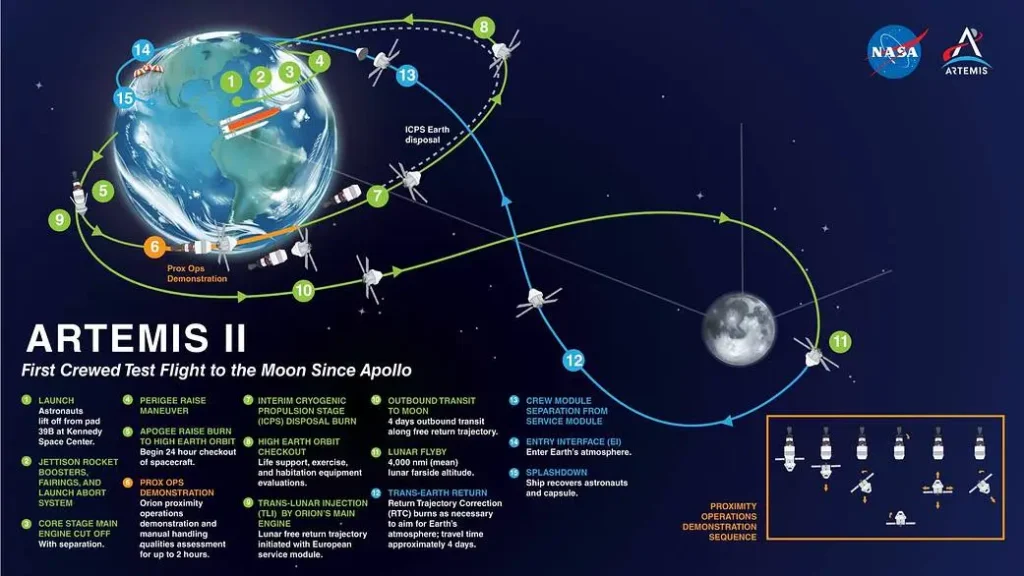Trajectory for Artemis II, NASA’s first flight with crew aboard SLS, Orion to pave the way for long-term return to the moon, missions to Mars. (NASA)
## **Ho Hum**
A friend of mine teaches the humanities at a prestigious college in New York state. The day after the launch, he was eager to talk with his students about the implications of this phase of space travel. What he discovered as he exulted in front of the class was that his students could not have been less interested in the Artemis II flight. Most had not watched the launch. Some had not even watched the inevitable highlight reels available on every social media platform. “Did you mock-shame them?” I asked. “No, I only mock-shame them for more important things,” he replied.
I checked the stats online. ChatGPT declared (Saturday, April 4) that Artemis II has not yet been launched (! — beware of early AI certitudes), but Google informed me that at least 10 million people worldwide watched the liftoff, and more than 400,000 were in Florida to observe the launch in person. Sound impressive? An estimated 650 million people worldwide watched the Apollo 11 moon landing on July 20, 1969, approximately one-fifth of the world’s population and 94% of American households.
As Hamlet senior puts it, “what a falling off was there.” I may have been holding my breath, but most of the American public was otherwise engaged.
One of the most interesting (and somewhat disquieting) phenomena of the last 50 years is the profound fragmentation of America. Dis-integration. This fissuring of America (and the American consciousness) means that we do not hold, see, do, or celebrate much in common anymore. The Super Bowl is perhaps our one remaining national ritual, with approximately 125 million viewers across the U.S., 100 million pounds of avocados purchased for guacamole, 12.5 million pizza deliveries, 325 million gallons of beer, and who knows how much legal (or illegal) marijuana is ingested. The Fourth of July still has something of a common feel across America (fireworks, brats, beer), and the Academy Awards get about 17 million viewers (down from 55 million in 1998, the year of *Titanic*). Long ago, we all used to watch *The Wizard of Oz* on the same Sunday in the spring, at the holidays, *A Charlie Brown Christmas*, and at Easter, *The Robe*. Those days are long gone. We used to fret about how much time young people spent watching television. Now we don’t. They are spending even more time on their devices.
When I was a child, we had only two (soon three) television networks, and you had to get up to change the channel. When something big happened in America or the world, we all tuned in to CBS Evening News to hear what Walter Cronkite would have to say about it, or North Dakota’s gift to the history of journalism, Eric Sevareid.
Now we are siloed into our echo chambers: FOX, MSNOW, NPR, PBS, Newsmax. Who has the depth, grace, wit, and insight of Eric Sevareid in our media today? Who can unite us in a moment of national triumph or national disgrace?
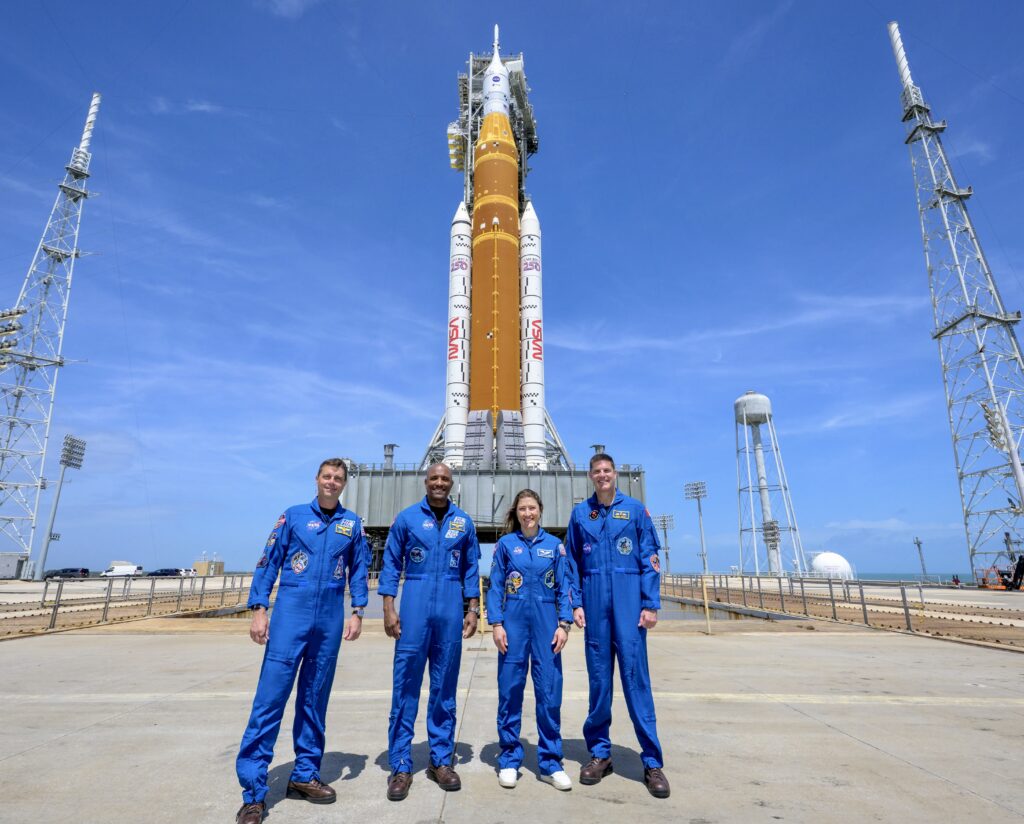From left, NASA astronauts Reid Wiseman, Artemis II commander; Victor Glover, Artemis II pilot; Christina Koch, Artemis II mission specialist; and CSA (Canadian Space Agency) astronaut Jeremy Hansen, Artemis II mission specialist. NASA/Bill Ingalls
## **Unrepentant**
I’m an unrepentant lifelong [space program junkie](https://ltamerica.org/my-life-as-a-space-junkie/). When I was a boy, I followed the Mercury, Gemini, and Apollo programs with obsessive zeal. I knew the names of all the astronauts. I knew throw weights, trajectories, types of rockets, and all the “firsts” (orbit, spacewalk, rendezvous, docking, woman in space), which, early on, went mostly to the Soviets. I was 100% certain that we must win the space race for national pride and global geopolitical dominance. We must prove the superiority of capitalism and freedom over godless communism! We go to the moon not because it is easy, but because it is hard! On launch days, our teachers would wheel in a clumsy metal rack with a small black and white television on top, and we’d watch the launch in grainy, low-resolution, with Walter Cronkite at his desk beyond the launch area intoning, “There has been another delay. These brave men, tucked into their specially designed seats high above Cape Canaveral, wait for the moment …”
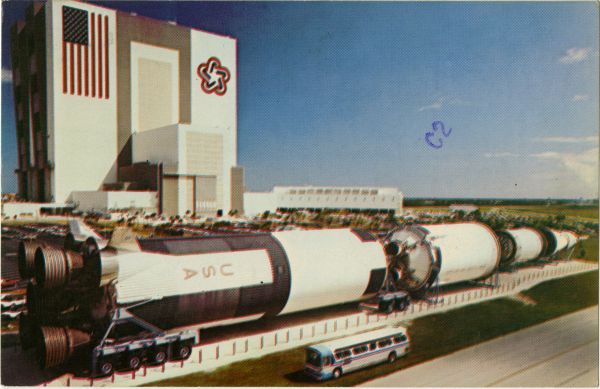Saturn V rocket on display at the Kennedy Space Center, circa 1982. (NASA)
As we got closer to our New Frontier goal, I don’t think it’s too strong to say I worshipped the Saturn V rocket, Werner von Braun’s masterpiece. (He was a former serious Nazi. His motto was “We shoot for the moon,” but one of our best comedians altered it to, “We shoot for the moon and sometimes hit London.) Without von Braun’s rocket, we could not have ventured to the moon. The great Saturn V was as high as a 36-story building, with 7.5 million pounds of thrust. By the time it “slipped the surly bonds of earth,” the Saturn V could only deliver 107,000 pounds of stuff (a technical term) to the surface of the moon: the Lunar Excursion Module (LEM), the scientific instruments to be deployed, the U.S. flag (of course), two men in bulky spacesuits, a bit of food, cameras, and enough fuel to blast back up to the orbiting Command Module. Oh, and Buzz Aldrin’s communion kit. He was the first person ever to take communion on another celestial orb.
Twice I have visited the Kennedy Space Center in Florida, and both times I have walked the entire length of a standing Saturn V, filled with awe and wonder as I ran my hands over its smooth surface. When humans focus their energies, there is little they cannot accomplish. (Maybe we can save the Constitution.) The very idea of rocketing men and women to the moon is still flabbergasting after all this time. Among other things, it is a triumph of Newtonian mechanics. The Earth is rotating on its axis and orbiting the sun. The moon is orbiting the Earth. Launch a payload the size of a minivan from the rotating Earth 250,000 miles across the vacuum of space to another orb and (in the case of Apollo 12, November 1969) land it within 600 feet of its target. That’s like being on a fast-moving Merry-Go-Round and shooting a rifle at a pronghorn antelope running at 250 miles per hour, a mile away.
## **Then and Now**
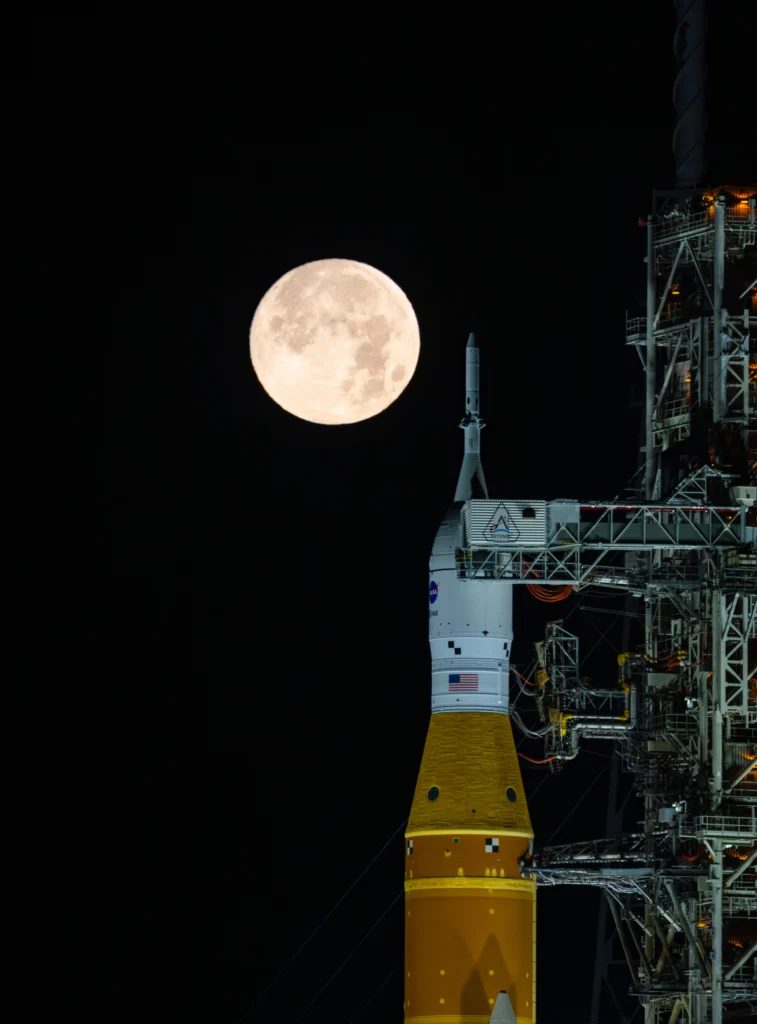A full moon is seen shining over NASA’s SLS (Space Launch System) and Orion spacecraft. (NASA)
The Artemis II rocket bears the somewhat boring name of Space Launch System (SLS). It has a whopping 8.8 million pounds of thrust (1.3 million more than the Saturn V), even though it is 40 feet shorter than its more famous predecessor. During the countdown on April 1, I learned that four of the SLS rocket’s engines are recycled from the Space Shuttle program, and that the two external solid-fuel boosters are based on Shuttle program design.
What could go wrong?
The new astronauts are undoubtedly extraordinary people, but I doubt that most Americans (including me) could name all four without looking them up. I do know these excellent facts, however: the first woman to the moon (Christina Koch); the first person of color to the moon (Victor Glover); the first Canadian to the moon (Jeremy Hansen); and the oldest person to the moon so far (Reid Weisman). I suppose he’ll be known as the Old Man of the moon hereafter.
We have come a long way. In 1961-62, NASA rejected the “Mercury 13” — women who trained just as strenuously as their male Mercury program counterparts. NASA’s logic (shared by John Glenn): astronauts needed to be test pilots, and since women could not be test pilots … And women may not have the “right stuff” to fly in space. Meanwhile, the Soviet Union sent its first woman cosmonaut, [Valentina Tereshkova,](https://en.wikipedia.org/wiki/Valentina_Tereshkova) on a three-day orbital mission on June 16, 1963. America’s first female astronaut in space was Sally Ride in 1983, fully two decades after the godless communists.
## **And So We Soar Into the Future**
Artemis II is expected to splash down on Friday (April 10). I’ll be watching on my big home screen, anxious, expectant, thrilled. No guacamole, no beer. I hope I live to see us send a manned mission to Mars. I’ve been asked if I would go on a Mars mission (as the rare humanities scholar!) if there were no chance of returning to Earth. “In a second, without question, absolutely, where do I sign up?”
## **Further Reading**
My home library has more than 200 books on the history of space travel, beginning with Sputnik 1957. If you are interested in reading more about humans in space, I especially recommend the following:
— Andrew Chaikin. *A Man on the Moon*.
— Norman Mailer. *Of a Fire on the Moon*.
— Thomas Jones. *The Complete Idiot’s Guide to NASA.*
— Tom Wolfe. *The Right Stuff*.
— Eugen Reichi. *The Soviet Space Program.*
— Margot Lee Shetterly and Robin Miles. *Hidden Figures: The American Dream and the Untold Story of the Black Women Mathematicians Who Helped Win the Space Race.*
---
## ***Discover more on these topics at Listening to America***
[Walden](https://ltamerica.org/tag/walden/ "1 topics")[U.S. Constitution](https://ltamerica.org/tag/u-s-constitution/ "1 topics")[Tennessee](https://ltamerica.org/tag/tennessee/ "1 topics")[Thoreau](https://ltamerica.org/tag/thoreau/ "5 topics")[Travel](https://ltamerica.org/tag/travel/ "1 topics")[Reading](https://ltamerica.org/tag/reading/ "1 topics")[Thomas Jefferson](https://ltamerica.org/tag/thomas-jefferson/ "34 topics")[Wyoming](https://ltamerica.org/tag/wyoming/ "4 topics")[Oppenheimer](https://ltamerica.org/tag/oppenheimer/ "1 topics")[State Parks](https://ltamerica.org/tag/state-parks/ "2 topics")[William Shirer](https://ltamerica.org/tag/william-shirer/ "1 topics")[north daktoa](https://ltamerica.org/tag/north-daktoa/ "0 topics")[New York](https://ltamerica.org/tag/new-york/ "8 topics")[Theodore Roosevelt](https://ltamerica.org/tag/theodore-roosevelt/ "16 topics")[Vermont](https://ltamerica.org/tag/vermont/ "1 topics")[North Dakota](https://ltamerica.org/tag/north-dakota/ "53 topics")[Rivers](https://ltamerica.org/tag/rivers/ "3 topics")[Texas](https://ltamerica.org/tag/texas/ "4 topics")[Republic](https://ltamerica.org/tag/republic/ "0 topics")[Oregon](https://ltamerica.org/tag/oregon/ "4 topics")[Virginia](https://ltamerica.org/tag/virginia/ "7 topics")[The Constitution](https://ltamerica.org/tag/the-constitution/ "1 topics")[Road Trips](https://ltamerica.org/tag/road-trips/ "18 topics")[South Dakota](https://ltamerica.org/tag/south-dakota/ "16 topics")[New England](https://ltamerica.org/tag/new-england/ "1 topics")[Podcast](https://ltamerica.org/tag/podcast/ "1 topics")[Wisconsin](https://ltamerica.org/tag/wisconsin/ "0 topics")[paintings](https://ltamerica.org/tag/paintings/ "0 topics")[Utah](https://ltamerica.org/tag/utah/ "11 topics")[Space Exploration](https://ltamerica.org/tag/space-exploration/ "8 topics")[U.S. Presidents](https://ltamerica.org/tag/u-s-presidents/ "71 topics")[Water in the West](https://ltamerica.org/tag/water-in-the-west/ "24 topics")[New Mexico](https://ltamerica.org/tag/new-mexico/ "3 topics")[Rome](https://ltamerica.org/tag/rome/ "1 topics")[Ohio](https://ltamerica.org/tag/ohio/ "2 topics")[Sports](https://ltamerica.org/tag/sports/ "2 topics")[Washington](https://ltamerica.org/tag/washington/ "2 topics")[Pennsylvania](https://ltamerica.org/tag/pennsylvania/ "1 topics")[Republics](https://ltamerica.org/tag/republics/ "1 topics")[South Carolina](https://ltamerica.org/tag/south-carolina/ "1 topics")[North Carolina](https://ltamerica.org/tag/north-carolina/ "3 topics")[Video](https://ltamerica.org/tag/video/ "51 topics")[Oppenheim](https://ltamerica.org/tag/oppenheim/ "0 topics")[Steinbeck Travels](https://ltamerica.org/tag/steinbeck-travels/ "75 topics")[Poetry](https://ltamerica.org/tag/poetry/ "1 topics")
**Categories:** Dispatches from the Road
**Tags:** America at 250, Space Exploration
---
### [10 Insights Into Henry David Thoreau](https://ltamerica.org/10-insights-into-henry-david-thoreau/)
**Published:** March 31, 2026
**Author:** Editor
**Content:**

## With the new Ken Burns documentary on Henry David Thoreau [premiering](https://www.pbs.org/about/about-pbs/blogs/news/henry-david-thoreau-to-air-on-pbs-march-2026/) at the end of March, Clay will be sharing 10 essential insights into one of America’s most original thinkers.
## **Introduction**
## **\#1 To Live Deliberately**
## **\#2 Obscure Passages**
## **\#3 Thoreau and the Laundry Controversy**
## **\#4 What Did He Mean by Quiet Desperation?**
## **\#5 Determining Our Grossest Groceries**
## **\#6 Why Didn’t He Stay Out There?**
## **\#7 The Railroad**
## **\#8 What Did He Learn?**
**Categories:** Uncategorized
**Tags:** Books, Thoreau, Video
---
### [A Constitutional Quiz in 7 Questions](https://ltamerica.org/a-constitutional-quiz-in-7-questions/)
**Published:** March 31, 2026
**Author:** Clay Jenkinson
**Excerpt:** What is the Health of the U.S. Constitution and what can we do about it?
**Content:**
## What is the health of the U.S. Constitution and what can we do about it?
(Sutterstock)
In the lectures I have been giving around the country on the U.S. Constitution, I now begin with a quiz. I ask for a show of hands for each of these propositions:
1\. The Constitution is fine, no adjustments needed.
2\. Maybe a few clarifications and adjustments.
3\. We need a major revision of the Constitution.
4\. We need to tear it up and begin again.
5\. A constitutional convention in this media and political climate would be insane.
6\. We need to lower the amendment bar to make amendment easier.
7\. We should probably have a new constitutional convention, but what if the next constitution is worse?
Fifteen years ago most people I met in my travels would have voted for #1 or #2 (we’re pretty much ok), and almost all the audiences I quizzed were quick to declare that #4 (tear it up) would be a terrible mistake, partly owing to #5 (we just aren’t up to it), and #7, (we aren’t up to it!). Back then, people did not think much about the amendment process (#6), mostly because they did not think there was that much that needed to be amended.
Sometimes, when I would tell audiences that Thomas Jefferson believed we should tear up the Constitution every 19 years or so (once per generation), people would laugh with bewilderment or even derision. Some guffawed. Almost all of the legal scholars I met assured me that Jefferson could not have meant it and, if he did, he was a nincompoop.
The audiences I have addressed over the years have reckoned that whatever is wrong with America is not the Constitution. In other words, they believed that the routine legislative process would be the proper remedy for whatever ails us. And they were certain that if we undertook a new constitutional convention, lobbyists and the media would ruin the process. Point taken.
## **The Engulfing Crisis**
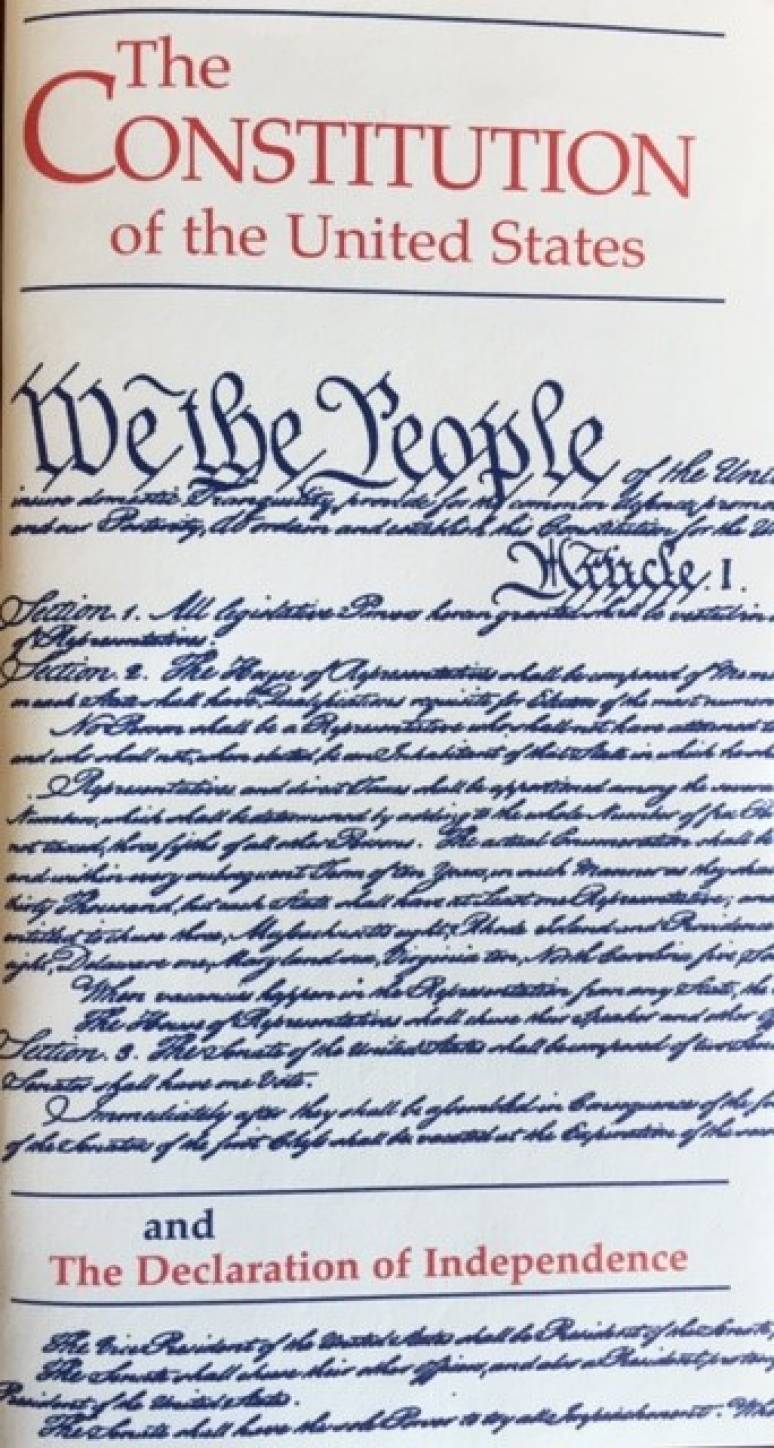
Things have changed dramatically. In the past four years, I have taught several courses on the U.S. Constitution (to full enrollment). But in my most recent online course — **Vulnerabilities and Flashpoints in the U.S. Constitution** — the participants surprised me with how intensely engaged they have become. Anxious. Even alarmed. The people I now meet, in person and online, are certain that something has gone terribly wrong in America. They know that Donald Trump has something to do with it, but they know, too, that the current crisis is deeper and wider than this self-identified disruptor-in-chief. Mr. Trump is as much a symptom as the cause of the calamity.
Congress has been paralyzed for several decades, and it is only getting worse. We are now accustomed to partial or full government shutdowns. Think about this. The most powerful and consequential nation on earth periodically shuts down its government for no good reason. Not to take a sabbatical, but because the two parties cannot agree to pay our bills. In the current crisis, one party wants to fund the Department of Homeland Security with all of its recent corruptions and human rights abuses, and the other wants to force reforms in the behavior of Border Security agents and in Immigration and Customs Enforcement (ICE). The partial government shutdown has affected the lives of millions of innocent airline passengers and, more particularly, has forced approximately 50,000 innocent Transportation Security Administration (TSA) agents to work without pay for more than a month. TSA agents are now apparently being paid with non-appropriated funds, a kind of funny money “solution” typical of our broken system.
For several decades, Congress has failed to pass actual budgets. We operate by continuing resolutions (just extending the current funding levels) or by gigantic (in my opinion, obscene) omnibus bills like last year’s One Big Beautiful Bill, which will add $3 trillion to the already colossal national debt, while cutting an estimated 4.46 trillion in tax revenue.
For decades, Congress has been unable or unwilling to hammer out a desperately needed comprehensive immigration reform package. For decades, Congress has been unable or unwilling to pass a comprehensive national health care reform bill that would ensure that all Americans have minimally equal access to health care — something every other major nation accomplished more than half a century ago.
## **The List Goes On**
The national debt has now reached $38.7 trillion ($200,000 per taxpayer!). The interest on the debt costs $970 billion per year and is rising; the interest alone eats just under 20% of annual U.S. government expenditures. The Democrats are afraid to raise the taxes that would be needed to balance the budget and begin to bring down the national debt, and the Republicans invariably cut taxes a: because it is popular; b: because they argue that cutting taxes feeds the economy and if the economy flourishes there will be more tax revenue; and c: because they say the right thing to do is cut federal expenditures not raise taxes. And so the fiscal crisis deepens, and the interest payments on the debt consume almost a trillion dollars per year that could be used to improve life for the American people.
Something is rotten in the state of Denmark.
Now add in the corruption of the pardons clause of the Constitution (Article II, Section 2), intended by the Founders to show mercy to those who have been unfairly convicted or have suffered enough, but now used mostly for cronies, corrupt campaign contributors, and ardent political supporters, irrespective of their crimes. And the emoluments clause (Article I, Section 9), designed by the Founders to prevent foreign influence on American policy, is now a dead letter given the recent colossal foreign “gifts” (i.e., bribes) to the president, such as Qatar’s May 2025 “gift” of a $400 million Boeing 747-8 luxury jet. Do you think Qatar did this because they love America?
Just two more breakdowns of the Constitution for the moment. First, the impeachment clauses (Article I, Section 2, and Article II, Section 4). We have had four presidential impeachments in American history (Andrew Johnson, William Jefferson Clinton, Donald Trump, and Donald Trump), none of which was successful. In his own time, Thomas Jefferson called impeachment (of Supreme Court justices) “a mere scarecrow.” He was right. We have had 47 presidents of the United States. Surely at least one of them deserved to be impeached and convicted by the Senate.
And finally, the war powers clause (Article I, Section 8). The Founders were so determined to kennel the dogs of war that they declared emphatically that wars have to begin in Congress because war is the gravest thing a nation ever does, and because it is the people who fight our wars and it is the people who pay for them (see my [earlier essay](https://ltamerica.org/a-republic-if-you-can-keep-it-war-and-america-in-iran/) ). Beginning with President Truman (June 1950), presidents of both parties have increasingly taken the United States into war without full Congressional authorization. This is a fundamental violation of the Constitution, one of the three things the Founders most wanted to prevent. The current war (adding between $1 billion and $2 billion to the national debt per day) was undertaken by President Trump without bothering to go to Congress (or our closest allies). Nor did President Trump go on national television the way all previous presidents have done to explain the crisis to the American people and make the case for war.
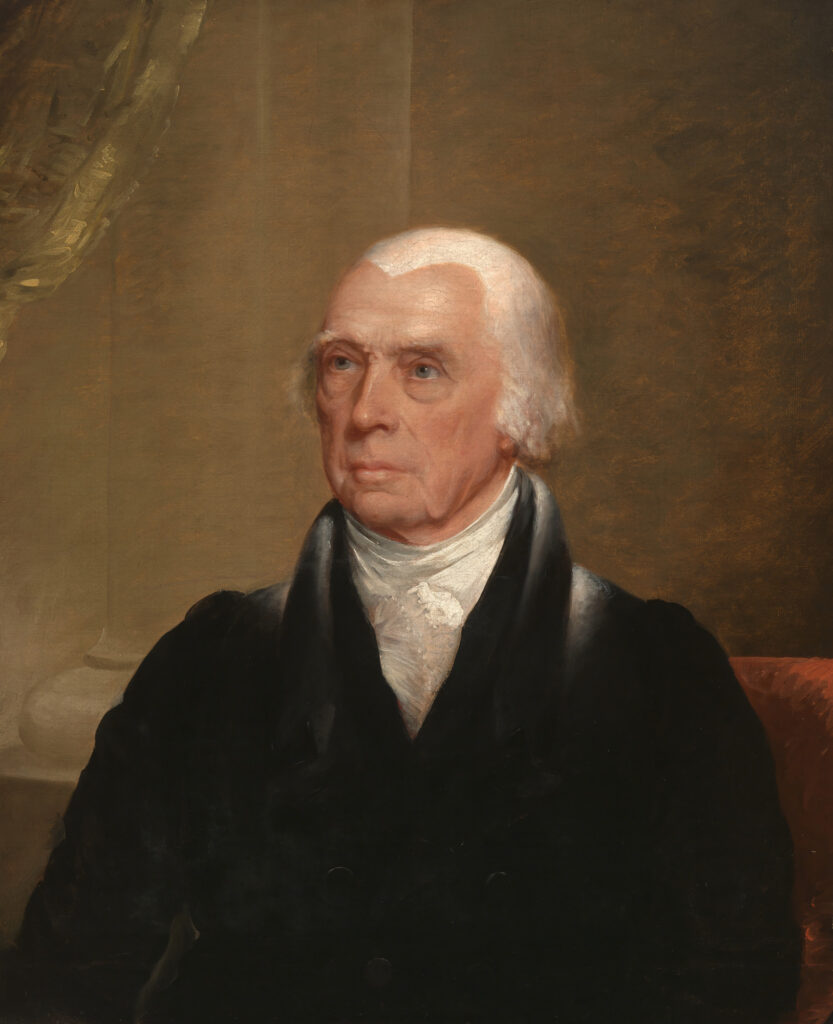James Madison by Chester Harding.
The fundamental principle of our republic — checks and balances, separation of powers — has broken down almost entirely. Congress has had three chances in the last month to pass a war powers resolution and has failed each time. Even if that war powers resolution endorsed the president’s actions as Commander in Chief, it would have included provisions requiring regular briefings with Congress, full transparency, perhaps a limit on sending ground forces to Iran, or a determination of whether a military draft was necessary. But without a war powers resolution, Congress has abdicated its constitutional duty and passively “granted” the president a blank check to hurl mayhem wherever he pleases. George Washington, Dwight D. Eisenhower, and Ulysses S. Grant are rolling over in their graves, not to mention the Father of the Constitution, James Madison.
## **What Are Our Options?**
The United States Constitution is broken. It no longer directs or constrains the government of the United States. If we care about this (I do passionately, and the participants in my courses and lectures now agree), we have only a few options.
— We can throw the rascals out in November. We could retire all 435 members of the House of Representatives on November 3, 2026 (on the 250th birthday of our broken republic), and 33 members of the Senate. That would get their attention!
— We can undertake more pointless impeachments.
— We can call for a constitutional convention. Unfortunately, that requires 34 of the 50 states to pass enabling legislation. Good luck with that.
— Or we can amend the Constitution clause by clause. But here’s the problem with that. Amending the Constitution requires a two-thirds majority in both houses of Congress and then ratification by three-quarters of the states. The last amendment was ratified in 1992, 34 years ago, one of just 27 since the Constitution was ratified in 1787, by people in wigs and buckled shoes living in a three-mile-per-hour world.
I’ve interviewed half a dozen constitutional scholars in the last couple of years. Not one of them thinks it possible that we will have a constitutional convention any time in the foreseeable future (but is the future any longer foreseeable?), and not one of them believes we have the national will or consensus even to pass an amendment to fix any one of our problems.
If this is not a whopping constitutional crisis, what is? To paraphrase a popular vulgarism, we are flummoxed. It’s our 250th birthday. Now is the time to step back and ask ourselves how well we are doing as the world’s most consequential republic, and what it will take to turn this foundering Titanic around.
In Vail, Colorado, the other night, not a hotbed of progressive liberalism, a large majority of the 150 people in attendance (some via internet) voted for #3 (we need major revisions) and #6 (lower the amendment bar). But since we cannot pass an amendment of any sort, how do we pass an amendment to lower the amendment bar? Catch-22, or is it Catch-250?
***P.S. — You can join my next online courses on the Constitution. One on [how a Constitutional Convention might work](https://ltamerica.org/2026-online-class-the-logistics-of-a-constitutional-convention/) and another on [rewriting the Constitution for a more perfect Union](https://ltamerica.org/2026-online-class-rewriting-the-constitution-a-more-perfect-union/).***
---
## ***Discover more on these topics at Listening to America***
[Tennessee](https://ltamerica.org/tag/tennessee/ "1 topics")[U.S. Presidents](https://ltamerica.org/tag/u-s-presidents/ "71 topics")[Utah](https://ltamerica.org/tag/utah/ "11 topics")[Texas](https://ltamerica.org/tag/texas/ "4 topics")[Republics](https://ltamerica.org/tag/republics/ "1 topics")[Vermont](https://ltamerica.org/tag/vermont/ "1 topics")[Reading](https://ltamerica.org/tag/reading/ "1 topics")[Oregon](https://ltamerica.org/tag/oregon/ "4 topics")[Thomas Jefferson](https://ltamerica.org/tag/thomas-jefferson/ "34 topics")[Poetry](https://ltamerica.org/tag/poetry/ "1 topics")[Washington](https://ltamerica.org/tag/washington/ "2 topics")[Republic](https://ltamerica.org/tag/republic/ "0 topics")[north daktoa](https://ltamerica.org/tag/north-daktoa/ "0 topics")[Water in the West](https://ltamerica.org/tag/water-in-the-west/ "24 topics")[Wisconsin](https://ltamerica.org/tag/wisconsin/ "0 topics")[The Constitution](https://ltamerica.org/tag/the-constitution/ "1 topics")[Steinbeck Travels](https://ltamerica.org/tag/steinbeck-travels/ "75 topics")[New York](https://ltamerica.org/tag/new-york/ "8 topics")[Theodore Roosevelt](https://ltamerica.org/tag/theodore-roosevelt/ "16 topics")[Wyoming](https://ltamerica.org/tag/wyoming/ "4 topics")[Walden](https://ltamerica.org/tag/walden/ "1 topics")[North Dakota](https://ltamerica.org/tag/north-dakota/ "53 topics")[Thoreau](https://ltamerica.org/tag/thoreau/ "5 topics")[State Parks](https://ltamerica.org/tag/state-parks/ "2 topics")[Rivers](https://ltamerica.org/tag/rivers/ "3 topics")[Oppenheim](https://ltamerica.org/tag/oppenheim/ "0 topics")[South Carolina](https://ltamerica.org/tag/south-carolina/ "1 topics")[Oppenheimer](https://ltamerica.org/tag/oppenheimer/ "1 topics")[Road Trips](https://ltamerica.org/tag/road-trips/ "18 topics")[paintings](https://ltamerica.org/tag/paintings/ "0 topics")[U.S. Constitution](https://ltamerica.org/tag/u-s-constitution/ "1 topics")[New Mexico](https://ltamerica.org/tag/new-mexico/ "3 topics")[Travel](https://ltamerica.org/tag/travel/ "1 topics")[New England](https://ltamerica.org/tag/new-england/ "1 topics")[Podcast](https://ltamerica.org/tag/podcast/ "1 topics")[Space Exploration](https://ltamerica.org/tag/space-exploration/ "8 topics")[Video](https://ltamerica.org/tag/video/ "51 topics")[North Carolina](https://ltamerica.org/tag/north-carolina/ "3 topics")[Virginia](https://ltamerica.org/tag/virginia/ "7 topics")[Rome](https://ltamerica.org/tag/rome/ "1 topics")[Ohio](https://ltamerica.org/tag/ohio/ "2 topics")[William Shirer](https://ltamerica.org/tag/william-shirer/ "1 topics")[Sports](https://ltamerica.org/tag/sports/ "2 topics")[Pennsylvania](https://ltamerica.org/tag/pennsylvania/ "1 topics")[South Dakota](https://ltamerica.org/tag/south-dakota/ "16 topics")
**Categories:** Features
**Tags:** America at 250, U.S. Constitution, U.S. Presidents
---
### [A Lament for the Innocent in Four Acts](https://ltamerica.org/a-lament-for-the-innocent-in-four-acts/)
**Published:** March 24, 2026
**Author:** Clay Jenkinson
**Excerpt:** Why is it that the innocent are always the ones to suffer?
**Content:**
## Why is it that the innocent are always the ones to suffer?
Picasso’s famous 1937 painting *Guernica*.
I’m with Woody Allen, “The meek shall inherit the earth — right in the teeth.” And I’m with Howard Zinn, “There is no flag large enough to cover the shame of killing innocent people.
I did some flying last week. I breezed through TSA at Bismarck International because, well, it’s Bismarck. I know some of the TSA agents in my hometown. “Haven’t seen you for a while,” one man will say if I haven’t been on that punishing dawn flight to Denver for a few weeks. “Where are you headed this time?” This time, I lingered at TSA because there was no one in line behind me. I asked, “How are you all holding up? You’re still working, but I understand that you are not being paid.” “No, nothing,” he said. “And yet you are still showing up for work?” “Yeah, but I don’t know how I am going to make rent.”
## I
There are approximately 50,000 TSA employees in America. The average salary is about $46,000 per year. They’ve been working without pay for more than a month now. That’s about $3,800 in lost (or postponed) wages per agent. So far, only a few hundred have quit in disgust or desperation, but the number calling in sick or just not showing up for work is rising quickly.
TSA agents are perhaps not America’s favorite public employees, but they are good men and women, no different from hairdressers, teachers, insurance brokers, plumbers, or car salesmen. They are not being paid because they are caught in the middle of a partisan squabble in Congress that has absolutely nothing to do with the important work they do to secure American airspace for the 45,000 flights per day (17 million per annum).
The TSA agents are merely collateral damage for a partisan battle in Congress over the behavior of ICE agents and Secretary Kristi Noem’s $200 million television ad campaign to convince illegal aliens to self-deport. It would be interesting to know exactly how many undocumented individuals have left the country after seeing her stern warnings from atop a horse at Mount Rushmore, looking more like Annie Oakley than a public servant of the United States.
Why should the innocent be made to suffer for the dysfunction of Congress? Ask yourself if you are more or less safe in the friendly skies when the men and women who exist to protect us are overworked, underpaid, exhausted, taken for granted, anxious about losing their homes or cars, and treated like political pawns.
Why not pass a simple bill restoring back pay to all TSA agents (and any other federal employees caught in this partisan vice), plus interest? Better yet, how about a law that fines members of Congress $10,000 for every day that they do not come to a compromise and fund the Department of Homeland Security? We’d have compromise legislation within 72 hours.
Members of Congress are paid $174,000 per year. It has been a very long time since any of them had to sit at the kitchen table, wondering how they were going to make rent, pay for groceries, or put athletic shoes on their children. It is clear that our senators and representatives have no idea what basic financial anxiety feels like. Moreover, they enjoy an excellent health care program in which you, the taxpayers, subsidize 72-75% of the costs.
## II
Now think about those 170 Iranian schoolgirls who were doing what school children do all over the world on February 28, when suddenly a Tomahawk missile blew them into gobbets and shattered their families’ lives. One minute, they were learning to read and do math, the next minute they were killed by an errant missile. Out of the blue. On the first day of a war their country didn’t start.
The war against Iran will end someday, but the Iranian people will never forget that the first thing that happened to them was a slaughter of innocents in Minab. If you think they will regard this as an errant missile, an unfortunate accident, think again.
Things like this can happen in war. We all understand that. What I don’t understand is why the United States did not acknowledge what it had done, take full responsibility, express deep regret, pledge that it would investigate the incident rigorously, and make restitution to the families of the slain. That’s what responsible nations do.
Not us. To hear the president of the United States saying on national and international television that the American-made Tomahawk missile was quite likely launched by the Iranians themselves, because (listen to the logic) Tomahawks are “sold and used by other countries” and Iran “also has some Tomahawks,” is morally obscene. For which of us is a statement like this not an appalling failure of basic decency and moral responsibility?
The innocent are made to suffer, and the complicit tell lies.
The incident made me immediately think of Picasso’s magnificent painting *Guernica*, about a German air raid on the Basque town of Guernica on April 26, 1937, during the Spanish Civil War. Picasso’s monumental painting has become an anthem for the suffering of the innocent of the world.
## III
Street in Cuba. (Photograph Bryan David Hall)
Now think of the eleven million people of Cuba. The average Cuban is apolitical, just as the average American and the average British citizen are apolitical. In other words, Cubans mostly just want to live their lives: raise their children, put food on the table, make their way to work, take care of their elderly parents, maybe have a little extra for some recreation.
Last week, the entire electric grid of Cuba broke down in the wake of America’s January 3, 2026, military incursion into Venezuela, which was providing the fuel to keep Cuba’s power plants operating. For the last two years, Cuba has been unable to get the oil and natural gas it needs to keep the power on for its beleaguered citizens. This is not because Cuba is badly governed, but because the United States enforces a blockade designed to bring the country to its knees for the purpose of regime change. There are plenty of entities willing to sell oil to Cuba if the U.S. would just get out of the way.
For more than 60 years, beginning with Presidents Eisenhower and Kennedy, we have had our boot on the neck of the Cuban people. Our hostilities have not brought the desired reforms or regime change. If anything, our aggressions have served to consolidate power in the often corrupt Cuban government and caused the Cuban people to stand by a regime they do not much like because it is under siege from an outside aggressor. What proof is there that the kind of economic pressure we put on other people of the world (Iran, Russia, North Korea, Cuba) makes life so intolerable that they finally rise up and overthrow their governments? Can historians name a single instance where this has worked? In other words, you can, if you work hard enough at it, make life nearly unbearable for the Cuban people without being able to topple their government.
Here, too, the innocent are made to suffer in a grand geopolitical game engineered by foreign policy makers who seem impervious to basic logic and undeniable human pain and deprivation.
I’ve been to Cuba twice in the last three years for extended visits. The Cuban people live so close to the bone that you can only feel deep sadness for their plight. The guests on my cultural tours took scores of small soaps, shampoos, and feminine hygiene products to hand out to those most in need. Fidel Castro (1926-2016) was our chief irritant, and he has been dead for almost 10 years. His brother Raul is 94 years old and has largely stepped down from his role as Fidel’s successor. The existing government of Cuba is not one America can admire, but we all know that we have learned to live with a range of horrific governments worldwide so long as they conform to American demands. We did not seek regime change in Venezuela in January; we merely replaced one leader of a corrupt regime with another more likely to do our bidding. The same plan was surely intended for Iran, and if we invade Cuba, you can expect no more or less.
We should have worked to normalize relations with Cuba long ago. The island is no threat to the United States. If we had followed the policy of “constructive engagement,” which we used successfully with South Africa in the 1980s, we’d probably have neutralized Cuba long ago and possibly brought it more into the community of western hemispheric nations. The Cubans do not hate Americans, but they have plenty to say about our government.
Even if our economic embargo had worked to topple the Castro regime, how could we justify making the lives of 11 million innocent Cubans intolerable for two full generations?
## IV
Finally, we Americans in the homeland are secure from reprisals by the government of Iran — at least so far. What is happening over there is taking place halfway around the planet in a country most Americans would have a hard time placing on a map. Given the pitiful attention span of most of the American people and our characteristic indifference to the world beyond our shores, the war in Iran is asymmetrical in a characteristically American way. Besides December 7, 1941 (Honolulu) and 9-11 (New York and the Pentagon), the United States has been able to carry war elsewhere in its 250-year history without being attacked at home. That’s surely one reason why we permit our government to undertake one ruinous foreign war after the next.
But … with this war, gasoline prices have already spiked dramatically, and more are to come. The choke point of the Strait of Hormuz is going to rock the entire world’s economy, for months if not for years, and average Americans (about 330 million of us) can expect higher food prices, higher housing costs, higher heating bills, higher automobile prices, and much more. People who are already reeling from inflation in the post-Covid years, the spike in health care insurance, and the crippling interest payments on the $40 trillion national debt are going to find their family budgets strained, sometimes to the breaking point. For many Americans, the price spikes are annoying, but we pay them, grumble, and get on with our lives. But for tens of millions of less fortunate Americans, these price spikes create real pain and hardship.
Why should the innocent be made to suffer for a war they didn’t demand or authorize?
I’ve been arguing for the last 16 months that “elections matter.” But I am quite sure that when the American people went to the polls in 2024, they did not vote to authorize this war. Not only did candidate Trump assure us hundreds of times on the campaign trail that he was going to turn away from America’s “endless wars,” but, thanks to the wisdom of the Founding Fathers, we have a constitutional mechanism explicitly designed to prevent this president (or any other) from leading us into war without first making the case to the American people and letting our elected representatives wrestle with all of the possible implications: what can go wrong; hidden costs; the laws of unintended consequences; fiscal responsibility; our relationship with NATO, the European Union, our allies around the world, and the United Nations; the inevitability of collateral damage; our standing in the international community; and our preparedness. Only when a potential war is properly vetted and authorized by the U.S. Congress do We the People — the sovereign — have the opportunity to let our elected representatives know our intentions. The Founders called that “the will of the people.”
The American people have been denied their critically important role in deciding when and under what circumstances we go to war. And yet it is the people who will pay the price in (for some, debilitating) economic strain. If the American people had been clamoring for war against Iran, they would essentially have “voted” for the ensuing economic havoc. But since they were not even informed, much less consulted, they are now the innocent victims of a leader and a government that do not seem to have much respect for the niceties of *democracy* or the U.S. Constitution. They can express their displeasure in November if they wish, but in the meantime, there will be some very hard discussions at the kitchen table about which bills can be paid and which will have to be postponed. And unlike the TSA agents, there will be no financial restitution when this all ends.
When he was asked to comment on the spike in gasoline prices, President Trump said, “I don’t have any concern about it.” And then he added, “the United States is the largest oil producer in the world, by far, so when oil prices go up, we make a lot of money.” The president certainly did not have the innocent American consumer in mind when he spoke those words.”
Right in the teeth!
---
## ***Discover more on these topics at Listening to America***
[Steinbeck Travels](https://ltamerica.org/tag/steinbeck-travels/ "75 topics")[Walden](https://ltamerica.org/tag/walden/ "1 topics")[Poetry](https://ltamerica.org/tag/poetry/ "1 topics")[Pennsylvania](https://ltamerica.org/tag/pennsylvania/ "1 topics")[Texas](https://ltamerica.org/tag/texas/ "4 topics")[Road Trips](https://ltamerica.org/tag/road-trips/ "18 topics")[Reading](https://ltamerica.org/tag/reading/ "1 topics")[William Shirer](https://ltamerica.org/tag/william-shirer/ "1 topics")[State Parks](https://ltamerica.org/tag/state-parks/ "2 topics")[Thoreau](https://ltamerica.org/tag/thoreau/ "5 topics")[Oppenheimer](https://ltamerica.org/tag/oppenheimer/ "1 topics")[North Carolina](https://ltamerica.org/tag/north-carolina/ "3 topics")[U.S. Presidents](https://ltamerica.org/tag/u-s-presidents/ "71 topics")[Washington](https://ltamerica.org/tag/washington/ "2 topics")[New England](https://ltamerica.org/tag/new-england/ "1 topics")[Virginia](https://ltamerica.org/tag/virginia/ "7 topics")[Ohio](https://ltamerica.org/tag/ohio/ "2 topics")[Tennessee](https://ltamerica.org/tag/tennessee/ "1 topics")[Utah](https://ltamerica.org/tag/utah/ "11 topics")[Rome](https://ltamerica.org/tag/rome/ "1 topics")[Rivers](https://ltamerica.org/tag/rivers/ "3 topics")[U.S. Constitution](https://ltamerica.org/tag/u-s-constitution/ "1 topics")[Sports](https://ltamerica.org/tag/sports/ "2 topics")[Wyoming](https://ltamerica.org/tag/wyoming/ "4 topics")[Thomas Jefferson](https://ltamerica.org/tag/thomas-jefferson/ "34 topics")[Republics](https://ltamerica.org/tag/republics/ "1 topics")[Republic](https://ltamerica.org/tag/republic/ "0 topics")[north daktoa](https://ltamerica.org/tag/north-daktoa/ "0 topics")[Video](https://ltamerica.org/tag/video/ "51 topics")[Space Exploration](https://ltamerica.org/tag/space-exploration/ "8 topics")[Theodore Roosevelt](https://ltamerica.org/tag/theodore-roosevelt/ "16 topics")[New Mexico](https://ltamerica.org/tag/new-mexico/ "3 topics")[Wisconsin](https://ltamerica.org/tag/wisconsin/ "0 topics")[paintings](https://ltamerica.org/tag/paintings/ "0 topics")[South Carolina](https://ltamerica.org/tag/south-carolina/ "1 topics")[North Dakota](https://ltamerica.org/tag/north-dakota/ "53 topics")[Water in the West](https://ltamerica.org/tag/water-in-the-west/ "24 topics")[Oregon](https://ltamerica.org/tag/oregon/ "4 topics")[The Constitution](https://ltamerica.org/tag/the-constitution/ "1 topics")[Travel](https://ltamerica.org/tag/travel/ "1 topics")[Podcast](https://ltamerica.org/tag/podcast/ "1 topics")[South Dakota](https://ltamerica.org/tag/south-dakota/ "16 topics")[Vermont](https://ltamerica.org/tag/vermont/ "1 topics")[Oppenheim](https://ltamerica.org/tag/oppenheim/ "0 topics")[New York](https://ltamerica.org/tag/new-york/ "8 topics")
**Categories:** Features
**Tags:** Humanities, U.S. Presidents
---
### [Thomas Jefferson at the Brink of Immortality](https://ltamerica.org/thomas-jefferson-at-the-brink-of-immortality/)
**Published:** March 16, 2026
**Author:** Clay Jenkinson
**Excerpt:** As the country approaches its 250th birthday, Clay profiles the 33-year-old Thomas Jefferson, the youngest member of the Virginia delegation, as he made his way to the Second Continental Congress and his date with immortality.
**Content:**
## As the country approaches its 250th birthday, Clay profiles the 33-year-old Thomas Jefferson, the youngest member of the Virginia delegation, as he made his way to the Second Continental Congress and his date with immortality.

> “… It seemed as if from his youth he had placed his mind, as he had done his house, on an elevated situation, from which he might contemplate the universe.”
>
> Chevalier de Chastellux, French vistor to Monticello
We all know that Thomas Jefferson wrote the Declaration of Independence, which was approved by the Second Continental Congress on July 4, 1776. He could not know at the time that it would become the most important document in American history — more central to America’s idea of itself than the 1787 Constitution or Abraham Lincoln’s Emancipation Proclamation of January 1, 1863. Jefferson was not a famous man at the time of the assignment, but he had a reputation for being a talented penman who knew the long and tangled history of humankind’s quest for liberty.
He performed the task before him with his characteristic discipline and promptitude, then handed his draft over for committee debate. He was dismayed when his fellow delegates rewrote parts of his text and excised some of his preferred language, but he never rose in Congress to defend what he had written. That would not have been gentlemanly. When the final draft was ratified by unanimous consent, Jefferson quietly returned to committee work. It wasn’t widely known until a quarter century later, until the election of 1800, that Jefferson had been the principal author of the Declaration of Independence. With characteristic modesty, Jefferson said his purpose had been merely to express the sentiments of America, “to place before mankind the common sense of the subject, and to justify ourselves in the independent stand we are compelled to make.”
John Adams, who respected, admired, and eventually loved Jefferson (in spite of everything), later said that during the time they spent in the Second Continental Congress, he never heard him “utter three sentences together.” While others, including the voluble, assertive, and ornery Adams, pontificated and jostled for primacy in the Philadelphia state house, Jefferson took a few notes and dreamed of the future of the American agrarian republic.
## **Who Was This Man?**
Who was Thomas Jefferson in the first months of 1776, and where was he?
He was a homebody, and he lingered at home in Albemarle County, Virginia, until almost too late. As the purple hyacinths began to bloom on his private mountain that March, he could not know then that within four months he would write the most celebrated document in American history.
Jefferson was an exceedingly well-educated man with what John Adams called “a peculiar felicity for expression.” He was just 33 years old in 1776, the youngest member of the Virginia delegation to the Second Continental Congress. For more than two decades, he had read deeply in seven languages, sometimes for 12-15 hours per day. He was a shy, private, and sometimes secretive man who carefully curated his public persona. He wanted to be known to the world as a Man of Letters who would rather be tinkering with his agricultural practices or reading the Roman historian Tacitus than listening to ambitious men “talk by the hour,” mostly to hear themselves speak. Jefferson disliked conclaves of every sort. His favorite mode of engagement with the world was to sit alone in a room on his mountaintop with a plain sheet of paper and a carefully trimmed goose quill pen.
Jefferson invariably thought of his array of public services — governor, ambassador, secretary of state, vice president, and third president of the United States — the way we do jury duty. He wanted to be known as a brainy and aesthetically masterful man who found politics degrading and depressing. How he must have relished the famous description of him written by the French traveler and philosophe, the Chevalier de Chastellux, who visited Monticello in the spring of 1782, “… a philosopher, in voluntary retirement from the world, and public business, because he loves the world, inasmuch only as he can flatter himself with being useful to mankind.” Chastellux wrote, “Mr. Jefferson is the first American who has consulted the fine arts to know how he should shelter himself from the weather.” In his usual graceful way, Jefferson gently rebuked Chastellux for such flattering nonsense, but he could not have been more pleased with this portrait of his life and character. “No object had escaped Mr. Jefferson,” Chastellux wrote, “and it seemed as if from his youth he had placed his mind, as he had done his house, on an elevated situation, from which he might contemplate the universe.”
## **The Joys and Sorrows of Domestic Life**
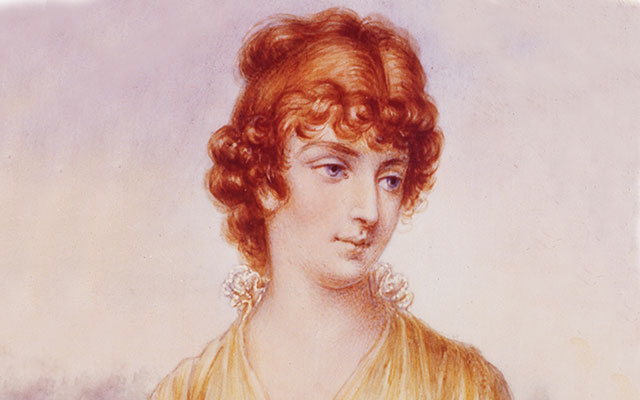Martha Jefferson
In 1776, Jefferson was known to be exceptionally devoted to his wife, Martha, and concerned about the state of her health. She would die six years later, in September 1782, at the age of 33, worn down by six births and more than six pregnancies. They had been married for just four years in 1776. By then, she had given birth to two children, Martha (Patsy), who would outlive her father by 10 years, and Jane Randolph, who had died in infancy the previous September. While he was writing the Declaration of Independence in June 1776 in Philadelphia, in a boarding house on Market Street, Jefferson was so anxious about his wife’s precarious health back in Virginia that he could scarcely concentrate on the task at hand. He was frantic for news from home at a time when the late colonial communications infrastructure was maddeningly primitive. To his friend John Page back in Virginia, Jefferson wrote, “Every letter brings me such an account of the state of her health, that it is with great pain that I can stay here.”
In the spring of 1776, Monticello was, as it would always be, a building site. The bulk of the first version was habitable, but it didn’t look much like the Monticello we know today. There was no dome yet. That wouldn’t come until after Jefferson’s return from France in November 1789, when he ordered the house pulled apart and reworked with architectural innovations he had studied in Paris. The house would never be finished, though it achieved its mostly final shape by 1809. One of his guests, Anna Thornton, after visiting Monticello in 1802, wrote, “Mr. J. has been 27 years engaged in improving the plans, but he has pulled down and built up again so often, that nothing is completed, nor do I think ever will be.” She said Mr. J. was “a very long time maturing his projects.”
Building his Palladian villa on a remote mountaintop was a quintessentially Jeffersonian notion. What in the 18th century would have been called quixotic. There would be decades-long problems with the water supply at that elevation. Everything he acquired in the next 50 years had to be lugged up the mountain on the five miles of sinuous roadways he had constructed, and everything produced there had to be lugged down the mountain to the Rivanna River, a tributary of Virginia’s principal commercial artery, the James. And it wasn’t Jefferson who did the lugging.
The first step, in 1768, had been to level the top of the 867-foot mountain. How do you level a mountaintop in the 1770s? You assign gangs of black men and women to labor for months to remove the erratic contours and haul the dirt somewhere else. In spite of his well-known rhetorical opposition to slavery, Jefferson showed no discomfort in forcing black men and women to do this grunt work in furtherance of his private pursuit of happiness, apparently assuming that this is the sort of labor a subject race should be expected to do.
All the hundreds of thousands of bricks that made Monticello one of the most extraordinary private homes in American history were shaped and baked by black slaves. So, too, the timbers. Even the exquisite finishing work at Monticello — the cornices and the entablatures and the cabinetry — was performed by enslaved craftsmen, some of whom Jefferson carefully trained himself.
> “Mr. J. has been 27 years engaged in improving the plans, but he has pulled down and built up again so often, that nothing is completed, nor do I think ever will be.”
>
> Anna Thornton, after visiting Monticello.
Jefferson’s home at Monticello, which he continuously redesigned and expanded for more than 40 years. ([Wikimedia](https://en.wikipedia.org/wiki/Monticello#/media/File:Thomas_Jefferson's_Monticello_(cropped).JPG))
## **Et in Arcadia Ego**
Jefferson’s mother, Jane Randolph Jefferson, died on March 31, 1776. She was 56 years old. His father, whom he idolized, had died when Jefferson was just 14. Peter Jefferson represented everything his son admired: physical strength, a desire to improve himself through books, a capacity for friendship, a quiet commitment to public service, mastery as a surveyor and cartographer, and an orientation towards the West. Of his mother, Jefferson wrote, “They \[the Randolphs\] trace their pedigree far back in England & Scotland, to which let every one ascribe the faith & merit he chooses.”
Historians are not quite sure how Jefferson felt about his mother. As usual, he maintained a mostly stoic silence about things close to the heart. A few months after her death, Jefferson wrote to her brother: “The death of my mother you have probably not heard of. This happened on the last day of March after an illness of not more than an hour. We suppose it to have been apoplectic.”
And yet, after his mother’s death, Jefferson suffered for weeks from the first and longest of what he called his “periodical headaches,” possibly migraines, which were so debilitating that he sometimes had to sit motionless in a darkened room from dawn to dusk for days on end. He lingered so long in Virginia that spring that he risked missing his world-historical moment. The delegates to the Second Continental Congress were well aware of Jefferson’s gifts as a writer, but had he lingered much longer in Virginia, they would certainly have found someone else to write what Walter Isaacson has called “the greatest sentence ever written.”
## **Date with Destiny**
Jefferson finally left Monticello in the first days of May 1776 for Philadelphia, 257 miles north and east, to take up his duties (whatever they might be) at the Second Continental Congress. He traveled in a two-wheeled horse-drawn carriage with the assistance of a 14-year-old slave, Robert Hemings. A journey like that over primitive roads scratched out of the wilderness took between one and two weeks, and the amenities of the time were appalling. Nevertheless, Jefferson took delight in recording daily distances with his groovy new odometer. Master and slave arrived in Philadelphia on May 14, 1776, just 51 days before Congress unanimously approved the final draft of the Declaration of Independence.
As he lurched along at about 3 miles per hour, what did Jefferson think was about to happen in Philadelphia? He was pretty sure the colonies needed to declare independence — that there was no turning back — but he had no idea that he would be called upon to write the revolutionary document. He knew that some state (colonial) delegations were reluctant to cross that Rubicon, still hoping things could be worked out with the home country across the wide Atlantic. He also knew that, in his absence, Virginia was going to write its first state constitution — and he was pretty sure that would be a much more important business than anything that might happen in Philadelphia. Shortly after arriving in Philadelphia, Jefferson wrote to Thomas Nelson, “In truth \[constitution writing\] is the whole object of the present controversy; for should a bad government be instituted for us in future it had been as well to have accepted at first the bad one offered to us from beyond the water without the risk and expence of contest.”
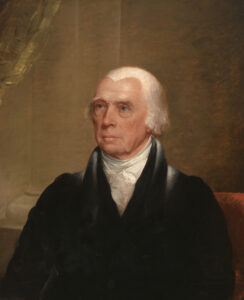James Madison
Jefferson always prided himself on being the best-prepared person in every room. (With the possible exception of his closest friend James Madison). He had read the great texts of the Enlightenment more intensely than any other member of his learned generation. He had worked assiduously for years to hone his prose style into a tool of tight, lucid, and forthright persuasion. Two years earlier, he had written an essay (a pamphlet) making the case for American independence, which was printed without his explicit permission as *[A Summary View of the Rights of British America](https://teachingamericanhistory.org/document/a-summary-view-of-the-rights-of-british-america-2/).* He had thus carefully laid the groundwork for what he was about to undertake.
In other words, Thomas Jefferson was ready. A complex and emotionally detached man, a creative genius, fundamentally compromised by his complicity with slavery, so deeply attached to his fragile wife that his fellow Virginians shook their heads, the embodiment of an agrarian utopian vision of republican life, a highly evolved and pacific man with no real understanding of military exigencies, was about to write this sentence:
“We hold these truths to be self-evident, that all men are created equal, that they are endowed by their Creator with certain unalienable Rights, that among these are Life, Liberty and the pursuit of Happiness.”
In the course of his long and exceedingly creative life, Jefferson could not reach the ideals he set for us — and for all of humanity thereafter. Neither have we, as a chosen people, achieved the ideals of our mission statement. We have miles to go before we sleep. Until quite recently, I thought we were still lurching forward on an arc that would inevitably lead us and the world towards justice. Now I’m not so sure.
---
## ***Discover more on these topics at Listening to America***
[Space Exploration](https://ltamerica.org/tag/space-exploration/ "8 topics")[Podcast](https://ltamerica.org/tag/podcast/ "1 topics")[Republic](https://ltamerica.org/tag/republic/ "0 topics")[Travel](https://ltamerica.org/tag/travel/ "1 topics")[Ohio](https://ltamerica.org/tag/ohio/ "2 topics")[Road Trips](https://ltamerica.org/tag/road-trips/ "18 topics")[Poetry](https://ltamerica.org/tag/poetry/ "1 topics")[State Parks](https://ltamerica.org/tag/state-parks/ "2 topics")[Water in the West](https://ltamerica.org/tag/water-in-the-west/ "24 topics")[Vermont](https://ltamerica.org/tag/vermont/ "1 topics")[Steinbeck Travels](https://ltamerica.org/tag/steinbeck-travels/ "75 topics")[Oregon](https://ltamerica.org/tag/oregon/ "4 topics")[New Mexico](https://ltamerica.org/tag/new-mexico/ "3 topics")[Wisconsin](https://ltamerica.org/tag/wisconsin/ "0 topics")[Reading](https://ltamerica.org/tag/reading/ "1 topics")[Pennsylvania](https://ltamerica.org/tag/pennsylvania/ "1 topics")[Sports](https://ltamerica.org/tag/sports/ "2 topics")[New England](https://ltamerica.org/tag/new-england/ "1 topics")[Rivers](https://ltamerica.org/tag/rivers/ "3 topics")[Republics](https://ltamerica.org/tag/republics/ "1 topics")[South Dakota](https://ltamerica.org/tag/south-dakota/ "16 topics")[Utah](https://ltamerica.org/tag/utah/ "11 topics")[North Carolina](https://ltamerica.org/tag/north-carolina/ "3 topics")[Texas](https://ltamerica.org/tag/texas/ "4 topics")[U.S. Presidents](https://ltamerica.org/tag/u-s-presidents/ "71 topics")[Tennessee](https://ltamerica.org/tag/tennessee/ "1 topics")[Washington](https://ltamerica.org/tag/washington/ "2 topics")[Rome](https://ltamerica.org/tag/rome/ "1 topics")[North Dakota](https://ltamerica.org/tag/north-dakota/ "53 topics")[U.S. Constitution](https://ltamerica.org/tag/u-s-constitution/ "1 topics")[Thoreau](https://ltamerica.org/tag/thoreau/ "5 topics")[William Shirer](https://ltamerica.org/tag/william-shirer/ "1 topics")[The Constitution](https://ltamerica.org/tag/the-constitution/ "1 topics")[Thomas Jefferson](https://ltamerica.org/tag/thomas-jefferson/ "34 topics")[South Carolina](https://ltamerica.org/tag/south-carolina/ "1 topics")[Walden](https://ltamerica.org/tag/walden/ "1 topics")[paintings](https://ltamerica.org/tag/paintings/ "0 topics")[Virginia](https://ltamerica.org/tag/virginia/ "7 topics")[New York](https://ltamerica.org/tag/new-york/ "8 topics")[Video](https://ltamerica.org/tag/video/ "51 topics")[Oppenheim](https://ltamerica.org/tag/oppenheim/ "0 topics")[Oppenheimer](https://ltamerica.org/tag/oppenheimer/ "1 topics")[north daktoa](https://ltamerica.org/tag/north-daktoa/ "0 topics")[Theodore Roosevelt](https://ltamerica.org/tag/theodore-roosevelt/ "16 topics")[Wyoming](https://ltamerica.org/tag/wyoming/ "4 topics")
**Categories:** Features
**Tags:** America at 250, Thomas Jefferson, U.S. Presidents
---
### [What Can You Say About Lewis and Clark in 30 Minutes?](https://ltamerica.org/what-can-you-say-about-lewis-and-clark-in-30-minutes/)
**Published:** March 9, 2026
**Author:** Clay Jenkinson
**Excerpt:** Oh my, it would be infinitely easier for me to give a three-hour lecture than one of just half an hour.
**Content:**
## I’ve flown from Bismarck, North Dakota, to Eastern Tennessee to find out.
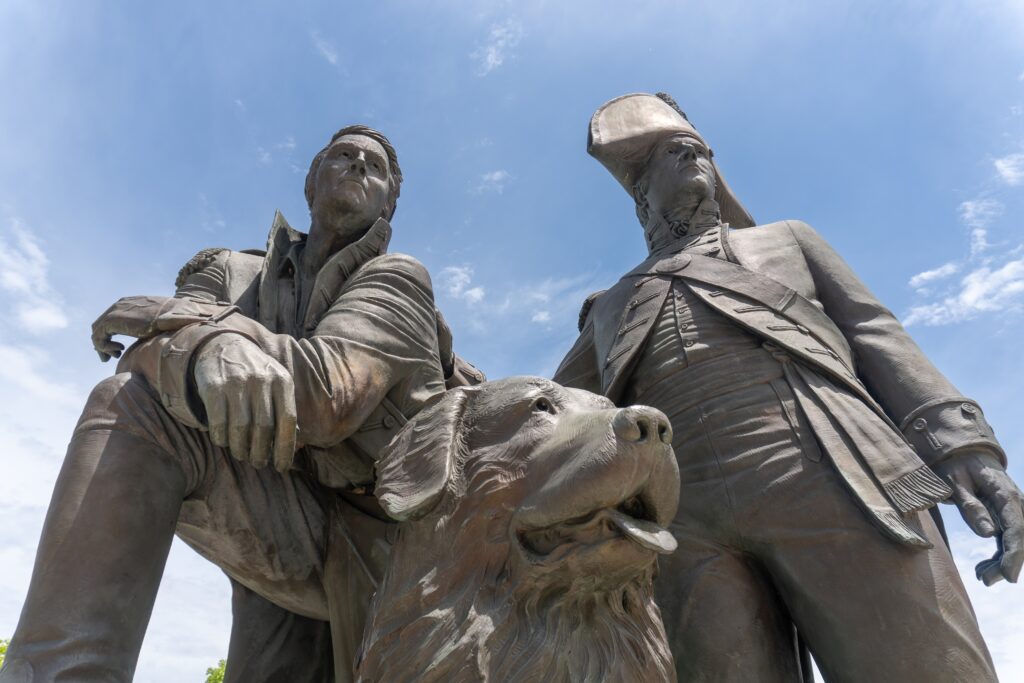A statute of Lewis and Clark and the expedition’s dog, Seaman. Sioux City, Iowa. (Shutterstock)
By the time you read this, I will have given a lecture at a prestigious private school in eastern Tennessee about Lewis and Clark. My adventure began Saturday with a long and extremely frustrating day of air travel — delays, aggressive silences by gate agents, a mile-long last-second gate change at the Dallas airport, 40 minutes sitting on the tarmac while luggage from a previously canceled flight was jammed into the hold, with pilots warning us that they were in danger of being “timed out” by FAA rest regs, and — when we at last arrived — one of the longest baggage claim waits I can remember. By that time, I half-hoped that my luggage was lost to make it a perfect hat trick. All I wanted now was to burn my clothes, take an endless shower, and tumble into bed.
Here I am in my “woe is me” mode, when I am about to lecture about the 7,689-mile Lewis and Clark expedition (1804-06) in which, day after day, the 30 young volunteers used their backs and thighs to force 60,000 pounds of gear against the capricious currents of the Missouri River. The men of the expedition had the right stuff. They had the stamina of Navy Seals. On a good day, they might push their flotilla of three boats 12-15 miles up the river — assuming nobody got hurt, they didn’t take a false channel or strike a submerged cottonwood trunk, and nobody mouthed off to the “gate agent. On my first flight Saturday, the man next to me wheezed like a Bessemer blast furnace for 2.4 hours, and on the second leg, the man next to me, playing solitaire on his tablet, kept jamming his left elbow into me as if he were driving the Indianapolis 500. When the flight attendant finally put a plastic glass of Bloody Mary mix on my tray table, there was no ice. I can’t work under these conditions!!
Author Kevin Fedarko
My Tennessee host had been waiting for 2.75 hours at the Kiss & Fly lot for me to land. It was now well past midnight. And, of course, the clocks were going to “leap forward” by an hour while I slept. On the ride to the hotel, he told me that last year’s endowed lecture had been delivered by [Kevin Fedarko](https://www.kevinfedarko.com), the Flagstaff, Arizona-based author of two extraordinary books, *The Emerald Mile: The Epic Story of the Fastest Ride in History Through the Heart of the Grand Canyon* and *A Walk in the Park: The True Story of a Spectacular Misadventure in the Grand Canyon*. I groaned. Had I known that, I might have refused to come. Fedarko is a writer I greatly admire. I’ve read *The Emerald Mile* three times. I’ve been trying to get him to sit for a podcast interview for many months. When my host told me whose shadow I was about to lecture in, I wanted to say, “Just circle around and leave me here at the airport, and I’ll get the next flight home, assuming there is ever a return flight to Dallas.” Then he informed me that my lecture must not exceed 30 minutes. I did not say (but felt), “Boy, that’s a lot of wear and tear on my body and soul for 30 minutes of discourse, not to mention a whopping carbon footprint,” but I did say, “Oh my, it would be infinitely easier for me to give a three-hour lecture than one of just half an hour.” “You’ll be fine,” he said. Will I?
## **What Can One Say About the Lewis and Clark Expedition in 30 Minutes?**
Lewis and Clark National Historic Trail marker. (Shutterstock)
It was Jefferson’s brainchild. Jefferson chose Lewis, Lewis chose Clark (the best decision he ever made). They recruited some tough but talented frontiersmen. After wintering near St. Louis, they followed the Missouri to its source in far western Montana, suffered greatly in lugging their gear over the Bitterroot Mountains, eventually found navigable waters of the Clearwater-Snake-Columbia River system, and made it to the sea late in their second year of travel. They wintered on the Pacific Coast, where it rains more than 100 inches per year. That made them miss their bitterly cold but dry winter in North Dakota. (Always get in some North Dakota mentions!) Then they turned back. And, oh yeah, also in North Dakota(!), they hired Sacagawea and her troublesome husband Toussaint Charbonneau to help them acquire horses among her birth people, the Shoshone. Lewis killed himself just three years after their return.
Any questions?
These talented private school students can get all that in short order on their smartphones. So what can I tell them that will perhaps stay with them more than “that old guy who said some stuff about Lewis and Clark”? What can I say that will inspire them to think about the dynamics of American history, about the interplay of myth and history in our national narrative, about the extraordinary complexities of the mission commander, and about the great dispossession of the Indigenous people of America in the aftermath of the Jefferson era?
You can’t tell the story of Lewis and Clark without falling into a rhapsody about what it must have been like to see Montana in 1805, when there were 40-50 million buffalo in the American West — a Serengeti of bison, mule deer, bighorn sheep, wolves, coyotes, grizzly bears, elk, eagles, prairie dogs, mountain lions, and Native American cultures still intact in a steady-state and sustainable lifeway they had forged over hundreds and even thousands of years. To have seen “Montana” (the American West), and the great rivers Missouri, Yellowstone, Snake, and Columbia, before a single cubic yard of concrete had been dumped into their natural flows. It’s magical to float the upper Missouri even now, when most of what was there in 1805 has been refashioned, replaced, or eradicated. Imagine what it must have been before “industrial man” arrived with a slide rule and an improvement plan.
## **The Cultural Revolution**
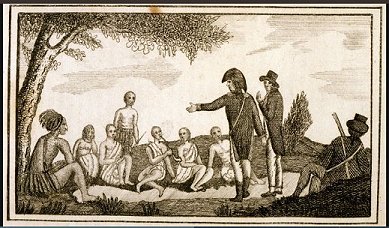
But you can’t tell the story of Lewis and Clark today without acknowledging our ambivalence about what used to be called “the westward movement.” A generation or two ago the expedition was a hero story: these intrepid explorers who became the first white Americans to cross the continent “from sea to shining sea” as the late Stephen Ambrose liked to put it, against nearly impossible odds. Back then, Lewis and Clark were best friends (Ambrose again), and they embarked on an entirely noble mission of “peace and friendship,” as the peace medals they handed out indicated, with an image of the Great Father (Jefferson) on one side and the clasped hands of peace on the other. Back then, Lewis *discovered* the confluence of the Missouri and the Yellowstone, the Great Falls, the source of the Missouri River, and “the most direct and practicable water communication across this continent for the purposes of commerce,” as Jefferson put it in his famous instructions. Back then, Sacagawea was imagined as Miss Indian America and their guide to the Pacific. Clark’s slave, York, was a kind of minstrel figure and sexual athlete.
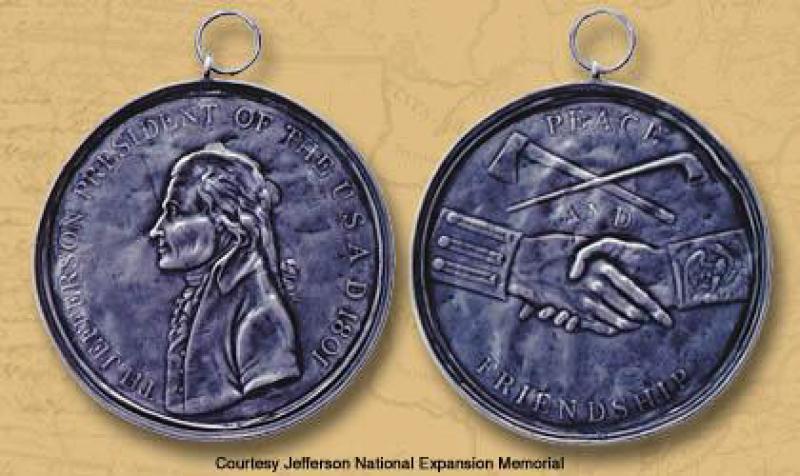Lewis and Clark carried a total of at least 89 peace medals in five different sizes.
Between then and now, we’ve experienced a cultural revolution in America that has fractured (and in the minds of some, shattered) the old American narrative. Today it’s essential to put the word “discovered” in air quotes, because we are now quick to acknowledge that Native people had known of all those geographic and biological wonders for millennia and frequently informed Lewis and Clark well in advance what they could expect to see (discover). Today, we see the Indigenous peoples they met (more than 50 tribes in all) as much more than the bit players they were portrayed as in standard histories for much of the 20th century. Today, we acknowledge that the Teton Lakota of South Dakota had every right to challenge and resist Lewis and Clark, who were astonished that “a bunch of Indians” presumed to get in their way. Clark later called the “Sioux” “the vilest miscreants of the savage race.” Ouch. One important book on Lewis and Clark, published in 1979, was entitled *Only One Man Died —* Sergeant Charles Floyd, near Sioux City, Iowa, of natural causes. Today, we are quick to acknowledge that on the return journey at the end of July 1806, Lewis and three of his men wound up killing (admittedly in self-defense) at least one and perhaps two Piegan Blackfeet on the upper Marias River in Montana. Didn’t they count? Back then, we could write blithely about a group called “The Nine Young Men from Kentucky,” recruited by Clark as the expedition was getting organized. But there was a 10th Young Man from Kentucky, Clark’s slave, York. Didn’t he count?
None of these recent historiographical adjustments ruins the story or discredits the achievements of Lewis and Clark. But they make the story less tidy, upbeat, and triumphalist.
1954 postage stamp commemorating the Lewis and Clark Expedition.
What sort of mission were Lewis and Clark on? Were they largely innocent Anglo explorers working their way earnestly across the continent on behalf of the Enlightenment, or were they the “spear of American imperialism” and Manifest Destiny? I once asked the then Chairman of the Standing Rock Lakota, Ron His Horse Is Thunder, to write a wry commentary on the expedition for a public radio documentary I directed. He entitled his essay, *“We Should Have Just Wiped Them Out When We Had the Chance.”* He delivered this commentary in good humor, but he also wanted to make an important point. From the perspective of the Lakota (and all the Indigenous people they met over 28 months), there wasn’t much to celebrate during the Lewis and Clark Bicentennial. Lewis and Clark may have been on the whole respectful and high-minded, and they really were making a scientific inventory of the continent for the philosophical president of the United States, but they were also the harbingers of a long, tragic 19th (and even 20th) century for the Native Americans of the West.
As we approach the 250th birthday of the United States, we must wrestle with these questions. The Old Narrative, which argued that it was God’s actual (manifest) purpose (destiny) that white people from Europe would take the continent from its Indigenous sovereigns, doesn’t hold up well anymore in most circles. And yet we must also avoid falling into a grim parade of guilt and self-condemnation as we consider one of the most complicated migration stories in the history of the modern world. As Facebook used to put it with respect to relationship status, “It’s Complicated.”
As a people, we have not yet engaged in a useful national conversation about who we are, how we got here, where we are now, what is still unresolved in the American story, and what sorts of repairs and healings we need to undertake with good hearts and rigorous minds as we proceed on, as Clark liked to put it. If we don’t step back to have that national conversation at 250, when are we likely to do it? At 283? Or 310? If I were writing a book about the semiquincentennial, I would entitle it “*The Glory and the Cost of America*.” The cost has been high. Much better historians will write that book. They must. At the moment, we do not have an agreed-upon national narrative — and boy does it show. A nation that cannot agree upon a consensus narrative about its origins and its history — a nation at loggerheads in what is called the Culture Wars — is a nation that is incapable of doing the great things that great nations do: comprehensive immigration reform; a sane national health care system; crafting a responsible American role in the world arena; a rethinking of the cost of higher education and the product it delivers; some resolution of the monstrous gap between the few and the many in American life; and more.
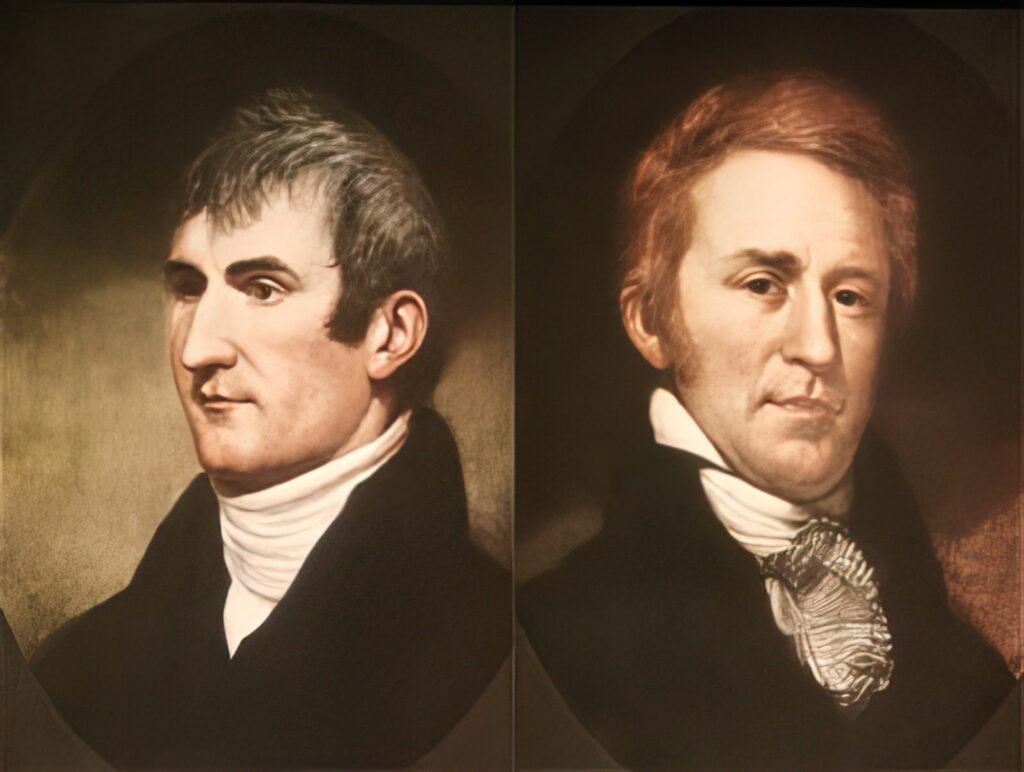Meriwether Lewis and William Clark, Commanders of the Corps of Discovery. (Wiki Commons)
Should poor Meriwether Lewis and William Clark be burdened with all of this? Of course not. But they are an important part of the story, in part, because they made their journey so early in our history. I’ve been reading and writing about the expedition for more than 30 years, and I still don’t know what happened to Lewis’ Newfoundland dog, Seaman, in July 1806. What exactly was the role of Sacagawea, or how should her name be spelled and pronounced, for that matter? Why did Meriwether Lewis commit suicide on October 11, 1809, or why did he never write the three-volume account of the expedition he promised the American public? Mysteries abound. That’s what keeps me at it when there are so many other utterly compelling stories to explore.
By the time you read this, I will have found something to say to the 800 students I’ll face here in East Tennessee tomorrow. Dang that Fedarko with his high-octane recent ventures on the Colorado. Thirty minutes. My host said I might possibly be forgiven for taking 34. And then, after a short night of sleep on Daylight Saving Time, I have to get back on those planes. America at 250. I was on an airplane in Munich, Germany, in December, just after the forward door had been closed, when the pilot came on and said the following. “Ladies and Gentlemen, I want to apologize. We will be leaving the gate eight minutes late this morning.” I wanted to stand up (I was too weary to stand up) and shout, “That sentence has never been uttered in America.”
---
## ***Discover more on these topics at Listening to America***
[Oregon](https://ltamerica.org/tag/oregon/ "4 topics")[Travel](https://ltamerica.org/tag/travel/ "1 topics")[Texas](https://ltamerica.org/tag/texas/ "4 topics")[Sports](https://ltamerica.org/tag/sports/ "2 topics")[Washington](https://ltamerica.org/tag/washington/ "2 topics")[Space Exploration](https://ltamerica.org/tag/space-exploration/ "8 topics")[State Parks](https://ltamerica.org/tag/state-parks/ "2 topics")[North Carolina](https://ltamerica.org/tag/north-carolina/ "3 topics")[New England](https://ltamerica.org/tag/new-england/ "1 topics")[William Shirer](https://ltamerica.org/tag/william-shirer/ "1 topics")[Walden](https://ltamerica.org/tag/walden/ "1 topics")[South Carolina](https://ltamerica.org/tag/south-carolina/ "1 topics")[Thoreau](https://ltamerica.org/tag/thoreau/ "5 topics")[Podcast](https://ltamerica.org/tag/podcast/ "1 topics")[Oppenheimer](https://ltamerica.org/tag/oppenheimer/ "1 topics")[Rome](https://ltamerica.org/tag/rome/ "1 topics")[U.S. Presidents](https://ltamerica.org/tag/u-s-presidents/ "71 topics")[New York](https://ltamerica.org/tag/new-york/ "8 topics")[Republic](https://ltamerica.org/tag/republic/ "0 topics")[Pennsylvania](https://ltamerica.org/tag/pennsylvania/ "1 topics")[Ohio](https://ltamerica.org/tag/ohio/ "2 topics")[paintings](https://ltamerica.org/tag/paintings/ "0 topics")[Tennessee](https://ltamerica.org/tag/tennessee/ "1 topics")[New Mexico](https://ltamerica.org/tag/new-mexico/ "3 topics")[Video](https://ltamerica.org/tag/video/ "51 topics")[North Dakota](https://ltamerica.org/tag/north-dakota/ "53 topics")[Virginia](https://ltamerica.org/tag/virginia/ "7 topics")[The Constitution](https://ltamerica.org/tag/the-constitution/ "1 topics")[Vermont](https://ltamerica.org/tag/vermont/ "1 topics")[Thomas Jefferson](https://ltamerica.org/tag/thomas-jefferson/ "34 topics")[South Dakota](https://ltamerica.org/tag/south-dakota/ "16 topics")[Poetry](https://ltamerica.org/tag/poetry/ "1 topics")[Republics](https://ltamerica.org/tag/republics/ "1 topics")[Reading](https://ltamerica.org/tag/reading/ "1 topics")[Road Trips](https://ltamerica.org/tag/road-trips/ "18 topics")[Rivers](https://ltamerica.org/tag/rivers/ "3 topics")[Water in the West](https://ltamerica.org/tag/water-in-the-west/ "24 topics")[Oppenheim](https://ltamerica.org/tag/oppenheim/ "0 topics")[Steinbeck Travels](https://ltamerica.org/tag/steinbeck-travels/ "75 topics")[Wyoming](https://ltamerica.org/tag/wyoming/ "4 topics")[Wisconsin](https://ltamerica.org/tag/wisconsin/ "0 topics")[Theodore Roosevelt](https://ltamerica.org/tag/theodore-roosevelt/ "16 topics")[Utah](https://ltamerica.org/tag/utah/ "11 topics")[U.S. Constitution](https://ltamerica.org/tag/u-s-constitution/ "1 topics")[north daktoa](https://ltamerica.org/tag/north-daktoa/ "0 topics")
**Categories:** Dispatches from the Road
**Tags:** America at 250, Books, Lewis and Clark, U.S. Presidents
---
### [A Republic, if You Can Keep It: War and America in Iran](https://ltamerica.org/a-republic-if-you-can-keep-it-war-and-america-in-iran/)
**Published:** March 3, 2026
**Author:** Clay Jenkinson
**Excerpt:** When the Founding Fathers met in Philadelphia in the summer of 1787 to craft a new constitution, they worked strenuously to cage the “dogs of war” by way of constitutional restraints.
**Content:**
## When the Founding Fathers met in Philadelphia in the summer of 1787 to craft a new constitution, they worked strenuously to cage the “dogs of war” by way of constitutional restraints.
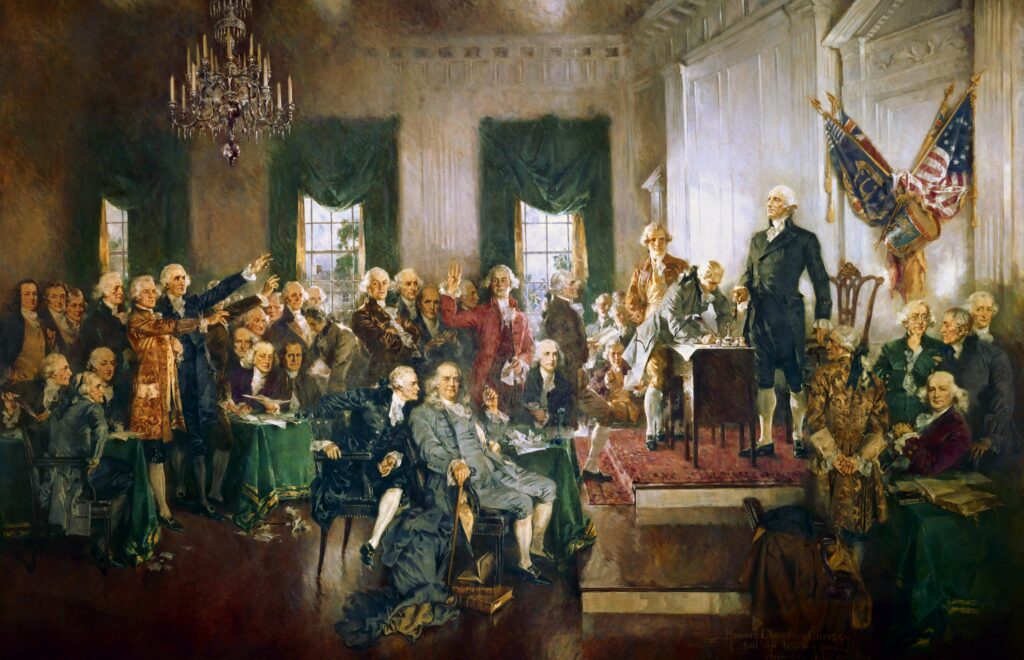A artist rendition of the signing of the United States Constitution with George Washington, Benjamin Franklin, and Alexander Hamilton (left to right in the foreground). Painting Howard Chandler Christy (1873–1952).
For me, it is just this simple. What gives the United States the right to assassinate the leader of another sovereign nation? How can that ever be legitimate? Under what interpretation of international law can it be ok for one nation to kill the leader of another? We didn’t do this with Hitler or Mussolini or Stalin or Fidel Castro (though apparently we tried with Castro). We Americans have been through this sort of decapitation in my lifetime. When John F. Kennedy was assassinated on November 22, 1963, it changed the whole tenor of American life. Do we expect Iran just to absorb this blow? What would we feel compelled to do if some other nation (not approving of *our* leader or our international policies or *our* religious system) assassinated *our* president? There will be desperate ramifications in the days, months, and years ahead. Just what those ramifications will be we don’t yet know, but we cannot expect Iran to shrug this off or dance in the streets around liberty poles.
Have we as a nation thought through what Iran and the Middle East are likely to be a year from now, five years from now, in the aftermath of this act of appalling aggression? We get it that the people of Iran are oppressed. If that were our criterion for foreign interventions and assassinations, the list of countries to bomb would be very large.
It’s worth wondering if our air attacks on Iran were the work of the United States (as a great collective of 340 million individuals) or of one petulant and erratic man. The most democratic of our Founding Fathers, Thomas Jefferson, believed that power is legitimate only when it is diffused among and across multiple individuals and entities. Power concentrated in the hands of a single person is always dangerous and open to self-dealing, delusion, whimsy, miscalculation, and corruption. No one person can see enough, know enough, or consider enough to be trusted with unilateral power, especially military power. A five-hour meeting of the key American stakeholders would have raised all of the questions we should have worked through before lobbing the first cruise missile at Tehran. That consultation would have spread the wisdom around, and, this is important too, the responsibility for our actions. Diffuse power through a cabinet, the Joint Chiefs of Staff, the Congressional Gang of Eight, international organizations (including the U.N. and NATO), the House and the Senate, and you are much more likely to avoid colossal mistakes.
Obviously, if there is a clear and present danger to American security or the likelihood of an imminent attack on the United States itself, the president must have the authority to act with minimal hurdles. Even then, any sane president would seek all the advice he could get in short order, including the advice of skeptics and dissenters.
## **The Gravity of War**
(Shutterstock)
War is so grave that the Founding Fathers did everything in their power to prevent any one individual from going it alone. Some of these restraints were built into the Constitution of 1787. Others are implicit in the idea of a republic and norms born of the long history of human geopolitical disasters. Here’s a list of how republics could attempt to avoid what just happened:
— If the president (any president) had to send one of his sons or daughters into any war he started, how many wars would we fight? When the Roman Republic was at its best, when the British Empire was at its best, the nation’s leaders understood that they must be willing to put their own children in harm’s way if they went to war. You can imagine what a sobering effect this would have on any war that is not absolutely necessary. Our own Theodore Roosevelt sent all four of his sons into World War I. He would have gone to France himself — leading one last volunteer unit of Rough Riders — if President Woodrow Wilson had permitted it, but TR told his sons they were not only going to war in Europe and the Middle East, but they must not let their commanders keep them safely at desk jobs behind the lines. They must face the mayhem at the front like any other American soldiers. All four were wounded; one (Quentin) was killed in battle.
— If we had to pay for every one of our wars with ready money — a direct and immediate increase in taxation — and could not just charge the costs to the national debt, how many wars would we fight? Imagine if, in 2003, President George W. Bush had gone on national television to say, we need to go to war against Iraq and Saddam Hussein, so I’d like you to take out your checkbook and write a check for $28,500 per household, for that’s what it’s going to cost. Knowing they would have had to pay for it, do you think the American people would have chosen to go to war to rid Iraq of its “weapons of mass destruction”?
— If we had a national draft, so that every able-bodied man or woman between the ages of 18 and 45 would be placed in a lottery, from which the great majority of our soldiers would be recruited, with virtually no deferments, how many wars would we fight? Our all-volunteer army is mostly populated by young men and women from working class and heartland backgrounds, young patriots who believe in national service and (for the most part) are attempting to get a leg up economically (generous signing bonuses, good wages, the G.I. Bill of Rights when they return, student loan repayment, food and housing allowances, veteran health care benefits for life). Take even a couple of those economic incentives away, and how many soldiers could we recruit per annum?
— If we never went to war without a resolution of endorsement from the United Nations, how many wars would we fight?
— If we had to get the endorsement (not just grudging acquiescence) from NATO (which we created in 1949) and the majority of our closest friends in the world (Canada, Britain, Germany, Italy, France, Australia), how many wars would we fight?
## **War is Uniquely Problematic**
War is the gravest thing a nation might ever have to do. It’s not like funding or defunding the Department of Education, or building a national highway system, or engaging in a space race to the moon. It’s about sending our sons and daughters, our grandsons and granddaughters, into harm’s way, from which they might never return or might return with grievous mental and bodily injuries. We are asking them to kill other human beings if necessary and to take the risk of being killed themselves in the process. This is not something that a responsible national leadership would ever do without 1) exhausting all possible peaceful options through diplomacy and negotiation, and then exhausting them again; 2) engaging in a serious national debate before undertaking it; 3) carefully informing the American people not only of the justification for the use of force but of possible costs and consequences; 4) discerning what the U.S. Constitution says about how wars should be initiated, prosecuted, and resolved, and then strictly adhering to those codes; 4) not only consulting Congress but seeking explicit Congressional authorization before firing the first shots.
Do you think we would have gone to war against Iran if those conditions had been met?
## **The Wisdom of the Founders**
When the Founding Fathers met in Philadelphia in the summer of 1787 to craft a new constitution, they worked strenuously to cage the “dogs of war” by way of constitutional restraints. Why? Because they wanted a republic not a monarchy; because they knew from their painstaking study of history that letting a single individual take a people into war is a formula for disaster, national bankruptcy, and moral degeneration; and because they believed passionately that war is so grave that it must actually represent the “will of the \[whole\] people” not the opinion or whimsy of a single individual or a small group of insiders.
Accordingly, they insisted that wars must be authorized (declared) by the Congress of the United States, which is the body of the national government closest to the people. After all, it is “the people” who fight our wars and “the people” who eventually pay for them. They also insisted that the House of Representatives (the people’s house) must take the lead in appropriating funds to prosecute wars. Under a balanced budget provision, this would be a very serious check on any executive’s desire to go to war. Unfortunately, when you can just print or borrow the money instead of seeking explicit Congressional funding, you take the will of the people out of the equation. The Founders went one step further. They insisted that Congress must re-authorize the U.S. military once every two years (Article I, Section 8) so that no executive could go to war without the explicit support of Congress.
By 2026, and certainly thanks to the war President Trump has now undertaken with Iran, without Congressional debate, authorization, or even consultation, the war powers provisions of the Constitution are essentially a dead letter. And yet, preventing just this sort of un-debated, un-authorized war was precisely what the Founding Fathers sought to achieve! The Founders were attempting to engineer both positive and negative goals in Philadelphia. On the positive side, they wanted to bind together the 13 original states into a workable national government “in order to form a more perfect Union, establish Justice, ensure domestic Tranquility, provide for the common defence, promote the general Welfare, and secure the Blessings of Liberty to ourselves and our Posterity.” And on the negative side, they wanted to build guardrails to prevent us from making the same bloody mistakes that European nations, almost all monarchies, had been making for millennia.
The Founders understood, and we certainly understand, that in a dangerous and fast-moving world, the president, who is designated Commander in Chief in the Constitution (Article II, Section 2), must have the authority to respond immediately in the case of attack or national emergency. We all accept that. But we have heard no claim that the U.S. was under any imminent threat from the mullahs of Iran.
## **Our Sorry Record**
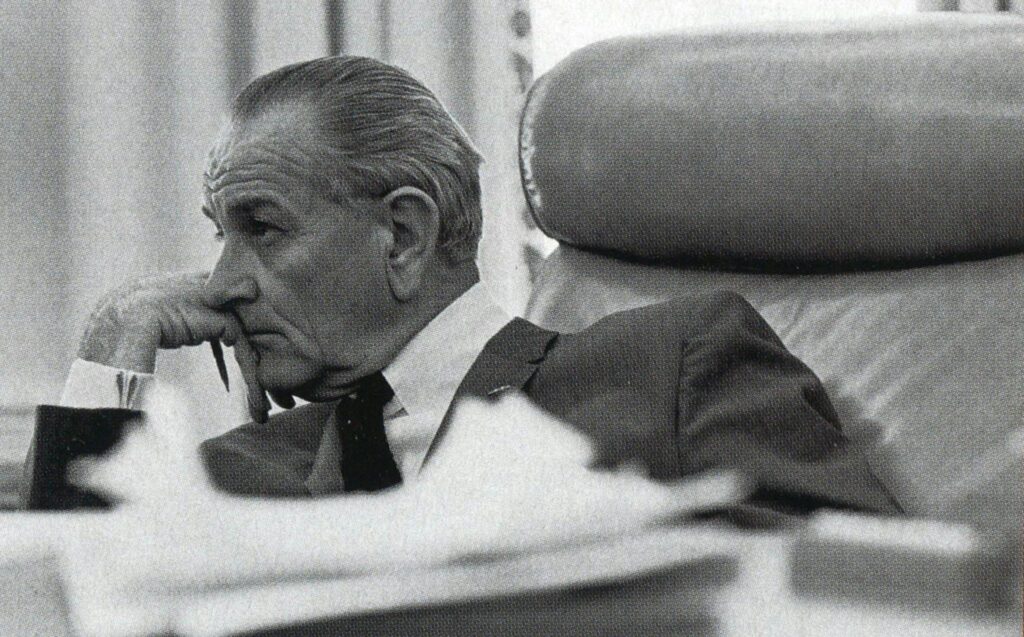
When America’s war hawks were attempting to pressure the United States into an unnecessary war in Cuba in 1897-98, President William McKinley, who had served as a major in the Civil War, resisted their jingoism as long as he could before he reluctantly asked Congress (April 11, 1898) for a declaration of war against Spain. McKinley said, “I have been through one war; I have seen the dead piled up; and I do not want to see another.”
Think of the number of wars the United States has fought that were unnecessary. Or wars based on bogus justifications. Here’s a short list.
**Vietnam (1964–1975).** Johnson, Nixon, Ford. We now know — and knew almost right from the beginning — that the Gulf of Tonkin incident (August 2 and 4, 1964) was a trumped-up affair. It led to the Gulf of Tonkin Resolution in Congress on August 7, 1964, just three days after the “incident.” The war cost $1.2 trillion in 2026 dollars, killed 58,220 Americans (and wounded 300,000 more), killed more than 2.5 million Vietnamese, poisoned much of the landscape of Vietnam, damaged America’s standing in the world, and was one of the primary causes of the Great Disillusionment that followed. If a picture is worth a thousand words, how about these four: the Buddhist monk who immolated himself in Saigon (June 11, 1963); “Napalm Girl” Phan Thị Kim Phúc running in terror after a napalm attack (June 8, 1972); the summary extra-judicial execution of Viet Cong officer Nguyễn Văn Lém on the streets of Saigon on February 8, 1968; and the queue for the helicopter on top of the American embassy when we finally gave up (April 29, 1975)? Result of the war? The minute we pulled out, North Vietnam overran South Vietnam, reunited the country under communist rule, and the name of Saigon was changed to Ho Chi Minh City.
**Grenada (October 25–November 2, 1983).** Reagan. No Congressional authorization. Justification? To protect American medical students on the island. Casualties were low: 19 Americans killed, 116 wounded; 45 Grenadians killed, 258 wounded. Cost: about $400 million in 2026 dollars. Result? Most Americans have never thought about Grenada again.
**Gulf War II (2003–2011).** G.W. Bush, Obama. There were 4,431 Americans killed, approximately 32,000 wounded. Iraqis: somewhere between 300,000 and 500,000 killed. Justification: to seek out and destroy Saddam Hussein’s “weapons of mass destruction” and prevent Iraq from building nuclear weapons. Results? We toppled Hussein (soon executed by the Iraqi government), found no weapons of mass destruction, and destabilized the entire region. Is Iraq better off for our massive intervention? The U.N. refused to endorse Bush’s war, and almost all of our allies were deeply skeptical, but the U.S. Senate approved. Hillary Clinton’s pro-war vote probably cost her the presidency in 2008.
## **The Cost to the Iranian People**
Just a couple of closing thoughts. First, the chances that the Iranian people can now topple their fundamentalist and oppressive government, I’d put at about 5%. In fact, a bloodbath may follow our meddling in their internal affairs. Second, assuming the Trump administration really wanted to help Iranians achieve self-government, how likely are we to stay the course long enough to help make that happen? Just ask the people of South Vietnam, Iraq, or Afghanistan how reliable we have been when we make wild promises to the people who help us in the nations we invade, and how long we are willing to stay to make things right.
Finally, the war he has initiated (on our behalf) halfway across the world without the slightest attempt to follow Constitutional provisions or national and international norms is the single most monarchial thing Donald Trump has done in his presidency, and that is precisely, exactly, explicitly what the Founding Fathers most wanted to avoid.
If we were in any meaningful sense still a republic, this could not have happened.
---
## ***Discover more on these topics at Listening to America***
[Podcast](https://ltamerica.org/tag/podcast/ "1 topics")[Space Exploration](https://ltamerica.org/tag/space-exploration/ "8 topics")[Ohio](https://ltamerica.org/tag/ohio/ "2 topics")[paintings](https://ltamerica.org/tag/paintings/ "0 topics")[Oppenheimer](https://ltamerica.org/tag/oppenheimer/ "1 topics")[New England](https://ltamerica.org/tag/new-england/ "1 topics")[New Mexico](https://ltamerica.org/tag/new-mexico/ "3 topics")[William Shirer](https://ltamerica.org/tag/william-shirer/ "1 topics")[State Parks](https://ltamerica.org/tag/state-parks/ "2 topics")[Tennessee](https://ltamerica.org/tag/tennessee/ "1 topics")[Oregon](https://ltamerica.org/tag/oregon/ "4 topics")[U.S. Presidents](https://ltamerica.org/tag/u-s-presidents/ "71 topics")[South Dakota](https://ltamerica.org/tag/south-dakota/ "16 topics")[Utah](https://ltamerica.org/tag/utah/ "11 topics")[Sports](https://ltamerica.org/tag/sports/ "2 topics")[North Carolina](https://ltamerica.org/tag/north-carolina/ "3 topics")[Vermont](https://ltamerica.org/tag/vermont/ "1 topics")[Travel](https://ltamerica.org/tag/travel/ "1 topics")[Poetry](https://ltamerica.org/tag/poetry/ "1 topics")[Pennsylvania](https://ltamerica.org/tag/pennsylvania/ "1 topics")[Thoreau](https://ltamerica.org/tag/thoreau/ "5 topics")[Rivers](https://ltamerica.org/tag/rivers/ "3 topics")[The Constitution](https://ltamerica.org/tag/the-constitution/ "1 topics")[Reading](https://ltamerica.org/tag/reading/ "1 topics")[Texas](https://ltamerica.org/tag/texas/ "4 topics")[Oppenheim](https://ltamerica.org/tag/oppenheim/ "0 topics")[Walden](https://ltamerica.org/tag/walden/ "1 topics")[Rome](https://ltamerica.org/tag/rome/ "1 topics")[Water in the West](https://ltamerica.org/tag/water-in-the-west/ "24 topics")[Theodore Roosevelt](https://ltamerica.org/tag/theodore-roosevelt/ "16 topics")[Wisconsin](https://ltamerica.org/tag/wisconsin/ "0 topics")[Republic](https://ltamerica.org/tag/republic/ "0 topics")[Steinbeck Travels](https://ltamerica.org/tag/steinbeck-travels/ "75 topics")[Washington](https://ltamerica.org/tag/washington/ "2 topics")[Road Trips](https://ltamerica.org/tag/road-trips/ "18 topics")[Republics](https://ltamerica.org/tag/republics/ "1 topics")[Virginia](https://ltamerica.org/tag/virginia/ "7 topics")[U.S. Constitution](https://ltamerica.org/tag/u-s-constitution/ "1 topics")[Wyoming](https://ltamerica.org/tag/wyoming/ "4 topics")[Thomas Jefferson](https://ltamerica.org/tag/thomas-jefferson/ "34 topics")[Video](https://ltamerica.org/tag/video/ "51 topics")[New York](https://ltamerica.org/tag/new-york/ "8 topics")[South Carolina](https://ltamerica.org/tag/south-carolina/ "1 topics")[North Dakota](https://ltamerica.org/tag/north-dakota/ "53 topics")[north daktoa](https://ltamerica.org/tag/north-daktoa/ "0 topics")
**Categories:** Features
**Tags:** America at 250, U.S. Presidents
---
### [Notes for Our Next Book Club Meeting](https://ltamerica.org/listening-to-america-book-club/)
**Published:** February 25, 2026
**Author:** Editor
**Content:**
## Our next Book Club meeting is Tuesday, March 17, 2026 at 6:30 pm Central.
Contact [Liz](mailto:leagle@ltamerica.org) to Register and she will send you a Zoom link the week of the meeting.

Hello, Listening to America Book Club Members!
Time for the next Book Club meeting. We’ve looked at Lewis and Clark day by day, and we’ve explored the life and achievement of Edward S. Curtis. I want to talk a little more about Curtis when we meet, particularly because I just lectured about the achievement of Curtis at the James Museum in St. Petersburg, Florida.

The main focus of this session will be James Welch’s outstanding novel *Fools Crow*. Welch (1940-2003) grew up in Blackfeet and A’aninin cultures in northwestern Montana. He wrote a number of excellent novels: *Winter in the Blood*, *The Heartsong of Charging Elk*, and *Fools Crow*. He also published a fascinating treatment of the Custer myth in American culture: *Killing Custer: The Battle of the Little Bighorn and the Fate of the Plains Indians*.
*Fools Crow* is one of my favorite works of American literature. As you know, it’s the story of the clash of two cultures: the Anglo-American exemplars of “Manifest Destiny” and the resistance of the Blackfeet as they attempted to survive the white onslaught of the post Civil War period. How does an indigenous culture make sense of a more powerful (and more industrial) social system? What elements of non-Native culture can be adopted successfully, and what elements so severely destabilize the indigenous community as to threaten its survival? *Fools Crow* is a tragedy, but I believe it is one of the best windows we have into the Native American world in this time of enormous change and challenge.
Come ready to talk! To raise questions, to point to confusing passages, fabulous passages, troubling passages. I’m eager to hear your thoughts.
See you soon!

**Categories:** LTA Friends Book Club
---
### [Encounters With Those Inescapable AI Generated "10 Best Lists"](https://ltamerica.org/encounters-with-those-inescapable-ai-generated-10-best-lists/)
**Published:** February 23, 2026
**Author:** Clay Jenkinson
**Excerpt:** Can Artificial Intelligence reliably rank the 10 greatest poems of all time?
**Content:**
## Can Artificial Intelligence reliably rank the 10 greatest poems of all time?
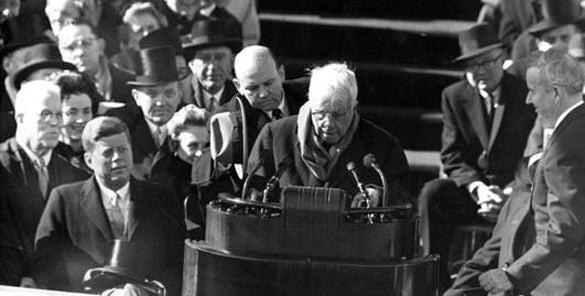American poet Robert Frost received the Pulitzer Prize for Poetry four times. In 1961, at the age of 86, he recited his poem *The Gift Outright* at the inauguration of President John F. Kennedy.
We’re all bombarded with Facebook “reels” now. I didn’t even know what they were a year ago, and now they are everywhere. I’m in some of them. Most of them are inane. (I repeat, I’m in some of them.) Many reels are annoying because they lure you in for 10 seconds and then just stop in mid-sentence unless you subscribe, “like,” or “click below.” The idea that anything of real value can be conveyed in a handful of seconds is yet another insane sign of our times.
A reel popped into my world yesterday promising to list the **Ten Best Poems in English**. “That should be interesting,” I thought. So, I watched it through. Here’s the list:
10. *O Captain! My Captain!* by Walt Whitman
9. *No Man Is an Island* by John Donne
8. *Hope Is the Thing With Feathers* by Emily Dickinson
7. *The Tyger* by William Blake
6. *The Road Not Taken* by Robert Frost
5. *Stopping by Woods on a Snowy Evening* by Robert Frost
4. *If* by Rudyard Kipling
3. *The Raven* by Edgar Allan Poe
2. *Do Not Go Gentle Into That Good Night* by Dylan Thomas
1. *Daffodils* by William Wordsworth

The graphics are all AI-generated and not bad. But the choices? Well, first, how do you choose 10 poems from the hundreds of thousands, even millions, in the English language, thousands of them outstanding? Short poems? Long poems? Epic poems? Sonnets? Elegies? Contemporary poems? Haiku? And if you do presume to choose 10, surely this Reel does not enumerate the list any serious student of poetry would nominate.
This list appears either to have been generated by a rudimentary AI engine (“name some popular poems”) or by someone who is straining to remember the poems they read back in high school.
*O Captain! My Captain!* needs a question mark, not an exclamation point. Really? We had to memorize it in middle school. Walt Whitman is a great American poet. Off the top of my head, I can think of a dozen Whitman poems better than his dirge for Abraham Lincoln. Whitman’s *Leaves of Grass* is indeed one of the world’s great poems. I’m not sure I would place it in the top 25 or even top 50, but I would choose it a thousand times before I would ever even think of the dreadful *O Captain! My Captain!* And if you want to read a much better Whitman poem on the death of Abraham Lincoln, how about *When Lilacs Last in Dooryard Bloomed*.
*No Man Is an Island* is not even a poem. It is without question a stunning evocation of the interconnectivity of everyone everywhere, and it has a definite poetic ring, but it is a prose passage from John Donne’s *Devotions upon Emergent Occasions* (1624), Meditation XVII. Here’s the famous passage:
*No man is an Iland, intire of itself; every man is a peece of the Continent, a part of the maine; if a Clod bee washed away by the Sea, Europe is the lesse, as well as if a Promontorie were, as well as if a Manor of thy friends or of thing owne were; any mans death diminishes me, because I am involved in Mankinde; and therefore never send to know for whom the bell tolls; it tolls for thee.*
I first encountered these sentences in high school, fell in love with John Donne, and gave about 15 years of my life to his poetry, especially his Renaissance English sermons. And for all of its greatness, this is not even the best of Donne’s prose, much less his cynical, witty, erotic, and metaphysical poetry. If you only get 10 poems, you’ll want to hold prose works at bay.
Poet Emily Dickinson
*Hope Is the Thing With Feathers* is an excellent poem by Emily Dickinson. Everyone’s taste is their own, of course, but I can think of a fairly large number of better poems by the elusive Dickinson. Try *I Heard a Fly Buzz – When I Died*, or *The Heart Asks for Pleasure First*. Nor would I put any of her poems in the world’s top 10.
William Blake (1757-1827) deserves careful attention. *The Tyger* is a great Blake poem. It has the advantage of sounding like poetry, which makes it relatively easy to memorize. There is better Blake. It’s not clear that any Blake belongs in the top 10 list, but this is the reels’s worthiest choice so far.
And then **two** by Robert Frost! My sense is that in a top 10 list you only get one, but both of these poems are outstanding, and *The Road Not Taken* is profound. Frost certainly belongs on the short list of America’s greatest poets. With the possible exception of Wordsworth’s *Daffodils*, these two short poems seem to me to be the worthiest to be included on this list. But for more complex, equally great Frost poems, try *The Star Splitter* and *Mending Wall*.
Rudyard Kipling’s prose and poetry have been underrated in my view, and *If* is a wonderful poem. Here are the two opening stanzas:
If you can keep your head when all about you
Are losing theirs and blaming it on you,
If you can trust yourself when all men doubt you,
But make allowance for their doubting too;
If you can wait and not be tired by waiting,
Or being lied about, don’t deal in lies,
Or being hated, don’t give way to hating,
And yet don’t look too good, nor talk too wise:
If you can dream — and not make dreams your master;
If you can think — and not make thoughts your aim;
If you can meet with Triumph and Disaster
And treat those two impostors just the same;
If you can bear to hear the truth you’ve spoken
Twisted by knaves to make a trap for fools,
Or watch the things you gave your life to, broken,
And stoop and build ’em up with worn-out tools.
An excellent poem that I somehow associate with Theodore Roosevelt, who knew and admired Kipling, but not among the top 100 in the English language.
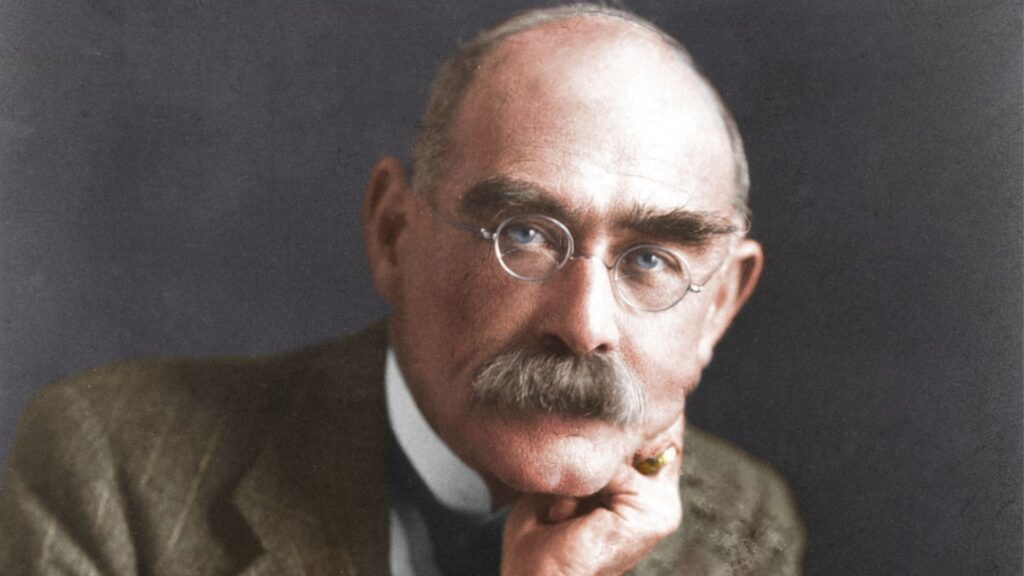English poet Rudyard Kipling.
Again, it seems to me that who or whatever compiled this list was straining to remember **any** poems from their childhood. *If* is clever, satisfying, and reassuring, but it is not Chaucer.
I first read *The Raven* in eighth grade. We spent a week on Poe, beginning with his short stories, *The Tell-Tale Heart* and *The Pit and the Pendulum*. *The Raven* is a good poem, but it does not belong on this list. None of Poe’s poems belong on the top 10. I love the incantatory quality of his poem *Alone*:
From childhood’s hour I have not been
As others were — I have not seen
As others saw — I could not bring
My passions from a common spring —
*The Raven* is the longest poem in this list, and it is definitely worth reading — even better, worth hearing read by someone with a dramatic flair. My mother loved to recite it to her students.
*Do Not Go Gentle Into That Good Night* is a justly famous poem by the Welsh poet Dylan Thomas. Even if poetry is not your thing, you’ve surely heard someone intone “Rage, rage against the dying of the light.” Rage all you want, but death is the one appointment nobody fails to keep. *Do Not Go Gentle* is, to my mind, half poem, half cliché, and not top 100.
William Wordsworth (1770-1850) revolutionized English poetry. When Wordsworth and Samuel Taylor Coleridge published *Lyrical Ballads* in 1798 (Thomas Jefferson was vice president of the United States), they changed the course of English literature. *Daffodils* is justly celebrated. Here are the first two stanzas:
I wandered lonely as a cloud
That floats on high o’er vales and hills,
When all at once I saw a crowd,
A host, of golden daffodils;
Beside the lake, beneath the trees,
Fluttering and dancing in the breeze.
Continuous as the stars that shine
And twinkle on the milky way,
They stretched in never-ending line
Along the margin of a bay:
Ten thousand saw I at a glance,
Tossing their heads in sprightly dance.
There are much greater Wordsworth poems. Try *Tintern Abbey*, *Ode: Intimations of Immortality*, and the sonnet *The World is Too Much With Us*. But *Daffodils* joins the two by Robert Frost as being at least worthy of honorable mention in a top 10 list.
## **Simple Snobbery?**
So, what’s my point here? I may sound like a snob, but at least I’m not a beer snob! Besides, in a list of the Top 10 NBA Players of All Time, if you include Scotty Pippen and not Michael Jordan or Clay Thompson and not Kareem Abdul-Jabarr, you’d call down nearly universal condemnation.
Here’s the point.
First, AI is problematic and probably always will be because it aggregates rather than discriminates, making it unreliable in important ways. It can list everyone who has ever won the Heisman Trophy or how many votes Richard Nixon received in every county of the United States in 1968, but it cannot tell you the 10 Best Hollywood Movies of All Time. It can tell you the 10 highest-grossing movies of all time, but not the best. Beware beware.
Second, to a certain extent, one’s list of favorite poems or poets is arbitrary, of course, but there are some things we should be able to agree on. Where, on this reel’s list, is Coleridge’s *Kublai Khan*? Where is Keats’ *Ode on a Grecian Urn*? Where is Shakespeare’s Sonnet 116, “Let me not to the marriage of true minds admit impediments”? Where is T.S. Eliot’s *The Waste Land*? Where is anything by John Milton? Where is Langston Hughes’ *The Negro Speaks of Rivers*? Where is Robert Burns’ *To a Mouse*? Where is Allen Ginsberg’s *Howl*? Where is Maya Angelou’s *Still I Rise*? Where is Mary Oliver’s *Wild Geese*?
Can anyone really argue that Kipling’s *If* is better than William Butler Yeats’ *The Second Coming*?
Third, the reel sent me to my *[Norton Anthology of English Poetry](https://wwnorton.com/books/9780393679021),* which is never a bad way to spend a weekend afternoon. You can read all 10 of the reel’s nominees in less than an hour and decide for yourself how high each one ranks in your own poetic hierarchy. In fact, if you send me your top 10 list, I’ll be very happy to hear your choices.
Fourth, this sort of thing is definitely a slippery slope. The same AI engine has lists of the 10 Greatest Characters in Literature and the 10 Greatest Novels, among other mostly pointless exercises. To see Steinbeck’s *The Pearl* on the list of the 10 greatest novels and Orwell’s *Animal Farm*, but not Steinbeck’s *Grapes of Wrath* or Orwell’s *1984,* is discrediting, and who would nominate Dickens’ admittedly wonderful *Oliver Twist* over *David Copperfield, Bleak House, The Pickwick Papers,* and the incomparable *Great Expectations?* As the Romans said, *de gustibus non est disputandum* (there’s no accounting for taste).
Finally, I consider the 10 Greatest Poems list to be dangerous. Earnest people may accept the list as somehow authoritative and never know the glories of Andrew Marvell’s *To His Coy Mistress* or John Donne’s sonnet *Death Be Not Proud*.
To each their own. But how about this for the entirety of a sublime William Blake poem:
O Rose thou art sick.
The invisible worm,
That flies in the night
In the howling storm:
Has found out thy bed
Of crimson joy:
And his dark secret love
Does thy life destroy.
---
## ***Discover more on these topics at Listening to America***
[Walden](https://ltamerica.org/tag/walden/ "1 topics")[Rome](https://ltamerica.org/tag/rome/ "1 topics")[Oppenheim](https://ltamerica.org/tag/oppenheim/ "0 topics")[north daktoa](https://ltamerica.org/tag/north-daktoa/ "0 topics")[Pennsylvania](https://ltamerica.org/tag/pennsylvania/ "1 topics")[Video](https://ltamerica.org/tag/video/ "51 topics")[South Dakota](https://ltamerica.org/tag/south-dakota/ "16 topics")[South Carolina](https://ltamerica.org/tag/south-carolina/ "1 topics")[Poetry](https://ltamerica.org/tag/poetry/ "1 topics")[Travel](https://ltamerica.org/tag/travel/ "1 topics")[Wisconsin](https://ltamerica.org/tag/wisconsin/ "0 topics")[paintings](https://ltamerica.org/tag/paintings/ "0 topics")[North Carolina](https://ltamerica.org/tag/north-carolina/ "3 topics")[U.S. Presidents](https://ltamerica.org/tag/u-s-presidents/ "71 topics")[New England](https://ltamerica.org/tag/new-england/ "1 topics")[State Parks](https://ltamerica.org/tag/state-parks/ "2 topics")[Oregon](https://ltamerica.org/tag/oregon/ "4 topics")[Texas](https://ltamerica.org/tag/texas/ "4 topics")[Water in the West](https://ltamerica.org/tag/water-in-the-west/ "24 topics")[Theodore Roosevelt](https://ltamerica.org/tag/theodore-roosevelt/ "16 topics")[Sports](https://ltamerica.org/tag/sports/ "2 topics")[New York](https://ltamerica.org/tag/new-york/ "8 topics")[North Dakota](https://ltamerica.org/tag/north-dakota/ "53 topics")[New Mexico](https://ltamerica.org/tag/new-mexico/ "3 topics")[Space Exploration](https://ltamerica.org/tag/space-exploration/ "8 topics")[Republics](https://ltamerica.org/tag/republics/ "1 topics")[Thomas Jefferson](https://ltamerica.org/tag/thomas-jefferson/ "34 topics")[Podcast](https://ltamerica.org/tag/podcast/ "1 topics")[William Shirer](https://ltamerica.org/tag/william-shirer/ "1 topics")[The Constitution](https://ltamerica.org/tag/the-constitution/ "1 topics")[U.S. Constitution](https://ltamerica.org/tag/u-s-constitution/ "1 topics")[Utah](https://ltamerica.org/tag/utah/ "11 topics")[Republic](https://ltamerica.org/tag/republic/ "0 topics")[Vermont](https://ltamerica.org/tag/vermont/ "1 topics")[Tennessee](https://ltamerica.org/tag/tennessee/ "1 topics")[Road Trips](https://ltamerica.org/tag/road-trips/ "18 topics")[Wyoming](https://ltamerica.org/tag/wyoming/ "4 topics")[Thoreau](https://ltamerica.org/tag/thoreau/ "5 topics")[Ohio](https://ltamerica.org/tag/ohio/ "2 topics")[Steinbeck Travels](https://ltamerica.org/tag/steinbeck-travels/ "75 topics")[Oppenheimer](https://ltamerica.org/tag/oppenheimer/ "1 topics")[Virginia](https://ltamerica.org/tag/virginia/ "7 topics")[Reading](https://ltamerica.org/tag/reading/ "1 topics")[Washington](https://ltamerica.org/tag/washington/ "2 topics")[Rivers](https://ltamerica.org/tag/rivers/ "3 topics")
**Categories:** Dispatches from the Road
**Tags:** Books, Humanities
---
### [America at 250: Echoes of the Roman Republic?](https://ltamerica.org/america-at-250-echoes-of-the-roman-republic/)
**Published:** February 23, 2026
**Author:** Clay Jenkinson
**Excerpt:** America’s Founding Fathers drew heavily on the last years of the Roman Republic in crafting our nation’s founding documents, foreseeing both the promise and the frailties of a Republic.
**Content:**
## America’s Founding Fathers drew heavily on the last years of the Roman Republic in crafting our nation’s founding documents, foreseeing both the promise and the frailties of a Republic.
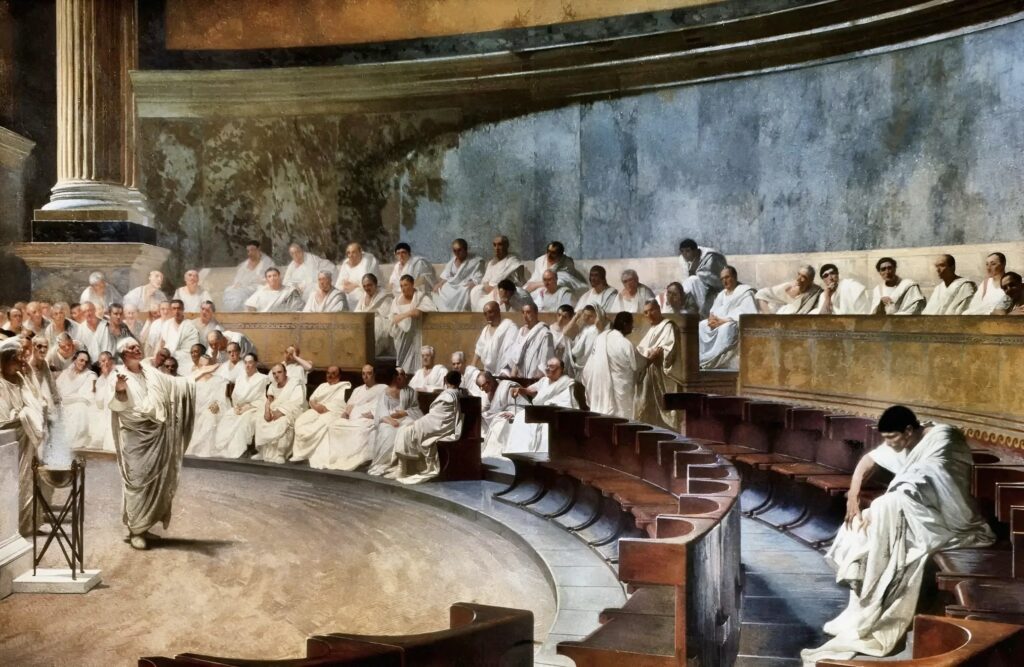A fresco by artist Cesare Maccari (1840-1919) depicting Roman Consul Cicero (63 BCE) denouncing Catiline’s conspiracy to overthrow the Republic in the Roman senate. (Public Domain).
I had the great good fortune to share a stage recently with the historian [Ed Watts](https://ucsdguardian.org/2019/03/10/professor-watts-wonders-past/) of the classics department of the University of California, San Diego. Professor Watts is the author of several books, most notably *[Mortal Republic: How Rome Fell into Tyranny](https://www.hachettebookgroup.com/titles/edward-j-watts/mortal-republic/9780465093823/?lens=basic-books)*. His newest book, *[The Romans: A 2,000-Year History](https://www.hachettebookgroup.com/titles/edward-j-watts/the-romans/9781541619821/?lens=basic-books)*, is approximately a gazillion pages long, but worth it.
I invited Dr. Watts to share the stage with me at the [Vail Symposium](https://vailsymposium.org/events/what-is-the-constitution/) in Colorado, where I serve as a moderator four times per year. Our subject is perhaps inevitable, given where things stand on the 250th anniversary of the United States of America: Are We Rome?
Historian Edward Watts
This question, “Are We Rome?” has been something of a national obsession in the United States from the very beginning. The Founding Fathers (and such Founding Mothers as Abigail Adams, Mercy Otis Warren, and Theodosia Burr) were all deeply schooled in the last two centuries of the Roman Republic (509–27 BCE). When the Founders wrote op-ed pieces, they signed them as Publius, Fabius, Cato, Horatius, and Helvidius, straight out of the Roman historians [Livy](https://www.britannica.com/biography/Livy) and [Cassius Dio](https://www.livius.org/sources/content/cassius-dio/).
The American Founders knew the life and achievements of Caesar, Pompey, Crassus, Cato the Younger, Cataline, Augustus Caesar, Cicero, Cincinnatus, and the Gracchi brothers the way we know the Kardashians, Taylor Swift, Bill Maher, Brad Pitt, and Whoopi Goldberg. We are, in short, doomed. The Founders were desperate to create an American republic, not a monarchy, aristocracy, or democracy, and certainly not a tyranny. Their model was Rome. They were aware from their obsessive reading of Roman history and literature that a republic is inherently fragile.
The Founders borrowed heavily from the last years of the Roman Republic when they crafted our great founding documents — the Declaration of Independence, the Constitution, the Bill of Rights, and the Federalist Papers — to provide the new republic all the guardrails they could think of. Such terms as capital, Senate, legislation, veto, and republic itself (the Latin *res publica*, “the public stuff”) come straight out of Rome, not fourth-century BCE Athens, nor the parliamentary vocabulary of 18th century Great Britain. The snooty British ambassador [Anthony Merry](https://voicesoftheeasternshore.org/item/4689) found it hilarious as well as appalling when the Founders renamed the District of Columbia’s Goose Creek the Tiber!
Ed Watts is a careful and exceptionally rigorous historian, so we should not expect him to jump on the We A*re* Rome bandwagon. But he knows that republics fail when those who lose elections fail to accept the results. The heart of a republic is the peaceful transfer of power. He knows republics fail when political disagreement devolves into political violence. He knows republics fail when rich and powerful men surround themselves with private armies. He knows republics fail when the divide between the few rich and the masses of the poor becomes so great that the poor have nothing to lose by taking their grievances to the streets. Republics die when public officers (magistrates) use the apparatus of the state to punish their real and perceived political enemies. Republics fail when what the late John McCain called “regular order” collapses into national political paralysis and mutual demonizing.
Consider this passage from the conclusion of Professor Watt’s book:
*“Each of these men’s \[Caesar, Pompey, etc.\] selfish, individualized pursuits of glory ensured that Romans quickly returned to a form of elite political competition in which no limits were placed on the tools one would use to vanquish his opponents. And the fact that ordinary Romans did not immediately oppose all of these selfish acts and punish all these actors by withholding their votes simply encouraged more and more extreme misbehavior.”*
Sound familiar? This should keep us up at night.
Thomas Jefferson made much the same point in his great First Inaugural Address on March 4, 1801. You have to read the following passage very carefully to discern both the fragility of our republic (any republic) and Jefferson’s formulation for a republic’s success and survival:
*“All, too, will bear in mind this sacred principle, that though the will of the majority is in all cases to prevail, that will to be rightful must be reasonable; that the minority possess their equal rights, which equal law must protect, and to violate would be oppression. Let us, then, fellow-citizens, unite with one heart and one mind. Let us restore to social intercourse that harmony and affection without which liberty and even life itself are but dreary things.”*
The deist Jefferson does not use the word “sacred” lightly. He is saying that our system, of course, depends on majority rule, but the majority needs to show special respect to the minority, “must be reasonable,” in other words, must be accommodating, and not lord it over the minority (by which he means those who did not win the vote this time). When he declares that the minority “possess their equal rights,” Jefferson means that the “minority” is made up of our fellow citizens, our friends and neighbors, and they should be treated with the utmost respect, as you hope they will treat you when they are in the majority. You don’t punish the opposition; you accord them equal respect and dignity, “to violate which would be oppression.” What Jefferson has in mind is a conciliatory majority and what we used to call the “loyal opposition.”
Is this code of republican conduct enforceable? No, of course not. It requires character and virtue, both national and individual. If this regimen of voluntary disciplines and self-restraints, this voluntary generosity of spirit, does not prevail in the citizenry, “liberty and even life itself become dreary things.” Life itself! says Jefferson. The Roman people had these qualities at their best. And when this unenforceable “spiritual” essence of a republic yielded to unfettered ambition and unfettered aggression, the Roman republic died.
As a loyal Jefferson scholar, I am compelled to acknowledge that we have never been the people of Jefferson’s semi-utopian vision. The election of 1800, when Jefferson narrowly defeated John Adams for the presidency, was one of the most vituperative in American history. But it is clear that, for most of American history, we have been closer to Jefferson’s republican ideal than we are now, and the breakdown of commonwealth values is one reason we seem to be circling the drain at 250. When is the last time that a major political figure in America behaved in this republic-over-self manner? Perhaps it was [Al Gore’s concession speech](https://www.youtube.com/watch?v=d25x0h28oSI) on December 13, 2000. Or Richard Nixon in not contesting [the very contestable election](https://constitutioncenter.org/blog/the-drama-behind-president-kennedys-1960-election-win#:~:text=In%20Illinois%2C%20there%20were%20rampant,and%20investigations%20in%2011%20states.) of 1960, when it was quite clear that the Democrats had cheated in Texas and Chicago.
If the American republic collapses, it won’t be primarily the responsibility of our sorry roster of national political figures. It will be on us.
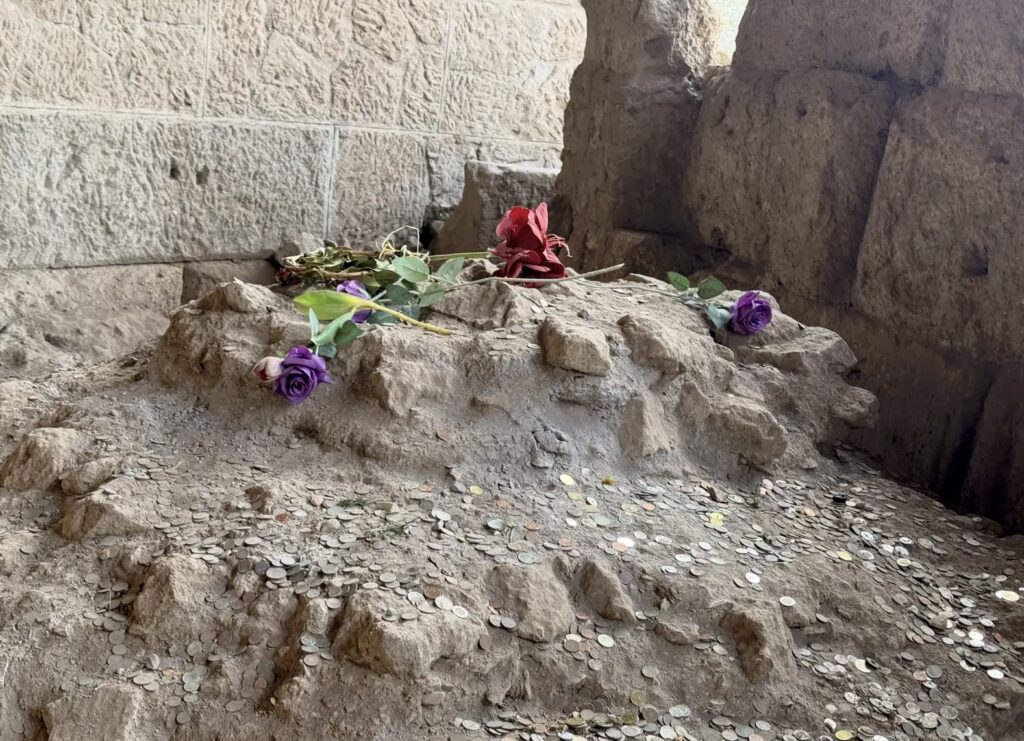The grave site of Julius Caesar (100–44 BC). Photo Clay Jenkinson.
When, in the year 2020, I first read *Mortal Republic*, a book focused on the last decades of the Roman Republic, every 10 pages or so, I looked up from my reading and asked myself, out loud, “Is he talking about Rome or is he talking about us?” Watts revealed on stage in Vail that in the course of writing his book (after the 2016 election), he found himself wondering about our current predicaments more than he had intended when he undertook the project. And things have only begun to echo more worryingly in the last half dozen years.
## **But …**
Professor Watts’ greatest concern is not January 6, 2021, or the Proud Boys, or even the antics of our current president, a self-described disruptor who says he is contemptuous of the U.S. Constitution. His concern is with the American people.
*“Rome’s republic, then, died because it was allowed to. Its death was not inevitable. … When citizens take the health and durability of their republic for granted, that republic is at risk.”* Think of all that we have taken for granted as mostly disengaged and escapist citizens of the American republic. The Epstein files are of great importance, but they are not nearly as important as the dizzy decline of our republican system of government. We cannot expect America to be saved by a Kennedy, a Reagan, or a Roosevelt. Elvis has left the building. Nor can Ed Watts set us right, but if we read his work with full attention and gaze into the mirror he carefully holds up to us, we, the people, might be able to pull back from the abyss. Here’s the last sentence of *Mortal Republic*:
*“In ancient Rome and in the modern world, a republic is a thing to be cherished, protected, and respected. If it falls, an uncertain, dangerous, and destructive future lies on the other side.”*
He has my attention. I urge you to borrow or buy the book and read it.
---
## ***Discover more on these topics at Listening to America***
[William Shirer](https://ltamerica.org/tag/william-shirer/ "1 topics")[North Dakota](https://ltamerica.org/tag/north-dakota/ "53 topics")[Pennsylvania](https://ltamerica.org/tag/pennsylvania/ "1 topics")[Utah](https://ltamerica.org/tag/utah/ "11 topics")[Thoreau](https://ltamerica.org/tag/thoreau/ "5 topics")[Wisconsin](https://ltamerica.org/tag/wisconsin/ "0 topics")[Republic](https://ltamerica.org/tag/republic/ "0 topics")[Oregon](https://ltamerica.org/tag/oregon/ "4 topics")[Ohio](https://ltamerica.org/tag/ohio/ "2 topics")[Oppenheimer](https://ltamerica.org/tag/oppenheimer/ "1 topics")[Poetry](https://ltamerica.org/tag/poetry/ "1 topics")[South Dakota](https://ltamerica.org/tag/south-dakota/ "16 topics")[Vermont](https://ltamerica.org/tag/vermont/ "1 topics")[South Carolina](https://ltamerica.org/tag/south-carolina/ "1 topics")[U.S. Presidents](https://ltamerica.org/tag/u-s-presidents/ "71 topics")[New Mexico](https://ltamerica.org/tag/new-mexico/ "3 topics")[Oppenheim](https://ltamerica.org/tag/oppenheim/ "0 topics")[Travel](https://ltamerica.org/tag/travel/ "1 topics")[Wyoming](https://ltamerica.org/tag/wyoming/ "4 topics")[Road Trips](https://ltamerica.org/tag/road-trips/ "18 topics")[Video](https://ltamerica.org/tag/video/ "51 topics")[Tennessee](https://ltamerica.org/tag/tennessee/ "1 topics")[north daktoa](https://ltamerica.org/tag/north-daktoa/ "0 topics")[Rivers](https://ltamerica.org/tag/rivers/ "3 topics")[Water in the West](https://ltamerica.org/tag/water-in-the-west/ "24 topics")[State Parks](https://ltamerica.org/tag/state-parks/ "2 topics")[Theodore Roosevelt](https://ltamerica.org/tag/theodore-roosevelt/ "16 topics")[U.S. Constitution](https://ltamerica.org/tag/u-s-constitution/ "1 topics")[North Carolina](https://ltamerica.org/tag/north-carolina/ "3 topics")[New England](https://ltamerica.org/tag/new-england/ "1 topics")[Texas](https://ltamerica.org/tag/texas/ "4 topics")[Space Exploration](https://ltamerica.org/tag/space-exploration/ "8 topics")[New York](https://ltamerica.org/tag/new-york/ "8 topics")[The Constitution](https://ltamerica.org/tag/the-constitution/ "1 topics")[Reading](https://ltamerica.org/tag/reading/ "1 topics")[Republics](https://ltamerica.org/tag/republics/ "1 topics")[Virginia](https://ltamerica.org/tag/virginia/ "7 topics")[paintings](https://ltamerica.org/tag/paintings/ "0 topics")[Walden](https://ltamerica.org/tag/walden/ "1 topics")[Rome](https://ltamerica.org/tag/rome/ "1 topics")[Steinbeck Travels](https://ltamerica.org/tag/steinbeck-travels/ "75 topics")[Podcast](https://ltamerica.org/tag/podcast/ "1 topics")[Sports](https://ltamerica.org/tag/sports/ "2 topics")[Washington](https://ltamerica.org/tag/washington/ "2 topics")[Thomas Jefferson](https://ltamerica.org/tag/thomas-jefferson/ "34 topics")
**Categories:** Features
**Tags:** America at 250, Books, Humanities, U.S. Presidents
---
### [Book Review — Volga Blues: A Journey Into the Heart of Russia](https://ltamerica.org/book-review-volga-blues-a-journey-into-the-heart-of-russia/)
**Published:** February 16, 2026
**Author:** Clay Jenkinson
**Excerpt:** My friend, the Italian journalist Marzio Mian, has just published a remarkable book on his monthlong underground journey along Russia’s sacred Volga River. Part travelogue, part Russian history, and part exploration of the dense, tragic Russian soul in a time of brutal war, the book is a powerful read when America’s place in world affairs is significantly unsettled.
**Content:**
## My friend, the Italian journalist Marzio Mian, has just published a remarkable book on his monthlong underground journey along Russia’s sacred Volga River. Part travelogue, part Russian history, and part exploration of the dense, tragic Russian soul in a time of brutal war, the book is a powerful read when America’s place in world affairs is significantly unsettled.
Teenager selling WW II memorabilia. Rzhev, Russia. July 2023. Photograph by Alessandro Cosmelli.
My friend Marzio Mian of Milan, Italy, has published a new book on Russia. Marzio is an award-winning journalist who has traveled to 56 countries around the world, sometimes at great risk, including war zones in Bosnia and Africa. The English language edition of [*Volga Blues: A Journey Into the Heart of Russia*](https://wwnorton.com/books/9781324111030) is just out in the United States. *Volga Blues* was recently very favorably reviewed in the *New Yorker*, and I now see it prominently displayed in major bookstores everywhere I travel. In 2023, Marzio and his friend and photographer Alessandro Cosmelli spent just under five weeks following the Volga River corridor from the river’s source in the Valdai Hills, 220 miles northwest of Moscow, all the way to its mouth at the north end of the Caspian Sea. They hired two young, spirited Russians, Marzio calls “Vlad” and “Katya,” to interpret for them and drive them along the river. Their goal was to see what they could learn about the mood of average Russians as the catastrophic war against Ukraine grinds on.
Cover image for the book *Volga Blues* by Marzio Mian with photographs by Alessandro Cosmelli.
*Volga Blues* is an amazing journey story and a great book, part travelogue, part sketch of elements of Russian history, and part exploration of the dense, tragic Russian soul in a time of brutal war. I’ve read a number of books about the Russian Revolution of 1917, the USSR., the Cold War, Vladimir Putin, and post-communist Russia, but this is, without question, the best book on Russia I have ever read. In the midst of heavy competition. This includes the English philosopher Bertrand Russell’s *Practice and Theory of Bolshevism*, which he published after his disillusioning visit to the Soviet Union in 1920; and John Steinbeck’s excellent *Russian Journal*, published after his visit to Moscow, Kyiv, Stalingrad, and Georgia (with photographer Robert Capa) in 1947.
Marzio Mian has a deep fascination with rivers. I first met him 10 years ago, when he and Alessandro were traveling along the Missouri-Mississippi River corridor in the United States, from Lake Itasca in northern Minnesota to the Mississippi’s delta below New Orleans. More recently, in 2019, Marzio published a biography of Italy’s Tiber River. Though it is only 252 miles long, the Tiber (like the 215-mile Thames in England) has historic significance far greater than its length or volume.
Italian journalist and author Marzio Mian.
Marzio and Alessandro ventured deep into the heart of wartime Russia at great risk. They were traveling undercover, without having sought foreign journalist credentials from the Russian ministry. To have done so, even in the unlikely event they had received official permission from the government, would have fatally distorted the project, which was to mingle with average Russians in unexpected venues and see the country for themselves rather than through the lens of “state-managed encounters.” Had they been arrested by government authorities at any point along the way, they would certainly have been detained, perhaps indefinitely. As they made their way down the Volga, often visiting places along the river where journalists (foreign and domestic) were not welcome, they lived in fear that Russian security agents would bang on the door of their lodgings in the middle of the night and whisk them off to interrogation and detention. By the end of the journey they could no longer even be sure that Vlad and particularly Katya were reliable guides; Katya, on the eve of their departure from Astrakhan at the mouth of the Volga to Baku in Azerbaijan, threatened to report them to the Russian authorities: “Katya’s threat, now that we are facing our last mile of Russia alone, is ringing in our ears, amplifying the ticking of the bomb. Will we be ambushed in the closing credits?”
The 2,193-mile Volga River is not quite the longest river in Russia, but it is by far the most important. The Volga is the mother river (*matushka*) of the world’s largest country. Before Marzio’s journey began, the director of the Hermitage (museum) in St. Petersburg told him, “Russia would not exist without the Volga. It was everything, and it remains everything. It’s the life force of a nation. Symbol and destiny. It’s the autobiography of a people.” What an amazing statement. The only analogy we Americans have is the mighty Mississippi, the “Father of Waters,” but we don’t regard the Mississippi with anything like the passion, sacramental reverence, or centrality to the identity of the American people that the Volga embodies in Russian history and mythology.
*Volga Blues* reminds us that many of Russia’s most important events in its long history have occurred along the river. Russia was born on the Volga around 830 CE (AD) when Scandinavian Vikings (the Rus’) mingled with East Slavic tribes. Some of the greatest Russian writers have a Volga connection, including Maxim Gorky, Ivan Goncharov (the author of the novel *Oblomov*), and Leo Tolstoy. Lenin (1870-1924) lived in Ulyanovsk until 1887, when he moved to Kazan (also on the Volga) to pursue his studies. One of the greatest battles in human history occurred at Stalingrad (now Volgograd) between August 1942 and February 1943, resulting in almost 2 million casualties, slightly more than half of them Russian. The Battle of Stalingrad “turned the tide of the 20th century,” Marzio writes — 41,000 buildings demolished, and, at the moment of victory in February 1943, when Hitler lost the war and doomed the Third Reich, only 7,000 Russian residents remained in Stalingrad of a previous population of 400,000.
(Shutterstock)
The Russians have a long, dark memory that haunts even the war in Ukraine. America’s “greatest generation” lost approximately 405,000 soldiers in World War II, what the Russians call the Great Patriotic War. Russian losses? Approximately 30 million, including 19 million civilians. This is a fact that the American people cannot possibly understand or even fathom.
The Volga is an endorheic river — it flows in a closed basin, its waters never reach the ocean. The Volga’s outlet is into the Caspian Sea, the largest lake in the world. In this, it resembles other closed basins, including America’s Great Basin in Nevada, Utah, and bits of Idaho, California, Wyoming, and Oregon. The entire flow of the Volga is contained within Russia’s borders. Somehow, this seems symbolically important as we try to make sense of Russia’s psychological insularity.
## ***Volga Blues* is worth reading merely as a well-written and spirited travelogue by an award-winning journalist with a great eye for the telling detail. But it is Marzio’s findings — his tentative conclusions — that I find most interesting and a little haunting, given America’s simplistic view of the war in Ukraine.**
*First*, **the Russian people (on the whole) look upon the war in Ukraine as a defensive war**. They believe the West (NATO, Europe, and the U.S.) is the aggressor and that Russia is fighting not only for its territorial integrity and regional security, but also to preserve the unique Russian Slavic identity from the cultural decadence of the West. Here in America, we see Putin as the sole aggressor, gobbling up Crimea in 2014 and now another chunk of Ukraine (2022-), more if he succeeds. The first instance of an armed invasion of another sovereign European nation since World War II. The average Russian sees the war as yet another in a long series of Western invasions of the homeland: Poland (1605-1618), Sweden (1708-1709), Napoleon (1812), and Hitler (1941-1944). And now Europe and NATO are relying on the United States’ checkbook. It helps, of course, that there is no real free press in Russia. Putin has said, “We’re once again being threatened by German panzers … and once again, we’ve been called to push back Western aggression.” The state-controlled media conforms to Putin’s narrative, that this war somehow represents an existential threat to the core Russian identity and would have been unnecessary if the West had kept its word after the collapse of the Soviet Union and not extended NATO right up to its borders (Poland 1999, Estonia, Latvia, and Lithuania 2004, and Finland 2023).
Children playing on a Red Army tank from War World II. Volgograd, Russia. July 2023. Photograph by Alessandro Cosmelli
*Second*, in spite of the heavy losses (350-450,000 dead so far, more than a million casualties), **the Russian people support the war**. In the course of his travels, Marzio sensed a deep and growing war weariness among the Russian people, but so far, they still mostly support Putin’s military initiative. Marzio says it’s when the Russian women take to the streets in mass numbers (as they did toward the end of the debacle in Afghanistan, 1979-1989) that the Russian government and military have to pull back and broker whatever peace they can negotiate, but he saw no evidence of that in his 2023 travels.
*Third*, **up until now, the Russian economy has not collapsed**, despite gigantic war expenditures (guns, not butter) and heavy sanctions. The sanctions have, in many respects, backfired. To fill the gap left by international corporations that have pulled out of Russia (Apple, Starbucks, etc.) a new wave of Russian entrepreneurship has emerged. Ironically, the sanctions have diversified the Russian economy and enabled Russia to graduate from its status as a petro-state. Basic commodity prices have not risen much, if at all, during the war years, and in some cases have diminished. Inevitably, a number of “friendly” nations (including China, India, and North Korea) have found ways to circumvent the sanctions, much of it along the historically central Volga shipping corridor.
Photograph by Alessandro Cosmelli
*Fourth*, **while Putin is not exactly beloved, the Russian people on the whole continue to support him**. His nostalgic grievance for the lost Russian Empire resonates with much of the population, 194 million and dropping, mostly because of the low birth rate, poor health, and the ubiquity of vodka. Russia has never shown much interest in Western-style democracy and open markets. Putin’s dictatorship does not particularly offend the Russian soul, which has embraced Western Enlightenment ideals and political structures only rarely and briefly. The Russians see America and Western Europe in palpable decline (and awash in decadence). Many Russians believe they will be “the last man standing,” the true home of high culture and civilization, when the West collapses. They believe the answer to Western weakness is a highly centralized Russian government led by an autocratic or semi-autocratic strongman. Russia is not Iran, with tens of millions of good people desperate to throw off the yoke of tyranny and sharia fundamentalism.
*Finally*, Marzio is certain that **the West (and particularly the United States) neither understands Russia nor seeks to,** and partly because of this, has made serious mistakes in its response to the Russian invasion of Ukraine. The European press, even more than the American, says Marzio, has cast the war in simplistic black and white terms, what he calls Manichaean terms, unnecessarily heroizing Volodymyr Zelensky, and pitting plucky and “democratic” Ukraine against the unconscionable and brutal Russian bear. Marzio regards this as caricature. He accuses the Western press of preferring lazy anti-Russian propaganda to the search for truth. At the very least, the geopolitical situation is more complicated than the West pretends, and even a moderate understanding of Russian history offers a more accurate, more nuanced, and somewhat more sympathetic view of Russia’s perspective in the struggle. Like the rest of us, Marzio decries Putin’s brutal aggressions, and particularly the growing inventory of war crimes (mostly) perpetrated by Russian and allied troops. But you cannot travel the Volga for a month without awakening to a less tidy and less self-serving narrative.
## **How Does This War End?**
In an interview I recently conducted with Marzio, I asked him the obvious closing question. How does this war end? “Unclear,” he said, but it appears that the United States (and not merely the Trump administration) is going to pull away, provide fewer and fewer grants of cash and weaponry to Ukraine, and probably force a peace treaty that yields a good deal of territory to Russia, with little or no regard for the appalling outrage this represents to the 39 million people of Ukraine. It seems likely, too, that the U.S. will broker (impose) a settlement that gives Russia a greater presence in the government of Ukraine, and no iron guarantee that no subsequent invasion(s) will occur.
I want to make two important points in conclusion. After reading this, you may think that Marzio Mian is an apologist for Vladimir Putin and his Russia. Not so. Marzio is a thoroughly Western and cosmopolitan geopolitical liberal who is subject to no illusions about the war or the character of the current Russian autocrat. In addition, in 2023, he witnessed firsthand the dark apprehensions of the Russian people as the war drains more and more human and financial resources from a nation desperately in need of peaceful economic reform and development. If that was how things looked in the summer of 2023, imagine how much worse things are in Russia in the spring of 2026, in the fourth year of a ruinous war for which the Russian military was not adequately prepared. *Volga Blues* is not an op-ed piece but a careful study of one of the world’s most consequential nations in the midst of an international crisis that may set back Russia for decades, perhaps longer.
My second point is that *Volga Blues* would be an outstanding book even if there were no war in Ukraine. Marzio has gotten closer to the heart of Russia and the Russian people than any writer I know. I’ve learned most of what I know about the Russian heartland from this book, and essentially *all* I know about the Volga, one of the world’s great rivers. If it were safe to retrace parts of his journey, I’d be there, right after I spent a week in St. Petersburg with Dostoevsky and the Hermitage! I’d give anything to bestride the source of the Volga with Marzio, who brings as much humor as insight to the quest, and who has a genius for finding the right people and the right location from which to tell the story of Russia in our time.
---
## ***Discover more on these topics at Listening to America***
[Washington](https://ltamerica.org/tag/washington/ "2 topics")[New Mexico](https://ltamerica.org/tag/new-mexico/ "3 topics")[Thomas Jefferson](https://ltamerica.org/tag/thomas-jefferson/ "34 topics")[paintings](https://ltamerica.org/tag/paintings/ "0 topics")[Travel](https://ltamerica.org/tag/travel/ "1 topics")[William Shirer](https://ltamerica.org/tag/william-shirer/ "1 topics")[Poetry](https://ltamerica.org/tag/poetry/ "1 topics")[South Dakota](https://ltamerica.org/tag/south-dakota/ "16 topics")[Oppenheim](https://ltamerica.org/tag/oppenheim/ "0 topics")[Steinbeck Travels](https://ltamerica.org/tag/steinbeck-travels/ "75 topics")[New York](https://ltamerica.org/tag/new-york/ "8 topics")[Wyoming](https://ltamerica.org/tag/wyoming/ "4 topics")[Utah](https://ltamerica.org/tag/utah/ "11 topics")[Rivers](https://ltamerica.org/tag/rivers/ "3 topics")[The Constitution](https://ltamerica.org/tag/the-constitution/ "1 topics")[Rome](https://ltamerica.org/tag/rome/ "1 topics")[Sports](https://ltamerica.org/tag/sports/ "2 topics")[New England](https://ltamerica.org/tag/new-england/ "1 topics")[U.S. Presidents](https://ltamerica.org/tag/u-s-presidents/ "71 topics")[North Dakota](https://ltamerica.org/tag/north-dakota/ "53 topics")[State Parks](https://ltamerica.org/tag/state-parks/ "2 topics")[Texas](https://ltamerica.org/tag/texas/ "4 topics")[Reading](https://ltamerica.org/tag/reading/ "1 topics")[Wisconsin](https://ltamerica.org/tag/wisconsin/ "0 topics")[Theodore Roosevelt](https://ltamerica.org/tag/theodore-roosevelt/ "16 topics")[U.S. Constitution](https://ltamerica.org/tag/u-s-constitution/ "1 topics")[Pennsylvania](https://ltamerica.org/tag/pennsylvania/ "1 topics")[Virginia](https://ltamerica.org/tag/virginia/ "7 topics")[Tennessee](https://ltamerica.org/tag/tennessee/ "1 topics")[north daktoa](https://ltamerica.org/tag/north-daktoa/ "0 topics")[Thoreau](https://ltamerica.org/tag/thoreau/ "5 topics")[Vermont](https://ltamerica.org/tag/vermont/ "1 topics")[Oregon](https://ltamerica.org/tag/oregon/ "4 topics")[Road Trips](https://ltamerica.org/tag/road-trips/ "18 topics")[Republic](https://ltamerica.org/tag/republic/ "0 topics")[Space Exploration](https://ltamerica.org/tag/space-exploration/ "8 topics")[Walden](https://ltamerica.org/tag/walden/ "1 topics")[Water in the West](https://ltamerica.org/tag/water-in-the-west/ "24 topics")[Republics](https://ltamerica.org/tag/republics/ "1 topics")[Podcast](https://ltamerica.org/tag/podcast/ "1 topics")[North Carolina](https://ltamerica.org/tag/north-carolina/ "3 topics")[South Carolina](https://ltamerica.org/tag/south-carolina/ "1 topics")[Video](https://ltamerica.org/tag/video/ "51 topics")[Oppenheimer](https://ltamerica.org/tag/oppenheimer/ "1 topics")[Ohio](https://ltamerica.org/tag/ohio/ "2 topics")
**Categories:** Books
**Tags:** America at 250, Books, Humanities
---
### [Downsizing Pays off Big — With a Trip Down Abbey Road](https://ltamerica.org/downsizing-pays-off-big-with-a-trip-down-abbey-road/)
**Published:** February 10, 2026
**Author:** Clay Jenkinson
**Excerpt:** I don’t know exactly what I expected from my personal downsizing campaign, but something really interesting is happening to me.
**Content:**
## I don’t know exactly what I expected from my personal downsizing campaign, but something really interesting is happening to me.
I write about it here, not because I reckon you are interested in [my struggles and resolutions](https://ltamerica.org/the-great-downsizing-campaign/), but because I think you might want to undertake something similar yourself, no matter where you are in your own journey of accumulation. In many respects, I am taking the Henry David Thoreau challenge: pare down your material life and your soul’s life will exfoliate.
Can that be true?
So far, I have given away 3,000 books and about a ton (literally) of other stuff. And I’m only at the beginning of this long process. I do feel some liberation. I feel real satisfaction. I feel better about myself. I’m a little better organized, on my way to becoming much better organized, if only because now I have some empty space in shelves, cupboards, and closets to put the appropriate things in.
All of that was predictable, though it took me a very long time to take the first crucial step. What I did not see coming was the way this process has unlocked parts of my brain that have been under the radar. Culling an over-swollen library (and house) has required me to make a kind of mind map. Of all the subjects I have bought books about — from classical tragedy to Native American literature to the making of the atomic bomb, etc., what lives sufficiently deep in my brain, memory, consciousness, and heart is why I want to hold on to those books when it is clear that I cannot ever read all that I would like to read or (to use a favorite metaphor) spin all those plates much longer? So I’m giving away most of my books on World War I, on current events of the last 20 years, on the Little Bighorn. Before I make any of these decisions, I do some hard thinking about what matters to me and (now) how much. Five times out of 10, I wind up stopping to read in a book on that subject for an hour or two, and then I close the book with a kind of tentative finality. (And of course I always keep at least 10 other books on every subject!)
But it gets even better than that. It’s been an awakening, a re-awakening. Yesterday, home and weary from a long week elsewhere, I sat down to read a chapter or two of a recent book about the Beatles. One of the chapters was on *Abbey Road*, issued in 1969, when I was deep in the miasma of my adolescence. It is exceedingly painful for me to read about the Beatles’ breakup. Back then, we were told it was Yoko, but even then, we sensed it was more complicated than that. Now, when we read serious books about those disintegrating years (1966-1969), we see that it was mostly about John and Paul, not the women they loved. I can hardly stand to watch the first hours of Peter Jackson’s *Get Back* documentary. The book I was reading yesterday “places” certain songs within the larger narrative of those years and indicates how each song, in some way, embodies the crisis. Embodies, too, the genius of the Beatles, even in the nightmare of breaking up the most successful and influential band of all time.
A friend, Kari Armstrong, painted this mural of the Beatles on the basement wall of Clay’s home when he was 16.
So I stopped reading and played *Abbey Road* — loud, to fill the house. I suppose each of us has a song or album that made the difference. *Abbey Road* exists at the intersection of my childhood and my early manhood, where I was just beginning to understand that adults are pretty flawed (and in some respects unreliable). I was slowly becoming aware that adulthood is a flux of mystery and self-confusion, and there is no adequate roadmap. The Beatles of *Abbey Road* spoke to me like nothing else in my life ever had. I can see myself lying on my back on the plush carpet in my parents’ living room (a room off limits except for Christmas and their cocktail parties). I placed the 33rpm disc on the stereo platen and carefully lowered the crystal needle. I found my spot on the carpet, shut my eyes, and just listened. I can remember the moment, long ago in that living room, where the medley that ends with “She came in through the bathroom window” registered in my consciousness for the first time. (Who knows what it means?)
I won’t go into embarrassing detail, but yesterday, as I listened to *Abbey Road* with all that memory — the hundreds of times I have listened to it over the years, some purposefully, some accidentally, beginning a few weeks after its release — I fell into a kind of fugue state. I sang, I wept, I even danced for a few dozen seconds. Afterward, I went down into my main library and found all the Beatles books I have (15 or so), most of them in the right place, and only then ordered one or two more (for research!!).
Forgive me, Henry, for I have sinned.
The same has been true over the last two weeks as I have reread Thoreau’s *Walden*. It has spoken to me in new ways, after all this time. The same is true of the novels of Jane Austen, which I am reading through. And of Homer’s *Iliad*, which I am reading in a new translation (B+). In shedding things that are no longer essential to my sense of myself and the world, freeing up shelf space and head space, I am rediscovering things that have been dormant (or crowded out) for a while, some for a long while. It’s a rich, rich experience. A recovery.
Some of this, of course, comes from knowing I am in the seventh inning of my life. But most of it is about a long-overdue spring cleanup.
Meanwhile, I have been trying to develop a few new daily habits to increase my health and productivity, with considerable (albeit preliminary) success.
Thoreau says that when you take charge of your life and learn to live deliberately, you will cross an invisible boundary, and things will never be quite the same again. I don’t pretend that I have crossed it, nor that I will reach it, but I know that my old skepticism about Thoreau’s downsizing assurances was wrong.
Is there any more agreeable love song by the Beatles than George Harrison’s “Something”?
---
## ***Discover more on these topics at Listening to America***
[Space Exploration](https://ltamerica.org/tag/space-exploration/ "8 topics")[Thomas Jefferson](https://ltamerica.org/tag/thomas-jefferson/ "34 topics")[Republic](https://ltamerica.org/tag/republic/ "0 topics")[Republics](https://ltamerica.org/tag/republics/ "1 topics")[Sports](https://ltamerica.org/tag/sports/ "2 topics")[Texas](https://ltamerica.org/tag/texas/ "4 topics")[New England](https://ltamerica.org/tag/new-england/ "1 topics")[South Carolina](https://ltamerica.org/tag/south-carolina/ "1 topics")[Vermont](https://ltamerica.org/tag/vermont/ "1 topics")[State Parks](https://ltamerica.org/tag/state-parks/ "2 topics")[Poetry](https://ltamerica.org/tag/poetry/ "1 topics")[Water in the West](https://ltamerica.org/tag/water-in-the-west/ "24 topics")[Reading](https://ltamerica.org/tag/reading/ "1 topics")[north daktoa](https://ltamerica.org/tag/north-daktoa/ "0 topics")[Tennessee](https://ltamerica.org/tag/tennessee/ "1 topics")[Pennsylvania](https://ltamerica.org/tag/pennsylvania/ "1 topics")[Podcast](https://ltamerica.org/tag/podcast/ "1 topics")[U.S. Constitution](https://ltamerica.org/tag/u-s-constitution/ "1 topics")[Washington](https://ltamerica.org/tag/washington/ "2 topics")[Ohio](https://ltamerica.org/tag/ohio/ "2 topics")[Rome](https://ltamerica.org/tag/rome/ "1 topics")[Travel](https://ltamerica.org/tag/travel/ "1 topics")[Steinbeck Travels](https://ltamerica.org/tag/steinbeck-travels/ "75 topics")[Oppenheim](https://ltamerica.org/tag/oppenheim/ "0 topics")[The Constitution](https://ltamerica.org/tag/the-constitution/ "1 topics")[South Dakota](https://ltamerica.org/tag/south-dakota/ "16 topics")[Virginia](https://ltamerica.org/tag/virginia/ "7 topics")[Road Trips](https://ltamerica.org/tag/road-trips/ "18 topics")[Utah](https://ltamerica.org/tag/utah/ "11 topics")[Oppenheimer](https://ltamerica.org/tag/oppenheimer/ "1 topics")[Wisconsin](https://ltamerica.org/tag/wisconsin/ "0 topics")[Video](https://ltamerica.org/tag/video/ "51 topics")[Thoreau](https://ltamerica.org/tag/thoreau/ "5 topics")[North Dakota](https://ltamerica.org/tag/north-dakota/ "53 topics")[Theodore Roosevelt](https://ltamerica.org/tag/theodore-roosevelt/ "16 topics")[New York](https://ltamerica.org/tag/new-york/ "8 topics")[Wyoming](https://ltamerica.org/tag/wyoming/ "4 topics")[U.S. Presidents](https://ltamerica.org/tag/u-s-presidents/ "71 topics")[Rivers](https://ltamerica.org/tag/rivers/ "3 topics")[Walden](https://ltamerica.org/tag/walden/ "1 topics")[North Carolina](https://ltamerica.org/tag/north-carolina/ "3 topics")[New Mexico](https://ltamerica.org/tag/new-mexico/ "3 topics")[Oregon](https://ltamerica.org/tag/oregon/ "4 topics")[William Shirer](https://ltamerica.org/tag/william-shirer/ "1 topics")[paintings](https://ltamerica.org/tag/paintings/ "0 topics")
**Categories:** Dispatches from the Road
**Tags:** Books, Humanities, North Dakota
---
### [An Age of Disillusionment](https://ltamerica.org/an-age-of-disillusionment/)
**Published:** February 9, 2026
**Author:** Clay Jenkinson
**Excerpt:** What Is our American Story as the Nation’s 250th Birthday Approaches?
**Content:**
## What is our American Story as the nation’s 250th birthday approaches?
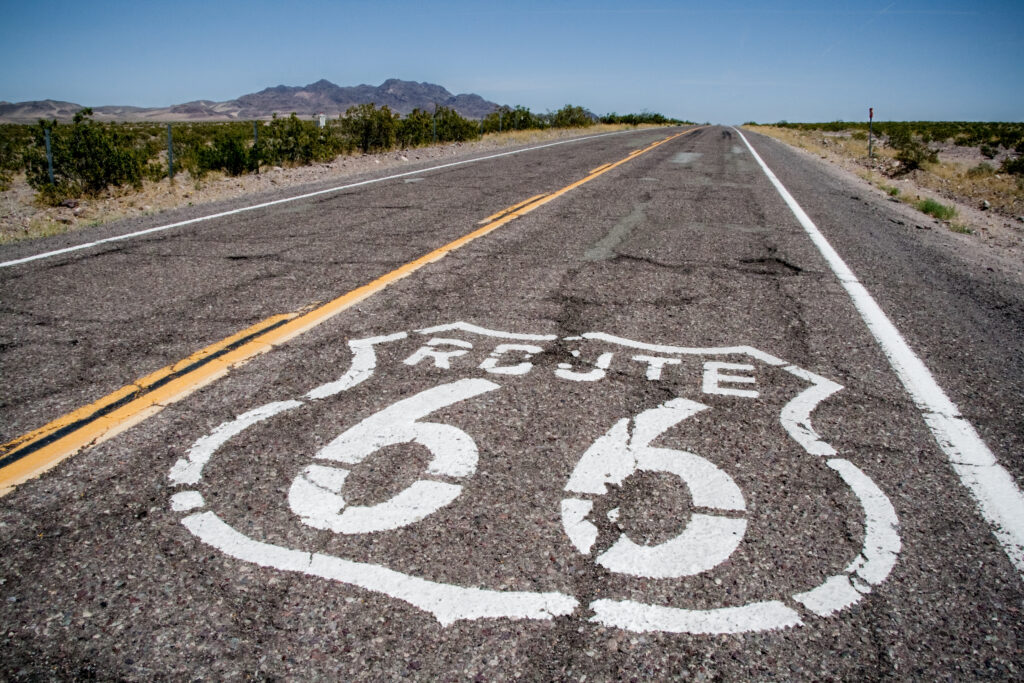
The 250th birthday of the United States is upon us. We can expect to be bombarded with logos, patriotic commercials, parades, songs, product lines, Happy Meals, American flags the size of football fields, speeches by Ken Burns and Doris Kearns Goodwin, and fireworks displays over the Potomac, over New York Harbor (silhouetting the Statue of Liberty), over San Francisco Bay. Tapes of Ray Charles singing *America the Beautiful*.
Think of the great trajectory. In 1776, we *were* a tenuous wartime coalition of 13 lightly populated Anglo-American colonies huddled on the eastern seaboard. A fresh, fragile nation of family farmers attempting to become (of all things) a republic. Population 2.5 million, one in five a slave. The world was all before us.
We *have become* the richest nation in human history, the most powerful, the most consequential, and the most globally essential. From that point of view, our national trajectory has been simply breathtaking. In 1800, when Jefferson was elected president, we were a harmless upstart nation of no consequence in the global arena. And now we are the colossus of the world, but depending on a number of factors, not for much longer. Our soft power permeates the most remote corners of the planet. Someone in the Brazilian jungle or eastern Angola is dressed in running shoes and a t-shirt, uses the internet, and watches American movies. There has been nothing like it in human history, not even at the height of the British Empire.
Now 250 years later, we are a vast multicultural nation of 340 million consumers straddling the continent and squinting at Canada and Greenland. Fragile in a whole new existential way. The world’s weary hegemon. A nation in retreat from global leadership. Obesity rate 41%. One in six Americans takes coping drugs. One in five of our children goes to bed hungry. We own 398 million guns, 290 million registered vehicles. The average credit card debt is $6,500 per person. The highest incarceration rate in the world, 4–7 times that of other developed nations. A spotty and irrational national health care “system.”
## **Questions We Should Ask**
Who were we then (1776–1787)? What was their dream of America? How well have we embodied that dream? Does it matter anymore what the Founders had in mind for us? Where are we headed? What binds us together? Are we in decline? Do we have a collective vision of the American future? Can we recover? Are we still one nation? Why is there so much angst in America, the most blessed of all countries in history? Why are we at each other’s throats? What is all the shouting about? What broke us?
The parades and fireworks are going to be great, but *these* are the questions we need to ask ourselves. What we really need is a thoughtful, evidence-based national conversation about who we are, how we got here, and where we are headed. If you don’t step back on a date this big (a quarter of a millennium) and do a national reality check, take a hard look in the mirror, when will you do so? 2034? Wait until 2076?
Flawed though they were, the Founding Fathers created the world’s first intentional nation. Other nations just burble up. We were born in Enlightenment documents. We were also born in Roman classics like Plutarch’s *Lives*, the *Annals* of Tacitus, and Livy’s *Ab Urbe Condita*; and in John Locke’s *Second Treatise on Government* and Montesquieu’s *Spirit of the Laws*. The Founders hammered out an unprecedented set of principles on human rights, equality, liberty, republican political protocols, and the restraints on the power any entity or individual should have. A great vision that we have never quite achieved, and now seem to be backing away from.
Why? In my view, it’s largely because we have lost our national narrative.
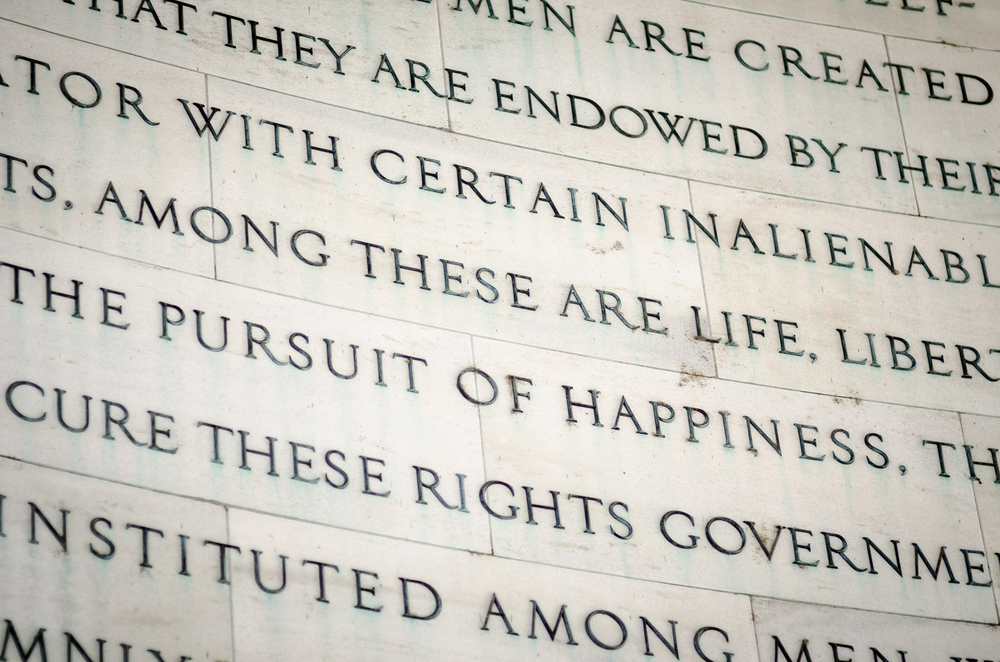
## **What is the American Story? What is the Story of America?**
## **The Old Narrative**
Jamestown 1607. Plymouth Rock 1620. The quest for religious freedom. Colonial restiveness. The Boston Tea Party. Committees of Correspondence. Ben Franklin and his kite. Lexington and Concord. The Declaration of Independence. Washington crosses the Delaware on Christmas night. Yorktown. Lafayette.
Andrew Jackson and the Trail of Tears — as if that were a one-off. The social dynamism of the frontier. Covered wagons. Manifest Destiny. The Pony Express. The gobbling up of Texas and then half of Mexico. 54–40 or Fight. The Gold Rush and the Oregon Trail. The coming of the transcontinental railroads. The Civil War. The Emancipation Proclamation and the end of slavery. The Homestead Act. The Indian Wars. Wounded Knee. Hawaii, Guam, Puerto Rico, the Philippines, and not quite Cuba. The end of the frontier and the coming of the American Century. The two Roosevelts. The U.S. was drawn into two world wars against its will. The Marshall Plan. And then the Cold War. The Great Society. The triumph of the capitalist democracies. The Berlin Wall comes down.
That’s what I learned growing up in the second half of the 20th century.
But we Americans had our own Cultural Revolution between the 1960s and the Millennium — the British poet Philip Larkin says the revolution (including the sexual revolution) began “Between the end of the Chatterley ban / And the Beatles’ first LP.” Women’s studies, Chicano studies, Black studies, Native American studies, Environmental studies, Queer studies, Global studies. Think of the seminal texts: Dee Brown’s *Bury My Heart at Wounded Knee* (1970), Patricia Limerick’s *Legacy of Conquest* (1987), Betty Friedan’s *The Feminine Mystique* (1963), Norman Mailer’s *Why Are We in Vietnam?* (1967), Vine Deloria’s *Custer Died for Your Sins* (1969), *The Autobiography of Malcolm X* (1965), Seymour Hersh’s My Lai reporting and *The Dark Side of Camelot* (1969, 1997), *The Pentagon Papers* (1971), Rachel Carson’s *Silent Spring* (1962), Robert Putnam’s *Bowling Alone* (2000).
Once we graduated from the old triumphalist paradigm (“America has made some mistakes, but on the whole …”), things became much more complicated, problematic, unsettling, and less tidy.
Which brings us to the **new academic narrative** (the left’s alternative narrative): Not Jamestown 1607 but Hampton 1619, with the first shipload of African slaves to North America. The unbearable hypocrisies of the Founding Fathers. Did any of them actually believe that all men are created equal? Or women? The ruthless dispossession of Native Americans — cultural genocide, sometimes edging into biological genocide, and editorial calls for extermination. Let’s call it a Trail of Broken Treaties (370) and two centuries of ethnic cleansing. Heedless hectic extraction — furs, lumber, buffalo hides, gold, silver, lead, iron ore, copper, water, coal, oil, natural gas, uranium. Profound maldistribution of wealth. An intentional American global empire, forget the phony rhetoric. Japanese Internment. A tenacious underlying core of white supremacy. Extraordinary renditions. My Lai, Abu Ghraib, Guantanamo. Trayvon Martin, Breonna Taylor, and George Floyd. ICE raids. The killing of the planet.
If that’s how you see America, count me out. It’s arguably some of that, but it is so much more than that.
I can no longer subscribe to the narrative of my childhood and formation. (We know too much now.) Nor can I subscribe to the postmodern “America is a bunch of lies” narrative. I’d be somewhere in between (and closer to the idealist than the jaded end of the spectrum), but how do you reconcile the beauty of the Homestead Act and the National Parks with our awareness (now inescapable) that these great official American land distribution programs were possible only with the dispossession of the indigenous sovereign peoples whose lands we appropriated without compensation and usually without even consultation? And how do you reconcile the narrative of steady racial progress with the heartbreaking fact that Black parents have to give their sons the cautionary “driving while Black” lecture every time they leave the house? And how do we square the national narrative of enlightenment with the global environmental disaster (called “climate change”) we’re still half-unwilling to acknowledge, much less address?
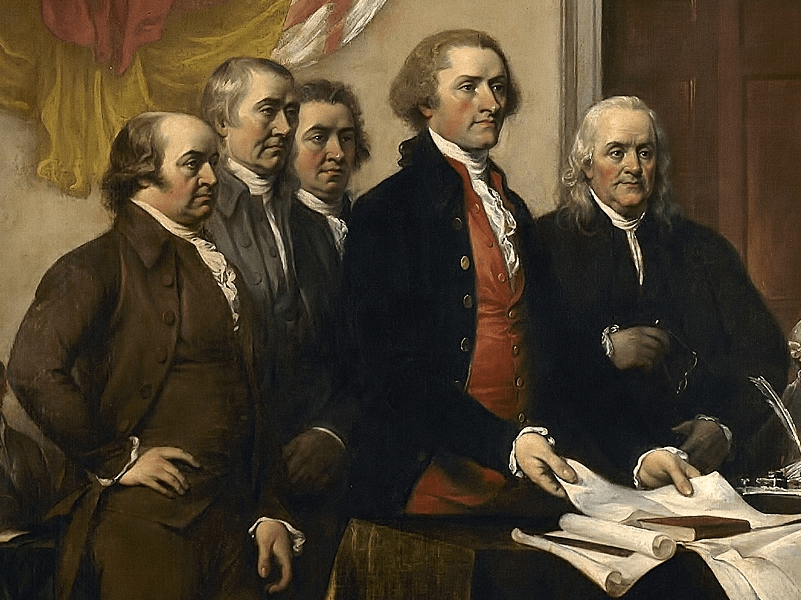The “Committee of Five” appointed by Congress in the summer of 1776 to draft a Declaration of Independence included John Adams (left) and Thomas Jefferson (center/red vest). (Painting by By John Trumbull – 1819)
## **America at 250. Celebration? — Commemoration? — Observance? — Wake?**
What binds us together as Americans? What values do we share? Are we still one nation or two — or more? What does it mean to be an American on July 4, 2026? More than 70% of all Americans say they are dissatisfied “with the way things are going,” according to a variety of respectable polls. Americans have lost respect for nearly everything: Congress, the presidency, media, the Supreme Court, policing, K-12 education, higher education, the Justice Department, even organized religion.
If I had to nominate a term for where we are now, I’d say this is the Age of Disillusionment.
I repeat: we urgently need a civil but rigorous national conversation with everyone at the table for once. We need to talk about the public lands. We need to talk about America’s place in the world. We need to talk about immigration and national identity. We need to talk about the health of our environment. We need to talk about the health of the American people. We need to talk about the dispossession of Native Americans. We need to discuss the health of the U.S. Constitution. We need to talk about race. And we need to talk about creating an affordable educational system that will prepare our children and grandchildren for the world they are about to inherit — as Woody Allen says — “right in the teeth.”
If we really think America is the world’s most extraordinary experiment, the best way we could celebrate our 250th birthday is to get serious about renewal.
If I had the talent, I would try to write a new national narrative that might possibly achieve consensus. Ken Burns has done his part. The myths we have lived by feel threadbare at this point in our history. Where is that epic poet who will help to make us new?
---
## ***Discover more on these topics at Listening to America***
[Thoreau](https://ltamerica.org/tag/thoreau/ "5 topics")[Oppenheimer](https://ltamerica.org/tag/oppenheimer/ "1 topics")[Reading](https://ltamerica.org/tag/reading/ "1 topics")[New York](https://ltamerica.org/tag/new-york/ "8 topics")[Republics](https://ltamerica.org/tag/republics/ "1 topics")[Ohio](https://ltamerica.org/tag/ohio/ "2 topics")[Sports](https://ltamerica.org/tag/sports/ "2 topics")[Walden](https://ltamerica.org/tag/walden/ "1 topics")[Steinbeck Travels](https://ltamerica.org/tag/steinbeck-travels/ "75 topics")[State Parks](https://ltamerica.org/tag/state-parks/ "2 topics")[Texas](https://ltamerica.org/tag/texas/ "4 topics")[North Carolina](https://ltamerica.org/tag/north-carolina/ "3 topics")[Podcast](https://ltamerica.org/tag/podcast/ "1 topics")[Washington](https://ltamerica.org/tag/washington/ "2 topics")[Oregon](https://ltamerica.org/tag/oregon/ "4 topics")[Water in the West](https://ltamerica.org/tag/water-in-the-west/ "24 topics")[New England](https://ltamerica.org/tag/new-england/ "1 topics")[paintings](https://ltamerica.org/tag/paintings/ "0 topics")[Vermont](https://ltamerica.org/tag/vermont/ "1 topics")[Wisconsin](https://ltamerica.org/tag/wisconsin/ "0 topics")[The Constitution](https://ltamerica.org/tag/the-constitution/ "1 topics")[Poetry](https://ltamerica.org/tag/poetry/ "1 topics")[Road Trips](https://ltamerica.org/tag/road-trips/ "18 topics")[Utah](https://ltamerica.org/tag/utah/ "11 topics")[Virginia](https://ltamerica.org/tag/virginia/ "7 topics")[Pennsylvania](https://ltamerica.org/tag/pennsylvania/ "1 topics")[Video](https://ltamerica.org/tag/video/ "51 topics")[Space Exploration](https://ltamerica.org/tag/space-exploration/ "8 topics")[U.S. Constitution](https://ltamerica.org/tag/u-s-constitution/ "1 topics")[Wyoming](https://ltamerica.org/tag/wyoming/ "4 topics")[Rivers](https://ltamerica.org/tag/rivers/ "3 topics")[Tennessee](https://ltamerica.org/tag/tennessee/ "1 topics")[Theodore Roosevelt](https://ltamerica.org/tag/theodore-roosevelt/ "16 topics")[South Dakota](https://ltamerica.org/tag/south-dakota/ "16 topics")[Oppenheim](https://ltamerica.org/tag/oppenheim/ "0 topics")[U.S. Presidents](https://ltamerica.org/tag/u-s-presidents/ "71 topics")[South Carolina](https://ltamerica.org/tag/south-carolina/ "1 topics")[North Dakota](https://ltamerica.org/tag/north-dakota/ "53 topics")[Travel](https://ltamerica.org/tag/travel/ "1 topics")[Thomas Jefferson](https://ltamerica.org/tag/thomas-jefferson/ "34 topics")[New Mexico](https://ltamerica.org/tag/new-mexico/ "3 topics")[Republic](https://ltamerica.org/tag/republic/ "0 topics")[Rome](https://ltamerica.org/tag/rome/ "1 topics")[north daktoa](https://ltamerica.org/tag/north-daktoa/ "0 topics")[William Shirer](https://ltamerica.org/tag/william-shirer/ "1 topics")
**Categories:** Features
**Tags:** America at 250, Humanities
---
### [Reading Thoreau Again](https://ltamerica.org/reading-thoreau-again/)
**Published:** February 3, 2026
**Author:** Clay Jenkinson
**Excerpt:** One of my friends contacted me not long ago and said, “Hey, you’re going to be in the Ken Burns documentary on Henry David Thoreau in March. I just saw you in the trailer. Are you going to do anything to be ready for when it comes out?” Truth told, I knew there was a Thoreau documentary coming sometime in 2026, but I wasn’t sure when.
**Content:**
## One of my friends contacted me not long ago and said, “Hey, you’re going to be in the Ken Burns documentary on Henry David Thoreau in March. I just saw you in the trailer. Are you going to do anything to be ready for when it comes out?” Truth told, I knew there was a Thoreau documentary coming sometime in 2026, but I wasn’t sure when.
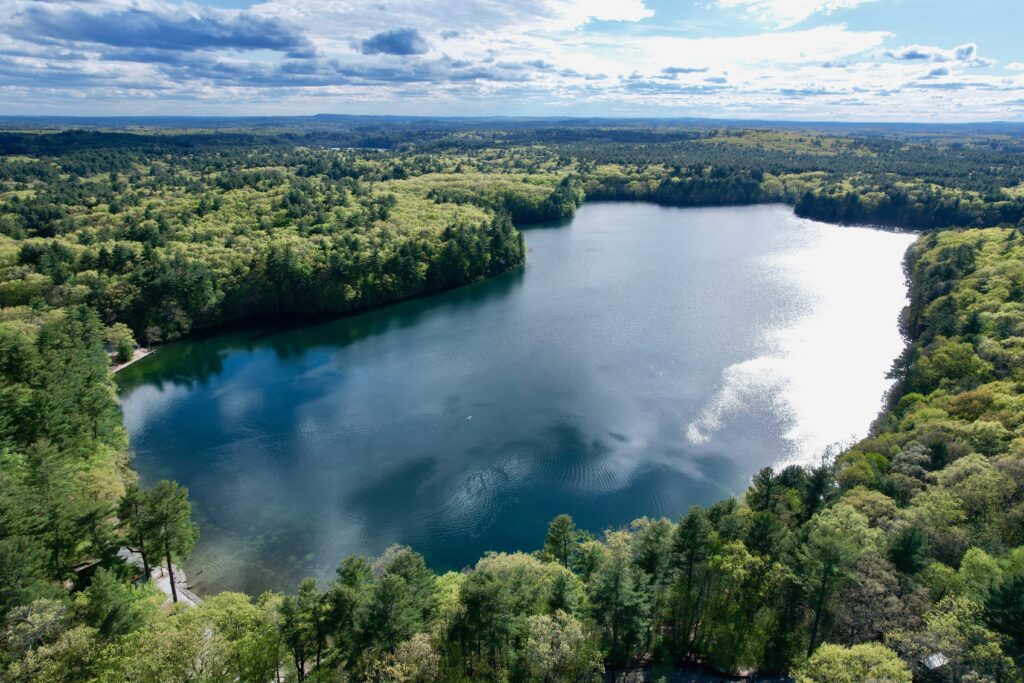A birds eye view of Walden Pond, near Concord, Mass. (Photo Nolan Johnson)
So I woke up.
*Walden* is many things. A critique of American industrial capitalism, a severe diatribe against slavery, including the ways we enslave ourselves. It is one of America’s first self-help books. It is a call to a higher life. It contains hundreds of fabulous passages about nature.
This last week I have read *Walden* for the umpteenth time. I don’t know quite how many times: 15 at least, perhaps more. I first read it in a directed reading course in high school and I thought then it was tedious and booooor-ing. A leaf here and a muskrat there, some snark about the railroad, and a bunch of maxims of the sort you get on a graduation card: “If a man does not keep pace with his companions, perhaps it is because he hears a different drummer.” The maxim that spoke to me most back then was, “Beware of all enterprises that require new clothes.”
After that unpropitious beginning, I’m a little surprised that I ever picked *Walden* up again, but on the third or fourth reading it began to speak to me. At some point I realized it wasn’t just a book about nature, but a mirror we’re invited to look into to discover who we are, what we value, what chokes our spirit, and how we might thrive if we reorganize our habits and our priorities.

I won’t say I know as much about *Walden* as anyone, but I am quite sure I know it better than most, if only because along with *Hamlet*, *Robinson Crusoe*, *Gulliver’s Travels*, and *Great Expectations*, it is the book I return to most, once every two years at least, and for the last decade every single year.
I define a classic not with Mark Twain, “something that everyone wants to have read and nobody wants to read,” but as a great book that is newly great and greatly new every time you read it. *Hamlet*, *Crime and Punishment*, *Huckleberry Finn*, the *Iliad*, *Absalom, Absalom!*
Now every time I read *Walden* I find new things to admire, and things I thought I knew speak to me in a new way. This week alone, I have come upon at least a dozen excellent passages that seemed brand new to me. I took extensive notes. I’ve been writing short commentaries on aspects of Thoreau all week.
In my travels, whenever I get the chance where it might be appropriate, I recite my favorite passage from *Walden*, from the chapter “Where I Lived and What I Lived For.” When I clear my throat, my closest friends groan and say, “Here we go.” You’ll recognize at least parts of the passage right away:
> I went to the woods because I wished to live deliberately, to front only the essential facts of life and see if I could not learn what it had to teach, and not when I came to die, discover that I had not lived. I did not wish to live what was not life, living is so dear, nor did I wish to practice resignation, unless it was quite necessary. I wanted to live deep and suck out the marrow of life, to live so sturdily and Spartan-like as to put to rout all that was not life, to cut a broad swath and shave close, to drive life into a corner and reduce it to its lowest terms, and, if it proved to be mean, why then to get the whole and genuine meanness of it, and publish its meanness to the world; or if it were sublime, to know it by experience, and be able to give a true account of it in my next excursion.
When I was young I was most drawn to the intensely dramatic sentence beginning, “I wanted to live deep and suck out all the marrow of life.” I am old enough now to know how little marrow I have in fact sucked out of life, though life has sucked quite a bit of marrow out of me. So far I have not had to practice resignation. What speaks to me most now is a phrase that I didn’t really notice until a couple of years ago and now it haunts me: “learn what it had to teach and not, when I came to die, discover that I had not lived.”
It haunts me to think I might, on my deathbed, discover that I had just skated over the shallow surface of life and never really drawn from it what it has to offer those who are fully present, those who notch their stick with the nick of time, as Thoreau puts it.
## **A Genuine Thoreauvian**
 Henry David Thoreau
I know a splendid young man in Montana who is currently living in an old sprinter van. He is a river guide during the summers, all over the American West, and in the winter he finds all the temporary work he needs in western Montana. He travels extensively. When I last spoke with him a week or two ago as we soaked in one of the pools at Jerry Johnson Hot Springs west of Missoula, he was about to leave for 28 days on a raft trip through the Grand Canyon. He keeps his expenses low, parks the van in his friends’ driveways for a few days at a time, and works hard in short intervals to maximize his opportunity for travel and adventure. He inspires me. I told him as we sat back and gazed up at the tall pines that embrace the hot springs that I have followed a very different path, which has been satisfying, but part of me envies him. Thoreau would certainly admire him. Every time I see him and we have time to talk I say to myself, and sometimes to him, quoting Thoreau, “As long as possible live free and uncommitted.” My friend knows that at some point he is going to need his 40 quarters of W-2s to qualify for Social Security and he knows too that few river guides are still plying their oars after they reach 50, but that’s a long way off, and for the moment he is leading a very intentional Thoreauvian life. Except that he’s a babe magnet and Thoreau, well, wasn’t.
I hope one of these days he discovers Thoreau’s *Walden*. I refuse to urge him to read it because that might make it seem like task work, like an assignment, a geezer’s book recommendation.
I wonder what circumstances would have taken me down my young friend’s path, and if I would have had the courage to live with less economic security. I doubt it frankly, not merely because I have the character of an English major, but because I think it takes a very disciplined person (or a knucklehead) to challenge the juggernaut of American conformism.
## **Simplify Simplify Simplify and Annoy Annoy Annoy**
Thoreau can be annoying. And occasionally he just seems nuts, as when he announces that thousands of wasps have moved into the cabin with him and he’s not that concerned, but he has noticed that fewer of his friends from Concord are coming to visit him now. I’ve have a pretty good Thoreau-dar for what in Thoreau rubs most people the wrong way. He can be preachy and self-righteous. He can milk any object in nature for a metaphor, sometimes a strained metaphor. He’s pretty scathing about people who choose more conformist lives. His wit sometimes gets away from him. There is almost nothing he cannot wring some transcendental insight out of. And yes, he did take his laundry to town.
These things no longer bother me, if they ever did. But I routinely see them bother adult first-time readers. To make sense of Thoreau you have to hack your way through the first and most important chapter in *Walden*, the 78-page *Economy*. Heck, Thoreau doesn’t even start building his cabin until page 83. I believe strongly that the first chapter is the most important chapter in *Walden* (along with the last) and that you cannot really understand what he is trying to determine unless you come to terms with those long introductory remarks. Thoreau went to the woods in 1845 to conduct an experiment in spartan living. You have to read *Economy* with the closest attention to understand the nature of that experiment: “Is it possible to combine the hardiness of … savages with the intellectualness of the civilized man?”
I regard *Walden* as a sacred book that needs to be placed on the same shelf as the Koran, the Pentateuch, the New Testament, the analects of Confucius, the Upanishads, the Bhagavad Gita, and *Black Elk Speaks*. Thoreau asks the big questions that matter to me, (I speak only for myself) provides the right spiritual and meditative material to chew on, and never grows old. *Walden* has never failed me, in part because Thoreau wants to crow like Chanticleer rather than scrape his body with a pot sherd like the Old Testament’s Job. I cannot imagine my life without this book in it.
On this read, it is Thoreau’s radicalism that has impressed and surprised me the most. His critique of the railroad is well known, but he is certain that capitalism more generally damages everything it touches, and he excoriates the United States government for picking a war against Mexico merely to grab more territory in the West, and for protecting and perpetuating the institution of slavery. He tells self-satisfied philanthropists that he’d take them more seriously if they gave away 90% of their income rather than 10%, since what they have they stole from their neighbors. He dismisses most of the people of his New England as conformists and moral cowards. He’s a political anarchist and he’s completely sure that our elders have nothing useful to teach us. He makes fun of the Bible and regards the nations’ newspapers as having nothing fit to print.
## **The ChatGPT Experiment**
I know this doesn’t sound very Thoreauvian, but I have been trying to make sense of AI lately, specifically ChatGPT, and I have greatly enjoyed asking the program to paint pictures of my favorite scenes in *Walden*. These images — which one of my young friends tells me are killing the planet one pixel at a time — help me explore Thoreau’s microcosm at the pond. They illustrate and actually help me interpret passages that I find fascinating or perplexing. To get one of these AI-generated images right I have to have read the passage very carefully, tease out its details and nuances, and determine Thoreau’s attitude to the phenomenon he is observing.
I’m sharing a few of these images with you here. Whether we like it or not AI is here to stay. It is going to revolutionize the world more completely than the printing press, the automobile, or the internet. We had better all work to tame it and come to terms with it, because if we don’t master it, those who seek to use it for bad ends will surely master us.
## **And So to the Movies**
I’m as eager as anyone to see Ken Burns’ documentary on Thoreau. I no longer remember what I said when his excellent crew flew out to Dakota to interview me two years ago, and I have no idea how many of my comments will have made the film, the great bulk of them, of course, squirming on the cutting room floor. “You want to be in my films?” he said once, “stick the landing.”
---
## ***Discover more on these topics at Listening to America***
[Oppenheimer](https://ltamerica.org/tag/oppenheimer/ "1 topics")[Reading](https://ltamerica.org/tag/reading/ "1 topics")[Ohio](https://ltamerica.org/tag/ohio/ "2 topics")[Poetry](https://ltamerica.org/tag/poetry/ "1 topics")[Travel](https://ltamerica.org/tag/travel/ "1 topics")[U.S. Constitution](https://ltamerica.org/tag/u-s-constitution/ "1 topics")[Steinbeck Travels](https://ltamerica.org/tag/steinbeck-travels/ "75 topics")[Oppenheim](https://ltamerica.org/tag/oppenheim/ "0 topics")[New Mexico](https://ltamerica.org/tag/new-mexico/ "3 topics")[Tennessee](https://ltamerica.org/tag/tennessee/ "1 topics")[Wyoming](https://ltamerica.org/tag/wyoming/ "4 topics")[Republics](https://ltamerica.org/tag/republics/ "1 topics")[Road Trips](https://ltamerica.org/tag/road-trips/ "18 topics")[paintings](https://ltamerica.org/tag/paintings/ "0 topics")[Wisconsin](https://ltamerica.org/tag/wisconsin/ "0 topics")[Thomas Jefferson](https://ltamerica.org/tag/thomas-jefferson/ "34 topics")[Thoreau](https://ltamerica.org/tag/thoreau/ "5 topics")[South Dakota](https://ltamerica.org/tag/south-dakota/ "16 topics")[Video](https://ltamerica.org/tag/video/ "51 topics")[The Constitution](https://ltamerica.org/tag/the-constitution/ "1 topics")[New England](https://ltamerica.org/tag/new-england/ "1 topics")[North Dakota](https://ltamerica.org/tag/north-dakota/ "53 topics")[South Carolina](https://ltamerica.org/tag/south-carolina/ "1 topics")[Utah](https://ltamerica.org/tag/utah/ "11 topics")[Washington](https://ltamerica.org/tag/washington/ "2 topics")[Space Exploration](https://ltamerica.org/tag/space-exploration/ "8 topics")[Republic](https://ltamerica.org/tag/republic/ "0 topics")[Rivers](https://ltamerica.org/tag/rivers/ "3 topics")[Vermont](https://ltamerica.org/tag/vermont/ "1 topics")[Rome](https://ltamerica.org/tag/rome/ "1 topics")[Sports](https://ltamerica.org/tag/sports/ "2 topics")[State Parks](https://ltamerica.org/tag/state-parks/ "2 topics")[Podcast](https://ltamerica.org/tag/podcast/ "1 topics")[north daktoa](https://ltamerica.org/tag/north-daktoa/ "0 topics")[Virginia](https://ltamerica.org/tag/virginia/ "7 topics")[Walden](https://ltamerica.org/tag/walden/ "1 topics")[Theodore Roosevelt](https://ltamerica.org/tag/theodore-roosevelt/ "16 topics")[U.S. Presidents](https://ltamerica.org/tag/u-s-presidents/ "71 topics")[North Carolina](https://ltamerica.org/tag/north-carolina/ "3 topics")[New York](https://ltamerica.org/tag/new-york/ "8 topics")[Pennsylvania](https://ltamerica.org/tag/pennsylvania/ "1 topics")[William Shirer](https://ltamerica.org/tag/william-shirer/ "1 topics")[Texas](https://ltamerica.org/tag/texas/ "4 topics")[Water in the West](https://ltamerica.org/tag/water-in-the-west/ "24 topics")[Oregon](https://ltamerica.org/tag/oregon/ "4 topics")
**Categories:** Dispatches from the Road
**Tags:** Books, Massachusetts, Thoreau
---
### [Solitude & Loneliness: Pondering Steinbeck While Reading Thoreau](https://ltamerica.org/solitude-loneliness-pondering-steinbeck-while-reading-thoreau/)
**Published:** February 2, 2026
**Author:** Clay Jenkinson
**Excerpt:** One of the great things about reading a lot is that it gives you the insights of triangulation. One book illuminates, interprets, and perhaps even disagrees with another, though the authors never met.
**Content:**
## One of the great things about reading a lot is that it gives you the insights of triangulation. One book illuminates, interprets, and perhaps even disagrees with another, though the authors never met and were unaware of each other’s existence.
Author John Steinbeck at work.
Today, for example, I’m reading Thoreau’s *Walden* with special intensity, trying to see deeper into it than in my dozen or more previous encounters.
I came upon this passage just now, which immediately carried my mind to John Steinbeck on his 1960 *Travels with Charley* tour. Here’s Thoreau:
*“I have never felt lonesome, or in the least oppressed by a sense of solitude, but once, and that was a few weeks after I came to the woods, when, for an hour, I doubted if the near neighborhood of man was not essential to a serene and healthy life. … But I was at the same time conscious of a slight insanity in my mood, and seemed to foresee my recovery.”*
Thoreau said he was never lonely out there again, or anywhere except in a room full of establishment types talking about the things establishment types talk about.
That passage on loneliness is excellent. I know the feeling. When I camp out alone in my one-person tent in the middle of nowhere, I sometimes feel a little wave of apprehension when it gets dark, though my rational mind tells me I won’t be interrupted by anything or anyone. But there is a sudden awareness that I am as alone as it gets and, in some respects, helpless. Certainly, nobody will rush in if I cry for help in the night in the middle of the badlands. It takes a few minutes to relax. It helps to remember that if any other person were there to fight off the aloneness, you’d as likely be talking about old episodes of the *Andy Griffith Show* as pondering the age and the extent of the universe. You can’t hear the coyotes when your camping mate is talking about spa treatments.
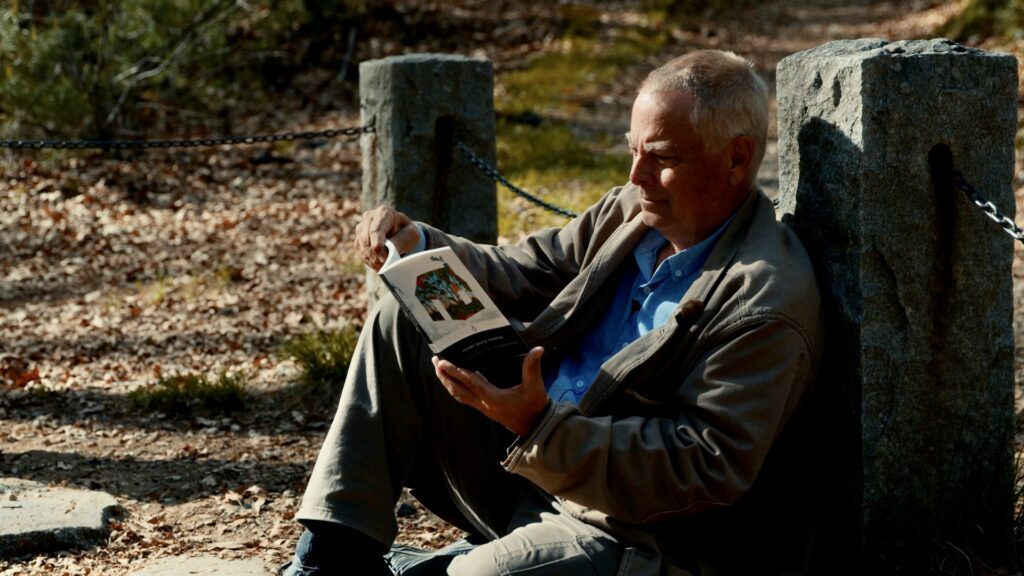Clay reads from his “bible” at the site of Thoreau’s famous cabin at Walden Pond outside of Concord, Massachusetts. (Photo Nolan Johnson)
Two years ago, I retraced the entire journey of John Steinbeck from September to December 1960, 11,500 miles at a minimum, around the entire perimeter of the United States. It didn’t take me very long on that journey to begin to realize that the great novelist, who was 58 years old and not in very good health, didn’t really enjoy being alone out there. He took his wife’s French poodle along as a companion — I think to cut the loneliness — and then wrote Charley deep into his book when he got back home to a world of amenities. *Travels with Charley* was Steinbeck’s most personal and confessional book — finally!, said his readers — and he admits to feeling “desolate” when he leaves his wife Elaine behind in New York or puts her on an airplane after one of their frequent rendezvous: Long Island, Chicago, Seattle, Salinas/San Francisco, Austin.
I think Steinbeck was lonely. He was discovering that, at this point in his life, he wanted his spouse, his third wife, by his side. He also realized, without admitting it much, that he didn’t really like making up his bed in the camper on the back of his pickup. It was about as comfortable as the cabin on a boat, but in that case, there were no alluring alternatives. Steinbeck didn’t relish his time in his camper on the back roads of America in the romantic way we imagine when we read the book. The book carefully creates the illusion that on any given night, he was parked somewhere off road, in the hills, in the pines, opening a can of chile con carne for dinner, letting Charley out one last time to do his business, pouring himself a glass of whiskey, reading for a time with his kerosene lantern, and going to sleep.
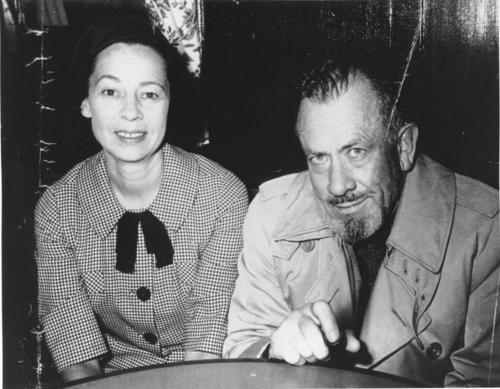Elaine and John Steinbeck in 1959. (Martha Heasley Cox Center for Steinbeck Studies, SJSU)
How often Steinbeck really slept in the rig is unclear. The answer, I think, is 1) not as often as he would have you believe, through no great deception, but thanks to the perfect description he provided early of a typical night in the heartland; 2) more often than his severest critic alleges, mostly out of spite; and 3) not as often as we would like. I’d say he slept alone in the rig about 2/5 of the time he was on the journey. I don’t think Elaine ever, when she met him on the road, spent a full night in the camper, or if she did, only one. Elaine wasn’t even pretending to want to rough it out there.
The point of my little essay here is that reading *Walden* enabled me to reach what I hope is an insight about John Steinbeck. As I pondered Thoreau’s confession about one night of loneliness and then no more, my mind flashed to Steinbeck, and I wondered if he experienced anything like one bout of temporary loneliness and then got over it. I do definitely think Steinbeck experienced loneliness. But not only temporarily. When you call it desolation, you wish you were somewhere else.
I’ll take this one step further. I believe that if Steinbeck were not a stubborn man wanting to prove to the people around him and to himself that he still had the right stuff, that he was still the man he had once clearly been — out there in his “pie wagon” in the Central Valley in the 1930s helping Okies survive, at or near the front in North Africa and Italy during the war, he would have packed it in. I believe if he could have snapped his fingers somewhere around Tehachapi Pass after his “you can’t go home again” visit to Monterey and instantly been snug in his Long Island cottage with Elaine, and the whole camper pickup was somehow magically evaporated into thin air, I think Steinbeck would have done just that, and given up the quest for the grail of his former creativity and vitality. There was no way he was going to quit once he’d gone to all the trouble of convincing Elaine, his agent Elizabeth Otis, his publisher Pat Covici, and his close friends that he was going to undertake this adventure no matter what they said, but in my view, his heart wasn’t really in it.
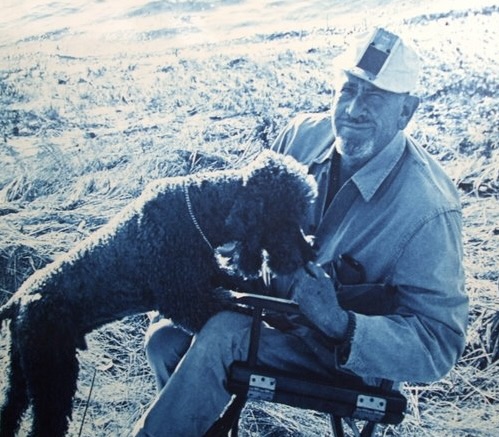John Steinbeck and his dog Charley.
The book *Travels with Charley* is better than the journey with Charley. Steinbeck was a great writer, still in touch with his mature talent, and he had relaxed enough by now to write a modest gem of a book rather than try to sort out the problem of evil, the fate of the displaced, or how average citizens were responding to the atomic age. I don’t think his heart was in this late journey. I know for sure from my retracings that he rushed around quite a bit from one Elaine encounter to the next. By the time he reached the West Coast, he had gotten the adventure out of his system, but like Lewis and Clark, who were equally eager to get back to civilization, he had no choice but to turn the rig around at Monterey Bay and drive home. There was no way he was going to hire someone to drive the truck back to New York. But you can tell from what he writes that he wanted to:
*“It would be pleasant to be able to say of my travels with Charley, ‘I went out to find the truth about my country and I found it.’ … But what I carried in my head and deeper in my perceptions was a barrel of worms … my impressionable gelatin plate was getting muddled. I determined to inspect two more sections \[of the country\] and then call it a day — Texas, and a sampling of the Deep South.”*
There is nothing wrong with Steinbeck’s response to all of this. He was wealthy, celebrated, pampered by his admiring (and nurturing) wife, used to the finest hotel rooms, accustomed to the steaks at Delmonico’s, and a panoply of fine liquors.
And he was tired. And he was, frankly, old at least according to the imperfect medical protocols of his time. He had a bum knee and serious heart trouble. Those closest to him were worried about him. Elizabeth Otis tried to talk him out of the journey, at least to convince him to undertake a much tamer set of brief adventures. It is said that Elaine wanted him to take the poodle, Charley, not just for companionship, but so the dog could look after him. Steinbeck exploded at that: He’s not Lassie, he barked.
None of this makes me lose any respect for John Steinbeck. He provides several confirming hints about all of this throughout the book. In fact, he admits, early on the return drive, that the journey had been a failure. If his goal was to rediscover America and the American people and to prove, like an aging character in Kerouac, that he still had “IT,” he freely admits that he didn’t find what he was looking for, in America or in himself. We love the charm of the book so much, and the romantic idea of an eminent writer wandering incognito over the fruited plain, that we hardly notice his admissions of failure.
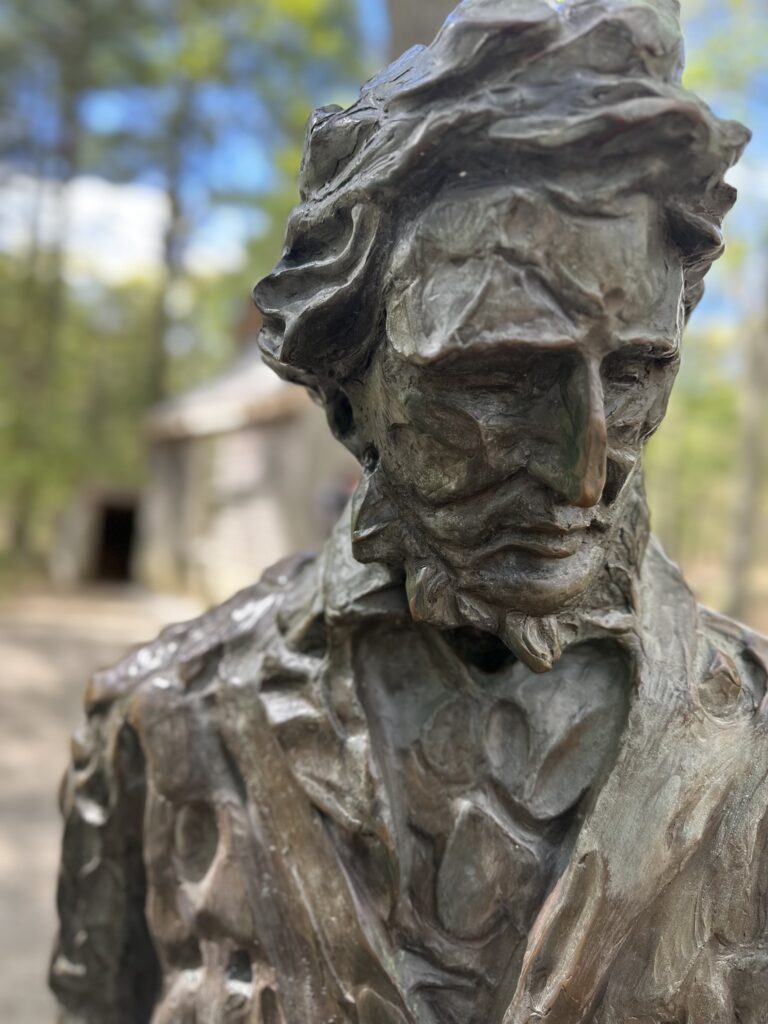Henry David Thoreau
 was a different breed of man. Unlike Steinbeck, a loner, for one thing, something of a misanthrope, and certainly not a man who needed to be coddled by a loving woman. (Apparently, no woman applied for the job.) Thoreau, in 1845, was what Meriwether Lewis called himself after the expedition in a moment of bemused self-pity: a “rusty, musty, fusty old bachelor.” Thoreau was not nearly as restless as Steinbeck, who was never quite content even when he was content.
I don’t think Steinbeck could have written these words:
*“I find it wholesome to be alone the greater part of the time. To be in company, even with the best, is soon wearisome and dissipating. I love to be alone. I never found the companion that was so companionable as solitude.”*
That is quintessential Thoreau, and we all know there is no posturing in it. Almost always when I read a couple of books at the same time, I find that they want to get into a conversation with each other.
---
## ***Discover more on these topics at Listening to America***
[Texas](https://ltamerica.org/tag/texas/ "4 topics")[State Parks](https://ltamerica.org/tag/state-parks/ "2 topics")[New Mexico](https://ltamerica.org/tag/new-mexico/ "3 topics")[Road Trips](https://ltamerica.org/tag/road-trips/ "18 topics")[Video](https://ltamerica.org/tag/video/ "51 topics")[paintings](https://ltamerica.org/tag/paintings/ "0 topics")[Rivers](https://ltamerica.org/tag/rivers/ "3 topics")[New York](https://ltamerica.org/tag/new-york/ "8 topics")[Sports](https://ltamerica.org/tag/sports/ "2 topics")[Oppenheimer](https://ltamerica.org/tag/oppenheimer/ "1 topics")[Space Exploration](https://ltamerica.org/tag/space-exploration/ "8 topics")[Podcast](https://ltamerica.org/tag/podcast/ "1 topics")[U.S. Presidents](https://ltamerica.org/tag/u-s-presidents/ "71 topics")[Oregon](https://ltamerica.org/tag/oregon/ "4 topics")[Water in the West](https://ltamerica.org/tag/water-in-the-west/ "24 topics")[Wyoming](https://ltamerica.org/tag/wyoming/ "4 topics")[William Shirer](https://ltamerica.org/tag/william-shirer/ "1 topics")[Steinbeck Travels](https://ltamerica.org/tag/steinbeck-travels/ "75 topics")[U.S. Constitution](https://ltamerica.org/tag/u-s-constitution/ "1 topics")[Reading](https://ltamerica.org/tag/reading/ "1 topics")[South Carolina](https://ltamerica.org/tag/south-carolina/ "1 topics")[Republics](https://ltamerica.org/tag/republics/ "1 topics")[north daktoa](https://ltamerica.org/tag/north-daktoa/ "0 topics")[Washington](https://ltamerica.org/tag/washington/ "2 topics")[New England](https://ltamerica.org/tag/new-england/ "1 topics")[Republic](https://ltamerica.org/tag/republic/ "0 topics")[Vermont](https://ltamerica.org/tag/vermont/ "1 topics")[Thoreau](https://ltamerica.org/tag/thoreau/ "5 topics")[North Dakota](https://ltamerica.org/tag/north-dakota/ "53 topics")[Virginia](https://ltamerica.org/tag/virginia/ "7 topics")[South Dakota](https://ltamerica.org/tag/south-dakota/ "16 topics")[Theodore Roosevelt](https://ltamerica.org/tag/theodore-roosevelt/ "16 topics")[The Constitution](https://ltamerica.org/tag/the-constitution/ "1 topics")[Wisconsin](https://ltamerica.org/tag/wisconsin/ "0 topics")[North Carolina](https://ltamerica.org/tag/north-carolina/ "3 topics")[Poetry](https://ltamerica.org/tag/poetry/ "1 topics")[Thomas Jefferson](https://ltamerica.org/tag/thomas-jefferson/ "34 topics")[Tennessee](https://ltamerica.org/tag/tennessee/ "1 topics")[Walden](https://ltamerica.org/tag/walden/ "1 topics")[Travel](https://ltamerica.org/tag/travel/ "1 topics")[Pennsylvania](https://ltamerica.org/tag/pennsylvania/ "1 topics")[Oppenheim](https://ltamerica.org/tag/oppenheim/ "0 topics")[Utah](https://ltamerica.org/tag/utah/ "11 topics")[Ohio](https://ltamerica.org/tag/ohio/ "2 topics")[Rome](https://ltamerica.org/tag/rome/ "1 topics")
**Categories:** Books
**Tags:** Books, Humanities, John Steinbeck, Steinbeck Travels
---
### [When is Enough Enough?](https://ltamerica.org/when-is-enough-enough/)
**Published:** January 27, 2026
**Author:** Clay Jenkinson
**Excerpt:** Do Jefferson's 27 indictments of King George III and the Parliament of Great Britain in his Declaration of Independence have application today?
**Content:**
## Jefferson’s 27 indictments of King George III and the Parliament of Great Britain in his Declaration of Independence: do they have application today?

I was driving on I-94 east of Billings, Montana, Saturday when I learned of the killing of a Minneapolis man by federal ICE agents. The site of the killing, Hennepin and 26th, is my old neighborhood from when, long ago, I was a student at the University of Minnesota. Alarming news, and that was before I saw the videos that seem to indicate that 37-year-old Alex Pretti, an American citizen, was murdered by a scrum of border patrol agents who held him down, pummeled him, and then shot him several times.
I pulled over for two minutes as the network I was listening to simply broadcast the voices of the witnesses and those who rushed to the scene to protest in the wake of the killing.
That’s when I burst into tears.
Before I comment on this, I want to say — clearly and unequivocally — that we urgently need an exhaustive, independent, and unbiased investigation of the incident, by an entity that is not the U.S. Immigration and Customs Enforcement (ICE) service. We should all be willing to keep something of an open mind until that investigation is complete — though it looks as if ICE and the Trump administration are doing what they can to make such an investigation impossible.
I burst into tears in the middle of Montana because what I heard from the Minnesotans who cried out in protest was so much more raw and real than the chanting one normally expects in an urban protest. This was not just “Hey Ho, Hey Ho, Evil ICE has got to go!” These were uncoordinated cries of pure anguish, bewilderment, frustration, rage, and sorrow. These were just average Minnesotans reacting the way we humans react when some terrible thing happens right before our eyes. You could even hear the characteristic Minnesota accent in some of the shouts and murmurs.

I also burst into tears because these were not fair-weather protestors. It was about -10 degrees Fahrenheit in downtown Minneapolis, well below zero with the wind chill factor. I had stopped to get gas before leaving Billings. It was bitterly cold — same weather as Minneapolis — and my hands and face were numb from just a few minutes standing outside my vehicle. The spontaneous mass protest on Friday in Minneapolis (the day before the shooting) brought between 35,000 and 50,000 people into the streets on the coldest day in seven years. Of course, you will be assured by administration spokesmen and pundits that these were “outside agitators,” members of ANTIFA, “radical leftists,” “haters of America,” etc.
That is not what I heard. What I heard was grief. John Donne: “Everyman’s death diminishes me, because I am involved in mankind.”
The people of Minneapolis-St. Paul have made it clear that they do not want ICE in their cities. The Governor has asked ICE to leave. (So much for federal deference to state sovereignty.) The mayor of Minneapolis has asked ICE to leave. The two Minnesota U.S. Senators, including the very powerful Amy Klobuchar, have asked ICE to leave.
If it is essential to U.S. security to find, arrest, and deport undocumented individuals who are hardened criminals, who have committed felonies, surely it is possible to do this humanely — with respect for the rule of law (especially the doctrine of Habeas Corpus), with respect for local leadership and law enforcement and local sentiment, and indeed with a modicum of respect for the individuals who are to be arrested and deported. We are America, not North Korea or Iran. We are America. The idea that ICE and other border patrol agents wearing masks and refusing to identify themselves are popping out of black SUVs, snatching people off the streets of our cities and sometimes from their homes (without authorizing warrants), then sending them to detention centers down along the border or in “friendly” other nations, is anathema to everything the United States stands for. Or did.

America at 250! Tens of thousands of ICE agents terrorizing our cities, zealously engaged in unconstitutional actions with a brutality entirely unnecessary in almost all circumstances. A military incursion into a sovereign neighbor nation (Venezuela) without consulting Congress, the United Nations, or our closest allies in the world. A wild and wanton threat to just annex Greenland for our own security and economic purposes, coupled with a threat of punitive tariffs against any NATO nation that opposes this illegal land grab. Deliberately addressing the Canadian Prime Minister as “governor.” Telling NATO member states that they have failed to step up in previous international military actions — when in fact those nations (in spite of their deep skepticism) sent troops to Afghanistan and Iraq where their soldiers died proportionally with our own. Threatening a 100% tariff against Canada if that sovereign nation cuts a trade deal with China.
Is this who we are?
Is this who we have become?
Is this the America you want to live in?
Do any of these actions comport with the historic ideals of America as written in those 250-year-old documents, beginning with Jefferson’s magnificent Declaration of Independence?
As I drove on towards Bismarck (500 miles) I texted one of my oldest friends and suggested that we urge fellow Dakotans to gather on the grounds of the North Dakota capitol today (Sunday) for a silent vigil for America. I will be there, shivering, silent, and terribly saddened.

I also texted several friends in Minneapolis. DS and MS are exactly what you think Minnesotans would be: thoughtful, well-informed, law-abiding, decent, respectful, friendly, good-willed, civic-minded, patient, and generous people. I knew before I texted them that they must surely have been among the tens of thousands of people on Friday who took (entirely peacefully!) to the streets to protest the ICE presence in Minnesota. Sure enough. DS sent a report of their experience. See my Facebook for that post.
Has it come to this?
My friend Niles lives just a few blocks from the site of Saturday’s killing. I asked him to send me his sense of the current mood of the city. You’ll find his entire statement at my Facebook site, but here is what I regard as the most important single paragraph:
> Many people on the Right want to bring this down to politics, but this doesn’t feel political. One might find activists “annoying” or strident, but I think something the majority of people — especially in the “flyover country” of Minnesota — dislike exponentially more is the callousness of a bully. That’s what people see in these ICE killings. Witness another video, where an agent patrolling Good’s vigil site kicks over a candle. He’s met with the apoplectic anger of a protestor, but sneers with self-satisfaction at his authority. I think what most people see in Minneapolis right now are deliberate choices being made, the adherence to an amoral quasi-Nietzschean sensibility of Might-Makes-Right and Ends-Justifying-Means, the flagrant disregard of not just constitutional norms but of human empathy. This might not apply to the specific quintessence of each ICE agent’s character, but it is what’s generated by the optics in these images.
Thomas Jefferson listed 27 indictments of King George III and the Parliament of Great Britain in his Declaration of Independence. These were the grievances that forced us to declare independence on July 4, 1776, 250 years ago. I strongly urge you to read them through. Here are a few of the 27, the ones that seem to apply to our immediate situation. “He” is George III.
“He has kept among us, in times of peace, Standing Armies without the Consent of our legislatures.”
“He has affected to render the Military independent of and superior to the Civil power.”
“For Quartering large bodies of armed troops among us.”
“For depriving us in many cases, of the benefits of Trial by Jury.”
“For transporting us beyond Seas to be tried for pretended offences.”
My friends, you do the math. I ask again:
Is this who we now are?
---
## ***Discover more on these topics at Listening to America***
[Oppenheimer](https://ltamerica.org/tag/oppenheimer/ "1 topics")[Utah](https://ltamerica.org/tag/utah/ "11 topics")[State Parks](https://ltamerica.org/tag/state-parks/ "2 topics")[Ohio](https://ltamerica.org/tag/ohio/ "2 topics")[The Constitution](https://ltamerica.org/tag/the-constitution/ "1 topics")[Oregon](https://ltamerica.org/tag/oregon/ "4 topics")[Wyoming](https://ltamerica.org/tag/wyoming/ "4 topics")[Tennessee](https://ltamerica.org/tag/tennessee/ "1 topics")[Theodore Roosevelt](https://ltamerica.org/tag/theodore-roosevelt/ "16 topics")[Rivers](https://ltamerica.org/tag/rivers/ "3 topics")[North Carolina](https://ltamerica.org/tag/north-carolina/ "3 topics")[Rome](https://ltamerica.org/tag/rome/ "1 topics")[Oppenheim](https://ltamerica.org/tag/oppenheim/ "0 topics")[Steinbeck Travels](https://ltamerica.org/tag/steinbeck-travels/ "75 topics")[William Shirer](https://ltamerica.org/tag/william-shirer/ "1 topics")[Video](https://ltamerica.org/tag/video/ "51 topics")[Pennsylvania](https://ltamerica.org/tag/pennsylvania/ "1 topics")[Water in the West](https://ltamerica.org/tag/water-in-the-west/ "24 topics")[U.S. Presidents](https://ltamerica.org/tag/u-s-presidents/ "71 topics")[New Mexico](https://ltamerica.org/tag/new-mexico/ "3 topics")[Vermont](https://ltamerica.org/tag/vermont/ "1 topics")[Thoreau](https://ltamerica.org/tag/thoreau/ "5 topics")[Walden](https://ltamerica.org/tag/walden/ "1 topics")[Republic](https://ltamerica.org/tag/republic/ "0 topics")[Poetry](https://ltamerica.org/tag/poetry/ "1 topics")[Thomas Jefferson](https://ltamerica.org/tag/thomas-jefferson/ "34 topics")[U.S. Constitution](https://ltamerica.org/tag/u-s-constitution/ "1 topics")[paintings](https://ltamerica.org/tag/paintings/ "0 topics")[South Carolina](https://ltamerica.org/tag/south-carolina/ "1 topics")[Texas](https://ltamerica.org/tag/texas/ "4 topics")[Road Trips](https://ltamerica.org/tag/road-trips/ "18 topics")[north daktoa](https://ltamerica.org/tag/north-daktoa/ "0 topics")[Wisconsin](https://ltamerica.org/tag/wisconsin/ "0 topics")[New England](https://ltamerica.org/tag/new-england/ "1 topics")[South Dakota](https://ltamerica.org/tag/south-dakota/ "16 topics")[New York](https://ltamerica.org/tag/new-york/ "8 topics")[Sports](https://ltamerica.org/tag/sports/ "2 topics")[Washington](https://ltamerica.org/tag/washington/ "2 topics")[Republics](https://ltamerica.org/tag/republics/ "1 topics")[Podcast](https://ltamerica.org/tag/podcast/ "1 topics")[Space Exploration](https://ltamerica.org/tag/space-exploration/ "8 topics")[Virginia](https://ltamerica.org/tag/virginia/ "7 topics")[Travel](https://ltamerica.org/tag/travel/ "1 topics")[Reading](https://ltamerica.org/tag/reading/ "1 topics")[North Dakota](https://ltamerica.org/tag/north-dakota/ "53 topics")
**Categories:** Dispatches from the Road
---
### [A Struggle for the Public Commons: Buffalo, the Department of Interior & American Prairie Reserve](https://ltamerica.org/a-struggle-for-the-public-commons-buffalo-the-department-of-interior-american-prairie-reserve/)
**Published:** January 20, 2026
**Author:** Clay Jenkinson
**Excerpt:** Clay reflects on a recent announcement from the U.S. Department of the Interior to revoke bison grazing leases from American Prairie, an organization that has long been working to establish a buffalo wildlife reservation in Northern Montana.
**Content:**
## Clay reflects on a recent announcement from the U.S. Department of the Interior to revoke bison grazing leases from American Prairie, an organization that has long been working to establish a buffalo wildlife reservation in Northern Montana.
(Photo: American Prairie)
The U.S. Department of the Interior [announced last week](https://dailymontanan.com/2026/01/16/burgum-yanks-american-prairie-bison-grazing-leases/) that it is revoking seven bison grazing leases in Phillips County, Montana, managed by the nonprofit organization [American Prairie](https://americanprairie.org). American Prairie (formerly called American Prairie Reserve, APR), founded in 2001, is seeking to create the largest wildlife preserve in the continental United States in north-central Montana. The project seeks to knit together 3.2 million acres of public and private land in one of the least densely populated regions in America to establish a wildlife reservation that will eventually support up to 25,000 bison — and a wide range of other Great Plains wildlife species. The APR’s carefully crafted management plan was approved by the Bureau of Land Management (BLM) in 2022, specifically permitting bison restoration.
In December 2025, the Secretary of the Interior Doug Burgum (formerly the governor of North Dakota) announced his decision to review the APR’s grazing permits. Under the provisions of the [Taylor Grazing Act](https://npshistory.com/brochures/blm/general/taylor-grazing-act.pdf) of 1934, Burgum argued, the public lands are required by law to support production agriculture (i.e., cattle grazing), not wildlife conservation. Secretary Burgum’s decision is just one gambit in the Trump administration’s plan to privatize some public lands, reduce the size of several National Monuments, give states greater control over management of federal lands within their boundaries, permit and encourage greater resource extraction on the public domain, and ease land use regulations. In other words, the Trump administration is implementing many of the provisions of *[Project 2025](https://static.heritage.org/project2025/2025_MandateForLeadership_FULL.pdf)*, the non-governmental Heritage Foundation’s blueprint to reverse decades of public lands policy in favor of an anti-conservation, pro-oil, pro-gas, pro-coal, pro-uranium, and pro-grazing regimen in the American West (and Alaska). So far, the lease revocation only impacts BLM lands, those embraced by the Upper Missouri River Breaks National Monument, but it is clear that the United States government is now determined to damage the American Prairie project as much as possible.
## **Let’s Be Clear About the Law**
It might be useful to make clear that the public lands of America belong to all the people of Montana, all the people of the United States, not just the ranches in the region, not just the cattle industry, not the mineral extraction corporations. Cattle grazing is a legitimate use of public lands. So is carbon extraction. So is recreation. So is conservation. The politicians of some Western states have gotten into the bad habit of thinking America’s public domain belongs mostly to them. This is simply not true. Many cattlemen believe that the acreage we Americans permit them to graze on (usually at below-market prices) somehow belongs to them. But it doesn’t. Most of the American West is, as they say, open for profitable business. Still, it should be possible for us (we the people) to sequester a few parcels of this vast continent for non-profit uses, for commonwealth uses. However unpleasant this is to hear, I have as much right to have a voice in public lands policy near Malta, Montana, as a heritage rancher. No more and no less. I am glad those ranches exist, and I want them to continue to have access to BLM and other public lands. But I do not want them to pretend that they know best how we should manage America’s outback.
## **Secretary Burgum’s Decision**
Formerly Governor of North Dakota, Doug Bergum is currently Secretary of the Interior.
Doug Burgum would be precisely the Secretary of the Interior who could make the case for seeing the American Prairie’s extraordinary project to its goal — to assemble the largest bison herd in North America on some private and mostly public land where it might be possible for a buffalo to live its whole life without encountering a fence or a vehicle. Mr. Burgum is a very wealthy businessman, formerly a moderate Republican, an outstanding administrator, and a creative and forward-thinking politician. In my view, he is probably the most competent person in the Trump II cabinet.
In addition to that, though he grew up in the most lucrative agricultural zone in North Dakota — the Red River Valley — Burgum spent a significant portion of his young life out in the badlands of western North Dakota on one of the most beautiful ranches in the American West. He wants to be known as a lover of western landscapes, as a good steward of public lands, as someone whose character and outlook were partly forged out along the Little Missouri River, in Theodore Roosevelt country. The U.S. Department of the Interior has a broad conservation mandate. If Burgum loves the Western landscapes as much as he wishes us to believe, you’d expect him to regard the American Prairie as an intriguing and ingenious initiative — to restore a bit of American Serengeti in a portion of Montana where human outmigration has been the central social dynamic for the last 90 years.
Burgum claims a close association with Theodore Roosevelt, the 26th president, who played cowboy and rancher in the North Dakota badlands for half a dozen years starting in 1883. As president, Roosevelt set aside 230 million acres of the public domain as National Parks (5), National Monuments (18), National Game Preserves (4), National Forests (150), and National Wildlife Refuges (51). Roosevelt killed his first buffalo just west of the Little Missouri River in September 1883, not far from the ranch Burgum knows best. When Roosevelt realized that the bison (America’s greatest quadruped) was in grave danger of becoming extinct, he devoted some of his enormous energy (and political capital) to saving the buffalo, in association with William Hornaday, Charles Goodnight, George Bird Grinnell, Scotty Philip, Walking Coyote (Salish–Pend d’Oreille), and Michel Pablo (Salish–Pend d’Oreille).
Theodore Roosevelt would be thrilled at the prospect of an American Prairie that could serve as a sanctuary for buffalo, bighorn sheep, pronghorn antelope, elk, prairie dogs, mule deer, coyotes, and probably grizzly bears, mountain lions, and wolves, too. No interpretation of Roosevelt’s lifelong conservation ethic can be distorted to suggest that he would oppose the American Prairie. No president did more for the sensible conservation of what is most magnificent in our western landscapes. In fact, the American Prairie is conservation on a Rooseveltian scale!
Secretary Burgum is precisely the sort of leader who should defend and encourage the American Prairie initiative. As a Republican of the American West, the former governor of a conservative state, a proven advocate of efficient government and good management (in other words, he ain’t no tree-huggin’ liberal or environmentalist), he has the credentials to persuade the reactive Sagebrush Rebellion types (including the Montana governor and the state’s congressional delegation) that the Prairie Reserve will be a great thing for Montana and the West. Burgum could be to American Prairie what Richard Nixon was to rapprochement with China in 1972 — someone whose credentials could never be questioned by political conservatives and whose vision must be taken seriously.
Instead, Mr. Burgum has determined to give his soul to some of the most pro-development dynamics of American life. He’s better than this. I know him.
## **Size Matters – A Postage-Stamp-Sized Parcel of Montana**

Even at its most ambitious, the American Prairie would take up only a postage-stamp-sized parcel of Montana. If the project achieved its full potential, it would have a total footprint of approximately 3.2 million acres, with about half public and half private. That’s about the size of the state of Connecticut. Impressive, but Montana is so vast that you could put 26 Connecticuts within its borders with a few hundred thousand acres to spare. In that vast footprint of Montana’s least-visited region, the human population does not exceed 5,000 people, and none of them — NONE — would be displaced unless they choose to sell their ranches to American Prairie at above-market prices.
Much of the Prairie Reserve would be located in the Upper Missouri River Breaks National Monument and in the Charles M. Russell National Wildlife Refuge. The rest of the needed land is being purchased from private ranchers and landowners (willing buyer + willing seller = the American Way!). But only when they decide to sell. What better use of a National Monument and a National Wildlife Refuge than to provide wildlife habitat for somewhere between 5,000 and 30,000 buffalo and other grassland creatures? Whose ox is gored? The American Prairie visionaries cannot (and do not wish to) condemn private land, force sales, pressure landowners, or confiscate any private property whatsoever in Montana. In addition, the American Prairie’s enlightened staff works closely with friendly ranchers and communities in the region to market their beef, build their brands, encourage American Prairie-related businesses, and collaborate in times of crisis.
## **“The Heart of the Matter” — How Some Montana Ranchers View the American Prairie**
I have had the pleasure of spending time with ranchers in east-central Montana, many of whom are hostile to the American Prairie project. I respect them greatly. They are often the heirs of the “giants in the earth” who settled eastern Montana in the 1880s–1920s, the heritage ranchers who proved up and gutted it out on a forbidding sub-arctic landscape far from the centers of population, capital, markets, transportation, and the finer amenities of life. They have survived killer blizzards (1886) and the greatest drought in American history (1933–1940). They get up in the night to help birth (pull) calves when it is 30 below zero. When their neighbors are in need of immediate help, they show up every time. They have exhibited “the right stuff” again and again in their family narratives, in a land of adversity that wealthy individuals from elsewhere could never endure. They hold a special place in the American frontier story.
It’s not easy to understand their hostility, but from what I have heard and read, it looks something like this:
– This project will lock up the lands in question.
– This will diminish the already strained tax base in the affected counties.
– The outsiders (they are NOT Montanans) who are funding this initiative don’t know a heifer from a housefly. They glide in on their private jets, make no attempt to hide their contempt for rural people, and have deep enough pockets to outbid neighboring ranchers who might wish to purchase the ranch properties that come up for sale.
– The federal government should not play favorites. There is already too much federal control in Montana and the American West. The last thing we should do is let the feds throw their support behind the detested [“Buffalo Commons”](https://fysdustbowl.voices.wooster.edu/wp-content/uploads/sites/75/2016/08/cc-docs-articles-poppers-buffalo-commons.pdf) proposal that Poppers (Frank and Deborah) of Rutgers University envisioned back in 1987.
Each of these arguments can quite easily be refuted. For example, rather than diminishing the regional economy, the American Prairie will almost certainly be the biggest economic boost this marginal region has ever experienced. Millions of people from all over the world will visit the great buffalo grounds, and they will inevitably leave a great deal of clean money behind. Even a modest increase in hotels, restaurants, coffeehouses, boutique shops, fuel stops, guiding services, and outdoor recreation stores will make the counties and communities in question among the most successful economic hotspots in rural America.
When I have listened to the concerns of the local people, and especially the ranchers, I have sensed that the critique outlined above is not the heart of the matter. I use the term “heart of the matter” purposefully. The sense I get is that the American Prairie plan feels to them like a threat to, and a negation of, their Way of Life — a heritage deeply rooted in Montana history and mythology. I remember one rancher saying something approximating this: “My family has been on this land for five generations. It has been a good life, but it has involved a great deal of hard work and sacrifice. We don’t get rich, but we love it here. We have stuck it out through thick and thin. Now, a bunch of rich liberal outsiders who have no idea what it takes to live here roll in with their fat checkbooks, and they are going to take over and impose their values on us. It makes us wonder what our heritage has meant if it can be extinguished by privileged people who would never have homesteaded out here. They don’t spend the winter here. We do.”
## **A Society to Match the Scenery?**
(Photo: American Prairie)
I understand that. And I deeply respect their point of view. But the truth is, almost every ranch I know (mostly in my own North Dakota) is facing a succession crisis. Many of the children of ranchers, and especially the grandchildren, don’t want to live out there anymore. They want the amenities, mobility, and access available in Denver, Spokane, or even Billings and Butte, for that matter. The American Prairie is deeply respectful of heritage ranching and the traditional way of life in east-central Montana. But when a ranch in its target zone comes up for sale, and a member of the extended ranch family does not wish to bid on it, American Prairie stands ready to make the purchase — not to get rich or extract anything from the soil, but to make possible an even deeper grasslands heritage. If American Prairie succeeds, and I believe it will succeed even against the opportunistic retributions of the Trump administration, it will be one of the greatest tributes to the American West that Lewis and Clark encountered in 1804–06, and an even greater tribute to the Indigenous peoples who lived on these grasslands for thousands of years and for whom the buffalo was the absolute center of their economy, their social structure, and their spiritual lives. Surely we are a people big-souled enough to set aside a small and very sparsely inhabited fraction of Montana (3%) as a reservation for the primordial ocean of grass and its indigenous creatures that have proved to be one of the single most potent sources of the Idea of America. The Frontier. The Garden of Eden. American Serengeti. The American West.
The late Wallace Stegner loved the West so much that he demanded that we try to create a “society to match the scenery.” The beef cow is an ungulate. A buffalo is a much nobler (and native) ungulate that resonates with the deepest mythologies of American memory.
At one time, there were perhaps as many as 60 million bison in North America. By the time William Hornaday and Theodore Roosevelt stepped in to save the majestic species, there were no more than 500 bison left on earth. Today, there are more than 450,000 buffalo in America: ~420,000 in commercial/private herds, ~25,000 on Indian reservations and ~5,500 in National Parks (chiefly Yellowstone), other public lands and conservation areas account for ~6,600. Their habitat once extended from the Rocky Mountains to the Appalachians, from Edmonton, Alberta, to the Gulf of Mexico. We should all want them to have a postage-stamp sanctuary on the northern Great Plains.
There is still time to get this silly and retributive policy reversed. But it will take a concerted effort by those who believe a modest buffalo commons has a legitimate place on America’s public lands. What the American Prairie wants to preserve for all of us is one 200th of the public domain.
Seems reasonable to me.
---
## ***Discover more on these topics at Listening to America***
[Wyoming](https://ltamerica.org/tag/wyoming/ "4 topics")[Water in the West](https://ltamerica.org/tag/water-in-the-west/ "24 topics")[Tennessee](https://ltamerica.org/tag/tennessee/ "1 topics")[New York](https://ltamerica.org/tag/new-york/ "8 topics")[U.S. Presidents](https://ltamerica.org/tag/u-s-presidents/ "71 topics")[Oppenheimer](https://ltamerica.org/tag/oppenheimer/ "1 topics")[Poetry](https://ltamerica.org/tag/poetry/ "1 topics")[South Dakota](https://ltamerica.org/tag/south-dakota/ "16 topics")[Oregon](https://ltamerica.org/tag/oregon/ "4 topics")[north daktoa](https://ltamerica.org/tag/north-daktoa/ "0 topics")[State Parks](https://ltamerica.org/tag/state-parks/ "2 topics")[Reading](https://ltamerica.org/tag/reading/ "1 topics")[Road Trips](https://ltamerica.org/tag/road-trips/ "18 topics")[South Carolina](https://ltamerica.org/tag/south-carolina/ "1 topics")[Rome](https://ltamerica.org/tag/rome/ "1 topics")[Republic](https://ltamerica.org/tag/republic/ "0 topics")[Washington](https://ltamerica.org/tag/washington/ "2 topics")[North Dakota](https://ltamerica.org/tag/north-dakota/ "53 topics")[William Shirer](https://ltamerica.org/tag/william-shirer/ "1 topics")[Oppenheim](https://ltamerica.org/tag/oppenheim/ "0 topics")[Video](https://ltamerica.org/tag/video/ "51 topics")[Podcast](https://ltamerica.org/tag/podcast/ "1 topics")[New England](https://ltamerica.org/tag/new-england/ "1 topics")[New Mexico](https://ltamerica.org/tag/new-mexico/ "3 topics")[The Constitution](https://ltamerica.org/tag/the-constitution/ "1 topics")[U.S. Constitution](https://ltamerica.org/tag/u-s-constitution/ "1 topics")[Utah](https://ltamerica.org/tag/utah/ "11 topics")[Vermont](https://ltamerica.org/tag/vermont/ "1 topics")[Pennsylvania](https://ltamerica.org/tag/pennsylvania/ "1 topics")[Sports](https://ltamerica.org/tag/sports/ "2 topics")[Texas](https://ltamerica.org/tag/texas/ "4 topics")[Space Exploration](https://ltamerica.org/tag/space-exploration/ "8 topics")[Theodore Roosevelt](https://ltamerica.org/tag/theodore-roosevelt/ "16 topics")[Walden](https://ltamerica.org/tag/walden/ "1 topics")[Travel](https://ltamerica.org/tag/travel/ "1 topics")[Ohio](https://ltamerica.org/tag/ohio/ "2 topics")[Republics](https://ltamerica.org/tag/republics/ "1 topics")[North Carolina](https://ltamerica.org/tag/north-carolina/ "3 topics")[Thomas Jefferson](https://ltamerica.org/tag/thomas-jefferson/ "34 topics")[Thoreau](https://ltamerica.org/tag/thoreau/ "5 topics")[Virginia](https://ltamerica.org/tag/virginia/ "7 topics")[Rivers](https://ltamerica.org/tag/rivers/ "3 topics")[paintings](https://ltamerica.org/tag/paintings/ "0 topics")[Wisconsin](https://ltamerica.org/tag/wisconsin/ "0 topics")[Steinbeck Travels](https://ltamerica.org/tag/steinbeck-travels/ "75 topics")
**Categories:** Features
**Tags:** America at 250, Montana, Native Americans, U.S. Presidents
---
### [Thoughts for a New Constitutional Beginning](https://ltamerica.org/thoughts-for-a-new-constitutional-beginning/)
**Published:** January 6, 2026
**Author:** Clay Jenkinson
**Excerpt:** As the nation approaches its 250th birthday this July 2026, Clay suggests it might serve the country well to revisit details of our Constitution.
**Content:**
## As the nation approaches its 250th birthday this July 2026, Clay suggests it might serve the country well to revisit details of our Constitution.
(Shutterstock)
***Editor’s Note**: Clay Jenkinson has been advocating a new constitutional convention for more than a decade. This spring, he will be offering two online courses on this subject: first, a four-week course on whether such a convention is even possible in our era, and how we might handle the logistics. The second course will be an informal convention of self-selected delegates that will attempt to revise, clarify, or replace clauses in the Constitution that have proved ambiguous or problematic. Watch for all the details at [LTAmerica.org](http://LTAmerica.org). In the essay that follows, Clay presents some of the issues that a consultation amendment process should address.*
For a couple of years, I have been saying that the greatest gift we could give ourselves on July 4, 2026, is a spanking-new constitution for the United States. The one we crafted back in 1787 and then amended only 27 times (10 right off the bat, the Bill of Rights) is broken. In her new tome, *We the People: The History of the U.S. Constitution*, historian Jill Lepore argues that the Founders never intended the Constitution they wrote to last forever. They knew it was flawed and anticipated that its weaknesses would emerge over time. These were men in wigs and buckled shoes who lived in a three-mile-per-hour world. They expected the Constitution they wrote to be amended frequently, and they provided a mechanism for those amendments in Article V.
Thomas Jefferson, who was not in Philadelphia in the summer of 1787, wrote a famous letter to his closest friend James Madison (September 6, 1789) arguing that because “the earth belongs to the living, not the dead,” the Constitution should be torn up once every 19 years or so, to “keep pace with the times.” Jefferson later said, “We might as well require a man to wear still the coat which fitted him when a boy as a civilized society to remain under the regimen of their barbarous ancestors.” Madison was not convinced.
The American people are strangely conservative about the U.S. Constitution. They regard it, as Jefferson feared, “like the ark of the covenant, too sacred to be touched.” The last amendment (#27) came in 1992, and it wasn’t about anything very important. Because we are now a world empire not an isolationist agrarian republic, and because today’s world is almost infinitely more rapid-fire and dangerous than it was in the early national period (when a musket was a high-tech weapon); and because we are in a prolonged state of national governmental paralysis, it is time seriously to consider a major constitutional review and revision. Our semiquincentennial gives us a golden opportunity to rethink the whole thing.
## **What Needs Serious Review?**
Here are a few things we would want to clarify, revise, refine, or replace if we cracked open the Constitution.
## **– War Powers**
As this essay goes to press, the United States has invaded the sovereign nation of Venezuela and kidnapped its national leader. One of the primary goals of the Founding Fathers was to kennel the Dogs of War, to ensure that any military action we undertake as a nation is our last resort, after we have bent over backwards again and again to find a peaceful solution to our foreign crises. The last melancholy resort. The Founders insisted that any war must begin in the U.S. House of Representatives (not the executive branch), that the war department must be reauthorized every two years, and that the House and Senate must have the power of the purse to fund or refuse to fund military action proposed by the president. These key principles of the Constitution have been repeatedly violated since 1900, particularly beginning with the Korean War (1950–1953). This president sent military sorties into Venezuela (and kidnapped their executive) without even consulting Congress.
Context matters. It is clear that war in the 21st century is not the same as war in the Age of Jefferson and Jackson, but the principle that the people’s branch of government (the Senate and especially the House) must have a primary, fundamental, and determinative role in military action undertaken by the American republic.
If we revise the Constitution, we can devise new restraints and controls to make sure that Congress is never ignored in military affairs — and yet give the president the power he or she needs to respond to sudden and fast-changing crises.
## – **Impeachment**
There have been four presidential impeachments in American history, but in each case, the Senate has declined to remove the president: Andrew Johnson (1868), William Jefferson Clinton (1998), Donald J. Trump I (2019), and Donald Trump II (2021). Leaving these three individuals out for the moment, it seems certain that we have had presidents who should have been impeached and removed. The specific language (“Treason, Bribery, or other high Crimes and Misdemeanors”) has been considered too narrow and specific to convict presidents who were grossly incompetent, contemptuous of constitutional norms and sometimes actual constitutional principles, etc. Jefferson thought a few cheerful impeachments would protect the American republic from charlatans, corruptionists, and demagogues. Either we should find a better, more nonpartisan impeachment system, or remove the impeachment clause altogether and let electoral politics prevail.
## – **Representation**
Wyoming has 587,617 people. And two U.S. Senators. California has 40 million people. And two U.S. Senators. The Great Compromise at the Constitutional Convention (June 16, 1787) dictated that each state would be guaranteed two Senators, regardless of geographic area, population, GDP, or strategic importance. The Father of the Constitution, James Madison, thought this was a ruinous idea because it violated the fundamental principle of equal representation. The small states were so adamant about this that a clause was embedded in the Constitution (Article V) stating that this formula can never be changed without the explicit consent of the states in question. Good luck with that.
If you do the math and add up the population of the least populated 21 states, the total barely equals that of California. Thus, 42 Senators from the least-populated states equal just two in California. And yet those 21 states (mostly Red heartland states) can hold up any piece of national legislation under the filibuster rule. My own North Dakota has 780,000 people. That’s one Senator for every 390,000 Dakotans. In California, there is one Senator for every 20 million people. A North Dakotan, therefore, has as much senatorial power as 51 Californians. Can this be said to be fair?
I’ve thought about this for a long time and have attempted to imagine a more equitable system. You could, for example, give five Senators to California, Texas, and Florida; four to Illinois, New York, and Pennsylvania; three Senators for the next tier of states; then two; and finally one Senator only for the 10 least populated states. As a loving cheerleader for North Dakota, I reckon I’d be burned at the stake if I were influential enough to get national attention (much less traction) for this idea.
But no matter what we decide to do, the existing population differential is enough to make it impossible to declare that the USA is a democracy or even a republic. Something needs to give.
## – **The Electoral College**
The Electoral College was created for two purposes. First, the United States was so geographically dispersed and its national infrastructure so weak in 1787 that the Founders agreed it would be impossible to gather all the votes of all the citizens on a single day. The Electoral College made it possible for the votes to come in over a series of weeks, then to be counted and confirmed (or not) by a “college” of wise electors. Think of the College of Cardinals that elects a new pope. Second, because the Founders distrusted “the people,” they wanted to create a body of responsible men (all white men then) that could effectively veto the “choice of the people” if they regarded him as a threat to the American republic. Today, laws have been passed throughout the United States to prevent what are called “faithless electors.” In other words, if Jimmy Carter wins the popular vote in California, state law requires that the electors affirm his victory when the Electoral College meets.
Thus, the two historic purposes of the Electoral College have both disappeared. In recent years, the person who won the popular vote (Hillary Clinton, Al Gore) has lost in the Electoral College, which affords greater weight to small (usually Red) states over clear popular majorities.
Solid arguments are made for retaining the Electoral College with a few legislative (not constitutional) adjustments, but the day is coming when someone wins the popular vote by five or 10 million votes and still loses in the Electoral College. In other words, the day is likely to come when there is very widespread disillusionment with this antiquated, anti-democratic quirk of the 1787 Constitution.
## – **Pardons**
The Founders wanted it to be possible for the president to pardon people who have been wrongly convicted, have served long enough, have shown unambiguous remorse, or should be released for humanitarian (often health-related) reasons. Donald Trump has used the pardon power extensively and often recklessly to release cronies, deep-pocket “supporters,” and reality TV stars (the Chrisleys, for goodness’ sake!). But Trump is by no means the only perverter of this huge, unchecked power of the presidency. Think of Bill Clinton’s 2001 pardon of Marc Rich, convicted of fraud and tax evasion, but who gave large sums to the Democratic Party and Clinton’s presidential library. It would be possible to require the president to vet his proposed pardons through a nonpartisan commission that had limited capacity to question his or her judgment, or we could prohibit pardons in the last two months of a presidential administration.
## – **The Amendment Process**
The Founding Fathers wanted to make it possible to amend the Constitution when necessary. Under the old Articles of Confederation (1781–1789) amendment had required the unanimous consent of all 13 states — essentially an impossibility. The Founders lowered the bar — two-thirds of both houses of Congress, plus three-fourths of all the states. We’ve had 27 successful amendments, the last in 1992, but we have probably needed 37, 47, or even 57 amendments over the last 239 years. The difficult challenge is to set the bar high (to avoid frivolous amendments or responses to mere “issues of the day”), but not to set it too high to be effective. Plenty of people agree that we need to make amendments to the Constitution easier, but since that would take a constitutional amendment and it is now almost impossible to conceive of any proposed amendment being ratified, we are stuck in a very severe paradox (Catch-1787!).
## – **Term Limits**
We are becoming a gerontocracy. 119 members of Congress are 70 years old or older (22%). The current president is 79 years old and in unmistakable decline. The previous president left office at 82 and in palpable decline. Five of the nine Supreme Court justices are 65 years old or older. Only 5.6% of Fortune 500 CEOs are 70 years old or older. Do we think running General Electric (mandatory retirement at 65) is less important than being a senior officer of the most consequential nation in the world? A constitutional revision would probably want to explore term limits for Supreme Court justices and other federal judges, for members of Congress, and for presidential candidates. What can an octogenarian know about the aspirations, the habits, the predilections, and the challenges of the rising generation(s)? Both of our most recent presidents have at times been literally asleep at the wheel.
## – **Emoluments**
The emoluments clause was written into the Constitution to forbid national officers from taking bribes from foreign countries. Other nations seldom give lavish gifts to a president without expecting a significant quid pro quo. Modern presidents hold significant financial interests in a range of areas that make it difficult to apply and enforce the emoluments clause, but most presidents still conform to the principle. But if a president were to accept a $400 million Boeing 747 jetliner from a Middle Eastern country, for example, and a few months later the U.S. granted that nation a military training base in Idaho, that would be an absolutely undeniable violation of both the spirit and the letter of the emoluments clause.
In a constitutional revision, it would be possible to insert strong disincentives into the emoluments clause, including making the acceptance of such gifts a clear impeachable offense.
## – **The Powers of the President**
The Founding Fathers insisted that of the three branches of the national government, the legislative branch was the most important, and that the other two branches (the executive and the judicial) were to be far less important to our self-government. This is called legislative supremacy. That’s why the Founders enumerated the powers and the portfolios of the legislative branch in Article I of the Constitution. And in the legislative branch, the Founders wanted the House of Representatives to be more powerful than the Senate, because it is the body closest to the people, kept on a short leash by needing to face the electorate every two (not six) years.
Beginning with Abraham Lincoln (in the greatest crisis in American history) and ballooning in a big way with the presidency of Theodore Roosevelt (1901–1909), the executive branch has taken primacy over the legislative branch. During the presidency of George W. Bush, we first heard of the Unitary Executive doctrine, which effectively gives the president almost unlimited political power. This was decidedly never intended by the Founders, who had had enough of kings.
Emboldened by having survived two impeachments and having been decisively re-elected after a four-year interim, President Trump has asserted executive power in truly unprecedented ways. He has been assisted by a dangerously compliant Republican legislative majority and an acquiescent Supreme Court, which granted the president (July 1, 2024) nearly complete immunity for acts that can in any way be considered “official presidential actions.”
## – **The Second Amendment**
If the people of the heartland became aware that constitutional revision must inevitably address the problem of the Second Amendment (44,000+ gun-related deaths in the U.S. in 2024 and 425 mass shootings in 2025, according to the Gun Violence Archive definitions — though the FBI’s numbers are significantly lower), there might be riots in the streets of America. The Second Amendment is widely seen as the “third rail” of American politics. I’m not sure what should be done about “the right to keep and bear arms,” but I know this much with certainty: if we had no historic memory of the Second Amendment and were creating a U.S. Constitution now for the first time, there is no likelihood that today’s “Founders” would grant the American people a virtually unlimited “right” to acquire and use firearms.
## **Conclusion**
I’m a realist. I know it is unlikely that we will undertake constitutional revision in 2026 — or in the foreseeable future. But here’s the rub. If we don’t attend to the vulnerabilities and flashpoints of our outdated Constitution, the national paralysis will continue. We’ll be subjected to one constitutional crisis after another. The executive branch will become increasingly powerful and unrestrainable. Due process and the rule of law will continue to erode. Our political system will become a zero-sum game, winner-take-all, and the winner ride roughshod over the opposition. The federal courts (especially the Supreme Court) will become still more powerful and more purely political. Big money will buy elections even more than it already does.
And the thin flame of our republic will diminish and perhaps even blink out.
---
## ***Discover more on these topics at Listening to America***
[Podcast](https://ltamerica.org/tag/podcast/ "1 topics")[The Constitution](https://ltamerica.org/tag/the-constitution/ "1 topics")[Poetry](https://ltamerica.org/tag/poetry/ "1 topics")[Travel](https://ltamerica.org/tag/travel/ "1 topics")[Washington](https://ltamerica.org/tag/washington/ "2 topics")[New Mexico](https://ltamerica.org/tag/new-mexico/ "3 topics")[Rivers](https://ltamerica.org/tag/rivers/ "3 topics")[Vermont](https://ltamerica.org/tag/vermont/ "1 topics")[Sports](https://ltamerica.org/tag/sports/ "2 topics")[Water in the West](https://ltamerica.org/tag/water-in-the-west/ "24 topics")[U.S. Presidents](https://ltamerica.org/tag/u-s-presidents/ "71 topics")[North Carolina](https://ltamerica.org/tag/north-carolina/ "3 topics")[Oppenheim](https://ltamerica.org/tag/oppenheim/ "0 topics")[paintings](https://ltamerica.org/tag/paintings/ "0 topics")[Pennsylvania](https://ltamerica.org/tag/pennsylvania/ "1 topics")[north daktoa](https://ltamerica.org/tag/north-daktoa/ "0 topics")[Virginia](https://ltamerica.org/tag/virginia/ "7 topics")[Ohio](https://ltamerica.org/tag/ohio/ "2 topics")[State Parks](https://ltamerica.org/tag/state-parks/ "2 topics")[Oregon](https://ltamerica.org/tag/oregon/ "4 topics")[U.S. Constitution](https://ltamerica.org/tag/u-s-constitution/ "1 topics")[Texas](https://ltamerica.org/tag/texas/ "4 topics")[Wyoming](https://ltamerica.org/tag/wyoming/ "4 topics")[Space Exploration](https://ltamerica.org/tag/space-exploration/ "8 topics")[Walden](https://ltamerica.org/tag/walden/ "1 topics")[Republic](https://ltamerica.org/tag/republic/ "0 topics")[New York](https://ltamerica.org/tag/new-york/ "8 topics")[Rome](https://ltamerica.org/tag/rome/ "1 topics")[Thomas Jefferson](https://ltamerica.org/tag/thomas-jefferson/ "34 topics")[Road Trips](https://ltamerica.org/tag/road-trips/ "18 topics")[Thoreau](https://ltamerica.org/tag/thoreau/ "5 topics")[South Carolina](https://ltamerica.org/tag/south-carolina/ "1 topics")[Utah](https://ltamerica.org/tag/utah/ "11 topics")[South Dakota](https://ltamerica.org/tag/south-dakota/ "16 topics")[Wisconsin](https://ltamerica.org/tag/wisconsin/ "0 topics")[William Shirer](https://ltamerica.org/tag/william-shirer/ "1 topics")[Video](https://ltamerica.org/tag/video/ "51 topics")[Steinbeck Travels](https://ltamerica.org/tag/steinbeck-travels/ "75 topics")[Republics](https://ltamerica.org/tag/republics/ "1 topics")[Theodore Roosevelt](https://ltamerica.org/tag/theodore-roosevelt/ "16 topics")[North Dakota](https://ltamerica.org/tag/north-dakota/ "53 topics")[Oppenheimer](https://ltamerica.org/tag/oppenheimer/ "1 topics")[Reading](https://ltamerica.org/tag/reading/ "1 topics")[Tennessee](https://ltamerica.org/tag/tennessee/ "1 topics")[New England](https://ltamerica.org/tag/new-england/ "1 topics")
**Categories:** Uncategorized
**Tags:** America at 250, Humanities, U.S. Presidents
---
### [America at 250: Our Stuck Constitution](https://ltamerica.org/america-at-250-our-stuck-constitution/)
**Published:** December 22, 2025
**Author:** Clay Jenkinson
**Excerpt:** Clay has debated constitutional scholars and historical impersonators in and out of costume across the United States; addressed 27 state legislatures; Supreme Court summer conferences; and humanities conferences across America. After reading Jill Lepore’s new book, We the People, and following the third of four weekly online classroom sessions, he stepped back to write this week’s essay.
**Content:**
## Clay has debated constitutional scholars and historical impersonators in and out of costume across the United States; addressed 27 state legislatures; Supreme Court summer conferences; and humanities conferences across America. After reading Jill Lepore’s new book, *We the People*, and following the third of four weekly online classroom sessions, he stepped back to write this week’s essay.
Americans are deeply conservative about the U.S. Constitution. It has been our national charter since March 4, 1789. It’s now 236 years old, and it has been amended only 27 times, most recently in 1992, a full 33 years ago. That amendment (#27) was of no particular consequence. We were all stirred up about congressional salaries back then. Thus the amendment prevented any sitting Congress from raising its salary until the next election, so we the people could throw the rascals out if they were seen to be raiding the public treasury.
Twenty-seven is not a very large number of amendments, and even that number is a bit misleading. The first 10 amendments (ratified December 15, 1791) constitute the Bill of Rights. They should be seen not as amendments but as a kind of addendum to the Constitution. Those 10 don’t amend anything. They enshrine what the all-male cast of the time called “the Rights of Man.” James Madison, who shepherded the Bill of Rights through Congress but who was lukewarm about their necessity, called them merely “parchment guarantees.” He was never more wrong. If we had to choose between the Constitution and the Bill of Rights, I would choose the Bill of Rights every time. Jefferson was right as usual. We need actual constitutional texts we can invoke when our rights are being suppressed (think of the Fifth Amendment, reminding us that we do not have to answer questions that would incriminate us in a court of law). Think of what the Second Amendment means to tens of millions of Americans.
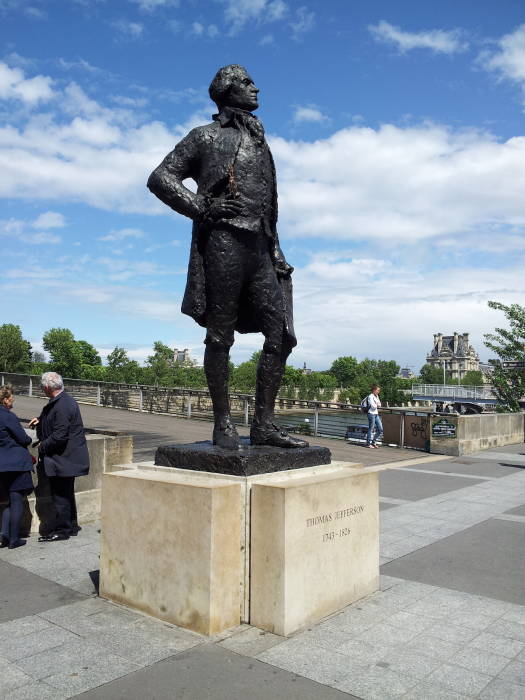
That leaves just 17 amendments after the Bill of Rights. In my view, only 11 of those were substantive, and 6 were of no great consequence. They came in waves. Nothing from 1804 to 1865: 61 years. Then we got, in rapid succession, the three Civil War amendments — XIII, outlawing slavery (1865); XIV, defining citizenship with the all-important “equal protection under the law” clause (1868); and XV, giving Black men the right to vote (1870).
Then another drought (1870–1913: 43 years), followed by the four Progressive Era amendments: XVI, federal income tax (1913); XVII, direct election of senators (also 1913); XVIII, prohibition (1919); and XIX, women’s suffrage (1920).
Then a shorter drought from 1920 to 1933: 13 years. Two New Deal–era amendments: the XX, moving up the inauguration of a new president from March 4 to January 20 (1933), and the XXI, repealing prohibition (also 1933).
To prevent another outsized presidency of the sort FDR experienced, the XXII Amendment was ratified in 1951, two terms only.
Then came the extraordinary ’60s. The XXIII Amendment, giving residents of the District of Columbia a role in the Electoral College vote (1961); XXIV, outlawing the poll taxes that had been used to suppress or eliminate the Black vote in the South (1964); XXV, clarifying presidential succession and impairment in the aftermath of Eisenhower’s serious health issues in his White House years and the assassination of JFK (ratified 1967); and XXVI, granting 18-year-olds the right to vote (1971).
Because we are living through the era of two octogenarian presidents, Trump–Biden–Trump, the XXV Amendment is now frequently part of the national conversation. Both Biden and Trump are objectively perceived as having lost a significant amount of mental acuity during their time in the White House. Ronald Reagan was clearly suffering from Alzheimer’s disease in his second term (1984–88). To his credit, he admitted it. Woodrow Wilson was debilitated by a severe stroke for the last 17 months of his presidency (1919–20), and his wife Edith handled many of his executive decisions and functions. Edith Wilson was essentially the first woman president.
Finally, XXVII (1992), preventing members of Congress from lining their pockets from the federal treasury (they had to find other ways to do so).
Almost all of these amendments were important, but only one of them — direct election of senators — altered the basic mechanism of the Constitution as ratified in 1788.
#### Why Not More?
There are two reasons why there have not been more amendments. First, the American people are surprisingly conservative about making changes to the national Constitution — while at the same time being quite willing to amend or rewrite state constitutions. State constitutions, on average, last only 40–45 years. They are frequently amended (on average once every two years). A number of states have had many constitutions: Georgia 10, Louisiana 11, South Carolina 7, Virginia 7, and Pennsylvania 4. Amendments proliferate. Alabama has ratified more than 900 amendments, California more than 500, and South Carolina more than 500. On average, a state constitution has been amended between 100 and 150 times. Why? Because we need to keep those constitutions attuned to the changing nature of American society — technology, demographics, social mores, unprecedented changes in the way we conduct public affairs, increased representation of previously marginalized groups, etc.
The second reason for so few federal amendments is that the Founders set the bar too high. It requires a two-thirds majority in both houses of Congress, followed by ratification by three-quarters of the states. That means it is now essentially impossible to amend the U.S. Constitution, given the deep partisan divides of our era and refusal to compromise. It’s almost impossible now to ratify a treaty (two-thirds of the Senate), much less amend the Constitution. The Equal Rights Amendment cleared Congress in 1972 — no mean feat — but it did not reach the three-quarters of states threshold before the 1982 deadline.
We are stuck.
Likely a strong majority of constitutional scholars believes we must lower the amendment bar — perhaps to 60% of both houses of Congress, followed by two-thirds or three-fifths of the states. But here’s the great paradox, the Catch-22 of our straitjacketed system. To change the ratification trigger, we would have to amend the Constitution — and since it is impossible to amend the Constitution, we cannot bring about that simple reform, which would make it possible to amend the Constitution as needed.
We are really stuck.
#### It Wasn’t Supposed To Be This Way.

As Harvard professor Jill Lepore notes in her new book, *We the People: A History of the U.S. Constitution, the Founding Fathers* — those 55 white males who crafted our current constitution during the summer of 1787 — uniformly believed that the charter they produced was necessarily imperfect. It was the product of very difficult, even ugly, compromises in Philadelphia. Among other things, they kicked the problem of slavery down the road. Result: at least 620,000 dead in the Civil War, and that didn’t really end real and virtual enslavement anyway. The Founders reckoned the Constitution’s imperfections would become clear as the nation attempted to govern itself under its protocols. They regarded what they had done as a good start. They were sure the Constitution would need to be amended as its imperfections were discovered over time, and that it would be revised or replaced not very many decades into the future. George Washington himself reckoned the 1787 Constitution would be good for about 25 years. The Founders wanted us to have the boldness and creativity to rewrite the Constitution with some frequency to meet the needs and challenges of our times — with a reverent glance at their great work in Philadelphia, but without a slavish adherence to a charter written by an all-male cast of privileged white men who wore buckled shoes and wigs in a three-mile-per-hour world. Thomas Jefferson warned us that “laws and institutions must go hand in hand with the progress of the human mind . . . institutions must advance and keep pace with the times. We might as well require a man to wear still the coat which fitted him when a boy, as civilized society to remain ever under the regimen of their barbarous ancestors.” Amen.
Thomas Jefferson wasn’t a delegate to the constitutional convention. The future third president was in France, serving as the American minister to the Court of Louis XVI. As he watched France descend into a vicious revolution — dramatically more cataclysmic than our comparatively benign independence movement (1774–1783), what might be called a separation more accurately than a revolution — he did some hard thinking about the foundations of a society. While his friends and frenemies in the U.S. were moving in a more conservative direction, especially following Shays’ Rebellion in western Massachusetts in 1786, Jefferson was being radicalized by his time in Europe. He wrote letters to his closest friend and political partner James Madison about how we (on the innocent side of the Atlantic) could avoid the problems that had made late-monarchical France a failed state. Among other things, he declared to Madison that once the West was fully settled (no more free land), we would have to find ways to redistribute property from time to time, to make sure that nobody born in America would be deprived of the opportunity to achieve modest economic satisfaction.
#### Jefferson’s Most Radical Letter
In a letter of September 6, 1789, Jefferson declared to Madison that no constitution was really valid after the generation that produced and ratified it was dead. Each rising generation should tear up the constitution it had inherited and write a new one that addressed its needs, challenges, and opportunities. This was his famous “Earth Belongs to the Living” letter, one of the most radical he ever wrote, one certain to give poor Madison headaches and tear out the last of his thinning hair.
“No society,” Jefferson wrote, “can make a perpetual constitution, or even a perpetual law. The earth belongs always to the living generation. Every constitution then, and every law, natural expires at the end of 19 years. If it be enforced longer, it is an act of force, and not of right.” Jefferson worked with actuarial tables to determine that a generation lasted about 19 or 20 years. The rising generation, he reckoned, would almost certainly reaffirm much of what was in the existing constitution, but make the changes required to keep it current with the dynamics of the most innovative, restless, and rapidly evolving nation on earth.
It would have been interesting to have a Madison-Cam to record James Madison’s reaction when he read this visionary letter at Montpelier. He was more conservative than Jefferson. He had just completed the most important work of his life, shepherding the 1787 Constitution through its very difficult birth pangs, requiring (and somehow achieving) a series of painful compromises he did not think could ever be achieved again. He regarded what one scholar has called the 1787 “Miracle in Philadelphia” as a once-in-a-millennium accomplishment, a black swan event, and he did not believe it could be successfully replicated. Among other things, the wise Madison knew that slavery was going to break the republic.
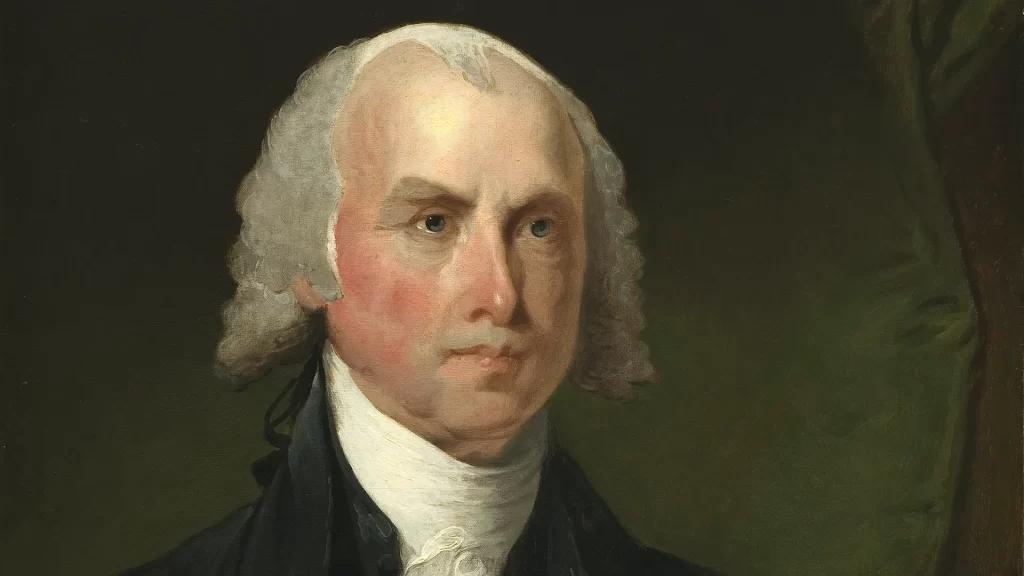
Madison also believed that the Constitution, a new charter for a new republic, needed to be endowed with some veneration, with a deep and unquestionable credibility. If we expect people to accept the Constitution and voluntarily coordinate their lives to its strictures, Madison wrote, it needs to inspire considerable reverence in the people, to have a kind of sacred aura. Madison acknowledged that Jefferson’s argument — the earth belongs to the living not the dead, the people are sovereign, no generation has the right to bind its children and grandchildren with its constitution, laws, or its national debt — makes sense in theory, but he believed it would be deeply problematic in practice. Better to amend when necessary.
Unfortunately, amendment has always been difficult and is now apparently impossible.
#### The Urgency of Now
And yet we truly need to address certain fault lines, fissures, flashpoints, and vulnerabilities in the Constitution we still attempt — with varying degrees of reverence, not much by the current executive — to live by. The short list of things we need to clarify includes: the pardon clause (Article II, Section II); the emoluments clause (Article I, Section IX); the impeachment clause (Article II, Section IV); the vital importance of habeas corpus (Article I, Section IX); the war powers (Article I, Section VIII); the Electoral College (Article II, Section I); the House of Representatives’ unique power of the purse (Article I, Section IX); and such penumbra in the Bill of Rights as what we mean by an “establishment of religion” (Amendment I); cruel and unusual punishments (Amendment VIII); illegal searches and seizures (Amendment IV); the definition of a government “taking” (Amendment V); the right to privacy (Amendment IX?); and the future of the Second Amendment that is (in my opinion erroneously) now perceived in some quarters as requiring us merely to wring our hands after every mass shooting — 394 in 2025 alone, according to the Gun Violence Archive. (The FBI tallies gun violence in a different manner reflecting far lower numbers. Both the FBI and GVA show fewer “mass shootings” occurred in 2025 than in 2024.).
We are severely stuck. We cannot go on like this. Our refusal to revise the Constitution puts vast and undeserved power in the hands of the president (thus the Unitary Executive, government by executive order) and in the nine members of the Supreme Court (unelected, unimpeachable, unaccountable to the American people and serving for life!).
The greatest gift we could give ourselves as we observe the 250th birthday of the United States would be to craft a new constitution suitable to our times — building stronger guardrails, addressing dynamics and issues the Founding Fathers were entirely unable to anticipate (cyber warfare, AI, the pace of modern life, globalization, the atomic bomb, the digital revolution).
I don’t suppose we will do this — revise and rewrite, if only in a non-binding experiment — which means that our beleaguered and practically unamendable 18th-century Constitution will be stretched and strained and frayed as it is forced to attend to things that would have made even Jefferson faint (though he would be quick to order a MacBook Pro and a smartphone, on credit). Nature abhors a vacuum, and recent presidents, none more than the current incumbent, have rushed into the breach, in a way that the Founders explicitly and emphatically tried to prevent. We’d be a better nation in every way if we had the creative audacity to do the hard work of forming a “more perfect union.” If not at 250, when?
I’m with Jefferson, who wrote to Samuel Kercheval on July 12, 1816:
Some men look at constitutions with sanctimonious reverence, and deem them like the ark of the covenant, too sacred to be touched. They ascribe to the men of the preceding age a wisdom more than human, and suppose what they did to be beyond amendment. I knew that age well; I belonged to it, and labored with it. It deserved well of its country. It was very like the present, but without the experience of the present; and forty years of experience in government is worth a century of book-reading.
When I first started studying Jefferson decades ago, I regarded this earth-living and nineteen-year stuff as a little quirky. Now I see his proposal as profound, in fact essential to our future as a republic.
Note: Our Senior Editor Clay Jenkinson is now teaching his fifth online course on the U.S. Constitution: *Flashpoints and Vulnerabilities*. Two more are in the works. The first will attempt to determine how we could have a constitutional convention in our time, addressing the problems of 24–7–365 media, the impossibility of doing this behind closed doors, lobbyists and interest groups, etc. Among other things, he will work with AI experts to determine if we could select a truly representative sample of the American people to serve as delegates: white and Black, urban and rural, of different religions, men and women, Native Americans, etc. The third course will be an online experiment in generating a new constitution in real time (four Saturdays), and determining at the end of the process if we have done anything useful.
---
## ***Discover more on these topics at Listening to America***
[Reading](https://ltamerica.org/tag/reading/ "1 topics")[South Carolina](https://ltamerica.org/tag/south-carolina/ "1 topics")[Video](https://ltamerica.org/tag/video/ "51 topics")[Space Exploration](https://ltamerica.org/tag/space-exploration/ "8 topics")[paintings](https://ltamerica.org/tag/paintings/ "0 topics")[New Mexico](https://ltamerica.org/tag/new-mexico/ "3 topics")[North Dakota](https://ltamerica.org/tag/north-dakota/ "53 topics")[Republic](https://ltamerica.org/tag/republic/ "0 topics")[The Constitution](https://ltamerica.org/tag/the-constitution/ "1 topics")[Texas](https://ltamerica.org/tag/texas/ "4 topics")[Wyoming](https://ltamerica.org/tag/wyoming/ "4 topics")[Thomas Jefferson](https://ltamerica.org/tag/thomas-jefferson/ "34 topics")[Water in the West](https://ltamerica.org/tag/water-in-the-west/ "24 topics")[Washington](https://ltamerica.org/tag/washington/ "2 topics")[north daktoa](https://ltamerica.org/tag/north-daktoa/ "0 topics")[Republics](https://ltamerica.org/tag/republics/ "1 topics")[Rome](https://ltamerica.org/tag/rome/ "1 topics")[South Dakota](https://ltamerica.org/tag/south-dakota/ "16 topics")[New York](https://ltamerica.org/tag/new-york/ "8 topics")[New England](https://ltamerica.org/tag/new-england/ "1 topics")[Utah](https://ltamerica.org/tag/utah/ "11 topics")[Tennessee](https://ltamerica.org/tag/tennessee/ "1 topics")[Ohio](https://ltamerica.org/tag/ohio/ "2 topics")[Road Trips](https://ltamerica.org/tag/road-trips/ "18 topics")[Theodore Roosevelt](https://ltamerica.org/tag/theodore-roosevelt/ "16 topics")[Oppenheimer](https://ltamerica.org/tag/oppenheimer/ "1 topics")[Vermont](https://ltamerica.org/tag/vermont/ "1 topics")[Oregon](https://ltamerica.org/tag/oregon/ "4 topics")[Poetry](https://ltamerica.org/tag/poetry/ "1 topics")[Podcast](https://ltamerica.org/tag/podcast/ "1 topics")[Thoreau](https://ltamerica.org/tag/thoreau/ "5 topics")[U.S. Presidents](https://ltamerica.org/tag/u-s-presidents/ "71 topics")[North Carolina](https://ltamerica.org/tag/north-carolina/ "3 topics")[Steinbeck Travels](https://ltamerica.org/tag/steinbeck-travels/ "75 topics")[William Shirer](https://ltamerica.org/tag/william-shirer/ "1 topics")[Walden](https://ltamerica.org/tag/walden/ "1 topics")[Wisconsin](https://ltamerica.org/tag/wisconsin/ "0 topics")[Travel](https://ltamerica.org/tag/travel/ "1 topics")[U.S. Constitution](https://ltamerica.org/tag/u-s-constitution/ "1 topics")[Pennsylvania](https://ltamerica.org/tag/pennsylvania/ "1 topics")[State Parks](https://ltamerica.org/tag/state-parks/ "2 topics")[Sports](https://ltamerica.org/tag/sports/ "2 topics")[Rivers](https://ltamerica.org/tag/rivers/ "3 topics")[Virginia](https://ltamerica.org/tag/virginia/ "7 topics")[Oppenheim](https://ltamerica.org/tag/oppenheim/ "0 topics")
**Categories:** Features
**Tags:** America at 250, Humanities, U.S. Presidents
---
### [My Year in Review](https://ltamerica.org/my-year-in-review/)
**Published:** December 30, 2025
**Author:** Clay Jenkinson
**Excerpt:** Last week, I reviewed the year 2025 by way of Time magazine’s Year in Review issue. Today I want to review my year as the traveling editor of Listening to America.
**Content:**
## Last week, I reviewed the year 2025 by way of *Time* magazine’s *Year in Review* issue. Today I want to review my year as the traveling editor of Listening to America.
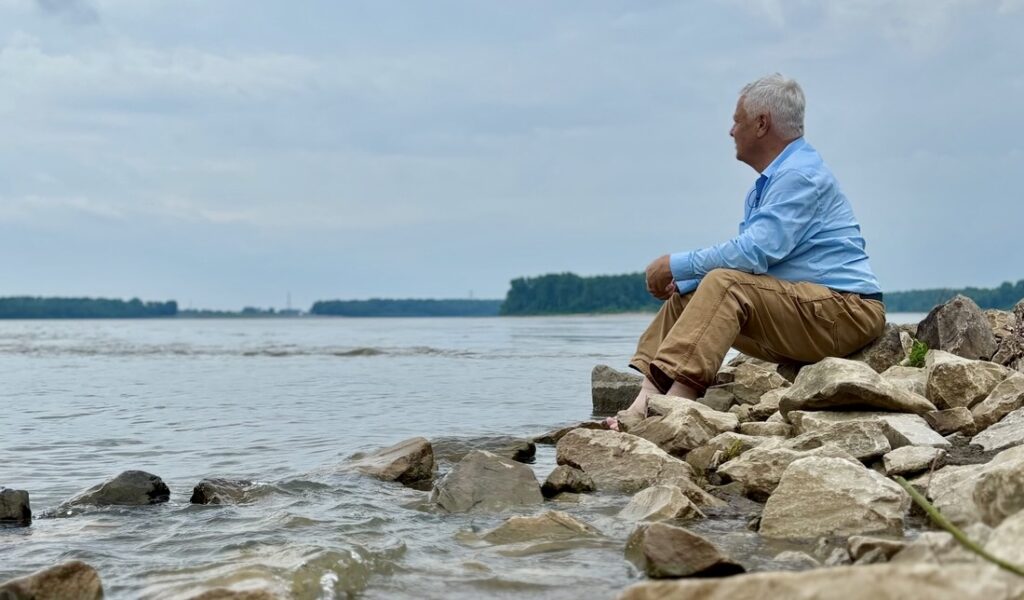Clay Jenkinson at the confluence of the Mississippi and Missouri Rivers. (Photo by Nolan Johnson)
I’ve been brooding over the semiquincentennial of the United States for a couple of years now. Big anniversaries like this are a time to step back and assess how we got here, what our current state says about us, and where we might be headed. If we duck this opportunity to step back and do some hard thinking about the quarter of a millennium American experiment, we will prove that we are not fit for the republican form of self-government the Founders envisioned for us. They thought we were going to be the culmination of the human aspiration — to live in a government of our own fashioning, dedicated to equality under the law, equality of opportunity, and an unprecedented commitment to human rights.
In 2024, I followed John Steinbeck’s 1960 *Travels with Charley* tour of the U.S. I drove more than 20,000 miles around the perimeter of the United States and spent time in 41 states along the way. I met thousands of people, had conversations with more than a hundred, and tried to listen, listen, listen to America. It was an election year. What I learned then was that our shambolic national politics had everyone on edge. Most of the people I met in RV Land were self-consciously escaping from the dispiriting national slugfest. “That’s why we’re out here. We are exhausted, and we just want to turn away.” They wanted to see America, to grill steaks and sip a few cocktails in an RV campground, to visit places they had never been before, and watch a movie before turning in. They were worried about the course of human events, but mostly they wanted to turn away and pursue private satisfactions.
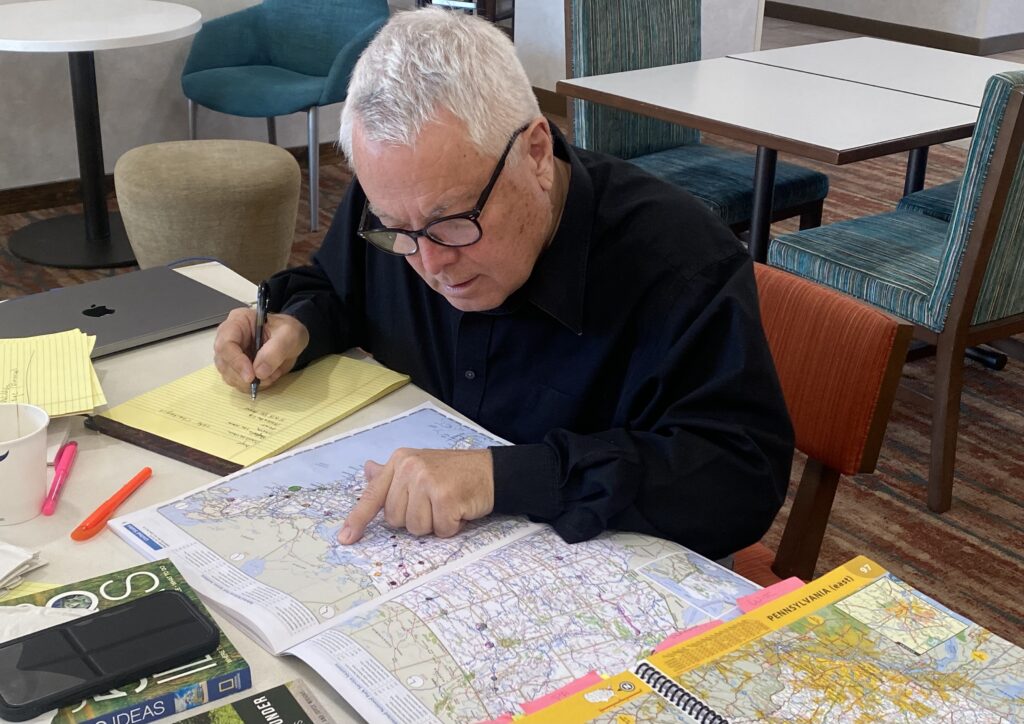Early in 2024, Clay lays out a route that would take him over 21,000 miles and through 41 states. (Photo Frank Lister)
Donald Trump was returned to power. Almost everyone calmed down. Something had been decided.
This year, 2025, I drove America in the wake of the Lewis and Clark expedition (1804-06), one of the subjects I have been studying for 40 years. I wanted to explore our river systems (the Ohio, Mississippi, Missouri, Yellowstone, Lochsa, Clearwater, Snake, and Columbia). I floated sections of the Missouri three times (twice by canoe, once with two spirited young rascals in a pontoon boat), floated the upper Yellowstone on a raft, sat for a couple of hours at the precise confluence of the Missouri and Mississippi, tried to get my brain around the colossal meeting of waters of the Ohio and Mississippi at Cairo, Illinois, and walked the beach just south of the mouth of the Columbia in Oregon. I bestrode the source (one source) of the “mighty and heretofore deemed endless Missouri River” at Lemhi Pass on the Montana-Idaho border, and then ventured with my friends Russ and Liz (of North Carolina) to the true head of the Missouri (if there is one) at Hell Roaring Creek near Upper Red Rocks Lake in extreme southwestern Montana, just over the ridge from Yellowstone National Park.
**The Larger Dynamic**
I am intensely interested in the problematic concept of “Manifest Destiny,” a phrase coined in 1845 to suggest that God and Fate had designated the Anglo-Americans as the rightful inheritors of North America and the natives would have to get on board or get out of the way or perish to enable European-derived white people to open this vast land to our various forms of occupation and extraction. I try never to forget that in 1492, when Columbus bumped into the New World, it was 100% indigenous, and by 1942, when FDR was promoting a New Deal, including an “Indian New Deal,” only about 3% of the land was under the semi-sovereign control of the descendants of those Native Americans. We’d like to argue that “we took it fair and square” or that “these great migrations happen, have happened, and will happen, and there is not much point in wringing our hands over it.” But there is a hollowness and self-soothing in such arguments. I honestly don’t think we can be whole and healed until we come to terms with “the cost of empire.” It would be easier to accept this ethnic cleansing if we had erected a truly admirable civilization on what people like Jefferson preferred to think of as a *tabula rasa* (blank slate), but windswept marginal communities like Sidney, Nebraska, or Williston, North Dakota, and the strip mines around Gillette, Wyoming, don’t really vindicate that vast dispossession. (Note: I’d rather live in Sidney or Bismarck than New York or New Orleans, for some perverse reason.)
I drove about 18,000 miles in 2025. I fell in love with the American outback over and over again. We have an astonishingly beautiful continent — the Tetons, Glacier National Park, the Snake River valley, Tillamook Head on the Oregon Coast, even such Interstate Highways as I-70 through Glenwood Canyon in Colorado, I-94 along the Yellowstone in Montana, the last hundred miles before Seattle on I-90. America is, as a West Virginian once pointed out to me, “a lot of country all spread out,” or as Gertrude Stein said, “In the United States *there is more* space where nobody is *than* where anybody is. That is what makes America what *it* is.” Even at 340 million, the thinness of our population is astonishing.
While I was in Rome at the beginning of December, as we sat looking at a building more than 2,000 years old, one of my closest friends reminded me that the United States is a very young country — only 250 years old — and if we are still not able to make good bread and good cheese, and the portions at our restaurants are large enough to give a hog diabetes, we are still in an early adolescent phase of American civilization. Velveeta and Spam. But this is hardly a consolation. A small plate of *cacio e pepe* pasta in a café from which you can gaze at the Pantheon is exquisite enough to make you rethink the all-you-can-eat, endless breadsticks culture of the USA. And always, said Jefferson, when traveling, order *vin ordinaire* (the house red).
As 2026 begins, my mind is a roller coaster of anxiety, apprehension, and cautious optimism. On a given Tuesday, I almost conclude that our republic is circling the drain, but on a Thursday of the same week, I reckon we will blunder through the present crisis as we always seem to do. I have never in my long life been so worried about the American experiment — and I wonder how exactly we should celebrate, commemorate, observe, or endure (choose your verb) our 250th birthday. I would like to conclude that we are a robust democracy that sometimes loses its way and then self-corrects, but then I think of masked federal agents snatching immigrants (and some bonafide American citizens) off a Home Depot parking lot or from within a strip mall church, and a Secretary of Homeland Security who publicly defines Habeas Corpus as the president’s right to kidnap (behind masks) fellow human beings and deny them due process or even legal representation. This is America?
**My Own Year in Review**
In January, I hosted my two annual humanities retreats at a retro lodge west of Missoula. One was on two plays by Shakespeare (*King Lear* and *As You Like It),* and the other on Thoreau and Edward Abbey. I spent four weeklong residencies in the mountains of Colorado for the Vail Symposium on a range of controversial topics. I celebrated a milestone birthday with my daughter in Oxford, London, and Paris. Three of the best days of my life. I led a group of approximately 20 to Cuba for more than a week in February, where we saw farmers plowing the fields with oxen, thousands of people walking the main road between Santiago and Havana, and others somehow patching 1950s American cars together with wire and makeshift carburetors. The people of Cuba deserve better from the colossus 90 miles to the north. We have had our boot on the neck of the innocent Cuban population for six decades now, and caused widespread, even universal suffering among a friendly, earnest, and desperate people who only want to live their lives in something like economic security. They do not hate America, but they are bewildered by our government. While we were there, the power grid went down for part of every day. We chose our restaurants according to whether they had private generators. And at year’s end, America’s blockade of Venezuelan oil is making things worse in Cuba to the point of national collapse.
In April, I performed in Moab, Utah, as my Chautauqua characters J. Robert Oppenheimer (it was uranium mining country) and John Wesley Powell (the one-armed Civil War veteran who ran the Green and Colorado Rivers in 1869 and tried to forge a sane protocol for water use in the American West). Edward Abbey (of *Desert Solitaire* and *The Monkey Wrench Gang* fame) has become one of my favorite subjects.
Chili dog and Cheerwine in North Carolina.
At the end of April, I began my summer-long Lewis and Clark trek in Salisbury, North Carolina, home of the locally celebrated Cheerwine soda (“since 1917”) and the local Cheerwine Festival. I had some mechanical issues with my Airstream along the way, but on the whole it performed beautifully, allowing me to sleep all over America on my own clean sheets and to make modest “scratch together” meals at almost every stop.
Throughout the year, I created 52 brand-new podcasts, often recorded at my desk in the Airstream. Everyone loves Lindsay Chervinsky and Joseph Ellis, of course, but in every podcast this year, I asked questions of writers, thinkers, historians, and activists that I hoped would illuminate America at 250. How did we get here? How well are we doing? What’s unfinished and unresolved in American life? How will we work ourselves out of this national political paralysis? Are we in any measurable way the rightful heirs of the Founding Fathers? Who are we now? Where do we seem to be headed?
Invariably, like the first great essayist Montaigne (1533-1592), I wind up saying, Que sais-je?, What do I know?
In November, I went to England to see my child take her PhD from Oxford University. That was two trips to Britain in 2025. Long ago, I studied there for four years, and after all this time, that experience remains one of the two or three best times of my life. Now I am that geezer in the old favorite pub, sipping his sherry and port and daydreaming when life was all before me, and I was going to read my way to mastery and wisdom. In December, Rome, Florence, and Naples (Herculaneum), to luxuriate in the ruins of the Roman Republic and Empire, and wonder how nations rise and fall. Why did the Roman Republic collapse? Why did the Roman Empire decline and fall? What about us? Where do we fit in the big picture?
Meanwhile, all year, I wrote a great deal, read much but not enough, recorded podcasts and video modules all over the place, took 7,000 photographs, attended two Major League baseball games (Pittsburgh and St. Louis) and one superb magic show (in Pittsburgh), drank from the sources of great rivers, hiked in National Parks, National Forests, and National Monuments, watched the sky at night, left a dubious carbon footprint, and sat on the banks of rivers daydreaming *Huckleberry Finn* and Meriwether Lewis and the poet John Neihardt (*The River and I*).
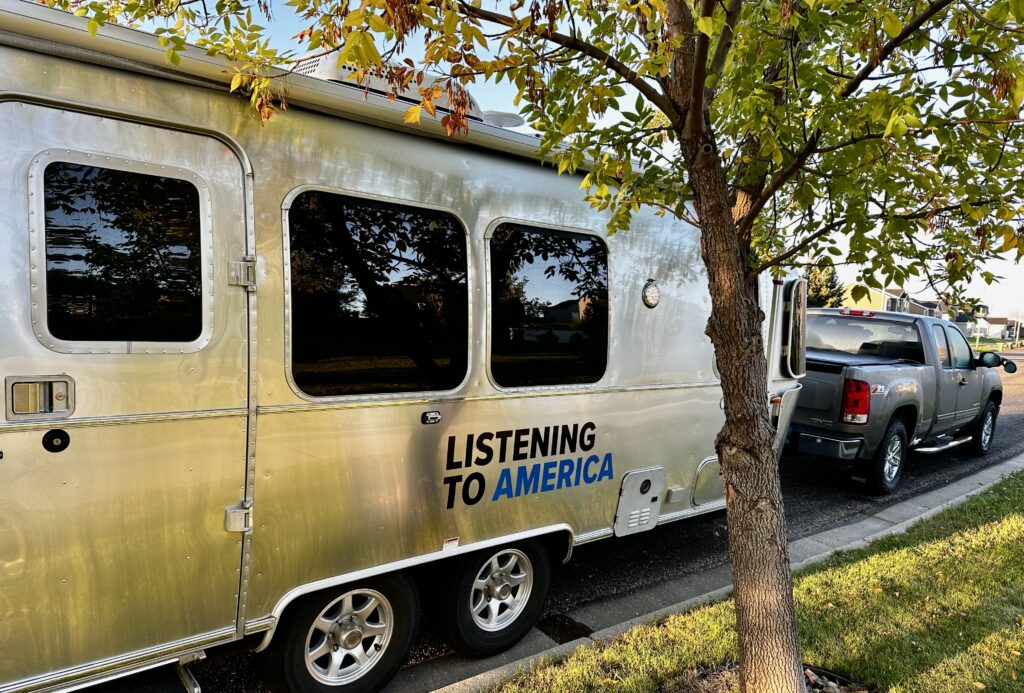
The Airstream (Rocinante) is sitting out the winter in storage on the fierce Northern Plains, all pipes drained. When I fire it back up in late April, I plan to take only 25% of what I hauled in it last year. My downsizing campaign is changing the course of my life. I’m not entirely settled on my travels in 2026, but I’ll be exploring the world of the great photographer of Native Americans, Edward S. Curtis, and the conservation properties of Theodore Roosevelt, across the West.
I am not yet quite sure where I will be on the 4th of July 2026, but I know the question I will be pondering. When the Founders left the Constitutional Convention at last on September 17, 1787, a Philadelphia woman asked the elderly sage Benjamin Franklin what they had wrought behind closed doors. His reply: “A republic, if you can keep it.”
That’s the big question that hovers over America.
---
## ***Discover more on these topics at Listening to America***
[paintings](https://ltamerica.org/tag/paintings/ "0 topics")[U.S. Presidents](https://ltamerica.org/tag/u-s-presidents/ "71 topics")[Road Trips](https://ltamerica.org/tag/road-trips/ "18 topics")[William Shirer](https://ltamerica.org/tag/william-shirer/ "1 topics")[Rivers](https://ltamerica.org/tag/rivers/ "3 topics")[U.S. Constitution](https://ltamerica.org/tag/u-s-constitution/ "1 topics")[North Carolina](https://ltamerica.org/tag/north-carolina/ "3 topics")[Texas](https://ltamerica.org/tag/texas/ "4 topics")[Oppenheimer](https://ltamerica.org/tag/oppenheimer/ "1 topics")[Space Exploration](https://ltamerica.org/tag/space-exploration/ "8 topics")[Theodore Roosevelt](https://ltamerica.org/tag/theodore-roosevelt/ "16 topics")[Virginia](https://ltamerica.org/tag/virginia/ "7 topics")[Thoreau](https://ltamerica.org/tag/thoreau/ "5 topics")[north daktoa](https://ltamerica.org/tag/north-daktoa/ "0 topics")[New England](https://ltamerica.org/tag/new-england/ "1 topics")[Travel](https://ltamerica.org/tag/travel/ "1 topics")[New Mexico](https://ltamerica.org/tag/new-mexico/ "3 topics")[Rome](https://ltamerica.org/tag/rome/ "1 topics")[Reading](https://ltamerica.org/tag/reading/ "1 topics")[Oppenheim](https://ltamerica.org/tag/oppenheim/ "0 topics")[Oregon](https://ltamerica.org/tag/oregon/ "4 topics")[Tennessee](https://ltamerica.org/tag/tennessee/ "1 topics")[Water in the West](https://ltamerica.org/tag/water-in-the-west/ "24 topics")[Sports](https://ltamerica.org/tag/sports/ "2 topics")[Wyoming](https://ltamerica.org/tag/wyoming/ "4 topics")[Walden](https://ltamerica.org/tag/walden/ "1 topics")[Video](https://ltamerica.org/tag/video/ "51 topics")[Podcast](https://ltamerica.org/tag/podcast/ "1 topics")[New York](https://ltamerica.org/tag/new-york/ "8 topics")[Thomas Jefferson](https://ltamerica.org/tag/thomas-jefferson/ "34 topics")[South Dakota](https://ltamerica.org/tag/south-dakota/ "16 topics")[State Parks](https://ltamerica.org/tag/state-parks/ "2 topics")[Steinbeck Travels](https://ltamerica.org/tag/steinbeck-travels/ "75 topics")[North Dakota](https://ltamerica.org/tag/north-dakota/ "53 topics")[Vermont](https://ltamerica.org/tag/vermont/ "1 topics")[Washington](https://ltamerica.org/tag/washington/ "2 topics")[Republic](https://ltamerica.org/tag/republic/ "0 topics")[South Carolina](https://ltamerica.org/tag/south-carolina/ "1 topics")[Republics](https://ltamerica.org/tag/republics/ "1 topics")[Poetry](https://ltamerica.org/tag/poetry/ "1 topics")[Ohio](https://ltamerica.org/tag/ohio/ "2 topics")[The Constitution](https://ltamerica.org/tag/the-constitution/ "1 topics")[Pennsylvania](https://ltamerica.org/tag/pennsylvania/ "1 topics")[Utah](https://ltamerica.org/tag/utah/ "11 topics")[Wisconsin](https://ltamerica.org/tag/wisconsin/ "0 topics")
**Categories:** Features
**Tags:** America at 250, Humanities, Lewis and Clark, Native Americans, Steinbeck Travels, U.S. Presidents
---
### [The Great Downsizing Campaign](https://ltamerica.org/the-great-downsizing-campaign/)
**Published:** December 30, 2025
**Author:** Clay Jenkinson
**Excerpt:** “The cost of a thing is the amount of what I will call life which is required to be exchanged for it, immediately or in the long run.” — Thoreau
**Content:**
## “The cost of a thing is the amount of what I will call life which is required to be exchanged for it, immediately or in the long run.” — Thoreau
Boxes of books culled from Clay’s massive personal library sit ready to be taken to their new home.
Yesterday, in early afternoon, a library director from eastern North Dakota, Joe R., backed into my driveway. He had come with his red sedan to take delivery of the first load of the books I am donating to his library system and to a small religious college in southern North Dakota. We loaded 30 heavy bank boxes into his vehicle, then sat down to share beverages and fruitcake in my living room library.
There was black ice on my front steps, sidewalk, and driveway, and the streets and roads of North Dakota were treacherous. But Joe had no trouble getting here. I had taken a pretty bad fall on my steps when I first ventured out hours earlier, one of those falls where the legs go out from under you in an instant, and all you can do is brace yourself for impact. It was slip-on-a-banana-peel stuff, hilarious except for the force of impact. I lay on the sidewalk for a while, wondering if I was hurt.
Joe took about a third of the books I am de-accessioning, my “weeding out,” as he put it. He’ll return for more, and I may drive a load of 40 boxes or so to Jamestown, North Dakota, to make his work less onerous. I’d like to see the library he manages.
So far, the downsizing has been mostly cheerful. I’ve selected books I’m unlikely ever to read again or ever to want to read. After spending part of a day packing them up, on a few occasions I have gotten up in the middle of the night, or the next morning, to fish out a book that — on second thought — I’d like to keep for now. Several times, I have dismally calculated approximately how many reading hours I have left in my life, at about the rate of 104 books per year. This fills me with despair. Even to catch up on all the approved classics of English, European, and American literature I have so far failed to read, I would need another 50 years of hard reading. Then there are collections on my 10 or so favorite subjects, from the U.S. space program to the golden age of CBS news (Sevareid, Cronkite, Murrow), from the making of the atomic bomb to the life and achievement of John Steinbeck, from the Lewis and Clark expedition to a collection of books on the U.S. Constitution. And what about the complete works of Dostoevsky?
As Mark Twain might put it, accounts of the Death of the Book have been greatly exaggerated. In many respects, this is the great age of publishing for readers. If I hung out at the local Barnes & Noble bookstore, I could easily pick out four or five books per week that I would quite like to read. Should read.
We talked for about an hour in my living room. Joe has an expansive philosophy of libraries, which dovetails perfectly with my own view. When I quoted Thomas Jefferson, on the occasion of his donating/selling his library of about 7,000 volumes to the Library of Congress in 1814-15, that **“There is, in fact, no subject to which a Member of Congress may not have occasion to refer,” Joe sighed his approval. He wants to give the people who venture into his libraries the opportunity to explore the human condition in ways that open doors rather than confirm their existing views of things.**
I took no money for my books, of course. Joe is doing me the favor. When he asked me if I had any requests or requirements, I said two things. First, he can do with my books whatever he thinks best, but if he gets rid of some (for whatever reason), I don’t want to know about it; and second, I’d like to come to the college sometime in the next year to give a talk to the student body about the importance of serious reading to a complete life. No charge. He reckoned that could be arranged.
When Henry David Thoreau finally convinced me to “simplify, simplify, simplify,” and to remove some of the burden of having more books in my house — in which every room is a library — than shelves to put them on, my biggest concern was that the books not wind up in a landfill or sold “by the pound” as is the habit of many public library sales. A lifetime of carefully building a library should not end in someone lugging away 15 books on World War II in a shopping bag for $2.75. I wanted to repurpose my books, put them into the hands of someone somewhere who would take them seriously. Thanks to a distant friend who understood my intentions, I was put in contact with Joe. My books are not furniture, and I don’t want them to be dumped unceremoniously into a landfill.
In a week or two, all 3,000 of the Year One Initiative books will be gone. I now have some open space on my shelves, which means that I can sort books more effectively, and bring all of Shakespeare into the same space, all of Lewis and Clark, and Theodore Roosevelt, and reference works.
My plan is to donate 2,000 books a year for the next five years. That will still leave about 10,000 books to browse, read, and love in my dotage. My daughter, a serious scholar, will probably want about 100. The rest have to go somewhere. I don’t want to wait until I croak, which would probably mean one of those giant metal garbage container units in the driveway and a skid-steer.
To those of you who know you need to start downsizing (whether you are 40 or 80), I can report several things. First, there is a wonderful sense of liberation. In many respects, my life was being choked by the sheer abundance of books, notebooks, files, gadgets, kitchen appliances, etc. If your life is anything like mine, two categories of things seem to breed in one’s house: coffee mugs and t-shirts.
I don’t exactly yet feel “the incredible lightness of being,” but my world does not now seem so congested, and I am now in some danger of actually being able to find things I am looking for (and not just ordering another). Second, giving is gratifying. If I were taking my books to the town dump, I’d feel horrible. By putting them in the hands of those who profess they will benefit from them, I feel satisfied, almost virtuous. It’s recycling in its finest form. Third, I’m already more organized, and I expect to become much more so now as I shuffle two books here and four there to place them where they belong and where I can get at them easily. Fourth, I know I am making things much easier for those who will have to clean out my house when I am gone.
The next phases of library downsizing are likely to be harder, because I will want to cling to books that still matter to me. Soon, the fat and gristle will be gone, and I’ll have to start cutting muscle and bone. What if I get rid of all of my Captain James Cook books and then one day, five years from now, wake up with the desire to study his voyages or write about his voyages? So far, there has been no blood on the floor, and my aching back is the only indication of “the price of downsizing.” But there will definitely be blood on the floor soon.
In the course of my weeding, I have come upon several dozen books that I now very much wish to read, and they are stacked up near my desk in front of the 160 degrees of window that bathe my work desk with light — at the moment, wan winter Great Plains light. If I read 10 hours a day (as I did in my Oxford years), I could up my game to 156 books per year, and I might still vindicate a life radially misspent.
Thoreau again: *“The cost of a thing is the amount of what I will call life which is required to be exchanged for it, immediately or in the long run.*” I reckon I have spent half a million dollars on books in the course of my life. That would have bought weeklong journeys to all the world’s cultural capitals, some of them annually, like London, Athens, Rome, and New York. Or a lot of jet skis. One unintended benefit: in a subarctic climate like Dakota, those books have been excellent insulation.
And Thoreau again, in the sentence from his greatest single paragraph that haunts me now that there is less life ahead of me than behind: *“I went to the woods to live deliberately, to front only the essential facts of life, to see if I could not learn what it had to teach, and not, when I came to die, discover that I had not lived.”*
I have lived for the badlands of the Little Missouri River valley. I have lived for my daughter. I have lived for and in the humanities. I have lived for friendship. I have lived to do my little part in keeping the flame of enlightenment alive in the Age of Disillusionment.
And, thank goodness, my house is still awash in good books to read.
---
## ***Discover more on these topics at Listening to America***
[North Dakota](https://ltamerica.org/tag/north-dakota/ "53 topics")[U.S. Constitution](https://ltamerica.org/tag/u-s-constitution/ "1 topics")[Theodore Roosevelt](https://ltamerica.org/tag/theodore-roosevelt/ "16 topics")[Texas](https://ltamerica.org/tag/texas/ "4 topics")[Road Trips](https://ltamerica.org/tag/road-trips/ "18 topics")[Wyoming](https://ltamerica.org/tag/wyoming/ "4 topics")[Vermont](https://ltamerica.org/tag/vermont/ "1 topics")[Ohio](https://ltamerica.org/tag/ohio/ "2 topics")[Rome](https://ltamerica.org/tag/rome/ "1 topics")[Virginia](https://ltamerica.org/tag/virginia/ "7 topics")[Reading](https://ltamerica.org/tag/reading/ "1 topics")[north daktoa](https://ltamerica.org/tag/north-daktoa/ "0 topics")[Wisconsin](https://ltamerica.org/tag/wisconsin/ "0 topics")[The Constitution](https://ltamerica.org/tag/the-constitution/ "1 topics")[Pennsylvania](https://ltamerica.org/tag/pennsylvania/ "1 topics")[U.S. Presidents](https://ltamerica.org/tag/u-s-presidents/ "71 topics")[Travel](https://ltamerica.org/tag/travel/ "1 topics")[Walden](https://ltamerica.org/tag/walden/ "1 topics")[William Shirer](https://ltamerica.org/tag/william-shirer/ "1 topics")[Oregon](https://ltamerica.org/tag/oregon/ "4 topics")[Space Exploration](https://ltamerica.org/tag/space-exploration/ "8 topics")[Tennessee](https://ltamerica.org/tag/tennessee/ "1 topics")[Water in the West](https://ltamerica.org/tag/water-in-the-west/ "24 topics")[Thomas Jefferson](https://ltamerica.org/tag/thomas-jefferson/ "34 topics")[Rivers](https://ltamerica.org/tag/rivers/ "3 topics")[New Mexico](https://ltamerica.org/tag/new-mexico/ "3 topics")[Oppenheimer](https://ltamerica.org/tag/oppenheimer/ "1 topics")[Republics](https://ltamerica.org/tag/republics/ "1 topics")[North Carolina](https://ltamerica.org/tag/north-carolina/ "3 topics")[Oppenheim](https://ltamerica.org/tag/oppenheim/ "0 topics")[Thoreau](https://ltamerica.org/tag/thoreau/ "5 topics")[South Dakota](https://ltamerica.org/tag/south-dakota/ "16 topics")[Steinbeck Travels](https://ltamerica.org/tag/steinbeck-travels/ "75 topics")[paintings](https://ltamerica.org/tag/paintings/ "0 topics")[South Carolina](https://ltamerica.org/tag/south-carolina/ "1 topics")[Poetry](https://ltamerica.org/tag/poetry/ "1 topics")[State Parks](https://ltamerica.org/tag/state-parks/ "2 topics")[New York](https://ltamerica.org/tag/new-york/ "8 topics")[Washington](https://ltamerica.org/tag/washington/ "2 topics")[Video](https://ltamerica.org/tag/video/ "51 topics")[New England](https://ltamerica.org/tag/new-england/ "1 topics")[Sports](https://ltamerica.org/tag/sports/ "2 topics")[Podcast](https://ltamerica.org/tag/podcast/ "1 topics")[Republic](https://ltamerica.org/tag/republic/ "0 topics")[Utah](https://ltamerica.org/tag/utah/ "11 topics")
**Categories:** Dispatches from the Road
**Tags:** Books, Humanities, North Dakota
---
### [Remembering My Beloved Oxford University Mentor](https://ltamerica.org/remembering-my-beloved-oxford-university-mentor/)
**Published:** December 23, 2025
**Author:** Clay Jenkinson
**Excerpt:** Clay remembers an early and influential mentor, Professor John Carey of Oxford University.
**Content:**
## Clay remembers an early and influential mentor, Professor John Carey of Oxford University.
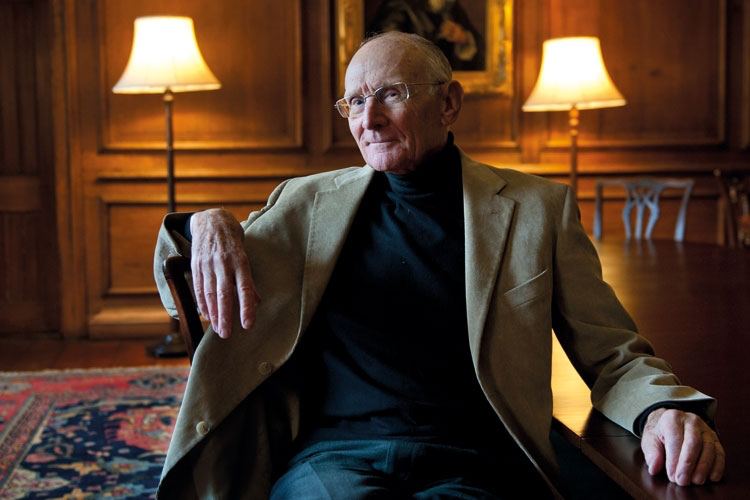John Carey, an early and influential mentor of Clay’s, was the Merton Professor of English at Oxford University. Professor Carey died recently at the age of 91.
**Bismarck, December 18, 2025** — I learned this morning from my daughter at Oxford University that my beloved mentor, John Carey, has died at the age of 91. I worked under his supervision for several years on my study of the sermons of the Elizabethan poet and Jacobean preacher [John Donne](https://www.poetryfoundation.org/poets/john-donne). Carey was a tall, austere, gaunt, profoundly learned, witty, and sometimes caustic man. He treated me with generosity and respect.
Carey was the Merton Professor of English. [Merton](https://www.merton.ox.ac.uk) is one of Oxford’s 38 or so colleges and also one of its oldest. That he authored 15 highly regarded books of English literary criticism and biography does not do him justice. My favorite of those are: *John Donne: Life, Mind and Art* (1981); *The Violent Effigy: A Study in Dickens’ Imagination* (1973); and *The Unexpected Professor* (2014).
I walked into his suite at Merton one afternoon just after a British parliamentary election. His office was the template of a floor-to-ceiling gentleman’s library, just this side of a Renaissance study. He waved me in. He was on the phone with a London newspaper that wanted him to guess what prominent English writers would think of the result: Shakespeare, Donne, Dickens, and Henry Fielding. They asked about Milton. He cupped the phone and turned to me. Any thoughts? I said, “I don’t know, but he’d be an “acrimonious and surly republican.” Carey laughed out loud and spoke that into the phone. It was a literary allusion. The 18th-century poet and critic Samuel Johnson, who admired but did not like Milton, called him “an acrimonious and surly republican.” In other words, anti-royalist.
Carey also edited, with almost unbearable brilliance and erudition, *The Shorter Poems of John Milton*, and he translated from Latin Milton’s monumental *De Doctrina Christiana* (863 pages). *De Doctrina* is a dense, crabbed, theologically intricate work of Latin prose. First, you have to know Latin that well, and this was a special, theologically technical species of Latin you don’t get with Caesar, Livy, and Tacitus in grammar school. Translating it could not have been as joyful as translating Ovid or Virgil would have been, or anything else, for that matter. There must have been times when even John Carey wondered if he should throw up his hands, but he persevered, and Yale published it in 1973. That alone would have been a lifetime’s achievement, for a book that is seldom read even by Milton specialists. The range of his reading was staggering.

He could have been the quintessential Oxford don, but he didn’t quite succumb. He had a slight lisp, which only added to the charm. He laughed with great gusto. He rode around Oxford on one of those miniature fold-up bicycles when that was an unusual technology. One of my other mentors called him “the great stone face” for the seemingly lugubrious persona Carey had developed, but even then, I regarded that quip as jealousy.
He was actually pretty skeptical of academic literary judgment and the elitism of the British literary establishment. He sought other outlets for his work, and most of his books were written for the non-academic public. Probably nobody in the last 50 years has published more book reviews than Carey.
His lectures were standing room only. I attended them all. One was a series of four on the material excesses of the Elizabethan age, and I remember him inventorying, with great glee, the hundreds of yards of silk used in decorating principal royal courtiers; the elaborate and obscenely expensive masques and pageants her subjects organized to please Queen Elizabeth; the fireworks and animatronic swans and mythological creatures hung by pullies in the rafters. The sheer number of sheep, cows, deer, hares, partridges, hogs, and hogsheads of ale needed to host just one overnight by the Queen. This kind of hospitality — absolutely required of a titled aristocrat — nearly bankrupted some of them, but the queen, aware of the bargain, kept feeding them estates and licenses for Elizabethan monopolies. The lecture was mesmerizing (I remember it 40 years later). Once you understand the magnitude of Elizabethan excess, however, you could leave it for other commentary, but Mr. Carey, with a grimly bemused satisfaction, gave most of the lecture to those stats and stories.
His lecture style was a little formal, but his words were often hilarious. He knew the ironies of his literary analysis but presented them in a deadpan manner that added to the fascination we all felt in being in the presence of one of the giants of Oxford — in a place of giants — in his prime.
He began a course of lectures on 16th Century Prose and Poetry by saying there was no period of English literature more delightful and compelling than this one. I personally think the *next* century, the century of later Shakespeare, John Donne, George Herbert, Andrew Marvel, and of course Milton, is the great age of English literature, but in the course of the next few weeks, he made the works of Thomas Nashe, George Chapman, Edmund Spenser, and Sir Philip Sidney come to life. He had a special interest in the absurd, the grotesque, and the dark underbelly of Elizabethan London. No wonder he wrote a book about the imagination of Charles Dickens.
Carey believed that literary criticism must be lucid and comprehensible, that there was no room for academic jargon and deliberate obfuscation. He was as averse to “theory,” and yet he could hold his own with Terry Eagleton and the other young Turks who had fallen in love with Derrida and Foucault.
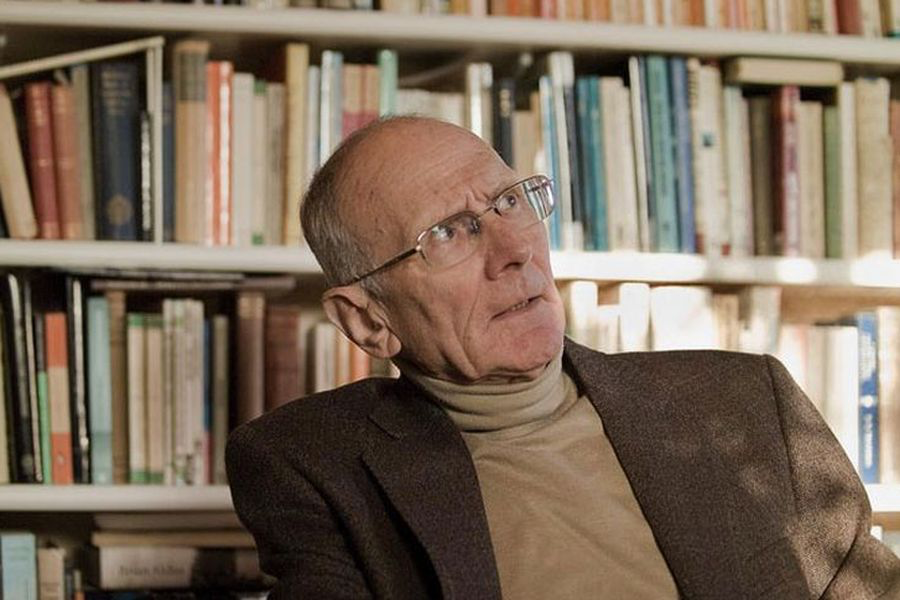
*“Almost everything about bees is amazing. Worker bees fly up to three miles from the hive and visit ten thousand flowers in a day. Their wings beat two hundred times a second, and they perform elaborate dances on the face of the comb to tell other workers where and how far away food sources are. In summer, there are fifty thousand of them in the hive, and each dies of exhaustion after about five weeks. In its whole lifetime, a worker collects about a quarter of an ounce of honey, less than half a teaspoonful, but the yield from one hive in a good year can be over eighty pounds.”*
― John Carey, [*The Unexpected Professor: An Oxford Life in Books*](https://www.goodreads.com/work/quotes/26225234)
He wrote thousands of book reviews, often acerbic, for the London papers. They were famous for his strong opinions as well as his mastery of the book in question and its place in the larger stream of literature. When he didn’t like a book or its implications, he made that unmistakably clear.
I may be wrong, but I sense that the era of such giants — John Carey, George Steiner, Harold Bloom, and Stephen Greenblatt — the ones who read everything — is over. I hope I am wrong. I read incessantly, but I am a mere piker in this conversation. When I am in the presence of someone that well read in a range of directions, I feel only awe, as if they are creatures of another planet, at least another order of beings.
The last time I saw John Carey was at High Table at Merton about 25 years ago now. We talked about the ordeal of Salmon Rushdie — over white fish, pork steak, and (inevitably) overcooked brussels sprouts. Plus two good wines. He appreciated Rushdie’s work but found him vain and entitled. Afterwards, we repaired to the SCR (the Senior Common Room) for coffee or brandy. Opening the *Times*, he read out loud the obituary of a British lord who had all the zany eccentricities, hobbies, sartorial quirks, and arbitrary opinions you want from such a construct.
He looked up at the three of us enjoying his spirited read, and said, “Tewwific, Tewwific.”
Over Christmas, I am going to reread his memoir,[ *The Unexpected Professor*](https://www.amazon.com/Unexpected-Professor-John-Carey/dp/0571310931).
---
## ***Discover more on these topics at Listening to America***
[Utah](https://ltamerica.org/tag/utah/ "11 topics")[paintings](https://ltamerica.org/tag/paintings/ "0 topics")[Walden](https://ltamerica.org/tag/walden/ "1 topics")[North Carolina](https://ltamerica.org/tag/north-carolina/ "3 topics")[Theodore Roosevelt](https://ltamerica.org/tag/theodore-roosevelt/ "16 topics")[Republics](https://ltamerica.org/tag/republics/ "1 topics")[Rivers](https://ltamerica.org/tag/rivers/ "3 topics")[New England](https://ltamerica.org/tag/new-england/ "1 topics")[Oppenheim](https://ltamerica.org/tag/oppenheim/ "0 topics")[New Mexico](https://ltamerica.org/tag/new-mexico/ "3 topics")[Vermont](https://ltamerica.org/tag/vermont/ "1 topics")[Republic](https://ltamerica.org/tag/republic/ "0 topics")[North Dakota](https://ltamerica.org/tag/north-dakota/ "53 topics")[north daktoa](https://ltamerica.org/tag/north-daktoa/ "0 topics")[Virginia](https://ltamerica.org/tag/virginia/ "7 topics")[Poetry](https://ltamerica.org/tag/poetry/ "1 topics")[U.S. Presidents](https://ltamerica.org/tag/u-s-presidents/ "71 topics")[Wisconsin](https://ltamerica.org/tag/wisconsin/ "0 topics")[Steinbeck Travels](https://ltamerica.org/tag/steinbeck-travels/ "75 topics")[Oppenheimer](https://ltamerica.org/tag/oppenheimer/ "1 topics")[Texas](https://ltamerica.org/tag/texas/ "4 topics")[South Dakota](https://ltamerica.org/tag/south-dakota/ "16 topics")[Washington](https://ltamerica.org/tag/washington/ "2 topics")[Wyoming](https://ltamerica.org/tag/wyoming/ "4 topics")[William Shirer](https://ltamerica.org/tag/william-shirer/ "1 topics")[New York](https://ltamerica.org/tag/new-york/ "8 topics")[The Constitution](https://ltamerica.org/tag/the-constitution/ "1 topics")[Ohio](https://ltamerica.org/tag/ohio/ "2 topics")[Tennessee](https://ltamerica.org/tag/tennessee/ "1 topics")[Reading](https://ltamerica.org/tag/reading/ "1 topics")[Thoreau](https://ltamerica.org/tag/thoreau/ "5 topics")[Rome](https://ltamerica.org/tag/rome/ "1 topics")[Oregon](https://ltamerica.org/tag/oregon/ "4 topics")[Thomas Jefferson](https://ltamerica.org/tag/thomas-jefferson/ "34 topics")[State Parks](https://ltamerica.org/tag/state-parks/ "2 topics")[Pennsylvania](https://ltamerica.org/tag/pennsylvania/ "1 topics")[South Carolina](https://ltamerica.org/tag/south-carolina/ "1 topics")[Space Exploration](https://ltamerica.org/tag/space-exploration/ "8 topics")[Podcast](https://ltamerica.org/tag/podcast/ "1 topics")[Sports](https://ltamerica.org/tag/sports/ "2 topics")[Road Trips](https://ltamerica.org/tag/road-trips/ "18 topics")[Travel](https://ltamerica.org/tag/travel/ "1 topics")[Water in the West](https://ltamerica.org/tag/water-in-the-west/ "24 topics")[U.S. Constitution](https://ltamerica.org/tag/u-s-constitution/ "1 topics")[Video](https://ltamerica.org/tag/video/ "51 topics")
**Categories:** Dispatches from the Road
**Tags:** Books, Humanities
---
### [A Review of 2025 at Year’s End](https://ltamerica.org/a-review-of-2025-at-years-end/)
**Published:** December 23, 2025
**Author:** Clay Jenkinson
**Excerpt:** Amid Christmas grocery shopping, Clay reflects on the year that was.
**Content:**
## Amid Christmas grocery shopping, Clay reflects on the year that was.
Time’s 2025 “Year in Review”
**Bismarck, North Dakota —** I was standing in the grocery line, determining whether I could afford Christmas groceries — I may be reduced to goose, like the Cratchits of *A Christmas Carol*, who hope they will be able to afford a turkey *next* year — when I saw on the rack a copy of *Time* magazine’s *The Year in Review*. I love the major media’s year-in-review broadcasts and publications. These mattered more back when there was a comparative dearth of media, the time when we waited for the release of next year’s Information Please Almanac.
I brought it home. This morning I read it cover to cover. I lament that *Time* magazine, once central to American life, has faded from prominence. First published in 1923, *Time* has attracted some of the finest journalists in America over the years, and it was so powerful that political figures quailed at the possibility of getting on the wrong side of Henry Luce and his journalistic inheritors. It is still printed every week! That deserves an exclamation point.
I learned an amazing amount in reading through the 96-page issue. This made me a little ashamed of how ill-informed I was. There were, of course, the expected articles about Trump term II, about the endless saga of Jeffrey Epstein’s sex trafficking enterprise, about one of the best World Series of my lifetime (Dodgers vs. Blue Jays), about the death of Pope Francis and the election of the first American (Robert Francis Prevost) as Pope Leo XIV; about the grinding gruesome war in Ukraine, now in its fourth brutal year, including Russia’s kidnapping of 20,000 Ukrainian children (a war crime); about the Israel-generated famine in Gaza, which Israel denies in the face of reports from all the international aid organizations; and of course about the coming Era of AI. All that was to be expected.
Largest ever digital camera for astronomy. (Image, Jacqueline Ramseyer Orrell/SLAC National Accelerator Laboratory)
Several scientific discoveries and breakthroughs thrilled me. Our newest super-telescope digital camera is 27 feet wide and imaging at 1,000 pictures per night, capturing some of the deepest, farthest objects in the universe. Scientists have confirmed that the Plague of Justinian (541-750 CE) was caused by the same bacterium that later brought the Black Plague (1346-1351). Interspecies organ transplants have begun to occur with some regularity, now that geneticists have altered pig cells and bred them to grow human-like kidneys. Why? Because we do 48,000 organ transplants per year in America, but there are 100,000 people on the national waiting list.

Here’s one that Mr. Jefferson would have found astounding and deeply satisfying. Scientists have essentially regenerated the formidable dire wolf, extinct for 10,000 years, from excavated dire wolf remains. They did so by rewriting the genetic code of the common gray wolf. Using this technology — which will only become more sophisticated — these scientists say they should be able to revive the dodo and the woolly mammoth, among other creatures. Jefferson, as fascinated by the idea of the mammoth as a 10-year-old today is of Tyrannosaurus Rex, would want one on the south lawn of Monticello (purchased on credit). Have they watched *Jurassic Park*? This belongs to the category of “what could go wrong?”
The human population of the Earth is now 8.1 billion. It was under 2 billion in the era of America’s Founding Fathers. 2024 was the hottest year on record, but 2025 will have been hotter.
The Louvre got robbed. America’s top biographer, Ron Chernow, published a not very remarkable biography of Mark Twain — I read it over the summer, 1,200 pages long and yet somehow Chernow missed Twain’s genius. The Trump administration went after the careers of late-night comedian-critics Stephen Colbert and Jimmy Kimmel. Sean Diddy Combs was found guilty of two of the many sexual crimes he committed.
One of America’s top charlatans, George Santos, a member of Congress before he was expelled, then convicted of several serious crimes, might have spent seven years in federal prison in Fairton, New Jersey, but President Trump commuted his sentence. The president also pardoned the approximately 1,500 individuals who assaulted the U.S. Capitol on January 6, 2021. And don’t forget the Chrisleys, Julie and Todd, reality TV stars convicted of tax evasion and bank fraud to the tune of millions. They were pardoned, too, I suppose, because they are reality TV stars.
Goodbye to the much-loved, yet often disparaged, penny. Certainly doesn’t go as far as it once did.
The penny has been discontinued, partly because it costs 3.6 cents to mint. Ah, but the nickel costs more than 13 cents to make.
The year-end reviews always end with tributes to the fallen. This year, Robert Redford, Diane Keaton, David Lynch, Brian Wilson, Sly Stone (of Woodstock fame), Dick Cheney, former Supreme Court justice David Souter, Hulk Hogan (late of the Republican National Convention), Gene Hackman, boxer George Forman, Val Kilmer, Roberta Flack, actor Richard Chamberlain, Planned Parenthood’s Cecile Richards, Ozzy Osbourne, Jane Goodall, and lunar astronaut Jim Lovell. Only four astronauts who stood on the moon remain: Buzz Aldrin, David Scott, Charles Duke, and Harrison Schmitt. Of those who circled the moon but did not land, only one now remains: Fred Haise. The day is coming, and not very far into the future, when we will lose the last of the lunar astronauts, the last of the Beatles, the last of the World War II veterans (now at 45,000), and the last of the Holocaust survivors.
Meanwhile, the death of the American republic was widely predicted, but it hangs on in a perplexingly degraded state. It will be 250 years old come July.
And, oh yeah, Taylor Swift got engaged to Kansas City Chiefs tight end Travis Kelce.
---
## ***Discover more on these topics at Listening to America***
[U.S. Presidents](https://ltamerica.org/tag/u-s-presidents/ "71 topics")[Texas](https://ltamerica.org/tag/texas/ "4 topics")[New England](https://ltamerica.org/tag/new-england/ "1 topics")[Poetry](https://ltamerica.org/tag/poetry/ "1 topics")[Rivers](https://ltamerica.org/tag/rivers/ "3 topics")[Oppenheim](https://ltamerica.org/tag/oppenheim/ "0 topics")[Road Trips](https://ltamerica.org/tag/road-trips/ "18 topics")[State Parks](https://ltamerica.org/tag/state-parks/ "2 topics")[Thoreau](https://ltamerica.org/tag/thoreau/ "5 topics")[Water in the West](https://ltamerica.org/tag/water-in-the-west/ "24 topics")[Steinbeck Travels](https://ltamerica.org/tag/steinbeck-travels/ "75 topics")[Republic](https://ltamerica.org/tag/republic/ "0 topics")[Vermont](https://ltamerica.org/tag/vermont/ "1 topics")[New Mexico](https://ltamerica.org/tag/new-mexico/ "3 topics")[Wyoming](https://ltamerica.org/tag/wyoming/ "4 topics")[U.S. Constitution](https://ltamerica.org/tag/u-s-constitution/ "1 topics")[Travel](https://ltamerica.org/tag/travel/ "1 topics")[Oppenheimer](https://ltamerica.org/tag/oppenheimer/ "1 topics")[North Dakota](https://ltamerica.org/tag/north-dakota/ "53 topics")[north daktoa](https://ltamerica.org/tag/north-daktoa/ "0 topics")[Space Exploration](https://ltamerica.org/tag/space-exploration/ "8 topics")[William Shirer](https://ltamerica.org/tag/william-shirer/ "1 topics")[Washington](https://ltamerica.org/tag/washington/ "2 topics")[Theodore Roosevelt](https://ltamerica.org/tag/theodore-roosevelt/ "16 topics")[Wisconsin](https://ltamerica.org/tag/wisconsin/ "0 topics")[Thomas Jefferson](https://ltamerica.org/tag/thomas-jefferson/ "34 topics")[Virginia](https://ltamerica.org/tag/virginia/ "7 topics")[Podcast](https://ltamerica.org/tag/podcast/ "1 topics")[North Carolina](https://ltamerica.org/tag/north-carolina/ "3 topics")[Sports](https://ltamerica.org/tag/sports/ "2 topics")[Republics](https://ltamerica.org/tag/republics/ "1 topics")[Ohio](https://ltamerica.org/tag/ohio/ "2 topics")[Reading](https://ltamerica.org/tag/reading/ "1 topics")[Rome](https://ltamerica.org/tag/rome/ "1 topics")[South Dakota](https://ltamerica.org/tag/south-dakota/ "16 topics")[Video](https://ltamerica.org/tag/video/ "51 topics")[paintings](https://ltamerica.org/tag/paintings/ "0 topics")[Oregon](https://ltamerica.org/tag/oregon/ "4 topics")[Walden](https://ltamerica.org/tag/walden/ "1 topics")[South Carolina](https://ltamerica.org/tag/south-carolina/ "1 topics")[Pennsylvania](https://ltamerica.org/tag/pennsylvania/ "1 topics")[New York](https://ltamerica.org/tag/new-york/ "8 topics")[Utah](https://ltamerica.org/tag/utah/ "11 topics")[The Constitution](https://ltamerica.org/tag/the-constitution/ "1 topics")[Tennessee](https://ltamerica.org/tag/tennessee/ "1 topics")
**Categories:** Features
**Tags:** America at 250, Humanities, U.S. Presidents
---
### [Running Out of Gas (And the Value of the Humanities)](https://ltamerica.org/running-out-of-gas-and-the-value-of-the-humanities/)
**Published:** January 12, 2026
**Author:** Clay Jenkinson
**Excerpt:** I nearly ran out of gas yesterday on a remote highway in the Bitterroot Mountains. It was a winding, narrow road with no shoulder to pull off onto ... but more of this crisis later in the story.
**Content:**
## I nearly ran out of gas yesterday on a remote highway in the Bitterroot Mountains. It was a winding, narrow road with no shoulder to pull off onto … but more of this crisis later in the story.
On the road. Clay behind the wheel of the Caddy with the late Senator Alan Simpson in the middle and author Jack Kerouac riding shotgun.
Running out of gas is not something I do very often, but I confess I am fascinated by how much gas is still in the tank after the yellow warning light comes on. I have thought it would be fun to bring five gallons in a red jerry can and see how many miles you really still have after the vehicle barks out its warning.
I always shudder a little when I see one of those signs in the American West, “Next gas 79 miles.” I glance nervously at my gas gauge. I tend to fuel up when the gauge approaches a quarter tank.
## **The Necessity of a Prenup**
Long ago, I courted a very smart woman who owned an old classic blue-gray Volkswagen Beetle. It was early in the romance, and I was visiting her in far western Kansas. We drove around the countryside — a vast rolling grassland interrupted here and there by square fields irrigated by the celebrated Ogallala Aquifer. She drove. I noticed that the gas gauge indicated empty. No, she said, she reckoned she had about a quarter of a tank. Well, how would you know, I wondered. You see, she said, the gauge is broken, and she had done the math on the VW’s likely range, then taped a bit of old masking tape on the dashboard, scrawled with the odometer reading she thought would represent near-empty. What could go wrong? I should have bolted back to North Dakota right then. I tried to argue with her in a sweet young love sort of way: there were so many potential factors — steep hills, exceeding (as she routinely did) the speed limit, maybe even the quality of the gasoline. She assured me that I didn’t know nuthin’ about nuthin’ and we traveled on.
The next day, we went to town, five miles away on the farm-to-market road, past the town dump (this was decidedly not “landfill” territory) and the Schemm place. She drove of course. As we were cresting the last hill before town, the WV ran out of gas. She told me that if I got out and pushed it up over the crest, it would be all downhill after that, and maybe we could glide into the gas station on the southern edge of town. Again, what could go wrong? So I got out, left the passenger door open, ruptured several internal organs pushing the car over the hump until it began to pick up a little speed, sprinted forward, jumped in, and down we went to the filling station. We filled up, and she scratched out the odometer data on the masking tape, did a little math, and scrawled the new number on the tape.
As I performed this act of unsought and unrewarded chivalry, a number of local folks roared past us in both directions, and we were subjected to what might be called a variety of rural forms of satire. “Oh, looks like missy has found a ringer! She does this with all her suitors just to make sure they know who’s in charge.” That sort of thing, and interesting hand gestures, too, and some laughter of the har-har sort. As I say, I shoulda bolted right then. That was just the beginning. It soon transpired that she always parked on a hill because the starter was intermittent. I come from a family where the cars are all new and all their systems reliable. Getting rid of that VW was our only prenup.
## **The Long Walk**
Flash forward 20-some years. I lived (still live) in Bismarck, North Dakota, but I had a job that took me once a month to Dickinson State University, 100 miles to the west. It had been a long day in the office. I was driving back to Bismarck on a beautiful September evening, the temperature was about 70 degrees. My mother called me out of the blue from a cabin down near Yellowstone National Park. We hadn’t talked for a while, and there was a lot to talk about — all good — and the call lasted for about 40 minutes.
If I may paraphrase Dr. Hunter S. Thompson (*Fear and Loathing in Las Vegas*), it was out around Glen Ullin where my totally reliable Honda Accord began to chug and lurch and chug. I glanced down and discovered that I had run out of gas. I did not wish to confess this unfortunate truth to my mother. “Gotta go for the moment, Ma. I’ll catch up with you later.” I lurched back and forth in the driver’s seat the way you would in a go-kart and managed to get the car over onto the wide shoulder before it stopped dead. I had run out of gas about 50 miles from home.
What to do? No spouse. No child nearby. No friend I wanted to inconvenience for a couple of late evening hours.
Fortunately, I had cell service. I looked up the local gas station’s number and called. It was 9:52 p.m. A woman answered. I went into that rapid-fire mode we take on when we want to get the whole message out before we get interrupted. “Hello, I’ve run out of gas on I-94 just at the off-ramp. I wonder if you would be willing to help me.” Long pause. “No, I’m just about to close up.” I said, “I’m so sorry. This is just one of those situations. I live in Bismarck, spent the day in Dickinson, and have stupidly run out of gas. Do you think you could help me out here?” “No.” “If you could just bring me a one or two-gallon container of gas, I’ll pay $50, and be glad to pay it.” “No,” she said, “this is one of those situations where nuthin’ good can come of it.”
I said, “How about this? You bring the gas to a fencepost a quarter of a mile away, and I’ll have left three 20’s, even five, on top of it under a small rock. That way, you won’t have to get anywhere near me. I’m a fellow North Dakotan, and we North Dakotans help each other out.” “I’ll say no one more time. Ever since the oil boom came, I don’t trust nobody. I’m tired, and I’m ready to get home, and I have to close up.” “What should I do?” I asked. “Call the bar. Maybe someone there is drunk enough to come help you.” And she hung up.
OK then. I knew nothing would be open in town, but I reckoned that the gas station, like most in rural America now, would have a pump you could activate at any hour with a credit card. So all I had to do was walk to town (four miles), fill a container with gas, walk back (four miles), pour it into the car, and bingo! On the road again! Trouble was, I didn’t have a container in the trunk. After scrounging in the dark I did, however, find a battered empty plastic gallon-sized distilled water jug in the trunk. That would work.
It was now 10:30. As Huck Finn would put it, warn’t nothing to do now but walk on over to town, get the gas (assuming there was an auto-pump), walk back, etc. So I hiked to town. The temperature was dropping, and I hadn’t brought a jacket. It took just under an hour to get to Glen Ullin. Population 705. There was jukebox music coming from the bar on Main Street, and about 20 pickups parked outside. The pump worked. My credit was good. I filled the jug. Like all such jugs, it was thin and flimsy, and the fragile lid snapped on in a half-hearted and deliberately temporary sort of way.
Now all I had to do was walk back to the car.
Alas. I was holding the jug in both hands to keep it from jostling and it soon became clear in the inky darkness that it was leaking a little from the flimsy bottom seam. What to do? I decided to turn the jug upside down to stop the leak, but I knew that if I did that, the lid would not hold for more than a few seconds. The only thing to do was to grip the handle strongly with my right hand with two fingers over the bottom (now top) lip, and press the fragile lid up tight against the jug neck with my left hand, walk very slowly, and hope that the whole thing didn’t disintegrate halfway to the car. It was getting pretty chilly now.
Here’s where the humanities come in. I felt like the ancient fisherman in Hemingway’s *The Old Man and the Sea*, who catches a giant marlin, the marlin that would redeem his life, but it is eaten by sharks before he can row it to port. To pass the time on my nocturnal hejira, I tried to make a mental list of all of Hemingway’s novels.
By the time I got to my stranded Honda, the jug was only half full. It had leaked on my hands, shirt, and trousers. Had someone thrown a match at me, I would gone up like a Molotov cocktail.
Now my concerns were down to two. 1. Could I pour what gas was left into the tank without spilling most of it? And 2. Would half a gallon of gas be enough to start the car?
It worked somehow. I drove the four miles to Glen Ullin and filled the tank full, even though I wanted to throw a brick through the convenience store window.
## **An Interlude To Cheer Myself Up**
A few years ago, my friend Alan Simpson, the Wyoming U.S. Senator and known smart aleck, said he and his wife were driving through Montana on their way to Minnesota, and would I meet them in Medora, North Dakota, and take them to Theodore Roosevelt’s remote Elkhorn Ranch site, which he had long wanted to visit. Of course I would. On the day in question, I was in Medora cooling my heels when the senator called. “I’ve made a rookie mistake for which I should be horse-whipped. I’ve run out of gas somewhere near Glendive, Montana. Can you help me?” Of course I could. When I arrived with five gallons of gas, I said, “Karma, Senator, you should have been more generous to Anita Hill!” He laughed his most hearty laugh and said, “You’re right. If you knew all I know about that sorry business …” He loved sitting on the grass within the perimeter of TR’s Elkhorn Ranch house with the cottonwoods a perfect golden yellow doing their symphony above us. We talked about the life and legacy of Theodore Roosevelt, America’s conservation president.
## **And Now Yesterday’s Near Debacle**
When I arrived in Missoula yesterday, I intended to fill my pickup with gas. I had a few errands to run first, and then my friend and colleague Liz decided she would ride up to Lochsa Lodge with me, 56.3 miles west over the pass. We had a quick lunch, stopped to buy a few items, and started up one of the loneliest highways in America, U.S. 12 between Missoula, Montana, and Lewiston, Idaho. Liz and I hadn’t seen each other for five months. We were gabbing away. We were halfway there when my gas light popped on. I had forgotten to fill the tank! The dashboard estimator said I had 37 miles left in the tank, but we were climbing the mile-high pass, and I had no idea whether that would be enough gas to get us to the lodge.

It was a lovely winter day (35 degrees, no wind), so we weren’t going to be the Donner Party. But I did not want to run out of gas with Liz in the truck. Why? Because Liz is married to a man I’ll call Russ to protect the innocent. He makes Alan Simpson look like a Mormon Boy Scout choir boy in a Norman Rockwell painting. This “Russ” appears to enjoy nothing so much as making fun of me for what he seems to regard as foibles of one sort or another. And this “Russ” and I had nearly run out of gas three years ago near Miles City, Montana, when I had made another sort of rookie mistake. In his gentle way, Russ has reminded me (and anyone else handy) of the “incident” approximately 30 times per year. If Liz and I ran out of gas, I would never hear the end of it. In fact, I will never hear the end of it anyway, because that is how vicious Russ is. And he is one of the best friends I have ever known.
What to do? Again, here’s where the humanities matter in a complete life. Jack Kerouac is one of my favorite authors, and *On the Road* (1957) is one of my favorite books. You will remember that in part two of *On the Road,* Dean and Sal are broke (“beat”) heading west through the mountains, and at the top of the pass, Dean puts the car into neutral to coast down the western slope to save gas. He lets the big car build speed until they are careening around the switchbacks, and even Sal, who knows what there is to know about Dean, is terrified.
So I turned to Liz and said, “My friend, we are going to have to do a full Kerouac.” When we reached the top of the pass, I put the pickup in neutral and said, “I don’t know if all 19 miles to Lochsa Lodge are downhill, but we’re about to find out.” Liz said, “You know Russ is going to get wind of this.” To which I said, “I know, Liz. You know I love you and you know I know you cannot possibly keep a juicy secret like this. My only hope is that we don’t actually run out of gas and have to call the lodge for help, because that will double or triple the lifelong abuse that’s coming.”
There were a few flat spots where the truck slowed to 20 mph, and in two of those, I put it in drive for 30 or 40 seconds. The digital gas indicator had stopped providing useful data and was now settling into a steady flash of LOW, then LOW, then LOW. I was pretty sure we were doomed. And I would have rather died somewhere in the outback of Idaho than have to face Russ if we actually ran out of gas.
After holding our breath for the last five miles, we reached the Lochsa approach road, and I put the truck in drive and went straight for the gas pumps. Liz went in to get her keys and mine for our cabins at the lodge, and I put as much gas into the pickup as it would take and then some, until it brimmed less than a millimeter below the pickup fender.
Russ is not here yet. He’ll roll up with the rest of the retreat group in a yellow school bus later this afternoon. I’ve donned a truss and taken half a dozen tabs of Valium, because when we go around the room tonight welcoming guests to the retreat and doing introductions, I would bet the pickup in question that this little (very successful) incident will somehow “come up.” Liz has undoubtedly thrown me under the bus (and the pickup) by now. I’d be sorry if she didn’t.
But here’s the consolation. And my sincere advice to all of you. Immerse yourself in the humanities. Without Ernest Hemingway and Jack Kerouac, I’d be psychological roadkill. (Don’t think I’m joking, please.) Hemingway gave me consolation out near Glen Ullin, and Dean Moriarty taught me how to cheat fate — as long as you start to cheat it at the top of a pass somewhere in the American West.
Still, I do want to figure out how much farther I could have driven if there were no alternative.
---
## ***Discover more on these topics at Listening to America***
[Water in the West](https://ltamerica.org/tag/water-in-the-west/ "24 topics")[South Carolina](https://ltamerica.org/tag/south-carolina/ "1 topics")[Road Trips](https://ltamerica.org/tag/road-trips/ "18 topics")[Wisconsin](https://ltamerica.org/tag/wisconsin/ "0 topics")[Washington](https://ltamerica.org/tag/washington/ "2 topics")[Republics](https://ltamerica.org/tag/republics/ "1 topics")[Oppenheimer](https://ltamerica.org/tag/oppenheimer/ "1 topics")[Oppenheim](https://ltamerica.org/tag/oppenheim/ "0 topics")[New England](https://ltamerica.org/tag/new-england/ "1 topics")[Oregon](https://ltamerica.org/tag/oregon/ "4 topics")[Wyoming](https://ltamerica.org/tag/wyoming/ "4 topics")[North Carolina](https://ltamerica.org/tag/north-carolina/ "3 topics")[Thoreau](https://ltamerica.org/tag/thoreau/ "5 topics")[North Dakota](https://ltamerica.org/tag/north-dakota/ "53 topics")[South Dakota](https://ltamerica.org/tag/south-dakota/ "16 topics")[Ohio](https://ltamerica.org/tag/ohio/ "2 topics")[The Constitution](https://ltamerica.org/tag/the-constitution/ "1 topics")[Space Exploration](https://ltamerica.org/tag/space-exploration/ "8 topics")[north daktoa](https://ltamerica.org/tag/north-daktoa/ "0 topics")[State Parks](https://ltamerica.org/tag/state-parks/ "2 topics")[U.S. Constitution](https://ltamerica.org/tag/u-s-constitution/ "1 topics")[Texas](https://ltamerica.org/tag/texas/ "4 topics")[Sports](https://ltamerica.org/tag/sports/ "2 topics")[Theodore Roosevelt](https://ltamerica.org/tag/theodore-roosevelt/ "16 topics")[Republic](https://ltamerica.org/tag/republic/ "0 topics")[U.S. Presidents](https://ltamerica.org/tag/u-s-presidents/ "71 topics")[William Shirer](https://ltamerica.org/tag/william-shirer/ "1 topics")[Vermont](https://ltamerica.org/tag/vermont/ "1 topics")[Walden](https://ltamerica.org/tag/walden/ "1 topics")[Poetry](https://ltamerica.org/tag/poetry/ "1 topics")[Steinbeck Travels](https://ltamerica.org/tag/steinbeck-travels/ "75 topics")[Travel](https://ltamerica.org/tag/travel/ "1 topics")[Rome](https://ltamerica.org/tag/rome/ "1 topics")[New Mexico](https://ltamerica.org/tag/new-mexico/ "3 topics")[Rivers](https://ltamerica.org/tag/rivers/ "3 topics")[Virginia](https://ltamerica.org/tag/virginia/ "7 topics")[Thomas Jefferson](https://ltamerica.org/tag/thomas-jefferson/ "34 topics")[New York](https://ltamerica.org/tag/new-york/ "8 topics")[Tennessee](https://ltamerica.org/tag/tennessee/ "1 topics")[Utah](https://ltamerica.org/tag/utah/ "11 topics")[paintings](https://ltamerica.org/tag/paintings/ "0 topics")[Pennsylvania](https://ltamerica.org/tag/pennsylvania/ "1 topics")[Reading](https://ltamerica.org/tag/reading/ "1 topics")[Podcast](https://ltamerica.org/tag/podcast/ "1 topics")[Video](https://ltamerica.org/tag/video/ "51 topics")
**Categories:** Features
**Tags:** Books, Humanities, Montana, North Dakota
---
### [The End of Camelot at Last](https://ltamerica.org/the-end-of-camelot-at-last/)
**Published:** November 25, 2025
**Author:** Clay Jenkinson
**Excerpt:** Clay contemplates the enduring JFK Camelot myth and our longing for a Kennedyesque savior to restore constitutional order, norms, and mutual respect in our current state of the republic.
**Content:**
## Clay contemplates the enduring JFK Camelot myth and our longing for a Kennedyesque savior to restore constitutional order, norms, and mutual respect in our current state of the republic.
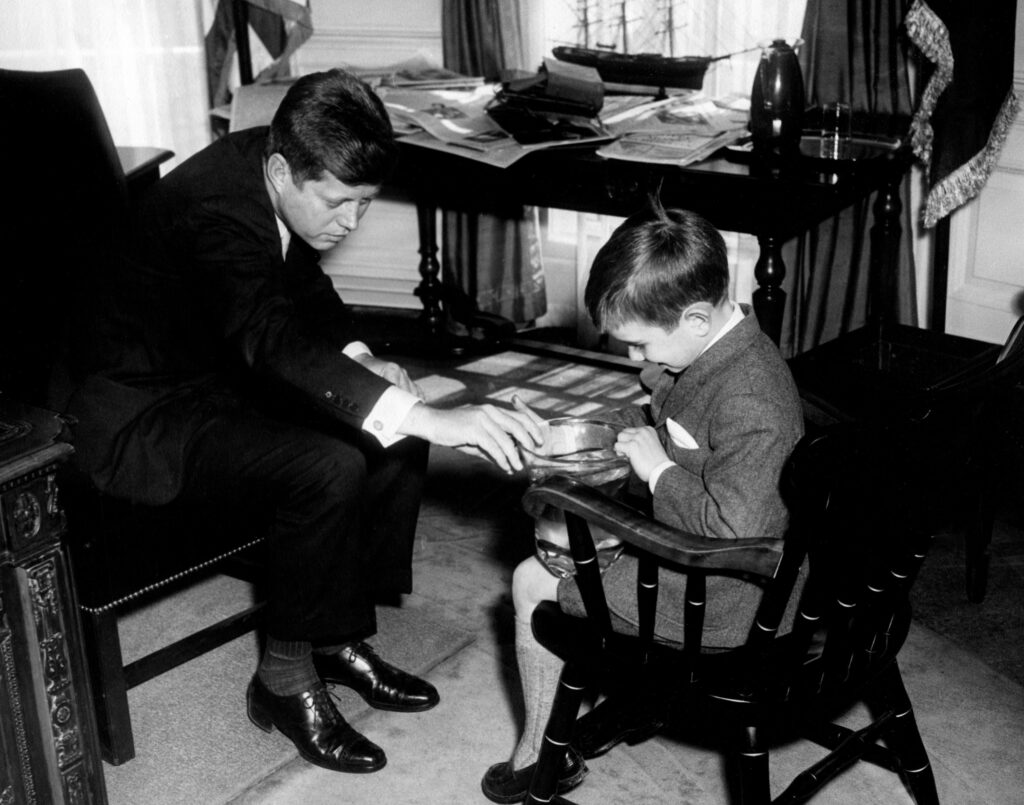President John F. Kennedy visits with his nephew, Robert F. Kennedy, Jr.; RFK, Jr., presented his uncle with a salamander, “Shadrach.” Oval Office, White House, Washington, D.C. WikiMedia
In my downsizing, a few days ago I came across a stack of about 20 historical photographs printed on the kind of poster-sized fiber board you get at Staples or Office Max. They are exhibit photos from a public humanities symposium on the 1960s I moderated 10 or so years ago at the local polytechnic university. Many of the photographs are of President John F. Kennedy. We see him huddled with his brother during the Cuban Missile Crisis. We see him in the rocking chair. We see John, Jr., crawling through the secret door in the Oval Office desk. We see Jacqueline Kennedy standing numb in her pink dress when LBJ was sworn in on Air Force One.
My favorite photograph (which you’ll see here) is of JFK in profile, black and white, across from a cluster of photojournalists snapping away with their large-format cameras. Kennedy looks extremely intelligent, confident, slightly bemused, pleased, and perhaps a little surprised to be America’s political rock star. He’s Hollywood handsome with the signature Kennedy hair — but not as disheveled as the distracted mop his brother Robert patented.
To gaze at this photograph fills me with deep sadness. From time to time you just have to step back and ask, “What happened to us? What went wrong in America between 1960 and November 2025?” “How did this downward spiral happen and can it possibly be turned around?” Place photos of the young JFK side by side with a photograph of any current political leader — all the way to the top — and you feel the bitterness of the Roman senator Cicero, witnessing the agonizing political collapse of Rome, when he wrote (46 BCE) about the stubbornly anachronistic republican Cato the Younger: “He talks like he’s living in Plato’s *Republic* and not Romulus’ shithole.”
#### How Did It Come to This?
Think of what we lost on November 22, 1963, irrespective of your political affiliation. The loss of a young, charismatic progressive national leader, a Cold War warrior-progressive. Deep sadness for what his assassination did to the country. For almost everyone who lived through it, there was a sense that something died in the soul of America that day in Dallas, just when the ’60s were dancing the Twist in the decade’s mostly exuberant phase and the Beatles were just becoming the biggest cultural phenomenon in the world. I feel sadness, too, for the traumatic multi-generational impact of the twin assassinations, JFK and his brother cut down within five years, and who was left to take their place?
Don’t get me wrong. I am not a Kennedy idolator. I have read all the literature and I know the catechism. He covered up his illnesses, especially Addison’s disease. Published a Pulitzer Prize-winning study of political courage, which was mostly written by his ghostwriter Ted Sorensen, the source of much of the Kennedy verbal magic right up to Ted’s later concession. Ted, August 12, 1980: “For me, a few hours ago, this campaign came to an end. For all those whose cares have been our concern, the work goes on, the cause endures, the hope still lives, and the dream shall never die.”
The dream shall never die.
I think maybe it did.
The whole Kennedy alchemy, the Kennedy hold on the American imagination, is encapsulated in this five-word phrase.
We know about the women, including his statement to British prime minister Harold Macmillan in 1961: “If I don’t have a woman for three days, I get a terrible headache.” We know he slept with an East German operative (during the Cold War!). We know he dropped acid in the White House (our commander in chief). We know that he had been more or less a playboy U.S. senator (1953–1960) and that at the time of his death in 1963 his legislative achievement was thin. We know that he was late and lukewarm on civil rights.
Etc.
These are serious issues (and character flaws). But this important historical revisionism about “the man who was JFK” has not displaced the 35th president from his place near the top of American mythology. What he symbolizes about youth, wit, grace, glamour, idealism, and even vitality (vig-ah as he called it) still resonates with the American people. When we think of Kennedy, we think of him playing football barefoot in the surf at Hyannis Port, not the man who used crutches when he was out of sight of the media. JFK is the avatar of the lost promise of the 1960s, populated in American memory with John Glenn and the space race, with the Beatles in their early “yeah yeah yeah” phase, with Barbra Streisand and Maxwell Smart, with the early James Bond movies, or with the Interstate Highways (mostly the work of President Eisenhower). The longing we feel when we watch a clip of a Kennedy news conference is not for Kennedy himself, but for the longshot idea that a Kennedyesque figure will rise up out of the ashes of our broken politics and lead us confidently into an American renaissance. When I look at this fabulous photograph I have to literally shake off my reverie, because it is almost swallowed up by the abyssal current state of our democracy.
And who is the most Kennedyesque figure on our national stage? Gavin Newsom? Andy Beshear? Josh Shapiro?
This is a different era. Our cynicism is so complete now that most people scoff at the idea of a charismatic and idealistic young American hero riding out of Hyannis Port — or Hope, Arkansas, or Chicago — to embody our dreams and inspire our future. All that was on the other side of the Fall (Vietnam, Watergate, the Frank Church hearings in the Senate, the Iranian hostage crisis, Iran-Contra, Grenada, Monica Lewinsky, the Iraqi War, our departure from Afghanistan). In the last 60 years the American people have lost respect for almost every national institution, including the presidency.
Imagine a politician today saying, “Ask not what your country can do for you, but what you can do for your country.” He or she would be laughed off the stage. In his great inaugural address, JFK said, “Let every nation know, whether it wishes us well or ill, that we shall pay any price, bear any burden, meet any hardship, support any friend, oppose any foe to assure the survival and the success of liberty.” That was then. Now, just ask the people of Ukraine, Hong Kong, or (coming soon) Taiwan.
#### A Mixed Record
For all that can be put forward to discredit JFK, I wish to defend much of his public record. He was as good a Cold War president as we ever had. He handled the Berlin Crisis sensibly in 1961. In my view Kennedy and Nikita Khrushchev saved the world in October 1962 when the trigger-happy militarists on both sides were urging their man to be tougher, not to shrink from the direct military confrontation that must come at some point or other, so let’s just get it over with. That was General Curtis LeMay’s position. He is said to have pounded his fist on the table at the most critical decision points over those thirteen days, and he told Kennedy to his face that he would be committing treason if he failed to vanquish the Soviets in some visible and measurable way. LeMay, who was chief of staff of the U.S. Air Force, estimated that the nuclear exchange he regarded as inevitable would kill more than 100 million Russians, about half that many Americans. When Premier Khrushchev agreed to pull the nuclear missiles out of Cuba, Secretary of State Dean Rusk famously said “We’re eyeball to eyeball and I think the other fellow just blinked.” The truth is that both leaders blinked, both drew back from the abyss. They saved the world together. And — coincidence — both were taken out of power by the end of 1964.
Kennedy’s Peace Corps is one of America’s best ideas. I am not sure that it always helps the host population (usually does), but I am very sure that it has a deeply admirable effect on almost all of the Americans who sign up, particularly the young and still impressionable ones.
I wish we could be more sure that Kennedy was planning to pull back from Vietnam after the 1964 election. There is evidence in both directions, but the view that he would not have escalated the war is, I believe, mostly our delusional effort to turn back to the other side of the tumults of Vietnam and the madness of the late ’60s, and to cling to the possibility that after his re-election Kennedy would have explained to America that we really have no significant stake in what happens in Southeast Asia, as long as Japan is OK.
#### Camelot
I’ve never been a fan of the whole Camelot trope. For one thing I don’t believe that JFK would have wanted his life to be wrapped in that gauze. He was an emotionally detached man and his sense of irony was always just under the waterline. “Camelot” was the invention of his widow Jacqueline who, just one week following the events in Dallas, summoned *Life* magazine journalist Theodore White to the Kennedy compound in Massachusetts and instructed him to write that the Kennedy administration was Camelot and JFK, well, King Arthur. White was skeptical, though not as much as his editors back in New York, but Mrs. Kennedy got on the phone while White was dictating his essay, “For President Kennedy: An Epilogue,” and told his editors that Camelot was non-negotiable.
On a number of occasions over the last 70 years historians and pundits have pronounced the Death of Camelot, though it never wholly convinces the American people. There is still a hunger for something nobler, more idealistic, more humane, more faithful to the rule of law in American life. People want a little poetry in their leader. Ronald Reagan had some of that. Barack Obama had that capacity in great measure. But nobody had it like JFK.
Most presidents are caretakers (Millard Fillmore, Benjamin Harrison, Gerald Ford). A few are larger than life in every way: FDR and his cousin Theodore. And an aura of American mythology hovers over a few. Kennedy mythology is bigger than John F. Kennedy, just as George Washington mythology is larger than the 18th-century plantation owner (1732–1799) who resided at Mount Vernon between his various public assignments, and the mythology embracing our “national savior” Abraham Lincoln is far larger than the gimcracking politician who emerged from the Kentucky and Illinois backwater. My history professor David Noble used to quip that in secular terms, George Washington was God the Father, Abraham Lincoln God the Son and Thomas Jefferson the nation’s Holy Spirit
We cannot stop longing for something better in our national life. John F. Kennedy is not the only embodiment of that aspiration and from a historian’s perspective he is not a perfect embodiment. But we can’t let him go. The previous death notices for Camelot were premature. This one seems to be more definitive. The public life of JFK’s nephew perhaps resonates best with a line from *Hamlet*: “O what a falling off was there.”
We should think of John F. Kennedy by way of Ted Kennedy’s eulogy for his brother Robert.
> “My brother need not be idealized, or enlarged in death beyond what he was in life; to be remembered simply as a good and decent man, who saw wrong and tried to right it, saw suffering and tried to heal it. … Those of us who loved him and who take him to his rest today, pray that what he was to us and what he wished for others will some day come to pass for all the world.”
---
## ***Discover more on these topics at Listening to America***
[Rome](https://ltamerica.org/tag/rome/ "1 topics")[New England](https://ltamerica.org/tag/new-england/ "1 topics")[Republic](https://ltamerica.org/tag/republic/ "0 topics")[U.S. Constitution](https://ltamerica.org/tag/u-s-constitution/ "1 topics")[Poetry](https://ltamerica.org/tag/poetry/ "1 topics")[Walden](https://ltamerica.org/tag/walden/ "1 topics")[South Carolina](https://ltamerica.org/tag/south-carolina/ "1 topics")[Thoreau](https://ltamerica.org/tag/thoreau/ "5 topics")[Oppenheim](https://ltamerica.org/tag/oppenheim/ "0 topics")[North Carolina](https://ltamerica.org/tag/north-carolina/ "3 topics")[north daktoa](https://ltamerica.org/tag/north-daktoa/ "0 topics")[Wisconsin](https://ltamerica.org/tag/wisconsin/ "0 topics")[Oregon](https://ltamerica.org/tag/oregon/ "4 topics")[Water in the West](https://ltamerica.org/tag/water-in-the-west/ "24 topics")[William Shirer](https://ltamerica.org/tag/william-shirer/ "1 topics")[Rivers](https://ltamerica.org/tag/rivers/ "3 topics")[Wyoming](https://ltamerica.org/tag/wyoming/ "4 topics")[Ohio](https://ltamerica.org/tag/ohio/ "2 topics")[Reading](https://ltamerica.org/tag/reading/ "1 topics")[paintings](https://ltamerica.org/tag/paintings/ "0 topics")[Video](https://ltamerica.org/tag/video/ "51 topics")[Vermont](https://ltamerica.org/tag/vermont/ "1 topics")[New Mexico](https://ltamerica.org/tag/new-mexico/ "3 topics")[Podcast](https://ltamerica.org/tag/podcast/ "1 topics")[U.S. Presidents](https://ltamerica.org/tag/u-s-presidents/ "71 topics")[Travel](https://ltamerica.org/tag/travel/ "1 topics")[Theodore Roosevelt](https://ltamerica.org/tag/theodore-roosevelt/ "16 topics")[Oppenheimer](https://ltamerica.org/tag/oppenheimer/ "1 topics")[South Dakota](https://ltamerica.org/tag/south-dakota/ "16 topics")[Utah](https://ltamerica.org/tag/utah/ "11 topics")[Sports](https://ltamerica.org/tag/sports/ "2 topics")[North Dakota](https://ltamerica.org/tag/north-dakota/ "53 topics")[Republics](https://ltamerica.org/tag/republics/ "1 topics")[State Parks](https://ltamerica.org/tag/state-parks/ "2 topics")[Pennsylvania](https://ltamerica.org/tag/pennsylvania/ "1 topics")[Space Exploration](https://ltamerica.org/tag/space-exploration/ "8 topics")[Texas](https://ltamerica.org/tag/texas/ "4 topics")[Thomas Jefferson](https://ltamerica.org/tag/thomas-jefferson/ "34 topics")[Tennessee](https://ltamerica.org/tag/tennessee/ "1 topics")[Virginia](https://ltamerica.org/tag/virginia/ "7 topics")[The Constitution](https://ltamerica.org/tag/the-constitution/ "1 topics")[Washington](https://ltamerica.org/tag/washington/ "2 topics")[Road Trips](https://ltamerica.org/tag/road-trips/ "18 topics")[New York](https://ltamerica.org/tag/new-york/ "8 topics")[Steinbeck Travels](https://ltamerica.org/tag/steinbeck-travels/ "75 topics")
**Categories:** Features
**Tags:** America at 250, U.S. Presidents
---
### [The Best Laid Plans (er, Bags) of Mice and Men](https://ltamerica.org/the-best-laid-plans-er-bags-of-mice-and-men/)
**Published:** December 9, 2025
**Author:** Clay Jenkinson
**Excerpt:** Clay laments a rare failing in German baggage-transfer efficiency and plans a few interim wardrobe additions — while awaiting his bag’s return — and sticks close to his flat lest he miss the improbable delivery window.
**Content:**
## Clay laments a rare failing in German baggage-transfer efficiency, plans a few interim wardrobe additions — while awaiting his bag’s return — and sticks close to his flat lest he miss the improbable delivery window.

Rome — Early morning hours of my first full day in Rome. I did not sleep enough, but I believe I slept hard and woke up for the last time around 5:30 a.m. It is not light outside yet, but there are stirrings in the Airbnb where I am staying. I’m drinking a Coca-Cola Zero Zucchero (no Diet Coke here). Here, the cap is leashed to the bottle, an EU-mandated regulation to reduce the proliferation of plastic in landfills and promote recycling. It’s cold in this flat. I don’t think the heater works between 10 p.m. and 8 a.m. I’ve got a couple of hours before my reservation at the fabulous Borghese Gallery, where the best Bernini statues in the world are clustered.
I left my house in Bismarck yesterday (was it yesterday?) at 7 a.m., and flew in three airplanes to Rome, where I landed yesterday (local yesterday) at 2 p.m. Bleary, sleepless, grungy, and wanting only two things in this world: a hot shower and a place to burn my airplane clothes. Good thing I didn’t, because after watching the baggage carousel cough up the bags from the flight, I discovered, when I was the last person in the area, that my suitcase had not made the flight. It is a sad thing to watch one person after the next get their bag and leave for the taxi queue, as the numbers go down from 100 people to 50 and then 20 and then five, and to begin to realize that there is a very good chance that your luggage has been lost. I’ve traveled extensively in my life — scores of flights per year for 40 years — and my luggage has only been lost perhaps 10 times. It became clear to me as I sat there disconsolately, that this was going to be one of them.

I believe the correct technical term is arghhh. It’s one thing to lose your luggage in Tampa or Denver, where you know there is a Target store or Walmart within a few dozen miles and a rental car that will get you there, to purchase a shirt, a few toiletries, and a packet of boxer shorts (perhaps also a harakiri sword), but dramatically another in a foreign city, where there are no known box stores and you are dependent on public transportation.
It took some time to find the Lost and Found Desk. In the U.S., you go to the glassed-in Lost Luggage cubby operated by your specific airline. Here at Rome International there is only one place to conduct this business for all the airlines. The brisk, efficient Italian woman who helped me fill out the paperwork exhibited a kind of detached professional commiseration. They don’t want to feel your pain lest you launch into an autobiographical monologue or a spirited denunciation of the airline business. I have learned long since never to be snarky with the agent who is helping you solve your problem. This is not their first rodeo and their only way of surviving this job is to stick to logistics. My response to all crises in life is the same: What’s the remedy? No whining. Suck it up and get on with the transaction. If anyone was responsible for my lost luggage, it wasn’t she.
The Lost and Found agent was able to locate my suitcase thanks to the advanced luggage tracking system. It was stuck in Munich where my flight from Denver had landed early, with a layover of more than two hours before my short flight to Rome. In other words, there was no earthly excuse for Lufthansa failing to transfer my bag from one plane to the next on the same concourse. The agent told me that it would be on the next flight, which landed at 6:30. Before I could enjoy my full sigh of relief, she informed me that they would deliver the bag to my Airbnb, of course, but they stopped lost-bag delivery service at 5 p.m. I could stay four-plus more hours (after 24 hours of travel) at the airport and pull my bag off the carousel, or they would deliver it tomorrow (is it tomorrow?) after 8 a.m. and probably before 10 a.m., but they couldn’t be sure and there were no guarantees. Understatement.

I took all of this stoically. I had my passport, my wallet, my computer, my charging devices, and, by some miracle of planning, a toothbrush and toothpaste. I’d just go to the Airbnb, nip out to buy a T-shirt and maybe a razor, and get some much-needed sleep. The only thing that really disappointed me was Germany. To lose luggage at Newark International is almost expected or in any airport in Italy or even Britain. But in Munich? On Lufthansa? If I had to make a list of nations where your luggage is not going to get lost I would put Germany at the top, then Japan, then Switzerland …. But Deutschland? This is Germany, reduced to rubble in 1945, and yet soon enough the strongest economy of Europe, the most efficient industrial nation on earth! When we got on the plane for Rome, for example, and settled in, the pilot came on the intercom (this always makes me nervous until wheels up) and said, “Ladies and Gentlemen, I have a bit of bad news.” My heart fell to the floor. In America that translates as: “There is a good chance you will never reach your final destination, just saying.” Then he said, “Due to some air traffic congestion in Munich I’m afraid our departure is going to be delayed by about six minutes. I’m sorry for this delay. We appreciate your patience and understanding.”
I wanted to stand up and shout: “Ladies and Gentlemen, Meine Damen und Herren, you have just heard a statement that has never been uttered in my home country!” But since my German is weak, I just smirked and settled in for a head-flop nap.

So now it is beginning to be light here in this remarkable Airbnb flat about 200 steps from the Pantheon, my favorite building in the world. I’m going to crack a second Coca-Cola sans sucre. I’m going to shower. I’m going to put on my fetid clothing from the three flights. And I’m going to wait all morning here for my lost bag, because if I venture out, even for a few minutes to buy a pastry (there are five charming little bakeries within shouting distance), that’s when the baggage delivery man will appear, and then the disastrous yo-yo effect would begin. “We tried to deliver the bag as we indicated, but since you were not there, we had no choice but to bring it back to the airport, where you may pick it up between 1:15 and 2:45 p.m. Thursdays except on saints’ days.” You all know the cable-guy paradox. If you stay in your house all day waiting for him to appear for his appointment between 11 and 1:30, he’ll never turn up. He senses your neediness. But if you venture out for five minutes to pick up a carton of milk, when you return, he’ll have left a Post-it on your door saying, “Missed you! Please call 1-800-INFERNO to reschedule.”
I bought a pretty good T-shirt. I had a superb small plate of cacio e pepe and washed it down with a good glass of vin ordinaire (house wine — in this case, red). Jefferson said, in Europe, always order vin ordinaire. I got a pretty good night of sleep. I won’t miss my appointment at the Borghese Gallery (Bernini’s exquisite statues) at noon (that would be madness), and I have rescheduled my visit to the Basilica of San Clemente (a church on top of an earlier church on top of a Mithraic temple on top of a Roman republican structure, with an underground river gurgling under all of that). I call this an architectural palimpsest.
By this evening (is this today or late yesterday back home?) I will almost certainly be buying a second T-shirt.
And yet I feel nothing but joy in being in one of the most splendid cities on earth, with echoes of most of my non-American cultural and intellectual interests, and pasta to make Olive Garden blush. Eight thousand miles at 38,000 feet, on three planes by two carriers, only one plane six minutes late, from the northern plains of America to the fons et origo of western civ in a single long day.
I traveled to Rome and all I got was this lousy T-shirt.
---
[Poetry](https://ltamerica.org/tag/poetry/ "1 topics")[New Mexico](https://ltamerica.org/tag/new-mexico/ "3 topics")[Road Trips](https://ltamerica.org/tag/road-trips/ "18 topics")[Republic](https://ltamerica.org/tag/republic/ "0 topics")[Washington](https://ltamerica.org/tag/washington/ "2 topics")[Video](https://ltamerica.org/tag/video/ "51 topics")[Walden](https://ltamerica.org/tag/walden/ "1 topics")[Virginia](https://ltamerica.org/tag/virginia/ "7 topics")[Reading](https://ltamerica.org/tag/reading/ "1 topics")[Thomas Jefferson](https://ltamerica.org/tag/thomas-jefferson/ "34 topics")[paintings](https://ltamerica.org/tag/paintings/ "0 topics")[Travel](https://ltamerica.org/tag/travel/ "1 topics")[Theodore Roosevelt](https://ltamerica.org/tag/theodore-roosevelt/ "16 topics")[north daktoa](https://ltamerica.org/tag/north-daktoa/ "0 topics")[New England](https://ltamerica.org/tag/new-england/ "1 topics")[South Dakota](https://ltamerica.org/tag/south-dakota/ "16 topics")[North Carolina](https://ltamerica.org/tag/north-carolina/ "3 topics")[Tennessee](https://ltamerica.org/tag/tennessee/ "1 topics")[U.S. Presidents](https://ltamerica.org/tag/u-s-presidents/ "71 topics")[Ohio](https://ltamerica.org/tag/ohio/ "2 topics")[Steinbeck Travels](https://ltamerica.org/tag/steinbeck-travels/ "75 topics")[Rivers](https://ltamerica.org/tag/rivers/ "3 topics")[U.S. Constitution](https://ltamerica.org/tag/u-s-constitution/ "1 topics")[Wyoming](https://ltamerica.org/tag/wyoming/ "4 topics")[William Shirer](https://ltamerica.org/tag/william-shirer/ "1 topics")[State Parks](https://ltamerica.org/tag/state-parks/ "2 topics")[Texas](https://ltamerica.org/tag/texas/ "4 topics")[Wisconsin](https://ltamerica.org/tag/wisconsin/ "0 topics")[Space Exploration](https://ltamerica.org/tag/space-exploration/ "8 topics")[Oregon](https://ltamerica.org/tag/oregon/ "4 topics")[Water in the West](https://ltamerica.org/tag/water-in-the-west/ "24 topics")[Utah](https://ltamerica.org/tag/utah/ "11 topics")[Sports](https://ltamerica.org/tag/sports/ "2 topics")[Thoreau](https://ltamerica.org/tag/thoreau/ "5 topics")[South Carolina](https://ltamerica.org/tag/south-carolina/ "1 topics")[Oppenheim](https://ltamerica.org/tag/oppenheim/ "0 topics")[North Dakota](https://ltamerica.org/tag/north-dakota/ "53 topics")[Vermont](https://ltamerica.org/tag/vermont/ "1 topics")[New York](https://ltamerica.org/tag/new-york/ "8 topics")[Rome](https://ltamerica.org/tag/rome/ "1 topics")[Podcast](https://ltamerica.org/tag/podcast/ "1 topics")[Republics](https://ltamerica.org/tag/republics/ "1 topics")[The Constitution](https://ltamerica.org/tag/the-constitution/ "1 topics")[Oppenheimer](https://ltamerica.org/tag/oppenheimer/ "1 topics")[Pennsylvania](https://ltamerica.org/tag/pennsylvania/ "1 topics")
**Categories:** Dispatches from the Road
**Tags:** Art, Culture, Travel
---
### [The Most Famous Painting in the World](https://ltamerica.org/the-most-famous-painting-in-the-world/)
**Published:** December 9, 2025
**Author:** Clay Jenkinson
**Excerpt:** On a recent trip to Rome Clay contemplates art in its many forms and why the Mona Lisa is considered the most famous painting in the world. There are so many instantly recognizable paintings yet none of them is as widely recognized or parodied as the Mona Lisa.
**Content:**
## On a trip to Rome Clay contemplates art’s many forms and why the *Mona Lisa* is considered the most famous painting in the world. There are so many instantly recognizable paintings yet none of them is as widely recognized or parodied as the *Mona Lisa*.

The most famous painting in the world is the *Mona Lisa*, probably a portrait of Lisa Gherardini, the wife of a Florentine silk merchant by the name of Francesco del Giocondo. Leonardo da Vinci’s *Mona Lisa* is one of 12,000 paintings in the Louvre in Paris, approximately 3,500 of which are on display at any given time. It’s displayed in a special room with the tightest possible security, with stern-looking guards on either side of the red museum rope that keeps tourists well away from the painting.

From earliest childhood we are informed that the *Mona Lisa* is THE MONA LISA. Everyone who cares about art, and many who don’t, make the pilgrimage to see the famous portrait if they visit Paris. That’s 7–10 million viewings of that painting alone per year, 80% of everyone who visits the Louvre. *Mona Lisa* is the most visited painting in the world, by far, followed by (in no particular order) *The Last Supper* (Leonardo da Vinci), *Starry Night* (Van Gogh), *Guernica* (Picasso), *Girl With a Pearl Earring* (Vermeer), and Edvard Munch’s *The Scream*.
The *Mona Lisa* is also the most parodied artwork in the world. She has been metamorphosed into Miss Piggy, Lisa Simpson, Superwoman, Groucho Marx, Shrek, Snow White, and Princess Leia, among many others, and she has made her appearance in a COVID mask, an Islamic burqa, and blowing a Bazooka bubble. The painting is instantly recognizable in magazine ads, on kiosks at bus stops, in murals, and at the top of Times Square.

So the question is, why have we “privileged” the *Mona Lisa* above all other paintings? Is it because it is the finest painting in the world? Or the finest painting of a woman? Is it the famous enigmatic smile, which causes everyone who sees it to wonder what da Vinci is trying to express through her? Or is it world famous because it is … well, world famous? In other words, is there an objective reason for prizing it at the very top of the art hierarchy, or has it become a universal cultural icon in which excellence becomes fame and fame, celebrity and celebrity, cultural phenomenon?
Guernica, Pablo Picasso.
Here’s my confession. I admire the painting, of course, but it is not my favorite work of art by the incomparable da Vinci. That prize (for me) goes to his *Annunciation* at the Uffizi Gallery in Florence. I just viewed it again a day or two ago and felt weak-kneed in the presence of its staggering beauty and delicacy. If I did not know that the *Mona Lisa* is THE MONA LISA, and I were wandering through the Louvre gazing at paintings that caught my eye, I would probably walk by *Mona Lisa* without stopping for more than a few seconds. “Lovely painting, next?” I doubt that I would do a double-take and exclaim, “There is the most beautiful painting in the world.”
I have been very fortunate — I must never take it for granted — in that I have seen all of the top six listed above, including *The Last Supper* in the original refectory in Milan, which is a difficult ticket to obtain. Of those six, if I had to craft a personal hierarchy, I would put *Guernica* at the top merely for its awesome power (partly because of its enormous size: 11 by 25 feet).
Leonardo da Vinci’s early masterpiece, *The Annunciation* (c. 1472-1476).
Yesterday I spent a couple of hours with Michelangelo’s *David* in the Galleria dell’Accademia in Florence. It is, I think, my favorite work of art in the world. I have seen it six or seven times now. It never ceases to stun me into a kind of numbness. This time the crowd size (early December) was not oppressive, as it can be with such works of art. Just try the Sistine Chapel in July if you want to know what jostling militant tourism can be. I was able to give it a full hour. The niche it is in is in itself beautiful, with a domed skylight that bathes the *David* in a perfect soft light. There are marble benches all around the back and sides of the 14-foot-tall statue (17 feet if you include the pedestal), and I found a chair 15 feet away directly in front of it. The sheer size is monumental, invigorating, and daunting.
Perhaps I speak only for myself, but I know that if I had never heard of it (a cultural impossibility for almost anyone), and didn’t know the name of the sculptor, I would never walk by it without exclaiming, probably out loud, “This is one of the most beautiful things I have ever seen.” Anatomists who have studied it millimeter by millimeter have said that it is essentially perfect in all of its magnificent detail, the head may be a smidgeon too large, and several veins and tendons in his right hand are perhaps not quite flawless. But hey … who’s quibbling?
As I sat there, 4,930 miles from home, I tried to be fully present (there! gazing at this work of art! drinking in all of its detail from his curly head of hair down to his exquisite ankles and toes). I took a hundred or more photographs of it from every angle, zooming in on every detail that interested me. I could have spent the whole day there. In my view, you don’t need to “privilege” the *David* to know that it belongs at the top of the list, a list that includes the Sphinx at Cairo, Bernini’s *Apollo and Daphne*, Michelangelo’s *Pieta* at St. Peter’s in Rome, Rodin’s *The Thinker*, the Moai statues at Easter Island, the *Venus de Milo* at the Louvre, among others.
It is true that Michelangelo was depicting a famous scene from the Bible, David and Goliath — 1 Samuel 17. He was creating a statue of Florence’s signature hero to serve as a public icon. One of the most amazing facts about the sculpture is that Michelangelo, who was just 26 years old when he undertook the project, is that he had to work with a block of marble that had been damaged by a previous sculptor, and (in the eyes of others) impossible to sculpt. As I sat there enraptured by this creation by a mere human being (using a hammer and chisel beating on a rock), I realized that the Bible story was probably not Michelangelo’s primary interest in the work. It seems to me that he was attempting to show the body of a generic human male at the height of his strength and virility, not unlike da Vinci’s *Vitruvian Man*, with a pro forma glance at the biblical account. In other words, I believe Michelangelo was attempting to depict Universal Man by way of the artistic commission to sculpt *David* for the city.
As I attempted to drink it all in, essentially trying to inscribe into my brain and memory its wholeness and its dozens of important details (my favorite part is his right hand in repose on his right thigh), I was thinking, with sorrow, “What if this is the last time I will ever see the *David*? I had better view it as if it were for the last time. In fact, I think it would be a good idea to use that modus operandi for every great work of art or literature, or for that matter when we gaze at the Grand Canyon or Chaco Canyon or the northern California redwoods.
I will almost certainly be in Florence again. In two short days in Florence I was only able to see half a dozen cultural museums or churches, and I left more on the table than I was able to see. At some point, also, you get to tilt and one *Adoration of the Magi* looks pretty much like most of the others.
I know it is a cliché, but it is really true. As you sit there gazing at it in wonder, you almost expect *David* to walk off the pedestal and out into the courtyard of the Palazzo Vecchio.
---
## ***Discover more on these topics at Listening to America***
[Tennessee](https://ltamerica.org/tag/tennessee/ "1 topics")[New Mexico](https://ltamerica.org/tag/new-mexico/ "3 topics")[Wisconsin](https://ltamerica.org/tag/wisconsin/ "0 topics")[Walden](https://ltamerica.org/tag/walden/ "1 topics")[U.S. Presidents](https://ltamerica.org/tag/u-s-presidents/ "71 topics")[Space Exploration](https://ltamerica.org/tag/space-exploration/ "8 topics")[Wyoming](https://ltamerica.org/tag/wyoming/ "4 topics")[North Carolina](https://ltamerica.org/tag/north-carolina/ "3 topics")[William Shirer](https://ltamerica.org/tag/william-shirer/ "1 topics")[Reading](https://ltamerica.org/tag/reading/ "1 topics")[South Dakota](https://ltamerica.org/tag/south-dakota/ "16 topics")[New England](https://ltamerica.org/tag/new-england/ "1 topics")[Steinbeck Travels](https://ltamerica.org/tag/steinbeck-travels/ "75 topics")[Ohio](https://ltamerica.org/tag/ohio/ "2 topics")[Pennsylvania](https://ltamerica.org/tag/pennsylvania/ "1 topics")[Theodore Roosevelt](https://ltamerica.org/tag/theodore-roosevelt/ "16 topics")[paintings](https://ltamerica.org/tag/paintings/ "0 topics")[Rivers](https://ltamerica.org/tag/rivers/ "3 topics")[Sports](https://ltamerica.org/tag/sports/ "2 topics")[Republic](https://ltamerica.org/tag/republic/ "0 topics")[north daktoa](https://ltamerica.org/tag/north-daktoa/ "0 topics")[Republics](https://ltamerica.org/tag/republics/ "1 topics")[Water in the West](https://ltamerica.org/tag/water-in-the-west/ "24 topics")[Utah](https://ltamerica.org/tag/utah/ "11 topics")[Travel](https://ltamerica.org/tag/travel/ "1 topics")[Texas](https://ltamerica.org/tag/texas/ "4 topics")[State Parks](https://ltamerica.org/tag/state-parks/ "2 topics")[Virginia](https://ltamerica.org/tag/virginia/ "7 topics")[The Constitution](https://ltamerica.org/tag/the-constitution/ "1 topics")[Podcast](https://ltamerica.org/tag/podcast/ "1 topics")[Washington](https://ltamerica.org/tag/washington/ "2 topics")[Thoreau](https://ltamerica.org/tag/thoreau/ "5 topics")[Road Trips](https://ltamerica.org/tag/road-trips/ "18 topics")[Thomas Jefferson](https://ltamerica.org/tag/thomas-jefferson/ "34 topics")[U.S. Constitution](https://ltamerica.org/tag/u-s-constitution/ "1 topics")[North Dakota](https://ltamerica.org/tag/north-dakota/ "53 topics")[Oppenheimer](https://ltamerica.org/tag/oppenheimer/ "1 topics")[New York](https://ltamerica.org/tag/new-york/ "8 topics")[Rome](https://ltamerica.org/tag/rome/ "1 topics")[Oppenheim](https://ltamerica.org/tag/oppenheim/ "0 topics")[Poetry](https://ltamerica.org/tag/poetry/ "1 topics")[South Carolina](https://ltamerica.org/tag/south-carolina/ "1 topics")[Vermont](https://ltamerica.org/tag/vermont/ "1 topics")[Video](https://ltamerica.org/tag/video/ "51 topics")[Oregon](https://ltamerica.org/tag/oregon/ "4 topics")
**Categories:** Dispatches from the Road
**Tags:** Art, Culture, Leonardo da Vinci
---
### [Are We Rome?](https://ltamerica.org/are-we-rome/)
**Published:** December 2, 2025
**Author:** Clay Jenkinson
**Excerpt:** Answer: we are Rome … but are we doomed to suffer the Republic's fate? Clay parallels the Republics (Rome's and our own) considering ways to avoid Rome's calamitous end.
**Content:**
## Answer: we are Rome … but are we doomed to suffer the Republic’s fate? Clay parallels the Republics (Rome’s and our own) considering ways to avoid Rome’s calamitous end.

The more you study the history of the rise and fall of the Roman Republic (509–27 B.C.), the more you realize that while it is not an exact analogy for the course of human events in America, it is nevertheless the best mirror we can look into as we make the transition from a Madisonian American republic to whatever it is that we now are becoming.
Two major factors in the collapse of the Roman Republic are, first, the grotesque influx and inequality of wealth that followed the wars of the mid-second century against Carthage and Greece; and, second, the inability of a “constitution” crafted for a city-state with some regional reach to embrace the new social, economic, demographic, military, and political dynamics of a growing world empire: first Sicily, then north Africa and Greece, then France (Gaul), etc. Trying to govern an empire with a “constitution” designed for a smallish and localized population proved to be impossible. The political and legal strains were enormous; nobody knew how to make it work; and the Romans failed to step back and reconstitute their system in accordance with the new “facts on the ground.”
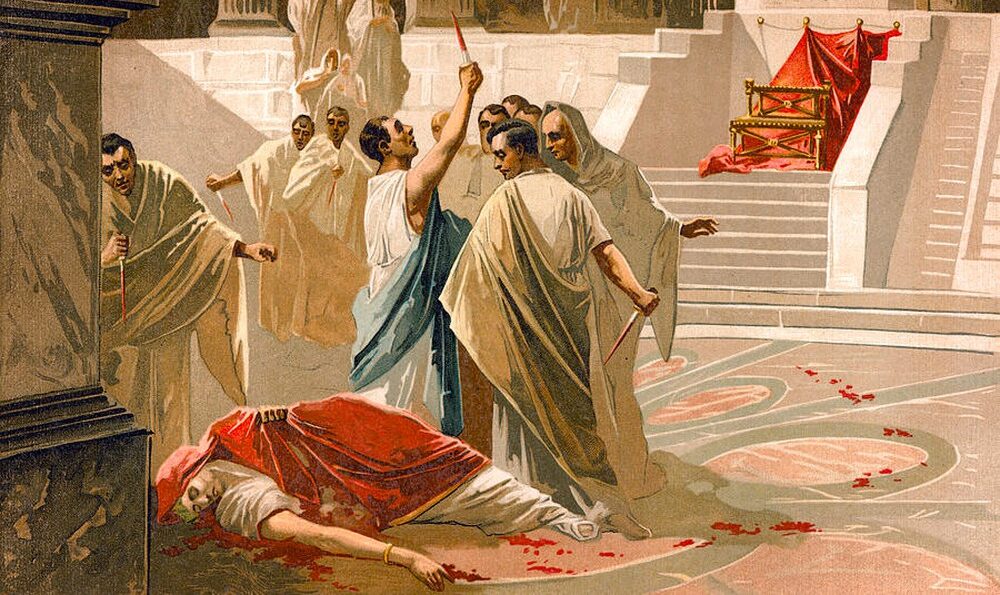
Into the vacuum rushed power-hungry men like Caesar, Pompey, Marius, Clodius, Sulla, Marc Antony, and Caesar Augustus. They achieved their aims — such aims as they achieved — by way of armed gangs of partisans who intimidated, roughed up, and sometimes killed their enemies, and by way of lavish outpourings of wealth in the form of gladiatorial entertainments, triumphs, public buildings, clientage, and bribery.
The Founding Fathers of the United States were deeply, even profoundly, influenced by the rise and the collapse of the Roman Republic. They knew their Plutarch, their Livy, their Polybius, and their Tacitus (especially Jefferson). John Adams considered himself the American Cicero, George Mason the American Cato, and George Washington the American Cincinnatus. The upstart Americans named their upper legislative body the Senate after the Roman Senatus. They called their national political headquarters the Capitol, per Rome’s Capitoline Hill. When they moved the capital to the District of Columbia they renamed Goose Creek the Tiber — much to the disgust and amusement of the pompous British ambassador Anthony Merry. When the president negativized Congressional legislation (from Rome: lex = law), they called it a veto (Latin: “I forbid”). And Thomas Jefferson not only designed neoclassical buildings like his riff on the Maison Carrée at Nîmes for Virginia’s new capitol in Richmond, but established a tradition of neoclassical capitols all over the country.
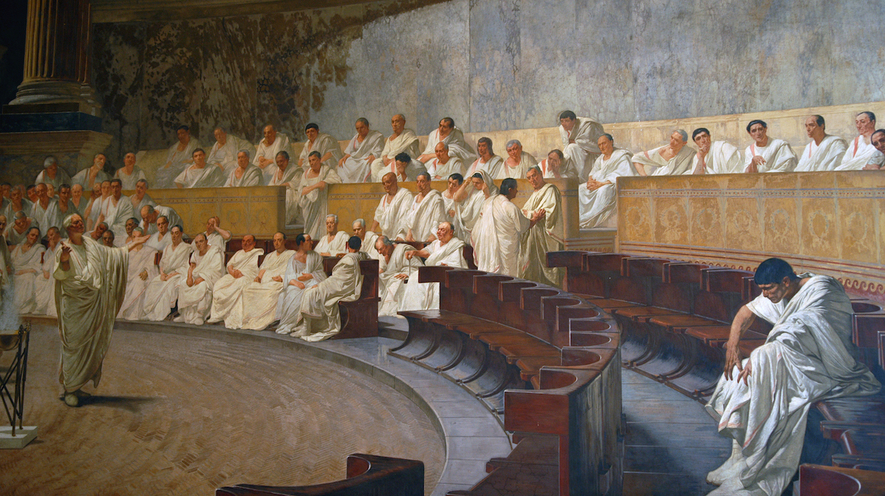
The Founders knew, therefore, what was at stake. And because they knew what was at stake, they wrote a Constitution in 1787 designed to absorb some of the best ideas of the Roman Republic when it worked, and to prevent here what happened in Rome. The fall of the Roman Republic was one of their central fixations. They associated the fall of Rome with too much luxury, the rise of political violence, too much concentration of power in the hands of charismatic demagogues, armed gangs in the employ of power politicians, urbanization, and the sorrows of empire. They worked hard to ensure that none of that could happen here.
Until my childhood in the 1960s, most Americans were aware of the basic dynamics of Roman republican history. They knew and revered Cicero, who is now mostly forgotten outside academic circles and more frequently derided than admired in academic discourse. They knew the allure and danger of Julius Caesar and later his grandnephew Octavius (Augustus). We knew the warning signs of republican collapse.

Today’s Americans, young and old, know almost nothing about Rome, except what they glean from the *Gladiator* movies. It shows. The Rome analogy may be imperfect but it is nevertheless the best mirror we Americans can look into as our own swollen republic breaks down. The rich in Rome — a tiny handful of unbelievably wealthy kleptocrats — fattened on the backs of the Roman proletariat and even the middle class (small though it was), and ruthlessly stripped the subject territories (Spain, north Africa, the Middle East, much of Europe) of their wealth and resources, not for the common good of Rome but mostly for themselves. They privatized the public lands. They starved the people into insurrection and then “restored order” with appalling ruthlessness.
If this generation of Americans knew the history of Rome the way Washington, Madison, Jefferson, John Adams, George Mason, Abigail Adams, and George Wythe did, or even as well as our great-grandparents did, they would not have permitted our aging republic to disintegrate. But we no longer know what is at stake. How many American schoolchildren (K-12) know any of this? How many university students encounter the ancient world in any meaningful way today?
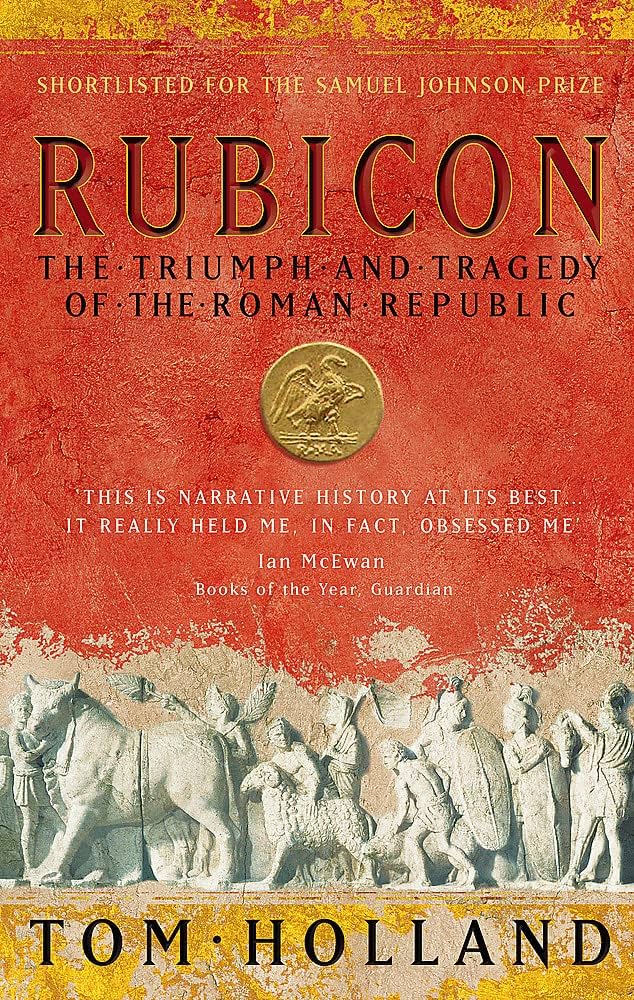
The commonest historical cliché is Santayana’s “those who do not learn from history are doomed to repeat it.” This is a much-overused sentence, but it merits application here. If the American people were well-enough educated and informed to know what brings on a failed state, we probably would be able to step back from the brink. At least we would try. To the exceedingly well-informed Gore Vidal is attributed the insight: “The American people are the least well-educated and informed people in history to be the world’s hegemonic power.” The distinguished British historian Niall Ferguson has argued that the American people are too lazy, ill-informed, and hedonistic to understand what’s at stake, not only in the world’s arena, but even at home. He calls us an “empire in denial.” My friend the historian Joseph Ellis says most Americans could not pass the citizenship test we require of immigrants who wish to be naturalized Americans.
Nero fiddled while Rome burned. The American people are fiddling with their video games and the reels on their smartphones while the American republic disintegrates all around them, and their only large concern seems to be consumerist: keep it coming, keep the Walmarts full and inexpensive gasoline at the pumps.
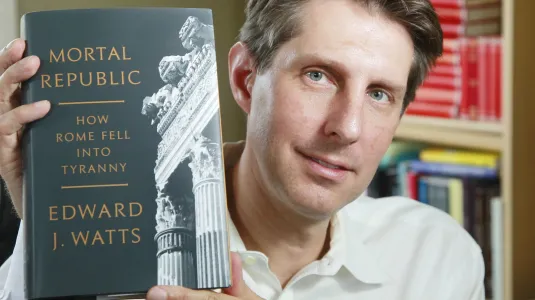
Can we turn this around? Well, it begins in my view with some reading. Here are two easy ways in: Tom Holland’s *Rubicon: The Last Years of the Roman Republic*; and Edward Watts’ extraordinary 2018 *Mortal Republic: How Rome Fell into Tyranny*. The last American president who really knew these things was William Jefferson Clinton and, well, he spent a lot of time fiddling.
Are we doomed? Probably not. But if the republic falls it will be on us.
---
## ***Discover more on these topics at Listening to America***
[Travel](https://ltamerica.org/tag/travel/ "1 topics")[Walden](https://ltamerica.org/tag/walden/ "1 topics")[paintings](https://ltamerica.org/tag/paintings/ "0 topics")[Republic](https://ltamerica.org/tag/republic/ "0 topics")[Sports](https://ltamerica.org/tag/sports/ "2 topics")[U.S. Constitution](https://ltamerica.org/tag/u-s-constitution/ "1 topics")[Washington](https://ltamerica.org/tag/washington/ "2 topics")[Republics](https://ltamerica.org/tag/republics/ "1 topics")[Video](https://ltamerica.org/tag/video/ "51 topics")[North Dakota](https://ltamerica.org/tag/north-dakota/ "53 topics")[South Dakota](https://ltamerica.org/tag/south-dakota/ "16 topics")[Theodore Roosevelt](https://ltamerica.org/tag/theodore-roosevelt/ "16 topics")[Ohio](https://ltamerica.org/tag/ohio/ "2 topics")[north daktoa](https://ltamerica.org/tag/north-daktoa/ "0 topics")[Oppenheimer](https://ltamerica.org/tag/oppenheimer/ "1 topics")[Rivers](https://ltamerica.org/tag/rivers/ "3 topics")[U.S. Presidents](https://ltamerica.org/tag/u-s-presidents/ "71 topics")[Utah](https://ltamerica.org/tag/utah/ "11 topics")[Tennessee](https://ltamerica.org/tag/tennessee/ "1 topics")[Water in the West](https://ltamerica.org/tag/water-in-the-west/ "24 topics")[William Shirer](https://ltamerica.org/tag/william-shirer/ "1 topics")[Rome](https://ltamerica.org/tag/rome/ "1 topics")[Reading](https://ltamerica.org/tag/reading/ "1 topics")[North Carolina](https://ltamerica.org/tag/north-carolina/ "3 topics")[Oppenheim](https://ltamerica.org/tag/oppenheim/ "0 topics")[Virginia](https://ltamerica.org/tag/virginia/ "7 topics")[Thomas Jefferson](https://ltamerica.org/tag/thomas-jefferson/ "34 topics")[Podcast](https://ltamerica.org/tag/podcast/ "1 topics")[Thoreau](https://ltamerica.org/tag/thoreau/ "5 topics")[South Carolina](https://ltamerica.org/tag/south-carolina/ "1 topics")[State Parks](https://ltamerica.org/tag/state-parks/ "2 topics")[New York](https://ltamerica.org/tag/new-york/ "8 topics")[Space Exploration](https://ltamerica.org/tag/space-exploration/ "8 topics")[New Mexico](https://ltamerica.org/tag/new-mexico/ "3 topics")[Road Trips](https://ltamerica.org/tag/road-trips/ "18 topics")[Wyoming](https://ltamerica.org/tag/wyoming/ "4 topics")[Steinbeck Travels](https://ltamerica.org/tag/steinbeck-travels/ "75 topics")[Wisconsin](https://ltamerica.org/tag/wisconsin/ "0 topics")[Pennsylvania](https://ltamerica.org/tag/pennsylvania/ "1 topics")[The Constitution](https://ltamerica.org/tag/the-constitution/ "1 topics")[Oregon](https://ltamerica.org/tag/oregon/ "4 topics")[Poetry](https://ltamerica.org/tag/poetry/ "1 topics")[Vermont](https://ltamerica.org/tag/vermont/ "1 topics")[Texas](https://ltamerica.org/tag/texas/ "4 topics")[New England](https://ltamerica.org/tag/new-england/ "1 topics")
**Categories:** Dispatches from the Road
**Tags:** America at 250, Books, Republics, Rome, The Constitution
---
### [Jefferson and Slavery: Ken Burns on MS-NOW](https://ltamerica.org/jefferson-and-slavery-ken-burns-on-ms-now/)
**Published:** November 25, 2025
**Author:** Clay Jenkinson
**Excerpt:** Clay considers Ken Burns' recent portrayal of Thomas Jefferson in a recent interview, where Burns suggests the Declaration's "all men are created equal" applied only to propertied white males, urging a more nuanced look at Jefferson's universal ideals, racial suspicions, and his own contradictions as a slaveholder.
**Content:**
## Clay considers Ken Burns’ portrayal of Thomas Jefferson in a recent interview — where Burns suggests the Declaration’s “all men are created equal” applied only to propertied white males — urging a more nuanced look at Jefferson’s universal ideals, racial suspicions, and his own contradictions as a slaveholder.
Ken Burns. LBJ Library photo by Jay Godwin
I watched an interview MS-NOW’s Nicolle Wallace conducted with Ken Burns a few nights ago. He was there to promote his new six-part documentary series on the American Revolution. He was his usual articulate, passionate, optimistic, and charismatic self. I believe Ken Burns is a true genius. Nobody has done more to bring both the drama and the nuances of American history to the American public than Ken Burns. He’s America’s greatest documentary filmmaker.
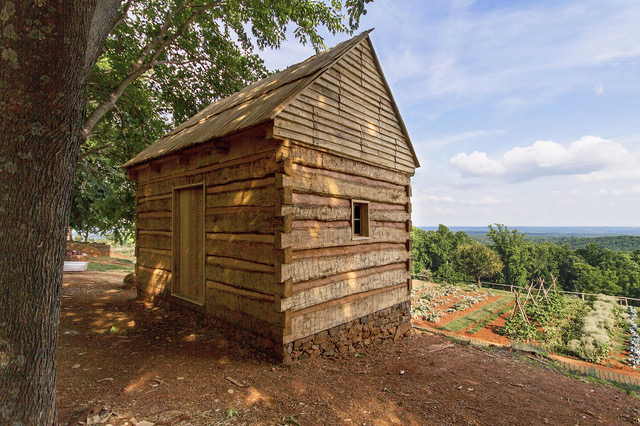Enslaved person’s quarters at Monticello.
In the Nicolle Wallace interview Burns spoke of Jefferson and the Declaration of Independence. He said when Jefferson wrote “all men are created equal,” he meant only white males who owned sufficient property to be allowed to vote. With due respect for Ken Burns, I do not think this is true. Actually, I think he knows better, but television interviews force sometimes imprecise soundbites. The story of the Declaration of Independence is complicated. As an immediate practical matter, Jefferson had probably been thinking of propertied white males. But I don’t believe that Jefferson, if asked, would say that his great pronouncement was limited to privileged white males like himself. I believe he really meant what he wrote — that every human being born into the world, irrespective of race, sex, country of origin, tribe, or religion is entitled under natural law to \[this is how he saw it, as baked into the universe\] be regarded as equal with every other human being, from kings to paupers, at least at birth. In other words, Jefferson articulated a universal ideal in the birth certificate of the United States. Abraham Lincoln understood this. On April 6, 1859, he wrote, “All honor to Jefferson — to the man who, in the concrete pressure of a struggle for national independence by a single people, had the coolness, forecast, and capacity to introduce into a merely revolutionary document, an abstract truth, applicable to all men and all times, and so to embalm it there, that to-day, and in all coming days, it shall be a rebuke and a stumbling-block to the very harbingers of re-appearing tyranny and oppression.” In my view, that is the best possible interpretation of the key sentence in the Declaration.
It is fashionable these days, in the Age of Disillusionment, to make Jefferson the poster child for the unfinished, unresolved race issues of American history. And though he richly deserves this sort of historical scrutiny, it seems to me just a bit too convenient, too pat, to make Jefferson the principal scapegoat. Jefferson was a very complicated man. It is nearly impossible to come to a definitive understanding of his life as a plantation owner, a slaveholder, a race theorist, and the putative father of Sally Hemings’ children.
#### The Same in a Different Zip Code
A few months ago I was at Jefferson’s Monticello for I suppose the twentieth time in my life. I went incognito, of course, and I took the standard tour. Our Monticello docent spent a fair portion of time in the lobby, Jefferson’s Indian Hall, explaining his wide-ranging achievements. But when we entered the next room, on our way to Jefferson’s celebrated library and study, he said, “Jefferson believed that African Americans were inferior.” I did not raise my hand to object, but later when I got an evaluation survey, I explained that this was unfair. What Jefferson actually wrote, in his only book, *Notes on the State of Virginia*, was, “I advance it therefore as a suspicion only, that the blacks, whether originally a distinct race, or made distinct by time and circumstances, are inferior to the whites in the endowments both of body and mind.” This is not much better, but there is an important distinction. Jefferson went on to say that he hoped his proposition, which he put forward cautiously “as a suspicion only,” would be refuted by more careful observation of the lives of Black Americans under better circumstances — in other words, outside of the pressure cooker of slavery. In 1791 Jefferson wrote, in response to increasing evidence of Black cultural achievement (as defined by whites), “I shall be delighted to see these instances of moral eminence so multiplied as to prove that the want of talents observed in them \[Black slaves\] is merely the effect of their degraded condition, and not proceeding from any difference in the structure of the parts on which intellect depends.”
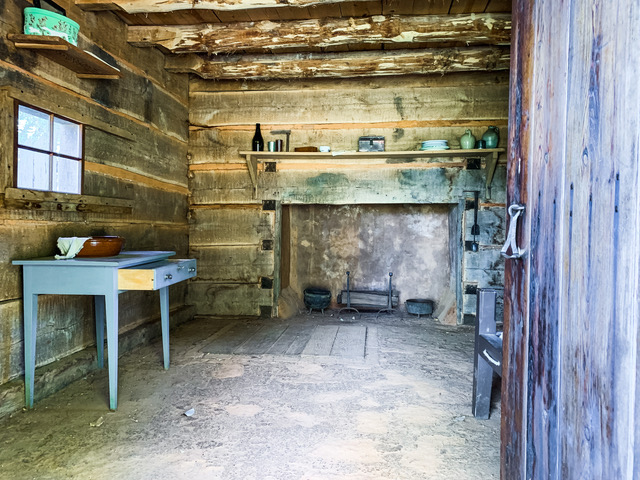Interior, enslaved person’s quarters.
The docent should have known better, perhaps does know better, but he said something that afternoon that doesn’t help us make sense of one of the most bedeviling issues of American history. Back in 1980 when I first visited Monticello, the docents treated slavery in Jefferson’s life as if he were an “accidental slaveholder,” as if slavery had been foisted upon him by mysterious outside forces beyond his control. That was a widely held view back then, but it was far too soothing and defensive to fit the known facts. Now the vagaries of American historiography have buffeted Jefferson to the opposite end of the spectrum. I think it’s important to acknowledge that the new view — that Jefferson was a racist, an apartheidist, an often complacent slaveholder, and a sexual predator — is in my opinion closer to the truth than the “pass” he got on these questions fifty years ago, when the docents at Monticello would wax indignant (“well, I nevah!”) if anyone asked about Sally Hemings.
In his new biography of Jefferson, historian Andrew Burstein writes, “Even Jefferson’s unpalatable racist logic, as fiercely as he clung to it, was not so overwhelming in his mind as to lead him to rationalize denying to Africa-descended Americans the same liberty, the same self-determinative power, as whites.”
In other words, when he wrote “all men are created equal,” he meant it — but maybe not quite yet.
---
## ***Discover more on these topics at Listening to America***
[New Mexico](https://ltamerica.org/tag/new-mexico/ "3 topics")[Travel](https://ltamerica.org/tag/travel/ "1 topics")[Steinbeck Travels](https://ltamerica.org/tag/steinbeck-travels/ "75 topics")[Video](https://ltamerica.org/tag/video/ "51 topics")[Oregon](https://ltamerica.org/tag/oregon/ "4 topics")[State Parks](https://ltamerica.org/tag/state-parks/ "2 topics")[Road Trips](https://ltamerica.org/tag/road-trips/ "18 topics")[North Carolina](https://ltamerica.org/tag/north-carolina/ "3 topics")[Rome](https://ltamerica.org/tag/rome/ "1 topics")[Virginia](https://ltamerica.org/tag/virginia/ "7 topics")[The Constitution](https://ltamerica.org/tag/the-constitution/ "1 topics")[New York](https://ltamerica.org/tag/new-york/ "8 topics")[Wisconsin](https://ltamerica.org/tag/wisconsin/ "0 topics")[Republics](https://ltamerica.org/tag/republics/ "1 topics")[Washington](https://ltamerica.org/tag/washington/ "2 topics")[north daktoa](https://ltamerica.org/tag/north-daktoa/ "0 topics")[Reading](https://ltamerica.org/tag/reading/ "1 topics")[Podcast](https://ltamerica.org/tag/podcast/ "1 topics")[William Shirer](https://ltamerica.org/tag/william-shirer/ "1 topics")[Thomas Jefferson](https://ltamerica.org/tag/thomas-jefferson/ "34 topics")[Oppenheim](https://ltamerica.org/tag/oppenheim/ "0 topics")[Utah](https://ltamerica.org/tag/utah/ "11 topics")[Walden](https://ltamerica.org/tag/walden/ "1 topics")[New England](https://ltamerica.org/tag/new-england/ "1 topics")[Pennsylvania](https://ltamerica.org/tag/pennsylvania/ "1 topics")[Poetry](https://ltamerica.org/tag/poetry/ "1 topics")[Tennessee](https://ltamerica.org/tag/tennessee/ "1 topics")[Sports](https://ltamerica.org/tag/sports/ "2 topics")[Rivers](https://ltamerica.org/tag/rivers/ "3 topics")[North Dakota](https://ltamerica.org/tag/north-dakota/ "53 topics")[Oppenheimer](https://ltamerica.org/tag/oppenheimer/ "1 topics")[U.S. Presidents](https://ltamerica.org/tag/u-s-presidents/ "71 topics")[Space Exploration](https://ltamerica.org/tag/space-exploration/ "8 topics")[South Dakota](https://ltamerica.org/tag/south-dakota/ "16 topics")[paintings](https://ltamerica.org/tag/paintings/ "0 topics")[South Carolina](https://ltamerica.org/tag/south-carolina/ "1 topics")[Texas](https://ltamerica.org/tag/texas/ "4 topics")[Ohio](https://ltamerica.org/tag/ohio/ "2 topics")[Water in the West](https://ltamerica.org/tag/water-in-the-west/ "24 topics")[Thoreau](https://ltamerica.org/tag/thoreau/ "5 topics")[U.S. Constitution](https://ltamerica.org/tag/u-s-constitution/ "1 topics")[Vermont](https://ltamerica.org/tag/vermont/ "1 topics")[Wyoming](https://ltamerica.org/tag/wyoming/ "4 topics")[Theodore Roosevelt](https://ltamerica.org/tag/theodore-roosevelt/ "16 topics")[Republic](https://ltamerica.org/tag/republic/ "0 topics")
**Categories:** Dispatches from the Road
**Tags:** America at 250, Thomas Jefferson, U.S. Presidents
---
### [For Whom the Bell Tolls](https://ltamerica.org/for-whom-the-bell-tolls/)
**Published:** November 17, 2025
**Author:** Clay Jenkinson
**Excerpt:** Seeing flags at half-mast last week brought to mind the immortal passage from the great poet and scholar John Donne.
**Content:**
## Seeing flags at half-mast last week brought to mind the immortal passage from the great poet and scholar John Donne.
American flag at half-mast. (Shutterstock)
I was driving to the airport at 0-dark-30 the other day, and when I arrived, I noticed that all three flags were flying at half-mast: the U.S., North Dakota, and Canadian flags. I was unsure of why they were at half-mast. I reckoned it might be for former Vice President Dick Cheney, who died on November 3 at the age of 84. But I was not sure. Maybe someone died overnight. When I was safely through security, I looked up. Sure enough, Richard Bruce Cheney was born on Jan. 30, 1941, in Lincoln, Nebraska. An Aquarian, for what that’s worth. Like virtually all Americans on both sides of the political spectrum, I have complicated feelings about Dick Cheney, but I respect his long public service.
I learned that the flags will be flown at half-mast until sunset on November 20.
Legendary television newscaster, Walter Cronkite. (Library of Congress)
As I settled in with a muffin and a cup of airport coffee, I thought about how the public is alerted to big events in the world. The flags at the airport triggered me (though I was aware of Vice President Cheney’s death) that something of national importance had occurred. Big news tends to travel fast. Within 40 minutes of the death of John F. Kennedy on November 22, 1963, fully 70 percent of the American people had been made aware of the assassination. By the end of the day, nearly all Americans (and most of the people of the developed world) knew of the death of the president. That was back in the era when most people still got their regular news from daily newspapers and their breaking news from radio.
On Sept. 11, 2001, almost all Americans knew that the United States was under terrorist attack within an hour. I was in Phoenix. When I woke up that morning, I saw an image of the burning towers of the World Trade Center on my AOL.com feed, and at first, I reckoned it must be an ad for a new blockbuster film. Within two hours, I was in a rental car hurtling toward Reno and my 7-year-old daughter.
Those in New York are alerted to breaking news by the electronic marquees in Times Square. Today, there is a television screen in virtually all waiting rooms (including airports) and, of course, especially in bars, overwhelmingly in sports bars. We all get news alerts on our smartphones and our smartwatches.
The cable news networks have dramatically devalued important news events. On any given day, you see lavish BREAKING NEWS graphics for such things as “BREAKING NEWS: Inflation up 1 percent” or “BREAKING NEWS: President’s annual checkup.” We are now so bombarded and overstimulated that it is not clear what television could graphically conjure up for a really important national or international event. If you saw the world through Fox or MSNBC, you’d think the world is in continuous crisis.
As I parked my car at the airport, I thought of one of the greatest passages in English literature, John Donne’s *Meditation XII* in his 1623 book, *Devotions upon Emergent Occasions*.
> > “The bell doth toll for him that thinks it doth; and though it intermit again, yet from that minute that that occasion wrought upon him, he is united to God. . . Who bends not his ear to any bell which upon any occasion rings? but who can remove it from that bell which is passing a piece of himself out of this world?
> >
> > No man is an island, entire of itself; every man is a piece of the continent, a part of the main. If a clod be washed away by the sea, Europe is the less, as well as if a promontory were, as well as if a manor of thy friend’s or of thine own were. Any man’s death diminishes me, because I am involved in mankind; and therefore never send to know for whom the bell tolls; it tolls for thee.” — John Donne
Renaissance prose! Translation. When a church bell tolls, in that era, we hearken to it and wonder just what it is announcing. A church bell can ring for many reasons (with different repetitions) — a call to morning or evening service, a new king has been crowned, a birth in the parish, or the death of someone in the parish. We may think we are sovereign individuals, somehow separate from the common fate of humanity, but that’s not so. If the sea erodes a cliff, Europe loses a bit of its land. It may as well have been tearing away someone’s estate (as on Highway 1 on California’s coast), or your own estate, for that matter. Why? Because we are all linked in a common fate, and any other person’s death has implications for you and me, because we are fellow humans, we are in this together, and the same fate awaits each of us. Therefore, when you hear the church bell tolling someone’s death, don’t send your servant over to the church to find out who it’s about. In some real sense, it is about you!
Church bells were how news circulated in that pre-technological age. Donne is saying you have to know how to “read” the bell’s message. But if you really understand the human condition, every time the bell tolls someone’s death, you will think about your own, which is (in eternal terms) just around the corner.
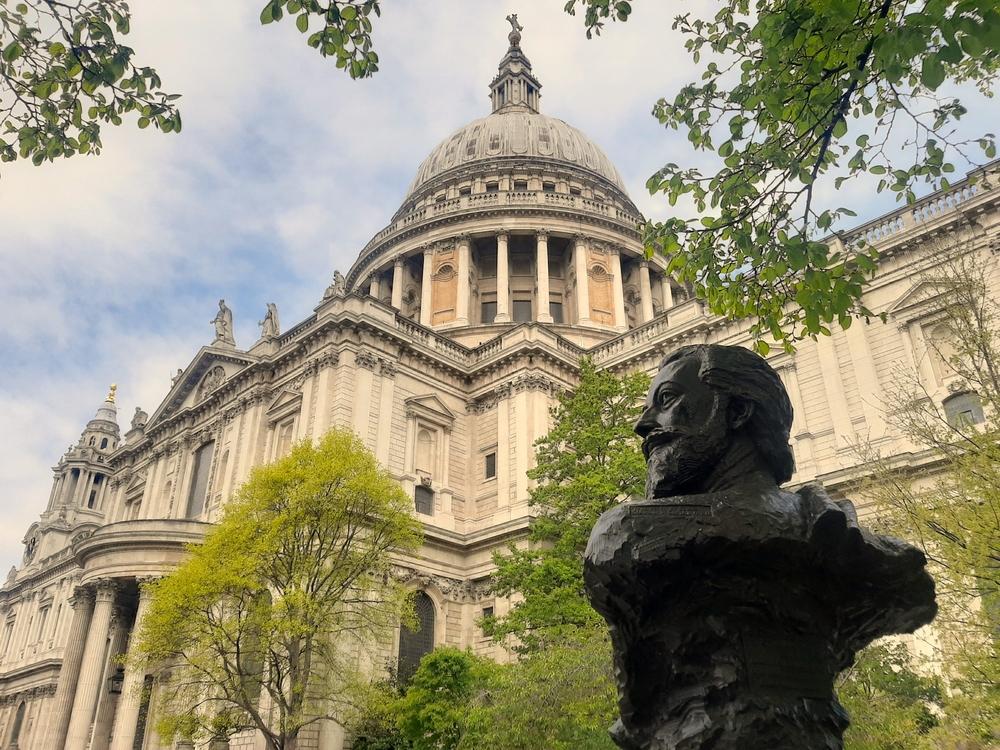Bust of poet John Donne outside St Paul’s Cathedral in central London. (Shutterstock)
This passage is justly famous. Ernest Hemingway used a bit of it for the title of his book about the Spanish Civil War, *For Whom the Bell Tolls*. John Donne wrote millions of words, but this is the passage that would find its way into a time capsule.
The flags outside the airport tolled the death of someone important. It could have been any number of people: a pope, a U.S. senator, a former president, the current president, or, in this case, a former congressman and vice president.
As I parked my car, I did not think the flag message was in any way about me, and I did not spend any time contemplating my own appointment with death, the one appointment nobody ever fails to show up for. I get plenty of that when I hike down a mountain trail or stand up rickety after 10 hours on a transatlantic flight. When I was in London last week, I stopped at the statue bust of John Donne (my favorite poet, whose work I spent eight or nine years of my life studying) outside St. Paul’s Cathedral, where he was the dean (chief administrator and principal preacher) between 1621 and his death 10 years later. In fact, Donne is said to have “preached his own funeral sermon,” which is a weird and macabre incident best left for another dispatch.
The gloomier people of John Donne’s time (1572–1631) were much more fixated on their mortality than we are in the age of Botox, face lifts, and near-starvation macrobiotic diets, at a time when the gazillionaires of Silicon Valley are spending their fortunes trying to cheat death and become immortal. Good luck with that. The duke in Shakespeare’s *Measure for Measure* advises, “Be absolute for death. Either death or life shall thereby be the sweeter.”
Most Americans do not really believe “I am involved in mankind,” and we seem bent on finding a workaround for our mortality.
---
## ***Discover more on these topics at Listening to America***
[Travel](https://ltamerica.org/tag/travel/ "1 topics")[New York](https://ltamerica.org/tag/new-york/ "8 topics")[U.S. Presidents](https://ltamerica.org/tag/u-s-presidents/ "71 topics")[Republic](https://ltamerica.org/tag/republic/ "0 topics")[Utah](https://ltamerica.org/tag/utah/ "11 topics")[Tennessee](https://ltamerica.org/tag/tennessee/ "1 topics")[Virginia](https://ltamerica.org/tag/virginia/ "7 topics")[South Dakota](https://ltamerica.org/tag/south-dakota/ "16 topics")[Thoreau](https://ltamerica.org/tag/thoreau/ "5 topics")[Wyoming](https://ltamerica.org/tag/wyoming/ "4 topics")[Pennsylvania](https://ltamerica.org/tag/pennsylvania/ "1 topics")[South Carolina](https://ltamerica.org/tag/south-carolina/ "1 topics")[Thomas Jefferson](https://ltamerica.org/tag/thomas-jefferson/ "34 topics")[Oregon](https://ltamerica.org/tag/oregon/ "4 topics")[Steinbeck Travels](https://ltamerica.org/tag/steinbeck-travels/ "75 topics")[State Parks](https://ltamerica.org/tag/state-parks/ "2 topics")[Reading](https://ltamerica.org/tag/reading/ "1 topics")[Video](https://ltamerica.org/tag/video/ "51 topics")[paintings](https://ltamerica.org/tag/paintings/ "0 topics")[Space Exploration](https://ltamerica.org/tag/space-exploration/ "8 topics")[Podcast](https://ltamerica.org/tag/podcast/ "1 topics")[Poetry](https://ltamerica.org/tag/poetry/ "1 topics")[New Mexico](https://ltamerica.org/tag/new-mexico/ "3 topics")[Washington](https://ltamerica.org/tag/washington/ "2 topics")[Rome](https://ltamerica.org/tag/rome/ "1 topics")[Rivers](https://ltamerica.org/tag/rivers/ "3 topics")[Road Trips](https://ltamerica.org/tag/road-trips/ "18 topics")[North Carolina](https://ltamerica.org/tag/north-carolina/ "3 topics")[Oppenheimer](https://ltamerica.org/tag/oppenheimer/ "1 topics")[North Dakota](https://ltamerica.org/tag/north-dakota/ "53 topics")[Vermont](https://ltamerica.org/tag/vermont/ "1 topics")[William Shirer](https://ltamerica.org/tag/william-shirer/ "1 topics")[U.S. Constitution](https://ltamerica.org/tag/u-s-constitution/ "1 topics")[Wisconsin](https://ltamerica.org/tag/wisconsin/ "0 topics")[Ohio](https://ltamerica.org/tag/ohio/ "2 topics")[Republics](https://ltamerica.org/tag/republics/ "1 topics")[Sports](https://ltamerica.org/tag/sports/ "2 topics")[New England](https://ltamerica.org/tag/new-england/ "1 topics")[Walden](https://ltamerica.org/tag/walden/ "1 topics")[Oppenheim](https://ltamerica.org/tag/oppenheim/ "0 topics")[Texas](https://ltamerica.org/tag/texas/ "4 topics")[north daktoa](https://ltamerica.org/tag/north-daktoa/ "0 topics")[The Constitution](https://ltamerica.org/tag/the-constitution/ "1 topics")[Water in the West](https://ltamerica.org/tag/water-in-the-west/ "24 topics")[Theodore Roosevelt](https://ltamerica.org/tag/theodore-roosevelt/ "16 topics")
**Categories:** Dispatches from the Road
**Tags:** America at 250, Humanities
---
### [America at 250: The Racial Divide](https://ltamerica.org/america-at-250-the-racial-divide/)
**Published:** November 17, 2025
**Author:** Clay Jenkinson
**Excerpt:** Last week, I spoke at a symposium on race and the American Revolution. This essay is the result of my deliberations for that event and is one in a series of essays I’m writing reflecting on a range of issues as America approaches its 250th birthday.
**Content:**
## Last week, I spoke at a symposium on race and the American Revolution. This essay is the result of my deliberations for that event and is one in a series of essays I’m writing reflecting on a range of issues as America approaches its 250th birthday.
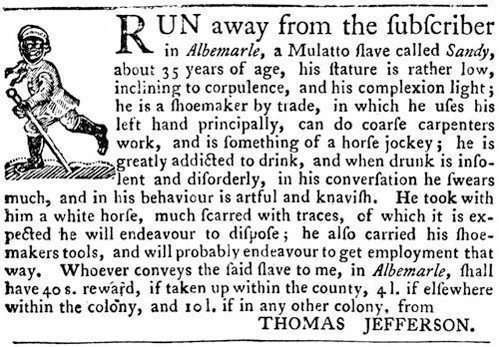 A 1769 advertisement, placed by Thomas Jefferson, in the Virginia Gazette, offering a reward for the return of an enslaved man named Sandy. (Encyclopedia Virginia)
You don’t have to be a fan of the *[1619 Project](https://www.nytimes.com/interactive/2019/08/14/magazine/1619-america-slavery.html)* to know that race has been one of the handful of most troubling and still unresolved issues of American history. If you place the beginning of America at the landing of English settlers at Jamestown, Virginia, in 1607, it wasn’t even 20 years after the “founding” that enslaved Black Africans first arrived on the shores of Virginia, to be sold as an unpaid workforce to white colonists, mostly planters. Thomas Jefferson, the “apostle of liberty,” was born in 1743. By then, there were just under a quarter of a million enslaved persons in the colonies. By 1790, 694,207. By 1826, the 50th anniversary of the soaring Declaration of Independence, which declared that “all men are created equal,” about 1.7 million. By 1860, on the eve of the Civil War, just under 4 million Americans were held in bondage, bought and sold like other plantation property and livestock. In his Second Inaugural Address, Abraham Lincoln was struck by the cruel irony of white people “wringing their bread from the sweat of other men’s faces.”
It’s uncomfortable to talk about this — the “original sin” of America — but how can we celebrate, commemorate or observe (take your pick) the 250th birthday of the United States without acknowledging that slavery, racial injustice, discrimination, apartheid, extra-legal torture, whippings and lynching are central to any understanding of the sweep of American history? The preferred narrative of white Americans goes something like this: A) slavery is bad. B) Lincoln freed the slaves with the Emancipation Proclamation (Jan. 1, 1863). C) For a long time, the South did everything it could to resist the 13th, 14th and 15th amendments, the first of which abolished slavery (1865), the second, which defined American citizenship and extended the Bill of Rights into the states (1868), and the third, which granted Black males the right to vote (1870). The resistance included Jim Crow laws, including poll taxes and rigged literacy tests, Black Codes and “separate but equal” public facilities. D) But beginning with *Brown v. Board of Education* in 1954, and the Civil Rights laws of 1964 and 1965, the problem was mostly “solved.”
## So, Get Over It Already!
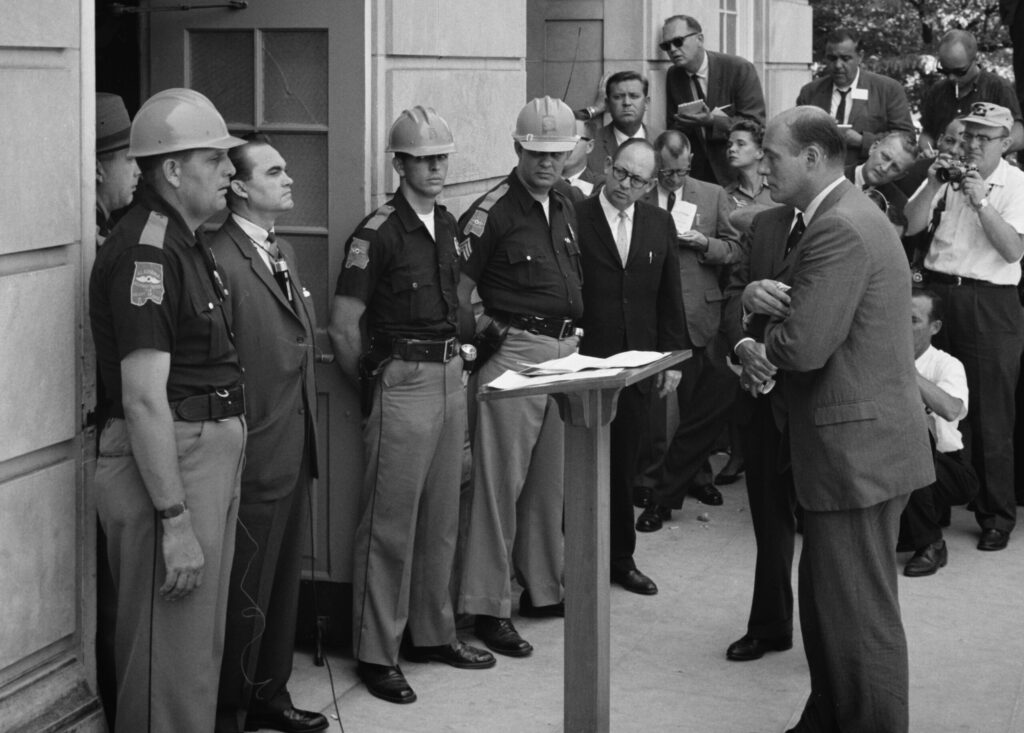Attempting to block integration at the University of Alabama in 1963, Governor George Wallace stands defiantly at the door while being confronted by Deputy U.S. Attorney General Nicholas Katzenbach. (Wikimedia)
This is about as far as most white people are willing to go, and if there were a pop quiz on the history of race in America, a large percentage of white Americans would get low or failing grades. Nor is the “consensus” narrative quite accurate. The Emancipation Proclamation of 1863, which almost no American is unaware of, didn’t “free all the slaves.” Lincoln’s great pronouncement was intended only to free slaves in the states that were in rebellion (the Confederacy), and in Southern states the Union armies had subjugated, not in any states that had remained in the Union. Besides, there was no enforcement mechanism to ensure the proclamation achieved its goal.
*[Brown v. Board of Education](https://www.archives.gov/milestone-documents/brown-v-board-of-education)* (1954) sought to integrate America’s public schools, especially in the South, but it was resisted with all the ingenuity of determined bigotry. The great majority of white children were pulled out of public schools throughout the South and placed in all-white or nearly all-white private schools. It took the arrival of federal troops to enforce *Brown v. Board of Education* in K-12 public schools and also at Southern universities. We all remember that Alabama Gov. George Wallace, whose inaugural promise (Jan. 14, 1963) was “segregation now, segregation tomorrow, segregation forever,” stood in the doorway of the University of Alabama to prevent two Black students, Vivian Malone and James Hood, from entering. And it was not just the South. Some of the worst anti-busing riots of the era occurred in Boston between 1974 and 1976. Much of the American South is still essentially segregated, particularly in housing.
## How Far We’ve Come
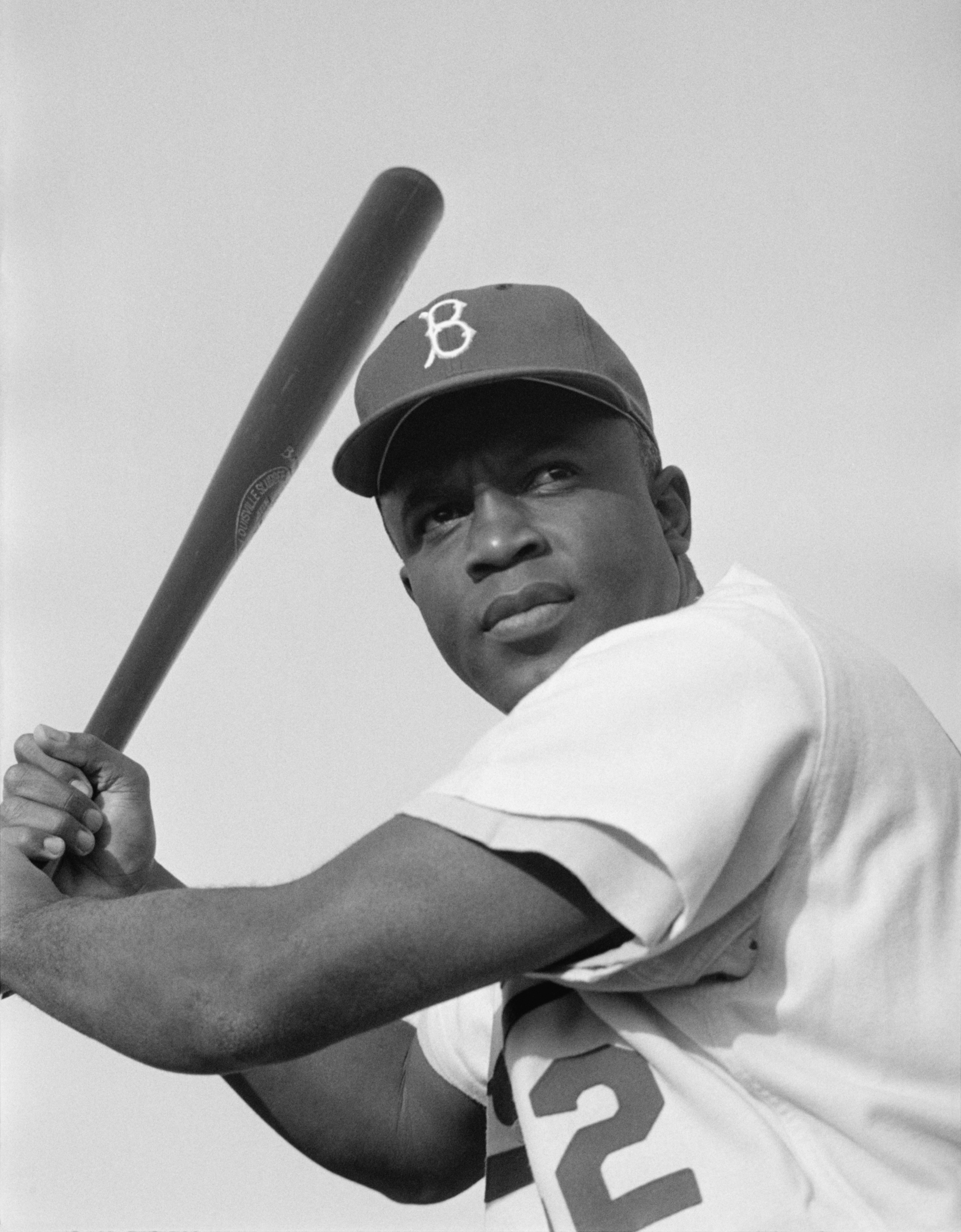Jackie Robinson, 1954. (Library of Congress)
Only three African Americans were ever featured in the 249 episodes of *The Andy Griffith Show* (1960–68), two on *Leave It to Beaver* (234 episodes, 1959–63), none on *The Adventures of Ozzie and Harriet* (435 episodes, 1952–66), and only a tiny handful in the 431 episodes of *Bonanza* (1959–73). As every *Star Trek* lover knows, the first interracial kiss on American television came on Nov. 22, 1968, when Capt. James T. Kirk kissed Lt. Uhura in an episode called *Plato’s Stepchildren*.
Jackie Robinson broke the color barrier in professional baseball in 1947. That didn’t exactly open the floodgates. The last team to integrate was the Boston Red Sox, and not until 1959, a dozen years later. As late as the late 1970s, African Americans who ventured into the “wrong” casinos in Las Vegas were met by plainclothes security guards, escorted “politely” to the door and told that they would “be more comfortable” if they moseyed down the street to one of the few casinos that admitted Blacks.
It is not all bad news, of course. Despite the far right’s current attempt to roll America back to a mythical white supremacist past that never was, there is really no turning back. I write this on a busy Saturday morning in a popular coffee shop on Granby Street in Norfolk, Virginia, where Black people and white people mingle in easy harmony. I see plenty of interracial friends and interracial couples walking on the street and gathering in clusters, and nobody is jeering. And yet, yesterday, at the America at 250 symposium I’m attending, we were informed that one in four Black residents of Norfolk (population 231,000) lives in poverty. In Norfolk, there are still predominantly Black neighborhoods, including Huntersville, Broad Creek and Titustown, among others.
We’ve come a long way, but there is a long way to go to achieve racial equality and racial harmony. On any given day out in the heartland, I can hear a white person say, “We’ve done what we can. Now it’s time for Black people to get their act together, build stable families and stop committing crimes.” OK, sure, but the hard work of creating a nation of racial reconciliation and harmony is going to have to be done mostly by us white folks. We weren’t kidnapped from our birth countries, torn from our families and friends, crammed shackled into fetid slave ships where one in five or two in five perished in transit, sold in a foreign land to the highest bidder, whipped (or lynched) for looking crosswise at a white woman and generally terrorized for four centuries to make sure we knew our place in America.

Many white people will say, “That was then, and this is now.” And yet every few months (and only thanks to the ubiquity of video cameras) we hear of another appalling incident of race violence perpetrated by angry white men or trigger-happy cops: Trayvon Martin, Florida, 2012; Michael Brown, Missouri, 2014; Breonna Taylor, Kentucky, 2020; George Floyd, Minnesota, 2020. White parents don’t have to lecture their teenage sons on how to survive a routine traffic stop — driving while Black is a potentially dangerous gamble in many of our cities.
After the George Floyd killing on May 25, 2020, I decided it was time to do some serious reading and even more serious reflection. Within a month or so, I read Robin DiAngelo’s *White Fragility: Why It’s So Hard for White People to Talk About Racism* and Carol Anderson’s *White Rage*. I recommend them highly to everyone who cares about this issue. *White Fragility* begins by outlining all the ways white people bat away their (our) complicity in the unresolved race tensions and discriminations of America: “I don’t have a racist bone in my body;” “Hey, I have Black friends!” “I ain’t ever owned no slaves;” “All that happened 150 years ago;” “My forebears came from Germany (Italy, Ukraine, Poland, etc.) long after the Civil War;” “Only bad people are racist and I’m not a bad person;” “Structural racism is a crock.” Etc.
I can attest to the accuracy of DiAngelo’s summation. A few years ago, I encouraged a privileged white family in the Seattle area with three highly educated daughters to read *White Fragility* with me and then have a Zoom meeting to talk about it. (By the way, I do not present myself as emancipated from racial insensitivities and complicities: not at all.) My friends all said they read the book carefully and with an open mind. And yet when we Zoomed and the discussion began to flow, they all (some more than others) trotted out exactly the evasions, dodges and firm denials of DiAngelo’s opening chapters as if on cue. Turns out they didn’t have a racist bone in their bodies.

If *White Fragility* is an analysis of how hard it is for us, white people, to talk about this vexed subject, *White Rage* is even harder to absorb. The book is essentially a history of Black America’s relations with the larger white community. It’s a profoundly disturbing litany of white hatred, white discrimination and white violence against African Americans, from 1619 through the presidency of Barack Obama. Summary? A significant proportion of white people have never wanted to share America with Black people unless they can control the whole range of Black activities and aspirations in a way that secures their permanent subordination or even subjugation. As I reread *White Rage* last week preparing for the symposium I’m attending on Black lives during the American Revolution, I had to get up every few pages to shake off what might be called my triple shame: first, that white treatment of Black Americans over the last 400 years, and even recently, even now, has been much worse than we think. Second, though I regard myself as a pretty well-educated person, my ignorance of Black history is appalling. In fact, I’m making up a quiz to distribute among my friends (those who wish it) about incidents in American history that every American should know. I’d score C or C-. Third, I won’t say we are all complicit (you have to decide for yourself), but I know that I am complicit in the race tragedy of American history. Even if we “don’t have a racist bone,” from earliest childhood we absorb a long series of notions, misrepresentations, mythologies, stereotypes, inadvertent racial insensitivities and real or inadvertent bigotries that we are largely unaware of, in questions of crime, dress, music, sports, language, politics and much else.
Suppose we could all start over and wipe away the coding and cultural constructions we carry around, like bystanders in the *Men in Black* movies. In that case, we can begin again now with dramatically better social results. But we cannot escape history. We can only work hard to acknowledge our complicities and struggle to overcome them.
Even the deeply racially compromised Thomas Jefferson, who wrote in his only book, *Notes on the State of Virginia*, of “this unfortunate difference of color,” acknowledged that his own racism was formed by the institution of slavery, in which he was deeply complicit. He wrote, “The whole commerce between master and slave is a perpetual exercise of the most boisterous passions, the most unremitting despotism on the one part, and degrading submissions on the other. Our children see this, and learn to imitate it; for man is an imitative animal. This quality is the germ of all education in him.” He said, “The man must be a prodigy who can retain his manners and morals undepraved by such circumstances.” This was the closest Jefferson ever came to acknowledging his guilt for owning slaves, buying and selling them furtively, tracking them down when they tried to escape and having sexual relations with at least one of the people he owned. Jefferson freely acknowledged that his ownership of slaves was a fundamental violation of his core values and of the ideals of the American Revolution. And, in *Notes on Virginia*, he said that God was unquestionably on the side of the oppressed slaves (and free Black men and women), “and his justice cannot sleep forever.” And yet he only freed eight (of approximately 600) enslaved people he owned in his lifetime.
I write about this uncomfortable subject not because I take any joy in it, but because I have spent the last couple of years wandering America, interviewing a wide range of people and reading about our history. I believe it would be irresponsible (and tragic) to commemorate our 250th birthday without wrestling hard with the “elephants in the room,” of which this is only one of four or five that any responsible civilization must address as it looks to its past and attempts to envision its future. I know some of my readers will reject some or all of what I have written here, but I simply ask that you join me in reading these books (or others), discussing these issues with your family and friends and not just throwing up your hands or shaking your fists. We have a lot to answer for as a nation, if not as individual Americans.
---
## ***Discover more on these topics at Listening to America***
[North Dakota](https://ltamerica.org/tag/north-dakota/ "53 topics")[Virginia](https://ltamerica.org/tag/virginia/ "7 topics")[Wisconsin](https://ltamerica.org/tag/wisconsin/ "0 topics")[Thomas Jefferson](https://ltamerica.org/tag/thomas-jefferson/ "34 topics")[New York](https://ltamerica.org/tag/new-york/ "8 topics")[Utah](https://ltamerica.org/tag/utah/ "11 topics")[South Dakota](https://ltamerica.org/tag/south-dakota/ "16 topics")[Pennsylvania](https://ltamerica.org/tag/pennsylvania/ "1 topics")[Road Trips](https://ltamerica.org/tag/road-trips/ "18 topics")[Travel](https://ltamerica.org/tag/travel/ "1 topics")[Theodore Roosevelt](https://ltamerica.org/tag/theodore-roosevelt/ "16 topics")[New Mexico](https://ltamerica.org/tag/new-mexico/ "3 topics")[Video](https://ltamerica.org/tag/video/ "51 topics")[Texas](https://ltamerica.org/tag/texas/ "4 topics")[North Carolina](https://ltamerica.org/tag/north-carolina/ "3 topics")[Vermont](https://ltamerica.org/tag/vermont/ "1 topics")[Sports](https://ltamerica.org/tag/sports/ "2 topics")[U.S. Presidents](https://ltamerica.org/tag/u-s-presidents/ "71 topics")[Rome](https://ltamerica.org/tag/rome/ "1 topics")[New England](https://ltamerica.org/tag/new-england/ "1 topics")[Reading](https://ltamerica.org/tag/reading/ "1 topics")[Washington](https://ltamerica.org/tag/washington/ "2 topics")[Oppenheim](https://ltamerica.org/tag/oppenheim/ "0 topics")[Wyoming](https://ltamerica.org/tag/wyoming/ "4 topics")[South Carolina](https://ltamerica.org/tag/south-carolina/ "1 topics")[Republic](https://ltamerica.org/tag/republic/ "0 topics")[Oppenheimer](https://ltamerica.org/tag/oppenheimer/ "1 topics")[Tennessee](https://ltamerica.org/tag/tennessee/ "1 topics")[William Shirer](https://ltamerica.org/tag/william-shirer/ "1 topics")[Republics](https://ltamerica.org/tag/republics/ "1 topics")[Rivers](https://ltamerica.org/tag/rivers/ "3 topics")[U.S. Constitution](https://ltamerica.org/tag/u-s-constitution/ "1 topics")[Poetry](https://ltamerica.org/tag/poetry/ "1 topics")[The Constitution](https://ltamerica.org/tag/the-constitution/ "1 topics")[Space Exploration](https://ltamerica.org/tag/space-exploration/ "8 topics")[Steinbeck Travels](https://ltamerica.org/tag/steinbeck-travels/ "75 topics")[Podcast](https://ltamerica.org/tag/podcast/ "1 topics")[Oregon](https://ltamerica.org/tag/oregon/ "4 topics")[north daktoa](https://ltamerica.org/tag/north-daktoa/ "0 topics")[paintings](https://ltamerica.org/tag/paintings/ "0 topics")[Ohio](https://ltamerica.org/tag/ohio/ "2 topics")[Water in the West](https://ltamerica.org/tag/water-in-the-west/ "24 topics")[Walden](https://ltamerica.org/tag/walden/ "1 topics")[Thoreau](https://ltamerica.org/tag/thoreau/ "5 topics")[State Parks](https://ltamerica.org/tag/state-parks/ "2 topics")
**Categories:** Features
**Tags:** America at 250, Books, U.S. Presidents
---
### [There Will Always Be an England (I Hope)](https://ltamerica.org/there-will-always-be-an-england-i-hope/)
**Published:** November 10, 2025
**Author:** Clay Jenkinson
**Content:**
## Clay traveled to England last week to attend his daughter’s graduation ceremony, where she received her PhD from Oxford University.
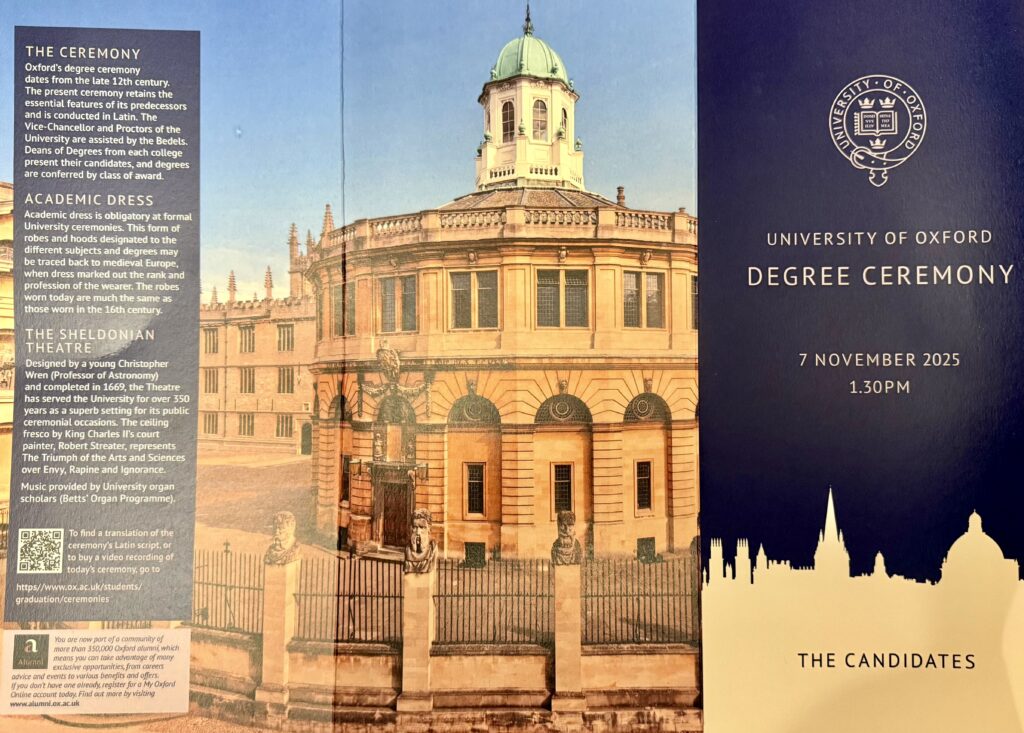Oxford University Graduation program.
I had the joy yesterday, Friday, November 7, 2025, of seeing my beloved daughter take her degree at the seventeenth-century [Sheldonian Theatre in Oxford](https://www.sheldonian.ox.ac.uk/).
My daughter wrote her doctoral dissertation on the Tower of London in the age of Elizabeth I and James I. The degree was conferred in February, but the graduation ceremony was held this week.
Several decades ago, I went through the ceremony at a lower level, with my parents in attendance all the way from North Dakota.
Oxford is an ancient university, dating back to around 1230 AD or so, depending on how you count. The Sheldonian Theatre was designed by the eminent English architect Sir Christopher Wren (1632–1723), who also built [Saint Paul’s Cathedral](https://www.stpauls.co.uk/) in London.
I had forgotten how beautiful it is inside.
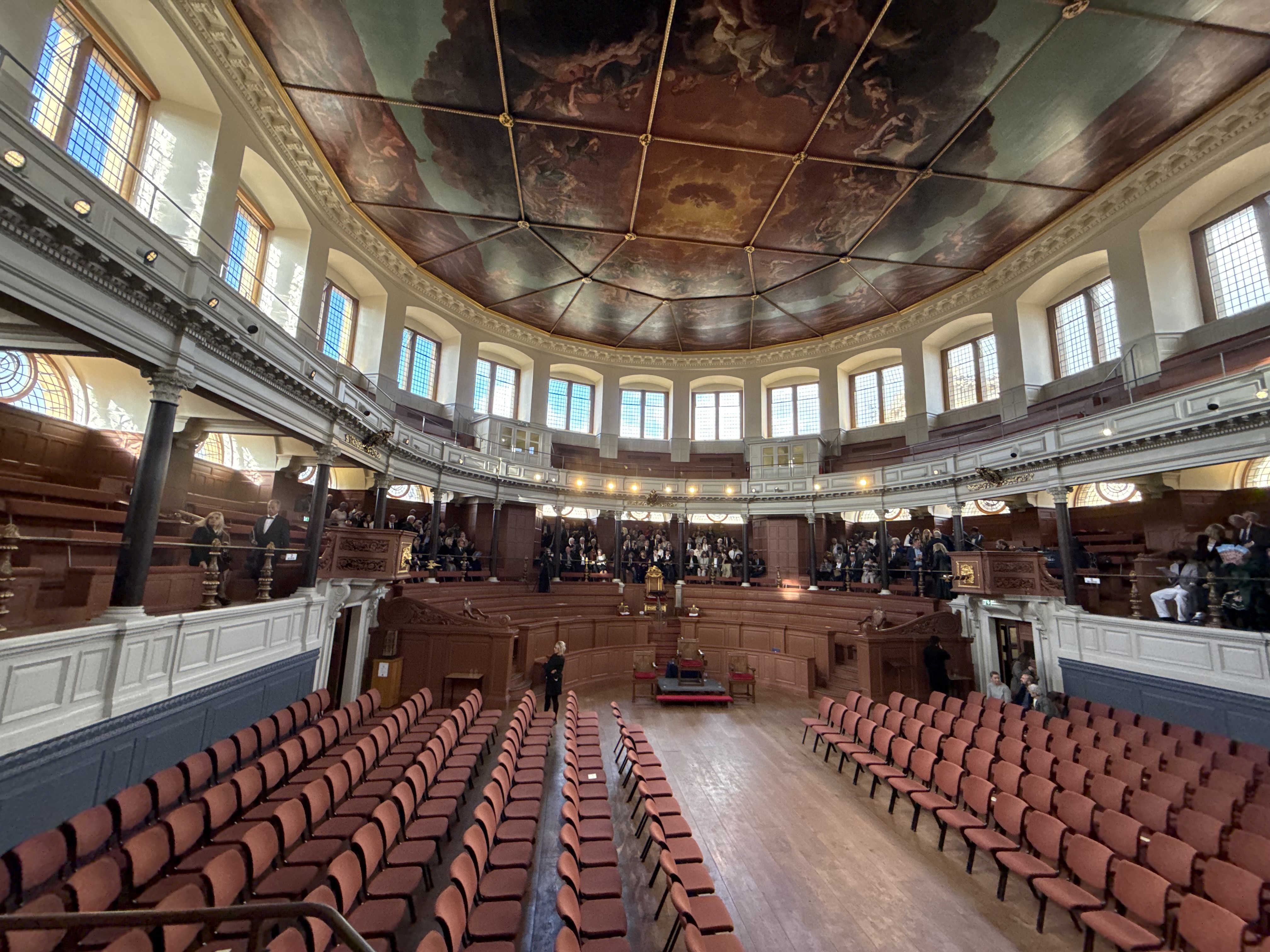Inside Oxford University’s Sheldonian Theatre where the graduation ceremony was held. (Photo Clay Jenkinson)
So here were several hundred parents, friends, and professors sitting on cushioned bleachers, looking down into the cockpit where the degree ceremony takes place. The ceremony is conducted almost entirely in Latin. The university’s associate vice-chancellor, Jonathan Michie, in his brief English homily, made the case for maintaining the Latin tradition. Some events in life are so important that they deserve to be embraced in special commemorative rites and procedures. Graduation from Oxford is a kind of secular sacrament with roots in the Middle Ages. Until the eighteenth century, Latin was the language of science and learning throughout the European world—and beyond. Someone from Slovenia could communicate (including orally) with someone from Sicily, who could talk with someone from Hamburg, who could talk with someone from Naples, who could communicate with someone from Istanbul. Latin was the universal language of the intelligentsia, of what was then called the Republic of Letters, with a particular emphasis on questions of salvation and divinity.
Nowadays, nobody can really understand the Latin discourse used in the Sheldonian ceremony, including some of the Oxford faculty representatives who have to use it on these special occasions. Nevertheless, it adds a level of severe grandeur to this extremely important rite of passage.
My daughter was one of about forty individuals who had earned their DPhil (PhD) in one discipline or another. They all came in wearing their black commoners’ gowns and left after some important preliminary discourse. When they returned, they were wearing the gorgeous scarlet and blue gowns of those who were now being formally welcomed into the highest echelons of Oxford scholarly life.
So here were hundreds and hundreds of well-wishers, most of us complete strangers to everyone else in the room, anxiously waiting for their scholar to take their degree while trying to take a few clandestine photographs.
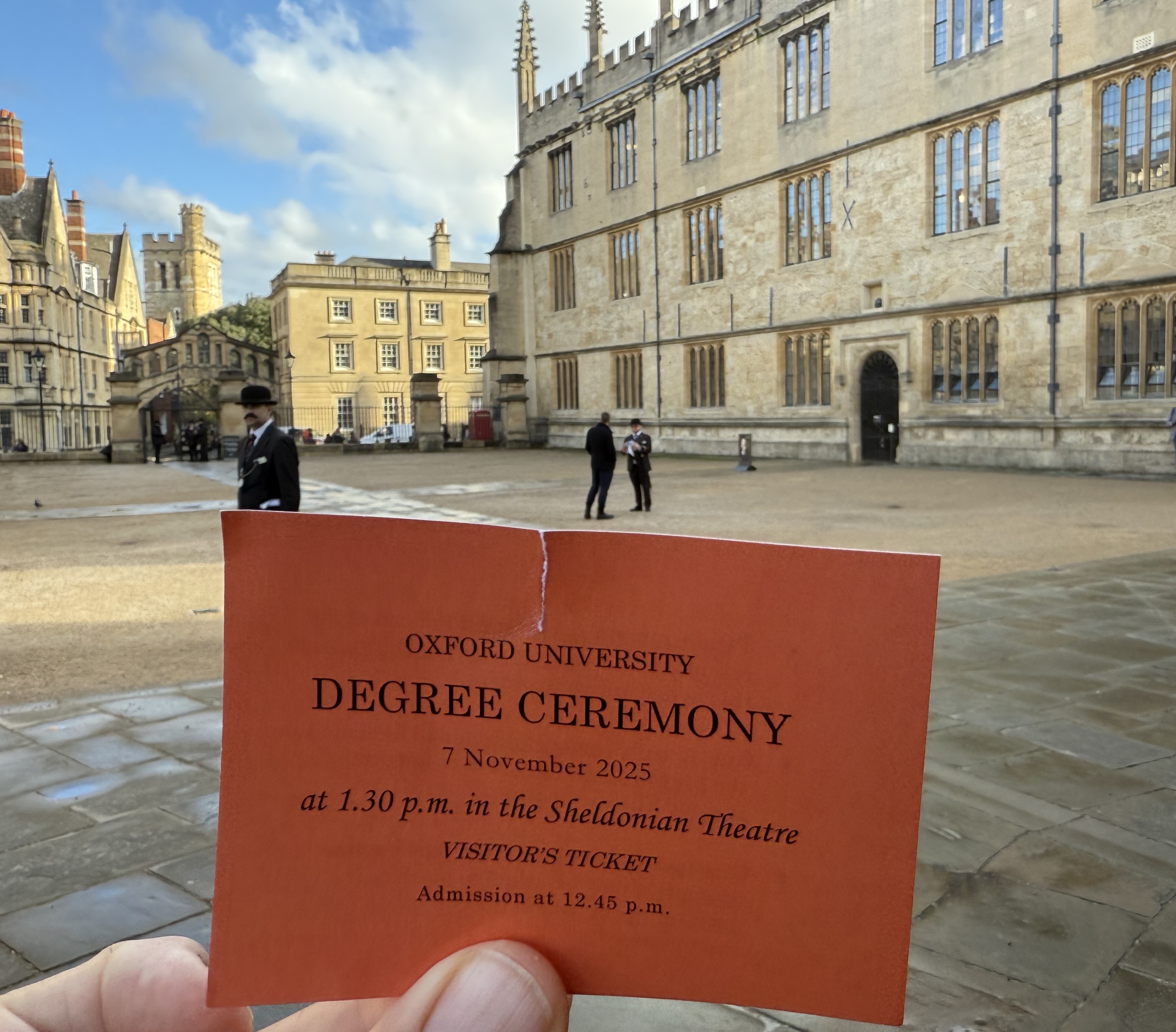
There is an important gravitas to this grand celebration of the life of the mind. Almost everyone in the theatre was an adult, some proud parents in ones and twos, and some grandparents. Everyone in the audience was dressed with appropriate decorum, most of the men in ties, many of the women in skirts and dresses. There were only a handful of children in attendance, mostly because tickets are extremely difficult to obtain. The Sheldonian has a capacity of 1,000. Each student gets two tickets. Before the doors opened promptly at 12:45 p.m., one boy, about four or five years old, in the queue outside was standing with his father waiting to see his mother take her master’s degree. He knew something important was about to happen, but he was not quite sure what. He asked many questions of the sort you would expect: “Is mama coming?” “When will it start?” “Is that the tallest building?” and “Are those clouds moving or is the building about to fall down?”
This gave me some pause, but during the two full hours of the ceremony in a foreign language, he said not a peep and was never admonished for any childish behavior or squirming. Throughout the event, there was no ruckus of any sort in the room.
And here’s what impressed me the most:
In the two hours we sat there, no graduate did a fist pump or attempted to high-five the associate vice-chancellor or lifted her or his gown to show combat boots or shouted out “Free Palestine!” or “We’re Americans, we’re so sorry for the way we have disturbed the universe.” Nobody did a skip. Nobody mooned the audience. No parents shouted, “You finally made it!” or “We’re as surprised as you,” or “Go, Manchester United!” (a premier English soccer team).
I’ve been to several dozen graduations in America at public universities and private universities, and I’ve never seen one in which there was no outburst of joy or sarcasm. The British are not always so decorous. I’ve been to soccer matches, for example, where rowdyism is virtually synonymous with the rabid fanbase. The British still have a great regard for higher education, particularly at their beloved Oxford and Cambridge. But on this day, there was not a single whoop or triumphant gesture. It made me want to go home and read the complete works of Tolstoy or translate a Roman epic. At a time when the humanities are in steep decline worldwide, including to a certain extent even at Oxford and Cambridge, this cultural respect was deeply moving.
Afterwards, we took approximately 725 photographs, then queued up for the official university photographs of every permutation of our little party: mother and daughter, mother and second daughter, mother and both daughters, mother and father, father and daughter, graduate with fiancé, fiancé with parents, etc.
Then we went to my daughter’s college reception at Lincoln College, one of the 39 Oxford colleges. There were cucumber sandwiches and coronation chicken salad sandwiches. Plus champagne.
It was a profoundly moving experience.
After the reception, we walked into North Oxford to the Royal Oak pub, where we had reserved a table in a corner room. A dozen of my daughter’s closest mates were waiting to celebrate her achievement in a more convivial way. There were several toasts and a great deal of joyous laughter. But what moved me most was that two of her Oxford history professors—both eminent in their field with worldwide reputations for scholarly excellence—made brief appearances to congratulate her and tell her parents how exceptional she has been.
Was all this worth a trip across the Atlantic? Absolutely. What will she do next? Unclear, though she has a four-year postdoctoral research fellowship at Pembroke College, Oxford, in a guest room of which I write this account. Her doctorate is in Early Modern History. She’d like to teach in a university, of course, but given the grim state of academic employment in the English-speaking world, her outlook is flexible. For whatever happens next, she is exceedingly well prepared.
Confession: I would have liked to whoop in the Sheldonian, because (as you see) my immense pride needs to express itself, but I am not by nature a whooper, and I was too busy choking up during the procession. Besides, how do you whoop in Latin?
---
## ***Discover more on these topics at Listening to America***
[South Dakota](https://ltamerica.org/tag/south-dakota/ "16 topics")[Oppenheimer](https://ltamerica.org/tag/oppenheimer/ "1 topics")[Pennsylvania](https://ltamerica.org/tag/pennsylvania/ "1 topics")[New Mexico](https://ltamerica.org/tag/new-mexico/ "3 topics")[Wyoming](https://ltamerica.org/tag/wyoming/ "4 topics")[Podcast](https://ltamerica.org/tag/podcast/ "1 topics")[New England](https://ltamerica.org/tag/new-england/ "1 topics")[north daktoa](https://ltamerica.org/tag/north-daktoa/ "0 topics")[Theodore Roosevelt](https://ltamerica.org/tag/theodore-roosevelt/ "16 topics")[The Constitution](https://ltamerica.org/tag/the-constitution/ "1 topics")[Video](https://ltamerica.org/tag/video/ "51 topics")[Tennessee](https://ltamerica.org/tag/tennessee/ "1 topics")[Poetry](https://ltamerica.org/tag/poetry/ "1 topics")[Steinbeck Travels](https://ltamerica.org/tag/steinbeck-travels/ "75 topics")[Reading](https://ltamerica.org/tag/reading/ "1 topics")[North Dakota](https://ltamerica.org/tag/north-dakota/ "53 topics")[Thoreau](https://ltamerica.org/tag/thoreau/ "5 topics")[North Carolina](https://ltamerica.org/tag/north-carolina/ "3 topics")[paintings](https://ltamerica.org/tag/paintings/ "0 topics")[New York](https://ltamerica.org/tag/new-york/ "8 topics")[Republic](https://ltamerica.org/tag/republic/ "0 topics")[Rome](https://ltamerica.org/tag/rome/ "1 topics")[Wisconsin](https://ltamerica.org/tag/wisconsin/ "0 topics")[Oregon](https://ltamerica.org/tag/oregon/ "4 topics")[Road Trips](https://ltamerica.org/tag/road-trips/ "18 topics")[State Parks](https://ltamerica.org/tag/state-parks/ "2 topics")[Washington](https://ltamerica.org/tag/washington/ "2 topics")[South Carolina](https://ltamerica.org/tag/south-carolina/ "1 topics")[Ohio](https://ltamerica.org/tag/ohio/ "2 topics")[Texas](https://ltamerica.org/tag/texas/ "4 topics")[Oppenheim](https://ltamerica.org/tag/oppenheim/ "0 topics")[U.S. Constitution](https://ltamerica.org/tag/u-s-constitution/ "1 topics")[Walden](https://ltamerica.org/tag/walden/ "1 topics")[Travel](https://ltamerica.org/tag/travel/ "1 topics")[U.S. Presidents](https://ltamerica.org/tag/u-s-presidents/ "71 topics")[Water in the West](https://ltamerica.org/tag/water-in-the-west/ "24 topics")[Virginia](https://ltamerica.org/tag/virginia/ "7 topics")[Space Exploration](https://ltamerica.org/tag/space-exploration/ "8 topics")[Utah](https://ltamerica.org/tag/utah/ "11 topics")[Republics](https://ltamerica.org/tag/republics/ "1 topics")[Thomas Jefferson](https://ltamerica.org/tag/thomas-jefferson/ "34 topics")[Sports](https://ltamerica.org/tag/sports/ "2 topics")[Vermont](https://ltamerica.org/tag/vermont/ "1 topics")[William Shirer](https://ltamerica.org/tag/william-shirer/ "1 topics")[Rivers](https://ltamerica.org/tag/rivers/ "3 topics")
**Categories:** Dispatches from the Road
**Tags:** Humanities
---
### [The Wrecking Ball Presidency](https://ltamerica.org/the-wrecking-ball-presidency/)
**Published:** November 4, 2025
**Author:** Clay Jenkinson
**Excerpt:** The demolition of the East Wing of the White House is a clear metaphor for our “CEO” president.
**Content:**
## The demolition of the East Wing of the White House is a clear metaphor for our “CEO” president.
(Image courtesy of Clay and ChatGPT)
T.S. Eliot (1888-1965) was an influential literary critic and one of the great poets of the 20th century. His masterpiece, *The Waste Land* (1922), is a difficult work of poetic genius, central to any understanding of modernism, and a dark evocation of the aftermath of the Great War (WW I). In his famous (dismissive) essay on Shakespeare’s *Hamlet*, Eliot coined the term “[objective correlative](https://www.poetryfoundation.org/education/glossary/objective-correlative),” by which he meant the “set of objects, a situation, a chain of events which shall be the formula of that particular emotion.”
Photographs of heavy equipment bulldozing the East Wing of the White House may turn out to be the objective correlative of the entire Trump presidency.
For simplicity’s sake, let’s call such photographs a symbol of the Trump presidency, a metaphor for the wrecking ball he has taken to a wide range of important constitutional norms (traditions not codified in the 4,543 words of the Constitution) and to some key provisions of the Constitution itself, like Habeas Corpus, the Emoluments Clause, and the Pardon Clause. (Note: none of this is political interpretation; President Trump has cheerfully explained that this is precisely what he is doing, exactly what America needs.)
We all woke up one day not long ago to discover that, without warning, debate, process, or serious deliberation, the East Wing of the White House was being reduced to rubble. For many of us, photographs of the demolition were literally the first we heard about this major … er “renovation.” The White House is many things — an administrative office building, the private residence of the First Family, a national “commons” where treaties are signed, deceased presidents lie in state, catastrophes commiserated, Nobel Prize winners are feted (JFK, April 29, 1962), and major national and international policy pronouncements are made.
The White House is also an important American museum. It is an essential symbol of our republic, along with the Capitol, and the Washington, Jefferson, and Lincoln memorials. It is also, as we all (almost all?) know, the People’s House. It belongs to all of us, not just the temporary occupant, and we are entitled, through our system of representative government, to weigh in on important changes to the structure and function of the building.
Until now, the White House has been a painstakingly curated structure, protected by public reverence and a long and sometimes tragic tradition, supervised by a dedicated staff of career professionals whose duty it is to protect it, preserve it, and keep it functional, historical, and tasteful, all at the same time. They work hard at this, and they are entitled to our collective respect.
Architectural drawing for the planned renovation of the White House East Wing. (White House image)
Other presidents have made serious changes to the White House. The difference is that they began their refashionings by consulting the appropriate congressional committees, engaging in serious deliberation with the [White House Historical Association](https://www.whitehousehistory.org), and inviting input from historians of architecture. Previous presidents have worked hard to involve the nation’s most respected architects when they contemplate remodelings and refashionings. Their avowed commitment was to minimize alterations to the White House footprint and to ensure that the wisest individuals in the historical preservation profession were involved at every stage of the process.
Process? That’s not how this president operates.
The reason why this action — one that will fundamentally change the look, the symmetry, and the function of the White House — might be called the objective correlative of the Trump presidency is that it reveals a profound indifference to norms and processes (and sometimes the law itself). It will probably be remembered as the most visible example of how Donald Trump conceives of his reign and his modus operandi.
By now, we all should have learned these truths:
(White House photo)
1\. Donald Trump sees himself as the CEO of a family-owned business, which he calls the United States. He makes decisions like a corporate CEO who never has to answer to a board of trustees. If he wants to accept a gift of a $400+ million luxury Boeing 747-8 aircraft from Qatar, he does it. If he wants to rename the Department of Defense the War Department, he does it. If he wishes a federal weather chart conformed to his erroneous idea of the trajectory of a hurricane, he whips out his Sharpie. If he wants to pave the Rose Garden, he pours cement.
This is how he has always operated. He seems never to have fully accepted that this is not how a democratic republic works. The sluggish process of American constitutionalism frustrates him intensely, and (I say this earnestly) it is not clear that he really understands the basic civics of how our Montesquieuian system is meant to work. He has told autocrats from the rest of the world — Putin, Xi, Erdoğan, Orbán — that he envies their ability to dictate decisions and watch everyone around them scurry to implement whatever they have unilaterally decided to do. Trump has openly told us — We the People — that he finds the slow legislative process intolerable, and may have to defy the Constitution to achieve his aims. We have been warned. And he was re-elected.
(White House photo)
2\. Mr. Trump really does believe he is the world’s greatest practitioner of the “Art of the Deal.” Suddenly, he declares that we are imposing steep tariffs on China on such and such a date. China attempts to negotiate. The deadline passes. Trump extends the deadline. Extends it again. Eventually, China retaliates. Trump threatens to up the ante. Then he meets with Chairman Xi, because he believes his force of personality is irresistible in a face-to-face bargaining showdown. He reports that he and Xi are close friends, that they had a “perfect” meeting. It turns out the Chinese concede far less than Trump demanded, and the U.S. makes concessions the president repeatedly ruled out. Still, he declares victory.
He holds a summit with Vladimir Putin in Alaska, declares success, assures us a ceasefire in the war against Ukraine is in the works, but within hours, Putin unleashes the dogs of war as a direct act of defiance. The Russian army intensifies the war and drops a vicious flurry of bombs on Ukrainian civilians, including children. The war grinds on.
(White House photo)
3\. Trump despises and disdains experts. They just slow things down and get in the way. Previous presidents have also been frustrated by legislative, bureaucratic, and constitutional processes, but, with few exceptions, they have conformed to American law and traditions. Why? Because they know that becoming president puts them in an extremely serious trust relationship with the American people and with American history. We all remember that Donald Trump assured us, back in July 2016, that “I alone can fix it.” He has assured us he knows more about tariffs than professional economists, knows more about grass than anybody else in America (golf courses), knows more about taxes than anyone “maybe in the history of the world,” knows more about renewable energy than anyone, knows “more about ISIS than the generals do,” etc., etc., etc. ad infinitum. So far, he has not declared that he knows more about quantum physics than Niels Bohr and Albert Einstein, but we are still in the first half of his second term. He may call Albert Einstein a phony at any time.
I’m willing to believe that Trump’s style and his deal-making may work in some instances, but North Korea did not back away from its nuclear and ICBM missile development after Trump and Kim Jong Un became best friends. There is no peace in the Middle East, though Trump assured us he would end that war on Day One of his second term; no peace in Ukraine (same claim); no “big beautiful Wall on the Mexican border,” and Mexico did not pay for those chunks of the wall he has built or mostly rebuilt.
These things take time. And process. And patience. And great attention to detail.
These are not Mr. Trump’s character strengths. He’s used to buying a decayed building in NYC, razing it ASAP, and putting up something that harmonizes with his personality and his sense of style, then calling it the most beautiful building in America.
## **Without Precedent**
It’s certainly true that previous presidents have renovated the White House. Some of those changes have been major.
Thomas Jefferson convinced Congress to appropriate funds to finish and furnish the still-unfinished White House. This included landscaping the property and constructing a set of durable stairs so people could get into the building! Theodore Roosevelt undertook a major renovation in 1902, and the U.S. government hired the country’s most reputable architectural firm to do it right. William Howard Taft added the Oval Office, so beautifully integrated into the original design that the American public has long since forgotten that it was not there for the administrations of Washington, Lincoln, or even Theodore Roosevelt. Harry S. Truman actually moved out of the White House for a full 3.5 years (November 1948-March 1852) while the building was carefully dismantled on the inside to strengthen sagging timber and to bring it up to post-war standards of plumbing, electricity, and security.
Jacqueline Kennedy, who fancied herself a woman of exquisite taste (and was one), enhanced the White House’s elegance and artistic appeal with the most extraordinary attention to tradition and detail.
President Richard Nixon covered over FDR’s White House swimming pool (essential for FDR’s physical therapy due to his polio) and turned it into a much-needed press room.
William Jefferson Clinton presided over a major refurbishing of the Blue Room — in the (French) Empire Style. Perhaps more importantly, the Clintons brought computers and the internet to the White House. This was one initiative in what Bill Clinton called his “bridge to the 21st century.”
The eminent columnist Tom Friedman recently said of Trump, “He tends to view NATO as a Trump-owned shopping center where not enough tenants are paying enough rent.” Fill in the blank. He views virtually everything as something he can redesign or repurpose at will. And he always “knows better.” It must be acknowledged, of course, that he won the 2024 election decisively; elections matter, and tens of millions of Americans approve (mostly) of what he is doing.
## **The Wrecking Ball Trope**
The argument can be made that the American government is “broken” — swollen, inefficient, out of touch, too “woke,” etc. — and that we will need some tough love to turn things around, particularly if we decide to take the national debt seriously. Trump adviser Steve Bannon has argued that the only way to fix America is to blow up the whole thing and start again after the rubble has cleared. Maybe so. But if that blunt demolition were to happen, it would require a long and candid national conversation, the development of consensus (or at least a super-majority) to give it legitimacy, perhaps a plebiscite of the American people, and probably an enabling amendment to the Constitution. But with the support of only about 39% of the American people, no president has enough consensus or authority to crush the Department of Education, shatter the ways and means of the Justice Department, impound Congressionally appropriated funds, abrogate treaties, rename geographic features and military bases, or remake the White House in his own image.
Arguably, we needed a grand ballroom annex to the White House. However, you have to wonder why we have been able to get by all this time (225 years) with the existing building, including the huge East Room, where Abigail Adams (the first First Lady to inhabit the house) hung her laundry to dry, where Meriwether Lewis lived for two years before he explored the American West, and where seven presidents have lain in state. The East Room has hosted scores of state dinners and other large ceremonials. But assuming that a huge new ballroom would make it easier to host large White House events, you’d want to bring in a large number of experts and committees to talk about how the new building could be made to harmonize with the existing historical structure, how that new facility will change the “footprint” of the White House, what structures will have to be erased to permit this gargantuan thing to be built, how big is big enough and how big is too much, and many other pertinent questions. In short, a deliberative process.
Proposed design for the new White House East Wing ballroom. (White House image)
But no. That’s not how this president works.
The current edition of our political habit of “what-aboutism” is that Barack Obama turned the White House Tennis Court into an all-purpose facility that could accommodate his love of basketball. Horrors! And yet, no bulldozers were needed, no load-bearing walls torn down to make that relatively modest change, and there was, as you might expect, a careful process. Fake news entities are declaring that Obama demolished important parts of the White House to service his (“urban,” “Black”) love of hoops. One right-wing website pretended that a 1934 photograph of structural changes was taken in 2009 — and, strangely, in black and white. Another site accused Obama of spending $376 million to build his basketball court.
**One final point:** if we accept the need for a new White House ballroom (unclear) and accept that it needs be so massive (unclear), my principal remaining concern is what the finished structure is going to look like inside and out — inside more than out if Trump is faithful to his preference for neoclassical buildings rather than the architectural styles of our time. Gold faucets? Glittering chandeliers? Will it be Mar-a-Lago north? A tinselly American version of Versailles? The style changes Trump has already made to the Oval Office are so over-the-top, so gaudy and ostentatious, that I now actually have to turn away when I see video or stills of Oval Office meetings. It’s like a scene out of the Roman satirist Petronius’ parody of the vulgarities of the nouveau riche, *The Satyricon*. The Oval Office now looks like what a fourth-tier Saudi prince would create for himself in Beverly Hills.
President Trump holds a press conference in Oval Office. (White House Photo)
President Trump assures us the new ballroom will be funded with private money. That may sound praiseworthy, but remember that in spending non-Congressionally appropriated money, the president shields himself from fiscal or any other kind of public accountability. Congress holds the power of the purse, but that is not the purse Mr. Trump wants to tap — too much oversight and paperwork.
We’ll survive this, of course. Sometimes a ballroom is just a new ballroom, and this is the 21st century, not the 18th. But I believe Mr. Trump has provided future textbooks with one of the handful of most reproduced images of his two-term presidency.
---
## ***Discover more on these topics at Listening to America***
[Texas](https://ltamerica.org/tag/texas/ "4 topics")[Pennsylvania](https://ltamerica.org/tag/pennsylvania/ "1 topics")[New Mexico](https://ltamerica.org/tag/new-mexico/ "3 topics")[Virginia](https://ltamerica.org/tag/virginia/ "7 topics")[Steinbeck Travels](https://ltamerica.org/tag/steinbeck-travels/ "75 topics")[Wyoming](https://ltamerica.org/tag/wyoming/ "4 topics")[Thoreau](https://ltamerica.org/tag/thoreau/ "5 topics")[paintings](https://ltamerica.org/tag/paintings/ "0 topics")[Travel](https://ltamerica.org/tag/travel/ "1 topics")[Oppenheim](https://ltamerica.org/tag/oppenheim/ "0 topics")[New York](https://ltamerica.org/tag/new-york/ "8 topics")[The Constitution](https://ltamerica.org/tag/the-constitution/ "1 topics")[Rome](https://ltamerica.org/tag/rome/ "1 topics")[Ohio](https://ltamerica.org/tag/ohio/ "2 topics")[Video](https://ltamerica.org/tag/video/ "51 topics")[Vermont](https://ltamerica.org/tag/vermont/ "1 topics")[New England](https://ltamerica.org/tag/new-england/ "1 topics")[Road Trips](https://ltamerica.org/tag/road-trips/ "18 topics")[Republic](https://ltamerica.org/tag/republic/ "0 topics")[Oppenheimer](https://ltamerica.org/tag/oppenheimer/ "1 topics")[North Carolina](https://ltamerica.org/tag/north-carolina/ "3 topics")[Washington](https://ltamerica.org/tag/washington/ "2 topics")[U.S. Constitution](https://ltamerica.org/tag/u-s-constitution/ "1 topics")[Utah](https://ltamerica.org/tag/utah/ "11 topics")[Podcast](https://ltamerica.org/tag/podcast/ "1 topics")[South Dakota](https://ltamerica.org/tag/south-dakota/ "16 topics")[Sports](https://ltamerica.org/tag/sports/ "2 topics")[Poetry](https://ltamerica.org/tag/poetry/ "1 topics")[Walden](https://ltamerica.org/tag/walden/ "1 topics")[north daktoa](https://ltamerica.org/tag/north-daktoa/ "0 topics")[Space Exploration](https://ltamerica.org/tag/space-exploration/ "8 topics")[Theodore Roosevelt](https://ltamerica.org/tag/theodore-roosevelt/ "16 topics")[Rivers](https://ltamerica.org/tag/rivers/ "3 topics")[South Carolina](https://ltamerica.org/tag/south-carolina/ "1 topics")[Reading](https://ltamerica.org/tag/reading/ "1 topics")[Water in the West](https://ltamerica.org/tag/water-in-the-west/ "24 topics")[Thomas Jefferson](https://ltamerica.org/tag/thomas-jefferson/ "34 topics")[State Parks](https://ltamerica.org/tag/state-parks/ "2 topics")[U.S. Presidents](https://ltamerica.org/tag/u-s-presidents/ "71 topics")[William Shirer](https://ltamerica.org/tag/william-shirer/ "1 topics")[Republics](https://ltamerica.org/tag/republics/ "1 topics")[Tennessee](https://ltamerica.org/tag/tennessee/ "1 topics")[North Dakota](https://ltamerica.org/tag/north-dakota/ "53 topics")[Oregon](https://ltamerica.org/tag/oregon/ "4 topics")[Wisconsin](https://ltamerica.org/tag/wisconsin/ "0 topics")
**Categories:** Features
**Tags:** America at 250, U.S. Presidents
---
### [The Latest in My Great 2025 Downsizing Campaign](https://ltamerica.org/the-latest-in-my-great-2025-downsizing-campaign/)
**Published:** November 4, 2025
**Author:** Clay Jenkinson
**Excerpt:** Friends have encouraged me to downsize for well more than a decade. I’m making progress!
**Content:**
## Friends have encouraged me to downsize for well more than a decade. I’m making progress!
(Photo Shutterstock)
One of my old friends said she “will believe it when I see it” about my downsizing project. That’s a bit of snark I reject and even resent. When someone tries to evolve, make fundamental changes, or reboot, true friends provide love and encouragement rather than sarcasm. Believe me, nobody is more surprised than I am to be taking on this madcap reformation. Friends and advisers have encouraged me to downsize for well more than a decade. A couple of years ago, my daughter and a former employee pleaded with me to give away at least multiple copies of some books — I have 10 copies, probably, of Stephen Ambrose’s *Undaunted Courage*, eight or nine copies of Tolstoy’s *Anna Karenina* (in my defense, by several different translators!), multiple editions of Shakespeare (complete and individual plays), my swollen collection of three complete hardbound editions of the novels of Charles Dickens, enough copies of *Crime and Punishment* to conduct a small seminar, etc. In previous years, at most, I would release (with great petulance) one or maybe two copies of Anna K. or a river-damaged copy of *Undaunted Courage*.
Whether I can accurately be called a hoarder is an interesting question. I’d like to say no, but I would have to look up “hoarder” in one or more of my 50 dictionaries, including all 13 glorious folio volumes of the Oxford English Dictionary (OED), both the Second and the Third editions of Webster’s six-pound unabridged dictionaries, etc., in every direction. I know people today who say, “Why would anyone own a dictionary when all that’s easily available on every laptop computer?” I pity them, as of course they pity me.
One of my close friends, an acclaimed structural engineer, visiting my house a few years ago, where virtually every single wall throughout has floor-to-ceiling bookshelves, stuffed full, said, “I think you might want to rethink some of this. It’s not clear to me that your joists can support all of these books. I think several of your floors might collapse.” I laughed this off, but later used my Compact OED to look up “joists.” Sagging walls, no, but 25,000 books would make for a fire worthy of Nero should the house ever catch on fire. I have considered torching the house as a downsizing strategy, but I’m told the insurance companies are pretty savvy about such things.
Ah, but listen up, ye skeptics. Thus far, in only three weeks, I have culled and boxed more than 30 nifty bank boxes of books, totaling approximately 2,500 books. I won’t say I haven’t made a dent, but since my goal is at least 5,000 books, I’ve got a long way to go, and most of the easy culling will soon be finished: *Liberace: The Years of Doubt*, *A Complete Idiot’s Guide to Sanskrit*, *Sugar Blues*, *Freakonomics*. So far, downsizing has not put a dent in my sense of self. In fact, just the reverse.
Every evening, as I wind down and survey the undeniable physical evidence of progress, with another set of half a dozen gleaming white bank boxes stacked up in a bibliographical tower, I say out loud, “Holy smoke, I’m really doing this. I’m going to win this battle. I’m feeling more Thoreauvian by the minute!”
Henry David Thoreau argued that the more you have, the more it clogs your soul. He’s right. They’re right. The minimalists are smug, but they are right. Downsizing really is a liberation. It satisfies more than it bites. It vindicates Thoreau’s famous statement. “I learned this much at least by my experiment. If a man advances confidently in the direction of his dreams, and endeavors to live the life he has imagined, he will meet with a success unexpected in common hours.”

In my dream world, I imagine myself as someone like Jefferson, who knew exactly where everything in his world was at any given moment, kept five daily diaries, kept copies of his correspondence in and out, and seemed never to have had an unproductive day. Still, in the real world, I know myself as someone who at 1:30 a.m. is scrounging around the garage for a book I might have left in a backpack or suitcase after last year’s retreat.
## **My Message if You Want To Change Your Life**
Here’s my message to you all. To change your life, you have to:
A: want to change your life, by which I mean really want to change your life;
B: force yourself to start today (not after the holidays) with small measurable steps;
C: surround yourself with encouraging, patient, loving friends;
D: announce your goals publicly (perhaps not THIS publicly) so that you are more likely to persevere and hold yourself accountable;
E: search for useful places to take all that superfluity so that it does not just wind up in the garbage bin;
F: do a little every day, to keep up the momentum.
Truth told, I’m astonished that this process has felt so satisfying. I thought I would be weeping and gnashing my teeth. That may come when I get down to bone and muscle on the bookshelves, but I don’t think it will now. I do believe Thoreau is right when he says that if you put your heart and mind into it, you will actually pass what he calls “an invisible line” into a more responsible, sane, enlightened, and justifiable future.
For the moment, I close with a paraphrase of Winston Churchill. I will not flag or fail. I will fight for downsizing victory in the basement. I will fight in the guest bedroom. I will fight the good fight in the living room, in the office, in my bedroom, in the TV room, in the special Lewis and Clark room, and even in the garage. All I have to offer myself is dust, sweat, tears, and maybe the odd paper cut.
Still, I’m keeping most of the Dickens, most of the Lewis and Clark, all of Renaissance literature, and most of my Jefferson collection.
The only thing that’s holding me back (besides the high cost of bank boxes) is those moments (two or three per day) when I am boxing up books and I discover a book a: I didn’t know I had; b: I haven’t seen for a long while; or c: one that pertains to some current writing project. At that point, I generally sit on the floor with my back up against a bookshelf and read for 20-75 minutes, a lovely guilty pleasure as great as sneaking a cigarette (not one of my weaknesses) or calling in sick to have another day in the North Dakota badlands.
My book collection is only one of my downsizing projects, but it is the one I intend to see to victory first.
---
## ***Discover more on these topics at Listening to America***
[New Mexico](https://ltamerica.org/tag/new-mexico/ "3 topics")[Oregon](https://ltamerica.org/tag/oregon/ "4 topics")[South Carolina](https://ltamerica.org/tag/south-carolina/ "1 topics")[William Shirer](https://ltamerica.org/tag/william-shirer/ "1 topics")[Vermont](https://ltamerica.org/tag/vermont/ "1 topics")[Wyoming](https://ltamerica.org/tag/wyoming/ "4 topics")[Rome](https://ltamerica.org/tag/rome/ "1 topics")[north daktoa](https://ltamerica.org/tag/north-daktoa/ "0 topics")[U.S. Presidents](https://ltamerica.org/tag/u-s-presidents/ "71 topics")[Reading](https://ltamerica.org/tag/reading/ "1 topics")[Podcast](https://ltamerica.org/tag/podcast/ "1 topics")[Thomas Jefferson](https://ltamerica.org/tag/thomas-jefferson/ "34 topics")[Travel](https://ltamerica.org/tag/travel/ "1 topics")[U.S. Constitution](https://ltamerica.org/tag/u-s-constitution/ "1 topics")[Texas](https://ltamerica.org/tag/texas/ "4 topics")[New England](https://ltamerica.org/tag/new-england/ "1 topics")[Oppenheim](https://ltamerica.org/tag/oppenheim/ "0 topics")[Theodore Roosevelt](https://ltamerica.org/tag/theodore-roosevelt/ "16 topics")[Republics](https://ltamerica.org/tag/republics/ "1 topics")[Republic](https://ltamerica.org/tag/republic/ "0 topics")[Tennessee](https://ltamerica.org/tag/tennessee/ "1 topics")[Thoreau](https://ltamerica.org/tag/thoreau/ "5 topics")[Walden](https://ltamerica.org/tag/walden/ "1 topics")[South Dakota](https://ltamerica.org/tag/south-dakota/ "16 topics")[Virginia](https://ltamerica.org/tag/virginia/ "7 topics")[Video](https://ltamerica.org/tag/video/ "51 topics")[Sports](https://ltamerica.org/tag/sports/ "2 topics")[North Dakota](https://ltamerica.org/tag/north-dakota/ "53 topics")[Rivers](https://ltamerica.org/tag/rivers/ "3 topics")[Utah](https://ltamerica.org/tag/utah/ "11 topics")[Ohio](https://ltamerica.org/tag/ohio/ "2 topics")[Road Trips](https://ltamerica.org/tag/road-trips/ "18 topics")[Pennsylvania](https://ltamerica.org/tag/pennsylvania/ "1 topics")[North Carolina](https://ltamerica.org/tag/north-carolina/ "3 topics")[paintings](https://ltamerica.org/tag/paintings/ "0 topics")[Washington](https://ltamerica.org/tag/washington/ "2 topics")[Poetry](https://ltamerica.org/tag/poetry/ "1 topics")[The Constitution](https://ltamerica.org/tag/the-constitution/ "1 topics")[Water in the West](https://ltamerica.org/tag/water-in-the-west/ "24 topics")[Wisconsin](https://ltamerica.org/tag/wisconsin/ "0 topics")[New York](https://ltamerica.org/tag/new-york/ "8 topics")[Steinbeck Travels](https://ltamerica.org/tag/steinbeck-travels/ "75 topics")[Space Exploration](https://ltamerica.org/tag/space-exploration/ "8 topics")[Oppenheimer](https://ltamerica.org/tag/oppenheimer/ "1 topics")[State Parks](https://ltamerica.org/tag/state-parks/ "2 topics")
**Categories:** Dispatches from the Road
**Tags:** Books, North Dakota
---
### [UPDATE: Two Brits and a Wee Paddle From Montana to New Orleans](https://ltamerica.org/update-two-brits-and-a-wee-paddle-from-montana-to-new-orleans/)
**Published:** October 26, 2025
**Author:** Clay Jenkinson
**Excerpt:** Featured on our podcast last week, LTA followers have asked for an update in the saga of Nat and Mikey, a couple of Brits currently paddling from Montana to New Orleans.
**Content:**
## [Featured on our podcast last week](https://www.youtube.com/channel/UC5dTmvDklQFiH6G-Ef3gG3Q), LTA followers have asked for an update in the saga of Nat and Mikey, a couple of Brits currently paddling from Montana to New Orleans.
Natalia (Nat) and Michael (Mikey), two British schoolteachers, are currently on holiday in the U.S. They are canoeing over 3,000 miles from Three Forks, Montana, down the Mississippi to New Orleans.
Listening to America followers have taken a great interest in the Adventure of Nat and Mikey, two Brits who are floating the Missouri and Mississippi Rivers from Three Forks, Montana, to New Orleans — if they survive!
They are currently just south of Sioux City, Iowa. That means that they have paddled 1,400 miles so far. Ahead, if they make it to New Orleans, just 2,012 miles to go!
I met them by accident in August at Fort Union, up at the confluence of the Missouri and Yellowstone Rivers, southwest of Williston, North Dakota. I was heading to a float trip in the breaks country of the Missouri, east of Judith Landing in Montana. I was triply surprised when they told me what they were doing.
1\) They are British. One associates this sort of crazy adventure with the Germans or the French or the South Africans, but not the British. 2) They knew almost nothing about Lewis and Clark. I assumed that anyone who undertook such a journey would have a deep interest in the Lewis and Clark story, but I soon learned they were riffing more on Mark Twain’s *Adventures of Huckleberry Finn* than on the Lewis and Clark expedition. Back in England, they actually thought of trying to run the Missouri-Mississippi with a wooden raft! Everything they knew about Lewis and Clark, they learned on the river. 3) They had almost no prior experience in a canoe.
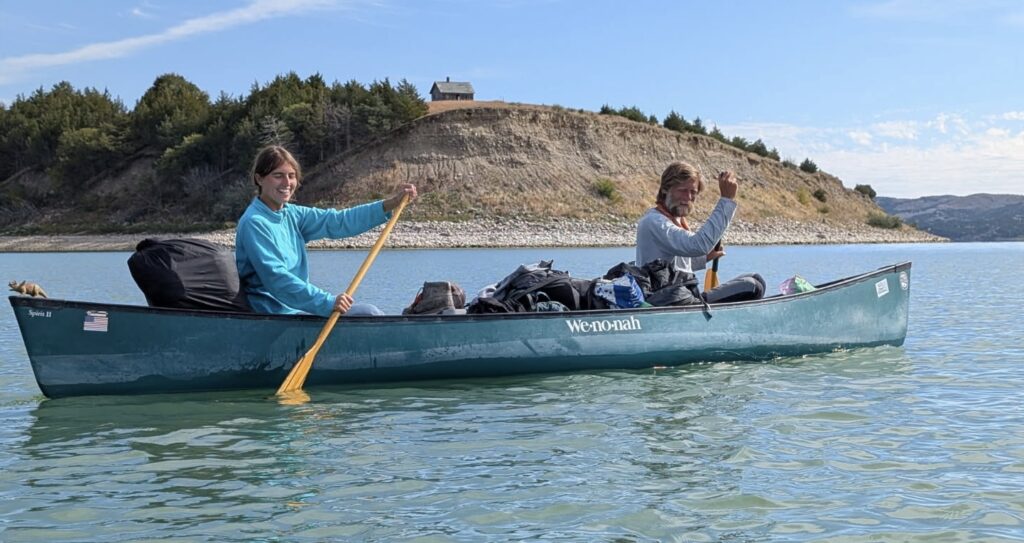Nat (left) and Mikey. Still a long way to paddle.
## **What Could Go Wrong?**
Nat is Natalia. Mikey is Michael. They are a couple in early mid-life. They are schoolteachers in England. They flew to Denver (cheapest flight to USA heartland). Then they hitchhiked to Bozeman, Montana. The fact that they survived that Kerouacian journey is remarkable in itself. They bought a canoe with the help of a local expert. They bought rice and stuff. They put in on the Jefferson River at Three Forks. On day two, they capsized for the first and only time.
I had the opportunity to interview Nat and Mikey a couple of weeks ago when they were holed up north of Pierre, South Dakota, stymied by high winds on giant Lake Oahe, one of the colossal mainstem reservoirs on the Missouri. They were upbeat. They showed no indication of losing heart or giving up. They seem to be having the time of their lives. Several of our podcast listeners have chided me for calling them “idiots” and “morons” on the podcast, but I was only quoting them!
I heard from them a few nights ago (October 22). They had made it to Sioux City. This was in itself a tremendous achievement. To get there, they had to float their way across the great Missouri reservoirs: Fort Peck Lake (134 miles), Lake Sakakawea (178 miles), Lake Oahe (231 miles), Lake Sharpe (80 miles), Lake Francis Case (107 miles), and Lewis and Clark Lake (25 miles). More than half of their journey so far has been a lake expedition, not a river float.
When they checked in this week, they were staying in some kind of warehouse provided for them by a local Samaritan in Sioux City. They have been helped all along the way — portaging around dams, meals delivered, errands run, trips to the nearest village, water shoes replaced — by perfect strangers. This speaks well of America. It is true, of course, that Americans are suckers for a fine British accent. Nat and Mikey are young, handsome, well-spoken, and above all, English. Crikey!
It’s now late October. I had asked them to text me after their first really cold night. Since then, we’ve had a fair number of cold nights in North Dakota and very high winds. The cottonwood leaves have grayed out and fallen, and I see frost on my windshield when I run errands in the morning. I have thought about Nat and Mikey often these last few weeks and worried about them. I want them to succeed. I do want America and the mighty Missouri to test them, of course, but despite the arrival of chilly and drizzly fall weather on the northern plains, no “oh my God!” text has come my way. They have the right stuff.
When they texted me a few days ago, they were off on a shopping spree in Sioux City. They needed a new tent (the winds had played havoc with their tent poles), a new stove (gunked up with river sand), and a new sleeping pad.
There is good news and there is a fair amount of bad news. Good news first: They are out from the last of the big dams and reservoirs on the Missouri. From Sioux City on down to St. Louis, the river flows more or less like a river, if you discount the levees and jetties that the Corps of Engineers constructs (and repairs) to prevent flooding and keep a navigation channel open from St. Louis to Sioux City. They no longer have to paddle endlessly on reservoir slack water, on man-made lakes that can get a kind of Great Lakes effect from wind and high waves.
The bad news: Winter is coming. They are moving south at about 20-25 miles per day, but when true winter comes, there will be a fair quantity of misery. I know. I have done some winter camping, and (for me) that raises some existential questions along the line of “not enough sense to come in out of the rain.” I have serious doubts that they can float the lower Missouri and the Mississippi in an American winter. They are really smart and savvy individuals, Nat and Mikey, but I fear that, as denizens of England (where the temperature rarely dips below freezing), they don’t yet know what an American winter is like.
More bad news. The Mississippi River is not for the faint of heart. To put it lightly. It is massive, wide, wild, capricious, dangerous, and full of barge traffic. Remember that Huck and Jim were nearly killed when their raft was unceremoniously run over by a steamboat (Chapter 12). I’d be anxious plying the Mississippi in a canoe. Why? The Mississippi River basin covers 1.2 million square miles, an area larger than India. At its mouth in Louisiana, the Mississippi discharges an average of 593,000 cubic feet of water per second. It carries approximately 400 million tons of sediment to the Gulf of Mexico per year. In some places, the lower river is 200 feet deep. More than 175 million tons of freight move up and down the river every year. A single towboat can push up to 50 barges (1,000 semitrailer trucks’ worth).
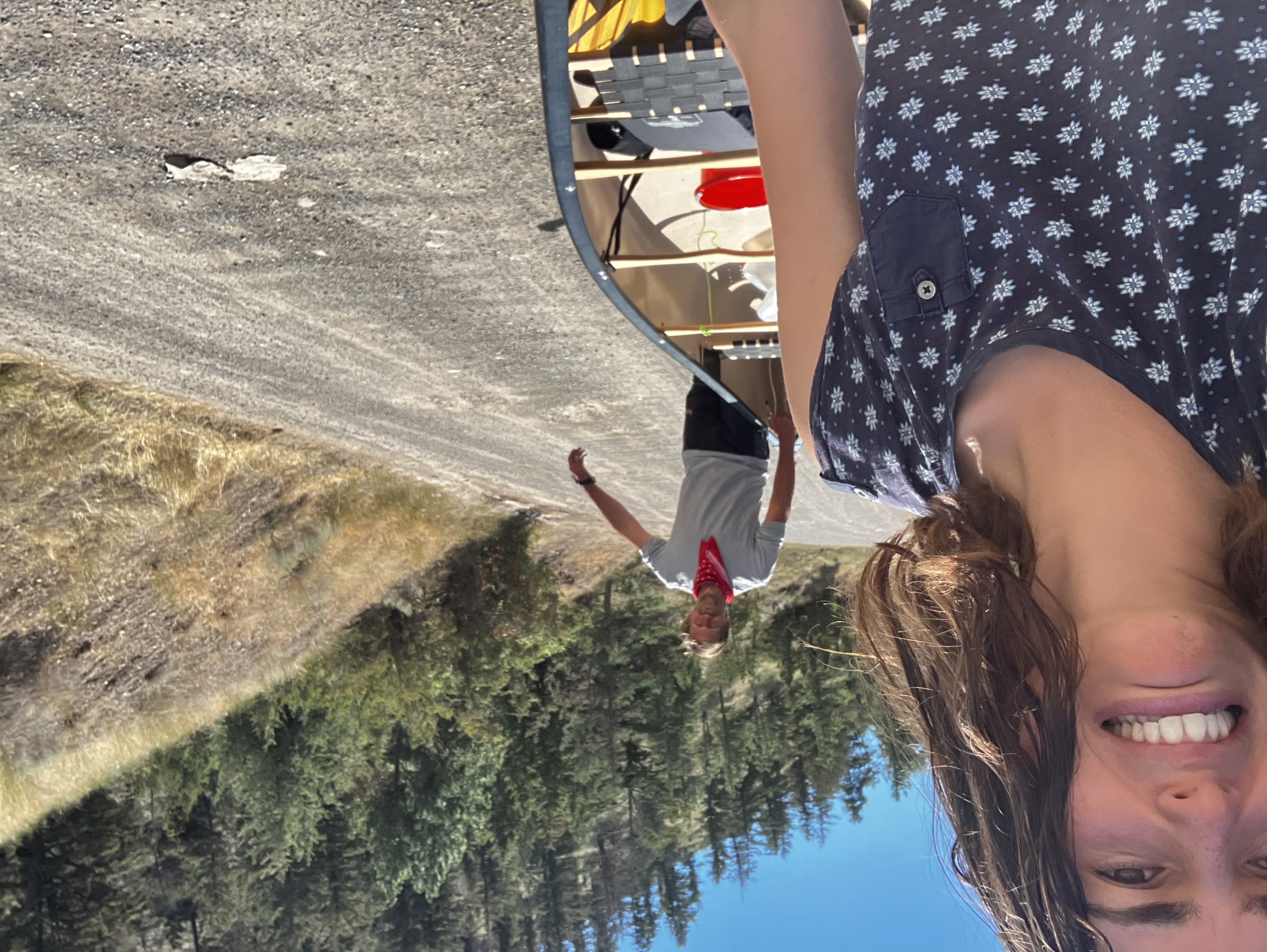
## **Checking In**
I do hope they make it. What a triumph that will be. Nat and Mikey are smart and funny, full of the best kind of naivete, willing to risk all for this once-in-a-lifetime adventure. They plan to get to New Orleans for Mardi Gras (February 17).
When they checked in, I asked them for a brief report. Here’s what they wrote:
“The vast majority of time has been exceptionally fun and generally we have found that any slump in fortune is generally presaging a total change in our circumstances. We had an incredible pizza in the shed of a man who we thought was going to kick us off his land but instead drove out of his way to help us. We have enjoyed the beauty and solitude of the lakes and, on the other end, enjoyed the conversation of the loads of Americans who have just come up and taken an interest in us — like Larry yesterday who was looking after Sioux City’s feral cat population and the 80-year-old woman who flagged us down in a restaurant and said ‘they’re lucky I didn’t have that idea when I was younger, I would have been right out there on the water.'”
So far, so good.
“The not so great stuff has included being shot at in South Dakota (not properly, just to scare us which it did), our tent pole breaking before a big wind storm, getting soaked to the skin in Springfield \[South Dakota\] (a man let us warm up in his car) and having absolutely no control over the canoe because the waves were so strong on Lake Francis Case which, despite only lasting about three minutes, absolutely terrified us.”
Shot at! Welcome to America. That wouldn’t happen on the Thames.
So, off they go again, with spanking new equipment. The Missouri River is astonishingly beautiful below Sioux City. It braids out, flows like one of the world’s great rivers, leaves the treeless plains country and enters midwestern forests and prairies. There are more riverside villages, towns, and even cities, should they need a break, and their confidence is growing as they ply the river like voyageurs of the heroic era of North American history.
I try to imagine what their lives will be like when they return to Great Britain sometime in 2026. Re-entry can be a challenge. Meanwhile, I salute them for their amazing spirit. As they check in downriver, I’ll provide more updates. You can follow their adventures and a map of their current location on their [blog](https://natandmikey.wordpress.com/?fbclid=IwY2xjawNqHnhleHRuA2FlbQIxMABicmlkETFHcGs2b0F6ajFhU0VlcTBJAR5fZr2EDG8c3t68Goyhk5JQHK2oL2jcF68qq_cBiQGiPEoOK2PYXWpYOrWHjg_aem_5Ox2HcNurtsVL29ji0msKA).
Roll on, Nat & Mikey. Roll on!
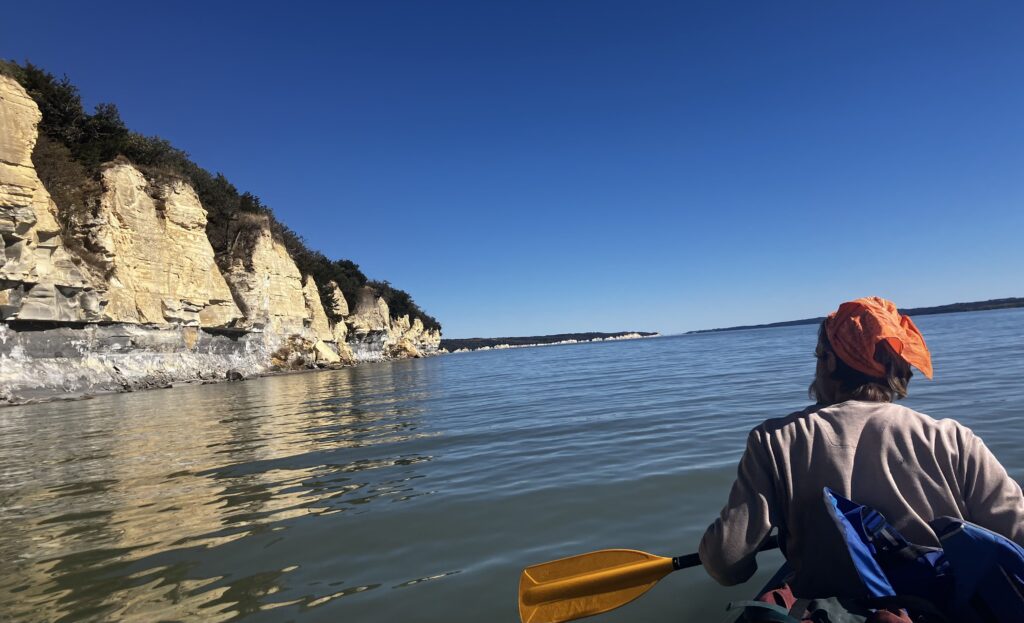
---
[Pennsylvania](https://ltamerica.org/tag/pennsylvania/ "1 topics")[Utah](https://ltamerica.org/tag/utah/ "11 topics")[Podcast](https://ltamerica.org/tag/podcast/ "1 topics")[South Carolina](https://ltamerica.org/tag/south-carolina/ "1 topics")[William Shirer](https://ltamerica.org/tag/william-shirer/ "1 topics")[Walden](https://ltamerica.org/tag/walden/ "1 topics")[Poetry](https://ltamerica.org/tag/poetry/ "1 topics")[Virginia](https://ltamerica.org/tag/virginia/ "7 topics")[Ohio](https://ltamerica.org/tag/ohio/ "2 topics")[Texas](https://ltamerica.org/tag/texas/ "4 topics")[Republics](https://ltamerica.org/tag/republics/ "1 topics")[Water in the West](https://ltamerica.org/tag/water-in-the-west/ "24 topics")[Oregon](https://ltamerica.org/tag/oregon/ "4 topics")[Theodore Roosevelt](https://ltamerica.org/tag/theodore-roosevelt/ "16 topics")[Washington](https://ltamerica.org/tag/washington/ "2 topics")[Sports](https://ltamerica.org/tag/sports/ "2 topics")[Rivers](https://ltamerica.org/tag/rivers/ "3 topics")[north daktoa](https://ltamerica.org/tag/north-daktoa/ "0 topics")[paintings](https://ltamerica.org/tag/paintings/ "0 topics")[The Constitution](https://ltamerica.org/tag/the-constitution/ "1 topics")[Video](https://ltamerica.org/tag/video/ "51 topics")[Rome](https://ltamerica.org/tag/rome/ "1 topics")[Wyoming](https://ltamerica.org/tag/wyoming/ "4 topics")[U.S. Presidents](https://ltamerica.org/tag/u-s-presidents/ "71 topics")[Thomas Jefferson](https://ltamerica.org/tag/thomas-jefferson/ "34 topics")[New York](https://ltamerica.org/tag/new-york/ "8 topics")[New Mexico](https://ltamerica.org/tag/new-mexico/ "3 topics")[Steinbeck Travels](https://ltamerica.org/tag/steinbeck-travels/ "75 topics")[New England](https://ltamerica.org/tag/new-england/ "1 topics")[Road Trips](https://ltamerica.org/tag/road-trips/ "18 topics")[State Parks](https://ltamerica.org/tag/state-parks/ "2 topics")[Tennessee](https://ltamerica.org/tag/tennessee/ "1 topics")[Oppenheim](https://ltamerica.org/tag/oppenheim/ "0 topics")[Thoreau](https://ltamerica.org/tag/thoreau/ "5 topics")[North Dakota](https://ltamerica.org/tag/north-dakota/ "53 topics")[Reading](https://ltamerica.org/tag/reading/ "1 topics")[Wisconsin](https://ltamerica.org/tag/wisconsin/ "0 topics")[Republic](https://ltamerica.org/tag/republic/ "0 topics")[U.S. Constitution](https://ltamerica.org/tag/u-s-constitution/ "1 topics")[Travel](https://ltamerica.org/tag/travel/ "1 topics")[Vermont](https://ltamerica.org/tag/vermont/ "1 topics")[North Carolina](https://ltamerica.org/tag/north-carolina/ "3 topics")[South Dakota](https://ltamerica.org/tag/south-dakota/ "16 topics")[Oppenheimer](https://ltamerica.org/tag/oppenheimer/ "1 topics")[Space Exploration](https://ltamerica.org/tag/space-exploration/ "8 topics")
**Categories:** Dispatches from the Road
**Tags:** Lewis and Clark, North Dakota, South Dakota
---
### [The World of Error in a Galaxy of Facts](https://ltamerica.org/the-world-of-error-in-a-galaxy-of-facts/)
**Published:** October 28, 2025
**Author:** Clay Jenkinson
**Excerpt:** Clay ponders the “Truth Taser.” The best invention since the Veg-O-Matic?
**Content:**
## Clay ponders the “Truth Taser.” The best invention since the Veg-O-Matic?
“The Gadget,” the first nuclear bomb, a “plutonium implosion device”, detonated in Alamogordo, New Mexico, on July 16, 1945.
> **“Any man is liable to error; only a fool persists in it.”**
>
> **Cicero**
Too tired to read, too awake to sleep, I turned on PBS last night and found, to my delight, a documentary on how the Dallas and national media covered the first hours and days following the assassination of President John F. Kennedy on November 22, 1963. It’s a gripping and upsetting story. Nobody has ever really figured out just what happened that day in Dallas and how many shooters there were, if Oswald did not act alone. I have never been satisfied with the lone gunman narrative. When Oswald said he was a “patsy,” he was, I believe, telling the truth.
It is fascinating to observe, in the PBS documentary, the beginnings of a number of great careers. Bob Schieffer was working for the *Fort Worth Star-Telegram*. He was at the city desk when a woman called, asking for a ride to the newsroom. Schieffer informed her, with some snark, that the *Star-Telegram* did not operate a taxi service, but when she revealed that she was the mother of Lee Harvey Oswald, he jumped in his car, raced to her house, picked her up, and scored an amazing scoop.
And there is young Dan Rather, who was the first to announce the death of the president on national television. He was just a raw kid then, a second-tier novice local reporter, but when he saw the motorcade speed off to Parkland Hospital, he rushed to a Dallas TV station where he made contact with a switchboard operator, a surgeon, and a priest at Parkland. They confirmed that the president was dead. CBS New York fretted about going live with such an unconfirmed, momentous announcement, but they did it — and Dan Rather never looked back.
National crises create big journalistic careers. After 9/11, ask Ashleigh Banfield and Wolf Blitzer, among others.
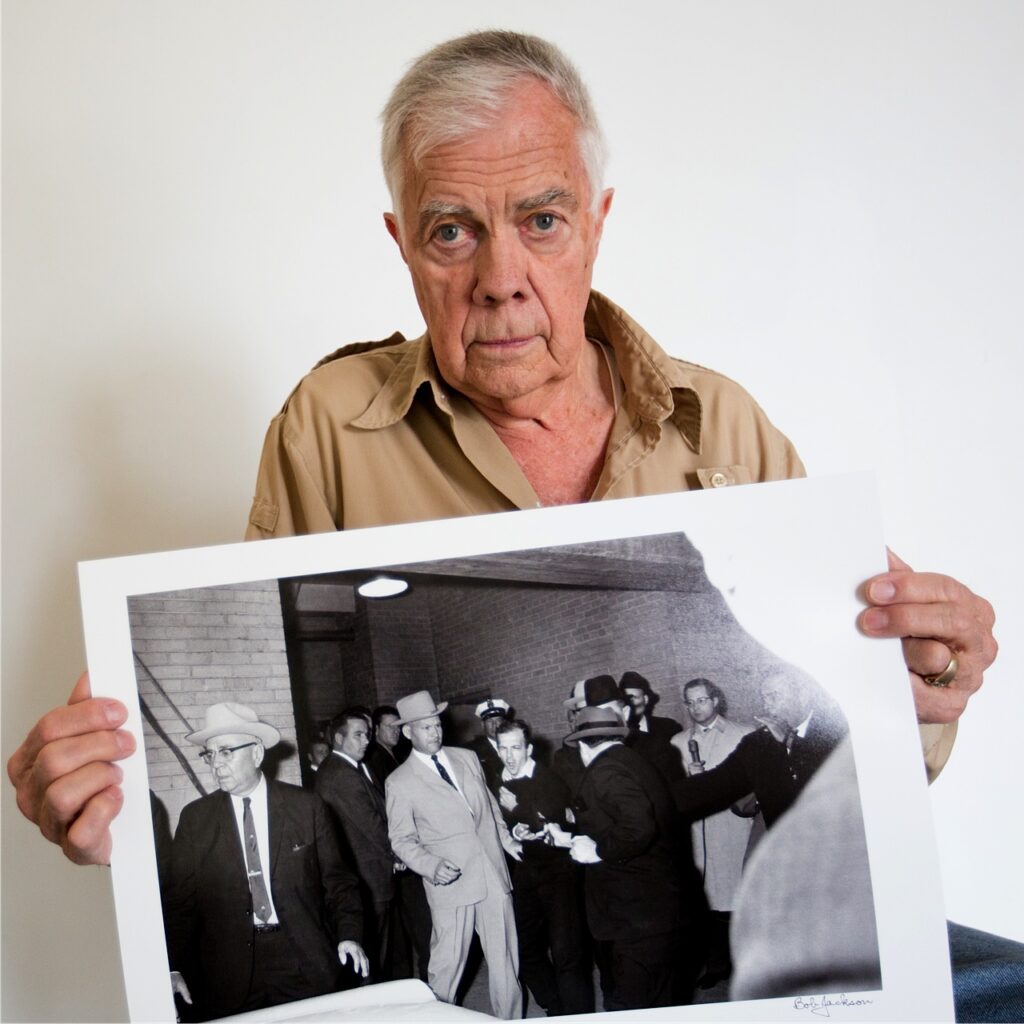Photographer Bob Jackson and his famous image of the shooting of Lee Harvey Oswald. (Photo Allison V. Smith)
A couple of weeks ago, I delivered a Zoom lecture on the ten greatest Pulitzer Prize-winning photographs for the Smithsonian Associates. One of them was Bob Jackson’s famous photograph of the moment Lee Harvey Oswald was shot at 11:21 a.m. on Sunday, November 24, in the basement of the Dallas Police Station. Someone in the Smithsonian Zoom audience asked in the chat if I was watching live at the moment Oswald was killed that Sunday morning. I answered honestly that I was not sure, but that I probably wasn’t. I explained that human memory is notoriously inaccurate in such situations (e.g., the moon landings, Woodstock, voting for or against Richard Nixon, etc.). I said that the shooting was indeed shown live (the first live murder on TV) that morning, on ABC, but that I probably didn’t see it until later in the day. We were a CBS family. It’s not even clear that we watched the coverage that morning, since this was expected to be a routine transfer of the prisoner from one facility to another. But within minutes, the footage was being rebroadcast by all three national networks.
Well, last night I learned, from an unimpeachable source, that it was not ABC but rather NBC that covered the incident live. I blushed in my own living room. I probably knew that at some point in the past (I hosted a public humanities symposium on JFK several years ago), but more recently, I erroneously got it into my head that it was ABC. Harmless error, but one should always try to get it right.
So much of what one says in a hectic life is based on a neurological retrieval system that is far from reliable. If one had to fact-check everything that comes out of one’s mouth, there would be a great deal of silence in the land. My memory for facts such as these is good (I’m usually amazed at what I can dredge out of the recesses of my noggin), but very far from infallible. And growing older doesn’t do mental acuity any favors.
## **Smart Alecks**
A few days ago, I gave a lecture in Medora, North Dakota, for the Smithsonian on Theodore Roosevelt and the Dakota Badlands. Approximately 40 senior citizens from all over the country made the long journey to North Dakota to see the Little Missouri River Valley and the three units of Theodore Roosevelt National Park (TRNP). In providing a brief history of TRNP’s origins, I mentioned that President Harry S. Truman vetoed the enabling legislation in 1946 because he did not believe the Little Missouri River badlands were of sufficient scenic value to justify national park designation. Afterwards, one of the guests of the Smithsonian — they are nothing if not confident — took me aside and assured me that Truman’s reason was not the suitability of the badlands for national park status, but because the original proposal did not include either the Maltese Cross Ranch (TR’s first ranch investment, 1883) or the Elkhorn Ranch, which he established as his headquarters in 1884-85. I said I was pretty sure the main reason was a perceived lack of scenic majesty. The man who had pulled me aside assured me that Truman’s veto was primarily because the two proposed units of the park did not include either of TR’s badlands ranches.
We left it at that. Since I got home, I have puzzled over this. I might well be wrong, of course, so I looked up Truman’s veto message online. If I were bad, I’d be really embarrassed because I have lectured on this issue many times and always said the following:
A: President Truman vetoed the legislation primarily because he felt, and many at the National Park Service had long felt, that the North Dakota badlands were not magnificent or distinctive enough to deserve national park designation.
B: When the enabling legislation was amended to include the Elkhorn Ranch site, Truman signed it into law in 1947 as Theodore Roosevelt National Memorial Park. So there is some validity to the idea that including TR’s northern ranch made a difference.
C: Even then, the president insisted that it be called a national memorial park, something a tier below the status of Yosemite, Glacier, or Yellowstone.
D: It wasn’t until 1978 that the Theodore Roosevelt National Memorial Park graduated to full status as Theodore Roosevelt National Park.
So I googled up Truman’s 475-word veto message. Here are the pertinent bits: “I HAVE WITHHELD my approval from H.R. 4435 … The area that would be established by this bill as the Theodore Roosevelt National Park does not possess those outstanding natural features or scenic qualities that would justify its establishment as a national park. … and has no direct historical association with Theodore Roosevelt.” And: “The area is largely of a badlands character, the formations being rounded, mostly dark red in color, and interspersed with grass-covered flats and plateaus. It is not of national park caliber. … Existing or authorized national parks contain or relate to areas that possess scenic, scientific, or historic features of outstanding national significance. The same high standards should be maintained whenever national parks are established in the future. I feel strongly, therefore, that to confer national park status upon the area described in H.R. 4435 would be an unwise departure from sound policy. If a national park is to be established in honor of Theodore Roosevelt, it should more fully measure up to the standards developed and maintained in the past for national parks.”
You do the math. We may feel that Truman was wrong in 1946, but it is important to face facts. Thanks to the digitization of culture (and the internet), it is now possible to pursue the truth as doggedly as Theodore Roosevelt did when he sought his first buffalo in those very badlands in 1883.
## **To Err Is Human, To Correct Divine**
It was the Roman republican Cicero (106-43 BCE) who said, “any man is liable to error; only a fool persists in it.”
Last night I performed as my favorite Chautauqua character, J. Robert Oppenheimer, in Pueblo, Colorado. In telling the story of the first atomic test at the Trinity site at Alamogordo, I blurted out that this was a uranium-235 gun mechanism device. A couple of minutes later, when I was discussing events that occurred long after the Trinity test, it dawned on me that it was actually a plutonium implosion device (I knew that! and have said so several hundred times!), but now it was too late, and I just let it pass. Harmless error? I didn’t need to look it up this morning to know that I had misspoken, but I was ashamed to make such a rookie mistake. Such is life.
Dr. Johnson (1709-1784) knew something about the fragility of the human mind. He wrote, “As all error is meanness, it is incumbent on every man who consults his own dignity, to retract it as soon as he discovers it.” “Meanness,” then meant “lack of evidence,” or “lack of true discipline.”
Dignity, pah!!

Getting things right — being strictly accurate — is always important. It is important in casual conversation, more important in public presentations, and exceedingly important in published writing. I wish there were a little harmless taser button we could wear — like a diabetes monitor — that would give me a teeny little shock when I was imprecise, a bigger one when I was in error, and a very big one when I make mistakes in public (oral or written). Of course, I would mostly be on the floor flopping around!
Thomas Jefferson wrote, on several occasions, “I think it is Montaigne who has said that ignorance is the softest pillow on which a man can rest his head.” I have always loved that statement, but until now I have never looked it up in Montaigne (1533-1592). I know the *Essais* of Michel Eyquem de Montaigne well (in my current downsizing, I have found five complete editions). Still, before the internet, it would have taken some mighty labor to find that lone sentence in his essays (1,392 pages in the Everyman Library edition, approximately 13,000 sentences and 327,000 words). I have even wondered, from time to time, whether Jefferson had it right. Silly me. It is never a good idea to doubt Jefferson’s scholarly accuracy. So I googled it and found it in his long essay on “Presumption.” Here it is: “L’ignorance est le plus doux oreiller sur lequel un homme puisse reposer sa tête,” or “I do not pose as a man of letters, and in that I am less presumptuous than in anything else. Ignorance is the softest pillow on which a man can rest his head.” Go, Jefferson, go!
We live at a time when the average person has at their fingertips the tools to look up almost everything, get it right, and hunt down facts, quotations, and context on nearly any subject. One has to know where to look, of course, and how to sort truth from all the dross out there, but being accurate is easier now than at any previous moment in the history of civilization.
And yet, you see where we are. There is a world of difference between unintended error (uranium 235) and deliberate error (largest crowd at any inauguration). The *Washington Post* counted 30,573 lies or misleading claims in the public discourse of President Trump in his first term. We now live in a universe of “alternative facts,” and political fact checkers are busier and more harried than air traffic controllers.
Mr. Jefferson also wrote, “Ignorance is preferable to error, and he is less remote from the truth who believes nothing than he who believes what is wrong.”
My Truth Taser idea (patent pending!) would be the best invention since the Ronco Veg-O-Matic. I’d wear one every day, and I’d love to put one on every politician in the country as they give speeches to their constituents, speak on the floor of Congress, or conduct news conferences. It would be like listening to a mosquito zapper on a July night in Arkansas.
---
[Thoreau](https://ltamerica.org/tag/thoreau/ "5 topics")[Theodore Roosevelt](https://ltamerica.org/tag/theodore-roosevelt/ "16 topics")[Water in the West](https://ltamerica.org/tag/water-in-the-west/ "24 topics")[Republics](https://ltamerica.org/tag/republics/ "1 topics")[Utah](https://ltamerica.org/tag/utah/ "11 topics")[Pennsylvania](https://ltamerica.org/tag/pennsylvania/ "1 topics")[Sports](https://ltamerica.org/tag/sports/ "2 topics")[William Shirer](https://ltamerica.org/tag/william-shirer/ "1 topics")[U.S. Presidents](https://ltamerica.org/tag/u-s-presidents/ "71 topics")[Steinbeck Travels](https://ltamerica.org/tag/steinbeck-travels/ "75 topics")[New England](https://ltamerica.org/tag/new-england/ "1 topics")[Oppenheimer](https://ltamerica.org/tag/oppenheimer/ "1 topics")[Republic](https://ltamerica.org/tag/republic/ "0 topics")[South Carolina](https://ltamerica.org/tag/south-carolina/ "1 topics")[Oppenheim](https://ltamerica.org/tag/oppenheim/ "0 topics")[Wisconsin](https://ltamerica.org/tag/wisconsin/ "0 topics")[Rome](https://ltamerica.org/tag/rome/ "1 topics")[Podcast](https://ltamerica.org/tag/podcast/ "1 topics")[North Carolina](https://ltamerica.org/tag/north-carolina/ "3 topics")[Ohio](https://ltamerica.org/tag/ohio/ "2 topics")[Space Exploration](https://ltamerica.org/tag/space-exploration/ "8 topics")[Texas](https://ltamerica.org/tag/texas/ "4 topics")[U.S. Constitution](https://ltamerica.org/tag/u-s-constitution/ "1 topics")[Wyoming](https://ltamerica.org/tag/wyoming/ "4 topics")[Virginia](https://ltamerica.org/tag/virginia/ "7 topics")[Reading](https://ltamerica.org/tag/reading/ "1 topics")[Travel](https://ltamerica.org/tag/travel/ "1 topics")[paintings](https://ltamerica.org/tag/paintings/ "0 topics")[Washington](https://ltamerica.org/tag/washington/ "2 topics")[Walden](https://ltamerica.org/tag/walden/ "1 topics")[New York](https://ltamerica.org/tag/new-york/ "8 topics")[Tennessee](https://ltamerica.org/tag/tennessee/ "1 topics")[north daktoa](https://ltamerica.org/tag/north-daktoa/ "0 topics")[New Mexico](https://ltamerica.org/tag/new-mexico/ "3 topics")[South Dakota](https://ltamerica.org/tag/south-dakota/ "16 topics")[Poetry](https://ltamerica.org/tag/poetry/ "1 topics")[State Parks](https://ltamerica.org/tag/state-parks/ "2 topics")[North Dakota](https://ltamerica.org/tag/north-dakota/ "53 topics")[Oregon](https://ltamerica.org/tag/oregon/ "4 topics")[The Constitution](https://ltamerica.org/tag/the-constitution/ "1 topics")[Vermont](https://ltamerica.org/tag/vermont/ "1 topics")[Road Trips](https://ltamerica.org/tag/road-trips/ "18 topics")[Thomas Jefferson](https://ltamerica.org/tag/thomas-jefferson/ "34 topics")[Rivers](https://ltamerica.org/tag/rivers/ "3 topics")[Video](https://ltamerica.org/tag/video/ "51 topics")
**Categories:** Features
**Tags:** Books, Humanities, U.S. Presidents
---
### [Visiting Meriwether Lewis’ Grave on the Natchez — The End of the Trail](https://ltamerica.org/visiting-meriwether-lewis-grave-on-the-natchez-the-end-of-the-trail/)
**Published:** October 20, 2025
**Author:** Clay Jenkinson
**Excerpt:** Completing a year following the Lewis and Clark Trail, Clay visits the lonely gravesite where the 35-year-old Meriwether Lewis is buried.
**Content:**
## Completing a year following the Lewis and Clark Trail, Clay visits the lonely gravesite where the 35-year-old Meriwether Lewis is buried.
The Meriwether Lewis monument commemorates the gravesite of the co-captain of the Lewis and Clark Expedition along the Natchez Trace Parkway in Tennessee. (Photo Clay Jenkinson)
The last stop on my 2025 national Lewis and Clark tour was a quiet and lonely gravesite west of Nashville. Meriwether Lewis was just 35 years old when he took his own life at a squalid inn on the Natchez Trace, about 80 miles from Nashville. He was on his way to Washington, DC, and probably Monticello. He was terribly distraught — barely hanging on, on the edge of mental and toxic collapse. The governor was under an official cloud. He probably reckoned it was more serious than it was, but it was plenty serious. The War Department was refusing to honor vouchers he had used to pay for public expenditures in Upper Louisiana. His own finances were broken. He seems to have felt he was in danger of being recalled by the Madison administration.
He was buried on this site 216 years ago, almost to the day. I was there on October 8, 2025; he died on October 11, 1809. It was a gray, gloomy day with the temperature no higher than 70 degrees. Lewis’ monument consists of a double pedestal topped with a 62-foot-high broken concrete shaft. It’s not clear whether there was any burial service, but the sense we get is that he was simply lowered into a grave without ceremony of any kind. He was not entirely alone at the time of his death. The inn’s proprietor, Priscilla Grinder, was only a few yards away with her children. The Grinders owned a few slaves. Lewis’ free Black servant Pernier was there, too, but not with the governor.
When Clark died in St. Louis in 1838, 20,000 people marched in the funeral parade.
I’ve now spent forty years off and on trying to make sense of Lewis’ suicide. It’s clear that his life came apart during the three years that followed his successful return to St. Louis on September 23, 1806, after 28 months in the remote wilderness, all the way to the Pacific Ocean and back.
Suicide is a deeply saddening mystery. Life is so precious and so brief — not even a nanosecond in geological time — that most people try to squeeze a little more time out of it even when they are terminally ill. The conventional wisdom is that if you can just get through the long night of the soul — whenever it comes, whatever it consists of — you can probably find a way to go on. When our lives reach a crisis point and it seems like there is no use going on (I’ve been there), some fundamental resilience usually gets us through. Still, in a small number of instances, the suffering individual chooses to give up the struggle. Lewis did not leave a suicide note. Even when people do, they seldom tell the whole story. Suicide has a destabilizing effect on those who survive, especially for those who knew the deceased, but often for a much wider community. In fact, you could argue that Lewis’ suicide has destabilized Lewis and Clark studies for the last forty years. Most people accept that it was suicide, not murder, but no matter what it was, Lewis’ early death casts a shadow over America’s first great road story.
I can understand, I think, why Jeffrey Epstein would hang himself — he was not a private individual in Indiana, but a household name, plausibly accused of crimes of such universal condemnation that he would be fortunate to survive a long prison term. It’s harder to understand why Robin Williams would kill himself, or Anthony Bourdain, or Ernest Hemingway, who won not only the Pulitzer Prize but the Nobel Prize for Literature. Mystery. The shame, even for someone as seemingly shameless as Epstein, must have been beyond excruciating, and Meriwether Lewis surely felt shame, repudiated by the government of the United States with President Madison’s explicit approval, bankrupted in the eyes of the 1,000 people of St. Louis.
Meriwether Lewis
Unless Lewis was somehow caught up in the border conspiracies — some combination of Aaron Burr’s treasonous attempts to carve off part of the West for his own advantage or James Wilkinson’s machinations as a double agent in the employ of Spain at the same time he was America’s chief military officer in the West — the worst that can be said of Lewis is that he hadn’t written his book; his governorship was vexed; that as governor he had spent moneys (some considerable) not authorized by Congress or the War Department; and that he was maddeningly silent when it mattered. This alone should not have taken him over the line. Still, because Lewis was also ill — from malaria, alcohol poisoning, and probably opioids in the form of laudanum — he apparently did not have enough mental stamina to soldier through the crisis. He saw it somehow as an existential crisis.
Meriwether Lewis led one of the most successful exploration missions in history and brought all but one of his men back alive (and the one died of natural causes). He had made important discoveries. He was the first white person to describe 122 animal species, including the pronghorn antelope, the bighorn sheep, the mule deer, the black-tailed prairie dog, and the grizzly bear; and 178 plant species. When the switch was on, he was unquestionably the most interesting writer of all the journal keepers, including his good friend William Clark. He had finessed his way through several serious crises along the trail. Through brilliant planning and the recruitment of an outstanding crew, he had accomplished everything Jefferson had asked him to accomplish.
All of that was clouded in August, September, and early October 1809.
***A National Park Service video on the last days of Meriwether Lewis.`***
We don’t know why Lewis killed himself. We don’t 100% know that he did, though the evidence seems clear enough. What we do know is that his life was snuffed out when he was a very young man. We know, too, that he died before the work of the Lewis and Clark expedition was finished. Lewis never published even volume one of his projected three-volume report on the great journey. Embedded in what passes as the journals of the Lewis and Clark Expedition are some remarkable fragments of what he would have written had he managed to survive and persevere. Those book-ready passages are easily discernible in the mass of unpolished journals, but they are not more than tantalizing fragments. We are forced to reconstruct the journey and construct a master narrative out of second-rate materials. No fair-minded person believes that Clark’s more steady journal work is a fully satisfying substitution for what Lewis would have written had he lived. Clark’s pragmatic, unpretentious, straightforward journal entries are prosaic. How often does one find a passage in Clark that captures the sense of wonder and the sense of discovery that make the Lewis and Clark story magical?
I have no desire to judge Lewis for taking his life. We weren’t there. We surely don’t know the whole story. Try as we might, we cannot get into his mind. We have only a limited understanding of his demons. Long ago, when I was a student at Oxford University, I read extensively about suicide because my poet John Donne announced, “I haue often such a sickly inclination. And . . . whensoeuer my affliction assayles me, me thinks I haue the keyes of my prison in myne owne hand, and no remedy presents it selfe so soone to my heart, as mine owne sword” \[sic throughout\]. And in 1608 Donne wrote the first sustained defense of suicide in Western civilization. In doing so, he attempted to refute or at least destabilize St. Augustine’s definitive Christian condemnation of suicide in the massively influential *City of God* (ca. 425 CE). Donne’s view in *Biathanatos* was that our duty is charity, not judgment.
Meriwether Lewis at work on his journals. The renowned explorer was frustratingly inconsistent in keeping an ongoing record of his historic journey across the continent. (Illustration created by Clay Jenkinson using the AI tool Chat GPT)
I don’t judge Lewis for taking his life, but I do judge him for leaving us in the lurch. He owed it to Jefferson, to the United States, to the learned world, to the Enlightenment, to write up his findings. We can see in the fragments he left us (leaving Fort Mandan on April 7, 1805; first sighting the Rocky Mountains on May 26, 1805; bestriding the source creek of the “mighty and heretofore deemed endless Missouri” River \[August 12, 1805\]), what he would have produced had he persevered. His book would have immediately been deemed a masterpiece of exploration literature. His reputation would be dramatically better than it is, though it is already quite high, and he would be regarded as the near-equal of John James Audubon in the annals of natural science.
I sat for a long time alone at the grave.
I thought about Lewis’ last desperate night. We don’t know everything we want to know about just what unfolded as he approached Grinder’s Stand, took his quarters, picked at his dinner, drank a little whiskey, mumbled his deep frustrations, and soaked in his deeply hurt pride. The gist of what he seems to have been saying that night, if Priscilla Grinder is a reliable source, is that it would be better to take his own life than to let his enemies — by which he seems chiefly to have meant the bureaucrats of James Madison’s War Department — do it for him. A virulent streak of malaria, the kind of bitterness that actually embitters, intoxication or perhaps delirium tremens, perhaps the opioid poisoning of laudanum, a cosmic sense of aloneness. The only people who might have helped him make it through the night were absent: Clark, his mother Lucy, perhaps his emotionally detached mentor Jefferson, his other best friend Mahlon Dickerson (back in Philadelphia), and his Newfoundland dog Seaman. Lewis knew he was on a collision course with Jefferson at Monticello (where’s the book?) and Madison’s bureaucrats (vouchers denied, perhaps a formal recall, certainly a stern rebuke). He died of a gunshot wound to the head and another to the abdomen.
As I sat musing all these things, a few people wandered over to the grave shaft from the loop road: several on motorcycles, a couple of families, a few older couples who were killing time while waiting for a giant street fair flea market a few miles away, but not open for business until tomorrow. Incognito, I asked each cluster why they were there and what they knew about Lewis and Clark. Several individuals assured me that it had to be murder because how does Captain Meriwether Lewis shoot himself in the head and not die? But nobody was in an argumentative mood. I certainly wasn’t, and I was glad to listen to this little self-selected slice of America.
At some point, I had to walk back to my car and drive to Birmingham, where I had a dinner engagement. I was sorry to leave. I’m sad to leave this remarkable year of travel and adventure, of hard reading and good conversations, behind. I’m sorry it ended this way for Lewis, who had so many talents and such an amazing sense of mission and purpose.
If it is at least possible that Lewis was murdered on October 11, 1809, this much seems certain to me: he was in a suicidal state, and there was nobody there to help him make it through the night.
---
[Rivers](https://ltamerica.org/tag/rivers/ "3 topics")[Road Trips](https://ltamerica.org/tag/road-trips/ "18 topics")[New England](https://ltamerica.org/tag/new-england/ "1 topics")[Oregon](https://ltamerica.org/tag/oregon/ "4 topics")[South Dakota](https://ltamerica.org/tag/south-dakota/ "16 topics")[Rome](https://ltamerica.org/tag/rome/ "1 topics")[Republics](https://ltamerica.org/tag/republics/ "1 topics")[Reading](https://ltamerica.org/tag/reading/ "1 topics")[Vermont](https://ltamerica.org/tag/vermont/ "1 topics")[Thoreau](https://ltamerica.org/tag/thoreau/ "5 topics")[North Dakota](https://ltamerica.org/tag/north-dakota/ "53 topics")[Theodore Roosevelt](https://ltamerica.org/tag/theodore-roosevelt/ "16 topics")[Republic](https://ltamerica.org/tag/republic/ "0 topics")[Walden](https://ltamerica.org/tag/walden/ "1 topics")[paintings](https://ltamerica.org/tag/paintings/ "0 topics")[New York](https://ltamerica.org/tag/new-york/ "8 topics")[Tennessee](https://ltamerica.org/tag/tennessee/ "1 topics")[Wyoming](https://ltamerica.org/tag/wyoming/ "4 topics")[Utah](https://ltamerica.org/tag/utah/ "11 topics")[The Constitution](https://ltamerica.org/tag/the-constitution/ "1 topics")[Wisconsin](https://ltamerica.org/tag/wisconsin/ "0 topics")[Water in the West](https://ltamerica.org/tag/water-in-the-west/ "24 topics")[Virginia](https://ltamerica.org/tag/virginia/ "7 topics")[Poetry](https://ltamerica.org/tag/poetry/ "1 topics")[Pennsylvania](https://ltamerica.org/tag/pennsylvania/ "1 topics")[Space Exploration](https://ltamerica.org/tag/space-exploration/ "8 topics")[New Mexico](https://ltamerica.org/tag/new-mexico/ "3 topics")[Oppenheim](https://ltamerica.org/tag/oppenheim/ "0 topics")[Ohio](https://ltamerica.org/tag/ohio/ "2 topics")[U.S. Presidents](https://ltamerica.org/tag/u-s-presidents/ "71 topics")[north daktoa](https://ltamerica.org/tag/north-daktoa/ "0 topics")[State Parks](https://ltamerica.org/tag/state-parks/ "2 topics")[Podcast](https://ltamerica.org/tag/podcast/ "1 topics")[Thomas Jefferson](https://ltamerica.org/tag/thomas-jefferson/ "34 topics")[Video](https://ltamerica.org/tag/video/ "51 topics")[Steinbeck Travels](https://ltamerica.org/tag/steinbeck-travels/ "75 topics")[Washington](https://ltamerica.org/tag/washington/ "2 topics")[South Carolina](https://ltamerica.org/tag/south-carolina/ "1 topics")[Texas](https://ltamerica.org/tag/texas/ "4 topics")[U.S. Constitution](https://ltamerica.org/tag/u-s-constitution/ "1 topics")[Travel](https://ltamerica.org/tag/travel/ "1 topics")[Oppenheimer](https://ltamerica.org/tag/oppenheimer/ "1 topics")[William Shirer](https://ltamerica.org/tag/william-shirer/ "1 topics")[North Carolina](https://ltamerica.org/tag/north-carolina/ "3 topics")[Sports](https://ltamerica.org/tag/sports/ "2 topics")
**Categories:** Features
**Tags:** Lewis and Clark, Tennessee, U.S. Presidents
---
### [My Adventures in Downsizing](https://ltamerica.org/my-adventures-in-downsizing/)
**Published:** October 20, 2025
**Author:** Clay Jenkinson
**Excerpt:** After spending five or six decades buying books, an enormous number of books, I have begun to downsize.
**Content:**
## After spending five or six decades buying books, an **enormous** number of books, I have begun to downsize.
Inspired by Thoreau and the inevitability of time, Clay undertakes sorting through a six-decade collection of thousands of books.
> **“I had three pieces of limestone on my desk, but I was terrified to find that they required to be dusted daily…”**
>
> **Henry David Thoreau**
I’m downsizing for four reasons. First, I’m in the seventh or eighth inning of my life. I have only one child, a young scholar and intellectual. She has made it clear that she will only be able to take a few dozen of my books, perhaps 100, but the vast majority of them will have to be disposed of in some other way. She does not want me to die one of these days (years, decades?) and leave her to handle all of that mass. I agree.
Second, I’m trying — admittedly very late in the game — to get organized. My house is so full of books, gadgets, clothes, file boxes, camera and audio-visual equipment, desks, shelves, framed posters, photographs, and art, and my three-car garage essentially a storage facility, that I cannot usually find what I am looking for this side of half an hour, sometimes half a day, and when I have given moderately due diligence to the search, I order a new copy of *Robinson Crusoe*, the poetry of Alexander Pope, Christopher Hitchens on the *Elgin Marbles*, etc.
From time to time I have attempted to bring order to my library, but when you begin such a quixotic quest you discover that every shelf in the house is full to the straining point with books, and there is no good way to transfer a book on Queen Elizabeth I’s spies to the right section (Renaissance), because the right section is full to bursting. My goal for the rest of 2025 is simple. Every book goes on a shelf, and the books are at the very least clustered together by subject. Today, for example, culling books from a neglected shelf, I found 14 books by Mark Twain. They were not shelved in the American literature section of my library, which means that in the last couple of years, I have ordered new copies of Twain’s books because I could not find the old. Help! So far, I’ve pulled about 2,500 books from my shelves, about 10%, and my house can breathe again. Me too.
Third, I’m a devotee of Henry David Thoreau. Perhaps that is enough said; Thoreau, after all, was our first great minimalist. Remember this anecdote? “I had three pieces of limestone on my desk, but I was terrified to find that they required to be dusted daily, when the furniture of my mind was all undusted still, and threw them out the window in disgust.” If Thoreau could spend an hour in my house looking around, he would leave in disgust, but not before telling me my soul is constricted, choked, even buried by the sheer quantity of stuff all around me. He’d say A: no wonder you are not really happy; and B: it’s amazing that you ever get anything done. Tone it down a little, please, Henry. I’m working at it.
Every year or two, I lead a retreat at a lodge west of Missoula, Montana, on Thoreau. There, I explore Thoreau’s concept of minimalism, extol his wisdom, make resolutions to downsize, and then, the minute I get back into internet space, order several of the books I have heard about during the retreat. This time I intend to get it right. I want to feel the clearing of my soul as I clear the clutter of my physical spaces. I can feel it already. And it is liberating.
Fourth, one of the saddest things about growing old is that the number of books still ahead of you is shrinking. You are not going to be able to read all the books you dreamed of reading when you were young — all the novels of the 19th century, a ten-volume history of the First World War, the complete works of Milton. Given that, it’s probably too late for *Gravity’s Rainbow* and a number of those “books of the moment” that have not held up particularly well. I don’t generally find much pleasure in having to puzzle and strain through a novel (think Cormac McCarthy, William Faulkner, e.g.). If I’m going to sweat, it’s for Joyce’s *Ulysses* every time. So I am making a mental pile of books I still want to read. It’s a long and somewhat embarrassing list.
“What? You have never read Stendhal’s *The Red and the Black*?!?” “What, you have never read …?” How odd is it that there are about 50 or maybe even 100 books that you need to have read before you flame out, and yet we continue to put them off? Shameful confession: I have begun but never finished *War and Peace*. And yet I have loved every page that I have read. In some moments, as I sit in my reading chair with a lamp my mother bought for me (almost my favorite gift ever from her) and a glass of wine, I can read thirty pages of *War and Peace* and feel what I actually regard as heaven. There is nothing like reading when we get into the Zone. If there is a heaven and I get to go, I do hope there is a stupendously satisfying library with the kind of mahogany reading rooms you only dream about now. And no late fees.
My point is that I hear the clock ticking, and my total remaining reading space is shrinking like the trash compactor that seems likely to crush Princess Leia, Luke, and Chewbacca in *Star Wars*. I’m serious. It fills me with deep melancholy when I let myself think about it.
All this makes my downsizing easier. If I can only read 30 books per year and I have … er, probably quite a few years left, then I’m going to keep *Crime and Punishment*, one of my favorite novels, *Middlemarch*, which my closest literary friend says is better than Dostoevsky’s best. Heresy. I’m going to keep Henry Fielding’s *Tom Jones* (which I have read a couple of times), but also *Madame Bovary*, which I have never read. But I am not going to keep a couple of John Grisham novels, the *Complete Works of Danielle Steele* (newly edited with an update), or a New Age book on how to interpret your dreams, or a five-volume history of the Mongol Empire.
So far, no blood on the floor. I have gotten up in the night a couple of times to rescue a book I too hastily put in a pile. This usually involves some comedy — tripping on books, treating a five-foot stack of books like a Jenga game, etc.
## **The Clock is Ticking**
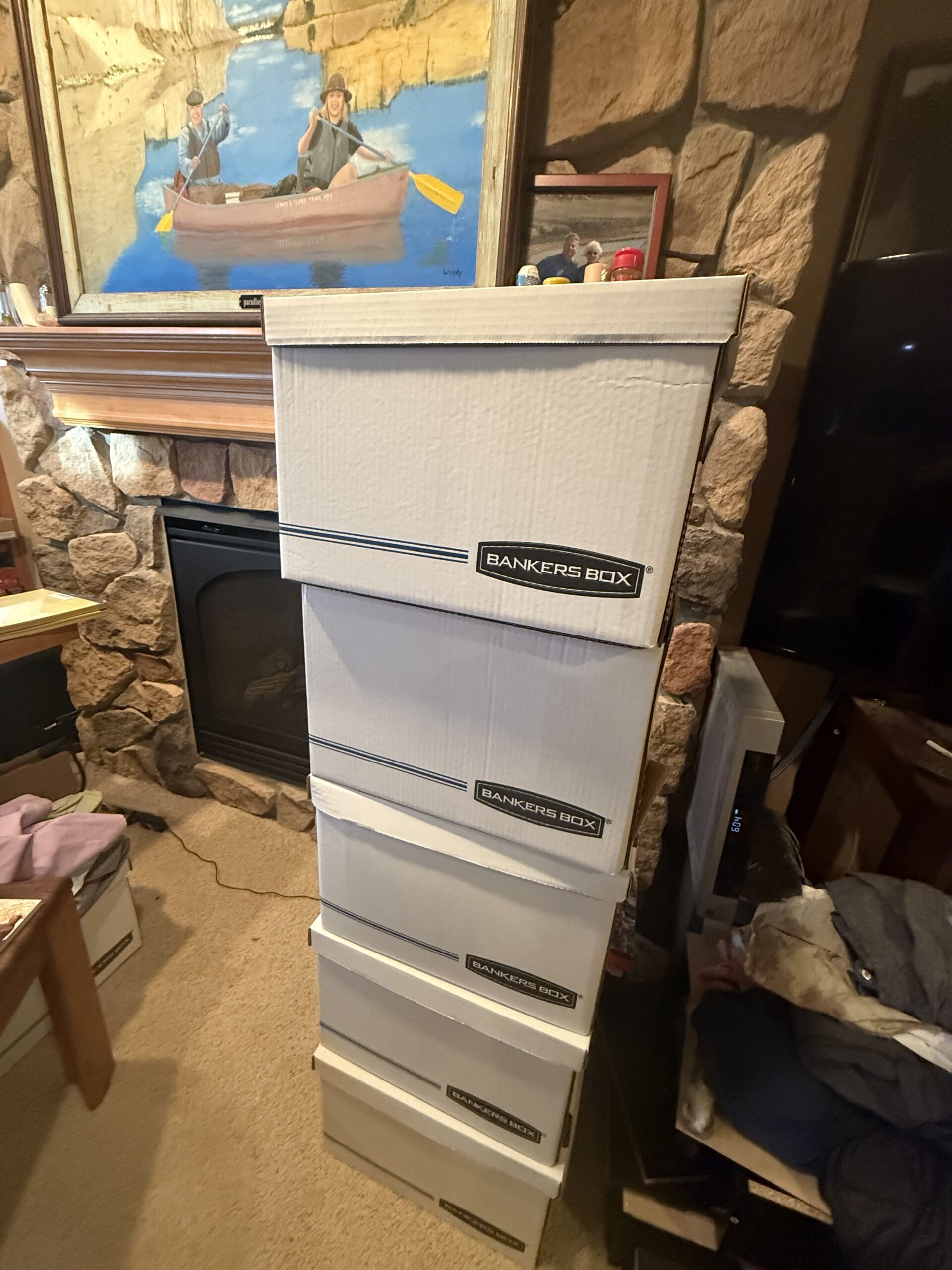Boxed up and ready for a new home. (Photo Clay Jenkinson)
So far, I have pulled about 2,000 books off my shelves. So far, it has been comparatively easy. I’m keeping all of English literature (except triplicates on up), most of my Jefferson library, most of my exploration and Lewis and Clark library, much of my space program library, much of my classics collection, my atomic bomb and Oppenheimer section, my special Charles Dickens shrine, etc. In these, there will be modest drawing down, but nothing severe — yet. But that day is coming. “Time’s winged chariot,” said Andrew Marvell, the 17-century poet.
Over the years, I’ve made a few very half-hearted attempts before to downsize and reorganize, but this time is different. I’ve already done (in a couple of weeks) more than I have ever done before by magnitudes. This is so serious that it sometimes scares me. I intend to see this through. It is already changing my life. Whatever was the red line, the taboo shield, the character armor, the life-in-denial in previous attempts to regroup, I have sashayed across that line without a moment of remorse or hesitation. In a very, very small way, it’s a rebirth.
## **Walmarting Ourselves to Death**
Let me raise one more point about this moment in my life, not because my life is interesting, but because I am inviting you to think about these questions in your own lives. Generally speaking (I am exempting you because you read for enlightenment), we Americans are suffocating our souls, our creativity, our principles, and our republic with a kind of runaway materialism that would stagger the mind of someone from Jupiter observing America in the twenty-first century. And I am the chief of sinners. I know we would be a better and less enraged people if we chose better and less rather than more and more and more. Thoreau’s experiment was in a cabin in the woods. Mine is to see what kind of liberation comes from careful but thorough downsizing. “And not, when I came to die, discover that I had not lived.”
I frequently recite Thoreau’s great passage in *Where I Lived, and What I Lived For*, “I went to the woods because I wished to live deliberately, to confront only the essential facts of life ….” If I were the person I most envision, I would be equal to that great paragraph, which says, “and not, when I came to die, discover I had not lived.” Probably we all feel that. It’s been haunting me. My reincarnationist friends have not convinced me that we get a second chance, so I want to make things right this time around, if I can.
It is also true that we are living in a deeply disturbing time. I don’t know what’s happening to America, but something unsettling is happening. Maybe it is yawning growing pains, but it feels more like a measurable decline. I don’t intend to turn away from all of that — we must not abdicate our desire to continue living in a republic — but I find in this serious downsizing and re-evaluating a sense that I can control some of the things happening in my life. I can’t contribute much to the healing of America, but I can craft my own life in the most enlightened way I can, given my limitations. I don’t intend to escape into what’s left of my library, though that does sound delicious. What if you could just read and take walks every day for the rest of your life? Or how about 300 days per year?
## **Where Will They Go?**
One of the reasons I can do this is that I have, through a good friend, found an institution that is willing to take delivery of my discarded books. There is a small college in south central North Dakota that is eager to have them. This means that they will not be tossed into the landfill or a few hundred sold by the pound at public library auctions. This means they will stay together. My books are not particularly valuable. I have no more than 100 books that have real value, and even those are at the low end of valuable books. Most of my books are paperbacks, trade books. I have the most ecumenical and best-selected library in North Dakota, and until now, the largest private library, but a serious book buyer going through my shelves would probably designate no more than 350 books as worth trying to sell individually. My biggest fear has been that I will die, and a month later, a giant container bin will be in my driveway and hired thugs will toss thousands of books unceremoniously into the bin. Knowing now that my beloved books will have a home gives me satisfaction and somehow “releases” my inhibition. This may be the most important consideration in my current campaign of book downsizing.
## **Conclusion**
Clay reads from his “bible” at the site of Thoreau’s famous cabin at Walden Pond outside of Concord, Massachusetts. (Photo Nolan Johnson)
At the end of *Walden*, Thoreau assures me that if I will advance confidently in the direction of my dreams and endeavor to live the life I have imagined, I will meet with success. In fact, he says that deliberate and disciplined effort will enable me to cross what he calls “an invisible line.” I think I have crossed that line with respect to downsizing. If I can find worthy ways to redistribute what I no longer need, I will have achieved something deeply satisfying.
Who knows if I will see this through or backslide? I am pretty confident that I will win the battle against stuff-glut, including book glut. Of course, that’s just the easy part. The rest is a spiritual journey, and all I can say is, we’ll see.
---
[Steinbeck Travels](https://ltamerica.org/tag/steinbeck-travels/ "75 topics")[Republics](https://ltamerica.org/tag/republics/ "1 topics")[Theodore Roosevelt](https://ltamerica.org/tag/theodore-roosevelt/ "16 topics")[Oppenheimer](https://ltamerica.org/tag/oppenheimer/ "1 topics")[Podcast](https://ltamerica.org/tag/podcast/ "1 topics")[Tennessee](https://ltamerica.org/tag/tennessee/ "1 topics")[New Mexico](https://ltamerica.org/tag/new-mexico/ "3 topics")[New England](https://ltamerica.org/tag/new-england/ "1 topics")[Virginia](https://ltamerica.org/tag/virginia/ "7 topics")[Road Trips](https://ltamerica.org/tag/road-trips/ "18 topics")[Rivers](https://ltamerica.org/tag/rivers/ "3 topics")[Pennsylvania](https://ltamerica.org/tag/pennsylvania/ "1 topics")[Thoreau](https://ltamerica.org/tag/thoreau/ "5 topics")[Space Exploration](https://ltamerica.org/tag/space-exploration/ "8 topics")[The Constitution](https://ltamerica.org/tag/the-constitution/ "1 topics")[William Shirer](https://ltamerica.org/tag/william-shirer/ "1 topics")[South Dakota](https://ltamerica.org/tag/south-dakota/ "16 topics")[U.S. Presidents](https://ltamerica.org/tag/u-s-presidents/ "71 topics")[Thomas Jefferson](https://ltamerica.org/tag/thomas-jefferson/ "34 topics")[State Parks](https://ltamerica.org/tag/state-parks/ "2 topics")[Video](https://ltamerica.org/tag/video/ "51 topics")[Vermont](https://ltamerica.org/tag/vermont/ "1 topics")[Utah](https://ltamerica.org/tag/utah/ "11 topics")[Rome](https://ltamerica.org/tag/rome/ "1 topics")[Oppenheim](https://ltamerica.org/tag/oppenheim/ "0 topics")[North Dakota](https://ltamerica.org/tag/north-dakota/ "53 topics")[Wisconsin](https://ltamerica.org/tag/wisconsin/ "0 topics")[Ohio](https://ltamerica.org/tag/ohio/ "2 topics")[Oregon](https://ltamerica.org/tag/oregon/ "4 topics")[Walden](https://ltamerica.org/tag/walden/ "1 topics")[Water in the West](https://ltamerica.org/tag/water-in-the-west/ "24 topics")[Travel](https://ltamerica.org/tag/travel/ "1 topics")[Reading](https://ltamerica.org/tag/reading/ "1 topics")[north daktoa](https://ltamerica.org/tag/north-daktoa/ "0 topics")[Washington](https://ltamerica.org/tag/washington/ "2 topics")[New York](https://ltamerica.org/tag/new-york/ "8 topics")[Republic](https://ltamerica.org/tag/republic/ "0 topics")[Wyoming](https://ltamerica.org/tag/wyoming/ "4 topics")[paintings](https://ltamerica.org/tag/paintings/ "0 topics")[U.S. Constitution](https://ltamerica.org/tag/u-s-constitution/ "1 topics")[North Carolina](https://ltamerica.org/tag/north-carolina/ "3 topics")[Sports](https://ltamerica.org/tag/sports/ "2 topics")[South Carolina](https://ltamerica.org/tag/south-carolina/ "1 topics")[Poetry](https://ltamerica.org/tag/poetry/ "1 topics")[Texas](https://ltamerica.org/tag/texas/ "4 topics")
**Categories:** Dispatches from the Road
**Tags:** Books, Humanities, North Dakota
---
### [Where Steinbeck Said Goodbye to His California Home — Video Dispatch](https://ltamerica.org/where-steinbeck-said-goodbye-to-his-california-home-video-dispatch/)
**Published:** October 9, 2025
**Author:** Editor
**Excerpt:** Clay and Russ Eagle recently visited Fremont Peak, which overlooks California’s Salinas Valley and Monterey Bay. It was an especially important spot for John Steinbeck and deeply tied to his youth. Russ reads a passage from Travels with Charley, where the famous author writes about his last visit to there.
**Content:**
## Clay and Russ Eagle recently visited Fremont Peak, which overlooks California’s Salinas Valley and Monterey Bay. It was an especially important spot for John Steinbeck and deeply tied to his youth. Russ reads a passage from *Travels with Charley,* where the famous author writes about his last visit there.
---
[U.S. Presidents](https://ltamerica.org/tag/u-s-presidents/ "71 topics")[Oppenheim](https://ltamerica.org/tag/oppenheim/ "0 topics")[The Constitution](https://ltamerica.org/tag/the-constitution/ "1 topics")[Thoreau](https://ltamerica.org/tag/thoreau/ "5 topics")[Video](https://ltamerica.org/tag/video/ "51 topics")[Virginia](https://ltamerica.org/tag/virginia/ "7 topics")[Sports](https://ltamerica.org/tag/sports/ "2 topics")[Space Exploration](https://ltamerica.org/tag/space-exploration/ "8 topics")[Oppenheimer](https://ltamerica.org/tag/oppenheimer/ "1 topics")[Pennsylvania](https://ltamerica.org/tag/pennsylvania/ "1 topics")[Republics](https://ltamerica.org/tag/republics/ "1 topics")[Vermont](https://ltamerica.org/tag/vermont/ "1 topics")[Texas](https://ltamerica.org/tag/texas/ "4 topics")[Water in the West](https://ltamerica.org/tag/water-in-the-west/ "24 topics")[Travel](https://ltamerica.org/tag/travel/ "1 topics")[Washington](https://ltamerica.org/tag/washington/ "2 topics")[Steinbeck Travels](https://ltamerica.org/tag/steinbeck-travels/ "75 topics")[William Shirer](https://ltamerica.org/tag/william-shirer/ "1 topics")[Poetry](https://ltamerica.org/tag/poetry/ "1 topics")[Podcast](https://ltamerica.org/tag/podcast/ "1 topics")[South Carolina](https://ltamerica.org/tag/south-carolina/ "1 topics")[Wisconsin](https://ltamerica.org/tag/wisconsin/ "0 topics")[Thomas Jefferson](https://ltamerica.org/tag/thomas-jefferson/ "34 topics")[New England](https://ltamerica.org/tag/new-england/ "1 topics")[U.S. Constitution](https://ltamerica.org/tag/u-s-constitution/ "1 topics")[Walden](https://ltamerica.org/tag/walden/ "1 topics")[Wyoming](https://ltamerica.org/tag/wyoming/ "4 topics")[State Parks](https://ltamerica.org/tag/state-parks/ "2 topics")[Ohio](https://ltamerica.org/tag/ohio/ "2 topics")[Reading](https://ltamerica.org/tag/reading/ "1 topics")[Rome](https://ltamerica.org/tag/rome/ "1 topics")[north daktoa](https://ltamerica.org/tag/north-daktoa/ "0 topics")[paintings](https://ltamerica.org/tag/paintings/ "0 topics")[North Dakota](https://ltamerica.org/tag/north-dakota/ "53 topics")[New York](https://ltamerica.org/tag/new-york/ "8 topics")[Theodore Roosevelt](https://ltamerica.org/tag/theodore-roosevelt/ "16 topics")[Tennessee](https://ltamerica.org/tag/tennessee/ "1 topics")[Rivers](https://ltamerica.org/tag/rivers/ "3 topics")[Road Trips](https://ltamerica.org/tag/road-trips/ "18 topics")[North Carolina](https://ltamerica.org/tag/north-carolina/ "3 topics")[Republic](https://ltamerica.org/tag/republic/ "0 topics")[Oregon](https://ltamerica.org/tag/oregon/ "4 topics")[New Mexico](https://ltamerica.org/tag/new-mexico/ "3 topics")[Utah](https://ltamerica.org/tag/utah/ "11 topics")[South Dakota](https://ltamerica.org/tag/south-dakota/ "16 topics")
**Categories:** Dispatches from the Road
**Tags:** Books, California, Humanities, John Steinbeck, Video
---
### [You Don't End up Here By Accident: Rediscovering Steinbeck's California Beneath a Lone Valley Oak.](https://ltamerica.org/you-dont-end-up-here-by-accident-rediscovering-steinbecks-california-beneath-a-lone-valley-oak/)
**Published:** October 13, 2025
**Author:** Russ Eagle
**Excerpt:** Inspired by an image of the famous author in an old poster, and after years of searching, Listening to America’s Russ Eagle, with the help of intrepid friends, discovers the remote spot in the hills near Salinas, California, that John Steinbeck, his dog Charley, and the truck camper, Rocinante, visited on their 1960 journey.
**Content:**
## Inspired by an image of the famous author in an old poster, and after years of searching, Listening to America’s Russ Eagle, with the help of intrepid friends, discovers the remote spot in the hills near Salinas, California, that John Steinbeck, his dog Charley, and the truck camper, Rocinanate, visited on their 1960 journey.
A rare photograph of John Steinbeck, his dog Charley, and the truck camper, Rocinante, taken in the hills near Salinas, California. The image is one of the few that exist from Steinbeck’s 1960 road trip that became the basis for Travels with Charley.
About thirty-five years ago, I acquired a print of a poster created to promote the 1991 Steinbeck Festival in Salinas. It wasn’t the typography or the design that caught my eye — it was the photograph. John Steinbeck sits on the shoulder of a dirt road with his poodle, Charley, at his side. Behind them rests [Rocinante](https://ltamerica.org/exclusive-inside-john-steinbecks-famous-travels-with-charley-truck-camper-rocinante/), the green pickup with the white camper that carried them across the country in 1960, the journey that became *Travels with Charley*.
Only a handful of photographs exist from that trip, and none that I’ve seen compare with this one. Steinbeck and Charley sit in the filtered light of an afternoon beneath a gnarled oak tree. The land slopes down below a rudimentary barbed wire fence and into rolling green hills scattered with valley oaks. The road curves away and disappears behind Steinbeck and Charley. I’ve had that poster framed and hanging in my basement now for more than three decades.
It was in early November that Steinbeck and Charley had rolled into Monterey County. He visited first with one of his sisters, [Esther](https://www.steinbecknow.com/2017/06/25/john-steinbeck-family-home-watsonville-california/), in Watsonville, before joining another, Beth, in the family cottage in Pacific Grove. That cottage had been the crucible of his early career — his parents let him live there rent-free from 1930 to 1936, years that turned him from an obscure writer into a national voice and leading literary commodity.
The Steinbeck family cottage in Pacific Grove, Ca.
During that 1960 visit, Steinbeck revisited many of the places that made him: the bars of Monterey, the dry brown hills above Salinas, the spiky granite crest of Fremont Peak. He repaired things around the cottage, argued politics with his sisters, and took Elaine to see the places that once shaped his imagination. I tend to believe that the photograph — him, Charley, and the truck under the oak — was taken during one of those small pilgrimages. Elaine, unlike John, [tended to carry a camera](https://archives.calstate.edu/downloads/44558j55w).
For years, the image lived quietly on my wall. In the late 1990s, however, I started spending considerable time along California’s Central Coast. Driving the backroads of Monterey County, I’d sometimes catch a glimpse of a landscape that felt eerily familiar. At some point, I began to consciously wonder if I might find the exact spot where Steinbeck and Charley had sat together all those years ago.
But Monterey County is enormous — nearly 4,000 square miles of ridges, ranches, and winding roads that weave through some of the most beautiful country on earth. It was a needle-in-a-haystack proposition. I questioned locals, and they all had their theories: Carmel Valley, Fremont Peak, River Road, Arroyo Seco, and so on. All plausible guesses, but in the end, all wrong. Eventually, I gave up the search. The poster went back to being simply a cool thing hanging in my basement.
Then, in July, everything changed. My friends John and Christina McPherson — both from Salinas — joined us for Clay’s annual Lewis and Clark trip along the Missouri River and the Lolo Trail. John serves on the board of the [National Steinbeck Center](https://steinbeck.org/), and we talked endlessly around campfires and hiking trails about Steinbeck Country. After I returned home, it struck me that if anyone might know the location of that photograph, it was John. I sent him a snapshot of the poster. His reply was brief: “I don’t know, but I’m on it.”
And so he was. A week later, an email arrived with a simple subject line: “I found it.” Attached was a photo. The angle was slightly different, the color faded, but there was no mistaking it — the same curve of the road, the same long slope of the pasture, the same solitary oak. “Where?” I wrote back.
“Somewhere you’d never find,” he replied. “But I’ll take you there when you come to town.”
And so he did. A few weeks ago, on a September Saturday morning, John made good on his promise. And he was right. I’d never have found it myself, though it turned out to be in the most fitting place imaginable: deep in the Pastures of Heaven.
It took a while to get there. John and Christina filled us in on local history as we headed into the [Corral de Tierra](https://www.corraldetierra.com/history.html). About seven miles after leaving the highway, we left the pavement and began to crawl along a narrow ranch road. About a mile in, we eased our way through an S-curve, and there it was — the same rolling bottomland, the same winding fence, the same tree, the same livestock trails. Sixty-five years had passed, and yet almost nothing had changed. The oak still leaned over the road, broken by storms and time but still recognizable. The grass was no longer green — it was September, the end of California’s dry season, and the hills were tawny and brittle, but the shape of the land was unchanged.
We lingered for quite some time, marveling that we had such a landscape all to ourselves. There were the requisite photos, of course, and the opportunity to pick a few leaves and acorns, but mostly we just sat, trying to establish and inhabit the time and the place. The oak, it turned out, was a [valley oak](https://slconservancy.org/2021/10/26/how-to-identify-the-5-oak-species-of-the-santa-lucia-preserve/), a tree native to California’s inland hills. Their lifespans can stretch beyond five centuries. For all we know, the tree is now only approaching middle age.
Russ Eagle and his wife, Liz, sit under the same oak tree on the remote gravel road where Steinbeck was photographed in 1960 during his *Travels with Charley* journey.
John looked around before making an astute observation. “You don’t end up here by accident. Steinbeck must have been looking for this place.” He was right. The landscape called to something private and enduring — a place of memory as much as geography. The oak, the road, the quiet: it all felt like the perfect embodiment of Steinbeck’s California. The trunk of the tree had grown firmly around one of the old fence posts. It made us wonder: How many more years — hundreds, perhaps — can this fence, this post, this oak, hold each other in place along this lonely dirt road?
Steinbeck wrote that his “memory myth repaired itself” as he stood with Charley atop Fremont Peak and surveyed the country of his youth. That made sense now. Sitting beneath that solitary valley oak, I could sense that repair — the past and present aligning for a brief but thrilling moment.
---
[Reading](https://ltamerica.org/tag/reading/ "1 topics")[Texas](https://ltamerica.org/tag/texas/ "4 topics")[Theodore Roosevelt](https://ltamerica.org/tag/theodore-roosevelt/ "16 topics")[Vermont](https://ltamerica.org/tag/vermont/ "1 topics")[Thoreau](https://ltamerica.org/tag/thoreau/ "5 topics")[Video](https://ltamerica.org/tag/video/ "51 topics")[Oppenheimer](https://ltamerica.org/tag/oppenheimer/ "1 topics")[Ohio](https://ltamerica.org/tag/ohio/ "2 topics")[Thomas Jefferson](https://ltamerica.org/tag/thomas-jefferson/ "34 topics")[U.S. Presidents](https://ltamerica.org/tag/u-s-presidents/ "71 topics")[Oppenheim](https://ltamerica.org/tag/oppenheim/ "0 topics")[Water in the West](https://ltamerica.org/tag/water-in-the-west/ "24 topics")[South Carolina](https://ltamerica.org/tag/south-carolina/ "1 topics")[Oregon](https://ltamerica.org/tag/oregon/ "4 topics")[William Shirer](https://ltamerica.org/tag/william-shirer/ "1 topics")[U.S. Constitution](https://ltamerica.org/tag/u-s-constitution/ "1 topics")[New England](https://ltamerica.org/tag/new-england/ "1 topics")[Republics](https://ltamerica.org/tag/republics/ "1 topics")[Virginia](https://ltamerica.org/tag/virginia/ "7 topics")[Road Trips](https://ltamerica.org/tag/road-trips/ "18 topics")[north daktoa](https://ltamerica.org/tag/north-daktoa/ "0 topics")[Wisconsin](https://ltamerica.org/tag/wisconsin/ "0 topics")[Steinbeck Travels](https://ltamerica.org/tag/steinbeck-travels/ "75 topics")[Wyoming](https://ltamerica.org/tag/wyoming/ "4 topics")[New Mexico](https://ltamerica.org/tag/new-mexico/ "3 topics")[Utah](https://ltamerica.org/tag/utah/ "11 topics")[Walden](https://ltamerica.org/tag/walden/ "1 topics")[Podcast](https://ltamerica.org/tag/podcast/ "1 topics")[Tennessee](https://ltamerica.org/tag/tennessee/ "1 topics")[North Dakota](https://ltamerica.org/tag/north-dakota/ "53 topics")[Rivers](https://ltamerica.org/tag/rivers/ "3 topics")[Space Exploration](https://ltamerica.org/tag/space-exploration/ "8 topics")[paintings](https://ltamerica.org/tag/paintings/ "0 topics")[Poetry](https://ltamerica.org/tag/poetry/ "1 topics")[State Parks](https://ltamerica.org/tag/state-parks/ "2 topics")[The Constitution](https://ltamerica.org/tag/the-constitution/ "1 topics")[New York](https://ltamerica.org/tag/new-york/ "8 topics")[Republic](https://ltamerica.org/tag/republic/ "0 topics")[Pennsylvania](https://ltamerica.org/tag/pennsylvania/ "1 topics")[South Dakota](https://ltamerica.org/tag/south-dakota/ "16 topics")[Sports](https://ltamerica.org/tag/sports/ "2 topics")[North Carolina](https://ltamerica.org/tag/north-carolina/ "3 topics")[Washington](https://ltamerica.org/tag/washington/ "2 topics")[Rome](https://ltamerica.org/tag/rome/ "1 topics")[Travel](https://ltamerica.org/tag/travel/ "1 topics")
**Categories:** Dispatches from the Road
**Tags:** Books, California, John Steinbeck, Steinbeck Travels
---
### [Steinbeck: A Life of Moral Courage](https://ltamerica.org/steinbeck-a-life-of-moral-courage/)
**Published:** October 13, 2025
**Author:** Clay Jenkinson
**Excerpt:** While he avoided the public spotlight, John Steinbeck spent a life "in the arena" exhibiting great moral courage both in his writing and deeds.
**Content:**
## While he avoided the public spotlight, John Steinbeck spent a life “in the arena” exhibiting great moral courage both in his writing and deeds.
Author John Steinbeck at work.
John Steinbeck warned us again and again that we should not be interested in his life — a purely private matter — but only in his books. He avoided publicity, generally refused to be photographed for professional purposes, and was reluctant to hold a press meeting even after he won the Nobel Prize for Literature in 1962. Steinbeck said the writer is a guy alone in a room with pencils and paper, wrestling with some impossible question or problem that he was trying to sort out. When he was not writing, Steinbeck said the writer is exhausted and not very eager for social interaction. He said most writers are SOBs. In this, he rightly included himself.
It is true that a man who wrote thirty books, some of them long and ambitious, spent much of his life in social isolation. Steinbeck always insisted upon having a designated writing room where he could shut the door and do his work away from the traffic lanes of his family home. At Sag Harbor, he had built an octagonal writing studio, an enclosed gazebo away from the house. It was so primitive that he had to run a very long extension cord when he wanted light out there.
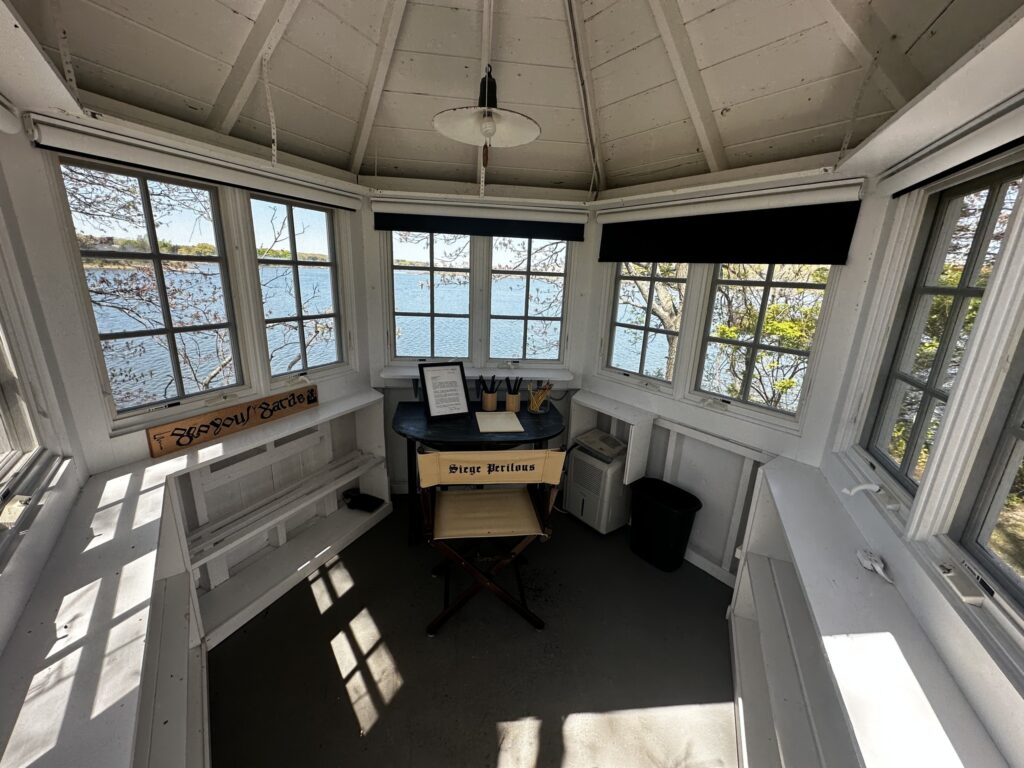Inside Steinbeck’s writing hut at his home in Sag Harbor, NY.
Steinbeck’s life was more interesting than he wanted us to believe. In reviewing his biography before the weeklong cultural retreat I hosted in Salinas and Monterey, California, I noticed how many times in his life Steinbeck showed remarkable moral courage outside of his books. Let me provide just a few examples.
1\. He got himself into World War II, not as a combatant as he had hoped, but as a foreign correspondent for the New York Herald Tribune. He reported the war from England, North Africa, and Italy. He saw men die. A bomb exploded so close to him that his eardrums were ruptured. When he came home late in 1943, he was almost certainly suffering from PTSD. My friend Russ Eagle, who is writing a study of Steinbeck’s novella Cannery Row, believes that Steinbeck never fully recovered from what he observed and experienced in the war. Steinbeck could have avoided the war altogether. Or he could have, like so many other journalists, observed the war from positions safely behind the front. Instead, he thrust himself directly into the action.
1.
2\. When he was an on-again, off-again student at Stanford University, he was visiting his friend Robert Bennett in the Bay Area at Christmastime 1920. They attended services with Bennett’s mother at a San Francisco Methodist Church. Bennett tells the story: “The preacher, a garrulous man, went on and on about the ‘spiritual hunger’ that was felt throughout the land. Steinbeck muttered under his breath that this was a ‘lot of crap.’ Unable to contain himself at last, he rose to his feet and shouted: ‘Yes, you all look satisfied here, while outside the world begs for a crust of bread or a chance to earn it! Feed the body and the soul will take care of itself.’” I’m certain Bennett’s mother was mortified. Still, Steinbeck, even at this early age, was sufficiently derisive of hypocrisy and committed to social justice that he was willing to disrupt a solemn holiday social gathering to make his point. He was eighteen years old at the time.
Viktor Nekrasov (1911–1987). Soviet writer and dissident.
3\. During his three visits to the Soviet Union — 1937, 1947, and 1963 — Steinbeck was not afraid to speak truth to power. Steinbeck always requested to meet with dissident writers. He was generally informed that they were ill, on assignment, or otherwise unavailable. When Steinbeck and his third wife, Elaine, were in Ukraine (then part of the U.S.S.R.) in 1963, he requested several times to meet anti-Stalinist writer Viktor Nekrasov. He was always rebuffed with the usual excuses. At the end of their visit, the Steinbecks were guests at a meeting of the Writers’ Union, attended by more than 250 people. The evening was well along when the massive door suddenly opened. This is Elaine’s account of what happened: “Everybody stopped talking and looked. He was absolutely one of the most beautiful looking men I ever saw, very dark with a big scar across his face. … The man strode across the room, stopped in front of John. He slapped his hand down on the table and said, ‘Nekrasov!’ And John smacked his hand on top of his and said, ‘Steinbeck!’ And the man said, ‘I have heard you were asking for me. I’ve come out of hiding to see you.’ There was a deathly hush in the room, and John said, ‘Pull up a chair, my friend.’ John carried on the press conference as if nothing had happened, and when it was over, Nekrasov went with us back to the hotel, and he and John talked all night.”
4\. During the McCarthy years, when a wide range of writers, actors, directors, and government functionaries were accused of treason, and many lives were ruined, Steinbeck spoke out for his friend, the playwright Arthur Miller, who was held in contempt of Congress for refusing to name names when called before the [House Un-American Activities Committee](https://guides.bpl.org/Congress/HUAC). Steinbeck wrote a public letter published in Esquire magazine. This was a gutsy and even risky thing to do under the circumstances. He determined to craft the letter as if he himself were accused of treason. “If I were in Arthur Miller’s shoes,” he wrote, “I do not know what I would do, but I could wish, for myself and for my children, that I would be brave enough to fortify and defend my private morality as he has. I feel profoundly that our country is better served by individual courage and moral.” In a letter to his friend and publisher Pat Covici, dated May 16, 1957, Steinbeck wrote, “When Artie \[Miller\] told me that not one writer had come to his defense, it gave me a lonely sorrow and a shame that I waited so long and it seemed to me also that if we had fought back from the beginning instead of running away, perhaps these things would not be happening now.”
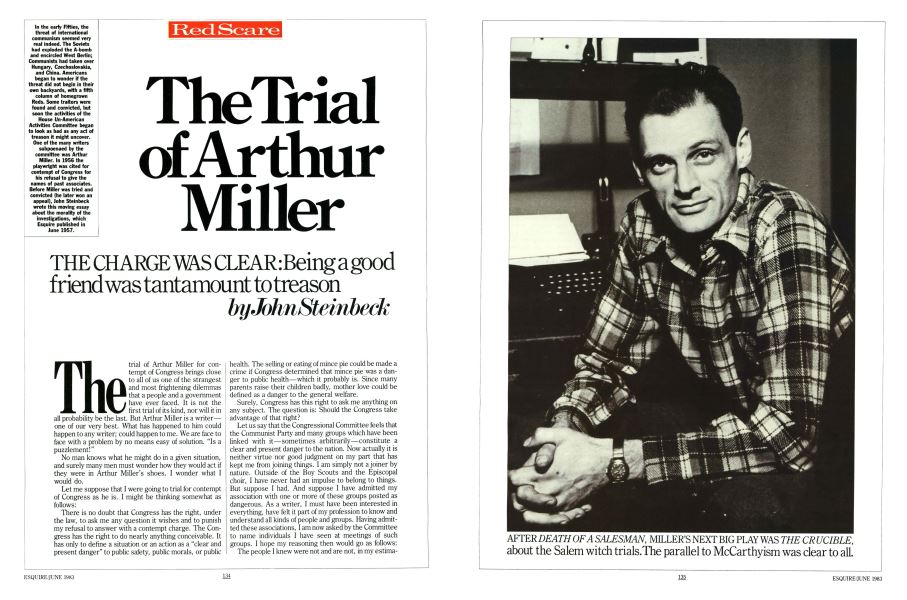
5\. In 1943, he wrote the screenplay for Alfred Hitchcock’s film Lifeboat. But when Hitchcock altered the script to portray the African American man in a racist stereotype, Steinbeck abruptly withdrew from the project. “While it is certainly true that I wrote a script for Lifeboat, it is not true that in that script as in the film there were any slurs against organized labor nor was there a stock comedy Negro. Instead there was a Negro of dignity, purpose, and personality.” Steinbeck insisted that his name be taken off the finished film. It wasn’t, but he had made it clear that he would not willingly lend his name to a project that violated his innate sense of justice and fairness.
6\. In 1966 and early 1967, Steinbeck visited Vietnam to see for himself how the war was going. Both of Steinbeck’s sons had been drafted and served their tours in Vietnam. Steinbeck was naturally concerned about their well-being. His friend LBJ wanted him to make the journey as an informal adviser to the president, but Steinbeck insisted that he must go independently to have any credibility and to be able to make an honest assessment of the war. He was sponsored as before by the New York Herald Tribune. Even though he was 64 years old and in poor health, he didn’t hold back. He flew sorties in helicopters, went on combat patrol, handled a military weapon despite military protocols, and made sure that he saw real war action. When he returned to the United States in the spring of 1967, he reported not to LBJ but to LBJ aide Jack Valenti, to whom he made it clear that the war was unwinnable. “There is no way to make the Vietnamese war decent,” he wrote. “There is no way of justifying sending troops to another man’s country. . . The government we are supporting with our men and treasure is about as smelly as you can get.” Some people (then and now) argued that Steinbeck should have gone public (like Walter Cronkite in 1968) with his convictions, and that in not doing so, he was putting his friendship with Lyndon Johnson above his public duty to the American people. I don’t see it that way. I credit a man, no longer in good health and living on borrowed time, for getting himself to Vietnam to witness the most important national event of the 1960s with his own discerning eyes. Had he broken publicly with the president, it is not clear that his public pronouncements would have made any difference.
These are examples of the moral courage Steinbeck exhibited steadily through life, but of course, we find it everywhere in his books, particularly his masterpiece, *The Grapes of Wrath*. To publish a defense of the “Okies” in the face of widespread opposition among the California agriproducers, Chambers of Commerce, vigilance committees, bankers, and besieged citizens was a heroic act in 1939. There is a reason his friends advised Steinbeck against traveling alone, making public appearances, and staying below the radar until the furor died down. There is a reason that *The Grapes of Wrath* was publicly burned in Salinas and banned from the public schools in Kern County (home of Weedpatch) until 1978. Steinbeck wrote, “It takes great courage to back truth unacceptable to our times. There’s a punishment for it, and it’s usually crucifixion.”
Most writers work hard to stay out of the fray. Most exhibit their “courage” in the safety of the printed page, but not in the arena. Steinbeck wrote millions of words, but he was not content to blend in on the margins of the world around him: two world wars, the Cold War, the coming of the Atomic Age, the plight of the “Okies,” Korea, the Civil Rights Movement, and Vietnam. He always wanted to see and judge things for himself. I have the deepest respect for this quality of Steinbeck’s character. He had character. I probably would have cowered under my pew had I been in that church congregation in 1920, but I would have given anything to see the doors burst open when Nekrasov strode in behind the Iron Curtain.
We live in a time when truth has yielded to “truthiness,” “alternative facts,” “whataboutism,” “fake news,” and “my truth.” Those who wish to see what happens when people cower in the face of corruption and the systematic violation of human rights might want to study the ordeal of individuals of Steinbeck’s time, like Arthur Miller in the 1950s or the crushing of J. Robert Oppenheimer by out-of-control Cold Warriors in 1954.
---
[Wisconsin](https://ltamerica.org/tag/wisconsin/ "0 topics")[Rivers](https://ltamerica.org/tag/rivers/ "3 topics")[Texas](https://ltamerica.org/tag/texas/ "4 topics")[Thomas Jefferson](https://ltamerica.org/tag/thomas-jefferson/ "34 topics")[New York](https://ltamerica.org/tag/new-york/ "8 topics")[South Dakota](https://ltamerica.org/tag/south-dakota/ "16 topics")[Virginia](https://ltamerica.org/tag/virginia/ "7 topics")[Tennessee](https://ltamerica.org/tag/tennessee/ "1 topics")[Road Trips](https://ltamerica.org/tag/road-trips/ "18 topics")[North Dakota](https://ltamerica.org/tag/north-dakota/ "53 topics")[State Parks](https://ltamerica.org/tag/state-parks/ "2 topics")[Washington](https://ltamerica.org/tag/washington/ "2 topics")[New England](https://ltamerica.org/tag/new-england/ "1 topics")[paintings](https://ltamerica.org/tag/paintings/ "0 topics")[Wyoming](https://ltamerica.org/tag/wyoming/ "4 topics")[William Shirer](https://ltamerica.org/tag/william-shirer/ "1 topics")[Ohio](https://ltamerica.org/tag/ohio/ "2 topics")[New Mexico](https://ltamerica.org/tag/new-mexico/ "3 topics")[Thoreau](https://ltamerica.org/tag/thoreau/ "5 topics")[North Carolina](https://ltamerica.org/tag/north-carolina/ "3 topics")[U.S. Presidents](https://ltamerica.org/tag/u-s-presidents/ "71 topics")[Oppenheim](https://ltamerica.org/tag/oppenheim/ "0 topics")[Space Exploration](https://ltamerica.org/tag/space-exploration/ "8 topics")[Oregon](https://ltamerica.org/tag/oregon/ "4 topics")[Rome](https://ltamerica.org/tag/rome/ "1 topics")[Reading](https://ltamerica.org/tag/reading/ "1 topics")[Theodore Roosevelt](https://ltamerica.org/tag/theodore-roosevelt/ "16 topics")[north daktoa](https://ltamerica.org/tag/north-daktoa/ "0 topics")[Podcast](https://ltamerica.org/tag/podcast/ "1 topics")[Vermont](https://ltamerica.org/tag/vermont/ "1 topics")[Republics](https://ltamerica.org/tag/republics/ "1 topics")[Steinbeck Travels](https://ltamerica.org/tag/steinbeck-travels/ "75 topics")[U.S. Constitution](https://ltamerica.org/tag/u-s-constitution/ "1 topics")[Pennsylvania](https://ltamerica.org/tag/pennsylvania/ "1 topics")[Sports](https://ltamerica.org/tag/sports/ "2 topics")[Walden](https://ltamerica.org/tag/walden/ "1 topics")[Water in the West](https://ltamerica.org/tag/water-in-the-west/ "24 topics")[Republic](https://ltamerica.org/tag/republic/ "0 topics")[Oppenheimer](https://ltamerica.org/tag/oppenheimer/ "1 topics")[Utah](https://ltamerica.org/tag/utah/ "11 topics")[Poetry](https://ltamerica.org/tag/poetry/ "1 topics")[Travel](https://ltamerica.org/tag/travel/ "1 topics")[South Carolina](https://ltamerica.org/tag/south-carolina/ "1 topics")[The Constitution](https://ltamerica.org/tag/the-constitution/ "1 topics")[Video](https://ltamerica.org/tag/video/ "51 topics")
**Categories:** Features
**Tags:** America at 250, Books, John Steinbeck, Steinbeck Travels
---
### [Were They Dreaming? A Rare Visit Inside John Steinbeck's Iconic Rocinante](https://ltamerica.org/were-they-dreaming-a-rare-visit-inside-john-steinbecks-iconic-rocinante/)
**Published:** October 7, 2025
**Author:** Clay Jenkinson
**Excerpt:** Clay and sidekick, Russ Eagle, spend time hanging out in John Steinbeck's historic truck camper, Rocinante.
**Content:**
## Clay and sidekick, Russ Eagle, spend time hanging out in John Steinbeck’s historic truck camper, Rocinante.
Clay holding the keys to John Steinbeck’s *Rocinante* at the National Steinbeck Center archives.
Well, Russ Eagle and I, scoundrels both, talked our way into John Steinbeck’s truck camper Rocinante last week to record a Listening to America podcast. Our trusting friends at the National Steinbeck Center in Salinas, California, pulled down the Plexiglas fence at the back of the rig and let us slip in in stocking feet for two hours of giddy chatter.
What an honor. It was a NIMBY moment as all get-out. The minute we slipped back down to Earth, we urged the Steinbeck Center folks to “never again let a couple of knuckleheads into the camper.”

Steinbeck had the rig built for a 1960 6-cylinder GMC pickup. He said he wanted it to be like the cabin of a boat. It arrived at Sag Harbor in August 1960. Steinbeck left Long Island on September 23 with his French poodle, Charley, and returned sometime before December 13, after something less than three months on the road. How many nights he actually slept in the camper is a subject of some controversy these days. My friend, the investigative journalist Bill Steigerwald, the bad boy of Steinbeck studies, wants it to be about three, and true Steinbeck lovers say “nearly every night.” Still, I suspect the truth is closer to Steigerwald’s end of the spectrum than to the myth of Steinbeck roughing it. Steinbeck wrote his account, *Travels with Charley*, over the winter of 1960 — 61. It turned out to be one of the public’s favorite Steinbeck books, the one in which he revealed himself — and his insecurities — more candidly than ever before. Then he sold both pickup and camper unceremoniously. Trip over, experiment complete, no plans for further RV adventures.
From the inside, Rocinante looked like every other truck camper I have ever been in. I owned one for two years a while back and found traveling in it delightful. Steinbeck’s rig was lined inside with dark paneling of the sort you saw in people’s dens and basements in the 1960s. It had a propane furnace, a gas stove, a gas refrigerator, a sink, plenty of storage, and an unspeakable chemical toilet in a very tight closet. No shower. The bed could only be accessed by pulling out a strut and collapsing the dinette table onto the bed frame.

I am sorry to say the seats around the Steinbeck dinette table are more comfortable than mine in my much more luxurious Airstream. I plan to address that problem before I venture out on the road again, as I need to spend four or five hours a day at my work desk. I cannot speak for the bed because the ornery folks at the Steinbeck Center declined to let us spend the night in the rig. We were planning to order clam chowder, sloppy joes, juicy enchiladas, lime Slurpees, gumbo, and eggs Benedict from DoorDash. They threw us out when I was finishing my call to Domino’s for triple cheese pizza with plenty of ranch (and bleu cheese!) dressing.
The day before the podcast, the excellent archivist at the Steinbeck Center, Lisa Josephs, handed me the original keys and keychain for the pickup and the camper. “What a fabulous gift,” I said, and attempted to slip the keys in my pocket. I reckoned Russ and I could make a break for it at the end of the podcast, and if we had to barrel through the front doors of the Center to get away, well, we reckoned front bumpers were made of sterner stuff back in the 60s. We planned to drive over Tehachapi Pass and on into Mexico, but we were pretty sure ICE would never let us back into the U.S. While we fantasized escape routes, Lisa explained that the pickup engine had been drained and disabled, so we decided to go to Plan B. We put in a call to our mutual friend Joshua Jay, the magician, to see if he could help us make the pickup disappear. He reminded us that he is a sleight-of-hand magician and he would be happy to help us abscond with any pack of cigarettes, pack of cards, pack of condoms, or pack of chewing gum, but nothing so large as a pickup camper. He gave us the number of David Copperfield in Las Vegas, but after leaving 17 messages without response, we desisted.
Joshua Jay, the magician.
I love Joshua Jay, but what good is he in a pinch?
Despite these minor setbacks, Russ and I left the Steinbeck Center on cloud nine. We ordered a bottle of champagne for dinner with Russ’s excellent wife, Liz, the Gumbo Despot of North Carolina. The server at one of Monterey’s finest steakhouses asked us what we we’re celebrating. We told him we spent the afternoon gabbing in a 12-by-8-foot aluminum container. He lost interest in us immediately, suggested we share entrees, and urged us to buy a much cheaper bottle of champagne.

Now, a week later, our adventure in Rocinante feels like one of those things that maybe never happened. But we have photographs and audio tapes and video too, and they only patted us down twice as we left the building. Russ got through easily; for some reason, they didn’t fully trust me, and I was subjected to the full cavity search. I guess I now know what Steinbeck Center’s John M. meant when he told me back in August, “You can bet your ass I’m going to get you two into that camper next month.” We must suffer for our art.
The Rocinante adventure was the final highlight of a wonderful week in Salinas and Monterey. It was magical in every way. And if my friend Josh had only dreamed bigger years ago, Russ and I would be in Acapulco sipping fru-fru drinks and hoping to run into Lucy and Desi at the cabana.
---
[Virginia](https://ltamerica.org/tag/virginia/ "7 topics")[Oppenheimer](https://ltamerica.org/tag/oppenheimer/ "1 topics")[Thomas Jefferson](https://ltamerica.org/tag/thomas-jefferson/ "34 topics")[South Dakota](https://ltamerica.org/tag/south-dakota/ "16 topics")[Space Exploration](https://ltamerica.org/tag/space-exploration/ "8 topics")[Utah](https://ltamerica.org/tag/utah/ "11 topics")[U.S. Constitution](https://ltamerica.org/tag/u-s-constitution/ "1 topics")[Texas](https://ltamerica.org/tag/texas/ "4 topics")[North Carolina](https://ltamerica.org/tag/north-carolina/ "3 topics")[Rome](https://ltamerica.org/tag/rome/ "1 topics")[Oppenheim](https://ltamerica.org/tag/oppenheim/ "0 topics")[Rivers](https://ltamerica.org/tag/rivers/ "3 topics")[The Constitution](https://ltamerica.org/tag/the-constitution/ "1 topics")[State Parks](https://ltamerica.org/tag/state-parks/ "2 topics")[paintings](https://ltamerica.org/tag/paintings/ "0 topics")[Poetry](https://ltamerica.org/tag/poetry/ "1 topics")[north daktoa](https://ltamerica.org/tag/north-daktoa/ "0 topics")[Travel](https://ltamerica.org/tag/travel/ "1 topics")[New England](https://ltamerica.org/tag/new-england/ "1 topics")[South Carolina](https://ltamerica.org/tag/south-carolina/ "1 topics")[New Mexico](https://ltamerica.org/tag/new-mexico/ "3 topics")[Steinbeck Travels](https://ltamerica.org/tag/steinbeck-travels/ "75 topics")[Reading](https://ltamerica.org/tag/reading/ "1 topics")[Wisconsin](https://ltamerica.org/tag/wisconsin/ "0 topics")[Video](https://ltamerica.org/tag/video/ "51 topics")[Thoreau](https://ltamerica.org/tag/thoreau/ "5 topics")[Road Trips](https://ltamerica.org/tag/road-trips/ "18 topics")[Republic](https://ltamerica.org/tag/republic/ "0 topics")[Water in the West](https://ltamerica.org/tag/water-in-the-west/ "24 topics")[Oregon](https://ltamerica.org/tag/oregon/ "4 topics")[Wyoming](https://ltamerica.org/tag/wyoming/ "4 topics")[North Dakota](https://ltamerica.org/tag/north-dakota/ "53 topics")[Podcast](https://ltamerica.org/tag/podcast/ "1 topics")[Republics](https://ltamerica.org/tag/republics/ "1 topics")[Theodore Roosevelt](https://ltamerica.org/tag/theodore-roosevelt/ "16 topics")[Vermont](https://ltamerica.org/tag/vermont/ "1 topics")[Walden](https://ltamerica.org/tag/walden/ "1 topics")[Tennessee](https://ltamerica.org/tag/tennessee/ "1 topics")[William Shirer](https://ltamerica.org/tag/william-shirer/ "1 topics")[Pennsylvania](https://ltamerica.org/tag/pennsylvania/ "1 topics")[Ohio](https://ltamerica.org/tag/ohio/ "2 topics")[Washington](https://ltamerica.org/tag/washington/ "2 topics")[New York](https://ltamerica.org/tag/new-york/ "8 topics")[Sports](https://ltamerica.org/tag/sports/ "2 topics")[U.S. Presidents](https://ltamerica.org/tag/u-s-presidents/ "71 topics")
**Categories:** Dispatches from the Road
**Tags:** Books, California, John Steinbeck, Steinbeck Travels
---
### [Reopening the Wounds of Wounded Knee](https://ltamerica.org/reopening-the-wounds-of-wounded-knee/)
**Published:** October 6, 2025
**Author:** Clay Jenkinson
**Excerpt:** Wounded Knee, really?
**Content:**
## Wounded Knee, really?
Approximately 250 Lakota men, women, and children were killed on December 19, 1890, at Wounded Knee, Pine Ridge Indian Reservation, South Dakota. (Library of Congress)
On December 29, 1890, at the tail end of the “Indian Wars,” the United States Army massacred about 250 Lakota men, women, elders, and children at [Wounded Knee Creek on the Pine Ridge Indian Reservation in South Dakota](https://ltamerica.org/wounded-knee-creek-video-dispatch/). This wasn’t no battle, folks. Several hundred Lakota Ghost Dancers (Miniconjou, Oglala, Hunkpapa) had been rounded up and moved to a site near the Pine Ridge Agency for processing. Just what happened on that frigid December day remains a little murky, but we know this: the Army had all the firepower — including early machine guns — and the Natives had next to none, and when the shooting started, it turned into a one-sided bloodbath. The Lakota seer [Black Elk](https://www.nps.gov/people/black-elk.htm), who witnessed the carnage, said decades later, “When I look back now from this high hill of my old age, I can still see the butchered women and children lying heaped and scattered all along the crooked gulch as plain as when I saw them with eyes still young.”
In the aftermath of the incident, 19 of the 120 U.S. soldiers at Wounded Knee were awarded the Medal of Honor for their actions. That tells you where we were in 1891.
There are a handful of the worst moments in U.S. history, great stains on the national honor. By any measure and from any perspective, Wounded Knee 1890 is one of the worst, along with the [Sand Creek Massacre in eastern Colorado](https://ltamerica.org/the-tragic-history-of-sand-creek-colorado/) on November 29, 1864; My Lai (March 16, 1968); the killing of Emmett Till (August 28, 1955); Abu Ghraib (April 2004); and the internment of 150,000 Japanese Americans (1942). Is there any well-informed person who will defend what the white government of the United States let happen at Wounded Knee?
In 1990, on the hundredth anniversary of the incident, the U.S. Senate passed a resolution acknowledging that Wounded Knee was a “massacre” and expressed “deep regret on behalf of the United States to the descendants of the victims and survivors and their respective tribal communities.”
In 2001, the National Congress of American Indians formally requested that the 19 medals be rescinded. In February 2021, the South Dakota state Senate unanimously requested that Congress investigate the awarding of the medals. This was red state South Dakota wondering how anyone who participated in a massacre could deserve the coveted Medal of Honor. In July 2024, former Secretary of Defense Lloyd J. Austin III ordered a review of the medal awards to ensure they were bestowed for conduct consistent with the nation’s highest military honor.
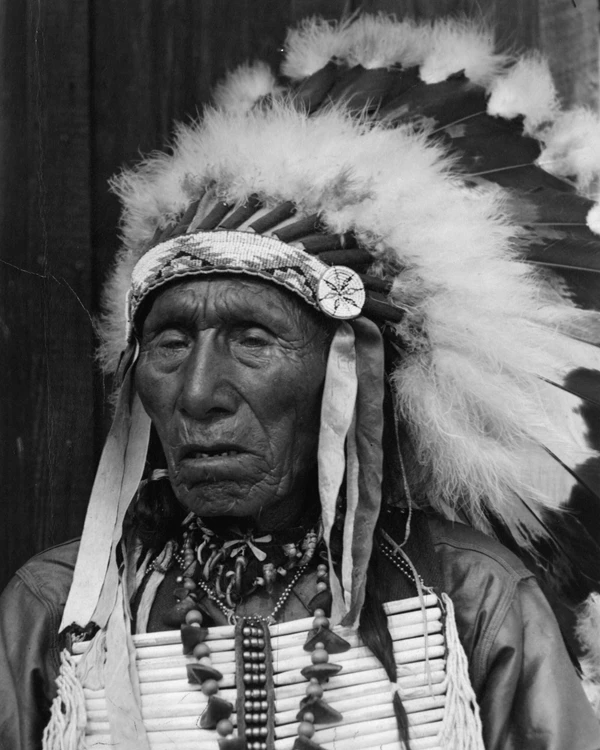Lakota seer, Black Elk (1863–1950). His life story is the focus of the 1932 book by John G. Neihardt, *Black Elk Speaks*. (Denver Public Library Special Collections)
But now Pete Hegseth’s War Department (formerly the Department of Defense) has decided that none of the medals will be rescinded, period, end of story. Hegseth may or may not be aware of what a gigantic slap in the face this represents to all Native Americans. Wounded Knee is not just a terrible blot in white America’s conquest of the continent. It signifies far more than a bloody incident in a remote and isolated terrain at the tail end of the “Indian Wars.” It has long become the single most potent symbol of white perfidy, greed, racism, broken promises, and a strain of genocidal rage toward Indigenous peoples. For Native Americans, any mention of “Wounded Knee” touches off an oceanic sorrow. In his old age, Black Elk said, “I did not know then how much was ended. … And I can see that something else died there in the bloody mud, and was buried in the blizzard. A people’s dream died there.”
The historian Dee Brown understood the potency of the incident when he titled his groundbreaking 1970 study of white misconduct in the Indian Wars *Bury My Heart at Wounded Knee*.
Given the current administration’s desire to use the Culture Wars to political advantage and to eradicate any trace of “wokism” from American life, I predict that this is only the beginning of a campaign (I choose my words carefully) of official hostility toward Native American sovereignty, land and water claims, spiritual activity, federal funding of the basic Native infrastructure (health, nutrition, schools, colleges), and quite possibly the continued existence of Indian reservations and federal recognition.
It’s hard to imagine a legitimate reason to protect, promote, or lionize the men who participated in the Wounded Knee massacre. If this is yet another provocation in the Culture Wars, there must be better ways to drive the left crazy. These machinations will be particularly hurtful to descendants of those who were killed at Wounded Knee, and to the entire Lakota (Sioux) nation, and they are also a profound symbolic assault on Indigenous people everywhere. Just at a time when white-Native relations have gotten to a pretty good place, and Martin Luther King Jr.’s trajectory trope (the arc of the moral universe is long, but it bends toward justice) seemed to be more than empty rhetoric, the “no apologies” element in American political life attempts to turn back the clock yet again.
In the past few years, the Pope has formally apologized for the boarding school tragedy and officially repudiated the 15th-century Doctrine of Discovery that allowed European nations to summarily claim Indigenous lands for their own purposes. Former Secretary of the Interior Deb Haaland quietly began to establish an American equivalent to the Truth and Reconciliation Commissions that played an important role in healing South Africa after the fall of apartheid and later in Canada with respect to boarding schools.
## **The Ghost Dance**
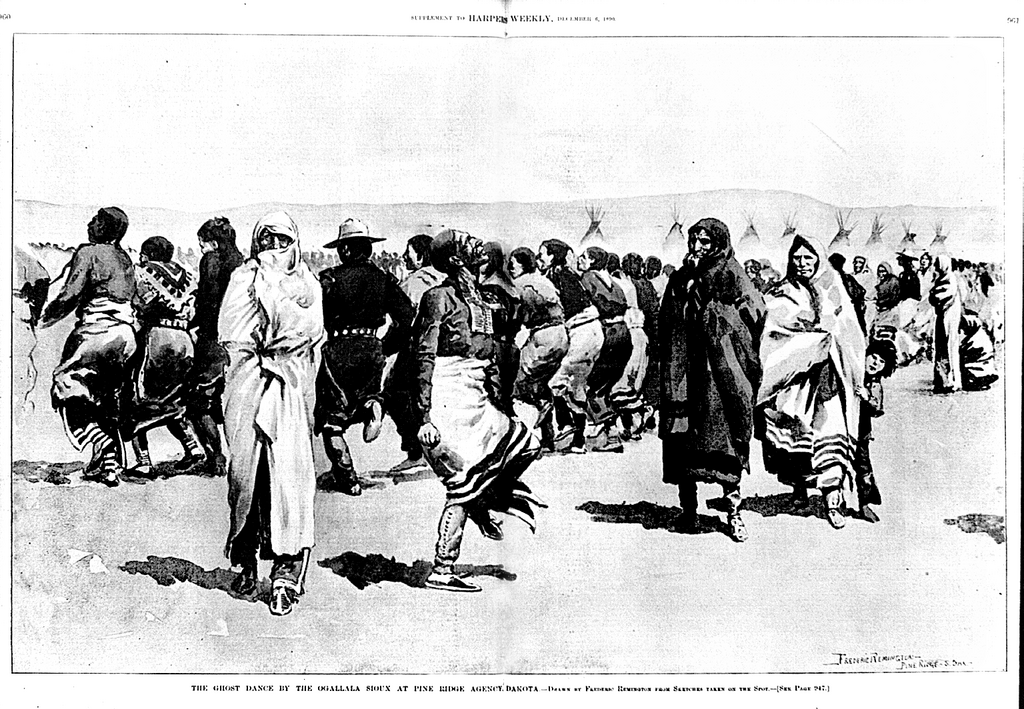A Ghost Dance by the Oglala Lakota at Pine Ridge Agency. Illustration by Frederic Remington from sketches he took on location, published in Harper’s Weekly, December 6, 1890. (Wikimedia)
The Ghost Dance movement is one of the most fascinating and tragic chapters of American history.
By the late 1880s, the “Indian Wars” had effectively come to an end. The military resistance of the Sioux (Lakota), Cheyenne, Apache, Nez Perce, and other Native Americans had been crushed. It was a decade of severe suffering in the Dakotas — a prolonged drought, the [Dawes Act’s](https://www.nps.gov/articles/000/dawes-act.htm) assault on Native concepts of sovereignty and property, disease outbreaks, and treaty-guaranteed rations late, arbitrarily cut, rancid, or skimmed by corrupt Indian agents. The Lakota were hungry, angry, dispirited, and desperate. Just at that time, along came the Ghost Dance. From out in Nevada, a Paiute prophet named Wovoka declared that it might be possible to restore the Golden Age — i.e., the time before white people (Wasichu) stormed in to take whatever they wanted in the West.
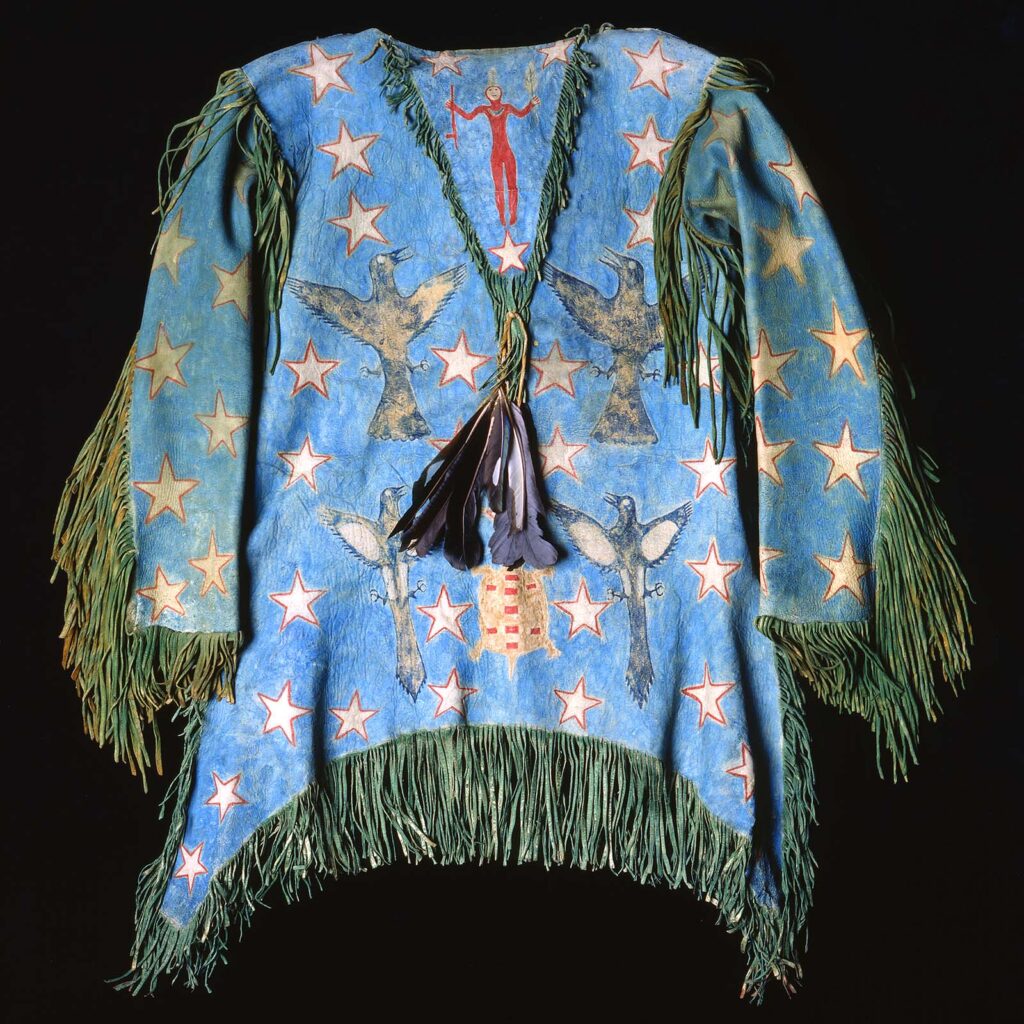Arapaho Ghost Dance Shirt. (Buffalo Bill Center of the West)
As Wovoka’s millenarian movement spread throughout the American West, handed down from tribe to tribe, the rituals of the Ghost Dance evolved. The core idea was that if Natives would dance incessantly in a sacred way, they could hasten the apocalypse in which white people would simply be swallowed up into oblivion and a prelapsarian world would be restored, “where all the dead are splendidly alive, and summer lingered and the bison thrived forever,” as Nebraska historian and poet John G. Neihardt put it in his epic *Song of the Indian Wars*. In scores of locations across the western half of the continent, Native Americans danced until some collapsed or fell into an altered state, in which they encountered their dead ancestors or the Great Mystery. In some versions of the Ghost Dance, participants were encouraged to sew special Ghost Shirts, decorated with celestial iconography, which were said to have the power to protect the wearer from bullets fired by white men. Some of those Ghost Dance shirts have been preserved by museums around the world and, under the terms of the Native American Graves Protection and Repatriation Act, have been returned to tribes and individuals when their provenance can be determined.
The great Hunkpapa Lakota leader Sitting Bull regarded the Ghost Dance as a retrograde exercise in futility. Still, he permitted it to be practiced near his cabin on the Standing Rock Indian Reservation in North Dakota because he understood that it gave a desperate people a sense of purpose. He understood that when the apocalypse didn’t come, the dancers would begin to slip away from the dance circle. For the same reasons, former Pine Ridge agent Valentine T. McGillycuddy urged the U.S. Army not to intervene and let the craze dance itself out.
Despite this wise counsel, the Army sent hundreds of troops to Pine Ridge.
## **The Massacre**
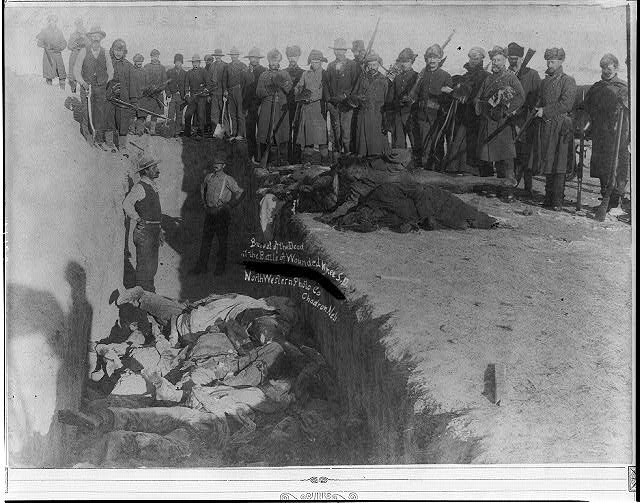Burial of the dead at Wounded Knee, South Dakota. (Library of Congress)
What brought on the massacre? 1. The new and inexperienced agent on the Pine Ridge (D.F. Royer) overreacted to the Ghost Dance. He failed to realize that the Ghost Dance had no military application. He panicked. He requested federal troops. Royer was described in his own time as “destitute of any of those qualities by which he could justly lay claim to the position — experience, force of character, courage, and sound judgment.” The Lakota called him “Young Man Afraid of the Sioux.” 2. Both whites and Natives were weary of the 30 years of Indian Wars. Some in the Army, no doubt, just wanted “to get it over with.” Some of the troops sent to the Pine Ridge were members of Custer’s Seventh Cavalry, eager for payback. 3. As troops moved through the camp to search for any hidden firearms, one of the recalcitrants struggled with a U.S. soldier. Inevitably, a shot rang out, after which the Army essentially descended into a riot of blood-seeking, killing everyone in sight and then pursuing unarmed women and children as they attempted to crab-walk their way up the ravines to safety — bashing the heads of infants against trees and rocks, cutting Native fetuses out of women’s wombs, shooting and bayoneting helpless and terrified people in the back. So great was the mayhem that many of the two dozen U.S. Army casualties were caused by friendly fire. 4. The frustrations of Army life on the western frontier were severe. Many of the soldiers were recent immigrants (mostly from Ireland), raw recruits, with poor (in some cases no) military training. They were not a disciplined fighting force with the capacity to handle a delicate situation in which hundreds of desperate individuals were surrounded by heavily armed troops.
The Lakota who were gunned down had surrendered in two ways. First, they had permitted themselves to be arrested en masse by the Army. They knew they could no longer resist the force of the U.S. government. They were hungry, cold, exhausted, terrified, and desperate for any stability that would warm their bodies and put food in their mouths. They were rounded up and hemmed in a temporary refugee camp. Second, they had complied with the Army’s order to turn in their guns. There might have been a handful of weapons still with the dispirited refugees, but they had no capacity to mount an attack on U.S. soldiers.
It was an entirely needless massacre. We Americans live in a time, 135 years later, when we are mature enough to recognize our flaws, express genuine remorse, and do what we can to improve the lives of those we have harmed. This is not a time for a national surge of toxic masculinity as we look honestly at the past on the eve of our 250th birthday as a nation.
## **Worst Possible Time**
The last 10 to 25 years have been a time of healing and regeneration in Native American communities. Being an “Indian” is still — on average — much more difficult than being a white American. Despite measurable material gains, there is still a good deal of poverty, unemployment, poor access to healthy food, drug and alcohol epidemics, fetal alcohol syndrome, broken families, and crime. But things have been slowly getting better in Indian Country ever since the New Deal (1930s) and particularly in the last 20 years. Most off-reservation institutions now begin public proceedings by reading a land acknowledgment statement. Indian language programs are working hard to introduce young people to their Native language. Increasingly, Native Americans are earning college degrees and pursuing graduate studies in fields such as law, medicine, and business. There is widespread evidence of cultural recovery as traditional rites, clan structures, religious ceremonies, and craft guilds struggle toward a Native renaissance. [The Land Back Movement](https://www.npr.org/2024/09/18/nx-s1-5091001/the-latest-on-the-land-back-movement-in-which-native-american-tribes-reclaim-land) is getting some modest traction. Native lawsuits are increasingly successful in the federal court system.
Now Pete Hegseth’s War Department has jumped recklessly into the fray and reopened one of the deepest wounds in American history.
In the Newtonian world of the Culture Wars, every cultural action seems to precipitate an equal or more violent opposite cultural reaction. If the Biden administration had just left Wounded Knee alone and waited for Congress to stumble through to some reparative legislation, Secretary Hegseth would have had no reason to intrude himself into one of the saddest episodes in American history. Probably a solid majority of white Americans would oppose stripping the soldiers who participated in the Wounded Knee massacre of their rank, commendation, and medals. I’m not sure we gain much from these long-after-the-fact social justice initiatives, which some will regard as contemporary virtue signaling. We all get it that that was then and this is now, that the soldiers (the grunts on the ground) were on the whole only doing what they were expected (even encouraged) to do, and that the primary responsibility for the tragedy lies with the U.S. government, commanding officers in the Army, and a tacit national policy of cultural genocide, forced assimilation, and zero tolerance for Native resistance.
What happened at Wounded Knee was the logical end product of what historian Helen Hunt Jackson called *A Century of Dishonor*. If you merely prosecute individuals on the ground for the atrocities at Abu Ghraib, have you really addressed the issue of responsibility?
The case can be made to let sleeping dogs lie, but the very last thing you’d want to do at this juncture is to try to turn back the clock and reassert a white triumphalist paradigm of American history. And that, of course, is precisely what Secretary Hegseth has done.
## **The Pilgrimage**
A video dispatch from Clay’s visit to Wounded Knee in 2023. (Nolan Johnson, LTA)
I have visited Wounded Knee a dozen times or more. I go out of my way when driving the Great Plains to make the pilgrimage. I take my daughter there every time we are within 200 miles of the Pine Ridge, and it has changed her life. It’s not Gettysburg or Appomattox or even the Little Bighorn. It’s a stark, lonely, haunting, and haunted place. There is no cultural infrastructure nearby — only a large red sign inscribed on both sides with explanatory text. And a half-neglected cemetery up on the hill from which Hotchkiss guns rained down death on the helpless Natives.
On some visits, I have wished there were an interpretive center at Wounded Knee — telling the truth about what happened, but with an emphasis on cultural recovery and the astonishing resilience of Native Americans. But maybe it is better that there is nothing there. It’s important for white Americans to stand there in the middle of nowhere and reflect on what I call “the cost of empire, the cost of becoming transcontinental America.”
America has a lot to answer for at 250. Still, it can be done with thoughtfulness, respect for a range of points of view, generosity of spirit, a commitment to cherish the rights and dignity of all Americans, and with everyone represented at the table. How many Native Americans do you suppose are at Pete Hegseth’s table?
I will go to Wounded Knee again in the next few weeks. By then, the landscape will be wind-blown, and all the grasses and trees will be barren in hibernation. This is a pilgrimage I urge every American to make if you can, for if you were trying to make a list of the worst atrocities in American history, you’d place Wounded Knee right at or near the top. If we are to heal as a people, we must confront some disturbing aspects of our history and national character. We’re nine months from July 4, 2026. No time like the present.
---
[Walden](https://ltamerica.org/tag/walden/ "1 topics")[State Parks](https://ltamerica.org/tag/state-parks/ "2 topics")[Theodore Roosevelt](https://ltamerica.org/tag/theodore-roosevelt/ "16 topics")[Oppenheimer](https://ltamerica.org/tag/oppenheimer/ "1 topics")[Utah](https://ltamerica.org/tag/utah/ "11 topics")[Video](https://ltamerica.org/tag/video/ "51 topics")[Oppenheim](https://ltamerica.org/tag/oppenheim/ "0 topics")[paintings](https://ltamerica.org/tag/paintings/ "0 topics")[Oregon](https://ltamerica.org/tag/oregon/ "4 topics")[Republics](https://ltamerica.org/tag/republics/ "1 topics")[North Dakota](https://ltamerica.org/tag/north-dakota/ "53 topics")[Pennsylvania](https://ltamerica.org/tag/pennsylvania/ "1 topics")[Wyoming](https://ltamerica.org/tag/wyoming/ "4 topics")[Poetry](https://ltamerica.org/tag/poetry/ "1 topics")[Travel](https://ltamerica.org/tag/travel/ "1 topics")[U.S. Presidents](https://ltamerica.org/tag/u-s-presidents/ "71 topics")[Tennessee](https://ltamerica.org/tag/tennessee/ "1 topics")[Thomas Jefferson](https://ltamerica.org/tag/thomas-jefferson/ "34 topics")[Washington](https://ltamerica.org/tag/washington/ "2 topics")[Rivers](https://ltamerica.org/tag/rivers/ "3 topics")[Rome](https://ltamerica.org/tag/rome/ "1 topics")[South Carolina](https://ltamerica.org/tag/south-carolina/ "1 topics")[Wisconsin](https://ltamerica.org/tag/wisconsin/ "0 topics")[Republic](https://ltamerica.org/tag/republic/ "0 topics")[Podcast](https://ltamerica.org/tag/podcast/ "1 topics")[Thoreau](https://ltamerica.org/tag/thoreau/ "5 topics")[New York](https://ltamerica.org/tag/new-york/ "8 topics")[Water in the West](https://ltamerica.org/tag/water-in-the-west/ "24 topics")[New England](https://ltamerica.org/tag/new-england/ "1 topics")[Vermont](https://ltamerica.org/tag/vermont/ "1 topics")[Virginia](https://ltamerica.org/tag/virginia/ "7 topics")[The Constitution](https://ltamerica.org/tag/the-constitution/ "1 topics")[William Shirer](https://ltamerica.org/tag/william-shirer/ "1 topics")[North Carolina](https://ltamerica.org/tag/north-carolina/ "3 topics")[Steinbeck Travels](https://ltamerica.org/tag/steinbeck-travels/ "75 topics")[Texas](https://ltamerica.org/tag/texas/ "4 topics")[South Dakota](https://ltamerica.org/tag/south-dakota/ "16 topics")[Reading](https://ltamerica.org/tag/reading/ "1 topics")[New Mexico](https://ltamerica.org/tag/new-mexico/ "3 topics")[north daktoa](https://ltamerica.org/tag/north-daktoa/ "0 topics")[Road Trips](https://ltamerica.org/tag/road-trips/ "18 topics")[Space Exploration](https://ltamerica.org/tag/space-exploration/ "8 topics")[Sports](https://ltamerica.org/tag/sports/ "2 topics")[Ohio](https://ltamerica.org/tag/ohio/ "2 topics")[U.S. Constitution](https://ltamerica.org/tag/u-s-constitution/ "1 topics")
**Categories:** Features
**Tags:** America at 250, Humanities, Native Americans, South Dakota
---
### [The Stubborn Enigmas of Lewis and Clark](https://ltamerica.org/the-stubborn-enigmas-of-lewis-and-clark/)
**Published:** September 29, 2025
**Author:** Clay Jenkinson
**Excerpt:** After decades of close study and a year following their trail, Clay remains dogged by the many unknowables surrounding the famous American expedition.
**Content:**
## After decades of close study and a year following their trail, Clay remains dogged by the many unknowables surrounding the famous American expedition.
Lewis and Clark National Historic Trail marker. (Shutterstock)
My mind has been fixated on Lewis and Clark this summer. Although I think of myself as “an English major,” and the literature of the 17th century in Britain was my first intellectual love, it was pointed out to me earlier this year that I have now been talking about Lewis and Clark for almost 50 years. That’s a daunting statistic. One would think you could master a subject in five decades of hard study, but no. Thanks to the summer just ended, I know more about the Lewis and Clark expedition than ever before, but “mastery” is a word I wouldn’t even pretend to have earned for all of this “throwing about of brains,” as Hamlet puts it.
I first became obsessed with the Lewis and Clark story in the early 1980s, when I read David Freeman Hawke’s recently published *[Those Tremendous Mountains: The Story of the Lewis and Clark Expedition](https://www.amazon.com/Those-Tremendous-Mountains-David-Freeman/dp/0393013057)*. At some point, I turned a page and learned that Meriwether Lewis committed suicide at the age of 35, just three years after returning from the journey, at a dismal frontier inn on the Natchez Trace. This came as a huge shock. Why would Lewis kill himself? Why would the president’s friend, an American hero, one of the great explorers of history, put a gun to his head? What brought him to this terrible end?
I have been trying to make sense of Lewis’ suicide ever since. I’ve written about it, lectured about it, puzzled endlessly over it, retraced his life’s journey in a range of ways, consulted psychotherapists and historians of suicide, read and reread and re-reread the journals searching for clues to his fragility. But a satisfying explanation continues to elude me — and everyone else — which is perhaps why a substantial segment of the Lewis and Clark community still refuses to believe he died “by his own hand.”
## **American Epic**
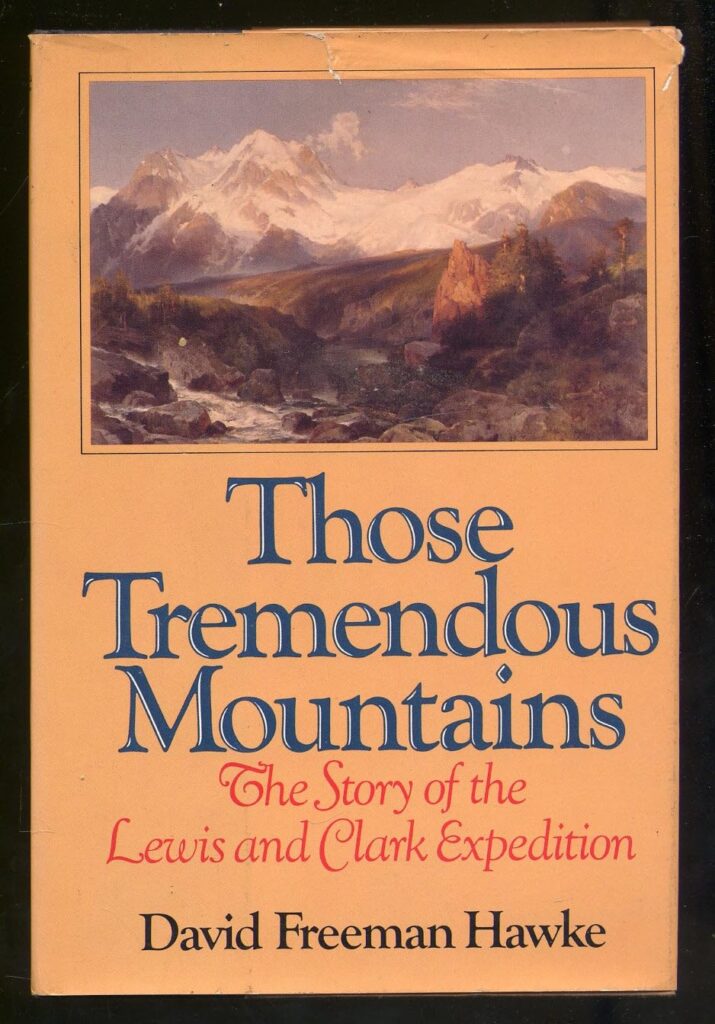*Those Tremendous Mountains* by David Freeman Hawke, published in 1980.
The Lewis and Clark expedition is the great epic story of the early national period of American history. It’s a fabulously multicultural adventure — white army officers, enlisted men and volunteers, some of them with mixed-blood DNA; an African American slave; a Shoshone-Hidatsa woman and her infant son; French watermen; and more than 50 distinct Native tribes. It’s also the story of a journey through unfamiliar landscapes (the Great Plains, the Columbia Plateau, the Northwest rainforest), described for the first time ever by dedicated journalists. It is also, as the great historian James Ronda put it a quarter-century ago, America’s first great road story.
Whenever I speak to groups about the Lewis and Clark expedition, I begin by reminding myself and them that “they didn’t know we’d care.” The men (and one woman) who made this 7,689-mile journey from St. Louis to the Pacific Ocean and back again, did not know that 230 years later we would be so interested in their story that we would fixate over every detail: how many pairs of moccasins they wore out; precisely where the campsite they called “Dismal Nitch” was located; what happened to Seaman the Newfoundland dog; what their master trailsman George Drouillard did in Iowa that brought a severe rebuke from the captains; what religious activity, if any, occurred during the course of the expedition. If they had known that we’d be so profoundly interested (a quarter of a millennium later), they would have answered some of our questions: what did Sacagawea look like? What happened to all the equipment of the expedition after they returned successfully to St. Louis on Sept. 23, 1806? Are there missing journals and other documents that once existed but somehow were lost or destroyed along the way?
## **Etc.**
There are so many things I still don’t know about Lewis and Clark. We don’t know just what befell Lewis at a lonely inn on the Natchez Trace in the early morning hours of Oct. 11, 1809. We know that Meriwether Lewis died that day from two gunshot wounds, one to the head and the other to his abdomen. He left no suicide note. After decades of endless study and speculation, I have a hunch about why Lewis came undone after the expedition, but in the absence of definitive documentation, it’s impossible to know for sure.
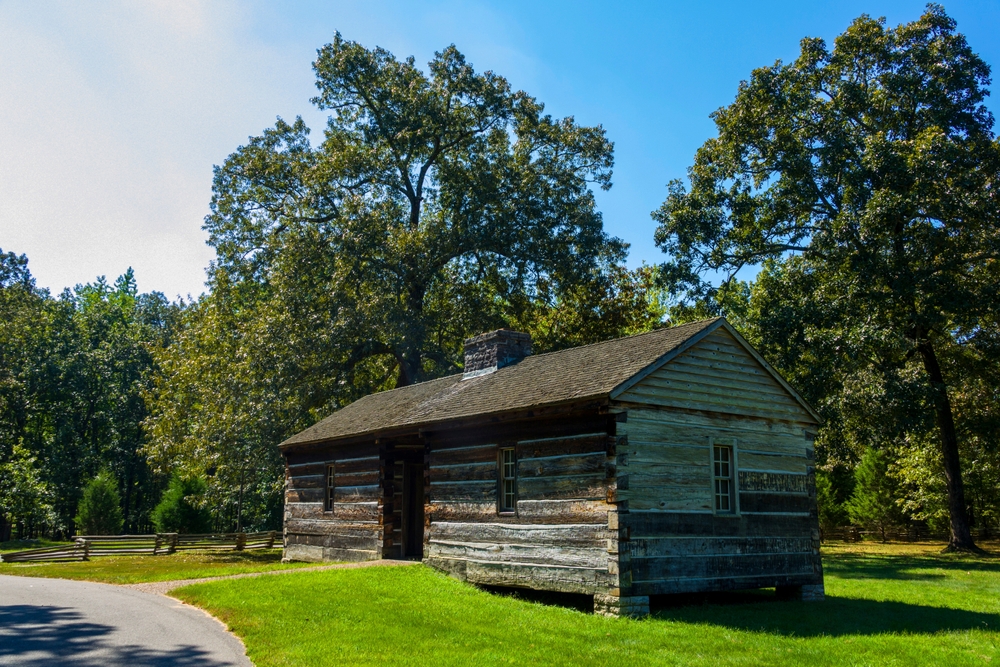The Grinder House where Meriwether Lewis died on the Natchez Trace. (Shutterstock)
We don’t know when or where Sacagawea died. It was probably in December 1812, and at a place called Fort Manuel on the North Dakota-South Dakota border. But since she is also buried on the Wind River Indian Reservation near Lander, Wyoming, and both stories can’t be true, we are left to try to sort it out with the limited documentary evidence we have. Although Sacagawea is the most statued woman in America and the third most important figure in American memory of the expedition, we have far more questions about her than answers.
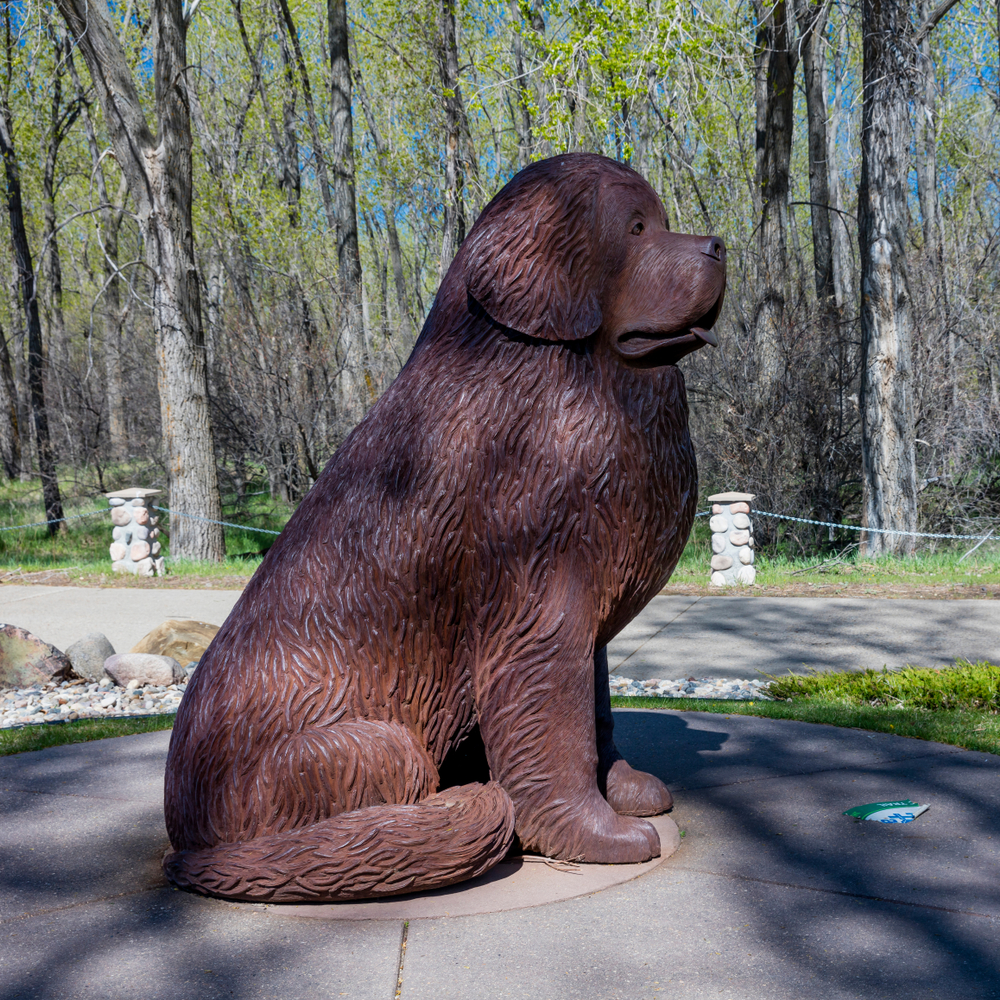Statue of Seaman, Fort Mandan, North Dakota. (Shutterstock)
Even after all this time, with countless scholars combing public records for information about every member of the expedition (45 or so at the start, 33 in the permanent party after the winter at Fort Mandan), we still don’t know very much about the great majority of those who participated in the journey. What do even professional Lewis and Clark scholars know about Thomas Howard, Robert Frazer, Hugh Hall, William Werner, Peter Weiser, John Thompson, or Richard Windsor, among others? Except for Lewis, Clark, Sacagawea, York, John Colter, and perhaps a couple of others, most of the men of the expedition are mere ciphers to us. They were born somewhere, joined the expedition, performed their tasks, returned safely, got their back pay and some land, and then disappeared into frontier life.
To learn what little can be ascertained about these lesser and yet stalwart members of the expedition, we comb the journals for clues. Richard Windsor, for example, took charge of several grizzly bear cubs the hunters had orphaned. This humanizes him a little. He traded the cubs to some coastal Natives in exchange for wapato root. This insipid swamp potato was a necessary staple of the expedition’s diet in the lower Columbia basin. William Bratton experienced severe lower back problems at Fort Clatsop during the winter of 1805-06. Lewis worried that he might die. During his illness, Bratton got a lot of attention in the captains’ journals. When he recovered, he dropped back below the radar again. The aforementioned Thomas Howard holds the distinction of being the last man court-martialed on the journey (Feb. 10, 1805). Beyond that, Howard did nothing particularly memorable — nothing that the five journal keepers thought worthy of writing up in their daily accounts of the expedition.
If we combed all 13 volumes of the journals for every interesting detail of every member of the expedition except the captains and the inner circle, the result would be thin gruel. If the great journey were to occur today, there would be reunions (as with Theodore Roosevelt’s Rough Riders), transcripts, a multitude of photographs, post-expedition interviews, documentaries, and memoirs. Reality shows. It’s maddening to want to know so much and be marooned with so little — scattered among 13 fat volumes of journal entries.
## **Ballooning in on the Corps**
U.S. postage stamp featuring Sacagawea circa 1994. (Shutterstock)
I often wonder what it would be like to drop in on the Lewis and Clark expedition for a few days, somewhere in Montana, Idaho, or Oregon. Archaeologists sometimes say that we could learn more about Homeric Greece by spending one day in residence at Troy in 1180 B.C. than in all the artifacts and prints of scripts that have been unearthed. This is an exaggeration, but you get the point. One of the key insights about Lewis and Clark is that the journals, though voluminous, do not tell the whole story of the expedition. Nor did they attempt to.
Visiting the 1804-06 expedition today, we’d be much more attentive to Sacagawea and her baby boy, Jean Baptiste Charbonneau (“Pomp”), than the journal keepers of 1805 and 1806. They reported her serious illness at the great falls of the Missouri in Montana. They found it amusing that she demanded at Fort Clatsop to be included in a reconnaissance party that ventured to the coast to see a whale that had washed up there. In November 1805, she relinquished a blue beaded belt that the captains needed to trade for a handsome sea otter robe. Above all, she plucked some essential items out of the Missouri River when her inept and cowardly husband, Toussaint Charbonneau, nearly sank the expedition’s command module, the white pirogue, on May 14, 1805. Beyond that, not so much. A visitor from today, air ballooning into the expedition camp, would come back with priceless information:
– What did she look like?
– Was she short or tall, lean or not?
– How much did she communicate with expedition members who were not her husband — and how, exactly?
– Was she cheerful or sullen or gregarious or stoic?
– What was her relationship with her much older husband, by all accounts not a very admirable man?
– What was her attitude toward this military expedition into the heart of sovereign Indigenous territories?
– We know her son, Jean Baptiste, was a favorite of William Clark. What about the rest of the men?
We cannot answer these questions. We are left with the fragmentary information that found its way into the expedition’s journals, official army records written by exhausted men in camps exposed to the elements. Because the pickings are so slim, we are compelled to make more of every incident and every data point than perhaps is deserved. We have no choice but to take what little the journals give us and cling to it, normalize it, stereotype it, and make it seem representative of a whole person we know almost nothing about. The most famous case is that of the youngest member of the expedition, George Shannon, who got lost in a big way once (for 16 days in South Dakota) and sorta-kinda lost for a couple of days at the upper reaches of the Missouri River near Three Forks, Montana. This enterprising young man, just 18 years old, is now forever typecast as “Shannon the forever lost.” Maybe this epithet doesn’t get at the core of Shannon’s character or identity at all. It is certainly unjustly reductionist. Surely Shannon was more than the boy who got lost.
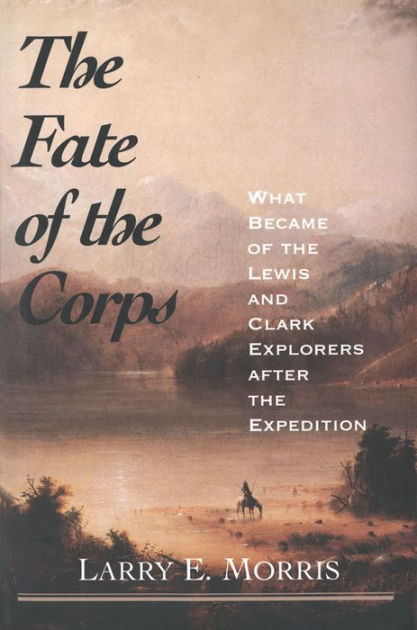
Desperate for biographical information, we are fortunate to have a book of painstaking genealogical research by historian Larry Morris: *The Fate of the Corps: What Became of the Lewis and Clark Explorers After the Expedition* (2004). In a long labor of mind-numbing research, Morris gathered up all the information he could find about each member of the party before and after the expedition. It’s an essential starting point for anyone who wants to know about the men who made the journey, but Morris’s extraordinary research still leaves us with thin gruel.
If we ballooned into the expedition carrying today’s sensibilities, we’d be observing Clark’s enslaved body servant, York, with obsessive scrutiny. We know he was a large man. We know that he had been assigned to William Clark at a very early age. We know that he was allowed to carry a gun in the wilderness. We know that York pulled his master, Clark, and Sacagawea and her child to safety during a flash flood at the Great Falls. We know that York clowned it up among the Mandan and Hidatsa, chasing children around the village and presenting himself as a wild creature domesticated by William Clark. They shrieked, sometimes with delight.
How did the other men treat York? In the course of the expedition, were they able to overlook (or overcome) his race and economic status? Or did they regard him as an inferior being who, in the infamous words of the 1857 Dred Scott decision, “had no rights which the white man was bound to respect?” Surely there were racists among the Corps of Discovery. From a structural point of view, they were all or almost all racists.
## **If I Could Hitch a Ride Into the Heart of the Lewis and Clark Story, Here’s What I Would Be Studying:**
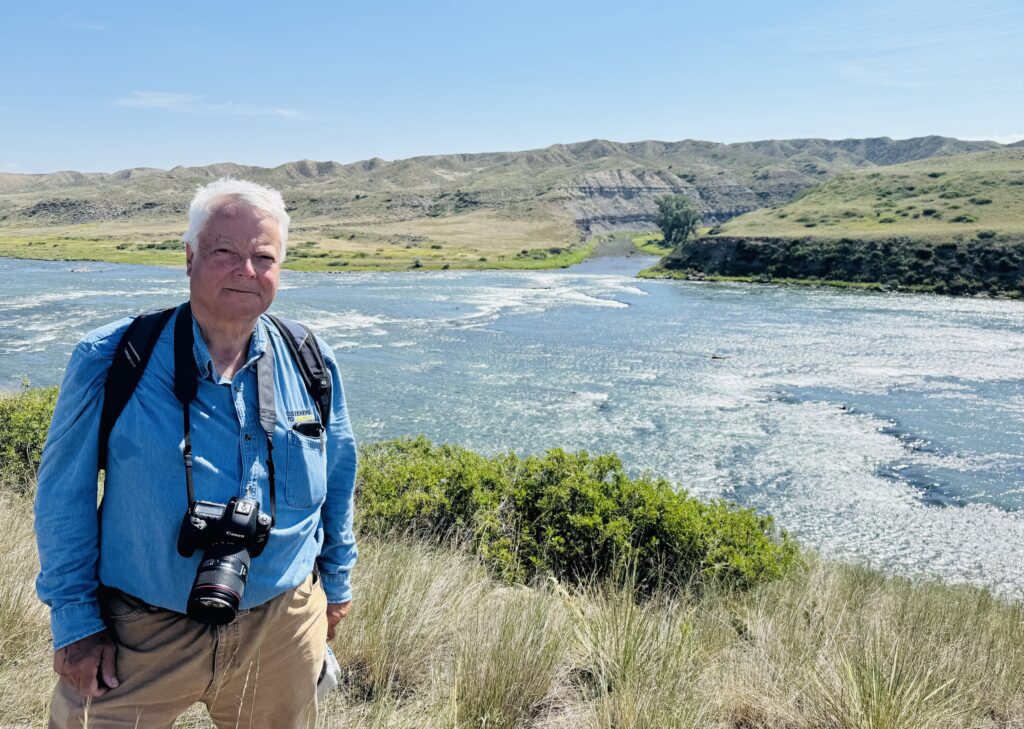Clay at the Missouri River just east of Great Falls, Montana. In the background is Belt Creek, where the Lewis and Clark Expedition began their 18.5-mile, one-month portage around the five falls of the Missouri River in June/July of 1805.
**First**, the relations between Meriwether Lewis and William Clark. If the journals are any indication, the two captains went all the way out and all the way back in “the most perfect harmony.” There is only the slightest evidence of the two leaders disagreeing. But we now know that they were quite distinct — Clark calmer, more stable, better in the day-to-day management of the expedition; Lewis high-strung, excitable, burdened under the pressures of “the mission.” I’d want to watch their interplay very carefully.
**Second**, the social dynamics. I’d look for clusters or factions among the men. Surely it was not invariably “all for one and one for all” on a 28-month camping trip! There must have been gravitations. Who were the jokesters? Who were the grumblers? Who jumped into action when action was required, and who shirked those responsibilities? Were there fistfights out beyond the scrutiny of the officers? Were there prayer groups? Was there sex? Which men were the most intense loyalists and which, if any, maintained a jaundiced view of the expedition’s purposes and leadership?
**Third**, did the men observe anything odd or troubling in Captain Lewis? Did they regard Lewis as aloof or distracted? Did the men quietly speculate on his complexities? Did they hold him in a kind of awe as the friend and protégé of the President of the United States? Did they find him accessible or inaccessible? Clearly, they respected Lewis; did they like him?
**Fourth**, did the captains have a private stash of alcohol? Because Thomas Jefferson observed a drinking problem in Lewis before and after the expedition, it stands to reason that we would want to know if he was nipping in the privacy of his tent. It’s more likely from a group solidarity perspective that the captains did not have a private supply of whiskey. Still, it is likely, given our understanding of Lewis’ burdens and his characteristic coping mechanisms, that he did.
**Fifth**, what was the social role of Lewis’ Newfoundland dog, Seaman? Was he the camp mascot, moving from buckskinned man to buckskinned man in search of caress or a morsel of food? Or was he exclusively Lewis’ dog, feverishly loyal to his owner and less interested in everyone else?
**Finally** (though the list could go on and on), would it be possible to observe anything in Meriwether Lewis that would provide any insight into his later decline and suicide? For those who accept that he committed suicide in October 1809, there are two schools. One believes that his decline and death were entirely unrelated to the great journey. This was the late Stephen Ambrose’s view that nothing in or on the expedition is a useful clue to his sad end. I belong to the other end of the spectrum, that surely his tragic and untimely death is somehow related to “what happened to him out there.” But what? This was the view of the late essayist Barry Lopez, who asked, “How far can you go out and still come back?”
A scholar can only do so much. In the short term, I have determined to try to learn everything I can from the journals about a young man named Joseph Field, one of the so-called “Nine Young Men from Kentucky.” He was the first to kill a buffalo. He was bitten by a rattlesnake on the Fourth of July 1804 near Atchison, Kansas. He was a Lewis favorite, along with his brother Reuben Field. Lewis took them on the most difficult and perilous missions of the expedition and singled them out for praise in his final report to the secretary of war. The Field brothers were at the killing field up at Two Medicine Creek near today’s Glacier National Park when the expedition’s contingent of four killed at least one of the eight young Blackfeet men who were trying to steal their guns and horses. Joseph Field died in 1807, only one year after the expedition’s return — by way of violence, we think — but that is the total of all we know about his untimely end.
Meanwhile, the trail-worn journals grace one of my library shelves. After five decades of scrutiny, I’m not nearly done with them yet.
---
[Vermont](https://ltamerica.org/tag/vermont/ "1 topics")[U.S. Presidents](https://ltamerica.org/tag/u-s-presidents/ "71 topics")[Washington](https://ltamerica.org/tag/washington/ "2 topics")[Utah](https://ltamerica.org/tag/utah/ "11 topics")[William Shirer](https://ltamerica.org/tag/william-shirer/ "1 topics")[Podcast](https://ltamerica.org/tag/podcast/ "1 topics")[Wisconsin](https://ltamerica.org/tag/wisconsin/ "0 topics")[North Dakota](https://ltamerica.org/tag/north-dakota/ "53 topics")[Republic](https://ltamerica.org/tag/republic/ "0 topics")[Tennessee](https://ltamerica.org/tag/tennessee/ "1 topics")[Theodore Roosevelt](https://ltamerica.org/tag/theodore-roosevelt/ "16 topics")[Oppenheimer](https://ltamerica.org/tag/oppenheimer/ "1 topics")[Reading](https://ltamerica.org/tag/reading/ "1 topics")[north daktoa](https://ltamerica.org/tag/north-daktoa/ "0 topics")[Virginia](https://ltamerica.org/tag/virginia/ "7 topics")[Steinbeck Travels](https://ltamerica.org/tag/steinbeck-travels/ "75 topics")[Wyoming](https://ltamerica.org/tag/wyoming/ "4 topics")[Rivers](https://ltamerica.org/tag/rivers/ "3 topics")[North Carolina](https://ltamerica.org/tag/north-carolina/ "3 topics")[Video](https://ltamerica.org/tag/video/ "51 topics")[The Constitution](https://ltamerica.org/tag/the-constitution/ "1 topics")[Thoreau](https://ltamerica.org/tag/thoreau/ "5 topics")[Rome](https://ltamerica.org/tag/rome/ "1 topics")[Walden](https://ltamerica.org/tag/walden/ "1 topics")[New England](https://ltamerica.org/tag/new-england/ "1 topics")[paintings](https://ltamerica.org/tag/paintings/ "0 topics")[New Mexico](https://ltamerica.org/tag/new-mexico/ "3 topics")[Pennsylvania](https://ltamerica.org/tag/pennsylvania/ "1 topics")[New York](https://ltamerica.org/tag/new-york/ "8 topics")[U.S. Constitution](https://ltamerica.org/tag/u-s-constitution/ "1 topics")[Republics](https://ltamerica.org/tag/republics/ "1 topics")[Texas](https://ltamerica.org/tag/texas/ "4 topics")[Thomas Jefferson](https://ltamerica.org/tag/thomas-jefferson/ "34 topics")[Oregon](https://ltamerica.org/tag/oregon/ "4 topics")[Poetry](https://ltamerica.org/tag/poetry/ "1 topics")[State Parks](https://ltamerica.org/tag/state-parks/ "2 topics")[Travel](https://ltamerica.org/tag/travel/ "1 topics")[Sports](https://ltamerica.org/tag/sports/ "2 topics")[South Dakota](https://ltamerica.org/tag/south-dakota/ "16 topics")[Road Trips](https://ltamerica.org/tag/road-trips/ "18 topics")[Ohio](https://ltamerica.org/tag/ohio/ "2 topics")[Oppenheim](https://ltamerica.org/tag/oppenheim/ "0 topics")[South Carolina](https://ltamerica.org/tag/south-carolina/ "1 topics")[Space Exploration](https://ltamerica.org/tag/space-exploration/ "8 topics")[Water in the West](https://ltamerica.org/tag/water-in-the-west/ "24 topics")
**Categories:** Features
**Tags:** Books, Lewis and Clark, Native Americans, North Dakota
---
### [Notes for Our Next Book Club Meeting](https://ltamerica.org/notes-for-our-next-book-club-meeting/)
**Published:** September 25, 2025
**Author:** Editor
**Content:**
## Our next Book Club meeting is Wednesday, October 15, 2025 at 6:30 pm Central.
Contact [Liz](mailto:leagle@ltamerica.org) to Register and she will send you a Zoom link the week of the meeting.

Hello everyone,
Just a note to welcome you to our second book in the 2025 explorations book club. As you know, we read Gary Moulton’s *Lewis and Clark Day by Day* as the preliminary book. You can watch our conversations about the book [here](https://ltamerica.org/friends-of-lta-zoom-archive/) on our site.

I’m happy to say the next book is much shorter and much easier to read. It’s Timothy *Egan’s Short Nights of the Shadow Catcher*, about the life and work of the glass plate photographer Edward S. Curtis. Curtis took 40,000 dry glass plate photographs of Native Americans throughout the American West, and of landscapes in the West. He took some of the most important photographs ever taken of America’s indigenous people. He published 20 volumes of his research and images in a series called the *North American Indian*. Like so many others of his time, including Theodore Roosevelt, Curtis believed that Native Americans would disappear from American life. He was nearly correct. In 1900, the entire American Indian population of the United States was about 200,000. Fortunately, Native Americans have proved to be much much more resilient than the commentators of the time believed.
We will want to talk about the greatness of Edward S. Curtis. We will want to talk about the cultural criticism of his work.
I want to talk with you also about our proposed 2026 project to interview Native elders about specific court, images, and also the overall impact of Curtis’s work. We have already begun some of that work, and we are hoping that you will want to support it in a range of ways, because it is very important to let Curtis be seen through Indigenous eyes.
Please read the book. Take notes. Come with images you want to talk about, or themes you want to talk about. The more you generate the discourse, the happier I am.
See you soon, my friends!

**Categories:** LTA Friends Book Club
---
### [Humor on Trial in an Age of Disruption](https://ltamerica.org/humor-on-trial-in-an-age-of-disruption/)
**Published:** September 22, 2025
**Author:** Clay Jenkinson
**Excerpt:** Free speech and the future in context.
**Content:**
## Free speech and the future in context.
(Shutterstock)
> **“Truth is great, and will prevail if left to herself, that she is the proper and sufficient antagonist to error, and has nothing to fear from the conflict…”**
>
> **Thomas Jefferson**
I don’t normally watch late-night television. These days, it just postpones sleep without much enlightenment or even entertainment. Mostly, I have lost interest in the late-night monologues of Stephen Colbert, Jimmy Kimmel, Jimmy Fallon, and Seth Meyers because they have become so political. After spending too much of my alert time throughout the day listening to political rancor and the Culture Wars, I’m not really looking for more of it at bedtime. Meanwhile, the talk show lineups these days are at least half made up of actors and musicians I have never heard of, which proves either that I am entirely out of touch or that what passes now for celebrity has left me and many others high and dry.
First, there was the cancellation (effective May 2026) of Stephen Colbert’s *The Late Show* by CBS, bowing to pressure from the Trump administration. Now ABC’s Jimmy Kimmel has been suspended indefinitely, thanks to the same political pressures, for a joke he made in the wake of the murder of Charlie Kirk on September 10 in Orem, Utah. Now, Brendan Carr, the Director of the Federal Communications Commission, is talking about reviewing the licenses of television networks that criticize President Trump.
I decided to watch a YouTube clip of Jimmy Kimmel’s monologue from Monday, September 15, to see what all the fuss was about. The monologue, as usual, was filled with anti-Trump jokes and jabs, but the utterance that precipitated his suspension was: “We hit some new lows over the weekend, with the MAGA gang trying to characterize this kid who killed Charlie Kirk as anything other than one of them and doing everything they can to score political points from it.” Not much of a joke. It was an angry political accusation, embedded in a humorous monologue, disguised as a joke. If it had been funny, it might not have brought down the hammer on Kimmel, because laughter breaks the tension and signals that what is being said may not be strictly true. It might have been better, at so tense and volatile a moment in our frayed republic, for Kimmel’s writers to veer away from any joke that approached the Charlie Kirk shooting in any way, especially so soon after the incident, but what Kimmel said does not seem to me to be particularly offensive. It may be inaccurate. There were early reports that the young man who shot Kirk (Tyler Robinson) was enraged that Kirk was not right-wing enough.
That may have been the underlying basis of the joke. We have since been informed that this was not true. It certainly is true, however, that many MAGA commentators, including the President of the United States, immediately blamed the Left for Kirk’s murder. The Right has indisputably been attempting to score political points in the wake of the assassination.
In doing so, the Right conveniently ignores the brutal assault on Paul Pelosi (October 28, 2022), the arson attack on Democratic Governor Josh Shapiro’s home (April 13, 2025), the killing of Minnesota Democratic legislator Melissa Hortman and her husband (June 14, 2025), or the sacking of the U.S. Capitol on January 6, 2021. America is descending into another period of political violence — and it is clearly nonpartisan.
Representative Steve Scalise was nearly killed at a Congressional softball game practice on June 14, 2017. He’s a Republican. Representative Gabby Giffords was shot in the head at a constituency event on January 8, 2011. She’s a Democrat.
The “joke” Jimmy Kimmel delivered on September 15 was a dubious political jab. For which Kimmel should be suspended?! If tastelessness were sufficient reason to cancel commentators and comedians, “who shall scape whipping?” Comedians live at the edge of tastelessness. And when we laugh at their jokes, we are momentarily complicit in their transgressions. That’s the nature of humor.
It always seems weird to me when any political faction goes nutzoid about the content of a television show. Why not just change the channel or shut off the television altogether? That’s how the market makes program decisions. If half of Colbert’s or Kimmel’s audience drifted away in disgust, the networks would replace them in short order. Nobody forces a right-wing person to watch Colbert or Kimmel or Bill Maher or MSNBC or *60 Minutes* or *Saturday Night Live*. This is not (yet) George Orwell’s *1984*, where every dwelling has a telescreen that bombards the nation’s people with the pronouncements of Big Brother, and there is no way to change the channel. These days, there are essentially an infinite number of programs to watch on television or your smartphone at 10 p.m. No one is required to watch *Real Time with Bill Mahe*r any more than anyone is required to watch Mark Levin’s *Life, Liberty & Levin*. If it offends, turn away. Turn away in disgust.
Humor is edgy. Humor is transgressive. Humor offends. Humor nudges up to and sometimes crosses the line. We need humor to survive. It helps to bleed off the terrible tensions of being alive (in bed, in the office, in the kitchen, in the political arena), in part because it acknowledges things that “in polite society” we have a hard time admitting. Here’s a tasteless joke from 1980 when Massachusetts Senator Ted Kennedy challenged incumbent President Jimmy Carter for the Democratic nomination: “Did you hear that Amy Carter won her school’s spelling bee? She was the only student who could spell Chappaquiddick.” By 1980, the tragic incident at Chappaquiddick was more than a decade in the past, but who makes humor about the drowning of a young woman in a late-night car accident? When did it become OK to name a band the Dead Kennedys? Before the 1996 presidential election, Jay Leno delivered the following joke: “There are signs that Clinton is getting overconfident; he’s started dating again.” Within days of the horrific space shuttle Challenger disaster in 1985, this joke circulated widely but under the media radar. “What color were Christa McAuliffe’s eyes? Blue: one blew this way and the other blew …”
The idea that political humor is largely left of center is partly true, I suppose, but there is no shortage of satire aimed at the two Clintons (“Twin Air Bags,” said one inspired bumper sticker), Joe Biden, Barack Obama, Al Gore (the “lock box”), Howard Dean (shrieking his political ambition, January 19, 2004), and others. In the depths of the Bill Clinton scandals in 1998, I remember watching an episode of *The Tonight Show with Jay Leno*. A full 15 minutes of the monologue consisted of more than a dozen blow-job jokes.
Political humor serves to vent our frustration in our recognition that many (most?) politicians are pontificating, self-righteous hypocrites who make promises they have no intention of keeping, attack their real and perceived enemies for corruptions they practice themselves, pretend to be looking out for their constituents when they are mostly looking out for themselves, intone pieties they don’t actually feel, trot out party talking points they don’t necessarily endorse in private, and wrap themselves in God and the flag as if they held the patent for true patriotism.
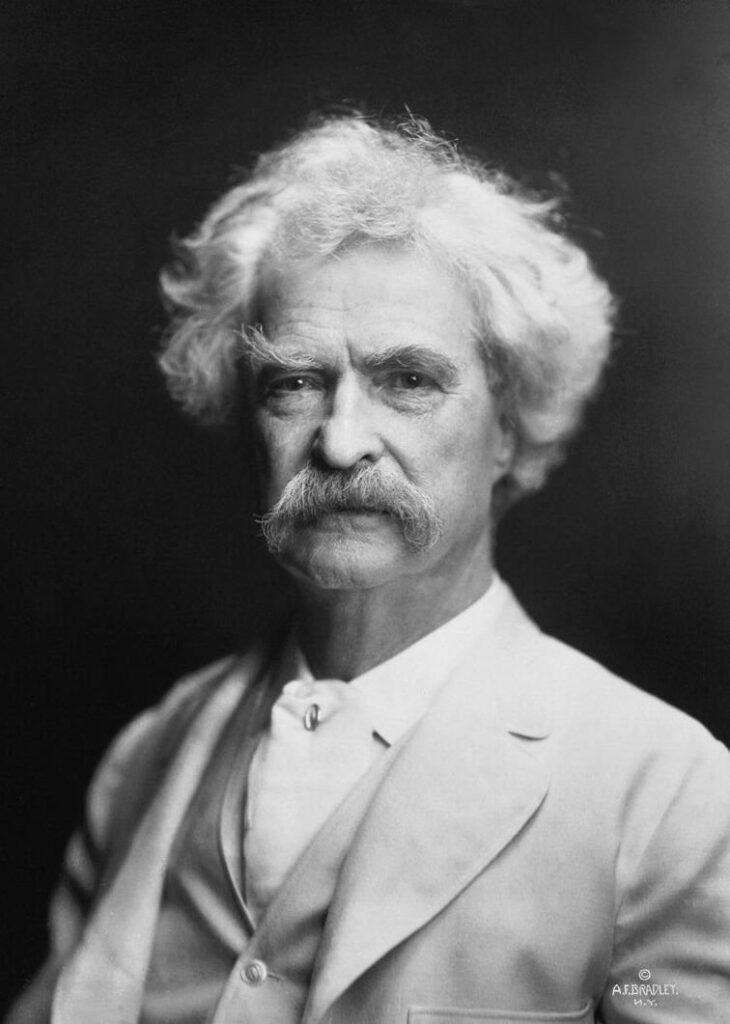Mark Twain portrait by A.F. Bradley, 1907.
Our greatest American humorist, Mark Twain, had a single word for all of this: humbug. But he also quipped, “It could probably be shown by facts and figures that there is no distinctly native American criminal class except Congress.” That one’s funny.
Kimmel’s failed joke lives somewhere in this sensible principle: neither party should be using something as horrific and appalling as the death of Charlie Kirk to ramp up its fundraising efforts or to score cheap political points against their opponents. The problem with Kimmel’s joke is that he was doing just that: using the assassination to excoriate MAGA Republicans. The joke needed to be more universal to rise to the level of humor. Twain spoke of “Congress,” not the Republicans. And Kimmel’s joke was definitely too soon.
We’re living through one of the most disturbed, tense, and volatile moments in American political history. No matter what your party affiliation, we are going to need humor to get through this. You cannot watch a single hour of cable “news” television — MSNBC, FOX, Newsmax — without hearing a load of laugh-out-loud humbug. The great humorists are ecumenical in their targeting, and they make jokes even about political figures they support. Why? Because humans are, as Twain knew better than anyone, humbug. He frequently targeted himself: “Giving up smoking is the easiest thing in the world. I know because I’ve done it thousands of times.
In his 1897 satire *The Mysterious Stranger*, Twain wrote, “Your race, in its poverty, has unquestionably one really effective weapon — laughter. Power, money, persuasion, supplication, persecution — these can lift at a colossal humbug — push it a little — weaken it a little, century by century; but only laughter can blow it to rags and atoms at a blast. Against the assault of laughter, nothing can stand.” In other words, laughter is more likely to expose hypocrisy and cravenness, and change the world for the better, than solemnity and pious homilies. It’s one of freedom’s most essential tools.
The great satirist David Letterman, who knows something about transgressive humor, got it exactly right. When he was asked to react to the silencing of Jimmy Kimmel, he said, “This is a misery. I feel bad about this because we all see where this is going, correct? It’s managed media. It’s no good. It’s silly. It’s ridiculous. And you can’t go around firing somebody. … That’s just not how this works.” Key words here: we may be heading toward managed media, i.e., state media, the modus operandi of countries whose censorship and human rights abuses we deplore, such as Russia, North Korea, the People’s Republic of China, and Viktor Orbán’s Hungary. Key phrase: “That’s just not how this works.” In other words, Letterman was centering the current controversy in humanity’s ancient and healthy tradition of transgressive humor. “A Cro-Magnon walks into a bar …”
American presidents are notoriously thin-skinned about being criticized. Still, until now, they have mostly just whined about it, put in calls to publishers and producers (LBJ was notorious for this), and grudgingly acknowledged that the First Amendment protects one of the most cherished values in a free society. As with so many other sacred norms of American life, Donald Trump is deliberately charting a more authoritarian course. At this point, I’m not particularly surprised that his administration seeks to silence its critics and crush free speech it finds offensive. What surprises me is that the American people are not taking to the streets to protest these repressive actions. It’s hard to conceive of anything more important to a free society than freedom of expression, even when it is obnoxious, outrageous, irresponsible, offensive, irreligious, or obscene.
The First Amendment is firm on this principle. This key provision of the Bill of Rights (our national list of human rights off limits to government, any government) was not crafted to protect polite speech or responsible speech. The Founding Fathers understood that a free society cannot thrive without its critics, its dissidents, its media watchdogs. Every American — the children of liberty — should be alarmed at any administration’s attempts to squash or punish freedom of expression.
Philadelphia’s *Aurora* newspaper, founded and edited by Benjamin Franklin Bache — grandson of Benjamin Franklin. (Photo NPS)
The 2000-year road to the First Amendment was long, bloody, and uncertain. As late as 1725, the great French exemplar of the Enlightenment, Voltaire, was beaten up by thugs in the employ of an aristocrat he insulted — in response to an insult hurled at Voltaire by that same member of the nobility. Here in the United States, the editor of the Philadelphia *Aurora*, Benjamin Franklin Bache, was arrested in 1798 under provisions of the unconstitutional Sedition Act for describing President John Adams as “the blind, bald, crippled, toothless, querulous Adams.” Mostly true, by the way, if a little impolite. During the Red Scare of World War I, the radical commentator Kate Richards O’Hare was convicted under the Espionage Act of 1917 for saying, in Bowman, North Dakota, that “American women who did not oppose the war and resist the Government in taking young men for the purpose of war were no better than the American brood sow.” She went to federal prison in Missouri, where she became a strenuous advocate for prisoner rights.
Already, I have observed the chilling effect that the Trump administration’s censorship pressures are having on American discourse. Tens of thousands of commentators, columnists, news anchors, reporters, influencers, scriptwriters, and comedians are being quietly warned by their sponsors and parent companies to pull back from any utterance that might lead to legal or other reprisals. The whole commentator class (except those on the right) is now walking on eggshells. This should alarm and even terrify every lover of the U.S. Constitution and “the rights of man.” Any survey of the history of free speech in America will immediately indicate that it is always a mistake to censor one’s critics, even in times of war. And what we are witnessing now is political censorship, the worst kind.
By this time, we are all a little numb from the norm-bashing disruptions of recent years, and mostly we wring our hands or shrug as one cherished tradition after another is shouldered off the stage of American life. But this is the big one, without which the rest of our freedoms are meaningless.
I believe that Charlie Kirk would deplore the Trump administration’s assault on freedom of expression. He was, after all, venturing into the often-hostile American college and university circuit to debate his critics. The standard of American life should be to cherish (and fight for) Voltaire’s famous (perhaps apocryphal) riposte: “Madam, I disagree with what you say but will defend to the death your right to say it.”
As usual, Thomas Jefferson said it perfectly: “Truth is great, and will prevail if left to herself, that she is the proper and sufficient antagonist to error, and has nothing to fear from the conflict, unless by human interposition disarmed of her natural weapons free argument and debate, errors ceasing to be dangerous when it is permitted freely to contradict them.”
Free speech can be terribly annoying, but the alternative is: tyranny.
---
## ***Discover more on these topics at Listening to America***
[Steinbeck Travels](https://ltamerica.org/tag/steinbeck-travels/ "75 topics")[The Constitution](https://ltamerica.org/tag/the-constitution/ "1 topics")[Oppenheim](https://ltamerica.org/tag/oppenheim/ "0 topics")[Theodore Roosevelt](https://ltamerica.org/tag/theodore-roosevelt/ "16 topics")[New Mexico](https://ltamerica.org/tag/new-mexico/ "3 topics")[Tennessee](https://ltamerica.org/tag/tennessee/ "1 topics")[North Dakota](https://ltamerica.org/tag/north-dakota/ "53 topics")[U.S. Presidents](https://ltamerica.org/tag/u-s-presidents/ "71 topics")[north daktoa](https://ltamerica.org/tag/north-daktoa/ "0 topics")[Rivers](https://ltamerica.org/tag/rivers/ "3 topics")[Walden](https://ltamerica.org/tag/walden/ "1 topics")[Sports](https://ltamerica.org/tag/sports/ "2 topics")[paintings](https://ltamerica.org/tag/paintings/ "0 topics")[Vermont](https://ltamerica.org/tag/vermont/ "1 topics")[U.S. Constitution](https://ltamerica.org/tag/u-s-constitution/ "1 topics")[Utah](https://ltamerica.org/tag/utah/ "11 topics")[South Dakota](https://ltamerica.org/tag/south-dakota/ "16 topics")[Oregon](https://ltamerica.org/tag/oregon/ "4 topics")[Water in the West](https://ltamerica.org/tag/water-in-the-west/ "24 topics")[Wyoming](https://ltamerica.org/tag/wyoming/ "4 topics")[South Carolina](https://ltamerica.org/tag/south-carolina/ "1 topics")[Reading](https://ltamerica.org/tag/reading/ "1 topics")[Thomas Jefferson](https://ltamerica.org/tag/thomas-jefferson/ "34 topics")[North Carolina](https://ltamerica.org/tag/north-carolina/ "3 topics")[New York](https://ltamerica.org/tag/new-york/ "8 topics")[Ohio](https://ltamerica.org/tag/ohio/ "2 topics")[Washington](https://ltamerica.org/tag/washington/ "2 topics")[State Parks](https://ltamerica.org/tag/state-parks/ "2 topics")[Travel](https://ltamerica.org/tag/travel/ "1 topics")[Video](https://ltamerica.org/tag/video/ "51 topics")[Podcast](https://ltamerica.org/tag/podcast/ "1 topics")[Virginia](https://ltamerica.org/tag/virginia/ "7 topics")[Space Exploration](https://ltamerica.org/tag/space-exploration/ "8 topics")[Republic](https://ltamerica.org/tag/republic/ "0 topics")[Pennsylvania](https://ltamerica.org/tag/pennsylvania/ "1 topics")[Republics](https://ltamerica.org/tag/republics/ "1 topics")[William Shirer](https://ltamerica.org/tag/william-shirer/ "1 topics")[New England](https://ltamerica.org/tag/new-england/ "1 topics")[Texas](https://ltamerica.org/tag/texas/ "4 topics")[Oppenheimer](https://ltamerica.org/tag/oppenheimer/ "1 topics")[Thoreau](https://ltamerica.org/tag/thoreau/ "5 topics")[Poetry](https://ltamerica.org/tag/poetry/ "1 topics")[Wisconsin](https://ltamerica.org/tag/wisconsin/ "0 topics")[Road Trips](https://ltamerica.org/tag/road-trips/ "18 topics")[Rome](https://ltamerica.org/tag/rome/ "1 topics")
**Categories:** Features
**Tags:** America at 250, Humanities, Thomas Jefferson, U.S. Presidents
---
### [A Lewis and Clark Report Card: The Phases of a Journey](https://ltamerica.org/a-lewis-and-clark-report-card-the-phases-of-a-journey/)
**Published:** September 16, 2025
**Author:** Clay Jenkinson
**Excerpt:** How did the Lewis and Clark Expedition stack up against the model for the classic journey? Clay makes his assessment.
**Content:**
## How did the Lewis and Clark Expedition stack up against the model for the classic journey? Clay makes his assessment.
A statute of Lewis and Clark and the expedition’s dog, Seaman. Sioux City, Iowa. (Shutterstock)
> **“Good fortune is what happens when opportunity meets with planning.”**
>
> Thomas Edison
Journey stories follow a consistent pattern. Out — Adventure — Return. [John Jakle](https://www.goodreads.com/author/list/245973.John_A_Jakle), the author of more than a dozen books about roadside culture in America, developed a journey template consisting of the following eight elements: **Predisposition to Travel; Trip Preparation; Departure; Outward Movement; Turnaround; Homeward Movement; Return; Trip Recollection.** I have found this outline useful in thinking about others’ journeys (Steinbeck, 1960; Least Heat Moon, 1978; Armstrong and Aldrin, 1969) and my own.
As I wrap up my 2025 transcontinental journey in the footsteps (in the wake) of Lewis and Clark, I thought the Jakle grid might help me sum up some of my thoughts about the great 1803–06 expedition.
**Predisposition to travel:** President Jefferson chose wisely; Meriwether Lewis had wanderlust. When the Lewis and Clark expedition left Fort Mandan in today’s North Dakota on April 7, 1805, Captain Meriwether Lewis wrote a heroic journal entry to declare that he was walking off the map of the known world. Lewis believed that the Mandan villages (1610 river miles from St. Louis) were the farthest outpost of “civilization,” and that he was now embarking upon the true discovery phase of the expedition. After writing that “we were now about to penetrate a country at least two thousand miles in width, on which the foot of civillized man had never trodden,” Lewis expressed his intense personal satisfaction: “entertaing as I do, the most confident hope of succeading in a voyage which had formed a da\[r\]ling project of mine for the last ten years, I could but esteem this moment of my departure as among the most happy of my life.” Lewis was 30 years old. He may have been speaking generally (ten years not 11½) and he may have been rounding up or down, but if he is telling the truth (and who would doubt this?) he’s been thinking of this journey since he was 20 or 21 years old.
When Thomas Jefferson came to write a biographical tribute to Lewis in 1813, he reported that Lewis had developed a roving disposition from earliest childhood: Lewis was, Jefferson says, “remarkable even in infancy for enterprise, boldness & discretion. When only eight years of age, he habitually went out, in the dead of night, alone with his dogs, into the forest to hunt the raccoon & opossum, which, seeking their food in the night, can then only be taken. In this exercise, no season or circumstance could obstruct his purpose, plunging thro’ the winter’s snows and frozen streams, in pursuit of his object.”
John Adams did not have a predisposition to travel. Nor did James Madison. Nor for that matter did Jefferson, who was squeamish at sea and who never ventured west more than 70 miles from his birthplace in Virginia. If Jefferson had ordered James Monroe to lead the expedition, he would have done an admirable job, but he would not have been a natural, because he did not share Lewis’ roving disposition.
Sketch by Italian artist Salvator Rosa, 1615-1673. (Art Institute of Chicago)
**Trip preparation:** Thomas Edison said, “Good fortune is what happens when opportunity meets with planning.” The Lewis and Clark expedition was extremely well planned. This should not be surprising when we remember that this was a pet project of President Thomas Jefferson, one of the most organized and visionary men of American history. It is clear from the available records that a great deal of thought went into every aspect of the journey: arms and ammunition; tools; scientific instruments; medical needs; gifts for Natives; a limited supply of trade goods; journal paper; clothing; sovereignty tokens; kegs of flour, pork, and whiskey; a small portable reference library…. When Lewis returned to the national capital in December 1806, President Jefferson asked him what he would do differently if he were to begin the expedition anew. Lewis said he would take more blue beads. Beads: inexpensive, light in weight, easy to transport, prized by Natives, especially if blue, a pigment they had a hard time manufacturing. The only other thing that was missing from the planning was the possibility that an illustrator or artist might join the expedition. When he found himself face to face with the great waterfall of the Missouri, Lewis decided his attempt to capture the moment with his pen was inadequate, even pitiful. He wished “for the pencil of Salvator Rosa or the pen of Thompson, that I might be enabled to give to the enlightened world some just idea of this truly magnifficent and sublimely grand object, which has from the commencement of time been concealed from the view of civilized man.”
Rosa was an Italian landscape painter, James Thomson was one of the most popular Scottish poets of the Era. Beyond that, they had everything they needed.
By the time the expedition reached home in September 1806, the men were destitute of nearly everything, except for gunpowder and lead from which to fashion bullets. In fact, there was enough lead and powder to make the entire journey over again. Lewis knew his frontier volunteers could live out there without boots or bacon, but firearms, gunpowder, and ammunition were essential to their survival. The Jefferson–Lewis team planned and prepared for the great journey masterfully.
**Departure:** It used to be common to say the Lewis and Clark expedition departed on May 14, 1804, from St. Charles, Missouri. More recently, the departure has been moved back to August 31, 1803, when Lewis pried the expedition’s new 55-foot keelboat from the drunken boat maker’s slip in Pittsburgh and began his descent of the Ohio River. The late Stephen Ambrose, in his semi-heroic book *Undaunted Courage*, says the Lewis and Clark expedition began on October 15, 1803, when Lewis landed at the Falls of the Ohio and made contact with his partner in discovery, William Clark. “When they shook hands,” Ambrose wrote, “the Lewis and Clark Expedition began.” In 2019, Congress extended the National Lewis and Clark Trail from St. Louis to Pittsburgh. While they were at it, I wish the sponsors of the legislation had extended the trail right up to the top of Jefferson’s “little mountain” (i.e., Monticello) or to Washington, D.C., or to Philadelphia, where Lewis got a short course on Enlightenment science from the savants of the city.
After spending time at the mouth of the Missouri this summer, watching its enormous load of water and silt surge into the Mississippi River, I imagined what those first days of travel in May 1804 must have been like for the enlisted men of the expedition. Excitement, curiosity, and exhilaration to be finally underway after a long winter at training camp. But when they turned their three big boats and 60,000 pounds of freight into the current of the Missouri, some of the men, at least, must have wondered what they had gotten themselves into. The sheer awesome power of the Missouri must have intimidated them all, or all except the seasoned French and mixed-blood watermen hired for the first year of travel. The men’s muscles were not nearly as strong as they would be after a few weeks of travel. There must have been groans, expletives, sharp comments, and some nervous laughter about what they were about to experience.
As the great journey began, Lewis did not say that this was one of the greatest days of his life. He was saving that for the moment when he crossed over into true terra incognita.
The Missouri River cuts its way through sandstone cliffs and craigs southeast of Fort Benton, Montana. (Photo Nolan Johnson)
**Outward Movement:** This is the part of the story best known to the American people. Most books about the expedition devote most of their attention to the period between May 14, 1804, and October 15, 1805, when the expedition finally navigated through the Bitterroot Mountains and reached a bioregion in which they would float downstream. Most histories of the expedition give waning attention to the return journey of 1806; some begin to summarize and push toward a conclusion after the Missouri River portion of the journey.
In the first year of travel, the expedition reached the Mandan and Hidatsa earthlodge villages in North Dakota. In the second year, a smaller party (temps and troublemakers having been sent downriver) reached all the way to the Pacific Ocean. Most of the great incidents of the expedition occurred on the outbound journey, particularly on the eastern side of the continental divide. Indeed, most of the great journal entries from the expedition come from this period.
To summarize: Lewis and Clark made their way from St. Louis to the Pacific with few real difficulties — a tense few days with the Teton Lakota near today’s Pierre, South Dakota; the monthlong 18¼ mile portage around the five great falls; and the ordeal in the Bitterroots. As with most long journeys, the going out was more satisfying than the return. I believe that if Lewis could have snapped his fingers at Fort Clatsop and been transponded back to the White House or Philadelphia, he would have done so at Fort Clatsop.
**Turnaround:** Here is an irony. The men of the Lewis and Clark expedition enjoyed their 1804–05 winter on the sub-Arctic plains of today’s North Dakota more than their 1805–06 winter at Fort Clatsop in the Pacific Northwest Rain Forest out near today’s Astoria, Oregon. The dry, cold, even extreme cold of the Dakotas was preferable to the incessantly soggy and dismal weather at the mouth of the Columbia, where it rains more than 125 inches per year. At Fort Mandan, there was plenty to eat, much of it animal but some of it vegetable, thanks to the Mandan people, who supplied corn and squash from their productive farms in the Missouri River bottomlands. At Fort Clatsop, the expedition fed on lean (often spoiled) elk and an insipid swamp potato called Wapato Root. On Christmas Day 1805, William Clark lamented, “our Diner concisted of pore Elk, So much Spoiled that we eate it thro’ mear necessity, Some Spoiled pounded fish and a fiew roots.” Yum.
Fort Clatsop, the winter encampment for the Corps of Discovery from December 1805 to March 1806. A replica of the fort, built by the National Park Service in 2006 stands on the site today. (NPS)
The expedition found the Natives in the vicinity of Fort Clatsop frustrating. They charged too much in trade. They showed all the tragic signs of an indigenous people whose contact with white traders had disturbed their ways and means, and debased their health. Some of the women — sought nevertheless by the young men of the expedition — were disfigured by venereal disease. By comparison, the Mandan and even the Hidatsa at Fort Mandan had been hospitable, respectful, and decorous.
1954 postage stamp commemorating the Lewis and Clark Expedition.
Everyone was eager to get out of the rain, away from the poor elk and Wapato root diet, back into the “fat buffalo plains” of Montana, and on to St. Louis, where they could reconnect with the world they left behind in 1803.
So Lewis and Clark left the Pacific Coast prematurely, on March 23, 1806, just wanting to press upriver where there might be better food and a less inhospitable climate. Because they left their winter encampment too early, they reached the Bitterroot Mountains too soon, when the winter snows were still twenty or more feet deep. The expedition hit that snow wall twice in the spring and early summer of 1806. Winters in the northern Rockies linger. It took most of two months of precious expedition time for the snow to melt enough in the Bitterroots for the men to straggle-wind their way through.
#### A premature departure. They were lucky this did not have darker implications for the journey home.
**Homeward Movement:** The return from the mouth of the Columbia was difficult in a variety of ways. The expedition was semi-bankrupt of trade goods or trinkets to use in their relations with Native Americans. The conventional wisdom takes its cues from Lewis’ journal entry of March 16, 1806: “Two handkerchiefs would now contain all the articles of merchandize which we possess.” In fact, as I have learned by reading the return journals with painstaking care, they still had quite a bit to trade — coats, a sword, cloth, pistols, lead, canoes, epaulettes, etc. But they had to be very careful in the spending and distribution of what little they had left to them. At Fort Mandan, the expedition had set up an ironmongery to manufacture items of value to their Native hosts. On the Columbia and Snake rivers in 1806, the captains established a frontier walk-in clinic, where they treated Native Americans for a wide variety of ailments. The captains knew most of their “remedies” were of no value, but they pledged at least to do them no harm.
The way home might have been a relatively relaxed portion of the journey had the party not split up at Travelers’ Rest, on the eastside base of the Bitterroots. Lewis and about half of the men went back to the Great Falls and the Missouri country. Clark took the other half (including Sacagawea, Charbonneau, and their son Pomp) over to the Yellowstone River.
Misfortune dominated Lewis’ return. When the cache pits at the great falls were opened, Lewis discovered that water had ruined a very large and ambitious collection of plant specimens he had been gathering since April 1805. Lewis’ hope that the Marias River had a Canadian source was disappointed. His attempt to get latitude and longitude at the upper reaches of the Marias (Two Medicine Creek) was thwarted by a heavy multi-day cloud cover. His encounter with eight young Blackfeet men up near the eastern portal of Glacier National Park ended with the death of at least one of those young Piegan men, maybe two. A couple of weeks later, Lewis was accidentally shot in the buttocks by one of his men in a botched hunting scene.
Meanwhile, Clark’s journey was almost like a modern Montana float trip. Some of their horses were stolen, but it didn’t make much of a difference. They passed through herds of buffalo in the tens and hundreds of thousands. The Clark party had no time-consuming and potentially dangerous encounters with Natives. They were floating downhill!
The two strands eventually caught up with each other just east of the confluence of the Missouri and the Yellowstone near today’s Williston, North Dakota.
Return: The expedition reached St. Louis on September 23, 1806. A witness at the dock said the men of the expedition looked like characters out of Daniel Defoe’s *Robinson Crusoe*. That’s a fabulous analogy.
Captain Lewis held up the post so he could dispatch a letter to President Jefferson announcing the expedition’s safe return and providing preliminary observations about the “most direct and practicable water communication across this continent.”
The two captains immediately visited a tailor to obtain some gentlemen’s clothes. The men were paid off. Most of them disappeared into their lives and eventually oblivion. About ten of them continued to seek adventures (or wealth) on the upper Missouri, and a few would meet their death there, while trespassing on Blackfoot ground. All of the expedition’s equipment (from boats on down) was unceremoniously abandoned or sold off, apparently with no sense of regret. (Today, every item they disposed of would be worth vast sums of money. Imagine what a national Lewis and Clark interpretive center could put on display.) What we would regard as sacred relics, they saw as army surplus. As I always say, they did not know we’d care.
The African American enslaved man, York, owned by Clark, apparently asserted himself in St. Louis as someone now deserving more than common slave status. However, Clark scoffed that off with great intensity, a glimpse of the deeply embedded racism passed from one generation to the next in the South. At one point Clark gave York what he called a trouncing.
Congress voted the two captains a very generous compensation package, and the enlisted men and private contractors were well rewarded, both with land and money.
**Trip Recollection:** I prefer to call this one Re-entry. Lewis was expected to publish a book or books about his journey. In the spring of 1807, he issued the prospectus of the grand publishing project he was undertaking. Three volumes of journals, maps, essays, policy papers, ethnography, Indian vocabularies, and hard science. First volume to appear later this year! From the moment the ink dried on Lewis’ ambitious and somewhat pretentious prospectus, the publishing project was bound to fail. The excellent historian David Nicandri makes the case that the United States did not possess the intellectual infrastructure at the time to make such a project possible. When the English explorer Captain James Cook returned from his voyages, a large team of talented people in London worked the journals and illustrations of the journey into an impressive multivolume report to the Admiralty and to the learned world. In 1807, the U.S. had only the rudiments of that necessary intellectual infrastructure. The American Philosophical Society was not the Royal Society or the Royal Geographic Society.
So, Lewis promised far more than was necessary and (more to the point) far more than he could deliver. This set him up for failure. And he did fail. Even if Lewis had promised only a single volume of his polished and toned-up journal entries, it is not clear that he would have been able to see it through to publication. There was something deeper going on.
Meriwether Lewis found re-entry very difficult. Thanks to his errand in the wilderness, he was now somehow unfitted for a sedentary life. He tried to find a woman to marry him, but could not. He was drinking too much, and at times taking laudanum (opioid) to numb the pain (of living). His public and private finances collapsed. He had a troubled governorship of Upper Louisiana, a truly thankless task for which Lewis was not well suited. He descended into silences that bewildered, annoyed, and then angered those back east who were counting on hearing from him — on important official government matters. Lewis made the unconscionable mistake of not communicating with his most powerful protector, Thomas Jefferson.
Lewis never found a way to re-integrate into Jefferson’s America. He took his own life on October 11, 1809. I have written extensively about this in a chapter called “Why?” in my book of Lewis’ complexities: *The Character of Meriwether Lewis: Explorer in the Wilderness*. Why did Lewis have such intense (and finally fatal) re-entry issues? After thinking about Lewis’ decline and death for decades, I am still uncertain of what exactly transpired in the mind of Lewis in those post-expedition years, but the late Barry Lopez (one of the extraordinary writers of our time) provided the most helpful clue to this mystery when we had dinner once in Portland. I asked him, “What is it about Meriwether Lewis?” Just that. He paused and then said, “How far can you go out and still come back?”
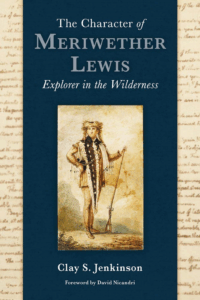
**Conclusion:** Good planning. Good leaders. Good selection of personnel. Good native hosts and guides. Good luck.
I hope you have found this report (based on the Jakle outline) as interesting as I have. It has allowed me to see the expedition with a fresh lens and to note some of the Lewis and Clark issues I have been wrestling with. Moreover, it has allowed me to put structural closure on a year that has been so brimming with stimulations that my brain and heart are a bit numbed out, a little overwhelmed.
---
***Follow Clay and the LTA Airstream as he retraces the famous Lewis & Clark Trail from 1804-1806 across the continent. This 2025 expedition is a central part of LTA’s big initiative to explore the country and take the pulse of America as it approaches its 250th birthday. Be sure to follow Clay’s adventures*** [***here***](https://ltamerica.org/tag/lewis-and-clark/) ***and on*** [***Facebook***](https://www.facebook.com/LTAmerica) ***— and*** [***subscribe to our newsletter***](https://ltamerica.org/newsletter/)**.**
**Categories:** Features
**Tags:** Books, Lewis and Clark, Thomas Jefferson
---
### [Four Perfect Days](https://ltamerica.org/four-perfect-days/)
**Published:** September 8, 2025
**Author:** Clay Jenkinson
**Excerpt:** Clay and friends are just off four perfect days canoeing remote sections of the Missouri River in central Montana.
**Content:**
## Clay and friends are just off four perfect days canoeing remote sections of the Missouri River in central Montana.
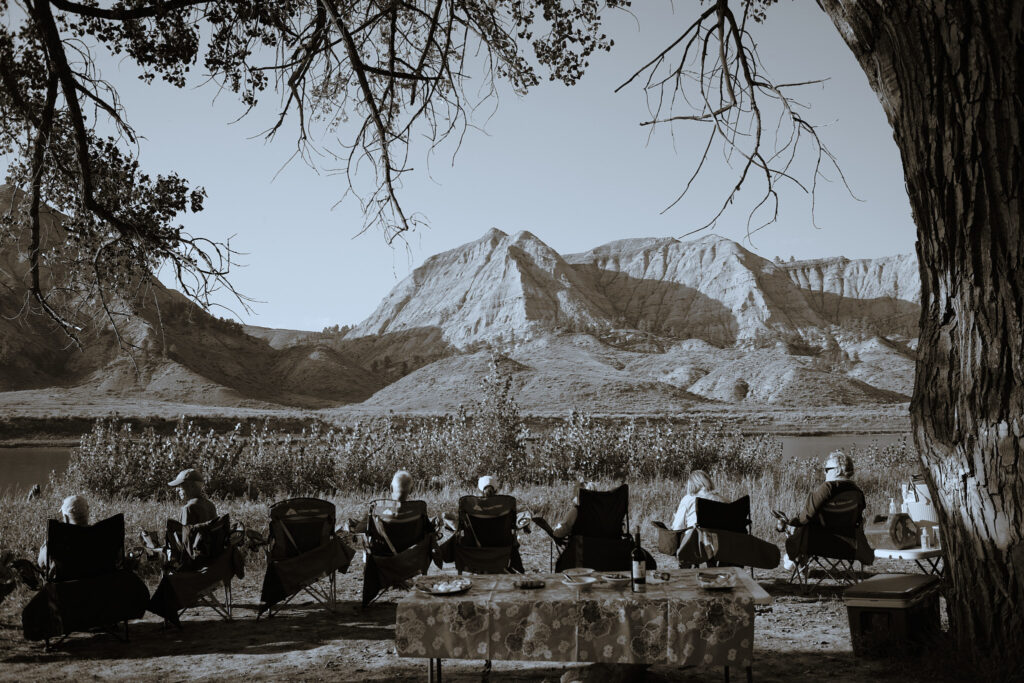Clay and friends enjoy a late summer afternoon on a remote section of the Missouri River in central Montana. (Photo Bryan Hall)
**Fort Benton, Montana, September 7, 2025** — We are just in from four perfect — by which I mean perfect — days on the Missouri River. To cap off my extraordinary year of following the Lewis and Clark trail from the Atlantic to the Pacific, I thought it would be fabulous to float a section of the Missouri I have never been on: from the mouth of the Judith River (Judith Landing) to the James Kipp Recreation Area.
I’ve floated sections of the Missouri River in several states, including North Dakota, South Dakota, and mostly Montana. In fact, I’ve taken groups through the famous White Cliffs section of the Missouri 25 times. My outfitter, Wayne Fairchild, has told me for at least 10 years that I must float the next four-day segment, through breaks and badlands country. So, like Fortinbras in Shakespeare’s *Hamle*t, I “sharked up a list of lawless resolutes,” and put in last Thursday. Most of my compatriots are veterans of several previous adventures with me in the American West.
We floated 61 miles and camped for three nights. The tyrant Wayne made us lug our own dry bags and set up our own tents. Nobody whined. Whining is prohibited. In fact, we took a certain pride in handling our own gear.
The meals were superlative. On the first night, we had steaks hand-chosen by our beef aficionado, Russ Eagle. Second night, excellent pork steaks. Third night, barbecued chicken breasts. Plus fine wine, cold cold beer (just at the right time), hors d’oeuvres, camp coffee, and lunches consisting of cold cuts, bread, cheese, tomatoes, and salad.
Because this was a self-selected group of people who were looking for something more than “just another Lewis and Clark tour,” I asked each person to read or recite a passage from a book, poem, song, or film that somehow expresses how they see life; a window into their outlook. I wasn’t sure this would work — it’s a bit artificial — but I’m certainly glad we did it. As we sat around the fire in camp chairs after dinner and dessert, with the coyotes just beginning to cry their cosmic loneliness, we listened to the selections. Some members of the group memorized their passage, while others read. First up was a cotton farmer from the Texas Panhandle, Barry, who quoted a terrific passage from the film *Secondhand Lions*. The point was to do the right thing, the noble thing, the life-affirming thing, even when you are pretty sure it is not going to prevail in a fallen world.
And we were off and running. We heard Dylan Thomas’ “Rage, rage, against the dying of the light,” the last sentences of Voltaire’s *Candide*, a letter from Jefferson to John Adams about the “moral sense,” which Jefferson thought every human being possessed (but must be exercised to operate at peak efficiency). Another veteran read from Jefferson’s letter to his daughter Maria about the ill effects of removing oneself from the world.
One of the group recited several passages from Henry David Thoreau’s *Walden*, including this short piece:
> I learned this, at least, from my experiment, that one advances confidently in the direction of his dreams, and endeavors to live the life he has imagined, he will meet with a success unexpected in common hours. He will put some things behind, will pass an invisible boundary . . . and he will live with the license of a higher order of beings.
It was magical to hear people reveal themselves in this way, around a fire, in a safe space, among friends, a little sheepishly, but with pride and a sense of ownership in the materials they had chosen.
Meanwhile, they really were four perfect days. The Missouri was generous to us. 15 miles the first day, 25 the second, 15 the third day, and just seven miles today. The only wind came on day three in the afternoon, but it was a gentle wind (Russ says three on a scale of 10). Otherwise, the Missouri was placid, glassy, dead calm. We saw herons and mergansers and maybe a dozen bald eagles. The moon rose last night, tangerine red, just as we were settling in for the night. Of all the groups I have taken on the Missouri River in Montana, this was the most harmonious in 25 years. Several couples squabbled and bickered briefly as they found their canoeing rhythm, but nobody had a bad time, not even for an hour or two.
I gave what I call “lecturettes” about Lewis and Clark now and then, and one about the flight of the Nez Perce in 1877, a 1,300-mile odyssey from their homeland in eastern Oregon and Washington over the Bitterroot Mountains, through Yellowstone National Park (then five years old), to the Crow Indian Reservation (where they were not given protection), and finally up toward Grandmother’s Land (Canada: Queen Victoria). But, as everyone knows, they were intercepted 40 miles short of the Canadian border. That’s when Chief Joseph gave the famous speech, the last line of which is, “From where the sun now stands, I will fight no more forever.” We were actually right at Cow Island Crossing in a marvelous copse of cottonwood trees when I gave this little talk.
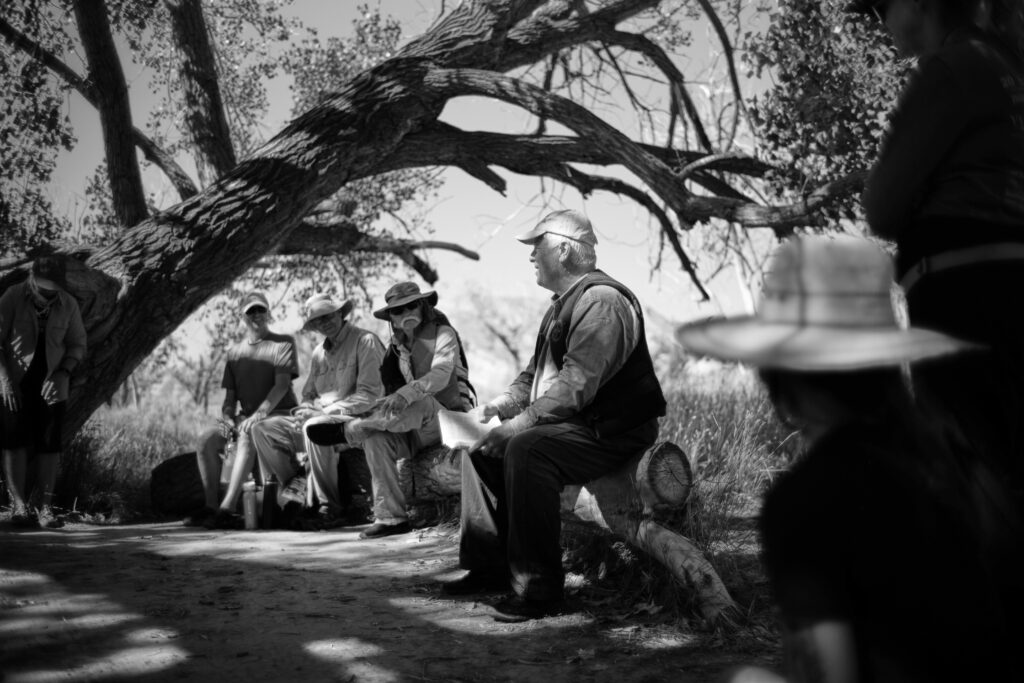Clay recounts the troubled flight of Chief Joseph and the Nez Perce near the site where they crossed the Missouri River in 1877. (Photo Bryan Hall)
We were all deeply moved by the nobility of Joseph and his band of about 418 older men, children, and women. We all felt that what the U.S. did to this band of desperate refugees back in 1877, noncombatants merely trying to get out of harm’s way, trying to uphold a peace and friendship treaty that dated to the Lewis and Clark expedition in 1806, is one of the most shameful moments in the long, sad history of the frontier conflict. To talk about it there, at Cow Island, was maybe the highlight of the trip for me.
We also stopped where, on May 25–26, 1805, first William Clark and then Meriwether Lewis first glimpsed the Rocky Mountains on their trek to the Pacific. Clark was first up the hill from which the Rockies made their appearance, but Lewis wrote about his own first glimpse so beautifully that historians have tended to give that great moment to Lewis rather than Clark. Lewis wrote:
In the after part of the day I also walked out and ascended the river hills which I found sufficiently fortiegueing. on arriving to the summit one of the highest points in the neighbourhood I thought myself well repaid for any labour; as from this point I beheld the Rocky Mountains for the first time . . . these points of the Rocky Mountains were covered with snow and the sun shone on it in such manner as to give me the most plain and satisfactory view. while I viewed these mountains I felt a secret pleasure in finding myself so near the head of the heretofore conceived boundless Missouri; but when I reflected on the difficulties which this snowey barrier would most probably throw in my way to the Pacific, and the sufferings and hardships of myself and party in them, it in some measure counterballanced the joy I had felt in the first moments in which I gazed on them; but as I have always held it a crime to anticipate evils I will believe it a good comfortable road untill I am compelled to beleive differently. \[sic throughout\]
It’s autumn now. We were pretty cold the first night. I had to lend one suffering guest a pair of socks for her sleeping bag. In the morning, early, we all hovered around what was left of the campfire, and we badgered the crew to haul the coffee urn into our midst. The days are shorter now. The light is gentler than in July or August. There was a slight feeling of melancholy at the thought that stark, stern winter is coming to the northern Great Plains.
We disembarked from the river in early afternoon, rode in Wayne’s yellow school bus back to Fort Benton. Tonight we have a farewell dinner in the historic Grand Union Hotel. We are elated and joyful but “sufficiently fortiegued.” And tomorrow is the end-of-summer diaspora.
For a range of reasons, most of them relating to my Lewis and Clark immersion tour, this has been one of the best summers of my life.
They are rounding us up for dinner, and I’m advised to end my preliminary report now. But my heart is out there on a bench of the Missouri River, with a few dozen cottonwoods gracing the grassland, with a breeze of 5-9 miles per hour, and thoughtful, adventurous friends talking quietly in little clusters, and the moon rising over what was once American Serengeti. All we need is a few thousand bison grazing and grunting on the other side of the river.
---
***Follow Clay and the LTA Airstream as he retraces the famous Lewis & Clark Trail from 1804-1806 across the continent. This 2025 expedition is a central part of LTA’s big initiative to explore the country and take the pulse of America as it approaches its 250th birthday. Be sure to follow Clay’s adventures*** [***here***](https://ltamerica.org/tag/lewis-and-clark/) ***and on*** [***Facebook***](https://www.facebook.com/LTAmerica) ***— and*** [***subscribe to our newsletter***](https://ltamerica.org/newsletter/)**.**
**Categories:** Dispatches from the Road
**Tags:** Lewis and Clark, Montana, Native Americans
---
### [Drowning the Missouri River — Lewis and Clark on the Reservoirs!](https://ltamerica.org/drowning-the-missouri-river-lewis-and-clark-on-the-reservoirs/)
**Published:** September 1, 2025
**Author:** Clay Jenkinson
**Excerpt:** The Missouri was a wild, free-flowing river when Lewis and Clark began their epic western journey in 1804. Today, much of that river is a series of reservoirs.
**Content:**
## The Missouri was a wild, free-flowing river when Lewis and Clark began their epic western journey in 1804. Today, much of that river is a series of reservoirs.
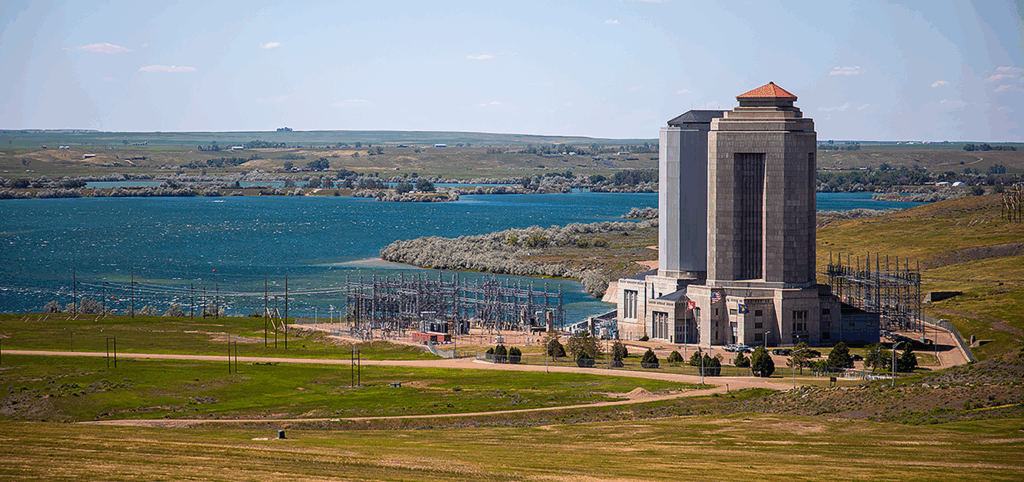Fort Peck Dam. The U.S. Army Corps of Engineers has operated the dam since 1940. Stretching across the upper Missouri River in northeastern Montana, it is the furthest upstream of six dams and reservoir projects built on the main stem of the upper Missouri River. (U.S. Army Corps of Engineers)
The 1804-1806 Lewis and Clark expedition was a river journey. President Jefferson instructed his protégé and personal secretary Meriwether Lewis to ascend the Missouri River to its source, climb up and over the Rocky Mountains, and descend the rivers of the Columbia basin all the way to the Pacific Ocean. Lewis commissioned a 55-foot keelboat in Pittsburgh (the putative source of the Ohio River), and floated (soon with William Clark) down to its confluence with the Mississippi (at today’s Cairo, Illinois). Then they floated 190 miles up the Mississippi River to St. Louis. After a winter’s layover at a makeshift compound they called Camp Wood on the Illinois side of the river, the expedition struggled its way up the Missouri to today’s North Dakota (Fort Mandan), where they spent a cold but snug winter. In the spring, the keelboat was sent back downriver, and the expedition proceeded on with “six small canoes and two large pirogues.”
In those days, rivers were roads, and roads were rivers. The best way to get across the continent in 1804 was along waterways. Lewis and Clark carried a comprehensive set of instructions, a wide-ranging Enlightenment agenda. However, central to Jefferson’s objectives was for the expedition to discover the “most direct & practicable water communication across this continent, for the purposes of commerce.”
The only serious impediment on the Ohio River was the falls at Louisville, Kentucky. The Mississippi was wide open. The Missouri — as Lewis noted with some astonishment in southwestern Montana — was navigable nearly to its source, with only the five cataracts at today’s Great Falls requiring a portage of the expedition’s tons of baggage. Farther west, the Bitterroot Mountains proved to be the chokepoint of the journey — both going out and coming back. But once the expedition found floatable waters of the Columbia system at today’s Orofino, Idaho, and trees big enough to fashion dugout canoes, they were able to descend the Clearwater, Snake, and Columbia (at breakneck speed) without portaging until they reached Celilo Falls and the Cascades. The Clearwater, Snake, and Columbia were a wild ride. The expedition reached the Pacific Ocean sometime between November 7 and November 15, 1805, depending on definitions of what constitutes the mouth of a river.
And then, a few months later, they traveled all the way back. The return journey must have been a difficult time for everyone on the expedition. They were half-destitute of trade goods, they knew now the rigors ahead of them, and they were all just eager to get home — well, all but Private John Colter.
**That Was Then**
If one wanted to float the Lewis and Clark rivers today, there would be many frustrating impediments. There are a total of 92,000 dams in the United States, with 1,920 designated as major dams. A significant number of them are on the Missouri, Snake, Clearwater, and Columbia rivers.
In the interest of relative brevity, let’s concentrate on what Lewis called “the mighty and heretofore deemed endless Missouri River.” The float trip would start pretty well. If you began your journey at St. Louis, you’d be able to float unobstructed all the way to Yankton, South Dakota, a distance of 811 river miles. Then the difficulties begin.
**Impediment One:**
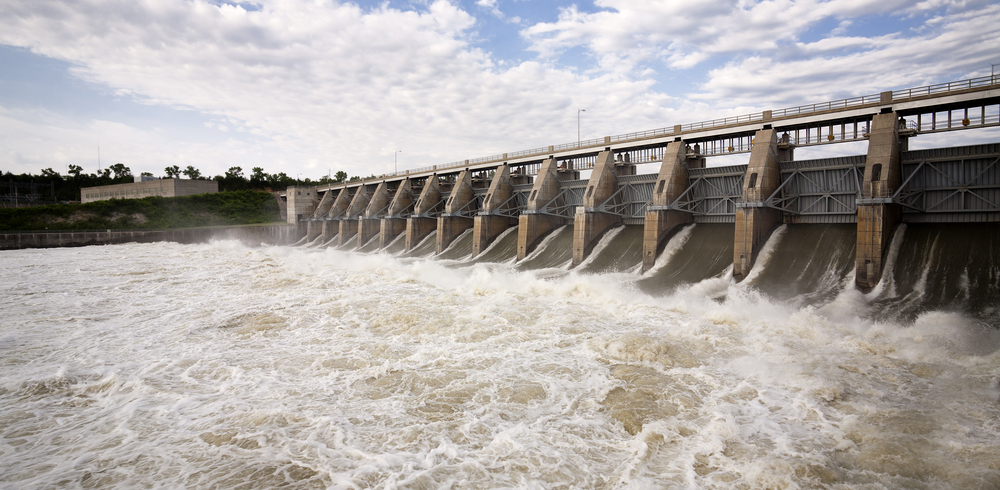Gavins Point Dam, in South Dakota, impounds the Missouri River to create Lewis and Clark Lake. (Shutterstock)
At Yankton, you would butt up against Gavins Point Dam, built between 1952 and 1957, backing up a reservoir called Lewis and Clark Lake, 25 miles long. Its maximum depth is 45 feet.
**Impediment Two:**
Fort Randall Dam is located at river mile 880, just 44 miles upstream from the backwater of Lewis and Clark Lake. The reservoir it creates is 107 miles long, with a maximum depth of 140 feet. It was built between 1946 and 1953. The dam created Lake Francis Case, named after a 35-year member of Congress from South Dakota — the last waters of Lake Francis Case butt right up to the spillway of Big Bend Dam.
**Impediment Three:**
Begun in 1959 and completed in 1963, Big Bend Dam, near Thompson, South Dakota, is 80 miles long, with a maximum depth of 78 feet. It backs up the Missouri River to within just eleven miles of Oahe Dam at Pierre. The reservoir is named Lake Sharpe in honor of the 17th Governor of South Dakota, Merrill Q. Sharpe.
**Impediment Four:**
South Dakota’s Lake Oahe is a full 231 miles long, backed up by the Oahe Dam, which was begun in 1948 and finally completed in 1962. It’s the fourth-largest man-made reservoir in the United States. Its maximum depth is 205 feet. President John F. Kennedy traveled to Pierre, South Dakota, to dedicate the dam on August 17, 1962. (I floated about 50 miles of Oahe in July.) Lake Oahe finally plays out just south of Bismarck, North Dakota.
The 87 miles of the flowing Missouri between Bismarck and Garrison Dam are “free” in a very loose sense of the word. This stretch is heavily rip-rapped by the U.S. Army Corps of Engineers to prevent the river from overflowing its banks, as it is naturally supposed to do and once did. Because Garrison Dam is a silt trap, the water below the dam is cooler and clearer than the pre-dam Missouri. For the first 10 miles above Bismarck, the west bank is fairly densely occupied by luxury homes. There are some truly lovely stretches of the river in those 87 miles. Unfortunately, most of the land on both sides of the river is privately owned, some of which is farmed, and thus off-limits to land-based recreation.
**Impediment Five:**
Garrison Dam is the fifth-largest earthen dam in the world. Construction began in 1947 and was finished by 1953. Its reservoir, Lake Sakakawea, is 177 miles long. The reservoir was named for the Shoshone-Hidatsa woman who traveled with the Lewis and Clark expedition from April 1805 until mid-August 1806.
Fortunately, after Lake Sakakawea plays out, the Missouri River is permitted to run something like a live river between Fort Peck, Montana, and the confluence of the Missouri and Yellowstone at Williston, North Dakota. That’s a long stretch: about 250 miles. The region is so isolated and remote from anything else, however, that it has never emerged as a recreational attraction.
**Impediment Six:**
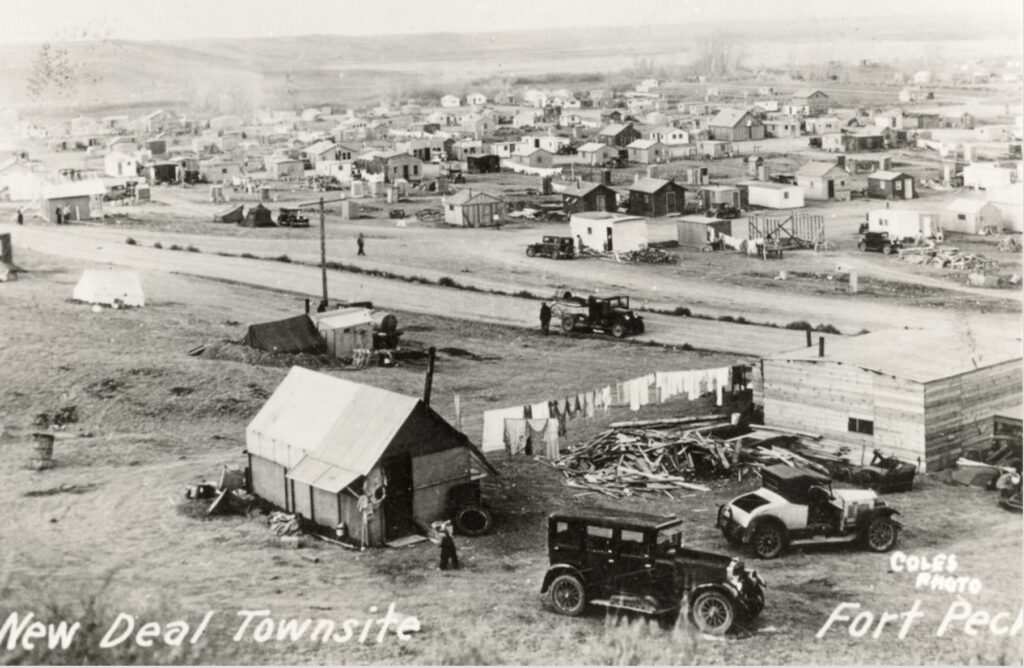Near the Fort Peck Dam construction site in eastern Montana, circa 1937. The Fort Peck Dam is the highest of six major dams along the Missouri River. Dam construction workers and their families developed the townsite to provide temporary housing. (Montana Historical Society)
The first of the great dams on the Missouri River was a New Deal project. Fort Peck Dam was built between 1934 and 1940 in the depths of the greatest economic crisis and the worst drought in American history. Fort Peck Reservoir is 134 miles long. Maximum depth 220 feet. The promise of the New Deal was so perfectly embodied in the massive public works project that *Life* magazine, in its very first issue, November 23, 1936, ran a cover story on Fort Peck, featuring extraordinary photographs taken by Margaret Bourke-White, one of the great photographers of the twentieth century. Her cover photo of the dam’s giant white concrete buttresses looks like a Depression fortress against “fear itself.” Ivan Doig’s 1996 novel *Bucking the Sun* is an account of a family that leaves their desiccated alfalfa fields to find work at the dam site.
So. At least half of the two Dakotas’ contingent of the Missouri River is now under tens and sometimes hundreds of feet of reservoir water. A flotilla would have to portage around all six of those massive dams, none of which have locks, and for about half of the journey from St. Louis, it would be a lake rather than a river experience.
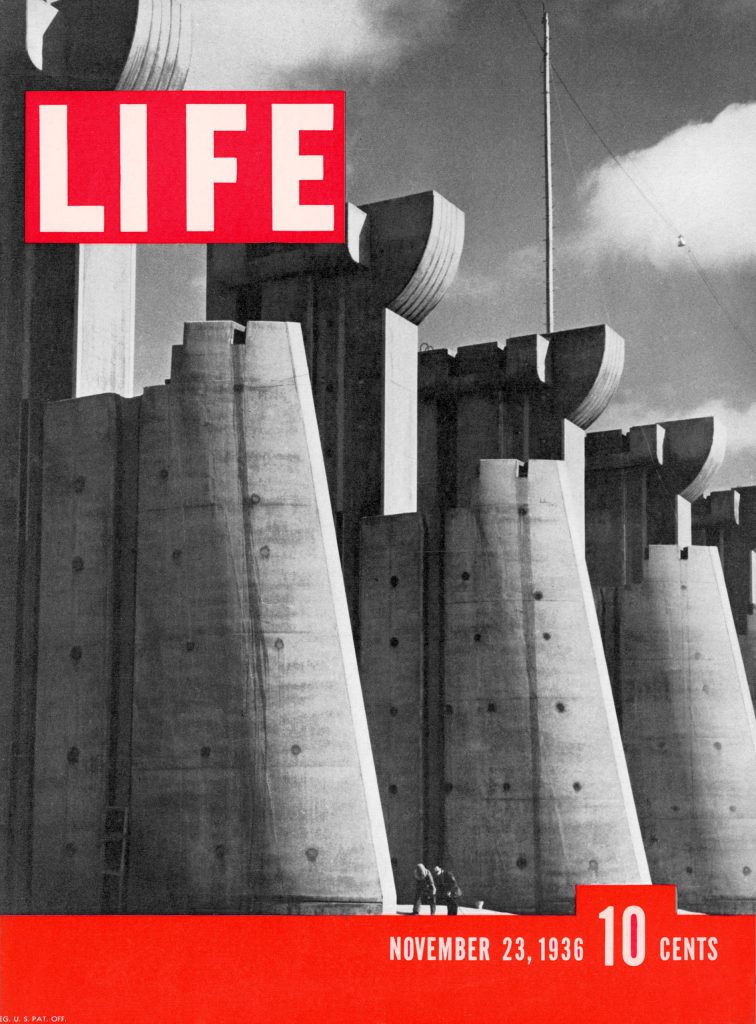Life magazine’s inaugural issue, published on November 23, 1936, featured a cover story on the Fort Peck Dam.
## **Free at Last**
Suppose you could get through all that slackwater between the bottom of South Dakota and east central Montana, when Fort Peck Reservoir finally plays out north of Mosby and south of Malta, Montana. In that case, you finally get to something resembling the pre-industrial Missouri River. The Missouri between James Kipp Recreation Area and Fort Benton is, without question, the best of what’s left of the Missouri. That 200-mile segment includes the fabled White Cliffs section of the Missouri (Meriwether Lewis’ “scenes of visionary enchantment”) and the Missouri Breaks, a remote badlandsy reach of the river that flows through one of the least densely populated regions of the United States. This is the Missouri River most loved by Lewis and Clark types. (I’ve floated it 25 times, each experience slightly different, proof positive that the pre-Socratic philosopher Heraclitus was right when he declared that “no man steps into the same river twice.”)
**Impediment Seven:**
At the falls of the Missouri, Lewis and Clark were forced to conduct an 18½ mile portage with their tens of thousands of pounds of baggage and gear. There are five cataracts at Great Falls: Black Eagle Falls, Colter Falls, Rainbow Falls, Crooked Falls, and the Great Falls themselves. It took the expedition a month to get around all of these impediments.
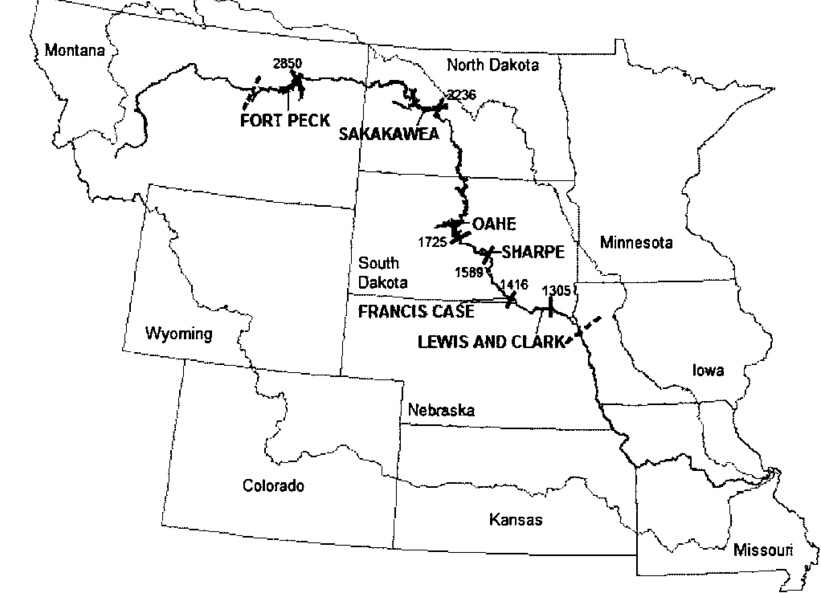Major dams on the Missouri River.
Beyond that, there are a few Missouri River dams of the second rank: Holter (25 miles long), Hauser Dam (25 miles), Canyon Ferry (30), and Toston (just a couple of miles).
If you start to add all of these dams and rip raps up, you can see why the Missouri is always on the short list for “the most industrially compromised river in America.” There are 14 major dams between Three Forks, Montana, and St. Louis. If we agree that the Missouri is approximately 2,540 miles long, and compare that which can be said to be “free flowing” with that which has been transformed into a series of water storage containers, the result is daunting, and for many, heartbreaking.
According to the United States Geological Survey (USGS), a total of 1,179 miles of the Missouri River are impounded (i.e., reservoirs), and 1,361 miles are “free flowing.” In other words, nearly half (46%) of the Missouri River between St. Louis and Three Forks, Montana, consists of slackwater. Read Gary Moulton’s masterful, comprehensive edition of the *Journals of the Lewis and Clark Expedition*, including all of its thousands of annotations. You’ll find endless footnotes like these: “In McKenzie County, North Dakota, a site now under Garrison Reservoir.” “Sunday Island was still on the map in the 1890s; it would not be under Garrison Reservoir.” “The area is now inundated by Oahe Reservoir.” “The two sites are in Phillips County, Montana, and are now inundated by Fort Peck Reservoir.”
In my own North Dakota, for example, every Lewis and Clark site between the South Dakota border and Bismarck has been inundated (95 miles). That includes everything between October 13 and October 21, 1804. Between Bismarck and Garrison Dam, there are 87 “free-flowing” miles of the Missouri. Garrison Dam’s massive Lake Sakakawea (177 miles) extends right up to the Montana border, thus drowning every Lewis and Clark site from between April 10 and April 27, 1805, and between August 3 and August 13, 1806 (on the return journey). In other words, of the 423 total Missouri River miles within the state of North Dakota, 336 are impounded under Lakes Oahe and Sakakawea. That’s 79%. The industrialization of the Missouri River drowned the mouth of the sublime Little Missouri River near Twin Buttes, North Dakota (April 13, 1805, outward bound), and the site where Meriwether Lewis was accidentally shot in the buttocks (August 11, 1806, return journey).
## The Real Tragedy
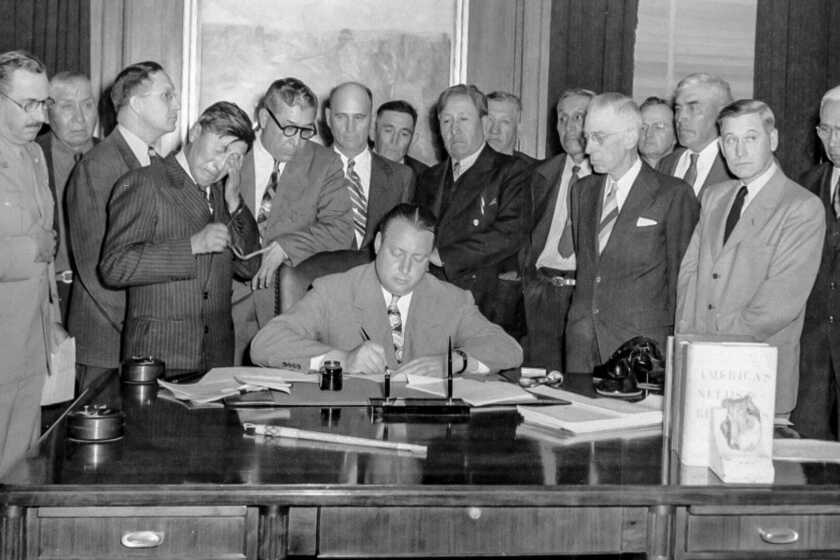A photo of the signing of the Garrison Dam agreement on May 19, 1948. The man wiping away tears is George Gillette, chairman of the Mandan, Hidatsa, and Arikara Nation (MHA Nation or Three Affiliated Tribes). The agreement involved the forced sale of over 150,000 acres of MHA Nation land for the construction of the Garrison Dam and the creation of Lake Sakakawea. (National Archives)
This matters greatly to me, but I freely acknowledge that those inundations are no big deal in the grand scheme of things. But ask a member of the Lakota Nation, or the Mandan, Hidatsa, and Arikara Nation, to assess the impact of Oahe and Garrison Dams, and you enter the realm of a holocaust. In the mid-twentieth century, those Native Americans, indigenous here, sovereign on their homelands, and full citizens of the United States, were flooded out and flooded back from the Missouri River by the United States government and the U.S. Army Corps of Engineers. They were not consulted. They were not at the table. Their views, rights, and ways were not represented in the faraway rectilinear rooms where American decisions are made. They were minimally compensated. They were merely notified after the decisions were laid in concrete. During the great dam building era of American history between 1920-1976 (when Jimmy Carter was elected to the presidency), fueled by the gargantuan economic power of “the American Century,” drunk on concrete and steel after the massive industrial success of World War II (the Manhattan Project, the Burma Road, the 8,500-foot B-29 runway at Tinian in the Marianna Islands, the nearly miraculous pace of airplane manufacturing at Boeing), and enjoying more abundant natural resources than any other country except Russia, the United States built Interstate highways, world-class bridges, a myriad of skyscrapers, and cyclopean dams! Hoover 1936, Grand Coulee 1942, Shasta 1945, Davis 1950, Chief Joseph 1958, Glen Canyon 1963, Flaming Gorge 1964, John Day 1971. Fort Peck. Gavins Point. Fort Randall. Big Bend. Oahe. Garrison.
*Coyote Warrior* by Paul VanDevelder.
The Lakota elder and writer Elizabeth Cook-Lynn has said that the damming of the Missouri River in the Dakotas “cut the spiritual artery of the Lakota people.” As Garrison Dam backed up right through the Fort Berthold Indian Reservation in central North Dakota, fully 85% of the Mandan, Hidatsa, and Arikara people were forcibly removed from their fertile and economically sustaining river bottomlands and relocated up onto the windswept plains. Nine towns were inundated, and 94% of the tribes’ agricultural lands. Although the Mandan, Hidatsa, Lakota, and Arikara are resilient and persevering people, they have never fully recovered from the cold-blooded damming of their river. If you want to read about this sorry episode in American history, I suggest Paul VanDevelder’s *Coyote Warrior*.
In the face of that 20th-century catastrophe, a campsite visited for a day or two by a pack of pale bearded men from somewhere far away 230 years ago approaches the border of frivolity.
I’m no hydrologist, but I do know that the six main stem dams on the Missouri River were both-and political “compromise” that lumped into one swollen Missouri River Development project almost everything the two rival federal agencies, the U.S. Bureau of Reclamation and the U.S. Corps of Engineers, had each individually envisioned to transform the Missouri Basin. In other words, we dammed the Missouri River much more than was necessary. I know a superb Missouri River historian who believes one or even two of the six mainstem dams could be removed without significant loss of flood control, including (he suggests) Garrison Dam, the cause of the Mandan-Hidatsa-Arikara tragedy.
We now live in a post-industrial era in which dam removal is finally a realistic possibility, especially out where the salmon population has collapsed thanks to giant dams on the Snake and Columbia Rivers, and where (we now know) dam removal would almost immediately begin to restore those salmon runs. There is talk about dismantling the Glen Canyon Dam on the Colorado River. There is a significant and growing Rivers Have Rights movement worldwide. It is easy to imagine selective de-damming of the Missouri River, but it is harder to believe that it is politically possible. Not yet.
For us Lewis and Clark types, the appeal of the 1804-1806 expedition is anchored in the romance of American rivers. For indigenous peoples of the continent, living rivers are not a metaphor. Countless billboards, murals, bumper stickers, water towers, and protest signs in “Indian Country” say simply: “Water is Life.”
(Shutterstock)
---
***Follow Clay and the LTA Airstream as he retraces the famous Lewis & Clark Trail from 1804-1806 across the continent. This 2025 expedition is a central part of LTA’s big initiative to explore the country and take the pulse of America as it approaches its 250th birthday. Be sure to follow Clay’s adventures*** [***here***](https://ltamerica.org/tag/lewis-and-clark/) ***and on*** [***Facebook***](https://www.facebook.com/LTAmerica) ***— and*** [***subscribe to our newsletter***](https://ltamerica.org/newsletter/)**.**
**Categories:** Features
**Tags:** Lewis and Clark, Montana, North Dakota, South Dakota, Thomas Jefferson, Water in the West
---
### [Assessing Two Years on the Road in My Airstream ](https://ltamerica.org/assessing-two-years-on-the-road-in-my-airstream/)
**Published:** September 1, 2025
**Author:** Clay Jenkinson
**Excerpt:** Clay assesses the good and bad as he wraps up his second season traveling America's byways in his 23' Airstream.
**Content:**
## Clay assesses the good and the bad as he wraps up his second season traveling America’s byways in his 23′ Airstream.

**Big Timber, Montana, Sunday, August 17, 2025** — As I approach home (486 miles away), I started thinking about storing my Airstream for the winter. This is my second year of travel. I’ve had about eight months of sleeping in the Airstream over these two travel seasons, and I’ve pulled the rig about 38,000 miles over America’s roads. Most of those roads paved, a few gravel. In those two years, I have had no moving violations, have never been stopped by a law enforcement officer, and have received only one parking ticket, ironically at the end of the journey.
My Airstream has performed just this side of flawlessly, but as with all new complicated machines, there has been a learning curve, and a few repairs have been inevitable.
Here’s what I have replaced. First, four new tires for the Airstream out on the Olympic Peninsula of Washington state. After my friend Loren attempted to burn down my rig, he noticed that several of my tires were nearly bald. He set up an appointment for me at a local tire store. Now they are fine.
This spring, when I retrieved the rig from winter storage in balmy North Carolina, I discovered that, despite our careful winterization, the tankless water heater had a burst copper pipe and would need to be replaced. The couple who ran a modest RV sales and repair shop ordered the replacement heater and installed it in a day and a half, represented what service used to be in America back in Steinbeck’s day. They went out of their way for me, a complete stranger, even though they had plenty of other work to do. I sent them a huge gift basket.
The bike rack I installed in my driveway was leaning more and more toward the road surface every day because my E-bike is quite heavy. I purchased the correct metal screws and attached them securely to the Airstream chassis. It hasn’t been a concern since.

I’ve monkeyed with several different sheets for the bed. It’s advertised as a queen, but it’s really more like a full. I also bought a memory foam mattress supplement. It should be trimmed, but I fear I would wind up making things worse, not better. Sleeping in my own bed on my own sheets is one of the greatest satisfactions of living in an RV rather than staying in motels. Hotel sheets run the spectrum from the translucent and pilled discomfort of the low-end motels to high-end Egyptian cotton sheets of which the better hotels boast, but I’m always a little uneasy about slipping into a bed that tens of thousands of others have shared. And those comforters that look like 1970 — ewww.
The Airstream has a smallish gas stove and oven. I’ve had some trouble starting the oven. The gas burners work flawlessly, but it takes about ten minutes to start the oven. I trip the sparking device fifty times before the oven heating coil roars into life. If I persevere, I eventually get it going. Once lit, the oven works perfectly well. I wouldn’t try to bake a soufflé in it, but it has cooked some brownies, a flat cake, and a pizza or two.
I have a small, portable propane grill that I use at the picnic table whenever I am frying meat, rather than wanting to sully the small, enclosed space of the RV.
Last year, I thought the water pump was “going,” as they say, and I even tried to get that North Carolina couple (see above) to replace it. However, they were so honest that they told me it was working “perfectly fine,” which saved me a few hundred dollars. This year, it has performed flawlessly. I’ve stopped thinking about it.
I’ve made a few minor improvements on the rig. I installed cabinet magnets to keep the shelves from bursting open when I drive on bumpy roads. For several of the heavier shelves and cabinets, I’ve added Velcro to keep them closed no matter what. I have those 3M plastic shelving liners so that my books and laptop do not drift on the dinette table. I’ve added long, narrow floor rugs to humanize the aisle space.
That pesky part for the shower.
The big issue this year was the shower. It had never really performed up to my expectations, and I had largely come to terms with the idea that “RV showers leave much to be desired.” But during the hottest, sweatiest, most hectic week of the year, it stopped delivering even tepid water. In a moment of madness, I decided to fix it myself. I watched several instructional videos on YouTube, made the usual three to four visits to the helpful hardware store, and eventually solved the problem. Pitiful though it may seem, I was as proud of this little episode in self-reliance as if I had just landed the lunar excursion module at Tranquility Base.
Of all the satisfactions of RV living, my morning shower — now a hot shower just this side of too hot — is the greatest. I have a tankless water heater, which means that if I am staying at an RV campground with water and sewer hookups, I could theoretically take a two-hour shower. So far, the record is about six minutes.
## Why?
One of the great benefits of RV life is enforced minimalism. I have two plates, a couple of coffee mugs, a couple of stemless plastic wine glasses, four forks, spoons, and knives, a few cooking utensils, two cooking pots, and a frying pan. It’s not quite Thoreauvian, but there is a necessary paring down in RV life that I hope (with modest confidence) will bleed over into my home life. I took too many physical books this year — because I needed all thirteen volumes of the *Journals of the Lewis and Clark Expedition*, and about 20 related books; plus a dozen or more books I had hoped to read on the road, and of course did not. John Steinbeck warned me about this in *Travels with Charley* — “I laid in a hundred and fifty pounds of those books one hasn’t got around to reading, and of course those are the books one isn’t ever going to get around to reading.” But it cannot be helped. When I think of all the truly great books I have never read (and I am an “English Major”) and then just the books published in the last eighteen months that I really want to read (the bedside stack), and then the books I have to read for my professional life, I fall into despair. And the clock is ticking!

Each time I come home for a few days, I get rid of some of the superfluities in my RV and in the pickup. When I go out next year, I plan to pack less but pack smarter.
The one thing I don’t like about my splendid Airstream is that there is no reading chair. As someone who reads three to seven hours a day (see above!) and with a senior citizen’s back, I would give almost anything to have a great (if narrow) reading chair in the rig. That would require what in the RV world is known as a “slideout.” I read at the dinette table, which is comfortable enough for maybe two hours. Then I have to move to the bed, where I have four pillows. The problem with that is obvious — get prone in a lovely, comfortable bed and soon enough the body goes into hibernation.
If I were rich, I’d have the interior slightly modified over the winter. I’d replace the queen bed with a single, and with the freed-up space, have a desk and bookshelf made with room enough for an office-style reclinable chair. That would be paradise. I’d make these adjustments myself if I had any skills.
The TV monitor that’s never been used.
More to the point, I have learned to live and work in this modest aluminum tube on the road. I have never turned on the television, though most RV sites now have cable hookups. I have never used the monitor (which can be seen in bed or in the dining space) even for Netflix or Amazon Prime. By not turning on that screen, I have more reading time, writing time, and quiet time. I could write a book in the Airstream as long as I have connectivity. In some limited sense, that is exactly what I have been doing.
So — to summarize: the shower is outstanding (now). The kitchen is everything one could ask for. I’ve learned to hitch and unhitch the rig pretty well, and I can even back into a campground slip if A) nobody is watching or “helping,” and B) there is no hurry. When I began this life interlude, it took me about ten times backing up, pulling forward, backing up to align the pickup hitch and RV hitch. Now it is down to about three reps and on occasion I can do it in one. I’m entirely comfortable hauling a 23-foot trailer except on narrow two-lane roads where the safety tolerance is limited.
Now, alas, the RV season is winding down. I’ll take it out for a couple of North Dakota runs of two to four days, chiefly in the badlands, and then I will have to winterize it (20 below by Thanksgiving) and put it in storage until early April. Alas.
However, I have what is technically called a ton of work to do, and much of it requires my home library and my serious reading chairs.
---
***Follow Clay and the LTA Airstream as he retraces the famous Lewis & Clark Trail from 1804-1806 across the continent. This 2025 expedition is a central part of LTA’s big initiative to explore the country and take the pulse of America as it approaches its 250th birthday. Be sure to follow Clay’s adventures*** [***here***](https://ltamerica.org/tag/lewis-and-clark/) ***and on*** [***Facebook***](https://www.facebook.com/LTAmerica) ***— and*** [***subscribe to our newsletter***](https://ltamerica.org/newsletter/)**.**
**Categories:** Dispatches from the Road
**Tags:** John Steinbeck, Lewis and Clark, Montana
---
### [Sacagawea and the Blue Whale](https://ltamerica.org/sacagawea-and-the-blue-whale/)
**Published:** August 26, 2025
**Author:** Clay Jenkinson
**Excerpt:** Sacagawea’s insistence that she be allowed to join the reconnaissance team heading to see the great beached whale is one of the rarest instances in the entire Lewis and Clark journey where we hear her voice.
**Content:**
## Sacagawea’s insistence that she be allowed to join the reconnaissance team heading to see the great beached whale is one of the rarest instances in the entire Lewis and Clark journey where we hear her voice.
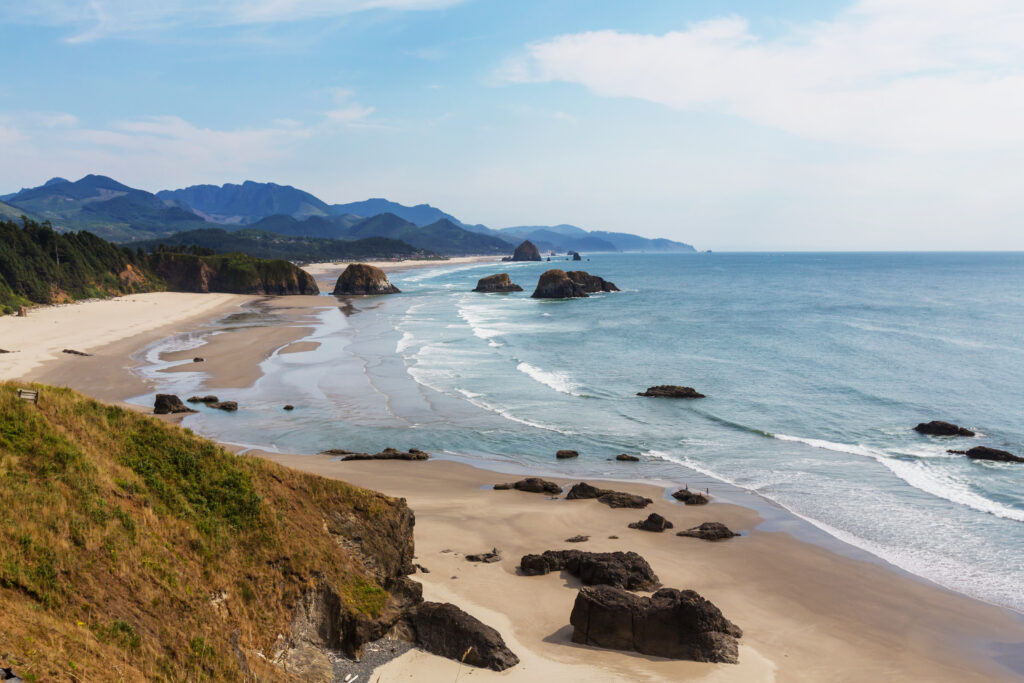Cannon Beach on the Oregon Coast. It was near here in early 1806 that Sacagawea insisted she be allowed to join the expedition team going to see a whale that had washed up on the shore. (Shutterstock)
**Cannon Beach, Oregon, August 13, 2025** — Well, I have reached the western end of the trail today. To top off my 4 days on the Pacific Coast, I ventured down to Cannon Beach, the site of the Lewis and Clark whale incident of early 1806. During their miserable winter at Fort Clatsop (106 days), Lewis and Clark learned that a whale had washed up on the shore about 20 miles south of the fort. William Clark decided to mount a reconnaissance party to go see the great fish (“mammal,” says Jerry Seinfeld) and, if possible, to harvest some blubber and anything else that might give expedition members a break from the lean and often spoiled elk diet they were enduring, sometimes improved a bit with a side of wapato root. Yum. The whale excursion was partly tourism and partly a quest for a more balanced diet.
The evening before this party of 12 set out for the coast, the Shoshone-Hidatsa woman Sacagawea confronted the captains (undoubtedly by way of translators) to demand that she be permitted to join the whale party.
Sacagawea Golden Dollar minted between 2000-2008. It was the first dollar made with an outer layer of manganese brass, giving it a golden color
Note: the million words of the Lewis and Clark journals are relatively quiet about Sacagawea. She occupies a place in American legend far greater than in the journals themselves. There are more statues of her than of any other American woman. Almost all that we know about her is conjecture or imaginative projection. “Sacagawea” is a social construct — a Rorschach ink blot in which we see more or less whatever we wish to see. On any given day (there were 862 of them), Sacagawea makes no appearance whatsoever in the journals of the expedition. Keep in mind that the journal keepers were not writing up everything interesting. They were writing the most important things that happened that day from an expeditionary point of view: how many miles they made; what they killed for dinner; what impediments they encountered; whether they met any Native people that day; if anyone got hurt, or mouthed off to the captains, or got lost. Etc. None of the journal keepers stopped to consider what Sacagawea did that day, unless she contributed something to the success of the expedition or unless she was ill (she nearly died at the Great Falls in June 1805).
So when she thrust herself forward at Fort Clatsop on January 5, 1806, and demanded that she be allowed to go to the shore of the Pacific Ocean (which she had not yet seen), and to see the great fish that had washed up there, she got the attention of the expedition leadership. Because of that, she got “written up” for her rare act of assertiveness.
One reason this incident delights me is that it is as close to a direct quotation from Sacagawea as anything in the journals. You can imagine her gesticulating before William Clark (her preferred captain), trying to make sure he understood that her participation in this excursion was not open to debate. She was going! We don’t get many windows into her soul in the journals. For that matter, we don’t get many glimpses into the souls of any member of the expedition. So when a moment like this comes, we fixate on it, because what we know about any member of the Corps of Discovery (33 in the permanent party) is thin gruel.
Here’s how Meriwether Lewis put it: “the Indian woman was very impotunate \[sic\] to be permited to go, and was therefore indulged; she observed that she had traveled a long way with us to see the great waters, and that now that monstrous fish was also to be seen, she thought it very hard she could not be permitted to see either (she had never yet been to the Ocean).” The journal records not just her demand, but also her reasoning!
Notice that Meriwether Lewis does not refer to her as Sacagawea. She is “the Indian woman.” They have been together for 427 days, since November 4, 1804, when she turned up at the Fort Mandan building site with her “husband” Toussaint Charbonneau. Lewis knows her name, which, admittedly, was probably hard to pronounce, but in his consciousness, she is really not much more than “the Indian woman,” even at this late date. And yet this is “the Indian woman” who played a key role among her birth people in helping the expedition get the horses they needed to cross the Rocky Mountains.
The captains were clearly a little amused that Sacagawea demanded agency at land’s end. Lewis adopts the same slightly icky tone he employs when he occasionally speaks of “tawny damsels” and “Mandan gentlemen.” It amuses him that people he regards as “primitive” are capable of behaving just like us. Clark wrote: “The last evening Shabono and his Indian woman was very impatient to be permitted to go with me, and was therefore indulged.” Clark affectionately called Sacagawea “Janey” from time to time, but here she is just Charbonneau’s “Indian woman.”
So, Sacagawea got to see the great fish (mammal). Just what she thought of the 105-foot monster is not reported, nor what she thought of the Pacific Ocean. Nowadays, from earliest childhood, we are aware of the existence of oceans. We’ve all seen photographs and videos of the world’s oceans. We learn in school that 72 percent of the planet is covered by ocean. There are still many people who have never been to the sea, but virtually no one is now unaware of their existence. Imagine what it must have been like for a hitherto land-locked individual to confront for the first time what Lewis and Clark occasionally described to Natives as “the great stinking lake where the sun sets.”
Here’s what Clark wrote about the expedition’s encounter with the beached whale and the Tillamook people who lived in a nearby village:
“Crossed a Creek 80 yards near 5 Cabins, and proceeded to the place the whale had perished, found only the Skelleton of this monster on the Sand between 2 of the villages of the Kil a mox nation; the Whale was already pillaged of every valuable part by the Kil a mox Inds. in the vecinity of whose village’s it lay on the Strand where the waves and tide had driven up & left it. this Skeleton measured 105 feet. I returned to the village of 5 Cabins on the Creek which I shall call E co-la or whale Creek, found the nativs busily engaged boiling the blubber, which they performed in a large Squar wooden trought by means of hot Stones…”
Even Clark calls the whale a monster.
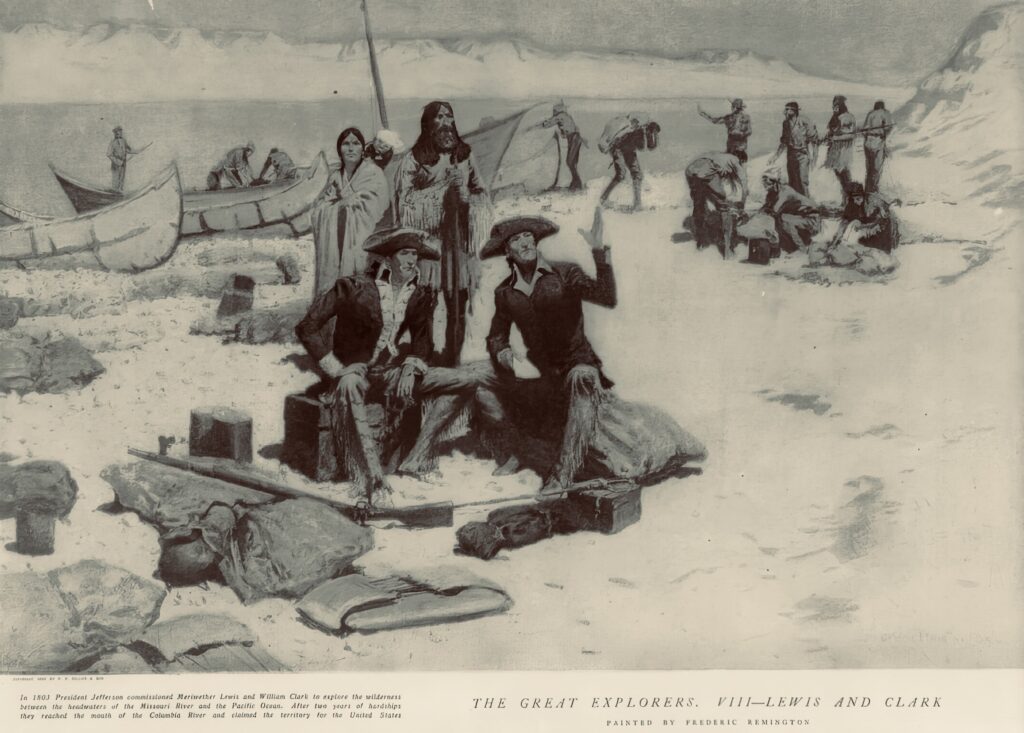Lewis and Clark, Sacagawea, her son and husband Charbonneau at the mouth of the Columbia River, 1805. Drawing by Frederic Remington in *Collier’s Magazine*, 1906. (LoC)
We’d give anything to have the Diary of Sacagawea. Several writers have recently attempted to compose a fictional diary in her voice, with truly dismal results. Unfortunately, we know very little about Sacagawea. We don’t know what she looked like. We don’t know whether she enjoyed the journey or mostly just endured it. We don’t know how she regarded her husband, Charbonneau. We don’t know what she thought of the men of the expedition or its leaders. She is mostly a cipher, what Winston Churchill, in another context, called “a riddle wrapped in a mystery inside an enigma.” We have no choice but to comb the journals for every little clue that might illuminate her personality, her appearance, her character, her responses to events. That’s why this moment is so important. It is not only one of the few moments where Sacagawea emerges from the phalanx of the Corps of Discovery, but it’s also one of the great incidents in the whole transcontinental journey!
This incident is perhaps our best window on Sacagawea. She was curious. She was not passive. She had a will. By this time, she was willing to make her will clear. She was willing to stand up to these white men who were leading her over hill and dale (sometimes the other way around). Thank God the captains didn’t forbid her to join the whale party. We’d really be grumpy about them if they had done so.
On a previous occasion, Captain Lewis wrote about her with breathtaking condescension: “If she has enough to eat and a few trinkets to wear, I believe she would be perfectly content anywhere.” There’s a fundamental lack of empathy.
The great fish (mammal) was not much to look at by the time the Clark party got there on January 8, 1806, after 2 difficult days of travel, including climbing up over Tillamook Head, which Clark called the most strenuous hike of his life. The local Natives had harvested the whale in their waste-nothing, find-a-use-for-everything way. Clark was able to persuade them to sell him 300 pounds of blubber and some whale oil, which his crew then had to lug back to Fort Clatsop by the same difficult route.
Nobody bothered to write up Sacagawea’s response to the ocean or the whale carcass. Even in its stripped-down state, that “monster” whale must have been impressive. Clark measured it at 105 feet long. Today’s cetologists are a little skeptical about Clark’s measurements, but I believe it is always wiser to trust Clark than armchair geographers and biologists (who weren’t there!).
The elusive Sacagawea seems to have died half a dozen years after the Lewis and Clark expedition returned to St. Louis. Who knows what memories she carried and cherished of that enormous journey? I hope the whale incident was one of them. And when she told the story, I hope it was in the way of such narratives: “The captains weren’t going to take me with them, but I stood right up to them and…”
---
***Follow Clay and the LTA Airstream as he retraces the famous Lewis & Clark Trail from 1804-1806 across the continent. This 2025 expedition is a central part of LTA’s big initiative to explore the country and take the pulse of America as it approaches its 250th birthday. Be sure to follow Clay’s adventures*** [***here***](https://ltamerica.org/tag/lewis-and-clark/) ***and on*** [***Facebook***](https://www.facebook.com/LTAmerica) ***— and*** [***subscribe to our newsletter***](https://ltamerica.org/newsletter/)**.**
**Categories:** Dispatches from the Road
**Tags:** Lewis and Clark, Native Americans, Oregon
---
### [How Meriwether Lewis’ Unfortunate Hunting Mishap Brought to Mind the Bounty of American Consumer Capitalism](https://ltamerica.org/how-meriwether-lewis-unfortunate-hunting-mishap-brought-to-mind-the-bounty-of-american-consumer-capitalism/)
**Published:** August 16, 2025
**Author:** Clay Jenkinson
**Excerpt:** On the 221st anniversary of Meriwether Lewis’ hunting calamity, Clay ponders salt, macrobiotics, and an earlier extended personal journey on the Lewis and Clark Trail.
**Content:**
## On the 221st anniversary of Meriwether Lewis’ hunting calamity, Clay ponders salt, macrobiotics, and an earlier extended personal journey on the Lewis and Clark Trail.
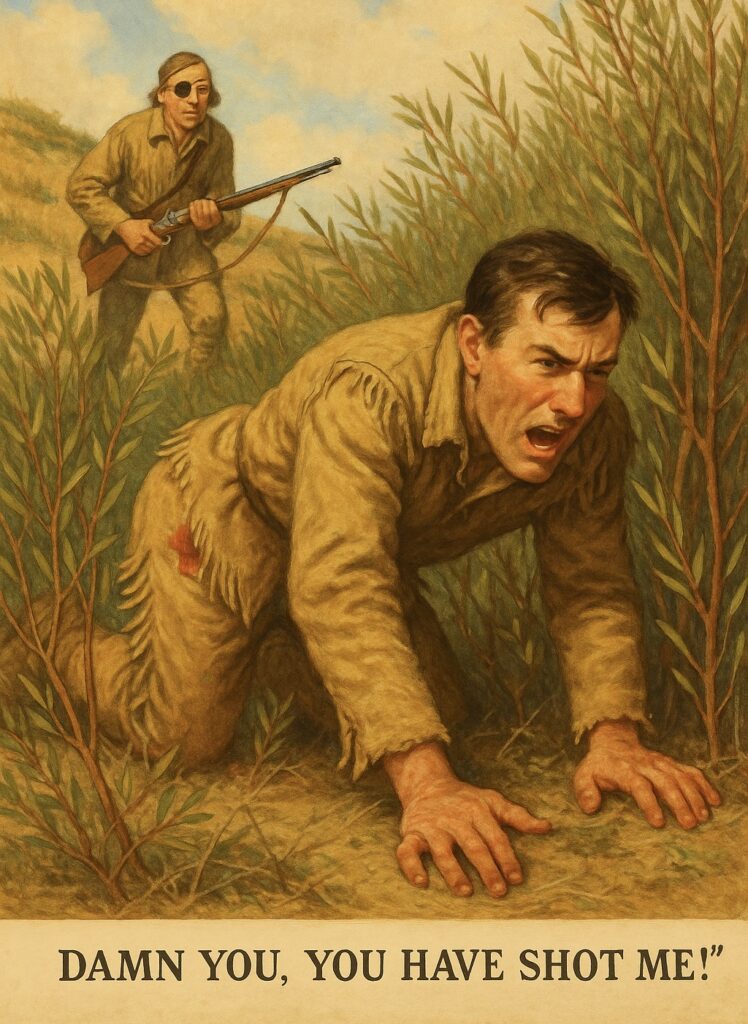Meriwether Lewis was ignobly shot in the buttocks by his visually impaired hunting companion, Pierre Cruzatte, on their return to civilization in 1806. (ChatGPT Image by Clay Jenkinson)
**Astoria, Oregon, August 11, 2025** — On this day, 221 years ago, Captain Meriwether Lewis was shot in the buttocks by one of his men. Lewis was hunting for elk in a thicket next to the Missouri River in northwestern North Dakota. For reasons that are hard to fathom, Lewis went hunting with a visually impaired companion, Pierre Cruzatte. By now, they were both wearing the skins of quadrupeds because their cloth clothing had long since been reduced to rags. Cruzatte was blind in one eye and nearsighted in the other. He was the expedition’s principal boatman (“our principal waterman”) and also the expedition’s fiddler. Blind Cruzatte and Lewis, dressed in deerskins, went hunting in a willow thicket. What could go wrong?
Here’s how Lewis tells the story:
“we fired on the Elk I killed one and he wounded another, we reloaded our guns and took different routs through the thick willows in pursuit of the Elk; I was in the act of firing on the Elk a second time when a ball struck my left thye about an inch below my hip joint, missing the bone it passed through the left thye and cut the thickness of the bullet across the hinder part of the right thye; the stroke was very severe; I instantly supposed that Cruzatte had shot me in mistake for an Elk as I was dressed in brown leather and he cannot see very well; under this impression I called out to him damn you, you have shot me, and looked towards the place from whence the ball had come …”
Cruzatte, undoubtedly mortified, explained that he hit what he took to be an elk, but he could not be sure. How would you like to go down in history as the man who shot and killed Captain Lewis on the home stretch?
Lewis was sure. The spent bullet had lodged in his breeches. It did not take a forensics expert to determine it was the bullet from Cruzatte’s rifle.
Lewis realized it was an accident, and he seems not to have punished poor Cruzatte. He was more concerned about the gaping wound in his buttocks. Surely Lewis understood that when you choose to go hunting with a man who cannot distinguish what he’s shooting at, you invite chaos.
Fortunately, the bullet struck neither bone nor artery that could have killed or paralyzed Lewis, but it was a painful and serious flesh wound. It was also humiliating. It was not how Lewis expected to complete his heroic transcontinental mission. A little more than a month later, a fully healed Lewis was able to walk into St. Louis when they landed on September 23, 1806. Meanwhile, he had had to ride down the Missouri River draped face down over a barrel in an expedition canoe, and others — usually Clark — had the honor of changing his bandages and dressing his wounds. In that era of barbaric medical practices, when antisepsis was still unknown, Lewis had more to fear from infection than from the wound per se.
I was thinking about all of this today as I sat on the beach at Seaside, Oregon, where the expedition established a sea salt distillery on January 2, 1806. Desperate for salt to preserve food and garnish their rangy elk supply, the captains sent three men initially — George Gibson, Joseph Field, and William Bratton — with five big kettles (hauled from St. Louis!) to boil seawater 24 hours a day. The salt crews were shifted out a couple of times between January 2 and February 20, 1806. They refined about four bushels of salt. Lewis wrote, “We found it excellent, fine, strong, & white… This is a great treat to myself and most of the party.”
As I pondered the macrobiotics of life on the Lewis and Clark trail (1804–06), I remembered two of the great days of my life in North Dakota. In 2005, I hiked the Little Missouri River for three weeks — alone, of course, because who would want to join me? The Little Missouri originates near Devils Tower in Wyoming and flows north through the Badlands, encompassing all three units of Theodore Roosevelt National Park, as well as the larger 1.2 million-acre Little Missouri National Grasslands. My friend Melanie, the triathlete, dropped me off at Marmarth, North Dakota, and my friend Jim Fuglie said he would meet me for dinner several weeks later at Theodore Roosevelt’s remote Elkhorn Ranch, 35 miles north of Medora, North Dakota. It was the hottest summer in modern North Dakota’s history, with temperatures reaching 105 degrees by noon every day. The journey was a glorious ordeal. Dehydration was a serious problem. It was virtually impossible to get enough water into my system to sustain the hike. I stubbornly refused to quit.
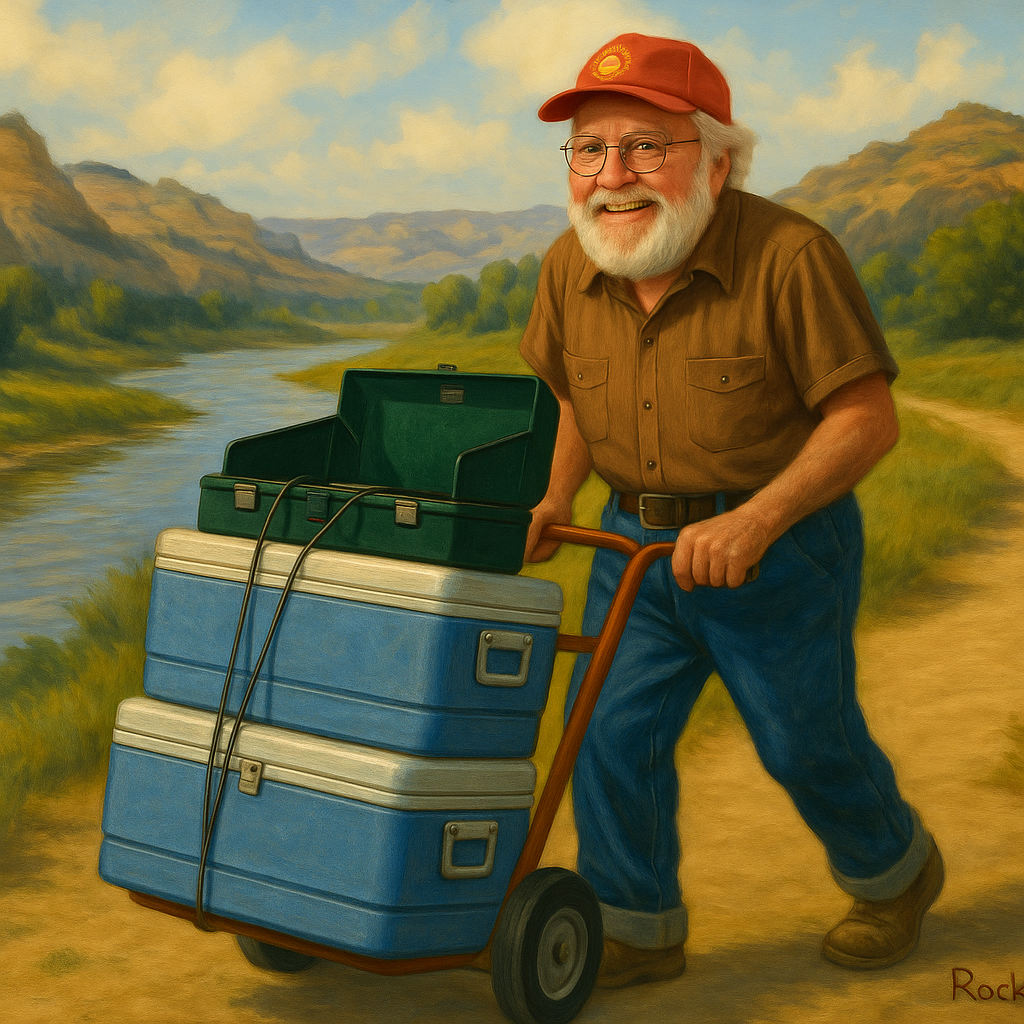Clay’s friend and sometimes savior, Jim Fuglie, delivers the goods on the Little Missouri trail. (ChatGPT Image by Clay Jenkinson)
By the time Jim drove out to meet me by pre-arranged schedule, I was as parched as a strip of leather or an orange peel left out on the picnic table for a month. I had reached the Elkhorn site the previous evening, August 9, 2005, and I waited all day on the 10th for Jim to turn up. I read, I dozed, I needed the rest. To get to the site by car, you drive west and then north of Medora along some gravel roads that can be easy to get lost on. When you finally reach the parking lot for the Elkhorn, you have a half-mile hike to the site on a well-maintained trail. About 5 p.m., I heard some distant rumbling. Soon enough, Jim rounded the corner, and I saw that he was hauling a hand truck (a dolly) on which he had placed two large ice chests and secured them with bungee cords. Affixed to the top of this gastronomic treasury were Jim’s old Coleman stove and a couple of frying pans.
I won’t say Jim saved my life, but I have never enjoyed fresh tomatoes more. He brought beautiful beefsteaks, potatoes, fresh fruit, garlic bread, salad, dessert, and a bottle of fine red wine. Plus lemonade and all the cold water I could drink. We had a great feast together. I’d been eating freeze-dried packet food for more than two weeks — Kung Pao Chicken, Beef Stroganoff, Chili Relleno — they all sound more palatable than they are. Now, thanks to Jim’s generosity, I felt like Cleopatra’s younger brother Chip Patra. Jim brought a sleeping bag, and we bedded down within the perimeter of Roosevelt’s 30 by sixty-foot Elkhorn cabin, long since gone.
The stars were magnificent. The coyotes serenaded us. We talked in low tones well into the night and then slept the sleep of the blessed.
In the morning, Jim cooked bacon and eggs before loading up and heading for the parking lot with his empty coolers. I stuffed all my gear into my pack, put on my khaki jacket, and prepared to begin the final three days of my trek. Jim said he would pick me up at Juniper Campground in the north unit of Theodore Roosevelt National Park on Sunday, August 14.
As he was about to lumber the empty ice chests back to his pickup, Jim turned to me and said:
“Hey, today is the first day of elk season in North Dakota. The kind of men who get elk tags don’t usually know the difference between an elk and an elephant, and they tend to shoot at anything large that moves, especially on the first day. Every year they accidentally kill a few cows out here in ranch country. I’m no expert, but isn’t today the day Lewis was shot in the butt by one of his men? Have a great day!”
And off he went.
My friends love to make fun of me. When I started the hike weeks earlier, another dear friend, Patti Perry of Marmarth, served Melanie and me a wonderful dinner before they all took me to my put-in site on the Little Missouri just east of town. It was 8:30 p.m., and the temperature was still 95 degrees. We got out. I shouldered my impossibly heavy pack and prepared to lunge “off the map of the known world.” Melanie was a little teary-eyed (assuming she would never see me again), but Patti and her husband were (as usual) nonchalant. Patti was not really in favor of my hiking the Badlands. Her view was that 4,000 years of human invention and improvement signified that no rational being would hike when he could ride (anything, something) and no reasonable being would ever choose to sleep on the ground. She generally regarded me as an absurdity; as an over-educated man without an ounce of common sense. Once, when I hiked all night (don’t ask) to get back to her house, Patti, the mayor of Marmarth and the president of what she called the Marmarth Hysterical Society, greeted me at her front door as she was leaving to milk her 160 French Alpine goats. She gave me a baleful look and said only this: “There are two types of stupid. There’s stupid and then there’s you.”
At the embarkation point, Gary Perry shook my hand and Patti gave me a gruff perfunctory hug, dragging on her cigarette through the whole sacred farewell ceremony — and then she said, and I quote:
“Because it’s so hot, the rattlesnakes are sloughing their skins early this year. When they shed, they are nearly blind for a time, extremely grumpy, and they tend to strike at anything that moves. Have a great trip.”
I rest my point about the quality of my friends.
Three days after Jim brought his well-chilled cornucopia, I was sitting on the ground under a magnificent cottonwood tree in Juniper Campground when he showed up to take me back to Bismarck. Jim’s been an incredible friend to me for 50 years. In fact, he has, in different ways, propelled my life, education, and career. He’s about as agreeable a man as you are ever likely to meet. We threw my pack in the back. He offered me a cold soda. And he promised, when we got to Bismarck, to make me his celebrated BLT sandwich with tomatoes we would pluck directly off one of his 30 tomato vines. We drove across North Dakota mostly in silence. When we arrived at Killdeer, about halfway to Bismarck, we stopped for gas, and Jim said he needed to use the bathroom.
This is how Jim tells the story: When he came out of the bathroom, he found me standing in front of a 40-foot shelf of Twinkies. Not just Twinkies: Hostess Cupcakes, Snowballs, fruit pies, donuts, Zingers, muffins, fruit rollups, Mrs. Wagner pies, Dip n Dots, cupcakes, carrot cake bites, individually wrapped banana bread slices, and much more. He found me just standing there: mesmerized, dazed, numb, paralyzed. Jim said he had to haul me out of there. There is nothing like a three-week diet of insipid freeze-dried food to blow your mind in the face of what late runaway capitalism can provide. Here, in the middle of nowhere, was this convenience store consisting of about nine long aisles, each one stuffed to the gills with hundreds of different “food” products, none of which a health-conscious person would choose to ingest. I wasn’t hungry. I wasn’t yearning to eat a corn syrup-saturated “pastry” with enough preservative in it to survive a nuclear exchange. I was just amazed at American capitalism. I remember being in communist Yugoslavia decades ago when Josip Tito was still alive. We went into a grocery store. One type of deodorant. One brand of bath soap. A dozen identical cans of generic beans. A few sponges. Some gray handkerchiefs. Two jars of marmalade. Kerosene. Nothing more. But here in America, here in our happy republic, 30 varieties of deodorant and several dozen viciously rival dishwashing liquids. Enough sugary treats to fund Ozempic forever. I stood there in a consumerist shock.
(Shutterstock)
When we arrived in Bismarck, Jim served me — with crisp Cloverdale bacon, fresh lettuce, sourdough bread, and just-plucked tomatoes — the best BLT sandwich of my life.
All those memories cascaded in on me as I walked earlier today in the shallow surf on the beach in Seaside, Oregon. No one shot me in the buttocks. I was overcome with gratitude for all that life has brought me — blessed in friendships, the glorious memories far outweighing my regrets, and an undiminished will to say **YES** to adventure.
---
***Follow Clay and the LTA Airstream as he retraces the famous Lewis & Clark Trail from 1804-1806 across the continent. This 2025 expedition is a central part of LTA’s big initiative to explore the country and take the pulse of America as it approaches its 250th birthday. Be sure to follow Clay’s adventures*** [***here***](https://ltamerica.org/tag/lewis-and-clark/) ***and on*** [***Facebook***](https://www.facebook.com/LTAmerica) ***— and*** [***subscribe to our newsletter***](https://ltamerica.org/newsletter/)**.**
**Categories:** Dispatches from the Road
**Tags:** Lewis and Clark, North Dakota, Oregon, Theodore Roosevelt
---
### [On the Missouri River With Two Rapscallions](https://ltamerica.org/on-the-missouri-river-with-two-rapscallions/)
**Published:** July 14, 2025
**Author:** Clay Jenkinson
**Excerpt:** When I began to plan for my 2025 retracing of the Lewis and Clark expedition, hauling an Airstream from Jefferson’s Virginia across the country to Astoria, Oregon, I realized I was planning a paradox.
**Content:**
## When I began to plan for my 2025 retracing of the Lewis and Clark expedition, hauling an Airstream from Jefferson’s Virginia across the country to Astoria, Oregon, I realized I was planning a paradox.
Aerial view of Clay, Nolan and Brian’s “Night One Camp” — aka the Dismal Swamp, Fort Rice, North Dakota. (Image Nolan Johnson)
Great Falls, Montana, July 5, 2025 — Thomas Jefferson’s Corps of Discovery made their 1803–06 journey almost entirely in boats. I was going to drive a pickup-trailer convoy along such river roads as exist from sea to shining sea. But the fact is, there are not so many places along the entire trail where you can see the rivers on which Lewis and Clark traveled: a short stretch here and there, a glimpse, a glance while driving over a narrow bridge. If you don’t actually get on the rivers, in what sense have you retraced their river journey? So I determined to get “on the water” as often as practicable.
My first real chance to get on the water came in North Dakota. For many years, I have wanted to float the Missouri River upstream from Fort Yates at the bottom of North Dakota to Bismarck. Why? Because: a) I love North Dakota and aspire to be one of North Dakota’s best Lewis and Clark scholars (which is not that hard since I am really its only Lewis and Clark scholar); and b) because the massive Oahe Dam at Pierre, South Dakota, backs up the Missouri River for 231 miles to just south of Bismarck and therefore the only way you can see what Lewis and Clark saw is from the river … er, lake.
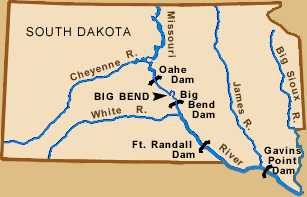Map, *Lewis and Clark.Org*
Notes: 1. [Oahe Dam](https://www.nwo.usace.army.mil/Missions/Dam-and-Lake-Projects/Missouri-River-Dams/Oahe/) (dedicated 1962) is one of six gigantic rolled earth dams on the Missouri River between Fort Peck in eastern Montana and the bottom of South Dakota: Fort Peck, Montana; Garrison, North Dakota; Oahe, South Dakota; Big Bend, South Dakota; Fort Randall, South Dakota; and Gavins Point, South Dakota. This means that a total of 751 miles of the Mighty Missouri between Sioux City, Iowa, and the Judith River in Montana are now slackwater reservoirs. Alas. The Missouri is one of the claimants as “the most industrialized river in the United States,” along with the Columbia, the Colorado, and the Mississippi.
Note 2. Later this summer, I will float the Missouri in Montana twice in canoes, the upper Yellowstone on a raft, and the lowest reach of the Columbia on an excursion boat.
My audio editor, videographer, and now friend Nolan Johnson has a water-loving pal named Brian Jackson, and they know someone with a pontoon boat that doesn’t get much use. They arranged to borrow it for three days and Nolan’s dad Dennis — one of the nicest persons you will ever meet — agreed to drive us to the put-in boat ramp, resupply us with fuel and sundries along the way, and gather the bodies, dead or alive, at the take-out point in north Bismarck.
Dennis and Nolan picked me up more or less at the appointed time. They were half an hour late — no fault of Dennis! — But I have long since figured out that Nolan is always half an hour late, so I factored it in. Brian was ready when we appeared at his house in central Bismarck, holding a fishing rod in the manner of Huck Finn. We stopped to get a couple of bags of ice and made our way to the put-in point.
There were some tearful farewells at the Fort Rice boat ramp.
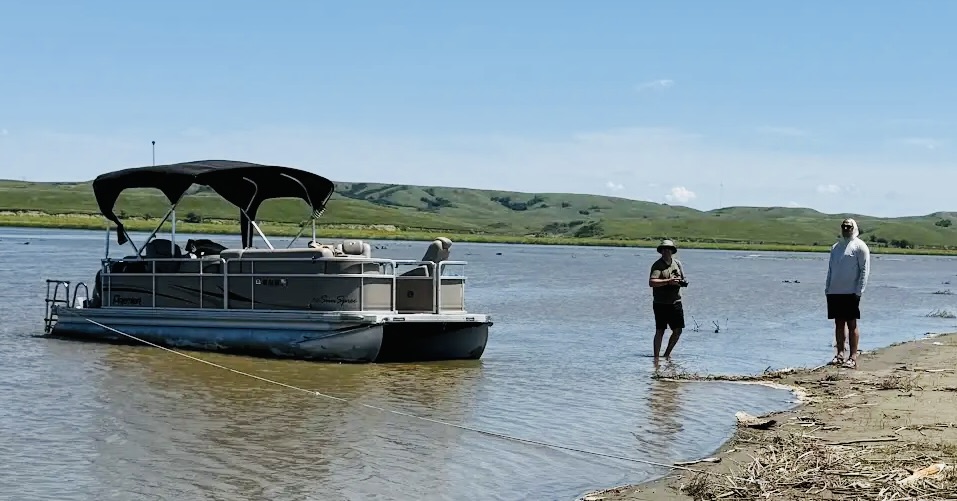The two rapscallions, Nolan Johnson (left) and Brian Jackson and the pontoon boat. (Photo Clay Jenkinson)
As Huck Finn puts it, “there warn’t nuthin’ to do now” but churn our way slowly up the Missouri River, against the 4–6 mph current, veering from one side of the reservoir to the other to get the Lewis and Clark photographs I wanted — the ostensible justification for the trip. Nolan and Brian were obsessed with hidden sandbars, even though the reservoir was about 20 feet deep most of the way. Over three days, there was only one sandbar incident. It amounted to nothing more than backtracking about a mile and taking a different channel up the river. It was not caused by human error, and it illustrated a frequent challenge to the Lewis and Clark expedition. Until the dams, the Missouri was a tough river to navigate. Some seasoned traveler from the nineteenth century said, “The problem of taking a boat trip on the Missouri River is you have to take the boat.” The river is full of snags, false channels, gravel and sand bars, dead trees that saw up and down with the current, banks that collapse, and a range of other impediments. As one local fisherman told me, “It ain’t the Erie Canal.”
The weather was outstanding. At midday, 80 to 90 degrees Fahrenheit, with dead calm or modest winds. No rain. On day one, fabulously beautiful clouds. The boys made fun of me for wearing cargo pants and long-sleeved blue *Listening to America* work shirts. They wore shorts and T-shirts so the horseflies would have a chance to torment them. Every two minutes, one of them slapped his legs with angry violence, complained bitterly, and wondered why God had allowed the condor and the white rhinoceros to approach extinction but had done nothing useful about ticks and horseflies. I tried to explain the ecological interconnectedness of all things, that the tick is an important link in what the eighteenth century called “the great chain of being,” and that when humans decide to “fix” Nature, they usually wind up confirming the law of unintended consequences. I noticed that they ignored me after rolling their eyes a few times. This set a pattern for the trip. If they wanted to discuss the nuances of the movie *Caddyshack* or the odious Lewis and Clark-based film *Almost Heroes*, they lit up like boys on Christmas morning, but if I tried to explain the universe to them, they dozed off.

This may be a good place to describe my colleagues on the float. Brian is the CEO of a prosperous coffee company, *[Mighty Missouri Coffee](https://mightymissouri.com)*, and he packed a generous supply. Naturally, he brought an elaborate AeroPress gizmo with him, and fussed over the morning coffee as if this were a Japanese tea ceremony. I can say with confidence that the sand in the coffee helped with digestion. Brian is a big strapping outdoorsman, handsome, with a world-class smile. He never complains (except about flies, sandbars, and the capacity of walleye to elude his fishing lures). Nolan is a brilliant videographer and a superb drone pilot who was once a talented high school and college athlete. One of them is 37, the other 38, and they have been inseparable friends from age seven or so. They “office” together in East Bismarck, where there are plenty of hijinks. Unfortunately, I soon learned that they have some kind of private discourse — complete with imaginary friends — that they revert to at nearly every opportunity — something about a guy named Joe of Brooklyn, complete with some rather lame NYC accents. They find themselves endlessly amusing and back home — during slack times in the coffee and digital video calendar — they produce private podcasts and video “shorts” that more or less define the term “prolonged adolescence.” When they got into that mode after dark, I slipped away to bed, but I could hear them chortling and high-fiving through the night.
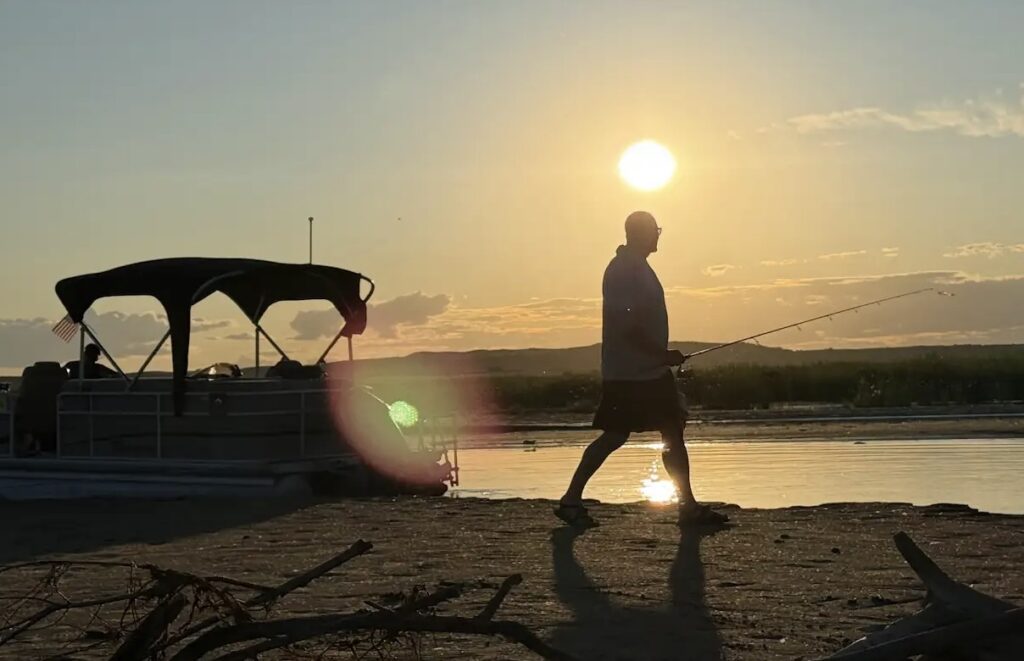Brian heading off to fish. (Photo Clay Jenkinson)
Brian has a reputation for being a great fisherman. This includes the claim that he is adept at spearfishing. When I heard that, I told him I could run a three-minute mile just to keep him honest. This time, he brought a regular old fishing rod and tackle, and he vowed that we’d be eating walleye fresh from the river at every meal. He even brought a box of *Shore Lunch* for garnish. I factored this in when I bought an unnecessarily large quantity of grocery food “just in case.” If I hadn’t, we’d have been eating our moccasins before day two. I don’t know how many times Brian cast his line into the great reservoir — famous for its fishery — but the only thing he reeled in in three days was a diminished reputation. You know the rest. He became increasingly determined (and eventually desperate), and he blamed his fishlessness on a dozen factors beyond his control. If he had had a grenade, he would have tossed it into the lake to bring up a few hundred walleyes to save face. So we dined on excellent beefsteaks, fried potatoes, eggs and bacon, cheeseburgers, trail mix, energy drinks, candy, and other delicacies that don’t require human skill. I brought them each a Pez dispenser for the same reason one purchases a Happy Meal for their children at McDonald’s. I do not exaggerate: I had to give them lessons in Pez dispenser reloading.
At the end of the first day, we scoured the starboard shoreline for a place to camp. The boys (I’m twice their age and infinitely less confident) make big claims about being river recreationists, so I decided to defer to them (by which I mean Brian) about campsites and such. He eased us into a little side bay about 7 p.m., and though it appeared to me to be a mosquito-infested swamp, he assured us that it was the best campsite available. I knew better, but I was not about to challenge his piloting. I do not exaggerate when I say that the sandbar on which we set up tents, ice chests, and camp chairs was so saturated with recent rains and a subsequent rise in the river that our feet sank no less than a quarter inch into the sand wherever we walked and at times up to the ankle bone. I made one slender little suggestion that we might press on to one of the 250,000 dryer places adjacent to the river, but I was assured that this was the best we could do.
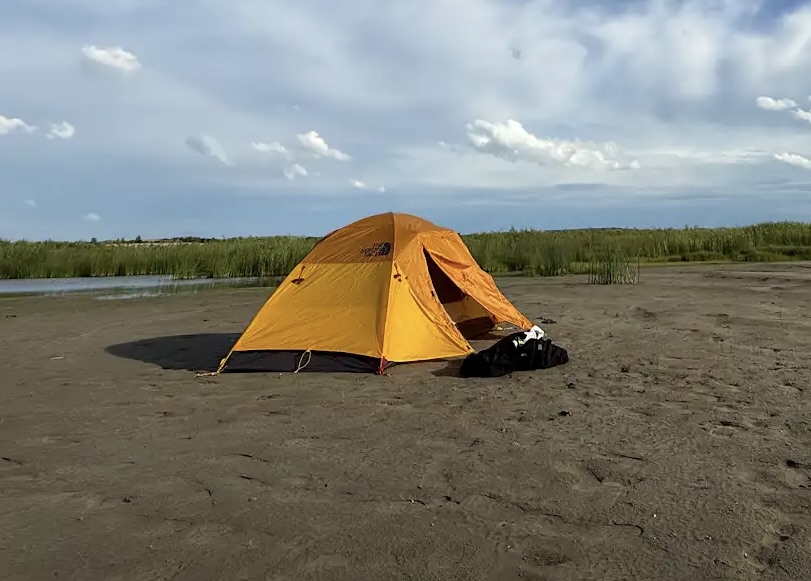Our beautiful, if soggy, campsite on the first night on the river. (Photo Clay Jenkinson)
I was reminded of the journal of George Bradley of the 1869 John Wesley Powell expedition down the Green and Colorado Rivers all the way from Green River, Wyoming, to the bottom of the Grand Canyon. Bradley, who kept a secret journal all the way, wrote: “The Major, as usual, has chosen the worst camping-ground possible. If I had a dog that would lie where my bed is made tonight, I would kill him and burn his collar and swear I never owned him.” For group harmony, I suppressed the urge to quote the passage to my fellow adventurers.
Each of us had a new two-man tent; I had it because it was time for a new one, and they — wait for it — had almost never slept in a tent before. Brian said perhaps three nights in three decades, Nolan just two. I put up my tent in five minutes. The stakes went into the sand as if it were butter, and little pools of water gathered around them. Brian took about fifteen minutes to set up his tent, and Nolan just under an hour. If I had known that they were rank amateurs, I would have asserted myself from the beginning, but the pecking order was already set, and I glumly prepared to sog it out through the night.
Because we were a little low on walleye, I cooked the first night: excellent ribeye steaks medium rare and fried potatoes, followed by some caramel walnut fudge I had purchased at one of those outdoor gear stores that also sell popcorn, fudge, and flavored coffee.
## Wha**t Does Any Of This Have To Do With Lewis and Clark?**
The Corps of Discovery reached the bottom of North Dakota on October 13, 1804. It was there that they conducted their last severe court martial: Private John Newman received 75 lashes (well laid on, as they phrased it) on a sandbar in the middle of the river. He had been throwing out “mutinous expressions.” Newman was also drummed out of the expedition’s ranks.
During their ascent from the Arikara nation’s earthlodge villages at the mouth of the Grand River just inside South Dakota, Lewis and Clark were traveling with an Arikara elder named Too Né, who told them about the things they were seeing on both sides of the river. Although at one point Clark — not known for his curiosity — wrote that “This Chief tells me of a number of their Treditions about Turtles, snakes, & and the power of a perticuler rock or Cave on the next river which informs of ever thing, none of those I think worth while mentioning,” he still reported an abundance of information about this stretch of the Missouri River that he could not possibly have known had Too Né not been traveling with them. Too Né gave them Native names for creeks and larger tributaries, pointed out abandoned Mandan villages, explained the annual antelope migration from the northernmost plains to the Black Hills region, explained the historic migration of the Cheyenne Natives from western Minnesota to Wyoming, and much more. It is worth noting that more often than not, Lewis and Clark were “conducted” through Missouri and Snake–Columbia River landscapes by Indigenous people recruited along the way. Sacagawea was with the expedition for 21 months. Old Toby of the Shoshone was with them for 50 full days. Twisted Hair and Tetoharsky of the Nez Perce were with them for many weeks.
My goal was to identify as many of the features mentioned in the journals as possible and photograph them. This segment of the expedition’s travels is not well known even in the Lewis and Clark community, because there are more dramatic episodes in Montana and farther west, and because the colossal reservoirs make it hard to appreciate the 1804 river journey. There is no bridge over the Missouri from Mobridge, South Dakota, to Bismarck, North Dakota, a distance of more than 125 miles. There are essentially no amenities along that entire stretch of the Missouri, unless you want to gamble at *Prairie Knights Casino* on the Standing Rock Indian Reservation. In other words, besides William Least Heat-Moon in his 1999 book *River Horse: The Logbook of a Boat Across America*, I am likely to be the first person to try to link up the geography of this lonely stretch of country to the journals of Lewis and Clark.
## Day Two:
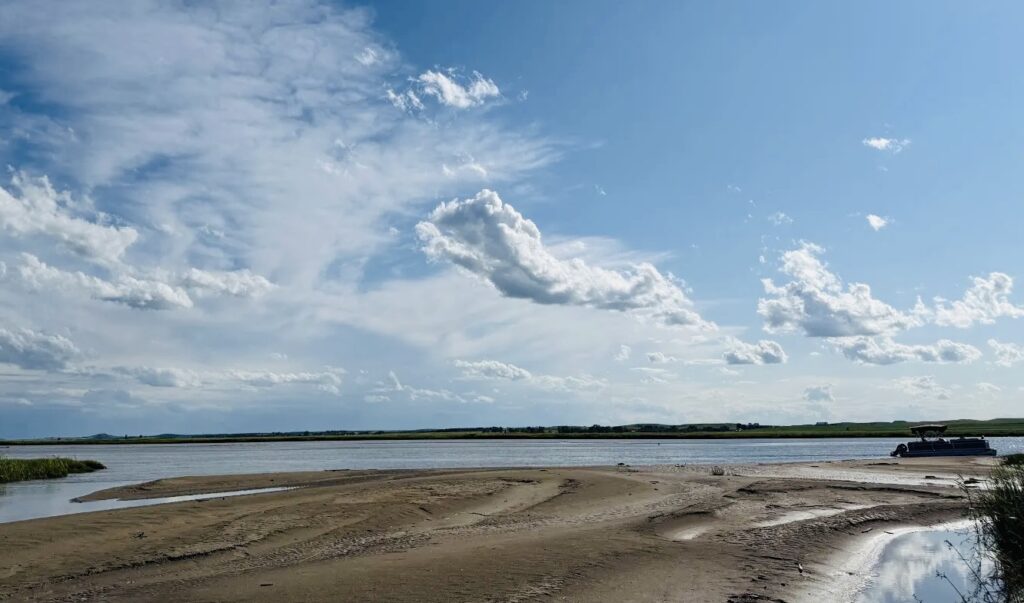Sandbar on the Missouri River, North Dakota. (Photo Clay Jenkinson)
When I unzipped myself out of my tent and began to slip and slide my way to the camp kitchen, Brian was brewing coffee. He’d been up for a while. He took a cold bath in the swamp, so Nolan and I felt we had to do so, too. I cooked bacon and scrambled eggs with cheese, and Nolan and Brian got into a friendly squabble about the virtue (or not) of frying Cloverdale tangy summer sausage as a breakfast treat.
Our second day was outstanding. Inevitably, we passed a dozen better — even ideal — campsites within two miles of the dismal swamp. We stopped mid-morning on a long sandbar. Nolan lofted his drone to get stunning images of the river (er … lake) and Brian went a-fishin’. At one point, he had waded more than half a mile away to a cluster of some good old boy local fishermen. He offered them a lifetime subscription to *Mighty Missouri Coffee* if they would only let him put one small walleye on his hook so he could come back to us looking like Brad Pitt in that famous scene in *A River Runs Through It*.
One really good thing about Brian — there are many. When he finds an “artifact,” whether it is a bit of a bison skeleton or a Native American object below a river bank, he gets down on his knees to appreciate it for a while and then leaves it precisely where it is. This almost made me forget the first night swamp camp.
We passed the mouth of Fish Creek. We passed the mouth of the Cannonball River, named for the sandstone concretions it releases from the river banks. They are usually spheroid, the size of volleyballs, basketballs, or even beach balls. They are like sandstone pearls somehow formed by sedimentary pressures. North Dakotans collect them, haul them home, and display them on the edge of their driveways, where they lose their mojo (and significance) because they were removed from the natural landscape in which they had meaning. Lewis and Clark passed the mouth of the Cannonball River on October 18, 1804. They, too, appropriated a heavy concretion to replace the keelboat’s anchor that had been lost in a river accident in South Dakota.
We moved slowly upriver. It was summertime, and the livin’ was easy. I read the journals — silently, because they were busy gazing lovingly at their smartphones. We used all the databases we had to identify bluffs, buttes, creeks, and river oxbows. From a Lewis and Clark perspective, the journey was turning out to be a complete success. I was able to match Clark’s descriptions of the terrain with features in the landscape; this would have been nearly impossible from the roads that attempt to follow the sinuous shoreline.
This night we camped on a fabulous and dry sandbar island in the middle of the river. Lewis and Clark often chose sandbar islands for campsites as a security precaution. We had another great meal — jumbo cheeseburgers, cowboy beans, and individually appropriate beverages. I had brought along some Roman candles and large bottle rockets I had found somewhere in the far recesses of my garage. We had a slightly premature celebration of the Fourth of July. The stars were magnificent. The lads stayed up late doing their shtick in some debased Cockney, amusing themselves to death.
In the middle of the night, Nolan had a Jimmy Carter moment. We had noticed a large number of beaver lodges against the banks of the river. After dark, one pesky beaver swam around slapping its tail on the water, moving in front of the pontoon and then behind it, across the river, and then back again. At some point, Nolan had the paranoid thought that the angry beaver was going to bite through the rope that anchored us to the shore, and we’d never see the pontoon again until the wreckage washed up below New Orleans. So he took his flashlight and mounted guard for a while. He said he was afraid that the beaver would jump on shore and attack him like the killer rabbit that tried to assassinate President Carter on April 20, 1979. Lewis and Clark fought off grizzly bears, wolves, rampaging buffalo, and (in one late instance) hostile Natives, and they ate beaver tail as a great delicacy. But there is no mention in the thirteen volumes of expedition journals of a beaver attack on the men. I tried to imagine a beaver so evil that it would chew off an anchor rope. I could only conclude that even if Nolan had brought his drone, it is not clear that he would have lasted long on the Lewis and Clark expedition. In the morning, when I unzipped my tent flap while Brian used his elaborate gizmo to brew more coffee, Nolan appeared looking like the beaver had not bitten him but half-drowned him. He said he didn’t want to talk about it, and we left it at that.
## Day Three:
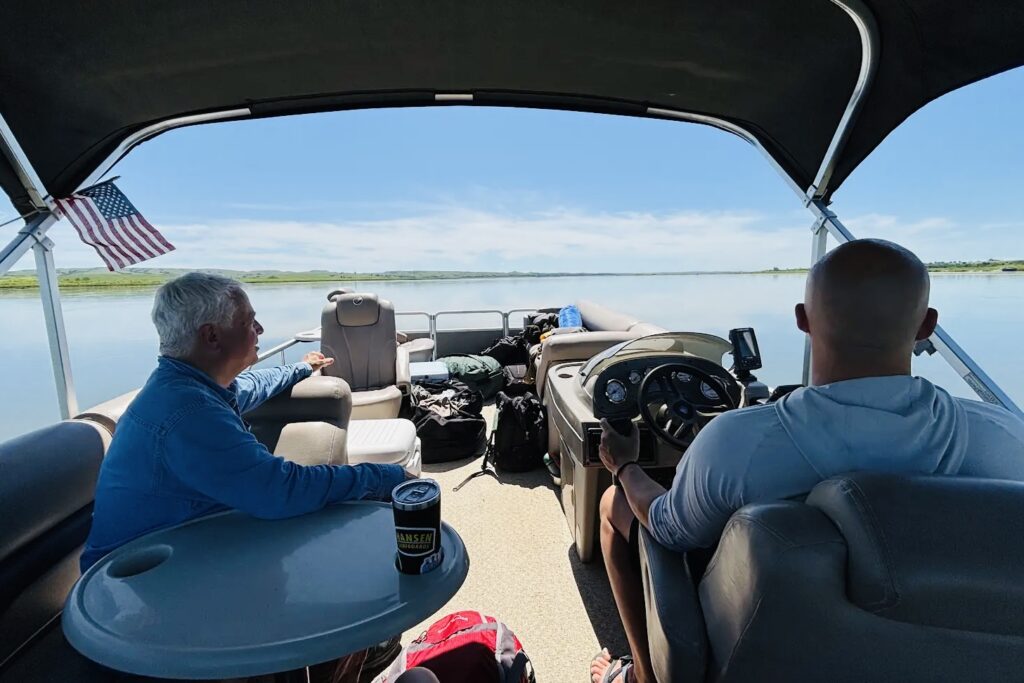Clay (left) and Brian Jackson, CEO of Mighty Missouri Coffee, on the Missouri River in North Dakota.
Alas, this was our last day on the river. What amazed me most and delighted me most was that as the reservoir was reaching its northernmost reach, the Missouri River was beginning to reclaim its dignity. We had reached the last of the slackwater. The river narrowed, became more shallow, braided itself a bit, and threw up some sandbars. Now, finally, we were beginning to approximate the Corps of Discovery’s river journey, except that:
— We were using a 175 hp engine to propel us upriver, and so far as I know, none of us ever broke a sweat in three days. Those water marks on my shirt were legacies from the swamp camp.
— We did not have to go hunting on shore to kill food for dinner.
— We had smartphones that delivered instantaneous data that William Clark would have sold his soul to obtain so effortlessly.
— Nolan’s dad, Dennis, was on call if anyone got a blister or an owie.
— We had packs of Wet Ones.
— We would not run into a grizzly bear, even though Lewis and Clark’s man Pierre Cruzatte blundered into one just south of Bismarck on October 20, 1804, the first of scores of grizzly encounters, a few of them nearly lethal.
— We had a plethora of maps (historic and modern), atlases, guidebooks, and both physical and electronic copies of the expedition journals, plus an app (onX) that told us temperature, depth of river, where the thalweg was, who owned the riverside property, where we were legally allowed to camp, what we could expect by way of precipitation, how to get a fishing license (but alas, not how to catch a fish!), fun facts about rivers, the volume of water at Sioux City and Natchez, the annual navigation volume on the lower Missouri, and how to gut a marlin.
— We knew what to expect around the next bend.
— And we would not have an encounter with Native Americans, friendly or otherwise.
Beyond that, we were authentic American explorers.
I got the photographs I wanted. I enjoyed my two young friends immensely. We had perfect weather, and though I am a lifelong North Dakotan, I saw a whole and historically significant swath of it for the first time.
As we approached Bismarck, we could see the bell tower of the *University of Mary* and the upper floors of the 21-story North Dakota Capitol. We passed the mouth of the Heart River just below old *Fort Lincoln* of Custer fame. The Heart is named for its position at the heart of the Mandan Indian world. Once, there were nine or thirteen earthlodge villages clustered around the mouth of the Heart. That was before the first great smallpox epidemic that reduced the population of the ingenious Mandan from 20,000 to about 150. (The second wave in 1837 would reduce the entire Mandan population to 145.) Dennis was waiting on the dock. I told him: a) that I had survived the trip; and b) that there were things about the journey I would only tell him if we were throwing back shots at a biker bar.
Nolan, always connected. (Photo Clay Jenkinson)
One last note, about generational change and technology. I brought Clark’s maps. I brought the gorgeous 1895 Missouri River Commission maps. I brought volume one of Martin Plamondon’s three-volume *Lewis and Clark Trail Maps* that shows the river as Lewis and Clark ascended it, and the outlines of the reservoirs that have now drowned the Missouri. I brought a very detailed North Dakota gazetteer. I had expected that they would delight in this array of cartographical information and study the maps closely, all three days. But it became immediately clear that they were not interested in these resources. They were fixated on their 3-by-6-inch smartphones and such resources as they provided. I was crestfallen, but I recognize that I’m an old fuddy-duddy and they are hip, young, connected, and — may I say — addicted to smart technology.
I tried for three days to stay off my iPhone entirely. They were seldom more than a few minutes from screentime. No point in wringing one’s hands. These young men had more immediate access to vital information — weather fronts, temperature, exact GPS location, releases from the dams, etc. — than I did with my old-school tools. They have never not known a digital world. When I took notes on my clipboard in the presence of these digital whippersnappers, it felt like I was using cuneiform.
We are planning our next excursion, between Bismarck and Garrison, North Dakota, where Lake Sakakawea (a reservoir) yields for 90 miles to something that could, without hopeless exaggeration, be regarded as the Missouri River.
I’m going to bring fishing gear. Heck, I can catch as many fish as Brian.
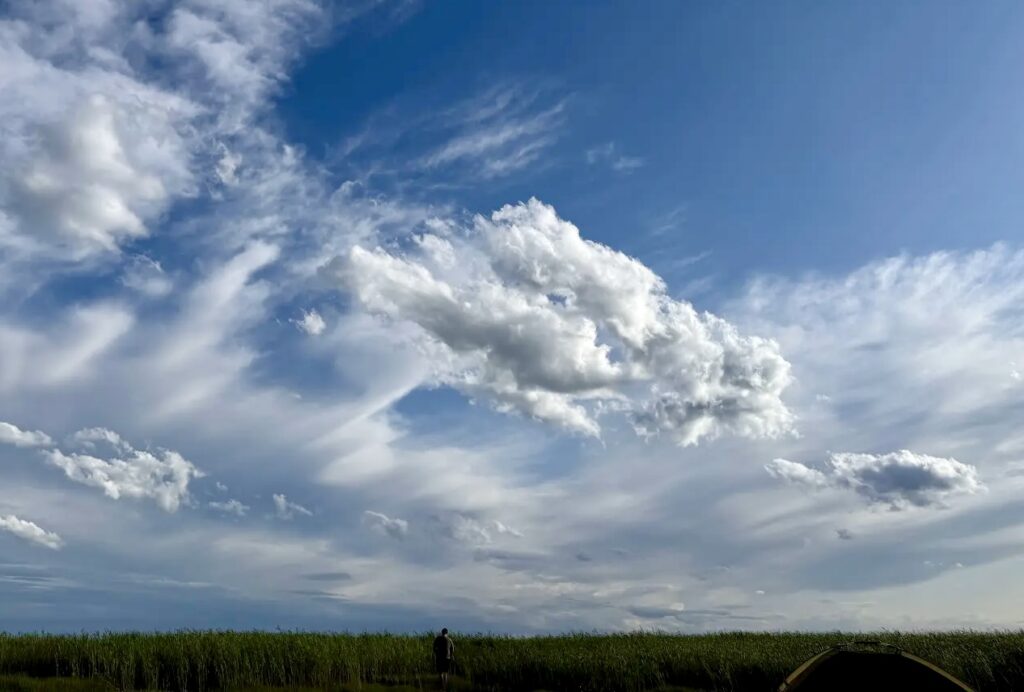The clouds over the river were magnificent. (Photo Clay Jenkinson)
---
## ***Discover more on these topics at Listening to America***
[Podcast](https://ltamerica.org/tag/podcast/ "1 topics")[Pennsylvania](https://ltamerica.org/tag/pennsylvania/ "1 topics")[Ohio](https://ltamerica.org/tag/ohio/ "2 topics")[Steinbeck Travels](https://ltamerica.org/tag/steinbeck-travels/ "75 topics")[Tennessee](https://ltamerica.org/tag/tennessee/ "1 topics")[Republics](https://ltamerica.org/tag/republics/ "1 topics")[Washington](https://ltamerica.org/tag/washington/ "2 topics")[Thoreau](https://ltamerica.org/tag/thoreau/ "5 topics")[New York](https://ltamerica.org/tag/new-york/ "8 topics")[Oppenheim](https://ltamerica.org/tag/oppenheim/ "0 topics")[Wyoming](https://ltamerica.org/tag/wyoming/ "4 topics")[paintings](https://ltamerica.org/tag/paintings/ "0 topics")[Rome](https://ltamerica.org/tag/rome/ "1 topics")[Vermont](https://ltamerica.org/tag/vermont/ "1 topics")[William Shirer](https://ltamerica.org/tag/william-shirer/ "1 topics")[The Constitution](https://ltamerica.org/tag/the-constitution/ "1 topics")[Oppenheimer](https://ltamerica.org/tag/oppenheimer/ "1 topics")[Walden](https://ltamerica.org/tag/walden/ "1 topics")[Utah](https://ltamerica.org/tag/utah/ "11 topics")[Oregon](https://ltamerica.org/tag/oregon/ "4 topics")[Video](https://ltamerica.org/tag/video/ "51 topics")[Sports](https://ltamerica.org/tag/sports/ "2 topics")[Theodore Roosevelt](https://ltamerica.org/tag/theodore-roosevelt/ "16 topics")[State Parks](https://ltamerica.org/tag/state-parks/ "2 topics")[U.S. Presidents](https://ltamerica.org/tag/u-s-presidents/ "71 topics")[Virginia](https://ltamerica.org/tag/virginia/ "7 topics")[Road Trips](https://ltamerica.org/tag/road-trips/ "18 topics")[North Carolina](https://ltamerica.org/tag/north-carolina/ "3 topics")[New Mexico](https://ltamerica.org/tag/new-mexico/ "3 topics")[New England](https://ltamerica.org/tag/new-england/ "1 topics")[Reading](https://ltamerica.org/tag/reading/ "1 topics")[Rivers](https://ltamerica.org/tag/rivers/ "3 topics")[Water in the West](https://ltamerica.org/tag/water-in-the-west/ "24 topics")[Texas](https://ltamerica.org/tag/texas/ "4 topics")[South Dakota](https://ltamerica.org/tag/south-dakota/ "16 topics")[Poetry](https://ltamerica.org/tag/poetry/ "1 topics")[North Dakota](https://ltamerica.org/tag/north-dakota/ "53 topics")[north daktoa](https://ltamerica.org/tag/north-daktoa/ "0 topics")[Thomas Jefferson](https://ltamerica.org/tag/thomas-jefferson/ "34 topics")[Travel](https://ltamerica.org/tag/travel/ "1 topics")[U.S. Constitution](https://ltamerica.org/tag/u-s-constitution/ "1 topics")[Space Exploration](https://ltamerica.org/tag/space-exploration/ "8 topics")[Republic](https://ltamerica.org/tag/republic/ "0 topics")[South Carolina](https://ltamerica.org/tag/south-carolina/ "1 topics")[Wisconsin](https://ltamerica.org/tag/wisconsin/ "0 topics")
**Categories:** Features
**Tags:** America at 250, Lewis and Clark, North Dakota
---
### [Ode to Dismal Nitch](https://ltamerica.org/ode-to-dismal-nitch/)
**Published:** August 16, 2025
**Author:** Editor
**Excerpt:** Has our friend Clay Jenkinson been too long alone on the Lewis and Clark Trail?
**Content:**
## Has our friend Clay Jenkinson been too long alone on the Lewis and Clark Trail?
Earlier this week, Clay made a pilgrimage to the site called Dismal Nitch, where Lewis and Clark were marooned for six miserable days in November 1805. There is a somewhat confusing academic debate about which of the three or four identical nitches within a two-mile stretch of the Columbia River estuary is the actual, official, certified Dismal Nitch. This seems to have sent Clay into a bit of a spin. (National Park Service)
**Editor’s Note:** We all know that our friend and colleague Clay Jenkinson has spent too much time alone in his Airstream trailer. Signs that he was beginning to come apart have been building for several weeks. A brief survey of his recent internet searches indicates that the largest number were for: Ginsu Knives, box cutters, Laudanum, “Adult Sacagawea Dolls,” self-hypnosis, and home straightjacket kits. Earlier this week, he made a pilgrimage to [Dismal Nitch](https://www.nps.gov/places/dismal-nitch.htm) on the Washington side of the estuary of the Columbia River, where Lewis and Clark were marooned for six miserable days in November 1805. Clay was apprised that there is a very lively debate at the highest academic levels about which of the three or four identical nitches within a two-mile stretch is the actual, official, certified Dismal Nitch. That’s when the wheels appear to have come off his life. We found his trailer abandoned at Nitch 3.214, with nothing in it but the following poem on the dinette table.
***Ode to Dismal Nitch***
*So now we’re stuck at Dismal Nitch*
*Cap Lewis says it’s just a sitch*
*But Clark will whine and rage and bitch*
*He do not like this Dismal Nitch*
*Life is grim at Dismal Nitch*
*Although who knows which Nitch is which*
*It wouldn’t do no good to switch,*
*Each nitch is dismal, each nitch a bitch*
*Nitch 1 is dismal, who’d a thunk,*
*No place to sit no place to bunk*
*One corpsman slept upon a trunk*
*He said he loved it but he’s a punk.*
*Nitch 2 is just as grim as 1*
*No supper, rest, no hope, no sun*
*And when the tide begins to run*
*I’d end it all if I had a gun.*
*Let scholars nominate their nitch*
*One’s name is Hiram, t’other Mitch*
*But all they do is shout and twitch*
*Cause no one knows which nitch is which.*
*But now I’ve got a primal itch*
*To spend my life at Dismal Nitch*
*Summers at the other Nitch*
*If I can learn which Nitch is which.*
*If I remained at Dismal Nitch*
*I’d sell folks cards and other kitsch*
*And make them vote which Nicth is which*
*They’d be flummoxed but I’d be rich.*
*The richest man at Dismal Nitch.*
Douglas Horchuck

---
***Follow Clay and the LTA Airstream as he retraces the famous Lewis & Clark Trail from 1804-1806 across the continent. This 2025 expedition is a central part of LTA’s big initiative to explore the country and take the pulse of America as it approaches its 250th birthday. Be sure to follow Clay’s adventures*** [***here***](https://ltamerica.org/tag/lewis-and-clark/) ***and on*** [***Facebook***](https://www.facebook.com/LTAmerica) ***— and*** [***subscribe to our newsletter***](https://ltamerica.org/newsletter/)**.**
**Categories:** Dispatches from the Road
**Tags:** Lewis and Clark
---
### [My Montana Summer](https://ltamerica.org/my-montana-summer/)
**Published:** August 11, 2025
**Author:** Clay Jenkinson
**Excerpt:** Clay Jenkinson reports on his month-long adventure crisscrossing Montana in the long-since-passed footsteps of Lewis and Clark and their Corps of Discovery.
**Content:**
## Clay Jenkinson reports on his month-long adventure crisscrossing Montana in the long-since-passed footsteps of Lewis and Clark and their Corps of Discovery.
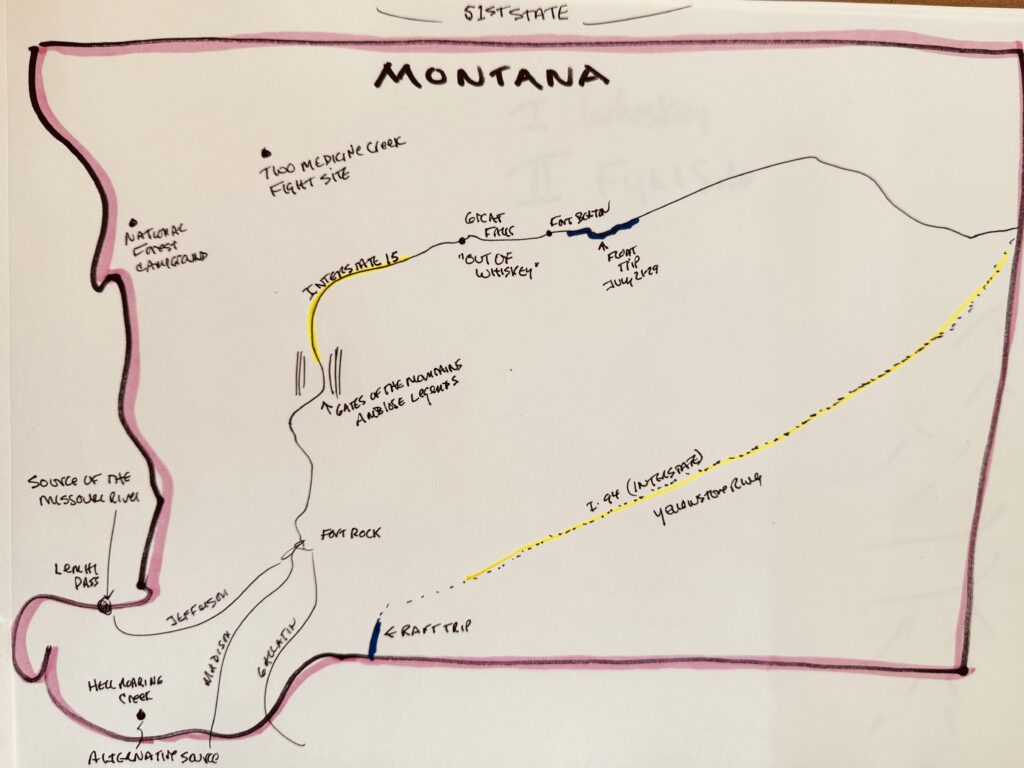Clay’s hand-drawn map of his Lewis and Clark Montana summer sojourn. The Corps of Discovery would likely not have hired him as a cartographer.
**Lewiston, Idaho, August 7, 2025** — I spent more than a month in Montana exploring the Lewis and Clark sites. I left Bismarck, North Dakota, for Phase Two of my national Lewis and Clark tour on July 2, after narrowly surviving the Missouri River pontoon trip with my two favorite rapscallions.
I crossed over into Idaho at 11 a.m. today, August 7.
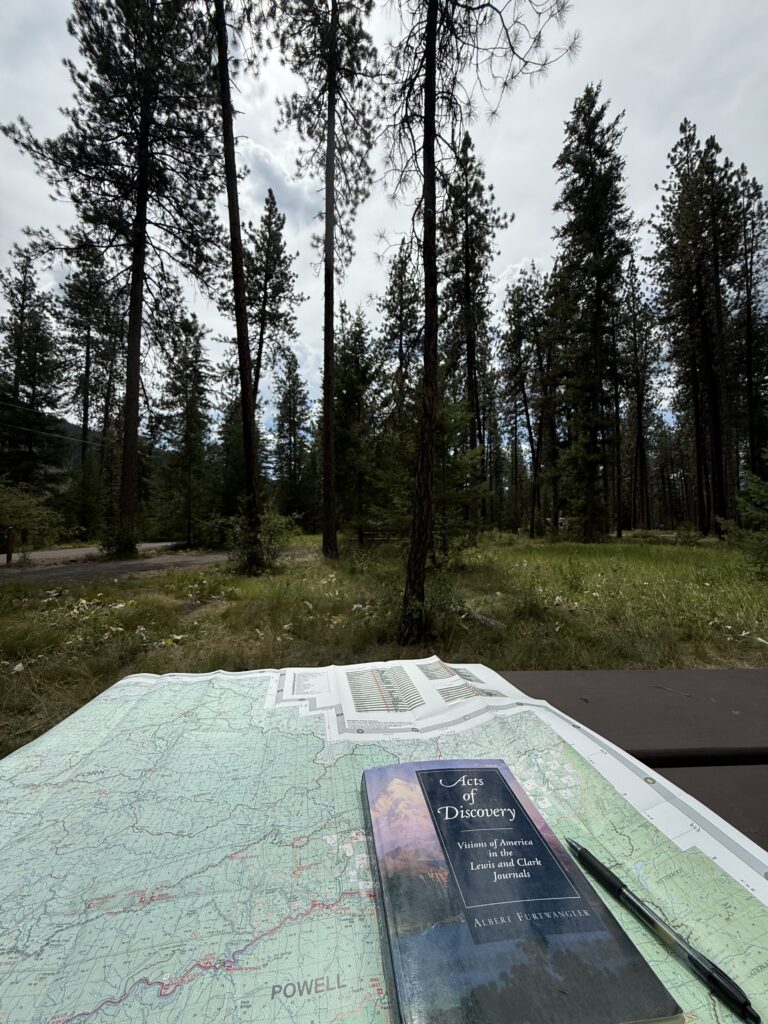
John Steinbeck had a thing for Montana. In *Travels with Charley*, he wrote, “I’m in love with Montana. For other states, I have admiration, respect, recognition, and even some affection. But with Montana, it is love.” He went further: “Montana has a spell on me. It is grandeur and warmth. If Montana had a seacoast or if I could live away from the sea, I would instantly move there and petition for admission.”
Lewis and Clark did not know the word Montana. Statehood didn’t come for more than 80 years. Lewis and Clark knew it as the northwestern sector of the Louisiana Purchase Territory. They spent plenty of time in Montana: from April 27 to August 13, 1805 (depending a little on how you count), and from July 2 to August 7, 1806. That’s 108 + 36 = 144 days — a third of a year.
Here’s a short list of what I did in Montana in a month (with a bit of help from the internal combustion engine).
– [Drank the last of my whiskey supply on July 4 at the Great Falls](https://ltamerica.org/celebrating-july-4th-on-the-lewis-and-clark-trail-video-dispatch/), precisely where Meriwether Lewis had his alarming encounter with a grizzly bear (June 14, 1805). Since I am not a whiskey drinker, this did not prove fatal.
– [Visited the Fight Site on the upper Marias River, at Two Medicine Creek](https://ltamerica.org/meriwether-lewis-deadly-encounter/), with two remarkable experts: local attorney and historian Larry Epstein, who helped to identify the site decades ago; and Jack Gladstone, the Blackfeet singer-songwriter, storyteller, and commentator who has written wonderfully wry songs about Lewis and Clark and manifest destiny. Lewis and three of his best men had a violent skirmish with eight young Piegan Blackfeet men on July 27, 1806, on the return journey. At least one of the young Blackfeet men was killed, perhaps two. Getting these two extraordinary commentators (Larry and Jack) to the site at the same time has been one of my dreams for many years. They did not disappoint. It turns out that Captain Lewis may have overreacted to the young Indigenous men’s first coup attempt. The Fight Site is a top-10 must-visit place on the Lewis and Clark Trail, but it is not often visited, mainly because it is so far off the beaten path, and you cannot simply drive up to it.
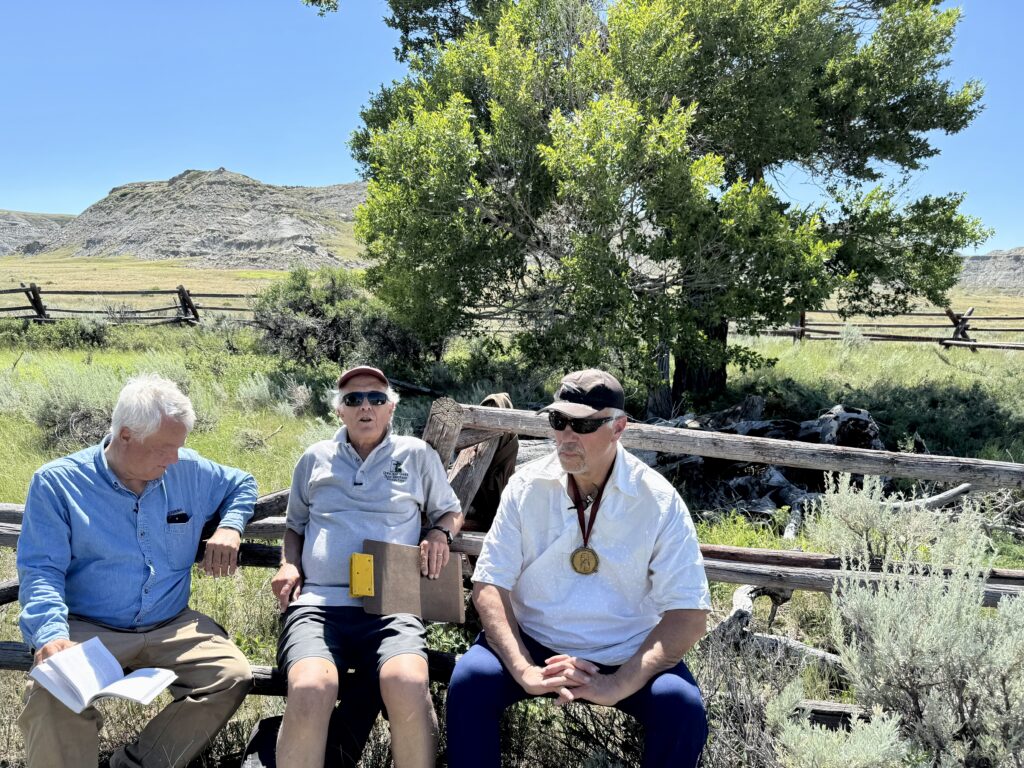Clay (left) and two Lewis and Clark historians, Larry Epstein (center) and Jack Gladstone (right) at the camp where Meriwether Lewis camped the night before his fatal encounter with a group of young Blackfeet.
– Took the Stephen Ambrose family memorial excursion boat Sacagawea through the Gates of the Mountains north of Helena, with an outstanding guide Kari (Kahr-ee), who had memorized Lewis’s famous passage about the Gates:
“This evening, we entered many of the most remarkable clifts that we have yet seen. these clifts rise from the watersedge on either side perpendicularly to the hight of 1,200 feet. every object here wears a dark and gloomy aspect. the tow\[er\]ing and projecting rocks in many places seem ready to tumble on us. the river appears to have forced it’s way through this immence body of solid rock for the distance of 5¾ miles and where it makes it’s exit below has thrown on either side vast collumns of rocks mountains high. the river appears to have woarn a passage just the width of it’s channel or 150 yds… it was late in the evening before I entered this place and was obliged to continue my rout untillsometime after dark before I found a place sufficiently large to encamp my small party; at length such an one occurred on the lard. side where we found plenty of lightwood and pichpine. this rock is a black grannite below and appears to be of a much lighter colour above and from the fragments I take it to be flint of a yelloish brown and light creemcolourd yellow.— from the singular appeaerance of this place I called it the gates of the rocky mountains.”
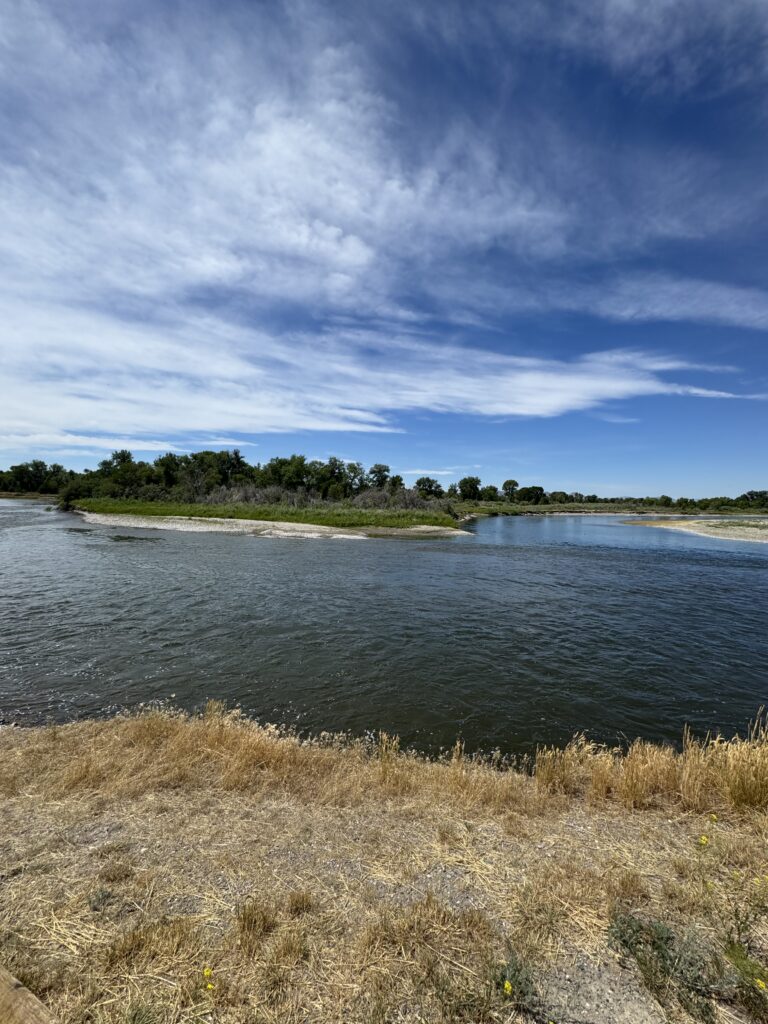[Missouri Headwaters State Park](https://fwp.mt.gov/stateparks/missouri-headwaters/) where the Jefferson, Madison and Gallatin Rivers join to form the “start” of the Missouri River. Lewis and Clark visited here in 1805. (Photo Dennis McKenna)
Missouri Headwaters State Park where the Jefferson, Madison, and Gallatin rivers join to form the “start” of the Missouri River. Lewis and Clark visited here in 1805. (Photo Dennis McKenna)
– Spent a day wandering about the three forks of the Missouri at Three Forks: the Madison, the Gallatin, and the Jefferson. I waded into each of the contributory streams, climbed up to Fort Rock from which the captains surveyed the broad tridentine valley, and stayed at my favorite RV park of the summer. Plus sandwiches at Wheat Montana.
– Joined my friends Dennis and Joan, my scholar-daughter, and her scholar-fiancé at Gardiner (where Theodore Roosevelt dedicated the Yellowstone National Park arch in April 1903). New friends [Josh and Emily Jo](https://www.yellowstonehikingguides.com/guides) took us on a spirited white water raft trip on the upper Yellowstone, well before it becomes a Great Plains river. Note: my goal has been to get on as many LC-related rivers as possible. I have always wanted to run a bit of the Yellowstone when it was still wild, clear, and not-yet-managed. (I was on the Lochsa River the other day, and I will soon be on the lower Columbia.)
– During all of this time, I read as many hours per day as I could carve out of the logistics of hauling a 23-foot trailer around Montana. I read the journals of the expedition painstakingly, person by person, day by day, with scores of pages of handwritten notes (which are likely to go the way of all of my notes). I’ve also been writing a series of short commentaries, which I call *Lewis and Clark Short Bites*, about things I am discovering, things I am excavating from clouded memory, and quibbles with Lewis and Clark historians. I try to limit each entry to 250 words. I’m doing research for a book I want to write about the dynamics of the Lewis and Clark journals.
– Twice, I drove Interstate 15 between Great Falls and Helena. The Interstates get a bad rap for finding the least impressive landscapes to dissect, but a handful of America’s Interstate highways are magnificent: I-70 through Glen Canyon in Colorado; I-15 up the Virgin River canyon in Nevada; I-94 along the Yellowstone River between Glendive and Livingston, Montana; and I-15 between Helena and Great Falls. The views of the Missouri River in a state that is almost un-industrialized, s-curving its way through an almost incredible landscape, are enough to make you cry. It must have been extremely expensive to run the four-lane highway through those canyons, but such things make up for a lot of urban dreariness (and injustice).
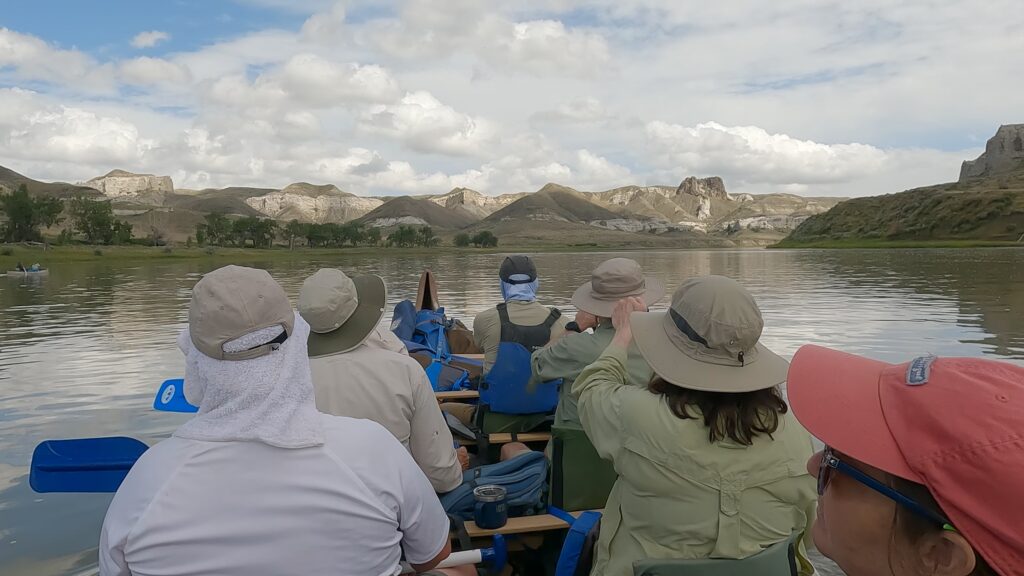Members of Clay’s Lewis and Clark Cultural Tour paddle toward the White Cliffs of the Missouri River southeast of Fort Benton, Montana. (Photo Nolan Johnson)
– Led my 25th annual Lewis and Clark Cultural Tour from Fort Benton, Montana, by canoe for three days through the White Cliffs section of the Missouri River; then over to the Lolo Trail west of Missoula for very strenuous hiking in the footsteps of L&C. The three-day river float was the easiest in my experience. My taciturn canoe partner, Russ Eagle, and I exchanged approximately one sentence each per river mile. The infamous “Wendover Death March,” 7.5 miles straight up, was rough this year, even though my friend Wayne Fairchild (also my outfitter) had formed a crew to clear the trail earlier this spring. The Wendover trail is constantly beset with fallen trees (Lewis and Clark whined about them, too), but the big wind microburst last year had rendered it impassible. Now — cleared as never before, thanks to Wayne and his crew — one could run up it, if one could run. In addition to all of that, we had great guests (not inevitable), and two great thunderstorms, one of which brought on a [flash flood](https://ltamerica.org/the-quest-for-the-authentic-on-the-lewis-and-clark-trail/) in the Slot Canyon, which might have swept several of us down to the Gulf of Mexico, but relented. The flash flood was one of the top five highlights of all my years on the Missouri. You will remember that Lewis and Clark hired a Native man to lead them through the Bitterroot Mountains. We had our own self-declared “Old Toby” (a guest from Louisiana), and he got us lost just three times. In his bewilderment, like Marlon Brando in *A Streetcar Named Desire*, our Old Toby bellowed for “My Jaime” (one of the very best of our guides), but she did not respond. She was rumored to be tossing $5 bills at the swimming mermaid at Great Falls’ legendary Sip n’ Dip bar at the time of the incident.
Clay at Hell Roaring Creek, one of the “sources” of the Missouri River in extreme Southern Montana. (Photo Russ Eagle)
– Ventured with my friends Russ and Liz to the alternative “source” of the Missouri River: Hell Roaring Creek west of Henrys Lake and east of Dillon, Montana. [River sources](https://ltamerica.org/hunting-rivers-sources-on-the-upper-missouri/) are of great importance to me, and this one, the feeder stream farthest up the Missouri from New Orleans, has special appeal to me because it is so remote and (frankly) pointless. The more improbable the American wonder, the more I am drawn to it. With Russ and especially Liz, there was another installment of the Great Gumbo Dispute at Hell Roaring Creek, perhaps unworthy of commentary, except that I believe I can safely assert that this was the first gumbo ever served or eaten at the Source. Where is Robert Ripley when you need him? I was so excited to be there that I forgot to fill a bottle with source water. Fortunately, Russ remembered, for which, I fear, he will retain a long memory.
– Then I went alone to Lemhi Pass, where Lewis found what he regarded as the “source” of the Missouri River. This was August 12, 1805. He wrote that this was the fulfillment of a “grand project” that had been central to his life plan for many years. He wrote: “two miles below McNeal had exultingly stood with a foot on each side of this little rivulet and thanked his god that he had lived to bestride the mighty & heretofore deemed endless Missouri.”
Naturally, I not only bestrode the rivulet but took approximately 231,000 selfies in that preposterous posture. Lewis retained his dignity by saying that it was his subordinate colleague, Hugh McNeal (the Irish Catholic), who did the bestriding. I filled several vessels with the sacred water. I prayed, recited, and mused for a full two hours, in part because the weather was perfect (74 degrees, with a noticeable but not strong breeze), and mostly because I have so much to be grateful for this year (more than I have had for several decades). Silly as it may seem, I truly thrill (goose bumps, animal noises, a hard-to-describe ecstasy) to stand at the source of this river (or any great river), and I thank whatever celestial being is listening that I have lived to bestride, again, “the mighty and heretofore deemed endless Missouri.”
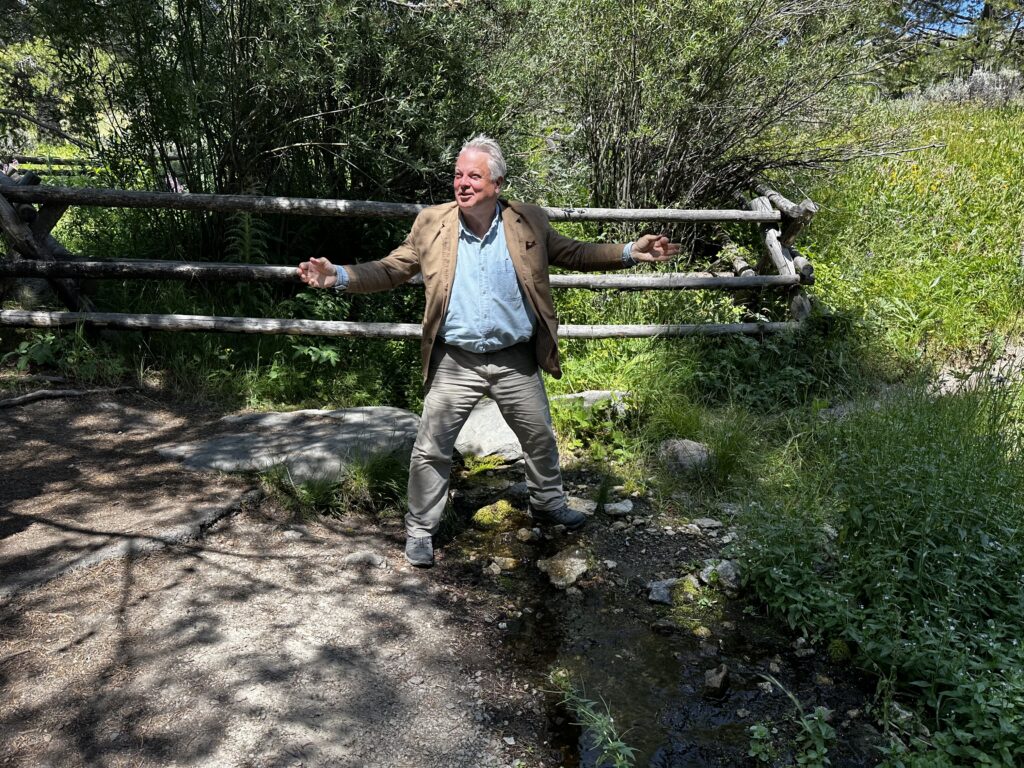Clay bestrides the little stream near Lemhi Pass in Montana that is considered one of the headwater streams of the Missouri River.
Naturally, I not only bestrode the rivulet but took approximately 231,000 selfies in that preposterous posture. Lewis retained his dignity by saying that it was his subordinate colleague, Hugh McNeal (the Irish Catholic), who did the bestriding. I filled several vessels with the sacred water. I prayed, recited, and mused for a full two hours, in part because the weather was perfect (74 degrees, with a noticeable but not strong breeze), and mostly because I have so much to be grateful for this year (more than I have had for several decades). Silly as it may seem, I truly thrill (goose bumps, animal noises, a hard-to-describe ecstasy) to stand at the source of this river (or any great river), and I thank whatever celestial being is listening that I have lived to bestride, again, “the mighty and heretofore deemed endless Missouri.”
While I was there, two different pickups drove up, and one ATV. They lived nearby. They were tooling around. One man brought an older man, crippled with old war legs, for a picnic, and the veteran lurched down the path to the picnic table. I wanted to say, “thank you for your service,” but I hesitated. Sometimes that feels so easy, so rote. The other men in pickups were friendly, curious about what I was doing way up there. I explained the importance of Lewis’s August 12, 1805, moment and urged them to go down and bestride the “mighty and heretofore, etc.” Missouri. This did not win any converts. Both of them invited me to explore the area more fully, including on their private land, and offered to be of assistance if I wanted to see more. One of them subsequently wrote me several excellent emails suggesting places I ought to see there.
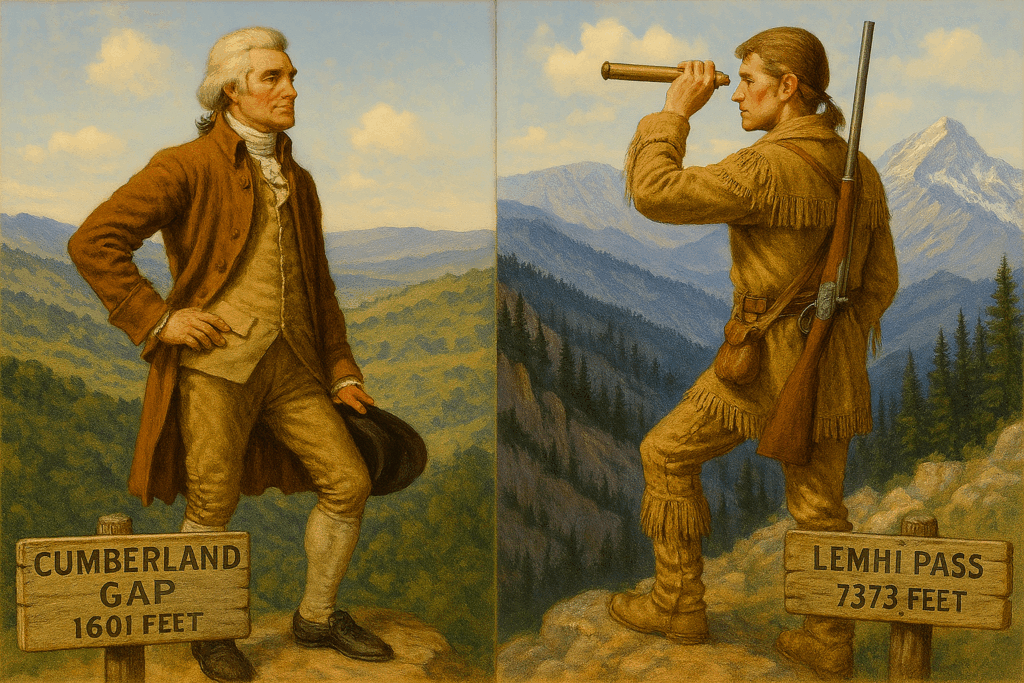(ChatGPT image by Clay Jenkinson)
– Then I drove up to Lemhi Pass, which is 7,373 feet in elevation. [The Cumberland Gap](https://www.nps.gov/cuga/learn/historyculture/cumberland-gap.htm), at the convergence of Kentucky, Tennessee, and Virginia, is 1,601 feet. That’s five times lower than Lemhi, Mr. Jefferson! I got out and did some gag videos. The usual notion in Lewis and Clark studies is that when Lewis climbed up to the ridge and looked to the West, he was so devastated by the “range upon range” of mountains still between him and the Pacific that his knees sagged, etc. Note: there is not a single reference in the million words of the Lewis and Clark journals about sagging knees — certainly none at Lemhi Pass. My friend David Nicandri, who specializes in puncturing Lewis and Clark myths (as he sees them), gives lectures showing slides of the view East and slides of the view West and asks the audience to identify which is which. Point taken. Nicandri notes that Lewis expresses no disappointment, regret, misgivings, concern, or anxiety upon topping the Continental Divide. He simply mentions that there are several mountain ranges to get through. Without even a hint of chagrin. So every time I am there — in this age of connectivity — I tape a re-enactment of the Lemhi Disappointment Trope and send it (from the Pass!) to Herr Nicandri on the coast of Washington. I hope I do not seem immodest when I say this year’s re-enactment was the most inspired of them all, worthy of a prize for a: running a gag into the ground over more than a decade; b: leading an almost entirely absurd life; and c: expressing my friendship for a fellow member of what Jefferson and his ilk called “The Republic of Letters.”
But when that was done, when the film was “in the can” as well as the empyrean, I found that I was not ready to leave the Pass. It was as perfect a day as one could ever ask. Meriwether Lewis is one of my heroes. He was a much more extraordinary man than we know, a truly gifted literary artist, a man of genuine integrity, a man of great discipline, and one of the first Americans to brood over what was to become of the trans-Mississippi West. I sense that it mattered more to him to reach the source of the Missouri River than the end of the continent (November 1805).
Lemhi Pass. (Photo by Clay Jenkinson)
I tried to imagine the last hour before Lewis reached Lemhi Pass. Back at St. Charles, the Missouri was nearly a mile wide. For 15 months, he had directed a crew of raw volunteers more than 3,000 river miles, at about 15 miles per day, to this place, this moment. The physical exertion of the men who propelled the boats up the Missouri River, portaged around the falls (18.25 miles), and dragged what was left of the flotilla up the last miles of the Jefferson-Beaverhead River was essentially appalling. These men had earned every mile of the laborious ascent. Lewis, too. And alone, Lewis had to carry the mission in his conscience. That, more than anything else, I believe, undid him. Beginning before the expedition returned to St. Louis.
What must Lewis have thought and felt as he climbed the last mile to the source (and beyond it, the pass to the Columbia basin)? It must have been one of the handful of happiest days of his life. Short list: 1. Getting the letter from Jefferson inviting him to become the president’s private secretary (April 1801). 2. Leaving Fort Mandan on April 7, 1805: “We were now about to penetrate a country of more than 2,000 miles in width upon which the foot of civilized men has never trod.” 3. “Discovering the great falls” (June 13, 1805). 4. Lewis’s enchanted day at the falls in which his field experiences pushed beyond the envelope of the rational Enlightenment (June 14, 1805). 5. The day he made successful contact with the Shoshone without Sacagawea (August 13, 1805). 6. Drinking from the source of the Missouri.
When Lewis got to the shore of the Pacific a couple of months later, here’s what he wrote: NOTHING. Not a word. He did not take a single hour to write his thoughts and impressions (and sense of accomplishment) at having successfully led a transcontinental exploration mission from Pittsburgh to Astoria, with all but one of his men still alive and healthy. I could spend a dozen pages here trying to sort out why he didn’t bother to write up his triumph over the continent that day or that winter, but this much is certain. There was a mental fragility in the otherwise incredibly robust Meriwether Lewis.

I mused for an hour on Lemhi Pass. I was reluctant to get in my pickup and piece my way down the gravel roads to Dillon. The place. The view. The historical importance. The pure joy of being there. The temperature. The breeze. The indecipherable mystery of Meriwether Lewis’s decline and death. The sense that such a moment as this happens at best once a year, sometimes in the presence of the ho-hum crowd.
Exhausted after a full month of Montana adventures, I drove two days ago to Superior, Montana, northwest of Missoula, where there is a truly lovely and tranquil National Forest campground. Off the grid. Only eight or nine other rigs in a campground of more than 100 slips. Giant yellow ponderosa pines. The Clark Fork River is within slingshot distance.
I realized that I was still in Montana, but it felt like Idaho. I read and rested, wrote and napped, strolled and read, and made all sorts of life plans.
And now I am out. There are several more such hectic months of things I want to see and do in Montana, including canoeing a section of the Missouri I have never seen (in two weeks), Judith Landing to James Kipp, through the breaks and the badlands of the fourth-longest river in the world.
I’m a very proud North Dakotan, but I confess: if there were only one state, it would have to be Montana.
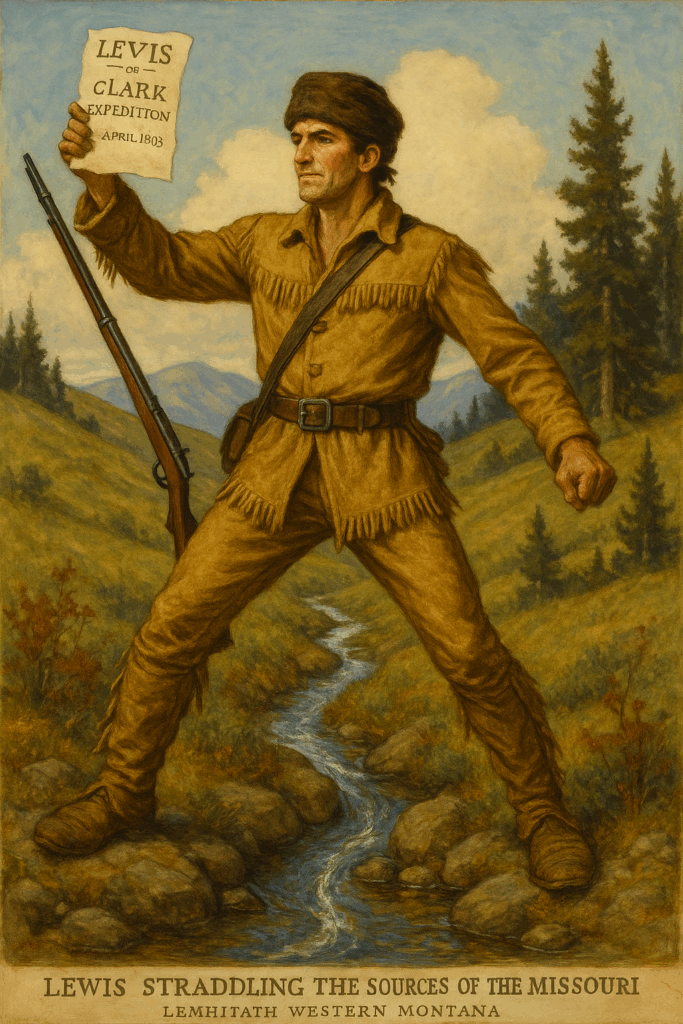Meriwether Lewis at Lemhi Pass. (ChatGPT image by Clay Jenkinson)
---
***Follow Clay and the LTA Airstream as he retraces the famous Lewis & Clark Trail from 1804-1806 across the continent. This 2025 expedition is a central part of LTA’s big initiative to explore the country and take the pulse of America as it approaches its 250th birthday. Be sure to follow Clay’s adventures*** [***here***](https://ltamerica.org/tag/lewis-and-clark/) ***and on*** [***Facebook***](https://www.facebook.com/LTAmerica) ***— and*** [***subscribe to our newsletter***](https://ltamerica.org/newsletter/)**.**
**Categories:** Dispatches from the Road
**Tags:** Idaho, John Steinbeck, Lewis and Clark, Montana, U.S. Presidents
---
### [Clay Reads and Riffs on Huckleberry Finn While Sitting Beside the Mighty Mississippi — Video Dispatch](https://ltamerica.org/clay-reads-and-riffs-on-huckleberry-finn-while-sitting-beside-the-mighty-mississippi-video-dispatch/)
**Published:** August 10, 2025
**Author:** Editor
**Excerpt:** Earlier this summer, Clay Jenkinson traveled to the confluence of the Ohio and Mississippi Rivers at Cairo, Illinois. Sitting on the banks of the Mississippi, Clay read from Adventures of Huckleberry Finn and talked about the novel and its author, Mark Twain, who enshrined this mighty river deep in American mythology.
**Content:**
## Earlier this summer, Clay Jenkinson traveled to the confluence of the Ohio and Mississippi Rivers at Cairo, Illinois. Sitting on the banks of the Mississippi, Clay read from *Adventures of Huckleberry Finn* and talked about the novel and its author, Mark Twain, who enshrined this mighty river deep in American mythology.
---
***Follow Clay and the LTA Airstream as he retraces the famous Lewis & Clark Trail from 1804-1806 across the continent. This 2025 expedition is a central part of LTA’s big initiative to explore the country and take the pulse of America as it approaches its 250th birthday. Be sure to follow Clay’s adventures*** [***here***](https://ltamerica.org/tag/lewis-and-clark/) ***and on*** [***Facebook***](https://www.facebook.com/LTAmerica) ***— and*** [***subscribe to our newsletter***](https://ltamerica.org/newsletter/)**.**
**Categories:** Dispatches from the Road
**Tags:** America at 250, Books, Humanities, Illinois, Lewis and Clark, Video
---
### [Clay Checks in From Missoula — Video Dispatch](https://ltamerica.org/clay-checks-in-from-missoula-video-dispatch/)
**Published:** August 4, 2025
**Author:** Editor
**Excerpt:** Clay reports in on his adventures at the conclusion of his recent Montana Lewis and Clark Cultural Tour.
**Content:**
## Clay reports in on his adventures at the conclusion of his recent Montana Lewis and Clark Cultural Tour.
***Follow Clay and the LTA Airstream as he retraces the famous Lewis & Clark Trail from 1804-1806 across the continent. This 2025 expedition is a central part of LTA’s big initiative to explore the country and take the pulse of America as it approaches its 250th birthday. Be sure to follow Clay’s adventures*** [***here***](https://ltamerica.org/tag/lewis-and-clark/) ***and on*** [***Facebook***](https://www.facebook.com/LTAmerica) ***— and*** [***subscribe to our newsletter***](https://ltamerica.org/newsletter/)**.**
**Categories:** Dispatches from the Road
**Tags:** Lewis and Clark, Montana, Video
---
### [Hunting Rivers' Sources on the Upper Missouri](https://ltamerica.org/hunting-rivers-sources-on-the-upper-missouri/)
**Published:** August 4, 2025
**Author:** Clay Jenkinson
**Excerpt:** Thomas Jefferson, Meriwether Lewis, and Clay Jenkinson all share a fascination with the origins of rivers.
**Content:**
## Thomas Jefferson, Meriwether Lewis, and Clay Jenkinson all share a fascination with the origins of rivers.
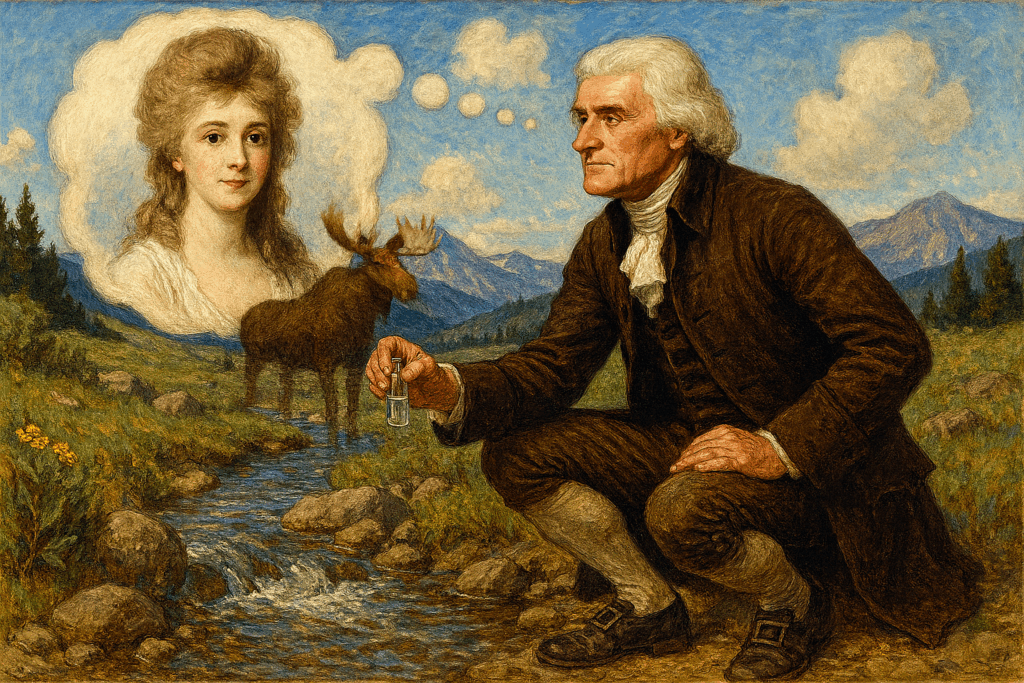Though Thomas Jefferson never saw the Missouri River, it (and Mrs. Maria Cosway) held a special fascination for him. (ChatGTP Image by Clay Jenkinson)
I’ve been investigating the sources of rivers for a very long time, perhaps because I have been fascinated by rivers all of my life. There are 250,000 rivers in the United States. Only a few of them are iconic: the Colorado, the Ohio, the Mississippi, the Missouri, the Snake, the Yellowstone, the Hudson, the Rio Grande, the James. My personal river is the Little Missouri, located in the North Dakota Badlands and Theodore Roosevelt National Park. Someday I will be strewn there. I prefer a river where I can sit in late summer, but I am not picky.
I’m with Heraclitus, the sixth-century BCE pre-Socratic philosopher: “You can never step into the same river twice.” I’ve floated the White Cliffs section of the Missouri River 25 times now. The three-day canoe trip has been somewhat different each time, and sometimes significantly so. This was the year of the four perfect pelicans.
Source hunting for rivers goes way back to the ancient world. The Greek historian [Herodotus](https://www.britannica.com/biography/Herodotus-Greek-historian) (sometimes regarded as the first historian) wrote about the already venerable search for the source of the Nile. That was 430 BCE, just under 3,000 years ago. The source of the Nile was not finally discovered until 1862, when Sir Richard Francis Burton’s comparatively mediocre lieutenant John Speke happened upon the northern outlet of Lake Victoria (which he named and claimed). More recently, it has been shown that the feeder sources of the Nile extend to the Kagera River in Tanzania; however, this was not how the men of the nineteenth century saw such things.
Today I visited one of the true sources of the Missouri River. I’ve been staying in extreme southwestern Montana, not far from Ennis, for a few days. This evening I’m sitting at dusk at the picnic table at my RV park, with a more than quarter moon gracing the mountains to the south and west. It’s cloudy, with a chance of rain, and there was thunder earlier. It’s very still here. So far, no tiki lamps in this campground, and there is no music punctuating the solitude — a perfect end to a great day.
I’ve been to several river sources: the Missouri (Montana), the Columbia (British Columbia), the Thames (central England), the Ohio (Pittsburgh, Pennsylvania), the Colorado (Rocky Mountain National Park, Colorado), the Arkansas (Leadville, Colorado), the Mississippi (northern Minnesota), and the Little Missouri (Oshoto, Wyoming). I feel a physical thrill to stand at the pinpoint on the planet from which a great river begins its journey to the sea. Rivers represent mystery to me. They automatically inspire reflection. Where does the water come from? This may seem obvious until you start to think about it. Where does the water right before your eyes go? If you could dye a cubic centimeter of river water and follow it downstream, would it ever reach the sea? Does a river have consciousness? Is it a living being? Or is it just earth plumbing? I can sit beside (or inside) a river for hours ruminating on these things.
## Rethinking Rivers
Before we began to think bioregionally, before we really understood watersheds, it was common to believe that a river had one identifiable source and one unambiguous mouth, between which was a long ribbon of river. Now that we have a more nuanced understanding of how watersheds work, we recognize that most rivers have several source rivulets, like capillaries in the lungs, which soon combine to form a stream or river. Is Lake Itasca in northern Minnesota really the “source” of the Mississippi River? Well, yes and no. Hydrological purists will quibble with that claim; at their most generous, they will say that Lake Itasca is the “nominal source” of the Mississippi, or the “most identifiable source” of the Mississippi, or the “official source” of the Mississippi.
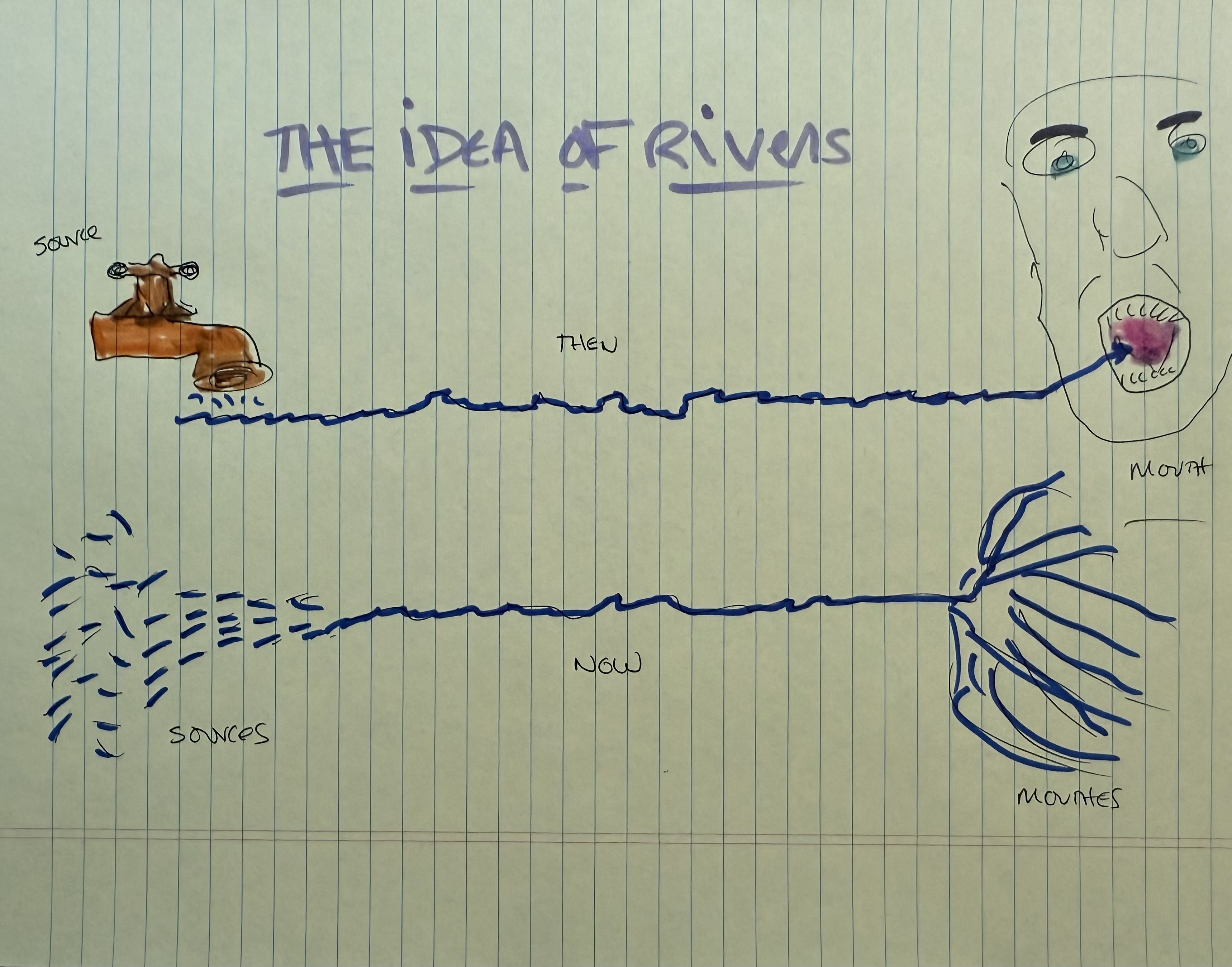Clay’s schematic of how the notion of a river’s source has evolved over time.
The United States Geological Survey (USGS) doesn’t make things any easier by using arbitrary criteria to determine (really, declare!) the sources of major rivers. No reasonable person can really believe that the confluence of the Allegheny and the Monongahela rivers at Pittsburgh constitutes the source of the Ohio. What’s the source of the Nile, the furthest rivulet tributary of the White Nile (in Tanzania) or the utmost feeder creek of the *Blue Nile* (Lake Tana in Ethiopia)?
The USGS-declared source of the Missouri River is the confluence of the Madison, the Gallatin, and the Jefferson rivers at Three Forks, Montana, west of Bozeman, east of Butte. But just today I have driven most of the 183-mile Madison River, and not long ago the Gallatin (120 miles), as well as the 83-mile-long Jefferson River, which is fed by the Beaverhead (69 miles) and the Big Hole (153 miles). In my view, if you need a canoe or a bridge to cross it, it’s not the source. How can *Three Forks* be the source of a river that still has three nearly identical and quite substantial tributaries that extend far beyond their confluence? No rational person can accept the USGS determination, even if Meriwether Lewis himself said at Three Forks (July 1805) that no one of them could any longer justly be called the Missouri proper. Try naming tributaries for presidential administration cabinet members today!
On August 12, 1805, Meriwether Lewis reckoned that he had reached the source of the Missouri River — west of Dillon, Montana, just below Lemhi Pass, which divides waters of the Missouri-Mississippi-Gulf of Mexico from waters of the Salmon-Snake-Columbia-Pacific Ocean. He said it was the realization of “one of those great objects on which my mind has been unalterably fixed for many years.”
I drove about 90 minutes today to reach the “alternative” source of the Missouri, Hell Roaring Creek, located beyond Upper Red Rock Lakes in extreme southern Montana. It’s more than 100 miles from Lemhi Pass. The gravel roads were better than I had remembered. The landscape is so stunning that my friend Russ Eagle said, “It’s only a mountain range away from Yellowstone National Park and equally magnificent. Why isn’t it part of the national park?” Which is a complicated question, but most people of a conservationist bent heartily agree.
I admire the gumption of the ranch family who erected a small sign where *Hell Roaring Creek* emerges from the mountains and meets the Red Rock Pass road, west of Henrys Lake and a gazillion miles east of Monida, Montana. The sign reads: **Hell Roaring Creek** **the utmost source** **of the Missouri** **River** **3768 miles to the Atlantic the fourth** **longest river in the world.**

The sign was sponsored (funded) by John and Ann LaRandeau of the Roaring Creek Ranch. I like their pride. “Utmost” — good word. Who will dispute it? I have a new friend named Norm M., who claims to have hiked up to the source of Hell Roaring Creek at Browers Spring, located somewhere in the crotch of Mount Jefferson or Nemesis Peak in the Centennial Range of Montana, Idaho, and Wyoming mountains. I want to doubt him, though I don’t, but I have already begged him to take me there next year.
I was in St. Charles, Missouri, earlier this summer, where the Missouri River is 4,042 feet wide. Today I was in the lonely outback of Montana, just north of America’s first national park (1872), where the Missouri (Hell Roaring Creek) is no more than fifteen feet wide. I sloshed in the lucid stream fully clothed and washed my face and exulted in being at the utmost feeder creek of one of the world’s greatest rivers, the river of the American Serengeti, or what once was American Serengeti. I wanted to, in Lewis’s famous words, “thank \[my\] god that I had lived to bestride the mighty & heretofore deemed endless Missouri” River. But since I drove to Hell Roaring Creek in a new model GMC pickup, I could hardly claim that I had earned the bestriding moment. Nor has the Missouri been “endless” since August 1805. And I am not sure which god to thank.
## Lewis (and Jefferson) at the Source
Meriwether Lewis was Thomas Jefferson’s secretary and protégé. Jefferson was a collector of protégés. Lewis lived with the President in the White House for more than two years before he undertook his 1804–06 transcontinental journey along America’s great rivers: the Ohio, Mississippi, Missouri, Clearwater, Snake, and Columbia. Jefferson’s famous instructions for the Corps of Discovery (dated June 20, 1803) stated:
“The object of your mission is to explore the Missouri river, & such principal stream of it, as, by it’s course & communication with the water of the Pacific ocean may offer the most direct & practicable water communication across this continent, for the purposes of commerce.”
Lewis took this commission seriously, perhaps too seriously. He could have found a more “direct & practicable water communication” between the Missouri and Columbia watersheds if he had ventured due west from the Great Falls, but he was determined to reach the source of the Missouri, come what may. This represented a long and unnecessary detour, but it seems clear to me — after studying Lewis for decades — that he was more interested in drinking from the source of the Missouri than in reaching the Pacific Ocean, although he was determined to accomplish that too.
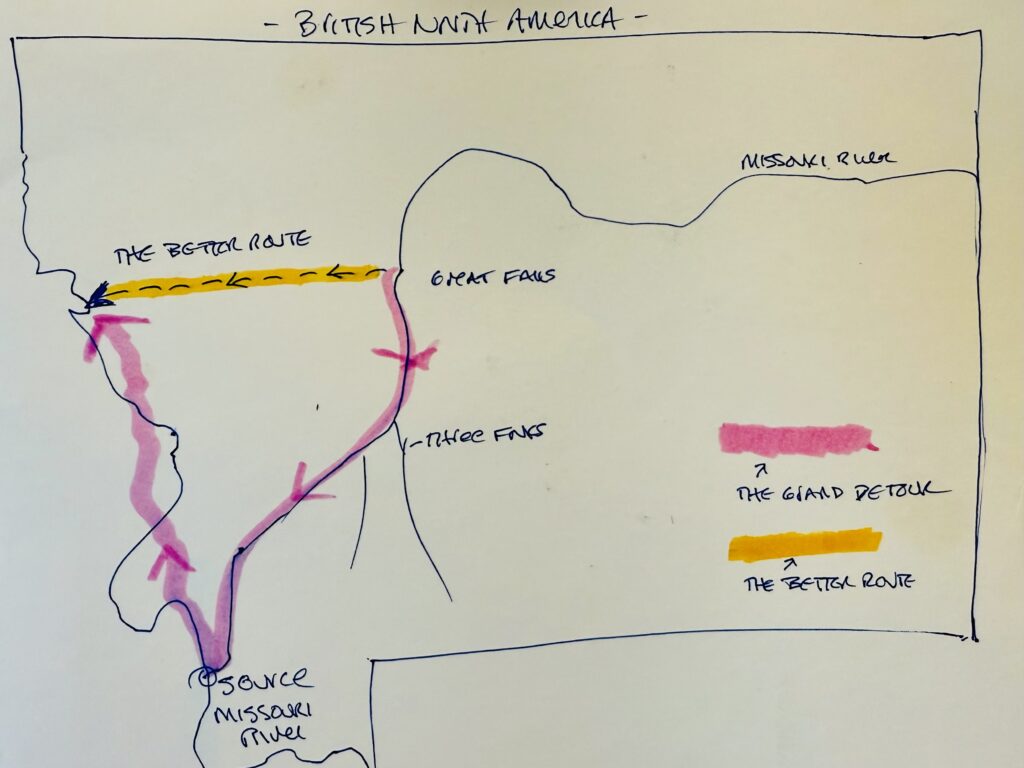Lewis missed a more direct route to the Columbia River in an effort to track down the “source” of the Missouri. (Image Clay Jenkinson)
Thomas Jefferson never saw the Missouri River. He never saw the Mississippi River. Heck, he never saw the Ohio River. In fact, he never traveled farther than 75 miles west of his birthplace in Virginia. That didn’t stop him from purchasing 575 million acres from a French military dictator who never visited North America — both without even consulting the Native Americans whose sovereign lands they were swapping. Repeat: Neither Jefferson (the President of the United States) nor Napoleon Bonaparte (the First Consul of the Republic of France) ever even contemplated bringing the Oto, the Missouri, the Yanktonai, the Lakota, the Arikara, the Mandan, the Hidatsa, the Cheyenne, the Assiniboine, the Crow, the Blackfeet, or the Shoshone to the diplomatic table or asking them which imperial master they would prefer to serve, the one 2,000 miles away or the one 5,000 miles away.
Like his protégé Lewis, Jefferson had a special fascination with the Missouri River (not the Mississippi). In his only book, *Notes on the State of Virginia* (1785), Jefferson gave a couple of pages to the Missouri River even though he acknowledged that it was not actually in Virginia, not even in “greater Virginia” as Jefferson and his land-hungry compatriots conceived it. But here’s a bit of what he wrote: “The Missouri is, in fact, the principal river, contributing more to the common stream than does the Mississippi, even after its junction with the Illinois.”
In other words, Jefferson believed that the Missouri (starting in Montana) was the main northern branch of the river we call the Mississippi, and what we call the “upper Mississippi,” heading up at *Lake Itasca*, Minnesota, he regarded as the principal tributary, not the main branch. In fact, hydrologists and river experts agree with Jefferson, in large part because there is a greater continuity of biota if you regard the main branch as the Missouri, rather than the upper Mississippi, whose biota are somewhat distinct from that of the Mississippi below St. Louis.
[*Notes on the State of Virginia*](https://www.monticello.org/research-education/thomas-jefferson-encyclopedia/notes-state-virginia/) is Jefferson’s classic geographic survey of America (especially Virginia), as well as his blueprint for an American republic characterized by severely limited government, states’ rights, international isolationism, agrarianism, separation of church and state, and periodic revolution (peaceful if possible, bloody if necessary). We learn a great deal about Jefferson’s view of things from *Notes on the State of Virginia*, particularly his religious views and his paralysis over slavery and race, but he saved his most personal mention of the Missouri River for a letter he wrote to a woman he loved in France, Maria Cosway. Their romance (1786–1789) could not survive her return to Britain in October 1786 with her husband, Richard Cosway (a very tolerant man), and Jefferson’s return to Virginia in November 1789. You know what they say: What happens in Paris…
As she was leaving Paris for Calais and the boat to Dover, Jefferson wrote Mrs. Cosway one of his greatest letters, *My Head and My Heart*, an eleven-page debate between his romantic heart and his mathematical head about the advisability of falling in love with a woman he could not have for himself. At one point, after inviting Mrs. (and Mr.!) Cosway to cross the Atlantic to paint American landscapes, he wrote:
“I hope in god no circumstance may ever make either seek an asylum from grief! With what sincere sympathy I would open every cell of my composition to receive the effusion of their woes! I would pour my tears into their wounds: and if a drop of balm could be found at the top of the Cordilleras, or at the remotest sources of the Missouri, I would go thither myself to seek and to bring it.”
Translation: if Richard Cosway ever died (a bit of Freudian wishful thinking), Jefferson would soothe Maria Cosway’s grief by traveling from Monticello to the source of the Missouri River at *Lemhi Pass* (a mere 2,296.3 miles), to get a vial of pure Missouri River water with which to wash away her tears. “Cordillera” means the continental divide. He would go “thither myself to seek and bring it.”
Yeah right, Mr. J.
Thomas Jefferson was not the kind of man to “camp out.” He once said he could not contemplate dressing in the skins of quadrupeds. I so wish Jefferson had written secret instructions to Meriwether Lewis to bring back a vial of water from the source of the Missouri, just in case Richard Cosway expired.
I have been intimately involved with the life and achievement of Thomas Jefferson for four decades or more, and I have ventured to the “remotest sources of the Missouri” a dozen times on his behalf. Each time I have collected a vessel of balm water for Mr. J. or the woman of his enamorment. Deist though he is, I hope he appreciates my aquarian dedication to him. Despite his manifold flaws, I regard Jefferson as the most important American, the author of the American dream, the truest small-r republican in our history. I don’t know how many other Jefferson acolytes have visited the Missouri’s sources on his behalf (with or without collecting water), but I sense that it is zero. Jefferson was a severe rationalist, but occasionally he let his heart worm its way through his calculus into what I like to call “the Jefferson Music.” I love that Jefferson.
So up at Hell Roaring Creek, I collected four bottles of source water, labeled them, and will put them with my collection of other waters when I get back to North Dakota.
Clay at Hell Roaring Creek, one of the “sources” of the Missouri River in extreme southern Montana. (Photo Russ Eagle)
When Meriwether Lewis reached what he regarded as the source of the Missouri on August 12, 1805, he wrote one of his finest journal passages:
“at the distance of 4 miles further the road took us to the most distant fountain of the waters of the mighty Missouri insurch of which we have spent so many toilsome days and wristless nights. thus far I had accomplished one of those great objects on which my mind has been unalterably fixed for many years, judge then of the pleasure I felt in allying my thirst with this pure and ice cold water which issues from the base of a low mountain or hill of a gentle ascent for ½ a mile… here I halted a few minutes and rested myself. two miles below McNeal had exultingly stood with a foot on each side of this little rivulet and thanked his god that he had lived to bestride the mighty & heretofore deemed endless Missouri.”
I’m headed there next. And by the way, I feel certain Lewis bestrode the “little rivulet,” too.
---
***Follow Clay and the LTA Airstream as he retraces the famous Lewis & Clark Trail from 1804-1806 across the continent. This 2025 expedition is a central part of LTA’s big initiative to explore the country and take the pulse of America as it approaches its 250th birthday. Be sure to follow Clay’s adventures*** [***here***](https://ltamerica.org/tag/lewis-and-clark/) ***and on*** [***Facebook***](https://www.facebook.com/LTAmerica) ***— and*** [***subscribe to our newsletter***](https://ltamerica.org/newsletter/)**.**
**Categories:** Features
**Tags:** Lewis and Clark, Montana, Thomas Jefferson, U.S. Presidents
---
### [Celebrating July 4th On The Lewis and Clark Trail — Video Dispatch](https://ltamerica.org/celebrating-july-4th-on-the-lewis-and-clark-trail-video-dispatch/)
**Published:** July 8, 2025
**Author:** Editor
**Excerpt:** Clay and his Listening to America “Corps of Discovery” celebrate the 4th of July along the Lewis and Clark Trail.
**Content:**
## Clay and his Listening to America “Corps of Discovery” celebrate the 4th of July along the Lewis and Clark Trail.
---
***Follow Clay and the LTA Airstream as he retraces the famous Lewis & Clark Trail from 1804-1806 across the continent. This 2025 expedition is a central part of LTA’s big initiative to explore the country and take the pulse of America as it approaches its 250th birthday. Be sure to follow Clay’s adventures*** [***here***](https://ltamerica.org/tag/lewis-and-clark/) ***and on*** [***Facebook***](https://www.facebook.com/LTAmerica) ***— and*** [***subscribe to our newsletter***](https://ltamerica.org/newsletter/)**.**
**Categories:** Dispatches from the Road
**Tags:** America at 250, Lewis and Clark, Montana, Video
---
### [The Quest for the Authentic on the Lewis and Clark Trail](https://ltamerica.org/the-quest-for-the-authentic-on-the-lewis-and-clark-trail/)
**Published:** July 26, 2025
**Author:** Clay Jenkinson
**Excerpt:** As Clay Jenkinson leads his annual canoe trip through a remote section of the Missouri River, a sudden thunderstorm makes for dramatic challenges
**Content:**
## As Clay Jenkinson leads his annual canoe trip through a remote section of the Missouri River, a sudden thunderstorm makes for dramatic challenges.
Members of Clay’s Lewis and Clark Cultural Tour paddle toward the White Cliffs of the Missouri River southeast of Fort Benton, Montana. (Photo Nolan Johnson)
Fort Benton, Montana, July 25, 2025 — Let me begin and end this dispatch by saying that Tuesday, July 22, 2025, was almost certainly the greatest day I have ever spent on the Lewis and Clark trail. Every year, I lead a cultural tour through the White Cliffs section of the Missouri River, southeast of Fort Benton, Montana (3 days, 2 nights), and then along the *Lolo Trail* in the Bitterroot Mountains, west of Missoula, in northern Idaho. It’s a journey that changes lives.
This year, as usual, 24 of us gathered at the *[Grand Union Hotel](https://www.grandunionhotel.com)* in Fort Benton, Montana, listened to the orientation lectures, received our dry bags, had a great dinner, and (the next morning) rode a yellow school bus to the put-in point, *Coal Bank Landing*, 40 or so miles east of Fort Benton. The excitement of our group is palpable, along with some typical apprehension.
There are four camping nights on these trips, two on the Missouri and two up on the *Lolo Trail* in the Bitterroot Mountains. All four are authenticated Lewis and Clark campsites. This dramatically adds to the satisfaction of our guests, allowing them to walk where they walked, canoe where they floated, camp where they set up their camps, and see the Missouri River largely uncompromised by industrialization.
[At *Eagle Camp*](https://www.lewisandclark.travel/listing/eagle-creek-boat-camp/) at the end of the first day’s float — 14 miles — we hauled our dry bags up to the tents (already set up for us by the crew), regrouped, and then went on the usual end-of-float hike, through a sandstone slot canyon, a hike of about 90 minutes and very limited strenuosity. In some places, the sandstone walls are so close together that we have to turn sideways to slip through. Lewis and Clark never mention this slot canyon, perhaps because after a physically draining day of pressing their flotilla of eight boats (“six small canoes and two large pirogues”) against the 4–6 mph current of the capricious Missouri River, they were not in the mood for a fun side excursion.
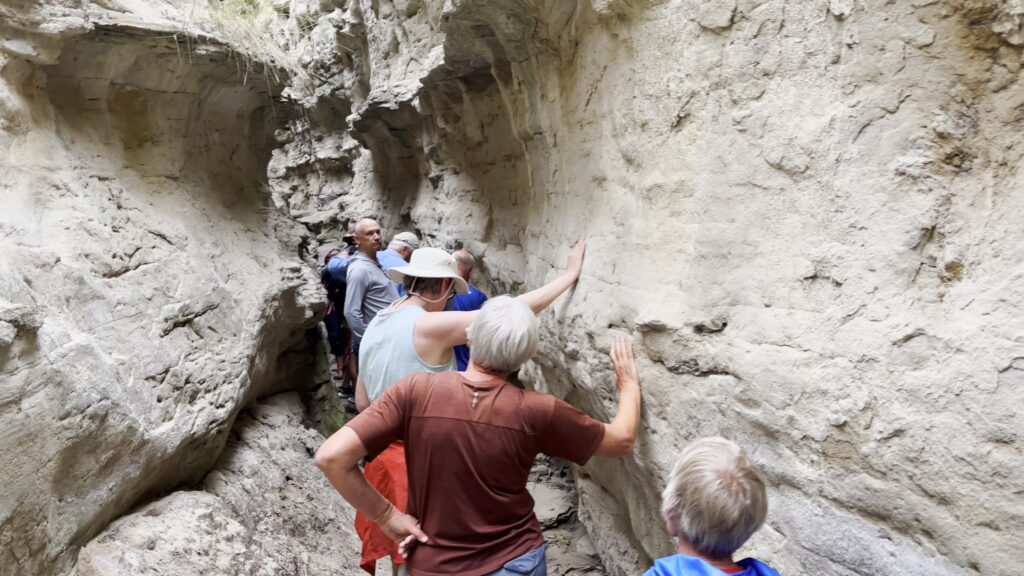After a day on the river, a group hike through a sandstone slot canyon. (Photo Nolan Johnson)
It had been cloudy and drizzling intermittently all day. We were nearing the turnaround point in the hike when the rain started to fall in sheets. This involves climbing up to the ridge over the slot canyon, hiking across to another slot, and then scrambling down over several pretty serious drops to the base of the canyon. Even when conditions are perfect, some people struggle with those drops because you have to trust your feet to find the toeholds, which can be hard to see or locate with your feet.
At this point, an unexpected thundershower drenched everyone almost instantly.
Suddenly, it was raining violently. I noticed that the floor of the canyon was starting to hold water, and the muddy effluent was rising a few inches per minute. It seemed clear to me that we needed to get out of the slot canyon as quickly as possible. Then it began to hail. Most of it was pea-sized, but some of it was the size of marbles, and people were both startled and superficially hurt. What next: locusts? I was able to let myself slide down the worst of the trail drops, tearing my khaki trousers and taking on a very large quantity of mud. Then I helped four or five of our guests down that slot. Most were frightened, but their adrenaline was flowing, and I was able to instruct them about where to plant their feet. One of the guests, a lively, usually fearless woman from central California, actually panicked, by which I mean panicked or, as they put it in the vernacular, “freaked out.” She was spread-eagled, face forward, against the rock face, terrified to move, and by now, a moderately large and powerful waterfall had formed above her head. She looked like a half-drowned water rat.
A sudden thunderstorm fills the narrow canyon. (Photo Nolan Johnson)
This was only the second time in 25 years that we have experienced a severe thunderstorm on the Missouri River. It was certainly the first time I had ever seen water in the slot canyon.
As all of this was unfolding, I became deeply worried about three possibilities. One: Someone would be killed in the flash flood, which was just about swift enough to sweep someone off their feet, and whole sheets of heavy brown water were now cascading over the top of the cliffs — something you might see in the Grand Canyon. I worried that the temporary waterfalls might dump gravel and perhaps even serious rocks onto the heads of our group. Two: Several individuals might be seriously injured. In at least three places, it would be easy to fall five to ten feet into the murky and foaming pools forming below. There were large rocks at the base of each of the drops, but it was now impossible to see them or know where they might be lurking. It would have been easy for someone to break an ankle or trip on one of those submerged rocks and pitch forward into the cliff wall. The people who were successfully over the three drops were sloshing toward the mouth of the canyon at top speed through the muddy rivulet that had formed on what usually is a dry path. There were at least 100 invisible rocks over which one might pitch into the flood. (It turns out that the only injury was sustained by our outfitter guide Jamie, a tough, fearless, seasoned veteran with a very high threshold of pain. She twisted her ankle on one of the submerged rocks while helping others escape the flood. She also lost her cell phone somehow.) Three: I was convinced that even if we all survived the flood (which turned out to be less dramatic than it at first seemed), several couples might announce at dinner that they were leaving the tour — “we never signed up for something like this!” — the minute we got back to Fort Benton.
Everyone survived. There were a few bruises, and the hysterical woman (one of my good friends) had a second bout of freak-out when we lumbered back to camp because the thunder and lightning were crackling all around us. She shouted at me at the top of her lungs: “Where do you want us to go to avoid being killed by the lightning?” As if I knew. I told her to get into her tent, zip it up, and lie down, which she did.
Rising water obscures the narrow trail. (Photo Nolan Johnson)
Since then, she has been laughing about her panic attacks, owning them cheerfully, posing for “freak-out” photos, and saying the second one was actually cathartic.
Nobody quit the tour; nobody expressed anger or frustration, and by the next day, everyone had developed a perfect personal narrative — all at least partly true — about the crisis. Still, I’m a bit surprised at the lovely way everyone responded to what was a very serious situation. A few years ago, up in the mountains, we had a similar crisis, and some people have never really gotten over it, though it was something beyond our control.
The day after the flash flood, after a float of 21 miles on the Missouri, we made camp at *[Slaughter Creek](https://www.lewisandclark.travel/listing/slaughter-river/)*, misnamed by Lewis when he reckoned that a pile of dead bison there were the lingering carcasses of a buffalo jump. Now the little stream is called Arrow Creek. Its mouth — the little green pastoral valley it forms as it meets the Missouri — is one of the most beautiful vistas in the White Cliffs section of the river. The minute we arrived at camp on day two, we all rushed to our tents and pulled out all the soaking gear from our dry bags, spread it out on the sagebrush to dry, and assessed the damage from the previous day’s deluge.
We had a second thunderstorm that evening, but it passed in 35 minutes. The sun came out. The light was absolutely exquisite. People drank good wine — copiously.
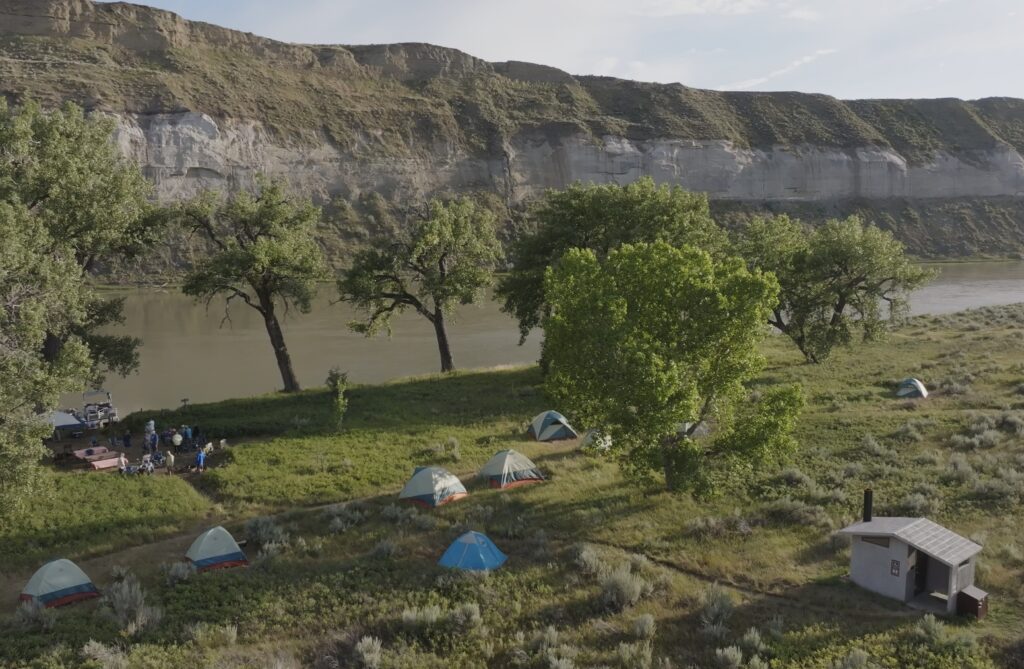Clay’s group makes camp near the White Cliffs of the Missouri River southeast of Fort Benton, Montana. (Photo Nolan Johnson)
On the third morning, I was invited to visit the other group camping at *Slaughter Creek* camp: a dozen men canoeing even farther down the Missouri than our guests, with the ostensible leader being a Lewis and Clark adventurer from Livingston, Montana. They offered me breakfast (declined) and asked me to tell the story of the flash flood. They had wisely all hunkered down in their tents through the entire storm. I told the story with as little drama and exaggeration as absolutely necessary. They were green with envy. They cursed their timidity. They so wanted to have braved the flood.
Here’s partly why. They had missed as authentic a Missouri River Lewis and Clark moment imaginable.
Lewis and Clark spent a month portaging around the five great falls of the Missouri River in June and July 1805. This was the first serious impediment to their forward progress in 13 months. The men of the Corps of Discovery had to lug many tons of gear up out of the river bottom and onto the plains to the south of the river. It proved to be an 18.25-mile portage. Backbreaking labor. It was Montana summer hot. The plains were covered with prickly pear cactus, which easily penetrated the thin moccasins (“mockersins”) of the men. Lewis said that the men worked so hard that when the leaders called a halt, the men dropped down wherever they happened to be and fell instantly asleep. There were several severe thunderstorms. It hailed. It hailed so violently that some of the men were knocked down by hail the size of tennis balls. Several of the men had concussions. Several bled from their exposed heads. Grizzly bears were so thick around the great falls that they menaced the portage operation. And to top it all off, the expedition’s whiskey supply played out on July 4, 1805! (The men would have to wait more than a year for their next gill of whiskey.)
On June 29, 1805, a flash flood near the Great Falls nearly swept away Charbonneau, Sacagawea, her son Jean Baptiste, York, and William Clark.
Meriwether Lewis described the incident. On that afternoon, Clark “took with him his black man York, Sharbono, and his indian woman \[Sacagawea\]. on his arrival at the falls he perceived a very black cloud rising in the West which threatened immediate rain; he looked about for a shelter but could find none without being in great danger of being blown into the river … at length about a 1/4 of a mile above the falls he discovered a deep rivene where there were some shelving rocks under which he took shelter near the river with Sharbono and the Indian woman.”
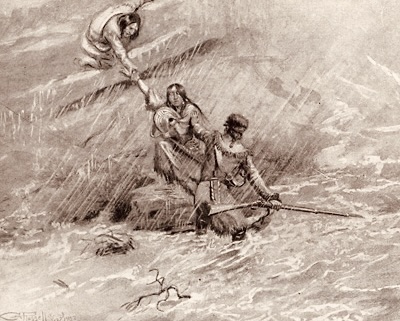
So far, OK. “soon after a most violent torrent of rain decended accomapnyed with hail; the rain appeared to decend in a body and instantly collected in the rivene and came down in a roling torrent with irrisistable force driving rocks mud and everything before it which opposed its passage. Capt. C. fortunately discovered it a moment before it reached them and seizing his gun and shot pouch with his left hand with the right he assisted himself up the steep bluff shoving occasionaly the Indian woman before him who had her child in her arms; Sharbono had the woman by the hand indeavouring to pull her up the hill but was so much frightened that he remained frequently motionless and but for Capt. C. both himself and his \[wo\]man and child must have perished.”
“so suddon was the rise of the water that before Capt C could reach his gun and begin to ascend the bank it was up to his waist and wet his watch; and he could scarcely ascend faster than it arrose till it had obtained the debth of 15 feet with a current tremendious to behold. one moment longer & it would have swept them into the river just above the great cataract of 87 feet where they must have inevitably perished.”
They all might well have drowned. Fortunately, Clark’s enslaved valet York went in search of the distressed party and hauled them up from the ravine to safety.
Lewis reported that Charbonneau lost his gun, shot pouch, powderhorn, and other items. Clark lost his umbrella (!!), compass, and another scientific instrument. Sacagawea lost “the bier” (probably a cradleboard) in which she “carrys her child and all its cloaths wer swept away as they lay at her feet.”
The following day, the captains sent two men back to the ravine to see what they could recover. They found the compass, but “the other articles were irrecoverably lost.”
That was a real flash flood.
This was one of the most dramatic incidents of the Lewis and Clark expedition. It is especially well known because it involves so many of the principal figures of the journey: Clark, York, Sacagawea, her four-month-old son Jean Baptiste, and her feckless husband Toussaint Charbonneau. Had it been five other men of the expedition — Silas Goodrich, William Werner, Thomas Howard, John Potts, and John Collins — the incident would probably be remembered as a mere footnote.
I repeat that this was not only the greatest day of my decades of experience on the Lewis and Clark trail (since no one was seriously injured), but also one of the great days of my life. Huddled in my tent in a pool of water, shivering from the cold, I lay flat and listened to the pounding of the storm on the tent surface. Suddenly, I found myself laughing with authentic satisfaction.
It doesn’t get better than this.
The Missouri River cuts its way through sandstone cliffs and crags southeast of Fort Benton, Montana. (Photo Nolan Johnson)
***Follow Clay and the LTA Airstream as he retraces the famous Lewis & Clark Trail from 1804-1806 across the continent. This 2025 expedition is a central part of LTA’s big initiative to explore the country and take the pulse of America as it approaches its 250th birthday. Be sure to follow Clay’s adventures*** [***here***](https://ltamerica.org/tag/lewis-and-clark/) ***and on*** [***Facebook***](https://www.facebook.com/LTAmerica) ***— and*** [***subscribe to our newsletter***](https://ltamerica.org/newsletter/)**.**
**Categories:** Features
**Tags:** Lewis and Clark, Montana
---
### [Lewis, Clark and Their Dog Seaman — Video Dispatch](https://ltamerica.org/lewis-clark-and-their-dog-seaman-video-dispatch/)
**Published:** July 22, 2025
**Author:** Editor
**Excerpt:** Clay checks in from St. Charles, Missouri, near the mouth of the Missouri River, at Frontier Park, on one of the finest Lewis and Clark statue groups in America.
**Content:**
## Clay checks in from St. Charles, Missouri, near the mouth of the Missouri River, at Frontier Park, on one of the finest Lewis and Clark statue groups in America.
---
***Follow Clay and the LTA Airstream as he retraces the famous Lewis & Clark Trail from 1804-1806 across the continent. This 2025 expedition is a central part of LTA’s big initiative to explore the country and take the pulse of America as it approaches its 250th birthday. Be sure to follow Clay’s adventures*** [***here***](https://ltamerica.org/tag/lewis-and-clark/) ***and on*** [***Facebook***](https://www.facebook.com/LTAmerica) ***— and*** [***subscribe to our newsletter***](https://ltamerica.org/newsletter/)**.**
**Categories:** Dispatches from the Road
**Tags:** America at 250, Lewis and Clark, Missouri, Video
---
### [Meriwether Lewis' Deadly Encounter](https://ltamerica.org/meriwether-lewis-deadly-encounter/)
**Published:** July 22, 2025
**Author:** Clay Jenkinson
**Excerpt:** Clay reports on his visit to the remote Montana site where Lewis and Clark had their only fatal encounter with Native Americans on their historic 1804-1806 expedition.
**Content:**
## Clay reports on his visit to the remote Montana site where Lewis and Clark had their only fatal encounter with Native Americans on their historic 1804-1806 expedition.
A weathered sign, split-rail fencing, and old cottonwood mark a remote and rarely visited site in what is now northern Montana, where Meriwether Lewis had a fatal encounter with a group of young Blackfeet in July 1806. (Photo Nolan Johnson)
**Two Medicine Creek, Montana, July 8, 2025 — Author’s note:** I had the great pleasure of touring what is known as the Two Medicine Creek fight site with two extraordinary experts in the Lewis and Clark world. Larry Epstein has been an important figure in the *Lewis and Clark Trail Alliance* for decades. At the age of 12, as a Boy Scout, Larry helped to locate the actual site of the skirmish between Lewis (traveling with three of his best men) and eight young Blackfeet men, not far from Cut Bank, Montana. Larry has led hundreds of people to the site. He’s regarded as the great field expert on the Marias incident, which occurred on the Expedition’s return journey from the Pacific. The skirmish led to the death of at least one of the Blackfeet men, maybe two.
Jack Gladstone is a Blackfoot singer-songwriter, guide, and cultural commentator who has long argued that viewing the famous incident through Blackfeet eyes provides a more insightful and comprehensive understanding of what happened on July 26, 1806, in the shadow of what would become *Glacier National Park*.
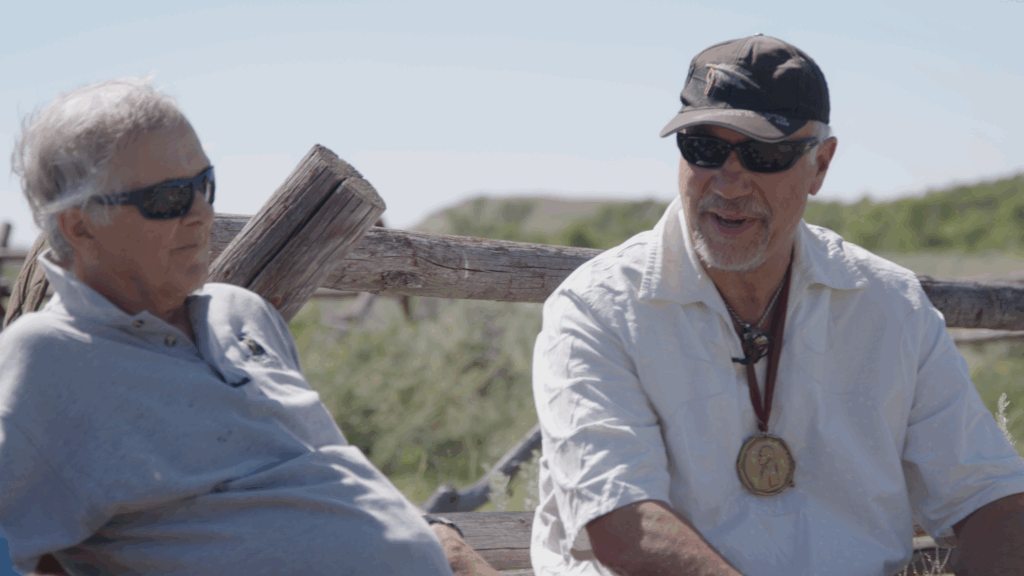Larry Epstein (left) and Jack Gladstone. (Photo Nolan Johnson)
It was pure joy — on a perfect July day, hot, brilliantly lit, with a slight breeze — to listen to these extraordinary men discuss and debate the skirmish, the only bloodshed of the 28-month Lewis and Clark Expedition. Larry can match every descriptive phrase in Lewis’s famous journal entry to the lay of the land — the ridge from which Lewis discovered the Blackfeet men observing George Drouillard down by the Marias River; the site of the uneasy bivouac between the two groups; and the niche in the broken hillside where several of the surviving Blackfeet were trying to escape with the Expedition’s horses.
It doesn’t get any better than this: exploring a pivotal incident in the Lewis and Clark story with individuals who have devoted years to studying the landscape and unraveling the complex flow patterns of all those involved in the incident. I’d been dreaming of this moment for more than a decade. We finally all got our schedules to mesh. We had a hearty breakfast in Cut Bank, and then eased our four-wheel-drive pickups through the torturous landscape where the fatal skirmish occurred.
Watch for several video reports from the field in the weeks ahead. Meanwhile, here’s my report.
## What Happened at Two Medicine Creek?
Two Medicine Creek, a tributary of the Marias River in what is now northern Montana. It was here, in Blackfeet country, that Lewis and his small crew were making their way back to the Missouri River in late July 1806. (Photo Nolan Johnson)
**The bare facts:** In the last days of July 1806, Meriwether Lewis and three of his ablest men, on six horses, followed the course of the Marias River northwest of the great falls of the Missouri River. Lewis was hoping that the Marias had a Canadian source — that its feeder streams were above the 49th parallel. He brought scientific instruments to ascertain the longitude and, especially, the latitude of the northernmost reach of the Marias. Lewis regarded this as an essential geopolitical data point of his 28-month journey.
The Marias disappointed Lewis’s hopes. The Marias, named by Lewis for a lady friend back east, did not drive back the Canadian border. Lewis named their last camp in the heart of Blackfeet territory *Camp Disappointment*. Lewis’s great hope that he would discover a northern tributary of the Missouri that would extend the northwest reach of the Louisiana Purchase and give the United States a better portal into the Canadian fur trade fizzled in the shadow of what would instead become one of America’s greatest national parks.
Just as Lewis and his three companions were starting back toward the Missouri River, they ran into eight young Blackfeet men with a cluster of about 30 horses. In that endless and treeless sea of rolling grassland, there was no place to hide. So Captain Lewis decided to bivouac with the eight young Natives and, through his sign language expert George Drouillard, explain America’s purposes in the Upper Missouri country.
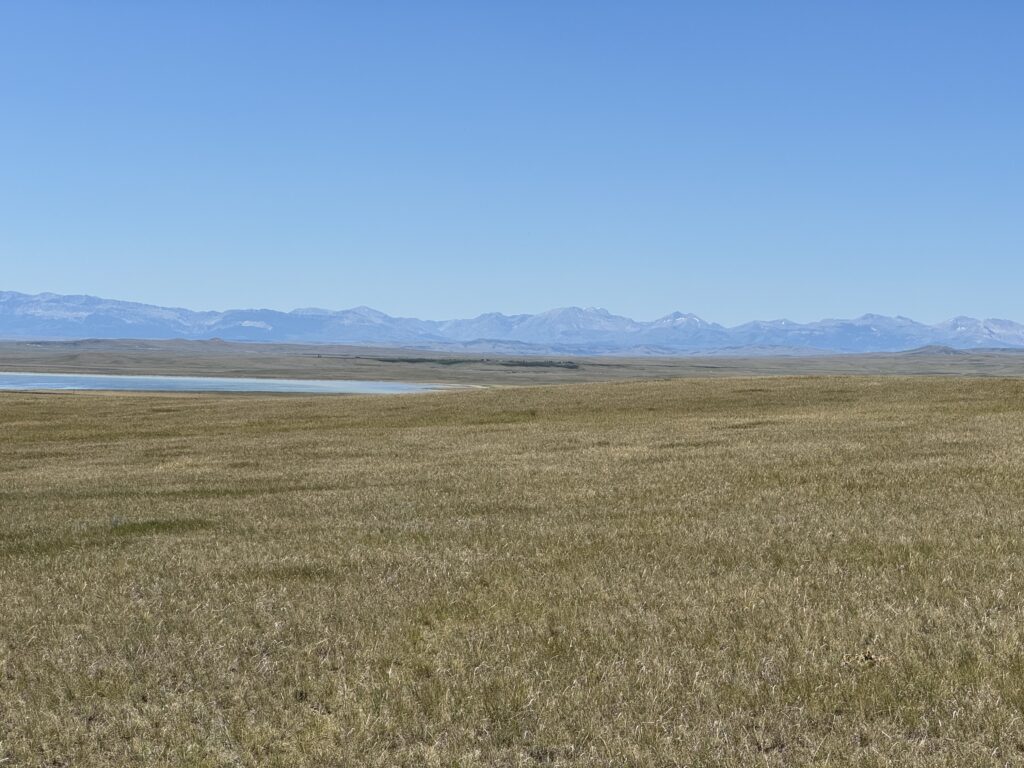The plains where Lewis first encountered a group of eight young Blackfeet men. The Northern Rocky Mountains are in the distance. (Photo Dennis McKenna)
Lewis had ventured into Blackfeet country with an already hardened, grim view of the Blackfeet: “they are a vicious, lawless and reather abandoned set of wretches I wish to avoid an interview with them if possible. I have no doubt they would steel our horses if they have it in their power and finding us weak should they happen to be numerous wil most probably attempt to rob us of our arms and baggage; at all events I am determined to take every possible precaution to avoid them if possible.”
Much later in American history, Secretary of War Henry Stimson (1867–1950) said, “The chief lesson I have learned in a long life is that the only way you can make a man trustworthy is to trust him; and the surest way to make him untrustworthy is to distrust him.” Indeed. I believe Lewis’s distrust and his dark forebodings may have contributed to the crisis that followed.
It was a combination of fidelity to the principles of the Enlightenment and hubris that nearly got Meriwether Lewis and his men killed on Two Medicine Creek. The Marias reconnaissance began on July 17, 1806.
Lewis had originally intended to take six men as well as himself up the Marias, but some of the Expedition’s horses had either drifted off or been stolen by Natives, and Lewis wound up reducing his contingent to four, including himself, Joseph Field, Reuben Field, and George Drouillard. For the mission he had in mind into the heart of Blackfeet territory, Lewis was seriously undermanned. That was his first mistake.
On July 22, Lewis realized that the Marias was not going to cooperate. He might have turned back then. Had he done so, he would probably have avoided his “interview,” as he called it, with the Blackfeet. He lingered in that dangerous arena because he wanted to get latitude and longitude, but cloudy, cold, and rainy weather was frustrating his purposes.
They were out of food. They were out of science. They were well beyond that last outpost of the Enlightenment. And from a Blackfeet point of view, they were trespassing.
Lewis finally gave up the quest for celestial observation on Saturday, July 26, four days after he had realized that the Marias would not drive the Louisiana Purchase territory into Canada. It was just then that he encountered the eight Blackfeet.
After an evening of sign language conversation, when everyone finally bedded down for the night, Lewis took the first watch. Then he awakened Joseph Field to take over guard duty. Apparently, Field dozed off. At first light, the young Blackfeet men attempted a great coup: they would snatch up the Lewis party’s superior firearms (all they had was a smoothbore musket) and “liberate” the Expedition’s horses, including Captain Lewis’s, and then gallop away to tell the story of their triumph. When Lewis was startled out of a sound sleep by shouting and frenzied motion (“Damn you let go my gun,” Drouillard said), he discovered that his rifle was gone, so he grabbed his pistol and threw himself into the melee.
Reuben Field stabbed one of the young men in the heart, killing him within seconds. Lewis was chasing two of the young men toward a draw beyond which he would never be able to recover the Expedition’s horses, when he shot one of them in the gut with his pistol. The Native man returned fire. Lewis felt the whiz of the bullet above his head. “Being bearheaded, I felt the wind of his bullet very distinctly,” Lewis later wrote.
After the dust settled, Lewis gathered up the shields, bows and arrows, horse tackle, and other gear of the eight young men, and burned the pile. He left a Jefferson peace medal on the chest of the man Reuben Field killed — “that they might be informed who we were.” (This would seem to be a dumb thing to do, like leaving a calling card on a man you just killed in his sovereign territory. Hubris.)
And then he and his three comrades rode more than 100 miles in 24 hours to get away from the scene of the skirmish, believing, probably correctly, that a reprisal party would almost certainly be coming after them.
This incident is sometimes called the first “high noon gunfight in the American West.” Lewis and his three men survived to tell the tale. Whether this was the primary reason for the Blackfeet’s hostility to American fur trappers in western Montana over the next few decades is a point of considerable debate in historical circles.
Clay (left) and two Lewis and Clark historians, Larry Epstein (center) and Jack Gladstone (right), at the site where Meriwether Lewis camped the night before his fatal encounter with a group of young Blackfeet. (Photo Dennis McKenna)
I persuaded Larry Epstein and Jack Gladstone to accompany me to the fight site and offer their own perspectives on this famous moment from the Lewis and Clark story. As we sat in the shade near the little stockade that protects the lone remaining cottonwood tree where the two cultures bivouacked, I asked these great experts a series of questions.
Jack Gladstone insists on the following points:
- These Blackfeet were not full adults, and it is a mistake to call them warriors. They may have been aspiring warriors, but they were young, and this was likely their first raid. It went badly, and they lost at least one man, but they did get away with Lewis’s horse.
The term “teenagers” seems too modern for these young men. Adolescents, perhaps, or young men just reaching full adulthood.
- The Blackfeet men probably had no intention of hurting Lewis and his three companions. They probably just wanted to snatch up a couple of rifles and perhaps a few horses. If they had returned to their villages with even one of the Expedition’s rifles, it would have been a great coup in both senses of the term. Those rifles would almost surely have been the best firearms the Blackfeet had ever seen.
- I have heard Jack use the analogy of young men of our time stealing a car for the fun of it — adolescent grand theft auto — as did Dean Moriarty in Kerouac’s *On the Road*.
Larry Epstein and I took turns defending Lewis and his men’s actions, though — truth told — both of us incline to Jack’s reading of the incident.
Supposing we grant all that Jack argues — I have no quibble with his view — the fact remains that Lewis and his three men woke up to a raid on their firearms and (soon) horses. They had no choice but to do whatever it took to reclaim their guns. To be without a firearm of any sort in the middle of the vast and empty plain through which they were traveling would put a very severe strain on their strength and stamina. It is unlikely that they would have starved to death out there without firearms, but it would have been an exceedingly tough return (on foot) to the mouth of the Marias. Remember that George Shannon was lost for sixteen days on the Central Plains in 1804, and when Clark finally found him, he had been subsisting on grapes and berries.
To have lost their horses would have meant a much graver crisis for Lewis and his men. Lewis seemed to regard it as a death sentence. Thus, their urgency and their willingness to use violence.
So they had to retrieve the guns.
Once the skirmish began, the amazing thing about this story, in my view, is Lewis’s leadership and his restraint. When the Field brothers recovered their firearms, they immediately pointed them at several of the young Blackfeet men. However, Captain Lewis instructed them to stand down, as the young men were no longer an immediate threat. George Drouillard, the Expedition’s finest marksman, explicitly requested permission to kill one or more of the Blackfeet. Lewis forced him to get control of his testosterone rush and stand down. If Lewis had been vindictive, he and his men could probably have killed all eight of the Blackfeet.
Larry Epstein is a retired lawyer and a big player in the Lewis and Clark world. He reckons that he has taken more than 1,000 people to the site. Virtually none of them would have been able to find or visit the site without Epstein and a tiny handful of others.
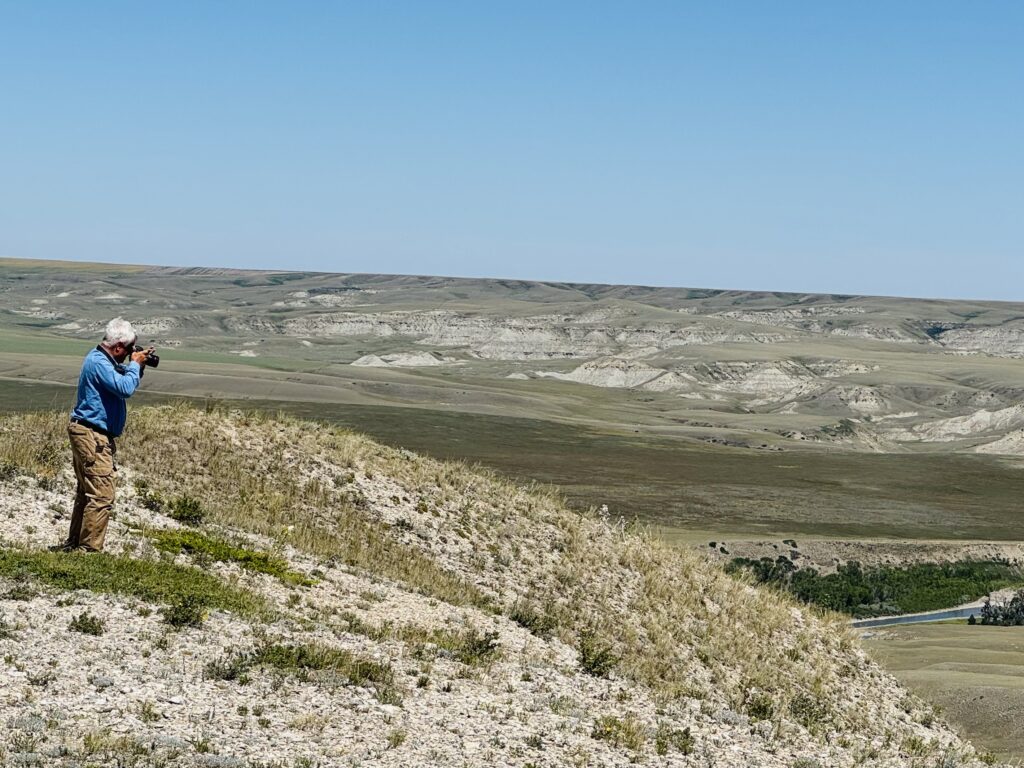Clay Jenkinson on the high-ground above Two Medicine Creek, a tributary of the Marias River. (Photo Dennis McKenna)
We weren’t with Lewis on July 26–27, 1806, of course, and it truly was (or became) a dangerous encounter, but as I read and reread the journals — Lewis’s is the only account we have — I nevertheless cannot banish the slight feeling that Lewis was a bit of a drama queen up there on Two Medicine Creek. Listen to his words. When he saw eight Natives and more than 30 horses, some of them saddled, he reckoned he was outnumbered many times to one. He wrote, “from their known character I expected that we were to have some difficulty with them…. In which case be their numbers what they would I should resist to the last extremity prefering death to that of being deprived of my papers instruments and gun and desired that they \[Joseph and Reuben Field\] would form the same resolution and be allert and on their guard.”
Two things seem certain to me. First, Lewis made a grave mistake when he ventured deep into Blackfeet country with so few expedition members at his side. Had he taken six men beyond himself, I very much doubt that the Blackfeet men would have attempted to snatch the firearms. If it had been seven against eight, I doubt the young men would have attempted the coup. They would not have been successful against such odds.
Second, if the young Blackfeet men had been willing to abscond with a single rifle (and perhaps a few horses), they probably would have been able to take back to their village a fabulous story of bravery and triumph. The firearms the Blackfeet had at this time were smoothbore muskets, not very accurate and certainly not at longer distances. If they had brought back Lewis’s rifle, for example, it would almost certainly have been the greatest firearm their band had. They were too ambitious — a typical young man’s mistake (worthy of Icarus in Greek mythology), and they paid a heavy price for trying to accomplish too much that morning. They would probably have been able to snatch a single rifle and run for it. There were plenty of places to hide. They were on their home turf. They had fast Indian ponies.
In other words, they overdid the raid. In trying to accomplish too much — exactly the kind of rookie mistake that these adolescent raids were designed to train Blackfeet men against — they wound up having to report the death of one and maybe two of their companions. Maybe they got away with enough white man’s horses to claim a partial triumph. One of them had Lewis’s horse, though he had only been riding it for a few weeks.
This little adventure on July 8 was not only one of the highlights of my 2025 Lewis and Clark tour of the country, but one of the highlights of my life as a Lewis and Clark scholar. There could be no better guides than Larry Epstein and Jack Gladstone. It was an honor to see the site through their eyes.
Then we were off to a cold beer and a good meal at a Mexican restaurant in East Glacier. As Thomas Jefferson said in another context, “if the day had been as long as a Lapland summer day,” we “would still have contrived means … to have filled it.”
So, when sloppy historians say “only one man died” on the Lewis and Clark trail (Charles Floyd, August 20, 1804, natural causes), they are exhibiting a kind of Eurocentrism that is no longer needed as we approach the 250th birthday of the United States.
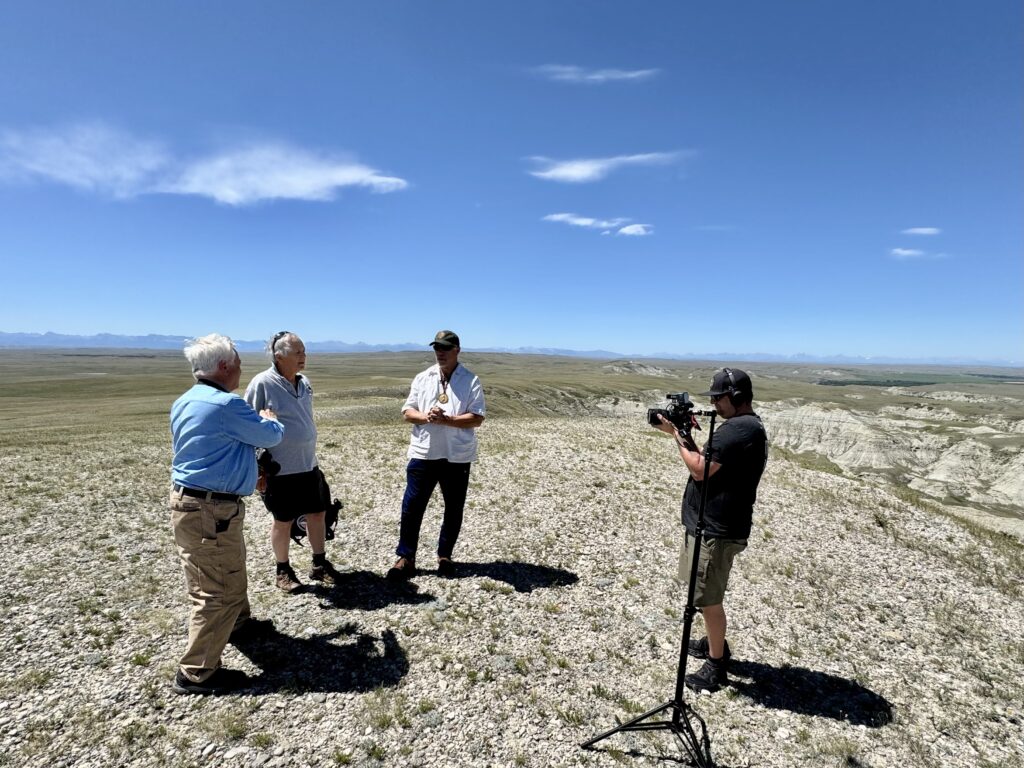LTA Videographer, Nolan Johnson (far right), Clay, Larry Epstein, and Jack Gladstone as they discuss what happened on the plains of northern Montana in July 1806. (Photo Dennis McKenna)
---
## ***Discover more on these topics at Listening to America***
[Podcast](https://ltamerica.org/tag/podcast/ "1 topics")[Rome](https://ltamerica.org/tag/rome/ "1 topics")[North Dakota](https://ltamerica.org/tag/north-dakota/ "53 topics")[north daktoa](https://ltamerica.org/tag/north-daktoa/ "0 topics")[Reading](https://ltamerica.org/tag/reading/ "1 topics")[U.S. Presidents](https://ltamerica.org/tag/u-s-presidents/ "71 topics")[South Dakota](https://ltamerica.org/tag/south-dakota/ "16 topics")[Pennsylvania](https://ltamerica.org/tag/pennsylvania/ "1 topics")[Thoreau](https://ltamerica.org/tag/thoreau/ "5 topics")[Tennessee](https://ltamerica.org/tag/tennessee/ "1 topics")[paintings](https://ltamerica.org/tag/paintings/ "0 topics")[Wisconsin](https://ltamerica.org/tag/wisconsin/ "0 topics")[Wyoming](https://ltamerica.org/tag/wyoming/ "4 topics")[Steinbeck Travels](https://ltamerica.org/tag/steinbeck-travels/ "75 topics")[Vermont](https://ltamerica.org/tag/vermont/ "1 topics")[North Carolina](https://ltamerica.org/tag/north-carolina/ "3 topics")[State Parks](https://ltamerica.org/tag/state-parks/ "2 topics")[Utah](https://ltamerica.org/tag/utah/ "11 topics")[Oppenheim](https://ltamerica.org/tag/oppenheim/ "0 topics")[South Carolina](https://ltamerica.org/tag/south-carolina/ "1 topics")[New England](https://ltamerica.org/tag/new-england/ "1 topics")[Texas](https://ltamerica.org/tag/texas/ "4 topics")[Video](https://ltamerica.org/tag/video/ "51 topics")[Rivers](https://ltamerica.org/tag/rivers/ "3 topics")[Poetry](https://ltamerica.org/tag/poetry/ "1 topics")[Oppenheimer](https://ltamerica.org/tag/oppenheimer/ "1 topics")[Sports](https://ltamerica.org/tag/sports/ "2 topics")[Ohio](https://ltamerica.org/tag/ohio/ "2 topics")[Walden](https://ltamerica.org/tag/walden/ "1 topics")[Republics](https://ltamerica.org/tag/republics/ "1 topics")[Thomas Jefferson](https://ltamerica.org/tag/thomas-jefferson/ "34 topics")[William Shirer](https://ltamerica.org/tag/william-shirer/ "1 topics")[Oregon](https://ltamerica.org/tag/oregon/ "4 topics")[Road Trips](https://ltamerica.org/tag/road-trips/ "18 topics")[Travel](https://ltamerica.org/tag/travel/ "1 topics")[Water in the West](https://ltamerica.org/tag/water-in-the-west/ "24 topics")[Space Exploration](https://ltamerica.org/tag/space-exploration/ "8 topics")[Theodore Roosevelt](https://ltamerica.org/tag/theodore-roosevelt/ "16 topics")[The Constitution](https://ltamerica.org/tag/the-constitution/ "1 topics")[Republic](https://ltamerica.org/tag/republic/ "0 topics")[New Mexico](https://ltamerica.org/tag/new-mexico/ "3 topics")[Virginia](https://ltamerica.org/tag/virginia/ "7 topics")[New York](https://ltamerica.org/tag/new-york/ "8 topics")[Washington](https://ltamerica.org/tag/washington/ "2 topics")[U.S. Constitution](https://ltamerica.org/tag/u-s-constitution/ "1 topics")
**Categories:** Features
**Tags:** America at 250, Lewis and Clark, Montana
---
### [My Saga of the Leaky Shower in the Montana Back Country](https://ltamerica.org/my-saga-of-the-leaky-shower-in-the-montana-back-country/)
**Published:** July 14, 2025
**Author:** Clay Jenkinson
**Excerpt:** Thanks to YouTube, persistence, and bloody knuckles, a hot shower gets pretty close to paradise.
**Content:**
## Thanks to YouTube, persistence, and bloody knuckles, a hot shower gets pretty close to paradise.
Clay wrestling with his leaky RV shower. (Image courtesy of Clay and ChatGPT)
**Greater Yellowstone Ecosystem, July 12, 2025** — This morning, I had a piping hot shower in my Airstream. In fact, it was the best hot shower I have had in two years of travel in my Airstream. And thereby hangs a tale.
For the last 20 or 30 days, my shower has leaked a little, which is never a good thing, and it is a particularly bad thing in an RV, because there is a limit on the amount of water available at any given time. In addition to that, the noise it made, drip thup, drip thup, drip, drip, drip, drip, pause, thup, drip, drip, was driving me crazy, as perhaps is apparent.
That was just the beginning. In the last two weeks, the shower in my rig stopped delivering hot water. Although I can live with a drip for a while and am not entirely opposed to cold showers from time to time, I wanted to fix this immediately.
Trying to get an appointment at an RV repair facility in the middle of July in America is like trying to get a hair appointment in Washington, D.C., before a presidential inauguration.
My friend Nolan suggested I search for my troubles on YouTube, as he was certain there would be a video explaining that this is a relatively common problem, a routine issue. There would be a fairly straightforward way that even a moron like me could fix the shower. And voilà, Nolan was right. I watched the video four or five times and began to take the plumbing in the shower apart. Without the video, I would not have undertaken this, because I feared that if I pulled the shower faucet plate off, important water lines and other things would fall to the floor outside the plastic shower, and it would be almost impossible ever to hook them and bring them back up to the faucet hole in the shower complex.
The video suggested that my filter valve might be clogged. And I so hoped that would be true. But it wasn’t. I soon discovered that the filter device, which resembles a vaping pipe or spark plug, was broken, and the O-rings (it’s always an O-ring, isn’t it?) were shredded.
Nolan and his father, Dennis, were on their way to meet me for video shoots at Two Medicine Creek up near the eastern portal of *Glacier National Park*. I texted him, including a photograph of the stricken part, and he agreed to stop at Havre, Montana, at an Ace Hardware store (“home of the helpful hardware man”) to see if he could find a replacement. This was a dicey and risky move, of course. And you all know what I’m about to say.
Any home handyman fix requires at least two and up to four trips to Home Depot, Ace Hardware, or Lowe’s. I have undertaken 20 or 30 such projects in the course of my life, from replacing blades on a lawnmower, to replacing batteries on a riding mower, to fixing a broken electrical socket, to replacing a pilot light on a water heater — and much more. In no case, not one, have I been able to accomplish the task with a single visit to the requisite hardware store. I’ve talked with a vast number of people about this, and everyone agrees that the double and triple return to the hardware store is a basic requirement of any home repair.
Unfortunately, the part didn’t quite fit. So I had three days of cold showers, and on one occasion, even though I was permeated with dust and grit from a long hike, I had to take a sponge bath from water that I boiled on my Airstream stove — ah, roughing it.
Finally, two days ago, I took the stricken part to a larger Ace Hardware store in Helena, Montana, and almost immediately found the exact replacement.
I now knew that my leak issue was about to end. But I had grave doubts about whether that would solve the hot water problem. I thought perhaps there was gunk, if I may use a technical term, in the water line from the water heater to the shower, and there was no way that I could repair that; in fact, there was no YouTube video to address such a problem. You’d have to pull the front end of the rig apart for that.
By now, I was entirely alone in the American West. So I stripped off almost all of my clothes, including, of course, shoes and socks, and ventured (what Shakespeare calls “a poor, bare, forked animal”) into the shower apartment. I pressed the replacement part into the receptacle and to my enormous satisfaction it fit perfectly. In fact, I was even able to attach a cotter pin, which keeps the filter in place so that the pressure of the running water does not slowly press it out.
By the time I finished all of this, I was a human wreck. My knuckles were bloody, I was emotionally exhausted, and I was pretty sure that when I fired the unit back up, the hot water problem would be no better, and arguably much worse. That tends to be how things go, and that’s when you make an appointment for September 29, 2031, at an RV repair facility. As with all such crises, I thought for a moment that if I were unable to repair the thing, it might be worth just pouring kerosene over the entire RV and lighting a match. I fought off despair, toweled off, put on enough clothing to be respectable, waited 15 minutes, and turned the shower on to full hot.
To my deep chagrin, the shower put forth what I would call nicely warm water, but in that kind of trickle you get at a Motel 6 with a sign on the wall saying, “Let’s save the planet, shall we?”
I won’t say that I sat down at the bottom of the shower and wept, but I certainly felt depleted, dejected, and defeated. Just as I was reaching for the can of kerosene, I decided to adjust the shower head and tap it with a sledgehammer a time or two to see if I could dislodge some grit in the line.
It was then (and only then) that I discovered that in the late stages of the drip problem, I had turned the shower head lever until I had selected the weakest of the water delivery options — the one designed to save the planet. When I now adjusted it to full force, I suddenly had an abundance of water, and it soon became hot.
My Airstream has what is known as a tankless water heater. This means that if you are hooked up to an RV park waterline and you have the sewer line connected to the convenient sewage receptacle dangerously close to the picnic table, you could theoretically take a four-hour shower. I took about a 20-minute shower, playing with the faucet and the shower head to make sure that all of the problems were resolved. My satisfaction in having taken on this little project, and in the end triumphed, is hard to describe. It’s not quite the feeling Buzz and Neil must have had in walking on the Moon, and it’s not quite the satisfaction of publishing a book, but it’s pretty big for a techno-klutz like me.
I returned the kerosene can to its cubby and tore up the last will I wrote the other day.
This morning, when I took my shower, I lingered for a few minutes and discovered at one point that the hot water was so hot that it was almost too hot. This was one of the happiest moments of my life.
If cleanliness is next to godliness, I am temporarily in a good place.
---
## ***Discover more on these topics at Listening to America***
[The Constitution](https://ltamerica.org/tag/the-constitution/ "1 topics")[Republics](https://ltamerica.org/tag/republics/ "1 topics")[Pennsylvania](https://ltamerica.org/tag/pennsylvania/ "1 topics")[Theodore Roosevelt](https://ltamerica.org/tag/theodore-roosevelt/ "16 topics")[U.S. Constitution](https://ltamerica.org/tag/u-s-constitution/ "1 topics")[New Mexico](https://ltamerica.org/tag/new-mexico/ "3 topics")[Republic](https://ltamerica.org/tag/republic/ "0 topics")[North Dakota](https://ltamerica.org/tag/north-dakota/ "53 topics")[Walden](https://ltamerica.org/tag/walden/ "1 topics")[Reading](https://ltamerica.org/tag/reading/ "1 topics")[Utah](https://ltamerica.org/tag/utah/ "11 topics")[Travel](https://ltamerica.org/tag/travel/ "1 topics")[Washington](https://ltamerica.org/tag/washington/ "2 topics")[Wyoming](https://ltamerica.org/tag/wyoming/ "4 topics")[Ohio](https://ltamerica.org/tag/ohio/ "2 topics")[Virginia](https://ltamerica.org/tag/virginia/ "7 topics")[Rome](https://ltamerica.org/tag/rome/ "1 topics")[Sports](https://ltamerica.org/tag/sports/ "2 topics")[Poetry](https://ltamerica.org/tag/poetry/ "1 topics")[North Carolina](https://ltamerica.org/tag/north-carolina/ "3 topics")[Road Trips](https://ltamerica.org/tag/road-trips/ "18 topics")[north daktoa](https://ltamerica.org/tag/north-daktoa/ "0 topics")[Oppenheimer](https://ltamerica.org/tag/oppenheimer/ "1 topics")[Wisconsin](https://ltamerica.org/tag/wisconsin/ "0 topics")[Tennessee](https://ltamerica.org/tag/tennessee/ "1 topics")[Thoreau](https://ltamerica.org/tag/thoreau/ "5 topics")[Texas](https://ltamerica.org/tag/texas/ "4 topics")[Vermont](https://ltamerica.org/tag/vermont/ "1 topics")[South Carolina](https://ltamerica.org/tag/south-carolina/ "1 topics")[Podcast](https://ltamerica.org/tag/podcast/ "1 topics")[South Dakota](https://ltamerica.org/tag/south-dakota/ "16 topics")[Steinbeck Travels](https://ltamerica.org/tag/steinbeck-travels/ "75 topics")[Space Exploration](https://ltamerica.org/tag/space-exploration/ "8 topics")[New York](https://ltamerica.org/tag/new-york/ "8 topics")[Rivers](https://ltamerica.org/tag/rivers/ "3 topics")[William Shirer](https://ltamerica.org/tag/william-shirer/ "1 topics")[New England](https://ltamerica.org/tag/new-england/ "1 topics")[Video](https://ltamerica.org/tag/video/ "51 topics")[Oregon](https://ltamerica.org/tag/oregon/ "4 topics")[Oppenheim](https://ltamerica.org/tag/oppenheim/ "0 topics")[paintings](https://ltamerica.org/tag/paintings/ "0 topics")[Water in the West](https://ltamerica.org/tag/water-in-the-west/ "24 topics")[State Parks](https://ltamerica.org/tag/state-parks/ "2 topics")[Thomas Jefferson](https://ltamerica.org/tag/thomas-jefferson/ "34 topics")[U.S. Presidents](https://ltamerica.org/tag/u-s-presidents/ "71 topics")
**Categories:** Dispatches from the Road
**Tags:** Lewis and Clark, Montana
---
### [At Great Falls, Montana](https://ltamerica.org/at-great-falls-montana/)
**Published:** July 8, 2025
**Author:** Clay Jenkinson
**Excerpt:** I’m spending the 4th of July at the Great Falls of the Missouri River in north-central Montana, where Lewis and Clark visited on the same day in 1805.
**Content:**
## I’m spending the 4th of July at the Great Falls of the Missouri River in north-central Montana, where Lewis and Clark visited on the same day in 1805.
Clay at the Missouri River just east of Great Falls, Montana. In the background is Belt Creek, where the Lewis and Clark Expedition began their 18.5-mile, one-month portage around the five falls of the Missouri River in June/July of 1805.
**Great Falls, Montana, July 5, 2025** — It’s a great joy to read the journals of Lewis and Clark at the locations where they were written 220 years ago. I’m spending a couple of days at the Great Falls of the Missouri in north central Montana. Yesterday, my friend Dennis and I hiked out to *Sulphur Spring*, located near Belt Creek, where Lewis obtained mineral water for the gravely ill Sacagawea to drink, hoping it would improve her condition. She had some pelvic inflammatory condition that the journal keepers were a little shy about describing in detail. When they gave her a poultice to “draw” the toxins, they said it was placed on her “region.” How genteel. Sacagawea survived, undoubtedly more because she was young, healthy, fit, and full of the life force than from the wilderness medical methods Clark and Lewis applied to her.
Today, I will visit West Bank Park, where Meriwether Lewis had his encounter with a grizzly bear on June 14, 1805, and then proceed to the superb interpretive center located on the south bank of the Missouri River.
Yesterday, my small group of friends (three in number) and I planned to celebrate the 249th birthday of the United States by cooking cheeseburgers on the RV camp grill. I cut up eight large potatoes in preparation for making fried potatoes for dinner. Dennis bought two half watermelons, and I made a batch of my North Dakota friend’s famous “cowboy beans.” At the grocery store, I bought some high-end black cherry ice cream “by way of a treat” (June 26, 1805), as Lewis put it when he made each man a suet dumpling here at the Great Falls — with flour carried all the way from St. Louis! Lewis was serving as a temporary cook because he needed all able-bodied young men to transport the expedition’s many tons of supplies over the 18¼-mile portage around the five waterfalls at today’s Great Falls, Montana.
Unfortunately, it rained just at the time we were about to start our Fourth of July supper. It rained hard. While I was in a store trying to buy a spare fuel canister, my mates decided we had better make reservations at a restaurant in case the rain did not abate. And that’s what we wound up doing.
Before that, however, we had cheese, crackers, and drinks in Dennis’s Airstream, which was longer and more luxurious than mine by a magnitude. We kept the door open and the screen door, and listened to the rain on the aluminum roof and the camp street outside. It was purely joyful — cozy, good conversation, laughter, old stories and new, music instantly acquired from *Apple Music* and played beautifully on Dennis’s sound system. We were reluctant to pile into the pickup and venture into downtown Great Falls in search of the rib and steak emporium. After a good dinner, we saw a mermaid.
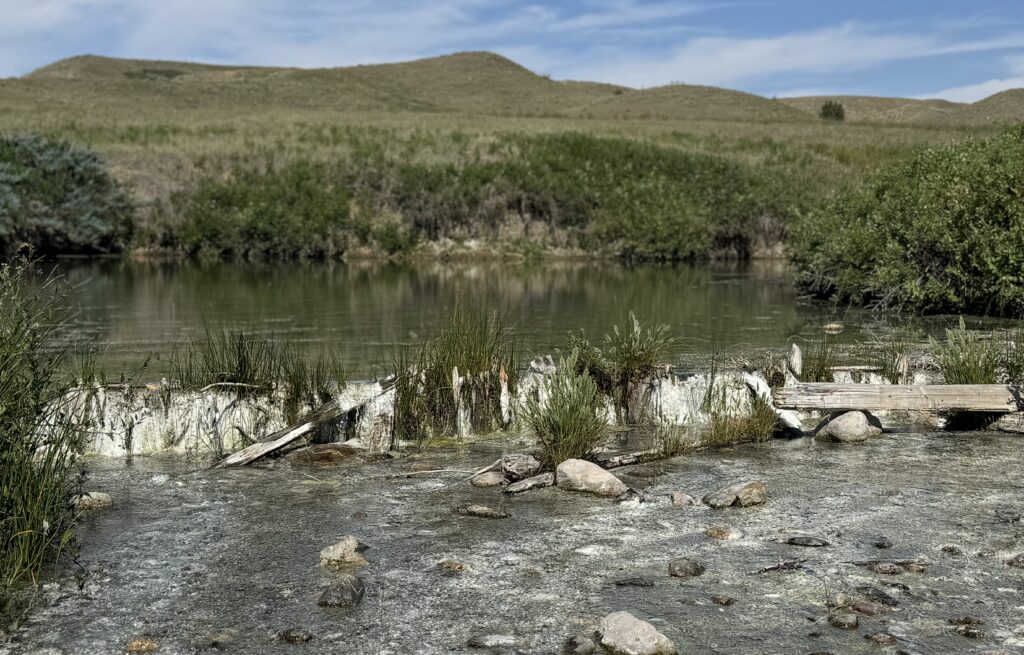The sulfur spring that Meriwether Lewis visited to find a medical remedy to assist a gravely ill Sacagawea.
Rain at the Great Falls on the Fourth of July. That’s precisely what happened to the Corps of Discovery. In fact, as I read the journals this morning before we visit the *[Charlie Russell Museum](https://cmrussell.org)*, I see that it rained more days than not during the expedition’s month-long portage around the five waterfalls here. Unlike us, they endured violent rains, flash floods, and hail the size of tennis balls. When you are traveling in an Airstream (or any other metal vehicle), the last thing you want is a hailstorm, even a puny one. The only benefit Lewis and Clark received from the hail was that they used it to cool their drinks.
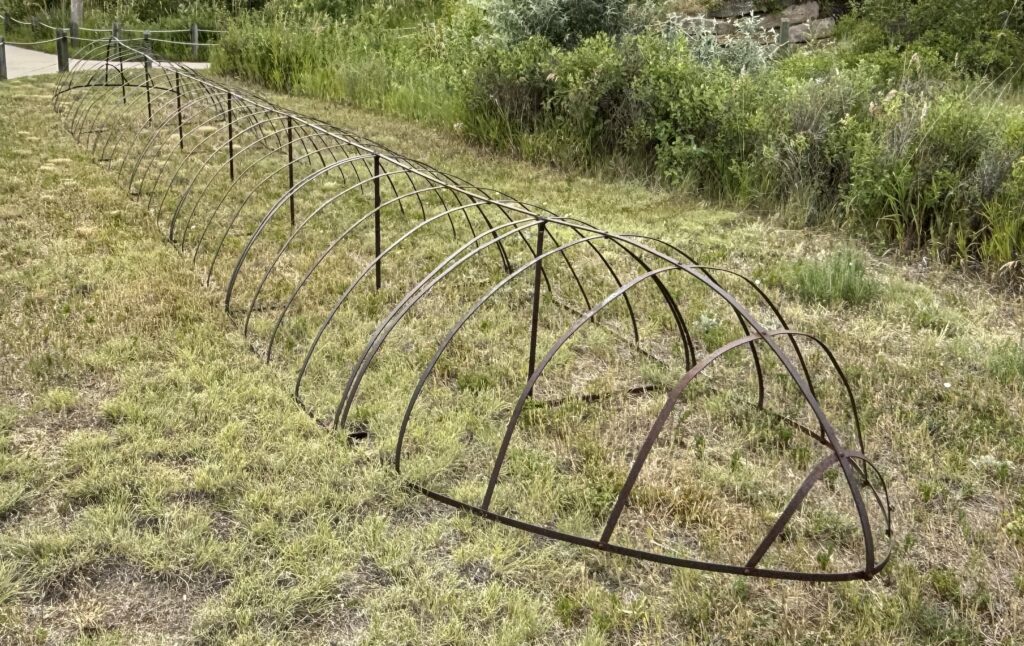A replica of the frame of the “experimental” iron boat that proved a frustrating disappointment for the expedition. On display at the Lewis and Clark Interpretive Center in Great Falls, Mont.
On Lewis and Clark’s Fourth of July 1805, most of the men worked to finish Lewis’s experimental iron-framed boat. It was an experiment that failed dramatically. Within a few journal sentences, Lewis reported that the leather-covered boat “floated like a perfect cork in the water,” and that it almost immediately sank because they had nothing with which to seal the seams of the 28 elk and three buffalo skins — all the time a dozen men spent hunting and preparing the hides had come to nothing. Meanwhile, they had not been making dugout canoes. This seems to be what upset William Clark, who had supervised the back-breaking portage and now realized that he would have to take a group of men to find suitable trees and carve out new canoes. This would delay the expedition’s departure from the falls. The two captains usually got along superbly, but there were a few hints of frustration. But heck, you try to go on a 28-month camping trip and see how tempers hold up.
At night on July 4, 1805, they celebrated the 29th birthday of the United States. Here’s Lewis’s excellent summary:
“our work being at an end this evening, we gave the men a drink of sperits, it being the last of our stock, and some of them appeared a little sensible of it’s effects the fiddle was plyed and they danced very merrily untill 9 in the evening when a heavy shower of rain put an end to that part of the amusement tho’ they continued their mirth with songs and festive jokes and were extreemly merry untill late at night. we had a very comfortable dinner, of bacon beans, suit dumplings & buffaloe beaf &c. in short we had no just cause to covet the sumptuous feasts of our countrymen on this day.”
So tonight, July 5, 2025, we will try again to assemble our campground picnic. Notice how little has changed. We will have: buffalo burgers (check!), beans with bacon (check!), a few ardent spirits (check!), plus watermelon, ice cream (thanks to Thomas Jefferson), fried potatoes, and other camp delicacies.
I doubt that we will dance. Nobody among us brought a fiddle. We may play some music downloaded from the digital cosmos. We will surely have jests and stories.
About 4 p.m. today, we will visit West Bank Park to finish off our scant supply of whiskey in precisely the manner of Lewis and Clark. Fortunately, our keg only holds a quart, and it now contains less than a pint of fine whiskey. We’ll pour the last of it in gill cups and count our blessings to live in the United States of America with its staggering freedom and abundance. Note: There are no serious drinkers among us. The end-of-the-whiskey ritual is merely our attempt at historical reenactment.
And so begins the countdown to the 250th birthday of the United States, one year from now.
## ***Discover more on these topics at Listening to America***
[North Carolina](https://ltamerica.org/tag/north-carolina/ "3 topics")[State Parks](https://ltamerica.org/tag/state-parks/ "2 topics")[Video](https://ltamerica.org/tag/video/ "51 topics")[north daktoa](https://ltamerica.org/tag/north-daktoa/ "0 topics")[Utah](https://ltamerica.org/tag/utah/ "11 topics")[Poetry](https://ltamerica.org/tag/poetry/ "1 topics")[New Mexico](https://ltamerica.org/tag/new-mexico/ "3 topics")[Texas](https://ltamerica.org/tag/texas/ "4 topics")[Oppenheim](https://ltamerica.org/tag/oppenheim/ "0 topics")[Walden](https://ltamerica.org/tag/walden/ "1 topics")[Rivers](https://ltamerica.org/tag/rivers/ "3 topics")[Virginia](https://ltamerica.org/tag/virginia/ "7 topics")[Steinbeck Travels](https://ltamerica.org/tag/steinbeck-travels/ "75 topics")[The Constitution](https://ltamerica.org/tag/the-constitution/ "1 topics")[Republics](https://ltamerica.org/tag/republics/ "1 topics")[Pennsylvania](https://ltamerica.org/tag/pennsylvania/ "1 topics")[Wyoming](https://ltamerica.org/tag/wyoming/ "4 topics")[Ohio](https://ltamerica.org/tag/ohio/ "2 topics")[Water in the West](https://ltamerica.org/tag/water-in-the-west/ "24 topics")[paintings](https://ltamerica.org/tag/paintings/ "0 topics")[North Dakota](https://ltamerica.org/tag/north-dakota/ "53 topics")[William Shirer](https://ltamerica.org/tag/william-shirer/ "1 topics")[Republic](https://ltamerica.org/tag/republic/ "0 topics")[Rome](https://ltamerica.org/tag/rome/ "1 topics")[U.S. Constitution](https://ltamerica.org/tag/u-s-constitution/ "1 topics")[Washington](https://ltamerica.org/tag/washington/ "2 topics")[Podcast](https://ltamerica.org/tag/podcast/ "1 topics")[South Dakota](https://ltamerica.org/tag/south-dakota/ "16 topics")[Theodore Roosevelt](https://ltamerica.org/tag/theodore-roosevelt/ "16 topics")[Thoreau](https://ltamerica.org/tag/thoreau/ "5 topics")[Road Trips](https://ltamerica.org/tag/road-trips/ "18 topics")[South Carolina](https://ltamerica.org/tag/south-carolina/ "1 topics")[Travel](https://ltamerica.org/tag/travel/ "1 topics")[Tennessee](https://ltamerica.org/tag/tennessee/ "1 topics")[Oregon](https://ltamerica.org/tag/oregon/ "4 topics")[Wisconsin](https://ltamerica.org/tag/wisconsin/ "0 topics")[Reading](https://ltamerica.org/tag/reading/ "1 topics")[Space Exploration](https://ltamerica.org/tag/space-exploration/ "8 topics")[Oppenheimer](https://ltamerica.org/tag/oppenheimer/ "1 topics")[New England](https://ltamerica.org/tag/new-england/ "1 topics")[Vermont](https://ltamerica.org/tag/vermont/ "1 topics")[New York](https://ltamerica.org/tag/new-york/ "8 topics")[U.S. Presidents](https://ltamerica.org/tag/u-s-presidents/ "71 topics")[Sports](https://ltamerica.org/tag/sports/ "2 topics")[Thomas Jefferson](https://ltamerica.org/tag/thomas-jefferson/ "34 topics")
**Categories:** Dispatches from the Road
**Tags:** America at 250, Lewis and Clark, Montana
---
### [Clay's "Must See" Stops in Great Falls, Montana](https://ltamerica.org/clays-must-see-stops-in-great-falls-montana/)
**Published:** July 8, 2025
**Author:** Clay Jenkinson
**Excerpt:** Our Lewis and Clark explorer, Clay Jenkinson, says that Great Falls’ reputation for being one of the less attractive places to visit in Montana is highly unfair. He shares his “must see” stops.
**Content:**
## Our Lewis and Clark explorer, Clay Jenkinson, says that Great Falls’ reputation for being one of the less attractive places to visit in Montana is highly unfair. He shares his “must see” stops.
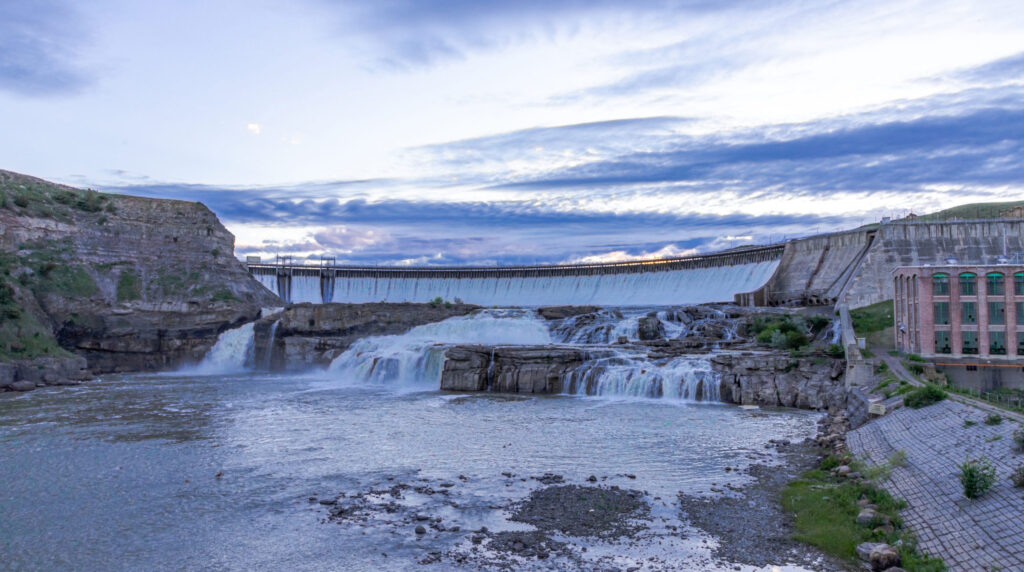*Ryan Dam*, one of five hydroelectric dams on the Missouri River in Great Falls, Montana. (Photo Visit Great Falls)
Great Falls has a reputation for being one of the less attractive places in Montana, but that seems truly unfair to me. The city of 60,442 residents, founded around 1884, is not handsome along its main drags. Few cities are. On those arteries, Great Falls has the charm of Williston, North Dakota, or Gillette, Wyoming. Still, if you get off the main roads, you find charming older pre-plastic-siding houses, lots of city parks, and — of course — the “mighty and heretofore deemed endless Missouri River” runs through it.
Lewis and Clark spent about six weeks in total time here, mainly on the outbound journey of 1805. It was here, approximately 2,300 miles from St. Louis, that the Corps of Discovery reached a place on the Missouri River they could not float through with their flotilla of six dugout canoes and one rowboat-like pirogue. They’d have to make their first portage in more than a year of travel. On June 13, 1805, moving ahead of the rest, Meriwether Lewis “discovered” the great falls of the Missouri River. Needless to say, the falls had been known to Native Americans for millennia, so the word “discovery” takes on a somewhat ironic cast as we think about explorers in the twenty-first century. In two days of reconnaissance, Captain Lewis “discovered” not one but five impassable falls bunched together. He also experienced, on June 14, 1805, what I think might have been the greatest day of his short life. But that’s for another time.
From my point of view, here are the must-see stops in Great Falls, some but not all related to Lewis and Clark.
1\. [*The Lewis and Clark National Historic Trail Interpretive Center*](https://visitmt.com/listing/lewis-and-clark-interpretive-center). It is one of the very best Lewis and Clark interpretive centers in the country. Everything is accurate and expertly illustrated. Because the center is perched against the north bank of the Missouri on several levels, you can stand inside above or below a full-sized dugout canoe attached to a makeshift wagon with 22-inch cottonwood wheels, perched at an impossible angle, with expedition mannequins exerting nearly superhuman force to push it up the steep bluffs of the Missouri. Lewis reported that whenever the leadership called a halt during the portage, the men would collapse exactly where they were and fall instantly asleep. The center has photographs of the five waterfalls before and after industrial intrusion. Outside is a replica of Lewis’s infamous iron-framed boat, the “Experiment”, i.e., an experiment that failed. While we were there, an older man, a firearms expert, explained the guns of the expedition with considerable firmness. If you only have time to visit one Lewis and Clark interpretive center in America, you could not go wrong with this one. The shop and bookstore are not what they used to be during the Bicentennial of the Lewis and Clark expedition (2003–2009), but that was a high-water national experience not likely ever to be reached again.
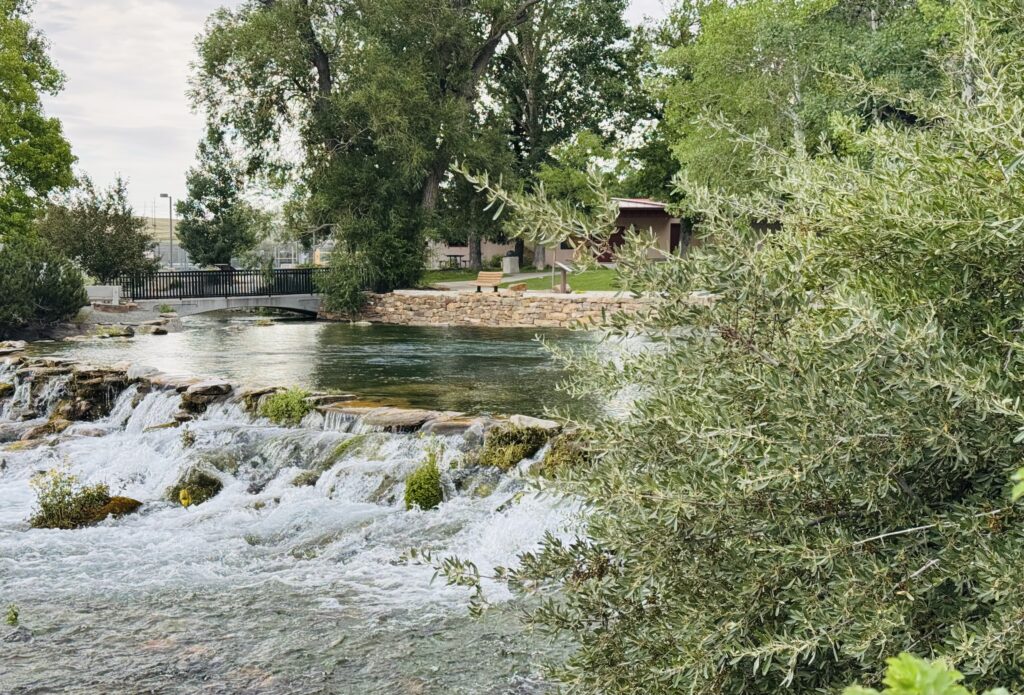Giant Spring State Park in Great Falls, Mont.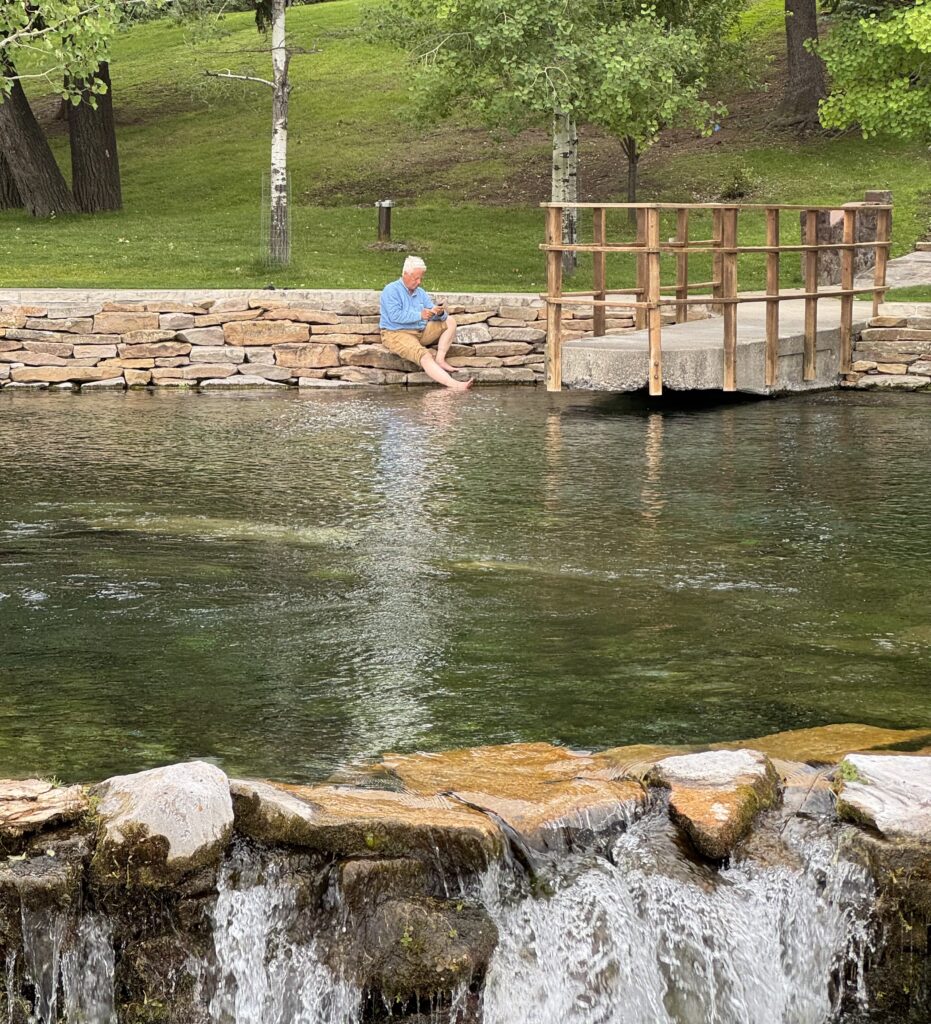Clay cools his feet at Great Springs State Park.
2\. [*The Giant Spring*](https://fwp.mt.gov/giant-springs). Lewis and Clark expedition member John Ordway said the giant spring delivered the best water he had ever tasted. It is colossal, releasing 150 million gallons of water into the Missouri every day. Lewis and Clark had never seen anything like it back east. The site infrastructure has the feel of a WPA or CCC project, and its amazingness is now somewhat compromised by concrete “improvements,” including a snack bar. It’s still awe-inspiring, but we wondered what it must have looked like when Clark and Lewis first happened upon it right next to the river. You can dip your feet in the spring pool, which is perfectly transparent to a depth of more than four feet. The giant spring creates what is regarded as one of the shortest rivers in the world, about 50 yards long.
3\. [*The C.M. Russell Museum*](https://cmrussell.org/). Located in the old center of Great Falls, this gallery is in every way outstanding. It features an extensive display of Russell’s paintings, sculptures, drawings, and his delightful illustrated letters, as well as the work of later artists who incorporated his style. Russell’s Victorian house still stands right outside the museum, and it’s open to visitors, as well as his perfectly preserved painting studio, jam-packed with the tools and other accoutrements of his trade. The atelier is so evocative you half-expect Charlie to return at any moment, wiping his lips after taking a snort at the Mint Bar in downtown Great Falls. The shop is outstanding. We were fortunate to see an exhibit of Robert Osborn’s oversized black-and-white photographs of Indigenous people, mostly Crow (Apsáalooke), including his stunning portrait of Margo Real Bird. If you come to Great Falls and don’t give yourself a few hours at the *C.M. Russell Museum*, your priorities may need an “adjustment.”
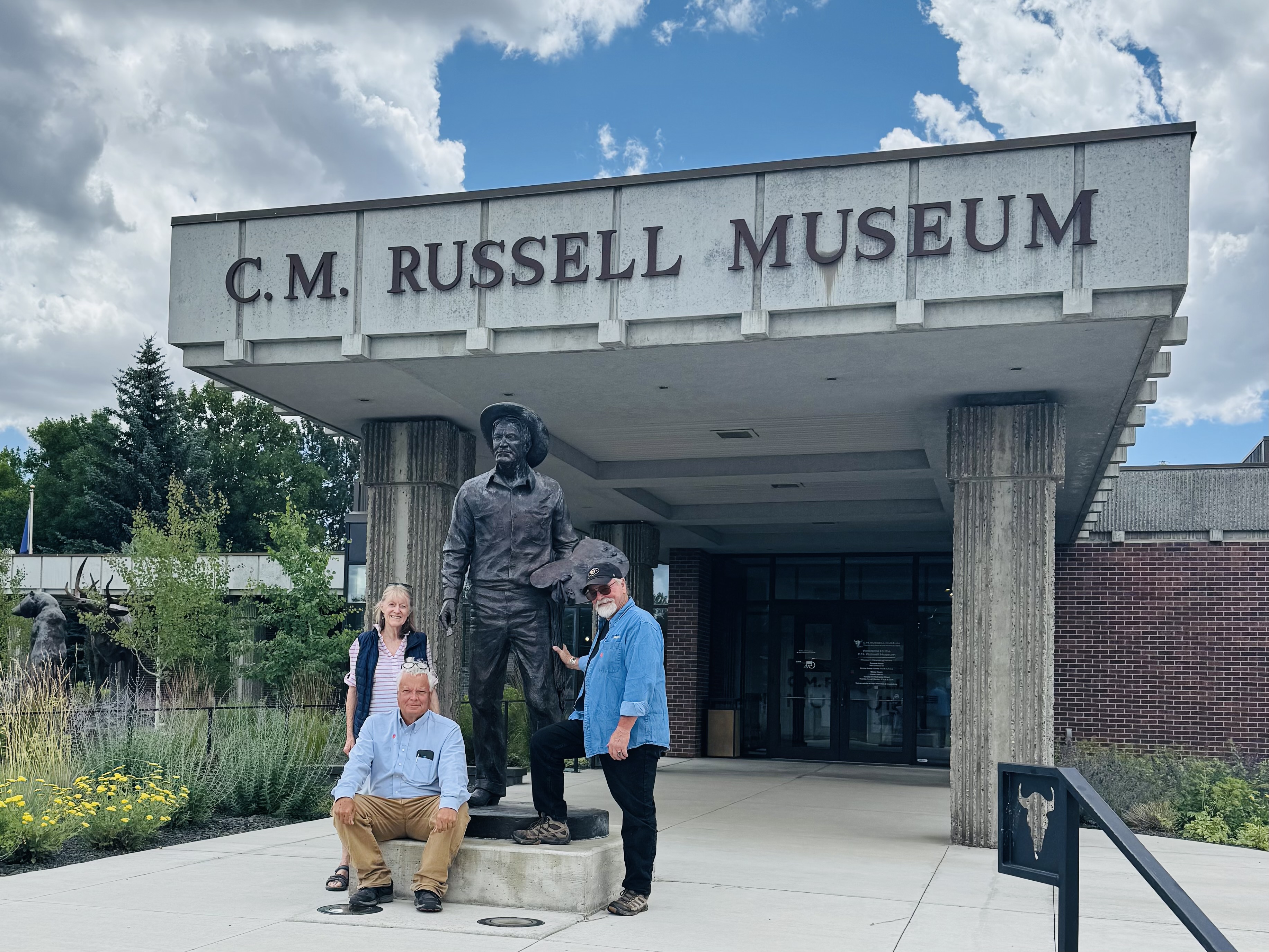Clay and friends at the C.M. Russell Museum.
4\. [*Ryan Dam*](https://www.nps.gov/places/the-falls-of-great-falls.htm) at the Great Falls. All of the waterfalls at Great Falls have been compromised by industrial development, most notably hydroelectric dams that helped give the town the moniker “The Electric City.” When Meriwether Lewis observed the first of the falls for the first time on June 13, 1805, he called it “the grandest sight I ever beheld.” Sitting on a rock shelf below the orgiastic cascade, Lewis wrote one of his most celebrated journal entries in his attempt to do justice to “this truly magnificent and sublimely grand object, which has from the commencement of time been concealed from the view of civilized man.” That was then. Today, *Ryan Dam* inevitably diminishes and perhaps ruins the sublimity. Still, it was thoughtfully designed in 1915 to let water cascade over its rim, and the craggy rocks below were to a certain degree incorporated into the base of the dam. If you squint, you can almost imagine what the falls looked like when Lewis first visited them. It would be a truly great thing if *Ryan Dam* were removed — in fact, all five of them — in the name of America’s purple mountain majesty. Lewis said the 80-foot waterfall was second in magnificence only to Niagara. In the twenty-first century, the existing hydro dams are about as effective as a Betamax videotape or an 8-track tape player, more interesting as a kind of General Electric “bring good things to life” heritage site than for power production. The dams here contribute nothing to flood control.
The sulfur spring that Meriwether Lewis visited to find a medical remedy to assist Sacagawea.
5\. [*Sulphur Spring*](https://www.intermountainhistories.org/items/show/414). The Shoshone-Hidatsa woman Sacagawea became dangerously ill beginning on June 10, 1805, at the mouth of the Marias River, and appeared to the captains to be close to death. The medical practices of the time were so primitive that Thomas Jefferson once quipped, “Whenever I see two doctors gathered in a public road, I look up to see whether there are turkey vultures flying overhead.” Medical historians now believe Sacagawea was suffering from a pelvic inflammatory condition. Lewis, whose mother, Lucy Marks, was an herbalist, had spotted (more likely sniffed) a sulfur spring just across the river from the expedition’s Lower Portage Camp, and he reckoned the mineral water might help cure Sacagawea. He caused her to drink a copious quantity of the impregnated water. By June 19, she had mostly recovered. Whether Lewis’s remedy had an ameliorative effect is uncertain (and unlikely). Sacagawea survived her gynecological ordeal (medical historians suspect that her ne’er-do-well husband Charbonneau gave her an STD) because she was young, healthy, fit, and determined to live. The hike from the parking lot to *Sulphur Spring* is 1.8 miles, and the views of the Missouri River (including, surprisingly, a series of real rapids) are achingly beautiful. From the aromatic spring, you can look across the Missouri and see Belt Creek, which was the coulee up which expedition members lugged their gazillion tons of baggage (and canoes) up to the 18.25-mile portage trail.
Finally,
You can stop in at the Sip and Dip, Mermaid/Tiki Lounge, first opened in 1962, in downtown Great Falls.
6\. [*The Sip ’n Dip Lounge*](https://ohairemotorinn.com/sip-n-dip/). Located in a motel in downtown Great Falls, the legendary *Sip ’n Dip* is a retro Tiki lounge with faux Polynesian décor. Behind the bar is a human aquarium in which a lovely mermaid swims, rolls, blows kisses, and cavorts. To the extent that an indoor swimming tank with a woman in a halter and set of fins can be said to be tasteful, this qualifies. A family we met visited the bar before happy hour. The lounge dates to 1962, shortly after jet airplanes and the statehood of Hawaii created a national Polynesian chic. Think of Marlon Brando and a Tahitian woman wearing little more than a lei overcoming their language barrier with a James T. Kirk kiss. There is bar food at the *Sip ’n Dip* for those who wish it, and the drinks are inexpensive. The *Sip ’n Dip* experienced a social media renaissance in 2003 when it was declared to be one of the top ten bars in the world and “the #1 bar… worth flying” to. Thomas Jefferson said the *Natural Bridge* in Virginia was “worth a trip across the Atlantic” to see (and paint). Whether you should book a flight from Milan or Prague to sip at the O’Haire Motor Inn while one of the six professional mermaids dips six feet in front of you from behind glass is unclear. We tipped our mermaid generously, and she performed some nifty underwater entrechats just for us.
Such are the wonders of Great Falls, Montana. If you are a Lewis and Clark buff, you’ll find more “you are there” sites in and around Great Falls than in any other location in America. The national [*Lewis and Clark Trail Alliance*](https://lewisandclark.org/) has its headquarters in Great Falls. It publishes the glossy quarterly *We Proceeded On*, for which I serve as the national editor. I invite you to subscribe.
Just outside Great Falls lurks Malmstrom Air Force Base, which maintains an array of 150 nuclear-tipped ICBMs (Inter-Continental Ballistic Missiles). The other two ICBM Air Force wings are in North Dakota (Minot Air Force Base) and Wyoming (F.E. Warren Air Force Base). Thus, simultaneously, the greater Great Falls area is one of the most potent platforms for mass destruction in the world and one of the first targets for Putin, Xi, and Kim Jong Un, should they ever decide to launch mayhem at the United States. That would remove the dams!
---
## ***Discover more on these topics at Listening to America***
[U.S. Constitution](https://ltamerica.org/tag/u-s-constitution/ "1 topics")[New York](https://ltamerica.org/tag/new-york/ "8 topics")[Walden](https://ltamerica.org/tag/walden/ "1 topics")[Thoreau](https://ltamerica.org/tag/thoreau/ "5 topics")[Reading](https://ltamerica.org/tag/reading/ "1 topics")[Road Trips](https://ltamerica.org/tag/road-trips/ "18 topics")[Wyoming](https://ltamerica.org/tag/wyoming/ "4 topics")[Republic](https://ltamerica.org/tag/republic/ "0 topics")[Washington](https://ltamerica.org/tag/washington/ "2 topics")[New Mexico](https://ltamerica.org/tag/new-mexico/ "3 topics")[Theodore Roosevelt](https://ltamerica.org/tag/theodore-roosevelt/ "16 topics")[William Shirer](https://ltamerica.org/tag/william-shirer/ "1 topics")[The Constitution](https://ltamerica.org/tag/the-constitution/ "1 topics")[Video](https://ltamerica.org/tag/video/ "51 topics")[Texas](https://ltamerica.org/tag/texas/ "4 topics")[Sports](https://ltamerica.org/tag/sports/ "2 topics")[North Carolina](https://ltamerica.org/tag/north-carolina/ "3 topics")[Space Exploration](https://ltamerica.org/tag/space-exploration/ "8 topics")[Republics](https://ltamerica.org/tag/republics/ "1 topics")[Water in the West](https://ltamerica.org/tag/water-in-the-west/ "24 topics")[Ohio](https://ltamerica.org/tag/ohio/ "2 topics")[State Parks](https://ltamerica.org/tag/state-parks/ "2 topics")[Poetry](https://ltamerica.org/tag/poetry/ "1 topics")[Tennessee](https://ltamerica.org/tag/tennessee/ "1 topics")[U.S. Presidents](https://ltamerica.org/tag/u-s-presidents/ "71 topics")[Travel](https://ltamerica.org/tag/travel/ "1 topics")[Oppenheim](https://ltamerica.org/tag/oppenheim/ "0 topics")[Podcast](https://ltamerica.org/tag/podcast/ "1 topics")[north daktoa](https://ltamerica.org/tag/north-daktoa/ "0 topics")[Oppenheimer](https://ltamerica.org/tag/oppenheimer/ "1 topics")[Rome](https://ltamerica.org/tag/rome/ "1 topics")[Vermont](https://ltamerica.org/tag/vermont/ "1 topics")[South Dakota](https://ltamerica.org/tag/south-dakota/ "16 topics")[Wisconsin](https://ltamerica.org/tag/wisconsin/ "0 topics")[Virginia](https://ltamerica.org/tag/virginia/ "7 topics")[New England](https://ltamerica.org/tag/new-england/ "1 topics")[Pennsylvania](https://ltamerica.org/tag/pennsylvania/ "1 topics")[North Dakota](https://ltamerica.org/tag/north-dakota/ "53 topics")[paintings](https://ltamerica.org/tag/paintings/ "0 topics")[Thomas Jefferson](https://ltamerica.org/tag/thomas-jefferson/ "34 topics")[South Carolina](https://ltamerica.org/tag/south-carolina/ "1 topics")[Rivers](https://ltamerica.org/tag/rivers/ "3 topics")[Steinbeck Travels](https://ltamerica.org/tag/steinbeck-travels/ "75 topics")[Oregon](https://ltamerica.org/tag/oregon/ "4 topics")[Utah](https://ltamerica.org/tag/utah/ "11 topics")
**Categories:** Dispatches from the Road
**Tags:** Lewis and Clark, Montana
---
### [Best Books On the Lewis and Clark Expedition](https://ltamerica.org/best-books-on-the-lewis-and-clark-expedition/)
**Published:** July 1, 2025
**Author:** Clay Jenkinson
**Excerpt:** Clay’s recommendations on the best books on the Lewis and Clark Expedition.
**Content:**
## Clay’s recommendations on the best books on the Lewis and Clark Expedition.
Several people have asked me for a list of books to read about Lewis and Clark. For the sake of proportionality and brevity, I will list only a few.
There are many one-volume editions of the journals. I grew up on *The Journals of Lewis and Clark*, edited by the great historian Bernard DeVoto. It is still in print. It was the first abridgment that used the original journals. The best recent edition is Gary Moulton’s *The Lewis and Clark Journals: An American Epic of Discovery*. If you want the emphasis to be on natural history, I suggest *The Journals of Lewis and Clark*, edited by Frank Bergon (Penguin).
Stephen Ambrose’s *Undaunted Courage* is still (and may always be) the best one-volume history of the expedition. Published in 1996, it holds up well, reads like a novel, and provides excellent portraits of the expedition’s mastermind, Thomas Jefferson, the two captains, and Sacagawea, and explores the major themes of the expedition without ever descending into academic jargon.
The most important book about Lewis and Clark in my lifetime is James Ronda’s pathbreaking *Lewis and Clark Among the Indians* (1984), a revolutionary book that unleashed amazing new insights by simply turning the lens and looking at the expedition through Native eyes.
My friend David Nicandri wrote *River of Promise: Lewis and Clark on the Columbia*. As the title suggests, Nicandri explores the expedition on the Pacific side of the Rocky Mountains. In an interview I conducted with James Ronda in 2005, he stated that *River of Promise* was one of the two or three best books written about Lewis and Clark during the expedition’s bicentennial (2003–2009).
It’s hard to find a good book about Sacagawea because we actually know very little about her, and therefore, most of what has been written has inevitably been speculative. I think Donna Kessler’s *The Making of Sacagawea: A Euro-American Legend* is the best because she reminds us that Sacagawea is always a projection of our culture’s need to claim this Shoshone-Hidatsa woman and fit her into our latest cultural agenda.
David Freeman Hawke’s *Those Tremendous Mountains: The Story of the Lewis and Clark Expedition* is the best alternative to Stephen Ambrose. It is shorter and tighter than *Undaunted Courage*. It was the first book I ever read on Lewis and Clark, and I was shocked when I turned a late page in the book and learned that Mr. Lewis had committed suicide three years after the expedition.
My own *The Character of Meriwether Lewis: Explorer in the Wilderness* is my attempt to explore this fascinating, complex, brilliant, erratic, and tragic hero at the center of what James Ronda has called “America’s first great road story.”
Here are a few more options for those who want to delve deeper: John Logan Allen’s *Passage Through the Garden: Lewis and Clark and the Image of the Northwest*; Larry Morris’s *The Fate of the Corps: What Became of the Lewis and Clark Explorers After the Expedition*; Thomas Slaughter’s *Exploring Lewis and Clark: Reflections on Men and Wilderness*; Albert Furtwangler’s *Acts of Discovery: Visions of America in the Lewis and Clark Journals*; David Nicandri’s *Lewis and Clark Reframed: Examining Ties to Cook, Vancouver, and Mackenzie*.
I should add that here [you can find a complete, searchable, and free electronic edition of the journals](https://lewisandclarkjournals.unl.edu/) of every expedition journal keeper.
---
## ***Discover more on these topics at Listening to America***
[State Parks](https://ltamerica.org/tag/state-parks/ "2 topics")[Republic](https://ltamerica.org/tag/republic/ "0 topics")[Reading](https://ltamerica.org/tag/reading/ "1 topics")[Space Exploration](https://ltamerica.org/tag/space-exploration/ "8 topics")[Poetry](https://ltamerica.org/tag/poetry/ "1 topics")[North Dakota](https://ltamerica.org/tag/north-dakota/ "53 topics")[Washington](https://ltamerica.org/tag/washington/ "2 topics")[U.S. Constitution](https://ltamerica.org/tag/u-s-constitution/ "1 topics")[Oregon](https://ltamerica.org/tag/oregon/ "4 topics")[Rivers](https://ltamerica.org/tag/rivers/ "3 topics")[The Constitution](https://ltamerica.org/tag/the-constitution/ "1 topics")[New York](https://ltamerica.org/tag/new-york/ "8 topics")[U.S. Presidents](https://ltamerica.org/tag/u-s-presidents/ "71 topics")[Pennsylvania](https://ltamerica.org/tag/pennsylvania/ "1 topics")[Water in the West](https://ltamerica.org/tag/water-in-the-west/ "24 topics")[Thomas Jefferson](https://ltamerica.org/tag/thomas-jefferson/ "34 topics")[New Mexico](https://ltamerica.org/tag/new-mexico/ "3 topics")[Road Trips](https://ltamerica.org/tag/road-trips/ "18 topics")[paintings](https://ltamerica.org/tag/paintings/ "0 topics")[Thoreau](https://ltamerica.org/tag/thoreau/ "5 topics")[Vermont](https://ltamerica.org/tag/vermont/ "1 topics")[Theodore Roosevelt](https://ltamerica.org/tag/theodore-roosevelt/ "16 topics")[Video](https://ltamerica.org/tag/video/ "51 topics")[William Shirer](https://ltamerica.org/tag/william-shirer/ "1 topics")[Podcast](https://ltamerica.org/tag/podcast/ "1 topics")[Wisconsin](https://ltamerica.org/tag/wisconsin/ "0 topics")[Utah](https://ltamerica.org/tag/utah/ "11 topics")[Wyoming](https://ltamerica.org/tag/wyoming/ "4 topics")[South Dakota](https://ltamerica.org/tag/south-dakota/ "16 topics")[north daktoa](https://ltamerica.org/tag/north-daktoa/ "0 topics")[Republics](https://ltamerica.org/tag/republics/ "1 topics")[Walden](https://ltamerica.org/tag/walden/ "1 topics")[Virginia](https://ltamerica.org/tag/virginia/ "7 topics")[South Carolina](https://ltamerica.org/tag/south-carolina/ "1 topics")[Rome](https://ltamerica.org/tag/rome/ "1 topics")[Oppenheim](https://ltamerica.org/tag/oppenheim/ "0 topics")[Oppenheimer](https://ltamerica.org/tag/oppenheimer/ "1 topics")[North Carolina](https://ltamerica.org/tag/north-carolina/ "3 topics")[Ohio](https://ltamerica.org/tag/ohio/ "2 topics")[Texas](https://ltamerica.org/tag/texas/ "4 topics")[Tennessee](https://ltamerica.org/tag/tennessee/ "1 topics")[Travel](https://ltamerica.org/tag/travel/ "1 topics")[Sports](https://ltamerica.org/tag/sports/ "2 topics")[New England](https://ltamerica.org/tag/new-england/ "1 topics")[Steinbeck Travels](https://ltamerica.org/tag/steinbeck-travels/ "75 topics")
**Categories:** Books
**Tags:** Books, Lewis and Clark
---
### [What Does It Mean to Listen to America?](https://ltamerica.org/what-does-it-mean-to-listen-to-america/)
**Published:** July 1, 2025
**Author:** Clay Jenkinson
**Excerpt:** The art of listening and genuine communication to a thriving democracy.
**Content:**
## The art of listening and genuine communication to a thriving democracy.
Clay Jenkinson moderating one of an ongoing series of panel discussions entitled *Vail Symposium* on Controversial Issues for the Vail Symposium in Colorado.
I don’t know if you remember the song by Fred Neil, *Everybody’s Talkin’*, written in 1966 and released two years later: “Everybody’s talkin’ and I don’t hear a word they’re sayin’.” That seems to be where we are. Sometimes, when there is a flashpoint issue, such as sending a fleet of B-2 bombers to attack installations in a foreign country, I watch an hour of FOX followed by an hour of MSNBC. Here’s what I learn. There is very little news and a great deal of punditry. To watch them is to conclude that we live in two profoundly different Americas and that each one regards the other as evil, fundamentally misguided, brainwashed, and unworthy of a moment’s respect. The Democrats are Marxists (sometimes even Maoists). The Republicans are Fascists. And, of course, we know that neither is either. One side defends the president’s action without the slightest hint of doubt. The other side denounces the same action without the slightest nuance.
The truly mind-blowing aspect of this is that if the president were from the other party and engaged in the same action, the arguments would be identical but in the opposite direction. This is the very definition of hypocrisy.
Everybody’s talking, but they are only talking to their echo chamber, and the willing subscribers to that echo chamber swallow the Kool-Aid unhesitatingly and try to remember the talking points so they can trot them out when they meet their like-minded friends for coffee. People tend to hear what they want to hear on all issues, and they often dismiss and denounce that which they don’t want to hear.
If we were truly a republic, the discussion would begin with an attempt to establish all the common ground before proceeding to discern the areas of genuine disagreement. (In foreign policy, it used to be said that “politics stops at the water’s edge,” but that notion, which was probably always a myth to a certain extent, has long since been relegated to the bin labeled, “What world do you live in?”) If we were truly a republic, each side would listen to the other carefully and then say, “I hear you, and I don’t entirely disagree, but I think you are wrong about the fundamental issue.” And the other side would say, “Thank you. I get your point about … but I believe nevertheless ….”
Thomas Jefferson championed freedom of speech (and press) on the principle that in a free marketplace of ideas, good ideas would triumph over bad ones, truth over error, science over superstition, and if we all agree to engage in mutually respectful argument and accept that compromise is the essence of democracy (without which you can have no democracy), we will usually do the right thing in the end. In his first inaugural address (March 4, 1801), Jefferson wrote: “We are all Republicans. We are all Federalists.” Translation? Hey, we’re all Americans. We agree on much more than we disagree about.
When I hear people express their opinions in very strong terms, I sometimes ask, “What would it take to change your mind about this?” This is an increasingly silly exercise.
## **Baked In**
It was around 2016 that I first heard the term “baked in.” As in the CNN dialogue:
— Will this change the American public’s view of Donald Trump?
— No, people’s views on this are baked in.
At first, I resisted this phrase and the idea. But now I think we are baked in about almost everything. Dating back to Theodore Roosevelt and later Bob Dole, the Republicans were for a national health care system more or less like the one Republican Governor Mitt Romney enacted in Massachusetts in 2006, which was not significantly different from the *Affordable Care Act* of 2010, but when President Barack Obama proposed the ACA, it was denounced by Republicans as the death of civilization as we know it. The Democrats were for a border “fence” in 2006, but when President Trump insisted on one in 2017, they regarded it as cruel, inhumane, and unlikely to achieve its ends.
And yet approximately 70% of the American people live not at the Democratic far end of the political spectrum nor the Republican far end but in the forgotten and radically underrepresented middle. That’s the America I want to live in. I like the POTUS channel’s Michael Smerconish’s theme song: *Stuck in the Middle with You*.
Here are questions that haunt me, especially as I am self-consciously and at great expense traveling the country to Listen to America.
- What does it really mean to listen? I can listen to the *Grateful Dead*. I can listen to the news. I can listen to a sermon in church. I can listen to my friend whine about her retirement account. But am I really listening?
- What does it mean to listen? By which I mean really listen, listen generously and with respect, listen with the possibility that my mind might be changed? Listen so that I can repeat the other’s statement(s) faithfully.
- Do people change their minds? If so, what does it take for someone to change their mind? When was the last time I changed my mind?
- What does it mean to have an open mind? Do I have an open mind?
- Does argument (in the political sense, not the argument about who takes out the trash) ever accomplish anything?
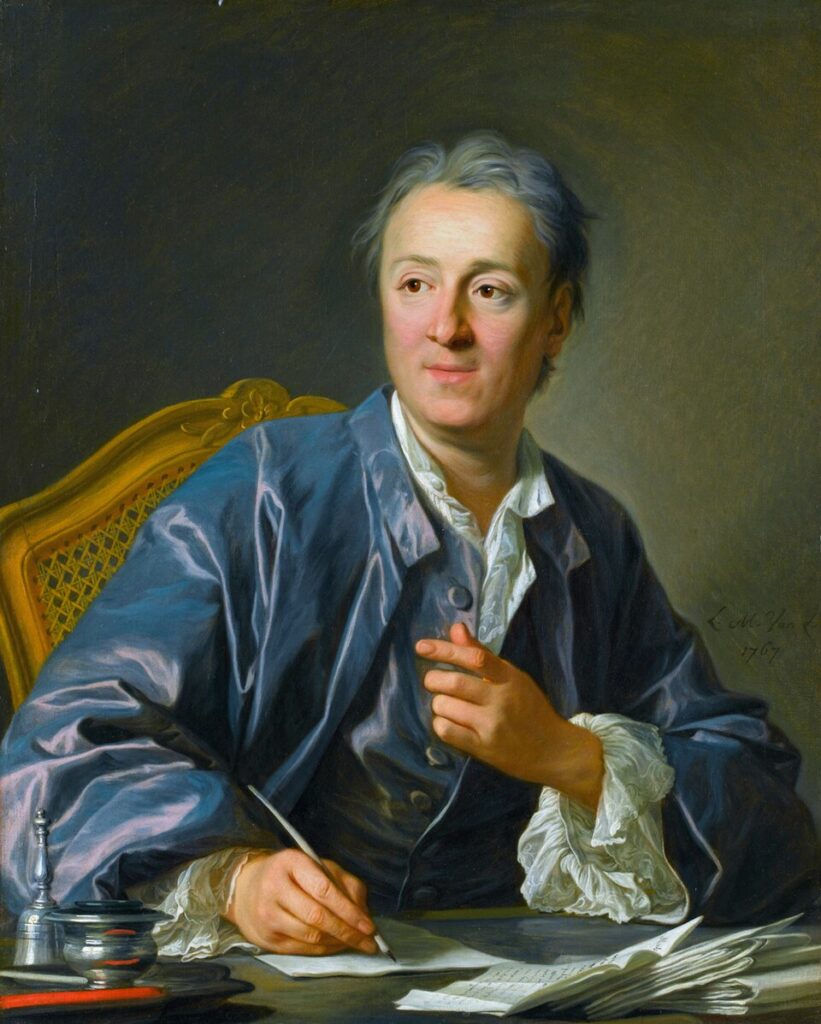Portrait of the French philosopher, Denis Diderot.
The great figures of the Enlightenment (think of Denis Diderot, Voltaire, and Thomas Jefferson) believed that skepticism and doubt were the essential tools of an enlightened person. Diderot (1713–1784), the creator of the seminal *Encyclopédie* (28 volumes, 1751–1772), humankind’s first attempt to create a digest of all human knowledge, said, “All things must be examined, debated, investigated without exception and without regard for anyone’s feelings.” And he said, “We swallow greedily any lie that flatters us, but we sip only little by little at a truth we find bitter.”
If I start a harmless thread on Facebook saying that last Thursday I bought four skeins of red yarn at Hobby Lobby, and a I get 100 responses, it is not long before someone says, “I can’t believe you shopped there, you know they are right-wing nutjobs,” and then someone says, “Red, huh, what have you gone all MAGA on us?” And then someone says, “Who cares if they are Christians, we all know there is no God.” And then someone says, “My cat ate two feet of the yarn I am using to make an afghan for my niece.” And then someone says, “Obama was the worst president in American history except for Biden, who wouldn’t know Hobby Lobby from Hopalong Cassidy.” And then someone would say, “I never shop on Thursdays because that’s the day I binge-watch *Blue Bloods*.” Then, “*Blue Bloods*!? Don’t you know that show perpetuates racist policing?”
If you think I’m exaggerating, spend some time on Facebook.
My whole world is discourse. I read incessantly, listen to podcasts, watch documentaries, and engage in conversation with a wide variety of people all over America and sometimes beyond, at least half of whom see the world quite differently from me. I lecture, write, broadcast, post, and podcast. For the past few years, I have moderated a series of programs in Colorado for the *Vail Symposium* on Controversial Issues. In each case (immigration, censorship, education, and sports), we bring in people from both sides of the issue, and to prepare, I read books on the subject from various points of view before we assemble on stage in Vail. I believe we can have honest and valid disagreements on the major questions: guns in America, violence on television, the future of immigration, the perceived crisis of the Supreme Court; bias in the media, the future of health care, white–Indian relations; statue removal; gender construction; the future of rural life; separation of church and state, etc.
I believe there is never just one point of view on most questions. To be enlightened is to doubt your own convictions, especially your strongly held ones. You may not change your mind, but you will refine your views by questioning them honestly.
When I host cultural retreats, I sometimes lead people through an exercise in which we first state our strong opinions and convictions on a controversial subject, and then I ask people to make the best argument they can for the other side, for the other point of view. Some people refuse to entertain the other perspective. Apparently, they own the truth. Others find this exercise very satisfying.
The great English philosopher Bertrand Russell said, “The fundamental cause of the trouble is that in the modern world, the stupid are cocksure while the intelligent are full of doubt.” The Irish poet William Butler Yeats said this even more pointedly:
The best lack all conviction, while the worst
Are full of passionate intensity.
All you can say to this is: yup.
**The Question of Credibility and Authority**
I was the moderator of an evening program in Vail, Colorado, the other day about whether we are in a constitutional crisis due to the actions of the current president. About two-thirds of the way through the program, an eminent retired federal judge, widely regarded as “the most conservative judge in the country,” stood up and said, “We are not only in a constitutional crisis, but we are in clear and present danger of losing the republic.” He had given some of the finest testimony at the Congressional January 6 hearings. If anyone has street cred on this issue, it is he — more than anyone in that room. And yet, people who didn’t want to hear this later complained bitterly that he doesn’t know what he’s talking about, that he’s “bat-s… crazy,” that he’s just an old man, that we had no right to give him the chance to speak, etc. I believe there is room to argue about a subject of this gravity, but my point is that, despite his 40-year distinguished career, his opinion was immediately discounted by those who didn’t want to hear it. I would have thought that everyone in that room, regardless of their political outlook, would have said, “Wow, I’m not entirely sure I agree, but it would be a great mistake not to take that statement very seriously.”
You know the argument from Plato. If you want your horse shoed, do you go to a farrier or a poet? If you want to determine whether you need heart bypass surgery, do you go to a banker or a heart surgeon? (Actually, you had better do both!) If you want to understand the doctrine of the Trinity, do you go to a gymnast or a theologian?
Nobody in that room knew more about the Constitution of the United States than this eminent judge, and yet those who did not like what he said seemed to regard him as just some senior citizen who stood up to bloviate.
The same is true on global climate change. People who have never read a book on the subject and could not even begin to explain how carbon affects the biosphere make bold, even absolutist, declarations about climate. I do believe there is room for an honest, nuanced, and serious debate about anthropogenic climate pressures, but if you are the senior senator from Oklahoma, hold up a snowball on the floor of the United States Senate on a cold day in Washington, and say, “There’s your global warming!” you are not interested in serious debate or, for that matter, science. I was on a plane a dozen years ago with a vice president of a Great Plains-based electric cooperative. Curious and thinking this was a good time to hear from someone deep in the industry, I asked him what he thought about global climate change. He said it was all nonsense, but his energy cooperative paid lip service to the issue so as not to lose federal funding. I asked him why it was nonsense. He trotted out the true (but anecdotal) evidence that a handful of scientists had fudged some of their data to make things seem worse than they are. I freely admit that I know very little about this issue. Still, I do know that more than 95% of the world’s climate scientists (every one with a PhD in climate science) believe not only that humans have raised the planet’s temperature but also that this represents a gravely serious threat to the future of civilization (and countless non-human species). He told me that such people are alarmists, that they are liberals, that they are bandwagoning opportunists who know that’s how to get grants and funding, etc. At this point, without the slightest hint of sarcasm, I asked him what he had read about the issue. He hemmed a bit and then said, “Well, I’ve read a couple of magazine articles.” If he had said, “Last year, I read ten juried articles and two books on the subject, including books of the ‘sky is falling’ perspective,” I would have had to take his argument seriously because he’s in the industry and I’m just a guy.
## **A New Curriculum**
I’m sure I am guilty of all these problems, so I’ll be the first to sign up for the new curriculum. Here are the courses:
— Argument from evidence.
— Avoiding logical fallacies, such as arguing from anecdotal “evidence,” reductio ad absurdum, ad hominem, special pleading, red herrings, straw man arguments, riding one’s hobby horse, etc.
— Generous and respectful listening.
— Discerning truth from propaganda.
— Stipulating the validity of the other’s perspective.
— Understanding that democracy is compromise.
— Weighing a person’s credibility and authority.
— Opening your mind without LSD or Ecstasy.
In the spirit of this essay, I close with the refrain of one of my favorite essayists, Michel de Montaigne (1533–1592):
“Que sais-je?” Translation? “What do I know?” That’s always the best place to start.
---
## ***Discover more on these topics at Listening to America***
[Theodore Roosevelt](https://ltamerica.org/tag/theodore-roosevelt/ "16 topics")[Republics](https://ltamerica.org/tag/republics/ "1 topics")[Road Trips](https://ltamerica.org/tag/road-trips/ "18 topics")[Podcast](https://ltamerica.org/tag/podcast/ "1 topics")[State Parks](https://ltamerica.org/tag/state-parks/ "2 topics")[Poetry](https://ltamerica.org/tag/poetry/ "1 topics")[paintings](https://ltamerica.org/tag/paintings/ "0 topics")[Thoreau](https://ltamerica.org/tag/thoreau/ "5 topics")[Utah](https://ltamerica.org/tag/utah/ "11 topics")[Travel](https://ltamerica.org/tag/travel/ "1 topics")[Sports](https://ltamerica.org/tag/sports/ "2 topics")[Water in the West](https://ltamerica.org/tag/water-in-the-west/ "24 topics")[New Mexico](https://ltamerica.org/tag/new-mexico/ "3 topics")[Space Exploration](https://ltamerica.org/tag/space-exploration/ "8 topics")[Video](https://ltamerica.org/tag/video/ "51 topics")[Walden](https://ltamerica.org/tag/walden/ "1 topics")[Washington](https://ltamerica.org/tag/washington/ "2 topics")[Republic](https://ltamerica.org/tag/republic/ "0 topics")[South Carolina](https://ltamerica.org/tag/south-carolina/ "1 topics")[Virginia](https://ltamerica.org/tag/virginia/ "7 topics")[Rome](https://ltamerica.org/tag/rome/ "1 topics")[U.S. Presidents](https://ltamerica.org/tag/u-s-presidents/ "71 topics")[Texas](https://ltamerica.org/tag/texas/ "4 topics")[Oppenheimer](https://ltamerica.org/tag/oppenheimer/ "1 topics")[Ohio](https://ltamerica.org/tag/ohio/ "2 topics")[north daktoa](https://ltamerica.org/tag/north-daktoa/ "0 topics")[Steinbeck Travels](https://ltamerica.org/tag/steinbeck-travels/ "75 topics")[New England](https://ltamerica.org/tag/new-england/ "1 topics")[Rivers](https://ltamerica.org/tag/rivers/ "3 topics")[The Constitution](https://ltamerica.org/tag/the-constitution/ "1 topics")[William Shirer](https://ltamerica.org/tag/william-shirer/ "1 topics")[Pennsylvania](https://ltamerica.org/tag/pennsylvania/ "1 topics")[South Dakota](https://ltamerica.org/tag/south-dakota/ "16 topics")[North Dakota](https://ltamerica.org/tag/north-dakota/ "53 topics")[Vermont](https://ltamerica.org/tag/vermont/ "1 topics")[Wyoming](https://ltamerica.org/tag/wyoming/ "4 topics")[Reading](https://ltamerica.org/tag/reading/ "1 topics")[Thomas Jefferson](https://ltamerica.org/tag/thomas-jefferson/ "34 topics")[Oppenheim](https://ltamerica.org/tag/oppenheim/ "0 topics")[U.S. Constitution](https://ltamerica.org/tag/u-s-constitution/ "1 topics")[New York](https://ltamerica.org/tag/new-york/ "8 topics")[Tennessee](https://ltamerica.org/tag/tennessee/ "1 topics")[North Carolina](https://ltamerica.org/tag/north-carolina/ "3 topics")[Oregon](https://ltamerica.org/tag/oregon/ "4 topics")[Wisconsin](https://ltamerica.org/tag/wisconsin/ "0 topics")
**Categories:** Features
**Tags:** America at 250, Books, U.S. Presidents
---
### [More About Our Book Club - Video Dispatch](https://ltamerica.org/more-about-our-book-club-video-dispatch/)
**Published:** June 23, 2025
**Author:** Editor
**Content:**
You can learn more about our LTA Book Club in this short video dispatch from Clay. Be sure to join our first zoom meeting for book club members on July 10, 2025. 4:30 Pacific. 5:30 Mountain. 6:30 Central. 7:30 Eastern. To register or if you have any questions contact [Liz Eagle](mailto:leagle@ltamerica.org).
**Categories:** LTA Friends Book Club, LTA Friends Videos
**Tags:** America at 250, Books
---
### [Exploring the Ohio River with Captain Lewis](https://ltamerica.org/exploring-the-ohio-river-with-captain-lewis/)
**Published:** June 24, 2025
**Author:** Clay Jenkinson
**Excerpt:** Following the path of Meriwether Lewis, Clay notes that while the famous explorer could be an outstanding journal writer, he was frustratingly unreliable in keeping a daily account of his transcontinental travels. No known journals exist for about half of the 28-month expedition.
**Content:**
## Following the path of Meriwether Lewis, Clay notes that while the famous explorer could be an outstanding journal writer, he was frustratingly unreliable in keeping a daily account of his transcontinental travels. No known journals exist for about half of the 28-month expedition.
Meriwether Lewis at work on his journals. The renowned explorer was frustratingly inconsistent in keeping an ongoing record of his historic journey across the continent. (Illustration created by Clay Jenkinson using the AI tool ChatGPT)
I have now completed my transit of the Ohio River corridor from Point State Park in Pittsburgh (the confluence of the Allegheny and the Monongahela and the “source” of the Ohio) to Cairo, Illinois, where the massive Ohio disembogues into the much more massive Mississippi River. I hugged river roads mostly with my pickup and Airstream. It rained every day, sometimes cats and dogs. I loved the Ohio River Valley, except for the heavy industrial footprint in some places and the thick forest canopy that obscures the river in most areas. Before this journey, I knew the Ohio was an impressive river, but I did not know how much water it carries (second only to the Mississippi in America). At the confluence with the Mississippi, it is jaw-dropping.
The Allegheny and Monongahela Rivers join, forming the headwaters of the Ohio River in Pittsburgh, Pennsylvania. The Ohio River then flows southwestward, eventually joining the Mississippi at Cairo, Illinois. (Shutterstock)
Along the way, of course, I have been reading the journals of the Lewis and Clark expedition. At this point, before he reaches the Falls of the Ohio, only Lewis is writing, and he is not a consistent journal keeper. Note: most of us begin reading the journals on May 14, 1804, when the expedition leaves St. Louis/St. Charles for points unknown. This makes sense, but a few years ago, Congress extended the Lewis and Clark trail from St. Louis all the way to Pittsburgh, where Lewis had the expedition’s main vessel constructed, a 55-foot barge (a keelboat). Lewis kept a solid and diligent journal from the day he started to float the Ohio, August 30, 1803, until September 19, when he went silent for no explicable reason; then, on November 28, he literally handed that physical notebook over to Clark. At that point, Lewis went more or less silent for 496 days. He did not pick up his journal again in a sustained way until April 7, 1805, when the expedition left its winter quarters among the Mandan and Hidatsa in today’s North Dakota and headed into Montana.
Good Start.
## **Phase One: August 31 – October 14, 1803**
Lewis and a skeleton crew force the heavy keelboat down the shoals of the Ohio River. It was autumn, and the locals had never seen the river so low before. The keelboat drew more water than the river had to offer, so this phase of the journey was tedious, exhausting, and frustrating. The men spent part of every day in the river dragging and pushing the unwieldy 55-foot barge over riffles. Lewis wrote feelingly of the crew’s great fatigue and, on at least one occasion, rewarded them with an extra slug of whiskey. Sometimes, Lewis hired horses and oxen from riverside farmers to drag the boat through the shallows. He complained that the farmers were ripping him off. On at least one occasion, his crew had to sluice a trench through a sandbar and wait while the river carried away enough of the sand to force a passage. By the time Lewis reached the Falls of the Ohio on October 14, the river was deep enough to carry the keelboat downstream to its confluence with the Mississippi.
The Clark family had lived at the great falls of the Ohio for twenty years. Certainly, they knew the best way to get a vessel through the challenging rapids: 26 feet in two miles. I find it a little odd that Lewis hired local boatmen to ease the keelboat through the falls before he made contact with his old friend Clark. You’d have thought that Lewis would have connected first with the Clarks — who lived and worked there — and they’d have facilitated the passage. But Lewis was Lewis.
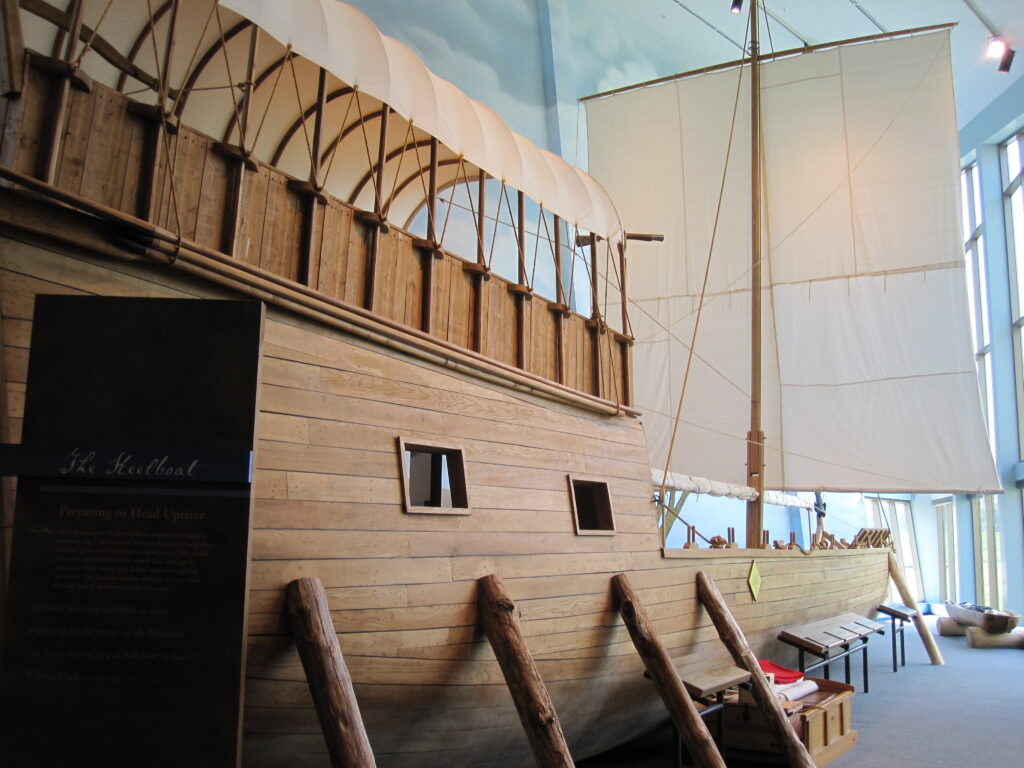A 55-foot full-scale replica of the keelboat used on the Lewis and Clark Expedition. The keelboat is on display at the Lewis and Clark State Historic Site in Hartford, Illinois. (Wikimedia)
## **Phase Two: October 14 – October 26, 1803**
Reunion with William Clark. Lewis and Clark first met in 1795 in the U.S. Army in the “Ohio Country.” It had now been about seven years since they were last together. Lewis had felt no hesitation in inviting Clark to be his co-captain. However, he had taken the precaution of approaching another man, Moses Hooke, to serve as second in command in the event that Clark declined to join the expedition. Clark, who was at loose ends in his career, signed on with alacrity, thus propelling poor Hooke into oblivion and himself into American fame.
During the summer of 1803, Lewis and Clark exchanged a series of delightful letters about the proposed expedition:
Clark, July 18, 1803: “I will cheerfully join you in an ‘official Charrector’ as mentioned in your letter, and partake of the dangers, difficulties, and fatigues. … My friend I do assure you that no man lifes with whome I would perfur to undertake Such a Trip &C. as yourself.” Note: Clark did not win the 1804 Louisville, Kentucky, spelling bee.
Lewis, August 3, 1803: “I feel myself much gratified with your decision, for I could neither hope, wish, or expect from a union with any man on earth, more perfect support or further aid in the discharge of the several duties of my mission.”
It’s letters like these, coupled with journal entries where either captain speaks of his partner in discovery as “that estimable man,” that established the “best friends in American history” trope that the late Stephen Ambrose celebrated in his lectures and in his heroic commentaries for Ken Burns’ 1997 documentary, *[Lewis & Clark: The Journey of the Corps of Discovery](https://www.pbs.org/kenburns/lewis-clark/)*.
Clark: “The enterprise &c. is Such as I have long anticipated.” It’s not clear what exactly Clark means by this. That he has for a long time imagined participating in an exploring expedition up the Missouri River deep into the American interior? Or perhaps that he has merely assumed that it was only a matter of time before some exploring party ventured into the interior? Is it possible that the two captains had discussed the idea of exploring the west together during their previous encounters in the army? Quite possibly, though there is no documentary evidence to support that view.
Meriwether Lewis would make an even more emphatic declaration on April 7, 1805, as the expedition left its winter quarters in today’s North Dakota. “Entertaing as I do, the most confident hope of succeading in a voyage which had formed a daling project of mine for the last ten years, I could but esteem this moment of my departure as among the most happy of my life.” For a man who would reach his 31st birthday a few months later, ten years is a very long time.
Meriwether Lewis and William Clark, Commanders of the Corps of Discovery. (Wiki Commons)
## **Silence**
Lewis had been doing so well. He started his journal on August 30, 1803, and wrote every day through September 18. Then, he went silent for no clear reason. During this interim, he spent a week in Cincinnati and some time at Big Bone Lick, Kentucky, digging mastodon and mammoth bones for the president (president of the American Philosophical Society and third president of the United States). Lewis could have easily continued writing his journal throughout that period. Why did he go silent? If he kept a now-lost journal in those weeks, it was not recorded in what is now known as the *Eastern Journal*, which ends on November 28, after which the rest of the notebook was filled (much later) with material by Nicholas Biddle, the editor who prepared the journals for publication after the death of Lewis.
The day-to-day navigation of the Ohio River was not gripping drama. In other words, we haven’t lost that much by not having a full Lewis journal for this period. Still, during that silence, Lewis traveled 694 miles down the Ohio. The problem is not so much what is missing for this period but the early breakdown of the habit — essential to an explorer — of maintaining a daily or near-daily record of his journey. There is a huge hole in the documentary record. Lewis reached the Falls of the Ohio on October 14, 1803. It was there that he gathered William Clark into the fold of the expedition. They spent two weeks together at the Falls. Clark was getting his affairs in order. They surely talked (and talked endlessly) about the adventure they were about to embark upon together. Although Clark’s older brother, George Rogers Clark (1752-1818), was not at his best by 1803, he was almost certainly part of these anticipatory conversations. It is even possible that Clark’s enslaved valet, York, took part at some level in some of the talks. We’d give anything to have a full transcript of everything that transpired during those two weeks. We’d learn a great deal about both captains’ expectations for the journey. Among other things, we’d learn about how Clark recruited York and the so-called “nine young men from Kentucky” to participate in the “difficulties and fatigues” of the adventure. We’d have access to George Rogers Clark’s thoughts about the expedition, and no doubt we’d be treated to his vivid reminiscences of the American Revolution west of the Appalachians. When Jefferson approached George Rogers Clark about making a similar journey back in 1783, the hero of the Revolution said he’d take no more than a handful of men on such a journey, not wishing to seem like an invading force among the Natives of the Missouri River country. In January 1803, Congress had authorized a party of 12-15 men for the Lewis mission, but the two captains decided unilaterally in the late fall of 1803 to raise the initial crew number to 45 or more. There must have been some conversation around that.
> ***Lewis was a good writer. He had an impressive vocabulary, the capacity to turn a phrase beautifully, and a deep curiosity about everything around him.***
>
> Clay Jenkinson
Stephen Ambrose writes: “Oh! To have been able to hear the talk on the porch that afternoon, and on into the evening, and through the night. There would have been whiskey — General Clark was the host and General Clark was a heavy drinker. … Unfortunately, we don’t have a single word of description of the meeting of Lewis and Clark.” Ambrose tends to gush a little when he gets to the most romantic moments of the expedition, but he’s right: “to have been able to hear the talk!”
Lewis’ September-October silence in 1803 casts an ominous shadow over all the silences that would follow. Lewis was a good writer. He had an impressive vocabulary, the capacity to turn a phrase beautifully, and a deep curiosity about everything around him. He seems to have written unhesitatingly — when he could be bothered to write. In my book, *[The Character of Meriwether Lewis: Explorer in the Wilderness](https://wsupress.wsu.edu/product/the-character-of-meriwether-lewis/)*, I argue that Lewis’ silences during but especially after the expedition brought on the crisis that led to his suicide on October 11, 1809. His silences frustrated, even angered, his mentor (and protector) Jefferson and caused bureaucrats in the War Department to question his fitness as the governor of Upper Louisiana. Lewis was on his way to Monticello and to the national capital in October 1809 — to explain himself and try to resuscitate his career — when he put a gun to his head at a crude hostelry in Tennessee.
Two weeks at the Falls of the Ohio. Probably, nobody in America knew more about the trans-Allegheny interior at this time than George Rogers Clark. He must have had complicated feelings as he watched the two younger men talk about the issues. He was too old now (50), too infirm, too wasted in alcohol, to make a transcontinental journey, but how could he not feel chagrin — that such a command had not come to him when he was in his prime? George Rogers Clark was one of Thomas Jefferson’s heroes. If for no other reason, this would have prompted Lewis to listen carefully to whatever the older Clark had to say.
## **The Enlightenment Explorer**

Reading Lewis’ Ohio River journal entries today, in view of all that we know now that he could not know then, we encounter a Lewis who takes his position very seriously. With that diligent start, he appears to be establishing a steady habit of keeping careful and detailed accounts of his day-to-day progress. He also seems determined to prove that he possesses the necessary qualities to be an Enlightenment natural philosopher (i.e., scientist). He records temperature readings of both the water in the Ohio and the ambient air. He attempts to determine the cause of the heavy fog that shrouds the river most mornings. He comments on the heavy dews in the Ohio Valley. He makes note of what appears to be a seasonal migration of squirrels from the south to the north bank of the Ohio — perplexing to Lewis, as the quantity of acorns, their primary food, appears equal on both sides of the river. He reports on the size, population, and character of the few towns he encounters on the Ohio. He examined and described a massive mound, *Grave Creek Mound*, a few miles below Wheeling, West Virginia. His letter to Jefferson about the fossils of Big Bone Lick is a brief masterpiece of Enlightenment investigation.
Although most historians believe that Lewis hired two men who became permanent members of the expedition on the Ohio run — George Shannon and John Colter — he never named any of the members of his Ohio crew. He mentions some of the shore people he met at Wheeling, Marietta, and Cincinnati by name, but none of his traveling companions. Lewis’ pet Newfoundland dog, Seaman, makes his presence known — swimming out to drown and retrieve squirrels — but he is never named in the Ohio journal. Seaman cost Lewis $20 in Pittsburgh. When a Shawnee man downriver attempted to buy Seaman for three beaver skins at the mouth of the Ohio, Lewis was indignant.
Lewis stopped for a full week at Cincinnati (established in 1788) and made the journey 29 miles south to Big Bone Lick in Kentucky on behalf of the President of the United States. Since 1739, four years before Jefferson’s birth, Big Bone Lick had been known to contain the fossil remains of giant quadrupeds, including woolly mammoths and their cousins, the mastodon. Jefferson was boyishly fascinated by the idea of mammoths and mastodons, and, of course, he wanted some fossil remains for his “Indian Hall” at Monticello. Lewis dutifully did (or more likely, supervised) some serious digging at Big Bone Lick, collected several boxes of fossilized bones, and shipped them to Jefferson. At the same time, he wrote Jefferson what Stephen Ambrose wryly calls “a mammoth report on the mammoth,” including a 2,064-word description of “a tusk of an immence size.” The fossils never arrived at Monticello. How they miscarried is unknown, but the indefatigable Jefferson did not give up. Years later, after the expedition’s return, Jefferson convinced William Clark to conduct further excavations at Big Bone Lick, and some of those fossils are now housed in the Academy of Natural Sciences in Philadelphia, where I had the opportunity to view them up close just three weeks ago.
## **Character Matters**
The Ohio Journal gives us three more important insights into the character of Meriwether Lewis. First, he had a temper. Stuck on a riffle on September 2, he writes:
“Suppose it best to send out two or three men to engage some oxen or horses to assist us — obtain one horse and an ox, which enabled us very readily to get over — payd the man his charge which was one dollar; the inhabitants who life near these riffles live much by the distresed situation of traveller, are generally lazy — charge extravegantly when they are called on for assistance and have no filanthropy or contience.”
When several of his crew botched a transaction involving 90 pounds of bread that a riverside woman had agreed to bake for him, Lewis delivered so “sharp \[a\] reprimand” that the next day, he feared the men had deserted.
Second, he was a naturally impatient man. When, out of the blue, William Ewing Patterson of Wheeling asked to join up as expedition physician, Lewis agreed, so long as Patterson would be ready by three p.m. the following day. When Dr. Patterson failed to appear at the appointed hour, Lewis let us know that he set out at 3 p.m. No cushion time for Dr. Patterson.
Third, Lewis was deeply committed to the enterprise and determined to succeed. He browbeat the drunken boatbuilder day by day in Pittsburgh to finish the expedition keelboat and, when it was finally ready, determined to float the Ohio even though local folks warned him that they had never seen the river so low. At times, his skeleton crew had to lift the massive keelboat over sandbars and other obstructions. Lewis wrote Jefferson to say that he would start down the river even if he made no more than one mile of progress every day. To another, he wrote that he would push forward even if he could only advance one boat length per day.
## **Conclusion**
1954 postage stamp commemorating the Lewis and Clark Expedition.
As we look back on Lewis’ journal writing and journal habits from a 200-year retrospect, a few things seem clear. First, he was an outstanding journal writer (when he wrote) but relatively unreliable in keeping up a daily account of his transcontinental travels. No known journals exist for more than 400 days of the 28-month expedition (about half). Second, like most of us, he was best able to stay current with his journal when he made notes frequently, perhaps on a daily basis. Missing a day or a week can become a slippery slope. Lewis’ silence between late November 1803 and April 1805 appears to me to be an unconscionable dereliction of responsibility. We know that once he picked up his quill pen again on April 7, 1805, he was able to keep a continuous journal until the expedition had completed its transit of the Bitterroot Mountains. Then, on August 26, 1805, he wrote an interesting journal entry about the expedition’s decision to abandon any plan to float the Salmon River and move through the Bitterroot Mountains with a horse herd purchased from the Shoshone. He writes of his uneasiness in depending on edgy Natives for the horses. Then he writes: “This morning Capt. C. and party” and put down his pen in mid-sentence. At this point, he was more or less continuously silent from late August to December 31, 1805. In what seems to be an unmistakable New Year’s resolution, Lewis took up his pen again on January 1, 1806, and kept at it continuously, without missing a day, until August 12, 1806, when he suspended it for the rest of the journey on account of having been shot in the buttocks on August 11, by the half-blind Pierre Cruzatte. Finally, a good excuse!
Lewis’ Ohio River journal was not discovered until 1915. Until then, the expedition started in St. Louis. We are fortunate to have that journal, fragmentary though it turns out to be. It was essential for the argument that the Lewis and Clark Trail should be extended all the way to Pittsburgh. Alas, that Lewis did not begin keeping a journal at Philadelphia or Monticello! The Ohio journal also indicates that Lewis was working very hard to prove to himself — to a skeptical Congress and to his great patron, Mr. Jefferson — that he had the right stuff to be an explorer in the manner of Captain James Cook, but in the terrestrial arena. The great mistake Lewis made was his failure to realize that a sustained daily journal, however rudimentary, is more important than the literary flourishes of which he was eminently capable — when he did bother to write.
---
## ***Discover more on these topics at Listening to America***
[North Carolina](https://ltamerica.org/tag/north-carolina/ "3 topics")[Road Trips](https://ltamerica.org/tag/road-trips/ "18 topics")[Ohio](https://ltamerica.org/tag/ohio/ "2 topics")[U.S. Constitution](https://ltamerica.org/tag/u-s-constitution/ "1 topics")[Sports](https://ltamerica.org/tag/sports/ "2 topics")[U.S. Presidents](https://ltamerica.org/tag/u-s-presidents/ "71 topics")[William Shirer](https://ltamerica.org/tag/william-shirer/ "1 topics")[New Mexico](https://ltamerica.org/tag/new-mexico/ "3 topics")[North Dakota](https://ltamerica.org/tag/north-dakota/ "53 topics")[Vermont](https://ltamerica.org/tag/vermont/ "1 topics")[north daktoa](https://ltamerica.org/tag/north-daktoa/ "0 topics")[Space Exploration](https://ltamerica.org/tag/space-exploration/ "8 topics")[Oregon](https://ltamerica.org/tag/oregon/ "4 topics")[Washington](https://ltamerica.org/tag/washington/ "2 topics")[Water in the West](https://ltamerica.org/tag/water-in-the-west/ "24 topics")[Oppenheim](https://ltamerica.org/tag/oppenheim/ "0 topics")[Rivers](https://ltamerica.org/tag/rivers/ "3 topics")[Republics](https://ltamerica.org/tag/republics/ "1 topics")[Poetry](https://ltamerica.org/tag/poetry/ "1 topics")[Texas](https://ltamerica.org/tag/texas/ "4 topics")[Pennsylvania](https://ltamerica.org/tag/pennsylvania/ "1 topics")[Wyoming](https://ltamerica.org/tag/wyoming/ "4 topics")[Oppenheimer](https://ltamerica.org/tag/oppenheimer/ "1 topics")[Virginia](https://ltamerica.org/tag/virginia/ "7 topics")[Rome](https://ltamerica.org/tag/rome/ "1 topics")[Wisconsin](https://ltamerica.org/tag/wisconsin/ "0 topics")[Steinbeck Travels](https://ltamerica.org/tag/steinbeck-travels/ "75 topics")[Tennessee](https://ltamerica.org/tag/tennessee/ "1 topics")[South Dakota](https://ltamerica.org/tag/south-dakota/ "16 topics")[State Parks](https://ltamerica.org/tag/state-parks/ "2 topics")[New England](https://ltamerica.org/tag/new-england/ "1 topics")[South Carolina](https://ltamerica.org/tag/south-carolina/ "1 topics")[Thomas Jefferson](https://ltamerica.org/tag/thomas-jefferson/ "34 topics")[The Constitution](https://ltamerica.org/tag/the-constitution/ "1 topics")[Utah](https://ltamerica.org/tag/utah/ "11 topics")[Walden](https://ltamerica.org/tag/walden/ "1 topics")[paintings](https://ltamerica.org/tag/paintings/ "0 topics")[Republic](https://ltamerica.org/tag/republic/ "0 topics")[Travel](https://ltamerica.org/tag/travel/ "1 topics")[Theodore Roosevelt](https://ltamerica.org/tag/theodore-roosevelt/ "16 topics")[New York](https://ltamerica.org/tag/new-york/ "8 topics")[Video](https://ltamerica.org/tag/video/ "51 topics")[Podcast](https://ltamerica.org/tag/podcast/ "1 topics")[Reading](https://ltamerica.org/tag/reading/ "1 topics")[Thoreau](https://ltamerica.org/tag/thoreau/ "5 topics")
**Categories:** Features
**Tags:** America at 250, Books, Lewis and Clark, Thomas Jefferson, U.S. Presidents
---
### [Fear and Loathing at the DOT](https://ltamerica.org/fear-and-loathing-at-the-dot/)
**Published:** June 23, 2025
**Author:** Clay Jenkinson
**Excerpt:** Registering the new pickup truck. This, too, is America.
**Content:**
## Registering the new pickup truck. This, too, is America.

There have been a few complicating factors in registering my new pickup here in North Dakota. Because I bought it in California, but I registered it here in North Dakota and paid North Dakota sales tax on it.
I have thus been driving America for the past seven weeks with no plates, carrying only a not very convincing 30-day certificate from the North Dakota Department of Transportation (DOT), which I printed in a hotel lobby somewhere. That’s 6,992 miles with no vehicle license or license plates. I worried every day that I would get stopped for speeding and wind up in a Turkish prison. I drove well under the speed limit all over the country, and I never parked in a no-parking zone or overstayed the two-hour limit. Every time I found myself side by side with a law enforcement officer of any sort — from state highway patrol to mall cop — I panicked and waved at the officer(s) in an unctuous manner that said, “this guy is running drugs, using the old ‘I’m a friend to law enforcement’ trope.”
You think I’m joking.
Because I got the pickup in Bakersfield, California, at Motor City GMC, and drove from there to North Carolina and from there to Philadelphia, and from there back to North Dakota along three of the continent’s great rivers, the Ohio, Mississippi, and Missouri, I could not for all that time appear in person at the North Dakota DOT. As you can imagine, they don’t want to do this sort of business by long-distance fax. So, I asked my friend, videographer, and podcast editor, Nolan Johnson, to visit the DOT as my proxy. Nolan has been involved in the whole new pickup saga from the beginning and has done serious work on the project. This is my way of trying to justify sending someone I care about to a DOT line anywhere in America. He agreed cheerfully and readily after I told him we may have to rethink the whole videography initiative.
Get this. Because the DOT in the state capitol complex was “fully booked,” Nolan and his amazing dad, Dennis, drove to Jamestown, 100 miles east, to work the transaction at a less-crazy satellite DOT, the kind you find in a minor strip mall. They made the drive. There was a delay in Jamestown due to heavy DOT traffic. Father and son worked their way forward like Dust Bowlers at a soup kitchen, and they did finally get to the front of the line.
But guess what? Almost any American could write the next sentence. It turns out that Nolan did not have all the necessary documents. When the DOT functionary says, “Sorry! You didn’t bring your junior high school attendance forms. You’ll have to come back,” you have experienced one of the most common and most frustrating of human experiences.
Visiting the Department of Transportation. (Shutterstock)
So Dennis drove his son back to Bismarck. Nolan blamed me, of course. I blamed Dennis of Santa Fe. Dennis blamed Frank of Utah. Frank blamed Douglas MacArthur.
Now I am home in Bismarck for a week. Meanwhile, Nolan has done yeoman’s work researching DOT protocols, which, of course, vary in every state. Absolutely; how many and precisely which documents do you have to have in hand when you finally reach the front of the line? We have now gone over the checklist twenty times. Nolan drilled me for the ordeal. I was miffed when he barked out at me, “FORM 3 — DESCRIBE!” while we were playing mini-golf in St. Louis. But eventually, I mastered it.
Jokes aside, it is literally true that I have lost sleep over this transaction or, rather, an endless set of transactions. I awoke in the night, wondering if I mislaid the temporary insurance fax when I reshuffled the papers on Thursday. A few nights ago, I concluded that the pickup would never get licensed, and I’d either have to drive it back to Bakersfield and leave it on the GMC lot — or pour kerosene over the whole thing and light a match. Honestly, I wondered if my visit to the Bismarck DOT would be like the opening salvo of the endless case of *Jarndyce vs. Jarndyce* in Dickens’ *Bleak House*, which is not finally resolved until court costs have bankrupted everyone involved.

This morning, when my dreaded appointment finally came, I was nervously showering (fumbling with the soap) when it suddenly dawned on me that Nolan, that cur, had told me he would print out the mandatory registration application form in a St. Louis hotel and then he snuck out of town without doing it. Now, I was just 45 minutes from an appointment, which, if I were even thirty-five seconds late, would send me to the back of the line or I’d be bluntly told to make a new appointment for early August. So I texted Nolan (I couldn’t locate the URGENT Emojis). “Nolan. What about that application form? Can you scan and send?” I’ll say this: Nolan is prompt. Within seconds, he texted, “Give me twenty minutes, I’m almost to level nine in Go Hung Gun Mayhem III.”
Speaking of Nolan, he was supposed to accompany me to the DOT this morning for several reasons, one of them good. However, he called at the last minute to say that he had been stricken in the night with double secret diphtheria and possibly pneumonia, and he regretted that he could not make it. And as he hung up, I heard in the background, “Who’s dealing?”
I arrived at the DOT four minutes early, fumbled with the papers in the glove box, went through my mental checklist, and made sure I had my wallet and checkbook before creeping inside. I registered my presence (oh, yes, you have to have an appointment you made three weeks in advance and then had to confirm twice more when the DOT sent you email reminders, but now that I am here, I have to register?!) A few minutes later, I heard on the PA system, “Number 106. You may approach!”

I’m not joking. I felt like George or Elaine cowering before the soup nazi on *Seinfeld*. Don’t you all feel that way in your interactions with the government? (At TSA, I am always pretty sure I am carrying something nefarious.) I approached the window (Room 101 per Orwell’s *1984*?) like Walter Raleigh on his walk up the scaffold for his beheading in London in October 1618. I had an internal debate about whether to make eye contact with the clerk or look down in abjectness. I debated whether to say, “Hey, how’s your day so far?” That, of course, might have been a fatal mistake. No soup for you. I debated whether to play the age card: “I’m an old, old man, and I don’t even own a cell phone or one of those newfangled computer things, so please walk me through the process…”
My clerk frowned at me or maybe at the world. I expected her at any moment to blurt out the mantra of DOT workers, “Come back with the broom of the Wicked Witch of the West!” and thunder me out.
Au contraire.
Now let me paraphrase Carson Park’s 1966 hit, *Somethin’ Stupid* (sung by Frank and Nancy Sinatra). You see how I had worked myself into a nervous wreck. I was bracing (really, clenching), “♫ But then she had to spoil it all by saying something friendly like ‘I’ll help you.’ ♫” “Welcome,” said Karla, for her name tag said it all, “Let me see what you brought and get you through this with a minimum of fuss.”
I wept. I blew kisses — not to her, for that might have brought on security, but to the cosmos. Karla took my check. She even repeated the amount when I didn’t quite hear it. She handed me a pair of splendid new North Dakota license plates and the blue annual registration sticker for me to put on myself — with studied pride — when I got home.

So now I am street-legal. The minute I got home, I put the plates on and affixed the blue tags. I went through all my papers one more time and put them together in my glove box. Clearly, I was delirious because normally, I would have waited several days before waking up in a cold sweat in the middle of the night to go out to the truck to take care of this before those documents flowed down the river of time and oblivion.
Before my best friend Karla handed me my receipt and the plates, she asked, “Now, you don’t want vanity plates, do you?” Yes, I wanted to order plates saying LTAMERCA (in the manner of George W. Bush: mer’ka), but she said, while that is perfectly acceptable, it would take six to eight weeks for them to come in the mail. I’m like the wise gambler who has won $200 in his first hour at the slots. I knew I couldn’t beat the odds much longer.
So I grabbed EBE65XX and fled to find the nearest screwdriver. I mean the drink.
---
## ***Discover more on these topics at Listening to America***
[Virginia](https://ltamerica.org/tag/virginia/ "7 topics")[New England](https://ltamerica.org/tag/new-england/ "1 topics")[paintings](https://ltamerica.org/tag/paintings/ "0 topics")[New Mexico](https://ltamerica.org/tag/new-mexico/ "3 topics")[Oppenheimer](https://ltamerica.org/tag/oppenheimer/ "1 topics")[Podcast](https://ltamerica.org/tag/podcast/ "1 topics")[Rivers](https://ltamerica.org/tag/rivers/ "3 topics")[U.S. Presidents](https://ltamerica.org/tag/u-s-presidents/ "71 topics")[The Constitution](https://ltamerica.org/tag/the-constitution/ "1 topics")[Video](https://ltamerica.org/tag/video/ "51 topics")[Theodore Roosevelt](https://ltamerica.org/tag/theodore-roosevelt/ "16 topics")[Pennsylvania](https://ltamerica.org/tag/pennsylvania/ "1 topics")[Rome](https://ltamerica.org/tag/rome/ "1 topics")[Walden](https://ltamerica.org/tag/walden/ "1 topics")[U.S. Constitution](https://ltamerica.org/tag/u-s-constitution/ "1 topics")[Republic](https://ltamerica.org/tag/republic/ "0 topics")[State Parks](https://ltamerica.org/tag/state-parks/ "2 topics")[Ohio](https://ltamerica.org/tag/ohio/ "2 topics")[Steinbeck Travels](https://ltamerica.org/tag/steinbeck-travels/ "75 topics")[Utah](https://ltamerica.org/tag/utah/ "11 topics")[Oregon](https://ltamerica.org/tag/oregon/ "4 topics")[Wyoming](https://ltamerica.org/tag/wyoming/ "4 topics")[Tennessee](https://ltamerica.org/tag/tennessee/ "1 topics")[Wisconsin](https://ltamerica.org/tag/wisconsin/ "0 topics")[North Carolina](https://ltamerica.org/tag/north-carolina/ "3 topics")[Poetry](https://ltamerica.org/tag/poetry/ "1 topics")[Texas](https://ltamerica.org/tag/texas/ "4 topics")[Space Exploration](https://ltamerica.org/tag/space-exploration/ "8 topics")[Water in the West](https://ltamerica.org/tag/water-in-the-west/ "24 topics")[William Shirer](https://ltamerica.org/tag/william-shirer/ "1 topics")[Washington](https://ltamerica.org/tag/washington/ "2 topics")[north daktoa](https://ltamerica.org/tag/north-daktoa/ "0 topics")[South Carolina](https://ltamerica.org/tag/south-carolina/ "1 topics")[Thomas Jefferson](https://ltamerica.org/tag/thomas-jefferson/ "34 topics")[Republics](https://ltamerica.org/tag/republics/ "1 topics")[North Dakota](https://ltamerica.org/tag/north-dakota/ "53 topics")[South Dakota](https://ltamerica.org/tag/south-dakota/ "16 topics")[Thoreau](https://ltamerica.org/tag/thoreau/ "5 topics")[New York](https://ltamerica.org/tag/new-york/ "8 topics")[Road Trips](https://ltamerica.org/tag/road-trips/ "18 topics")[Sports](https://ltamerica.org/tag/sports/ "2 topics")[Vermont](https://ltamerica.org/tag/vermont/ "1 topics")[Reading](https://ltamerica.org/tag/reading/ "1 topics")[Travel](https://ltamerica.org/tag/travel/ "1 topics")[Oppenheim](https://ltamerica.org/tag/oppenheim/ "0 topics")
**Categories:** Dispatches from the Road
**Tags:** America at 250, Lewis and Clark, North Dakota
---
### [Reading America's Rivers](https://ltamerica.org/reading-americas-rivers/)
**Published:** June 16, 2025
**Author:** Clay Jenkinson
**Excerpt:** Tracing America’s great rivers this summer along the Lewis and Clark Trail, Clay rediscovers the power and beauty of William Least Heat-Moon’s forgotten classic, River-Horse: A Voyage Across America.
**Content:**
## Tracing America’s Great Rivers This Summer Along the Lewis and Clark Trail, Clay Rediscovers the Power and Beauty of William Least Heat-Moon’s Forgotten Classic *River-Horse: A Voyage Across America.*
Clay Jenkinson at the confluence of the Mississippi and Missouri Rivers. (Photo by Nolan Johnson)
Self-ratout. I have, for many years, made the mistake of locking William Least Heat-Moon onto the shady asphalt trails of his 1982 blockbuster book, *Blue Highways*. That’s the book that made him famous, really famous. I’ve read *Blue Highways* six or seven times, and of course, I admire it, but some small things in it catch in my throat.
Now I’m reading Least Heat-Moon’s *River-Horse: A Voyage Across America* (1999). I read it once before during the bicentennial of the Lewis and Clark expedition, but I was reading it then for insights into Meriwether Lewis, William Clark, or Lewis and Clark. There weren’t many. That wasn’t the purpose of the book. I was effectively reading it the wrong way, through the wrong lens. Now that I am rereading it, several decades later, I am loving it. Least Heat-Moon notices things. He doesn’t notice the things I notice, which makes his book all the more valuable to me. His prose is strong and graceful. There is very little writing for effect.
*River-Horse* by William Least Heat-Moon.
*River-Horse* is an account of Least Heat-Moon’s successful attempt to float American waters (rivers, the Great Lakes, the massive Missouri River reservoirs in the Dakotas and Montana) from the Atlantic to the Pacific. He and a couple of unnamed friends followed the Lewis and Clark water trail, mostly in a rugged, shallow-draft C-Dory boat named Nikawa with two outboard motors, sometimes in a canoe with a small outboard motor, and on a raft for portions of the Salmon River in Idaho.
So here I am in the early summer of 2025, reading his book while camping in the “Egyptian Triangle,” where the Ohio, Illinois, Wabash, Cumberland, Tennessee, and Missouri rivers come together to empty their prodigious waters into the Mississippi. Where so many lowland rivers meet with that much seasonably variable flow, it would be almost impossible to build a great river city like Richmond, Cincinnati, or St. Louis. You need some high ground for that. These semi-wetlands give off a swampy, backwater vibe, a stagnant-water vibe, and a primordial nature vibe. At least 60 percent of the nation’s riparian water flows through this funnel.
But here’s the rub. I have never really thought about Mississippi basin hydrology before. I’ve never studied these tributary rivers long enough to see this relatively compact landscape as a great amalgamation of waters, what Least Heat-Moon calls “one of the great fluvial junctures in the world.” I have not pored over enough hydrological maps of America. Least Heat-Moon was trying to figure out why Cairo, Illinois, never became a great river city (current population 1,558). He figured it out. Answer: no bluffs. He came to that insight either by himself or by listening carefully as a river expert explained things to him. I like that Least Heat-Moon is not afraid to credit others with some of the insights and many of the excellent anecdotes in his book. Least Heat-Moon is an exceptionally well-read man who carries a lot of information in his head. He knows how to deliver what he knows in a travel narrative that is never tedious. However, what I admire most about him is that he thinks intensely and critically about things. He’s trying to “read” the continent.
Author, William Least Heat-Moon.
Author, William Least Heat-Moon.
The structural framework of *River-Horse* was to follow the Lewis and Clark water trail from the Atlantic to the Pacific, accompanied by a friend he calls Pilotis. As with Tony Horwitz’s Roger (in *Blue Latitudes*) or Sancho Panza (in *Don Quixote*) or William Clark, for that matter, Pilotis is the pragmatist who frequently tries to reason with the more romantic and mercurial Least Heat-Moon. That combination (Quixote and Panza) always enlivens a book of adventures. Least Heat-Moon makes the most of it here.
I’ve been struck again and again by some of the beautiful passages in *River-Horse*. Here are two of them. First, as they were about to float out of the Ohio and turn north against the currents of the Mississippi and Missouri rivers, he writes:
“Tomorrow the tilt of the continent would be against us for almost three thousand miles before we might find this kind of ease again. But for now the Ohio carried us, demanding only buoyancy, and during that hour we went exactly as the river went.”
“Tilt of the continent.” That’s what gives this passage creative excellence.
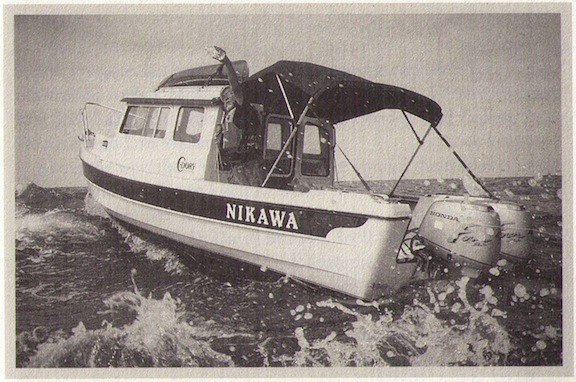Least Heat-Moon’s boat, *Nikawa*, at the mouth of the Columbia River.
And when the *Nikawa* first enters the mouth of the Missouri River:
“We crossed the Mississippi, and there before us opened the great Missouri charging down fiercely a flood that bulled into the other river, hit *Nikawa*, shimmied her \[Least Heat-Moon’s perfect verb\], bounced her in the confusion of waters, a violence that fulfilled my long wish for such an assertion of force.”
OK, here’s one more, it is so good:
“More than any other kind of travel, floating a river means following a natural corridor, for moving water must stay true to the cast of the land, and we liked knowing our way was so primeval and, what’s more, that in every mile we were recapitulating human routes of the previous eight thousand or more years. No other form of travel can do that.”
On this 2025 landlubber journey of mine, I’m driving along river corridors but not floating those rivers. This has seemed to me to be a delinquency. So I am canoeing the Missouri River for two separate weeks this summer and taking a whitewater raft trip on the Upper Yellowstone just as it exits the national park. When I reach Astoria, I hope to get myself aboard an excursion boat that will shimmy me over the Columbia Bar. I’ve done that once before. The “thump” of the bar takes your breath away (and maybe your life, depending on the weather).
In the meantime, however, I’m delighted to be able to share Least Heat-Moon’s journey vicariously.
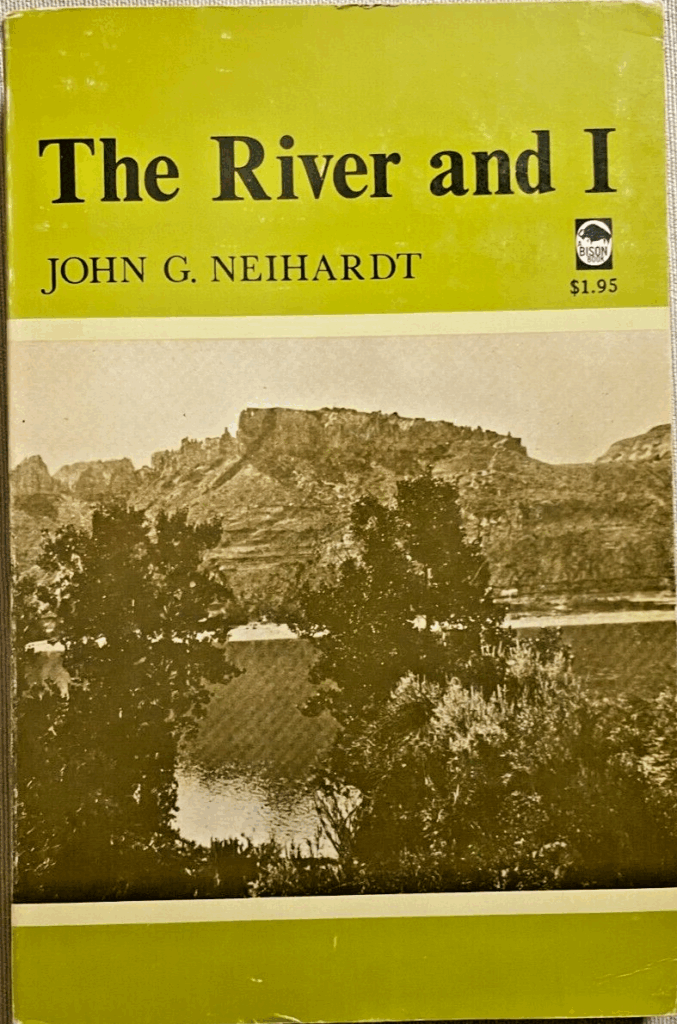*The River and I*, by John Neihardt.
I know this. I’m a little numbed out after four intense days at the mouth of the Ohio and the confluence of the Missouri and Mississippi. There is a staggering amount of water gathering here. The river bridges are high, narrow, and at times frightening, particularly when giant semis are hurtling along from the other direction. When I first saw the confluence of the Ohio and Mississippi a few days ago, having prepared myself for that exact moment for more than a year, I gasped. There is an appalling quantity of water at play here, and this is not even a high-water spring. I’ll breathe a little easier when I get to the Missouri above Yankton, South Dakota, where it’s magnificent, but not in an overwhelming manner.
Yesterday, I sat at the confluence of the Ohio and Mississippi, daydreaming about that key heartbreaking chapter (16) of *The Adventures of Huckleberry Finn*. If there were only one American book. … Miss the Ohio, Jim says, and “no more show for freedom.”
We need more river books. Least Heat-Moon’s *River-Horse* pairs nicely with the late John G. Neihardt’s 1910 book *The River and I*, describing his float trip from Fort Benton, Montana, all the way down to Sioux City, Iowa (before the construction of the deadening and spirit-destroying dams). But Neihardt (1881-1973) was floating with the current.
---
## ***Discover more on these topics at Listening to America***
[Video](https://ltamerica.org/tag/video/ "51 topics")[Road Trips](https://ltamerica.org/tag/road-trips/ "18 topics")[Theodore Roosevelt](https://ltamerica.org/tag/theodore-roosevelt/ "16 topics")[Space Exploration](https://ltamerica.org/tag/space-exploration/ "8 topics")[North Dakota](https://ltamerica.org/tag/north-dakota/ "53 topics")[Walden](https://ltamerica.org/tag/walden/ "1 topics")[South Dakota](https://ltamerica.org/tag/south-dakota/ "16 topics")[Wyoming](https://ltamerica.org/tag/wyoming/ "4 topics")[Washington](https://ltamerica.org/tag/washington/ "2 topics")[Wisconsin](https://ltamerica.org/tag/wisconsin/ "0 topics")[U.S. Constitution](https://ltamerica.org/tag/u-s-constitution/ "1 topics")[Poetry](https://ltamerica.org/tag/poetry/ "1 topics")[New York](https://ltamerica.org/tag/new-york/ "8 topics")[The Constitution](https://ltamerica.org/tag/the-constitution/ "1 topics")[Republic](https://ltamerica.org/tag/republic/ "0 topics")[Steinbeck Travels](https://ltamerica.org/tag/steinbeck-travels/ "75 topics")[South Carolina](https://ltamerica.org/tag/south-carolina/ "1 topics")[Rome](https://ltamerica.org/tag/rome/ "1 topics")[North Carolina](https://ltamerica.org/tag/north-carolina/ "3 topics")[William Shirer](https://ltamerica.org/tag/william-shirer/ "1 topics")[Water in the West](https://ltamerica.org/tag/water-in-the-west/ "24 topics")[Texas](https://ltamerica.org/tag/texas/ "4 topics")[Oppenheimer](https://ltamerica.org/tag/oppenheimer/ "1 topics")[Oregon](https://ltamerica.org/tag/oregon/ "4 topics")[Thomas Jefferson](https://ltamerica.org/tag/thomas-jefferson/ "34 topics")[Utah](https://ltamerica.org/tag/utah/ "11 topics")[Reading](https://ltamerica.org/tag/reading/ "1 topics")[State Parks](https://ltamerica.org/tag/state-parks/ "2 topics")[Ohio](https://ltamerica.org/tag/ohio/ "2 topics")[U.S. Presidents](https://ltamerica.org/tag/u-s-presidents/ "71 topics")[Tennessee](https://ltamerica.org/tag/tennessee/ "1 topics")[Republics](https://ltamerica.org/tag/republics/ "1 topics")[Sports](https://ltamerica.org/tag/sports/ "2 topics")[New Mexico](https://ltamerica.org/tag/new-mexico/ "3 topics")[Thoreau](https://ltamerica.org/tag/thoreau/ "5 topics")[New England](https://ltamerica.org/tag/new-england/ "1 topics")[north daktoa](https://ltamerica.org/tag/north-daktoa/ "0 topics")[Travel](https://ltamerica.org/tag/travel/ "1 topics")[paintings](https://ltamerica.org/tag/paintings/ "0 topics")[Pennsylvania](https://ltamerica.org/tag/pennsylvania/ "1 topics")[Oppenheim](https://ltamerica.org/tag/oppenheim/ "0 topics")[Podcast](https://ltamerica.org/tag/podcast/ "1 topics")[Vermont](https://ltamerica.org/tag/vermont/ "1 topics")[Virginia](https://ltamerica.org/tag/virginia/ "7 topics")[Rivers](https://ltamerica.org/tag/rivers/ "3 topics")
**Categories:** Books
**Tags:** America at 250, Books, Lewis and Clark, Rivers
---
### [Launching This July - The Listening to America Book Club](https://ltamerica.org/launching-this-july-the-listening-to-america-book-club/)
**Published:** June 9, 2025
**Author:** Clay Jenkinson
**Excerpt:** The Listening to America Book Club is coming soon.
**Content:**

This May, I embarked on a journey along the Lewis and Clark Trail. Driving my 23-foot Airstream, I began my trek at Thomas Jefferson’s Virginia home in Monticello and am now making my way west to Astoria, Oregon, with many stops along the way.
While the immediate focus of the journey is Lewis and Clark, I aim to explore broader themes that might be termed the Europeanization of North America, including exploration, encounters with Indigenous peoples, encounters with new landscapes, encounters with the limits of language, and encounters with the self. In 1492, the entire continent was inhabited by sovereign Native peoples. By 1934, less than 4% of the country was still in Native hands.
The American Dream has unfolded across the vast continental landscape between the Atlantic and Pacific, from the 49th parallel to the Gulf of Mexico. It’s one of the greatest stories in history. Mr. Jefferson envisioned what he called “an empire for liberty such as the world has never previously seen.”
As we approach the 250th anniversary of the United States, I want to explore this astounding dynamic from as many perspectives as possible, avoiding triumphalism on the one hand and mere apology on the other. It’s utterly fascinating.
Accordingly, I have chosen four books for our new Listening to America Book Club:
-Gary Moulton’s one-volume *The Lewis and Clark Expedition: Day by Day*.
-Timothy Egan’s *Short Nights of the Shadow Catcher*.
-John F. Ross’ *The Promise of the Grand Canyon: John Wesley Powell’s Perilous Journey and His Vision for the American West*.
And
-James Welch’s *Fools Crow*.
We’ll meet on Zoom to discuss these books approximately every six weeks. Our first gathering will take place **on July 19th**. There will be a few articles along the way, beginning with Frederick Jackson Turner’s famous essay, *“The Significance of the Frontier in American History.”*
To learn more about our book club, meeting times, and other details, please contact Liz Eagle at leagle@ltamerica.org.
**Categories:** LTA Friends Book Club
**Tags:** America at 250, Books, Lewis and Clark
---
### [Launch point for the Lewis and Clark expedition.](https://ltamerica.org/launch-point-for-the-lewis-and-clark-expedition/)
**Published:** June 9, 2025
**Author:** Editor
**Content:**
Launch point for the Lewis and Clark expedition. Camp Wood (Camp Dubois) at Alton, Illinois

**Categories:** Clay's Notebook
---
### [Following the Ohio River on the Lewis and Clark Trail](https://ltamerica.org/following-the-ohio-river-on-the-lewis-and-clark-trail/)
**Published:** June 2, 2025
**Author:** Clay Jenkinson
**Excerpt:** One of America’s truly grand rivers, The Ohio ranks eighth in length in the United States but second in volume.
**Content:**
## One of America’s truly grand rivers, the Ohio ranks eighth in length in the United States but second in volume.
The confluence of the Allegheny, Monongahela and Ohio rivers at Pittsburg, Penn. (Shutterstock)
When I finally arrived at the mouth of the Ohio River in Cairo, Illinois, I was overwhelmed by its mass. The Ohio River ranks eighth in length in the United States but second in volume. More than the Missouri. More than the Colorado. More than the Columbia! Its flow is just about half that of the Mississippi, the Father of Waters.
I’m accustomed to the rivers of the West, like the Missouri, the Colorado, and the Yellowstone, all of which have late-summer stretches of sandbars and shallows. Driving over the high, narrow Ohio River bridge on the road from Paducah, Kentucky, to Cairo, Illinois, I felt a mix of awe and fear. You can drown in the bathtub — I know someone who drowned in a hot tub — but you would be hard-pressed not to drown in the Ohio or the Mississippi.
In a handful of days, I drove from Pittsburgh, Pennsylvania, to Cairo, Illinois, as much of it as possible on highways adjacent to the river. It’s so well-watered, fertile, and forested in this region of the country, however, that you get to see the Ohio only in glimpses. The millions of trees obstruct everything, including some of the industrial plants that perch on the river’s banks. The Ohio is not a welcoming river. I’d be hesitant to wade in even at one of its beaches. If we had no Mississippi, American memory would make a great deal more of the Ohio.
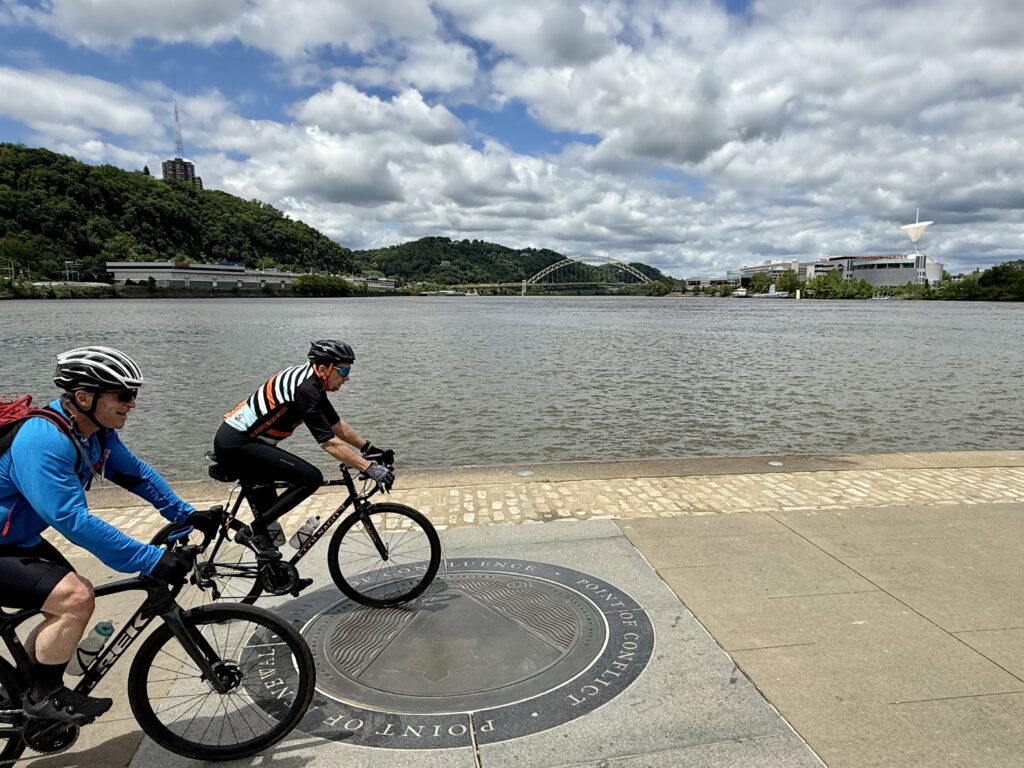At the “source” of Ohio River, Pittsburg, Penn. (Photo Clay Jenkinson)
In Pittsburgh, I spent an hour or more at the “source” of the Ohio, at a concrete plaza called Point State Park. Bicycles whiz through the plaza, and lots of people are taking selfies. Fathers explaining the three rivers. On your right, the Allegheny; on your left, the Monongahela, and — voila — right in front of you, the Ohio. Throughout my life, I have been fascinated by the sources of rivers: the Mississippi at Lake Itasca in northern Minnesota, the Missouri in extreme southwestern Montana, the Columbia at Columbia Lake in British Columbia, and my own river, the Little Missouri, with its source near Devils Tower in Wyoming. No matter what the U.S. Geological Survey says, I refuse to accept that the Missouri’s source is at Three Forks, Montana, where the Gallatin, Madison, and Jefferson rivers conjoin, or that the source of the Ohio is at Point State Park in Pittsburgh. A river’s source has to be some creek you can bestride or some spring you can sip and not be swept to your death.
The U.S. Geological Survey tells us that it is not until the Allegheny and the Monongahela conflow at Pittsburgh that we can call the result the Ohio. That seems perverse and erroneous to me. The Allegheny River, a tributary of the Ohio River, is 325 miles long. It starts just south of the New York border at Cobb Hill in Allegheny Township. Alas, I have never been there. The Monongahela River, a tributary of the Ohio River, is 130 miles long. It starts in West Virginia. In my mind, the feeder creek farthest from the sea should be regarded as the true source (veritas caput in Latin) of a river. That suggests that the Ohio is not 981 miles long but rather 981 plus 325 for a total of 1,306 miles long. The Missouri — as I understand hydrology — does not start at Three Forks, even though Meriwether Lewis declared it to be so on July 28, 1805:
“Both Capt. C. and myself corresponded in opinion with respect to the impropriety of calling either of these streams the Missouri and accordingly agreed to name them after the President of the United States and the Secretaries of the Treasury and State having previously named one river in honour of the Secretaries of War and Navy. In pursuance of this resolution we called the S.W. fork, that which we meant to ascend, Jefferson’s River in honor of \[that illustrious personage\] Thomas Jefferson. The Middle fork we called Madison’s River in honor of James Madison, and the S.E. Fork we called Gallatin’s River in honor of Albert Gallatin.”
Naming these three co-equal tributaries for the worthies of the Jefferson administration was a bold act. Imagine someone naming those three streams: the Trump, the Rubio, and the Bessent? Or the Biden, the Blinken, and the Yellen.
In Jefferson’s time, rivers were conceptualized as sinuous ribbons that originated somewhere (Point A) and terminated somewhere else (Point Z). For someone like Thomas Jefferson, rivers were conceived as water highways. There was one source, and there was one mouth. They knew better than this, of course. They knew that rivers braided at both ends of their journey, with capillary streams that fed the river from several directions and distances, and they knew that the mouth of a river like the Mississippi creates a vast delta of capillaries. They did not then regard rivers as systems, watersheds, and ecosystems. It’s not that they were dead ignorant about such things, but the geographic culture had not yet become especially sophisticated about the hydrology of rivers or the interrelatedness of things.
Major rivers of the United States. (Shutterstock)
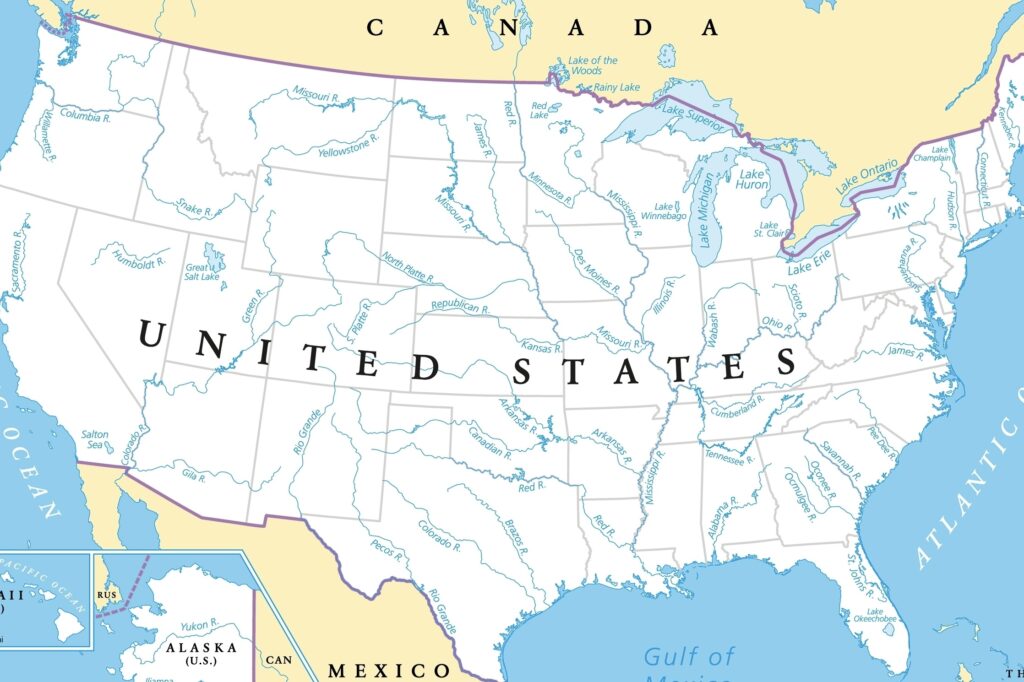Major rivers of the United States. (Shutterstock)
In a few days, I will visit the confluence of the Missouri and Mississippi about 25 miles north of St. Louis, Missouri. Then, I will see the mouth of the Osage, the mouth of the Platte, the mouth of the Niobrara, and the mouth of the Bad River at Pierre, South Dakota. The Bad is not much of a river, but it is important as the site of the most intense encounter of the expedition with Native Americans.
When I finally get to the Three Forks region of southwestern Montana come July, I have a large geographic agenda. I’m going to climb the limestone hill from which Lewis surveyed the three forks valley (and drew a lost map of it, too). I’m going to try to figure out just where Charbonneau was nearly swept away by the river (north of the Three Forks) but was rescued by William Clark. I’m going to walk across the Missouri River near Twin Bridges, Montana. That was the first place in almost 3,000 miles that the river was shallow enough for Lewis to wade across it. I plan to be swept away by the current, of course, and there is no Clark to fish me out. Then, I am going to go to the two most prominent sources of the Missouri River, far from the U.S. Geological Survey’s Three Forks “source” of the river. One is Lemhi Pass, where Lewis watched his colleague Hugh McNeal stand with one foot on either side of this little rivulet on August 12, 1805, “and thanked his god that he lived to bestride the mighty and heretofore deemed endless Missouri River.” And then I’ll piece my way to the better source creek, one farther from the Gulf of Mexico, at Upper Red Rock Lakes far east of Monida, Montana, and just outside the northern boundary of Yellowstone National Park. Those are legitimate sources. (Unfortunately, the U.S. Geological Survey has stopped taking my calls!)
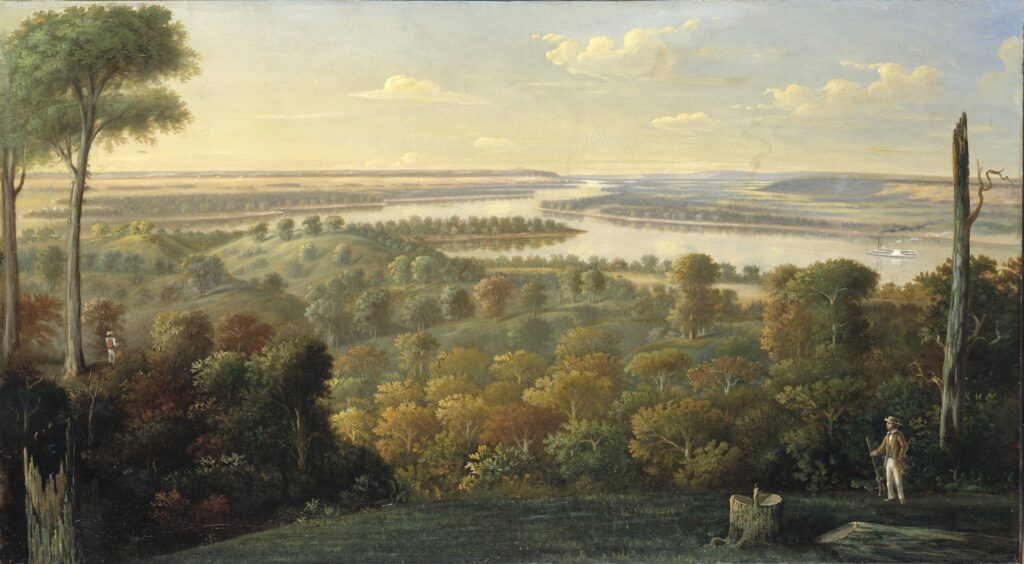The Ohio River ca. 1840. (Smithsonian American Art Museum)
So, I must soon say farewell to the Ohio. The Falls are magnificent at Louisville, Kentucky, and Clarksville, Indiana. Whenever I have seen the Ohio without having to turn my focus away from some giant oil, coal, or chemical plant, it has been astonishingly beautiful. In his book *Notes on the State of Virginia*, Jefferson, who never saw the Ohio (not even close), wrote, “The Ohio is the most beautiful river on earth. Its current gentle, waters clear, and bosom smooth and unbroken by rocks and rapids, a single instance only ….”
Today, I spent the afternoon sitting on the banks of the Mississippi River at Cape Girardeau, Missouri, with the world of Mark Twain’s *Huckleberry Finn* dancing in my head. There are few more meaningful places in America than the Mississippi Valley generally and the confluence of the Mississippi and the Ohio in particular because, as Jim tells Huck, if they get to the mouth of the Ohio and turn left, they’ll be in a free state. Jim might be able to live the rest of his life as a free man. But if they miss the confluence (and they do), it’s the Deep South and “no more show for freedom.”
The beauty of *Huckleberry Finn* (with all of its current problems) makes me ache. If there is a more American book, what is it?
---
## ***Discover more on these topics at Listening to America***
[Wyoming](https://ltamerica.org/tag/wyoming/ "4 topics")[Walden](https://ltamerica.org/tag/walden/ "1 topics")[Video](https://ltamerica.org/tag/video/ "51 topics")[Theodore Roosevelt](https://ltamerica.org/tag/theodore-roosevelt/ "16 topics")[New England](https://ltamerica.org/tag/new-england/ "1 topics")[north daktoa](https://ltamerica.org/tag/north-daktoa/ "0 topics")[Space Exploration](https://ltamerica.org/tag/space-exploration/ "8 topics")[Rivers](https://ltamerica.org/tag/rivers/ "3 topics")[North Dakota](https://ltamerica.org/tag/north-dakota/ "53 topics")[Reading](https://ltamerica.org/tag/reading/ "1 topics")[Sports](https://ltamerica.org/tag/sports/ "2 topics")[Republics](https://ltamerica.org/tag/republics/ "1 topics")[State Parks](https://ltamerica.org/tag/state-parks/ "2 topics")[U.S. Constitution](https://ltamerica.org/tag/u-s-constitution/ "1 topics")[Wisconsin](https://ltamerica.org/tag/wisconsin/ "0 topics")[Oppenheim](https://ltamerica.org/tag/oppenheim/ "0 topics")[Water in the West](https://ltamerica.org/tag/water-in-the-west/ "24 topics")[Thomas Jefferson](https://ltamerica.org/tag/thomas-jefferson/ "34 topics")[Republic](https://ltamerica.org/tag/republic/ "0 topics")[Oppenheimer](https://ltamerica.org/tag/oppenheimer/ "1 topics")[Washington](https://ltamerica.org/tag/washington/ "2 topics")[Utah](https://ltamerica.org/tag/utah/ "11 topics")[Pennsylvania](https://ltamerica.org/tag/pennsylvania/ "1 topics")[North Carolina](https://ltamerica.org/tag/north-carolina/ "3 topics")[Steinbeck Travels](https://ltamerica.org/tag/steinbeck-travels/ "75 topics")[New Mexico](https://ltamerica.org/tag/new-mexico/ "3 topics")[Rome](https://ltamerica.org/tag/rome/ "1 topics")[U.S. Presidents](https://ltamerica.org/tag/u-s-presidents/ "71 topics")[Thoreau](https://ltamerica.org/tag/thoreau/ "5 topics")[South Dakota](https://ltamerica.org/tag/south-dakota/ "16 topics")[South Carolina](https://ltamerica.org/tag/south-carolina/ "1 topics")[Road Trips](https://ltamerica.org/tag/road-trips/ "18 topics")[Texas](https://ltamerica.org/tag/texas/ "4 topics")[Poetry](https://ltamerica.org/tag/poetry/ "1 topics")[Virginia](https://ltamerica.org/tag/virginia/ "7 topics")[New York](https://ltamerica.org/tag/new-york/ "8 topics")[paintings](https://ltamerica.org/tag/paintings/ "0 topics")[Oregon](https://ltamerica.org/tag/oregon/ "4 topics")[Travel](https://ltamerica.org/tag/travel/ "1 topics")[William Shirer](https://ltamerica.org/tag/william-shirer/ "1 topics")[Tennessee](https://ltamerica.org/tag/tennessee/ "1 topics")[Ohio](https://ltamerica.org/tag/ohio/ "2 topics")[Podcast](https://ltamerica.org/tag/podcast/ "1 topics")[Vermont](https://ltamerica.org/tag/vermont/ "1 topics")[The Constitution](https://ltamerica.org/tag/the-constitution/ "1 topics")
**Categories:** Features
**Tags:** America at 250, Illinois, Lewis and Clark, Montana, Ohio, Pennsylvania, Rivers
---
### [A Few Reflections on RV Life](https://ltamerica.org/a-few-reflections-on-rv-life/)
**Published:** June 9, 2025
**Author:** Clay Jenkinson
**Excerpt:** A short report on the RV Life.
**Content:**
## After some 30,000 miles on the road, a short report on the RV Life.
At the RV Park. (Shutterstock)
I’ve been asked repeatedly to describe what RV life is like out here. So here’s a preliminary report.
One-sentence report: I’m loving it, thriving, exploring America, meeting interesting and often fascinating people, listening to the land and the people on it, reading and writing more than usual, listening to audiobooks as I drive, and eating most of my meals in my own little aluminum cabin on wheels.
There are two basic types of campgrounds — commercial RV parks, such as KOA and Good Sam, and then there are what I’ll call ma-and-pa campgrounds. The clientele is different in each.
Tonight, I’m at a lovely non-corporate RV campground just a few miles north of Columbia, Missouri. There are no frills here, but the amenities include a game room, showers, picnic tables at each site, and an excellent laundry facility. I’m sitting out at the modest picnic table — the wood would appreciate treatment but is unlikely to get it — at slip 45. There are large pull-type RVs on both sides of me (44 and 46), and, across a broken asphalt lane, more than a dozen RVs lined up like a package of link sausages — from buses to one pink-and-white rounded 1950s camper trailer. The oldest of these RVs, a wee trailer manufactured back when aluminum was a new thing, undoubtedly has dark oak paneling inside. And a Formica table. But I have a Formica table in my Airstream, too. I’m guessing there are approximately 60 RVs in this campground, which is at about 70 percent occupancy. About a third are long-term campers. You can tell they’re here indefinitely because they set up housekeeping with potted plants, dog fences, plastic storage bins, outdoor carpets, Weber grills, bicycles, mopeds, and other stuff you’re more likely to see in a trailer park than in a suburban subdivision, where that’s all tucked into a three-car garage.
(Shutterstock)
Most couples have dogs. Most of the dogs are little yippy dogs because larger dogs would take up too much space in the RV. The owners walk these little terriers and Yorkipoos, as well as Chihuahuas, on mincing steps around the camp circle. When strange dogs meet about half the time, there is a brief period of angry chaos, with one of the owners insisting, “he’s fine. He’s all bark.” More often than I would have expected, older couples leave their dogs in their trailers, sometimes for many hours — which raises some questions — and the result is that the yippy dogs bark, whine, and even cry from inside the rigs for hours every day.
Most of the people I meet are older, ranging from the late 60s to the 80s. There are two basic types. One group is very well-off, driving expensive rigs whose costs range from $125,000 to $700,000. The man drives, the woman navigates. He’s usually an alpha male. He moves about with confidence in baggy man shorts and sandals. He is proud that he has five slideouts and four television screens, including one that deploys outside. And these travelers, sometimes traveling with their grandchildren, seem to really enjoy sitting outside on camp chairs around a 45-inch LCD outdoor television screen, two miles from Mount Rainier or Mount Rushmore.
I belong to the live-and-let-live school of RV life — if you want to watch *Wheel of Fortune* in Yosemite National Park, be my guest. I don’t begrudge people their giant luxury RV buses and fifth wheels. But I don’t envy them. I’ve been in a few now. They are gleaming palaces on wheels, with twin Barcaloungers in one of the slideouts, washer and dryer units, several bathrooms, an entertainment theater, both a kitchen and a kitchenette, plus a range of external amenities like deployable steel porches, high-end grilling units that deploy from the side of the rig, Bose speakers, and — as often as not — a new red Jeep hitched to the back of the rig. I don’t judge this phenomenon, but here’s what I struggle to understand. Why haul a luxury apartment around America at four miles per gallon? What exactly is the purpose of sitting in a recliner watching *Jeopardy* under the stars of Wyoming? You cannot possibly call this roughing it. Suppose you are slumbering in a Sleep Number king bed, in a unit with double air conditioners (“climate control”), a choice of several bathrooms, and you are cooking ribs on a top-of-the-line grill and spending evenings in your “home theater” watching Adam Sandler movies. Why aren’t you just … well, home? I know people in my hometown — Bismarck, North Dakota — who take their fifth wheels a few weekends per summer to Sibley Park, just four miles south of Bismarck, or Fort Lincoln State Park, fifteen miles away. In a campground, you are much closer to your neighbors in three or four directions than you would be at home, and every rig is made of metal. What’s the appeal?
Those are the luxury seekers.
The other group of older people is more economically marginal. One gets the sense that some of them are on the road because they have no real home to go back to. They are quiet, often walking around the campground for a loop or two, holding hands. They present a meek deportment. They find their slip and quietly set up camp, dine quietly at the picnic table, and by dusk, they are in bed. When I get up at 6:30 a.m., I see them pulling out. They are never loud.
The big commercial campgrounds (think KOA) get the tourist trade. These travelers stop first in the South Dakota Badlands, then at Mount Rushmore, then at Devils Tower, then in Cody, and finally in West Yellowstone. They set up and strike their equipment efficiently. They have a travel agenda, sometimes on a printout. Many have made campground reservations months in advance. They can give you advice on the best RV campgrounds near Tucson or San Diego. They are retired, their children are grown (or estranged), and they are out living the dream.
This is where you will see the rental RVs, such as *Cruise America* and *See USA*, among others. These rental units are all inhabited by the Griswolds (of *National Lampoon’s Vacation*). I always wonder if they are having fun. It all sounded so romantic back in February, but they are now discovering that there are a lot of not-altogether-pleasant steps in driving America in an RV. Each night, you have to level the rig, then hook up water, electricity, cable TV, and a sewer line. These are amenities that one takes for granted back home in civilization — no need to set up your own sewage system on Elm Street — and I can tell you from hard-earned experience that things can go wrong. The RV refrigerators are often persnickety and fickle. The propane tanks go empty when you least expect it. Your heart misses a beat or two every day at the gas pump. Even in the better-made RVs, things tend to tumble about inside as you drive the bucking roads of America. Every evening, when I stop, I begin by putting everything inside back where it belongs. You must engage in sewage management everywhere you go.
In the ma-and-pa RV campgrounds with monthly and even seasonal rates, I lock my door at night. (I suppose I should anyway.) Some of the residents in these sites have been living in their slips for months or even years. Last year in Joliet, Illinois, I parked next to a man who lived in the same RV at the same RV site for 34 years. He could not have been nicer. But in many of the fifth wheels at these sites, there are rough people. By rough, I mean loud, likely to be playing country music at a decibel level that exhibits no concern for others in the campground, drinking beer and crunching the empty cans one by one — often simultaneous with a belch. Lots of shirtless men with a plethora of tattoos. The f-word is never more than a minute or two between repetitions by a range of voices. Also, there is some kind of in-group militancy that I find hard to explain, but the sense I get is that if I looked at them cross-eyed, one of the men in a muscle shirt might wander over to see what the f I’m up to. I’m pretty meek. I lie in bed reading, and at some point — after a particularly loud burst of shouting — I get up and lock the door. It always disappoints me to lock the door. I usually feel a little paranoid.
There is a meth-lab feel to some of the campgrounds I’ve stayed in. One in West Virginia, when I went to see the Beelzebub of Steinbeck authors, my friend Bill Steigerwald, was directly under a giant coal-fired power plant. I kept expecting to see Mark Wahlberg in the next spot, dressing his gunshot wound while holding a tourniquet in his teeth. Many of these people — in their 40s and 50s — seem coarse to me and very much want to be left the f-word alone.
I am probably being too hasty here. There are definitely plenty of people like the ones I am describing. Still, it is true, too, that millions of Americans have lost their jobs, their homes, their spouses, or their faith. Now, they are moving about America in search of work, including temporary jobs, or some new community where they might make one more run at American Dream stability. The national employment numbers look impressive, but it is really important that we remember that millions of people are working two and three jobs, netting less from them all than they did 20 years ago in a single job. We have to recognize that we Americans have built an economic system in which tens of millions of good people live close to the bone and do not receive a living wage — perhaps because the power elite don’t really believe such people are entitled to a living wage. If they did, they would reform the system. I feel affection for the people who are reducing costs and seeking a better future while essentially minding their own business. All I ask of my new temporary neighbors is that they exhibit basic civility; beyond that, it doesn’t matter to me if they prefer Schlitz or Sauvignon Blanc. It’s merely about deportment.
RV campgrounds go quiet at night. When the sun sets, everyone seems to drift inside their rigs. In a hundred-unit site, you might see three or four tepid campfires.
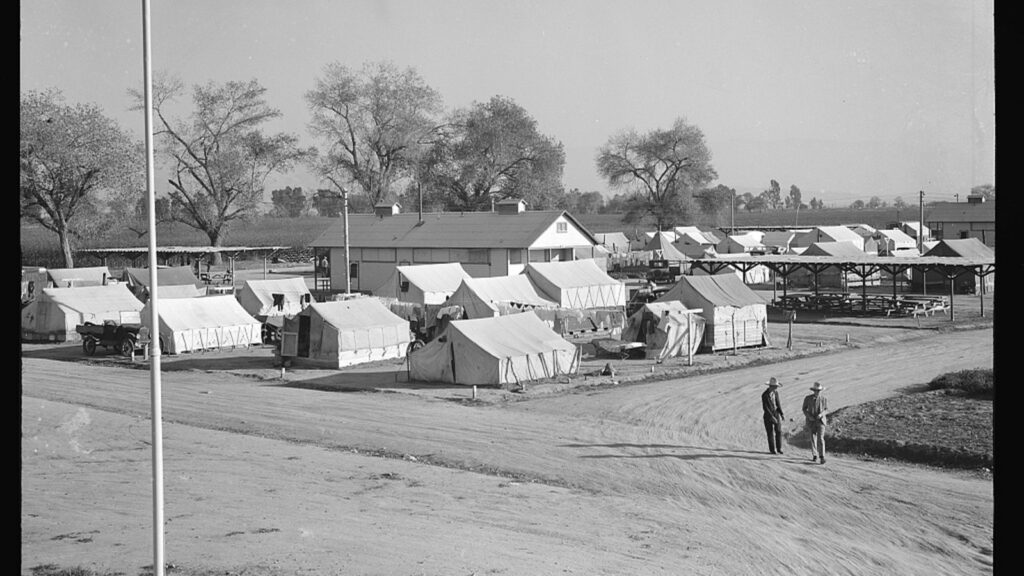*Weedpatch Camp*, Kern, California, 1936. (Library of Congress)
These campgrounds are not like *Weedpatch Camp* from Steinbeck’s *Grapes of Wrath*. There is no Saturday night hootenanny. There is no alienated 17-year-old boy from Mississippi who brings out his guitar and harmonica in the evenings or parents watching their teenage daughters like a hawk. There is no Sunday morning church service. People who already know each other gather for a potluck or a grilled burger and seem to have a really good time sitting at a picnic table, complete with a plastic tablecloth to add a hint of domesticity. But this seldom involves strangers who just happened to be strolling by: “Come on in and have a brat. We’ve got plenty.” This isn’t 1934, and there is no Woody Guthrie in Good Sam Clubs. It’s mostly people minding their own business after dark.
On every day that I linger in a campground, sitting outside in my camp chair or at the picnic table, one or two people walk up a little shyly and ask me what *Listening to America* is. One man asked if I was a Christian evangelist. That appealed to me, but I told him I am merely a humanities scholar retracing the Lewis and Clark expedition. Most people have heard of Lewis and Clark (not all), and even those who know what “Lewis and Clark” signifies make it clear that that is more or less all they know. Maybe they could name Sacagawea or at least recognize her name in a lineup. When I explain that I am crossing the country from Jefferson’s Virginia to the Pacific Coast, they sometimes ask what Jefferson had to do with it. Once in a while, someone will say, “Didn’t Ken Burns …?”
If people linger at my rig and really want to know about *Listening to America*, I say something like this. Well, I’m just wandering around this country in my Airstream, trying to figure out why we are so stirred up. At that point, approximately 75 percent give me a knowing look or grunt, but a full quarter now say, “I don’t think it’s so stirred up, now.” If they ask for more clarification, I say that as we are approaching our national 250th birthday, my purpose is to be out listening to Americans, trying to get a barometric read on the U.S. at 250 in every region of the country. Just this afternoon, a man came up to inquire about my purposes. When I asked him how things seem in 2025, he said he’s now a man without a political party. He could never vote Democrat, but he cannot vote for today’s Republicans either. Everyone I meet says we all need to be nicer toward one another.
Listening to America on the trail of Lewis and Clark.
Notice that I have not mentioned the words Trump, Biden, Harris, Pelosi, Rachel, or Tucker. If I let the conversation get even within range of those words, with most people, there is an immediate reversion to caution. They start to edge away. They don’t want to get drawn into a political discussion because “it ain’t worth it,” and for all they know, this busybody in front of them is some pointy-headed liberal sporting for a fight. I never argue out here. I came to listen.
The discussions seldom go very far — the person usually remains standing even if I gesture to the other side of the picnic table — but I listen carefully. I am never the first to end the conversation. I usually give my guests a 5-by-8 two-sided cardboard explanation of what we’re doing at *Listening to America* and invite them to follow along (metaphorically!). A few, when they approach my rig, say they wondered what this was about and looked it up on the internet.
It’s dusk now. A few of the fancier buses and fifth wheels have groovy accent lights that are blinking on now, usually blue or lavender, and the less wealthy people often have a string of lights they drape over the rear bumper or the awning if they have one. The era of the Tiki lamp appears to be over, alas. Nor have I seen any pink flamingos, but there are plenty of small flags that say things like: “We’re the Hendersons and we’re spending our children’s inheritance.” Or “I’m Barb, he’s Frank, and we’re the Johnsons.” Or “Beware of harmless sleeping attack dog.” Or “It must be 5 o’clock somewhere and we’re willing to drive!”
Across the asphalt, the retro party is still going strong. It’s almost 9 p.m. — I may have to go read them the riot act!!! — and it seems they may be playing cards. However, their laughter is truly satisfying, and it’s clear that they’re having a good time in a peaceful place lined with cottonwood trees. In about half the RVs, I can see evening lights still on. In about half of the half, I see the blue flicker of television.
I’d like to stay here for three or four days — but Lewis and Clark’s keelboat and the pirogues and the encounters with Natives beckon. I’m now only a few days from the Great Plains.
I did my laundry here today, although the change machine was inevitably “out of service.” It was like a doctor’s waiting room. There were a dozen very old and mottled magazines on a rack on the wall. I went into the camp shop to have a look around, maybe to buy some hamburger buns. But the shelves were pretty bare — summer is just starting — so I unhitched and went to town and found the things I needed. In the campground shops, the two things you are sure to find are materials for making s’mores and aluminum tins of *Jiffy Pop* (“the magic treat, as much fun to make as it is to eat”).
It takes me no more than twenty minutes to break camp in the morning. The more expensive and luxurious the rig, the longer it takes to set up or strike camp. Some people need an hour or more, and older couples are not infrequently bickering. But surely they would at home, too.
I can say this with certainty. Since I obtained this Airstream two years ago and have now hauled it for approximately 30,000 miles around America, I have never once turned on my television, hooked it up to the camp cable system, or even watched a movie. That way, madness lies. I came out here to cut some of my ties to the American Way, to live more deliberately than at home. And what I look forward to most every day is long hours of good reading.
And the open road.
## ***Discover more on these topics at Listening to America***
[North Dakota](https://ltamerica.org/tag/north-dakota/ "53 topics")[Vermont](https://ltamerica.org/tag/vermont/ "1 topics")[Thomas Jefferson](https://ltamerica.org/tag/thomas-jefferson/ "34 topics")[Oppenheim](https://ltamerica.org/tag/oppenheim/ "0 topics")[U.S. Presidents](https://ltamerica.org/tag/u-s-presidents/ "71 topics")[Utah](https://ltamerica.org/tag/utah/ "11 topics")[Oppenheimer](https://ltamerica.org/tag/oppenheimer/ "1 topics")[Walden](https://ltamerica.org/tag/walden/ "1 topics")[State Parks](https://ltamerica.org/tag/state-parks/ "2 topics")[Poetry](https://ltamerica.org/tag/poetry/ "1 topics")[Sports](https://ltamerica.org/tag/sports/ "2 topics")[South Dakota](https://ltamerica.org/tag/south-dakota/ "16 topics")[Wisconsin](https://ltamerica.org/tag/wisconsin/ "0 topics")[U.S. Constitution](https://ltamerica.org/tag/u-s-constitution/ "1 topics")[Washington](https://ltamerica.org/tag/washington/ "2 topics")[paintings](https://ltamerica.org/tag/paintings/ "0 topics")[Thoreau](https://ltamerica.org/tag/thoreau/ "5 topics")[north daktoa](https://ltamerica.org/tag/north-daktoa/ "0 topics")[Ohio](https://ltamerica.org/tag/ohio/ "2 topics")[Oregon](https://ltamerica.org/tag/oregon/ "4 topics")[Pennsylvania](https://ltamerica.org/tag/pennsylvania/ "1 topics")[Travel](https://ltamerica.org/tag/travel/ "1 topics")[South Carolina](https://ltamerica.org/tag/south-carolina/ "1 topics")[New York](https://ltamerica.org/tag/new-york/ "8 topics")[Virginia](https://ltamerica.org/tag/virginia/ "7 topics")[Theodore Roosevelt](https://ltamerica.org/tag/theodore-roosevelt/ "16 topics")[Texas](https://ltamerica.org/tag/texas/ "4 topics")[Republic](https://ltamerica.org/tag/republic/ "0 topics")[Rome](https://ltamerica.org/tag/rome/ "1 topics")[Steinbeck Travels](https://ltamerica.org/tag/steinbeck-travels/ "75 topics")[New England](https://ltamerica.org/tag/new-england/ "1 topics")[Wyoming](https://ltamerica.org/tag/wyoming/ "4 topics")[Republics](https://ltamerica.org/tag/republics/ "1 topics")[Road Trips](https://ltamerica.org/tag/road-trips/ "18 topics")[Video](https://ltamerica.org/tag/video/ "51 topics")[North Carolina](https://ltamerica.org/tag/north-carolina/ "3 topics")[Rivers](https://ltamerica.org/tag/rivers/ "3 topics")[William Shirer](https://ltamerica.org/tag/william-shirer/ "1 topics")[New Mexico](https://ltamerica.org/tag/new-mexico/ "3 topics")[Space Exploration](https://ltamerica.org/tag/space-exploration/ "8 topics")[Reading](https://ltamerica.org/tag/reading/ "1 topics")[Tennessee](https://ltamerica.org/tag/tennessee/ "1 topics")[Water in the West](https://ltamerica.org/tag/water-in-the-west/ "24 topics")[Podcast](https://ltamerica.org/tag/podcast/ "1 topics")[The Constitution](https://ltamerica.org/tag/the-constitution/ "1 topics")
**Categories:** Features
**Tags:** America at 250, Books, Lewis and Clark, Missouri
---
### [Memorial to Enslaved Laborers at University of Virginia — Video Dispatch](https://ltamerica.org/memorial-to-enslaved-laborers-at-university-of-virginia-video-dispatch/)
**Published:** June 6, 2025
**Author:** Editor
**Excerpt:** On his recent visit to the University of Virginia in Charlottesville, Clay visited the Memorial to Enslaved Laborers on campus. Dedicated in 2021, the memorial commemorates the estimated 4,000 enslaved people who worked on the University between 1817 and 1865.
**Content:**
On his recent visit to the University of Virginia in Charlottesville, Virginia, Clay visited the *[Memorial to Enslaved Laborers](https://mel.virginia.edu/)* on campus. Dedicated in 2021, the memorial honors the estimated 4,000 enslaved people who worked at the university from 1817 to 1865 — essential to building the [Academical Village](https://slavery.virginia.edu/wp-content/uploads/2016/06/Walking-Tour-Enslaved-@UVA_FINAL.pdf), Rotunda, and other structures.
---
## ***Discover more on these topics at Listening to America***
[Washington](https://ltamerica.org/tag/washington/ "2 topics")[Utah](https://ltamerica.org/tag/utah/ "11 topics")[Space Exploration](https://ltamerica.org/tag/space-exploration/ "8 topics")[The Constitution](https://ltamerica.org/tag/the-constitution/ "1 topics")[Rome](https://ltamerica.org/tag/rome/ "1 topics")[State Parks](https://ltamerica.org/tag/state-parks/ "2 topics")[Wyoming](https://ltamerica.org/tag/wyoming/ "4 topics")[Oregon](https://ltamerica.org/tag/oregon/ "4 topics")[North Dakota](https://ltamerica.org/tag/north-dakota/ "53 topics")[Walden](https://ltamerica.org/tag/walden/ "1 topics")[Sports](https://ltamerica.org/tag/sports/ "2 topics")[South Carolina](https://ltamerica.org/tag/south-carolina/ "1 topics")[Wisconsin](https://ltamerica.org/tag/wisconsin/ "0 topics")[Road Trips](https://ltamerica.org/tag/road-trips/ "18 topics")[Republic](https://ltamerica.org/tag/republic/ "0 topics")[Theodore Roosevelt](https://ltamerica.org/tag/theodore-roosevelt/ "16 topics")[Texas](https://ltamerica.org/tag/texas/ "4 topics")[Podcast](https://ltamerica.org/tag/podcast/ "1 topics")[Travel](https://ltamerica.org/tag/travel/ "1 topics")[Republics](https://ltamerica.org/tag/republics/ "1 topics")[Steinbeck Travels](https://ltamerica.org/tag/steinbeck-travels/ "75 topics")[New England](https://ltamerica.org/tag/new-england/ "1 topics")[Poetry](https://ltamerica.org/tag/poetry/ "1 topics")[Video](https://ltamerica.org/tag/video/ "51 topics")[Vermont](https://ltamerica.org/tag/vermont/ "1 topics")[U.S. Presidents](https://ltamerica.org/tag/u-s-presidents/ "71 topics")[Thoreau](https://ltamerica.org/tag/thoreau/ "5 topics")[Pennsylvania](https://ltamerica.org/tag/pennsylvania/ "1 topics")[New York](https://ltamerica.org/tag/new-york/ "8 topics")[Oppenheim](https://ltamerica.org/tag/oppenheim/ "0 topics")[paintings](https://ltamerica.org/tag/paintings/ "0 topics")[Tennessee](https://ltamerica.org/tag/tennessee/ "1 topics")[Thomas Jefferson](https://ltamerica.org/tag/thomas-jefferson/ "34 topics")[William Shirer](https://ltamerica.org/tag/william-shirer/ "1 topics")[Ohio](https://ltamerica.org/tag/ohio/ "2 topics")[North Carolina](https://ltamerica.org/tag/north-carolina/ "3 topics")[Oppenheimer](https://ltamerica.org/tag/oppenheimer/ "1 topics")[Rivers](https://ltamerica.org/tag/rivers/ "3 topics")[South Dakota](https://ltamerica.org/tag/south-dakota/ "16 topics")[Water in the West](https://ltamerica.org/tag/water-in-the-west/ "24 topics")[north daktoa](https://ltamerica.org/tag/north-daktoa/ "0 topics")[U.S. Constitution](https://ltamerica.org/tag/u-s-constitution/ "1 topics")[New Mexico](https://ltamerica.org/tag/new-mexico/ "3 topics")[Virginia](https://ltamerica.org/tag/virginia/ "7 topics")[Reading](https://ltamerica.org/tag/reading/ "1 topics")
**Categories:** Dispatches from the Road
**Tags:** America at 250, Lewis and Clark, Thomas Jefferson, Video, Virginia
---
### [The Peaks of Otter — Thomas Jefferson Speculated America's Tallest Mountains — Video Dispatch](https://ltamerica.org/the-peaks-of-otter-thomas-jefferson-speculated-americas-tallest-mountains-video-dispatch/)
**Published:** May 27, 2025
**Author:** Editor
**Excerpt:** Clay checks out The Peaks of Otter in the Blue Ridge Mountains, which Thomas Jefferson speculated were the country’s tallest mountains.
**Content:**
Clay stops at the Peaks of Otter, three large rises in the Blue Ridge Mountains between Roanoke and Lynchburg, Virginia. Thomas Jefferson, who explored the region, speculated that these were perhaps the country’s tallest mountains. In *Notes on the State of Virginia* , he wrote: “The mountains of the Blue Ridge, and of these the Peaks of Otter, are thought to be of a greater height, measured from their base, than any others in our country, and perhaps in North America.” You can see Jefferson’s field notes while exploring the spot in November 1815 [here](https://founders.archives.gov/documents/Jefferson/03-09-02-0120-0003).
According to the National Park Service, the earliest European settlers in the area were Charles and Robert Ewing, who came from Scotland in about 1700. The [Park Service notes](https://www.nps.gov/parkhistory/online_books/sero/appalachian/sec3.htm): “Although there are several stories accounting for the Peaks of Otter name (some say it derives from the Cherokee ‘Atari’ or ‘Ottari’ for ‘high mountain’), it is more likely that the brothers named the twin peaks for Otterburn, a famous place name in Scotland.”
---
## ***Discover more on these topics at Listening to America***
[South Carolina](https://ltamerica.org/tag/south-carolina/ "1 topics")[Oppenheimer](https://ltamerica.org/tag/oppenheimer/ "1 topics")[Virginia](https://ltamerica.org/tag/virginia/ "7 topics")[Video](https://ltamerica.org/tag/video/ "51 topics")[Podcast](https://ltamerica.org/tag/podcast/ "1 topics")[Tennessee](https://ltamerica.org/tag/tennessee/ "1 topics")[Sports](https://ltamerica.org/tag/sports/ "2 topics")[U.S. Constitution](https://ltamerica.org/tag/u-s-constitution/ "1 topics")[Oppenheim](https://ltamerica.org/tag/oppenheim/ "0 topics")[North Carolina](https://ltamerica.org/tag/north-carolina/ "3 topics")[The Constitution](https://ltamerica.org/tag/the-constitution/ "1 topics")[South Dakota](https://ltamerica.org/tag/south-dakota/ "16 topics")[north daktoa](https://ltamerica.org/tag/north-daktoa/ "0 topics")[Oregon](https://ltamerica.org/tag/oregon/ "4 topics")[Utah](https://ltamerica.org/tag/utah/ "11 topics")[Texas](https://ltamerica.org/tag/texas/ "4 topics")[Travel](https://ltamerica.org/tag/travel/ "1 topics")[Vermont](https://ltamerica.org/tag/vermont/ "1 topics")[paintings](https://ltamerica.org/tag/paintings/ "0 topics")[Poetry](https://ltamerica.org/tag/poetry/ "1 topics")[Thoreau](https://ltamerica.org/tag/thoreau/ "5 topics")[State Parks](https://ltamerica.org/tag/state-parks/ "2 topics")[Pennsylvania](https://ltamerica.org/tag/pennsylvania/ "1 topics")[U.S. Presidents](https://ltamerica.org/tag/u-s-presidents/ "71 topics")[Walden](https://ltamerica.org/tag/walden/ "1 topics")[Ohio](https://ltamerica.org/tag/ohio/ "2 topics")[Road Trips](https://ltamerica.org/tag/road-trips/ "18 topics")[Space Exploration](https://ltamerica.org/tag/space-exploration/ "8 topics")[Rivers](https://ltamerica.org/tag/rivers/ "3 topics")[Steinbeck Travels](https://ltamerica.org/tag/steinbeck-travels/ "75 topics")[Republics](https://ltamerica.org/tag/republics/ "1 topics")[Wisconsin](https://ltamerica.org/tag/wisconsin/ "0 topics")[New York](https://ltamerica.org/tag/new-york/ "8 topics")[Thomas Jefferson](https://ltamerica.org/tag/thomas-jefferson/ "34 topics")[North Dakota](https://ltamerica.org/tag/north-dakota/ "53 topics")[Republic](https://ltamerica.org/tag/republic/ "0 topics")[Wyoming](https://ltamerica.org/tag/wyoming/ "4 topics")[Water in the West](https://ltamerica.org/tag/water-in-the-west/ "24 topics")[Rome](https://ltamerica.org/tag/rome/ "1 topics")[Washington](https://ltamerica.org/tag/washington/ "2 topics")[Reading](https://ltamerica.org/tag/reading/ "1 topics")[New Mexico](https://ltamerica.org/tag/new-mexico/ "3 topics")[New England](https://ltamerica.org/tag/new-england/ "1 topics")[William Shirer](https://ltamerica.org/tag/william-shirer/ "1 topics")[Theodore Roosevelt](https://ltamerica.org/tag/theodore-roosevelt/ "16 topics")
**Categories:** Dispatches from the Road
**Tags:** Lewis and Clark, National Parks, Thomas Jefferson, U.S. Presidents, Video, Virginia
---
### [Clay Tours Thomas Jefferson's Monticello Estate — Video Dispatch](https://ltamerica.org/clay-tours-thomas-jeffersons-monticello-estate-video-dispatch/)
**Published:** May 27, 2025
**Author:** Editor
**Excerpt:** As a kickoff for his 2025 Lewis and Clark trek, Clay visited and toured Monticello, Thomas Jefferson’s primary home and plantation in Charlottesville, Virginia.
**Content:**
## As a kickoff for his 2025 Lewis and Clark trek, Clay visited and toured Monticello, Thomas Jefferson’s majestic home and plantation in Charlottesville, Virginia.
---
## **Thomas Jefferson’s Burial Site at Monticello**
---
## ***Discover more on these topics at Listening to America***
[Republics](https://ltamerica.org/tag/republics/ "1 topics")[Podcast](https://ltamerica.org/tag/podcast/ "1 topics")[Wyoming](https://ltamerica.org/tag/wyoming/ "4 topics")[Reading](https://ltamerica.org/tag/reading/ "1 topics")[Washington](https://ltamerica.org/tag/washington/ "2 topics")[Sports](https://ltamerica.org/tag/sports/ "2 topics")[Oregon](https://ltamerica.org/tag/oregon/ "4 topics")[north daktoa](https://ltamerica.org/tag/north-daktoa/ "0 topics")[Virginia](https://ltamerica.org/tag/virginia/ "7 topics")[New York](https://ltamerica.org/tag/new-york/ "8 topics")[Oppenheimer](https://ltamerica.org/tag/oppenheimer/ "1 topics")[Vermont](https://ltamerica.org/tag/vermont/ "1 topics")[New England](https://ltamerica.org/tag/new-england/ "1 topics")[U.S. Constitution](https://ltamerica.org/tag/u-s-constitution/ "1 topics")[Wisconsin](https://ltamerica.org/tag/wisconsin/ "0 topics")[Utah](https://ltamerica.org/tag/utah/ "11 topics")[Texas](https://ltamerica.org/tag/texas/ "4 topics")[Poetry](https://ltamerica.org/tag/poetry/ "1 topics")[Walden](https://ltamerica.org/tag/walden/ "1 topics")[North Carolina](https://ltamerica.org/tag/north-carolina/ "3 topics")[paintings](https://ltamerica.org/tag/paintings/ "0 topics")[Thoreau](https://ltamerica.org/tag/thoreau/ "5 topics")[North Dakota](https://ltamerica.org/tag/north-dakota/ "53 topics")[Pennsylvania](https://ltamerica.org/tag/pennsylvania/ "1 topics")[New Mexico](https://ltamerica.org/tag/new-mexico/ "3 topics")[Rome](https://ltamerica.org/tag/rome/ "1 topics")[Republic](https://ltamerica.org/tag/republic/ "0 topics")[Oppenheim](https://ltamerica.org/tag/oppenheim/ "0 topics")[State Parks](https://ltamerica.org/tag/state-parks/ "2 topics")[Tennessee](https://ltamerica.org/tag/tennessee/ "1 topics")[Space Exploration](https://ltamerica.org/tag/space-exploration/ "8 topics")[Road Trips](https://ltamerica.org/tag/road-trips/ "18 topics")[Ohio](https://ltamerica.org/tag/ohio/ "2 topics")[William Shirer](https://ltamerica.org/tag/william-shirer/ "1 topics")[South Dakota](https://ltamerica.org/tag/south-dakota/ "16 topics")[U.S. Presidents](https://ltamerica.org/tag/u-s-presidents/ "71 topics")[Thomas Jefferson](https://ltamerica.org/tag/thomas-jefferson/ "34 topics")[Video](https://ltamerica.org/tag/video/ "51 topics")[South Carolina](https://ltamerica.org/tag/south-carolina/ "1 topics")[Water in the West](https://ltamerica.org/tag/water-in-the-west/ "24 topics")[The Constitution](https://ltamerica.org/tag/the-constitution/ "1 topics")[Travel](https://ltamerica.org/tag/travel/ "1 topics")[Theodore Roosevelt](https://ltamerica.org/tag/theodore-roosevelt/ "16 topics")[Rivers](https://ltamerica.org/tag/rivers/ "3 topics")[Steinbeck Travels](https://ltamerica.org/tag/steinbeck-travels/ "75 topics")
**Categories:** Dispatches from the Road
**Tags:** America at 250, Lewis and Clark, Thomas Jefferson, U.S. Presidents, Video, Virginia
---
### [University of Virginia: The Architecture of Education and Democracy — Video Dispatch](https://ltamerica.org/university-of-virginia-the-architecture-of-education-and-democracy-video-dispatch/)
**Published:** June 2, 2025
**Author:** Editor
**Excerpt:** Thomas Jefferson conceived and designed the University of Virginia as a unique “Academic Village” where students and professors would live and learn together.
**Content:**
Founded in 1819, Thomas Jefferson conceived and designed the University of Virginia as a unique “Academic Village” where students and professors would live and learn together. One of his last contributions to American public life, the university represents an enduring legacy of Jefferson’s vision of the importance of education to democracy.
---
## ***Discover more on these topics at Listening to America***
[Ohio](https://ltamerica.org/tag/ohio/ "2 topics")[Oregon](https://ltamerica.org/tag/oregon/ "4 topics")[Rome](https://ltamerica.org/tag/rome/ "1 topics")[South Carolina](https://ltamerica.org/tag/south-carolina/ "1 topics")[Wyoming](https://ltamerica.org/tag/wyoming/ "4 topics")[Texas](https://ltamerica.org/tag/texas/ "4 topics")[New York](https://ltamerica.org/tag/new-york/ "8 topics")[Theodore Roosevelt](https://ltamerica.org/tag/theodore-roosevelt/ "16 topics")[Republic](https://ltamerica.org/tag/republic/ "0 topics")[Rivers](https://ltamerica.org/tag/rivers/ "3 topics")[North Dakota](https://ltamerica.org/tag/north-dakota/ "53 topics")[north daktoa](https://ltamerica.org/tag/north-daktoa/ "0 topics")[Vermont](https://ltamerica.org/tag/vermont/ "1 topics")[Oppenheim](https://ltamerica.org/tag/oppenheim/ "0 topics")[Walden](https://ltamerica.org/tag/walden/ "1 topics")[Sports](https://ltamerica.org/tag/sports/ "2 topics")[New England](https://ltamerica.org/tag/new-england/ "1 topics")[South Dakota](https://ltamerica.org/tag/south-dakota/ "16 topics")[Reading](https://ltamerica.org/tag/reading/ "1 topics")[The Constitution](https://ltamerica.org/tag/the-constitution/ "1 topics")[Road Trips](https://ltamerica.org/tag/road-trips/ "18 topics")[State Parks](https://ltamerica.org/tag/state-parks/ "2 topics")[Wisconsin](https://ltamerica.org/tag/wisconsin/ "0 topics")[Water in the West](https://ltamerica.org/tag/water-in-the-west/ "24 topics")[Steinbeck Travels](https://ltamerica.org/tag/steinbeck-travels/ "75 topics")[Space Exploration](https://ltamerica.org/tag/space-exploration/ "8 topics")[Republics](https://ltamerica.org/tag/republics/ "1 topics")[U.S. Constitution](https://ltamerica.org/tag/u-s-constitution/ "1 topics")[New Mexico](https://ltamerica.org/tag/new-mexico/ "3 topics")[paintings](https://ltamerica.org/tag/paintings/ "0 topics")[Virginia](https://ltamerica.org/tag/virginia/ "7 topics")[Thomas Jefferson](https://ltamerica.org/tag/thomas-jefferson/ "34 topics")[Poetry](https://ltamerica.org/tag/poetry/ "1 topics")[Thoreau](https://ltamerica.org/tag/thoreau/ "5 topics")[Oppenheimer](https://ltamerica.org/tag/oppenheimer/ "1 topics")[Washington](https://ltamerica.org/tag/washington/ "2 topics")[Tennessee](https://ltamerica.org/tag/tennessee/ "1 topics")[Pennsylvania](https://ltamerica.org/tag/pennsylvania/ "1 topics")[North Carolina](https://ltamerica.org/tag/north-carolina/ "3 topics")[Podcast](https://ltamerica.org/tag/podcast/ "1 topics")[Utah](https://ltamerica.org/tag/utah/ "11 topics")[Video](https://ltamerica.org/tag/video/ "51 topics")[Travel](https://ltamerica.org/tag/travel/ "1 topics")[U.S. Presidents](https://ltamerica.org/tag/u-s-presidents/ "71 topics")[William Shirer](https://ltamerica.org/tag/william-shirer/ "1 topics")
**Categories:** Dispatches from the Road
**Tags:** America at 250, Thomas Jefferson, Video, Virginia
---
### [Lewis and Clark's Traveling Magic Show](https://ltamerica.org/lewis-and-clarks-traveling-magic-show/)
**Published:** May 27, 2025
**Author:** Clay Jenkinson
**Excerpt:** Attending a magic show by my friend Joshua Jay in Pittsburgh got me pondering the “magic” of the Lewis and Clark expedition.
**Content:**
## Attending a magic show by my friend Joshua Jay in Pittsburgh got me pondering the “magic” of the Lewis and Clark expedition.
A statute of Lewis and Clark and the expedition’s “magical” dog, Seaman. Sioux City, Iowa. (Shutterstock)
**Today, Friday, May 23, 2025,** I attended a magic show in the theater district of Pittsburgh, Pennsylvania. My friend [Joshua Jay](https://www.joshuajay.com/#:~:text=—David%20Copperfield-,BIOGRAPHY,to%20the%20art%20of%20magic.) had invited me to see his new show and arranged a second-row seat for me in the Liberty Magic Theater. Joshua Jay is one of the top five sleight-of-hand magicians in the country — in the world.
Sitting at the dinette desk in my Airstream, planning my day, I had a brief flush of guilt. On a journey following the Lewis and Clark expedition across the continent, why was I taking time to see a magic show?
Note: I went to the theater at the appropriate time. The show was outstanding. Josh first made my guilt disappear, and later, at a Greek restaurant, the check!
As I brooded about my lack of focus, I realized Lewis and Clark had their own magic show. First, some background:
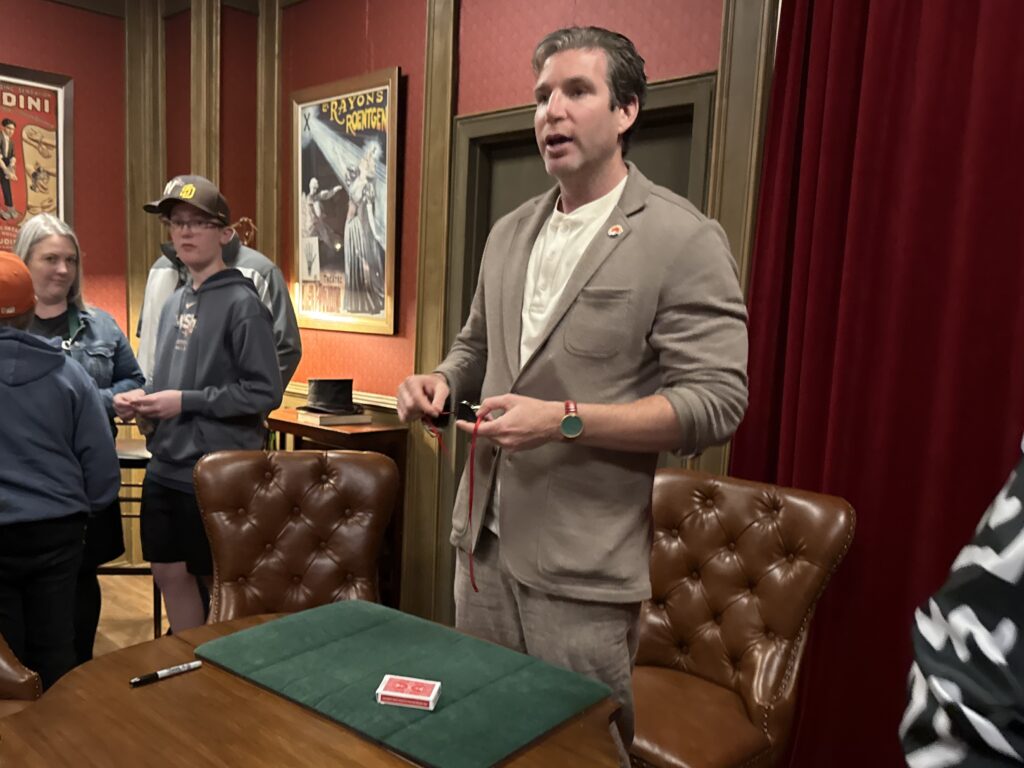Clay’s friend and noted magician Joshua Jay.
Lewis and Clark crossed the continent with an outstanding crew — 33 in the permanent party. They carried pork and flour and lard in kegs and a considerable (but in the end, inadequate) supply of whiskey, but they knew from the beginning that they would mostly be living off the land. Most of the men were proficient hunters, several outstanding, including Lewis. Captain Lewis ensured they had state-of-the-art Harpers Ferry 1803 rifles and a vast amount of powder and ammunition.
In 28 months across a vast continent without a single convenience store, they killed and ate a gazillion deer, hundreds of buffalo, scores of elk, a handful of bighorn sheep, and several hundred fish, and they wantonly killed every grizzly bear they encountered merely because they regarded them as a potentially lethal nuisance.
There were times, however, when they depended on Native Americans for food, principally during the winter at Fort Mandan in today’s North Dakota and during the return up the Columbia and Snake rivers in 1806. They traded for food (corn and squashes from the Mandan, dogs from the Columbians) with what we would call trinkets and gewgaws (tiny mirrors, fishhooks, curtain rings, beads, scarves, and spare bits of sheet iron). Unfortunately, by the time the expedition returned from the Pacific Coast on March 23, 1806, the Corps of Discovery was essentially bankrupt. Clark said all they had to trade — to get across the continent! — could be contained in two handkerchiefs. Try crossing America without money sometime!
At this point, the captains resorted to some “magic” to obtain the food, firewood, canoes, horses, and guiding services they needed to get home.
## **The Noiseless Gun**
From the very beginning, they used their magic air gun to impress (perhaps overawe is a more accurate term) the Natives and secure their cooperation. As he scurried about back east in 1803, provisioning the great expedition, Meriwether Lewis had purchased an air gun in Philadelphia, probably from a craftsman named Isaiah Lukens. You could pump air into an airtight receptacle and fire up to 40 noiseless (fhhtt!) shots before repumping. It’s not clear why Lewis purchased the gun. Perhaps he thought it could prove helpful if, for some reason, the expedition lost or ran out of its gunpowder supply. Probably, he regarded it as an interesting novelty. And it probably seemed clear, as it soon proved, that the air gun would fascinate the Natives they met, who were still making sense of the gunpowder muskets and rifles that white people had brought to the American interior.
Lewis and Clark carried a total of at least 89 peace medals in five different sizes.
Whenever the expedition met a new Native tribe, Lewis delivered a long peace and friendship speech, painstakingly translated sentence by sentence through several languages. Today, the peace speech sounds pretty aggressive and a little cringe-worthy: “Avoid the counsel of bad birds; turn your heel from them as you would from the precipice of a high rock. …” The American flag would be on prominent display. The captains gave Native leaders (or those they mistook as Native leaders) military jackets, peace medals with Jefferson’s visage on one side, pipe tomahawks, flags, and printed certificates of good behavior with blanks for the name of the tribe, date of the encounter, and name of the “chief.” The expedition men suited up for the councils in their best military attire and paraded in military formation. At this point, Captain Lewis usually trotted out his air gun and demonstrated its magic. If the journals are accurate, the air gun demo never failed to signify to Natives that these strangers had mighty powers for which there was no obvious explanation. Plus, some awesome gear.
Lewis’ Newfoundland dog, Seaman, was also part of the medicine show. Lewis reports that the Natives were delighted and impressed by Seaman’s “segacity.” The dog could do tricks: fetch, roll over, shake hands, sit, play dead — the usual stuff. Native American dogs were not house pets. They had greater affinity with wolves than Newfoundlands or any other domesticated dog. No wonder the Natives found Seaman’s tricks uncanny.
One journal entry by Meriwether Lewis, among the Shoshone on August 17, 1805, covers a lot of this ground:
*“We gave the 1st Chief an uniform coat shirt a pair of scarlet leggings a carrot of tobacco and some small articles to each of the others we gave a shirt legging handkerchief a knife some tobacco and a few small articles we also distributed a good quantity paint moccasin awls knives beads looking glasses &c among the other Indians and gave them a plentiful meal of lyed corn which was the first they had ever eaten in their lives. They were much pleased with it. Every article about us appeared to excite astonishment in their minds; the appearance of the men, their arms, the canoes, our manner of working them, the Black man York and the sagacity of my dog were equally objects of admiration. I also shot my air-gun which was so perfectly incomprehensible that they immediately denominated it the great medicine.”*
This revealing passage says a great deal about imperialism. Scores of explorers — Columbus, Captain James Cook, Mungo Park, Alexander Mackenzie, Bougainville, and Lewis and Clark — employed their more advanced industrial technology to impress or intimidate Natives. Many Natives were seeing these European devices for the first time.
Indigenous cultures were especially alert to mystery, to non-explainable phenomena, to evidence that things worked not just by the laws of physics and engineering but by some mysterious energy (the Lakota wakan) that could not be fully controlled but might be coaxed or propitiated. The minute Europeans realized that they possessed a kind of technological mojo and that careful use of it could accomplish important goals that might be harder to achieve with mere diplomacy, they began to incorporate such “magic” into their encounters with Natives.
Lewis and Clark were better than most, but they were not unwilling to use their technology medicine show when necessary.
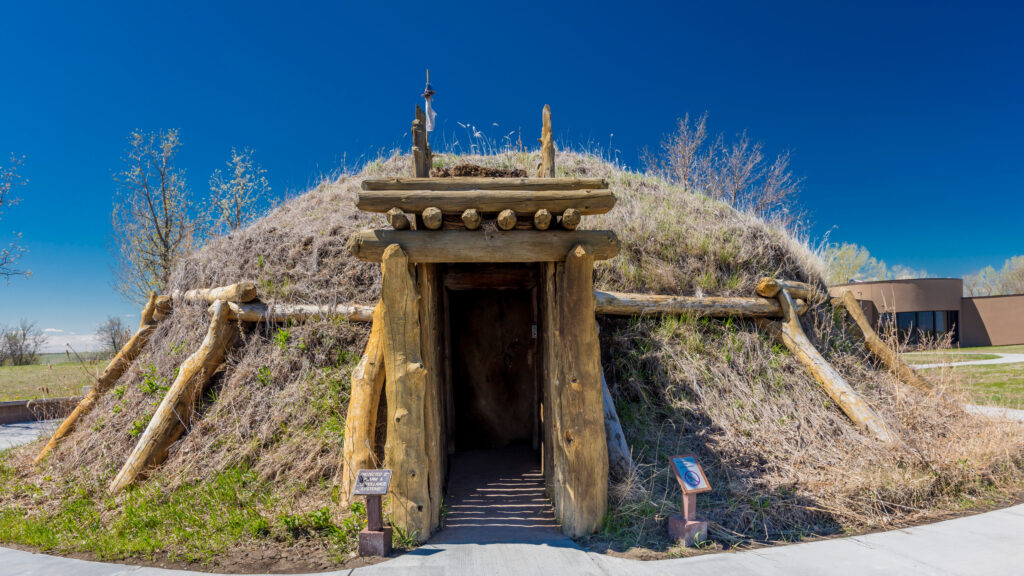Earth lodge replica at Knife River Indian Village, Fort Mandan, North Dakota, where Sacagawea meets Lewis and Clark. (Shutterstock)
## **The Lewis and Clark Medicine Show**
On the return journey, effectively bankrupt and in need of food, principally dogs, the captains gave what limited medical care they had with them to a few Indigenous individuals with maladies (blindness, rheumatism, respiratory troubles). When the captains’ “cures” seemed to give comfort (psychological, more probably than physical), they suddenly found their clinic waiting room crowded. Dozens of Natives came to seek medical help. Lewis and Clark did not have much to offer (and didn’t know much), but they lavished a bit of ritual on their few and all-purpose chemical ministrations. In this way, they won renown among their Native hosts.
Lewis provided some interesting commentary about this frontier enterprise on May 5, 1806. The expedition was near the confluence of the Snake and the Clearwater rivers at today’s Lewiston, Idaho:
*“Capt. C. gave an Indian man some volatile liniment to rub his knee and thigh for a pain of which he complained, the fellow soon after recovered and has never ceased to extol the virtues of our medicines and the skill of my friend Capt. C. as a physician. This occurrence added to the benefit which many of them experienced from the eyewater we gave them about the same time has given them an exalted opinion of our medicine. My friend Capt. C. is their favorite physician and has already received many applications. In our present situation I think it pardonable to continue this deception for they will not give us any provision without compensation in merchandise and our stock is now reduced to a mere handful. We take care to give them no article which can possibly injure them.”*
So, the remedies were a chemical wipe and an eyedrop. For this, Clark was their “favorite physician” and was given a steady supply of food and several horses, one or two of which were splendid. I respect Meriwether Lewis for expressing some uneasiness about this dubious enterprise (mostly placebo stuff), which continued for more than a month: “I think it pardonable,” i.e., under the desperate circumstances. At least Lewis takes the Hippocratic oath: “We take care to give them no article which can possibly injure them.” On May 19, the expedition camp was visited by “a train of invalids.”

On May 19, William Clark’s journal entry has an almost biblical ring. I’m sure he never thought of himself as a true healer, but if the medicines Lewis and Clark administered gave people relief and brought measurable improvement, even if only because the patients felt they had to trust beings who carry so many forms of power in their baggage, it is clear that the Natives were impressed by that power and the kind of people who could apply it for good. In a lovely, ironic way, the incident creates a dialogue between a child in Idaho and a child in Roman Palestine:
*“They also,” \[Clark wrote\], “brought forward a very young child whom they said had been very sick — . I administered eye water to all, two of the women I gave a cathartic, one whose spirits were very low and much hiped.”*
Here “much hiped” means seriously depressed. Here Clark “saves” a Native child.
There were two other employments of the expedition’s magic, neither of which is very admirable.
## **York’s Magic**
**One**: Clark’s enslaved body servant, York, had no rights back in Virginia and Kentucky. He could be bought and sold, whipped, beaten, disfigured, maimed, or even killed back in “civilization,” but on the upper Missouri, York was “metamorphosed” (to use one of Mr. Lewis words) and to the Indigenous people he was fascinating, exotic, and undoubtedly “powerful.” Most American Indians had never seen a Black man before. Some refused to believe it. York’s uniqueness caused some Natives to wonder if he was a spirit being or a shaman or even if he had special status with the expedition. Some of the Native women sought his DNA. One gruff Hidatsa leader spit on his hand and tried to rub off what he reckoned was ceremonial paint.
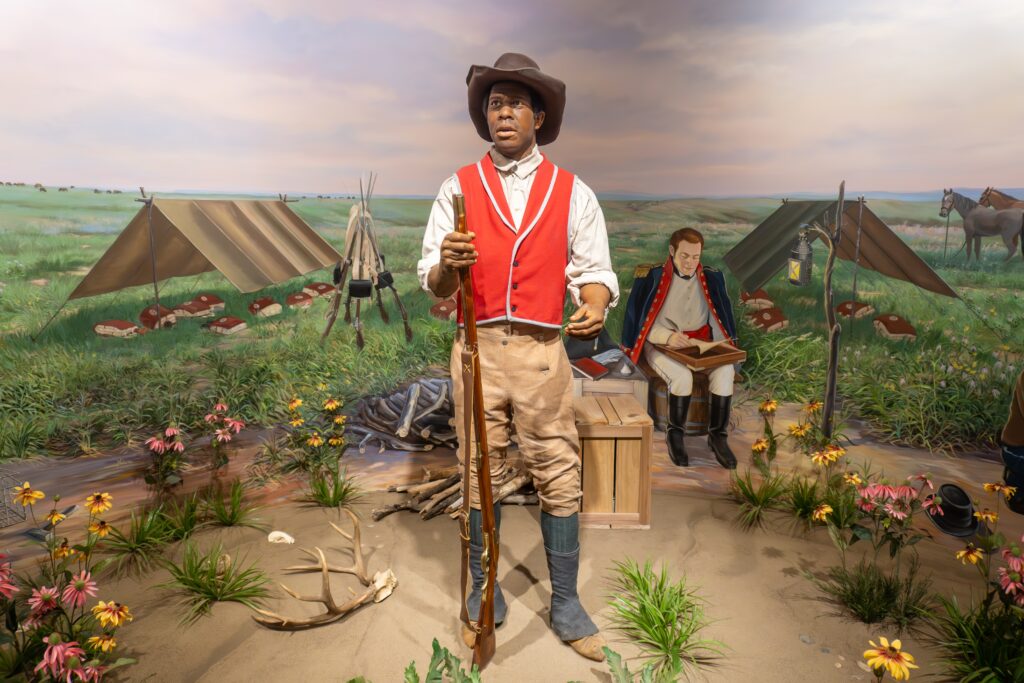Animatronic depiction of York at the Lewis and Clark Interpretive Center in Sioux City, Iowa. (Shutterstock)
When Lewis and Clark realized that York could be an asset, they occasionally used that Native misunderstanding to their benefit. Among the Mandan villages, Clark ordered York to dance for the Natives. York was a big man. He must have been mesmerizing. The fact that he was treated better by Natives than by his countrymen is one of the expedition’s persistent ironies, one of its reverse discoveries. Among the Mandan, York even pretended he was a wild creature (a “bear”) caught and partly tamed by William Clark. He chased mock-terrified children around the earth lodge village.
And then …
When York and Clark got back to “civilization,” Clark reverted to his former status as a severe white slaveholder. When York sought manumission or at least the right to stay back in Louisville with his family, Clark beat him severely (“gave him a trouncing,” Clark said). Clark even threatened to sell York into the Deep South.
**Two**: Clark was usually an even-tempered man, more relaxed and approachable than Meriwether Lewis. But he occasionally got angry, and though we need to read between the lines a bit (it’s an early 19th-century document), you can see that a month into the return journey, he had lost all patience with a community of Indigenous people who lived near the confluence of the Columbia and Willamette rivers. When Clark entered a semi-communal dwelling (uninvited) to purchase wappato root (a swamp potato much needed by half-starved American explorers), the Natives refused to sell the swamp bulb for anything Clark had to offer. In his snarky journal entry, he described these locals as “sulky,” a term he occasionally employed to describe non-cooperative Natives.
Clark did a little magic show to break the impasse and get the foodstuffs he needed:
*“I entered one of the rooms of this house and offered several articles to the Natives in exchange for wappato. They were sulky and they positively refused to sell any. I had a small piece of port fire match in my pocket, off of which I cut a piece one inch in length & put it into the fire and took out my pocket compass and set myself down on a mat on one side of the fire, and a magnet which was in the top of my inkstand the port fire caught and burned vehemently, which changed the color of the fire; with the magnet I turned the needle of the compass about very briskly; which astonished and alarmed these Natives and they laid several parcels of wappato at my feet, & begged of me to take out the bad fire; to this I consented; at this moment the match being exhausted was of course extinguished and I put up the magnet &c. This measure alarmed them so much that the women and children took shelter in their beds and behind the men, all this time a very old blind man was speaking with great vehemence, apparently imploring his god. I lit my pipe and gave them smoke & gave the women the full amount of the roots which they had put at my feet. They appeared somewhat pacified and I left them and proceeded on …”*
Something is disquieting about this story. Clark plays Merlin, puts a small piece of colored fuse in the fire, turns a compass needle without touching it, and scares the living daylights out of Natives minding their own business in their private homes. Natives who would be glad to trade if they had any surplus food but who were protecting what little they had in this lean time of the year. Clark terrifies them so much that “a very old blind man was speaking with great vehemence, apparently imploring his god.” Try to imagine this scene. Women begging Clark to take the dark magic away. An old man speaking in tongues. When the horrified Natives quickly rounded up a few “parcels of wappato” and placed them at the strange being’s feet, begging him to “take out the bad fire,” all we get from the Wizard Clark is, “to this I consented.” When I first read this story 40 years ago, I found it joyous; now I find it sad.
Meriwether Lewis and William Clark, Commanders of the Corps of Discovery (Wiki Commons)
Clark reports in his journal that he paid fair market value (who set the exchange rate?) for the roots. As he hastened away with enough wappato root to give each of the expedition’s men a slice or two, Clark noticed that the Natives were “somewhat pacified.” Imagine the conversations that began the minute Clark was safely out of range. We’d give anything for a transcript.
As my friend Joshua Jay told me over dinner the other night, magic cuts both ways. There is magic as entertainment and magic as witchcraft: recreational magic or dark magic.
Clark, of course, was doing what he had to do to feed his hungry men. On most occasions, he was an extremely honorable man. Necessity is the mother of invention. The flaming fire routine is one of humanity’s oldest magic tricks. What child is not astonished when she first sees a magnet in action? I’m still astonished by magnetism, and if you ask me to explain it, my answer will be so scientifically garbled that it’s easier to say it’s magic, like gravity.
Beginning tomorrow, as I head down the Ohio River corridor into the heartland, my magic friend Josh disappears, which is one of the more disturbing results of modernity and mobility. But I hope not forever.
For Clark, I have only one question. Why did you have your inkstand on a shopping trip into a Native American longhouse?
---
## ***Discover more on these topics at Listening to America***
[Republics](https://ltamerica.org/tag/republics/ "1 topics")[Walden](https://ltamerica.org/tag/walden/ "1 topics")[Washington](https://ltamerica.org/tag/washington/ "2 topics")[Oppenheimer](https://ltamerica.org/tag/oppenheimer/ "1 topics")[U.S. Constitution](https://ltamerica.org/tag/u-s-constitution/ "1 topics")[Steinbeck Travels](https://ltamerica.org/tag/steinbeck-travels/ "75 topics")[north daktoa](https://ltamerica.org/tag/north-daktoa/ "0 topics")[Vermont](https://ltamerica.org/tag/vermont/ "1 topics")[Oppenheim](https://ltamerica.org/tag/oppenheim/ "0 topics")[Republic](https://ltamerica.org/tag/republic/ "0 topics")[Poetry](https://ltamerica.org/tag/poetry/ "1 topics")[Pennsylvania](https://ltamerica.org/tag/pennsylvania/ "1 topics")[Theodore Roosevelt](https://ltamerica.org/tag/theodore-roosevelt/ "16 topics")[Wyoming](https://ltamerica.org/tag/wyoming/ "4 topics")[The Constitution](https://ltamerica.org/tag/the-constitution/ "1 topics")[Thomas Jefferson](https://ltamerica.org/tag/thomas-jefferson/ "34 topics")[Utah](https://ltamerica.org/tag/utah/ "11 topics")[South Dakota](https://ltamerica.org/tag/south-dakota/ "16 topics")[Tennessee](https://ltamerica.org/tag/tennessee/ "1 topics")[South Carolina](https://ltamerica.org/tag/south-carolina/ "1 topics")[Reading](https://ltamerica.org/tag/reading/ "1 topics")[Ohio](https://ltamerica.org/tag/ohio/ "2 topics")[New York](https://ltamerica.org/tag/new-york/ "8 topics")[Water in the West](https://ltamerica.org/tag/water-in-the-west/ "24 topics")[Space Exploration](https://ltamerica.org/tag/space-exploration/ "8 topics")[William Shirer](https://ltamerica.org/tag/william-shirer/ "1 topics")[Virginia](https://ltamerica.org/tag/virginia/ "7 topics")[paintings](https://ltamerica.org/tag/paintings/ "0 topics")[Podcast](https://ltamerica.org/tag/podcast/ "1 topics")[North Carolina](https://ltamerica.org/tag/north-carolina/ "3 topics")[Texas](https://ltamerica.org/tag/texas/ "4 topics")[New England](https://ltamerica.org/tag/new-england/ "1 topics")[U.S. Presidents](https://ltamerica.org/tag/u-s-presidents/ "71 topics")[Video](https://ltamerica.org/tag/video/ "51 topics")[New Mexico](https://ltamerica.org/tag/new-mexico/ "3 topics")[Rivers](https://ltamerica.org/tag/rivers/ "3 topics")[Travel](https://ltamerica.org/tag/travel/ "1 topics")[State Parks](https://ltamerica.org/tag/state-parks/ "2 topics")[Wisconsin](https://ltamerica.org/tag/wisconsin/ "0 topics")[Rome](https://ltamerica.org/tag/rome/ "1 topics")[Thoreau](https://ltamerica.org/tag/thoreau/ "5 topics")[North Dakota](https://ltamerica.org/tag/north-dakota/ "53 topics")[Road Trips](https://ltamerica.org/tag/road-trips/ "18 topics")[Oregon](https://ltamerica.org/tag/oregon/ "4 topics")[Sports](https://ltamerica.org/tag/sports/ "2 topics")
**Categories:** Features
**Tags:** America at 250, Lewis and Clark, Native Americans
---
### [The Spot That Made Thomas Jefferson Swoon: A Visit to Natural Bridge — Video Dispatch](https://ltamerica.org/the-spot-that-made-thomas-jefferson-swoon-a-visit-to-natural-bridge-video-dispatch/)
**Published:** May 20, 2025
**Author:** Editor
**Excerpt:** Clay stopped by Natural Bridge State Park in the Shenandoah Valley. The site so captivated Thomas Jefferson that he purchased it from King of England in 1774.
**Content:**
Clay stopped by [Natural Bridge State Park](https://www.dcr.virginia.gov/state-parks/natural-bridge) in the Shenandoah Valley of Virginia. The park is known for a 215-foot-tall limestone arch or natural bridge. The site captivated Thomas Jefferson so much that he purchased it from the King of England in 1774 for about $160 in today’s money.
Jefferson wrote rapturously of Natural Bridge in his *Notes on the State of Virginia* (1785):
“Few men have resolution to … look over into the abyss. You involuntarily fall on your hands and feet, creep to the parapet, and peep over it. Looking down from this height about a minute gave me a violent headache. If the view from the top is painful and intolerable, that from below is delightful in an equal extreme. It is impossible for the emotions, arising from the sublime, to be felt beyond what they are here: so beautiful an arch, so elevated, so light, and springing, as it were, up to heaven, the rapture of the spectator is indescribable.”
After being in private hands for many years, Natural Bridge became a state park in 2016.

**Categories:** Dispatches from the Road
**Tags:** Lewis and Clark, State Parks, Thomas Jefferson, Video, Virginia
---
### [The Ten Young Men From Kentucky — History, Old and New](https://ltamerica.org/the-ten-young-men-from-kentucky-history-old-and-new/)
**Published:** May 19, 2025
**Author:** Clay Jenkinson
**Excerpt:** Clay reflects on the historical dynamics of the “Ten Young Men” who made up the original core of Lewis and Clark’s Corps of Discovery.
**Content:**
## Clay reflects on the historical dynamics of the “Ten Young Men” who made up the original core of Lewis and Clark’s Corps of Discovery.
A bronze of York, the enslaved man who was a member of the Lewis and Clark Expedition. The statue by Ed Hamilton overlooks the Ohio River in Louisville, KY. (Shutterstock).
Weems, Virginia — As I gather my energies for the ongoing trek across the continent in the path of Lewis and Clark, I am reading about the mustering of the expedition’s crew. How did the two captains recruit 40-some adventurers for their journey? Congress had initially authorized 12–15 men, and Lewis had had that many 1803 Harpers Ferry rifles made for a reconnaissance party of that size. But Lewis decided he needed more men to be secure as he ascended the Missouri River through “Indian Country.” He tripled the number of participants before the expedition left St. Louis on May 14, 1804.
So where did the men come from? The answer is that we don’t know enough about this subject. They recruited men at several western army forts. They recruited French Canadian river experts in St. Louis and even a little higher on the Missouri. It’s a fascinating story, but that is not my purpose here.
William Clark recruited the core of the Corps of Discovery at the Falls of the Ohio at Louisville/Clarksville before Lewis arrived on October 15, 1803. This contingent is known historically as “The Nine Young Men from Kentucky.” John Shields, Nathaniel Pryor, William Bratton, John Colter, Joseph Field, Reubin Field, George Gibson, George Shannon, and Charles Floyd. Nine young white frontiersmen from Kentucky.
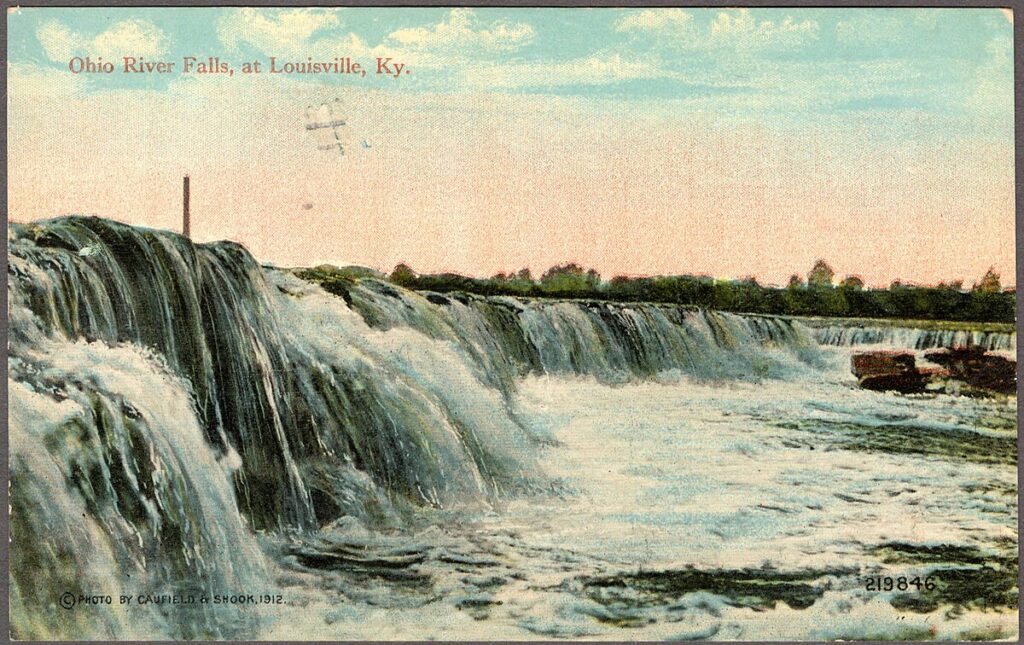Ohio River Falls.
But there was a tenth young man from Kentucky, Clark’s enslaved valet York. He was about the same age as Clark, who was 33. York had been Clark’s body “servant” for most of his life. He made the entire journey from Louisville to Astoria, Oregon, and back again. On the great journey, York played a significant role. He sometimes carried a gun alone away from the boats. He helped Clark, Sacagawea, and her infant son Jean Baptiste Charbonneau survive a flash flood at the Great Falls in Montana. He impressed Native Americans, most of whom had never seen a Black man before. Some thought he had special power or even perhaps was the expedition’s leader. He did the same work as the rest of the men of the expedition and, in addition to that, waited on Clark as needed.
York was a young man from Kentucky, but does not make the traditional list of “Nine Young Men ….” This can only mean one thing. York was not counted because he was Clark’s personal property. You could easily surmise that he was omitted because white people of that time routinely regarded African Americans as less than, subordinate to, the white people around them, and having “no rights which the white man was bound to respect,” as it was later put in the notorious 1857 Dred Scott decision. Or think of *Huckleberry Finn* , when Huck reports a steamboat explosion on the Mississippi. The woman he is visiting asks, “Good gracious! Anybody hurt?” To which Huck replies, “No’m. Killed a n ……” To which she replies, “Well, it’s lucky; because sometimes people do get hurt.”
Isn’t it time to retire forever the concept of Nine Young Men from Kentucky and say Ten Young Men from Kentucky instead? People casually invoke “Nine Young Men” because it is an important part of the Lewis and Clark tradition. Still, even if we don’t intend it, we are perpetuating what can only be called a racist formulation. Of course, some will defend Nine Young Men and say that York, as Clark’s slave, belongs to a different category of expedition participant. By that logic, because Clark isn’t enumerated among the Nine Young Men, and York was not a volunteer on the journey, there is no particular problem in not mentioning him among the men Clark recruited (instead of ordered) to participate.
Maybe so, but I believe it is time to retire the Nine count.
## **A Brief Summary of Each “The Ten’s” Role in the Laws and Clark Story**
**John Shields** was the oldest member of the Corps. He was the blacksmith, the ironworker, and the gunsmith of the expedition. Lewis singled him out as indispensable to the enterprise’s success. He was 35.
Lewis and Clark never created a list of the skill sets they needed in the men they recruited for the expedition. All Lewis said to Clark was that they wanted “some good hunters, stout, healthy, unmarried men, accustomed to the woods, and capable of bearing bodily fatigue in a pretty considerable degree.” Men with the right stuff. No gentlemen’s sons. Strong backs. Somehow, the two captains got the skill sets they needed without creating a specific job description chart. Shields the blacksmith, Gass the carpenter, Whitehouse the skin dresser, Drouillard the sign language interpreter, etc. As we look at the personnel lists from the outside, the skill set we would most want to add to the roster is artist/illustrator. That would have made a huge difference. “Yes, he can draw, but can he throw his weight against a tow line?”
**Nathaniel Pryor** was one of the four sergeants of the expedition. He should have kept a journal, but does not seem to have done so. He was sufficiently trusted after the expedition to be given the command of a mission to return a Mandan leader, Sheheke-shote, to the earth lodges of today’s North Dakota after Sheheke had spent time in Washington, D.C., meeting the “great father” Jefferson.
**William Bratton** was gravely ill at the shore of the Pacific in the winter of 1805–1806. Captain Lewis expressed real alarm about Bratton’s prospects of recovery. We are not sure, but he probably suffered from an inflamed or slipped disk in his back. He eventually recovered thanks to sweat baths used by the Nez Perce people.
An artists depiction of John Colter’s famous run.
**John Colter** was one of the very ablest of the men. He was given special assignments from time to time. After the expedition, he became one of America’s first mountain men. In fact, he did not return to St. Louis with the expedition. At his request, the captains released him in today’s North Dakota to go back upriver with a couple of rookie beaver trappers they encountered. Two years later, “John Colter’s Run for Life” near the Three Forks of the Missouri after angry Blackfeet Natives stripped him naked and gave him a head start, is one of the greatest legends of the Old West.
**Joseph and Reubin Field.** Young brothers are among Meriwether Lewis’s favorites. They were fast runners, temperamentally even and reliable, and excellent hunters.
**George Gibson** is best known as the second violist of the Corps of Discovery. The half-blind Pierre Cruzatte was the principal musician, but Gibson brought his fiddle too. He knew a fair amount of the Native sign language. He also suffered one of the most grievous wounds of the crew when, on July 18, 1806, he fell on a tree snag that penetrated two inches into his thigh. In an age before antibiotics, that was a severe injury.
Lewis and Clark historian, James Ronda.
**George Shannon** was the youngest member of the expedition at 18. He got lost seriously once (in today’s South Dakota: 16 days) and in a lesser way later in southwestern Montana. The author of a medical history of the expedition concluded that Shannon needed a prescription for Ritalin. This has always bothered me, and I suggest to the author that he spend 28 months in the wilderness, often away from the main party, and never get lost or bewildered. I’m always amazed that no more men were lost at one time or another. The idea, as the great historian James Ronda puts it, is that we have locked each member of the expedition into a few stereotypical epithets, based on meager details drawn from the hundreds of thousands of words in the journals, and that poor Shannon is now known as “Shannon the forever lost.” This undoubtedly distorts the record. The details that wind up in the journals were not meant to be comprehensive and representative. Lost one day, great hunter the next. It would be like saying George Herbert Walker Bush is the “man who threw up at a Japanese state dinner.” He did, but does that tell us what we need to know of the 41st president of the United States?
**Charles Floyd** was the first expedition member to die. He became suddenly ill in mid-August 1804 near today’s Sioux City, Iowa, and died at age 22 on August 20 of what the captains (not knowing what had happened) called “bilious fever.” Floyd seems to have been a special favorite of William Clark. He was attended in his brief last illness by Clark’s enslaved valet York.
## **The Tenth Young Man From Kentucky – York**
Animatronic depiction of York at the [Lewis and Clark Interpretive Center in Sioux City, Iowa](https://siouxcitylcic.com/the-center/exhibits/). (Shutterstock)
York has only one name by which he is known to history. He performed admirably on the expedition and out west, beyond the physical and moral boundaries of “civilization.” He was often treated like a full and perhaps even equal participant in the adventure. Frontier dynamics often broke down tightly regimented social categories typical back in places like Williamsburg or London. When the expedition returned to St. Louis, York seems to have asserted himself with his master Clark, expecting to be freed altogether or at least granted special status after all that he had contributed to his master’s and the expedition’s success. But the minute Clark returned to “civilization,” he plunged York back into his status as chattel. York wanted to live with his wife and children at the Falls of the Ohio; Clark insisted that York accompany him (alone) to St. Louis. Clark’s treatment of York was so selfish and cruel that what we now know about this post-expedition relationship has significantly damaged Clark’s historical reputation. At one point, after Clark threatened to sell York into the Deep South, it was Meriwether Lewis who intervened and convinced Clark not to do so horrific a thing. Whether Clark formally freed York is uncertain, but he later permitted him to establish a trucking business at the Falls of the Ohio.
Such were the Ten Young Men from Kentucky. They may have been the core of the Corps of Discovery, but they were not necessarily better at their work than other participants. The captains had special regard for several other men: Patrick Gass, the expedition’s carpenter, who seems to have superintended the construction of Fort Mandan and Fort Clatsop; Joseph Whitehouse, the skin dresser who helped the men fashion clothing and moccasins from deerskin after their cloth clothing played out; and above all George Drouillard, who was their master hunter, trailsman, and sign language interpreter.
Most members of the Lewis and Clark expedition appear on history’s stage suddenly — out of nowhere — and after their service on America’s most extraordinary exploration mission (1804–1806) disappear again into oblivion. A superb scholar named Larry Morris has undergone painstaking research to find what little can be said of every member of the crew before and after the expedition, but for most there is not much to report: perhaps a birth date, maybe a death date, perhaps one or two more details. About half of the expedition’s crew rarely get mentioned in the journals. That does not in any way diminish their contributions. Unfortunately, no expedition member ever stopped to describe the personnel in detail, including the Shoshone-Hidatsa woman Sacagawea, one of the two most famous Native women in American history. The captains didn’t know we would be fascinated, so they didn’t provide character sketches.
It’s too bad that the 30-some men didn’t each get a book contract when they returned, didn’t develop a website, and didn’t star in a documentary film about their pivotal role in the expedition’s success. We have what we have in what amounts to a thin biographical record, and we are forced, no matter what James Ronda warns us to avoid, to lock the men into whatever descriptive tidbit we have, whether it is representative or not. Shannon the forever lost.
Besides the captains, York, and of course Sacagawea, John Colter is the best-remembered member of the Corps of Discovery. It never hurts to streak across the cactus plains of western Montana.
---
## ***Discover more on these topics at Listening to America***
[William Shirer](https://ltamerica.org/tag/william-shirer/ "1 topics")[U.S. Constitution](https://ltamerica.org/tag/u-s-constitution/ "1 topics")[North Dakota](https://ltamerica.org/tag/north-dakota/ "53 topics")[Rivers](https://ltamerica.org/tag/rivers/ "3 topics")[Virginia](https://ltamerica.org/tag/virginia/ "7 topics")[Thoreau](https://ltamerica.org/tag/thoreau/ "5 topics")[Thomas Jefferson](https://ltamerica.org/tag/thomas-jefferson/ "34 topics")[New Mexico](https://ltamerica.org/tag/new-mexico/ "3 topics")[Republics](https://ltamerica.org/tag/republics/ "1 topics")[Washington](https://ltamerica.org/tag/washington/ "2 topics")[Texas](https://ltamerica.org/tag/texas/ "4 topics")[Oppenheim](https://ltamerica.org/tag/oppenheim/ "0 topics")[Theodore Roosevelt](https://ltamerica.org/tag/theodore-roosevelt/ "16 topics")[Podcast](https://ltamerica.org/tag/podcast/ "1 topics")[Sports](https://ltamerica.org/tag/sports/ "2 topics")[Reading](https://ltamerica.org/tag/reading/ "1 topics")[Utah](https://ltamerica.org/tag/utah/ "11 topics")[Travel](https://ltamerica.org/tag/travel/ "1 topics")[New York](https://ltamerica.org/tag/new-york/ "8 topics")[South Dakota](https://ltamerica.org/tag/south-dakota/ "16 topics")[The Constitution](https://ltamerica.org/tag/the-constitution/ "1 topics")[South Carolina](https://ltamerica.org/tag/south-carolina/ "1 topics")[Poetry](https://ltamerica.org/tag/poetry/ "1 topics")[Wyoming](https://ltamerica.org/tag/wyoming/ "4 topics")[U.S. Presidents](https://ltamerica.org/tag/u-s-presidents/ "71 topics")[Oregon](https://ltamerica.org/tag/oregon/ "4 topics")[Vermont](https://ltamerica.org/tag/vermont/ "1 topics")[Rome](https://ltamerica.org/tag/rome/ "1 topics")[paintings](https://ltamerica.org/tag/paintings/ "0 topics")[Oppenheimer](https://ltamerica.org/tag/oppenheimer/ "1 topics")[Wisconsin](https://ltamerica.org/tag/wisconsin/ "0 topics")[State Parks](https://ltamerica.org/tag/state-parks/ "2 topics")[Road Trips](https://ltamerica.org/tag/road-trips/ "18 topics")[Pennsylvania](https://ltamerica.org/tag/pennsylvania/ "1 topics")[New England](https://ltamerica.org/tag/new-england/ "1 topics")[north daktoa](https://ltamerica.org/tag/north-daktoa/ "0 topics")[North Carolina](https://ltamerica.org/tag/north-carolina/ "3 topics")[Steinbeck Travels](https://ltamerica.org/tag/steinbeck-travels/ "75 topics")[Tennessee](https://ltamerica.org/tag/tennessee/ "1 topics")[Water in the West](https://ltamerica.org/tag/water-in-the-west/ "24 topics")[Republic](https://ltamerica.org/tag/republic/ "0 topics")[Video](https://ltamerica.org/tag/video/ "51 topics")[Space Exploration](https://ltamerica.org/tag/space-exploration/ "8 topics")[Walden](https://ltamerica.org/tag/walden/ "1 topics")[Ohio](https://ltamerica.org/tag/ohio/ "2 topics")
**Categories:** Features
**Tags:** America at 250, Lewis and Clark
---
### [John Steinbeck's Childhood Home — Video Dispatch](https://ltamerica.org/john-steinbecks-childhood-home-video-dispatch/)
**Published:** January 14, 2025
**Author:** Editor
**Excerpt:** Earlier last summer Clay visited Steinbeck’s childhood home in Salinas, California.
**Content:**
Earlier last summer Clay visited Steinbeck’s childhood home in Salinas, California.
---
***Over the past few months, Clay shadowed Steinbeck’s 10,000-mile trek around the USA (and made a few detours of his own). Clay’s expedition is a central part of LTA’s big initiative to explore the country and take the pulse of America as it approaches its 250th birthday. Be sure to follow Clay’s adventures*** [***here***](https://ltamerica.org/tag/steinbeck-travels/) ***and on*** [***Facebook***](https://www.facebook.com/LTAmerica) ***— and*** [***subscribe to our newsletter***](https://ltamerica.org/newsletter/)**.**
**Categories:** Dispatches from the Road
**Tags:** Books, California, John Steinbeck, Steinbeck Travels, Video
---
### [Visiting Thomas Jefferson's Private Personal Retreat — Video Dispatch](https://ltamerica.org/visiting-thomas-jeffersons-private-personal-retreat-video-dispatch/)
**Published:** May 13, 2025
**Author:** Editor
**Excerpt:** Kicking off his 2025 transcontinental Lewis and Clark trek, Clay spends the day at Poplar Forest, the beloved personal retreat of Thomas Jefferson, the mastermind behind the famous Corps of Discovery.
**Content:**
## Kicking off his 2025 transcontinental Lewis and Clark trek, Clay spends the day at Poplar Forest, the beloved personal retreat of Thomas Jefferson, the mastermind behind the famous Corps of Discovery.
On May 6, Clay kicked off his trip following the Lewis and Clark expedition across the continent. To mark the start of his trek, Clay visited the second home and personal retreat of Thomas Jefferson, the mastermind behind the famous Corps of Discovery. Clay toured the octagonal home, lovingly designed by Jefferson, and spoke with the facility’s retired Director of Restoration, Travis McDonald. During his visit, Clay gave a special presentation on Jefferson’s 18th-century view of the American West and his hopes for Lewis and Clark’s groundbreaking journey.
---
## ***Discover more on these topics at Listening to America***
[Rome](https://ltamerica.org/tag/rome/ "1 topics")[Virginia](https://ltamerica.org/tag/virginia/ "7 topics")[William Shirer](https://ltamerica.org/tag/william-shirer/ "1 topics")[Oppenheim](https://ltamerica.org/tag/oppenheim/ "0 topics")[South Carolina](https://ltamerica.org/tag/south-carolina/ "1 topics")[Reading](https://ltamerica.org/tag/reading/ "1 topics")[New England](https://ltamerica.org/tag/new-england/ "1 topics")[North Carolina](https://ltamerica.org/tag/north-carolina/ "3 topics")[Thoreau](https://ltamerica.org/tag/thoreau/ "5 topics")[Pennsylvania](https://ltamerica.org/tag/pennsylvania/ "1 topics")[north daktoa](https://ltamerica.org/tag/north-daktoa/ "0 topics")[Water in the West](https://ltamerica.org/tag/water-in-the-west/ "24 topics")[Washington](https://ltamerica.org/tag/washington/ "2 topics")[Ohio](https://ltamerica.org/tag/ohio/ "2 topics")[Rivers](https://ltamerica.org/tag/rivers/ "3 topics")[U.S. Constitution](https://ltamerica.org/tag/u-s-constitution/ "1 topics")[Tennessee](https://ltamerica.org/tag/tennessee/ "1 topics")[State Parks](https://ltamerica.org/tag/state-parks/ "2 topics")[Wisconsin](https://ltamerica.org/tag/wisconsin/ "0 topics")[New Mexico](https://ltamerica.org/tag/new-mexico/ "3 topics")[Podcast](https://ltamerica.org/tag/podcast/ "1 topics")[Wyoming](https://ltamerica.org/tag/wyoming/ "4 topics")[Republic](https://ltamerica.org/tag/republic/ "0 topics")[Republics](https://ltamerica.org/tag/republics/ "1 topics")[New York](https://ltamerica.org/tag/new-york/ "8 topics")[Texas](https://ltamerica.org/tag/texas/ "4 topics")[Video](https://ltamerica.org/tag/video/ "51 topics")[Space Exploration](https://ltamerica.org/tag/space-exploration/ "8 topics")[Walden](https://ltamerica.org/tag/walden/ "1 topics")[Utah](https://ltamerica.org/tag/utah/ "11 topics")[Oregon](https://ltamerica.org/tag/oregon/ "4 topics")[North Dakota](https://ltamerica.org/tag/north-dakota/ "53 topics")[Sports](https://ltamerica.org/tag/sports/ "2 topics")[Road Trips](https://ltamerica.org/tag/road-trips/ "18 topics")[Oppenheimer](https://ltamerica.org/tag/oppenheimer/ "1 topics")[Thomas Jefferson](https://ltamerica.org/tag/thomas-jefferson/ "34 topics")[Vermont](https://ltamerica.org/tag/vermont/ "1 topics")[paintings](https://ltamerica.org/tag/paintings/ "0 topics")[Steinbeck Travels](https://ltamerica.org/tag/steinbeck-travels/ "75 topics")[Theodore Roosevelt](https://ltamerica.org/tag/theodore-roosevelt/ "16 topics")[Poetry](https://ltamerica.org/tag/poetry/ "1 topics")[U.S. Presidents](https://ltamerica.org/tag/u-s-presidents/ "71 topics")[Travel](https://ltamerica.org/tag/travel/ "1 topics")[The Constitution](https://ltamerica.org/tag/the-constitution/ "1 topics")[South Dakota](https://ltamerica.org/tag/south-dakota/ "16 topics")
**Categories:** Dispatches from the Road
**Tags:** America at 250, Lewis and Clark, Thomas Jefferson, U.S. Presidents, Video, Virginia
---
### [Delightful Ignorance: Jefferson and the American West](https://ltamerica.org/delightful-ignorance-jefferson-and-the-american-west/)
**Published:** May 12, 2025
**Author:** Clay Jenkinson
**Excerpt:** Clay begins his 2025 Lewis and Clark transcontinental journey in the land of Thomas Jefferson, the patron saint of the famous 1804-1806 expedition.
**Content:**
## Clay begins his 2025 Lewis and Clark transcontinental journey in the land of Thomas Jefferson, the patron saint of the famous 1804-1806 expedition.
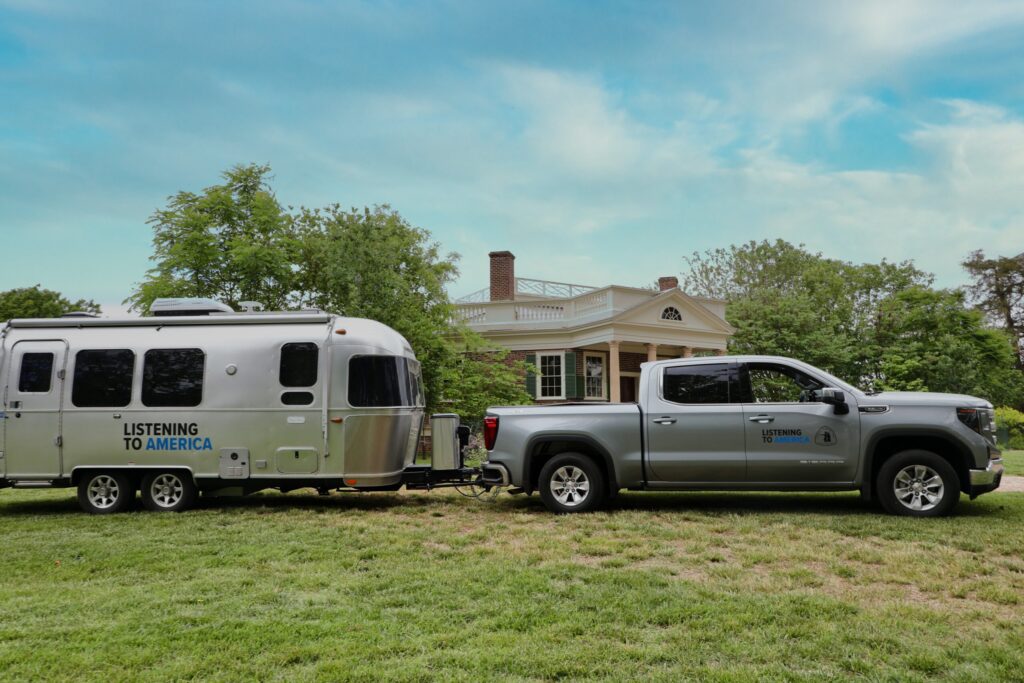The Listening to America Airstream in front of Poplar Forest, Thomas Jefferson’s retreat in Virginia. Clay kicked off his 2025 Lewis and Clark trek here with a presentation on Thomas Jefferson and the West on May 6.
Editor’s Note: Clay Jenkinson has begun his [2025 Lewis and Clark transcontinental journey](http://vimeo.com/1057969425) in the land of Thomas Jefferson, the patron saint of the 1804–1806 expedition. Clay launched his trek at Jefferson’s second home at [Poplar Forest](https://www.poplarforest.org/) on May 6. He followed that with a talk at the [Lewis and Clark Exploratory Center](https://lewisandclarkvirginia.org/) in Charlottesville on May 10. Clay says that to understand the famous [Corps of Discovery](https://www.nps.gov/jeff/learn/historyculture/corps-of-discovery.htm), it is essential to start with a look at the fabulous and whimsical mind of Thomas Jefferson. Here is Clay’s report.
Jefferson bought the Louisiana Territory in 1803, doubling the size of the American republic with a single stroke of his pen — three cents per acre. A year later, Jefferson sent his protégé, Meriwether Lewis, into the American interior to make an inventory of that transaction, the trans-Mississippi territory, 828,000 square miles altogether, and to make what for white people were discoveries. At the same time, Jefferson sent out other, less well-remembered explorers to fill the continental “canvas,” as he put it, with data. Jefferson had a special love of latitude and longitude. He was particularly interested in how the rivers of America interlocked. He viewed them as the commercial highways of the United States in that era before roads replaced trails. Jefferson’s instructions to Meriwether Lewis, dated June 20, 1803, represent one of the great documents of the Enlightenment.
Nobody in the United States thought more or knew more about the West than Jefferson. When he was in Paris (1784–1789), he liked to stroll among the bookshops on afternoon walks and “put aside” for later delivery (he was an aristocrat) any books about the interior of America. He read those books avidly. Jefferson became a one-man clearinghouse for information about the American West. On that basis, he envisioned what he called “an empire for liberty,” such as the world had never previously seen.
And yet …
Thomas Jefferson lived in the last age of fundamental ignorance about how the world worked. He lived on the cusp of the 19th century, during which scientists would make gigantic strides in understanding everything from the formation of clouds to the nature of plagues. Jefferson was just a generation behind in discovering and consolidating our modern understanding of the universe and everything in it. Just think of what the Sage of Monticello did not know.
Now a State Park, Thomas Jefferson was fascinated by Natural Bridge in Virginia. (Shutterstock)
Thomas Jefferson did not know the dinosaur. The mammoth, the mastodon, and the Megalonyx (which he described in a learned paper for the American Philosophical Society) were his fantasy quadrupeds, his “dinosaurs.” Actual dinosaur fossils were first recognized during his retirement years. Imagine what Jefferson would have thought of the T. rex or the Triceratops! For most of his life, Jefferson did not believe in extinction. He had no idea of long geological time, once suggesting that the universe might be as old as 60,000 years. He was unaware of the age of the universe or the age of the Earth. Jefferson thought the Natural Bridge in Virginia, which he purchased in 1774, was worth a trip across the Atlantic to see and paint. What if he had seen Arches National Park, Canyonlands, Mount Whitney, the Tetons, or the Grand Canyon? If peeping down from the top of the Natural Bridge gave him “a violent headache,” what would peering into Canyon de Chelly have done to his 18th-century mind? “It is impossible,” he wrote of the Natural Bridge, “for the emotions arising from the sublime to be felt beyond what they are here.” Really? Then how do you react when you peer over the abyss of the South Rim of the Grand Canyon?
I have just read in an excellent book about the Colorado River (*[River Notes](https://daviswade.com/book-river-notes)* by Wade Davis) about something called the [Ordovician or Silurian extinctions](https://www.britannica.com/science/Ordovician-Silurian-extinction), “a period of 130 million years that saw … the mass extinction of some 60 percent of marine life.” That would blow Jefferson’s mind. That the Earth proliferates life forms that it later casts off unceremoniously; that the life force is tenacious and yet the Earth erases almost all species in what, in geologic terms, is a mere speck of time. Nothing, no species, is sacred. There have already been five mass extinctions in which almost every living thing on the planet was wiped out; humans have no rational basis for believing that we will escape the sixth extinction. Talk about a “violent headache.” How would Jefferson have assimilated these basic truths? How would he have responded to peeping over that abyss?
The notion that God created the world in just six days, the horned toad as well as the gazelle, mosquito, tick, horsefly, as well as the pronghorn antelope, did not make any sense to Jefferson, but his primary quibble was with “six days.” The rest — that God deliberately created the muskrat and the buffalo precisely as Jefferson observed them in his lifetime — seemed reasonable to him. He did not believe that species evolve from less to more complexity and that humans are just the apex of an evolutionary dynamic that has graduated us beyond the ingenuity of all other primates. Jefferson lived in the last era when you could believe, at least to a certain extent, that God had deliberately created everything in a single moment of deliberate design and placed each species in its proper link on an elaborate chain of being and that nothing could ever be extinguished without damaging the integrity of the entire chain of being. At the end of his life, he was beginning to accept the idea that some species, at least, might have gone extinct.
Jefferson believed that geology is, on the whole, the study of mere scratches in the Earth. He was impatient with metaphysics, which, in this case, meant the intense European debate between [Vulcanism and Neptunism](https://dinotracksdiscovery.org/supporting/swapfull/context/neptunism-volcanism/#:~:text=In%20the%20search%20for%20understanding,had%20essentially%20subsided%20by%201820.), about whether the Earth changes form drip by gradual drip or in appalling convulsions from time to time. This, like every other abstract argument, bored him. To the extent that he was interested in geology, it was in applied geology — salt licks and the fall line of rivers — that got his attention.
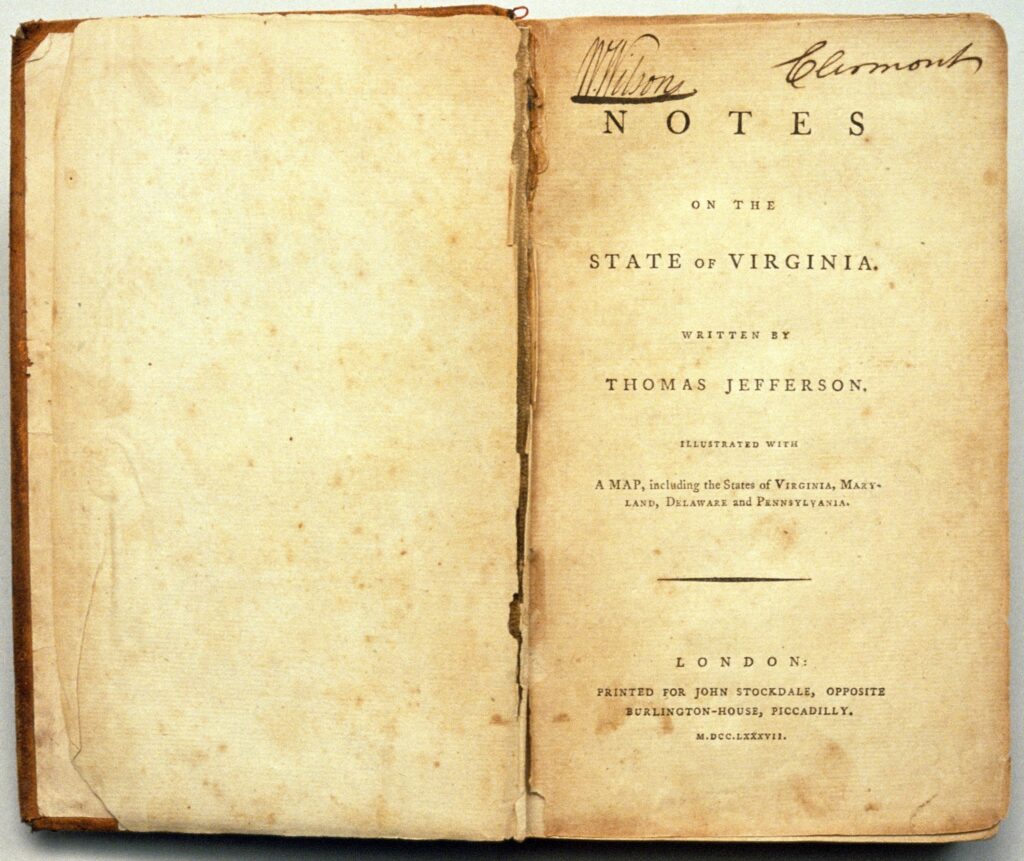Title page for Jefferson’s *Notes on the State of Virginia*.
Jefferson wrote only one book. In *Notes on the State of Virginia*, written between 1781 and 1784, Jefferson described the Peaks of Otter near the Natural Bridge in western Virginia. He said that the peaks at about 4,000 feet were possibly the highest mountains in North America.
Say what?
Here’s what he wrote: “The mountains of the Blue Ridge, and of these the Peaks of Otter, are thought to be of a greater height … than any others in our country, and perhaps in North America.” This had implications for Lewis and Clark. If the captains traveled through Montana carrying that intellectual baggage, imagine their surprise when the relatively low range they crossed to get into the Columbia River basin (the Bitterroots) was twice as high as the Peaks of Otter, and some mountains in America would prove to be nearly four times that high? If Meriwether Lewis expected to lug the expedition’s 20 tons of gear through a western “Cumberland Gap” (1,631 feet), he was sorely mistaken, in both senses of the word.
Jefferson was as sophisticated a reader and thinker as anyone in the Western Hemisphere in the year 1805. He was one of the best generalist polymaths in the world. He prided himself on knowing about an extensive range of subjects but never lorded it over anyone. He always treated others with humble respect, as if he were nothing more than a young, curious man, eager to share what he was learning with others, and not in any way suggesting his intellectual superiority.
Jefferson lived through the last gasp of barbaric medicine. In Jefferson’s time, we barely understood the circulation of the blood. We hadn’t yet figured out how viruses travel or determined the cause of such pandemics as smallpox or yellow fever. During his lifetime, we were just about to figure this out. When Jefferson learned of Dr. Edward Jenner’s discovery of the true smallpox vaccine in England, he wrote him a letter in 1806, one of the greatest any president has ever written. Among other things, Jefferson wrote, “You have erased from the calendar of human afflictions one of its greatest. Yours is the comfortable reflection that mankind can never forget that you have lived.” Who would not have wanted to receive that letter?
Four of Jefferson’s six children died in their childhood of diseases easily addressed in our time. Physicians were bleeding and purging back then, with Dr. Rush’s patented emetic pills, which the Lewis and Clark expedition men called Dr. Rush’s Thunderclappers because they eliminated the contents of the digestive system more or less immediately. And that was better than bleeding. We all know that President Washington was bled to death in the last 72 hours of his life. The physicians who were attending him didn’t know what to do about his strep throat, so they bled Washington until he died, as much from dehydration as anything else. Jefferson witnessed bloodletting once at Monticello and said never again.
If Moses had visited Jefferson’s plantations, he would’ve understood that agricultural practices were essentially unchanged for millennia. In the best kitchens of the era, cooking was done by way of open fires. That’s why the kitchens were built away from the house, so that the house would be spared when they burned down, as they routinely did.
It was still a three-mile-per-hour world. Most of the commercial traffic in America moved on water — rivers, bays, and lakes. The best toilets were no better than the notorious “Groover” of western whitewater raft trips or a chemical toilet you might put in an isolated cabin. Benjamin Franklin had made startlingly important discoveries about electricity and had written the first learned papers about this subject for the Royal Society in London. That’s what made him famous. The world thought of him as a savant. We erroneously think of him as a witmonger with a kite.
Central heating was still decades away. They were still lighting their lamps with whale oil and tallow. It was 75 years after Jefferson’s death that the internal combustion engine was developed. He lived long enough to see the potential for steam locomotion. In fact, his granddaughters had an excursion ride on a steamboat in the James River after his retirement. I believe it was in 1815. Jefferson spent years trying to perfect cisterns that would not leak at Monticello. Today? A quick stop at Home Depot, and the problem is solved. He dabbled with a crude early version of the thermal “cooler” to send butter from one place to another without it melting. He loved skylights, but he could not make them entirely leakproof. (Get in line, Mr. Jefferson!)
Clay at Poplar Forest discusses the limits of Thomas Jefferson’s 19th-century view of the world and the American West. (Photo Russ Eagle)
Most people in that era never traveled more than a few dozen miles from their birthplace. When individuals of the time, including Jefferson, wrote letters to each other, the first question they asked was some version of “Is everyone still alive? Tell me of the people who have passed. Who has been born, who is sickly, who died prematurely, who died in childbirth, who died of the pox or the yellow fever?” When people traveled more than a few hundred miles from their home community, their kin and friends reckoned that they would never see them again.
That was how close death was to people like Thomas Jefferson. “I am born to lose everything I love,” Jefferson wrote to his European girlfriend Maria Cosway, after surviving the death of his parents, his 33-year-old wife, his closest friend Dabney Carr (at 29), and four of his six children.
It’s hard for us to see the world as the 18th-century people saw it, because we are so accustomed to our own paradigm. We assume that life delivers central heating, running water, electrical lighting, water heaters, air conditioning, and flush toilets. In our world, these amenities are regarded as automatic, universally expected, and available even in the least desirable houses and apartments (at least in the fully developed world).
When Jefferson traveled between Monticello and Washington, D.C., several times per year, either on horse or with a carriage of some sort, on terrible roads, which were little more than paths, he had to ford eight rivers. Think of that. Think of Donald Trump or Bill Clinton fording a running river on a horse. And yet for Jefferson, this was a relatively routine thing. Such was travel. He did not make a big deal out of it. He knew horses. He was an expert, a master of the transportation systems of his time.
It blew President Jefferson’s mind when Alexander von Humboldt told him he had found mammoth bones above 10,000 feet in the Andes of South America. Why? Because Jefferson had no concept of plate tectonics or the thrusting up of landmasses from below. You can feel his brain trying to process that data using the cosmological paradigm that was then available. He finally acknowledged that “ignorance is the softest pillow on which we can lay our heads.”
Jefferson thought that because we have consciousness in the upper sectors of our brains and think of ourselves as rational beings, that’s who we are. He was entirely unaware of the much more complicated thing we actually are, thank you, Freud and Jung. Jefferson thought that because we have that reasonable surface consciousness, we can all learn to be our best selves through habit and good education. He let himself believe that humans in America, with our geographic and natural resource advantages, on this new tabula rasa of a continent, with the help of highly educated and enlightened leaders like John Adams and James Madison, could do something like perfect life on Earth if we kept at it. We now see that Jefferson was a utopian. The concept of the “perfectibility of man” can only exist in the pre-Freudian imagination. After Freud, the perfectibility of man had to compete with the tenacious reptilian core that roils beneath the Enlightenment surface.
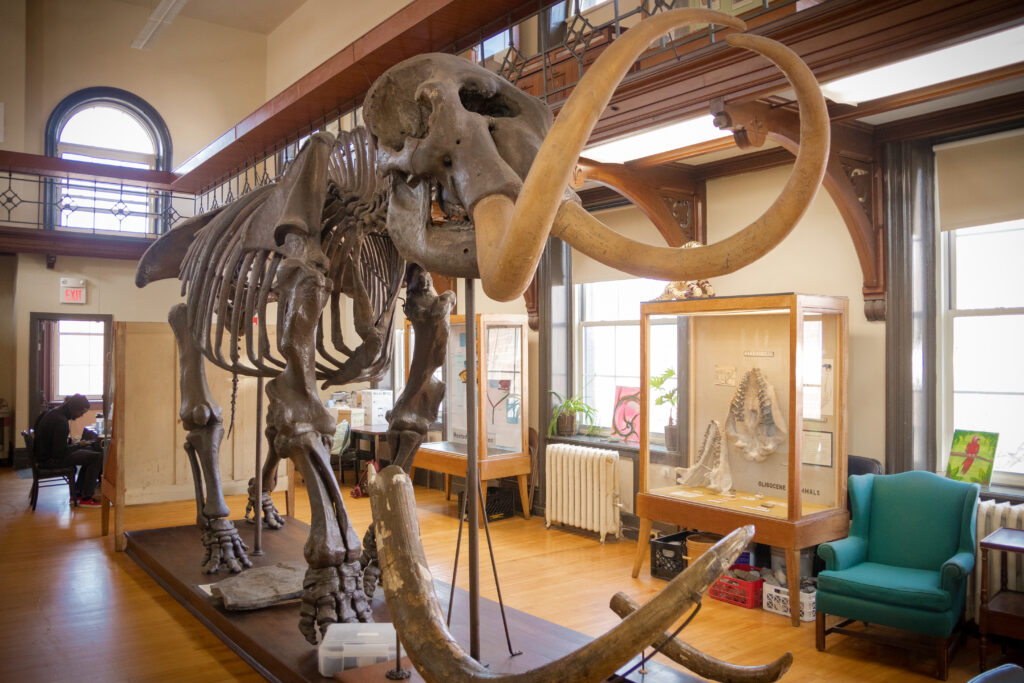Mastodon skeleton on display at Rutgers Geology Museum. (Shutterstock)
One final point about Jefferson’s delightful ignorance of the way the world works. He had the notion that somewhere in the American West there was a mountain of pure salt. He told Congress, “This mountain is said to be 180 miles long and 45 in width, composed of solid rock salt, without any trees or even any shrubs on it.” He urged his explorers, Andre Michaux (1793) and later Lewis, to keep their eyes open for the possibility that live mammoths still grazed the savannas of the American interior. He was so open to the idea of mammoths and mastodons that his Federalist detractors employed the adjective “mammoth” to ridicule Jefferson’s credulity in every possible instance, from “mammoth cheese” to “mammoth bread,” just as we attach the word “gate” to any scandal of our time, after the Watergate scandal of 1972–75.
Jefferson hoped the great rivers of the West would interlock in a human-friendly way so that commercial boat traffic could make the portage in half a day or so between the Missouri and the Columbia rivers, with the Platte, the Red, and the Colorado near at hand. He believed the mountains of the West would not be higher than the Appalachians, but also that they would be configured in perfect symmetry with the eastern coastal ranges. He reckoned that the entire American West was as well-watered as the Ohio Valley. What would he have thought of Utah? He wanted to carve perfectly square states west of the Appalachians so no state would have more territory than another. He believed that American Indians would choose willingly to be assimilated into the dominant culture for an improved and more secure way of life. He believed slavery would magically dissipate from the American scene, like fog when the sun rises.
Thomas Jefferson believed in the perfectibility of Man and that if we worked hard at it, we could create the world’s first sustainable agrarian republic. Though we have sobered up in the last decades to the point of persistent national disillusionment, we are all deeply fortunate to have had a whimsical dreamer at the start of our national experiment.
But if you were Meriwether Lewis returning from 28 grueling months on violent rivers and snow-capped mountains, you might wish to quibble a little with the Sage of the mountain … over a glass of fine Bordeaux wine.
---
## ***Discover more on these topics at Listening to America***
[Travel](https://ltamerica.org/tag/travel/ "1 topics")[Oregon](https://ltamerica.org/tag/oregon/ "4 topics")[State Parks](https://ltamerica.org/tag/state-parks/ "2 topics")[north daktoa](https://ltamerica.org/tag/north-daktoa/ "0 topics")[South Carolina](https://ltamerica.org/tag/south-carolina/ "1 topics")[Rivers](https://ltamerica.org/tag/rivers/ "3 topics")[Reading](https://ltamerica.org/tag/reading/ "1 topics")[Republics](https://ltamerica.org/tag/republics/ "1 topics")[Wisconsin](https://ltamerica.org/tag/wisconsin/ "0 topics")[U.S. Presidents](https://ltamerica.org/tag/u-s-presidents/ "71 topics")[Tennessee](https://ltamerica.org/tag/tennessee/ "1 topics")[The Constitution](https://ltamerica.org/tag/the-constitution/ "1 topics")[Water in the West](https://ltamerica.org/tag/water-in-the-west/ "24 topics")[William Shirer](https://ltamerica.org/tag/william-shirer/ "1 topics")[New York](https://ltamerica.org/tag/new-york/ "8 topics")[Ohio](https://ltamerica.org/tag/ohio/ "2 topics")[Sports](https://ltamerica.org/tag/sports/ "2 topics")[Thomas Jefferson](https://ltamerica.org/tag/thomas-jefferson/ "34 topics")[Utah](https://ltamerica.org/tag/utah/ "11 topics")[Poetry](https://ltamerica.org/tag/poetry/ "1 topics")[Virginia](https://ltamerica.org/tag/virginia/ "7 topics")[Wyoming](https://ltamerica.org/tag/wyoming/ "4 topics")[Oppenheim](https://ltamerica.org/tag/oppenheim/ "0 topics")[New England](https://ltamerica.org/tag/new-england/ "1 topics")[Rome](https://ltamerica.org/tag/rome/ "1 topics")[U.S. Constitution](https://ltamerica.org/tag/u-s-constitution/ "1 topics")[Road Trips](https://ltamerica.org/tag/road-trips/ "18 topics")[North Dakota](https://ltamerica.org/tag/north-dakota/ "53 topics")[Theodore Roosevelt](https://ltamerica.org/tag/theodore-roosevelt/ "16 topics")[Thoreau](https://ltamerica.org/tag/thoreau/ "5 topics")[Washington](https://ltamerica.org/tag/washington/ "2 topics")[Oppenheimer](https://ltamerica.org/tag/oppenheimer/ "1 topics")[Steinbeck Travels](https://ltamerica.org/tag/steinbeck-travels/ "75 topics")[Texas](https://ltamerica.org/tag/texas/ "4 topics")[Video](https://ltamerica.org/tag/video/ "51 topics")[Podcast](https://ltamerica.org/tag/podcast/ "1 topics")[North Carolina](https://ltamerica.org/tag/north-carolina/ "3 topics")[New Mexico](https://ltamerica.org/tag/new-mexico/ "3 topics")[Republic](https://ltamerica.org/tag/republic/ "0 topics")[Walden](https://ltamerica.org/tag/walden/ "1 topics")[paintings](https://ltamerica.org/tag/paintings/ "0 topics")[South Dakota](https://ltamerica.org/tag/south-dakota/ "16 topics")[Vermont](https://ltamerica.org/tag/vermont/ "1 topics")[Pennsylvania](https://ltamerica.org/tag/pennsylvania/ "1 topics")[Space Exploration](https://ltamerica.org/tag/space-exploration/ "8 topics")
**Categories:** Features
**Tags:** America at 250, Lewis and Clark, Thomas Jefferson, U.S. Presidents
---
### [Racing the Southern Interstates Across America](https://ltamerica.org/racing-the-southern-interstates-across-america/)
**Published:** May 6, 2025
**Author:** Clay Jenkinson
**Excerpt:** About three days and 2,870 miles: Clay makes a rapid dash across the continent.
**Content:**
## **About three days and 2,870 miles:** Clay makes a rapid dash across the continent.
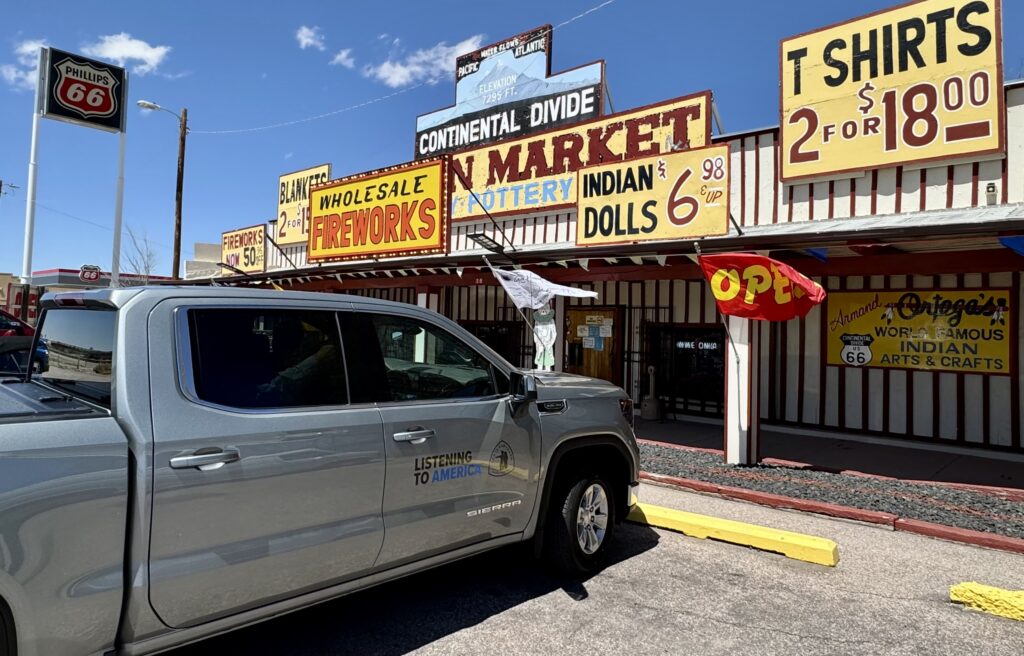Off Interstate 40 (and old U.S. Route 66), at the Continental Divide in New Mexico.
Now, in Salisbury, North Carolina, the home of my friends and colleagues Russ and Liz Eagle. It’s a long story, but over the past three days, I drove with Russ from Bakersfield, California, to North Carolina, a distance of 2,870 miles. I would have liked to dawdle and double the transit time, but I had miles to go before I slept — as Robert Frost put it — and promises to keep.
I sadly conformed to John Steinbeck’s 1960 *Travels with Charley* prediction: “When we get these thruways across the whole country, as we will and must, it will be possible to drive from New York to California without seeing a single thing.”
Well, not quite.
The Joad family views the “promised land” of California. (Photo from John Ford’s film version of *The Grapes of Wrath*, 1940)
What do I remember? The drive up Tehachapi Pass from west to east is dramatic and formidable. I’ve driven it in both directions four times last year and still marvel at its formidability. The Union Pacific Railroad track actually performs a 3,779-foot spiral loop to “make the grade” (the original meaning of that phrase). If the train has more than 56 cars, it actually passes over itself as it climbs to the summit, which is just 3,771 feet high, but “travels” much higher. Last year, my 2013 pickup labored pathetically up the highway (California 58) and nearly boiled over like a jalopy out of Steinbeck’s *The Grapes of Wrath*. That incident led to a new 2025 GMC pickup, the gift of Listening to America well-wishers in Bakersfield. Steinbeck’s Joads stopped on the west side of Tehachapi Pass to look down for the first time on the promised land, the lush and fertile Central Valley of California. (Little did they know what awaited them.) We did not stop to gaze down from the *The Grapes of Wrath* vantage point for two reasons: The valley was hazy, and we were hurrying to cross the continent.
Crossing the Mojave Desert was a piece of cake in a 21st-century vehicle with air conditioning. I am old enough to remember when people braced for the transit, filling every available vessel with water and checking the oil before the nerve-wracking sprint. In *Travels with Charley*, Steinbeck wrote: “The Mojave is a big desert and a frightening one. It’s as though nature tested a man for endurance and constancy to prove whether he was good enough to get to California.” This is no longer the case, except for people driving very old cars. We waltzed through the parched countryside, observing the scattered Joshua trees, the improbable and dusty desert towns, and the lone single-wide trailers far off in the distance, inhabited by people who wanted, for one reason or another, just to be left alone. In several places, we saw acres of parked Boeing commercial airplanes — graveyards of retired planes, or maybe just outdoor storage until needed again.
We drove through the endless Chocolate Mountains of southeastern California and stopped to marvel at the Colorado River as it begins its final stretch to Baja.
We stopped at Winslow, Arizona, long enough to have our picture taken “standing on the corner” of Kinsley and East Second Street and to buy a map of Route 66, which we paralleled but never succumbed to in our rush.
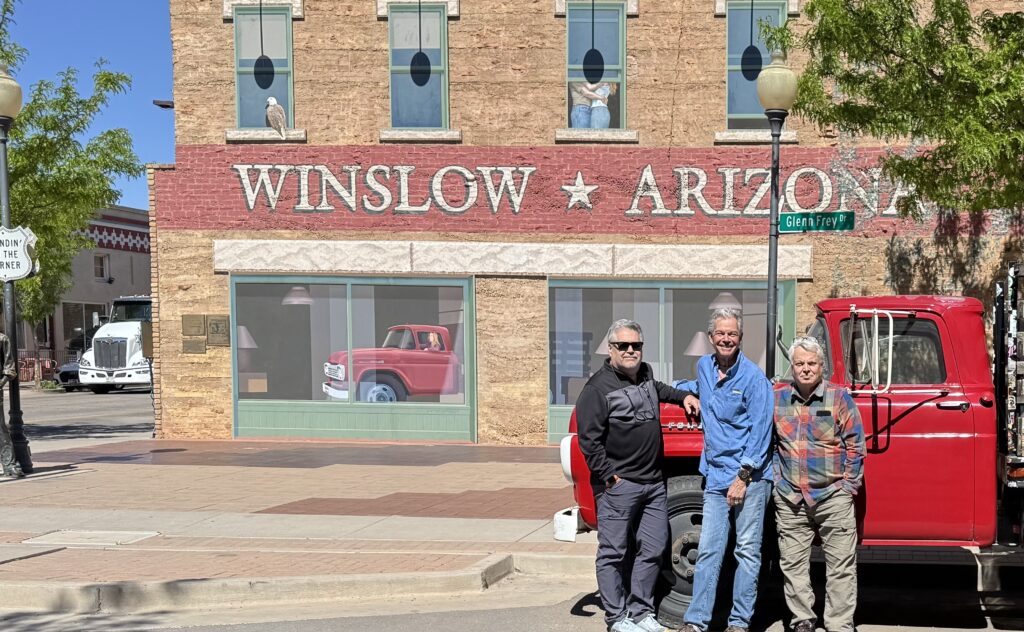On a corner in Winslow, Arizona.
As we churned through New Mexico, we saw endless scrub country stretching out in every direction. We passed the amazing Acoma Pueblo site and Chaco Canyon (one of the most sacred places in the Southwest) without stopping. I identified Mount Taylor (one of the four sacred mountains of the Navajo and sacred too to the Acoma Pueblo). I grumbled about the appallingly inappropriate ways landforms in the American West have been named for the conquerors. Zachary Taylor (1784-1850) was a slaveholder and an “Indian fighter,” and so he got himself a mountain in the very heart of the Indigenous Southwest.
## It’s Bigger in Texas
When you cross the border into Texas, you are immediately made to understand that you are in a unique state (both in geography and spirit). Steinbeck wrote, “Writers facing the problem of Texas find themselves floundering in generalities, and I am no exception. Texas is a state of mind. Texas is an obsession. Above all, Texas is a nation in every sense of the word.” Every billboard announced the biggest and grandest this or that, and about half of them invite you to try to ingest the 72-ounce beefsteak at the Big Texan Steak Ranch. We passed the garishly yellow Big Texan, but we did stop in Amarillo to have Texas barbecue with our friend Joe.
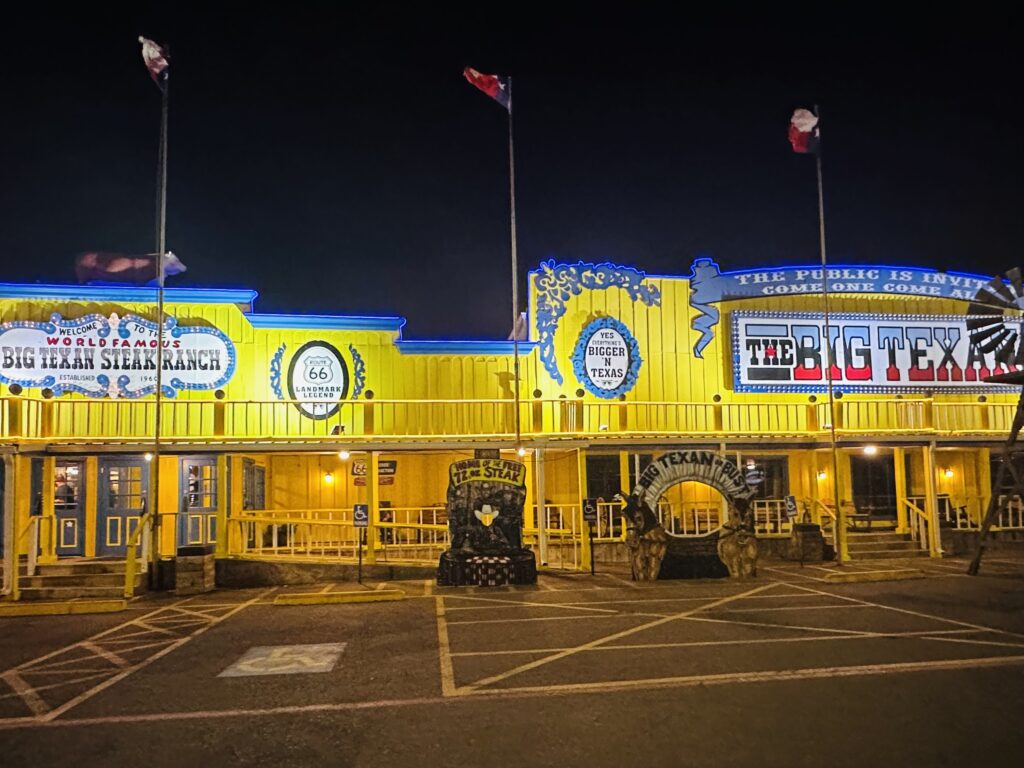The “Big Texan Steak Ranch” in Amarillo.
Texas is, as Texans remind us endlessly, huge. Larry McMurtry has an essay about driving across Texas, and he — as a full-blooded Texan — expressed a slightly nauseous amazement at the state’s sheer size. What impressed me most about our one-day transit was how much Texas changes from the parched shortgrass West to the lush semi-Louisiana-esque East. And that doesn’t account for Lyndon Johnson’s Hill Country, the sauna of the Houston-Galveston coastal corridor, or Texas’ most international city, El Paso.
Every 20 miles or so as we hurtled along the northern tier of Texas, the land was a little better vegetated, greener, and with vastly more trees than the semi-arid Panhandle. I knew that Texas had an enormous number of counties — 254 — but I was surprised at how many scores of struggling small towns there are, each with a once-vibrant brick downtown, now half boarded up and such commerce as there is out on the edge of town. If I had had a copy of McMurtry’s essays, I would have read some of them out loud to my traveling partner Russ. If anyone knew Texas, it was McMurtry, whose *The Last Picture Show* is as great as *Lonesome Dove*.
Another thing you learn by driving across America is how much dispiriting homogeneity there is in cities of more than 10,000 people. The same motels (Holiday Inn Express, Best Western, Super 8, Motel 6, maybe a Hilton Garden Inn), the same fast food (starting with Dairy Queen, Subway, and Sonic and moving on to McDonald’s, Arby’s, Burger King, Pizza Hut), and the same chain stores (Walmart, CVS Pharmacy, NAPA Auto Parts, Dollar General). It’s Anywhere USA and also Nowhere USA, drearily repetitive and bland and yet at the same time a little reassuring. If you were dropped blind into any of these places (the suburbs of St. Cloud, Minnesota, Salem, Oregon, or Crystal Lake, Illinois), you’d be unable to discern where you were in America. The swallowing up of local commerce (the old clunky office supply store yielding to Office Depot and the ma-and-pa men’s and women’s clothing stores losing their customers to Target or maybe one of the last J.C. Penney stores) is as predictable as it dispirits.
## Amazon’s Ubiquity
Perhaps even more startling is the sheer number of Amazon vans, semis, and railroad container cars all across America’s highways. I don’t exaggerate when I report that we saw hundreds, maybe even low thousands, of Amazon vehicles and containers. It’s astonishing. As a serial and obsessive Amazon shopper (almost exclusively of books), I plead guilty. I’m guessing that Amazon is now America’s principal monopoly. One of my liberal friends instructed me “never to buy anything from Amazon again,” and all I could do was guffaw. Boycotting Amazon is like trying to knock down the Great Wall of China with a BB gun.
Amazon now sells well over 40% of all books in the United States, but the vast variety of other things (from clothes to groceries and jewelry) play havoc with local commerce. Amazon represents 37.8% of all American e-commerce. One in three Americans has an Amazon Prime account. By now, Amazon is as much a national goods distribution system as anything else, delivering the products of more than 2 million small and medium-sized businesses worldwide. Walmart stores are ubiquitous in America (4,605), but Amazon dwarfs Walmart’s sales. What would Theodore Roosevelt, the great trust buster, do about Amazon? He read a book a day, so you do the math.
If Steinbeck were making this 2025 transcontinental journey, he’d probably devote a long passage to the sudden proliferation of premium car washes in America. I remember when the first car wash came to my hometown in western North Dakota in about 1970. The local television station produced a 30-minute special about that car wash, including an interview with the owner and a step-by-step tutorial on operating it. We were assured that the high-pressure hoses would not scour the paint off our vehicles. And we were informed that though it required quarters to operate, there were plans to install a change machine soon. An age of innocence! Today’s spectacular new car washes feature architectural flourishes, bold paint jobs, arches and flourishes, a long array of vacuum cleaners that will suck baseballs or hammers out from under the back seat, and conveyors that carry half a dozen vehicles through the process like a Detroit assembly line.
By the time we reached the Louisiana border, we were beginning to flag. Finally, we reached Shreveport, Louisiana, where we had kin and friends, and we paused for about 18 hours. There was gumbo and an offer of grits. After that, it was an even less observant romp through Mississippi, Alabama, Georgia, South Carolina, and finally to Salisbury, North Carolina, including rush hour delays in Atlanta and Greenville-Spartanburg. We were so weary now that we drove like Steinbeck after New Orleans — on pitiless adrenaline and a physical and psychic numbness that blurred everything but the asphalt and concrete immediately ahead of us. The last day of the journey began at 4:45 a.m. and ended at 8:15 p.m. (852 miles) and we only stopped for fuel and the rest areas forced upon us by our colossal intake of caffeine-laced drinks.
Yesterday, after a good enough night of sleep, we fetched the Airstream out of storage. There was some drama as there was almost no room to extricate it in the narrow avenue between storage bays with my new, longer pickup, and I made the usual rookie mistakes with backing up. After we recovered our dignity, we took it to a giant truck stop to get the propane tanks topped up and to flush the pink antifreeze goop we’d poured into the tanks last November.
And that’s when we discovered a serious leak in the plumbing. We are still unsure why, but as soon as we filled the tank with 30 gallons, all that water leaked out from under the rig. So now, as I write these words, I am waiting for word from the ma-and-pa RV repair shop to call to announce one of three things: 1) there was only a broken water hose and all is well; 2) this will need a range of new parts that will have to be ordered and probably I cannot get the rig until mid-next week; 3) at this point we may as well pour kerosene over the Airstream and light a match, and see the country by way of Greyhound buses. (I’m guessing it is number two.)
So it is no wonder, as Simon and Garfunkel put it, “I’m empty and aching, and I don’t know why.” “We’ve all come to look for America,” and I ain’t seen nuthin’ quite yet.
Stay tuned. Year Two begins.
---
## ***Discover more on these topics at Listening to America***
[Rivers](https://ltamerica.org/tag/rivers/ "3 topics")[North Carolina](https://ltamerica.org/tag/north-carolina/ "3 topics")[Walden](https://ltamerica.org/tag/walden/ "1 topics")[Virginia](https://ltamerica.org/tag/virginia/ "7 topics")[Wisconsin](https://ltamerica.org/tag/wisconsin/ "0 topics")[Sports](https://ltamerica.org/tag/sports/ "2 topics")[Space Exploration](https://ltamerica.org/tag/space-exploration/ "8 topics")[Ohio](https://ltamerica.org/tag/ohio/ "2 topics")[Vermont](https://ltamerica.org/tag/vermont/ "1 topics")[New England](https://ltamerica.org/tag/new-england/ "1 topics")[Podcast](https://ltamerica.org/tag/podcast/ "1 topics")[Utah](https://ltamerica.org/tag/utah/ "11 topics")[Tennessee](https://ltamerica.org/tag/tennessee/ "1 topics")[Washington](https://ltamerica.org/tag/washington/ "2 topics")[Wyoming](https://ltamerica.org/tag/wyoming/ "4 topics")[Reading](https://ltamerica.org/tag/reading/ "1 topics")[Steinbeck Travels](https://ltamerica.org/tag/steinbeck-travels/ "75 topics")[Oppenheimer](https://ltamerica.org/tag/oppenheimer/ "1 topics")[Poetry](https://ltamerica.org/tag/poetry/ "1 topics")[South Carolina](https://ltamerica.org/tag/south-carolina/ "1 topics")[Oppenheim](https://ltamerica.org/tag/oppenheim/ "0 topics")[Thomas Jefferson](https://ltamerica.org/tag/thomas-jefferson/ "34 topics")[Oregon](https://ltamerica.org/tag/oregon/ "4 topics")[New Mexico](https://ltamerica.org/tag/new-mexico/ "3 topics")[north daktoa](https://ltamerica.org/tag/north-daktoa/ "0 topics")[Rome](https://ltamerica.org/tag/rome/ "1 topics")[Road Trips](https://ltamerica.org/tag/road-trips/ "18 topics")[Thoreau](https://ltamerica.org/tag/thoreau/ "5 topics")[State Parks](https://ltamerica.org/tag/state-parks/ "2 topics")[Video](https://ltamerica.org/tag/video/ "51 topics")[Water in the West](https://ltamerica.org/tag/water-in-the-west/ "24 topics")[The Constitution](https://ltamerica.org/tag/the-constitution/ "1 topics")[New York](https://ltamerica.org/tag/new-york/ "8 topics")[North Dakota](https://ltamerica.org/tag/north-dakota/ "53 topics")[Republic](https://ltamerica.org/tag/republic/ "0 topics")[U.S. Constitution](https://ltamerica.org/tag/u-s-constitution/ "1 topics")[Theodore Roosevelt](https://ltamerica.org/tag/theodore-roosevelt/ "16 topics")[South Dakota](https://ltamerica.org/tag/south-dakota/ "16 topics")[William Shirer](https://ltamerica.org/tag/william-shirer/ "1 topics")[Pennsylvania](https://ltamerica.org/tag/pennsylvania/ "1 topics")[U.S. Presidents](https://ltamerica.org/tag/u-s-presidents/ "71 topics")[Travel](https://ltamerica.org/tag/travel/ "1 topics")[Republics](https://ltamerica.org/tag/republics/ "1 topics")[Texas](https://ltamerica.org/tag/texas/ "4 topics")[paintings](https://ltamerica.org/tag/paintings/ "0 topics")
**Categories:** Dispatches from the Road
**Tags:** Alabama, Arizona, California, Georgia, Illinois, John Steinbeck, Louisiana, Minnesota, Missippi, New Mexico, North Carolina, North Dakota, Oregon, Road Trips, South Carolina, Steinbeck Travels, Texas, Theodore Roosevelt
---
### [Leaving Home](https://ltamerica.org/leaving-home/)
**Published:** April 28, 2025
**Author:** Clay Jenkinson
**Excerpt:** Spring is here. It’s time to pack the bags, load the truck, and get on the trail of Lewis and Clark.
**Content:**
## Spring is here. It’s time to pack the bags, load the truck, and get on the trail of Lewis and Clark.
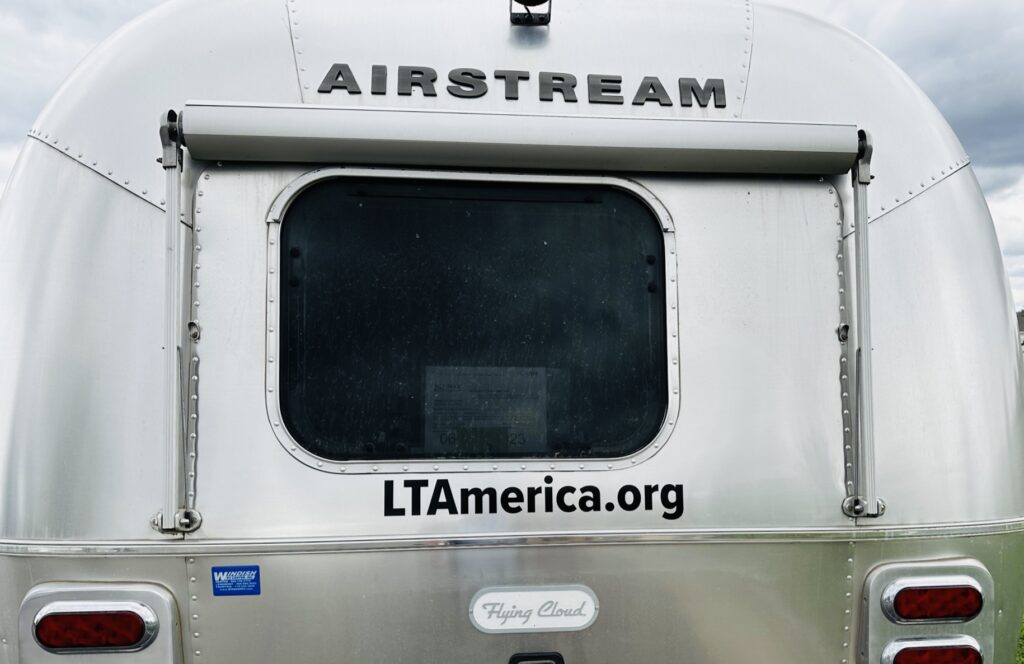
**Bismarck, North Dakota, April 16** — I’m bustling about to get out of town. I’ve had pickup hitch issues. I’ve stood in line at the DMV to get new license tags for my Airstream. I’ve done half a dozen loads of laundry. I’ve chosen the smallest number of books I’ll need to do my work over the next few months and doubled that number.
It’s Wednesday afternoon, and I must be on the road Saturday morning. Meanwhile, I have writing to do and a few important Zoom meetings. By the time you read this, I will be car-ambulating through the heartland.
Busy with last-minute chores and errands, yes, but roll away. It will come Saturday. I’ll be gone for no fewer than seven weeks.
It’s hectic, but I’m much better organized than I was last year at this time. I’ll sigh deeply when I get out on the highway. I’m sure I will stop three times before I get 100 miles away to make sure I brought my wallet, power supplies, computer, cameras …
One of my heroes is the Victorian explorer, linguist, diplomat, and adventurer Sir Richard Francis Burton (1821-1890). He was one of the first non-Muslims to penetrate Mecca right up to the Black Stone at the portal of the Kaaba. He approached in disguise, speaking fluent Arabic, impersonating a dervish. He knew that to be caught as an infidel in that sacred Islamic district would mean death. That was the joy of it for Burton. He was also one of the discoverers of the source of the Nile in 1856. He knew 29 languages. And he said this, one of my favorite statements about voyages of discovery:
> “Of the gladdest moments in human life, methinks, is the departure upon a distant journey into unknown lands. Shaking off with one mighty effort the fetters of Habit, the leaden weight of Routine, the cloak of many Cares and the slavery of Civilization, man feels once more happy.”
Well, I’m certainly going to distant lands. The size of America is staggering. Who knows? It may get bigger soon! Since I’ve been in all 50 states and have had the joy of traveling extensively in the American West, I won’t exactly be wandering unknown lands. Still, I understand what it means to shake off some of the fetters of civilization. And how many spectacular highways in the American West have I never been on after a lifetime of auto sojourning? I know a great deal about the Lewis and Clark expedition, and by Christmas, I’ll know much more. I’ve traveled the Lewis and Clark Trail in all sorts of ways, but never in one fell swoop from Jefferson’s Virginia to Astoria, Oregon.
My mind is brimming with ideas and projects. I know from last year’s experience following John Steinbeck around the country that I won’t have as much time for reading, research, and writing as I want and need. Heck, I’m still trying to make sense of the Steinbeck tour half a year later.
Mostly I am anticipating my first nights back in the “rig,” as I call my Airstream Flying Cloud. I have new reading pillows. New sheets. Better bins for storage. A new generator. The last one, purchased from a major American manufacturer, pooped out after 30 days. So my rancher and rodeo friend Sara Vollmer took me by the hand and made me buy the preferred Honda generator. Sara knows. She has been driving her three daughters on the Great Plains rodeo circuit for the last decade. She looks at my fastidious approach to “roughing it” with quasi-contemptuous bemusement.
## **On the Road With Lewis and Clark**
There is nothing I like better than being in my Airstream in some beautiful place, finished with a simple dinner, sitting at my dinette desk reading, taking notes, and writing, a glass of pinot noir within easy reach, feeling the slow advance of dusk — in the middle of nowhere. Then, when my back has had enough hours of sitting up that straight, I retire to the bed with the intention to plump the pillows and read on for a couple of hours. Typically, within 15 minutes, I am asleep. The only rival to that joyous experience is my daily shower. Assuming I am hooked to a water supply, I can luxuriate in my full-sized RV shower for 15 minutes or more. The water heater is tankless, meaning I have hot water on demand as long as I can stave off the feeling of decadence.
I know that I will be retracing the Lewis and Clark Trail to the Pacific and back. I know, too, that I intend to get on the major rivers (in a variety of watercraft): the Ohio, the Mississippi, the Missouri (of course), the Snake, the Columbia; and on the way back, the Yellowstone. I know I will stop at all the Lewis and Clark visitor centers. And I know that for two four-day periods, I will be canoeing different sections of the Missouri River in east-central Montana, the most beautiful stretch of the entire 2,500-mile river.
Beyond that, I am open to whatever happens out there. Of course, I will dig into the journals and a score of secondary books. Without question, I will read the actual journals every morning before getting on the highway. I know I’ll do some writing, video, and photo essays, but will I be able to fully open my mind and heart to the experience? Will I regain a complete sense of wonder about this remarkable epic of exploration and (frankly) American imperialism? I remember reading an abridged version of the journals 40 years ago for the first time. It was magic. It had the enchantment of *Lord of the Rings* and *Gulliver’s Travels*. Still, it was real, at least so far as white Army officers and privates in a slaveholding nation with a detached view of Native American sovereignty could describe the “real.” Of course, the story depends on three elements that were not specifically about Lewis and Clark and may not be very predictable. The first, of course, is Sacagawea. What we know about her could be contained easily in a passport book, yet she is a mythical giant in American memory, a kind of Native American goddess. There are more statues of Sacagawea in America than of any other woman. You take Sacagawea out of this story — with her ne’er-do-well and brutish husband and her charming baby boy Pomp — and I’m not actually sure there would have been a bicentennial of the expedition (2003-2006). I believe that she — Sacagawea, born in several places, raised in several ways, buried in several places — is THE essential tipping of this story from mighty interesting to national epic.
Second, York, Clark’s enslaved body man, his valet, about the same age as his master, having grown up from early childhood with his fellow human of almost precisely the same age, fellow male, fellow Kentuckian, fellow traveler, and yet — we must never forget — Clark’s property, his slave who would learn after the expedition returned that he must never forget his place as an owned human being. The great irony is that Indigenous people were intrigued by the one Black man among this group of more than 30 whites (and a Native woman). They wondered if perhaps York was the leader of this band. They reckoned he might have special powers — what the Lakota called wakan — and one skeptical Hidatsa leader spit on his fingers and attempted to rub off what he assumed was York’s black paint. York was sought after by Native women for his exogenous DNA. Or maybe just because he was groovy. York is not as central to the mythological success of the Lewis and Clark story as Sacagawea. Still, he has always added wonderful variety and complication to the story, now more than ever. His presence on the expedition raises the question of race, which is never far from any American story. In our time, York has become — we have read into him, as we do all mythic beings — a proud freedom fighter. The great statue of him overlooking the Ohio River in Louisville, Kentucky, depicts him as a human rights icon. The expedition’s journals and the letters Clark wrote about him after the return suggest a very strong, talented, and determined man.
Finally, there is the Newfoundland dog Seaman. Lewis bought the dog more or less on a whim before the expedition left Pittsburgh, perhaps because his rival explorer, Alexander Mackenzie, who crossed the continent by way of Canada in 1793, had a Newfoundland. Seaman is almost automatically the children’s favorite Lewis and Clark expedition member. When I lecture about the expedition before young people, either as a scholar or in character as Lewis, the No. 1 question children ask is, “What happened to the dog?” And the answer is: We don’t know. That’s one of the intriguing but frustrating mysteries of the Lewis and Clark story. Seaman was last mentioned in July 1806 when the expedition was in Montana and never mentioned again.
Brace yourself. There will be a lot of Lewis and Clark commentary in the next seven months, but I promise to try to make it interesting, and of course, I will be writing about much more than the expedition. For one thing, I mean to look at the entire frontier dynamic, what might be called the “Euro-Americanization of the Continent.” Manifest Destiny — which the current president invoked in precisely those famous loaded words in his second inaugural address a few months ago. And I’ll be lured off the Lewis and Clark story by the scores of wonderful places, museums, historical sites, National Parks, and people I will encounter.
As I wrote these words, UPS delivered a package at my front door. It contained a book on how we assign names to places, particularly how places in what’s now the United States were named by Lewis and Clark, John Wesley Powell, John C. Fremont, and myriad others, often local people of less prominence. It’s called *Names on the Land: A Historical Account of Place Naming in the United States*, by George Stewart, 1945. It’s a classic. Names and naming are hugely interesting to me, including name changes, which — as you can see — occur in both directions on the political spectrum. Mount McKinley or Denali. Gulf of this, Gulf of that. It’s a question of whose America is it?
I’ve chosen my audiobook to listen to during the doldrums stretches of highway. I’ve got an informal playlist of road songs.
I’ve got my National Geographic Atlas of the United States. I’m paid up at AAA.
I’m ready to go rediscover America.
---
## ***Discover more on these topics at Listening to America***
[Walden](https://ltamerica.org/tag/walden/ "1 topics")[Rome](https://ltamerica.org/tag/rome/ "1 topics")[Ohio](https://ltamerica.org/tag/ohio/ "2 topics")[Podcast](https://ltamerica.org/tag/podcast/ "1 topics")[North Dakota](https://ltamerica.org/tag/north-dakota/ "53 topics")[Rivers](https://ltamerica.org/tag/rivers/ "3 topics")[North Carolina](https://ltamerica.org/tag/north-carolina/ "3 topics")[U.S. Constitution](https://ltamerica.org/tag/u-s-constitution/ "1 topics")[William Shirer](https://ltamerica.org/tag/william-shirer/ "1 topics")[north daktoa](https://ltamerica.org/tag/north-daktoa/ "0 topics")[Reading](https://ltamerica.org/tag/reading/ "1 topics")[State Parks](https://ltamerica.org/tag/state-parks/ "2 topics")[Theodore Roosevelt](https://ltamerica.org/tag/theodore-roosevelt/ "16 topics")[New Mexico](https://ltamerica.org/tag/new-mexico/ "3 topics")[Thomas Jefferson](https://ltamerica.org/tag/thomas-jefferson/ "34 topics")[Pennsylvania](https://ltamerica.org/tag/pennsylvania/ "1 topics")[Poetry](https://ltamerica.org/tag/poetry/ "1 topics")[Oregon](https://ltamerica.org/tag/oregon/ "4 topics")[The Constitution](https://ltamerica.org/tag/the-constitution/ "1 topics")[Tennessee](https://ltamerica.org/tag/tennessee/ "1 topics")[Thoreau](https://ltamerica.org/tag/thoreau/ "5 topics")[paintings](https://ltamerica.org/tag/paintings/ "0 topics")[New England](https://ltamerica.org/tag/new-england/ "1 topics")[Road Trips](https://ltamerica.org/tag/road-trips/ "18 topics")[U.S. Presidents](https://ltamerica.org/tag/u-s-presidents/ "71 topics")[Washington](https://ltamerica.org/tag/washington/ "2 topics")[Wisconsin](https://ltamerica.org/tag/wisconsin/ "0 topics")[Virginia](https://ltamerica.org/tag/virginia/ "7 topics")[Video](https://ltamerica.org/tag/video/ "51 topics")[Republic](https://ltamerica.org/tag/republic/ "0 topics")[Oppenheimer](https://ltamerica.org/tag/oppenheimer/ "1 topics")[Oppenheim](https://ltamerica.org/tag/oppenheim/ "0 topics")[Space Exploration](https://ltamerica.org/tag/space-exploration/ "8 topics")[Water in the West](https://ltamerica.org/tag/water-in-the-west/ "24 topics")[Utah](https://ltamerica.org/tag/utah/ "11 topics")[Steinbeck Travels](https://ltamerica.org/tag/steinbeck-travels/ "75 topics")[Republics](https://ltamerica.org/tag/republics/ "1 topics")[South Carolina](https://ltamerica.org/tag/south-carolina/ "1 topics")[Texas](https://ltamerica.org/tag/texas/ "4 topics")[Wyoming](https://ltamerica.org/tag/wyoming/ "4 topics")[New York](https://ltamerica.org/tag/new-york/ "8 topics")[Vermont](https://ltamerica.org/tag/vermont/ "1 topics")[South Dakota](https://ltamerica.org/tag/south-dakota/ "16 topics")[Sports](https://ltamerica.org/tag/sports/ "2 topics")[Travel](https://ltamerica.org/tag/travel/ "1 topics")
**Categories:** Dispatches from the Road
**Tags:** America at 250, Lewis and Clark, North Dakota
---
### [A Word About Dictionaries](https://ltamerica.org/a-word-about-dictionaries/)
**Published:** April 20, 2025
**Author:** Clay Jenkinson
**Excerpt:** A short dissertation on my infatuation with dictionaries.
**Content:**
## A short dissertation on my long infatuation with dictionaries.
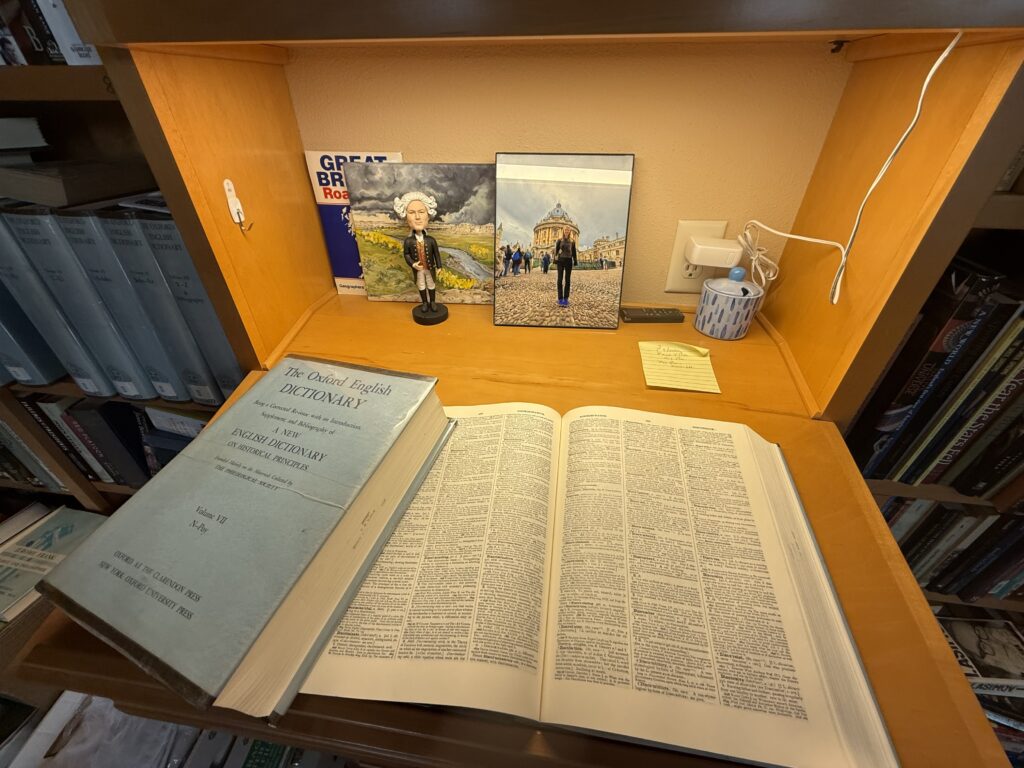Clay’s Oxford English Dictionary at work.
**Bismarck, North Dakota —** A word about dictionaries. I love them! Actually, it’s out of control. I own approximately 30 dictionaries, most of them abridged, but I also have five or six of the finest dictionaries in the English language: the Random House Unabridged Dictionary of the English Language; Webster’s Third New International Dictionary and, perhaps even better, Webster’s Second New International Dictionary. The *Second* belongs to a more prescriptive school of lexicography — there are rules; obey them, please.
I also have all [13 glorious folio volumes](https://www.amazon.com/Oxford-English-Dictionary-13-Set/dp/B00JGBVVSE) of the Oxford English Dictionary (OED), possibly the greatest dictionary in the world. I have two versions of the Shorter Oxford English Dictionary. And downstairs in my lower library, I have that one-volume blue boxed OED, with four miniature pages printed on a page, in a font so small that it now feels like one of those grains of rice on which the 23rd Psalm is written. It was a Book-of-the-Month premium — way back. I never consult it now. It would require a microscope, but it makes me happy. It reminds me of the time when I realized that language was more than the words that come out of our lives on a daily basis.
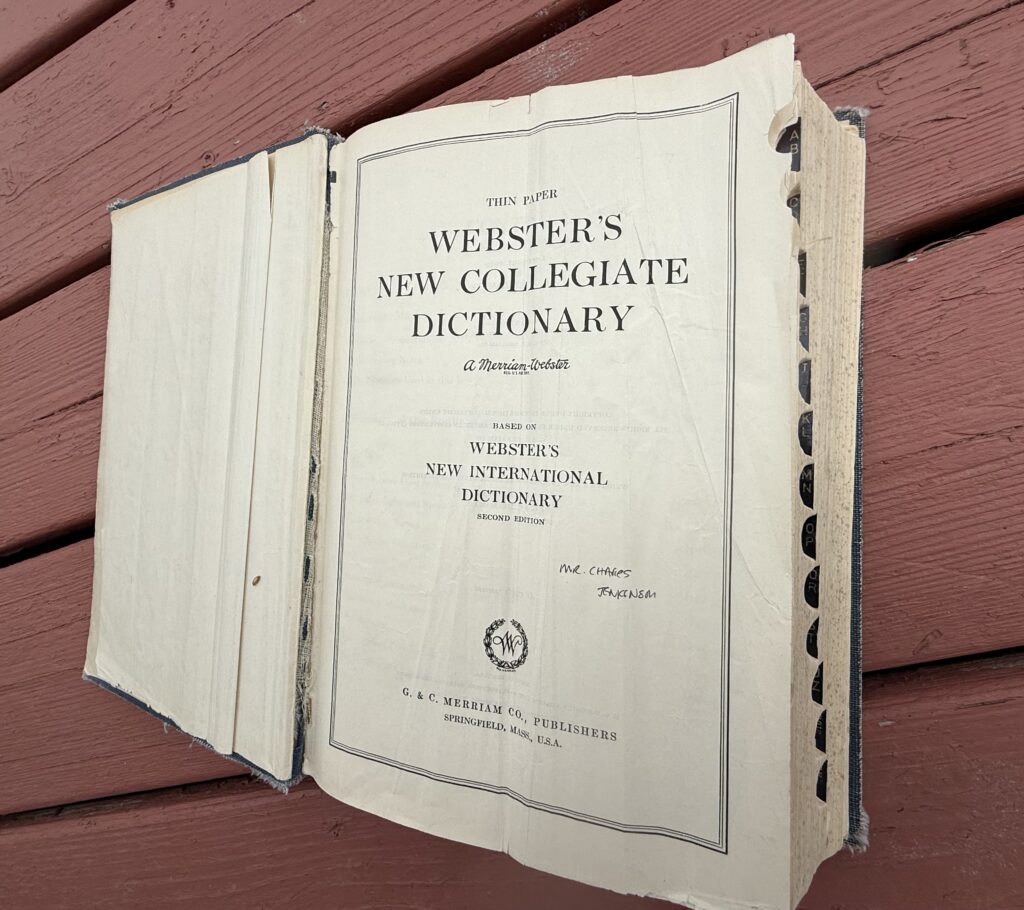
Finally, I have 10 or 15 versions of Webster’s New Collegiate Dictionary.
I used to give the latest New Collegiate as a high school graduation gift, but if I tried such a stunt today, students would either scorn me or not know quite what they were holding in their hands.
At any rate, I’m writing a foreword to a new (and excellent) book on the geology of the Lewis and Clark expedition by [John Jengo](https://lewis-clark.org/contributors/john-w-jengo/). I’m trying to explain that geology was in its infancy when they went west (1804-06). There was far more mystery in the rocks then than knowledge. Even Jefferson, a sophisticated man of the Enlightenment, regarded himself as both up to date and pretty daring when he wrote that the universe might even be as many, wait for it, 60,000 years old! Even so, Lewis and Clark did a splendid job describing what they encountered in at least five bioregions using basic English and a handful of current mineralogical terms. They didn’t have our geological vocabulary or sense of how all the sedimentary layers were laid down and where volcanism came in because those taxonomies were yet to be invented! However, their general, mostly plain English descriptions are so careful and comprehensive that today’s geologists can understand exactly what Lewis and Clark were looking at. Jefferson wrote that Lewis was given to “exact observation” and “a fidelity to truth so scrupulous that whatever he should report would be as certain as if seen by ourselves.” No wonder Jefferson chose Lewis to lead the expedition.
Painting of a Plesiosaur by Heinrich Harder for a mural in the Berlin Aquarium. (Wikimedia)
The limits of earth sciences in Jefferson’s time are exemplified in the following example: On September 10, 1804, in today’s South Dakota, the expedition found partial fossils of what we now think was a [plesiosaur](https://www.britannica.com/animal/plesiosaur). They described it with their usual care, but they could not really fathom what it was. They called it a big fish. Why? Because the idea of the dinosaur had not yet gelled in the Euro-American consciousness. Not only was there no word “plesiosaur” in 1804, but no word “dinosaur” at the time! It wasn’t until around 1809, after Jefferson left the presidency, that [Georges Cuvier](https://ucmp.berkeley.edu/history/cuvier.html) in France began to recognize, describe, and characterize the dinosaur (literally, the terrible lizard).
To get on with the foreword I was writing, I wanted to know exactly when “dinosaur” first appeared in English. Where should you turn? There is only one reliable place, Volume III of the OED (D-E). I got up from my chair, walked to the living room standing desk, pulled out the hefty volume, and looked it up. The word dates to 1841. It was proposed by an anatomist named Richard Owen in Britain in a learned paper he apparently read before the British Association for the Advancement of Science that year. Lewis was dead. Clark was dead. Thomas Jefferson was 15 years dead.
A principal axiom of the humanities is that you can only see what you are prepared to see. The lens you wear determines what you see. You only know what you develop a vocabulary to process. I have read Lewis and Clark without a geological or mineralogical lens all my adult life. I never even thought of such a thing. Not that I’m bored with geology (well, sometimes!), but because I had been informed in the books of virtually all Lewis and Clark expedition experts that while they were outstanding observers of flora and fauna, they did not have much to say about rocks. This fallacy has an interesting reason, but that story is for another time. But now that I have been reading the journals after reading the manuscript of John Jengo’s book, I see geology in almost every sustained journal entry, especially — this is a surprise — in Clark’s entries.
I will miss my dictionaries while traveling the Lewis and Clark Trail this summer. I am taking my favorite Webster’s New Collegiate Dictionary (the second) and have online access to the Oxford English Dictionary (OED). The online version is searchable! As Joe Biden said of Obamacare, “That’s a big f…..g deal.”
What is the best word to describe this road trip I am about to undertake from a linguistic point of view? A sojourn? A journey? A trek? An expedition? An adventure? An exploration? A recreation? A pilgrimage?
I prefer the poetry of sojourn, but the correct term here is journey, which starts this week!
See you down the road.
---
## ***Discover more on these topics at Listening to America***
[U.S. Constitution](https://ltamerica.org/tag/u-s-constitution/ "1 topics")[U.S. Presidents](https://ltamerica.org/tag/u-s-presidents/ "71 topics")[Podcast](https://ltamerica.org/tag/podcast/ "1 topics")[Thoreau](https://ltamerica.org/tag/thoreau/ "5 topics")[Ohio](https://ltamerica.org/tag/ohio/ "2 topics")[Wyoming](https://ltamerica.org/tag/wyoming/ "4 topics")[Travel](https://ltamerica.org/tag/travel/ "1 topics")[William Shirer](https://ltamerica.org/tag/william-shirer/ "1 topics")[State Parks](https://ltamerica.org/tag/state-parks/ "2 topics")[South Carolina](https://ltamerica.org/tag/south-carolina/ "1 topics")[Theodore Roosevelt](https://ltamerica.org/tag/theodore-roosevelt/ "16 topics")[Poetry](https://ltamerica.org/tag/poetry/ "1 topics")[Rome](https://ltamerica.org/tag/rome/ "1 topics")[Washington](https://ltamerica.org/tag/washington/ "2 topics")[Wisconsin](https://ltamerica.org/tag/wisconsin/ "0 topics")[Texas](https://ltamerica.org/tag/texas/ "4 topics")[North Carolina](https://ltamerica.org/tag/north-carolina/ "3 topics")[Pennsylvania](https://ltamerica.org/tag/pennsylvania/ "1 topics")[New York](https://ltamerica.org/tag/new-york/ "8 topics")[Rivers](https://ltamerica.org/tag/rivers/ "3 topics")[Space Exploration](https://ltamerica.org/tag/space-exploration/ "8 topics")[Steinbeck Travels](https://ltamerica.org/tag/steinbeck-travels/ "75 topics")[Tennessee](https://ltamerica.org/tag/tennessee/ "1 topics")[paintings](https://ltamerica.org/tag/paintings/ "0 topics")[Virginia](https://ltamerica.org/tag/virginia/ "7 topics")[Sports](https://ltamerica.org/tag/sports/ "2 topics")[New England](https://ltamerica.org/tag/new-england/ "1 topics")[Road Trips](https://ltamerica.org/tag/road-trips/ "18 topics")[Reading](https://ltamerica.org/tag/reading/ "1 topics")[Utah](https://ltamerica.org/tag/utah/ "11 topics")[Oregon](https://ltamerica.org/tag/oregon/ "4 topics")[Republics](https://ltamerica.org/tag/republics/ "1 topics")[Walden](https://ltamerica.org/tag/walden/ "1 topics")[Oppenheimer](https://ltamerica.org/tag/oppenheimer/ "1 topics")[Water in the West](https://ltamerica.org/tag/water-in-the-west/ "24 topics")[Video](https://ltamerica.org/tag/video/ "51 topics")[North Dakota](https://ltamerica.org/tag/north-dakota/ "53 topics")[north daktoa](https://ltamerica.org/tag/north-daktoa/ "0 topics")[South Dakota](https://ltamerica.org/tag/south-dakota/ "16 topics")[Oppenheim](https://ltamerica.org/tag/oppenheim/ "0 topics")[The Constitution](https://ltamerica.org/tag/the-constitution/ "1 topics")[Vermont](https://ltamerica.org/tag/vermont/ "1 topics")[Republic](https://ltamerica.org/tag/republic/ "0 topics")[Thomas Jefferson](https://ltamerica.org/tag/thomas-jefferson/ "34 topics")[New Mexico](https://ltamerica.org/tag/new-mexico/ "3 topics")
**Categories:** Books
**Tags:** Humanities, Lewis and Clark, Thomas Jefferson, U.S. Presidents
---
### [While Passing Through a Small South Dakota Town](https://ltamerica.org/while-passing-through-a-small-south-dakota-town/)
**Published:** April 21, 2025
**Author:** Clay Jenkinson
**Excerpt:** This will sound like a parable, and it may be. But I’m going to describe it exactly as it happened.
**Content:**
Protesters in Belle Fourche S.D., April 19, 2025. (Photo Clay Jenkinson)
**Saturday, April 19, 2025** – This will sound like a parable, and it may be. But I’m going to describe it exactly as it happened.
I was driving towards my destination in southern California along U.S. 85 (the shortest route between North Dakota and Denver). It has been an exceptionally beautiful day, and I am joyful to be back on the road. Again.
I drove slowly through a small town north of the Black Hills, with a population of about 5,800. I’ve always liked the town. In fact, as I drove slowly through town, I wondered if I could live here. This town has much to offer: the sacred Bear Butte is off in the distance to the east. The Black Hills are still a shallow green dome off to the south and west, with some snow still on the higher peaks. It’s close enough to Rapid City to offer occasional amenities and a good regional airport. In addition to that, I like the idea of living near “Indian Country,” the fabled Pine Ridge Indian Reservation, just south of Badlands National Park. You can see how it would appeal to me, a child of the plains.
I was drifting along when I saw a protest demonstration in front of the courthouse. To my surprise, it turned out to be an anti-Trump rally. There were 60 or so people there. Most were holding signs. All of those signs were homemade, which filled me with respect because the demonstrators were not carrying canned or pre-printed signs.
What surprised me most was that this country was about as red as it gets in America. One of the demonstrators told me that Trump won 80:20 here in 2014 — a deep red region of one of the reddest of states.
I wanted to know more, so I turned left and drove around the block to find a parking spot on a side street. I sauntered along this main north-south drag’s uneven sidewalk and approached the demonstrators. I was smiling. I walked along the entire line of protestors on the sidewalk behind them and exchanged friendly greetings with half a dozen or so. “Where you from?” they asked. “Care to join us?” “Thanks for stopping.” I said to a tiny cluster, “Hey, I thought this was a red country.” “It is,” said one woman, “but enough is enough.”
After I had run the gauntlet from behind, I edged my truck back out on the busy street and waited for a brief hiatus in the heavy traffic.
This, too, is America.
See you down the road.
---
## ***Discover more on these topics at Listening to America***
[William Shirer](https://ltamerica.org/tag/william-shirer/ "1 topics")[Wyoming](https://ltamerica.org/tag/wyoming/ "4 topics")[Ohio](https://ltamerica.org/tag/ohio/ "2 topics")[Tennessee](https://ltamerica.org/tag/tennessee/ "1 topics")[Thoreau](https://ltamerica.org/tag/thoreau/ "5 topics")[north daktoa](https://ltamerica.org/tag/north-daktoa/ "0 topics")[Travel](https://ltamerica.org/tag/travel/ "1 topics")[Pennsylvania](https://ltamerica.org/tag/pennsylvania/ "1 topics")[New Mexico](https://ltamerica.org/tag/new-mexico/ "3 topics")[Wisconsin](https://ltamerica.org/tag/wisconsin/ "0 topics")[Poetry](https://ltamerica.org/tag/poetry/ "1 topics")[Utah](https://ltamerica.org/tag/utah/ "11 topics")[South Dakota](https://ltamerica.org/tag/south-dakota/ "16 topics")[Rome](https://ltamerica.org/tag/rome/ "1 topics")[paintings](https://ltamerica.org/tag/paintings/ "0 topics")[South Carolina](https://ltamerica.org/tag/south-carolina/ "1 topics")[North Dakota](https://ltamerica.org/tag/north-dakota/ "53 topics")[Steinbeck Travels](https://ltamerica.org/tag/steinbeck-travels/ "75 topics")[New York](https://ltamerica.org/tag/new-york/ "8 topics")[Oppenheim](https://ltamerica.org/tag/oppenheim/ "0 topics")[Oppenheimer](https://ltamerica.org/tag/oppenheimer/ "1 topics")[Republic](https://ltamerica.org/tag/republic/ "0 topics")[The Constitution](https://ltamerica.org/tag/the-constitution/ "1 topics")[Video](https://ltamerica.org/tag/video/ "51 topics")[Theodore Roosevelt](https://ltamerica.org/tag/theodore-roosevelt/ "16 topics")[Water in the West](https://ltamerica.org/tag/water-in-the-west/ "24 topics")[Sports](https://ltamerica.org/tag/sports/ "2 topics")[Thomas Jefferson](https://ltamerica.org/tag/thomas-jefferson/ "34 topics")[Vermont](https://ltamerica.org/tag/vermont/ "1 topics")[Podcast](https://ltamerica.org/tag/podcast/ "1 topics")[North Carolina](https://ltamerica.org/tag/north-carolina/ "3 topics")[Space Exploration](https://ltamerica.org/tag/space-exploration/ "8 topics")[Walden](https://ltamerica.org/tag/walden/ "1 topics")[U.S. Constitution](https://ltamerica.org/tag/u-s-constitution/ "1 topics")[U.S. Presidents](https://ltamerica.org/tag/u-s-presidents/ "71 topics")[Texas](https://ltamerica.org/tag/texas/ "4 topics")[Reading](https://ltamerica.org/tag/reading/ "1 topics")[Washington](https://ltamerica.org/tag/washington/ "2 topics")[Virginia](https://ltamerica.org/tag/virginia/ "7 topics")[Oregon](https://ltamerica.org/tag/oregon/ "4 topics")[State Parks](https://ltamerica.org/tag/state-parks/ "2 topics")[Republics](https://ltamerica.org/tag/republics/ "1 topics")[New England](https://ltamerica.org/tag/new-england/ "1 topics")[Road Trips](https://ltamerica.org/tag/road-trips/ "18 topics")[Rivers](https://ltamerica.org/tag/rivers/ "3 topics")
**Categories:** Dispatches from the Road
**Tags:** South Dakota
---
### [Join Clay at Thomas Jefferson’s Poplar Forest Home and Help Kick Off LTA's 2025 Lewis and Clark Adventure](https://ltamerica.org/join-clay-at-thomas-jeffersons-poplar-forest-home-and-help-kick-off-ltas-2025-lewis-and-clark-adventure/)
**Published:** April 15, 2025
**Author:** Editor
**Excerpt:** Clay will lecture at 2:00 p.m., May 6, 2025 on Thomas Jefferson’s vision for Lewis and Clark’s “Corps of Discovery.”
**Content:**
Thomas Jefferson’s majestic second home, Poplar Forrest, in Lynchburg, Virginia. Clay Jenkinson will lecture there at 2:00 p.m., May 6, 2025. (Photo Poplar Forest)
Clay’s epic Lewis and Clark tour of America begins on May 6, 2025, at [Thomas Jefferson’s Poplar Forest](https://www.poplarforest.org) in Lynchburg, Virginia.
Clay will lecture that day on Thomas Jefferson’s vision for Lewis and Clark’s “Corps of Discovery” at 2:00 p.m. Clay’s talk will kick off his 11,000-mile, transcontinental journey in the 23-foot Listening to America Airstream.
[Clay will trace the Lewis and Clark expedition from Virginia](https://vimeo.com/1057969425), where it was conceived in the imagination of Thomas Jefferson, all the way down the Ohio River, up the Mississippi and Missouri, over the Bitterroot Mountains, down the Clearwater, Snake, and Columbia Rivers — and back again.
Admission to Poplar Forest costs $26. After Clay’s short lecture, there will be a potluck picnic nearby.
This is your chance to share the launch with Clay, break bread with your fellow listeners, and peek into the Listening to America Airstream.
We hope you will join us for this historic event in the heart of Jefferson’s Virginia on May 6.
**For more details, to ask questions or if you’d like to let us know you will join us, please email Liz Eagle at leagle@ltamerica.org.**
**Categories:** Dispatches from the Road
**Tags:** America at 250, Lewis and Clark, Thomas Jefferson
---
### [Reflections on America and the Open Road](https://ltamerica.org/reflections-on-america-and-the-open-road/)
**Published:** April 15, 2025
**Author:** Clay Jenkinson
**Excerpt:** In a few weeks, Clay will embark on an 11,000-mile trek following the Lewis and Clark trail across the continent and back. As he loads his pickup and prepares to hit the road, Clay ponders what he has learned so far in his multi-year project to Listen to America.
**Content:**
## In a few weeks, Clay will embark on an 11,000-mile trek following the Lewis and Clark trail across the continent and back. As he loads his pickup and prepares to hit the road, Clay ponders what he has learned so far in his multi-year project to Listen to America.
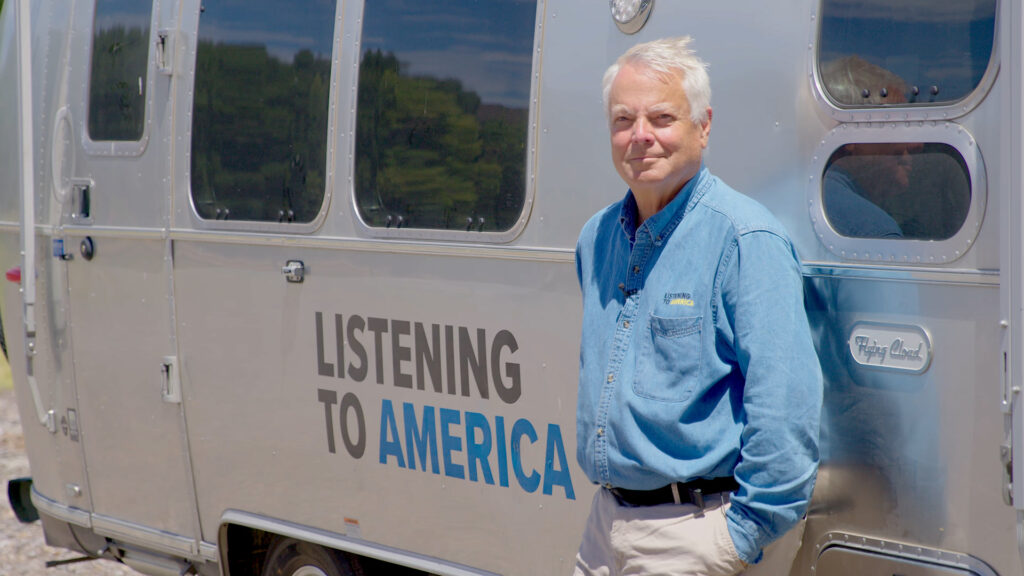Clay Jenkinson and the Listening to America Airstream.
I’m trying to understand America as it approaches its 250th birthday next year. That’s why I’ve been driving around the country hauling a 23-foot Airstream trailer. But how do you figure out America? You can’t just stroll an RV park at 5 p.m. thinking you will gain useful insights. “Nice slide-out.” “Thanks. I wanted a Roadtrek 190, but the wife wanted more space — for the grandchildren.”
Steinbeck called it “this monster country.” He was right. And there are so many Americas. What does a taciturn New Englander have in common with a Navajo sheep herder? What does a New Jersey hairdresser have in common with a feng shui designer from Marin County in northern California? What is Creole gumbo in northern Minnesota or lutefisk in Miami? There are still powerfully distinct regions in America with distinct accents and speaking styles. Texas is not Vermont. Nevada is not Wisconsin. The Black American experience in America is not the same as the White experience or the Hispanic, the Asian, or the Native American.
## **So, Where Are We Headed?**
Who are we now? How did we reach this place, and where are we headed?
I’m not alone out there. There are now 11.2 million RVs in America, an all-time high thanks to three factors: the social dislocations of the Covid-19 pandemic, prosperous early retirement, and an economy that creates houselessness as well as homelessness. It is hard to count, but most estimates indicate that about a million Americans now live in vans and RVs full-time. Some people live in their vans because it is cool or romantic, others because economic forces beyond their control have displaced them.
According to *Fortune* magazine, approximately 44% of America’s full-time employees don’t earn a living wage. That means they have to do without some of the basic things in life. That means they must share a household to make ends meet. That means they have no rainy day fund for life’s inevitable setbacks. That’s why hundreds of thousands live in vans or cars. Jessica Bruder’s *Nomadland: Surviving America in the Twenty-First Century* is a fascinating study of the vehicular nomad phenomenon.
Current U.S. population: 340 million. For comparison, Canada has a population of 40 million, the UK 69 million, Germany 84 million, France 66 million, and Mexico 129 million. China and India have 1.4 billion each. The closest country to a U.S.-sized population is Indonesia, which has 285 million people. How often do Americans think about Indonesia? Or Ghana? Or Ecuador? With a population of a third of a billion people, there is no single America. There are 4.34 million Muslims in the United States and 85 million evangelical Christians. What do they have in common beyond Starbucks?
Florida is the most visited state. North Dakota is the least visited. The average American has visited 17 states. Only 2% have visited all 50. Just over 300 Americans have been to the highest point in every state. Only a handful have been in America’s 3,143 counties (or their equivalent). I’ve been to the highest points in three states: North Dakota (3,503 feet), Kansas (4,039), and California (14,505).
There are 283 million cars in the United States (one for every 1.2 Americans) but 398 million guns. There are 15,186 gun-based homicides in the U.S. per year, 12 (a dozen) in Switzerland, and statistically none in Japan, Germany, France, Italy, the United Kingdom, etc. And that was a bad year in Switzerland. Our national refusal to face the problem of gun violence perplexes and terrifies our friends in the rest of the world. They don’t have a Second Amendment. They see ours as a national suicide pact.
As of 2023, 278 million Americans lived in urban communities, 55 million across the broad rural expanse that makes up 90% of American geography. That means that about 20% of the American people identify as rural. Most Americans live within 45 miles of a Walmart. But if you live in south central Nevada, southeastern Oregon, or northern Montana, you may have to drive 250 miles to get to one. Ah, but there is always a Dollar Store! You know the trope: Red America is the Cracker Barrel, Blue America is Whole Foods. Does this matter? Donald Trump won 75% of the counties in America with a Cracker Barrel restaurant but only 22% of those with a Whole Foods store. And they say there is no class system in America! Generally speaking, the more formal education you have had, the more likely you vote for the Democrat. Thirty seven percent of the American people have a BA or higher. Personal note: most of my Red America friends think I got too much education, and it didn’t do me a bit of good.
## **Pizza: America’s Favorite Food?**
Turn on television for a weekend, and what do you learn about America? You can lose weight, but it will cost you money. If you buy a new Jeep, you will soon be tooling around in the backcountry around Monument Valley. Arby’s has the meats. You can now buy quilted toilet paper that is equal to any challenge. America is a very violent country. On any given day, you can watch a score of cop and law shows: *NCIS, Criminal Minds, Blue Bloods, Law and Order, The Rookie, 9-1-1, —* and, if you like nostalgia, *Matlock, Mannix, Columbo, NYPD Blues, Charley’s Angels,* and *The Fugitive.*
Erectile Dysfunction is common — don’t be ashamed — and you don’t have to see a doctor about it anymore. The heartbreak of Psoriasis, Peyronie’s Disease, Thyroid Eye Disease, and Toe Fungus. My goodness, America loves sports. You can watch sports talk shows 24 hours a day on a dozen platforms. Whether LeBron has another season in him can dominate sports talk for days. Ratings are always high for beach women’s volleyball. Violent cage fights proliferate. You can watch Hallmark Christmas dramas for about half the year now. They are always the same. An overworked 35-year-old New York book agent returns to Bugtail, Mississippi, to help her ailing father through a back operation. There, she runs into her old high school boyfriend, whom she broke up with because he wouldn’t grow up and had no ambition. At first, they bicker, but soon enough … . The late-night talk shows are now overtly political — the Culture Wars have kidnapped them — and the guests are usually actors you’ve never or rarely heard of telling not-very-funny anecdotes and promoting their latest Netflix series.
The sad vulgarization of the English language is on full display on TV, especially cable, where the F-word has taken root; George Carlin would have a harder time getting traction for his Seven Words monologue today. The silo news cable channels make it clear that we are teetering on the edge of Armageddon, and the Other side is, well, un-American.
Pizza must be America’s favorite food because the ads are ubiquitous: double cheese, cheese-infused crusts, and meat eaters.
I’m not sure my extensive travels have made me wiser, though they have weaned me from television. They have made me much happier — I have fallen in love with America over and over again — but I am having a tough time determining if we are still one America or two or more or many. What I mostly sense out there is bewilderment and uncertainty. The social and technological fabric of the country has been changing so fast in the last few decades that all we can do is grab on and ride the wave, trying to avoid drowning from overstimulation, rancor, rage, and a sense that there is no foundation to stand on anymore. The first website was put up in 1995. Today, there are 350 million registered websites in the United States. I see countless people scrolling through video reels, not because they are especially interesting or informative but because a: everyone is doing it, and b: they are, in their way, addictive. We like to see humanity in trainwreck mode.
Everyone can publish now, and as William Butler Yeats saw it, “the best lack all conviction while the worst are full of passionate intensity.”
The emperor Nero fiddled (actually, he played a cithara) while Rome burned in 64 CE. We toggle through Instagram.
## **A Bewildered National Narrative**
My biggest concern now — from a lifetime of reading in the humanities, emphasizing the collapse of the Roman Republic (100 BCE – 27 BCE) — is that we Americans no longer have an agreed-upon national narrative. It used to be something like this (in the shortest possible compass):
— Columbus bumps into America
— Exploration and colonization
— American Revolution, an Enlightenment Nation
— The Frontier Movement
— Conestoga Wagons
— The “Indian Wars”
— Gold rushes
— America overcomes slavery
— Industrialization of America: Railroads
— The Gilded Age of Robber Barons
— America reluctantly becomes a world power
— America becomes the hegemon
— America transforms into a service economy
— A new Gilded Age
Most Red State Americans still see our history more or less like this: that we are a very great country that has been and still is the class act of the world; that we are the most generous of all nations; that we protect and prop up the rest of the world and they take advantage of us; and we are on the whole, with a few exceptions, a force for good in a dangerous world.
But the intellectual elites — the faculties of the great universities, the activist minority groups, many of the foundations, and think tanks — are no longer OK with that narrative. They see America as radically unfinished, a nation that talks like Jefferson and behaves like Henry Kissinger (or Andrew Jackson), whose lofty Founding Goals have been subverted by greed and a thirst for power no different from every other empire in history. They see an abundance of lingering racism, homophobia, misogyny, xenophobia, indifference, and a ruinous maldistribution of wealth in the wealthiest country in history. They even wonder if the vision of the Founders is not finally hollow at the core — they were slaveholders, after all, and when Abigail Adams urged her husband John and his fellow male revolutionaries to “remember the Ladies” as they reconfigured the American polity, he laughed her off. One revolution at a time, said he. “As to your extraordinary Code of Laws, I cannot but laugh … rather than give up this, which would compleatly subject Us to the Despotism of the Peticoat, I hope General Washington, and all our brave Heroes would fight.”
If we don’t have an agreed-upon national narrative — where we came from, who we are, what we value, how we got here, where we should be heading — how can we accomplish great things at home and in the world? Imagine trying to persuade Congress to create the Interstate Highway System today. Or to go to the moon within 10 years? Or to pass the Marshall Plan? In the face of bewilderment, escapism and radical individualism grow like weeds.
## **Building a Society to Match the Scenery**
I tend to see the glass as three-quarters full, but you can’t study our history now without being acutely aware of “the cost of America.” You might even say the staggering cost of America. The cost to the 12.5 million Africans we brought here in chains to do that hard physical work of building the country. The cost to Native Americans who were minding their own western hemispheric business until 1492, and since then have been systematically dispossessed of 95% of their sovereign land base, often by way of genocidal dynamics. Indigenous population in 1492: somewhere between 5 and 15 million. Indigenous population in 1900: about 200,000. The cost to Mexico and Mexicans. The cost to the environment and — now — the planet. You cannot wander through the incredible scenic landscapes of America without wondering if we have built (or can still build), as Wallace Stegner put it, “a society to match the scenery.”
Coming to terms with the more complicated, darker, more nuanced, more inclusive history of America doesn’t have to make you a critic of our national enterprise. Still, it surely does sober you up in a hurry. Thanks to the “cultural revolution” of the last 60 years, we now know too much about our tangled, often tragic, story to be unambiguously cheerful about it.
Here’s my dilemma. Unless we come to terms with the less admirable episodes and impulses of American history, we cannot heal and move forward as something like a unified nation, and it is clear to me that we desperately need to find a healthy and just path forward. That begins with an acknowledgment of complicity. And yet — we must not wallow in grief or guilt or fail to recognize and celebrate what is good and great about America — and what can be made better and greater about America as we lurch forward.
## **Being Dis-illusioned Without Becoming Disillusioned**
Put it this way: we all need to be dis-illusioned without becoming disillusioned, if that makes any sense. We must no longer be carrying forward simpleton illusions, narratives that favored white and indeed white male America and regarded everyone else as bit players. Everyone needs to be at the table when the new history is written. A more honest, just, and inclusive American history will be less rosy, less satisfying, and sometimes deeply troubling. Less tidy.
We must have a national conversation about the Idea of America as we approach our 250th birthday. For me, that means reading, watching documentary films, listening to the best podcasts, traveling the country listening (genuinely listening), putting myself in slightly uncomfortable situations, drinking in the sublimity of our landscape, trying to remember whose land it once was and at what cost it was Euro-Americanized. And trying to imagine what a 21st-century American Renaissance would look like with each of us contributing.
As I sit in my Airstream in the cool of the evening under Devils Tower or high in the Cascades or along the banks of the San Juan River, I’m trying to locate and then read every book that helps explain this critical uneasy moment in our national destiny. If you have recommendations, I am eager to hear them. I’m also re-reading American classics — *Moby Dick*, *The Sound and the Fury*, *Roughing It*, *Their Eyes Were Watching God*, *Notes of a Native Son*, *Black Elk Speaks*, *Walden*, *The Yellow Wallpaper*, C*atcher in the Rye*, *Beloved* … — and trying to read them, if possible, with fresh eyes, wearing the new lenses we now have to reevaluate our past.
We cannot afford to linger in numbness, bewilderment, and rage. China hovers around the American vacuum. We must find a careful path through our glorious and troubled past to a new awakening of unified American purpose. It may be too late. I don’t think so.
I know this much. I am more likely to find answers on the road than in the loneliness of my home study.
---
## ***Discover more on these topics at Listening to America***
[Washington](https://ltamerica.org/tag/washington/ "2 topics")[Utah](https://ltamerica.org/tag/utah/ "11 topics")[South Carolina](https://ltamerica.org/tag/south-carolina/ "1 topics")[North Carolina](https://ltamerica.org/tag/north-carolina/ "3 topics")[Travel](https://ltamerica.org/tag/travel/ "1 topics")[Virginia](https://ltamerica.org/tag/virginia/ "7 topics")[Oppenheim](https://ltamerica.org/tag/oppenheim/ "0 topics")[Video](https://ltamerica.org/tag/video/ "51 topics")[Sports](https://ltamerica.org/tag/sports/ "2 topics")[New Mexico](https://ltamerica.org/tag/new-mexico/ "3 topics")[Thoreau](https://ltamerica.org/tag/thoreau/ "5 topics")[U.S. Constitution](https://ltamerica.org/tag/u-s-constitution/ "1 topics")[Theodore Roosevelt](https://ltamerica.org/tag/theodore-roosevelt/ "16 topics")[The Constitution](https://ltamerica.org/tag/the-constitution/ "1 topics")[Oppenheimer](https://ltamerica.org/tag/oppenheimer/ "1 topics")[Walden](https://ltamerica.org/tag/walden/ "1 topics")[New England](https://ltamerica.org/tag/new-england/ "1 topics")[Wyoming](https://ltamerica.org/tag/wyoming/ "4 topics")[Steinbeck Travels](https://ltamerica.org/tag/steinbeck-travels/ "75 topics")[Texas](https://ltamerica.org/tag/texas/ "4 topics")[North Dakota](https://ltamerica.org/tag/north-dakota/ "53 topics")[Space Exploration](https://ltamerica.org/tag/space-exploration/ "8 topics")[Podcast](https://ltamerica.org/tag/podcast/ "1 topics")[Water in the West](https://ltamerica.org/tag/water-in-the-west/ "24 topics")[Pennsylvania](https://ltamerica.org/tag/pennsylvania/ "1 topics")[Thomas Jefferson](https://ltamerica.org/tag/thomas-jefferson/ "34 topics")[William Shirer](https://ltamerica.org/tag/william-shirer/ "1 topics")[Reading](https://ltamerica.org/tag/reading/ "1 topics")[Rivers](https://ltamerica.org/tag/rivers/ "3 topics")[Rome](https://ltamerica.org/tag/rome/ "1 topics")[Tennessee](https://ltamerica.org/tag/tennessee/ "1 topics")[New York](https://ltamerica.org/tag/new-york/ "8 topics")[Oregon](https://ltamerica.org/tag/oregon/ "4 topics")[Republics](https://ltamerica.org/tag/republics/ "1 topics")[Poetry](https://ltamerica.org/tag/poetry/ "1 topics")[north daktoa](https://ltamerica.org/tag/north-daktoa/ "0 topics")[Ohio](https://ltamerica.org/tag/ohio/ "2 topics")[State Parks](https://ltamerica.org/tag/state-parks/ "2 topics")[paintings](https://ltamerica.org/tag/paintings/ "0 topics")[South Dakota](https://ltamerica.org/tag/south-dakota/ "16 topics")[Republic](https://ltamerica.org/tag/republic/ "0 topics")[Road Trips](https://ltamerica.org/tag/road-trips/ "18 topics")[Vermont](https://ltamerica.org/tag/vermont/ "1 topics")[Wisconsin](https://ltamerica.org/tag/wisconsin/ "0 topics")[U.S. Presidents](https://ltamerica.org/tag/u-s-presidents/ "71 topics")
**Categories:** Features
**Tags:** America at 250, Books, Humanities, Native Americans
---
### [My New American Friend From Ghana](https://ltamerica.org/my-new-american-friend-from-ghana/)
**Published:** April 7, 2025
**Author:** Clay Jenkinson
**Excerpt:** On a recent Uber drive to the Bismarck airport, Clay met Isaac, a North Dakota emigre from Ghana and a proud, brand-new U.S. citizen.
**Content:**
## On a recent Uber drive to the Bismarck airport, Clay met Isaac, a North Dakota emigre from Ghana and a proud, brand-new U.S. citizen.
Issac, the day before his Naturalization ceremony in Fargo, North Dakota. (Photo Clay Jenkinson)
**Bismarck, N.D**. — I ordered a reserved Uber ride to the Bismarck airport on a recent March morning. I’d be gone for almost two weeks, and I didn’t want to leave my car in the airport parking lot. Precisely on time, the driver arrived in a red hybrid car, washed outside and spotless inside. By the time I locked the house, he had stowed my two heavy bags in the trunk.
The driver, whose name was Isaac, was from Ghana, on the southwest coast of the bulge of Africa. Confession: I knew Ghana was in Africa and imagined it was on the west coast, but that’s all I knew.
I broke my usual silence as we drove to the airport and asked the driver to tell me a little about Ghana. Population 35 million. The official language is English, but dozens of native languages are spoken from village to village. A Christian nation: 80% Christian, 15% or so Muslim, and the rest native rites. I had to ask which European nation had formerly held colonial dominion over the people of Ghana. Britain. Thus, English, not French or Dutch, is the official language.
As we drove, a vast flock of geese looped overhead on their way north in a perfectly elongated vee. Spring has begun to come to the northern Great Plains, but don’t be fooled: there will be reversals and setbacks. It can freeze any month in North Dakota, though it seldom does from July 1st to October 1st. No Memorial Day picnic in North Dakota is safe from cancellation in the face of 28 degrees and 40 mile an hour winds. Everyone in North Dakota has special clamps to hold the plastic tablecloth on the picnic table. We regard a 10 mph wind as “dead calm.”
I wondered what kind of shock it is to move from Ghana (average temperature 80 degrees Fahrenheit) to North Dakota (43 degrees). “You get used to it,” Isaac said.
I asked what nations border Ghana? (Talk about ignorance!) He said: Togo (I don’t remember ever hearing of it), the Ivory Coast, and Burkina Faso. Ah, Burkina Faso, the former French colony named Upper Volta. I knew that. The capital of Burkina Faso is Ouagadougou (wah-ga-DOO-goo), one of the loveliest and most mellifluous of all geographic names. Economy? Agriculture, mostly cocoa, and some gold mines. Are the people there happy? Yes, he said, Ghana is regarded as one of the five happiest (and safest) places in Africa.
(Shutterstock)
## **Living in North Dakota**
I asked Isaac how long he had lived in North Dakota. Ten years. Why did he move here? Economic opportunity. OK, but why did he move here to the least glamorous state in the union, in fact, the last and least visited state in America? His sister came here during the Bakken Oil Boom. They live together now. They like it.
How often does he go back to Ghana, if ever? He said frequently because his wife and four children are there, one of whom he has not yet met.
Things were starting to get serious. When will he next see his family? He’ll travel to Ghana in May for six weeks. Is it hard to live apart across so vast a distance? Well, there is FaceTime. He sends a large percentage of his income back to Ghana to support his wife and children.
Are you trying to bring them here to the U.S.? Yes, he said, he’s filed all the paperwork. How worried are you, I asked, given the current administration’s general hostility to immigration from black African nations? Very worried. Isaac said he was well aware that President Trump has called places like Ghana “shithole” countries. “We’ll see,” he said. “All you can do is follow the process diligently.”
His English, by the way, was excellent, better than most of the Anglo taxi drivers I have encountered in my extensive American travels.
We were now about 10 minutes from the airport. Given how interesting this conversation had been, I asked carefully, “How do you like the people of North Dakota?” “They are really nice people, Christians in every way.”
OK, I said, but North Dakota is one of the least diverse places in America. When I was growing up, you rarely saw an African American except at the two Strategic Air Command air bases in Minot and Grand Forks. Thanks to the Bakken Oil Boom (2003-13), things are much better, but it is still the kind of place that the David Dukes of the world would likely relocate to if the climate were not so brutal.
So I asked, “Have you experienced any hostility, discrimination, or racism here?”
“No. None. In 10 years, not once. Never.”
“Really? Never?”
“Never.”
All I could say is wow. That was joyous, though somewhat surprising, news.
We were approaching the air terminal drop-off point. I got Isaac’s phone number so I could contact him directly when I needed a ride. He said that would be perfect.
Then he said, “Sir, I want to tell you something. Tomorrow I am driving over to Fargo (200 miles east) to go through the ceremony of becoming an American citizen. I am very happy.”
How long did it take? I asked.
He filed the paperwork in October 2024. So five months. Will this make it easier for him to bring his family to the United States? “I hope so. I’m pretty worried.”
Isaac, with his U.S. Certificate of Citizenship, received March 25, 2025 in Fargo, North Dakota.
I asked him how hard the naturalization test was. “Not bad. I studied hard. They asked me to name a long American river. I said the Missouri. They asked me the names of my senators. I have driven them around Bismarck, so I knew. They asked me some state capitals. I knew them. They asked me who the president was during World War II. I said FDR.”
He invited me to come some Sunday to his church, a new strip mall evangelical church whose pastor is Ghanian. I assured him I would stop by when I have a Sunday at home, and I certainly will. “You will be welcome there,” he said.
I asked if I could take his photograph. Of course, he said.
So here’s my question, America. Not what’s wrong with this picture but what is right with it. Here is this generous, thoughtful, hard-working American (as of tomorrow!) who left Africa behind and moved to the United States for the same reason my great-grandparents did. He loves this country. He keeps his head down and is entirely self-sufficient, sends funds back to his family overseas, pays a range of American taxes, obeys the law, contributes to the economy, and participates in the community.
You could say, of course, that, unlike millions of others, Isaac did it properly: waited in line, played by the rules, filed all the proper paperwork, showed up for the interviews, and passed the Naturalization Test, which my friend the historian Joe Ellis says the majority of Americans would have trouble passing. He plans to bring his wife and children to the United States through the approved legal process.
Yes, this is important.
But Isaac is not the kind of immigrant some political leaders want to let over the wall and through the moat. Of course, we need to control our borders, and of course, we should not automatically forgive those who enter the U.S. illegally. But why do we feel the need to demonize the brown people of the world who want to share America with us? More than 95% of all immigrants, legal or otherwise, are law-abiding people with a work ethic that should make some homegrown Americans blush. As we all know, such immigrants perform many jobs that homegrown American citizens would rather not do. And they do it for wages that most Americans would not accept.
My forebears emigrated from Prussia and Bavaria to America in the late 19th century. The first generation mainly spoke German at home and imprecise English in public. Not as fluently as my Ghanaian driver. The second generation learned English by American osmosis and stopped speaking German when the two world wars made that a thing. So far as I can tell, the only difference was that they were northern European white folks.
We’re better than this, America.
I cannot wait to go to Isaac’s church when I am back in mid-April. But if he brings a macaroni hot dish and rhubarb bars to the “basket lunch” after the service, I’ll conclude that he has overdone it a little.
---
## ***Discover more on these topics at Listening to America***
[Vermont](https://ltamerica.org/tag/vermont/ "1 topics")[Steinbeck Travels](https://ltamerica.org/tag/steinbeck-travels/ "75 topics")[Oregon](https://ltamerica.org/tag/oregon/ "4 topics")[Texas](https://ltamerica.org/tag/texas/ "4 topics")[paintings](https://ltamerica.org/tag/paintings/ "0 topics")[Road Trips](https://ltamerica.org/tag/road-trips/ "18 topics")[Oppenheimer](https://ltamerica.org/tag/oppenheimer/ "1 topics")[Podcast](https://ltamerica.org/tag/podcast/ "1 topics")[Oppenheim](https://ltamerica.org/tag/oppenheim/ "0 topics")[Wyoming](https://ltamerica.org/tag/wyoming/ "4 topics")[The Constitution](https://ltamerica.org/tag/the-constitution/ "1 topics")[Virginia](https://ltamerica.org/tag/virginia/ "7 topics")[north daktoa](https://ltamerica.org/tag/north-daktoa/ "0 topics")[Sports](https://ltamerica.org/tag/sports/ "2 topics")[Video](https://ltamerica.org/tag/video/ "51 topics")[South Carolina](https://ltamerica.org/tag/south-carolina/ "1 topics")[Water in the West](https://ltamerica.org/tag/water-in-the-west/ "24 topics")[Ohio](https://ltamerica.org/tag/ohio/ "2 topics")[Rome](https://ltamerica.org/tag/rome/ "1 topics")[South Dakota](https://ltamerica.org/tag/south-dakota/ "16 topics")[Washington](https://ltamerica.org/tag/washington/ "2 topics")[Pennsylvania](https://ltamerica.org/tag/pennsylvania/ "1 topics")[Wisconsin](https://ltamerica.org/tag/wisconsin/ "0 topics")[Space Exploration](https://ltamerica.org/tag/space-exploration/ "8 topics")[Walden](https://ltamerica.org/tag/walden/ "1 topics")[Utah](https://ltamerica.org/tag/utah/ "11 topics")[Republic](https://ltamerica.org/tag/republic/ "0 topics")[North Dakota](https://ltamerica.org/tag/north-dakota/ "53 topics")[New York](https://ltamerica.org/tag/new-york/ "8 topics")[Poetry](https://ltamerica.org/tag/poetry/ "1 topics")[Thoreau](https://ltamerica.org/tag/thoreau/ "5 topics")[New Mexico](https://ltamerica.org/tag/new-mexico/ "3 topics")[Reading](https://ltamerica.org/tag/reading/ "1 topics")[U.S. Constitution](https://ltamerica.org/tag/u-s-constitution/ "1 topics")[Tennessee](https://ltamerica.org/tag/tennessee/ "1 topics")[William Shirer](https://ltamerica.org/tag/william-shirer/ "1 topics")[Thomas Jefferson](https://ltamerica.org/tag/thomas-jefferson/ "34 topics")[U.S. Presidents](https://ltamerica.org/tag/u-s-presidents/ "71 topics")[Theodore Roosevelt](https://ltamerica.org/tag/theodore-roosevelt/ "16 topics")[Travel](https://ltamerica.org/tag/travel/ "1 topics")[New England](https://ltamerica.org/tag/new-england/ "1 topics")[Rivers](https://ltamerica.org/tag/rivers/ "3 topics")[State Parks](https://ltamerica.org/tag/state-parks/ "2 topics")[Republics](https://ltamerica.org/tag/republics/ "1 topics")[North Carolina](https://ltamerica.org/tag/north-carolina/ "3 topics")
**Categories:** Dispatches from the Road
**Tags:** America at 250, North Dakota
---
### [LTA Exclusive: Historic Portraits of Native American Activist Leonard Peltier](https://ltamerica.org/lta-exclusive-historic-portraits-of-native-american-activist-leonard-peltier/)
**Published:** March 29, 2025
**Author:** Clay Jenkinson
**Excerpt:** Earlier this year, President Biden commuted the prison sentence of Leonard Peltier. This week, noted “wet plate” photographer Shane Balkowitsch visited Peltier at Turtle Mountain Indian Reservation in North Dakota, where he took a series of historical portraits of the 80-year-old Native American activist. Balkowitsch’s portraits of Peliter are published here for the first time.
**Content:**
## Earlier this year, President Biden commuted the prison sentence of Leonard Peltier. This week, noted “wet plate” photographer Shane Balkowitsch visited Peltier at Turtle Mountain Indian Reservation in North Dakota, where he made a series of historical portraits of the 80-year-old Native American activist. Balkowitsch’s portraits of Peltier are published here for the first time.
Portrait of Leonard Peltier by “wet plate” photographer Shane Balkowitsch, taken March 26, 2025, at Turtle Mountain Indian Reservation, North Dakota.
***Editors Note:*** *Today, Listening to America has the distinction of publishing a number just-released photographic portraits of Native American activist Leonard Peltier. In one of his final acts as president, Joe Biden commuted the sentence of Peltier, who in *1977 was convicted of murdering two FBI agents on the Pine Ridge Indian Reservation in South Dakota.* Peltier, now 80, has been in federal prison for the last 49 years.*
*Clay’s friend Shane Balkowitsch of Bismarck, ND, was invited to the [Turtle Mountain Indian Reservation](https://tmchippewa.com/) last week to photograph Peltier, who is under house arrest near Belcourt, North Dakota. Balkowitsch was encouraged to take the photographs by former Secretary of the Interior Deb Haaland, who sat for a Balkowitsch portrait in 2019.*
*Balkowitsch is a [collodion wet plate](https://www.britannica.com/technology/wet-collodion-process) photographer. Retired from a career as an online entrepreneur, Balkowitsch mastered the complicated wet plate photographic process, the standard in photographic technology between 1853 and 1880, and began to take portraits of Native Americans in his studio in Bismarck*, North Dakota.
*So far, [**Balkowitsch** has taken 5,335 plates of 862 Indigenous men and women ](https://www.youtube.com/watch?v=yRSJ8OT3HQ8)from all over the United States. He has published three books of his portraits. For the second of these volumes, Clay wrote the [foreword](https://birchbarkbooks.com/products/northern-plains-native-americans-vol-2).*
*Leonard Peltier remains a controversial figure. His release from prison was contested by veterans of the [second Wounded Knee crisis](https://www.smithsonianmag.com/blogs/national-museum-american-indian/2023/02/27/a-return-to-the-knee-occupation-fifty-years-later/) (1973-75), the families of the agents who were killed on June 26, 1975, and other groups and individuals.*
*Our goal at Listening to America is to listen to the widest possible range of American voices and perspectives. One of the central questions as the United States approaches its 250th birthday is how to rethink and resolve the long, tragic history of U.S. relations with Native Americans. Peltier was an important figure in the American Indian Movement (AIM) of the late 1960s and the 1970s. His book, [Prison Writings: My Life Is My Sun Dance](https://www.amazon.com/Prison-Writings-Life-Sun-Dance/dp/0312263805) (2000), tells his side of the Wounded Knee II story. The late Peter Matthiessen wrote an exhaustive account of Native resistance at Wounded Knee, including the 1975 shootings and Peltier’s arrest and trial, in [In the Spirit of Crazy Horse](https://www.penguinrandomhouse.com/books/322000/in-the-spirit-of-crazy-horse-by-peter-matthiessen/) in 1983.*
*Balkowitsch made seven wet plate photographs of Peltier on March 26, 2025. These are to be deposited at the State Historical Society of North Dakota, South Dakota State Historical Society and the Library of Congress. They will undoubtedly be widely distributed and published. The New Yorker has requested to publish several of the images in an upcoming issue.*
*As we put this week’s newsletter to bed, Shane wrote Clay: “You got the scoop! As promised. We need to work on getting you that interview \[with Mr. Peltier\].”*
---
One of Joe Biden’s last acts as President of the United States was one of his finest. On Monday, January 20, just hours before retiring permanently to private life, President Biden commuted the life sentence of Native American activist Leonard Peltier, convicted in April 1977 of killing two FBI agents at Wounded Knee in South Dakota.
## Gallery of Shane Balkowitsch’s Images of Leonard Peltier:
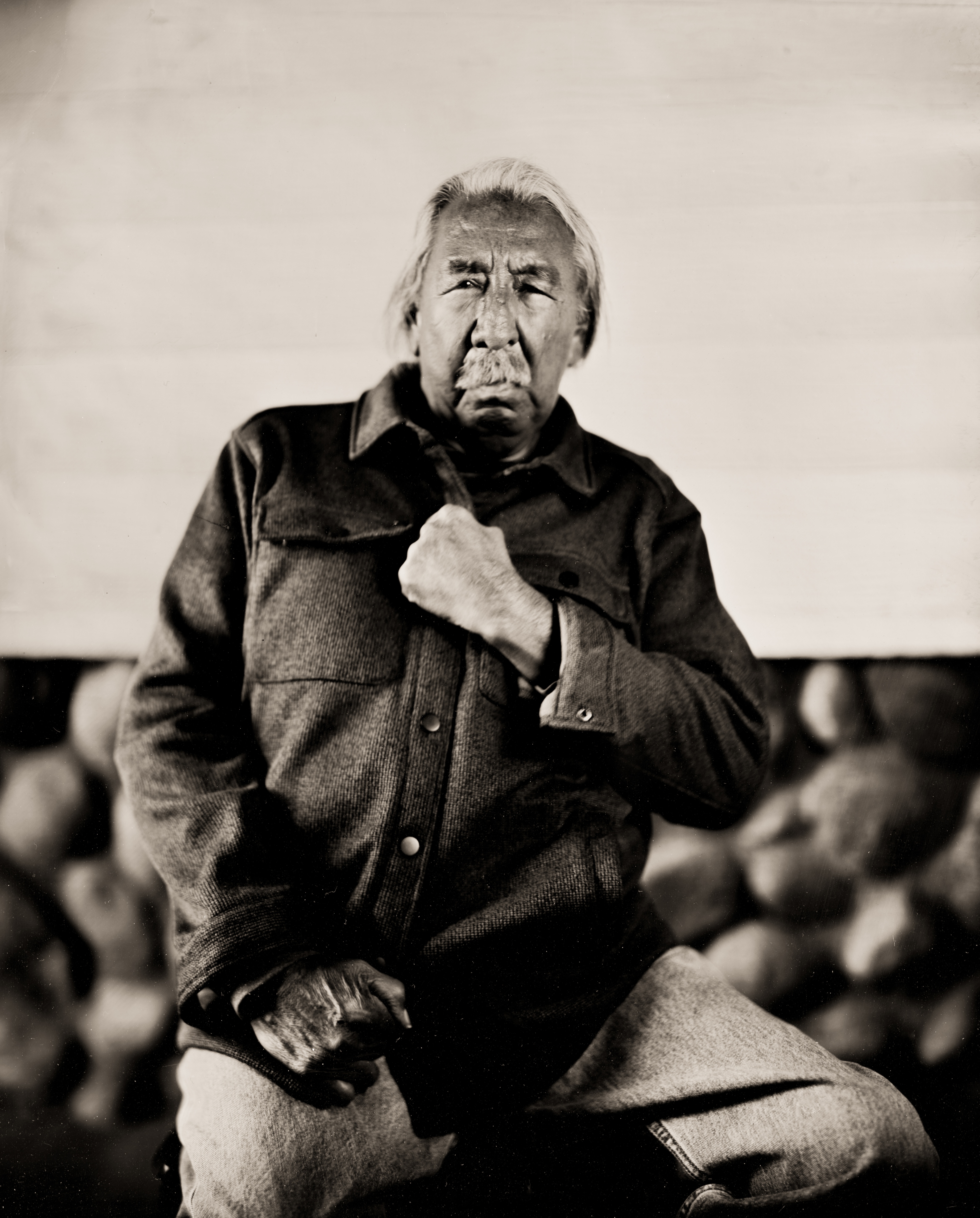
Peltier has spent the last 49 years in federal prison.
The commutation does not clear Peltier of his conviction. But it permits him to finish out his life sentence at home. He is 80 years old. It’s about time! He has returned to the Turtle Mountain Indian Reservation in northern North Dakota. He is under house arrest.
Even if Peltier was guilty of the crimes for which he was convicted — which is far from clear — surely he has served long enough. His health has been impaired for many years. Older inmates in America are routinely released (often to home arrest) when their health fails. President Trump’s corrupt former campaign manager, Paul Manafort, was released to home confinement in May 2020 because of concerns that he might become infected with the coronavirus. He had served 23 months of a 7 ½ year prison term. He was 71 years old. No such relief was offered to Peltier or tens of thousands of other inmates throughout the United States.
Wounded Knee has special potency as a symbol of Native American resistance to the white conquest of North America. It was there, on December 29, 1890, that more than 200 Lakota men, women, and children, almost every one of them unarmed, were massacred by the United States Army in what is regarded as “the end of the Indian wars.” In 1973, Native American activists, led by members of the American Indian Movement (AIM), took over Wounded Knee for 71 days. Before the siege finally ended, two Native Americans had been killed, and a small number of Natives and white law enforcement agents had been wounded. Peltier was not a principal figure in the 1973 occupation of Wounded Knee; he arrived from Wisconsin late in the siege to give his support to the resistance, mostly composed of Lakota activists. The shooting incident that led to Peltier’s conviction and imprisonment occurred on the Pine Ridge Indian Reservation two years later, in 1975.
1975 is a very long time ago. Since Peltier’s conviction, we have had four Democratic presidents: Jimmy Carter, Bill Clinton, Barack Obama, and Joe Biden. I never expected a Republican president to pardon Peltier or commute his sentence, but as each Democrat has left office, I have hoped and even prayed that Peltier would be pardoned. Until now, no retiring president has had the courage to do so. I’ve spent time with FBI agents who were at the siege of Wounded Knee. Their view has been predictable if, in my opinion, wrongheaded. They regard the killing of fellow law enforcement agents as especially heinous, and they have waged a series of fierce behind-the-scenes campaigns to warn off any president who might have had the impulse to pardon Peltier.
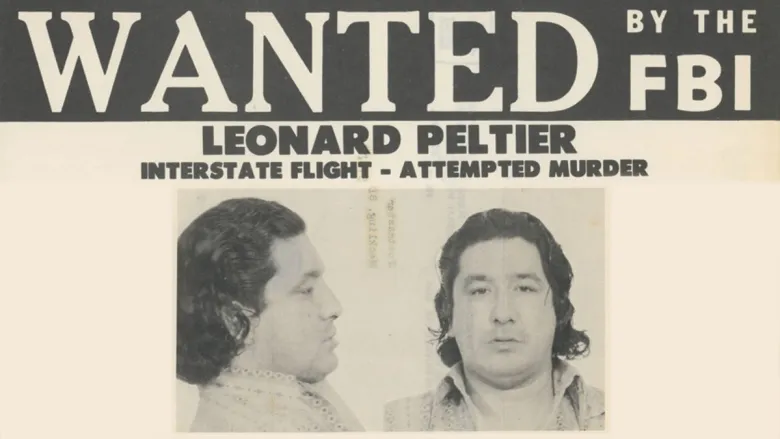
Years ago, I met an FBI agent who quietly stated that Peltier was almost certainly not guilty of the crimes for which he was convicted, but, he said, Peltier “is a very bad dude” and we are better off with him in federal prison. There’s your American judicial system. The investigations of Peter Matthiessen for his 1983 book, *In the Spirit of Crazy Horse: The Story of Leonard Peltier and the FBI’s War on the American Indian Movement*, made it clear that the FBI and the Justice Department fudged evidence, withheld evidence, and ignored evidence to convict Peltier. In other words, even if he killed two federal officers (which he continues to deny), he was not given a fair trial.
President Bill Clinton pardoned his corrupt crony, Mark Rich, at the last hour in 2001. Rich was indicted in 1983 for $48 million in tax evasion, not to mention running illegal oil deals with Iran during the 1979-1980 hostage crisis. Rich fled the United States during the prosecution and wound up in Switzerland. In 2016-2017, President Obama pardoned several individuals who gave away American strategic secrets, but not Peltier.
Peltier’s ordeal points to some fundamental problems with the American justice system. While the rich and privileged are rarely brought to justice for the crimes they have undoubtedly committed, or — at worst — are subjected to “Club Fed” for a few months, followed by a lucrative post-incarceration career, people of modest means, and especially men (males) of color — African Americans, Native Americans, Hispanic Americans — rot in our prison system, largely forgotten, with very little acknowledgment that race and class are more determinative than crime per se.
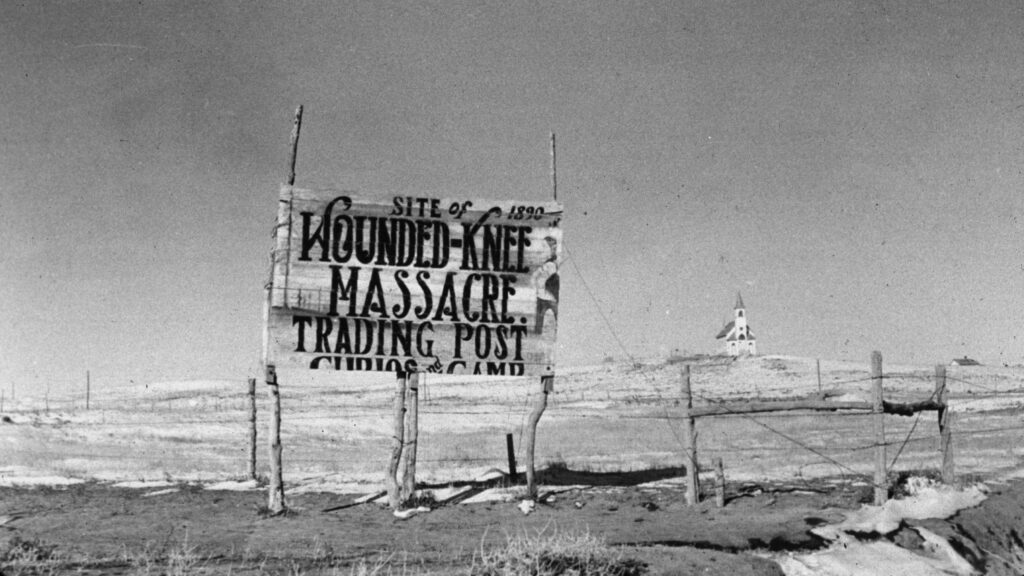
Yet here is a true Indigenous freedom fighter, defending his fellow Native Americans in the face of a phalanx of institutional oppressions and injustices, railroaded into a lifetime in prison by the U.S. court system and lawyers who knew they were violating important provisions of the Bill of Rights, refusing to permit Peltier’s lawyers to introduce exculpatory evidence that led to the acquittal of two other Natives accused of the same or similar crimes.
The two FBI agents killed on June 26, 1975, were Jack Coler and Ronald Williams. Peltier was convicted of first-degree murder and sentenced to two consecutive life terms. Peltier later admitted that he had fired bullets at the car in which Coler and Williams were driving through the reservation to arrest someone else.
At the time of Peltier’s commutation, the White House released a statement: “The President is commuting the life sentence imposed on Leonard Peltier so that he serves the remainder of his sentence in home confinement. He is now 80 years old, suffers from severe health ailments, and has spent the majority of his life (nearly half a century) in prison.”
Peltier’s champions have included some prominent figures in American politics and culture: Willie Nelson, Steve Allen, Sherman Alexie, Kurt Vonnegut, jr., Coretta Scott King, Noam Chomsky, Peter Coyote, Pete Seeger, Nelson Mandela, Jackson Browne, and Kris Kristofferson, [among many others](https://www.whoisleonardpeltier.info/home/support/#google_vignette).

I am not suggesting that Peltier is an entirely innocent man. When he came, almost too late, to the siege at Wounded Knee in 1973, he was fleeing from an arrest warrant for attempted murder in Milwaukee. There are other allegations. The late 1960s and the 1970s were a heady and violent time in “Indian Country,” and in confronting the Bureau of Indian Affairs, the United States government, corrupt tribal chairmen, and the racism of the white people who live anywhere near Indian reservations, Native activists sometimes committed acts of trespass, lawlessness, and violence. They believed anything short of heroic resistance would perpetuate several “centuries of dishonor” and injustice.
Peltier belongs to a distinguished American tradition of resisting (sometimes with violence) racism and systemic oppression of our most vulnerable communities: Nat Turner, Gabriel Prosser, Sojourner Truth, Red Cloud, John Brown, Malcolm X, Angela Davis, Russell Means, Dennis Banks, Muhammad Ali, Martin Luther King, jr., and countless others.
We need not celebrate Leonard Peltier. His detractors are enraged about his release from federal prison. History will sort all of that out. But after 49 years, it was surely time to let him go home to finish his life in his Native homeland.
Wet plate photographer Shane Balkowitsch with Leonard Peltier. The photo “Artistic Freedom” by Chad Nodland.
---
## ***Discover more on these topics at Listening to America***
[Republic](https://ltamerica.org/tag/republic/ "0 topics")[north daktoa](https://ltamerica.org/tag/north-daktoa/ "0 topics")[Oregon](https://ltamerica.org/tag/oregon/ "4 topics")[Walden](https://ltamerica.org/tag/walden/ "1 topics")[Thoreau](https://ltamerica.org/tag/thoreau/ "5 topics")[The Constitution](https://ltamerica.org/tag/the-constitution/ "1 topics")[Wisconsin](https://ltamerica.org/tag/wisconsin/ "0 topics")[Texas](https://ltamerica.org/tag/texas/ "4 topics")[South Dakota](https://ltamerica.org/tag/south-dakota/ "16 topics")[Pennsylvania](https://ltamerica.org/tag/pennsylvania/ "1 topics")[Reading](https://ltamerica.org/tag/reading/ "1 topics")[Water in the West](https://ltamerica.org/tag/water-in-the-west/ "24 topics")[Travel](https://ltamerica.org/tag/travel/ "1 topics")[Washington](https://ltamerica.org/tag/washington/ "2 topics")[Republics](https://ltamerica.org/tag/republics/ "1 topics")[Video](https://ltamerica.org/tag/video/ "51 topics")[paintings](https://ltamerica.org/tag/paintings/ "0 topics")[North Dakota](https://ltamerica.org/tag/north-dakota/ "53 topics")[U.S. Presidents](https://ltamerica.org/tag/u-s-presidents/ "71 topics")[Steinbeck Travels](https://ltamerica.org/tag/steinbeck-travels/ "75 topics")[Wyoming](https://ltamerica.org/tag/wyoming/ "4 topics")[Podcast](https://ltamerica.org/tag/podcast/ "1 topics")[Oppenheim](https://ltamerica.org/tag/oppenheim/ "0 topics")[Vermont](https://ltamerica.org/tag/vermont/ "1 topics")[North Carolina](https://ltamerica.org/tag/north-carolina/ "3 topics")[Sports](https://ltamerica.org/tag/sports/ "2 topics")[Utah](https://ltamerica.org/tag/utah/ "11 topics")[State Parks](https://ltamerica.org/tag/state-parks/ "2 topics")[Ohio](https://ltamerica.org/tag/ohio/ "2 topics")[Poetry](https://ltamerica.org/tag/poetry/ "1 topics")[Tennessee](https://ltamerica.org/tag/tennessee/ "1 topics")[New York](https://ltamerica.org/tag/new-york/ "8 topics")[Rivers](https://ltamerica.org/tag/rivers/ "3 topics")[Road Trips](https://ltamerica.org/tag/road-trips/ "18 topics")[Space Exploration](https://ltamerica.org/tag/space-exploration/ "8 topics")[South Carolina](https://ltamerica.org/tag/south-carolina/ "1 topics")[Rome](https://ltamerica.org/tag/rome/ "1 topics")[Virginia](https://ltamerica.org/tag/virginia/ "7 topics")[New England](https://ltamerica.org/tag/new-england/ "1 topics")[Thomas Jefferson](https://ltamerica.org/tag/thomas-jefferson/ "34 topics")[William Shirer](https://ltamerica.org/tag/william-shirer/ "1 topics")[New Mexico](https://ltamerica.org/tag/new-mexico/ "3 topics")[U.S. Constitution](https://ltamerica.org/tag/u-s-constitution/ "1 topics")[Theodore Roosevelt](https://ltamerica.org/tag/theodore-roosevelt/ "16 topics")[Oppenheimer](https://ltamerica.org/tag/oppenheimer/ "1 topics")
**Categories:** Features
**Tags:** America at 250, Native Americans, North Dakota, South Dakota, U.S. Presidents
---
### [Clay Announces Cultural Tour of John Steinbeck's California](https://ltamerica.org/clay-announces-cultural-tour-of-john-steinbecks-california/)
**Published:** March 25, 2025
**Author:** Clay Jenkinson
**Excerpt:** An exciting new addition to Clay’s slate of LTA Cultural Tours for 2025! We’re headed to Steinbeck Country — California's Central Coast. On this tour we’ll visit Monterey, Pacific Grove, Carmel, and just across the Santa Lucia mountains, the author’s hometown of Salinas. These California landscapes stayed close to Steinbeck’s heart throughout his life and shaped the Nobel Prize-winning author’s indelible literary legacy.
**Content:**
## An exciting new addition to Clay’s slate of LTA Cultural Tours for 2025! We’re headed to Steinbeck Country — California’s Central Coast. On this tour we’ll visit Monterey, Pacific Grove, Carmel, and just across the Santa Lucia mountains, the author’s hometown of Salinas. These California landscapes stayed close to Steinbeck’s heart throughout his life and shaped the Nobel Prize-winning author’s indelible literary legacy.
Greetings! I’m thrilled to announce that I will lead a John Steinbeck Cultural Retreat in the heart of the author’s home turf of Salinas and Monterey, California, this September 21-27.
My dear friend and Steinbeck scholar, Russ Eagle, will join us on this extraordinary tour of Steinbeck’s California. Our event will be headquartered at the incomparable [National Steinbeck Center](https://steinbeck.org) in Salinas, which is also partnering with us on this program.

I have a renewed excitement about Steinbeck thanks to my recent five-month, 21,000-mile Airstream road trip following his 1960 *Travels with Charley* journey. That trip caused me to think about Steinbeck every day for half a year, to puzzle over his complex character, and to think about his unique American literary legacy.
John Steinbeck wrote one of the top five American novels, *The Grapes of Wrath* (1939), which won the Pulitzer Prize. It was almost immediately turned into one of the great films of the era. The novel was condemned by big agriculture in California, burned by its detractors, and banned in the Bakersfield school system until the 1970s. Representative Lyle Boren of Oklahoma declared for the Congressional Record that *The Grapes of Wrath* is “a lie, a black, infernal creation of a twisted, distorted mind.”
Steinbeck’s California is unique among the cultural tours I have the opportunity to lead:
Clay at Point Lobos California. (Photo Bob Graves)
First, there is plenty of adventure. Like Steinbeck, we climb the last spiky steps to the summit of Fremont Peak for a magnificent view of all of Steinbeck Country, including the great Salinas Valley, the shimmering blue of Monterey Bay, and the author’s hometown of Salinas “spreading like crabgrass toward the foothills.” Another day, we hike along Point Lobos’ rocky shores and sea-sprayed trails, the breathtaking coastal stretch south of Carmel Bay that landscape painter Francis McComas called the “greatest meeting of land and water in the world.”
There are other unique experiences as well:
— A private dinner and discussion in the lovely Victorian home where Steinbeck was born and raised.
— A visit to the National Steinbeck Center archives to see and handle original manuscripts, letters, and other Steinbeck memorabilia.
— Another evening finds us dining among the arched catacombs of the opulent wine cellar deep below the famed Sardine Factory on Cannery Row.
— Plus, there is plenty of time for literary discussion, and even that is unique on this trip. We’ll discuss *Travels with Charley*, for example, with Steinbeck’s actual camper truck sitting right before us. When it’s time to talk about *Cannery Row*, we’ll move to Ed Ricketts’ lab on Cannery Row, the prime setting for the 1945 novella.
— Throughout the week, we will be joined by staff members from the National Steinbeck Center.
Steinbeck’s California offers all the best features of my cultural tours. It’s an experience designed to penetrate this great American author’s work and the unique geography that shaped him.
We expect this tour to reach capacity quickly. Learn more and register [here](https://ltamerica.org/steinbecks-california-tour/).
John Steinbeck’s truck camper on display at the National Steinbeck Center in Salinas, California.
**Categories:** Dispatches from the Road
**Tags:** Books, Humanities, John Steinbeck, Steinbeck Travels
---
### [The Enduring Appeal of Louis L'Amour and American Western Fiction](https://ltamerica.org/the-enduring-appeal-of-louis-lamour-and-american-western-fiction/)
**Published:** March 25, 2025
**Author:** Clay Jenkinson
**Excerpt:** Louis L’Amour is widely considered the best-selling author of Western fiction of all time. Still highly popular with readers around the globe, L’Amour has sold over 320 million books, with numerous film and TV adaptations of his work.
**Content:**
## Louis L’Amour is widely considered the best-selling author of Western fiction of all time. Still highly popular with readers around the globe, L’Amour has sold over 320 million books, with numerous film and TV adaptations of his work.
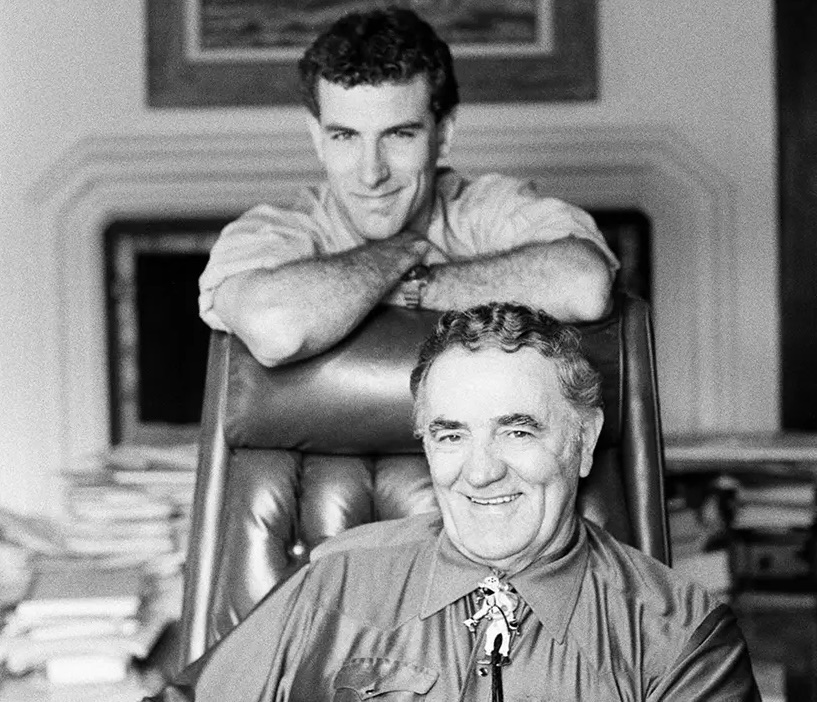Best selling author Louis L’Amour with his son Beau L’Amour.
A few days ago, I had the pleasure of interviewing Beau L’Amour, son of the late writer Louis L’Amour, whose name is synonymous with the Western fiction genre. I suppose you could say pulp Western, but that is not meant to be dismissive. L’Amour’s hundred or so novels were distributed in town drug and variety stores and newsstands throughout America, particularly in the heartland, and later in supermarkets. They were printed on paper not much finer than newsprint. L’Amour was immensely popular during his long career. In preparing for my interview with Beau, I learned that his father’s novels continue to be a worldwide phenomenon. I had thought that moment had passed, the moment of the unreconstructed Western, but it didn’t and hasn’t. Among other things, Beau is his father’s literary executor. He lives in Los Angeles.
Louis L’Amour (1908-1988) began his life in North Dakota and ended it in Los Angeles. That made sense. His fascination was with the American West — and Jamestown, North Dakota, where he was born, has always been essentially Midwest. He wandered the American Southwest for several years in his youth, taking on a wide range of laboring jobs where and when he could find them. There he met the average Americans and Mexicans who populate his 89 novels and 250 short stories, men and women who spoke a taut and colorful English dialect and said things like, “A man would have to prime himself to spit in country like this,” or “He could talk a squirrel right out of a walnut tree.” Between movies and television, Hollywood produced almost 50 adaptations of L’Amour’s novels and short stories. The other, earlier, author of scores of Westerns, Zane Grey, too died in southern California.
> ***“Confession. I’ve never been a big Louis L’Amour fan. My mother was. She read all of his books, some of them many times. She was an English teacher in a North Dakota cattle town.”***
Confession. I’ve never been a big Louis L’Amour fan. My mother was. She read all of his books, some of them many times. She was an English teacher in a North Dakota cattle town. Once a year, she taught Western Lit. She was a prolific reader and could read a book a day. She loved the Western as a genre, made outlines of the “conventions” of the Western beginning with Owen Wister’s *The Virginian* (1902), and insisted that every Western must conform to those conventions or it was committing unpardonable heresy. Conventions: the hero loves his horse more even than his lady. The hero never starts a fight but sure knows how to end one. The hero rides off into the sunset at the end either to settle down with the woman he loves on a small farm far away from trouble or to right wrongs somewhere else. Or, in the case of Shane, to die alone from the gunshot wound he received when he killed the Black Bart character. The hero is courtly to women, no matter how rough and tumble his life has been — those conventions.
Beau L’Amour is an impressive man. He has a masterful capacity to explain his famous father’s life and work without ever getting defensive or losing his objectivity. He works hard to keep all of his father’s novels in print. As he re-releases them, he is adding afterwords that “place” the novel in the larger context of his father’s career. Also, where possible, he shares the back story of its creation, including the diligent research that gives a L’Amour novel its authenticity.
I hadn’t read a L’Amour novel for 20 years or more. Fascinated by the interview, I found a couple in my library and ordered the ones Beau said were among his father’s best. At one time, my mother had all of them lined up on a low top shelf for about 5 linear feet. She started to downsize in her later years. She’d fill a shopping bag with 30 or 40 L’Amour novels and drop them off at the local used bookstore. They were snapped up — by the pound — within days.
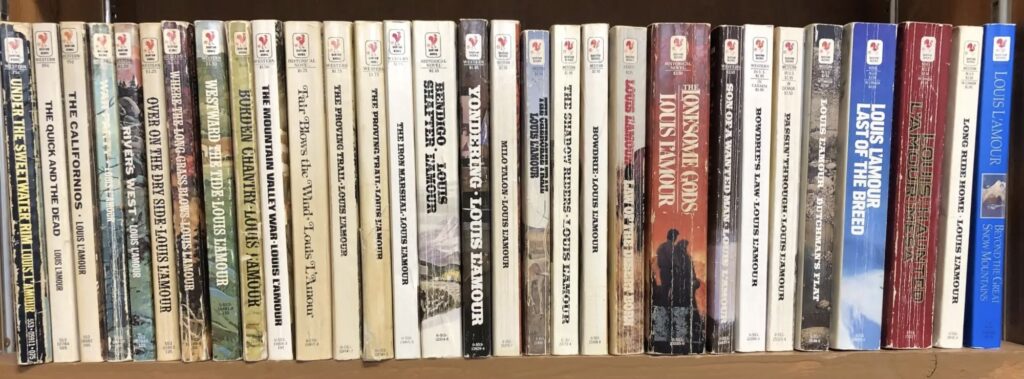A few of the nearly 100 novels and over 250 short stories by bestselling author Louis L’Amour.
Last night, exhausted from a long day of Listening to America work, I picked up one that had just come in the mail, *The Daybreakers*. The good thing about L’Amour’s novels is that you can read one in four to five hours. It is four or five days with Jane Austen, and with Joyce or Tolstoy, it is four or five weeks, if you are lucky. When I asked Beau on the podcast which novel he would recommend for those who had never encountered his father’s work, he recommended *The Daybreakers,* published in 1960. So I read it.
*The Daybreakers* is the first of the sustained Sacketts series. Eventually, L’Amour published 18 of them. This one is the story of two Sackett brothers, Tyrel and Orrin, who leave troubles behind in Tennessee and head west for a new life and maybe enough prosperity to bring their aging mother to pass her last years on a farm they establish in Colorado or New Mexico. What Ty and Orrin discover, of course, is the lawlessness and violence of the American frontier, including what today we would call the Native American “resistance.” They wind up engaging in a great deal of violence themselves, but the brothers stand for justice, order, and civilization, and they manage to avoid all the evil temptations of unsettled country. Eventually, they do achieve their dream.
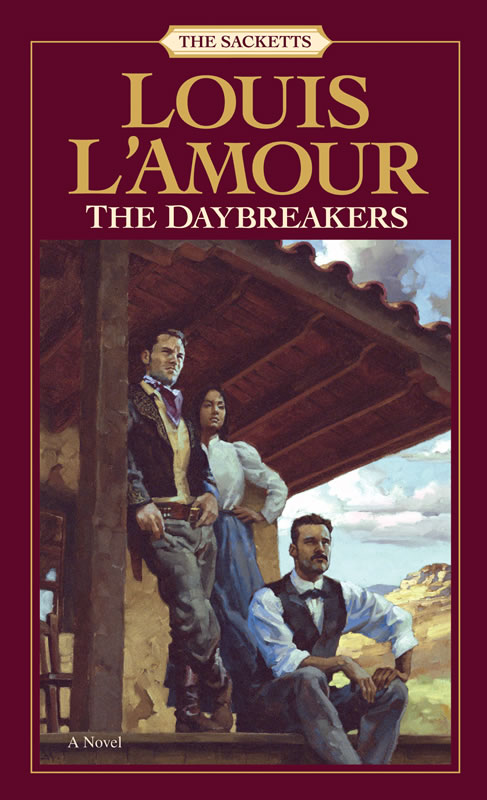
In some respects, it feels like “an age too late” for Louis L’Amour. *The Daybreakers* is 200 pages long, and if I tried to tally up the number of men killed by gunfire in the novel it would come to something like 50. It is not quite one every four pages since there are clusters of mayhem, but there is a wearying amount of gun violence. On the whole, the writing is better than the plot, which is heavily formulaic and filled with clichés about female innocence, Mexican señoritas in shimmering dresses, resource wars (mostly for land and water), and two types of “Indians:” good Indians who accept the dispossession of their homelands and enter into somewhat unequal friendships with white folks; and bad Indians who burn out homesteads and rape and torture their victims.
Western fiction is a genre (somewhat like detective fiction) in which the readers drive the plots and the character types. If a Western did not include some bar fights and shootings, the beleaguered schoolmarm, the wealthy corrupt white man who is attempting to drive small homesteaders (“nesters”) out of the open range, and the sullen gunslinger who would like to break the cycle of violence but can’t, the readership would turn elsewhere. Beau L’Amour said his father, in some ways, was a prisoner of the genre and — in later years — attempted to soften the grip of cowboy and Indian myth with some success.
Louis L’Amour is often a fine writer of English prose. *The Daybreakers* is told in first person. Here is Tyrel’s first impression of the vastness of the West:
*“Suddenly, something had happened to me, and it happened to Orrin, too. The world had burst wide open, and where our narrow valleys had been, our hog-backed ridges, our huddled towns and villages, there was now a world without end or limit. Where our world had been one of a few mountain valleys, it was now as wide as the earth itself, and wider, for where the land ended there was sky, and no end at all to that.”*
Reading that made me ache and want to get in my car and light out for the territories ahead of the rest, as Huck Finn puts it.
Here’s a tightly worded assessment of the Western gunfight:
*“Nothing exciting or thrilling about a gunfight. She’s a mighty cold proposition for both parties. One or t’other is to be killed or hurt bad, maybe both.”*
L’Amour’s immense corpus seldom finds its way into the university curriculum. Professors of literature look down on L’Amour. They dismiss him (and others like him) as hacks, contract men, pulp fictionists, purveyors of bad myths and predictable clichés. Worthy perhaps of a bit of attention in a college course on the pop culture of the mid-20th century or “The Unfortunate Perpetuation of Degrading Myths about Indigenous Culture West of the 100th Meridian,” but beneath the dignity of those who truly care about “lit-ra-chure.”
Fair enough. I don’t think *Hondo* and *The Last of the Breed* or *The Strong Shall Live* qualify as literature if, by literature we mean Jane Austen, George Eliot, James Joyce, Dostoevsky, or even Mark Twain and Fennimore Cooper. Beau told me that his father knocked out four Westerns per year, every year. That means there will be some sloppiness in the prose and plot, and with that sort of screaming deadline hanging over one’s head, reversion to formula is inevitable. Lots of killing. Lots of swinging saloon doors. Lots of visiting ladies from back east staying for a few weeks in the best hotel in the two-year-old town. There are lots of ambushes out among the big rocks where the river cuts a gorge. Death on main street.
And plenty of “Indians.” You won’t see the words “Native American,” “indigenous,” or even “American Indian” in such novels. They were, of course, products of their time. You are more likely to see “Injun” and “sq…w,” “redskin” or “savage.” In *The Daybreakers*, for example, you find this:
*“He rode in silence for a few minutes, then he said, ‘Folks back east do a sight of talkin’ about the noble red man. Well, he’s a mighty fine fighter, I give him that, but ain’t no Injun, unless a Nez Perce, who wouldn’t ride a couple hundred miles for a fight. Folks talk about takin’ land from the Injuns. No Injun ever owned land, no way. He hunted over the country and he was always fightin’ other Injuns just for the right to hunt there.'”*
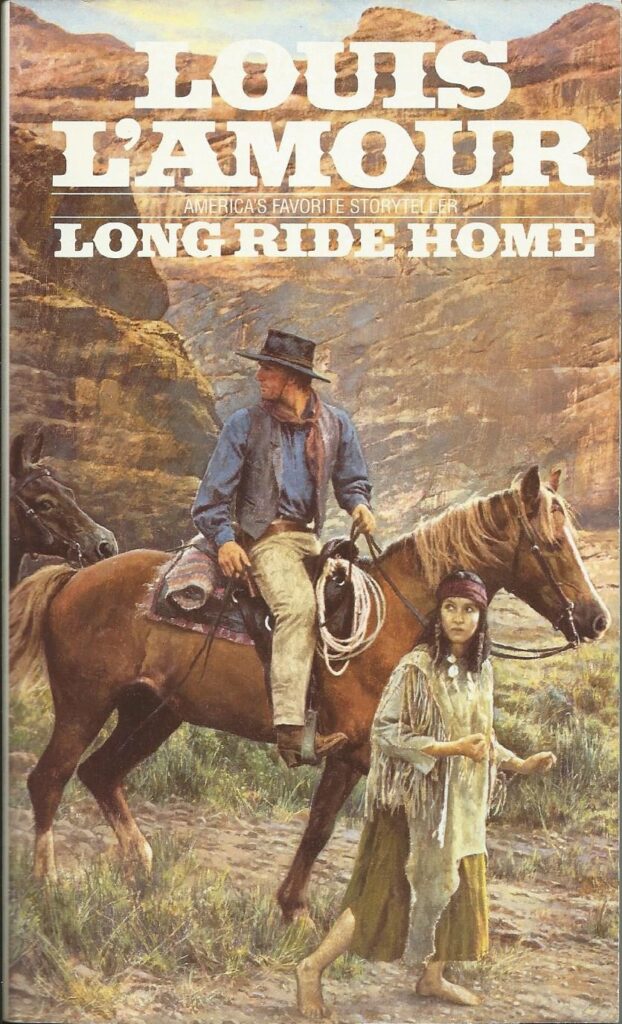
It would take some time to unpack all of this. It certainly reflects the attitude of the majority of white settler colonialists in the post-Civil War period. Thus, L’Amour’s formulations are a valuable window into another time in American history, a darker time. But he wrote these books 60 or more years after the “end of the Indian Wars” at Wounded Knee on the Pine Ridge Reservation (December 29, 1890). Instead of rethinking the ruthlessness and stereotyping (the Othering) performed by the Anglo conquistadors, such novels perpetuate attitudes that, by 1950, a significant portion of the non-Native public had left behind. If the reader of L’Amour’s novels is nodding at passages like this or telling his buddies at the bar that L’Amour “got it right,” it is hard not to cringe or decry.
L’Amour’s plots are also heavily patriarchal and sexist, and his cowboys like to compare their women to horses, along the “at first, they act purdy skittish but if ya gentle ’em enough” axis. It’s like bad cowboy poetry where you hear much about bipedal “heifers” and “fillies.” And buffalo gals. That doesn’t mean there aren’t some good and strong women in Westerns, including L’Amour’s, but they tend to be the besieged virgin or the widow who now manages the big ranch while shysters and squatters are trying to run her off.
I would have thought that by now this genre would have dried up and blown away “like the dust in the streets of an ole cow town,” but not so Louis L’Amour. Every one of his 100 or so novels is still in print, with more coming thanks to the careful archival work of Beau L’Amour, who is publishing previously unreleased fragments of novels and finishing some of them. Louis L’Amour still sells millions of books annually, now in seven languages. At the height of his fame, it was 27 languages.
The beat goes on. Or the beating goes on.
It’s hard to argue against the market. So far, L’Amour has sold more than 320 million books worldwide. Several score film and TV adaptations. Even now, people want what L’Amour has to sell. Capitalism 101. If he still sells several million copies yearly, he clearly provides something millions want. There are no forced sales. “Serious” writers can sneer at Louis L’Amour, but some of that is pure envy.
> “***L’Amour was diligent in his research. He had a vast library. He knew the geography of the places where he set his novels.***“
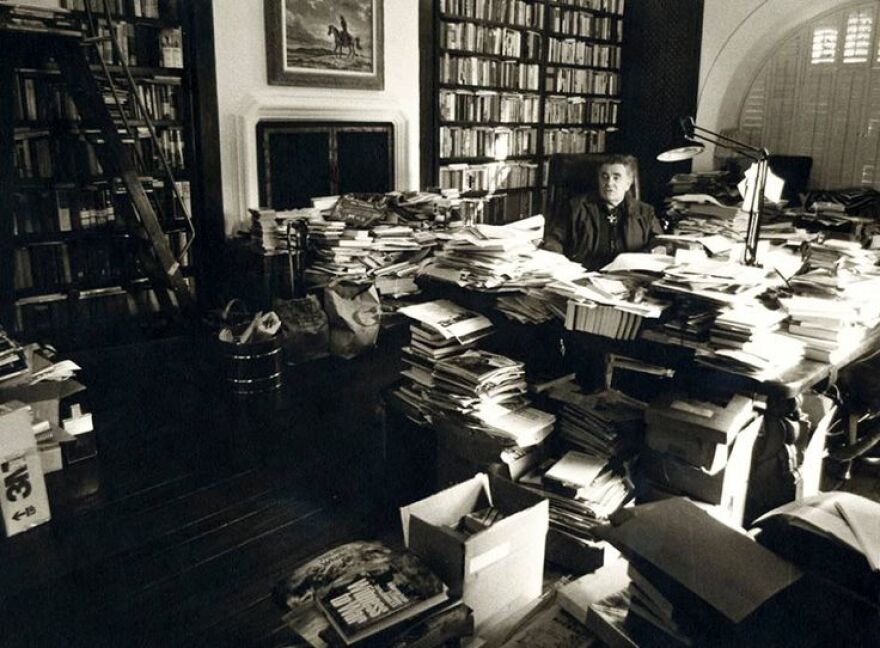Louis L’Amour at work. The author had a vast library and he knew the geography of the places where he set his novels.
Suppose you want to drift upmarket towards literature. In that case, you can read Larry McMurtry (*Lonesome Dove*, *The Last Picture Show*, or *Leaving Cheyenne),* A.B. Guthrie (*The Big Sky*), Elmer Kelton (*The Time It Never Rained*) or Cormac McCarthy (*Blood Meridian*, *All the Pretty Horses*). But at the core, they are packaging the same myth of the American West — just with more irony and anti-heroes — and fewer uncomplicated characters.
Remember, Western myth is not without a basis. The frontier was violent. The first settlers got out there before the law arrived, and they had no choice but to settle things extra-judicially. There were horse thieves, holdup gangs, cattle rustlers, remittance men, vigilante groups, sexual predators, cheating gamblers, psychotic killers (Billy the Kid among them), claim jumpers, and more. There were hurdy-gurdy girls in the mining camp saloons, opium dealers, and plenty of people running away from the law back east, social responsibility, violent stepfathers, or debt.
The actual period that spawned our immense Western literature had a short shelf-life. It began after the Civil War, and it was over by the time of the Spanish-American War in 1898. After that, it was dressed up as one of the most tenacious American myths. A significant percentage of L’Amour’s sales now occur in Europe and India (of all places).
One of my old friends, now dead, was a cantankerous but gifted newspaper columnist in Salida, Colorado. He wrote clever anarchical opinion pieces for the *Denver Post*. But that didn’t entirely pay the bills, so he and his wife knocked out novels for the *Trailsman* series of grocery store Westerns. (By that standard, Louis L’Amour is Proust!) Before I left town one time, I bought a couple of their books in the local Safeway. My friend explained that there was a formula built into the publishing contract. In the 140 or so pages, there had to be five scenes of graphic western violence and three steamy sex scenes. Sure enough, the trailsman Sky Fargo found trouble wherever he roamed and always got lucky. Thanks to an informal team of ghostwriters, there are many hundreds of *Trailsman* novels, with names like *Six Gun Drive*, *Montana Maiden,* and *Condor Pass*. I gave a couple to my mother to mess with her romantic obsession but also as a kind of reality check. She knocked them off in an afternoon. She pretended to be a little scandalized. Mostly, I think she was amused.
The more serious classical Western — the Western of Zane Grey, Jack Schaefer, and in Germany Karl May — essentially conformed to formula, too, though in their novels, whatever sex occurred took place well off stage — under the full moon in the boudoir window. Their heroes sometimes engaged in courtship, but consummation had to wait until they put up their holsters and settled down on a small, hardscrabble farm a few miles from a new town somewhere far away.
> ***I do not mean to beat up on Louis L’Amour. In fact, I’d like to convene a big public symposium about his life and work. He’s still, even now, 37 years after his death, one of the top 50 writers in the world for sales.***
I do not mean to beat up on Louis L’Amour. In fact, I’d like to convene a big public symposium about his life and work. He’s still, even now, 37 years after his death, one of the top 50 writers in the world for sales. His success is a phenomenon worth better understanding, and his immense appeal deserves serious critical examination. His son Beau is a truly extraordinary man, an excellent representative of his father’s achievement, and he is adding value to the playlist.
Louis L’Amour’s excellent memoir, *Education of a Wandering Man*, was first published in 1989.
In gathering up some of Louis L’Amour’s work over the last couple of weeks, I’ve discovered that I am still ho-hum about the novels, though they are page-turners! I read one deep into the night and lost some sleep. There is too much violence for my taste (more than the frontier ever actually endured), and the stereotyping of Native Americans in some of the novels is now simply offensive. But I admire L’Amour’s nonfiction. There is not much of it, but his memoir, *[Education of a Wandering Man](https://www.goodreads.com/book/show/828165.Education_of_a_Wandering_Man)*, is excellent. I found a big coffee table book in my library that I had forgotten, *Louis L’Amour Frontier*, text by L’Amour accompanying photographs by one of the West’s best photographers David Muench. Here, for example, is a passage from *Frontier* that, in some respects, undermines the fixation of his novels:
*“The lawlessness in western communities has been much over-rated because of its dramatic aspects. The stories of outlaws and badmen are exciting, and western men themselves still love to relate them. However, over most of the West schools and churches had come with the first settlers, and law accompanied them. The gunfighters and cardsharps were on the wrong side of the tracks, most of them unknown to the general run of the population, although they might be pointed out on occasion.”*
Here’s another:
*“We are a people born to the frontier. It has been a part of our thinking, waking, and sleeping since men first landed on this continent. The fronter is the line that separates the known from the unknown wherever it may be, and we have a driving need to see what lies beyond. It was this that brought people to America, no matter what excuses they may have given themselves or others.”*
In his nonfiction, L’Amour’s treatment of Native people is thoughtful and sympathetic:
*“I have walked where the Old Ones walked, and followed paths made by their feet. I have drunk from the springs where they knelt to drink, but I have left no mark of my passing, save what occurs in the pages of what I have written. This was their land; it is now, for the moment, our land. It will someday be the land of those who follow, who in better or worse times must take a living from it or find pleasure in its loneliness, its silence, its beauty. I hope to leave no more mark than the passing of a soft wind, to disturb the sand no more, or bend the grass.”*
Amazing. This could have been written by John Muir, Wallace Stegner, or Craig Childs in our time. I wish L’Amour had written more of this. He writes an accessible, straightforward prose. He was diligent in his research. He had a vast library. He knew the geography of the places where he set his novels. Passages such as these clearly indicate that he was a thoughtful man with largely enlightened views. It is unfortunate that the market constricted his gifts and channeled them through a world of formula and, at times, cliché.
I’ve got three more L’Amour novels to read and ordered a book of context and criticism, The Wild West of Louis L’Amour: An Illustrated Companion to the Frontier Fiction of an American Icon by Tim Champlin. I hope to meet the remarkable Beau L’Amour in LA later this year, and I am most eager to read some of his back story afterwords.
And, of course, if my mother were still alive and read this essay (far from certain), she’d say, “Son, you just don’t get it.” She was once a schoolmarm herself.
---
## ***Discover more on these topics at Listening to America***
[north daktoa](https://ltamerica.org/tag/north-daktoa/ "0 topics")[Walden](https://ltamerica.org/tag/walden/ "1 topics")[Ohio](https://ltamerica.org/tag/ohio/ "2 topics")[Virginia](https://ltamerica.org/tag/virginia/ "7 topics")[Republic](https://ltamerica.org/tag/republic/ "0 topics")[Theodore Roosevelt](https://ltamerica.org/tag/theodore-roosevelt/ "16 topics")[Video](https://ltamerica.org/tag/video/ "51 topics")[Thoreau](https://ltamerica.org/tag/thoreau/ "5 topics")[State Parks](https://ltamerica.org/tag/state-parks/ "2 topics")[Reading](https://ltamerica.org/tag/reading/ "1 topics")[Rivers](https://ltamerica.org/tag/rivers/ "3 topics")[William Shirer](https://ltamerica.org/tag/william-shirer/ "1 topics")[New Mexico](https://ltamerica.org/tag/new-mexico/ "3 topics")[Oppenheimer](https://ltamerica.org/tag/oppenheimer/ "1 topics")[Pennsylvania](https://ltamerica.org/tag/pennsylvania/ "1 topics")[Tennessee](https://ltamerica.org/tag/tennessee/ "1 topics")[Utah](https://ltamerica.org/tag/utah/ "11 topics")[South Dakota](https://ltamerica.org/tag/south-dakota/ "16 topics")[New England](https://ltamerica.org/tag/new-england/ "1 topics")[Poetry](https://ltamerica.org/tag/poetry/ "1 topics")[Water in the West](https://ltamerica.org/tag/water-in-the-west/ "24 topics")[Washington](https://ltamerica.org/tag/washington/ "2 topics")[North Carolina](https://ltamerica.org/tag/north-carolina/ "3 topics")[Vermont](https://ltamerica.org/tag/vermont/ "1 topics")[Sports](https://ltamerica.org/tag/sports/ "2 topics")[South Carolina](https://ltamerica.org/tag/south-carolina/ "1 topics")[Oregon](https://ltamerica.org/tag/oregon/ "4 topics")[Podcast](https://ltamerica.org/tag/podcast/ "1 topics")[Thomas Jefferson](https://ltamerica.org/tag/thomas-jefferson/ "34 topics")[Space Exploration](https://ltamerica.org/tag/space-exploration/ "8 topics")[Rome](https://ltamerica.org/tag/rome/ "1 topics")[New York](https://ltamerica.org/tag/new-york/ "8 topics")[Republics](https://ltamerica.org/tag/republics/ "1 topics")[Road Trips](https://ltamerica.org/tag/road-trips/ "18 topics")[Texas](https://ltamerica.org/tag/texas/ "4 topics")[Steinbeck Travels](https://ltamerica.org/tag/steinbeck-travels/ "75 topics")[North Dakota](https://ltamerica.org/tag/north-dakota/ "53 topics")[U.S. Presidents](https://ltamerica.org/tag/u-s-presidents/ "71 topics")[Wyoming](https://ltamerica.org/tag/wyoming/ "4 topics")[Oppenheim](https://ltamerica.org/tag/oppenheim/ "0 topics")[U.S. Constitution](https://ltamerica.org/tag/u-s-constitution/ "1 topics")[paintings](https://ltamerica.org/tag/paintings/ "0 topics")[Travel](https://ltamerica.org/tag/travel/ "1 topics")[The Constitution](https://ltamerica.org/tag/the-constitution/ "1 topics")[Wisconsin](https://ltamerica.org/tag/wisconsin/ "0 topics")
**Categories:** Features
**Tags:** America at 250, Books, Humanities, Native Americans
---
### [My Melting Hour at San Juan Hill](https://ltamerica.org/my-melting-hour-at-san-juan-hill/)
**Published:** March 17, 2025
**Author:** Clay Jenkinson
**Excerpt:** A not-so-rough rider, Clay gave a historical presentation as Teddy Roosevelt during a recent visit to Santiago, Cuba.
**Content:**
## A not-so-rough rider, Clay gave a historical presentation as Teddy Roosevelt during a recent visit to Santiago de Cuba, Cuba.
Clay Jenkinson, doing a historical presentation as Theodore Roosevelt in Santiago de Cuba, Cuba. 2024
The day after our arrival in Santiago de Cuba, my cultural tour group charged up San Juan Hill. It doesn’t make sense to come to Santiago de Cuba on the southeastern coast of Cuba without looking at the hill that made Theodore Roosevelt a war hero in 1898. Kettle and San Juan hills are not mountains. They are closer to what Dr. Samuel Johnson called a “considerable protuberance.” You don’t feel heroic looking up at them, but if Spanish snipers with smokeless Mauser rifles were raining down bullets on you, you might feel a little more lionhearted.
I had been encouraged to bring along my Theodore Roosevelt costume. I own several, but in this instance, I wore black jeans, cowboy boots, a fringed buckskin shirt, a Rough Riders hat, and a blue polka dot handkerchief. This is not exactly what Roosevelt wore on what he called “the greatest day of my life,” but it evoked his character and identity.
My outfitter friend Wayne found someone to bring 25 chairs — no easy task in Cuba. They arrived on time and set up right next to the famous surrender tree, where, on July 17, 1898, the Spanish relinquished their centuries-long occupation of Cuba.
For a person who has performed thousands of times before audiences all over America and beyond, wearing a range of strange and often ridiculous costumes (from Grizzly Adams beards to codpieces and Shakespearean earrings), it may seem odd that I am a very shy man and I don’t like to make a spectacle of myself. The thing I dislike most about performing historical characters is the elevator ride in the hotel. I am entirely at ease once I am on stage and voicing my unscripted monologues. I suspend my own disbelief, but earlier, as I board an elevator on the ninth floor and head down to the lobby, my deepest hope is that it doesn’t stop at any other floor and that nobody else gets on. I’ve seen mothers hush their children into a corner as they gape at me in a Victorian silk hat or 17-century, high-piled white wig.
So there I was, hiding at the back of our bus, looking like someone in a high school history skit about Roosevelt and San Juan Hill. It was so hot and humid that my fake mustache — secured with spirit gum — was already threatening to fall off my face. Everyone took their seats, awaiting the imminent arrival of the man who would become the 26th president of the United States.
My cowboy boots were pinching my feet severely, so I wince-footed it up to the concrete slab where I would perform. I was worried about the mobile mustache, but I dutifully told the story, in character, of how TR wound up in Cuba in the summer of 1898.
Something like this:
1\. TR believed that all great nations have been warlike nations.
2\. TR believed a just war toned up a society, restored virtue and manly values, and purged “effeminacy” from the male population.
3\. TR was determined to get into any legitimate war in his lifetime, to prove his manhood and to compensate for his father Thee’s decision not to fight in the Civil War; in fact, Thee hired a proxy to go to war on his behalf.
4\. When the USS Maine exploded in Havana harbor on February 15, 1898, TR immediately decided it had been the work of filthy Spanish insurrectionists. So did the “yellow press” in New York.
5\. TR was perhaps the most outspoken jingoist in America in 1898.
6\. After the Maine exploded, he exerted himself strenuously to get permission to round up a group of “harum-scarum rough riders” as a voluntary cavalry to fight the war in the Caribbean. He defied President McKinley, Secretary of War John Long, his closest friend Henry Cabot Lodge (who said it would be political suicide), and his wife Edith (recovering from a life-threatening operation) to get himself into the war. He later said he would have left Edith’s deathbed to get himself into battle.
Theodore Roosevelt in Cuba, 1898.
7\. They trained at San Antonio, Texas but embarked from Tampa, Florida on a crowded, fetid troop ship.
8\. After a preliminary skirmish at Las Guasimas, Cuba on June 24, the Rough Riders made their way to Santiago de Cuba with only two or three horses.
9\. On July 1, 1898, TR achieved his “crowded hour” when he thrust his Rough Riders forward in front of regular troops and charged up San Juan Hill.
10\. TR killed a Spanish soldier with a pistol that had been recovered from the *USS Maine*. At one point, he shouted, “Look at those damned Spanish dead!”
11\. After Spain surrendered, the Rough Riders were quarantined for a month at Montauk, New York on the eastern tip of Long Island. His loyal men gave TR a bronze of Frederick Remington’s Bronco Buster, at which he wept.
12\. TR wrote his account, *The Rough Riders*, which one friendly critic said should have been titled, *Alone in Cuba*.
13\. The rest is history.
I said all that and more in character while my mustache slipped down my upper lip and sweat sprayed from under my hat and buckskin shirt. I took a few questions. At some point, I plucked what was left of my mustache and put it in my back pocket.
**Question:** Colonel, did you ever soften your view that the Anglo-Saxon peoples have a special managerial destiny in the world?
TR: No. Rudyard Kipling was a friend of mine and we more or less agree.
**Question:** Did you believe the people of Cuba were capable of self-government?
TR: Certainly not. Not in the short term, not for a long while.
**Question:** What was your role in the Panama Canal?
This led to a long, boastful answer, essentially that if TR had put the notion to the Senate to debate, they’d still be debating it in our time. He just took the canal zone and built the canal, and the Senate is free to debate him forever!
Sopping wet and half-fainting from the heat (and the pinched boots), I would have gone on for another hour, but Wayne gave me the universal “don’t make me get the hook” gesture, and I broke character, said a few words as a humanities scholar, and withdrew.
## **A Cuban’s Perspective**
That’s when the most interesting part of the morning occurred. A Cuban law professor named Ray came forward. He did not speak English, but our guide and interpreter, Marlin, translated him sentence by sentence and point by point.
Here, in brief, is what he said.
**First**, the Cuban insurrectionists had nearly won the long war of independence against the Spanish by the time the Yankees swept in seeking glory in the summer of 1898. **Second**, when the war was won in Cuba, the Americans and Spanish refused to permit the Cuban people to participate in the surrender ceremony under the very tree where we sat. They regarded the treaty as an exclusively major power event. **Third**, in the end, the Cuban people merely found one colonial empire (Spain) replaced by another (the US), but without true independence. **Fourth**, even now the Cuban people have very little maneuvering room because of the hostility of the colossus just ninety miles north of Havana. **Fifth**, he (Ray) must speak very carefully about current events because complete freedom of expression is still impossible, even in post-Castro Cuba.
There was more, but that gives you an idea of his discourse. We all had a very satisfying dinner at his house that evening. When we arrived, I asked our interpreter, Marlin, to say in Spanish, “Thank you for your gracious hospitality. I want you to know that I don’t believe all that s… (stuff?) that came out of my mouth earlier today.” He smiled gently and said he understood it was a historical re-enactment; of course, he had heard it all before.
The people of Santiago de Cuba are deprived of many of the basic amenities of life. We were all advised to bring toothbrushes, toothpaste, soap, shampoo, pens, pencils, etc., from the US to give to Cuban people we came into contact with. They don’t exactly beg — certainly not San Francisco style — but the poorest Cubans made it clear every time we left the hotel that their needs are simple and profound. The following day, I took my black and gray cowboy boots out of the hotel’s front door and an older Cuban woman appeared as if out of nowhere and tearfully accepted them.
Everybody wins.
TR and his Rough Riders, Santiago de Cuba, Cuba, 1899 (LoC)
Roosevelt’s heroics in Cuba seem a little like comic opera 130 years later, but he rightly said that the Rough Riders experienced a higher casualty rate than the regular troops. TR was the most conspicuous person in the battle, virtually alone on horseback, with the Spanish snipers in a much more advantageous position on the hilltop. His bravery is uncontestable, arguably reckless. Afterward, he told his children he had vindicated the family name.
Secretary of State John Hay called it a “splendid little war.” It’s not clear that Roosevelt cared much about the destiny of the Cuban people. He understood more than his closest allies that his participation in the war would be the making of his political career. Still, he would have gone to San Juan Hill even if that little battle would be a forgotten footnote in history. He rightly declared that his stern and strenuous public statements about the need to go to war against Spain might be considered hypocrisy if he stayed behind in a desk job in Washington, DC.
He was a man of his times, but so much more, too, as we are men and women of our times and subject to the assumptions, presuppositions, prejudices, and habits of the arena in which we seek meaning and achievement.
---
## ***Discover more on these topics at Listening to America***
[Rome](https://ltamerica.org/tag/rome/ "1 topics")[Republics](https://ltamerica.org/tag/republics/ "1 topics")[Video](https://ltamerica.org/tag/video/ "51 topics")[Virginia](https://ltamerica.org/tag/virginia/ "7 topics")[North Dakota](https://ltamerica.org/tag/north-dakota/ "53 topics")[Oregon](https://ltamerica.org/tag/oregon/ "4 topics")[Poetry](https://ltamerica.org/tag/poetry/ "1 topics")[Thoreau](https://ltamerica.org/tag/thoreau/ "5 topics")[Ohio](https://ltamerica.org/tag/ohio/ "2 topics")[Sports](https://ltamerica.org/tag/sports/ "2 topics")[Utah](https://ltamerica.org/tag/utah/ "11 topics")[Washington](https://ltamerica.org/tag/washington/ "2 topics")[Wyoming](https://ltamerica.org/tag/wyoming/ "4 topics")[Road Trips](https://ltamerica.org/tag/road-trips/ "18 topics")[north daktoa](https://ltamerica.org/tag/north-daktoa/ "0 topics")[Wisconsin](https://ltamerica.org/tag/wisconsin/ "0 topics")[Theodore Roosevelt](https://ltamerica.org/tag/theodore-roosevelt/ "16 topics")[Republic](https://ltamerica.org/tag/republic/ "0 topics")[Travel](https://ltamerica.org/tag/travel/ "1 topics")[Pennsylvania](https://ltamerica.org/tag/pennsylvania/ "1 topics")[New Mexico](https://ltamerica.org/tag/new-mexico/ "3 topics")[Oppenheimer](https://ltamerica.org/tag/oppenheimer/ "1 topics")[Water in the West](https://ltamerica.org/tag/water-in-the-west/ "24 topics")[Space Exploration](https://ltamerica.org/tag/space-exploration/ "8 topics")[U.S. Constitution](https://ltamerica.org/tag/u-s-constitution/ "1 topics")[Vermont](https://ltamerica.org/tag/vermont/ "1 topics")[New York](https://ltamerica.org/tag/new-york/ "8 topics")[Walden](https://ltamerica.org/tag/walden/ "1 topics")[South Carolina](https://ltamerica.org/tag/south-carolina/ "1 topics")[William Shirer](https://ltamerica.org/tag/william-shirer/ "1 topics")[Reading](https://ltamerica.org/tag/reading/ "1 topics")[Steinbeck Travels](https://ltamerica.org/tag/steinbeck-travels/ "75 topics")[Texas](https://ltamerica.org/tag/texas/ "4 topics")[Oppenheim](https://ltamerica.org/tag/oppenheim/ "0 topics")[Tennessee](https://ltamerica.org/tag/tennessee/ "1 topics")[paintings](https://ltamerica.org/tag/paintings/ "0 topics")[U.S. Presidents](https://ltamerica.org/tag/u-s-presidents/ "71 topics")[South Dakota](https://ltamerica.org/tag/south-dakota/ "16 topics")[The Constitution](https://ltamerica.org/tag/the-constitution/ "1 topics")[Thomas Jefferson](https://ltamerica.org/tag/thomas-jefferson/ "34 topics")[Podcast](https://ltamerica.org/tag/podcast/ "1 topics")[New England](https://ltamerica.org/tag/new-england/ "1 topics")[Rivers](https://ltamerica.org/tag/rivers/ "3 topics")[State Parks](https://ltamerica.org/tag/state-parks/ "2 topics")[North Carolina](https://ltamerica.org/tag/north-carolina/ "3 topics")
**Categories:** Dispatches from the Road
**Tags:** Cuba, Humanities, U.S. Presidents
---
### [Visions of John Wesley Powell and the Great Canyons of the Southwest](https://ltamerica.org/visions-of-john-wesley-powell-and-the-great-canyons-of-the-southwest/)
**Published:** March 17, 2025
**Author:** Clay Jenkinson
**Excerpt:** John Wesley Powell, the extraordinary one-armed Civil War veteran, was the first to explore the canyons of the Colorado Plateau by river. His remarkable story still fascinates and inspires me.
**Content:**
## John Wesley Powell, the extraordinary one-armed Civil War veteran, was the first to explore the canyons of the Colorado Plateau by river. His remarkable story still fascinates and inspires me.
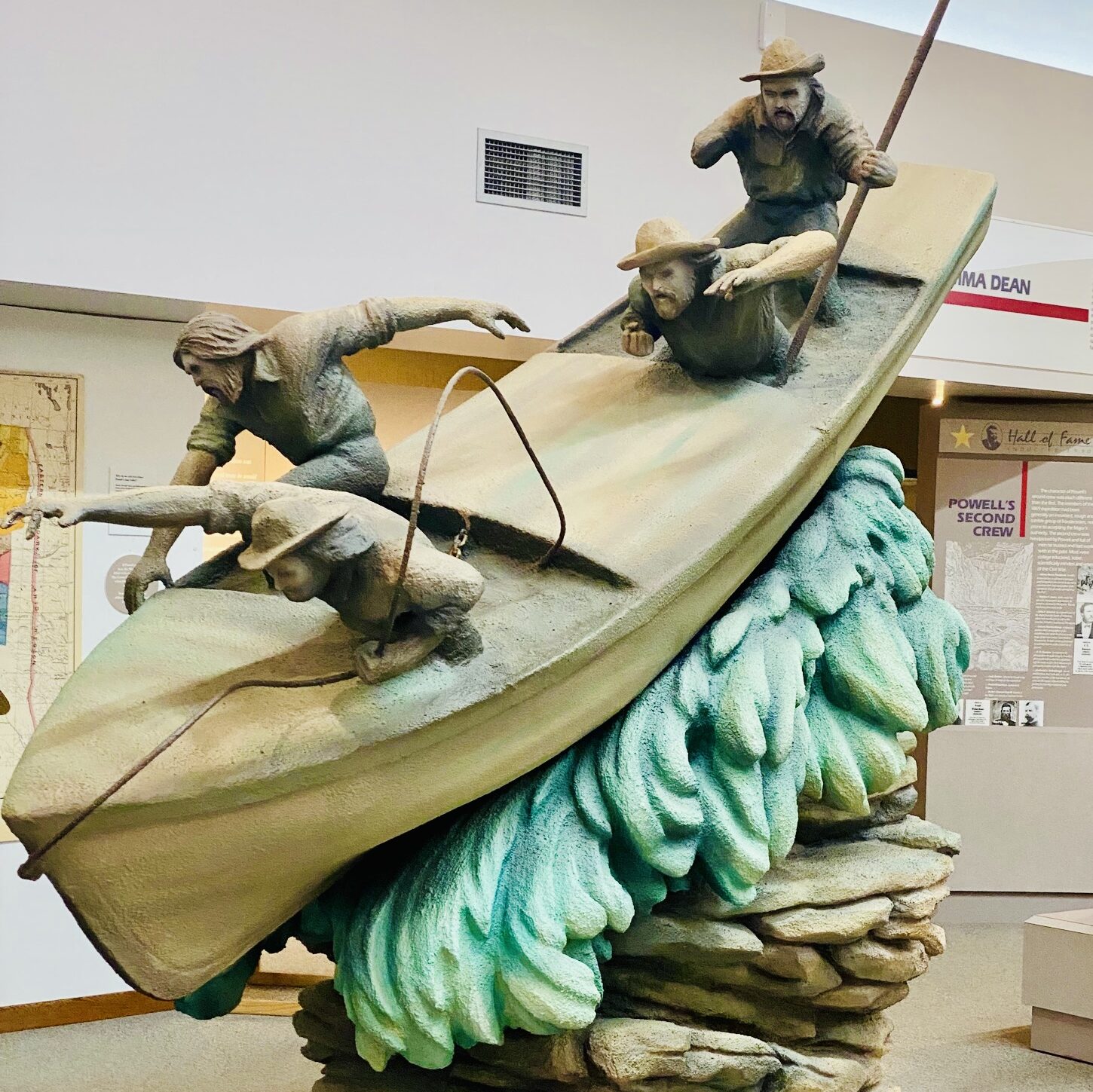Statue at the John Wesley Powell River History Museum in Green River, Utah. (Photo: Clay Jenkinson)
**Bismarck, N.D.** — a week of luxury. I’ve had almost all of every day to read. This rarely happens in my life now. I try to read for four or five hours daily, no matter where I am, but this is sometimes impossible. So when I get uninterrupted reading time, I take full advantage.
I’m reading four or five books about John Wesley Powell simultaneously. Powell (1834-1902) was the one-armed Civil War veteran who explored the canyons of the Green and Colorado Rivers in 1869. He ran the Colorado from Green River Station in Wyoming all the way to Grand Wash Cliffs on the other side of the Grand Canyon. Powell found nine volunteers foolish enough to join him on that great madcap adventure.
Powell published an account of the 1869 journey in 1875: *The Exploration of the Colorado River and its Canyons*. Although the purposes of the float trip were primarily scientific, the canyons punished his crew so violently that the scientific endeavors were curtailed, even abandoned, and it soon became a race for survival or, as Powell put it, “a race for a dinner.” Powell’s book reads like an adventure story. Amazingly, they survived. They were in wooden boats designed for harbor duty. They rowed backwards! They had no idea what was around the next bend. They ran out of food (more or less) *before* they entered the Grand Canyon. There were times when they could not make a portage or lower the boats through deep rapids on long lines of rope. Even Powell, who was uninterruptedly enchanted by the sheer magnificence of canyon country, and whose prose sometimes bears the taint of over-the-top Victorian effusion, called the Grand Canyon “our prison.” By the time they were cast out of the Grand Canyon into slack water near the mouth of the Virgin River at the end of August 1869, they were emaciated, nearly naked, battered and bruised, psychologically disturbed, and wholly exhausted in both body and mind.
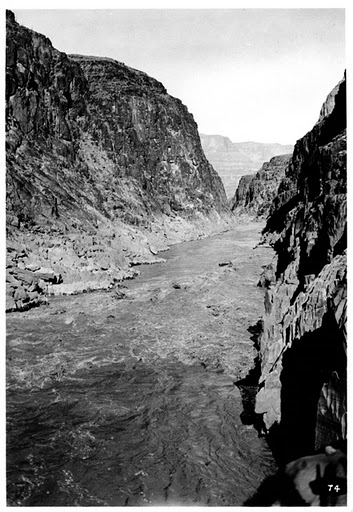Separation Rapid on the Colorado River, later inundated by the slack water of Lake Mead. (Northern Arizona Univ. Cline Library)
Not everyone who began the journey finished. One man quit at the first decent opportunity. Three others were so appalled by what became known as Separation Rapid that they abandoned the river and climbed the North Rim to walk overland to the nearest Mormon settlement, which they reckoned would be 75 miles away. They were killed — probably by Shivwits Natives, possibly by paranoid Mormons. Nobody knows for sure. The irony of their desertion is that the expedition was by then just a few miles from the terminus of the Grand Canyon. The paradox of exploration — a voyage of discovery — is that they had no way to know that.
Based on this journey, Powell became a national hero. He leveraged that fame into Congressional support for more truly scientific surveys of the Colorado River plateau. Powell became the most important advocate of government-funded science in his lifetime. He helped found the Cosmos Club and the National Geographic Society.
In my reading, at the moment, the Powell expedition is deep in the Grand Canyon, and morale is beginning to fissure. At the mouth of the Little Colorado River, expedition member George Bradley writes, “The men are uneasy and discontented and anxious to move on. If Major \[Powell\] does not do something soon I fear the consequences, but he is contented and seems to think that biscuit made of sour and musty flour and a few dried apples is ample to sustain a laboring man.”
The expedition’s men are laboring heroically to get over the next rapids. They know that as soon as they accomplish that — with infinite exertion — they will face another impassible rapid — and then another — and then … .
Powell was the first to float the canyons, including the Grand. The recreational float industry didn’t start until after World War II. These days, about 30,000 people float the Grand Canyon every year, mostly in rafts, a few in wooden dories (much more suitable than Powell’s boats), and even fewer in kayaks. You cannot float the Grand Canyon without danger. Accidents happen. People drown, break their legs, get heatstroke, and experience panic attacks. But if you make the journey, you can count on a statically high level of safety. It is unlikely that you are going to die and almost equally unlikely that you are going to have to be helicoptered out of the canyon. There is not much labor for paying guests. The crew does all the work, made up of young idealists who have not yet settled into life (“As long as possible,” Thoreau said, “live free and uncommitted.”) and permanent river rats, who find the Colorado River so addictive that they never leave until their bodies break down. Mostly, you sit in an unsinkable, self-bailing raft and hang on tight while expert river men and women steer you down the gorge.
I wonder how many of us would take on the Grand Canyon if:
1. Nobody could tell you what is around the next bend, and it might be a 40-foot waterfall with nowhere to portage on either side of the river.
2. Two or three times a day (every day), you had to get out of the boats and carry heavy burdens around the rapids over treacherous boulder fields. Powell estimated that each man had to carry 800 pounds of gear around each bad rapid.
3. Periodically, you had to stop to use hand saws to make new oars or paddles from whatever driftwood you could muster up, some from miles into lateral canyons.
4. You had to carry the boats or rafts around the larger rapids. It took four strong men to lift one of Powell’s wooden boats.
5. Your food would consist of unleavened bread, semi-rancid bacon from which the mold has been sliced off, dried apples, and coffee. And even that fare would have to be severely rationed.
6. You had no life preservers.
7. You had to drink right out of the Colorado River.
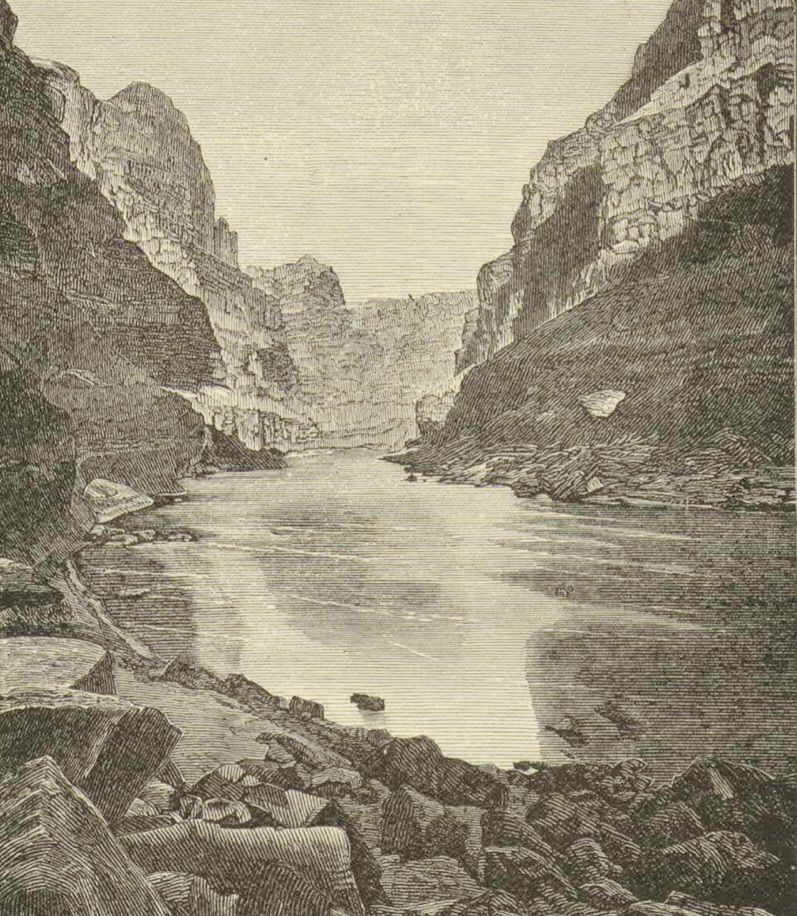Sketch of Cataract Canyon from J.W. Powell’s *Exploration of the Colorado River of the West and its Tributaries*, 1875.
There are people who would do this, of course. But not many. They are the same kind of people who run from Death Valley (282 feet below sea level) to the base of Mount Whitney and then climb Whitney (14,505) without stopping. That’s a 135-mile run. It’s called the Badwater Ultramarathon. It usually takes place in the later summer when the temperature in Death Valley can be 120 degrees. It operates by invitation only. Each year 100 people do it, or at least start it. My invitation, I guess, was lost in the mail.
\[Sorry, I had to take a nap after writing those sentences!\]
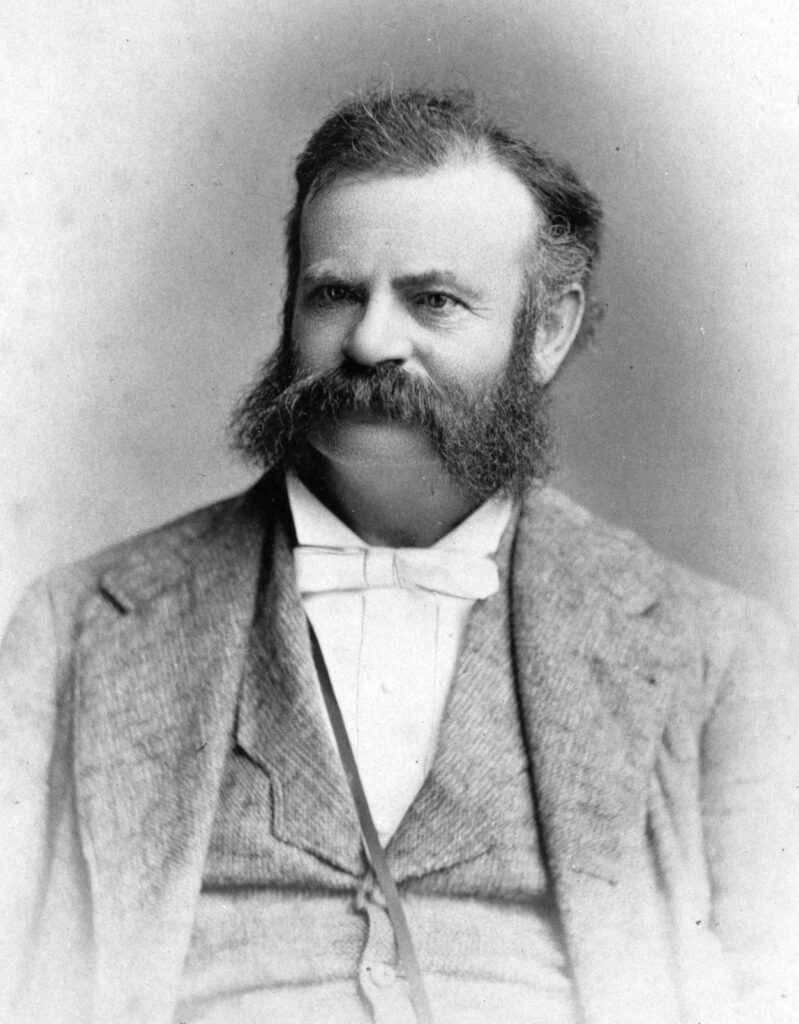Major John Wesley Powell. Photograph taken about 1872. (USGS)
John Wesley Powell is one of my heroes. He never let his disability stop him from doing anything he set out to do. He was uncomplaining. And he didn’t have to help with the portages! He respected Indigenous people, learned their languages (took down and classified their languages!), traveled among them without a military escort, regarded them simply as *other worthy human beings* living according to a very different software, and throughout his career, Powell advocated fair treatment for Natives. He was, for a few years, America’s first water czar. He supported a campaign of industrial irrigation in the West beyond the 100th meridian. Still, he warned the nation’s boosters that water scarcity would be the defining and limiting factor in Western development (for which he was booed and shouted down). He recommended a new homesteading system that would prevent innocent families from trying to make a living on 160 acres in a place without a river or creek where it rained only three or four inches per year. He created the template for the USGS quadrangle maps we all buy when hiking in a remote place.
Would John Wesley Powell have been OK with seeing his beloved Glen Canyon dammed, the resulting giant reservoir named Lake Powell, in his honor? It is impossible to know the answer to this question. I can make the case for yes or no. But he surely would have felt a great sense of loss that Glen Canyon was inundated by the US Bureau of Reclamation, endangering Rainbow Bridge and drowning the magnificent Music Temple he explored in early August 1869.
The other books I am reading about Powell are also excellent. I am rereading Edward Dolnick’s *Down the Great Unknown: John Wesley Powell’s 1869 Journey of Discovery and Tragedy Through the Grand Canyon.* It’s solid in every way, but there are some very quirky similes. Last week, I read John F. Ross’s *The Promise of the Grand Canyon: John Wesley Powell’s Perilous Journey and His Vision for the American West*. And I’ve just begun to reread Wallace Stegner’s classic *Beyond the Hundredth Meridian: John Wesley Powell and the Second Opening of the West*. There is also a good account of the 1869 journey in Kevin Fedarko’s *The Emerald Mile: The Epic Story of the Fastest Ride in History Through the Heart of the Grand Canyon*.
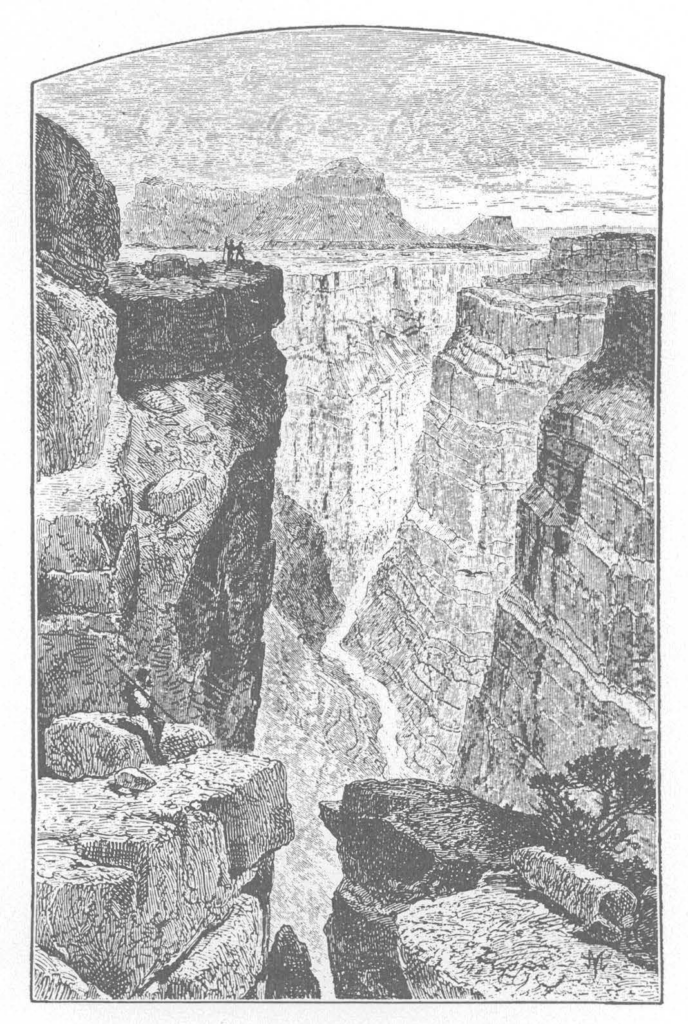Sketch from Powell’s *Exploration of the Colorado River of the West and Its Tributaries*, 1875.
Meanwhile, on eBay, I purchased (at a ruinous price) a first edition of Powell’s 1875 narrative. It will arrive next week. The illustrations are magnificent. There is a backstory to that involving Scribner’s publishing house, but Powell’s journeys in Canyon Country are blessed with some of the finest illustrations in the history of exploration.
One of my goals is to get myself (and friends) to the exact spot from which the great Thomas Moran (employed by Powell) made sketches for what would be his epic painting of the Grand Canyon. The diminutive Moran said “It was the most magnificent sight of my life.” I’ve never been to the North Rim of the Grand Canyon. Soon. But the list of the sublime places I have never been merely in the states of Utah and Arizona would fill a Moleskine notebook.
I’ve spent plenty of time in the Southwest. Utah alone has five National Parks: Zion, Bryce, Arches, Canyonlands, and Capitol Reef, not to mention two of the largest (and once again controversial thanks to the 2024 election) National Monuments: Grand Staircase Escalante and Bears Ears. You could spend years exploring any one of these federally protected places. There are probably a dozen more landscapes in Utah that would be National Parks in any other state. My recent reading has whetted my appetite for serious exploration of the Four Corners region.
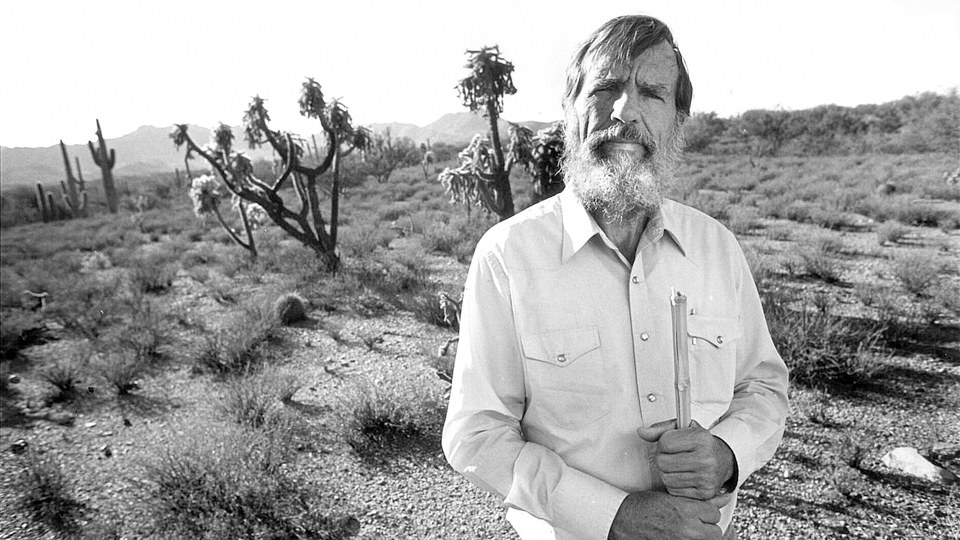Edward Abbey
Two Colorado Plateau writers (two adventurers) particularly appeal to me: Powell of the 19th century and Edward Abbey (1927-1989) of the mid-20th. But now I also want to read Clarence Dutton’s 1882 *Tertiary History of the Grand Canyon*, which is said to be so scientifically insightful and well written that it has achieved status as a classic of Western writing despite the geology.
It never ends! Edward Abbey alone wrote more than 20 books, depending on how you count.
Major Powell did everything in his power to warn us not to over-allocate the rivers of the American West. He urged us to subordinate state pride and engage in comprehensive watershed management of the Colorado and other rivers. He called them Watershed Commonwealths and made a beautiful map to delineate them. Now that we have entered what we are told is a permanent water crisis in the Southwest (not enough water to satisfy all users, *even before* global climate change), his realism has been vindicated. We did not listen then. Perhaps we are ready to begin listening now. That starts with Powell’s monumental (and radical) *Arid Lands Report* from 1878, one of the most radical books ever published by the US Printing Office.
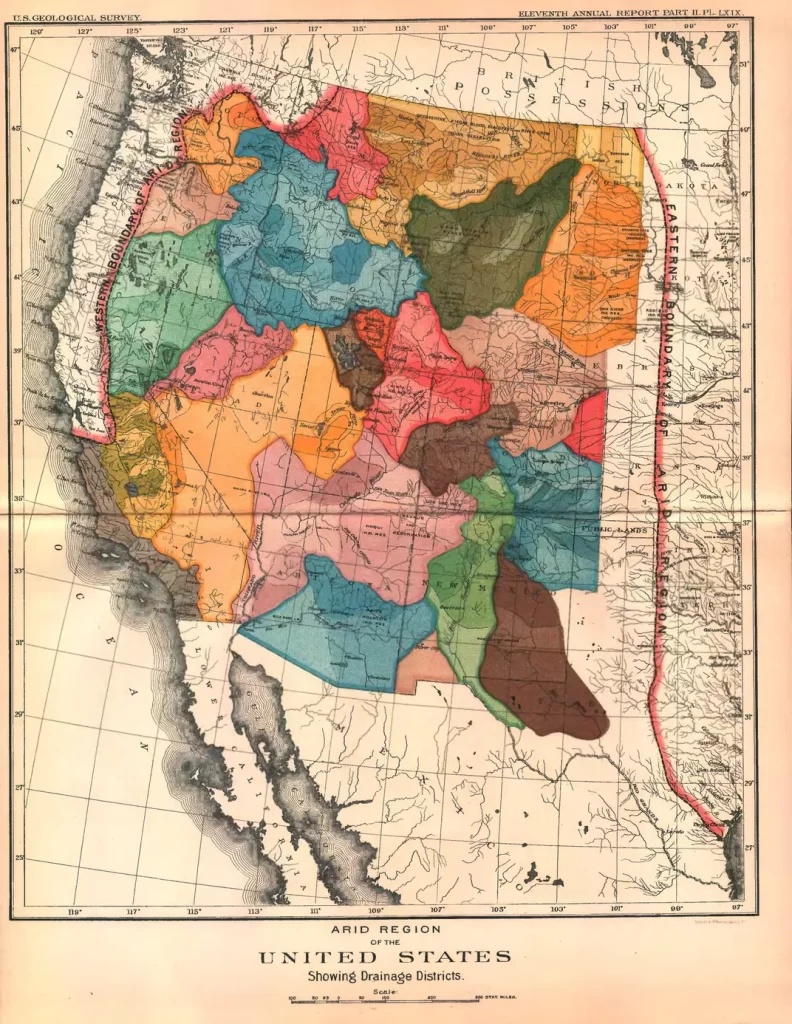J.W. Powell’s 1890 map of the “*Arid Region of the United States*,” presented a radical vision of the American West centered on watersheds rather than on political boundaries.
You can knit Powell and Edward Abbey together by reading Abbey’s *Down the River*, wherein he and his friend Ralph Newcomb floated Glen Canyon just as the Bureau of Reclamation was destroying it with one of the largest dams in the world.
---
## ***Discover more on these topics at Listening to America***
[U.S. Presidents](https://ltamerica.org/tag/u-s-presidents/ "71 topics")[Sports](https://ltamerica.org/tag/sports/ "2 topics")[New England](https://ltamerica.org/tag/new-england/ "1 topics")[Rome](https://ltamerica.org/tag/rome/ "1 topics")[Oppenheimer](https://ltamerica.org/tag/oppenheimer/ "1 topics")[Pennsylvania](https://ltamerica.org/tag/pennsylvania/ "1 topics")[Republic](https://ltamerica.org/tag/republic/ "0 topics")[William Shirer](https://ltamerica.org/tag/william-shirer/ "1 topics")[Wisconsin](https://ltamerica.org/tag/wisconsin/ "0 topics")[South Carolina](https://ltamerica.org/tag/south-carolina/ "1 topics")[Oppenheim](https://ltamerica.org/tag/oppenheim/ "0 topics")[Thoreau](https://ltamerica.org/tag/thoreau/ "5 topics")[Ohio](https://ltamerica.org/tag/ohio/ "2 topics")[Road Trips](https://ltamerica.org/tag/road-trips/ "18 topics")[New Mexico](https://ltamerica.org/tag/new-mexico/ "3 topics")[Space Exploration](https://ltamerica.org/tag/space-exploration/ "8 topics")[Oregon](https://ltamerica.org/tag/oregon/ "4 topics")[Steinbeck Travels](https://ltamerica.org/tag/steinbeck-travels/ "75 topics")[Washington](https://ltamerica.org/tag/washington/ "2 topics")[South Dakota](https://ltamerica.org/tag/south-dakota/ "16 topics")[Travel](https://ltamerica.org/tag/travel/ "1 topics")[paintings](https://ltamerica.org/tag/paintings/ "0 topics")[Tennessee](https://ltamerica.org/tag/tennessee/ "1 topics")[Thomas Jefferson](https://ltamerica.org/tag/thomas-jefferson/ "34 topics")[north daktoa](https://ltamerica.org/tag/north-daktoa/ "0 topics")[Video](https://ltamerica.org/tag/video/ "51 topics")[North Carolina](https://ltamerica.org/tag/north-carolina/ "3 topics")[Poetry](https://ltamerica.org/tag/poetry/ "1 topics")[Texas](https://ltamerica.org/tag/texas/ "4 topics")[Walden](https://ltamerica.org/tag/walden/ "1 topics")[North Dakota](https://ltamerica.org/tag/north-dakota/ "53 topics")[U.S. Constitution](https://ltamerica.org/tag/u-s-constitution/ "1 topics")[Utah](https://ltamerica.org/tag/utah/ "11 topics")[Virginia](https://ltamerica.org/tag/virginia/ "7 topics")[Vermont](https://ltamerica.org/tag/vermont/ "1 topics")[Wyoming](https://ltamerica.org/tag/wyoming/ "4 topics")[Theodore Roosevelt](https://ltamerica.org/tag/theodore-roosevelt/ "16 topics")[The Constitution](https://ltamerica.org/tag/the-constitution/ "1 topics")[Republics](https://ltamerica.org/tag/republics/ "1 topics")[New York](https://ltamerica.org/tag/new-york/ "8 topics")[Water in the West](https://ltamerica.org/tag/water-in-the-west/ "24 topics")[State Parks](https://ltamerica.org/tag/state-parks/ "2 topics")[Podcast](https://ltamerica.org/tag/podcast/ "1 topics")[Rivers](https://ltamerica.org/tag/rivers/ "3 topics")[Reading](https://ltamerica.org/tag/reading/ "1 topics")
**Categories:** Features
**Tags:** America at 250, Arizona, Books, Colorado, John Wesley Powell, Utah, Water in the West
---
### [Catching the Tune in Havana](https://ltamerica.org/catching-the-tune-in-havana/)
**Published:** March 5, 2025
**Author:** Clay Jenkinson
**Excerpt:** Now on a cultural tour of Cuba, outside a street-side cafe in Havana, Clay and his guests stumble into a magical, transcendent moment.
**Content:**
## Now on a cultural tour of Cuba, at a street-side cafe in Havana, Clay and his guests stumble into a magical, transcendent moment.
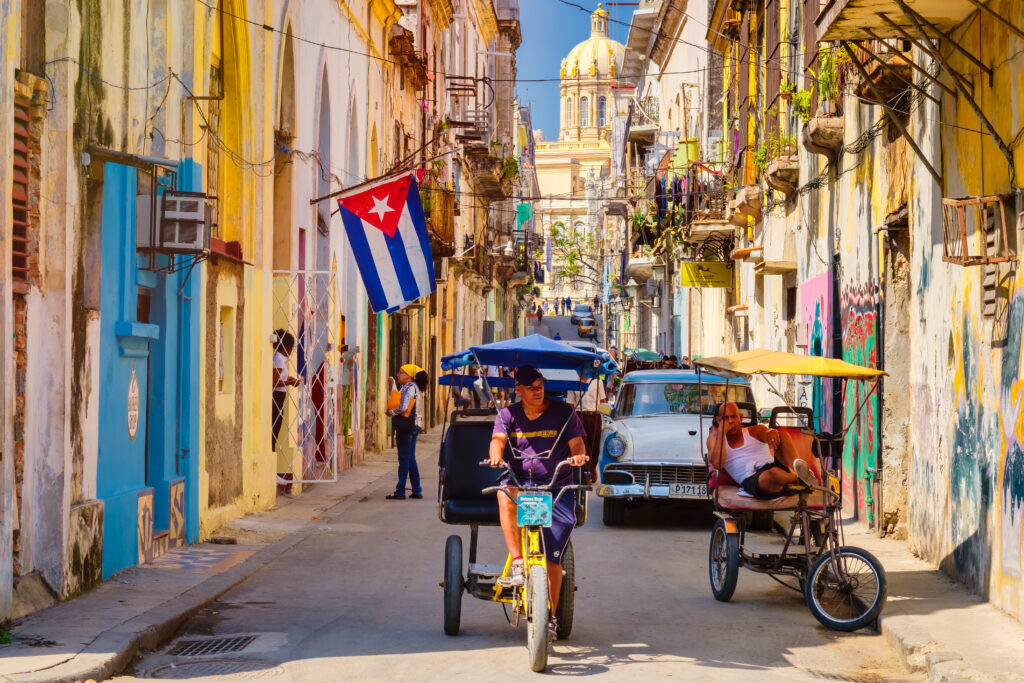Clay Jenkinson is currently leading a cultural tour of Cuba, where the group spent time walking the scenic streets of its historic capital, Havana. (Shutterstock)
The road surfaces improved and widened as we got closer to Havana from the Cuban south coast. Eventually, we were on a four-lane divided highway into the national capital. From about 75 miles out, things began to seem less impoverished — more buildings with fresh paint. The fields were better groomed. Fewer horse-drawn carts. The huts and shacks looked less depressing. More variety in the roadside stands. Our guide, Marlin, said we were crossing the boundary into the city. We all looked northwest and saw the skyline of Havana, such as it is, and the ruin of the Spanish castle that once protected the harbor from privateers like Francis Drake of England.
We dropped off a few people with the one-day flu at the new, international, “luxurious,” and somewhat sterile hotel. The rest of us used the restrooms and got back on the bus, which took us a few miles east to Old Havana.
Havana, Cuba. (Photo Clay Jenkinson)
We toured the narrow streets and alleys of the old city on foot. Marlin, our guide, told us stories of entrepreneurial courage and success, a modest experiment in privatization; showed us the Cuban capitol, took us to Five Corners, immortalized in films (including the sequel to *The* *Godfather*) and literature. After that, we sat down at an outdoor café for lunch. Lunch consisted of Pepsi with ice, water bottles, or beer. We took turns going into the café to choose one of several sandwiches for lunch and skewers of fresh fruit.
The temperature was in the 80s Fahrenheit with a slight but cooling Atlantic Ocean breeze, and the sun was hot but not oppressive. A perfect day in Havana.
## **Then the Magic Happened**
A three-piece musical group — two men, one woman, two guitars, and one small pair of maracas — began performing against the wall outside the café. They sang a series of traditional Cuban songs and then a few American tunes just for us. The trio could not have been more unprepossessing. One man was very overweight, like Sydney Greenstreet in *Casablanca*; the other man was youngish and in bold blue shorts, a white t-shirt, sunglasses, and close-cropped hair. The woman wore an army green t-shirt, sack dress, and gray tennis shoes. The woman and the obese man had given up trying to take care of their bodies long ago. The man in blue shorts was still too young to surrender. They were not ready for Hollywood.
The glorious music of a trio playing on a Havana side street transports Clay and his guests. (Photo Clay Jenkinson)
But their music was beautiful. Here is a country filled with economic deprivation and even desperation, where the electricity goes out for hours several days per week and sometimes for longer periods. So deprived of the basic amenities of life — soap, toothbrushes, shampoo, laundry detergent — Cubans show genuine gratitude when we give those items away in small quantities on the street. Cuba is a nation mismanaged in almost every way, with a central government that is not without serious corruption: a failed economic ideology coupled with a stubbornness born of 60+ years of the quest to defy the Colossus to the north. The average Cuban has to scramble for food — egg, hamburger, fresh fish. The average Cuban stands in line for hours every week, sometimes hours each day, to take a few dollars worth of pesos out of a bank, purchase a pound of hamburger, buy a half gallon of milk poured from a vat into whatever plastic container the consumer could bring to the shop. The average Cuban wears the kind of seedy cotton clothing characteristic of what Jack Kerouac called the *fellahin* (peasant) the world over. The average Cuban has no car, horse, or money to travel even short distances.
And yet, these Cubans played their music with joy, passion, and good humor. Here we were, 25 Americans, none rich (I think) by American standards, and yet infinitely richer than the average Cuban, eating ham and cheese sandwiches and half listening to these musicians playing 10 feet away.
But then, almost everyone in our tour party was suddenly caught up in the beauty of the moment. People stopped talking about reruns of *Yellowstone* and the time they spent in Barcelona and began to quiet down and listen to the exquisite music. Toes began to tap, shoulders almost imperceptibly sway. My friend Dean began to move his body in his metal outdoor café chair.
I’m a pretty stiff white guy, inhibited in all sorts of ways. But at that café, in Old Havana, 1,932 miles from home, I found myself saying to myself, almost out loud, “I think I should get up and dance.” This idea was so out of character as to qualify as astounding. Then I realized I *actually wanted* to get up and dance because I wanted to celebrate Life, the life force, resilience, and the baseline vitality of life. It was my first Zorba the Greek moment, decades into my left-brained life!
So I got up, went over to Dean to ask him to join me, and cajoled my 84-year-old dear friend Woody into getting up and dancing with me. Woody was, of course, game. We did not dance well together, but we moved our bodies to the beat of the music. I urged but did not cajole the others in our group to join us and dance for the pure joy of this moment. We were far from home. We had nothing to lose by letting go a little. We could try out a little freedom we deny ourselves at home in the U.S., in our home communities, where our peers might raise their eyebrows or shake their heads. We could live more freely for an hour in Old Havana.
It was liberating, and I was only slightly embarrassed to make a spectacle of myself in front of strangers, friends, and paying guests. I ask myself with great regularity why I am so uptight. I’m the guy who ducks when the hypnotist is looking around the audience for a subject. I’m the guy who avoids eye contact when the salsa dancer (or the Texas line dancer) comes into the crowd to choose a one-song partner.
Why am I, why are we afraid of life? All so-called “primitive peoples,” let’s rather say all Indigenous peoples, make dance and song a central fact of their existence. What exactly are we entitled, first-worlders trying to protect? Like Saint Paul, I’m the chief of sinners.
I looked around. Everyone in our group was relaxed, swaying to the music, realizing — I hope — that there was no way they would hear music this pure, unselfconscious, and joyful back home.
A very fit, stylish Cuban woman in heels walked up the street past the café. As she passed and the music reached her ears, she performed a one-second sway with her body without ever slowing down and then resumed her journey. If Jack Kerouac had been there, he would have turned to Dean Moriarty and said, “Dig that lone chick carrying the ancient rhythms of song in her soul, she has it, she has IT, she knows time!” (Whatever all that means?!) At several points, I looked at the 40-something waitress who stood with her back to the café wall. She’d be mouthing the words to the song to herself, but when she caught me observing her, she shut her lips and ceased her singing abruptly.
I looked again at the trio. I mean absolutely no disrespect — precisely the opposite — when I say that they were not much to look at. (But then look at us!) They could never compete in the capitalist American performance paradigm, where a naturally talented singer like Shania Twain is remade into a Nashville musical production star. These three Cubans were the real thing — not ready for prime time or *The Voice*, but lovely, generous, joyful, and comfortable in their own skin. Not to mention very talented.
Their guitars were old and battered and cracked. They looked like they cost $18 at a pawn shop. And yet, the music that came out of them was exquisite.
I loved them. I loved it that for one brief shining moment, I opened my person to their beauty, which broke most of the standards of capitalist performance culture, let go of a few of my well-rooted inhibitions, surrendered to life, and let myself express joy without having to translate it into words.
**Categories:** Dispatches from the Road
**Tags:** Cuba
---
### [A Modest Proposal for U.S.-Cuban Relations](https://ltamerica.org/a-modest-proposal-for-us-cuban-relations/)
**Published:** March 10, 2025
**Author:** Clay Jenkinson
**Excerpt:** Returning from leading a cultural tour of Cuba, the second in four years, Clay offers a new approach to U.S./Cuban relations.
**Content:**
## Returning from leading a cultural tour of Cuba, the second in four years, Clay offers a new approach to U.S./Cuban relations.
A statue of Don Quixote by the Cuban artist Sergio Martinez in Havana, Cuba. (Photo Clay Jenkinson)
With my return from Cuba last week, I have completed two sustained tours of the island nation in the last four years. I have read and re-read a dozen books on Cuban history, America’s tortured relationship with Cuba dating back to the Jefferson administration, the coming of the Cuban revolution in 1953, the triumph of Fidel Castro and the insurrectionists in 1959, the transformation of American policy towards the Castro regime after he began to nationalize American companies in 1960, the Bay of Pigs debacle (1961), the Cuban Missile Crisis (1962), and the “thaw” that President Barack Obama attempted to initiate during his second term.
You can never know enough about complicated issues. I do, however, know a good deal. I have discussed these things with colleagues, Cubans in Florida, and Cubans on the island. I have read histories of the Cold War. I have read memoirs. I have visited museums on both sides of the Florida Straits. I have stayed in modern and broken-down 19th-century hotels, private homes, and bed and breakfasts on the island. I have dined with Cuban intellectuals in their homes.
Here is what I think America must do.
**First, lift the Embargo** either immediately or in a controlled sequence. Why? The Embargo has never worked. It has not accomplished either of its goals: 1) to force the Cuban government to reject communism, end censorship, permit political parties, endorse free and fair elections, curtail human rights abuses, and cease to trade with America’s global enemies. Or 2) Put such intense economic and political pressure on the Cuban people themselves that their lives become intolerable, and they rise up and force the liberalization of the Cuban government and economy. Neither of these goals has been met — or even come within sight of being met — in 64 years of heavy oppression from the north.
We helped end apartheid in South Africa by what President Reagan called “constructive engagement.” That is precisely what President Obama attempted at the end of his second term (2014-2016). It’s time for a new approach to Cuba.
**Second, permit free travel to and from Cuba**, especially for the Cuban people on the island and on the American mainland. Permit cruise ships to bring 3,000 or more tourists per day to Havana. Tourism will flourish under the right conditions, and visitors will leave money on the island and carry observations and insights back to their home countries.
Baseball has long been popular in Cuba. (Photo Clay Jenkinson)
**Third, permit essentially unlimited remittances** — i.e., sending money from the U.S. to relatives in Cuba.
**Fourth, encourage a wide range of cultural exchanges** — between universities, think tanks, museums, schools, agricultural societies, and government agencies.
**Fifth, provide $10-50 billion annually in targeted economic aid to Cuba for 10 or 20 years**. You have no idea how much needs to be done to preserve and improve the Cuban infrastructure — roads, bridges, public transit, hospital equipment, schools, agricultural machinery, crop loans, etc. One in 20 buildings in the center of Havana has collapsed or is in imminent danger of doing so. That amount of money would, in a sense, be a drop in the bucket, but it would almost immediately make a dramatic difference in the lives of the Cuban people. We passed countless bus stops where people gathered all over the island, but no bus ever came.
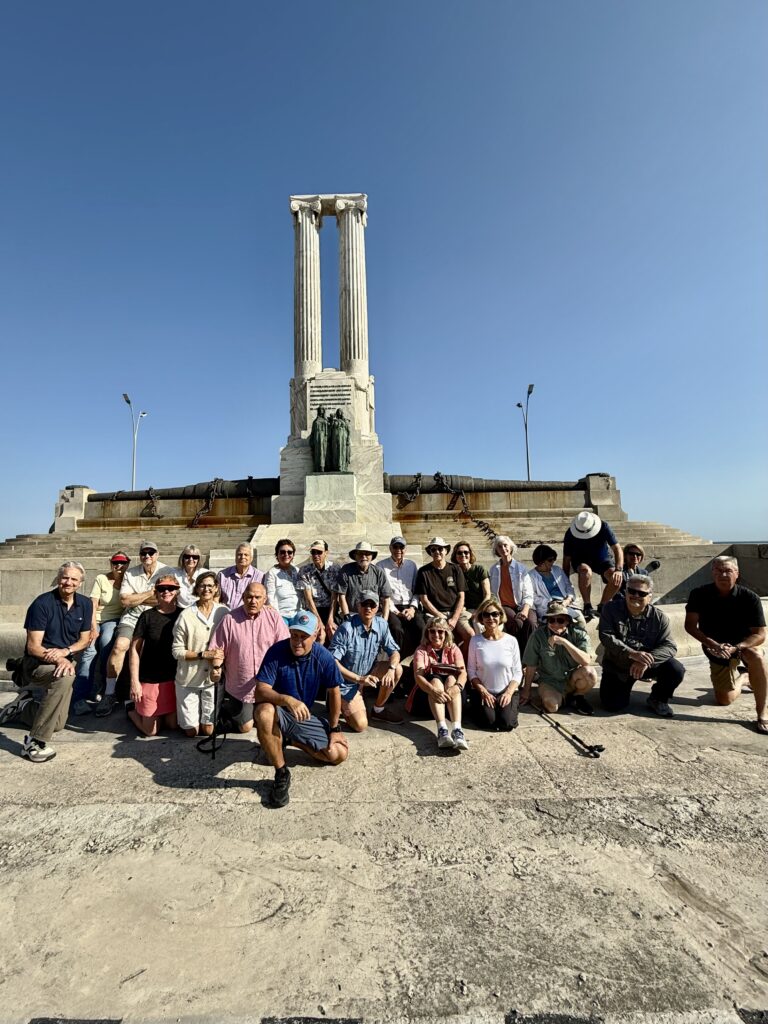Clay and his guests at the memorial to the USS Maine in Havana, Cuba.
**Sixth, continue to press for a free press, free elections, the right of dissent, and the end to arbitrary arrests and imprisonment**. In other words, the thaw should in no way be naïve, nor should it overlook the grave human rights abuses, inefficiency, and corruption of the Cuban government. The U.S. could provide aid contingent upon Cuban reforms. Cuba is partly responsible for its own troubles, of course, and its corruption and human rights abuses have given the U.S. an easy excuse for maintaining its stranglehold on the island economy.
**Seventh, immediately and before all else, subsidize fuel deliveries to Cuba**. Now, there are rolling blackouts, unscheduled losses of electric power, endless lines, and often no petrol at filling stations.
**Eighth, the U.S. should sponsor reconciliation meetings** and reunions between expat Cubans living in Florida and their friends and relatives on the island.
We Americans should look at Maslow’s hierarchy and ensure that all Cubans can obtain the most essential things in life. No people should live in deprivation and desperation because of conflict between their governments, which in neither case represent average citizens of Cuba and the United States. The Cold War (1946-1989) has been over for 35 years. The USSR is no longer a geopolitical threat to the United States. Fidel Castro (1926-2016) is dead. Raul Castro is elderly and enfeebled.
Time to turn the page. Cuba could be a reliable ally at the United States’ soft underbelly and an excellent arena for American commercial investment.
*Cuba: An American History*, by Ava Ferrer.
Critics may say the Cubans brought this on themselves, but you cannot sustain such a view if you look at America’s long, tragic relationship with Cuba. I’d suggest Ada Ferrer’s outstanding book, *Cuba: An American History*. If you want a closer look at the life and work of Fidel Castro, I suggest *Cuba Libre!: Che, Fidel, and the Improbable Revolution That Changed World History* by Tony Perrottet.
I know some of you will disagree with this list of suggestions, but I ask you to visit Cuba to see the island and its people for yourself and not just stay in Havana. There is widespread poverty and wretchedness in Cuba. And yet, the people are hospitable, cheerful, and friendly to the American people. The island is long (777 miles) and fertile. At the moment, most of the food eaten by Cubans has to be imported into a land that could easily feed itself and the rest of the Caribbean. Like people everywhere, the Cuban people want the basic comforts of life: clean water, good food, electricity, public transportation, working banks, and hygiene products. The United States government and the post-Fidel Cuban government are the two great impediments to those basic comforts. Of these two, the greater responsibility falls on the United States.
We Americans must accept our complicity in the misery of the Cuban people. We have had our boot on the neck of Cuba for over 100 years. It might have been worth it if it had brought about any of its goals. But you know what Einstein said about doing the same thing again and again and expecting a different result.
It is time to bring about a whole (but careful) reconciliation between two neighbors who, by all logic, should be allies and friends. The expats in Miami will learn to live with it, and everyone in both nations will be happier and more satisfied (even them) in a decade or two.
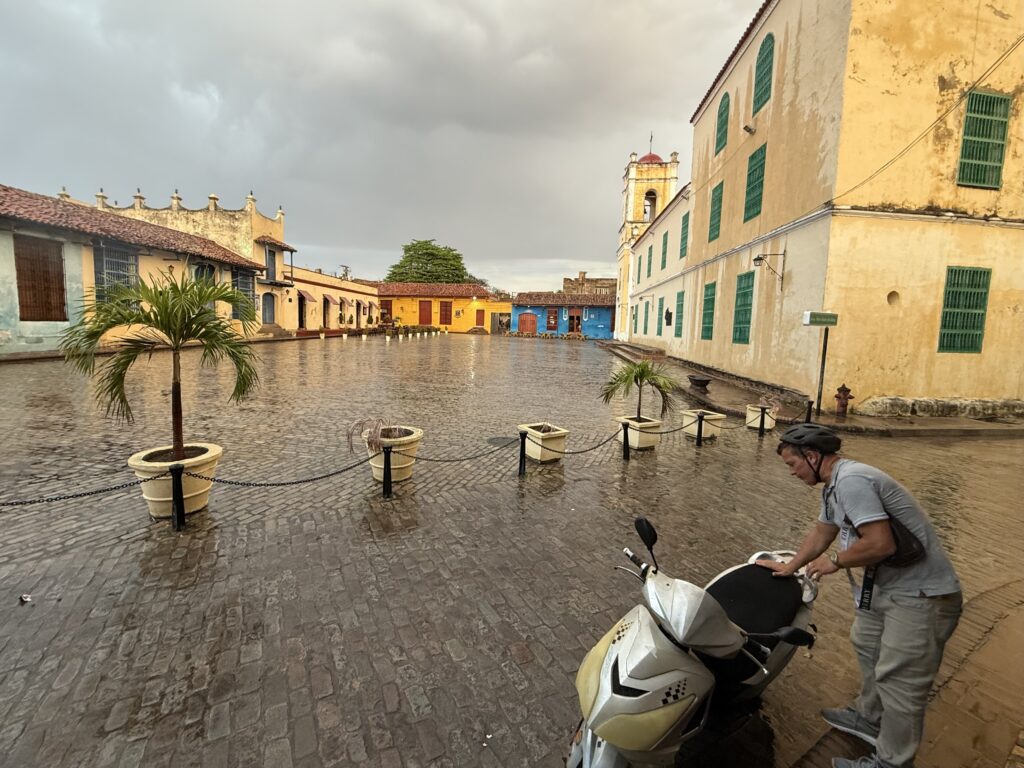After a rain in the historic town of Trinidad in central Cuba. (Photo Clay Jenkinson)
---
## ***Discover more on these topics at Listening to America***
[Travel](https://ltamerica.org/tag/travel/ "1 topics")[Republics](https://ltamerica.org/tag/republics/ "1 topics")[Steinbeck Travels](https://ltamerica.org/tag/steinbeck-travels/ "75 topics")[Rome](https://ltamerica.org/tag/rome/ "1 topics")[Pennsylvania](https://ltamerica.org/tag/pennsylvania/ "1 topics")[South Dakota](https://ltamerica.org/tag/south-dakota/ "16 topics")[Space Exploration](https://ltamerica.org/tag/space-exploration/ "8 topics")[Video](https://ltamerica.org/tag/video/ "51 topics")[Poetry](https://ltamerica.org/tag/poetry/ "1 topics")[Thoreau](https://ltamerica.org/tag/thoreau/ "5 topics")[Tennessee](https://ltamerica.org/tag/tennessee/ "1 topics")[Podcast](https://ltamerica.org/tag/podcast/ "1 topics")[Vermont](https://ltamerica.org/tag/vermont/ "1 topics")[New Mexico](https://ltamerica.org/tag/new-mexico/ "3 topics")[Wisconsin](https://ltamerica.org/tag/wisconsin/ "0 topics")[Utah](https://ltamerica.org/tag/utah/ "11 topics")[Reading](https://ltamerica.org/tag/reading/ "1 topics")[Road Trips](https://ltamerica.org/tag/road-trips/ "18 topics")[North Carolina](https://ltamerica.org/tag/north-carolina/ "3 topics")[New England](https://ltamerica.org/tag/new-england/ "1 topics")[Theodore Roosevelt](https://ltamerica.org/tag/theodore-roosevelt/ "16 topics")[Virginia](https://ltamerica.org/tag/virginia/ "7 topics")[Republic](https://ltamerica.org/tag/republic/ "0 topics")[State Parks](https://ltamerica.org/tag/state-parks/ "2 topics")[Ohio](https://ltamerica.org/tag/ohio/ "2 topics")[Rivers](https://ltamerica.org/tag/rivers/ "3 topics")[Walden](https://ltamerica.org/tag/walden/ "1 topics")[North Dakota](https://ltamerica.org/tag/north-dakota/ "53 topics")[The Constitution](https://ltamerica.org/tag/the-constitution/ "1 topics")[Oppenheim](https://ltamerica.org/tag/oppenheim/ "0 topics")[paintings](https://ltamerica.org/tag/paintings/ "0 topics")[Wyoming](https://ltamerica.org/tag/wyoming/ "4 topics")[Washington](https://ltamerica.org/tag/washington/ "2 topics")[U.S. Presidents](https://ltamerica.org/tag/u-s-presidents/ "71 topics")[U.S. Constitution](https://ltamerica.org/tag/u-s-constitution/ "1 topics")[Oppenheimer](https://ltamerica.org/tag/oppenheimer/ "1 topics")[Water in the West](https://ltamerica.org/tag/water-in-the-west/ "24 topics")[Thomas Jefferson](https://ltamerica.org/tag/thomas-jefferson/ "34 topics")[New York](https://ltamerica.org/tag/new-york/ "8 topics")[South Carolina](https://ltamerica.org/tag/south-carolina/ "1 topics")[Oregon](https://ltamerica.org/tag/oregon/ "4 topics")[Sports](https://ltamerica.org/tag/sports/ "2 topics")[Texas](https://ltamerica.org/tag/texas/ "4 topics")[north daktoa](https://ltamerica.org/tag/north-daktoa/ "0 topics")[William Shirer](https://ltamerica.org/tag/william-shirer/ "1 topics")
**Categories:** Features
**Tags:** America at 250, Cuba
---
### [Fidel Castro's Boyhood Home in Biran, Cuba](https://ltamerica.org/fidel-castros-boyhood-home-in-biran-cuba/)
**Published:** March 2, 2025
**Author:** Clay Jenkinson
**Excerpt:** Fidel Castro’s birthplace, now a museum, is one of the initial stops for Clay and his companions as he leads a cultural tour of Cuba.
**Content:**
## Fidel Castro’s birthplace, now a museum, is one of the initial stops for Clay and his companions as he leads a cultural tour of Cuba.
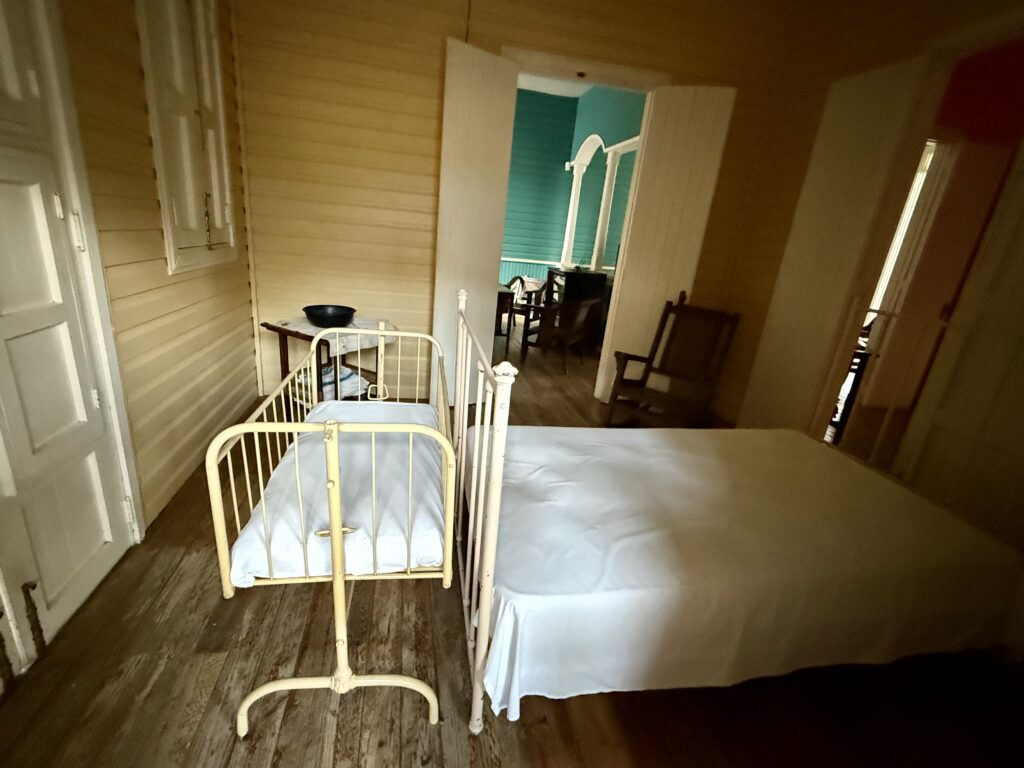Fidel Castro’s cradle is on prominent display at his birthplace in Biran, Cuba. His father’s sugar plantation, where Castro grew up, is now a museum. (Photo Clay Jenkinson)
When we finally got through passport control and customs at the Holguin Airport in eastern Cuba and boarded our Chinese-made bus, our outfitter announced that he had arranged a visit to the boyhood home of Fidel Castro near the village of Biran. I asked him to organize this a few weeks ago, but he informed me we’d get to the ranch’s vicinity after the staff went home for the night. But our Cuban guide, Marlin, contacted the staff a few days ago, and they graciously agreed to stay open for us. Try that at Best Buy or the Guggenheim.
It turned out that we were the first Americans to visit this site in more than three years. The Cuban tourism industry, vital to the struggling Cuban economy, has been on life support for the last seven or eight years. The topsy-turvy caprice of American foreign policy towards Cuba creates a perpetual instability that makes it difficult for the travel industry to attract guests and maintain steady services.
In her 1963 book *On Revolution*, the German philosopher and journalist Hannah Arendt argued that most revolutions do not percolate up from the people. They are fomented and led by passionate advocates of the upper classes: George Washington, Thomas Jefferson, Vladimir Lenin, Ho Chi Minh, and even Gandhi. Those privileged and well-educated men initiate revolutions on behalf of the people. In many cases, those comparative aristocrats lose control of the revolution (and sometimes their heads), and events take populist and often enough violent turns.
By Cuban standards, Fidel Castro (1926-2016) was born with a silver spoon in his mouth. His father, Angel Castro, was originally from Spain and was a great entrepreneur. By dint of hard work — and the relative exploitation of Cuban peasants — Angel created a little economic empire for himself at Biran: a significant sugar plantation, a modest pharmacy, an elementary school, a hotel on the important Camino Real (then not much more than a cart and horse path), and a cockfighting ring.
His (illegitimate) son Fidel was a headstrong, opinionated, occasionally violent youngster, eventually privately schooled because he was too much trouble for the public school in his neighborhood. He studied law at the University of Havana, where he became radicalized and read deeply in the history of revolution and Latin America. At one point, he attempted to organize his father’s workers to strike for better wages and working conditions!
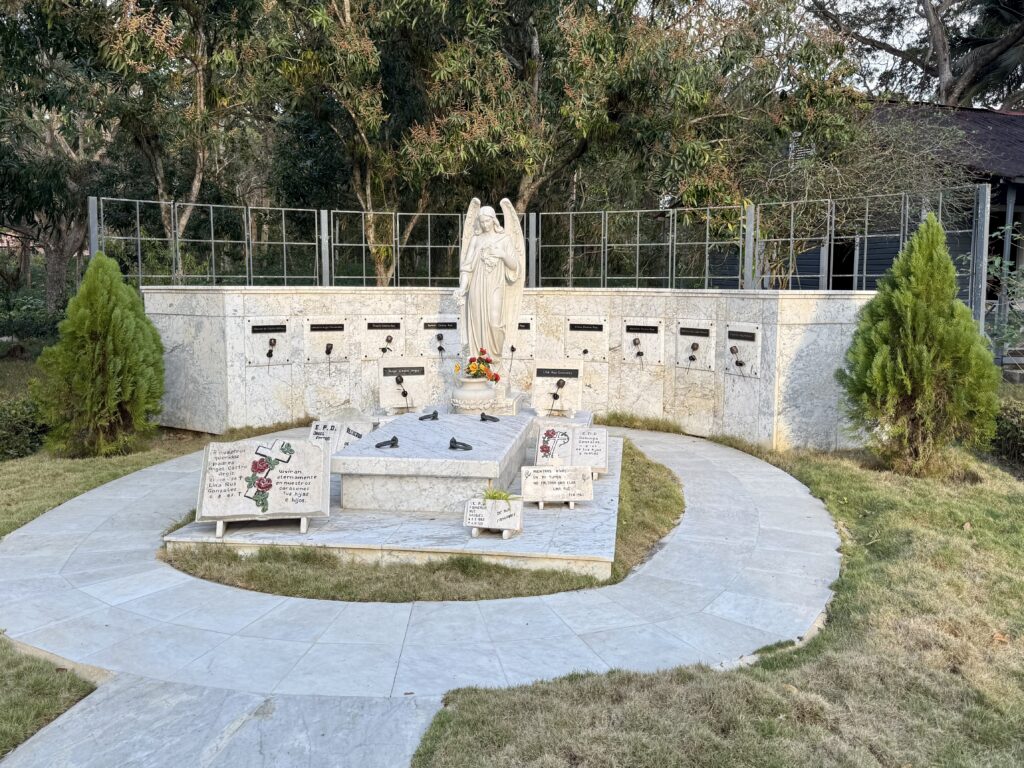The memorial and burial site of Fidel Castro’s parents at his birthplace in Biran, Cuba. The homestead was made a museum in 2000. (Photo Clay Jenkinson)
Some of the Castro buildings have been rebuilt over the years — the ranch is now a working museum and, for Cubans, a sacred place — but the cockfighting ring is original, though a horned bull was doing its best to demolish the picket fence by rubbing hard against it. In the distance, we saw a man plowing with a single moldboard dragged slowly by an infinitely patient ox. It was a scene out of Homer’s Odyssey, 330 miles from Miami, as the crow flies.
A young Fidel Castro on his arrest after the 1953 attack on the Moncada Barracks in Santiago de Cuba. (Wikimedia)
Fidel’s cradle is on prominent display on-site — the cradle of the revolutionary and revolution. There is a kind of sweetness to this. It is hard to imagine the man who could deliver a four-hour harangue to the Cuban people and defy and browbeat 10 successive American presidents as a humble child.
We did not linger, not wishing to keep the staff any longer than necessary. A haze or slight fog had set in by the time we left. Several members of the staff commuted home on horseback. Everything on the extensive property was bathed in soft light, the sun setting quietly in the west, the boyhood home of one of the world’s great revolutionaries.
We loaded up the chief interpreter at Fidel’s boyhood home with small American amenities — individually wrapped soaps, motel-sized shampoo, toothbrushes and toothpaste, razors, etc. Such small and inexpensive items, travel-sized on display at Dollar Stores and Walmart, are a godsend for the Cuban people, who lack the most basic services and amenities.
José Martí (1853-1895) Cuba’s leading national hero played a key role in the liberation of his country from Spain. (Wikimedia)
Our purpose in seeking out Fidel Castro and Castro Revolution sites in Cuba is not to celebrate the passionate and often bombastic Castro, who did good things for his people (literacy, health care, women’s rights) but also was capable of arbitrary detentions, press censorship, postponed or canceled elections, one-party rule, and torture and executions during his long reign (1959-2008). We are following his 1953-1959 revolution across the island because Castro became a world-historical figure. He stood up to the colossus to the north. He inspired (and continues to inspire) millions of oppressed people worldwide. There are thousands of murals and billboards celebrating Castro throughout Cuba. Few here are unaware of the dark side of Castro’s reign and the failures of his semi-communist government. Perhaps he stayed on the stage too long. Perhaps, like other revolutionaries (with the magnificent exception of George Washington), power and hubris corrupted him. But he liberated Cuba from American commercial colonialism, and that continues to matter directly to the soul of the Cuban people.
In Cuba, the great hero is [José Martí ](https://1898exhibition.si.edu/node/43)(1853-1895). Fidel comes second, and even those who have long since become disillusioned by his ways and rule still maintain reverence for him. Third is [Che Guevara](https://www.history.com/topics/latin-america/che-guevara) (1928-1967), who was not a Cuban but an Argentine, a serious Marxist intellectual, but also a physician, guerrilla leader, diplomat, author, and military theorist.
We drove quietly towards Santiago through sugar cane fields, the majority of them now idle, past rusted out sugar cane harvesting equipment, on roads in which the asphalt is breaking up into unstable gravel.
No matter what our individual politics were, we all felt a kind of sentimental pleasure in visiting the site of Fidel Castro’s formation. It was dark at the Hotel Imperial in Santiago when we finally arrived, tired, intrigued, hearing our minds grind and open with new perspectives, observations, and insights.
---
## ***Discover more on these topics at Listening to America***
[U.S. Presidents](https://ltamerica.org/tag/u-s-presidents/ "71 topics")[Rome](https://ltamerica.org/tag/rome/ "1 topics")[Rivers](https://ltamerica.org/tag/rivers/ "3 topics")[Pennsylvania](https://ltamerica.org/tag/pennsylvania/ "1 topics")[South Carolina](https://ltamerica.org/tag/south-carolina/ "1 topics")[U.S. Constitution](https://ltamerica.org/tag/u-s-constitution/ "1 topics")[Vermont](https://ltamerica.org/tag/vermont/ "1 topics")[Texas](https://ltamerica.org/tag/texas/ "4 topics")[North Carolina](https://ltamerica.org/tag/north-carolina/ "3 topics")[Oppenheimer](https://ltamerica.org/tag/oppenheimer/ "1 topics")[Reading](https://ltamerica.org/tag/reading/ "1 topics")[Republic](https://ltamerica.org/tag/republic/ "0 topics")[Tennessee](https://ltamerica.org/tag/tennessee/ "1 topics")[Poetry](https://ltamerica.org/tag/poetry/ "1 topics")[The Constitution](https://ltamerica.org/tag/the-constitution/ "1 topics")[Video](https://ltamerica.org/tag/video/ "51 topics")[William Shirer](https://ltamerica.org/tag/william-shirer/ "1 topics")[South Dakota](https://ltamerica.org/tag/south-dakota/ "16 topics")[Thoreau](https://ltamerica.org/tag/thoreau/ "5 topics")[Podcast](https://ltamerica.org/tag/podcast/ "1 topics")[Steinbeck Travels](https://ltamerica.org/tag/steinbeck-travels/ "75 topics")[Republics](https://ltamerica.org/tag/republics/ "1 topics")[Washington](https://ltamerica.org/tag/washington/ "2 topics")[Road Trips](https://ltamerica.org/tag/road-trips/ "18 topics")[North Dakota](https://ltamerica.org/tag/north-dakota/ "53 topics")[Wyoming](https://ltamerica.org/tag/wyoming/ "4 topics")[Space Exploration](https://ltamerica.org/tag/space-exploration/ "8 topics")[Walden](https://ltamerica.org/tag/walden/ "1 topics")[Utah](https://ltamerica.org/tag/utah/ "11 topics")[Theodore Roosevelt](https://ltamerica.org/tag/theodore-roosevelt/ "16 topics")[New Mexico](https://ltamerica.org/tag/new-mexico/ "3 topics")[Sports](https://ltamerica.org/tag/sports/ "2 topics")[Wisconsin](https://ltamerica.org/tag/wisconsin/ "0 topics")[New England](https://ltamerica.org/tag/new-england/ "1 topics")[paintings](https://ltamerica.org/tag/paintings/ "0 topics")[New York](https://ltamerica.org/tag/new-york/ "8 topics")[Thomas Jefferson](https://ltamerica.org/tag/thomas-jefferson/ "34 topics")[north daktoa](https://ltamerica.org/tag/north-daktoa/ "0 topics")[Travel](https://ltamerica.org/tag/travel/ "1 topics")[Water in the West](https://ltamerica.org/tag/water-in-the-west/ "24 topics")[Oregon](https://ltamerica.org/tag/oregon/ "4 topics")[Oppenheim](https://ltamerica.org/tag/oppenheim/ "0 topics")[State Parks](https://ltamerica.org/tag/state-parks/ "2 topics")[Virginia](https://ltamerica.org/tag/virginia/ "7 topics")[Ohio](https://ltamerica.org/tag/ohio/ "2 topics")
**Categories:** Dispatches from the Road
**Tags:** America at 250, Cuba
---
### [Shakespeare, Thoreau, and Ed Abbey in the Bitterroot Mountains](https://ltamerica.org/shakespeare-thoreau-and-ed-abbey-in-the-bitterroot-mountains/)
**Published:** January 14, 2025
**Author:** Clay Jenkinson
**Excerpt:** Clay reports from his annual humanities retreat near the Montana-Idaho border in the Northern Rockies.
**Content:**
## Clay reports from his annual humanities retreat near the Montana-Idaho border in the Northern Rockies.
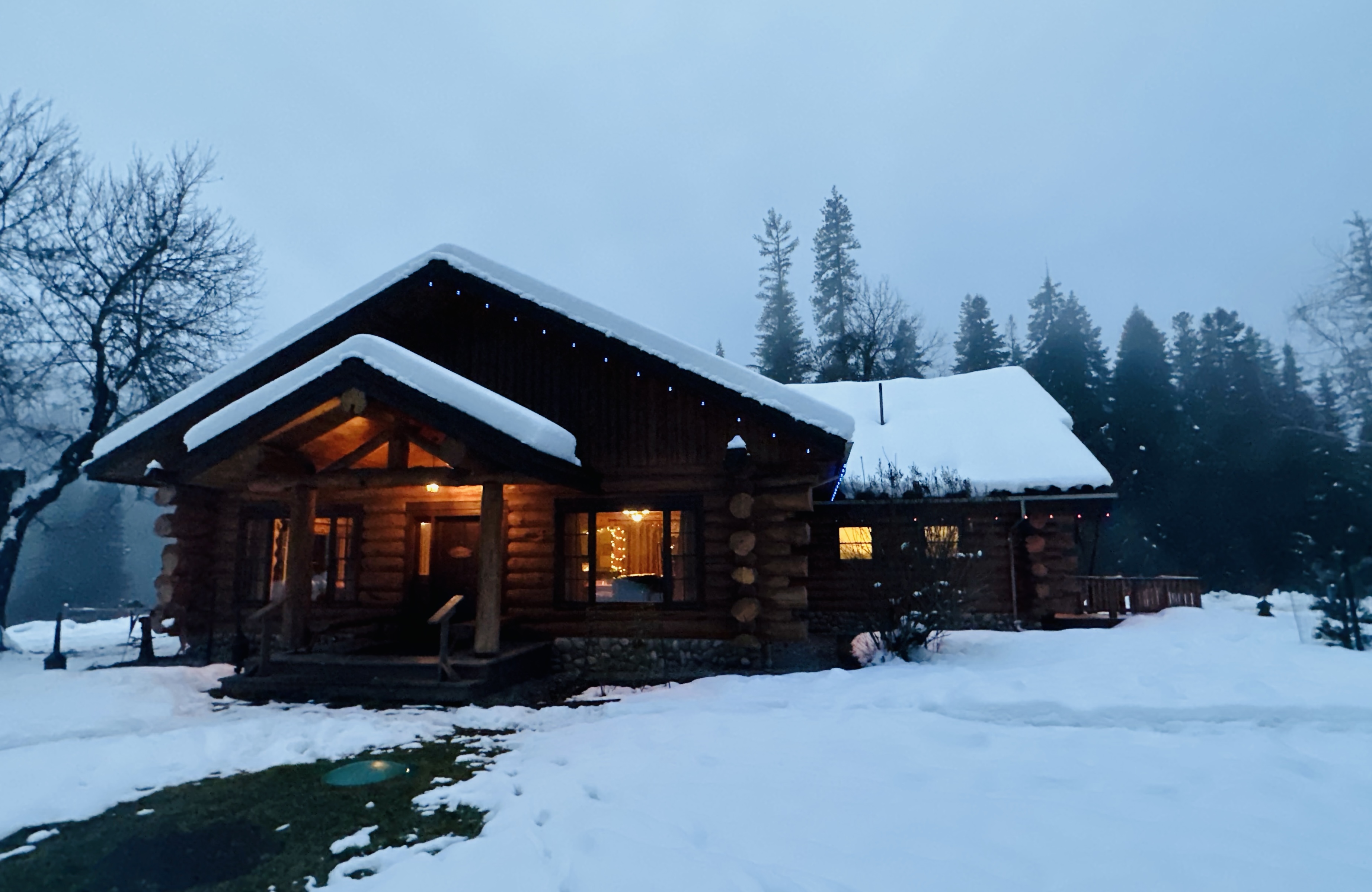Lochsa Lodge in Idaho’s Bitterroot Mountains and site of Clay’s annual humanities retreats.
**Lochsa Lodge, 60 miles west of Missoula, Montana** — I just returned this evening from the orientation meeting for a Shakespeare humanities retreat I am leading in a lovely retro lodge in the Bitterroot Mountains. Beginning tomorrow morning, we will spend the next four days talking about two of Shakespeare’s plays: *As You Like It* and *King Lear*.
Last week, I hosted a similar retreat on two excellent books: Henry David Thoreau’s *Walden* and Edward Abbey’s *Desert Solitaire*. We all had amazingly satisfying discussions in the lodge’s library, around the huge evening bonfires, during the group meals, and as we strolled along the Lochsa River just 200 steps from the lodge. We asked hard questions about life, Life, and how we live. I came away determined to lead my life more deliberately and more minimally.
I am the luckiest man alive to be able to create these communities and watch them flourish. And here’s why they flourish.
The participants have good and full lives, but they want a quality of conversation they are not always getting where they live. We all belong to book clubs, but we all know how they devolve in an age when everyone is just so @Z#!@# busy. People come to these retreats because they are hungry for something more in American life: more than the soundbites and the culture war shouting. They want to talk about ideas with others who want to talk about ideas.
I write this because I strongly believe that much of America wants something more. More substantive, more civil, more generous, more serious. Less sensational, less vulgar, less righteous.
We can come out of this malaise. I use the term in honor of the late Jimmy Carter, one of the best men of our time, who was also president of the United States. (Although it seems he never actually used that exact term.)
It seems clear that the reformation will not start from the top down but from the lower plateaus up. I won’t say bottom because we know who lives there in both parties and persuasions.
Each of us is going to have to strive to be our best selves, to practice what Jefferson called “artificial good humor,” to give the benefit of the doubt, to bring the temperature down, to insist (at least for ourselves) on evidence and remember that our system only works through compromise. Heck, Jefferson said more. He said it only works if both sides bend over backward to accommodate the other party or point of view. (If so, we will be in some trouble!)
If you could sit in on our conversations this week, you could come away more optimistic about America. Yes, these are unusually bookish people, but they represent a wider swath of America than we realize. There is such longing on the Right for a more innocent (or seemingly innocent) time in American life. And though one can disagree with much of the Right’s agenda to get us there, I think we all sometimes wish we lived in a country whose government functioned more like a high school student council or Model UN than the circus and travesty that our national politics have become. And where civility, forgiveness, and mutual respect were more common.
*Walden* teaches us how to live. *Desert Solitaire* tells us what to avoid as we develop the recreational American West. *As You Like It* suggests, in the end, the only things that matter on a day-to-day scale are good marriages and a government with a conscience. And *King Lear* asks us who we are at the core: a majestic being just this side of the Angels or a “poor bare forked animal” leading a life not much more than bestial at heart.
We’ll be forming an **America at 250 Book Club** for those who wish to join. We’ll meet on Zoom four or more times yearly to discuss books and ideas. Drop us a note at <clay@ltamerica.org> if you’d like to learn more.
I strongly believe that America’s salvation will come in part through a renewal of the humanities and that much of what has happened to our beloved republic is related to the decline of liberal arts and humanities education in the United States.
We will start tomorrow by looking briefly at the “To Be or Not to Be” soliloquy. May as well bore right into the heart of things!
---
## ***Discover more on these topics at Listening to America***
[Steinbeck Travels](https://ltamerica.org/tag/steinbeck-travels/ "75 topics")[U.S. Presidents](https://ltamerica.org/tag/u-s-presidents/ "71 topics")[New Mexico](https://ltamerica.org/tag/new-mexico/ "3 topics")[North Dakota](https://ltamerica.org/tag/north-dakota/ "53 topics")[paintings](https://ltamerica.org/tag/paintings/ "0 topics")[Utah](https://ltamerica.org/tag/utah/ "11 topics")[Ohio](https://ltamerica.org/tag/ohio/ "2 topics")[Virginia](https://ltamerica.org/tag/virginia/ "7 topics")[William Shirer](https://ltamerica.org/tag/william-shirer/ "1 topics")[South Carolina](https://ltamerica.org/tag/south-carolina/ "1 topics")[north daktoa](https://ltamerica.org/tag/north-daktoa/ "0 topics")[Podcast](https://ltamerica.org/tag/podcast/ "1 topics")[Republic](https://ltamerica.org/tag/republic/ "0 topics")[Rome](https://ltamerica.org/tag/rome/ "1 topics")[Thoreau](https://ltamerica.org/tag/thoreau/ "5 topics")[Theodore Roosevelt](https://ltamerica.org/tag/theodore-roosevelt/ "16 topics")[Wyoming](https://ltamerica.org/tag/wyoming/ "4 topics")[Space Exploration](https://ltamerica.org/tag/space-exploration/ "8 topics")[Tennessee](https://ltamerica.org/tag/tennessee/ "1 topics")[Thomas Jefferson](https://ltamerica.org/tag/thomas-jefferson/ "34 topics")[Texas](https://ltamerica.org/tag/texas/ "4 topics")[Sports](https://ltamerica.org/tag/sports/ "2 topics")[The Constitution](https://ltamerica.org/tag/the-constitution/ "1 topics")[Video](https://ltamerica.org/tag/video/ "51 topics")[Vermont](https://ltamerica.org/tag/vermont/ "1 topics")[New York](https://ltamerica.org/tag/new-york/ "8 topics")[Rivers](https://ltamerica.org/tag/rivers/ "3 topics")[State Parks](https://ltamerica.org/tag/state-parks/ "2 topics")[Oppenheimer](https://ltamerica.org/tag/oppenheimer/ "1 topics")[Water in the West](https://ltamerica.org/tag/water-in-the-west/ "24 topics")[Walden](https://ltamerica.org/tag/walden/ "1 topics")[Oppenheim](https://ltamerica.org/tag/oppenheim/ "0 topics")[Wisconsin](https://ltamerica.org/tag/wisconsin/ "0 topics")[North Carolina](https://ltamerica.org/tag/north-carolina/ "3 topics")[Road Trips](https://ltamerica.org/tag/road-trips/ "18 topics")[Poetry](https://ltamerica.org/tag/poetry/ "1 topics")[Pennsylvania](https://ltamerica.org/tag/pennsylvania/ "1 topics")[South Dakota](https://ltamerica.org/tag/south-dakota/ "16 topics")[Washington](https://ltamerica.org/tag/washington/ "2 topics")[Oregon](https://ltamerica.org/tag/oregon/ "4 topics")[New England](https://ltamerica.org/tag/new-england/ "1 topics")[Republics](https://ltamerica.org/tag/republics/ "1 topics")[Travel](https://ltamerica.org/tag/travel/ "1 topics")[U.S. Constitution](https://ltamerica.org/tag/u-s-constitution/ "1 topics")[Reading](https://ltamerica.org/tag/reading/ "1 topics")
**Categories:** Dispatches from the Road
**Tags:** Books, Humanities, Idaho, Montana, U.S. Presidents
---
### [A Visit to Little Havana's Bay of Pigs Museum](https://ltamerica.org/a-visit-to-little-havanas-bay-of-pigs-museum/)
**Published:** February 28, 2025
**Author:** Clay Jenkinson
**Excerpt:** Before setting off for Cuba this week on a cultural tour of the island nation, Clay and his guests stopped in at the Bay of Pigs Museum in Little Havana, Miami.
**Content:**
## Before setting off for Cuba this week, on a cultural tour of the island nation, Clay and his guests stopped in at the [Bay of Pigs Museum](https://www.bayofpigsbrigade2506.com) in Little Havana, Miami.
Clay Jenkinson (right) and Carlos, a guide at the Bay of Pigs Museum in Miami. Carlos, now 81, was 17 when he was part of the U.S. government-backed force that invaded Cuba in April 1961. Carlos was imprisoned for 21 months in Cuba before gaining his freedom.
Earlier this week I took the guests on our Cuba Cultural tour to the [Bay of Pigs Museum](https://www.bayofpigsbrigade2506.com) in Little Havana, Miami. One out of five Cubans now lives in Miami — 2 million expats, on the whole, an extremely cohesive and prosperous community. The museum we visited (me for the second time) tells the story of the Bay of Pigs fiasco (April 17-19, 1961) from the anti-Castro but not exactly pro-American point of view. The Bay of Pigs operation, cooked up by the CIA and the Eisenhower administration at the end of his second term, inherited by a skeptical and uncertain JFK, failed miserably. The Miami museum is manned by veterans of the bungled invasion. There were 1,500 of them, trained, armed, and transported by the United States to the south coast of Cuba.
Absolutely everything went wrong. Details of the “clandestine” operation were well-known in the United States (and Cuba), with detailed news stories published in the weeks leading up to the invasion in the *New York Times* and other newspapers. The landing was supposed to occur in darkness — it happened in broad daylight. The landing site was arguably the worst place on the south coast of Cuba to dump 1,500 men — there were reefs and mangrove swamps — and the “nearby” mountains where they expected to regroup stood scores of miles away. Perhaps the most decisive factor in the geopolitical debacle was President Kennedy’s refusal to send in the air strikes that the CIA, the U.S. military, and the Cuban “freedom fighters” expected.
The CIA and the other plotters believed that Fidel Castro was so unpopular that the minute the strike force landed, the people of Cuba (some 11 million) would rise up spontaneously and overthrow the regime. They could not have been more wrong. Castro was still widely popular in 1961, and even those disillusioned with his rule had a large stock of residual loyalty to the revolution he had brought to Cuba in 1959. They all knew that the vicious, pro-American strongman, Fulgencio Batista, had to be driven off the island. It was Fidel who had made it happen.
Fidel Castro was able to quash the Bay of Pigs invasion effortlessly. A couple of hundred invaders were killed and the rest were imprisoned. Finally, in late 1962, the Kennedy administration — led by Attorney General Robert F. Kennedy — was able to ransom the soldiers by way of approximately $53 million in agricultural aid. Most of them wound up in South Florida.
Our host Carlos, now 81, was just 17 years old when he landed at the Bay of Pigs. He’s a beautiful, handsome, gentle, bemused, and still passionate man. Carlos began by telling us that a new museum is being built nearby, with lots of electronic bells and whistles. Why? “Because we’ll (survivors of the Bay of Pigs invasion) all be dead soon.” He is making an Excel chart of the survivors — perhaps 200 are still alive. Carlos was imprisoned for 21 months. He and more than 200 others had to share a single toilet! Where are the Geneva Conventions when you need them? His own defense lawyer urged the court to execute him (and the others) because that would be preferable to torture and bestial living conditions.
It was an honor to listen to Carlos in Little Havana. One doesn’t have to agree with his politics or point of view to feel deep respect for his integrity and dignity. He told us to ask tough questions. We did. He answered every one of them with grace and often with self-deprecating humor.
**Question:** Could the invasion have worked?
Carlos: No, probably not.
**Question:** Does much blame fall to the Kennedy administration for failing to send in the secondary air strikes?
Carlos: Yes, maybe, but we don’t hold a grudge.
**Question:** What should America’s policy toward Cuba be today?
Carlos had no answer. The sense was that things are just what they are, and there is no satisfying answer. He does not expect to see a more enlightened government in Havana in his lifetime. Perhaps his grandchildren, he said.
**Question:** If a more liberal government came to power, would you go back?
Carlos: No. I’m an American citizen. I love America.
**Question:** What will happen when Raul Castro (Fidel’s brother, now 93 years old) dies?
Carlos: Fidel’s grandson has a yacht as big as Bill Gates’? Nothing will change.
Cover of *Life* magazine, May 10, 1963, on display at the Bay of Pigs Museum in Miami.
We watched an extremely moving 20-minute documentary featuring interviews with surviving members of the 2506 Brigade. Carlos was one of the talking heads in the film — about a dozen years younger than he is now. At the end, a caption under a photo of each of the nine interviewees noted what they would most want to see if they ever returned to Cuba.
It was a truly extraordinary morning. We all felt deep respect and sadness for our host, for what my friend Steve called “the myth of the lost cause,” for the endless tragedy of Cuba, exploited by U.S. banks, the mafia, the United Fruit Company, the U.S. military; and more recently by the USSR (think of the Cuban Missile Crisis); and of course by the frequently tyrannical and misguided Castro government.
Later this week, we will be going to the actual Bay of Pigs on the south coast of Cuba. We will swim in the bay, observe the impossible geographic conditions that thwarted the 1961 invasion, stay overnight in an Airbnb within sight of the bay, dine at a rooftop restaurant … and visit a second Bay of Pigs museum. This second one telling the story from a pro-revolution, pro-Castro point of view, wherein the “freedom fighters” are called thugs and “misguided mercenaries” and the U.S. is regarded as a 3,000 pound Yanqui gorilla that has for 60-some years refused to let the Cuban people engage in their own “pursuit of happiness.”
You cannot visit Cuba with an open mind and not realize that there are [no simple narratives here](https://ltamerica.org/thomas-jefferson-the-u-s-annexation-of-cuba-and-more/), no perfect villains or saints. There are several legitimate points of view about the history and destiny of Cuba and its tortured relations with the United States. No one perspective deserves to dominate. America’s 250-year engagement with Cuba has not produced a relationship satisfying to anyone. The simple fact is that Cuba — the jewel of the Caribbean — is stuck in a state of severe poverty and privation; the United States bears a heavy responsibility, but not alone.
Meanwhile, 2 million Cubans live in Miami and look with nostalgia, sorrow, and longing at the grand but desperate island only 90 miles away.
*Editor’s note: [Read more about Clay’s cultural tour of Cuba.](https://ltamerica.org/thomas-jefferson-the-u-s-annexation-of-cuba-and-more/)*
---
## ***Discover more on these topics at Listening to America***
[Pennsylvania](https://ltamerica.org/tag/pennsylvania/ "1 topics")[The Constitution](https://ltamerica.org/tag/the-constitution/ "1 topics")[Ohio](https://ltamerica.org/tag/ohio/ "2 topics")[New York](https://ltamerica.org/tag/new-york/ "8 topics")[South Carolina](https://ltamerica.org/tag/south-carolina/ "1 topics")[North Dakota](https://ltamerica.org/tag/north-dakota/ "53 topics")[New England](https://ltamerica.org/tag/new-england/ "1 topics")[South Dakota](https://ltamerica.org/tag/south-dakota/ "16 topics")[Space Exploration](https://ltamerica.org/tag/space-exploration/ "8 topics")[Sports](https://ltamerica.org/tag/sports/ "2 topics")[Texas](https://ltamerica.org/tag/texas/ "4 topics")[Rome](https://ltamerica.org/tag/rome/ "1 topics")[Wisconsin](https://ltamerica.org/tag/wisconsin/ "0 topics")[Podcast](https://ltamerica.org/tag/podcast/ "1 topics")[Republic](https://ltamerica.org/tag/republic/ "0 topics")[Reading](https://ltamerica.org/tag/reading/ "1 topics")[Tennessee](https://ltamerica.org/tag/tennessee/ "1 topics")[Washington](https://ltamerica.org/tag/washington/ "2 topics")[Vermont](https://ltamerica.org/tag/vermont/ "1 topics")[State Parks](https://ltamerica.org/tag/state-parks/ "2 topics")[Road Trips](https://ltamerica.org/tag/road-trips/ "18 topics")[Walden](https://ltamerica.org/tag/walden/ "1 topics")[Thoreau](https://ltamerica.org/tag/thoreau/ "5 topics")[paintings](https://ltamerica.org/tag/paintings/ "0 topics")[Travel](https://ltamerica.org/tag/travel/ "1 topics")[Oppenheim](https://ltamerica.org/tag/oppenheim/ "0 topics")[north daktoa](https://ltamerica.org/tag/north-daktoa/ "0 topics")[Thomas Jefferson](https://ltamerica.org/tag/thomas-jefferson/ "34 topics")[New Mexico](https://ltamerica.org/tag/new-mexico/ "3 topics")[Rivers](https://ltamerica.org/tag/rivers/ "3 topics")[Oregon](https://ltamerica.org/tag/oregon/ "4 topics")[Water in the West](https://ltamerica.org/tag/water-in-the-west/ "24 topics")[Theodore Roosevelt](https://ltamerica.org/tag/theodore-roosevelt/ "16 topics")[Utah](https://ltamerica.org/tag/utah/ "11 topics")[North Carolina](https://ltamerica.org/tag/north-carolina/ "3 topics")[U.S. Constitution](https://ltamerica.org/tag/u-s-constitution/ "1 topics")[William Shirer](https://ltamerica.org/tag/william-shirer/ "1 topics")[U.S. Presidents](https://ltamerica.org/tag/u-s-presidents/ "71 topics")[Video](https://ltamerica.org/tag/video/ "51 topics")[Virginia](https://ltamerica.org/tag/virginia/ "7 topics")[Oppenheimer](https://ltamerica.org/tag/oppenheimer/ "1 topics")[Steinbeck Travels](https://ltamerica.org/tag/steinbeck-travels/ "75 topics")[Poetry](https://ltamerica.org/tag/poetry/ "1 topics")[Republics](https://ltamerica.org/tag/republics/ "1 topics")[Wyoming](https://ltamerica.org/tag/wyoming/ "4 topics")
**Categories:** Dispatches from the Road
**Tags:** America at 250, Cuba, Florida, U.S. Presidents
---
### [Thomas Jefferson, the U.S. Annexation of Cuba (And More)](https://ltamerica.org/thomas-jefferson-the-u-s-annexation-of-cuba-and-more/)
**Published:** February 25, 2025
**Author:** Clay Jenkinson
**Excerpt:** The United States has a long, tortured relationship with Cuba, including Thomas Jefferson’s imperial designs on the island. As Clay travels to Cuba this week to lead a cultural tour, he reflects on a bit of forgotten history between the U.S. and the island nation 90 miles from Key West, Florida.
**Content:**
## The United States has a long, tortured relationship with Cuba, including Thomas Jefferson’s imperial designs on the island. As Clay travels to Cuba this week to lead a cultural tour, he reflects on a bit of forgotten history between the U.S. and the island nation 90 miles from Key West, Florida.
Thomas Jefferson long harbored a desire to make Cuba part of the newly forming United States. In 1809, he wrote to James Madison outlining his dream to erect a column on the Southernmost limit of Cuba inscribed: “Ne plus ultra \[i.e., thus far and no farther\].”
> > “I candidly confess that I have ever looked on Cuba as the most interesting addition which could ever be made to our system of states.”
> >
> > Thomas Jefferson to James Monroe, 1823
The Republic of Cuba is just 90 miles from Miami. The 777 mile long island is the jewel of the Caribbean, located at the mouth of the Gulf of Mexico (now also called the Gulf of America), poised equally between Mexico’s Yucatan Peninsula and the state of Florida. As the United States gobbled up the northern hemisphere in the 19th century — the Louisiana Purchase (1803); the Floridas (1819); Texas (1845); Upper Mexico (the American Southwest, 1848, 1854); the Oregon Country (1846); Alaska (1867); and Hawaii (1898); not to mention Puerto Rico, Guam, the Marianna Islands, American Samoa, and the U.S. Virgin Islands — it’s hard to understand why we didn’t grab Cuba while we were at it, especially after the U.S., most colorfully represented by Theodore Roosevelt and his Rough Riders, “liberated” Cuba from Spanish domination in 1898.
I’ve never understood this omission of empire. Incorporating Cuba into the United States makes more geopolitical sense than Hawaii or Alaska. At the heart of the Caribbean, in the soft underbelly of the United States, lies a huge and exceedingly fertile island, the 17th largest in the world (about equal in size to Iceland and Newfoundland), with an outstanding harbor (Havana). If the goal is “fortress America” and the enforcement of the [Monroe Doctrine](https://history.state.gov/milestones/1801-1829/monroe) (1823), you’d want Cuba. You certainly would not want Cuba to be under the control of a hostile power, which explains America’s Cold War relations with Cuba and the USSR.
The U.S. occupied Cuba between 1898 and 1903 and still occupies Guantanamo Bay (45 square miles) on the southeast coast of the island. The U.S. has been “leasing” Guantanamo since 1903 over the continual stiff protests of the Cuban government. Several presidents have vowed to close the American naval base at Guantanamo. None has succeeded.
The United States has made purchase overtures to Cuba at least four times, twice formally. In 1848 President James K. Polk (the great expansionist) offered Spain $100 million ($4 billion in today’s currency) for Cuba. Spain declined. In 1854, President Franklin Pierce offered $120 million ($5 billion today). Spain declined.
When the U.S. could have simply annexed Cuba in 1898, it chose not to do so. In the Congressional bill authorizing war against Spain in April 1898, Senator Henry M. Teller of Colorado introduced an amendment declaring that the United States “hereby disclaims any disposition of intention to exercise sovereignty, jurisdiction, or control over said island except for pacification thereof, and asserts its determination, when that is accomplished, to leave the government and control of the island to its people.” Amazing. Teller’s logic was not entirely altruistic, however. In addition to being squeamish about America taking on an offshore imperial agenda, Teller wanted to protect the American beet sugar industry from cheap Cuban cane sugar imports.
As America’s occupation ended in 1903, Congress passed the Platt Amendment, named for Connecticut Senator Orville Platt, laying out post-war relations between Cuba and the United States. Among other provisions, the amendment declared that “the United States may exercise the right to intervene for the preservation of Cuban independence, the maintenance of a government adequate for the protection of life, property, and individual liberty.” The U.S. exercised that right in 1906–09, 1912, and 1917–22; and came close to invading the island in 1962 during the Cuban Missile Crisis.
The United States may have declined to annex Cuba outright, but we have occupied it off and on, threatened it repeatedly with military intervention, transformed it into an American economic colony, refused to return Guantanamo, encouraged “freedom fighters” to overthrow Castro’s revolutionary government, and generally kept our big Yankee boot on the neck of the Cuban people since 1960. Thanks to unrelenting American hostility, Cuba has never had the opportunity to establish itself as an economically viable sovereign nation. It is true, of course, that Fidel Castro, after the success of the 1959 revolution, at times consolidated his control of the island by way of summary executions, torture, disappearances, violations of civil rights, censorship, and a refusal to hold open elections. He is gone now, and his brother Raul is weak and elderly, so the future of Cuba is unclear.
Although President Donald Trump has declared his interest in making Canada the 51st state, annexing Greenland, re-grabbing the Panama Canal, and renaming the Gulf of Mexico to Gulf of America, so far he has not expressed a desire to pocket Cuba.
America’s on-again, off-again desire to absorb Cuba goes all the way back to the Founding Fathers, including, ironically, America’s apostle of freedom and self-determination, Thomas Jefferson.
## **Jefferson, the Imperialist**
Clay’s sketch of Thomas Jefferson’s “modest vision” that both Canada and Cuba would be part of a great U.S. “Empire for Liberty.”
Thomas Jefferson is a man of paradox — the liberty-loving slave owner, the man of public frugality and private bankruptcy, an admirer but also a dispossessor of Native Americans, a strict constructionist who purchased the Louisiana Territory, a man who said he abhorred race mixing and did some himself.
Jefferson’s purest vision was for a mild-mannered republic of subsistence-plus family farmers, diffused evenly across the landscape, working moderately hard in the fields and gardens by day and reading Homer in the original Greek at night. It was an agrarian utopian dream born from the pages of Horace and Virgil, untethered to economic or political reality. That was one Jefferson. The other Jefferson was an unapologetic imperialist who wanted North America (and a bit beyond) to be an exclusive American homeland. A tabula rasa on which to write “the pursuit of happiness.”
The [purchase of the Louisiana Territory](https://www.archives.gov/milestone-documents/louisiana-purchase-treaty) in 1803 doubled the United States for 3 cents per acre, extending the western border of the U.S. from the Mississippi River to the crest of the Rocky Mountains. President Jefferson wasn’t seeking all that territory in 1802-03, but when Napoleon suddenly offered those 575 million acres to the U.S. for $15.6 million dollars, Jefferson exulted despite his quiet qualms about the constitutionality of the purchase.
Jefferson also wanted Canada — found it frustrating to think that Great Britain continued to control part of the North American continent — and supported American invasions of eastern Canada first during the Revolution and then during the War of 1812. He also wanted Cuba off and on and sent emissaries to Havana in 1808 during his second term to inquire (with Spanish colonial officials) about the island’s purchase.
## **The Paradox**
Jefferson’s imperialism and his utopian vision of an American agrarian republic are incompatible. Like the rest of the Founding Fathers, Jefferson was influenced by the French political theorist Montesquieu’s 1743 treatise, [The Spirit of the Laws](https://constitutioncenter.org/the-constitution/historic-document-library/detail/montesquieuthe-spirit-of-the-laws-1748). Montesquieu assured political thinkers that a republic is a very special form of polity that can only work on a small patch of land — a city-state like ancient Athens or Renaissance Florence. In the U.S. this would suggest that Rhode Island might be a republic, but not Texas. Jefferson knew this — somewhere deep in his thinking — but he and his lieutenant James Madison racked their brains and strained their political consciences to make the case that it really doesn’t matter how large your republic is, so long as you divide and subdivide it into more manageable units. At one point Jefferson spoke of “the republic of the farm.”
There is no soothing way to say it. The “small-r” republican Thomas Jefferson dreamed of empire. At the very least, he wanted everything between the Atlantic and the Pacific, from “sea to shining sea,” as the late Stephen Ambrose liked to put it. He let himself believe that an empire is not necessarily bad so long as you make it “an empire for liberty.” He thought about this endlessly — knowing full well that he was probably kissing his classical agrarian republic goodbye. He concocted ingenious schemes to give republicanism a chance on so large a canvas: small, square, identical states west of the Appalachian Mountains; publicly sponsored agricultural colleges and learned societies; a foreshadow of [Lincoln’s Homestead Act](https://www.archives.gov/education/lessons/homestead-act) to get land into the hands of the have nots; and emphatic public education. Jefferson wrote to Charles Yancy in 1816, “If a nation expects to be ignorant & free, in a state of civilisation, it expects what never was & never will be.”
Jefferson wanted his “empire for liberty” so fervently that he was willing to be ruthless in order to achieve it, particularly concerning Native Americans, whom he admired deeply so long as they didn’t stand in the way of America’s westward expansion. To secure his empire, Jefferson set in motion the dispossession of the Native Americans east of the Mississippi and — sooner or later — beyond. He urged his compatriot William Henry Harrison, the governor of the Illinois Territory, to grant lots of easy credit to Native American leaders and — when they couldn’t pay their bills with furs — to convince them to cede their homelands to the United States instead. For Jefferson, American Indians had only three choices: 1) cede their lands to the United States and move west beyond the Mississippi River (i.e., voluntary removal); 2) give up their resistance and assimilate rapidly and nearly fully into the Anglo-American world; or 3) continue resistance and face wars of extermination.
Jefferson’s land lust was almost immeasurable. On April 22, 1809, he wrote an astonishing letter to his closest friend and collaborator, James Madison. In it, he wrote that he wanted Canada and also hoped Napoleon would facilitate America’s annexation of Cuba, but he assured Madison that then he’d be content — with an American republic that extended from the Atlantic to the Pacific and from the North Pole to the bottommost tip of Cuba: “I would immediately erect a column on the Southernmost limit of Cuba & inscribe on it a Ne plus ultra \[i.e., thus far and no farther\] as to us in that direction. We should then have only to include the North \[i.e., Canada\] in our confederacy, which would be of course in the first war, and we should have such an empire for liberty as she has never surveyed since the creation: & I am persuaded no constitution was ever before so well calculated as ours for extensive empire & self government.”
When Frederick Jackson Turner came to write his famous essay, [*The Significance of the Frontier in American History*](https://www.historians.org/resource/the-significance-of-the-frontier-in-american-history/), in 1893, he made it clear that America’s flirtation with a true republic ended with Jefferson’s Louisiana Purchase, just 15 years after the ratification of the Constitution. Holding together and governing that much territory (the size of Europe) would require a much stronger, more centralized government than Jefferson envisioned at his aerie on the mountaintop.
In a post-presidential letter to his protégé James Monroe in 1823, Jefferson wrote, “I candidly confess that I have ever looked on Cuba as the most interesting addition which could ever be made to our system of states.” But rather than invade the island, Jefferson said he was content to “lie still, in readiness to receive that interesting incorporation when solicited by herself \[i.e., Cuba\].” Jefferson always assumed that America’s problems (like slavery) would be solved magically, without violence or chaos. That moment never came.
Jefferson said the annexation of Cuba “is exactly what is wanting to round our power as a nation, to the point of it’s utmost interest.” To acquire Cuba would “fill up the measure of our political well-being.”
Somehow, for more than 200 years, Cuba has managed to avoid being absorbed by the United States. That, in itself, is a remarkable achievement. Whether Cuba can chart a satisfying and reasonably prosperous future with the American leviathan brooding less than 90 miles away will be one of the most interesting questions of the second half of the 21st century.
---
## ***Discover more on these topics at Listening to America***
[Wyoming](https://ltamerica.org/tag/wyoming/ "4 topics")[The Constitution](https://ltamerica.org/tag/the-constitution/ "1 topics")[Virginia](https://ltamerica.org/tag/virginia/ "7 topics")[North Dakota](https://ltamerica.org/tag/north-dakota/ "53 topics")[South Dakota](https://ltamerica.org/tag/south-dakota/ "16 topics")[U.S. Constitution](https://ltamerica.org/tag/u-s-constitution/ "1 topics")[Washington](https://ltamerica.org/tag/washington/ "2 topics")[Steinbeck Travels](https://ltamerica.org/tag/steinbeck-travels/ "75 topics")[Oppenheim](https://ltamerica.org/tag/oppenheim/ "0 topics")[Walden](https://ltamerica.org/tag/walden/ "1 topics")[Podcast](https://ltamerica.org/tag/podcast/ "1 topics")[Rome](https://ltamerica.org/tag/rome/ "1 topics")[Oregon](https://ltamerica.org/tag/oregon/ "4 topics")[Thoreau](https://ltamerica.org/tag/thoreau/ "5 topics")[Oppenheimer](https://ltamerica.org/tag/oppenheimer/ "1 topics")[Water in the West](https://ltamerica.org/tag/water-in-the-west/ "24 topics")[Video](https://ltamerica.org/tag/video/ "51 topics")[north daktoa](https://ltamerica.org/tag/north-daktoa/ "0 topics")[Sports](https://ltamerica.org/tag/sports/ "2 topics")[Pennsylvania](https://ltamerica.org/tag/pennsylvania/ "1 topics")[Ohio](https://ltamerica.org/tag/ohio/ "2 topics")[New Mexico](https://ltamerica.org/tag/new-mexico/ "3 topics")[South Carolina](https://ltamerica.org/tag/south-carolina/ "1 topics")[State Parks](https://ltamerica.org/tag/state-parks/ "2 topics")[paintings](https://ltamerica.org/tag/paintings/ "0 topics")[New England](https://ltamerica.org/tag/new-england/ "1 topics")[Texas](https://ltamerica.org/tag/texas/ "4 topics")[Space Exploration](https://ltamerica.org/tag/space-exploration/ "8 topics")[U.S. Presidents](https://ltamerica.org/tag/u-s-presidents/ "71 topics")[Road Trips](https://ltamerica.org/tag/road-trips/ "18 topics")[William Shirer](https://ltamerica.org/tag/william-shirer/ "1 topics")[Poetry](https://ltamerica.org/tag/poetry/ "1 topics")[Theodore Roosevelt](https://ltamerica.org/tag/theodore-roosevelt/ "16 topics")[Utah](https://ltamerica.org/tag/utah/ "11 topics")[Republic](https://ltamerica.org/tag/republic/ "0 topics")[Reading](https://ltamerica.org/tag/reading/ "1 topics")[Thomas Jefferson](https://ltamerica.org/tag/thomas-jefferson/ "34 topics")[Vermont](https://ltamerica.org/tag/vermont/ "1 topics")[New York](https://ltamerica.org/tag/new-york/ "8 topics")[Wisconsin](https://ltamerica.org/tag/wisconsin/ "0 topics")[Tennessee](https://ltamerica.org/tag/tennessee/ "1 topics")[North Carolina](https://ltamerica.org/tag/north-carolina/ "3 topics")[Travel](https://ltamerica.org/tag/travel/ "1 topics")[Rivers](https://ltamerica.org/tag/rivers/ "3 topics")[Republics](https://ltamerica.org/tag/republics/ "1 topics")
**Categories:** Features
**Tags:** America at 250, Cuba, Native Americans, Thomas Jefferson, U.S. Presidents
---
### [On the Trail of Lewis and Clark — Video Dispatch](https://ltamerica.org/following-lewis-and-clark-trail-video-dispatch/)
**Published:** February 18, 2025
**Author:** Editor
**Excerpt:** Clay details plans for his upcoming cross-country journey following Lewis and Clark’s celebrated 1805 -1806 expedition across the continent.
**Content:**
## Clay details plans for his upcoming cross-country journey following Lewis and Clark’s celebrated 1804-1806 expedition across the continent.
---
## *Discover more on these topics at Listening to America*
[Pennsylvania](https://ltamerica.org/tag/pennsylvania/ "1 topics")[Wisconsin](https://ltamerica.org/tag/wisconsin/ "0 topics")[Ohio](https://ltamerica.org/tag/ohio/ "2 topics")[Oppenheim](https://ltamerica.org/tag/oppenheim/ "0 topics")[U.S. Constitution](https://ltamerica.org/tag/u-s-constitution/ "1 topics")[Video](https://ltamerica.org/tag/video/ "51 topics")[paintings](https://ltamerica.org/tag/paintings/ "0 topics")[The Constitution](https://ltamerica.org/tag/the-constitution/ "1 topics")[Sports](https://ltamerica.org/tag/sports/ "2 topics")[Poetry](https://ltamerica.org/tag/poetry/ "1 topics")[New York](https://ltamerica.org/tag/new-york/ "8 topics")[Washington](https://ltamerica.org/tag/washington/ "2 topics")[North Dakota](https://ltamerica.org/tag/north-dakota/ "53 topics")[South Dakota](https://ltamerica.org/tag/south-dakota/ "16 topics")[Thomas Jefferson](https://ltamerica.org/tag/thomas-jefferson/ "34 topics")[State Parks](https://ltamerica.org/tag/state-parks/ "2 topics")[Space Exploration](https://ltamerica.org/tag/space-exploration/ "8 topics")[Rome](https://ltamerica.org/tag/rome/ "1 topics")[Water in the West](https://ltamerica.org/tag/water-in-the-west/ "24 topics")[Walden](https://ltamerica.org/tag/walden/ "1 topics")[Virginia](https://ltamerica.org/tag/virginia/ "7 topics")[Utah](https://ltamerica.org/tag/utah/ "11 topics")[Rivers](https://ltamerica.org/tag/rivers/ "3 topics")[Reading](https://ltamerica.org/tag/reading/ "1 topics")[Texas](https://ltamerica.org/tag/texas/ "4 topics")[Republics](https://ltamerica.org/tag/republics/ "1 topics")[South Carolina](https://ltamerica.org/tag/south-carolina/ "1 topics")[Vermont](https://ltamerica.org/tag/vermont/ "1 topics")[Oppenheimer](https://ltamerica.org/tag/oppenheimer/ "1 topics")[Wyoming](https://ltamerica.org/tag/wyoming/ "4 topics")[Steinbeck Travels](https://ltamerica.org/tag/steinbeck-travels/ "75 topics")[north daktoa](https://ltamerica.org/tag/north-daktoa/ "0 topics")[William Shirer](https://ltamerica.org/tag/william-shirer/ "1 topics")[Podcast](https://ltamerica.org/tag/podcast/ "1 topics")[Road Trips](https://ltamerica.org/tag/road-trips/ "18 topics")[Tennessee](https://ltamerica.org/tag/tennessee/ "1 topics")[Republic](https://ltamerica.org/tag/republic/ "0 topics")[Theodore Roosevelt](https://ltamerica.org/tag/theodore-roosevelt/ "16 topics")[Thoreau](https://ltamerica.org/tag/thoreau/ "5 topics")[U.S. Presidents](https://ltamerica.org/tag/u-s-presidents/ "71 topics")[New England](https://ltamerica.org/tag/new-england/ "1 topics")[North Carolina](https://ltamerica.org/tag/north-carolina/ "3 topics")[New Mexico](https://ltamerica.org/tag/new-mexico/ "3 topics")[Oregon](https://ltamerica.org/tag/oregon/ "4 topics")[Travel](https://ltamerica.org/tag/travel/ "1 topics")
**Categories:** Dispatches from the Road, Video Dispatches, Videos
**Tags:** America at 250, Lewis and Clark, Thomas Jefferson, Video
---
### [Pushing "Send" From Somewhere Under the English Channel](https://ltamerica.org/pushing-send-from-somewhere-under-the-english-channel/)
**Published:** February 11, 2025
**Author:** Clay Jenkinson
**Excerpt:** Amazing Engineering Grace: The Brave New World we take for granted. Clay reports from “The Chunnel” traveling between England and France.
**Content:**
## Amazing Engineering Grace: The Brave New World we take for granted. Clay reports from the Chunnel — traveling between England and France.
Digital display on the Chunnel, a 31.5 mile undersea railway that connects England and France.
I write these words from under the English Channel! My daughter and I are taking the train today from London to Paris. I studied at Oxford for four years, long ago, and went to the Continent several times by ferry, but I have never taken the Eurostar Tunnel (Chunnel) until today. The idea of traveling under the 23-mile English Channel is mind-blowing from many perspectives. It’s the kind of stunning engineering feat that we now take for granted. It’s also a symbol of the peacefulness of post-World War II Europe. Why else would Great Britain, which has always had a sense of stubborn detachment from the Continent, create a chute through which an adversary could thrust an invading army at the Cliffs of Dover?
Shakespeare’s John of Gaunt (in *Richard II*) called the island of England:
“This fortress built by Nature for itself
Against infection and the hand of war,
A precious stone set in a silver sea
Which serves it in the office of a wall
Or as a moat defensive to a house,
Against the envy of less happier lands.”
It has been an astonishingly successful moat. When we speak of Europe, it is never quite clear whether that includes Britain. The English Channel has had enormous, almost incalculable, symbolic value, signifying “not truly Europe.”
The Chunnel was completed in 1994 over the stiff objections of nativists of both nations, particularly in Britain. Both the UK and France can flood the tunnel in the event of an existential threat to their national security. The English Channel has saved Britain from Continental invasion a number of times in its history, from Julius Caesar’s legions (55 BCE), Napoleon (1802-1805), and most recently in 1940, when Adolf Hitler, having already overrun northern Europe, had no navy capable of crossing the Channel with an invading army.
The Chunnel is the third longest railway tunnel in the world, a miracle of modern engineering. It was constructed late in the last century when Britain was moving toward fuller integration into the European community. I doubt that it could be built today in the era of Brexit and the First World’s populist backlash against a borderless world.
When my friend Douglas and I crossed from Britain to France by ferry for the first time decades ago, we learned in a hurry how unsettled the English Channel can be. He retched over the rail into the sea, and I had to breathe as hard and deeply as possible to avoid throwing up myself. By the time we landed at Calais, our faces were as green as an Edvard Munch painting.
We are now submerged in a 31.35-mile tunnel below the 23-mile-wide English Channel from Folkestone, England, to Calais, France. At its lowest point, the tunnel is 246 feet below the sea bed and 377 feet below sea level. When I try to imagine how they built it, I am awash in sheer admiration for us homo sapiens, a hairless primate with opposable thumbs. A friend calls humans “an invasive species with tools.” To which I say, thank goodness. What would life be without a pair of pliers or a flashlight? Thomas Jefferson’s 2-year-old daughter Lucy died of whooping cough (1785), and George Washington died of strep throat (1799). Give me antibiotics, jet engines, escalators, Ziplock bags, and aluminum foil. The Brits called it al-u-MIN-ium foil for reasons best known to themselves and the editors of the immense Oxford English Dictionary, one of the world’s supreme intellectual achievements.
They talked about a tunnel below the English Channel when I was a graduate student at Oxford. There was fierce debate. Even those who accepted that the Chunnel would not represent a serious security threat argued that it was unwise for Britain to integrate itself, even symbolically, into the European community.
The Chunnel, a high speed rail connection between Britain and France.
Visionaries began imaging a tunnel under the English Channel as far back as 1802 when Thomas Jefferson was settling into his first term as president of the United States. A French mining engineer, Albert Mathieu-Favier, proposed a tunnel illuminated by oil lamps where horses would draw carriages. He reckoned there would need to be a human-made island in the Channel to permit the changing of horses midway.
Today, my daughter and I are sitting in Coach 5 (second class) in comfortable seats with about as much legroom as an airplane. Now that we are well underway, young people (and men who want a steady supply of beer) careen by us towards the club car. My daughter is dozing. I am poaching electricity from under my seat and internet from … well, somewhere.
I am amazed that I can be sitting in a secure and comfortable coach traveling 180 miles per hour (!) between two of the most influential national capitals of the world, typing on a laptop computer (itself a technological miracle if you think about it), and effortlessly downloading data from a range of websites, responding to a series of emails, posting photographs and videos, texting friends in another hemisphere and getting their replies (if they are up at this ungodly hour in the U.S.) within seconds, not even minutes. It’s astonishing; of course, we have come to take it all for granted. When the internet goes down on the train, even for a few minutes, there is outrage from the passengers, who now seem entitled to full connectivity wherever they happen to be on the planet.
My daughter booked our tickets online and paid for them with an effortless electronic transfer of funds. We checked in and passed through security on her smartphone. Her heart rate (not to mention our elevation and our latitudinal and longitudinal coordinates) is being monitored with her Garmin “watch.” Most people on board — those who are not sleeping — are glued to a smartphone or a laptop. Some are watching movies or popular television shows. Some are playing games. A few people are reading books; some are actually printed books.
As I was leaving the United States late last week, my daughter advised me not to bring any currency. Europe — even Great Britain — is now essentially cashless. Last evening, our taxi driver in Oxford did not blanch when we asked if we could pay by card. In New York, Boston, or Washington, D.C., one is often hassled by taxi drivers who refuse to use the credit card systems they are required by city code to employ. So far we have purchased museum tickets, train tickets, meals, snacks, drinks, books, cards, medicine, and notebooks — all without ever reaching into our pockets. I have a few U.S. twenties in my wallet but no English pounds, no Euros. I doubt I will ever put a piece of printed currency into anyone’s hands in the three countries (England, France, Switzerland) we are traveling.
An American Express Travelers Cheque, once indispensable to the international traveler. (Wikimedia)
I’m old enough to remember traveler’s cheques. You’d go to the bank in your hometown and convert funds into a clunky book of blank checks, which were somehow regarded as more secure abroad than your own country’s currency. At every hotel you slept in, you’d try to pay with those checks or stand in line at a Currency Exchange to transfer U.S. funds into French francs, German marks, Italian lira, or Yugoslavian dinars. Then came the first ATMs. Today, you merely stretch out your wrist so your smart watch can transfer electronic money from your home account to a florist shop near the Champs Elysée in Paris. Beep.
And — again — we take all this for granted.
It’s easier to travel the world today than at any previous time in human history. I shudder when I think of Thomas Jefferson crossing the Atlantic for a whole month (July 1784) in a boat so small that it makes this modest railroad coach seem like a five-star hotel, with a cabin so cramped that he and his daughter Martha (then 11 years old) had to crawl into it like a cave. They had to bring their own food and good wine because it was Jefferson. That monthlong voyage was regarded as a fast transatlantic transit in that era.
When John Adams crossed the Atlantic on the 24-gun frigate Boston with his son John Quincy in February 1788, they were menaced by a British warship; a bolt of lightning struck the mast, killing one sailor; and the storms they passed through were so violent that even the seasoned crew was seasick. In a second encounter with a British ship, Adams — the future president of the United States — was seen brandishing a musket. At one point, a cannon exploded on the deck, injuring an American sailor so severely that he had to have his leg amputated — with a hand saw — without anesthetic of any sort. He later died. When the ship finally reached the French port, the winds were so strong that it had to wait several days before it could dock. Just remember how annoyed you are when the captain of your airplane comes on the intercom to say he has good news and bad news: you are 22 minutes early, but your gate is currently occupied, and it should be only a couple of minutes (liar) before you can dock.
The frigate, *Boston*, on which John Adams and his son, John Quincy, sailed to England in 1788. Painted by Rod Claudius, 1962. (U.S. Navy image)
In his post-presidential autobiography, Adams said that he had six near-death experiences on that 1778 Atlantic crossing. Adams was something of a drama king, but he seldom exaggerated. Had the famously stoic and understated Jefferson made the same journey, he would have written something like, “Our voyage was not without certain difficulties.”
We began today in my daughter’s flat in central Oxford. Lugged out two large suitcases, my book bag and computer bag, plus her Euro backpack, 20 minutes to the Oxford train station. The train from Oxford to Paddington Station in London took about an hour, with just two stops. Then we took two different subway (tube) rides under the city of London from Paddington to St. Pancras Station, where we went through security twice (thanks, Brexit!) before boarding the Eurostar, which took us nonstop to Paris in just under two hours. There, fatigued from a dawn start, we foolishly stood in line for an hour to get a taxi to our hotel near Notre Dame Cathedral, where our rooms — miraculously — were ready and made available to us.
I arrived in London two days ago, less bleary than usual. I got through passport control and customs (an entirely electronic transaction) without more than a few minutes delay. Amazing. There are times in the USA when it takes well more than an hour to get through passport control. I walked a long way with my luggage — a second large suitcase filled with things my daughter requested — to the central bus (coach) station. I bought a ticket (26 pounds sterling) to ride a coach to Queens Lane in Oxford, about five minutes from my old Oxford College Hertford and 15 minutes from my daughter’s college, Lincoln. Oxford is a university with 36 residential colleges, each with a complete set of professors, a library, a dining hall, a chapel, and some students’ rooms. I rested in her flat for 45 minutes, took a shower, and we hit the streets. We visited the Pitt Rivers Museum just north of the center of Oxford looking for a friend’s photograph exhibit, walked past a number of my old haunts, enjoyed a special rare books tour of books by and about Pembroke’s most famous alum, Dr. Samuel Johnson, one of my heroes, drank a pint of beer at a mutually-favorite pub (where Bill Clinton didn’t inhale), ate dinner at an excellent Indian restaurant, and called it a (first) night.
The Chunnel is an anti-climax when you actually pass through it by train. At 185 mph, it takes approximately 12 minutes to travel from the island of Great Britain to the European continent. I feel a little cheated. The Eurostar makes no dramatic announcement as you dive under the sea: ho-hum, you are in one of the modern world’s engineering wonders; the snack car is now open in car 14. No graphic display, no reminder that you are “under the sea,” no announcement that you have entered another nation that speaks an entirely different language. If you dozed off, you’d miss the experience altogether. You can’t see anything outside the train window, of course — though in your pre-trip imagination, you expect to see fish, eels, and the wrecks of all the ships that have gone down over the millennia, like swimming in an aquarium.
I’m going to push “send” from the moving train. Somehow, my signal is going to fly up to a satellite, and it will be hurtled at the speed of light to a server somewhere in America, where it will find its way to my editor in New Mexico. And then to a website — and you.
---
## ***Discover more on these topics at Listening to America***
[North Carolina](https://ltamerica.org/tag/north-carolina/ "3 topics")[Thoreau](https://ltamerica.org/tag/thoreau/ "5 topics")[Rome](https://ltamerica.org/tag/rome/ "1 topics")[Republics](https://ltamerica.org/tag/republics/ "1 topics")[The Constitution](https://ltamerica.org/tag/the-constitution/ "1 topics")[Wyoming](https://ltamerica.org/tag/wyoming/ "4 topics")[Pennsylvania](https://ltamerica.org/tag/pennsylvania/ "1 topics")[William Shirer](https://ltamerica.org/tag/william-shirer/ "1 topics")[Wisconsin](https://ltamerica.org/tag/wisconsin/ "0 topics")[Poetry](https://ltamerica.org/tag/poetry/ "1 topics")[Texas](https://ltamerica.org/tag/texas/ "4 topics")[Oregon](https://ltamerica.org/tag/oregon/ "4 topics")[north daktoa](https://ltamerica.org/tag/north-daktoa/ "0 topics")[Sports](https://ltamerica.org/tag/sports/ "2 topics")[Water in the West](https://ltamerica.org/tag/water-in-the-west/ "24 topics")[Virginia](https://ltamerica.org/tag/virginia/ "7 topics")[Space Exploration](https://ltamerica.org/tag/space-exploration/ "8 topics")[Steinbeck Travels](https://ltamerica.org/tag/steinbeck-travels/ "75 topics")[New England](https://ltamerica.org/tag/new-england/ "1 topics")[Oppenheimer](https://ltamerica.org/tag/oppenheimer/ "1 topics")[Washington](https://ltamerica.org/tag/washington/ "2 topics")[New York](https://ltamerica.org/tag/new-york/ "8 topics")[Road Trips](https://ltamerica.org/tag/road-trips/ "18 topics")[Reading](https://ltamerica.org/tag/reading/ "1 topics")[Rivers](https://ltamerica.org/tag/rivers/ "3 topics")[paintings](https://ltamerica.org/tag/paintings/ "0 topics")[Vermont](https://ltamerica.org/tag/vermont/ "1 topics")[Utah](https://ltamerica.org/tag/utah/ "11 topics")[Ohio](https://ltamerica.org/tag/ohio/ "2 topics")[New Mexico](https://ltamerica.org/tag/new-mexico/ "3 topics")[State Parks](https://ltamerica.org/tag/state-parks/ "2 topics")[Thomas Jefferson](https://ltamerica.org/tag/thomas-jefferson/ "34 topics")[Tennessee](https://ltamerica.org/tag/tennessee/ "1 topics")[South Dakota](https://ltamerica.org/tag/south-dakota/ "16 topics")[North Dakota](https://ltamerica.org/tag/north-dakota/ "53 topics")[U.S. Constitution](https://ltamerica.org/tag/u-s-constitution/ "1 topics")[Walden](https://ltamerica.org/tag/walden/ "1 topics")[Theodore Roosevelt](https://ltamerica.org/tag/theodore-roosevelt/ "16 topics")[Republic](https://ltamerica.org/tag/republic/ "0 topics")[Video](https://ltamerica.org/tag/video/ "51 topics")[U.S. Presidents](https://ltamerica.org/tag/u-s-presidents/ "71 topics")[Travel](https://ltamerica.org/tag/travel/ "1 topics")[South Carolina](https://ltamerica.org/tag/south-carolina/ "1 topics")[Podcast](https://ltamerica.org/tag/podcast/ "1 topics")[Oppenheim](https://ltamerica.org/tag/oppenheim/ "0 topics")
**Categories:** Features
**Tags:** Humanities, U.S. Presidents
---
### [Word From Our European Friends, February 2025](https://ltamerica.org/word-from-our-european-friends-february-2025/)
**Published:** February 18, 2025
**Author:** Clay Jenkinson
**Excerpt:** Clay Jenkinson spent 10 days in Europe in early February, read the English language magazines and newspapers, conferred with old friends and new in England, France, and Switzerland, and attempted to assess the mood of Europe as the second Trump administration began. Here is his report.
**Content:**
## Editor’s Note: Clay Jenkinson spent 10 days in Europe in early February, read the English language magazines and newspapers, conferred with old friends and new in England, France, and Switzerland, and attempted to assess the mood of Europe as the second Trump administration began. This is his report.
Clay Jenkinson at Sainte-Chapelle in Paris, France. The chapel, commissioned by King Louis IX, was consecrated in 1238.
I recently returned from a trip to Britain and Europe to visit my daughter, who is studying at Oxford. While there, I heard much about America 2025 from people I encountered and wanted to report back to you. I don’t necessarily agree or disagree with all of this; I am doing my best to convey what I saw, read, and heard, especially in private conversations.
What I primarily encountered was bewilderment and disappointment. The Brits and Europeans are people of goodwill but also realists. They have long since ceased to think of America as a kind of New World utopia. If they believe in American exceptionalism, it is to shake their heads at how America both drains and markets to the world and prefers to see itself as disconnected from the rest of the planet. But they are not disposed to be 100% critical of America. There are many things they love about America, even if they reserve the right to criticize even the things they like.
A Starbucks mug from Paris.
They like to visit, but they are not disposed to stay. And even in visiting, they genuinely worry that they are going to get caught in the middle of some pointless mass shooting at a mall, movie theater, or a parade. They cannot understand a constitution that would be so absolute on guns that gun violence is routinely tolerated by a third of a billion First World people, in spite of the temporary hand-wringing after each mass shooting.
They believe we Americans are callow and ignorant of the world. Worse, they think we are indifferent to almost everything beyond the boundaries of the United States. They are amazed that people with such fundamental ignorance of world history, European history, ethnicity, geography, and languages other than their own can operate a world empire.
They regard the United States as still an adolescent world power, erratic and impulsive, but on the whole (not by much), they continue to see us as a net force for good in the world. They know we sometimes do strange things that are hard for the rest of the world to understand. They are forgiving. But they view America now through a disillusioned lens.
They cannot understand that a great nation would pretend to make things do without universal tax-supported health coverage, not just for American citizens but for anyone who needs medical help within America’s borders.
Mostly, they are concerned about what the post-American world will look like. They have a longer memory than the Americans. They remember the long, tragic history of Europe, the ethnic wars, religious wars, wars of territorial boundaries, the wars of kings’ and dictators’ pride and caprice. They especially remember the two world wars of the 20th century — especially the first, not much known to Americans — in which European Western civilization committed a kind of half-suicide. They know that even if the United States has been a highly imperfect hegemon, the world is stabler, safer, and more peaceful because of America’s rambunctious dominance. They are worried that if America pulls back and washes its hands of Europe and the rest of the world, autocrats among them will have an easier time of it; that Putin will take all or most of Ukraine and then perhaps invade other sovereign nations; that Israel will pursue its expansionist agendas unrestrained; that old European rivalries will revive; and that Europe will re-arm and creep back towards geopolitical conflict.
They are pretty sure the U.S. will leave NATO in the next four years, as it has already repudiated the Paris Climate Accord, denied the authority of the World Court, and withdrawn from the World Health Organization. If you wish to read about what a post-American Europe would become, I suggest Robert Kagan’s excellent *The Jungle Grows Back: America and Our Imperiled World.*
They worry that the only other countries the United States seems to want to continue to support are Israel, at a quasi-genocidal cost, and Great Britain for Auld Lang Syne.
The optimists among them are choosing to make the best of the current situation. They reckon they can deepen their joint-cooperation and post-nationalist trajectory and fill some of the vacuum left by American withdrawal.
Europeans have an affinity for most Americans, and regard them as friendly, generous, and, on the whole, guileless; it’s the American government they don’t trust. And not just the most recent one.
They watched the way we prosecuted the post-9/11 wars, especially the way they ended, leaving the countries we invaded in shambles, governed (if governed at all) by the most radical Islamic sects. Their best thinkers warn them that they must wean themselves off the view that the United States will protect them in extremity. They feel that they are now mainly on their own.
A Kentucky Fried Chicken outlet in Oxford, England.
They love the natural and civic wonders of America — the energetic edge of New York, the raw muscle (and deep dish pizza) of Chicago, the fading elegance of San Francisco, the hedonism of southern California, and the real and the mythic American West — it’s canyons, the great rivers (Columbia, Colorado, Missouri), deserts, ski slopes, and the chic frontier fashions of Telluride, Vail, Aspen, and Sedona. They love to dip into the vast material splendor of America — furtively at home, more forthrightly when visiting us.
They love our “soft power,” and in their own countries, they occasionally eat at McDonald’s, KFC, Arby’s, and more recently, Five Guys. At the same time, they grumble about the Americanization of European commerce; they find their way to Starbucks and stand in line to see our movies, and they watch a considerable quantity of American television programming on their tellies. They’re as gobsmacked by Taylor Swift as we are — maybe more.
They just cannot figure out how we elected Donald Trump, especially twice. They would like to regard him as a joke — a kind of urban 21st-century version of P.T. Barnum and Mark Twain’s Duke and Dauphin *Huckleberry Finn*. But they see him as too dangerous and unstable to merely consider a joke. They can understand the rightest trajectory of American political life (they are undergoing some of it, too). Still, they cannot fathom why the right in America thinks it has a reliable ally in Mr. Trump, whom they regard as patently unfit for high office.
They are disappointed that America seems to be losing its will to be a republic. They never really bought the trope of “a shining city on a hill” in the New World, but they did see us as the world’s most interesting and important experiment in democracy.
They feel superior to us but are also looking over their shoulder these days.
---
## ***Discover more on these topics at Listening to America***
[Vermont](https://ltamerica.org/tag/vermont/ "1 topics")[New England](https://ltamerica.org/tag/new-england/ "1 topics")[Rivers](https://ltamerica.org/tag/rivers/ "3 topics")[Poetry](https://ltamerica.org/tag/poetry/ "1 topics")[State Parks](https://ltamerica.org/tag/state-parks/ "2 topics")[Texas](https://ltamerica.org/tag/texas/ "4 topics")[Rome](https://ltamerica.org/tag/rome/ "1 topics")[Oppenheim](https://ltamerica.org/tag/oppenheim/ "0 topics")[Virginia](https://ltamerica.org/tag/virginia/ "7 topics")[Reading](https://ltamerica.org/tag/reading/ "1 topics")[Republic](https://ltamerica.org/tag/republic/ "0 topics")[Wyoming](https://ltamerica.org/tag/wyoming/ "4 topics")[Wisconsin](https://ltamerica.org/tag/wisconsin/ "0 topics")[Podcast](https://ltamerica.org/tag/podcast/ "1 topics")[Space Exploration](https://ltamerica.org/tag/space-exploration/ "8 topics")[William Shirer](https://ltamerica.org/tag/william-shirer/ "1 topics")[The Constitution](https://ltamerica.org/tag/the-constitution/ "1 topics")[Travel](https://ltamerica.org/tag/travel/ "1 topics")[Ohio](https://ltamerica.org/tag/ohio/ "2 topics")[North Dakota](https://ltamerica.org/tag/north-dakota/ "53 topics")[Video](https://ltamerica.org/tag/video/ "51 topics")[Oregon](https://ltamerica.org/tag/oregon/ "4 topics")[Sports](https://ltamerica.org/tag/sports/ "2 topics")[South Carolina](https://ltamerica.org/tag/south-carolina/ "1 topics")[North Carolina](https://ltamerica.org/tag/north-carolina/ "3 topics")[Steinbeck Travels](https://ltamerica.org/tag/steinbeck-travels/ "75 topics")[U.S. Presidents](https://ltamerica.org/tag/u-s-presidents/ "71 topics")[Walden](https://ltamerica.org/tag/walden/ "1 topics")[South Dakota](https://ltamerica.org/tag/south-dakota/ "16 topics")[Pennsylvania](https://ltamerica.org/tag/pennsylvania/ "1 topics")[Oppenheimer](https://ltamerica.org/tag/oppenheimer/ "1 topics")[Theodore Roosevelt](https://ltamerica.org/tag/theodore-roosevelt/ "16 topics")[Thoreau](https://ltamerica.org/tag/thoreau/ "5 topics")[Republics](https://ltamerica.org/tag/republics/ "1 topics")[paintings](https://ltamerica.org/tag/paintings/ "0 topics")[Water in the West](https://ltamerica.org/tag/water-in-the-west/ "24 topics")[New Mexico](https://ltamerica.org/tag/new-mexico/ "3 topics")[Washington](https://ltamerica.org/tag/washington/ "2 topics")[Utah](https://ltamerica.org/tag/utah/ "11 topics")[U.S. Constitution](https://ltamerica.org/tag/u-s-constitution/ "1 topics")[New York](https://ltamerica.org/tag/new-york/ "8 topics")[Road Trips](https://ltamerica.org/tag/road-trips/ "18 topics")[north daktoa](https://ltamerica.org/tag/north-daktoa/ "0 topics")[Tennessee](https://ltamerica.org/tag/tennessee/ "1 topics")[Thomas Jefferson](https://ltamerica.org/tag/thomas-jefferson/ "34 topics")
**Categories:** Features
**Tags:** America at 250, U.S. Presidents
---
### [Shakespeare and Company, the Legendary Bookshop in the Heart of Paris — Video Dispatch](https://ltamerica.org/shakespeare-and-company-the-legendary-bookshop-in-the-heart-of-paris-video-dispatch/)
**Published:** February 10, 2025
**Author:** Editor
**Excerpt:** In Paris, France, this week Clay stops in at Shakespeare and Company, a legendary English-language bookshop in the heart of Paris.
**Content:**
Shakespeare & Company, the famous English-language bookshop in the heart of Paris.
Never one to slow down, Clay was in Paris, France, this week to visit his daughter, who is studying at Oxford University, and to celebrate his 70th birthday. While there, Clay visited [Shakespeare and Company](https://www.shakespeareandcompany.com/), the legendary English-language bookshop in the heart of Paris, on the banks of the Seine, opposite Notre Dame Cathedral. Since opening in 1951\*, the independent book store has been a meeting place for anglophone writers and readers, becoming a Left Bank literary institution. Clay, who will lead a cultural tour of Cuba later in February, notes that a young Ernest Hemingway found a welcome home at the historic Paris bookshop.
\*Sylvia Beach founded the original Shakespeare and Company in 1919. Her store at 12 rue de l’Odéon was a gathering place for great expat writers of the time — Joyce, Hemingway, Stein, Fitzgerald, Eliot, Pound — as well as for leading French writers.
---
## ***Discover more on these topics at Listening to America***
[Travel](https://ltamerica.org/tag/travel/ "1 topics")[Reading](https://ltamerica.org/tag/reading/ "1 topics")[The Constitution](https://ltamerica.org/tag/the-constitution/ "1 topics")[Republics](https://ltamerica.org/tag/republics/ "1 topics")[Vermont](https://ltamerica.org/tag/vermont/ "1 topics")[Road Trips](https://ltamerica.org/tag/road-trips/ "18 topics")[New England](https://ltamerica.org/tag/new-england/ "1 topics")[Oregon](https://ltamerica.org/tag/oregon/ "4 topics")[South Carolina](https://ltamerica.org/tag/south-carolina/ "1 topics")[Poetry](https://ltamerica.org/tag/poetry/ "1 topics")[Tennessee](https://ltamerica.org/tag/tennessee/ "1 topics")[north daktoa](https://ltamerica.org/tag/north-daktoa/ "0 topics")[Oppenheimer](https://ltamerica.org/tag/oppenheimer/ "1 topics")[Video](https://ltamerica.org/tag/video/ "51 topics")[Rivers](https://ltamerica.org/tag/rivers/ "3 topics")[State Parks](https://ltamerica.org/tag/state-parks/ "2 topics")[Wyoming](https://ltamerica.org/tag/wyoming/ "4 topics")[Utah](https://ltamerica.org/tag/utah/ "11 topics")[Oppenheim](https://ltamerica.org/tag/oppenheim/ "0 topics")[North Carolina](https://ltamerica.org/tag/north-carolina/ "3 topics")[Wisconsin](https://ltamerica.org/tag/wisconsin/ "0 topics")[paintings](https://ltamerica.org/tag/paintings/ "0 topics")[Ohio](https://ltamerica.org/tag/ohio/ "2 topics")[U.S. Presidents](https://ltamerica.org/tag/u-s-presidents/ "71 topics")[Water in the West](https://ltamerica.org/tag/water-in-the-west/ "24 topics")[Republic](https://ltamerica.org/tag/republic/ "0 topics")[Pennsylvania](https://ltamerica.org/tag/pennsylvania/ "1 topics")[Space Exploration](https://ltamerica.org/tag/space-exploration/ "8 topics")[Walden](https://ltamerica.org/tag/walden/ "1 topics")[Podcast](https://ltamerica.org/tag/podcast/ "1 topics")[Theodore Roosevelt](https://ltamerica.org/tag/theodore-roosevelt/ "16 topics")[Rome](https://ltamerica.org/tag/rome/ "1 topics")[Washington](https://ltamerica.org/tag/washington/ "2 topics")[Thoreau](https://ltamerica.org/tag/thoreau/ "5 topics")[U.S. Constitution](https://ltamerica.org/tag/u-s-constitution/ "1 topics")[Sports](https://ltamerica.org/tag/sports/ "2 topics")[North Dakota](https://ltamerica.org/tag/north-dakota/ "53 topics")[Steinbeck Travels](https://ltamerica.org/tag/steinbeck-travels/ "75 topics")[Texas](https://ltamerica.org/tag/texas/ "4 topics")[William Shirer](https://ltamerica.org/tag/william-shirer/ "1 topics")[New York](https://ltamerica.org/tag/new-york/ "8 topics")[South Dakota](https://ltamerica.org/tag/south-dakota/ "16 topics")[Thomas Jefferson](https://ltamerica.org/tag/thomas-jefferson/ "34 topics")[Virginia](https://ltamerica.org/tag/virginia/ "7 topics")[New Mexico](https://ltamerica.org/tag/new-mexico/ "3 topics")
**Categories:** Dispatches from the Road
**Tags:** Books, Hemingway, Humanities, Video
---
### [The Cuban Missile Crisis, John Steinbeck, and the Nobel Prize — October 1962](https://ltamerica.org/the-cuban-missile-crisis-john-steinbeck-and-the-nobel-prize-october-1962/)
**Published:** February 4, 2025
**Author:** Clay Jenkinson
**Excerpt:** In preparation for a cultural tour of Cuba Clay will lead later this month, he came across a surprising connection between John Steinbeck, Adlai Stevenson, and the 1962 Cuban Missile Crisis.
**Content:**
## In preparation for a cultural tour of Cuba Clay is leading later this month, he came across a surprising connection between John Steinbeck, Adlai Stevenson, and the 1962 Cuban Missile Crisis.
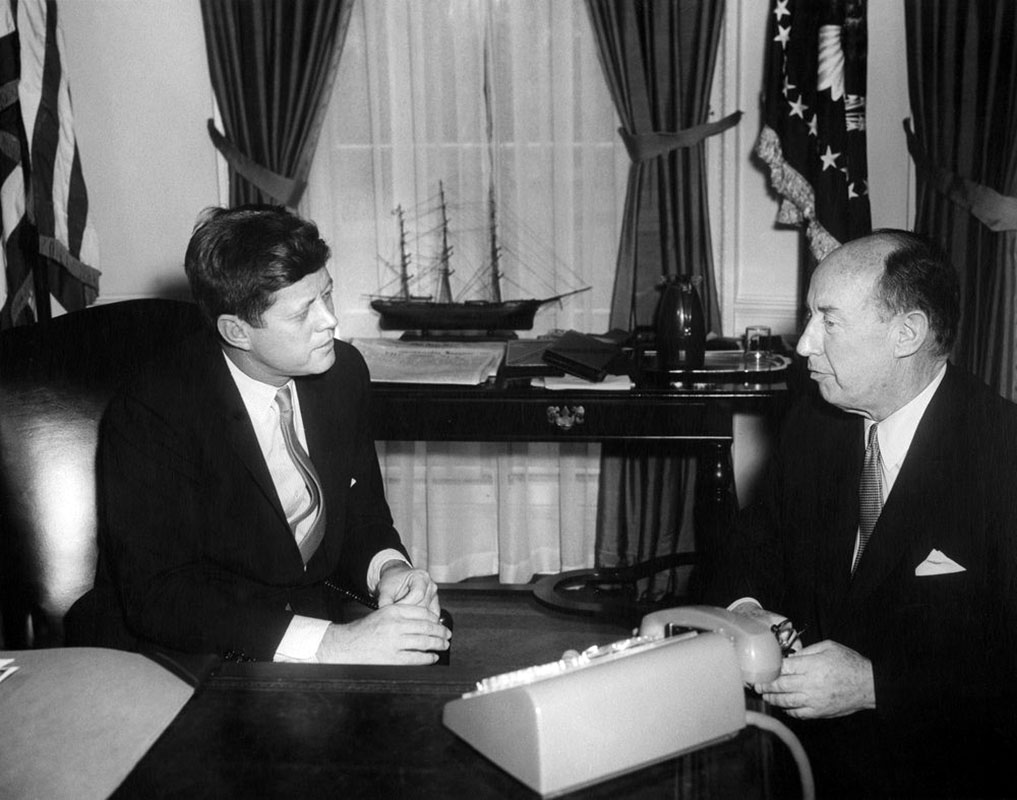President Kennedy and Adlai Stevenson in the Oval Office.
John Steinbeck had always been a Stevenson man. He admired [Adlai Stevenson](https://stevensoncenter.org/about/stevenson/) as that rarest of things: an intellectual politician, a well-read, genteel, and cerebral man who put himself into the political arena. Steinbeck supported Stevenson’s two presidential runs — 1952 and 1956 — and he was in the Stevenson camp even in 1960, when John F. Kennedy won the Democratic nomination in Los Angeles.
JFK appointed Adlai Stevenson (1900-1965) to be America’s ambassador to the United Nations. He served in that capacity from 1961 until his death on July 14, 1965. At the time, the U.N. was still an essential world organization during rising unrest and decolonization in the underdeveloped world. And at the height of the Cold War.
Stevenson gave his most important U.N. speech on October 25, 1962, at the gravest moment of the Cuban Missile Crisis. In his famous address — primarily written by Arthur M. Schlesinger, Jr. — Stevenson laid out the facts of the USSR’s secret installation of nuclear missiles in Cuba, outlined and decried Soviet denials and deceptions, and expressed the United States’ determination to force the removal of the missiles no matter what it would take (up to and including nuclear war). Near the end of his speech, Stevenson directly confronted the Soviet representative Valerian Zorin:
***Stevenson**: All right, sir, let me ask you one simple question: Do you, Ambassador Zorin, deny that the USSR has placed and is placing medium and intermediate range missiles and sites in Cuba? Yes or no. Don’t wait for the translation, yes or no?*
***Zorin**: This is not a court of law, I do not need to provide a yes or no answer. …*
***Stevenson**: You can answer yes or no. You have denied they exist. I want to know if I understood you correctly. I am prepared to wait for my answer until hell freezes over, if that’s your decision. And I am also prepared to present the evidence in this room.*
Of course, Zorin refused to answer, but no one in the room doubted that Stevenson was stating the truth.
Play
Oct. 25, 1962 — Adlai Stevenson Confronts Soviet Ambassador at U.N. During Cuban Missile Crisis.
President Kennedy was impressed by Stevenson’s performance. He sent the ambassador the following telegram:
***DEAR ADLAI: I WATCHHED YOUR SPEECH THIS AFTERNOON WITH GREAT SATISFACTION. IT HAS GIVEN OUR CAUSE A GREAT START … THE UNITED STATES IS FORTUNATE TO HAVE YOUR ADVOCACY. YOU HAVE MY WARM AND PERSONAL THANKS.***
The Cuban Missile Crisis (the “[13 days](https://www.jfklibrary.org/learn/about-jfk/jfk-in-history/cuban-missile-crisis#:~:text=For%20thirteen%20days%20in%20October,on%20the%20island%20of%20Cuba.)“) ended peacefully when the U.S. and the USSR cut a deal. Russia agreed to remove the offensive missiles but refused to permit U.N. inspectors to monitor the removal. In exchange, the U.S. pledged not to invade Cuba (ever), and secretly, the U.S. agreed to remove its own nuclear missiles from Turkey near the border of the Soviet Union. Secretary of State Dean Rusk famously quipped, “We’re eyeball to eyeball, and I think the other fellow just blinked.”
Actually, both fellows blinked. John Kennedy and Nikita Khrushchev both stood up to the loud, rude, and insistent military hawks in their administrations and worked out a peaceful compromise to the crisis. This was as close as the world ever came to nuclear holocaust. The hawks on either side could not be mollified. Curtis LeMay, the Chief of Staff of the U.S. Air Force, browbeat his Commander in Chief, JFK, during the ExComm meetings in the White House. His view was that this was the perfect excuse to rid the world and Cuba of Fidel Castro, that nuclear war with the Soviets was inevitable, and this was the most advantageous time to get it over with, and that any American conciliation would represent a humiliating defeat for the United States and the western alliance. At one point, he reportedly banged his hands on the table in the conference room and accused JFK of treason. JFK, just 45 years old, the youngest elected president of the United States, had the courage to resist calls for air strikes against Cuba, followed by an actual invasion that would almost certainly have triggered a nuclear war.
Khrushchev faced similar pressures, but he chose to step back from the brink.
It is interesting to note that both of these leaders were removed from the arena within two years. Khrushchev was deposed in October 1964 and forced into private life; JFK was assassinated on November 22, 1963.
## **We Interrupt This Broadcast: “John Steinbeck Has Been Awarded the Nobel Prize for Literature.”**
What makes this episode interesting is that as the Steinbecks were watching TV on the morning of October 25, 1962, to see, Steinbeck wrote, “if the world was still turning” (and no doubt watch Stevenson’s speech), that they heard, for the first time, (on television!) the words: “*John Steinbeck has been awarded the Nobel Prize for Literature*.” Steinbeck’s third wife, Elaine, was so thrilled that she took her pan of frying bacon off the stove and put it into the refrigerator. Then the phone began to ring!
Whether Steinbeck could any longer concentrate on Stevenson’s speech on that Thursday in 1962 or even think about the missile crisis is unclear.
Steinbeck was a great and seemingly indefatigable writer of letters. I would have thought that he would have written to his friend Adlai that day or soon thereafter to congratulate him on the greatness of his speech and confrontation with representative Zorin and to express joyful irony in being awarded the most significant prize a writer could imagine amid a world crisis so grave that few people had time to hear of his literary triumph. That kind of self-deprecating irony was standard fare with Steinbeck. I have consulted the standard book of Steinbeck’s correspondence — *Steinbeck: A Life in Letters*, 908 pages — but there is no such letter in the collection. This points to a serious Steinbeck studies problem. I don’t know how many letters Steinbeck wrote in his lifetime (1902-1968), but it is many times more than those encased in *A Life in Letters*. There are rumblings of a complete and definitive edition of Steinbeck’s letters. If my friend Russ Eagle were not in his 60s, if he were 30 with the scholarly confidence he has today, he would be the perfect individual to undertake so essential and daunting a task. Russ has the intellectual discipline and dedication to detail required by such a project. But for now, we cannot be sure whether Steinbeck wrote a post-Cuban Missile Crisis-Nobel Prize letter to Stevenson. The Stevenson papers are largely at Princeton University, and they have, so far, not been digitized.
Steinbeck did write to Stevenson on November 20, 1962, as the world settled back into uneasy peace, asking for help in writing his Nobel Prize acceptance speech.
“*The whole idea fills me with horror. Then it occurred to me that you are undoubtedly the best speaker in the world; that having made so many speeches, one more would mean nothing to you. I’m sure you wouldn’t mind making this speech for me. And I’m sure the Academy \[the Nobel Academy\] would be more than pleased.*” Steinbeck wrote.
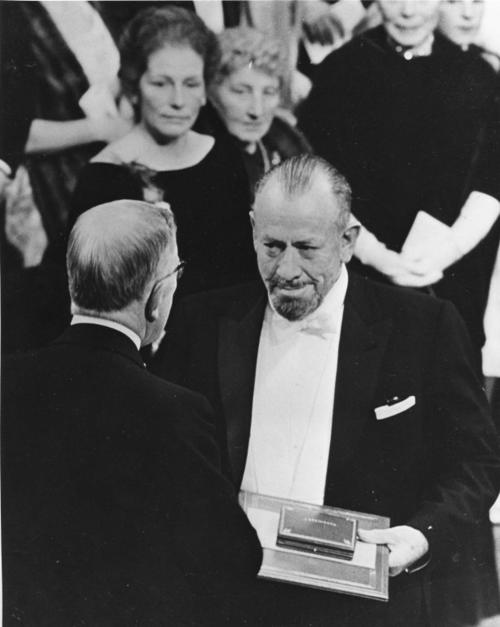John Steinbeck receiving the Nobel Prize for Literature.
Steinbeck was on his own. He agonized over his acceptance speech. He hated public speaking, shunned public appearances, and feared the negative effects of celebrity. “I wrote the damned speech at least 20 times,” he wrote his friend Carlton Sheffield. “I tried to make it suave and diplomatic and it was a bunch of crap.” In fact, it was a masterpiece, one of the best by an American writer.
In the speech, delivered in Stockholm on December 10, 1962, Steinbeck included a powerful passage about the terrors of the new Atomic Age:
> “*Less than fifty years after \[Alfred Nobel’s\] death, the door of nature was unlocked and we were offered the dreadful burden of choice. We have usurped many of the powers we once ascribed to God. Fearful and unprepared, we have assumed lordship over the life or death of the whole world — of all living things. The danger and the glory and the choice rest finally in man. The test of his perfectibility is at hand. Having taken Godlike power, we must seek in ourselves for the responsibility and the wisdom we once prayed some deity might have. Man himself has become our greatest hazard and our only hope.”*
> — John Steinbeck.
John Steinbeck delivering his Nobel Prize speech. Stockholm, Sweden, December 10, 1962.
This is magnificent. It needs to be read in the context of the Cuban Missile Crisis, only one month previous, the world stepped to the brink of annihilation, with a death count that would have numbered in the hundreds of millions. If either JFK or Khruschev had failed to blink, failed to defy the military hardliners, October 1962 would have been the most pivotal day in human history. Not even Arthur Schlesinger (or Stevenson) could have written this brief passage so perfectly. Sometimes, we forget how serious a man John Steinbeck was and how superb a writer of English prose. Steinbeck believed that writers (and other artists) must explore the human condition unblinkingly and ennoble the human project with stories (our oldest art form), insights, warnings, and calls to enlightenment.
Few people alive today can imagine the terror of October 1962. The Cuban Missile Crisis provoked hundreds of thousands of Americans to build bomb shelters in their backyards. The stone-sober Robert McNamara left a White House ExComm meeting on a beautiful Saturday evening at the height of the crisis (October 27, 1962) to get a bit of much-needed home rest. He later said:
*“I was leaving the White House whatever, around dusk, to go back to my office in the Pentagon. It was a perfectly beautiful night, as fall nights are in Washington. I walked out of the President’s Oval Office, and as I walked out I thought I might never live to see another Saturday night.”*
Promotion for a family bomb shelter in the early 1960s.
I’d give anything to be in the Steinbeck residence at Sag Harbor, Long Island, on October 25, 1962. We need all of his letters to be collected and made available online. Just as his writing journals are essential to understanding his craft and methods, so his collected letters would represent an outstanding window into those 66 years, 1902-1968. He was in the arena through it all: World War I (*East of Eden*), the Great Depression (*Of Mice and Men; The Grapes of Wrath*), World War II (*Once There Was a War*; *Bombs Away*; *The Moon Is Down*), the war’s aftermath (*Cannery Row*), the Cold War (*A Russian Journal*); America’s postwar boom and materialism (*Travels with Charley*, *The Winter of Our Discontent*) and *Vietnam* (his dispatches from South Vietnam 1966-1967).
Those who dismiss his greatness — including a vicious New York press in the aftermath of the Nobel Prize announcement — have perhaps forgotten his range, scope, depth, and capacity to embody the times and places in which he lived.
---
## ***Discover more on these topics at Listening to America***
[New Mexico](https://ltamerica.org/tag/new-mexico/ "3 topics")[north daktoa](https://ltamerica.org/tag/north-daktoa/ "0 topics")[Republics](https://ltamerica.org/tag/republics/ "1 topics")[Wisconsin](https://ltamerica.org/tag/wisconsin/ "0 topics")[Pennsylvania](https://ltamerica.org/tag/pennsylvania/ "1 topics")[Vermont](https://ltamerica.org/tag/vermont/ "1 topics")[New England](https://ltamerica.org/tag/new-england/ "1 topics")[Walden](https://ltamerica.org/tag/walden/ "1 topics")[Video](https://ltamerica.org/tag/video/ "51 topics")[Space Exploration](https://ltamerica.org/tag/space-exploration/ "8 topics")[Oppenheim](https://ltamerica.org/tag/oppenheim/ "0 topics")[Rivers](https://ltamerica.org/tag/rivers/ "3 topics")[Poetry](https://ltamerica.org/tag/poetry/ "1 topics")[Washington](https://ltamerica.org/tag/washington/ "2 topics")[U.S. Presidents](https://ltamerica.org/tag/u-s-presidents/ "71 topics")[Thomas Jefferson](https://ltamerica.org/tag/thomas-jefferson/ "34 topics")[Theodore Roosevelt](https://ltamerica.org/tag/theodore-roosevelt/ "16 topics")[South Carolina](https://ltamerica.org/tag/south-carolina/ "1 topics")[Thoreau](https://ltamerica.org/tag/thoreau/ "5 topics")[Rome](https://ltamerica.org/tag/rome/ "1 topics")[U.S. Constitution](https://ltamerica.org/tag/u-s-constitution/ "1 topics")[Reading](https://ltamerica.org/tag/reading/ "1 topics")[paintings](https://ltamerica.org/tag/paintings/ "0 topics")[Tennessee](https://ltamerica.org/tag/tennessee/ "1 topics")[The Constitution](https://ltamerica.org/tag/the-constitution/ "1 topics")[Steinbeck Travels](https://ltamerica.org/tag/steinbeck-travels/ "75 topics")[Wyoming](https://ltamerica.org/tag/wyoming/ "4 topics")[Oppenheimer](https://ltamerica.org/tag/oppenheimer/ "1 topics")[Virginia](https://ltamerica.org/tag/virginia/ "7 topics")[Republic](https://ltamerica.org/tag/republic/ "0 topics")[Utah](https://ltamerica.org/tag/utah/ "11 topics")[Podcast](https://ltamerica.org/tag/podcast/ "1 topics")[Ohio](https://ltamerica.org/tag/ohio/ "2 topics")[William Shirer](https://ltamerica.org/tag/william-shirer/ "1 topics")[Texas](https://ltamerica.org/tag/texas/ "4 topics")[South Dakota](https://ltamerica.org/tag/south-dakota/ "16 topics")[North Carolina](https://ltamerica.org/tag/north-carolina/ "3 topics")[Water in the West](https://ltamerica.org/tag/water-in-the-west/ "24 topics")[State Parks](https://ltamerica.org/tag/state-parks/ "2 topics")[New York](https://ltamerica.org/tag/new-york/ "8 topics")[North Dakota](https://ltamerica.org/tag/north-dakota/ "53 topics")[Sports](https://ltamerica.org/tag/sports/ "2 topics")[Road Trips](https://ltamerica.org/tag/road-trips/ "18 topics")[Oregon](https://ltamerica.org/tag/oregon/ "4 topics")[Travel](https://ltamerica.org/tag/travel/ "1 topics")
**Categories:** Features
**Tags:** America at 250, Books, John Steinbeck, U.S. Presidents
---
### [Why I’m Changing The Channel](https://ltamerica.org/why-im-changing-the-channel/)
**Published:** January 28, 2025
**Author:** Clay Jenkinson
**Excerpt:** Clay details how cable news has long failed to reliably serve Americans, why he is tuning out, and what he’ll do instead.
**Content:**
## Clay details how cable news has long failed to reliably serve Americans, why he is tuning out, and what he’ll do instead.
Television news is failing us.
The last day I watched anything on FOX, CNN, or MSNBC was Monday, November 4, 2024, the day before the last national election. That day, I decided to wean myself off cable news. During my summer travels, I listened to a great deal of pre-election news and discourse, at times obsessively. I was in Walla Walla, Washington when former President Trump was shot — across the country in Pennsylvania. I was in Montana when Joe Biden withdrew from the race. I listened to much of both parties’ national conventions in my pickup. I let myself be drawn into the incessant drama in the months before the election. It damaged my happiness, and, as they say, there was much more heat than light.
During the first Trump term, I joined millions of other American Trump-doubters in taking the bait every time. Every time Mr. Trump did something that broke an American constitutional norm or stomped on a traditional American value, I tuned in like Pavlov’s dog to seek some clarity, but mostly, I ended up hearing the outrage of the left. When I switched to FOX to see how things were faring there, I had to turn away in sorrow that we had reached this angry and bitter cul-de-sac in American life. Some evenings, when things were really squirrelly, I would watch five or six hours on the three prominent cable networks and go to sleep in something like open despair for our national experiment, now almost 250 years old.
I cannot do it again. I don’t have the will, the stamina, or the time to waste four more years lapping up the outrage of the day.
If my journey around the United States between April 27 and November 20, 2024, some 21,400 miles in 41 states, taught me anything, it is that America is much better than the “America” presented every day and night by the cable news giants. The America I saw is nicer, more respectful, more generous, more civil, more purposeful, happier, more decent, and more admirable than the cable *projection* of our national affairs. As I crisscrossed the country from “sea to shining sea,” as the late Stephen Ambrose put it, I witnessed a nation at full (if not always fairly compensated) employment; its highways and rail lines bursting with commercial traffic; a nation that generally takes good care of its waterways, its farmlands, its public domain; a nation of small businesses that somehow survive against the tsunami of gross corporate attempts to monopolize the American economy. I met people with a wide range of craft passions: guitar makers, master gardeners, ceramicists, musicians, leather workers, and artists (graphic and otherwise).
I did not see an America in decline. And lest you argue that I wasn’t looking hard enough at poverty, racism, sexual predation, a growing kleptocracy, or gross mineral extraction in the West, I am well aware of the lingering problems of American life, some of them fundamental. Frankly, I don’t trust either party to fix those things. The true enlightenment will burble up from the plateau of the tens of millions of reasonably well-educated people from the grassroots enlightenment of a nation that still reads avidly. More than 3 million books are published annually in the United States. The average American reads 12.6 books per year. Not bad. Keep reading!
---
## **Here’s Why I Won’t Turn To MSNBC, Fox, or CNN in the Next Years.**
1. **They are echo chambers**, even CNN. FOX offers up an endless parade of grievances — against liberals, progressives, Democrats, the mainstream media, corporate America, the “deep state.” FOX presents the progressives (and all Democrats) as unpatriotic, anti-American, “socialist,” “Marxist,” and even communist. MSNBC invokes the idea that the opposition is “fascist,” racist, homophobic, sexist, and out of touch with the inevitable progressive trajectory of the country. (Some of this is sometimes true, but the labeling is as unfair as it is pointless.)
2. **They present an apocalyptic picture of American life**. “The sky is falling.” The sky is always falling on cable channels. But I’m a historian. We have a long and well-deserved reputation for muddling through. The resilience of the American spirit is one of the best things about us.
3. **The irrational exaggeration of the national divide**, the incessant hyping of extreme positions, and the endless demonization of the “other” (whatever it is) make political compromise much harder, and our system only works when there is compromise. The Founding Fathers wisely created a system of essential checks and balances. No one individual, faction, or entity in American life is permitted to dominate. If the media returned to the center and attempted to lower the national temperature, it might be easier to make the national government work again. These media giants distort; and the impressionistic public is lured into joining in on the distortion.
4. **None of these cable networks make any attempt to present a thoughtful and balanced view of the American situation**. CNN makes a feeble effort to present “both sides,” but poor Scott Jennings is routinely outnumbered and often belittled by his commentator colleagues. Take any issue: you know exactly what you are going to hear on FOX that evening and on MSNBC. I can predict what each pundit, each anchor, and each guest is going to say. Watch long enough on a single day, and you can expect the same experts to say the same things on two, three, or four consecutive programs.
5. **MSNBC and FOX don’t just distort the national news, but their principal anchors and commentators have become grim and unsportsmanlike cheerleaders for their political views**. Both sides. Republicans want Democratic administrations and Congressional majorities to fail — and vice versa. They positively crow at the failures and setbacks of the other party. No effort is made to try to understand where the other side “is coming from.” It is simply assumed that any deviation from the cable channel’s self-satisfied orthodoxy is toxic.
I don’t suppose there was ever a time when national media entities were truly objective and scrupulously fair. There has always been, I believe, some liberal bias to the way major media have covered America. But before the arrival of the FOX-MSNBC megaliths, most news entities tried to be fair. We were better off by far when the Fairness Doctrine governed the national media. The FCC made a terrible mistake in 1987 when it abolished the Fairness Doctrine, which had previously forced every FCC-licensed media entity to provide at least the appearance of political fairness.
Newscaster, Walter Cronkite. Once the most trusted man in America.
My heroes in the national media have been Walter Cronkite, John Chancellor, Ted Koppel, Peter Jennings, Edward R. Murrow, William L. Shirer, Brian Williams, Dan Rather, Roger Mudd, and North Dakota’s great contribution to national media, Eric Sevareid. There were giants on the earth in those days. There are, today, some very distinguished national journalists, but the ones who get the most attention are mostly naked partisans, and some of them what might be called partisan hacks.
I want so much more. We deserve so much more.
## **Turning Away**
My decision to wean myself of all this nonsense does not mean that I am opting for ignorance or escapism. I’m not planning to binge-watch the *Real Housewives of Salt Lake City* or the *Andy Griffith Show*. Every day, my smartphone delivers a steady stream of national and international news — more news, frankly, than any citizen of the Great Plains could have ingested even 15 years ago, no matter how hard she or he worked at it — and at infinitely lower cost. I subscribe to the *New York Times*, the *Atlantic*, the *New Yorker*, the *New York Review of Books*, and the *Economist*. So, I am not likely now to be marooned on the island of social and political ignorance. I order virtually every new book that seems to reflect on the strange nativist populist turn of American (and world) politics: among these, Tim Alberta’s *The Kingdom, the Power, and the Glory: American Evangelicals in an Age of Extremism*; Richard Slotkin’s *A Great Disorder: National Myth and the Battle for America*; Steven Hahn’s *Illiberal America: A History;* and Timothy Snyder’s *On Freedom: Twenty Lessons from the Twentieth Century*.
Here are the criteria I intend to use as I decide what to ingest in our national media.
1. There must be some genuine effort to be objective, fair, balanced, and respectful of the other point(s) of view.
2. No cheerleading, no demonizing, no crowing, no grievance.
3. Politics (mostly) should end at the shore of the Atlantic and the Pacific.
4. Not every development is “BREAKING NEWS” with heroic music and iconography. BREAKING NEWS: MITCH MCCONNELL HAS A HEADACHE.
5. I want my commentators to be rational beings who are willing to admit that they are not always sure about everything.
6. As with good conversation, so with good media, I want commentators to try to show genuine respect for views not their own but views of the other party.
7. I want my media personalities to care more about America than about their party, faction, tribe, or television ratings.
I don’t expect American media to reform itself. The era when Walter Cronkite could be routinely voted the “most trusted man in America” is long over. Cable “news” plus the essential anonymity of social media plus the craven publicity-seeking of our least thoughtful politicians is a formula for steep national decline. We are better than this. We are not going to fix things by boycotting Budweiser or Disney World. We can only reclaim America by withdrawing our consent from the cash flow of the worst offenders. If CNN and MSNBC want me back, they are going to have to move to civility and the center. I believe I speak for millions of Americans in this.
## **Alternatives**
Here’s another good reason to turn away from television — not just news and commentary but television altogether. (I freely admit that some very good television programming is out there.) There are so many books piled up on my bedside table, so many books stacked up next to my working desk, so many books languishing on my iPad that I ordered but haven’t yet read, not to mention *so many classics of world literature* that I have never read: *Madame Bovary; One Hundred Years of Solitude; The Gulag Archipelago; The Mill on the Floss;* Tolstoy’s *The Gambler;* Thomas Hardy’s *Jude the Obscure —* a long and embarrassing list, including some whole areas in which (even in literature) I am shockingly ignorant and under-read.
*Divine Comedy* by Dante.
As the new year begins, I’m about to read the whole of Dante’s *Divine Comedy* for the first time since my college days. My friend Donald says *Middlemarch* is better than Dickens (the fool!) but I have placed it near the top of my stack. I haven’t read *Don Quixote* for many years. Plus, I make sure to re-read *Robinson Crusoe, Gulliver’s Travels, Walden, Huckleberry Finn, Roughing It,* and a wide swath of Shakespeare’s plays every year or two. It’s time to re-read *The Canterbury Tale*s and *Paradise Lost.* I can listen to those books as I walk daily, another good reason to wean myself off video screens. We live in the great age of audio books.
No time to listen to Rachel or Sean or Lawrence or Tucker. There is culture out there! Culture more inexpensively available than ever before in human history.
We are better than we seem to be. However, since I cannot change the world or make it conform to my views, I plan to spend the next four years improving myself.
---
## ***Discover more on these topics at Listening to America***
[Road Trips](https://ltamerica.org/tag/road-trips/ "18 topics")[Theodore Roosevelt](https://ltamerica.org/tag/theodore-roosevelt/ "16 topics")[Oppenheimer](https://ltamerica.org/tag/oppenheimer/ "1 topics")[Republic](https://ltamerica.org/tag/republic/ "0 topics")[U.S. Presidents](https://ltamerica.org/tag/u-s-presidents/ "71 topics")[New England](https://ltamerica.org/tag/new-england/ "1 topics")[New Mexico](https://ltamerica.org/tag/new-mexico/ "3 topics")[Podcast](https://ltamerica.org/tag/podcast/ "1 topics")[U.S. Constitution](https://ltamerica.org/tag/u-s-constitution/ "1 topics")[Sports](https://ltamerica.org/tag/sports/ "2 topics")[Wisconsin](https://ltamerica.org/tag/wisconsin/ "0 topics")[Ohio](https://ltamerica.org/tag/ohio/ "2 topics")[William Shirer](https://ltamerica.org/tag/william-shirer/ "1 topics")[Oregon](https://ltamerica.org/tag/oregon/ "4 topics")[north daktoa](https://ltamerica.org/tag/north-daktoa/ "0 topics")[New York](https://ltamerica.org/tag/new-york/ "8 topics")[Republics](https://ltamerica.org/tag/republics/ "1 topics")[Rome](https://ltamerica.org/tag/rome/ "1 topics")[State Parks](https://ltamerica.org/tag/state-parks/ "2 topics")[Poetry](https://ltamerica.org/tag/poetry/ "1 topics")[paintings](https://ltamerica.org/tag/paintings/ "0 topics")[North Dakota](https://ltamerica.org/tag/north-dakota/ "53 topics")[Pennsylvania](https://ltamerica.org/tag/pennsylvania/ "1 topics")[Video](https://ltamerica.org/tag/video/ "51 topics")[Utah](https://ltamerica.org/tag/utah/ "11 topics")[Vermont](https://ltamerica.org/tag/vermont/ "1 topics")[Texas](https://ltamerica.org/tag/texas/ "4 topics")[Tennessee](https://ltamerica.org/tag/tennessee/ "1 topics")[Thoreau](https://ltamerica.org/tag/thoreau/ "5 topics")[South Dakota](https://ltamerica.org/tag/south-dakota/ "16 topics")[Oppenheim](https://ltamerica.org/tag/oppenheim/ "0 topics")[Virginia](https://ltamerica.org/tag/virginia/ "7 topics")[Steinbeck Travels](https://ltamerica.org/tag/steinbeck-travels/ "75 topics")[Travel](https://ltamerica.org/tag/travel/ "1 topics")[North Carolina](https://ltamerica.org/tag/north-carolina/ "3 topics")[Rivers](https://ltamerica.org/tag/rivers/ "3 topics")[Walden](https://ltamerica.org/tag/walden/ "1 topics")[Water in the West](https://ltamerica.org/tag/water-in-the-west/ "24 topics")[Thomas Jefferson](https://ltamerica.org/tag/thomas-jefferson/ "34 topics")[Washington](https://ltamerica.org/tag/washington/ "2 topics")[Wyoming](https://ltamerica.org/tag/wyoming/ "4 topics")[The Constitution](https://ltamerica.org/tag/the-constitution/ "1 topics")[Space Exploration](https://ltamerica.org/tag/space-exploration/ "8 topics")[Reading](https://ltamerica.org/tag/reading/ "1 topics")[South Carolina](https://ltamerica.org/tag/south-carolina/ "1 topics")
**Categories:** Features
**Tags:** America at 250, Books, Humanities, U.S. Presidents
---
### [Sneak Peek: The 2026 Winter Retreats — Video Dispatch](https://ltamerica.org/sneak-peek-the-2026-winter-retreats-video-dispatch/)
**Published:** January 21, 2025
**Author:** Editor
**Excerpt:** Clay with a look at what's coming for the 2026 Winter Retreats at beautiful Lochsa Lodge.
**Content:**
Clay with a look at what’s coming for the 2026 Winter Retreats at beautiful Lochsa Lodge.
---
## ***Discover more on these topics at Listening to America***
[South Carolina](https://ltamerica.org/tag/south-carolina/ "1 topics")[paintings](https://ltamerica.org/tag/paintings/ "0 topics")[New York](https://ltamerica.org/tag/new-york/ "8 topics")[State Parks](https://ltamerica.org/tag/state-parks/ "2 topics")[Tennessee](https://ltamerica.org/tag/tennessee/ "1 topics")[U.S. Presidents](https://ltamerica.org/tag/u-s-presidents/ "71 topics")[Republics](https://ltamerica.org/tag/republics/ "1 topics")[Road Trips](https://ltamerica.org/tag/road-trips/ "18 topics")[Oppenheimer](https://ltamerica.org/tag/oppenheimer/ "1 topics")[Rivers](https://ltamerica.org/tag/rivers/ "3 topics")[U.S. Constitution](https://ltamerica.org/tag/u-s-constitution/ "1 topics")[Walden](https://ltamerica.org/tag/walden/ "1 topics")[North Carolina](https://ltamerica.org/tag/north-carolina/ "3 topics")[New England](https://ltamerica.org/tag/new-england/ "1 topics")[Washington](https://ltamerica.org/tag/washington/ "2 topics")[Pennsylvania](https://ltamerica.org/tag/pennsylvania/ "1 topics")[New Mexico](https://ltamerica.org/tag/new-mexico/ "3 topics")[Ohio](https://ltamerica.org/tag/ohio/ "2 topics")[Sports](https://ltamerica.org/tag/sports/ "2 topics")[Poetry](https://ltamerica.org/tag/poetry/ "1 topics")[William Shirer](https://ltamerica.org/tag/william-shirer/ "1 topics")[Travel](https://ltamerica.org/tag/travel/ "1 topics")[Theodore Roosevelt](https://ltamerica.org/tag/theodore-roosevelt/ "16 topics")[Oppenheim](https://ltamerica.org/tag/oppenheim/ "0 topics")[Utah](https://ltamerica.org/tag/utah/ "11 topics")[north daktoa](https://ltamerica.org/tag/north-daktoa/ "0 topics")[Thomas Jefferson](https://ltamerica.org/tag/thomas-jefferson/ "34 topics")[The Constitution](https://ltamerica.org/tag/the-constitution/ "1 topics")[Reading](https://ltamerica.org/tag/reading/ "1 topics")[South Dakota](https://ltamerica.org/tag/south-dakota/ "16 topics")[Vermont](https://ltamerica.org/tag/vermont/ "1 topics")[Texas](https://ltamerica.org/tag/texas/ "4 topics")[Video](https://ltamerica.org/tag/video/ "51 topics")[Podcast](https://ltamerica.org/tag/podcast/ "1 topics")[Thoreau](https://ltamerica.org/tag/thoreau/ "5 topics")[Oregon](https://ltamerica.org/tag/oregon/ "4 topics")[North Dakota](https://ltamerica.org/tag/north-dakota/ "53 topics")[Steinbeck Travels](https://ltamerica.org/tag/steinbeck-travels/ "75 topics")[Water in the West](https://ltamerica.org/tag/water-in-the-west/ "24 topics")[Wyoming](https://ltamerica.org/tag/wyoming/ "4 topics")[Wisconsin](https://ltamerica.org/tag/wisconsin/ "0 topics")[Space Exploration](https://ltamerica.org/tag/space-exploration/ "8 topics")[Republic](https://ltamerica.org/tag/republic/ "0 topics")[Virginia](https://ltamerica.org/tag/virginia/ "7 topics")[Rome](https://ltamerica.org/tag/rome/ "1 topics")
**Categories:** Dispatches from the Road
**Tags:** Humanities, Montana, Native Americans, U.S. Presidents, Video
---
### [21,000 Miles Around America — Why I Did It and What I Learned](https://ltamerica.org/21000-miles-around-america-why-i-did-it-and-what-i-learned/)
**Published:** January 18, 2025
**Author:** Editor
**Excerpt:** Clay sat down with editors at LTA to answer questions and discuss his recent 41 State, 21,000 mile journey around America.
**Content:**
## If you are a regular reader of Listening to America, you know that for most of 2024, Clay drove some 21,000 miles around the USA, roughly following the route author John Steinbeck traveled for his 1960 classic *Travels with Charley*. Behind the wheel of his GMC pickup and pulling a 23-foot Airstream, Clay visited 41 states in his own “search for America.” Clay recently sat down with editors at LTA to answer questions and discuss his journey.
Clay on Route 66 near Needles, Calfornia, summer 2024.
**What’s the point of driving 21,000-plus miles around America?**
I wanted to see America. I’ve been to all 50 states, some of them to dip in and out, sometimes only in airports (which should not count). **On July 4, 2026**, the United States will observe its 250th birthday. I’m worried about this milestone. If you study the polls, more than two-thirds of Americans say the country is headed in the wrong direction. Of course, they don’t agree on what that wrong direction is. People are disillusioned, cynical, and weary. I heard that sentiment everywhere I went. Some people talked cheerfully enough with me when we were talking about campsites and roads to travel, but they clammed up fast when I tried to start a conversation (even half an hour in) about how America is doing. “We are just so tired of the whole thing. That’s why we are out here, to escape from it all.”
I don’t know if the 250th anniversary will be a celebration, a commemoration, an observance, a culture war cage match, or a wake. I can say honestly that I have never been more concerned about the future of America, and I lived through 1968-1969.
As a humanities scholar who has spent a large portion of his life thinking about the Founding Fathers and particularly my hero, Thomas Jefferson, I have a deep interest in the following questions:
— Where exactly are we?
— How did we arrive at this place?
— Where are we headed as a nation?
— Are things as bad as they sometimes seem?
— What will it take to heal the country, close the breach, and restore a united sense of America?
I read incessantly. In fact, I read every book that pertains to this set of questions in any way. Please let me know if you can think of books I should read. But I wanted to get out and see the country.
I have the capacity to do this. I’m not married. My daughter is grown up and has gone away to fulfill her destiny. I have no 8-5 job. And though I have been enormously privileged — well-educated, well-traveled, well-read, healthy, and blessed with a mobility that virtually no humans have ever enjoyed until now — I take pride that I live in the heartland (North Dakota), away from the centers of power, entertainment, and media. This gives me, I hope, a certain liberation from what we mean by the phrase “American establishment.” I hope that I will discover things worth publishing and sharing and that people will want to know what I see, experience, and learn.
I will keep traveling for the next few years — maybe as many as 10 — and I won’t stop ’til I figure this out, at least for myself.
Where is the United States of America headed?
**Why did you choose Steinbeck?**
I wanted to tour the country with a purpose rather than just drive around. I was not interested in William Least Heat Moon’s *Blue Highways* (though I admire his work). I have a deep romantic attachment to Jack Kerouac, but *On the Road* is a young person’s book, and I don’t want to hitchhike at my age or at this time in American life.
John Steinbeck, circa 1960. (Martha Heasley Cox Center for Steinbeck Studies, SJSU)
I’ve loved Steinbeck for decades. It was a simple connect. Steinbeck traveled more than 11,000 miles in a truck camper “in search of America.” I wanted to travel the USA in an Airstream trailer “in search of America” as we approach our national 250th birthday. *The Grapes of Wrath* is one of our favorite books. I love a road story and I love being a part of my own road story. If I won the lottery (in some respects, I have!) I would drive America about a quarter or half of every year, with no particular destinations, stopping on a dime to take photographs of everything that interests me, turning off into the distance on obscure gravel roads, exploring the country in the loopiest, least focused way.
Besides all of that, I have deep respect for the integrity of John Steinbeck. He was much more than a great novelist. He was a thinker, a serious reader, a true intellectual, a man who puzzled over things and told the truth even when it was disagreeable to those around him and even to himself.
It was an honor to follow in his footsteps in his GMC tire tracks.
**How high do you rank *Travels with Charley*?**
High. It’s a late book among the several dozen Steinbeck wrote between 1929 and 1968. In many ways, it’s his most light-hearted, personal, and even confessional book. Steinbeck was 58 when he made the great journey, not in good health or vitality. He was trying to prove that he was still the great John Steinbeck who had “always lived violently, drunk hugely, eaten too much or not at all, slept around the clock or missed two nights of sleeping, worked too hard and too long in glory, or slobbed for a time in utter laziness.” I don’t think he was any longer that man — nor should one be in the late years — and this proved to be the last incredible American journey of his distinguished life. He did go to Vietnam in 1966-67 and performed heroically there, reporting the war to a home audience, but his big American travels ended when he parked the rig at Sag Harbor in December 1960.
In some respects, the journey itself was, to use terms he would have liked, a failed grail quest in search of America and in search of a more vital Steinbeck. By the time he turned the rig around at Monterey in mid-November 1960, he had largely run out of steam. He confessed that he was overstimulated and did not know how to synthesize what he had learned by driving the country. But if the journey was in some sense a failure, the book he wrote about it was splendid, what my friend the scholar Stephen Beckham calls a gem.
**Did Steinbeck keep a journal?**
*Travels With Charley*, John Steinbeck, 1962.
Great question because it raises a larger question about the composition of *Travels with Charley*. He did not keep a journal. In a long chapter about his day in eastern North Dakota (October 12, 1960) at a roadside stop at the Maple River; he wrote, “I made some notes on a sheet of yellow paper on the nature and quality of being alone. In the normal course of events, these notes would have been lost as notes are, but these particular notes turned up long afterward wrapped around a ketchup bottle and secured with a rubber band.” All he got from those notes were: “Relationship Time to Aloneness” and “Reversion to pleasure-pain basis.”
That’s it! Steinbeck wrote *Travels with Charley* months after his return to New York. In fact, he wrote most of it in the Caribbean, where he and his wife Elaine spent part of the winter of 1960-61. He recollected places, viewsheds, incidents, encounters, and even conversations — long after they occurred. Wordsworth spoke of experiences “recollected in tranquility.” This was certainly how Steinbeck wrote the book at St. James, Barbados, 2,100 miles from Long Island, New York.
Fortunately, he wrote several invaluable letters to Elaine during the course of the journey. These have been of great help to biographers and those trying to figure out the exact movements of Steinbeck during this journey.
If he wrote *Travels with Charley* without the help of a journal or significant notes (but surely with his letters to Elaine by his side), it is inevitable that Steinbeck had to construct the book from memory; that he almost certainly garbled or enhanced the conversations he had along the way; that he may have been occasionally confused about the exact sequence of events and encounters. In short, he had to use the resources of his great talent as a novelist and reporter to reconstruct the journey. There is a very slight disillusioning effect when you first realize that he employed the tools of creative nonfiction to write what appears to be a faithful account of his travels. But you soon shrug your shoulders, realizing that this is how virtually all such books are constructed and that Steinbeck never intended this book to be some sort of “transcript” of his journey.
**Why didn’t you take a dog?**
Well, first, I don’t have a dog. I love dogs and I would have enjoyed the companionship. I know, too, that a dog is a great “ambassador” and conversation starter. I would have had scores more encounters with people along the way had I traveled with a giant French poodle, or even a miniature Schnauzer, for that matter.
**Why, then?**
Clay received a number of stuffed dogs from friends to take along on his trip.
A dog is a serious responsibility. My Steinbeck journey lasted 210 days. Then what? I travel about 150 days yearly, even when not chasing America in an Airstream. I live alone. It would be unfair to have a dog under such circumstances. This coming year, I will be retracing the Lewis and Clark expedition from Monticello in Virginia to Astoria, Oregon, in the Airstream. I suppose I could have purchased (rented) a Newfoundland that would “pass” on the Steinbeck trip and “star” on the Lewis and Clark trip, but that’s a lot of dog, and then, afterward, I’d have a Newfoundland to place with friends or dog-sitters when I travel on other business.
At least six people gave me stuffed dogs to take with me. It’s not quite the same! No roadside conversation began with, “Hey, good looking stuffed dog on your dashboard.” Two people offered to lend me their dogs, but I have a terrible memory of a cat bursting out of my car long ago on a busy intersection in Denver and making a run for the Yukon. We rescued the damn cat, but not without some frantic dashing across busy traffic lanes. Calling a good friend to say, “Your dog will not be returning with me,” was more than I was willing to risk.
**Did you have any rig breakdowns?**
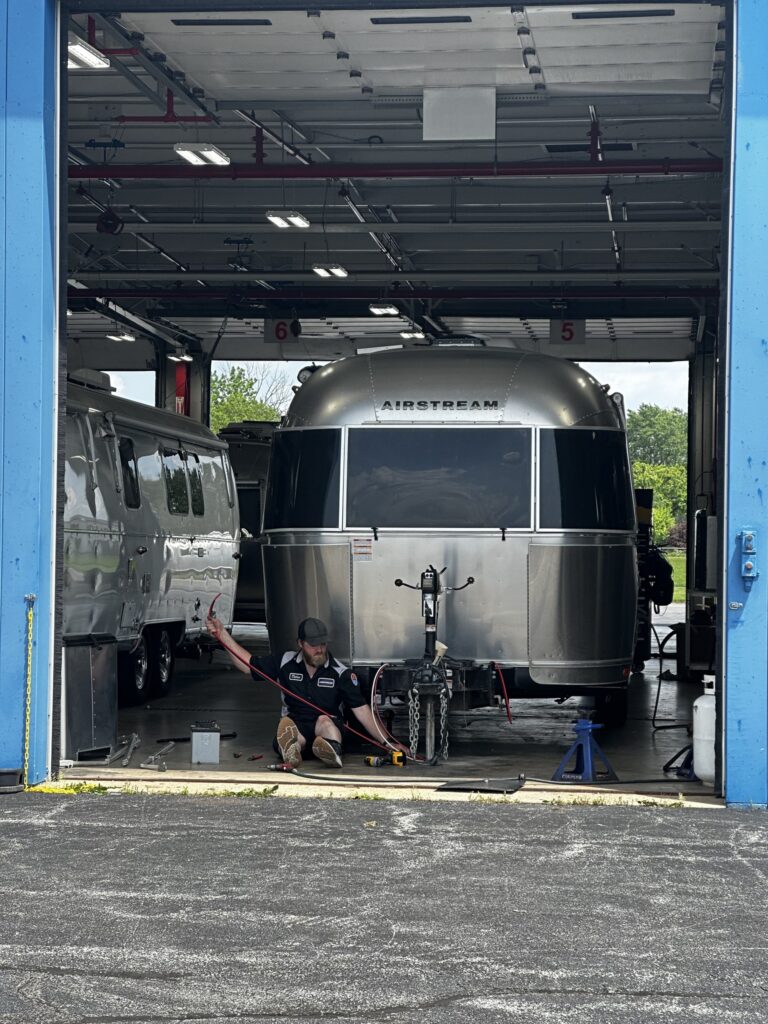The LTA Airstream undergoing emegency repairs in Jackson Lake, Ohio.
Three. First, near Athens, Ohio, my twin batteries caught fire and melted down 100%. At that point, the Airstream was as stricken as Apollo XIII. And I had no Houston to radio in the problem. Fortunately, I was only a handful of miles from the national Airstream Repair Center at Jackson Lake, Ohio! It was Memorial Day weekend, and they were swamped, but they found a way to work me in as quickly as possible, honored a warranty that had just lapsed, repaired a few other things as long as they were at it, and got me back on the road with splendid new batteries. That fire could easily have ended the journey.
Second, my friend Loren P. burned out some systems when he plugged them into the wrong power box at his farm on the Olympic Peninsula. It was an entirely innocent incident, the damage was slight, and he had the skill set and the tools to fix the problem while I was away on my annual summer Lewis and Clark tour in Montana. While examining the trailer’s undercarriage, he noticed that several of my tires were badly worn. To assuage his pyromaniacal guilt, he made an appointment for me to get four new tires when I returned. I paid for them, of course, but I was immensely grateful that he saw the problem before I had a flat or blown tire by the side of the road. Steinbeck had to replace a pickup tire somewhere in Oregon. He prided himself (as I do not) for his capacity with tools and repair projects, but he was soaked through by the time he succeeded, after which he hastened to a tire shop to get the kind of heavy-duty tires that could bear the considerable load he was carrying — books, tools, firearms, clothing, writing materials, and enough alcohol to host a tailgate party.
Third, a quaint, covered wooden bridge in Vermont sheared off my Airstream awning structure. See “low point” below.
**Is Steinbeck your favorite author?**
No. These lists are inherently problematic, but I’d say my favorite authors are Charles Dickens, Shakespeare, John Donne, Dostoevsky, Tolstoy, Henry David Thoreau, Mark Twain, James Boswell, and George Orwell — something like that. But Steinbeck ranks very high in my mind.
I do believe *The Grapes of Wrath* is one of America’s top 10 novels, maybe even the top five. I read it at least once every couple of years. I love *Of Mice and Men* and *Cannery Row*, and once every five or six years, I make a run at *East of Eden*. I also greatly admire Steinbeck’s book about visiting the U.S.S.R. with his photographer friend Robert Capa.
**Does Steinbeck’s truck camper still exist?**
Yes, amazingly. It’s now the great treasure of the National Steinbeck Center in Salinas, California. When Steinbeck returned to New York after his long 1960 journey, he promptly sold the truck and the specially manufactured “cabin” he had commissioned to sit in its bed.
It was purchased by a local farmer who used the pickup for a while but stored the camper unit in his barn. There is sat for a very long time. We are fortunate that it was not taken to a landfill. The farmer brought it to the attention of the Steinbeck community. It was purchased, along with the pickup, and transported to Steinbeck’s old stomping grounds in Monterey Bay, California.
It arrived in Salinas in 1990. A local body shop owner named Gene Cochetti restored it inside and out.
The Steinbeck Center has excellent interpretive exhibits and a perfect gift shop and bookstore. But when I go there, I get myself to the Plexiglas-protected display of the pickup and camper cabin as quickly as possible. You can peer in to see the walnut walls, the chemical toilet, the table at the front end that can be turned down to make a bed, the miniature kitchen, and a replica of the lantern he bought in Stonington, Massachusetts.
Because of the work I do, my association with the excellent staff of the Steinbeck Center, and having begged 42,000 times to get into the camper “someday in the future,” when I gave a speech there two years ago, the staff surprised me — no doubt their judgment was impaired by the splendid meal and its … er, accoutrements, that they pulled down the Plexiglas barrier and gave me a few minutes inside. It was one of the great joys of my life.
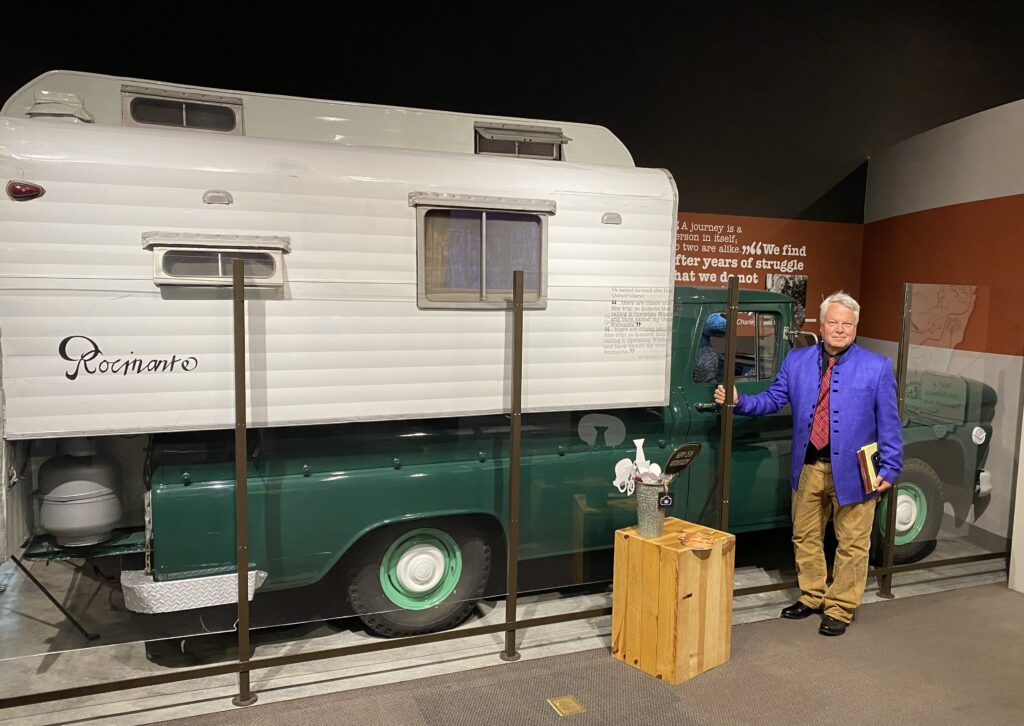Clay with the truck camper John Steinbeck drove across country in 1960. The truck camper is on display at the National Stenbeck Center in Salinas, California.
**What was the high point of the journey?**
There are too many to count. At least two dozen times, when I had settled in at a campsite for the night, tidied up inside (hard to keep things battened down on some of America’s roads), and then took a stroll to check out my surroundings, I found myself saying, out loud, to nobody — to the universe — “I am the luckiest man alive, I am so very fortunate, I am so very glad to be alive this evening.” The journey was much more satisfying than I had imagined, and my imagination had been big.
To name a few. … Walking in the immense silence of the redwoods in Northern California. Sitting in the borrow ditch on Route 66 in Arizona, reading a key passage from *The Grapes of Wrath*. Crossing the Mississippi River (below Minnesota) for the first time in many years. Hiking to the confluence of the Green and Colorado Rivers with my friends Dennis McKenna and Dr. Susan Ryan in Canyonlands National Park. Letting gigantic Texas have its way with me for a whole week.
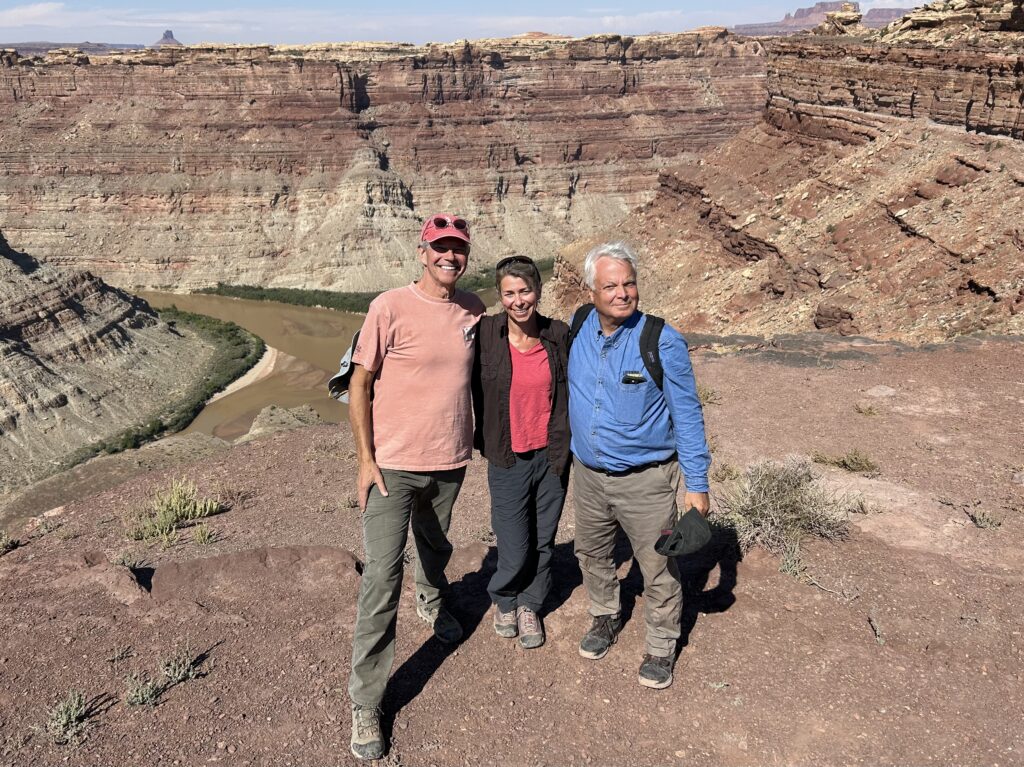Clay (right) and friends Susan Ryan and Dennis McKenna at the confluence of the Green and Colorado Rivers in Canyonlands National Park.
But maybe the highlight of highlights was when I took the time to visit Acoma Pueblo about 60 miles west of Albuquerque, New Mexico. The Sky City Pueblo there was established in the 11th century (more than a thousand years ago). The Pueblo sits on a 365-foot mesa. Today, it is lightly inhabited but remains an important cultural center. I had heard about it and read about it, but when our trusty scout Frank Lister suggested that I not pass it without taking the time to visit, I felt it was almost an act of grace calling me there. Individuals of the Acoma Pueblo tribe guide the tours. It was a stunning, unforgettable, humbling, and even spiritual experience. I have a close friend, an archaeologist, who has a relationship with the people and the community. She has invited me to visit Acoma during their annual St. Stephen festival.
So when I go out looking for America, it is essential to remember that I mean “the United States of America,” that upstart nation born more than 750 years after Acoma was a thriving hightop community in the Southwest. One of the primary impulses of my life now is to try to see America through the lens of Indigenous people, their communities, their landscapes, their history, their continuing struggles, and for what they have to teach us bewildered Anglos.
I’ll be back.
**What was the lowest moment of the journey?**
It came early. I was in Middlebury, Vermont, to interview the eminent Steinbeck biographer Jay Parini. He carefully directed me to the restored farmhouse they live in a few miles from Middlebury University. I was only one week into my five-month journey, and the Airstream was brand new. Jay did not warn me about the romantic covered bridge I would have to drive through to get to his home. About two-thirds of the way through the bridge, the lane narrowed. I slowed to a crawl. As I inched forward, one of the bridge struts clipped the awning on the right side of the trailer and wrenched it entirely off. My heart sank. I stopped when I could, walked back to pick up the pieces, and fell into a deep gloom. For a while I thought I might be able to fix it, but that proved illusory. Eventually, I had it replaced at the cost of $1,775.
It was a minor accident. But you know how you feel when you get some sparkling new vehicle, and you are paranoid about dinging it in any way. But you know, too, that once the first ding or dimple has happened, you learn to relax and then everything gets smoother.
**Were you ever lonely?**
No. Not once. I missed a few people, at times acutely, but I never felt lonely in any place at any time. I know this sounds nerdy, but a person with a book (or an iPad), a notebook, a smartphone, and a laptop must work hard to be lonely. My iPad has approximately 250 books on it, from Milton’s *Paradise Lost* to the essays of Christopher Hitchens to Dickens’ *Bleak House*. I camped in some of the most beautiful places in America. How can you be lonely if you wake up under the shadow of Devils Tower?
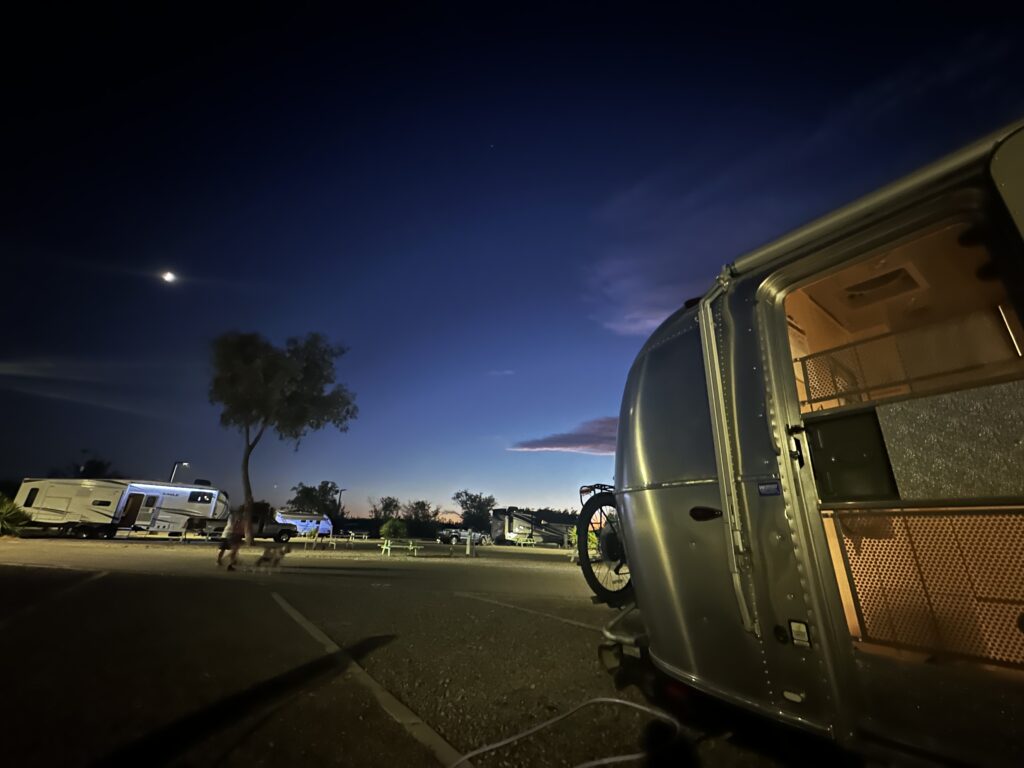Twilight at a campground near Bakersfield, California. (Photo by Clay Jenkinson)
**What would you do differently if you could start the journey over again?**
Really, not much. It would be quite a bit different to start in the autumn rather than the spring. Steinbeck’s journey had a lovely autumnal feel to it. To have begun as the first frost was imminent, when all the children were back in school when the leaves were turning, might have brought its own delights. But that is a small matter.
Mostly, I would just slow things down. I traveled twice as slowly as Steinbeck, but it was still too fast. I averaged about 200 miles a day. I seldom stayed in one campsite for more than one night. It’s hard to meet people when you move that fast. I needed more time to read and more time to write. More time to sit in a camp chair gazing at the landscape.
**Did you have any encounters with the law?**
Amazingly, not once. I fully expected to get a few parking tickets, hauling a 23-foot trailer, and even anticipated a few moving violations or California encounters with stop signs. But not once in 21,000 miles did I trip that sometimes sensitive wire. Because I was hauling a trailer, I never drove more than 65 miles per hour, often less. I ambled America. I tried to be a very responsible driver in that I pulled over, often under challenging circumstances, to let the cars and trucks behind me continue their journey at their own preferred pace. I do believe that I owe the New York, Pennsylvania, and Illinois Departments of Transportation for some toll road violations because today, the kiosks are often uninhabited, and my rig was not equipped with an ETC device. I fully expect to be swarmed by SWAT teams as I pass through greater Chicago next summer!
**Where’s your Airstream now?**
It’s in storage near Salisbury, North Carolina, at an RV and boat storage facility. I saw no reason to haul it back to North Dakota for the winter since I will begin the 2025 journey at Jefferson’s Monticello in Virginia. My friend Russ Eagle found a facility. I parked it there just before Thanksgiving and then high-tailed it with my GMC pickup to Bismarck, where I entertained two good friends for my favorite national holiday.
I nearly destroyed the Airstream before I backed into its narrow and torturous storage bay. As I was trying to figure out just where to turn into the storage facility, a cement truck came hurtling over the hill right in front of me, and it must be regarded as some secular miracle that a: I was not killed right there b: the Airstream was not crumpled like a piece of generic tin foil, and c: my friend Russ, who was in the passenger seat, did not file a restraining order to avoid ever getting in a vehicle with me again.
I take full responsibility for what happened, and yet — in some sense — it was just one of those things. The cement truck was going way too fast. It was a blind hill and a very narrow road. I’m no physicist, but I know that the cement truck wins every time in the game rock, paper, scissors, or Russ, Airstream, and cement truck.
**You couldn’t do this alone. Who helped you along the way?**
In addition to the kindness of strangers, I am just the public face of a great team. My friend and partner Dennis McKenna is the Producer, Director, and Editor in Chief. Raina Hall of Los Angeles copy edits, formats, handles the podcast logistics, keeps the videos in the queue, and manages the website LTAmerica.org. Frank Lister of Escalante, Utah, is my intrepid scout. Nolan Johnson of Bismarck, North Dakota, is my young friend, videographer, and editor of the weekly podcast. Russ and Liz Eagle manage the workflow logistics, and Russ — as a significant Steinbeck scholar — was essential to my journey and satisfaction.
**What did you learn?**
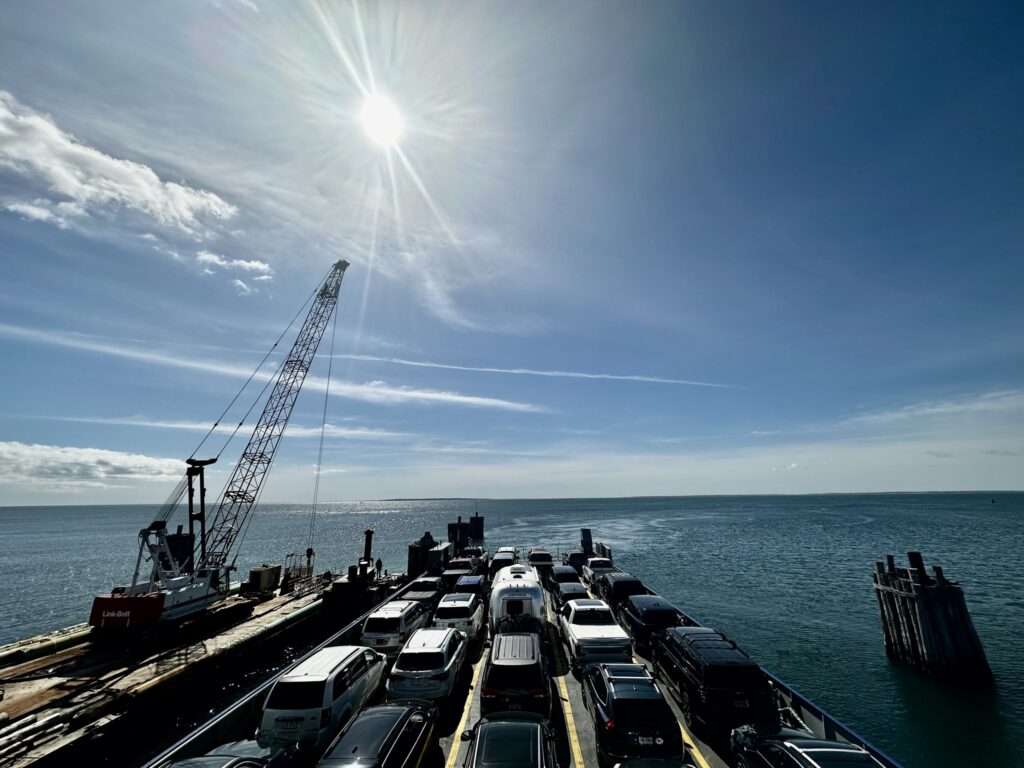Leaving Sag Harbor by ferry at Orient Point, Long Island, and heading for Connecticut, at the start of Clay’s journey in spring 2024.
— I learned that Steinbeck is right: this is a “monster country” in the sense of its monstrous size. I drove 21,400 miles, visited 41 states, and spent more than 200 days on the road. America is immense. It is also very lightly populated. According to the 2020 census, 80% of Americans live in cities and just 19% in rural areas. As Gertrude Stein wrote, “In the United States, there is more space where nobody is than where anybody is. This is what makes America what it is.” I love the open road. I love driving America, especially the American West, more than just about anything I do.
— I learned that America is an astonishingly beautiful country. From the forests of Maine and the quaint, tidy, “English-derived” villages of New England to the wide open endlessness of Montana; from the immense privilege of Long Island to the windswept marginality of Great Plains towns; from the immensity of the Great Lakes to the tiny prairie potholes of North Dakota; from the appalling corn monoculture of Indiana and Iowa to the sparse, stark red sandstone deserts of the Four Corners area; from the burbling mountain streams of Idaho to the burst-into-tears magnitude of the great Mississippi River; from the gray East Coast Atlantic to the sparkling Pacific at Point Lobos on the Monterey Peninsula. … Unlike Steinbeck, I visited as many National Parks as presented themselves along my route, but he is right that they are outliers. I’m extolling the magnificence and often the sublimity of the regular old landscapes of America. No day passed without a moment when America took my breath away.
— I think of myself as an American patriot. Always have. And I hate that the Far Right sometimes claims patriotism as its own patent. But on this trip, I fell in love with America again … and again … and again.
— I learned that most Americans, at least most of the Americans I met on my journey, are just good and decent people going about the business of life. Civil, generous, friendly, law-abiding, modest. I met hundreds of people along the way. Only two were angry Americans who wanted to shout down any view of the country that does not precisely conform to their own.
— Perhaps most of all, I learned that our national cable news and commentary channels do us no service. They hype and distort the situation, ratchet it up rather than ratchet it down. These partisan echo chambers essentially urge us to demonize the opposition, whatever it is, to “other” people who do not share our traditions, our heritage, our language, and our political outlook. I’m old enough to remember the golden age of CBS News, of Walter Cronkite and my hero Eric Sevareid, and NBC’s John Chancellor and ABC’s Peter Jennings. Edward R. Murrow and Walter Cronkite would be embarrassed by the wholesale abandonment of any pretense of objectivity and fairness in today’s cable media.
My Airstream has a modest television monitor and a DVD player over the bed. I never turned it on, even during presidential debates or the World Series. I knew that if I ever turned it on, even once, it would be a slippery slope and I would soon be binge-watching episodes of Green Acres.
**What next?**

In four months, I will fetch my Airstream out of its winter storage, get it road-ready, and head from North Carolina to Charlottesville, Virginia, to begin my great Lewis and Clark journey at the home of America’s Da Vinci, Thomas Jefferson. I cannot wait. I know much more about Lewis and Clark than about Steinbeck. I edit the Lewis and Clark quarterly, *We Proceeded On*, which will feature reports of my travels. I have written three books and two chapbooks on Lewis and Clark, including what I take to be my major work of scholarship, *The Character of Meriwether Lewis: Explorer in the Wilderness*. I’ve canoed sections of the trail, flown in Cessna planes over the Montana and North Dakota segments, flown in a helicopter over the White Cliffs in Montana, ridden horseback in the Bitterroot Mountains on the Lolo (Nez Perce) Trail, and drove the trail three times between St. Louis and Astoria, Oregon. But I have never driven the entire trail, as Stephen Ambrose liked to put it, “from Sea to Shining Sea.”
I’m tan, rested, and ready. Well, actually, I’m pale, too sedentary, and only partly rested. But I am *so* ready. I plan to depart from Monticello on or about May 5, 2025. Stay tuned!
---
*Editors* *Note: You can read all of Clay’s dispatches and reports and watch videos from his 2024 Travels with Charley adventure [here](https://ltamerica.org/tag/john-steinbeck/).*
**Categories:** Features
**Tags:** America at 250, Books, John Steinbeck, Steinbeck Travels
---
### [How to Consult Your Destiny Via Thoreau's Walden](https://ltamerica.org/how-to-consult-your-destiny-via-thoreaus-walden/)
**Published:** January 7, 2025
**Author:** Clay Jenkinson
**Excerpt:** During a long life of hard reading, Henry David Thoreau’s Walden is the book that helps me understand what it is to be human.
**Content:**
## During a long life of hard reading, Henry David Thoreau’s *Walden* is the book that helps me understand what it is to be human.
Clay reads from his “bible” at the site of Thoreau’s famous cabin at Walden Pond outside of Concord, Massachusetts. (Photo Nolan Johnson)
I’m reading Thoreau’s *Walden*. It’s my Bible. I love certain books in the Judeo-Christian Bible: Genesis, Job, Ecclesiastes, Proverbs, the Gospels, Acts (especially), several of Paul’s letters, and the insane and fabulous [Book of Revelation](https://bible.usccb.org/bible/revelation/0). But the Bible speaks to me now solely as a core text of the humanities. It does not shape my life. Well, forgive others, turn the other cheek; the rich will have a harder time getting into heaven, the golden rule — those all work for me. But the Bible as a whole is not a book I turn to when I need guidance in life. As Thomas Jefferson said, any child of five can understand the basic ethical message (and he was not interested in theology or metaphysics).
I’ve dabbled with some Eastern texts, but they impress me chiefly because they are so not the West. I don’t find much solace there either, and I am suspicious of those who say they prefer Eastern texts. This seems to me not much more than a way of despising our own tradition. I’m trying to think of one essential human insight that the [Upanishads](https://www.worldhistory.org/Upanishads/) provide that cannot be found in the Bible. This is a shallow view, but it is the view I hold.
When I want to wrestle with life’s big questions, I do not turn to the Bible. I find the Quran nearly impenetrable (as I do most of the Old Testament). When I need to pray, I go to some isolated place in the badlands of the Dakotas or Montana and settle on a ridge or in the pines with a big viewshed. I pray both internally and out loud. Just who or what I pray to is not entirely clear to me. I don’t think the universe is taking my calls. From my long study of [St. Augustine](https://www.worldhistory.org/Augustine_of_Hippo/), I believe the only legitimate prayer is: Thy will be done. That doesn’t win the war, the mate, the ball game, or the battle with cancer. But while on that ridge, I give myself the time to wrestle with whatever question is foremost. Just put me alone for three hours on a temperate day in some left-alone corner of the American West. I’m going to think clearly with the right perspective (i.e., if I died on that ridge, it would take civilization weeks, maybe months, maybe years, to find me, so how urgent can my concerns be)?
## **No Chapter in *Walden* Does Not Speak to Me**
During a long life of hard reading, I have found that Henry David Thoreau’s *Walden* is the book that helps me understand what it is to be a human mammal living in a very advanced civilization, cut off from Nature in breathtaking ways. The questions Thoreau raises — what is the “cost” of the way we live, and would it be possible to live a more poetic, integrated, and soulful life if we reduced our material addictions? — are the questions that help me think about life, my life, American life.
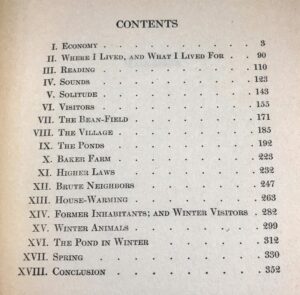The 18 chapters in Thoreau’s *Walden*.
No chapter in Walden does not speak to me. I’m reading it now for the umpteenth time, and it still delivers new provocations, new insights, and new encouragements to me. I’ve read it in some fascinating landscapes — most intensely 20 years ago on a long hike of 173 miles over 17 days along the path of the Little Missouri River in Wyoming, Montana, South Dakota, and my own North Dakota. The first two chapters and the last one speak to me most often and most successfully. People whine about the long first chapter, called “Economy,” but you cannot understand what Thoreau was about, what he was trying to figure out, and the experiment he was undertaking unless you give the first chapter plenty of time. Thoreau said you have to train like an athlete to read the greatest books. I see my work as a public humanities scholar (if we are talking about Thoreau) as helping the bewildered and the disaffected come to terms with “Economy.”
The greatest passage in all of Thoreau — and that’s saying something given that he wrote more than 2 million words — comes in “Where I Lived and What I Lived For,” beginning, “I went to the woods because I wished to live deliberately.” You could spend a lifetime trying to figure out what it means to live deliberately. I’ve memorized the passage long since. I recite it whenever I get the chance, alone or otherwise, and I try to figure out what it would be like to live deliberately — I am a very long way from it — and whether I can learn to do so, and if so, by what discipline?
And then there is the gnomic and magnificent last chapter of *Walden*, “Conclusion,” in which we learn about the worm that ate its way out of the kitchen table after 60 years, and we are charged to “advance confidently in the direction of our dreams.” And, of course, the incredible last sentence: “The sun is but a morning star.” Oh, bring mid-day and evening (but not yet).
## **How to Consult *Walden***
In the Middle Ages, when Christianity had destroyed or repurposed almost the entire classical inheritance, with thousands of pagan temples looted, crushed, or transformed into Christian churches, Virgil’s great epic *The Aeneid* survived the censors because it could be seen somehow as an allegory for the Christian life, a kind of early and more sophisticated *Pilgrim’s Progress*. To repeat: we have *The Aeneid*, one of the world’s greatest books, almost solely because the Christian intellectuals found a way to square it with their doctrine. This took some pretty serious legerdemain, but remember that the same believers found a way to pretend that the pagan erotic *Song of Solomon* was really about Christ and his “spouse.”
A tradition was born in the late classical period of consulting the pages of *The Aeneid* in the way we consult the I-Ching or the [Enneagram](https://www.merriam-webster.com/dictionary/enneagram). It was called [sortes Vergilianae](https://www.jstor.org/stable/4389159). The first historical reference to the practice was pagan, in Aelius Spartianus’ *Life of Hadrian* (ruled 117-138 CE). The aspiring Hadrian, wanting to know what Emperor Trajan thought of him, opened *The Aeneid* at random and found — conveniently enough — the verse that reads, “the Roman king whose laws shall establish Rome anew.” And it turned out that Trajan eventually adopted Hadrian as his son and Hadrian became his successor and one of the greatest emperors in Roman history.
The most famous consultation of the sortes Vergilianae happened in 1642-1643 at Oxford. The beleaguered King Charles I was visiting the great loyalist university. His host urged him to consult Virgil in the prophetic way. The passage Charles opened to was not as pleasing as the one Hadrian chanced (?) upon. This time the sortes delivered, “May he be harried in war by audacious tribes, and exiled from his own land.” Seven years later, King Charles I was beheaded on a scaffold outside of the Banqueting House at Westminster.
Once a year or so, I consult Henry Thoreau in the manner of sortes Vergilianae. And though *Walden* does not tell me to “buy low and sell high,” or encourage me to seek a future in “plastics,” like *The Graduate*, it always delivers something worthy of my sustained meditation.
Look. I’ll try it right now.

Just now, I went down into my main library to get the edition of *Walden* that matters to me most. It’s a Collector’s Library hardbound edition with a red cover and afterword by Sam Gilpin. I love it for two related reasons. It is compact and with a hard cover relatively durable; and I took it on my last multi-week hike on the Little Missouri River. (There are some lovely signs of the toll the journey took on the book and of course me). It measures 6 x 3.5 inches. I’d call it a duodecimo, but technically it is known as a sextodecimo. It weighs only a few ounces. We’ve all seen teeny books (a novelty) or the single grain of rice on which the Sermon on the Mount is incised. Novelties. When I see people purchasing a tiny box of the complete works of Shakespeare (884,647 words in a box the size of a wristwatch case), I want to say, “You know you are never going to be able to read Shakespeare this way.” Still, I don’t because I don’t offer up my opinions to people who haven’t asked for them.
This copy (one of 20 in my library) is the smallest size that is still readable.
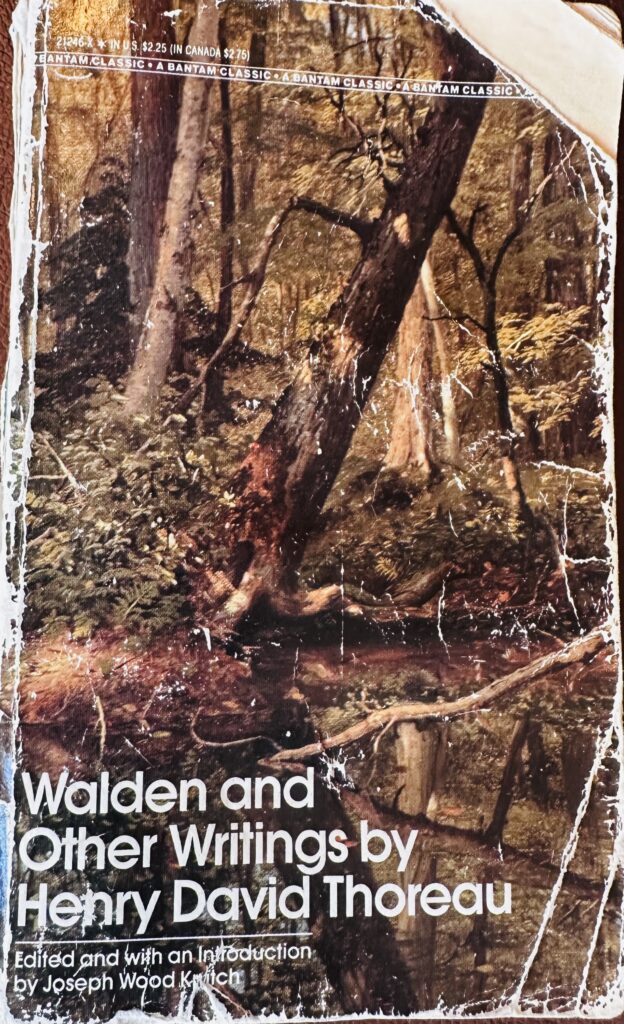One of Clay’s well traveled and much read editions of *Walden*. Thoreau’s classic was originally published in 1854.
I have one other sacred copy of *Walden* in the library. It’s a Signet Classic paperback edition, with (on the cover) someone sitting under a tree by a pond. The cover survived a serious tear 20 years ago, and I fixed it, MacGyver-like, with several pieces of black electrical tape. There went my career as a conservator. I took that copy on my previous and longer hike on the Little Missouri River, beginning in the shadow of Devils Tower. Years later, I made a colossal mistake. I was dating a woman in Reno — whip-smart, badly read — who borrowed that copy of *Walden* for a project we were working on together. When she returned it, I discovered that she had highlighted scores of passages … with a bold pink highlighter! There were other reasons to end the relationship, but this alone would have done it. I get to be a carnal lover of my books — marginalia, underlinings, dog ears, coffee and peeled orange stains, endnotes — but nobody else gets to have their way with my books. Especially sacred books! The pink highlights are my fault. I should have known better than ever to lend any important book to anyone. I’d rather order them a trade edition, delivered to their front door three days later at most than put a book I could not afford to lose or see damaged into the hands of even my most trusted friends. And really, who can you trust about a borrowed book?
Ok. That’s the back story, told while this fabulous copy of *Walden* prepared to be the Sybil, the Oracles at Delphi and Dodona, the waters of Lourdes, or the Medicine Rock of the Mandan and Lakota. I picked up the book and held it lovingly in my hands. Then I fanned the (faux) gilt pages nine times and, on the 10th, opened the book where it seemed to want to be opened: the first two pages of chapter five, “Solitude.” Weird, I just read that chapter in another copy — the annotated edition prepared by Walter Harding.
Ok. Let’s see what the sortes Thoreauvianae have to say today.
Henry is walking by the pond as the afternoon’s wind dies. The chapter begins with one of my favorite passages in Thoreau: “This is a delicious evening, when the whole body is one sense, and imbibes delight through every pore. I go and come with a strange liberty in nature, a part of herself.” There’s a paradox here, of course. When he writes, “This is a delicious evening,” it no longer is. He’s not carrying around a notebook and stopping to get his thoughts down. But we get the trope. I love his gendering of nature, and I even more admire his understanding that he does not stand apart from nature — Francis Bacon style — but acknowledges that he is “a part of herself.” I love it when he says he feels “a strange liberty in nature.” Magnificent.
A bird’s eye view of Walden Pond, near Concord, Mass. (Photo Nolan Johnson)
So far, I appreciate the pages fate opened for me, but I have not yet applied the passage to myself. Let me get one more from this two-page spread on the table first. Thoreau says his nook in the woods (1.5 miles from Concord) is “as solitary … as on the prairies … I have, as it were, my own sun and moon and stars, and a little world all to myself.” Wherever you stand on earth, you are at the center of the universe because it is endless in every direction forever. And wherever you view the stars you have a unique view (unique among 8 billion other humans) because of parallax, however infinitesimal the difference.
First, let me make my main point. As I have just shown, open *Walden* to any page, and you will find enough beauty, wisdom, insight, provocation, challenge, confession, perspective, or aspiration to keep you musing for the rest of the day, whether you are at the confluence of the Green and Colorado rivers, or your kitchen table (as I am at this moment, but thinking about the other one). *Walden* always delivers. As the guy says in the Men’s Warehouse ads, “I guarantee it.”
Great books deliver their greatness every time, often in ways you hadn’t noticed before. It’s bizarre (a little self-disappointing) and wonderful.
## **The Application: Quid Ad Nos (What Is That to Me)?**
I’ve been wrestling with the question of solitude lately. I am alone most of the time, more probably than anyone I know. I do live on the prairies — well, more accurately the Great Plains, just 200 miles west of the prairies. I don’t prize solitude as militantly as Thoreau. He wanted to have strict protocols for friendship (much less love). 1. Come around only once every few days so we will have some new things to talk about. 2. Sit far enough away so our thoughts can do some sinewy flight time from your mouth to my ears and the reverse. In fact, as the conversation deepens, plan to scoot your chair back until each of us is up against a wall. 3. Don’t expect to eat, though you may. 4. Don’t bring any dead-weight people.
I need a huge quantity of solitude, though it might be less pretentious to say “alone time,” but I like and love the ones I like and love, most of them not in my zip code or even my home state, and I am eager to see them when we can arrange our schedules — which admittedly is not often. I like solitude when I want solitude, but I am not content to be alone for long periods without seeing anyone else. I own a splendid Thoreauvian (10 x 15 foot) cabin at Cooke City, Montana, just two miles from the northeast entrance of Yellowstone National Park. It’s an Airbnb now, so have at it if you are looking for a minimalist but comfortable retreat near the first of America’s National Parks and still the most iconic. I want to go spend a month there writing the Great American something, or maybe just finishing one of the more journeymen projects I have committed myself to. Sounds perfect. But how long would it be ok for me to be alone with the English language among the trees at the side of the mountain in the heart of the Greater Yellowstone Ecosystem? I remember a famous edition of the *Dick Van Dyke Show*, where he rents a remote cabin so he can finish his languishing novel. Unfortunately, on day two, he finds a paddle ball (ball, paddle, strong elastic band) in a drawer. When he goes home a week later, he has not written a single page of the novel but has become a paddle ball grand master.
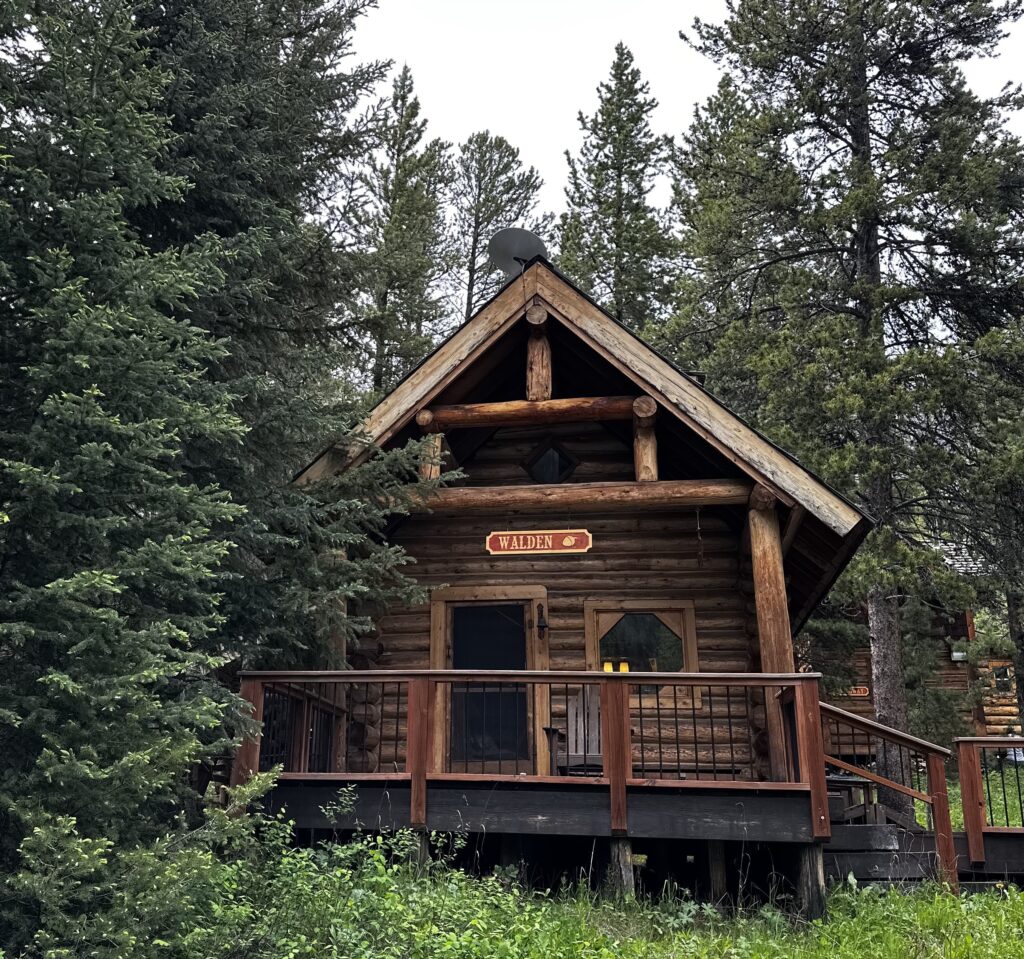Clay’s “Walden” cabin near the Northeast entrance of Yellowstone National Park, in Cooke City, Mont.
I love Thoreau. He had a delicious evening, and he wrote deliciously about it. That he used the word “delicious” delights me. Here’s his genius. He uses the English language in masterful ways, in unusual ways, and often deeply poetic ways, and yet does not lose the tensile strength of his argument against America.
So that’s how the sortes oracle works. *Walden* did not tell me how to live today. It did not today say downsize, or sell all you have and give it to the poor, or ’tis sharper than a serpent’s tooth to have a thankless child. But it resonated with things I have been thinking about since early December, things I have in some sense been thinking about since I embarked alone in my 23-foot Airstream on April 27, 2024. Earlier today, I wrote about solitude in a letter to a friend. I was trying to figure out what solitude meant to Thoreau and what it meant to Edward Abbey and if their errands into the wilderness were alike or not — or what? Abbey needed more human contact (especially with fetching women) than Thoreau (who almost certainly never had sex), but we need to remember that Thoreau walked to town every couple of days during his sojourn at Walden Pond. Yes, the laundry — get over it already. The sortes contributed to my thinking, my musing, my perplexities. And it was just lovely to read a second time in a single day.
I’ve got miles to go before I sleep. I’m about to read the chapter on “The Bean Field” for the umpteenth time. I don’t remember it as one of my favorites, but I can promise that I will take several pages of notes, underline a dozen passages, copy several into texts to friends, and use Google Images to look up a bunch of things. I’ll give this attention to only a handful of books. It’s slow going. But it’s marvelous.
Here’s what I took from “The Bean Field.” A: Thoreau was not really interested in eating the beans. He’s a little perplexed by that. He traded the 12 bushels of beans for rice. B: Thoreau wrestles with the problem of agriculture, that he has displaced natural plants to impose a kind of monoculture on his 2 ½ acres of garden. The paradox has special pointedness considering that he was not growing the beans to eat. C: Thoreau employs some delightful mock epic tropes to talk about his war with the weeds, trying to crowd out his beans. D: His war on weeds reminds me of Michael Pollan’s argument, in one of his books, that the gardener suddenly becomes an angry tyrant who seeks to eliminate, as ruthlessly as possible, other beings competing for the resource. The only thing I looked up on Google was “Pythagoras and beans.” Apparently, Pythagoras felt that the shape of the bean seemed too close to the shape of a human fetus to whet his appetite. He regarded humans and beans as “related.”
I cannot take you with me, though I would like to, so I leave you to pick up *Walden* or whatever book most speaks to your mind, heart, spirit, and soul and do the sortes with it. I, meanwhile, move on to the chapter entitled “The Village.”
---
## ***Discover more on these topics at Listening to America***
[New Mexico](https://ltamerica.org/tag/new-mexico/ "3 topics")[The Constitution](https://ltamerica.org/tag/the-constitution/ "1 topics")[North Carolina](https://ltamerica.org/tag/north-carolina/ "3 topics")[Theodore Roosevelt](https://ltamerica.org/tag/theodore-roosevelt/ "16 topics")[Poetry](https://ltamerica.org/tag/poetry/ "1 topics")[New England](https://ltamerica.org/tag/new-england/ "1 topics")[South Dakota](https://ltamerica.org/tag/south-dakota/ "16 topics")[U.S. Presidents](https://ltamerica.org/tag/u-s-presidents/ "71 topics")[Oppenheim](https://ltamerica.org/tag/oppenheim/ "0 topics")[Rivers](https://ltamerica.org/tag/rivers/ "3 topics")[U.S. Constitution](https://ltamerica.org/tag/u-s-constitution/ "1 topics")[Wisconsin](https://ltamerica.org/tag/wisconsin/ "0 topics")[Utah](https://ltamerica.org/tag/utah/ "11 topics")[Vermont](https://ltamerica.org/tag/vermont/ "1 topics")[New York](https://ltamerica.org/tag/new-york/ "8 topics")[Oregon](https://ltamerica.org/tag/oregon/ "4 topics")[Thoreau](https://ltamerica.org/tag/thoreau/ "5 topics")[State Parks](https://ltamerica.org/tag/state-parks/ "2 topics")[Tennessee](https://ltamerica.org/tag/tennessee/ "1 topics")[Ohio](https://ltamerica.org/tag/ohio/ "2 topics")[Road Trips](https://ltamerica.org/tag/road-trips/ "18 topics")[Podcast](https://ltamerica.org/tag/podcast/ "1 topics")[Republics](https://ltamerica.org/tag/republics/ "1 topics")[Wyoming](https://ltamerica.org/tag/wyoming/ "4 topics")[Travel](https://ltamerica.org/tag/travel/ "1 topics")[Rome](https://ltamerica.org/tag/rome/ "1 topics")[Reading](https://ltamerica.org/tag/reading/ "1 topics")[Republic](https://ltamerica.org/tag/republic/ "0 topics")[Washington](https://ltamerica.org/tag/washington/ "2 topics")[Thomas Jefferson](https://ltamerica.org/tag/thomas-jefferson/ "34 topics")[north daktoa](https://ltamerica.org/tag/north-daktoa/ "0 topics")[Steinbeck Travels](https://ltamerica.org/tag/steinbeck-travels/ "75 topics")[Water in the West](https://ltamerica.org/tag/water-in-the-west/ "24 topics")[paintings](https://ltamerica.org/tag/paintings/ "0 topics")[Sports](https://ltamerica.org/tag/sports/ "2 topics")[North Dakota](https://ltamerica.org/tag/north-dakota/ "53 topics")[Virginia](https://ltamerica.org/tag/virginia/ "7 topics")[South Carolina](https://ltamerica.org/tag/south-carolina/ "1 topics")[Walden](https://ltamerica.org/tag/walden/ "1 topics")[Video](https://ltamerica.org/tag/video/ "51 topics")[William Shirer](https://ltamerica.org/tag/william-shirer/ "1 topics")[Texas](https://ltamerica.org/tag/texas/ "4 topics")[Pennsylvania](https://ltamerica.org/tag/pennsylvania/ "1 topics")[Space Exploration](https://ltamerica.org/tag/space-exploration/ "8 topics")[Oppenheimer](https://ltamerica.org/tag/oppenheimer/ "1 topics")
**Categories:** Books
**Tags:** Books, Humanities, Massachusetts, Montana, Thoreau, Walden
---
### [Reading Walden and Wrestling With Thoreau](https://ltamerica.org/reading-walden-and-wrestling-with-thoreau/)
**Published:** December 31, 2024
**Author:** Clay Jenkinson
**Excerpt:** As I look to the start of the new year, Thoreau’s 1854 classic, Walden, still deeply challenges and inspires me.
**Content:**
## As I look to the start of the new year, Thoreau’s 1854 classic still deeply challenges and inspires me.
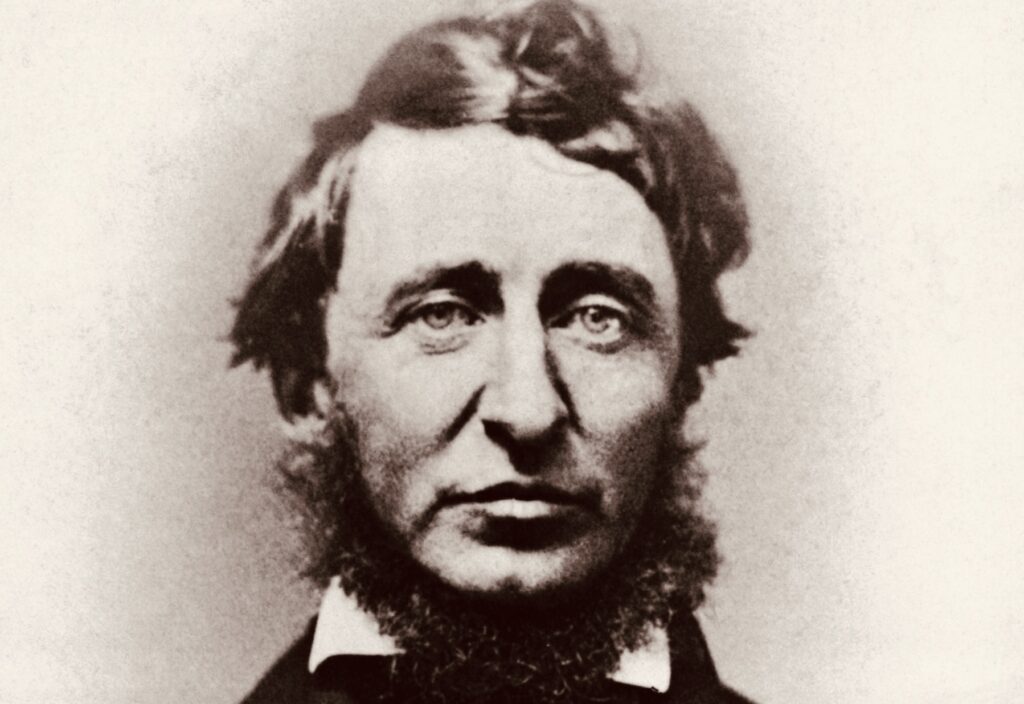Henry David Thoreau (1817 – 1862).
**Bismarck, N.D. — December 26, Boxing Day.** Alone on the northern plains, I have the whole day before me and several important books to read. The principal task of the day (how can I call it a task?) is to read much of Thoreau’s *Walden*. Yesterday and on Christmas Eve, I read “[Economy](https://nationalhumanitiescenter.org/pds/triumphnationalism/expansion/text7/economy.pdf),” the first and longest chapter of *Walden* and the one that causes the most frustration. Here’s why. If you add up all the passages in that opening chapter about Thoreau building a cabin near the shore of Walden Pond, they occupy only a handful of pages, maybe four or, at most, five. The rest is “argument” in several senses of the term. Most readers of *Walden* chafe at the complexities of “Economy” and just want Thoreau to build the damn cabin and start observing Nature. Ah, but Thoreau is not in any hurry to do that.
So what is he asking of us? Above all, he wants you and me to look closely at our lives — along Socratic lines, on the principle that the unexamined life is not worth living. Thoreau wants you and me to ask ourselves what we surround ourselves with and at what cost. And “cost,” it turns out, is not merely the number of dollars you had to lay out for whatever it is, the number of days you have to work for your \_\_\_\_\_\_\_ (boat, home theater, lake cottage, Mercedes, jet ski, wedding ring, etc.), but for the larger and more important “costs” — the opportunity cost (what else might you have done with your finite time and money), the cost to the poetry in your soul, the cost to your happiness, the cost to the principle of distributive justice, and (now) the cost to the planet Earth.
I’ve been doing just that. I’ve been a maximalist, not a minimalist. My large house, in which I live alone 97% of the time, is stuffed to the gills with books, gadgets, cameras, foodstuffs, appliances, furniture, souvenirs from my travels, clothes, boots, tools, costumes, etc. Twenty years ago, I bought a big space (my house) and filled that space to the choking point.
So, in hosting annual humanities retreats at a lodge west of Missoula, where we talk about “costs” for days on end, it is more “do as I say, not as I do,” or rather “do as Henry Thoreau did, not as I do.”
> **“I learned this, at least, by my experiment; that if one advances confidently in the direction of his dreams, and endeavors to live the life which he has imagined, he will meet with a success unexpected in common hours. … In proportion as he simplifies his life, the laws of the universe will appear less complex, and solitude will not be solitude, nor poverty poverty, nor weakness weakness.”**
>
> **Walden, Henry David Thoreau**
The dis-order of my lifestyle (if it can even be called that) is such that I often cannot find what I need (though I know it is here), and therefore what Hamlet calls “enterprises of great pith and moment” miscarry because I cannot assemble all the necessary ingredients in a timely fashion. I’m not a hoarder, exactly, and I don’t think I am quite ready for an intervention, but the over-stuffedness of my life has reached a now-or-never point. Is this how I am going to trudge out of the last 20 years of my life, or do I have it in me to downsize, repurpose, prioritize, organize, and de-acquisition?
That’s one question.
The other question is related: Can I stop acquiring new things? Amazon.com has made it so easy to search, select, and push “place your order” that I don’t even have to get in the car and drive to a bookstore or a sporting goods store to keep filling my space with more things than any responsible person should have: abundance and super-abundance. If you had to pull actual cash out of your pocket to pay for all these extravagances, well, you wouldn’t.
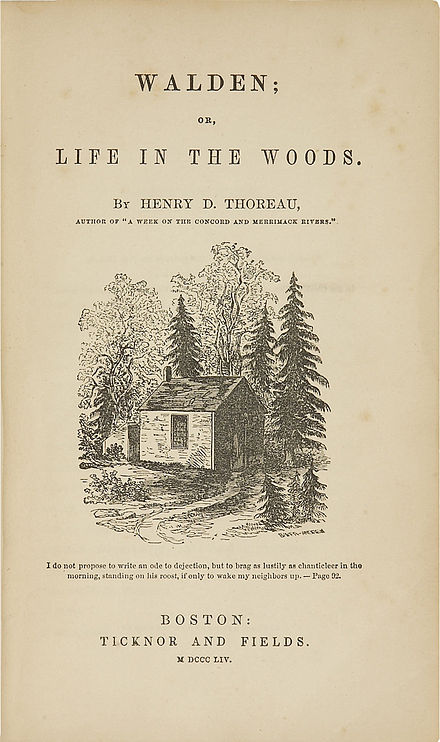*Walden* was first published in 1854 with an initial print run of 2,000 copies. It featured a cover illustration by Thoreau’s sister, Sophia.
Because I see the problem — I could provide a score of anecdotes that indicate how seriously things are out of control up here in my subdivision house with a three-car garage that is nothing more than a storage facility — I am particularly ripe for the wisdom of Henry Thoreau — and “Economy” is the best anthem to simplification, deliberateness of purchase, and knowing when abundance becomes a choke hold on the soul.
So here is what I am doing, however picayune it may seem from the outside. I am getting rid of five things per day through 2025. Yesterday, I de-cluttered my kitchen, or part of it, because I have more pots, dishes, gadgets, and “spices” than will fit in the lavish cupboards. Yesterday, I put approximately 350 items into boxes. They go first to the garage. I’ll keep them there for a few months, and then — if nothing propels me to find something in one of those boxes — I will take them to a thrift store.
I have been getting rid of five books per day, too. So far, so good. I have not had to cut into any tendon or muscle yet. But that day, alas, is coming.
There are three reasons I write about all of this. First, I believe Thoreau is precisely right that the American quest for more and more material things, including things that confer prestige, is killing us, the poetry in us, and our souls. We are overweight, overfed, and overextended. We are addicted. The malaise of America — as seen in our broken national politics and social structure — is not finally about the Second Amendment or the Fifth, not about our national political leadership. It is about the glut that has backed up the plumbing of our souls. In other words, even though *Walden* was published in 1854, it speaks to us right now and in the best possible way. Thoreau gets the diagnosis right, though he would be appalled by how much worse things are in our time than in his.
Second, *Walden* repays reading again and again throughout a lifetime. *Walden* delivers. I’ve read it two dozen times by now, some parts of it more, and it has never failed to knock me off my legs and inspire (force?) a re-evaluation of my life. My job as a humanities scholar is to help others learn to appreciate the book for all it can do for us individually and perhaps as a society. Thoreau doesn’t always make it easy. He annoys all of his readers some of the time and some of his readers all the time.
Third, given my Airstream travels (a small experiment in minimalism) and the fact that I am about to observe an important birthday (it’s the seventh inning, maybe the bottom of the eighth), reminds me that I don’t have that many changes left to build the life to which I have long aspired. I intend to see this Thoreauvian experiment through. I believe my life will be better in every way one year from now if I continue my climacteric resolutions. Which are these:
## **My Thoreauvian Experiment**
> **“I know of no more encouraging fact than the unquestionable ability of man to elevate his life by a conscious endeavor.”**
>
> **Walden, Henry David Thoreau**
- Get rid of at least five things a day through 2025. (Since I travel a great deal, this will mean some flurries of downsizing when I am home.)
- Walk no less than 25 miles per week and much more if possible. Nothing is as essential in moral reform as long walking.
- Wait 24 hours before pushing “send” on books I “want” from Amazon.com. I have discovered that if I wait just 24 hours, many of my impulsive purchases slip quietly away. I reckon such a move will save several thousand dollars this year, and of course, it matters in the downsizing plan. If you get rid of 10 books but order 20 more, you are only worsening the problem.
- I will watch no (zero) cable news (MSNBC, FOX) in 2025 unless we are directly involved in a gigantic earthquake or war. If the Yellowstone caldera blows, I’ll tune in (assuming I am not petrified in ash like the citizens of Pompeii). I’ll turn on CNN; otherwise, I will read my daily news feed on my smartphone and keep up with the *New York Times*, the *New Yorker*, the *Atlantic*, and *The New York Review of Books*. But no cable commentary.
- Finally, I have pledged to write one real letter (often but not always printed on paper and inserted into an envelope) every day this year. Not pro forma letters, but genuine letters worthy of being called correspondence.
I’m inspired in this by one of the finest sentences in *Walden*, that repository of hundreds of great sentences, and passages:“I know of no more encouraging fact than the unquestionable ability of man to elevate his life by a conscious endeavor.”
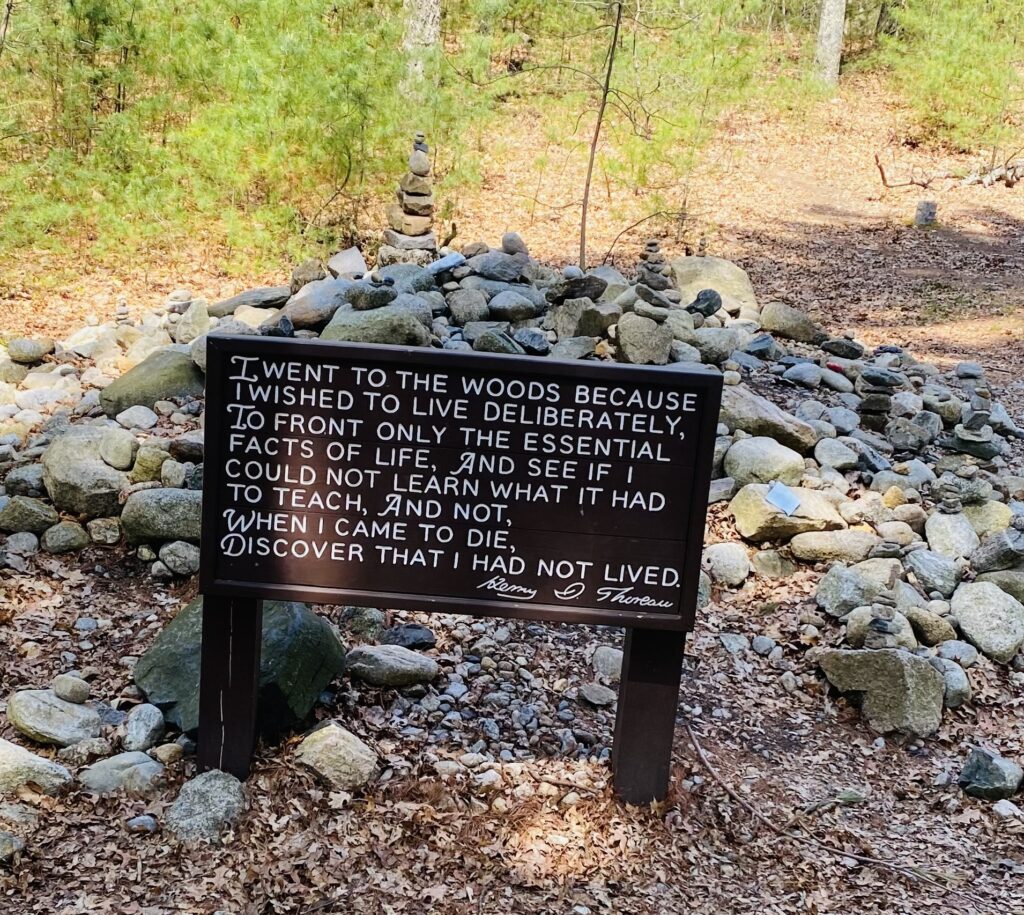Sign near the site of Thoreau’s cabin on Walden Pond.
Will I backslide? Of course. But I have long since reached an unsustainable plateau in my life. I’m putting Thoreau on notice, too. He says, in the most famous passage of *Walden*, that he went to the woods to live deliberately, to suck out all the marrow of life, to reduce it to its lowest terms, and then to report. He says it may prove to be a failed experiment, in which case he promises to divulge that to the world. But he makes it clear that he believes the experiment will be a great success, that his soul will blossom in unprecedented ways, and that he will be able to recognize the upgrade in quality of life that comes from modesty or minimalism. Thoreau did not want to die, only to “discover that I had not lived.”
That’s my greatest fear. To discover that I had not lived, that I was content to see the world in AM when it was FM at least, and maybe X-ray, infrared, cosmic rays, and more. To discover that I lived mostly as an automaton and went through life without actually living it to its fullest. That I settled when the universe was right in front of me.
I heartily and sincerely recommend that you stop and take the time to read *Walden* in the next few weeks. Don’t be put off by his paradoxes and his occasional righteousness. Do the experiment: calculate how much stuff you have (and its “costs”), how much stuff you actually need, and how much of what you have is just collecting dust — or, much worse, choking your soul. Then, either shrug and go on with a life you approve of or take careful steps to move in a Thoreauvian direction towards what he calls a “life of simplicity, independence, magnanimity, and trust.”
It is, says Thoreau, a new dawn for anyone who wakes to see it.
---
## ***Discover more on these topics at Listening to America***
[Thomas Jefferson](https://ltamerica.org/tag/thomas-jefferson/ "34 topics")[Theodore Roosevelt](https://ltamerica.org/tag/theodore-roosevelt/ "16 topics")[Podcast](https://ltamerica.org/tag/podcast/ "1 topics")[Water in the West](https://ltamerica.org/tag/water-in-the-west/ "24 topics")[Road Trips](https://ltamerica.org/tag/road-trips/ "18 topics")[Vermont](https://ltamerica.org/tag/vermont/ "1 topics")[Oppenheim](https://ltamerica.org/tag/oppenheim/ "0 topics")[Walden](https://ltamerica.org/tag/walden/ "1 topics")[Sports](https://ltamerica.org/tag/sports/ "2 topics")[Wisconsin](https://ltamerica.org/tag/wisconsin/ "0 topics")[Poetry](https://ltamerica.org/tag/poetry/ "1 topics")[Oppenheimer](https://ltamerica.org/tag/oppenheimer/ "1 topics")[north daktoa](https://ltamerica.org/tag/north-daktoa/ "0 topics")[Republic](https://ltamerica.org/tag/republic/ "0 topics")[South Dakota](https://ltamerica.org/tag/south-dakota/ "16 topics")[paintings](https://ltamerica.org/tag/paintings/ "0 topics")[Wyoming](https://ltamerica.org/tag/wyoming/ "4 topics")[The Constitution](https://ltamerica.org/tag/the-constitution/ "1 topics")[Pennsylvania](https://ltamerica.org/tag/pennsylvania/ "1 topics")[U.S. Constitution](https://ltamerica.org/tag/u-s-constitution/ "1 topics")[North Carolina](https://ltamerica.org/tag/north-carolina/ "3 topics")[Tennessee](https://ltamerica.org/tag/tennessee/ "1 topics")[Virginia](https://ltamerica.org/tag/virginia/ "7 topics")[Video](https://ltamerica.org/tag/video/ "51 topics")[New York](https://ltamerica.org/tag/new-york/ "8 topics")[Rivers](https://ltamerica.org/tag/rivers/ "3 topics")[Rome](https://ltamerica.org/tag/rome/ "1 topics")[Republics](https://ltamerica.org/tag/republics/ "1 topics")[New Mexico](https://ltamerica.org/tag/new-mexico/ "3 topics")[Travel](https://ltamerica.org/tag/travel/ "1 topics")[Steinbeck Travels](https://ltamerica.org/tag/steinbeck-travels/ "75 topics")[State Parks](https://ltamerica.org/tag/state-parks/ "2 topics")[South Carolina](https://ltamerica.org/tag/south-carolina/ "1 topics")[Thoreau](https://ltamerica.org/tag/thoreau/ "5 topics")[New England](https://ltamerica.org/tag/new-england/ "1 topics")[U.S. Presidents](https://ltamerica.org/tag/u-s-presidents/ "71 topics")[Reading](https://ltamerica.org/tag/reading/ "1 topics")[Oregon](https://ltamerica.org/tag/oregon/ "4 topics")[Texas](https://ltamerica.org/tag/texas/ "4 topics")[Washington](https://ltamerica.org/tag/washington/ "2 topics")[Space Exploration](https://ltamerica.org/tag/space-exploration/ "8 topics")[North Dakota](https://ltamerica.org/tag/north-dakota/ "53 topics")[Utah](https://ltamerica.org/tag/utah/ "11 topics")[William Shirer](https://ltamerica.org/tag/william-shirer/ "1 topics")[Ohio](https://ltamerica.org/tag/ohio/ "2 topics")
**Categories:** Features
**Tags:** Books, Humanities, North Dakota
---
### [Coast to Coast with Clay Jenkinson: Nolan's 2024 Highlight Reel — Video Dispatch](https://ltamerica.org/coast-to-coast-with-clay-jenkinson-nolans-2024-highlight-reel-video-dispatch/)
**Published:** December 31, 2024
**Author:** Editor
**Excerpt:** Nolan Johnson, Listening to America’s intrepid videographer and podcast editor, shares highlights of his adventures with Clay while traversing the country from Long Island, New York, to the source of the Mississippi River to Monterey, California, on LTA’s 2024 Travels with Charley/Steinbeck Tour.
**Content:**
Nolan Johnson, Listening to America’s intrepid videographer and podcast editor, shares highlights of his adventures with Clay while traversing the country from Long Island, New York, to the source of the Mississippi River to Monterey, California, on LTA’s 2024 *Travels with Charley*/Steinbeck Tour.
---
***Over the next few months, Clay is shadowing Steinbeck’s 10,000-mile trek around the USA (and making a few detours of his own). Clay’s expedition is a central part of LTA’s big initiative to explore the country and take the pulse of America as it approaches its 250th birthday. Be sure to follow Clay’s adventures*** [***here***](https://ltamerica.org/tag/steinbeck-travels/) ***and on*** [***Facebook***](https://www.facebook.com/LTAmerica) ***— and*** [***subscribe to our newsletter***](https://ltamerica.org/newsletter/)**.**
**Categories:** Dispatches from the Road
**Tags:** California, John Steinbeck, Massachusetts, Minnesota, Montana, New York, Steinbeck Travels, Video
---
### [Family Favorites: Christmas Cookie Recipes](https://ltamerica.org/family-favorites-christmas-cookie-recipes/)
**Published:** December 24, 2024
**Author:** Editor
**Excerpt:** Clay and his good friend David Horton share their favorite family cookie recipes in this week’s special Christmas edition of the LTA podcast.
**Content:**
Clay and his good friend David Horton share their favorite family cookie recipes in this week’s special Christmas edition of the LTA [podcast](https://ltamerica.org/listen-2/). Their recipes are below. If you try them, let us know what you think — and please [share](mailto:contact@ltamerica.org) your favorite cookie recipes with us, too!

---

## **David Horton’s Recipe:**
**Brandy Cherry Walnut Cookies**
**Ingredients**
2 cups flour
½ teaspoon baking soda
1 teaspoon salt
¾ cup unsalted butter room temperature
1 cup brown sugar
1 large egg
1 teaspoon pure vanilla extract
2 tablespoons milk
½ cup walnuts chopped
½ cup maraschino cherries drained, patted dry, and chopped into pieces
Brandy
**Instructions**
Preheat oven to 350º F and line a baking sheet with parchment paper.
Blend together flour, baking soda and salt.
Place butter and sugar in a large mixing bowl and beat until fluffy.
Add in the egg and vanilla extract.
Add a tiny splash of brandy.
Stir in half of the flour mixture and combine well.
Add the milk and combine. Blend in the remaining flour mixture.
Mix in the walnuts and maraschino cherries.
Scoop out 1 heaping tablespoon of the dough and form into a ball.
Place on cookie sheet. Press dough down slightly with a fork.
Bake 350º F for 10-12 minutes.
Transfer to wire rack to cool.
---
## **Charles Jenkinson’s Favorite Christmas Cookie: Chocolate Meltways**
From a recipe in Dad’s handwriting copied by CSJ on January 5, 2000.

**Ingredients**
1 cup soft butter
1 ¼ cup confectioner sugar
1 tsp. vanilla
1 cup sifted flour
2 tsp. cornstarch
¼ tsp. salt
1 cup chopped walnuts
9 ¾ oz. melted milk chocolate bar
**Directions**
Cream butter.
Gradually stir in sugar, vanilla, salt.
Add dry ingredients.
Fold in nuts and chocolate.
Shape into balls of 1 tsp each (they spread).
Bake on ungreased sheets at 250º F for 40 minutes.
---
## ***Discover more on these topics at Listening to America***
[Oppenheimer](https://ltamerica.org/tag/oppenheimer/ "1 topics")[Rome](https://ltamerica.org/tag/rome/ "1 topics")[Video](https://ltamerica.org/tag/video/ "51 topics")[Reading](https://ltamerica.org/tag/reading/ "1 topics")[William Shirer](https://ltamerica.org/tag/william-shirer/ "1 topics")[Republics](https://ltamerica.org/tag/republics/ "1 topics")[State Parks](https://ltamerica.org/tag/state-parks/ "2 topics")[Theodore Roosevelt](https://ltamerica.org/tag/theodore-roosevelt/ "16 topics")[Walden](https://ltamerica.org/tag/walden/ "1 topics")[Vermont](https://ltamerica.org/tag/vermont/ "1 topics")[Tennessee](https://ltamerica.org/tag/tennessee/ "1 topics")[Space Exploration](https://ltamerica.org/tag/space-exploration/ "8 topics")[Thomas Jefferson](https://ltamerica.org/tag/thomas-jefferson/ "34 topics")[New England](https://ltamerica.org/tag/new-england/ "1 topics")[U.S. Constitution](https://ltamerica.org/tag/u-s-constitution/ "1 topics")[South Dakota](https://ltamerica.org/tag/south-dakota/ "16 topics")[north daktoa](https://ltamerica.org/tag/north-daktoa/ "0 topics")[Water in the West](https://ltamerica.org/tag/water-in-the-west/ "24 topics")[Oppenheim](https://ltamerica.org/tag/oppenheim/ "0 topics")[Pennsylvania](https://ltamerica.org/tag/pennsylvania/ "1 topics")[The Constitution](https://ltamerica.org/tag/the-constitution/ "1 topics")[Poetry](https://ltamerica.org/tag/poetry/ "1 topics")[Wisconsin](https://ltamerica.org/tag/wisconsin/ "0 topics")[North Dakota](https://ltamerica.org/tag/north-dakota/ "53 topics")[Road Trips](https://ltamerica.org/tag/road-trips/ "18 topics")[Republic](https://ltamerica.org/tag/republic/ "0 topics")[Wyoming](https://ltamerica.org/tag/wyoming/ "4 topics")[Oregon](https://ltamerica.org/tag/oregon/ "4 topics")[Sports](https://ltamerica.org/tag/sports/ "2 topics")[Washington](https://ltamerica.org/tag/washington/ "2 topics")[New York](https://ltamerica.org/tag/new-york/ "8 topics")[South Carolina](https://ltamerica.org/tag/south-carolina/ "1 topics")[paintings](https://ltamerica.org/tag/paintings/ "0 topics")[Texas](https://ltamerica.org/tag/texas/ "4 topics")[New Mexico](https://ltamerica.org/tag/new-mexico/ "3 topics")[Ohio](https://ltamerica.org/tag/ohio/ "2 topics")[Steinbeck Travels](https://ltamerica.org/tag/steinbeck-travels/ "75 topics")[Utah](https://ltamerica.org/tag/utah/ "11 topics")[Rivers](https://ltamerica.org/tag/rivers/ "3 topics")[U.S. Presidents](https://ltamerica.org/tag/u-s-presidents/ "71 topics")[Thoreau](https://ltamerica.org/tag/thoreau/ "5 topics")[Virginia](https://ltamerica.org/tag/virginia/ "7 topics")[Travel](https://ltamerica.org/tag/travel/ "1 topics")[Podcast](https://ltamerica.org/tag/podcast/ "1 topics")[North Carolina](https://ltamerica.org/tag/north-carolina/ "3 topics")
**Categories:** Dispatches from the Road
**Tags:** Holidays, Podcast
---
### [Traveling With Charley: 1960 in the American South](https://ltamerica.org/traveling-with-charley-1960-in-the-american-south/)
**Published:** December 23, 2024
**Author:** Clay Jenkinson
**Excerpt:** Road-weary and keen to return home to New York, the final leg of Steinbeck’s cross-country journey took him through the troubled South of 1960.
**Content:**
## Road-weary and keen to return home to New York, the final leg of Steinbeck’s cross-country journey took him through the troubled South of 1960.
*The Problem We All Live With* a painting by Norman Rockwell, appeared in Look magazine in January 1964. It depicts Ruby Bridges, a 6-year-old African American girl, walking to William Frantz Elementary School, an all-white New Orleans public school, on November 14, 1960. John Steinbeck was in New Orleans at the time; he witnessed and wrote about the ordeal in the latter part of *Travels with Charley*.
After he reached Monterey and touched base with the Pacific Ocean in 1960, Steinbeck knew he now had to make the return journey to New York. By this time, he was mostly just ready to get home. Steinbeck felt over-stimulated. “My impressionable gelatin plate was getting muddled,” he wrote. I think he was weary of driving America’s highways, and fearful that the journey had not succeeded. He had not found creative renewal and a tuned-up muse. He now realized that his mission “in search of America” was inherently flawed because there is no one America. “Instead of achieving clarity about the essence of America, what I carried in my head and deeper in my perceptions was a barrel of worms,” Steinbeck wrote.
I believe that if Steinbeck could have snapped his fingers and transported himself (and the rig) immediately back to New York without having to face the fact — to himself and his friends — that he had thrown in the towel, he would have done so. But in Huck Finn’s words, “there weren’t nothing to do now” but turn the truck camper around and drive all the way home — with sharply diminished curiosity and enthusiasm.
Because his goal now was to park his truck camper in the driveway of Sag Harbor on Long Island as soon as possible and settle back into his comfortable life with his third wife, Elaine, Steinbeck decided to cross the country rather quickly and narrow his focus. Still, in Monterey, he writes, “I determined to inspect two more sections and then call it a day — Texas and a sampling of the Deep South.”
You can almost hear the fatigue. Therefore, Steinbeck says, “I bucketed Rocinante out of California by the shortest possible route.”
> **“I bucketed Rocinante out of California by the shortest possible route.”**
John Steinbeck and Charley.
It turns out he bucketed across Texas, too. We know he stopped in Amarillo to get his poodle Charley to a competent veterinarian. When I was there recently, a local man took me to the probable site of that clinic, where Charley got the professional attention he had needed for hundreds of miles. My Amarillo friends think they have a lead on the family of the long-deceased vet. Steinbeck also replaced his windshield in Amarillo after “a passing car on a gravel road had thrown up pebbles and broken out the large front window of Rocinante.”
Steinbeck met up with Elaine in Amarillo and drove out to a ranch in the Panhandle that her ex-brother-in-law owned. Steinbeck writes with a bit of faux long-suffering humor, “I am wived in Texas and mother-in-lawed and uncled and aunted and cousined within an inch of my life.” There, they spent Thanksgiving. Steinbeck gave considerable attention to what he called a multi-day “orgy” on the ranch — for the purpose, I think, of using the encounter to exemplify the pride, wealth, confidence, and ostentatiousness of all things Texas.
My Amarillo friend Joe Lovell drove me to that ranch one day in mid-November — with a cracked windshield on the passenger side, so my drive-by photos bear his watermark. (Apparently, he had not taken windshield replacement inspiration from *Travels with Charley.*) The family that now owns the Thanksgiving ranch is pretty quiet about the John Steinbeck question, essentially near the ho-hum end of the spectrum. But I am glad I saw the ranch headquarters, which Steinbeck described admirably with his usual attention to detail. I’ve spent several years imagining it, and now I can “place” it on an actual Panhandle landscape.
The rest of Texas then becomes a blur. We know he stopped in Austin.
Perhaps because he did not stop and observe the Lone Star State as a real place where 9.6 million people lived, Steinbeck spends a whole chapter writing about Texas as “a state of mind” and “a mystique closely approximating a religion.” It’s as if, when he came to write the book, he needed something to say for all that geography (and road). He needed to write something about the largest state in the lower 48 and the one — along with New York and California — with the most outsized sense of itself. To fill the gap, he reverted to abstractions and what he called “generalities.”
A painting of the Texas ranch near Amarillo where John Steinbeck and his wife Elaine spent Thanksgiving in 1960.
He says Texas is a nation unto itself, with a proud history not limited to the facts. “Texas has a tight cohesiveness perhaps stronger than any other section of America.”
There is no physical or geographical unity in Texas. Its unity lies in the mind. … The word “Texas” becomes a symbol to everyone in the world. There’s no question that this Texas-of-the-mind fable is often synthetic, sometimes untruthful, and frequently romantic, but that in no way diminishes its strength as a symbol.
He was running out of the energy he would have needed to slow down and explore Texas rather than just drive through it.
## **On to New Orleans and Trouble**
By the time he reached the Louisiana border, Steinbeck had narrowed his focus on the “Deep South” to an ugly incident he had read about in the newspapers unfolding in New Orleans’ Ninth Ward. Six years after Brown v. Board of Education, New Orleans was just beginning to integrate its public schools. It’s hard for us today to fathom the gargantuan resistance that white Southerners ginned up to maintain apartheid. Governor George Wallace, inaugural address, 1963: “Let us rise to the call of freedom-loving blood that is in us and send our answer to the tyranny that clanks its chains upon the South. In the name of the greatest people that have ever trod this earth, I draw the line in the dust and toss the gauntlet before the feet of tyranny … and I say … segregation today, segregation tomorrow, segregation forever.”
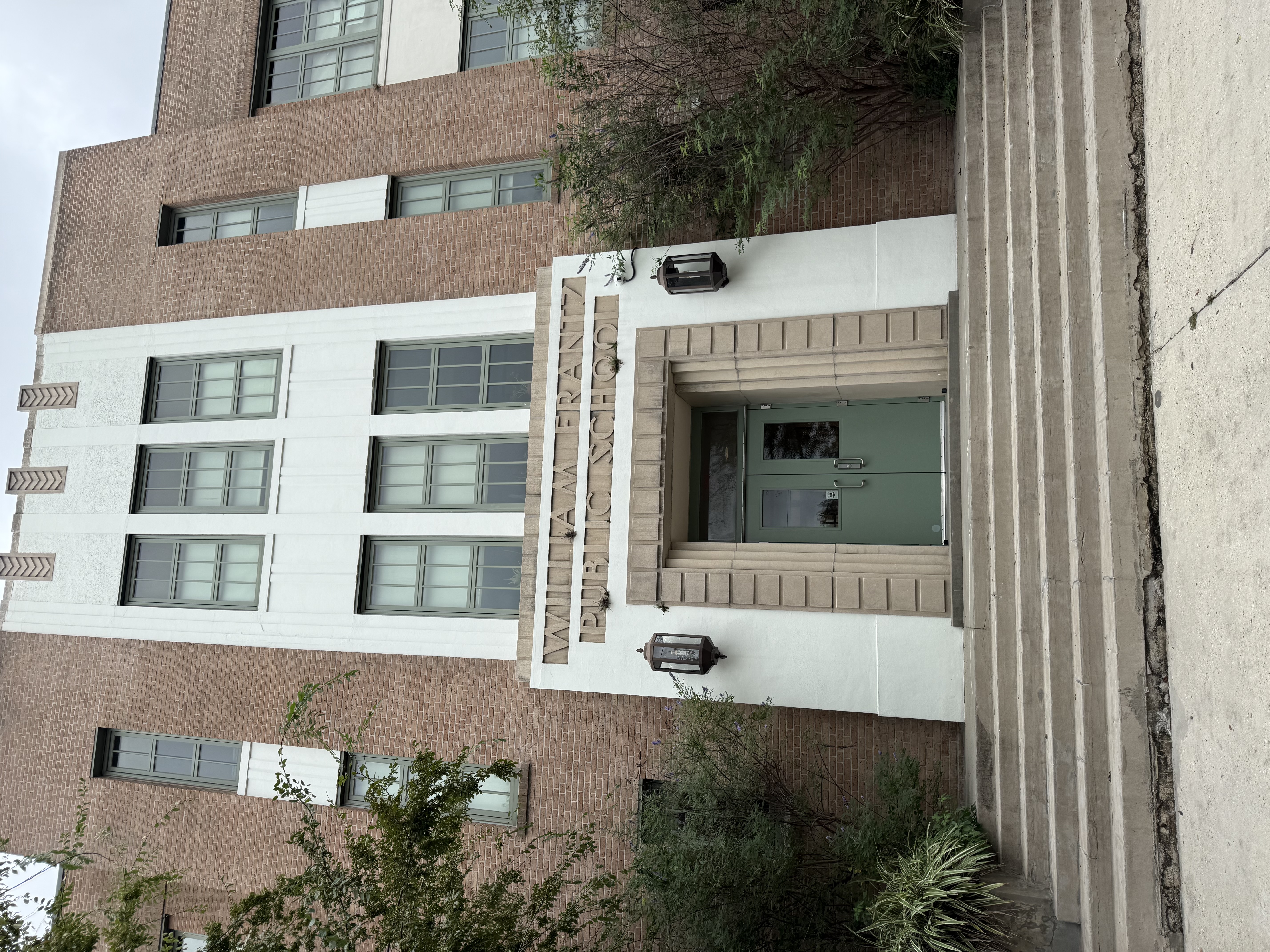Clay recently visited the William Franz Elementary School in New Orleans, Louisiana.
Since mid-November 1960, a racist mob of angry whites had gathered twice a day outside the William Franz Elementary School to shout and spit and stamp their feet and wave homemade signs and throw overripe fruit and jeer and fling the vilest epithets at the U.S. marshals who were escorting the first Black child into the school. Her name was Ruby Bridges. Four years later, the American painter Norman Rockwell placed his painting of Ruby Bridges flanked by federal security in *Look Magazine*. The painting is entitled *The Problem We All Live With*. It depicts 6-year-old Ruby walking between the marshals wearing an immaculate white dress, socks, and shoes. We see the security team only from the neck down. Steinbeck called her “a mite.” She is carrying a book, a notebook, and a ruler in her left hand. She faces straight ahead. All five individuals are walking quickly. On the wall of the school behind them are spattered tomato stains and the N-word scrawled in large capital letters.
Steinbeck parked Rocinante somewhere else and took a taxi to the site. The parking lot attendant saw Steinbeck drive up with Charley in the passenger seat. Four times during his time in the Deep South, some local person glancing into the pickup cab and seeing Charley sitting up said some version of, “Man, oh man, I thought you had a n … in there. Man, oh man, it’s a dog. I see that big old black face and I think it’s a big old …” This kind of casual racism sickened Steinbeck to the core.
On this occasion, he worked harder than usual to avoid recognition. He edged his way to the front of the protest rally, jostling with a mob of others who were there to cheer on the worst hecklers.
The leaders of the pack were called the “Cheerleaders.” Steinbeck’s account of what he witnessed that day is some of the best writing in *Travels with Charley*:
*“A shrill, grating voice rang out. The yelling was not in chorus. Each \[Cheerleader\] took a turn and at the end of each the crowd broke into howls and roars and whistles of applause. This is what they had come to see and hear. No newspaper had printed the words these women shouted. It was indicated that they were indelicate, some even said obscene. On television the sound track was made to blur or had crowd noises cut in to cover. But now I heard the words, bestial and filthy and degenerate.”*
## **Steinbeck’s Paradigmatic Four**
It was in New Orleans that Steinbeck met the first of four Louisianans who provided a kind of southern chorus about the emerging Civil Rights Movement, school integration, and the race relations crisis unfolding in the old Confederacy. He met two white men, two Black men; two older Americans, two young men.
The first was an older, neatly dressed white man. They exchanged pleasantries about New Orleans — which Steinbeck knew well — and then discussed the situation. The man took a weary philosophical position. What was happening needed to happen, but it would be agony all around. The man said he knew the South’s “aching past and some of its stinking future.” He wondered if Black people would push too hard and too fast for the white community to absorb. He made what we regard as a racially insensitive comparison between African Americans and domestic dogs. It wasn’t as bad as that sounds, but it was plenty bad. The man said both the North (slave traffic, cotton exporting) and the South were complicit. The resolution was quite likely to involve violence. They said goodbye, and the older man walked home to read, attended by an older Black couple whom he sometimes regarded as family.
The second individual was an older Black man, apparently a field worker in the cotton industry. He was trudging home after a day in the field. Steinbeck offered him a ride. The man was very reluctant, but Steinbeck was insistent. “He wore the battered clothes of a field hand and an ancient broadcloth coat highly polished by age and wear.” It was clear from the start that the man was uncomfortable. “All of him seemed to shrink in the seat as though he sucked in his outline to make it smaller.” After a few minutes Steinbeck asked, “How do you feel about what’s going on?” This was a mistake. The man clammed up and edged as far into the passenger side door as possible. “I don’t know nothing about that, captain, sir,” he said — one of the African American communities’ best survival strategies even as late as 1960. Then Steinbeck said what he was thinking out loud, making his unwilling passenger extremely nervous. “After all, why should you trust me? A question is a trap and an answer is your foot in it.” The old man could only reply, “Would you let me down here, please, captain?” This man had lived his whole life in the American South. He was not going to let himself get drawn into a candid discussion with a stranger, a complete white stranger.
The cover of the January 14, 1964, issue of *Look* magazine that featured Norman Rockwell’s now famous painting of Ruby Bridges at William Frantz Elementary School.
The third encounter was with a young white racist who sat next to Steinbeck at a diner the next morning. He “begged a ride with me,” Steinbeck wrote. After some small talk, the young man asked Steinbeck if he saw “the doings.” As soon as Steinbeck confirmed that he had witnessed the Cheerleaders, the man began to spew his hate. He was enthusiastic with admiration for one of the women who led the protest, a certain Nellie.” Steinbeck took the bait. “I should have grunted and let him read what he wanted in it.” But no. With barely disguised Socratic scorn, Steinbeck challenged his rider. Soon, the passenger was saying things like “somebody got to keep the goddamn n … s out of our schools,” and if the schools are integrated “I’ll sell my life first but I aim to kill me a whole goddamn flock of n … s before I go.” And “you sound to me like a n-lover. I might of known it. Trouble makers — come down here and tell us how to live. Well, you won’t get away with it, mister. We got an eye on you, Commie n-lovers.”
Steinbeck lurched to a stop and told the bigot to get the hell out of his truck. The man slammed the door violently and, as Steinbeck sped away, screamed hatred at him at the very top of his lungs.
Later, between Jackson, Mississippi, and Montgomery, Alabama, Steinbeck picked up his fourth passenger. It was a young Black man, a college student with three fountain pens in his breast pocket.” Instead of raising the issue of the incident at William Franz Elementary, Steinbeck asked his guest about the sit-ins beginning to proliferate throughout the South. The man said “It’s too slow. It will take too long.” And though he admired Dr. Martin Luther King, he felt that nonviolence might not get the job done or not soon enough. Steinbeck said the young man had “a sharp face and the look and feel of impatient fierceness.” When he finally dropped the young man off at his destination, the rider said, “I’m ashamed … It’s just selfishness. But I want to see it — me — not dead. Here! Me! I want so see it — soon.”
And with that, Steinbeck called it a day — in fact, he called it a trip.
Now he rushed back to New York City at the fastest possible pace, stopping only on the side of the highways from time to time to get a nap. His travels with Charley were finished — and yet he had miles to go before he could park the rig and embrace his wife.
Some critics have questioned Steinbeck’s account of his encounters with the four men of Louisiana. They find the quadruple roster a little too pat, a bit too convenient — essentially two Black men of different generations, one impatient and the other infinitely patient, and two white men of different generations, one an unreconstructed Southern white racist (what is sometimes called a “cracker”), the other a resigned older man who freely acknowledged the necessity of full social and legal integration, but felt apprehension for all the social angst that would be inevitable along the way. The critics are skeptical of such a tidy and tightly patterned narrative, and one — [my cranky friend Bill Steigerwald](https://ltamerica.org/john-steinbeck-and-me-in-beach-north-dakota/) — insists that Steinbeck probably made the whole thing up.
Steigerwald is wrong, I believe.
Did these four Louisiana encounters actually occur? Nobody can know for sure. I come at the famous incidents in *Travels with Charley* with a default position of trust and belief. I don’t believe Steinbeck made things up, invented encounters, larded his travel memoir with fictional elements and incidents. I believe the encounters actually occurred. Of course, Steinbeck shaped his narrative — the way all storytellers, no matter how punctilious about the data, shape their narratives. It’s certain that he was reconstructing the four incidents months after they occurred. He tells us in *Travels with Charley* that he did not take notes along the way. As he wrote the book over the winter (mostly in the Caribbean), he “remembered” these conversations with the help of a lifetime of observing and listening to the world around him and putting his observations on paper. He was a novelist. It may be that he streamlined the post-New Orleans conversations to focus only on race relations, and it is possible he embellished each argument, each “position,” to epitomize perspectives along what he thought was the spectrum of opinion about the coming of the Civil Rights Movement to the South.
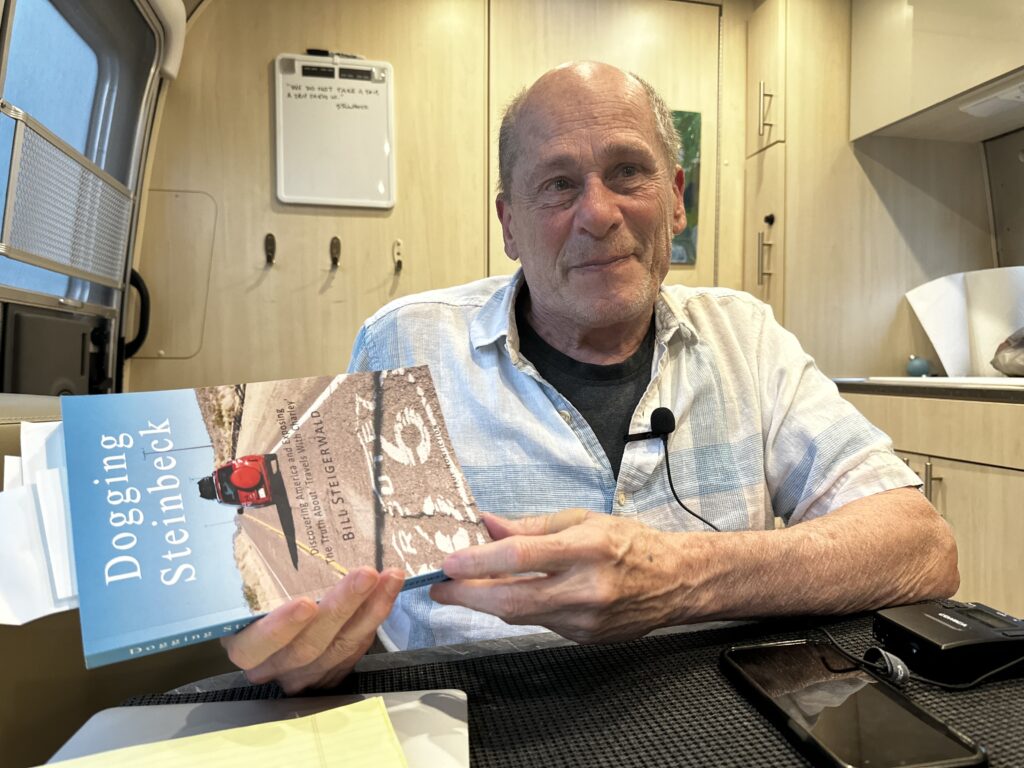Bill Steigerwald, holding a copy of his book, *Dogging Steinbeck*. (Photo Clay Jenkinson)
If the Steigerwald question is, would the account Steinbeck published stand up to a Rocinante camera (a Charlie cam) that recorded every encounter exactly as it occurred, the answer is almost certainly, of course not. But Steigerwald’s demand is unreasonable, naïve, simplistic. I’m glad he raised hard questions about the 1960 journey, the book, and Steinbeck’s precise veracity. Steigerwald has been a net positive contributor to our understanding of John Steinbeck. The questions he has raised have forced everyone who loves *Travels with Charley* to reread and rethink. Once you get over being annoyed by Steigerwald and wrestle with the arguments he is making, you immediately realize that *Travels with Charley* is a work of creative nonfiction. The conversation about *Travels with Charley* is richer for Steigerwald’s insistence that we not take the book as unimpeachable reportage.
I don’t think Steinbeck made things up. I’m arguing that there is no purely fictional encounter in the book and no purely fictional dialogue. I have known for several decades that Steinbeck did not travel America in the role of a talented reporter for a newspaper that employs fact checkers who track down every individual featured in the story and verify that the reporter characterized their views (and their exact words) with 100% accuracy. Steigerwald should have known this going in.
*Travels with Charley*, John Steinbeck, 1962.
I salute John Steinbeck for taking on some very serious issues in *Travels with Charley* even if he handled them with considerable grace and — often enough — a lightness of tone. At the top of Maine he returned to the issue of migratory field laborers in America. This time it was a much more positive story. In eastern North Dakota, he raised the question of the marginal status of most performers, actors, and elocutionists in America. In Idaho he explored the burden of being gay in a homophobic society, indeed a homophobic family. In California he wondered if you can ever go home again after living the best years of your life somewhere else. And then, in Louisiana, he wrestled with the central problem of American life: race and the tragic legacy of slavery.
If in getting to the heart of these issues Steinbeck used his great talent as a storyteller and a creative artist to tell truths about America that don’t lend themselves to an exact transcription of on-the-fly conversations, I see nothing to decry. If he had said, in a preface to *Travels with Charley*, that he guaranteed that every incident, every encounter, every dialogue, every observation on his 1960 journey played out precisely as he wrote it up, with no embellishment of any sort; that every incident occurred precisely when and where he places it in the book; that *Travels with Charley* was a raw and unvarnished, unenhanced account of his trip; and that he would swear on a Bible that he invented absolutely nothing — *then* we’d have reason to criticize him and perhaps turn away in disgust.
It saddens me that the great journey ended this way, with Steinbeck horrified, disgusted, depressed, disillusioned, and terribly weary, with hundreds of miles to go, that he saw some of the ugliest energies in America on display, with hundreds and hundreds of southerners gathering to cheer on the self-appointed spokesmen and women of vicious racial bigotry. But in this, he was certainly true to the grim experience that marked the end of his search for America. There is in the book no compensatory incident to restore the balance of the narrative.
*That* would have been fiction!
With my friends Russ and Liz, and a very delightful African American Uber driver, who gave us several hours of her day to take us through the Ninth Ward, to the William Franz school, and to several places in New Orleans associated with Steinbeck, I attempted to imagine what it would have been like to have witnessed the “white resistance” to social justice at its most intense and the shame Steinbeck felt in acknowledging that this, too, was America.
But I did not want to end my own journey on that note. This is 2024, not 1960. With a very long way to go, we have come a very long way since the end of the Eisenhower administration. In the course of my journey through the American South, I saw plenty of Black poverty. I witnessed what remains of social segregation and race hierarchy. But I also saw white and Black people harmoniously sharing the same restaurants, bars, shops, and civic spaces in communities of various sizes. I saw a range of interracial relationships, some romantic, some not. I hope the hard-won social progress will not stall or go into retrograde motion as the nation veers towards the right and the past.
So, I determined to give my last 10 days of the 2024 journey to a Civil Rights tour of Louisiana, Alabama, and Mississippi. For this, I needed Russ, my compatriot from North Carolina. I’ll have more to say about that soon.
---
***Over the next few months, Clay is shadowing Steinbeck’s 10,000-mile trek around the USA (and making a few detours of his own). Clay’s expedition is a central part of LTA’s big initiative to explore the country and take the pulse of America as it approaches its 250th birthday. Be sure to follow Clay’s adventures*** [***here***](https://ltamerica.org/tag/steinbeck-travels/) ***and on*** [***Facebook***](https://www.facebook.com/LTAmerica) ***— and*** [***subscribe to our newsletter***](https://ltamerica.org/newsletter/)**.**
**Categories:** Features
**Tags:** Books, California, John Steinbeck, Louisiana, Road Trips, Steinbeck Travels, Texas
---
### [Reading Charles Dickens for Christmas — Have Desk Will Travel](https://ltamerica.org/reading-charles-dickens-for-christmas-have-desk-will-travel/)
**Published:** December 17, 2024
**Author:** Clay Jenkinson
**Excerpt:** Clay does a special public reading from the works of his favorite English Novelist, Charles Dickens.
**Content:**
Clay’s friend, Kevin Muiderman, a master guitar maker built a replica of the special “public reading” desk Dickens had built for himself.
Thompson, North Dakota, Saturday, December 14 — Charles Dickens (1812-1870) is my favorite English novelist. I own four complete sets of his works (why?) and I re-read at least one of his 15 novels every year. A year or so ago, I made a Faustian bargain with my friend Kevin Muiderman, a master guitar maker, who lives about 20 miles from Grand Forks, North Dakota. If he would make me a replica of the special reading desk Dickens had built for himself when he took the voices of his novels onto the public stage beginning in the late 1850s, I’d come do a Dickens reading sometime at the modest performance theater in his home.
That sometime was last Saturday night.
He made the desk. Amy, his talented spouse, sewed the plush red Victorian coverlet that adorns the desk — plus a canvas traveling bag with the longest zipper I have ever seen. Having performed their side of the bargain so expertly, they now scheduled my Dickens performance.
There are several books about Dickens, the public reader. He had a significant theatrical flair. He extracted some of the public’s favorite passages from his novels, slightly reshaped them for public performance, and took to the road. His reading career was made possible by the advent of the railroad in Great Britain. I own two facsimile editions of his novels with his reading and marginal notes included.
Once when I was in Boston, I ventured into the Omni Parker House Hotel, where Dickens stayed during his visit to the United States in 1867-68, his second. He gave his celebrated readings next door at the Tremont Temple. He rehearsed endlessly. The iteration of the hotel he stayed in was later torn down, but when the hotel was rebuilt, the door of his suite (138-139) was saved and is now on display in the hotel along with other memorabilia. On the mezzanine you can see the 4 by 6 foot mirror he gazed into during his rehearsals, so that he could perfect every gesture, every smile, smirk, frown, grimace, and leer. The hotel sold tickets for a select few who could sit behind the great maestro and watch him rehearse.
I would have given anything to watch Charles Dickens read. His public performances were not like any author’s reading you have ever been to. Think of the most animated children’s storyteller during “reading hour,” coupled with one the greatest writers in the history of literature. Dickens was the hottest ticket in town. His readings immediately sold out. People queued up for hours, even days, before his performances. Hundreds of people were turned away. Women fainted when he read the story of Sikes killing his girlfriend Nancy in *Oliver Twist* or when he killed off Little Nell in *The Old Curiosity Shop*.
Dickens was effectively the Taylor Swift of his time. The difference is that Swift’s music will have been forgotten 100 years from now, but Dickens’ novels (plus the novella *A Christmas Carol*) will be read as long as English literature exists as a cultural form.
I chose five short passages from Dickens for my inaugural performance in Thompson, North Dakota: the “please, sir, I want some more” chapter from *Oliver Twist*, plus the death of Nancy. Nobody fainted, alas. The magnificent opening of *Bleak House*: “As much mud in the streets as if the waters had but newly retired from the face of the earth.” The famous opening of *A Tale of Two Cities*: “It was the best of times, it was the worst of times.” The uncanny and glorious chapter on jilted-and-frozen Miss Havisham in *Great Expectations* (my favorite Dickens novel, at least for now!). And — inevitably though I am something of a Scrooge about this novella — the opening and the close of *A Christmas Carol*.
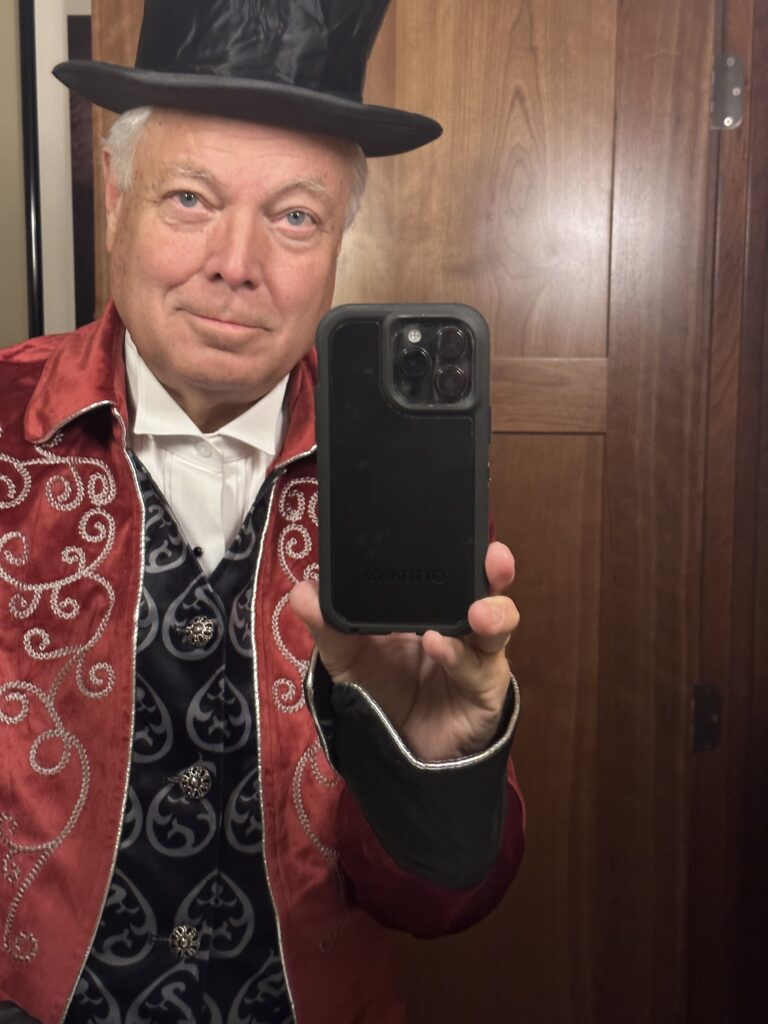
Approximately 70 people drove out from Grand Forks, Fargo, Crookston, and points beyond to spend an evening with Charles Dickens. I had purchased a red Dickens reading costume, and I wore the top hat, but I did not pretend to *be* Dickens, merely to evoke a Dickensian atmosphere. Between readings I did commentary on the novels, on Dickens’ genius, on my own encounters with Dickens beginning in the first month of my four-year sojourn at Oxford University long ago, on Hallmark Channel Christmas movies, and on the Garrison, North Dakota, annual Dickens Festival, which I had to miss this year in order to … well, perform Dickens at the other end of the state.
Most folks came in casual dress, but several couples wore exquisite Norwegian holiday sweaters. A woman from England came up afterwards to congratulate me and to say, with a certain Dickensian edge, that she was glad I did not attempt a Cockney accent! A boy of 13 or so wore a Dickens urchin costume, but he did not catch the reference when I called him the Artful Dodger. My oldest friend in the world, my Marley, Mike Jacobs was there. I’ve known him since 1972.
Amy Muiderman, a caterer, provided exquisite food. There was a very large bowl of homemade eggnog with plenty of brandy. Charles Dickens, as well as his greatest characters, including my favorite Mr. Micawber of David Copperfield, loved nothing more than a bowl of punch.
As I prepared to read from *A Christmas Carol*, Kevin played a lovely riff on *Silent Night*, my favorite Christmas carol, which I associate with my German grandfather Dick Straus. His music was perfect for the occasion.
So, I’ve got the desk. I’ve got the costume. I’ve got the script. And I’ve got the bug. I hope to do more Dickens performances around the country as a fundraiser for the arts or for public radio stations. At the end of the evening I asked for a show of hands of those who would go home and read some Dickens before Christmas. Half the hands went up — the fibbers! I hope they do read Dickens. I recommend either *Great Expectations* (his second shortest novel, and arguably his greatest) or *David Copperfield* (the perennial public favorite then and now).
There are also outstanding BBC Masterpiece Theater productions of the novels. My favorites are adaptations of *Great Expectations, David Copperfield,* and *Bleak House*. Watching them will undoubtedly drive you to the books. We do not read Dickens for the plot lines. We read Dickens for his strange and deeply compelling humor, for his exploration of the nether side of the human character, for his evocations of London in the first half of the 19th century, and for his unbelievable capacity to do unprecedented things with the English language.
Meanwhile, God bless us everyone!
---
## ***Discover more on these topics at Listening to America***
[Pennsylvania](https://ltamerica.org/tag/pennsylvania/ "1 topics")[Walden](https://ltamerica.org/tag/walden/ "1 topics")[Vermont](https://ltamerica.org/tag/vermont/ "1 topics")[Oregon](https://ltamerica.org/tag/oregon/ "4 topics")[Poetry](https://ltamerica.org/tag/poetry/ "1 topics")[New York](https://ltamerica.org/tag/new-york/ "8 topics")[Water in the West](https://ltamerica.org/tag/water-in-the-west/ "24 topics")[Video](https://ltamerica.org/tag/video/ "51 topics")[Oppenheimer](https://ltamerica.org/tag/oppenheimer/ "1 topics")[Theodore Roosevelt](https://ltamerica.org/tag/theodore-roosevelt/ "16 topics")[Wisconsin](https://ltamerica.org/tag/wisconsin/ "0 topics")[Tennessee](https://ltamerica.org/tag/tennessee/ "1 topics")[Space Exploration](https://ltamerica.org/tag/space-exploration/ "8 topics")[South Dakota](https://ltamerica.org/tag/south-dakota/ "16 topics")[Ohio](https://ltamerica.org/tag/ohio/ "2 topics")[Reading](https://ltamerica.org/tag/reading/ "1 topics")[U.S. Presidents](https://ltamerica.org/tag/u-s-presidents/ "71 topics")[Podcast](https://ltamerica.org/tag/podcast/ "1 topics")[Rome](https://ltamerica.org/tag/rome/ "1 topics")[Virginia](https://ltamerica.org/tag/virginia/ "7 topics")[Road Trips](https://ltamerica.org/tag/road-trips/ "18 topics")[Sports](https://ltamerica.org/tag/sports/ "2 topics")[Oppenheim](https://ltamerica.org/tag/oppenheim/ "0 topics")[The Constitution](https://ltamerica.org/tag/the-constitution/ "1 topics")[Republics](https://ltamerica.org/tag/republics/ "1 topics")[Steinbeck Travels](https://ltamerica.org/tag/steinbeck-travels/ "75 topics")[South Carolina](https://ltamerica.org/tag/south-carolina/ "1 topics")[Republic](https://ltamerica.org/tag/republic/ "0 topics")[Utah](https://ltamerica.org/tag/utah/ "11 topics")[New Mexico](https://ltamerica.org/tag/new-mexico/ "3 topics")[North Dakota](https://ltamerica.org/tag/north-dakota/ "53 topics")[Travel](https://ltamerica.org/tag/travel/ "1 topics")[Wyoming](https://ltamerica.org/tag/wyoming/ "4 topics")[William Shirer](https://ltamerica.org/tag/william-shirer/ "1 topics")[Texas](https://ltamerica.org/tag/texas/ "4 topics")[Thomas Jefferson](https://ltamerica.org/tag/thomas-jefferson/ "34 topics")[North Carolina](https://ltamerica.org/tag/north-carolina/ "3 topics")[Thoreau](https://ltamerica.org/tag/thoreau/ "5 topics")[Rivers](https://ltamerica.org/tag/rivers/ "3 topics")[State Parks](https://ltamerica.org/tag/state-parks/ "2 topics")[U.S. Constitution](https://ltamerica.org/tag/u-s-constitution/ "1 topics")[New England](https://ltamerica.org/tag/new-england/ "1 topics")[Washington](https://ltamerica.org/tag/washington/ "2 topics")[north daktoa](https://ltamerica.org/tag/north-daktoa/ "0 topics")[paintings](https://ltamerica.org/tag/paintings/ "0 topics")
**Categories:** Dispatches from the Road
**Tags:** Books, Humanities, North Dakota
---
### [A Visit to Ed Ricketts' Pacific Biological Laboratories — Video Dispatch](https://ltamerica.org/a-visit-to-ed-ricketts-pacific-biological-laboratories-video-dispatch/)
**Published:** December 17, 2024
**Author:** Editor
**Excerpt:** Clay talks about John Steinbeck’s friendship with marine biologist Ed Ricketts and visits Ricketts’ Pacific Biological Laboratories on Cannery Row in Monterey, California.
**Content:**
Clay talks about John Steinbeck’s friendship with marine biologist Ed Ricketts and visits Ricketts’ Pacific Biological Laboratories on Cannery Row in Monterey, California.
---
***Over the next few months, Clay is shadowing Steinbeck’s 10,000-mile trek around the USA (and making a few detours of his own). Clay’s expedition is a central part of LTA’s big initiative to explore the country and take the pulse of America as it approaches its 250th birthday. Be sure to follow Clay’s adventures*** [***here***](https://ltamerica.org/tag/steinbeck-travels/) ***and on*** ***[Facebook](https://www.facebook.com/LTAmerica)*** ***— and*** [***subscribe to our newsletter***](https://ltamerica.org/newsletter/)**.**
**Categories:** Dispatches from the Road
**Tags:** California, John Steinbeck, Steinbeck Travels
---
### [My John Steinbeck Tour: A Preliminary Report — What a Long, Strange Trip It's Been](https://ltamerica.org/my-john-steinbeck-tour-a-preliminary-report-what-a-long-strange-trip-its-been/)
**Published:** December 10, 2024
**Author:** Clay Jenkinson
**Excerpt:** Beginning in April 2024 and concluding just before Thanksgiving, Clay traveled over 21,000 miles and visited 41 states, roughly following John Steinbeck’s route as chronicled in Travels with Charley. Clay notes he undertook the cross-country journey partly to gain his own appraisal of America as it approaches its 250th birthday.
**Content:**
## Beginning in April 2024 and concluding just before Thanksgiving, Clay traveled over 21,000 miles and visited 41 states, roughly following John Steinbeck’s route as chronicled in *Travels with Charley*. Clay notes he undertook the cross-country journey partly to gain his own appraisal of America as it approaches its 250th birthday.
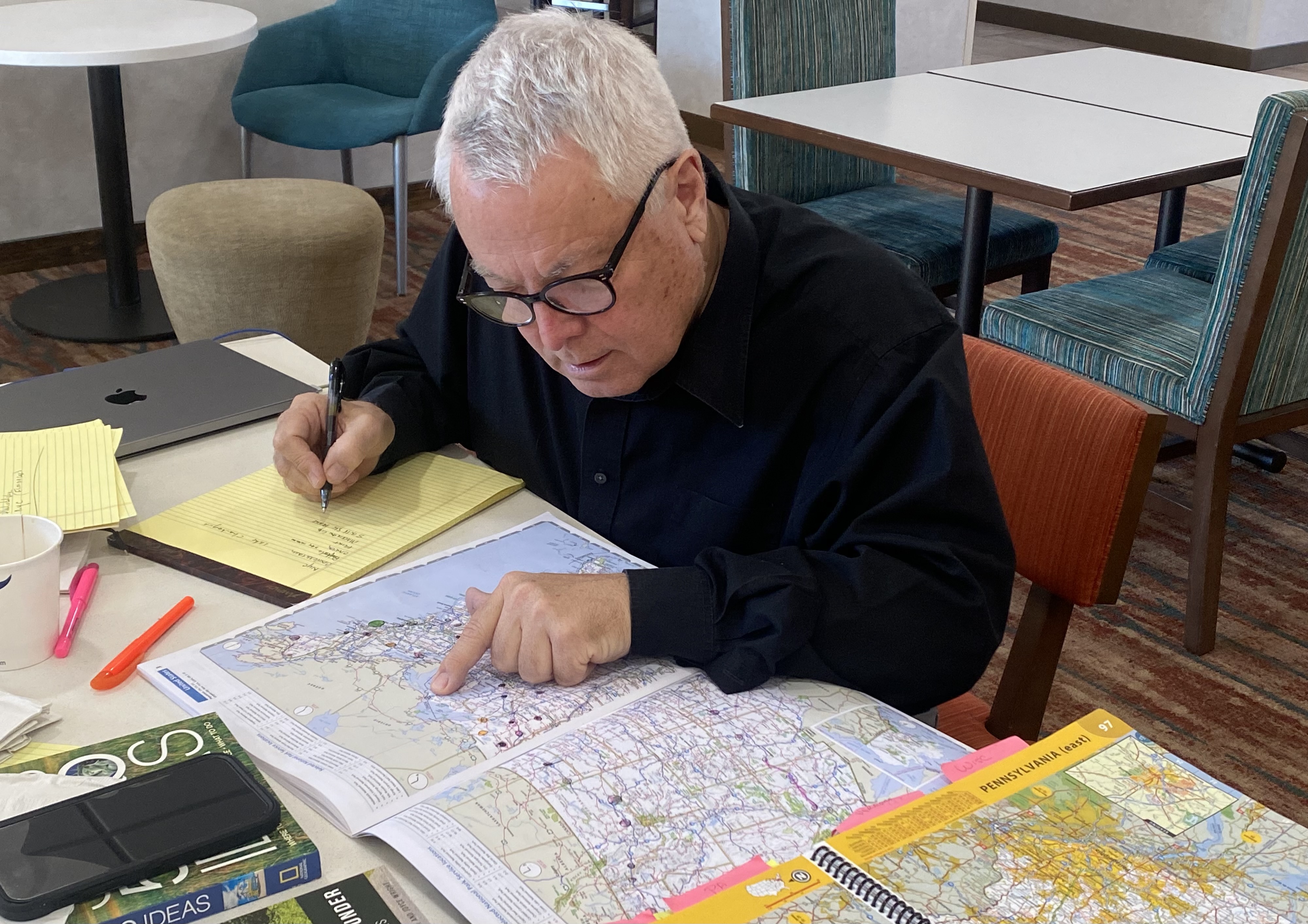Early in 2024, Clay lays out a route that would take him over 21,000 miles and through 41 states. (Photo Frank Lister)
How do I begin to tell the story of my 2024 travels in the tire tracks of John Steinbeck? In 1960, when he was 58, Steinbeck drove a truck camper 11,500 miles around the perimeter of the United States. He was in “search of America” and on a quest to renew his creative juices. Steinbeck took with him his French poodle Charley. His wife Elaine was also with him about a third of the time, though he doesn’t always report that. If the ending of *Travels with Charley* is any indication, he came home disillusioned, particularly by the racism he observed among southern white people and partly by the growing homogenization of American life. He wrote a beautiful book about his travels, his most personal book, which I regard as John Steinbeck’s confessions.
John Steinbeck, his dog Charley and his camper rig. (Sketch by Nate Calderone of Salida, Colo.)
I chose to follow Steinbeck because I admire much of his work; in descending order: *The Grapes of Wrath* (one of America’s top 10 novels), *Of Mice and Men*, *East of Eden*, *Cannery Row,* *The Red Pony*, T*ravels with Charley*, *The Log from the Sea of Cortez*, and *A Russian Journal*. I wanted to get to know him better, to re-read his books and his excellent letters (he was a prolific correspondent), and to see what I could learn about *Travels with Charley* by traveling in the footsteps of the journey that was the basis for the 1961 book.
But I confess that I also chose to follow the 1960 *Travels with Charley* trip because it would provide a useful framework (a baseline itinerary) for my own exploration of America as we approach the 250th birthday of the Republic of the United States, inaugurated by my man Thomas Jefferson on July 4, 1776. Jefferson wrote the mission statement for the American republic. He could not live up to it. The founding generation could not live up to it, and many, perhaps most, didn’t wish to. We don’t yet live up to it. My view is that we must never stop until we get there. In my view, the most distinctive thing about America is that we were invented with a self-conscious set of quasi-utopian documents. Most countries just happened. The U.S. was born of high aspiration. That’s one of the main reasons I continue to cherish Thomas Jefferson despite everything.
> ***I*** ***also chose to follow the 1960 Travels with Charley trip because it would provide a useful framework for my own exploration of America as we approach the 250th birthday of the Republic of the United States.***
I followed John Steinbeck’s route, but not punctiliously. Almost as soon as I began, I rejected William Least Heat Moon’s fetish about blue highways. I did indeed spend much of my time on secondary and tertiary roads, state highways, and even farm-to-market roads, but I did not shun the Interstate Highway System. Sometimes, I needed to “make tracks” to get to the next destination. I did not want to be confined to the Interstates, but I did not want to avoid them merely to feel virtuous. My pace was much slower than Steinbeck’s. We are unsure when he arrived home in Manhattan in December 1960, but I reckon he was on the road for fewer than 90 days. I spent 210 days out there listening to America, though I gave 10 to my annual Lewis and Clark cultural tour in Montana and Idaho, 12 to the cultural tour I led of Literary England, and I was home for about 20 days between these interruptions. Even so, I felt I rushed too much. As I plan next year’s Lewis and Clark journey from Monticello to Astoria, I plan to slow things down significantly.
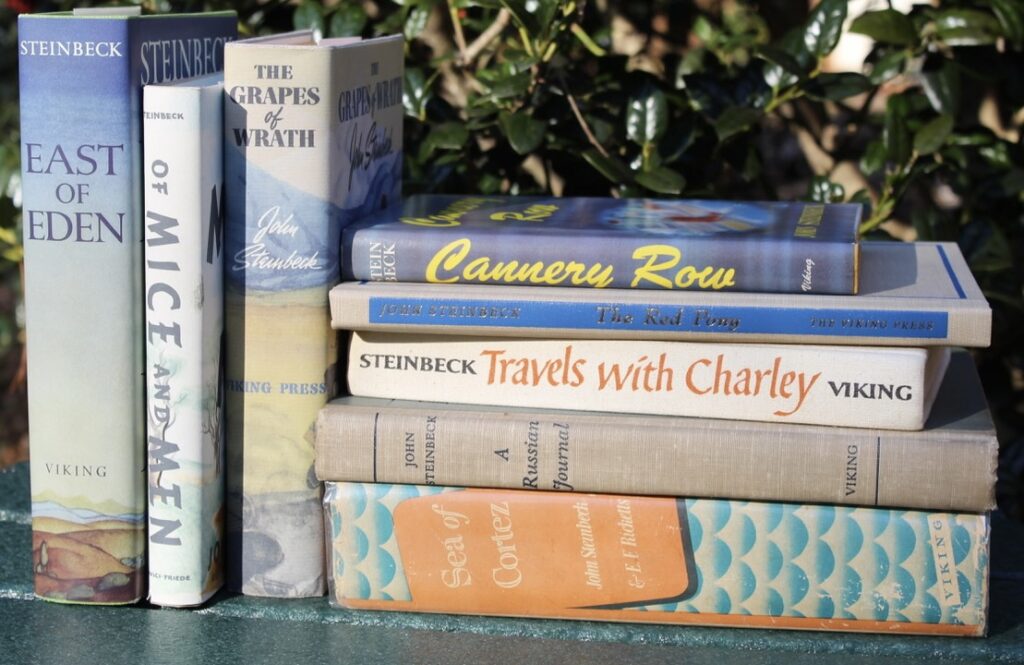Clay’s favorite works by John Steinbeck. (Photo Russ Eagle)
## **Lessons Learned**
Lesson One (about Steinbeck and me): you can’t listen to America or search for America if you are pounding the nation’s highways a couple of hundred miles per day. If Steinbeck traveled 11,500 miles in 90 days, that’s 127 miles per day every day. But we know that he lingered with Elaine in Chicago (five days?), lingered with her in Seattle, lingered with her and his family in Monterey Bay, and lingered with Elaine at the Thanksgiving orgy ranch near Amarillo. I’d estimate that he spent 25 days, at least, not making forward progress. It may be closer to 35. If so, when he was driving forward, he was averaging 200 miles per day, at least. We know he crossed North Dakota in a single day: Frazee, Minnesota, to Beach, North Dakota: 408 miles. That’s hard and exhausting driving on the narrow and quite dangerous U.S. 10 through an agricultural state, where farm trucks and other impediments slowed the pace dramatically by today’s standards. Note: one of the glories of the Interstate Highway System is that it shunts most of the commercial traffic, the tractor-trailer traffic, of America to its four broad lanes, thus liberating the secondary roads from all that congestion and making them dramatically more satisfying to the desultory traveler.
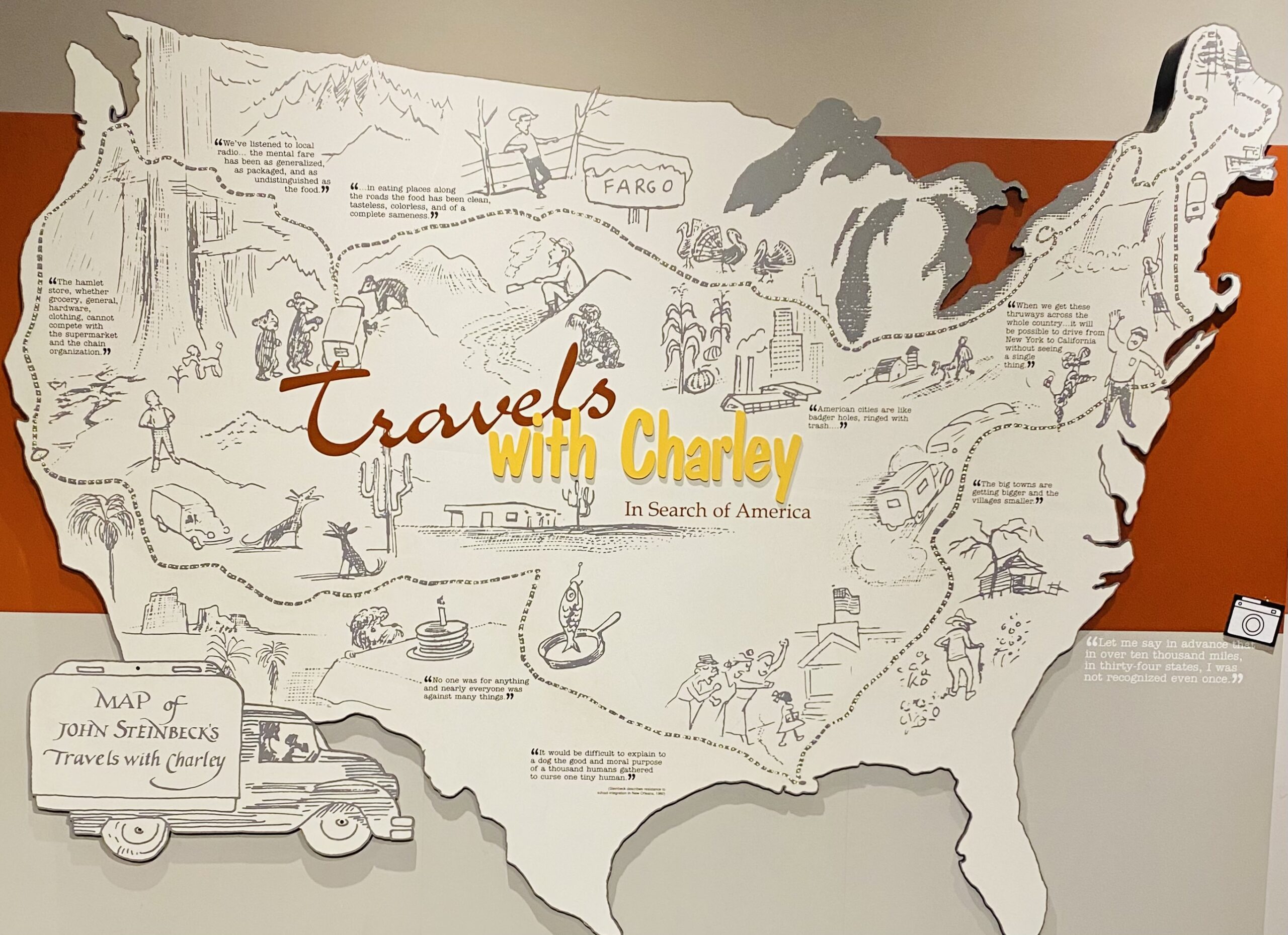A map of Steinbeck’s trek around the USA on display at the National Steinbeck Center in Salinas, California.
My journey took me to 41 states. I didn’t spend exploration time in all 41 and am not out there state-counting. I’ve already been in all 50 states in my lifetime, including Alaska and Hawaii, and in some of the commonwealth outlier places (Guam and the Marianas, for example). At this point, I could not name all 50 state capitals, and I have no interest in visiting every National Park or Monument.
On this journey, I visited six National Parks (Acadia, Theodore Roosevelt, Redwood, Arches, Canyonlands, and Petrified Forest), many state and country parks; two national halls of fame (Baseball, Football); half a dozen graves of individuals I deeply admire; more than a score of museums, galleries, and interpretive centers; and a hundred campsites, mostly RV campsites. Like Steinbeck I avoided the country’s great cities (probably a mistake). I visited as many Steinbeck sites or stops as possible: [Sag Harbor on Long Island](https://ltamerica.org/visiting-john-steinbecks-home-in-sag-harbor-new-york/); potato country in northern Maine ([the Canucks incident](https://ltamerica.org/john-steinbeck-among-the-french-canadian-harvest-gypsies/)); [Niagara Falls](https://ltamerica.org/pondering-thomas-jefferson-at-niagara-falls/), which he only visited to stave off criticism from his friends; Chicago (one of two great cities I visited), where he and Elaine had an urban luxury reunion, with lodging at the Ambassador East hotel; Libertyville, Illinois, the home of his political hero Adlai Stevenson; Sauk Centre, Minnesota, the boyhood home of Sinclair Lewis; the Maple River in eastern North Dakota ([the itinerant Shakespearean incident](https://ltamerica.org/a-second-encounter-at-the-end-of-life-rv-park/)); the Westgate Motel in Beach, North Dakota, where he stayed (fibbingly) on October 12, 1960; the [Little Bighorn Battlefield National Monument](https://ltamerica.org/reflections-at-the-little-bighorn-battlefield-video-dispatch/), where Charley peed his respect; the (now ruined) guest cabins east of Spokane, Washington, [(the closeted gay young man incident](https://ltamerica.org/john-steinbecks-evening-with-a-father-and-son-in-idaho/)); Redwood National Park, where Charley failed to acknowledge the tallest American trees as an ideal peeing opportunity; Monterey and Salinas, his home turf; the Texas Panhandle ranch where he and Elaine spent Thanksgiving; and in New Orleans the William Frantz Elementary School (site of the horrific “cheerleaders” incident), the site of his second wedding (to Gwyndolyn Conger), and the tavern where the wedding was celebrated with Steinbeck’s fellow writers and artists.
With that, I’ve now paid a pilgrimage to most of the major John Steinbeck sites in the United States and several in England, where he attempted to master the geography and the mystery of the Arthurian saga material. That makes me very happy.
Altogether, I traveled 21,114 miles. Gas prices averaged $3.75. The highest price was inevitably in California — in one place just under $6 per gallon. The lowest price was Texas at $2.78 (which is essentially free gasoline). My aging pickup got 15.6 miles per gallon, about eight miles per gallon below what I would like to achieve in year two, if possible, with a newer, more efficient pickup.
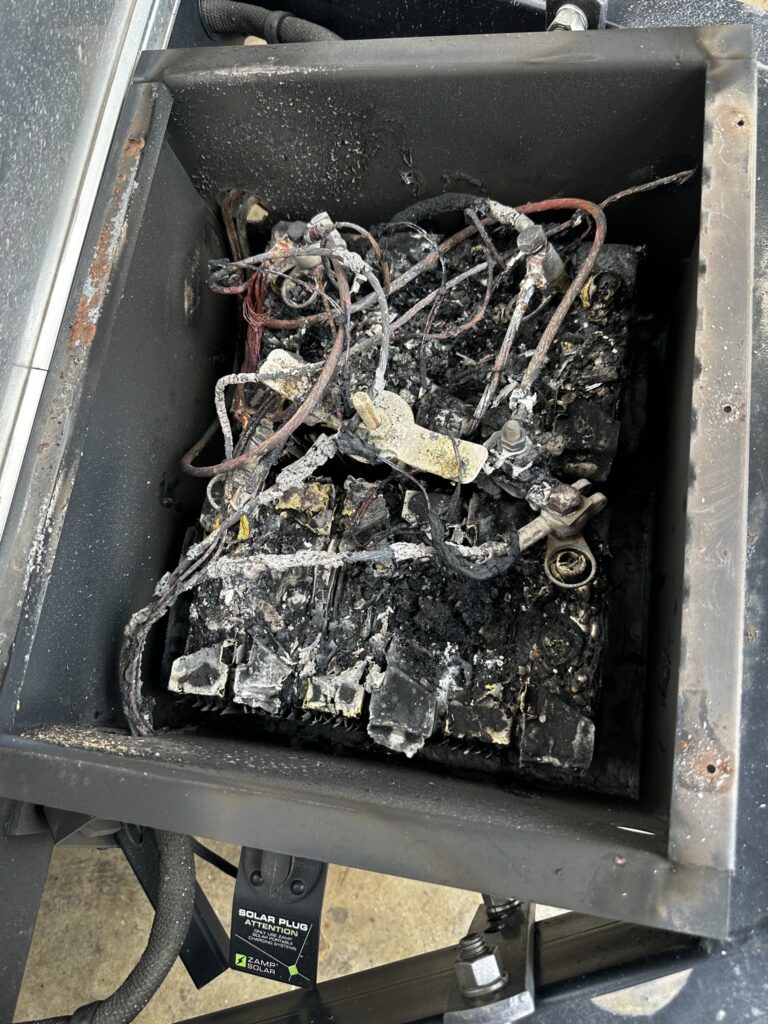A couple of fried RV batteries near Athens, Ohio.
Mirabile dictu, I was never stopped by a policeman, highway patrolman, or Texas Ranger, never got a parking or speeding ticket. I was in no hurry. I seldom drove more than 65 mph. My rig broke down twice. My twin RV batteries actually melted somewhere north of Athens, Ohio. The Airstream repairmen who fixed it in Jackson Lake, Ohio, told me I could easily have lost the entire rig or been burned to a crisp if my nearby twin propane tanks had ignited. My friend and host “LP” of the Olympic Peninsula tried to burn out my entire electric system but desisted just in time. I had one minor accident. On my way to [visit the outstanding Steinbeck scholar Jay Parini ](https://ltamerica.org/a-visit-with-author-jay-parini-of-middlebury-vermont/)in Middlebury, Vermont, I drove through a narrow covered wooden bridge, which sheared off my Airstream awning. Thus ended my romance with New England’s celebrated covered bridges. The rig now has a couple of dimples where the awning structure pressed into the aluminum.
In all my time on the road I never went to a movie. And I never once turned on the television in the Airstream and never will, because, of course, it is a very slippery slope. In the pickup, I made the mistake of listening to a fair amount of cable media (MSNBC, FOX, CNN, and POTUS) as the election approached. That is one of my deepest regrets. I will not return to those echo chambers during my subsequent journeys through America. I listened to five or six books on the road (a joy Steinbeck did not have in that low-tech era), including several on the explorer[ Captain James Cook](https://ltamerica.org/the-age-of-exploration-meets-the-era-of-disillusionment/). Improbably, I fell in love with the instrumental music of the Grateful Dead, whom I saw in concert long ago in Minneapolis with my beloved mentor Mike Jacobs and his extraordinary wife, Suzette. I read two and a half hours per day, much less than I like, but the road kept dragging me forward. Alone (and very occasionally with friends), I drank perhaps eight bottles of wine in 21,000 miles (210 days) and polished off (rarely alone) a couple of bottles of gin (with tonic) in seven months.
I never spent a night in a motel or hotel if I could avoid it. When I did, I felt that I was cheating. The one good thing about the occasional hotel/motel was laundry facilities. I enjoy doing laundry on the road because it is intentional and time-concentrated.
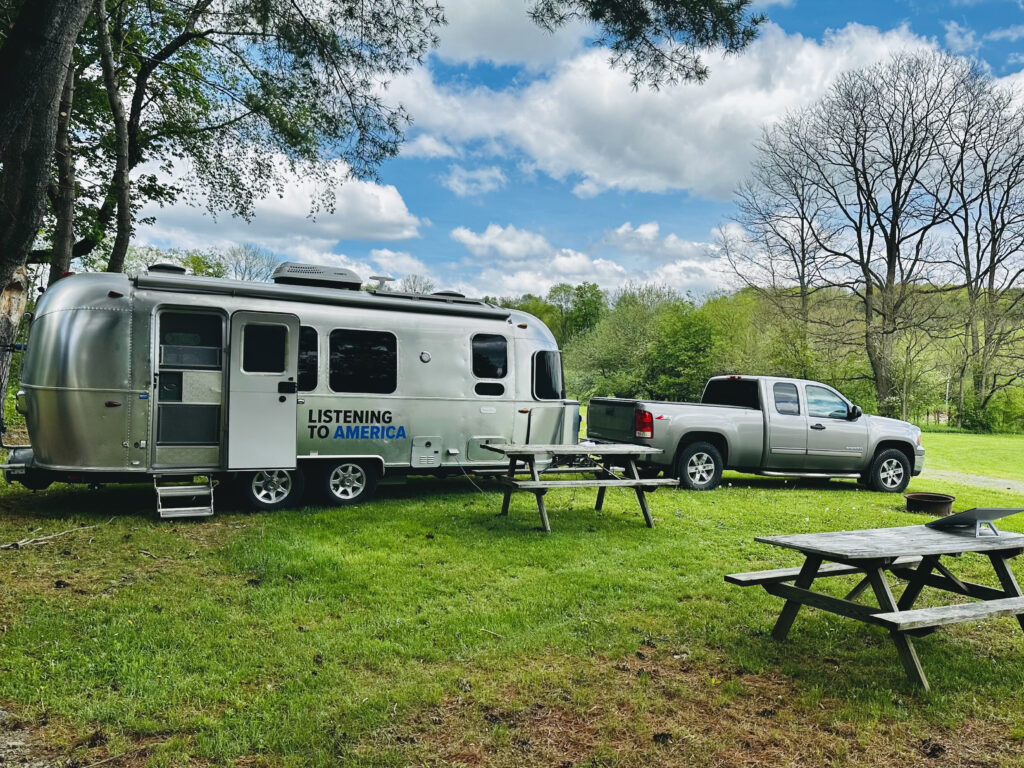A campsite near Cooperstown, New York. (Photo Clay Jenkinson)
I suppose I recorded 15 Listening to America podcasts from the dining room table in the rig and filed 60-75 articles, essays, and dispatches to the Facebook Listening to America site and to LTAmerica.org. We never missed a week with our newsletter, which is little short of a miracle given the required technology. I could not have made this great journey without Starlink Internet. The internet at most RV sites is crummy and intermittent. Fortunately, my good friend Dale M. of Vail, Colorado, realized this problem early on and generously subsidized our purchase of the Starlink apparatus, which never fails unless you don’t have an open view of the northern sky.
I continue to be impressed by the technologies of communication in our time. Steinbeck was hamstrung by the low-tech world he traveled in. He could not record conversations. He could not send email. He could not look something up on Wikipedia or a thousand other sites. There were few RV parks in America in 1960. He depended on phone booths and expensive collect calls to Sag Harbor, where Elaine waited for him. One of the frequent refrains in *Travels with Charley* is Steinbeck getting lost. I tried to use “old school” maps and atlases whenever possible, but travel today is dramatically easier with GPS systems, both in our vehicles and phones.
John Steinbeck took no camera (alas). I’m surprised that he refused to do so. We know his third wife, Elaine, was the photographer on their travels. It is not altogether clear that she did not take photos when they were together in Chicago, Seattle, the Bay Area, the Panhandle, and Austin, but if she did, the photographs have been lost, hoarded, or sold at auction by greedy descendants. I suppose I took 7,500 photographs altogether (ca. 35 per day), most with my smartphone (lazy but convenient) and many with my 35 mm Canon Mark IV.
## **A Team Effort**
My friend, editor, and videographer Nolan Johnson joined me four times on the journey during the first two of three phases and shot an excellent video of our mutual adventures. Next year, he will play a larger role when I follow the Lewis and Clark Trail across the United States. He (and, on one occasion, his father) brought joy to my otherwise lone journey. Nolan is the editor of the Listening to America podcast. I’d be lost without him.
Clay and Listening to America’s chief scout plan out the LTA Travels With Charley expedition.
None of this could have happened without my trusty scout Frank Lister of Escalante, Utah. He knows everyone in the American Southwest (or claims to) and has been indispensable (on short notice) when I needed an RV site. Raina Hall played a key role from Los Angeles. Beth Kaylor of Bismarck played a key role, as did her successor Katherine with a K of Bismarck. Dr. Susan Ryan (Dr. R) of the Crow Creek Archaeological Center joined my LTA partner Dennis McKenna and me at Arches and Canyonlands National Parks if only to humiliate us on the big 11.5-mile hike to the Green and Colorado Rivers confluence. Russ Eagle has been an essential friend, co-adventurer, and podcast host, and the whole thing would have been much less satisfying without him at the other end of a text, an email, or a Zoom call. His wife, Liz, who helps coordinate my cultural tours, is now smug as can be after proving she was right about the world’s greatest gumbo with the help of[ Ray G. of MeMe’s restaurant](https://ltamerica.org/my-quest-for-the-ultimate-gumbo-and-other-culinary-misadventures-south-of-the-mason-dixon-line/) in outer New Orleans. And if you have been following my travels, [you know that “June” and “Robyn” along the Cache la Poudre River](https://ltamerica.org/a-second-encounter-at-the-end-of-life-rv-park/) in northern Colorado tried to murder me as just one more incident in their “fake RV host” reign of terror in America. When I visited the Bonnie & Clyde Ambush Museum in Gibsland, Louisiana, a few weeks ago, I thought of them unfondly. Justice will catch up with them at some point — the arc of the universe and all that.
Now I am home, still unpacking, and beginning to try to make sense of it all. This will take some time. This little preliminary report is just designed to help me, and I hope you, make sense of it all.
## **A Few Initial Discoveries**
And now, in a tiny nutshell (much more later), what did I learn? First, per Steinbeck and *Travels with Charley*. Steinbeck wrote a lovely and entertaining account based on, but not identical to, a journey he took in 1960. The book is great — most people’s favorite Steinbeck book — but the journey was, in my view, largely a failure, in that he a) rushed around the country too much and too fast and didn’t slow down enough to drink it in; b) was by now so dependent upon his third wife Elaine that he was, as he freely admits, “desolate” when he was out there alone; and c) his heart wasn’t really in it. Steinbeck finished the journey because he had started the journey, and it would have been disastrous to throw in the towel, sell the rig in Monterey, and bus or fly home. And yet, the book he produced is important in Steinbeck studies because it is his most personal, revealing, and honest book about his life as a novelist. He is both relaxed in *Travels with Charley* and willing to lower the protective shield for the only time in his life in a book. We get a serious and poignant portrait of a great American creative artist in *Travels with Charley* as he senses his declining literary, physical, and psychological vitality. There is some sadness in this, but it gives *Travels with Charley* an importance it would not have, had he been less frail and fretful in the fall of 1960. We also get Charley, the poodle, who steals the show. Take Charley out of Travels and there is not much of a book. Steinbeck realized this early on. I wish we had a letter in which he came to that revelation. I love Steinbeck more for his vulnerabilities at this ebbing moment of his outstanding career.
> ***I fell in love with America again. In fact, again and again.***
Second, what did I learn about myself? This could take thousands of words, but I’ll cut to the quick. I fell in love with America again. In fact, again and again. I love this country. I believe I am the best kind of patriot because I truly love America with my whole being and feel blessed to be an American and no other; and yet I am not afraid to notice what is not just, equal, or finished in the American experiment. I’m deeply disturbed by where we are as a people and a nation — never more so in my life. But the crap that is unfolding in our national politics is no more America — I am indebted to Steinbeck for this insight — than is NASCAR. Both are part of America—both matter. But America is so much more than our national politics, political paralysis, or vicious partisanship; our slow-motion ongoing constitutional crisis. I only had two bad encounters of the hundreds on my journey. I’m sorry to report that they were both with angry MAGA males, who somehow sensed that I was not on board with the populist revolution without ever asking me a single question. I had dozens of good and fruitful conversations with Trump supporters and learned from them. But these two — one in northern California and the other in Wyoming — were purely toxic. Beyond that, I met only good and decent Americans (except for “June” and “Robyn,” of course).
I learned, too, that it is difficult to generate conversations about where America is and where it is headed by traveling from RV site to RV park. My best conversations occurred in National Parks and various interpretive centers, and with old friends I encountered along the way. Steinbeck had the same experience in 1960 — people clammed up when he wanted to inquire about America, particularly politics. That was an election year, too.
Finally, and most of all, I learned this about myself. I thrived out there. I was happiest at 3 p.m. when I pulled into an RV park and got my slot, hooked up to water and electricity, tidied up my Airstream, pulled a camp chair out of my pickup bed, sat in the shade, read a book for a couple of hours, eventually poured myself an adult beverage of some sort, and walked the perimeter of the campground. At night, when I ventured out in the dark, felt the clean air, and looked up at the stars or the moon, I often said out loud, “I am so happy doing this. I am so glad I am here. I love this country. I love America. I am in love with America. More more more more more more more.” I loved sleeping in my own sheets in my own bed in my own rig, with the refrigerator just four feet away and everything I needed close at hand. Despite the disquieting carbon footprint, I felt Thoreauvian and minimalist. After dark, I’d slip under the crisp sheets with a good book and read it for three minutes or three hours, depending on the time. I never once felt unsafe out there. I did not take a gun despite the recommendations of some friends. I slept well, woke early, wrote and read more, poured myself a glass of orange juice, and ate a little yogurt with walnuts and honey. And then got back on the open road. There is nothing quite so exhilarating as ambling along an asphalt highway with a yellow stripe in the middle and something amazing (Monument Valley, the Sierra Nevada, the Yellowstone River, the Pacific Ocean) looming on the horizon. Driving America when it is the driving (not the arriving) that is the purpose — is heaven on Earth for me. The Rubaiyat says, “a jug of wine, a loaf of bread, and thou.” But it could be “a stretch of open road and time.”
Paradise.
There is more to come, at least two more seasons. I’ve got miles to go before I sleep and big promises to keep.
---
***Over the next few months, Clay is shadowing Steinbeck’s 10,000-mile trek around the USA (and making a few detours of his own). Clay’s expedition is a central part of LTA’s big initiative to explore the country and take the pulse of America as it approaches its 250th birthday. Be sure to follow Clay’s adventures and [subscribe to our newsletter](https://ltamerica.org/newsletter/)*.**
**Categories:** Features
**Tags:** America at 250, John Steinbeck, Steinbeck Travels, Thomas Jefferson
---
### [My Quest for the Ultimate Gumbo and Other Culinary Misadventures South of the Mason-Dixon Line](https://ltamerica.org/my-quest-for-the-ultimate-gumbo-and-other-culinary-misadventures-south-of-the-mason-dixon-line/)
**Published:** December 3, 2024
**Author:** Clay Jenkinson
**Excerpt:** A lighter report on heavier cuisine as Clay takes a gastronomic excursion through the American South.
**Content:**
## A lighter report on heavier cuisine as Clay takes a gastronomic excursion through the American South.
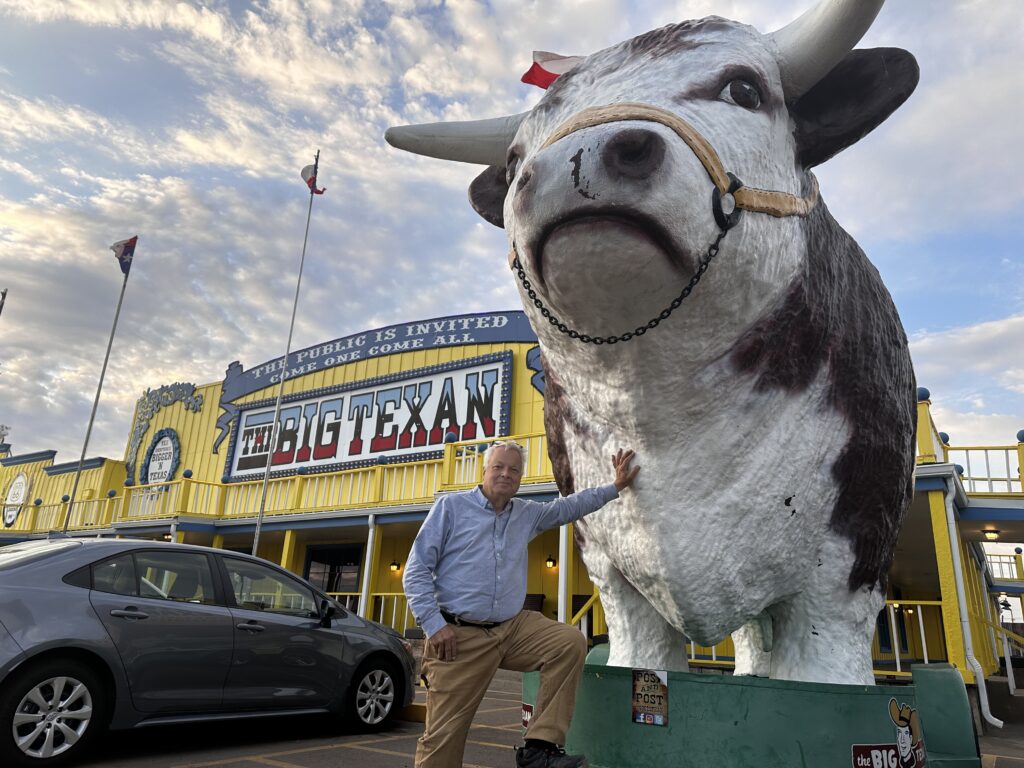Clay at the legendary Big Texan Steak Ranch, Amarillo, Texas. (Photo Joe Lovell)
It was out around Turkey, Texas, where I lost control of my nutritional life. One of the joys of having a trailer with a pretty large refrigerator is that all summer and fall, I could eat when and what I wished. By the end of the day, on the nation’s highways, I was usually not particularly hungry. Driving America is a largely sedentary thing. You turn the wheel. You put your right foot on the gas or the brakes unless you are under cruise control, in which you don’t do much of anything. At the gas stations (every 225 miles), you get out, slide your card, open the gas tank, and insert the nozzle. Maybe go in to pee and buy a small bag of almonds. In the evening, at an RV campground, I might heat a can of soup and have a few crackers, cheese, and a glass or two of wine. Once a week or so, I boiled some pasta. Occasionally, I grilled a couple of cheeseburgers on the nearest picnic table on my small portable grill. I seldom ate at cafés and even less often in restaurants. I have friends who are foodies (keep reading!). I like a good steak, mushroom soup, or cacio e pepe, as well as the next guy. Still, I am closer to the ancient Greek Cynic philosopher Diogenes than to gourmet diners: eat only to banish hunger, sleep only to banish fatigue.
Then, I crossed the border from New Mexico into the panhandle of Texas. The billboards of eastern New Mexico said, “Exit Here. Last Chance for Marijuana Dispensary.” And when I was officially across the border and within the republic of Texas, the billboards read, “Busted for Weed? Call 800-666-6666.” My friend Joe, a talented Amarillo attorney, confirmed that the Texas state patrol officers hover at the border to arrest and torment those fools who carry the controlled substance into their jurisdiction and that now there are a large number of defense attorneys in Amarillo, Lubbock, and Odessa (technically known as cormorants!) who specialize in representing such poor busted bastards as the Texas Rangers entrap.
As I puzzled all of this — the absurd notion in the 21st century that recreational marijuana is a greater threat to the social order than, say, a case of beer or a quart of whiskey — I saw two further billboards. One invited me to stay in the “Largest RV Campground in Texas,” and the other declared that I could have a free 72-ounce beefsteak if I could eat it in one hour.
Welcome to the Big Texan Steak Ranch. Not Big Texan Steak Bistro, Big Texan Café, or even BTS restaurant. Steak Ranch. The name sounds absurd until you venture in. The only other word that might serve would be Big Texan Steak Warehouse, which does not do justice to the romance of the Old West.
It’s a legendary beef roadhouse, painted bright yellow, on the west end of Amarillo. The roof is boisterously festooned with a series of Texas flags. There’s a giant white-faced Hereford cow effigy in the parking lot. The walls inside are decorated with hides and horns, and ranch and cowboy artwork. I may be wrong, but everything inside appears to have a patina of grilled steak effusion. I’ve been hearing about the Big Texan for years. Those who take on the challenge of trying to devour a 6 pound steak in just one hour, dine — if that is not too big a word for a vast arena of beef cuts, with some corn on the cob thrown in to create a balanced dining experience — on a stage or dais, and the crowd (on two levels) cheers and jeers. There is an entertaining comic movie starring Dan Aykroyd and John Candy, *The Great Outdoors* (1988), set in resort country of Wisconsin, in which Chet (John Candy) attempts to eat the “Big 96” at a similar emporium with predictable results. My expectations for a great meal were low, with little hope of a salon conversation about Foucault or Wittgenstein, but my expectation of a quintessential Texas tourism moment was high.
Joe took me there the way someone from Rapid City takes you to Mount Rushmore when you visit. As we drove into the gigantic parking lot, worthy of a small town civic center, I asked him the obvious question. “How often do you eat here when you are not shepherding a guest from somewhere other than Texas?” “Never,” he said.
Vast though the Big Texan Steak Ranch was, we were informed by a fetching and fringed girl-next-door cowgirl that it would be a 30 minute wait — the rare warehouse restaurant waiting list. So we headed into the bar, found a stray empty table, sat down, and ordered beers. Beer is what you drink at a place like this. A dirty gin martini is not the ideal lubricant for a hearty beef dinner. As we chatted about the state of America on the eve of the 2024 presidential election, we noticed a young man, somewhere in his late 20s, eating alone at a table next to the wall. He had a huge basket of deep-fried food in front of him. Suddenly, he was standing over our table. He said, “I’ve made a mistake. I ordered the big order of oysters. There are too many for me. I’d like to offer you as many as you wish.” He could not have been more polite, as if he had been reading Owen Wister’s *The Virginian*.
I’m a North Dakotan. I grew up in beef country. I’ve spent a considerable amount of branding and castrating time on ranches in the badlands. I knew instantly what “oyster” meant. We were offered a large basket containing about 30 breaded and deep-fat fried calves’ testicles. Where is Diogenes when you need him? This was not my first Rocky Mountain Oyster encounter. Not my first rodeo. I suppose there are people in America who actually find Rocky Mountain Oysters, also sometimes called Montana Tendergroins or Cowboy Caviar, delicious, but mostly the breaded and deep-fat-fried gonads are offered up as a test, a trial of manliness, a determination whether you are authentically of the West or just some urban pudknocker. For several semesters, I taught the humanities at the Rome campus of the University of Mary, a fine Catholic liberal arts college located south of Bismarck, North Dakota. One of the students, a Catholic Studies major, was from the ranch world near Killdeer, North Dakota, the closest we have to an actual cowboy town about a hundred miles west of the Missouri River. One afternoon in the heart of Rome, not far from the Pantheon, she told a group of her classmates, gullible Minnesotans, that she regarded Rocky Mountain Oysters as her favorite food. Without even stopping to ponder that, I blurted out, “No, you don’t. You don’t really believe Rocky Mountain Oysters are your favorite food. Compared to what? A perfect steak? Pizza? A shrimp and lobster dinner? Tiramisu?” She was offended. She affirmed in the highest state of indignation that she knew her palate (perhaps I inflate her language) better than I did, and RMOs were indeed her favorite food. I said again, “No, they aren’t,” and then we let it go. I leave it to you to decide who was telling the truth and who was posturing about the Code of the West. I saw her a year or so later with her pals at a fine restaurant on the main street of Bismarck. If Rocky Mountain Oysters had been on the menu, I would have sent over a basket for everyone’s gastronomic pleasure.
Joe and I tried to decline the offer of oysters, but the young man was very earnest and insistent, so we each took two and then spent the next 40 minutes chawing them and eventually swallowing them to prove that we were real men.
## **Again, welcome to Texas.**
When we were seated at a table recently abandoned by a family of four big feeders (big in both senses of the term), and the cowgirl server appeared, all smiles and bedazzled denim, plus cowgirl boots, I ordered a pitifully modest 9 ounce steak, a loaded baked potato, a house salad (no French dressing, alas) and onion rings. This was a 4,000 calorie meal, and the Big Texan Ranch would not be comping me if I could ingest it all. Joe ordered roughly the same meal.
While we were there, two men accomplished the great feat. They ate the 72-ounce steak, a dinner roll with butter, a side salad, and one large breaded shrimp (all required by the challenge) in under an hour. There was much raucous celebration throughout the Steak Ranch. They drifted off to die.
I’ve been to a few big steak emporia over the years, including the Fort near Denver, but this was the most utilitarian. It’s about getting approximately 100,000 steaks per year out of the cow and onto the plate with the fewest possible distractions. The Big Texan Steak Ranch was an experience I will neither forget nor repeat. The entertainment value is better than the food, which is just fine. The state of Texas is a place of great pride and self-love (size matters), but it is often a caricature of itself at the same time.
A few days later, Joe took time off his hyper-demanding work to take me on a tour of the panhandle of Texas; I had the pleasure of spending a whole day with Joe — usually too busy to breathe. He took me through the giant JA Ranch, one of the oldest in Texas. The ranch was carved out of the endless southern plains grassland ca. 1876 (the year Custer perished on the Little Bighorn) by two legends of cattle history: John George Adair and Charles Goodnight, one of the saviors of the buffalo and the apparent inventor of the chuckwagon. Joe took me to Caprock State Park.
He also took me — the ostensible point of the sojourn — to the ranch where John and Elaine Steinbeck spent Thanksgiving 1960. (I’m trying to get myself to every important Steinbeck site in America, and I’m starting to get pretty close.) Elaine had connections there — former brother-in-law, first marriage, long story. Steinbeck wrote about the holiday with some bemusement in *Travels with Charley*. He called the experience an orgy of opulence and conspicuous hospitality on “a beautiful ranch, rich in water and trees and grazing land.” Joe and I talked our way down the long gravel approach drive and took a few photographs of the headquarters, seemingly unchanged since the orgy of 1960. Unlikely to be invited to stay for Thanksgiving (just a couple of weeks away), we reluctantly drove on.
## **Turkey, Texas.**
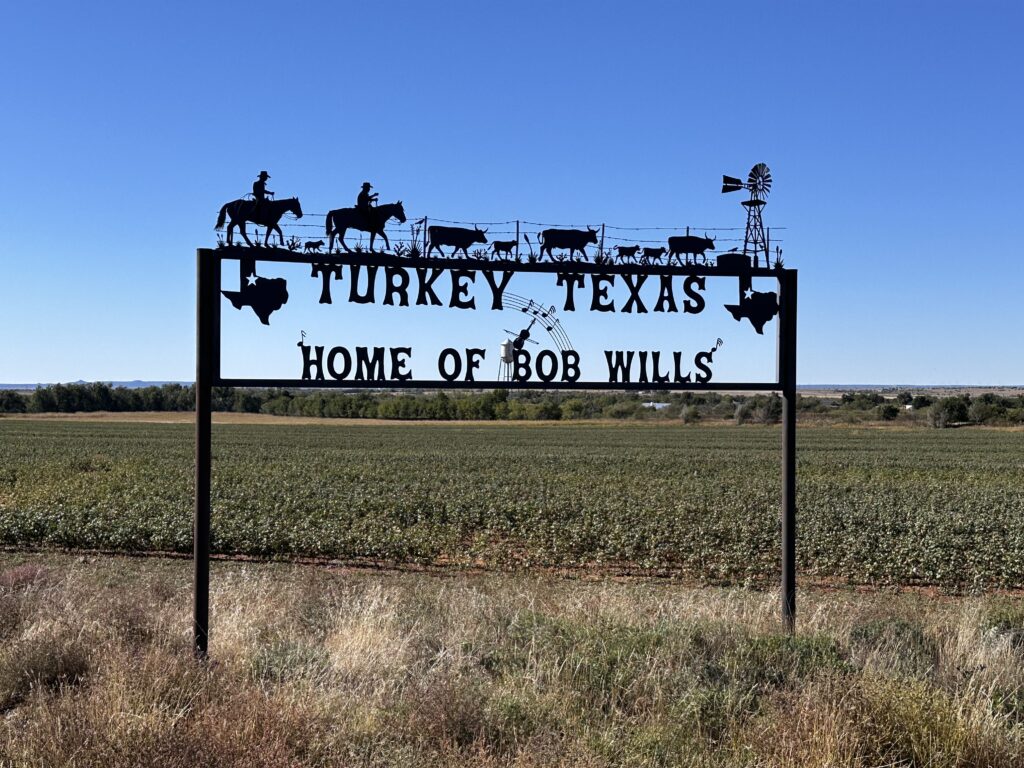
Then we stopped in Turkey, Texas, the home of the country singer Bob Wills (1905-1975). *Faded Love*. *Bubbles in My Beer*. The village of Turkey has a population of 325. It is one of the hundreds of Great Plains towns barely hanging on. I love them for their windswept plight. We soon exhausted the photo ops in Turkey, where Phillips 66 got its start in Texas, but we needed lunch, so we crossed the broad main street to Letty’s Café, a rose stucco building with a big Edward Hopper picture window and a hand-scrawled sign about the daily special.
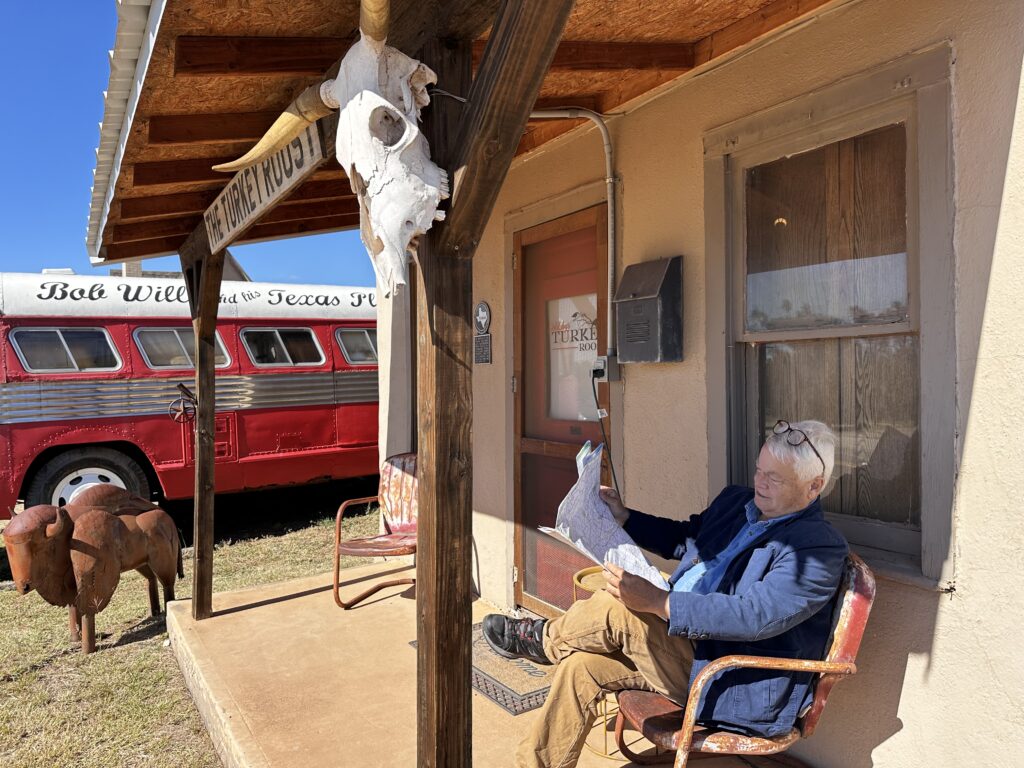Studying a map at the Turkey Roost, Turkey Texas. (Photo Joe Lovell)
We were the only people in the café at noontime. Our server, a quintessential small-town woman dedicated to pragmatism, sauntered over with two ribbed plastic cups of ice water and two laminated menus. I was thinking of ordering the safe and inevitable cheeseburger or perhaps a salad. But as I waited for my soda, Joe lit up with delight. “Hey, Jenkinson, they have chicken fried steak,” I confessed to having lived on this earth for many decades, much of it on the Great Plains, yet I had never eaten a chicken fried steak. I looked over at Joe’s shining eyes and said, “Generally speaking, I regard anything that is breaded as suspect, as with French sauces in the ages before refrigeration.” Joe gave me a withering look. And then he quoted Larry McMurtry, the inevitable Texas author and final word on any number of subjects. “Only a rank degenerate would drive 1,500 miles across Texas without eating a chicken fried steak.” This is from his book, *In a Narrow Grave: Essays on Texas* (1968).
That settled it, of course. I did not want to join the ranks of the degenerate.
In due course, or as Huck Finn would say, by and by, the server wandered over with two huge plates. “Gravy?” I asked Joe, my guide to Texas. “Of course, and only white gravy. Never accept a chicken fried steak with brown gravy.” I made a mental note.
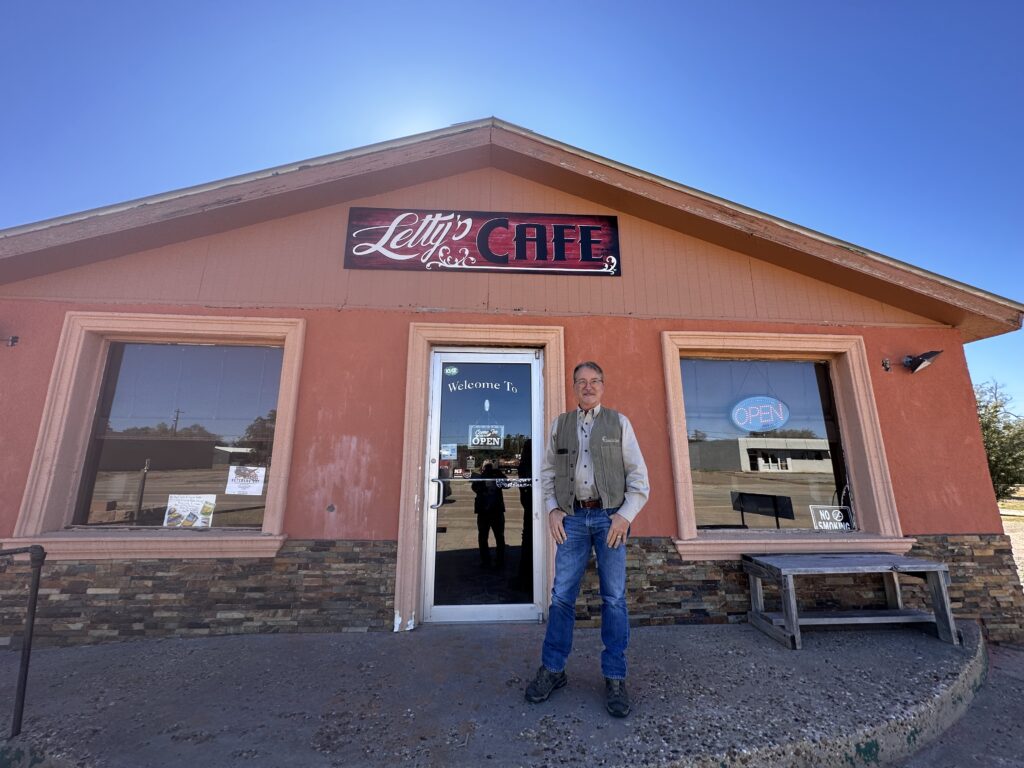Clay’s Texas host, Joe Lovell Esq., outside Letty’s Cafe in Turkey, Texas. (Photo Clay Jenkinson)
I ate some CFS and said, yeah, ok, it’s good enough. But Joe said it was one of the better CFSs he’s ever had. It was surprisingly tender because — said Joe — they beat the living daylights out of the slender hank of beef before they bread it. By the time we left, there were two other tables at Letty’s, occupied by older couples, and, sure enough, they ordered the requisite chicken fried steaks.
We chatted with our server before we left. She had moved to Turkey (this one: not the one of Istanbul and Cappadocia) 20 years ago, and at first, she was not that pleased to live in a mere whiff of a town in the middle of nowhere, but Turkey had grown on her, and now she would not want to live anywhere else. These days, she can hardly stand to spend an afternoon in the Sodom and Gomorrah of Amarillo (202,000), 102 miles away. As we stood up to leave, I heard a loud pounding sound from back in the kitchen. I thought there was a blacksmith forge back there. But when I enquired, our host said the cook was back there tenderizing more beef for the evening rush.
## **East to Norlins and Great Gumbo**
Russ Eagle, Ray Gumpert, Liz Eagle and Clay at MeMe’s Bar and Grill, Chalmette, Louisiana.
For a couple of years, my friend Liz Eagle and I have engaged in a sustained debate about gumbo. I live in North Dakota, where we eat borscht and knoephla soup, not gumbo. Whenever I am in the South or on the southern Great Plains, if there is gumbo on the menu, I am tempted to order it. I regard it as a moderately tasty stew and don’t long for it between bouts. I do not regard it as a delicacy. That alone is heresy in Liz’s eyes. If I make the mistake in a text of mentioning any gumbo encounter to Liz (and her husband Russ) I receive a blistering rebuke: “Whatever you think you ate, it warn’t true gumbo. The only true gumbo is found in New Orleans. How dare you mistake whatever gruel you just ate for authentic gumbo.” Etc.
Jeez. I thought you’d be pleased, Liz. Liz is the nicest person who ever lived, but she is a gumbo “soup Nazi.” For several years, she has promised me proof if only I would come to New Orleans when they could meet me there.
The word gumbo derives from a West African (Angolan) word, “ki ngombo,” which apparently means okra. Okra was part of the great Columbian Exchange and was brought to the New World in slave ships. It became a staple of several southern dishes, mostly as a soup thickener. Or as the Wikipedia article deliciously puts it: “The pods of the plant are mucilaginous, resulting in the characteristic “goo” or slime when the seed pods are cooked; the mucilage contains soluble fiber.” Yum. Can’t wait.
I only reckoned I could keep the friendship if I submitted to the New Orleans gumbo fest, so we met at a hotel near the Mississippi River late on a November afternoon. Russ and Liz had flown in from North Carolina. I had come in from Texas. Earlier that day, I announced the time of my arrival by text, and Liz replied, “Our friend Ray and his kitchen staff have been working all day to prepare your gumbo and other local cuisine for you.” Whoa. It had not occurred to me that this would be a formal ceremony, that a fuss was being made on my behalf. After I had deposited my luggage and brushed my teeth (one wants a completely clear palate), we hopped into an Uber and Ubered 38 minutes to a remote restaurant called [MeMe’s Bar and Grill](https://memesbarandgrille.com) in Chalmette, Louisiana. In my naiveté, I had reckoned the restaurant in question would be in the heart of New Orleans, but no. This was beginning to feel like a Quest for the Holy Grail.
When we finally arrived, we were met by Ray Gumpert, the lean and talented sommelier at MeMe’s, an old friend of Russ. They go way back, and Russ has been, thanks to Ray and his friends, the recipient of some mighty great meals and wines over the decades in a range of zip codes. Ray greeted me with generosity touched with amusement that so great a kingombo ignoramus was in his midst. He said he had four different wines to share with us tonight, including an outstanding preliminary sparkling wine.
Best gumbo ever.
And so another kind of Thanksgiving orgy began. Ray asked us if we wanted to order from the menu or sit back and be fed. Feed us, we said nearly in unison. Boudin egg rolls came first. Then, there were flights of oysters from several origin sites and presentations, coupled with a celebrated local bread, crusty on the outside and oh so smooth inside. Then, a half-shell etouffee redfish caught that very day in some brackish bayou nearby. Steak frites because we were now too sated to eat the full New York strip steaks that were offered to us. And, of course, the celebrated gumbo, or more precisely, crab cake gumbo paired with F4 Chardonnay. The bottles of wine just kept coming, and each was exquisite. Ray appeared from time to time to banter with the table, and he and Russ talked about legendary meals and restaurants they had shared over the years in several states. I wanted to ask him if having the last name Gumpert directed his career choice, and if so, thank goodness his last name wasn’t Spampert. But I held back. Russ and Liz will drive hundreds of miles for these meals and fly across America, too. I won’t even drive across Bismarck for the better of two Thai restaurants. Liz spent half her time that night in MeMe’s gushing about the food and half studying me to see that I was properly humbled, delighted, and satisfied with the world’s premier gumbo. Chef Doug Braselman put in an appearance. We goshed and we gushed.
The gumbo was delicious, dark brown, with a strong hint of vinegar. I tried not to think much about the cost of this meal (staggering), and in my oyster-wine haze, I tried to figure out how vast the tip must come to for such amazing hospitality. Ray has a natural, understated, comic persona, and he told us all sorts of BS about how his father (if he really exists) caught that very redfish earlier that very day and that he, Ray, cleaned it on a table that was really better suited for something else … and other whoppers of that sort. It was a great fish, but my view (stated) was that it was probably purchased earlier in the day at Safeway, and Ray did not take umbrage, perhaps because I was at least half right. He later sent a “video” of someone purporting to be his “father,” with a willow pole and some string at what purported to be a “bayou,” with Andy Griffith whistling in the background. I grew up in North Dakota, Ray. We know our fish tales.
Ray’s dad’s half-shell etouffee redfish, a speciality at MeMe’s Bar and Grill.
It was, without question, one of the best meals I have ever had. The great food was made better by Liz’s triumphant satisfaction, by two of the great true friendships of my life, by Ray’s wry, generous, and bemused deportment, by the parade of delicacies we had not ordered, by the quality of the wines, by the dark, sensuous atmosphere of MeMe’s, and by some of Ray’s whoppers.
We took an Uber back into the city’s heart in a gumbo coma.
## **Clay, Liz and Russ’ menu at MeMe’s Bar & Grill — Chalmette, Louisiana. Owner & Chef Doug Braselman, sommelier Ray Gumpert.**
Over the next two days I ate gumbo three more times, twice at fine restaurants. It was certainly uncontestably true that Ray’s was the finest. But eating four units of gumbo in three days is a little like eating four units of lasagna in three days. In the end, it is a sausage and shrimp stew, gummed together with mucilaginous okra. I freely acknowledge that Liz was right all along, but I knew that would be true long before I joined the giant carbon footprint grail quest. In the same three-day exploration of New Orleans, I ate etouffee, jambalaya, red beans and rice, a po’boy or two, crayfish, and rice of several hews. Plus enough rich southern desserts to sustain a diabetes clinic.
From now on, I will confine my gumbo life to two circumstances. I’ll either be with Liz somewhere where she deigns to approve of the blend (and where Russ has a longstanding relationship with the chef) and at MeMe’s of New Orleans. I’ll definitely be back. I wrote to Ray suggesting he and I do a series of wry videos in which I — a North Dakotan raised on meatloaf and tuna melt — sample all of his foods and wines while he does explanatory shtick — all I demanded was the experience and a nearby Hotel 5 — but he appears to have changed his cell number after the first 30 texts.
## **The Gastronomic Wonders Never End**
Cheerwine, chili dogs and more in Salisbury, North Carolina.
There is much more to the story of my food explorations below the Mason-Dixon Line, but for the moment, just this.
**One**: in Salisbury, North Carolina, I had my first taste of Cheerwine, a local soft drink that is surprisingly good but has never followed Dr. Pepper and other sodas into the national arena. I’m told there is even an annual Cheerwine Festival in Salisbury that brings in more than 100,000 people. I was warned not to be fooled by the Cheerwine in cans — adulterated somehow — but only to purchase it in bottles, where it is still pure. As I motored out of North Carolina, I had the impulse to stop at a Food Lion grocery and put a few cases of Cheerwine bottles in my pickup bed, the way we used to smuggle Coors into North Dakota in the 1970s before they put preservatives in the mix.
**Two:** at a mid-day informal seminar at West Texas A&M in Canyon, Texas, a young woman, a student of the humanities studying under the gifted professor Alex Hunt, introduced herself by asking me, “Mr. Jenkinson, what’s your beef with Waffle House?!” She said this with some aggression and considerable disbelief. Apparently, she has been listening to my podcasts — including perhaps the one in which I said the South has made only two contributions to world civilization: Faulkner and Waffle House.
**Three:** I stopped in Louisville, Kentucky, on my rapid drive home to see the Muhammad Ali Center. It was begun by a friend of mine who now lives in Arizona. Coming off the magnificent but deeply upsetting Legacy Museum in Montgomery, Alabama, that chronicles the tragic history of slavery, racism, and racial violence in America, I wanted to experience the exhilaration of Ali’s meteoric career. Ali says, in his museum, on video, “I didn’t become the heavyweight champion of the world because I loved boxing. I did it because I wanted to get the world’s attention. Now that I have it, I have some things to say.” That’s a slight paraphrase, but it’s very close.
To tell the truth, the Ali Center was a letdown after the Legacy Museum, which is perhaps the finest museum experience I have ever had on a single subject. My friend Thad met me in the lobby, and we saw the exhibits together. Afterward, in the little time he had left before his afternoon meetings, we drove in his car to Muhammad Ali’s grave in Cave Hill Cemetery in Louisville. As we paid homage, he told me about the crowds (more than 100,000 people) who came to pay their respects to the flamboyant world historical citizen on June 11, 2016, the man who said, refusing induction into the U.S. Army, “No Viet Cong ever called me N….” Then we stopped at a nearby park on a chilly northern Kentucky day and ate the ham and cheese sandwiches and potato chips he had provided. I wished I had brought a bottle of Cheerwine for Thad and one for me. But no. As we gathered up, he pulled a small styro container with a plastic lid from the bag. In it was some kind of brown slurry. He said it was something called Country Ham Salad. It’s apparently not much different from chicken salad, only darker to look at and inedible. Ham bits, mayo, onion, perhaps a bit of mustard, some relish. Yum.
Will the Southern gastronomic tyranny never end? I promised (a lying promise) that I would eat it for dinner and drove away quickly before he put it in contract (lawyers!). It looked like what’s left over when you strain brown gravy from a turkey or empty the oil in a lawnmower after 10 years. Until now, I had thought my friend Thad, another talented attorney, was a man of elegance and taste.
Chef J BBQ on 13th Street, Kansas City, Missouri. (Photo Clay Jenkinson)
The next day, in Kansas City, Missouri, I stopped one last time for intentional food — at [Chef J BBQ](https://chefjbbq.com) on 13th Street, right on the banks of the Missouri River. My daughter had done a bit of internet sleuthing and assured me that it was the best barbecue in Kansas City. She was right. I entered the gloomy restaurant in an ancient brick warehouse building, puzzled over the large menu. I followed the Russ-Liz rule and asked the chef to tell me what I wanted. Brisket, of course, with three sauces on the side; they also urged me to order collard greens with bits of shredded pork and a healthy dose of vinegar. These were my first collard greens. My daughter had been right. It was the best barbecue I have ever eaten, not just in KC but in America. I hired her on the spot to be my concierge next year when I follow the Lewis and Clark Trail from Monticello to Astoria and back again.
Later that day, after my Amarillo-Turkey-New Orleans-Salisbury-Louisville-Kansas City Vittles Vacation in the American South finally ended, I turned my rig north towards Des Moines, Minneapolis, and Dakota. I had a bland pizza for dinner.
I was never so relieved to pop over the Mason-Dixon Line back into American civilization.
---
## ***Discover more on these topics at Listening to America***
[U.S. Constitution](https://ltamerica.org/tag/u-s-constitution/ "1 topics")[The Constitution](https://ltamerica.org/tag/the-constitution/ "1 topics")[Pennsylvania](https://ltamerica.org/tag/pennsylvania/ "1 topics")[Utah](https://ltamerica.org/tag/utah/ "11 topics")[Wisconsin](https://ltamerica.org/tag/wisconsin/ "0 topics")[South Carolina](https://ltamerica.org/tag/south-carolina/ "1 topics")[Podcast](https://ltamerica.org/tag/podcast/ "1 topics")[Walden](https://ltamerica.org/tag/walden/ "1 topics")[New Mexico](https://ltamerica.org/tag/new-mexico/ "3 topics")[Rivers](https://ltamerica.org/tag/rivers/ "3 topics")[Poetry](https://ltamerica.org/tag/poetry/ "1 topics")[Space Exploration](https://ltamerica.org/tag/space-exploration/ "8 topics")[Washington](https://ltamerica.org/tag/washington/ "2 topics")[Theodore Roosevelt](https://ltamerica.org/tag/theodore-roosevelt/ "16 topics")[Road Trips](https://ltamerica.org/tag/road-trips/ "18 topics")[Oppenheim](https://ltamerica.org/tag/oppenheim/ "0 topics")[Rome](https://ltamerica.org/tag/rome/ "1 topics")[Travel](https://ltamerica.org/tag/travel/ "1 topics")[north daktoa](https://ltamerica.org/tag/north-daktoa/ "0 topics")[Thomas Jefferson](https://ltamerica.org/tag/thomas-jefferson/ "34 topics")[Republics](https://ltamerica.org/tag/republics/ "1 topics")[Ohio](https://ltamerica.org/tag/ohio/ "2 topics")[New York](https://ltamerica.org/tag/new-york/ "8 topics")[U.S. Presidents](https://ltamerica.org/tag/u-s-presidents/ "71 topics")[Thoreau](https://ltamerica.org/tag/thoreau/ "5 topics")[North Carolina](https://ltamerica.org/tag/north-carolina/ "3 topics")[Virginia](https://ltamerica.org/tag/virginia/ "7 topics")[State Parks](https://ltamerica.org/tag/state-parks/ "2 topics")[South Dakota](https://ltamerica.org/tag/south-dakota/ "16 topics")[Texas](https://ltamerica.org/tag/texas/ "4 topics")[Sports](https://ltamerica.org/tag/sports/ "2 topics")[Steinbeck Travels](https://ltamerica.org/tag/steinbeck-travels/ "75 topics")[Water in the West](https://ltamerica.org/tag/water-in-the-west/ "24 topics")[Vermont](https://ltamerica.org/tag/vermont/ "1 topics")[William Shirer](https://ltamerica.org/tag/william-shirer/ "1 topics")[Reading](https://ltamerica.org/tag/reading/ "1 topics")[paintings](https://ltamerica.org/tag/paintings/ "0 topics")[Oppenheimer](https://ltamerica.org/tag/oppenheimer/ "1 topics")[New England](https://ltamerica.org/tag/new-england/ "1 topics")[Wyoming](https://ltamerica.org/tag/wyoming/ "4 topics")[North Dakota](https://ltamerica.org/tag/north-dakota/ "53 topics")[Tennessee](https://ltamerica.org/tag/tennessee/ "1 topics")[Oregon](https://ltamerica.org/tag/oregon/ "4 topics")[Video](https://ltamerica.org/tag/video/ "51 topics")[Republic](https://ltamerica.org/tag/republic/ "0 topics")
**Categories:** Features
**Tags:** John Steinbeck, Louisiana, Missouri, North Carolina, Road Trips, Steinbeck Travels, Texas
---
### [The Great but Forgotten Conservationist John F. Lacey](https://ltamerica.org/the-great-but-forgotten-conservationist-john-f-lacey/)
**Published:** November 25, 2024
**Author:** Clay Jenkinson
**Excerpt:** While John Steinbeck was not much interested in National Parks, he traveled through a nation whose conservation footprint was indelibly shaped by visionary Iowa Congressman John Lacey.
**Content:**
## While John Steinbeck was not much interested in National Parks, he traveled through a nation whose conservation footprint was indelibly shaped by a visionary Iowa Congressman.
Congressman John F. Lacey, August, 1906, in Goodnight, Texas. Lacey was a member of the U.S. House of Representatives from 1890-1908 and an early and leading pioneer in U.S. Conservation policy. (Boone & Crockett Club)
Steinbeck confessed that he was not particularly impressed by “the spectacular, the astounding — the greatest waterfall, the deepest canyon, the highest cliff, the most stupendous works of man and nature.” He said he would rather gaze at a photograph by Matthew Brady (1822-1896) than at Mount Rushmore.
John Steinbeck was not much interested in America’s National Parks. He said he dipped down into Yellowstone National Park merely to forestall criticism from his friends. He wrote (in *Travels with Charley*) that if he drove through Livingston and Bozeman, Montana, and didn’t visit America’s first National Park (1872), they’d load him with recriminations. The Yellowstone visit proved abortive when his French poodle Charley went berserk when he saw his first-ever grizzly bear through the window of the GMC pickup. Steinbeck saw some primordial savagery in Charley he had never seen before and didn’t think possible. So, the great novelist immediately left the way he came, abruptly, and without remorse. No Old Faithful for John and Charley Steinbeck.
John Steinbeck and Charley visit Yellowstone National Park. ( Sketch by Nate Calderone of Salida, Colorado for LTA)
Yellowstone was his only National Park on the *Travels with Charley* trek. He did not stop to take a look at the Grand Canyon. He did not visit Bryce Canyon National Park or Zion or Big Bend or Great Smoky Mountains. He kept moving, on the best roads America had at the time, though few then were Interstates. Steinbeck did not share William Least Heat Moon’s obsession with blue highways, the narrow asphalt roadways that connect America’s small towns like a string of kitschy pearls. For most of his transcontinental trek Steinbeck was in a kind of slow-motion hurry — from third wife Elaine encounter to the next Elaine encounter. He does not mention museums, interpretive centers, the world’s largest this or that, or the site of this or that famous battle. Except for a brief visit to the Little Bighorn, which he described (and dismissed) in a single paragraph.
Steinbeck said he undertook his great 1960 journey “in search of America.” He confessed at the beginning of *Travels with Charley* that he had lost touch with the people of America who did not live in New York or San Francisco. He believed his creative mojo had ebbed to a dangerous level and he was living on the fumes of his once-great talent as a writer. He wanted to reconnect, to listen, to fill the tank of creativity. In the autumn of 1960 John Steinbeck *drove* America (some 11,500 miles worth, around the perimeter) and the book he wrote about that journey is full of interesting observations about the homogenization of American language, food, and style; about the coming of fast food and mobile homes; about the sterile triumph of plastic; about the litter and junk heaps that line many of the nation’s roads; about the reluctance of the American people he met to talk about current events, even in a consequential election year. But he did not stop to see much along the way. Diner to diner, motor court to motor court, gas station to gas station (when they sold little more than gas, candy, and cigarettes). Elaine to Elaine.
He had a couple of dozen important encounters with people along the way. His sons John and Thom later said they didn’t believe he really talked to anyone out beyond New York City, in part because he was a shy and private man. Maybe so, but I think his sons exaggerated, partly because they carried some pretty deep skepticism about their famous father, whom they didn’t know very well. The greatness of *Travels with Charley* is really about those periodic encounters — with the Canadian potato growers at the top of Maine; with the itinerant Shakespearean actor in eastern North Dakota; with a young gay man in northern Idaho who aspired to be a hairdresser; with several individuals (black and white) roiled by the Civil Rights Movement in the Deep South.
And Charley, of course. Take Charley the haughty but lovable French poodle out of the picture and *Travels with Charley* is not much of a book. Charley, not Steinbeck, is the star of the story and the whimsical cur managed to get his name into the book’s title. Whenever Steinbeck is in danger of getting ponderous in his assessment of America in 1960, Charley reclaims the journey with his signature gap-toothed “ftt.”
## **Look Homeward Author**
After confirming in Monterey and Salinas, California, that Thomas Wolfe was right in declaring “you can’t go home again,” Steinbeck said goodbye to his wife Elaine, who had joined him from Seattle to Monterey Bay and would next meet him on a ranch near Amarillo in the Texas panhandle, where they spent Thanksgiving 1960. His old friend Toby Street rode with him and Charley in the pickup across southern California to Flagstaff, Arizona, where apparently Street decided he had enough of truck camper life.
By the time he turned Rocinante around at Monterey Bay and began the long journey back to New York (and home), Steinbeck admitted that he had run out of steam. “Starting on my return journey, I realized by now that I could not see everything. My impressionable gelatin plate was getting muddled. I determined to inspect two more sections and then call it a day — Texas and a sampling of the Deep South.”
Steinbeck must have driven along Route 66 toward Albuquerque and Amarillo. He wrote, “I know this way so well from many crossings — Kingman, Ash Fork, Flagstaff, with its mountain peak behind it, then Winslow, Holbrook, Sanders, down hill and up again, and then Arizona passed.”
## **Petrified Forest National Park**
I spent a night recently in Holbrook, because I have always wanted to visit [Petrified Forest National Park](https://www.nationalgeographic.com/travel/national-parks/article/petrified-forest-national-park). We have a petrified forest in western North Dakota, in the south unit of Theodore Roosevelt National Park. Ancient Cypress trees turned like Lot’s wife to stone, 50 million years old. I take visitors there as often as they will agree to it. I like North Dakota’s petrified trees all the more because you have to walk well more than a mile to get to them. They are not just lined up by the side of the road for the tourist’s convenience.
So I ditched the Airstream at an RV site in Holbrook and drove to the south entrance of Petrified Forest National Park. Once in, I saw desert country in every direction, Edward Abbey country, blue-gray far distant mountains to the West. Thanks to my geezer pass ($80 forever, available when you turn 62), I passed quickly through the entrance kiosk and drove to the museum and interpretive center. Then I strolled over the .3 mile loop trail just west of the museum and took photographs of petrified tree segments. They are amazing to look at and to contemplate. These trees fell into swampy water several hundred million years ago. They were covered with silt. Silica and other minerals slowly replaced the organic matter — essentially cell by cell — to form an exact simulacrum of the tree, lifeless, but amazing. A fossil tree. They always fill me with wonder, except when they are dropped as ornaments in people’s driveways.
It was a hot day and I had miles to go before I slept, so I didn’t linger long among the rock forest, which has the feel of a rock garden.
I have the following observations about Petrified Forest National Park.
— I hope this doesn’t sound callow, but when you have seen a hundred petrified trees you have pretty much seen them all. No, this is not strictly true. The petrified cypress sections in the badlands of North Dakota are white and gray. The petrified trees in Arizona are a deep brown-red, and some of them have astonishingly beautiful crystals embedded in their trunks. The fragments in Dakota are short — none more than 10 feet in length, most about half that length or less. The petrified trees in Arizona are long, not always intact, but in many cases the segments line up. They cracked into segments well after the petrification was complete. A few are more than 150 feet in length. At first glance, the petrified forest in Arizona looks like a dense, above-ground fossil tree cemetery. It’s overwhelming. But after 45 minutes or so wandering among them, their capacity to maintain your sense of wonder begins to fade a bit.
On the road with Lucille Ball and Desi Arnaz in the 1954 film, *The Long, Long Trailer*.
— People must try to abscond with chunks of petrified wood, picked up in the National Park because there are stern warning signs everywhere and when I left the National Park by way of the north entrance, all cars were required to stop for “inspection.” The ranger waved me through. I must not have fit the profile. Or maybe he glanced into the crowded cab of my pickup and reckoned it wasn’t worth the trouble. This reminded me of the Lucille Ball-Desi Arnaz movie, *The Long Long Trailer*( 1954), in which Lucy collects large rocks throughout their journey and stores them in the interior of the long long trailer. Since they are massive and round and not tethered down, her volleyball-sized boulders wreak havoc throughout the interior. Ricky is not happy (never was outside of the Tropicana) and as usual Lucy has some ‘splainin’ to do.
I took nothing but pictures, left nothing but footprints in Petrified Forest National Park.
## **The Indelible Legacy of Congressman John Lacey**
The view from Lacey Point, Arizona. (NPS photo by Hallie Larsen)
Not far from the north entrance I stopped at a magnificent vista called [Lacey Point](https://www.nps.gov/places/lacey-point.htm). I know this Lacey! [John Lacey](https://www.boone-crockett.org/bc-member-spotlight-john-f-lacey) (1841-1913) is an incredibly important figure in the history of American conservation. He was an Iowa Congressman. Born in West Virginia, he moved with his family to Oskaloosa, Iowa, in 1855. He fought for the Union in the Civil War. Then he studied law. He served in the U.S. House of Representatives for eight terms (seven sequentially). In 1902 he was inducted into Theodore Roosevelt’s Boone and Crockett Club. For 12 years he was the Chairman of the House Committee on Public Lands.
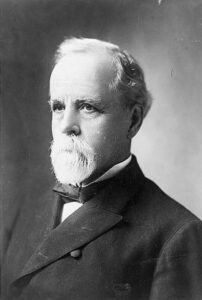Congressman John F. Lacey.
But that’s just his resume. Lacey’s name is attached to three monumental pieces of congressional legislation.
First, the **[Lacey Act of 1894](https://buckrail.com/the-lacey-act-still-protects-yellowstones-wildlife-today/)**. Thanks to his leadership, Congress gave the Department of Interior the power to arrest and prosecute poachers in Yellowstone National Park. This was the first time the United States created a mechanism to prevent trophy and commercial hunting in Yellowstone and — by extension — the National Parks generally. The Lacey Act of 1894 helped to formulate the conservation principles for the entire National Park System, then and now.
Second, the **[Lacey Act of 1900](https://www.whistleblowers.org/what-is-the-lacey-act/).** This was his greatest legislative achievement. This Lacey Act protects all the wildlife, plants and animals in America’s public lands by way of significant civil and criminal penalties for a range of violations. The act prohibited the sale or trade of wildlife, fish, and plants that have been appropriated from the National Parks. Once the bill found its way through Congress — thanks to the indefatigable efforts of Lacey and a few others — President William McKinley signed it into law.
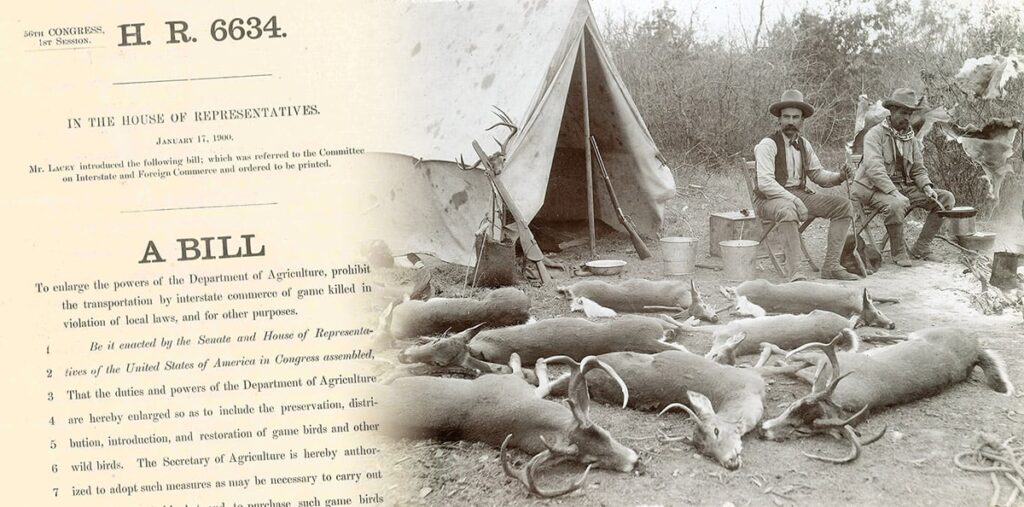A photo from 1899 showing the slaughter of big-game species. The Lacey Act of 1900 aimed to put a halt to the destruction. (Boone & Crockett Club)
Third, the **Lacey Act of 1907**. This one made it possible for the federal government to allot tribal funds to certain classes of Native Americans. At a time when U.S. government policy was determined to “kill the Indian, save the man,” as the father of the Indian Boarding Schools Richard Pratt phrased it, Lacey’s compassionate leadership made it possible for the government to do something *for* America’s indigenous people rather than *to* them. That bill was signed into law by President Theodore Roosevelt, who was a close ally and admirer of Lacey.
And then there is the **[Antiquities Act of 1906](https://www.nps.gov/articles/american-antiquities-act-of-1906.htm)**. Lacey was co-author of this monumental piece of legislation, which permits the president to unilaterally designate (without the participation of Congress) parcels of public land deemed to have archaeological and historical importance. It would be impossible to exaggerate the importance of this legislation. Think of Aztec Ruins (New Mexico), Devils Tower (Wyoming), Montezuma Castle (Arizona), Canyon de Chelly (Arizona), Craters of the Moon (Idaho), Dinosaur (Colorado & Utah), Fort McHenry (Maryland), Harriet Tubman Underground Railroad (Maryland), Little Bighorn Battlefield (Montana), and scores of others. And more recently Bears Ears (Utah), Grand Staircase Escalante (Utah), and Emmett Till and Mamie Till-Mobley (Illinois & Mississippi).
Few presidential powers are as unchecked and sweeping as the authority granted under the Antiquities Act. If Joe Biden (or soon, Donald Trump) wishes to carve out a National Monument in the middle of Montana’s public lands, he has a virtually unstoppable right to do so. A piece of legislation so enlightened and impactful would stand no chance of passing Congress today. In fact, it’s more likely that today’s Congress would try to limit or abolish the Antiquities Act.
A number of the National Parks began their existence as National Monuments: Grand Teton (Wyoming), Bryce (Utah), Zion (Utah), Olympic (Washington), Acadia (Maine), not to mention Grand Canyon National Park that began as Theodore Roosevelt’s Grand Canyon National Monument, at more than 800,000 acres. (The Antiquities Act was intended to protect small parcels of 5 to 25 acres, but Roosevelt characteristically read the legislation in the most expansive and empowering manner.)
All national monuments are created by executive order! The most recent is [Baaj Nwaavjo I’tah Kukveni-Ancestral Footprints](https://www.blm.gov/national-conservation-lands/arizona/ancestral-footprints) of the Grand Canyon National Monument, established by President Biden in August 2023. It embraces 917,618 acres in Arizona.
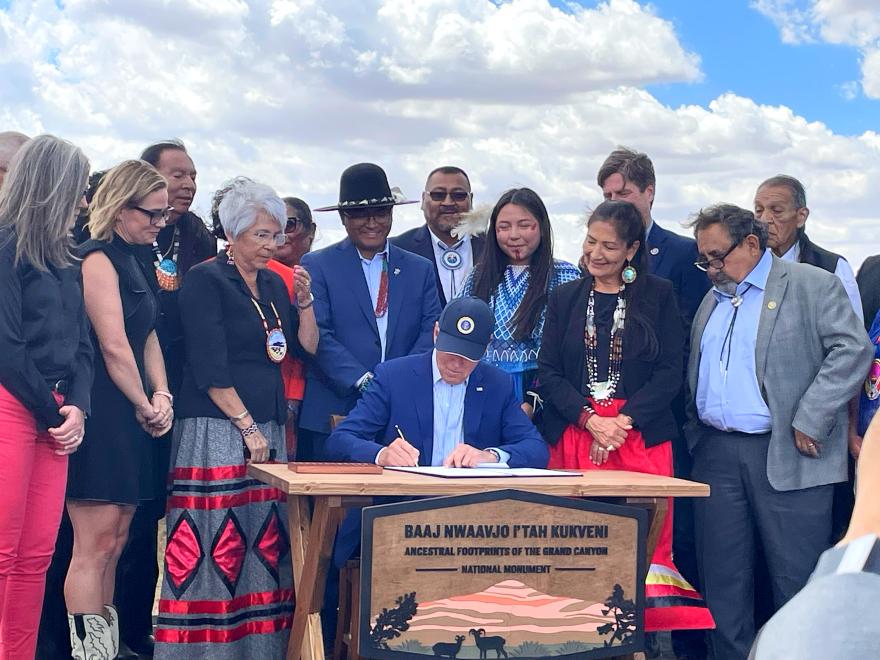President Biden signs executive order establishing Baaj Nwaavjo I’tah Kukveni — Ancestral Footprints of the Grand Canyon National Monument in northern Arizona. The August, 2023 event included state officials and tribal community leaders (Department of the Interior photo)
When we think of conservation in the 20th century, we tend to think first of the great Theodore Roosevelt, who served a little less than two terms as president, but set aside 230 million acres of the public domain for permanent protection: five National Parks; 150 new National Forests (150 million acres); 18 National Monuments; 51 National Wildlife Refuges; and four National Game Preserves. Roosevelt’s achievement was staggering, and it changed the face of America, even the Idea of America, forever. Roosevelt had faults, but they must not be permitted to obscure his almost unbelievable achievements as the 26th president of the United States. It is impossible to conceive of his predecessor William McKinley giving so much of his political capital to conservation, equally impossible to imagine his successor William Howard Taft doing so.
But Roosevelt never visited most of the parcels he set aside for permanent protection. In every case, a large number of local and regional advocates worked tirelessly, often for their entire lives, to call attention to spectacular or endangered landscapes. It was their efforts which sent nominations of these parcels up the chain until they finally reached Gifford Pinchot, TR’s U.S. Forester, and Roosevelt himself. After Roosevelt, Pinchot, and TR’s trusted nature adviser George Bird Grinnell, nobody was more important in securing America’s public lands than John Lacey of Iowa — from a state mostly given over to till agriculture, not the most likely nursery of one of America’s greatest conservationists.
Unlike TR, Lacey had visited Arizona’s Petrified Forest and many other conservation properties in the American West. We owe him an enormous amount of gratitude. And he is the more interesting, perhaps, because unlike his celebrated friend in the White House, Lacey preferred not to call attention to himself for the great work he was doing.
As I stood there looking out on one of the most beautiful viewsheds in America, I was pleased that that vista was named for John Lacey. His leadership was explained in detail by an excellent interpretive sign; but I was chiefly inspired to think of what one person of vision, discipline, and perseverance can do to make life better for all the rest of us.
---
***Over the next few months, Clay is shadowing Steinbeck’s 10,000-mile trek around the USA (and making a few detours of his own). Clay’s expedition is a central part of LTA’s big initiative to explore the country and take the pulse of America as it approaches its 250th birthday. Be sure to follow Clay’s adventures*** [***here***](https://ltamerica.org/tag/steinbeck-travels/) ***and on*** ***[Facebook](https://www.facebook.com/LTAmerica)*** ***— and*** [***subscribe to our newsletter***](https://ltamerica.org/newsletter/)**.**
**Categories:** Features
**Tags:** America at 250, Arizona, John Steinbeck, National Parks, North Dakota, Steinbeck Travels
---
### [Home Again and Happy Thanksgiving](https://ltamerica.org/home-again-and-happy-thanksgiving/)
**Published:** November 26, 2024
**Author:** Clay Jenkinson
**Excerpt:** My John Steinbeck Travels with Charley tour is now over: 210 days, 21,114 miles, 1,407 gallons of gas, 41 states.
**Content:**
## My John Steinbeck *Travels with Charley* tour is now over: 210 days, 21,114 miles, 1,407 gallons of gas, 41 states.
Clay’s late mother, Mil Jenkinson, a “master in the kitchen,” celebrates an earlier Thanksgiving dinner with all the “fixins.”
**Bismarck, November 24, 2024** — This morning, I woke up in my own bed for a change. It was 4 a.m. or so, and I had to pee. From a lifetime in motel rooms I know how to find the bathroom in the dark. I realized I was in some strange space as I opened my eyes. Then I realized that it was my own home of 20 years. When I crawled back into bed and moved into that fugue state between wake and sleep, when the dreams were almost daydreams, I began to calculate how far I would have to drive today before realizing that I didn’t have to drive today. And a little later, I wondered if I should go down to the lobby for the free breakfast. Was I ok with yet another dry, folded, pre-cooked omelet, a thin glass of cranberry juice, a pre-peeled boiled egg, and an insipid link sausage? But then I remembered that I was not in a hotel.
## **Welcome Home**
My [John Steinbeck *Travels with Charley* tour](https://ltamerica.org/tag/steinbeck-travels/) is now over: 210 days, 21,114 miles, 1,407 gallons of gas, 41 states, two Presidential Libraries, two athletic Halls of Fame, six National Parks. … I’ve camped almost every night in my Airstream trailer, but enough in motels over the last couple of weeks to alter the balance somewhat.
I’m bone weary and feeling, too, a great sense of joy and satisfaction.
But, back to my bewilderment of not knowing where I was this morning. I can report without exaggeration that I have spent about a third of my life in motels and hotels. If I had stayed in only one chain — Holiday Inn, Super 8, or Ramada — I’d have enough frequent guest points to have my own designated suite. I’ve never really minded my life on the road. It has its supreme pleasures, and in some sense, a bed with clean sheets is a bed with clean sheets. Still, I also know the wear and tear of the dawn taxi in a strange city, arriving at the hotel at 9:35 p.m. and having no option but a Caesar salad at the hotel bar; the stress level when the pilot comes on to say that “maintenance” is boarding the airplane and they will let you know soon (he is lying!) just what is wrong and when we can expect to depart; checking into the motel only to discover that the Wadena, Minnesota, junior high hockey team is there for the weekend.
I remember when the Holiday Inn Express chain rolled out its celebrated cinnamon roll. It’s a pretty average bit of baking, but it was presented in a special tray under a special lamp. For a time, that was the reason I would stop at a Holiday Inn Express rather than any of the five similar motels at the same intersection. Late capitalism. Now, occasionally, I pluck a cinnamon roll out of its cradle at a H.I.E. and drop it on my paper plate, but they have lost their ability to please me. Now it’s just more bland provender in a lobby room filled with American grotesques: loud children spilling imitation maple syrup over their waffles; the big woman in her Hello Kitty pajamas loading her plate with dry thin bacon; the older men watching Fox and Friends and snorting at the liberals; the woman using Facetime on speaker phone to tell her sister about the broken water heater; the man in the lobby last week who told his sister that his life’s dream was to manage a women’s mud wrestling team.
When I got home the other night, I opened the refrigerator apprehensively. It stank. Something was rotting in the state of Bismarck. I was too tired to explore, but when I woke up yesterday, I sniffed at a large number of potentially suspect things and threw most of them away. Later, I bought two units of baking soda at the grocery store to take up some of the smell.
Americans waste 30% of the food they buy. I do my part to keep that percentage high. I like to blame it on my travels, but that is mostly not true.
A few packages piled up at home while Clay was on the road.
I’m home. It is Thanksgiving week. My friend Loren of the Olympic Peninsula has sent me an organic turkey he raised and throttled and packed in dry ice. Plus, some of his superb bacon. On Thursday, I’m entertaining a couple of waifs who have nowhere else to be or would rather be nowhere else, I cannot remember which.
And when I walked into the kitchen, there was a stack of book packages from all over the map, all demanding to be opened, browsed, stacked, and (eventually) read. I drove 640 miles on the last day to get home in time to conduct my online class (on John Donne) on Saturday. I’m still in a Kerouacian fugue state, but I’ve found a cache of the spices needed to make mother’s patented pumpkin chiffon pie. She was right to try to protect her stash, but I was once in a while able to lull her into a turkey coma and abscond with the “fixins” as we used to call them.
Happy Thanksgiving, everyone.
---
***Over the next few months, Clay is shadowing Steinbeck’s 10,000-mile trek around the USA (and making a few detours of his own). Clay’s expedition is a central part of LTA’s big initiative to explore the country and take the pulse of America as it approaches its 250th birthday. Be sure to follow Clay’s adventures*** [***here***](https://ltamerica.org/tag/steinbeck-travels/) ***and on*** [***Facebook***](https://www.facebook.com/LTAmerica) ***— and*** [***subscribe to our newsletter***](https://ltamerica.org/newsletter/)**.**
**Categories:** Dispatches from the Road
**Tags:** Holidays, John Steinbeck, North Dakota, Steinbeck Travels
---
### [Route 66 and The Grapes of Wrath](https://ltamerica.org/route-66-and-the-grapes-of-wrath/)
**Published:** November 11, 2024
**Author:** Clay Jenkinson
**Excerpt:** I’ve been at both ends of U.S. Route 66 this year, the highway we associate with John Steinbeck and the Joad family of The Grapes of Wrath.
**Content:**
Clay at the northern end of famous U.S. Route 66 in Chicago, Illinois.
I’ve been at both ends of U.S. Route 66 this year, the highway we associate with John Steinbeck and the Joad family of *The Grapes of Wrath.*
It was once one of the principal highways of America. Now, it is a set of legendary fragments and a source of kitschy popular culture.
The best of it is in Arizona, but it is possible to pick up its remnants across (“acrost,” said Ma Joad) from Lake Michigan, where I am photographed above, all the way to the Santa Monica Pier in Southern California.

In the 1939 novel, the Joads never see the Pacific Ocean. They pull off in the great Central Valley of California, where they expect to find work and eventually prosper. The best laid plans of mice and men …. At the end of the novel, we don’t know what will become of them. Grandpa and Grandma are dead. Noah wandered off at Needles, California. Connie Rivers abandons Rose of Sharon. In the novel’s last scene, she gives birth to a stillborn baby. Tom has to go into hiding after murdering one of the men who murdered Jim Casy. So, three are dead (four if you include the stillborn fetus), two are missing, and Tom is a fugitive. This leaves five: Ma and Pa Joad and their three remaining children, Ruthie, Al, and Winfield.
Steinbeck deliberately leaves us in suspense as the novel closes. What happens to the Joads? Presumably — if California history is any indication — the Joads find a way to survive. Maybe Ma gets her small farm with a white picket fence, maybe not. Maybe Tom becomes a human rights freedom fighter, maybe he melds into a quiet life. Do they ever see him again? We don’t know.
But if they hung on until World War II they would probably have enjoyed the full employment and widespread prosperity that eventually made California one of the richest places in America.
*The Grapes of Wrath* is one of America’s greatest books. And Route 66 is a central metaphor.
The Joad family views the “promised land” of California. (Photo from John Ford’s film version of *The Grapes of Wrath,* 1940)
---
***Over the next few months, Clay is shadowing Steinbeck’s 10,000-mile trek around the USA (and making a few detours of his own). Clay’s expedition is a central part of LTA’s big initiative to explore the country and take the pulse of America as it approaches its 250th birthday. Be sure to follow Clay’s adventures*** [***here***](https://ltamerica.org/tag/steinbeck-travels/) ***and on*** [***Facebook***](https://www.facebook.com/LTAmerica) ***— and*** [***subscribe to our newsletter***](https://ltamerica.org/newsletter/)**.**
**Categories:** Dispatches from the Road
**Tags:** America at 250, Arizona, Illinois, John Steinbeck, Road Trips, Steinbeck Travels
---
### [A Visit to Medgar Evers’ Home — Video Dispatch](https://ltamerica.org/a-visit-to-medgar-evers-home-video-dispatch/)
**Published:** November 19, 2024
**Author:** Editor
**Excerpt:** Clay visits Medgar Evers’ home, now a national monument. Medgar Evers was killed by a white supremacist here, in front of his house, on June 12, 1963.
**Content:**
Clay visits Medgar Evers’ home, now a national monument. Medgar Evers was killed by a white supremacist here, in front of his house, on June 12, 1963. Evers was a peaceful, but determined, civil rights leader, for eight years and the NAACP Director in Mississippi. The man who killed him in cold blood was twice acquitted, by white only juries but finally found guilty in the 1990s, when Mr. Evers had been dead for a quarter century. On the day that Evers was cut down, President John F. Kennedy gave his strongest address on civil rights, from the White House on national television. Tomorrow, Montgomery and Selma. Every American who has the opportunity should visit these civil rights sites.
## *Discover more on these topics at Listening to America*
[Travel](https://ltamerica.org/tag/travel/ "1 topics")[U.S. Presidents](https://ltamerica.org/tag/u-s-presidents/ "71 topics")[William Shirer](https://ltamerica.org/tag/william-shirer/ "1 topics")[Utah](https://ltamerica.org/tag/utah/ "11 topics")[Oppenheimer](https://ltamerica.org/tag/oppenheimer/ "1 topics")[State Parks](https://ltamerica.org/tag/state-parks/ "2 topics")[Washington](https://ltamerica.org/tag/washington/ "2 topics")[Steinbeck Travels](https://ltamerica.org/tag/steinbeck-travels/ "75 topics")[Walden](https://ltamerica.org/tag/walden/ "1 topics")[South Carolina](https://ltamerica.org/tag/south-carolina/ "1 topics")[New York](https://ltamerica.org/tag/new-york/ "8 topics")[Vermont](https://ltamerica.org/tag/vermont/ "1 topics")[Thoreau](https://ltamerica.org/tag/thoreau/ "5 topics")[Podcast](https://ltamerica.org/tag/podcast/ "1 topics")[Rivers](https://ltamerica.org/tag/rivers/ "3 topics")[Pennsylvania](https://ltamerica.org/tag/pennsylvania/ "1 topics")[north daktoa](https://ltamerica.org/tag/north-daktoa/ "0 topics")[Republics](https://ltamerica.org/tag/republics/ "1 topics")[Space Exploration](https://ltamerica.org/tag/space-exploration/ "8 topics")[Poetry](https://ltamerica.org/tag/poetry/ "1 topics")[Road Trips](https://ltamerica.org/tag/road-trips/ "18 topics")[New England](https://ltamerica.org/tag/new-england/ "1 topics")[Wisconsin](https://ltamerica.org/tag/wisconsin/ "0 topics")[Virginia](https://ltamerica.org/tag/virginia/ "7 topics")[The Constitution](https://ltamerica.org/tag/the-constitution/ "1 topics")[North Carolina](https://ltamerica.org/tag/north-carolina/ "3 topics")[Video](https://ltamerica.org/tag/video/ "51 topics")[Theodore Roosevelt](https://ltamerica.org/tag/theodore-roosevelt/ "16 topics")[Wyoming](https://ltamerica.org/tag/wyoming/ "4 topics")[paintings](https://ltamerica.org/tag/paintings/ "0 topics")[Water in the West](https://ltamerica.org/tag/water-in-the-west/ "24 topics")[South Dakota](https://ltamerica.org/tag/south-dakota/ "16 topics")[Oppenheim](https://ltamerica.org/tag/oppenheim/ "0 topics")[Republic](https://ltamerica.org/tag/republic/ "0 topics")[Texas](https://ltamerica.org/tag/texas/ "4 topics")[Sports](https://ltamerica.org/tag/sports/ "2 topics")[Thomas Jefferson](https://ltamerica.org/tag/thomas-jefferson/ "34 topics")[U.S. Constitution](https://ltamerica.org/tag/u-s-constitution/ "1 topics")[Rome](https://ltamerica.org/tag/rome/ "1 topics")[Ohio](https://ltamerica.org/tag/ohio/ "2 topics")[New Mexico](https://ltamerica.org/tag/new-mexico/ "3 topics")[North Dakota](https://ltamerica.org/tag/north-dakota/ "53 topics")[Oregon](https://ltamerica.org/tag/oregon/ "4 topics")[Tennessee](https://ltamerica.org/tag/tennessee/ "1 topics")[Reading](https://ltamerica.org/tag/reading/ "1 topics")
**Categories:** Dispatches from the Road
**Tags:** America at 250, Civil Rights, Humanities, John Steinbeck, Mississippi, Road Trips, Steinbeck Travels, Video
---
### [The Majestic Confluence of the Green and Colorado Rivers](https://ltamerica.org/the-majestic-confluence-of-the-green-and-colorado-rivers/)
**Published:** November 14, 2024
**Author:** Clay Jenkinson
**Excerpt:** John Wesley Powell, Edward Abbey and hiking Canyonlands National Park.
**Content:**
## John Wesley Powell, Edward Abbey and hiking Canyonlands National Park.
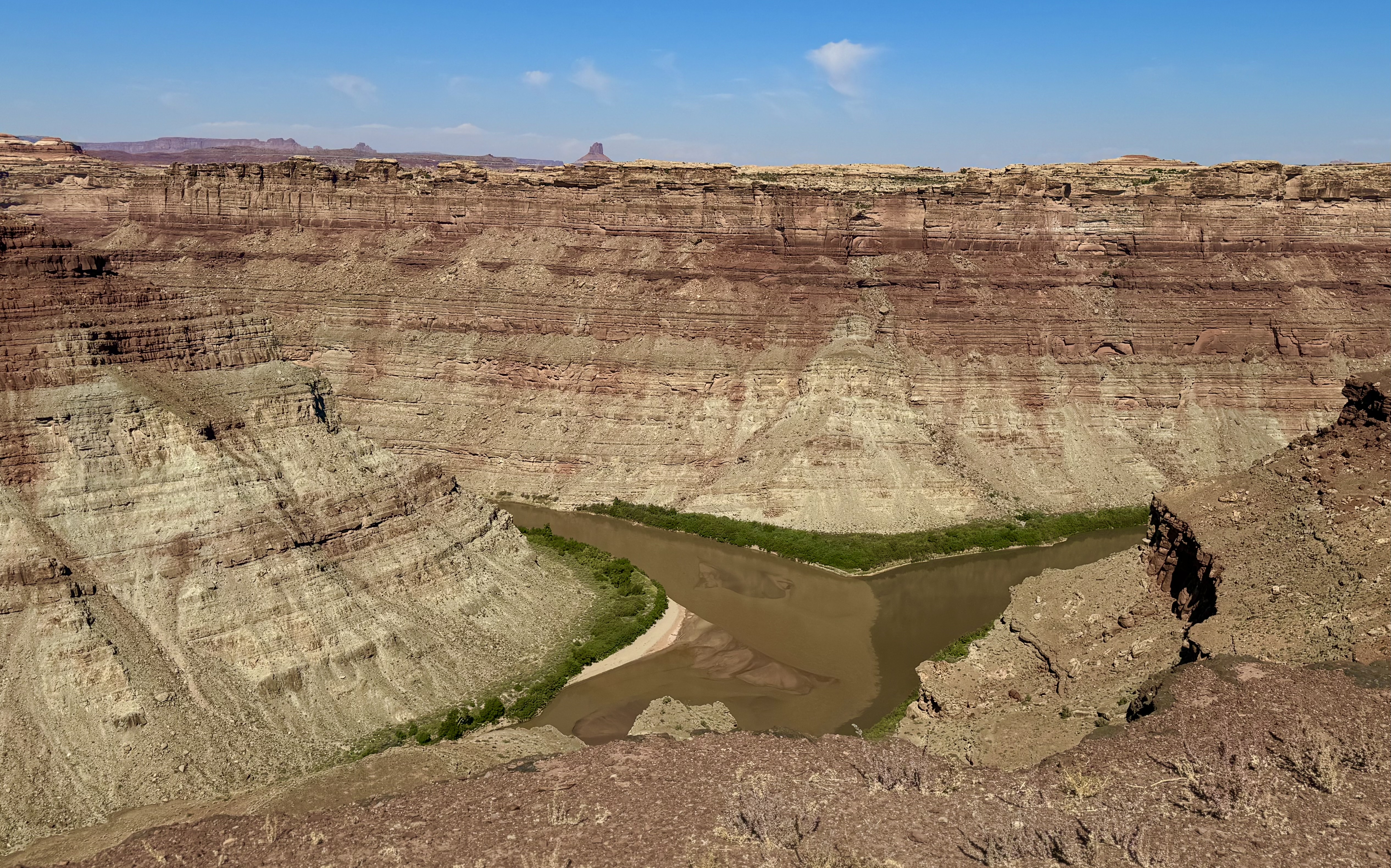The confluence where the Green and Colorado Rivers join in remote Canyonlands National Park, south of Moab, Utah. (Photo Dennis McKenna)
**Moab, Utah, October 2024** — Listening to America’s intrepid scout, Frank informed us, though he desired it with all of his heart, he could not make the 11.5-mile hike to and from the confluence of the Green and Colorado Rivers in Canyonlands National Park because he had a flareup of his smallpox. So apparently, the World Health Organization’s declaration that smallpox — once the scourge of hundreds of millions of people worldwide — had been eradicated was … er, imprecise. Or maybe Frank said diphtheria.
Dennis was game. I had suggested the hike. I had done it once before long ago. Turns out it was very long ago. Our colleague Dr. Ryan, the Southwest archaeologist, left Dennis and me in her dust in both directions. Showoff! At least she always stayed within sight so we wouldn’t get lost along the way.
## **We were in the heart of Edward Abbey Country**
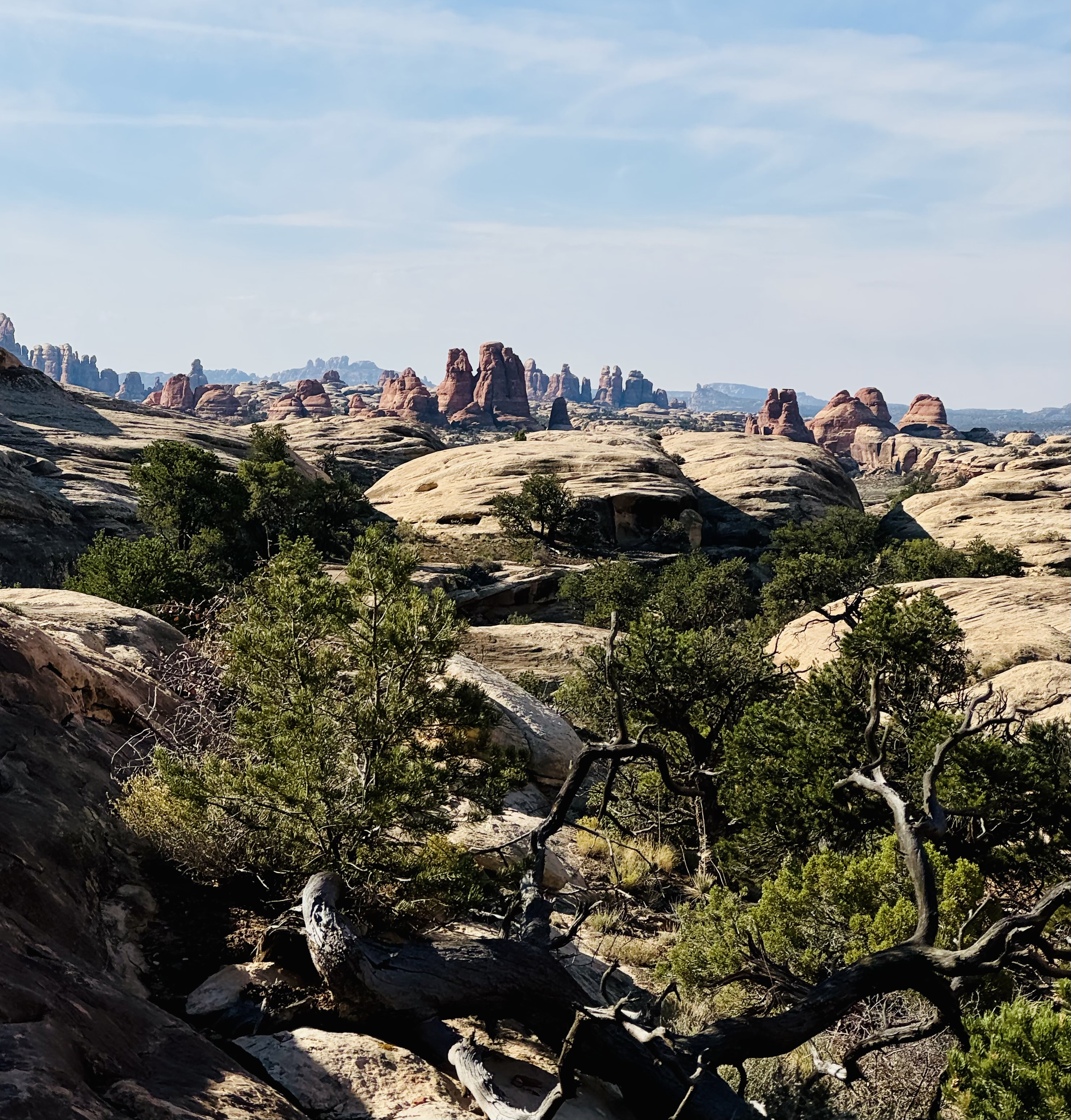Looking out over the Needles of Canyonlands National Park. (Photo Dennis McKenna)
It’s billed as a strenuous hike. It was 90 degrees or so. We started early to avoid the worst of the heat, at least on the way out. It’s only 5 miles from the parking lot to the confluence, but there is much up and down, including one ladder, and not a little scrambling here and there. You must pass through several starter canyons before getting to the main event. We stopped every 30 minutes or so to drink water and exclaim over the unbelievably beautiful views in every direction. We looked out on the Needles and the Maze, distant mountains (the La Sals), and a jumble of seemingly impenetrable canyons (with or without water) in every direction.
By the time we finally got to the confluence, we were ready for lunch. Because this was an Edward Abbey reconnaissance trip, each of us, independently and without mutual consultation, had brought Abbey snacks: almonds, walnuts, and raisins. I wish I had brought a small bottle of wine to celebrate, but I wasn’t sure my body would hold up against 8 additional ounces of pack weight! We sat in the shadow of a huge freestanding boulder that was uneasily perched on the pink sandstone just over our heads.
The confluence of the Green and the Colorado is the very definition of the sublime — something so outside the norm, so nearly unbelievable as a feature of nature, so deep a chasm, with two similar but distinguishable rivers coming together in the middle of nowhere, each having incised a canyon more than 1,000 feet into the Earth. The two canyons look identical from above, but the Green River is green (or greenish), and the Colorado River is reddish. For a couple of hundred yards downstream from the confluence they seem reluctant to comingle. But then they do.
(L to R) Dennis McKenna, archeologist Dr. Susan Ryan, and Clay at the Green and Colorado River confluence overlook.
It’s one of America’s great destination hikes. Its visual greatness is all the greater because you have to earn it with your legs and back. There is a jeep trail that you can opt for, but we looked on that with derision and contempt. At one point, the hiking trail intersects the jeep trail, and I thought I glimpsed Frank riding in a commercial jeep on what seemed like a throne, clutching a blended margarita (with a drink umbrella) in one hand and a Chinese folding fan in the other. I cannot be sure it was Frank, through the mental cloud of my heat stroke, but he was evasive later at dinner.
## **John Wesley Powell**
As we sat on the lip of the abyss, I thought of one of my heroes, John Wesley Powell (1834-1902). In 1869, with nine other frontier types, Powell floated the Green and Colorado Rivers in four, then three, wooden dories from Green River Station in Wyoming all the way out to the other side of the Grand Canyon. So far as we know, he was the first person ever to do so. The explorers were lucky to survive — it wasn’t the river that got them, but near-starvation. And fear. Three of his men deserted (a slightly too strong term) at what is now known as Separation Rapids just a day or two before they would have come out of the Grand Canyon at Grand Wash Cliffs. On the basis of this great adventure, Powell gained national fame and, more importantly, political and cultural influence. He went on to be an agrarian and hydrological revolutionary who tried to save the West from the interstate water wars that have never ceased to pit the lower Colorado River states (Arizona, Nevada, and California) against the upper (Wyoming, Colorado, New Mexico, and Utah); and California against everyone else. Water, said the author of *Cadillac Desert*, Marc Reisner, tends to flow uphill toward money.
Powell’s 1878 *Arid Lands Report* warned that water would be the most significant challenge to the development of America west of the Hundredth Meridian, which bifurcates the Great Plains from North Dakota down to the Gulf of Mexico. Nobody listened. Powell advocated what he called “watershed commonwealths” in the West so that the great rivers (the Colorado, the Yellowstone, the Snake, the Missouri) could be managed as integrated bioregions. His final warning came at the International Irrigation Conference in Los Angeles in 1893. Gentlemen, he said, “When all the rivers are used, when all the creeks in the ravines, when all the brooks, when all the springs are used … there is still not sufficient water to irrigate all this arid land.”
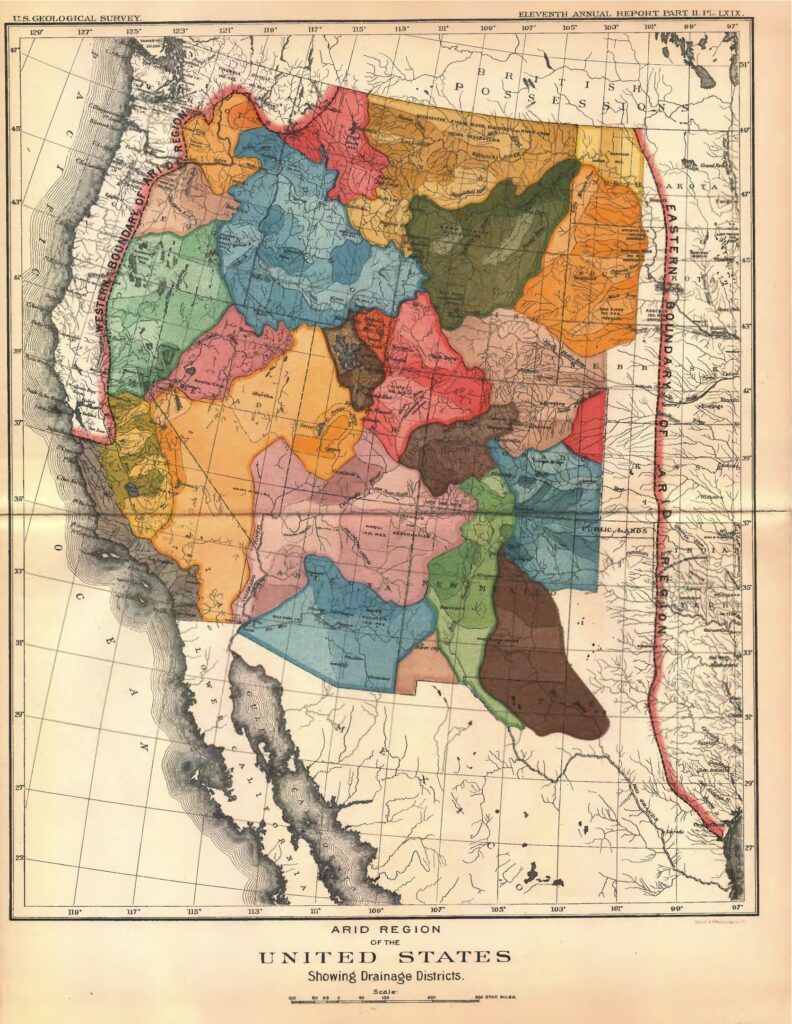
Powell was booed. They shrugged off the concerns of the wisest man in their midst. The water conflicts that are now roiling the West in the face of prolonged drought and global climate change are precisely what he was trying to help us avoid.
The Powell Expedition reached the confluence of the Green and Colorado on July 16, 1869, 53 days into their 99-day journey. By now their food supply was already running out. Powell wrote, “Soon I see \[Billy\] Hawkins down by the boat, taking up the sextant, rather a strange proceeding for him, and I question him concerning it. He replies that he is trying to find the latitude and longitude of the nearest pie.”
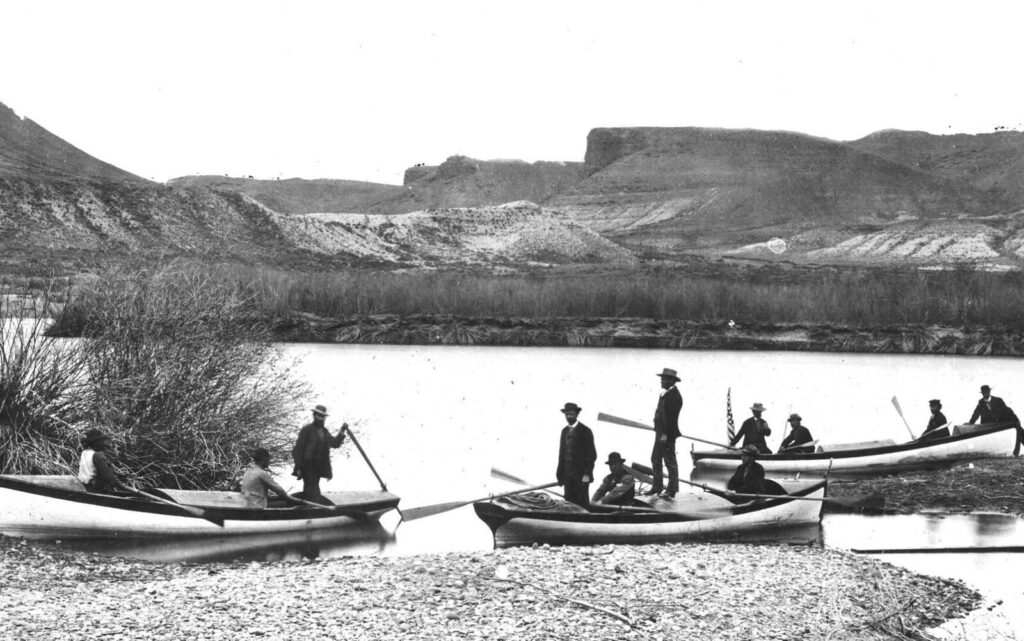The Powell Expedition preparing to embark.
As we sat in awe on the brink of the canyons, I recited John Wesley Powell’s great passage about the moment his expedition first breached the portal of the Grand Canyon itself:
***“August 13 — We are now ready to start on our way down the Great Unknown. Our boats, tied to a common stake, chafe each other as they are tossed by the fretful river. They ride high and buoyant, for their loads are lighter than we could desire. We have but a month’s rations remaining. The flour has been resifted through the mosquito-net sieve; the spoiled bacon has been dried and the worst of it boiled; the few pounds of dried apples have been spread in the sun and re-shrunken to their normal bulk.***
***“******The sugar has all melted and gone on its way down the river. But we have a large sack of coffee. The lightening of the boats has this advantage; they will ride the waves better and we shall have but little to carry when we make a portage.***
***“******We are three-quarters of a mile in the depths of the Earth and the great river shrinks into insignificance as it dashes its angry waves against the walls and cliffs that rise to the world above; they are but puny ripples, and we but pigmies, running up and down the sands, or lost among the boulders.***
***“******We have an unknown distance yet to run, an unknown river yet to explore. What falls there are, we know not; what rocks beset the channels, we know not; what walls rise over the river, we know not.***
***“******Ah, well! We may conjecture many things. The men talk as cheerfully as ever; jests are bandied about freely this morning; but to me the cheer is somber and the jests are ghastly.”***
I recited the whole darn thing from memory while my companions sipped water and gazed into the chasm and the seemingly diminutive rivers at the bottom. I was proud of myself. I thought my friends would look at me with deep admiration, with a new sense of respect. I thought they would now regard me as a humanities hero who could recite just the right passage at just the right moment. But they just looked at me with the expression, “Yeah, what have you done lately?” or “Oh, yeah, what else you got?” or “Yeah, I’d cut that by 200 words.” But if Frank the Scout had recited the Pledge of Allegiance or the Lord’s Prayer at the confluence, they would have given him the Nobel Prize. And Frank was having an extended afternoon nap back in Moab. Such is the life of the humanities scholar. I’m pretty sure Dr. R had dozed off halfway through my recitation.
We all would have liked to have camped there as close to the edge as we dared to see the canyon at sunset and the gloaming. To burrow into sleeping bags as the temperature dropped after midnight. We wanted to wait to see the stars as far from manmade light as possible. Think of the confluence at first light, when someone gets up to brew some French press coffee. One of us, I won’t say which, has some pretty high coffee standards.
But no. We turned back.
Canyonlands National Park. (Photo Susan Ryan)
In that whole seven-hour day in one of America’s great national parks, we saw exactly three other people on the trail. When we read in the press that the national parks are overwhelmed with visitation, that we are loving the national parks to death, we need to be careful about over-generalization. I’ve been in eight national parks since the end of April 2024, and only Yellowstone was overcrowded. In Yellowstone, someone sees a bear or what they think might be a bear, so far away that, in some sense, it no longer matters. Within minutes there is a 75-car traffic jam. Rangers come to get things moving. They represent a kinder, gentler version of the New York traffic cop. People huddle together to share binoculars, and someone says, “Look, it moved its paw. I think that was its paw.”
But Arches National Park (Abbey’s Park) was not overcrowded, though we had to apply for a timed entry on a weekday October afternoon. Canyonlands NP was empty, at least where we explored it. (There is a more popular vista near Moab.) Then Petrified Forest NP, which I explored after my friends returned to their lives, was empty. Part of our advantage was that we were willing (except for Frank, who said he had a rare triple toothache), to hike off concrete and asphalt in search of beauty and solitude. Most people who visit the national parks want to stay on asphalt. My father was such a person. So was my mother, but she was too proud to admit it. If you are willing to hike on the unmediated surface of the earth, you can have almost every national park, more or less, for yourself. We’d be healthier, saner people if our prevailing asphalt-only predilection did not exist (I’m channeling my inner Abbey here). Still, it has the unintended effect of giving those willing and able to hike on trails a true advantage. If one prime purpose of the national parks is to permit weary, overworked, overstimulated, and harried Americans the opportunity to slow things down, unhitch the electronic tether, and refresh the human spirit in nature, it’s all right there for those who hit the trails.
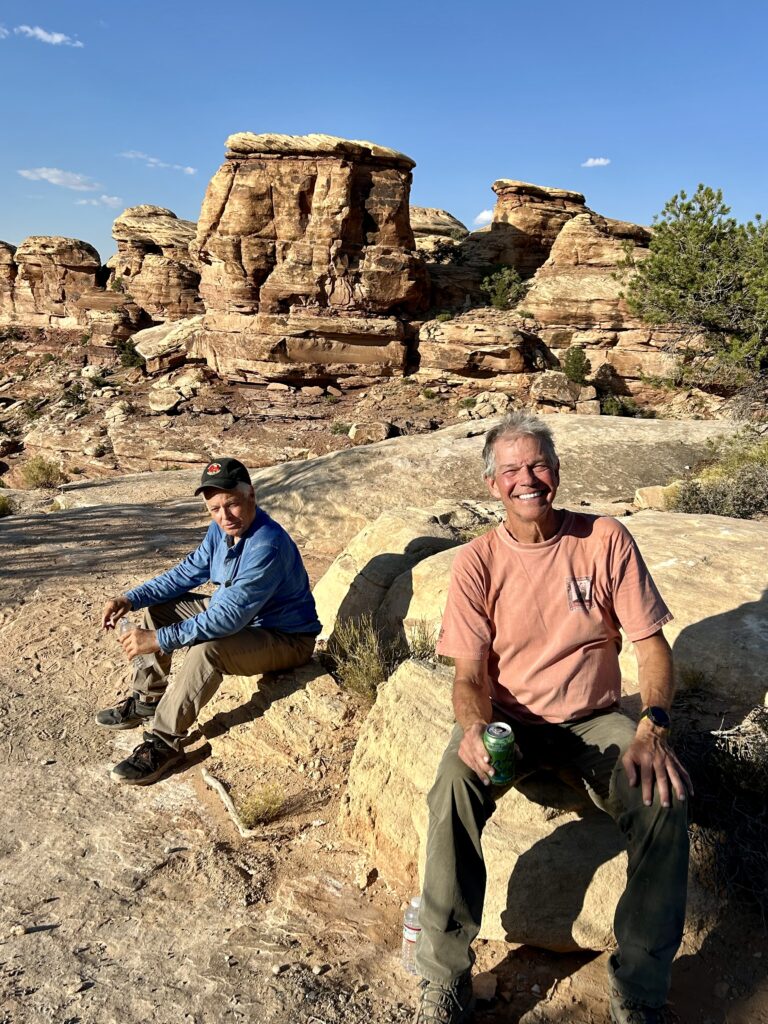(Photo Susan Ryan)
The return hike was more taxing than the outbound. It was hot now, among other things, and our legs were heavy. Well, the legs of two of us. We took more breaks this time. There was some inward whimpering, at least in my heat-addled cranium. At one point I reckoned it would have just been easier to throw myself over the lip right into the abyss and get it over with. My two colleagues sensed this and said they would regard it as a great inconvenience if they had to call in a medivac or a coroner. So I struggled out on my own recognizance.
When we got to the vehicle where Dennis had left a large cooler full of ice and cold drinks, I felt like Chevy Chase in National Lampoon’s *Family Vacation*, when — after hiking all day alone across the desert in great heat — he says, in that neurotic Chevy Chase schtick language, “Hey, anyone want a pop! How ’bout a pop!!”
We drove back to Moab in silence. It was an amazing, deeply satisfying day. I tried to lie down in the back seat, but my leg cramps kept tossing me to the top of the interior ceiling. When we got to Moab, Frank was waiting at a corner dine-outside restaurant that had been recommended to us. He said he had stood in line at great personal sacrifice for three hours to secure us a table. Hungry and thirsty as we were, we chose to believe him. Frank said at dinner, “To eat or not to eat, that is the question,” my companions nearly carried him on their shoulders back to the car.
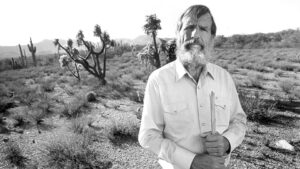Edward Abbey.
Edward Abbey’s *Desert Solitaire* is a brilliant, crabby anthem to an untrammeled West. He was appalled by industrial tourism back in 1968. Imagine what he would have to rail about now. And yet we friends had shared an unforgettable experience in just the way Abbey would have suggested: on foot, with enough body strain to make it interesting, with a lively sense of history and a renewed sense of wonder.
A perfect day in the outback of America.
---
[Wyoming](https://ltamerica.org/tag/wyoming/ "4 topics")[paintings](https://ltamerica.org/tag/paintings/ "0 topics")[Texas](https://ltamerica.org/tag/texas/ "4 topics")[Road Trips](https://ltamerica.org/tag/road-trips/ "18 topics")[South Carolina](https://ltamerica.org/tag/south-carolina/ "1 topics")[U.S. Constitution](https://ltamerica.org/tag/u-s-constitution/ "1 topics")[Space Exploration](https://ltamerica.org/tag/space-exploration/ "8 topics")[Reading](https://ltamerica.org/tag/reading/ "1 topics")[Theodore Roosevelt](https://ltamerica.org/tag/theodore-roosevelt/ "16 topics")[South Dakota](https://ltamerica.org/tag/south-dakota/ "16 topics")[New England](https://ltamerica.org/tag/new-england/ "1 topics")[north daktoa](https://ltamerica.org/tag/north-daktoa/ "0 topics")[Washington](https://ltamerica.org/tag/washington/ "2 topics")[The Constitution](https://ltamerica.org/tag/the-constitution/ "1 topics")[U.S. Presidents](https://ltamerica.org/tag/u-s-presidents/ "71 topics")[Thoreau](https://ltamerica.org/tag/thoreau/ "5 topics")[Utah](https://ltamerica.org/tag/utah/ "11 topics")[Video](https://ltamerica.org/tag/video/ "51 topics")[Oregon](https://ltamerica.org/tag/oregon/ "4 topics")[Walden](https://ltamerica.org/tag/walden/ "1 topics")[Rome](https://ltamerica.org/tag/rome/ "1 topics")[Water in the West](https://ltamerica.org/tag/water-in-the-west/ "24 topics")[State Parks](https://ltamerica.org/tag/state-parks/ "2 topics")[Republic](https://ltamerica.org/tag/republic/ "0 topics")[Oppenheimer](https://ltamerica.org/tag/oppenheimer/ "1 topics")[Virginia](https://ltamerica.org/tag/virginia/ "7 topics")[Podcast](https://ltamerica.org/tag/podcast/ "1 topics")[New York](https://ltamerica.org/tag/new-york/ "8 topics")[Poetry](https://ltamerica.org/tag/poetry/ "1 topics")[New Mexico](https://ltamerica.org/tag/new-mexico/ "3 topics")[Pennsylvania](https://ltamerica.org/tag/pennsylvania/ "1 topics")[Republics](https://ltamerica.org/tag/republics/ "1 topics")[North Carolina](https://ltamerica.org/tag/north-carolina/ "3 topics")[Travel](https://ltamerica.org/tag/travel/ "1 topics")[Tennessee](https://ltamerica.org/tag/tennessee/ "1 topics")[Rivers](https://ltamerica.org/tag/rivers/ "3 topics")[Steinbeck Travels](https://ltamerica.org/tag/steinbeck-travels/ "75 topics")[North Dakota](https://ltamerica.org/tag/north-dakota/ "53 topics")[Oppenheim](https://ltamerica.org/tag/oppenheim/ "0 topics")[Ohio](https://ltamerica.org/tag/ohio/ "2 topics")[Wisconsin](https://ltamerica.org/tag/wisconsin/ "0 topics")[Thomas Jefferson](https://ltamerica.org/tag/thomas-jefferson/ "34 topics")[Sports](https://ltamerica.org/tag/sports/ "2 topics")[William Shirer](https://ltamerica.org/tag/william-shirer/ "1 topics")[Vermont](https://ltamerica.org/tag/vermont/ "1 topics")
**Categories:** Features
**Tags:** America at 250, National Parks, Steinbeck Travels, Utah, Water in the West
---
### [Clay Visits Thoreau's Walden Cabin — Video Dispatch](https://ltamerica.org/clay-visits-waldens-cabin-video-dispatch/)
**Published:** July 27, 2024
**Author:** Editor
**Excerpt:** As he travels through New England, Clay stops at Walden Pond outside of Concord, Massachusetts, to visit the original site of the 10 by 15 foot cabin immortalized in Henry David Thoreau’s American classic Walden.
**Content:**
## As he travels through New England, Clay stops at Walden Pond outside of Concord, Massachusetts, to visit the original site of the 10 by 15 foot cabin immortalized in Henry David Thoreau’s American classic *Walden*.
---
## ***Discover more on these topics at Listening to America***
[William Shirer](https://ltamerica.org/tag/william-shirer/ "1 topics")[New York](https://ltamerica.org/tag/new-york/ "8 topics")[New England](https://ltamerica.org/tag/new-england/ "1 topics")[Poetry](https://ltamerica.org/tag/poetry/ "1 topics")[Texas](https://ltamerica.org/tag/texas/ "4 topics")[Video](https://ltamerica.org/tag/video/ "51 topics")[Sports](https://ltamerica.org/tag/sports/ "2 topics")[Rivers](https://ltamerica.org/tag/rivers/ "3 topics")[Tennessee](https://ltamerica.org/tag/tennessee/ "1 topics")[Republic](https://ltamerica.org/tag/republic/ "0 topics")[U.S. Presidents](https://ltamerica.org/tag/u-s-presidents/ "71 topics")[Wyoming](https://ltamerica.org/tag/wyoming/ "4 topics")[Ohio](https://ltamerica.org/tag/ohio/ "2 topics")[Vermont](https://ltamerica.org/tag/vermont/ "1 topics")[North Dakota](https://ltamerica.org/tag/north-dakota/ "53 topics")[Washington](https://ltamerica.org/tag/washington/ "2 topics")[Theodore Roosevelt](https://ltamerica.org/tag/theodore-roosevelt/ "16 topics")[Rome](https://ltamerica.org/tag/rome/ "1 topics")[Thomas Jefferson](https://ltamerica.org/tag/thomas-jefferson/ "34 topics")[Travel](https://ltamerica.org/tag/travel/ "1 topics")[Oregon](https://ltamerica.org/tag/oregon/ "4 topics")[North Carolina](https://ltamerica.org/tag/north-carolina/ "3 topics")[Oppenheimer](https://ltamerica.org/tag/oppenheimer/ "1 topics")[Reading](https://ltamerica.org/tag/reading/ "1 topics")[Republics](https://ltamerica.org/tag/republics/ "1 topics")[Steinbeck Travels](https://ltamerica.org/tag/steinbeck-travels/ "75 topics")[South Dakota](https://ltamerica.org/tag/south-dakota/ "16 topics")[Utah](https://ltamerica.org/tag/utah/ "11 topics")[Wisconsin](https://ltamerica.org/tag/wisconsin/ "0 topics")[Water in the West](https://ltamerica.org/tag/water-in-the-west/ "24 topics")[Walden](https://ltamerica.org/tag/walden/ "1 topics")[The Constitution](https://ltamerica.org/tag/the-constitution/ "1 topics")[Road Trips](https://ltamerica.org/tag/road-trips/ "18 topics")[Pennsylvania](https://ltamerica.org/tag/pennsylvania/ "1 topics")[Oppenheim](https://ltamerica.org/tag/oppenheim/ "0 topics")[South Carolina](https://ltamerica.org/tag/south-carolina/ "1 topics")[U.S. Constitution](https://ltamerica.org/tag/u-s-constitution/ "1 topics")[Space Exploration](https://ltamerica.org/tag/space-exploration/ "8 topics")[Podcast](https://ltamerica.org/tag/podcast/ "1 topics")[north daktoa](https://ltamerica.org/tag/north-daktoa/ "0 topics")[Virginia](https://ltamerica.org/tag/virginia/ "7 topics")[Thoreau](https://ltamerica.org/tag/thoreau/ "5 topics")[State Parks](https://ltamerica.org/tag/state-parks/ "2 topics")[paintings](https://ltamerica.org/tag/paintings/ "0 topics")[New Mexico](https://ltamerica.org/tag/new-mexico/ "3 topics")
**Categories:** Dispatches from the Road
**Tags:** Books, Massachusetts, Steinbeck Travels, Video
---
### [John Steinbeck's Beloved Monterey Bay — Video Dispatch](https://ltamerica.org/john-steinbecks-beloved-monterey-bay-video-dispatch/)
**Published:** November 11, 2024
**Author:** Editor
**Excerpt:** As Clay traveled across the country, he stopped at John Steinbeck’s beloved Monterey Bay, home of the author’s great friend Ed Ricketts and the inspiration for many unforgettable characters immortalized in his novels.
**Content:**
As Clay traveled across the country, he stopped at John Steinbeck’s beloved Monterey Bay, home of the author’s great friend Ed Ricketts and the inspiration for many unforgettable characters immortalized in his novels.
---
***Over the next few months, Clay is shadowing Steinbeck’s 10,000-mile trek around the USA (and making a few detours of his own). Clay’s expedition is a central part of LTA’s big initiative to explore the country and take the pulse of America as it approaches its 250th birthday. Be sure to follow Clay’s adventures*** [***here***](https://ltamerica.org/tag/steinbeck-travels/) ***and on*** [***Facebook***](https://www.facebook.com/LTAmerica) ***— and*** [***subscribe to our newsletter***](https://ltamerica.org/newsletter/)**.**
**Categories:** Dispatches from the Road
**Tags:** Books, California, John Steinbeck, Steinbeck Travels, Video
---
### [Touring Glendive, Montana's "Biblical History" Dinosaur and Fossil Museum — Video Dispatch ](https://ltamerica.org/touring-glendive-montanas-biblical-history-dinosaur-and-fossil-museum-video-dispatch/)
**Published:** November 4, 2024
**Author:** Editor
**Excerpt:** The Dinosaur and Fossil Museum in eastern Montana presents its detailed fossil displays in the context of “Biblical history.”
**Content:**
Clay visited the Dinosaur and Fossil Museum in eastern Montana this summer. Focusing on something called Creation Science, the museum presents its exhibits in the context of “Biblical history.” It features detailed fossil displays, exhibits explaining the age of the Earth through a biblical lens, and an impressive collection of historical bibles. You can also read Clay’s article about his visit [here](https://ltamerica.org/clay-visits-glendive-montanas-dinosaur-and-fossil-museum/).
---
## ***Discover more on these topics at Listening to America***
[State Parks](https://ltamerica.org/tag/state-parks/ "2 topics")[Republic](https://ltamerica.org/tag/republic/ "0 topics")[Oppenheimer](https://ltamerica.org/tag/oppenheimer/ "1 topics")[Thoreau](https://ltamerica.org/tag/thoreau/ "5 topics")[Theodore Roosevelt](https://ltamerica.org/tag/theodore-roosevelt/ "16 topics")[New Mexico](https://ltamerica.org/tag/new-mexico/ "3 topics")[North Carolina](https://ltamerica.org/tag/north-carolina/ "3 topics")[Pennsylvania](https://ltamerica.org/tag/pennsylvania/ "1 topics")[Sports](https://ltamerica.org/tag/sports/ "2 topics")[South Carolina](https://ltamerica.org/tag/south-carolina/ "1 topics")[north daktoa](https://ltamerica.org/tag/north-daktoa/ "0 topics")[Oregon](https://ltamerica.org/tag/oregon/ "4 topics")[William Shirer](https://ltamerica.org/tag/william-shirer/ "1 topics")[Reading](https://ltamerica.org/tag/reading/ "1 topics")[Ohio](https://ltamerica.org/tag/ohio/ "2 topics")[Rome](https://ltamerica.org/tag/rome/ "1 topics")[U.S. Presidents](https://ltamerica.org/tag/u-s-presidents/ "71 topics")[New York](https://ltamerica.org/tag/new-york/ "8 topics")[Washington](https://ltamerica.org/tag/washington/ "2 topics")[Poetry](https://ltamerica.org/tag/poetry/ "1 topics")[Republics](https://ltamerica.org/tag/republics/ "1 topics")[Video](https://ltamerica.org/tag/video/ "51 topics")[Virginia](https://ltamerica.org/tag/virginia/ "7 topics")[paintings](https://ltamerica.org/tag/paintings/ "0 topics")[Water in the West](https://ltamerica.org/tag/water-in-the-west/ "24 topics")[The Constitution](https://ltamerica.org/tag/the-constitution/ "1 topics")[Road Trips](https://ltamerica.org/tag/road-trips/ "18 topics")[Utah](https://ltamerica.org/tag/utah/ "11 topics")[Rivers](https://ltamerica.org/tag/rivers/ "3 topics")[Wyoming](https://ltamerica.org/tag/wyoming/ "4 topics")[North Dakota](https://ltamerica.org/tag/north-dakota/ "53 topics")[Steinbeck Travels](https://ltamerica.org/tag/steinbeck-travels/ "75 topics")[Space Exploration](https://ltamerica.org/tag/space-exploration/ "8 topics")[South Dakota](https://ltamerica.org/tag/south-dakota/ "16 topics")[Podcast](https://ltamerica.org/tag/podcast/ "1 topics")[Texas](https://ltamerica.org/tag/texas/ "4 topics")[Wisconsin](https://ltamerica.org/tag/wisconsin/ "0 topics")[U.S. Constitution](https://ltamerica.org/tag/u-s-constitution/ "1 topics")[Walden](https://ltamerica.org/tag/walden/ "1 topics")[Thomas Jefferson](https://ltamerica.org/tag/thomas-jefferson/ "34 topics")[Oppenheim](https://ltamerica.org/tag/oppenheim/ "0 topics")[Vermont](https://ltamerica.org/tag/vermont/ "1 topics")[Travel](https://ltamerica.org/tag/travel/ "1 topics")[New England](https://ltamerica.org/tag/new-england/ "1 topics")[Tennessee](https://ltamerica.org/tag/tennessee/ "1 topics")
**Categories:** Dispatches from the Road
**Tags:** America at 250, John Steinbeck, Montana, Steinbeck Travels, Video
---
### [Autumn and Joy on the Open Road](https://ltamerica.org/autumn-and-joy-on-the-open-road/)
**Published:** October 28, 2024
**Author:** Clay Jenkinson
**Excerpt:** There is nothing quite like the magic of traveling America in the fall.
**Content:**
## There is nothing quite like the magic of traveling America in the fall.
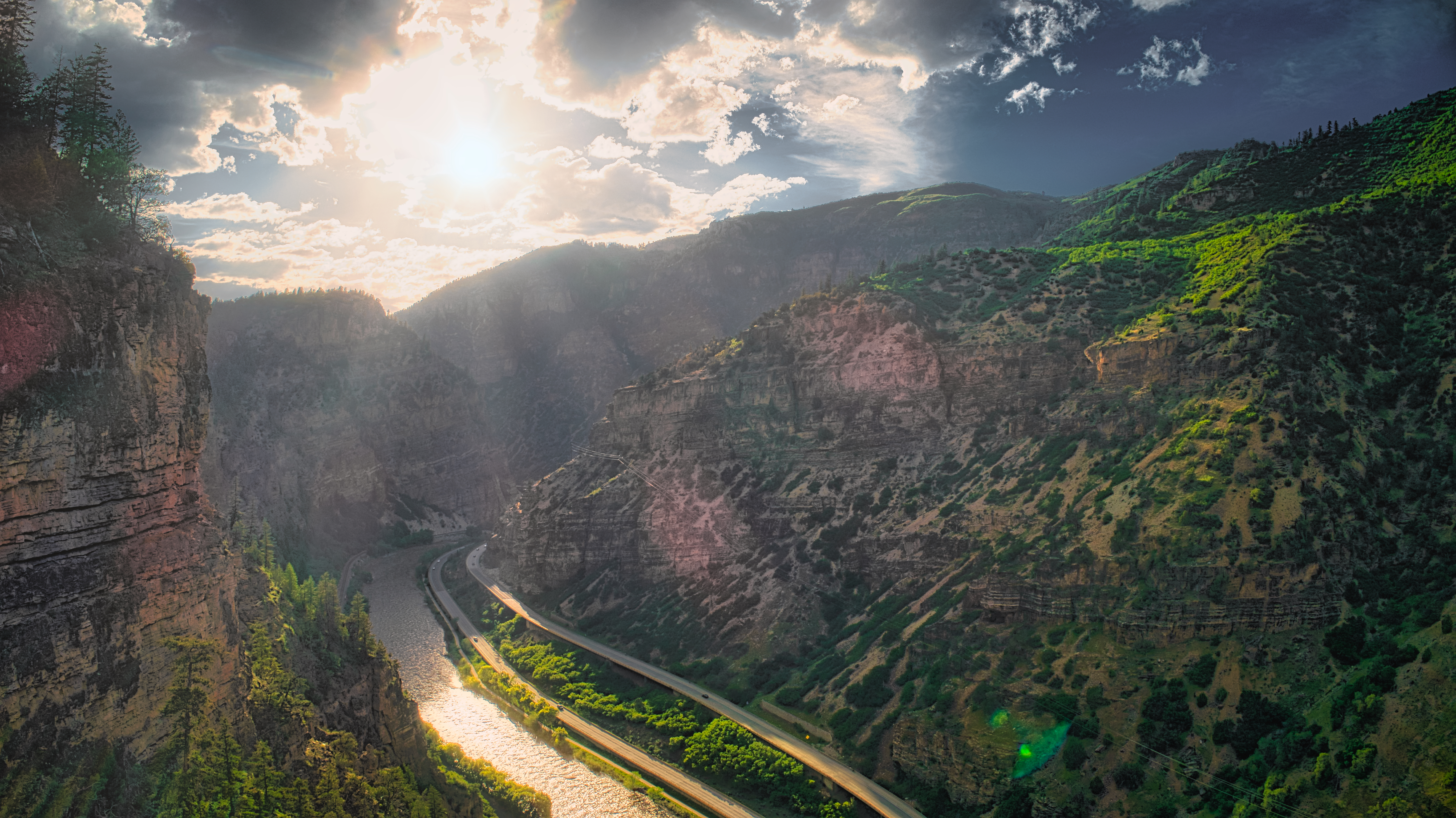The Colorado River and I-70 wander through Glenwood Canyon in Western Colorado. (Shutterstock)
The first thing I noticed upon beginning Phase Three of my [*Travels with Charley* tour of America](https://ltamerica.org/tag/steinbeck-travels/) was the light and temperature of autumn. The summer heat has broken. Now, every morning at about 4 a.m., I have to fire up my Airstream gas heater. It’s heavenly to wake up cold, pull the covers up tight, look out for first light, and want to welcome a guest in the morning who knows how to brew French drip in a travel trailer.
If I were to start this adventure over again, I might begin my journey in autumn, like Steinbeck. He started his Search for America on September 23, 1960. The children are back in school. The RV parks are comparatively empty. The roads are less congested with frantic Americans trying to force-feed a family auto vacation in the 21st century, everyone but the driver working their electronic devices. It gets dark earlier now and stays dark later. Since I refuse to turn on the onboard television system, even during the MLB playoffs, I go to bed earlier than at the height of the summer. The other night, I woke up at 1:30 a.m. thinking it was already morning. I was able to drift off again, but I had already slept almost six hours. I love knowing my linens. And I love my daily onboard shower! The miniature life makes the smallest things satisfying.
On the first day of Phase Three, I stopped for the night at my beloved Devils Tower. It’s a mind-blowing place. It’s the first of our National Monuments, Theodore Roosevelt’s first of the 18 he designated under the 1906 National Monuments and Antiquities Act. A week or so later, I visited Roosevelt’s second National Monument (December 1906), now Petrified Forest National Park.
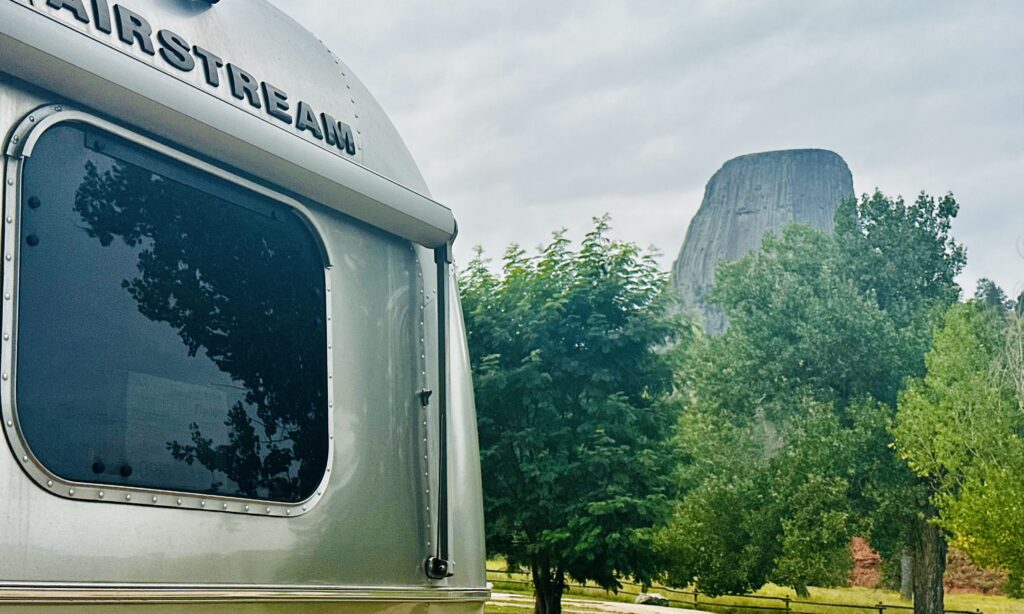Clay’s Airstream at Devils Tower National Monument. (Photo Clay Jenkinson)
I was sitting at the picnic table reading under the shadow of Devils Tower when three men walked up to say they had looked up Listening to America (thanks to the Airstream logo) and wanted to learn more. We had a glass or two of wine together in the cool of the evening as we talked about the coming election, the idea of America, and where we seem to be headed. Eventually, they invited me to dinner in their gazillion-dollar bus-sized RV. They assured me that their smoked steaks were the best in the world. The steaks were good, and the wine superb, but their RV was so large, with four big slide-outs, and so luxurious that it didn’t feel like camping at all. There were couches and BarcaLoungers in every direction, a vast entertainment complex, several bathrooms, a complete kitchen, laundry machines, wallpaper, and a front end that looked like the bridge on the Starship Enterprise. I kept looking for the hot tub and the workout room. In short, the sheer splendidness of the RV took the charm of simplicity and roughing it right out of the equation. We could have been anywhere. We certainly weren’t gazing up at Devils Tower.
The second night, I returned to the scene of the crime at the End of Life RV Park in the Cache la Poudre Valley west of Fort Collins, Colorado. After my [near-death experience](https://ltamerica.org/fear-and-loathing-in-northern-colorado/) with the two women serial killers six weeks ago, I don’t know what possessed me to return, but I did, and I’m happy to announce that I survived yet again. By the skin of my teeth.
From Vail, where I had the honor of[ interviewing the great David Gregory](https://vailsymposium.org/events/the-presidential-election-and-media-responsibility-an-evening-with-david-gregory/), the moderator of *Meet the Press* from 2008 to 2014, I drove into Utah in tandem with my friend Dennis. We made our way by the enchanted back road Utah 128 from Cisco to Moab, working the s-curves of the Colorado River.
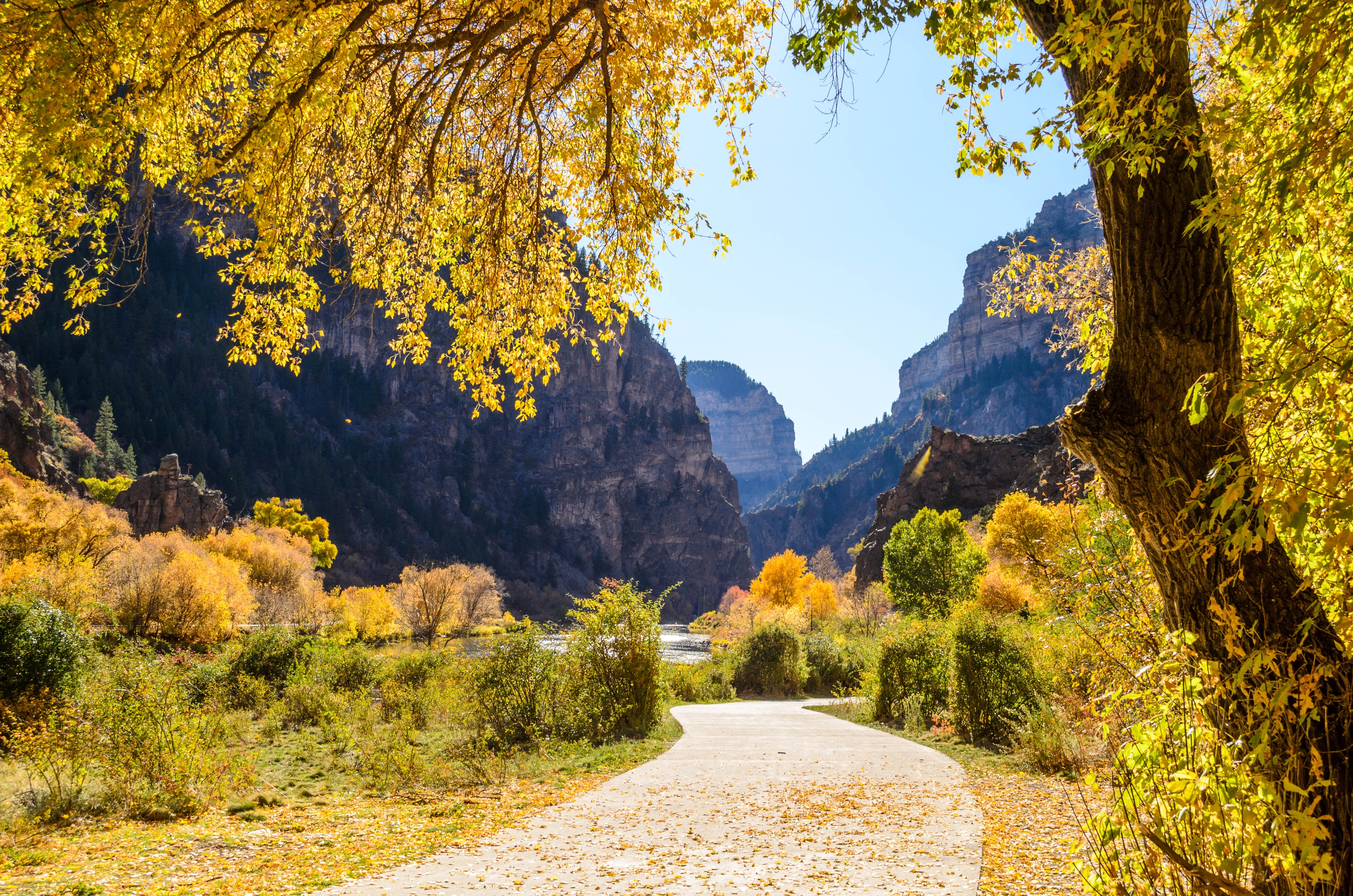Glenwood Canyon in the Fall. (Shutterstock)
But we could not get to Utah without driving through Glenwood Canyon, 154 miles west of Denver. It’s 12.5 miles long. It was carved millions of years ago by the Colorado River, which begins in Rocky Mountain National Park (La Poudre Pass) and disembogues (at least a trickle) into the Sea of Cortez (Gulf of California), some 1,450 miles south and west. In the course of that amazing journey, the Rio Colorado drops about two miles (10,184 feet) and carves out at least 10 canyons (depending on how you count), including, of course, the Grand Canyon, one of the top 10 natural wonders of the world. When you think of the canyons of Colorado, you don’t think of Glenwood Canyon, but it is, in its own way, as spectacular as any in North America, and you can get much closer to the dynamics of the river because the road goes through just a couple of hundred feet above water level. Remember, when Francisco Vazquez de Coronado’s soldiers first glimpsed the Colorado River from the South Rim, they reckoned, they reckoned it was no more than six feet across!
As I drove slowly through the Glenwood Canyon (for the umpteenth time), at about 50 miles per hour, on one of the most beautiful highway engineering achievements in American history, I remembered driving it back in the 1980s, when the engineers had not yet figured out how to thread interstate highway (I-70) through so narrow and precipitous a canyon. After a two-year absence from the magnificent landscapes of America, I had flown from London to LAX, interviewed for a job at a southern California college, and — wanting to surprise my parents up near the Canadian border — rented a one-way Avis car (at crippling expense) and drove from L.A. to western North Dakota. Two things happened on that improbable journey that I will never forget.
First, on March 12-13, 1989, North America experienced one of the greatest northern lights displays ever. I was driving across Utah after midnight when suddenly the aurora began to dance the sky; beet red columns of light intermingled with green and blue and an eerie white from the dome of the sky almost to the horizon. The fluorescent light occupied just short of all 360 degrees of a treeless desert. It was like being on some imaginary other planet. Apparently, millions of Americans believed it was the apocalypse or a nuclear attack. It was seen in about half the states and as far south as Guatemala. The phone banks of police stations, the FBI, and the Defense Department were overwhelmed with urgent calls. It was one of the great thrills of my life. I stopped and stood on the side of the endless ribbon of black asphalt with the yellow center stripes just barely glimmering for miles in both directions. My sense of wonder got a vital transfusion that night somewhere near Vernal, Utah.
Later, no longer able to keep my eyes open, I stopped to sleep at an unofficial wayside on the old, narrow, two-lane highway, U.S. 6. The Colorado River was raging just 100 feet away. A railroad line followed the curvature of the river, and freighters sauntered through at careful speeds, thrumming their way west. It would be nearly impossible to be more hemmed in by the great canyon. You never sleep well in such situations, of course. It was a big 80s gas-guzzling car, four-door, brown, with a Mafia-sized trunk. I climbed over into the back seat and used my jacket for a pillow. Fitful sleep, mostly dozing and abruptly waking up in a cold sweat, thinking I had fallen asleep at the wheel. I remember waking up at first light in this magical canyon, feeling all the immensity and romance of America as the light returned to the Earth. I got out and stretched. I drove a few dozen miles and found a diner where other bleary people were hunched over the counter sipping harsh black coffee. No conversation. Everyone looking straight ahead.
## **“Whither Goest Thou, America, in Thy Shiny Car in the Night?”**
My parents were pleased when I finally reached North Dakota, but they did not fall off the couch.
Interstate 70 through Glenwood Canyon is an engineering marvel. (Shutterstock)
Since 1992, I-70 through Glenwood Canyon is a secular miracle of engineering. I never drive through without appreciating how America sometimes gets things exactly right. The latticework of the lanes performing s-curves in elegant terraces, one on top of the other, letting what Jefferson called “Nature and nature’s God” determine the course of the highway, gives me hope. Even gross things like interstate highways can be poetry if the will is there. There is a bicycle path down along the river that I very much want to explore.
This time, I found myself acknowledging the engineering, of course, but giving most of my attention (aside from not veering out of my lane and ending my adventures!) to the canyon itself. It’s astonishing. The Colorado River is only about 125 miles old by the time it carves Glenwood Canyon. How? How did a river cut 2,000 feet through solid rock? I suppose the answer is a few cubic centimeters at a time for 3 million years. Talk about great engineering feats!
Question. Who was this Glenwood, after whom both Glenwood Springs and Glenwood Canyon are named? How is it that one of the most beautiful canyons of North America is named for some guy we have never heard of? I looked it up. Glenwood Springs, Colorado (at the west end of the canyon) is named for Glenwood Springs, Iowa, which was named (1852) for a Presbyterian minister named Glenn Wood, about whom nothing much is known. So, a white man who never visited Colorado gets a canyon? I hoped that some man named Peter or Biff Glenwood had discovered the nearby hot springs and envisioned a great national highway negotiating its way through someday. But no. Just a faraway Midwestern corn-planting Calvinist named Glenn Wood! If we are going to do some renaming in the American West, this would be a good nominee. I mean no disrespect to the living descendants of the Reverend Wood. But come on — what do even you know about him?
## “**A Society To Match the Scenery**.”
Wallace Stegner called for “a society to match the scenery.” Surely, there is still time in our weird national nomenclature (North Dakota towns are named for mid-level Northern Pacific Railroad executives) and in our social and economic habits to do better, to live the full potential of the world’s only America. Indeed, the West is not merely for extraction.
But these meditations were interrupted by something that appeared in my peripheral vision. I turned my head and saw out of the driver-side window a majestic bird flying along right in tandem down the river canyon. Actually, it was flapping like a much more sleek and elegant duck. I recognized it as a bald eagle — a juvenile bald eagle — and it was flying 250 feet to my left at no higher than the roof of my pickup.
I turned off the air conditioner and opened my window. Philosophical question: if you view the West through the windows of your car, can you say you have experienced the West? I’m not presuming the answer. One drive across the Mojave Desert in August or through Death Valley, I confess to revering the air conditioner.
I fantasized that it was a juvenile making its first great journey down the Colorado River into unknown territory, that — inexperienced at these things — it was having a little difficulty bucking the wind. I slowed down as much as I dared and tried not to get ahead of the eagle. To my utter amazement, it kept pace with my pickup for five full minutes. I’ve seen plenty of bald eagles over the years, but nothing so beautiful and moving as this. If it had been soaring in the full calm majesty of the mature eagle, working the thermals, it would not have been so powerfully compelling, or if I had seen it for 20 seconds and then passed on ahead with the hurrying interstate traffic.
This moment, this vignette, jumped right over my left brain and my consciousness and went straight to my heart and soul — pure wonder. I was graced by a sustained observation of one of the world’s prime creatures, exalted at the top of the chain of avian species all over the Earth. Grace comes when we don’t expect it: that’s how it’s grace.
I do not want to be a bird. I don’t have fantasies of flying over telephone poles like Dean Moriarty in *On the Road*, working the thermals, and looking for an under-cautious ground shrew or some roadkill. But I would gladly have spent the rest of that day with that young eagle, wondering when it would veer off, when it would find a perch to take some needed rest, whether in a hunting or mere traveling mood.
And then the traffic pushed me down the canyon on the upper road deck, and I lost sight of that majestic being — forever.
There are moments you know will stay with you to the end of your life. Dallas 1963. The Challenger Disaster. September 11. January 6. The aurora borealis of 1989 is one of them (and all that followed in southern California), and my snooze in the heart of the pre-interstate canyon is another (in part because I was a young man feeling his independence with all of his life before him). Remember when you asked yourself what am I going to be? And now the Flight of the Juvenile Eagle. Notice that I have not for a moment “gone Utah litterateur” and said I had an encounter with that eagle, or a relationship with that eagle, or even a “moment” with that eagle. After all, I was driving a V-8 gas-powered pickup and hauling a 23-foot high-end trailer behind me.
I was a mere observer. Even then, I couldn’t give it my full attention because I was thrusting thousands of pounds of metal and plastic over the narrow surface of a busy national highway. On a curvy road. With tunnels! And convoys of 18-wheelers glared at me as they roared past.
When Dennis and I stopped 90 minutes later, we each blurted out “Flight of the Eagle” at the same time. We were giggling and half-huggy with happiness.
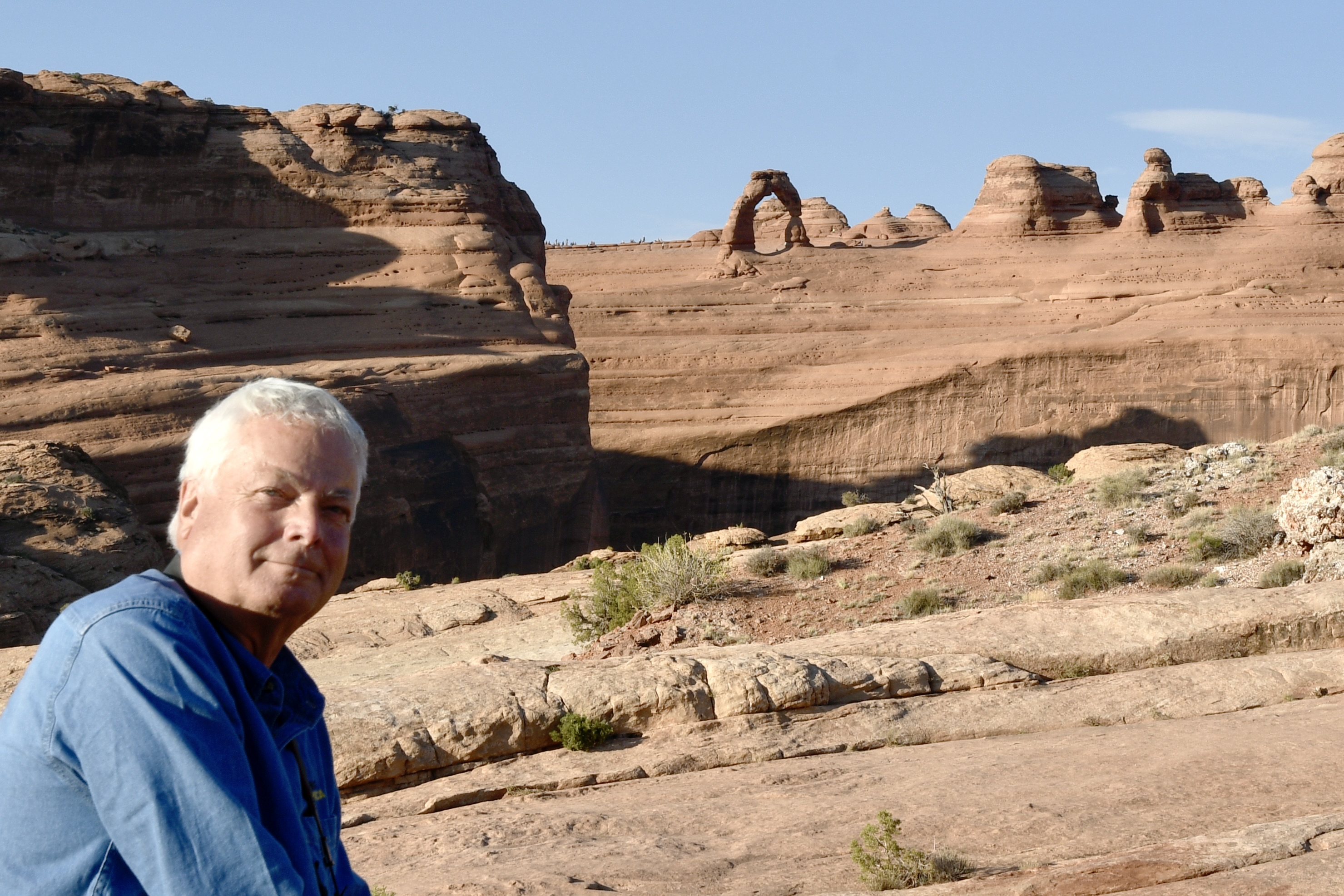Clay near Delicate Arch in Arches National Park, outside of Moab, Utah. (Photo D. McKenna )
And then there was Moab, where it was decidedly not autumn. Ninety-degree days, little or no wind, Lawrence of Arabia sun. The only way we could see autumn was in the reddening of the grass and other foliage and a tiny cluster of yellow cottonwood leaves now and then. Utah in early October 2024 was almost all still summer.
And yet, when I stepped out of my Airstream on my [Edward Abbey](https://ltamerica.org/to-the-desert-with-edward-abbey/) reconnaissance adventure to meet the day at about 8:30 a.m., I could sense (almost smell) autumn in the air. The first whiff of autumn is one of my favorite moments of the year. The poet John Keats called it a “season of mists and mellow fruitfulness, close bosom friend of the maturing sun, conspiring with him how to load and bless …”
We live in a blessed country, and we need to have a rebirth of the right kind of protection and patriotism because no other country has the public lands we take for granted in the United States.
---
***Over the next few months, Clay is shadowing Steinbeck’s 10,000-mile trek around the USA (and making a few detours of his own). Clay’s expedition is a central part of LTA’s big initiative to explore the country and take the pulse of America as it approaches its 250th birthday. Be sure to follow Clay’s adventures*** [***here***](https://ltamerica.org/tag/steinbeck-travels/) ***and on*** [***Facebook***](https://www.facebook.com/LTAmerica) ***— and*** [***subscribe to our newsletter***](https://ltamerica.org/newsletter/)**.**
**Categories:** Features
**Tags:** Colorado, Colorado River, John Steinbeck, North Dakota, Steinbeck Travels, Utah, Water in the West
---
### [Recollections in Dallas: A Pivot of American History](https://ltamerica.org/recollections-in-dallas-a-pivot-of-american-history/)
**Published:** November 2, 2024
**Author:** Clay Jenkinson
**Excerpt:** While in Dallas, Texas, on his Steinbeck Travels with Charley Tour, Clay revisits places and memories connected with President John Kennedy’s tragic assassination on November 22, 1963.
**Content:**
## While in Dallas, on his Steinbeck *Travels with Charley* Tour, Clay revisits places and memories connected with President John Kennedy’s tragic assassination on November 22, 1963.
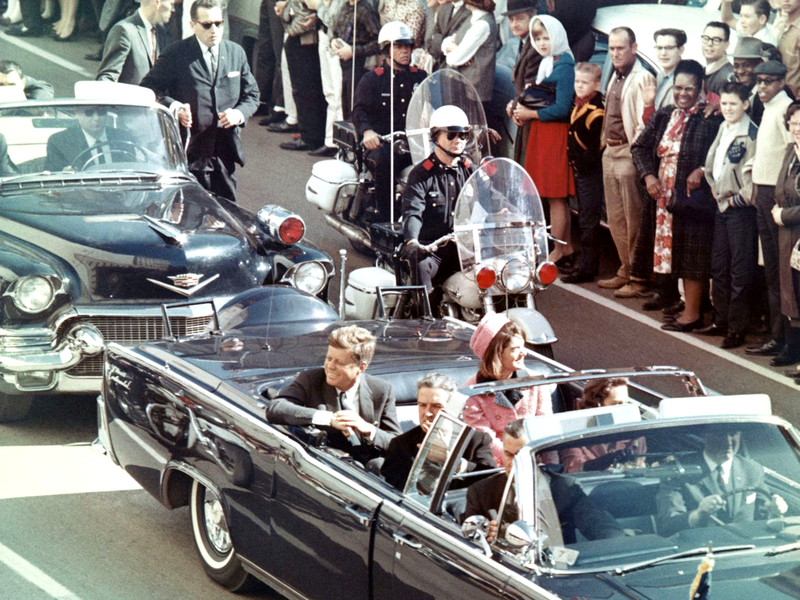President and Jackie Kennedy in Dallas, Texas, minutes before his assassination, November, 22, 1963. (Walt Cisco, Dallas Morning News — Wikimedia)
John Steinbeck was an [Adlai Stevenson](https://stevensoncenter.org/about/stevenson/) man who came to admire John F. Kennedy. JFK invited the Steinbecks to his inauguration on January 20, 1961. It’s not clear how close they became during the 1,000 days of the Kennedy administration, but John and his third wife, Elaine, dined at the White House several times (always with many other guests).
When Steinbeck passed through Fort Worth/Dallas at the end of November 1960, president-elect Kennedy was assembling the best and the brightest to lead America into what he called a [New Frontier](https://www.britannica.com/topic/New-Frontier). Steinbeck had watched the Nixon-Kennedy debates as he traveled the country that autumn. He was unsure about JFK, but he knew he loathed Richard Milhouse Nixon.
When you take a transcontinental road trip, no matter what its ostensible purpose, there are things you feel compelled to see if you pass through anywhere near their location. For me, Dealey Plaza in Dallas is one of those places. I’ve been there two or three times before, and I wanted to see it again, but also — thanks to a good friend as guide — to follow Lee Harvey Oswald’s trajectory through the day. Not sure why. Maybe it’s because I’ve re-read Manchester’s *[Death of a President](https://www.kirkusreviews.com/book-reviews/william-manchester/death-of-a-president/)* several times in the last year. And Paul Landis’ potentially game-changing memoir, *The Final Witness: A Kennedy Secret Service Agent Breaks His Silence after 60 Years*.
The assassination of John F. Kennedy on Friday, November 22, 1963, is one of the great pivot moments of American history, along with July 4, 1776, December 7, 1941, September 11, 2001, and — I would add — August 6, 1945, the day the U.S. dropped the atomic bomb on the mostly civilian population of Hiroshima in Japan. As J. Robert Oppenheimer said, “We knew the world would not be the same.”
I am old enough to remember where I was the day President Kennedy was killed. We were a lower-middle-class family at the time, living in a cracker box house in a small cattle town in western North Dakota. We had a big brown box, black and white television set with a rabbit ears antenna, on which we attached sheets of aluminum foil to improve the ghostly image. Led by my father, we solemnly watched television all weekend. This is when I saw my father cry for the first time. I don’t remember much. I don’t believe we saw the killing of Lee Harvey Oswald live, but I know we saw it replayed a dozen times in the next few days. From the day of the funeral, I remember the riderless horse chafing and plunging as its handler strove to keep it moving forward under control in the funeral cortege.
## **The Steinbecks, JFK and LBJ**
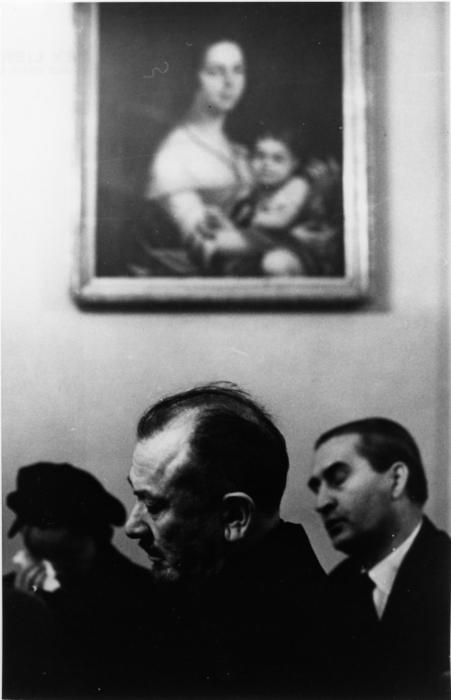John Steinbeck while in Warsaw, Poland for President Kennedy.
When the president died, John and Elaine Steinbeck were in Poland on a U.S. Information Agency (USIA) tour on behalf of the Kennedy administration. They wanted to fly home to the United States, but they reckoned that their duty was to continue the goodwill tour JFK had sent them on to the other side of the Iron Curtain. In Warsaw, Steinbeck wrote a tender letter to Jacqueline Kennedy, followed by a letter of support to the new president, Lyndon Johnson. A few weeks later, Mrs. Kennedy invited Steinbeck to see her in Georgetown when he returned from his travels. John and Elaine visited her in February 1964. It was then that she asked Steinbeck to consider writing the authorized biography of her martyred husband. The great novelist seriously considered taking on the project — mostly out of respect for the slain president and his widow — but within a couple of months, he carefully declined.
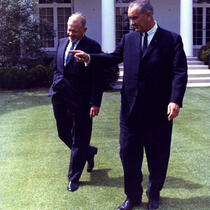John Steinbeck and President Lyndon Johnson on the White House lawn after Steinbeck received the Medal of Freedom, Sept. 1964.
Soon enough, Steinbeck became a good friend of LBJ. Elaine had been a student at the University of Texas at Austin at the same time as Claudia Alta (Lady Bird Johnson). The Steinbecks were frequent guests in the LBJ White House. Steinbeck became a staunch supporter of LBJ’s leadership and his political program. In fact, Steinbeck defended Johnson’s handling of the Vietnam War after the big buildup in 1965-66, to the detriment of his reputation as a left-leaning novelist.
Last week, I spent two nights in a village near Fort Worth with several of my most generous (and zany) friends. They took me to my first (their dozenth) Lyle Lovett concert. They took me to the spectacular Amon Carter Museum of American Art and then the Sid Richardson Gallery in downtown Fort Worth, with a brief photo stop in front of the old Fort Worth Hotel, where JFK gave the last speech of his life.
On the second day, Tommy took me on my JFK-Oswald tour.
We started at the [Sixth Floor Museum at Dealey Plaza.](https://www.jfk.org) The exhibits are all helpful and competent. Tommy was frustrated, however, because (perhaps inevitably) the interpretation favors the Lone Gunman Hypothesis and suggests that the case is closed. I mostly wanted to look through the sixth-floor windows down onto Elm Street and imagine the sequence of events between 12:27 and 12:32 p.m. on November 22. All you can say is: plausible.
I’m a Kennedy assassination obsessive of the second rank. Over the years, I have read a few dozen books about the assassination, beginning with Manchester’s magnificent *Death of a President* (1967), which I have been writing about over the last year. I’ve read all the standard works and some of the fringe stuff. Several years ago, I hosted a public humanities symposium on the 1960s in Bismarck, North Dakota; one long session was on the events of November 22, 1963. So, I know my way around the literature. Most recently, I read Secret Service member Paul Landis’ late-life revelation (*The Last Witness*) that he tampered with the evidence at Parkland Hospital, lifting what became known as “the magic bullet” from the top of the rear seat in the limo and putting it in his pocket, later to slip it onto the gurney in the hospital.
If this is true — and others, including the Secret Service’s Clint Hill, discount and discredit it — a member of the U.S. Secret Service tampered with the evidence in one of the greatest crimes of the 20th century and didn’t bother to report this massive act of malfeasance until he reached death’s door. If Landis is telling the truth, the strained “magic bullet” theory collapses. There is no mention of Landis’ confession in the Sixth Floor Museum, and his book is not sold in the museum shop — which is altogether disappointing for other reasons.
About a hundred people were on the Sixth Floor as we read the interpretive panels one by one. Almost all of them were born long after the events in question.
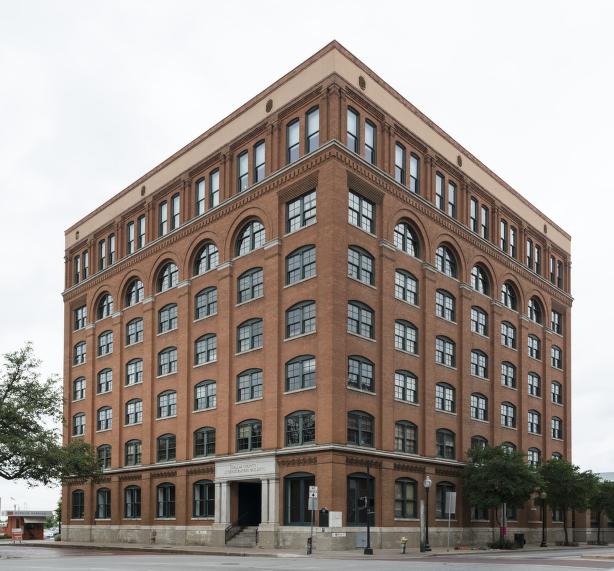The Texas School Book Depository Dealey Plaza, Dallas, Tex. (LOC)
## **Hard Questions**
You cannot spend much time on the Sixth Floor without asking a number of hard questions:
-Did Oswald act alone?
-How many shots were fired?
-Is it possible there was a second gunman or several others?
-Why have the American people disbelieved the Warren Commission Report right from the beginning?
-If Oswald was the assassin, what exactly were his motives?
-Was Oswald pro-Cuba (and Castro) or anti-Cuba?
-Was Oswald a Soviet agent of some sort, or was he tainted with Soviet indoctrination?
-Why did Oswald visit Mexico just two months before the assassination?
-When Oswald declared that he was “a patsy,” what did he mean, and should we believe him?
-If it was a conspiracy, who else was involved and for what purpose?
-Why did Jack Ruby kill Oswald at Dallas Police headquarters two days later as he was being transferred from one jail to another?
-Why did FBI director J. Edgar Hoover declare by the end of that chaotic Friday that the assassination was the work of a lone gunman? How could he possibly know?
There is an exceedingly rich literature on these questions. You could spend the rest of your life reading all those books and watching the scores of documentary films on the subject. I suggest Gerald Posner’s *Case Closed: Lee Harvey Oswald and the Assassination of JFK*; Bill Minutaglio and Steven L. Davis’, *Dallas 1963;* and Manchester’s *Death of a Presiden*t. I do not recommend Oliver Stone’s fascinating but historically muddling movie, *JFK*.
And, if you get out from under the cloud of mysteries and unanswered questions and pour yourself a glass of wine at the end of the day, bigger questions begin to drift in:
-How are America and the world different because of the assassination?
-Would Kennedy have wound us up or down in Vietnam?
-Would Kennedy have been able to persuade Congress to pass the Civil Rights bills of 1964 and 1965, or did that require Kennedy’s martyrdom and LBJ’s famous political persuasiveness?
-Would Kennedy have been re-elected in 1964? If so, would he have survived a second term? His biographer Robert Dallek suggested (*An Unfinished Life: John F. Kennedy, 1917–1963*) that Kennedy’s Addison’s Disease (never publicly disclosed) might have disabled or killed him before 1969.
-Are dark forces lurking beneath the ostensible government and establishment of the United States?
-What did anyone have to gain from the assassination of JFK? The usual answer is that the “military-industrial complex” wanted him dead because he was thinking of pulling out of Vietnam, because he was growing a little soft on the Soviet Union, because he had not been hawkish enough during the Cuban Missile Crisis of October 1962.
I’m not typically susceptible to conspiracy theories. I’m pretty sure the moon landing took place on the moon, and 9-11 was not an inside job. But the Kennedy assassination? I’m convinced that the truth is much bigger and more disturbing than we have been led to believe.
## **My Own View**
My own view, for what little it is worth (and I may be full of … er, beans), is that Oswald acted, but he did not act alone, that it was a conspiracy. My best sense is that it was a coordinated hit by disaffected former CIA operatives coupled with Cuba liberationists who felt that JFK had betrayed them during the botched Bay of Pigs landing in April 1961. I believe Jack Ruby was sent in to shut Oswald up. I believe the other conspirators who had made Oswald their patsy were terrified that he would spill.
But, as the Renaissance essayist Montaigne said at the end of some of his essays, “Que sais-je?” What do I know?
I’ve been fascinated by Oswald — another of the lethal loners that seem to crop up in American life — and for 30 years, at least, and I’m not sure why. I have wanted to see his grave. I guess it’s because of the irony and the juxtaposition. He was very quietly buried in Fort Worth on Monday, November 25, three days after he killed and one day after he was killed. There were no mourners. His wife Marina was there, along with his mother Marguerite, his brother Robert, and Marina’s two young children, who were too young to know the infamy of their father. You can find grainy B&W footage of the burial on YouTube. Scores of policemen surrounded the Rose Hill cemetery to prevent a disturbance. The pastor who was supposed to lead the service didn’t show up. Another was rounded up to do the grim work that day. Reporters from the AP and UPI carried the casket from the hearse to the grave site because nobody else could perform that disagreeable task. Loner. Lonely man. Lonely grave.
There is something haunting about all of this. Both Kennedy and Oswald died from gunshot wounds. They were both buried on November 25, one in hugger-mugger fashion with minimal human fanfare at a public cemetery in Fort Worth (away from Dallas), the other in the most lavish and ostentatious funeral in American history 1,354 miles away. The names Oswald and Kennedy are inextricably linked in the annals of history. If gunmen kill to seek immortality, Oswald found it. I cannot name the shooters at Sandy Hook (December 14, 2012), Columbine High School (April 20, 1999), the Las Vegas concert (October 1, 2017), or the men who perpetrated the crime described in Truman Capote’s *In Cold Blood* (1959), but I can never forget Lee Harvey Oswald or the date or the place. I remember President Reagan’s John Hinckley Jr. and Ford’s Squeaky Fromme (merely because of the weirdness of her name), but I don’t remember the name of the kid in Butler, Pennsylvania, who narrowly missed killing former President Trump on July 13, 2024.
Oswald is fixed forever in the American memory.
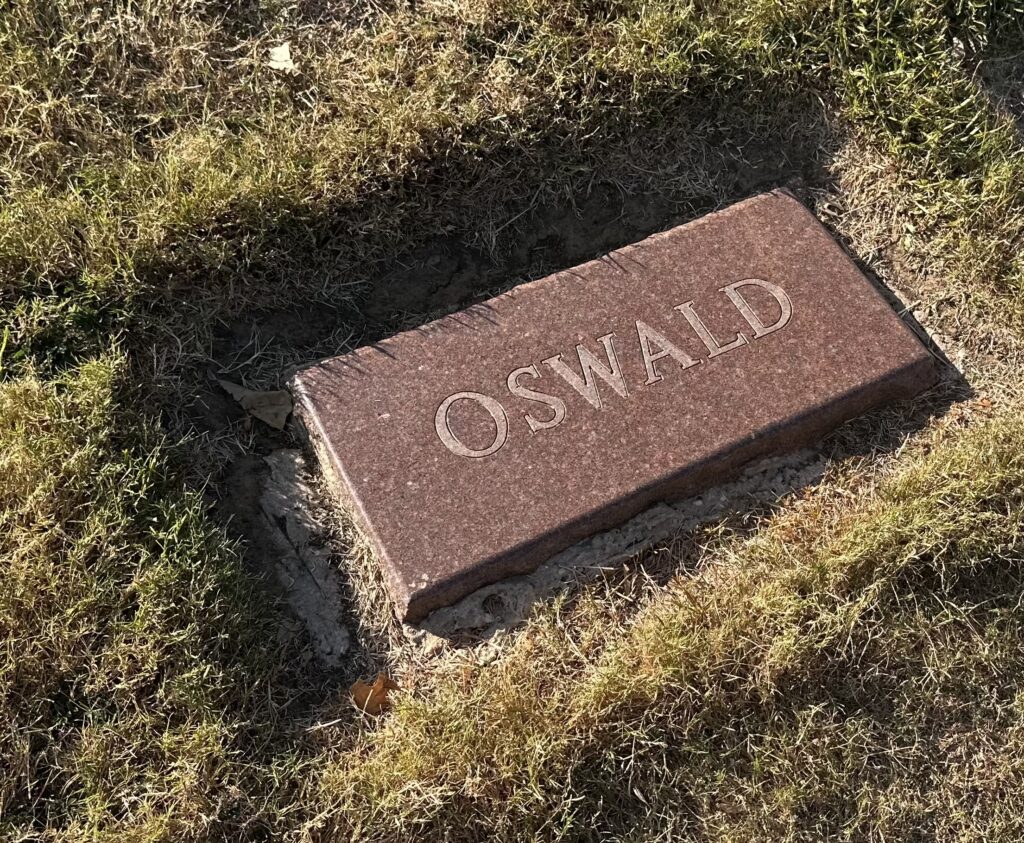Lee Harvey Oswald’s gravestone in Rose Hill Memorial Park, Fort Worth, Tex. (Clay Jenkinson Photo)
My host Tommy S. took me to all the sites I wanted to see in Dallas and Fort Worth: the School Book Depository; the grassy knoll; Parkland Hospital; the corner where Oswald killed Dallas policeman J.D. Tippit shortly after shooting the president; the boarding house where Oswald was staying on North Beckley Street (now a private museum, call for an appointment); the Texas Theater in the Oak Cliff neighborhood where Oswald was arrested at 1:45 p.m. The double feature: *Cry Battle* and *War Is Hell*.
My host and I were tired, including emotionally tired, by late afternoon when we turned his white pickup into [Rose Hill Cemetery](https://www.jfk.org/collections-archive/image-2-from-negative-strip-52-oswald-grave-of-lee-harvey-oswalds-grave-site-at-rose-hill-memorial-park/). He had scoped out the cemetery in advance. This saved us a lot of time since the cemetery does not go out of its way to help anyone find the grave of one of the most vilified men in American history. I got out to take some photographs and sit on the grass next to the grave. Tommy stayed in the truck. It was hot. He was tired. I was doing something a little eccentric.
Had I been alone, I might have spent an hour sitting on the grass near the simple rust-colored marble marker that says only: OSWALD. But I felt self-conscious lingering there. I took a few photographs. Mostly I wondered what it must be like to be Oswald’s wife and children. They are all still alive. They live quietly, even clandestinely, in greater Dallas. Think of it: tell me about my father. Well, your father killed the president of the United States and darkened American history.
Jacqueline Kennedy might have preferred it to be a conspiracy. When she was told that the assassination was almost certainly the work of a lone gunman, she said, “He didn’t even have the satisfaction of being killed for civil rights. It’s — it had to be some silly little Communist.”
Because he died when he did — in an unfinished term in an unfinished life, only 46 years old, with a young family and a stunningly beautiful wife — John F. Kennedy is frozen in time as a symbol of America’s lost promise. The rest of the 60s would become one of American history’s most intense and difficult epochs. In some sense, it is fortunate — for his place in the pantheon of America’s heroes — that Mr. Kennedy missed all that. He is emblazoned forever in the trope of “one brief shining moment.” But we cannot quite get out of our hearts and minds whether he might have been able to prevent some of that tumult.
---
***Over the next few months, Clay is shadowing Steinbeck’s 10,000-mile trek around the USA (and making a few detours of his own). Clay’s expedition is a central part of LTA’s big initiative to explore the country and take the pulse of America as it approaches its 250th birthday. Be sure to follow Clay’s adventures*** [***here***](https://ltamerica.org/tag/steinbeck-travels/) ***and on*** [***Facebook***](https://www.facebook.com/LTAmerica) ***— and*** [***subscribe to our newsletter***](https://ltamerica.org/newsletter/)**.**
**Categories:** Features
**Tags:** America at 250, John Steinbeck, Steinbeck Travels, Texas, U.S. Presidents
---
### [A Second Encounter at The End of Life RV Park](https://ltamerica.org/a-second-encounter-at-the-end-of-life-rv-park/)
**Published:** October 28, 2024
**Author:** Clay Jenkinson
**Excerpt:** It was getting close to Halloween as I pulled in. The sign at the gate said, “Abandon all hope ye who enter here.”
**Content:**
## It was getting close to Halloween as I pulled in. The sign at the gate said, “Abandon all hope ye who enter here.”

Please don’t ask me why, but I returned to the scene of the crime. You will recall that I was nearly murdered by two female serial killers disguised as RV operatives in northern Colorado in early September. I called the duo June and Robyn back then, but let’s use Bett and Cyndi this time. After such a narrow escape the evening they took me over the mountain to Red Bear Tavern (Red Bluff? Red Corn?), you’d think I would have learned my lesson.
But no.
So I booked a spot at The End of Life RV Park on the Cache la Poudre River under a clever assumed name that would not call attention to my visit: Clark Griswold. The sign at the gate said, lasciate ogne speranza, voich’intrate. “Abandon all hope ye who enter here.” Who doesn’t want to stay at an RV park with a Dante quote on the gate?
When I arrived, Bett was off “running errands,” but an older man who does camp maintenance motioned me to my slip. I plugged in water and power and did some work at my assigned picnic table. You will recall that there are stiff fines for violating any of the dozens of camp rules, many of which have never been committed to paper.
Soon enough, Bett appeared. We shared a gin & tonic at my picnic table. “Hey, I remember you,” she said. “Weren’t you the guy who tried to roll out of the back door of my car up on the mountain at 40 mph? You know, if we had run over you, it might have ruined the rear alignment.” I denied it. I said that was my brother Eddie Griswold, and I could not be held responsible for any of his actions.
So we settled into our drink. Bett shared about 234,000 of her opinions on life, the JFK assassination, the Hollywood sound set faking of the moon landing, John Denver’s musical oeuvre, recent political developments in North Korea, the problem of polyester, the heartbreak of psoriasis, the corruption of the U.S. Forest Service, and some other gems. The nice thing about spending time with Bett is that you don’t have to do much talking. She did have to stop talking occasionally to hack some stuff up — three packs a day since she was eight, she said — but even then, I could not get a word in edgewise — same old Bett.
I began to lower my guard a little. She’s a lovely woman. She had just had her nails and toes done down in Fort Collins. Bett doesn’t settle for clear lacquer or even a single color. Not even French cut. Each nail was decorated with a different peaceful icon. Left hand: a guillotine emoji, a skull, a saber, a noose, and a Halloween apple with a razor blade sticking out of it. Right hand: an electric chair, a stick of TNT, a skeleton, a vial of arsenic, and a stiletto. Her toes: all dark red. Blood red.
She’s trying to sell the place, but she’s afraid the new owners will start digging around just outside the perimeter, and all that’s buried there will come back to haunt her.
I asked her where Cyndi was (her partner in the “murder-the-stooge-sell-his-RV-in-Hemet” business). She was vague. Said Cyndi had “moved on.” Found God or something.
I asked Bett if she loved me. She said, “Honey, I eat guys like you for breakfast.” With Bett, you never know just what’s a metaphor and what isn’t. I changed the subject. I asked her what she does around here for fun when she isn’t working. “Honey, I’m always working, but every Thursday night, there is an ax-throwing contest at The Gallows Tavern. There is an open class and a meth-only class. By midnight when things heat up, the targets are no longer much use.”
Then things began to deteriorate. Bett asked me to crawl into her brick kiln, about the size of a large doghouse, to take a look at a valve that appeared to be stuck. The kiln had a strong metal doorplate that could be locked only from the outside. She must think I’m stupid. I said I’d be glad to do it, but my diphtheria was acting up. Then she said she was getting ready for the Halloween rush and had constructed a pretty cool replica of a guillotine where the basketball hoop used to be but was unsure of the placement of the neck holder. Would I lie down and stick my head under the frame so she could make some “adjustments?” I said I’d rather not stick my neck out. And then, when I asked her whether she had had a prosperous summer, she said it had been a “killer season.”
You can see where this was headed. Fortunately, I have a keen intellect, and it began to dawn on me that she might be intending to harm me in the night. I excused myself, and she wandered off towards her bunker, muttering at 114 mph.
Inside my Airstream, I prepared for trouble. I placed three pillows under my sheets and blanket in the shape of a 5-8 humanities scholar and slept in my pickup with my head scrunched down below the windows. I slept holding my Executive Leatherman with its ¾-inch blade open for trouble. It was either that or my nail clipper. I also set 32 mousetraps on the floor of the trailer. I slept rather soundly.
In the middle of the night, I got up to pee. Through the fog, I saw what appeared to be a ghostly female figure walking around the site, wringing her hands as if washing them over and over. I thought I heard her say, “Who would have thought the old man had so much blood in him?” So now she was channeling her inner Lady Macbeth. I know my Shakespeare. I adore a well-educated woman!
The thing is, I really dig Bett and I would marry her in spite of a few of her more unusual quirks if she ever stopped talking for a nanosecond. Imagine if we wrote our own vows! We’d have to take bathroom breaks. How can I describe her? She is a cross between Marjorie Taylor Greene and Roseanne Barr but without the civility and charm. In every conversation, she adds emphasis to her modest opinions by punching the air like an over-eager bantamweight boxer, and she jabs her finger into your chest in a way that makes you wheeze with attention. When she finishes a beer, she compacts it with one crunch of her right hand. I believe she could do the same to a gallon paint can. Her voice has a rasp that could peel the bark off of a sycamore tree.
I’m not sure about her hair, because she wears it up under her cap that says, “Kill Them All. Let God Sort It Out.” Her giant mastiff “Fluffy” weighs 145 pounds. It got second runner-up in last year’s Hound of the Baskervilles Lookalike Contest in Greeley but somehow failed at Miss Congeniality. Bett has been married an indeterminate number of times. I asked her what happened. “Two run off; one is in a witness protection program near Tucson, and one had a massive heart attack on our wedding night.” And yet, she is quite dainty. She carves mushrooms and shallots on a giant butcher block with a cleaver the size of a small ax. She has a whiskey still just behind her “home rendering plant,” built from a health kit. She has a perfect Elvis Pressley sneer. The county water board installed a satellite transmitter on her water meter so that no employee would ever have to enter her property again — after the “incident.” Her backhoe and woodchipper have suspicious gobs of matted hair sticking to their sides. You can see why men find her irresistible.
I left at first light. I stopped at the convenience store in Rustic, just a few miles up the road. As I purchased my morning coffee, I saw the local newspaper, the *Rustic Riffraff and Gazette*. On the top right side of the front page was the headline, “Recent Red Mountain Deaths Continue to Perplex Sheriff Fife.” Time to get truckin’.
Just to be sure, before resuming my journey, I stepped into the Airstream to have a look. Twenty-three of the mousetraps had been sprung. There were 17 2-inch gashes in my bedding and pillows, and half of the top pillow had been savagely severed O.J. Simpson style.
Once again, I had barely escaped with my life. Eternal vigilance.
Despite these small issues, it’s a tough dating scene out there, and I’m already planning a return visit next year, but this time, I’m going to wear a truss. I cannot decide whether to bring black roses or a Taser.
Happy Halloween.
---
***Over the next few months, Clay is shadowing Steinbeck’s 10,000-mile trek around the USA (and making a few detours of his own). Clay’s expedition is a central part of LTA’s big initiative to explore the country and take the pulse of America as it approaches its 250th birthday. Be sure to follow Clay’s adventures*** [***here***](https://ltamerica.org/tag/steinbeck-travels/) ***and on*** [***Facebook***](https://www.facebook.com/LTAmerica) ***— and*** [***subscribe to our newsletter***](https://ltamerica.org/newsletter/)**.**
**Categories:** Dispatches from the Road
**Tags:** Colorado, John Steinbeck, Steinbeck Travels
---
### [The Story of Red Lake Nation — Video Dispatch](https://ltamerica.org/the-story-of-red-lake-nation-video-dispatch/)
**Published:** October 28, 2024
**Author:** Editor
**Excerpt:** Clay shares some of the unique history of the Red Lake Indian Reservation, which covers 1,260 square miles in Northern Minnesota.
**Content:**
Clay shares some of the unique history of the Red Lake Indian Reservation, which covers 1,260 square miles in Northern Minnesota.
---
***Over the next few months, Clay is shadowing Steinbeck’s 10,000-mile trek around the USA (and making a few detours of his own). Clay’s expedition is a central part of LTA’s big initiative to explore the country and take the pulse of America as it approaches its 250th birthday. Be sure to follow Clay’s adventures*** [***here***](https://ltamerica.org/tag/steinbeck-travels/) ***and on*** [***Facebook***](https://www.facebook.com/LTAmerica) ***— and*** [***subscribe to our newsletter***](https://ltamerica.org/newsletter/)**.**
**Categories:** Dispatches from the Road
**Tags:** John Steinbeck, Minnesota, Native Americans, Steinbeck Travels, Video
---
### [Reports of the Book's Demise are Greatly Exaggerated](https://ltamerica.org/reports-of-the-books-demise-are-greatly-exaggerated/)
**Published:** October 22, 2024
**Author:** Clay Jenkinson
**Excerpt:** A stop at a West Texas Barnes & Noble persuades Clay that books remain alive and kicking.
**Content:**
## A stop at a West Texas Barnes & Noble persuades Clay that books remain alive and kicking.
(Shutterstock)
It’s said that the Age of the Book is ending. There are so many ways to get information and entertainment now that sitting down with an actual book to do sustained reading is regarded as too time-consuming — maybe even tedious. The pace of American life is now so frenetic, and the avalanche of video entertainment is so compelling and addictive that people don’t sit down after dinner to read for a couple of hours — or on a chilly autumn Saturday morning.
True books are not taught much in our K-12 public schools anymore. In most school districts around the country, students still read, but in small bites. They read carefully chosen “stories” that reinforce the values of tolerance, respect, and diversity, but they don’t read full novels anymore. Public school teachers increasingly declare that their pupils are now actually incapable of reading a full book like *Lord of the Flies, Fahrenheit 451, To Kill a Mockingbird,* or *Catcher in the Rye.*
If this is true — and apparently it is through vast swaths of America — we are headed into the abyss. True literacy, coupled with critical thinking skills, is essential to any civilization, particularly a democracy where we expect the people to make good choices about their leaders and public policy. A nation without the humanities is in steep decline.
As Hamlet says, “It is not, and it cannot come to good.”
And yet.
This morning, I’m sitting in a Barnes & Noble in a West Texas town of about 190,000. Barnes & Noble stores are dying all over America. When you go in one now, you must search for books through the maze of board games, emoji dolls, Lego and other construction projects, ingenious toys, leathery journals, wry greeting cards, painting kits, and graphic “novels.” There is a café here where I can surf the internet. I’m tired. These have been some very hectic weeks. I want to sit here for five or six hours sipping coffee and browse-read books I collected from “history,” “fiction,” “current events,” and “new releases” before I ventured into the café to get my latte and banana nut muffin.
“Are you a member?” Yes. I save $.34 on the ingestibles.
(Shutterstock)
From 20 minutes of wandering the store, I can attest that reports of the death of the book have been greatly exaggerated. Even in a limited recon, I found dozens of books that I want to read, that I *should* read, and some that I *must* read for the kind of work that I do. Just before I walked in, standing in the parking lot, I had a phone conversation with one of my brainiest friends. He recommended a new book, *[Keeping the Faith](https://www.penguinrandomhouse.com/books/648098/keeping-the-faith-by-brenda-wineapple/)*, on the Scopes Trial (the “monkey trial”, July 1925) in Dayton, Tennessee. And then he suggested I visit Dayton later this fall on my Steinbeck [*Travels with Charley* national tour](https://ltamerica.org/tag/steinbeck-travels/). I immediately said yes to both propositions. H.L. Mencken’s essay on the Scopes Trial and the evisceration of William Jennings Bryan is one of the funniest essays in the English language. As my friend said, the issues of the Scopes Trial (science v. fundamentalism, evolution v. evangelicalism, censorship v. freedom of thought) are current all over again in America.
Henry Stimpson
So, I limited myself to just four books to haul into the café, but with real regret that I could not bring in a pile or 10 or more. I’ll only buy two of them, plus a map. One on [Henry Stimson ](https://history.state.gov/departmenthistory/people/stimson-henry-lewis)(1867-1950), one of my heroes. He was one of the 20th century’s great (and largely unremembered) men. He worked for both Roosevelts (TR & FDR), played a key role in the winning of World War II, and saved the ancient Japanese city of Kyoto from being vaporized by the atomic bomb in 1945. You may have seen a not-very-accurate cameo of Stimson in Christopher Nolan’s excellent film *Oppenheimer*.
But I *wanted to buy* two new books on Vietnam, one by my friend Geoffrey Wawro, a professor of history at the University of North Texas in Frisco. He’s one of the most impressive public speakers I have ever met. He has books on World War I, the endless morass of the Middle East, and the Franco-Prussian War. There are half a dozen important new books on the political situation, including Bob Woodward’s *War*.
B&N has half-acres of self-help and diet books (I may be beyond self-help — or any help — by now) and highly affordable editions of most classics — from Dostoevsky to Vonnegut and everything in between. If I made a list of the greatest books I have never read, I would have to hang myself from shame. If I did nothing but read 10 hours a day for the rest of my life, I could never catch up with the classics alone (*Middlemarch*, *The Remembrance of Things Past)*, much less the 500,000+ new books published every year in America alone. (By the way, the Arab world publishes approximately 6,500 books per year.) When you listen to “books on tape,” or, as we now say, audiobooks, you can turn up the speed to get more words across the threshold per hour. If I could triple my visual reading speed — believe me, I’ve tried — I could still never read the books that matter greatly to my range of interests in literature, history, religion, philosophy, and science.
In other words, though I am a very serious reader, up to five hours per day, I am falling behind — and, in fact, at an accelerated rate. Alas. It’s daunting. It makes me want to weep sometimes.
Who is writing all of these books? How do they do it? How does Douglas Brinkley publish a new fat book every two years? How has H.W. Brands published more than 30 books, most recently *America First: Roosevelt vs. Lindbergh in the Shadow of War*? What are they, Isaac Asimov (500 books) or Louis L’Amour (150 or so)?
As I wander the shelves, I see plenty of books that attract my attention, and I briefly think, “I should read that,” but then at least a modicum of good sense steps in. I know I am not going to read a book on how Persia became modern Iran at 857 pages. I know I am not going to read a 700-page book on the history of the Popes. I know I am not going to read a book called *The History of the World in Twelve Cups of Coffee* or *Fred Astaire and the Remaking of Hollywood* in the 1940s. Nor do I want a B&N signature book, a coffee table tome on John Deere Tractors, or the Wonders of Florence.
All one can do is plug along, subscribe to all the book review publications, listen to audiobooks on flights and long drives, and — above all — never turn the television on, ever, period!
It’s time to get on the road. The famous lexicographer[ Samuel Johnson](https://www.britannica.com/biography/Samuel-Johnson) (1709-1784) said the book publishing industry was “a universal conspiracy for the destruction of trees.” Wait, is that the precise quotation? Excuse me while I venture back into the stacks to see if I can find a book of Dr. Johnson’s witticisms.
---
## ***Discover more on these topics at Listening to America***
[U.S. Presidents](https://ltamerica.org/tag/u-s-presidents/ "71 topics")[New York](https://ltamerica.org/tag/new-york/ "8 topics")[Podcast](https://ltamerica.org/tag/podcast/ "1 topics")[Rome](https://ltamerica.org/tag/rome/ "1 topics")[Oppenheimer](https://ltamerica.org/tag/oppenheimer/ "1 topics")[Road Trips](https://ltamerica.org/tag/road-trips/ "18 topics")[Space Exploration](https://ltamerica.org/tag/space-exploration/ "8 topics")[The Constitution](https://ltamerica.org/tag/the-constitution/ "1 topics")[Oregon](https://ltamerica.org/tag/oregon/ "4 topics")[Vermont](https://ltamerica.org/tag/vermont/ "1 topics")[Reading](https://ltamerica.org/tag/reading/ "1 topics")[South Carolina](https://ltamerica.org/tag/south-carolina/ "1 topics")[Steinbeck Travels](https://ltamerica.org/tag/steinbeck-travels/ "75 topics")[Water in the West](https://ltamerica.org/tag/water-in-the-west/ "24 topics")[Sports](https://ltamerica.org/tag/sports/ "2 topics")[Tennessee](https://ltamerica.org/tag/tennessee/ "1 topics")[Ohio](https://ltamerica.org/tag/ohio/ "2 topics")[New Mexico](https://ltamerica.org/tag/new-mexico/ "3 topics")[paintings](https://ltamerica.org/tag/paintings/ "0 topics")[Pennsylvania](https://ltamerica.org/tag/pennsylvania/ "1 topics")[Virginia](https://ltamerica.org/tag/virginia/ "7 topics")[Texas](https://ltamerica.org/tag/texas/ "4 topics")[Poetry](https://ltamerica.org/tag/poetry/ "1 topics")[Theodore Roosevelt](https://ltamerica.org/tag/theodore-roosevelt/ "16 topics")[Republic](https://ltamerica.org/tag/republic/ "0 topics")[Video](https://ltamerica.org/tag/video/ "51 topics")[North Dakota](https://ltamerica.org/tag/north-dakota/ "53 topics")[William Shirer](https://ltamerica.org/tag/william-shirer/ "1 topics")[Oppenheim](https://ltamerica.org/tag/oppenheim/ "0 topics")[Washington](https://ltamerica.org/tag/washington/ "2 topics")[Rivers](https://ltamerica.org/tag/rivers/ "3 topics")[Walden](https://ltamerica.org/tag/walden/ "1 topics")[North Carolina](https://ltamerica.org/tag/north-carolina/ "3 topics")[Wyoming](https://ltamerica.org/tag/wyoming/ "4 topics")[State Parks](https://ltamerica.org/tag/state-parks/ "2 topics")[Travel](https://ltamerica.org/tag/travel/ "1 topics")[Thomas Jefferson](https://ltamerica.org/tag/thomas-jefferson/ "34 topics")[Thoreau](https://ltamerica.org/tag/thoreau/ "5 topics")[Wisconsin](https://ltamerica.org/tag/wisconsin/ "0 topics")[north daktoa](https://ltamerica.org/tag/north-daktoa/ "0 topics")[U.S. Constitution](https://ltamerica.org/tag/u-s-constitution/ "1 topics")[New England](https://ltamerica.org/tag/new-england/ "1 topics")[South Dakota](https://ltamerica.org/tag/south-dakota/ "16 topics")[Republics](https://ltamerica.org/tag/republics/ "1 topics")[Utah](https://ltamerica.org/tag/utah/ "11 topics")
**Categories:** Features
**Tags:** America at 250, Books, Humanities, Steinbeck Travels
---
### [What Britain Thinks of the U.S. These Days](https://ltamerica.org/what-britain-thinks-of-the-u-s-these-days/)
**Published:** October 20, 2024
**Author:** Clay Jenkinson
**Excerpt:** After leading a 10 day cultural tour through England, Clay assesses how Brits view America in the Fall of 2024.
**Content:**
## After leading a 10 day cultural tour through England, Clay assesses how Brits view America in the Fall of 2024.

Ludicrous though it is to try to assess Britain’s views of the United States in the autumn of 2024 on a 10 day tour, I had good conversations with a range of people, and I watched a fair amount of British television commentary while I was there, and read Britain’s outstanding newspapers. Here is what I heard:
## **Ten Big Things**
**1.** They recognize the wealth and power of America and hold it in some awe, as everyone must. But they regard us as trigger-happy colonialists who have infinite wealth and power but need more refinement or capacity for nuance. This assessment goes all the way back to celebrated English visitors Charles Dickens (1841) and Francis Trollope (1827), who were repulsed by U.S. Senators spitting tobacco on the carpets of the U.S. Capitol. And, of course, there was the issue of slavery. Even now, Britain regards itself as Greece (refinement, art, beauty, subtlety) to our Rome (gross power, lots of concrete, gladiatorial sports).
**2.** The British cannot understand why we don’t have universal health care for all, like every European country. It makes no sense to them that in America, some people have superb health care, and tens of millions of others have none or not much. They find this fact genuinely perplexing.
Their concern is not so much the moral question — why would we not see that everyone deserves basic health care as much as social security, adequate schools, or farm subsidies? — but more about logic and efficiency. Wouldn’t it just be easier, cheaper, and more integrated if we had one system for the entire population rather than the hit-and-miss, catch-as-catch-can, and “Emergency Room as health care access for the poor” hodgepodge we boastfully call “the best health care system of the world.” Nobody can say those words without blushing unless you add “for the Haves.”
The British are aware that their system, the National Health Service (NHS), is in trouble. There is not enough money, crumbling and neglected facilities and infrastructure, underpaid and restive nurses and doctors, increasingly long queues for less urgent care, and poor morale. But they remain truly proud of the NHS, and not even their right-wing politicians dare talk about scrapping or privatizing it.
**3.** The Brits cannot understand our funding system for higher education. They subsidize virtually all higher education, believing, as I do, that it is a wise investment in innovation, productivity, social security, and equality of opportunity. When they learn that a recent college graduate in America might have run up several hundred thousand dollars in student debt, they shake their heads in disbelief. A young Swiss friend of mine goes to a superb university for $700 per year. Here it is $70,000. Who believes this system is sustainable?
Enough Brits want what we want in terms of fast food — Starbucks, Burger King, Five Guys, KFC, Subway, etc. — that those American giants have an unavoidable physical presence in English cities. Of course, those American fast food joints in the heart of London and Oxford would close their doors if there were not enough customers to make their large profits.
**4.** The Brits like to shake their heads about the Americanization of the planet, and they show considerable schadenfreude when America stumbles, as we seem to do with regularity these days. They would not leave Afghanistan in so shambolic a fashion. The great British historian Niall Ferguson has argued that America lacks the stamina to be a great world power, that if you are going to invade Iraq and/or Afghanistan and create order and “democracy,” you have to be prepared to spend a century occupying those countries. The model is the Raj, not Afghanistan 2021. America, he argues, gets impatient and “up and leaves” after just a few years, often leaving things worse than when we intervened.
**5.** They love both America’s hard power (military presence in Europe and the Middle East, policing the international shipping lanes, paying the bulk of the West’s defense costs) and its soft power (movies, fashion, fast food, software). Still, they reserve the right to criticize them, if only to preserve their superiority. Like most Europeans, the British are glad for us to be the world’s hegemon — so much safer and less expensive for them — but they reserve the right to criticize, mock, question, and condemn America’s every move in the world arena. They’d be begging us to stay if we offered to leave Europe to its own history of madness and turn entirely inward, as some isolationists are advocating.
**6.** American movies dominate the world. Television not quite as it did 20 years ago, but all the channels I surfed in four British hotels showed endless streams of *Law and Order, Bones, Friends, NCIS*, and suchlike. Except for *Masterpiece Theatre* and the BBC (news and entertainment), British television (telly, they say) is measurably inferior to the U.S. But they bunch up their commercials, which are often much more clever than ours, so the programs do not seem so chopped up and interrupted.
**7.** All of Europe is worried about the 2024 election. With the sole exception of Hungary, all of Europe, this side of Russia wants Donald Trump NOT to be re-elected president of the United States. They are individually and collectively bracing themselves, making contingency plans for a post-America Europe. They regard Mr. Trump as a menace to world peace and the norms of diplomacy, foreign policy, and the world economy. There are probably some Trump supporters in Britain, but you’d have to search rather hard to find them. The Brits saw their own Prime Minister Boris Johnson as Trump Lite or Mini Trump, but they have a smirking affection for Johnson’s antics and none for D. Trump.
Donald Trump knows of Europe’s disdain for him, of course, and he uses it for good political effect. There are millions of Americans who don’t give a rip about Europe, nor even the sovereignty of Ukraine, and they don’t like America paying Europe’s security bills. To the extent that they know what NATO’s mission is, and its funding formula, they share Trump’s desire to leave NATO, or at the very least demand that every European country pay its fair share (as we define it) if they want us to assist them in their times of trouble. Many of these same people wonder why we have troops in Germany, Japan, or Korea. Donald Trump decried America’s “endless wars” and announced his intention to pull back into comparative isolationism. His followers largely agree.
**9.** The British are flabbergasted that the U.S. blandly accepts unending domestic gun violence, including weekly, at times daily, mass shootings. European parents and grandparents do question whether their young ones are safe visiting a nation so in love with violence that we wince, wring our hands, and then shrug after every school shooting. I’ve heard these conversations. The Europeans do not regard America as safe. They are bewildered by our casual embrace of gun violence, and they regard justifying widespread mayhem because of a constitutional amendment crafted in the age of the single-shot musket as merely insane.
At the moment, gun violence is almost always the first serious criticism a British person will make of the United States.
**10.** They love our National Parks, which represent, as Ken Burns put it, one of “America’s Best Ideas.” They love our natural wonders — Old Faithful, the Grand Canyon, the Redwoods, El Capitan, and Death Valley. They love America’s frontier history (at least with tongue in cheek) and want to visit Tombstone, Arizona, or the Little Bighorn Battlefield. They love the immense (almost infinite) open space of America. They love renting big cars to drive America’s essentially empty highways, compared to Britain’s eternal congestion and zero parking spots. We take Devils Tower and the Petrified Forest for granted. No European would do that.
## **What The Brits Conclude**
They do have a point. After our abysmal withdrawal from Afghanistan — the echo of our appalling 1975 rooftop departure from Saigon — they have lost a considerable amount of respect for America. They sense growing international weakness in America and a growing weariness of our global responsibilities. They wonder if America will really keep its word, per Article V of the NATO charter, to consider an attack on any NATO member (currently 32) as an attack on all NATO members. Mr. Trump has said he thinks Article V is no longer operative. Europeans, including the British, are deeply concerned that the U.S. will reduce or eliminate its support for Ukraine in its war of national survival against Russia or force Ukraine’s President Zelensky to accept a further partition of his sovereign territory. Partly because of that, they do not want Donald Trump to be the next president of the United States, except NATO member Hungary’s Viktor Orban.
Certainly, since the high water mark of America’s global dominance (circa 1990), the European people have watched the United States appear to decline in world power and turn away from the “liberal world order” that we helped to engineer after the two cataclysmic European wars of the 20th century. Our closest friends in Europe honestly wonder if they can rely on America. That breaks my heart.
## **Smaller Things**
When I lived in England several decades ago, there were no cell phones and there was no internet. Most places in England got mail at home twice a day! I called home to western North Dakota a couple of times a year from the urine stench of the red telephone box just across from my college gate. We wrote something called “letters” then. But as Dwight Garner wrote in the New York Times not long ago, “The age of proper correspondence has ended, and there’s been no pan-ecumenical service \[i.e., funeral\] to mourn its passing.” Today, everyone in Britain is glued to their smartphones, just like us, though not quite as desperately. When I was there in the 1970s, the Brits (that I knew) didn’t bathe all that often and their hair (especially the men’s) was frequently oily and matted. We all know that British dentistry lagged far behind the best practices in the U.S. — you will remember the bad British teeth jokes in the Austin Powers movies. But Britain has caught up both in hygiene and in dentistry.
It should be noted that the British are less obese than we are. The U.S. currently ranks fifth in obesity, at 41.2% of the population, while Britain ranks 35th at 21.7%. The Brits have cars that average just under 2/3 of the size of American vehicles, and, except on the farms, almost no pickups, the official vehicle of American masculinity. The Brits have superb bookstores, even in relatively small communities.
In some ways, this year’s election matters more to the rest of the world than it does here. Whoever wins, Walmart will bulge with bargains, gas prices will be comparatively affordable, and a majority of people’s lives will not be greatly affected by the election outcome. However, though the candidates are not talking about it, the election will tell the rest of the world who we are, where we are heading, and whether they can count on us to prop up the fragile world order. We are a deeply provincial and inward-looking nation. Just give the next hundred people you meet an outline map of Europe and ask them to identify the countries. And then give them an outline map of Africa. We do really believe in American exceptionalism, that it’s mostly about us, and the rest of the world is a bit of a nuisance. Most Americans don’t think of themselves as world citizens. And about half would liquidate the United Nations.
The world still looks to us, especially in soft power. Everyone secretly covets the spectacularly resilient American economy and is addicted to American innovation, invention, ingenuity, and the production of pleasure. But for most Europeans, we are no longer the Shining City on the Hill. We are a nation that can spend two weeks talking about immigrants eating cats and dogs in a midwestern town, a country where more than 40% disbelieve the Theory of Evolution, where we nominate felons for political office, and where a U.S. Senator holds up a snowball on the floor of Congress and says, “there’s your global warming.” We are no longer the City on the Hill in their eyes but now a reckless prosperity engine with a paralyzed government, a burgeoning economic class system, and widespread gun violence.
Still, for all that, the word America is still magic throughout the world.
It would be easy to compile counterarguments about what we Americans think is absurd or misguided in Britain and Europe. But this is a report on how they see us at this critical juncture in our national destiny. They will be scrutinizing the election returns on November 5. It’s always worth looking in the mirror through the views of non-Americans about our habits, values, and systems, even when we disagree.
---
## ***Discover more on these topics at Listening to America***
[South Dakota](https://ltamerica.org/tag/south-dakota/ "16 topics")[Road Trips](https://ltamerica.org/tag/road-trips/ "18 topics")[Podcast](https://ltamerica.org/tag/podcast/ "1 topics")[Wyoming](https://ltamerica.org/tag/wyoming/ "4 topics")[Steinbeck Travels](https://ltamerica.org/tag/steinbeck-travels/ "75 topics")[Virginia](https://ltamerica.org/tag/virginia/ "7 topics")[U.S. Constitution](https://ltamerica.org/tag/u-s-constitution/ "1 topics")[North Carolina](https://ltamerica.org/tag/north-carolina/ "3 topics")[North Dakota](https://ltamerica.org/tag/north-dakota/ "53 topics")[Rivers](https://ltamerica.org/tag/rivers/ "3 topics")[Thomas Jefferson](https://ltamerica.org/tag/thomas-jefferson/ "34 topics")[north daktoa](https://ltamerica.org/tag/north-daktoa/ "0 topics")[Oppenheim](https://ltamerica.org/tag/oppenheim/ "0 topics")[Vermont](https://ltamerica.org/tag/vermont/ "1 topics")[Texas](https://ltamerica.org/tag/texas/ "4 topics")[Ohio](https://ltamerica.org/tag/ohio/ "2 topics")[New York](https://ltamerica.org/tag/new-york/ "8 topics")[paintings](https://ltamerica.org/tag/paintings/ "0 topics")[William Shirer](https://ltamerica.org/tag/william-shirer/ "1 topics")[Reading](https://ltamerica.org/tag/reading/ "1 topics")[Pennsylvania](https://ltamerica.org/tag/pennsylvania/ "1 topics")[Washington](https://ltamerica.org/tag/washington/ "2 topics")[Republic](https://ltamerica.org/tag/republic/ "0 topics")[Republics](https://ltamerica.org/tag/republics/ "1 topics")[Video](https://ltamerica.org/tag/video/ "51 topics")[Walden](https://ltamerica.org/tag/walden/ "1 topics")[Utah](https://ltamerica.org/tag/utah/ "11 topics")[Oregon](https://ltamerica.org/tag/oregon/ "4 topics")[South Carolina](https://ltamerica.org/tag/south-carolina/ "1 topics")[Water in the West](https://ltamerica.org/tag/water-in-the-west/ "24 topics")[Rome](https://ltamerica.org/tag/rome/ "1 topics")[Space Exploration](https://ltamerica.org/tag/space-exploration/ "8 topics")[Oppenheimer](https://ltamerica.org/tag/oppenheimer/ "1 topics")[New Mexico](https://ltamerica.org/tag/new-mexico/ "3 topics")[Poetry](https://ltamerica.org/tag/poetry/ "1 topics")[Wisconsin](https://ltamerica.org/tag/wisconsin/ "0 topics")[State Parks](https://ltamerica.org/tag/state-parks/ "2 topics")[The Constitution](https://ltamerica.org/tag/the-constitution/ "1 topics")[Thoreau](https://ltamerica.org/tag/thoreau/ "5 topics")[U.S. Presidents](https://ltamerica.org/tag/u-s-presidents/ "71 topics")[Travel](https://ltamerica.org/tag/travel/ "1 topics")[Sports](https://ltamerica.org/tag/sports/ "2 topics")[Theodore Roosevelt](https://ltamerica.org/tag/theodore-roosevelt/ "16 topics")[New England](https://ltamerica.org/tag/new-england/ "1 topics")[Tennessee](https://ltamerica.org/tag/tennessee/ "1 topics")
**Categories:** Features
**Tags:** America at 250, England
---
### [The Source of the Mighty Mississippi — Video Dispatch](https://ltamerica.org/the-source-of-the-mighty-mississippi-video-dispatch/)
**Published:** October 21, 2024
**Author:** Editor
**Excerpt:** Our intrepid traveler courageously wades the waters at the source of the Mississippi, America’s second-longest river. It flows 2,350 miles from its source at Lake Itasca in Minnesota through the heart of the continental United States to the Gulf of Mexico.
**Content:**
Our intrepid traveler courageously wades the waters at the source of the Mississippi, America’s second-longest river. It flows 2,350 miles from its source at Lake Itasca in Minnesota through the heart of the continental United States to the Gulf of Mexico. The Mississippi River drains an area of some 1.2 million square miles, including parts of 31 states and two Canadian provinces, about 40% of the continental United States.
---
***Over the next few months, Clay is shadowing Steinbeck’s 10,000-mile trek around the USA (and making a few detours of his own). Clay’s expedition is a central part of LTA’s big initiative to explore the country and take the pulse of America as it approaches its 250th birthday. Be sure to follow Clay’s adventures*** [***here***](https://ltamerica.org/tag/steinbeck-travels/) ***and on*** [***Facebook***](https://www.facebook.com/LTAmerica) ***— and*** [***subscribe to our newsletter***](https://ltamerica.org/newsletter/)**.**
**Categories:** Dispatches from the Road
**Tags:** America at 250, John Steinbeck, Minnesota, Steinbeck Travels, Video
---
### [Reflections at the Little Bighorn Battlefield — Video Dispatch](https://ltamerica.org/reflections-at-the-little-bighorn-battlefield-video-dispatch/)
**Published:** October 15, 2024
**Author:** Editor
**Excerpt:** Listening to America’s “Chief Scout,” Frank Lister and Clay visit the Little Bighorn Battlefield National Monument, where George Custer’s 7th Cavalry met its fate against Lakota, Cheyenne, and Arapaho warriors in June 1876.
**Content:**
Listening to America’s “Chief Scout,” Frank Lister and Clay visit the [Little Bighorn Battlefield National Monument](https://www.nps.gov/libi/index.htm), where George Custer’s 7th Calvary met its fate against Lakota, Cheyenne, and Arapaho warriors in June 1876.
---
***Over the next few months, Clay is shadowing Steinbeck’s 10,000-mile trek around the USA (and making a few detours of his own). Clay’s expedition is a central part of LTA’s big initiative to explore the country and take the pulse of America as it approaches its 250th birthday. Be sure to follow Clay’s adventures*** [***here***](https://ltamerica.org/tag/steinbeck-travels/) ***and on*** [***Facebook***](https://www.facebook.com/LTAmerica) ***— and*** [***subscribe to our newsletter***](https://ltamerica.org/newsletter/)**.**
**Categories:** Dispatches from the Road
**Tags:** John Steinbeck, Montana, Native Americans, Steinbeck Travels, Video
---
### [Visiting Giant Meteor Crater, Arizona ](https://ltamerica.org/visiting-giant-meteor-crater-arizona/)
**Published:** October 15, 2024
**Author:** Clay Jenkinson
**Excerpt:** Giant Meteor Crater, about a half mile in diameter sits in the northern Arizona desert.
**Content:**
## Giant Meteor Crater, about a half mile in diameter and 700 feet deep, sits in the northern Arizona desert.
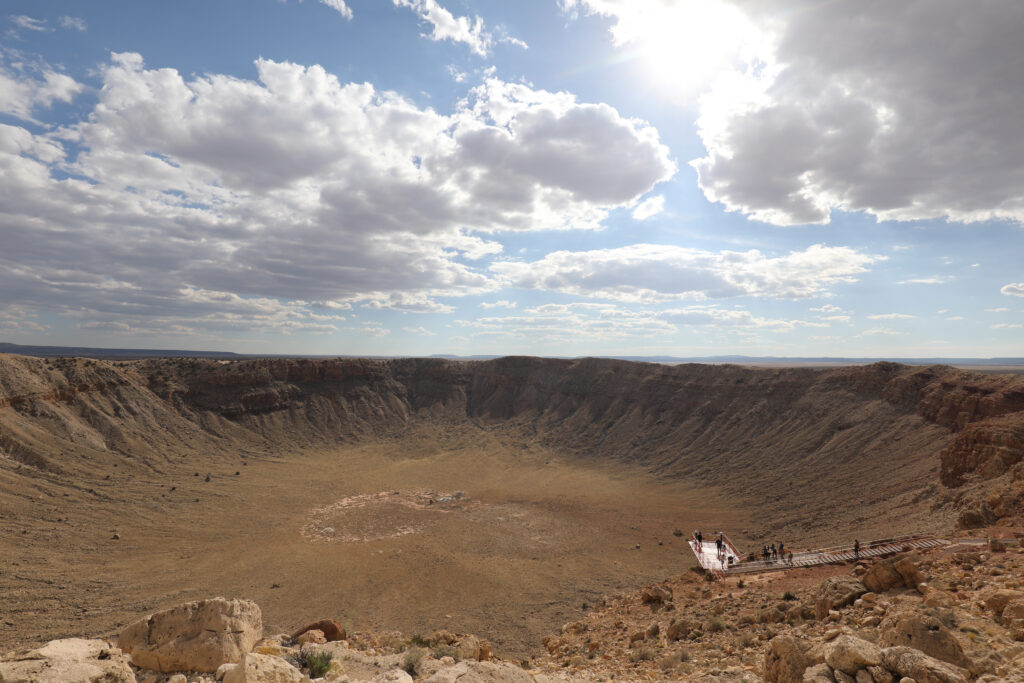Meteor Crater, formed about 50,000 years ago is in the desert of northern Arizona. (Photo by Clay Jenkinson)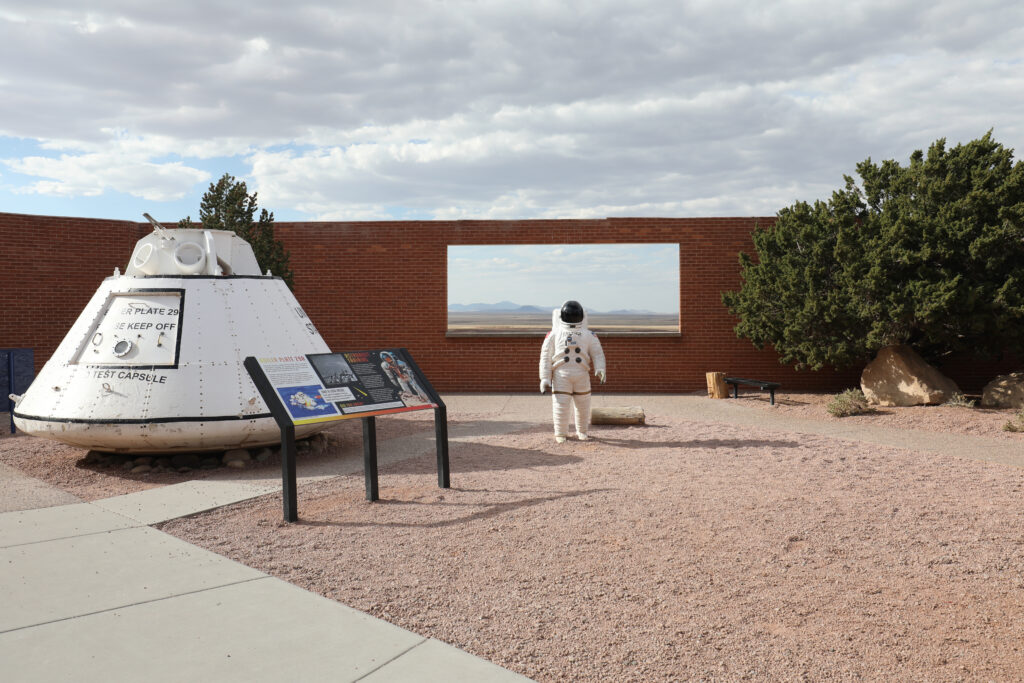
The giant crater off I-40 west of Winslow, Arizona, would have been an excellent National Monument. It is privately owned. The crater is fascinating, intriguing, and, let’s face it, a little concerning: so that’s what can happen! The interpretive center is not bad — the routine nine-minute orientation film, some meteor-related exhibits, and others commemorating the American Moon program — since some astronauts trained out here in the moonlike desert. As you enter the multi-story red brick museum complex, you are a little overwhelmed with “Worlds in Collision” music. What interpretation there is inside is competent and informative.
The catastrophic event occurred only yesterday — just 50,000 years ago. A meteorite — 150 feet across — (wouldn’t that be a meteor?) — slammed into northern Arizona (still not ready for statehood!) at 26,000 miles per hour — 7 miles per second. Of course, it knocked down whatever was in the vicinity, but this was desert then, too, and the population density was extremely low.
The crater is about half a mile in diameter. It looks like what a crater is supposed to look like — think of the moon — and it is extremely deep, more than 700 feet. Some of the sides are near enough to vertical that they experience occasional rock slides. In other areas there are gullies and rills with a very modest degree of desert vegetation. At the bottom is a large flat circle (manmade?) with some kind of pump at one end, an American flag precisely the size of Apollo 11’s, and a cheesy manikin of an astronaut standing tall.
It’s worth seeing despite the astronaut.
All this makes me think of the fragility of life. A hurricane in Florida shatters the lives of tens of thousands of human beings. Nearly 4 million people died in the China floods of 1931, and 2 million in 1887. All this is minor stuff from Jupiter: China lost only one percent of its citizens. The life force may be fragile on an individual scale, but so far, the species is in no immediate danger.
But imagine the mega catastrophes:
— [Bretz’s Flood ](https://www.nps.gov/iafl/index.htm)(the Missoula Floods) 15,000 years ago on the Columbia River;
— [The Yucatan meteor strike](https://www.lpi.usra.edu/science/kring/Chicxulub/regional-effects/) 60 million years ago that bumped off the dinosaurs;
— [The eruption of Mount Vesuvius](https://www.history.com/this-day-in-history/vesuvius-erupts) in 79 CE (AD) near Naples, Italy. As many as 16,000 may have been killed and many hundreds were so quickly buried in ash that they were truly frozen in time, like a snapshot of everyone in the World Trade Center in all their activities an hour before the first attack.
They say the odds of a giant meteor striking Earth now are low — about the same as winning the lottery. To which I say, “Yeah, but someone does win the lottery.” It only takes once.
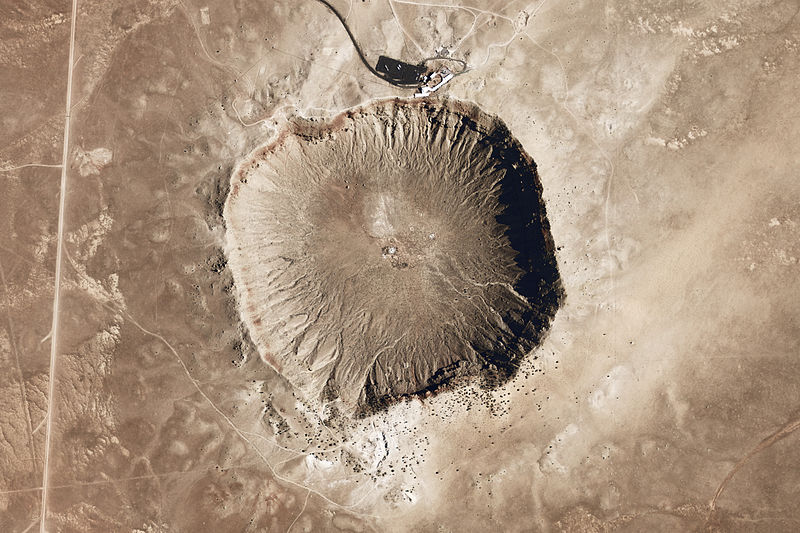A NASA Earth Observatory image of Meteor Crater, 4000 feet across and 700 feet deep, in Arizona.
I walked out on the paved path to the highest rim of the crater. It is breathtaking to think of the energy that was more or less instantly expended in this place not so very long ago. The brochure says it was the equivalent of 20 million tons of TNT. (We had nuclear devices more than twice that powerful at one time, and probably still do). If this meteor(ite) was just 150 feet across and produced a half-mile crater 700 feet deep, imagine what the 5,000-foot meteor could do, or the 115,000-foot meteor.
I have been trying to be Mr. Affable out here. Last night, I had dinner in Bluff, Utah, with a complete stranger who happened to be in the RV slip next to mine. We had hours of good conversation, made easier (but not necessarily more productive) because we agreed on most public issues. (I did not manage to get his take on the Austrian philosopher Wittgenstein).
These days, I say hello to virtually everyone I meet on the road, and I make slightly ironic remarks from time to time.
Up at the observation station, I was minding my own business, trying to fathom the immensity of what had happened here, when a 30-something couple next to me (it was close quarters) started to hug. He said, “You’re cute.” She gave him a big, wet, loud smooch. Instantly, I turned on them, but so that the handful of others on the patio would know I was joking, and in a Felix Ungar voice, I said, “Hey, knock it off. No PDA here! This is the site of a crater.” A few people laughed (perhaps nervously) but the couple smiled broadly and said, “You’re welcome.”
So that was that. It reminds me of that *Seinfeld* episode where Jerry and his new girlfriend Sheila make everyone gag with their baby love talk. “Oh, Schmoopie.” “You’re Schmoopie!” “No, you’re Schmoopie.” “Oh, Schmoopie.” You may remember the Schmoopie business, but I had forgotten that it is a subplot of one of the handful of most famous *Seinfeld* episodes, The Soup Nazi.
In retrospect, I wish I had pointed to the crater and said, in full Okie, “Fill that puppy; you could have a real nice resort right here.” Which is amazing to imagine.
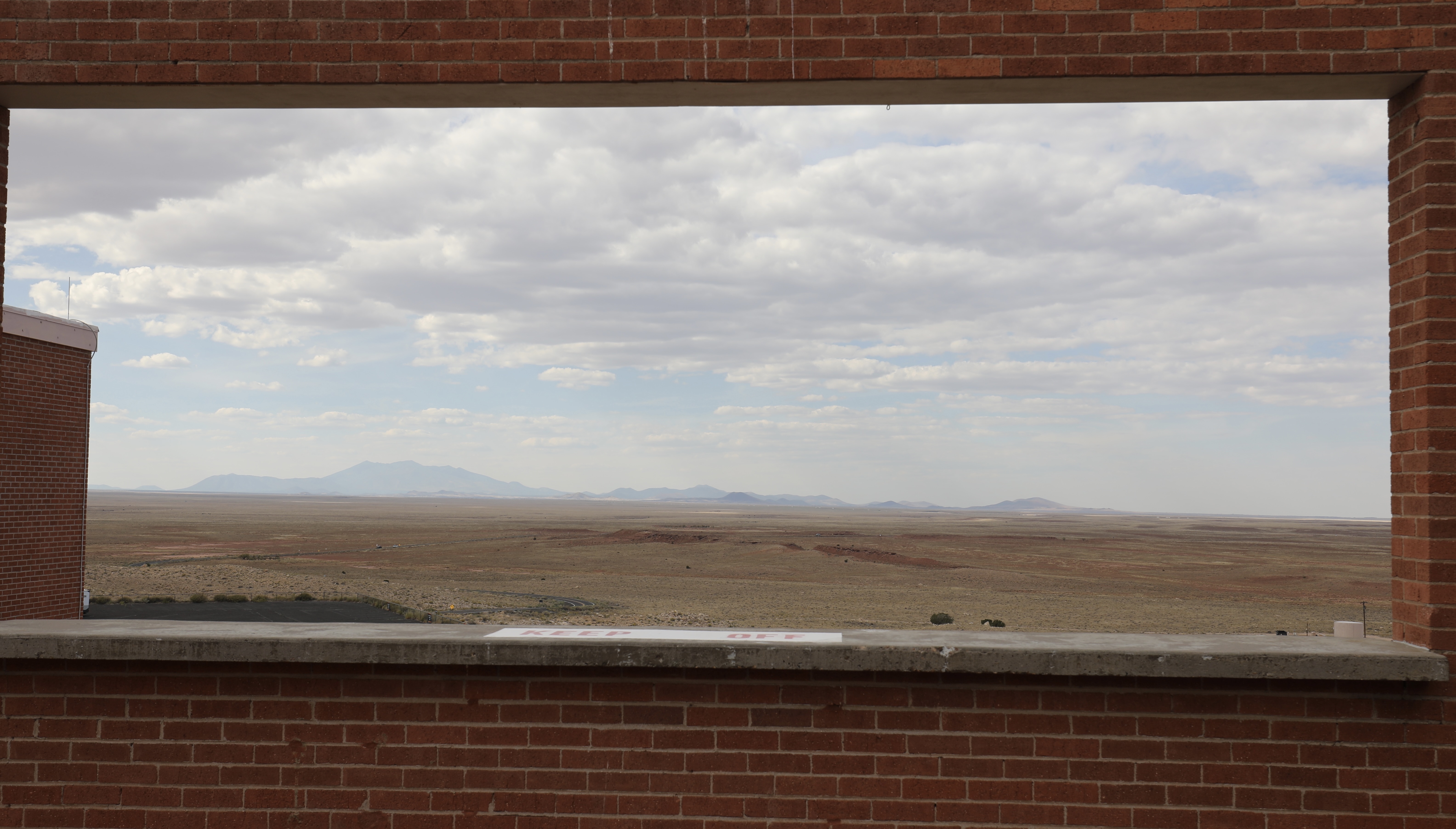A vast expanse of desert surrounds Arizona’s Meteor Crater. (Photo by Clay Jenkinson)
But then, on my way out, I ran into them again. We were all looking out on tens of thousands of acres of barren desert. A half-serious fence a hundred yards away and an abandoned hogan a mile across the nothing.
I wanted to assure them I wasn’t a parson or a nut.
“Where you from?”
“Indiana.”
“First time here.”
“Yep.”
And then, propelled by some evil genii of misrule, I said, “Look out there and imagine all of it ripe corn.”
They looked at me as if I might possibly be insane or an eccentric savant, but they nodded and offered a pro forma mini-laugh. Then, the Hoosiers got into their minivan and drove away. I hope I don’t wind up on some comment site.
Look, folks, I am still perfecting this. Give me a break.
I know it’s ghoulish and irresponsible, but I am particularly attracted to certain disasters — especially if they were long ago. I have fantasized about [Glen Canyon Dam in 1983](https://www.azcentral.com/story/news/local/arizona-environment/2019/07/18/1983-arizona-glen-canyon-dam-lake-powell-almost-overflowed-colorado-river/1662234001/), where Lake Powell filled to the rim and hydro-engineers seriously wondered if they would lose the dam. Perhaps partly from a sizeable recent dose of Edward Abbey (including having a morning with one of his closest friends), I sometimes fantasize about the collapse of Glen Canyon Dam. Would it take out Hoover Dam? Would the lower Colorado carve out a bold new course, as it did early in the 20th century in a big water year? I would have given anything to have seen an atomic detonation in southern Nevada. People got special packages at Las Vegas Hotels during the above-ground tests that sometimes included the chance to meet Miss Atomic with her pillowy mushroom cloud sleeves. I’ve only been in one tiny earthquake, never within half a mile of a tornado.
I would not want to see the Challenger disaster or the Hindenburg, of course, or any other catastrophe with the immediate loss of humans. But I’ll watch a skyscraper implosion any Saturday of the year. I know it is odd, but I find a kind of poetry in a mushroom cloud that doesn’t intend to kill anyone.
Continuing to gaze into the crater at some point creates no additional pleasure, so I made my way to the exit. The gigantic gift shop sells precisely what you would expect — crater snow globes, magnets, patches, t-shirts, caps, pencils with your first name on them, gems, faux arrowheads, and playing cards with the crater on the back. A machine to turn a penny (for a quarter) into a commemorative medallion was out of order.
The store had six unrelated children’s books and exactly three books for adults. None interesting except to a very patient and forgiving geologist.
Now I’m back in my RV park, temperature 85, 4:30 pm. “It’s Miller Time!” However you define Miller.
---
## ***Discover more on these topics at Listening to America***
[New Mexico](https://ltamerica.org/tag/new-mexico/ "3 topics")[Road Trips](https://ltamerica.org/tag/road-trips/ "18 topics")[The Constitution](https://ltamerica.org/tag/the-constitution/ "1 topics")[Tennessee](https://ltamerica.org/tag/tennessee/ "1 topics")[Ohio](https://ltamerica.org/tag/ohio/ "2 topics")[Wyoming](https://ltamerica.org/tag/wyoming/ "4 topics")[Podcast](https://ltamerica.org/tag/podcast/ "1 topics")[William Shirer](https://ltamerica.org/tag/william-shirer/ "1 topics")[South Carolina](https://ltamerica.org/tag/south-carolina/ "1 topics")[Thoreau](https://ltamerica.org/tag/thoreau/ "5 topics")[Wisconsin](https://ltamerica.org/tag/wisconsin/ "0 topics")[north daktoa](https://ltamerica.org/tag/north-daktoa/ "0 topics")[New York](https://ltamerica.org/tag/new-york/ "8 topics")[Oregon](https://ltamerica.org/tag/oregon/ "4 topics")[Space Exploration](https://ltamerica.org/tag/space-exploration/ "8 topics")[Rome](https://ltamerica.org/tag/rome/ "1 topics")[South Dakota](https://ltamerica.org/tag/south-dakota/ "16 topics")[Virginia](https://ltamerica.org/tag/virginia/ "7 topics")[State Parks](https://ltamerica.org/tag/state-parks/ "2 topics")[Thomas Jefferson](https://ltamerica.org/tag/thomas-jefferson/ "34 topics")[Video](https://ltamerica.org/tag/video/ "51 topics")[Utah](https://ltamerica.org/tag/utah/ "11 topics")[Oppenheim](https://ltamerica.org/tag/oppenheim/ "0 topics")[New England](https://ltamerica.org/tag/new-england/ "1 topics")[Oppenheimer](https://ltamerica.org/tag/oppenheimer/ "1 topics")[Vermont](https://ltamerica.org/tag/vermont/ "1 topics")[U.S. Constitution](https://ltamerica.org/tag/u-s-constitution/ "1 topics")[Sports](https://ltamerica.org/tag/sports/ "2 topics")[Travel](https://ltamerica.org/tag/travel/ "1 topics")[Texas](https://ltamerica.org/tag/texas/ "4 topics")[North Carolina](https://ltamerica.org/tag/north-carolina/ "3 topics")[Steinbeck Travels](https://ltamerica.org/tag/steinbeck-travels/ "75 topics")[Rivers](https://ltamerica.org/tag/rivers/ "3 topics")[U.S. Presidents](https://ltamerica.org/tag/u-s-presidents/ "71 topics")[North Dakota](https://ltamerica.org/tag/north-dakota/ "53 topics")[Washington](https://ltamerica.org/tag/washington/ "2 topics")[Walden](https://ltamerica.org/tag/walden/ "1 topics")[paintings](https://ltamerica.org/tag/paintings/ "0 topics")[Water in the West](https://ltamerica.org/tag/water-in-the-west/ "24 topics")[Reading](https://ltamerica.org/tag/reading/ "1 topics")[Theodore Roosevelt](https://ltamerica.org/tag/theodore-roosevelt/ "16 topics")[Poetry](https://ltamerica.org/tag/poetry/ "1 topics")[Pennsylvania](https://ltamerica.org/tag/pennsylvania/ "1 topics")[Republic](https://ltamerica.org/tag/republic/ "0 topics")[Republics](https://ltamerica.org/tag/republics/ "1 topics")
**Categories:** Dispatches from the Road
**Tags:** Arizona, John Steinbeck, Steinbeck Travels
---
### [John Steinbeck: The Journals of a Novelist](https://ltamerica.org/john-steinbeck-the-journals-of-a-novelist/)
**Published:** October 8, 2024
**Author:** Russ Eagle
**Excerpt:** Two journals John Steinbeck kept while writing his two most famous novels provide an intimate look into the author’s creative process.
**Content:**
## Two posthumously published journals provide readers with an intimate look at the creation of the author’s two heftiest volumes.

Though John Steinbeck produced some of the 20th century’s most enduring [short novels](https://www.penguinrandomhouse.com/books/305862/the-short-novels-of-john-steinbeck-by-john-steinbeck/) – *Of Mice and Men*, *The Red Pony*, *The Pearl*, *Tortilla Flat*, *Cannery Row* — he would grow concerned if he went too long without producing what he called a “big book.”
Books, he said, were like wedges driven into the reader’s personal life, and a short volume was in and out of the consciousness too quickly to have a lasting impact. A longer work, on the other hand, “drives in very slowly … and remains for a while” so that “the mind cannot ever be quite what it was before.”
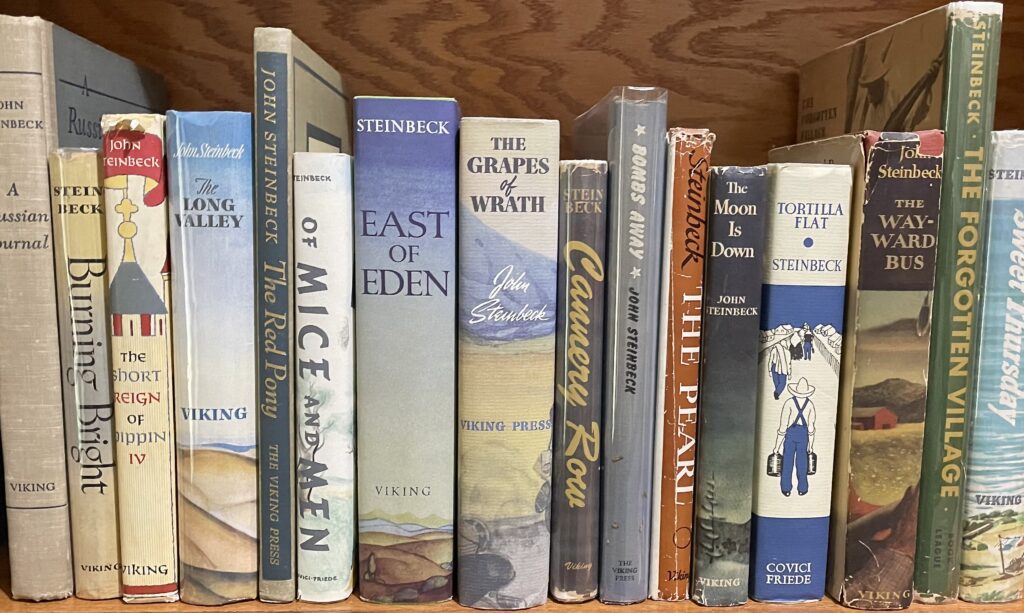
Examining Steinbeck’s fiction through such a lens, two formidable “wedges” are readily apparent — *[The Grapes of Wrath](https://thegreatestbooks.org/books/36#google_vignette)* and *[East of Eden](https://www.steinbeckintheschools.com/east-of-eden-overview)*. While the former is almost universally accepted as Steinbeck’s masterwork, the author himself preferred the latter. He maintained that *East of Eden* was the one work for which all the others were merely practicing. “I think perhaps it is the only book I have ever written,” he wrote to his longtime editor and friend, [Pascal Covici](https://theamericanreader.com/20-august-1951-john-steinbeck-to-pascal-covici/).
For Steinbeck, anonymity was essential for a writer. He worked long and hard to maintain his privacy. When a publisher of one of his early works requested biographical information, Steinbeck responded, “I can’t say how much I wish this kind of thing weren’t necessary.” He maintained that stance throughout his career, avoiding speeches and public appearances and generally declining or ignoring awards and recognition. He did what he could to trip up future biographers as well, burning caches of letters and manuscripts. Fortunately, these efforts were not wholly successful. Great repositories of Steinbeck journals, letters, manuscripts, photographs, and ephemera dot the country. The writer himself admitted to a friend in 1962 that “I’ve left a lot of tracks.” Among the materials Steinbeck couldn’t bring himself to destroy were the journals he kept while creating his two “big books.” Each provides a rare, intimate snapshot of Steinbeck at a critical time in his personal and professional history. Written 12 years apart, the differences are striking at times.
> ***Actually, if there has been one rigid rule in my books, it is that I, as me, had no right in them. And if that is so of the text, let it be so of publicity. You really don’t need me in it. If you do — then book is a failure.***
>
> **Steinbeck to his Editor, Pascal Covici**
Steinbeck famously wrote *The Grapes of Wrath* in a 100-day sprint in the summer and fall of 1938. This fevered burst of work followed several years of research and a few false starts, including one completed novel that Steinbeck tossed into a fire. He was an angry man while researching and writing *The Grapes of Wrath*, determined to “put a tag of shame on the greedy bastards who are responsible for this \[the migrant crisis in California\].” Steinbeck was incensed when the management at Viking Press suggested changes to the ending that might better “satisfy” readers. “I’m not writing a satisfying story,” he fired back. “I’ve done my damndest to rip a reader’s nerves to rags — I don’t want him satisfied.”
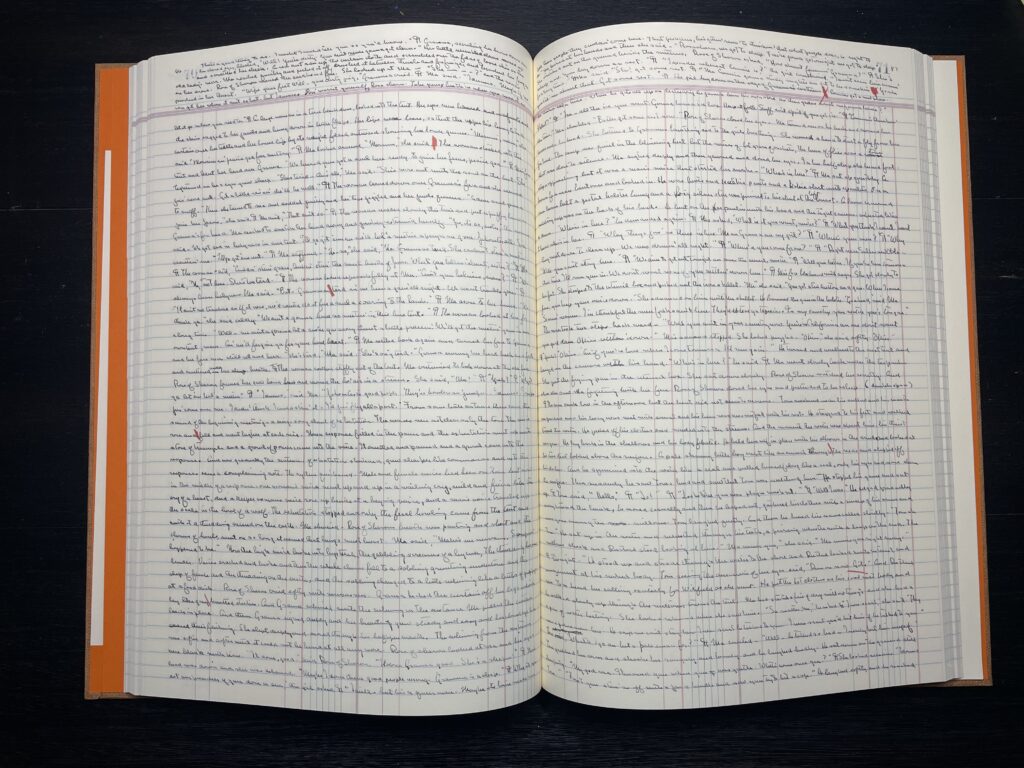Two of the 165 pages of the holgraph manuscript from *The Grapes of Wrath*
The holograph manuscript of *The Grapes of Wrath* is housed at the University of Virginia’s Alderman Library and is a sight to behold. Steinbeck’s growing rage leaps off the 83 double-sided, 10″ x 16″ ledger pages. As he gains momentum, the words seem to overwhelm the page. He fills the lined portion of the first sheet with 46 lines and 648 words. By page 19, he is also filling the margins, squeezing nearly 900 words onto a sheet. On page 34, he abandons paragraphing and writes in a single continuous stream. Sometimes, he inserts a ¶ to signify a new paragraph, but he often just keeps rolling. By the time he approaches the end of his story, Steinbeck is squeezing as many as 1,300 words onto a single page. It is a stunning piece of work, even more so when you realize that this first draft became, with no significant changes or revisions, the published novel. John Steinbeck, we might say in modern parlance, was “in the zone” in that summer of 1938.
Unfortunately, spending time with that manuscript is not practical for most readers. Far more accessible is *[Working Days: The Journals of The Grapes of Wrath](https://www.penguinrandomhouse.com/books/316871/working-days-by-john-steinbeck/)*, an exciting document in its own right. Throughout this account, Steinbeck finds himself straining under the weight of his subject matter. “This must be a good book,” he implores himself. “It simply must. I haven’t any choice.” But he staggers at times — his confidence wavers. Personal and professional distractions abound. He wonders if he is headed for a nervous breakdown. And yet, his intensity never wavers. “If only I could do this book properly, it would be one of the really fine books and a truly American book,” he writes in late June. Finally, in his last week of work, Steinbeck becomes convinced that he has failed. “I am sure of one thing — it isn’t the great book I had hoped it would be,” he says in the journal’s most poignant entry. “It’s just a run-of-the-mill book. And the awful thing is that it is absolutely the best I can do.” *Working Days*, in part because it was never intended for publication, offers a moving and highly personal account of the turbulent period from which some claim Steinbeck never fully recovered. Reading through the journal more than a decade later, Steinbeck was particularly struck by the complete lack of complacency in his life. “It has been very high and very low,” he told Covici, “but rarely has it moved gently on calm waters.”
> ***For the first time I am working on a real book that is not limited and that will take every bit of experience and thought and feeling that I have.***
>
> ***Steinbeck in* Working Days**
A lot happened to Steinbeck after *The Grapes of Wrath*. Though the aftermath brought fame and fortune, it also brought illness and depression. His first marriage crumbled. Over the next decade, he would remarry, become a New Yorker, suffer serious mental and physical injury in World War II, father two sons, lose his best friend and collaborator Ed Ricketts in an accident, go through a second painful divorce, and see his critical reputation plummet. He was a severely depressed and damaged man when, in 1949, he met Elaine Scott. Their marriage in late December of 1950 was a turning point for Steinbeck, “a new life and a direction.” He was ready for another “big” book. Just a month and a day after the wedding, he eagerly embarked on *East of Eden*. “Now that I have everything,” he said, “we shall see whether I have anything.” His theme did not lack for ambition. Initially addressing the book to his sons, he set out to “tell them one of the greatest, perhaps the greatest story of all — the story of good and evil, of strength and weakness, of love and hate, of beauty and ugliness.”
The holograph manuscript for *East of Eden* is housed at the Harry Ransom Center at the University of Texas. Steinbeck again worked in a large notebook — 10 3/4″ x 14″ — though he confined the novel’s text to the right-hand pages. The left-hand pages were reserved for daily letters to Covici. This time, the manuscript served more as a conventional first draft. The Ransom Center’s archives contain folder after folder of insertions, deletions, and discarded pages. This time, it is Steinbeck’s struggle rather than his fervor that permeates the pages. It’s a reminder that *The Grapes of Wrath* manuscript was the exception and not the rule.

Steinbeck knew that the letters to Covici told a story as well. As with the earlier journal, he left his permission for posthumous publication, and Viking Press wasted little time. They brought out *[Journal of a Novel: The East of Eden Letters](https://www.penguinrandomhouse.com/books/354542/journal-of-a-novel-by-john-steinbeck/)* within a year of Steinbeck’s death. In the intervening half-century, it has remained a popular and oft-quoted work. Steinbeck ruminates throughout on the joys and terrors of creation, offers clues to the symbols and themes of his developing novel, and obsesses over the tools of his trade. And he acknowledges a new perspective:
> ***For many years I did not occur in my writing. But this was only apparently true — I was in them every minute. I just didn’t seem to be. But in this book I am in it and I don’t for a moment pretend not to be.***
>
> **Journal of a Novel: The East of Eden Letters**
As with *Working Days*, there are bittersweet moments. “The book dies a real death for me when I write the last word,” Steinbeck says as he nears the novel’s completion. “I have a little sorrow and then go on to a new book which is alive. The line of my books on the shelf are to me like very well embalmed corpses. They are neither alive nor mine. I have no sorrow for them because I have forgotten them, forgotten in its truest sense.
Steinbeck was being truthful here. He was rarely inclined to revisit his past works, always looking ahead to the next project, be it big or small. In both *Working Days* and *Journal of a Novel*, however, he generously allows us to look back on our own at the hopes and dreams he once held for the “big books” in his career.
---
***Over the next few months, Clay is shadowing Steinbeck’s 10,000-mile trek around the USA (and making a few detours of his own). Clay’s expedition is a central part of LTA’s big initiative to explore the country and take the pulse of America as it approaches its 250th birthday. Be sure to follow Clay’s adventures*** [***here***](https://ltamerica.org/tag/steinbeck-travels/) ***and on*** [***Facebook***](https://www.facebook.com/LTAmerica) ***— and*** [***subscribe to our newsletter***](https://ltamerica.org/newsletter/)**.**
**Categories:** Features
**Tags:** Books, Humanities, John Steinbeck, Steinbeck Travels
---
### [Where the American West Begins — Video Dispatch](https://ltamerica.org/where-the-american-west-begins-video-dispatch/)
**Published:** October 8, 2024
**Author:** Editor
**Excerpt:** Clay stops on the banks of the mighty Missouri River, the boundary of America’s east and west. It is here that John Steinbeck noted, “The two sides of the river might well be one thousand miles apart.”
**Content:**
## Clay stops on the banks of the mighty Missouri River, the boundary of America’s east and west. It is here that John Steinbeck noted, “The two sides of the river might well be one thousand miles apart.”
---
***Over the next few months, Clay is shadowing Steinbeck’s 10,000-mile trek around the USA (and making a few detours of his own). Clay’s expedition is a central part of LTA’s big initiative to explore the country and take the pulse of America as it approaches its 250th birthday. Be sure to follow Clay’s adventures*** [***here***](https://ltamerica.org/tag/steinbeck-travels/) ***and on*** [***Facebook***](https://www.facebook.com/LTAmerica) ***— and*** [***subscribe to our newsletter***](https://ltamerica.org/newsletter/)**.**
**Categories:** Dispatches from the Road
**Tags:** Books, John Steinbeck, North Dakota, Steinbeck Travels, Video
---
### [The Last Stoplight on the Interstate Highway System — Video Dispatch](https://ltamerica.org/the-last-stoplight-on-the-interstate-highway-system-video-dispatch/)
**Published:** August 6, 2024
**Author:** Clay Jenkinson
**Excerpt:** The last stoplight on the entire interstate highway system was located in Wallace, Idaho. When the elegant latticework of the I-90 viaduct was completed in 1991, Wallace held a funeral for the last stoplight, now safely protected in the Wallace Mining Museum.
**Content:**
Wallace, Idaho, is a town in the northern neck of Idaho locked into a very narrow valley and — arguably — locked into the past. When I first went through in the 1980s, traffic was still shunted off I-90 and onto old U.S. 10 through downtown. The last stoplight on the entire interstate highway system was located in Wallace. When the elegant latticework of the I-90 viaduct was completed in 1991, Wallace held a funeral for the last stoplight, now safely protected in the Wallace Mining Museum.
Here’s my brief report:
---
## ***Discover more on these topics at Listening to America***
[The Constitution](https://ltamerica.org/tag/the-constitution/ "1 topics")[Washington](https://ltamerica.org/tag/washington/ "2 topics")[Theodore Roosevelt](https://ltamerica.org/tag/theodore-roosevelt/ "16 topics")[State Parks](https://ltamerica.org/tag/state-parks/ "2 topics")[Thomas Jefferson](https://ltamerica.org/tag/thomas-jefferson/ "34 topics")[New England](https://ltamerica.org/tag/new-england/ "1 topics")[U.S. Presidents](https://ltamerica.org/tag/u-s-presidents/ "71 topics")[Republic](https://ltamerica.org/tag/republic/ "0 topics")[Wyoming](https://ltamerica.org/tag/wyoming/ "4 topics")[Ohio](https://ltamerica.org/tag/ohio/ "2 topics")[Tennessee](https://ltamerica.org/tag/tennessee/ "1 topics")[Video](https://ltamerica.org/tag/video/ "51 topics")[Virginia](https://ltamerica.org/tag/virginia/ "7 topics")[Space Exploration](https://ltamerica.org/tag/space-exploration/ "8 topics")[New York](https://ltamerica.org/tag/new-york/ "8 topics")[New Mexico](https://ltamerica.org/tag/new-mexico/ "3 topics")[South Carolina](https://ltamerica.org/tag/south-carolina/ "1 topics")[Oppenheim](https://ltamerica.org/tag/oppenheim/ "0 topics")[Reading](https://ltamerica.org/tag/reading/ "1 topics")[Travel](https://ltamerica.org/tag/travel/ "1 topics")[paintings](https://ltamerica.org/tag/paintings/ "0 topics")[Texas](https://ltamerica.org/tag/texas/ "4 topics")[Steinbeck Travels](https://ltamerica.org/tag/steinbeck-travels/ "75 topics")[Water in the West](https://ltamerica.org/tag/water-in-the-west/ "24 topics")[Vermont](https://ltamerica.org/tag/vermont/ "1 topics")[Walden](https://ltamerica.org/tag/walden/ "1 topics")[Rome](https://ltamerica.org/tag/rome/ "1 topics")[Sports](https://ltamerica.org/tag/sports/ "2 topics")[Poetry](https://ltamerica.org/tag/poetry/ "1 topics")[Republics](https://ltamerica.org/tag/republics/ "1 topics")[North Dakota](https://ltamerica.org/tag/north-dakota/ "53 topics")[Podcast](https://ltamerica.org/tag/podcast/ "1 topics")[Rivers](https://ltamerica.org/tag/rivers/ "3 topics")[Oppenheimer](https://ltamerica.org/tag/oppenheimer/ "1 topics")[Thoreau](https://ltamerica.org/tag/thoreau/ "5 topics")[South Dakota](https://ltamerica.org/tag/south-dakota/ "16 topics")[North Carolina](https://ltamerica.org/tag/north-carolina/ "3 topics")[Wisconsin](https://ltamerica.org/tag/wisconsin/ "0 topics")[William Shirer](https://ltamerica.org/tag/william-shirer/ "1 topics")[Pennsylvania](https://ltamerica.org/tag/pennsylvania/ "1 topics")[north daktoa](https://ltamerica.org/tag/north-daktoa/ "0 topics")[U.S. Constitution](https://ltamerica.org/tag/u-s-constitution/ "1 topics")[Utah](https://ltamerica.org/tag/utah/ "11 topics")[Oregon](https://ltamerica.org/tag/oregon/ "4 topics")[Road Trips](https://ltamerica.org/tag/road-trips/ "18 topics")
**Categories:** Dispatches from the Road
**Tags:** America at 250, Idaho, John Steinbeck, Road Trips, Steinbeck Travels, Video
---
### [Steinbeck Meets an Itinerant Actor Along North Dakota's Maple River — Video Dispatch](https://ltamerica.org/steinbeck-meets-an-itinerant-actor-along-north-dakotas-maple-river-video-dispatch/)
**Published:** September 28, 2024
**Author:** Editor
**Excerpt:** In October 1960, traveling through eastern North Dakota, John Steinbeck stopped along the lonely Maple River. Here, the author had a remarkable encounter with an itinerant Shakespearean actor.
**Content:**
In October 1960, traveling through eastern North Dakota, John Steinbeck stopped along the lonely Maple River. Here, the author had a remarkable encounter with an itinerant Shakespearean actor. Clay recently visited the Maple River where Steinbeck and the actor met and recounts their improbable meeting.
---
***Over the next few months, Clay is shadowing Steinbeck’s 10,000-mile trek around the USA (and making a few detours of his own). Clay’s expedition is a central part of LTA’s big initiative to explore the country and take the pulse of America as it approaches its 250th birthday. Be sure to follow Clay’s adventures*** [***here***](https://ltamerica.org/tag/steinbeck-travels/) ***and on*** [***Facebook***](https://www.facebook.com/LTAmerica) ***— and*** [***subscribe to our newsletter***](https://ltamerica.org/newsletter/)**.**
**Categories:** Dispatches from the Road
**Tags:** America at 250, Books, John Steinbeck, North Dakota, Steinbeck Travels, Video
---
### [Looking for America in London](https://ltamerica.org/looking-for-america-in-london/)
**Published:** October 1, 2024
**Author:** Clay Jenkinson
**Excerpt:** Clay shares impressions from a recent visit to England, where he led a cultural tour.
**Content:**
## My lingering impressions from a visit to England.
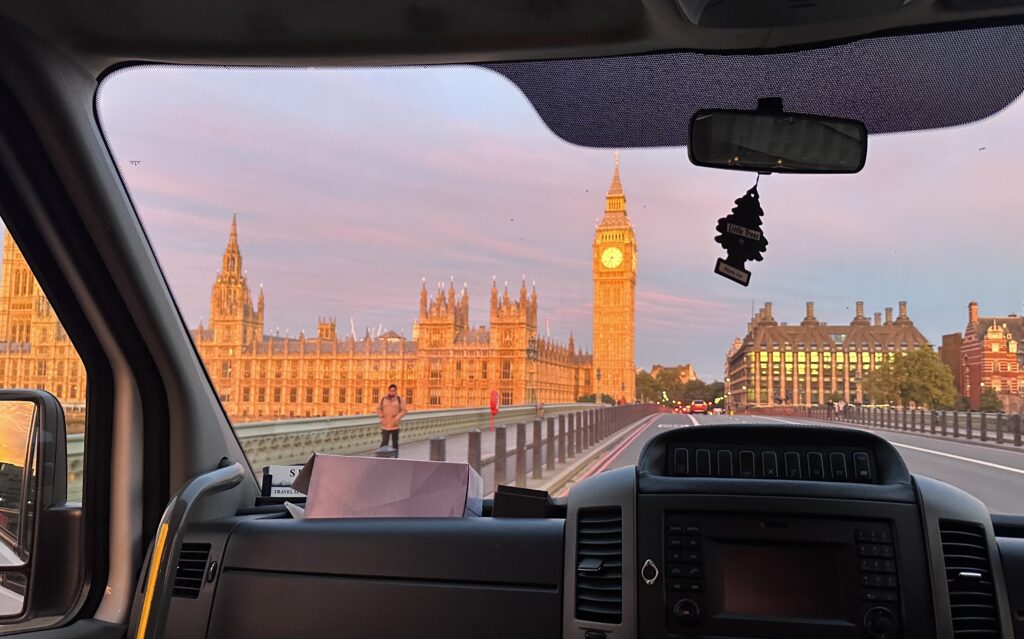Clay takes a taxi past Big Ben and Westminster, golden in the early morning light, on his way to London’s Heathrow Airport.
## **Eight English Vignettes:**
**1.** Dawn taxi to Heathrow Airport, about 35 minutes from the heart of London. The sunrise conforms perfectly to the poet Homer’s phrase, “rosy-fingered dawn.” Big Ben and Westminster glow golden just across the Thames from our hotel. There is no traffic until we approach Heathrow when traffic becomes a snarl. We roll our heavy (souvenir-enhanced) bags into the terminal, and in fewer than 10 minutes, our bags are safely in the hands of United. There is a 99% chance they will be drifting around the baggage rotisserie when we finally clear passport control in Denver.
I’m disappointed to report that Heathrow handles passengers much more efficiently and kindly than most U.S. airports. When we flew in about 10 days ago, we passed through Heathrow passport control in less than 15 minutes, even though the volume of passengers was huge. Heathrow uses passport scanners. The last time I went through passport control in Denver, the queue (see how British terms seep in!) was an hour and 45 minutes. The desk clerks in Britain are uniformly good-tempered. Security was painless. When is security painless?
Leaving Britain is such sweet sorrow. I think the cultural tour of Literary England was the most satisfying foreign tour I have led. To put it in a nutshell: the British Museum, the National Portrait Gallery, Dr. Samuel Johnson’s house in Gough Square, St. Paul’s Cathedral, the Tower of London, Jane Austen’s in Bath (plus the Roman baths), Stratford-upon-Avon, two Shakespeare performances, an insider’s tour of Oxford University, and a stop in a lovely Cotswold village. All satisfying. But the sorrow is in leaving my daughter asleep in the London hotel. I won’t see her again for months. She is a full adult now in the full stride of her young professional life.
Every time I do this, by which I mean fly from somewhere in Europe to the United States, I marvel at the improbable miracle of modern mobility. I can start the day in London, Rome, or Paris and sleep in my own bed that same night in Bismarck, North Dakota, half a world away. It took Thomas Jefferson 10 days to travel from Monticello in Virginia to Philadelphia, and he had to ford rivers on a horse to get there, stay in appalling inns where the sheets were seldom changed, and often enough, one had to share a bed with a stranger. When the flight attendant on my trips announces that peanuts will be unavailable because some six-year-old has a peanut allergy, we passengers come close to rioting and rushing the cockpit.
**2.** The American presence in London. Statue of John F. Kennedy. Statue of Abraham Lincoln. Ben Franklin’s house. Henry Wadsworth Longfellow was the first American commemorated in Poet’s Corner of Westminster Abbey. T.S. Eliot is also honored there. Though an American born in St. Louis, he was so deeply Anglophilic as to be essentially adopted into the pantheon of English poets. Theodore Roosevelt married (for the second time) in London on December 2, 1886, at St. George’s church in Hanover Square. His best man was the British diplomat Cecil Spring Rice (Eton, Oxford). But who comes to London to look for the American footprint?
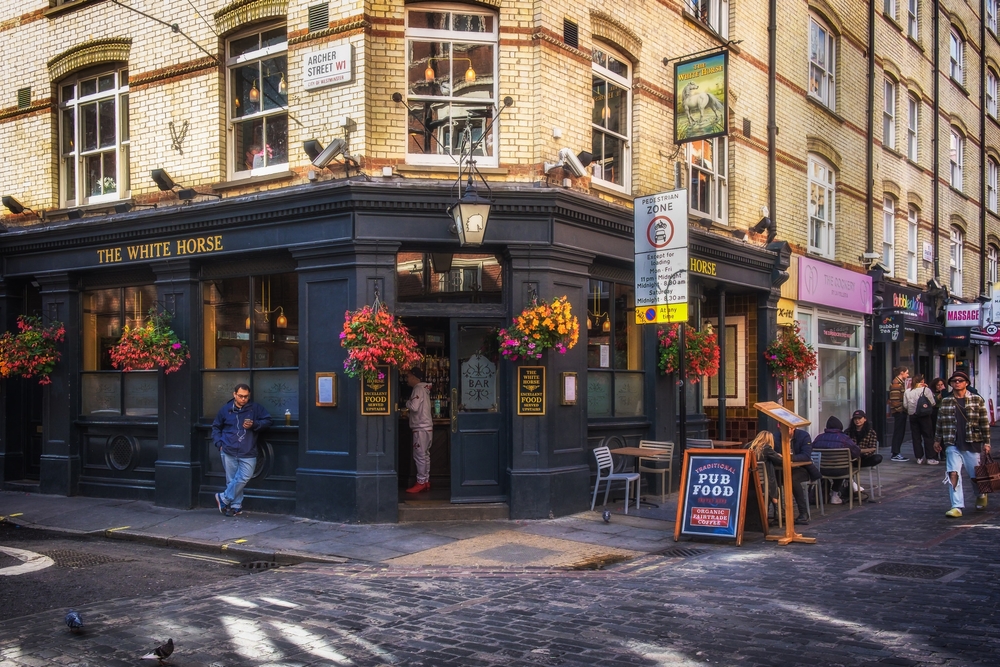The classic British Pub. (Shutterstock)
**3.** British pub life is wonderful. Somehow, it’s so different from a typical American bar or tavern that it belongs to a separate category. Most pubs have a number of rooms (often on several floors) lined with dark wood and battered wooden (not synthetic) tables. Pub grub is great. It’s hard to go wrong with a steak and mushroom pie (about the size of an American frozen chicken pot pie, but deeper, and usually served with mashed potatoes and thin brown gravy. You get your beer on tap, and if you want to be authentic, you get it at room temperature. The ciders are finer, drier, and less sweet than their American counterparts. My favorite pub meal is the ploughman’s lunch, which consists of a few inches of excellent baguette bread, a couple of triangles of cheese, some chutney, and a gherkin. Ecstasy. At night, in the quieter pubs, you often see an older man in tweed, an unlit pipe in his mouth, with an older dog lying patiently at his feet. The strangest thing about British pubs is the dense congregation of younger people, mostly but not all men, standing in something like a phalanx out on the sidewalk, each with a pint of beer in his hands, exchanging laughter and pleasant insults. In America, even when we try to imitate an English pub, it still feels like a bar pretending to be a pub.
**4**. The British countryside is gorgeous: green fields and hedgerows, low unmortared stone fences, sometimes with stiles (wee conjoined wooden ladders on either side). By American agricultural standards, everything is on a miniature scale. Most of Great Britain is hills and dales. There has been way more than average rain in the last few months. The rivers are all overflowing now, but it doesn’t feel like flooding because the British factor in and preserve riverside marshland, except along the lower Thames where the Victorians engineered impressive embankments to protect the city of London. In Stratford, there are swans and ducks, but it is the swans that are poetic.
Shakespeare gets it right in John of Gaunt’s deathbed encomium to England in *Richard II*: “This other Eden, demi-paradise … this precious stone set in a silver sea … this blessed plot, this earth, this realm, this England!” As we motored out of Bath towards Oxford and glimpsed the irregular patchwork quilt of fields running up and over the hillsides, stone barns, and neoclassical houses (which seemed like manors), several of our guests gasped at the almost impossible beauty of the English countryside. Sheep everywhere. The English cattle are placid — in a land of abundant rain and excellent pasture, they know nothing of the harder life of American cattle, who endure harsh winters and periodic droughts on their wild, semi-arid landscapes. There is nothing like the English countryside in the United States, not even in Quebec or Vermont. As we drift through the British countryside, it feels like some dream of England rather than the real thing.
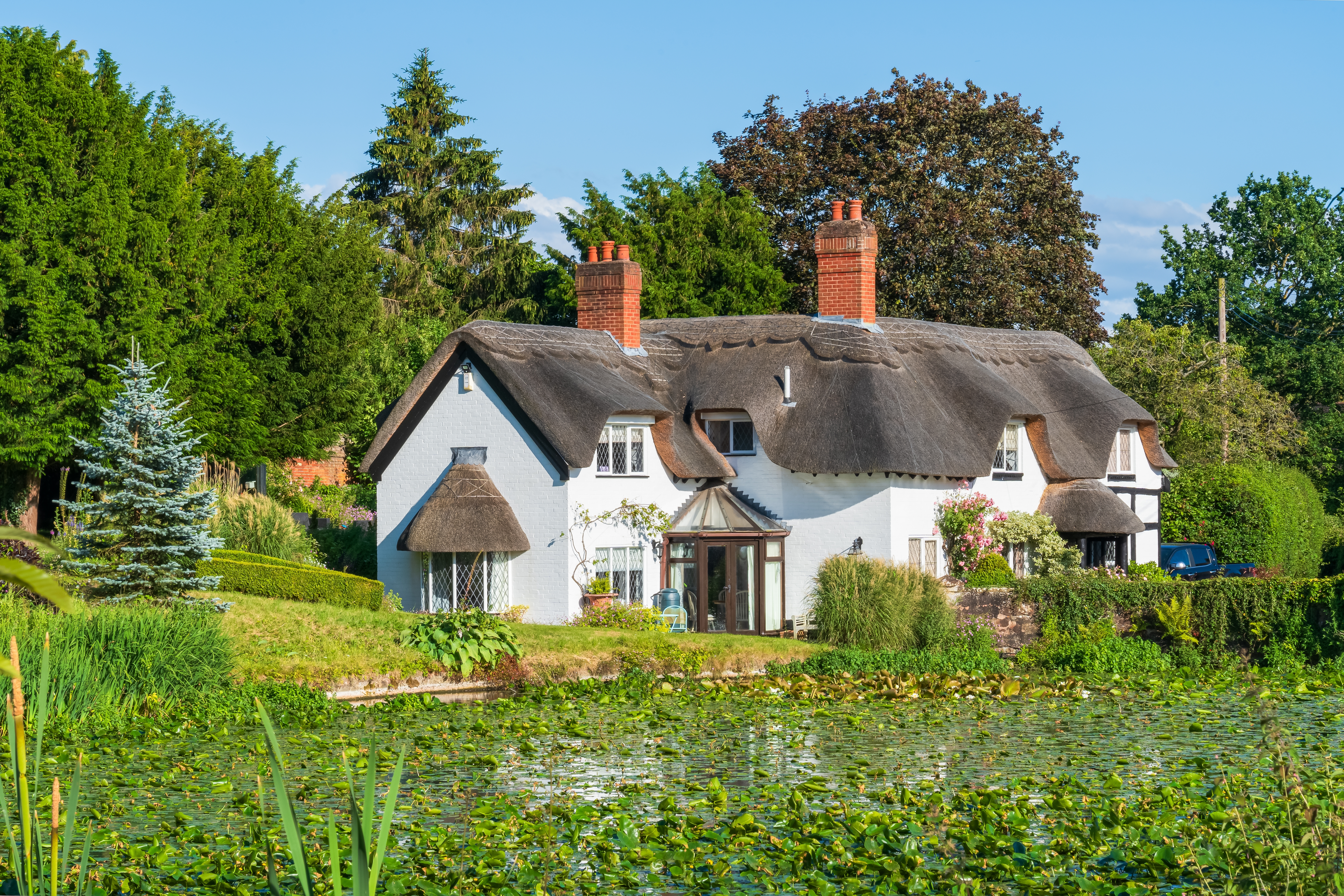A English Country Cottage.(Shutterstock)
**5.** The butter and the bread and cheese are perfectly delicious. Why, America, why? How can we be the wealthiest nation on earth, with the largest wheat harvest of any nation, and yet manufacture (perhaps that’s the key word here) such inferior butter, bread, and cheese?
**6.** Wandering about Great Britain makes you want to read through the *[Norton Anthology of English Literature](https://wwnorton.com/books/9781324062981)*. Everywhere you turn around, you bump into a writer’s house or one of those blue disks affixed to a modern bank building or shop saying, “James Joyce lived here between x and y,” or “Bertrand Russell’s mistress Lady Ottoline Morell lived here with her husband between z and w.” I studied English literature at at least three universities in my time, including one in Britain, so the lens I wear may be inordinately fixed on writers. When I studied in England, you could go into almost any little shop (sometimes called a “tuck shop”) and find the complete works of Jane Austen or Dickens or George Eliot on a rack that in America would feature James Patterson or Louis L’Amour (not, as Seinfeld says, that there is anything wrong with that!). I bought some books of literature and literary criticism at two of the greatest independent bookstores in the English-speaking world, one of which is Blackwells on Broad Street in Oxford, and took smartphone photos of a dozen more I ordered from our London hotel on Amazon.com (another marvel of modern technology), which will be waiting for me when I reach my home later tonight in Bismarck. In London, we took a group photo in front of the recently restored Old Curiosity Shop, one of London’s (and Britain’s) oldest shops, dating from the 16th century (which is when Sir Walter Raleigh’s ships (not much more than yachts) were exploring the Outer Banks in today’s North Carolina and naming the east coast of America “Virginia” after the Virgin Queen Elizabeth I.
**7.** We visited the British Museum twice. Because on our first visit, we discovered — to our extreme disappointment — that the famous [Elgin Marbles](https://www.britannica.com/topic/Elgin-Marbles), now referred to as the Parthenon Marbles, were “closed for maintenance.” I’ve been through the British Museum a couple of dozen times in my life, and I always rush first to Room 18, which houses the statuary removed from the Parthenon in Athens by Lord Elgin in the first years of the 19th century and later purchased by the British parliament. This was the first time in my experience that the treasures of the Parthenon were closed to the public. I had built them up in my commentaries in hotel meeting rooms and on the coach, and my daughter and I had conducted a mock debate over whether the marble sculptures should be returned to Greece, which insists that they be repatriated.
Clay with the Horse of Selene at the British Museum.
So we carved out time for a second visit on our last day in England. I rushed to Room 18 ahead of the pack and to the Horse of Selene, looted by Elgin from the east pediment of the Parthenon. I tried to remember my first sight of that sculpture decades ago, when I stood in open awe before a perfectly realized horse visage lovingly coaxed out of a block of stone by craftsman who lived 2,500 years ago. At our best, “what a piece of work is man,” as Hamlet puts it in Shakespeare’s greatest play. I’m not much for selfies, but I’ve had my photograph taken there every time I visit the British Museum in a “same time next year” protocol. But the spontaneous inrush of wonder and pure admiration I felt 40 years ago when I stood before that horse cannot be rebooted now: as we age (most of us), we lose some of our capacity for wonderment, for an ability to surrender to the sublime in art, music, literature, friendship, and love. There can only be one first kiss. Now there is too much wear and tear on my aesthetic and spiritual tires. My synapses of wonder and my spiritual arteries are somewhat clogged. Now, when I stand before the Parthenon Marbles, I have to self-consciously crank up my sense of wonder like a music box or cream separator, and I sense the strain as I try to feel what I once felt. It’s tragic, one of the hardest things to accept in life.
As I stood there trying to be fully present — PRESENT — I found myself asking when would be the last time I stood there, halfway across the world. Perhaps this was that time. I don’t think so, but we as a civilization have entered a new age of disruption (pandemics, cyber attacks, drone wars, decolonization, and postmodernism), and my life is well over half over.
**8**. One of my favorite moments from the journey was outside the Jane Austen Centre in Bath as a light rain fell on wet pavement. There is a full-size statue of Ms. Austen outside the door of the museum, wearing a sky blue dress that covers all but the tips of her shoes, and a deep navy blue hat with a big white bow. Very Jane Austen! As I stood waiting for the last of our group — for some, the visit to Austen-land was the highlight of the journey — a Muslim family of six emerged from the Centre, the women covered with the hijab. One of them, a young woman, perhaps 19 or 20 years old, looked around a bit apprehensively and then removed her long, slick black raincoat and handed it to her father. She was wearing an identical blue full-length dress, a Jane Austen dress! She stood next to the statue of the author of *Pride and Prejudice*, *Sense and Sensibility*, *Persuasion*, and three other novels while two members of her family took her photograph.
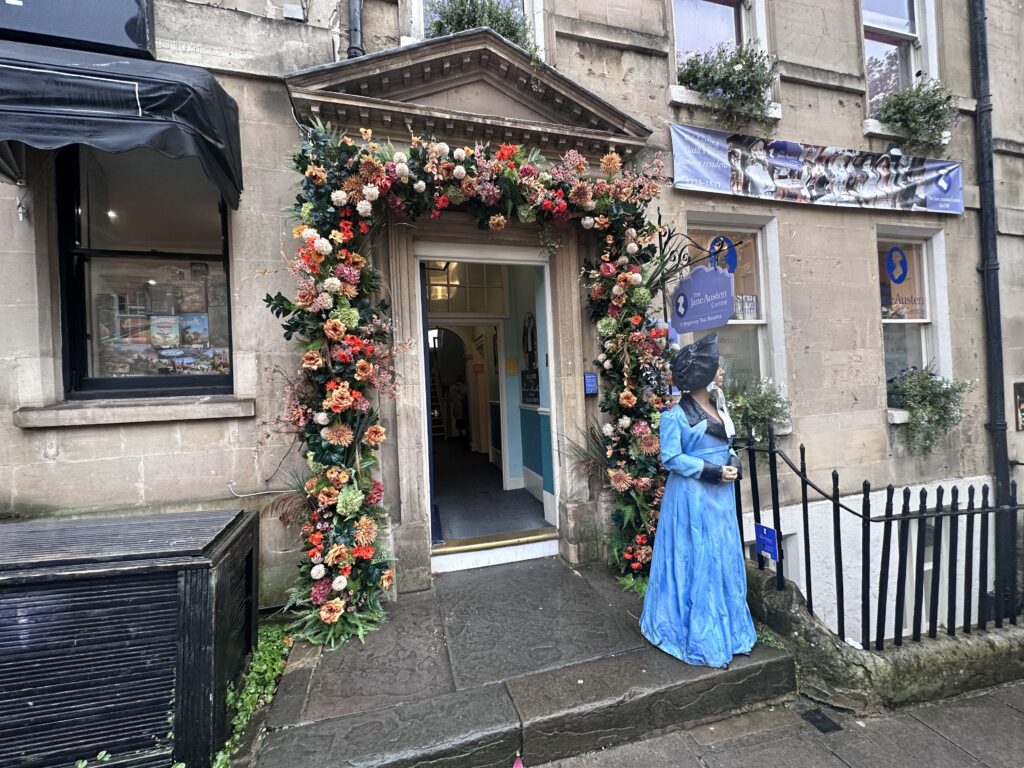The Jane Austen Centre in Bath. A full-size statue of Ms. Austen stands outside the door of the museum. (Photo by Clay Jenkinson)
I was so deeply moved that I nearly burst into tears. I wanted to ask the family if I could take their photo in front of the Austen statue, but I didn’t — it wasn’t my place to interrupt. But this moment did awaken my sense of wonder: at globalism, at Austen’s universal cross-cultural appeal across some wide cultural divides, at the multiculturalism of 21st century Britain, at the self-conscious boldness of the young woman, at the lovely indulgence of her family, at the risk she took (on several levels) in preparing for the day by dressing like Austen and then having her photograph taken at this cultural ground zero. I’ve read my Austen. On the surface, you would not predict that Mr. Darcy, Elizabeth Bennet, and Lady Catherine de Bourgh would be Islamic fare, but what a ridiculous and arguably Euro-centric thing that is for me to think.
It’s obvious. We share more than that which divides us. Although we run different cultural softwares, all humans want much the same thing: security, family, friendship, love, beauty, stories, adventure, and modest prosperity including a bit of excess cash to seek out seemingly inessential pleasures.
## **Epilogue**
All things must pass. I started this dispatch at 38,000 feet in a Boeing aircraft that flew 4,685.71 miles from London to Denver over Greenland and Hudson Bay, and I finish it now in Bismarck, North Dakota, where the mores of Great Britain seem a very long way away. We do have what purports to be an Irish pub, where you can eat Irish Stew or Shepherd’s Pie, but not a Ploughman’s Lunch. My luggage did not make the turn from Denver to Bismarck, but I did receive a text from the airline telling me not to worry; the bags would turn up “on a later flight.”
---
## ***Discover more on these topics at Listening to America***
[Oppenheim](https://ltamerica.org/tag/oppenheim/ "0 topics")[Texas](https://ltamerica.org/tag/texas/ "4 topics")[paintings](https://ltamerica.org/tag/paintings/ "0 topics")[Tennessee](https://ltamerica.org/tag/tennessee/ "1 topics")[Poetry](https://ltamerica.org/tag/poetry/ "1 topics")[U.S. Presidents](https://ltamerica.org/tag/u-s-presidents/ "71 topics")[Road Trips](https://ltamerica.org/tag/road-trips/ "18 topics")[Podcast](https://ltamerica.org/tag/podcast/ "1 topics")[North Carolina](https://ltamerica.org/tag/north-carolina/ "3 topics")[U.S. Constitution](https://ltamerica.org/tag/u-s-constitution/ "1 topics")[Rivers](https://ltamerica.org/tag/rivers/ "3 topics")[Video](https://ltamerica.org/tag/video/ "51 topics")[New Mexico](https://ltamerica.org/tag/new-mexico/ "3 topics")[Rome](https://ltamerica.org/tag/rome/ "1 topics")[Steinbeck Travels](https://ltamerica.org/tag/steinbeck-travels/ "75 topics")[Republics](https://ltamerica.org/tag/republics/ "1 topics")[Wisconsin](https://ltamerica.org/tag/wisconsin/ "0 topics")[Water in the West](https://ltamerica.org/tag/water-in-the-west/ "24 topics")[Reading](https://ltamerica.org/tag/reading/ "1 topics")[Thomas Jefferson](https://ltamerica.org/tag/thomas-jefferson/ "34 topics")[Travel](https://ltamerica.org/tag/travel/ "1 topics")[State Parks](https://ltamerica.org/tag/state-parks/ "2 topics")[north daktoa](https://ltamerica.org/tag/north-daktoa/ "0 topics")[Utah](https://ltamerica.org/tag/utah/ "11 topics")[South Dakota](https://ltamerica.org/tag/south-dakota/ "16 topics")[North Dakota](https://ltamerica.org/tag/north-dakota/ "53 topics")[South Carolina](https://ltamerica.org/tag/south-carolina/ "1 topics")[Sports](https://ltamerica.org/tag/sports/ "2 topics")[New York](https://ltamerica.org/tag/new-york/ "8 topics")[Washington](https://ltamerica.org/tag/washington/ "2 topics")[Republic](https://ltamerica.org/tag/republic/ "0 topics")[New England](https://ltamerica.org/tag/new-england/ "1 topics")[Pennsylvania](https://ltamerica.org/tag/pennsylvania/ "1 topics")[Theodore Roosevelt](https://ltamerica.org/tag/theodore-roosevelt/ "16 topics")[Space Exploration](https://ltamerica.org/tag/space-exploration/ "8 topics")[William Shirer](https://ltamerica.org/tag/william-shirer/ "1 topics")[Virginia](https://ltamerica.org/tag/virginia/ "7 topics")[Wyoming](https://ltamerica.org/tag/wyoming/ "4 topics")[Ohio](https://ltamerica.org/tag/ohio/ "2 topics")[Thoreau](https://ltamerica.org/tag/thoreau/ "5 topics")[Oppenheimer](https://ltamerica.org/tag/oppenheimer/ "1 topics")[Walden](https://ltamerica.org/tag/walden/ "1 topics")[The Constitution](https://ltamerica.org/tag/the-constitution/ "1 topics")[Vermont](https://ltamerica.org/tag/vermont/ "1 topics")[Oregon](https://ltamerica.org/tag/oregon/ "4 topics")
**Categories:** Features
**Tags:** America at 250, Books, England, North Dakota
---
### [Uniquely American Concord, Massachusetts — Video Dispatch](https://ltamerica.org/uniquely-american-concord-massachusetts-video-dispatch/)
**Published:** August 19, 2024
**Author:** Editor
**Excerpt:** Clay spent a morning in Concord, Massachusetts, while traveling through New England this spring. Located northeast of Boston, Concord has deep roots in American history and culture.
**Content:**
Traveling through New England this spring, Clay spent a morning in Concord, Massachusetts. Located northeast of Boston, Concord has deep roots in American history and culture. On April 19, 1775, British troops clashed with colonialists here, which helped trigger the American Revolutionary War. In the mid-1880s, Concord became a dynamic literary hub that included such writers as Ralph Waldo Emerson, Nathaniel Hawthorne, Henry David Thoreau, and Louisa May Alcott.
---
## ***Discover more on these topics at Listening to America***
[New Mexico](https://ltamerica.org/tag/new-mexico/ "3 topics")[north daktoa](https://ltamerica.org/tag/north-daktoa/ "0 topics")[New England](https://ltamerica.org/tag/new-england/ "1 topics")[Walden](https://ltamerica.org/tag/walden/ "1 topics")[Pennsylvania](https://ltamerica.org/tag/pennsylvania/ "1 topics")[U.S. Presidents](https://ltamerica.org/tag/u-s-presidents/ "71 topics")[Thoreau](https://ltamerica.org/tag/thoreau/ "5 topics")[North Carolina](https://ltamerica.org/tag/north-carolina/ "3 topics")[South Carolina](https://ltamerica.org/tag/south-carolina/ "1 topics")[Steinbeck Travels](https://ltamerica.org/tag/steinbeck-travels/ "75 topics")[Water in the West](https://ltamerica.org/tag/water-in-the-west/ "24 topics")[Thomas Jefferson](https://ltamerica.org/tag/thomas-jefferson/ "34 topics")[Vermont](https://ltamerica.org/tag/vermont/ "1 topics")[Video](https://ltamerica.org/tag/video/ "51 topics")[Republic](https://ltamerica.org/tag/republic/ "0 topics")[paintings](https://ltamerica.org/tag/paintings/ "0 topics")[Sports](https://ltamerica.org/tag/sports/ "2 topics")[North Dakota](https://ltamerica.org/tag/north-dakota/ "53 topics")[South Dakota](https://ltamerica.org/tag/south-dakota/ "16 topics")[Tennessee](https://ltamerica.org/tag/tennessee/ "1 topics")[Oppenheim](https://ltamerica.org/tag/oppenheim/ "0 topics")[Oppenheimer](https://ltamerica.org/tag/oppenheimer/ "1 topics")[Theodore Roosevelt](https://ltamerica.org/tag/theodore-roosevelt/ "16 topics")[Wisconsin](https://ltamerica.org/tag/wisconsin/ "0 topics")[William Shirer](https://ltamerica.org/tag/william-shirer/ "1 topics")[The Constitution](https://ltamerica.org/tag/the-constitution/ "1 topics")[Washington](https://ltamerica.org/tag/washington/ "2 topics")[Virginia](https://ltamerica.org/tag/virginia/ "7 topics")[State Parks](https://ltamerica.org/tag/state-parks/ "2 topics")[Rivers](https://ltamerica.org/tag/rivers/ "3 topics")[Utah](https://ltamerica.org/tag/utah/ "11 topics")[Travel](https://ltamerica.org/tag/travel/ "1 topics")[Podcast](https://ltamerica.org/tag/podcast/ "1 topics")[Reading](https://ltamerica.org/tag/reading/ "1 topics")[Ohio](https://ltamerica.org/tag/ohio/ "2 topics")[Poetry](https://ltamerica.org/tag/poetry/ "1 topics")[New York](https://ltamerica.org/tag/new-york/ "8 topics")[Republics](https://ltamerica.org/tag/republics/ "1 topics")[U.S. Constitution](https://ltamerica.org/tag/u-s-constitution/ "1 topics")[Road Trips](https://ltamerica.org/tag/road-trips/ "18 topics")[Wyoming](https://ltamerica.org/tag/wyoming/ "4 topics")[Rome](https://ltamerica.org/tag/rome/ "1 topics")[Space Exploration](https://ltamerica.org/tag/space-exploration/ "8 topics")[Texas](https://ltamerica.org/tag/texas/ "4 topics")[Oregon](https://ltamerica.org/tag/oregon/ "4 topics")
**Categories:** Dispatches from the Road
**Tags:** America at 250, Humanities, Massachusetts, Steinbeck Travels, Thoreau, Video
---
### [The Grapes of Wrath on Route 66 — Video Dispatch](https://ltamerica.org/the-grapes-of-wrath-on-route-66-video-dispatch/)
**Published:** September 13, 2024
**Author:** Clay Jenkinson
**Excerpt:** It was one of the hottest days of the summer of 2024. I was on Route 66, somewhere east of Needles, California.
**Content:**
It was one of the hottest days of the summer of 2024. Fittingly, I was on Route 66, somewhere east of Needles, California. I pulled over and got out of the pickup to squat by the side of the road like the Joads in Steinbeck’s *The Grapes of Wrath.* Even though I was traveling in an air-conditioned modern pickup, pulling a luxury trailer, for a moment, I could feel a bit of what it must have been like for the displaced Oklahoma and Great Plains farmers who ventured west in the 1930s to escape the Dust Bowl and seek work and a new life in mythical California.
The night I spent in Needles was the hottest night of my travels and the only sleepless one. I wouldn’t trade it for anything.
---
***Editor’s Note:*** ***Over the next few months, Clay is shadowing Steinbeck’s 10,000-mile trek around the USA (and making a few detours of his own). Clay’s expedition is a central part of LTA’s big initiative to explore the country and take the pulse of America as it approaches its 250th birthday. Be sure to follow Clay’s adventures [here](https://ltamerica.org/tag/steinbeck-travels/) and on [Facebook](https://www.facebook.com/LTAmerica) — and [subscribe to our newsletter](https://ltamerica.org/newsletter/)*.**
**Categories:** Dispatches from the Road
**Tags:** America at 250, Books, California, John Steinbeck, Steinbeck Travels, Video
---
### [Another Amazing Roadside Attraction! Paul Bunyan and His Blue Ox, Babe — Video Dispatch](https://ltamerica.org/another-amazing-roadside-attraction-paul-bunyan-and-his-blue-ox-babe-video-dispatch/)
**Published:** September 15, 2024
**Author:** Editor
**Excerpt:** Never one to pass up one of America’s “World's Largest” roadside attractions, our intrepid traveler makes a pilgrimage to the site of the midwest’s legendary lumberjack Paul Bunyan and his blue ox “Babe.”
**Content:**
Never one to pass up one of America’s “World’s Largest” roadside attractions, our intrepid traveler makes a pilgrimage to the site of the midwest’s legendary lumberjack Paul Bunyan and his blue ox “Babe.”
---
## *Discover more on these topics at Listening to America*
[Water in the West](https://ltamerica.org/tag/water-in-the-west/ "24 topics")[Theodore Roosevelt](https://ltamerica.org/tag/theodore-roosevelt/ "16 topics")[U.S. Constitution](https://ltamerica.org/tag/u-s-constitution/ "1 topics")[Oregon](https://ltamerica.org/tag/oregon/ "4 topics")[Virginia](https://ltamerica.org/tag/virginia/ "7 topics")[Rome](https://ltamerica.org/tag/rome/ "1 topics")[Sports](https://ltamerica.org/tag/sports/ "2 topics")[New York](https://ltamerica.org/tag/new-york/ "8 topics")[Utah](https://ltamerica.org/tag/utah/ "11 topics")[Oppenheimer](https://ltamerica.org/tag/oppenheimer/ "1 topics")[Rivers](https://ltamerica.org/tag/rivers/ "3 topics")[William Shirer](https://ltamerica.org/tag/william-shirer/ "1 topics")[Wisconsin](https://ltamerica.org/tag/wisconsin/ "0 topics")[Reading](https://ltamerica.org/tag/reading/ "1 topics")[paintings](https://ltamerica.org/tag/paintings/ "0 topics")[New Mexico](https://ltamerica.org/tag/new-mexico/ "3 topics")[North Dakota](https://ltamerica.org/tag/north-dakota/ "53 topics")[Poetry](https://ltamerica.org/tag/poetry/ "1 topics")[north daktoa](https://ltamerica.org/tag/north-daktoa/ "0 topics")[Tennessee](https://ltamerica.org/tag/tennessee/ "1 topics")[The Constitution](https://ltamerica.org/tag/the-constitution/ "1 topics")[Ohio](https://ltamerica.org/tag/ohio/ "2 topics")[State Parks](https://ltamerica.org/tag/state-parks/ "2 topics")[Walden](https://ltamerica.org/tag/walden/ "1 topics")[Video](https://ltamerica.org/tag/video/ "51 topics")[Road Trips](https://ltamerica.org/tag/road-trips/ "18 topics")[Texas](https://ltamerica.org/tag/texas/ "4 topics")[South Dakota](https://ltamerica.org/tag/south-dakota/ "16 topics")[Steinbeck Travels](https://ltamerica.org/tag/steinbeck-travels/ "75 topics")[Pennsylvania](https://ltamerica.org/tag/pennsylvania/ "1 topics")[Podcast](https://ltamerica.org/tag/podcast/ "1 topics")[Republic](https://ltamerica.org/tag/republic/ "0 topics")[South Carolina](https://ltamerica.org/tag/south-carolina/ "1 topics")[Vermont](https://ltamerica.org/tag/vermont/ "1 topics")[Oppenheim](https://ltamerica.org/tag/oppenheim/ "0 topics")[New England](https://ltamerica.org/tag/new-england/ "1 topics")[Republics](https://ltamerica.org/tag/republics/ "1 topics")[Wyoming](https://ltamerica.org/tag/wyoming/ "4 topics")[Travel](https://ltamerica.org/tag/travel/ "1 topics")[Washington](https://ltamerica.org/tag/washington/ "2 topics")[Space Exploration](https://ltamerica.org/tag/space-exploration/ "8 topics")[North Carolina](https://ltamerica.org/tag/north-carolina/ "3 topics")[Thoreau](https://ltamerica.org/tag/thoreau/ "5 topics")[Thomas Jefferson](https://ltamerica.org/tag/thomas-jefferson/ "34 topics")[U.S. Presidents](https://ltamerica.org/tag/u-s-presidents/ "71 topics")
**Categories:** Dispatches from the Road
**Tags:** America at 250, John Steinbeck, Minnesota, Steinbeck Travels, Video
---
### [Looking Forward to My Zoom Call With Lindsay](https://ltamerica.org/looking-forward-to-my-zoom-call-with-lindsay/)
**Published:** September 10, 2024
**Author:** Clay Jenkinson
**Excerpt:** I’ve read Lindsay Chervinsky’s new book Making the Presidency: John Adams and the Precedents that Forged the Republic. It’s outstanding.
**Content:**
## I’ve read Lindsay’s new book *Making the Presidency: John Adams and the Precedents that Forged the Republic*. It’s outstanding.

I’m so looking forward to joining [Lindsay Chervinsky](https://www.lindsaychervinsky.com/about) on Zoom Wednesday evening, one day after the Presidential Debate, to share her with her fanbase and my online community. I’ve read her new book *[Making the Presidency: John Adams and the Precedents that Forged the Republic](https://www.amazon.com/dp/0197653847?ref=cm_sw_r_cp_ud_dp_27VVZY7N6KJYNC6M290P&ref_=cm_sw_r_cp_ud_dp_27VVZY7N6KJYNC6M290P&social_share=cm_sw_r_cp_ud_dp_27VVZY7N6KJYNC6M290P&skipTwisterOG=1)*. It’s outstanding.
Among other things, Lindsay has emerged as a major “Presidential Historian,” where she joins such luminaries as Jon Meacham, Douglas Brinkley, Michael Beschloss, and H.W. Brands. About time there is a woman in the mix, and a representative of a new generation of historians!
[Join us](https://ltamerica.org/join-a-live-zoom-call-with-lindsay-and-clay/). We’ll meet at 7 p.m. to about 8:30 p.m. Central time Wednesday. I’ll ask Lindsay a few warmup questions, then turn it over to all of you to ask whatever questions you wish.
Lindsay has been a central figure first in The Thomas Jefferson Hour and more recently in Listening to America. This is her second full-on book. The first, which I is how I happened on her work, was *The Cabinet: George Washington and the Creation of an American Institution* (2020).
Our *Ten Things* series (*Ten Things about Aaron Burr, Ten Things about Transfer of Power*) has been highly popular.
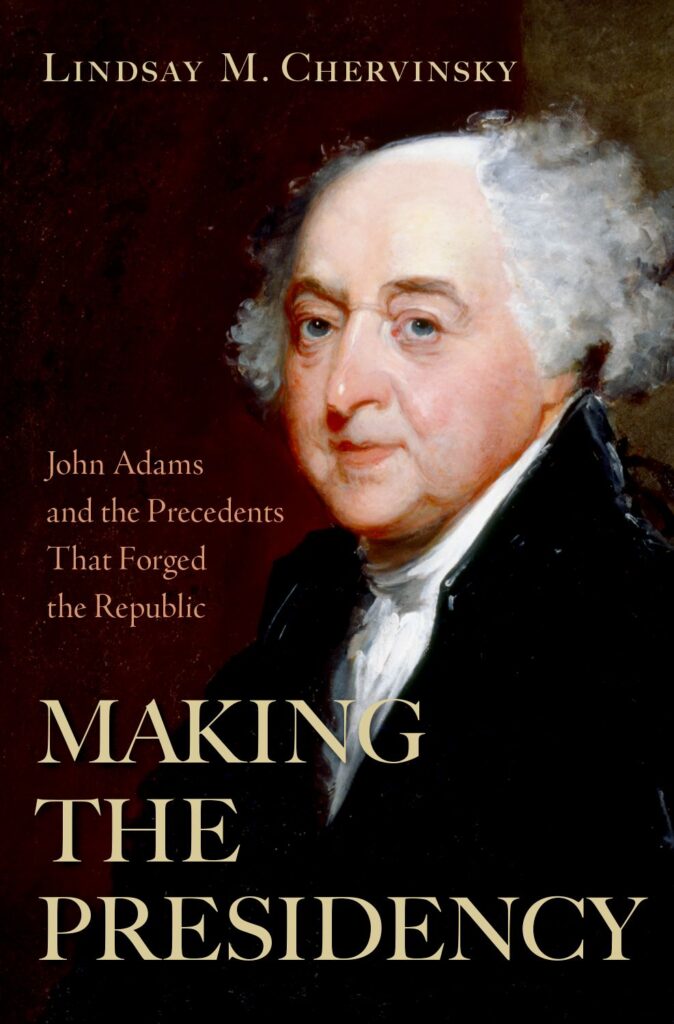
Her new book, *Making the Presidency*, is a little hard on poor Mr. Jefferson, but I don’t actually disagree with her criticisms. All I can say is that if you can only keep one Founding Father, it has to be Jefferson. If you can only keep two, it is Jefferson and George Washington. If you can only keep three, it is TJ, GW, and James Madison. And though it kills me to say it, if you can only keep four it is GW, TJ, JM, and Alexander Hamilton. John Adams is in the mix somewhere and he is having a little historical renaissance owing to historians Joseph Ellis, David McCullough, and now Lindsay Chervinsky, but he can never eclipse Jefferson, who is the Muse of the American Dream of liberty, self-government, and the pursuit of happiness, in spite of the terrible blot of his ownership of hundreds of enslaved people.
What an honor for you (and me) to have Zoom time with Ms. Chervinsky.
---
## ***Discover more on these topics at Listening to America***
[North Carolina](https://ltamerica.org/tag/north-carolina/ "3 topics")[Theodore Roosevelt](https://ltamerica.org/tag/theodore-roosevelt/ "16 topics")[Thomas Jefferson](https://ltamerica.org/tag/thomas-jefferson/ "34 topics")[Rivers](https://ltamerica.org/tag/rivers/ "3 topics")[Thoreau](https://ltamerica.org/tag/thoreau/ "5 topics")[Poetry](https://ltamerica.org/tag/poetry/ "1 topics")[Oregon](https://ltamerica.org/tag/oregon/ "4 topics")[Texas](https://ltamerica.org/tag/texas/ "4 topics")[U.S. Constitution](https://ltamerica.org/tag/u-s-constitution/ "1 topics")[South Dakota](https://ltamerica.org/tag/south-dakota/ "16 topics")[New England](https://ltamerica.org/tag/new-england/ "1 topics")[William Shirer](https://ltamerica.org/tag/william-shirer/ "1 topics")[South Carolina](https://ltamerica.org/tag/south-carolina/ "1 topics")[north daktoa](https://ltamerica.org/tag/north-daktoa/ "0 topics")[Tennessee](https://ltamerica.org/tag/tennessee/ "1 topics")[paintings](https://ltamerica.org/tag/paintings/ "0 topics")[Steinbeck Travels](https://ltamerica.org/tag/steinbeck-travels/ "75 topics")[Wisconsin](https://ltamerica.org/tag/wisconsin/ "0 topics")[Pennsylvania](https://ltamerica.org/tag/pennsylvania/ "1 topics")[Reading](https://ltamerica.org/tag/reading/ "1 topics")[Vermont](https://ltamerica.org/tag/vermont/ "1 topics")[Wyoming](https://ltamerica.org/tag/wyoming/ "4 topics")[Republic](https://ltamerica.org/tag/republic/ "0 topics")[Road Trips](https://ltamerica.org/tag/road-trips/ "18 topics")[Washington](https://ltamerica.org/tag/washington/ "2 topics")[Ohio](https://ltamerica.org/tag/ohio/ "2 topics")[New York](https://ltamerica.org/tag/new-york/ "8 topics")[Space Exploration](https://ltamerica.org/tag/space-exploration/ "8 topics")[New Mexico](https://ltamerica.org/tag/new-mexico/ "3 topics")[Walden](https://ltamerica.org/tag/walden/ "1 topics")[Travel](https://ltamerica.org/tag/travel/ "1 topics")[The Constitution](https://ltamerica.org/tag/the-constitution/ "1 topics")[Virginia](https://ltamerica.org/tag/virginia/ "7 topics")[Oppenheimer](https://ltamerica.org/tag/oppenheimer/ "1 topics")[North Dakota](https://ltamerica.org/tag/north-dakota/ "53 topics")[Utah](https://ltamerica.org/tag/utah/ "11 topics")[U.S. Presidents](https://ltamerica.org/tag/u-s-presidents/ "71 topics")[Rome](https://ltamerica.org/tag/rome/ "1 topics")[Water in the West](https://ltamerica.org/tag/water-in-the-west/ "24 topics")[Oppenheim](https://ltamerica.org/tag/oppenheim/ "0 topics")[Video](https://ltamerica.org/tag/video/ "51 topics")[Sports](https://ltamerica.org/tag/sports/ "2 topics")[State Parks](https://ltamerica.org/tag/state-parks/ "2 topics")[Podcast](https://ltamerica.org/tag/podcast/ "1 topics")[Republics](https://ltamerica.org/tag/republics/ "1 topics")
**Categories:** Dispatches from the Road
**Tags:** Books, U.S. Presidents
---
### [To the Desert With Edward Abbey](https://ltamerica.org/to-the-desert-with-edward-abbey/)
**Published:** September 24, 2024
**Author:** Clay Jenkinson
**Excerpt:** Clay visits with Edward Abbey, the colorful, eloquent, and passionate advocate of the American West.
**Content:**
## Clay visits with Edward Abbey, the colorful, eloquent, and passionate advocate of the American West
Edward Abbey (1927 – 1989).
Edward Abbey — you won’t hear me calling him Ed, as if we played tennis together last week — has taken over my life. I’ve known his book *Desert Solitaire* for 30 years, and have read it half a dozen times, once just 10 days ago. Why? I’m conducting a [humanities retreat](https://ltamerica.org/winter-retreat-thoreaus-walden-and-edward-abbeys-desert-solitaire/) in January at a lovely retro resort west of Missoula, and the subject is Thoreau’s *Walden* and Abbey’s *Desert Solitaire* — two curmudgeonly wilderness lovers who wrote their great books about a century apart.
Partly to get ready and partly to enjoy a rendezvous with some good friends, I’m traveling to Arches National Park, Canyonlands National Park, and Moab in early October as I return to my *Travels with Charley* Airstream tour of America. I haven’t been to Arches NP for ages, and the last time I hiked out to see the confluence of the Green and Colorado Rivers was with the best friend of my youth, Douglas, 30-some years ago now, maybe closer to 40. The ostensible reason for this Arches and Canyonlands adventure is to “get the feel” of Abbey’s world, to visit the site of the modest trailer he inhabited as a seasonal ranger near the old entrance of Arches National Monument (as it was known then). But whom am I kidding? What a great excuse for having three or four days in some of the most sublime landscapes of America. With friends who know how to appreciate. In the autumn, when children are back in school.
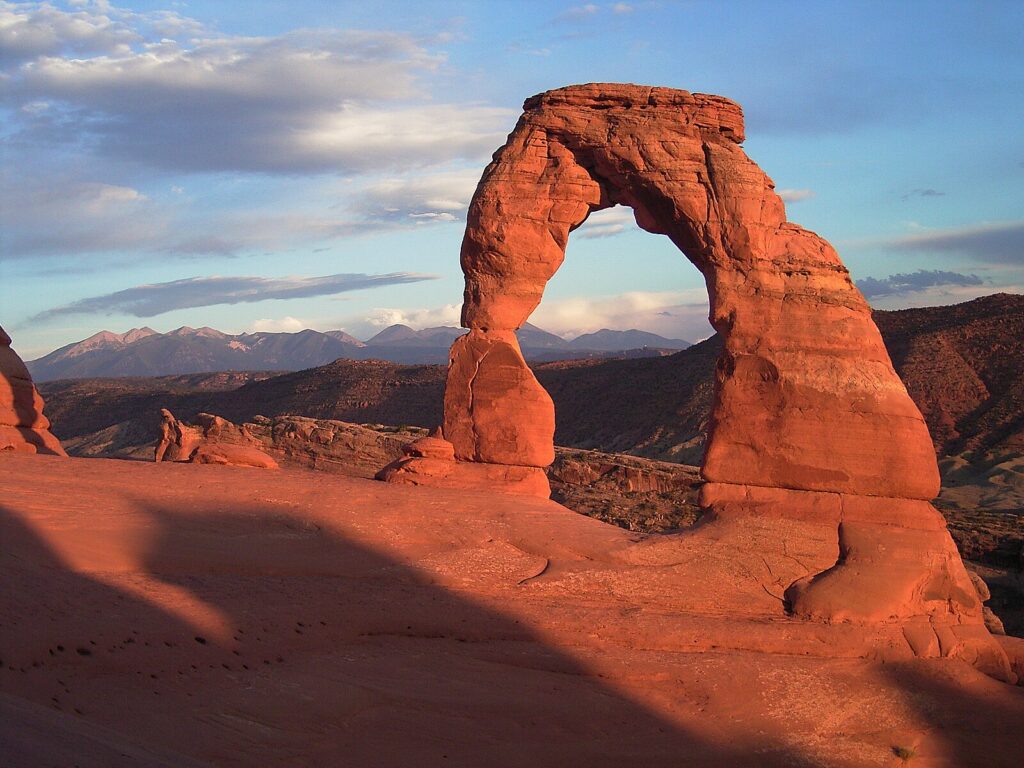The famous Delicate Arch, Arches National Park. (Wikimedia)
To prepare for the Utah adventure, designed to prepare me for the January Lochsa retreat, I’m reading well beyond the perimeter of *Desert Solitaire* (1968). I’ve read *Down the River* (1981). I’m reading through Abbey’s amazing journals: *Confessions of a Barbarian*. It is a poor title, which makes the common mistake of locking Abbey in as a monkey-wrenching anarchist. He is sometimes that, of course, the Abbey of southwestern legend, the Abbey who was the prophet of rage against the industrial machine. I admire that Abbey, but if you force yourself out of that alluring and reductive critical cul-de-sac, you discover that Edward Abbey is much more than a desert lands curmudgeon. He did some very serious reading in his life, and most of it was not memoirs of river rats and desert iconoclasts. He says he doesn’t like Shakespeare, but his books are filled with riffs on famous Shakespeare sentences. Here’s one I just read this morning. “The novel creeps along from day to day, a petty pace, lighting the way.” He’s talking about the slow progress of his first novel, *Jonathan Troy*, published in 1954. Abbey is riffing on a famous passage from Macbeth: “Tomorrow, and tomorrow, and tomorrow / Creeps in this petty pace from day to day / To the last syllable of recorded time / And all our yesterdays have lighted fools / The way to dusty death.”
*Desert Solitaire* was first published in 1968. It has been in continuous print since then and has sold some two million copies.
Does Abbey expect you to make the connection? Yes, maybe, but mostly no. He’s just having fun. Abbey’s ideal reader needs to know the geography of the [Colorado Plateau](https://www.nps.gov/articles/the-colorado-plateau.htm), must know what it is like to float the whitewater rivers of the Southwest, must have read some Western philosophy (he’s no Thoreau dabbling in the spiritual traditions of the East), must know Hegel, Schopenhauer, Nietzsche, and Bertrand Russell, whom Abbey adored. Must have read a good deal of Shakespeare, some Milton, some Keats, and some Wordsworth. But most readers then and even more now pass over these literary references, allusions, and riffs without recognizing them. This means they miss some of the literary exuberance and linguistic joy in Abbey’s writing, but it is not essential to find the echoes of T.S. Eliot (whom he pretended to despise) in order to get a full-ish appreciation of his work. But his literary [legerdemain](https://www.merriam-webster.com/dictionary/legerdemain) lights me up, I can tell you that. But I don’t know [Canyon Country](https://www.utahscanyoncountry.com) well enough to appreciate Abbey’s books fully. I’ve not been to Rainbow Bridge. I’ve not floated the San Juan. I’ve not spent months alone in a fire tower overlooking a New Mexico forest. I’ve never spent a night in jail for vagrancy. Everyone brings to Abbey what they have in stock — travels, books, adventures and scrapes, conversations, politics, love affairs, and reading. Nobody brings enough. He was [sui generis](https://www.merriam-webster.com/dictionary/sui%20generis).
Here are some things I have learned from reading around *Desert Solitaire*.
1\. The journals indicate that, like Thoreau, Abbey combined several years of experience at and around Arches National Monument into one sustained seasonal narrative. Thoreau combined his two years, two months, and two days (1845-47) into one “season” at Walden Pond. He admits this freely. Abbey is a bit more coy about his literary strategies. More to the point, he doesn’t bother to inform us that his wife Rita and their first child Joshua were with him during his second season as a seasonal ranger at Arches. To have revealed that would have damaged the book, and the title *Desert Solitaire* would have been a problem. This leads to insight number two.
2\. Abbey was married five times, fell in love 20 or more times, and pretty much slept with any woman he could lure into bed, usually but not always furtively, to avoid as much marital strife as possible. Each of his wives knew that he slept around in an obsessive, addictive way. His super-intense womanizing damaged the people who loved him best, including the five children he fathered and mostly neglected along the way. His journals are so obsessed with sex, so frank in a Boswellian way about his inability to keep his zipper up, that it becomes a little tedious, and any 21st-century reader, male or female, must lose some respect for him in the process. Think of all the pain he sprayed around like an old billy goat. I say old because he was invariably 10, 20, or even 30 years older than the women he married or seduced.
3\. Abbey was impoverished for much of his life, at times desperately poor, living-in-squalor poor, with one Dickensian landlord after the next threatening to throw him (and whichever wife or girlfriend he was with, plus children) out on the street. He had to move all the time until the proceeds of *Desert Solitaire* (1968) made him economically comfortable. He led a sad Grub Street sort of life because he regarded himself as a novelist, but his gift was for creative nonfiction, and he resisted that Muse for several impoverished decades. Again, I think of the “cost” to his women and children, living like Wilkins Micawber in David Copperfield, constantly scratching to make rent and hoping “something will turn up.” Like his contemporary Jack Kerouac, Abbey got famous almost too late. Kerouac was in the deep trough of embittered alcoholism by the time *On the Road* changed everything in 1957, and by then, for him, it was too late. Abbey did somewhat better in this regard. He was a hard drinker but never an alcoholic, and — as the son of the latter and the friend to many of the former — I can attest that there is a world of difference. In reading the standard biography by James Cahalan and in reading his journals, I fret for him. I hate to think of a genius living hand to mouth. I feel sorrow that his gift was not recognized sooner. But it was mostly his fault for believing the novel was his genre.
4\. For all the anarchic theater and the bluster and the crude philandery, Edward Abbey was a serious, at times deep, thinker. He had a huge, sensitive, and thoughtful soul. That’s why *Confessions of a Barbarian* is so inept a title. The selection of journals published by David Peterson, one of his friends and admirers, embraces about a quarter of the 20-some journal notebooks Abbey kept from 1946 to just weeks before his death in 1989. Of course, the Abbey of American mythology has a place in the journals, but only a modest place. Most of what he wrote in those fascinating, at times gripping journals might be called self-excavation: why do I betray the women I love and drive them away? Do I really enjoy solitude as I so loudly proclaim, or am I lonely in desperation when no comely woman is hovering somewhere in the zip code? What makes for a good book? What makes for a good novel? Am I as talented as I think, or am I dead mediocre? What should I do if it is the latter? Why are my children wary of me? Do I love the desert as much as I think, or is it, in some regard, a pose?
5\. The Abbey who emerges from the journals is richer, deeper, more nuanced, more reflective, more widely read, more uncertain of himself than the persona he crafted into a Western legendary figure: the man who will light a tire on fire and roll it over the brink of the South Rim of the Grand Canyon; the man who throws his beer cans out the pickup window; the man who trades witty insults with overweight tourists at the Arches entrance station. The non-legendary Abbey is, to me, more interesting than the figure of American myth. I’ve marked hundreds of passages from the journals but only a few dozen in *Desert Solitaire* (which I love).
 Henry David Thoreau
My favorite Abbey is the Abbey of the river journeys. There is a great one in *Desert Solitaire* with Ralph Newcomb. My favorite is *Down the River with Henry Thoreau,* but I am going to criticize it just a bit. It could have been one of the great essays of our time — but it is just really good. Who better to carry a greasy, tattered copy of *Walden* down Glen Canyon and write about the insights, the magic, the quirks, and the frustrations of Henry David Thoreau? Much though I love it, the Glen Canyon essay has the feel of being pretty quickly assembled without really probing into the heart of Thoreau’s genius. Abbey is mostly bewildered by Thoreau’s chastity — and has a hard time loving him wholly, given Henry’s abdication of the fundamental carnality of humanity. He is not quite sure a celibate could be wholly admirable. Like his river essay, *Down the River with Major Powell,* it feels more assembled than thought through. I very much admire Abbey’s *Running the San Juan*, which contains a perfect description of a playful water battle among the floaters, which ends this way: “the battle fades, the swimmers struggle back into their boats. The sun blazes down and we begin at once to dry out; the evaporating cooling effect, in this intense heat, is double refreshing.”
That passage could not be improved upon. Anyone who has ever floated a river in a hot summer remembers the moment. There is nothing “literary” or “poetic” in what he wrote here; it is just muscular, direct prose without any Ciceronian flourishes that would damage the effect. His use of the word “struggle” is the genius of the passage. If you have ever struggled back into a kayak or onto a raft in a white water river, you know he chose the perfect word.

Abbey is a man of exquisite intellectual sensibility — perhaps a little undisciplined, as he would be the first to admit — which he successfully hid under the declarative rhetoric of *Desert Solitaire*. Ask a thousand people who was Edward Abbey. Most will say, isn’t he the guy who wanted to blow up Glen Canyon Dam? Something about monkey wrenching? Which is a good enough one-sentence characterization, but here are a few other possibilities.
-Edward Abbey was a lover of America’s wild places and a crusader to protect them from degradation at the hands of bulldozers and drilling rigs, but also from flabby tourists who wanted to carry their home comforts into all the places they visited and maybe dig up a cactus to put next to the bay window.
-Edward Abbey was an author who struggled to write the great American novel and knew by the time of his death that he had failed in that quest. Meanwhile, his nonfiction turned out to be his authentic voice. Still, it has been misunderstood as the expression of smart-aleck anarchy rather than the work of an exquisitely interested and complicated man.
-Edward Abbey had become a myth before he died in 1989. He knew this was humbug, but he loved it anyway because he had finally achieved fame and economic security, and even more women threw themselves onto their backs for him.
-Edward Abbey was a genius who envisioned a desert western utopia where people lived more lightly on the land, helped each other out, engaged in adventures and great conversations, where there was no class system and no industrial state.
-Edward Abbey was a thoughtful and sensitive man, a desert intellectual, who spent his life wrestling with the problem of industrial civilization.
If you didn’t know the source, who would guess that Edward Abbey wrote the following:
“Is Hamlet a tragedy? Or a muddle farce? A little of both, I would say, though a little more the latter. First thing, of course, the Christian metaphysical underlying the play has to be ignored; for how can death be taken seriously if it is merely the gateway to Hollywood? … since Shakespeare himself thought of Hamlet as a tragedy, and since most Englishmen have followed his suggestion, it seems obvious that, at least while watching or reading the play, most Englishmen have suspended their Christianity and taken death, not the doctrine of immorality, as something real and important.”
Or this:
“It is midnight in Edinburgh \[what? Abbey lived in Edinburgh?\] and I am haunted by a dim sorrow, a sweet sad gentle little anguish as soft and lovely and impossible to touch as the glowing coals in my fireplace.”
Or how about this:
“And the Enemy says, “Behold, how sleek and fat I have become. Am I not the wonder of the world? Am I not the richest and most powerful beast on earth? Would you turn against the thing which has enriched you, which has given you safety and security and comfort, which promises you still more wonders in the future — electronic toys, computerized thinking, a life air-conditioned from womb to grave, an existence of endless novelty, luxury, diversion, things and more things, a universe of sport and adventure and romance and travel in the softness of your armchair, the ease of your V-8 four wheel drive wheelchair tourism, the sedation of your living room? A painless, discreet, sedated death? And all this for so little, so very little—merely the price of some of your independence, a bit of your freedom, a little part of your manhood or womanhood, for only a little sacrifice of your humanity and honor.”
The major Abbey themes are here, but this is way beyond the snark and carp of Desert Solitaire (which I love).
I’ll keep reading up to and through my time next month in Canyon Country. I find Edward Abbey endlessly fascinating, and I am embarrassed that I had joined the chorus of typecasters until now. The breakthrough came when I decided to pair him with Henry David Thoreau to determine whether *Desert Solitaire* is a grumpy twentieth-century update on Walden. It wasn’t until I left the joyous confines of *Desert Solitaire* and considered Abbey through a wider lens that I started to understand his genius. If I were Abbey, I would say that the next time I hear someone who never met him call him Ed Abbey, I’d punch that person in the snout.
If I close my eyes, I can see him in public, lecturing in Boulder or Tucson or Barstow, bearded, rangy, denouncing and posturing, with vulgar and self-revealing asides, working the crowd into against-our-better-self ecstasy, then going drinking with a few new friends, including the woman he will convince to spend the night with him as the bar finally empties at 2 a.m. But it takes some serious and dedicated reading and musing to recognize how much more interesting he was when he was not in costume.
**Categories:** Features
**Tags:** America at 250, Books, John Steinbeck, National Parks, Steinbeck Travels, Utah
---
### [Theodore Roosevelt's Unmatched Conservation Footprint and Eight Reasons He Got Away With It](https://ltamerica.org/theodore-roosevelts-unmatched-conservation-footprint-and-eight-reasons-he-got-away-with-it/)
**Published:** September 15, 2024
**Author:** Clay Jenkinson
**Excerpt:** Imagine America if Theodore Roosevelt had never been president. During his tenure, the “Cowboy President” set aside an astounding 230 million acres of U.S. public land as National Parks, National Monuments, National Forests, National Wildlife Refuges, and National Game Preserves.
**Content:**
## Imagine America if Theodore Roosevelt had never been president.
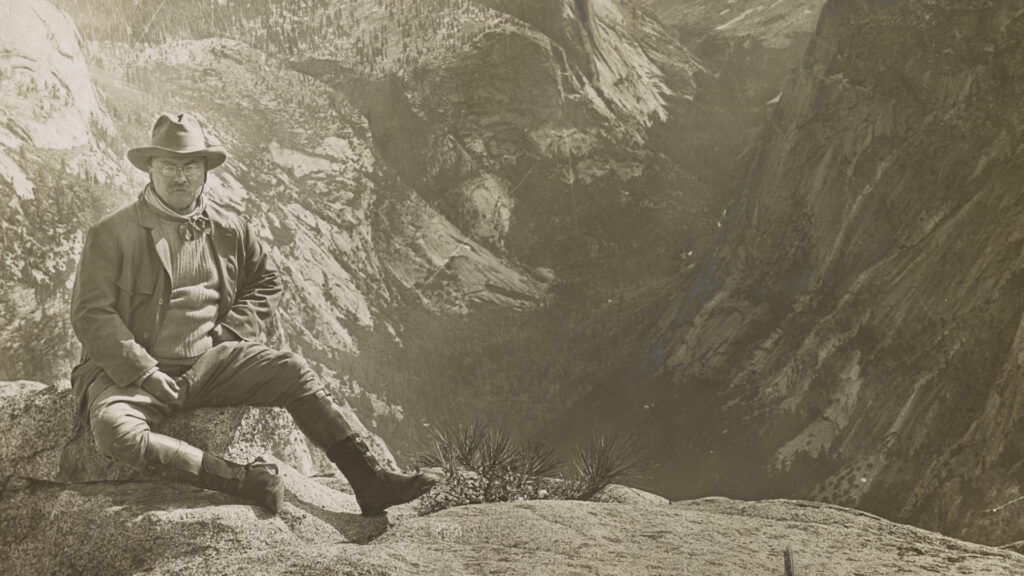President Teddy Roosevelt at Yosemite Valley, California. 1903. While president, Roosevelt set aside 230 million acres of the public domain as National Parks, National Monuments, National Forests, National Wildlife Refuges, and National Game Preserves.
Theodore Roosevelt was president of the United States for seven years, 171 days. He came in through the back door when President William McKinley was assassinated in September 1901. During his “two” terms, Roosevelt set aside 230 million acres of the public domain as National Parks, National Monuments, National Forests, National Wildlife Refuges, and National Game Preserves.
It’s almost unbelievable. Roosevelt alone is responsible for creating more than 75% of all the National Forests in the United States. Roosevelt invented the National Wildlife Refuge System by Executive Order and named the first 51, beginning with Pelican Island in Florida. He named the first 18 National Monuments, including Devils Tower, Muir Woods, and the Grand Canyon.
Roosevelt could easily have won a third term if he had chosen to run in 1908, but he vowed on election day 1904 that two terms would be enough — a vow he said he regretted every day for the rest of his life! We can only imagine what he would have done with “four more years” (1909-1913).
At the annual Theodore Roosevelt [humanities symposium](https://www.theodorerooseveltcenter.org/Get-Involved/Events/2024%20Theodore%20Roosevelt%20Symposium) in Dickinson, North Dakota, recently, someone who knows the contentiousness of today’s conservation agenda in the American West asked, “How did he get away with it?” I’ve been thinking about that question all weekend.
First, let us praise Theodore Roosevelt. I once asked the great [Charles Wilkinson](https://www.colorado.edu/law/2023/06/12/memoriam-charles-wilkinson-trailblazer-justice-earth-and-american-indian-law), an eminent environmental law professor at the University of Colorado at Boulder, now unfortunately deceased, whether it was possible to exaggerate Roosevelt’s conservation achievement. “Absolutely not!” he said. “Nobody did more. Nobody did better.”
> ## **“Not one cent for scenery!” — House Speaker Joe Cannon**
Joe Cannon, Speaker, U.S. House of Representatives, 1903-1911.
Just try to imagine the American West if Theodore Roosevelt had never been born and had never ascended to the presidency in the wake of an anarchist’s bullet. His predecessor William McKinley’s conservation achievement was miniscule. William Howard Taft did little. Woodrow Wilson, not much. Congress was no help. After TR took the oath of office in Buffalo, New York, on September 14, 1901, and made his conservation agenda known, Speaker of the House Joe Cannon said, “Not one cent for scenery!” Accordingly, Roosevelt accomplished most of his conservation agenda through Executive Orders. Just imagine one of today’s maps of the public lands of the United States, with each of Roosevelt’s conservation properties dissolving into private ownership. There are people on the far right who want to do just that. It would be a radically diminished West, a spiritually impoverished America.
## **Eight Reasons TR Achieved the Near Impossible**
So how did he get away with it? There are several factors, some more important than others.
1\. In Roosevelt’s time, the West was sparsely populated. In 1900, approximately 11 million people (15% of the national population of 76 million) lived on the Great Plains or farther west in California. The heart of the West was very lightly populated. Today, 125 million people live in the West, which is 38% of the national population. Roosevelt’s West was comparatively empty. Most Americans couldn’t have located the Petrified Forest (Arizona), Pinnacles (California), Chaco Canyon (New Mexico), or even Devils Tower on a map. It was easier to designate far away places — many of which nobody had ever heard of — on a tabula rasa than in any densely populated area.
2\. Roosevelt designated his conservation properties before the opposition could get organized and funded. Today, the fierce advocates of privatization and “no net gain” in federally protected landscapes are well organized, well funded, and ready to spring into strenuous opposition at a moment’s notice. It’s not that there was no opposition to Roosevelt’s conservation agenda, but the fact is that his passion for conservation was well ahead of his time. His breathtaking environmental achievement — a revolution in our national thinking about the public domain — crossed the finishing line before the opposition forces could get their act together.
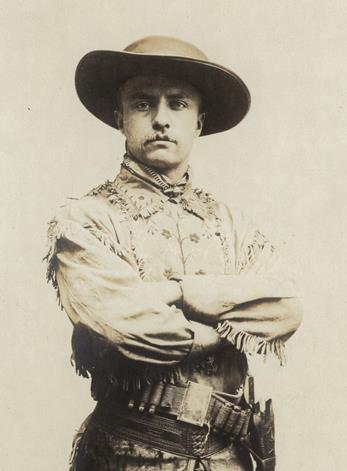A young TR in 1884.
3\. Roosevelt was an authentic westerner. He was born in New York, and his home was on Long Island, but he had ventured west in 1883 and re-invented himself as a cowboy, rancher, and big game hunter in the badlands of the Little Missouri River. In his 4th of July speech in tiny Dickinson, Dakota Territory, in 1886, Roosevelt said, “I am myself at heart as much a Westerner as an Easterner. I am proud indeed to be considered one of yourselves, and I address you in this rather solemn strain today only because of my pride in you and because your welfare, moral as well as material, is so near my heart.” In other words, Roosevelt had not only walked the walk but thrown himself into monthlong cattle roundups, helped stop stampedes, arrested desperadoes and brought them to justice, ridden his horse Manitou alone over some of the emptiest landscapes of America, punched out a ruffian in a saloon, killed a grizzly bear, and slept for days at a time on the ground. He was no Michael Dukakis posing for a photo op in a tank or John Kerry wearing unaccustomed camouflage while posing as an avid hunter. The American people recognized him as a man whose second home was west of the 100th meridian. That gave him credibility when he sought to lock up some extraordinary landscapes “for your children, your children’s children and for all who come after you,” as he said at the south rim of the Grand Canyon on May 6, 1903.
4\. Roosevelt was a larger-than-life figure with more charisma than any person of his time, with the possible exception of Mark Twain. His ebullience and his passion were infectious. On the few occasions when he could not inspire, he could exhaust. One visitor to Roosevelt’s White House said, “You go to the White House, you shake hands with Roosevelt and hear him talk — and then you go home to wring the personality out of your clothes.” The skeptic Henry Adams said, “Roosevelt, more than any other man … showed the singular primitive quality that belongs to ultimate matter — the quality that medieval theology assigned to God — he was pure act.” It was hard to resist TR. He was even better at bending others to his will than Lyndon Johnson, another great conservation president.
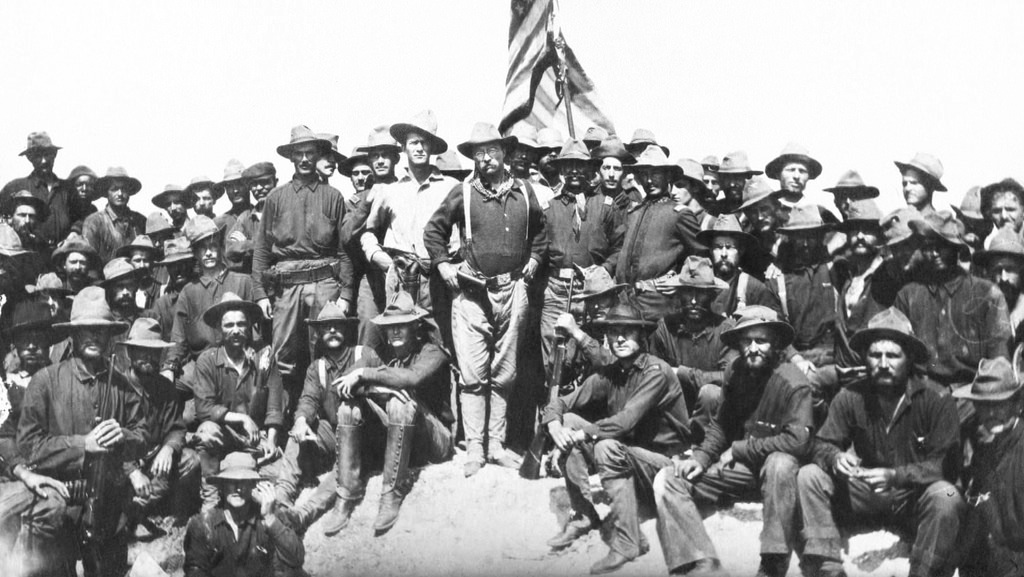Colonel Roosevelt (center) and his Rough Riders at the top of San Juan, Cuba. July 1, 1898. (Library of Congress)
5\. Roosevelt was an authentic war hero when that really mattered. His heroics at San Juan and Kettle Hill in Cuba helped him to rise like a rocket in the national arena, as he put it. Although some of this was due to the self-mythologizing of his book *The Rough Riders* (1899), which one friendly critic said should have been titled Alone in Cuba, nobody could argue that Roosevelt ducked the one war that came during the prime of his manhood. It is the case that on July 1, 1898, he was the most conspicuous soldier during the Rough Riders’ assault of San Juan Heights, in part because he was one of the few on horseback. He later said he would have left his wife Edith’s deathbed to participate in the liberation of Cuba. It meant something to be a war hero back then, even more than now.
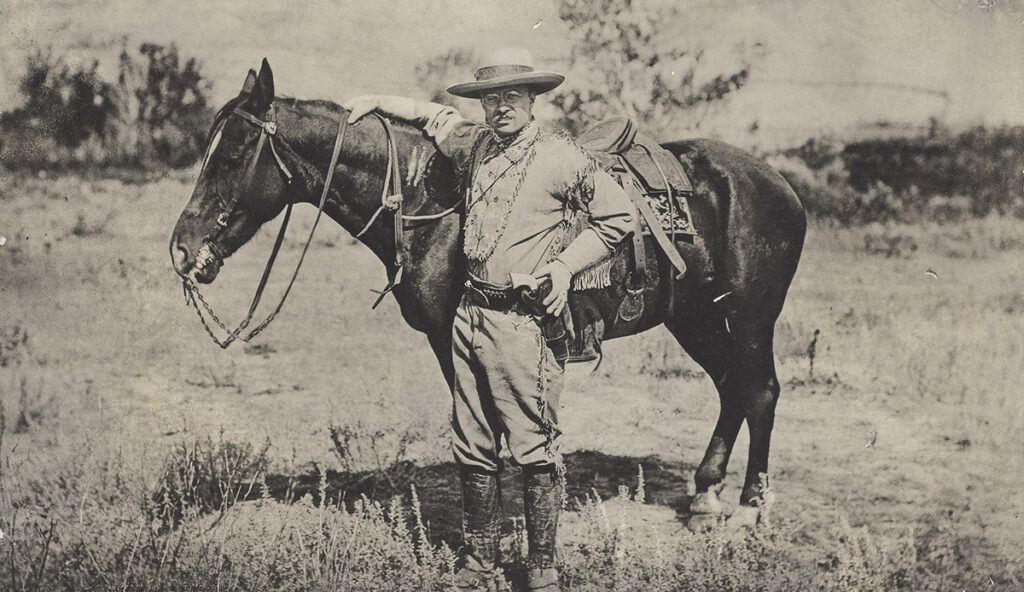Teddy Roosevelt near Medora, Dakota Territory in 1884.
6\. He was America’s first and greatest cowboy president. There have been only three or four, depending on how you count: Roosevelt, Ronald Reagan, George W. Bush, and LBJ. Roosevelt wrote and spoke endlessly about his life on the frontier, embellishing most of his adventures and perhaps inventing a few. When he talked about the need for conservation of the public lands and resources, nobody asked, “What does he know about it?”
7\. Roosevelt knew how to squeeze the most out of the laws of the United States. The Forest Reserve Act of 1891 gave the president of the United States the power to designate National Forests by Executive Order. His predecessors had designated some low-hanging fruit, just under 50 million acres. TR used his executive authority so vigorously that in 1907, Congress passed legislation preventing him from getting any new designations in six western states. He signed the obnoxious bill, but not before he and his U.S. Forester Gifford Pinchot added 16 million additional acres in the Pacific Northwest, the Midnight Reserves. The National Monuments and Antiquities Act (1906) gave the president the authority to designate National Monuments independent of Congress by Executive Order. Though the legislation specifically said the parcels should be “confined to the smallest area compatible with proper care and management of the objects to be protected,” TR stretched that restraining clause to more than 800,000 acres when he designated Grand Canyon National Monument on January 11, 1908, as he began the last year of his presidency. He invented the National Wildlife Refuge System (Federal Bird Sanctuaries) out of whole cloth in the spring of 1903, thanks to his view that as president, he was permitted to do anything not specifically prohibited by the U.S. Constitution!
Theodore Roosevelt and John Muir stand at Glacier Point, Yosemite National Park, 1903, with Yosemite Falls in the background. (Library of Congress)
8\. Finally, he had a deep, authentic, constant, and relentless passion for conservation. Bill Clinton and Barack Obama designated new National Monuments, but it is nearly impossible to imagine them camping out under the stars, eating camp beans around an open fire, or sitting in the saddle for 10 hours, threading their way through badlands country with a rifle, a piece of hardtack, and a tea bag. It would take another, longer essay to chart the origins of TR’s conservation ethos. The short answer is that as a sickly child, he read books that filled him with “the romance of the West.” When he ventured to today’s western North Dakota to kill a buffalo in September 1883, he fell deeply in love with the ridges, the buttes, the emptiness, the silence, and the endless grasslands of what the historian Daniel Flores has called American Serengeti. Recent presidents have designated National Monuments in lands they will never see nor, frankly, personally care about because it is good domestic policy. For Theodore Roosevelt, those landscapes were central to his vision of America and the most profound satisfaction of his soul.
When Roosevelt came through Medora, North Dakota in 1900, campaigning as William McKinley’s running mate, he looked out on the badlands landscape that forged his adult persona and said, “It is here that the romance of my life began.”
We are all his beneficiaries. We owe him a debt of gratitude that can only be paid by doing everything in our power to protect those landscapes from those who see them not as solace for the spirit but as a resource base to be tapped by the dynamo of extraction and economic development.
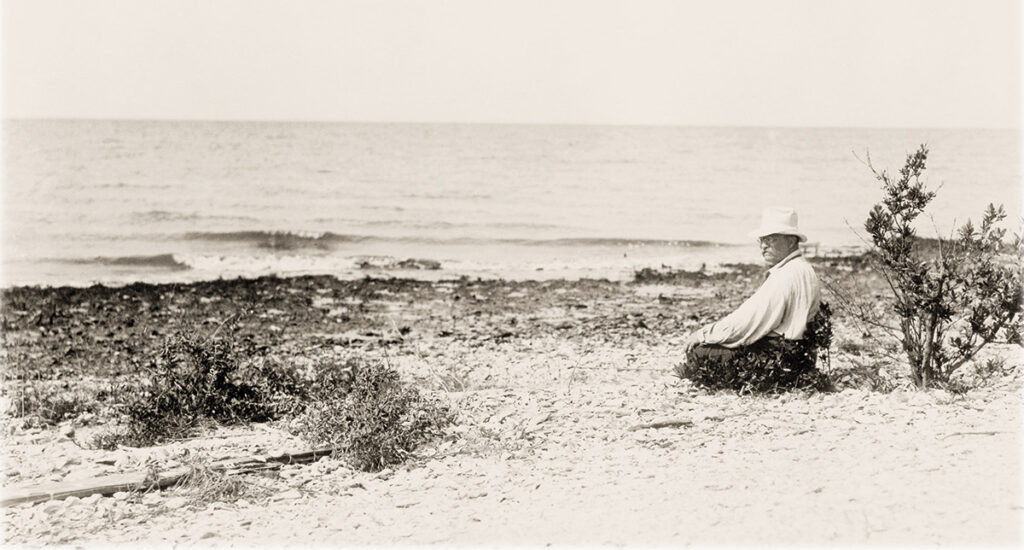Roosevelt at Breton National Wildlife Refuge, Louisiana, 1915.
---
## ***Discover more on these topics at Listening to America***
[Theodore Roosevelt](https://ltamerica.org/tag/theodore-roosevelt/ "16 topics")[Pennsylvania](https://ltamerica.org/tag/pennsylvania/ "1 topics")[South Dakota](https://ltamerica.org/tag/south-dakota/ "16 topics")[Tennessee](https://ltamerica.org/tag/tennessee/ "1 topics")[Travel](https://ltamerica.org/tag/travel/ "1 topics")[State Parks](https://ltamerica.org/tag/state-parks/ "2 topics")[North Dakota](https://ltamerica.org/tag/north-dakota/ "53 topics")[Video](https://ltamerica.org/tag/video/ "51 topics")[Republic](https://ltamerica.org/tag/republic/ "0 topics")[Vermont](https://ltamerica.org/tag/vermont/ "1 topics")[Space Exploration](https://ltamerica.org/tag/space-exploration/ "8 topics")[The Constitution](https://ltamerica.org/tag/the-constitution/ "1 topics")[U.S. Presidents](https://ltamerica.org/tag/u-s-presidents/ "71 topics")[Sports](https://ltamerica.org/tag/sports/ "2 topics")[Virginia](https://ltamerica.org/tag/virginia/ "7 topics")[Washington](https://ltamerica.org/tag/washington/ "2 topics")[Wisconsin](https://ltamerica.org/tag/wisconsin/ "0 topics")[Texas](https://ltamerica.org/tag/texas/ "4 topics")[Reading](https://ltamerica.org/tag/reading/ "1 topics")[north daktoa](https://ltamerica.org/tag/north-daktoa/ "0 topics")[Ohio](https://ltamerica.org/tag/ohio/ "2 topics")[Rome](https://ltamerica.org/tag/rome/ "1 topics")[North Carolina](https://ltamerica.org/tag/north-carolina/ "3 topics")[Oregon](https://ltamerica.org/tag/oregon/ "4 topics")[U.S. Constitution](https://ltamerica.org/tag/u-s-constitution/ "1 topics")[New York](https://ltamerica.org/tag/new-york/ "8 topics")[Utah](https://ltamerica.org/tag/utah/ "11 topics")[Walden](https://ltamerica.org/tag/walden/ "1 topics")[South Carolina](https://ltamerica.org/tag/south-carolina/ "1 topics")[Thoreau](https://ltamerica.org/tag/thoreau/ "5 topics")[Poetry](https://ltamerica.org/tag/poetry/ "1 topics")[Thomas Jefferson](https://ltamerica.org/tag/thomas-jefferson/ "34 topics")[Road Trips](https://ltamerica.org/tag/road-trips/ "18 topics")[Rivers](https://ltamerica.org/tag/rivers/ "3 topics")[William Shirer](https://ltamerica.org/tag/william-shirer/ "1 topics")[Wyoming](https://ltamerica.org/tag/wyoming/ "4 topics")[Oppenheimer](https://ltamerica.org/tag/oppenheimer/ "1 topics")[paintings](https://ltamerica.org/tag/paintings/ "0 topics")[Republics](https://ltamerica.org/tag/republics/ "1 topics")[New Mexico](https://ltamerica.org/tag/new-mexico/ "3 topics")[Water in the West](https://ltamerica.org/tag/water-in-the-west/ "24 topics")[Podcast](https://ltamerica.org/tag/podcast/ "1 topics")[New England](https://ltamerica.org/tag/new-england/ "1 topics")[Steinbeck Travels](https://ltamerica.org/tag/steinbeck-travels/ "75 topics")[Oppenheim](https://ltamerica.org/tag/oppenheim/ "0 topics")
**Categories:** Features
**Tags:** America at 250, National Parks, North Dakota, Theodore Roosevelt, U.S. Presidents
---
### [Open Roads, Like Rivers, Invite Us to Muse About the Trajectory of Life](https://ltamerica.org/open-roads-like-rivers-invite-us-to-muse-about-the-trajectory-of-life/)
**Published:** September 7, 2024
**Author:** Clay Jenkinson
**Excerpt:** Just as rivers serve as an automatic and compelling metaphor for our life journeys, so roads invite us to muse about the trajectory of our lives.
**Content:**
## “Whither goest thou America in thy shiny car in the night?” — Jack Kerouac
Fall leaves off U.S. Highway 6, Loveland Pass, Colorado (Shutterstock)
Not long ago, I was sitting at my dining room desk in my Airstream, reading a book about Jack Kerouac. After a long week in Vail, I was weary and [camped in an RV park](https://ltamerica.org/fear-and-loathing-in-northern-colorado/) on Colorado’s [Cache la Poudre River](https://www.visitftcollins.com/things-to-do/parks-open-spaces/cache-la-poudre-river/). I sat sipping red wine (a fine Bordeaux left over from a reception in Vail) and listening to the Grateful Dead, the Beatles, and Joe Cocker. I don’t know what has gotten into me, frankly. Music is usually a small part of my life.
I just read a sentence where the words “Route 6” appear. Immediately, my mind reverted to U.S. 6 through the Vail Valley, where it has been appropriated and diminished by luxury ski condos, edgy restaurants where “presentation” and “locally sourced protein” are important, strip malls, and up-market subdivisions. But seeing the word in a book about Jack Kerouac took me — Route 6 took me — out into Utah, where U.S. 6 becomes one of America’s starkest and most beautiful highways.
On his first (legendary) trip into the American West, Jack Kerouac thought he would take Route 6 all the way to Denver — and beyond.
*“I’d been poring over maps of the United States in Paterson for months, even reading books about the pioneers and savoring names like Platte and Cimarron and so on, and on the roadmap was one long red line called Route 6 that led from the tip of Cape Cod clear to Ely, Nevada, and there dipped down to Los Angeles. I’ll just stay on 6 all the way to Ely, I said to myself and confidently started.”*
## **The Best-Laid Plans of Mice and Men Go Oft Awry**
Kerouac soon learned that Route 6 (at least in the East) was not a good hitchhiker road, and he wound up taking a bus to Chicago to get started.
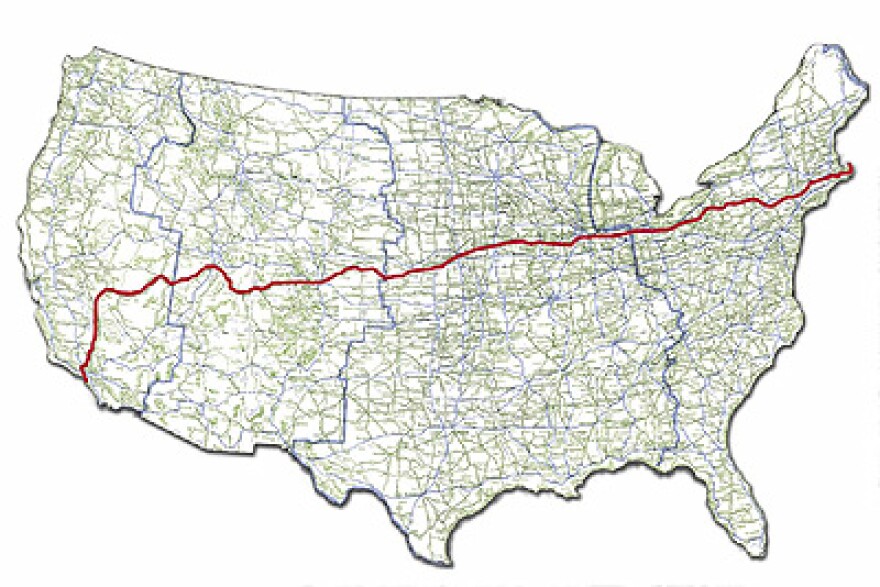Before 1964, U.S. Route 6 terminated at Long Beach, Calif., and was the longest continuous highway in America: Provincetown, Mass., to southern California.
I admit to being drawn to the “single ribbon of transcontinental highway” idea. For a long time, I have wanted to drive one of the great north-south highways, exclusively from the Canadian border to the Mexican border. Perhaps I’d choose U.S. 85, the first highway that transects the American West, if you regard the Great Plains as the American West. That takes you through butte country, the Black Hills, and the eastern foothills of the Rocky Mountains. I’d like to affix a GoPro to the front of my vehicle and have it take one photograph every 30 seconds from border to border.
## **Just as Rivers Serve as an Automatic and Compelling Metaphor for Our Life Journeys, so Roads Invite Us to Muse About the Trajectory of Our Lives**
It’s one thing to zig-zag from Chicago to Santa Monica on a wide variety of roads: interstate highways, U.S. highways, state and local roads, farm-to-market roads, etc. That’s generally how I travel. However, it is quite different to follow a single road to the extent that it is still possible. That road might be the legendary Route 66, the highway Steinbeck’s Joads took from Sallisaw, Oklahoma, to the Promised Land. Many of the old national highways have been partly absorbed or obliterated by the interstate highway system — most notably Route 66, which was officially decommissioned in 1985. It seems to me that following a single highway all the way, “acrost,” as Ma Joad says, would be especially enlightening, an intriguing window on America, a semi-latitudinal snapshot. A single highway would be a lovely organizing principle for a long journey, just as following Steinbeck’s 1960 *Travels with Charley* trek around the perimeter of America has been a valuable organizing principle for my 2024 journey.
When I was in the Pacific Northwest not long ago, on Phase Two of my Steinbeck trip, I found myself out on the Olympic Peninsula. I had to get to Salinas, California, on a specific date, so I mostly drove U.S. 101, a highway I love. It brings back memories of my first trip down the West Coast decades ago, in the first car I ever owned, on my way to a new and exciting phase of my life. I like the fact that, at times, U.S. 101 is an appalling eight-lane traffic corridor near California’s great cities, and at other times, it quiets down and becomes surprisingly narrow and funky. If I hadn’t been in a hurry by then, I would have driven up to the top of the Olympic Peninsula to touch base at or near its northern terminus before plunging south through some of the most beautiful landscapes in America, including the redwoods and of course the Golden Gate Bridge at San Francisco.
## **“We Do Not Take a Trip; A Trip Takes Us.” — John Steinbeck**
But I had promises to keep. And many miles to go.
Kerouac soon realized that the romance of the road works in unexpected ways. Or, as Steinbeck would put it in 1961: “We do not take a trip; a trip takes us.” First, there is the idea of the romance of the open road. How we imagine it as we pore over maps, make lists of places we want to visit or revisit, read books of the road, and imagine the encounters we will have.
Second, there is the actual trip we take. The actual journey challenges the fantasy we concocted back home at the kitchen table. For example, Steinbeck was underwhelmed by Fargo, North Dakota, which he had envisioned as a magical-mythical place, something out of a Kit Carson dime novel of the frontier. “I must admit,” he writes, “the town was as traffic-troubled, as neon-plastered, as cluttered and milling with activity as any other up-and-coming town of forty-six thousand souls.” Kerouac wanted to hitchhike straight from New York to Denver — and beyond. This was in 1947. He was about to inaugurate the Beat Generation. Nobody stopped on Route 6 to pick him up and he got soaked from a rainstorm. He took the bus. Somehow, Kerouac manages to make a Greyhound bus seem romantic. I remember them before smoking was banned. Not even Simon and Garfunkel could make a long Greyhound ride (back then) seem heroic.

I understand why Kerouac wanted to follow U.S. 6 to Denver. I spend much time devising whimsical journeys — cross the nation eating only at Pizza Hut. Cross the nation listening only to the complete works of Charles Dickens. Cross the nation without ever checking into a motel. Cross the nation, stopping at every private museum. Cross the nation solely on gravel roads. Cross the nation without ever looking at a map (or Google).
Thanks to some highway gerrymandering in California in 1964, Route 6 now terminates in Bishop, California, right at the base of the highest peaks of the Sierra Nevada Mountains. Too bad for Route 6, but ok by me, because Bishop is the home of the famous Schat’s Bakkery, where I have purchased some of the finest bread of my life. Before 1964, Route 6 terminated at Long Beach, California, and then it was the longest continuous highway in America: Provincetown, Massachusetts, to southern California.
These musings, at the lovely modest RV park on the Cache la Poudre in northern Colorado, made me think about Jack Kerouac (1922-1969) and John Steinbeck (1902-1968) at my assigned picnic table. Did they ever meet? I’ve checked biographies and asked my friends who are experts. The answer appears to be no. Did Kerouac read Steinbeck’s novels? Almost certainly. Did Steinbeck read *On the Road*? Probably, but not certainly. What would Steinbeck have thought of Kerouac? My guess is that he would have agreed with Truman Capote, who said of *On the Road*, “That’s not writing, that’s typing.” But we can’t be sure. Steinbeck was a generous reader. What would Kerouac have thought about Steinbeck’s books? I don’t see how you can dedicate your life to adventures on America’s open roads without admiring *The Grapes of Wrath*, but Steinbeck may have seemed “square” to Kerouac.
Everything I wrote in the preceding paragraph is speculation. We don’t know. Steinbeck was 20 years older than Kerouac. The generational difference could not be more pronounced.
It’s hard to imagine Kerouac driving in a truck camper around the country. And it’s equally hard to imagine Steinbeck hitchhiking the continent.
The Joad family views the “promised land” of California. (Photo from John Ford’s film version of *The Grapes of Wrath*, 1940)
They may have never met and probably could not find much to enjoy in each other, but they share some important characteristics. They both published their great works in the heart of the 20th century. They both wrote their most famous books fast. Steinbeck wrote *The Grapes of Wrath* in 100 days, in a single tall ledger book. Kerouac wrote the first draft of *On the Road* in three weeks on a continuous sheet of paper. He said he was hepped up on bennies (methamphetamines), but it was probably just caffeine. They both listened hard to the sounds of actual Americans who did not travel in the same circles as Lionel Trilling or Edmund Wilson. Steinbeck famously said he did not want his characters to talk like junior college professors. They both used some words the people of America (or their publishers) were not quite ready to see in print and fought to keep their books raw. They both found a way to evoke the romance of the road in America. Kerouac specializes in it. Even the Joads, refugees desperately seeking a better life in California, evoke the freedom of the open road as they scrounge gas, food, and spare tires on Route 66, camping along the side of the route with other Okies. The best chapters in *The Grapes of Wrath* are road chapters.
(Shutterstock)
Kerouac and Steinbeck both admit that the pot of gold at the end of the road — the fantasy with which we begin our great journeys — usually fails to bring true satisfaction. They both came to feel like literary underdogs, insufficiently appreciated by the critics but beloved by American readers. They both died far too young, Kerouac because he couldn’t stop drinking and Steinbeck because the American medical system was still pretty primitive when he had his health issues in the 50s and 60s. They are both more often read today by young people than by geezers at picnic tables in northern Colorado.
I want to drive the entire length of U.S. 85 or U.S. 101 or Route 66 (what’s left of it) for the same reason I want to ride the trans-Canada railroad or the trans-Siberian railroad or the Orient Express. It is the same reason I want to drive with my anarchist friend Wayne from Denver to Mexico City to recreate the last great journey of Sal and Dean in *On the Road*. For the same reason I want to run three times around the walls of ancient Troy (northwestern Turkey) on my 70th birthday.
Mostly, I want to get back out on the open road. Kerouac’s sentence is best: “Whither goest thou America in thy shiny car in the night?”
---
***Editor’s Note:*** ***Over the next few months, Clay is shadowing Steinbeck’s 10,000-mile trek around the USA (and making a few detours of his own). Clay’s expedition is a central part of LTA’s big initiative to explore the country and take the pulse of America as it approaches its 250th birthday. Be sure to follow Clay’s adventures [here](https://ltamerica.org/tag/steinbeck-travels/) and on [Facebook](https://www.facebook.com/LTAmerica) — and [subscribe to our newsletter](https://ltamerica.org/newsletter/)*.**
**Categories:** Features
**Tags:** America at 250, Books, California, Colorado, John Steinbeck, Massachusetts, Road Trips, Steinbeck Travels
---
### [The Tortuous Trail to Publish Lewis and Clark’s Journals](https://ltamerica.org/the-tortuous-trail-to-publication-of-lewis-and-clarks-journals/)
**Published:** February 26, 2023
**Author:** Clay Jenkinson
**Excerpt:** President Thomas Jefferson entrusted Meriwether Lewis with the first great exploration of the American West. At the journey’s successful completion, both men held high expectations for a book worthy of the singular accomplishment and the Age of Enlightenment of which it was a part.
**Content:**
## President Thomas Jefferson entrusted Meriwether Lewis with the first great exploration of the American West. At the journey’s successful completion, both men held high expectations for a book worthy of the singular accomplishment and the Age of Enlightenment of which it was a part.
Meriwether Lewis and William Clark, Commanders of the Corps of Discovery. (Wikimedia Commons)
Meriwether Lewis and William Clark, leaders of President Thomas Jefferson’s [Corps of Discovery](https://www.americanjourneys.org/aj-100b/summary/) returned to St. Louis on September 23, 1806. Three days later Clark terminated his expedition journal with the words, “a fine morning we commenced wrighting &c.” Nobody is altogether sure what “wrighting” Clark had in mind — letters, probably, and perhaps a fair copy of the journals.
What we do know is that Meriwether Lewis never published his projected three-volume account of what he called “my late tour.” His grand prospectus, published in April 1807, promised a narrative volume, followed by a volume on the geography of the West, thoughts on the fur trade, ethnographic materials on Native Americans, and “reflections on the subjects of civilizing, governing and maintaining a friendly intercourse with those nations.” The third volume would be solely devoted to scientific subjects, together with 23 Native vocabularies, and dissertations on volcanic activity in the Louisiana Territory, the “muddiness of the Missouri,” and the treelessness of the Great Plains.
After Lewis’ death in October 1809, his publisher informed Thomas Jefferson that “Govr. Lewis never furnished us with a line of the M.S. nor indeed could we ever hear any thing from him respecting it tho frequent applications to that effect were made to him.” Some scholars (I among them) believe that the finest passages in the extant journals of Lewis were part of a draft of what would have been his first volume, but if that is so, he never forwarded any of that to the publisher in Philadelphia. We can only imagine Jefferson’s chagrin when he received this letter in November 1809. Now what?
Sergeant Patrick Gass (Wikimedia)
In 1807, [Sergeant Patrick Gass](https://lewis-clark.org/members/patrick-gass/) was the first to publish an account of the expedition with the help of a ghostwriter. Lewis dismissed the Gass account as “spurious,” and warned the reading public that they should expect nothing but “merely a limited detail of our daily transactions” from books by lesser members of the expedition. One unfortunate result of Lewis’ haughty rebuke to Gass and [Robert Frazier](https://lewis-clark.org/members/robert-frazer/), who had also published a prospectus, is that Frazier’s journal disappeared and has never resurfaced. Thus, we lost what certainly would have been a valuable addition to the expedition record.
Title page of first publication of Lewis and Clark journal 1814. (LOC)
Lewis died on October 11, 1809, on the [Natchez Trace](https://www.nps.gov/natr/index.htm). In his trunks were found “Sixteen Note books bound in red morocco with clasps,” “One bundle of Misceleans. paprs,” maps and charts, “Musterrolls,” vouchers, a bundle of expedition vocabularies, a memorandum book, “six note books unbound,” and “One do. \[i.e., bundle\] Sketches for the President of the U. States.” Not all of these documents have been identified, even by the great [Donald Jackson](https://www.press.uillinois.edu/books/?id=c006975), but it is generally believed that most of the expedition’s journals were in those trunks. The trunk containing Lewis’ papers eventually found its way to Washington, D.C., where Clark took possession of it at Jefferson’s request. If the trunks really contained charts and “Sketches,” they seem to have been lost.
Jefferson met with William Clark at Monticello sometime in late 1809, and instructed him to travel to Philadelphia, learn what he could about the status of the publication project, and do whatever it took to see the journals into print. This must have been a painful meeting. Jefferson did not know Clark well; he regarded the expedition as Lewis’ command and achievement. It is fascinating to note that the action item of the meeting was to get the journals published as soon as practicable, and apparently not to investigate the mysterious death of one man’s protégé and the other’s closest friend. Clark pursued the publication project with his usual thoroughness and reliability, but even so, the one-volume Biddle edition, entitled, [*History of the Expedition under the Command of Captains Lewis and Clark*](https://www.loc.gov/item/rc01001477/), did not appear until sometime in 1814.
## **The Backstory: Getting the Expedition Journals Into Print**
On December 11, 1809, Jefferson wrote to Lewis’ publisher to inform them that Clark “is himself now gone on to Washington, where the papers may be immediately expected, & he will proceed thence to Philadelphia to do whatever is necessary to the publication.”
In January 1810, just three months after the death of his friend Lewis, Clark was able to write a memorandum on the status of the project. This was a list of things he needed to check on in Philadelphia and a partial list of what would be the contents of the publication he had in mind. The memo included notations on botanical data, calculations of latitude and longitude, engravings of animals and Native Americans, maps, vocabularies, and “Natural Phenomena.” Clark noted that he wanted to “Get some one to write the scientific part & natural history” of the expedition, and he wondered “If a man can be got to go to St. Louis with me to write the journal & price.”
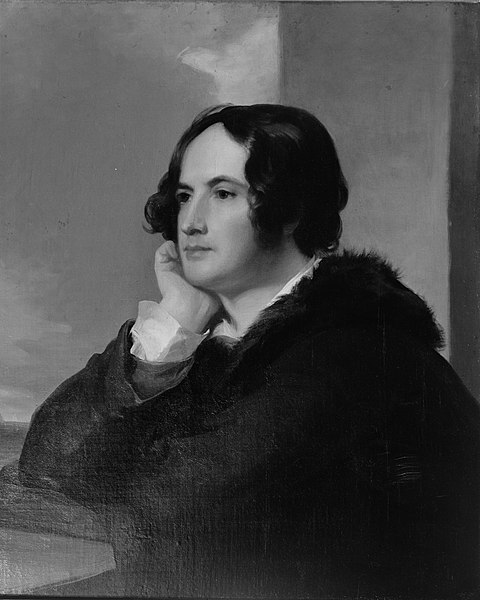Nicholas Biddle assisted William Clark in first published edition of the Journals. Painting by Thomas Sully. (Wikimedia)
In Philadelphia, after a painstaking search for every individual Lewis had hired to work on the project — illustrators, scientists, mathematicians, engravers — Clark attempted to convince a young and ambitious man of letters, Nicholas Biddle (1786-1844), to come to St. Louis to write the book. Clark clearly understood that whoever edited the journals would need clarification on countless passages. It would be more convenient to have the ghostwriter across town rather than across the country, and Clark probably wanted to maintain as much control as possible of the finished product. Biddle at first declined, perhaps because he was unwilling to relocate (“My occupations necessarily confine me to Phila.”), but two weeks later, March 17, 1810, he agreed to undertake the project. Although Biddle wrote, “I think I can promise with some confidence that it shall be ready as soon as the publisher is prepared to print it,” it was not until 1811 that the manuscript was ready to go to press. A year later he reported to Clark that the original publisher had gone broke. Biddle, who was embarking on a political and financial career that would later make him the last president of the [Second Bank of the United States](https://www.britannica.com/event/Bank-War), enlisted the help of a man named Paul Allen to complete the project and see it through the press.
What Biddle and Allen eventually published was a competent narrative of the expedition, based heavily on the journals, buttressed with several long lists of queries (dutifully answered by Clark) and the assistance of expedition member [George Shannon](http://lewisandclarktrail.com/shannon.htm), whom Clark dispatched to Philadelphia to provide Biddle whatever information he might need to complete the project. It appeared with former President Jefferson’s famous biographical sketch of Lewis (“of courage undaunted”) eight years after the expedition’s return. All the scientific data of the expedition was excised by Biddle, who (with Clark) expected Benjamin Smith Barton to handle that material in a related volume. Barton died in 1815 without having accomplished that extremely important task, thus costing Lewis his rightful high place in the annals of American natural science and marooning the published work as more an adventure narrative than a full [Enlightenment](https://www.bl.uk/restoration-18th-century-literature/articles/the-enlightenment) report.
It’s not clear what Jefferson thought of the Biddle-Allen narrative. By now a long time had passed. He was no longer President. America’s second war of national independence, the War of 1812, had intervened. By 1814 Jefferson’s private world at Monticello was beginning to come apart, mostly because of his increasingly precarious financial situation. In the celebrated and voluminous correspondence between Jefferson and John Adams (1812-1826), the expedition is mentioned only once and then only to contrast the direction of the Lewis and Clark route with that proposed by [John Ledyard](https://connecticuthistory.org/john-ledyard-connecticuts-most-famous-traveler/) during the Paris years. Jefferson must have known that the Biddle “travel narrative,” as Donald Jackson calls it, was a weak substitute for Lewis’ projected three-volume report, and a pale (and provincial) shadow of the kind of multi-volume publishing project that generally followed English and European explorations, including those of Captain James Cook and, more recently, Alexander von Humboldt, who had visited Jefferson in the White House in 1805.
For most of the next century, *that* was Lewis and Clark.
It wasn’t until the [Reuben Gold Thwaites’](https://www.americanjourneys.org/aj-100b/summary/) eight-volume *Original Journals of the Lewis and Clark Expedition* edition of 1905 that the public was able to read much of what the expedition members actually wrote. A dozen years earlier, another editor, Elliott Coues, who also had access to the original journals, incorporated passages into his updated, scholarly edition of Biddle-Allen, *History of the Expedition Under the Command of Lewis and Clark*. It wasn’t until 1953 that the first one-volume abridgement was published. This popular edition by [Bernard DeVoto](https://mappingliteraryutah.org/utah-writers/bernard-devoto), outstanding western historian, editor, and conservationist was the most widely read edition of the journals available until the University of Nebraska and [Gary Moulton](https://lewisandclarkjournals.unl.edu/item/lc.mult.moulton) entered the picture in the 1980s.
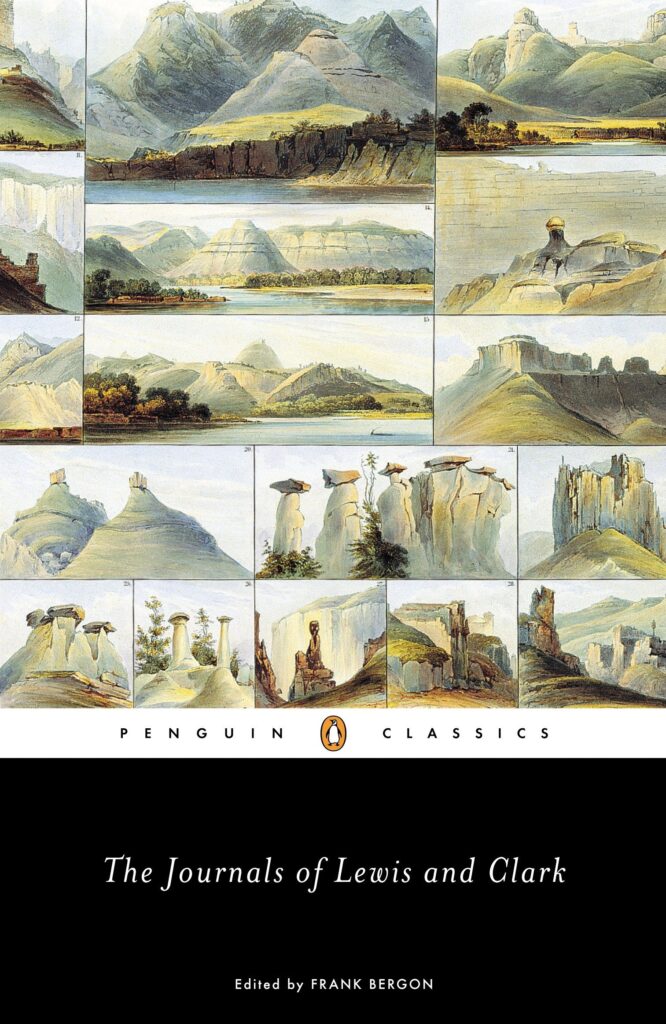*Journals of Lewis and Clark*, Edited by Frank Bergon, Penguin Classic Edition.
In what Meriwether Lewis might have called “this chapter of accidents,” we lost, and we gained. It’s a paradox at the center of the Lewis and Clark Expedition. We’d give anything to have those 23 Native American vocabularies, Lewis’ thoughts on the treelessness of the prairies, his mature recounting of every important moment of the expedition, his sense of destiny, his flights of epic prose, his anticipation of the westering movement of the nation. No one ever wished Lewis had written less.
And yet. Had he written his book(s), it is at least possible that the original journals would have been lost or discarded or buried in some subterranean vault somewhere, with the loss of their immediacy and wonderful rawness, including details that would surely have been suppressed for the sake of decorum. And, had he written his full account, with the literary formality to which he was sometimes susceptible, we might find the finished work less accessible, less delightful, and less of the fabulous adventure story we inherited. I confess that when I read the Penguin Nature Classics edition of the journals, excellently edited by [Frank Bergon](https://frankbergon.com/lewis-clark/), I sometimes found the emphasis on natural history tedious, and long for a lost tomahawk or another screwup by Toussaint Charbonneau!
Enlightenment treatises can be tough sledding, but the Lewis and Clark Expedition as we have come to know it is one of the most compelling stories in American history.
---
## ***Discover more on these topics at Listening to America***
[Ohio](https://ltamerica.org/tag/ohio/ "2 topics")[Water in the West](https://ltamerica.org/tag/water-in-the-west/ "24 topics")[New Mexico](https://ltamerica.org/tag/new-mexico/ "3 topics")[north daktoa](https://ltamerica.org/tag/north-daktoa/ "0 topics")[Wisconsin](https://ltamerica.org/tag/wisconsin/ "0 topics")[Thomas Jefferson](https://ltamerica.org/tag/thomas-jefferson/ "34 topics")[Republic](https://ltamerica.org/tag/republic/ "0 topics")[Rivers](https://ltamerica.org/tag/rivers/ "3 topics")[Vermont](https://ltamerica.org/tag/vermont/ "1 topics")[New York](https://ltamerica.org/tag/new-york/ "8 topics")[Video](https://ltamerica.org/tag/video/ "51 topics")[Virginia](https://ltamerica.org/tag/virginia/ "7 topics")[State Parks](https://ltamerica.org/tag/state-parks/ "2 topics")[Road Trips](https://ltamerica.org/tag/road-trips/ "18 topics")[Steinbeck Travels](https://ltamerica.org/tag/steinbeck-travels/ "75 topics")[Theodore Roosevelt](https://ltamerica.org/tag/theodore-roosevelt/ "16 topics")[Texas](https://ltamerica.org/tag/texas/ "4 topics")[William Shirer](https://ltamerica.org/tag/william-shirer/ "1 topics")[Washington](https://ltamerica.org/tag/washington/ "2 topics")[Sports](https://ltamerica.org/tag/sports/ "2 topics")[The Constitution](https://ltamerica.org/tag/the-constitution/ "1 topics")[Oppenheim](https://ltamerica.org/tag/oppenheim/ "0 topics")[Space Exploration](https://ltamerica.org/tag/space-exploration/ "8 topics")[Oppenheimer](https://ltamerica.org/tag/oppenheimer/ "1 topics")[Rome](https://ltamerica.org/tag/rome/ "1 topics")[Pennsylvania](https://ltamerica.org/tag/pennsylvania/ "1 topics")[Utah](https://ltamerica.org/tag/utah/ "11 topics")[Podcast](https://ltamerica.org/tag/podcast/ "1 topics")[North Carolina](https://ltamerica.org/tag/north-carolina/ "3 topics")[Tennessee](https://ltamerica.org/tag/tennessee/ "1 topics")[U.S. Presidents](https://ltamerica.org/tag/u-s-presidents/ "71 topics")[Oregon](https://ltamerica.org/tag/oregon/ "4 topics")[Poetry](https://ltamerica.org/tag/poetry/ "1 topics")[South Carolina](https://ltamerica.org/tag/south-carolina/ "1 topics")[South Dakota](https://ltamerica.org/tag/south-dakota/ "16 topics")[North Dakota](https://ltamerica.org/tag/north-dakota/ "53 topics")[Wyoming](https://ltamerica.org/tag/wyoming/ "4 topics")[paintings](https://ltamerica.org/tag/paintings/ "0 topics")[Republics](https://ltamerica.org/tag/republics/ "1 topics")[Reading](https://ltamerica.org/tag/reading/ "1 topics")[Walden](https://ltamerica.org/tag/walden/ "1 topics")[Travel](https://ltamerica.org/tag/travel/ "1 topics")[Thoreau](https://ltamerica.org/tag/thoreau/ "5 topics")[U.S. Constitution](https://ltamerica.org/tag/u-s-constitution/ "1 topics")[New England](https://ltamerica.org/tag/new-england/ "1 topics")
**Categories:** Features
**Tags:** Books, Lewis and Clark
---
### [Peaceful Transfer of Power: Then and Now](https://ltamerica.org/peaceful-transfer-of-power-then-and-now/)
**Published:** September 3, 2024
**Author:** Clay Jenkinson
**Excerpt:** Lindsay Chervinsky’s new book closely examines the dramatic events that shaped America’s pattern for the peaceful transfer of power.
**Content:**
## Lindsay Chervinsky’s new book closely examines the dramatic events that shaped America’s pattern for the peaceful transfer of power.
*Making the Presidency: John Adams and the Precedents that Forged the Republic* by Lindsay M. Chervinsky, Oxford Univ. Press, 2024.
All the historians and political thinkers agree. When the peaceful transfer of power breaks down, a republic or a democracy is in danger of collapse. We all remember the good old days when a presidential election was decided on the night of the vote, and the loser found a way to congratulate his opponent and offer to cooperate wherever possible. We 21st century Americans thought our extraordinary civic heritage and our devotion to the norms that make politics possible were so deeply rooted in our national life that nobody would ever refuse to accept the results of a fair election.
My friend Lindsay Chervinsky’s new book, *[Making the Presidency: John Adams and the Precedents that Forged the Republic](https://global.oup.com/academic/product/making-the-presidency-9780197653845?cc=us&lang=en&)*, gives great attention to the importance of peaceful transfer of power. Here’s the story from that perspective.
George Washington was our only unanimous president. He tried to retire after a single term and insisted on it after his second term.
Now what? Nobody could equal the nation’s savior and greatest hero, “first in war, first in peace, first in the hearts of his countrymen.” However, someone had to be the second president; for most people in the country, that meant his vice president, John Adams. Adams was not Washington, of course, but he was one of the most significant figures in the American Revolution, the author of the Constitution of Massachusetts, semi-co-writer of the Declaration of Independence, a seasoned diplomat, and the author of several interminable volumes on the science of government.
There was a spirited election in 1796, but John Adams won handily. One of the most striking revelations in Ms. Chervinsky’s book is that President Washington never once invited his vice president, John Adams, to a cabinet meeting. He made no attempt to keep Adams informed of domestic policy or international affairs. Washington was — as a man of the 18th century and the Enlightenment — studiously gracious towards Adams, but he did not do anything to brief his successor — or even explain such things as the working protocols of the cabinet. Fortunately, Adams’ policies were nearly identical to those of his predecessor.
Then, Thomas Jefferson defeated Adams after just a single term. The election of 1800 marks the first time national government power was transferred from one party of men to another under our Constitution. It’s true that the emerging political parties — Jefferson’s Republicans and Hamilton’s Federalists — were still coming into being in 1800, but it was clear to the whole country that Jefferson represented a significant break with the Federalist era (1788-1800). He tilted towards France, not England. He was an agrarian visionary straight out of Homer and Vergil at a time when America’s economy was becoming overtly capitalist and would soon embrace the industrial revolution. Jefferson’s enemies regarded him as a French-tainted radical demagogue and atheist. He had made stern statements about the ruinousness and illegitimacy of a national debt that led his enemies to believe he might repudiate the debt if he ever got his hands on the levers of power. He was a slaveholder.
Adams was bitter about the election, but he cooperated in the transition. He wrote Jefferson a careful letter of congratulation and offered him horses and a carriage that he’d purchased but now regarded as U.S. government property. They had tea and dinner. And yet Adams did not attend Jefferson’s inauguration on March 4, 1801. He left town at 4 a.m. on the dawn stage to Baltimore.
Historian, Dr Lindsay Chervinsky.
Here’s where my friend Lindsay and I disagree. She argues that we didn’t really have a norm about attending your successor’s inauguration back then, that the Constitution is silent about this matter, that Adams may honestly have felt he wasn’t welcome at the ceremony, that he had not formally or informally been invited by president-elect Jefferson, his old friend, to participate in the transfer of power. Etc.
And yet.
Washington had come to Adams’ inauguration on March 4, 1797. Creator of precedents that he was, Washington could have made the case that attending Adams’ inauguration would be unfair to Adams. It was his turn now, and Washington’s presence might draw attention away from the new executive.
I believe that Adams erred twice in skipping out of town on the dawn stage. First, it was ungentlemanly towards Jefferson, whom he had worked with and loved for a quarter century of revolution and diplomacy. They were two of the small “band of brothers” that brought on the birth of the Declaration of Independence in 1776. What Adams did on March 4, 1801, was a snub born of bitterness, depression, and humiliation, coupled with a fierce desire to get home to Quincy, his farm, and Abigail.
Skulking out of town was an even graver betrayal of the Idea of a Republic. By shaking Jefferson’s hand and listening to his inaugural address, Adams would have signified that he respected his successor and wanted to assure the public by his presence that America was in responsible hands. He would have signified that peaceful transfer of power was one of the most essential things in a republic, and every ounce of public ritual that made these transitions harmonious was crucial to government continuity, the sensibilities of the American people, and the ideals of the American experiment.
Adams knew better. What he did is perfectly understandable, especially when you factor in that he was actively grieving for the death of his son Charles (November 30, 1800) by way of acute alcoholism. However, it was a rare lapse of political responsibility by John Adams.
Nevertheless, the transfer of power in 1801 was smooth. Even John Marshall, Jefferson’s distant cousin who detested the new president, reported that Jefferson’s inaugural address was conciliatory and blameless. Washington socialite (if that term is not reductive) Margaret Byard Smith was so impressed by the peaceful transfer that she wrote one of the most famous passages in the annals of American political history:
*“The changes of administration, which in every government and in every age have most generally been epochs of confusion, villainy and bloodshed, in this our happy country take place without any species of distraction, or disorder.”*
## **A Quirk of the Electoral College**
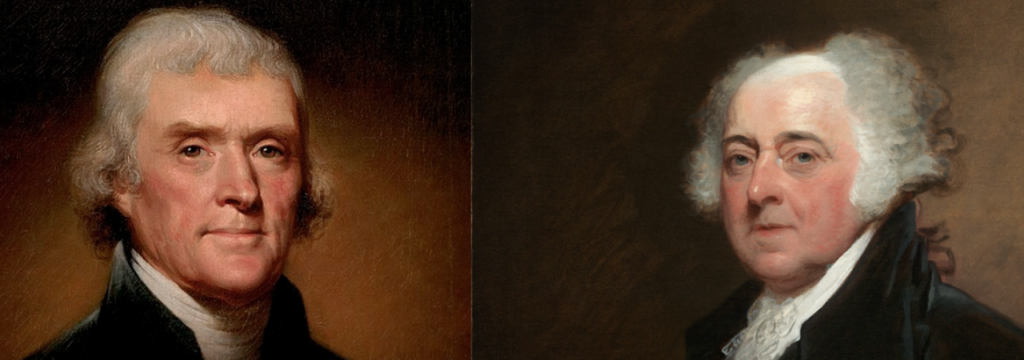Portraits for Thomas Jefferson (left) and John Adams.
The drama of the transfer of power in 1800 had little to do with Adams and everything to do with Aaron Burr and the Federalists. Jefferson and his running mate Aaron Burr had each received 73 electoral votes in the election (Adams 65). Thus Jefferson and Burr tied, and even though everyone in the country knew that Jefferson was president, Burr vice president, the Constitution could only see a tie; and when that happened, said Article II of the Constitution, the president would be immediately chosen by the House of Representatives, where on this occasion each state had only one vote.
**Note:** Under the original terms of the Constitution, the person who got the most electoral votes was the president or the runner-up vice president, irrespective of their party affiliations or political outlooks. After the crisis of 1800, the Constitution was amended to separate the vote for president and vice president. The 12th Amendment was ratified on June 15, 1804.
To this day, no historian knows quite what Burr was thinking in the first weeks of 1801, what his hopes were, and just how he maneuvered behind the scenes, but the consensus is that he eventually decided (on the one hand) that he would not lobby to displace Jefferson but (on the other hand) he wouldn’t turn down the opportunity to be president if that’s what the House of Representatives decided. Jefferson wanted Burr to renounce the Federalist strategy and make it clear that he would refuse the presidency if offered to him in this unscrupulous way. Burr held his cards close to his chest. Jefferson never forgave Burr’s coyness.
When the House of Representatives met to certify the election (sound familiar?) on February 11, 1801, eight states were planning to vote for Jefferson, six for Burr, with two states not voting.
> “Anyone who says our time’s partisanship and political chicanery are unprecedented has not studied much American history.”
>
> Clay Jenkinson
The new national capital barely had enough infrastructure and amenities to house members of Congress, the Supreme Court, and the president’s cabinet — and now thousands, probably tens of thousands, of citizens flocked to the District of Columbia to promote their interests. There was a report of 50 men sleeping in blankets on the floor of one of the district’s few hotels. Most of these citizens who flooded Washington were Jeffersonians, and they were in a terrible mood.
One historian of this crisis writes: “The lobby of the House had to be cleared of a noisy, angry crowd. Stories circulated that some Federalist members had received written death threats, while stones had come crashing through the windows of others.” Sound familiar?
There was talk of civil war. By which, I mean there was very serious talk of civil war at the highest levels of the American establishment. Governor Thomas McKean of Pennsylvania, who was a fierce Jeffersonian, had begun to coordinate the possibility of a Pennsylvania militia marching on Washington to take back the presidency for Jefferson if the Federalists attempted to supplant Jefferson with Burr. The same was true in Jefferson’s own Virginia. His protégé James Monroe, now Governor, was flirting with the idea of sending troops to Washington if necessary.
It’s not entirely clear how close we came to civil war or an existential threat to the continuation of the republic in the spring of 1801, but closer, I believe, than in 2021. Ms. Chervinsky makes the point that Jefferson himself was not unwilling to mention the possibility of the intervention of armed militias, both in his letters to people who did not share his politics and in the reports we have of his conversations during these tense weeks. Lindsay thinks that Jefferson was betraying the Constitution, the rule of law, and the ideals and principles of a republic in mentioning the activities in Pennsylvania and Virginia.
She writes, “While Jefferson might have overstated the likelihood of a convention or military force to intimidate Federalists, he had embraced political violence as an acceptable political tactic. His behavior was unacceptable for a democratically elected leader and disgraced his oath to the Constitution.”
This is very strong stuff. I take Lindsay’s point, but I think she takes it too far. My reading is that Jefferson was not either instigating or encouraging military intervention. There is no evidence that he cheered McKean or Monroe on. It’s hard — I believe, impossible — to imagine Jefferson using violence to take control of the country. The very worst that can be said of Jefferson on this occasion is that he was engaged in hyperbole or bluffing. I don’t believe he was threatening John Adams or anyone else in explaining what he knew about the rage of his partisans around the young country. Jefferson was a pacifist.
Fortunately, the Federalists gave up. On the 36th ballot, Jefferson was elected: 10 states to four, with two not voting. Adams drifted away. The Federalists grew increasingly paranoid and self-righteous, more addicted to bitterness and grievances, and by 1810, they were essentially gone from American political life. The American people like optimism.
Aaron Burr. (From a lithograph based on an 1834 painting by James Van Dyck.)
The rest of the story? Jefferson never trusted Burr again and dropped him from the ticket in the election of 1804. Burr killed Hamilton in a duel in July 1804, fled murder indictments in New York and New Jersey, and eventually hatched a scheme — here, too, no historian has ever fully sorted all of this out — to invade Central or South America, to engage in some insurrection with the help of the British or the Spanish, or to create his own Napoleonic empire in the southwest and todays’ Central America. We still are not sure what he was trying to do. Everyone understood, however, that he was up to no good. Jefferson had Burr arrested on a charge of treason. Burr was essentially acquitted in a federal trial in Richmond, presided over by John Marshal.
When Jefferson retired after two terms — helping to cement a norm begun by Washington — he hand-picked his successor. James Madison was not only the heir apparent as Jefferson’s most trusted colleague and Secretary of State but also Jefferson’s best friend in the world. The transition was, therefore, seamless. Jefferson performed his characteristic political theater by refusing to make significant decisions in the last months of his lame duckness, by playing private citizen and plain Virginia farmer at Madison’s inaugural events in March 1809, and declaring that he would never meddle in Madison’s presidential affairs, a vow he mostly kept.
When Madison retired, his hand-picked successor, the junior member of the Virginia Dynasty, James Monroe, became president — another seamless transition.
John Adams and Jefferson finally reconciled in 1812, when they were both safely retired. Jefferson was at his beloved Palladian villa at Monticello, and Adams was in his modest farmhouse in Braintree, Massachusetts. They exchanged nearly 150 letters in the last 14 years of their lives and died on the same day, July 4, 1826.
What are the takeaways from this excursion into early national history? First, Lindsay Chervinsky has written an excellent book that speaks to us with particular urgency given the current series of crises over the transfer of power (2017-2025). I highly recommend it. Second, the French are right: *plus ça change, plus c’est la même chose* (the more things change, the more they stay the same). Since World War II, we have become complacent about the norms of the American political system. If we believe that peaceful transfer of power is the essence of a republican system of government, we must be supremely vigilant in the years ahead. Third, anyone who says our time’s partisanship and political chicanery are unprecedented has not studied much American history.
But Lindsay is a little unfair to Mr. J.
---
## ***Discover more on these topics at Listening to America***
[U.S. Constitution](https://ltamerica.org/tag/u-s-constitution/ "1 topics")[paintings](https://ltamerica.org/tag/paintings/ "0 topics")[Virginia](https://ltamerica.org/tag/virginia/ "7 topics")[Tennessee](https://ltamerica.org/tag/tennessee/ "1 topics")[Rome](https://ltamerica.org/tag/rome/ "1 topics")[Thoreau](https://ltamerica.org/tag/thoreau/ "5 topics")[Walden](https://ltamerica.org/tag/walden/ "1 topics")[Utah](https://ltamerica.org/tag/utah/ "11 topics")[New Mexico](https://ltamerica.org/tag/new-mexico/ "3 topics")[Sports](https://ltamerica.org/tag/sports/ "2 topics")[William Shirer](https://ltamerica.org/tag/william-shirer/ "1 topics")[Oregon](https://ltamerica.org/tag/oregon/ "4 topics")[Vermont](https://ltamerica.org/tag/vermont/ "1 topics")[Space Exploration](https://ltamerica.org/tag/space-exploration/ "8 topics")[Theodore Roosevelt](https://ltamerica.org/tag/theodore-roosevelt/ "16 topics")[Road Trips](https://ltamerica.org/tag/road-trips/ "18 topics")[Steinbeck Travels](https://ltamerica.org/tag/steinbeck-travels/ "75 topics")[Ohio](https://ltamerica.org/tag/ohio/ "2 topics")[Republics](https://ltamerica.org/tag/republics/ "1 topics")[U.S. Presidents](https://ltamerica.org/tag/u-s-presidents/ "71 topics")[Reading](https://ltamerica.org/tag/reading/ "1 topics")[Podcast](https://ltamerica.org/tag/podcast/ "1 topics")[Video](https://ltamerica.org/tag/video/ "51 topics")[Pennsylvania](https://ltamerica.org/tag/pennsylvania/ "1 topics")[north daktoa](https://ltamerica.org/tag/north-daktoa/ "0 topics")[South Carolina](https://ltamerica.org/tag/south-carolina/ "1 topics")[Thomas Jefferson](https://ltamerica.org/tag/thomas-jefferson/ "34 topics")[Republic](https://ltamerica.org/tag/republic/ "0 topics")[Oppenheimer](https://ltamerica.org/tag/oppenheimer/ "1 topics")[Wyoming](https://ltamerica.org/tag/wyoming/ "4 topics")[Water in the West](https://ltamerica.org/tag/water-in-the-west/ "24 topics")[North Carolina](https://ltamerica.org/tag/north-carolina/ "3 topics")[New England](https://ltamerica.org/tag/new-england/ "1 topics")[Washington](https://ltamerica.org/tag/washington/ "2 topics")[State Parks](https://ltamerica.org/tag/state-parks/ "2 topics")[Rivers](https://ltamerica.org/tag/rivers/ "3 topics")[Wisconsin](https://ltamerica.org/tag/wisconsin/ "0 topics")[Travel](https://ltamerica.org/tag/travel/ "1 topics")[Poetry](https://ltamerica.org/tag/poetry/ "1 topics")[Oppenheim](https://ltamerica.org/tag/oppenheim/ "0 topics")[New York](https://ltamerica.org/tag/new-york/ "8 topics")[North Dakota](https://ltamerica.org/tag/north-dakota/ "53 topics")[South Dakota](https://ltamerica.org/tag/south-dakota/ "16 topics")[Texas](https://ltamerica.org/tag/texas/ "4 topics")[The Constitution](https://ltamerica.org/tag/the-constitution/ "1 topics")
**Categories:** Books
**Tags:** America at 250, John Adams, Thomas Jefferson, U.S. Presidents
---
### [Fear and Loathing in Northern Colorado](https://ltamerica.org/fear-and-loathing-in-northern-colorado/)
**Published:** September 3, 2024
**Author:** Clay Jenkinson
**Excerpt:** After grueling weeks on the road, our weary, and perhaps delirious, wayfarer visits the “Last Resting Place” RV park in the northern Colorado Rockies.
**Content:**
## Sometimes, when you have been on the road too long, you get a little paranoid.
After grueling weeks on the road, our weary and perhaps delirious wayfarer visits the “Last Resting Place” RV park in the Northern Colorado Rockies.
I was coming off an exhausting week in Vail working with and for the Vail Symposium. I needed a night or two of rest, a little reading, a few naps, a stroll, a simple dinner in the rig, and lots of sleep. My scout Frank found a place on the [Cache la Poudre River](https://www.visitftcollins.com/things-to-do/parks-open-spaces/cache-la-poudre-river/) just northeast of Rocky Mountain National Park and about 40 miles from Fort Collins. I had started the day parked behind a strip mall in Vail, and it was a long drive.
As I drove along the upper reaches of the Cache la Poudre on Colorado State Highway 14 into more and more remote territory, I heard the theme song from *Deliverance* on the radio. Hearing that tune quite possibly shaped the adventure that followed.
I arrived at the modest RV camp, Last Resting Place, about 4 p.m. and climbed up to the office. Before I got 10 feet from my pickup, a woman of unmistakable potency came out and asked, in the manner of a marine boot camp sergeant, “Can I help you?” I felt like George and Jerry as they approach the Soup Nazi in Seinfeld. Instantly, I realized she was a no-nonsense proprietor in her mid-50s, fit, formidable, fierce, and quite funny. I checked in as meekly as possible, providing only monosyllabic answers to her detailed 12-point interrogation. I expected her to hand me an orange jumpsuit. Eventually she led me to my site. It was a narrow back-in slip, and I’m not particularly adept (in short, I suck) at backing up the Airstream. So I asked her to please not watch. She stared at me for a few seconds with contempt but then respected my need for an unwitnessed parking adventure and returned to her office up the hill. Her dog — the kind that eats 135 pounds of food per week — sounded like the Hound of the Baskervilles. Fortunately it was on a chain that could lift a boat anchor. Later, “June” told me that if I had accidentally backed into the tree at the corner of my site she would have gutted me like a deer. Good to know. But that was not mentioned on the website.
Don’t get me wrong. I like strong women. But this one appeared to have spent some time at Rikers Island, I think on the law and order team.
The first night I went to bed very early and caught up a little on my sleep. On the second day, about 1 p.m. I was sitting out at my designated picnic table (Rule 224: “Stay in Your Own Slot!”) reading and writing, and suddenly, I saw the woman I’ll call June, my camp host/owner, and another woman I’ll call Robyn, approach my site. They said they had been weeding. I greeted them abjectly, fully expecting that I had broken one of the place’s three or four hundred hidden rules, for each infraction of which you are charged $25 more. (Read the fine print!!!)

They were all smiles. They said they were going over a hill and valley to another town called Red Feather or Red Father Lakes or Red Blood later that day. There’s a tavern in Red Bluff where you can get some food, but, more to the point, there’s a full bar, and tonight, a good string band from somewhere else was set to rock the American West. Would I like to go along? Truth be told, I was not that eager to go hear a string band in some neighborhood holler where their music is unlikely to be the principal noise of the place. Who doesn’t love a dense pack of mountain-buzzed people on a Saturday night? But as someone who keeps flapping on about Listening to America, listening to the sounds and voices of the heartland, when your camp hosts invite you to a hootenanny on the other side of Walton mountain, you had better go, or you are nothing but humbug.
So I said yes. They seemed innocent enough. At six they appeared outside my rig, both gussied up some. Robyn (the one I am calling Robyn) drove. She doesn’t drink. June said that was good because she intended to get “tanked.” Robyn would be the designated driver. I sat in the back. We drove about 45 minutes over a fabulous gravel U.S. Forest Service road that winds up one little range and descends to another, with the most magnificent yellow pines hugging the roadway as in a fairy tale. My hosts rattled on about their lives and their many grievances against humanity, gov’ment, big biz, big pharma, the Colorado Department of Transportation, American tax policy, and a few other culprits. I threw in an insult now and then just to be relevant.
Let me describe my dates. Robyn is a relatively quiet, quite serious woman, a devout Christian, who moves around the country every few months, sometimes in her large RV and sometimes house-sitting for friends. She has a dog and a cat. She reads at night, mostly nonfiction. If I use understatement, June (the owner) is a somewhat intimidating force. She pridefully declared that she doesn’t read books (what a flirt!). She has opinions about everything, from Gaza and twerking to the new color of paint on the center lines of the state highway. She brings several of her five senses into her many pronouncements: she speaks with vehemence and then does a wild mime with her hands, with a prosecutorial finger pointing, sometimes chest jabbing, enhanced by various lethal-looking expressions. I liked her a great deal immediately. She reminded me of one of my dearest friends, the late Patti Perry of Marmarth, North Dakota. Women who take no prisoners. Women who eat guys like me for breakfast. Women who can strip an engine.
The good news is that the two of them talked so much (by which I mean June 84%, Robyn 14%, Clay 2%) that I could chill out in the back seat. At one point I made the mistake of asking why we weren’t seeing any wildlife. I was told — with considerable contempt — that only an urban, pointy-headed pudknocker would ask such a stupid question, that the wild creatures stay away from the road except when necessary, how many gravel roads have you ever been on, anyway, you’re not from around here are you, hun?
Robyn drove skillfully.

We arrived at the celebrated tavern by the lake and immediately found a couch medley on the deck where we could sit comfortably, have a drink or two, and listen to the band. Maybe get some food.
You know exactly what that mountain emporium was like. A rustic wood building with log walls, a long wooden bar, wooden floors, and an overused bathroom right in everyone’s sight lines. An overworked bar and kitchen crew on a big night, with lots of savvy and sophisticated patrons from Fort Collins and even Boulder in the mix, and the band jamming at the end of a small room. There was a shoulder-hunching density to the gathering. People angling for the beleaguered bartender’s attention. Some dancing in place and grooving to the bass guitar, like a tepid Dean Moriarty in Kerouac’s *On the Road*. The vibe was truly lovely. The lake was pink and golden as the sun set. What’s not to love? An excellent small band playing live music in a colorful mountain town in the wilds of Colorado on a late-summer weekend — it’s almost mythical, and it was truly enjoyable.
The good news is that in the din, I could only hear about one in 20 of June’s [ex-cathedra ](https://www.google.com/search?client=safari&rls=en&q=ex-cathedra&ie=UTF-8&oe=UTF-8)declarations. She drank a couple of glasses of wine as if they were whisky shots, and then three or four adult drinks. As I recall, there was a very long monologue about dogs — good dogs, bad dogs, bad dog owners, the pointlessness of leash laws in America, and a long list of infractions dog owners commit at her RV camp, one warning, and you’re out! I shudder to think of what would have happened to Steinbeck had he let Charlie out of his rig at June’s camp. It would not have surprised me if June had recently graduated from the Kristi Noem School of Canine Management. We had a long conversation about the preachings of Joel Osteen, whose work they both admire and why didn’t I.
Clay visits the tavern by the lake.
It was at that point in the evening that I began to get worried. Here’s what I had thought — up until that moment. These two lovely women had seen a pathetic geezer at his picnic table wasting his time by reading, and out of the goodness of their hearts they took him along for a sweet evening at a nearby mountain roadhouse.
O, grasshopper!
I had brushed my teeth. I had put on a clean shirt. I was ready to listen to America. Of course one can expect deep conversations about the future of America in an overcrowded bar on a Saturday night, with an overamplified string band attempting some Grateful Dead.
Then it dawned on me. I sat there studying them — one thoughtful and reflective, the other an amazing opinionated machine — sporting an outlook I admire for its insistence on personal responsibility, protecting our tax dollars from “dumb shits” (I quote here), and otherwise live and let live, date anyone you want in any identity you need or want. Just don’t make me pay for your treatments or your therapy.
That was when I figured it out.
I realized they were sisters, evil psychopathic killer sisters pretending to be the innocent staff of an RV park. They did this all the time. They lured some weary loser away from camp on the “Saturday night tavern journey,” and then, after plying him with several glasses of box red, they drive partway back to the Poudre River on that suddenly dark and terrifying forest service road, stop the car to “check a headlight,” and then stab and dismember the trusting moron in the back seat. They check his pockets for ready cash, tie huge rocks to his feet and hands, and “dump him in the crick.” After a month or two they sell the Airstream at the black market RV auction in Hemet, California. And then they wait. Sometimes, it is months. But usually, some loser comes along every few weeks or so.
They had softened me up with the whole Thelma and Louise, good cop, bad cop routine. The hard-bitten libertarian with the smoker’s cough and the mild designated driver. Classic. Robyn causes the victim to relax with her gentle disposition and thoughtful comments. June breaks his spirit with a violent running commentary on every subject that happens to pop up. In these serial killer situations, there’s always the jaded alpha ringleader, always the earnest protégé learning the ropes of wilderness homicide. Someday, Robyn will operate her own campground.
It all began to make sense. On the ride, June had asked me if I had ever taken a self-defense class. She asked if I had any family or heirs and if I had written and filed my last will. She asked me if anyone in the universe knew where I was this Saturday night and how long it would take before someone wondered why I had gone radio silent. She asked if I had ever heard of Charles Manson. I must have been exhausted because, at the time, these seemed like innocent, although somewhat unusual, questions.
I realized now that they were actually wealthy, these two mountain babes, pretending to be eking out a living in a small RV park but making frequent unexplained, unreported runs to the Hemet black market RV auction 1,071 miles away. And now I was going to be their latest victim. They may regret it later when they discover that the only valuable objects in my RV are books, which, though they will be useful as kindling over the long winter in the Rockies, are not what the two of them expected.
All the way back “home,” I cowered in the corner of the back seat, whimpering, trying to decide whether to throw open the door and roll out into the darkness. My cell phone had no signal. All I had to defend myself was my car keys. They looked back at me with conspiratorial smiles from time to time. June explained the problems of the universe.
This much I can tell you. It is only my vigilance that kept me alive out there. A moment’s loss of concentration and I would be yet another victim of “the Airstream serial killers,” as they are known in urban legend. As we approached the dark campground, June asked if I wanted a “last drink.” I had no choice but to take that suggestion literally. I declined, saying I had a 12:30 a.m. Zoom meeting with my brother, the sheriff, and former Navy Seal, but I don’t think they entirely believed me. I double-locked my door when they dropped me off and threw some file boxes in the entrance so that at least I would hear when the attack came. I slept fitfully, like Shane in cattle rustler country. At first light, I eased out of bed, tripped over the file boxes, jumped around for a while on one bare foot, cursing the day I was born, then slipped out and buttoned up my rig, and eased it down the hill in neutral to get away and save my life. I felt like Odysseus when he got away from the Cyclops Polyphemus.
## **Several days have passed.**
I now wonder if I overreacted or was just being paranoid back on the upper Poudre. Perhaps they were just two entertaining and fun-loving women who reached out to a stranger at a picnic table (reading a book) and gave him a spirited evening over there in Red Feather, where, they boasted, there are both a post office and a premium golf course.
Whatever it was, it was a great and unexpected evening. “June” and “Robyn” were a joy to hang out with, interesting, even fascinating, in their backgrounds and current projects, and delightful in a take-no-prisoners sort of way. I did a lot of listening and came away with great respect for how they see the world. And if they are, in fact, recreational vehicle serial killers, I’m just glad I slipped the noose.
I give Last Resting Place five stars, but keep your dog on a leash.
---
## *Discover more on these topics at Listening to America*
[North Carolina](https://ltamerica.org/tag/north-carolina/ "3 topics")[Wyoming](https://ltamerica.org/tag/wyoming/ "4 topics")[New England](https://ltamerica.org/tag/new-england/ "1 topics")[State Parks](https://ltamerica.org/tag/state-parks/ "2 topics")[U.S. Constitution](https://ltamerica.org/tag/u-s-constitution/ "1 topics")[Road Trips](https://ltamerica.org/tag/road-trips/ "18 topics")[Water in the West](https://ltamerica.org/tag/water-in-the-west/ "24 topics")[Vermont](https://ltamerica.org/tag/vermont/ "1 topics")[Tennessee](https://ltamerica.org/tag/tennessee/ "1 topics")[Reading](https://ltamerica.org/tag/reading/ "1 topics")[Oppenheimer](https://ltamerica.org/tag/oppenheimer/ "1 topics")[South Dakota](https://ltamerica.org/tag/south-dakota/ "16 topics")[Texas](https://ltamerica.org/tag/texas/ "4 topics")[Rivers](https://ltamerica.org/tag/rivers/ "3 topics")[William Shirer](https://ltamerica.org/tag/william-shirer/ "1 topics")[Washington](https://ltamerica.org/tag/washington/ "2 topics")[New Mexico](https://ltamerica.org/tag/new-mexico/ "3 topics")[Oregon](https://ltamerica.org/tag/oregon/ "4 topics")[Virginia](https://ltamerica.org/tag/virginia/ "7 topics")[Pennsylvania](https://ltamerica.org/tag/pennsylvania/ "1 topics")[Theodore Roosevelt](https://ltamerica.org/tag/theodore-roosevelt/ "16 topics")[Ohio](https://ltamerica.org/tag/ohio/ "2 topics")[Travel](https://ltamerica.org/tag/travel/ "1 topics")[paintings](https://ltamerica.org/tag/paintings/ "0 topics")[Video](https://ltamerica.org/tag/video/ "51 topics")[Walden](https://ltamerica.org/tag/walden/ "1 topics")[New York](https://ltamerica.org/tag/new-york/ "8 topics")[Sports](https://ltamerica.org/tag/sports/ "2 topics")[Thomas Jefferson](https://ltamerica.org/tag/thomas-jefferson/ "34 topics")[The Constitution](https://ltamerica.org/tag/the-constitution/ "1 topics")[Rome](https://ltamerica.org/tag/rome/ "1 topics")[Wisconsin](https://ltamerica.org/tag/wisconsin/ "0 topics")[North Dakota](https://ltamerica.org/tag/north-dakota/ "53 topics")[north daktoa](https://ltamerica.org/tag/north-daktoa/ "0 topics")[Republics](https://ltamerica.org/tag/republics/ "1 topics")[U.S. Presidents](https://ltamerica.org/tag/u-s-presidents/ "71 topics")[Republic](https://ltamerica.org/tag/republic/ "0 topics")[Podcast](https://ltamerica.org/tag/podcast/ "1 topics")[South Carolina](https://ltamerica.org/tag/south-carolina/ "1 topics")[Thoreau](https://ltamerica.org/tag/thoreau/ "5 topics")[Steinbeck Travels](https://ltamerica.org/tag/steinbeck-travels/ "75 topics")[Poetry](https://ltamerica.org/tag/poetry/ "1 topics")[Utah](https://ltamerica.org/tag/utah/ "11 topics")[Oppenheim](https://ltamerica.org/tag/oppenheim/ "0 topics")[Space Exploration](https://ltamerica.org/tag/space-exploration/ "8 topics")
**Categories:** Dispatches from the Road
**Tags:** America at 250, Colorado, John Steinbeck, Steinbeck Travels
---
### [Interstellar News From NASA](https://ltamerica.org/interstellar-news-from-nasa/)
**Published:** August 27, 2024
**Author:** Clay Jenkinson
**Excerpt:** Apparently lost and 15 billion miles from Earth, NASA’s Voyager 1 calls home.
**Content:**
## Apparently lost and 15 billion miles from Earth, NASA’s Voyager 1 calls home.
NASA’s Voyager 1 spacecraft, as depicted in this artist’s concept, traveling through interstellar space. (NASA/JPL-Caltech)
Last week, NASA made news twice. First, it announced that it had reestablished reliable radio communication with [Voyager I](https://science.nasa.gov/mission/voyager/voyager-1/), now more than 15 billion miles from Earth, almost beyond the grip of our solar system.
Think about this.
Voyager 1 was launched in 1977 when we were still getting used to transistors! It has outlived its life expectancy by 10 times. It’s the little engine that could. Designed initially to probe Saturn and Jupiter, it is now the most distant man-made object in the universe. It is currently traveling at 38,000 miles per hour. It stores data on a clunky eight-track tape system. The spacecraft is no larger than a small compact car. It has three small nuclear reactors on board. At some point, perhaps as early as 2025, the last of those reactors will run out of oomph. Voyager 1 will continue to surf the cosmos (forever), but it will be an inert object, and we on Earth will no longer be able to communicate with it. So far in its 47-year voyage, Voyager 1 has taken thousands of photographs (alas, using 1970s photo technology), including the famous Pale Blue Dot family portrait of our entire solar system — taken in 60 frames on Valentine’s Day 1990. The late Carl Sagan (1934-1996) made the most of that photograph: see his remarkable 1994 book, *Pale Blue Dot: A Vision of the Human Future in Space.*
Voyager 1 began to fail on November 14, 2023. The messages it was sending to Earth were suddenly gibberish. A radio signal takes almost a whole day (22.5 hours) to reach the spacecraft. And then 22.5 hours for Voyager 1’s reply to reach Earth. So addressing this problem required great patience.
Voyager 1 was offline for five months. NASA feared that it had finally reached the end of its spectacular life. Engineers and scientists at the Jet Propulsion Laboratory (JPL) in Pasadena have been “working the problem,” as NASA likes to put it, with muted feverishness since last November. Somehow, they figured out where something failed in one of the three onboard computers. It turns out to be a single chip. Think of what a chip was in 1977. Somehow, they designed a workaround, and somehow it worked.
Voyager 1 sends data back to Earth using just 12 watts of power, about the same wattage that runs the light in your refrigerator.
As I sit in front of my elegant laptop (unthinkable in 1977, barely imaginable in 1995), checking my facts on the internet (no such thing in 1977), and nonchalantly downloading photographs, wondering if the Wi-Fi at my RV campsite will work adequately (or work at all) when I try to push “send,” I have two essentially identical responses to this nearly unbelievable story about human ingenuity.
First, the contemporary vulgar one: “Are you $#@@% kidding me?” SOMEHOW, we fixed a computer in a tiny capsule wandering outside the boundaries of our entire solar system, traveling at a speed that would zip an airplane around the planet Earth twice in one hour … a few bytes at a time with a 22.5 hour delay between every tiny dollop of code in either direction!
And yet there is lead pipe-polluted water in a range of American cities.
Here’s the better response. It comes straight out of the greatest piece of Renaissance English literature, Hamlet:
> “What a piece of work is a man!
>
> How noble in reason.
>
> How infinite in faculty.
>
> In form and moving how express and admirable.
>
> In action how like an angel.
>
> In apprehension how like a god.
>
> The beauty of the world.
>
> The paragon of animals.”
Don’t tell me we were better off before the Neolithic Revolution! It’s a fabulous story, another outstanding achievement for science, America, and humankind. And by the way, stay tuned!
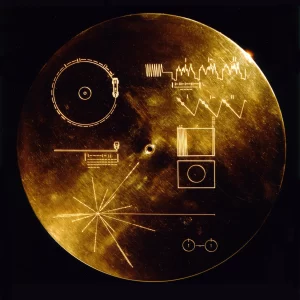
And yet there is one more amazing thing to contemplate. At some point, and not very far in the future, Voyager 1 will die. But thanks to the genius of Carl Sagan, the spacecraft carries the famous Golden Record, the most audacious time capsule, the most far-reaching message in a bottle in history. The Golden Record contains 115 images, an hourlong brain wave scan of Ann Druyan (Sagan’s brainy wife), and a multicultural medley of sounds, including Bach’s *Brandenburg Concerto*, percussion music from Senegal, an aria from Mozart’s *Magic Flute*, Navajo night chants, Peruvian panpipes, Stravinsky’s *Rite of Spring*, African pigmy chants, Beethoven’s fifth, as well as Chuck Berry’s *Johnny B. Goode*. The record also stores a variety of natural sounds, ranging from birds, whales, surf, wind, and thunder, and celestial greetings in 55 languages ancient and modern.
What a piece of work is “man,” and what a man was Carl Sagan.
## **Now for Less Happy NASA News**
Second, NASA announced that the two stranded astronauts — Butch Wilmore and Suni Williams — will now be spending another seven months on the International Space Station (ISS) because the Boeing Starliner’s thrust problems are too concerning to risk attempting to use the spacecraft to bring them back to Earth. It’s more terrible news for Boeing. Wilmore and Williams will fly home on a Space X flight — next year! They were scheduled to return to Earth after just eight days. Eight days + eight months. One hopes there are laundry facilities up there.
Wilmore and Williams are safe on the ISS, of course; and there is plenty of food and oxygen to accommodate them. No doubt NASA will devise a long list of important things for them to do during their strandedness. This may be good news for the two space explorers. Many other astronauts have reported that returning to Earth was one of the saddest experiences of their lives. Fair enough, but expectation is everything, and human nature chafes when circumstances beyond our control thwart the best-laid plans.
Think about these two extraordinary individuals.
They trained for several years to fly a brand-new vessel into space. After endless delays, problems, and cost overruns, they finally lifted off successfully on June 5. Now they are not lost in space, but they are definitely stuck in space. As astronauts, they are fully aware of the sacrifices they are asked to make for the privilege of serving humankind, but they do have lives — people back home — birthdays, anniversaries, holidays, parents, friends, obligations, needs.
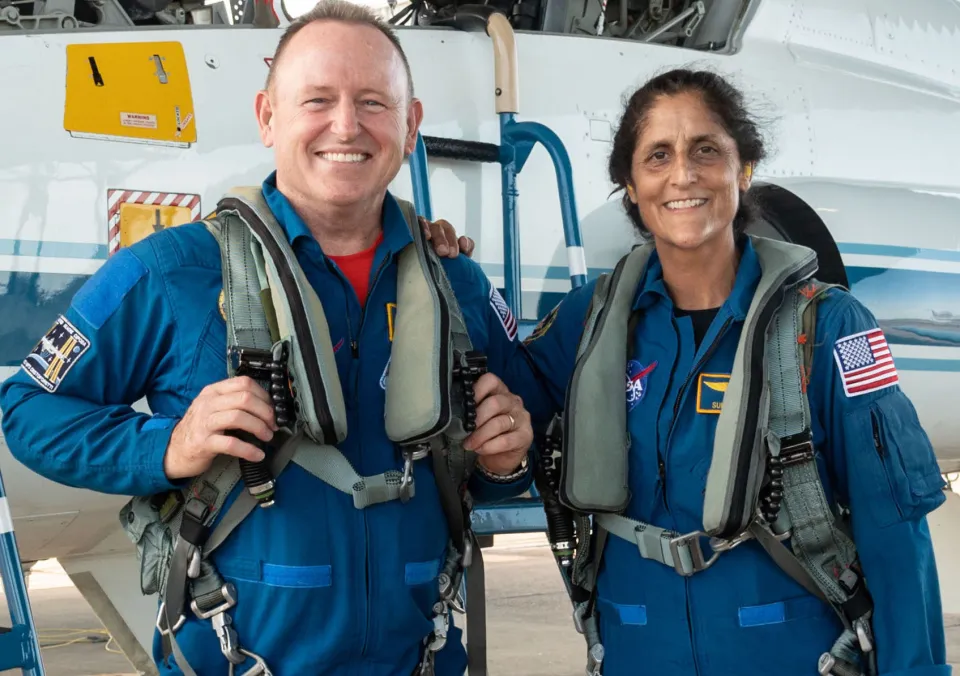NASA astronauts, Butch Wilmore and Suni Williams. (Photo: Robert Markowits, NASA/Johnson Space Center)
Butch Wilmore, born in 1962, is married with two children. He has been to space three previous times for a total of 178 days. If he comes home in February (255 days or so after the June 5th launch), he’ll have spent a total of 433 days in space. (The record for most number of days in space belongs to the cosmonaut Valeri Polyakov, who spent 437 days aboard the ISS in the 1990s.) Heck, NASA may as well hold off their return journey until sometime in March 2025 to give Wilmore at least that endurance distinction in exchange for his troubles. It’s still an international space race after all.
Sunita (Suni) Williams is a pioneer in all sorts of ways. Born in 1965, she holds the record for the most number of spacewalks (EVAs) by a woman (seven) and the most elapsed time on spacewalks (50 hours, 47 minutes). In December 2006, she carried a copy of the Hindu sacred text, the Bhagavad Gita, to the ISS. That alone exemplifies the Enlightenment. Williams is married to a Texas federal marshal. They have no children. So far, no one has dared call her a childless cat lady, perhaps in part because she and her husband (repeat: a federal marshal!) have a beloved Jack Russell terrier named Gorby.
You know what they say on the airlines: “Your safety is our first priority.” We know many things; one is that Boeing cannot survive a space catastrophe. But we know, too, that space is an unforgiving environment, and there will be accidents. Strap a couple of people to a rocket filled with millions of gallons of the most volatile fuels technology can refine and put a match to it. What could go wrong?! There could be no space program if we insisted on 100% assurance that nothing catastrophic could go wrong. We’ve dodged the bullet on a number of occasions: Gemini VIII (spinning out of control, 1966), Apollo XII (the Saturn V rocket struck by lightning at liftoff, 1969), and of course, Apollo XIII (1970), and there have been three true disasters: Apollo I’s three astronauts asphyxiated in the command module during a pre-flight test (1967); the space shuttle Challenger (1985) and Columbia (2003).
There will be more. The wife of Apollo VIII’s commander, Frank Borman, went to a trusted official at NASA and asked about the likelihood of her husband’s safe return. In a rare moment of bureaucratic candor she was told 50-50.
I do not doubt that Boeing will figure out how to overcome the problems with the Starliner if it doesn’t just throw up its hands in the wake of another serious engineering and public relations disaster. The first airplanes crashed with great regularity. Now, except for the Boeing 737 Max, they almost never crash unless the pilot is insane or terrorists interfere.
We are living through the Second Great Age of space exploration. China, Japan, the EU, and India have joined the two international heavyweights. And the clunky old era of government monopolies on space flight has blissfully passed. The entrepreneurs are giving the new space age a brilliant creative edge.
And they are just getting started.
Meanwhile, Voyager rides the galactic waves.
**Categories:** Features
**Tags:** Humanities, Space Exploration
---
### [Happy Birthday Meriwether Lewis](https://ltamerica.org/happy-birthday-meriwether-lewis/)
**Published:** August 20, 2024
**Author:** Clay Jenkinson
**Excerpt:** August 18 was Meriwether Lewis’ 250th birthday. Clay reflects on the short life of this protégée to President Jefferson and one of the nation’s most well-known explorers.
**Content:**
Lewis and Clark, Sacagawea, her son and husband Charbonneau at the mouth of the Columbia River, 1805. Drawing by Frederic Remington in Collier’s Magazine, 1906. (LOC)
August 18 was Meriwether Lewis’ 250th birthday. The great explorer was born in Albemarle County, Virginia, on August 18, 1774. Unfortunately, he only lived 35 years. Lewis died on the night of October 11, 1809, at a squalid hostel on the Natchez Trace, about 70 miles from Nashville, Tennessee.
I’ve been to the site of his birth, a more or less typical Virginia plantation house that is not open to the public, and I’ve been to the site of his death at Hohenwald, Tennessee. His grave is topped with a broken column, signifying an unfinished life. As you stand there in silence, you can only ask, Why? Why here? Why now?
It seems clear that Lewis committed suicide at that rude inn just three years after his successful journey of exploration from St. Louis, Missouri, to the Pacific Coast and back again. He died of a gunshot wound to the head and another to his abdomen. A fairly large number of people in the Lewis and Clark world want to believe that he was murdered in Tennessee in 1809, but since there isn’t a shred of evidence for murder, since we know that Lewis was profoundly distraught at the time of his death, and since former President Jefferson confirmed his suicide in a public document in 1814, the “murderists,” as they are known, are at a considerable disadvantage in the search for historical truth.
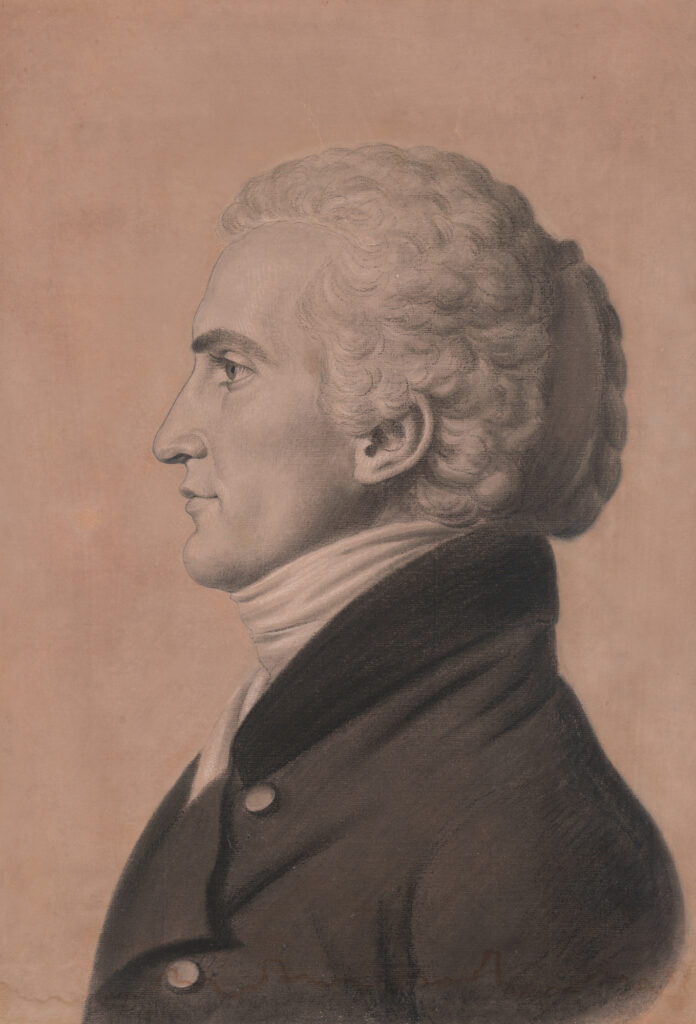A portrait of Captain Meriwether Lewis in 1802. (National Portrait Gallery)
I remember the day when I first read that Lewis had taken his own life. It was in a book by David Freeman Hawke, *Those Tremendous Mountains: The Story of the Lewis and Clark Expedition*, which I read 45 years ago. I was shocked. In school and Cub Scouts, I had learned a little of the great expedition, but in those venues, the story ended with the explorers returning successfully to St. Louis on September 23, 1806, after traveling 7,689 miles in 28 months. Until that day in 1979, I had never thought about the aftermath — the legacy of the expedition in the history of the westward movement, the contemporary public’s reaction to the journey, including that of President Thomas Jefferson, or what happened in the post-expedition lives of the 33 members of the “permanent party,” in particular Meriwether Lewis, William Clark, Sacagawea, Clark’s slave York, or “the first mountain man” John Colter.
So Lewis committed suicide! Why?
I have literally spent almost half a century trying to understand why. It’s more important to me than the fate of Amelia Earhart, whether Shakespeare wrote his plays or someone else, or the fate of the lost colony of Roanoke. (All of which I find fascinating.) I’ve written two books about Lewis’ death, the second of which, T*he Character of Meriwether Lewis*, I regard as my most important book. Why does a successful explorer, a national hero, the protégé of the great Jefferson, a member of the American Philosophical Society, and the governor of an important western territory (Upper Louisiana) put a gun to his head and pull the trigger when most of his life is before him?
It’s a mystery, and it probably cannot be solved. I have theories. I’ve sifted the evidence again and again and consulted historians, philosophers, psychologists, forensic scientists, and experts who have studied suicide, including Kay Redfield Jamison, the author of *Night Falls Fast: Understanding Suicide*. I’ve read all 13 volumes of Gary Moulton’s authoritative edition of the *Journals of the Lewis and Clark Expedition* with painstaking care, searching for clues. The journals (and letters) reveal a gifted, high-strung, self-punishing, mercurial, and volatile young man who repeatedly measured his self-worth with the mission’s success. Many Lewis and Clark buffs (including biographers) say Lewis is not the kind of man who would commit suicide, but when I put that proposition to Kay Redfield Jamison, she said Lewis is precisely the profile of a person who might commit suicide.
The least speculative way to describe what happened might be something like this: Lewis had boxed himself into a corner in the years after the expedition’s return, and at that lonely hut on the Natchez Trace, he saw no way out of his troubles. He felt he was by now all alone in the world. Clark was no longer a daily prop. Lewis has never married or had a relationship with a woman, as far as we know. At the moment of his death, Lewis was 618 miles from his mother, Lucy, back in Virginia and almost precisely the same distance from his mentor, Jefferson, who retired at Monticello and had reason to be disappointed with his protégé. Lewis had no God. He had failed to write his projected book about the expedition, and Jefferson was grumpy about that. His personal finances were in complete disarray, and his public finances as Governor of Upper Louisiana were being sternly contested by the U.S. government, which had essentially accused him of a conflict of interest in how he handled public moneys. Lewis was ill with malaria (a common frontier malady). He was drinking heavily, and he had what we would call an opioid addiction (laudanum). As a young man obsessed with his honor, he was appalled, outraged, and devastated to think that the War Department could challenge his integrity.
When the deed was done, and the news from the frontier reached first Clark and then Jefferson, these two men closest to Lewis were shocked but not surprised. Clark famously wrote, “I fear O! I fear the waight of his mind has over come him.” Clark knew Lewis better than anyone on earth, and he recognized him as a brooding melancholic who had been coming apart during his last months as territorial governor in St. Louis.
Almost every suicide is a mystery in some sense. Why does this one matter so much?
Original cover image of Lewis and Clark Journals, Vol 1, 1814.
First, Lewis had not finished his book. We have some of his journals, which seem to have been rewritten after the expedition as a draft of the book he was trying to write. Still, by clocking out at 35, he withheld from the world the tens of thousands of words and scores of important insights that would have served as an Enlightenment capstone to the journey. Clark picked up the pieces and got something into print in 1814 (eight years after the return), by way of a ghostwriter who never ventured into the American interior. However, we all know that Lewis’ account would have been dramatically richer had he fulfilled his responsibility. What knowledge, observations, reflections, insights, predictions, and recommendations died with Lewis? Incalculable.
Second, if Lewis had lived to a ripe old age, he would indeed have gone on to other great achievements. Clark served as a St. Louis-based adviser to every serious mission (commercial, military, or scientific) that ascended the Missouri River between 1806 and 1838. Had he lived, Lewis might have been the nation’s principal adviser on frontier development. And who knows what Jefferson had in mind for him? Jefferson collected and promoted protégés. Two of them — James Madison and James Monroe — went on to be presidents of the United States. There is no reason to doubt that Jefferson might have been grooming Lewis for the U.S. Senate — or more.
Third, it is unlikely that Lewis’ suicide is entirely unrelated to the great journey he undertook into the American heart of darkness. Some, including the late Stephen Ambrose, have argued that there is no linkage between the journey and Lewis’ death. Perhaps. But it seems to me much more likely that his suicide was a ramification, a response, or a reflection on his experience in the wilderness. The way I put it in my book is that Meriwether Lewis and William Clark made the same trip between 1804 and 1806, but in some essential way, a different journey. What happened to Lewis out there? The great essayist Barry Lopez once responded to that question by saying, “How far can you go out there and still come back?” That seems to me a key insight, perhaps **the** key insight.
We don’t know enough to work that question to a satisfying conclusion, but I believe it will be impossible to understand Meriwether Lewis, the Lewis and Clark Expedition, or the Americanization of the continent without working hard to make sense of that question. In other words, the tragedy of Lewis is in some way the tragedy of America, but it is also an opportunity for us to work harder to rethink western history as the 250th anniversary of the United States approaches.
In puzzling Lewis’ death, we should not lose sight of his achievement or greatness. He took several dozen men (and a woman and child) all the way out and all the way back with the loss of only one of his men (natural causes). As a protégé of Jefferson and a figure of the Enlightenment, Lewis gathered an enormous quantity of data and organized it thoughtfully. His relations with Native Americans were, on the whole, exemplary. And when he was writing in his journals, his prose was the best of all the extant writings (journals, letters, reports, publications) by magnitudes.
Jefferson was right to entrust the mission to Lewis. And Lewis was even righter to invite William Clark to be his full partner in discovery.
The mystery abides. If I live 30 more years, I will be able to report, from dotage, that we still don’t quite know why Lewis ended his life on October 11, 1809.
P.S. I thought you might wish to read Lewis’ birthday entry from the expedition’s journals (August 18, 1805), which gives you a sense of how self-punishing he could be.
> > *This day I completed my thirty first year, and conceived that I had in all human probability now existed about half the period which I am to remain in this [Sublunary](https://www.merriam-webster.com/dictionary/sublunary) world. I reflected that I had as yet done but little, very little indeed, to further the hapiness of the human race, or to advance the information of the succeeding generation. I viewed with regret the many hours I have spent in indolence, and now soarly feel the want of that information which those hours would have given me had they been judiciously expended. but since they are past and cannot be recalled, I dash from me the gloomy thought and resolved in future, to redouble my exertions and at least indeavour to promote those two primary objects of human existence, by giving them the aid of that portion of talents which nature and fortune have bestoed on me; or in future, to live for **mankind**, as I have heretofore lived **for myself**. —*
>
> Meriwether Lewis
> August 18, 1805
> On the Montana-Idaho border
---
## ***Discover more on these topics at Listening to America***
[Ohio](https://ltamerica.org/tag/ohio/ "2 topics")[Poetry](https://ltamerica.org/tag/poetry/ "1 topics")[North Carolina](https://ltamerica.org/tag/north-carolina/ "3 topics")[Sports](https://ltamerica.org/tag/sports/ "2 topics")[Travel](https://ltamerica.org/tag/travel/ "1 topics")[Wisconsin](https://ltamerica.org/tag/wisconsin/ "0 topics")[Water in the West](https://ltamerica.org/tag/water-in-the-west/ "24 topics")[New England](https://ltamerica.org/tag/new-england/ "1 topics")[Republics](https://ltamerica.org/tag/republics/ "1 topics")[New York](https://ltamerica.org/tag/new-york/ "8 topics")[north daktoa](https://ltamerica.org/tag/north-daktoa/ "0 topics")[State Parks](https://ltamerica.org/tag/state-parks/ "2 topics")[Oppenheimer](https://ltamerica.org/tag/oppenheimer/ "1 topics")[Video](https://ltamerica.org/tag/video/ "51 topics")[Utah](https://ltamerica.org/tag/utah/ "11 topics")[Washington](https://ltamerica.org/tag/washington/ "2 topics")[Road Trips](https://ltamerica.org/tag/road-trips/ "18 topics")[Thoreau](https://ltamerica.org/tag/thoreau/ "5 topics")[Vermont](https://ltamerica.org/tag/vermont/ "1 topics")[North Dakota](https://ltamerica.org/tag/north-dakota/ "53 topics")[Oppenheim](https://ltamerica.org/tag/oppenheim/ "0 topics")[Tennessee](https://ltamerica.org/tag/tennessee/ "1 topics")[Rome](https://ltamerica.org/tag/rome/ "1 topics")[Republic](https://ltamerica.org/tag/republic/ "0 topics")[Oregon](https://ltamerica.org/tag/oregon/ "4 topics")[Thomas Jefferson](https://ltamerica.org/tag/thomas-jefferson/ "34 topics")[U.S. Constitution](https://ltamerica.org/tag/u-s-constitution/ "1 topics")[U.S. Presidents](https://ltamerica.org/tag/u-s-presidents/ "71 topics")[Theodore Roosevelt](https://ltamerica.org/tag/theodore-roosevelt/ "16 topics")[The Constitution](https://ltamerica.org/tag/the-constitution/ "1 topics")[William Shirer](https://ltamerica.org/tag/william-shirer/ "1 topics")[Pennsylvania](https://ltamerica.org/tag/pennsylvania/ "1 topics")[Space Exploration](https://ltamerica.org/tag/space-exploration/ "8 topics")[Podcast](https://ltamerica.org/tag/podcast/ "1 topics")[South Dakota](https://ltamerica.org/tag/south-dakota/ "16 topics")[Steinbeck Travels](https://ltamerica.org/tag/steinbeck-travels/ "75 topics")[Reading](https://ltamerica.org/tag/reading/ "1 topics")[Rivers](https://ltamerica.org/tag/rivers/ "3 topics")[Walden](https://ltamerica.org/tag/walden/ "1 topics")[Texas](https://ltamerica.org/tag/texas/ "4 topics")[New Mexico](https://ltamerica.org/tag/new-mexico/ "3 topics")[paintings](https://ltamerica.org/tag/paintings/ "0 topics")[South Carolina](https://ltamerica.org/tag/south-carolina/ "1 topics")[Virginia](https://ltamerica.org/tag/virginia/ "7 topics")[Wyoming](https://ltamerica.org/tag/wyoming/ "4 topics")
**Categories:** Features
**Tags:** America at 250, Lewis and Clark, Thomas Jefferson
---
### [Thoughts on Airstream Life — Living in Miniature](https://ltamerica.org/thoughts-on-airstream-life-living-in-miniature/)
**Published:** August 19, 2024
**Author:** Clay Jenkinson
**Excerpt:** Clay shares his thoughts on life on the road and living in a 184 square-foot portable home.
**Content:**
## Clay shares his thoughts on life on the road and living in a 184 square-foot portable home.
On the road with Steinbeck, Jefferson and other necessities. (Photo by Clay Jenkinson)
Aside from what it symbolizes and signifies, I’ll tell you what I love most about my Airstream. First, what does it signify? For me, as I think for others, an earlier time in American life — the moment (some 60 years ago) when we passed from the roadster era into modern aluminum life — the romance of the open road.
But what I love most about my Airstream is what I would love about any portable home of 184 square feet: life in the miniature, a spare life, or as Thoreau put it: *“To live so sturdily and Spartan like as to put to rout all that was not life … to cut a broad swath and shave close and drive life into a corner, and reduce it to its lowest terms. …”* (I can hear my daughter, now 30, saying, “pretty bougie invoking Thoreau from a luxury trailer, papa!”)
But listen.
1\. You cannot leave anything lying around in a travel trailer because everything not battened down will get tossed around as you travel. Our highways are usually more roller coaster than glide path. Therefore, I have to do dishes right after cooking and eating. I have to put everything back in its cupboard space. Everything has to be stored as close to the floor as possible. The refrigerator latch has to be double-checked because the last thing you want is to enter the unit at the end of the day and see raw eggs and mayonnaise splattered all over. Been there, swabbed that up.
2\. The refrigerator is larger than a college dorm fridge but about a quarter of the size of a modern home refrigerator, so instead of ten types of jam, just one; instead of three types of mustard, only one. Because it stores less, I buy less, and (more importantly) I waste less food. At home, no matter how big my refrigerator (plus the obligatory North Dakota man fridge), I fill it to the gills. I’ve read that Americans routinely throw away 30% of the food they purchase.
3\. Now, when I shower, brush my teeth, or wash dishes, I conserve water in a way I never bother to do at home, where I pretend that water is free and infinite.
4\. I’ve severely limited the number of books I carry. Steinbeck said he packed 150 pounds of books, including those classics he had promised himself he’d read and, of course, never did. I have perhaps 30 books in my pickup and camper and of course, my “dodge:” my iPad with 100 books effortlessly stored and several dozen audiobooks ready for me to push “play.”

5\. There is a television monitor in my rig and a rooftop antenna of some sort, but I have never turned the monitor on. I’ve never even been tempted. On the two occasions when I have watched a film, it has been on my laptop screen, and I haven’t wished for a home theater (though most expensive RVs now have multiple screens and also a “home entertainment center” in one of the three, four, or five slideouts). Because I don’t watch television, I don’t stay up past my biological clock’s warning signs. I’m usually in bed by nine or nine-thirty unless I am looking at the stars in my camp chair. I read in bed as long as I like, or rather as long as I can keep my eyes open, usually about 8.3 minutes. So, I am getting better sleep and adjusting my lifestyle (temporarily?) to match the circadian rhythm of day and night. I’m up shortly after dawn and in bed, usually shortly after dark. Because there is no Siren (see Homer’s *Odyssey*) of television, I am reading even more than usual.
6\. My Airstream has an environmentally wise and efficient tankless water heater. Almost my happiest time IN the rig is my daily shower. Even after 107 days on the road this summer (April 27-August 12), I have not lost my delight in having my own private bathroom with a shower that is in no way related to the toilet. In some small RVs, as you know, you sit on the toilet seat to take a modified limited shower. A true shower is the one thing I insisted on when I began this adventure. I took a shower an hour ago, using the RV site’s water (always preferred to conserve the onboard supply) and felt a delight in showering that I seldom feel at home and never in a motel.
7\. My own sheets! My own sheets! You’ve seen the cop shows where they shine that blacklight on the bedspread, sheets, and carpet. Yeeeww! Every night, I slip into my own sheets. Many RV sites have laundry facilities, so I change my sheets more often than I do at home, partly because there is more grit and grime on the road than at home. I confess that I lean towards the Howard Hughes end of the hygiene spectrum. Having my own shower, sink, bed, and sheets is pure luxury. My hygiene neurosis is one reason I don’t have a dog with me, though at a motel I stayed at in western Kansas once, the owner said, “Dogs, on the whole, are much cleaner than their owners.”
8\. I won’t talk about the toilet except to say this. I’m against fouling my own 184 square-foot nest. So, I take advantage of fuel stops and RV bathrooms. If you’ve seen Robin Williams’ 2006 film *RV*, you will appreciate my iron determination to rid myself of bodily wastes elsewhere.
9\. I cook most of my meals at night, but usually on a small portable gas canister grill on the picnic table. The Airstream has a lovely oven-stove combination, but I use it only to boil water, heat a can of soup, or bake the occasional cake or batch of brownies. I don’t want the smell and film of bacon grease in the rig. There is a microwave oven, but I use it only to reheat tea or make a bit of popcorn occasionally.
10\. I have a great and perfectly positioned reading light above my bed. If I ever upgraded, I would want a full-on reading chair, like my home reading chair, for which I spent thousands!!! But hey, any port in a storm.
11\. I wash the linoleum floor every three or four days and shake out the runners given to me by a good friend back in Dakota.
It’s all droll, life in miniature. And it works. It reminds me of how little we need. In fact, I carry a framed print of one of my favorite Jefferson quotations from his time alone and incognito in southern France in 1787. (Enjoy his creative spelling habits!) He wrote, *“A traveller, sais I, retired at night to his chamber in an Inn, all his effects contained in a single trunk, all his cares circumscribed by the walls of his apartment, unknown to all, unheeded, and undisturbed, writes, reads, thinks, sleeps, just in the moments when nature and the movements of his body and mind require. Charmed with the tranquillity of his little cell, he finds how few are our real wants, how cheap a thing is happiness, how expensive a one pride.”*
Amen to that. I could not agree more.

## **Downsides?**
So, is there any downside to this lifestyle? Yes. When hauling an expensive trailer behind a pickup, you cannot stop on a dime, do a quick U-turn to get a photo of something, or drive up just any gravel road that looks promising. And you have to find a place to park for the night. This turns out to be a bigger challenge than you might think because, apparently, half of America is out RVing this year! Also, once parked for the night after some fairly tiring trailer pulling, there is little desire to unhitch and seek further road adventures, even in that zip code. In other words, what otherwise would be some additional exploring is disincentivized by the capacity of the well-stocked RV to meet your Maslovian needs.
I believe I could live on the road, and I have contemplated it repeatedly on this journey. When I think of home now, I don’t pine. My only regret is that my big library — assembled at an appalling cost of time and money — is back there, and I am out here. I wonder what it would be like to park it at the Salton Sea, south of Tucson, or near Durango for the winter and read and write. There are some important people in my life that I would miss, but they all have credit cards and travel agents!
For next year, I will get a few more solar panels installed on top of my Airstream, a quieter air conditioner, if such things exist, and some additional shelving within the existing cupboards. I probably need a new pickup, a Ford F250 or so, but this one, though it has taken a beating, especially the brakes, has served me well, and I feel more like the Joads of *The Grapes of Wrath* every day. As I climbed up some high California passes yesterday, I wondered if the radiator hoses would burst and leave me stranded, Joad-like, by the side of the road. I stopped several times to let my rig cool.
Without Starlink (by which I will send this dispatch in 10 minutes to my handler), I could not make this journey. Time to get on the road to Tehachapi Pass, where the Joads looked down into the promised land.
---
***Editor’s Note:*** ***Over the next few months, Clay is shadowing Steinbeck’s 10,000-mile trek around the USA (and making a few detours of his own). Clay’s expedition is a central part of LTA’s big initiative to explore the country and take the pulse of America as it approaches its 250th birthday. Be sure to follow Clay’s adventures [here](https://ltamerica.org/tag/steinbeck-travels/) and on [Facebook](https://www.facebook.com/LTAmerica) — and [subscribe to our newsletter](https://ltamerica.org/newsletter/)*.**
**Categories:** Dispatches from the Road
**Tags:** America at 250, California, John Steinbeck, Steinbeck Travels, Thomas Jefferson
---
### [Salinas, California: Home to the Famous Author and the National Steinbeck Center](https://ltamerica.org/salinas-california-home-to-the-famous-author-and-the-national-steinbeck-center/)
**Published:** August 13, 2024
**Author:** Clay Jenkinson
**Excerpt:** Clay arrives in Salinas and Monterey, California, the home turf of a young John Steinbeck.
**Content:**
## After a harrowing drive down the California Coast, Clay arrives in John Steinbeck’s boyhood home of Salinas, California.
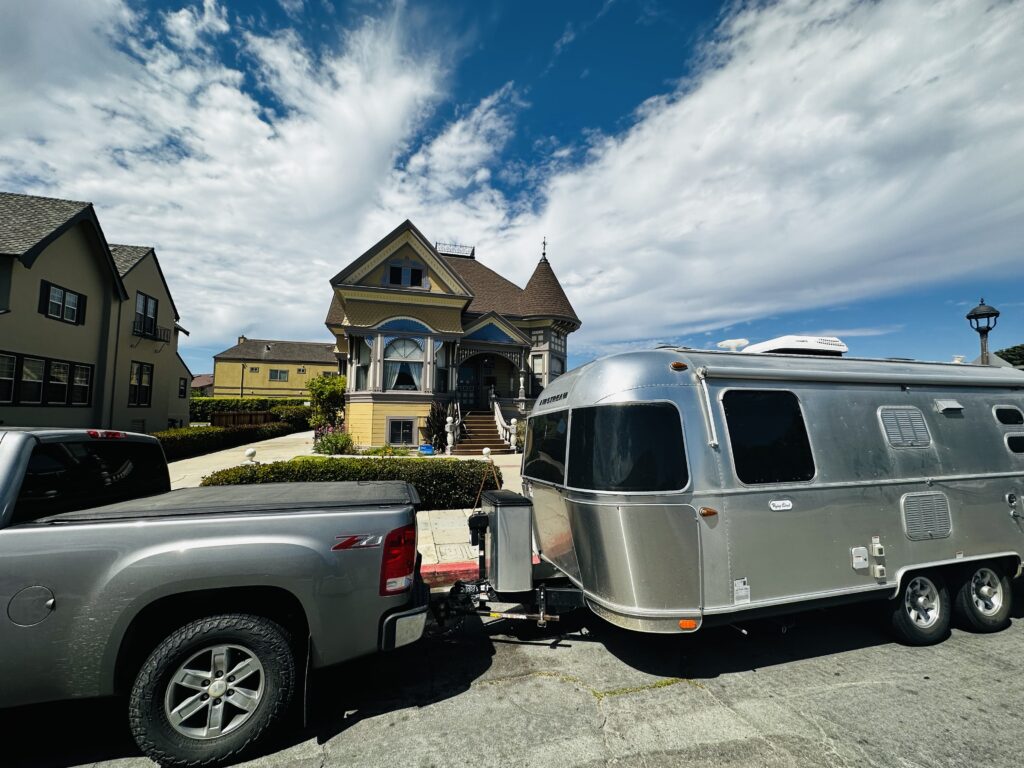Clay’s LTA rig parked in front of the Steinbeck family home in Salinas, California. (Photo by Clay Jenkinson)
On Saturday, August 10, I gave a talk in the rotunda of the [National Steinbeck Center](https://steinbeck.org) in Salinas, California. The Steinbeck Center is the most significant interpretive center in the United States dedicated to the work of a single American author. It’s a beautiful facility in the heart of Salinas (today’s population is 160,000, and in Steinbeck’s youth, about 26,000). Steinbeck was born in Salinas, about three blocks from the Center, and though he died in New York City, he is buried in a cemetery in Salinas.

The Steinbeck Center has excellent exhibits covering the whole life and achievement of John Steinbeck, I’m glad to say, with a minimum of the kinds of electronic bells and whistles that now dominate interpretive centers around the country and which — in my experience — are “down for repair” or “currently unavailable” with considerable regularity. I’ve toured the Steinbeck Center exhibits a dozen times over the last 15 years. I’m never tired of them. And towards the end of the self-guided tour sits Rocinante, Steinbeck’s truck camper from the 1960 *Travels with Charley* tour of America.
I’m now at about the halfway mark of my 2024 Listening to America Steinbeck tour. I’ve reached the West Coast. Nothing to do now except turn back to the heart of America, which I will do later this afternoon after four marvelous days in California.
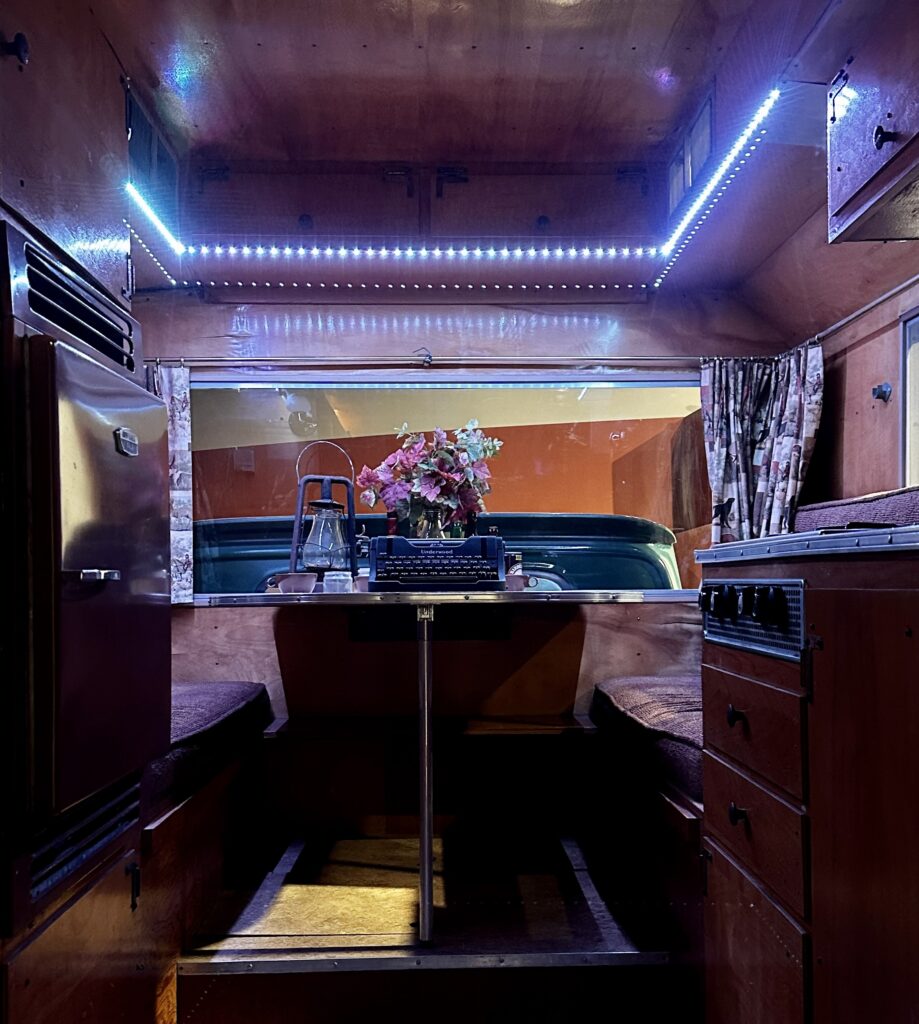Interior view of the truck camper Steinbeck took across country in 1960. The rig is on display at the National Steinbeck Center in Salinas, Calif. (Photo by Clay Jenkinson)
Before my talk, I stood for 10 or 15 minutes looking through the Plexiglas barrier into Steinbeck’s rig (as we road warriors like to put it!) And even though I have now driven 11,850 miles hauling a lovely 23-foot Airstream trailer (I’m having the time of my life), I was overwhelmed with emotion as I peered into the brown-paneled and somewhat cramped space of Steinbeck’s camper, which he commissioned in 1960 and likened to the cabin of a boat. Steinbeck’s Rocinante contained a small gas-fired refrigerator, a dining table that had to be taken down to make up the bed, a stove and oven, and a chemical toilet (yuck). The Center has put a milk bottle vase with flowers on the table — in homage to Steinbeck’s early encounter (September 1960) with a family of French Canadian potato pickers at the top of Maine (the “Canuck” incident), a typewriter (not his), and a kerosine lantern of the sort he bought in Stonington, Connecticut. The original drapes, purportedly fashioned by Steinbeck’s wife Elaine, are in the National Steinbeck Center archives. Still, the present ones were chosen to match Elaine’s aesthetics as closely as possible. As I stood there, I thought of the great American novelist, soon to win the coveted Nobel Prize in Literature, sitting at that dinette table on a brisk autumn evening somewhere in the vastness of America with his faithful (but capricious) poodle Charley draped around his feet. It’s a beautiful image — romantic, Steinbeck in harmony with the very Idea of America, with its vast distances and spaces, the 58-year-old writer “unplugged” in the middle of nowhere trying to decide who he still was, whether he still had what Jack Kerouac called “IT,” what America was now, and what held this “monster country,” as Steinbeck called it, together.
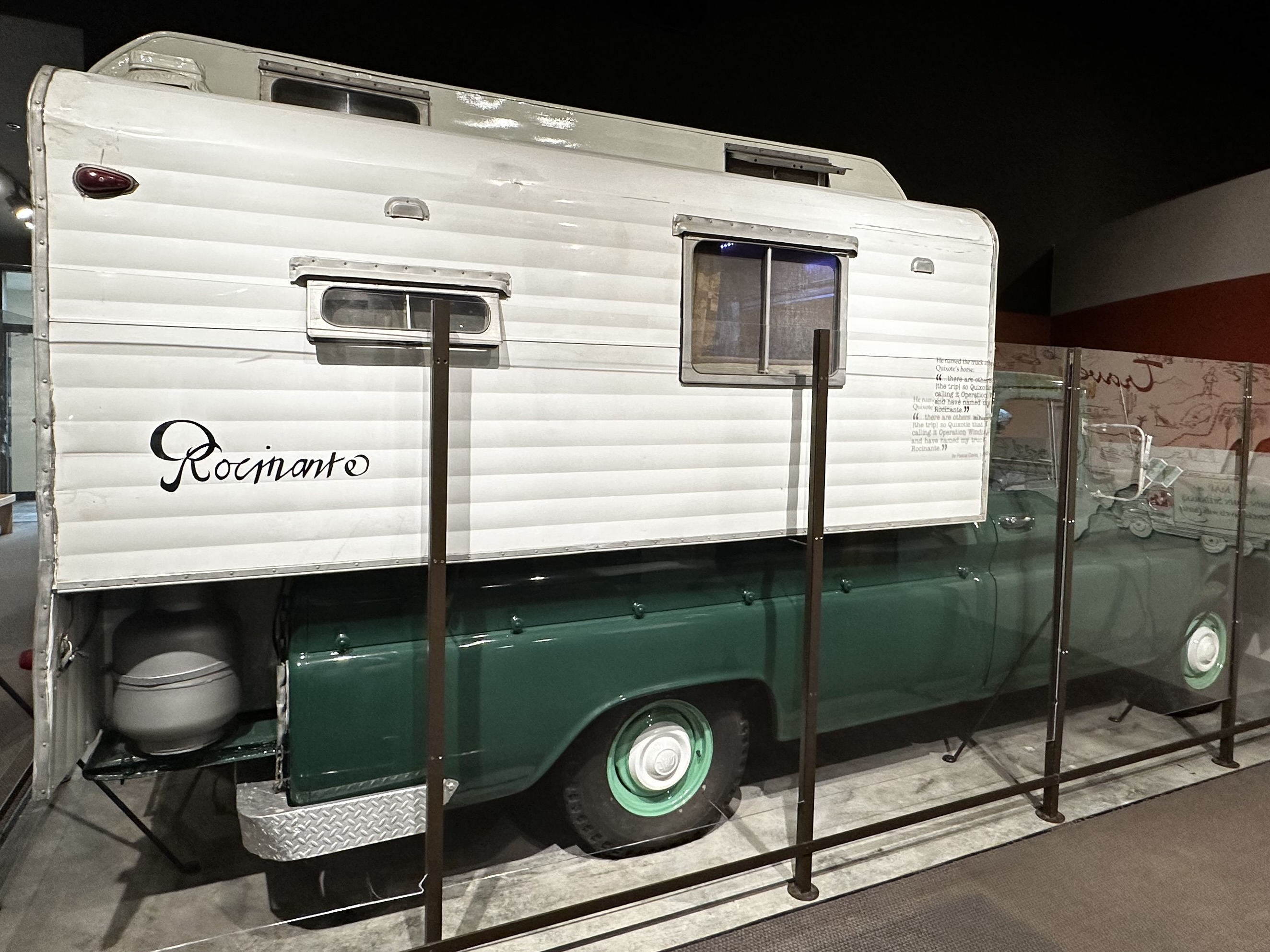Steinbeck’s camper on display at National Steinbeck Center.
Detractors can prove that he did not always sleep in the rig, that his wife Elaine was with him more often than the 1961 book *Travels with Charley* acknowledges, and that his heart wasn’t entirely in his grail quest for the soul of America on the eve of John F. Kennedy’s election, on the brink of the tumultuous and revolutionary 1960s. Still, I can see him parked on a side road somewhere in America, musing about his extraordinary life and wondering what he still had left. No matter what the aggressive critics said and wrote, he was the author of *The Grapes of Wrath*, one of the five greatest novels in American history — and of *Of Mice and Men*, still widely staged in American theater 87 years after he wrote it, and *East of Eden*, a flawed but magnificent novel about the people and the land that shaped Steinbeck’s life and creativity. It is impossible to think of William Faulkner wandering America incognito in a truck camper, or Willa Cather, or Norman Mailer, or even Ernest Hemingway. There is a kind of nobility in the character of John Steinbeck. He wrote about the land and the people of the land, and during his most productive years, he was the tribune of the forgotten people who worked until they were bone “tar’d” (as Ma Joad puts it) to eke out a living against the oppressions of the privileged in “the land of opportunity.”
The Joad family loading their truck and heading to California. A scene from the 1940 film version of *Grapes of Wrath*, directed by John Ford.
To look through that Plexiglass in the National Steinbeck Center is a privilege and a bittersweet joy. This amazing man, chock full of integrity, straining through his art to explain how life works for the less fortunate, suspending his immense wealth and privilege as the last decade of his life began to take to the road in search of the Soul of America.
Clay at Monterey Harbor, California. Many of John Steinbeck’s books were based around Monterey Bay. (Photo by Nolan Johnson)
I gave my talk mid-day Saturday and urged people to follow along at LTAmerica.org. Then I drove over to Monterey to see Doc’s lab, the statue group depicting the characters of *Cannery Row*, Lee Chung’s grocery store, the place where Ed Ricketts died, and more.
To get to Salinas in time for my talk, I had to plunge the length of California from Ashland, Oregon, to the Monterey Peninsula in just two days of hard driving. I’ve said if there were only one state, it would have to be Montana, but it might well have to be California, for that matter. Several years ago, funded by the California Humanities Council, I drove the whole state, from Susanville to Mount Shasta, from Temecula to Barstow, from San Bernardino to Bishop, from Lone Pine to Eureka, from Chico to Hearst Castle. There are many Californias, and though the state is now a blue republic, there are parts of it whose politics are hard red. I was in Fort Bragg the other evening, pumping $5.50 per gallon gas into my pickup when an older man approached me to praise my Airstream. I asked him about the state of the world. He said, “We cannot take four more years and survive.” I wanted to ask which four more years he had in mind, but I reckoned he meant four more years of Biden-Harris-Democrat rule. I asked innocently how the Biden world has damaged him or the U.S. He had no answer, mumbled something about oil drilling and Ukraine, but then he used the N-word to describe the current vice president of the United States.

I drove from Ashland to the Klamath River Valley, then California State Highway 96 to Eureka. From a time management point of view that was a serious mistake. CA 96 is about as windy a road as you will ever drive, but also wild, remote, and beautiful. Then I drove the U.S. 101 to Leggett and then the infamous Highway 1 to Fort Bragg. I had to grip the wheel with uninterrupted concentration to avoid plunging off the cliff into the Pacific Ocean. There are no guardrails, of course, and every eight or nine miles, bridge construction with that extremely annoying stop light to facilitate traffic over the one open lane. I slept under baby redwoods at an RV park near Fort Bragg. They were only 100 years old but towered over my Airstream to 80 or 90 feet. When you think of California, you envision the great freeway system, but I have (perhaps recklessly) spent my time on the roads less traveled. On CA 20 from Fort Bragg back to 101 and Ukiah, I threw a hubcap and watched it roll like a hula hoop down the road. I lost time, too, on the Avenue of the Giants in the heart of California’s redwood forest because I stopped a dozen times to venture into the forest in hushed religious awe. Then, I had to skirt San Francisco during the Friday rush hour. You only have to hear those words to shudder.
In short, by the time I got to Salinas, I was, well, ready to get off the road for a bit — and a complete emotional wreck. But happy.
I rest my weary spirit tonight at an RV park that announces itself as an oasis in the almond groves. I love almonds more than any other nut (except pistachios, which are so fabulous and exotic that they don’t count). Still, my joy in them has been chastened lately because of the now permanent water crisis in California. It takes two gallons of water to grow a single almond. There are thousands of acres of the trees that produce them in every direction.
The LTA rig at dusk, not far off Interstate 5 in California’s Central Valley. (Photo by Clay Jenkinson)
I can hear the incessant traffic of restless America on I-5, half a mile from my RV site #40. The dusk traffic (everyone heading somewhere) reminds me not of Steinbeck but my other road hero, Jack Kerouac. My favorite sentence in *On the Road* is, “Whither goest thou, America, in thy shiny car in the night?” The half-moon looms over the southwestern sky — meteor showers to follow. A fifth-wheel behemoth just rolled into site #53, and the older couple is squabbling about leveling the rig in the dark. Their dog is looking eagerly at its masters without success. The almond groves are now enveloped by an almond sunset afterglow. The temperature has dropped to just 90 bone-dry degrees. I am not hot, but I am very tired. I will pour myself a glass of pinot noir and slip between the sheets with a good book.
The lonely I-5 gas station across the way, with a Subway sandwich shop inside, proclaims diesel at $4.47 per gallon. It’s only 8:34 p.m., but everyone in the RV park is asleep or watching Wheel of Fortune. I hear crickets in the ditches. All is peace.
I am in love with America.
And so goodnight from somewhere in the vastness of this remarkable troubled land.
---
***Editor’s Note:*** ***Over the next few months, Clay is shadowing Steinbeck’s 10,000-mile trek around the USA (and making a few detours of his own). Clay’s expedition is a central part of LTA’s big initiative to explore the country and take the pulse of America as it approaches its 250th birthday. Be sure to follow Clay’s adventures [here](https://ltamerica.org/tag/steinbeck-travels/) and on [Facebook](https://www.facebook.com/LTAmerica) — and [subscribe to our newsletter](https://ltamerica.org/newsletter/)*.**
**Categories:** Dispatches from the Road
**Tags:** America at 250, Books, California, John Steinbeck, Steinbeck Travels
---
### [Patricia Limerick and George Orwell on Stage!](https://ltamerica.org/patricia-limerick-and-george-orwell-on-stage/)
**Published:** August 6, 2024
**Author:** Clay Jenkinson
**Excerpt:** Clay will join noted author and MacArthur Awardee Patricia Limerick at the Vail Symposium in Colorado on August 21 to discuss George Orwell’s novel 1984.
**Content:**
## Clay will join noted author and MacArthur Fellow Patricia Limerick at the Vail Symposium in Colorado on August 21 to discuss George Orwell’s novel *1984*.
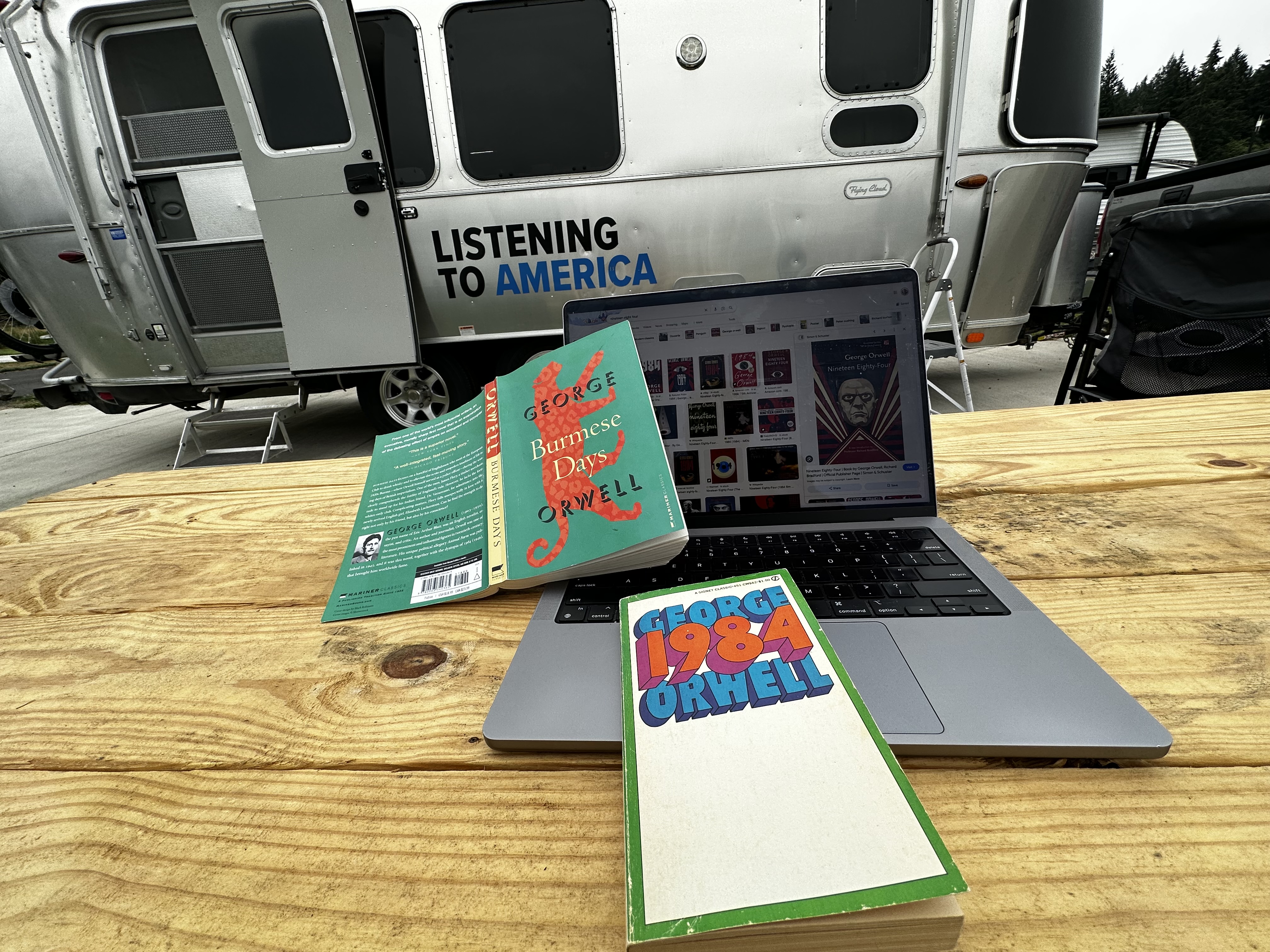Clay is brushing up on his George Orwell as he prepares for an event at the Vail Symposium in August.
I’m preparing to spend an evening with the great Patricia Limerick at the Vail Symposium in Colorado on [August 21](https://vailsymposium.org/events/reading-orwells-1984-in-2024/). If you don’t know Patty’s work, I urge you to read her revolutionary book, *[Legacy of Conquest: The Unbroken Past of the American West ](https://www.amazon.com/dp/0393304973/ref=cm_sw_su_dp)*(1987). She’s a genius, one of the most sought-after public intellectuals in the United States, and almost certainly the most whimsical. She won the [MacArthur Prize](https://www.macfound.org/programs/awards/fellows/about) (the genius award) in 1995. I’ve worked with her a dozen or more times over the years. It’s always an amazing experience to be in the room with Patricia Limerick: think, then, what it is like for me to be me on stage with her, not quite knowing what is about to come out of her brain but sure that it will be extraordinary.
Our subject in Vail is George Orwell’s *1984*. I’m somehow to impersonate the novel (1949) or perhaps a modified limited George Orwell himself.
The inevitable question is: are we living in *1984*? In the era of “fake news,” the “media is the enemy of the people,” and “alternative facts,” we can certainly feel echoes of Orwell’s famous post-World War II dystopian novel, with its “doublespeak” its thought police, and its memory holes. And yet, even in my least trusting moments I do not believe Big Brother is watching me — if you define Big Brother as a totalitarian government. I do believe, however, that Big Capitalism is watching me. A decent hacker could learn much about my life, habits, utterances, purchases, and movements from his mother’s basement. What I hate about that is that I am complicit in losing privacy. How many times have I permitted some new app, gadget, or website access to my postings? And even when I have not stupidly permitted such intrusions, I am certain that corporate America data mines my life, and everyone else’s, at will. So far not to blackmail us, but only to sell us fast food and mattresses.
## **Big Brotherism**
Author and McArthur Fellow, Patty Limerick
I don’t know what Ms. Limerick thinks about the big brotherism of our times. She is never ideologically predictable. But as a historian and lover of the truth, surely she is deeply concerned about the deliberate attempt by some partisans to destabilize the representation of truth in American life. We don’t need “alternative facts” to know how many people attended Mr. Trump’s 2017 inauguration. If partisans can convince tens of millions of Americans that January 6, 2021, was just another day of U.S. Capitol tourism and that the thugs that attacked and wounded more than 140 policemen and women were just innocent protesters, we may be doomed.
At least so far, I sense that we have more to fear from AI than from an authoritarian government. In Orwell’s Oceania, printed newspapers, pamphlets, books, and photographs are doctored to suit the government’s latest propaganda needs. Orwell was basing these clunky manipulations on actual Soviet processes, in which a discredited official disappears from a photograph of top party leadership. In *1984*, doctored newspapers have to be physically reprinted. So, too, books that have been deemed subversive. In our time, everything can be doctored digitally in ways that will soon be undetectable, including audio and video. We are just now entering a brave new world of uncertainty about the authenticity of … well, everything. Orwell could not have imagined such technologies, but you can imagine what he would have done with them in his imagined dystopia.
To prepare for this encounter, I have read *1984* a couple of times, taking careful notes, marking up my Signet paperback copy (purchased in 1975), and listening to the book on tape.
Yesterday afternoon, the first day in several weeks I could devote to reading my intended five hours a day, I picked up a copy of Orwell’s first novel, *Burmese Days*, published in 1934 in the U.S.
George Orwell’s press identification card.
Confession time. I’ve admired Orwell all my life. I suppose *1984* was the first of his books I read. Still, when I studied at Oxford University in England, I started to read Orwell’s essays with great joy: among them, *Shooting the Elephant*, *Why I Write*, *Politics and the English Language,* *Confessions of a Book Reviewer*, *Rudyard Kipling*, *A Hanging*, and *Dickens*. By now, I have probably read *1984* 10 or 12 times, but I often turn to Orwell’s marvelous essays when I want to spend an evening in purely joyful reading. I read Christopher Hitchens’ essays if I am in a darker spirit. Hitchens loved Orwell. In many respects I believe he shaped his writing life (and much of his politics) from careful reading of Orwell. Hitchens’ *Why Orwell Matters* is an excellent introduction to the work of two gifted British curmudgeons: Orwell (1903-1950) and Hitchens (1949-2011).
But here’s the confession. Until yesterday, I’d never read *Burmese Days*. I’m not sure why, but it has never grabbed me from the pile of other “books that must be read.” Now, because I have to face the whimsical genius in Vail, I’m reading around *1984* in case she throws me one of her famous curve balls across the stage.
Fortunately, *1984* is so great a book because it is a mediocre novel. That may be one reason I had not read *Burmese Days* and several others before. If the plot of *1984* is the best he can do, why pick up the others, which are books of little historical importance? Even people who have never read *1984* know basically what it is about. The novel occupies the same category as other novels (you don’t have to read to know what they are about), *Robinson Crusoe, Don Quixote,* and *Gulliver’s Travels*.
*Burmese Days* was published in 1934.
How wrong I was. Almost appallingly wrong. *Burmese Days* is in some ways a much more important book than *1984* because it is about imperialism. As it existed in the 1930s when the British Empire was on its last legs, but also as colonialism and the systematic exploitation of underdeveloped (formerly “Third World”) nations still exist, some of it initiated or protected by the United States of America. The dystopia of *1984* never happened, not in the West at any rate. About half the world’s countries indeed have some version of Orwellian nightmare governments, characterized by the censoring, bullying, torturing, “disappearing,” and doublespeak central to Orwell’s novel. The Orwellian dystopia has not come to pass in the West, thus making the novel seem a bit silly (or alarmist), a species of science fiction. But Orwell’s severe critique of the British Empire in India and Burma (Myanmar) is the best I have ever read. It’s chilling. It’s sickening. The “Colonel Blimp” figure, agent of the British Raj, unreservedly and grotesquely racist, vapid, lazy, entitled, and smug, is perfectly represented by Orwell, who lived in Myanmar between 1922 and 1927. I feel ashamed that I have not read *Burmese Days* until now. I urge you to do so. It suffers somewhat from Orwell’s weakness as a novelist; his savage critique of the “white man’s burden” in Asia is much better than the novel’s plot or the working out of the narrative. You have to read Orwell as an essayist trying to be a novelist.
## **Still Learning to Know America**
The last five years have been revolutionary in my life. After the murder of George Floyd (May 25, 2020), I woke up and began to read such books as Carol Anderson’s *White Rage*, Isabel Wilkerson’s *Caste*, Robin DiAngelo’s *White Fragility*, and Beverly Daniel Tatum’s *Why Are All the Black Kids Sitting Together in the Cafeteria?*; but also David Truer’s *Rez Life*, and Philip Deloria’s *Indians in Unexpected Places* and *Playing Indian*. I don’t agree with everything in these books, but I believe some or all of them are essential reading for every American with an open mind and a good heart as we approach the 250th birthday of the United States. I thought of myself as a well-read, well-educated man, but when I read these books I was gobsmacked by my shameful ignorance. How do I say this? What I thought I knew about “American history” was considerable. But what I knew about “Black American history” was spotty, wholly ignorant of very important events and even periods, and shallow. In other words, I did NOT know American history because how can you talk about American history with Black people playing only minor and occasional roles? With Native Americans represented only by Sitting Bull and Crazy Horse?
Frederick Douglass, 1818-1895.
How can you know America (I am asking myself) if you haven’t read Frederick Douglass’ *Narrative of the Life of Frederick Douglass, an American Slave?* If you haven’t read Zora Neale Hurston’s *Their Eyes Were Watching God* as well as *Huckleberry Finn*? If you haven’t read *Black Elk Speaks* or *House Made of Dawn*?
Here’s the paradox. To wake up to the full(er) history of America is to become sober and perhaps even radicalized. If you let the truth of the Sand Creek Massacre (1864) or the Tulsa Riots (1921) in, or the theft of the Black Hills (1876), or how the interstate highway system bore through the least well-represented neighborhoods in America’s cities, or the way the national parks and monuments were carved out of Native American homelands, you can never look at American history in quite the same way again. Gender matters here, too, of course. Imagine how hard it was to be Sojourner Truth (1851). For that matter, imagine how hard it was to be Betty Friedan (1963)? If I am right, that to wake up is to be drawn away from the comfortable Eurocentric narrative we have been telling ourselves for the last two centuries and into a more nuanced, more untidy, more unsettling, more problematic understanding of the American project, I understand why millions of good Americans want to resist this revisioning of our history. It’s painful. And we have to revise downward our sense that America is the exceptional class act of world civilizations. We are a great people and a great country, but we are also a nation in a world of competing interests, and human nature was not left behind in Europe when our forebears crossed the Atlantic to America. Alas, John Adams was right. When he heard Jefferson talk about the goodness of man, Adams replied (I paraphrase), “Have you looked around, Mr. Jefferson? Have you observed your fellow Americans?” He may also (privately) have wondered what the value of such pronouncements about human goodness meant coming from a man who trafficked in his fellow human beings.
I love America. I love our achievement as a nation. Almost more than anything else, I cherish our national ideals, many of them articulated by Jefferson, some by Lincoln, some by Martin Luther King, some by Eleanor Roosevelt, and some by LBJ. Jefferson may not have been a realist. Maybe he was an “intellectual voluptuary,” as Hamilton called him, a utopian or a dreamer, as others alleged. Still, I know absolutely that I want to live in a republic envisioned by dreamers, even if they did not always live up to their magnificent Enlightenment ideals.
I want to be fully informed and, if possible, enlightened. At the end of that process, I still want to feel mostly positive about the American experiment. I believe I will. But so much now depends on whether we continue to fight for the American ideals of human rights, equality, respect, truth, dignity, opportunity, justice, and fairness in the next decades.
Yet again, I owe Patricia Limerick heartfelt thanks. I’m not sure what will “go down” on that Vail stage in a couple of weeks, but just bracing for it has opened a new appreciation for George Orwell in me. If you have not read *Burmese Days,* I urge you to do so.
---
## ***Discover more on these topics at Listening to America***
[Virginia](https://ltamerica.org/tag/virginia/ "7 topics")[State Parks](https://ltamerica.org/tag/state-parks/ "2 topics")[paintings](https://ltamerica.org/tag/paintings/ "0 topics")[Utah](https://ltamerica.org/tag/utah/ "11 topics")[Water in the West](https://ltamerica.org/tag/water-in-the-west/ "24 topics")[North Dakota](https://ltamerica.org/tag/north-dakota/ "53 topics")[Republic](https://ltamerica.org/tag/republic/ "0 topics")[South Dakota](https://ltamerica.org/tag/south-dakota/ "16 topics")[The Constitution](https://ltamerica.org/tag/the-constitution/ "1 topics")[William Shirer](https://ltamerica.org/tag/william-shirer/ "1 topics")[Thomas Jefferson](https://ltamerica.org/tag/thomas-jefferson/ "34 topics")[Travel](https://ltamerica.org/tag/travel/ "1 topics")[Washington](https://ltamerica.org/tag/washington/ "2 topics")[Oppenheim](https://ltamerica.org/tag/oppenheim/ "0 topics")[U.S. Presidents](https://ltamerica.org/tag/u-s-presidents/ "71 topics")[Oregon](https://ltamerica.org/tag/oregon/ "4 topics")[Reading](https://ltamerica.org/tag/reading/ "1 topics")[Tennessee](https://ltamerica.org/tag/tennessee/ "1 topics")[Ohio](https://ltamerica.org/tag/ohio/ "2 topics")[New York](https://ltamerica.org/tag/new-york/ "8 topics")[Poetry](https://ltamerica.org/tag/poetry/ "1 topics")[New Mexico](https://ltamerica.org/tag/new-mexico/ "3 topics")[Video](https://ltamerica.org/tag/video/ "51 topics")[Wisconsin](https://ltamerica.org/tag/wisconsin/ "0 topics")[New England](https://ltamerica.org/tag/new-england/ "1 topics")[Wyoming](https://ltamerica.org/tag/wyoming/ "4 topics")[Road Trips](https://ltamerica.org/tag/road-trips/ "18 topics")[North Carolina](https://ltamerica.org/tag/north-carolina/ "3 topics")[Sports](https://ltamerica.org/tag/sports/ "2 topics")[Space Exploration](https://ltamerica.org/tag/space-exploration/ "8 topics")[Republics](https://ltamerica.org/tag/republics/ "1 topics")[Rome](https://ltamerica.org/tag/rome/ "1 topics")[Texas](https://ltamerica.org/tag/texas/ "4 topics")[north daktoa](https://ltamerica.org/tag/north-daktoa/ "0 topics")[Rivers](https://ltamerica.org/tag/rivers/ "3 topics")[Theodore Roosevelt](https://ltamerica.org/tag/theodore-roosevelt/ "16 topics")[Steinbeck Travels](https://ltamerica.org/tag/steinbeck-travels/ "75 topics")[Walden](https://ltamerica.org/tag/walden/ "1 topics")[Oppenheimer](https://ltamerica.org/tag/oppenheimer/ "1 topics")[U.S. Constitution](https://ltamerica.org/tag/u-s-constitution/ "1 topics")[Thoreau](https://ltamerica.org/tag/thoreau/ "5 topics")[Pennsylvania](https://ltamerica.org/tag/pennsylvania/ "1 topics")[Podcast](https://ltamerica.org/tag/podcast/ "1 topics")[Vermont](https://ltamerica.org/tag/vermont/ "1 topics")[South Carolina](https://ltamerica.org/tag/south-carolina/ "1 topics")
**Categories:** Features
**Tags:** America at 250, Books, Colorado, Humanities
---
### [Falling In Love With Montana All Over Again](https://ltamerica.org/falling-in-love-with-montana-all-over-again/)
**Published:** July 27, 2024
**Author:** Clay Jenkinson
**Excerpt:** John Steinbeck loved Montana — actually, he fell in love with it. So far as we know, he had never been there before 1960. His travels across the country had all been at lower latitudes.
**Content:**
## “I am in love with Montana. For other states I have admiration, respect, recognition, even some affection, but with Montana it is love.” *John Steinbeck*
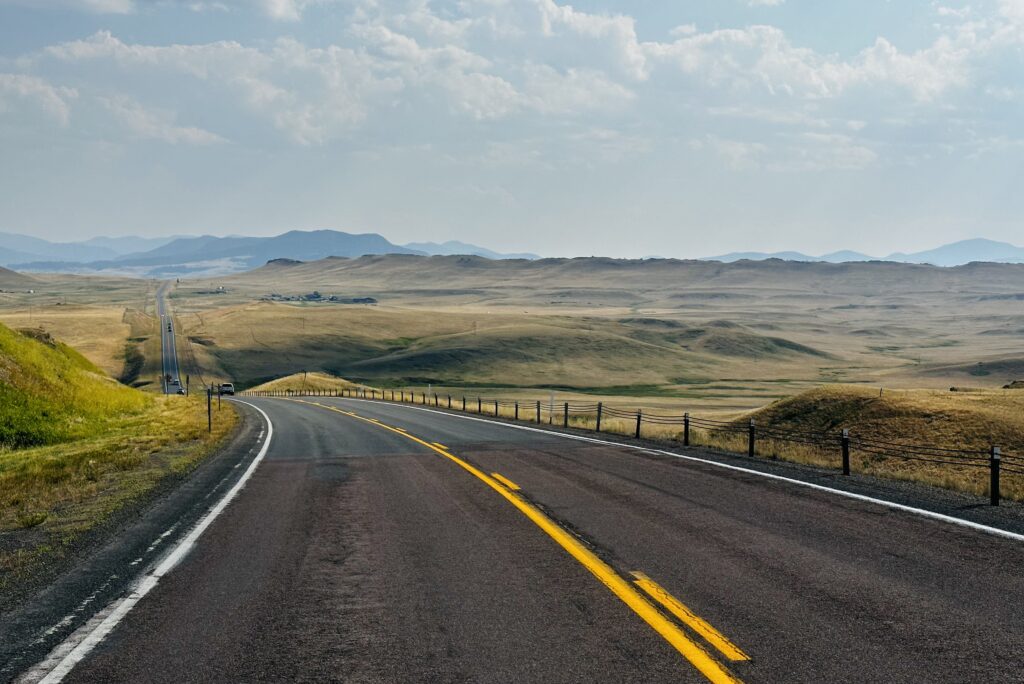Montana Highway 200, one of the many beautiful byways that cross the majestic state. (Photo by Clay Jenkinson)
John Steinbeck loved Montana — actually, he fell in love with it. So far as we know, he had never been there before 1960. His travels across the country had all been at lower latitudes. On October 13, 1960, he crossed the North Dakota state line west of Beach and drove through Montana on old U.S. Highway 10 for the next couple of days.
As he left North Dakota, he wrote, “The next passage in my journey is a love affair. I am in love with Montana. For other states I have admiration, respect, recognition, even some affection, but with Montana it is love, and it’s difficult to analyze love when you’re in it.”
Steinbeck only diverted from U.S. 10 twice in colossal Montana, the fourth largest state: first, to visit the Little Bighorn Battlefield, which merits only one short paragraph of 74 words in *Travels with Charley*; second, to visit Yellowstone National Park, which proved abortive when his French poodle Charley went berserk at his first encounter with Yellowstone’s bears.
We know Steinbeck spent one night at an “auto court” near Livingston and a second night camping somewhere northwest of Missoula, near Superior, Montana. As he rolled through the state, he bought a Stetson cowboy hat in Billings, a jacket (it was autumn) in Livingston, and a Remington bolt-action .222 rifle (with scope) in Butte.

U.S. Highway 10 is mostly gone now, either subsumed under I-94 and I-90 or demoted to frontage road status. In retracing Steinbeck’s 1960 journey, I spent as much time on Old U.S. 10 as possible. Each time I found a patch of U.S. 10, a wave of romance and nostalgia percolated through me. I’m old enough to have grown up when the interstate highway system was only in its adolescence out West. I remember the old asphalt two-lane highway as a thrilling roller coaster journey between Glendive and Miles City.
Steinbeck said he would perhaps choose to live in Montana, if only there were an ocean nearby. “Montana has a spell on me. It is grandeur and warmth. If Montana had a seacoast or if I could live away from the sea, I would instantly move there and petition for admission. Of all the states it is my favorite and my love.”
## **If There Were Only One State**
If he had been younger and in better health, he possibly would have purchased property in Montana, which has become a writer’s (and celebrity) paradise. Tim Cahill, Thomas McGuane, Rick Bass, Jim Harrison, Ivan Doig, James Welch, William Kittredge, and Annick Smith are (or were) all Montana authors. Livingston and Missoula (home of the University of Montana) are regarded as the state’s writers’ communities.
I’m a proud North Dakotan and one of the state’s leading cheerleaders, but like Steinbeck, I have a confession to make. Not only do I love Montana more than any other state (and that includes Colorado, California, Utah, and Wyoming), but when people ask me about my love of the West, I invariably say, “If there were only one state, it would have to be Montana.”
The U.S. 10, I-94 and I-90 Northern Pacific Railroad corridor that Steinbeck drove is very beautiful, particularly those stretches that follow the course of the Yellowstone River. America’s interstates are routinely abused for being boring, preferring efficiency over beauty, and piercing America through its least scenic landscapes. This is not always true — not on I-70 between Vail and Grand Junction, including the stunning highway terracing through the Colorado River’s Glenwood Canyon gorge. And no reasonable person could find fault with I-94 and I-90 through much of Montana.
The drive from Glendive, Montana, to Three Forks ranks high on my list of top 10 American highways. I’ve seen the Yellowstone — regarded as the longest undammed river in the U.S. — in all of its moods, and they are all beautiful to behold. But my favorite season in the Yellowstone Valley is October, when the river is low and almost incredibly blue, and the cottonwood trees have turned to the most vibrant yellow-gold you could imagine. Off in the distance, you see ridges, bluffs, buttes, and then, as you move west of Billings, the lesser mountain ranges of Montana, all beckoning, all urging you to slow down, turn off the freeway, and explore.
If Steinbeck had had more time, he could have seen parts of Montana that are even more beautiful than the corridor he drove on cool (even chilly) fall days in his pickup camper Rocinante. I could spend the rest of this weekend writing joyously about dozens, even scores, of Montana highways you’d want to travel if you had the opportunity.
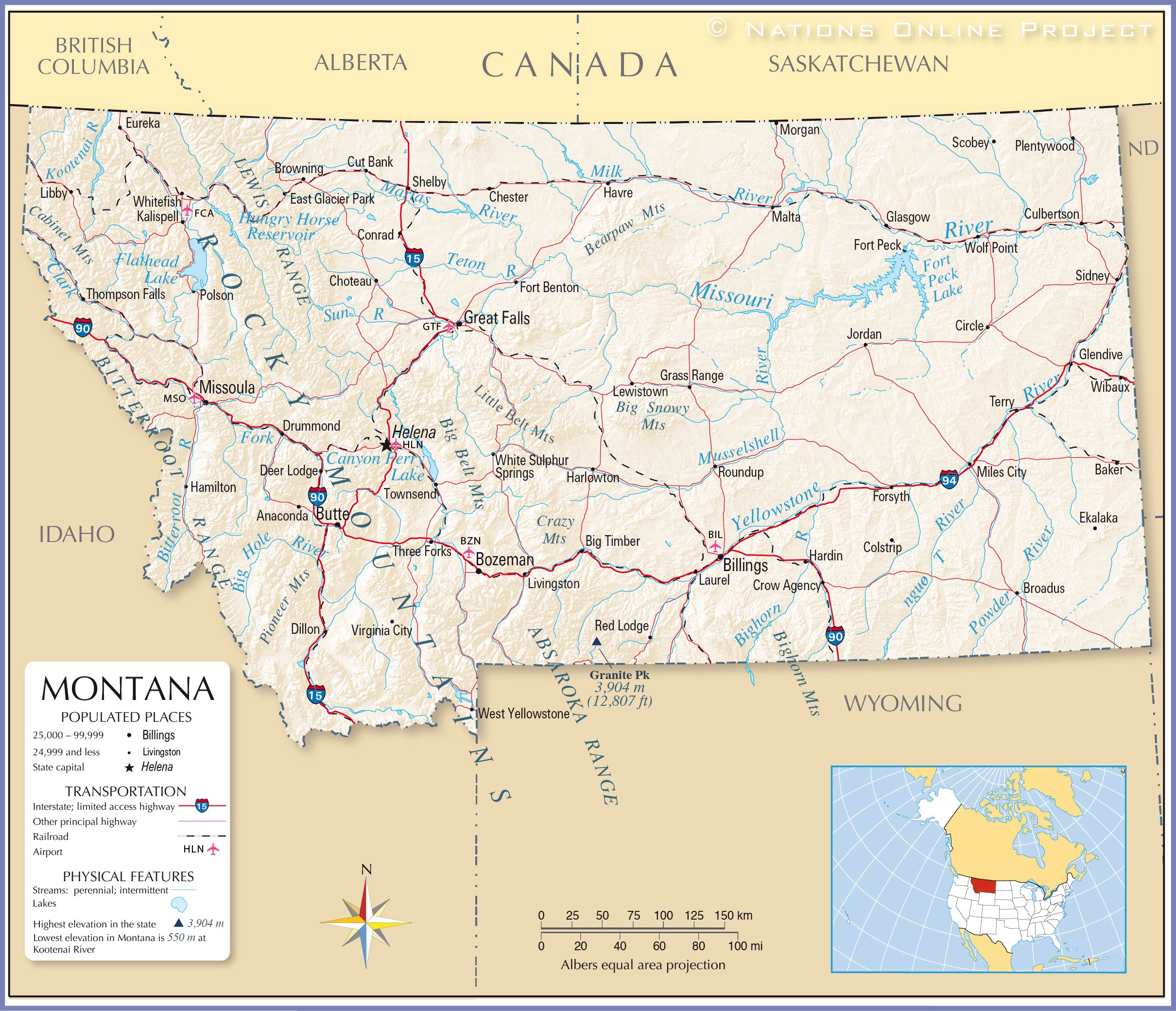(Map Credit: Nations Online Project )
Sometimes, when I travel from North Dakota to Missoula (and beyond), I drive U.S. 12, once regarded as “the shortest route from Minneapolis to Yellowstone National Park.” I generally pick up U.S. 12 at Miles City and drive along the Musselshell River to White Sulphur Springs, then to Helena and beyond. The Musselshell River is more modest, isolated, and closer to the highway than the Yellowstone. As William Least Heat Moon argued in *[Blue Highways](https://www.amazon.com/Blue-Highways-Journey-into-America/dp/0316353299)*, one of the benefits of the interstate highway system is that it draws most of the commercial traffic away from the rest of America’s roads, particularly interstate truck traffic, and frees up those secondary and tertiary roads for those who are not in a hurry.
Another superb drive is Montana 200, which you can take all the way from Sidney on the North Dakota border to Thompson Falls, out near Idaho. I just drove it from Missoula to Great Falls (165 miles) on a perfect July evening. Although I needed to get to Great Falls before dark, I stopped a dozen times to get out and stand by the side of the road, taking photographs that cannot possibly do justice to the vast magnificence of the landscape. One of the additional benefits of driving that stretch of Montana 200 is that you pass through the lovely hamlet of Lincoln (population 1,005), which was the home of the Unabomber Ted Kaczynski. His cabin used to be on display at the Newseum in Washington, D.C. Now, it can be seen in the museum at the FBI headquarters in Washington. Kaczynski lived in the mountains near Lincoln for 25 years, sent out 16 bombs, killed three people and injured several dozen others. He died in the Federal Medical Center at Butner, North Carolina, in 2023. He was 81.
Minnesota artist Catherine Meier.
Highway 200 from Circle, Montana, to Lewistown belongs on any shortlist of the loneliest highways in America. You come to the top of a hill and look down at the narrow ribbon of highway stretching to the far horizon through essentially unpopulated country. It takes your breath away, and you understandably ponder what it would mean to break down on that highway, out of cell range and as far from a AAA rescue as you can imagine. And when you finally reach the next ridgeline 10, 20, or 40 miles farther west, you look down on another endless thread of highway, and then another, and another. Every time I drive that road, I fall in love with America all over again. I invariably stop a dozen or more times on that 195-mile stretch to take photographs and thank my lucky stars that I live in the American West when it is still possible to drive your own vehicle at your own pace and for your own purposes through endless plains country. I have an artist friend in Duluth, Minnesota, who paints giant murals of America’s grasslands, sometimes dozens of feet wide. Her name is Catherine Meier. I always text her a photograph of the starkest, most beautiful landscapes, and I can almost hear her sigh all the way from Duluth at the artistic possibilities. You can see her work at [catherinemeier.com](https://catherinemeier.com/index.html).
Steinbeck spent a statistically minimal amount of time at the [Custer battlefield](https://ltamerica.org/the-little-bighorn-battlefield-national-monument-video-dispatch/) in 1960. If he had had “world enough and time” and the inclination, he might have visited several other important hot spots of the 50-year conflict between white and Native Americans in Montana. He might have ventured to the site of the [Marias Massacre](https://www.history.com/this-day-in-history/soldiers-massacre-the-wrong-camp-of-indians) near Shelby, where, on January 23, 1870, troops of the U.S. Second Cavalry massacred 173 (some say 200) Piegan Blackfeet men, women, and children, many of whom were suffering from smallpox. Reason? Border depredations carried out by the Native resistance.
## **Chief Joseph**
Steinbeck might have visited the site of the surrender (October 5, 1877) of Nez Perce leader Chief Joseph and his bedraggled band of 87 men, 184 women, and 147 children, just 40 miles from the Canadian border near Chinook, Montana. Joseph, who did not regard himself as a war chief, led his people on a 1,170-mile flight from the Wallowa Valley in Oregon to the Bear Paw Mountains in north central Montana Territory. The Nez Perce were pursued along that immense refugee odyssey by various companies of the United States Army, in what amounts to a running defensive battle of more than a thousand miles through the Bitterroot Mountains, Yellowstone National Park, and the Crow Indian Reservation before Joseph made a last-ditch run for the Canadian border, on the other side of which, in “Grandmother’s Land” (i.e. Queen Victoria), they would be safe from further pursuit. It was there that Joseph is said to have declared, “I am tired of fighting. Our chiefs are killed … It is cold and we have no blankets. The little children are freezing to death … Hear me, my chiefs, I am tired. My heart is sad and sick. From where the sun now stands I will fight no more forever.”
> **“I am tired of fighting. Our chiefs are killed … It is cold and we have no blankets. The little children are freezing to death … Hear me, my chiefs, I am tired. My heart is sad and sick. From where the sun now stands I will fight no more forever.”**
>
> **Nez Perce leader Chief Joseph**
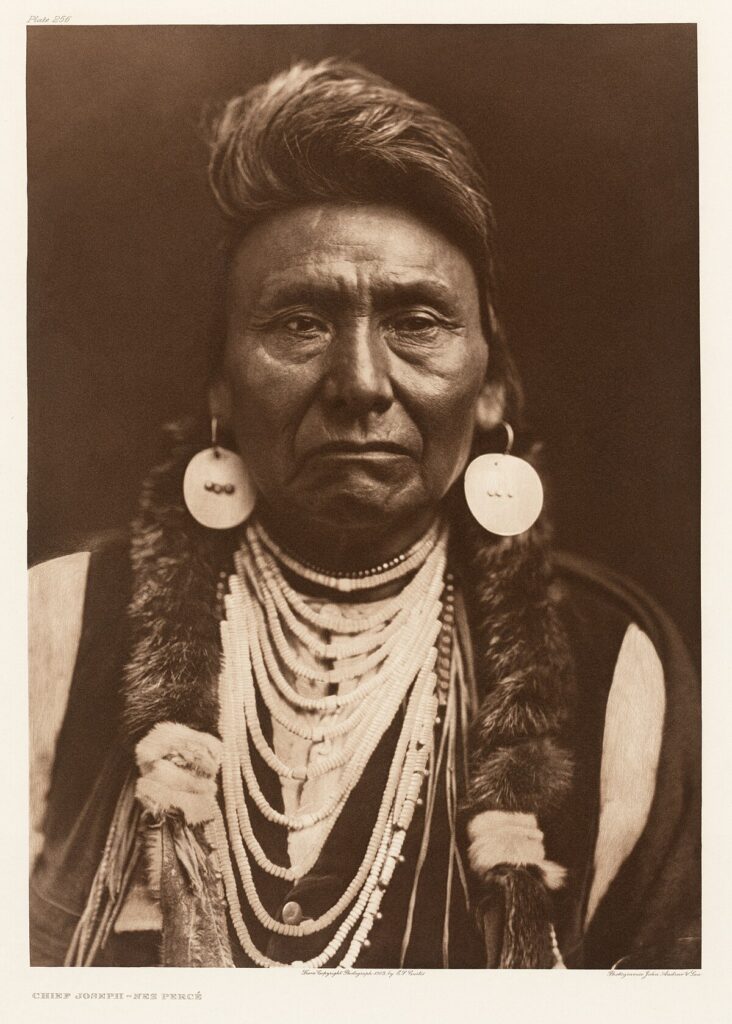Chief Joseph by Edward S. Curtis
Whether Joseph actually spoke these words or sent them by messenger to the U.S. Army’s Nelson Miles and O.O. Howard is now regarded with considerable skepticism. It may well be that Joseph’s interpreter turned whatever the Nez Perce leader actually said into the poignant and poetic words that are attributed to him. How much of this was known to Steinbeck is unclear, but he gives a fair amount of space in *Travels with Charley* to the plight of the Nez Perce in 1877. For a time, the Steinbecks lived near the home of Charles Erskine Scott Wood in Los Gatos, California. We now know that Wood transcribed and almost certainly embellished Joseph’s remarks. Wood later wrote, “No one was told to take it down. I was not told. The speeches of Indians were not considered important. I took it for my own benefit as a literary item.” Steinbeck writes that when Wood spoke in the 1930s of the battle and surrender, “his memory of it was very clear and very sad. He said it was one of the most gallant retreats in all history.”
Steinbeck also might have visited the confluence of the Madison, Gallatin, and Jefferson Rivers at Three Forks, Montana, an important Lewis and Clark site, but also the site of one of the most famous incidents in early Montana history, “John Colter’s Run for Life.” Colter, one of the ablest veterans of the Lewis and Clark Expedition, turned back before the expedition reached St. Louis and became an important figure in the Upper Missouri fur trade. In 1808, he was trapping along the three forks of the Missouri when he and his partner John Potts were intercepted by a band of Blackfeet men defending their sovereign territory (and the beaver, sacred in their culture) from the trespass of white extractionists. Potts was killed immediately, but Colter was stripped naked and given a brief head start before the Blackfeet warriors chased after to kill him, too. He outran his tormentors, turned and killed the lead warrior, and then submerged himself under driftwood in the Madison River until the Blackfeet gave up and left the scene. After that, he walked 225 miles barefoot to Fort Raymond on the Bighorn River. You can imagine — almost. In Steinbeck’s time, Colter’s run would have been regarded as a hero story. In our time, we are sufficiently aware of the dispossession of Native American homelands and resources to view the incident through a more complex and ambivalent set of lenses. It would be interesting to know what Steinbeck would have thought of the cultural revolution in America from 1960-2024. He made his epic journey in Rocinante just before the 1960s heated up and changed everything.
Montana Highway 59 from Miles City to Jordan goes through some of the most desolate and least populated country of the United States. It’s perfect! It was north and west of Miles City that the Smithsonian’s William Hornaday (1854-1937) had a conversion experience in 1886 worthy of St. Paul and rededicated his life to the mission of saving the buffalo from extinction. At the time of Lewis and Clark, there may have been 60 million buffalo in America, from the Appalachians to the Rocky Mountains. There were too many to count, William Clark wrote in July 1806, and too many even to reckon. By the time Theodore Roosevelt shot his first buffalo in 1883 in southwestern North Dakota, and [Hornaday](https://www.pbs.org/kenburns/the-american-buffalo/william-temple-hornaday-villainous-hero-or-heroic-villain), saving them from extinction in 1886, fewer than 1,000 buffalo were alive on earth. (Today, there are about 600,000 buffalo, mostly in private hands.) I’m used to being alone — I love to be alone — in big, empty places in the American West. Still, when I drive offroad onto gravel in that district northwest of Miles City between the Missouri and Yellowstone Rivers, I feel a touch of agoraphobia. I’m a little nervous, even in a splendid vehicle.
## **A Few More Montana Byways for Your Consideration**
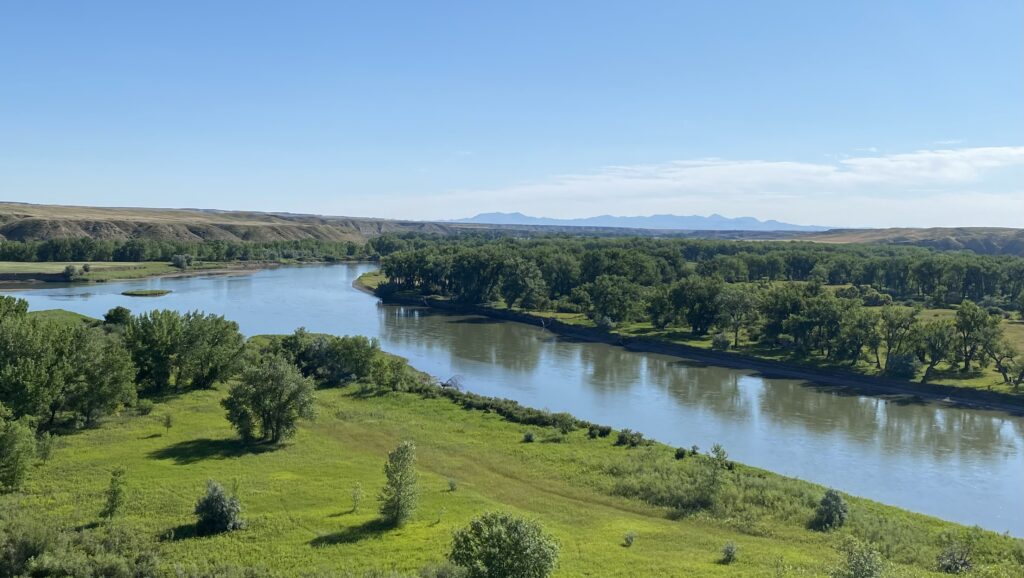The Missouri River East of Ft. Benton, Montana. (Photo by Dennis McKenna)
In the unvisited country of extreme southeastern Montana, you’ll discover the town of Ekalaka (population 397) and Medicine Rocks State Park. Young rancher and cowboy Theodore Roosevelt camped there in 1884 on his way to the Bighorn Mountains, where he would kill his first grizzly bear (and much else!). The Medicine Rocks are so enchanting they’d qualify as a national park in many states. The same is true of Makoshika State Park just outside Glendive, which is also the home of the [Creationist Fossil and Dinosaur Museum](https://ltamerica.org/clay-visits-glendive-montanas-dinosaur-and-fossil-museum/). If you ever visit Glacier National Park in northwestern Montana and thread your way east along the fabulous Going to the Sun Highway, suddenly, almost instantly, you drop off the Rocky Mountains and onto the Great Plains. There are about a dozen such places in the West — including I-70 from Idaho Springs to Denver — but the view of the plains just before you drop down onto the Blackfeet Indian Reservation is my favorite.
I’ve been to the actual “source” of the Missouri River down near Idaho and Yellowstone National Park at Upper Red Rocks Lake on local highway 509 and Meriwether Lewis’ source at Lemhi Pass west of Dillon. Like so much else that is magnificent in the American West, these places aren’t on the way to something or somewhere else. You have to want to visit them. And they deliver greater satisfaction because they are not casual encounters.
This is just a short list of my favorite places in Montana. I’m sure my Montana friends will accuse me of ignoring other extraordinary places in the state, but I am ready to hear their recommendations. In fact, I’m scheming of a way to spend a month exploring Montana alone sometime in the next two years.
Think of it. Two of the great national parks of America are in Montana. Two of the world’s great rivers are in Montana, the Missouri and the Yellowstone. Seven Indian Reservations: Cheyenne, Fort Peck, Fort Belknap, Rocky Boy, Flathead, Blackfeet, and Crow. Montana has 100 named mountain ranges! The storied Powder River in southeastern Montana passes through some of America’s prime antelope and ranch country. The Powder is where the Lakota leader Crazy Horse wanted his reservation — but we assassinated him first, on September 5, 1877. It was along the Yellowstone in eastern Montana in 1872 that the Lakota leader Sitting Bull walked calmly out onto the grass within rifle range of the U.S. Army, sat down, and quietly smoked his pipe while U.S. soldiers attempted to kill him. He finished a pipeful of kinnikinnick, calmly got up, and sauntered back to safety. That’s how you become a legend.
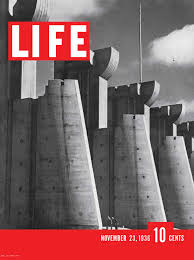The first issue of *Life* featured a photo of Montana’s Fort Peck Dam by Margaret Bourke White, November 1936.
One of America’s great dams is located in eastern Montana, Fort Peck, photos of which graced the first issue of *Life* magazine on November 23, 1936, thanks to the artistry of photographer Margaret Bourke White. Not far from the Fort Peck reservoir, one of the great conservation experiments in American history is underway. The American Prairie Reserve is creating a vast buffalo commons in partnership with U.S. environmental agencies and Native American tribes. Their goal is tens of thousands of genetically pure bison within an unfenced commons of more than three million acres. Their work is controversial — local ranchers and communities are not so sure — but when they succeed, they will have created a world heritage site that will draw enlightened tourists from all over the planet, especially Europe.
In a few days, I’ll be floating in the sacred White Cliffs section of the Missouri River southeast of Fort Benton, Montana, a stretch of the 2,540-mile Missouri only accessible by canoe, Meriwether Lewis’ “scenes of visionary enchantment.” The White Cliffs offer one of the most spectacular canoe rides in the world. Lewis and Clark came through twice and the river is so hemmed in there by cliffs on both sides that we know we are floating precisely where they labored and precisely where they camped. I’ve got two dozen fellow Americans champing at the bit to get out on the river. The temperature is very high, and the river is low, but as the presocratic philosopher Heraclitus said, “You can never walk into the same river twice.” This is my 23rd time through the White Cliffs. I’ve never had a bad experience. The river is new every time, and I am … well, I cannot really say new anymore, but ready for a new experience.
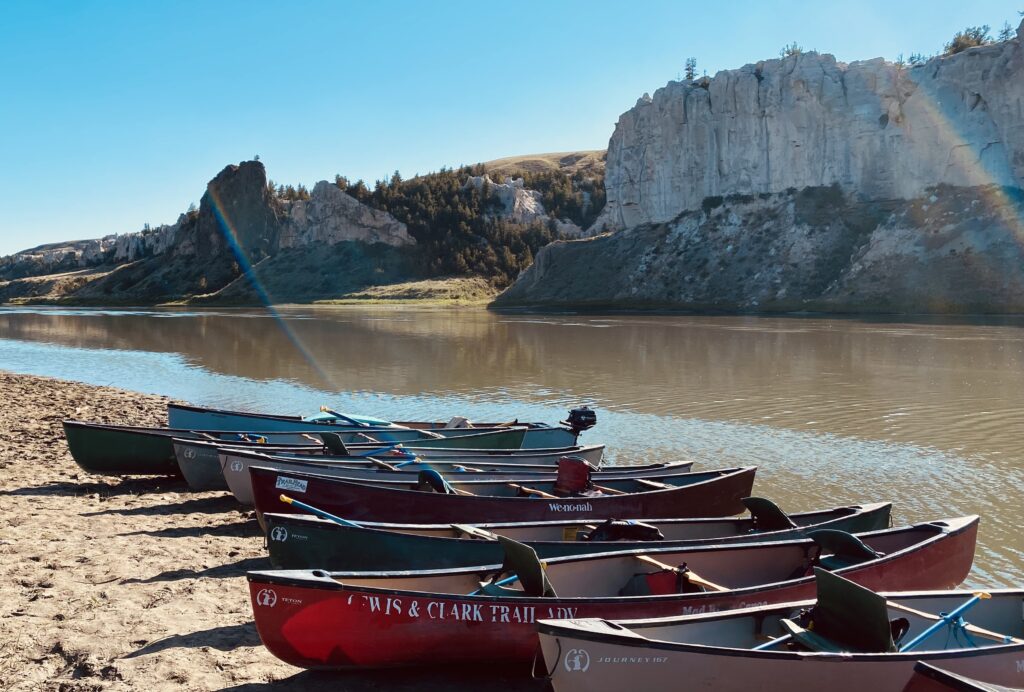Canoes along the White Cliffs section of the Missouri River. (Photo by Dennis McKenna)
John Steinbeck was a Californian and later a New Yorker. Mostly, he hugged the coasts. He traveled the American heartland a few times in his life (1902-1968), and on the great *Travels with Charley* journey he saw Montana — sort of. He would have loved the state even more if he could have lingered on its backroads and byways. And, like so many others, he would have considered purchasing a place out here. He could have exchanged quips with David Letterman or (in his time) NBC’s anchorman Chet Huntley. Steinbeck would indeed have looked up [U.S. Senator Mike Mansfield](https://www.senate.gov/about/origins-foundations/parties-leadership/mansfield-mike.htm), a friend of JFK and LBJ, one of the most progressive politicians in Montana history.
I repeat, as a lover of California, Utah, Wyoming, and the Dakotas, if there were only one state, it would have to be Montana. Because I live so near, I spend more time here than in any other state except North Dakota. And I am only getting started.
---
***Editors Note:*** ***Over the next few months, Clay is shadowing Steinbeck’s 10,000-mile trek around the USA (and making a few detours of his own). Clay’s expedition is a central part of LTA’s big initiative to explore the country and take the pulse of America as it approaches its 250th birthday. Be sure to follow Clay’s adventures [here](https://ltamerica.org/tag/steinbeck-travels/) and on [Facebook](https://www.facebook.com/LTAmerica) — and [subscribe to our newsletter](https://ltamerica.org/newsletter/)*.**
**Categories:** Features
**Tags:** John Steinbeck, Montana, North Dakota, Steinbeck Travels
---
### [A Stop at Thoreau's Walden Pond Near Concord, Massachusetts](https://ltamerica.org/a-stop-at-thoreaus-walden-pond-near-concord-massachusetts/)
**Published:** May 12, 2024
**Author:** Clay Jenkinson
**Excerpt:** Clay stops to visit Thoreau’s Walden Pond near Concord, Massachusetts as part of his Travels with Charley road trip.
**Content:**
Walden Pond, near Concord, Mass., immortalized by Henry David Thoreau. (Photo by Nolan Johnson)
I recently had the immense joy of revisiting Walden Pond near Concord, Massachusetts, for the 10th or so time. Perfect weather. In spite of the detractors who abuse Henry David Thoreau for taking his laundry to town and not being John Muir, I regard *Walden* as America’s greatest book, almost the “bible” of American environmentalism. It’s not really a Nature book (though it is that, too), but a manifesto for simplifying one’s life, advancing boldly in the direction of one’s dreams, and calculating the “cost” of all that we purchase and accumulate.
Guilty, as charged, Your Honor!
My friend Nolan took this stunning drone photograph of the pond, where Thoreau lived two years, two months, and two days, beginning on the 4th of July 1845.

Today, my last day in Massachusetts (for now), I visited the Concord Museum, which has almost all of the furnishings Thoreau put into his cabin. You see here the green desk on which he wrote *Walden* and *On the Duty of Civil Disobedience*, not to mention his immense and revolutionary journal.
I had never been to the Concord Museum before. It’s a close to Thoreau as you are ever going to get — inside!
I know some of you will disagree that *Walden* is America’s greatest book. I’d be interested in your nomination.
I’m now two weeks into my transcontinental journey, thriving in my own little portable Walden cabin, the Listening to America Airstream, with the same square footage as Thoreau himself had.
---
***Over the next few months, Clay is shadowing Steinbeck’s 10,000-mile trek around the USA (and making a few detours of his own). Clay’s expedition is a central part of LTA’s big initiative to explore the country and take the pulse of America as it approaches its 250th birthday. Be sure to follow Clay’s adventures and [subscribe to our newsletter](https://ltamerica.org/newsletter/)*.**
**Categories:** Dispatches from the Road
**Tags:** Books, Humanities, John Steinbeck, Massachusetts, Steinbeck Travels
---
### [Jack Kerouac's Final Resting Place — Video Dispatch](https://ltamerica.org/jack-kerouacs-final-resting-place-video-dispatch/)
**Published:** August 1, 2024
**Author:** Editor
**Excerpt:** Clay visits the grave of Jack Kerouac, “pioneer of the Beat generation,” in Lowell, Massachusetts.
**Content:**
As part of his New England sojourn this spring, Clay visited the grave of Jack Kerouac, **“**pioneer of the Beat generation,**”** in Lowell, Massachusetts. Kerouac was an author and poet best known for the novel *On the Road,* published in 1957.
---
## ***Discover more on these topics at Listening to America***
[New York](https://ltamerica.org/tag/new-york/ "8 topics")[New England](https://ltamerica.org/tag/new-england/ "1 topics")[North Carolina](https://ltamerica.org/tag/north-carolina/ "3 topics")[Space Exploration](https://ltamerica.org/tag/space-exploration/ "8 topics")[Pennsylvania](https://ltamerica.org/tag/pennsylvania/ "1 topics")[north daktoa](https://ltamerica.org/tag/north-daktoa/ "0 topics")[Water in the West](https://ltamerica.org/tag/water-in-the-west/ "24 topics")[Texas](https://ltamerica.org/tag/texas/ "4 topics")[U.S. Presidents](https://ltamerica.org/tag/u-s-presidents/ "71 topics")[paintings](https://ltamerica.org/tag/paintings/ "0 topics")[New Mexico](https://ltamerica.org/tag/new-mexico/ "3 topics")[Reading](https://ltamerica.org/tag/reading/ "1 topics")[Tennessee](https://ltamerica.org/tag/tennessee/ "1 topics")[North Dakota](https://ltamerica.org/tag/north-dakota/ "53 topics")[Republic](https://ltamerica.org/tag/republic/ "0 topics")[Wyoming](https://ltamerica.org/tag/wyoming/ "4 topics")[U.S. Constitution](https://ltamerica.org/tag/u-s-constitution/ "1 topics")[Theodore Roosevelt](https://ltamerica.org/tag/theodore-roosevelt/ "16 topics")[Virginia](https://ltamerica.org/tag/virginia/ "7 topics")[Thomas Jefferson](https://ltamerica.org/tag/thomas-jefferson/ "34 topics")[Steinbeck Travels](https://ltamerica.org/tag/steinbeck-travels/ "75 topics")[Vermont](https://ltamerica.org/tag/vermont/ "1 topics")[Poetry](https://ltamerica.org/tag/poetry/ "1 topics")[Road Trips](https://ltamerica.org/tag/road-trips/ "18 topics")[Oregon](https://ltamerica.org/tag/oregon/ "4 topics")[Oppenheimer](https://ltamerica.org/tag/oppenheimer/ "1 topics")[Video](https://ltamerica.org/tag/video/ "51 topics")[South Carolina](https://ltamerica.org/tag/south-carolina/ "1 topics")[Utah](https://ltamerica.org/tag/utah/ "11 topics")[Washington](https://ltamerica.org/tag/washington/ "2 topics")[William Shirer](https://ltamerica.org/tag/william-shirer/ "1 topics")[Ohio](https://ltamerica.org/tag/ohio/ "2 topics")[Sports](https://ltamerica.org/tag/sports/ "2 topics")[State Parks](https://ltamerica.org/tag/state-parks/ "2 topics")[Thoreau](https://ltamerica.org/tag/thoreau/ "5 topics")[Walden](https://ltamerica.org/tag/walden/ "1 topics")[Podcast](https://ltamerica.org/tag/podcast/ "1 topics")[Wisconsin](https://ltamerica.org/tag/wisconsin/ "0 topics")[South Dakota](https://ltamerica.org/tag/south-dakota/ "16 topics")[Oppenheim](https://ltamerica.org/tag/oppenheim/ "0 topics")[Rivers](https://ltamerica.org/tag/rivers/ "3 topics")[The Constitution](https://ltamerica.org/tag/the-constitution/ "1 topics")[Travel](https://ltamerica.org/tag/travel/ "1 topics")[Rome](https://ltamerica.org/tag/rome/ "1 topics")[Republics](https://ltamerica.org/tag/republics/ "1 topics")
**Categories:** Dispatches from the Road
**Tags:** America at 250, Books, Massachusetts, Video
---
### [Aboard the Long Island Ferry — Video Dispatch](https://ltamerica.org/aboard-the-long-island-ferry-video-dispatch/)
**Published:** July 25, 2024
**Author:** Editor
**Excerpt:** On a beautiful spring day, Clay and his Airstream board the ferry from Long Island to New London, Connecticut, launching his trek, tracing John Steinbeck’s 10,000-mile Travels with Charley journey.
**Content:**
On a beautiful spring day this May, Clay and his Airstream board the ferry from Long Island to New London, Connecticut, launching his trek, tracing John Steinbeck’s 10,000-mile *Travels with Charley* journey.
(Video by Nolan Johnson, LTA)
---
***Over the next few months, Clay is shadowing Steinbeck’s 10,000-mile trek around the USA (and making a few detours of his own). Clay’s expedition is a central part of LTA’s big initiative to explore the country and take the pulse of America as it approaches its 250th birthday. Be sure to follow Clay’s adventures [here](https://ltamerica.org/tag/steinbeck-travels/) and on [Facebook](https://www.facebook.com/LTAmerica) — and [subscribe to our newsletter](https://ltamerica.org/newsletter/)*.**
**Categories:** Dispatches from the Road
**Tags:** John Steinbeck, New York, Steinbeck Travels, Video
---
### [Clay Visits Pompeys Pillar National Monument — Video Dispatch](https://ltamerica.org/clay-visits-pompeys-pillar-national-monument-video-dispatch/)
**Published:** July 23, 2024
**Author:** Editor
**Excerpt:** Clay visits Pompeys Pillar National Monument along the Yellowstone River east of Billings, Montana.
**Content:**
## Clay visits Pompeys Pillar National Monument along the Yellowstone River east of Billings, Montana. On Lewis and Clark’s return journey from the Pacific Coast, William Clark stopped at the prominent sandstone outcropping in July 1806. He carved his name and the date on the spot, which is still visible today.
Play
Clay visits Pompeys Pillar National Monument — Video Dispatch
---
## ***Discover more on these topics at Listening to America***
[Washington](https://ltamerica.org/tag/washington/ "2 topics")[Theodore Roosevelt](https://ltamerica.org/tag/theodore-roosevelt/ "16 topics")[north daktoa](https://ltamerica.org/tag/north-daktoa/ "0 topics")[U.S. Presidents](https://ltamerica.org/tag/u-s-presidents/ "71 topics")[Oppenheimer](https://ltamerica.org/tag/oppenheimer/ "1 topics")[Vermont](https://ltamerica.org/tag/vermont/ "1 topics")[Video](https://ltamerica.org/tag/video/ "51 topics")[Wisconsin](https://ltamerica.org/tag/wisconsin/ "0 topics")[North Carolina](https://ltamerica.org/tag/north-carolina/ "3 topics")[Space Exploration](https://ltamerica.org/tag/space-exploration/ "8 topics")[Thoreau](https://ltamerica.org/tag/thoreau/ "5 topics")[The Constitution](https://ltamerica.org/tag/the-constitution/ "1 topics")[William Shirer](https://ltamerica.org/tag/william-shirer/ "1 topics")[North Dakota](https://ltamerica.org/tag/north-dakota/ "53 topics")[Pennsylvania](https://ltamerica.org/tag/pennsylvania/ "1 topics")[New England](https://ltamerica.org/tag/new-england/ "1 topics")[Steinbeck Travels](https://ltamerica.org/tag/steinbeck-travels/ "75 topics")[Oregon](https://ltamerica.org/tag/oregon/ "4 topics")[Utah](https://ltamerica.org/tag/utah/ "11 topics")[Walden](https://ltamerica.org/tag/walden/ "1 topics")[Travel](https://ltamerica.org/tag/travel/ "1 topics")[U.S. Constitution](https://ltamerica.org/tag/u-s-constitution/ "1 topics")[Rome](https://ltamerica.org/tag/rome/ "1 topics")[Ohio](https://ltamerica.org/tag/ohio/ "2 topics")[Republics](https://ltamerica.org/tag/republics/ "1 topics")[Podcast](https://ltamerica.org/tag/podcast/ "1 topics")[New Mexico](https://ltamerica.org/tag/new-mexico/ "3 topics")[Tennessee](https://ltamerica.org/tag/tennessee/ "1 topics")[State Parks](https://ltamerica.org/tag/state-parks/ "2 topics")[Wyoming](https://ltamerica.org/tag/wyoming/ "4 topics")[Poetry](https://ltamerica.org/tag/poetry/ "1 topics")[Republic](https://ltamerica.org/tag/republic/ "0 topics")[Thomas Jefferson](https://ltamerica.org/tag/thomas-jefferson/ "34 topics")[Road Trips](https://ltamerica.org/tag/road-trips/ "18 topics")[Virginia](https://ltamerica.org/tag/virginia/ "7 topics")[paintings](https://ltamerica.org/tag/paintings/ "0 topics")[South Dakota](https://ltamerica.org/tag/south-dakota/ "16 topics")[Reading](https://ltamerica.org/tag/reading/ "1 topics")[South Carolina](https://ltamerica.org/tag/south-carolina/ "1 topics")[Water in the West](https://ltamerica.org/tag/water-in-the-west/ "24 topics")[Sports](https://ltamerica.org/tag/sports/ "2 topics")[Oppenheim](https://ltamerica.org/tag/oppenheim/ "0 topics")[New York](https://ltamerica.org/tag/new-york/ "8 topics")[Rivers](https://ltamerica.org/tag/rivers/ "3 topics")[Texas](https://ltamerica.org/tag/texas/ "4 topics")
**Categories:** Dispatches from the Road
**Tags:** Lewis and Clark, Montana, National Parks, Video
---
### [It’s a Dog’s Life — Billings, Montana](https://ltamerica.org/its-a-dogs-life-billings-montana/)
**Published:** July 15, 2024
**Author:** Clay Jenkinson
**Excerpt:** John Steinbeck’s French poodle Charley is the star of Travels with Charley. The dog must have been remarkable because he steals the show in every scene he’s in. Steinbeck wrote about him with great grace, affection, and humor.
**Content:**
## John Steinbeck’s French poodle Charley is the star of *Travels with Charley.* The dog must have been remarkable because he steals the show in every scene he’s in. Steinbeck wrote about him with great grace, affection, and humor.
Clay’s campsite at the KOA in Billings, Montana, came with its own fenced-in dog pen but no dog.
Billings, Montana — The question I am most often asked as I retrace Steinbeck’s 1960 journey is, “So do you have a dog?” Keep in mind that I am traveling the country to try to assess the national mood as we approach our 250th birthday. I’m wondering if we are still one country or two or more. I’m asking people what they think of the present national and international crisis of democracy. I’m asking them if we still can agree on a consensus national narrative. I’m asking what the industrial world should do about global climate change. I’m asking the people I meet if they think the republic will survive.
And all they want to know is whether I have a poodle and if not, why not.
I tell them I travel so much I can’t even keep a Chia Pet alive. Few laugh and some don’t even smile.
I can tell you that before I left on Phase One of my great journey, three of my friends offered to lend me their dogs for all or part of the trip. One of the dogs would be absolutely ideal — it has the perfect temperament, size, and look — but I declined for two reasons: first, I did not want to be responsible for someone’s beloved pet, lest it bolt across the LA freeway when I opened the door; second, it felt a little as if I would be ordering up a companion dog from central casting.
Three people have given me stuffed dogs to keep me company, one of them provided by one of my dearest friends. Also, someone sent me a poodle decal to adhere to the side of my Airstream. No bark, no bite, no feeding, no poop scoop.
Clay’s growing collection of pooches.
I’ve been racking my brain for a solution to my problem. At the Christian dinosaur museum in Glendive, Montana, the other day, I bought a stuffed Triceratops, thinking it might become the Charley of my journey (Terry the Triceratops? Trigger? Trump?) or perhaps like the soccer ball in Tom Hanks’ *Castaway*, it would become my Wilson. But last night I woke up to find it goring my back with its three horns and gnawing away at my calf. So that was the end of that. Never anthropomorphize some inanimate object unless you want to deal with its in it animated state.
I acknowledge that some sort of karma or cosmic justice may be at play here. When I checked into the KOA campground in Billings, Montana, they assigned me slip 170. After I had spent an hour or so trying to back into my slot, I noticed that next to my Airstream door there was my own exclusive chain link dog pen of about 15 feet in every direction. It’s a high occupancy time of year in America’s campgrounds so I thought nothing of it. I threw the Triceratops into the pen in the middle of last night but it somehow burrowed under the fence and is now said to be terrorizing the KOA population. Note to self: leave in a hurry tomorrow morning.
But when I went out tonight to do some reading (James Boswell’s *London Journal*) in the cool of the evening before it got dark, I discovered that the two deck chairs and the fire pit were inside the fenced pen. Nevertheless I sat down in one of the chairs, but it occurred to me that anyone looking at me from the outside would assume either that I was feral or that someone had put me in timeout. It seemed ludicrous, even monstrous, to be forced to sit next to a fire pit as if I had been assigned to a minimum security prison.
So the dog crisis continues. I may have to go pick out a rescue dog at the pound in Spokane. People who could not name a single character in any of Steinbeck’s books, including the Pulitzer Prize winning *Grapes of Wrath*, and who have never read *Travels with Charley*, somehow know that Steinbeck traveled with a remarkable poodle at his side, and they think less of me when they discover that I am wandering America without the most important asset imaginable.
It’s a dog’s life.
---
***Over the next few months, Clay is shadowing Steinbeck’s 10,000-mile trek around the USA (and making a few detours of his own). Clay’s expedition is a central part of LTA’s big initiative to explore the country and take the pulse of America as it approaches its 250th birthday. Be sure to follow Clay’s adventures [here](https://ltamerica.org/tag/steinbeck-travels/) and on [Facebook](https://www.facebook.com/LTAmerica) — and [subscribe to our newsletter](https://ltamerica.org/newsletter/)*.**
**Categories:** Dispatches from the Road
**Tags:** America at 250, Books, John Steinbeck, Montana, Steinbeck Travels
---
### [Steinbeck, Charley, a Stop in Yellowstone, and the Call of the Wild](https://ltamerica.org/steinbeck-charley-a-stop-in-yellowstone-and-the-call-of-the-wild/)
**Published:** July 19, 2024
**Author:** Clay Jenkinson
**Excerpt:** Steinbeck and his dog Charley have an eventful visit at Yellowstone National Park.
**Content:**
John Steinbeck and Charley visit Yellowstone National Park. ( Sketch by Nate Calderone of Salida, Colorado for LTA).
John Steinbeck was not fond of the national parks. Strange, but true. Introducing his chapter on his brief and abortive visit to Yellowstone National Park in mid-October 1960, Steinbeck wrote, “I must confess to a laxness in the matter of National Parks.” He said he could not get excited about “the greatest waterfall, the deepest canyon, the highest cliff …” He said the only reason he dipped down to Yellowstone National Park was that if he didn’t, his friends would chide him: “You mean you were that near Yellowstone and didn’t go?” Steinbeck huffed, “Yellowstone National Park is no more representative of America than is Disneyland.”
On his 11,500-mile road trip, without traveling too far out of his way, Steinbeck might have visited Acadia National Park (1929), Mount Rainier (1899), Crater Lake (1902), Glacier (1910), Grand Canyon (1919), Great Smoky Mountains (1934), Big Bend (1944), and of course Theodore Roosevelt National Memorial Park (as it was then called, established 1947). He may have entered Theodore Roosevelt NMP, though he never mentions the badlands by that name. He never mentions the Little Missouri River, the heart of the badlands of North Dakota. Clearly, national parks were not important to Steinbeck, or at least not worth seeing for himself.
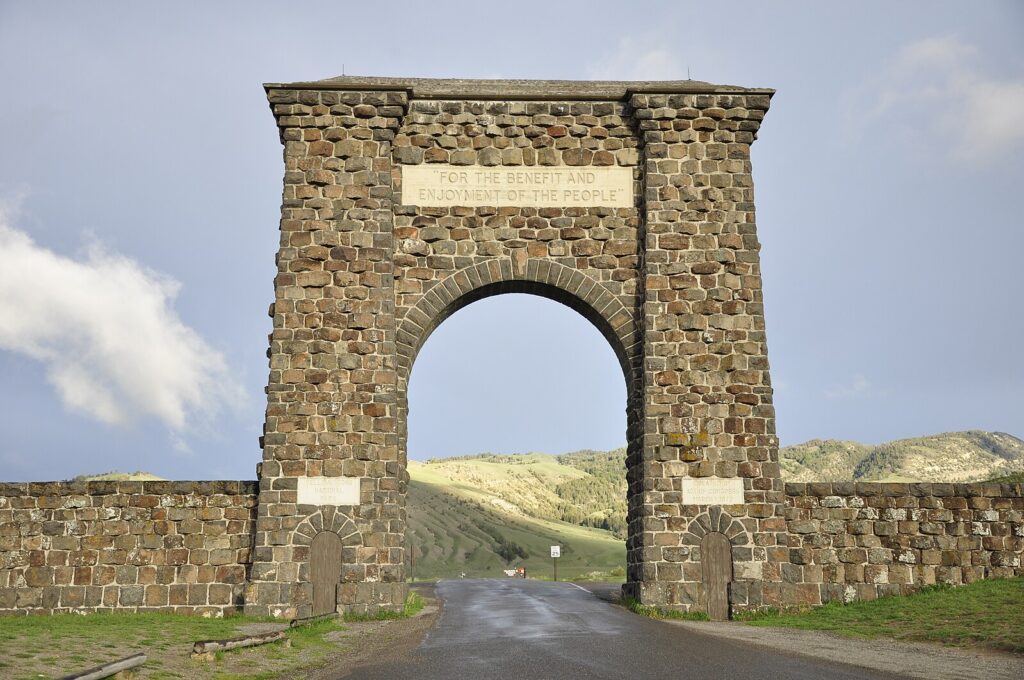Roosevelt Arch, North entrance of the Yellowstone National Park. (Wikimedia)
Steinbeck drove south of Livingston, Montana, to the Roosevelt Arch at Gardiner, the North Entrance of Yellowstone, to shut up his friends. At the entrance kiosk, a ranger warned him to keep his poodle Charley on a leash. Steinbeck asked why. “Because of the bears,” the ranger said. At that point, Steinbeck gave a long speech about what a coward and pacifist Charley was. He wouldn’t disturb a caterpillar. “His greatest fear is that someone will point out a rabbit and suggest that he chase it.” Charley stood for “peace and tranquility.” The ranger repeated his warning, but Steinbeck just laughed him off.
One mile into the park, Steinbeck and Charley encountered a bear.
Let Steinbeck tell the story:
*“Instantly, a change came over Charley. He shrieked with rage. His lips flared, showing wicked teeth that have some trouble with a dog biscuit. He screeched insults at the bear, which, hearing, the bear reared up and seemed to me to overtop Rocinante. Frantically, I rolled the windows shut and, swinging quickly to the left, grazed the animal, then scuttled on while Charley raved and ranted beside me, describing in detail what he would do to that bear if he could get at him.”*
Look at what a great writer Steinbeck is. He lightens the tone with the quip about the biscuit and then has Charley “describing in detail what he would do to that bear. …”
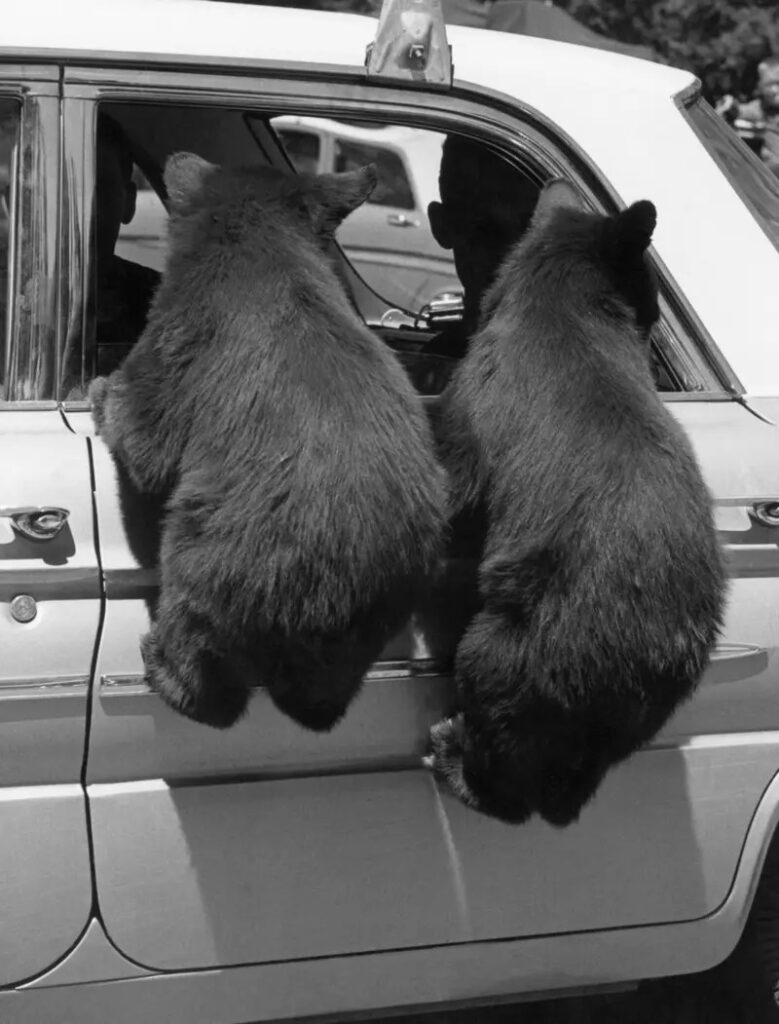
Steinbeck said he had never been so astonished in his life. So far as he knew, Charley had never encountered a bear before. Up to now, Charley “had showed great tolerance for every living thing. ”A little deeper into the park, they encountered two more bears. “The effect was doubled. Charley became a monster. He leaped all over me; he cursed and growled, snarled and screamed. I didn’t know he had the ability to snarl.” Steinbeck cuffed the dog to settle it down without effect. As soon as they were away from the pair of bears, Steinbeck stopped on the side of the road and locked Charley in the camper. But when they came upon bears again, the dog went berserk back there. “I could hear canned goods crashing as he struggled in his mania.”
Steinbeck turned his pickup around and drove quickly out of the national park. “It was too nerve-wracking,” he explained, “a shocking spectacle, like seeing an old, calm friend go insane.” Steinbeck stopped to apologize to the ranger as he drove through the gate. He understood now. He drove back to Livingston and got a room in “a pretty auto court” (i.e. the kind of motel where you can drive right up to your room).
So, John Steinbeck lost his one chance to camp in Yellowstone National Park.
When they got into the room at the auto court, Steinbeck inspected Charley. *“He was dazed. His eyes held a faraway look and he was totally exhausted, emotionally no doubt. Mostly he reminded me of a man coming out of a long, hard drunk — worn out, depleted, collapsed. He couldn’t eat his dinner, he refused the evening walk, and once we were in he collapsed on the floor and went to sleep. In the night I heard him whining and yapping, and when I turned on the light his feet were making running gestures and his body jerked and his eyes were wide open, but it was only a night bear.”*
Steinbeck concludes the chapter with grace and wisdom: “I wonder why we think the thoughts and emotions of animals are simple.”
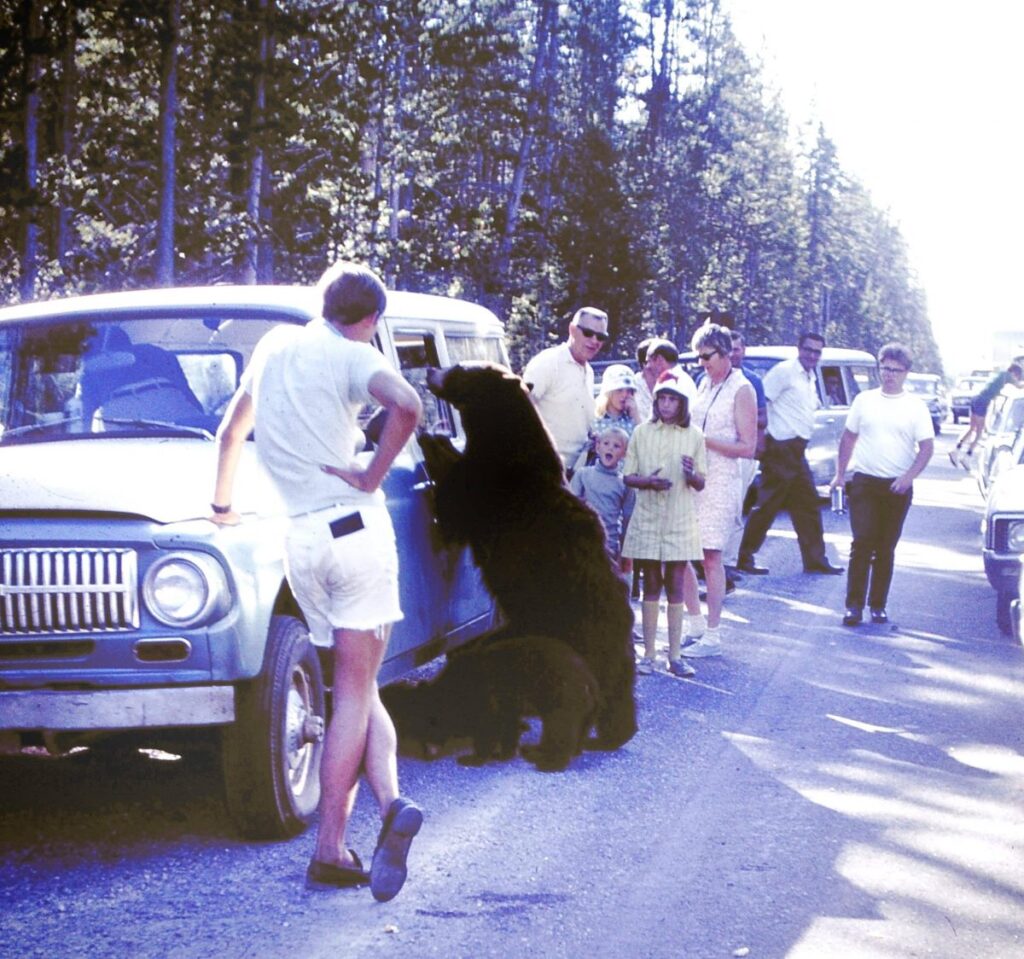
This incident happened back in the day when tourists fed the Yellowstone bears by the side of the road. That era, fortunately, has passed (though it would be kind of cool). In principle, I’m against any effort to anthropomorphize wild creatures, such as “adopting” individual wolves in Yellowstone and bestowing names on them or grizzly bears, one of which is known to smarmy tourists as Raspberry.
Steinbeck indicates an understanding that the park boundaries do not delimit the movement of wild creatures like mountain lions, buffalo, wolves, moose, and bears. “I was reluctant to camp \[north of the park boundary\],” he said, “for fear there might be some unofficial non-government bears about.” Again, Steinbeckian humor. Though massive, Yellowstone National Park embraces only one-tenth of what is known as the “Greater Yellowstone Ecosystem.” Wild creatures do not conform to arbitrary human boundaries — this is the source of a great deal of confusion, conflict, and misunderstanding in and near Yellowstone and other national parks.
So national parks did not have any allure for John Steinbeck. He was even ho-hum about Niagara Falls, which he visited only to shut up his friends. The only historical sites he visited were the Little Bighorn battlefield south of Billings, and then only for a short and uneventful visit, and Fremont Peak in Monterey County, California.
So the question is: besides his wife Elaine, whom he missed sorely on the journey, and his stubborn commitment to drive the entire perimeter of the United States (once begun, he could hardly throw in the towel), what interested Steinbeck on his journey, what caught his attention, what did he choose to explore and observe?
That’s the question I am trying to answer as I retrace his journey.
I asked my friend, Nate Calderone of Salida, Colorado, to draw one of his splendid caricatures to depict the moment when the highly refined French aristocratic poodle (a known coward and poltroon) heard the call of the wild.
---
***Over the next few months, Clay is shadowing Steinbeck’s 10,000-mile trek around the USA (and making a few detours of his own). Clay’s expedition is a central part of LTA’s big initiative to explore the country and take the pulse of America as it approaches its 250th birthday. Be sure to follow Clay’s adventures [here](https://ltamerica.org/tag/steinbeck-travels/) and on [Facebook](https://www.facebook.com/LTAmerica) — and [subscribe to our newsletter](https://ltamerica.org/newsletter/)*.**
**Categories:** Dispatches from the Road
**Tags:** America at 250, John Steinbeck, Montana, Steinbeck Travels
---
### [John Steinbeck's Evening With a Father and Son in Idaho](https://ltamerica.org/john-steinbecks-evening-with-a-father-and-son-in-idaho/)
**Published:** July 21, 2024
**Author:** Clay Jenkinson
**Excerpt:** John Steinbeck stumbles into an uneasy father-son relationship during a quiet stopover near Coeur d’Alene.
**Content:**
## The famous author stumbles into an uneasy father-son relationship during a quiet stopover near Coeur d’Alene.
John Steinbeck and Charley.
Sometime in mid-October 1960, while trekking across the country, John Steinbeck stopped for the night just off U.S. 10 at “a little put-together, do-it-yourself group of cabins, square boxes, each with a stoop, a door, and one window, and no vestige of a garden or gravel paths.” He was, we reckon, just east of Coeur d’Alene, Idaho, near the site of today’s Wolf Lodge Campground.
When he tried to check in, the combination “store, repair shop, and lunch room behind the gas pumps” was empty, but Steinbeck heard the “sound of a quarrel … from the back room … a deep voice and a lighter male voice yammering back and forth.”
When Steinbeck asked, “Anybody home?” a burly man emerged to check him in and assign him a no-frills cabin — lumpy bed, “the aroma of mice and moisture, mold and the smell of old, old dust.” There was no bathtub, but the proprietor agreed to “bring you a bucket of hot water.” A single “naked globe,” i.e., a lightbulb, “hung from the ceiling.” “No effort had been spared to make the cabins uncomfortable and ugly,” Steinbeck wrote.
While the great novelist was getting settled,
***“There was a knock on the door, and I admitted a young man of about twenty, dressed in gray flannel slacks, two-tone shoes, a polka-dotted ascot, and a blazer with the badge of a Spokane high school. His dark, shining hair was a masterpiece of over-combing, the top hair laid back and criss-crossed with long side strands that just cleared his ears.”***
Steinbeck admitted, “He was a shock to me after the ogre of the lunch counter.”
Observing the New York license plates on Steinbeck’s pickup, the young man complained that there was no culture and nothing to do in this remote corner of Idaho, “no theater and no music, no one to — talk to.” He lived alone with his father — what happened to his mother is never explained. “I’m more like an orphan,” he explained. He aimed to get away — somewhere, maybe even New York.
Steinbeck joined father and son for a simple dinner in the back room of the store: “kitchen, larder, pantry, dining room — and the cot covered with army blankets made it bedroom too.” The gruff proprietor served “bubbling navy beans and fat-back.” He complained that Steinbeck’s New York license plates had stirred up his wayward son’s discontentment. “As if I ain’t carrying enough trouble, you got to be from New York.”
At least one of the cabins, now abandoned, where Steinbeck stopped in October 1960, still stands along I-90 (old U.S. Highway 10), just east of Couer d’Alene, Idaho. (Photo by Russ Eagle)
We learn now that the young man’s name is Robbie and that he has finished high school, but instead of settling into a typical rural life of hunting and fishing, he took a “night course” in “hairdressing. Not barbering.” “Hairdressing.” “For women.” “Now maybe you see why I got worries.”
This was 1960. Although the word “gay” first appeared in the Oxford English Dictionary in 1951, it had been circulating in the urban demimonde for a couple of decades. It did not achieve widespread use until the late 1970s. In 1960, a gay man would usually have been called “homosexual,” which could be pronounced in several ways depending on one’s politics. I can remember people like Alabama Governor George Wallace screwing up their mouths to say “homosexualist” in a mincing homophobic manner.
John Steinbeck knew plenty of gay men and women, of course, and he was an enlightened man. His treatment of the subject in *Travels with Charley* might seem clichéd or even contrived in our time, but it was gutsy for him to take on the subject in 1960, especially in an essentially upbeat book. Knowing more about how this family drama played out would be gratifying. Did Robbie give up his dreams? Did he abandon his lonely father to his bigotry and homophobia? Did he gravitate to Seattle, Spokane, or San Francisco? Did he marry a woman and go through the accepted social rituals in northern Idaho? Did he ever become a hairdresser? We don’t know. Not even the remarkably resourceful investigative reporter Bill Steigerwald was able to track down the rest of the story.
Of course, it is not certain that Robbie was a gay man, though that is the clear implication in *Travels with Charley*. Maybe he was just a young person who wanted more from life than the world his stern and righteous father represented and espoused. The shattering of the old primitive binary taxonomy — you are gay, or you are straight, with no in-between — in our time has liberated millions of young men and women to explore and chart their own gender roles and sexual destiny. We now live in a time of unprecedented sexual freedom. Thanks to the breathtaking cultural revolution of the last two decades, it is now possible for a young person to position themself anywhere on the gender spectrum they find fulfilling. Plenty of men who would have been labeled back then as homosexual or — as I heard it in my North Dakota youth — “a little light in the loafers” — were not necessarily gay. Still, since they didn’t conform to the rigid then-current template of male behavior, they were regarded with suspicion in the arena of “real men.”
I know and respect people — some of them my close friends — who think all this gender construction stuff has gone way too far, or at least too fast. Every time I think I am caught up with the social changes of our time, I see the redefining of culture moving faster than I can fully comprehend. I find myself wanting more deliberation time. And yet, I recognize “the fierce urgency of now.” I agree with former President Barack Obama, who said we will need to be more patient and forgiving of each other as we struggle to understand new ways of thinking about the important issues of life. Enlightenment is not easy, and what is touted as enlightenment is not always carefully balanced.
I know from observation that the old reductive gender paradigm for young rural men was deeply oppressive. Men don’t cry. Men don’t play with dolls. Men don’t write poetry. Men objectify women. Men have narrow and predictable aesthetic lives. Men kill things. Men drink beer. Men don’t use high falutin’ language. Men sneer at opera and ballet. Men love machines that have noisy internal combustion engines. Men watch football. Men know how to handle guns. Men admire John Wayne but not Andy Warhol.
At dinner, after confessing that he did not want to get caught in the middle of a family dispute, Steinbeck defended the young man’s career aspirations. He reports that he ate his beans and ham quickly, lest he be ordered off the premises. Then he said, “It is my considered opinion that the hairdresser is the most influential man in any community.”
Say, what?!
The angry father wanted to hear more about this. Steinbeck explained that women relax while having their hair done and reveal all sorts of things about themselves as if to a counselor or confessor. “When women place their secret lives in the hairdresser’s hands, he gains an authority few other men ever attain.” Etc. “I’m not smiling when I say it,” Steinbeck said. “I tell you that a clever, thoughtful, ambitious hairdresser wields a power beyond the comprehension of most men.”
The father’s position softened — a little improbably, in my opinion. Maybe there was more in this hairdresser thing than he had reckoned. He offered the incognito Steinbeck an after-dinner drink of whiskey. Steinbeck declined. Then, the host instructed his son to deliver a reading lamp to his guest’s cabin.
Robbie brought the table lamp. He was deeply gratified. “Mister, I don’t know if you believe all that you said, but you sure gave me a hand up.” Today the sentence might read, “I don’t know if you believe all that crap that came out of your mouth back there, but you helped my cause with the old man.”
Steinbeck had trouble sleeping that night. Like James T. Kirk, he knew he had broken the prime directive. “I had interfered,” he wrote, “in a matter that was none of my business.”
It’s a lovely, sad, even haunting story about a time in American life that is now mostly behind us. Steinbeck left early the following day for Seattle without re-engaging with his hosts. The kind of conflict that he stumbled in on — the gay young man and the outraged father — still occurs all over the United States.
And yet, think of how far we have come since 1960.
Remember when President Clinton said marriage was a covenant between a man and a woman? Remember when President Obama said he could not support same-sex marriage? Remember when American television explored gay lifestyles by way of *The Odd Couple, Three’s Company*, and Lennie and Squiggy?
Steinbeck handled the incident with great discretion and grace. You can, if you wish, read the incident and not conclude that the son is gay. Maybe he’s just more refined than those around him, more cultured, less locked into a certain narrow concept of gender construction. I grew up in that America.
What we have learned — are still painfully learning — is that the world is not as simple as black or white, male or female, gay or straight, aesthete or redneck, red or blue, conservative or liberal. Today, in most zip codes, that young man would have greater freedom and even some social encouragement to decide how he wanted to identify himself, privately and publicly.
How can you travel thousands of miles in an Airstream on the eve of our 250th birthday as a nation and not wish to understand the state of gender and sexual orientation in our time and compare it to what we know of life in the United States in 1960? My grandmother thought of Liberace as just a very flashy American entertainer — it would never have occurred to her to speculate about what he does in the dark. The distance we have traveled in the last 50 years would be difficult to exaggerate. And yet, there are pockets of great resistance that we must try to understand.
That’s why I’m out here using *Travels with Charley* as the framework to try to understand where we are as a people, how we got here, what has changed in the last 60 years, and where we seem to be headed.
---
***Over the next few months, Clay is shadowing Steinbeck’s 10,000-mile trek around the USA (and making a few detours of his own). Clay’s expedition is a central part of LTA’s big initiative to explore the country and take the pulse of America as it approaches its 250th birthday. Be sure to follow Clay’s adventures [here](https://ltamerica.org/tag/steinbeck-travels/) and on [Facebook](https://www.facebook.com/LTAmerica) — and [subscribe to our newsletter](https://ltamerica.org/newsletter/)*.**
**Categories:** Features
**Tags:** America at 250, Books, Idaho, John Steinbeck, Steinbeck Travels
---
### [Clay Visits Glendive, Montana's Dinosaur and Fossil Museum](https://ltamerica.org/clay-visits-glendive-montanas-dinosaur-and-fossil-museum/)
**Published:** July 16, 2024
**Author:** Clay Jenkinson
**Excerpt:** Clay visits the Glendive Dinosaur and Fossil Museum which presents its exhibits in the context of biblical history.
**Content:**
## As noted on the museum’s website, the Glendive Dinosaur and Fossil Museum, presents its exhibits in the context of biblical history.
Clay stops in at the Dinosaur and Fossil Museum in Glendive, Montana. In addition to numerous fossil displays, the museum is home to exhibits explaining the age of the Earth and a biblical history exhibit and collection.
Glendive, Montana — As I began Phase Two of my John Steinbeck *Travels with Charley* tour of America, I determined to pay a visit — for the fifth time — to the [Dinosaur and Fossil Museum](https://creationtruth.org) in Glendive, Montana (population 4,811).
The museum gets 8-10,000 visitors per year. It is closed during the long eastern Montana winter (November through April).
According to a 2019 Gallop poll, four in 10 Americans (40%) believe that God created human beings in more or less their present form less than 10,000 years ago. If that is accurate, approximately 136 million Americans subscribe (in varying degrees of certitude) to the Young Earth Creationism theory. I’m pretty sure the number is not nearly that high and that the Gallop poll is really measuring three things:
1. Deep skepticism about evolution.
2. A rejection of the notion that humans evolved from other primates.
3. A firm conviction that the Judeo-Christian God is the Author of the Universe.

The Glendive Museum’s approach is something called Creation Science. Under this formulation, it was God alone who created the universe. The universe is not random. It didn’t just happen. If there was a Big Bang, God set it off. God willed the universe into being from nothing (ab nihilo, as St. Augustine put it). The creation didn’t happen 13 billion years ago, but only yesterday, six to 10,000 years ago. God did his creative work in a calendar week, just as Genesis explains. His masterwork — “the beauty of the world, the paragon of animals,” as Shakespeare puts it — was man (humankind). We humans were never apes or any other primate. We were created as a distinct terminal species with no evolutionary upgrades. We did not evolve from something more primitive into our present form.
According to the creationists, the “theory of evolution” is only that, a theory, and it is riddled with errors, inconsistencies, profound gaps, and false assumptions. The museum bookstore sells books that “prove” that evolution doesn’t hold up even to rigorous scientific scrutiny, much less Christian faith and theology. I purchased one of the books, *Evolution’s Achilles Heels*: *Ph.D. Scientists Explain Evolution’s Fatal Flaws — In Areas Claimed to be its Greatest Strengths.*
Ok.
## **So Why Visit?**
If 40% of the American people believe that God created the world in seven calendar days less than 10,000 years ago, I think it’s important to try to understand their perspective. America is their country as much as it is mine and yours, and frankly, the creationists are more in harmony with the worldview of most pre-Enlightenment scientists, philosophers, and theologians of Western civilization than I am. I subscribe to the principles of the Enlightenment: the free marketplace of ideas, the complete and uncompromised right of a free people to hold any views they wish, so long as they don’t try to force the rest of us to agree or comply. As my hero, Thomas Jefferson wrote to his grandson Thomas Mann Randolph on November 24, 1808, “When I hear another express an opinion, which is not mine, I say to myself, he has a right to his opinion, as I to mine; why should I question it. His error does me no injury, and shall I become a Don Quixote to bring all men by force of argument to one opinion?”
I could not agree more.
Besides, just because other people hold views that I regard as palpably irrational and unscientific, that alone does not mean they are not worth knowing for many other good reasons. One of my old friends subscribes to the system known as British Israelism, which argues that the British are the chosen people of God and the Semitic people are not. That seems like a whopper to me and probably antisemitic, but if we are talking about our shared love of the Bitterroot Mountains or Pinot Noir, we get along just fine. I know many people who see the world in ways that I regard as absurd — and I’m guessing they feel the same way about me. So long as everyone agrees to restrict their religious views to private life and their private voluntary associations, and no attempt is made to intrude those views into the arena of public policy, their errors do me no injury as mine do not injure them.
How can you make sense of America if you don’t try to understand the millions of people who don’t see things as you and your cohort do? It’s a vast and diverse country, America, and as Walt Whitman said, it contains multitudes. If the creationists only numbered a few hundred thousand, I probably wouldn’t bother to try to understand. But 40%? You cannot ignore half of the country we share.
## **How to Visit the Fossil and Dinosaur Museum**
A model of Noah’s Ark on display at the Glendive Fossil and Dinosaur Museum. (Photo by Clay Jenkinson)
You can carry a number of distinct attitudes through the doors of the Glendive Fossil and Dinosaur Museum.
1\. You can go as a scoffer and call your friends over to snicker at the large model of Noah’s Ark, where dinosaurs are lining up to walk up the ramp into safety as the flood waters rise. If you regard the Young Earth theory as irrational and, in fact, moronic, you will find plenty to ridicule in the museum.
2\. You can visit as a true believer, a biblical literalist, and a Young Earth advocate. If so, you’ll be provided a range of arguments and “proof” that God created the universe about 6,000 years ago. On other occasions, I have seen home school parents leading their young children from exhibit to exhibit and insisting that they are in an encounter with the truth for a change, not the lies espoused by secular humanists and the American public school system.
3\. You can enter with an open mind, curious, and quite willing to be convinced if the evidence is convincing.
4\. You can walk in sure that the basic premise of the museum is nonsense, but wanting to know how such people think.
5\. Or you can go in pretty sure the Young Earth thesis is nonsense but nevertheless eager to see an impressive display of genuine fossils, dinosaur casts, dioramas, and a display of real and facsimile books, scrolls, and documents in the separate Bible Room, including an authentic 1611 King James translation of the Bible (in folio). (It’s worth a trip to the museum to see the King James folio, as it would be worth going into a Francis Bacon or Earl of Oxford museum to view the First Folio of Shakespeare. In other words, no matter what your view of creation or evolution, the Glendive Museum is a great place to see a Plesiosaur, a Triceratops, and a Tyrannosaurus Rex. They take their work very seriously.

My first visits 15 years ago were best characterized by #1, but more recently, I have been motivated by #4 and #5. The paleontologists associated with the Glendive Museum are out digging in the shales of several western states every summer, using the best approved paleontological methods. The museum staff members and docents I have encountered are respectful, thoughtful, and wholly earnest but firm in their views.
I cannot say that my mind is open to their point of view. In other words, I cannot imagine that if I were exposed to every bit of their “evidence,” if I read all of the creationist and anti-evolution literature at full attention and willing to be convinced, and if I tried to read the Book of Genesis as infallible scientific truth about a seven-day creation of the world, that I could be convinced.
The medieval principle of Occam’s Razor applies here. Occam’s Razor: the most straightforward and logical explanation is almost certainly correct. What is more likely, that there were a pair of Triceratops on Noah’s Ark, or that the dinosaurs had been extinct for tens of millions of years before Noah was born (if he existed at all)? What is more likely, that the Grand Canyon’s more than 40 distinct geological layers were laid down in one catastrophic flood (ca. 2300 BCE), or that there are literally 1.84 billion years of geomorphic activity on display there? What is more likely, that Noah was 600 years old when he built the Ark, or that he was perhaps 60 or the biblical threescore and 10? What is more likely that the entire Earth was covered with no less than 15 cubits (22 feet) of flood water, inundating Mount Everest at 29,032 feet above sea level, or that the Tigris and Euphrates Valley suffered a catastrophic flood that seemed to wipe out the whole (then known) world? What is more likely, that the chain of DNA evidence is mere coincidence or that all creatures, all species, are the result of millions, even billions, of years of evolutionary development?
The Bible Room at the Glendive Museum, includes an authentic 1611 King James translation of the Bible (in folio).
But if you are a biblical super-literalist and believe that everything that is included in the Bible is the inerrant Word of an omnipotent and omniscient God, and you conclude, therefore, that the creation stories in Genesis must be literally true (including the timeline), then you have to squeeze and shape all that evolutionary and geological evidence into a very constricted framework. Since the Enlightenment (1680-1826) most historians, biblical scholars, theologians, and mainline Christian pastors have viewed the Genesis accounts as “poetic,” “metaphoric,” “fabulistic,” or “mythological” (in the most positive sense), and they no longer believe in a six or seven day creation, unless “day” is regarded as epoch and Methuselah’s 969 years were, well, exaggerated. Even then, from a modern scientific point of view, the Genesis accounts are essentially non-sensical because the creative sequence could not have unfolded in that way, even over eons.
As they say, the Book of Genesis is not a scientific textbook or a scientific tract.
## **Dialogue**
When I visited the museum the other day, it was nearly empty, so a staff member named Chuck H. approached me to ask if I had any questions.
I did have questions.
My purpose wasn’t to trip him up but to understand the logic of creationism. I did not play Clarence Darrow and ask him how Jonah managed to stay alive for three days in the whale; how the Earth survived when the sun stood still in the heavens for more than a day; where Cain found a wife; or whether Adam and Eve had belly buttons.

I asked my guide if he regards the Bible as the authentic and unerring Word of God. He said yes. I asked him if the Old Testament’s account(s) of creation are literally (not metaphorically) true. He said yes. I asked him if he had any doubts about his or the museum’s assertions. He said no.
I asked: if the dinosaurs were on Noah’s Ark, as the museum insists, why did they go extinct after the flood waters receded? Chuck answered that the Earth’s climate had changed during the flood, and the dinosaurs were unable to find suitable habitat after that. He explained that some dinosaur species blinked out; others bred down to smaller sizes to accommodate the new conditions. Turning to the extremely impressive cast of the Tyrannosaurus Rex that loomed over most of the museum floor, he said the T-Rex were simply too big for the Ark and had to be left behind.
The Young Earth thesis is not new. In fact, it has been the view of the great majority of the Judeo-Christian world’s theologians and scientists until very recently. Some of the best minds in the history of Western civilization have espoused views closer to the Glendive Museum’s than to those of Carl Sagan or Stephen J. Gould.
A portion of the Bible Room at the Glendive Dinosaur and Fossil Museum.
Bishop James Ussher of Ireland (1581-1656) was an excellent scholar and theologian, one of the most learned men of the 17th century. Based on careful study of the Bible and extensive knowledge of the history of Persia, Greece, and Rome, coupled with a mastery of several ancient languages and deep study of the Church Fathers, including Augustine, Ambrose, Tertullian, Origen, Jerome, Lactantius, and Ignatius of Antioch, whose authentic epistles Ussher was able to distinguish from pseudo-Ignatian texts, the good bishop determined that the moment when God created the heavens and the Earth was at nightfall on October 22, 4004 BCE. Not just the day but the time of the day!
All one can say is, wow.
Bishop Ussher was not some half-literate Bible buff, fresh from a six-week correspondence course, reading through the begats (Matthew 1:2-17) and constructing a creation timeline. Bishop Ussher was a man of the deepest intellectual profundity who believed in the literal truth of the Bible and, therefore, sought to ascertain just when creation happened according to human systems of chronology. In the face of modern astronomy, cosmology, geology, and biology, not to mention the fact that the Kepler Space Telescope just noticed 360 new exoplanets (planets outside our solar system) in our galaxy alone, a naïve creationism would seem to be insupportable by anything less than mere faith.
The scientific community argues that you have to take faith and a literalist view of the Bible out of the equation if you want to understand the cosmos. A biblical literalist argues that if you remove faith from the equation you are going to be marooned in a secular universe devoid of real meaning. I have my own serious concerns about the triumph of secularity in the last 200 years. But I don’t believe returning to biblical literalism will likely reclaim the human project.
The Glendive museum displays over 24 full-size fossil exhibits and several singular fossils.
I’m going to read *Evolution’s Achilles Heels*, as well as the Glendive Fossil and Dinosaur Museum’s pamphlet, In Their Own Words, which features quotations by Stephen Hawking, Charles Lyell, Stephen J. Gould, Albert Einstein, Richard Dawkins, Malcolm Muggeridge, and Charles Darwin, none, we are assured, quoted out of context, the aggregation of which “exposes the hypocrisy of the evolutionary establishment.” Well, good luck with that.
I am traveling America to try to understand this huge, diverse, discontinuous, and multitudinous civilization. I am not afraid to encounter that which challenges my views. I want to show respect to every point of view that is not intolerant of other views. In returning to the Glendive dinosaur museum I have ceased to scoff; but I have not ceased to be skeptical.
---
## ***Discover more on these topics at Listening to America***
[Utah](https://ltamerica.org/tag/utah/ "11 topics")[Wyoming](https://ltamerica.org/tag/wyoming/ "4 topics")[Republics](https://ltamerica.org/tag/republics/ "1 topics")[Video](https://ltamerica.org/tag/video/ "51 topics")[New England](https://ltamerica.org/tag/new-england/ "1 topics")[Travel](https://ltamerica.org/tag/travel/ "1 topics")[Reading](https://ltamerica.org/tag/reading/ "1 topics")[North Dakota](https://ltamerica.org/tag/north-dakota/ "53 topics")[U.S. Presidents](https://ltamerica.org/tag/u-s-presidents/ "71 topics")[Wisconsin](https://ltamerica.org/tag/wisconsin/ "0 topics")[Thoreau](https://ltamerica.org/tag/thoreau/ "5 topics")[Republic](https://ltamerica.org/tag/republic/ "0 topics")[Podcast](https://ltamerica.org/tag/podcast/ "1 topics")[Walden](https://ltamerica.org/tag/walden/ "1 topics")[New Mexico](https://ltamerica.org/tag/new-mexico/ "3 topics")[The Constitution](https://ltamerica.org/tag/the-constitution/ "1 topics")[Steinbeck Travels](https://ltamerica.org/tag/steinbeck-travels/ "75 topics")[South Dakota](https://ltamerica.org/tag/south-dakota/ "16 topics")[paintings](https://ltamerica.org/tag/paintings/ "0 topics")[Texas](https://ltamerica.org/tag/texas/ "4 topics")[North Carolina](https://ltamerica.org/tag/north-carolina/ "3 topics")[Rome](https://ltamerica.org/tag/rome/ "1 topics")[Water in the West](https://ltamerica.org/tag/water-in-the-west/ "24 topics")[north daktoa](https://ltamerica.org/tag/north-daktoa/ "0 topics")[Pennsylvania](https://ltamerica.org/tag/pennsylvania/ "1 topics")[New York](https://ltamerica.org/tag/new-york/ "8 topics")[South Carolina](https://ltamerica.org/tag/south-carolina/ "1 topics")[Poetry](https://ltamerica.org/tag/poetry/ "1 topics")[Washington](https://ltamerica.org/tag/washington/ "2 topics")[Sports](https://ltamerica.org/tag/sports/ "2 topics")[Oppenheimer](https://ltamerica.org/tag/oppenheimer/ "1 topics")[U.S. Constitution](https://ltamerica.org/tag/u-s-constitution/ "1 topics")[Oppenheim](https://ltamerica.org/tag/oppenheim/ "0 topics")[Virginia](https://ltamerica.org/tag/virginia/ "7 topics")[William Shirer](https://ltamerica.org/tag/william-shirer/ "1 topics")[Space Exploration](https://ltamerica.org/tag/space-exploration/ "8 topics")[Vermont](https://ltamerica.org/tag/vermont/ "1 topics")[Oregon](https://ltamerica.org/tag/oregon/ "4 topics")[Road Trips](https://ltamerica.org/tag/road-trips/ "18 topics")[Ohio](https://ltamerica.org/tag/ohio/ "2 topics")[State Parks](https://ltamerica.org/tag/state-parks/ "2 topics")[Rivers](https://ltamerica.org/tag/rivers/ "3 topics")[Thomas Jefferson](https://ltamerica.org/tag/thomas-jefferson/ "34 topics")[Theodore Roosevelt](https://ltamerica.org/tag/theodore-roosevelt/ "16 topics")[Tennessee](https://ltamerica.org/tag/tennessee/ "1 topics")
**Categories:** Features
**Tags:** America at 250, Montana, Steinbeck Travels
---
### [The Best John Steinbeck Biographies, Part II](https://ltamerica.org/the-best-john-steinbeck-biographies-part-ii/)
**Published:** July 12, 2024
**Author:** Russ Eagle
**Excerpt:** Russ Eagle builds on his previous list of John Steinbeck biographies by looking at works that focus on specific relationships and periods in the author’s life.
**Content:**
## Russ Eagle builds on his previous list of John Steinbeck biographies by looking at works that focus on specific relationships and periods in the author’s life.
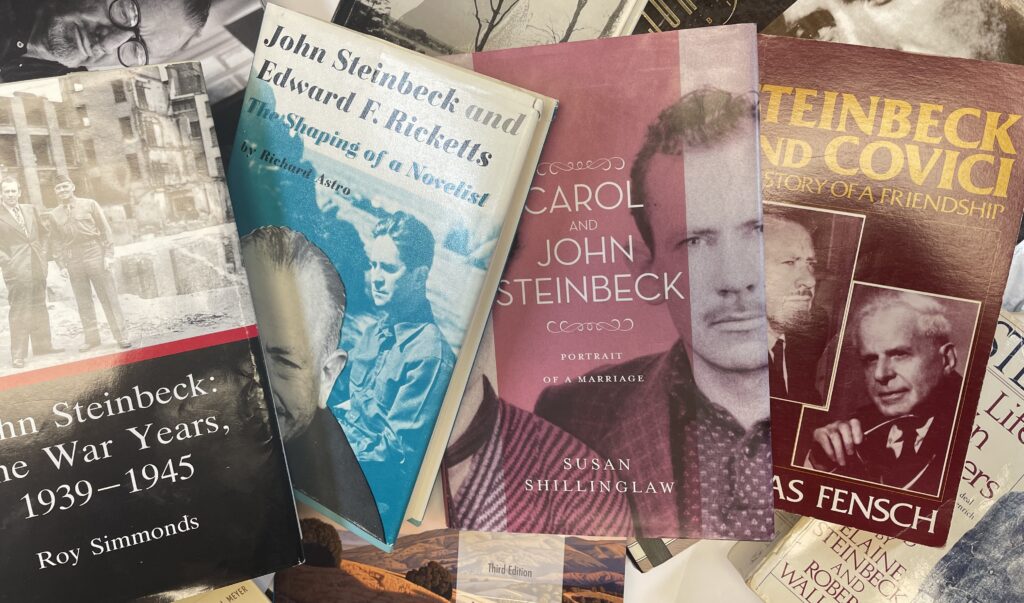
In *[Sea of Cortez](https://www.westernflyer.org/the-boat/the-sea-of-cortez-expedition/)*, the combination travelogue and philosophical dissertation that John Steinbeck co-authored in 1940 with his good friend Ed Ricketts, the writer scoffed at what he called “the myth of permanent, objective reality.” As observers, he insisted, we bear too many limitations — as individuals and as a species — to know any situation wholly and perfectly. But for Steinbeck, that didn’t mean we shouldn’t try to understand the world. The wider the net one casts, he suggested, the more complete and accurate the picture that emerges. “Peepholes” was a favorite Steinbeck term for perspective, and he believed that by expanding the number of peepholes in one’s repertoire, an objective and more complete truth would grow closer and closer.
We can apply this same idea to Steinbeck’s biographers. Each brought personal limitations and prejudices to their particular project, each went about their research differently, and each provided distinctive nuances and subtleties to their portraits of Steinbeck. In *Part I* of this series, I discussed what are generally considered the four primary works on Steinbeck’s life and work. The picture that emerges as we read, say, Jackson Benson’s *The True Adventures of John Steinbeck: Writer*, is only sharpened by a subsequent reading of William Souder’s *Mad at the World*. Each work is a peephole, and every peephole hones the developing image.
Books of great scope must, however, sacrifice the micro for the macro, the specific for the general. There are more specific works on Steinbeck that focus on close relationships or particular periods in his life. They provide valuable peepholes of their own, with each serving to bring a facet of Steinbeck’s life into clearer focus. Four of the best of these works are described below. They include book-length studies of three of Steinbeck’s most important relationships: his first wife Carol Henning Steinbeck; his longtime editor Pascal Covici; and his legendary friend Ed Ricketts. The fourth is a detailed description of Steinbeck’s experiences during one of the most interesting and tumultuous times of his life — the years of World War II.

## ***Carol and John Steinbeck: Portrait of a Marriage***
**Susan Shillinglaw (University of Nevada Press, 2013)**
Though most know Ricketts as Steinbeck’s great friend and inspiration — he was the real-life Doc of *Cannery Row*, among other things — I would argue that no relationship in Steinbeck’s life was more important to his work than his first marriage. Like Benson, Shillinglaw spent years researching and writing this book. It focuses on the years — the 1930s — and the relationships — not only Carol but Ricketts and a host of others — that saw Steinbeck grow from an unknown to one of the handful of best-known writers in the world. Shillinglaw portrays Carol as a defining presence in Steinbeck’s life during this period, throwing her own considerable intellect and energy into her husband’s work. She chronicles the couple as working together as a team, particularly during the period that produced *The Grapes of Wrath*, something that Steinbeck acknowledged in that book’s dedication: “To Carol, who willed it …”

## ***John Steinbeck and Edward F. Ricketts: The Shaping of a Novelist***
**Richard Astro (University of Minnesota Press, 1973)**
Published in 1973, just five years after Steinbeck’s death, this is the volume that established the now common perception of [Ed Ricketts](https://www.goodtimes.sc/archives/metro-santa-cruz/08.02.06/ed-ricketts-0631.html) as a major influence on Steinbeck’s work. The period that Steinbeck and Ricketts were in each other’s daily company was relatively brief and sporadic, but the intensity of their relationship and the ideas and interests that they shared certainly had a monumental effect on the author’s work. Ed Ricketts was a fascinating individual in his own right, and Astro shares his story as well as the synergy that developed between the two men during the most fertile period of Steinbeck’s career. Debates on Ricketts’s impact are *de rigueur* at any gathering of Steinbeck enthusiasts, and Astro’s volume is the starting place for anyone wanting to join the discussion.
## ***Steinbeck and Covici: The Story of a Friendship***
**Thomas Fensch (Middlebury, 1979)**
[Pascal “Pat” Covici](https://www.nytimes.com/1964/10/15/archives/pascal-covici-book-editor-dies-expublisher-helped-steinbeck-viking.html) was Steinbeck’s editor and publisher for 30 years, beginning in 1934 with *Tortilla Flat*, the author’s first major success. Once Steinbeck moved to New York in the 1940s, Covici also became a close friend. When Steinbeck wrote *East of Eden* in 1950, he began each writing session with a note to Covici, letters that were published in 1969 as *[Journal of a Novel](https://www.penguinrandomhouse.com/books/354542/journal-of-a-novel-by-john-steinbeck/)*. Fensch extracted this chronicle of friendship primarily from the extensive written correspondence between the two men. He effectively portrays Covici’s essential and multi-faceted role in Steinbeck’s life as protector, friend, and cheerleader. Covici ordered paper and pencils for Steinbeck, tracked down books and personal items for him, and performed many other duties not ordinarily associated with the responsibilities of an editor. Covici was, according to Steinbeck, “my collaborator and my conscience.”
> **Pat Covici was much more than my friend. He was my editor. Only a writer can understand how a great editor is a father, mother, teacher, personal devil and personal god. For thirty years Pat was my collaborator and my conscience. He demanded of me more than I had and thereby caused me to be more than I should have been without him.**
>
> **John Steinbeck, eulogizing Pat Covici in 1964.**

## ***Steinbeck: The War Years, 1939-1945***
**Roy Simmonds (Bucknell University Press, 1996)**
Steinbeck’s life was never so turbulent as during the years covered here. *The Grapes of Wrath* was published, the resulting fame, wealth, and controversy drove the author into depression and destroyed his marriage, and the world went to war. Anxious to serve his country and yet blackballed from military service, Steinbeck took to writing war propaganda. He jumped quickly back into marriage with a woman 15 years his junior, then immediately headed overseas as a [newspaper correspondent](https://warfarehistorynetwork.com/article/john-steinbeck-in-world-war-ii/). Five months later he limped home, physically and psychically damaged, almost certainly suffering from PTSD. *[Cannery Row](https://www.penguinrandomhouse.com/books/292263/cannery-row-by-john-steinbeck-introduction-by-susan-shillinglaw/)*, which Simmonds labels here as “a new masterpiece,” was published shortly thereafter, and for many scholars came to represent the end of Steinbeck’s years of greatness. Simmonds, an independent British scholar, set out in this study to determine and detail the causes of Steinbeck’s “astonishing and disastrous fall from critical grace” in the postwar period. He provides the most exhaustive look available at Steinbeck’s wartime output, as well as at the personal and professional goings-on in this pivotal chapter of Steinbeck’s life and reputation.
*Though the last three books described above are out of print, they can be easily found on used book sites.*
---
## ***Discover more on these topics at Listening to America***
[Ohio](https://ltamerica.org/tag/ohio/ "2 topics")[Oppenheimer](https://ltamerica.org/tag/oppenheimer/ "1 topics")[Steinbeck Travels](https://ltamerica.org/tag/steinbeck-travels/ "75 topics")[North Carolina](https://ltamerica.org/tag/north-carolina/ "3 topics")[Sports](https://ltamerica.org/tag/sports/ "2 topics")[Thoreau](https://ltamerica.org/tag/thoreau/ "5 topics")[South Dakota](https://ltamerica.org/tag/south-dakota/ "16 topics")[William Shirer](https://ltamerica.org/tag/william-shirer/ "1 topics")[Theodore Roosevelt](https://ltamerica.org/tag/theodore-roosevelt/ "16 topics")[Virginia](https://ltamerica.org/tag/virginia/ "7 topics")[Space Exploration](https://ltamerica.org/tag/space-exploration/ "8 topics")[U.S. Constitution](https://ltamerica.org/tag/u-s-constitution/ "1 topics")[North Dakota](https://ltamerica.org/tag/north-dakota/ "53 topics")[State Parks](https://ltamerica.org/tag/state-parks/ "2 topics")[Wyoming](https://ltamerica.org/tag/wyoming/ "4 topics")[New Mexico](https://ltamerica.org/tag/new-mexico/ "3 topics")[Oregon](https://ltamerica.org/tag/oregon/ "4 topics")[New York](https://ltamerica.org/tag/new-york/ "8 topics")[Oppenheim](https://ltamerica.org/tag/oppenheim/ "0 topics")[New England](https://ltamerica.org/tag/new-england/ "1 topics")[Reading](https://ltamerica.org/tag/reading/ "1 topics")[Texas](https://ltamerica.org/tag/texas/ "4 topics")[Washington](https://ltamerica.org/tag/washington/ "2 topics")[Walden](https://ltamerica.org/tag/walden/ "1 topics")[Pennsylvania](https://ltamerica.org/tag/pennsylvania/ "1 topics")[The Constitution](https://ltamerica.org/tag/the-constitution/ "1 topics")[paintings](https://ltamerica.org/tag/paintings/ "0 topics")[South Carolina](https://ltamerica.org/tag/south-carolina/ "1 topics")[Road Trips](https://ltamerica.org/tag/road-trips/ "18 topics")[Podcast](https://ltamerica.org/tag/podcast/ "1 topics")[Water in the West](https://ltamerica.org/tag/water-in-the-west/ "24 topics")[Utah](https://ltamerica.org/tag/utah/ "11 topics")[Rome](https://ltamerica.org/tag/rome/ "1 topics")[Poetry](https://ltamerica.org/tag/poetry/ "1 topics")[Republics](https://ltamerica.org/tag/republics/ "1 topics")[north daktoa](https://ltamerica.org/tag/north-daktoa/ "0 topics")[Rivers](https://ltamerica.org/tag/rivers/ "3 topics")[U.S. Presidents](https://ltamerica.org/tag/u-s-presidents/ "71 topics")[Thomas Jefferson](https://ltamerica.org/tag/thomas-jefferson/ "34 topics")[Travel](https://ltamerica.org/tag/travel/ "1 topics")[Vermont](https://ltamerica.org/tag/vermont/ "1 topics")[Video](https://ltamerica.org/tag/video/ "51 topics")[Republic](https://ltamerica.org/tag/republic/ "0 topics")[Wisconsin](https://ltamerica.org/tag/wisconsin/ "0 topics")[Tennessee](https://ltamerica.org/tag/tennessee/ "1 topics")
**Categories:** Books
**Tags:** Books, Humanities, John Steinbeck, Steinbeck Travels
---
### [The Little Bighorn Battlefield National Monument — Video Dispatch](https://ltamerica.org/the-little-bighorn-battlefield-national-monument-video-dispatch/)
**Published:** July 9, 2024
**Author:** Clay Jenkinson
**Excerpt:** Clay reflects on the Little Bighorn Battlefield National Monument. He's been here many times and made this visit because Steinbeck did, on October 13, 1960.
**Content:**
This is the era of statue removal and the systematic reinterpretation of American history. It’s all good, I believe, except for the excesses and historical ignorance of some iconoclasts, who would prefer to be righteous than to understand the nuances and deep complexities of American history.
I’ve been to the Little Bighorn perhaps 10 times in my life. I made this visit this time because Steinbeck did, on October 13, 1960. I’m not sure why he made the detour. He wasn’t much interested in historic sites at this point in his career. And what he wrote about the battlefield is cursory. I quote the passage in its entirety:
*“At Custer we made a side trip south to pay our respects to General Custer and Sitting Bull on the battlefield of Little Big Horn. I don’t suppose there is an American who doesn’t carry Remington’s painting of the last defense of the center column of the 7th Cavalry in his head. I removed my hat in memory of brave men, and Charley saluted in his own manner but I thought with great respect.”*
That’s it! Again, Charley lifts his leg and steals the show.
At the end of my time at the national monument, I visited in the Native American semi-subterranean circle. It amazed me how quiet it was in the circle, how everyone’s voice dropped a few decibels, and how perfectly modulated the interpretive panels were.
You can watch a brief video of my reflections above.
***Over the next few months, Clay is shadowing Steinbeck’s 10,000-mile trek around the USA (and making a few detours of his own). Clay’s expedition is a central part of LTA’s big initiative to explore the country and take the pulse of America as it approaches its 250th birthday. Be sure to follow Clay’s adventures [here](https://ltamerica.org/tag/steinbeck-travels/) and on [Facebook](https://www.facebook.com/LTAmerica) — and [subscribe to our newsletter](https://ltamerica.org/newsletter/)*.**
**Categories:** Dispatches from the Road
**Tags:** America at 250, John Steinbeck, Montana, Native Americans, Steinbeck Travels, Video
---
### [John Steinbeck and Me in Beach, North Dakota](https://ltamerica.org/john-steinbeck-and-me-in-beach-north-dakota/)
**Published:** July 9, 2024
**Author:** Clay Jenkinson
**Excerpt:** John Steinbeck spent the night of October 12, 1960, in Beach, North Dakota, just a few miles from the Montana border. He was about to fall in love with Montana.
**Content:**
## John Steinbeck spent the night of October 12, 1960, in Beach, North Dakota, just a few miles from the Montana border. He was about to fall in love with Montana.
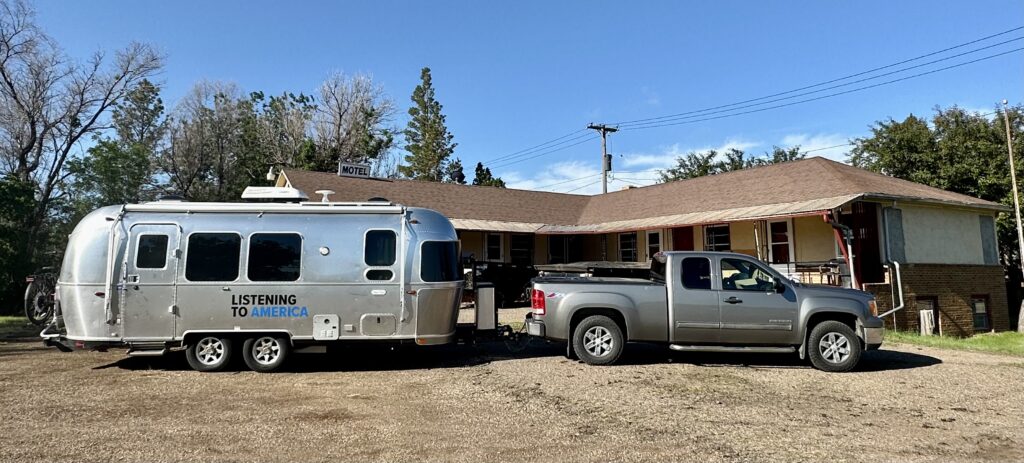Clay’s LTA rig parked out front of the now defunct Westgate Motel, in Beach, N.D. where Steinbeck spent the night on his 1960 cross-country trek.
In homage to Steinbeck, I spent night one of Phase Two of my national John Steinbeck *Travels with Charley* tour in Beach, even though it is only 158 miles from my home in Bismarck.
Today, Beach has a population of 981. In 1960, the population was 1,460. Ten years earlier, it had topped out at 1,461. North Dakota has scores of towns with a population of under 1,500 — and falling.
Thanks to the investigative work of a reporter named Bill Steigerwald — often mentioned in my *Travels with Charley* dispatches — we now know that Steinbeck almost certainly stayed at the Westgate Motel on the main drag of Beach on the night of Columbus Day 1960.
The Westgate is defunct. A local rancher and developer named Mark H. is gutting it inside with the plan to transform it into a 21st-century Airbnb sort of place. He generously permitted me to park my Airstream in the motel parking lot for the night.
Steinbeck wrote a letter to his wife, Elaine, on the little desk in his room. He reported that he had begun the daylong transit of North Dakota on old U.S. Highway 10 at 6 a.m. “I get a little tired, particularly tonight,” he wrote. “The roads were very rough and the wind high.” That certainly sounds like North Dakota!
“I’m staying in a motel called the Dairy Queen,” he wrote. “Reason? The only public telephone in forty miles. The Dairy Queen has a large, beautiful tub and I’m going to get into it almost at once.” Steinbeck may have been confused, or maybe he was making a joke, but there never was a Dairy Queen motel. He was merely identifying the Westgate by way of the Dairy Queen across the street.
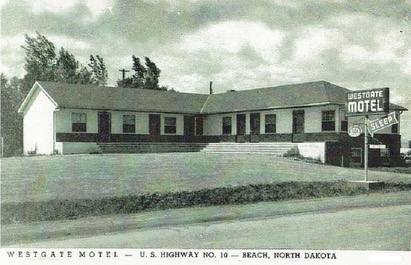
Steinbeck wondered out loud in his letter why the town is called Beach. At first glance, it seems like a perfectly absurd name since Beach, North Dakota, is 1,076 miles from the Pacific Ocean, 1,978 miles from the Atlantic Ocean, and 2,172 miles from Hudson Bay. As they say, “There ain’t no beach in Beach.” Steinbeck didn’t have internet access, of course, and although he was aware of the outstanding WPA guides available to individual states, he did not include any of the volumes in his traveling library. Thanks to revolutionary tools that were unavailable in 1960, we can immediately learn that Beach was named for U.S. Army Captain Warren C. Beach, who led a team of railroad surveyors through Dakota Territory in 1880.
Not that you really want to know anything about W.C. Beach — yet another obscure Army officer or railroad engineer for whom a town along the Northern Pacific Railroad was named — but here is a bit. He graduated in the West Point class of 1865. That means that he did not see service during the Civil War. During Reconstruction, he was stationed in a number of places in the former Confederacy: Vicksburg, Mobile, and Galveston. Then, he was transferred to frontier duty, first at Fort Concho, Texas, and later at the Cheyenne Agency (Eagle Butte, South Dakota) in Dakota Territory. He was stationed at Fort Abraham Lincoln (near Bismarck, North Dakota) from 1879 to 1881. During this stint, he captained a railroad survey crew for America’s second transcontinental railroad.
## Ode to Bill Steigerwald
Bill Steigerwald retraced Steinbeck’s *Travels with Charley* journey in real time in 2010, on the 50th anniversary of the Pulitzer Prize-winning author’s 11,500-mile trip. Bill doesn’t like being called a Steinbeck detractor, but that is how he is universally perceived in the “Steinbeck community.” If you title your book, *Dogging Steinbeck: Discovering America and Exposing the Truth about “Travels with Charley,”* it’s going to be difficult to deny that you are a detractor.
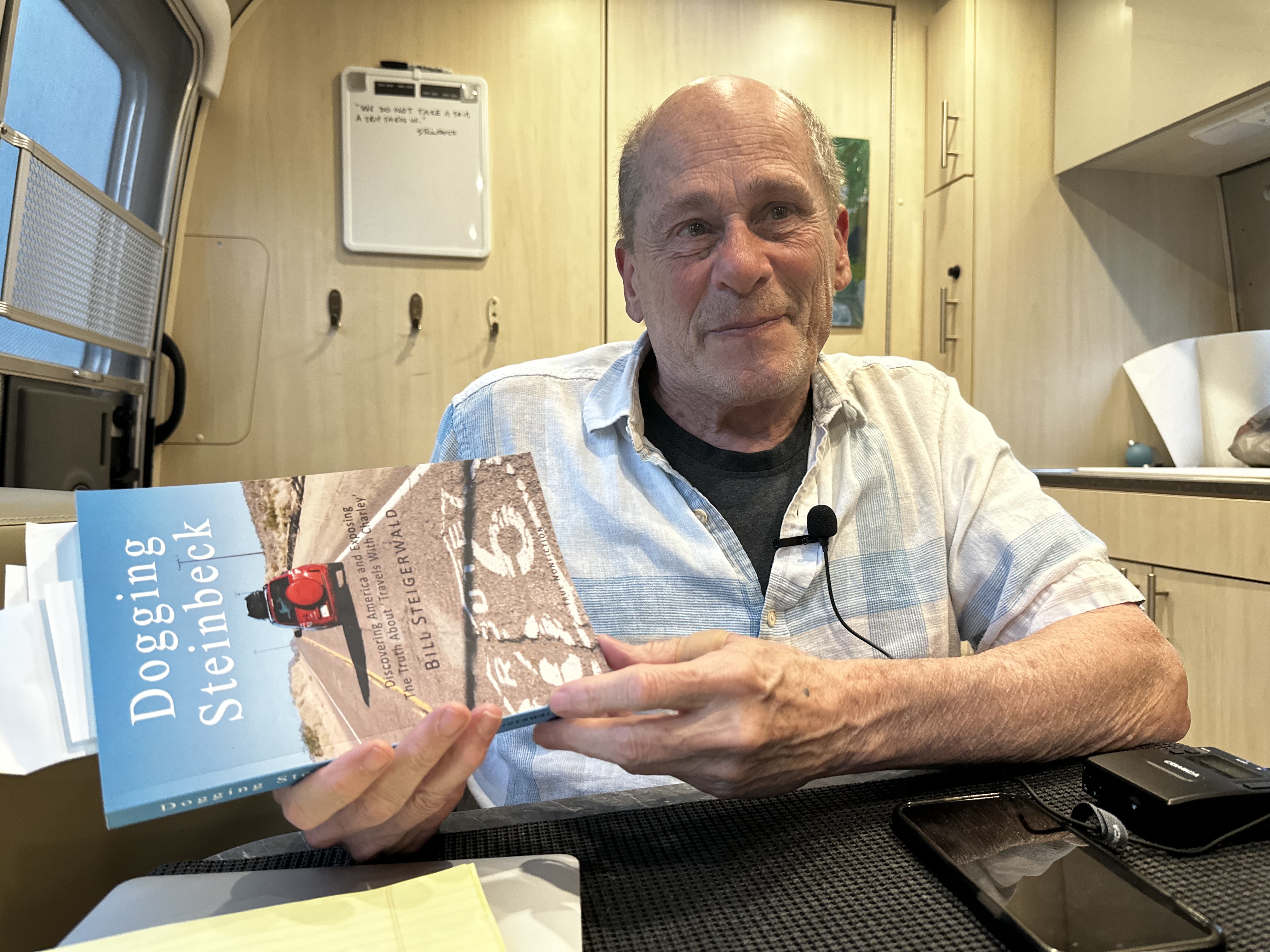Bill Steigerwald, author of *Dogging Steinbeck* talking with Clay.
Steigerwald’s investigative discoveries can be summarized in this way. 1. Steinbeck did not sleep in his pickup camper as often as we are led to believe in *Travels with Charley*. 2. His third wife, Elaine, was with him on the journey more frequently and for longer periods than the book would have us believe. 3. Steinbeck tended to rush from Elaine encounter to Elaine encounter, which meant he had little time to have meaningful encounters with the American people, especially in the West. 4. Some episodes and incidents in *Travels with Charley*, including some of the most famous, did not occur. 5. Steinbeck was a rich and entitled literary celebrity who loved the good life and was not particularly comfortable roughing it in a truck camper with a chemical toilet. 6. Steinbeck’s New Deal/Great Society Adlai Stevenson and LBJ politics are obnoxious (to Steigerwald, a self-styled libertarian).
I agree with some of this, but I very strongly disagree both with the accusatory (aha! And gotcha!) approach Steigerwald took to his investigations and with the allegation that many of the incidents in the book either didn’t happen at all or not in the way Steinbeck reports them. I believe that almost all of the encounters actually occurred while acknowledging that Steinbeck (like all other writers, including Bill Steigerwald) shaped his experiences when he put them to paper. This is what writers do. Life is almost never as tidy, linear, or straightforward as the stories we tell about life in retrospect.
Put it this way. *Travels with Charley* is a work of literature based on an actual journey that John Steinbeck took in 1960. Bill Steigerwald naively (in my opinion) wanted to read *Travels with Charley* as if Steinbeck intended a rigorous book of reportage, as if there were a Charley-cam from which an actual transcript of the conversations could be drawn and a snarky fact-checker should be able to verify that every incident occurred 1) where it is placed in the book and when; 2) precisely as it is narrated in the book; 3) with no embellishments or imaginative reconstruction of dialogue; and that there are no errors of omission or commission. Since Steinbeck didn’t travel with a tape recorder, and he did not have the capacity to memorize every stray conversation on the journey, he inevitably reconstructed those conversations when he wrote the book, and OF COURSE, he brought his enormous gift for storytelling to the enterprise.
Steigerwald and I are now friends. He sat for a two-hour interview in my Airstream way back in Phase One, at Bethany, West Virginia, at a mobile home and RV park that might have been the poster for the Rust Belt. He has mellowed quite a bit in the last decade — his exposé was published in 2014. When I contacted him to set up the interview in his zip code, he invited me to park in his driveway. And he said, “Heck, if you need a hot shower and a comfortable bed, we can provide them.” To which I said, “Hey, wait a minute. You cannot fool me. If I take a shower in your house, you’ll wind up denouncing me for faking the purity of my travels.”
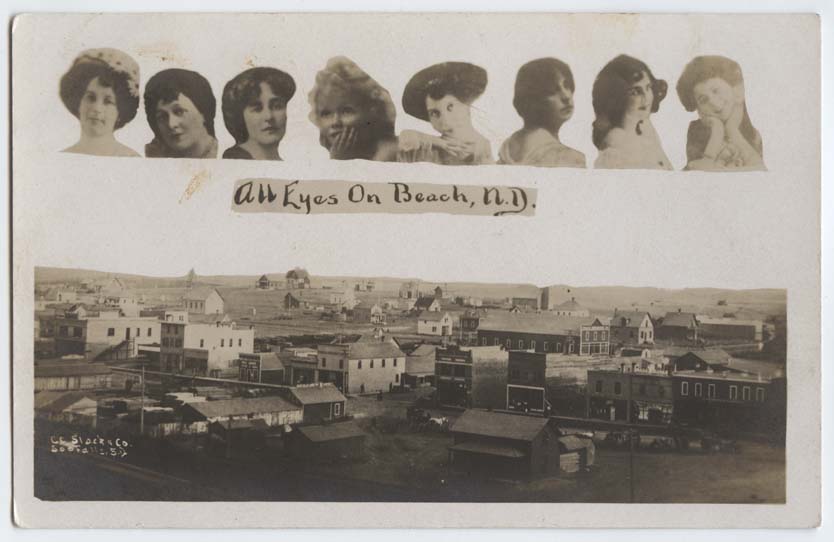
During his journey through North Dakota in October 2010, true to his self-description as an investigative journalist, Steigerwald tracked down the son of the man who built the Westgate Motel in Beach. Doug Davis of Bozeman said his father built the motel, his uncle “designed it,” and his mother managed it. Steigerwald wrote, “His mother had died a few weeks earlier, and he and his older brother found all the motel’s registration books, including those from the fall of 1960, stored at her house — and immediately pitched them in the trash.”
Alas. If those records had been preserved just a few more weeks, Steigerwald might have been able to determine a: whether Steinbeck registered at the Westgate on or about October 12, 1960, and b: what room he stayed in. It is possible, of course, in that more innocent era, that Steinbeck, who insisted that he traveled America incognito in 1960, registered under an alias. Now, if Steigerwald were really a top investigative journalist, he would have found the landfill in question and excavated those registration records. The Search for Truth has its limits.
I had dinner in Beach with old friends and new. We agreed that making more of Steinbeck’s visit would be an asset to the community. We talked about the plight of small towns in rural America. We group-gushed at how much we love the plains, the buttes, and the badlands of North Dakota.
Robert Louis Stevenson’s book *Travels with a Donkey in the Cevennes*.
Steinbeck did not keep a journal during his 1960 trek. He wrote several letters to his wife Elaine back in New York and called her once or twice a week from somewhere on the road. He was dependent, of course, on the telephone infrastructure of his times. It was on one of those calls that his book got its title. Elaine was listening to his account of his misadventures with the poodle Charley. Suddenly, she said, your adventures remind me of Robert Louis Stevenson’s book *[Travels with a Donkey in the Cevennes](https://nupress.northwestern.edu/9780810160064/travels-with-a-donkey-in-the-cevennes/)*. Steinbeck immediately said, that’s it, that’s my title. You have given me the title for the book. This was not the first time a Steinbeck spouse gave him a world-class title. His first wife, Carol Steinbeck, suggested the title *The* *Grapes of Wrath* for his greatest book. It’s hard now to think of the novel by any other name.
Every Steinbeck scholar studies his countless letters with great care. He was a voluminous letter writer, and he often used his morning letters as a warm-up ritual to process the artistic ideas he was struggling with and to tune up his prose. The *Travels with Charley* letters are essential background reading for anyone trying to make sense of the 1960 journey. It’s hard to think of any American writer whose letters are as essential to understanding their work as are those of Steinbeck. Lovers of his last big novel *East of Eden*, know that the letters he wrote most mornings to his longtime publisher and intimate friend Pascal Covici were published posthumously as J*ournal of a Novel: The East of Eden Letters*, which themselves represent an American classic.
In the letter from Beach to Elaine, Steinbeck reveals several details that never found their way into *Travels with Charley*. The book (published in 1962, written in NYC and Barbados) does not mention a motel and leaves the reader believing that he spent the night in the badlands in his truck camper. Not so. Score one for Steigerwald! He needed a telephone. He wanted a bath. “The Dairy Queen \[motel\] has a large, beautiful tub, and I’m going to get into it almost at once.” Steinbeck loved his baths
In the letter, he writes what amounts to the first draft of one of the most famous passages in *Travels with Charley*, the one in which he says that it is the Missouri River at Bismarck and Mandan, North Dakota, where the map should fold. Here’s the passage from Steinbeck’s letter:
*“North Dakota is like the great plains anywhere, and then — Wham! The Missouri River instantly becomes the West, brown hills, and then the moon country of the Badlands.”*
In the book, this becomes:
*“Someone must have told me about the Missouri River at Bismarck, North Dakota, or I must have read about it. In either case, I hadn’t paid attention. I came on it in amazement. Here is where the maps should fold. Here is the boundary between east and west. On the Bismarck side it is eastern landscape, eastern grass, with the look and smell of eastern America. Across the Missouri on the Mandan side, it is pure west, with brown grass and water scorings and small outcrops. The two sides of the river might well be a thousand miles apart.”*
Reread the passage from the letter to Elaine and then the finished product in *Travels with Charley*. You immediately get a glimpse into the creative process, how a brief observation in an informal letter becomes — months later — an example of literary genius. This creative transformation may be seen as a metaphor for the entire literary gestation of *Travels with Charley*.
In the letter to Elaine, he provides additional details about his impressions of North Dakota, particularly the badlands. The West country features “what you call painted canyons \[he drove past Painted Canyon Scenic Overlook on Highway 10\] all blue and red. It was rainy at first and then the sun burst out and whopped it up. Charley has had his dinner now and peed on a rock and is sitting there watching me with a look of amused satisfaction on his face.” I’ve read this letter dozens of times over the years, and yet this is the first time I noticed the rain.
Steinbeck announces that after his luxurious bath, he will “then wash shirts and sox.” In the tub, one guesses.
And he says that he ventured a block or two to one of the taverns of Beach but “there was nothing talked but deer hunting. I’ve seen about six go by on car fenders today.” October was deer hunting season — and Dakotans, then and now, take the short deer hunting season very, very seriously. Now the detract. … I mean the investigative journalist Steigerwald did not pin down which bar Steinbeck visited on Columbus Day evening, perhaps because one of the few enterprises small towns have in multiples are bars — and churches. There are, for example, even now two Lutheran churches in Beach. And to his great credit, Steigerwald is one of the only Steinbeck re-tracers who does not obsess about food and IPA beers.
The other night, I was able to tour the inside of the Westgate Motel’s shell. Most of the interior walls have been knocked down, but there are still four old bathtubs right where they sat in Steinbeck’s time. I reckoned that the laws of probability favored at least one of those tubs in which Steinbeck soaked his weary body. The tubs were pretty short, and Steinbeck was pretty tall (6 feet even). I got in one fully clothed as part of my pilgrimage but did not lie down.
Tama and Jerry of Prairie Fire Pottery.
It was a wonderful stop on the Steinbeck Trail. I can attest (I would swear) that I have not fabricated any person, event, place, or encounter from my 20 hours in Beach. There are considerable omissions, of course, the kind that bring down the wrath of the Steigerwaldians. I walked across the street to buy a sponge at the Dollar General store; in some quarters, that is rural town sin. At dinner, I ordered the San Francisco Sourdough patty melt, but I did not eat all of it. I had a glass of pinot grigio (or, in Beach’s nomenclature, White) with dinner. Some local ruffians fired off bottle rockets, Roman candles, and firecrackers in the middle of the night at close range to my Airstream. I took delivery of an exquisite ceramic bowl from Beach’s superb potter Tama Smith, an old dear friend, the kind of North Dakotan we could use a lot more of. I did not pee in the Badlands.
I hope these additional details satisfy my friend Bill. If he finds out later it was Merlot (i.e., Red), he’ll go after me like a badger.
Let me make the following statement for the record. I said these words to Steigerwald in the Airstream in Bethany, West Virginia, and he very nearly blushed. “No future Steinbeck scholar working on *Travels with Charley* will be able to avoid coming to terms with *Dogging Steinbeck.*” Steigerwald did absolutely important legwork during his 2010 re-enactment (that nobody had bothered previously to do), and the facts he ascertained from excellent and dogged research change the way we see the man, the novelist, the husband, the great book he wrote about it.
The next hotel I know Steinbeck stayed in is not until San Francisco, and our Listening to America budget will not permit an honorary stay even for a night. So, one takes the identifiable Steinbeck hotels/motels one gets.
---
***Over the next few months, Clay is shadowing Steinbeck’s 10,000-mile trek around the USA (and making a few detours of his own). Clay’s expedition is a central part of LTA’s big initiative to explore the country and take the pulse of America as it approaches its 250th birthday. Be sure to follow Clay’s adventures [here](https://ltamerica.org/tag/steinbeck-travels/) and on [Facebook](https://www.facebook.com/LTAmerica) — and [subscribe to our newsletter](https://ltamerica.org/newsletter/)*.**
**Categories:** Features
**Tags:** America at 250, Books, John Steinbeck, North Dakota, Steinbeck Travels
---
### [From the Eastern Heart of Montana — Video Dispatch](https://ltamerica.org/from-the-eastern-heart-of-montana-video-dispatch/)
**Published:** July 6, 2024
**Author:** Clay Jenkinson
**Excerpt:** This morning I crossed the great Yellowstone River 27 miles west of Glendive on old Highway 10. There are not many places on the John Steinbeck Travels with Charley tour where you know you are PRECISELY where Steinbeck was, because so much has changed.
**Content:**
July 6, 2024
There are not many places on the John Steinbeck *Travels with Charley* tour where you know you are PRECISELY where Steinbeck and his companion Charley were, because so much has changed on the American highway system. Only a tiny fraction of the Interstate Highway System was in place when he traveled the country in his pickup camper.
This morning I crossed the great Yellowstone River 27 miles west of Glendive on old Highway 10. This bridge was of course in place in 1960. Because U.S. 10 has been reduced to mere “frontage road” status in this part of Montana, and therefore 99% of all traffic crosses the Yellowstone here on the four-lane interstate, I could actually stop my rig right in the middle of the steel bridge. A luxury.
Last night, Beach, North Dakota, the westernmost town in North Dakota. Tonight Billings, the largest city in Montana (population 120,000).
Sign up for our free weekly newsletter and “join me” on the trail.
---
***Over the next few months, Clay is shadowing Steinbeck’s 10,000-mile trek around the USA (and making a few detours of his own). Clay’s expedition is a central part of LTA’s big initiative to explore the country and take the pulse of America as it approaches its 250th birthday. Be sure to follow Clay’s adventures [here](https://ltamerica.org/tag/steinbeck-travels/) and on [Facebook](https://www.facebook.com/LTAmerica) — and [subscribe to our newsletter](https://ltamerica.org/newsletter/)*.**
**Categories:** Dispatches from the Road
**Tags:** John Steinbeck, Montana, North Dakota, Steinbeck Travels, Video
---
### [Grasslands Renaissance on the Great Plains](https://ltamerica.org/grasslands-renaissance-on-the-great-plains/)
**Published:** July 2, 2024
**Author:** Clay Jenkinson
**Excerpt:** A visit with author, falconer and pioneering regenerative rancher Dan O’Brien on his remarkable Cheyenne River Buffalo Ranch.
**Content:**
Dan O’Brien, author, falconer and regenerative rancher, founded Wild Idea Buffalo Company in 1997. (Photo by Clay Jenkinson)
Dan O’Brien and his business partner Jill O’Brien (his former wife) live in one of the most beautiful places in America — in the Cheyenne River valley south and east of Rapid City, South Dakota. Their enterprise — the [Wild Idea Buffalo Company](https://wildideabuffalo.com/pages/about) — and Dan’s excellent books drew me there in mid-June. I’ve been reading his books for a long time, and from afar, I have been fascinated by their experiment in grass stewardship. I knew they host tours, but I was shy about visiting.
That was a mistake. They welcomed me into their world far beyond my merit. Jill had sent careful driving directions, so I didn’t get lost, but you do drive 20-some miles on gravel (this was fresh gravel) to get there. Dan’s house is in a draw, and as far as I could tell, the steep road down to his driveway is deliberately left a little adventurous, probably to make pilgrims earn the experience. I loved it.
Jill O’Brien, business partner in Wild Idea Buffalo Company.
We had dinner in Jill’s studio, perched on the western edge of the Cheyenne River valley. She’s a nationally acclaimed cook. The meal was exquisite, as was the rhubarb sauce on the ice cream as things wound down. Braised chuck roast, mashed potatoes, fresh asparagus, hot bread. Prosecco and very good wine. And the conversation was as good as the meal.
These are highly enlightened, well and deeply read, culturally omnivorous people, living in a magnificent place in the middle of nowhere and using their creative energies to regenerate the American grasslands, or at least their modest parcel of it. At dinner, we talked about Theodore Roosevelt, John Steinbeck, Henry David Thoreau, Jack Kerouac, Willa Cather, what happened at Wounded Knee, and William Hornaday (the man who saved the buffalo — with important help from others).
Dan O’Brien is the author of just under 20 fiction and non-fiction books, including *Buffalo for the Broken Heart*.
Dan O’Brien is the author of something just under 20 books. The one that brought him fame was *Buffalo for the Broken Heart: Restoring Life to a Black Hills Ranch* (2001). My next read will be his fictional account of the Pine Ridge Indian agent Valentine McGillycuddy, who is one of my fascinations. McGillycuddy was at Fort Robinson when Crazy Horse was killed. McGillycuddy offered to try to intervene during the Ghost Dance controversy. He argued that the U.S. government should just let the Lakota dance themselves out and that by sending in the military, the U.S. was making a potentially tragic mistake. He was right.
After supper, Dan, his partner Emily, and I drove around the ranch to smell the ozone awakened by a small but impressive thunderstorm that drifted over from the Black Hills during dinner. We rode in an open ranch ATV. It was just this side of chilly — in other words, perfect. The sky was washed and the grass hills were unusually green at the end of a wet spring. The quality of light was exquisite.
It’s not clear what the O’Briens’ neighbors think of them, but I know there is a relatively narrow range of eccentricities that most of America’s ranchers are willing to accept. In some quarters, the idea of running bison on prime cattle range is regarded as wrongheaded or even threatening, and complicated regeneration practices sound like hippy stuff.
The proof of O’Brien’s regenerative practices is in the … grass.
Dan picked me up from their guest cottage the next morning at 6:30 a.m. (I’m sure he thought I was a slacker.) We drove along slowly in his ATV through two or three gates, where I jumped down to open them and shut them after he drove through. It was a perfect morning. The grass was higher than the wheels of the ATV. He brought along an old-school thermos with coffee so black that it made you shudder on the first two sips. On our left, the Pine Ridge Indian Reservation, including the Stronghold, where the Lakota danced the Ghost Dance in the weeks before they were massacred by the remnants of the Seventh Cavalry on December 29, 1890. On our right, Black Elk Peak, the highest point between the Rocky Mountains and Europe. It was formerly named Harney Peak — named back when we celebrated the army officers who dispossessed Native Americans of land.
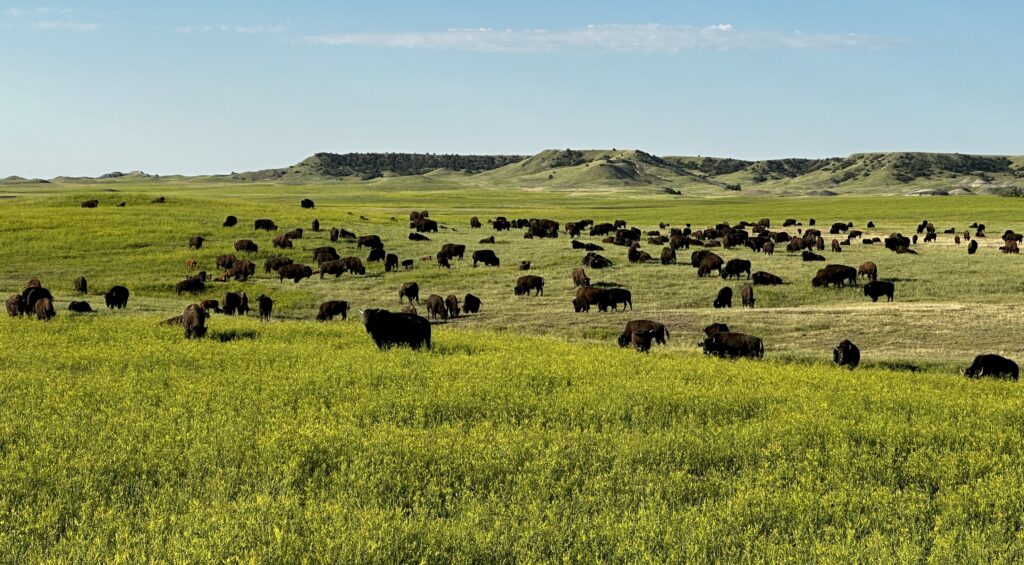Buffalo graze on Dan O’Brien’s Cheyenne River Buffalo Ranch in the eastern foothills of South Dakota’s Black Hills. O’Brien is a pioneer in regenerative ranching. (Photo by Clay Jenkinson)
Over beyond a couple of swales and swells, we finally found the buffalo, some 800 of them, placidly eating grass, standing around, drifting a little now and then, the usual occasional rebuffed attempt by one sad male to mount cows. Dan shut off the ATV. The buffalo were entirely relaxed. A few of them nosed up within a couple of feet of the open cab. We saw a buffalo daycare facility a little ways away, with a few strong females watching over a dozen red calves. I had no idea. Dan had the confidence of a beekeeper amid swarms, and I took my confidence from him. Only once did the buffalo jump away when my 35mm camera “thucked” when I took a photograph. I apologized.
We sat there for most of an hour, sipping coffee, trading stories and perspectives, but I mostly just wanted to learn from this remarkable man. O’Brien doesn’t want to be romanticized. What they are doing in the Buffalo Gap region of South Dakota is hard work against considerable odds and some opposition for much less profit than the equivalent Angus ranch would produce. Because the buffalo are humanely raised and butchered — not merely trucked off like gold on the hoof to a commercial abattoir — the Cheyenne River Buffalo Ranch is more labor intensive than average. It’s hard work, and — compared to the dominant corn-petroleum-feedlot-industrial-complex — it’s a negligible part of the grasslands economy. But Dan and Jill believe what they are doing is a: intrinsically important, b: deeply soul satisfying, and c: a possible template for change on the Great Plains.
## **Regenerating the Great Plains**
A summer squall over the plains of Cheyenne River Buffalo Ranch. (Photo by Clay Jenkinson)
So, what do we mean by regenerative? Something like this. Most of the grass you see on the Great Plains was introduced from Eurasia well more than a century ago. Some of it came inadvertently, a stray seed in the bottom of a bag of flour. Still, some was deliberately introduced by well-meaning busybodies, thus reinforcing — once again — the “law of unintended consequences.” The invasive species choked out native grasses. They don’t provide more nutrition per square foot than native grasses. They are biological bullies. Restoring the native grass is exceedingly expensive (where is the Farm Program when you need it?), time-consuming (years, maybe decades), and the seeds one needs are relatively hard to get at any price anyone but Ted Turner could afford.
Meanwhile, the grasses of the Great Plains have been severely over-grazed until very recently (and still in some pockets). Thus the soil health is not great. It may seem insane for white settlers to have replaced native grasses that have evolved on the plains over millions of years, which supported what the writer Dan Flores calls the “American Serengeti” — buffalo, prairie dogs, coyotes, wolves, pronghorn antelope, elk, two varieties of deer, grizzly bears, falcons, hawks, and eagles, and widely dispersed human communities that had found a way to thrive in this place sustainably. We displaced most of those beings, including Native Americans, plowed up as much land as possible, and then watched an estimated 1.2 billion tons of soil blow away forever during the Dust Bowl years. During a Congressional hearing in Washington, D.C., in March 1935, elected representatives walked outside to view a dust storm that had traveled all the way from the Great Plains. The New Deal helped to stop the carnage: Soil Conservation Districts, Shelter Belts, the Civilian Conservation Corps, County Extension Agents.
Even so, nobody can argue that the grass of the Great Plains today is as healthy as it was in 1805 when Lewis and Clark wandered through. Dan and Jill O’Brien are not alone in their quest to restore the flora and fauna of the Great Plains, but they have won great respect, including international respect, for their exemplary practices.
They raise buffalo for the market. They supervise the butchering of every critter in a mobile truck that is fitted out not to replicate the factory conditions of America’s huge slaughterhouses. The O’Briens sell the meat (order at [wildideabuffalo.com](https://wildideabuffalo.com)). The buffalo hides go to Portugal where they are made into high-quality boots. They sell some of the buffalo skulls; most are repurposed in an environmentally responsible way. They host tours. And Dan gets some royalty checks for his books. But it’s mostly about psychic income. As Jill said over dinner, “Everyone here has a side gig.”
O’Brien’s is dedicated to regenerating the natural ecosystem of the Great Plains. (Photo by Clay Jenkinson)
Here’s the part of what they are doing that blew my mind if I may use a technical term. Dan said the buffalo help restore the native grasses. Just how is a little unclear to me. He said the native seeds are still in the ground after all this time and all they need are the right conditions to recover. And when this is done right — via buffalo grazing, not pesticides — the grasslands begin to regenerate. Properly managed, the native grasses start to overcome the invasive species. It sounds mystical, but I’m sure there are reliable evolutionary explanations. A cow is not a buffalo. A buffalo is not a cow. They eat the same stuff, but they work the land differently. Perhaps it is not beyond the realm of possibility that the buffalo know what they want to eat and have the ingenuity to make sure it can grow again! The Lakota, Cheyenne, Mandan, Hidatsa, Crow, and Blackfeet regarded the buffalo as sacred. Who are we, who regard cattle as commodity and grass as fodder, to think we know better?
I wasn’t at the ranch very long — not long enough. But I know how to get there now, and Dan and Jill invited me back to observe and perhaps help out when they are butchering.
And there is more. Among other things, Dan O’Brien is a falconer. That instantly gets my attention. The art of falconry dates back to at least 2000 BCE in Mesopotamia and probably much longer. You can find references to it in one of the oldest pieces of world literature, the *Epic of Gilgamesh* (ca. 1500 BCE). Homer’s Odysseus is said to have brought the art of falconry back to Ithaka and Greece at the end of the Trojan War. Falconry was the avocation of Elizabethan aristocrats (and today’s Saudi princes). We had a long discussion about falconry in Shakespeare. One of my heroes, Sir Richard Francis Burton (1821-1890), published a masterful book called *Falconry in the Valley of the Indus* in 1852. I’ve observed the superb falconry program at the U.S. Air Force Academy, thanks to my old friend Hal Bidlock (aka Alexander Hamilton, I’m sorry to say). I want to see Dan work the birds.
Black Elk Peak at dusk, the highest point between the Rocky Mountains and Europe. (Photo by Clay Jenkinson)
My goal in Listening to America is to get out from under the echo sphere of cable media and the surface discourse of polarization and rage and search for America where it percolates. I believe millions of people are doing good and creative things all over what Steinbeck called “this monster land,” tens of thousands or hundreds of thousands of people engaged in cutting-edge and game-changing initiatives like the O’Briens. I want to cheer up about America. I want to remind myself — and you — that major media is a dangerous distortion mechanism that exaggerates the ways we disagree and ignores the geographic, political, economic, and cultural “commons.”
In other words, America is better, healthier, and less divided than it seems when your lens is FOX or MSNBC.
Learn more about the [Cheyenne River Buffalo Ranch](https://wildideabuffalo.com/pages/about) and Wild Ideas “beef.”
Book a [tour](https://wildideabuffalo.com/blogs/journal/ranch-tours) and buy Wild Ideas [products](https://wildideabuffalo.com/collections/all-products).
You can find a complete list of books by Dan O’Brien in the usual places. I recommend:
- *Buffalo for the Broken Heart: Restoring Life to a Black Hills Ranch*
- *Wild Idea: Buffalo and Family in a Difficult Land*
- *The Contract Surgeon: A Novel (about Valentine McGillycuddy, see above)*
- *Great Plains Bison*
- *Equinox: Life, Love, and Birds of Prey*
- *In the Center of the Nation: A Novel*
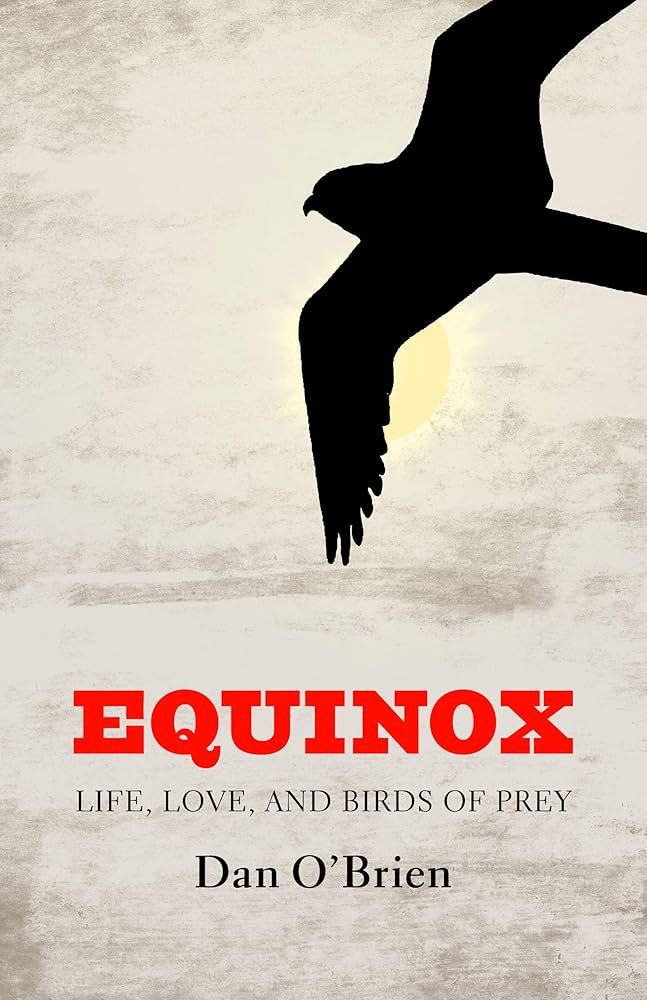
**Categories:** Dispatches from the Road
**Tags:** America at 250, Books, John Steinbeck, Native Americans, South Dakota, Steinbeck Travels
---
### [Sag Harbor to Bismarck: What I'm Learning About John Steinbeck and His "Search of America"](https://ltamerica.org/sag-harbor-to-bismarck-what-im-learning-about-john-steinbeck-and-his-search-of-america/)
**Published:** June 30, 2024
**Author:** Clay Jenkinson
**Excerpt:** This spring, Clay departed Sag Harbor, New York, on an expedition to follow John Steinbeck's 1960 cross-country trek immortalized in Travels with Charley. Recently, after completing the first phase of the trip, Clay reflects on what he's learned about Steinbeck and how he now sees the story behind the classic travelogue.
**Content:**
## This spring, Clay departed Sag Harbor, New York, on an expedition to follow John Steinbeck’s 1960 cross-country trek immortalized in *Travels with Charley*. Recently, after completing the first phase of the trip, Clay reflects on what he’s learned about Steinbeck and how he now sees the story behind the classic travelogue.
John Steinbeck, his dog Charley and his camper rig. (Sketch by Nate Calderone for LTA)
I’ve been repeatedly reading John Steinbeck’s *Travels with Charley: In Search of America* and books about Steinbeck’s 1960 journey. I’ve also been reading Steinbeck’s letters, especially those about *Travels with Charley*. I’m slowly reading through Steinbeck’s 30 books, and last, but not least, I have been retracing his great journey in a 23-foot Airstream. Phase One, Sag Harbor to Bismarck, has ended. I depart for Phase Two on July 5th.
So there’s a lot of Steinbeck percolating through my heart and head these days. It turns out there are things you cannot know about *Travels with Charley* without getting out there and experiencing it firsthand: pace, rhythm, the nature of the roads, easy drives, hard drives, the varieties of road fatigue, the massive size of the Great Lakes, and the unfolding of the American landscape as you venture slowly west. Dozens of passages in *Travels with Charley* clicked into place for me as I traveled the landscapes that inspired his prose.
Here are my preliminary conclusions. Some of them may seem critical but I don’t mean them to be. I’m merely trying to understand a journey that has come to play an outsized role in my own life as a traveler. We all need to accept the essential truth: the 1960 journey is not the same as the book John Steinbeck wrote about that journey. The 1962 book is not meant to be a literal and inflexible account of everything that happened out there. There are three John Steinbecks at play here. One John Steinbeck was a 58-year-old novelist who journeyed around the United States’ perimeter. There is a second John Steinbeck, the persona who appears in *Travels with Charley* and tells the story of his travels. There is a third, John Steinbeck, the author who wrote the book. The three Steinbecks have much in common, but they are not identical. *Travels with Charley* is a work of literary nonfiction with the kind of embellishments we all bring to bear on the stories we tell of our adventures. Some critics call it autofiction. *Travels with Charley* is, in some respects, a novel written about a journey. It’s no more true- or false – than Kerouac’s *On the Road*, William Least Heat Moon’s *Blue Highways*, or Robert Pirsig’s *Zen and the Art of Motorcycle Maintenance*, all of which are inevitably somewhat fictionalized accounts of journeys that happened in real-time.
While critics like Bill Steigerwald want to interrogate Steinbeck’s strict veracity, I’m more interested in Steinbeck’s creative strategies, first as a traveler and later as the narrator of those travels. In the twilight of his career, after many creative disappointments, Steinbeck wrote a lovely book about his travels searching for America with Charley, the poodle. For many, it is his most likable book. It is the most relaxed of the books he wrote, the most personal, with the least strain after literary greatness. I’m very interested in the differences between his journey and the narrative he constructed from that experience, but the differences don’t disgust or disillusion me. They tell us a good deal about John Steinbeck’s state of mind in the autumn of 1960, his state of health, his creative life, and his outlook on America as a man, a citizen, and a creative artist.
My preliminary conclusions.
## **First**:
His heart wasn’t really in it. He says that he took the trip for several reasons: because he had lost touch with America, because New York City is not America, because he did not want to surrender to what Shakespeare called the “second childhood and mere oblivion” of old age; because he no longer understood what he called “this monster country;” because he wanted to prove to himself (and others, including his third wife Elaine) that he still had the right stuff.
So, Steinbeck commissioned an Indiana company to fashion a newfangled truck camper for him, and he decided to drive the perimeter of the United States alone. He engaged in extensive planning and provisioning. He defended his bold plans when those closest to him tried to talk him into something less strenuous, risky, and exhausting. He spent a lot of money to get precisely the traveling rig he envisioned. For weeks or months, he poured over maps and atlases.
But his heart wasn’t really in it. He confesses that as the departure date neared, he half-hoped he’d find a good reason to cancel his plans. “I didn’t want to go. Something had to happen to forbid my going, but it didn’t.” When he was finally underway on September 23, 1960, he acknowledged that he mostly felt “desolation.” He admits throughout the journey that he was lonely and missed his wife, Elaine. And though he did not quite admit it, it is clear that he missed the comforts of his wealth and celebrity — drinks with his literary and artistic friends, fine dining, luxury hotels, and access to all the fruits of life for a wealthy and privileged American author.
Steinbeck started strong in New England. He devoted 68 of the 214 pages (32%) of *Travels with Charley* to the New England portion of the journey, where he had some specific travel goals and had meaningful encounters with farmers, a submarine operator, a fire-and-brimstone preacher, and a family of French Canadian potato harvesters. In other words, a third of the narrative only gets him to Buffalo, New York (or Erie, Pennsylvania), and the remaining two-thirds has to take him all the rest of the way around the perimeter of the United States, at least four-fifths of the total mileage and most of the nation’s geography. As soon as the initial honeymoon period of the journey wore off somewhere on the shores of the Great Lakes, he pursued the rest of it with dogged determination not to quit but without the capacity to thrive.
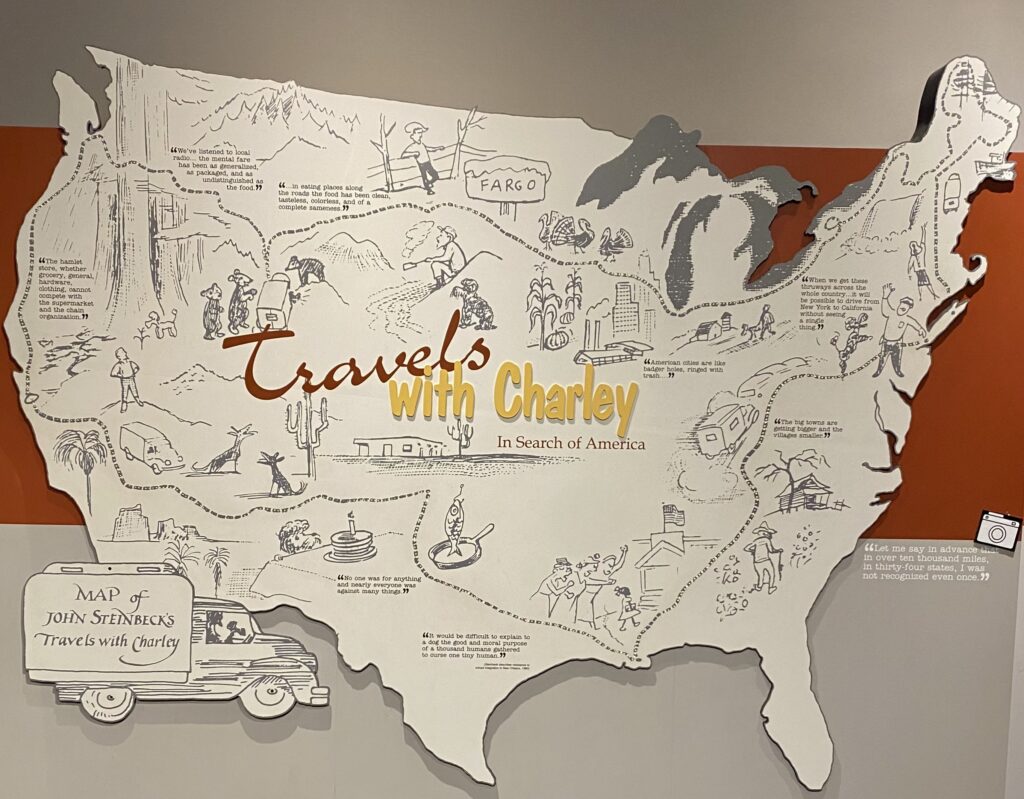Map of Steinbeck’s 1960 trek around the USA on display at the National Steinbeck Center in Salinas, Calif.
## **Second**:
Steinbeck ran out of mojo long before he ran out of miles. As early as Monterey, when he had to turn the rig around and head back into the heart of America, Steinbeck confessed that he had run out of steam. “My impressionable gelatin plate was getting muddled,” he wrote. “I determined to inspect two more sections and then call it a day — Texas and a sampling of the Deep South.” That’s a slender agenda for a 3,000-mile journey back to New York. And did he really explore Texas? While crossing New Mexico, he realized, “I was driving myself, pounding out the miles because I was no longer hearing or seeing. I had passed my limit of taking in.” Texas is a mere blur. Most of the Texas chapter is about the “orgy” of conspicuous consumption he and Elaine enjoyed over Thanksgiving at a wealthy ranch in the Texas panhandle. There is nothing in *Travels with Charley* about the colossal size of Texas, the endlessness of trying to drive across it, its long border with Mexico, its great river system, or its many distinct bioregions. He did not explore Houston, Galveston, Dallas, Fort Worth, El Paso, or the hill country that gave America Steinbeck’s future friend Lyndon B. Johnson. Texas was just a vast amount of landscape that stood between Steinbeck and his homecoming. After New Orleans, he descended into a self-described road fugue state and just hurtled home robotically to New York, stopping only to get gas and a bit of food and to sleep for a couple of hours by the side of the road.
> ***Travels with Charley* is easily the most personal of his 30 books. And the most confessional.**
## **Third**:
*Travels with Charley* is easily the most personal of his 30 books. And the most confessional. Steinbeck was an exceptionally private man, and though he reveals his social and political convictions from time to time in his books, especially *The Grapes of Wrath* and *East of Eden*, he seldom calls attention to himself as the author of his works. He always insisted that the book is the thing the public has a relationship with, not the author, who is just a grumpy, obsessed person (often an SOB) alone in a room with blank paper or a ledger book open before him. Nothing to be gained from knowing what kind of pencil he preferred or his daily writing habits. He writes, “I have found many Readers more interested in what I wear than in what I do. In regarding my Work, some readers profess greater Feeling for what it makes \[in sales and profits\] than for what it says.” But in *Travels with Charley*, Steinbeck was in a confessional mood for the first time. He describes his physical appearance and his physiognomy, including his reason for having a beard. He acknowledges that he had experienced several serious health episodes in the previous year. He confesses that he frequently gets lost on the journey, especially in cities. He confesses that he has lost touch with the American people. Above all, Steinbeck confesses that “I hadn’t been thinking very well of myself for some years.” This is a significant sentence.
## **Fourth**:
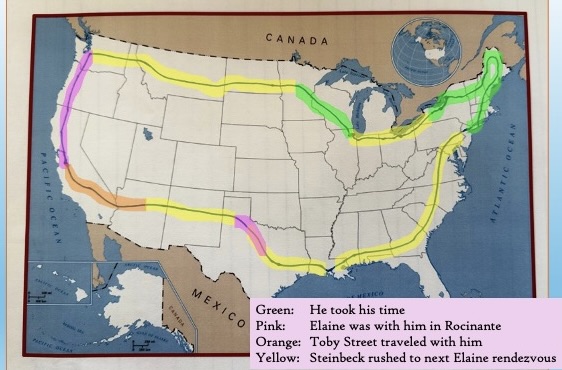
Retracing his journey (at any pace) immediately confirms how much of the time he was rushing from one Elaine encounter to the next. He rushed from Buffalo to Chicago to catch up with her. He lingered just a bit in the Midwest, from Chicago all the way to Sauk Centre, Minnesota, or even Detroit Lakes, but then he barreled across the Great Plains, the Rocky Mountain West, and the Columbia Plateau — to another encounter with Elaine in Seattle. After Thanksgiving in the Texas panhandle, once Elaine flew back to New York City from Austin, Steinbeck traveled as quickly as possible to New Orleans, briefly observed the racist women (the “cheerleaders”) who were protesting the integration of Louisiana’s schools, and then drove hell bent for leather back to New York. He admits the last of these forced marches. “My own journey started long before I left,” he writes, “and was over before I returned. I know exactly where and when it was over. Near Abingdon, in the dog-leg of Virginia, at four o’clock of a windy afternoon, without warning or good-by or kiss my foot, my journey went away and left me stranded far from home.” He confesses now that “I bulldozed blindly through West Virginia, plunged into Pennsylvania and grooved Rocinante to the great wide turnpike. There was no night, no day, no distance. I must have stopped to fill my gas tank, to walk and feed Charley, to eat, to telephone, but I don’t remember any of it.”
If you take out an atlas of the United States and do the math while tracing Steinbeck’s itinerary, you immediately realize that he raced across the bottom of the Great Lakes to Chicago. He raced from the North Dakota border to Seattle. He raced from Austin to New Orleans. And then he raced home. That leaves New England, a bit of the Midwest, the Pacific Coast Highway (with Elaine at his side), and arguably the road from Salinas, California, to Flagstaff, Arizona, as sections of the journey in which he took his time.
## **Fifth**:
Like the great French traveler Alexis de Tocqueville before him, Steinbeck recognized that the American people are restless. In his classic study *Democracy in America* (1835), Tocqueville wrote: “An American will build a house in which to pass his old age and sell it before the roof is on; he will plant a garden and rent it just as the trees are coming into bearing; he will clear a field and leave others to reap the harvest.” Steinbeck makes the same point: “Could it be that Americans are a restless people, a mobile people, never satisfied with where they are as a matter of \[natural\] selection? The pioneers, the immigrants who peopled the continent, were the restless ones in Europe.”
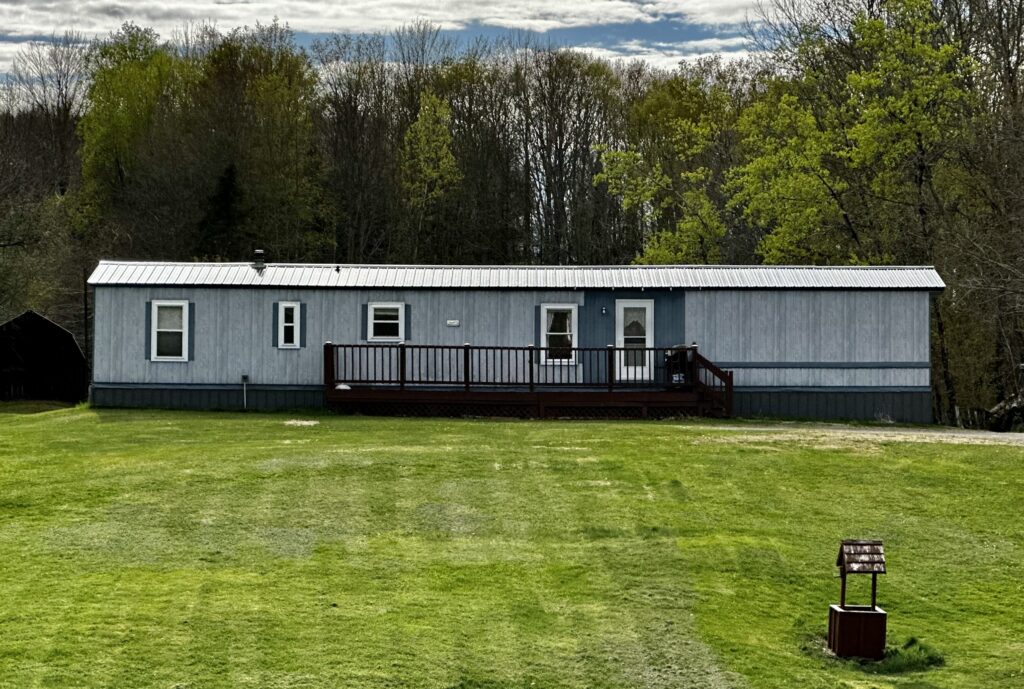Steinbeck was fascinated by mobile homes and mobile home parks he saw in his travels. (Photo by Clay Jenkinson)
Steinbeck was fascinated, possibly even obsessed, by the mobile homes and mobile home parks he first saw in his travels. He was so curious that he accepted dinner invitations from several couples who lived in mobile homes. They both told him their stories and extolled the economic benefits of mobile home living. He was impressed by the efficient floorplans of such mobile homes, their storage space, and the panoply of modern appliances. And you could just pick up and move!
Thanks to my own trip, I now understand why Steinbeck was obsessed with mobile homes. They are everywhere in New England, particularly Maine, and not so much concentrated in trailer parks as scattered individually all up and down Maine’s blue highways. The phenomenon continues 60 years later to catch the attention of all visitors.

The mistake Steinbeck made in 1960 was to overstate mobile homes’ mobility and fail to recognize how important the recreational vehicle (RV) would become as a better symbol of American mobility. Theoretically, anyone who owned one could pick up stakes quickly and have the mobile home hauled to another part of the country, but this rarely happens. Once they are settled on their foundations and the deck and other enhancements added, they seldom ever move again.
Today, RVs exhibit mobility, and some of them are larger, grander, and more luxurious than the best mobile homes of 1960. However, in Steinbeck’s time, there were few RVs and very few RV parks in the United States. The RVs of the time were modest and basic by today’s standards. Many RVs are more spacious and luxurious today than most people’s homes. It is not at all uncommon to see a dozen or more RVs the size of luxury buses, rock star buses in a single RV park, with several bathrooms, slide-outs, full bedrooms, a “home” theater, and four or five television monitors, one of which deploys outside from a compartment on the side of the rig.
Because there were so few RV parks in his time, Steinbeck frequently … well, squatted. He simply turned up a promising side road, found a level spot, and bedded down for the night. On several occasions, he was confronted by a concerned or angry property owner or his agent. On such occasions, Steinbeck was gratified to have Charley with him, for though Charley was, Steinbeck assures us, a pacifist and a coward, he could roar like a lion when a stranger approached Rocinante, and his bark was bigger than his bite — by magnitudes. Once a landowner confronted Steinbeck, the usual pattern was to apologize, offer to move, and then invite the stranger into the camper for a compensatory cup of coffee, which morphed on most occasions to coffee graced by a dollop of whiskey. In the end, Steinbeck was invited to go ahead and spend the night, and, on one occasion, the next morning, he and his antagonist went fishing together.
I wouldn’t be comfortable squatting on anyone’s private property these days. It’s a different time. And when push comes to shove, I can’t say I’ve won the Pulitzer Prize for Literature! We, the RV warriors of America, are fortunate to have lots of options today — RV parks of all sorts; Harvest Host, in which you get to spend a night on someone’s winery or ranch or dairy farm; and, of course, truck stops and Walmart parking lots.
## **Sixth**:
> **“I must confess to a laxness in the matter of National Parks. I haven’t visited many of them.”**
>
> **John Steinbeck**
Steinbeck was surprisingly uninterested in museums, historic sites, scenic wonders, and the national parks. He drove Maine but did not slow down to explore Acadia National Park, established in 1919 during the Woodrow Wilson administration. Acadia is Maine’s only full-on national park. It finds no mention in *Travels with Charley*. When he stopped at Niagara Falls, which Thomas Jefferson insisted was worth a trip across the Atlantic to see, Steinbeck wrote only this. “Niagara Falls is very nice. … I’m very glad I saw it because from now on, if I am asked whether I have seen Niagara Falls, I can say yes, and be telling the truth for once.” This is different from a rousing appreciation of one of the wonders of North America.
Steinbeck wrote, “I must confess to a laxness in the matter of National Parks. I haven’t visited many of them.” He explained that he was not interested in “the deepest canyon, the highest cliff, the most stupendous works of man and nature.”
On his journey through Montana, Steinbeck dropped down briefly to Yellowstone, the first and, in the minds of many, the greatest of America’s national parks. Steinbeck characterized it as a “wonderland of nature gone nuts.” He reiterated his casual indifference to scenic wonders. He declared that Yellowstone National Park was “no more representative of America than is Disneyland,” and he admitted that he only diverted from his beeline to Seattle out of “fear of my neighbors. I could hear them say, ‘You mean you were that near to Yellowstone and didn’t go. You must be crazy.” He concluded, “I would rather see a good Brady photograph than Mount Rushmore.” Ok, then. Point made.
Earlier in his transit of Montana, Steinbeck made a side trip to visit the Little Bighorn Battlefield. He gave it one short paragraph. “We made a side trip to pay our respects to General Custer and Sitting Bull. … I removed my hat in memory of brave men, and Charley saluted in his own manner but I thought with great respect.” In other words, Charley lifted his leg and peed on the battlefield. And then they drove on.
I had only really registered Steinbeck’s indifference to these places once I began to retrace his journey. As I neared my home state of North Dakota, I diverted about 50 miles from Frazee and Detroit Lakes, through which he passed, to see again the source of the Mississippi River at Lake Itasca in Itasca State Park. The source of one of the world’s greatest rivers gets no mention in *Travels with Charley*. Itasca State Park, established on April 20, 1891, is not only Minnesota’s oldest state park but the second oldest state park in the United States. It held no allure to Steinbeck, who pressed on from Detroit Lakes to Fargo because “Fargo to me is brother to the fabulous places of the earth, kin to those magically remote spots mentioned by Herodotus and Marco Polo and Mandeville.” Whoa. Herodotus and Marco Polo? After this buildup, Fargo could only disappoint — and it did. What he encountered was not the Silk Road or the Hanging Gardens of Babylon, or even the hitching posts and Wells Fargo freight wagons of the Old West, but a town “as traffic-troubled, as neon-plastered, as cluttered and milling with activity as any other up-and-coming town of 46,000 souls.” After seeing nothing impressive or special about Fargo, Steinbeck traveled a few dozen miles on old U.S. Highway 10 and stopped at a roadside turnoff “to lick my mythological wounds.”
## **Seventh**:
Elaine and John Steinbeck in 1959. (Martha Heasley Cox Center for Steinbeck Studies, SJSU)
Although Steinbeck made a big deal about the need to travel incognito across America, lest his fame distort the conversations he sought with average Americans, I believe he revealed his identity several times. When he arrived many hours too early at the swank Ambassador East Hotel in Chicago and was told that he’d half to wait until check-in time, he managed to persuade the hotel staff to let him spend the interim resting in a room recently vacated by a traveling salesman, but not yet serviced by the housekeeping staff. Steinbeck had been driving much of the night. He was tired and grungy. Nobody likes to arrive at a hotel and be told your room is not ready. In his book, Steinbeck tells an amusing story — he informed the hotel clerks that until his room was ready, maybe he’d lounge like a vagrant in the lobby, splay out, and doze off in one of its plush chairs, surrounded by his “luggage,” which he says consisted of a cardboard box he found in the garbage can and tied with fishing line. At that point, the staff scrounged up a temporary room for him. It is hard to believe that Steinbeck did not play his celebrity card on this occasion. If ever there was an instance on the journey when it would be advantageous to reveal his true identity, this was it. At the beginning of the episode, he wrote, “I think I am well and favorably known at the Ambassador East.” That sentence probably governs the entire episode. Which is more likely that Steinbeck maintained his anonymity and played his vagrancy card to get a temporary room at the Ambassador East or that he told the management, “Look, I’m John Steinbeck, touring America for a book I’m writing, and (sotto voce) I’m traveling incognito because it’s important that I’m not recognized. Can you help me out here?”
When Steinbeck and Elaine arrived in San Francisco in November and checked into the luxurious St. Francis Hotel, he decidedly did not travel incognito. He permitted himself to be interviewed by San Francisco journalists, including Herbert Caen, one of the most prominent newspaper columnists on the West Coast. How did they know he was there? When he returned to Monterey, another interview, and he hung out at some of his old haunts with some of his old cronies from the Cannery Row days. When Steinbeck caught up with Elaine a few weeks later in Amarillo, they celebrated Thanksgiving at an ostentatious ranch (just this side of a dude ranch) owned by prominent Texans in Elaine’s social circle. There is nothing incognito about that.
I’m guessing that Steinbeck was very seldom, if ever, recognized as he traveled America. It was a time when photographs of authors were neither widely circulated nor widely recognized by the public. In addition, it’s always hard to recognize someone when they appear entirely out of context. Steinbeck usually wore a sailor hat east of the Missouri River, a Stetson west of the river. It would have been quite improbable for someone to say, “Hey, aren’t you the guy who wrote the *Grapes of Wrath*?” But on those very few occasions when Steinbeck wanted to be recognized, he was not, I think, averse to playing the famous author card.
## **Eighth**:
Steinbeck said a journey of this sort had to be made alone. “Two or more people disturb the ecological complex of an area. I had to go alone and I had to be self-contained.” He was indeed correct. If Elaine and John Steinbeck had traveled America as a couple, it would have been a much different journey, a much less romantic quest, and a much less interesting book. But how much of the time was he really alone? He spent a number of days in Chicago with Elaine. A couple of weeks later, Elaine flew out to Seattle to meet him for a few days, and when he resumed the journey, Elaine was at his side in the truck camper until San Francisco, Monterey, and Salinas. After Elaine flew home to New York, Steinbeck asked his old friend Toby Street to join him on the trip’s next leg. Street was with him until Flagstaff, where he announced that he had had enough. Elaine met Steinbeck in Amarillo, and she was at his side as he drove from Amarillo to Austin. Steinbeck’s detractor, investigative journalist Bill Steigerwald, estimates that Elaine was with John about 40% of the time.
> **Charley is not only delightful in himself but also the source of most of the delight in the book**
## **Ninth**:
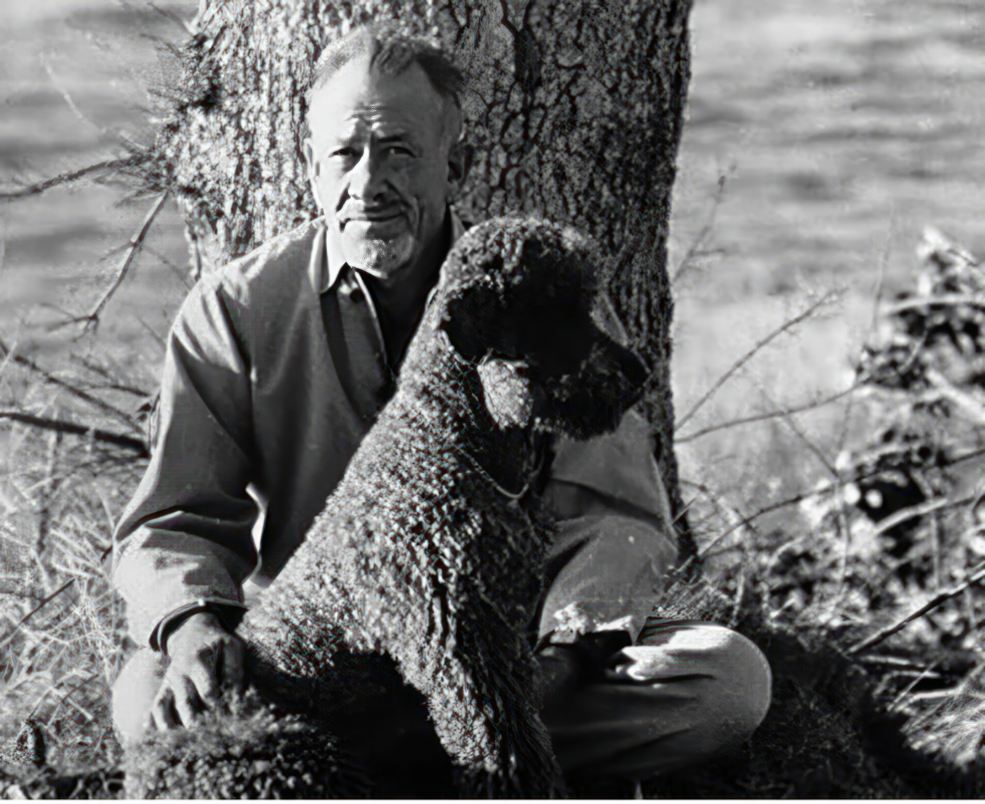John Steinbeck with his dog Charley.
Charley, the giant poodle, is essential to *Travels with Charley’s* success. Remove Charley, and the book will make for a pretty thin gruel. I’ll write separately about the genius of making Charley a full-blown character in the book, with tons of personality, a great sense of timing, and a truly rich capacity for comedy. For the moment, know that Charley steals the show. He dominates the narrative with his French elan, anthropomorphic wit, and insouciant air of superiority. I’m sure the actual aging poodle added materially to Steinbeck’s pleasure on what was otherwise a lonely and often desolate journey around the United States. However, the enormous presence of Charley in the book may be the result of some literary enhancement. As he wrote *Travels with Charley* in the winter and spring of 1961, I believe Steinbeck realized that both his journey experience and his narrative of it were both a little thin and even a little tedious (a long essay on the ingenious mobility of mobile homes, an occasional rant about plastic wrappings for food, dishes, and toilet seats, the deepening homogeneity of American life), so he devoted more space to Charley, who thus emerges as the most interesting personality in the book. It would be fascinating to distribute two versions of *Travels with Charley* to two sets of readers: one in which Charley joins Steinbeck in his travels, and the other where the poodle stays back in New York with Elaine. I very much doubt that *Travels with Charley* would have achieved its status as a literary classic had it not been for the presence of Charley, the gap-toothed vociferator of “ftt,” a creature of timely and meaningful coughing fits, who reads Steinbeck’s mind and bends it to his will, and who decides to forgive Steinbeck “in a nauseatingly superior way” for putting him in a kennel for a few days.
Charley is not only delightful in himself but also the source of most of the delight in the book. We love dogs, especially dogs with personality and whimsy. Charley lightens the tone, reveals Steinbeck as a man of genuine sympathy, and — oddly enough — the great dog humanizes the travelogue.
## **Some Conclusions:**
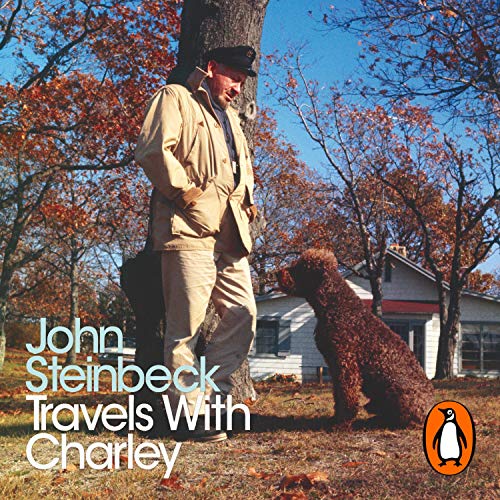
None of this is meant to find fault with John Steinbeck, certainly not to diminish the great literary achievement of *Travels with Charley*. Writers shape the raw material of their experiences into compelling stories. Steinbeck needed us to think that he was alone most of the time. He wasn’t. Steinbeck needed us to believe he spent most of his nights in the camper. It’s impossible to know how many nights he spent in motor courts, cabins, and hotels, but it is clear that he spent far more nights in commercial accommodations than he would have us believe. Steinbeck needed us to believe that he (a well-known American writer) could shed his fame for three months and wander unrecognized through America. It’s a very charming conceit. It is likely not entirely true.
Above all, Steinbeck did not want us to know that he spent much of his time with Elaine. That would spoil the romance of the story. In the original manuscript (now at the J.P. Morgan Library in New York City), Steinbeck provides a more accurate account of how much of the journey Elaine participated in. But most of that material was wisely excised during the editing process.
I have learned all these things by taking Steinbeck and *Travels with Charley* on the road. As intellectual historian Yuval Harari says, we have our experiencing self and then our narrating self, and though they overlap, they are not identical. Anyone who expects *Travels with Charley* to be a punctiliously faithful account of Steinbeck’s fall 1960 journey — and blames him for anything in the book that could not survive strenuous fact-checking — does not understand the nature of literary creativity.
The greatness of *Travels with Charley* is in Steinbeck’s relaxed writing. In this late-career book, Steinbeck lowers his guard more than he had ever done before. No matter what actually happened out there between September 23 and mid-December 1960, Steinbeck wrote a lovely, whimsical, quirky, informal, wry, and ironic book in which he confesses a great deal about what he had previously walled off as private. He does not attempt to strain for literary effect. From the book’s opening passages, he makes us want him to succeed in his lonely journey around America. We embrace the image of a distinguished American writer in khakis, a plaid wool shirt, and a ship captain’s cap reading after dark by kerosine lamp in his snug camper after he warmed up a can of chili con carne with an unusually intelligent and enterprising dog draped around his feet. I know few individuals who are not drawn to the romance of envisioning an eminent writer silhouetted with Charley behind the yellow light of his camper’s windows somewhere under the trees, sipping a snort of bourbon, traveling the whole of America in search of meaning.
It’s the relaxed Steinbeck, writing relaxed prose, that makes *Travels with Charley* so wonderful.
And Charley.
***Over the next few months, Clay is shadowing Steinbeck’s 10,000-mile trek around the USA (and making a few detours of his own). Clay’s expedition is a central part of LTA’s big initiative to explore the country and take the pulse of America as it approaches its 250th birthday. Be sure to follow Clay’s adventures [here](https://ltamerica.org/tag/steinbeck-travels/) and on [Facebook](https://www.facebook.com/LTAmerica) — and [subscribe to our newsletter](https://ltamerica.org/newsletter/)*.**
**Categories:** Features
**Tags:** America at 250, Books, Humanities, John Steinbeck, Steinbeck Travels
---
### [Encounters in Yellowstone National Park](https://ltamerica.org/encounters-in-yellowstone-national-park/)
**Published:** June 25, 2024
**Author:** Clay Jenkinson
**Excerpt:** On my way back to North Dakota I visited my modest cabin 2 miles from Yellowstone National Park I wanted to make a pilgrimage to Old Faithful.
**Content:**
## A visit to his “wee cabin” outside of Yellowstone reminds Clay of John Locke’s comment, “In the beginning, all the world was America.”
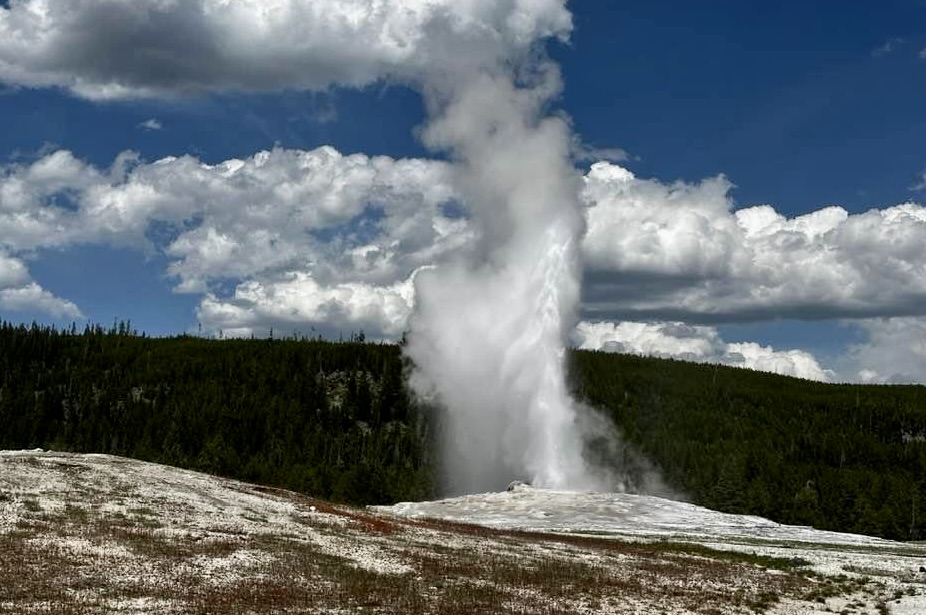The iconic Old Faithful in Yellowstone National Park. (Photo by Clay Jenkinson)
On my way back to North Dakota from Vail, Colorado, I planned to stay a few days in my modest cabin 2 miles from Yellowstone National Park near Cooke City, Montana; I decided I needed to make a pilgrimage to Old Faithful. Whenever this impulse seizes me, I always sigh a little because visiting Old Faithful is a bit like visiting Mount Rushmore or Disneyland: traffic, parking, crying and whining children, splotches of ice cream accidentally dropped from cones all over the site, expensive hot dogs and mindless souvenirs, and displays of the full range of human nature.
But Old Faithful is one of the Wonders of the World. It is the centerpiece of the most concentrated array of geysers on Earth. It is one of the quintessential American experiences. In any list of must-see American places — the Grand Canyon, the Statue of Liberty, the Lincoln Memorial, Monticello, Canyon de Chelly, the Golden Gate and Brooklyn bridges, Sunset Boulevard, the Empire State Building, Wounded Knee, the Little Bighorn Battlefield, Gettysburg, the Edmund Pettus Bridge in Selma — Old Faithful has a place near the top. There was no way I was going to talk myself out of it. When I was here with my near kin on the 4th of July once a dozen years ago, I brought up the idea of going to Old Faithful to celebrate American independence. My mother and daughter groaned — hours in the car, congestion, traffic jams. They didn’t veto the pilgrimage — they didn’t dare — but they were hoping I would back down. “Get in the car; you’ll thank me later,” I said. They did. And they did. We had a magical day.
I’ve been to Yellowstone National Park, established 1872, the first of America’s national parks, several dozen times. But I don’t know it very well. I’ve hiked at most 20 miles along the park’s network of trails. I know a little about how it was “discovered” and later enshrined in American law, how Theodore Roosevelt and George Bird Grinnell — [Boone and Crockett Club](https://www.boone-crockett.org) members — saved the park from adverse industrial development. I know that the park — large at 2,219,790 acres — is only a small parcel of the Greater Yellowstone Ecosystem (20 million acres), which contains the habitat that wolves, bears (including grizzly bears), bison, elk, bighorn sheep, and other creatures need to thrive. I know that Yellowstone National Park is the height of land from which mighty rivers take their source: the Yellowstone, the Snake, the Shoshone, and the Madison and Gallatin, prime arteries of the Missouri River.
You could spend the rest of your life mastering Yellowstone National Park: its origin story, history, relation to Native Americans, hydrology, wildlife, trees, mountains, geothermal wonders, serious, possibly even existential challenges, hikes, and trails.
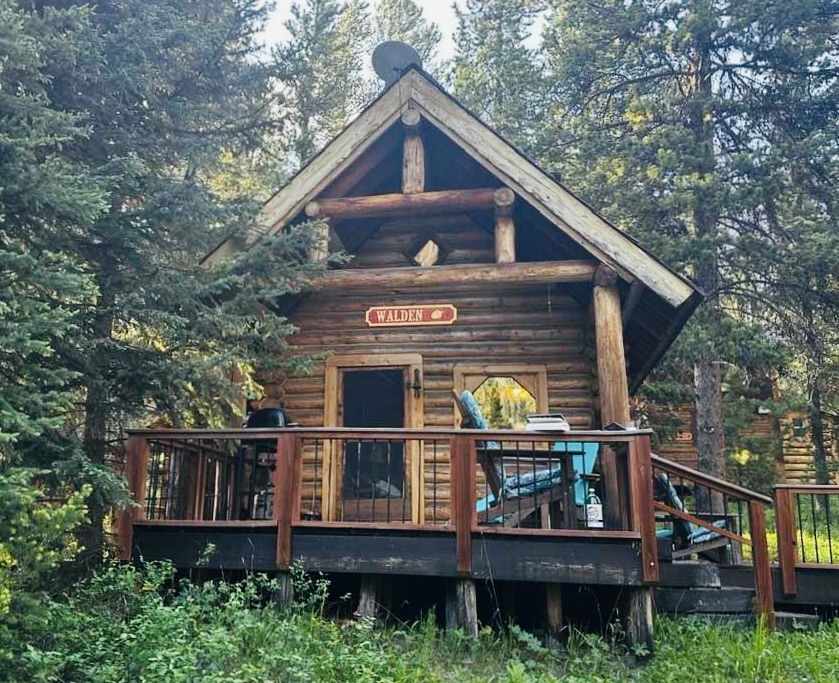Clay’s family cabin 2 miles from Yellowstone National Park near Cooke City, Montana. If you’re visiting Yellowstone the cabin is available on [Airbnb](https://www.airbnb.com/rooms/31329529?adults=1&children=0&enable_m3_private_room=true&infants=0&location=Cooke%20City%2C%20Montana%2C%20United%20States&pets=0&search_mode=regular_search&check_in=2024-07-25&check_out=2024-07-30&source_impression_id=p3_1719259091_P3to7vi1xmFLH-kF&previous_page_section_name=1001&federated_search_id=e075511b-a4ab-4a4c-bb58-748e9fdaff94).
Heck, I don’t even really know the small plot of forest on which my wee Cooke City cabins sit. There are hundreds of trees (mostly evergreens — you see how vague I am), shrubs, and wildflowers. Just to the north, there is a steep mountain (whose name I don’t know) that I have thought of climbing, but so far, I have never done so. An occasional bear visits the property. My sister claims she walked out once, and a grizzly was lounging in a deck chair — but my sister told some stretchers, as Huck Finn says. Whenever I am at the Walden Cabin, I see one or more foxes that turn up around dusk, sit on the grass outside my window for a few seconds or minutes, and then resume their rounds. At this time of year, there are scores of butterflies. Henry David Thoreau would know the exact perimeter of his property, would make an inventory of all the species that live on the small plot of forest, would get down on his stomach to observe a delicate wildflower, would harvest edible plants, find a way to talk fox, and would know just when the afternoon thunderstorm is likely to move through.
The first thing I did after my mother died five years ago was remove the television from her cabin. I got rid of the satellite dish. And her huge and diverse collection of refrigerator magnets.
The Yellowstone River. (Photo by Clay Jenkinson)
Yesterday, I approached Yellowstone National Park from Cody, Wyoming. I usually come from Billings or Bozeman, but this time, I decided to enter the park through the East Entrance (U.S. 20, U.S. 14). Each of the five entrances to the park is spectacular in its own way. Driving over the[ Beartooth Highway](https://www.redlodge.com/beartooth-highway.asp) (U.S. 212) is one of America’s most thrilling mountain highways, and for some (like my late father), terrifying. Driving down U.S. 89 to the North Entrance with the Roosevelt Arch makes you want to ban second-home ranchettes unless, of course, you have enough money to buy one for yourself. It’s always a joy to see the Yellowstone River when it is still a boisterous mountain stream. But if you want to see what can go wrong in American tourism, I recommend West Yellowstone.
To get to the East Entrance from Cody, you have to go through a wonderful highway tunnel — it has some of the feel of *Alice Through the Looking Glass* or Harry Potter and his friends getting on board the Hogwarts Express — a magic portal to one of the world’s most magical places. The Shoshone River is dammed near Cody, and the reservoir behind it is not one of America’s most beautiful, but the closer you get to the park entrance, the more amazing the Shoshone becomes until you almost forget Buffalo Bill Cody’s obsession with making the desert bloom, with a little help from the U.S. Bureau of Reclamation. As you approach the park, you inevitably say, “Why isn’t this also part of the national park?” It’s some of the most sublime scenery in America.
The mountainside where scores of visitors stopped to see a grizzly. (Photo by Clay Jenkinson)
Not long after I entered the park, I saw 40 cars parked awkwardly by the side of the road. Scores of people were standing on the edge of the pavement with their gigantic telephoto lenses, professional binoculars, and tripods with spotting scopes. I know a good “mediated experience” when I see one, so I stopped, too. I walked up quietly to one cluster of people studying the mountainside as if it were a medieval Chinese manuscript. I did not want to be one of those people who rush up saying, “What are we looking at?” but I trust human nature, so I waited a couple of minutes until someone else asked the question.
“It’s a grizzly bear,” a man said, “but it’s hiding. It’s shy. It’s been behind some of that fallen timber for the last 15 or 20 minutes. We’re hoping it will show itself before long.”
I looked up at the putative site of the grizzly. All I could see were approximately 350,000 dead, downed trees, making the mountain look like the cosmic edition of Pick Up Sticks or a box of colossal Lincoln Logs unceremoniously dumped over the steep terrain. “Start from the bottom right next to where the guy in Bermuda shorts is standing and work your eyes up about 100 yards up the mountain where one of the most dense patches of fallen trees is,” said the man. “We think that’s where it is.” I did my best, but I eased my way back to the car since there were hundreds of dense patches of fallen trees on the mountainside, and the alleged grizzly bear was invisible. As I withdrew, a woman said, with the greatest sense of conspiratorial pride, “The rumor is that it’s Raspberry.”
Raspberry?
I looked this up later, and I’m sorry to report that there are bears in Yellowstone who have been given pet names by photographers and bear watchers. These bears have been “adopted” by their fans, who generally know where to find them and who spend days, weeks, even months looking out for their foster quadrupeds, speaking a kind of wilderness baby talk to them, photographing them with lenses that cost thousands of dollars, cooing and ahhing, sending triumphant texts, and letting mere tourists know that they feel a fiduciary responsibility to make sure the bears are thriving.
Clay’s sketch of the shy grizzly and its fans at Yellowstone National Park.
## **Naming a Grizzly Bear?**
This would seem to me to violate the very idea of wildness. To name is to possess. Why call a grizzly bear Petunia or John Muir? Whenever we anthropomorphize the Other — other species, plants and trees, domesticated animals — we succumb to the trap of believing that humans are the measure of all things and that we have dominion over species lower down the great chain of being, that we are entitled to name them like our dogs or cats or parrots. We should want wild creatures to be … well, wild. Nameless, uncooperative, Other, and a little dangerous. We should revel in the fact that so many of God’s creatures live their lives all around us with little or no regard for human beings except to find them intrusive. I was thrilled during the pandemic when the national parks closed, and all the human-shy species came back down to reclaim Yosemite Valley, Glacier, Yellowstone, Chaco Canyon, and scores of other national parks and national monuments.
But to each her own, of course.
I drove the northern perimeter of Yellowstone Lake (huge, the “source” of the Yellowstone River) and followed the directions to Old Faithful. I found a good parking spot near Old Faithful Lodge. I locked the car (alas) and walked up to the giant semicircle of backless synthetic benches where people gather to wait for Old Faithful to vent. It was a mid-June Friday. Approximately 1,500 people were sitting to wait for the geothermal show.
I had no idea when Old Faithful was scheduled to vent, and I did not wish to know. The not knowing is part of the ecstasy when it happens. But there were impatient time-keepers all around me consulting their watches and websites. For the first 45 minutes, the visitors were quite subdued. It was the first truly great summer weather day in 2024 for most of us. Temperature 74 degrees, a light breeze, scattered cumulous clouds, a blue, blue sky, and we were joined in a community paying homage to one of the Wonders of the World. I sat serenely without a care in the world in one of the world’s great places, thinking Ken Burns was right: national parks are one of America’s greatest ideas. The crowd mostly spoke mutedly, as if they sensed this was an American cathedral. It seemed to me that the people who had gathered on the longest day of the year were feeling the need to experience something to be proud of and cheerful about in this horrific time of savage politics, governmental paralysis, and a down-in-the-dirt rematch between two antiquated political veterans that polls show the American people have no passionate attachment to.
## **Finding Optimism About America Again**
I need to find hope and optimism about America again. I love America. I am in love with America. I believe we Americans were intended to be the exemplars for the world of what life can be when people of the Enlightenment fashion a republic “of the people, by the people, and for the people.” We were meant to be a Periclean people, cherishing truth, beauty, justice, and the arts of civilization with ideals higher than materialism and mere prosperity. I want to believe that we are one of the most enlightened peoples on earth, that we are, on the whole, a force for good in the world, and that the world is better off for our existence and global leadership. I want to believe that we are not finished, but continually and measurably moving toward “a more perfect union,” that the founding ideals of America — equal treatment before the law (no man above), due process, checks, and balances, limited government, equal justice to every human being, self-reliance, civility, compassion for those who fall through the cracks of our advanced capitalist economy, sympathy for the “wretched” refugees of the world and especially the western hemisphere, a deep national dedication to peace, unlimited religious and ethnic tolerance, a living wage for every hard-working American — can be reburnished in a time of disillusionment.
The great Wallace Stegner (1909-1993) said it best. We need America “to create a society to match its scenery.” There is still time, but we will have to rededicate ourselves to the challenging quest.
Something is wrong when the Right has a monopoly on the rituals of patriotism — flags and Lee Greenwood! — and the Left seems embarrassed to stand for the national anthem, pledge allegiance, sing *America the Beautiful*, or express their love of country. Many on the Left are afraid to declare their patriotism or their love of America because they believe they will be ridiculed as saps, sentimentalists, rednecks, or insufficiently critical of America’s many failures of justice for all. But America belongs to us all.
I had now been sitting for a full hour on the backless bench. The crowd’s patience began to erode as the temperature rose a few degrees, and the geyser did not quite conform to ranger predictions. One grumpy woman declared that Old Faithful wasn’t worth a heat stroke, for Christ’s sake, and that she would seek some shade and maybe come back once she saw the vapor plumes. A wise guy a few rows back said why couldn’t the national park find a way to make Old Faithful go off every 30 minutes right on schedule, or at least provide an app so we could be sipping beer in the bar until we were alerted to the geyser’s imminent eruption.
Then it happened. A zillion smartphone photographs were taken, many awkward selfies, and some phone videos. Very few dedicated video cameras are out there these days, but I can remember when they were the size of luggage. Old Faithful spouted for a couple of minutes and then settled into some aftershocks. Some people clapped. Everyone stood up and made for the parking lot.
An older man from one of the Dakotas was pretty uninspired. “That’s it? That’s the Old Faithful I have been hearing about all my life? I drove 600 miles for this? I thought it would be better.” His wife, glancing around, said, “Well, maybe this was not one of its best days.” A young father said, “If we hurry, we can beat the line at the cafeteria. Let’s bounce.” A bored teenager said, “Will there be internet tonight in the campground for once? And how far is it anyway?”
I wanted to turn to them all and do some comic mansplaining. “Hey, you knuckleheads, this is one of the Wonders of the World. Geez. What would it take to impress you?! Yellowstone National Park is the world’s premier geothermal zone. You were reminded that the Earth is a dynamic sphere, not inert, that all sorts of wild stuff is happening below the surface everywhere, but in a few places, it vents its way out. Yellowstone was the world’s first national park. It changed everything. Thanks to the foresight of Congress in 1872, Yellowstone served as the template and the precedent for national parks all over the world, including 63 full-on national parks in the United States, including Great Smoky Mountains, the Everglades, Crater Lake, Big Bend, Mesa Verde, and in North Dakota, Theodore Roosevelt National Park, named in honor of the greatest presidential conservationist in American history. And, you jaded folks, Old Faithful faithfully vents 20 times daily with something like uncanny regularity. You can take your app and …”
But of course, I said nothing. I slunk away.
## **The Geyser Gazer**
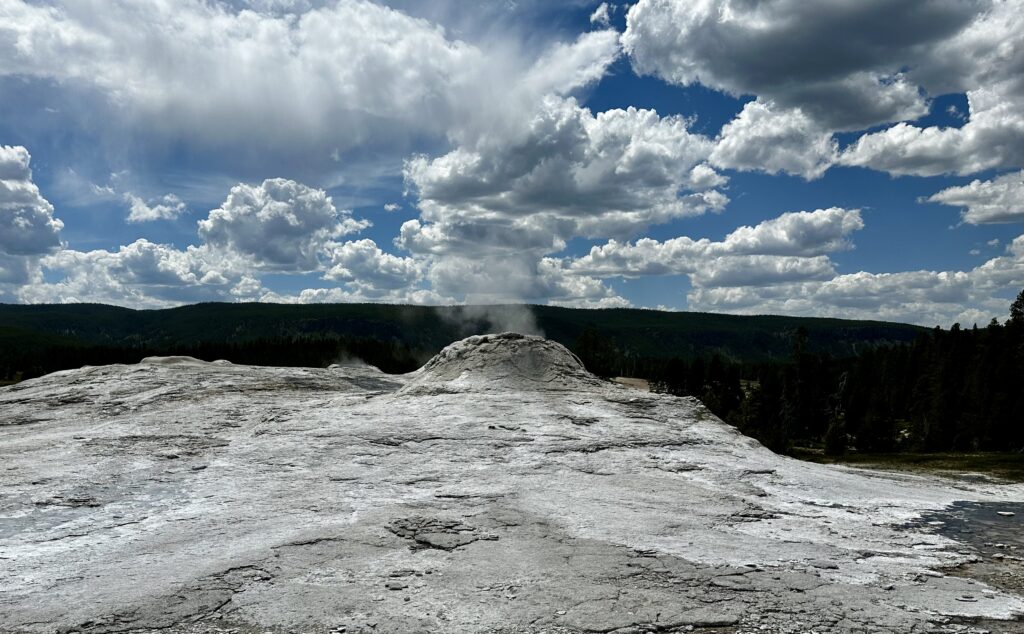Lion Geyser, one of the many at Yellowstone National Park. (Photo by Clay Jenkinson)
I decided to do the boardwalk hike (stroll) around the geyser basin. Because we are so over-conditioned and over-mediated for Old Faithful, the lesser geysers are actually more fascinating because happening upon one feels more like discovery and less like a culture cliché. I stopped to look at a couple dozen thermal pools, vents, baby geysers, and other geothermal anomalies, sharing other visitors’ sense of awe, and I was on my way back to my car — still two and a half hours from my cabin — when I approached Lion Geyser on the boardwalk. A young couple (in their late 30s) were sitting on the bench intently watching the small array of geyser vents. I sat at the other end of the bench, not wishing to interrupt their time together or their vigil. But the man soon turned to me and told me that Lion was expected to vent sometime in the next 90-180 minutes, that it is one of the most impressive geysers in Yellowstone, and that an hour and 10 minutes after its big performance, it has amazing aftershock rumblings that sound precisely like a lion. He wore Keene hiking boots, shorts, a green checked shirt, an REI hiker’s hat. He had guidebooks in his backpack, snacks, binoculars, and maps. He had a scratchy beard. The woman with him was dressed more for the golf course than for a geyser basin, but she seemed content to be there.
I decided to join the vigil.
My new friend explained that geyser watching was his “hobby,” though his girlfriend suggested that “obsession” was perhaps a more precise description. She had a paperback book in her pack, a quasi-bodice ripper, and she retreated into that alternate universe for chunks of time. He had a walkie talkie. Every 20 minutes or so, the device would crackle with updates from other geysers. “Unit One to Unit Four. The Eagle has landed.” That sort of thing. He explained that he belonged to a group affectionately known as Geyser Gazers (who knew?), that there was a website and an online and (if you pay more) print edition of a periodic newsletter. He had an app on his phone that let him key in data from any geyser anywhere. They are crowd-sourcing a complete global chart of geyser behavior and periodicity. He has written for the online journal. I asked him approximately how many Geyser Gazers there are in the world. Hundreds or thousands? Low hundreds, he said. I asked if they had annual conventions. Not anymore. Not often.
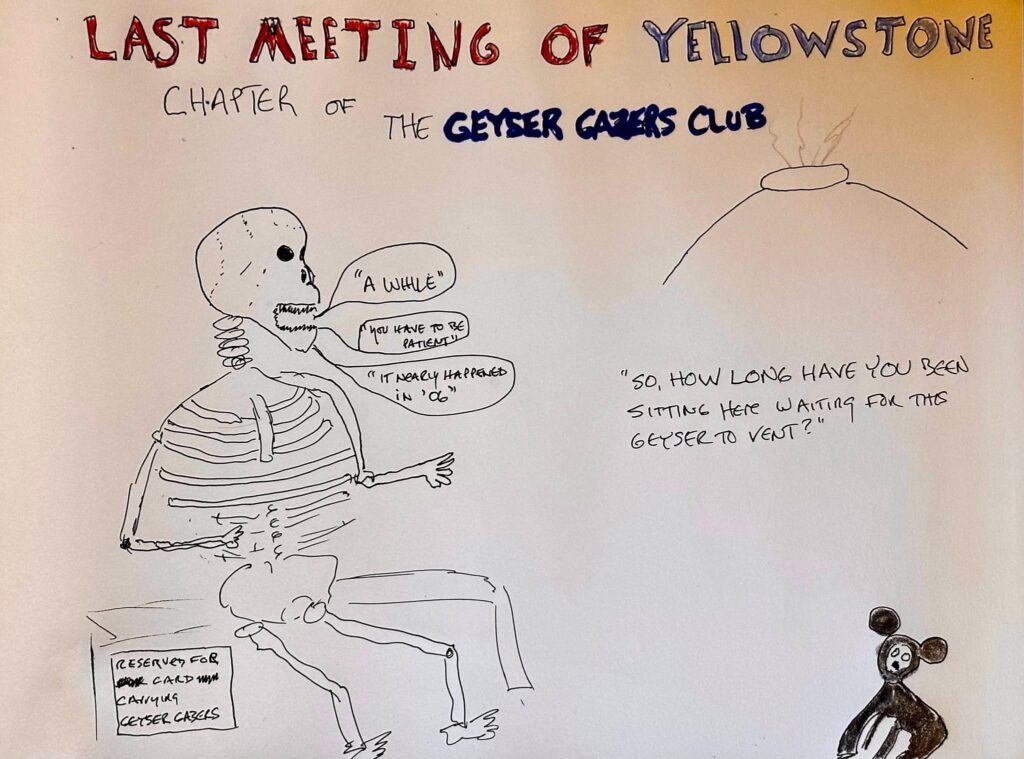The Geyer Gazers Club. (Sketch by Clay Jenkinson)
I asked questions about how geysers work, and the young man answered them with real clarity. After about five minutes of basic scientific explanation, he looked up at me and said, “Basically, it’s like a tea kettle when it boils over.” That much, of course, I knew. I asked him if it is still the case in Iceland that “guides” salt geysers with laundry detergent to make them vent. Not so much anymore, he said. I asked him where the other great geyser basins of the world are. Iceland and New Zealand. Oh, and west of Cody. And one that has been quiet for a long time in Nevada.
We did not talk much. I sat there — enjoying the sun, the breeze, and my Geyser Gazer while musing, meditating, and thinking about America. Every 10 minutes or so, one of the four vents in the cluster did something interesting. He “read” the geothermal rumblings with years of gazing under his belt. “That was a good sign,” he said. “It won’t be so long now.” The geyser known as Little Cub never shot more than 8 feet high, and usually about 5 or 6, every 20 minutes or so, but I found it fascinating, in some ways more than the most impressive geysers. “The Earth is alive with energy!” my Gazer guide gushed. About two hours in — beginning to wonder how my day or night would end — I must have let out an audible sigh. From the other side of my Geyser Gazer, his girlfriend said, in a low tone, “Yeah, there’s plenty of that.” But he was not offended.
The sun was about to set. I had to leave. I had so wanted to show the kind of patience I would need to earn my Geezer Geyser Gazer badge. Standing, I said, “I am going to do you both a great favor. I have to leave, and I know the minute I leave, Lion is going to blow.” He chuckled and said, “That’s how it works.” I asked, “Just out of curiosity, how long have you been here this afternoon, and — more to the point — how long are you prepared to maintain this geyser watch?” “We’ve been here four hours,” said he, “and my sense is that there’s no point now in walking away. It’s got to vent in the next hour or so.” I was tempted to stay, but I reckoned he might say much the same thing at 8:45 p.m. I walked toward my car.
Five minutes later, I turned back like Lot’s wife. Sure enough, the Lion was roaring. Later that day, I told an old friend about it, and she said, “You would have so enjoyed watching his face when it happened.” She was right.
Tower Falls, Yellowstone. (Photo by Clay Jenkinson)
The traffic was light as I drove from Old Faithful to Canyon, Canyon to Tower, and Tower through the Lamar Valley to my cabin, situated midway between Cooke City and Silver Gate on U.S. 212. I drove slowly, in a lovely patriotic national park haze, window open, sound system muted, air temperature dropping 2 degrees every 15 minutes, the quality of light gentling its way toward dusk. I drove past hundreds of buffalo and some elk.
When I opened my cabin and put a few things in the refrigerator, I poured myself a glass of pinot noir and sat out on my deck, waiting for the foxes. They came. Then they left. I stayed out until it was too dark and chilly to linger.
I felt great love of America.
We are incredibly fortunate that men and women with foresight and wisdom have set aside some of the primordial New World for permanent protection from adverse economic development. How great that we have saved some of the best of America — for seed. How great that we understand that some of the best things in existence must be left alone and not forced onto the Procrustean Bed of human selfishness. We will have to face the issue of how many visitors are enough per day, week, month, and year. We are loving our national parks to death. They are our spiritual refuge. They remind us of the wisdom of John Locke, when he said, “In the beginning, all the world was America.”
Note to self: get here more often.
---
## ***Discover more on these topics at Listening to America***
[North Dakota](https://ltamerica.org/tag/north-dakota/ "53 topics")[The Constitution](https://ltamerica.org/tag/the-constitution/ "1 topics")[Virginia](https://ltamerica.org/tag/virginia/ "7 topics")[South Carolina](https://ltamerica.org/tag/south-carolina/ "1 topics")[Ohio](https://ltamerica.org/tag/ohio/ "2 topics")[north daktoa](https://ltamerica.org/tag/north-daktoa/ "0 topics")[Oppenheim](https://ltamerica.org/tag/oppenheim/ "0 topics")[Thoreau](https://ltamerica.org/tag/thoreau/ "5 topics")[Space Exploration](https://ltamerica.org/tag/space-exploration/ "8 topics")[Tennessee](https://ltamerica.org/tag/tennessee/ "1 topics")[Rivers](https://ltamerica.org/tag/rivers/ "3 topics")[Steinbeck Travels](https://ltamerica.org/tag/steinbeck-travels/ "75 topics")[Washington](https://ltamerica.org/tag/washington/ "2 topics")[New York](https://ltamerica.org/tag/new-york/ "8 topics")[William Shirer](https://ltamerica.org/tag/william-shirer/ "1 topics")[Video](https://ltamerica.org/tag/video/ "51 topics")[Thomas Jefferson](https://ltamerica.org/tag/thomas-jefferson/ "34 topics")[Wyoming](https://ltamerica.org/tag/wyoming/ "4 topics")[Water in the West](https://ltamerica.org/tag/water-in-the-west/ "24 topics")[paintings](https://ltamerica.org/tag/paintings/ "0 topics")[Sports](https://ltamerica.org/tag/sports/ "2 topics")[State Parks](https://ltamerica.org/tag/state-parks/ "2 topics")[New England](https://ltamerica.org/tag/new-england/ "1 topics")[U.S. Presidents](https://ltamerica.org/tag/u-s-presidents/ "71 topics")[Oppenheimer](https://ltamerica.org/tag/oppenheimer/ "1 topics")[Road Trips](https://ltamerica.org/tag/road-trips/ "18 topics")[Rome](https://ltamerica.org/tag/rome/ "1 topics")[Wisconsin](https://ltamerica.org/tag/wisconsin/ "0 topics")[Travel](https://ltamerica.org/tag/travel/ "1 topics")[Theodore Roosevelt](https://ltamerica.org/tag/theodore-roosevelt/ "16 topics")[Vermont](https://ltamerica.org/tag/vermont/ "1 topics")[Pennsylvania](https://ltamerica.org/tag/pennsylvania/ "1 topics")[Podcast](https://ltamerica.org/tag/podcast/ "1 topics")[Texas](https://ltamerica.org/tag/texas/ "4 topics")[Utah](https://ltamerica.org/tag/utah/ "11 topics")[Poetry](https://ltamerica.org/tag/poetry/ "1 topics")[North Carolina](https://ltamerica.org/tag/north-carolina/ "3 topics")[South Dakota](https://ltamerica.org/tag/south-dakota/ "16 topics")[Walden](https://ltamerica.org/tag/walden/ "1 topics")[Reading](https://ltamerica.org/tag/reading/ "1 topics")[Republic](https://ltamerica.org/tag/republic/ "0 topics")[Republics](https://ltamerica.org/tag/republics/ "1 topics")[U.S. Constitution](https://ltamerica.org/tag/u-s-constitution/ "1 topics")[New Mexico](https://ltamerica.org/tag/new-mexico/ "3 topics")[Oregon](https://ltamerica.org/tag/oregon/ "4 topics")
**Categories:** Features
**Tags:** America at 250, Montana, National Parks, North Dakota, Wyoming
---
### [Literary Time Travel — Step Into Carl Sandburg's World in North Carolina's Blue Ridge Mountains](https://ltamerica.org/literary-time-travel-step-into-carl-sandburgs-world-in-north-carolinas-blue-ridge-mountains/)
**Published:** June 21, 2024
**Author:** Russ Eagle
**Excerpt:** A visit to the Blue Ridge Mountains home of America’s beloved poet, Carl Sandburg.
**Content:**
## The award-winning biographer, journalist, historian, children’s author, poet, and singer found his calling as a young man by hitting the road and listening to America.
The main house at Carl Sandburg’s Connemara Farm in Flat Rock, North Carolina.
The city of [Asheville](https://www.exploreasheville.com), which sits at the confluence of the French Broad and Swannanoa Rivers in North Carolina’s [Blue Ridge Mountains](https://friendsofblueridge.org/our-mountains/mountains-history/), boasts a rich literary tradition. Most notably, it appears as Altamont in native son [Thomas Wolfe’s](https://historicsites.nc.gov/all-sites/thomas-wolfe-memorial/history/biography-thomas-wolfe) autobiographical novels *[Look Homeward, Angel](https://www.citylightsnc.com/book/9780743297318)* and *[Of Time and the River](https://www.kirkusreviews.com/book-reviews/a/thomas-volfe/of-time-and-the-river/)*. Wolfe is buried in nearby Riverside Cemetery, his grave a mere stone’s throw from that of another native Tar Heel, the short story master [O. Henry](https://northcarolinahistory.org/encyclopedia/o-henry-1862-1910/). On the city’s north side, at the historic Grove Park Inn, [Scott Fitzgerald](https://www.npr.org/2013/09/03/216164420/for-f-scott-and-zelda-fitzgerald-a-dark-chapter-in-asheville-n-c) famously spent much the late 1930s, destroying what remained of his life and talent with drink. [Zelda Fitzgerald](https://www.citizen-times.com/story/news/local/2022/12/04/wnc-history-1948-highland-hospital-fire-killed-zelda-fitzgerald/69680159007/) would meet her demise in Asheville as well, perishing in a 1948 fire at a local mental hospital.
[Wolfe’s titular angel](https://visithendersonvillenc.org/businesses/look-homeward-angel-statue) still stands in neighboring Henderson County, 25 miles to the south. It’s just a few miles from Flat Rock, a tiny village that’s included on the National Register of Historic Places. Flat Rock’s prime attraction is Connemara Farms, a 245-acre property known familiarly as the [Carl Sandburg house](https://www.nps.gov/carl/index.htm). Connemara, which is managed by the U.S. National Parks Department, features lakes and ponds, mountains and trails, an amphitheater, and an historic and working goat farm. Though it carries a rich history dating back to the Civil War, Connemara is primarily remembered today as the home where Sandburg, who died in 1967, spent the last 22 years of his life.
> *“It is necessary now and then for a man to go away by himself and experience loneliness; to sit on a rock in the forest and to ask of himself, ‘Who am I, and where have I been, and where am I going?’*”
>
> Carl Sandburg
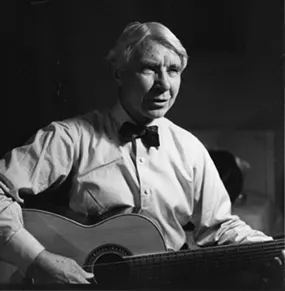Carl Sandburg is best know as a poet and Lincoln biographer. But Sandburg was also a performer — and musician.
Sandburg was born in Illinois in 1878. Growing up, he knew people who had known Abraham Lincoln, a circumstance that would deeply affect and even drive his career. He left school after the eighth grade, and hit the road at age 19 for the life of a hobo, gathering experiences across the country and working periodically on farms and railroads. The young Sandburg developed a habit during these years that he never discarded, that of listening to the voices of common Americans. Sandburg did not find fame until he reached his 40s, first as [Lincoln’s biographer](https://www.nps.gov/articles/000/sandburg-and-lincoln.htm), then as the author of a book of children’s tales titled *[The Rootabaga Stories](https://www.publishersweekly.com/9780152047146)*, and finally as both poet and folk singer. Though his folksy style was not without its detractors — Robert Frost once described him as “the most artificial and studied ruffian the world has had” — Sandburg was widely acclaimed as America’s “poet of the people.” In 1936, at the height of the Depression, he published *[The People, Yes](https://www.poetrynook.com/poem/people-yes)*, a book-length, simple-language epic that celebrated the resilience of the American people.
Bookshelves cover nearly every inch of wall space at Connemara.
Sandburg is associated mostly with Illinois and Michigan, yet he produced more than a third of his professional output after settling at Connemara Farms. The family’s motivation for moving south was twofold. For Sandburg, it was a search for seclusion, for the ideal place to write. For his wife Lillian, whom he called “Paula,” it was the quest for a more temperate climate for her prize-winning goat herd. The couple purchased the farm for $45,000. An entire railroad boxcar was required to move Sandburg’s 15,000 books from the couple’s previous home in Michigan.
Though Sandburg was 65 at the time of the move, the years in Flat Rock were among his most productive. More than a third of his life’s work came out of his upstairs study in the 7,700 square foot farmhouse. He won the last of his three Pulitzer Prizes during this period, along with a Grammy Award for a Spoken Word Album and the Presidential Medal of Freedom. He continued to travel widely, even visiting Moscow in 1959 as an envoy for the U.S. State Department. He became the first white man ever honored with the NAACP’s Silver Plaque Award. When he died in 1967, President Lyndon Johnson remarked that “Carl Sandburg was more than the voice of America, more than the poet of its strength and genius — he was America.”
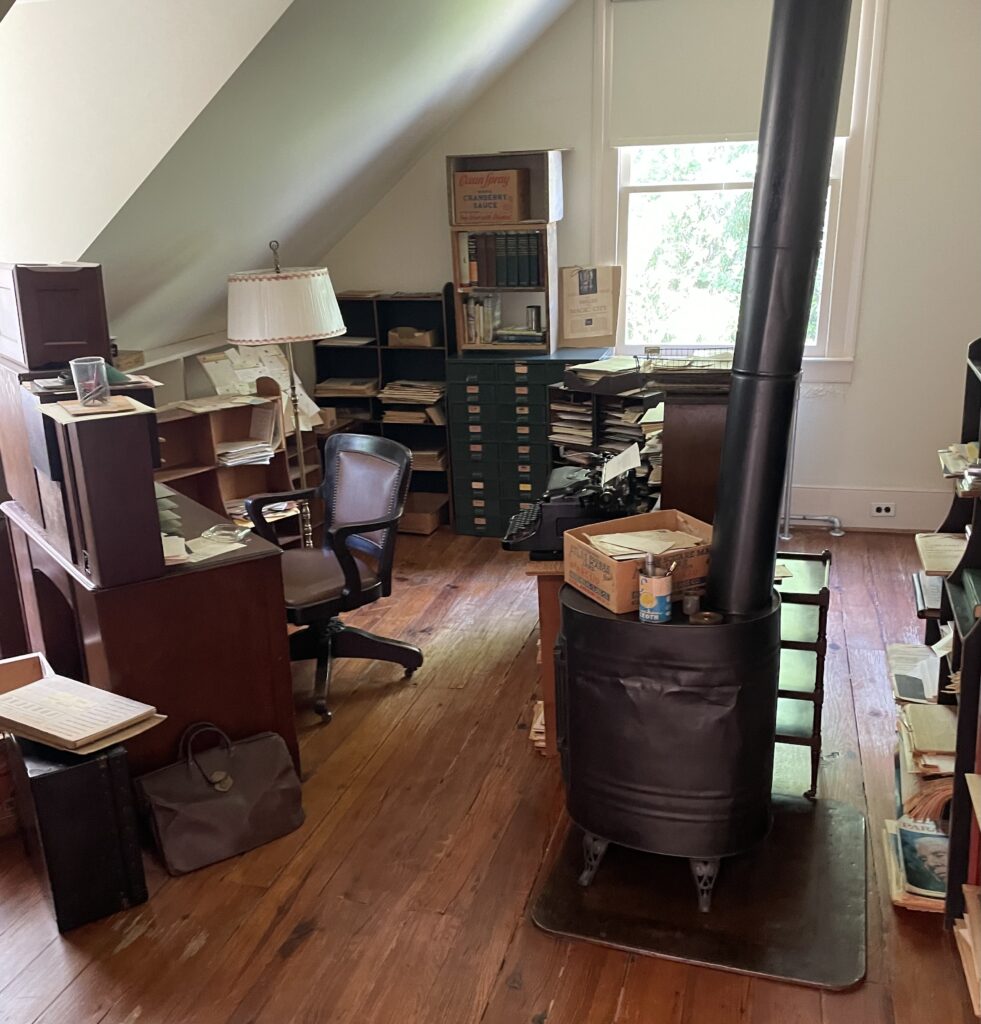Sandburg’s upstairs study remains as he left it, his typewriter perched on top of an orange crate.
Sandburg’s widow left Connemara soon after his death, selling the farm to the U.S. government. In addition, she donated the house and all of its contents. The Sandburg family worked for years with park staff to curate this collection so that when you visit today, you walk through the house convinced that Carl and Paula are still in residence. Perhaps they went out for a short walk in the surrounding hills — you almost look for them to come through the door, or perhaps to call on the black rotary phone that hangs near the dining room. Sandburg’s books line the walls, in the same locations and on the same bookshelves where he left them decades ago, bookmarks intact. His final newspaper remains by his favorite chair, as does the day’s mail. Even the author’s last, half-smoked cigar sits by his place setting at the head of the dinner table. The overall effect is stunning.
Visitors to Connemara Farms can still walk among its award-winning goat herd.
There is a lot to do at Connemara. Five miles of hiking trails traverse the property. They range from relaxing woodland and lakeside strolls to the 1.2 mile climb to the 2,783-foot summit of Glassy Mountain. The goat farm is open to visitors, and two films on Sandburg are available for viewing in the old garage behind the house. Performances of Sandburg’s *Rootabaga Stories* are staged periodically at the amphitheater. But the compelling reason to visit Connemara is the main house. That is where you encounter what has to be the most intact and complete representation available of the daily routine and the lifetime accumulations of a hard-working, award-winning American writer. If you do nothing more than peruse the titles of the house’s 16,000 volumes, noting of the breadth of categories, the meticulous organization, and the thousands of bookmarks, you will leave Flat Rock with an intimate and memorable glance into a man who, by hitting the road and listening to America, etched a place in history as the People’s Poet.
Carl Sandburg’s spot at the dinner table is still set, along with the day’s mail, his newspaper, and his last, half-smoked cigar.
---
## ***Discover more on these topics at Listening to America***
[Water in the West](https://ltamerica.org/tag/water-in-the-west/ "24 topics")[Vermont](https://ltamerica.org/tag/vermont/ "1 topics")[North Carolina](https://ltamerica.org/tag/north-carolina/ "3 topics")[Washington](https://ltamerica.org/tag/washington/ "2 topics")[Virginia](https://ltamerica.org/tag/virginia/ "7 topics")[Rome](https://ltamerica.org/tag/rome/ "1 topics")[William Shirer](https://ltamerica.org/tag/william-shirer/ "1 topics")[Sports](https://ltamerica.org/tag/sports/ "2 topics")[Reading](https://ltamerica.org/tag/reading/ "1 topics")[Road Trips](https://ltamerica.org/tag/road-trips/ "18 topics")[State Parks](https://ltamerica.org/tag/state-parks/ "2 topics")[North Dakota](https://ltamerica.org/tag/north-dakota/ "53 topics")[Rivers](https://ltamerica.org/tag/rivers/ "3 topics")[Tennessee](https://ltamerica.org/tag/tennessee/ "1 topics")[Walden](https://ltamerica.org/tag/walden/ "1 topics")[Utah](https://ltamerica.org/tag/utah/ "11 topics")[paintings](https://ltamerica.org/tag/paintings/ "0 topics")[Pennsylvania](https://ltamerica.org/tag/pennsylvania/ "1 topics")[Oregon](https://ltamerica.org/tag/oregon/ "4 topics")[The Constitution](https://ltamerica.org/tag/the-constitution/ "1 topics")[South Dakota](https://ltamerica.org/tag/south-dakota/ "16 topics")[Wisconsin](https://ltamerica.org/tag/wisconsin/ "0 topics")[South Carolina](https://ltamerica.org/tag/south-carolina/ "1 topics")[Oppenheim](https://ltamerica.org/tag/oppenheim/ "0 topics")[New York](https://ltamerica.org/tag/new-york/ "8 topics")[New Mexico](https://ltamerica.org/tag/new-mexico/ "3 topics")[Steinbeck Travels](https://ltamerica.org/tag/steinbeck-travels/ "75 topics")[Space Exploration](https://ltamerica.org/tag/space-exploration/ "8 topics")[Podcast](https://ltamerica.org/tag/podcast/ "1 topics")[New England](https://ltamerica.org/tag/new-england/ "1 topics")[Poetry](https://ltamerica.org/tag/poetry/ "1 topics")[Travel](https://ltamerica.org/tag/travel/ "1 topics")[north daktoa](https://ltamerica.org/tag/north-daktoa/ "0 topics")[Thoreau](https://ltamerica.org/tag/thoreau/ "5 topics")[Wyoming](https://ltamerica.org/tag/wyoming/ "4 topics")[Video](https://ltamerica.org/tag/video/ "51 topics")[U.S. Constitution](https://ltamerica.org/tag/u-s-constitution/ "1 topics")[Republics](https://ltamerica.org/tag/republics/ "1 topics")[Ohio](https://ltamerica.org/tag/ohio/ "2 topics")[Thomas Jefferson](https://ltamerica.org/tag/thomas-jefferson/ "34 topics")[Oppenheimer](https://ltamerica.org/tag/oppenheimer/ "1 topics")[Theodore Roosevelt](https://ltamerica.org/tag/theodore-roosevelt/ "16 topics")[Texas](https://ltamerica.org/tag/texas/ "4 topics")[Republic](https://ltamerica.org/tag/republic/ "0 topics")[U.S. Presidents](https://ltamerica.org/tag/u-s-presidents/ "71 topics")
**Categories:** Dispatches from the Road
**Tags:** Books, Carl Sandburg, Humanities, North Carolina, Reading
---
### [John Brown: A Remarkable American Story](https://ltamerica.org/john-brown-a-remarkable-american-story/)
**Published:** April 1, 2024
**Author:** Clay Jenkinson
**Excerpt:** Hero, terrorist, martyr or madman? Clay examines the dramatic life of John Brown.
**Content:**
## Hero, terrorist, martyr or madman? The dramatic life of John Brown.
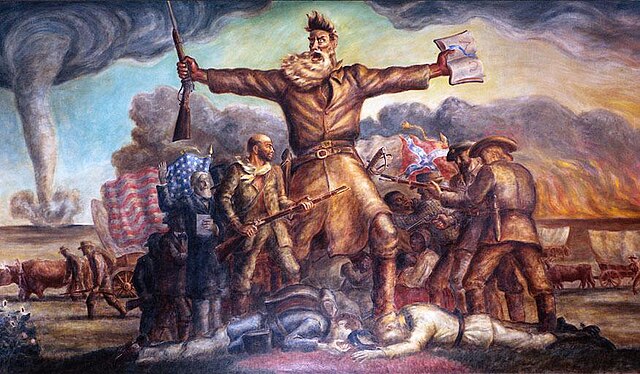*Tragic Prelude* is a large mural of John Brown in the Kansas State Capitol building, painted by John Steuart Curry in 1942.
For the past couple of weeks, I have been getting to know the story of John Brown (1800-1859). I did this by reading chapters of books about the lead up to the Civil War, histories of Kansas, the whole of Tony Horwitz’s *[Midnight Rising: John Brown and the Raid that Sparked the Civil War](https://us.macmillan.com/books/9780312429263/midnightrising),* several documentary films, timelines and encyclopedia articles; scholarly articles available on [JSTOR](https://www.jstor.org). That sounds like hard work, but the subject is so fascinating that it felt more like a pleasure to do the reading and note-taking. And I’m just getting started.
We all know that John Brown led an assault on the federal arsenal at Harpers Ferry in 1859, then in Virginia. The assault failed. Brown was quickly convicted of three counts: treason against Virginia, inciting enslaved people to revolt, and murder. He was hanged on December 2, 1859, 47 days after the failed insurrection. We know, too, that Brown had something to do with the border war in Kansas after the passage of the disastrous [Kansas-Nebraska Act of 1854](https://www.history.com/topics/19th-century/kansas-nebraska-act), which permitted each new state to decide if it wanted to enter the Union supporting slavery or slave free.
We know, too, that “Old John Brown’s body lies a moldering in the grave.” But where is that grave? It turns out Brown was buried at New Elba, New York, where he had headquartered for several years in an intentional Black community. Brown came to regard himself as something of a savior of Black people in America, and he seems not to have been a racist in any of the usual senses of the word. Brown respected Black people. He broke bread with them, slept in their homes, opened his home to them, listened to them, argued with them, strategized with them, and sometimes suffered alongside them. Many northern abolitionists, like Emerson, were opposed to slavery. Still, they did not regard African Americans as equals, and they preferred not to have much contact with them unless they were white-approved, like Frederick Douglass.
## **Hero or Terrorist?**
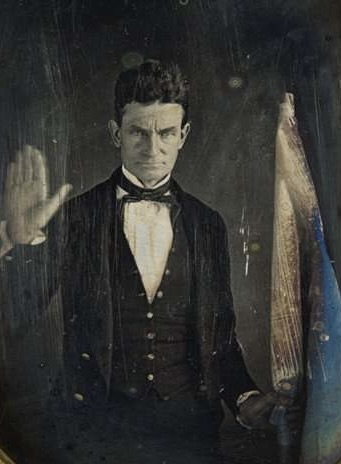The earliest known portrait of John Brown, taken in 1846 or 1847 by African American photographer Augustus Washington, the son of a former slave. (Smithsonian)
Was John Brown a hero, or was he a terrorist? Where you stand depends on where you sit. In the Concord, Massachusetts, of Emerson, Thoreau, Channing and Alcott, Brown was regarded as a martyr and maybe a saint. (This had not always been the case.) And in Concord, none was a greater apologist for John Brown than Henry David Thoreau. Between Brown’s conviction in Virginia and the public execution, Thoreau gave a lecture in Concord entitled *A Plea for John Brown*. Thoreau said Brown could not be judged by his peers because he had no peers in America. On the lecture platform, in front of some of the most cultured and well-read people in America, Thoreau said Brown was the most authentic American and the most authentic abolitionist because he walked the walk — all the way to armed struggle — while others were wringing their hands and pretending that the southerners would eventually be persuaded that slavery was a fundamental violation of human rights and moral abomination. Brown knew better. Thoreau drew an unmistakable connection between John Brown and Christ in his lecture.
It was a radical address. Thoreau said some things that would be regarded as blasphemous in almost any American community of the time and in our time. What amazes me — and fills me with admiration — is that the people of Concord sat quietly through the lecture and neither assaulted nor shunned Thoreau thereafter. Some were convinced and converted. Others agreed that Thoreau had a point. Concord, in that magical era, comes as close to American intellectual utopia as we have ever come to in a single community.
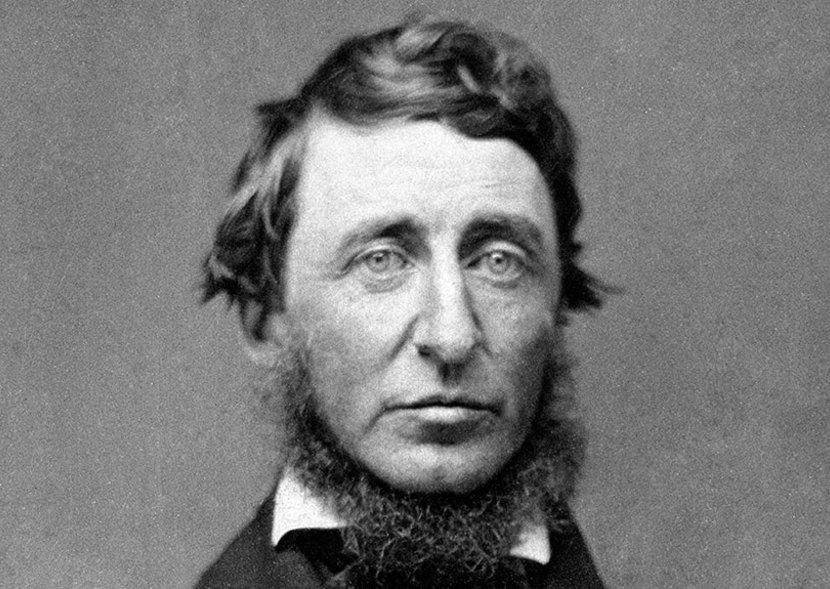Henry David Thoreau photographed by Benjamin D. Maxham, 1856.
Brown liberated 11 slaves in Missouri in 1858 and then led them on an 82-day, thousand-mile march to Canada. Brown led himself and did not delegate. Did not start out and then peel off or, like Mussolini, join the March on Rome for just a minimal but crucial photo-op time.
A cynic of our era might ask of Brown’s actions: “What was in it for him?”
The answer seems to be pure. Brown regarded slavery as a system of organized violence that violated the equal rights of Black men, women, and children. That wrought deep psychological damage on every person, white or Black, that connected with it, including the bankers, insurers, and shipping interests of New England. He believed the slave system could not be broken by political means, not as the existing U.S. Constitution was written and construed. He dreamed that he could liberate America’s slaves, plantation by plantation, region by region, with the least possible killing. Still, he also reckoned that blood was going to have to be shed not just in the border territories but in what he called “Africa” — the slave states of America, beginning with Virginia.
Brown’s last words, written on the day of his execution, were starkly prophetic: *“I, John Brown, am now quite certain that the crimes of this guilty land will never be purged away, but with Blood. I had … vainly flattered myself that without very much bloodshed, it might be done.”*
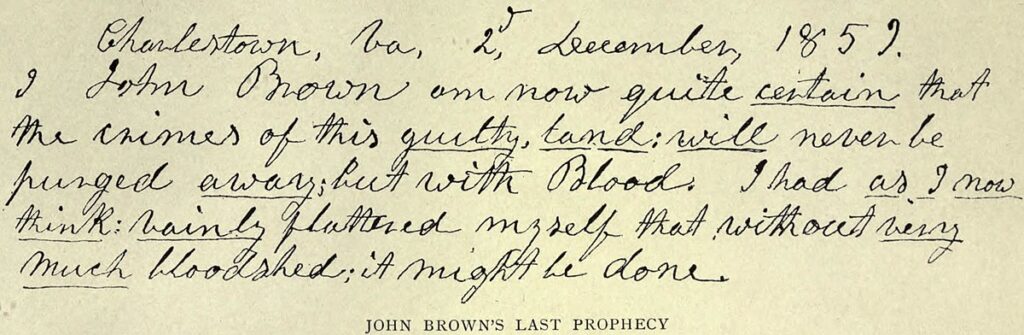
Brown believed that the Founding Fathers did not intend America to perpetuate slavery beyond their own time and place. He believed the Constitution did not protect the extension of slavery into the territories of the West. Brown was confident that he was reading the intentions of the Constitution more accurately than the “political philosophers” of the South. More than that, he was absolutely certain that slavery was incompatible with American ideals. If slavery were not wrong, he argued, then the Declaration of Independence and the Bill of Rights were just agreeable bits of rhetoric, not fundamental standards for American behavior.
Even those who loved him acknowledged that he was obsessed, that he was a monomaniac, and that he might be mentally unbalanced, at least in some things. One of my favorite pieces of American art is the 1942 mural *Tragic Prelude*, which has a preferred place in the Kansas state Capitol in Topeka. The John Brown of this massive (31 feet by 11) and amazing work of art is not a pacifist. He is an Old Testament Prophet. He is Moses. He is the Whirlwind to be reaped by those who fattened on the institution of slavery. His long arms are outstretched, a rifle in one hand and an open Bible in the other. His beard is as long as that of Michelangelo’s Moses. He is standing on a pile of pro-slavery corpses, but, standing between soldiers of the Union and the Confederacy, he also looks a little like a hockey referee about to drop the puck at center ice.
He had 20 children in all, the majority of them boys, and about half of the boys wound up joining his guerrilla raids, some very reluctantly. A number of his children were killed in these years, and several of the survivors suffered from severe PTSD. Several had breakdowns, physical and mental, and died young. His long-suffering wife, Mary (who was fully committed to John’s mission), lived 24 years after his hanging.
Although he had prominent (albeit secret) New England backers for his anti-slavery campaigns, Brown initially lost a great deal of support in the northern liberal and abolitionist community in the autumn of 1859 because he had mounted a pointless and futile attack on a federal facility, and killed people in the process. This, they thought at first, was going too far. But once he began to speak at his trial, he changed almost everyone’s mind, even the initially skeptical Ralph Waldo Emerson and the equally skeptical Frederick Douglass. (Thoreau, typically, had been a stalwart throughout). Brown’s brief, straightforward, candid, and unapologetic statements in the courtroom and at his death circulated through the United States like wildfire thanks to the newfangled media platform, the telegraph. Historians say the Raid on Harpers Ferry was the first “breaking news” event in American history. We had just enough telecommunications infrastructure to instantly disseminate news of the trial to every corner of the North. *Leslie’s Weekly* and *Harper’s* (and others) sent their finest artists to produce illustrations of the prosecution and the communities of Charles Town and Harpers Ferry in a close to instantaneous way.
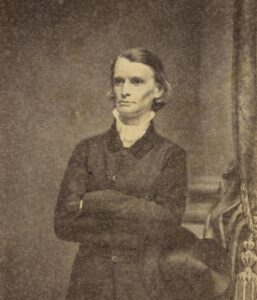Governor Henry A. Wise of Virginia visited John Brown in prison before his execution. (LOC)
Even the openly racist governor of Virginia, Henry A. Wise (1806-1876), who loudly and publicly prejudged Brown’s guilt, came away from an interview with the prisoner acknowledging that he was dignified, candid, unremorseful, quietly forceful, unself-protective, and “game.” For a short time, Governor Wise thought of sending Brown to an asylum rather than executing him. Still, after meeting him in jail, he concluded that Brown was not insane (or had been temporarily insane at the time of the raid), partly because Brown declared that he flatly rejected any insanity defense. He wanted America to know that what he did was absolutely sane.
But what exactly did he have in mind? He wanted to be the American [Spartacus](https://education.nationalgeographic.org/resource/spartacus/#), the hero of the Roman slave revolt (73-71 BCE), but to win this time. He wanted to take over the huge store of arms at Harpers Ferry to touch off a widespread slave revolt and, side by side with former slaves, build a mountain sanctuary and fortress where self-freed Blacks would train to continue the struggle in every slaveholding region of the nation until all of America’s slaves had essentially undertaken a nationwide strike, using their numbers to overwhelm those who would use violence to quell their revolt, and then just walk away from the plantations where they had toiled for white masters.
His raid on Harpers Ferry failed miserably. The local Black population did not rise to form the core of Brown’s liberation army, partly because they had not been canvassed clandestinely in the weeks and months before the raid. Still, historians rightly see the raid as the start of the Civil War, 16 months before Fort Sumter.
John Brown had taken the force of violence into the heart of Virginia, and his headquarters maps showed a large number of other strategic sites that he intended to raid once the first stage of the war of liberation (and retribution) had been won.
As much as any single individual, Brown kept Kansas free. That meant the spread of slavery into the Far West was stalled east of the hundredth meridian and probably terminated. Brown said he was not afraid to die for a cause so clear and pure. He kept his composure right up to the moment when the gallows dropped out from under him.
It’s an amazing story, and I have spent considerable time trying to imagine the effect of something like that today. In the next couple of years, I plan to visit John Brown sites in Kansas and New York. My reading has just begun. And I intend to spend an hour gazing at *Tragic Prelude* in the capitol at Topeka.
---
## ***Discover more on these topics at Listening to America***
[Steinbeck Travels](https://ltamerica.org/tag/steinbeck-travels/ "75 topics")[South Carolina](https://ltamerica.org/tag/south-carolina/ "1 topics")[Tennessee](https://ltamerica.org/tag/tennessee/ "1 topics")[Wyoming](https://ltamerica.org/tag/wyoming/ "4 topics")[Washington](https://ltamerica.org/tag/washington/ "2 topics")[Poetry](https://ltamerica.org/tag/poetry/ "1 topics")[Republic](https://ltamerica.org/tag/republic/ "0 topics")[New England](https://ltamerica.org/tag/new-england/ "1 topics")[North Carolina](https://ltamerica.org/tag/north-carolina/ "3 topics")[New York](https://ltamerica.org/tag/new-york/ "8 topics")[Thomas Jefferson](https://ltamerica.org/tag/thomas-jefferson/ "34 topics")[Virginia](https://ltamerica.org/tag/virginia/ "7 topics")[Ohio](https://ltamerica.org/tag/ohio/ "2 topics")[Travel](https://ltamerica.org/tag/travel/ "1 topics")[Pennsylvania](https://ltamerica.org/tag/pennsylvania/ "1 topics")[Utah](https://ltamerica.org/tag/utah/ "11 topics")[Walden](https://ltamerica.org/tag/walden/ "1 topics")[New Mexico](https://ltamerica.org/tag/new-mexico/ "3 topics")[Republics](https://ltamerica.org/tag/republics/ "1 topics")[Vermont](https://ltamerica.org/tag/vermont/ "1 topics")[Wisconsin](https://ltamerica.org/tag/wisconsin/ "0 topics")[Theodore Roosevelt](https://ltamerica.org/tag/theodore-roosevelt/ "16 topics")[South Dakota](https://ltamerica.org/tag/south-dakota/ "16 topics")[Thoreau](https://ltamerica.org/tag/thoreau/ "5 topics")[U.S. Presidents](https://ltamerica.org/tag/u-s-presidents/ "71 topics")[Water in the West](https://ltamerica.org/tag/water-in-the-west/ "24 topics")[North Dakota](https://ltamerica.org/tag/north-dakota/ "53 topics")[Space Exploration](https://ltamerica.org/tag/space-exploration/ "8 topics")[Texas](https://ltamerica.org/tag/texas/ "4 topics")[William Shirer](https://ltamerica.org/tag/william-shirer/ "1 topics")[north daktoa](https://ltamerica.org/tag/north-daktoa/ "0 topics")[Oppenheim](https://ltamerica.org/tag/oppenheim/ "0 topics")[U.S. Constitution](https://ltamerica.org/tag/u-s-constitution/ "1 topics")[Video](https://ltamerica.org/tag/video/ "51 topics")[Oppenheimer](https://ltamerica.org/tag/oppenheimer/ "1 topics")[Rome](https://ltamerica.org/tag/rome/ "1 topics")[The Constitution](https://ltamerica.org/tag/the-constitution/ "1 topics")[Road Trips](https://ltamerica.org/tag/road-trips/ "18 topics")[Rivers](https://ltamerica.org/tag/rivers/ "3 topics")[Oregon](https://ltamerica.org/tag/oregon/ "4 topics")[State Parks](https://ltamerica.org/tag/state-parks/ "2 topics")[paintings](https://ltamerica.org/tag/paintings/ "0 topics")[Reading](https://ltamerica.org/tag/reading/ "1 topics")[Sports](https://ltamerica.org/tag/sports/ "2 topics")[Podcast](https://ltamerica.org/tag/podcast/ "1 topics")
**Categories:** Features
**Tags:** America at 250, Books, Thoreau, Virginia
---
### [The Death of Astronaut William Anders and the Promise and Challenge of Earthrise](https://ltamerica.org/the-death-of-astronaut-william-anders-and-the-promise-and-challenge-of-earthrise/)
**Published:** June 14, 2024
**Author:** Clay Jenkinson
**Excerpt:** Astronaut William Anders, died on June 7, 2024 at the age of 90. Anders, a member of the Apollo 8 team, will always be remembered as the man who took the famous Earthrise photograph on Christmas Eve 1968.
**Content:**
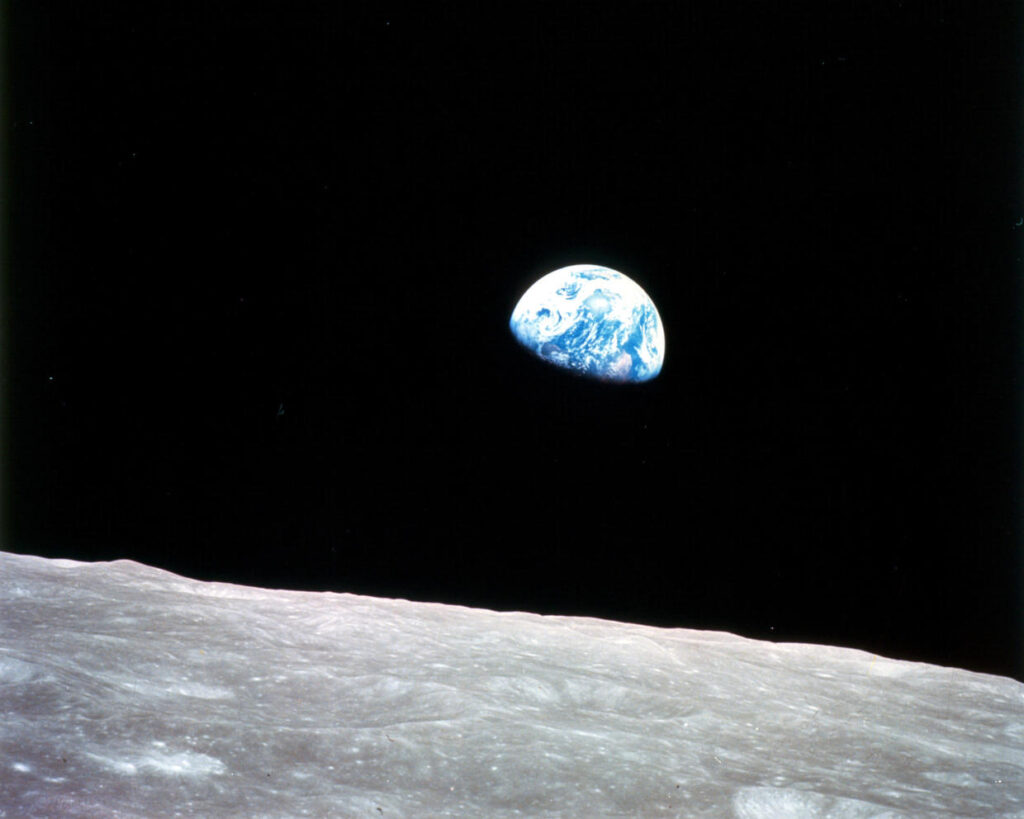The famous *Earthrise*, photograph taken by NASA’s Apollo 8 December 24, 1968.
I was saddened to learn of the death (on Friday, June 7, 2024) of the astronaut William Anders, one of the three pilots of the [Apollo 8 mission](https://www.nasa.gov/missions/apollo/apollo-8-mission-details/) that left “the surly bonds of Earth” and orbited the moon in December 1968. Anders, who was 90, was piloting alone a small plane — a Beechcraft T-34 Mentor — northwest of Seattle when he crashed into Roche Harbor on San Juan Island. The National Transportation Safety Board and the FAA are investigating the accident.
If it were not legacy enough to have been a member of the first space mission that left Earth’s gravity and ventured to another celestial orb, Bill Anders will always be remembered as the man who took the famous *Earthrise* photograph on Christmas Eve 1968. *Earthrise* is, by any measure, one of the greatest, most important, and most influential photographs ever taken. It is also possibly the most frequently reproduced photograph in human history.
Play
Apollo 8 Christmas Eve Broadcast – Genesis Reading (1968)
Apollo 8 is best remembered as the Genesis mission. At the end of a Christmas Eve broadcast from lunar orbit, Anders and mission commander Frank Borman and command module pilot James Lovell read the first verses of the book of Genesis to the people of the Earth: “In the beginning, God created …”
Apollo 8 was arguably the greatest (and most audacious) of all the Apollo missions, even though the three astronauts did not descend to the lunar surface. They were the first humans to blast off on the colossal new Saturn V rocket, which had experienced severe difficulties in its earlier unmanned missions. They were the first humans to fly into deep space. They were the first humans to be captured by another orb’s gravity. They were the first humans to see the far side of the moon. And they were the first humans to witness Earthrise — the sight of the Earth rising over the barren horizon of the moon.
All this happened in one of the most tumultuous years of the 20th century — the year of the Tet Offensive in Vietnam, the assassinations of Martin Luther King, Jr., and Robert Kennedy, the Pueblo incident off the coast of North Korea, LBJ’s surprise decision (March 31) not to stand for re-election, the race riots in scores of America cities, and the cataclysmic Democratic National Convention in Chicago in August. Historian Jeffrey Kluger has called 1968 “a year of sorrow, suffering, and massive bloodshed.”
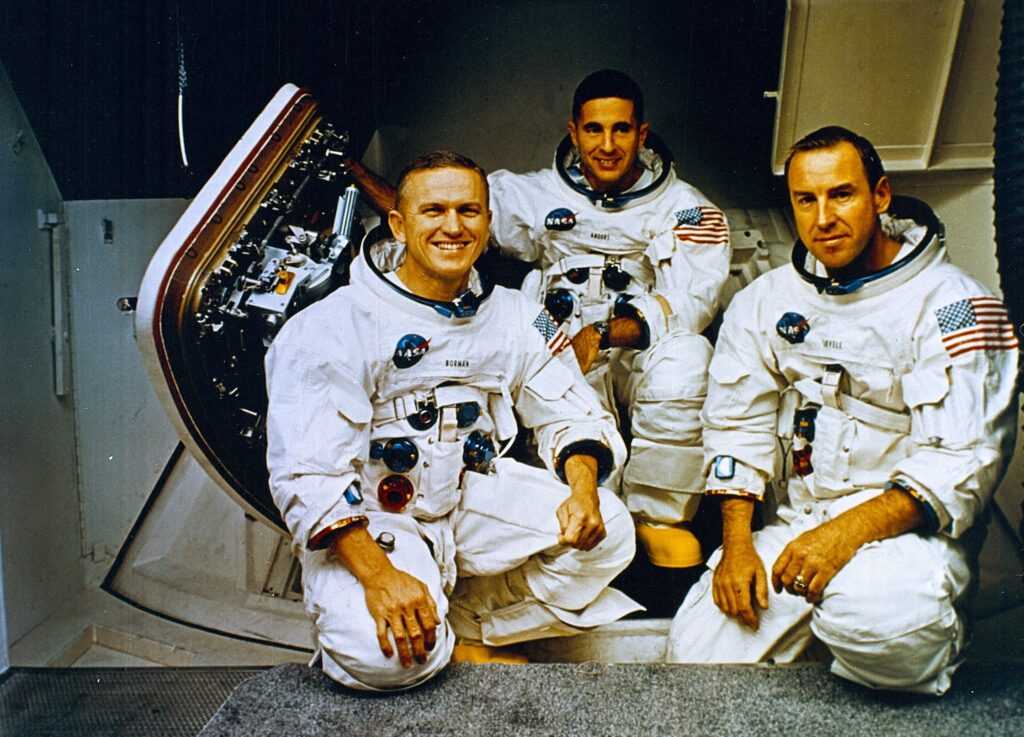Apollo 8 astronauts Frank Borman, Bill Anders and Jim Lovell (left to right). (Photo NASA)
After Apollo 8 returned safely to earth, Frank Borman received an anonymous telegram that said: “You saved 1968.”
Jim Lovell is still alive. He is 96. Borman died in 2023 in Montana. And now Anders has died in an airplane crash.
Only five of the 26 astronauts who went to the moon between July 1969 and December 1972 are still alive. The moment is coming, and soon, when the last of the lunar explorers will have passed. (See below for full details.) And the last pair of the Beatles cannot be far behind.
## **The Famous Photograph**
The story of the *Earthrise* photograph is fascinating. Frank Borman was a stern, no-nonsense mission commander on Apollo 8. He did not want to take a newfangled portable video camera on the mission. He considered the telecasts from space as an ill-advised distraction, a Mickey Mouse gimmick. NASA management wanted Apollo 8 to orbit the moon for a sustained period to collect as much data as possible, but Borman forced mission planners to limit the number of orbits to just 10 (20 hours) to reduce the number of things that could go wrong.
Although NASA had prepared a special Christmas dinner for the crew, including a tiny bottle of brandy for each, Borman forbade his colleagues to take a sip. As space historian Andrew Chaikin puts it, Borman “wasn’t about to risk someone in the public raising a ruckus; if they made a single mistake on the rest of the flight, the brandy would get the blame.”
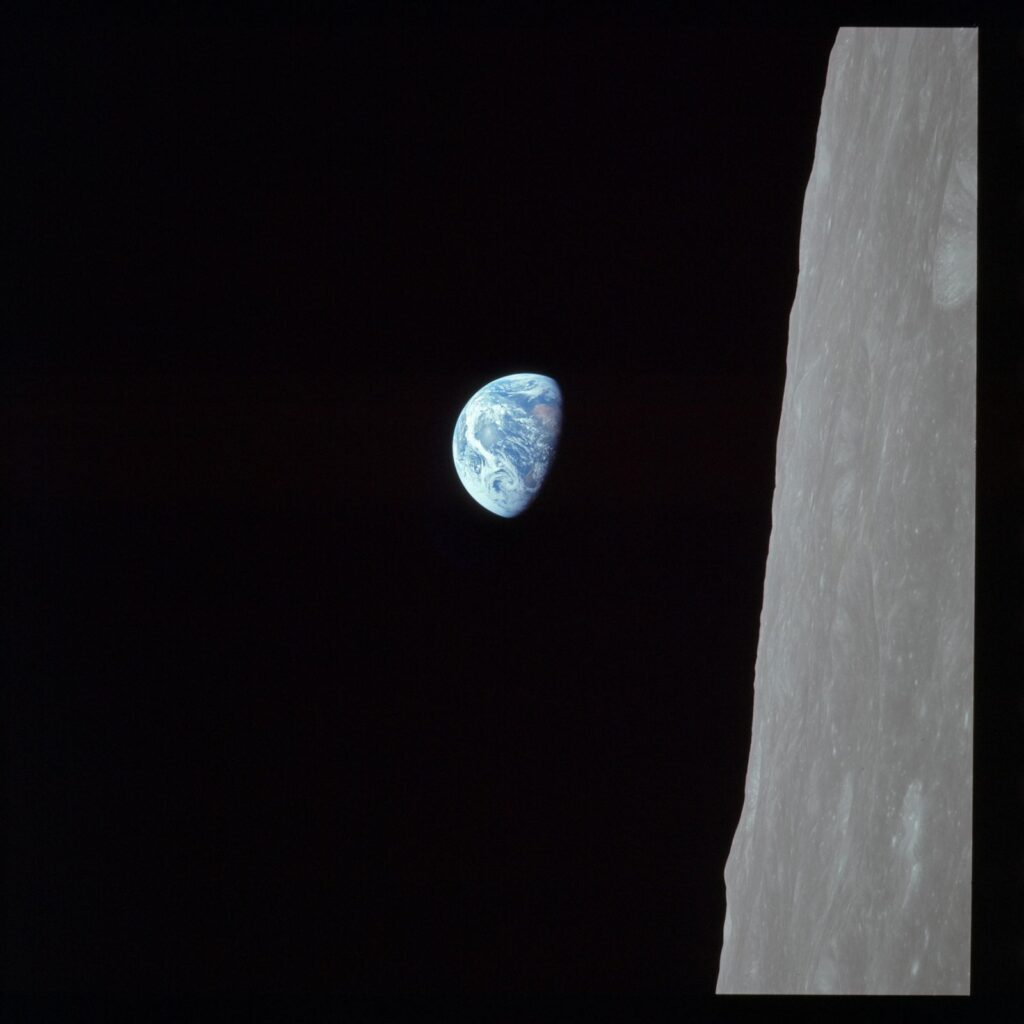The actual *Earthrise* photograph was of the Earth “rising” from right to left over the horizon. NASA re-oriented the photo (see above) when it was released to the world.
Several times during the journey, Borman rebuked his fellow crew members, particularly Anders, for gazing out the command module’s windows or taking unscheduled photographs. “I don’t want to see you looking out the window!” he barked. When they first entered lunar orbit and saw the moon up close, Anders was filled with a spontaneous sense of wonder. “Oh, my God,” he said, looking down on craters, mountains, rills, and what Buzz Aldrin later called the “magnificent desolation” of the moon. To which Borman replied, “What’s wrong?” Anders said, “Look at that.” To which Borman snapped, “Alright, alright, come on. You’re going to look at that for a long time.”
All business.
But then it happened — at 16:39:39.3 UTC (Coordinated Universal Time), 11:39 p.m. Eastern Standard Time, December 24, 1968.
Chaikin writes:
“Perhaps it is true that our most electrifying experiences are the ones that take us by surprise. Even on the first flight around the moon, in which everything was figured to the second, rehearsed in painstaking detail, an event that no one anticipated became the most moving of all. Apollo 8 was drifting over the far side for the fourth time. Borman prepared to turn the spacecraft so that Lovell would be able to sight the moon through the command module’s sextant.”
Here’s a transcript of what unfolded in the Apollo 8 capsule Christmas Eve:
Anders: Oh my God! Look at that picture over there.
Borman: “What is it?”
Anders: “The Earth coming up. Wow, that’s pretty.”
Even the hard-ass Borman surrendered to the moment. Knowing how stern he had been on the way to the moon, he joked:
“Hey, don’t take that, it’s not scheduled.”
Anders: “You got a color film, Jim \[Lovell\]? Hand me that roll of color quick, would you?”
Lovell: “Oh man, that’s great.”
They took several photographs with their great Hasselblad 70mm cameras, some in black and white and more in color.
There are two remarkable footnotes to this story. First, it was probably Borman who took the first *Earthrise* photograph in B&W. As with all such moments in history, there are slightly competing narratives. Second, the actual color photograph was of the Earth “rising” from right to left over the horizon, not from below to above. NASA wisely re-oriented the photo when it was released to the world.
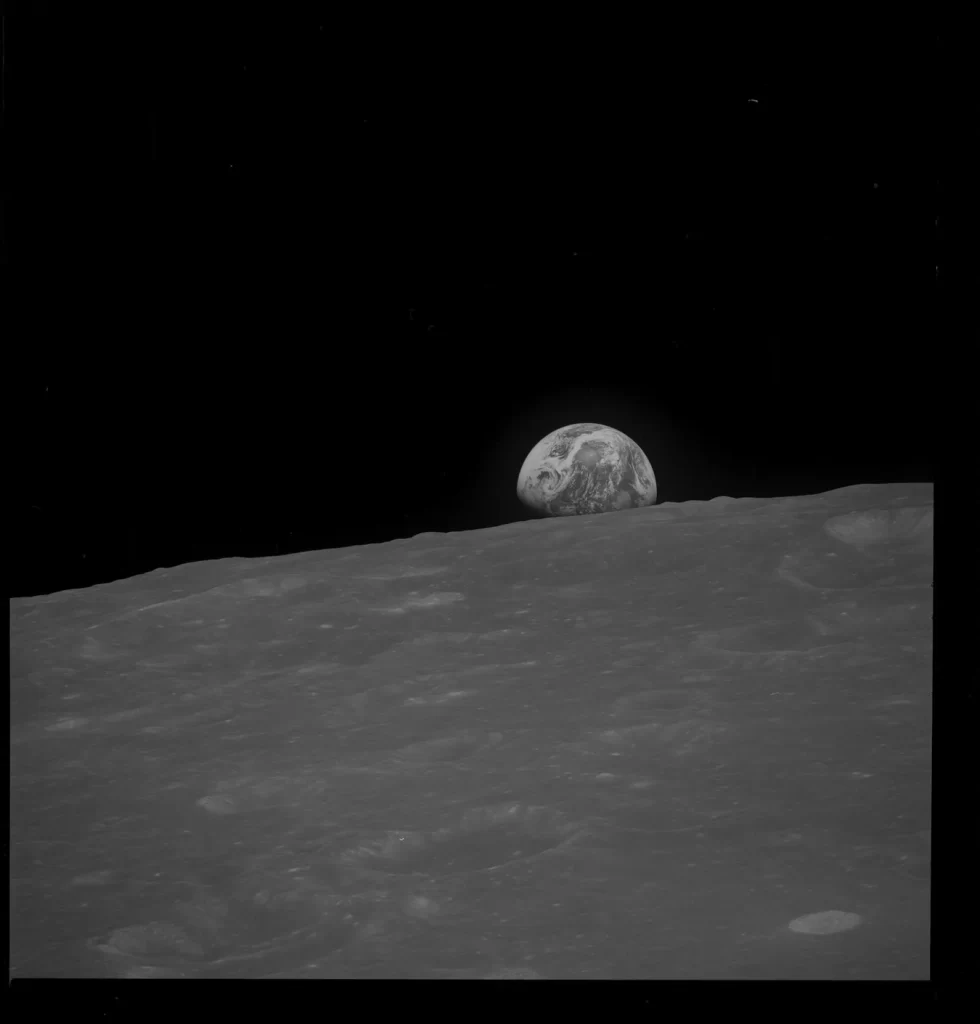The first photographs of Earth rising over the surface of the moon were in black and white as the Apollo 8 crew went for the color film.
Years later, Anders reflected on the great moment.
“That was the most beautiful thing I’d ever seen. Totally unanticipated. Because we were being trained to go to the moon … It wasn’t ‘going to the moon and looking back at the Earth.’ I never even thought about that! In lunar orbit, it occurred to me that, here we are, all the way up there at the moon, and we’re studying this thing, and it’s really the Earth as seen from the moon that’s the most interesting aspect of this flight.”
The *Earthrise* photograph was immediately celebrated worldwide. The image was printed on the cover of the Spring 1969 issue of the *Whole Earth Catalog*. Joni Mitchell’s 1976 song *Refuge of the Road*s includes a verse mentioning the photograph. The U.S. Postal Service released a stamp featuring the *Earthrise* image in 1969, with the words, “In the beginning God…” printed in italics just above the lunar surface.
The photograph is thought to have helped build international interest in the first Earth Day, celebrated on April 22, 1970. Earth Day first occurred at the end of an incredible decade of environmental legislation in America: the Clean Air Act (1963), the Wilderness Act (1964), the Solid Waste Disposal Act (1965), the Water Quality Act (1965), the Air Quality Act (1967), the National Environmental Policy Act (1969), the Occupational Safety and Health Act (1970) — and then in 1973, the Endangered Species Act.
In addition to all that legislation passed by large bipartisan majorities in a political era very different from our own, *Earthrise* also helped create what is known as the [Overview Effect](https://www.space.com/frank-white-overview-effect). The term was coined in the 1980s by author Frank White, who noticed that some astronauts experienced a cognitive shift in their consciousness when they had the opportunity to look back on Earth from deep space. The idea is that when you look back at the entire planet from space, you see landforms but no national borders, the profound beauty (and uniqueness) of the blue, watery planet, its loneliness in the near cosmos, and its fragility. The overview experience invites a fundamental and permanent shift in human consciousness. For example, Apollo 14’s Edgar Mitchell said, “From space, I saw Earth as a precious, fragile ball of life hanging in the void of space, and I became more convinced than ever that we must protect and preserve it.” ISS astronaut Scott Kelly said, “From space, you realize how small and interconnected we all are. It’s a perspective that can inspire us to be better stewards of our planet and work towards a brighter future.” The eminent Carl Sagan, who viewed these images from the Earth, said, “There is perhaps no better a demonstration of the folly of human conceits than this distant image of our tiny world.”
Fair enough, but there is no evidence that the *Earthrise* photograph has made the world safer and more peaceful. The current big wars in Ukraine and Gaza are as vicious as any in modern history, and as usual, there are little wars and skirmishes across the globe, not to mention a cold civil war heating up in the United States (and France and Britain …). The growing existential menace of Global Climate Change suggests that humans (industrial humankind) have failed to hearken to the visual lesson of the thin and fragile biosphere that makes life possible on Earth. The fact that the United States created a new military branch — the Space Force — in 2019, and geopolitical rivals are beginning to seek dominion on the moon half a century after the U.S.-USSR space race ended makes the Overview Effect seem like a lovely but ineffective phenomenon that has influenced only a tiny, even minuscule, percentage of world leaders or the larger global populations. The world seems more Hobbesian than Saganesque, with no end in sight.
This depressing failure of human imagination does not diminish William Anders’s great achievement, but it does make one ask: If *Earthrise* cannot lift humanity to a higher order of enlightenment, what will?
## **The Life of William Anders**
NASA Astronaut William Anders. Anders was 35 when he was part of the Apollo 8 team that orbited the moon.
Anders was born in Hong Kong on October 17, 1933, the son of a U.S. naval lieutenant. Anders and his mother had to flee China when the Japanese attacked Nanjing in 1937. He graduated from the U.S. Naval Academy in 1955, but he obtained a commission in the U.S. Air Force instead because he wanted to fly airplanes. He served as a radiation expert and a fighter pilot tracking Soviet heavy bombers that approached America’s air defense perimeter. He received a master’s degree in nuclear engineering from the Air Force Institute of Technology in 1962. Although he had never been a test pilot, he was inducted into the third class of American astronauts in 1964. He flew into outer space just once, but without having set out to do so, he took one of the world’s great photographs.
Anders retired from the Air Force in 1969 and accepted a National Aeronautics and Space Council position. Later, he became a member of the Atomic Energy Commission (AEC), chaired the Nuclear Regulatory Commission, and served as the American ambassador to Norway. After that, he accepted executive posts with defense and space contractors. Anders and his wife Valerie established a flight museum in Seattle in 1996.
## **The Status of America’s Lunar Astronauts Today**
A total of 26 men (all American astronauts) have been to the moon. Just five are still alive.
Twelve men set foot on the moon. Six others stayed back in the Command Module. Of the 12 moonwalkers, eight are dead, and four still alive:
The dead include Apollo 11’s Neil Armstrong (2012); Apollo 12’s Pete Conrad (1999) and Alan Bean (2018); Apollo 14’s Alan Shepard (1998) and Edgar Mitchell (2016); Apollo 15’s James Irwin (1991); Apollo 16’s John Young (2018); and Apollo 17’s Gene Cernan (2017).
Still alive are Apollo 11’s Buzz Aldrin, Apollo 15’s David Scott, Apollo 16’s Charles Duke, and Apollo 17’s Harrison Schmitt (whom I’ve met).
Bill Anders was one of the 14 astronauts who orbited the moon but did not land. The same was true of the other two crewmembers of Apollo 8 and all three of Apollo 10 and Apollo 13, plus the six command module pilots who stayed in orbit during Apollo 11, 12, 14, 15, 16, and 17. Of those 14 astronauts, only one is still alive: Jim Lovell.
Three astronauts flew to the moon twice. Jim Lovell (still alive); Eugene Cernan (2017); and John Young (2018). Of these three, only Cernan and Young have stepped on the moon. Poor Lovell: he achieved some fame as one of the three astronauts on the Apollo 8 Genesis mission in 1968, then much more as the commander of the aborted Apollo 13 in April 1970 (“Houston, we have a problem”), but he never left a footprint on the moon. Fifty years later, he said he no longer felt any regret: “To me, this was a real adventure. It was like a mini Lewis and Clark expedition. I wasn’t there to beat the Russians, I didn’t really care if we beat the Russians or not. I was there because we were exploring new ground, new territory.”
Gene Cernan was the last man on the moon. He climbed back up the ladder of the Lunar Excursion Module at 11:34 p.m. on December 14, 1972. Before he made the climb, he said, “As I take man’s last steps from the surface, back home for some time to come — but we believe not too long into the future, I believe history will record that America’s challenge of today has forged man’s destiny of tomorrow. And as we leave the moon at Taurus-Littrow, we leave as we came, and, God willing, as we shall return, with peace and hope for all mankind. … Godspeed the crew of Apollo 17.”
## For Further Reading:
*A Man on the Moon: The Voyages of the Apollo Astronauts* by Andrew Chaikin.
Jeffrey Kluger. *Apollo 8: The Thrilling Story of the First Mission to the Moon.*
Robert Kurson. *Rocket Men: The Daring Odyssey of Apollo 8 and the Astronauts Who Made Man’s First Journey to the Moon.*
\*Andrew Chaikin. *A Man on the Moon: The Voyages of the Apollo Astronauts.*
Frank White. *The Overview Effect: Space Exploration and Human Evolution.*
Robert Poole. *Earthrise: How Man First Saw the Earth.*
Craig Nelson. *Rocket Men: The Epic Story of the First Men on the Moon.*
\*If you only have time for one!
---
## ***Discover more on these topics at Listening to America***
[Tennessee](https://ltamerica.org/tag/tennessee/ "1 topics")[Poetry](https://ltamerica.org/tag/poetry/ "1 topics")[State Parks](https://ltamerica.org/tag/state-parks/ "2 topics")[Thomas Jefferson](https://ltamerica.org/tag/thomas-jefferson/ "34 topics")[U.S. Constitution](https://ltamerica.org/tag/u-s-constitution/ "1 topics")[Sports](https://ltamerica.org/tag/sports/ "2 topics")[Wisconsin](https://ltamerica.org/tag/wisconsin/ "0 topics")[Video](https://ltamerica.org/tag/video/ "51 topics")[north daktoa](https://ltamerica.org/tag/north-daktoa/ "0 topics")[Pennsylvania](https://ltamerica.org/tag/pennsylvania/ "1 topics")[Theodore Roosevelt](https://ltamerica.org/tag/theodore-roosevelt/ "16 topics")[Rivers](https://ltamerica.org/tag/rivers/ "3 topics")[Washington](https://ltamerica.org/tag/washington/ "2 topics")[North Carolina](https://ltamerica.org/tag/north-carolina/ "3 topics")[Water in the West](https://ltamerica.org/tag/water-in-the-west/ "24 topics")[Podcast](https://ltamerica.org/tag/podcast/ "1 topics")[Steinbeck Travels](https://ltamerica.org/tag/steinbeck-travels/ "75 topics")[Virginia](https://ltamerica.org/tag/virginia/ "7 topics")[Reading](https://ltamerica.org/tag/reading/ "1 topics")[Oregon](https://ltamerica.org/tag/oregon/ "4 topics")[New England](https://ltamerica.org/tag/new-england/ "1 topics")[Road Trips](https://ltamerica.org/tag/road-trips/ "18 topics")[North Dakota](https://ltamerica.org/tag/north-dakota/ "53 topics")[New Mexico](https://ltamerica.org/tag/new-mexico/ "3 topics")[Ohio](https://ltamerica.org/tag/ohio/ "2 topics")[Oppenheim](https://ltamerica.org/tag/oppenheim/ "0 topics")[Vermont](https://ltamerica.org/tag/vermont/ "1 topics")[Republic](https://ltamerica.org/tag/republic/ "0 topics")[New York](https://ltamerica.org/tag/new-york/ "8 topics")[Thoreau](https://ltamerica.org/tag/thoreau/ "5 topics")[Texas](https://ltamerica.org/tag/texas/ "4 topics")[Rome](https://ltamerica.org/tag/rome/ "1 topics")[Wyoming](https://ltamerica.org/tag/wyoming/ "4 topics")[Space Exploration](https://ltamerica.org/tag/space-exploration/ "8 topics")[paintings](https://ltamerica.org/tag/paintings/ "0 topics")[Oppenheimer](https://ltamerica.org/tag/oppenheimer/ "1 topics")[The Constitution](https://ltamerica.org/tag/the-constitution/ "1 topics")[Walden](https://ltamerica.org/tag/walden/ "1 topics")[South Dakota](https://ltamerica.org/tag/south-dakota/ "16 topics")[U.S. Presidents](https://ltamerica.org/tag/u-s-presidents/ "71 topics")[Utah](https://ltamerica.org/tag/utah/ "11 topics")[Republics](https://ltamerica.org/tag/republics/ "1 topics")[South Carolina](https://ltamerica.org/tag/south-carolina/ "1 topics")[William Shirer](https://ltamerica.org/tag/william-shirer/ "1 topics")[Travel](https://ltamerica.org/tag/travel/ "1 topics")
**Categories:** Features
**Tags:** Books, Humanities, Space Exploration
---
### [My Romance With the Little Missouri River](https://ltamerica.org/my-romance-with-the-little-missouri-river/)
**Published:** June 17, 2024
**Author:** Clay Jenkinson
**Excerpt:** I have a special claim on the Little Missouri — or rather it has had a special claim on me. If I had to spend eternity in a single landscape, it would be about 10 miles north of Marmarth, North Dakota, where the Little Missouri just begins to carve up the viewshed.
**Content:**
Clay’s map of the Little Missouri River which begins near Devils Tower in northeastern Wyoming and travels to North Dakota.
On my way by automobile to Vail, Colorado last week, I drove the entire course of the Little Missouri River. The Little Missouri is sacred to me. I’ve hiked its length twice and plan to walk it again in the next 12 months.
You know how you come to regard some place or landscape as central to your happiness, and you let yourself believe that it is somehow “yours” to love and protect? It’s entirely irrational, of course, but we feel it nevertheless. Ever since my mentor took me to its upper reaches 50 years ago, I have a special claim on the Little Missouri — or rather it has had a special claim on me. If I had to spend eternity in a single landscape, it would be about 10 miles north of Marmarth, North Dakota, where the Little Missouri just begins to carve up the viewshed.
The Little Missouri empties into the Missouri River proper at Twin Buttes, North Dakota, though the confluence has long since disappeared under the waters of Lake Sakakawea behind Garrison Dam. Alas for that.
Oshoto, Wyoming is regarded as the source of the Little Missouri River. (Photo by Clay Jenkinson)
The Little Missouri River starts near Oshoto, Wyoming, with feeder rivulets in the Flatiron Buttes, and the Missouri Buttes, which are geological cousins to Devils Tower.
Most of the roads I took yesterday are gravel, from Medora, North Dakota, to Marmarth, N.D., then down the Camp Crook road south of Marmarth, then remote gravel roads to Albion and Alzada, Montana, and finally to Oshoto, Wyoming (population: a handful). Oshoto is regarded in official circles as the source of the Little Missouri River.
The Little Missouri is a nondescript Great Plains stream from its source to about Bullion Butte in southwestern North Dakota. Then it begins to cut badlands, some of them very dramatic, three parcels of which comprise Theodore Roosevelt National Park.
But if you had no previous knowledge of the course of the Little Missouri and you happened upon it anywhere between Oshoto and Amidon, N.D., you might mistake it for the Moreau River or the Grand or the Cannonball. All typical modest Great Plains rivers.
The Little Missouri is exceedingly important to me for a wide range of reasons, including that my daughter was baptized in the river, much to the consternation of her mother. (I held on tight!)
Something about sources of rivers fascinates me in a big way. I have been to the source of the Thames, the source of the Columbia, the source of the Colorado, the source of the Hudson, the source of the Arkansas, the source of the Missouri, and just two weeks ago, the source of the Mississippi.
Yesterday, I took the photo you see here at Oshoto. You can see the Missouri Buttes with their conical shapes, but over to the right, partly obscured by the horizon, you see Devils Tower, which was born geologically in the same manner.
A perfect day.
The Missouri Buttes with their conical shapes and to the right, on the horizon, Devils Tower. (Photo by Clay Jenkinson)
---
## ***Discover more on these topics at Listening to America***
[South Carolina](https://ltamerica.org/tag/south-carolina/ "1 topics")[Rome](https://ltamerica.org/tag/rome/ "1 topics")[Oppenheimer](https://ltamerica.org/tag/oppenheimer/ "1 topics")[Oppenheim](https://ltamerica.org/tag/oppenheim/ "0 topics")[Steinbeck Travels](https://ltamerica.org/tag/steinbeck-travels/ "75 topics")[New England](https://ltamerica.org/tag/new-england/ "1 topics")[Utah](https://ltamerica.org/tag/utah/ "11 topics")[Water in the West](https://ltamerica.org/tag/water-in-the-west/ "24 topics")[New York](https://ltamerica.org/tag/new-york/ "8 topics")[Reading](https://ltamerica.org/tag/reading/ "1 topics")[Theodore Roosevelt](https://ltamerica.org/tag/theodore-roosevelt/ "16 topics")[State Parks](https://ltamerica.org/tag/state-parks/ "2 topics")[Travel](https://ltamerica.org/tag/travel/ "1 topics")[Oregon](https://ltamerica.org/tag/oregon/ "4 topics")[Sports](https://ltamerica.org/tag/sports/ "2 topics")[Tennessee](https://ltamerica.org/tag/tennessee/ "1 topics")[Republics](https://ltamerica.org/tag/republics/ "1 topics")[Walden](https://ltamerica.org/tag/walden/ "1 topics")[Space Exploration](https://ltamerica.org/tag/space-exploration/ "8 topics")[Virginia](https://ltamerica.org/tag/virginia/ "7 topics")[Thoreau](https://ltamerica.org/tag/thoreau/ "5 topics")[North Carolina](https://ltamerica.org/tag/north-carolina/ "3 topics")[Ohio](https://ltamerica.org/tag/ohio/ "2 topics")[Video](https://ltamerica.org/tag/video/ "51 topics")[North Dakota](https://ltamerica.org/tag/north-dakota/ "53 topics")[William Shirer](https://ltamerica.org/tag/william-shirer/ "1 topics")[The Constitution](https://ltamerica.org/tag/the-constitution/ "1 topics")[U.S. Presidents](https://ltamerica.org/tag/u-s-presidents/ "71 topics")[Rivers](https://ltamerica.org/tag/rivers/ "3 topics")[Pennsylvania](https://ltamerica.org/tag/pennsylvania/ "1 topics")[Wisconsin](https://ltamerica.org/tag/wisconsin/ "0 topics")[Podcast](https://ltamerica.org/tag/podcast/ "1 topics")[paintings](https://ltamerica.org/tag/paintings/ "0 topics")[Poetry](https://ltamerica.org/tag/poetry/ "1 topics")[north daktoa](https://ltamerica.org/tag/north-daktoa/ "0 topics")[Republic](https://ltamerica.org/tag/republic/ "0 topics")[Thomas Jefferson](https://ltamerica.org/tag/thomas-jefferson/ "34 topics")[South Dakota](https://ltamerica.org/tag/south-dakota/ "16 topics")[New Mexico](https://ltamerica.org/tag/new-mexico/ "3 topics")[Road Trips](https://ltamerica.org/tag/road-trips/ "18 topics")[Wyoming](https://ltamerica.org/tag/wyoming/ "4 topics")[Washington](https://ltamerica.org/tag/washington/ "2 topics")[Vermont](https://ltamerica.org/tag/vermont/ "1 topics")[U.S. Constitution](https://ltamerica.org/tag/u-s-constitution/ "1 topics")[Texas](https://ltamerica.org/tag/texas/ "4 topics")
**Categories:** Dispatches from the Road
**Tags:** Montana, North Dakota, Road Trips, Wyoming
---
### [Back Home and Planning Phase Two of the Great John Steinbeck Tour of America](https://ltamerica.org/back-home-and-planning-phase-two-of-the-great-john-steinbeck-tour-of-america/)
**Published:** June 11, 2024
**Author:** Clay Jenkinson
**Excerpt:** Well, I’m home now for a few weeks, writing up my travels and planning Phase Two of the great John Steinbeck Travels with Charley tour of America, which begins in the second week of July.
**Content:**
## Clay returns home to Bismarck, North Dakota after traveling 39 days and 6,679 miles in the shadow of John Steinbeck’s great 1960 *Travels with Charley* journey.
Illustration by official *Listening to America* artist, Nate Calderone of Salida, Colorado.
Well, I’m home now for a few weeks, writing up my travels and planning Phase Two of the great John Steinbeck *Travels with Charley* tour of America, which begins in the second week of July.
Clay snaps a photo from the cab of his truck as he navigates the George Washington Bridge on his way to Long Island, New York.
Over the last 39 days, I traveled 6,679 miles or 171 miles per day. That’s too brisk. I will slow down on Phases Two and Three to about 150 miles per day to give myself more time to explore, read, write, reflect, and get more hiking in.
I spent time in 17 states: North Dakota, Minnesota, Iowa, Illinois, Indiana, Kentucky, Ohio, West Virginia, Pennsylvania, New Jersey, New York, Connecticut, Massachusetts, New Hampshire, Maine, Vermont, and Wisconsin.
I did some things not part of the Steinbeck itinerary in 1960. A short list includes Acadia National Park in Maine; Big Bone Lick, Kentucky, where Thomas Jefferson obtained his mastodon bones (though not by himself); the National Baseball Hall of Fame in Cooperstown, New York; the magnificent Field Natural History Museum of Chicago; Jack Kerouac’s grave and Walden Pond, both in Massachusetts; the Source of the Mississippi River and effigies of Paul Bunyan and his Blue Ox Babe in northern Minnesota; and the World’s Largest Sandhill Crane in Steele, North Dakota.
Steinbeck biographer, Jay Parini of Middlebury, Vermont.
Along the way, I conducted interviews in the Airstream with three important Steinbeck scholars: Bill Steigerwald of Bethany, West Virginia, the author of *Dogging Steinbeck*; Jay Parini of Middlebury, Vermont, a polymath and principal Steinbeck biographer; and Robert DeMott of Athens, Ohio, one of the finest Steinbeck literary critics, who signed for me a copy of his most recent book, *[Steinbeck’s Imaginarium](https://www.unmpress.com/9780826364289/steinbecks-imaginarium/)*. Taking my cues from Steinbeck, I offered each of them a snort of whisky in their coffee — they all declined!
I’ve taken a few thousand photographs along the way and several videos. And I’ve emerged as one of America’s unsung colored pencil and magic marker artists!! (Sung to the tune of *Don’t Quit Your Day Job*).
From the dining table in the Airstream, I have recorded three *Listening to America* [podcasts](https://ltamerica.org/listen-2/), two with fellow Steinbeckian (and Lewis and Clark lover) Russ Eagle of North Carolina, and one with David Horton of Radford, Virginia, a frequent guest host on the LTA podcast.

I stayed in state parks in Minnesota, New York, and Ohio, at seven or eight KOA Campgrounds, and at a fascinating series of locally owned (Ma and Pa) RV parks, a couple of them slightly sketchy. I stayed at the Ambassador East Hotel in downtown Chicago for two nights because Steinbeck stayed there with his wife Elaine in early October 1960. (It felt like cheating.)
And, alas, I had four nights in a lonely Best Western in Wapakoneta, Ohio, when my Airstream broke down. But — there’s always what I now call an “aluminum lining” in the storm clouds of travel — I was able to spend time at the Neil Armstrong Air & Space Museum in Wapakoneta.
While the Airstream was getting repaired, Clay visited the Neil Armstrong Air & Space Museum in Wapakoneta, Ohio.
Still on my list of camp arrangements: I plan to stay in a few Walmart parking lots along the way, spend at least one night in Airstream-only campgrounds (to see how the other half lives), and try Harvest Hosts, wherein farms, ranches, wineries, etc., provide parking spaces for short stays. It sounds wonderful.
I’ve had dozens of encounters with people along the way, and all but two of them have been friendly. Keep in mind that I have spent most of my time so far in the heartland as I distill two very unscientific conclusions: 1) Most people are so exhausted from the political paralysis and the massive disruption of the Trump years that they declared that they were weary and worn down and one reason for their travels is to cut themselves off from the megaphone madness of our siloed cable “news” cosmos. 2) The Trump appeal, while diminished, is still very strong throughout heartland America.
It has been a wet spring on the eastern side of the Mississippi River. Now I understand why Ethan Allen called his insurgents the Green Mountain Boys. The eastern half of the United States is dramatically more forested than I had reckoned, and, as a plainsman, I sometimes found myself longing for the treelessness that begins at about 96 degrees longitude (the Minnesota-North Dakota border). It rained for parts or all of my days and nights for more than half of my Phase One journey.
Because of the *LISTENING TO AMERICA* logo on the side of my Airstream and the LTA ball cap I wore, I was asked about this project and my purposes at least a dozen times. Some people looked up *Listening to America* on the internet before approaching my rig in campgrounds or on the street. But the number one question I heard was, “Where’s your dog?”
Traveling alone, I’ve learned to hitch the trailer to my pickup with only a modest loss of time and dignity. And if you just leave me alone for a few hours, I can back the rig into a campsite! I witnessed husbands and wives bickering over backing up the rig in half a dozen states.
Clay with the LTA Airstream.
Only on three nights did I need to hook my Airstream up to a small whisper generator (it turns out to be a very *loud* whisper). I never let the gas in the pickup go below a quarter tank.
I was never lonely, but on a couple of occasions, I felt very alone out there, if that makes any sense. Give me a few books, connectivity, a laptop, and a caffeine source, and I can be happy and productive almost anywhere.
In short, I have thrived on the John Steinbeck trail. More to the point, retracing his 1960 odyssey has given me a new understanding of the book *Travels with Charley* and Steinbeck’s purposes and state of mind as he attempted to regain his creative mojo by exploring what he called “this monster country.”
Finally, I’ve been able to share with you several delightful drawings by my friend Nate C. of Colorado, with more to come.
I’m only just getting started, my friends, with two more Steinbeck phases to come. And next year, I’ll be retracing the entire Lewis and Clark Trail from Jefferson’s Monticello and Philadelphia all the way to Astoria, Oregon.
I’m using these historical and literary frameworks to try to make sense of America and its place in the world as we approach our 250th birthday on July 4, 2026. That’s my overarching purpose. I’ve been reading books that address this theme along the way, most recently Richard Slotkin’s *[A Great Disorder: National Myth and the Battle for America](https://www.kirkusreviews.com/book-reviews/richard-slotkin/a-great-disorder/)*[,](https://www.kirkusreviews.com/book-reviews/richard-slotkin/a-great-disorder/) and David E. Sanger’s *[New Cold Wars: China’s Rise, Russia’s Invasion, and America’s Struggle to Defend the West](https://www.penguinrandomhouse.com/books/710053/new-cold-wars-by-david-e-sanger-with-mary-k-brooks/)*.
It has been a blast — or was that the fire in the battery box of the Airstream?
## **An Assortment of Clay’s “Sketches From the Road”**

---
***Over the next few months, Clay is shadowing Steinbeck’s 10,000-mile trek around the USA (and making a few detours of his own). Clay’s expedition is a central part of LTA’s big initiative to explore the country and take the pulse of America as it approaches its 250th birthday. Be sure to follow Clay’s adventures [here](https://ltamerica.org/tag/steinbeck-travels/) and on [Facebook](https://www.facebook.com/LTAmerica) — and [subscribe to our newsletter](https://ltamerica.org/newsletter/)*.**
**Categories:** Dispatches from the Road
**Tags:** America at 250, John Steinbeck, Lewis and Clark, Steinbeck Travels
---
### [The Best John Steinbeck Biographies, Part I](https://ltamerica.org/the-best-john-steinbeck-biographies-part-i/)
**Published:** June 11, 2024
**Author:** Russ Eagle
**Excerpt:** As Clay prepares for the second leg of his Travels with Charley journey, Russ Eagle calls out the best John Steinbeck biographies.
**Content:**
## As Clay prepares for the second leg of his *Travels with Charley* journey, Russ Eagle offers suggestions on John Steinbeck biographies for those interested in knowing more about the author.

Though Steinbeck took deliberate steps to trip up future biographers, the fruits of their labors have served his reputation well in the half-century since his death.
John Steinbeck abhorred publicity of any kind. Even after struggling for seven years early in his career while earning less than $900, he resisted his publishers when they sought biographical material for publicity purposes. “Unless I can stand in a crowd without any self-consciousness and watch things from an uneditorialized point of view,” he said, “I’m going to have a hell of a hard time.” As late as *Travels with Charley* (1961), he was still lamenting readers who were “more interested in what I wear than in what I think.” Though he mellowed a bit with age — Steinbeck even supplied a physical description of himself early in *Travels with Charley* — he never backed down from this stance. He made conscious efforts to discourage and dissuade future biographers, burning caches of letters and manuscripts and subtly sustaining the perpetuation of various biographical falsehoods.
Two things hampered Steinbeck’s efforts. First of all, he was a prolific letter writer, sometimes six or seven in a single day — and many people saved his letters, both before and after he became famous. Thousands survive, many packed with details that Steinbeck would have preferred to keep private. Second, Steinbeck died young at age 66. He was survived by his wife Elaine, two ex-wives, two sons, two sisters, numerous friends and acquaintances, literary contemporaries, and more. A lot of people with a lot to say about Steinbeck outlived the writer by decades. He had, he realized, “left a lot of tracks.”
Despite Steinbeck’s fears, those tracks have been kind to him in the 56 years since his death. Both he and his work have been the subject of many well-written and insightful biographical and critical works, and these volumes have gone a long way toward rehabilitating a faded literary reputation. In terms of straight biographies, the following are excellent resources for anyone wanting to know more about Steinbeck. All are either still in print or easily obtainable on used book sites.
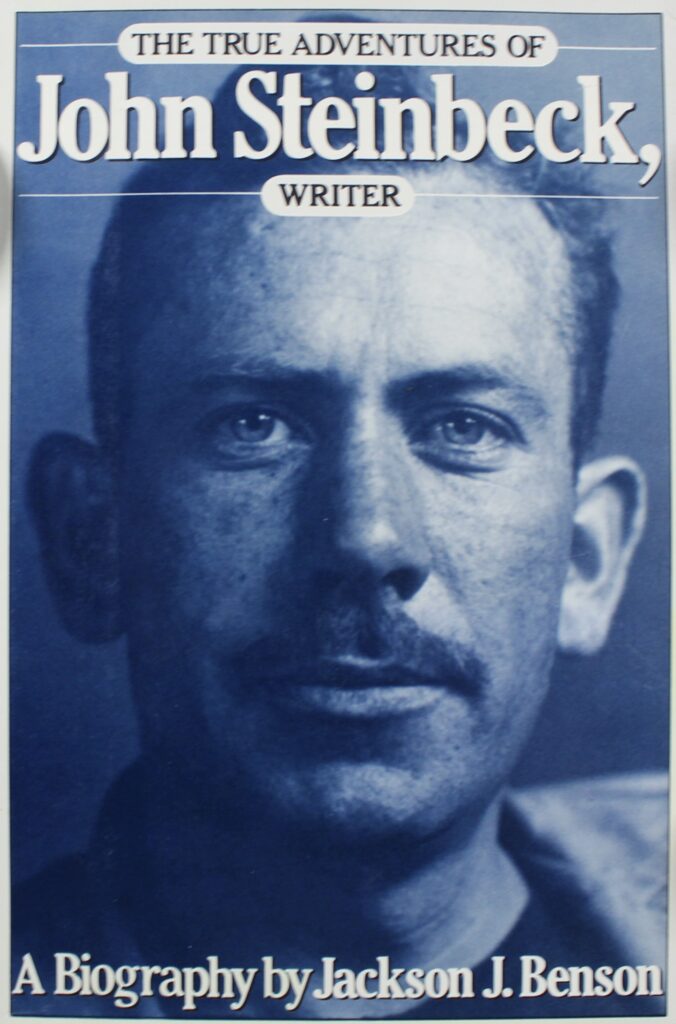
## ***[The True Adventures of John Steinbeck, Writer](https://www.penguinrandomhouse.com/books/266892/john-steinbeck-writer-by-jackson-j-benson/)***
By Jackson Benson (Viking Press, 1984)
Now in paperback as *John Steinbeck, Writer*
This is the definitive Steinbeck biography, the heavyweight, literally and figuratively. Benson was a young professor looking to write a short critical work when, thanks to a chance meeting with Steinbeck’s sister, he found himself knighted by the Steinbeck estate as the authorized biographer. Twelve years of research and three years of writing resulted in a massive work of over 1,000 pages loaded with detail. Though Benson passed away in 2023, his name will always be spoken with reverence in Steinbeck circles. His research is now housed in Special Collections at Stanford University where it will remain a treasured resource for decades to come.
> > “*This is the story of a man who was a writer. He cared about language, and he cared about people. He didn’t want to be famous or popular — he just wanted to write books. But he became both. From among the many serious writers of our time, he became for a great many people, here and throughout the world, the one writer who counted, the one who touched them. He made words sing, and he made people laugh and cry. He also made them think — about loneliness, self-deception, and injustice. And in all that he wrote, he testified to his belief that everything that lives is holy*.”
> >
> > Jackson Benson, preface to *The True Adventures of John Steinbeck, Writer*
A few years later Benson published a second title, *Looking for Steinbeck’s Ghost* (University of Oklahoma Press, 1988). This is the narrative of his 15-year journey, but it also retells Steinbeck’s story in an unconventional and non-chronological fashion. If you’re not ready to take on 1,000 pages, *Looking for Steinbeck’s Ghost* provides a shorter, quirkier introduction to his life while also detailing the challenges and struggles of a biographer.
---

## ***Steinbeck: A Life in Letters***
Edited by Elaine Steinbeck and Robert Wallsten (Viking Press, 1975)
Elaine Steinbeck outlived her husband by 35 years, a period she devoted to protecting and promoting his legacy. In 1975, realizing that Benson’s work was still years from completion, she spearheaded this publication of more than 850 of Steinbeck’s letters. Presented chronologically, its editors refer to it as “not only a selection of letters, but a biography of letters.” Read cover to cover, these dispatches do intimately retell Steinbeck’s story. But this volume also lends itself to jumping around. Some of Steinbeck’s best writing can be found in his letters and journals.
> “*I have your letter today. And I am sorry but I cannot change that ending. It is casual — there is no fruity climax, it is not more important than any other part of the book — if there is a symbol, it is a survival symbol not a love symbol, it must be an accident, it must be a stranger, and it must be quick. To build this stranger into the structure of the book would be to warp the whole meaning of the book … The incident of the earth mother feeding by the breast is older than literature. You know that I have never been touchy about changes, but have too many thousands of hours on this book, every incident has been too carefully chosen and its weight judged and fitted. The balance is there. One other thing — I’m not writing a satisfying story. I’ve done my damndest to rip a reader’s nerves to rags, I don’t want him satisfied*.”
>
> > Steinbeck to editor, Pascal Covici after being asked to consider changing the end of *The Grapes of Wrath*.
> > *A Life in Letters*
Imposing as this collection is, its editors omitted nearly 4,000 letters. Hundreds of others exist as well in private and institutional collections. Robert DeMott, the dean of Steinbeck scholars, has opined that a complete and generously edited and annotated collection of Steinbeck’s letters and journals remains the great missing link in Steinbeck scholarship.
---

## **[*John* *Steinbeck: A Biography*](https://www.kirkusreviews.com/book-reviews/jay-parini/john-steinbeck/)**
Jay Parini (Henry Holt and Company 1995)
[Jay Parini ](http://jayparini.com/books)is a poet, novelist, biographer, screenwriter, and critic. In the early 1990s, less than a decade after the publication of Benson’s magnum opus, Elaine Steinbeck convinced Parini to produce this volume. Parini admits in his preface that Steinbeck’s widow “assisted me throughout the writing of this book.” At less than 500 pages, it is less intimidating and more accessible than Benson. Interlacing Steinbeck’s personal story with his literary development, Parini argues that Steinbeck was a major novelist who never deserved the critical disdain he received from the Eastern literary establishment. He describes Steinbeck as “a uniquely authentic writer who, over nearly four decades, produced a body of work that evokes life in this century with compassion and lyrical precision.”
---

## ***[Mad at the World: A Life of John Steinbeck](https://www.nytimes.com/2020/10/06/books/review/mad-at-the-world-john-steinbeck-william-souder.html)***
William Souder (W.W. Norton & Company, 2020)
This most recent biographic work on Steinbeck came from an outsider of sorts. [William Souder](https://www.dvagency.com/william-souder) was attracted to Steinbeck after completing award-winning works on [John James Audubon](https://www.audubon.org/content/john-james-audubon) and [Rachel Carson](https://www.rachelcarson.org), loners who, like Steinbeck, were fascinated by the natural world. Unlike Benson, who argued that Steinbeck’s work grew out of care and curiosity about people, Souder was convinced that Steinbeck’s art sprang from rage — rage against poverty and injustice and prejudice, against the strong preying on the weak, against ex-wives and literary critics. He attributes Steinbeck’s “sour response to the world around him” as evidence of a recurring depression. Souder’s account is well-written and readable, and it presents a fresh perspective on Steinbeck and his work from a 21st-century perspective. Souder tells Steinbeck’s story at a brisker pace than his predecessors; *Mad at the World* comes in at just over 350 pages.
> “*Before his second birthday, Wilbur and Orville Wright would fly. And within months of his death, Neil Armstrong would walk on the moon. In between, John Steinbeck tried to tell the story every writer hopes to get right, which is only how it was during one small chapter of history. It is not much to ask, but the hardest thing on earth to do*.”
> William Souder, *Mad at the World*
*Part II of this article will include additional biographical works on Steinbeck that concentrate on specific periods and relationships in his life, including his first wife Carol, his good friend Ed Ricketts, and his editor Pat Covici.*
---
## ***Discover more on these topics at Listening to America***
[The Constitution](https://ltamerica.org/tag/the-constitution/ "1 topics")[South Carolina](https://ltamerica.org/tag/south-carolina/ "1 topics")[Oppenheim](https://ltamerica.org/tag/oppenheim/ "0 topics")[U.S. Presidents](https://ltamerica.org/tag/u-s-presidents/ "71 topics")[Water in the West](https://ltamerica.org/tag/water-in-the-west/ "24 topics")[Thoreau](https://ltamerica.org/tag/thoreau/ "5 topics")[Video](https://ltamerica.org/tag/video/ "51 topics")[north daktoa](https://ltamerica.org/tag/north-daktoa/ "0 topics")[North Carolina](https://ltamerica.org/tag/north-carolina/ "3 topics")[Road Trips](https://ltamerica.org/tag/road-trips/ "18 topics")[Walden](https://ltamerica.org/tag/walden/ "1 topics")[Steinbeck Travels](https://ltamerica.org/tag/steinbeck-travels/ "75 topics")[New England](https://ltamerica.org/tag/new-england/ "1 topics")[U.S. Constitution](https://ltamerica.org/tag/u-s-constitution/ "1 topics")[Oregon](https://ltamerica.org/tag/oregon/ "4 topics")[Sports](https://ltamerica.org/tag/sports/ "2 topics")[Thomas Jefferson](https://ltamerica.org/tag/thomas-jefferson/ "34 topics")[Theodore Roosevelt](https://ltamerica.org/tag/theodore-roosevelt/ "16 topics")[Wisconsin](https://ltamerica.org/tag/wisconsin/ "0 topics")[New Mexico](https://ltamerica.org/tag/new-mexico/ "3 topics")[Virginia](https://ltamerica.org/tag/virginia/ "7 topics")[Texas](https://ltamerica.org/tag/texas/ "4 topics")[Space Exploration](https://ltamerica.org/tag/space-exploration/ "8 topics")[New York](https://ltamerica.org/tag/new-york/ "8 topics")[State Parks](https://ltamerica.org/tag/state-parks/ "2 topics")[William Shirer](https://ltamerica.org/tag/william-shirer/ "1 topics")[Pennsylvania](https://ltamerica.org/tag/pennsylvania/ "1 topics")[Republics](https://ltamerica.org/tag/republics/ "1 topics")[paintings](https://ltamerica.org/tag/paintings/ "0 topics")[Wyoming](https://ltamerica.org/tag/wyoming/ "4 topics")[Rome](https://ltamerica.org/tag/rome/ "1 topics")[Washington](https://ltamerica.org/tag/washington/ "2 topics")[Tennessee](https://ltamerica.org/tag/tennessee/ "1 topics")[Republic](https://ltamerica.org/tag/republic/ "0 topics")[Vermont](https://ltamerica.org/tag/vermont/ "1 topics")[South Dakota](https://ltamerica.org/tag/south-dakota/ "16 topics")[Rivers](https://ltamerica.org/tag/rivers/ "3 topics")[Travel](https://ltamerica.org/tag/travel/ "1 topics")[Poetry](https://ltamerica.org/tag/poetry/ "1 topics")[Utah](https://ltamerica.org/tag/utah/ "11 topics")[Reading](https://ltamerica.org/tag/reading/ "1 topics")[North Dakota](https://ltamerica.org/tag/north-dakota/ "53 topics")[Podcast](https://ltamerica.org/tag/podcast/ "1 topics")[Ohio](https://ltamerica.org/tag/ohio/ "2 topics")[Oppenheimer](https://ltamerica.org/tag/oppenheimer/ "1 topics")
**Categories:** Books
**Tags:** Books, Humanities, John Steinbeck, Steinbeck Travels
---
### [The Heroic and Problematic Legacy of Joseph Banks](https://ltamerica.org/the-heroic-and-problematic-legacy-of-joseph-banks/)
**Published:** June 10, 2024
**Author:** Clay Jenkinson
**Excerpt:** I was listening to an audio biography of Joseph Banks, the great British naturalist who sailed with Captain James Cook, who made Kew Gardens in Britain, and who was the president of the Royal Society — among much else, not all so admirable it turns out.
**Content:**
## I was listening to an audio biography of Joseph Banks, the great British naturalist who sailed with Captain James Cook on the first voyage, who made [Kew Gardens in Britain](https://www.kew.org) one of the world’s finest, and who was the president of the [Royal Society](https://royalsociety.org) — among much else, not all so admirable it turns out.
Kew Gardens, London. A paining by French artist, Lucien Pissarro, 1892.
Because I am traveling America, I’m reading travel books of every sort, including recently Hampton Sides’ new study of Captain Cook’s third (and fatal) voyage, *The Wide, Wide Sea: Imperial Ambition, First Contact, and the Fateful Final Voyage of Captain James Cook.* I don’t know how it works for you, but when I get fascinated by a topic like this, “way leads on to way,” and I wind up reading in and around the subject in all sorts of directions. You cannot make sense of James Cook’s travels without coming to terms with Joseph Banks, the wealthy aristocrat with a deep passion for botany who accompanied Cook on the first voyage. Banks is often compared to Thomas Jefferson, another enlightened amateur who zealously sought knowledge of what then was called the Natural World.
So I have been reading Toby Musgrave’s *[The Multifarious Mr. Banks: From Botany Bay to Kew, the Natural Historian Who Shaped the World](https://yalebooks.yale.edu/book/9780300259209/the-multifarious-mr-banks/)*, and listening to Peter Fitzsimons’ *[James Cook: the Story Behind the Man Who Mapped the World](https://www.amazon.com/James-Cook/dp/073364127X)*.
Because of our time’s new (and important) cultural sensitivities, it is essential that we rethink most of what we thought we knew. What follows is my attempt to come to terms with the amazing Joseph Banks’s mixed legacy.
## **Joseph Banks (1743-1820)**
One of the great figures of [Georgian England](https://www.english-heritage.org.uk/learn/story-of-england/georgians/#:~:text=The%20Georgian%20era%20spans%20the,as%20that%20of%20William%20IV.), Joseph Banks traveled with Captain James Cook on the famous first voyage (1768-1771) — to Tahiti to observe the [Transit of Venus](https://annex.exploratorium.edu/venus/question1.html) for the British Admiralty and the European scientific community. He was an exemplar of the Enlightenment, as was America’s Thomas Jefferson, born in the same year across the Atlantic. (Jefferson died in 1826, six years after Banks.) Jefferson and Banks are frequently regarded as a transatlantic pair of enlightened amateurs and patrons of exploration, though they never met and did not correspond. Jefferson knew and admired the work of Banks, but it is not clear that Banks would have regarded Jefferson as anything more than an American rebel and — later — the republic’s third president. For 41 years, Banks was the president of Britain’s Royal Society. For 18, Jefferson was the president of the American Philosophical Society, created by Benjamin Franklin, who knew them both.
What should we do with our postcolonial ambivalence about Joseph Banks?
I used to think better of Banks, but now that I have read a couple of biographies, I admire him more and like him less.
A young Sir Joseph Banks, painted by Sir Joshua Reynolds in 1773.
After returning from his voyage with Cook, he jilted a young woman to whom he had been previously betrothed (Harriet Blosset) in an unconscionable way. He left her suddenly without informing her of his plans on a multi-year voyage around the world from which he might never return. Once she had come to terms with his cruel and unannounced departure, she spent his long absence sewing him lovely and intricate waistcoats to wear when he returned to England. When he finally returned to England in July 1771, Banks didn’t bother contacting her. She learned of his return in the newspapers, where he was universally lionized. Miss Blosset had to contact him to seek an explanation for his appalling behavior. He first tried to put her off with a letter, but she insisted on an “interview,” as such things were called then. Eventually, he paid Blosset a lump sum of 5,000 pounds sterling (about a million dollars in today’s currency) to make her go quietly away. In this, he was simply a cad.
Now famous and the most sought-after dinner companion in Great Britain, Banks demanded such special treatment for joining Cook’s second voyage that when modifications had been made to the ship, Resolution to accommodate him, the vessel was so unstable that it could no longer make the journey. The Resolution had to be restored to its original condition to make it seaworthy again. At this point, Banks threw a mighty tantrum, withdrew from the expedition with aristocratic hauteur, and used his power, immense wealth, and social position to quash any significant social or political criticism. He was entirely in the wrong, and of course, he knew it. At the end of his long and productive life, he was still trying to explain his colossal mistake, perhaps even to himself.
During and after his world travels, Banks sought out and purchased indigenous skulls for his German friend [Johann Friedrich Blumenbach ](https://www.britannica.com/biography/Johann-Friedrich-Blumenbach)(1752-1840), who was studying the skin and crania of the world’s peoples to make what we now see as racist classifications of human capacity. In 1795, Blumenbach published a treatise maintaining five varieties of humankind: Oriental, American Indians, Caucasian, Malay, and Ethiopian. In many respects, Blumenbach bequeathed us the “modern” scientific concept of race and made it clear that he regarded “Caucasians” as the most highly developed race. Some of Blumenbach’s terms have persisted into the beginning of the 21st century. Banks was only too glad to procure skulls for his continental friend, including by having them removed from the sacred sites of indigenous peoples.
Banks treated Tahiti as a free love zone, getting and giving STDs as he slept his way through Polynesia. He was a prominent European intellectual who behaved (as a young man) like a frat boy.
When two of his attendants, both black, died of hypothermia on a botanizing excursion he led at the bottom of South America, Banks recorded their deaths with studied indifference; when his greyhound died on the *Endeavour* on the return voyage to England, Banks was overcome with sorrow.
He appropriated the work of some of his assistants by insisting that everything they did on his behalf belonged exclusively to him.
Later in life, Banks descended into such self-satisfied luxury that he ballooned up until he could barely walk, could no longer work with plant specimens, and suffered from gout. The once handsome youth so full of promise eventually became an old, fat, entitled man who wallowed in his fame and power.
Sir Joseph Banks, later in life, as president of the Royal Society, wearing the insignia of the Order of the Bath. Painting by Thomas Phillips, 1812.
And yet, on balance, perhaps there is more to admire in Banks than to decry.
He was a friend of Britain’s King George III, and he used his connection to advance the Republic of Letters and elevate [Kew](https://www.kew.org/) to the first rank of botanical gardens worldwide. Banks and “farmer George” frequently strolled Kew Gardens, talking botany and agriculture together. He was an active member of more than 70 clubs and societies, most but not all in the British Isles.
He was genuinely indefatigable in his pursuit of new plants all over the world. He was outspoken in his frustration when shore conditions prevented a landing, when Captain Cook decided he could not spare more time for botanizing, and when local authorities refused to permit Cook’s crew to visit their environs. He is said to have collected and identified more than 30,000 plant specimens during his amazing career. As a botanical collector, he has no peers in history, not even Linnaeus.
Banks smuggled fiercely guarded Merino Sheep from Spain and introduced the breed to England, New Zealand, and Australia. Spanish authorities were unwilling to share this prize strain of sheep with its geopolitical competitors. Merinos were immediately recognized as the best sheep in the world. In an unrelated quest, America’s greatest agrarian visionary, Thomas Jefferson, obtained a pair of Merino sheep, sang their praises in his voluminous correspondence, and made their progeny freely available to farmers and agricultural societies throughout the United States.
Banks helped establish a colony of convicts in eastern Australia so that British malefactors could start their lives over in a far corner of the world rather than perish on the gallows or in the fetid prisoner ships (the hulks) in the Thames estuary. From his own great wealth, he founded a large number of voyages of science and discovery.
*The Multifarious Mr. Banks* by Toby Musgrave. Yale University Press, 2020.
He brought celebrity and international attention to Captain Cook’s first voyage in a way that Cook himself might not have been able to accomplish.
Banks’s biographer, [Toby Musgrave](https://www.amazon.com/Multifarious-Mr-Banks-Natural-Historian/dp/0300223838), summarizes his genius well. “Banks became an acknowledged expert in a wide range of subjects, including agriculture, botanic gardens, canals, cartography, coinage, colonization, currency, drainage, earthquakes, economic botany, exploration, farming, leather tanning, Merino sheep, plant pathology, and even the plucking of geese.”
## **And Yet …**
Given the multicultural sensitivities of our time, thanks to the cultural revolution that began in the 1960s, we cannot now help seeing Joseph Banks as an agent of the British Empire; more, in fact, than Captain Cook, who was performing the duties set for him by the British Admiralty. Banks was a full-tilt British imperialist without the slightest doubt about the superiority of European (and British) civilization, an advocate of British commercial domination of the world’s oceans, and a profoundly Eurocentric anthropologist.
Portrait of Captain James Cook by John Weber (1782). (Australia National Portrait Gallery)
He was, of course, a man of his times, but his partner in discovery, James Cook, was more culturally sensitive in measurable ways. One of the sponsors of the voyage, James Douglas, the 14th Earl of Morton, in his *[Hints for the Consideration of Captain Cook](https://www.nla.gov.au/digital-classroom/senior-secondary/cook-and-pacific/indigenous-responses-cook-and-his-voyage/hints#)*, urged the explorers to observe “the utmost patience and forbearance with respect to the Natives of the several Lands where the Ship may touch,” to “have it still in view that shedding the blood of those people is a crime of the highest nature: — They are human creatures, the work of the same omnipotent Author, equally under his care with the most polished European; perhaps being less offensive, more entitled to his favor,” and always to remember that the indigenous peoples “are the natural, and in the strictest sense of the word, the legal possessors of the several Regions they inhabit.” Morton wrote, “No European Nation has a right to occupy any part of their country, or settle among them without their voluntary consent. Conquest over such people can give no just title; because they could never be the Aggressors.”
## **Jefferson as the American Joseph Banks**
Sometimes, Thomas Jefferson is likened to Banks, but this is a weak analogy. Jefferson was a gifted amateur, an enlightened dilettante, but he did not have the drive, means, or scientific discipline of Banks. Jefferson had a famously weak stomach for sea travel. He would surely have agreed with the English man of letters Samuel Johnson, Banks’ contemporary, who said, “Being in a ship is being in a jail, with the chance of being drowned.”
Jefferson had none of Banks’ vast wealth.
Jefferson, like Banks, thought of himself as a patron of exploration and science and a disseminator of the best ideas of his time, but he was essentially a gifted dabbler. On the other hand, Jefferson had an essential modesty of spirit that would have made it impossible for him to throw his weight around like Banks. Needless to say, their views of King George III were fundamentally different. It is impossible to imagine Jefferson dallying with indigenous women in the Pacific, his enslaved lover Sally Hemings notwithstanding. Because of his great wealth and social standing, Banks could buy anything he needed, including his participation in Cook’s first voyage, for which he spent 10,000 pounds sterling. Banks helped to expand the British Empire, while Jefferson gave the first of his adult years to prying the American colonies out of the British Empire and the rest of his life to establishing an isolationist agrarian New World republic to protect the lives, liberties, and the pursuit of happiness of the American people.
Banks belonged to the British gentry. He had vast and profitable estates in several English counties. He lived as an entitled aristocrat on his landed income, bought whatever he coveted, including access, and bought off scandal and even criticism. Jefferson was in serious debt most of his life, bankrupt at the end. Even if he had been terribly rich, I doubt that Jefferson would have pursued a life of ostentatious luxury. Jefferson acquired (usually on credit) books, scientific instruments, musical scores, good wine, and fine paper and ink, but not the dross of extreme wealth. He liked to say that he would rather be a free man in homespun cloth than acquire all the most significant fruits of life at the expense of his self-respect and independence.
## **What Should We Conclude? It’s Not Clear**
*The Wide Wide Sea: Imperial Ambition, First Contact and the Fateful Final Voyage of Captain James Cook* by Hampton Sides, published May, 2024.
It’s hard not to think of Banks — once you get to know him — as sharing some of the character of James Steerforth in Charles Dickens’ *David Copperfield*: a rich and entitled swaggerer and seducer who leaves a wake of broken hearts — and an agent writing cheques — behind. But unlike Steerforth, Banks had an indefatigable commitment to advancing human knowledge at home and abroad. In this, he was precisely like Thomas Jefferson.
Until recently, Banks’ private life was not regarded as sufficiently troublesome to cast a cloud over his great achievement. Nor, until the last 50 years, was Banks’ cultural arrogance and undisguised commercial imperialism regarded as problematic. As Hampton Sides acknowledges in his recent book about James Cook’s third voyage (1776-79), *[The Wide, Wide Sea: Imperial Ambition, First Contact, and the Fateful Final Voyage of Captain James Cook](https://ltamerica.org/the-age-of-exploration-meets-the-era-of-disillusionment/)*, it is now impossible to write about Cook and most of his compatriots without seeking the right balance between admiration for these confident and determined men of the Enlightenment, and deploring their blind self-assurance about the right of Europeans to lord it over all the rest of creation.
---
## ***Discover more on these topics at Listen***
[Rome](https://ltamerica.org/tag/rome/ "1 topics")[Poetry](https://ltamerica.org/tag/poetry/ "1 topics")[Wisconsin](https://ltamerica.org/tag/wisconsin/ "0 topics")[Water in the West](https://ltamerica.org/tag/water-in-the-west/ "24 topics")[Podcast](https://ltamerica.org/tag/podcast/ "1 topics")[Oregon](https://ltamerica.org/tag/oregon/ "4 topics")[Oppenheim](https://ltamerica.org/tag/oppenheim/ "0 topics")[Ohio](https://ltamerica.org/tag/ohio/ "2 topics")[South Dakota](https://ltamerica.org/tag/south-dakota/ "16 topics")[Utah](https://ltamerica.org/tag/utah/ "11 topics")[Pennsylvania](https://ltamerica.org/tag/pennsylvania/ "1 topics")[north daktoa](https://ltamerica.org/tag/north-daktoa/ "0 topics")[Texas](https://ltamerica.org/tag/texas/ "4 topics")[William Shirer](https://ltamerica.org/tag/william-shirer/ "1 topics")[U.S. Presidents](https://ltamerica.org/tag/u-s-presidents/ "71 topics")[Republics](https://ltamerica.org/tag/republics/ "1 topics")[New Mexico](https://ltamerica.org/tag/new-mexico/ "3 topics")[Thoreau](https://ltamerica.org/tag/thoreau/ "5 topics")[paintings](https://ltamerica.org/tag/paintings/ "0 topics")[Reading](https://ltamerica.org/tag/reading/ "1 topics")[Rivers](https://ltamerica.org/tag/rivers/ "3 topics")[Wyoming](https://ltamerica.org/tag/wyoming/ "4 topics")[Oppenheimer](https://ltamerica.org/tag/oppenheimer/ "1 topics")[Theodore Roosevelt](https://ltamerica.org/tag/theodore-roosevelt/ "16 topics")[The Constitution](https://ltamerica.org/tag/the-constitution/ "1 topics")[Vermont](https://ltamerica.org/tag/vermont/ "1 topics")[Travel](https://ltamerica.org/tag/travel/ "1 topics")[Sports](https://ltamerica.org/tag/sports/ "2 topics")[New England](https://ltamerica.org/tag/new-england/ "1 topics")[Thomas Jefferson](https://ltamerica.org/tag/thomas-jefferson/ "34 topics")[Virginia](https://ltamerica.org/tag/virginia/ "7 topics")[North Carolina](https://ltamerica.org/tag/north-carolina/ "3 topics")[Washington](https://ltamerica.org/tag/washington/ "2 topics")[State Parks](https://ltamerica.org/tag/state-parks/ "2 topics")[North Dakota](https://ltamerica.org/tag/north-dakota/ "53 topics")[New York](https://ltamerica.org/tag/new-york/ "8 topics")[Road Trips](https://ltamerica.org/tag/road-trips/ "18 topics")[Walden](https://ltamerica.org/tag/walden/ "1 topics")[U.S. Constitution](https://ltamerica.org/tag/u-s-constitution/ "1 topics")[Tennessee](https://ltamerica.org/tag/tennessee/ "1 topics")[Space Exploration](https://ltamerica.org/tag/space-exploration/ "8 topics")[South Carolina](https://ltamerica.org/tag/south-carolina/ "1 topics")[Video](https://ltamerica.org/tag/video/ "51 topics")[Republic](https://ltamerica.org/tag/republic/ "0 topics")[Steinbeck Travels](https://ltamerica.org/tag/steinbeck-travels/ "75 topics")
**Categories:** Features
**Tags:** Books, Humanities, Thomas Jefferson
---
### [The Age of Exploration Meets the Era of Disillusionment](https://ltamerica.org/the-age-of-exploration-meets-the-era-of-disillusionment/)
**Published:** May 16, 2024
**Author:** Clay Jenkinson
**Excerpt:** I have been reading Hampton Sides’ excellent new study of Captain James Cook’s third voyage (1776-1779), The Wide, Wide Sea: Imperial Ambition, First Contact, and The Fateful Final Voyage of Captain James Cook.
**Content:**
*The Wide Wide Sea: Imperial Ambition, First Contact and the Fateful Final Voyage of Captain James Cook* by Hampton Sides. Published May, 2024.
I have been reading Hampton Sides’ excellent new study of Captain James Cook’s third voyage (1776-1779), [*The Wide, Wide Sea: Imperial Ambition, First Contact, and The Fateful Final Voyage of Captain James Cook*.](https://www.penguinrandomhouse.com/books/602227/the-wide-wide-sea-by-hampton-sides/) Just to make things interesting, I have at the same time been re-reading Tony Horwitz’s sparkling *[Blue Latitudes](https://us.macmillan.com/books/9780312422608/bluelatitudes)* (2002), and I’ve been feverishly texting my friend David Nicandri, whose study of the third voyage, *[Captain Cook Rediscovered: Voyaging to the Icy Latitudes](https://press.uchicago.edu/ucp/books/book/distributed/C/bo70118110.html),* challenged much of the received tradition about that fatal voyage, which left Cook dead on the big island of Hawaii.
The challenge of writing a book about Captain James Cook (1728-1779) in the 21st century is that we have decided that there is so much to deplore. I can summarize in seven words: imperialism, exploitation, objectification, colonialism, extraction, Eurocentrism, destabilization. And yet the story of Cook’s three circumnavigations of the Earth is so utterly fascinating, so chock full of amazing, at times astounding, incidents, so enriched by discoveries (European discoveries, that is) and First Encounters, so enlivened by exoticism, and an unavoidable sense of wonder at the sheer audacity of Cook’s achievements, that it is hard to maintain a frown of moral righteousness, even though we all agree that Cook’s voyages raise serious questions about the Age of Discovery.
One of the best things written about European exploration came long before postcolonialism or postmodernism. Alan Moorhead, in his 1966 book *[The Fatal Impact](https://www.amazon.com/Fatal-Impact-Invasion-Pacific-1767-1840/dp/006015800X)*, wrote of “the fateful moment when a social capsule is broken open.” It’s a perfect metaphor. A banana holds up well as long as you don’t peel it. The minute you peel it, it starts to rot. This is true of an egg, too. How many accounts do we have of first encounters with people living in what Europeans regard as a natural, Edenic state, followed by the debasement of that indigenous culture?
Almost every honest journal keeper or correspondent in the history of Anglo-American exploration took time to admit that contact between Europeans and indigenous people was inherently disruptive and that the representatives of the “superior” civilization were seldom exemplars of the better traits of their home nations. When Lewis and Clark neared the Pacific Ocean from the interior in late 1805, they observed the degrading effect of previous white contact in the lower Columbia River. The Natives had STDs. One woman had the proprietary tattoo “J. Bowman” on her arm. The Natives were insolent in trade. A coastal man knew this much English: “son of a pitch.”
“In Cook’s long wake,” Hampton Sides writes in the preface to *The Wide, Wide Sea*, “came the occupiers, the guns, the pathogens, the alcohol, the problem of money, the whalers, the furriers, the seal hunters, the plantation owners, the missionaries.”
## **The Risk of First (and Subsequent) Contact**
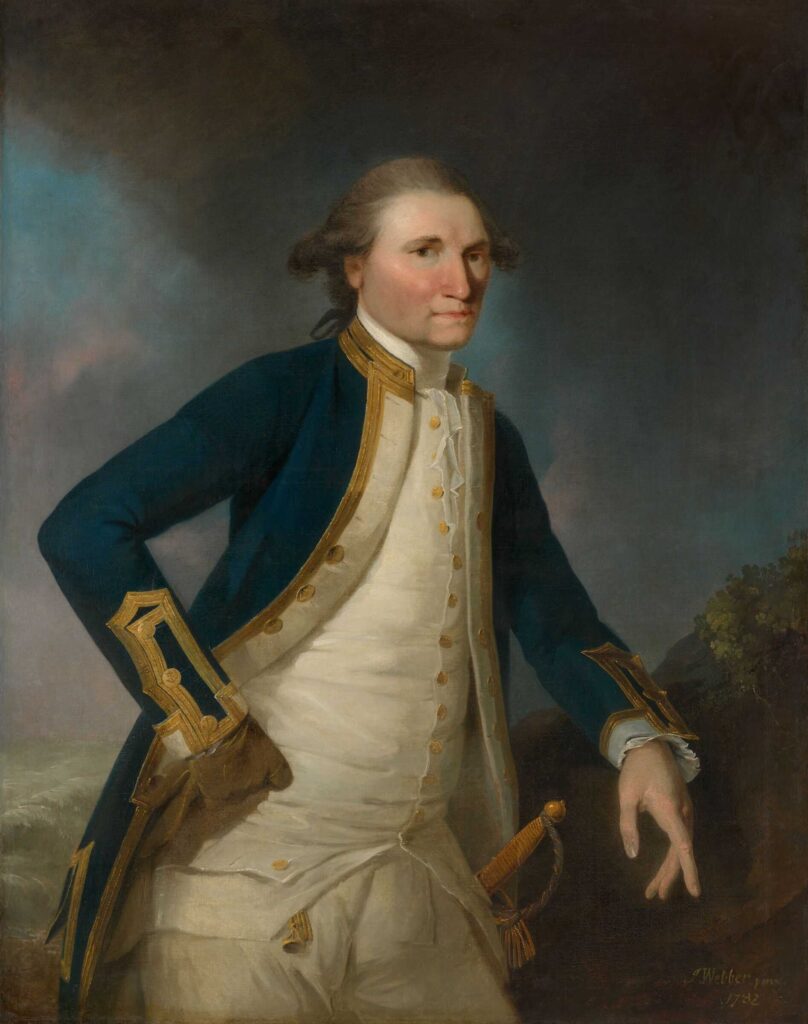Portrait of Captain James Cook by the artist John Webber (1782). Webber was a member of the crew on Cook’s third and last journey. (Australia National Portrait Gallery)
Hawaiian Natives murdered James Cook on February 14, 1779. His untimely death on Valentine’s Day was unfortunate, but as they said of Elvis, it was a great career move. While on duty for his majesty George III at a far corner of the world, his martyrdom has lifted him to tragic grandeur. Had he returned safely to England at the end of the 1770s and retired with honors to a well-deserved private life, he would not command as much worldwide attention as his martyrdom evokes. Sides tells the last 10 minutes of Cook’s life with a lovely sense of slow motion — and inevitability. It is, by any measure, one of the most famous moments in the history of exploration.
The essence of exploration is the moment when the explorer hands his firearm to a subaltern, rolls up his sleeves, and walks forward slowly, alone, and with evident friendliness toward a cluster of people who have never or seldom seen a white person before. He cannot know whether he will be killed or caressed, become a national statistic or be treated to the “national hug,” as Meriwether Lewis derisively called the fulsome welcome he received from the Shoshone leader Cameahwait on August 11, 1805. Lewis performed this full ritual only once in the 28-month journey he undertook on behalf of President Jefferson. It makes for some of the most compelling prose in the expedition’s journals. Cook did Full First Contact countless times, often in situations where it could not be known whether he would be embraced or disemboweled.
All of these explorers complained that the Indigenes were capricious, erratic, irrational, coy, and evasive. On August 15, 1805, just inside Idaho, Lewis was terrified that the band of Shoshone he had encountered and with whom he was now camping would slip away in the night before he could obtain the horses the expedition needed to cross the Bitterroot Mountains. He acknowledged that the Shoshone were themselves concerned that he was trying to lead them into an ambush. Still, their capriciousness caused him to lose sleep: “I slept but little as might be well expected, my mind dwelling on the state of the expedition which I have ever held in equal estimation with my own existence, and the fait of which appeared at this moment to depend in a great measure upon the caprice of a few savages who are ever as fickle as the wind.” James Cook could have easily written this sentence, though the British mariner was less likely to reveal his emotions than Lewis.
## **The Tired Captain Cook Paradigm**
I’m not a student of Captain Cook historiography, but at some point historians, led by the dean of Cook studies, J.C. Beaglehole, determined that Cook was worn out by the time he undertook his last voyage, that he was spiritually diminished, increasingly inflexible, that his judgment was not what it once was, that his heart wasn’t really in the last of his voyages, that his temper was hotter and more often expressed.
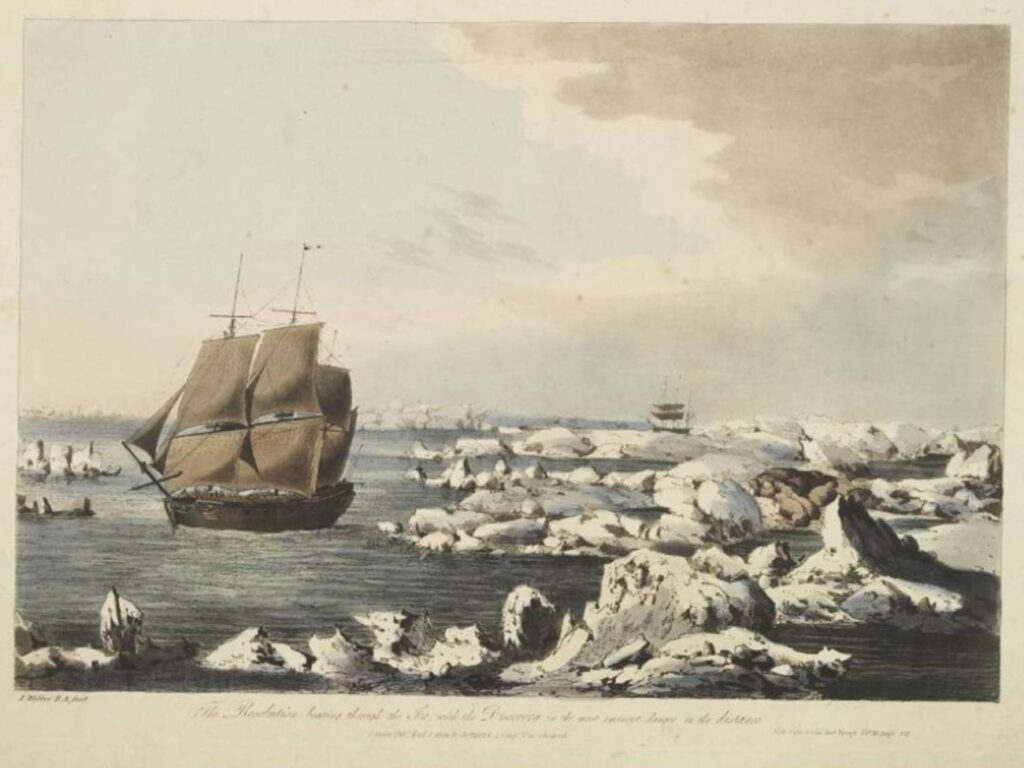Captain Cook’s ship the Resolution*,* and the accompanying Discovery in the distance, off Icy Cape, Alaska, 18 August 1778. Cook’s third expedition was tasked with searching for a fabled Northwest Passage off of western North America. This was as far North as he was able to sail before running into impenetrable ice. Etching by John Webber, a member of Cook’s crew, published 1792.
I don’t know enough to know for sure whether this is true — nobody knows for sure — but I don’t see it. On the third voyage, Cook dutifully returned Mai (Omai the Tahitian) from London to the Society Islands, a journey of 20,000 miles from the mouth of the Thames, before he undertook the true mission the British Admiralty had handed him. Only then, on December 7, 1777, did Cook begin his journey along the western coast of North America in search of the fabled Northwest Passage. This time, the search for the elusive passage would be undertaken from the top of the west coast of North America to the east. You cannot read any account of this phase of the voyage without gaining a deep respect for Cook, who had been led to believe that Alaska’s western coast was not much west of San Francisco, just farther north, but who soon learned that what stood between him and the top of North America was the immense western-stretching peninsula of Alaska! Undaunted, Cook explored the entire southern and west coast of Alaska, all the way out to the middle of the endless Aleutian Islands, before he found a wide enough gap to thread his two ships up to the top of Alaska. Along the way, he made a detailed survey of Prince William Sound and the Cook Inlet. Once through the frustrating Aleutians, Cook explored Bristol Bay, Kuskokwim Bay, and Norton Sound before finally passing through the Bering Strait and on to a place near the top of Alaska he named Icy Cape. That’s when a solid wall of ice forced him to turn back.
Before Cook, no European or Russian had understood how massive Alaska was or how far west its mainland stretched (even before the endlessness of the Aleutians). Before Cook, no one was sure that Alaska was not an island. Cook settled all of that geography once and for all. He did not find the Northwest Passage, which then did not exist and, practically speaking, doesn’t now, despite global warming. By the time winter weather forced Cook to turn his little fleet south towards Hawaii (the Sandwich Islands), he had pretty well satisfied himself that there was no shortcut across the continent at high latitudes, no matter from which direction you started. And yet, he planned to overwinter in Hawaii where he could repair his ships, find healthy food, and give his weary, lonely, homesick men some R&R, including of course, sexual R&R, and then return to Alaska earlier the following summer, beginning farther west, no longer diverted by the allurement of the various bays and sounds he once thought might be transcontinental inlets. In other words, he decided to add another full year to his travels to settle a point of global geography! He was determined to return to the high Arctic and, this time, ascertain once and for all whether it was possible to sail from the Pacific to the Atlantic over the top of the North American continent. Having already essentially concluded that there was no such passage, he nevertheless determined not to sail home to England until he had settled the question. It’s hard to imagine any other explorer spending another year on the other side of the world on the slender possibility that he might find the fabled throughway a little farther north.
This does not sound to me like a tired and spent mariner. His survey of the coastal contours of Alaska was dangerous: perpetual fog so thick that crewmen could not see the front end of the ships; hidden, undiscovered, and therefore uncharted reefs and rocks; the encroaching ice of the northern ice fields; loss of contact with the other vessel and fear that they would collide in the pea soup fog; increasing fear and anxiety among the ship personnel; increasingly poor health among the frostbitten crew; rancid foodstuffs; damaged and leaky ships.
It is also often alleged that it was the spiritually exhausted Cook who got himself killed at Kealakekua Bay in Hawaii, that the younger Cook of the previous voyages would not have let that situation get out of hand, would not have precipitated the violence of that fatal day by shooting an indigenous man at close range for seeming to menace him.
Well, maybe. However, as Sides tells the story of February 14, 1779, the unfolding events feel inevitable. The British visitors had worn out their welcome. It was expensive hosting sex-starved, produce-starved, wood-devouring strangers. Cook left the Hawaiian islands safely enough on February 4, but when he was forced to return to Kealakekua Bay nine days later after rough seas damaged the Resolution’s foremast, the mood of the natives was now decidedly hostile. If Cook had previously let himself believe that the Natives regarded him as a divine or semi-divine figure (Lono), he was about to confirm that he was “human all too human.” Once the aura of invincibility and perhaps divinity fissured, the Hawaiians spent what must have been a deep fund of rage and frustration at the high-handed ways of these aggressive visitors.
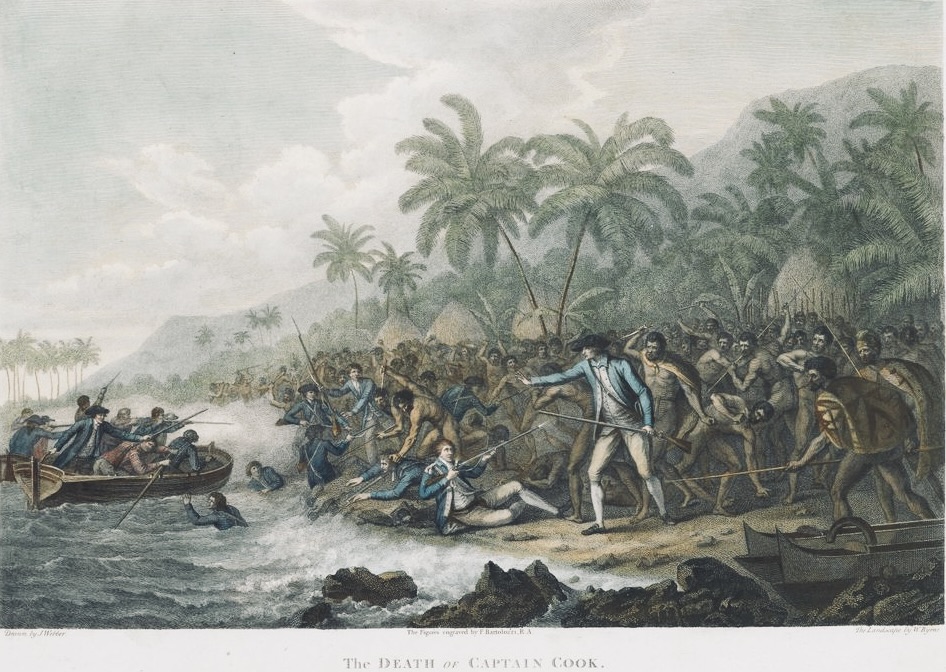The death of Captain Cook, from a painting by eyewitness John Webber, 1784.
It is relatively hard to see how the fatal day could have ended peacefully once Cook stormed ashore intending to take the king of the island Kalaniʻōpuʻu-a-Kaiamamao a hostage until the expedition’s cutter boat was returned by the Natives who stole it. He was determined to make an immediate, firm, and unambiguous show of force. He and his marines were heavily armed. Appearing on someone else’s shore as they did in what could only be regarded by the Natives as an aggressive posture, he necessitated a formidable response. A resistance. Mark Twain, visiting the Kealakekua Bay in 1866 and making some inquiries, pronounced Cook’s death “justifiable homicide.” The captain of Cook’s sister ship, Discovery, Charles Clerke, concluded, “Upon the whole, I firmly believe matters would not have been carried to the extremities they were had not Captain Cook attempted to chastise a man in the midst of this multitude.”
Cook’s sense of urgency is understandable. He knew that the cutter was almost certainly stolen so that Natives could strip it of all of its metal, which was infinitely more valuable to them than the watercraft, inferior to their boats in every way, including aesthetically. So Cook decided to take the king hostage, hoping the thieves would be pressured to return the boat before it was broken up. This method of coercion had worked before on other Pacific islands. Cook felt a pressing need to resume his reconnaissance of Alaska and his final search for the Northwest Passage. He knew the narrow window of weeks that the higher latitudes would be seasonally ice-free. After watching the advent of Arctic winter curtal the previous year’s search, he knew he needed every temperate day of 1778 to fulfill his mission. Cook could brook no sustained play of diplomatic intercourse, waiting days or weeks to recover the cutter, which would undoubtedly have perished in the interim. He may not have been emotionally exhausted in February 1779, but it is clear that he was emotionally done with the Hawaiians, at least for the rest of that exploration season.
By the time of his untimely death, Cook was 50 years old. He had spent much of his adult life at sea, leading three of human history’s most audacious sea voyages. He may not have been spiritually exhausted, but by this time, he had undoubtedly become jaded and weary of the often-inexplicable rituals of indigenous hospitality and reaction wherever he chose to land. The anthropologist Cook never stopped observing Native ways, but the British sea captain, a fellow of the Royal Society, must have longed for some predictable rites of English civility.
## **The Excellence of Hampton Sides**
Author, Hampton Sides. (Photo by Anne Goodwin Sides)
The best of Sides’ book is the last third, after New Zealand, Tahiti, and the Hawaiian Islands. That’s when the true mission began, and Cook exhibited his renowned drive and perseverance. There is a fascinating irony here. Until very recently, historians have given short shrift to Cook’s third voyage explorations of the high latitudes of the North and fixated on what my friend David Nicandri calls the “Polynesian Paradigm” — topless copper-skinned Native women seemingly eager to bed visiting Europeans. Plus breadfruit.
## **Captain Cook and the Republic of Letters**
Until now, my favorite Cook story was his 1769 voyage to the island of Tahiti to observe the rare Transit of Venus (1761 and 1769). That’s a story straight out of the Enlightenment. The best book on the transit is Andrea Wulf’s 2012 *Chasing Venus: The Race to Measure the Heavens.* Cook made that immense journey when France and Britain were locked in global conflict, and the 13 American colonies began asserting their independence. Benjamin Franklin, America’s great exemplar of the Enlightenment, exerted himself diplomatically to exempt Cook from any military engagement on the high seas. Cook’s scientific importance was so great that he must be exempted from any geopolitical harassment on the high seas. Should Cook’s vessel “happen to fall into your hands,” Franklin wrote to the European diplomatic corps, “you should not consider her as an enemy, nor suffer any plunder to be made of the effects contained in her, nor obstruct her immediate return to England.” This is perhaps the single finest example of what is meant by the term Republic of Letters, the community of like-minded, high-minded scientists, reformers, scholars, and men of letters of all European nationalities who corresponded freely and looked out for each other in their attempt to solve mysteries and “ameliorate the condition of mankind,” as Jefferson put it.
## **The Greatness of James Cook**
Wherever he ventured, but especially among people with no previous contact with European “civilization,” Cook did what he could to prevent his men from infecting Native women with STDs. However, at times it proved to be nearly impossible. He urged his lieutenants to tolerate the small liberties and minor pilfering of the Natives, understanding that the two cultures saw such concepts as “property” and “theft” differently. When he was aware that he was making first contact with a Native people, he tried hard not to discharge any firearms on their shores. On one such occasion, Cook wrote, “We had the good fortune to leave them as ignorant of firearms as we found them. They never saw, nor heard, a musket fired.” Cook was always concerned with the health and well-being of the men who sailed with him. He experimented with various antiscorbutics (foods that countered the bane of the Age of Sail, scurvy). He insisted on a tight regimen of hygiene and cleanliness on his ships that differentiated him from most sea captions of his era. He worked hard to understand the sometimes bewildering ways of the Indigenous people he met and usually observed and noted rather than judged Native rites. For a man born in a mud-walled house in Yorkshire, Cook mastered navigation, cartography, and the discipline of precise and unfailing record keeping — something Meriwether Lewis, under much less difficult travel conditions, could not achieve. He worked hard to maintain discipline on his ships — he was not averse to the whip — but he was not a sadist like William Bligh. As “exemplars of imperialism” go, James Cook was among the most enlightened in every way.
I highly recommend *The Wide, Wide Sea: Imperial Ambition, First Contact, and The Fateful Final Voyage of Captain James Cook.* But I think you’ll enjoy it even more if you spend some time with Horowitz’s *Blue Latitudes*, too.
---
## ***Discover more on these topics at Listening to America***
[Reading](https://ltamerica.org/tag/reading/ "1 topics")[Thoreau](https://ltamerica.org/tag/thoreau/ "5 topics")[New York](https://ltamerica.org/tag/new-york/ "8 topics")[New Mexico](https://ltamerica.org/tag/new-mexico/ "3 topics")[Republic](https://ltamerica.org/tag/republic/ "0 topics")[Rivers](https://ltamerica.org/tag/rivers/ "3 topics")[Podcast](https://ltamerica.org/tag/podcast/ "1 topics")[North Carolina](https://ltamerica.org/tag/north-carolina/ "3 topics")[William Shirer](https://ltamerica.org/tag/william-shirer/ "1 topics")[Oppenheimer](https://ltamerica.org/tag/oppenheimer/ "1 topics")[Tennessee](https://ltamerica.org/tag/tennessee/ "1 topics")[Theodore Roosevelt](https://ltamerica.org/tag/theodore-roosevelt/ "16 topics")[Poetry](https://ltamerica.org/tag/poetry/ "1 topics")[New England](https://ltamerica.org/tag/new-england/ "1 topics")[State Parks](https://ltamerica.org/tag/state-parks/ "2 topics")[Road Trips](https://ltamerica.org/tag/road-trips/ "18 topics")[paintings](https://ltamerica.org/tag/paintings/ "0 topics")[Walden](https://ltamerica.org/tag/walden/ "1 topics")[Video](https://ltamerica.org/tag/video/ "51 topics")[Virginia](https://ltamerica.org/tag/virginia/ "7 topics")[North Dakota](https://ltamerica.org/tag/north-dakota/ "53 topics")[Rome](https://ltamerica.org/tag/rome/ "1 topics")[Wisconsin](https://ltamerica.org/tag/wisconsin/ "0 topics")[north daktoa](https://ltamerica.org/tag/north-daktoa/ "0 topics")[Space Exploration](https://ltamerica.org/tag/space-exploration/ "8 topics")[U.S. Presidents](https://ltamerica.org/tag/u-s-presidents/ "71 topics")[The Constitution](https://ltamerica.org/tag/the-constitution/ "1 topics")[Ohio](https://ltamerica.org/tag/ohio/ "2 topics")[Oregon](https://ltamerica.org/tag/oregon/ "4 topics")[Travel](https://ltamerica.org/tag/travel/ "1 topics")[Texas](https://ltamerica.org/tag/texas/ "4 topics")[U.S. Constitution](https://ltamerica.org/tag/u-s-constitution/ "1 topics")[Thomas Jefferson](https://ltamerica.org/tag/thomas-jefferson/ "34 topics")[Wyoming](https://ltamerica.org/tag/wyoming/ "4 topics")[Utah](https://ltamerica.org/tag/utah/ "11 topics")[Steinbeck Travels](https://ltamerica.org/tag/steinbeck-travels/ "75 topics")[Sports](https://ltamerica.org/tag/sports/ "2 topics")[Republics](https://ltamerica.org/tag/republics/ "1 topics")[South Carolina](https://ltamerica.org/tag/south-carolina/ "1 topics")[Water in the West](https://ltamerica.org/tag/water-in-the-west/ "24 topics")[Oppenheim](https://ltamerica.org/tag/oppenheim/ "0 topics")[Washington](https://ltamerica.org/tag/washington/ "2 topics")[Pennsylvania](https://ltamerica.org/tag/pennsylvania/ "1 topics")[South Dakota](https://ltamerica.org/tag/south-dakota/ "16 topics")[Vermont](https://ltamerica.org/tag/vermont/ "1 topics")
**Categories:** Books
**Tags:** Alaska, Books, Hawaii, Humanities, Lewis and Clark
---
### [John Steinbeck Among the French Canadian Harvest Gypsies](https://ltamerica.org/john-steinbeck-among-the-french-canadian-harvest-gypsies/)
**Published:** June 4, 2024
**Author:** Clay Jenkinson
**Excerpt:** In my second week of travels, I drove up much of the length of Maine, because in 1960 John Steinbeck was determined to touch the roof of the United States before turning west, and I reckoned you aren’t really fulfilling the mission unless you follow his path.
**Content:**
## Clay visits Northern Maine on the trail of John Steinbeck’s visit with French Canadian potato harvesters, detailed in *Travels With Charley.*
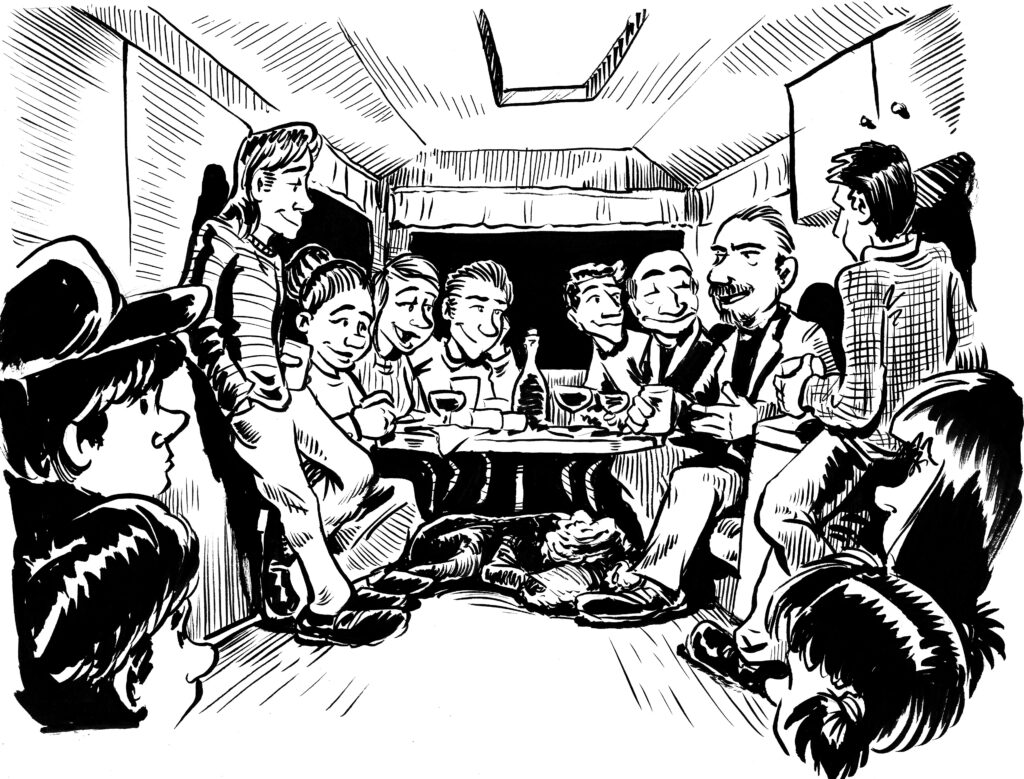Steinbeck hosts a family of French Canadian potato harvesters in his truck-camper, Rocinante, while visiting Maine in 1960. (Illustration by Nate Calderone of Salida, Colorado)
In my second week of travels, I drove up much of the length of Maine, because in 1960 John Steinbeck was determined to touch the roof of the United States before turning west, and I reckoned you aren’t really fulfilling the mission unless you follow his path.
When I was in central and northern Maine, I asked about “Canucks” or, more specifically, French Canadian potato harvesters. Everyone I met said you have to go all the way up to Fort Kent to have any chance to meet such people, and maybe not even then. When Steinbeck came through, Maine still ranked first in American potato production and automation had not yet eliminated the need for human laborers.
Maine is no longer the great potato producer it once was. Today, it ranks eighth after Minnesota, Colorado, North Dakota, Oregon, Wisconsin, Washington, and Idaho.
We don’t use the word “Canuck” anymore. Various dictionaries label it as “sometimes offensive,” “often derogatory,” or”considered by some insensitive.” It can refer to all Canadians but is more often used by eastern Canadians or French Canadians.
John Steinbeck had a chance encounter with a family of French Canadian potato harvesters during the first week of his transcontinental journey in 1960. He called them Canucks with no sense that the term might be regarded as unflattering.
At the end of a day of travel, Steinbeck parked his rig on the edge of what he called a lovely lake about 95 yards from a cluster of tents and trucks where the agricultural laborers spent their nights. He did a little lakeside laundry. When he smelled the odor of soup wafting in from their camp, he wrote, “I found myself thinking, ‘What charming people, what flair, how beautiful they are. How I wish I knew them.’ And all based on the delicious smell of soup.”
Steinbeck decided to make contact with them. As usual, he sent his French poodle Charley out as his ambassador, waited a few minutes, and then wandered over to reclaim the dog and apologize for any trouble he may have caused. The party consisted of three giggling girls, the family chieftain in the prime of his life, three wives, one pregnant, the elderly patriarch of the family, two brothers-in-law, and “a couple of young men who were working toward being brothers-in-law.” Plus, an unspecified number of children.
After some small talk about Charley’s birthplace in France, during which the French Canadians praised Rocinante (what they called his “roulotte”), Steinbeck invited them to stop by later to look at his rig.
The great novelist bustled about preparing his camper cabin for guests.
The French Canadian family (never named) stopped by in the evening. Steinbeck invited them into the “cabin” and urged them to sit around his dinette table. I’ve been in Steinbeck’s camper (at the National Steinbeck Center in Salinas, California), and I can confidently declare that it must have been a tight fit. Here’s how he puts it: “Six people can squeeze in behind my table, and they did. Two others beside me stood up, and the back door was wreathed with children’s faces.” Counting the host, that puts nine adults in the little cabin, 10 if you include Charley, who was a very large dog.
Steinbeck served the adults beer.
He wrote, “After the \[previous\] night of desolate loneliness, I felt very good to be surrounded by warm and friendly but cautious people. I tapped an artesian well of good feeling and made a small speech in my pidgin type of French.”
In the conversation that followed, the family told their story in that congested cabin. They were migrant laborers. They crossed the border from Canada every year to harvest potatoes in Maine. The border authorities of both nations were friendly, understanding, and cooperative. Their transnational transits and paperwork were handled by a professional agent who took a small percentage of their pay for his services. Steinbeck, who knew something about seasonal laborers, wrote that wherever he had met migrant workers in America, “there has always been a contractor in the background to smooth the way.”
The family had a small farm in Quebec. Each year, they “came over the line to make a small nest egg. They even carried a little feeling of holiday with them.” All of the adults worked in the fields, and the children helped to the extent that they were able.
After a decent interval, when everyone had relaxed and the atmosphere seemed right, Steinbeck reached into a storage bin and produced a bottle of fine cognac. The “chieftain” John, who managed the family’s day-to-day affairs, passed the bottle to the patriarch, “and the old man smiled so sweetly that for the first time I could see that he lacked front teeth.”
Steinbeck poured. When his guests tasted the “particulier du Departement de Charente,” the cabin hummed with non-verbal sounds of pleasure all around. “The cognac was very, very good,” Steinbeck reported, “and from the first muttered ‘Sante’ and their first clicking up you could feel the Brotherhood of Man growing until it filled Rocinante full — and the sisterhood also.”
His guests predictably and properly refused seconds, but they quickly yielded and let Steinbeck refill their cups. Then Steinbeck wrote one of the best lines in *Travels with Charley*: “And the division of thirds was put on the basis that there wasn’t enough to save.” Occasional lines like this one make *Travels with Charley* such an endearing book.
Steinbeck realized he was experiencing a moment of magic in a far corner of the United States.
“And with the few divided drops of that third there came into Rocinante a triumphant human magic that can bless a home, or a truck for that matter — nine people gathered in complete silence and the nine parts making a whole as surely as my arms and legs are part of me, separate and inseparable. Rocinante took on a glow it never quite lost.”
A glow it never quite lost.
Shortly thereafter, the patriarch motioned everyone out of the camper: “Such a fabric cannot be prolonged and should not be. … They went into the night, their way home lighted by the chieftain John carrying a tin kerosine lantern. They walked in silence among sleepy stumbling children and I never saw them again.”
He never saw them again.
## **Verisimilitude**
*Travels with Charley* recounts about a dozen major (and many more minor) encounters between Steinbeck and the people he met along his 11,500-mile journey in 1960. The first of the major encounters was with the Canuck family in northern Maine.
Clay sits at the table inside Steinbeck’s famous truck-camper, Rocinante, during a visit to the National Steinbeck Center in Salinas, Calif. (Photo by Dennis McKenna)
Virtually all Steinbeck scholars now agree that there are some fictional elements in *Travels with Charley*. At the very least, there is now a consensus that some of the dialogue in the book was embellished as he wrote up his journey in retrospect, months after his return to New York. It is possible, too, that there are a few composite characters in the book. It is even possible that Steinbeck invented parts of or all of a few of the encounters. I doubt this, but it is possible. One end of the spectrum of critical opinion is occupied by the investigative journalist Bill Steigerwald, a determined and militant skeptic who gives credence to few, if any, of Steinbeck’s road encounters. The other end of the spectrum is represented by Steinbeck scholars like San Jose’s Susan Shillinglaw, who is, of course, aware that *Travels with Charley* is what is known as autofiction but who believes that there is substantial authenticity in the bulk of Steinbeck’s encounters.
At this point, every Steinbeck scholar (and readers interested in this exercise) must decide where they land on the spectrum. My view, which comes after repeated readings and rereadings of *Travels with Charley*, several close readings of Steigerwald’s *Dogging Steinbeck*, Jackson Benson’s relevant chapters in his massive 1980 biography of Steinbeck, the outstanding literary criticism of Steinbeck scholar Robert DeMott and biographer Jay Parini, and my own long, careful interviews with Steigerwald, DeMott, and Parini, all conducted on this national Steinbeck journey, is that the great majority of the encounters in *Travels with Charley* actually occurred, in much the way Steinbeck remembered them. That there is embellishment is undeniable. *Travels with Charley* is a work of literature, not objective reportage. As Steinbeck notes several times in the book, storytellers inevitably shape their experiences to give them coherence and narrative bite. That some encounters might have occurred elsewhere than reported in the book is quite possible. That several minor encounters and conversations picked up along the way may have been melded during the writing process into composite characters — consciously or unconsciously — is certainly possible. But I doubt Steinbeck invented anything in the book out of whole cloth.
I may be wrong. One of the fruits of a long, obsessive adventure like this, indeed one of the purposes of my journey, is to feel my way through his 1960 journey as it was reported in the book he published 18 months later; to let my journey enlighten my understanding of his. My mind is open.
The probability that the Canuck incident never occurred at all approaches zero. That it happened in precisely the way Steinbeck writes about it is unlikely. But I believe it happened, and here’s why:
- The encounter came early in the mission when Steinbeck’s energy and exploratory spirit were still high. He went on his journey to reconnect with the peoples of America, and at the top of Maine, he did so.
- The incident seems to have carried Steinbeck back to the mid-1930s when he traveled the Central Valley of California in his “pie wagon,” a panel truck formerly used to deliver bakery goods, to study the plight of the displaced Okies, and to provide help where possible. Here, at the other end of the country, was an economically marginal itinerant family, toiling together to eke out some modest prosperity away from their home across the border, and here — in his new pie wagon — was the American novelist who achieved his fame writing about a family in a similar, albeit more desperate, situation. These were, in a sense, French Canadian Joads. In a number of the episodes of *Travels with Charley*, Steinbeck seems to be hearkening back to themes of his earlier books. In some respects, *Travels with Charley* is a kind of summing up.
- Steinbeck tells us at the beginning of his book that he stocked up on a fairly serious volume and variety of alcohol precisely to be in a position to host parties in Rocinante. Here in potato country, it was his first real opportunity. One of his goals was to entice some of the people he met into his little aluminum den, hear their stories, and show them genuine hospitality. The success of his early Canuck and cognac party boded well for the transcontinental quest he had undertaken. Unfortunately, there would not be many such intimate evenings in Rocinante, but he had started the trip successfully.
- As usual, “the genius is in the details.” Because he did not have enough glassware to host so large a group, Steinbeck cobbled together “three plastic coffee cups, a jelly glass, a shaving mug, and several wide-mouthed pill bottles,” from which he “emptied their capsules into a saucepan and rinsed out the odor of wheat germ with water from the tap.” He made coasters out of “folded paper towels.” He had “picked a bouquet of autumn leaves and put them in a milk bottle on the table.” I ask of the *Travels with Charley* skeptics: how likely is it that Steinbeck made these particulars up? After he “set my cabin in order,” and fussed over all of these preparations, Steinbeck wrote,”It’s amazing what trouble you will go to for a party.” As far as I am concerned, this has the ring of truth and authenticity.
- Why would Steinbeck make this incident up? I ask this question of each of the major encounters in *Travels with Charley*: the Canucks, the Canadian border officer, the couples in the mobile homes, the itinerant Shakespearean actor in eastern North Dakota, the taciturn and the voluble ranch denizens of the North Dakota badlands, the closeted young gay man in Idaho, the four men he questioned about Civil Rights in the Deep South? What does Steinbeck gain by inventing this encounter with French Canadian harvest gypsies? What convincing argument can be made that he invented an encounter with potato pickers?
- Retracing Steinbeck’s journey in 2010, my friend Steigerwald became so disillusioned when he discovered that not everything in *Travels with Charley* happened as if recorded by a “Rocinante cam,” that he determined to prove that the whole thing was a sham and Steinbeck a fraud. Of this famous incident, he writes: “The extended family of Canucks jamming into Rocinante is a favorite scene in *Charley*. But like other favorite scenes in the book, it most likely never happened — certainly not in the protracted, theatrical way Steinbeck described. … My guess is \[that this incident happened\] only in his novelist’s imagination.” Later, Steigerwald concludes, “The more I learned about Steinbeck’s journey, the more obvious it was becoming that nothing in it could be believed.”
- Above all, Steinbeck was deeply moved by his evening with the shy potato harvesters, which had an innocence that carried him back to the most intense period of his creative life. The following morning, “I made a little sign on cardboard and stuck it in the neck of the empty brandy bottle, then passing the sleeping camp I stopped and stood the bottle where they would see it.” He drove away “as quietly as I could.” And he concludes the episode with two sentences that essentially guarantee the authenticity of the encounter: “There are times that one treasures for all one’s life, and such times are burned clearly and sharply on the material of total recall. I felt very fortunate that morning.” There is, I believe, no snarky answer to this.
Modern potato harvesting equipment. (Qingdao Demeter Agricultural Equipment Co)
Unfortunately, I had no such encounter with a French Canadian family in northern Maine. At any rate, it would have been impossible to replicate the magic. The agricultural and petrochemical industrial complex manufactures today’s potato harvester. And we are no longer a people much open to innocence.
I asked my friend, Nate Calderone of Salida, Colorado, to make one of his delightful and spirited illustrations in honor of the Canuck incident. (See top of story.) I find his work whimsical and deeply satisfying. I hope you enjoy his art as much as I do.
*****Over the next few months, Clay is shadowing Steinbeck’s 10,000-mile trek around the USA (and making a few detours of his own). Clay’s expedition is a central part of LTA’s big initiative to explore the country and take the pulse of America as it approaches its 250th birthday. Be sure to follow Clay’s adventures [here](https://ltamerica.org/tag/steinbeck-travels/) and on [Facebook](https://www.facebook.com/LTAmerica) — and [subscribe to our newsletter](https://ltamerica.org/newsletter/)*.****
**Categories:** Features
**Tags:** America at 250, Books, John Steinbeck, Maine, Steinbeck Travels
---
### [Tortilla Flat: Steinbeck's Early Years](https://ltamerica.org/tortilla-flat-steinbecks-early-years/)
**Published:** June 3, 2024
**Author:** Clay Jenkinson
**Excerpt:** Steinbeck struggles against poverty, but the publication of Tortilla Flat changes everything.
**Content:**
Steinbeck struggled against poverty and a sense that his career as a writer might never happen until he published *Tortilla Flat*. After that the money started to come and so did critical acclaim. He structured *Tortilla Flat* on the Arthurian legends but most readers did not recognize the parallels. Not much left of that landscape near Monterey today.
John Steinbeck by James Fitzgerald, 1935. National Portrait Gallery, Smithsonian Institution; gift of Mr. and Mrs. Edgar F. Hubert. © The James Fitzgerald Legacy Monhegan Museum of Art & History.
From this time forward Steinbeck became increasingly secure financially and his reputation grew until he was one of America’s best loved writers. Just a few years later he published *The Grapes of Wrath*, regarded by most as a top 10 novel in American history.
In many respects Steinbeck was at his artistic best when he wrote about the Monterey Peninsula and his native Salinas, California.
As I tour the country following his great 1960 journey, I find late echoes of his deep commitment to the economically marginalized Americans. He admired and championed the people who just want a little piece of the American dream and find it difficult if even possible to succeed.
***Over the next few months, Clay is shadowing Steinbeck’s 10,000-mile trek around the USA (and making a few detours of his own). Clay’s expedition is a central part of LTA’s big initiative to explore the country and take the pulse of America as it approaches its 250th birthday. Be sure to follow Clay’s adventures [here](https://ltamerica.org/tag/steinbeck-travels/) and on [Facebook](https://www.facebook.com/LTAmerica) — and [subscribe to our newsletter](https://ltamerica.org/newsletter/)*.**
**Categories:** Dispatches from the Road
**Tags:** Books, California, John Steinbeck, Steinbeck Travels
---
### [Clay drops in at Sagamore Hill, Theodore Roosevelt's Beloved Home on Long Island — Video Dispatch](https://ltamerica.org/clay-drops-in-at-sagamore-hill-theodore-roosevelts-beloved-home-on-long-island-video-dispatch/)
**Published:** June 3, 2024
**Author:** Clay Jenkinson
**Excerpt:** Clay visits Sagamore Hill, Theodore Roosevelt’s home on Long Island.
**Content:**
There is no point in going to the eastern tip of Long Island to see John Steinbeck’s Sag Harbor without also stopping earlier on Long Island at Theodore Roosevelt’s home, Sagamore, at Oyster Bay. The house was closed the day I visited. Still, the grounds were open, which gave me time to wander the estate, imagine the hyperkinetic Roosevelt family in residence, observe TR’s home base without the usual press of visitors, and — for half an hour — sit in one of the rocking chairs on the veranda. Here’s my report.
***Over the next few months, Clay is shadowing Steinbeck’s 10,000-mile trek around the USA (and making a few detours of his own). Clay’s expedition is a central part of LTA’s big initiative to explore the country and take the pulse of America as it approaches its 250th birthday. Be sure to follow Clay’s adventures [here](https://ltamerica.org/tag/steinbeck-travels/) and on [Facebook](https://www.facebook.com/LTAmerica) — and [subscribe to our newsletter](https://ltamerica.org/newsletter/)*.**
**Categories:** Dispatches from the Road
**Tags:** John Steinbeck, New York, Steinbeck Travels, Theodore Roosevelt, U.S. Presidents
---
### [Two Views of the Nightmare Road to Athens, Ohio](https://ltamerica.org/two-views-of-the-nightmare-road-to-athens-ohio/)
**Published:** May 27, 2024
**Author:** Clay Jenkinson
**Excerpt:** Was it Google Maps that led me astray? Last week, on the way to Athens, Ohio, I took a wrong turn.
**Content:**
Taking a wrong turn on the way to Athens, Ohio, Clay, his pickup, and Airstream head down a narrow, steeply descending, unimproved road. Is there a way out? Or is this the end of the line for Clay’s Steinbeck journey? (Sketch by Clay Jenkinson)
Was it Google Maps that led me astray? Last week, on the way to Athens, Ohio, I took a wrong turn and wound up on a narrow, one-lane, broken asphalt and gravel road with a grade that the Ohio Department of Transportation would never approve of.
Once on the road there was no turning back, nothing to do but see what happened next. The “road” went on for a couple of miles, and deteriorated as I descended. I suddenly had a waking nightmare of reaching a washed out wooden bridge or a Dead End. There was absolutely no chance of turning around because the forest encroached and there were no driveways. Not even the U.S. Trucker of the Year could have backed up that hill given the grade and the disintegrating pavement.
For a moment I realized that this was the end of the journey and the end of everything. There is no AAA for this. It would take a couple of helicopters and some kind of Airstream diaper to lift me out. The only thing to do would have been to pour kerosine over the rig and the pickup and light a match.
I could hear strains of the theme song of “Deliverance” rising like the music at the end of a talk show segment. …
I had long since broken into a cold sweat. Somehow I bucked and slid at 2 miles per hour down to the end of the road and there was a left turn onto something like a real farm-to-market road.
I drove to the nearest truck stop and slumped over the wheel for a while.
I’ve provided two views of my situation here.
First, (see above) how it seemed as I reviewed my life and tried to compose a farewell note that exonerated me to the extent possible.
Mercifully, the narrowing forest route intersected with a wider farm road. Disaster averted! (Sketch by Clay Jenkinson)
Second, how it actually was.
I reckoned the rig would eventually be found like the green bus of Chris McCandless in Jon Krakauer’s “Into the Wild.” I’d gain a worldwide reputation for being the D.B. Cooper (D.B. Nincompoop) who disappeared into the wilderness 6 miles from the university town of Athens, Ohio.
*Et in Arcadia Ego*, (And in Arcadia I am.)
***Over the next few months, Clay is shadowing Steinbeck’s 10,000-mile trek around the USA (and making a few detours of his own). Clay’s expedition is a central part of LTA’s big initiative to explore the country and take the pulse of America as it approaches its 250th birthday. Be sure to [follow](https://ltamerica.org/tag/steinbeck-travels/) Clay’s adventures and [subscribe to our newsletter](https://ltamerica.org/newsletter/)*.**
**Categories:** Dispatches from the Road
**Tags:** America at 250, John Steinbeck, Ohio, Road Trips, Steinbeck Travels
---
### [Pondering Thomas Jefferson at Niagara Falls](https://ltamerica.org/pondering-thomas-jefferson-at-niagara-falls/)
**Published:** May 27, 2024
**Author:** Clay Jenkinson
**Excerpt:** Thomas Jefferson said it is worth a trip across the Atlantic to see Niagara Falls. Although he never got there.
**Content:**
*A Distant View of the Falls of Niagara* by American artist, John Vanderlyn, 1804.
Niagara Falls, New York — Thomas Jefferson said it is worth a trip across the Atlantic to see Niagara Falls. Although he never got there.
Jefferson displayed two prints of Niagara Falls in his dining room at Monticello, both by the American-born artist [John Vanderlyn](https://www.nga.gov/collection/artist-info.1948.html). He ordered them in 1803 and began to display them in 1804 in the last year of his first term as president.
In Jefferson’s short list of reasons to visit (and paint) America were Niagara Falls, the Natural Bridge in Virginia, and the confluence of the Shenandoah and the Potomac at Harpers Ferry.
Mrs. Maria Cosway
In a love letter to the painter and musician Maria Cosway on October 12, 1786, Jefferson made the case for Mrs. Cosway and her husband Richard Cosway making a visit to the United States:
“Where,” he asked in the third person, “could they find such objects as in America for the exercise of their enchanting art? … especially the lady, who paints landscape so inimitably. She wants only subjects worthy of immortality to render her pencil immortal. The Falling spring, the Cascade of Niagara, the Passage of the Potowmac thro the Blue mountains, the Natural bridge. It is worth a voiage across the Atlantic to see these objects; much more to paint, and make them, and thereby ourselves, known to all ages.”
*A View of the Western Branch of the Falls of Niagara* by John Vanderlyn.
The Cosways never made it. Mrs. Cosway later made it clear that she was prepared to come — alone — to see the Sage of Monticello but by that point Jefferson had decided what happens in Paris should probably remain in Paris.
So she never saw the dining room at Monticello.
One of Vanderlyn’s depictions is entitled *A View of the Western Branch of the Falls of Niagara, Taken from the Table Rock, Looking Up the River, Over the Rapids*, the other *A Distant View of the Falls of Niagara, Including Both Branches with the Island and Adjacent Shores, Taken from the Vicinity of the Indian Ladder*.
Jefferson may also have known the illustration from the London-based *Gentleman’s Magazine* from 1851. You’ll recognize it here from the rope ladder Native Americans had built to descend to the base of the Falls.
An illustration of Niagara Falls from the English *Gentleman’s Magazine*, 1851.
Travel was difficult in Jefferson’s America and Jefferson himself was not an adventurous traveler. The closest he got was Albany, New York, which he visited with his closest friend and collaborator James Madison on their “botanizing tour” of New England in 1791. Albany is 325 miles from Niagara. Jefferson never saw the Great Lakes.
This was my third visit to Niagara Falls. I was in the company of friendly guides and while gazing at American Falls I met two sisters who were about to bicycle the entire length of the towpath of the Erie Canal. I was filled with envy.
***Over the next few months, Clay is shadowing Steinbeck’s 10,000-mile trek around the USA (and making a few detours of his own). Clay’s expedition is a central part of LTA’s big initiative to explore the country and take the pulse of America as it approaches its 250th birthday. Be sure to [follow](https://ltamerica.org/tag/steinbeck-travels/) Clay’s adventures and [subscribe to our newsletter](https://ltamerica.org/newsletter/)*.**
**Categories:** Dispatches from the Road
**Tags:** John Steinbeck, New York, Road Trips, Steinbeck Travels, Thomas Jefferson, U.S. Presidents
---
### [The Age of Acrimony](https://ltamerica.org/the-age-of-acrimony/)
**Published:** May 27, 2024
**Author:** Lindsay Chervinsky
**Excerpt:** Lindsay Chervinsky reviews “… the dirty tale of how democracy got clean” in Jon Grinspan’s The Age of Acrimony: How Americans Fought to Fix Their Democracy, 1865-1915.
**Content:**
## Lindsay Chervinsky reviews *The Age of Acrimony: How Americans Fought to Fix Their Democracy, 1865-1915*, *“…* the dirty tale of how democracy got clean” by Jon Grinspan.
I’m excited to be back with you all to share a recent read that completely changed how I think of a “lost period” of American history. *[The Age of Acrimony: How Americans Fought to Fix Their Democracy, 1865-1915](https://www.bloomsbury.com/us/age-of-acrimony-9781635574623/)* by Jon Grinspan was first published in 2021, but I just got around to reading it. Grinspan presents a compelling, succinct story of the “origin story of normal politics … the dirty tale of how democracy got clean.”
*The Age of Acrimony: How Americans Fought to Fix Their Democracy, 1865-1915* by John Grinspan, Bloomsbury Publishing, 2021.
Have you ever tried to list all the American presidents in order? I know a lot of kids had to memorize a rhyme in school, but if I did, I’ve long since forgotten it. I can get all the names but there are two fuzzy periods for me where the order gets wonky: the late 1840s to early 1850s and the 1880s to early 1890s. Perhaps it’s because the presidents are just so darn meh or maybe it’s because we haven’t really understood the critical turning points of those decades. *The Age of Acrimony* does two things well. First, it challenges us to reconsider the decades after the Civil War in a powerful way. Second, it’s creatively written and offers an unusual and interesting structure.
Politics in the decades after the Civil War were messy, violent, chaotic, and corrupt. White supremacists in the South enforced regimes through violence and political machines “operated as organized crime syndicates,” and business leaders brutally suppressed labor movements with the enthusiastic cooperation of the judicial system.
Electoral results reflected this chaos. The period witnessed one impeachment, two presidential elections in which the Electoral College winner lost the popular vote, and three presidential assassinations. Let me say that again because it bears repeating. *Three presidential assassinations.* And we think politics is violent today.
And yet, politics were also fun, meaningful, and full of opportunities. The average voter turnout was 77%, which is far higher than any other period in American history. Frequent and enthusiastic voters included immigrant, young, poor, working class, and Black Americans. They turned out for two reasons. Campaigns were can’t-miss events with wild rallies, street-corner debates, costumes, fireworks, and beer-drenched barbecues. In an age before television and social media, there was no better entertainment.
Second, politics offered real personal fulfillment. Tribal partisanship broke down along racial, ethnic, and religious lines. Communities gathered within political parties, providing fertile ground for friendships, networking opportunities, and romance. Political machines rewarded loyal operatives with education and jobs and took care of their families if they fell ill.
Around 1900, politics began to transform from a “public, partisan, passionate system into a more private, independent, retrained one.” Political conversations no longer took place in public but behind closed doors. Decorum and civility replaced violence and partisanship. Grinspan argues that these changes made possible the social reforms of the Progressive Era, including child labor laws and pure food acts. The changes also led to a participation crash. In the early 20th century, turnout had fallen by one-third and hovered in the 40s for decades. Young, immigrant, and working-class voters were the first to skip elections and turnout in these groups has never recovered.
I had always viewed the elimination of the spoils system and the reform of politics as a net positive for American society. I still think that’s mostly true, but Grinspan challenged me to see the benefits of a more raucous political world. I think he’s right that our ideas about “normal politics” didn’t emerge until the 20th century. It’s important to know what came in the messy decades from the Founding to Reconstruction to have a better sense of what came before.
Social and political reformer, Florence Kelly (1859-1932), was the daughter of William “Pig Iron” Kelley.
Grinspan’s second major contribution is a writing win. As an author myself, I’m always fascinated by how other writers piece together a narrative. Which characters do they center? How do they tell a story? What moves the argument? Grinspan centers his story around the father-daughter duo William and Florence Kelley. Together, their lives span over a century in which the United States went from a baby nation fighting the War of 1812 against the British to an empire on the world stage.
William “Pig Iron” Kelley, known for his support for iron workers, was a self-made man who won national acclaim on the speaking circuit. He shared the stage with Frederick Douglass and Anna Dickinson and advocated for women’s suffrage with Susan B. Anthony. After his election to Congress, he became fast friends with Abraham Lincoln and was an ardent supporter of abolition. In Kelley’s later years, he increasingly pursued a vision of social democracy that focused on the economic plight of white workers at the expense of Black Americans in the South.
This moral failing was a disappointing one for the reader. Kelley’s betrayal of the Black voters who had long supported his campaigns mirrored the North’s turn away from Reconstruction. But it was almost more disappointing reading about the shift in one man. Kelley had bravely campaigned in the South for Black civil rights and his changing political positions appeared to defy logic.
Florence Kelley follows an equally dramatic arc. She started as a precious child who worshipped her father. After reading everything in her family’s extensive library, she attended Cornell University before joining her father as a political operative in Washington, D.C. Her life took an unexpected turn after traveling to Europe, where she met her husband. Their marriage paralleled her turn to radical socialism and her estrangement from her parents. She eventually fled her abusive husband and sought refuge in social reform work in Chicago. Alongside equally famous contemporaries like Jane Addams, Kelley pursued reforms that bettered the lives of immigrants, women, and children. I really enjoyed learning more about this dynamic duo (who I didn’t know about and maybe should have). But I loved that the book wasn’t just about them and isn’t a biography really. It pulls in the biggest characters, themes, and events of the day to tell a story through the lives of the Kelleys. That’s a tricky thing to do as a writer and Grinspan does it well. Highly recommend!
*Lindsay M. Chervinsky, Ph.D. is a presidential historian and a regular guest on Listening to America. She is the author of several books including the forthcoming* [Making the Presidency: John Adams and the Precedents that Forged the Republic](https://a.co/d/4WVBMKd)*. She is on social media* [*@lmchervinsky*](https://twitter.com/lmchervinsky)*.*
**Categories:** Books
**Tags:** Books
---
### [Assessing My Steinbeck Trip at Week Four](https://ltamerica.org/assessing-my-steinbeck-trip-at-week-four/)
**Published:** May 26, 2024
**Author:** Clay Jenkinson
**Excerpt:** It has been about four weeks since Clay began retracing John Steinbeck’s Travels with Charley Tour, shadowing the famous author’s 10,000-mile trek around the USA. Clay makes some observations on the difference between his trip in 2024 and Steinbeck’s 1960 journey.
**Content:**
## It has been about four weeks since Clay began retracing John Steinbeck’s *Travels with Charley* Tour. Shadowing the famous author’s 10,000-mile trek around the USA, Clay notes some advantages and disadvantages between his trip in 2024 and Steinbeck’s 1960 journey.
The Listening to America Airstream at a campground outside of Cooperstown, New York.
John Steinbeck stopped every week or so to reflect on what he had seen and experienced and what it signified about America or himself in 1960. I’m a month into my trip, somewhere in Ohio, vaguely on my way to Chicago, and with a bit of time on my hands, I thought I might summarize my sense of what is different in a journey of this sort today, in 2024, from a similar (but far from identical) journey in 1960. Here’s my preliminary report.
I have so many advantages over Steinbeck — all except transcendent talent.
Here’s a short list.
1\. Air conditioning. Fortunately, he was traveling in the autumn, but we now have sophisticated climate control systems in our vehicles. When Steinbeck wanted to open the windows, he had to hand-crank them.
2\. His seat did not recline. My grandfather had a 1957 I-H pickup. It held you upright, and the cushions were adequate. Over time, you could feel the springs beneath the fabric. My vehicles, including my pickup, have seats that can recline enough to make it possible to get a good night’s sleep. The pickup has electric seats and lumbar support, too.
3\. Safety features. Back then, the dashboard was made of metal. There were no seat belts, shoulder belts, airbags, or emergency flashers. My father, otherwise enlightened, removed the seatbelts from our new Ford Falcon in 1964.
4\. Steinbeck had power-assisted steering. That was the Beta or VHS tape phase of what would become true power steering a few years later. He reported being exhausted after driving his GMC pickup a couple of hundred miles. He actually did fairly ridiculous calculations of how much arm and foot muscle was expended in driving such vehicles.
5\. There were no RV parks in his time. He often squatted on private property, which I would not dare to do today. I’ve had two run-ins with property owners on the Little Missouri River, and though both ended civilly enough, in both instances, I was required to acknowledge that I was trespassing and that one does not have the right to trespass on private property.
6\. I have GPS and Google navigation. This matters much more in the East and New England than it would west of the Mississippi River. Steinbeck was frequently lost. He got lost on the final day when he ventured back into New York City over the bridge. But it is more than just the accuracy of GPS guidance. If you constantly fumble with a map or an atlas, you are not concentrating enough on the road. This always matters, but it matters most when driving a trailer or a truck camper.
7\. The roads are infinitely better today than in Steinbeck’s time. I don’t mean the interstate highway system, which he decried, but I am certain that he would have used it and loved it when he was trying to eat up miles, as when he flashed across the Great Plains from Chicago to Seattle to meet his next rendezvous with his wife, Elaine. The non-interstates are dramatically safer today, with better and wider shoulders. Most secondary roads have passing lanes every few miles. Road signage is better now. When my family drove from Fargo to Fergus Falls, Minnesota, in the 1960’s on old U.S. 52, there were dangerous concrete curbs at the edges of the narrow roadway. And, as William Least Heat Moon explained in *Blue Highways*, the interstates have drawn 90% or more of the traffic off the secondary and tertiary roads, making them much safer and dramatically less congested.
8\. Steinbeck had only a tube-type AM radio. Today, we have entertainment systems. He could have made a Steinbeck playlist if he had lived in our time. He liked to write to the sound of great symphonies. My pickup is ancient (2013), but it has AM/FM/XM and (because it is so old) a CD player, and I can plug it into my smartphone with a USB cord. I can remember traveling America with only an AM radio. There was a compensatory pleasure in spending time fine-tuning the radio to get the best signal available in what was (especially in the West) a media desert.
9\. I’m trailing an Airstream, which would be like a five-star hotel by the standards of Steinbeck’s 1960 truck camper. He had a small chemical toilet. No shower. The barest of refrigerators, and they didn’t work well back then. He had to take down the dining table and convert that space to a bed when he wanted to sleep. I believe this caused him to stay in motels more often than he admits because setting up such a bed at the end of a long day is tedious. He reports that when he was in a hurry to get started the following day, he frequently just slept on the dining couch. The lights in a modern camper are excellent. I have his and hers reading lights over the bed. He often read by gas lantern.
Clay with Steinbeck’s custom made truck camper. The famous rig is on display at the National Steinbeck Center in Salinas, California.
10\. Gas stations in 1960 were just gas stations. Perhaps they had a glass cabinet of candy. They were cramped. Usually, they had no more than two pumps. You could only fuel up with the help of a gas station attendant. Most people paid cash for fuel back then. If you wanted food, you had to find a grocery store or a ma-and-pa store. Today’s “fueling stations” are spectacular. You can cross the country today without ever going into a grocery store or a restaurant by selecting good plastic-wrapped sandwiches, boiled eggs, or individual packets of cheese, or — if you were starving — those hot dogs that have been slowly turning all day in the open air!
11\. Fast food was in its infancy in 1960. There were just 228 McDonalds in 1960. Although Burger King had been created in 1953, there were only 274 stores by 1967, a year before Steinbeck’s death. The first Arby’s opened in 1964, Subway in 1965. If you were looking for fast food in Steinbeck’s time, you either found a locally owned drive-in or looked in cities for White Castle or Big Boy. Steinbeck railed against the coming of commercial homogeneity in America, but sometimes you need provender. The easy-on, easy-off fast food options of our time — as well as nationally franchised motel chains and fuel stations — make long-distance traveling easy and efficient. They have also helped to hollow out the downtowns of America, local restaurants, and regional variety. I can imagine Steinbeck preaching jeremiads against fast food, but I can also imagine him saying, “You know, the Big Mac is pretty darn good,” at least until he read Eric Schlosser’s *Fast Food Nation*.
12\. Today’s audio devices are tiny, inexpensive, and — used properly — they can provide state-of-the-art audio recordings. He would have had to take a reel-to-reel tape recorder to capture sound or conduct interviews. If you wanted “video” in Steinbeck’s time, you had to have an 8mm movie camera. I know from experience all the things that can go wrong with 8mm cameras. I routinely record interviews on one of five devices (a teeny digital recorder, a handheld digital recorder, a recorder the size of an old transistor radio, a 35mm SLR camera, and my smartphone).
13\. We have the internet, with everything that represents, makes possible, distorts, and damages.
14\. When Steinbeck wanted to be in contact with his wife Elaine, he had to find a phone booth, work through an operator to place a collect call, and hope that Elaine was actually at their phone in NYC or Long Island. The calls would have been brief, even for a wealthy man like Steinbeck, because they were horrifically expensive then. When I was a boy, if we called my grandmother long distance over in Minnesota except on holidays, the first question she asked was if anyone was sick or dead. Today, I can text anyone I know, send instant photos or short videos, or speak with my daughter on FaceTime or WhatsApp.
15\. Books on tape. I can listen to thousands of books, some of them read by outstanding professional voice artists. Steinbeck carried a just-published copy of his friend William L. Shirer’s massive *Rise and Fall of the Third Reich* in 1960, but he was too tired at the end of a long day to read much. Today, he could have listened to all 57 hours and 11 minutes of R&FoTR read by the outstanding Grover Gardner as he drove America. I am sure he would have done that if such a technology had existed.
16\. Weather prediction has become a reliable science and art in our time. Not so, then. The other day, I heard a massive storm with tornadoes would rock the country’s central section. Fortunately, I was hundreds of miles north of the storm, but if I had been in its path, I would have found a giant concrete warehouse and parked adjacent to the northeast wall to wait out the trouble.
Probably, there are more advantages today that do not come readily to mind. Still, if you think about the accumulated advantage of all of this, you may wonder (as I do) in what sense this guy is actually retracing John Steinbeck’s 1960 *Travels with Charley* journey. Indeed. I wonder how much I would like this journey if I tried to travel in an identical truck camper (the chemical toilet alone makes me shudder), with its unreliable and primitive amenities and the rigor of driving a pickup with such rigid seats, no air conditioning, and only power-assisted steering; if I used only AM radio, called home from whatever’s left of phone booths, found few or no RV campgrounds, and drove on narrow hair-raising roads choked with slow-moving traffic.
I can report that I have been on the road for a month and have not stayed in any motel or hotel. I have yet to purchase a single fast-food meal. I have stayed in commercial campgrounds as seldom as possible. At least six times, I have been in state or county campgrounds without water or electricity. However, I regard staying in contact (at least with my website and social media platforms and my daughter in Great Britain) as so vital that we splurged on the Starlink system, which usually (but not invariably) permits me to contact the outside world.
## **So, What Were Steinbeck’s Advantages?**
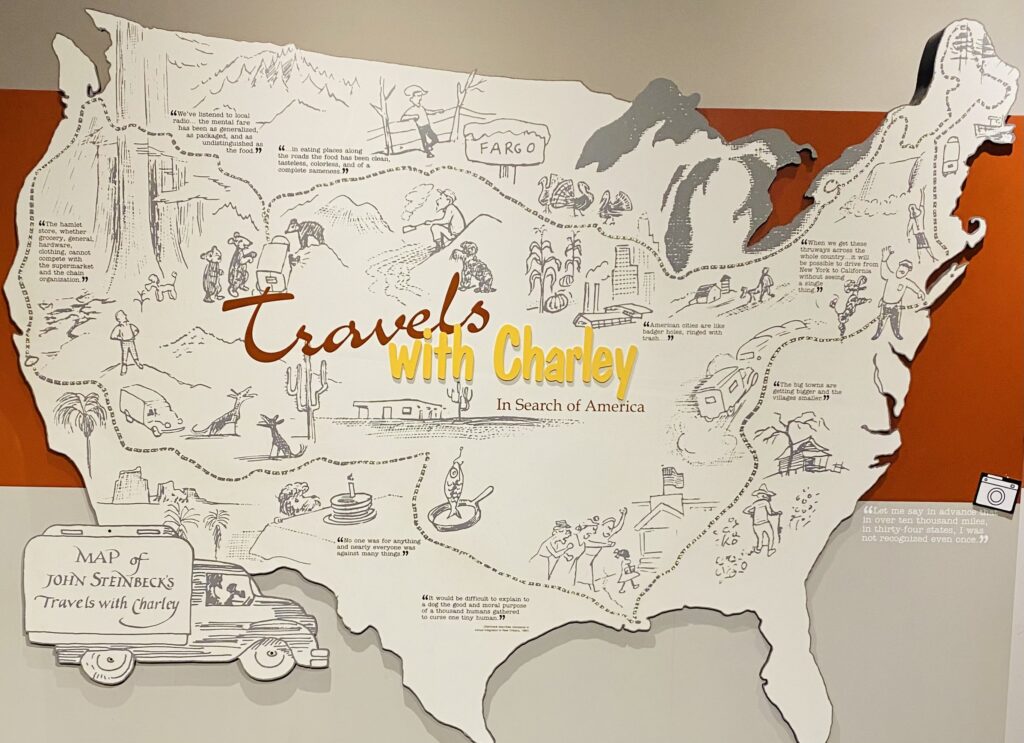A map of Steinbeck’s trek around the USA on display at the National Steinbeck Center in Salinas, California.
The list is shorter but of extraordinary importance.
1\. His pace was necessarily slower. The pace of America was dramatically slower then. He had a better opportunity to just amble along, passing through the center of countless villages, towns, and cities. If you want to reconnect with America, that pace is superior.
2\. He wrote letters to communicate. Most of them went to Elaine back in New York. Since he does not seem to have kept a journal, they formed the basis from which he later wrote *Travels with Charley* in 1961. I lament the disappearance of the handwritten or typed letter. He took a manual typewriter with him. How often he used it is unclear, though my sense is not much. He preferred to write his notes and letters by hand.
3\. America was more regional and varied then. The great homogenization of America was only beginning. He lamented the loss of regional accents, vocabularies, and ethnicities, but compared to today, the America of 1960 was a dizzying patchwork of localisms and regional diversities.
4\. America today is more sophisticated and savvy, but there has been a palpable loss of trust and innocence. Even if you haven’t read *Bowling Alone*, you know the thesis: that voluntary associations and group activities have been eviscerated by all sorts of factors, including, of course, home entertainment systems. In most places, the Masons, Elks, Eagles, Optimists, and Kiwanis are either gone or on life support. People don’t know their immediate neighbors now. There has been an atomization in virtually all aspects of American life.
5\. America has always had a potent politics, but the great paralysis had not set in yet in 1961. Steinbeck heard the presidential debates in 1960. John F. Kennedy and Richard Nixon were civil and respectful of each other. Aside from the John Birch Society, few Americans believed that people of different political persuasions threatened the future of democracy. Three times in three days of the last week, while minding my own business at my campsite, strangers have ambled over and within minutes spewed exceedingly angry opinions, all three assuring me that the 2020 election was stolen, that Joe Biden is only a figurehead and Obama is really running the country “from the basement,” that the people who did the rioting on January 6 were either Antifa or the FBI, and that there will be civil war if the Democrats steal the 2024 presidential election. I do not exaggerate. Because I am trying hard to listen to America, I have not done much more than ask a few careful Socratic questions, but none of these bothered to ask me what I think. So far, I have not been approached by a single Democrat, as far as I can tell, and the number of what might be called centrists has been negligible. Perhaps I am choosing the wrong campgrounds!
6\. I have no Charley. Steinbeck rightly understood that everyone loves a good dog, with the possible exception of the governor of South Dakota. When he stopped, he turned Charley loose, and Charley served as his ambassador. It worked almost every time. Because I chose not to take a dog, I have no such advantage, and I believe it has limited my contact with people along the way. My daughter lived in New York for five years. She dog sat for a few weeks, and suddenly, scores of people in Central Park were friendly and eager to engage in conversation.
7\. But the great difference is that John Steinbeck was one of America’s great writers. He had long since perfected his craft. Now 59 and in declining health, he felt he had nothing to lose or gain in the fall of 1960. He knew exactly how to shape a journey narrative — having written one of history’s best — and you can feel in the prose of *Travels with Charley* that he was at ease. He knew, too, that whatever he wrote would be read by hundreds of thousands and perhaps millions of readers in America and beyond. He says he traveled incognito, but this was not entirely so. When he needed to get special treatment, he could invoke his celebrity. As the author of *Of Mice and Men* and *The Grapes of Wrath*, he could instantly make doors open for him should he wish.
The Listening to America Airstream aboard a ferry, leaving Long Island for Connecticut. (Photo by Clay Jenkinson)
Still, I am having the time of my life. I am not homesick. My little private aluminum domicile is working admirably. The only errors are human. I’m seeing the vastness of America and appreciating American landscapes in the East and Midwest that I did not know very well, having always been a denizen of America west of the Mississippi River. Even at the University of Minnesota long ago, I lived on the west bank and only walked over the Mississippi River bridge to study Latin at 8 a.m. five days a week. I’ve had the opportunity to interview (on audio and video) three of the great John Steinbeck scholars in America — so far. I’ve listened to everyone I have met with an open ear and, I hope, an open mind. I’m struck by the friendliness of the people I’ve encountered, at least until the conversation strayed to “you know what.” Gasoline is not exactly cheap (except by European standards), but it is affordable. America has a very welcoming infrastructure for the wandering class. As I sit at a metal picnic table in central Ohio, the giant Denali rig next to me (currently uninhabited) has an above-ground sewer line with a series of slightly shorter plastic supports worthy of the Roman aqueducts. This keeps things moving to their ultimate destination. Most of the rigs I see have at least two bathrooms and three large-screen televisions, one deployed outside the rig for alfresco viewing.
I’m keeping in mind that Steinbeck’s journey was much more strenuous and difficult than mine, more romantic in essential ways, and perhaps more authentic. Having pounded the pavements of America for a month now, I have increased respect for the near-elderly man who undertook the big journey back in 1960. He was more truly out of contact for most of the adventure than I could possibly be in this America. No wonder he was sometimes lonely and desolate. If you are squatting on someone’s dairy farm in Connecticut, with no neighbor 20 feet away in either direction, without any immediate way of connecting with the broader world, you will feel profoundly alone at times. The fear that you will be awakened in the middle of the night by a curious or enraged property owner changes the equation dramatically. And, finally, I believe strongly that by 1960, Steinbeck had become so dependent on the unfailing love and solicitude of his third wife, in his most successful marriage, that his heart and often his mind were back at Sag Harbor, not in the “monster country” he was ostensibly attempting to explore.
I have two-and-a-half more weeks of Phase One of my great adventure. I miss my big library back home but little else, and because I am a moving target, my Amazon.com purchases have declined to a trickle. So something good comes of everything.
***Over the next few months, Clay is shadowing Steinbeck’s 10,000-mile trek around the USA (and making a few detours of his own). Clay’s expedition is a central part of LTA’s big initiative to explore the country and take the pulse of America as it approaches its 250th birthday. Be sure to [follow](https://ltamerica.org/tag/steinbeck-travels/) Clay’s adventures and [subscribe to our newsletter](https://ltamerica.org/newsletter/)*.**
**Categories:** Features
**Tags:** America at 250, John Steinbeck, Steinbeck Travels
---
### [The Romance of America's Greatest Game: An Emotional Visit to the Baseball Hall of Fame](https://ltamerica.org/the-romance-of-americas-greatest-game-an-emotional-visit-to-the-baseball-hall-of-fame/)
**Published:** May 21, 2024
**Author:** Clay Jenkinson
**Excerpt:** I don’t know what I expected when I drove my Airstream into Cooperstown, New York to visit the National Baseball Hall of Fame. It was an emotional day.
**Content:**
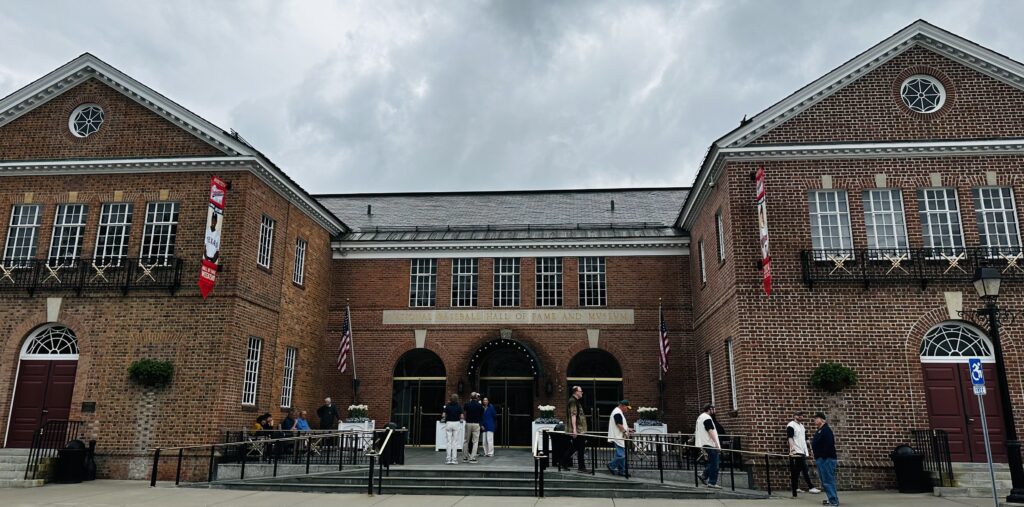The National Baseball Hall of Fame in Cooperstown, N.Y.
Cooperstown, New York — When I bought my ticket Saturday afternoon at the National Baseball Hall of Fame, the clerk asked for my zip code — 58503. “Huh,” he said, “isn’t that where Roger Maris comes from?” I was about to say yes when a free-floating usher who had been standing 10 feet away jumped into my personal space and shouted, like a contestant on Jeopardy, “Fargo, but he’s not in here.” I pulled back a bit, shocked by the intensity of passion that this game generates, and asked why not. The interrupter looked at me with derision. “His stats just aren’t there. It was a one-off, and it doesn’t really count because there were more games in 1961 when he hit 61 homers. It’s still the Babe, man. Maris was great, but he doesn’t belong in the Hall.” The original clerk asked me who other great North Dakota Major League Baseball players were. I shrank away in shame.
It was going to be that sort of afternoon.
Among great baseball players not in the Hall of Fame: Mark McGwire (performance enhancement drugs, PED); Barry Bonds (PED); Sammy Sosa (PED); Roger Clemens (PED); Curt Schilling (what are regarded as “character issues”); Alex Rodriguez (PED); Rafael Palmeiro (PED).
I don’t know what I expected when I drove my Airstream into Cooperstown, New York. Having never really thought about it before (it is my first, but not my last, hall of fame), I had reckoned that Cooperstown would be a city of about 75,000 and the Hall of Fame would be a gleaming aluminum and glass one-story structure built or rebuilt in the 1990s. Turns out Cooperstown has fewer than 2,000 permanent residents. The Hall of Fame building was dedicated in 1939. It was constructed with rose-colored atom bricks (slightly smaller than typical) with a central three-story tower and two wings, right on Main Street, and without the acres of parking I had expected.
Cooperstown is a lovely village, exceedingly tidy and well-groomed. It has Victorian gingerbread houses and brick buildings everywhere on Main Street, about three blocks long. Virtually every building houses a sports paraphernalia shop or a sports-themed restaurant. My friend Russ, who has been there four times, says there are several outstanding restaurants in Cooperstown. These are the kinds of things he knows.
## **Big History in the Hall of Fame**
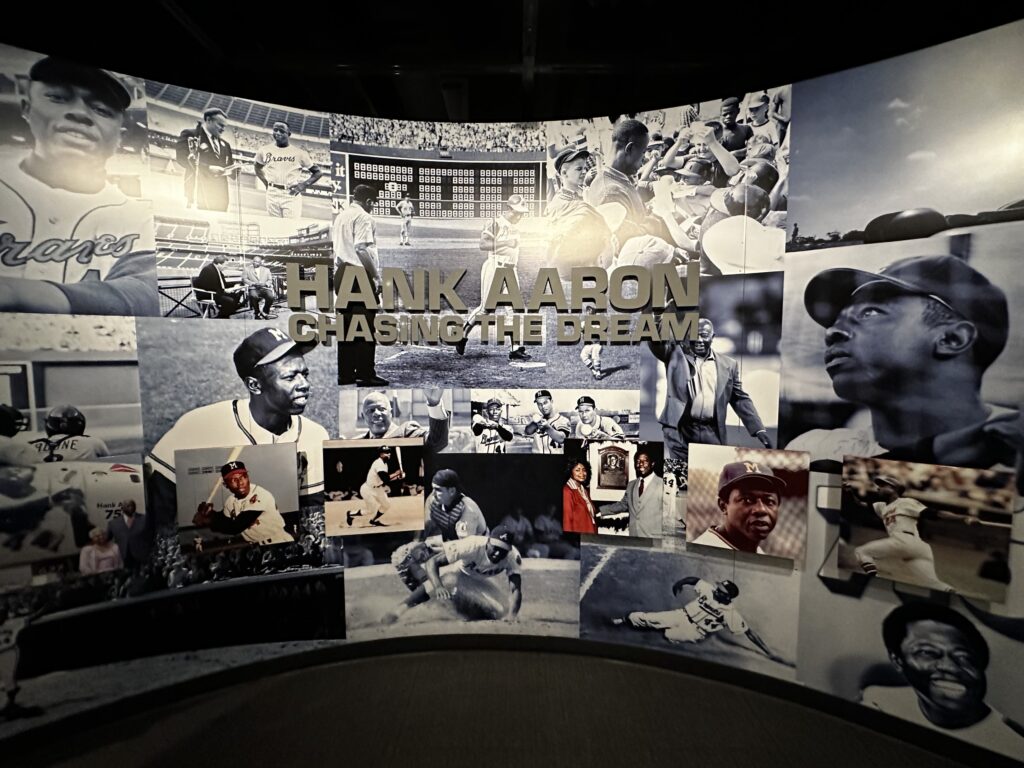
I suppose 200 people were working their way through the three floors of the Hall of Fame. It was very moving to see fathers with their wide-eyed 9–12-year-old sons high-tailing it from display to display, with the fathers explaining baseball history to their sons or their sons to their fathers. Seeing African Americans standing at attention before the panels dedicated to Hank Aaron and Jackie Robinson was equally moving. Jackie Robinson, who broke the color barrier in the Majors in 1947, is as important in the history of Civil Rights in America as Rosa Parks or James Meredith. Hank Aaron received vicious death threats couched in the vilest of racist language as he approached the home run record in 1973 and 1974. What’s the proper chorus for this sad fact of American life: “God shed his grace on thee?” or “A hard rain’s gonna fall?” Aaron hit his 715th HR on April 8, 1974 (Ruth topped out at 714 on May 25, 1935). Aaron ended his career at 755 in 1976.
Barry Bonds hit 762 home runs altogether, but in the minds of many, that doesn’t count since he was boosted by performing enhancing drugs.
A Black woman in a wheelchair sat quietly before a monument to Jackie Robinson, wiping away her tears.
Some of the white males who were visiting the Hall of Fame looked like overgrown boys locked in the last days of pre-adolescence. They were almost all alone. They were all dressed alike: shorts, a player jersey untucked, and a ball cap. They had all put on some poundage since their prime, and none of them seemed to have taken any exercise for a decade or more. I was surprised some of them weren’t wearing their old sandlot glove. They were there to worship and to re-fantasize their boyhood dreams.
Sports addicts are passionate people. Every few minutes, I happened upon two or three men having mostly friendly arguments about baseball stats and debating who was the greatest third basemen in the sport’s history, who is “terribly overrated,” who “changed the game,” and who would absolutely have been inducted if he hadn’t used steroids: “and he didn’t need to, for God’s sake, he was that good without any help from big pharma.” I’m glad to report that I didn’t hear a single argument over Pete Rose, one of the greatest players of all time: 4,256 hits (most of anyone), most at-bats, most games played, most singles. He won three batting titles, one MVP Award, two Gold Gloves, and was Rookie of the Year in 1963. But he gambled. He gambled on his own games. He’s barred from the Hall of Fame, but he mounts a campaign to be reconsidered every five years or so. He’s 83 years old now, and that was a very long time ago. Now that gambling has become an integral element of major league sports, I say put him in while he is still alive to take some late-life satisfaction. Still, you can get into a sports bar fight over this almost anywhere in America. The title of Rose’s autobiography, My Prison Without Bars, tells you what you need to know about his ordeal.
One of the two vertical “decision kiosks” asks you to “vote” about Rose. Results so far? 44% say “Those Games Are Tainted,” but 56% say “Gambling’s Impact is Overrated.”
Speaking of Roger Maris, for a short time, I listened in as a tall, thin man of about 70 threw a fit over the absence of Maris on the Hall of Fame list. He sputtered. He gesticulated wildly. He shouted in a low-key way. He said, “You watch, I’m going to go down there and demand to speak to someone in charge. This is an outrage. You wait; this will not stand. This is NOT ok.” His long-suffering wife nodded in the official spouse’s “yes, but calm down already” manner. He was virtually foaming at the mouth. I wanted to ask if he were a North Dakotan, but I reckoned it was better to move to another room.
Most of the girlfriends and wives were there because their men wanted to be there, and some seemed genuinely interested, but a few of them were super-fans, the kind who out-fan their men, scream at the television when the umpires make bad calls, and high five anyone in sight when things go well. Men outnumbered women 10 to one in the building.
In the formal hall (of fame), I found the Minnesota Twins’ Harmon (“Harmless,” my grandfather called him) Killebrew in the 1988 class, Tony Oliva (2022), Jim “Kitty” Kaat (2022), and Rod Carew (1991). I suppose everyone who visits the Hall of Fame has a short list of must-see plaques and tributes.
Three or four times in the afternoon, I got choked up and burst into tears. Some of this is lost youth, and some of it is lost innocence. Once the asterisk started to attach itself in the record books to the careers of great players — think Barry Bonds or, in bicycling, Lance Armstrong — and Major League Baseball became yet another expression of the corrosive power of television on everything it touches, I quietly turned away. I haven’t watched the All-Star Game since 2002, when the game was called after 11 innings because neither team had any pitchers left in the bullpen. I’ll watch a bit of the fall playoffs depending on what else is going on in my life, and almost always a couple of games of the World Series if one of “my teams” is involved: the Dodgers, the Yankees, the Red Sox, the Cubs, the Mets, or the hapless Twins. But if it is Astros-Diamondbacks, I’ll watch a couple of innings and move on. The Astros’ 5′ 6″ Jose Altuve, with his Pete Rose zeal and his 5 o’clock shadow (maybe it’s seven o’clock), bugs me for some irrational reason.
## **The Greatest Moments in Baseball**
At a special screen with a menu of the greatest moments in baseball, I watched Hank Aaron hit his 715th home run, and Ken Griffey, Jr. hit a home run on his first Major League at-bat. I watched a ball bounce off of Jose Canseco’s head (I think the correct technical term is noggin) and over the outfield wall (home run), which is even more delightful when you see Canseco giggling in the aftermath. Perhaps he regarded it as a standing rule double.
Twice, I watched a clip of Kirk Gibson’s walk-off home run in the 1988 World Series. Weird, isn’t it? I remember where I was when JFK was assassinated, where I was when the Challenger blew up, and where I was on 9/11, which makes perfect sense. Still, I also remember[ the evening when Gibson blew the minds of 55,983 fans at Dodger Stadium on October 15, 1988](https://www.youtube.com/watch?v=7zpl_c7WtO0). I was living in Claremont, California, at the time. I had invited my English department friends Ray Frazer, Bob Mezey, and Brian Stonehill over to my small house to watch the game. Mezey was a fierce Dodgers fan. He had taken me to several home games that year. We chose my house because I had the best TV — an old color console set with a large picture tube. I made hot dogs for the occasion with all the fixings — plenty of beer. Bob liked only basic beer: Schlitz, Hamms, Grain Belt. We turned the sound off and listened to the immortal Vin Scully call the game on the radio. By the end of the ninth inning, with the A’s ahead 3:2, Mezey, who was something of a pessimist, reckoning that the game was over and the Dodgers would surely lose, was beginning to collect his things to go.
Vin Scully, long time Los Angeles Dodgers announcer. (UCLA/LA Times)
Then, one of the greatest moments, not just in baseball but in all of sports history, occurred. The Dodgers’ slugger Kirk Gibson was called in with two outs in the bottom of the ninth to pinch hit. He was in a severely injured state. As Scully put it, “he has two bad legs, a bad left hamstring, and a swollen right knee.” No one expected Gibson to play that night. Scully said Gibson was “so banged up he was not introduced, did not come out on the field before the game.” Scully’s sidekick, Jack Buck, said, “he almost has to talk to his legs to get anything out of them.” The crowd went wild when he came out of the dugout, though that ovation was nothing compared to what happened next.
It was game one of what turned out to be a five-game series.
Gibson’s at-bat went on for more than seven minutes. It unfolded like Shakespearean drama or the second iteration of Ernest Lawrence Thayer’s 1888 *Casey at the Bat*. If Hollywood had scripted the episode it could not have been finer. It was a perfect narrative as well as a perfect sports moment. Oakland’s Dennis Eckersley was one of the best closers in the business. He was extremely handsome and almost unbearably confident. Almost nobody ever got a hit against him when he was brought in for the last inning. Gibson was as gimpy as it is possible to be. He looked old at the plate, unshaved, and hunched over. He swung widely, almost desperately, almost convinced he would make an easy out.
Eckersley threw over to first base four times to keep the Dodgers’ Mike Davis from stealing second. Gibson was clearly having trouble swinging the bat. “He can’t push off, and he can’t land,” Scully said. “He’s shaking his left leg, making it quiver like a horse trying to get rid of a troublesome fly.” Gibson fouled the ball away several times, and Eckersley eventually threw three balls outside the strike zone.
So the whole game came down to one final pitch, Eckersley’s 14th of the at-bat.
And here’s the pitch:
Gibson swung awkwardly (almost like a cricket batter) and drove the ball deep into the right field stands. It was a walk-off home run with two outs in the bottom of the ninth. What could be better than that? The crowd went wild. Bob Mezey went nuts in my living room. The Dodgers’ dugout erupted. The chubby coach, Tommy Lasorda, lurched out of the dugout and “sprinted” toward home plate, gamely trying to jump in triumph a few times along the way. Scully was perfect: “In a year that has been so improbable, the impossible has happened,” he said. He added, “Now the only question was whether he could make it around the base path unassisted.”
Then Gibson, who was limping around the bases and favoring his right leg, rounded third and performed the greatest double fist pump in sports history. In fact, all subsequent fist pumps, including Tiger Woods’ superb version at the Masters in 1997, originated in Gibson’s 1988 moment of sports apotheosis.
“Look at Eckersley, shocked to his toes,” Scully said. “They are going wild at Dodger Stadium; no one wants to leave.”
In a 1995 poll, Gibson’s miracle home run was voted the “greatest moment in LA sports history.”
I cried openly as I watched the clip (for the 20th or 30th time in my life). What was I crying for, surrounded by strangers with far better baseball credentials than mine in the middle of the Hall of Fame? Well, partly for the “thrill of victory and the agony of defeat.” Partly for Gibson’s demeanor after he reached home plate, a mixture of ultimate triumph but not a little surprise. Partly, as Scully said, for the sheer improbability of the result. Partly because I had shared that moment with three of the best people I ever knew when I was young, and the world was all before me. Partly because 60,000 people were in true ecstasy together at a ball game in Los Angeles. Partly because Scully was the perfect sportscaster for that extraordinary moment of drama. I cannot imagine Harry Caray, Al Michaels, Joe Garagiola, or Mel Allen doing it as well.
In many respects, the Baseball Hall of Fame is lost on me. I haven’t stayed current with the game into the 21st century. I need to be there with someone who really still loves and follows the sport. I did not feel out of place, but I reckoned I was probably the most ignorant person in the building, like someone who lives for NASCAR suddenly finding himself in Britain’s National Portrait Gallery and recognizing only a handful of worthies — Princess Diana, Shakespeare, and Churchill — and bewildered by the rest. I gravitated to the little clusters of conversation throughout the building, hoping to learn from the “experts.”
## **The Amazing Museum Shop**
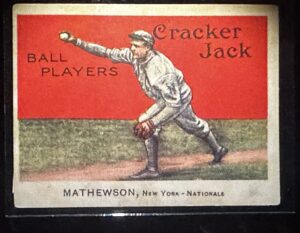
After a couple of hours in the museum, needing to hit the road, I browsed in the tremendous bookstore with its hundreds of titles. Then I moved on to the giant museum shop (the word “shop” does not do it justice) where I thought I would buy a baseball signed by Nolan Ryan or Mark McGuire for one of my friends. Still, when my application for a second mortgage got stuck in paperwork, I had to settle for a couple of postcards and a pack of cards honoring the Negro League. It was great fun to watch boys and girls of about 12 years old literally dragging their parents through the aisles to some cherished souvenir that the parents were almost certainly not going to buy for them. No such veto was available to the 45-year-old overgrown boys. Several of them spent a very large amount of money to obtain some treasured memento (a ball, a bat, a plaque, one of those matted and framed ensembles of an autograph, a beautiful photograph, maybe a three-dimensional object like a jersey or a glove). It was no different, except in net worth, from the New York lawyer at a Sotheby’s auction buying a Picasso drawing for an amount they couldn’t afford.
As I stood gazing at impossibly expensive autographed baseballs, the clerk, a 19-year-old man who looked as if he had just left an Eagle Scout meeting, asked me if I was looking for “anything in particular?” I said I was browsing. “What’s your team?” he asked. “When I was a boy, it was the Twins.” He took on a look of pity and condescension. Then I made things worse by invoking the name of my boyhood hero, Harmon Killebrew. “I’m afraid we don’t have anything for him, but if I remember, he was inducted sometime in the 1980s, and you can probably find his plaque in the Hall.”
Harmon Killebrew was a home run specialist (573) who hit 49 home runs in a single season twice, in 1964 and 1969. He ranks 12th on the home run list, just below Mark McGwire (583) and just above Rafael Palmeiro (569) and Reggie Jackson (563). Killebrew’s top salary came in 1973 at $105,000.
As I drove away from Cooperstown in my rig towards the Erie Canal, I determined to visit the NFL and NBA halls of fame and the Rock and Roll, Country Music, Cowboy, and others as I happen upon. But I doubt that the NFL or the NBA can bring me the same emotional satisfaction. There is something about baseball. Ken Burns, as always, was right. I lament what has happened to Major League Baseball, and I now usually confine my visits to bush league stadiums, where something of the original feel of baseball still prevails.
I’ve seen games in five Major League parks in my lifetime, and I’m about to sit through a White Sox game (against the Toronto Blue Jays) in Chicago with my friends Dennis and Russ. Russ really knows the game, as they say, and has contributed articles to several baseball books.
Meanwhile, come on, put Pete Rose in, the poor bastard.
***Over the next few months, Clay is shadowing Steinbeck’s 10,000-mile trek around the USA (and making a few detours of his own). Clay’s expedition is a central part of LTA’s big initiative to explore the country and take the pulse of America as it approaches its 250th birthday. Be sure to [follow](https://ltamerica.org/tag/steinbeck-travels/) Clay’s adventures and [subscribe to our newsletter](https://ltamerica.org/newsletter/)*.**
**Categories:** Dispatches from the Road
**Tags:** America at 250, John Steinbeck, New York, Sports, Steinbeck Travels
---
### [Theodore Roosevelt and the Rough Riders at Montauk Point, New York — Video Dispatch](https://ltamerica.org/theodore-roosevelt-and-the-rough-riders-at-montauk-point-new-york-video-dispatch/)
**Published:** May 21, 2024
**Author:** Editor
**Excerpt:** When Theodore Roosevelt and the Rough Riders returned from their heroics in Cuba in August 1898, they were quarantined at Montauk Point at the tip of Long Island.
**Content:**
## When Theodore Roosevelt and the Rough Riders returned from their heroics in Cuba in August 1898, they were quarantined at Montauk Point at the tip of Long Island. After visiting Steinbeck’s home in nearby Sag Harbor, New York, Clay visited this historic site.
Montauk Point at the tip of Long Island. (Google Maps)
***Over the next few months, Clay is shadowing Steinbeck’s 10,000-mile trek around the USA (and making a few detours of his own). Clay’s expedition is a central part of LTA’s big initiative to explore the country and take the pulse of America as it approaches its 250th birthday. Be sure to [follow](https://ltamerica.org/tag/steinbeck-travels/) Clay’s adventures and [subscribe to our newsletter](https://ltamerica.org/newsletter/)*.**
**Categories:** Dispatches from the Road
**Tags:** John Steinbeck, New York, Steinbeck Travels, Theodore Roosevelt, Video
---
### [Sports, Lawn Care and Fishing at Karen's Diner — Calais, Maine](https://ltamerica.org/sports-lawn-care-and-fishing-at-karens-diner-waterville-maine/)
**Published:** May 16, 2024
**Author:** Clay Jenkinson
**Excerpt:** It’s too early to draw conclusions about the country’s mood, but this is what I have heard in two weeks on the road.
**Content:**
The counter of [Karen’s Diner](https://www.facebook.com/p/Karens-Diner-and-Korner-Pub-100057423401140/) in Calais, Maine. That’s Karen on the left. (Photo by Clay Jenkinson)
Waterville, Maine, May 2024 — It’s a little early to draw many conclusions about the country’s mood, but this is what I have heard in a little more than two weeks on the road in America.
Most people I have met are just tired out. They are weary of the endless national narrative — our dysfunctional do-nothing Congress; the mutual demonization of each party towards the other; Trump’s narcissism and disruptions, Biden’s shuffling and verbal gaffs, two old men running for president that nobody seems excited about; Stormy Daniels and Hunter Biden; the perpetual crisis at the border; the fundamental intractability of things in the Middle East; the campus protests; the ongoing Culture Wars; the seeming futility of the west’s support for Ukraine; the flirtation with autocracy, including here in the U.S.
Etc., etc., etc., etc.
“That’s why the wife and I are out here,” one man told me as he grilled chicken at a KOA Kampground in Maine, “to tune all that stuff out. We’re just seeking our own happiness now. I know that’s probably bad, but that’s exactly how we feel.”
“A plague on both their houses,” another said as we gassed up our rigs at a giant service plaza in New Hampshire. “We just want it to end.”
When I asked people whether America is:
A: circling the drain
B: doing just fine
C: lurching on as always
Most began by saying, “Duh!” but they invariably stepped back and provided a more thoughtful answer: “We’ll get through this. We always do. There is more right with America than wrong with America, but our leadership on both sides is really letting us down right now.”
“I’m worried, but what are we going to do about it?” my server said at a lunch counter the other day.
This morning at breakfast at [Karen’s Diner](https://www.facebook.com/p/Karens-Diner-and-Korner-Pub-100057423401140/) in Calais, Maine, sitting at the counter, I asked Karen what the coffee klatches of men (there were six at a nearby table) talk about when they come in a couple of times per week. “Everything,” she said with an affectionate grunt. “The political situation?” I asked. “No. I’m not ok with that. When I bought this place 18 years ago I told my husband there were two subjects we wouldn’t have people talking about in here: politics and religion.” Pause. “So, you know, sports, lawn care, the fishing season, Canada (just across the St. Croix River), tourists!”

I should immediately acknowledge that I’m not meeting a representative sample of the American people. In campgrounds — state parks, county parks, ma and pa RV parks, and KOA campgrounds — the people I meet are overwhelmingly white senior citizens with enough money and freedom to travel the country in comfortable RVs, some that cost $10,000 and some that cost $350,000, not to mention the splendid pickups that haul them. Most of the people I meet aren’t rich, but they are privileged.
The limitations of my observational lens came home to me yesterday when I went into a local museum in Calais, Maine, not far from the Penobscot Indian Reservation. On the registration desk, I saw a stack of “please take one” documents about Missing and Murdered Indigenous Women & Girls in America. And food pantries in every town or village I drove through. And plenty of rural shabbiness, which I take to mean rural poverty.
This, too, is America.
As I plugged in my Airstream last evening beside a lovely Maine lake, the man doing the same next to me (wearing an absurd and expensive mosquito net helmet) asked me what I was doing with whatever Listening to America is. “I’m driving around the country retracing John Steinbeck’s T*ravels with Charley* journey, trying to listen to the mood of the country as we approach our 250th birthday,” I said. “I’m more concerned about the gnats,” he replied. “Look, we’re out here partly to get away from all that. We love America. But we’re worried. Mostly, we’re just sick of it.”
I’m only just beginning to listen to America. Still, the full picture will not likely emerge around the Kampfire, where a perky KOA employee in a yellow shirt is making s’mores to order.

***Over the next few months, Clay is shadowing Steinbeck’s 10,000-mile trek around the USA (and making a few detours of his own). Clay’s expedition is a central part of LTA’s big initiative to explore the country and take the pulse of America as it approaches its 250th birthday. Be sure to [follow](https://ltamerica.org/tag/john-steinbeck/) Clay’s adventures and [subscribe to our newsletter](https://ltamerica.org/newsletter/)*.**
**Categories:** Dispatches from the Road
**Tags:** America at 250, Humanities, John Steinbeck, Maine, Steinbeck Travels
---
### [Clay's Personal Cartographic Detail of the Steinbeck Journey Through New England](https://ltamerica.org/clays-personal-cartographic-detail-of-the-steinbeck-journey-through-new-england/)
**Published:** May 18, 2024
**Author:** Editor
**Content:**
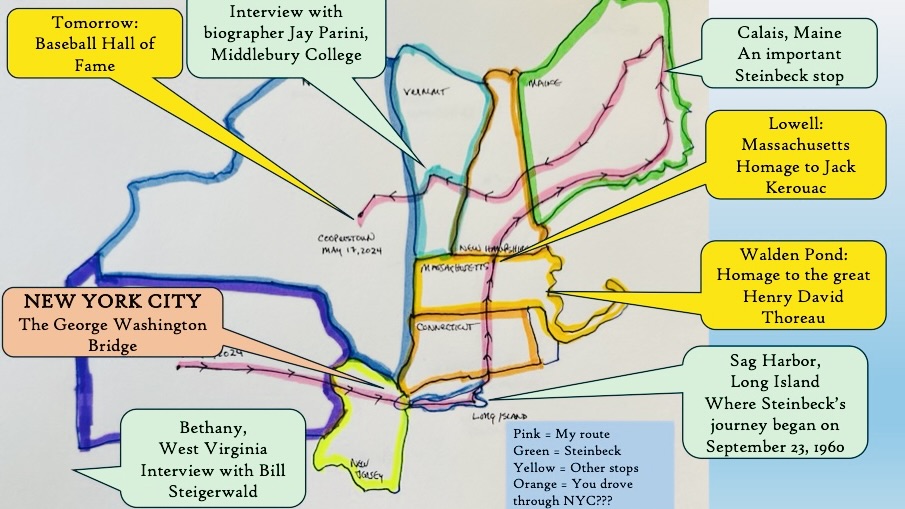Clay’s personal cartographic detail of his Steinbeck journey through New England the last two weeks.
***Over the next few months, Clay is shadowing Steinbeck’s 10,000-mile trek around the USA (and making a few detours of his own). Clay’s expedition is a central part of LTA’s big initiative to explore the country and take the pulse of America as it approaches its 250th birthday. Be sure to [follow](https://ltamerica.org/tag/steinbeck-travels/) Clay’s adventures and [subscribe to our newsletter](https://ltamerica.org/newsletter/)*.**
**Categories:** Dispatches from the Road
**Tags:** America at 250, John Steinbeck, New England, Steinbeck Travels
---
### [A Visit With Author Jay Parini of Middlebury, Vermont](https://ltamerica.org/a-visit-with-author-jay-parini-of-middlebury-vermont/)
**Published:** May 17, 2024
**Author:** Clay Jenkinson
**Excerpt:** Sitting in the Airstream, Rocinante. I had a delightful interview with Steinbeck biographer Jay Parini of Middlebury College in Vermont.
**Content:**
Author, Jay Parini, talks with Clay about his book *John Steinbeck: A Biography*.
Middlebury, Vermont — Last night I had a delightful interview (in the Airstream Rocinante) with Steinbeck biographer Jay Parini of Middlebury College in Vermont.
In his driveway.
Parini’s *John Steinbeck: A Biography* was published in 1995. It was, he said, his first biography. He was invited to write the book by Steinbeck’s third and final wife Elaine. She gave him unlimited access to Steinbeck materials and a list of scores of people he should interview.
Although we concentrated on Steinbeck’s 1960 *Travels with Charley* tour of America, our conversation was wide-ranging. Parini has written more than a score of books, including a critically acclaimed biography of the poet Robert Frost. His 2020 memoir, *Borges and Me: An Encounter* is being made into a movie. He has written eight novels, with subjects ranging from Herman Melville to the apostle St. Paul. He is an accomplished poet. At the moment I’m reading two of his books — his biography of Gore Vidal, *Empire of Self: A life of Gore Vidal*; and *Promised Land: Thirteen Books that Changed America*.
*John Steinbeck: A Biography* by Jay Parini.
He’s a brilliant man and a superb writer. We had about 75 minutes together in the Airstream and then Jay and his wife Devon served me homemade pasta and fresh asparagus provided by a neighbor. Plus rhubarb pie!
Perhaps the most important thing Parini said about *Travels with Charley* is that it must be seen as “autofiction” and not mere reportage. In other words, Steinbeck organized, shaped, and indeed embellished his experience as he transformed something that happened in the autumn of 1960 into a minor literary classic. “This is what great writers do,” Parini said. “This is what we all do when we remember our experiences. This is the essence of storytelling.”
My goal is to interview as many Steinbeck experts as possible during my travels. So far I’ve had — in my rig — Professor Parini and also Bill Steigerwald, the author of an important investigation into “the real story” behind Steinbeck’s 1962 book *Travels with Charley*.
Parini was a friend of the late Gore Vidal. He guided the late Jorge Luis Borges around the Scottish Highlands. He debated Christopher Hitchens about the war in Iraq.
What an honor to spend an evening with such a humanist, writer, storyteller, and dedicated college professor.
Watch for further posts, including video highlights, of my time with Jay Parini, here at LTAmerica.org.
***Over the next few months, Clay is shadowing Steinbeck’s 10,000-mile trek around the USA (and making a few detours of his own). Clay’s expedition is a central part of LTA’s big initiative to explore the country and take the pulse of America as it approaches its 250th birthday. Be sure to follow Clay’s adventures and [subscribe to our newsletter](https://ltamerica.org/newsletter/)*.**
**Categories:** Dispatches from the Road
**Tags:** Books, Humanities, John Steinbeck, Steinbeck Travels, Vermont
---
### [Mount Katahdin — Maine's Tallest Mountain](https://ltamerica.org/mount-katahdin-maines-tallest-mountain/)
**Published:** May 16, 2024
**Author:** Clay Jenkinson
**Excerpt:** Mt. Katahdin, which translates to “Greatest Mountain” in Penobscot, is the highest mountain in the state of Maine at 5,269 feet.
**Content:**
Mt. Katahdin, which translates to “Greatest Mountain” in Penobscot, is the highest mountain in the state of Maine at 5,269 feet. (Photo by Clay Jenkinson)
As I drove up the eastern spine of tall Maine this week, I pulled over to gaze at [Mount Katahdin](https://www.nps.gov/places/katahdin-baxter-state-park.htm).
Henry David Thoreau and two companions ascended Katahdin nearly to its summit in 1846. He loved its unsympathetic rawness: “This was that Earth of which we have heard,” he wrote, “made out of Chaos and Old Night. Here was not man’s garden, but the unhandseled globe. … Man was not to be associated with it. It was Matter, vast, terrific.”
From 27 miles away Katahdin took my breath away.
The photograph cannot do justice to the quality of light or the quality of the afternoon breeze in mid-May in America’s most tree-carpeted state. But you get the idea!
***Over the next few months, Clay is shadowing Steinbeck’s 10,000-mile trek around the USA (and making a few detours of his own). Clay’s expedition is a central part of LTA’s big initiative to explore the country and take the pulse of America as it approaches its 250th birthday. Be sure to follow Clay’s adventures and [subscribe to our newsletter](https://ltamerica.org/newsletter/)*.**
**Categories:** Dispatches from the Road
**Tags:** John Steinbeck, Maine, National Parks, Steinbeck Travels
---
### [Visiting John Steinbeck's Home in Sag Harbor, New York — Video Dispatch](https://ltamerica.org/visiting-john-steinbecks-home-in-sag-harbor-new-york/)
**Published:** May 9, 2024
**Author:** Clay Jenkinson
**Excerpt:** Clay visits John Steinbeck’s Sag Harbor home where the noted author began his 1960 cross-country journey, immortalized in Travels With Charley.
**Content:**
## Clay visits John Steinbeck’s Sag Harbor home on Long Island where the noted author began his 1960 cross-country journey, immortalized in *Travels With Charley*.
John Steinbeck, his dog Charley and camper rig. (Sketch by Nate Calderone of Salida, Co.)
A journey in the wake of John Steinbeck’s 1960 *Travels with Charley* trek has to begin at Sag Harbor on Long Island. Steinbeck lived there off and on beginning in 1955.
So I drove my Airstream, Rocinante, from Bismarck, N.D., to the end of Long Island to do it right. (And learned some RV lessons along the way.)
I was delighted to be shown around the property by Kathryn Szoka of the Sag Harbor independent bookstore [Canio’s Cultural Cafe.](https://caniosculturalcafe.org/whats-cooking/) The bookstore is hosting a marathon public reading of *Travels with Charley* on June 7. Last year they did Melville’s *Moby Dick*, compared to which *Travels with Charley* is a mere pamphlet!
Steinbeck set off on his transcontinental journey from Sag Harbor on September 23, 1960, in a new pickup camper, with hunting and fishing equipment, more books than he could possibly read along the way, a well-stocked supply of liquor, and his giant French poodle Charley.
He drove the perimeter of the United States, 11,500 miles. And then wrote a superb account of his travels, published in 1962.
I’ll write more about this, but for the moment just a few comments:
1\) The house at Sag Harbor is smaller than I had expected, but the grounds are larger, with magnificent old oak trees that have just begun to leaf out.
2\) The dock is still there in the bay. It was the scene of a preliminary drama, when Hurricane Donna swept through and threatened to crush the Faire Elayne (the boat) against the dock. Steinbeck rescued the boat, anchored it safely, well away from shore, and then swam back through the flood tide. It was a dangerous thing to do and Steinbeck’s wife Elaine was both relieved and scolding when he straggled back to shore.
Inside Steinbeck’s writing hut, Joyous Garde, at his home in Sag Harbor, N.Y.
3\) His writing hut, Joyous Garde, is quite far from the house, right on the edge of the bay. He had it built small enough so that he would not be beleaguered by visitors while he wrote every day. He strung electrical cords from the house to Joyous Garde when he needed electricity.
4\) The Steinbecks divided their time between their place in New York City and Sag Harbor which is more than 100 miles from Manhattan and traffic in our time can be congested.
So now I have touched base at the embarkation point. Tomorrow I will take the ferry to Connecticut and begin — first up to the top of Maine (which he insisted upon and partly regretted), then to Niagara, down along the southern shore of the Great Lakes to Chicago, and from Chicago through Wisconsin, Minnesota, and eastern North Dakota, where Phase One of my great journey ends around June 6.
Special thanks to Kathryn Szoka and Canio’s Cultural Cafe, an excellent bookstore where, of course, I bought a couple of books.
I was deeply moved, grateful, and inspired to wander the property and sense the contentment (and privacy) one of America’s greatest writers enjoyed “far from the madding crowd” of New York City.
Watch for daily or near-daily posts here at LTAmerica.org and sign up for our free [newsletter](https://ltamerica.org/newsletter/). And of course, read *Travels with Charley*.
**Categories:** Dispatches from the Road
**Tags:** Books, John Steinbeck, Maine, New York, North Dakota, Road Trips, Steinbeck Travels, Video
---
### [Resilience and Heart in Lewiston, Maine](https://ltamerica.org/resilience-and-heart-in-lewiston-maine/)
**Published:** May 13, 2024
**Author:** Clay Jenkinson
**Excerpt:** Clay’s visits the recently reopened Just-In-Time recreation center in Lewiston, Maine.
**Content:**
The recently reopened Just-In-Time recreation center in Lewiston, Maine.
Today on my way to Bar Harbor, at a friend’s suggestion, I visited the Just-In-Time recreation center in Lewiston, Maine. It’s a bowling alley. It just reopened, six months after yet another in the endless string of mass shootings in America. A mentally ill man shot and killed 18 innocent people on October 25, 2023, eight in the bowling alley, and 10 more down the street at a bar and grill. Thirteen others were wounded.
Sometime after the shooting, the perpetrator committed suicide.
The story is both about the worst of America — an epidemic of mass shootings and a political establishment that refuses to do anything meaningful about it — and also about the wonderful resilience of humanity. Just-In-Time reopened quickly to reassert normal life in the second largest community in Maine, after the worst shooting incident in the state’s history.
Bowling pins painted with the names of two victims of the tragic shooting at the recently reopened Just-In-Time recreation center. (Photo by Clay Jenkinson)
I spent half an hour in the bowling alley. There are several signs welcoming people back to the recreation center and a wall with 18 bowling pins painted with the names of the victims. Four or five small clusters of people were bowling on this Saturday afternoon, and a handful were sitting at the bar/snackbar, but the large facility was mostly empty.
It will take time.
Visitors from Jupiter — heck, visitors from France or Germany — could only shake their heads in wonder and disbelief that an advanced civilization finds it possible to tolerate mass shootings, now so frequent that they no longer always reach the front pages of our newspapers or the lead on the nightly news.
Surely we are capable of addressing this appalling national disorder in a reasonable way, protecting people’s Second Amendment rights but nevertheless doing what it will take to stop the mayhem. Most Americans have indicated their desire for reasonable firearms restrictions such as mandatory waiting periods, rigorous background checks, red flag laws, and some serious restrictions on assault rifles and the AR-15.
What do you think we should do about the problem? Please don’t say, “just enforce existing laws,” because that is no real solution …
I’m glad I diverted my trajectory to visit the bowling alley. If I am wandering America trying to make sense of our national experiment on the eve of our 250th birthday (July 4, 2026), surely trying to understand the plague of gun violence has to be a central theme.
Here are the names of the people of Maine who were minding their own business and enjoying an evening out on October 25, when they were slaughtered by a man with guns his moral compass could not manage:
Ronald G. Morin
Peyton Brewer-Ross
Joshua A. Seal
Bryan MacFarlane
Joseph Walker
Arthur Strout
Maxx Hathaway
Stephen Vozzella
Thomas Conrad
Michael Deslauiers
Jason Adam
Tricia Asselin
William Young
Aaron Young
Robert Violette
Lucille Violette
William Frank
Keith Macneir
18 bowling pins painted with the names of victims of the shooting at Just-In-Time recreation center (recently reopened) in Lewiston, Maine. (Photo by Clay Jenkinson)
---
***Over the next few months, Clay is shadowing Steinbeck’s 10,000-mile trek around the USA (and making a few detours of his own). Clay’s expedition is a central part of LTA’s big initiative to explore the country and take the pulse of America as it approaches its 250th birthday. Be sure to follow Clay’s adventures and [subscribe to our newsletter](https://ltamerica.org/newsletter/)*.**
**Categories:** Dispatches from the Road
**Tags:** John Steinbeck, Maine, Steinbeck Travels
---
### [Across Iowa](https://ltamerica.org/across-iowa/)
**Published:** May 4, 2024
**Author:** Clay Jenkinson
**Excerpt:** Clay, on his way to Sag Harbor, N.Y., travels through Iowa, home to the famous American painter Grant Wood and journalist William L. Shirer.
**Content:**
## On his way to Sag Harbor, N.Y., Clay travels through Iowa, home to the famous American painter Grant Wood and journalist William L. Shirer.
*Fall Plowing*, a 1931 oil painting by the Iowa born artist Grant Wood.
Iowa — I drove across Iowa this week to get to Illinois and beyond. I’ve been to Iowa many times over the years, but this journey — straight through — was particularly beautiful. It’s spring and it has been raining. The wide farm fields are a deep rich black usually without a single weed anywhere to be seen. All the grass in Iowa in early May — from Kentucky bluegrass to alfalfa and prairie — is spring green, clean, almost garish green. Although Iowa is one of the most productive farm states in America, employing state-of-the-art equipment, including GPS driven tractors, sprayers, and combines, the whole countryside is still punctuated with the old concrete tile silos we associate with the mid-20th century, not the 21st. Over every rural hill I saw old classical gambrel (English style) barns, some painted red, others white, most needing paint and in some degree of dilapidation. One or two had smiley faces, and of course a few anti-Biden signs, some homemade.
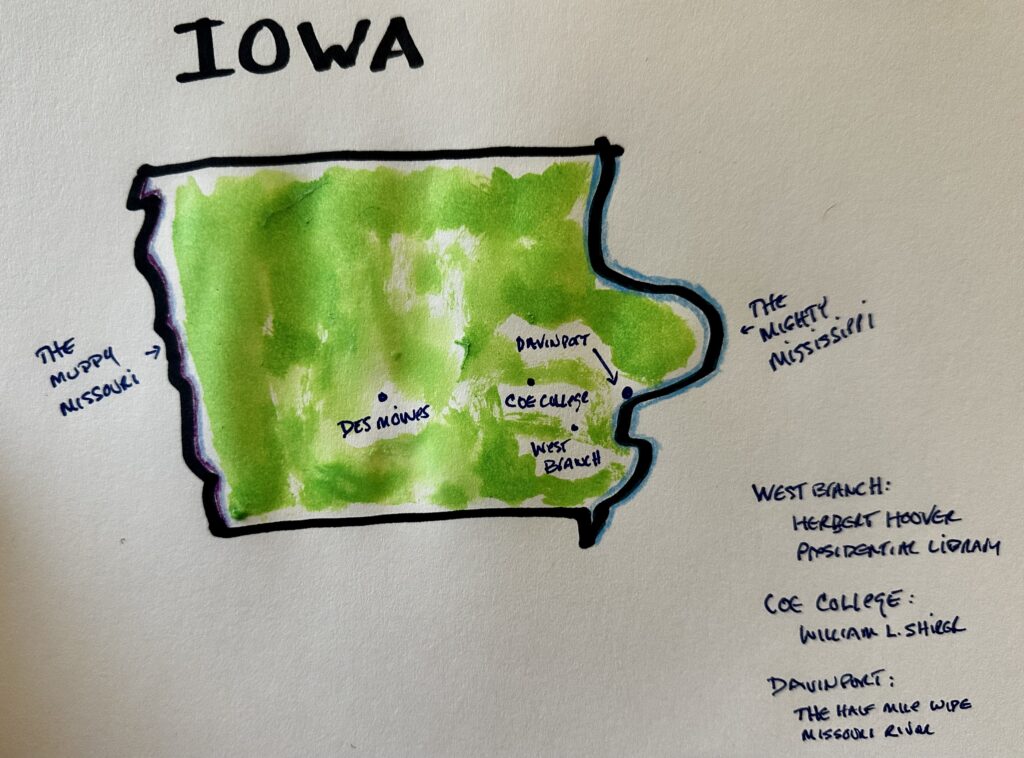Clay’s homemade map of his trek through the great state of Iowa.
Iowa has the great honor of being bounded on east and west by two of the world’s great rivers. On the west, the Missouri (2,341 miles, beginning at Upper Red Rock Lakes in extreme southwestern Montana; on the east the mighty Mississippi (2,340 miles, beginning at Lake Itasca in northern Minnesota). I know the Missouri River well. I live just two miles from it in Bismarck, North Dakota, and every summer I float the famous White Cliffs section in central Montana on my annual Lewis and Clark cultural tour. (See the [Cultural Tours](https://ltamerica.org/cultural-tours/) page for details.) But when I came suddenly upon the Mississippi at Davenport, Iowa, yesterday, it took my breath away and I fell into a dreamy Huck Finn meditation. Even this far north the Mississippi is an awesome river, half a mile wide and 30-40 feet deep. If you have not read Twain’s *Life on the Mississippi* (1883), you owe yourself that pleasure.
Iowa is not at all flat. Its rolling hills look like they were painted by Missouri’s Thomas Hart Benton or Iowa’s Grant Wood. This gives great character to Iowa’s family farms. Many of the fields embrace hills and gentle ridges, and the farmer has to perform some sinuous plowing on the sides of surprisingly angular hillsides.
Grant Wood’s famous *American Gothic*, painted in 1930. The couple were modeled on Wood’s sister and his dentist, neither were pleased with how he depicted them.
Grant Wood (1891-1942), by the way, grew up in Cedar Rapids, Iowa, also the boyhood home of the journalist and historian William L. Shirer, the author of *The Rise and Fall of the Third Reich* (1962), a copy of which John Steinbeck was carrying in his truck camper on the *Travels with Charley* journey. Everyone knows Wood’s *American Gothic* (1930). The farm couple were modeled on Wood’s sister Nan Wood Graham and his dentist Dr. Byron McKeeby, neither of whom was pleased with how he depicted them.
But it is Wood’s farm scenes that I was reminded of as I drove Iowa. The state still looks that way.
I’ve been reading about Grant Wood in Shirer’s memoir, *American Journey: The Start*. Most of his paintings are admiring of rural life and the rural countryside, with a slight edge of irony about what Sinclair Lewis regarded as the psychic claustrophobia of the rural Midwest. The couple in American Gothic do not look happy with their lot.
*Daughters of Revolution* by Grant Wood, 1932.
Wood’s most satirical painting is titled *Daughters of Revolution* (1932). He was commissioned to create a stained glass window at the Veterans Memorial Coliseum in Cedar Rapids. Because he did not regard U.S.-manufactured glass as high enough in quality for his art, he used glass manufactured in Germany for the project. The local chapter of the Daughters of the American Revolution (DAR) criticized Wood for using German glass for a World War I memorial. Wood dismissed his critics as “those Tory gals,” and decried “people who are trying to set up an aristocracy of birth in a Republic.” (This, by the way, was Thomas Jefferson’s criticism of the Society of the Cincinnati, which was planned as a hereditary organization for veterans of the Revolution and their descendants. Jefferson saw organizations like this as attempting to create a hereditary aristocracy in an equalitarian republic.) Wood got his revenge five years later. His *Daughters of Revolution* depicts pretentious and soulless church ladies sipping tea before a framed print of Emanuel Leutze’s 1851 *Washington Crossing the Delaware.*
I can tell you from personal experience that members of the DAR are still miffed by Wood’s painting *to this day!*
I’ve chosen a Grant Wood landscape to give you an accurate sense of what I saw on my travels, and two by Thomas Hart Benton.
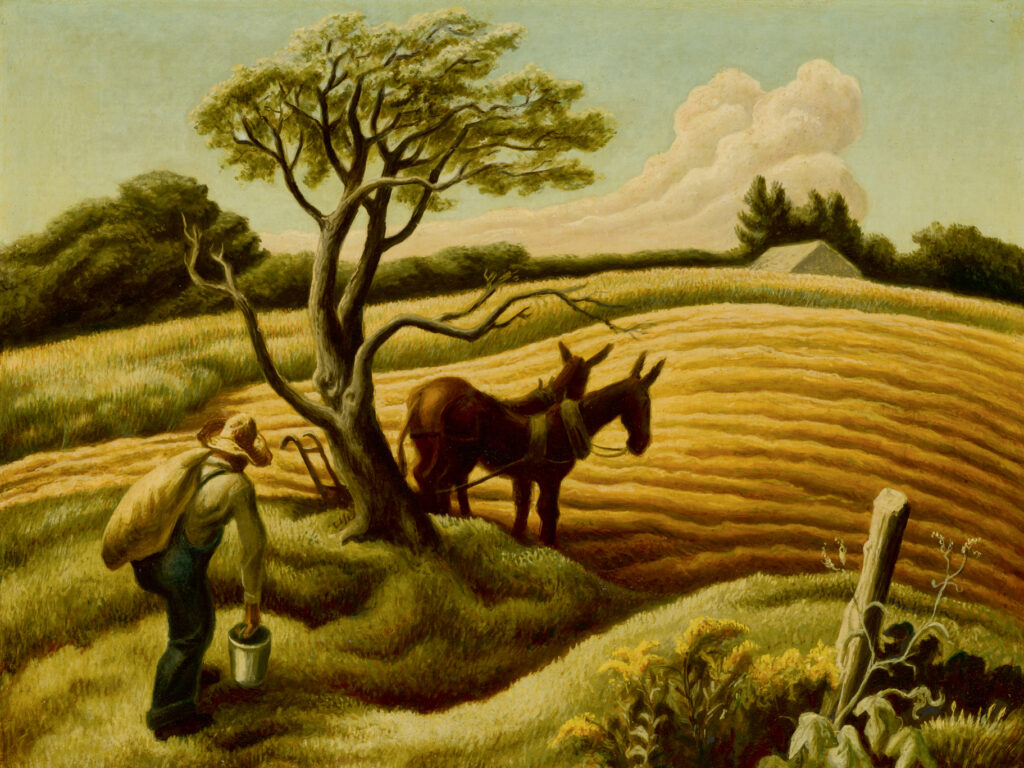Noon, by Thomas Hart Benton, 1939. The Hailstorm, By Thomas Hart Benton, 1940.
---
***Over the next few months, Clay will shadow Steinbeck’s 10,000-mile trek around the USA (and make a few detours of his own). Clay’s expedition is a central part of LTA’s big initiative to explore the country and take the pulse of America as it approaches its 250th birthday. Be sure to follow Clay’s adventures and [subscribe to our newsletter](https://ltamerica.org/newsletter/)*.**
**Categories:** Dispatches from the Road
**Tags:** America at 250, Iowa, John Steinbeck, Steinbeck Travels
---
### [Reading The Rise and Fall of the Third Reich While Traveling With Charley](https://ltamerica.org/reading-emthe-rise-and-fall-of-the-third-reich-em-while-traveling-with-charley/)
**Published:** May 13, 2024
**Author:** Clay Jenkinson
**Excerpt:** Clay visits Cedar Rapids, Iowa, boyhood home of pioneering journalist and author William Shirer, who later became friends with John Steinbeck.
**Content:**
## Clay visits Cedar Rapids, Iowa, boyhood home of pioneering journalist and author William Shirer, who later became friends with John Steinbeck.
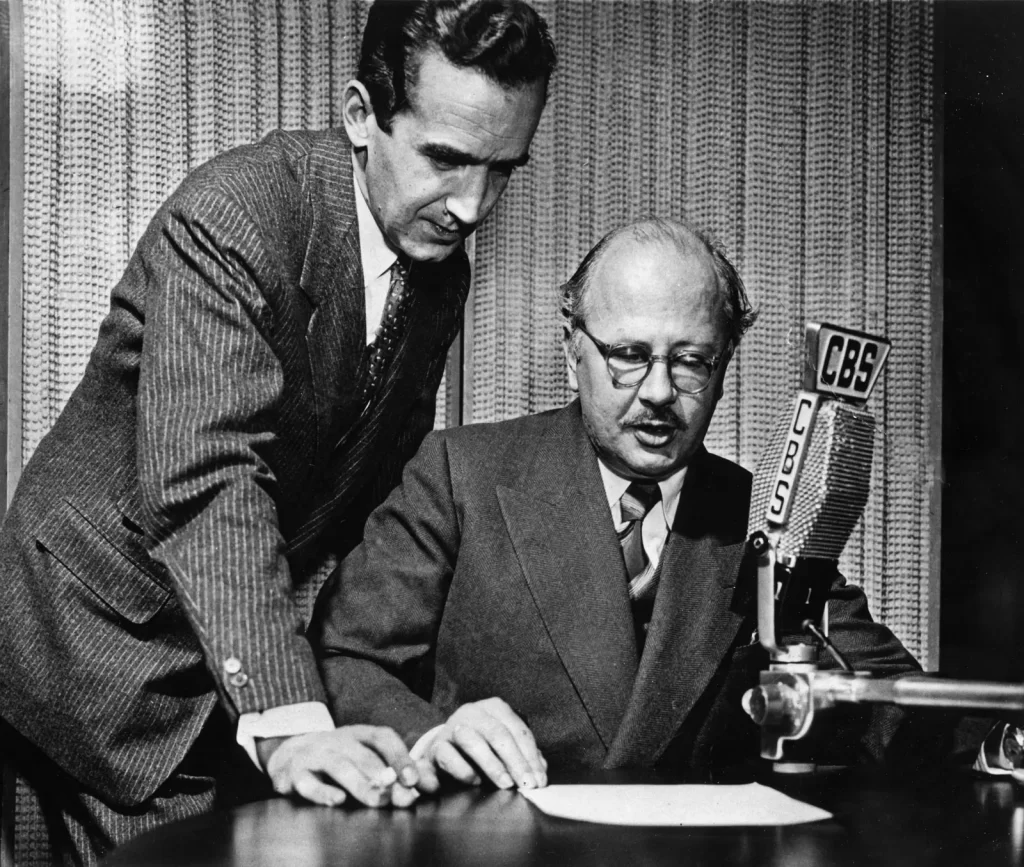Pioneering CBS radio journalists, Ed Murrow and William Shirer.
As I made my way from Bismarck, North Dakota, to Long Island, New York, to visit John Steinbeck’s Sag Harbor home, I wanted to make several “humanities stops.” These include [Pipestone, Minnesota](https://www.nps.gov/pipe/index.htm), one of the most important pipestone quarries in North America; Mankato, Minnesota, [site of the largest mass execution in American history](https://deathpenaltyinfo.org/stories/the-largest-mass-execution-in-us-history); and [Big Bone Lick, Kentucky](https://www.nps.gov/places/big-bone-lick-state-historic-site.htm), where Jefferson’s friends and proteges quarried mastodon bones to send him at Monticello.

Planning my initial itinerary with maps spread out before me and a copy of *Travels with Charley*, I decided to pilgrimage to Cedar Rapids, Iowa, the boyhood home of William L. Shirer, the author of *The Rise and Fall of the Third Reich*. Shirer is one of my heroes. His talent, drive, and some good luck made him one of the most important American journalists of the 20th century. After graduating from [Coe College ](https://www.coe.edu)in Cedar Rapids in 1925, Shirer ventured to Paris in hopes of finding a job at an English-language newspaper and maybe writing the great American novel. He found work first as a print journalist and, soon enough, as one of the first of CBS’ Murrow Boys. With Murrow, Eric Sevareid, and a few others in March 1938, during the Anschluss (Hitler’s annexation of Austria), Shirer helped to invent the radio news roundup. His appearances on CBS radio, usually beginning with “This is Berlin!” were not as widely acclaimed as Murrow’s London rooftop commentary during the Blitz; nevertheless, Shirer was famous in America well before the U.S. entered the war in December 1941.
Shirer wrote more than a dozen books, including one of the best autobiographies of the 20th century, the three-volume *20th Century Journey*. Volume two, *The Nightmare Years*, is one of the best books I have ever read.
John Steinbeck met William Shirer in New York not long before he (Steinbeck) traveled to Europe and North Africa in 1943 as a war correspondent. They met through a mutual friend, Lewis Gannett, the book editor for the Tribune. As he prepared to see the war for himself, Steinbeck sought out Shirer several times for advice about what to expect in war-torn Europe and how to report it. Shirer’s *Berlin Diary* was published in the United States in June 1941, at a time when most of the American establishment was skeptical of the horror stories coming out of Germany — the Gestapo, the SS, persecution of the Jews, the concentration camps.
## **The Complexity of Marriages**
John Steinbeck’s domestic drama began unfolding at the same time. He was married three times. His first wife, Carol Henning (1930-1943), typed his manuscripts, helped him creatively, and named *The Grapes of Wrath*. She saw him through the lean and hungry years. After their divorce in 1943, Steinbeck selected his second wife on the rebound. He married aspiring singer Gwendolyn Conger in 1943. On the rebound — a leggy blonde with what observers called a “great figure,” a frustrated aspiring singer and actress, 20 years John’s junior, edgy about his celebrity. What could go wrong? In their five years together, Gwyn bore Steinbeck two children: Thom (1944) and John (1946). They divorced in 1948. In 1950, Steinbeck married Elaine Scott. They had most of two decades together. Elaine survived Steinbeck by 34 years. It was the happiest of the three marriages.
The second marriage was never really happy, partly because Gwyn convinced herself that she had sacrificed a promising stage career to become the wife of a selfish and famous novelist. But Steinbeck may have poisoned the marriage from the start by deciding, almost immediately after the wedding in New Orleans, that he had to get himself “into the war.” John and Gwyn were married in New Orleans on March 29, 1943. Just over two months later, he left for Europe. Gwyn was devastated. I think she never really forgave him for running off to war.
Desperate to keep her husband home during the honeymoon period of their relationship, Gwyn had visited Shirer secretly to convince him to dissuade Steinbeck from taking the assignment. Shirer refused. He told Gwyn that he understood John’s desire to get into the arena, contribute to the war effort, and not miss the greatest story of his lifetime.
Steinbeck embarked for England in June 1943. He took a typewriter, 4 quarts of Scotch, 2 pounds of pipe tobacco, and a hundred Multicebrin tablets (vitamins). Some of his war reporting was published as *Once There Was a War* in 1958. Steinbeck spent considerable time with William Shirer in London, partly, according to his biographer Jackson Benson, because Shirer “was of the breed of correspondent that is part scholar, part newspaperman.”
Readers of *Travels with Charley* know Steinbeck was carrying Shirer’s magnum opus, *The Rise and Fall of the Third Reich*, with the other volumes he packed in his truck camper. After a satisfying conversation in the rig with a local farmer in New Hampshire, Steinbeck wrote: “Charley looked after him and sighed and went back to sleep. I ate my corned beef hash, then made down my bed and dug out Shirer’s *Rise and Fall of the Third Reich*. But I found I couldn’t read, and when the light was off I couldn’t sleep.”
There is a mystery here. This incident occurred in late September 1960 in New England. However, *The Rise and Fall of the Third Reich* was not published until October 17, 1960. How does John Steinbeck have a copy in his rig? There are only a few possibilities. 1) He’s making this up, perhaps because he doesn’t want to report that he was really reading *Heidi* or *Old Yeller* 2) He got an advance copy of the book before he left Long Island. This is entirely possible given Steinbeck’s friendship with Shirer and his celebrity. 3) He bought a hardback copy somewhere on the road when the book came out (Seattle? San Francisco?) and misremembered the sequencing when he came to write *Travels with Charley.* We have no way of knowing.
## **How to Read *Travels with Charley* in an Age of Disillusionment**
At this point, I should explain my *Travels with Charley* methodology.
1\. I believe that John Steinbeck really made this 10,000-mile journey in 1960, leaving Long Island on September 23, 1960, and arriving home sometime in December.
2\. I believe he is reporting his itinerary accurately.
3\. I believe every story or virtually every story in *Travels with Charley* is true, that every or almost every encounter and incident in the book happened during the trip.
4\. Several writers, chiefly Bill Steigerwald, have proven (beyond any doubt) that *Travels with Charley* is not a book of punctilious fidelity to a kind of reporter’s “the facts and only the facts in precisely the right sequence” objectivity. It is clear that Steinbeck embellished his adventures and, I suppose, invented some of the dialogue. How could it be otherwise?
5\. Steigerwald has shown beyond doubt that
- Steinbeck did not sleep in the truck camper as often as he would have us believe.
- Steinbeck’s wife Elaine was with him far more than *Travels with Charley* acknowledges. Steinbeck admits to meeting Elaine in Chicago for a couple of days of R & R (at a luxury hotel), in Seattle, and in the panhandle of Texas, where John and Elaine celebrated Thanksgiving on an opulent and ostentatious ranch to which Elaine had a connection. It’s not entirely clear how much of the time Elaine was with Steinbeck, but it comes close to 40%.
- Steinbeck tended to rush from one Elaine rendezvous to the next in such a way that he could not have been doing much searching for America.
6\. I accept all of that, in substance if not with my friend Steigerwald’s gotcha tone. But I am not nearly so bothered by these discrepancies as Steigerwald. I’ve always accepted that *Travels with Charley* is the work of a literary master, not a reporter for the *Pittsburgh Post-Gazette*. Steinbeck reminds us several times in the book that an author inevitably shapes his material. That to turn an adventure into a book requires structure, a beginning, middle, and end, and that the stories he tells in *Travels with Charley* — like all stories from the beginning of time — behave like stories — they get tidier, more dramatic, and more tightly structured as they are transformed from something that happened at the Maple River in eastern North Dakota into a usable incident in a work of non-fiction literature.
7\. My default position, therefore, when I come upon a story, incident, or personage in *Travels with Charley* is that it is true, or I should say True in a higher sense. My default position is not — and this is where I chiefly break with Steigerwald — that the story is probably not true, that it was probably invented or so heavily embellished as to make it unreliable from the perspective of what a Steinbeck Cam would have revealed on that day.
8\. Reporters should read Steinbeck’s Nobel Prize acceptance speech before embarking on this kind of investigative journalism. On that occasion, December 10, 1962, in Stockholm, Steinbeck reminded his worldwide audience that humans are fundamentally a story-telling species:
*“**Literature is as old as speech. It grew out of human need for it, and it has not changed except to become more needed. The skalds, the bards, the writers are not separate and exclusive. From the beginning, their functions, their duties, their responsibilities have been decreed by our species.”***
9\. Finally, where there are discrepancies or things don’t quite track or match up, my approach is to figure out what actually happened (where he actually slept and under what circumstances) and then to try to understand why Steinbeck was shaping the narrative as he did. For what literary purpose? The two easiest “distortions” to understand are a: that he exaggerated how often he really camped somewhere and slept in the rig sipping Scotch and reading under the light of a gas lantern and b: how often Elaine was with him in his travels.
Elaine and John Steinbeck in 1959. (Martha Heasley Cox Center for Steinbeck Studies, SJSU)
Steinbeck wants us to picture him at the end of the day, parking under the trees in some quiet and obscure place on the backroads of America, heating a can of chili con carne, reading under the light of his gas lantern, sipping some smooth Scotch, letting Charley out for the last pee of the evening, writing a letter to Elaine, and making up his bed. It’s romantic and a little forlorn, with a bit of risk, a long way from the comforts of home. We’d probably be pretty dismayed if we knew exactly how many (or, as Steigerwald puts it, how few) nights he slept in his rig. Although he admits to staying from time to time in a “motor court” to have a good hot bath, he does not explain how often he wound up in a luxury hotel. That’s not the spirit of the quest.
The book would have been less satisfying if he had admitted how much he was with Elaine on the journey, how often he did not sleep in the truck camper, and how much he rushed to the next rendezvous site with Elaine. He was more candid in the original manuscript, now a treasure of the J.P. Morgan Library in New York City. But by the time the book went to press in 1962, Steinbeck and his editors had done what it took to cast the journey as a lone man’s adventure that ended almost every night in a camper bed converted from the dining table. He refused to eliminate Elaine altogether, but nearly so. This is what good authors and editors do to shape a story for publication.
I certainly don’t doubt that Steinbeck carried his friend William Shirer’s masterpiece for some at least of his 1960 odyssey around America.
## **And So to Coe College**
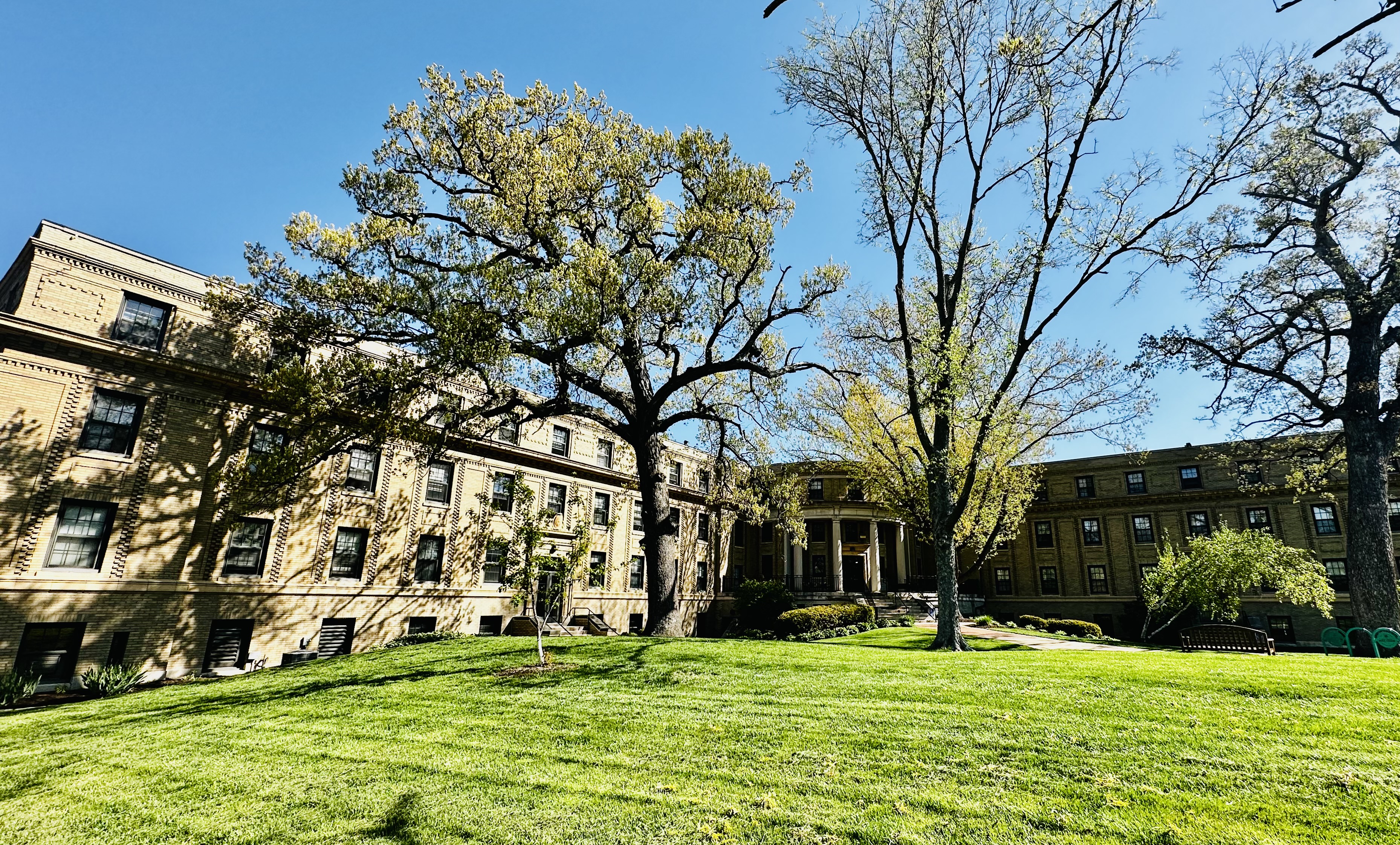The Quad at Coe College in Cedar Rapids, Iowa. (Photo by Clay Jenkinson)
So I made an appointment at Coe College to talk with their library staff about Shirer, one of the handful of the college’s greatest alums. The campus is beautiful. Coe’s Stewart Memorial Library has a splendid art collection, including a Picasso, a Matisse, and a fair number of paintings by another Cedar Rapids worthy Grant Wood. I was treated as an honored guest.
But no shrine to Shirer, not even a portrait (or a photograph) or, for that matter, a plaque. What a mistake! When Shirer graduated, Coe College president Harry Morehouse Gage, impressed by the young man’s talent and aware of his big dreams, gave Shirer a loan of $100 (about $1,785 today) and told him to go take on Paris and the world. Thanks to that act of inspired mentoring and faith, Shirer went on to write more than a dozen books, including the critically acclaimed and still widely read *Rise and Fall of the Third Reich*. Shirer’s father died when William was just 9 years old. Raised by his widowed mother in provincial Cedar Rapids, Iowa, Shirer was lucky to be able to attend college at all, and thanks to big dreams, discipline, and drive, he went on to become one of the 20th century’s most successful journalists, as important to the ways of modern broadcast media as Edward R. Murrow or Walter Cronkite.
What could be a better student empowerment story than this? Or maybe they would all be demanding $1,785 upon graduation!
I lobbied hard for Coe to do justice to Shirer — with the usual result. So far.
Because Steinbeck knew Shirer and because he carried with him a copy of *The Rise and Fall of the Third Reich* in his rig, I’m carrying the book, too. I first read it when I was 15. It was one of my father’s favorite books, and he urged me to read all 1,249 pages. I did. Much later, I portrayed Shirer in the Great Basin Chautauqua. I suppose I have read it five or six times over the years, and it never ceases to live up to one’s great expectations.
It would be a small but important contribution to Steinbeck studies if I could solve the mystery of how he seemed to have with him a book that had not been published by the time he said he lay awake reading it. An audio interview between Shirer and biographer Jackson Benson, housed at Stanford’s Green Library, may hold some clues. My friend Russ Eagle has ordered a digital copy. Stay tuned.
---
***Over the next few months, Clay will shadow Steinbeck’s 10,000-mile trek around the USA (and make a few detours of his own). Clay’s expedition is a central part of LTA’s big initiative to explore the country and take the pulse of America as it approaches its 250th birthday. Be sure to follow Clay’s adventures and [subscribe to our newsletter](https://ltamerica.org/newsletter/)*.**
**Categories:** Features
**Tags:** Books, Iowa, John Steinbeck, Road Trips, Steinbeck Travels, William Shirer
---
### [Shakedown Cruise: The Great Adventure Begins](https://ltamerica.org/shakedown-cruise-the-great-adventure-begins/)
**Published:** April 23, 2024
**Author:** Clay Jenkinson
**Excerpt:** April is the cruelest month, says T.S. Eliot, perhaps because it brings you some false spring that often enough is put in its place by late blasts of winter. This is certainly true on the Great Plains. But I am leaving on my big John Steinbeck Travels with Charley Tour on April 27 …
**Content:**
## Clay takes the Airstream out in preparation for his *Travels With Charley* tour beginning later this month.

April is the cruelest month, says T.S. Eliot, perhaps because it brings you some false spring that often enough is put in its place by late blasts of winter. This is certainly true on the Great Plains. But I am leaving on my big John Steinbeck *Travels With Charley* Tour on April 27, and I needed to take my Listening to America Airstream trailer on a shakedown cruise before the main event. I needed to de-winterize the rig, check the tires and hitch, and then take it on some short hops to make sure that all the systems are working correctly. After that, it’s all human error.
I fetched it out of its winter storage garage a few days ago, without much trouble, but before I could haul it anywhere I needed to hook up the twin 12-volt batteries, which work in parallel. For me this was about equivalent to doing the Rubik’s cube. Fortunately I had taken a photograph of the configuration last October and after considerable “cogitating” I hooked the batteries back up, with the same sense of doom you see in a Tom Cruise movie when they disarm the nuclear device.
I renewed the Airstream’s vehicle license at the dreaded DOT, which in North Dakota is a pretty friendly place, actually. I gassed up the pickup. I filled the 30-gallon water tank with 30 gallons of water. I bought a few groceries and a bottle of gin. I tossed new sheets on the bed to be properly made up later. I walked around the array three times to make sure I was not about to commit some catastrophic rookie error.
## **Baby Steps**
And then I drove 112.6 miles to the village of Sykeston, North Dakota. Population 100. I chose Sykeston because it was close to Bismarck in case of ignominious retreat, and I had a special affection for a municipal RV park on the western edge of town. I had stayed there a couple of years ago in another life. But now it was April 16, 2024, on the sub-Arctic northern Great Plains, latitude 47.46.60. High winds, gusts up to 55 mph, temperature 31 or so, slow freezing rain to the point that the gravel roads were slippery. I found a lovely pull through campsite. Needless to say I was the only person in the RV park. Nobody came to check up on me or collect the fee or remind me that the park is not technically open until Memorial Day. No deputy sheriff stopped by to question my sanity. Sykeston is important in North Dakota because it was the hometown of one of North Dakota’s greatest writers Larry Woiwode, the author of the plains novel *[Beyond the Bedroom Wall](https://www.amazon.com/Beyond-Bedroom-Wall-Graywolf-Rediscovery/dp/1555972586)* (1975).
It rained steadily but lightly through the day. Good news: no leaks. I spent a couple of hours opening every cabinet and drawer, stowing the food in the pantry and the refrigerator, making the bed, checking the water pressure, finding a place for books (five), electronic devices (three), notebooks and journals, and four days’ worth of clothes. I tried all the cabin lights. I boiled water in the microwave for herb tea. I made sure the gas furnace was working. This would be important.

Then I had my first evening in the Airstream. I poured myself a glass of light red wine. I made a very modest dinner. I typed a few emails. And I read for three or four hours (before and after dinner), from three different books. As darkness set in, there was the usual plashing of rain, creaking and settling of the rig, humming of onboard systems, and the whistle of the wind in the trees and grass — just enough to keep me alert for the possibility that a vicious gang of local toughs would descend on my little idyll with clubs and machetes and cut me into fish bait. By 10 o’clock I was fast asleep.
## **Finding a Rhythm**
I’m not at all sure what the rhythms will be when I start to pull myself across the entire continent, but for the moment it looks like this:
- Wake up ca. 6:30 a.m. no alarm
- The stuff we do when we wake up
- Check email and read the newsfeed on my phone
- Make a cup of coffee or tea
- Make bed
- Tidy up the cabin
- Read and write for a couple of hours
- Then break camp: decouple from campsite electricity and water; make sure everything in the rig is put away carefully; go through departure checklist
- Drive for a few hours, catching up on national affairs on Satellite radio
- Refuel and buy bottles of water
- Find new campground around 2 p.m.
- Hook up water and electricity
- Read and write for a couple of hours
- Dinner
- Wind down with a couple of good books
Rinse and repeat, from Portland, Maine, to Portland, Oregon; from Seattle, Washington, to St. Petersburg, Florida; from Bottineau, North Dakota, to Beaumont, Texas.
To get ready for this great adventure, I swore off television altogether a couple of months ago. At every campground I’ve visited over the years, I see couples beginning their stay by positioning their television antenna. Top priority. As dusk comes on you can see the blue flicker of television screens in every other RV, several large screens in the mammoth bus rigs, not many in the teardrop miniatures. Our national addiction to television must be exceedingly strong, if you prefer the *Late Show* or *Wheel of Fortune* to the star constellations in the American outback or the quiet of a night beyond city limits. So I decided to go cold turkey so that I wouldn’t be tempted on night eight of the journey.
More reading time. More sleeping time. More musing time.
When I am at full alert I read at the dining table in the Airstream, which is surrounded by seating cushions on three sides. But later in the evening, I like to read in bed. I have extra pillows for this purpose, and it turns out the Airstream night reading lamp is perfectly positioned. I read from 15 minutes to two hours, depending on several factors, and place the book next to me on the bed, in case I wake up in the night and cannot go back to sleep.
## **The Curse of Henry David Thoreau**
I’ve been reading Thoreau’s *Walden* lately, so I’m yearning to be more minimalist — well, less maximalist. In his chapter “Higher Laws,” Thoreau says that by reason, morality, and instinct he is enamored of vegetarianism, though he does eat some flesh. He wrote, “I believe that every man who has ever been earnest to preserve his higher or poetic faculties in the best condition has been particularly inclined to abstain from animal food, and from much food of any kind.” Well, that explains why I have written so little poetry! That was then (1845) before we broke the planet. Today there is a strong additional argument against meat: we know that the industrial beef/pork/chicken complex is hard on the planet, hard on the animals, and not sustainable. But we love our beef — I love beef — and we just don’t want to transition to a largely vegetable diet, which would be better for the planet and probably for most humans, too. I’ve made a pact to eat less meat on this journey (though some) and to cook that meat out on the picnic table on a small portable tabletop grill I keep for that purpose.
The best laid plans of mice and men …
We’ll see. I know I’m not willing to give up the best and, for travelers, the most reliable, meal of the day: breakfast — eggs, toast, juice, bacon, perhaps some fried potatoes. Coffee. Besides, that’s where you meet the “colorful locals” that William Least Heat Moon specialized in in his 1982 *Blue Highways*.
> “A man is rich in proportion to the number of things which he can afford to let alone.”
>
> Henry David Thoreau
Thoreau also reminds us that “A man is rich in proportion to the number of things which he can afford to let alone.” Thanks to Kindle and eBooks, I will only carry 10-15 book books at any given time, mostly by and about Steinbeck. But I’ll have a full library of more than 100 books on my iPad. I’m taking clothes for 10 days — Yelp can help find laundromats, can’t it? — and a spare set of sheets. Enough food for light repasts. Unlike Steinbeck, no full liquor cabinet. Just gin and wine and a bottle of special Steinbeck-related whisky a friend gave me the other day. I don’t want to fill the space the truck bed and the Airstream provide. I’m leaving my tuxedo at home, for example, and the Tiki lamps and AstroTurf. Minimalism!
**Day Two** — Wednesday. I woke up in the double fetal position. The heater had failed. I was too cold to sleep any longer even when I put my coat over two blankets and lined up the extra pillows for insulation. The only thing worse than how cold I felt in bed would be the truer cold of getting out of bed and moving around. I got up and lit the gas burners on the stove, which took off the chill in no more than 10 minutes. I soon discovered the problem. Sykeston’s camp units did not have their electricity turned on yet, so I had reckoned the twin batteries would keep things percolating through the night. They were dead. I have a small “super quiet” generator in the back of the pickup, so I went out barefoot in a bathrobe, cursing the sleet storm like King Lear. The bathrobe ballooned out like a kite or a debutante’s wedding train. I hooked the generator up to the Airstream’s power grid and yanked the cord. Note: The generator started better when I thought to put gas in it.
All systems perked up thanks to the carbon economy. Within minutes I could feel circulation in my brain and feet.
I read for a couple of hours and took a not quite efficient not quite hot shower, shaved, packed up carefully, and drove due west (into the storm) to a state park on North Dakota’s Lake Sakakawea, a giant reservoir backed up by Garrison Dam on the Missouri River in central North Dakota. Total distance from Sykeston to the state park campground: 118 miles. But it was rough hauling. The wind was now approaching the heroic. There were AM radio warnings against traveling with high profile vehicles. Everywhere I stopped the store clerks were a little crazed by the wind and not afraid to bitch about it. In O.E. Rolvaag’s famous novel, *[Giants in the Earth](https://www.amazon.com/Giants-Earth-Prairie-Perennial-Classics/dp/0060931930)*, about the pioneers who created the modern Dakotas, Beret Hansa is driven insane by the isolation and the incessant wind, and Per Hansa, her husband, freezes to death on a haystack in a blizzard. But who’s fretting?
The rig was buffeted and I had to grip the steering wheel in the genuine 10:2 manner. Only once did I panic a bit, when the whole array — pickup and Airstream — were thrown across the median by a single gust.
When I finally arrived at the state park, the ranger who checked me in, noting that I was his first customer in 2024, six weeks before sensible people start to visit state parks, had to fumble all over the office to find the right forms and brochures and the cardboard mirror tag showing that I was a legitimate occupant of Site 136 North Loop. He chose well. I was as sheltered from the gale force winds as I could be in the state of North Dakota.
When I deployed the door steps and opened the Airstream, I began by picking up all the things that had been redistributed by the ride, plugged into the park’s electrical system (no water yet, not until the last frost), and settled in. It was about 3 p.m. I read and napped and read and wrote and made dinner and had a celebratory gin and tonic. The heater worked this time, though in such close quarters you definitely hear it go off and on through the evening.
## **Reading for Inspiration**

**Day Three** — I woke up just warm enough to feel the luxury of good blankets. When I checked the weather on my smartphone, it did not seem prudent or useful to seek another campground another 100 miles away. The wind had reduced my gas mileage to about 11 miles per hour. I let the office know I would be staying another night.
I spent the day reading and writing. I should be reading Thoreau’s *Walden*, because I will be interviewed about it soon for a documentary film. But I’ve always made a habit of reading something other than the thing I should be reading. And I wanted to inaugurate my travels in the right spirit, so I read Hampton Sides’ new study of Captain James Cook’s third voyage (1776-1780), *[The Wide, Wide Sea: Imperial Ambition, First Contact, and the Fateful Final Voyage of Captain James Cook](https://www.penguinrandomhouse.com/books/602227/the-wide-wide-sea-by-hampton-sides/)*. Just out. I brought along Tony Horwitz’ superb *[Blue Latitudes: Boldly Going Where Captain Cook Has Gone Before](https://us.macmillan.com/books/9780312422608/bluelatitudes)* (2002). I read the two books in relays, back and forth, relishing Sides’ masterful telling of the story and Horowitz’ many (and I think deeper) insights about western civ’s colonial project. The books filled me with lust for my own (my daughter would say *bougie*) adventures. Exploration has been one of my handful of intellectual interests for decades, ever since I first read a one-volume edition of the journals of Lewis and Clark. But I did not know much about Cook except the obvious.
[](https://us.macmillan.com/books/9780312422608/bluelatitudes)
The fascinations of Captain Cook’s three circumnavigations of the Earth are unending. I marked several hundred passages in the book, wrote several dozen texts of query and exclamation to my Enlightenment friend David Nicandri, whose own book on the post-Cook search for the the Northwest Passage, *Discovering Nothing: In Pursuit of an Elusive Northwest Passage,* will come out this summer.
Then I slept, with visions of what Nicandri calls the “palm tree paradigm” dancing in my head. It might have been the gin.
**Day Four** — Friday morning I woke up snug in my bed for a change. The wind was still howling all around me, but the Airstream did not buffet or stir. I don’t have a thermometer on board, but my smartphone informed me that it was 23 above zero. Light dry snow was dusting the gray landscape, each flake (but they were not really flakes) like tiny Styrofoam pellets, gentle baby hail. I went out to the pickup in my boxers and t-shirt (the campground was entirely empty), and immediately realized that with the windchill it felt like actual below zero weather. By the time I plunged back into the Airstream my hands were raw from the cold. Now it wasn’t just a capricious spring. Now it felt like winter. No day for a spring hike.
I thought of what William Clark said at Dismal Nitch on the storm-tossed Pacific Coast on November 22, 1805, when the men were sleeping in crevasses on the rocks and the Columbia River tossed giant tree trunks up on the shore: “O! how horriable is the day.” I could see the headline: “Lifelong Dakotan Found Frozen in His Boxer Shorts Next to Luxury RV. Few Surprised, None Who Knew Him Well.”
After I thawed out, put on some clothes, and found some gloves, I battened things up and drove slowly back to Bismarck. After just four backup setbacks I was able to ease the Airstream into its storage bay. Then I began to fret about the water pipes. The weekend temperatures would hover in the mid to late 20s. So I pumped all the water through the system until the faucets sucked air. And drove to town. Then I began to worry that the wastewater holding tank would freeze, so I drove back out to the storage facility and drained that water, all benign, onto the hillside next to the storage garage. Then I drove to town to take a few hot showers and get back to work.
What can I conclude?
This is going to be a blast!
---
## ***Discover more on these topics at Listening to America***
[Travel](https://ltamerica.org/tag/travel/ "1 topics")[Road Trips](https://ltamerica.org/tag/road-trips/ "18 topics")[Oppenheimer](https://ltamerica.org/tag/oppenheimer/ "1 topics")[Rivers](https://ltamerica.org/tag/rivers/ "3 topics")[Wyoming](https://ltamerica.org/tag/wyoming/ "4 topics")[South Carolina](https://ltamerica.org/tag/south-carolina/ "1 topics")[South Dakota](https://ltamerica.org/tag/south-dakota/ "16 topics")[Washington](https://ltamerica.org/tag/washington/ "2 topics")[north daktoa](https://ltamerica.org/tag/north-daktoa/ "0 topics")[Oregon](https://ltamerica.org/tag/oregon/ "4 topics")[Theodore Roosevelt](https://ltamerica.org/tag/theodore-roosevelt/ "16 topics")[North Dakota](https://ltamerica.org/tag/north-dakota/ "53 topics")[Ohio](https://ltamerica.org/tag/ohio/ "2 topics")[New York](https://ltamerica.org/tag/new-york/ "8 topics")[New Mexico](https://ltamerica.org/tag/new-mexico/ "3 topics")[paintings](https://ltamerica.org/tag/paintings/ "0 topics")[Tennessee](https://ltamerica.org/tag/tennessee/ "1 topics")[The Constitution](https://ltamerica.org/tag/the-constitution/ "1 topics")[Rome](https://ltamerica.org/tag/rome/ "1 topics")[Reading](https://ltamerica.org/tag/reading/ "1 topics")[Steinbeck Travels](https://ltamerica.org/tag/steinbeck-travels/ "75 topics")[Republics](https://ltamerica.org/tag/republics/ "1 topics")[Video](https://ltamerica.org/tag/video/ "51 topics")[Thoreau](https://ltamerica.org/tag/thoreau/ "5 topics")[Republic](https://ltamerica.org/tag/republic/ "0 topics")[William Shirer](https://ltamerica.org/tag/william-shirer/ "1 topics")[Sports](https://ltamerica.org/tag/sports/ "2 topics")[State Parks](https://ltamerica.org/tag/state-parks/ "2 topics")[Texas](https://ltamerica.org/tag/texas/ "4 topics")[North Carolina](https://ltamerica.org/tag/north-carolina/ "3 topics")[Water in the West](https://ltamerica.org/tag/water-in-the-west/ "24 topics")[Vermont](https://ltamerica.org/tag/vermont/ "1 topics")[Space Exploration](https://ltamerica.org/tag/space-exploration/ "8 topics")[Oppenheim](https://ltamerica.org/tag/oppenheim/ "0 topics")[Thomas Jefferson](https://ltamerica.org/tag/thomas-jefferson/ "34 topics")[Utah](https://ltamerica.org/tag/utah/ "11 topics")[U.S. Presidents](https://ltamerica.org/tag/u-s-presidents/ "71 topics")[New England](https://ltamerica.org/tag/new-england/ "1 topics")[Podcast](https://ltamerica.org/tag/podcast/ "1 topics")[Pennsylvania](https://ltamerica.org/tag/pennsylvania/ "1 topics")[Wisconsin](https://ltamerica.org/tag/wisconsin/ "0 topics")[Virginia](https://ltamerica.org/tag/virginia/ "7 topics")[U.S. Constitution](https://ltamerica.org/tag/u-s-constitution/ "1 topics")[Poetry](https://ltamerica.org/tag/poetry/ "1 topics")[Walden](https://ltamerica.org/tag/walden/ "1 topics")
**Categories:** Dispatches from the Road
**Tags:** Books, John Steinbeck, North Dakota, Road Trips, Steinbeck Travels
---
### [Underway! Sag Harbor, New York or Bust](https://ltamerica.org/underway-sag-harbor-new-york-or-bust/)
**Published:** April 30, 2024
**Author:** Clay Jenkinson
**Excerpt:** Clay leaves his home in Bismarck, North Dakota, and heads east on a circuitous route to Sag Harbor, New York, where John Steinbeck began his famous 1960 cross-country journey.
**Content:**
## Clay leaves his home in Bismarck, North Dakota, and heads east on a circuitous route to Sag Harbor where John Steinbeck began his famous 1960 cross-country journey, immortalized in *Travels With Charley*.
The Listening to America Airstream at a campground in Fergus Falls, Minn. not far from the diary farm owned by Clay’s grandparents.
***Over the next few months, Clay will shadow Steinbeck’s 10,000-mile trek around the USA (and make a few detours of his own). Clay’s expedition is a central part of LTA’s big initiative to explore the country and take the pulse of America as it approaches its 250th birthday. Be sure to follow Clay’s adventures and [subscribe to our newsletter](https://ltamerica.org/newsletter/)*.**
Sunday, April 28, 2024 — Well, I’m underway! After somehow managing to assemble a bike rack for my Listening to America Airstream (five hours, the worst instruction manual, bruised knuckles, and several bleeding injuries to my fingers), I locked the front door of my house. “Nothing to do now except go,” I said out loud. It was a chilly and still wintry morning in Bismarck, temperature 42, brisk wind, gray skies. I gassed up in the nearby village of Stirling, then drove nonstop to Fargo, North Dakota where I bought gas and a bag of pretzels. In mid-afternoon, I drove southeast to Fergus Falls, Minnesota, found the Swan Lake Resort, and checked in. The owners were at the lakeside putting docks into place for the summer. I could have stolen sundries, decals, patches, mugs, and t-shirts from the deserted office. Thoreau wrote, “I think we may safely trust a good deal more than we do.”
I chose Fergus Falls for my first stop because it was a moderate distance from Bismarck (262 miles) and because my maternal grandparents had a dairy farm here in the 1950s, ’60s, and ’70s. I don’t know what they would have thought of my career, but they would have been astonished that one can live a whole life without doing any real work. They worked hard every day of their lives; even on Sundays, the steers needed feeding, and the cows had to be milked, all 16 of them, with names like Petunia, Daisy, Whitey, Pal, and Blossom. They would have shaken their heads at the sight of a gleaming Airstream trailer. They seldom traveled far beyond Otter Tail County, Minnesota. They drove once to California, where they were fish out of water at Disneyland and on the LA freeways.
At the “Compass” site at [Swan Lake Resort](https://www.swanlake.camp), once I got the rig hooked up to water and electricity, I began to unpack and find places in the cabinetry for clothes, electronic equipment, books (11), food, toiletries, notebooks, and other necessities. The camp hosts had invited me to supper (in the rural Midwest, dinner is served at mid-day), but I declined because I needed to get everything settled in the rig. But — in Steinbeck fashion — I invited them to stop by later. They did, about 8:45 p.m. They lit a fire in the firepit. They brought local beer and a half bottle of whiskey. They are young — in their later 30s. Anna had her 11-month-old baby swaddled in her arms. Tom served as drinkmaster. Anna brought a plate of outstanding carrot cake.
We talked for a couple of hours. About their decision to leave corporate America to buy a modest resort in a place where they had no kin. About the essential goodness of the people who come stay here. The resort doesn’t allow flags at the campsites, so they have no way to know people’s politics and generally avoid the topic. They wanted to know about my ambitious journey. I explained my quest. This led to a discussion of the State of the Nation as we approach America’s 250th birthday. They were thoughtful. Tom’s well-read and ready to talk.
Eventually, the fire subsided and we were all cold (except for the swaddled baby), so we called it a night. I tumbled into bed.
Clay, leaves Bismarck N.D., makes an overnight stop at the old homestead in Fergus Falls Minn. and then off to Mankato, Minn.
## **Day Two Begins**
It’s a gray morning in northwestern Minnesota, but so far dry, 42 degrees, some wind in the still-bare trees. I’ll pack up soon and head to Mankato, 212 miles south. I want a full day here to finish unpacking and do some writing, but I’ve got to keep moving if I am going to get to the eastern tip of Long Island within 10 days.
Immediate conclusions:
1\. Setting up camp only takes about 10 minutes — hose to the spigot, stout electrical cord into the gray metal box.
2\. Nothing had tumbled around in the Airstream on a blustery day of driving with many road bumps and potholes. If you pack it right, there is no chaos upon arrival.
3\. Driving a pickup-RV combination 60 feet long requires concentration (no texting!), and a few hundred miles will wear you out.
4\. Given the spontaneous little party we scared up at my fire pit, and the quality of the conversation, I reckon that it’s going to be easy enough to Listen to America.
## **My Itinerary: Phase One: April 27-June 6, 2024**
My plan is to drive about 250 miles per day. My intrepid scout Frank is getting me reservations in campgrounds. Months ago, I provided him with an elaborate set of criteria for choosing locations: county and state parks wherever possible and non-chain commercial campgrounds, unless KOA is the only option. I’ll spend at least one or two nights in Walmart parking lots. Connectivity matters! I’ll be posting photos and commentary virtually every day.
The plan looks like this. Get to the starting gate at Sag Harbor on Long Island: Bismarck to Fergus Falls, Minnesota; Fergus Falls to Mankato, Minn.; Mankato to Cedar Rapids, Iowa; Cedar Rapids to Ottawa, Illinois, home of my friend WGN Chicago radio talk show host John Williams, the brainiest of AM talk show hosts; Ottawa to Big Bone Lick, Kentucky, where Jefferson’s proteges Meriwether Lewis and William Clark dug up mastodon bones for the entry museum at Monticello; Big Bone Lick to Bethany, West Virginia, where I will interview the “bad boy of Steinbeck studies,” Bill Steigerwald, author of *[Dogging Steinbeck: Discovering America and Exposing the Truth about Travels with Charley](https://www.amazon.com/Dogging-Steinbeck-Discovering-America-Exposing-ebook/dp/B00A6X9ZR0)*; Bethany to Pennsylvania; Pennsylvania to Long Island, New York. I’ve studied his book carefully and printed out his blog prose from his 2010 50th anniversary retracing of Steinbeck’s 1960 journey. Steigerwald did important field research and concluded that:
A: Steinbeck embellished and even fictionalized some of *Travels with Charley* (TWC).
B: He actually stayed in his truck camper less often than he would have you believe.
C: His wife Elaine was with him for about 40% of the time, a fact he suppressed to keep up the appearance of a lonely journey through the heart of America.
D: He raced through long stretches of the journey to rendezvous with Elaine.
E: He didn’t always sleep where he said he did.
F: Although he said he had to travel incognito so that his fame would not distort the process, he used his celebrity when it was important.
I disagree with many of Steigerwald’s conclusions, and I think his mistook a work of travel literature by demanding punctilious and verifiable reportage. However, he has provided all future Steinbeck re-tracers with an excellent day-by-day guide to what Steinbeck saw and did.
The cad! Steigerwald wrote me an email saying that I could park in his driveway and if I needed a hot shower or a comfortable bed, I could be a guest in his house. I wasn’t born yesterday, Bill. I wrote back to say he was trying to lure me inside his house so that he could later denounce me for embellishing and fictionalizing my own journey! That, of course, was not his intention, but you cannot trust a muckraker on a journey like this.
When I finally reach Sag Harbor on the far end of Long Island around May 10, the actual Steinbeck journey begins.
In a nutshell: through New England to the top of Maine, which he insisted on touching so I will, too; then down through New Hampshire and Vermont to the Erie Canal, which I have always wanted to see; Niagara Falls; then along the underside of the Great Lakes to Chicago, where I will stay in the Ambassador East Hotel, where Steinbeck’s wife Elaine met him for a few days; then through Wisconsin and Minnesota (with stops at Sinclair Lewis’ Sauk Centre, and Frazee, where Steinbeck camped among a sea of turkey farms and Lake Itasca, the “true source” of America’s greatest river the Mississippi); and finally back to Bismarck.
## **Phase Two: July-August 2024**
After a few weeks at or near home, I’ll start Phase Two in late July. In a tinier nutshell: Bismarck through Montana, Idaho, and Washington to Seattle; Seattle to Monterey but with plenty of time in the Redwoods; Salinas, home of the National Steinbeck Center; then on to Tehachapi Pass, from which the weary but hopeful Joads looked down into the lush Central Valley of California; to Flagstaff and Route 66; and ending in Amarillo, Texas, where Steinbeck spent what he called an “orgy” of Thanksgiving abundance at a ranch where his wife Elaine had connections.
## **Phase Three: October-Thanksgiving**
Phase Three: Amarillo to Austin; Austin to New Orleans, where Steinbeck observed anti-integration protests that sickened him; and then up the East Coast to New York City, with a serious tour of Civil Rights sites in Alabama, Mississippi, and Louisiana (Selma, Montgomery, Birmingham, possibly Atlanta). I’ll also stop at Jefferson’s Poplar Forest in Lynchburg, Virginia, and, of course, Monticello at Charlottesville.
The whole journey will take about 20 weeks. I’m reading Steinbeck’s works along the way. (This morning, I started reading his first novel, *Cup of Gold*.) I’ll be posting dispatches and photos virtually every day. My friend Russ Eagle (a Steinbeck scholar) will host Listening to America podcasts from North Carolina while I sit at this dinette desk in the Airstream.
I’ve got to stop, for now, stow everything away, and get on the road. “I have miles to go before I sleep and promises to keep.”
But I’m now officially underway. And I’m so glad you are along for the adventure.
---
#### Read next — *As Clay begins his great Travels With Charley journey, our resident Steinbeck specialist, Russ Eagle, [weighs in](https://ltamerica.org/john-steinbecks-true-motivations-for-hitting-the-road-in-1960/) on what spurred the Nobel Prize-winning author to take to the road in a custom truck camper and his dog in 1960.*
**Categories:** Dispatches from the Road
**Tags:** America at 250, John Steinbeck, North Dakota, Steinbeck Travels
---
### [John Steinbeck's True Motivations for Hitting the Road in 1960](https://ltamerica.org/john-steinbecks-true-motivations-for-hitting-the-road-in-1960/)
**Published:** April 25, 2024
**Author:** Russ Eagle
**Excerpt:** As Clay begins his great Travels With Charley journey, our resident Steinbeck specialist, Russ Eagle, weighs in on what spurred the Nobel Prize-winning author to take to the road in a custom truck camper and his dog in 1960.
**Content:**
## As Clay begins his great *Travels With Charley* journey, our resident Steinbeck specialist, Russ Eagle, weighs in on what spurred the Nobel Prize-winning author to take to the road in a custom truck camper and his dog in 1960.
John Steinbeck with his dog Charley.
## **Privately, the author saw his famous trip with his dog Charley as “a frantic last attempt to save my life.”**
“I had not felt the country for 25 years,” John Steinbeck writes in the early pages of *[Travels with Charley](https://www.penguinrandomhouse.com/books/324476/travels-with-charley-in-search-of-america-by-john-steinbeck-introduction-by-jay-parini/)*. For a man known worldwide as an American writer, this was “criminal” the author admits and he declares atonement for this sin as the primary motivation for his trip around the U.S. in the fall of 1960.
Steinbeck’s plan to feel the country was to drive the perimeter of the United States in a truck camper he called [*Rocinante*](https://ltamerica.org/exclusive-inside-john-steinbecks-famous-travels-with-charley-truck-camper-rocinante/). The three-month journey would carry him 11,500 miles from Sag Harbor on Long Island, to Monterey, California, and back again.
Steinbeck’s biography offers little reason to dispute this claim. After spending much of the late 1930s traversing the hills and valleys of central California in an old bakery wagon with an old mattress tossed in the back, living and working alongside migrant workers, Steinbeck retreated into the Santa Cruz Mountains in 1938 to write [*The Grapes of Wrath*](https://www.penguinrandomhouse.com/books/315625/the-grapes-of-wrath-by-john-steinbeck/). The success of that effort made him a rich and famous man, and it changed his lifestyle immediately and permanently. When he and his poodle Charley hit the road two decades later, his life centered around a high-rise apartment on New York’s Upper East Side and a fishing cottage on Long Island. He still traveled often, but mostly overseas. When Steinbeck did travel within the United States, he confessed, it was generally to dip in and out of Chicago or San Francisco by plane.
*Travels With Charley In Search of America*, John Steinbeck, 1962.
However, Steinbeck hints at a second “secret” reason for taking this journey a few chapters into *Travels with Charley*. His health had been failing for years, and he had entered that phase of life where both spouse and physician were urging him to slow down. For a man who had “always lived violently, drunk hugely, eaten too much or not all, slept round the clock or missed two nights of sleeping, worked too hard and too long in glory, or slobbed for a time in utter laziness,” this too was unacceptable. Steinbeck saw the prospective hazards and hardships of his impending trip around the U.S. as “the antidote for the poison of the professional sick man.” He needed to prove to himself that he could still do it. Otherwise, he declared, it was “time to exit the stage.”
This despondency was Steinbeck’s primary motivation for setting off from his [Sag Harbor home](https://www.steinbeckhouse.org/) on September 23, 1960. The key evidence is a letter he had written to his literary agent, Elizabeth Otis, earlier that summer. Before looking at the contents of that letter, it is essential to recognize the role that letter writing played in Steinbeck’s life. He always considered himself a writer: not an author, not a novelist, not a playwright, not a scriptwriter, not a journalist — though at times in his life he was all of these things — but simply a writer. He wrote practically every day of his adult life, and he warmed up each morning by writing letters. He wrote thousands of letters, probably tens of thousands, many of which are extant. Some remain in private hands, but many are available in research libraries and institutions. Nearly 900 were edited and published in 1975 as [*Steinbeck: A Life in Letters*](https://www.penguinrandomhouse.com/books/354622/steinbeck-by-john-steinbeck/)*.*
This trove includes letters to family and friends, publishers, other writers, presidents and first ladies, celebrities and unknowns. Many are formal or merely informational, but a few recipients stand out as essential confidants across the entire course of Steinbeck’s professional career. Primary among these are his long-time editor, Pascal Covici, and his trusted agent, Elizabeth Otis. Otis was his most consistent and essential confidant, the one he often turned to in times of crisis. Their correspondence across 35 years is a Steinbeck mini-biography of sorts.
Elizabeth Otis, John Steinbeck’s long time literary agent and close friend.
When Elaine and others endeavored to talk Steinbeck out of attempting his journey, it was Otis that he turned to for help. In a lengthy letter that appears on pages 668-670 of *A Life in Letters*, Steinbeck laments that he has reached the point in his life where he can be talked out of things. He desperately wants to make the trip, which he was calling *Operation America* at the time, but fears he will “succumb to better judgments, and in doing so tear the whole guts out of the project.”
Steinbeck begins the letter with a defense of various aspects of his plan: his mode of travel, his insistence on going alone, and the necessity of traveling incognito. But then he gets serious. “I am trying to say clearly that if I don’t stoke my fires and soon,” he writes, “they will go out from leaving the damper closed and the air cut off. … Between us — what I am proposing is not a little trip or reporting, but a frantic last attempt to save my life and the integrity of my creative pulse.” We find some of Steinbeck’s best writing in his letters. And, as this missive to Otis reveals, some of his most poignant.
“If there is a seething in this letter, do not mistake it for anger,” Steinbeck assures Otis. “I don’t know that my way is right but only that it is my way. And if I have had the slightest impact in the world, it has been through my way.” He closes in verse:
“The stilling mind
“Cries like a kettle in the window crack.
“The house layered with shining cleanliness
“Is set and baited for new guests,
“And the sloven heart of the kind in name
“Is dusty as a beaten rug in its beating.
“How much is required? How little needed?”
The letter served its purpose. Otis wrote to Steinbeck’s worried spouse and managed to soothe her qualms about the proposed journey. Steinbeck followed up a few days later with a short note to Otis. “Your letter made a very great difference,” he wrote. “Elaine, with your backing, which in our house amounts to public opinion, was dead set against my going until your letter … It made all the difference.” Elaine did maintain a single demand: that Charley must come along on the road with Steinbeck. Her insistence on that point proved fortunate, not only for the author but for generations of readers.
---
## ***Discover more on these topics at Listening to America***
[Washington](https://ltamerica.org/tag/washington/ "2 topics")[South Carolina](https://ltamerica.org/tag/south-carolina/ "1 topics")[Theodore Roosevelt](https://ltamerica.org/tag/theodore-roosevelt/ "16 topics")[Oregon](https://ltamerica.org/tag/oregon/ "4 topics")[Poetry](https://ltamerica.org/tag/poetry/ "1 topics")[Steinbeck Travels](https://ltamerica.org/tag/steinbeck-travels/ "75 topics")[north daktoa](https://ltamerica.org/tag/north-daktoa/ "0 topics")[Wisconsin](https://ltamerica.org/tag/wisconsin/ "0 topics")[State Parks](https://ltamerica.org/tag/state-parks/ "2 topics")[Tennessee](https://ltamerica.org/tag/tennessee/ "1 topics")[Thomas Jefferson](https://ltamerica.org/tag/thomas-jefferson/ "34 topics")[Ohio](https://ltamerica.org/tag/ohio/ "2 topics")[Utah](https://ltamerica.org/tag/utah/ "11 topics")[Rome](https://ltamerica.org/tag/rome/ "1 topics")[North Carolina](https://ltamerica.org/tag/north-carolina/ "3 topics")[South Dakota](https://ltamerica.org/tag/south-dakota/ "16 topics")[paintings](https://ltamerica.org/tag/paintings/ "0 topics")[Pennsylvania](https://ltamerica.org/tag/pennsylvania/ "1 topics")[Wyoming](https://ltamerica.org/tag/wyoming/ "4 topics")[Travel](https://ltamerica.org/tag/travel/ "1 topics")[New Mexico](https://ltamerica.org/tag/new-mexico/ "3 topics")[U.S. Presidents](https://ltamerica.org/tag/u-s-presidents/ "71 topics")[Road Trips](https://ltamerica.org/tag/road-trips/ "18 topics")[Rivers](https://ltamerica.org/tag/rivers/ "3 topics")[Republic](https://ltamerica.org/tag/republic/ "0 topics")[Texas](https://ltamerica.org/tag/texas/ "4 topics")[Sports](https://ltamerica.org/tag/sports/ "2 topics")[Video](https://ltamerica.org/tag/video/ "51 topics")[New York](https://ltamerica.org/tag/new-york/ "8 topics")[Republics](https://ltamerica.org/tag/republics/ "1 topics")[Oppenheimer](https://ltamerica.org/tag/oppenheimer/ "1 topics")[Space Exploration](https://ltamerica.org/tag/space-exploration/ "8 topics")[North Dakota](https://ltamerica.org/tag/north-dakota/ "53 topics")[U.S. Constitution](https://ltamerica.org/tag/u-s-constitution/ "1 topics")[Oppenheim](https://ltamerica.org/tag/oppenheim/ "0 topics")[Virginia](https://ltamerica.org/tag/virginia/ "7 topics")[New England](https://ltamerica.org/tag/new-england/ "1 topics")[Vermont](https://ltamerica.org/tag/vermont/ "1 topics")[Reading](https://ltamerica.org/tag/reading/ "1 topics")[Podcast](https://ltamerica.org/tag/podcast/ "1 topics")[Water in the West](https://ltamerica.org/tag/water-in-the-west/ "24 topics")[William Shirer](https://ltamerica.org/tag/william-shirer/ "1 topics")[Thoreau](https://ltamerica.org/tag/thoreau/ "5 topics")[Walden](https://ltamerica.org/tag/walden/ "1 topics")[The Constitution](https://ltamerica.org/tag/the-constitution/ "1 topics")
**Categories:** Features
**Tags:** America at 250, Books, John Steinbeck
---
### [Wild Horses in the Badlands: Wildlife or Livestock?](https://ltamerica.org/wild-horses-in-national-park/)
**Published:** March 18, 2024
**Author:** Clay Jenkinson
**Excerpt:** There’s horse trouble in Theodore Roosevelt National Park which is home to a feral herd of about 200 equines.
**Content:**
## Just how much of the romance of America is bound up in horses is unclear, but try to imagine the West without horses in it.
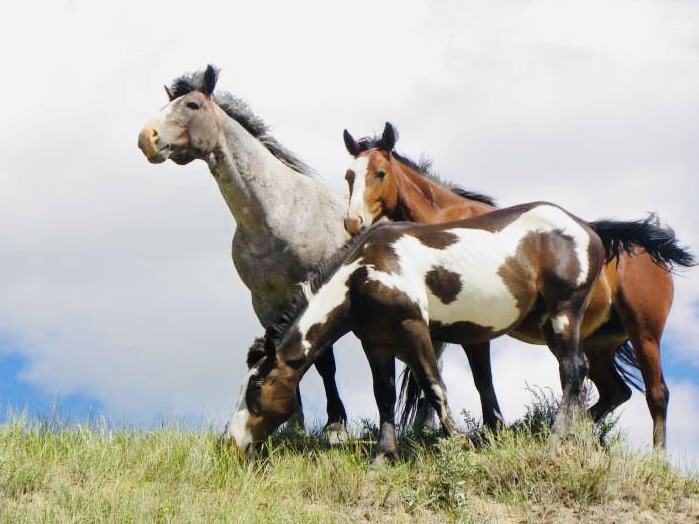A herd of about 200 feral horses roam Theodore Roosevelt National Park in western North Dakota. (NPS Photo/T. Buras)
There’s horse trouble in [Theodore Roosevelt National Park](https://www.nps.gov/thro/index.htm) in western North Dakota. The park, created in 1947 to honor Roosevelt and protect the fragile Little Missouri River badlands, has a feral horse herd of about 200 head. In 2022, TRNP officials announced their tentative plan to thin or eliminate the horses. They have admitted that the horses are not damaging the park or competing with other fauna (buffalo, elk, deer, some pronghorn antelope, prairie dogs, coyotes) for scarce resources. However, park officials see the horses as livestock that are not native to the North Dakota badlands.
Fair enough. We all know horses did not exist in the Americas when Columbus bumped into the New World in 1492. Sometime later, Spanish conquistadors and missionaries brought them across the Atlantic Ocean in ships not much bigger than yachts. They escaped (or were liberated) from Spanish control in the Southwest in the 1680s. Some just drifted into the infinite, unfenced outback of America. Others were traded from tribe to tribe until they were more or less evenly distributed across the entire American West. Virtually every Native American tribe immediately recognized the revolutionary significance of the horse and transformed their cultures to accommodate the powerful, majestic, swift, and mystical creatures. The great Finnish historian [Pekka Hämäläinen](https://www.history.ox.ac.uk/people/professor-pekka-hamalainen) reminds us that Native American dogs had to be fed daily and could only haul small loads on a travois. The horse fed itself, and it was magnitudes stronger than a dog.
When we think of the “Indian Wars” of the American West, we envision Native American warriors dashing bareback across the plains without white civilization’s saddles, bits, or stirrups, leaning out under the horse’s neck and holding onto the horse’s backbone by the strength of their toes.
*[Lakota America: A New History of Indigenous Power](https://www.history.ox.ac.uk/article/pekka-hamalainen-lakota-america-a-new-history-of-indigenous-power-yale-university-press-2019)* by Finnish historian Pekka Hämäläinen tells the story of a horse people who ruled supreme on the vast high plains.
Just how much of the romance of America is bound up in horses is unclear, but try to imagine the West without horses in it. After he saves the day, does Shane walk off toward the far horizon? Imagine the Pony Express with no horses but just a staff of 5,000 fast-walkers hastening across Utah in a linear 2,000-mile relay race. Imagine Custer as an infantry commander. Imagine Crazy Horse as a pedestrian. Imagine a rodeo without horses.
Nobody is sure how horses wound up in Theodore Roosevelt National Park. One passionate group believes the horses are somehow related to Sitting Bull’s pony herd (almost certainly not true, park biologists and historians say). The horses are probably the descendants of strays left behind during the Dust Bowl years when ranchers and farmers gave up the struggle against the Great Plains and moved west to the temperate coasts in California, Oregon, and Washington. Park officials did not introduce the horses into TRNP. They were wild creatures minding their own business that found themselves fenced in when the park secured its perimeter boundaries.
The American people love the TRNP horses. When the park asked for public input, it received more than 20,000 comments, 99.9% of them in favor of keeping the horses in the park and leaving them alone. The American people do not see the feral horses as livestock. If they were livestock, there would be brands, vaccinations, castrations, roundups, feedlots, sales, and slaughterhouses. The public sees the horses as wildlife, just as entitled to find sanctuary in the national park as elk or bison. Much of the romance of the park is bound up with the horses — and the park’s great namesake, Theodore Roosevelt, was a passionate horseman, especially after the local hunters and cowboys told him he’d have to learn to saddle his favorite horse Manitou himself. The park would be diminished without the horses. If they were eating all the grass and shrubs and thus degrading the habitat or sending out angry nocturnal attack squads to kill all the deer and elk, we’d all understand their removal. But they are just quietly living their lives without any relationship with humans, except for a jurisdictional vulnerability of which they are entirely unaware.
The horse is always a semi-mystic creature. How humans managed to domesticate a creature of such bulk, strength, and fearfulness is unclear. They are not like goats or sheep or even cattle. A goat is not going to stomp you to death or throw you violently to the ground. When I read accounts of how the horse revolutionized plains Native culture — the Lakota, the Cheyenne, the Nez Perce, the Blackfoot, the Crow — I sometimes wonder how things started. What was step one? Let’s say five wild horses suddenly appeared in Blackfoot country (circa 1760). A gift from the Great Medicine — out of the blue and unprecedented. Flummoxed by their sudden appearance, the Blackfeet were unsure what to call them. They settled on “elkdogs.” Some wise elder said, imagine how valuable they might be if we can get on top of them and use them to haul loads, maximize the buffalo hunt, and run down our enemies? At that point, tribal leaders had to convince some swift and brave young men to go out and see if they could capture a couple of the huge and powerful creatures. How exactly? How does a pedestrian culture capture its first horse? You can see a trained modern horse breaker spend 45 minutes trying to get hold of a horse in a corral. Now try it on the open plains.
## I Don’t Have a Dog in This Horse Fight
I don’t have a dog in this fight. I love the horses. My spirit is stirred whenever I see them grazing along the park’s hillsides. More than when I see the placid buffalo or the paranoid prairie dogs. Here are creatures that have never been roped, saddled, or ridden, living out their entire 25-year lives without ever being touched by a human being. They are entirely self-sufficient. They graze, wander, do all the herd dynamics of who’s in charge and who gets first access to the mares, and reproduce. Eventually, they die, and other nonhuman creatures come in to clean up the site. Some may starve in a bitter winter because nobody is hauling hay or oats to feed them. They live their whole lives outside of human agency. There is something magnificent about that and humbling to human self-importance. However, the feral horses are not outside human jurisdiction, and the park will almost certainly decide to reduce their numbers to about 30% of the current total. I can live with that. Most people can.
Generally speaking, I trust the National Park Service to do the right thing and make the right decisions. The NPS has a very carefully worked out set of procedures and protocols for big decisions of this sort. When it became necessary to reduce the number of elk in TRNP 15 years ago, the park’s superintendent, Valerie Naylor, handled the situation masterfully while being unfairly buffeted by a loud and largely uninformed public, in part because there was a detailed formal NPS process that made sure other options were seriously explored, made sure the public was genuinely involved and listened to, and that “no action” was one of the legitimate options for park officials to consider. Nothing happens precipitously in a National Park. No single rogue park ranger or superintendent can make unilateral decisions.
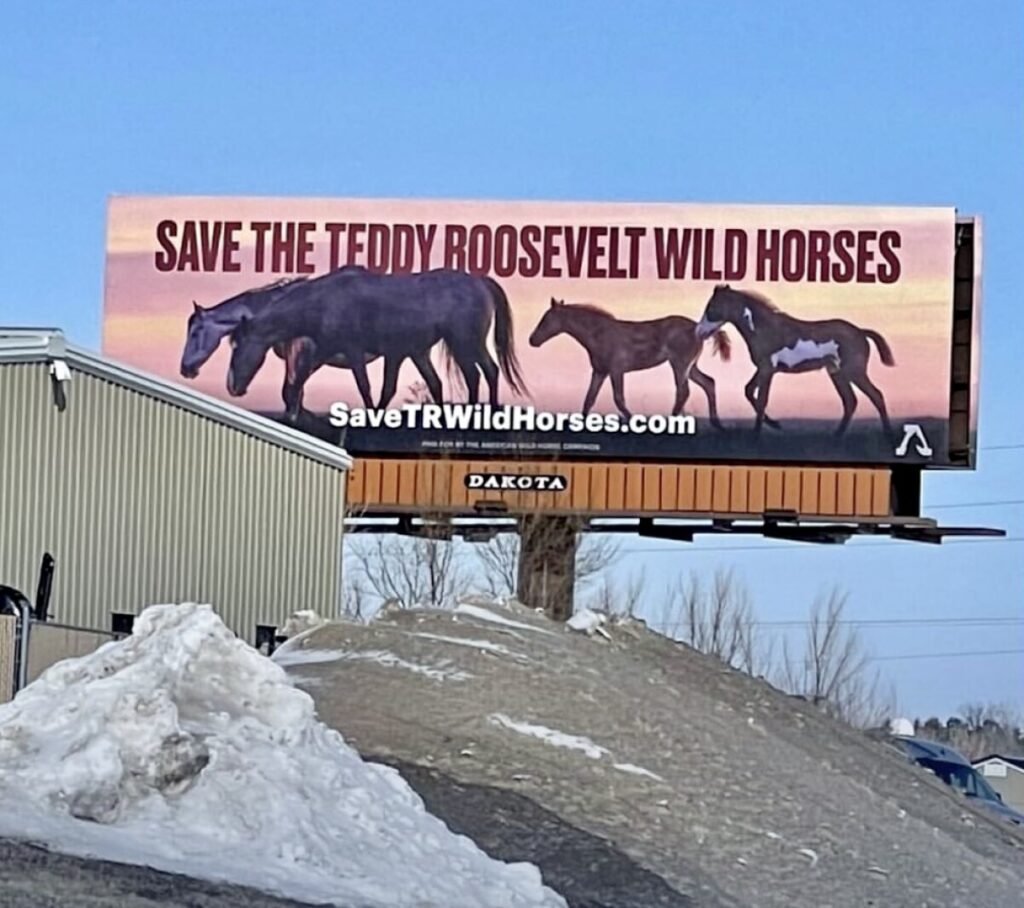A billboard advocates for saving wild horses in TRNP. (Photo: American Wild Horse Campaign)
My guess is that most, but probably not all, of the feral horses will remain in Theodore Roosevelt National Park. Habitat management does not work by way of majority rule, however, not even a super-majority, as is the case with the horses in TRNP. But public sentiment does matter, and the public is adamant: keep the horses. No billboards on the side of the roads say to clear the horses out, but plenty urge us all to rally to their defense.
I wish the American public were as passionately committed to saving the white rhinoceros and the orangutan worldwide as they are to making a place in the national parks for feral horses. The white rhino and the orangutan are in danger of blinking out once and for all during our lifetime, while feral horses are doing just fine. It’s the romance of the American West that is endangered, not the sub-species in question.
The American people have lost faith in most institutions by which our lives are organized and restrained: Congress has a 12% approval rating, the Supreme Court 29%, the media 15%, and the criminal justice system 20%. The National Park Service should be largely immune from our national disillusionment because its 20,000 employees are among the most idealistic Americans, and they work tirelessly to preserve, protect, and promote the best of the public lands. We should be cautious about second-guessing them. I have never taken university courses in wildlife management or habitat integrity.
---
## ***Discover more on these topics at Listening to America***
[Virginia](https://ltamerica.org/tag/virginia/ "7 topics")[Oppenheimer](https://ltamerica.org/tag/oppenheimer/ "1 topics")[New England](https://ltamerica.org/tag/new-england/ "1 topics")[William Shirer](https://ltamerica.org/tag/william-shirer/ "1 topics")[Sports](https://ltamerica.org/tag/sports/ "2 topics")[Video](https://ltamerica.org/tag/video/ "51 topics")[Podcast](https://ltamerica.org/tag/podcast/ "1 topics")[Reading](https://ltamerica.org/tag/reading/ "1 topics")[Water in the West](https://ltamerica.org/tag/water-in-the-west/ "24 topics")[Texas](https://ltamerica.org/tag/texas/ "4 topics")[Theodore Roosevelt](https://ltamerica.org/tag/theodore-roosevelt/ "16 topics")[North Carolina](https://ltamerica.org/tag/north-carolina/ "3 topics")[paintings](https://ltamerica.org/tag/paintings/ "0 topics")[Wisconsin](https://ltamerica.org/tag/wisconsin/ "0 topics")[Steinbeck Travels](https://ltamerica.org/tag/steinbeck-travels/ "75 topics")[U.S. Constitution](https://ltamerica.org/tag/u-s-constitution/ "1 topics")[The Constitution](https://ltamerica.org/tag/the-constitution/ "1 topics")[Republic](https://ltamerica.org/tag/republic/ "0 topics")[Thoreau](https://ltamerica.org/tag/thoreau/ "5 topics")[Space Exploration](https://ltamerica.org/tag/space-exploration/ "8 topics")[Republics](https://ltamerica.org/tag/republics/ "1 topics")[Ohio](https://ltamerica.org/tag/ohio/ "2 topics")[Walden](https://ltamerica.org/tag/walden/ "1 topics")[Tennessee](https://ltamerica.org/tag/tennessee/ "1 topics")[New York](https://ltamerica.org/tag/new-york/ "8 topics")[Travel](https://ltamerica.org/tag/travel/ "1 topics")[Road Trips](https://ltamerica.org/tag/road-trips/ "18 topics")[State Parks](https://ltamerica.org/tag/state-parks/ "2 topics")[Rome](https://ltamerica.org/tag/rome/ "1 topics")[north daktoa](https://ltamerica.org/tag/north-daktoa/ "0 topics")[Wyoming](https://ltamerica.org/tag/wyoming/ "4 topics")[South Dakota](https://ltamerica.org/tag/south-dakota/ "16 topics")[Oppenheim](https://ltamerica.org/tag/oppenheim/ "0 topics")[Oregon](https://ltamerica.org/tag/oregon/ "4 topics")[Rivers](https://ltamerica.org/tag/rivers/ "3 topics")[Poetry](https://ltamerica.org/tag/poetry/ "1 topics")[U.S. Presidents](https://ltamerica.org/tag/u-s-presidents/ "71 topics")[South Carolina](https://ltamerica.org/tag/south-carolina/ "1 topics")[Utah](https://ltamerica.org/tag/utah/ "11 topics")[New Mexico](https://ltamerica.org/tag/new-mexico/ "3 topics")[Washington](https://ltamerica.org/tag/washington/ "2 topics")[Pennsylvania](https://ltamerica.org/tag/pennsylvania/ "1 topics")[Vermont](https://ltamerica.org/tag/vermont/ "1 topics")[North Dakota](https://ltamerica.org/tag/north-dakota/ "53 topics")[Thomas Jefferson](https://ltamerica.org/tag/thomas-jefferson/ "34 topics")
**Categories:** Features
**Tags:** National Parks, Native Americans, North Dakota, Theodore Roosevelt, Video
---
### [The Unnamed, Unheralded Falls of North Dakota](https://ltamerica.org/the-unnamed-unheralded-falls-of-north-dakota/)
**Published:** June 10, 2023
**Author:** Clay Jenkinson
**Excerpt:** Geographers say North Dakota has only one waterfall. It’s a waterfall without a name, over in Ransom County, near the Minnesota border. For twenty years I have wanted to go see it.
**Content:**
*Clay visits North Dakota’s only waterfall (or is it a seep?) in Ransom County.*
North Dakota is not flat! We North Dakotans get a little peevish about that. We like to say North Dakota is an undulating landscape of rolling hills, rills, buttes, ridges, bluffs, coulees, and (out west) badlands. North Dakota’s Red River Valley is flat, very flat, because it is an ancient glacial lakebed. But the rest of the state? Undulation.
OK, we get it. North Dakota is not Colorado. It is not Montana. It is not even South Dakota.
North Dakota is the 19th largest state, but geographers say it has only one waterfall. It’s a waterfall without a name, over in Ransom County, near the Minnesota border.
For twenty years I have wanted to go see it. How can you claim to be a lover of North Dakota if you don’t go in search of the sublime? But for all those twenty years, I have found other things I wanted to do more with my North Dakota exploration time.
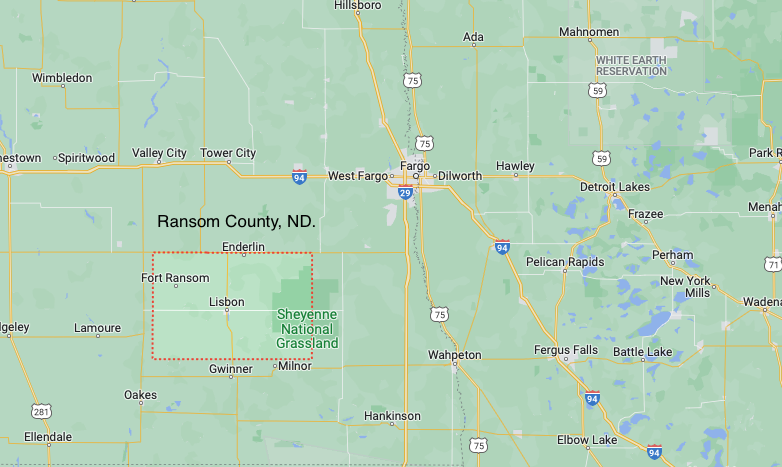(Google Maps)
My friend Sara grew up partly in Ransom County, so we decided to make a day trip of it recently and seek out the waterfall, which she claimed to have seen as a child. Well, maybe. Neither one of us was quite sure just where it was. We let Google GPS software take us there. It’s about a two-and-one-half hour drive from Bismarck. Even then, we made a false start that cost us an hour.
Finally, we found the trailhead with a sign indicating that the great falls were a three mile hike.
The excitement was almost too much for me.
I’ve seen Niagara Falls a couple of times. I’ve seen upper and lower Yellowstone Falls. I’ve seen the falls in Yosemite. I’ve hiked to Morell Falls near Seely Lake, Montana. I’ve been to the Falls of the Ohio. I’ve gazed at Spearfish Falls in the Black Hills of South Dakota. And I’ve been to the Great Falls at Great Falls, Montana.
We took our time getting to the Unnamed Unheralded Falls of North Dakota. It was the first real hike of the year after a punishing Dakota winter. Even Sara, a rancher and horse lover, was feeling a little winter-sluggish. And then, finally, we rounded a corner and there it was!
As I stood before it in full “God Bless America” mode, teary like Chevy Chase at Wally World, I’m afraid I was unable to channel my inner Meriwether Lewis and call it a “sublimely grand object,” second only to Niagara and arguably better. It was a little — how do you say? — understated. Let’s see if I can describe it with the precision Jefferson used when he visited the Natural Bridge in western Virginia:
*The Falls are approximately four feet wide at their widest and about three feet in height. To the untrained eye, much of it looks like a trickle. Just left of center, the Falls pour a little water over the precipice, if I may use that term, the way a garden hose delivers water with the spigot more closed than open. The cliff of the Falls is not quite upright. Thus, the water doesn’t do a lot of flying through the air. It dribbles down the face of the Falls a little half-heartedly. I’ve heard the word “oozes” used derisively by Falls detractors, but I reject that. After it reaches the bottom of the Falls, the water pools a little, though you would be hard-pressed to get very wet if you sat there for a while. If you had not been prepared to see the Falls and just happened upon them, you might be excused for confusing them with a little spring run-off, a bit of erosion at the edge of a plowed field. Several adventurers have attempted to shoot the Falls in tubes and canoes with reckless abandon, but so far, all have been hung up at the top because their body weight exceeds the lifting power of the water. The early attempts to harness the hydropower of the Falls were apparently unsuccessful.*
We sat at the base of the Falls for some time, trying to feel the sublimity. One advantage of North Dakota’s greatest waterfall is that you can have a conversation at the base without your words being drowned out by the thunderous flow of the water.
Sara felt that moral responsibility one feels after a big buildup and an underwhelming result. You take someone somewhere they are going to love absolutely, and then they don’t. You make your friend watch a movie they are going to absolutely love, and they don’t. Sara said the Falls are more impressive in big water years because you can recognize them as a waterfall. She said she was only eight when she was last there, and childhood memory is unreliable. She said the water above might have been diverted into a cattle pond. She said a lot of things.
We did not see another human being during the three hours we spent at or near the Great Falls of North Dakota. Nobody on the trails. Nobody at the trailhead. No film crews. No base camps.
I’m a lover of North Dakota. Therefore, I would like to suggest that we stop calling the world’s attention to these Falls, remove the signage, burn the benches along the hiking trail, file lawsuits to remove websites calling attention to the Falls, and declare ourselves instead America’s “Falls Free State.”
## **Minnehaha Falls and Henry Wadsworth Longfellow**
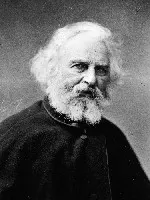Henry Wadsworth Longfellow.
But now, three weeks later, I found myself in Minneapolis, Minnesota, where I went to university long ago and where, around 1960, I lived for a year with my family. I wanted to do a little comparative waterfall reconnaissance, so I drove over to the parking lot for [Minnehaha Falls](https://www.exploreminnesota.com/profile/minnehaha-falls-minnehaha-park/1839). Note: there was a parking lot.
I strolled over to the falls overlook and there it was. Modest by Niagara standards, it would be considered Victoria Falls if it were in North Dakota. It has a 53-foot drop. It’s beautiful. It makes some noise. It attracts 850,000 pilgrims annually, compared to circa 172 in North Dakota. The name Minnehaha inspired the poet [Henry Wadsworth Longfellow](https://www.poetryfoundation.org/poets/henry-wadsworth-longfellow) to name his tragic Native maiden Minnehaha in The Song of Hiawatha (1855). You know the poem:
*By the shores of Gitche Gumee,
By the shining Big-Sea-Water,
Stood the wigwam of Nokomis,
Daughter of the Moon, Nokomis.
Dark behind it rose the forest,
Rose the black and gloomy pine-trees,
Rose the firs with cones upon them;
Bright before it beat the water.*
It is true that Longfellow never visited Minnehaha Falls. Had he visited the Great Falls of North Dakota, who knows what epic he might have written there?
*By the farmland in Dakota,
Soybeans, corn, and golden milo,
Oozed the Falls of Ransom County
Trickle yes and almost treacle,
Water hidden from the public
Through the eons unimpressive
Slipping down the tender topsoil
Subtle goal of simple people,
Water pure but also bitter
Spend your time in other zip codes
You can shove your Gitche Gumee.*
Something like that.
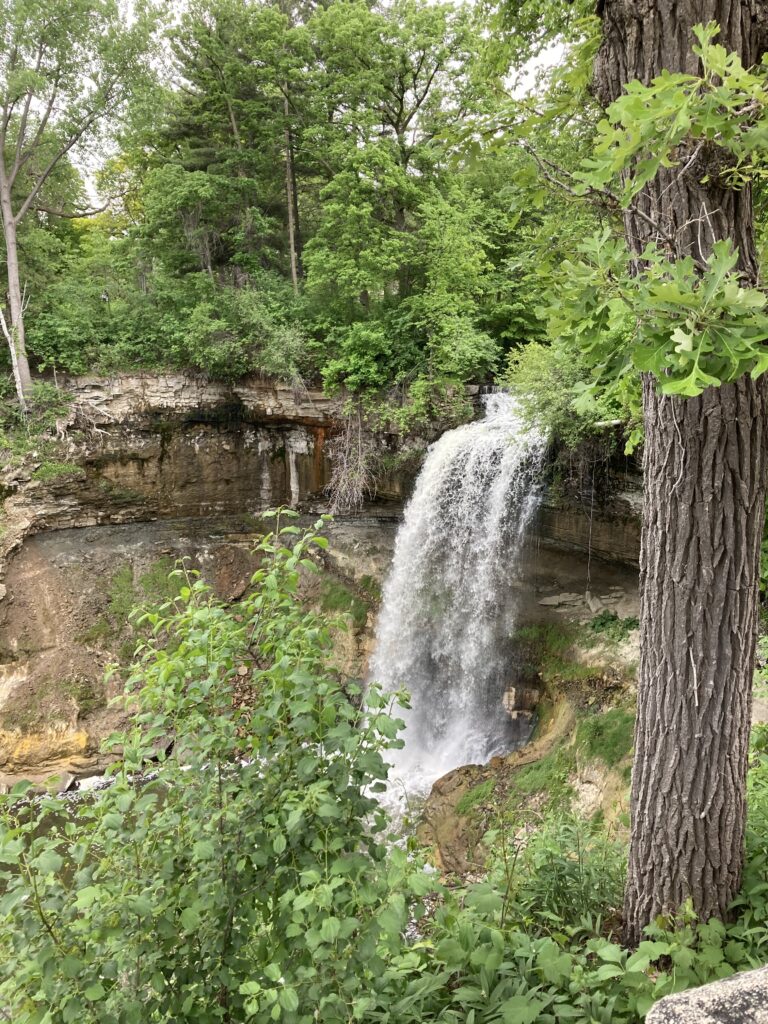Minnehaha Falls in Minneapolis, MN. (Photo by Beth Schatz)
What made Minnehaha Falls extraordinary was not the 53 feet of actual water cascading over the face of the creek, but the people who gathered there on a warm Monday evening. There were approximately 2,000 people in the park. That would make it the twenty-fifth largest town in North Dakota. By North Dakota standards it looked like a Minnesota meeting of the United Nations: people of all colors, all clothing styles, all ethnicities, all languages, and all religions. Muslims, Christians, Jews, Lakota. It had the feel of a street fair. The old and the young. Families with prams. Families having picnics in the park. Lovers loving. Adolescents holding hands. Hundreds of people posing for selfies. You could get a score of different ethnic foods at the kiosks and the food trucks.
Minnesota is right next to North Dakota, just across the Red River of the North, and yet Minnesota is a place of great diversity. North Dakota not so much. If that same sample of humanity were airlifted into the heart of North Dakota, it would immediately be the most multicultural gathering in the history of the state. It would raise some eyebrows. It would precipitate some alarm. And yet here at Minnehaha Falls I saw a new realization of the American Dream.
A great midwestern city with a great university of national importance on America’s primary river, the Mississippi. In fact, the Mississippi River at the head of its navigation. I visited St. Anthony Falls, too, but it was so industrialized as to be no longer very enchanting.
Nobody reads Longfellow anymore. It’s worth spending some time with *[Evangeline](https://poets.org/poem/evangeline-tale-acadie)* or *[The Song of Hiawatha](https://poets.org/poem/song-hiawatha-excerpt)* just to enjoy the poetic rhythms Longfellow was attempting to use in English, which is best suited to [iambic pentameter](https://poets.org/glossary/iambic-pentameter) rather than his[ trochaic tetrameter](https://poets.org/glossary/meter). His incantations are often enchanting. He was one of several writers attempting to create the Epic of America, to declare our cultural independence from Great Britain.
North Dakota is … North Dakota. I love it. But I would not try to oversell it. It’s not for the faint of heart. And it is not clear to me that I will ever return to the Great Falls of Ransom County. Or recommend them either. The good news is that they have not, like Niagara, been commercialized by souvenir shops and kitsch.
Roll on, Columbia, Roll on.
---
## ***Discover more on these topics at Listening to America***
[William Shirer](https://ltamerica.org/tag/william-shirer/ "1 topics")[Water in the West](https://ltamerica.org/tag/water-in-the-west/ "24 topics")[Virginia](https://ltamerica.org/tag/virginia/ "7 topics")[paintings](https://ltamerica.org/tag/paintings/ "0 topics")[Vermont](https://ltamerica.org/tag/vermont/ "1 topics")[Utah](https://ltamerica.org/tag/utah/ "11 topics")[Reading](https://ltamerica.org/tag/reading/ "1 topics")[Tennessee](https://ltamerica.org/tag/tennessee/ "1 topics")[Thomas Jefferson](https://ltamerica.org/tag/thomas-jefferson/ "34 topics")[Poetry](https://ltamerica.org/tag/poetry/ "1 topics")[North Dakota](https://ltamerica.org/tag/north-dakota/ "53 topics")[U.S. Presidents](https://ltamerica.org/tag/u-s-presidents/ "71 topics")[Texas](https://ltamerica.org/tag/texas/ "4 topics")[Rome](https://ltamerica.org/tag/rome/ "1 topics")[Space Exploration](https://ltamerica.org/tag/space-exploration/ "8 topics")[Sports](https://ltamerica.org/tag/sports/ "2 topics")[Video](https://ltamerica.org/tag/video/ "51 topics")[Travel](https://ltamerica.org/tag/travel/ "1 topics")[New England](https://ltamerica.org/tag/new-england/ "1 topics")[State Parks](https://ltamerica.org/tag/state-parks/ "2 topics")[New Mexico](https://ltamerica.org/tag/new-mexico/ "3 topics")[South Dakota](https://ltamerica.org/tag/south-dakota/ "16 topics")[Podcast](https://ltamerica.org/tag/podcast/ "1 topics")[South Carolina](https://ltamerica.org/tag/south-carolina/ "1 topics")[Ohio](https://ltamerica.org/tag/ohio/ "2 topics")[Thoreau](https://ltamerica.org/tag/thoreau/ "5 topics")[The Constitution](https://ltamerica.org/tag/the-constitution/ "1 topics")[Steinbeck Travels](https://ltamerica.org/tag/steinbeck-travels/ "75 topics")[Pennsylvania](https://ltamerica.org/tag/pennsylvania/ "1 topics")[Rivers](https://ltamerica.org/tag/rivers/ "3 topics")[Oregon](https://ltamerica.org/tag/oregon/ "4 topics")[Walden](https://ltamerica.org/tag/walden/ "1 topics")[Republics](https://ltamerica.org/tag/republics/ "1 topics")[Wyoming](https://ltamerica.org/tag/wyoming/ "4 topics")[Road Trips](https://ltamerica.org/tag/road-trips/ "18 topics")[U.S. Constitution](https://ltamerica.org/tag/u-s-constitution/ "1 topics")[Oppenheimer](https://ltamerica.org/tag/oppenheimer/ "1 topics")[Oppenheim](https://ltamerica.org/tag/oppenheim/ "0 topics")[Republic](https://ltamerica.org/tag/republic/ "0 topics")[North Carolina](https://ltamerica.org/tag/north-carolina/ "3 topics")[north daktoa](https://ltamerica.org/tag/north-daktoa/ "0 topics")[Theodore Roosevelt](https://ltamerica.org/tag/theodore-roosevelt/ "16 topics")[Washington](https://ltamerica.org/tag/washington/ "2 topics")[New York](https://ltamerica.org/tag/new-york/ "8 topics")[Wisconsin](https://ltamerica.org/tag/wisconsin/ "0 topics")
**Categories:** Dispatches from the Road
**Tags:** North Dakota, Video
---
### [Inspiration and Nostalgia on Visiting My Alma Mater — Video Dispatch](https://ltamerica.org/inspiration-on-visiting-my-alma-matter/)
**Published:** July 10, 2023
**Author:** Clay Jenkinson
**Excerpt:** A short video I recorded recently on the campus of my alma mater, the University of Minnesota. I was a student there in the early 1970s and after class I often found myself at the base of Northrup Auditorium, incised with what I still regard as the perfect mission statement.
**Content:**
A short video I recorded recently on the campus of my alma mater, the University of Minnesota. I was a student there in the early 1970s and after class I often found myself at the base of Northrup Auditorium, incised with what I still regard as the perfect mission statement. If I could turn back the clock I would begin my higher education at the University of Minnesota, but this time I would study languages!
Clay visits the campus of the University of Minnesota in Twin Cities.
---
## ***Discover more on these topics at Listening to America***
[William Shirer](https://ltamerica.org/tag/william-shirer/ "1 topics")[Tennessee](https://ltamerica.org/tag/tennessee/ "1 topics")[New England](https://ltamerica.org/tag/new-england/ "1 topics")[U.S. Constitution](https://ltamerica.org/tag/u-s-constitution/ "1 topics")[Thoreau](https://ltamerica.org/tag/thoreau/ "5 topics")[Walden](https://ltamerica.org/tag/walden/ "1 topics")[Oregon](https://ltamerica.org/tag/oregon/ "4 topics")[South Carolina](https://ltamerica.org/tag/south-carolina/ "1 topics")[Ohio](https://ltamerica.org/tag/ohio/ "2 topics")[Rivers](https://ltamerica.org/tag/rivers/ "3 topics")[Theodore Roosevelt](https://ltamerica.org/tag/theodore-roosevelt/ "16 topics")[Rome](https://ltamerica.org/tag/rome/ "1 topics")[Oppenheimer](https://ltamerica.org/tag/oppenheimer/ "1 topics")[Vermont](https://ltamerica.org/tag/vermont/ "1 topics")[Wisconsin](https://ltamerica.org/tag/wisconsin/ "0 topics")[Reading](https://ltamerica.org/tag/reading/ "1 topics")[Water in the West](https://ltamerica.org/tag/water-in-the-west/ "24 topics")[New York](https://ltamerica.org/tag/new-york/ "8 topics")[South Dakota](https://ltamerica.org/tag/south-dakota/ "16 topics")[Travel](https://ltamerica.org/tag/travel/ "1 topics")[paintings](https://ltamerica.org/tag/paintings/ "0 topics")[Oppenheim](https://ltamerica.org/tag/oppenheim/ "0 topics")[Washington](https://ltamerica.org/tag/washington/ "2 topics")[Video](https://ltamerica.org/tag/video/ "51 topics")[Wyoming](https://ltamerica.org/tag/wyoming/ "4 topics")[Texas](https://ltamerica.org/tag/texas/ "4 topics")[New Mexico](https://ltamerica.org/tag/new-mexico/ "3 topics")[Thomas Jefferson](https://ltamerica.org/tag/thomas-jefferson/ "34 topics")[The Constitution](https://ltamerica.org/tag/the-constitution/ "1 topics")[Space Exploration](https://ltamerica.org/tag/space-exploration/ "8 topics")[Virginia](https://ltamerica.org/tag/virginia/ "7 topics")[U.S. Presidents](https://ltamerica.org/tag/u-s-presidents/ "71 topics")[State Parks](https://ltamerica.org/tag/state-parks/ "2 topics")[Republic](https://ltamerica.org/tag/republic/ "0 topics")[Utah](https://ltamerica.org/tag/utah/ "11 topics")[Poetry](https://ltamerica.org/tag/poetry/ "1 topics")[north daktoa](https://ltamerica.org/tag/north-daktoa/ "0 topics")[Republics](https://ltamerica.org/tag/republics/ "1 topics")[Pennsylvania](https://ltamerica.org/tag/pennsylvania/ "1 topics")[Road Trips](https://ltamerica.org/tag/road-trips/ "18 topics")[North Carolina](https://ltamerica.org/tag/north-carolina/ "3 topics")[Sports](https://ltamerica.org/tag/sports/ "2 topics")[Steinbeck Travels](https://ltamerica.org/tag/steinbeck-travels/ "75 topics")[Podcast](https://ltamerica.org/tag/podcast/ "1 topics")[North Dakota](https://ltamerica.org/tag/north-dakota/ "53 topics")
**Categories:** Dispatches from the Road
**Tags:** Minnesota, Video
---
### [Labor Day on the Glorious Little Missouri River — Video Dispatch](https://ltamerica.org/labor-day-on-the-glorious-little-missouri-river/)
**Published:** September 5, 2023
**Author:** Clay Jenkinson
**Excerpt:** I visited the Little Missouri River in the Badlands of North Dakota over the Labor Day weekend. Of all the rivers I know, the Little Missouri is the most sacred to me.
**Content:**
*Clay on the banks of the Little Missouri River in the North Unit of Theodore Roosevelt National Par*k, *North Dakota.*
I visited the Little Missouri River in the Badlands of North Dakota over the Labor Day weekend. Of all the rivers I know, the Little Missouri is the most sacred to me. I have walked the length of it twice, once during the hottest year in modern North Dakota history. My daughter was baptized in the Little Missouri.
---
## ***Discover more on these topics at Listening to America***
[William Shirer](https://ltamerica.org/tag/william-shirer/ "1 topics")[Poetry](https://ltamerica.org/tag/poetry/ "1 topics")[Tennessee](https://ltamerica.org/tag/tennessee/ "1 topics")[Steinbeck Travels](https://ltamerica.org/tag/steinbeck-travels/ "75 topics")[New Mexico](https://ltamerica.org/tag/new-mexico/ "3 topics")[Sports](https://ltamerica.org/tag/sports/ "2 topics")[Thomas Jefferson](https://ltamerica.org/tag/thomas-jefferson/ "34 topics")[Republic](https://ltamerica.org/tag/republic/ "0 topics")[North Dakota](https://ltamerica.org/tag/north-dakota/ "53 topics")[Rome](https://ltamerica.org/tag/rome/ "1 topics")[Oppenheimer](https://ltamerica.org/tag/oppenheimer/ "1 topics")[South Dakota](https://ltamerica.org/tag/south-dakota/ "16 topics")[Wisconsin](https://ltamerica.org/tag/wisconsin/ "0 topics")[Theodore Roosevelt](https://ltamerica.org/tag/theodore-roosevelt/ "16 topics")[Washington](https://ltamerica.org/tag/washington/ "2 topics")[New England](https://ltamerica.org/tag/new-england/ "1 topics")[Rivers](https://ltamerica.org/tag/rivers/ "3 topics")[Space Exploration](https://ltamerica.org/tag/space-exploration/ "8 topics")[Virginia](https://ltamerica.org/tag/virginia/ "7 topics")[U.S. Presidents](https://ltamerica.org/tag/u-s-presidents/ "71 topics")[Oppenheim](https://ltamerica.org/tag/oppenheim/ "0 topics")[North Carolina](https://ltamerica.org/tag/north-carolina/ "3 topics")[Road Trips](https://ltamerica.org/tag/road-trips/ "18 topics")[U.S. Constitution](https://ltamerica.org/tag/u-s-constitution/ "1 topics")[Republics](https://ltamerica.org/tag/republics/ "1 topics")[Water in the West](https://ltamerica.org/tag/water-in-the-west/ "24 topics")[Video](https://ltamerica.org/tag/video/ "51 topics")[north daktoa](https://ltamerica.org/tag/north-daktoa/ "0 topics")[Vermont](https://ltamerica.org/tag/vermont/ "1 topics")[Wyoming](https://ltamerica.org/tag/wyoming/ "4 topics")[The Constitution](https://ltamerica.org/tag/the-constitution/ "1 topics")[Utah](https://ltamerica.org/tag/utah/ "11 topics")[New York](https://ltamerica.org/tag/new-york/ "8 topics")[Thoreau](https://ltamerica.org/tag/thoreau/ "5 topics")[Ohio](https://ltamerica.org/tag/ohio/ "2 topics")[Texas](https://ltamerica.org/tag/texas/ "4 topics")[paintings](https://ltamerica.org/tag/paintings/ "0 topics")[State Parks](https://ltamerica.org/tag/state-parks/ "2 topics")[Travel](https://ltamerica.org/tag/travel/ "1 topics")[Pennsylvania](https://ltamerica.org/tag/pennsylvania/ "1 topics")[Reading](https://ltamerica.org/tag/reading/ "1 topics")[South Carolina](https://ltamerica.org/tag/south-carolina/ "1 topics")[Oregon](https://ltamerica.org/tag/oregon/ "4 topics")[Walden](https://ltamerica.org/tag/walden/ "1 topics")[Podcast](https://ltamerica.org/tag/podcast/ "1 topics")
**Categories:** Dispatches from the Road
**Tags:** National Parks, North Dakota, Rivers, Video
---
### [The American Buffalo: Past and Future — Video Dispatch](https://ltamerica.org/the-american-buffalo/)
**Published:** September 11, 2023
**Author:** Clay Jenkinson
**Excerpt:** A video dispatch from my visit to Theodore Roosevelt National Park’s North Unit, where buffalo roam the Great Plains today.
**Content:**
A video dispatch from my recent visit to [Theodore Roosevelt National Park’s](https://www.nps.gov/thro/index.htm) North Unit, where bison roam the Great Plains today. America once had maybe 65 million of these amazing creatures. By the time President Roosevelt got involved in bison conservation in about 1905, only 500 to 1000 remained.
The buffalo is inextricably linked to the people, history and imagination of the America West.
Remember to mark your calendars for the premier of the new Ken Burns documentary, [*The American Buffalo*](https://www.pbs.org/video/the-american-buffalo-official-trailer/), on PBS on October 16. I’m certainly looking forward to seeing it.

---
## ***Discover more on these topics at Listening to America***
[Theodore Roosevelt](https://ltamerica.org/tag/theodore-roosevelt/ "16 topics")[Wyoming](https://ltamerica.org/tag/wyoming/ "4 topics")[U.S. Presidents](https://ltamerica.org/tag/u-s-presidents/ "71 topics")[Video](https://ltamerica.org/tag/video/ "51 topics")[U.S. Constitution](https://ltamerica.org/tag/u-s-constitution/ "1 topics")[New York](https://ltamerica.org/tag/new-york/ "8 topics")[New England](https://ltamerica.org/tag/new-england/ "1 topics")[William Shirer](https://ltamerica.org/tag/william-shirer/ "1 topics")[Poetry](https://ltamerica.org/tag/poetry/ "1 topics")[Pennsylvania](https://ltamerica.org/tag/pennsylvania/ "1 topics")[New Mexico](https://ltamerica.org/tag/new-mexico/ "3 topics")[South Dakota](https://ltamerica.org/tag/south-dakota/ "16 topics")[Water in the West](https://ltamerica.org/tag/water-in-the-west/ "24 topics")[The Constitution](https://ltamerica.org/tag/the-constitution/ "1 topics")[Road Trips](https://ltamerica.org/tag/road-trips/ "18 topics")[Ohio](https://ltamerica.org/tag/ohio/ "2 topics")[Thomas Jefferson](https://ltamerica.org/tag/thomas-jefferson/ "34 topics")[Reading](https://ltamerica.org/tag/reading/ "1 topics")[Vermont](https://ltamerica.org/tag/vermont/ "1 topics")[Republic](https://ltamerica.org/tag/republic/ "0 topics")[Oppenheim](https://ltamerica.org/tag/oppenheim/ "0 topics")[Utah](https://ltamerica.org/tag/utah/ "11 topics")[paintings](https://ltamerica.org/tag/paintings/ "0 topics")[Podcast](https://ltamerica.org/tag/podcast/ "1 topics")[Oregon](https://ltamerica.org/tag/oregon/ "4 topics")[Steinbeck Travels](https://ltamerica.org/tag/steinbeck-travels/ "75 topics")[Washington](https://ltamerica.org/tag/washington/ "2 topics")[Tennessee](https://ltamerica.org/tag/tennessee/ "1 topics")[Travel](https://ltamerica.org/tag/travel/ "1 topics")[Thoreau](https://ltamerica.org/tag/thoreau/ "5 topics")[State Parks](https://ltamerica.org/tag/state-parks/ "2 topics")[Rome](https://ltamerica.org/tag/rome/ "1 topics")[Walden](https://ltamerica.org/tag/walden/ "1 topics")[north daktoa](https://ltamerica.org/tag/north-daktoa/ "0 topics")[North Carolina](https://ltamerica.org/tag/north-carolina/ "3 topics")[South Carolina](https://ltamerica.org/tag/south-carolina/ "1 topics")[Republics](https://ltamerica.org/tag/republics/ "1 topics")[Wisconsin](https://ltamerica.org/tag/wisconsin/ "0 topics")[Space Exploration](https://ltamerica.org/tag/space-exploration/ "8 topics")[Rivers](https://ltamerica.org/tag/rivers/ "3 topics")[Texas](https://ltamerica.org/tag/texas/ "4 topics")[Sports](https://ltamerica.org/tag/sports/ "2 topics")[North Dakota](https://ltamerica.org/tag/north-dakota/ "53 topics")[Virginia](https://ltamerica.org/tag/virginia/ "7 topics")[Oppenheimer](https://ltamerica.org/tag/oppenheimer/ "1 topics")
**Categories:** Dispatches from the Road
**Tags:** National Parks, Native Americans, North Dakota, Theodore Roosevelt, Video
---
### [Sancho Panza and Rocinante Ride Again! Video Dispatch](https://ltamerica.org/sancho-panza-and-rocinante-ride-again/)
**Published:** September 27, 2023
**Author:** Dennis McKenna
**Excerpt:** Next spring Clay will begin a two-year journey following John Steinbeck’s Travels With Charley trek across America.
**Content:**
## Next spring Clay will begin a two-year journey following John Steinbeck’s *Travels With Charl*ey trek across America.
Clay returned from his cultural tour of Greece to find the license plate for his new Airstream in the mail. He’s christened the rig **Panza**, after Don Quixote’s loyal sidekick, Sancho Panza. Clay’s 2013 GMC Sierra pickup, which tows the Airstream, is licensed as **Rocinante** after Quixote’s noble horse and the name John Steinbeck famously gave his truck camper in his 1960 cross-country expedition immortalized in *Travels With Charley In Search Of America.* In the spring of 2024, Clay will begin a journey with his Rocinante and Panza (no Charley) to track Steinbeck’s trek across America and assess the country as it approaches its 250th birthday. Stay tuned to [Listening to America](https://ltamerica.org/) for details on Clay’s trip and how you can join the adventure!
---
## ***Discover more on these topics at Listening to America***
[paintings](https://ltamerica.org/tag/paintings/ "0 topics")[Travel](https://ltamerica.org/tag/travel/ "1 topics")[South Dakota](https://ltamerica.org/tag/south-dakota/ "16 topics")[Republic](https://ltamerica.org/tag/republic/ "0 topics")[Virginia](https://ltamerica.org/tag/virginia/ "7 topics")[Texas](https://ltamerica.org/tag/texas/ "4 topics")[Road Trips](https://ltamerica.org/tag/road-trips/ "18 topics")[William Shirer](https://ltamerica.org/tag/william-shirer/ "1 topics")[Vermont](https://ltamerica.org/tag/vermont/ "1 topics")[U.S. Presidents](https://ltamerica.org/tag/u-s-presidents/ "71 topics")[Podcast](https://ltamerica.org/tag/podcast/ "1 topics")[Sports](https://ltamerica.org/tag/sports/ "2 topics")[New England](https://ltamerica.org/tag/new-england/ "1 topics")[Thomas Jefferson](https://ltamerica.org/tag/thomas-jefferson/ "34 topics")[New York](https://ltamerica.org/tag/new-york/ "8 topics")[Tennessee](https://ltamerica.org/tag/tennessee/ "1 topics")[Oppenheim](https://ltamerica.org/tag/oppenheim/ "0 topics")[Oregon](https://ltamerica.org/tag/oregon/ "4 topics")[Water in the West](https://ltamerica.org/tag/water-in-the-west/ "24 topics")[New Mexico](https://ltamerica.org/tag/new-mexico/ "3 topics")[Washington](https://ltamerica.org/tag/washington/ "2 topics")[Space Exploration](https://ltamerica.org/tag/space-exploration/ "8 topics")[Video](https://ltamerica.org/tag/video/ "51 topics")[South Carolina](https://ltamerica.org/tag/south-carolina/ "1 topics")[Wyoming](https://ltamerica.org/tag/wyoming/ "4 topics")[north daktoa](https://ltamerica.org/tag/north-daktoa/ "0 topics")[North Carolina](https://ltamerica.org/tag/north-carolina/ "3 topics")[Pennsylvania](https://ltamerica.org/tag/pennsylvania/ "1 topics")[U.S. Constitution](https://ltamerica.org/tag/u-s-constitution/ "1 topics")[Steinbeck Travels](https://ltamerica.org/tag/steinbeck-travels/ "75 topics")[Poetry](https://ltamerica.org/tag/poetry/ "1 topics")[Theodore Roosevelt](https://ltamerica.org/tag/theodore-roosevelt/ "16 topics")[Reading](https://ltamerica.org/tag/reading/ "1 topics")[Wisconsin](https://ltamerica.org/tag/wisconsin/ "0 topics")[Oppenheimer](https://ltamerica.org/tag/oppenheimer/ "1 topics")[Thoreau](https://ltamerica.org/tag/thoreau/ "5 topics")[Rome](https://ltamerica.org/tag/rome/ "1 topics")[North Dakota](https://ltamerica.org/tag/north-dakota/ "53 topics")[Walden](https://ltamerica.org/tag/walden/ "1 topics")[Republics](https://ltamerica.org/tag/republics/ "1 topics")[State Parks](https://ltamerica.org/tag/state-parks/ "2 topics")[Ohio](https://ltamerica.org/tag/ohio/ "2 topics")[Rivers](https://ltamerica.org/tag/rivers/ "3 topics")[Utah](https://ltamerica.org/tag/utah/ "11 topics")[The Constitution](https://ltamerica.org/tag/the-constitution/ "1 topics")
**Categories:** Dispatches from the Road
**Tags:** Books, Humanities, John Steinbeck, Video
---
### [A Trek to the Summit of Black Elk Peak, South Dakota — Video Dispatch](https://ltamerica.org/a-trek-to-the-summit-of-black-elk-peak-south-dakota/)
**Published:** October 9, 2023
**Author:** Clay Jenkinson
**Excerpt:** Clay hikes to the top of Black Elk Peak in South Dakota and shares a bit of its history. At 7,242 feet the summit is the highest point between the Rocky Mountains in the western U.S. and the Pyrenees Mountains in France.
**Content:**
## Once called Harney Peak, the region, sacred to the Lakota people, was renamed in 2016.
Clay hikes to the top of Black Elk Peak in South Dakota and shares a bit of its history. At 7,242 feet the summit is the highest point between the Rocky Mountains in the western U.S. and the Pyrenees Mountains in France. The peak is named for Black Elk (1863 -1950) an Oglala Lakota who was a second cousin to the war leader Crazy Horse. Black Elk is best remembered for his talks with the poet John Neihardt chronicled in the 1932 classic *Black Elk Speaks.* (Video by Nolan Johnson)
---
## ***Discover more on these topics at Listening to America***
[Oregon](https://ltamerica.org/tag/oregon/ "4 topics")[Oppenheim](https://ltamerica.org/tag/oppenheim/ "0 topics")[New York](https://ltamerica.org/tag/new-york/ "8 topics")[Vermont](https://ltamerica.org/tag/vermont/ "1 topics")[South Dakota](https://ltamerica.org/tag/south-dakota/ "16 topics")[U.S. Presidents](https://ltamerica.org/tag/u-s-presidents/ "71 topics")[William Shirer](https://ltamerica.org/tag/william-shirer/ "1 topics")[New England](https://ltamerica.org/tag/new-england/ "1 topics")[Thomas Jefferson](https://ltamerica.org/tag/thomas-jefferson/ "34 topics")[New Mexico](https://ltamerica.org/tag/new-mexico/ "3 topics")[Rivers](https://ltamerica.org/tag/rivers/ "3 topics")[Wisconsin](https://ltamerica.org/tag/wisconsin/ "0 topics")[North Dakota](https://ltamerica.org/tag/north-dakota/ "53 topics")[Texas](https://ltamerica.org/tag/texas/ "4 topics")[Republics](https://ltamerica.org/tag/republics/ "1 topics")[Tennessee](https://ltamerica.org/tag/tennessee/ "1 topics")[State Parks](https://ltamerica.org/tag/state-parks/ "2 topics")[Walden](https://ltamerica.org/tag/walden/ "1 topics")[Reading](https://ltamerica.org/tag/reading/ "1 topics")[north daktoa](https://ltamerica.org/tag/north-daktoa/ "0 topics")[Road Trips](https://ltamerica.org/tag/road-trips/ "18 topics")[Virginia](https://ltamerica.org/tag/virginia/ "7 topics")[Oppenheimer](https://ltamerica.org/tag/oppenheimer/ "1 topics")[Pennsylvania](https://ltamerica.org/tag/pennsylvania/ "1 topics")[paintings](https://ltamerica.org/tag/paintings/ "0 topics")[Sports](https://ltamerica.org/tag/sports/ "2 topics")[Rome](https://ltamerica.org/tag/rome/ "1 topics")[Video](https://ltamerica.org/tag/video/ "51 topics")[Thoreau](https://ltamerica.org/tag/thoreau/ "5 topics")[Utah](https://ltamerica.org/tag/utah/ "11 topics")[Travel](https://ltamerica.org/tag/travel/ "1 topics")[Space Exploration](https://ltamerica.org/tag/space-exploration/ "8 topics")[Podcast](https://ltamerica.org/tag/podcast/ "1 topics")[Ohio](https://ltamerica.org/tag/ohio/ "2 topics")[Theodore Roosevelt](https://ltamerica.org/tag/theodore-roosevelt/ "16 topics")[U.S. Constitution](https://ltamerica.org/tag/u-s-constitution/ "1 topics")[Wyoming](https://ltamerica.org/tag/wyoming/ "4 topics")[Water in the West](https://ltamerica.org/tag/water-in-the-west/ "24 topics")[North Carolina](https://ltamerica.org/tag/north-carolina/ "3 topics")[South Carolina](https://ltamerica.org/tag/south-carolina/ "1 topics")[Poetry](https://ltamerica.org/tag/poetry/ "1 topics")[Republic](https://ltamerica.org/tag/republic/ "0 topics")[Washington](https://ltamerica.org/tag/washington/ "2 topics")[Steinbeck Travels](https://ltamerica.org/tag/steinbeck-travels/ "75 topics")[The Constitution](https://ltamerica.org/tag/the-constitution/ "1 topics")
**Categories:** Dispatches from the Road
**Tags:** National Parks, Native Americans, South Dakota, Video
---
### [The Heroism of SuAnne Big Crow — Video Dispatch](https://ltamerica.org/the-heroism-of-suanne-big-crow-video-dispatch/)
**Published:** November 14, 2023
**Author:** Clay Jenkinson
**Excerpt:** On a visit to the Black Hills and Pine Ridge Indian Reservation Clay happened upon the youth center dedicated to the memory of SuAnne Big Crow, the Oglala basketball star. Clay shares a little of her heroic story in this short video.
**Content:**
Clay and LTA videographer Nolan Johnson were driving through the Pine Ridge reservation in South Dakota this summer on their way to Nebraska when Clay spotted the recreation center honoring SuAnne Big Crow, the Oglala woman who stunned South Dakota with her talent and grace, but who died in a one-car accident on February 9, 1992, just 17 years old. Clay shares SuAnne’s story in this short video. Clay first read about the heroism of SuAnne Big Crow years ago in Ian Frazier’s book *[On the Rez](https://us.macmillan.com/books/9780312278595/ontherez)*.
---
## ***Discover more on these topics at Listening to America***
[South Carolina](https://ltamerica.org/tag/south-carolina/ "1 topics")[Sports](https://ltamerica.org/tag/sports/ "2 topics")[Utah](https://ltamerica.org/tag/utah/ "11 topics")[Water in the West](https://ltamerica.org/tag/water-in-the-west/ "24 topics")[north daktoa](https://ltamerica.org/tag/north-daktoa/ "0 topics")[Wisconsin](https://ltamerica.org/tag/wisconsin/ "0 topics")[Pennsylvania](https://ltamerica.org/tag/pennsylvania/ "1 topics")[North Carolina](https://ltamerica.org/tag/north-carolina/ "3 topics")[Virginia](https://ltamerica.org/tag/virginia/ "7 topics")[Video](https://ltamerica.org/tag/video/ "51 topics")[Texas](https://ltamerica.org/tag/texas/ "4 topics")[Reading](https://ltamerica.org/tag/reading/ "1 topics")[Poetry](https://ltamerica.org/tag/poetry/ "1 topics")[Thoreau](https://ltamerica.org/tag/thoreau/ "5 topics")[New England](https://ltamerica.org/tag/new-england/ "1 topics")[William Shirer](https://ltamerica.org/tag/william-shirer/ "1 topics")[Oppenheim](https://ltamerica.org/tag/oppenheim/ "0 topics")[The Constitution](https://ltamerica.org/tag/the-constitution/ "1 topics")[paintings](https://ltamerica.org/tag/paintings/ "0 topics")[Oregon](https://ltamerica.org/tag/oregon/ "4 topics")[Walden](https://ltamerica.org/tag/walden/ "1 topics")[South Dakota](https://ltamerica.org/tag/south-dakota/ "16 topics")[Steinbeck Travels](https://ltamerica.org/tag/steinbeck-travels/ "75 topics")[Rivers](https://ltamerica.org/tag/rivers/ "3 topics")[Rome](https://ltamerica.org/tag/rome/ "1 topics")[Thomas Jefferson](https://ltamerica.org/tag/thomas-jefferson/ "34 topics")[Vermont](https://ltamerica.org/tag/vermont/ "1 topics")[State Parks](https://ltamerica.org/tag/state-parks/ "2 topics")[Travel](https://ltamerica.org/tag/travel/ "1 topics")[Road Trips](https://ltamerica.org/tag/road-trips/ "18 topics")[Podcast](https://ltamerica.org/tag/podcast/ "1 topics")[Republics](https://ltamerica.org/tag/republics/ "1 topics")[Republic](https://ltamerica.org/tag/republic/ "0 topics")[New Mexico](https://ltamerica.org/tag/new-mexico/ "3 topics")[North Dakota](https://ltamerica.org/tag/north-dakota/ "53 topics")[Tennessee](https://ltamerica.org/tag/tennessee/ "1 topics")[Wyoming](https://ltamerica.org/tag/wyoming/ "4 topics")[Ohio](https://ltamerica.org/tag/ohio/ "2 topics")[Washington](https://ltamerica.org/tag/washington/ "2 topics")[New York](https://ltamerica.org/tag/new-york/ "8 topics")[U.S. Constitution](https://ltamerica.org/tag/u-s-constitution/ "1 topics")[U.S. Presidents](https://ltamerica.org/tag/u-s-presidents/ "71 topics")[Theodore Roosevelt](https://ltamerica.org/tag/theodore-roosevelt/ "16 topics")[Space Exploration](https://ltamerica.org/tag/space-exploration/ "8 topics")[Oppenheimer](https://ltamerica.org/tag/oppenheimer/ "1 topics")
**Categories:** Dispatches from the Road
**Tags:** Books, Native Americans, South Dakota, Video
---
### [Wounded Knee Creek — Video Dispatch](https://ltamerica.org/wounded-knee-creek-video-dispatch/)
**Published:** December 5, 2023
**Author:** Editor
**Excerpt:** Clay visits the site of the tragic Wounded Knee Massacre in South Dakota where nearly 300 Lakota were slaughtered by soldiers of the U.S. Army on December 29, 1890.
**Content:**
Clay visits the site of the tragic Wounded Knee Massacre in South Dakota, where nearly 300 Lakota were slaughtered by soldiers of the U.S. Army on December 29, 1890.
---
## ***Discover more on these topics at Listening to America***
[New Mexico](https://ltamerica.org/tag/new-mexico/ "3 topics")[Space Exploration](https://ltamerica.org/tag/space-exploration/ "8 topics")[Theodore Roosevelt](https://ltamerica.org/tag/theodore-roosevelt/ "16 topics")[North Dakota](https://ltamerica.org/tag/north-dakota/ "53 topics")[Wisconsin](https://ltamerica.org/tag/wisconsin/ "0 topics")[North Carolina](https://ltamerica.org/tag/north-carolina/ "3 topics")[Rivers](https://ltamerica.org/tag/rivers/ "3 topics")[Vermont](https://ltamerica.org/tag/vermont/ "1 topics")[New England](https://ltamerica.org/tag/new-england/ "1 topics")[U.S. Constitution](https://ltamerica.org/tag/u-s-constitution/ "1 topics")[South Dakota](https://ltamerica.org/tag/south-dakota/ "16 topics")[New York](https://ltamerica.org/tag/new-york/ "8 topics")[Podcast](https://ltamerica.org/tag/podcast/ "1 topics")[Virginia](https://ltamerica.org/tag/virginia/ "7 topics")[Thomas Jefferson](https://ltamerica.org/tag/thomas-jefferson/ "34 topics")[Tennessee](https://ltamerica.org/tag/tennessee/ "1 topics")[Republic](https://ltamerica.org/tag/republic/ "0 topics")[State Parks](https://ltamerica.org/tag/state-parks/ "2 topics")[Road Trips](https://ltamerica.org/tag/road-trips/ "18 topics")[Steinbeck Travels](https://ltamerica.org/tag/steinbeck-travels/ "75 topics")[Oregon](https://ltamerica.org/tag/oregon/ "4 topics")[Oppenheim](https://ltamerica.org/tag/oppenheim/ "0 topics")[Pennsylvania](https://ltamerica.org/tag/pennsylvania/ "1 topics")[Republics](https://ltamerica.org/tag/republics/ "1 topics")[Video](https://ltamerica.org/tag/video/ "51 topics")[Washington](https://ltamerica.org/tag/washington/ "2 topics")[north daktoa](https://ltamerica.org/tag/north-daktoa/ "0 topics")[U.S. Presidents](https://ltamerica.org/tag/u-s-presidents/ "71 topics")[Texas](https://ltamerica.org/tag/texas/ "4 topics")[South Carolina](https://ltamerica.org/tag/south-carolina/ "1 topics")[Sports](https://ltamerica.org/tag/sports/ "2 topics")[Oppenheimer](https://ltamerica.org/tag/oppenheimer/ "1 topics")[Utah](https://ltamerica.org/tag/utah/ "11 topics")[Poetry](https://ltamerica.org/tag/poetry/ "1 topics")[Rome](https://ltamerica.org/tag/rome/ "1 topics")[Ohio](https://ltamerica.org/tag/ohio/ "2 topics")[Thoreau](https://ltamerica.org/tag/thoreau/ "5 topics")[paintings](https://ltamerica.org/tag/paintings/ "0 topics")[Reading](https://ltamerica.org/tag/reading/ "1 topics")[Wyoming](https://ltamerica.org/tag/wyoming/ "4 topics")[Travel](https://ltamerica.org/tag/travel/ "1 topics")[Walden](https://ltamerica.org/tag/walden/ "1 topics")[William Shirer](https://ltamerica.org/tag/william-shirer/ "1 topics")[Water in the West](https://ltamerica.org/tag/water-in-the-west/ "24 topics")[The Constitution](https://ltamerica.org/tag/the-constitution/ "1 topics")
**Categories:** Dispatches from the Road
**Tags:** Native Americans, South Dakota, Video
---
### [A Visit to Bear Butte, South Dakota — Video Dispatch](https://ltamerica.org/a-visit-to-bear-butte-south-dakota-video-dispatch/)
**Published:** January 15, 2024
**Author:** Clay Jenkinson
**Excerpt:** Clay reports from Bear Butte in South Dakota, a site sacred to the Lakota, Cheyenne and other Native American tribes. It’s near Sturgis, S.D., home of the famous annual motorcycle rally.
**Content:**
Clay reports from Bear Butte in South Dakota, a site sacred to the Lakota, Cheyenne and other Native American tribes who make regular pilgrimages to the area. It is near Sturgis, S.D., home of the famous annual motorcycle rally. (Video by Nolan Johnson)
---
## ***Discover more on these topics at Listening to America***
[Thoreau](https://ltamerica.org/tag/thoreau/ "5 topics")[South Carolina](https://ltamerica.org/tag/south-carolina/ "1 topics")[Republics](https://ltamerica.org/tag/republics/ "1 topics")[Walden](https://ltamerica.org/tag/walden/ "1 topics")[Podcast](https://ltamerica.org/tag/podcast/ "1 topics")[Texas](https://ltamerica.org/tag/texas/ "4 topics")[Reading](https://ltamerica.org/tag/reading/ "1 topics")[North Carolina](https://ltamerica.org/tag/north-carolina/ "3 topics")[State Parks](https://ltamerica.org/tag/state-parks/ "2 topics")[Republic](https://ltamerica.org/tag/republic/ "0 topics")[North Dakota](https://ltamerica.org/tag/north-dakota/ "53 topics")[Oppenheimer](https://ltamerica.org/tag/oppenheimer/ "1 topics")[Rivers](https://ltamerica.org/tag/rivers/ "3 topics")[Oregon](https://ltamerica.org/tag/oregon/ "4 topics")[Tennessee](https://ltamerica.org/tag/tennessee/ "1 topics")[New York](https://ltamerica.org/tag/new-york/ "8 topics")[north daktoa](https://ltamerica.org/tag/north-daktoa/ "0 topics")[Video](https://ltamerica.org/tag/video/ "51 topics")[Theodore Roosevelt](https://ltamerica.org/tag/theodore-roosevelt/ "16 topics")[Washington](https://ltamerica.org/tag/washington/ "2 topics")[Vermont](https://ltamerica.org/tag/vermont/ "1 topics")[Pennsylvania](https://ltamerica.org/tag/pennsylvania/ "1 topics")[Road Trips](https://ltamerica.org/tag/road-trips/ "18 topics")[Rome](https://ltamerica.org/tag/rome/ "1 topics")[Thomas Jefferson](https://ltamerica.org/tag/thomas-jefferson/ "34 topics")[U.S. Constitution](https://ltamerica.org/tag/u-s-constitution/ "1 topics")[Sports](https://ltamerica.org/tag/sports/ "2 topics")[Oppenheim](https://ltamerica.org/tag/oppenheim/ "0 topics")[U.S. Presidents](https://ltamerica.org/tag/u-s-presidents/ "71 topics")[Poetry](https://ltamerica.org/tag/poetry/ "1 topics")[William Shirer](https://ltamerica.org/tag/william-shirer/ "1 topics")[Virginia](https://ltamerica.org/tag/virginia/ "7 topics")[Space Exploration](https://ltamerica.org/tag/space-exploration/ "8 topics")[Wisconsin](https://ltamerica.org/tag/wisconsin/ "0 topics")[Water in the West](https://ltamerica.org/tag/water-in-the-west/ "24 topics")[New Mexico](https://ltamerica.org/tag/new-mexico/ "3 topics")[paintings](https://ltamerica.org/tag/paintings/ "0 topics")[Steinbeck Travels](https://ltamerica.org/tag/steinbeck-travels/ "75 topics")[The Constitution](https://ltamerica.org/tag/the-constitution/ "1 topics")[Travel](https://ltamerica.org/tag/travel/ "1 topics")[Utah](https://ltamerica.org/tag/utah/ "11 topics")[New England](https://ltamerica.org/tag/new-england/ "1 topics")[South Dakota](https://ltamerica.org/tag/south-dakota/ "16 topics")[Wyoming](https://ltamerica.org/tag/wyoming/ "4 topics")[Ohio](https://ltamerica.org/tag/ohio/ "2 topics")
**Categories:** Dispatches from the Road
**Tags:** Native Americans, South Dakota, State Parks, Video
---
### [On Oppenheimer — Video Dispatch](https://ltamerica.org/on-oppenheimer-video-dispatch/)
**Published:** February 5, 2024
**Author:** Clay Jenkinson
**Excerpt:** Clay reads from an essay about Robert Oppenheimer by the author Richard Rhodes.
**Content:**
Clay reads from an essay about J. Robert Oppenheimer by the author Richard Rhodes. Rhodes, a prolific American journalist and historian has written a number of fiction and non-fiction books including the Pulitzer Prize-winning *The Making of the Atomic Bomb* (1986).

*Looking for America: A Writer’s Odyssey*, by Richard Rhodes. Originally published in 1979.
---
## ***Discover more on these topics at Listening to America***
[State Parks](https://ltamerica.org/tag/state-parks/ "2 topics")[New York](https://ltamerica.org/tag/new-york/ "8 topics")[paintings](https://ltamerica.org/tag/paintings/ "0 topics")[Virginia](https://ltamerica.org/tag/virginia/ "7 topics")[Rivers](https://ltamerica.org/tag/rivers/ "3 topics")[Theodore Roosevelt](https://ltamerica.org/tag/theodore-roosevelt/ "16 topics")[Tennessee](https://ltamerica.org/tag/tennessee/ "1 topics")[Pennsylvania](https://ltamerica.org/tag/pennsylvania/ "1 topics")[Poetry](https://ltamerica.org/tag/poetry/ "1 topics")[Utah](https://ltamerica.org/tag/utah/ "11 topics")[Steinbeck Travels](https://ltamerica.org/tag/steinbeck-travels/ "75 topics")[Republic](https://ltamerica.org/tag/republic/ "0 topics")[New England](https://ltamerica.org/tag/new-england/ "1 topics")[New Mexico](https://ltamerica.org/tag/new-mexico/ "3 topics")[Thomas Jefferson](https://ltamerica.org/tag/thomas-jefferson/ "34 topics")[North Dakota](https://ltamerica.org/tag/north-dakota/ "53 topics")[South Dakota](https://ltamerica.org/tag/south-dakota/ "16 topics")[William Shirer](https://ltamerica.org/tag/william-shirer/ "1 topics")[The Constitution](https://ltamerica.org/tag/the-constitution/ "1 topics")[Thoreau](https://ltamerica.org/tag/thoreau/ "5 topics")[North Carolina](https://ltamerica.org/tag/north-carolina/ "3 topics")[Wyoming](https://ltamerica.org/tag/wyoming/ "4 topics")[Oppenheim](https://ltamerica.org/tag/oppenheim/ "0 topics")[Video](https://ltamerica.org/tag/video/ "51 topics")[Republics](https://ltamerica.org/tag/republics/ "1 topics")[Ohio](https://ltamerica.org/tag/ohio/ "2 topics")[Washington](https://ltamerica.org/tag/washington/ "2 topics")[Sports](https://ltamerica.org/tag/sports/ "2 topics")[Travel](https://ltamerica.org/tag/travel/ "1 topics")[Oregon](https://ltamerica.org/tag/oregon/ "4 topics")[Walden](https://ltamerica.org/tag/walden/ "1 topics")[Wisconsin](https://ltamerica.org/tag/wisconsin/ "0 topics")[South Carolina](https://ltamerica.org/tag/south-carolina/ "1 topics")[Reading](https://ltamerica.org/tag/reading/ "1 topics")[Rome](https://ltamerica.org/tag/rome/ "1 topics")[Vermont](https://ltamerica.org/tag/vermont/ "1 topics")[Oppenheimer](https://ltamerica.org/tag/oppenheimer/ "1 topics")[Water in the West](https://ltamerica.org/tag/water-in-the-west/ "24 topics")[Road Trips](https://ltamerica.org/tag/road-trips/ "18 topics")[Podcast](https://ltamerica.org/tag/podcast/ "1 topics")[Space Exploration](https://ltamerica.org/tag/space-exploration/ "8 topics")[Texas](https://ltamerica.org/tag/texas/ "4 topics")[U.S. Presidents](https://ltamerica.org/tag/u-s-presidents/ "71 topics")[U.S. Constitution](https://ltamerica.org/tag/u-s-constitution/ "1 topics")[north daktoa](https://ltamerica.org/tag/north-daktoa/ "0 topics")
**Categories:** Dispatches from the Road
**Tags:** Books, Humanities, Oppenheimer, Video
---
### [Fort Dilts, North Dakota — Video Dispatch](https://ltamerica.org/fort-dilts-north-dakota-video-dispatch/)
**Published:** February 9, 2024
**Author:** Editor
**Excerpt:** Clay takes us to Fort Dilts, North Dakota, a hastily-made sod fort built in 1864 by a party of would-be gold miners to fend off attacks by the Lakota. However more perspectives to the story should be considered.
**Content:**
Clay takes us to the site of Fort Dilts in southwest North Dakota. Fort Dilts was a hastily-made sod fort built in September 1864 by an 80-wagon party of would-be gold miners to fend off attacks by the Lakota. However, there are more perspectives to the story that should be considered.
---
## ***Discover more on these topics at Listening to America***
[The Constitution](https://ltamerica.org/tag/the-constitution/ "1 topics")[Utah](https://ltamerica.org/tag/utah/ "11 topics")[Road Trips](https://ltamerica.org/tag/road-trips/ "18 topics")[Republic](https://ltamerica.org/tag/republic/ "0 topics")[Vermont](https://ltamerica.org/tag/vermont/ "1 topics")[Thomas Jefferson](https://ltamerica.org/tag/thomas-jefferson/ "34 topics")[Rivers](https://ltamerica.org/tag/rivers/ "3 topics")[Podcast](https://ltamerica.org/tag/podcast/ "1 topics")[Republics](https://ltamerica.org/tag/republics/ "1 topics")[Poetry](https://ltamerica.org/tag/poetry/ "1 topics")[Water in the West](https://ltamerica.org/tag/water-in-the-west/ "24 topics")[Ohio](https://ltamerica.org/tag/ohio/ "2 topics")[Sports](https://ltamerica.org/tag/sports/ "2 topics")[Pennsylvania](https://ltamerica.org/tag/pennsylvania/ "1 topics")[Travel](https://ltamerica.org/tag/travel/ "1 topics")[State Parks](https://ltamerica.org/tag/state-parks/ "2 topics")[William Shirer](https://ltamerica.org/tag/william-shirer/ "1 topics")[Wisconsin](https://ltamerica.org/tag/wisconsin/ "0 topics")[U.S. Constitution](https://ltamerica.org/tag/u-s-constitution/ "1 topics")[Virginia](https://ltamerica.org/tag/virginia/ "7 topics")[South Dakota](https://ltamerica.org/tag/south-dakota/ "16 topics")[Tennessee](https://ltamerica.org/tag/tennessee/ "1 topics")[Oregon](https://ltamerica.org/tag/oregon/ "4 topics")[Rome](https://ltamerica.org/tag/rome/ "1 topics")[New Mexico](https://ltamerica.org/tag/new-mexico/ "3 topics")[U.S. Presidents](https://ltamerica.org/tag/u-s-presidents/ "71 topics")[Thoreau](https://ltamerica.org/tag/thoreau/ "5 topics")[Steinbeck Travels](https://ltamerica.org/tag/steinbeck-travels/ "75 topics")[North Dakota](https://ltamerica.org/tag/north-dakota/ "53 topics")[Oppenheim](https://ltamerica.org/tag/oppenheim/ "0 topics")[North Carolina](https://ltamerica.org/tag/north-carolina/ "3 topics")[New England](https://ltamerica.org/tag/new-england/ "1 topics")[Reading](https://ltamerica.org/tag/reading/ "1 topics")[Video](https://ltamerica.org/tag/video/ "51 topics")[Washington](https://ltamerica.org/tag/washington/ "2 topics")[Space Exploration](https://ltamerica.org/tag/space-exploration/ "8 topics")[South Carolina](https://ltamerica.org/tag/south-carolina/ "1 topics")[Texas](https://ltamerica.org/tag/texas/ "4 topics")[New York](https://ltamerica.org/tag/new-york/ "8 topics")[paintings](https://ltamerica.org/tag/paintings/ "0 topics")[Oppenheimer](https://ltamerica.org/tag/oppenheimer/ "1 topics")[Theodore Roosevelt](https://ltamerica.org/tag/theodore-roosevelt/ "16 topics")[north daktoa](https://ltamerica.org/tag/north-daktoa/ "0 topics")[Wyoming](https://ltamerica.org/tag/wyoming/ "4 topics")[Walden](https://ltamerica.org/tag/walden/ "1 topics")
**Categories:** Dispatches from the Road
**Tags:** Books, Humanities, Native Americans, North Dakota, Video
---
### [Chicago, Launch Point for Historic Route 66 — Video Dispatch](https://ltamerica.org/clay-jenkinson-chicago-launch-point-for-historic-route-66-video-dispatch/)
**Published:** March 24, 2024
**Author:** Editor
**Excerpt:** Clay visits the eastern takeoff point for historic Route 66 in downtown Chicago. Now largely superseded by the Interstate Highway system, Route 66 still looms large in American history and mythology.
**Content:**
Play
Clay visits the eastern takeoff point for historic Route 66 in downtown Chicago. Begun in 1926, when the Bureau of Public Roads began the nation’s first federal highway system, Route 66 winds some 2,400 miles from the shores of Lake Michigan, eventually reaching Los Angeles, California. Now largely superseded by the Interstate Highway system, Route 66 still looms large in American history and mythology.
## **Historic Route 66**
Beginning in the east in Illinois, Route 66 winds through Missouri, Kansas, Oklahoma, Texas, New Mexico and Arizona, eventually reaching California. Route 66 was cobbled together from existing local, state, and national roads. The[ highway quickly became a popular route](https://www.nps.gov/articles/route-66-overview.htm), advertised as “the shortest, best and most scenic route from Chicago through St. Louis to Los Angeles.” (NPS- Wikimedia)
---
## ***Discover more on these topics at Listening to America***
[Oregon](https://ltamerica.org/tag/oregon/ "4 topics")[Pennsylvania](https://ltamerica.org/tag/pennsylvania/ "1 topics")[South Carolina](https://ltamerica.org/tag/south-carolina/ "1 topics")[north daktoa](https://ltamerica.org/tag/north-daktoa/ "0 topics")[Thomas Jefferson](https://ltamerica.org/tag/thomas-jefferson/ "34 topics")[Thoreau](https://ltamerica.org/tag/thoreau/ "5 topics")[Texas](https://ltamerica.org/tag/texas/ "4 topics")[North Dakota](https://ltamerica.org/tag/north-dakota/ "53 topics")[State Parks](https://ltamerica.org/tag/state-parks/ "2 topics")[Water in the West](https://ltamerica.org/tag/water-in-the-west/ "24 topics")[Wyoming](https://ltamerica.org/tag/wyoming/ "4 topics")[Poetry](https://ltamerica.org/tag/poetry/ "1 topics")[Washington](https://ltamerica.org/tag/washington/ "2 topics")[New Mexico](https://ltamerica.org/tag/new-mexico/ "3 topics")[Tennessee](https://ltamerica.org/tag/tennessee/ "1 topics")[Oppenheim](https://ltamerica.org/tag/oppenheim/ "0 topics")[South Dakota](https://ltamerica.org/tag/south-dakota/ "16 topics")[Steinbeck Travels](https://ltamerica.org/tag/steinbeck-travels/ "75 topics")[Walden](https://ltamerica.org/tag/walden/ "1 topics")[paintings](https://ltamerica.org/tag/paintings/ "0 topics")[Wisconsin](https://ltamerica.org/tag/wisconsin/ "0 topics")[Theodore Roosevelt](https://ltamerica.org/tag/theodore-roosevelt/ "16 topics")[The Constitution](https://ltamerica.org/tag/the-constitution/ "1 topics")[Reading](https://ltamerica.org/tag/reading/ "1 topics")[Ohio](https://ltamerica.org/tag/ohio/ "2 topics")[Video](https://ltamerica.org/tag/video/ "51 topics")[Utah](https://ltamerica.org/tag/utah/ "11 topics")[Travel](https://ltamerica.org/tag/travel/ "1 topics")[New England](https://ltamerica.org/tag/new-england/ "1 topics")[Oppenheimer](https://ltamerica.org/tag/oppenheimer/ "1 topics")[Space Exploration](https://ltamerica.org/tag/space-exploration/ "8 topics")[Virginia](https://ltamerica.org/tag/virginia/ "7 topics")[Sports](https://ltamerica.org/tag/sports/ "2 topics")[Republic](https://ltamerica.org/tag/republic/ "0 topics")[New York](https://ltamerica.org/tag/new-york/ "8 topics")[Republics](https://ltamerica.org/tag/republics/ "1 topics")[Rivers](https://ltamerica.org/tag/rivers/ "3 topics")[U.S. Presidents](https://ltamerica.org/tag/u-s-presidents/ "71 topics")[Road Trips](https://ltamerica.org/tag/road-trips/ "18 topics")[U.S. Constitution](https://ltamerica.org/tag/u-s-constitution/ "1 topics")[Podcast](https://ltamerica.org/tag/podcast/ "1 topics")[Vermont](https://ltamerica.org/tag/vermont/ "1 topics")[William Shirer](https://ltamerica.org/tag/william-shirer/ "1 topics")[Rome](https://ltamerica.org/tag/rome/ "1 topics")[North Carolina](https://ltamerica.org/tag/north-carolina/ "3 topics")
**Categories:** Dispatches from the Road
**Tags:** America at 250, Illinois, Road Trips, Video
---
### [Site of the World’s First Atomic Chain Reaction — Video Dispatch](https://ltamerica.org/site-of-the-worlds-first-atomic-chain-reaction-video-dispatch/)
**Published:** April 22, 2024
**Author:** Editor
**Excerpt:** Clay visits the site of the world’s first atomic chain reaction on the campus of the University of Chicago.
**Content:**
Clay visits the site of the world’s first atomic chain reaction on the campus of the University of Chicago.
---
## ***Discover more on these topics at Listening to America***
[State Parks](https://ltamerica.org/tag/state-parks/ "2 topics")[Walden](https://ltamerica.org/tag/walden/ "1 topics")[North Carolina](https://ltamerica.org/tag/north-carolina/ "3 topics")[North Dakota](https://ltamerica.org/tag/north-dakota/ "53 topics")[Wyoming](https://ltamerica.org/tag/wyoming/ "4 topics")[Sports](https://ltamerica.org/tag/sports/ "2 topics")[Theodore Roosevelt](https://ltamerica.org/tag/theodore-roosevelt/ "16 topics")[Oregon](https://ltamerica.org/tag/oregon/ "4 topics")[Thoreau](https://ltamerica.org/tag/thoreau/ "5 topics")[Rome](https://ltamerica.org/tag/rome/ "1 topics")[Steinbeck Travels](https://ltamerica.org/tag/steinbeck-travels/ "75 topics")[Republics](https://ltamerica.org/tag/republics/ "1 topics")[Washington](https://ltamerica.org/tag/washington/ "2 topics")[Republic](https://ltamerica.org/tag/republic/ "0 topics")[Wisconsin](https://ltamerica.org/tag/wisconsin/ "0 topics")[Ohio](https://ltamerica.org/tag/ohio/ "2 topics")[Video](https://ltamerica.org/tag/video/ "51 topics")[Podcast](https://ltamerica.org/tag/podcast/ "1 topics")[New England](https://ltamerica.org/tag/new-england/ "1 topics")[Rivers](https://ltamerica.org/tag/rivers/ "3 topics")[north daktoa](https://ltamerica.org/tag/north-daktoa/ "0 topics")[U.S. Presidents](https://ltamerica.org/tag/u-s-presidents/ "71 topics")[New York](https://ltamerica.org/tag/new-york/ "8 topics")[Vermont](https://ltamerica.org/tag/vermont/ "1 topics")[Space Exploration](https://ltamerica.org/tag/space-exploration/ "8 topics")[Road Trips](https://ltamerica.org/tag/road-trips/ "18 topics")[Thomas Jefferson](https://ltamerica.org/tag/thomas-jefferson/ "34 topics")[William Shirer](https://ltamerica.org/tag/william-shirer/ "1 topics")[Water in the West](https://ltamerica.org/tag/water-in-the-west/ "24 topics")[U.S. Constitution](https://ltamerica.org/tag/u-s-constitution/ "1 topics")[Virginia](https://ltamerica.org/tag/virginia/ "7 topics")[South Carolina](https://ltamerica.org/tag/south-carolina/ "1 topics")[Pennsylvania](https://ltamerica.org/tag/pennsylvania/ "1 topics")[Texas](https://ltamerica.org/tag/texas/ "4 topics")[Reading](https://ltamerica.org/tag/reading/ "1 topics")[New Mexico](https://ltamerica.org/tag/new-mexico/ "3 topics")[Oppenheim](https://ltamerica.org/tag/oppenheim/ "0 topics")[paintings](https://ltamerica.org/tag/paintings/ "0 topics")[Oppenheimer](https://ltamerica.org/tag/oppenheimer/ "1 topics")[Utah](https://ltamerica.org/tag/utah/ "11 topics")[Travel](https://ltamerica.org/tag/travel/ "1 topics")[Poetry](https://ltamerica.org/tag/poetry/ "1 topics")[South Dakota](https://ltamerica.org/tag/south-dakota/ "16 topics")[The Constitution](https://ltamerica.org/tag/the-constitution/ "1 topics")[Tennessee](https://ltamerica.org/tag/tennessee/ "1 topics")
**Categories:** Dispatches from the Road
**Tags:** Atomic West, Illinois, Road Trips, Video
---
### [Exclusive! Inside John Steinbeck's famous Travels with Charley Truck Camper, Rocinante](https://ltamerica.org/exclusive-inside-john-steinbecks-famous-travels-with-charley-truck-camper-rocinante/)
**Published:** October 10, 2023
**Author:** Clay Jenkinson
**Excerpt:** Clay, was the featured speaker at The National Steinbeck Center’s 25th anniversary and wrangled a rare visit inside the writer’s famous rig.
**Content:**
## The National Steinbeck Center in Salinas, California is the largest and finest interpretive center in the country devoted to an American author. Clay was the featured speaker at Center’s 25th anniversary and wrangled a rare visit inside Steinbeck’s famous rig.
Clay stands beside the famous Rocinante, the truck camper John Steinbeck had built for his cross-country sojourn chronicled in his 1963 book *Travels with Charley In Search of America.* The camper is on display at the National Steinbeck Center in Salinas, California.
My life has slipped into a John Steinbeck phase. In the spring of 2024, I’ll be retracing Steinbeck’s 1960 *Travels with Charley* road trip around America. I have my Airstream (23-foot Flying Cloud) and my old GMC pickup.
I’m also working on a Steinbeck book project — his attempt late in life to translate the Middle English classic [*Morte d’Arthur*](https://www.bl.uk/onlinegallery/onlineex/englit/malory/) (the legendary tales of King Arthur) into a slightly archaized modern English. Steinbeck couldn’t complete the grand project, partly because his health was in severe decline but partly because he could not find the “voice” he needed to keep the charm of the 1485 original alive.

I was delighted, therefore, to be asked to deliver the banquet address at the [National Steinbeck Center](http://steinbeck.org) in Salinas on the occasion of the Center’s 25th birthday. The Steinbeck Center is the largest and finest interpretive center in the country devoted exclusively to an American author. The folks here asked me to talk about my *Travels with Charley* project. I spoke of this last American journey as a grail quest of Arthurian magnitude. At 58, Steinbeck felt he had lost touch with the American people and what he called “this monster land.” He believed that he had lost his creative mojo. Part of him bought in with the assessment of some prominent critics that his best work was now decades behind him. He wanted to prove that he was still a great writer and a man of virility, capable of traveling the country solo in a heavy rig without power steering.
In some respects, Steinbeck failed to achieve the grail in the autumn of 1960. He was more dependent on his third wife, Elaine, than he liked to admit. Sometimes, it feels like his heart was not really in the great adventure. He rushed from one rendezvous with Elaine to the next. And he lost interest in the journey at the three-quarters mark, at New Orleans, and then throttled home looking neither left nor right and sleeping only long enough to keep going.
A large map on display at the National Steinbeck Center illustrating Steinbeck’s 1960 cross country tour as told in his classic *Travels with Charley In Search of America*, published in 1963.
And yet, the book he wrote, *Travels with Charley in Search of America*, is widely regarded as one of his best books. Many say it is their favorite Steinbeck book — a paradox. I’ll have much more to say about this as I thread my way around America in the next 18 months. I can hardly wait.
I explained to the folks celebrating the Steinbeck Center’s first 25 years that I’m going to use the *Travels with Charley* itinerary as a framework, a metaphor, for my own journey in search of the meaning of America as we reach our 250th birthday, July 4, 2026. I want to listen to the voices of America as this anniversary approaches, to see for myself whether the national divisions are as deep and threatening as they sometimes seem. Are we now one country or two (or more)? Do we still share a national narrative, what might be called an American Mythology? Are we coming apart? Can we heal? What values do we still share in this disillusioned time?
I’ll report back to you from the road: video interviews, dispatches, reviews of books by Steinbeck and others, an interactive map, and much more. Stay tuned.
## **But I am burying the lead of this story!**
Clay stepping into Rocinante. A long time dream comes true!
For several years, I have explained to the staff of the Steinbeck Center that I would give anything to spend 15 minutes in Steinbeck’s Rocinante, the truck camper he drove 10,000 miles around the country. The ¾ ton green pickup is at the heart of the interpretive center, carrying the camper unit he commissioned to serve him like “the cabin of a boat.” The Center staff has always said no to my request, in no uncertain terms, leaving no room for negotiation. The fact is that I have never really expected to get into Rocinante. I agree that it is a secular relic that must be protected from the wear and tear of curious humans; its potency is enhanced by its untouchability, and no one should have access to it. And yet … one can dream.
After my banquet remarks, Lisa, the archivist, came over to my table and whispered that they had decided to give me a bit of time in the rig. I wanted to say, “How dare you let some nimrod like me get into that thing!?” But I suppressed that thought and followed breathlessly and tremblingly to the *Travels with Charley* bay of the museum.
I had a full 20 minutes alone in the camper. It was essentially like any pickup camper, except that the cabinetry was 1960 brown veneer, and the chemical toilet was alarming. I sat at the table where Steinbeck sat, fingers on a black portable typewriter next to a kerosine lamp he bought during his first week on the road. One of America’s greatest writers sat where I was now sitting, the winner of the 1940 Pulitzer Prize and the Nobel Prize for Literature in 1962. The author of *Of Mice and Men* and *The Grapes of Wrath* sat, ate, drank, talked, entertained, wrote, and slept in this small space. I could imagine the poodle Charley draping himself around Steinbeck’s long legs under the table.
Clay sits at the table inside Rocinante.
It was a heavenly moment, one of the supreme moments of my life — as when I stood in the pulpit at Lincoln’s Inn in London where John Donne preached metaphysical sermons in the early 17th century, as when I got to hold in my hands a first edition of Sir Walter Raleigh’s *History of the World*, as when I watched Hamlet at the Globe Theatre in London. I tried to bristle every nerve cell and limb and ratchet up my consciousness to be fully present for this unbelievable honor. I was in Steinbeck’s rig!
All too soon, I climbed down so the staff could button it up and go home for some well-deserved rest. When I was back on terra firma, I said two things:
First, you must never let any other human being under any circumstances sit in this rig, no matter what, ever again!! Second, I promise never to divulge that I have had this honor.
They laughed and said, make sure you tell your readers that you have to give the annual banquet speech even to be permitted to dream of getting into Rocinante, and only in leap years. And by all means, publish the photos on your website!
Behind the wheel of Steinbeck’s camper with Charley in the passenger seat.
The day before the banquet in Salinas, my friend Russ and I spent time with Lisa Josephs in the archives on the lower floor. She showed us some treasures from their collection. Unfortunately, Russ had to leave before the banquet to attend a family event in North Carolina. As he left, he said that when you have heard one Clay Jenkinson talk, you have pretty much heard them all. Ouch.
But the story does not end in Salinas, Steinbeck’s hometown, where the family’s lovely Victorian home is now a museum and a restaurant. I went on to Palo Alto.
While I was in Palo Alto, I spent two days in the [Special Collections room of the Stanford University Library](https://library.stanford.edu/libraries/special-collections), where I examined Steinbeck’s papers relating to his *Morte d’Arthur* project, his *Travels with Charley* journey, and more than a hundred previously unpublished photographs. Fortunately, in this digital era, you can take photo scans of documents on site, to study leisurely back in your zip code. The Stanford Special Collections librarians (Tim, Lydia, and Leif) were extraordinarily welcoming and generous. They went way out of their way to fetch some document boxes on short notice (for day two), and Tim even brought me several items to examine that I would not otherwise have seen.
And finally, I had the honor of spending an hour interviewing Stanford English professor [Gavin Jones](https://english.stanford.edu/people/gavin-jones), the author of *[Reclaiming John Steinbeck: Writing for the Future of Humanity ](https://www.youtube.com/watch?v=hlGVkC2tMaU)*(2021). I’ll have more to say about Jones’ brilliance and insights in the months ahead. My goal is to interview every Steinbeck scholar in the country. And then to present the best of those interviews to you — down the road.
Now I am home briefly, and tomorrow I take my own Rocinante out to the North Dakota badlands for a week, round two of my shakedown journeys pulling the Airstream. At my Airstream dining table, I’m going to try to finish my chapter (for the Morte book) on John F. Kennedy, the Arthurian Myth, and John Steinbeck.
The countdown for the great 2024 *Travels with Charley* tour has begun. Stay tuned.
*Photos by Dennis Mckenna.*
---
## ***Discover more on these topics at Listening to America***
[Rome](https://ltamerica.org/tag/rome/ "1 topics")[Republics](https://ltamerica.org/tag/republics/ "1 topics")[U.S. Presidents](https://ltamerica.org/tag/u-s-presidents/ "71 topics")[Oppenheimer](https://ltamerica.org/tag/oppenheimer/ "1 topics")[Utah](https://ltamerica.org/tag/utah/ "11 topics")[Oppenheim](https://ltamerica.org/tag/oppenheim/ "0 topics")[Vermont](https://ltamerica.org/tag/vermont/ "1 topics")[New Mexico](https://ltamerica.org/tag/new-mexico/ "3 topics")[paintings](https://ltamerica.org/tag/paintings/ "0 topics")[South Carolina](https://ltamerica.org/tag/south-carolina/ "1 topics")[Poetry](https://ltamerica.org/tag/poetry/ "1 topics")[Texas](https://ltamerica.org/tag/texas/ "4 topics")[Space Exploration](https://ltamerica.org/tag/space-exploration/ "8 topics")[Ohio](https://ltamerica.org/tag/ohio/ "2 topics")[Video](https://ltamerica.org/tag/video/ "51 topics")[Thoreau](https://ltamerica.org/tag/thoreau/ "5 topics")[Sports](https://ltamerica.org/tag/sports/ "2 topics")[Wisconsin](https://ltamerica.org/tag/wisconsin/ "0 topics")[South Dakota](https://ltamerica.org/tag/south-dakota/ "16 topics")[Walden](https://ltamerica.org/tag/walden/ "1 topics")[Republic](https://ltamerica.org/tag/republic/ "0 topics")[North Carolina](https://ltamerica.org/tag/north-carolina/ "3 topics")[Wyoming](https://ltamerica.org/tag/wyoming/ "4 topics")[Theodore Roosevelt](https://ltamerica.org/tag/theodore-roosevelt/ "16 topics")[New England](https://ltamerica.org/tag/new-england/ "1 topics")[Rivers](https://ltamerica.org/tag/rivers/ "3 topics")[New York](https://ltamerica.org/tag/new-york/ "8 topics")[Oregon](https://ltamerica.org/tag/oregon/ "4 topics")[U.S. Constitution](https://ltamerica.org/tag/u-s-constitution/ "1 topics")[Steinbeck Travels](https://ltamerica.org/tag/steinbeck-travels/ "75 topics")[North Dakota](https://ltamerica.org/tag/north-dakota/ "53 topics")[Podcast](https://ltamerica.org/tag/podcast/ "1 topics")[Washington](https://ltamerica.org/tag/washington/ "2 topics")[Road Trips](https://ltamerica.org/tag/road-trips/ "18 topics")[Pennsylvania](https://ltamerica.org/tag/pennsylvania/ "1 topics")[William Shirer](https://ltamerica.org/tag/william-shirer/ "1 topics")[Travel](https://ltamerica.org/tag/travel/ "1 topics")[State Parks](https://ltamerica.org/tag/state-parks/ "2 topics")[north daktoa](https://ltamerica.org/tag/north-daktoa/ "0 topics")[Thomas Jefferson](https://ltamerica.org/tag/thomas-jefferson/ "34 topics")[The Constitution](https://ltamerica.org/tag/the-constitution/ "1 topics")[Reading](https://ltamerica.org/tag/reading/ "1 topics")[Virginia](https://ltamerica.org/tag/virginia/ "7 topics")[Tennessee](https://ltamerica.org/tag/tennessee/ "1 topics")[Water in the West](https://ltamerica.org/tag/water-in-the-west/ "24 topics")
**Categories:** Features
**Tags:** Books, California, Humanities, John Steinbeck
---
### [The Solar Eclipse of 2024: A View From Chaco Canyon](https://ltamerica.org/the-solar-eclipse-of-2024-a-view-from-chaco-canyon/)
**Published:** April 15, 2024
**Author:** Clay Jenkinson
**Excerpt:** My friend Dennis and I had the good fortune to experience the solar eclipse of 2024 at Chaco Canyon in northwestern New Mexico. We could not have chosen a better place to observe the eclipse. Chaco Canyon is more than just another example of what used to be called Anasazi sites. It was designed from the beginning to serve as a lunar and solar “clock.”
**Content:**
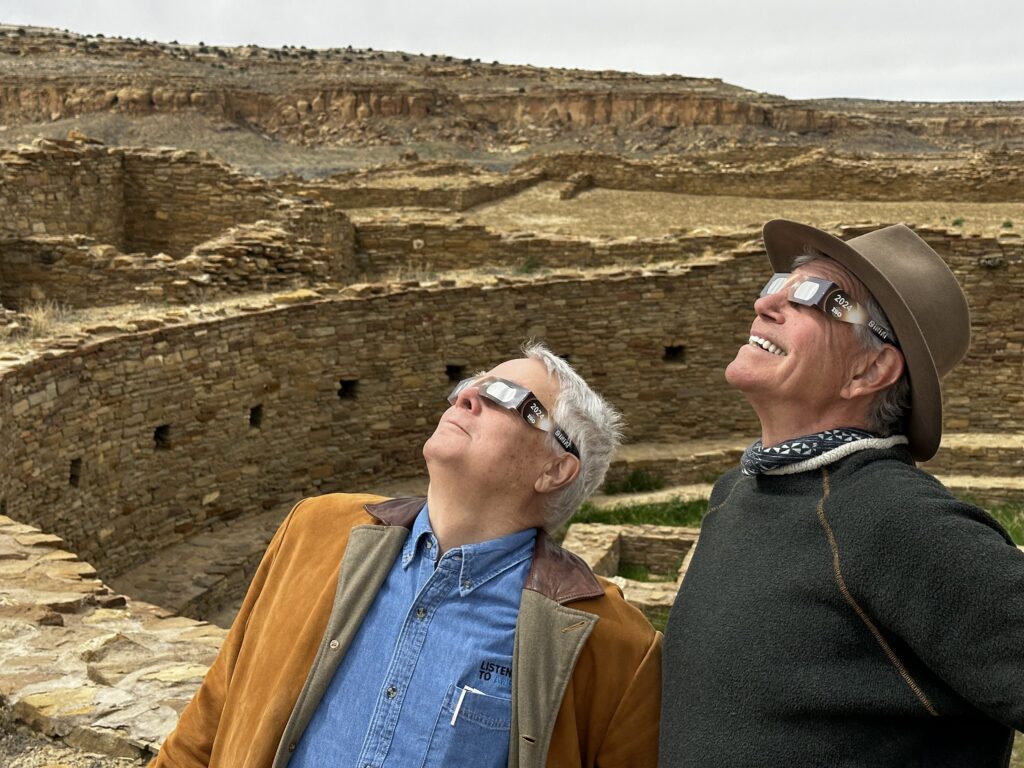Clay and Dennis view the April 8, 2024 eclipse at Chaco Canyon in NW New Mexico. (Photo by Kialo Winters)
My friend Dennis McKenna and I had the good fortune to experience the solar eclipse of 2024 at [Chaco Canyon](https://www.nps.gov/chcu/index.htm) in northwestern New Mexico. We hired a Native guide to take us around the site and interpret its spiritual significance. When we arrived at the Chaco Canyon Visitors Center parking lot mid-morning on April 8, our host handed us each a pair of solar eclipse goggles. There were six of us altogether: our interpreter, Kialo Winters, and his wife, Terri, an older couple from Colorado Springs celebrating their 58th wedding anniversary and the two of us.
Kialo answered a preliminary question with exceptional grace. A woman in our group asked him how we should identify him. We’ve heard it all, he noted, but we prefer to be called by the tribe we belong to: Zia, Navajo, Hopi, Lakota, Ojibwe. “But if you don’t know, please don’t say Native American. We’re not Americans in the usual sense. We’re a separate sovereign people.” He did not elaborate, but it was clear that he wanted to distinguish between the varieties of Americans (Irish Americans, Italian Americans, Polish Americans) and his own distinct nation (they were here first, of course). He said if you must choose a generic name, “Indigenous is best.” He said these words in so generous a way that not even a cultural conservative could be offended.
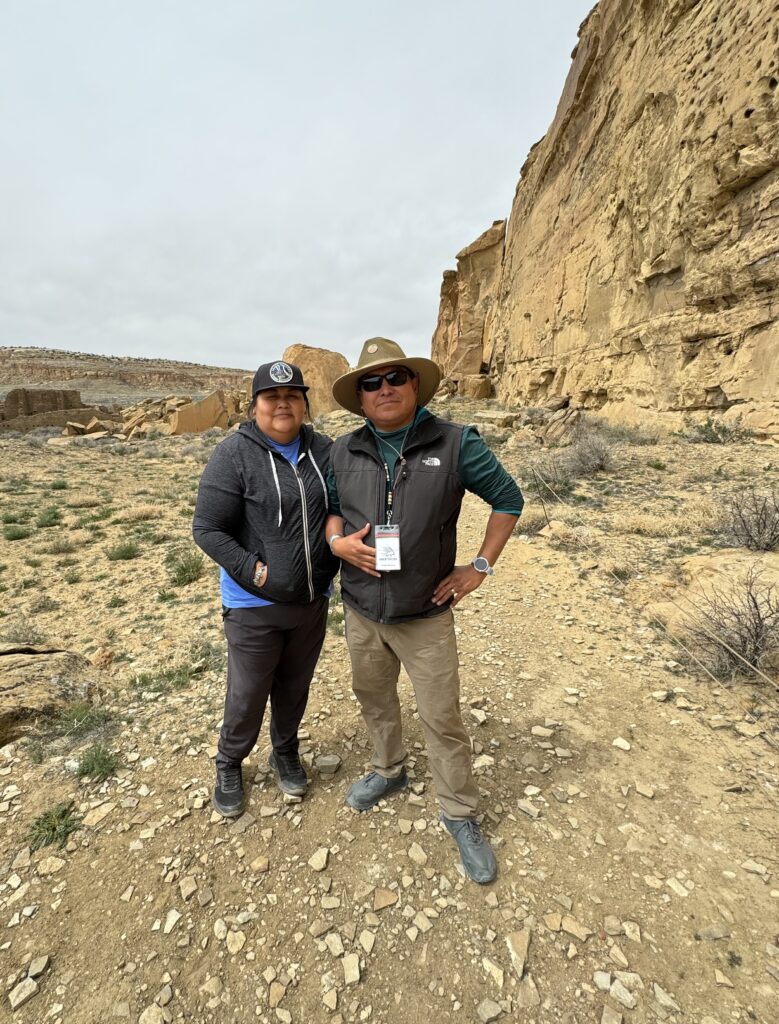Terri and her husband Kialo Winters, owners of [Navajo Tours USA](https://navajotoursusa.com), and our guides at Chaco Canyon.
Kialo Winters is Zia and Navajo. His wife, Terri, is Navajo. When they met, he knew almost no Navajo. She grew up in a more traditional family and had almost no English. They have been teaching each other fluency ever since.
We moved slowly through the site, stopping to peer up at the sun every few minutes. Those who know and love Chaco Canyon say we should not use the word “ruins,” as in the “ruins of ancient Troy,” because the descendants of the people who lived here a thousand years ago still use the site for a range of purposes, including the seasonal calendric wisdom that it embodies.
The surviving walls of the village complex are amazingly orderly, intricate, and intact. Because it is an essentially treeless landscape, the timbers needed for the tall apartment complexes had to be cut in the mountains 60 miles away and carried in a sacred manner to the village site. Not only was there no Home Depot in the ancient Puebloan world, but the idea of warehousing lumber without any special concern for the place of its origin or the spirit of place of its origin was anathema to these people. We were observing what is left of an entirely different worldview.
I’ve visited ancient Troy, Mycenae, and Roman villas, including Pompeii; Chaco’s surviving structures are far more neatly constructed. On any given stretch of wall, the shales had been cut and shaped into slender “bricks” that were woven together with painstaking care and precision. These were very sophisticated architects with low-tech tools that would flummox a modern construction engineer.
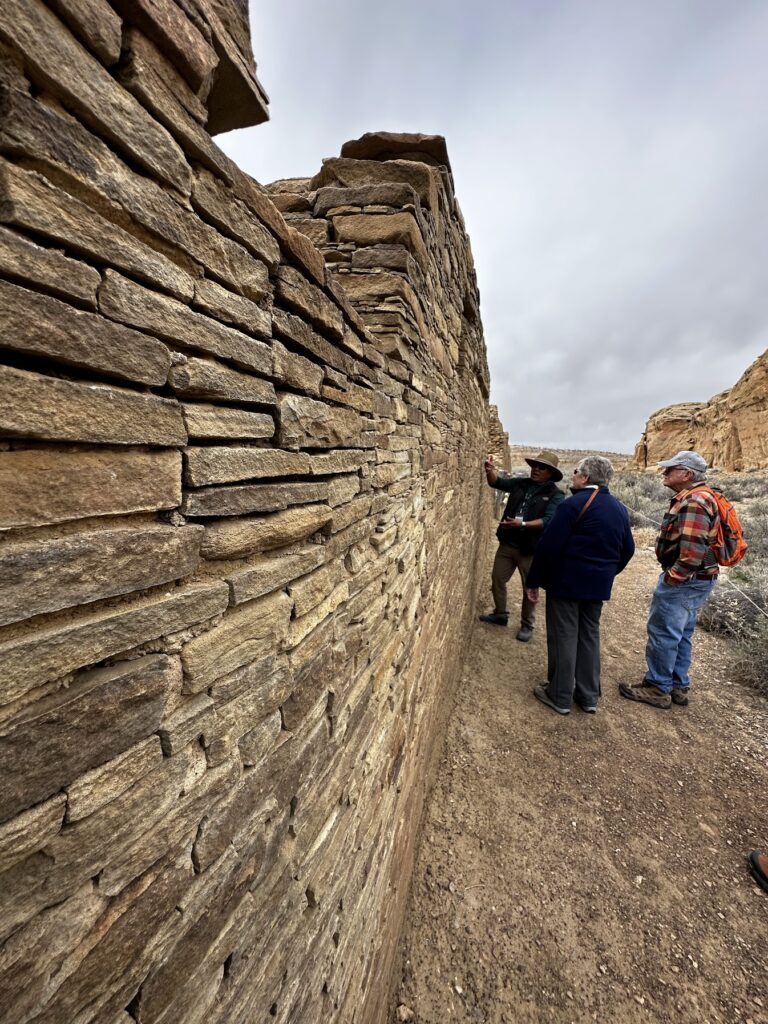The massive 480 foot north wall of Chetro Keti, (circa 990–1115) is an excellent example of the intricate stone work ancient builders employed at Chaco Canyon. (Photo by Clay Jenkinson)
## **Paradigm Shift**
Total solar eclipses don’t happen very often. In the last couple of decades, in a media-saturated world, they have become lucrative tourism opportunities under the terms of late capitalism. More people observed Monday’s eclipse than any other celestial event in human history. Thomas Jefferson or Captain James Cook would have given anything to have a single “photograph” of a celestial event of their times. On April 8, 2024, hundreds of millions of photographs were taken worldwide, all of the same thing! Some media entities had the good sense to ask people to share their photographs publicly. We live in a wondrous time.
I have a friend who lives in Fort Collins, Colorado, who flew to Dallas Tuesday morning solely to see the eclipse in totality. He landed at Dallas Fort Worth International, took an airport bus to a high-rise parking garage, joined a few scores of other people on the open-air top lot, pulled out his goggles, observed the eclipse, got on the bus for the terminal, and flew home. He left his house in Fort Collins at 5 a.m., spent 4.3 hours in Dallas, and was back in his house at 6:45 p.m. This Total Eclipse Insertion Project (TEIP) cost him about $700. Such a journey is a monument to the fabulous wealth of the United States in the 21st century. At least he did not join one of those charter flights that tracked the eclipse across its long arc over the North American continent. Captain James Cook was sent to observe the transit of Venus on the island of Tahiti in 1769. He was gone for three years.
I have another friend in Washington state who is fascinated by such celestial phenomena, but he was content to watch the eclipse on CBC television. Yet another friend paid a small fortune to participate in a guided Eclipse Tour in south Texas — he flew in from Seattle — only to be half-stymied by heavy cloud cover.
Until now, I have regarded eclipses and transits in Enlightenment (Jeffersonian) terms as those rare moments when the heavenly curtain is parted, and we get to see the clocklike workings of the solar system. The philosophers of the Enlightenment believed that the universe had been created by a Clockmaker God, who employed gravitation and Newtonian mechanics to spin the solar system. On any given day, we might be disposed to take the order of the cosmos for granted — the sun “comes up,” there is high noon, and the sun “goes down,” and the stars “come out.” An eclipse pulls us out of our complacency and invites us to think more seriously about celestial mechanics. It’s one thing to observe an eclipse and to be filled with wonder at the idea that the moon is poised precisely where it occludes the entire sun for a few moments. It makes you want to make your way to the nearest planetarium.
I remember walking through the [Enlightenment Room](https://www.britishmuseum.org/collection/galleries/enlightenment) of the British Museum a dozen years ago, ambling past scores of telescopes, astrolabes, sextants, octants, artificial horizons, maps, and illustrated journals, and then seeing a glass dome on my left, 4 feet in diameter, encasing an elaborate mechanical apparatus. I was nearly past it when I did a literal double-take because I recognized it as an [orrery](https://www.whipplemuseum.cam.ac.uk/explore-whipple-collections/astronomy/grand-orrery), dating to 1750, a brass and ceramic model of the solar system, named for one of the design’s patrons, Charles Boyle (1674-1731), the Fourth Earl of Orrery. I nearly swooned. I spent the next half hour gazing at its mechanical magnificence, the yellow sun at the center, each of the planets on a separate stiff wire — Mercury, Venus, the Earth with its lovely ivory moon, Mars, Jupiter (including its Galilean moons), and Saturn with its gossamer rings. The British Museum no longer operates this ingenious and intricate machine, but it was designed to recreate the actual motions of the solar system, and in the beginning, it could be cranked into clocklike motion as exquisite as the fabled “Music of the Spheres.” If you are rich enough to fly to Dallas to observe an eclipse, you can probably afford one of the modern recreations of the orrery. If I had the money, I would purchase my own orrery for my map room at home. I am sure I would be more rational for having and operating it.
A slight haze mutes the sun pre-eclipse at Chaco Canyon. (Photo by Clay Jenkinson)
This eclipse was different, and it knocked me right out of the Enlightenment paradigm. This time, I was in a sacred place, far from the madding crowd at Niagara or Mazatlán. We six were virtually alone in one of the most beautiful landscapes in North America. We were in an architectural complex designed as a shale and mortar orrery by a pre-industrial people we Americans would formerly have been disposed to call “Indians.” We were in a sacred place, guests of a Zia and Navajo man who talked about the site’s wonders and mysteries in an understated manner — British Museum orrery 1750; Chaco Canyon complex circa 900 CE (AD).
Kialo told us the ancient Puebloans employed a person as the nation’s Skywatcher. His duty was to study the heavens. Not to compare the sublime with the pedestrian, but he was their Carl Sagan or Neil deGrasse Tyson. His job was to discern the order of celestial phenomena, find a way to memorize the data, and advise his community about when to plant, harvest, hold the sacred festivals, and pray to the Great Mystery who spun and regulated the solar system. How did they do it? European civilization has been able to predict the solar eclipse since May 28, 585 BCE, when Thales of Miletus exhibited his astronomical and mathematical mastery of the Greek world, but indigenous celestial knowledge almost certainly predates Thales by thousands of years.
Industrial civilization has created an enormous amount of light pollution. Even in my lightly populated North Dakota, there is enough urban light to make it impossible to observe the night sky without driving 20 or 30 miles from home, a disincentive. I tried to imagine skywatching at Chaco Canyon a thousand years ago, but our guide said it is essentially the same now.
A peregrine falcon watches from the cliffs at Chaco Canyon. (Photo by Dennis McKenna)
As we edged along the cliff face, we saw two falcons, one adult, one a fledgling learning to fly — with some gentle parental bullying from its mother. Poised on rock ledges 20 feet up and about 20 feet apart, they talked back and forth with a high “skree” sound, which reminded me of teaching my daughter to ride a bicycle when she was seven (and, of course, I broke my vow “not to let go”). Meanwhile, in the canyon, the largest ravens I ever saw performed some show-offy maneuvers above and around us.
After a few hours, we stopped at a picnic table and pergola for lunch. Each party brought its own repast, but there was some sharing, too. Our hosts spread a beautiful yellow patterned tablecloth over the park service beige fiberglass table.
## **The Eclipse in the Canyon**
We could not have chosen a better place to observe the eclipse. Chaco Canyon is more than just another example of what used to be called Anasazi sites. It was designed from the beginning to serve as a lunar and solar “clock.” It was laid out with almost unimaginable ingenuity and scientific acumen so that shafts of light pass through portals precisely on the occasions of the solstices and the equinoxes even now.
It’s hard not to be overwhelmed with admiration. Here was a people without telescopes, written language, the kind of sophisticated numerical system we inherited from the Arabic world, or advanced computing devices, who knew the cosmos so well that they could track the sun and moon with massive stone works in the middle of the desert Southwest to form a calendric device as accurate as anything that could be built today. And they passed on that painstakingly gleaned understanding of the ways of the sun, moon, planets, and stars through a tenacious oral tradition. When the Puebloan people were constructing the kivas and other structures at Chaco Canyon, Europeans were still caught in an epoch so dark that they had forgotten much of the classical inheritance and jettisoned whole swaths of ancient knowledge, beauty, history, and culture in the name of a crabbed Christian (veil of tears) vision of life on earth.
Here’s to “Druidic” knowledge all over the world!
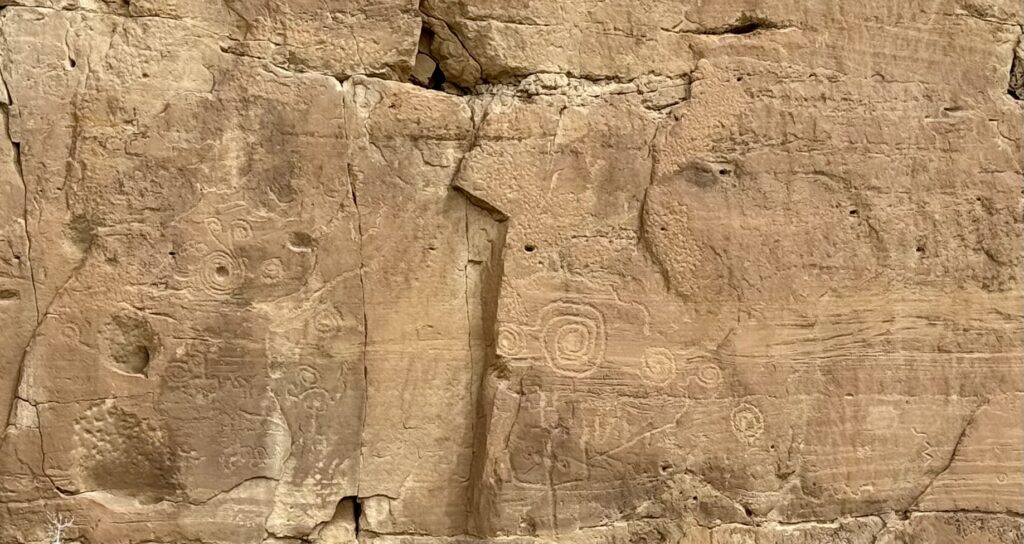Ancient petroglyphs carved into canyon walls at Chaco. (Photo by Dennis McKenna)
It should humble any Euro-Westerner to realize the sophistication of other cultures we for hundreds of years called primitive or even savage and blithely determined that it was our God-given mission to force them to conform to our software and discard their own. At the boarding schools, we used a wide range of psychological and physical coercion to force them out of their indigeneity and into a semi-permanent peonage in our preferred ways and means.
## **Being Present**
> *“In any weather, at any hour of the day or night, I have been anxious to improve the nick of time, and notch it on my stick too; to stand on the meeting of two eternities, the past and future, which is precisely the present moment; to toe that line.”*
>
> Henry David Thoreau
Sometimes, I lagged behind the others to listen to the solitude. The great challenge of the life of adventure is to be present wherever you happen to find yourself. This is much harder to do than we think.
Henry David Thoreau put it perfectly in Walden: “In any weather, at any hour of the day or night, I have been anxious to improve the nick of time, and notch it on my stick too; to stand on the meeting of two eternities, the past and future, which is precisely the present moment; to toe that line.” When I am in a special place — high up in the Bitterroot Mountains on a perfect August afternoon, canoeing the White Cliffs section of the Missouri River east of Fort Benton, Montana, or in the Pantheon at Rome or Sainte-Chapelle in Paris — I try to do some deep breathing. I will myself to open every pore of my consciousness so that I can really “drink in” the moment, to remember the quality of the light, the temperature, the wondrousness of the landscape, the intricacy of the stained glass windows, and the mysterious stories they tell. To use a contemporary metaphor, I try to etch the experience on the hard drive of my mind so that my impressions are not just observational ephemera that get dumped with the rest of the data that find their way through our senses into our brains. I often experience a kind of tragic feeling as I stand before Stonehenge or the Grand Canyon, that I am not taking it deep enough, that I am not letting it all the way in, that I am not alert on Thoreau’s meeting point of the past and the future. As I sit gazing at Michelangelo’s David in Florence, I strain to let the experience take over my whole being for a time. I think we all have this feeling at times.
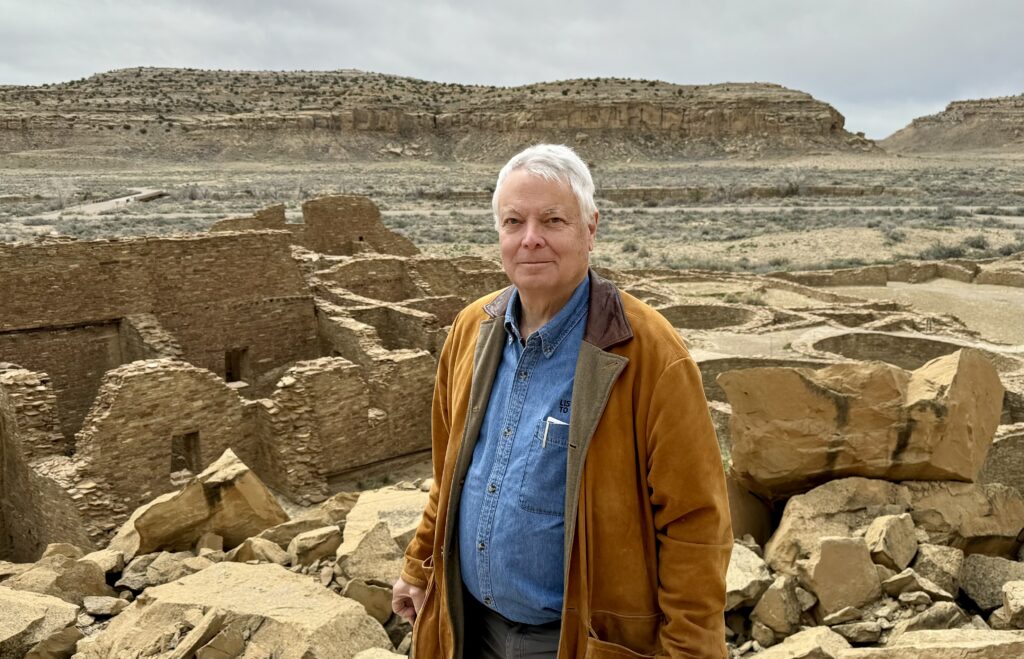Clay at Chaco Canyon overlooking Pueblo Bonito, April 8, 2024. (Photo by Dennis McKenna)
There was no totality in Chaco Canyon. We got four-fifths occlusion but no more. I was fortunate enough to observe the 2017 eclipse in central Wyoming, where I had my only experience of totality. There is a dramatic difference between 80 and 100% occlusion. But in 2017, I was on a gravel ranch road north of Casper, Wyoming, sitting with my back to a barbed wire fence. That was a magical experience, but I certainly wasn’t in a sacred landscape. Central Wyoming was a landscape that has been occupied for the last 120 years by Anglo-Americans to raise alfalfa and beef. The roads have been laid out according to the rectangular survey grid system. The barbed wire is the miracle invention that made places like Wyoming habitable to white people.
At Chaco, though the eclipse was less dramatic, I knew I was tiptoeing around a sacred landscape, and that somehow made it a much more meaningful experience, especially with an Indigenous couple to teach us how to see it. We kept our voices low. There was no joking around.
At the end of the tour, we were taken to the great kiva, Casa Rinconada, a place of beauty, silence, and delicacy. From there, we could look south and east at a vast and dramatic landscape of cliffs and buttes. Kialo told us that kiva Chaco people could see the exact notch where the sun rises at the spring and autumn equinoxes and the solstices. It was one of the most beautiful viewsheds I have ever seen. I felt a serenity almost impossible to achieve in modern American culture. These were people who lived under the sky. We mostly live under our roofs.
We were sorry to say goodbye to our hosts. In the late afternoon, Dennis and I drove back to Farmington, N.M., a city of 47,000. We were unusually quiet, both of us, as we left the site. What a privilege to live in this great country where people with fundamentally different approaches to life are available for those who wish to learn from them.
---
## *Discover more on these topics at Listening to America*
[State Parks](https://ltamerica.org/tag/state-parks/ "2 topics")[New York](https://ltamerica.org/tag/new-york/ "8 topics")[Virginia](https://ltamerica.org/tag/virginia/ "7 topics")[Tennessee](https://ltamerica.org/tag/tennessee/ "1 topics")[Oppenheim](https://ltamerica.org/tag/oppenheim/ "0 topics")[North Dakota](https://ltamerica.org/tag/north-dakota/ "53 topics")[Wisconsin](https://ltamerica.org/tag/wisconsin/ "0 topics")[north daktoa](https://ltamerica.org/tag/north-daktoa/ "0 topics")[Texas](https://ltamerica.org/tag/texas/ "4 topics")[The Constitution](https://ltamerica.org/tag/the-constitution/ "1 topics")[Thoreau](https://ltamerica.org/tag/thoreau/ "5 topics")[Sports](https://ltamerica.org/tag/sports/ "2 topics")[South Dakota](https://ltamerica.org/tag/south-dakota/ "16 topics")[Road Trips](https://ltamerica.org/tag/road-trips/ "18 topics")[North Carolina](https://ltamerica.org/tag/north-carolina/ "3 topics")[New Mexico](https://ltamerica.org/tag/new-mexico/ "3 topics")[Walden](https://ltamerica.org/tag/walden/ "1 topics")[Wyoming](https://ltamerica.org/tag/wyoming/ "4 topics")[William Shirer](https://ltamerica.org/tag/william-shirer/ "1 topics")[paintings](https://ltamerica.org/tag/paintings/ "0 topics")[Republics](https://ltamerica.org/tag/republics/ "1 topics")[Oppenheimer](https://ltamerica.org/tag/oppenheimer/ "1 topics")[Utah](https://ltamerica.org/tag/utah/ "11 topics")[Thomas Jefferson](https://ltamerica.org/tag/thomas-jefferson/ "34 topics")[Ohio](https://ltamerica.org/tag/ohio/ "2 topics")[U.S. Constitution](https://ltamerica.org/tag/u-s-constitution/ "1 topics")[Water in the West](https://ltamerica.org/tag/water-in-the-west/ "24 topics")[Rivers](https://ltamerica.org/tag/rivers/ "3 topics")[Washington](https://ltamerica.org/tag/washington/ "2 topics")[Republic](https://ltamerica.org/tag/republic/ "0 topics")[Steinbeck Travels](https://ltamerica.org/tag/steinbeck-travels/ "75 topics")[South Carolina](https://ltamerica.org/tag/south-carolina/ "1 topics")[Vermont](https://ltamerica.org/tag/vermont/ "1 topics")[Rome](https://ltamerica.org/tag/rome/ "1 topics")[Travel](https://ltamerica.org/tag/travel/ "1 topics")[Pennsylvania](https://ltamerica.org/tag/pennsylvania/ "1 topics")[U.S. Presidents](https://ltamerica.org/tag/u-s-presidents/ "71 topics")[New England](https://ltamerica.org/tag/new-england/ "1 topics")[Space Exploration](https://ltamerica.org/tag/space-exploration/ "8 topics")[Poetry](https://ltamerica.org/tag/poetry/ "1 topics")[Theodore Roosevelt](https://ltamerica.org/tag/theodore-roosevelt/ "16 topics")[Oregon](https://ltamerica.org/tag/oregon/ "4 topics")[Video](https://ltamerica.org/tag/video/ "51 topics")[Podcast](https://ltamerica.org/tag/podcast/ "1 topics")[Reading](https://ltamerica.org/tag/reading/ "1 topics")
**Categories:** Dispatches from the Road
**Tags:** Humanities, Native Americans, New Mexico
---
### [Rereading Blue Highways — An Enduring Backroads Journal](https://ltamerica.org/rereading-blue-highways-an-enduring-backroads-journal/)
**Published:** March 25, 2024
**Author:** Clay Jenkinson
**Excerpt:** Originally published is 1982, Clay says William Least Heat Moon’s Blue Highways is still our best backroads manifesto.
**Content:**
## Originally published in 1982, Clay says William Least Heat Moon’s *Blue Highways* is still our best backroads manifesto.
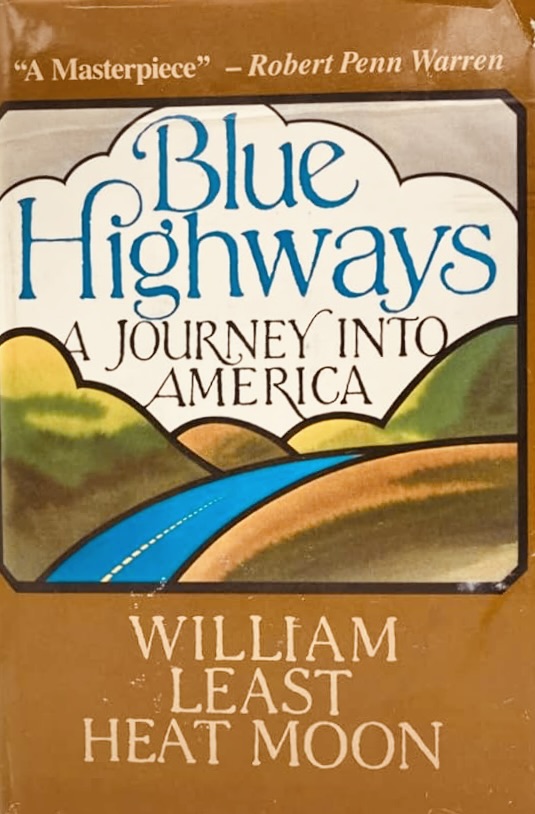*Blue Highways: Journey Into America* by William Least Heat Moon, first published in 1984.
With the 1982 publication of*[ Blue Highways: A Journey into America](https://www.goodreads.com/book/show/63832.Blue_Highways)*, William Least Heat Moon (aka William Trogdon) changed how we think about road journeys in America. However much you may admire Jack Kerouac’s *On the Road*, you are unlikely to hitchhike around America in the 21st century or climb onto a Greyhound bus in Fresno on your way to New York City. [Robert Pirsig’s ](https://www.goodreads.com/author/show/401.Robert_M_Pirsig)notion that it might be fun to travel America on a motorcycle that requires your own frequent scraped knuckle maintenance is not likely to appeal to more than a small fraction of people.
I first read *Blue Highways* immediately after it was published, and it made me ache to travel America. I have read it twice since and taught it, too. Now that I am about to embark on my own journey on America’s blue highways, I read it again last week. This time, I read it to see to what extent it might serve me as a manual and perhaps even as a cautionary tale.
## **A blue highway is a two-lane road, a back road, left behind when the Interstate Highway System revolutionized the American road experience.**
A blue highway is a two-lane road, a back road, sometimes a farm-to-market road, or an asphalt highway left behind when the Interstate Highway System revolutionized the American road experience in the 1960s and 1970s. The pace of traffic was much slower, sometimes maddeningly slower. The blue highways went through the heart of towns and villages not around them. They were more intimate with the countryside than the great majority of interstate highways. They were graced with roadside fruit stands, Burma-Shave signs, funky ma and pa “antique” shops, shag carpet motor courts, and — as you got farther west — such kitsch as motels in the shape of teepees, dinosaurs, or perhaps partly embedded in caves. Some of the old motels survive with un-updated neon welcome signs that promise “Air Conditioned Rooms” or “A TV in Every Room.” If you want to see the world’s largest ball of twine, you must be on a blue highway. If you get behind a farm truck, you might be forced to slow down to 40 mph for a dozen miles before you find a safe place to pass. You can pull over almost anywhere without being swept into the vortex of a passing 18-wheeler.
Burma-Shave road sign. (Photo LOC)
Once the interstate system was completed (October 14, 1992), the pace of road travel in America accelerated dramatically. For example, it was now possible on I-80 to drive the 2,919 miles from Teaneck, New Jersey, to San Francisco without ever entering a town or bumping up against a traffic signal or stop sign. If your car could be refueled like an F-16 fighter jet without stopping or breaking speed, and you wore an adult diaper of the sort former astronaut Lisa Nowak purchased for her madcap love triangle run from Houston to Orlando in 2007, you could cross America without stopping. At 70 mph, this would take just 41.7 hours. I have a soft spot in my heart for Ms. Nowak: the heart wants what the ball-peen hammer and the can of pepper spray want.
Over four decades ago, Least Heat Moon (LHM) taught us that to experience America in a car, you must get off the freeways and onto the secondary and tertiary roads. You must slow down, open the windows (preferably hand-cranked), and travel without any obsessive itinerary. You must be prepared to let way lead on to way, to take the road less traveled, to take seemingly pointless detours on a whim, and to avoid the homogeneity of chain restaurants.
*Blue Highways* is our best backroads manifesto. The book has been so influential that motorists who want to experience America feel shame when they cheat their way for a day or two on the interstates.
In some respects, the idea of the book holds up better than the book itself. And yet, there is so much to admire in *Blue Highways*. What LHM undertook in 1978 now feels so contemporary (think of [Nomadland](https://www.searchlightpictures.com/nomadland/)) that the book deserves a second life, maybe with a new afterword. He helped create a lifestyle phenomenon that is now growing rapidly throughout the United States. He traveled America in a converted Ford minivan that he fixed up inside as his road quarters. Some cities are even reforming their laws to permit those refitted vans to park overnight in residential areas.
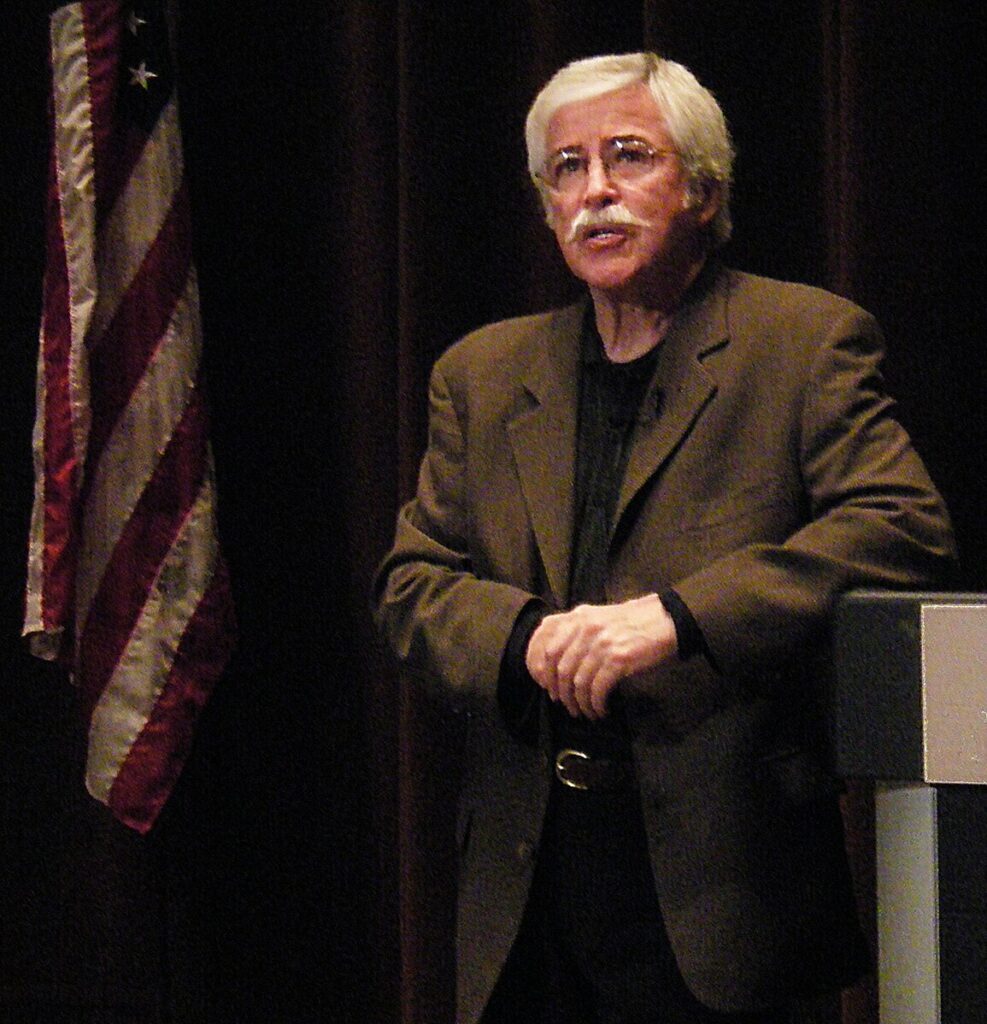Author, William Least Heat Moon in 2008. (Photo by Joe Mabel)
Thirty-eight years old, out of work, brooding over a 10th-year breakup with a woman he called Cherokee, he leaves (or tries to leave) his troubles behind. He takes to the open road, “as stories must, when love’s denied, with tears and a journey,” as Judy Dench (Elizabeth I) tells Gwyneth Paltrow (Viola De Lessops) at the end of the film [Shakespeare in Love](https://www.imdb.com/title/tt0138097/). For three months and 13,000 back road miles, LHM encircled the perimeter of America along much the same route John Steinbeck traversed in 1960. However, Steinbeck makes only a single unimportant appearance in *Blue Highways*. Least Heat Moon’s muses seem to be the Lakota seer Black Elk and the poet Walt Whitman, who frequently appear on the pages of *Blue Highways*. Not Steinbeck and not Kerouac.
Least Heat Moon knows how to get himself into a conversation. He admits defeat on the few occasions when he can’t make it happen. Usually, he approaches (or is approached by) a stranger in a café or bar, and an interesting conversation ensues. Some of the people he met along the way were bigots, racists, and misogynists, and a solid majority might be characterized as socially marginal. But most people he encountered had interesting ways of looking at things. I’m unclear about how the author recorded all those conversations, but they ring true. He carried a micro-recorder, but it cannot have been handy or turned on in all the encounters that found their way into the book.
Least Heat Moon is not afraid to take risks. He drives thousands of miles on primitive and sometimes unsafe roads when he might have chosen instead to take the more recent and better-graded (but still not interstate) highways. Least Heat Moon parks for the night in places where he is not legally welcome. He trusts most of the people he meets, sometimes in what might be regarded as dicey zip codes. He follows a college student he just met into his dorm room to see a prized Hopi food item. He gravitates to quite a few iffy roadside cafes a little too far from main street in search of authentic regional cuisine and live local music. He mouths off a bit to horrible people. He is a modified, limited foodie and local speciality sampler before that became a thing. A long journey will always bring real challenges and cannot be completed without leaning on the kindness of strangers. He did a fair amount of leaning.
## **Great Writing**
Least Heat Moon is often an outstanding writer. Look at this portrait of a woman in Nevada playing a slot machine like a zombie.
*“… a woman, face as blank as a nickel slug, pulling dutifully on the slot handles. She had stood before the gears so many times she herself had become a mechanism for reaching, dropping, pulling. Her eyes were dark and unmoving as if unplugged. The periodic jangle of change in the winner’s cup moved her only to reach into the little coffer without looking and deposit the coins again.”*
I have seen this woman a thousand times, and such men, too. The passage is uniformly good prose, but the key piece of genius is “gears.” About to describe the woman as an automaton, he places the word “gears” right where it will have the maximum effect on the quality of the passage.
Or this:
*“A car whipped past, the driver eating and a passenger clicking a camera. Moving without going anywhere, taking a trip instead of making one. I laughed at the absurdity of the photographs and then realized I, too, was rolling effortlessly along, turning the windshield into a movie screen in which I, the viewer, did the moving while the subject held still.”*
LHM describes a self-revelation everyone has experienced while driving through the middle of nowhere: with the windows rolled up and the air conditioning keeping things windless and temperate, with the cruise control doing the pedaling, and listening to your favorite tunes on the entertainment system, you are not truly experiencing the West. Instead, you see America roll by from within a hermetically sealed climate-controlled bubble; the view seems more like a movie reel than an actual landscape.
Least Heat Moon’s van-camper rig.
You cannot hike the day’s 250 miles or amble through on horseback. Still, you can let some of the spirit of place waft into the car by slowing down, opening the windows, and turning off the entertainment package. Of course, it’s important to stop every half hour or so to stretch and breathe in America.
In this important passage, Least Heat Moon provides a perfect analogy by imagining the windshield as a movie screen, but he takes it deeper with a lovely piece of wit — that, in this case, the screen did the moving, and it was the landscape that was motionless. It’s also significant that he checked his Thoreauvian righteousness by taking a moment to examine it. It would be so easy to pontificate a journey like this in the manner of Edward Abbey or Dr. Hunter S. Thompson. LHM catches himself, with “realized I, too …” This is one of the reasons that his book is so beloved. He knows that he is often in danger of taking himself too seriously (like the rest of us), but he usually finds a self-deprecating way of letting the Mosaic Charlton Heston in him calm down.
Nor is he unwilling to let others take center stage. When he meets someone genuinely interesting (about half the time), he has the good sense to shut up and listen. He does not get in the way of the narratives and the “arguments” he hears around the country. His impulse to denounce genuine racism finds a way to yield to the discipline of just listening. It’s hard to imagine Stephen Ambrose or Theodore Roosevelt going to a pub or a bayou and just listening. It takes strength of character to yield the floor for three long months.
The magic of Blue Highways is Least Heat Moon’s careful modulation of the non-rational. The writing frequently nudges up against the mystical, particularly around Lakota and Hopi spirituality. Given our current sensitivity to the issue of cultural appropriation, LHM would probably pull back on the Native American evocations were he writing Blue Highways today. In his recent book about the book, *Writing Blue Highways* (2014), he acknowledges that his attempts to convince a publisher to take the book miscarried until he submitted the manuscript as by William Least Heat Moon rather than his legal name, William Trogdon. Today his (genuine) Native DNA might be considered thin, at least by the cultural guardians and the righteous.
Here’s another piece of great writing. I’ve emphasized in bold the words that make it great.
*“Dirty and hard, the morning **light could have been old concrete**. Twenty-nine degrees inside. I tried to figure a way to dive down the mountain without leaving my sleeping bag. I was stiff — not from the cold so much as from having slept **coiled like a grub**. Creaking open and pinching my toes and fingers to check for frostbite, I counted to ten (twice) before shouting and leaping for my clothes. Shouting distracts the agony. **Underwear, trousers, and shirt so cold they felt wet**.”*
In writing *Blue Highways*, LHM says he seriously revised the book half a dozen times during the four agonizing years of its composition. You can feel him crafting and recrafting individual sentences like these, searching for a phrase or word that is both clever and compelling. Unless you are a natural, the difference between good and great writing is a refusal to settle for good enough. He searches for a style that sometimes raises the narrative into the rarified stratosphere of literature. One reason Least Heat Moon rocketed to national fame overnight in 1982 when his book was published is because he can be a superb writer of English prose. We don’t always understand his mystical strains, but we aspire to, and we are glad his travels are more than a travelogue.
I wish Steinbeck had taken a camera with him in 1960. I wish Least Heat Moon had not, although his insistence that the snapshots he took of people he encountered were essential to his purposes and credibility almost cost him his publisher. There are 23 photographs of individuals in a center section of *Blue Highways*. Somehow, at least for me, each one drains some magic out of the book. I’d rather imagine them than glance at them frozen in time. Come to think of it that might have been the case for *Travels with Charley*, too.
*Blue Highways* ends without any resolution of the issues that propelled him onto America’s byways, though we are informed that Cherokee was not coming back, and former college professor Bill Trogdon was still unemployed. It’s unclear to me what he learned in 13,000 miles. Nor, apparently, was he sure. As he neared his “home” in Columbia, Missouri, he wrote:
*“In a season on the blue roads, what had I accomplished? I hadn’t sailed the Atlantic in a washtub, or crossed the Gobi by goat cart, or bicycled to Cape Horn. In my own country, I had gone out, had met, had shared. I had stood as witness.”*
He sells himself short here. It would be hard to justify the carbon footprint if the journey amounted to no more than that. Still, he added a critical phrase and concept to America’s love affair with the open road. Blue highways are now deeply embedded in the adventure dreams of the American people. How many authors achieve something of that magnitude?
---
## ***Discover more on these topics at Listening to America***
[Wisconsin](https://ltamerica.org/tag/wisconsin/ "0 topics")[North Dakota](https://ltamerica.org/tag/north-dakota/ "53 topics")[U.S. Presidents](https://ltamerica.org/tag/u-s-presidents/ "71 topics")[State Parks](https://ltamerica.org/tag/state-parks/ "2 topics")[Sports](https://ltamerica.org/tag/sports/ "2 topics")[Vermont](https://ltamerica.org/tag/vermont/ "1 topics")[north daktoa](https://ltamerica.org/tag/north-daktoa/ "0 topics")[Thomas Jefferson](https://ltamerica.org/tag/thomas-jefferson/ "34 topics")[Oregon](https://ltamerica.org/tag/oregon/ "4 topics")[Oppenheimer](https://ltamerica.org/tag/oppenheimer/ "1 topics")[Oppenheim](https://ltamerica.org/tag/oppenheim/ "0 topics")[Travel](https://ltamerica.org/tag/travel/ "1 topics")[Poetry](https://ltamerica.org/tag/poetry/ "1 topics")[North Carolina](https://ltamerica.org/tag/north-carolina/ "3 topics")[New York](https://ltamerica.org/tag/new-york/ "8 topics")[South Dakota](https://ltamerica.org/tag/south-dakota/ "16 topics")[Road Trips](https://ltamerica.org/tag/road-trips/ "18 topics")[Walden](https://ltamerica.org/tag/walden/ "1 topics")[Space Exploration](https://ltamerica.org/tag/space-exploration/ "8 topics")[Virginia](https://ltamerica.org/tag/virginia/ "7 topics")[William Shirer](https://ltamerica.org/tag/william-shirer/ "1 topics")[New England](https://ltamerica.org/tag/new-england/ "1 topics")[Steinbeck Travels](https://ltamerica.org/tag/steinbeck-travels/ "75 topics")[Tennessee](https://ltamerica.org/tag/tennessee/ "1 topics")[South Carolina](https://ltamerica.org/tag/south-carolina/ "1 topics")[Rivers](https://ltamerica.org/tag/rivers/ "3 topics")[Ohio](https://ltamerica.org/tag/ohio/ "2 topics")[Pennsylvania](https://ltamerica.org/tag/pennsylvania/ "1 topics")[Reading](https://ltamerica.org/tag/reading/ "1 topics")[Rome](https://ltamerica.org/tag/rome/ "1 topics")[paintings](https://ltamerica.org/tag/paintings/ "0 topics")[Podcast](https://ltamerica.org/tag/podcast/ "1 topics")[New Mexico](https://ltamerica.org/tag/new-mexico/ "3 topics")[Republic](https://ltamerica.org/tag/republic/ "0 topics")[The Constitution](https://ltamerica.org/tag/the-constitution/ "1 topics")[Wyoming](https://ltamerica.org/tag/wyoming/ "4 topics")[Utah](https://ltamerica.org/tag/utah/ "11 topics")[Republics](https://ltamerica.org/tag/republics/ "1 topics")[Water in the West](https://ltamerica.org/tag/water-in-the-west/ "24 topics")[Washington](https://ltamerica.org/tag/washington/ "2 topics")[Theodore Roosevelt](https://ltamerica.org/tag/theodore-roosevelt/ "16 topics")[U.S. Constitution](https://ltamerica.org/tag/u-s-constitution/ "1 topics")[Thoreau](https://ltamerica.org/tag/thoreau/ "5 topics")[Video](https://ltamerica.org/tag/video/ "51 topics")[Texas](https://ltamerica.org/tag/texas/ "4 topics")
**Categories:** Books
**Tags:** America at 250, Books, John Steinbeck, Native Americans, Road Trips, Theodore Roosevelt
---
### [Witnessing the Astounding Diversity of America in 24 Hours](https://ltamerica.org/witnessing-the-astounding-diversity-of-america-in-24-hours/)
**Published:** April 8, 2024
**Author:** Clay Jenkinson
**Excerpt:** A whirlwind journey takes Clay from Bismarck, N.D., to Brooklyn, N.Y., to Farmington, N.M. and a view of America’s extraordinary multiplicity.
**Content:**
## A whirlwind trip takes Clay from Bismarck, N.D., to Brooklyn, N.Y., to Farmington, N.M.
Clay, on the move, snaps a quick photo of New York’s Brooklyn Bridge at twilight.
My life can be like a freight train. Or like the sad-stage career of a professional plate spinner. You’ve seen plate spinners — getting three, five, eventually, 10 plates spinning on spindles and then caroming around like a squirrel on cocaine to keep them all spinning.
After a hectic, almost heroic week of preparing for a four-hour interview in New York City for a documentary to be aired sometime next year — on eight very different historical subjects, all relating to the American West — I flew Thursday at zero-dark-thirty from Bismarck to Minneapolis, Minnesota, and on to LaGuardia; took a taxi to a modest hotel on Bell Street in Brooklyn — usual traveler’s late evening salad in the hotel bar. The next day, I was whisked to another Brooklyn location for the interviews — four of them, by four producers, with no one to sponge my face or shoot me full of adrenalin. We ran late, so I returned to my hotel at almost 8 p.m.
Salad in the bar.
I set my wake-up call for 4 a.m. and the taxi for LaGuardia at 4:30. Dawn flight to Atlanta, a short layover, then a 3.5-hour flight to Albuquerque, New Mexico, where I arrived, quadruple jet lagged, a human wreck of exhaustion and the inevitable “postpartum” letdown after leaving it all on, well, probably the cutting room floor.
In Albuquerque, I rented a car. Fortunately, I waited only 45 minutes while the rental clerk chatted endlessly with a youngish couple who had never rented a car before and gave them some dining tips.
So far, so good.

Then, I drove 3.85 hours from Albuquerque to Farmington, New Mexico, where my friend and colleague Dennis was waiting for three days of adventure and work meetings. The wind on the open road was gusting to 50 mph, but I’m a North Dakotan, so I managed to muscle the car back onto the roadway after the big blasts.
OK, enough about me.
Here are the things that astounded me in this tightly clustered set of American experiences:
1. I began the day in America’s greatest and most populous city, at 8.8 million, and ended it in Farmington, N.M., population 46,000, just 2,067 miles away. New Mexico is the fifth largest state geographically, with a population density of 17 people per square mile. New York City has a population density of 29,302 per square mile. Farmington is New Mexico’s sixth-largest city. In New York, it would be a puny neighborhood.
2. I crossed much of the vast American landscape in nine hours without breaking a sweat. At 15 miles per day, it would have taken Lewis and Clark 137 days to make that journey, assuming they never had a bad day, stopped to rest, or waited for winter to pass. They would have sweated all day to accomplish that feat, like Navy SEALS hiking in the mountain vastness of Tora Bora in Afghanistan. There have been times in recent years when I have begun the day in Rome or London and slept in my own bed in central North Dakota well before midnight! And when the flight attendant announces that no peanuts are available because some kid has a peanut allergy, I throw a fit and weep like Job. You can almost hear the passengers saying, “Toss him off the plane!”
3. As my dawn taxi whisked me to LaGuardia, we passed through some shabby industrial zones that looked like they were a stage set for the apocalypse. Graffiti everywhere. Rusted-out storage tanks, abandoned warehouses, a grim bodega here, and a half-hearted deli there. Every great city has an industrial tenderloin. The raw stuff at the bottom end of Maslow’s hierarchy must occur somewhere, and it cannot all be shuffled across the Hudson River to New Jersey. When I think of NYC, I imagine the Chrysler Building, Greenwich Village, the Upper East Side near the Guggenheim, and the Metropolitan Museum of Modern Art. Still, of course, there are also auto repair shops, acres of auto impoundments, 10-story rental storage units, subway vehicle repair warehouses, and Penske and U-Haul lots where the trucks are so tightly parked that you take your life in your hands before pulling out into the traffic. Civilization has many moving parts, and not all of them are pretty.
4. The most extraordinary moment of a long day came when I eased my rental car out of the northern subdivisions of Albuquerque and got a glimpse of the magnitude of New Mexico’s space. The great emptiness of New Mexico is remarkable (perhaps even appalling) no matter where you have been, but to start the day in New York City and end it on U.S. 550 essentially blows your mind. You drive 40 minutes to the top of a ridgeway on the far horizon. When you reach that vantage point, you see another bowl of barren landscape extending to the next ridge 40 miles away, and then another, and another. Any of those broad valleys could swallow all of New York City with endless room to spare in every direction, giving the beleaguered people of the metropolis a little breathing room. (Ah, but most of them would be feverish with agoraphobia.) You see a remote doublewide trailer two miles off the highway on a gravel road and maybe a crude oil transfer station four or five miles in the other direction half an hour later. It looks as if nobody lives in all that space, which is nearly true.
Three more “adjustments.”
5. At LaGuardia, the gate agents are, shall we say, all business and very, very efficient. Two agents near my gate explained the rules, and in some cases, their rules were like those of veteran drill sergeants. Some do’s and many don’ts, particularly now that the glut of carry-on baggage has reduced most boarding experiences to madness. One gate agent told her customers that she would be watching them very carefully as they approached the gate and that they had better have their boarding pass ready to go (and make sure it was the right one this time), or they would sorely regret their error. If anyone tried to sneak a third bag, however small, onto the plane, there would be a verbal smackdown. Don’t even think about trying to board before your row number is called and form a single line. “I’m not in the mood to referee, form a single straight line, and everyone handles their own boarding pass, no exceptions.” It felt like the intake orientation session at Rikers Island. Don’t get me wrong: I admired these women. When my number was called — and not before — I approached the gate like someone in Seinfeld encountering the Soup Nazi.
When I reached Farmington, I stopped at a grocery store to pick up an item I had forgotten to pack. The pace of life slowed so suddenly and dramatically that I looked like a dervish as I strode down the aisles. The clerks were sweet, shy, helpful, and in no hurry, and they seemed to treat me like a worthy fellow. They made eye contact. They asked me how my day was going. One asked me where I was from and what brought me to Farmington. Another assured me that it is not always this windy. The woman at the checkout counter told me there was a buy-one-get-one-free sale on toothpaste. Didn’t I want to select a second tube? She’d be glad to wait while I fetched it. Try that in NYC.
6. Farmington is a regional market town on the eastern edge of the vast Navajo Indian Reservation (the sovereign Navajo Nation), and it is flanked on the east and south by a dozen Apache and Pueblo homelands and reservations. Most of the people I have encountered in Farmington are Native Americans. The indigenous population of Farmington runs to 28.5% (one in three), and the visibility of Natives here is lovely and satisfying if you are new here. I live in what is called the “Indian Country” of the northern Great Plains, but I have seen more Native Americans here in the last days than at any previous time in my life. That must produce great solidarity and cultural confidence among the Navajo, Apache, and others. I feel like a guest here. It is a very agreeable feeling. And it doesn’t feel at all like the old stereotype of Native American communities.
And yet …
7. Every 20 miles or so on U.S. 550, I saw billboards calling our attention to the epidemic of “disappeared” Native American women in the American West. One sign reported that more than 5,000 Native women were “murdered or missing” last year. Anglos have become aware in the last 15 or so years that sex traffickers prey on Indigenous women all over North America. They bank on poverty, addiction, rural naivete, desperate households, low population density, and the lack of adequate policing and judicial protection to pluck Native women off the streets, the majority of whom are whisked out of their homelands and never seen again. I’m proud that my own North Dakota neighbor, former U.S. Senator Heidi Heitkamp, made this international crisis (many of the traffickers are Eastern Europeans) one of the centerpieces of her leadership in Congress. The sex slave traffickers count on white ignorance and white indifference to perpetuate their evil doing. Senator Heitkamp did everything in her power to insist that we all begin to understand the gravity of the situation.
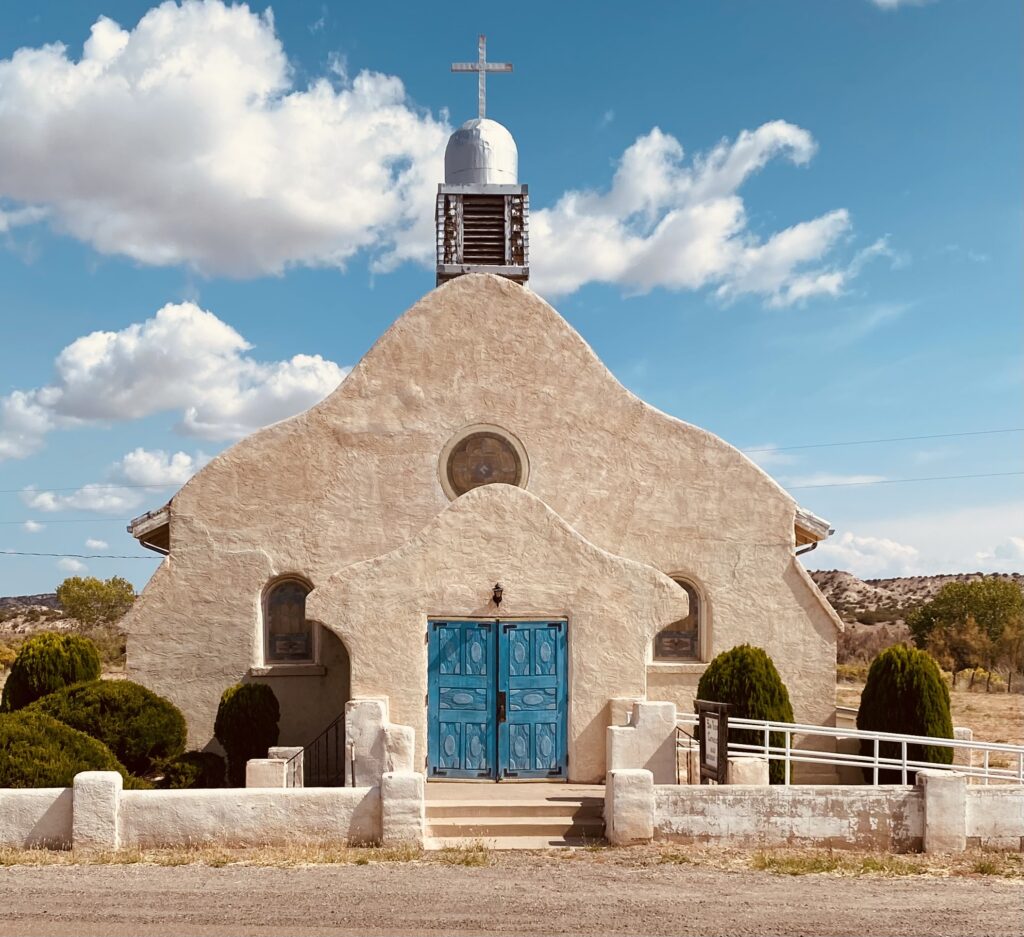San Ysidro Church in Corrales, New Mexico, off of U.S. Highway 550, originally erected in 1868.
**Conclusion:**
America is a vast country, in some respects a complex of countries, stretching 3,000 miles from sea to sea. The geographic and demographic diversity of America is astounding. One federal constitution encompasses the people of the Everglades and the people of the Redwoods, the mountains of Montana and the swamps of Louisiana, the dense forests of Maine (23 billion trees, 90% of the landscape), and the treelessness of North Dakota (350 million trees, 3%, most of them planted since white people took the state at the end of the 19th century), the 10,000 lakes of Minnesota and the bone-dry aridity of Arizona and Utah, the haughty confidence of Texas and the modesty of the “Minnesota Nice,” the New Age Eden of California and the conservative fundamentalism of Mississippi. More than any other nation, we have assembled here people from every corner of the world, from every country, every religion and ethnicity, every tribe, every language, every lifestyle.
To get a glimpse of America’s astounding diversity in a single 24-hour period is a gift of the gods, even if a couple of plates have to hit the floor to make it happen.
---
## *Discover more on these topics at Listening to America*
[North Dakota](https://ltamerica.org/tag/north-dakota/ "53 topics")[Video](https://ltamerica.org/tag/video/ "51 topics")[Podcast](https://ltamerica.org/tag/podcast/ "1 topics")[New York](https://ltamerica.org/tag/new-york/ "8 topics")[The Constitution](https://ltamerica.org/tag/the-constitution/ "1 topics")[Utah](https://ltamerica.org/tag/utah/ "11 topics")[Poetry](https://ltamerica.org/tag/poetry/ "1 topics")[Reading](https://ltamerica.org/tag/reading/ "1 topics")[Thoreau](https://ltamerica.org/tag/thoreau/ "5 topics")[South Dakota](https://ltamerica.org/tag/south-dakota/ "16 topics")[Wyoming](https://ltamerica.org/tag/wyoming/ "4 topics")[State Parks](https://ltamerica.org/tag/state-parks/ "2 topics")[Texas](https://ltamerica.org/tag/texas/ "4 topics")[Republic](https://ltamerica.org/tag/republic/ "0 topics")[William Shirer](https://ltamerica.org/tag/william-shirer/ "1 topics")[Pennsylvania](https://ltamerica.org/tag/pennsylvania/ "1 topics")[Road Trips](https://ltamerica.org/tag/road-trips/ "18 topics")[Rome](https://ltamerica.org/tag/rome/ "1 topics")[Oregon](https://ltamerica.org/tag/oregon/ "4 topics")[Steinbeck Travels](https://ltamerica.org/tag/steinbeck-travels/ "75 topics")[Sports](https://ltamerica.org/tag/sports/ "2 topics")[Virginia](https://ltamerica.org/tag/virginia/ "7 topics")[South Carolina](https://ltamerica.org/tag/south-carolina/ "1 topics")[paintings](https://ltamerica.org/tag/paintings/ "0 topics")[U.S. Constitution](https://ltamerica.org/tag/u-s-constitution/ "1 topics")[Travel](https://ltamerica.org/tag/travel/ "1 topics")[New England](https://ltamerica.org/tag/new-england/ "1 topics")[Water in the West](https://ltamerica.org/tag/water-in-the-west/ "24 topics")[north daktoa](https://ltamerica.org/tag/north-daktoa/ "0 topics")[U.S. Presidents](https://ltamerica.org/tag/u-s-presidents/ "71 topics")[Republics](https://ltamerica.org/tag/republics/ "1 topics")[Theodore Roosevelt](https://ltamerica.org/tag/theodore-roosevelt/ "16 topics")[Oppenheim](https://ltamerica.org/tag/oppenheim/ "0 topics")[Ohio](https://ltamerica.org/tag/ohio/ "2 topics")[Washington](https://ltamerica.org/tag/washington/ "2 topics")[Vermont](https://ltamerica.org/tag/vermont/ "1 topics")[Space Exploration](https://ltamerica.org/tag/space-exploration/ "8 topics")[Tennessee](https://ltamerica.org/tag/tennessee/ "1 topics")[New Mexico](https://ltamerica.org/tag/new-mexico/ "3 topics")[Wisconsin](https://ltamerica.org/tag/wisconsin/ "0 topics")[Thomas Jefferson](https://ltamerica.org/tag/thomas-jefferson/ "34 topics")[Oppenheimer](https://ltamerica.org/tag/oppenheimer/ "1 topics")[Walden](https://ltamerica.org/tag/walden/ "1 topics")[Rivers](https://ltamerica.org/tag/rivers/ "3 topics")[North Carolina](https://ltamerica.org/tag/north-carolina/ "3 topics")
**Categories:** Dispatches from the Road
**Tags:** Native Americans, New Mexico, New York, North Dakota
---
### [Reading Orwell's 1984 In 2024](https://ltamerica.org/reading-orwells-1984-in-2024/)
**Published:** March 7, 2024
**Author:** Clay Jenkinson
**Excerpt:** The question is: how prophetic was Orwell? What does he say to us in the age of “fake news” and “alternative facts”?
**Content:**
George Orwell’s *1984* was first published in 1949.
My friend [Patricia Limerick](https://www.colorado.edu/history/patricia-limerick) of the University of Colorado has asked me to do a series of public programs with her about Orwell’s dystopian novel, published in 1949, just six months before his death. She wondered if I might like to portray Orwell. I said no but would gladly appear on stage with her as *1984*. As the book! Why not? She liked that idea. She will warm up the audience with some introductory thoughts. Patty Limerick is always fascinating to listen to, no matter the subject. Then I’ll come out as the book, maybe in a dust jacket! Limerick will ask me how I feel after 75 years. “A little dog-eared,” perhaps I’ll begin.
Patricia Limerick of the University of Colorado.
The question is: how prophetic was Orwell? What does he say to us in the age of “fake news” and “alternative facts”?
To get ready for this set of conversations, I reread *1984* this weekend. I hadn’t read it for 15 or 20 years.
I can only say thank goodness it is a great book because it is not much of a novel. The love plot is a little cringey now. Julia’s sexual persona was undoubtedly audacious back then, but it feels now like the sexual fantasy of an aging, unwell, and lonely writer. One of two things is true: either the protagonist Winston Smith is at heart a misogynist, or Orwell was, or both. Before they get together in their clandestine love affair, Winston, believing that she is probably a spy for the Thought Police, wants to rape her and smash her head in. That dark fantasy occurs more than once in the novel’s early pages. Nor does it seem very likely that the first words that Julia would want to express to Winston, whom she has never met — by way of a note slipped into his hand in the hallway of the Ministry of Truth — is “I love you.” He asks why. We ask why. She’s half his age, and — Winston tells us more than once — she has alluring hips.
But of course, we don’t read *1984* as a novel. We read it as a great book about totalitarianism. Sickened by Stalin’s purges and the disappearances in the Soviet Union, Orwell wrote a book about the way an autocracy based on a cult of personality stifles the human spirit. Orwell had a few glimpses of the emerging technology of television, and reckoned that at some point the monitors would be used to surveil the public and bombard it with messaging. He could not have seen where technology would take us, but my computer’s camera is on (somehow) while I write this, and it cannot be ruled out that someone is observing me. My daughter insisted that I disconnect my Alexa. The other day, a printer software company took control of my laptop to fix something preventing wireless printing. How do I know that they are not sifting through all that is stored on my computer at this moment? AI is going to magnify the capacity of the Other (whatever or whoever it is) to monitor what we do, appropriate our intellectual property, spy on our private lives, steal our wealth, and plant in our devices any compromising materials they wish.
The amazing thing is that, so far as we know, the invasion of privacy — the end of privacy — is not being engineered by an oppressive government but by corporate and consumer capitalism. The great irony is that Big Brother is not the state, not yet at any rate, but corporate giants and nonstate actors, “somebody sitting on their bed that weighs 400 pounds,” as Donald Trump put it back in 2016. Remarkably, our privacy is not being taken away. We give it away daily as we grant permissions to software apps, Facebook, and other social media.
Orwell did not live long enough to enjoy the money and success that *Animal Farm* (1945) and *1984* brought him. He did not know that his last books had added unforgettable phrases to the English language:
Doublespeak
Newspeak
Big Brother is Watching You
Freedom is Slavery
Thought Police
War is Peace
“All animals are equal, but some animals are more equal than others.”
And
“It was a bright cold day in April, and the clocks were striking thirteen.”
Few books undergo the magic transformation that places them squarely at the center of culture, even for those who have never read the book. Swift’s *Gulliver’s Travels* is such a book, as is Melville’s *Moby Dick*, as is *Hamlet*. People who have never read these books know that Gulliver is a giant among diminutive doll-like people, that Captain Ahab is in the grips of a mad obsession to kill the white whale, and that Hamlet, as Lord Olivier put it, is “a man who could not make up his mind.”
Cover of an early paperback edition of *1984*, published by Signet in 1954.
Orwell’s imaginative genius made him immortal, even in a post-literate epoch.
Everyone knows generally what we mean by Big Brother. Everyone understands that the date 1984 has particular potency, unlike 1983 or 1985. The irony of this is that the original title for the book had been *The Last Man in Europe*. He chose 1984 for two reasons. First, it was a long way away in 1948. Second, he merely transposed 1948 into 1984. Had he written the book in 1957, he might have titled it 1975.
The great question invoked by *1984* is what is truth? Using the clumsy technologies Orwell envisioned, the Ministry of Truth has first to alter and then actually reprint old books, magazines, and newspapers to make them consistent with the official history of Oceania. Doctoring a photograph was more difficult before digitization. Today, governments have the tools to alter what is perceived as reality, as do corporations, as do terrorists, as do political activists, as do your neighbor or your child. If you can invent a popular Taylor Swift song using AI, you can put whatever words you want into the mouths of Joe Biden, Ted Cruz, Bill Gates, Kim Kardashian, or LeBron James, including on video.
Orwell’s remarkable book is a superb introduction to the questions we should be asking ourselves today about the future of privacy, the future of surveillance, the future of intellectual property, and the future of truth.
But we need him now for the technologies that have emerged since his death in 1950 and those that are just now appearing on the digital horizon.
Today’s book should be called *The End of Private Life.*
P.S. As I finished writing this, I turned to my daily news feed and found this statement by Vladimir Putin just a day or two after the funeral of Alexei Navalny, his most prominent critic, who died suddenly in a Russian gulag.
*“This world has no place for racism, dictatorship, double standards or lies, and people are free to speak their language and follow the beliefs and traditions of their ancestors.”* — Putin.
George Orwell gave us the conceptual matrix and language to talk about moments like this.
---
## ***Discover more on these topics at Listening to America***
[Pennsylvania](https://ltamerica.org/tag/pennsylvania/ "1 topics")[Oppenheim](https://ltamerica.org/tag/oppenheim/ "0 topics")[New England](https://ltamerica.org/tag/new-england/ "1 topics")[Republics](https://ltamerica.org/tag/republics/ "1 topics")[Thomas Jefferson](https://ltamerica.org/tag/thomas-jefferson/ "34 topics")[The Constitution](https://ltamerica.org/tag/the-constitution/ "1 topics")[Video](https://ltamerica.org/tag/video/ "51 topics")[Space Exploration](https://ltamerica.org/tag/space-exploration/ "8 topics")[North Dakota](https://ltamerica.org/tag/north-dakota/ "53 topics")[Walden](https://ltamerica.org/tag/walden/ "1 topics")[Oppenheimer](https://ltamerica.org/tag/oppenheimer/ "1 topics")[north daktoa](https://ltamerica.org/tag/north-daktoa/ "0 topics")[Reading](https://ltamerica.org/tag/reading/ "1 topics")[Washington](https://ltamerica.org/tag/washington/ "2 topics")[South Carolina](https://ltamerica.org/tag/south-carolina/ "1 topics")[Wyoming](https://ltamerica.org/tag/wyoming/ "4 topics")[Vermont](https://ltamerica.org/tag/vermont/ "1 topics")[paintings](https://ltamerica.org/tag/paintings/ "0 topics")[North Carolina](https://ltamerica.org/tag/north-carolina/ "3 topics")[Podcast](https://ltamerica.org/tag/podcast/ "1 topics")[Steinbeck Travels](https://ltamerica.org/tag/steinbeck-travels/ "75 topics")[State Parks](https://ltamerica.org/tag/state-parks/ "2 topics")[Virginia](https://ltamerica.org/tag/virginia/ "7 topics")[Oregon](https://ltamerica.org/tag/oregon/ "4 topics")[Rome](https://ltamerica.org/tag/rome/ "1 topics")[Water in the West](https://ltamerica.org/tag/water-in-the-west/ "24 topics")[Texas](https://ltamerica.org/tag/texas/ "4 topics")[New Mexico](https://ltamerica.org/tag/new-mexico/ "3 topics")[South Dakota](https://ltamerica.org/tag/south-dakota/ "16 topics")[William Shirer](https://ltamerica.org/tag/william-shirer/ "1 topics")[Road Trips](https://ltamerica.org/tag/road-trips/ "18 topics")[Theodore Roosevelt](https://ltamerica.org/tag/theodore-roosevelt/ "16 topics")[Thoreau](https://ltamerica.org/tag/thoreau/ "5 topics")[New York](https://ltamerica.org/tag/new-york/ "8 topics")[U.S. Constitution](https://ltamerica.org/tag/u-s-constitution/ "1 topics")[Wisconsin](https://ltamerica.org/tag/wisconsin/ "0 topics")[U.S. Presidents](https://ltamerica.org/tag/u-s-presidents/ "71 topics")[Sports](https://ltamerica.org/tag/sports/ "2 topics")[Utah](https://ltamerica.org/tag/utah/ "11 topics")[Republic](https://ltamerica.org/tag/republic/ "0 topics")[Rivers](https://ltamerica.org/tag/rivers/ "3 topics")[Ohio](https://ltamerica.org/tag/ohio/ "2 topics")[Tennessee](https://ltamerica.org/tag/tennessee/ "1 topics")[Travel](https://ltamerica.org/tag/travel/ "1 topics")[Poetry](https://ltamerica.org/tag/poetry/ "1 topics")
**Categories:** Books
**Tags:** Books, Humanities
---
### [A Beached Whale: Then and Now](https://ltamerica.org/a-beached-whale-then-and-now/)
**Published:** March 10, 2024
**Author:** Clay Jenkinson
**Excerpt:** Recently a humpback whale washed ashore at Virginia Beach. Even in death, it’s a magnificent creature. The beached whale reminded me of an incident during the winter of 1805-1806 at Fort Clatsop on the Pacific Ocean.
**Content:**
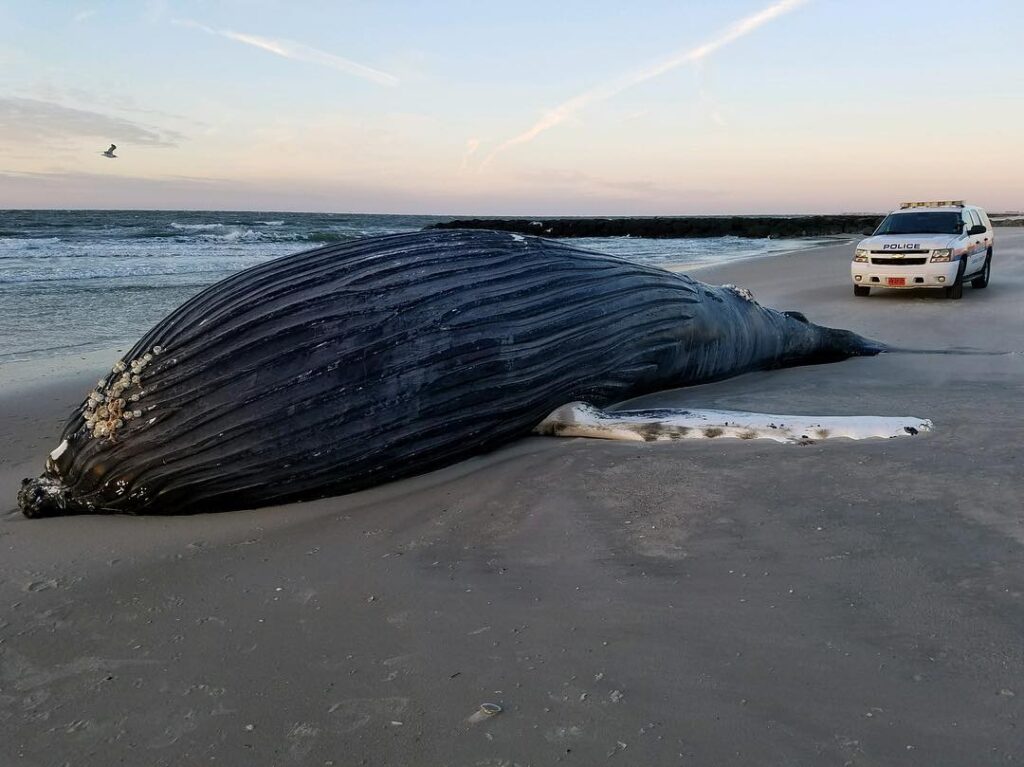A deceased humpback whale washed up on the Atlantic coast. (Nassau Police Photo)
On Sunday, March 3, 2024, a young humpback whale washed up on shore at the Oceanfront of Virginia Beach, Va. Even in death, it’s a magnificent-looking creature. These whale deaths happen, of course. That’s perfectly ok unless the poor creature was damaged when it collided with a ship or a propeller or stopped by garbage floating in the world’s oceans. We’ll find out.
I immediately wondered what would become of the Virginia Beach whale. I’m guessing it will be hauled away and disposed of (we probably don’t want to know the details). And the memory will fade. There will be an attempt to determine the cause of death.
This morning, I am thinking about Lewis and Clark. The beached whale reminds me of an incident during the winter of 1805-1806 at [Fort Clatsop](http://npshistory.com/publications/lewi/index.htm) on the Pacific Ocean.
News arrived on December 29, 1805, that a whale had washed up on the beach a couple of dozen miles from their winter compound, Fort Clatsop, which was inland. The captains mounted a recon and recovery expedition led by William Clark.
Why?
Well, they were couped up and bored. An excursion must have sounded like a welcome break. And they were “hungry.” Not hungry hungry, but hungry for something with some fat on it, something that was not half-spoiled, something that wasn’t insipid. They had been eating lean and sometimes spoiled elk meat and a swamp potato called wapato root for many weeks. And they were curious. I wonder if any of the expedition’s men, except possibly for John Ordway, had ever seen a whale before.
Then came an incident.
Fort Clatsop, the winter encampment for the Corps of Discovery from December 1805 to March 1806. A replica of the fort, built by the National Park Service in 2006 sits on the site today. (NPS)
Just as the recon group was about to set off for the coast, the Shoshone-Hidatsa Native woman Sacagawea stepped forward to register a protest. Think about this for a moment. Imagine these Euro-American army officers (with the view of the world and social hierarchies they carried) discovering that the “interpreter’s wife,” the “Indian woman,” was asserting herself. She made it clear to the captains that she wished to be part of the [excursion](https://www.nps.gov/articles/000/sacagawea-sees-the-ocean.htm). Given the awkward communications link — Hidatsa to Charbonneau, French to Francois Labiche, English to Meriwether Lewis or William Clark — it’s unclear what the captains heard from Labiche, but they got the gist of it. Sacagawea said (said, said, said) that “she had traveled a long way with us to see the great waters, and that now that monstrous fish was also to be seen, she thought it very hard she could not be permitted to see either (she had never yet been to the Ocean).”
With evident amusement and condescension, Lewis and Clark complied. It’s a great moment in the Lewis and Clark world. What Clark reports is as close as we will ever get to a direct quotation by Sacagawea. But that’s not the moral of the story for today’s whale death at Virginia Beach.
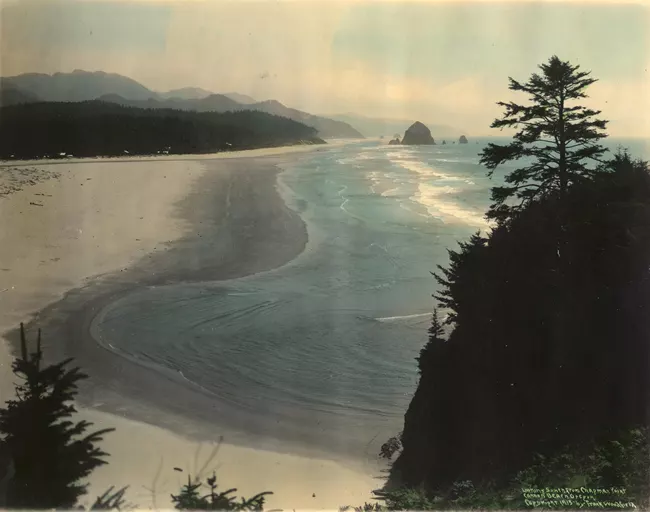Sacagawea first saw the Pacific Ocean not far from where this picture was taken. To the left is what is now called Cannon Beach, where, in 1806, a whale had just washed ashore. ([Oregon State University](https://www.nps.gov/articles/000/sacagawea-sees-the-ocean.htm))
To get to the whale, Clark and his small group had to climb up over Tillamook Head, the high-rounded peak that juts into the Pacific Ocean. As the expedition whale party sat on top to catch their breath, Tillamook and Clatsop Natives came up over the hill carrying heavy flitches of a whale on their backs. During that rest, Sacagawea surely saw the broad expanse of the Pacific for the first time from one of the best viewing spots on the West Coast.
Clark reported that when they finally reached the site, at today’s Ecola State Park near Seaside, Oregon, “the Whale was already pillaged of every valuable part by the Kil a mox Inds. in the vicinity of whose village’s it lay on the Strand where the waves and tide had driven up & left it.”
There was nothing left. Nothing but some of the skeleton and other stuff that didn’t seem useful. The rest the local Natives had harvested with an efficiency that rose to the level of art. They had extracted everything of value to their economy and their comforts: blubber, of course, which they both ate and rendered into oil; bones for weapons and other implements; intestines and other bladders to store the whale oil once rendered; such skins as could be extracted from inner organs for use in wrapping or carrying loads: fat, muscle, bone, grizzle, tallow, oil.
Clark was surprised to see how quickly the Natives had processed the whale and hauled the processed bundles to their villages. Pillaged is a strong word. He had brought some trade trinkets (the expedition was nearly bankrupt), and he managed to buy about 300 lbs. of blubber with some hard persuading. That’s it. Clark was a little offended that the Clatsop leadership was not interested in trading, at least not for what the expedition offered. “The Kil a mox although they possessed large quantities of this blubber and oil were so prenurious that they disposed of it with great reluctiance and in Small quantities only.” His “utmost exertion” (with the help of his assistant sales managers) brought the expedition only a modest sampling of blubber.
“Prenurious” Natives. What if Clark had asked himself why the Natives were not eager to trade away this unexpected bonus to their diet and food security?
Well, at least Sacagawea got to spend some time at the ocean. Earlier, she had seen the Columbia estuary and several of the deep bays and, through the fog perhaps, an imprecise glimpse of the gray ocean far off in the distance. But now she could stand on the ocean shore, wade in, taste the salt, take in the unmistakable odor of where sea meets land. But, alas, she did not get to see the monster. The skeleton was intact enough that Clark measured it at 105 feet. She probably had a sense of the whale’s size.
Unfortunately, William Clark did not record her reactions to those hours on the Pacific shore or what she thought when she saw the whale’s remains. Her protest before the excursion was recorded, but her experience seeing those wonders of the Pacific Northwest goes unremarked. No one bothered to get her reaction.
1954 postage stamp commemorating the Lewis and Clark Expedition.
There is an even more tantalizing sense of loss at work here. We got that one indirect quotation and nothing more. What if we could add her voice to the various narratives of the incredible journey? Imagine that it was somehow possible for Sacagawea to have kept her own journal! Imagine what it would say. We’d give anything for even a fragment, a scrap of her journal, and her account would now be privileged as a more “authentic” window on Lewis and Clark than what was written by those self-important exemplars of the Enlightenment. What would she say about the whale? What would she say about the ocean?
What would she say about moody and aloof Captain Lewis? Or about the black man who was Clark’s slave? Or about her dreams now that she had led them across the continent! Each of us, says La Rochefoucauld, is the hero of our own story. We’d want to know her true origin story. Was she born Shoshone, captured by the Hidatsa, and somehow married off to Charbonneau? Or was she born Hidatsa (or Crow) and captured by the Shoshone, after which she escaped and found her way back to North Dakota with the help of wolves? We’d want to know how she wound up with Charbonneau and just what she thought of him. We’d like to know what it was like to give birth at or near Fort Mandan with Captain Meriwether Lewis presiding as obstetrician. We’d want her to tell us what truly happened out there.
But no. Possibly, Sacagawea learned a few phrases in English during her time with Lewis and Clark. Still, she never had a true conversation with any of the white men, not even Clark, and certainly could not write in English or any other language. So we comb what few fragments exist out of the journals and hope we are giving them the right interpretation across so many barriers.
All that we really know about Sacagawea could be contained in a passport book. The rest is imagination, often fantasy.
But back to the moral of this whole story, inspired by events in the lower Chesapeake this weekend.
A photograph by Edward Curtis of a Chinook woman in 1910. (LOC)
In 1806, the local Natives of the Pacific coast harvested, processed, and stored the entire whale in a very short period. They wasted nothing. This one thing is clear: there was something deeply admirable about that steady-state, green, sustainable, light-footprint people who understood something about the economy and interconnectedness of life that we have forgotten or perhaps never had.
We bring in a bulldozer and haul the whale carcass off for disposal — end of story.
And that’s ok, too. We could not live the way of the Clatsop, or the Mandan, Ojibwe, Cree, or the Lakota. We couldn’t then and certainly cannot anymore, not at 340 million and counting. The economy has to grow in sophistication to accommodate humanity’s numbers and inventiveness. It’s not all good, but we’re now so rich that we’re not going to rush out to harvest the critter on the shores of the Atlantic. Besides, news reports said it had been dead for some time and was starting to smell.
I’ve never stood next to a beached whale, but a few years ago, I stood on just about the same Oregon ground next to a huge dead seal. Kneeling down to touch its sides filled me with awe. Five hours later, birds had pecked out its eyes and were burrowing into the crevices in its flesh.
Everyone on the Lewis and Clark recon team must have been disappointed that they did not get there in time to see the whale before it was dismembered, not just Sacagawea.
As students of history, including indigenous history, we can only wish that an expedition journal keeper had been there when the monster was harvested to explain the whole operation from start to finish, including the protocols and implements with which the Natives did their work. It would have been a significant moment in coastal anthropology.
All we know is that they got it all, and they were “prenurious.”
---
## ***Discover more on these topics at Listening to America***
[New England](https://ltamerica.org/tag/new-england/ "1 topics")[Rome](https://ltamerica.org/tag/rome/ "1 topics")[Video](https://ltamerica.org/tag/video/ "51 topics")[Tennessee](https://ltamerica.org/tag/tennessee/ "1 topics")[Travel](https://ltamerica.org/tag/travel/ "1 topics")[Space Exploration](https://ltamerica.org/tag/space-exploration/ "8 topics")[Vermont](https://ltamerica.org/tag/vermont/ "1 topics")[Poetry](https://ltamerica.org/tag/poetry/ "1 topics")[Theodore Roosevelt](https://ltamerica.org/tag/theodore-roosevelt/ "16 topics")[Virginia](https://ltamerica.org/tag/virginia/ "7 topics")[New York](https://ltamerica.org/tag/new-york/ "8 topics")[Walden](https://ltamerica.org/tag/walden/ "1 topics")[Republic](https://ltamerica.org/tag/republic/ "0 topics")[William Shirer](https://ltamerica.org/tag/william-shirer/ "1 topics")[Wyoming](https://ltamerica.org/tag/wyoming/ "4 topics")[North Carolina](https://ltamerica.org/tag/north-carolina/ "3 topics")[Utah](https://ltamerica.org/tag/utah/ "11 topics")[Ohio](https://ltamerica.org/tag/ohio/ "2 topics")[Wisconsin](https://ltamerica.org/tag/wisconsin/ "0 topics")[Oppenheimer](https://ltamerica.org/tag/oppenheimer/ "1 topics")[Podcast](https://ltamerica.org/tag/podcast/ "1 topics")[Water in the West](https://ltamerica.org/tag/water-in-the-west/ "24 topics")[Oregon](https://ltamerica.org/tag/oregon/ "4 topics")[South Carolina](https://ltamerica.org/tag/south-carolina/ "1 topics")[North Dakota](https://ltamerica.org/tag/north-dakota/ "53 topics")[The Constitution](https://ltamerica.org/tag/the-constitution/ "1 topics")[Rivers](https://ltamerica.org/tag/rivers/ "3 topics")[Pennsylvania](https://ltamerica.org/tag/pennsylvania/ "1 topics")[Sports](https://ltamerica.org/tag/sports/ "2 topics")[South Dakota](https://ltamerica.org/tag/south-dakota/ "16 topics")[Thomas Jefferson](https://ltamerica.org/tag/thomas-jefferson/ "34 topics")[U.S. Constitution](https://ltamerica.org/tag/u-s-constitution/ "1 topics")[Road Trips](https://ltamerica.org/tag/road-trips/ "18 topics")[State Parks](https://ltamerica.org/tag/state-parks/ "2 topics")[Steinbeck Travels](https://ltamerica.org/tag/steinbeck-travels/ "75 topics")[Washington](https://ltamerica.org/tag/washington/ "2 topics")[paintings](https://ltamerica.org/tag/paintings/ "0 topics")[Republics](https://ltamerica.org/tag/republics/ "1 topics")[Texas](https://ltamerica.org/tag/texas/ "4 topics")[Oppenheim](https://ltamerica.org/tag/oppenheim/ "0 topics")[Thoreau](https://ltamerica.org/tag/thoreau/ "5 topics")[north daktoa](https://ltamerica.org/tag/north-daktoa/ "0 topics")[Reading](https://ltamerica.org/tag/reading/ "1 topics")[U.S. Presidents](https://ltamerica.org/tag/u-s-presidents/ "71 topics")[New Mexico](https://ltamerica.org/tag/new-mexico/ "3 topics")
**Categories:** Dispatches from the Road
**Tags:** Lewis and Clark, Native Americans, Oregon
---
### [Notes on Geert Mak's In America: Travels with John Steinbeck](https://ltamerica.org/notes-on-geert-maks-in-america-travels-with-john-steinbeck/)
**Published:** March 2, 2024
**Author:** Clay Jenkinson
**Excerpt:** Mak’s In America: Travels with John Steinbeck is without question the best book written about retracing the 1960 Travels with Charley journey.
**Content:**
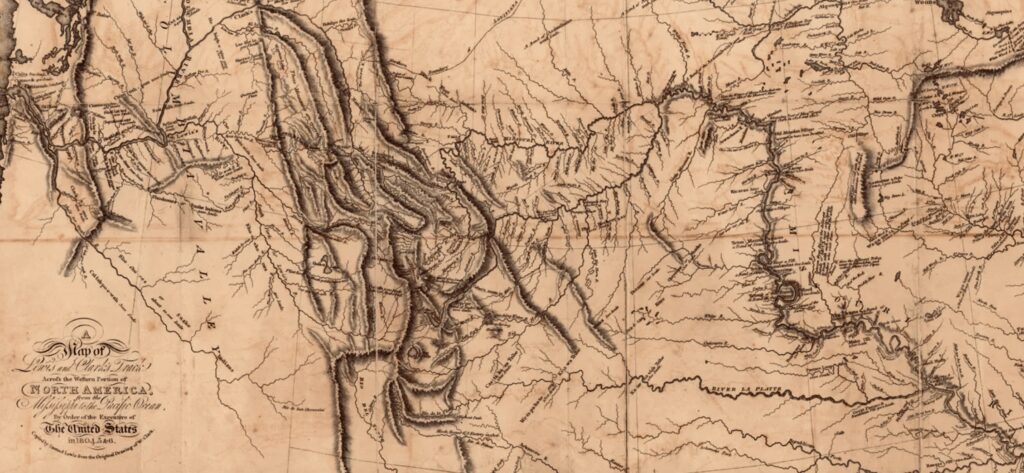Map of Lewis and Clark Expedition 1804–06. (LOC)
At the moment, I am reading Geert Mak’s *[In America: Travels with John Steinbeck](https://www.amazon.com/America-Travels-John-Steinbeck/dp/0099578735)*.
Dutch journalist Geert Mak, author of *In America: Travels with John Steinbeck*, 2015.
I’m underlining and copying out all sorts of passages. Mak’s *In America* is without question the best book ever written by someone retracing John Steinbeck’s 1960 *Travels with Charley* journey. Mak compares with Alexis de Tocqueville, whose 1835 *Democracy in America* is widely regarded as the best book ever written about America by a foreigner. *In America*, is a mirror we can gaze into if we have the courage to do so. To see ourselves reflected in the eyes of a thoughtful and not uncritical foreign observer is a gift to us as Americans.
So here I am on page 284 of *In America*, and Geert Mak, a Dutch journalist, and man of letters, turns to Jefferson and the Lewis and Clark Expedition.
Now, this is something I know a great deal about. Mak rightly says that in 1800, the Euro-Americans did not know much about the continent’s deep interior. There were lots of blank spots, conjectural rivers, and mountain ranges. The [Aaron Arrowsmith map ](https://www.loc.gov/resource/g3700.ct006965/?r=-0.669,-0.005,2.337,0.948,0)of North America in 1800 has blanks and “terra incognita” worthy of a mid-19th century map of Africa.
Then Mak writes:
*In 1803, President Thomas Jefferson set up a Corps of Discovery, and in 1804, thirty soldiers and Native scouts set off from St. Louis, led by Meriwether Lewis and William Clark. Their task was to seek a trade route from the eastern seaboard to the west coast and, if possible, a northern passage for shipping to Asia. They were also ordered to investigate opportunities for economic exploitation of the West of the continent.*
*In total, they covered 8,000 miles …*
Ok. It was 7,689 miles, to be exact. In May 1804, about 50, not 30, men left St. Charles, Missouri, for the journey to the Pacific Coast and back. There were no “Native scouts” unless you regard the expedition’s best hunter and trailsman, George Drouillard (part Pawnee, part French), as a Native scout.
These are small matters, perhaps even harmless errors — especially in a book about something else.
Then, however, things begin to trouble me. I suppose it can be said that Lewis and Clark were seeking a trade route and a northern passage for shipping to Asia, but this is the least positive gloss Mak could give that extraordinary mission of discovery. Jefferson wanted to know what was out there in the country, “two thousand miles in width upon which the foot of civilized man had never trodden,” as Lewis put it, as they left their winter quarters in North Dakota. Lewis and Clark were conducting an inventory of the continent, or at least of the Louisiana Purchase, consummated by Jefferson in 1803. They were amateur Enlightenment scientists, particularly Lewis, performing all the rites of latitude and longitude to locate every remarkable thing they observed on the world grid. They were ethnographers expected to bring back data (including vocabularies) about the more than 50 Native American nations they met to make commercial trading posts possible deep in the interior and help Enlightenment thinkers work out what was then called “the science of man.”
There was a high-mindedness to the Lewis and Clark Expedition that Mak fails to acknowledge.
I don’t know if Geert Mak is trying to belittle Lewis and Clark by making them primarily agents of commercial trade, like early advance men for UPS or FedEx. Or if that is how he understands the story. If any American episode deserves to be regarded as an American Epic, it is the Lewis and Clark Expedition.
At least he did not say Sacagawea was their guide.
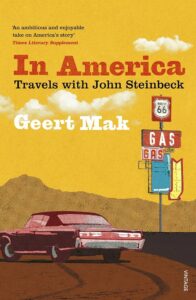Geert Mak’s *In America: Travels with John Steinbeck*, published in 2015.
Did Lewis and Clark come back to report that the West was “mostly desert, incapable of cultivation, unfit for white people?” I don’t see evidence for that. Lewis thought part of eastern Montana was too arid to be settled by white people (he was apparently correct), and he found the Great Plains’ treelessness eerie and bewildering. Still, I don’t think he wrote the West off as uninhabitable. He did wonder what settlers would use for building their houses and fences.
Small matters in a large and impressive book. I’ll be interviewing Mr. Mak in a couple of weeks. He will dial in from the low countries. I’ll be here on the Great Plains and don’t intend to bring any of this up. There are too many splendid insights to get stuck on this hobby horse. But if he returns to America, I plan to show him some wonders along the Lewis and Clark Trail.
---
## ***Discover more on these topics at Listening to America***
[Oregon](https://ltamerica.org/tag/oregon/ "4 topics")[New Mexico](https://ltamerica.org/tag/new-mexico/ "3 topics")[Texas](https://ltamerica.org/tag/texas/ "4 topics")[Tennessee](https://ltamerica.org/tag/tennessee/ "1 topics")[Wyoming](https://ltamerica.org/tag/wyoming/ "4 topics")[Vermont](https://ltamerica.org/tag/vermont/ "1 topics")[Rivers](https://ltamerica.org/tag/rivers/ "3 topics")[State Parks](https://ltamerica.org/tag/state-parks/ "2 topics")[Road Trips](https://ltamerica.org/tag/road-trips/ "18 topics")[Theodore Roosevelt](https://ltamerica.org/tag/theodore-roosevelt/ "16 topics")[Thoreau](https://ltamerica.org/tag/thoreau/ "5 topics")[Utah](https://ltamerica.org/tag/utah/ "11 topics")[Oppenheimer](https://ltamerica.org/tag/oppenheimer/ "1 topics")[Republics](https://ltamerica.org/tag/republics/ "1 topics")[The Constitution](https://ltamerica.org/tag/the-constitution/ "1 topics")[Podcast](https://ltamerica.org/tag/podcast/ "1 topics")[William Shirer](https://ltamerica.org/tag/william-shirer/ "1 topics")[New York](https://ltamerica.org/tag/new-york/ "8 topics")[Oppenheim](https://ltamerica.org/tag/oppenheim/ "0 topics")[Ohio](https://ltamerica.org/tag/ohio/ "2 topics")[Water in the West](https://ltamerica.org/tag/water-in-the-west/ "24 topics")[north daktoa](https://ltamerica.org/tag/north-daktoa/ "0 topics")[Republic](https://ltamerica.org/tag/republic/ "0 topics")[Rome](https://ltamerica.org/tag/rome/ "1 topics")[South Carolina](https://ltamerica.org/tag/south-carolina/ "1 topics")[North Carolina](https://ltamerica.org/tag/north-carolina/ "3 topics")[Virginia](https://ltamerica.org/tag/virginia/ "7 topics")[Walden](https://ltamerica.org/tag/walden/ "1 topics")[North Dakota](https://ltamerica.org/tag/north-dakota/ "53 topics")[Pennsylvania](https://ltamerica.org/tag/pennsylvania/ "1 topics")[South Dakota](https://ltamerica.org/tag/south-dakota/ "16 topics")[Steinbeck Travels](https://ltamerica.org/tag/steinbeck-travels/ "75 topics")[Poetry](https://ltamerica.org/tag/poetry/ "1 topics")[Space Exploration](https://ltamerica.org/tag/space-exploration/ "8 topics")[U.S. Presidents](https://ltamerica.org/tag/u-s-presidents/ "71 topics")[Washington](https://ltamerica.org/tag/washington/ "2 topics")[Sports](https://ltamerica.org/tag/sports/ "2 topics")[New England](https://ltamerica.org/tag/new-england/ "1 topics")[Travel](https://ltamerica.org/tag/travel/ "1 topics")[Thomas Jefferson](https://ltamerica.org/tag/thomas-jefferson/ "34 topics")[Reading](https://ltamerica.org/tag/reading/ "1 topics")[Wisconsin](https://ltamerica.org/tag/wisconsin/ "0 topics")[Video](https://ltamerica.org/tag/video/ "51 topics")[U.S. Constitution](https://ltamerica.org/tag/u-s-constitution/ "1 topics")[paintings](https://ltamerica.org/tag/paintings/ "0 topics")
**Categories:** Books
**Tags:** Books, Great Plains, John Steinbeck, Lewis and Clark
---
### [Printed Maps and an Atlas: Old School, Indeed!](https://ltamerica.org/printed-maps-and-an-atlas-old-school-indeed/)
**Published:** February 23, 2024
**Author:** Clay Jenkinson
**Excerpt:** We’re hard at work detailing plans to follow in the footsteps of John Steinbeck’s journey chronicled in Travels With Charley.
**Content:**
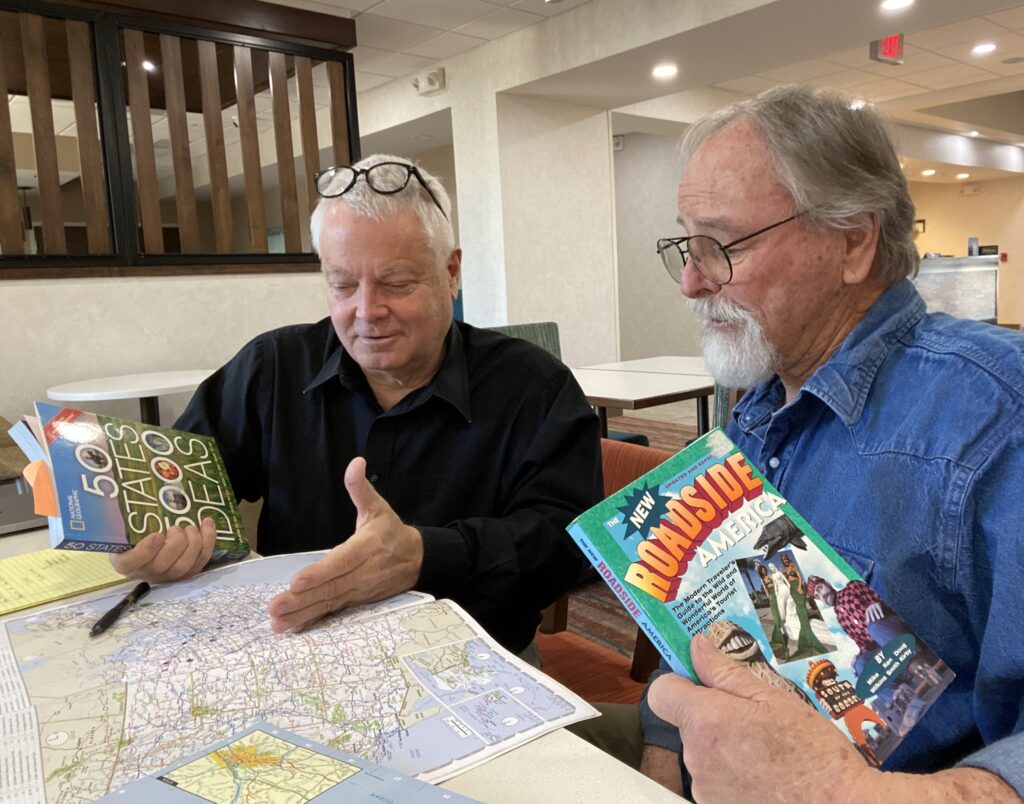Clay and Listening to America’s chief scout, Frank Lister, plan the route for the LTA *Travels With Charley* expedition beginning in May.
**Carefree, Arizona** — I’ve spent the last two days working with my friend Frank Lister on the great *Travels with Charley* tour itinerary for 2024. I’ll start from Bismarck on or about May 2. Steinbeck traveled the perimeter of the United States. So will I. The journey will roll out in three phases: Bismarck to Sag Harbor on Long Island and back again; Bismarck to Amarillo, Texas, and back; and Amarillo to New Orleans and then up the east coast to New York City.
Frank brought an atlas and three or four books about campgrounds, roadside attractions, national parks, etc. I brought a different atlas. We both had colored magic markers. And, of course, I had a copy of Steinbeck’s *Travels with Charley* and Bill Steigerwald’s critique of Steinbeck’s journey (which he regarded as largely fictional), *[Dogging Steinbeck](https://medium.com/@www.truthaboutcharley.com/dogging-steinbeck-was-a-big-trip-a149264bf105)*.
We spread out in our hotel lobby on a vast table that fortunately had USB ports and electrical outlets. We plugged in computers and an iPad, spread out the maps, and went to work. It was an impressive sight. Several people having breakfast or wandering through came by to ask what we were doing, offer advice, and tell us how much they would like to do such a thing. Of course, they wondered whether I would take a dog. (And they didn’t even see the Airstream, with its elegant Listening to America logo on the side!)
It was a long day. We made great progress. We plotted a plausible route, preferring back roads (blue highways) whenever possible and staying as close to Steinbeck’s actual route as practicable. Of course, there are countless other things I want to see on the great journey, so we had to make hard choices about what was possible in the three five-week segments. We picked potential stopping points and even campsites. I looked up distances between stops on my smartphone. But Frank brought a geometrician’s compass and showed off by twirling it over the physical maps. He was spot on in his retro calculations.
We went out for lunch to take a break, but even then, we could not stop talking, planning, imagining, and dreaming about the journey.
> **The girls looked at us initially puzzled, but then one of them said joyously, “Wow. So old school.”**
By the end of the day, we were exhausted. Just as we were about to fold up the maps and close the atlases, a mother walked past our table with her two children, both girls, one about nine, the other perhaps seven. The girls looked at us initially puzzled, but then one of them said joyously, “Wow. So old school.” Their mother quickly shushed them as if they were passing through a nursing home or a museum with realistic animatronic geezers.
Printed maps!
Frank is in his 70s, I’m in my 60s. We laughed with joy and shame, moved about 50 feet into the bar, and ordered beers. We felt medieval.
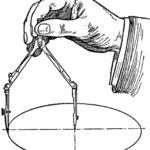
It was sweet and amusing. We only wished we could stop the blushing mother long enough to explain to her daughters how printed maps worked. I would have enjoyed Frank trying to explain his compass, and I might have quoted a few lines from John Donne’s [*A Valediction Forbidding Mourning*](https://www.poetryfoundation.org/poems/44131/a-valediction-forbidding-mourning), which pivots on a geometer’s compass. Thank goodness Frank left his astrolabe at home.
I can’t imagine making any long journey in America without a map or an atlas. Those young people cannot imagine making a journey without letting Google Maps take care of the navigation.
Old School, indeed. Our new nicknames are [Mercator](https://education.nationalgeographic.org/resource/gerardus-mercator/) and [Ptolemy](https://www.britannica.com/biography/Ptolemy).
---
## ***Discover more on these topics at Listening to America***
[New York](https://ltamerica.org/tag/new-york/ "8 topics")[Tennessee](https://ltamerica.org/tag/tennessee/ "1 topics")[The Constitution](https://ltamerica.org/tag/the-constitution/ "1 topics")[New Mexico](https://ltamerica.org/tag/new-mexico/ "3 topics")[South Dakota](https://ltamerica.org/tag/south-dakota/ "16 topics")[Oppenheimer](https://ltamerica.org/tag/oppenheimer/ "1 topics")[Texas](https://ltamerica.org/tag/texas/ "4 topics")[Republic](https://ltamerica.org/tag/republic/ "0 topics")[Oregon](https://ltamerica.org/tag/oregon/ "4 topics")[paintings](https://ltamerica.org/tag/paintings/ "0 topics")[William Shirer](https://ltamerica.org/tag/william-shirer/ "1 topics")[Vermont](https://ltamerica.org/tag/vermont/ "1 topics")[North Carolina](https://ltamerica.org/tag/north-carolina/ "3 topics")[Utah](https://ltamerica.org/tag/utah/ "11 topics")[State Parks](https://ltamerica.org/tag/state-parks/ "2 topics")[Steinbeck Travels](https://ltamerica.org/tag/steinbeck-travels/ "75 topics")[Wyoming](https://ltamerica.org/tag/wyoming/ "4 topics")[Thoreau](https://ltamerica.org/tag/thoreau/ "5 topics")[north daktoa](https://ltamerica.org/tag/north-daktoa/ "0 topics")[Reading](https://ltamerica.org/tag/reading/ "1 topics")[Space Exploration](https://ltamerica.org/tag/space-exploration/ "8 topics")[Rivers](https://ltamerica.org/tag/rivers/ "3 topics")[North Dakota](https://ltamerica.org/tag/north-dakota/ "53 topics")[Rome](https://ltamerica.org/tag/rome/ "1 topics")[Republics](https://ltamerica.org/tag/republics/ "1 topics")[Road Trips](https://ltamerica.org/tag/road-trips/ "18 topics")[U.S. Constitution](https://ltamerica.org/tag/u-s-constitution/ "1 topics")[Oppenheim](https://ltamerica.org/tag/oppenheim/ "0 topics")[Podcast](https://ltamerica.org/tag/podcast/ "1 topics")[Ohio](https://ltamerica.org/tag/ohio/ "2 topics")[Water in the West](https://ltamerica.org/tag/water-in-the-west/ "24 topics")[South Carolina](https://ltamerica.org/tag/south-carolina/ "1 topics")[Walden](https://ltamerica.org/tag/walden/ "1 topics")[Pennsylvania](https://ltamerica.org/tag/pennsylvania/ "1 topics")[New England](https://ltamerica.org/tag/new-england/ "1 topics")[Virginia](https://ltamerica.org/tag/virginia/ "7 topics")[Travel](https://ltamerica.org/tag/travel/ "1 topics")[Sports](https://ltamerica.org/tag/sports/ "2 topics")[Poetry](https://ltamerica.org/tag/poetry/ "1 topics")[Video](https://ltamerica.org/tag/video/ "51 topics")[Wisconsin](https://ltamerica.org/tag/wisconsin/ "0 topics")[Washington](https://ltamerica.org/tag/washington/ "2 topics")[Thomas Jefferson](https://ltamerica.org/tag/thomas-jefferson/ "34 topics")[Theodore Roosevelt](https://ltamerica.org/tag/theodore-roosevelt/ "16 topics")[U.S. Presidents](https://ltamerica.org/tag/u-s-presidents/ "71 topics")
**Categories:** Dispatches from the Road
**Tags:** America at 250, Books, John Steinbeck
---
### [My Life as a Space Junkie](https://ltamerica.org/my-life-as-a-space-junkie/)
**Published:** February 18, 2024
**Author:** Clay Jenkinson
**Excerpt:** I’ve been captivated by humanity’s exploration of the heavens since I was a boy growing up on the plains of western North Dakota.
**Content:**
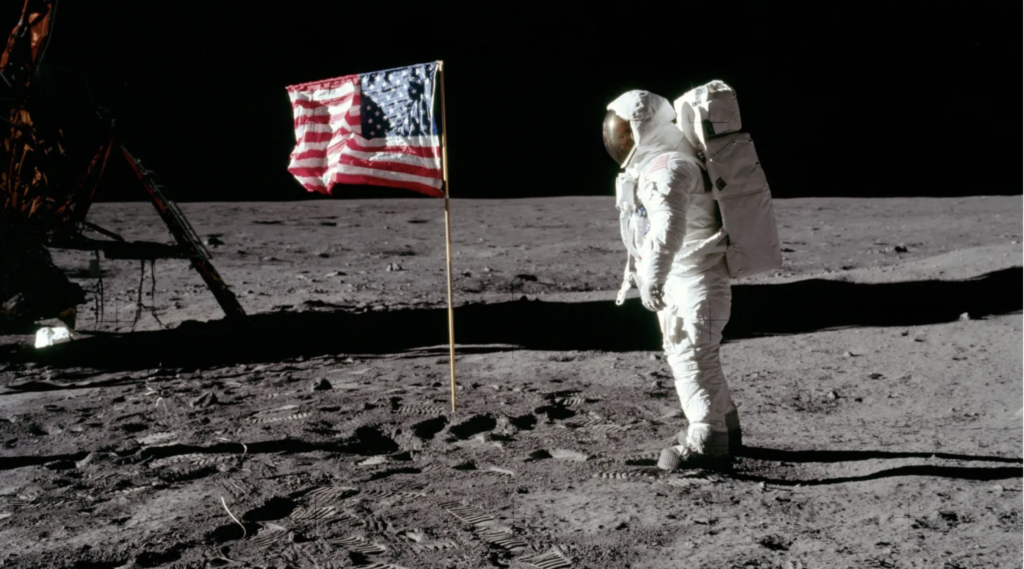Astronaut Buzz Aldrin stands on the moon facing a U.S. flag during the Apollo 11 mission in July 1969. (NASA)
I’ve been a space junkie since I was a boy growing up on the plains of western North Dakota. During the Mercury and Gemini programs, our teachers used to roll in a small television set to the classroom during launches. We’d sit breathlessly through the countdowns, often delayed by hours or days.
I remember coming home from school the day that Gemini VIII astronauts Neil Armstrong and David Scott survived an in-flight emergency when their spacecraft went into a spin that would likely have broken up the capsule or caused their brains to blink out had it continued even a few minutes longer. We held hands in our living room.
At that time, I knew each of the astronauts as we knew each of the Beatles. I could rattle off thrust rates for all of the launch vehicles. I’d sit for hours in front of our black and white TV listening to Walter Cronkite and North Dakota’s favorite son, Eric Sevareid, make commentary during the inevitable delays.
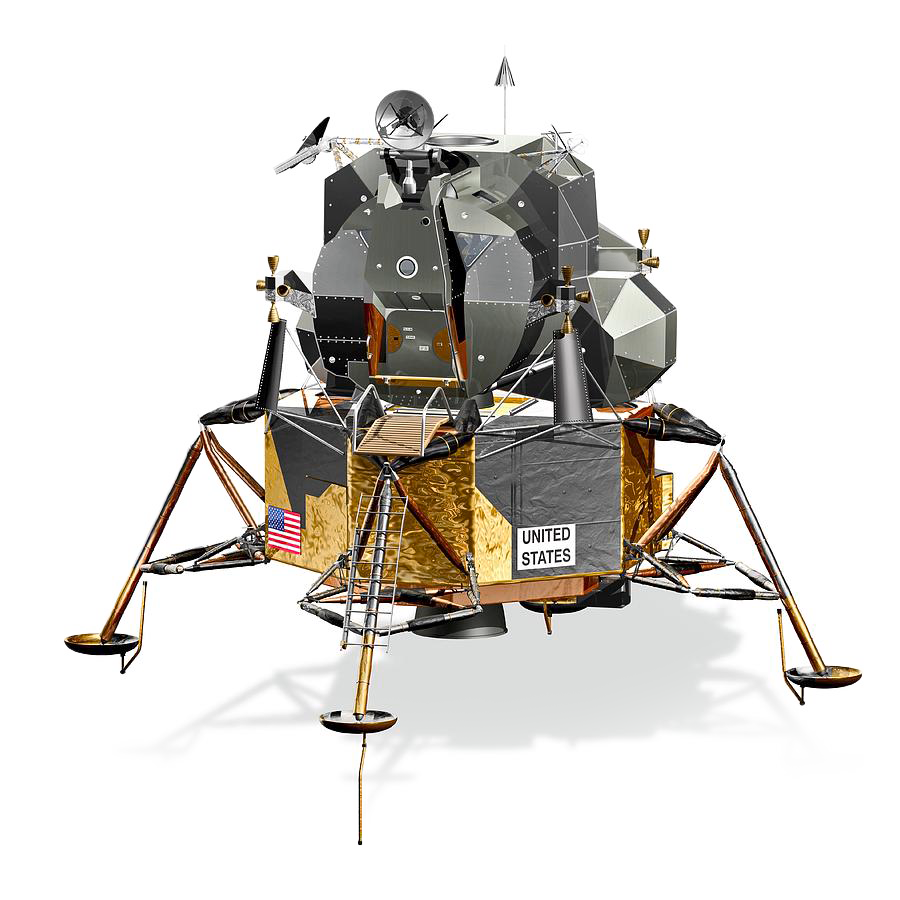The Lunar Excursion Module (LEM) allowed the Apollo astronauts to land on the moon.
I was walking in downtown Dickinson, my hometown of 13,000, when the [Apollo XI Lunar Excursion Module (LEM)](https://discoverspace.org/artifacts/lunar-module/) touched down on the moon. I watched the coverage of the landing through the window of the “Coast to Coast” store near the bank where my father worked. “Houston, Tranquility Base Here. The Eagle has landed.”
My parents gave me my first 35mm camera for my eighth-grade Christmas. It was the greatest gift I ever received, and it changed my life’s trajectory (note the use of space metaphor here!). Hours before Neil Armstrong stepped onto the moon’s surface on July 20, 1969, I had set up my camera on a tripod opposite the rounded screen of our television. I turned off all the lights in our “den.” I took three rolls of Tri-X B/W film of that first hour on the moon. My sister, who was bored with the whole thing but felt compelled to sit through some of it, made fun of me for my attempt to capture the moment on film. This was before VCRs. Live television came and then went. I was not going to miss the moment.
I still have the photos I took that day. Sometimes, I gaze at them and find myself falling into a vortex of nostalgia for another time in America’s history.
I remember precisely where I was when the Challenger blew up on January 28, 1986. I was in the University of North Dakota student union in Grand Forks. No cell phones, then. I rushed to the nearest pay phone, called my wife at home, and said, “Turn on the TV,” and hung up.
President Ronald Reagan gave one of his greatest speeches that night. What I loved most about it was not the overused “slipped the surly bonds of earth” quotation from John Gillespie Magee’s *High Flight*, but Reagan’s statement that “I wish I could talk to every man and woman who works for NASA or who worked on this mission and tell them, ‘Your dedication and professionalism have moved and impressed us for decades. And we know of your anguish. We share it.’ ” American presidents are at their best when they inspire, bring the right words of condolence at times of national loss and catastrophe, and honor the great office they hold by exhibiting dignity, decorum, empathy, and compassion.
Play
President Ronald Reagan’s Speech on Space Shuttle Challenger, January 28, 1986.
I vaguely remember where I was when the Columbia broke up on re-entry on February 1, 2003.
My daughter was home for the Pandemic when the first manned SpaceX mission flew on Saturday, May 30, 2020. She was 25. I was 65. We held hands because we wanted it to succeed, the U.S. to return to space under its own rocketry, and hoped there was no fatal setback to that work.
I thought Apollo 14’s Alan Shepard hitting golf balls on the moon was dumb, diminishing the dignity of the moment. Still, I loved it when Apollo 15’s David Scott proved that Galileo had been spot on back in 1589 (possibly 1592) when he dropped two spheres of the same volume but different masses over the lip of the Tower of Pisa.
I’m not sure what to make of Buzz Aldrin’s taking communion on the moon just after they landed on July 20, 1969, but I’m utterly fascinated by that seeming paradox of Newtonian science and the deepest of Christian mysteries, inevitably irrational and “non-scientific,” in such tight juxtaposition.
I was with my family on Christmas Eve 1968 when Frank Borman, William Anders, and James Lovell read the first 10 verses of Genesis from lunar orbit. It was one of the greatest moments of my life, and I still choke up every time I watch the video on YouTube. Even my father, an atheist, could not maintain his composure.
Play
Apollo 8’s Christmas Eve 1968 Message.
I have a library of about 200 books on the space program, from the birth of rocketry to the recent privatization of space flight, with more coming. I just received and read [Tim Peake’s](https://timpeake.com/books/) 2023 *Space: The Human Story* and I pulled down and read *[Homesteading Space: The Skylab Story](https://www.amazon.com/Homesteading-Space-Outward-Odyssey-Spaceflight/dp/0803236395).* Reading all the space books in one yearlong odyssey of self-indulgence would be fun to get back up to speed.
I was glad that John Glenn got back into space at 77, but I was disappointed when William Shatner booked a ride, especially because he was terrified. So much for James T. Kirk.
I’ve watched all the space movies. There is no substitute for *Apollo 13*, of course. Tom Hanks IS James Lovell. I watched the first eight or nine episodes of *For All Mankind* until it got too weird for me. I love *The Martian* in part because I love Matt Damon and (more) Jessica Chastain. The book is better. But the book is always better. I also love *Gravity* with Sandra Bullock, even though the dialogue is moronic. No film gives you a more visceral sense of how movement works (or doesn’t) without gravity and an Archimedean place to put your feet.
Veteran NASA space shuttle astronaut Tom Jones.
Astronaut Tom Jones (53 days in space) is a good friend of mine. He and I have done programs together where he is astronaut Tom Jones, and I pretend to be Meriwether Lewis, and we answer all the questions: what do you eat? How do you keep records? How was re-entry to everyday life? How do you eliminate bodily wastes? What kind of records or journals did you keep? It was great fun.
And I had the chance to interview ISS astronaut John Phillips while he glided over my head! It was for a 13-part NPR radio documentary on the Lewis and Clark Expedition. We had 20 minutes together. I was in Portland. He was orbiting the planet. And — mirabile dictu — when I asked the last question, where precisely are you now, he truthfully said, “I’m looking down at the Three Forks of the Missouri River in Montana.” I nearly swooned.
If I had the chance to fly to Mars knowing that I could not return, would I?
Instantly, unhesitatingly, absolutely, and with not the slightest regret.
The fascination continues, but it will never be the same as when the Cold War was at its height. The future of humankind seemed to be at stake, and we huddled around grainy black-and-white sets and listened to Walter Cronkite explain what a glorious adventure we were on. I have a huge LEGO model of the Saturn V rocket on a stand in my living room. Sometimes, I sit in front of it and ask myself, would I get into that capsule in 1968 when it had never flown with humans before and the previous two test flights had been problematic?
There is no possible way; before I reply, Suit and beam me up.
---
*Editor’s note: This is the first of two articles by Clay on exploring space. *You can read the other here:** *[Space: The Final and Unforgiving Frontier](https://ltamerica.org/space-the-final-and-unforgiving-frontier/)*
---
## ***Discover more on these topics at Listening to America***
[Walden](https://ltamerica.org/tag/walden/ "1 topics")[North Carolina](https://ltamerica.org/tag/north-carolina/ "3 topics")[Steinbeck Travels](https://ltamerica.org/tag/steinbeck-travels/ "75 topics")[Wisconsin](https://ltamerica.org/tag/wisconsin/ "0 topics")[Utah](https://ltamerica.org/tag/utah/ "11 topics")[north daktoa](https://ltamerica.org/tag/north-daktoa/ "0 topics")[Ohio](https://ltamerica.org/tag/ohio/ "2 topics")[Water in the West](https://ltamerica.org/tag/water-in-the-west/ "24 topics")[Thoreau](https://ltamerica.org/tag/thoreau/ "5 topics")[Thomas Jefferson](https://ltamerica.org/tag/thomas-jefferson/ "34 topics")[South Dakota](https://ltamerica.org/tag/south-dakota/ "16 topics")[State Parks](https://ltamerica.org/tag/state-parks/ "2 topics")[Sports](https://ltamerica.org/tag/sports/ "2 topics")[Reading](https://ltamerica.org/tag/reading/ "1 topics")[William Shirer](https://ltamerica.org/tag/william-shirer/ "1 topics")[New Mexico](https://ltamerica.org/tag/new-mexico/ "3 topics")[Poetry](https://ltamerica.org/tag/poetry/ "1 topics")[Oppenheim](https://ltamerica.org/tag/oppenheim/ "0 topics")[Theodore Roosevelt](https://ltamerica.org/tag/theodore-roosevelt/ "16 topics")[Rome](https://ltamerica.org/tag/rome/ "1 topics")[New York](https://ltamerica.org/tag/new-york/ "8 topics")[South Carolina](https://ltamerica.org/tag/south-carolina/ "1 topics")[Rivers](https://ltamerica.org/tag/rivers/ "3 topics")[Virginia](https://ltamerica.org/tag/virginia/ "7 topics")[Video](https://ltamerica.org/tag/video/ "51 topics")[U.S. Presidents](https://ltamerica.org/tag/u-s-presidents/ "71 topics")[Texas](https://ltamerica.org/tag/texas/ "4 topics")[Washington](https://ltamerica.org/tag/washington/ "2 topics")[Pennsylvania](https://ltamerica.org/tag/pennsylvania/ "1 topics")[Tennessee](https://ltamerica.org/tag/tennessee/ "1 topics")[Podcast](https://ltamerica.org/tag/podcast/ "1 topics")[Space Exploration](https://ltamerica.org/tag/space-exploration/ "8 topics")[Republic](https://ltamerica.org/tag/republic/ "0 topics")[Vermont](https://ltamerica.org/tag/vermont/ "1 topics")[U.S. Constitution](https://ltamerica.org/tag/u-s-constitution/ "1 topics")[Road Trips](https://ltamerica.org/tag/road-trips/ "18 topics")[Wyoming](https://ltamerica.org/tag/wyoming/ "4 topics")[Republics](https://ltamerica.org/tag/republics/ "1 topics")[paintings](https://ltamerica.org/tag/paintings/ "0 topics")[New England](https://ltamerica.org/tag/new-england/ "1 topics")[North Dakota](https://ltamerica.org/tag/north-dakota/ "53 topics")[The Constitution](https://ltamerica.org/tag/the-constitution/ "1 topics")[Oregon](https://ltamerica.org/tag/oregon/ "4 topics")[Oppenheimer](https://ltamerica.org/tag/oppenheimer/ "1 topics")[Travel](https://ltamerica.org/tag/travel/ "1 topics")
**Categories:** Dispatches from the Road
**Tags:** Books, North Dakota, Space Exploration, U.S. Presidents
---
### [Space: The Final and Unforgiving Frontier ](https://ltamerica.org/space-the-final-and-unforgiving-frontier/)
**Published:** February 19, 2024
**Author:** Clay Jenkinson
**Excerpt:** The inverted landing of the $125 million Japan Space Agency lunar probe makes us realize not what can go wrong but how many things must go exactly right for one of these incredibly complicated space missions to succeed.
**Content:**
## **“We do these things not because they are easy, but because they are hard.” *President John F. Kennedy*.**
President John Kennedy on May 25, 1961, announcing the goal of putting a man on the moon by the end of the decade. (NASA)
These things happen. John F. Kennedy had it right. At Rice University on September 12, 1962, [he said](https://www.jfklibrary.org/learn/about-jfk/historic-speeches/address-at-rice-university-on-the-nations-space-effort), “We do these things not because they are easy, but because they are hard.”
The Japanese lunar probe’s (SLIM) [failure](https://www.pbs.org/newshour/science/japans-1st-moon-lander-has-hit-its-target-but-it-appears-to-be-upside-down) has percolated in my mind for the last couple of weeks. The probe made a pinpoint landing near the rim of the Shioli Crater on January 19, within 300 feet of its target. Unfortunately, it landed on its head!
I think of the thousands of Japanese engineers, scientists, computer specialists, astronomers, and navigation experts who worked on this project for over a decade and the 125.7 million Japanese citizens who watched this great national enterprise with breathless pride.
With the landing, however imperfect, Japan became the fifth nation to land a probe on the moon: USSR (1956), USA (1966), China (2013), India (2008), and Japan (2024).
Feverish work at Japan’s space agency JAXA has enabled the SLIM probe to perform some of its intended functions — even upside down. Just before it landed, SLIM released two miniature rovers, one of which took the now-famous photograph of the probe looking like R2-D2 on a very bad day. The engineers at JAXA have managed to coax SLIM into analyzing 10 moon rocks, more than had been expected, and one JAXA official said, “We are hoping that the rock analysis will lead us to the origin of the moon.”
An artist’s rendering of Japan’s SLIM lunar explorer.
Amazing.
The inverted landing of the $125 million SLIM probe makes us realize not what can go wrong but how many things must go exactly right for one of these incredibly complicated space missions to succeed. The Japanese probe, as Maxwell Smart (Agent 86) used to say on *Get Smart*, “missed it by that much!” I remember learning that the Saturn V rocket (the one that took Apollo astronauts to the moon) had more than 5 million parts. (Techno-moron that I am; I had always thought of the rocket as just a big empty tube with lots of fuel in it!)
Think of all the things that must go right even to achieve a soft landing on the moon:
1. The rocket had to lift the payload off the launchpad and into space until the stern drag of the Earth’s gravity was overcome.
2. The probe had to make midcourse corrections to ensure it would not miss the moon.
3. Retro rockets had to fire to slow the probe down to ensure a soft landing.
Sound easy? A lunar probe is projected from one moving (and spinning!) orb to another moving orb a quarter of a million miles away. This is like using a rifle to fire a bullet from a moving speedboat at a cheetah sprinting across a landscape three miles away. Every successful rendezvous — with another spacecraft or with another celestial body — is a triumph of Newtonian mechanics. And some tricky math!
Japan’s probe achieved the most precise landing in space exploration history. Missions are regarded as successful if probes land within a few kilometers of their intended target. Japan’s unprecedented precision was made possible thanks to the usual landing radar systems and an ingenious laser system that calculated the probe’s precise altitude above the lunar surface.
Japan will return to the moon soon; this time, they will likely get it right.
First, space ventures seldom go as planned. It is worth noting that the Soviet Union’s first moon probe, Luna 2, crashed near the Sea of Serenity on September 14, 1959. Early U.S. attempts to send vehicles to the moon routinely failed, mostly on the launch pad or near the Earth. Ranger 3 in 1962 missed the moon altogether. Ranger 4, later that spring, hit the far side of the moon and lost contact with the Earth. Ranger 6 in 1964 impacted the moon but sent no photographs due to a power failure. It was on June 2, 1966, that the U.S. accomplished a successful soft landing on the moon with its probe Surveyor 1.
America’s first rockets blew up on or just above the launch pad so often in the late ’50s and early ’60s that astronaut Guss Grissom witnessing the explosion of an unmanned Atlas 7-D rocket shortly after liftoff on May 18, 1959, less than a year before that same rocket hurled Alan Shepard into space, said, “Are we really going to get on top of one of those things?” Shepard, who was also on hand to witness the explosion, said, in a perfect exhibit of the “right stuff,” “Well, I’m glad they got *that* out of the way.”
## **It’s Still Hard**
More than half a century later, things routinely go wrong even for the two principal members of the Space Exploration club. Russia’s Luna 25 lander crashed on the moon in [August 2023](https://www.space.com/russia-luna-25-moon-crash-cause-found#). This was the first Russian moon mission in 47 years. In part because Vladimir Putin wants Russia to regain its status as a major world power, the crash was a devastating blow to national prestige.
Remember, however, that the USSR held the lead over the U.S. in space achievements for an entire decade. Russia was first to put a satellite in orbit, first to put a man in space (Yuri Gagarin 1961), first to put a woman in space (Valentina Tereshkova 1963), first to send two and then three individuals into orbit at the same time, first to conduct a spacewalk (Alexie Leonov 1965), first to place a controlled rover on the moon (1970) and first to send a probe to the moon (1959).
Nor is the U.S. immune. Remember when America’s Mars Climate Orbiter [missed the red planet in September 1999](https://solarsystem.nasa.gov/news/155/nasas-mars-climate-orbiter-believed-to-be-lost/) because engineers at the Jet Propulsion Laboratory in Pasadena, California, failed to make a simple conversion from English units to metric? That mission may represent the greatest single blunder — the greatest single unforced error — in space exploration history. Well, there is the Hubble Telescope’s initially out-of-focus lens and mirror system (1994). The telescope was given corrective lenses on one of the five Space Shuttle missions servicing Hubble.
## **Even Now, in 2024**
The Peregrine lunar landing mission launched on January 8 this year did not survive a catastrophic fuel leak just hours into its flight. It is thought to have burned up when Astrobotic, a Pittsburgh-based company under contract with NASA, redirected the stricken craft to return to its home planet and burn up over the Pacific Ocean.
Just last Thursday, February 15, however, another lunar probe, [Odysseus](https://www.popsci.com/science/intuitive-moon-landing-launch/), a lunar lander developed by a Houston-based company called Intuitive Machines, successfully began a journey that should permit it to land at a crater named Malapert A near the moon’s south pole. Stay tuned.
NASA hopes to send its four-personed Artemis II mission to orbit (but not land on) the moon sometime in 2025 or 2026. China has said it will send humans to the moon by 2030.
NASA’s Artemis II crew, clockwise from top, Victor Glover, Jeremy Hansen, Reid Wiseman and Christina Koch. (NASA)
Thus far, only 12 individuals, all men, and all Americans, have walked on the moon. The last was Eugene Cernan, the Apollo 17 commander, on December 14, 1972. The failure of the Japanese mission, the 2023 Russian Luna-25 mission, and the American Peregrine mission remind us that America was … well, lucky to get them there safely and bring them home safely, given how often things go wrong in space travel. Before the advent of the problematic Space Shuttle (1981), no American astronaut had died in space, though three men were killed on the ground when fire broke out in the Apollo 1 Command Module on January 27, 1967.
The fact that the Lunar Excursion Module (LEM) on Apollo missions 11, 12, 14, 15, 16, and 17 landed safely on the moon is little short of a miracle.
Back then, NASA was working with what today we regard as primitive technologies — meager onboard computers, rudimentary video cameras, and highly pixilated digital photographs. Through Apollo 17, the slide rule was as crucial as the crude computers available in Houston and aboard the spacecrafts.
The Space Shuttle Challenger blew up shortly after takeoff on January 28, 1986 (O-ring failure), killing seven. The Space Shuttle Columbia broke up over Texas as it returned from a 16-day mission on February 1, 2003, killing seven.
So far, humans have sent more than 680 individuals into space. The overwhelming majority of them have returned safely to Earth, often with spiritual epiphanies they are sometimes eager and sometimes reticent to reveal. The Russians have never been very forthcoming about the cosmonauts who have died in space or on the launch pad. The best estimates suggest that approximately 30 men and women have lost their lives during or just before space flights.
Astronaut Frank Borman in 1964. (NASA)
We’ve been fortunate. But every time you strap humans into a minivan-sized capsule on top of millions of gallons of highly flammable fuel — a launch is a controlled explosion, said Norman Mailer — there is no guarantee they will live to tell about it. When Frank Borman’s wife Susan went to NASA officials in the fall of 1968 and demanded that they tell her honestly her husband’s chances of returning safely to Earth, 50-50 they said. That gave her some comfort.
Borman died quietly in Montana on November 7, 2023. He was 95 years old.
---
*Editor’s note: This is one of two recent articles by Clay on exploring space. You can read the other here: [My Life as a Space Junkie](https://ltamerica.org/my-life-as-a-space-junkie/).*
---
## ***Discover more on these topics at Listening to America***
[Tennessee](https://ltamerica.org/tag/tennessee/ "1 topics")[Video](https://ltamerica.org/tag/video/ "51 topics")[Walden](https://ltamerica.org/tag/walden/ "1 topics")[Oppenheim](https://ltamerica.org/tag/oppenheim/ "0 topics")[William Shirer](https://ltamerica.org/tag/william-shirer/ "1 topics")[paintings](https://ltamerica.org/tag/paintings/ "0 topics")[Road Trips](https://ltamerica.org/tag/road-trips/ "18 topics")[Utah](https://ltamerica.org/tag/utah/ "11 topics")[New York](https://ltamerica.org/tag/new-york/ "8 topics")[Wisconsin](https://ltamerica.org/tag/wisconsin/ "0 topics")[Wyoming](https://ltamerica.org/tag/wyoming/ "4 topics")[Poetry](https://ltamerica.org/tag/poetry/ "1 topics")[Space Exploration](https://ltamerica.org/tag/space-exploration/ "8 topics")[Thoreau](https://ltamerica.org/tag/thoreau/ "5 topics")[North Dakota](https://ltamerica.org/tag/north-dakota/ "53 topics")[north daktoa](https://ltamerica.org/tag/north-daktoa/ "0 topics")[Washington](https://ltamerica.org/tag/washington/ "2 topics")[Reading](https://ltamerica.org/tag/reading/ "1 topics")[Texas](https://ltamerica.org/tag/texas/ "4 topics")[Pennsylvania](https://ltamerica.org/tag/pennsylvania/ "1 topics")[Oregon](https://ltamerica.org/tag/oregon/ "4 topics")[State Parks](https://ltamerica.org/tag/state-parks/ "2 topics")[U.S. Constitution](https://ltamerica.org/tag/u-s-constitution/ "1 topics")[Ohio](https://ltamerica.org/tag/ohio/ "2 topics")[Republic](https://ltamerica.org/tag/republic/ "0 topics")[The Constitution](https://ltamerica.org/tag/the-constitution/ "1 topics")[Theodore Roosevelt](https://ltamerica.org/tag/theodore-roosevelt/ "16 topics")[Water in the West](https://ltamerica.org/tag/water-in-the-west/ "24 topics")[South Carolina](https://ltamerica.org/tag/south-carolina/ "1 topics")[South Dakota](https://ltamerica.org/tag/south-dakota/ "16 topics")[Travel](https://ltamerica.org/tag/travel/ "1 topics")[Sports](https://ltamerica.org/tag/sports/ "2 topics")[New Mexico](https://ltamerica.org/tag/new-mexico/ "3 topics")[New England](https://ltamerica.org/tag/new-england/ "1 topics")[Oppenheimer](https://ltamerica.org/tag/oppenheimer/ "1 topics")[Steinbeck Travels](https://ltamerica.org/tag/steinbeck-travels/ "75 topics")[Thomas Jefferson](https://ltamerica.org/tag/thomas-jefferson/ "34 topics")[Rivers](https://ltamerica.org/tag/rivers/ "3 topics")[U.S. Presidents](https://ltamerica.org/tag/u-s-presidents/ "71 topics")[North Carolina](https://ltamerica.org/tag/north-carolina/ "3 topics")[Podcast](https://ltamerica.org/tag/podcast/ "1 topics")[Vermont](https://ltamerica.org/tag/vermont/ "1 topics")[Virginia](https://ltamerica.org/tag/virginia/ "7 topics")[Rome](https://ltamerica.org/tag/rome/ "1 topics")[Republics](https://ltamerica.org/tag/republics/ "1 topics")
**Categories:** Features
**Tags:** Space Exploration, U.S. Presidents
---
### [The Glamorous Life of the On-Camera Talent](https://ltamerica.org/the-glamorous-life-of-the-on-camera-talent/)
**Published:** February 5, 2024
**Author:** Clay Jenkinson
**Excerpt:** Ken Burns once told me: You want to know the key to being in my documentaries, all other things being equal? Stick the landings.
**Content:**
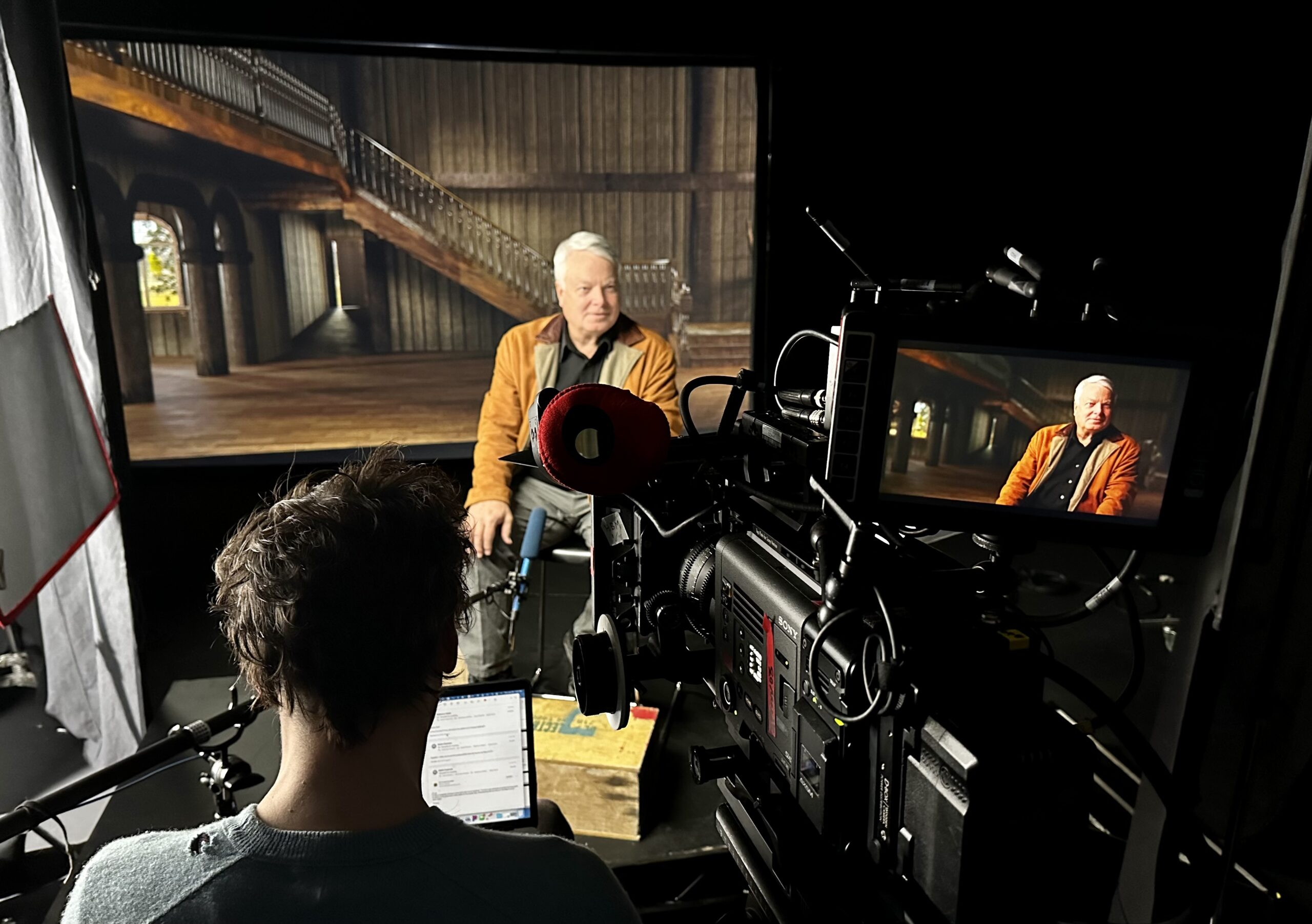Clay visited New York recently for a series of interviews about the American West for the History Channel.
I have just returned from a few days in New York, where I was interviewed for an eight-part documentary series. I won’t go into more detail now, but the series will appear on the History Channel sometime in the next 18 months. The interviews covered eight incidents and eight themes from the history of the American West, beginning with the Battle of Fallen Timbers in Ohio in 1794, which effectively crushed the Native American alliance attempting to keep the Anglo-Americans from grabbing all of what became the state of Ohio.
I want to take a minute to provide a glimpse into the sad and lonely life of the “talking head.” That’s the “expert” the documentary filmmaker quickly and routinely cuts back to for three sentences of commentary. It sounds glamorous, doesn’t it?
*The Empire Builder: James J. Hill and the Great Northern Railway*. Narrated by Clay Jenkinson.
I live for this. To read books, write, lecture, lead cultural tours, host online humanities courses, travel America (and beyond), and sit for interviews in documentary films. I’ve had the great good fortune to be in [five of Ken Burns’ documentaries](https://ltamerica.org/special-projects-2-2/) (*Thomas Jefferson, The National Parks, The Roosevelts, Benjamin Franklin*, and most recently *The American Buffalo*); in several documentaries on Theodore Roosevelt and the River of Doubt; and Doris Kearns Goodwin’s five-part *Theodore Roosevelt*. I’m always thrilled, honored, and humbled to get the call. I’ve also been the on-camera narrator of several documentaries and off-camera narrator for several others, including Stephen Sadis’ [*The Empire Builder: James J. Hill and the Great Northern Railway*.](https://greatnorthernfilmworks.com)
To get ready for this latest interview — on EIGHT different subjects! — I made 200 pages of tightly packed notes. I made lists of essential facts (date, place, name of national monument or historic site), and then lists of talking points. I printed out 50 pages of internet commentary on each subject, reread parts of a couple of dozen books, wrote out key quotations, memorized a few of them, and voiced short commentaries in front of the mirror to get the pacing right and to know when to stop talking.
Ken Burns once told me: You want to know the key to being in my documentaries, all other things being equal? Stick the landings.
What to wear? I belong to the low-maintenance camp of adult professionals. Much of what I wear comes from Walmart or Target (though I buy good shirts), with occasional visits to a few high-enlightenment emporia like REI. My hair gets an average of one five-second brushing daily, and that’s it. But this gig mattered to me so much that I packed four possible Talking Head costumes: 1) a blue blazer and khakis look; 2) the open-sleeved cattle baron’s vest; 3) a tweed suit and tie; 4) or my snazzy tangerine-colored Edward S. Curtis leather jacket.
The film folks chose the leather jacket, something maybe *Yellowstone’s* Kevin Costner would wear to town on an October day.
> **I should say something about the phrase “the talent.” When I first heard these words several decades ago, I swelled up like a man of consequence.**
I flew to New York, Ubered to my hotel in Brooklyn, and found some excellent Thai food within walking distance. Then I tried to get a good night’s sleep, but I kept waking up unsure if it was Theodore Roosevelt, Mark Twain, or Sylvia Plath who said, “Suppose you were an idiot and suppose you were a member of Congress, but I repeat myself.” Then, I’d turn on the light and shuffle my notes for a while. Was it Jefferson or Napoleon who said all men are created equal? It’s amazing how much information runs through your brain like a colander. At some point during the night, I just wanted to slink away to the airport and go home to lick my wounds.
The makeup artist brushed my face for about two minutes. A sound man fitted me with a lapel microphone; I got up on a chair on a platform above a dais. They know what they are doing, these folks, and they had set up their shoot several days before I arrived. Of course, I was only one of several talking heads being interviewed for the series. They know what they are doing. I repeat, the only weak link is the talent.
I should say something about the phrase “the talent.” When I first heard these words several decades ago, I swelled up like a man of consequence. It seemed like a term of genuine respect, possibly even admiration. But it soon came clear to me that the people who make these films define “the talent” as 1) the very highly imperfect and annoying human being that stands between the filmmakers and the completed product; 2) the weak link in an otherwise exceptional project; 3) the blathering, blithering blowhard from whose endless commentary perhaps one or two salient comments might be extracted; 4) the least pleasurable part of the process; 5) the pain in the ass who thinks s/he is essential to the success of the project.
The sooner the talent learns this grim truth, the better. The true professionals don’t even try to use the term with respect. “We’re ready to go, where’s the frickin’ talent?” “Would you tell the talent to stop adjusting his hairpiece?” It’s a bit deflating to realize that all they want you to say is, “The war ended with the restoration of the status quo ante bellum,” and then go home. Or “Custer’s wife Libby gave the last 50 years of her life to defending the Boy General against his detractors.”
Now go home!
I was very fortunate this time. My excellent interlocutor asked a warm-up question, and words began to pour out of my mouth — undoubtedly mostly gibberish — before I found my rhythm and began to deliver bromides and nostrums, often delivered with stammering uncertainty, often in interminable paragraphs. Some days you have it, and some days you don’t. Knowing stuff is one thing; getting it out of your mouth concisely and coherently is another.
Noted documentary filmmaker, Ken Burns.
When Ken Burns has interviewed me, I always get to his studio in Walpole, New Hampshire right on schedule. They slap a little face paint on me and set me in the chair. The subject is X — say Ben Franklin — but I have no idea what questions will be asked. Suddenly, Burns enters the studio with all his beauty and brilliance and sits across from me, not more than 3 feet away. The cameras roll. With his amazing visage, Burns looks over at me and says, “So, tell me about Ben Franklin.” Just like that. And instantly, I become a parody of Jackie Gleason in *The Honeymooners* when he stammers: “bubba, buh, muh, Hubba…” or John Ritter in *Three’s Company* when his landlord asks a question about the sleeping arrangements in Ritter’s apartment.
I had two interlocutors in the New York shoot. They were both outstanding. I attempted to be coherent, factual, forthright, and fully present for three straight hours. Between South Dakota memory cards, I wanted someone to roll up on a stool, throw wet sponges on my face, and say, through a long grimace, that there is still time to throw one good punch.
“I coulda been a contender.”
Then it was over.
Even before they ushered me out onto the mean streets of Brooklyn at dusk, I begged for a re-interview. (I always do, and of course, it never happens). I told them I would really be ready next time. I told them I would come back at my own expense. I offered to buy the producer a new Jeep. I said I was suffering from a rare form of diphtheria and was not at my best. I told them my brother was in intensive care in Peru.
For the rest of the night, I reran the interview in my head and cursed the day I was born. I realized that I had failed to say most of the good things I had wanted to say, and what I did say was rubbish. I took a long walk and kicked myself around the city’s dark streets in a perfect symphony of self-loathing. I texted the director and said, “Actually, that happened in 1854, not 1876. Can you fix that in the post?”
Alas. I will spend a lot of time on the cutting room floor. But it was pure joy to be a part of something this big.
One of the strange things about this process is that I won’t know some important things until the series launches. 1) Am I in it at all? 2) Did I say moronic things that will hang over my head for the rest of my life? 3) Will I be canceled or denounced? 4) Will I get marriage proposals from gorgeous women who love historical documentaries? 5) Will the editors have chosen the least interesting things I had to say and none of the points I worked hard to formulate? 6) Will this get me a gig on Comedy Central?
Truly. I’ve never known whether I am even in a film I’ve been interviewed for or how long it until it comes out. And to sit in an auditorium opposite a giant screen with an audience of 100 and see yourself blown up to monstrous size, saying silly things (“Hamlet was depressed”) is excruciating. I always wear a Nixon mask to the premiere.
Clay’s notes — soon be be filed!
As I flew home to Dakota — exhausted, spent — I said to myself, “When you get home, sort your notes and file them in the right place because they may call to fact check, and there is at least an outside chance that you will get a second interview.”
I’ve been home for a week and have yet to file the notes. This I will not fail to do.
Is it worth it? Absolutely.
Just give me one more chance to get it right.
---
## ***Discover more on these topics at Listening to America***
[Wyoming](https://ltamerica.org/tag/wyoming/ "4 topics")[Travel](https://ltamerica.org/tag/travel/ "1 topics")[New Mexico](https://ltamerica.org/tag/new-mexico/ "3 topics")[Walden](https://ltamerica.org/tag/walden/ "1 topics")[North Dakota](https://ltamerica.org/tag/north-dakota/ "53 topics")[Utah](https://ltamerica.org/tag/utah/ "11 topics")[Virginia](https://ltamerica.org/tag/virginia/ "7 topics")[Water in the West](https://ltamerica.org/tag/water-in-the-west/ "24 topics")[Rivers](https://ltamerica.org/tag/rivers/ "3 topics")[Republic](https://ltamerica.org/tag/republic/ "0 topics")[Oppenheimer](https://ltamerica.org/tag/oppenheimer/ "1 topics")[Oregon](https://ltamerica.org/tag/oregon/ "4 topics")[U.S. Presidents](https://ltamerica.org/tag/u-s-presidents/ "71 topics")[Space Exploration](https://ltamerica.org/tag/space-exploration/ "8 topics")[Vermont](https://ltamerica.org/tag/vermont/ "1 topics")[Tennessee](https://ltamerica.org/tag/tennessee/ "1 topics")[Theodore Roosevelt](https://ltamerica.org/tag/theodore-roosevelt/ "16 topics")[Texas](https://ltamerica.org/tag/texas/ "4 topics")[Steinbeck Travels](https://ltamerica.org/tag/steinbeck-travels/ "75 topics")[South Carolina](https://ltamerica.org/tag/south-carolina/ "1 topics")[Poetry](https://ltamerica.org/tag/poetry/ "1 topics")[State Parks](https://ltamerica.org/tag/state-parks/ "2 topics")[Wisconsin](https://ltamerica.org/tag/wisconsin/ "0 topics")[The Constitution](https://ltamerica.org/tag/the-constitution/ "1 topics")[Thoreau](https://ltamerica.org/tag/thoreau/ "5 topics")[Road Trips](https://ltamerica.org/tag/road-trips/ "18 topics")[Rome](https://ltamerica.org/tag/rome/ "1 topics")[New England](https://ltamerica.org/tag/new-england/ "1 topics")[Ohio](https://ltamerica.org/tag/ohio/ "2 topics")[North Carolina](https://ltamerica.org/tag/north-carolina/ "3 topics")[Video](https://ltamerica.org/tag/video/ "51 topics")[Reading](https://ltamerica.org/tag/reading/ "1 topics")[Oppenheim](https://ltamerica.org/tag/oppenheim/ "0 topics")[Washington](https://ltamerica.org/tag/washington/ "2 topics")[South Dakota](https://ltamerica.org/tag/south-dakota/ "16 topics")[New York](https://ltamerica.org/tag/new-york/ "8 topics")[north daktoa](https://ltamerica.org/tag/north-daktoa/ "0 topics")[William Shirer](https://ltamerica.org/tag/william-shirer/ "1 topics")[Sports](https://ltamerica.org/tag/sports/ "2 topics")[paintings](https://ltamerica.org/tag/paintings/ "0 topics")[Pennsylvania](https://ltamerica.org/tag/pennsylvania/ "1 topics")[Podcast](https://ltamerica.org/tag/podcast/ "1 topics")[Republics](https://ltamerica.org/tag/republics/ "1 topics")[Thomas Jefferson](https://ltamerica.org/tag/thomas-jefferson/ "34 topics")[U.S. Constitution](https://ltamerica.org/tag/u-s-constitution/ "1 topics")
**Categories:** Dispatches from the Road
---
### [Sports as American Metaphor](https://ltamerica.org/sports-as-american-metaphor/)
**Published:** January 30, 2024
**Author:** Clay Jenkinson
**Excerpt:** The Super Bowl has become an unofficial American holiday. Though it may not be as important as Christmas or the Fourth of July it fixes everyone in the country on a single monumental event.
**Content:**
## The GDP of the Super Bowl is larger than some states’ budgets and the event has one great advantage as national social glue.
The new, $1.9 billion, Allegiant Stadium in Las Vegas, NV will host the 58th Annual Super Bowl on February 11, 2024. (Photo Allegiant Stadium)
Well, here comes the 58th annual Super Bowl, to be played in the spectacular Allegiant Stadium in Las Vegas on Sunday, February 11. Allegiant Stadium opened on July 31, 2020, at a cost (then) of just $1.9 billion. The stadium can comfortably seat 65,000 and can strain to hold almost 72,000 people. All this at a per-person cost of $6,500. The average American would have to work approximately six weeks to purchase that one ticket — and then there are such additional incidentals as transportation, parking, food, drink, jerseys, and souvenirs. And yet, there will be no empty seats in the stadium. More than 100 million people will be watching from home. I’ll be one of them.
The Super Bowl has become an unofficial American national holiday. Though it may not be as important as Christmas, Thanksgiving, or the Fourth of July, it has one great advantage as national social glue: everyone in the country is fixed on a single monumental event, whereas we celebrate other holidays in a decentralized way at tables, churches, and picnic shelters all around the country.
I’m not sure what all of this signifies, but the GDP of the Super Bowl is larger than some states’ budgets. It feels like late capitalism in a deliriously wealthy nation. In some respects, the football game itself is the least of the circus. Last year’s pre-game festivities were so over the top that they felt like a caricature of the Super Bowl: an armed forces color guard, plus drummers from the “President’s Own United States Marine Corps Band,” an incredibly effective rendition of the national anthem by country music star Chris Stapleton; an alternative anthem, plus *America the Beautiful*; cuts to the entire crew of the USS Carl Vinson standing outside; giant flags; fireworks; and the first all-woman military flyover, including a live video from within one cockpit!
When the game finally started, I was so exhausted that I could hardly eat my two meat lovers’ pizzas, chips and salsa and guacamole, wings, Velveeta Rotel dip, and two quarts of pistachios. According to something called the American Pizza Community, something like 13 million pizzas are delivered to American homes on Super Bowl Sunday.
The Super Bowl has become an unapologetic festival of gaudy nationalism and patriotism, American style, with its elaborate liturgies. If you are watching from home, the pre-game shows feature heroic videos of the grit and grind of the gridiron in slow motion, a ballet of 300-pound men grappling in mud and sleet, with that perfect ominous NFL narrator intoning, “The storm broke early that November Sunday in Buffalo. …”
## **Americans Love Sports**
Because sports are so important to the American people, we tend to process our national concerns and our culture wars through the filter of sports. I was reading a history of the glorious Oxford English Dictionary (OED) not so long ago, and I came upon a startling and fascinating sentence: “A dictionary is the history of a people from a certain point of view.” So, too, sports at all levels can be seen to represent the history of America from a certain point of view: overzealous and sometimes intrusive parenting, the capacity of money to distort the process, the quest for gender equity, the cult of celebrity; the power of television; our national love affair with violence; and above all race relations.
Here are some examples: from international relations to the long agony of race in the United States to American intoxication with violence.
## **The Cold War**
*College Football and American Culture in the Cold War Era* by Kurt Kemper, 2009.
Kurt Kemper’s *[College Football and American Culture in the Cold War Era](https://www.press.uillinois.edu/books/?id=c034664)* is a must-read for anyone interested in the intersection of sports and the larger history of America. Somehow, our stadiums became the arenas where America’s cultural and geopolitical struggles are played out. Think of the villains in professional wrestling: in one decade with colorful names like, *Igor the Terrible*; in another, *The Baghdad Bruiser*, now *Svetlana, the Savage*, and then the *Bronx Ayatollah.* Or think of NASCAR’s decision in 2020 to ban the Confederate flag at all of its events. In 2019 Nyla Rose became the first transgender pro-wrestler in America, effectively “normalizing” the transgender movement for what would appear to be a tough audience. Over a dozen transgender or non-binary individuals now play competitive professional hockey in America.
Perhaps the most significant Cold War moment in sports came on February 22, 1980, when the U.S. hockey team defeated the Soviet team 4-3 in the Lake Placid Winter Olympics. The Soviet invasion of Afghanistan in December 1979 had inflamed U.S.-Soviet tensions, causing President Jimmy Carter to force a U.S. boycott of the 1980 Summer Olympics in Moscow. The heavily favored USSR had won the gold medal in five of the previous six Winter Olympics. Back then, in that more innocent and idealistic era, the USA still fielded amateur athletes in the Olympics. In the final seconds, Al Michaels, calling the game for ABC, shouted, “Do you believe in miracles? YES!” At the time of the millennium, *Sports Illustrated* declared the Miracle on Ice the top sports moment of the 20th century. Although it was “just a game,” the people of America regarded the improbable U.S. victory as a triumph of freedom and human rights over tyranny and empire.
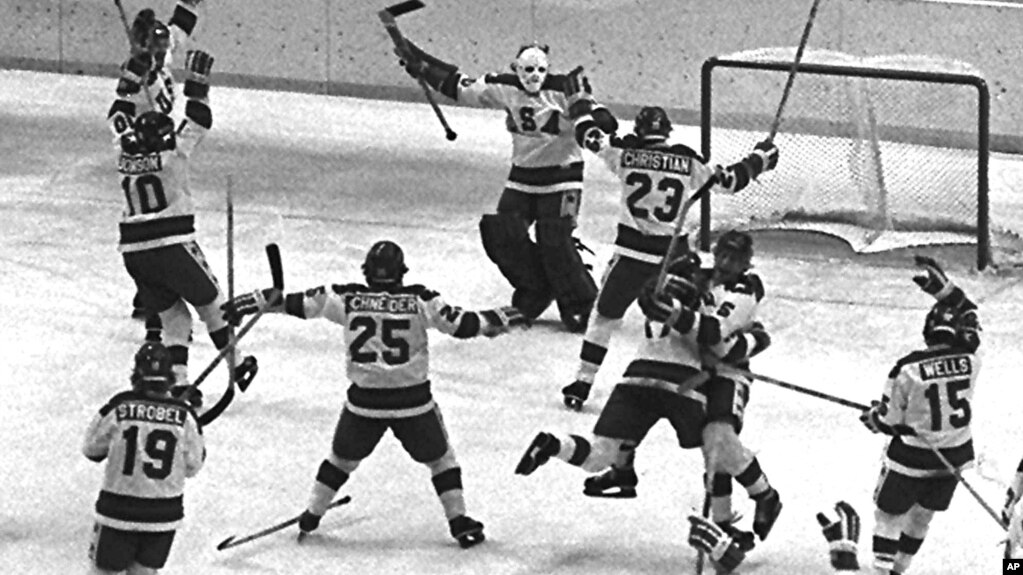Called the “Miracle on Ice.” The 1980 U.S. Olympic hockey team celebrate their upset victory over the Soviet team in the Winter Olympics in Lake Placid, N.Y., on Feb. 22, 1980. (Photo VOA)
## **Race**
You could learn a great deal about the “long 1960s” by studying the life and career of the boxer Muhammed Ali. He was Black. He was brash at a time when white America had a hard time accepting an assertive African American. He refused to go halfway around the world to fight the war: “No Viet Cong ever called me n… .” He became a Black Muslim. He forbade white people to call him by his “colonial” birth name. After being sidelined by the American establishment at the height of his enormous talent, he fought his way back to become the Heavyweight Champion of the World. Ali became the most famous American in the world, perhaps the most famous person in the world.
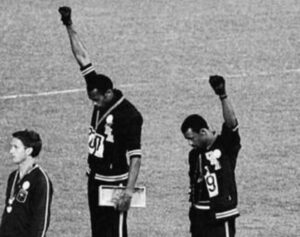American athletes Tommie Smith and John Carlos at the 1968 Olympics. A quiet gesture that stunned America.
I remember the moment in 1968 at the Mexico City Olympics when two American sprinters, Tommie Smith (the gold medal) and John Carlos (bronze), faced the American flag and raised their clenched fists on the medal stand during the playing of the American national anthem. They wore human rights badges on their jackets and removed their shoes before stepping up on the platform. The president of the International Olympic Committee, Avery Brundage, forced the reluctant U.S. Olympic Committee to banish Smith and Carlos from the Mexico City games, though fortunately, they were not stripped of their medals.
When I heard about the death of George Floyd on May 25, 2020, I immediately turned on my television to learn what I could about the incident and to listen to the commentary of America’s punditry. I watched CNN, MSNBC, and FOX for a while, but then it occurred to me that it might be interesting to see what ESPN had to say about the incident if anything. When I tuned in to ESPN, I immediately realized that the commentary there was better than anything I had heard on the major news cable networks. With deep emotion and agonizing detail, African American athletes explained to program hosts what it is like to walk or “drive while Black” in America. One prominent Black athlete said no white parent whose teenage son is about to drive to the movies has to have “the talk” (for the umpteenth time): “If you are stopped, keep your hands on the wheel, make no sudden movements, above all do not mouth off to the cop. …”
Remember when Vice President Mike Pence went to the Indiana Colts-San Francisco 49ers football game in October 2017 primarily to have the opportunity to walk out in disgust on national television? When 12 players for the 49ers knelt during the singing of the national anthem, Pence headed for the exit. The latest NFL controversy began in 2026 when 49ers quarterback Colin Kaepernick sat during the anthem to protest racial injustice and police brutality against African Americans. The vice president said, “I left today’s Colts game because President Trump and I will not dignify any event that disrespects our soldiers, our flag, or our national anthem. At a time when so many Americans are inspiring our nation with their courage, resolve, and resilience, now, more than ever, we should rally around our flag and everything that unites us.”
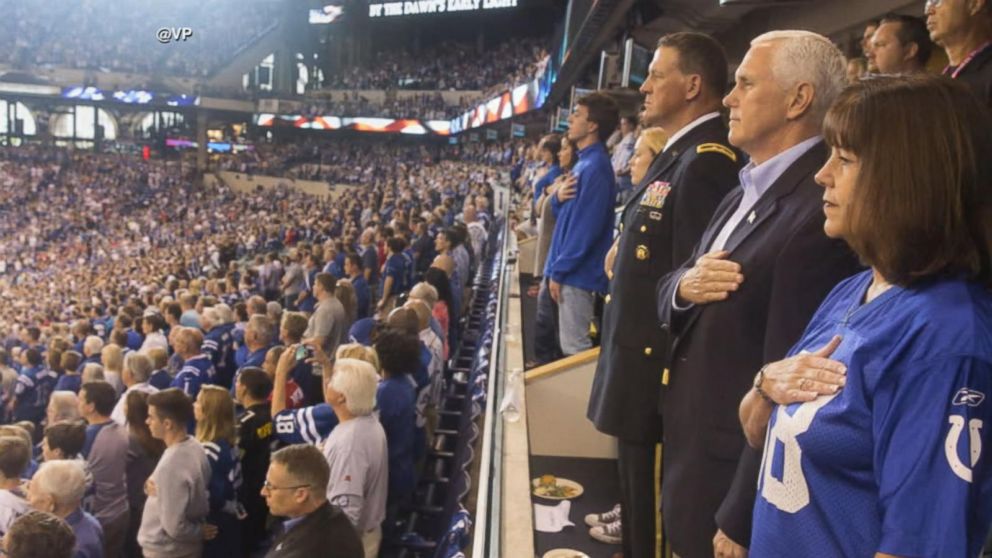Vice President Mike Pence, Second Lady Karen Pence, and Major General Courtney P. Carr stand for the national anthem before the start of the Indianapolis Colts game against the San Francisco 49ers prior to leaving the game on Sunday, October 8, 2017. (Wikimedia)
Go to any sports bar after a prominent athlete speaks out about racial injustice, police profiling, or a police shooting of an unarmed Black man, and you will hear, again and again, “Why can’t these overpaid athletes just shut up and dribble.” “Just play the game and don’t meddle with politics.”
And yet, even the severe white bigots I know routinely praise their favorite Black athletes, buy their jerseys, cheer openly for them during games, select them for their fantasy teams, and cherish the opportunity to take a selfie with them. It’s a strange phenomenon. They seem to grant at least the most prominent Black athletes an exemption. Loving LeBron or Magic or Michael doesn’t mean they hold generous views of African Americans en masse, and their intense admiration for individual Black athletes doesn’t seem to have moved the needle much on their otherwise grim views. Still, the prominence of great Black athletes has surely made a difference in the civil rights movement in America.
## **Violence**
Violence is a central dynamic of American history, from Concord Bridge (1774) and John Brown’s Raid (1859) to the Uvalde, Texas, school shooting on May 24, 2022. Pro football is a profoundly violent game. The average career in the NFL lasts 3.3 years. Naturally enough, the players we know best are generally the ones with prolonged careers, and they have even suffered what might be “career-ending” injuries. A recent Boston University study found that more than 90% of the 378 former NFL players they studied suffered from chronic traumatic encephalopathy (CTE). This epidemic of brain injuries is the subject of the depressing but important 2015 film *Concussion*, starring Will Smith and Alec Baldwin. Even if Boston University’s numbers can be challenged, the percentage of former NFL players who are permanently impaired is alarming. The power of money is so great that America’s pro football players often trade a brief period of celebrity and wealth for foreshortened lives and palpable cognitive impairment. When the CTE controversy was at its height, veteran sportscaster Bob Costas wondered aloud whether NFL football could (or should) survive.
But this is America; of course it will.
We all watched in horror on January 2, 2023, when Buffalo Bills safety Damar Hamlin collapsed on the field. It was cardiac arrest on Monday Night Football. The crowd of more than 70,000 at Paycor Stadium in Cincinnati went silent as the 25-year-old man fought for life near the 50-yard line. Everyone in the stadium, everyone watching at home, reckoned that this was it — this was the moment when an NFL player would die on live TV. Thanks to excellent on-field medical attention and the resilience of youth, Hamlin survived.
The protective gear is getting better every year, and the NFL has worked hard to penalize the kinds of hits that lead to severe injuries, but we all know that it is only a matter of time.
Meanwhile, professional basketball, which long ago became a contact sport rather than a game of finesse, has reached the point where there is a foul in the paint on virtually every shot. Referees are now reduced to penalizing the worst offender in a scrum that seems more worthy of rugby than basketball.
## **The Super Bowl**
The Super Bowl, where the score and even the participating teams are soon forgotten, but nobody forgets Janet Jackson’s “costume malfunction” or Rihanna exposing her backside repeatedly in a highly provocative way. The Super Bowl, where America’s elite corporations’ premier commercial ads cost more money than it cost to shoot Dr. Strangelove (1964) or Thelma and Louise (1991). To Twerk or Not to Twerk.
I’ve got my blender ready, and I’ve been buying two new avocados every time I go to the store. My Velveeta is still good, though it has been in a food cupboard since the Fourth of July.
---
*Listen to our two recent [podcast episodes](https://ltamerica.org/listen-2/) on Sports and America:*
\#1584 The Red Barber Program
\#1583 College Football as Cultural Lens
---
## ***Discover more on these topics at Listening to America***
[William Shirer](https://ltamerica.org/tag/william-shirer/ "1 topics")[Sports](https://ltamerica.org/tag/sports/ "2 topics")[North Carolina](https://ltamerica.org/tag/north-carolina/ "3 topics")[Theodore Roosevelt](https://ltamerica.org/tag/theodore-roosevelt/ "16 topics")[Republics](https://ltamerica.org/tag/republics/ "1 topics")[Oregon](https://ltamerica.org/tag/oregon/ "4 topics")[State Parks](https://ltamerica.org/tag/state-parks/ "2 topics")[paintings](https://ltamerica.org/tag/paintings/ "0 topics")[Steinbeck Travels](https://ltamerica.org/tag/steinbeck-travels/ "75 topics")[Rivers](https://ltamerica.org/tag/rivers/ "3 topics")[New England](https://ltamerica.org/tag/new-england/ "1 topics")[Vermont](https://ltamerica.org/tag/vermont/ "1 topics")[Video](https://ltamerica.org/tag/video/ "51 topics")[north daktoa](https://ltamerica.org/tag/north-daktoa/ "0 topics")[Virginia](https://ltamerica.org/tag/virginia/ "7 topics")[Washington](https://ltamerica.org/tag/washington/ "2 topics")[Reading](https://ltamerica.org/tag/reading/ "1 topics")[Road Trips](https://ltamerica.org/tag/road-trips/ "18 topics")[Oppenheimer](https://ltamerica.org/tag/oppenheimer/ "1 topics")[Water in the West](https://ltamerica.org/tag/water-in-the-west/ "24 topics")[North Dakota](https://ltamerica.org/tag/north-dakota/ "53 topics")[Utah](https://ltamerica.org/tag/utah/ "11 topics")[South Dakota](https://ltamerica.org/tag/south-dakota/ "16 topics")[Oppenheim](https://ltamerica.org/tag/oppenheim/ "0 topics")[Walden](https://ltamerica.org/tag/walden/ "1 topics")[U.S. Constitution](https://ltamerica.org/tag/u-s-constitution/ "1 topics")[U.S. Presidents](https://ltamerica.org/tag/u-s-presidents/ "71 topics")[Ohio](https://ltamerica.org/tag/ohio/ "2 topics")[Podcast](https://ltamerica.org/tag/podcast/ "1 topics")[South Carolina](https://ltamerica.org/tag/south-carolina/ "1 topics")[Wyoming](https://ltamerica.org/tag/wyoming/ "4 topics")[Space Exploration](https://ltamerica.org/tag/space-exploration/ "8 topics")[New York](https://ltamerica.org/tag/new-york/ "8 topics")[Tennessee](https://ltamerica.org/tag/tennessee/ "1 topics")[Thoreau](https://ltamerica.org/tag/thoreau/ "5 topics")[Rome](https://ltamerica.org/tag/rome/ "1 topics")[Poetry](https://ltamerica.org/tag/poetry/ "1 topics")[The Constitution](https://ltamerica.org/tag/the-constitution/ "1 topics")[New Mexico](https://ltamerica.org/tag/new-mexico/ "3 topics")[Thomas Jefferson](https://ltamerica.org/tag/thomas-jefferson/ "34 topics")[Texas](https://ltamerica.org/tag/texas/ "4 topics")[Travel](https://ltamerica.org/tag/travel/ "1 topics")[Wisconsin](https://ltamerica.org/tag/wisconsin/ "0 topics")[Republic](https://ltamerica.org/tag/republic/ "0 topics")[Pennsylvania](https://ltamerica.org/tag/pennsylvania/ "1 topics")
**Categories:** Features
**Tags:** Books, Humanities, Sports, U.S. Presidents
---
### [Seeing America Through the Eyes of a Visitor](https://ltamerica.org/seeing-america-through-the-eyes-of-a-visitor/)
**Published:** January 20, 2024
**Author:** Clay Jenkinson
**Excerpt:** My daughter Catherine, now living in Great Britain, brought her boyfriend Simon to America for the holidays. He’s French-Swiss.
**Content:**
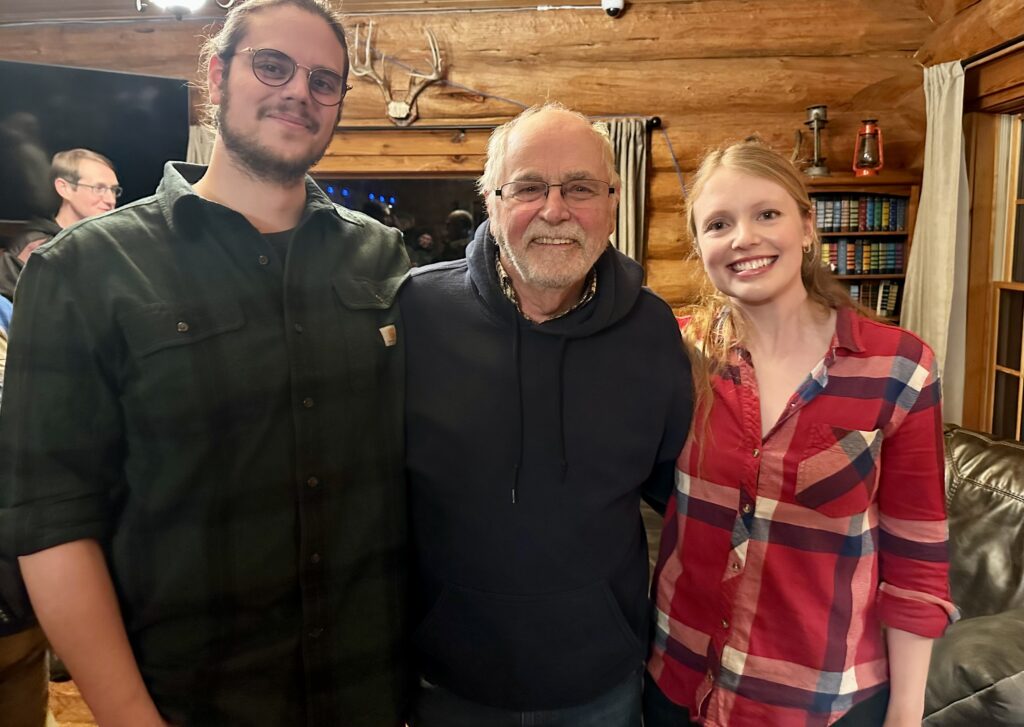Simon Heller (left) from Switzerland joined Clay’s daughter Catherine Jenkinson (right) on a visit to America over the Holidays. They made the trip from England, where they are both graduate students at Oxford University. Pictured at Lochsa Lodge with Clay’s long-time friend, Reginald Wood. (Photo by Clay Jenkinson)
Seeing America through the eyes of a thoughtful and observant foreigner is one of the best mirrors we can look through to study ourselves and our habits of the heart. Although it seems true that basic human nature is about the same in all places and at all times, we can recognize ourselves in the ancient Syria of Gilgamesh or modern Haiti, in the Soviet Union of 1962 (during the Cuban Missile Crisis). It is equally true that different nations or tribes organize their economies and social structure, their daily rituals and habits, in ways that are quite distinct. Most people in London make their way to work through one of the best public transport systems in the world, while most people in America drive to work and often pay exorbitant parking prices. The people of Bordeaux can only install a window air conditioner if they get a permit from the appropriate regulatory agency. In contrast, if you tried to regulate window air conditioners in America, you would get the same response as when the CDC asked all Americans to wear masks during the height of the Covid-19 pandemic.
The best book ever written about America by a foreigner is Alexis de Tocqueville’s *[Democracy in America](https://www.loa.org/books/202-democracy-in-america/)* (published in 1835). I intend to reread it before I take to the open road sometime after the thaw. (As I write this today, in the lobby of a motel in Missoula, Montana, the temperature is minus 16 degrees Fahrenheit, plus strong winds. The spring thaw seems well down the road. Theodore Roosevelt, who spent a couple of winters in the Dakota Territory in the 1880s, called this the “season of iron desolation.”)
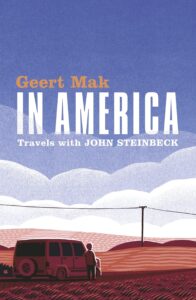*In America: Travels with John Steinbeck* by Dutch journalist Geert Mak, 2014.
A decade or so ago, the Dutch journalist [Geert Mak](https://www.letterenfonds.nl/en/author/1/geert-mak) followed John Steinbeck’s 1960 *Travels with Charley* circuit around the perimeter of the United States and wrote what I regard as the best of the dozen or so Steinbeck retracing books, *In America: Travels with John Steinbeck* (2014). [Mak’s book](https://www.geertmak.nl/en/books/in-america-travels-with-john-steinbeck/) is superior to all the other retracing books because he genuinely attempted to make sense of the richness and complexity of American life in a way that Steinbeck, who was creatively tired by 1960, admitted he had failed to accomplish. Mak uses Steinbeck’s journey as a framework to give himself opportunities to wrestle with the diversity and perplexity of the American scene. Other retracers seem more interested in the “feat” of “dogging Steinbeck,” as one of them puts it, than in emphasizing Steinbeck’s subtitle (and purpose), *Travels with Charley **in Search of America.***
My daughter Catherine, now living in Great Britain, brought her boyfriend Simon to America for the holidays. He’s French-Swiss. French was his first language, and now, of course, he puts us monolingual colonialist Americans to shame — he has French, German, English, some Italian, and Old English. He’s finishing up a doctorate in English literature at Oxford University. Simon has a good mixed and nuanced attitude towards America. We traveled by automobile while he was here. More than 1,000 miles through the heart of Montana (and then Idaho). I enjoyed seeing America through his eyes. There are no mass shootings in Switzerland. There is no student loan debt in Switzerland. There is outstanding cradle-to-grave health care in Switzerland. There is no widespread poverty there. Television commercials do not dominate the programming. And lest you think he is some Euro-snob who thrives by pointing out the faults of America, Simon finds much to love here, especially in the outback, and is not afraid to talk about those parts of Swiss life he isn’t particularly proud of.
Of course, being Swiss, he is a cheese snob. We did manage to sneak some Velveeta into his food supply here in hopes of breaking his spirit.
We drove from Bismarck to Bozeman, Montana, overnighted, then to Missoula and up into the Bitterroot Mountains. Every few miles along the Yellowstone River, which interweaves I-94 and then I-90, Simon spoke ecstatically about the landscape — the subtle grays and rust and wan yellow of the winter grasslands, the astonishing blue cast of the river against the surrounding countryside, an eagle perched up in a barren tree, the quality, and the clarity of the light, the vast and open plain in every direction. My daughter is a child of the Great Plains, and she loves them, but over several decades, she has come, naturally, to take them somewhat for granted. But for her mate, the sheer size, the emptiness, the big sky, and how the West is still minimally compromised by industrial intrusion are a kind of revelation and a reassurance. The philosopher [John Locke](https://plato.stanford.edu/entries/locke/) said, “In the beginning, all the world was America,” and in America, to this day, there are vast stretches that at least echo the Serengeti, the primordial wilderness that once was the New World.
## Lochsa Lodge
Lochsa Lodge in winter, about 70 miles west of Missoula, Mont. (Video by Clay Jenkinson)
We spent two nights at Lochsa Lodge, about 70 miles west of Missoula. It’s my favorite resort in America, in part because the enlightened owners, Reuben and Matt, have not attempted to make it Aspen or Sedona or Telluride or Jackson Hole. Locsha Lodge has all the needed amenities (plus good food), but it retains a slightly retro feel as if the ideal lodge of 1952 were locked in timelessness. One morning, while we were there, one of the waiters casually reported that she had seen a mountain lion while walking down to the lodge. Another employee reported that a small pack of wolves were camped not far south of the Lochsa River.
On Catherine and Simon’s last day in the United States (for a long while), we were lazing about the lodge, drinking coffee and tea. Off and on, they were packing their bulging Christmas suitcases in a desultory way. Lovely light snow cascaded down onto the cluster of log cabins, loading the giant evergreens with precarious swatches of snow that bent their 150-year-old branches. The sun was shining in the West. Suddenly, I said, “Get your coats on; we’re going to the hot springs.”
Jerry Johnson Hot Springs are located about 20 miles west of the lodge. I’ve been to them several dozen times over the years, sometimes in the summer, more often in the winter. You park in a small clear space just off US12, then hike up about 3/4 of a mile to five or six perfect hot pools, a couple of them within 3 feet of Warm Springs Creek.
Catherine could have been more eager to make the journey. She has been there before. The lodge was very cozy. She was lamenting that their time in America was ending. The next day would require at least three flights, possibly five before they arrived at Heathrow Airport in London, and then they would take a late coach back to the heart of Oxford.
But I insisted. Catherine later admitted that she had attempted an “implied veto” of the excursion, but Simon and I shamed her into the car.
It’s about a 30-minute hike from the parking lot to the hot springs, with two steep bits, which you must climb carefully in the winter, lest the underlying ice trip you over the edge. But we made the ascent without incident. We removed our outer clothes and settled into the pool closest to the river.
One of the Jerry Johnson Hot Springs in the Bitterroot Mountains west of Missoula, Mont. (Photo by Clay Jenkinson)
Let me paint the scene. You are up in the Bitterroot Mountains, about 3,200 feet above sea level. The pools are warm, not hot, but if you find the right spot, you sit over one of the heat vents from far below, and you luxuriate in pure sensual satisfaction. The pools are deep enough to immerse all but your head if you lean back on one of the rocks that form the perimeter. There are thousands of giant trees — cedar, tamarack, Douglas fir — in every direction, running up and down the rounded mountains. Little drifts of snow sit in all of their branches. Occasionally, a breeze finds its way through the scene. Then, the very tops of the trees, slender, elegant, and fragile looking, sway imperceptibly in a mesmerizing way. Sometimes, you wonder if they are moving just a few inches high in the sky or if you are imagining the motion; it is so subtle. The breeze loosens delicate cascades of snow that drift down to the ground with a light crystalline sound. Not 10 feet away, the creek runs too deep to ford even in the summer, over round rocks the size of basketballs and beachballs. Snow accumulates on the rocks until a surge of the creek sweeps it away.
It is utterly silent, the silence you can only experience deep in the woods.
If you dialed up God or Nature and asked for a perfect mountain hot spring in America, you’d get Jerry Johnson. We all owe unlimited praise to Theodore Roosevelt and the U.S. Forest Service.
I looked over at Simon, our Swiss guest. He wore a look of deep serenity, satisfaction, but also a sense of wonderment. He has lived a quarter of a century and has been to America twice before, but never quite like this. His intense satisfaction had leavened my daughter’s experience, and mine.
There we were, three, on a perfect day in a perfect place and, for the moment, in perfect harmony with ourselves, each other, and the universe.
Through all of this, I was trying to see America through Simon’s eyes. And my daughter’s, whose vision of life has been deepened, widened, and lifted by her association with an extraordinary person of another culture.
Up there, with them, alone in the great outback, I fell in love with America all over again. Think of the unbelievable potency of that word: America. For all that the rest of the world is disillusioned with us — usually for good reason — the word “America” still has global magic. America the first modern republic. America with its Bill of Rights. America the land of unprecedented economic opportunity. America with its stunning (if unreachable) ideals: “We hold these truths to be self-evident, that all men \[human beings\] are created equal.” America with several of the world’s greatest rivers: the Colorado, the Columbia, the Missouri, and the Mississippi, which drains one of the greatest agricultural valleys of the planet. America with the Grand Canyon, Canyon de Chelly, Yosemite, the redwoods, the Grand Tetons, Yellowstone National Park, Death Valley, the Golden Gate Bridge, Hoover Dam, the Chrysler Building, Las Vegas, Gettysburg, the Little Bighorn …
## America. AMERICA. At times Amerika.
As I sat in that perfect pool trying to take it all in, I thought: what must it be to be a European having this experience? This place, this sort of place, is one of the very most remarkable things about America. Somehow, we have managed to leave some of the continent alone. Somehow, we have left some patches of the primordial in our midst. Somehow, we have managed to save some of the best of America for seed. Wallace Stegner said we Americans must create a “society to match the scenery.” In many respects, we have failed to build that civilization. There is still time.
Let there still be time! Please, let us reinvigorate America until it is as glorious as the continental stage on which we have erected American civilization.
Now Simon and Catherine are back at one of the world’s most outstanding universities, founded 200 years before Columbus bumbled into the Western Hemisphere. Sometime later this spring, with his thesis deadline leaning on him like an NFL halfback, he’ll look up from his screen deep into the middle of the night and remember lounging in Jerry Johnson Hot Springs with his lady love. No matter what happens to their romance hereafter, they will always have that afternoon in the Rocky Mountains of America.
---
## ***Discover more on these topics at Listening to America***
[New Mexico](https://ltamerica.org/tag/new-mexico/ "3 topics")[Poetry](https://ltamerica.org/tag/poetry/ "1 topics")[Theodore Roosevelt](https://ltamerica.org/tag/theodore-roosevelt/ "16 topics")[Virginia](https://ltamerica.org/tag/virginia/ "7 topics")[U.S. Constitution](https://ltamerica.org/tag/u-s-constitution/ "1 topics")[William Shirer](https://ltamerica.org/tag/william-shirer/ "1 topics")[Vermont](https://ltamerica.org/tag/vermont/ "1 topics")[South Dakota](https://ltamerica.org/tag/south-dakota/ "16 topics")[north daktoa](https://ltamerica.org/tag/north-daktoa/ "0 topics")[New England](https://ltamerica.org/tag/new-england/ "1 topics")[North Dakota](https://ltamerica.org/tag/north-dakota/ "53 topics")[Reading](https://ltamerica.org/tag/reading/ "1 topics")[Podcast](https://ltamerica.org/tag/podcast/ "1 topics")[The Constitution](https://ltamerica.org/tag/the-constitution/ "1 topics")[Road Trips](https://ltamerica.org/tag/road-trips/ "18 topics")[U.S. Presidents](https://ltamerica.org/tag/u-s-presidents/ "71 topics")[Oregon](https://ltamerica.org/tag/oregon/ "4 topics")[Travel](https://ltamerica.org/tag/travel/ "1 topics")[Washington](https://ltamerica.org/tag/washington/ "2 topics")[Pennsylvania](https://ltamerica.org/tag/pennsylvania/ "1 topics")[Wisconsin](https://ltamerica.org/tag/wisconsin/ "0 topics")[Oppenheim](https://ltamerica.org/tag/oppenheim/ "0 topics")[Republics](https://ltamerica.org/tag/republics/ "1 topics")[Water in the West](https://ltamerica.org/tag/water-in-the-west/ "24 topics")[Space Exploration](https://ltamerica.org/tag/space-exploration/ "8 topics")[North Carolina](https://ltamerica.org/tag/north-carolina/ "3 topics")[Texas](https://ltamerica.org/tag/texas/ "4 topics")[Thomas Jefferson](https://ltamerica.org/tag/thomas-jefferson/ "34 topics")[State Parks](https://ltamerica.org/tag/state-parks/ "2 topics")[Steinbeck Travels](https://ltamerica.org/tag/steinbeck-travels/ "75 topics")[Rivers](https://ltamerica.org/tag/rivers/ "3 topics")[Rome](https://ltamerica.org/tag/rome/ "1 topics")[Oppenheimer](https://ltamerica.org/tag/oppenheimer/ "1 topics")[Video](https://ltamerica.org/tag/video/ "51 topics")[Tennessee](https://ltamerica.org/tag/tennessee/ "1 topics")[Ohio](https://ltamerica.org/tag/ohio/ "2 topics")[Thoreau](https://ltamerica.org/tag/thoreau/ "5 topics")[Sports](https://ltamerica.org/tag/sports/ "2 topics")[New York](https://ltamerica.org/tag/new-york/ "8 topics")[Wyoming](https://ltamerica.org/tag/wyoming/ "4 topics")[South Carolina](https://ltamerica.org/tag/south-carolina/ "1 topics")[Utah](https://ltamerica.org/tag/utah/ "11 topics")[Republic](https://ltamerica.org/tag/republic/ "0 topics")[paintings](https://ltamerica.org/tag/paintings/ "0 topics")[Walden](https://ltamerica.org/tag/walden/ "1 topics")
**Categories:** Dispatches from the Road
**Tags:** Books, Great Plains, Idaho, Montana, National Parks
---
### [The Spymasters: How the CIA Directors Shape History and the Future](https://ltamerica.org/the-spymasters-how-the-cia-directors-shape-history-and-the-future/)
**Published:** January 15, 2024
**Author:** Lindsay Chervinsky
**Excerpt:** We are excited to welcome Lindsay Chervinsky, a regular guest of Clay’s weekly podcast as an ongoing contributor to Listening to America. In her first installment she reviews The Spymasters.
**Content:**
## We are excited to welcome Lindsay Chervinsky, a regular guest of Clay’s weekly podcast as an ongoing contributor to Listening to America. In her first installment she reviews *The Spymasters* by Chris Whipple.
*The Spymasters* by Chris Whipple, Scribner 2021.
Last year represented a sort of reading revolution for me. I’ve always been a voracious fiction reader because it’s the best way for me to check out and rest my brain. I also must read a lot of scholarship as part of my own work and research. But I found myself with lengthy lists of to-read nonfiction books that had no relation to my current book project and little time for them. Or rather, I should say that at the end of the day when work was done, I prioritized fiction over nonfiction. But I believe in reading, learning, supporting other writers, and staying abreast of new publications. So I finally starting listening to books on Audible.
Now before you roll your eyes at me or close this post, hear me out. I cannot listen to fiction on Audible. My mind wanders and I lose important plot points. I also cannot listen to nonfiction if it gets too close to my work because then I need to constantly pause the narrative to take notes. But, let’s say it’s a book on the [Supreme Court during FDR’s presidency](https://hachettebookgroup.com/titles/cliff-sloan/the-court-at-war/9781541736481/) or a [biography of Dwight D. Eisenhower](https://www.amazon.com/Eisenhower-Peace-Jean-Edward-Smith/dp/0812982886), then Audible is perfect. All of which is to say that you just need to find what works for you! By picking up audiobooks while running errands, driving, completing chores, and exercising, I’ve been able to increase my nonfiction consumption in a big way.
Two of the books I most enjoyed listening to this year were by Chris Whipple: [*The Gatekeepers*](https://www.amazon.com/Gatekeepers-White-Chiefs-Define-Presidency-ebook/dp/B01I85QC28/ref=sr_1_2?crid=1NFBYPDHP9Q2D&dib=eyJ2IjoiMSJ9.64OJPOfxZMBNexdWuwLtQ8UXk3kP9a-IK5WFh-KSDQyf9DK_VTsTi_elVIu6bqq0FXBX1jUsbtX0voZTi5GOTw.GULMLGd7-hRttSxRD8fkldwtLQ3CnmeVigna6EcwNvA&dib_tag=se&keywords=chris+whipple&qid=1705000540&s=books&sprefix=chris+whipple%2Cstripbooks%2C85&sr=1-2) about White House chiefs of staff and [*The* *Spymasters*](https://www.amazon.com/dp/B07TD6GB5F?ref_=cm_sw_r_cp_ud_dp_6JQW906497KKFA93FN6J) about directors of the CIA. (Full disclosure: I presented at a conference with Chris, but he doesn’t know I’m writing this post). Mark Bramhall narrates both books and does a **phenomenal** job. He has a lovely voice and absolutely nails the dry wit and humor. He’s so good that I’ve picked my next reads based on his past catalog of work.
Author Chris Whipple. (Photograph by David Hume Kennerly)
I knew a little bit more about chiefs of staff before reading *The Gatekeepers*, but I knew very little about CIA directors other than a bit about Allen Dulles (the first civilian director of Central Intelligence). I learned so much and I highly recommend *Spymasters* for anyone who wants to better understand the intelligence process and community and how it relates to politics and policy.
Whipple uses a combination of recently declassified sources and firsthand interviews, many of which include information that has never been previously publicly discussed. As a result, the book has a very fresh and human quality; you don’t feel any distance from the subjects. Here are three takeaways that have stuck with me in a big way.
1. **Individuals Matter**. So much of leadership is about the person in power. How do they work with others? What is their background and how do they bring that expertise to their current position? What are their strengths and weaknesses? That’s true in any organization, but especially in the CIA which has a very distinct internal culture.
Whipple does a marvelous job capturing the personalities of the CIA directors and exploring their interactions with their subordinates, the president, and Congress. He holds no punches, you really get a sense of what made these men tick, when they came up short, and where they excelled. One of the more interesting insights is that it is hard to predict based solely on resumes who will thrive in the job and who will fail. Instead, there are so many intangible qualities that must be considered when a president selects a new director.
2. **The Highest of Stakes**. Intelligence gathering, as I understand it, is rarely black and white. It depends on nuance, gut instinct, and the careful cultivation of questionable relationships. And yet, the outcome is quite stark: either the CIA and the other intelligence agencies get things right and we rarely learn about the successful thwarting of an attack, or they get it wrong, and things go badly. Or worse, they get it right, but the advice is ignored or not acted upon, and things go boom. *Spymasters* does a really good job of analyzing what it means to operate under those stakes.
3. **Rethink Everything You Know**. I lived through many of the events in the later chapters of the book. I remember September 11 *vividly*. I’ve been an avid consumer of news off and on for a while now, and I have a pretty darn good education. But goodness, did Whipple challenge my thinking about a lot of events in the last few decades. And I’m better for it. I feel better equipped to be an engaged citizen, to hold public officials accountable, and to consume the news more intelligently.
*Spymasters* is an excellent choice for anyone looking to better understand national security, foreign policy, and our national politics. It would be a great book for Father’s Day, but I’m a big believer that dad books don’t just belong to dads. Whipple’s writing is accessible and lively, so anyone with a smattering of interest in politics and history would be a good reader.
Looking forward to sharing more reads with you all in the coming months!
*Lindsay M. Chervinsky, Ph.D. is a presidential historian and a regular guest on Listening to America. She is the author of several books including the forthcoming* [Making the Presidency: John Adams and the Precedents that Forged the Republic](https://a.co/d/4WVBMKd)*. She is on social media* [*@lmchervinsky*](https://twitter.com/lmchervinsky)*.*
---
## ***Discover more on these topics at Listening to America***
[Steinbeck Travels](https://ltamerica.org/tag/steinbeck-travels/ "75 topics")[Oppenheimer](https://ltamerica.org/tag/oppenheimer/ "1 topics")[William Shirer](https://ltamerica.org/tag/william-shirer/ "1 topics")[Washington](https://ltamerica.org/tag/washington/ "2 topics")[Pennsylvania](https://ltamerica.org/tag/pennsylvania/ "1 topics")[Thomas Jefferson](https://ltamerica.org/tag/thomas-jefferson/ "34 topics")[North Carolina](https://ltamerica.org/tag/north-carolina/ "3 topics")[Space Exploration](https://ltamerica.org/tag/space-exploration/ "8 topics")[Wyoming](https://ltamerica.org/tag/wyoming/ "4 topics")[U.S. Constitution](https://ltamerica.org/tag/u-s-constitution/ "1 topics")[The Constitution](https://ltamerica.org/tag/the-constitution/ "1 topics")[Tennessee](https://ltamerica.org/tag/tennessee/ "1 topics")[Virginia](https://ltamerica.org/tag/virginia/ "7 topics")[U.S. Presidents](https://ltamerica.org/tag/u-s-presidents/ "71 topics")[Utah](https://ltamerica.org/tag/utah/ "11 topics")[South Dakota](https://ltamerica.org/tag/south-dakota/ "16 topics")[New England](https://ltamerica.org/tag/new-england/ "1 topics")[New York](https://ltamerica.org/tag/new-york/ "8 topics")[Reading](https://ltamerica.org/tag/reading/ "1 topics")[New Mexico](https://ltamerica.org/tag/new-mexico/ "3 topics")[Road Trips](https://ltamerica.org/tag/road-trips/ "18 topics")[Texas](https://ltamerica.org/tag/texas/ "4 topics")[Republics](https://ltamerica.org/tag/republics/ "1 topics")[Video](https://ltamerica.org/tag/video/ "51 topics")[Water in the West](https://ltamerica.org/tag/water-in-the-west/ "24 topics")[Sports](https://ltamerica.org/tag/sports/ "2 topics")[paintings](https://ltamerica.org/tag/paintings/ "0 topics")[Oppenheim](https://ltamerica.org/tag/oppenheim/ "0 topics")[Travel](https://ltamerica.org/tag/travel/ "1 topics")[Theodore Roosevelt](https://ltamerica.org/tag/theodore-roosevelt/ "16 topics")[Rome](https://ltamerica.org/tag/rome/ "1 topics")[Republic](https://ltamerica.org/tag/republic/ "0 topics")[Ohio](https://ltamerica.org/tag/ohio/ "2 topics")[Oregon](https://ltamerica.org/tag/oregon/ "4 topics")[South Carolina](https://ltamerica.org/tag/south-carolina/ "1 topics")[Rivers](https://ltamerica.org/tag/rivers/ "3 topics")[North Dakota](https://ltamerica.org/tag/north-dakota/ "53 topics")[Poetry](https://ltamerica.org/tag/poetry/ "1 topics")[Podcast](https://ltamerica.org/tag/podcast/ "1 topics")[north daktoa](https://ltamerica.org/tag/north-daktoa/ "0 topics")[Thoreau](https://ltamerica.org/tag/thoreau/ "5 topics")[Wisconsin](https://ltamerica.org/tag/wisconsin/ "0 topics")[Vermont](https://ltamerica.org/tag/vermont/ "1 topics")[State Parks](https://ltamerica.org/tag/state-parks/ "2 topics")[Walden](https://ltamerica.org/tag/walden/ "1 topics")
**Categories:** Books
**Tags:** Books, U.S. Presidents
---
### [Don't Touch That Dial: Tuning in to America](https://ltamerica.org/dont-touch-that-dial-tuning-in-to-america/)
**Published:** January 14, 2024
**Author:** Clay Jenkinson
**Excerpt:** Over a lifetime of travel, I have learned that one of the best ways to examine the pulse of America is to listen to local broadcasting.
**Content:**
## You can hear the unique pulse of the country listening to local radio.

People keep asking me how I intend to listen to America in my travels over the next few years. I’m taking my cues from previous road warriors — Kerouac, Henry Miller, William Least Heat Moon, and especially John Steinbeck. Roadside diners seem to be one of the best places to meet and listen, especially in the morning, when small groups of local folks tend to gather over coffee to discuss the “world situation.” Steinbeck said breakfasts are the one meal you can always rely on in America — hard to screw up eggs, bacon, and toast. I’ll also spend plenty of time in pubs, coffee houses, churches, and of course campgrounds, where you are almost certain to meet and greet your fellow guests. I’m hoping my Airstream, with its Listening to America decal, will prompt some questions.
Over a lifetime of travel, I have learned that one of the best ways to examine the pulse of America is to listen to local broadcasting. Unfortunately, the golden era of local broadcasting is now a phenomenon we cherish in retrospect. The radio dial is less interesting now that local voices and vocal control have yielded to the appalling corporatization of so much in America, from coffee to office supplies to hardware to Applebee’s, Chili’s, and TGI Friday’s. I’d infinitely rather my top-40 hits were served up by an imperfect local DJ who interspersed the songs with tidbits about the weather, the big game coming Saturday night against the Trinity Titans, or his former girlfriend, than hear some slick pre-packaged tasteless and odorless programming distributed internationally by some LA media conglomerate.
The vice principal of my high school in western North Dakota retired early. He bought an 18-wheel truck and began driving freight around the Great Plains. He told me that he was so tired of being over-stimulated, and so eager to go quiet for a change — to let his soul calm down, he said — that he had the radio removed from the truck cab so that he would not be tempted to just listen to whatever was available to pass the time. He said he wanted time to think — to think about his career, to think about America, to think about books, to think about the landscapes through which he drove, and to think about Life.
I won’t follow that example slavishly, but I do intend to spend most of every driving day just musing and gazing out at the magnificence of America. My plan is to listen no more than an hour or two per day to AM (not FM or satellite) radio. And to listen to local rather than national programming. It’s on AM where you hear hog prices and the daily crop report, the Book Notes from Marcie the local Carnegie Library director; the Swap Meet where someone offers for sale a spare lawn mower or a set of snow tires and someone else seeks to purchase a used Barcalounger, call only between noon and six p.m., please. Seven fresh kittens, four of them free to good homes.
I loved listening to after-dark AM programming when the car radios still required vacuum tubes and the signal would wax and wane and voices would drift up into a stratospheric falsetto and then down again to baritone, and it seemed as if random cosmic white noise found its way into the signal.
A ham radio operator with his rig.
I have satellite radio service in my pickup, and of course I will listen some to my favorite talk shows and my favorite music during my travels, but I want to limit it. The fidelity of satellite radio is too great. The sound is so clear, pure, and unbroken that you forget you are receiving a signal from a metal pod poised 22,000 miles above the earth. It doesn’t feel like radio. It feels more like high resolution television in the car without the picture. I like to be made aware by drift and skip that I am the recipient of electromagnetic waves that emanate from somewhere far away and yet somehow find the antenna of my vehicle. In fact, if I were in charge of the universe, we’d still have radio dials you can turn to fine tune the signal. Digitization of sound and radio has diminished its romance. The digital revolution has also eliminated most of the joy of ham (amateur) radio. When I was 16, with an Advanced Class FCC license, I built a ham SB102 transceiver from a HealthKit kit. When I would tap out a few sentences in Morse code and get a response from someone in Romania or south Texas, it felt like a techno-miracle.
I love the fact that AM radio *sounds like radio*. The signal waxes and wanes. There is drift. Everything changes at dusk when atmospheric skip suddenly lets you listen to WSM in Nashville or KFI Los Angeles or WGN Chicago. When I was an early adolescent I used to try to listen to the *Grand Ole Opry* on Saturday evenings, not because I liked the *Grand Ole Opry* much, but as something faraway and foreign to my childhood in a cattle town on the northern Great Plains. My friend Philip Howard turned me on to *Beale Street Blues* on WUMB Memphis.
## **American Voices**
Garner Ted Armstrong at the height of his career.
When I was a boy my father controlled the AM dial, of course. Although he was an atheist, he turned me on to a program called *The World Tomorrow with Garner Ted Armstrong*, a Texas evangelical radio preacher who had an eccentric interest in aviation and particularly international air shows. A ponderous voice came on at the top of the hour and said, “And now, *The World Tomorrow with Garner Ted Armstrong*, from Tyler Texas, and now, Garner Ted Armstrong.” Armstrong was a likeable radio personality though his favorite book of the Bible seemed to be Revelation. He served up the [Seventh Seal](https://www.britannica.com/topic/seven-seals) with a kind of glee and reminded us that God will not be gentle with the lukewarm.
Joe Pyne confronting one of his guests.
And though my father was a McGovern liberal, he loved to listen to the *Joe Pyne Show*. Pyne was an aggressive, opinionated, and confrontational syndicated talk show host who denounced hippies, homosexuals, feminists, and many others. Though his views were mostly conservative, his genius was for ridiculing callers and heaping scorn on the men and women he interviewed. The careers of such radio luminaries as Rush Limbaugh, Michael Savage, G. Gordon Liddy, and Sean Hannity were made possible by the pioneering work of Joe Pyne. He was the first exemplar of Hate Radio in my childhood.
I was fortunate to grow up along the Canadian border, for their radio programming was (inevitably) better than ours. My friend Mike J. and I used to listen on CBC Regina to a BBC program called *Just a Minute*, in which British radio celebrities would have to talk about a random subject for an entire minute without repeating words, stalling, or stammering, or veering from the subject matter. We played the game ourselves on our travels in his modest pickup, not with great success.
The Wolfman in happier days.
I was driving Dakota with my late mother doing a low-end documentary on cowboys and ranchers when Elvis Presley died on August 16, 1977. The Canadian Broadcast Corporation (CBC) pair of announcers cold called the legendary [Wolfman Jack](https://www.wolfmanjackradio.com/) for his reaction. He had not heard the news. When they told him that the King was dead, the Wolfman wept on national Canadian radio. “Man, I can’t talk about this right now,” he said, and hung up. For the rest of the day CBC played Elvis’ gospel music — in my view, some of the best music he ever made. It was one of the signature days of our lives, my mother and I, and it could not have been so significant, so moving, without car radio and the CBC.
I love to listen to radio evangelists of all sorts in all regions of America. The more they get down and chew the carpet the better. We are sinners all. Give me brimstone not spiritual assurances. I’m truly fascinated by the sophisticated textual exegesis many of these radio pastors employ. They know their Bibles and they know how to thump them. Driving through Utah back then I sometimes heard hourlong defenses of LDS orthodoxies, and bizarrely — a program called *Jews for Jesus*.
Herb Jepko was a friend to the lonely hearts of America.
In my own extensive solo journeys across the American West, I often listened to night programming on KSL, a 50,000 watt “blowtorch” station in Salt Lake City. My favorite program late at night in the middle of nowhere was something called *Nightcap*, moderated by a gentle host named [Herb Jepko](https://www.radioworld.com/columns-and-views/jepkos-was-a-gentle-voice-in-the-night). *Nightcap* was the great lonely-hearts club of America. Widows, shut-ins, orphans, disabled men and women, the lonely and the desperate, called in to KSL to have their three or four minutes with Jepko, who invariably remembered Mabel of Provo or Martha June of St. George from week to week and inquired gently about their health and their family troubles. Mostly Jepko just provided a safe space for a wide range of people who really needed someone somewhere to listen to them. He prompted them with careful and sympathetic questions. Everyone who joined him on the air knew there was a strict time limit per call. As Mildred of Elko, Nevada, droned on about her washing machine or her arthritis or her stepson, the sound of tinkling music would start to come up, and Herb would say, “Well, Millie, that’s Tinker Bell and you know we’ll have to say goodbye for now. Let’s talk again soon, shall we?” It made me ache for the vast loneliness of America.
Alan Berg behind the microphone at KOA Denver.
Much later, in my 1980s travels, I listened avidly to the *Alan Berg Show* on KOA Denver (850 on your AM dial). Berg was an outspoken Jewish liberal atheist and an often abrasive on-air interviewer. He enjoyed riling up conservative and evangelical callers and he often abused his callers with such brainy irony that they did not know just how they had been dissed. He had a good sense of humor, and he was almost invariably entertaining. One show, about a murder investigation that was solved by a parrot “spilling the beans,” became a kind of AM cult classic. Berg was assassinated outside his Denver home on June 18, 1984, by a right-wing white supremacist group known as the Order.
There are times when you need the new age conspiracies and prophecies of *Coast to Coast with Art Bell* (and its successors) or the Phil Hendrie Show (appallingly politically incorrect and often totally hilarious) just to get another 250 miles down the road on a dark and stormy night somewhere in the American West. When you are dog tired at 2 a.m. far from anything that is lit by neon, almost any talk radio is a lifesaver.
Most of that has been swept away now with the corporatization and consolidation of the airwaves, which carry a handful of national sports talk shows and a wearying standard menu of right wing talk shows. Today if you are surfing the AM spectrum anywhere in America, you are likely to hear only nationally syndicated programming: Sean Hannity, Glenn Beck, or sports talk. At the height of his success, the late Rush Limbaugh’s talk show could be heard on 650 stations nationwide. The liberals have never found a radio answer to Rush.
## **What Do You Learn This Way?**
If you want to understand America you have to come to terms with the breathtaking variety of perspectives, points of view, outlooks, religious systems and sensibilities, local, state, and national political opinions, music genres, local commerce and culture, sports obsession, conspiracy theories, historical revisionism, regional accents, and portals to salvation from crystals to Tarot — and all of this is daily teed up for you on car radio.
You learn how little national and international affairs seem to matter to most Americans. You learn how much the American people need to talk — in the empyrean, to complete strangers, after being on hold for half an hour, and about surprisingly intimate things. You learn that the widespread lack of Harvard Square sophistication is one of the most admirable characteristics of the American people.
You learn that there will be free hotdogs and donuts at the I-H Farm Implement dealership on the edge of town all afternoon. You learn about the missing girl who wandered out of town Thursday night and has not been seen since. You learn about the pancake and sausage benefit breakfast for the Kostelecky kid who has been diagnosed with brain cancer. You learn that high school standout Ty Parker has received a rodeo scholarship at the nearby state college. You learn that God wants you to be wealthy. You learn that God is deciding whether to wipe out humanity for human sexual deviance. You learn that God is dead. You learn that God is a space alien. You learn that by sending in a small monetary contribution you can received authenticated water from the River Jordan. You learn that the annual Rotary dinner has been canceled because the state director has come down with the flu. You learn that there have never been better bargains for used GMC pickups at Granger Chevrolet. You learn that your Covid vaccine contains a small chip through which you will be surveilled by Big Pharma. You learn that the world economy is being manipulated by the Trilateral Commission and One World Government. You learn that there will be free swimming lessons all next week at Liberty Pool. You learn that three copies of the latest Harry Potter book are now on the shelves of the Pike City Library, open 2-4:30 p.m. every Thursday afternoon.
## **Books on Tape**
I’ve been listening to books on tape for decades, ever since you received in the mail a box of 24 brown cassettes embodying the complete *Moby Dick*. After a range of technological iterations — CDs and the Walkman among them — listening to audiobooks has entered a kind of golden age of its own. Some of the greatest audio readers — Grover Gardner, Davina Porter, Simon Vance, Stephen Fry, and Richard Armitage — have turned audiobook reading into an art form. A great reader can bring a book to life in ways that startle as much as they satisfy. A mediocre reader can wreck *David Copperfield* or *Pride and Prejudice.*
I plan to do a fair amount of audiobook listening as I travel America, but while I understand the importance of the phenomenon, I always feel a little like I’m cheating when I listen to a book on tape. I’m enough of an old fuddy duddy to believe that books are to be read in silence, preferably in a printed rather than digitized medium. And when audiobooks are read well, they tend to pull my concentration from the landscapes I am traveling to see and study.
Automobile audio is as American as apple pie, yet when car radios were first being introduced in the late 1920s, there was widespread concern that they would distract drivers and drive-up road accidents and fatalities. Massachusetts and St. Louis considered banning them in cars, but listening to the radio in the car proved to be as irresistible as texting while driving is today. I remember when my parents forbade my older sister from turning on the car radio when she was driving. You can imagine how successful their strictures were. She once had six car accidents in a single year; there were no injuries except to my father’s insurance premiums.
SiriusXM Prime Country.
My two vehicles both have satellite radio. Generally, when I am out and about running errands, I listen to MSNBC, CNN, POTUS, or FOX for the latest installment of American agonistes. But when I get into the driver’s seat after my daughter has been using the car, I’m immediately bombarded with loud country western music. She’s a doctoral candidate at Oxford University in Great Britain and I cannot decide if her addiction to country western crooners lowers or increases my respect for her. When she gets in after I’ve been driving and hears the unmistakable voices of Jim Acosta or Lawrence O’Donnell, she just rolls her eyes.
I know this much: You cannot listen to America without listening to American radio. What was best about AM radio is now mostly gone, but there is still just enough of quintessential Americana between *535 and 1705 kHz*, to make me spend hours pushing the scan button in search of something fascinating in the heart of what Steinbeck called “this monster country.”
---
## ***Discover more on these topics at Listening to America***
[north daktoa](https://ltamerica.org/tag/north-daktoa/ "0 topics")[Water in the West](https://ltamerica.org/tag/water-in-the-west/ "24 topics")[Wisconsin](https://ltamerica.org/tag/wisconsin/ "0 topics")[Theodore Roosevelt](https://ltamerica.org/tag/theodore-roosevelt/ "16 topics")[Sports](https://ltamerica.org/tag/sports/ "2 topics")[Republic](https://ltamerica.org/tag/republic/ "0 topics")[Rome](https://ltamerica.org/tag/rome/ "1 topics")[Wyoming](https://ltamerica.org/tag/wyoming/ "4 topics")[Ohio](https://ltamerica.org/tag/ohio/ "2 topics")[Poetry](https://ltamerica.org/tag/poetry/ "1 topics")[South Dakota](https://ltamerica.org/tag/south-dakota/ "16 topics")[U.S. Constitution](https://ltamerica.org/tag/u-s-constitution/ "1 topics")[The Constitution](https://ltamerica.org/tag/the-constitution/ "1 topics")[Republics](https://ltamerica.org/tag/republics/ "1 topics")[Virginia](https://ltamerica.org/tag/virginia/ "7 topics")[Rivers](https://ltamerica.org/tag/rivers/ "3 topics")[North Carolina](https://ltamerica.org/tag/north-carolina/ "3 topics")[Thoreau](https://ltamerica.org/tag/thoreau/ "5 topics")[Texas](https://ltamerica.org/tag/texas/ "4 topics")[State Parks](https://ltamerica.org/tag/state-parks/ "2 topics")[Oregon](https://ltamerica.org/tag/oregon/ "4 topics")[William Shirer](https://ltamerica.org/tag/william-shirer/ "1 topics")[Vermont](https://ltamerica.org/tag/vermont/ "1 topics")[paintings](https://ltamerica.org/tag/paintings/ "0 topics")[Podcast](https://ltamerica.org/tag/podcast/ "1 topics")[South Carolina](https://ltamerica.org/tag/south-carolina/ "1 topics")[Walden](https://ltamerica.org/tag/walden/ "1 topics")[New York](https://ltamerica.org/tag/new-york/ "8 topics")[Reading](https://ltamerica.org/tag/reading/ "1 topics")[New England](https://ltamerica.org/tag/new-england/ "1 topics")[U.S. Presidents](https://ltamerica.org/tag/u-s-presidents/ "71 topics")[Steinbeck Travels](https://ltamerica.org/tag/steinbeck-travels/ "75 topics")[Utah](https://ltamerica.org/tag/utah/ "11 topics")[New Mexico](https://ltamerica.org/tag/new-mexico/ "3 topics")[North Dakota](https://ltamerica.org/tag/north-dakota/ "53 topics")[Travel](https://ltamerica.org/tag/travel/ "1 topics")[Oppenheim](https://ltamerica.org/tag/oppenheim/ "0 topics")[Pennsylvania](https://ltamerica.org/tag/pennsylvania/ "1 topics")[Video](https://ltamerica.org/tag/video/ "51 topics")[Tennessee](https://ltamerica.org/tag/tennessee/ "1 topics")[Space Exploration](https://ltamerica.org/tag/space-exploration/ "8 topics")[Oppenheimer](https://ltamerica.org/tag/oppenheimer/ "1 topics")[Thomas Jefferson](https://ltamerica.org/tag/thomas-jefferson/ "34 topics")[Washington](https://ltamerica.org/tag/washington/ "2 topics")[Road Trips](https://ltamerica.org/tag/road-trips/ "18 topics")
**Categories:** Features
**Tags:** Road Trips
---
### [America’s Unrelenting Love Affair With the Automobile](https://ltamerica.org/americas-unrelenting-love-affair-with-the-automobile/)
**Published:** January 7, 2024
**Author:** Clay Jenkinson
**Excerpt:** The American automobile is one of the most revolutionary (and liberating) technologies in human history.
**Content:**
## The open road: liberation and costs of the privately owned car.
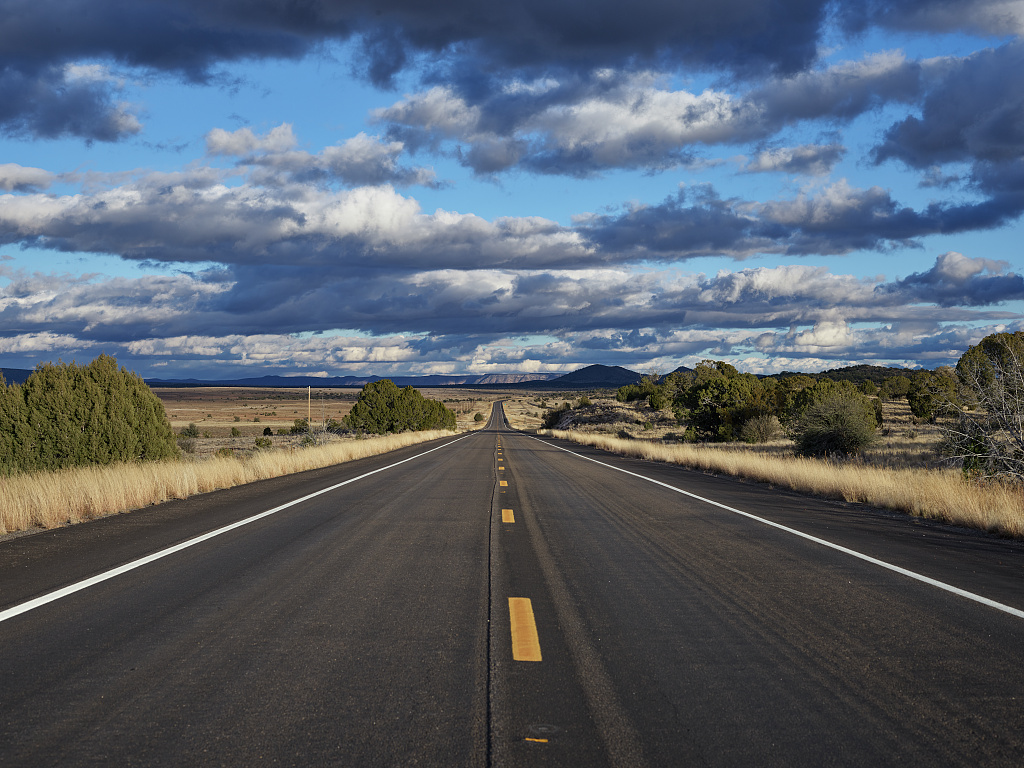A stretch of old U.S. Highway (Route) 66 in Arizona. America’s best-known highway, Route 66, was called “The Mother Road,” connecting Chicago, Illinois, and Santa Monica, California. Widely traveled from the 1930s through 1950’s it was subsumed by the nation’s interstate highway system. (Photo LOC)
> **Afoot and light-hearted I take to the open road,**
> **Healthy, free, the world before me,**
>
> **The long brown path before me leading wherever I choose.**
>
> **From Song of the Open Road, Walt Whitman**
There is nothing I like more than driving the American West winter or summer on secondary roads through immense and largely empty landscapes with no fretful deadline and no pre-chosen destination for the night. I like to be able to stop (or divert) whenever I see something I want to explore. On an average day of desultory exploring, I may stop at a dozen roadside historical markers, several dozen landscapes I wish to photograph, a wee bookstore in an unlikely town, a local museum, a combination coffee shop, tanning booth, and barbershop, or a hiking trail that looks appealing. At night, after securing a room in a Western town of 4-6,000 people, I like to find the steakhouse out on the edge of town for a beer and a burger or a burrito.
I have always felt exceedingly privileged to be able to get into a $25,000, 3,289-pound personal metal transportation machine and drive a thousand miles (or 10,000) without ever encountering a border patrol; and — except on freeways — being able to stop by the side of the road almost anywhere, including on the most remote gravel roads, knowing that the chance the car will break down now approaches zero. I’ve changed approximately 20 tires during my life. I’ve run out of gas half a dozen times, but virtually always from inattention and heedlessness, not from the distance between gas pumps. America makes automobile life easy and — if you do the math — surprisingly inexpensive.
We take all this for granted as part of the American Way, part of the package of unlimited American freedom. We should not. I am aware that the solo auto journey is probably unsustainable in the long run, and for all of my intellectual awareness of the sequential problems of the ozone layer depletion, acid rain, domestic and global distributive justice inequities, periodic Arab resistance against America’s sense of carbon entitlement, and now global warming and climate change, I do hope the window of such freedom and privilege stays open (hopefully in some greener way) and that I will be able to “drive out” my life in the American outback.
## The Miracle of the American Automobile
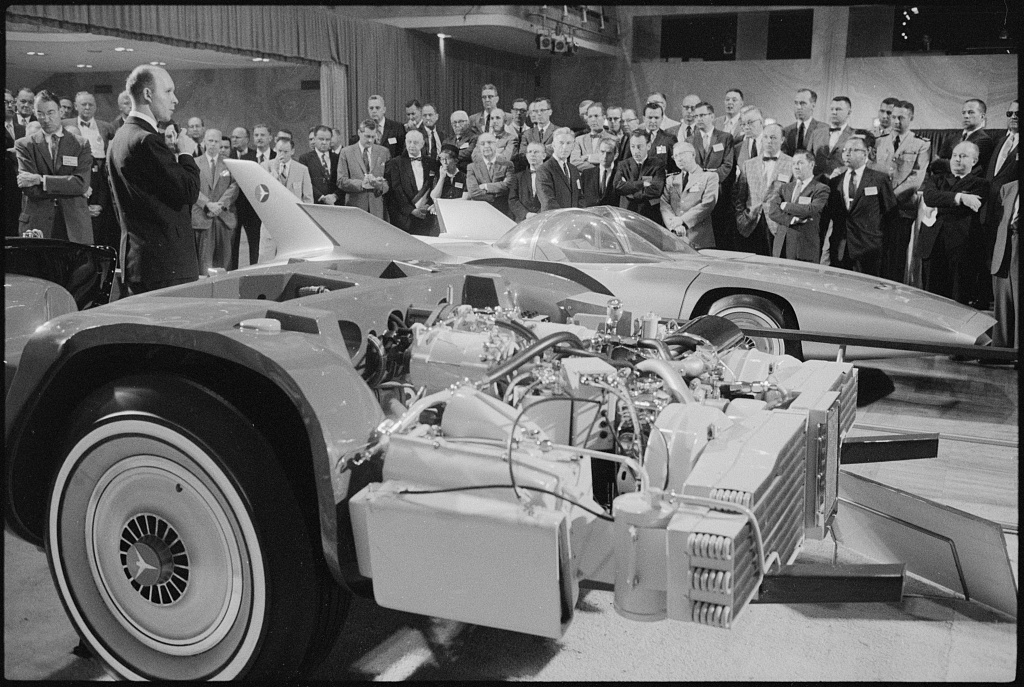A crowd of men gather around the introduction of the new General Motors Firebird III at a press preview, May 1959. (Photo LOC)
Think about the American automobile. It has been one of the most revolutionary (and liberating) of technologies in human history. When Theodore Roosevelt became the first president to make a campaign tour in an automobile in 1902, the American people were still getting around, if they ever ventured more than 25 miles from home, on the national network of railroads, with horses and buggies — and the strength of their feet for shorter distances. Only half a century later, we had to build a colossal national highway system to accommodate America’s profound love affair with the automobile. The Interstate system cost $680 billion in today’s dollars. As a conduit for freight hauling, it has paid for itself a hundred times.
Before the mobile phone. A driver stops at a drive-in telephone on Route 40 near Baltimore in 1959. (Photo LOC)
Americans love their cars so much that they eat in them, buy liquor at drive through facilities, attend church services in them (think of the Crystal Cathedral in Garden Grove, CA), have sex in their back seats, view the corpses of their dead friends and relatives in drive-through funeral parlors, vote in them, get their Covid vaccinations in them, consume drink and drugs in them, sleep in them, and — increasingly — live in them.
As of 2022, there were 290.8 million cars in the United States (with a population of 340 million). When we need a quart of milk or a carton of cigarettes, most of us drive rather than walk a quarter of a mile to the nearest convenience store. More than 70% of Americans commute to work by automobile, usually alone. The privately owned car is as central to the American way of life as television and the cell phone and most of us have no idea how we would be able to live without it.
We Americans regard all of this as a kind of national birthright, but we are the only people on Earth who get to live this way. Our joyful addiction to automobiles didn’t just happen and how we live now is almost certainly not sustainable. Societies make choices. Americans determined to feed their automobile addiction no matter what the cost to the nation’s railroads, the cost to town centers and the viability of local shopping, and the cost of rootlessness of suburban and exurban existence. Not to mention the “cost” of America’s foreign policy, which has had to be subordinated to the uninterrupted flow of Middle Eastern oil.
“Fill’er up!” Gas station attendant, 1958. Prices ranged between 30 and 36 cents a gallon depending on blend. (Photo LOC)
Talk about American exceptionalism. Americans have some of the lowest gasoline prices in the world. A gallon of gas costs about $7.33 in Germany, $7.14 in Italy, and $8 in Great Britain. That’s more than three times the cost of gasoline in the United States (about three dollars per gallon on average). In Canada the average price of gas is about $5.10 per gallon.
The two cars I grew up with were both owned by my parents. One was a 1964 Ford Falcon. It averaged 14.6 miles per gallon. The other was a 1968 Chrysler New Yorker with the big 454 cubic inch engine. It averaged just under nine miles per gallon. When I was a high school student gas cost about 35 cents per gallon. On a Friday night in my hometown of 13,000 people, my best friend and I would put a dollar of gas in the car and cruise the four-mile Main Street a dozen or 20 times in hope of encountering some Playboy models who happened to be exploring small towns in the American heartland. Our success was not as great as we fantasized, and we generally ended up at about 9:30 at the A&W Root Beer Stand on the eastern edge of town.
If you calculate inflation and the cost of living, a gallon of gas that cost 35 cents in 1965 would cost about $3.25 today. The current (early 2024) national gas price averages $2.86 per gallon. The federal per gallon gas tax in 1965 was four cents per gallon. It is now about 23 cents per gallon. That means that the cost of a gallon of gas today is less (adjusted for inflation) than when I was a feckless adolescent! Back then a can of Coke cost 10 cents. A candy bar cost between five and 10 cents. A gallon of milk cost $1.05, a dozen eggs 53 cents, a loaf of bread 20 cents.
If you factor in the dramatic improvements in fuel efficiency in the last five decades, the cost of getting around is even cheaper now than the price per gallon suggests. My three recent cars (last 15 years) on average have gotten 25-35 miles per gallon. Let’s say 30 mpg. That means I get twice as many miles per gallon now than I got in that Ford Falcon and three times more than in the huge Chrysler New Yorker.
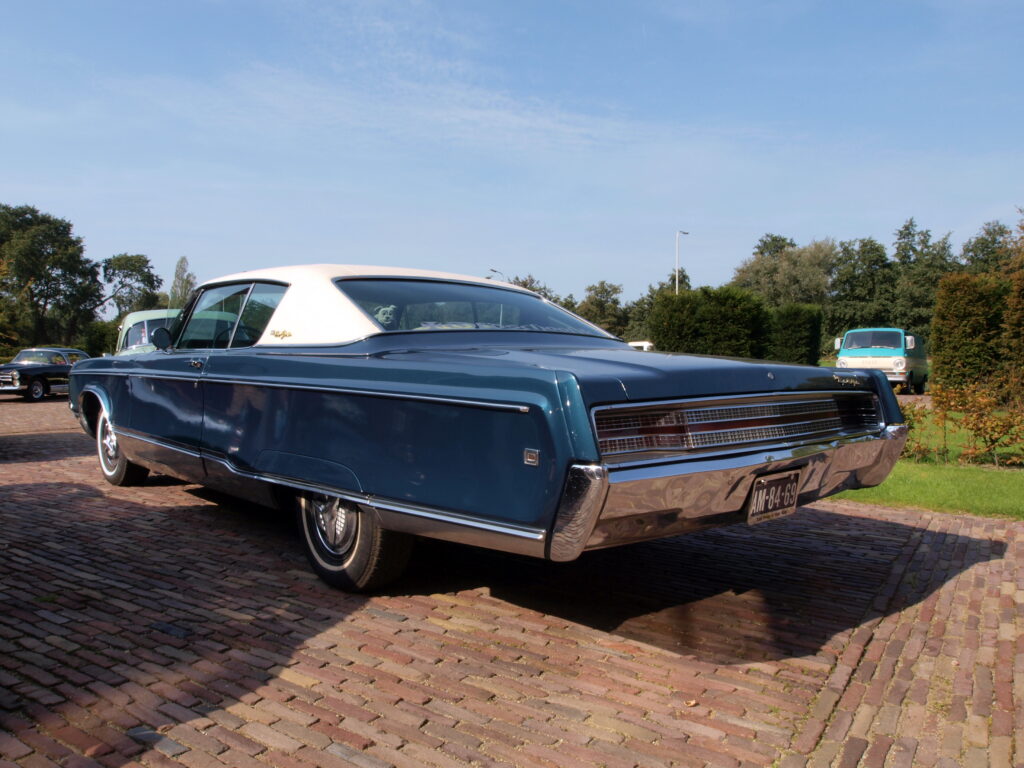A 1968 Chrysler New Yorker. (Wikimedia)
We did not know about our “carbon footprint” back then, but we had air pollution, especially before the advent of unleaded gas, which many of my fellow heartlanders denounced as likely to lower the available horsepower of our big Detroit cars. The first time I heard the word pollution was in the late 60s on the *Tonight Show with Johnny Carson*, and his focus was on New York and then Los Angeles. Out here in the heartland where the wind blows, we shrugged at talk of air pollution. Now when I drive long distances alone for not urgent purposes I experience waves of concern, even guilt, for my outsized carbon footprint. This is just one small window on the Paradox of America. I know the planet could not take it if all eight billion of us lived this way. If we allow ourselves to think about it, which we work hard not to do, we Americans realize that we only get to live the way we do (from conspicuous consumption to diet to food waste to energy consumption, etc.) because we are the world’s hegemon and we don’t really believe that the rest of the people of the planet deserve to live as comfortably and opulently as we do.
As Val Kilmer’s Doc Holliday says in *Tombstone*, “Wyatt, my hypocrisy knows no bounds.”
*The Long Emergency* by James H. Kunstler, 2005.
I know I panicked when James Kuntsler published *[The Long Emergency: Surviving the Converging Catastrophes of the Twenty-First Century](https://www.amazon.com/Long-Emergency-Converging-Catastrophes-Twenty-First/dp/0871138883)* in 2005. In fact, that was what inspired me to move from Reno, Nevada, back to my homeland in North Dakota. This was before fracking, which has changed everything. Kuntsler argued that we have reached what is known as peak oil — when the maximum number of barrels of oil are being produced per year, and thereafter every year fewer barrels of recoverable oil will be available to suck up from under the surface of the earth. When that happens, he said, the carbon economy doesn’t just begin to recede. It collapses, with the breakdown of the First World’s transportation systems, the collapse of industrial economies, and the attendant resource wars that are inevitable when an essential resource is no longer as abundant as human demand.
But then came great technological breakthroughs in fracturing (fracking) around 2005. Now we appear to be awash in essentially infinite carbon by way of previously unrecoverable oil and natural gas. This is good news for the carbon-addicted industrial economy, bad news for the planet. Just at the time the world (and especially the United States) started to get serious about making the hard transformation to a post-carbon economy, the carbon floodgates opened, and we were permitted to slip back into complacency again.
These conversations (internal and external) I will carry on for the next few years in my journeys in search of America as it approaches its 250th birthday. I believe it is essential that I travel with a high sense of purpose, take advantage of this opportunity to listen to America at this critical juncture of our national experiment, and never forget the immense privilege of getting to do what I am so thrilled to be about to do.
I’m counting the days until I get to fetch my Airstream out of winter storage and go out to sing the Whitmanesque [Song of the Open Road](https://www.poetryfoundation.org/poems/48859/song-of-the-open-road). And I’m reading everything I can get my hands on.
Sign for the Hill Top Motel in Kingman, Arizona at the junction of historic U.S. Highway 66 and today’s Interstate 40 superhighway. (Photo LOC)
---
## ***Discover more on these topics at Listening to America***
[Virginia](https://ltamerica.org/tag/virginia/ "7 topics")[Road Trips](https://ltamerica.org/tag/road-trips/ "18 topics")[Thomas Jefferson](https://ltamerica.org/tag/thomas-jefferson/ "34 topics")[Oppenheimer](https://ltamerica.org/tag/oppenheimer/ "1 topics")[north daktoa](https://ltamerica.org/tag/north-daktoa/ "0 topics")[Wyoming](https://ltamerica.org/tag/wyoming/ "4 topics")[New York](https://ltamerica.org/tag/new-york/ "8 topics")[Walden](https://ltamerica.org/tag/walden/ "1 topics")[Washington](https://ltamerica.org/tag/washington/ "2 topics")[Wisconsin](https://ltamerica.org/tag/wisconsin/ "0 topics")[Ohio](https://ltamerica.org/tag/ohio/ "2 topics")[North Carolina](https://ltamerica.org/tag/north-carolina/ "3 topics")[Thoreau](https://ltamerica.org/tag/thoreau/ "5 topics")[Poetry](https://ltamerica.org/tag/poetry/ "1 topics")[Travel](https://ltamerica.org/tag/travel/ "1 topics")[Theodore Roosevelt](https://ltamerica.org/tag/theodore-roosevelt/ "16 topics")[William Shirer](https://ltamerica.org/tag/william-shirer/ "1 topics")[Water in the West](https://ltamerica.org/tag/water-in-the-west/ "24 topics")[Tennessee](https://ltamerica.org/tag/tennessee/ "1 topics")[New Mexico](https://ltamerica.org/tag/new-mexico/ "3 topics")[North Dakota](https://ltamerica.org/tag/north-dakota/ "53 topics")[Oregon](https://ltamerica.org/tag/oregon/ "4 topics")[paintings](https://ltamerica.org/tag/paintings/ "0 topics")[South Dakota](https://ltamerica.org/tag/south-dakota/ "16 topics")[Texas](https://ltamerica.org/tag/texas/ "4 topics")[Space Exploration](https://ltamerica.org/tag/space-exploration/ "8 topics")[Vermont](https://ltamerica.org/tag/vermont/ "1 topics")[Sports](https://ltamerica.org/tag/sports/ "2 topics")[Reading](https://ltamerica.org/tag/reading/ "1 topics")[Republics](https://ltamerica.org/tag/republics/ "1 topics")[Steinbeck Travels](https://ltamerica.org/tag/steinbeck-travels/ "75 topics")[State Parks](https://ltamerica.org/tag/state-parks/ "2 topics")[Oppenheim](https://ltamerica.org/tag/oppenheim/ "0 topics")[Utah](https://ltamerica.org/tag/utah/ "11 topics")[Pennsylvania](https://ltamerica.org/tag/pennsylvania/ "1 topics")[Rivers](https://ltamerica.org/tag/rivers/ "3 topics")[Podcast](https://ltamerica.org/tag/podcast/ "1 topics")[U.S. Constitution](https://ltamerica.org/tag/u-s-constitution/ "1 topics")[Rome](https://ltamerica.org/tag/rome/ "1 topics")[New England](https://ltamerica.org/tag/new-england/ "1 topics")[Republic](https://ltamerica.org/tag/republic/ "0 topics")[The Constitution](https://ltamerica.org/tag/the-constitution/ "1 topics")[Video](https://ltamerica.org/tag/video/ "51 topics")[U.S. Presidents](https://ltamerica.org/tag/u-s-presidents/ "71 topics")[South Carolina](https://ltamerica.org/tag/south-carolina/ "1 topics")
**Categories:** Features
**Tags:** Books, Road Trips
---
### [Holiday Special: Clay Reads "Mr. Ingalls Meets Santa Claus" From Little House on the Prairie](https://ltamerica.org/holiday-special-clay-reads-mr-ingalls-meets-santa-claus-from-little-house-on-the-prairie/)
**Published:** December 24, 2023
**Author:** Editor
**Excerpt:** Holiday Special: Clay reads “Mr. Ingalls Meets Santa Claus” from Little House on the Prairie
**Content:**

Clay reads “Mr. Ingalls Meets Santa Claus” by Laura Ingalls Wilder:
As Clay said, “I’ve read this chapter from *Little House on the Prairie* to my daughter every Christmas from before and after she learned to roll her eyes and make a little sigh. It’s a magical account of the spare life of plains homesteaders and how much pleasure small gestures of love and generosity can bring. My good friend Brad Crisler’s lovely music accompanies my reading. A Happy Holiday to all!”
**Categories:** Books
**Tags:** Books, Holiday
---
### [Snow Blowers, Walleye and Failing North Dakota 101](https://ltamerica.org/snow-blowers-walleye-and-failing-north-dakota-101/)
**Published:** December 18, 2023
**Author:** Clay Jenkinson
**Excerpt:** It’s not easy being a North Dakotan ...
**Content:**
Clay’s snowblower, once again mid repair. (Photo by Clay Jenkinson)
It’s not easy being a North Dakotan. I was born here. Now I live here again. But I grew up in a town (what we call a city here, 13,000 people in my youth), not in the country. I spent parts of summers on a family farm in western Minnesota, a dairy, but I’m clearly an “urban” North Dakotan. I’ve hauled some bales, milked cows and goats, driven the cultivator, hauled grain to the elevator in town, painted a corn crib, shoveled manure. Not much. In high school shop I learned how to weld, but I haven’t used that skill in 40 years and I’m guessing it is *not* like riding a bicycle.
On top of that I am the grasshopper in the Aesop fable of the *[Grasshopper and the Ant](https://read.gov/aesop/052.html).* I’m always the last guy in my neighborhood to gather up the hoses, put away the lawn mower, rake the leaves of my many cottonwood trees. Often enough I wind up trying to coil the hoses after a big winter storm when they are as brittle as old red licorice.
Now that I am contemplating driving an Airstream trailer all over America, I’m going to have to relearn how to back a trailer up. My friends Jim and Lillian bought a camper trailer a couple of years ago and they say the worst fights of their marriage have been about backing up.
The average North Dakotan is a master of using heavy equipment, from gargantuan riding lawn mowers to skid-steers ([Bobcat](https://www.bobcat.com/na/en/company/about/history) had its origin in a small North Dakota town), all the way up to 18-wheelers. They back up with haughty confidence and grace. One of the greatest things I ever saw was the loading dock of the Bismarck (N.D.) Civic Center at the end of a weekend craft show (Pride of North Dakota). When the closing bell came on Sunday afternoon everyone wanted to get out of there ASAP. My friend David and I walked out the back door to get to his van. As we emerged into the December afternoon, we saw at least 20 pickups with trailers of all sizes, including homebrews, lowboys, and more, all backing into the loading dock at the same time. It was like Internal Combustion Ballet! They exchanged hand signals with other drivers, yielding or taking precedence, laughing out greetings, waving someone in. It seemed that they were all backing up at 25 mph, as if the scene had been written by a choreographer and practiced a dozen times. At times there were no more than a few inches between trailers. Nobody honked a horn. Nobody cursed a rival. Many of the drivers were women. There wasn’t a single scrape or fender bender. And it was all over in half an hour.
I had never seen anything like it. I tried to imagine what it would be like for 50 average New Yorkers trying that dance, or 50 Angelinos. It was flawless.
When I put my Airstream into its commercial storage bay for the winter, I timed my approach so there would be nobody else there. Alone, I spent the better part of an hour making ruinous rookie mistakes in trying to back the 24-foot tube into the bay without damaging something. I have good news. The only thing I damaged was my pride. I suppose I redid the backup 30 times before I finally got it right. It’s so counterintuitive that even experts struggle to give directions. If the storage unit manager had been trying to help me that day it would only have gotten worse, because the added pressure of humiliation makes it impossible to conduct all the little experiments that eventually lead to success. If there were a storage unit with doors at both ends, I would rent it so I could just drive through and not have to back in. I know that I will eventually get pretty good at this, but not without a world of trial and error and blushing embarrassment.
## **North Dakotans Know How To Do Things**
North Dakotans know how to do these things. These skills come with the territory. North Dakotans can back up a trailer, weld a broken hitch, throw up drywall, wire the new bathroom, install new piston rings in the engine, pull a calf in a blizzard, frame a garage, install a new window frame, artificially inseminate an ovulating cow.
This year — trying to be the Ant not the Grasshopper — I determined to make sure my snowblower was in working order *before* the first big snowfall. It doesn’t snow much here on the northern Great Plains but when it does it’s important to dig out quickly or the ice that forms on the driveway will be an issue until late March. So, about six weeks ago I started the big snowblower on a 75-degree day and ran it for half an hour. That suggested to me that all would be well. But when the time came to use it after a 6-inch snowfall in early October, I couldn’t get it started. It would just about almost start or maybe rumble and choke for 20 seconds or so and then shut down. Inevitably, I flooded the engine trying to get it started, realized that I had flooded the engine, took a long break, and tried again. That went on for three or four days.
A neighbor from down the street cleared my sidewalks on October 28. When I walked out to thank him, and introduce myself, he said, “Well, I just don’t want the children to have any difficulty on Halloween.” Oh, great, you’re playing the “it’s for the children” card. I wanted to say, “you know, back when I was a lad, we trudged through giant snowdrifts at Halloween and we wore real costumes, too!” But I merely thanked him, told him of my snowblower woes, and crept back inside in shame and chagrin. Who are these helpless children, and do they really want my widow’s mite of candy if they are not prepared to trudge to my door?!
The pesky spark plug.
I drove to the hardware store to buy that spray stuff that helps start a reluctant engine. That didn’t work. I decided to change the spark plug. Sometimes you just must remove the spark plug, let it dry in there, and things improve. (Notice my technical language.) Just to be safe I drove to the hardware store to buy a new spark plug. Then I spent a couple of hours trying to figure out where the spark plug was on this Briggs & Stratton engine. Eventually I looked it up on YouTube and learned how to remove a protective housing and then get to the engine. Then I spent about an hour scrounging in my many toolboxes and bins looking for a socket that fit a spark plug. I nearly drove to the hardware store just to buy a new one, but tried one more time and found the socket in an unexpected place. I pulled the old spark plug, then went into the house to fetch a hair dryer, with which I blasted hot air into the engine for 10 minutes to dry everything out.
I put in the new spark plug and returned the socket to its proper place (I think). When I pulled the cord, the engine roared into life. I let it run half a tank of gas just to make sure whatever gunk had clogged the system was worked out.
Finally, I was ready to do my subdivision duty. That’s when I discovered that I had a flat tire. Now I do have an air pump cannister somewhere in the garage. I located it and plugged it in, waited 10 minutes for the pressure to build up, and then tried to inflate the tire. But of course, that didn’t work. I could not get the tire to seal properly.
So.
I found the right wrench and removed the wheel. I went inside, got on Amazon.com and tried to find a replacement wheel-and-tire. No luck. I tried to inflate the tire in several clever ways without success.
So, I got in my car and drove to a tractor supply house to look for a new wheel. No luck. Not so far away was a tire shop. I drove there, took the wheel in with the deflated tire and asked them if they could fix it. The owner told me I should go back to the tractor supply store to buy a tube — a tube, he said, was a better idea anyway. He told me tubeless tires on lawnmowers and snowblowers tend to deflate when they sit around between seasons. Who knew? So, I drove to the tractor supply store. They did not have the right size tube in stock. I drove back to the tire store and asked again if they would simply try to inflate the tire. The owner said, “they really didn’t have a tube?” I said they had a 15.5.6 tube but not the 15.5.5 tube I needed. He told me the 15.5.6 tube would probably work. So, I drove back to the tractor supply house and bought that tube. I returned to the tire shop, left the tube, and drove home. They would call me when it was ready. An hour later the tire store called to say the tube was defective. It had a hole. They reckoned that someone had purchased it, damaged it, repackaged it, returned it, and got a refund.
So.
I drove to the tractor supply store and bought another 15.5.6 tube, making sure the package had not been opened. I returned to the tractor supply house and left the new tube. I drove home. Then minutes later they called to say the tire was ready.
So now the snowblower is ready for the next big snow. I hope. I’ve started it a couple of times in the last week to make sure nothing settles out in the intake hose.
I had similar troubles with my snowblower last year, but back then my immediate neighbor Sean, who grew up on a farm 50 miles west of here, lugged it into his heated garage and fixed it. He saw me tearing my arm off trying to start the thing, and he took pity on me. When he brought it back two days later, he told me you should never put unleaded gas into a small engine because something settles out when you let it sit for a few months. Buy only premium gas, said he. That doesn’t come with the owner’s manual! I said, “Sean, how do you know this?” Sean said, “you just know.” He fixed three problems over a two-week period. I bought him gift cards each time until I was getting pretty close to the cost of a new gleaming snowblower. Then Sean and his wife moved to South Carolina. The new neighbors look like clueless urban types just like me, but at least they don’t have a pit bull. They brought me a plate of homemade wontons and eggrolls on Thanksgiving. Those are *different* skills I don’t possess.
My sense is that whatever the home handyman project is, you are going to the hardware store at least three and maybe four times before you solve the problem. That has been an iron law of my life as a pathetic suburbanite.
But my humiliations were not over.
## **Ye Old Charles Dickens Festival, Carl and Walleye**
For the sixth year in a row, I drove 75.6 miles last weekend to the town of Garrison, N.D. (population 1,432) to attend the annual Charles Dickens Festival. Ye Old This and Ye Old That: Ye Old Barber Shop. Ye Old Bank. Small kiosks on the Main Street: meatballs, knoephla soup, drumsticks, potato on a stick, and — since it is in the heart of German North Dakota — fleischkuechle. I bought tickets for the 13th annual performance of *A Christmas Carol*. I wore my 16-inch black top hat and brought my father’s stout cane, so I looked either like a dork (yes) or the Grand Marshall of the Dickens Festival Parade.
A friend from Bismarck was with me and we dropped into the Hometown Tavern and Bottle Shop to sip a Tom & Jerry (rum, butter, cream) before the auditorium opened. We were sitting next to a large, crusty man with a five-day beard, who was making some critical remarks about government.
He turned to look at us. He had heard me talking about Gaza. “Where are you from?” he asked. “With that accent you are not from around here.” “Bismarck,” I said. “No. You sound like maybe you are Irish.” “He’s from Dickinson,” my friend said. “No,” he said, nobody from here talks like that. I assured him that I was a true North Dakotan and I had no idea what my voice sounded like, because to me it’s just my voice.
To change the subject, I said, “So where’s your farm?” He looked like a 70-year-old North Dakota farmer. His name was Carl. I did not say that one of my principal interests is the agrarian and that family farmers have a very big place in my heart and soul.
“Farmer! I ain’t no farmer. Been working in iron all my life. Worked on the \[coal fired\] power plants. Worked on the \[ICBM\] missiles.” “That where you lost that finger?” Carl explained the accident in great detail.
“Do you spend much time fishing?” my friend asked. We were near the shores of Lake Sakakawea, famous for its fishing opportunities. “All the time,” he said, and worked his smartphone with his big career-damaged fingers to find a photograph of a recent catch. It took a long time. We told him not to worry about it. Finally, Carl found the picture, and showed it to me.
A sampling of Carl’s fresh caught walleye.
“What kind of fish are they?” I asked (innocently enough).
Our end of the bar went completely silent. You know that television commercial for Pace Salsa where a bunch of cowpokes are sitting around the fire and some poor fool reads the label and says it comes from New York City? And all the others stare at him incredulously and say, *“NEW YORK CITY!!”*
Suddenly four or five men between the ages of 50 and 85 stared at me with disbelief. “You don’t know a walleye when you see one?” my new friend asked. “You’re kidding.” I admitted that I did not recognize the species of the fish in the picture. “Ever eaten a walleye?” I looked around at all those more authentic North Dakotans. Some were averting their eyes out of pity, but most of them looked upon me with quiet contempt. It was as if time had been suspended. I was alone and exposed. Maybe I was visiting from Ireland. “Now you’re just talking trash,” said I. “I love walleye.”
“Tell you what,” Carl said. “If you wait here 10 minutes, I’ll go get you some, just in case you have never eaten one. I have a freezer full of it.”
We tried hard to talk him out of it, but he lumbered out of the bar and disappeared for 20 minutes or so. When he came back, he handed me two large Ziplock bags each containing six or seven big walleyes, ready to cook.
Carl gifts Clay two Ziplock bags of frozen walleye, pictured here with a copy of Clay’s book on North Dakota, *The Language of the Cottonwoods*.
We finished our Tom & Jerrys and walked up the street to see Scrooge and Tiny Tim. My laughing friend said, “You failed the North Dakota test. You failed North Dakota 101. We can never go back to that bar again.” As we walked by Ye Old Newspaper Shop my friend said, “Thank God, you didn’t say you don’t own a fishing rod or a hunting rifle. We might not have gotten out of there alive.”
I texted my thanks to Carl. He texted back. I’m not quite sure what to do next. If I thaw the fish I’ll have more walleye than I can possibly eat at one sitting, even over a weekend. I’m going to invite myself over for dinner at Jim and Lillian’s house and take the walleye. Jim’s a serious fisherman and he knows exactly how to cook walleye to perfection.
Carl has agreed to take me fishing with him on the big lake. We’re a little like Humphrey Bogart and Claude Rains in *Casablanca*. Once I get me a fishing license, we’re going to “round up the usual suspects.”
When the next snow comes, I’m going to clear the sidewalks of my four-houses-down neighbor. For the children.
Assuming my snowblower starts.
---
## ***Discover more on these topics at Listening to America***
[Utah](https://ltamerica.org/tag/utah/ "11 topics")[U.S. Constitution](https://ltamerica.org/tag/u-s-constitution/ "1 topics")[Virginia](https://ltamerica.org/tag/virginia/ "7 topics")[South Dakota](https://ltamerica.org/tag/south-dakota/ "16 topics")[Thomas Jefferson](https://ltamerica.org/tag/thomas-jefferson/ "34 topics")[Steinbeck Travels](https://ltamerica.org/tag/steinbeck-travels/ "75 topics")[paintings](https://ltamerica.org/tag/paintings/ "0 topics")[Theodore Roosevelt](https://ltamerica.org/tag/theodore-roosevelt/ "16 topics")[Oregon](https://ltamerica.org/tag/oregon/ "4 topics")[Sports](https://ltamerica.org/tag/sports/ "2 topics")[Oppenheim](https://ltamerica.org/tag/oppenheim/ "0 topics")[The Constitution](https://ltamerica.org/tag/the-constitution/ "1 topics")[Wyoming](https://ltamerica.org/tag/wyoming/ "4 topics")[North Carolina](https://ltamerica.org/tag/north-carolina/ "3 topics")[Travel](https://ltamerica.org/tag/travel/ "1 topics")[Space Exploration](https://ltamerica.org/tag/space-exploration/ "8 topics")[Ohio](https://ltamerica.org/tag/ohio/ "2 topics")[Tennessee](https://ltamerica.org/tag/tennessee/ "1 topics")[North Dakota](https://ltamerica.org/tag/north-dakota/ "53 topics")[Reading](https://ltamerica.org/tag/reading/ "1 topics")[William Shirer](https://ltamerica.org/tag/william-shirer/ "1 topics")[Road Trips](https://ltamerica.org/tag/road-trips/ "18 topics")[New York](https://ltamerica.org/tag/new-york/ "8 topics")[Republic](https://ltamerica.org/tag/republic/ "0 topics")[U.S. Presidents](https://ltamerica.org/tag/u-s-presidents/ "71 topics")[Walden](https://ltamerica.org/tag/walden/ "1 topics")[Rivers](https://ltamerica.org/tag/rivers/ "3 topics")[Poetry](https://ltamerica.org/tag/poetry/ "1 topics")[north daktoa](https://ltamerica.org/tag/north-daktoa/ "0 topics")[Washington](https://ltamerica.org/tag/washington/ "2 topics")[New Mexico](https://ltamerica.org/tag/new-mexico/ "3 topics")[Video](https://ltamerica.org/tag/video/ "51 topics")[Podcast](https://ltamerica.org/tag/podcast/ "1 topics")[Thoreau](https://ltamerica.org/tag/thoreau/ "5 topics")[New England](https://ltamerica.org/tag/new-england/ "1 topics")[Republics](https://ltamerica.org/tag/republics/ "1 topics")[Water in the West](https://ltamerica.org/tag/water-in-the-west/ "24 topics")[Pennsylvania](https://ltamerica.org/tag/pennsylvania/ "1 topics")[Vermont](https://ltamerica.org/tag/vermont/ "1 topics")[State Parks](https://ltamerica.org/tag/state-parks/ "2 topics")[South Carolina](https://ltamerica.org/tag/south-carolina/ "1 topics")[Wisconsin](https://ltamerica.org/tag/wisconsin/ "0 topics")[Rome](https://ltamerica.org/tag/rome/ "1 topics")[Texas](https://ltamerica.org/tag/texas/ "4 topics")[Oppenheimer](https://ltamerica.org/tag/oppenheimer/ "1 topics")
**Categories:** Dispatches from the Road
**Tags:** North Dakota
---
### [Henry Kissinger](https://ltamerica.org/henry-kissinger/)
**Published:** December 11, 2023
**Author:** Clay Jenkinson
**Excerpt:** Adviser to half a dozen presidents, especially Nixon, Kissinger was the only individual ever to serve as secretary of state (1973-77) and national security adviser (1969-75) at the same time.
**Content:**
## Adviser to half a dozen presidents, especially Nixon, Kissinger was the only individual ever to serve as secretary of state (1973-77) and national security adviser (1969-75) at the same time.

Henry Kissinger was a colossus.
He was a strategic genius and probably also a war criminal. In 1973 he won the Nobel Peace Prize together with North Vietnamese diplomat Le Duc Tho for negotiating an end to the War in Vietnam. Kissinger did not attend the award ceremony, citing scheduling conflicts. Le Duc Tho declined to accept the award. Two Nobel Prize committee members resigned to protest the selection of Kissinger. Even then, Kissinger’s complicity in the death of millions was well known.
Just two days after Kissinger’s death, George Packer wrote (for the Atlantic), “Henry Kissinger spent half a century pursuing and using power, and a second half century trying to shape history’s judgment of the first. His longevity, and the frantic activity that ceased only when he stopped breathing, felt like an interminable refusal to disappear until he’d ensured that posthumous admiration would outweigh revulsion.”
Kissinger was strangely indifferent to the human suffering he caused or endorsed in pursuit of what he regarded as American ideals.
President Gerald Ford gave Kissinger the Presidential Medal of Freedom in 1977. In his remarks, Ford said Kissinger “wielded America’s great power with wisdom and compassion in the service of peace.”
Wait. Compassion? Kissinger masterminded America’s illegal five-year bombing of Cambodia and Laos, which killed hundreds of thousands of civilians. Then he lied about it to Congress. Well aware that the bombing raids were killing and maiming innocent villagers who had absolutely nothing to do with the War in Vietnam, Kissinger instructed the American military to bomb “anything that flies or moves” in Cambodia and Laos.
Kissinger encouraged the 1973 coup in Chile that overthrew a democratically elected socialist government, and he supported the dictatorship of Augusto Pinochet, whose subsequent reign of terror had 3,000 dissidents killed, and as many as 40,000 tortured. Kissinger said, “No matter how unpleasant they act, the \[Pinochet\] government is better than Allende was.” And he said, “The issues are much too important for the Chilean voters to be left to decide for themselves.”
When Bangladesh was born out of East Pakistan in 1971, Kissinger arranged arms shipments to West Pakistan (now Pakistan) to rain terror on the Bengalis. He did this partly because Pakistan was an American client state that he felt we needed to support in that troubled region of the world; partly because he wanted to support Yahya Khan, the commander in chief of the Pakistan army who had helped facilitate Kissinger’s secret missions to China on behalf of Nixon. The birth of Bangladesh was a bloodbath. More than a million and a half people were killed in one of the most savage wars of the century, and more than 200,000 women raped. “Why,” Kissinger asked, “should we give a damn about Bangladesh?”
Kissinger also supported genocidal actions in East Timor. He supported the Turkish invasion of Cyprus, which resulted in another horrific campaign of ethnic cleansing.
With the news that Dr. Kissinger had died at the age of 100, Gary Bass, writing in the Atlantic, asked, “How many of his eulogists will grapple with his full record in Vietnam, Cambodia, Laos, Bangladesh, Chile, Argentina, East Timor, Cyprus, and elsewhere?”
Even if Kissinger’s actions can be defended as necessary responses in a dangerous world, what then of the 1949 Geneva Conventions, protecting non-combatants and outlawing some forms of state violence, ratified by all members of the United Nations? If these standards can be jettisoned in the name of expedience, even by “the leader of the free world,” what then is their value? Are these no more than expressions of wishful thinking? Ideals and yet optional? The Geneva Conventions and the human rights standards of the United Nations forbade the bulk of Kissinger’s actions on the global stage.
Former national security adviser Ben Rhodes has written, “Henry Kissinger … exemplified the gap between the story that America, the superpower, tells and the way that we can act in the world. At turns opportunistic and reactive, his was a foreign policy enamored with the exercise of power and drained of concern for the human beings left in its wake.”
At no time in his long life was Kissinger called to account. At no point was he required to answer the hard questions. He was so prickly, righteous, thin-skinned, and abrasive even under the most tepid criticism that it soon became a tacit disqualification for any access to him. There were countries he dared not visit lest he be arrested for what those nations regarded as war crimes. He made it a condition of his public appearances and his encounters with the press that the hard questions were off-limits.
But wait, if he was permitted to order the deaths of hundreds of thousands of people, from elected heads of state to villagers minding their own business in far corners of the world, surely he should have been required to justify his actions — at least in the court of public opinion. Why should he not have been required to face his critics in the United States and beyond? Do we really believe that because he was a charismatic man of great intellectual depth and acuity he should be allowed to operate beyond criticism, particularly when his actions seem to be fundamentally at odds with America’s publicly declared ideals? Surely the price of holding so much power and being permitted almost unilaterally to unleash so much state violence across the globe should be some level of accountability.
I’m not suggesting with his most ardent critics — the late Christopher Hitchens chief among them — that he should have been tried in the world court, but surely neither he nor any other individual should be above accountability of some sort.
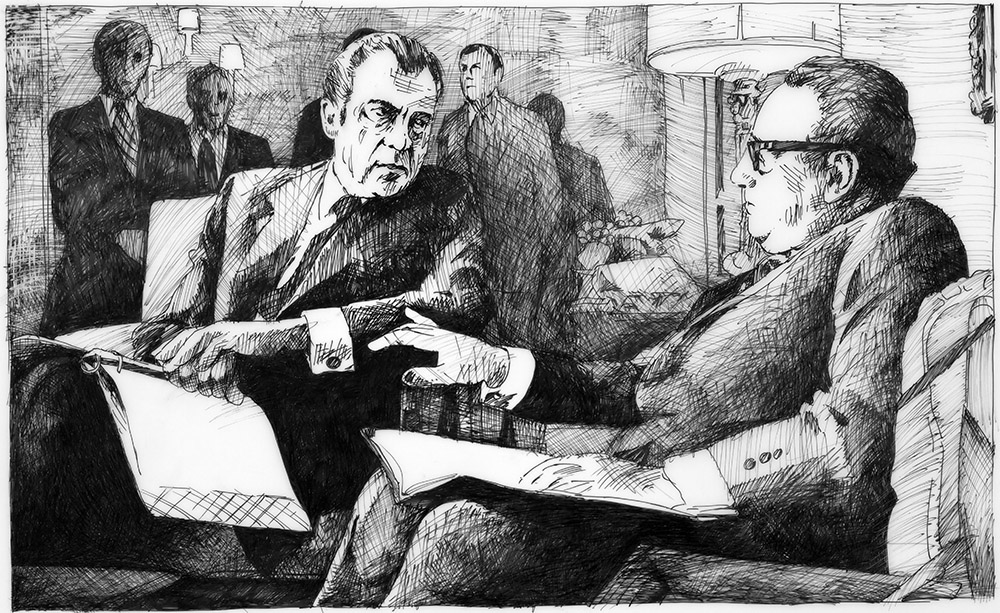
Behind closed doors (but while Nixon’s White House tape recorder was rolling) Kissinger called Indira Gandhi a “bitch” and dismissed the hundreds of millions of subcontinent Indians as “a scavenging people,” a nation of flatterers and suck-ups. He told Nixon “The Pakistanis are fine people, but they are primitive in their mental structure.” In a taped conversation with Nixon in 1973 Kissinger said, “The emigration of Jews from the Soviet Union is not an objective of American foreign policy. And if they put Jews into gas chambers in the Soviet Union, it is not an American concern. Maybe a humanitarian concern.” When transcripts of this private conversation were made public, all Kissinger could do was say his remarks were taken out of context. Needless to say, he did everything in his power to prevent the White House tapes in which he spoke such words from being made public. Only protracted legal efforts by journalists and historians have made most, but not all, of Kissinger’s Oval Office remarks public. If this was his attitude toward the non-European, non-Western peoples of the world, it is hardly a surprise that he could order the carpet bombing of their villages without the slightest expression of concern.
He lied to the American people. He lied to Congress.
After the David Frost interviews in 1977, the American people decidedly rejected Nixon’s view that “when the president does it, that means that it is not illegal.” Surely we don’t believe that because the United States is, on the whole, a force for good in the world that if America does some horrendous thing it must be ok.
In recent years he was occasionally consulted on the big international questions. By now he was bent over and fragile, speaking very slowly as if he were using up the last of his vocalizations in real time, but though his body was shrunken his head was still huge and everyone listened to him as if he were the priestess at Delphi or the Cumaean Sibyl. How much of this was self-fashioning and how much was wisdom is hard to determine. When Kissinger spoke in his stooped and hesitant late-life manner, everyone stopped to listen — except those out in the streets demanding that he be turned over to the international courts of justice.
He was America’s most prominent exponent of realpolitik, the idea that nations should do what is in their interest, without much handwringing about morality or Wilsonian idealism. While this is undoubtedly the way things tend to work, realpolitik is not particularly popular in a nation that prides itself on its (self-constructed) reputation for high-mindedness and selfless idealism. America prefers to wage its wars “to make the world safe for democracy,” or to plant the seeds of democracy and self-determination in the Middle East. Kissinger’s unvarnished appeal to selfish pragmatism in America’s foreign policy had its own slightly shocking magnetism. It was a little sexy. He made us feel that he was granting us a glimpse of the way the world really works, behind the public relations rhetoric. Kissinger famously said, “America has no permanent friends or enemies, only interests.”
This is one of those times when we wish Christopher Hitchens was still alive. His loathing of Kissinger knew no bounds. He wrote a book about it: The Trial of Henry Kissinger (2002).
Kissinger symbolizes the pornography of power. In 1968, he was negotiating a Vietnam peace treaty in Paris for President Johnson. He did a deal with the Republicans to sabotage the peace negotiations to help secure Richard Nixon’s election to the president. In return, the world’s self-styled “greatest peacemaker” would be promoted under the new administration. Kissinger’s venality extended the war by four years and cost the lives of millions of Vietnamese, Cambodians and Laotians — not to mention many thousands of US servicemen.
And yet….
Henry Kissinger’s biography is impressive and inspiring. A Jew, born Heinz Alfred Kissinger in Germany in 1923, he came (at age 15) with his family to the United States in 1938 to escape Nazi tyranny. He was drafted into the U.S. Army in 1943. He served in Germany as an intelligence officer. He earned a Bronze Star for helping to hunt down members of the Gestapo. He took his degrees at Harvard. He first became well known in the United States after he advised the Eisenhower administration that “limited nuclear war” might be necessary to protect the West from Soviet domination. He wrote an influential book, Nuclear Weapons and Foreign Policy (1957).
Urbane. Cosmopolitan. Globe-trotting. Frequently self-effacing, as long as it was on his own terms. Profoundly articulate, rational, and learned. The ultimate insider. The darling of the Georgetown crowd. A master in the geopolitical arena. At times mesmerizing. The center of attention in any room, including when presidents were beside him. And one of the most powerful men of the post-war world.
He could be witty and charming. “No one will ever win the battle of the sexes; there’s too much fraternizing with the enemy,” he said. And he said, “The nice thing about being a celebrity is that, if you bore people, they think it’s their fault.” And, “The illegal we do immediately. The unconstitutional takes a little longer.” (Are you listening, America?)
He was famous for being a ladies’ man. When he was asked how he managed to have a string of young, beautiful women on his arm at public events, he famously said power is the ultimate aphrodisiac. But it must have been more than that. With his thick German accent, thick glasses, and his breathtaking erudition, and the sense he exuded of having access to the deepest levers of global power, he attracted the attention of a wide variety of women, in and out of government, in Hollywood, New York, and Georgetown. The only common ground was that they must be beautiful women.
Most of the other architects of America’s debacle in Vietnam later acknowledged their strategic miscalculations — Robert McNamara, Melvin Laird, Dean Rusk, McGeorge Bundy. Kissinger never did. His usual answer was that he did the best one could do under the circumstances; and there may have been mistakes; but he had nothing to apologize for. The closest he ever came to an apology was in 2002 in London, where protestors demonstrated against his presence at a business convention. He told his audience, “No one can say that he served in an administration that did not make mistakes. The decisions made in high office are usually 51-49 decisions so it is quite possible that mistakes were made.”
That’s the Nixon administration’s passive-voice mantra: mistakes were made.
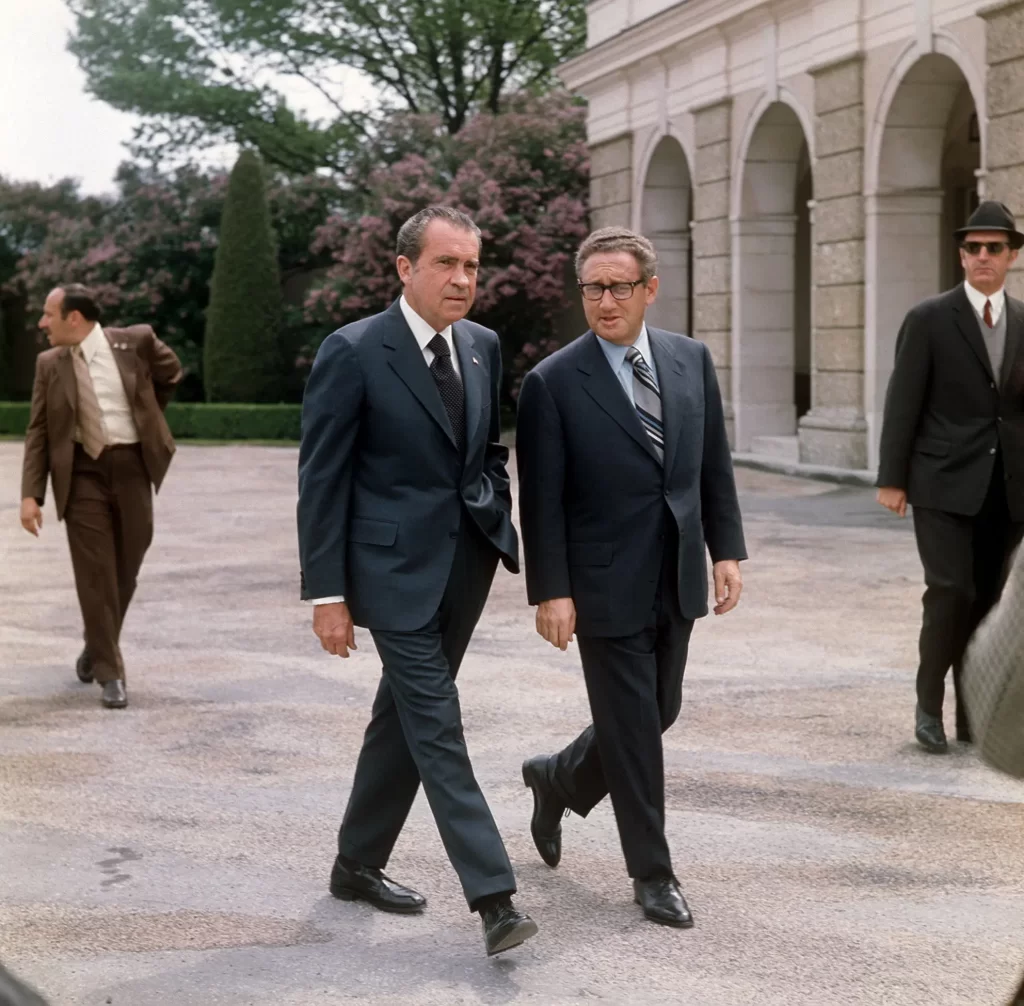
Kissinger was paranoid. He had members of his own staff wiretapped, and members of the press, and dissidents. His obsession with stopping government leaks that were — in his mind — undermining American foreign policy, helped to engender all that we embrace with the word Watergate. He was caught in a trap of his own making. He wanted to maintain the respect of the liberal establishment (Harvard, Yale, Columbia, the Brookings Institute), but his actions were usually at odds with that establishment, but he was so ambitious that he found it possible to insinuate himself into the inner circle of a man of even greater paranoia, Richard Milhouse Nixon. He said he did not like Nixon. He said he regarded Nixon as an intellectual lightweight. He said he didn’t trust Nixon. And yet he volunteered to do the wet work for the administration.
Kissinger and Nixon worked themselves into a dark co-dependency, each one egging the other on to more and more desperate measures. In the end, in the summer of 1974, when Nixon was broken by his crimes and saying privately that he just wanted to die, he convinced Kissinger to kneel with him one night in the Lincoln Bedroom of the White House — the California Quaker and the non-practicing Jew — and pray.
It’s not all bad, of course. He did all the globetrotting that enabled President Nixon to visit the People’s Republic of China in 1972 — an international breakthrough that had been regarded as essentially unthinkable. He performed masterfully in bringing about an end to the Yom Kippur War (fall 1973). He helped lower the temperature with the USSR. He got us out of Vietnam — ignominiously, but he fulfilled President Nixon’s accurate recognition that the American people wanted out, with or without honor.
Kissinger was notoriously thin-skinned and adverse to even the hint of criticism. He was always threatening to resign and though everyone, including his presidents, knew he was merely posturing, they had to go through the charade of caressing his gigantic ego and telling him he was the indispensable man.
Historian Rick Perlstein has written, “He was a prima donna. He didn’t like having a boss. He was famous for volcanic tantrums when Rockefeller’s speechwriters fiddled with his prose: ‘When Nelson buys a Picasso, he doesn’t hire four housepainters to improve it!’”
Being Kissinger was not easy, of course, in spite of the adulation and the power and the women. It was endless and exhausting work, with perennial jet lag, great frustrations, and terrible setbacks. Because we are a “democracy,” with at the time a severely scrutinizing Congress, and because the American people insist upon being portrayed as the good guys in a dark and dangerous world, Kissinger and the presidents he served had to portray their ruthless foreign policy engagements, at least publicly, in a fairy tale language that denied the hard-headedness of our actual role in the world.
Nixon and Kissinger talked endlessly about how to get America out of Vietnam, preferably in some way that would allow the president to declare we had achieved “peace with honor.” But they both knew — and Kissinger more than Nixon — that the war could not be won. In a now-famous 1972 conversation Kissinger finally said, “We’ve got to find some formula that holds the thing together \[for\] a year or two, after which — after a year, Mr. President, Vietnam will be a backwater. If we settle it, say, this October, by January ’74 no one will give a damn.” In other words, it was worth prolonging the unwinnable colonialist war for what Kissinger actually called “a decent interval” to protect Nixon’s political standing at home. Can there be cynicism greater than that?
How can this be ok? We now know that it would have been possible to end the war in 1969 on the same terms that would finally be reached in 1973. Between 1969 and 1975 more than 21,000 Americans died and hundreds of thousands of Vietnamese apparently for no justifiable reason. Nixon said he did not want to be the first American president to lose a war. President Johnson had said precisely the same thing, and that was central, too, to the geopolitical outlook of JFK.
Historian Stanley Kutler has said, “Certainly the decision on when and whether to end the war in Vietnam was done with a domestic political calculus in mind.” The author of The Vietnam War Files: Uncovering the Secret History of Nixon-Era Strategy, Jeffrey Kimball, concluded that Kissinger’s record “is one of persisting in a deadlocked war for the sake of appearances — i.e. salvaging an elusive and false U.S. credibility.”
Now that Kissinger is no longer alive to protect himself and make life difficult for his critics, the early commentary by journalists, historians, and the punditry class has been surprisingly negative, nearly every obit and article sprinkled with the words “war crimes,” while most politicians are tripping over themselves to sing his praises.
Just how he will be regarded in history (think of his 200th birthday in 2123) is unclear, but it doesn’t look good.
---
## ***Discover more on these topics at Listening to America***
[Wyoming](https://ltamerica.org/tag/wyoming/ "4 topics")[South Dakota](https://ltamerica.org/tag/south-dakota/ "16 topics")[Texas](https://ltamerica.org/tag/texas/ "4 topics")[Reading](https://ltamerica.org/tag/reading/ "1 topics")[Video](https://ltamerica.org/tag/video/ "51 topics")[South Carolina](https://ltamerica.org/tag/south-carolina/ "1 topics")[U.S. Presidents](https://ltamerica.org/tag/u-s-presidents/ "71 topics")[William Shirer](https://ltamerica.org/tag/william-shirer/ "1 topics")[U.S. Constitution](https://ltamerica.org/tag/u-s-constitution/ "1 topics")[Travel](https://ltamerica.org/tag/travel/ "1 topics")[State Parks](https://ltamerica.org/tag/state-parks/ "2 topics")[North Carolina](https://ltamerica.org/tag/north-carolina/ "3 topics")[Oppenheim](https://ltamerica.org/tag/oppenheim/ "0 topics")[Water in the West](https://ltamerica.org/tag/water-in-the-west/ "24 topics")[Republic](https://ltamerica.org/tag/republic/ "0 topics")[Rome](https://ltamerica.org/tag/rome/ "1 topics")[Virginia](https://ltamerica.org/tag/virginia/ "7 topics")[Thomas Jefferson](https://ltamerica.org/tag/thomas-jefferson/ "34 topics")[North Dakota](https://ltamerica.org/tag/north-dakota/ "53 topics")[Utah](https://ltamerica.org/tag/utah/ "11 topics")[Space Exploration](https://ltamerica.org/tag/space-exploration/ "8 topics")[Walden](https://ltamerica.org/tag/walden/ "1 topics")[Vermont](https://ltamerica.org/tag/vermont/ "1 topics")[Sports](https://ltamerica.org/tag/sports/ "2 topics")[Steinbeck Travels](https://ltamerica.org/tag/steinbeck-travels/ "75 topics")[Republics](https://ltamerica.org/tag/republics/ "1 topics")[Poetry](https://ltamerica.org/tag/poetry/ "1 topics")[New Mexico](https://ltamerica.org/tag/new-mexico/ "3 topics")[Oregon](https://ltamerica.org/tag/oregon/ "4 topics")[The Constitution](https://ltamerica.org/tag/the-constitution/ "1 topics")[north daktoa](https://ltamerica.org/tag/north-daktoa/ "0 topics")[Ohio](https://ltamerica.org/tag/ohio/ "2 topics")[New England](https://ltamerica.org/tag/new-england/ "1 topics")[Washington](https://ltamerica.org/tag/washington/ "2 topics")[New York](https://ltamerica.org/tag/new-york/ "8 topics")[Road Trips](https://ltamerica.org/tag/road-trips/ "18 topics")[Pennsylvania](https://ltamerica.org/tag/pennsylvania/ "1 topics")[Tennessee](https://ltamerica.org/tag/tennessee/ "1 topics")[Oppenheimer](https://ltamerica.org/tag/oppenheimer/ "1 topics")[Theodore Roosevelt](https://ltamerica.org/tag/theodore-roosevelt/ "16 topics")[Thoreau](https://ltamerica.org/tag/thoreau/ "5 topics")[Podcast](https://ltamerica.org/tag/podcast/ "1 topics")[Rivers](https://ltamerica.org/tag/rivers/ "3 topics")[paintings](https://ltamerica.org/tag/paintings/ "0 topics")[Wisconsin](https://ltamerica.org/tag/wisconsin/ "0 topics")
**Categories:** Features
**Tags:** Humanities, U.S. Presidents
---
### [Rosalynn Carter](https://ltamerica.org/rosalynn-carter/)
**Published:** December 3, 2023
**Author:** Clay Jenkinson
**Excerpt:** Jimmy and Rosalynn Carter didn’t possess the glamour of the Kennedys, or the charisma and ambition of the Clintons, yet Rosalynn Carter stood out as one of the strongest first ladies in American history. Assertive and impactful, she rightfully takes her place alongside Eleanor Roosevelt.
**Content:**
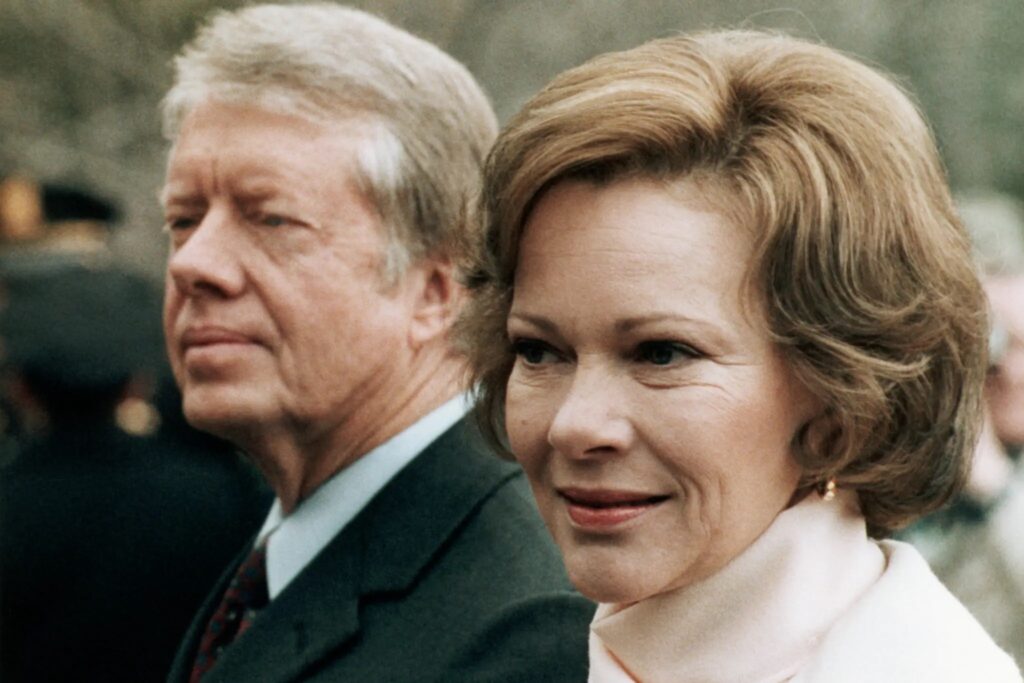
Rosalynn Carter died on November 19, 2023. She was 96. She was suffering from dementia. Jimmy Carter has been “dying” for a few years now, ever since he was diagnosed with brain cancer in 2015. He is now 99 years old. He’s now the oldest person who was ever president of the United States. He’s been on hospice care for most of this year. Rosalynn Carter was a national advocate for hospice, which is dedicated to letting people die at home, surrounded by their friends and family, and with dignity.
Jimmy Carter called her “almost an extension of myself.” “I was more a political partner than a political wife,” she explained in her 1984 memoir.
Behind her understated public demeanor, Rosalynn Carter was a formidable woman, wife, mother, spouse, and first lady. She was not Nancy Reagan gazing up in fierce possession and admiration at her husband. Rosalynn Carter carved out a distinct and significant role for herself in the White House years (1977-81) and Jimmy Carter had the good sense not to get in her way. She did not redecorate the White House or (like most other first ladies) order up a new set of formal china for state dinners. She was the first first lady to have her own suite of offices in the East Wing and a full staff dedicated to her work.
She was what might be called a “[distaff feminist](https://digitallibrary.tulane.edu/islandora/object/tulane%3A75930#page/1/mode/2up).” She insisted that her top White House aide be paid the same salary as her husband’s Chief of Staff. She attended Cabinet and National Security Council meetings and often took the first empty chair at the table, even when it was usually occupied by someone else, including the Vice President Walter Mondale. She spoke up at Cabinet meetings and sometimes directed the conversation. She was not afraid to speak quiet truth to power, whether the leader was her husband or Anwar Sadat or Menachem Begin or Ted Kennedy.
She was valedictorian in her class at Plains High School (class of ’44). She was in some respects a co-president. She was certainly one of Jimmy Carter’s chief advisers. The Carters had a formal working lunch once per week, where they discussed foreign and domestic policy. She was in many respects a shrewder student of politics than her husband, and a better judge of character. On her own, but on behalf of the administration, she undertook an extensive South American and Caribbean tour in 1977, for which she was criticized by the usual suspects. She was a quietly outspoken opponent of the death penalty. She supported the Equal Rights Amendment when it was politically costly to do so.
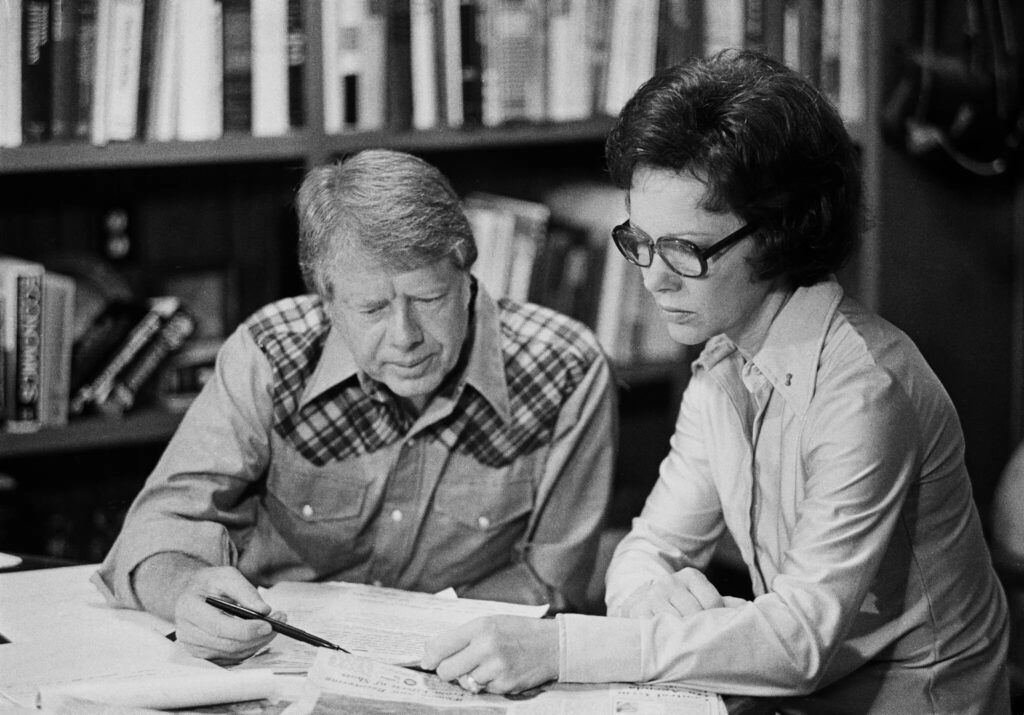
She wrote at least three books, two on mental health care, and her 1984 memoir, *Lady from Plains*; and she collaborated with Jimmy on a number of other books. Only Theodore Roosevelt wrote more books than the Carters, and he was Theodore Roosevelt.
She was an avid fly fisherman, not just the wife of one. She became the nation’s foremost advocate for the monarch butterfly and helped create the [Rosalynn Carter Butterfly Trail](https://rosalynncarterbutterflytrail.org), which represents a network of monarch-friendly public and private gardens throughout the hemisphere.
They left the White House in their 50s. In the half-century that has followed, they could be seen negotiating for the release of American captives in North Korea or hammering away with Habitat for Humanity on new houses for the poor. They transformed the definition of Presidential Library. The [Carter Center](https://www.cartercenter.org) in Atlanta (founded in 1982) is a schoolhouse for democracy and human rights, with projects in more than 80 countries worldwide, dedicated to human rights, fair elections, disease prevention, and the rule of law.
## **The Cliché**
The cliché is that Jimmy Carter is one of the best *former* presidents in American history. I’ve done a fair amount of reading about the Carter years in the last few months. The more time passes, the better he looks, particularly in light of our current political dysfunction. He had extraordinary integrity. He was the first president to stand up to the military-industrial-hydrological complex. He canceled a large number of unnecessary water projects in the West and began to pull America back from its obsession with solving problems by pouring concrete.
Given all that has followed — Iran-Contra, Monica Lewinsky and Paula Jones, et al., Dick Cheney’s geopolitical darkness, “Iraq’s illusive weapons of mass destruction,” Michael Dukakis posing in an M-1 tank, John Kerry in hunting camo, George W. landing on the carrier under the sign “Mission Accomplished,” and the unsystematic nihilism of Donald Trump — I’ll take Jimmy Carter any old day.
Confession. I never really gave Jimmy Carter a chance back then. I was put off by his toothy earnestness and his smarm. A president should not be named Jimmy. And yet who ever thought of him as James Carter? He sure didn’t seem like a nuclear scientist. At first he seemed like a Southern hick to me, a different kind of accidental president — we were so traumatized by the Johnson-Nixon years that we needed some bland relief from all the national tension. Along comes a man who says he will never lie to us, an obviously decent man, a family man, a man with some embarrassing relatives, a true Christian. We must have needed it at the time, but I felt back then that the presidency had been compromised in a different way by the Carters. I know that was unfair, but that’s how much of America felt.
And then there was the *Playboy* interview in which he said he had occasionally lusted in his heart for women not his wife, and his account of being attacked by a “killer rabbit” while jogging. And personally managing the schedule of the White House tennis court. We will always remember him doing a White House chat while wearing a sweater, urging us to turn down the thermostat at home and lowering the national speed limit to 55 to conserve gasoline. The president as Mr. Rogers. And of course the agony of being president during the Iranian hostage crisis (November 4, 1979-January 20, 1981). I was in Washington, D.C., when the hostage rescue mission failed catastrophically on April 24, 1980 — a sign of America’s post-Vietnam impotence, and Jimmy Carter’s too. A pall of national powerlessness hung over Washington that week.
Jimmy and Rosalynn Carter did not have the sophistication or glamour of JFK and Jacqueline Kennedy; the charisma of Bill Clinton and the independent ambition of Hillary Clinton; the hauteur of Nancy Reagan or the geniality of her husband; the global perspective of Richard Nixon or the lapel-grabbing political mastery of LBJ, but she was more forceful and more interesting than either of their first ladies. She was one of the strongest first ladies in American history. She belongs in the same sentence with Eleanor Roosevelt, Hillary Clinton, and Michele Obama, and she was far more assertive in the public sphere than Laura Bush, Barbara Bush, Pat Nixon, or Melania Trump.
Katharine Q. Seelye’s obituary in the *New York Times* put it perfectly: “Reared in the same tiny patch of Georgia farmland, 150 miles south of Atlanta, they were similar in temperament and outlook. They shared a fierce work ethic, a drive for self-improvement and an earnest, even pious, demeanor. Their Christian faith was central to their lives. Both were frugal. Both could be stubborn.”
It’s possible to imagine LBJ’s Presidency without Lady Bird or Clinton’s without Hillary or Nixon’s without Pat, but it is not possible to imagine (or understand) Jimmy Carter’s political career without Rosalynn at the table.
They were partners in every sense of the word. Inevitably he will be gone soon, too.
It seems like a very long time ago when the Carters greeted [Begin and Sadat at Camp David](https://www.history.com/this-day-in-history/camp-david-accords-signed), on September 5, 1978, but their shared zeal for peace in the Mideast, and their unapologetic understanding that nothing can be resolved until the Palestinians have a viable state adjacent to Israel, is worth our deep admiration, especially in light of the slaughter of innocents we are witnessing both in and out of Israel.
---
## ***Discover more on these topics at Listening to America***
[Washington](https://ltamerica.org/tag/washington/ "2 topics")[Pennsylvania](https://ltamerica.org/tag/pennsylvania/ "1 topics")[South Carolina](https://ltamerica.org/tag/south-carolina/ "1 topics")[Space Exploration](https://ltamerica.org/tag/space-exploration/ "8 topics")[Sports](https://ltamerica.org/tag/sports/ "2 topics")[North Dakota](https://ltamerica.org/tag/north-dakota/ "53 topics")[North Carolina](https://ltamerica.org/tag/north-carolina/ "3 topics")[The Constitution](https://ltamerica.org/tag/the-constitution/ "1 topics")[U.S. Constitution](https://ltamerica.org/tag/u-s-constitution/ "1 topics")[Thomas Jefferson](https://ltamerica.org/tag/thomas-jefferson/ "34 topics")[State Parks](https://ltamerica.org/tag/state-parks/ "2 topics")[Rome](https://ltamerica.org/tag/rome/ "1 topics")[Water in the West](https://ltamerica.org/tag/water-in-the-west/ "24 topics")[Thoreau](https://ltamerica.org/tag/thoreau/ "5 topics")[Reading](https://ltamerica.org/tag/reading/ "1 topics")[Vermont](https://ltamerica.org/tag/vermont/ "1 topics")[U.S. Presidents](https://ltamerica.org/tag/u-s-presidents/ "71 topics")[Rivers](https://ltamerica.org/tag/rivers/ "3 topics")[Republics](https://ltamerica.org/tag/republics/ "1 topics")[New Mexico](https://ltamerica.org/tag/new-mexico/ "3 topics")[Ohio](https://ltamerica.org/tag/ohio/ "2 topics")[South Dakota](https://ltamerica.org/tag/south-dakota/ "16 topics")[Video](https://ltamerica.org/tag/video/ "51 topics")[Wyoming](https://ltamerica.org/tag/wyoming/ "4 topics")[Oregon](https://ltamerica.org/tag/oregon/ "4 topics")[Steinbeck Travels](https://ltamerica.org/tag/steinbeck-travels/ "75 topics")[north daktoa](https://ltamerica.org/tag/north-daktoa/ "0 topics")[Utah](https://ltamerica.org/tag/utah/ "11 topics")[Podcast](https://ltamerica.org/tag/podcast/ "1 topics")[Wisconsin](https://ltamerica.org/tag/wisconsin/ "0 topics")[paintings](https://ltamerica.org/tag/paintings/ "0 topics")[Oppenheimer](https://ltamerica.org/tag/oppenheimer/ "1 topics")[Poetry](https://ltamerica.org/tag/poetry/ "1 topics")[Travel](https://ltamerica.org/tag/travel/ "1 topics")[Texas](https://ltamerica.org/tag/texas/ "4 topics")[Theodore Roosevelt](https://ltamerica.org/tag/theodore-roosevelt/ "16 topics")[New York](https://ltamerica.org/tag/new-york/ "8 topics")[Virginia](https://ltamerica.org/tag/virginia/ "7 topics")[Walden](https://ltamerica.org/tag/walden/ "1 topics")[William Shirer](https://ltamerica.org/tag/william-shirer/ "1 topics")[Oppenheim](https://ltamerica.org/tag/oppenheim/ "0 topics")[New England](https://ltamerica.org/tag/new-england/ "1 topics")[Republic](https://ltamerica.org/tag/republic/ "0 topics")[Tennessee](https://ltamerica.org/tag/tennessee/ "1 topics")[Road Trips](https://ltamerica.org/tag/road-trips/ "18 topics")
**Categories:** Dispatches from the Road
**Tags:** Books, Humanities, U.S. Presidents
---
### [On the Anniversary of the Assassination of President John F. Kennedy](https://ltamerica.org/on-the-anniversary-of-the-assassination-of-president-john-f-kennedy/)
**Published:** November 29, 2023
**Author:** Clay Jenkinson
**Excerpt:** On the 60th anniversary of the assassination of President John F. Kennedy, are we any closer to answers? And how might things be different in our country were it not for that fateful event?
**Content:**
## On the 60th anniversary of the assassination of President John F. Kennedy, are we any closer to answers? And how might things be different in our country were it not for that fateful event?

A week ago was November 22, exactly 60 years after the assassination of John F. Kennedy. I try to take time every year to re-read one of the many books I have on the assassination and watch the latest documentaries, but this year I feel especially melancholy. I think I know why. First, I ordered Paul Landis’ new book *Final Witness* the minute I heard about it and I [read it the day it came](https://ltamerica.org/the-final-witness-a-kennedy-secret-service-agent-breaks-his-silence-after-60-years/). If it is true that Landis, who was one of JFK’s immediate Secret Service agents, tampered with key evidence at Parkland Hospital (the magic bullet), and he told nobody for six decades, not his superiors in the Service, not the Dallas police or the FBI, not the Warren Commission or the House Select Committee on Assassinations in 1976, his act of fundamental irresponsibility overturns the table of virtually all books ever published about the assassination, and demolishes much of the Warren Commission Report. That makes me angry and it makes me very sad. I don’t suppose I will ever know exactly what happened in Dallas, not in my lifetime.
I’ve also been reading extensively about the assassination this fall, for a chapter in a book I am writing on John Steinbeck’s attempt to translate the Middle English prose saga the *Morte d’Arthur*. One chapter is on Jacqueline Kennedy’s invention of the Camelot Myth for the Kennedy presidency, which — in an indirect but fascinating way — has a Steinbeck connection. So I have recently reread William Manchester’s work of genius, *The Death of a President* (1963), and Theodore White’s memoir *In Search of History*. Plus a lot of Steinbeck.
We now know a great deal more about John Fitzgerald Kennedy than the American people knew on November 24, 1963, and much of it is sobering. We know that JFK was an obsessive and often reckless womanizer, with ties to the Mafia. (This was largely covered up by the “men will be men” tribe of journalists in his lifetime). We know that JFK was suffering from Addison’s disease, a debilitating and life-threatening malfunction of the adrenal glands. Biographer Robert Dallek wondered out loud whether JFK would have survived a second term. We know that Kennedy was lukewarm on the Civil Rights movement and actually tried to dissuade Martin Luther King from marching on Washington in August 1963. We know that President Kennedy’s storied embrace of the American Space Program began half-heartedly when he was scanning the political horizon for something heroic and positive to attach himself to, especially after the debacle of the Bay of Pigs invasion. That’s one of the themes of Douglas Brinkley’s *American Moonshot: John F. Kennedy and the Great Space Race*. There is also, of course, the fact that JFK’s record of achievement was thin, first in the Senate and then in the White House.

Most Americans are aware of some of this, but it hasn’t damaged Kennedy’s gigantic place in American memory. Because he was martyred at the height of his power, because he was Hollywood handsome with a dazzling smile, a self-effacing wit, and a compelling accent, because he was a seeming idealist who wanted to carry America boldly into the future, because he had a glamorous and extraordinarily beautiful wife, plus all-American children who played in the Oval Office, and because he is associated with the cultural flowering of the 1960s … he symbolizes to almost everyone, even those who know better, a lost innocence. Although “Camelot” is an imprecise and misleading moniker for the Kennedy years, a mawkish invention of the president’s grieving widow, we all nevertheless feel that his 1,036 days in the White House do somehow represent “one brief shining moment,” after which the clouds (Vietnam, the other ’60s assassinations, Watts, the 1968 burning of American cities, etc.) began to gather over the American landscape.
In the minds of many, including serious historians, there was America before November 22, 1963, and then America after November 22. Arbitrary though that is, I find myself subscribing to something like that notion in most of my moods. What if JFK had not been cut down in his prime? How would America be different or would it be more or less the same? That would be an even greater source of disillusionment.
When he died the Beatles had not yet come to America. They were barely known on this side of the Atlantic. When he died the birth control pill was available, but usually with intimidating social restrictions. When he died, most American schools were still segregated. When he died, most Americans had never heard the word Vietnam.

When he died that Friday afternoon, we gathered before the family television, bulbous, black and white, grainy, with rabbit ears. On the day of the funeral, I saw my father cry for the first time, and nearly the last.
Who knows how things might have been different if JFK had lived? We are fortunate that we don’t know, because this way we can lock him and his elfin wife in a fantasy of eternal youth; we can insist that he would not have gotten the U.S. bogged down in Southeast Asia; we can believe that Richard Nixon would not have been able to make a comeback in 1968. Our dream of an America that did not descend into Vietnam, Watergate, the 1968 Democratic National Convention in Chicago, Kent State, and Iran Contra makes us ache for an idealized Kennedy presidency.
Every year I watch two or three Kennedy assassination documentaries, and I always come away disappointed, because in all those decades nothing really has changed in the “official” narrative, not even after the [release of 2,672 previously sealed documents](https://www.archives.gov/research/jfk/release2023) in the summer of 2023. The annual documentaries always promise more than they deliver. New photographs are discovered! No difference. The Zapruder film has been remastered, using the latest AI programs. No difference. Graphic specialists have recreated the assassination in a precise animation. No difference. New ballistic tests have been conducted. No difference.
Lee Harvey Oswald
We are stuck with the lone gunman of the Warren Commission (now deeply disrupted by the Landis confession) on the one hand and some version of Oliver Stone’s chaotic and irresponsible CIA/Mafia/Castro/Bay of Pigs veterans conspiracy theories on the other. Three factors make me doubt the lone gunman narrative: 1) Jack Ruby; 2) the magic bullet; 3) the fact that FBI Director J. Edgar Hoover declared that the assassination was the work of just one man before Friday, November 22, had ended. How could he possibly know?
In each of these documentaries I have to watch the Zapruder film, though I can hardly stand to watch it, and see the President’s head explode into a globular pink cloud. It makes me sick to my stomach. Each time I watch the film I thank God it was shot in Kodak 8mm film and not in today’s high-definition video. And yet, if everyone in Dealey Plaza had been carrying a smartphone, we’d have several thousand angles and perspectives to hand to the forensic experts. We’d be able to triangulate the assassination.
The other reason that I am feeling the assassination with more than usual pain this year is that we as a nation and as a people have descended so far from what I’m calling the “innocence” of 1963. It’s hard to remember that the Twist was once regarded as risqué and that there were anti-Beatles clubs all over the United States, even before John said they were more popular than Jesus. The contrast between then and now is deeply saddening. Think of JFK’s Inaugural Address in 1961 (ask not … pay any price, bear any burden) and then Donald Trump’s “American Carnage” address in 2021. Think of senatorial orators like Everett Dirksen and Robert Byrd and then think of Ted Cruz and Tommy Tuberville. Think of Eric Sevareid and Walter Cronkite and then today’s principal national talking heads.
I know better but I am helpless in the face of the Kennedy Myth. Every time I hear Edward Kennedy’s eulogy for his slain brother Robert, I burst into tears. Every time I watch YouTube videos of JFK’s news conferences, I ache for that America and blush at this one. Every time I read accounts of JFK’s Nobel Prize dinner (April 29, 1962), with his famous [tribute to Thomas Jefferson dining alone](https://tjrs.monticello.org/letter/1856), I want to live in that America, with that kind of national leadership, not this one.
There is no turning back.
Somehow John F. Kennedy can be made to symbolize all that we have lost. It’s not really true, of course, and he should not have to carry that burden.
And so tonight I will sit down and choose one of a half dozen new documentaries, and watch Walter Cronkite’s voice break, and see Lee Harvey Oswald sneer in his white T-shirt, and watch Jack Ruby thrust himself forward and shoot Oswald in the gut at close range. And I will see the Zapruder film for the 250th time, not willing to watch it and not quite willing to look away.
---
## ***Discover more on these topics at Listening to America***
[South Dakota](https://ltamerica.org/tag/south-dakota/ "16 topics")[North Carolina](https://ltamerica.org/tag/north-carolina/ "3 topics")[Oppenheim](https://ltamerica.org/tag/oppenheim/ "0 topics")[Space Exploration](https://ltamerica.org/tag/space-exploration/ "8 topics")[Reading](https://ltamerica.org/tag/reading/ "1 topics")[Thoreau](https://ltamerica.org/tag/thoreau/ "5 topics")[U.S. Constitution](https://ltamerica.org/tag/u-s-constitution/ "1 topics")[Ohio](https://ltamerica.org/tag/ohio/ "2 topics")[South Carolina](https://ltamerica.org/tag/south-carolina/ "1 topics")[Oregon](https://ltamerica.org/tag/oregon/ "4 topics")[Pennsylvania](https://ltamerica.org/tag/pennsylvania/ "1 topics")[Road Trips](https://ltamerica.org/tag/road-trips/ "18 topics")[Poetry](https://ltamerica.org/tag/poetry/ "1 topics")[Texas](https://ltamerica.org/tag/texas/ "4 topics")[Oppenheimer](https://ltamerica.org/tag/oppenheimer/ "1 topics")[New York](https://ltamerica.org/tag/new-york/ "8 topics")[Virginia](https://ltamerica.org/tag/virginia/ "7 topics")[Video](https://ltamerica.org/tag/video/ "51 topics")[Republic](https://ltamerica.org/tag/republic/ "0 topics")[north daktoa](https://ltamerica.org/tag/north-daktoa/ "0 topics")[New Mexico](https://ltamerica.org/tag/new-mexico/ "3 topics")[North Dakota](https://ltamerica.org/tag/north-dakota/ "53 topics")[Republics](https://ltamerica.org/tag/republics/ "1 topics")[Podcast](https://ltamerica.org/tag/podcast/ "1 topics")[Rome](https://ltamerica.org/tag/rome/ "1 topics")[Thomas Jefferson](https://ltamerica.org/tag/thomas-jefferson/ "34 topics")[Wyoming](https://ltamerica.org/tag/wyoming/ "4 topics")[Travel](https://ltamerica.org/tag/travel/ "1 topics")[Vermont](https://ltamerica.org/tag/vermont/ "1 topics")[Utah](https://ltamerica.org/tag/utah/ "11 topics")[Tennessee](https://ltamerica.org/tag/tennessee/ "1 topics")[Steinbeck Travels](https://ltamerica.org/tag/steinbeck-travels/ "75 topics")[State Parks](https://ltamerica.org/tag/state-parks/ "2 topics")[Water in the West](https://ltamerica.org/tag/water-in-the-west/ "24 topics")[The Constitution](https://ltamerica.org/tag/the-constitution/ "1 topics")[William Shirer](https://ltamerica.org/tag/william-shirer/ "1 topics")[Walden](https://ltamerica.org/tag/walden/ "1 topics")[Theodore Roosevelt](https://ltamerica.org/tag/theodore-roosevelt/ "16 topics")[Washington](https://ltamerica.org/tag/washington/ "2 topics")[Rivers](https://ltamerica.org/tag/rivers/ "3 topics")[U.S. Presidents](https://ltamerica.org/tag/u-s-presidents/ "71 topics")[paintings](https://ltamerica.org/tag/paintings/ "0 topics")[Wisconsin](https://ltamerica.org/tag/wisconsin/ "0 topics")[Sports](https://ltamerica.org/tag/sports/ "2 topics")[New England](https://ltamerica.org/tag/new-england/ "1 topics")
**Categories:** Dispatches from the Road
**Tags:** U.S. Presidents
---
### [The Western Flyer: Steinbeck's Boat, The Sea of Cortez, and the Saga of Pacific Fisheries](https://ltamerica.org/the-western-flyer-steinbecks-boat-the-sea-of-cortez-and-the-saga-of-pacific-fisheries/)
**Published:** November 28, 2023
**Author:** Russ Eagle
**Excerpt:** Russ Eagle reviews Kevin Bailey’s book about the legendary boat made famous by Steinbeck.
**Content:**
## Russ Eagle reviews Kevin Bailey’s book about the legendary boat made famous by Steinbeck.
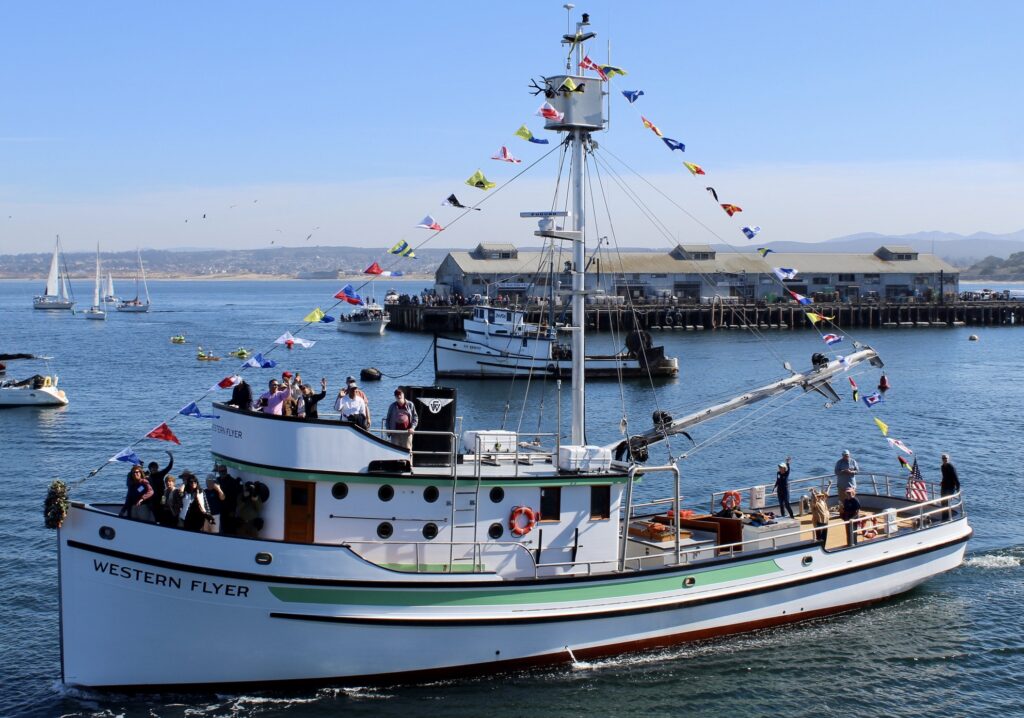The Western Flyer returns home to Monterey Bay, California in November 2023. (Photo by Russ Eagle)
Two significant events bookend the 86-year history of the Western Flyer. Foremost is the purse seiner’s role in the John Steinbeck/Ed Ricketts expedition to the Gulf of California in 1940, described in Steinbeck’s [*Log from the Sea of Cortez*](https://www.penguinrandomhouse.com/books/292283/the-log-from-the-sea-of-cortez-by-john-steinbeck-introduction-by-richard-astro/). At the other end of the vessel’s timeline is the 8-year, $7 million renovation project that culminated recently with the Flyer’s celebrated return to Monterey Bay. But to the boat builders, fishermen, and historians of the Pacific Northwest, the decades in between tell the Flyer’s true history. For more than a half-century, she fished the waters of the Pacific, adapting periodically to changes in the fishing industry and to a host of colorful owners and skippers. With *[The Western Flyer: Steinbeck’s Boat, The Sea of Cortez, and the Saga of Pacific Fisheries](https://press.uchicago.edu/ucp/books/book/chicago/W/bo17356694.html)*, scientist and author Kevin Bailey takes readers from the Flyer’s construction in Tacoma, Washington in 1937 to its near demise 75 years later at the bottom of Swinomish Slough in northern Washington. The Flyer’s fortunes, Bailey’s account clearly demonstrates, were always inextricably bound with those of the Pacific Northwest fishing industry.
Bailey’s narrative begins on the Tacoma waterfront during the Depression. Martin Petrich’s company, Western Boatbuilding, was struggling, and Petrich had resorted to building houses. It was only when the sardine catches and canning activity around Monterey Bay began to grow in the mid-1930s that boat orders began to pick up. The sardine boom not only saved Petrich’s business, but created work for struggling locals and a number of Dust Bowl migrants that had drifted into the area. Western Boatbuilding would complete seven [purse seiners](https://www.fisheries.noaa.gov/national/bycatch/fishing-gear-purse-seines) in 1937, all designed to bring in the California sardine. The second of these was the Western Flyer.
The growing fleet of purse seiners in Monterey proved to be too effective. With fishing limits rescinded because of the war, they essentially caught all the fish. By the mid ’40s, the Monterey sardine industry and Steinbeck’s Cannery Row were in a steep decline, and the Western Flyer moved on. Bailey follows it through 30 years of movements, conversions, and ownership changes. The Flyer would trawl for Pacific Ocean perch throughout the ’50s. As with the sardines, however, industrial fishing and foreign fisheries finally ruined that industry.
The Flyer was converted to a crabber in the ’60s, fishing the Aleutians for red king crab. But the story kept repeating. Once again, there was too much money to be made, and the overfishing and habitat degradation that ensued ended another chapter in the story of the Western Flyer. From there, she moved to southeastern Alaska to fish for salmon. It was early in this period that the Flyer hit a reef and suffered severe damage. Her days on the high seas were over. She would end her working life in the sheltered waters of Puget Sound, doing light fishing and serving at times as a research and channel-marking vessel.
Bailey mentions in his prologue that for Steinbeck and Ricketts enthusiasts in and around Monterey, the Western Flyer was considered lost for many years. No one seemed to know its story or location after it left Monterey. Bob Enea, a nephew of both the captain and one of the crew members who sailed with Steinbeck, finally located the boat in the 1980s through its radio call sign. But the manager for the recent restoration, Port Townsend shipwright Chris Chase, told me back in 2018 that the vessel was never considered lost by members of the fishing world. Chase said those who owned or worked on the Flyer were aware of its history, including its Steinbeck connection. Bailey includes a few stories about some of those individuals, and in doing so chronicles the inherent risks, hardships, and dangers in the fishing industry.
It seems appropriate that Bailey completed this account shortly before marine geologist John Gregg stepped forward in 2015 to purchase and save the Western Flyer. The ensuing [restoration](https://www.westernflyer.org/the-boat/restoration/) was thoroughly documented, with Chris Chase posting regular updates, dozens of photographs, and a professionally produced [YouTube series](https://www.youtube.com/@WesternFlyerFoundationChannel) that shared life and work in a shipwright’s co-op, the tools and techniques of wooden boat building, and scores of interesting people, places, and historical tidbits. With Bailey’s book and Chase’s multimedia effort, along with Steinbeck’s *Log from the Sea of Cortez* and associated scholarly works, the Western Flyer’s past now seems as secure as its future.
---
## ***Discover more on these topics at Listening to America***
[Podcast](https://ltamerica.org/tag/podcast/ "1 topics")[Video](https://ltamerica.org/tag/video/ "51 topics")[Washington](https://ltamerica.org/tag/washington/ "2 topics")[Oregon](https://ltamerica.org/tag/oregon/ "4 topics")[New York](https://ltamerica.org/tag/new-york/ "8 topics")[north daktoa](https://ltamerica.org/tag/north-daktoa/ "0 topics")[Virginia](https://ltamerica.org/tag/virginia/ "7 topics")[Thomas Jefferson](https://ltamerica.org/tag/thomas-jefferson/ "34 topics")[The Constitution](https://ltamerica.org/tag/the-constitution/ "1 topics")[Vermont](https://ltamerica.org/tag/vermont/ "1 topics")[North Dakota](https://ltamerica.org/tag/north-dakota/ "53 topics")[Water in the West](https://ltamerica.org/tag/water-in-the-west/ "24 topics")[Oppenheim](https://ltamerica.org/tag/oppenheim/ "0 topics")[North Carolina](https://ltamerica.org/tag/north-carolina/ "3 topics")[Ohio](https://ltamerica.org/tag/ohio/ "2 topics")[Poetry](https://ltamerica.org/tag/poetry/ "1 topics")[New England](https://ltamerica.org/tag/new-england/ "1 topics")[Tennessee](https://ltamerica.org/tag/tennessee/ "1 topics")[South Dakota](https://ltamerica.org/tag/south-dakota/ "16 topics")[Texas](https://ltamerica.org/tag/texas/ "4 topics")[Thoreau](https://ltamerica.org/tag/thoreau/ "5 topics")[Rivers](https://ltamerica.org/tag/rivers/ "3 topics")[Space Exploration](https://ltamerica.org/tag/space-exploration/ "8 topics")[Pennsylvania](https://ltamerica.org/tag/pennsylvania/ "1 topics")[Republic](https://ltamerica.org/tag/republic/ "0 topics")[Republics](https://ltamerica.org/tag/republics/ "1 topics")[Reading](https://ltamerica.org/tag/reading/ "1 topics")[paintings](https://ltamerica.org/tag/paintings/ "0 topics")[Wyoming](https://ltamerica.org/tag/wyoming/ "4 topics")[Travel](https://ltamerica.org/tag/travel/ "1 topics")[State Parks](https://ltamerica.org/tag/state-parks/ "2 topics")[Utah](https://ltamerica.org/tag/utah/ "11 topics")[U.S. Constitution](https://ltamerica.org/tag/u-s-constitution/ "1 topics")[South Carolina](https://ltamerica.org/tag/south-carolina/ "1 topics")[New Mexico](https://ltamerica.org/tag/new-mexico/ "3 topics")[Oppenheimer](https://ltamerica.org/tag/oppenheimer/ "1 topics")[Theodore Roosevelt](https://ltamerica.org/tag/theodore-roosevelt/ "16 topics")[U.S. Presidents](https://ltamerica.org/tag/u-s-presidents/ "71 topics")[Sports](https://ltamerica.org/tag/sports/ "2 topics")[Steinbeck Travels](https://ltamerica.org/tag/steinbeck-travels/ "75 topics")[Walden](https://ltamerica.org/tag/walden/ "1 topics")[Road Trips](https://ltamerica.org/tag/road-trips/ "18 topics")[Rome](https://ltamerica.org/tag/rome/ "1 topics")[William Shirer](https://ltamerica.org/tag/william-shirer/ "1 topics")[Wisconsin](https://ltamerica.org/tag/wisconsin/ "0 topics")
**Categories:** Books
**Tags:** Books, California, John Steinbeck, Washington
---
### [While Driving Across North Dakota on a Recent Sunday ...](https://ltamerica.org/while-driving-across-north-dakota-on-a-recent-sunday/)
**Published:** November 17, 2023
**Author:** Clay Jenkinson
**Excerpt:** Clay recently drove the back roads from Thompson to Bismarck, North Dakota. Far from interstates, he was intensely reminded about what he loves about the state he’s long called home.
**Content:**
## Clay recently drove the back roads from Thompson to Bismarck, North Dakota. Far from interstates, he was intensely reminded about what he loves about the state he’s long called home.
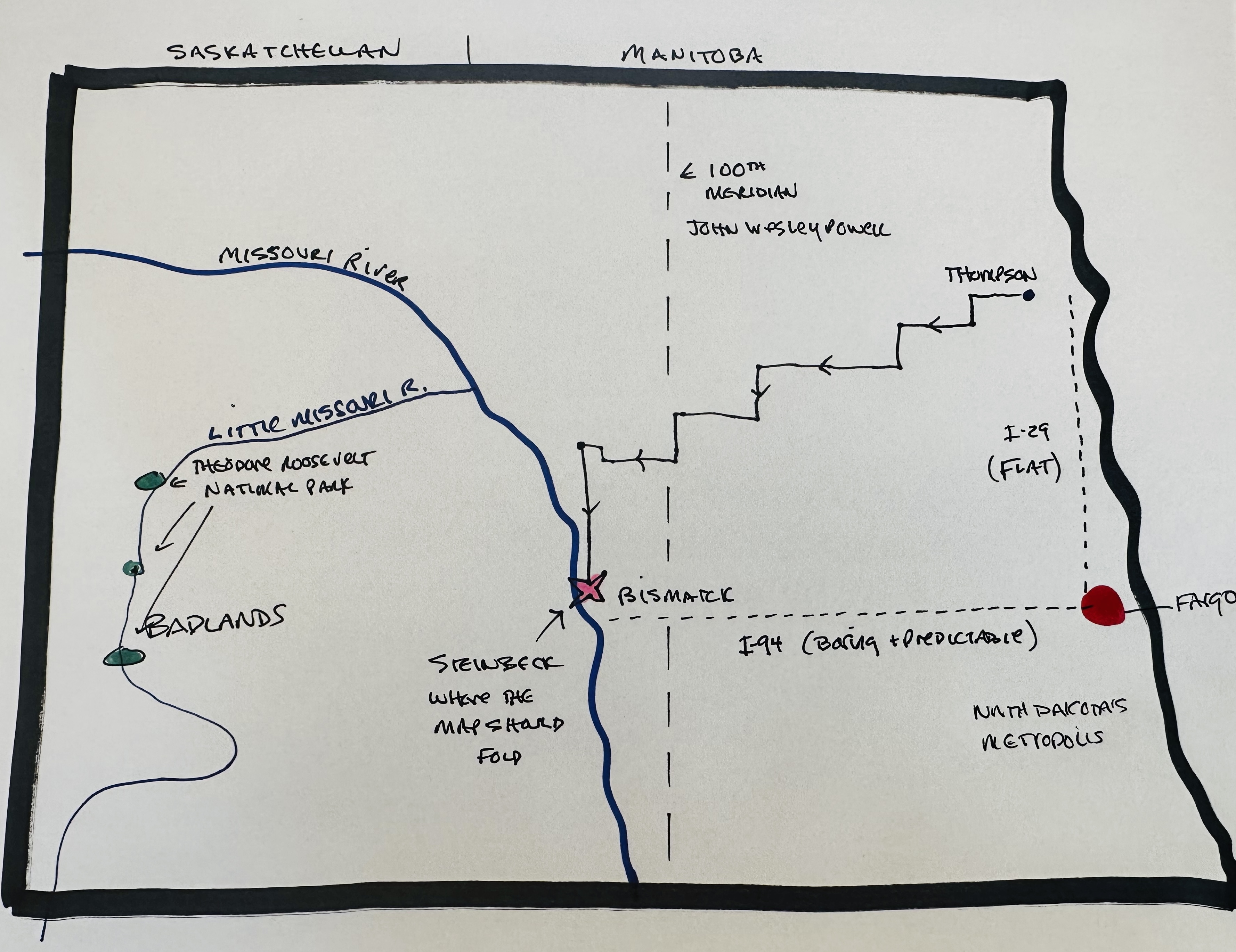Clay’s hand-drawn, custom and somewhat inclusive map of his home state of North Dakota. Clay recently drove the very back-roads between the towns of Thompson and Bismarck.
I drove across North Dakota on a recent Sunday. I want to tell you a few things about life in rural America.
The fastest way to drive between Thompson, North Dakota, up near Grand Forks, and my home in Bismarck is south on Interstate 29 and then at Fargo west on Interstate 94. But I wasn’t in a hurry. It was a perfect Sunday in November, balmy (25 degrees), sun drenched, and windy. I prefer the back roads. In fact, I really prefer the county farm-to-market roads that have almost no traffic. So, my plan was to drive west, then south, then west, then south, piecing my way diagonally across the state without a map and without using GPS. My desultory route lengthened the time of the drive by more than an hour, but I was heavily rewarded by the opportunity to wander through small towns and see rural life. I live in Bismarck, with approximately 100,000 people. We are never unaware that we live in North Dakota, of course, but when you live in a city you can go weeks or months without experiencing true rural life. Not good. When you get out into the country, the smell of silage and manure, plus the odd road-kill skunk, reminds you that you live in the rural heartland.
North Dakota has a population of 760,000, but in the 250 miles I drove that Sunday I passed through a vast section of the state dotted by no more than two dozen roadside towns whose total accumulated population was less than 20,000, perhaps less than 15,000. Empty.
There were long stretches of blacktop highway between towns — a stretch of 20 miles, sometimes more than 30 miles. The towns I am talking about have populations between 200 and 2,500, most closer to 200. And all along that endless of ribbon of highway you see a farmstead here, a ranch headquarters there, but not many. At least half of them abandoned. Every acre is farmed, but there are fewer and fewer farmers and now many of them commute from town. At any given time had I stopped the car I would be no more than 5 or 7 or at most 9 miles from the nearest other human being. I would not have wanted my car to break down out here. I’d survive that long walk on a raw November day, temperature about 20 and the windchill registering 10 below, but it would have been an ordeal. But, had I broken down, and attempted to walk to town or the nearest farm, someone would have stopped to ask me if I needed help. That’s North Dakota. We know that our raw climate can kill. We are less trusting than we once were, but we still stop to help each other when they need it. Even strangers.
## **North Dakota Is Not Flat**
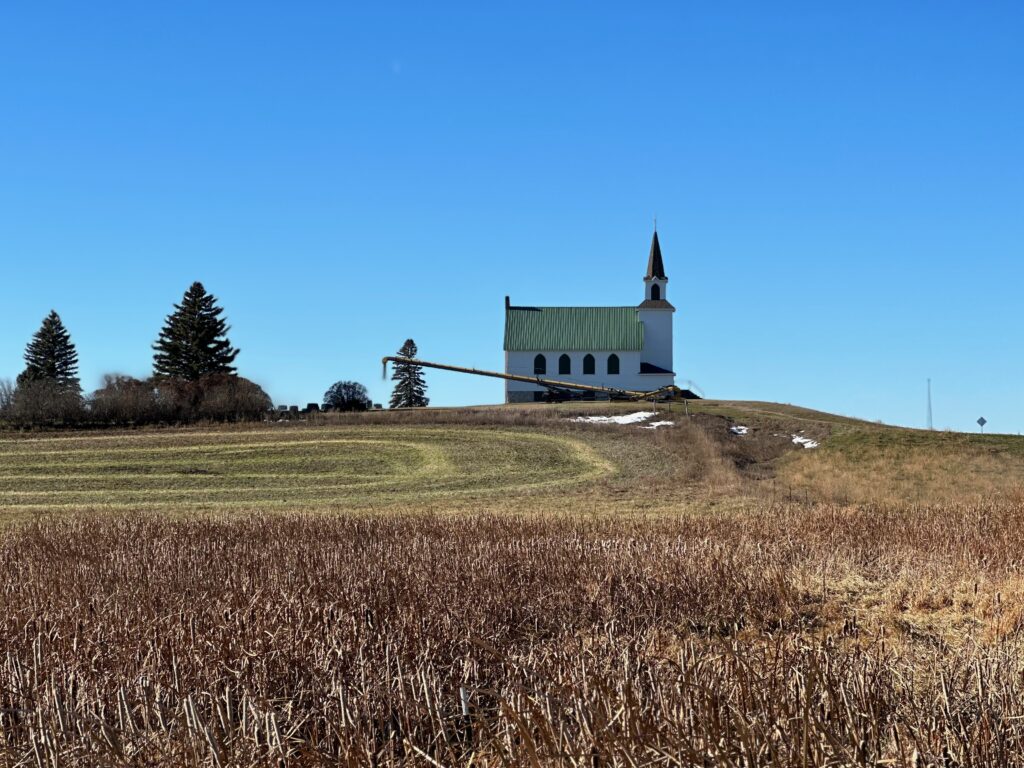An old steepled church sits peacefully on a rise among cultivated fields. Most of North Dakota sits at about 2,000 feet above sea level. (Photo by Clay Jenkinson)
North Dakota is not flat, but outsiders are often amused when the people of the state declare that the geography is better described as gently rolling, undulating, and contoured. The highest “peak” of the state is out west, White Butte, 3,506 feet. Most of the state measures up at about 2,000 feet above sea level. Not much obscures the horizons in any direction. No, North Dakota is decidedly not flat, except in the Red River and Souris River valleys. But it is not the Grand Tetons, either, or even the Black Hills of the other Dakota. I’ve heard someone say that driving North Dakota is like watching paint dry on a wall. Still, except for a few minutes here and there, I refused to turn on the radio.
You must imagine the countryside as essentially empty, with some high powerlines stretching to the horizon, the land rolling as if it were caught undulating and locked forever into place.
If you are not from these parts (as we say) you may not understand what we mean by wind. North Dakota is the fourth windiest state, but surely, we deserve first place. There are very few entirely windless days in North Dakota and they always make us a little uneasy. A 5-8 mile per hour wind we regard as “dead calm.” I suppose there are 250 or more windy days per year here depending on your definition of wind. And there are about 40 days in which the wind blows like a sonofabitch. Sometimes in bed at night when the wind is wild, I can hear the grit it stirs up grinding away at the synthetic siding on the west side of my house, like a million voracious nano-insects. The wind Sunday was one of the memorable ones, never less than 20 mph and often gusting up to 40 or even 50 mph. It was a buffeting wind, the kind that veers and pummels the car enough to require some strenuous steering. You expect to see Holstein cows flying overhead as in the Hollywood movie *Twister* starring Helen Hunt.
This intensity of wind may sound oppressive, but it was glorious. Whenever I got out of the car, I had to hold onto the door lest it be wrenched off and blown into the next county. I wouldn’t have wanted to spend the day out on foot in that wind, but it was bracing in short encounters, and it made me proud to be a North Dakotan. I know it sounds a little weird, but we North Dakotans take pride in how raw our climate can be, how punishing, blizzards at 30 below zero, snow drifting over the roads, weeks of prolonged below zero weather, the Memorial Day picnic blasted out of the park by wind, rain, even snow! Our stoic strength of character that permits us to shrug off the sometimes-lethal climate and regard ourselves as “the few, the proud, the plainsmen (and women)” makes us feel that we are somehow stronger than those pitiful Californians who live in a climate reminiscent of the Garden of Eden. Bring Arnold Schwarzenegger to Grand Forks on a January afternoon and I doubt he’ll say, “I’ll be back.”
I drove about 60 miles per hour.
On the secondary and tertiary roads, but not on the freeways, the person coming from the other direction, especially if the driver is a man, will exchange the famous rural America two-finger wave. This involves a couple of fingers rising above the steering wheel, in a deliberately informal way. You must not be too eager. You must not actually wave. There must be a studied nonchalance, a kind of rural salute.
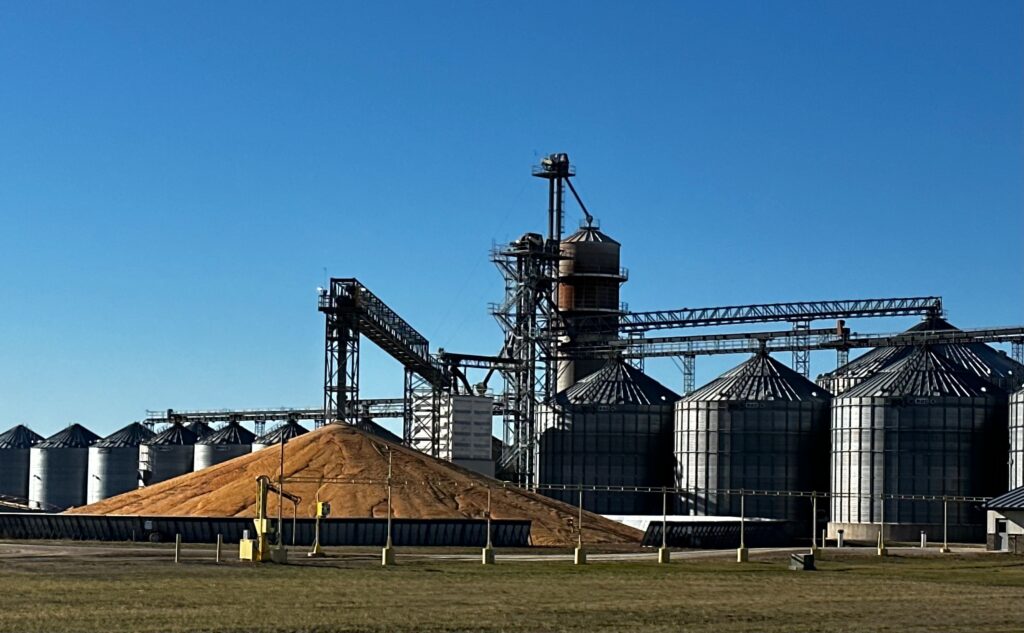A common sight on North Dakota’s back roads, giant metal bins, grain elevator and a mountains of corn. (Photo by Clay Jenkinson)
North Dakota is a farm state. Virtually every acre is harnessed for agricultural production: wheat, corn, soybeans, sunflowers, flax, canola, cattle. By this time of year almost every field has been harvested, but every few miles I drove past a huge cornfield through which a bright green combine was slowly advancing. At the edge of the field there was parked an 18-wheel tractor trailer into which the farmer periodically emptied the combine’s full hopper of bright yellow corn kernels. When the semi was full, someone would lumber it off to the grain elevator or take it directly to the nearest ethanol plant.
The abundance of the corn harvest is staggering. All the grain elevators of the state are full at this time of year, both the old-style wooden elevators, the “skyscrapers of the plains” (now slowly disappearing) and the giant circular metal bins. Next to nearly every commercial or coop grain elevator there were huge mountains of corn exposed to the elements, sometimes two or three or even four in proximity. They looked like giant yellow Hershey’s kisses. They were 50 or more yards across and four stories high. A few of them were covered with gigantic white plastic tarps. Sometime in the next couple of months all that grain will be hauled away to market, either on trucks or trains.
I was struck with sadness as I drove by all that abundance. I know for a fact that almost none of that corn will be used to feed people, at least not directly. The great bulk of it will be burned up in ethanol plants scattered over the Great Plains and Midwest. Much of the rest of it will go to feedlots to fatten beef cattle for slaughter. Some of it will go to processing plants where it will be pulverized, liquified, and turned into the kinds of corn products that enclose your chicken nugget or rendered into a sugary syrup that will sweeten your favorite soft drink. In America only 2% of corn is directly ingested by humans — cob, creamed, or mixed with bits of other vegetables. If you want to understand the sheer insanity of the corn economy, start with Michael Pollan’s famous corn chapter in *The Omnivore’s Dilemma.* We plant corn with fuel (plus fertilizer, pesticides, herbicides, sometimes irrigation water) and then we … burn the corn in giant industrial plants to make … fuel. Farmers used to have bumper stickers that said, “One farmer feeds 126 people,” something like that. Feeding the world was the nobility of farming. Now we feed the furnace. Nothing noble in that. But it cash flows, with a little help from the Farm Program.
## **The Color of the Great Plains**
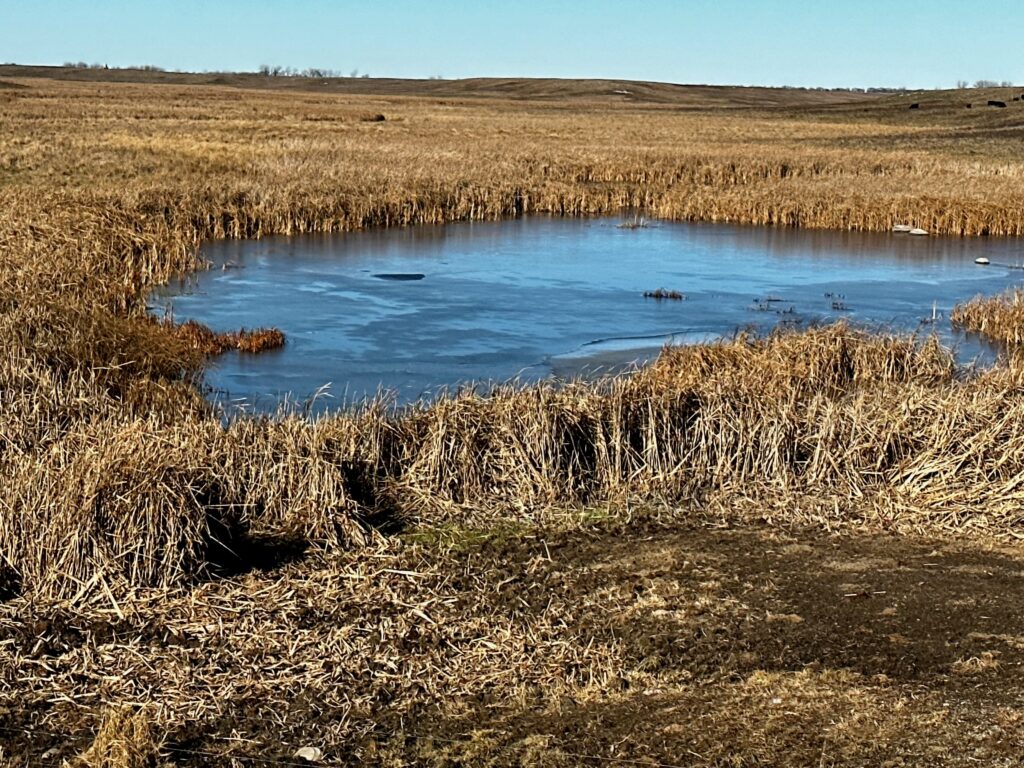Prairie potholes shimmer in the November sun with “the bluest blue you can ever imagine.” (Photo by Clay Jenkinson)
You should have seen the color palate of the Great Plains on the day I drove through. The sun was bright, almost garish at times, but it was clearly a November and not a July sun. The tall dead corn stalks still unharvested in the fields were a dull raspy yellow bordering on beige. The sunflowers drooped their black heads in vast fields where every flower is the size of a dinner plate, and they all faced a single direction in a kind of tight military formation. The prairie grasses were worthy of Monet — rust colored, gray-blue, mauve, tawny, golden, beige-green. But it was the prairie potholes filled with water that stunned my senses and forced me to stop the car half a dozen times to take photographs. They were the bluest blue you can ever imagine. They were bluer than the sky. They were the blue of God. If God has a color it has to be blue — Carl Sagan’s pale blue dot, the watery planet where 71% of the surface is water. On Sunday it was blue to make you ache. It was blue as if you were seeing blue in its finest essence for the first time. Take your breath away blue. No such blue in February, no such blue in August. It’s not until autumn that the plains bring out the fullest blue of sloughs, lakelets, lakes, and streams.
I slowed to 55, then 45, then 25 as I passed through the little towns. I sometimes drove the sad Main Street off to the right or left, with many of the great old brick buildings now empty or underused, windows boarded up. The town usually has a newish bank not in the historic bank district, but out near the edge of town and it is a recent modest building, often modular, with an impressive facade. A café and two or three bars. A modest little post office in a tan brick building: Buxton 58218 (population 356), Drake 58736 (population 286).
I drove through a number of these towns during Sunday church services. At the Lutheran Church dozens of cars, at the Catholic church 20 or more, but only seven to 10 at the Presbyterian or Baptist church. More than half of the vehicles in the parking lot — SUVs, pickups, big old Buicks — have so much dirt on the back that the rear windows and the license plate are fully obscured. These are local farmers and ranchers who drove in for the service. At this time of year, it doesn’t do much good to wash the vehicle because it is almost immediately going to get dirty again. In many of these small towns the minister has driven in from elsewhere for the service. He (now more often she) has three churches every Sunday in a 40-75 mile radius.
Almost every town has a roadside stand, a Dairy Barn, a Dairy King, a King Cone, or a Tastee Barn — all carefully calibrated not to be threatened with legal action by the Dairy Queen Corporation. At this time of year, they all have 8×10 inch signs, hastily made with a black Sharpie, saying, “See You next Summer.”
Every town has a hair salon with a cute name: Shear Encounters, The Clip Joint, Hair Today Gone Tomorrow. Often with a tanning parlor in the back.
Out on the edge of the town you’ll find the implement dealers and the hitch and trailer shops, maybe the Farm Credit office. In the more substantial towns, there is usually an edge-of-town subdivision with impressive 1970s ranch style houses. These used to be the homes built by prosperous dentists, doctors, and lawyers, but these days you must drive a fairly long distance to have access to any of those professional services. Small towns on the Great Plains are mostly on life support, and they hew very close to the base of Maslow’s Hierarchy — post office, bars, café, Cenex convenience store, grain elevator, maybe an implement dealer.
On the edge of the luckier towns, a home-shop made billboard saying, “Gretchen W…r, 2019 Class B Basketball MVP” or the “Mighty Coyotes, 2004 State Wrestling Champions.” These local athletic stars are local celebrities through their whole lives. They coach, farm, or sell insurance.
## **Vanishing Trees**
I drove by hundreds of dying shelter belts. These are long rows of trees on the north and west sides of farmsteads throughout the state. They were planted in the ’50s and ’60s and ’70s. By now they have mostly reached the end of their natural life cycle. But they are not being replanted. Shelter belting was one solution to the Dust Bowl of the 1930s. Franklin Roosevelt’s New Deal established the Soil Conservation Service (1933) to combat wind erosion and restore the soil health of the farms and ranches of the Great Plains. In my youth these shelter belts mattered much more than they now do — we think we are immune to another Dust Bowl, silly humans — and it was a very big deal to win the County Soil Conservation Award for the best shelter belts. Aerial photos were taken of the exemplary farm and the farm family was celebrated at the annual Soil Conservation Banquet, at which the family spokesman said, “we don’t think our shelter belts are better than anyone else’s, but we’re proud of the work we have done to protect our fields and prevent the dust from blowing into the house as it did in Grandpa’s time.”
One southern plains farmer later said, “The dust storms came over us almost every day. As far as possible we hung wet sheets and towels over all the cracks, day after day. And we kept on sweeping. We swept whole washtubs full of dust off the floor.”
Now North Dakota’s shelter belts are dying, and it is fashionable to bulldoze them down and into huge pyres in the increasingly gigantic fields. Some of them will be burned if there is ever a windless day. They are not being replanted. North Dakota is the state with the fewest trees and soon there will be dramatically fewer trees. Most of the trees in North Dakota were planted by homesteaders and their descendants.
I think of the hard work of farm families to plant those rows and trees and find a way to keep them alive though the dry years and through the sometimes-savage winters. Some of the trees had to be watered by hand, bucket by bucket from the well. Such trees — elms, evergreens, Russian olives — don’t water themselves, and almost no planted tree survives in North Dakota without a considerable amount of human intervention.
On this 250-mile drive I saw only three MAGA or Trump signs (or flags), none for Biden, of course. But the relative sparsity of Trump signs must be meaningful. Six years ago, they were ubiquitous on the Great Plains. I believe nearly the same percentage of North Dakotans would vote for Trump if he is the 2024 Republican nominee, but the ecstatic years seem to be over, and the Trump phenomenon feels weaker in 2023 than it was in 2016.
I came up over a hill and there was a gleaming white wooden prairie Lutheran church, with a sturdy and elegant steeple. The gloriously white box church appeared so suddenly that I nearly burst into tears. The vaulted windows were tinted opaque, but they were not of stained glass. When it was built back in the ’40s, North Dakota’s rural life was not yet in decline. On the Sunday I drove through, the parking lot was empty at 1:17 p.m. but earlier that day half a dozen cars had rolled onto the grass west of the church.
Soon after that I stopped the car to take a picture (and a leak — such is North Dakota’s emptiness). I stretched as high into the air as I could. The wind was … bracing, loud, boisterous, aggressive. This is going to sound strange, possibly even demented, but this is why I live here. This is what I love about North Dakota. You cannot live here without frequently being made aware that you live in a punishing sub-arctic climate. “This is a glorious day,” I shouted but whatever I had to say was simply swallowed up by the winds and the sheer vastness of the Great Plains. I was alone on a vast and open landscape. I don’t think even God could hear me through the wind.
Large rock piles punctuate almost every section of land and represent a legacy of back-breaking work required to settle the North Dakota plains. (Photo by Clay Jenkinson)
There are rock piles on almost every section of land, which means at least one per mile as you drive the state. These are rocks (many of them boulders — basketball size or larger) that were left here during the last ice age, which was only yesterday (15,000 years ago) in geological time. Those rocks just didn’t show up at those tall piles. Each rock was picked up or dug up by a grumbling member of a farm family, and lugged to the back of a pickup or, later, the scoop of a front-end loader. This is backbreaking labor, exhausting and grueling labor, but it had to be done. Every 10- or 12-foot-high rock pile represents hundreds of hours of the kind of labor we associate with Siberian gulags or Fred Flintstone at Slate Rock and Gravel. Nobody in history ever volunteered to haul rocks. Every rock in every pile (tens of thousands in the state) could tell a story of the struggle of farmers to scratch out modest prosperity on a forbidding and difficult landscape. Farm children of the 21st century cannot even imagine that life, and their aging grandparents can only groan as they think back.
You cannot drive more than 20 miles on any two-lane highway in North Dakota without seeing a billboard saying, “Abortion Stops a Beating Heart.” Needless to say, there are no pro-choice billboards anywhere in North Dakota.
I saw hunters stretching near the tailgate of their pickups, one dressed in solid hunter’s orange, including a hoodie, the other entirely in camo. They are drinking schlock beer out of cans.
I didn’t see a single pedestrian all day long.
The tallest things out on the plains are radio and television towers. In the towns the old wooden grain elevators — classical Grant Wood grain elevators — are the tallest buildings. There may be a four-story brick building downtown that once had an auditorium and even lured some opera to the prairie a hundred years ago.
So, I spent the day driving and musing and daydreaming and gazing out on the endless plains and thinking about rural life, which was once the backbone of North Dakota and the source of the character of the people — pragmatic, modest, God-fearing, thrifty, hardworking, and small “c” conservative. Had I driven the interstate highways I would have arrived home sooner (and there would have been rest areas!). But I would have driven on autopilot, both the machine and the man, and I would have missed so much that I love about living in this stark improbable place.
When I saw the billboards north of Bismarck advertising car dealerships and national chain restaurants, I felt deflated. When will I next have so magical a day in the North Dakota outback?
---
## ***Discover more on these topics at Listening to America***
[Rivers](https://ltamerica.org/tag/rivers/ "3 topics")[Video](https://ltamerica.org/tag/video/ "51 topics")[South Carolina](https://ltamerica.org/tag/south-carolina/ "1 topics")[The Constitution](https://ltamerica.org/tag/the-constitution/ "1 topics")[Thoreau](https://ltamerica.org/tag/thoreau/ "5 topics")[Wisconsin](https://ltamerica.org/tag/wisconsin/ "0 topics")[New York](https://ltamerica.org/tag/new-york/ "8 topics")[North Dakota](https://ltamerica.org/tag/north-dakota/ "53 topics")[north daktoa](https://ltamerica.org/tag/north-daktoa/ "0 topics")[Thomas Jefferson](https://ltamerica.org/tag/thomas-jefferson/ "34 topics")[Oregon](https://ltamerica.org/tag/oregon/ "4 topics")[Ohio](https://ltamerica.org/tag/ohio/ "2 topics")[Space Exploration](https://ltamerica.org/tag/space-exploration/ "8 topics")[State Parks](https://ltamerica.org/tag/state-parks/ "2 topics")[Water in the West](https://ltamerica.org/tag/water-in-the-west/ "24 topics")[Reading](https://ltamerica.org/tag/reading/ "1 topics")[paintings](https://ltamerica.org/tag/paintings/ "0 topics")[Rome](https://ltamerica.org/tag/rome/ "1 topics")[Travel](https://ltamerica.org/tag/travel/ "1 topics")[Oppenheim](https://ltamerica.org/tag/oppenheim/ "0 topics")[William Shirer](https://ltamerica.org/tag/william-shirer/ "1 topics")[Virginia](https://ltamerica.org/tag/virginia/ "7 topics")[Washington](https://ltamerica.org/tag/washington/ "2 topics")[Vermont](https://ltamerica.org/tag/vermont/ "1 topics")[Utah](https://ltamerica.org/tag/utah/ "11 topics")[Road Trips](https://ltamerica.org/tag/road-trips/ "18 topics")[South Dakota](https://ltamerica.org/tag/south-dakota/ "16 topics")[Podcast](https://ltamerica.org/tag/podcast/ "1 topics")[Steinbeck Travels](https://ltamerica.org/tag/steinbeck-travels/ "75 topics")[New England](https://ltamerica.org/tag/new-england/ "1 topics")[Sports](https://ltamerica.org/tag/sports/ "2 topics")[U.S. Presidents](https://ltamerica.org/tag/u-s-presidents/ "71 topics")[Texas](https://ltamerica.org/tag/texas/ "4 topics")[Walden](https://ltamerica.org/tag/walden/ "1 topics")[U.S. Constitution](https://ltamerica.org/tag/u-s-constitution/ "1 topics")[Pennsylvania](https://ltamerica.org/tag/pennsylvania/ "1 topics")[Theodore Roosevelt](https://ltamerica.org/tag/theodore-roosevelt/ "16 topics")[New Mexico](https://ltamerica.org/tag/new-mexico/ "3 topics")[Poetry](https://ltamerica.org/tag/poetry/ "1 topics")[Republic](https://ltamerica.org/tag/republic/ "0 topics")[Tennessee](https://ltamerica.org/tag/tennessee/ "1 topics")[Oppenheimer](https://ltamerica.org/tag/oppenheimer/ "1 topics")[Republics](https://ltamerica.org/tag/republics/ "1 topics")[Wyoming](https://ltamerica.org/tag/wyoming/ "4 topics")[North Carolina](https://ltamerica.org/tag/north-carolina/ "3 topics")
**Categories:** Features
**Tags:** North Dakota
---
### [And Then There Were Six: A Tribute to Frank Borman](https://ltamerica.org/and-then-there-were-six-a-tribute-to-frank-borman/)
**Published:** November 20, 2023
**Author:** Clay Jenkinson
**Excerpt:** I was saddened to learn of the death (November 7) of Frank Borman, the American astronaut who commanded the astonishing 1968 Apollo 8 mission to the moon. He was the oldest living astronaut.
**Content:**
Frank Borman (NASA)
I was saddened to learn of the death (November 7) of Frank Borman, the American astronaut who commanded the astonishing 1968 [Apollo 8](https://www.nasa.gov/missions/apollo/apollo-8-mission-details/) mission to the moon. He was the oldest living astronaut. Apollo 8 (December 21-27, 1968) was in my opinion the greatest of the Apollo missions, even though it did not land on the moon. It was not intended to be what it was, a circumlunar flight, but in the summer of ’68 NASA’s Deputy Administrator George Low came up with the idea of doing something bold to the point of being reckless to get the moon program back on track (after the disastrous fire of Apollo 1 on January 27, 1967) and to make sure we landed on the moon within John F. Kennedy’s (“this decade”) timeline.
Apollo 8 “firsts” indicate the audaciousness of the mission. It was the first manned craft to leave earth orbit. It was the first human circumnavigation of the moon. It was the first human payload of the new Saturn V rocket, which had malfunctioned in some truly problematic ways in its unmanned tests. It was the first time humans looked back on the Earth from another celestial orb.
At the time of the mission, the moon lander, the Lunar Excursion Module (LEM), was not yet ready, so instead of waiting to test it in Earth orbit, Apollo 8 traveled without one and went to the moon ahead of the careful sequencing NASA had long since worked out. If Apollo 8 had failed catastrophically, it probably would have been the end of the Apollo program. NASA was taking a calculated risk and Frank Borman was precisely the man to command the mission.
Borman’s life trajectory comes straight out of Astronaut 101. Born in Gary, Indiana, but grew up in Tucson, Arizon. Grew up in some poverty. Fascinated with air flight from the age of five, received his pilot’s license by 15 at considerable financial strain. West Point after the war. Massachusetts Cal Tech. Joined the Air Force. Was not sent to Korea. Married his high school sweetheart Susan Bugbee, a strong and determined woman who made it clear she was not going to wait around forever. A stint as a test pilot at Edwards Air Force Base in California (the domain of [Chuck Yeager](https://www.biography.com/military-figures/chuck-yeager)). Second class of NASA recruits. Flew Gemini 7 in 1965 for 14 days, setting the record for longest space flight (until 1970). Gemini 7 also achieved the first space rendezvous, the essential requirement for a moon landing mission.
Susan Borman wife of Col. Frank Borman. (Photo by Bill Johnson)
Borman’s wife Susan was an amazing woman. She definitely had the right stuff. When Frank drove home to tell her of the audacious mission in the fall of 1968, she immediately said, “OK!” but she soon went to see flight director Christopher Kraft, whom she trusted to tell the truth. “Chris, I’d really appreciate it if you’d level with me,” she said, “I really want to know what you think their chances are of coming home.” When he realized that she wanted the unvarnished truth, Kraft replied, “How’s fifty fifty?” On Christmas Eve 1968, before the critical thruster burn required to propel them out of moon orbit and back to Earth, she sat down and wrote out a plan for Frank’s funeral service (and his eulogy) if he did not return. She declared that the moon would be — if necessary — a magnificent place to die, serving one’s country, exploring the cosmos. People should joyfully imagine Frank orbiting the moon forever. “That’s what he would want,” she reckoned. They had two sons together. They spent their lives together. She died in 2021.
Frank Borman was by all accounts a stern, no-nonsense commander. One of my favorite historians Andrew Chaikin has written, “When Frank Borman walked into a room, you knew that he was in charge.” His motto? Duty, Honor, Country. He did not allow his fellow crew mates to relax on the great journey, even when there was nothing much to do.
Crew of the Apollo 8 lunar orbit mission. From left: James Lovell, William Anders, Frank Borman. Kennedy Space Center (KSC)
His Apollo 8 crew mates were William Anders and James Lovell. Lovell’s chief fame was yet to come. He would be the command pilot of Apollo 13, the moon mission that suffered a catastrophic explosion just 56 hours into the flight and yet somehow flipped around the moon and came all the way back to Earth safely. It’s the basis of one of the best space movies ever made, *Apollo 13*, starring Tom Hanks and Kevin Bacon. Lovell’s coolness and grace under fire, his devotion to his family, especially his aging and fretful mother, made him a national hero.
## ***Earthrise***
William Anders is immortal for another reason. He took the famous *Earthrise* photograph on December 24, 1968. Few photographs change the way people think. This one did. Anders was the mission’s designated photographer ([Hasseblads](https://www.nasa.gov/history/astronaut-still-photography-during-apollo/)!) and he frequently earned rebukes from all-business Borman for gazing out the window and taking photographs when Borman wanted him to be more concerned about the things that would keep them safe and get them home. But when the crew saw the Earth rise above the horizon of the pale, cold, lifeless moon, Borman lost his characteristic reserve, gushed “Oh, my God! Look at that picture over there! Here’s the Earth coming up. Wow, is that pretty!” Borman was the first to see it and he was soon barking out suggestions about the best way to capture the moment on film. When they figured that out, Borman ordered, “I got it right here! … Take several of them!”
Remember, the film would have to be developed back on Earth. Today you would get instant results. We all know that photos of sublime places seldom do justice to what the observer saw in real time. When he took the photographs, Anders could have no idea how the finished print would look. He knew what he saw, but he did not then know that it would become one of the most important photographs in human history.
*Earthrise* was a game changer. As Apollo 8 historian Jeffrey Kluger put it:
Over time, Bill Anders’s *Earthrise* photo became the defining image he’d sensed it might be, reproduced hundreds of millions of times on postage stamps, wall posters, T-shirts, coffee mugs, and more. Both *Time* and *Life* magazines ranked it among the hundred most influential photographs in history, and the image would widely be credited with animating the environmental movement, which was just beginning to gather momentum in 1968 and became a global force within the year.
*Earthrise* is the prime document in the Overview Effect — the idea that once you see the Earth in its entirety from space, you can never think about life on Earth in the same way again, that there is a mystic graduation to a higher order of consciousness. I don’t know if that’s invariable, but I would be glad to find out. Unfortunately, NASA has not been returning my calls!
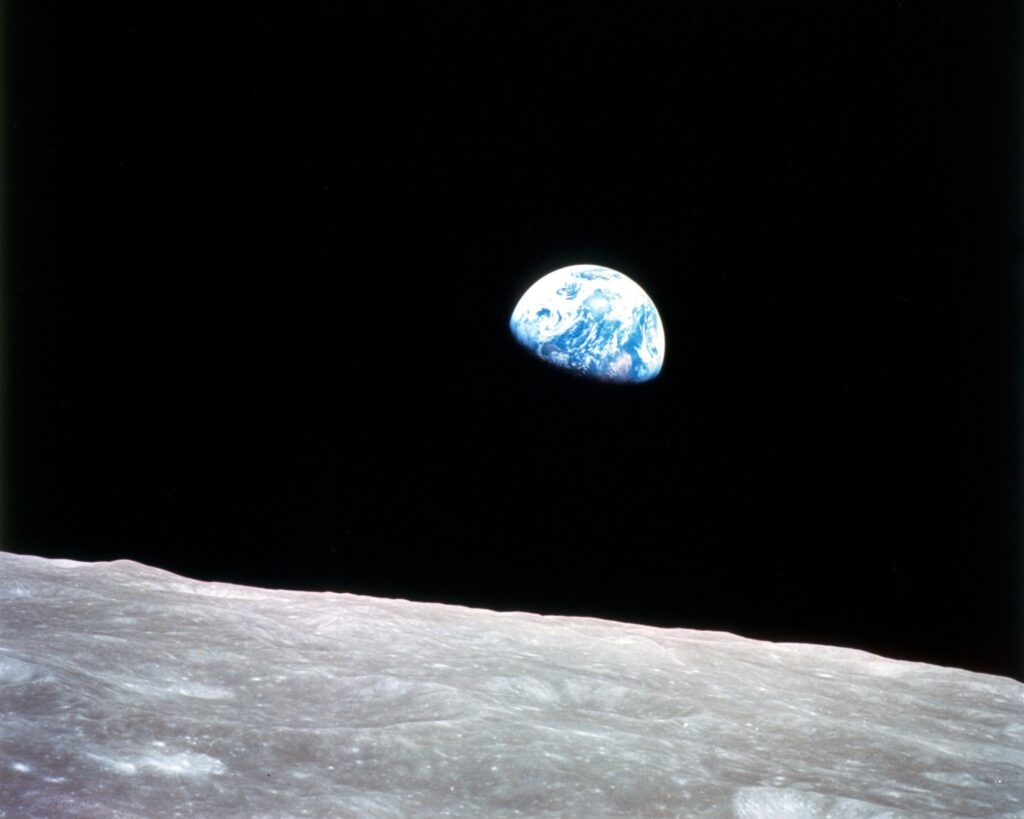Earthrise. (Bill Anders, NASA)
## **The Genesis Gesture**
But it is what happened later on Christmas Eve that gave Apollo 8 immortality, even spiritual immortality. Although NASA and the Apollo program were a triumph of hard mathematics, engineering, and Newtonian mechanics, a seemingly pure effusion of the scientific paradigm and the post-magical mind, a surprising amount of spiritual and religious activity occurred on America’s space missions. (Surely something similar was true from Russian cosmonauts no matter how much materialist-atheist indoctrination they received from birth in the USSR) The best book on this subject is Kendrick Oliver’s *To Touch the Face of God: The Sacred, the Profane, and the American Space Program, 1957-1975*.
All three Apollo 8 crew members were committed Christians. Borman, for example, recorded a prayer in lunar orbit to be played in his home church during the Christmas Eve service. It was his turn to do one of the readings, and he was going to be absent! Next best thing: prayer from the moon!
Once the mission was planned to take advantage of the best window of access, everyone realized that the crew would be circling the moon on Christmas Eve. That demanded some kind of observance. Well before the launch on December 21, NASA’s assistant administrator for public affairs Julian Scheer merely instructed Borman to “say something appropriate” during the broadcast scheduled for Christmas Eve. “He offered no further guidance,” writes historian Kendrick Oliver. During a crew discussion Anders suggested they read the Christmas Story. To his great credit, Borman thought that was too exclusionary; the message should have something like universal application to people of all nations and religions.
Uncertain of what to do, Borman contacted Simon Bourgin of the U.S. Information Agency. Bourgin had escorted Borman on his world tour following Apollo 7. Equally uncertain of what to do, Bourgin outsourced the problem. He contacted his friend Joe Laitin, a well-traveled and terrific journalist who served as a communications official for the Bureau of the Budget and had ties to the Kennedy Administration.
Laitin agonized over the assignment. After days of uncertainty and many drafts, with the deadline approaching, it was Laitin’s wife Christine who conceived the Genesis moment. As Laitin labored in frustration through one night trying to formulate something that was appropriate but not pretentious or divisive, Christine padded down the stairs at 4 a.m. How about the opening of the Book of Genesis, she asked. The first 10 verses of Genesis would have universal resonance even for people worldwide who were neither Christians nor Jews nor Muslims. All cultures develop origin stories, and most of them have to account for the beginning of the universe. This was a perfect, ecumenical choice that transcended its Judeo-Christian source.
Borman’s two fellow crew members liked the idea and when Borman ran the proposal up the chain all the way to the top of NASA, everyone approved.
Think of the dynamic convergence: Christmas … the moon just outside the window necessitating ruminations about the solar system … the Book of Genesis. At the end of a routine NASA capsule broadcast, with the usual zero gravity tricks and observations about the moon from close quarters, the three crew members left just enough time for their unannounced finale. Nobody outside of NASA had the slightest clue about what was about to happen. This was not a highly orchestrated moment. Borman didn’t even divvy up the verses to his comrades until half an hour before the broadcast. Anders would read the first four verses, Lovell the second four, and Borman would close with the final two.
For all of his seeming nonchalance, Borman understood what this moment would mean. He said to Anders and Lovell, “There will be more people listening to this than ever listened to any other single person in history.” A global audience at one of humankind’s greatest moments. The other greats — FDR on his fireside chats, JFK’s inaugural address, Churchill’s magnificent speeches in Parliament (conscripting the English language into the war, said one of his admiring critics), Martin Luther’s speech on the Mall — were heard by infinitely fewer people.
As the telecast wound down, with just enough time before the Command Module slipped around to the silent side of the moon, Anders said, “the crew of Apollo 8 has a message that we would like to send you.”
After a pause:
**Anders**:
In the beginning God created the heaven and the earth. And the earth was without form, and void; and darkness was upon the face of the deep. And the Spirit of God moved upon the face of the waters. And God said, Let there be light: and there was light. And God saw the light, that it was good: and God divided the light from the darkness.
**Now Lovell**:
And God called the light Day, and the darkness he called Night. And the evening and the morning were the first day. And God said, Let there be a firmament in the midst of the waters, and let it divide the waters from the waters. And God made the firmament, and divided the waters which were under the firmament from the waters which were above the firmament: and it was so. And God called the firmament Heaven. And the evening and the morning were the second day.
**Finally, Commander Borman:**
And God said, Let the waters under the heaven be gathered together unto one place, and let the dry land appear: and it was so. And God called the dry land Earth; and the gathering together of the waters called the Seas: and God saw that it was good.
When Borman finished he said, perhaps to lighten the spiritual weight of the moment, “From the crew of Apollo 8, we close with good night, good luck, a merry Christmas, and God bless all of you, all of you on the good earth.”
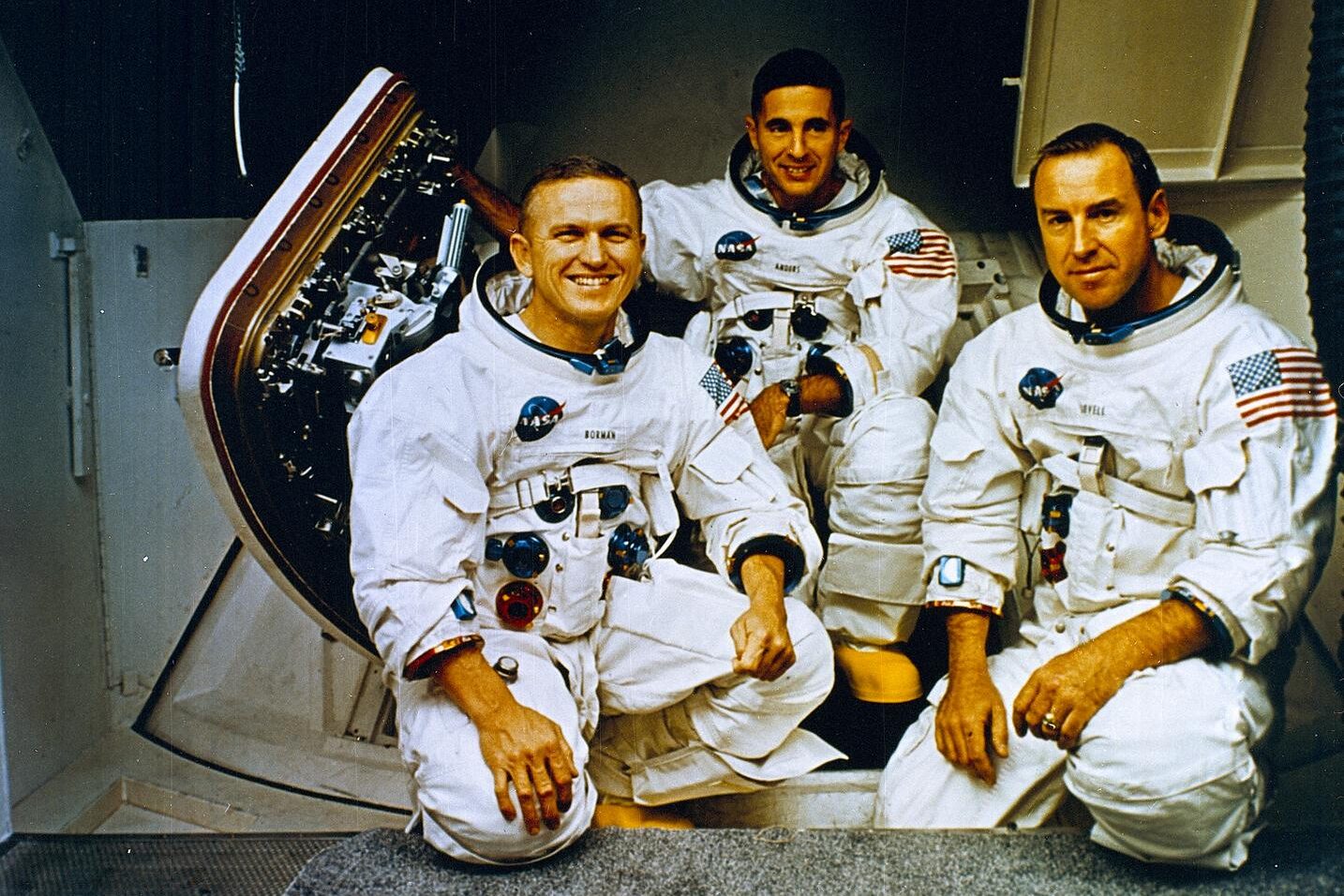The Apollo 8 Crew (L to R) Frank Borman, William Anders, and James Lovell, pose in front of the Apollo mission simulator during training. (NASA)
I remember watching the [broadcast](https://www.youtube.com/watch?v=ToHhQUhdyBY&t=121s) — I was a Space Program junkie — with my parents in our “den” in our home in western North Dakota, on a console color TV set, though the broadcast of course was in grainy, often ghostly black and white. My father and sister were outspoken atheists, my mother a nominal Christian, I, a confused but largely secular adolescent.
We were mesmerized (well, except for my sister). It was immediately one of the great moments in my life and it remains so six decades later when I have forgotten most of what I once knew about payloads and throw weights and fuel cells. We were filled with wonder and admiration, and there percolated beneath our family conversation a spiritual grandeur. Our eyes were moist and we felt shy together.
You could not hear those words without wondering, well, how did we get the heavens and the earth? How did the earth form? And what does the fact of (71%) water (apparently alone in the solar system) mean?
How did it all begin?
And it was Christmas, the time of the calendar year when the greatest number of people in America have contact with the Bible.
In his usual blunt way, Borman later insisted that his choice was not based on his religious faith. He needed something to say on Christmas Eve. This did the trick. “I didn’t give it any more thought than that,” he later said. I suppose we need to take him at his word.
Borman was offered a moon landing mission, but he declined. Looking back on his decision decades later, he said, “I would have not accepted the risk involved to go pick up rocks. I love my family more than anything in the world. I would have never subjected them to the dangers simply for me to be an explorer.”
Borman left NASA in 1970 and spent the rest of his career in the private sector, including an 11-year stint as the president of Eastern Airlines. Just before the millennium, he bought a ranch in the Bighorn Valley of Montana.
They are dying, the Gemini and Apollo astronauts. Of the 24 who have been to the moon only 12 walked on it. Eight of those men have died, just four are left: Buzz Aldrin (93), Charles Duke (88), David Scott (91), and Harrison Schmitt (88). Of the dozen who went to the moon but never landed, only two are still alive: James Lovell (93) and William Anders (90), both of Apollo 8.
The moment is coming, and soon, when every American lunar astronaut is dead. We can only hope that America gets another crew to the lunar surface before that happens.
Frank Borman may have been all business, but he embraced the Genesis reading the minute his friends suggested it. And later in life when he was asked about *Earthrise*, he said, “The contrast between our memories of the Earth and the color on the Earth and the totally bleak and dead moon was striking.” That moment, he said, he would “recall till the day I die.”That day was just two weeks ago. I hope his last thought was of December 24, 1968. After the crew landed, Borman received thousands of congratulatory telegrams. He only remembered one: “Thank you Apollo 8 you saved 1968.”
---
## ***Discover more on these topics at Listening to America***
[Oppenheim](https://ltamerica.org/tag/oppenheim/ "0 topics")[Rivers](https://ltamerica.org/tag/rivers/ "3 topics")[Ohio](https://ltamerica.org/tag/ohio/ "2 topics")[New York](https://ltamerica.org/tag/new-york/ "8 topics")[U.S. Presidents](https://ltamerica.org/tag/u-s-presidents/ "71 topics")[Video](https://ltamerica.org/tag/video/ "51 topics")[North Dakota](https://ltamerica.org/tag/north-dakota/ "53 topics")[Republic](https://ltamerica.org/tag/republic/ "0 topics")[State Parks](https://ltamerica.org/tag/state-parks/ "2 topics")[Water in the West](https://ltamerica.org/tag/water-in-the-west/ "24 topics")[north daktoa](https://ltamerica.org/tag/north-daktoa/ "0 topics")[Thoreau](https://ltamerica.org/tag/thoreau/ "5 topics")[paintings](https://ltamerica.org/tag/paintings/ "0 topics")[Road Trips](https://ltamerica.org/tag/road-trips/ "18 topics")[North Carolina](https://ltamerica.org/tag/north-carolina/ "3 topics")[Steinbeck Travels](https://ltamerica.org/tag/steinbeck-travels/ "75 topics")[Walden](https://ltamerica.org/tag/walden/ "1 topics")[Space Exploration](https://ltamerica.org/tag/space-exploration/ "8 topics")[William Shirer](https://ltamerica.org/tag/william-shirer/ "1 topics")[Vermont](https://ltamerica.org/tag/vermont/ "1 topics")[Reading](https://ltamerica.org/tag/reading/ "1 topics")[Wyoming](https://ltamerica.org/tag/wyoming/ "4 topics")[The Constitution](https://ltamerica.org/tag/the-constitution/ "1 topics")[New Mexico](https://ltamerica.org/tag/new-mexico/ "3 topics")[New England](https://ltamerica.org/tag/new-england/ "1 topics")[South Dakota](https://ltamerica.org/tag/south-dakota/ "16 topics")[Utah](https://ltamerica.org/tag/utah/ "11 topics")[Thomas Jefferson](https://ltamerica.org/tag/thomas-jefferson/ "34 topics")[Wisconsin](https://ltamerica.org/tag/wisconsin/ "0 topics")[Pennsylvania](https://ltamerica.org/tag/pennsylvania/ "1 topics")[Travel](https://ltamerica.org/tag/travel/ "1 topics")[Poetry](https://ltamerica.org/tag/poetry/ "1 topics")[Oregon](https://ltamerica.org/tag/oregon/ "4 topics")[Rome](https://ltamerica.org/tag/rome/ "1 topics")[Republics](https://ltamerica.org/tag/republics/ "1 topics")[Theodore Roosevelt](https://ltamerica.org/tag/theodore-roosevelt/ "16 topics")[Sports](https://ltamerica.org/tag/sports/ "2 topics")[Texas](https://ltamerica.org/tag/texas/ "4 topics")[South Carolina](https://ltamerica.org/tag/south-carolina/ "1 topics")[Podcast](https://ltamerica.org/tag/podcast/ "1 topics")[Virginia](https://ltamerica.org/tag/virginia/ "7 topics")[Washington](https://ltamerica.org/tag/washington/ "2 topics")[U.S. Constitution](https://ltamerica.org/tag/u-s-constitution/ "1 topics")[Oppenheimer](https://ltamerica.org/tag/oppenheimer/ "1 topics")[Tennessee](https://ltamerica.org/tag/tennessee/ "1 topics")
**Categories:** Features
**Tags:** Space Exploration
---
### [Listening to America as It Approaches its 250th Anniversary](https://ltamerica.org/listening-to-america-as-it-approaches-its-250th-anniversary/)
**Published:** November 14, 2023
**Author:** Clay Jenkinson
**Excerpt:** I’m taking this winter to plan details for my quest next spring to explore the country in the shadow of John Steinbeck’s classic book Travels With Charley in Search of America. I’ll write about our plans from time to time and would love to hear your thoughts about what we have in the works.
**Content:**
## I’m taking this winter to plan details for my quest next spring to explore the country in the shadow of John Steinbeck’s classic book *Travels With Charley in Search of America*. I’ll write about our plans from time to time and would love to hear your thoughts about what we have in the works.
One of the covers of the many published editions of John Steinbeck’s 1962 classic *Travels With Charley*.
As you know, beginning this spring, I’ll take the [Listening to America Airstream](https://ltamerica.org/the-long-dreamed-airstream-joins-the-listening-to-america-team/) around the country. This will start a multi-year journey to explore our nation as it approaches its 250th anniversary. I’ll have a few themes to guide this journey and serve as organizing frameworks or threads. My first framework will be John Steinbeck’s *Travels with Charley* cross-country journey in 1960. He drove the perimeter of America, about 10,000 miles. He said he was in search of America. I have much to say about what he thought he was doing and what he was doing on the journey in his truck camper Rocinante, but that is for another time. I will follow the Steinbeck itinerary (more or less) and write a good deal about Steinbeck. I love him more now that I am really getting to know him. There is a complexity, even a brokenness, in him that I find fascinating. With *Grapes of Wrath* (1939), he placed himself permanently in the top tier of American literature.
But on my 2024-25 journey, I’ll be giving even more attention to a larger set of questions as we approach the 250th birthday of America.
How are we doing at 250?
What’s left to be done?
Is America still one nation or two or more?
What does America mean to you?
If you could do one big thing to make America better, what would it be?
And so on. As I think about this in advance, I have some preliminary ideas and concerns about how the adventure will work. I’m guessing you don’t sit next to someone at the diner and start the conversation by saying, “What does America mean to you?” Or maybe you do? I expect that at the beginning, at least, I will get a quantum of relatively unsatisfying responses. “We’re the greatest nation in history, man.” “America means freedom, and I’m not sure we aren’t losing it.” “We’re the most generous nation in the world, by far.” “It’s unlimited opportunity.”
Not that there is anything wrong with any of those statements. But there is a great deal of formula in that. It feels like American patriotic talking points. I want to know how people feel, but I also want to know how they think about how they feel and what lies behind the surface declaration. My response, “If you think we are losing our freedom, where do you see it disappearing?” “When you say the greatest nation, tell me what you mean by that.”
I don’t want to come on too strong, but I know that I’ll be moving fast through America, so there won’t be much time to build the trust that would lead to answers and comments closer to the bone, the heart, the soul. The pain. The Dream. I need to practice opening up serious conversations quickly and ensuring I designate sufficient time for them in my itinerary. I don’t want to travel 10,000 miles and hear only the usual talking points on every issue. We have national talking points these days, thanks to mass, social media, and Facebook tropes.
## **What America Is and What America Does**
I’ve been thinking lately that it is not as much what America is as what it does. Everywhere I turn, people are doing fascinating things with their lives: climbing all the Fourteeners in Colorado, fashioning guitars from discarded lumber, painting watercolors in each of the national parks, or learning Sanskrit in preparation for walking the Silk Trail. Of course, many people are doing nothing — binge-watching the complete NCIS franchise. I’m sometimes one of them. I suppose most people do not choose to push the boundaries of their daily lives. But there are more bold spirits out there than you think, and they are spread out all over, sometimes in great isolation. You could spend 20 years traveling America without exhausting the remarkable creativity, intentionality, and mastery that probably skips no single zip code in America. Think of the possibilities.
And yet. The other day, I read a passage in a book about traveling around America. The following sentence: “Everybody’s story is interesting.” No. I have done a fair amount of traveling myself, and I can tell you not everyone’s story is interesting. Maybe they would be if the storyteller were better at it. But my experience is that they are not all interesting. Most but not all. But I also know that another American man (or woman) of my age traveling the country and meeting ME at a campground in Ohio might very well conclude, “That’s not interesting. He’s not interesting.” Especially if I started to talk about Dostoevsky.” That can ruin a party.
**Books of the Road**: I’m reading everything I can on this broad, fascinating subject. I don’t know that *Travels with Charley* is the greatest of the road books. Still, it is almost universally beloved. I think Kerouac’s *On the Road* is a greater book in many ways. But they are apples and oranges. Steinbeck was no kid when he made the journey. I also nominate the journals of Lewis and Clark, the record of America’s first great road trip (as the historian James Ronda puts it). I think *Blue Highways* is in the mix, as well as *Zen and the Art of Motorcycle Maintenance*.
This journey will only work (and be worth the carbon footprint!) — if it is much more than a retracing of Steinbeck’s trip. I’m going out to listen to America. Great idea, easy to say, maybe not so easy to accomplish. I anticipate that I am going to have to grow/mature in some ways that are counter-intuitive for me. That’s promising and frightening at the same time. Listen is a big word if you define it generously. Think of this catechism: Did you hear? Yes. But did you listen? Yes. You listened, but did you truly LISTEN? I’m going to have to disable a couple of the force shields — we all have them — if I expect to succeed at this.
I feel a solemn responsibility to do this right, to see America and listen to America and report it all back to you in an agreeable way. This is the most critical “moment” in my lifetime, including the Cuban Missile Crisis and America 1969. What is this dis-ease in the American soul (on all sides of the political spectrum)? What’s roiling about in our social structure? Why is there so much rage and discontentment? What do you think the future looks like? Are you ever disappointed with America? Or when do you most admire America? Can we keep the republic?
I need your help. If you know of books I should read or documentary films, please let me know. If you have advice for me, I’m listening. Please tell me if you know of people and places I need to encounter. If you want to help make this happen, we need: gas cards, a Ford F150, and some electronic equipment. But mostly, I need and want you to come along for the ride.
---
## ***Discover more on these topics at Listening to America***
[Utah](https://ltamerica.org/tag/utah/ "11 topics")[North Dakota](https://ltamerica.org/tag/north-dakota/ "53 topics")[Vermont](https://ltamerica.org/tag/vermont/ "1 topics")[Space Exploration](https://ltamerica.org/tag/space-exploration/ "8 topics")[Sports](https://ltamerica.org/tag/sports/ "2 topics")[New England](https://ltamerica.org/tag/new-england/ "1 topics")[Travel](https://ltamerica.org/tag/travel/ "1 topics")[Wyoming](https://ltamerica.org/tag/wyoming/ "4 topics")[Podcast](https://ltamerica.org/tag/podcast/ "1 topics")[Wisconsin](https://ltamerica.org/tag/wisconsin/ "0 topics")[U.S. Presidents](https://ltamerica.org/tag/u-s-presidents/ "71 topics")[Water in the West](https://ltamerica.org/tag/water-in-the-west/ "24 topics")[Rivers](https://ltamerica.org/tag/rivers/ "3 topics")[U.S. Constitution](https://ltamerica.org/tag/u-s-constitution/ "1 topics")[Republics](https://ltamerica.org/tag/republics/ "1 topics")[William Shirer](https://ltamerica.org/tag/william-shirer/ "1 topics")[Thomas Jefferson](https://ltamerica.org/tag/thomas-jefferson/ "34 topics")[Poetry](https://ltamerica.org/tag/poetry/ "1 topics")[South Dakota](https://ltamerica.org/tag/south-dakota/ "16 topics")[Video](https://ltamerica.org/tag/video/ "51 topics")[Ohio](https://ltamerica.org/tag/ohio/ "2 topics")[The Constitution](https://ltamerica.org/tag/the-constitution/ "1 topics")[State Parks](https://ltamerica.org/tag/state-parks/ "2 topics")[Pennsylvania](https://ltamerica.org/tag/pennsylvania/ "1 topics")[north daktoa](https://ltamerica.org/tag/north-daktoa/ "0 topics")[Texas](https://ltamerica.org/tag/texas/ "4 topics")[Virginia](https://ltamerica.org/tag/virginia/ "7 topics")[Tennessee](https://ltamerica.org/tag/tennessee/ "1 topics")[Steinbeck Travels](https://ltamerica.org/tag/steinbeck-travels/ "75 topics")[Washington](https://ltamerica.org/tag/washington/ "2 topics")[South Carolina](https://ltamerica.org/tag/south-carolina/ "1 topics")[Rome](https://ltamerica.org/tag/rome/ "1 topics")[New York](https://ltamerica.org/tag/new-york/ "8 topics")[Thoreau](https://ltamerica.org/tag/thoreau/ "5 topics")[Republic](https://ltamerica.org/tag/republic/ "0 topics")[North Carolina](https://ltamerica.org/tag/north-carolina/ "3 topics")[Oppenheim](https://ltamerica.org/tag/oppenheim/ "0 topics")[Walden](https://ltamerica.org/tag/walden/ "1 topics")[Oppenheimer](https://ltamerica.org/tag/oppenheimer/ "1 topics")[Road Trips](https://ltamerica.org/tag/road-trips/ "18 topics")[Theodore Roosevelt](https://ltamerica.org/tag/theodore-roosevelt/ "16 topics")[Reading](https://ltamerica.org/tag/reading/ "1 topics")[paintings](https://ltamerica.org/tag/paintings/ "0 topics")[New Mexico](https://ltamerica.org/tag/new-mexico/ "3 topics")[Oregon](https://ltamerica.org/tag/oregon/ "4 topics")
**Categories:** Dispatches from the Road
**Tags:** Books, John Steinbeck, Lewis and Clark
---
### [75 Years Later, Steinbeck's Western Flyer Returns to Monterey](https://ltamerica.org/75-years-later-steinbecks-western-flyer-returns-to-monterey/)
**Published:** November 13, 2023
**Author:** Russ Eagle
**Excerpt:** The fishing boat that took the author and his friend Ed Ricketts on their famous expedition to the Gulf of California in 1940 was pulled literally from the ocean floor for an eight-year, $7 million makeover. Recently, it returned to Monterey Harbor, ready to return to work. Listening to America's special Steinbeck correspondent, Russ Eagle, was there to cover the event.
**Content:**
## The fishing boat that took the author and his friend Ed Ricketts on their famous expedition to the Gulf of California in 1940 was pulled literally from the ocean floor for an eight-year, $7 million makeover. Recently, it returned to Monterey Harbor, ready to return to work. Listening to America’s special Steinbeck correspondent, Russ Eagle, was there to cover the event*.*
The Western Flyer returns home to Monterey Bay, California in November 2023. (Photo by Russ Eagle)
I first set foot onto the deck of the [Western Flyer](https://www.westernflyer.org/steinbeck-and-ricketts/history/) back in the fall of 2018. The 1930s-era [purse seiner](https://www.fao.org/fishery/en/vesseltype/140?lang=en) had just been moved into the [Port Townsend Shipwrights Co-Op](https://ptshipwrights.com/) after five years in dry-dock. It was little more than a hulking mass of rotten wood, and it had been saved from the landfill only by its 80-year-old connection with John Steinbeck. The ensuing restoration project, which eventually cost $7 million and captured international awards and significant media coverage, captivated Steinbeck devotees and traditional wooden boat construction fans. I remained an active supporter throughout — two pieces of the vessel’s original decking now sit on a shelf in my basement — so when the announcement came a few months back that the Flyer was sea-worthy and returning to Monterey after 75 years, I knew I wanted to be there.
With its storied [fishing history](https://www.montereywharf.com/history.html#:~:text=Chinese%20fishermen%20arrived%20in%20the,boats%20in%20the%20Monterey%20Bay.), Monterey has served as home port to hundreds of vessels over the last century. None, however, forged a connection with the city in the same way as the Western Flyer, built in 1937 specifically to fish for the [Pacific sardine](https://www.fisheries.noaa.gov/species/pacific-sardine) in and around Monterey Bay. That’s mostly because of Steinbeck and his friendship with [Ed Ricketts](https://www.westernflyer.org/steinbeck-and-ricketts/ed-ricketts/), the owner and operator of [Pacific Biological Laboratories](https://www.atlasobscura.com/places/doc-ricketts-lab) on [Cannery Row](https://canneryrow.com/our-story/the-canneries/). Steinbeck hired the Western Flyer in the spring of 1940 and he and Ricketts made a six-week expedition to the Gulf of California. Their trip is recounted in *Sea of Cortez: A Leisurely Journal of Travel and Research.* It was the only book on which Steinbeck ever shared authorship, and though it sold poorly at first, it gradually grew into a sort of underground classic of ecological thinking.
The Western Flyer underwent an eight year, $7 million dollar restoration to make it seaworthy again. (Photo by Russ Eagle)
The Western Flyer’s tenure in Monterey was brief. The purse seiners became victims of their own success. By the mid-40s, they had caught all the fish, and before the decade was out, the Flyer had sailed out of town for good. By then, Ricketts was dead, Steinbeck was a New Yorker, and Cannery Row was on its way to becoming a ghost town. Though the Flyer would fish the Pacific Northwest and Alaska waters for another half century, there was no longer any reason to return to Monterey. The boat was modified several times and renamed Gemini. In 1971, it hit a reef off the Alaska coast and was nearly lost. It would later sink — [twice](https://response.restoration.noaa.gov/about/media/western-flyer-sunken-piece-literary-history-raised-depths.html) — and in 2012, it was left sitting at the bottom of [Swinomish Slough](https://revisitwa.org/waypoint/swinomish-slought/) in northern Washington for six months. Any suggestion at that point that the Western Flyer would ever sail again would have been met with disbelief. But in 2015, a marine geologist named [John Gregg](https://www.westernflyer.org/people/john-m-gregg/) bought the boat for $1 million. *Sea of Cortez* had inspired him as a boy, and he saw something worth saving. Gregg is a humble man who is visibly uncomfortable in the hero’s role, but that is precisely what he became in the Steinbeck world. He wasn’t sure exactly what his plans were, but he pledged early in his efforts to return the Western Flyer to Monterey.
John Gregg had the dream to return Steinbeck’s Western Flyer to Monterey.
It took him eight years, but John Gregg made good on his pledge. At around 11:40 am on Saturday, November 4, 2023, [Captain Paul Tate](https://www.westernflyer.org/welcome-captain-paul/) eased the Western Flyer around the breakwater and back into Monterey Harbor. Hundreds of people lined Old Fisherman’s Wharf, and hundreds more watched from the neighboring commercial wharf, the Coast Guard Pier just to the south, and the parks and trails that line the harbor’s rocky shore. The inner harbor was swarming with kayakers looking to infiltrate the parade of boats that escorted the Western Flyer into the port. People stood in line for hours for the opportunity to step on board. There was a mariachi band. The politicians spoke as they must, but on this day, their speeches struck perfect tones. This was a community celebration, a homecoming, an homage to the fishing families and the industry integral to Monterey’s history. Even the inland town of Salinas, Steinbeck’s birthplace, and Monterey’s longstanding rival as “Steinbeck’s town,” sent a county supervisor with a warm message. Steinbeck, once vilified in his home county and gone now for more than half a century, still draws a crowd on California’s Central Coast.
## **Steinbeck and Ricketts in the Gulf of California**
Steinbeck went to the Gulf of California in 1940 as an escape. He was fleeing the madness that followed publishing [*The Grapes of Wrath*](https://archive.nytimes.com/www.nytimes.com/books/97/07/06/home/history-grapes.html), searching for some vestige of the anonymity he felt was crucial to his work. His marriage was crumbling. The world was descending quickly into war. And, perhaps most importantly, he went because of his friendship with Ed Ricketts. Their ostensible motivation for the trip was to collect marine specimens and study the ecology of the Gulf, but *Sea of Cortez* is remembered today not so much for its marine biology as for its philosophical ruminations: objective reality, atavism, non-teleological thinking, ecological holism, and the interactive dance between microcosm and macrocosm that permeates so much of Steinbeck’s work. The account is infused with humor and Steinbeck’s remarkable talent for describing the natural world. Like all his great works, it captures the magic of the marginal times of day after the work is done. Steinbeck and Ricketts used these opportunities to play a game they called speculative metaphysics, “lopping off a piece of observed reality and letting it move up through the speculative process like a tree growing tall and bushy.” The beer-stoked sessions that played out on the deck of the Western Flyer led to some of the most quoted passages in all of Steinbeck’s work. *Sea of Cortez* reads like poetry at times and like an alcohol-fueled bullshit session at others. The ability to walk such a line was central to Steinbeck’s work and success. It’s a big reason his books are still in print. And it’s a big reason why the restoration and return of the Western Flyer means so much to so many.
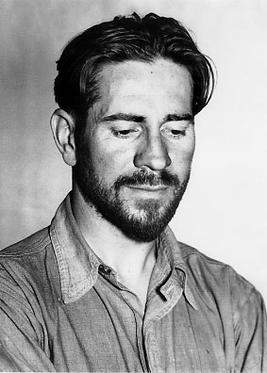Ed Ricketts in 1937. (Pat Hathaway Photo Collection)
[*Travels with Charley*](https://www.penguinrandomhouse.com/books/324476/travels-with-charley-in-search-of-america-by-john-steinbeck-introduction-by-jay-parini/) remains Steinbeck’s best-loved travelogue. It’s a very American book. It is Steinbeck, that most American of writers, at his most personal. It’s Route 66 in a GMC pickup truck with a camper top and a dog. It’s roadside America, national parks, mobile homes, and 60s-era politics, and the Civil Rights Movement. Perhaps only [Kerouac](https://jackkerouac.com/pages/about) can claim a firmer hold on the American image of a road trip. But the *Sea of Cortez* journey, taken 20 years earlier, is a West Coast book, a book of the sea. It’s Monterey’s book. It has become a bible of sorts for hardcore Steinbeck enthusiasts. It represents the zenith of the Steinbeck/Ricketts friendship that dominates many discussions of Steinbeck’s work. *Travels with Charley* may be America’s Steinbeck book, but in and around Monterey and among hardcore Steinbeck enthusiasts all over, *Sea of Cortez* is the account they keep returning to.
Rocinante, the truck in which Steinbeck and Charley circumnavigated the United States in 1960, now sits in the [National Steinbeck Center](https://steinbeck.org/) in Salinas. It is the Center’s star attraction, rightly so, and yet one cannot help but be disappointed in the way the vehicle is displayed. It sits tucked into a corner, visible only as one exits the museum, almost like an afterthought. The surrounding plexiglass frustrates both viewers and photographers. The Western Flyer can anticipate a more productive future thanks to John Gregg and his team. As Gregg said in his short talk that closed Saturday’s festivities, “I don’t think we have accomplished anything yet.” The Flyer will not be moored in Monterey as some relic of the past. A state-of-the-art science lab is going in its old fish hold. The boat, he says, is ready to return to work. Its mission is no longer that of a predator, pulling fish out of the ocean by the ton, by the thousands of tons. In its new life the Western Flyer takes its place alongside the [Monterey Bay Aquarium Research Institute](https://www.mbari.org/), San Jose State’s [Moss Landing Marine Laboratories](https://hopkinsmarinestation.stanford.edu/), and Stanford University’s [Hopkins Research Center](https://hopkinsmarinestation.stanford.edu/), area organizations working better to understand the ocean and our relationship to it. The Western Flyer, Gregg concluded, “can inspire future generations to make better use of the planet than we have.”
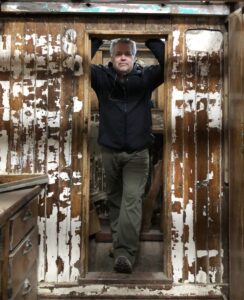The author, Russ Eagle below deck of The Western Flyer in 2018 before restoration was complete.
It seems trite to ask what Steinbeck would think of the “hooptedoodle” being raised over the renaissance of the Western Flyer. He had a lifelong disdain for publicity of any kind, and he once opined that if his hometown wanted to honor him, the best way to do so might be to name a bowling alley or dog track after him or perhaps a medium-priced brothel. But it’s hard to imagine Steinbeck being cynical this time. The Western Flyer Foundation’s stated mission, “to stir curiosity by connecting art and science,” serves as an apt description of the 1940 expedition as well. The key to the Steinbeck/Ricketts relationship, many say, was that Steinbeck was a writer who viewed life through a biological lens, while Ricketts was a biologist who approached the world through the humanities. Blending art and science was at the heart of their friendship and work together.
After Saturday’s festivities, we left [Old Fisherman’s Wharf](https://www.montereywharf.com/) and strolled down Cannery Row. Ed Ricketts lab, the birthplace of the game of speculative metaphysics, still stands at the far end, dwarfed by the neighboring Monterey Bay Aquarium. The doors to the lab were open, so we climbed the aging steps and went inside. A first edition of *Sea of Cortez* lay on a table in the front room, fittingly opened to Chapter 2:
*“… to nearly all men, a boat more than any other tool he uses is a little representation of an archetype. There is an ‘idea’ boat that is an emotion, and because the emotion is so strong it is probable that no other tool is made with so much honesty as a boat … Apparently the builder of a boat acts under a compulsion greater than himself. Ribs are strong by definition and feeling. Keels are sound, planking truly chosen and set. A man builds the best of himself into a boat — builds many of the unconscious memories of his ancestors … This is not mysticism, but identification; man, building this greatest and most personal of all tools, has in turn received a boat-shaped mind, and the boat, a man-shaped soul. His spirit and the tendrils of his feeling are so deep in a boat that the identification is complete.”*
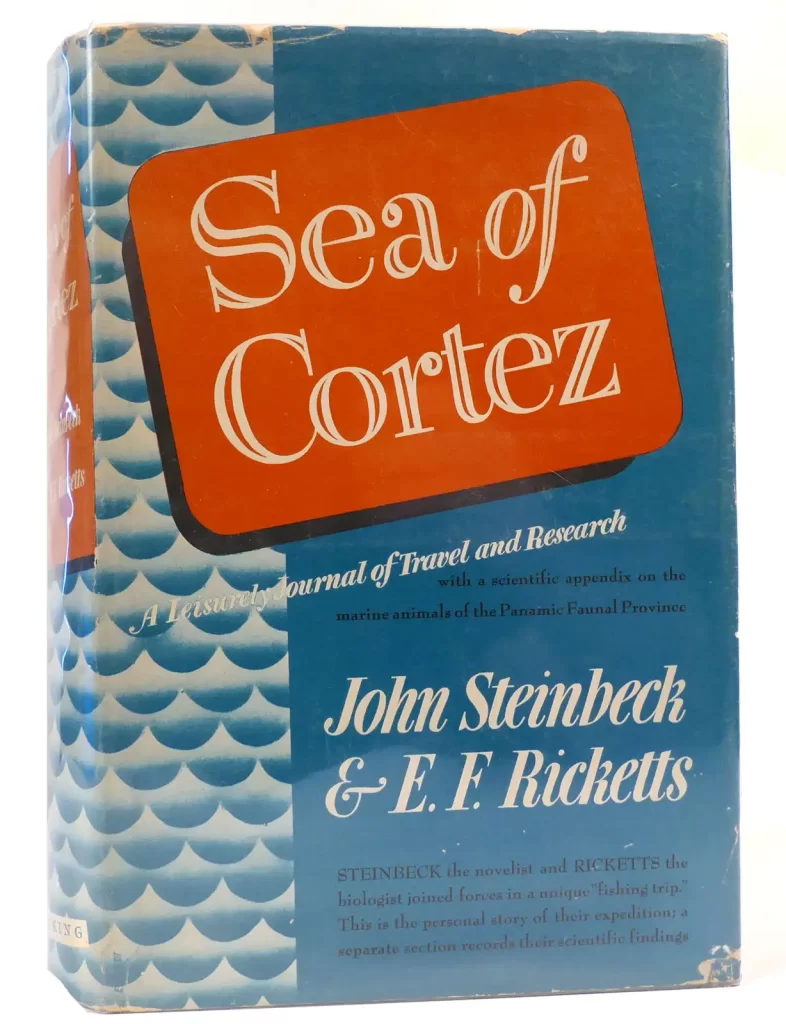Sea of Cortez by John Steinbeck and E.F. Ricketts published in 1941.
---
## ***Discover more on these topics at Listening to America***
[Water in the West](https://ltamerica.org/tag/water-in-the-west/ "24 topics")[Oppenheimer](https://ltamerica.org/tag/oppenheimer/ "1 topics")[Rome](https://ltamerica.org/tag/rome/ "1 topics")[South Carolina](https://ltamerica.org/tag/south-carolina/ "1 topics")[Thoreau](https://ltamerica.org/tag/thoreau/ "5 topics")[Ohio](https://ltamerica.org/tag/ohio/ "2 topics")[Walden](https://ltamerica.org/tag/walden/ "1 topics")[The Constitution](https://ltamerica.org/tag/the-constitution/ "1 topics")[William Shirer](https://ltamerica.org/tag/william-shirer/ "1 topics")[Pennsylvania](https://ltamerica.org/tag/pennsylvania/ "1 topics")[South Dakota](https://ltamerica.org/tag/south-dakota/ "16 topics")[Road Trips](https://ltamerica.org/tag/road-trips/ "18 topics")[Travel](https://ltamerica.org/tag/travel/ "1 topics")[Thomas Jefferson](https://ltamerica.org/tag/thomas-jefferson/ "34 topics")[New York](https://ltamerica.org/tag/new-york/ "8 topics")[Oregon](https://ltamerica.org/tag/oregon/ "4 topics")[Steinbeck Travels](https://ltamerica.org/tag/steinbeck-travels/ "75 topics")[Oppenheim](https://ltamerica.org/tag/oppenheim/ "0 topics")[Sports](https://ltamerica.org/tag/sports/ "2 topics")[north daktoa](https://ltamerica.org/tag/north-daktoa/ "0 topics")[New Mexico](https://ltamerica.org/tag/new-mexico/ "3 topics")[Space Exploration](https://ltamerica.org/tag/space-exploration/ "8 topics")[Theodore Roosevelt](https://ltamerica.org/tag/theodore-roosevelt/ "16 topics")[Virginia](https://ltamerica.org/tag/virginia/ "7 topics")[Rivers](https://ltamerica.org/tag/rivers/ "3 topics")[Wyoming](https://ltamerica.org/tag/wyoming/ "4 topics")[Republic](https://ltamerica.org/tag/republic/ "0 topics")[North Carolina](https://ltamerica.org/tag/north-carolina/ "3 topics")[Podcast](https://ltamerica.org/tag/podcast/ "1 topics")[North Dakota](https://ltamerica.org/tag/north-dakota/ "53 topics")[Republics](https://ltamerica.org/tag/republics/ "1 topics")[paintings](https://ltamerica.org/tag/paintings/ "0 topics")[U.S. Presidents](https://ltamerica.org/tag/u-s-presidents/ "71 topics")[Video](https://ltamerica.org/tag/video/ "51 topics")[Wisconsin](https://ltamerica.org/tag/wisconsin/ "0 topics")[State Parks](https://ltamerica.org/tag/state-parks/ "2 topics")[U.S. Constitution](https://ltamerica.org/tag/u-s-constitution/ "1 topics")[Vermont](https://ltamerica.org/tag/vermont/ "1 topics")[New England](https://ltamerica.org/tag/new-england/ "1 topics")[Reading](https://ltamerica.org/tag/reading/ "1 topics")[Washington](https://ltamerica.org/tag/washington/ "2 topics")[Utah](https://ltamerica.org/tag/utah/ "11 topics")[Texas](https://ltamerica.org/tag/texas/ "4 topics")[Poetry](https://ltamerica.org/tag/poetry/ "1 topics")[Tennessee](https://ltamerica.org/tag/tennessee/ "1 topics")
**Categories:** Features
**Tags:** Books, California, John Steinbeck
---
### [The US Presidency and What Can Be Lost Between Administrations](https://ltamerica.org/the-us-presidency-and-what-can-be-lost-between-administrations/)
**Published:** November 6, 2023
**Author:** Clay Jenkinson
**Excerpt:** What happens in the gap between one administration and the next, especially when the outgoing president is unavailable? This “leadership gap” has had an intriguing influence on U.S. History.
**Content:**
## What happens in the gap between one administration and the next, especially when the outgoing president is unavailable? This “leadership gap” has had an intriguing influence on U.S. History.
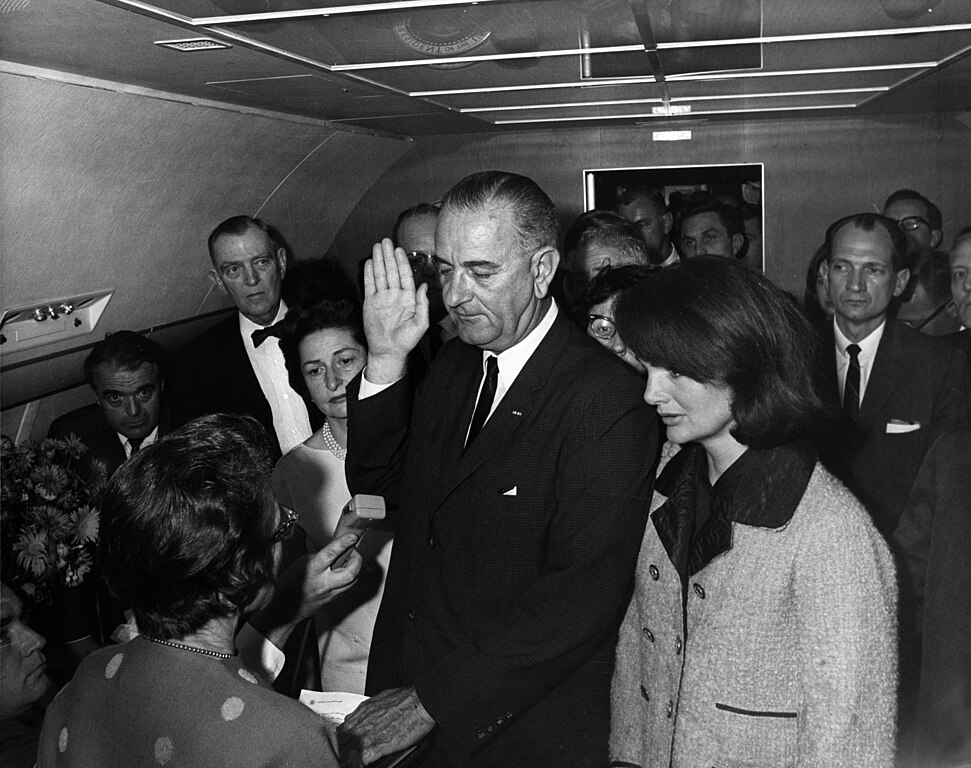Lyndon B. Johnson takes the oath of office as president aboard Air Force One, 22 November 1963. (White House photo)
I’ve been reading about the U.S. presidency lately.
One thing that struck me in reading Robert Caro’s magnificent *[Passage of Power: The Years of Lyndon Johnson](https://www.penguinrandomhouse.com/books/24315/the-passage-of-power-by-robert-a-caro/)* was what happens in the gap between one administration and the next, especially when the outgoing president is unavailable for consultation. This “leadership gap” got me thinking about this phenomenon in American life. Here are three examples:
## **The Tragedy of Meriwether Lewis**
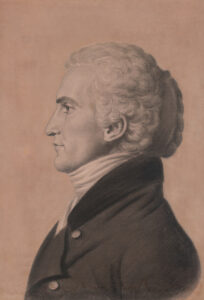A portrait of Captain Meriwether Lewis in 1802. (National Portrait Gallery)
Meriwether Lewis was young enough to be Thomas Jefferson’s son, and Jefferson had no son. Lewis’ father died when the boy was only 5. The Lewis family plantation was close to Monticello. Jefferson had friendly relations with Lewis’ parents. When Jefferson became president in March 1801, he summoned Lewis from the frontier army to live with him in the White House and serve as his correspondence secretary. For more than two years, they lived together, usually, the only two white individuals to live in the mansion.
Jefferson recognized that Lewis had several problems. He drank too much and too often. And he was not a very reliable communicator. Still, Jefferson declared in 1813 that there could have been no better choice for the great exploration adventure that would become the Lewis and Clark Expedition. Lewis had specific qualifications Jefferson believed: he was habituated to the woods, was a good amateur botanist, an excellent leader of men, painstakingly accurate in his written observations, and reasonably familiar with Native Americans. Jefferson thought the physical rigors might cure Lewis’ melancholia of the transcontinental journey.
The expedition returned to St. Louis in September 1806.
By 1808, both Jefferson and William Clark knew that Lewis was starting to come apart. Jefferson had made Lewis the governor of the Upper Louisiana Territory. Lewis had been tardy taking up his duties and was finally overwhelmed by trying to govern an unruly and violent frontier territory, where Spanish and French nationals clashed with the new Anglos about all sorts of policies. Dispossessing the Osage from their homelands in the least appalling way was also a significant burden. Meanwhile, the national government was hundreds of miles and a month’s mail service away.
Jefferson retired in March 1809 and returned to Monticello to putter in his garden and live out his days. His protégé James Madison succeeded him in the presidency. By now, the War Department was fed up with Lewis, who was a lousy communicator and who had engaged in unauthorized expenditures of government money to try to get the Mandan leader Sheheke home to his earthlodge village in today’s North Dakota. Lewis received a fierce letter of rebuke from the War Department in July 1809. It accused him of unacceptable silences, conflict of interest, and unauthorized use of financial vouchers, several of which the War Department said it would not reimburse.
This snarky official rebuke threw Lewis into a cocktail of fury and shame. He determined to go to Washington to try to clear things up. There were rumors that the War Department would formally recall him. And he had yet to write a single page of his proposed three-volume report on the expedition. He was drinking to excess. He suffered from malaria. He was dosing himself with an opium derivative called laudanum.
His life was in disarray. But what sent him over the top was the letter of rebuke from a government he had served honorably. His integrity and sense of honor had been challenged by a government he had loyally served.
Lewis committed suicide on the night of October 11, 1809, at a squalid hut on the Natchez Trace about 75 miles from Nashville.
IF JEFFERSON HAD STILL BEEN PRESIDENT, this crisis almost certainly would not have happened. Jefferson loved Lewis, and he understood his growing fragility. With his exquisite tact and generosity of spirit and loyalty, Jefferson would have found a way to make sure Lewis was made aware of his deficiencies without shaming him or challenging his integrity. In other words, I doubt very much that Lewis would have committed suicide had Jefferson still been in office. He would have eased Lewis through this crisis.
But when Jefferson left Washington in March 1809, he washed his hands of “the disagreeable business of politics” once and for all. He promised that he would not meddle in the administration of his best friend and successor, and he cut himself off from further communication with the Washington establishment. Like Cincinnatus (and George Washington), Jefferson wanted to sit under his vine and his fig tree in the mountains of Virginia and write handsome letters to his friends in the Republic of Letters.
Madison was no great friend to the American West, and he was not as patient as Jefferson had been with Lewis’ inadequacies. In the notorious letter of rebuke, the Secretary of War told Lewis that he had briefed President Madison, and the President approved of the way he was handling it.
Ouch.
It was the gap between administrations that killed Meriwether Lewis. If Madison had picked up the phone and called Monticello, he and Jefferson would have found a way to rein Lewis in without precipitating an existential crisis in an American hero and very gifted (if troubled) young man.
Meriwether Lewis was a victim of the gap.
## **Truman Inherits the Atomic Bomb**
Harry S. Truman is sworn in as president of the United States on April 12, 1945. His wife Bess and daughter Margaret stand at his right. (Truman Library)
Franklin Delano Roosevelt let his Democratic insiders choose Missouri Senator Harry S. Truman as his running mate in 1944 when FDR stood for an unprecedented fourth term. At the time when these decisions were made, Roosevelt was gravely ill (in fact, dying). Still, no attempt was made to choose a vice president with previous executive experience or someone well-versed in the perilous world situation. Nor during the 82 days that Truman was vice president did FDR or his advisers make any attempt to brief him on the many important, even urgent, issues that the president or his successor must attend to.
Franklin Roosevelt died on April 12, 1945, at Warm Springs, Georgia.
That afternoon, Truman was summoned to the White House, where he took the oath of office. That same afternoon, he learned of the Manhattan Project for the first time — the emergency mission to build an atomic bomb in time to affect the war’s outcome.
Think of that. Truman had no clue that we were about to test a weapon of mass destruction that could vaporize 60,000 human beings instantly and condemn tens of thousands more to slow agonizing death by way of radiation sickness. Truman had only a few weeks to decide whether to deploy the atomic device on Japan; now that Hitler was dead, the war in Europe was over, and it turned out that the Germans had not even been within sight of building such a device.
The “accidental president,” as he has been called, permitted the bombing of Hiroshima and Nagasaki, though he did not choose either target or determine the dates of the attacks.
When Robert Oppenheimer came to the White House after the war to wring his hands about his own agency in the bombings, Truman called him a crybaby and said, “Don’t bring that fellow around here again. All he did was make the bomb. I’m the guy who fired it off.”
What if Franklin Roosevelt had lived through the war’s end in both the European and Pacific theaters? Would things have been the same, or might history have unfolded differently? Would FDR have deployed the atomic bomb on Japan? Without warning? Two detonations just three days apart? We don’t know. We have no way of knowing.
But this much seems clear. It was unfair to put that burden on Harry S. Truman. If he had been assigned as VP to supervise the completion of the work at Los Alamos and been fully briefed from the moment he accepted the nomination for the vice presidency, he would have been in a better position to ruminate on what we were about to loose upon the world. Who knows if that would have made any difference in his thinking? But, given the gravity of nuclear weaponry and its profound threat to the future of the world, it would have been better if FDR had lived to make the hard decisions or left a few memos about what he meant by unconditional surrender, the postwar settlement, or the use of an unprecedented weapon of mass destruction.
## **Lyndon Johnson’s and the Martyr’s Legacy**
President Lyndon B. Johnson signing the 1964 Civil Rights Act, July 2, 1964. (White House Photo)
Lyndon Johnson was chosen to be John F. Kennedy’s vice president in 1960 for political reasons. He and Jack Kennedy could not have been more different in deportment, style, education, or background. Johnson never felt he was permitted to be a real factor in the Kennedy administration.
JFK was cut down by a sniper or snipers on November 22, 1963, in Dallas. Johnson took the oath of office on the presidential plane that afternoon before it took off from Love Field in Dallas.
Johnson knew much more about John Kennedy’s government than Truman knew about FDR’s. Unlike Truman, he had not been left to languish on the sidelines. He was better positioned to handle the post-Kennedy presidency than Madison had been with Jefferson or Truman with Roosevelt.
In the wake of the assassination, Johnson felt that he had a moral duty to pursue JFK’s legislative and political agenda. He was a much better legislative wrangler than JFK had been, thanks to his in-your-face, at-your-lapels political manner and because he had been the senate majority leader (1955-61) in the years leading up to Kennedy’s election in 1960.
Johnson’s commitment to fulfilling JFK’s mandate had two enormous consequences, one good, one not so good.
Kennedy’s Civil Rights legislation was stalled in Congress and was unlikely to get Congressional approval on his watch. Kennedy was not the kind of man who horse-traded with Southern senators, or cajoled, or threatened, or flattered, or entrapped potential supporters. Thanks to the vast national outpouring of grief after November 22nd and a collective desire to honor the slain president, coupled with Johnson’s political genius, the United States passed the Civil Rights Act of 1964 and the Voting Rights Act of 1965. Arguably, those two gigantic achievements in American political life would not have happened, at least not as soon, had it not been for the gap between the Kennedy and Johnson administrations.
The other legacy is tragic. Johnson believed his duty was to pursue the American commitment to South Vietnam to a successful conclusion. He began to send significant numbers of American soldiers to Vietnam in 1965. By 1969, we had 543,482 troops in Vietnam, with no end in sight, no light at the end of the tunnel, and no strategic way to obtain peace with honor, as Johnson’s successor, Richard Nixon, put it.
Was John F. Kennedy planning to wind down America’s presence in Vietnam as some of his closest friends and advisers claimed and many historians have concluded? JFK’s closest friend, Kenny O’Donnell, says he planned to get out or wind down after the 1964 election. Is this true? Did Lyndon Johnson misread Kennedy’s intentions? Presidential historian Theodore White thought so and said if LBJ had understood JFK’s plans, we might have saved the lives of millions of Vietnamese and 58,000 Americans.
President Johnson listens to Gen. Creighton Abrams, then U.S. military commander in Vietnam, during a National Security Council meeting in March 1968, four days before announcing his decision not to run for reelection. (National Archives/LBJ Library)
We cannot know. I’m skeptical of the liberal progressive argument that LBJ misread Kennedy’s intentions (to wind down) and, therefore, plunged the United States into the quagmire that led to the collapse of two presidencies: Johnson’s refusal to run again in 1968 and Nixon’s demise in 1974. Kennedy gave mixed messages about his intentions in Southeast Asia, partly because he was genuinely uncertain of what was in the best interests of the United States. We know, however, that Kennedy was a Cold Warrior with a great deal to prove in the arena of military manliness, particularly after Nikita Khrushchev eviscerated him at their summit in Vienna in 1961.
We cannot know. But if Kennedy had lived to old age, and Johnson took over (say, after a one-term JFK presidency), he would have been in a position to get the advice of his predecessor as he deepened our involvement in Vietnam. If LBJ and Robert Kennedy had not been bitter enemies and political rivals, Johnson might have spent hours with RFK trying to make sense of his brother’s geopolitical legacy.
The gap brings opportunity and peril in the American constitutional system. Harry S. Truman should never have been placed in the nearly impossible situation he inherited on the afternoon of April 12, 1945. James Madison should have protected Jefferson’s protege Lewis from his bureaucratic detractors, none of whom had ever governed a far-flung territory or drunk from the source of “the mighty and heretofore deemed endless Missouri River.” Lyndon Johnson tried desperately to do the right thing by his illustrious and mythologically infused predecessor. Still, in the end, he had to make his own decisions, with the gravest consequences for tens of thousands of Americans, millions of Vietnamese, and America’s standing in the world.
I’m fascinated by these interstices. There is a book here that still needs to be written.
---
## ***Discover more on these topics at Listening to America***
[Oregon](https://ltamerica.org/tag/oregon/ "4 topics")[The Constitution](https://ltamerica.org/tag/the-constitution/ "1 topics")[South Dakota](https://ltamerica.org/tag/south-dakota/ "16 topics")[U.S. Constitution](https://ltamerica.org/tag/u-s-constitution/ "1 topics")[Oppenheimer](https://ltamerica.org/tag/oppenheimer/ "1 topics")[Texas](https://ltamerica.org/tag/texas/ "4 topics")[William Shirer](https://ltamerica.org/tag/william-shirer/ "1 topics")[New York](https://ltamerica.org/tag/new-york/ "8 topics")[Vermont](https://ltamerica.org/tag/vermont/ "1 topics")[Thomas Jefferson](https://ltamerica.org/tag/thomas-jefferson/ "34 topics")[Steinbeck Travels](https://ltamerica.org/tag/steinbeck-travels/ "75 topics")[North Dakota](https://ltamerica.org/tag/north-dakota/ "53 topics")[North Carolina](https://ltamerica.org/tag/north-carolina/ "3 topics")[Poetry](https://ltamerica.org/tag/poetry/ "1 topics")[State Parks](https://ltamerica.org/tag/state-parks/ "2 topics")[U.S. Presidents](https://ltamerica.org/tag/u-s-presidents/ "71 topics")[Wisconsin](https://ltamerica.org/tag/wisconsin/ "0 topics")[Utah](https://ltamerica.org/tag/utah/ "11 topics")[Pennsylvania](https://ltamerica.org/tag/pennsylvania/ "1 topics")[New Mexico](https://ltamerica.org/tag/new-mexico/ "3 topics")[Reading](https://ltamerica.org/tag/reading/ "1 topics")[Road Trips](https://ltamerica.org/tag/road-trips/ "18 topics")[Theodore Roosevelt](https://ltamerica.org/tag/theodore-roosevelt/ "16 topics")[Rome](https://ltamerica.org/tag/rome/ "1 topics")[Thoreau](https://ltamerica.org/tag/thoreau/ "5 topics")[Water in the West](https://ltamerica.org/tag/water-in-the-west/ "24 topics")[Travel](https://ltamerica.org/tag/travel/ "1 topics")[Walden](https://ltamerica.org/tag/walden/ "1 topics")[Wyoming](https://ltamerica.org/tag/wyoming/ "4 topics")[Video](https://ltamerica.org/tag/video/ "51 topics")[Sports](https://ltamerica.org/tag/sports/ "2 topics")[Virginia](https://ltamerica.org/tag/virginia/ "7 topics")[Republic](https://ltamerica.org/tag/republic/ "0 topics")[Oppenheim](https://ltamerica.org/tag/oppenheim/ "0 topics")[Podcast](https://ltamerica.org/tag/podcast/ "1 topics")[paintings](https://ltamerica.org/tag/paintings/ "0 topics")[Republics](https://ltamerica.org/tag/republics/ "1 topics")[New England](https://ltamerica.org/tag/new-england/ "1 topics")[South Carolina](https://ltamerica.org/tag/south-carolina/ "1 topics")[Space Exploration](https://ltamerica.org/tag/space-exploration/ "8 topics")[Ohio](https://ltamerica.org/tag/ohio/ "2 topics")[Rivers](https://ltamerica.org/tag/rivers/ "3 topics")[north daktoa](https://ltamerica.org/tag/north-daktoa/ "0 topics")[Washington](https://ltamerica.org/tag/washington/ "2 topics")[Tennessee](https://ltamerica.org/tag/tennessee/ "1 topics")
**Categories:** Features
**Tags:** Books, Lewis and Clark, Thomas Jefferson, U.S. Presidents
---
### [My Father: A Reminiscence at 30 Years](https://ltamerica.org/my-father-a-reminiscence-at-30-years/)
**Published:** November 5, 2023
**Author:** Clay Jenkinson
**Excerpt:** My father’s birthday was November 1st. He died at 67, 30 years ago. But he has not faded in my heart and soul.
**Content:**
Clay’s father, Charles Everett “Chuck” Jenkinson at Clay’s graduation from Oxford University.
My father’s birthday was November 1st. He died at 67, 30 years ago. But he has not faded in my heart and soul. He died of leukemia and lung cancer. He smoked a couple of packs of unfiltered Camels per day from 12 on. We’d stop on our long road trips so he could empty the ashtray. Like living under an airport flight path, we regarded cigarette smoke in the car, in the house, in a restaurant, and even on a plane as normal. When he was dying in our home in western North Dakota, one of his friends said, “Chuck, do you regret now that you smoked all of your life?” (Was this a friend or a purveyor of righteousness?) My father said, “I’ve enjoyed every cigarette I ever smoked, and I’m looking forward to as many more cigarettes as I will live to light up.”
My biggest regret is that my daughter Catherine did not get to know him. He would have adored her. They met once, but she was just 11 inches long.
He was born in Detroit Lakes, Minnesota. His father died when he was 12. My sense (though he did not talk much about his life) is that my father morphed into Huck Finn at that point or Peck’s Bad Boy. He was a good high school basketball player in the last years of its set-shot era. His mother was often desperately poor. She took in boarders, all single men who didn’t need much more than a bed and a bathroom down the hall.
At war’s end, my father, now 18, joined the army. He was stationed at White Sands Missile Base in New Mexico. He said he had seen Wernher Von Braun there from time to time.
## **A Young Man With a Quick Mind From a Poor Family**
He was a young man from a truly poor family with a high IQ and a very quick mind, who might have gotten stuck below the level of his talents had it not been for the G.I. Bill of Rights. He spoke of it as one of the noblest things the US government had ever done, the government grant that changed the trajectory of his life. He enrolled at [Moorhead State Teacher’s College](https://www.mnstate.edu) in Moorhead, Minnesota. He studied English, had a great mentor (a female African American scholar ALONE on the white-bread northern plains in 1951), dabbled with the poetry of the Beat Generation, wrote a somewhat off-the-shelf set of college literary magazine essays about the perils of the atomic age, drank pretty heavily and probably smoked a bit of reefer. He swept my mother off her feet. She was from a dairy farm in rural Minnesota, unfinished, a little awkward, and thinking about a career in the church. He used to joke, “If I hadn’t rescued her, she’d still be out there sloppin’ hogs.” To which my mother would say, “Oh, for dumb.” They eloped. She was probably pregnant. But they eloped and broke her parents’ hearts. The in-laws soon learned to prize the man they called “Charlie,” but they had a hard time getting over the elopement.
Two children. I’m the second. My sister Leslie Jo, two years older than I, died six years ago at 63. She smoked two packs of cigarettes every day of her adult life.
My father took a job with a national small loans company. He was stationed in western North Dakota. He was transferred from the lush lake country of northern Minnesota with its lifeline to Minneapolis, to the windswept shortgrass prairie of Stark County, N.D. No trees. Long raw winters. Fewer readers than one would hope. No man was ever less North Dakotan than he was. He led an entirely sedentary and interior life.
## **Some of My Best Conversations Were With My Father**
My father was a great reader. If there could be only one tableau of him in my consciousness, it would without question be him sitting in his reading chair to the right of the couch, be-slippered with a hassock before him, and an inexpensive mosaic end table next to him for the cigarette pack, the ashtray, and the Walkers & Water highball he poured himself 53% of all the nights of his life. The television would be on across the way, a 20” color console set with no remote, and a standing lamp was adjusted for optimal reading light. The sound was turned down. He’d be reading the *New Yorker* or the *Minneapolis Tribune* in that chair or a book of nonfiction about the American political scene, particularly after Richard Nixon dragged the country into his darkness. He’d light up a cigarette, read for a while, take a sip or two of his drink, and light up another cigarette. At about 11, he would quietly excuse himself and go to bed.
He was exceptionally witty, well-spoken, and well-read, with just enough literary reference to be charming and not tedious. He was always carefully groomed. Immaculate fingernails. He was a man of small stature and lean. Slightly balding on the top. He had perfect penmanship. He was the best speller I ever knew. He kept a dictionary on the shelf next to his reading chair (which nobody else ever sat in twice, though he protested that it was not his chair), and he’d look up from his reading and say, “Let’s look up the word ‘[tergiversation](https://dictionary.cambridge.org/us/dictionary/english/tergiversation),’ shall we?” And we did. Occasionally, in my youthful naivete, I thought I was right and he was wrong about how a word was spelled or pronounced, and we’d bet some small amount. He was always right, not in the sense of usually but always. It got annoying. Once, I gave a lecture in a neighboring town, and afterward, random people came up to tell me how good I was. My father waited until a lull, walked up, and said only, “It’s pay-tent-ly, not pat-ent-ly.” And walked away. And I was not even slightly offended.
He didn’t read much fiction after his early 30s, but it is clear that he had read an enormous amount of the literary and historical canon in his university and Beat years. I’d say something about Dostoevsky, and he’d say, “You know, I haven’t read *Crime and Punishment* since I was in college, but I think Raskolnikov’s encounter with the inspector in the pub is wonderfully written. We can only imagine what it would be to read it in Russian.” Or Dante, or Milton, or Shakespeare, or Henry Fielding, or Orwell, or T.S. Eliot, or Chaucer …
Some of the best conversations I have ever had were with my father. We read Evan S. Connell’s *[Son of the Morning Star](https://www.amazon.com/Son-Morning-Star-Custer-Bighorn/dp/0865475105)* (about the Custer fight) together. We went to Hardee’s restaurant four days in a row. We took our sandwiches to an empty park so we could compare notes, talk the issues, point to our favorite passages, and consider the conquest of North America and its consequences. This from a moral, social, political, and environmental point of view. He was always reading *The Rise and Fall of the Third Reich f*or the fifth or seventh time.
Charles Jenkinson sporting his custom made “Amoral Minority” sweatshirt.
He was grammatical. He had a vast vocabulary, which he did not use much in public, but if I asked him about a word, he almost invariably knew it. He was never vulgar. I never said the F-word in his presence in my life, and I think I blurted out shit only once or twice. He would not have objected or rebuked, but he might have turned away and gone back to his reading. He would not let a racist joke be told in his presence. When it happened, and it happened quite a bit in North Dakota cattle country, he would quietly get up and leave the room without making that a statement. He used to send me dozens of short typewritten notes on quarter sheets of paper. By now, he was a banker in our town, a small loans officer, and later the bank’s compliance officer, and he used his spare time on the job to type me a weekly “terse note,” as I called them. I still have some of them. He was easily amused, but he seldom laughed out loud. His sense of humor was a little eccentric. Two examples. When the Moral Majority was at its height, he had a sweatshirt made up at the modest little mall that said AMORAL MINORITY, which he thought was infinitely clever. When one of his friends served on the local water board, he had a plaque made with an outdoor faucet attached and the letters BIGGEST DRIP AWARD — that sort of thing.
There have been times when I have wondered if I would have been happier with a more typical heartland father. My father would not camp, hike, picnic, play catch in the backyard, fish, hunt, or even shoot, and he drove onto off-pavement gravel only if there was no way it could be avoided. He had many phobias. He panicked when we drove across a high bridge or along a mountain road. Once at Hannibal, Missouri, when they were taking me to college, we crossed the Mississippi on a very long and high bridge. We were there because my mother insisted on that literary pilgrimage. My father made me stop the car. He got in the back seat and pulled a blanket over his head. But we survived.
I know this much. He would have regarded my plan to traipse around the country in an Airstream as purely moronic, but he would have been the first to ask perfect questions about it when I came up for air.
When I enrolled at the University of Minnesota, he said he would cover my tuition bills on one condition: I must take a course from the legendary Mulford Q. Sibley, a quintessential midwestern liberal who had questioned our mission in Vietnam before most Americans had heard of such a place. I complied. Sibley was one of the great intellectual pleasures of my life.
What if my father had been an outdoorsman who was eager to initiate me into the rights of rural manhood? What if he had wanted to hike the badlands with me or take me on Canadian fishing trips? I live in a state where that is the norm. And I know many people my age who grew up in that universe who seem to thrive in this world and don’t try to read five hours per day and write books and lecture about a gazillion things. Would I have been happier if I had grown up closer to the Great Plains norm? Would I sleep better? I know this: whenever I achieve something, no matter what it is, the person I want to call is my father.
## **Two Roads Diverged**
Two roads diverged. I took this one because my parents were teachers and readers. I camp and hike and do canoe and raft trips and climb high peaks, and occasionally do mega-hikes of several week’s duration. But I wish I could weld and make an exquisite reading desk of aromatic woods and build a deck on the west side of my house.
My father was a McGovern Democrat in a state where McGovern got only 35% of the vote in 1972. He was quietly (at the Elks Club and the Shamrock Bar) outspoken in his criticism of our Vietnam policy. He spoke his mind on the golf course and at cocktail parties, which were common in that era. But even his right-wing friends approved of him and listened to his arguments. They thought he was nuts, but they appreciated his civility and bemusement. He was stricken by the Kent State killings. We ordered James Michener’s[ *Kent State: What Happened and Why*](https://www.amazon.com/Kent-State-What-Happened-Why/dp/0449202739), read it simultaneously, and had long, marvelous conversations about dissent, social responsibility, accountability, the dangers of a security state, and the gravity of our moment in American history.
If he had not been what he was, a Depression child obsessed with financial security, he might have been a writer or a university professor. He did a great deal of research and a good deal of writing and lecturing about the [*Diary of Samuel Pepys*](http://virginia-anthology.org/samuel-pepys-from-the-diary/) and the [*Journals of James Boswell*](https://www.goodreads.com/en/book/show/250324). I turned him on to these diarists while I was studying at Oxford. By the time I got home to North Dakota, he had acquired a couple of dozen books on each of them, including, of course, their complete works. On these subjects, he tended to wax a little obsessively, and his friends on Friday nights at the Elks either excused themselves or ordered doubles.
Would I have wanted it any other way?
No.
I can ache for those things a little without forgetting what he gave me. I have lived my life in books, written some, planned more, midwifed a few, and collected several tens of thousands. Aside from my daughter, there is nothing I would less rather have taken from me than the humanities. I hike and camp and seek strenuous adventures (my father regarded them all as pointless retrogression), and I am not afraid of much, indeed not heights, but I wish I knew how to weld or change out the rings of a 1957 I-H pickup. I get to read about half the day. It hasn’t quite paralyzed me.
We’d have a special secret family meal tonight if my father were here, and I’d pour myself a lite Walkers & Water with him. I’d almost certainly throw him a bogus spelling gambit to see him, with a wry, somewhat self-satisfied smile, reach over for his beloved American Heritage Dictionary.
He and my daughter would have been co-conspirators in life.
---
## ***Discover more on these topics at Listening to America***
[Thomas Jefferson](https://ltamerica.org/tag/thomas-jefferson/ "34 topics")[Space Exploration](https://ltamerica.org/tag/space-exploration/ "8 topics")[Travel](https://ltamerica.org/tag/travel/ "1 topics")[The Constitution](https://ltamerica.org/tag/the-constitution/ "1 topics")[paintings](https://ltamerica.org/tag/paintings/ "0 topics")[Republics](https://ltamerica.org/tag/republics/ "1 topics")[Water in the West](https://ltamerica.org/tag/water-in-the-west/ "24 topics")[Thoreau](https://ltamerica.org/tag/thoreau/ "5 topics")[Republic](https://ltamerica.org/tag/republic/ "0 topics")[Steinbeck Travels](https://ltamerica.org/tag/steinbeck-travels/ "75 topics")[U.S. Presidents](https://ltamerica.org/tag/u-s-presidents/ "71 topics")[Rome](https://ltamerica.org/tag/rome/ "1 topics")[Vermont](https://ltamerica.org/tag/vermont/ "1 topics")[Pennsylvania](https://ltamerica.org/tag/pennsylvania/ "1 topics")[Ohio](https://ltamerica.org/tag/ohio/ "2 topics")[South Dakota](https://ltamerica.org/tag/south-dakota/ "16 topics")[Podcast](https://ltamerica.org/tag/podcast/ "1 topics")[Rivers](https://ltamerica.org/tag/rivers/ "3 topics")[North Dakota](https://ltamerica.org/tag/north-dakota/ "53 topics")[Utah](https://ltamerica.org/tag/utah/ "11 topics")[Reading](https://ltamerica.org/tag/reading/ "1 topics")[Wyoming](https://ltamerica.org/tag/wyoming/ "4 topics")[Walden](https://ltamerica.org/tag/walden/ "1 topics")[New England](https://ltamerica.org/tag/new-england/ "1 topics")[Washington](https://ltamerica.org/tag/washington/ "2 topics")[Virginia](https://ltamerica.org/tag/virginia/ "7 topics")[New Mexico](https://ltamerica.org/tag/new-mexico/ "3 topics")[South Carolina](https://ltamerica.org/tag/south-carolina/ "1 topics")[north daktoa](https://ltamerica.org/tag/north-daktoa/ "0 topics")[Oregon](https://ltamerica.org/tag/oregon/ "4 topics")[Poetry](https://ltamerica.org/tag/poetry/ "1 topics")[Texas](https://ltamerica.org/tag/texas/ "4 topics")[State Parks](https://ltamerica.org/tag/state-parks/ "2 topics")[Sports](https://ltamerica.org/tag/sports/ "2 topics")[New York](https://ltamerica.org/tag/new-york/ "8 topics")[North Carolina](https://ltamerica.org/tag/north-carolina/ "3 topics")[William Shirer](https://ltamerica.org/tag/william-shirer/ "1 topics")[Oppenheimer](https://ltamerica.org/tag/oppenheimer/ "1 topics")[Theodore Roosevelt](https://ltamerica.org/tag/theodore-roosevelt/ "16 topics")[U.S. Constitution](https://ltamerica.org/tag/u-s-constitution/ "1 topics")[Tennessee](https://ltamerica.org/tag/tennessee/ "1 topics")[Video](https://ltamerica.org/tag/video/ "51 topics")[Oppenheim](https://ltamerica.org/tag/oppenheim/ "0 topics")[Road Trips](https://ltamerica.org/tag/road-trips/ "18 topics")[Wisconsin](https://ltamerica.org/tag/wisconsin/ "0 topics")
**Categories:** Dispatches from the Road
**Tags:** Books, Humanities, North Dakota, U.S. Presidents
---
### [Winter Arrives in North Dakota](https://ltamerica.org/winter-arrives-in-north-dakota/)
**Published:** October 30, 2023
**Author:** Clay Jenkinson
**Excerpt:** Well, I put the Airstream away for the winter. And just in time, too. It went into storage here in Bismarck on Monday, and it snowed for the first time Wednesday night.
**Content:**
## Chores and musings as snow and colder weather come to the Great Plains.
Clay’s LTA Airstream “Panza” and pickup “Rocinante” out front of his home in Bismarck. (Photo by Clay Jenkinson)
Well, I put the rig away for the winter. And just in time, too. It went into storage here in Bismarck on Monday, and it snowed for the first time Wednesday night. With the help of my friend Kent, who knows things, we drained the tanks and then poured three gallons of pink antifreeze into the system, turned on the water pump, and made sure all three faucets ran pink. I say “we,” but mostly, I stood around observing and handing Kent the things he needed, like a dental hygienist.
I’m not a very good North Dakotan. I can change a tire, change the oil, jumpstart a vehicle, change a spark plug, lug a hay bale, and replace a car battery, but I’ve never done drywall, installed floor tile, or wired a family room in the basement. I can weld, but it has been a while, and I don’t have the equipment. Kent can do everything — the complete set of North Dakota skills, and he is not afraid to start pulling bolts to see what’s wrong underneath.
Steinbeck took ca. 300 lbs. of heavy tools when he toured the country in 1960. I’ll take a few wrenches, screwdrivers, a hammer, and pliers, but my actual “tool kit” will be my 2-ounce AAA card.
It’s sad to park my new Airstream in a storage bay for the winter. Winters are very long and often quite rough on the northern Great Plains. Unless something changes radically, I don’t expect to pull it out until late March. That’s a long hibernation. I strewed Bounce dryer sheets all over the rig’s interior to keep out mice. Apparently, that works.
Cottonwood leaves under early snow, Bismarck, N.D. (Photo by Clay Jenkinson)
The snow came, and now I am starting to read in a big way. I plan to create a road life [commonplace book](https://balzerdesigns.typepad.com/balzer_designs/2023/06/what-is-a-commonplace-book.html), like the ones people assembled before the advent of copying machines and digitization. I’m reading every road book I can fit into my schedule. I just finished rereading Kerouac’s pioneering *On the Road* this morning (for the umpteenth time). There will be a dozen plus quotes from *On the Road* in my commonplace book.
I’ve had the Airstream since mid-August. [I picked it up](https://ltamerica.org/the-long-dreamed-airstream-joins-the-listening-to-america-team/) in Silt (near Rifle), Colorado, and drove it home to North Dakota. That was shakedown cruise one. Takeaway: driving it is easy, backing it into a camping slot less so. It was still a hot summer. The AC works well if you have electricity. The refrigerator is great, but give it a day to get things cool. Then, I took it to the North Unit of Theodore Roosevelt National Park. I discovered that the water drain valve was broken and I could not keep water in the holding tank. That had some comic aspects. Later, when I was home, Kent installed a replacement on the street outside my house. Takeaway: the solar panels are great, but when the sun doesn’t shine, it is not strong enough to overcome the drain on the batteries. Finally, I took the rig to the South Unit of Theodore Roosevelt National Park. I could not get the thermostat to work, so I had no heat. The temperature plummeted both nights to 33 degrees. I could not get warm enough, no matter how many blankets I piled over my body. I could see my breath. Eventually, I used the gas stove to take off the edge of the cold. Takeaway: the thermostat needs to be replaced.
I’m keeping an Airstream journal in a green Moleskine notebook. So far, it’s the account of someone just learning the ropes. One by one, I have overcome the little learning curve obstacles. By spring, when I fire it up again, it should be ready, or rather, I should be ready to go see America.
Here are the things I need. Feel free to donate them to the Listening to America project!!
1\. A spanking new Ford F-150. My 2013 GMC Sierra is fine, but it is not what it used to be.
2\. A Honda whisper generator so that I can camp in the middle of nowhere (no hookups) and still have electricity to do the writing that is the center of the great journey.
3\. A few $1,000 gas cards.
I’ll be teaching an online course on [Books of the Road](https://ltamerica.org/the-great-american-road-trip-travels-with-charley-on-the-road/) beginning two days after Thanksgiving. That gives me double incentive to read Kerouac and then Steinbeck to get ready — ready for the course and prepared for the great journeys of 2024 and 2025.
Winter has arrived. I had the darndest time getting my snow blower to fire up, though it worked fine two weeks ago when I checked it. And now it has a flat tire. I can tell you this: if you lose control of your sidewalks in a North Dakota winter, they can be covered with ice to the spring equinox. Tens of thousands of North Dakotans flee the winter and spend the tough months in Phoenix, Scottsdale, or Hemet. Snowbirds. I love winter, actually, and cannot imagine fleeing. There are other things to flee here, but not the climate. I don’t mind the cold, but I hate seeing the light lose ground every day until just before Christmas.
So far, I have learned this much about my Airstream. The bed is great. The dinette table is a good desk to work at when the chill creeps on the evening. It has the aura of romance and the open road that I wanted. I am going to use to go out and see America. The decal on the side of the rig intrigues people. They ask questions.
This is going to work. Let’s hope it is an early spring.
---
## ***Discover more on these topics at Listening to America***
[Sports](https://ltamerica.org/tag/sports/ "2 topics")[South Carolina](https://ltamerica.org/tag/south-carolina/ "1 topics")[State Parks](https://ltamerica.org/tag/state-parks/ "2 topics")[Oregon](https://ltamerica.org/tag/oregon/ "4 topics")[Pennsylvania](https://ltamerica.org/tag/pennsylvania/ "1 topics")[New York](https://ltamerica.org/tag/new-york/ "8 topics")[North Dakota](https://ltamerica.org/tag/north-dakota/ "53 topics")[Wisconsin](https://ltamerica.org/tag/wisconsin/ "0 topics")[The Constitution](https://ltamerica.org/tag/the-constitution/ "1 topics")[Republic](https://ltamerica.org/tag/republic/ "0 topics")[New England](https://ltamerica.org/tag/new-england/ "1 topics")[Texas](https://ltamerica.org/tag/texas/ "4 topics")[Republics](https://ltamerica.org/tag/republics/ "1 topics")[Rome](https://ltamerica.org/tag/rome/ "1 topics")[Space Exploration](https://ltamerica.org/tag/space-exploration/ "8 topics")[Video](https://ltamerica.org/tag/video/ "51 topics")[north daktoa](https://ltamerica.org/tag/north-daktoa/ "0 topics")[Rivers](https://ltamerica.org/tag/rivers/ "3 topics")[Wyoming](https://ltamerica.org/tag/wyoming/ "4 topics")[North Carolina](https://ltamerica.org/tag/north-carolina/ "3 topics")[New Mexico](https://ltamerica.org/tag/new-mexico/ "3 topics")[Walden](https://ltamerica.org/tag/walden/ "1 topics")[Washington](https://ltamerica.org/tag/washington/ "2 topics")[Virginia](https://ltamerica.org/tag/virginia/ "7 topics")[Vermont](https://ltamerica.org/tag/vermont/ "1 topics")[U.S. Presidents](https://ltamerica.org/tag/u-s-presidents/ "71 topics")[Thomas Jefferson](https://ltamerica.org/tag/thomas-jefferson/ "34 topics")[Podcast](https://ltamerica.org/tag/podcast/ "1 topics")[Water in the West](https://ltamerica.org/tag/water-in-the-west/ "24 topics")[Road Trips](https://ltamerica.org/tag/road-trips/ "18 topics")[Utah](https://ltamerica.org/tag/utah/ "11 topics")[Travel](https://ltamerica.org/tag/travel/ "1 topics")[South Dakota](https://ltamerica.org/tag/south-dakota/ "16 topics")[Ohio](https://ltamerica.org/tag/ohio/ "2 topics")[Thoreau](https://ltamerica.org/tag/thoreau/ "5 topics")[U.S. Constitution](https://ltamerica.org/tag/u-s-constitution/ "1 topics")[Theodore Roosevelt](https://ltamerica.org/tag/theodore-roosevelt/ "16 topics")[William Shirer](https://ltamerica.org/tag/william-shirer/ "1 topics")[paintings](https://ltamerica.org/tag/paintings/ "0 topics")[Oppenheim](https://ltamerica.org/tag/oppenheim/ "0 topics")[Steinbeck Travels](https://ltamerica.org/tag/steinbeck-travels/ "75 topics")[Oppenheimer](https://ltamerica.org/tag/oppenheimer/ "1 topics")[Tennessee](https://ltamerica.org/tag/tennessee/ "1 topics")[Poetry](https://ltamerica.org/tag/poetry/ "1 topics")[Reading](https://ltamerica.org/tag/reading/ "1 topics")
**Categories:** Dispatches from the Road
**Tags:** Airstream, Books, National Parks, North Dakota
---
### [The Accidental President: Harry S. Truman and the Four Months That Changed the World](https://ltamerica.org/the-accidental-president-harry-s-truman-and-the-four-months-that-changed-the-world/)
**Published:** October 29, 2023
**Author:** Clay Jenkinson
**Excerpt:** With the death of Franklin Roosevelt on April 12, 1945, Harry S. Truman became one of the nation’s most unlikely presidents. Truman, with little preparation, was thrust into the presidency amid the most tumultuous four months in world history.
**Content:**
## With the death of Franklin Roosevelt on April 12, 1945, Harry S. Truman became one of the nation’s most unlikely presidents. Truman, with little preparation, was thrust into the presidency amid the most tumultuous four months in world history.
President Harry S. Truman, April, 1945 (Photo – LOC)
I recently read A.J. Baime’s *[The Accidental President: Harry S. Truman and the Four Months that Changed the World](https://www.trumanlibraryinstitute.org/accidental-president-harry-truman-baime/)*. I haven’t read Baime’s other books, but I will. He is a very good writer.
Here are a couple of examples:
*“As the world awaited news of peace, the atomic bomb loomed over the public consciousness. Citizens in every civilized country struggled to understand what the bomb was, how it worked, and what it meant for the future of humanity.”*
About Truman sailing home on the USS Augusta on the day Hiroshima was bombed:
*“After breakfast, Truman relaxed on the deck and listened to the ship’s band play a concert, unaware at this moment that Hiroshima had been all but wiped off the planet.”*
One more:
“*History does not definitely record the day when Truman realized that he would soon face the most controversial decision that any president had ever faced, and perhaps would ever face, in all of time. But evidence suggests that the first of June \[1945\] was that day*.”
When history is written by a talented prose stylist, it is much more pleasurable to read, so long as it doesn’t sacrifice accuracy and nuance for the sake of readability. It was Theodore Roosevelt, himself an excellent writer, who made the case for well-written history in his address to the [American Historical Association on December 27, 1912](https://www.theodorerooseveltcenter.org/Learn-About-TR/TR-Encyclopedia/Reading%20and%20Writing/American%20Historical%20Association#:~:text=Roosevelt%20gave%20his%20address%2C%20“History,registered%20members%20of%20the%20AHA.), just weeks after he lost the 1912 presidential election:
*“The imaginative power demanded for a great historian is different from that demanded for a great poet; but it is no less marked. Such imaginative power is in no sense incompatible with minute accuracy. On the contrary, very accurate, very real and vivid, presentation of the past, can come only from one in whom the imaginative gift is strong. The industrious collector of dead facts bears to such a man precisely the relation that a photographer bears to Rembrandt.”*
I’ve read several good books on Truman over the years, but none so good as this. It should be noted, however, that Baime concentrates on the four-month period between April 12, 1945, and September 2, 1945, when Japan formally surrendered. We get some flashbacks to Truman’s years in the Senate and his problematic initiation into politics as the darling of the corrupt Pendergast Machine in Kansas City, but very little on the post-presidential years. Baime has another Truman book, [*Dewey Defeats Truman: The 1948 Election and the Battle for America’s Soul*](https://www.amazon.com/Dewey-Defeats-Truman-Election-Americas/dp/B089DKQ26K/ref=sr_1_1?crid=2JC5AHQVHAEET&keywords=baime.+dewey&qid=1698088849&sprefix=baime.+dewey%2Caps%2C135&sr=8-1), which presumably takes us through Truman’s re-election and deeply unsatisfying second term. I’ve ordered it!
## **Accidental President**
Harry S. Truman was indeed an accidental president (like Theodore Roosevelt and Lyndon Johnson, though Roosevelt would almost certainly have found a way to get himself into the White House no matter what!). Truman did not want to be nominated as FDR’s running mate in 1944. He knew that FDR was nearing death and would almost certainly not finish out his fourth term, and he did not consider himself presidential material. FDR’s closest aides (and the president himself) knew that he was dying during the winter and spring of 1944-45. It’s inexplicable, therefore, that the president and the Democrats did not choose a running mate who was reasonably ready to assume the office.
*The Accidental President: Harry S. Truman and the Four Months that Changed the World* by A.J. Baime, Mariner Books, October 2017.
Truman had had virtually no contact with President Roosevelt before or after the election of 1944. As most people know, Truman was told of the Manhattan Project and the work of Hanford, Oakridge, and Los Alamos just hours after he took the oath of office on the afternoon of April 12, 1945. The learning curve, including the moral learning curve, was straight up.
The first four months of Truman’s presidency were some of the most important months of the 20th century. FDR did not live to know of the execution of Mussolini, the suicide of Hitler, the end of the war in Europe, the Russian bombardment and capture of Berlin, the continued U.S. firebombing of Tokyo, the hardening of the USSR’s position on post-war questions, or the successful first test of the atomic bomb in New Mexico. Truman immediately realized that he was not ready to take on such momentous burdens. He had not been briefed on any of the key issues in the 82 days he served as vice president. But he recognized that fate had put him into the most important chair in the world at one of the most critical moments in history, and that he had better buck up and face his burdens with clarity and courage.
Above all, within weeks of assuming the presidency, Truman had to decide whether to use the atomic bomb and, if so, where. He was no nuclear scientist, and he had nothing more than a high school education, but Truman knew that he would be authorizing the killing of tens of thousands of Japanese citizens who were no more responsible for the war than the people of his hometown in Independence, Missouri.
In the 27 years of his life following Hiroshima and Nagasaki, Truman never expressed regret that he had made the decision to use the bomb to end the war. His view was that if he saved American (and Japanese) lives by using the device, he had made the right — and only politically acceptable — decision. He famously threw Oppenheimer out of his office when the great and cerebral scientist blurted out that he, Oppenheimer, had blood on his hands. “Don’t you bring that fellow around again,” Truman barked. “After all, all he did was make the bomb. I’m the guy who fired it off.” The Buck Stops Here, indeed.
## **Character Matters**
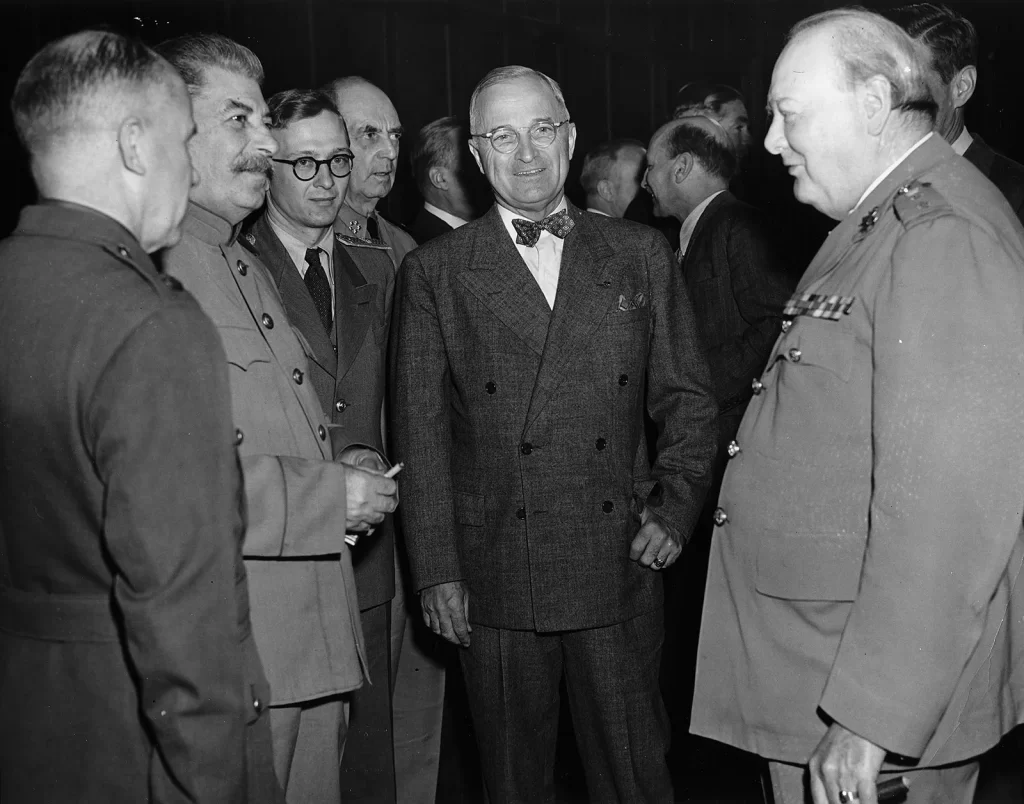Potsdam Conference, July 1945. U.S. President Harry S. Truman (center), flanked by Soviet Premier Joseph Stalin and British Prime Minister Winston Churchill. (Photo — U.S. Army)
Truman had integrity. At Potsdam an unnamed U.S. army colonel offered to find the president a bed partner if he wished it. As the defeated German people stared in the face of starvation and homelessness, many German women offered their bodies to the occupiers in exchange for food and shelter or even a pack of cigarettes. “Listen, I know you’re alone over here,” the officer said. “If you need anything like, you know, I’ll be glad to arrange it for you.” Truman was appalled. “Hold it: don’t say anything more. I love my wife, and my wife is my sweetheart. I don’t want to do that kind of stuff. I don’t want you to ever say that again to me.”
Truman was a devoted family man. After *Washington Post* music critic Paul Hume wrote an unrelentingly (but accurate) critical review of first daughter Margaret Truman’s singing performance at Constitution Hall, the president of the United States held nothing back. On White House stationary he wrote, “It seems to me that you are a frustrated old man who wishes he could have been successful. When you write such poppy-cock as was in the back section of the paper you work for it shows conclusively that you’re off the beam and at least four of your ulcers are at work. Someday I hope to meet you. When that happens, you’ll need a new nose, a lot of beefsteak for black eyes, and perhaps a supporter below!” Truman and George Washington had at least one thing in common: difficult mothers. Truman was unendingly patient with his mother, who was, among other things, outspoken in her view that the South should have won the Civil War. She refused to sleep in the Lincoln Bedroom at the White House, even when she was informed that Lincoln never slept there.
Truman’s essential modesty is admirable and by today’s standards of political bloviation astounding. After he announced to the American public the end of the war in the Pacific, he wrote immediately to former First Lady Eleanor Roosevelt: “I told her that in this hour of triumph I wished that it had been President Roosevelt, and not I, who had given the message to our people.”
The day after he learned of FDR’s death and his sudden ascension to the presidency, Truman said to reporters, “I don’t know whether you fellows ever had a load of hay fall on you, but when they told me yesterday what had happened, I felt like the moon, the stars, and all the planets had fallen on me.”
During the [Potsdam Conference](https://history.state.gov/milestones/1937-1945/potsdam-conf) of the Big Three in July 1945, President Truman drove around the German countryside with General Eisenhower. Years later, Eisenhower remembered, “Now, in the car, he suddenly turned toward me and said, ‘General, there is nothing that you may want that I won’t try to help you get. That definitely and specifically includes the presidency in 1948.’” Eisenhower hasted to inform the president that he would not be running for the presidency in 1948.
Most important, Truman understood how difficult the presidency was likely to be, particularly in following the great and legendary Franklin Delano Roosevelt into the Oval Office. When on April 12, 1945, Eleanor Roosevelt in her White House study told Truman her husband was dead, “You can understand how I felt at that moment,” he remembered. “It was necessary for me to assume a greater burden, I think, than any man has assumed in the history of the world.” Hitler was not yet dead. The war in Europe was expected to continue through the end of the year, the war against Japan to last another 18 months, with an American body count likely to reach the hundreds of thousands, if not millions. Even if the U.S. could bring the war to conclusion, the challenges the next president would have to face in the post-war world were possibly beyond the capacity even of FDR.
After the failures of the Potsdam Conference — in which Stalin made it clear that he would not fulfill his promises to let Eastern bloc countries hold democratic elections or chart their own destiny — Truman thought of resigning the presidency. He believed he had failed the American people. He knew the Second World War had begun over the question of Poland’s sovereignty and territorial integrity; now Truman and Churchill (and Clement Atlee) had to accept Russia’s hegemony in Eastern Europe, because the only alternative was World War III.
## **An Amazing Cast of Characters**
Baime’s *Accidental President* provides profiles of some of the other larger-than-life figures of that era, including Winston Churchill, the U.S. ambassador to the USSR Averell Harriman, Justice Robert H. Jackson of the Supreme Court, Eleanor Roosevelt, Edward R. Murrow, Curtis LeMay, George Marshall, and Dwight Eisenhower.
Henry Stimson was appointed Secretary of War in 1940. He oversaw the Manhattan Project and advised President Harry S. Truman on the use of the atomic bomb in 1945. (Photo – LOC)
The most interesting of these extraordinary men and women was [Henry Stimson ](https://history.state.gov/departmenthistory/people/stimson-henry-lewis)(1867-1950). I have long been an admirer of Stimson, who served four presidents (both parties), but the more I read about him the more I respect and even revere him. Stimson is not adequately depicted in Christopher Nolan’s otherwise outstanding film *Oppenheimer*. In the film, during a meeting about what Japanese cities to target with the atomic bomb, Stimson (the Secretary of War) says, glibly, that he wishes to spare Kyoto because he and his wife honeymooned there. This is not only not true, but a serious misrepresentation of and disservice to one of the great men of the 20th century. Stimson knew that Kyoto was the ancient capital of Japan, that it was one of Japan’s greatest cultural centers, and of little strategic importance. He wanted to spare it for the best of reasons. Christopher Nolan’s point — that the fate of civilizations can be that arbitrary and capricious — may have historical validity in other cases, but not in this situation. Stimson was a deeply humane man and an outstanding public servant. More than anyone else at this time, more than Oppenheimer at this time, Stimson let himself doubt the moral rectitude of using this weapon of mass destruction against a defeated enemy (for whom it was not invented). He worried that the “reputation of the United States for fair play and humanitarianism is the world’s biggest asset for peace in the coming decades,” and that the U.S. might damage its moral standing if it used the atomic device. Stimson almost alone (again, with the exception of Oppenheimer) understood the moral gravity of nuclear weaponry. He supported the use of the atomic bomb against Japan, but he refused to agree with those who believed a nuclear weapon was just a very big piece of ordinance. “This project,” he declared at a siting committee meeting in the Pentagon, “should not be considered simply in terms of military weapons, but as a new relationship of man to the universe.”
Precisely.
By the end of 1944 the world had entered an era of total war. The March 1945 fire bombings of Tokyo left 1.5 million Japanese citizens homeless and killed well more than 100,000 people. That is essentially the same death toll as Hiroshima or Nagasaki. The difference is that it took several hundred B-29s to do all that damage with conventional ordinance, but only a plutonium or uranium sphere the size of a grapefruit to vaporize Hiroshima. And just one B-29.
It is hard to think of anyone more purely admirable than Harry S. Truman. He may not have been the most gifted or intelligent or charismatic American president, but he was the greatest common American to sit in that chair. He rose to the challenge. And he was never undone by hubris. After he left office in 1953, Truman and his wife Bess returned to Independence, Missouri, where they lived in the old two-story white house at 219 Delaware Street.
---
## ***Discover more on these topics at Listening to America***
[Oppenheim](https://ltamerica.org/tag/oppenheim/ "0 topics")[north daktoa](https://ltamerica.org/tag/north-daktoa/ "0 topics")[paintings](https://ltamerica.org/tag/paintings/ "0 topics")[South Carolina](https://ltamerica.org/tag/south-carolina/ "1 topics")[Sports](https://ltamerica.org/tag/sports/ "2 topics")[New York](https://ltamerica.org/tag/new-york/ "8 topics")[Texas](https://ltamerica.org/tag/texas/ "4 topics")[New England](https://ltamerica.org/tag/new-england/ "1 topics")[Oppenheimer](https://ltamerica.org/tag/oppenheimer/ "1 topics")[Reading](https://ltamerica.org/tag/reading/ "1 topics")[Rome](https://ltamerica.org/tag/rome/ "1 topics")[Pennsylvania](https://ltamerica.org/tag/pennsylvania/ "1 topics")[North Dakota](https://ltamerica.org/tag/north-dakota/ "53 topics")[North Carolina](https://ltamerica.org/tag/north-carolina/ "3 topics")[Steinbeck Travels](https://ltamerica.org/tag/steinbeck-travels/ "75 topics")[William Shirer](https://ltamerica.org/tag/william-shirer/ "1 topics")[Road Trips](https://ltamerica.org/tag/road-trips/ "18 topics")[Utah](https://ltamerica.org/tag/utah/ "11 topics")[Space Exploration](https://ltamerica.org/tag/space-exploration/ "8 topics")[Oregon](https://ltamerica.org/tag/oregon/ "4 topics")[Republics](https://ltamerica.org/tag/republics/ "1 topics")[Theodore Roosevelt](https://ltamerica.org/tag/theodore-roosevelt/ "16 topics")[Walden](https://ltamerica.org/tag/walden/ "1 topics")[Podcast](https://ltamerica.org/tag/podcast/ "1 topics")[Republic](https://ltamerica.org/tag/republic/ "0 topics")[Wyoming](https://ltamerica.org/tag/wyoming/ "4 topics")[Washington](https://ltamerica.org/tag/washington/ "2 topics")[New Mexico](https://ltamerica.org/tag/new-mexico/ "3 topics")[Water in the West](https://ltamerica.org/tag/water-in-the-west/ "24 topics")[State Parks](https://ltamerica.org/tag/state-parks/ "2 topics")[Thomas Jefferson](https://ltamerica.org/tag/thomas-jefferson/ "34 topics")[Vermont](https://ltamerica.org/tag/vermont/ "1 topics")[Tennessee](https://ltamerica.org/tag/tennessee/ "1 topics")[Ohio](https://ltamerica.org/tag/ohio/ "2 topics")[The Constitution](https://ltamerica.org/tag/the-constitution/ "1 topics")[Thoreau](https://ltamerica.org/tag/thoreau/ "5 topics")[Virginia](https://ltamerica.org/tag/virginia/ "7 topics")[Video](https://ltamerica.org/tag/video/ "51 topics")[South Dakota](https://ltamerica.org/tag/south-dakota/ "16 topics")[Rivers](https://ltamerica.org/tag/rivers/ "3 topics")[Wisconsin](https://ltamerica.org/tag/wisconsin/ "0 topics")[Poetry](https://ltamerica.org/tag/poetry/ "1 topics")[U.S. Constitution](https://ltamerica.org/tag/u-s-constitution/ "1 topics")[U.S. Presidents](https://ltamerica.org/tag/u-s-presidents/ "71 topics")[Travel](https://ltamerica.org/tag/travel/ "1 topics")
**Categories:** Books
**Tags:** Books, U.S. Presidents
---
### [The Final Witness: A Kennedy Secret Service Agent Breaks His Silence After 60 Years](https://ltamerica.org/the-final-witness-a-kennedy-secret-service-agent-breaks-his-silence-after-60-years/)
**Published:** October 23, 2023
**Author:** Clay Jenkinson
**Excerpt:** The minute I heard that former Secret Service Agent Paul Landis was publishing a book entitled The Final Witness, I pre-ordered it. It arrived yesterday, and I read it in a single evening.
**Content:**
## Clay reviews a new book by Paul Landis, a former Secret Service agent in President Kennedy’s motorcade on November 22, 1963. A first-hand witness to events that day, Landis was never interviewed by the Warren Commission and kept his recollections private, including details about a key piece of evidence.
*The Final Witness* by Paul Landis, published by Chicago Review Press, October, 2023.
The minute I heard that former Secret Service Agent Paul Landis was publishing a book entitled *The Final Witness*, I pre-ordered it. It arrived yesterday, and I read it in a single evening. I’ve read dozens, maybe scores, of books on the assassination of John F. Kennedy, including, again, just a few weeks ago, William Manchester’s magnificent *Death of a President*.
On page 166, Landis reveals that after Mrs. Kennedy and the already-dead president were extricated from the back seat of the presidential limo at Parkland Hospital in Dallas, he found a nearly intact, 2-inch bullet on the top of the back seat where it meets the frame of the vehicle. In the wild rush of things, fearing that a photographer or souvenir collector might pocket it, agent Landis picked up the bullet himself, put it into the pocket of his suit jacket, and went inside the hospital.
Later, he placed the bullet on one of the gurneys that had brought the president and Texas Governor John Connally into the emergency room. That’s where it was found. It is now universally known as the Magic Bullet.
That we are only learning about this fundamental disturbance of the 20th century’s greatest crime scene 59 years and 10 months after the assassination is deeply troubling. Agent Landis had a legal and moral duty to explain what he had done immediately to his superiors, to the FBI, and later to the [Warren Commission.](https://www.archives.gov/research/jfk/warren-commission-report/intro) Undoubtedly, he was traumatized by seeing the president’s head explode at close range, but to tamper with a crime scene — even if for good reason — and then not to report what he had done is a serious dereliction of duty.
Bullet found on stretcher at Parkland Memorial Hospital, Dallas, Texas. (Photo, National Archives)
If agent Landis’ concern was that a stranger might pick up the bullet, he should at the very least have called a photographer over to take a photograph of the bullet exactly where he spotted it or called over a policeman or other reliable person to watch over the limo until the proper authorities (i.e., the FBI) could inspect the interior for clues.
It gets worse.
Traumatized, Landis did not read the Warren Commission Report (September 24, 1964) or even one of the dozens of summaries. If he had, he would have realized that his removal of the bullet distorted the Warren Commission’s attempts to construct an accurate narrative of what transpired on that terrible day. Had he read the report, he would have been in a position to contact the Commission, tell his story, correct the record, and enable everyone — from average citizens and historians to conspiracy theorists — to be able to work from a reliable and accurate description of the crime scene and its aftermath. Not to have done so is inexplicable.
Nor has Mr. Landis, who retired from the Secret Service in the spring of 1964, read even a few of the countless books written on the subject, books which try to sort out how the Magic Bullet could have passed through the president’s throat, and then done extensive damage to Governor Connally (including striking several bones), and yet been pristine when found on the gurney. Imagine how much confusion this act of omission has caused.
Nowhere in the book does Mr. Landis apologize to the American people for his actions or acknowledge that he should have reported the incident immediately to his superiors. He explains what he did and what finally precipitated his revelation (at age 88). Still, he serves up this fundamentally important piece of evidence as if it is of no special significance or consequence.
I’m sorry to be so hard on Paul Landis, but this matters. It matters deeply. We should have known this key fact no later than September 24, 1964. The Kennedy assassination is one of American history’s most hotly debated and obsessively written about moments. To realize now that all of those hundreds of books have been misled in this way on a question of this grave importance is inexplicable. It is dumbfounding.
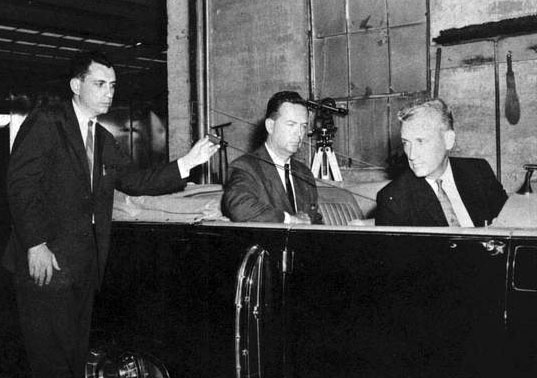A photograph of Warren Commission’s Arlen Specter taken at garage, following reenactment of assassination on May 24, 1964, depicting probable angle of bullet which passed through President Kennedy and Governor Connally. (Photo, Warren Commission)
The mysteries still abound. How many bullets were fired that day? Were they all fired from the Texas School Book Depository, or was there more than one gunman? Why would a bullet fired into the presidential limousine be pristine? How (forensically) did it wind up on the upper reach of the back seat? What would [Arlen Spector](https://arlenspecter.library.pitt.edu/about/) (the Commission investigator who concocted the inherently improbable Magic Bullet story) say now? Will this 60-year-old revelation permit us to construct a more accurate accounting of those fatal minutes just before and after 12:30 pm in Dallas? Could Oswald have fired all the bullets?
I’m sick at heart to read this book and write this review. It pains me to write harshly about a man so traumatized by the assassination that he left the Secret Service, built a career entirely outside the realm of security services, and, as he says, never purposefully looked back on November 22, 1963. I hoped the book would be more, but unfortunately, it is more perplexing than clarifying. We get no adequate or satisfying explanation of why Mr. Landis made no effort to come forward with this critical piece of information in all those years. We can all feel sympathy for the PTSD that he, Clint Hill, and others have suffered for the rest of their lives, but a Secret Service agent has sworn an oath to do his duty and not let emotion get in the way. We all want to know exactly what happened at Dealey Plaza. Like a turn of a kaleidoscope, *The Final Witness* forces every student of the assassination to start over in trying to reconstruct the events of that day. This is not the story of a pitched battle with thousands of bullets. There were certainly only three (though possibly four or even five). It is astonishing to learn that the most crucial bullet we have was discovered not where we thought it was but was planted furtively somewhere else by an agent of the United States Secret Service (without informing his superiors).
I don’t doubt that Mr. Landis is telling the truth as he believes he remembers it. Unfortunately, his late-in-life memoir, *The Final Witness*, further clouds this horrific and tangled story. I think fellow agent [Clint Hill’s](https://www.kfyrtv.com/2023/09/11/former-secret-service-agent-reacts-colleagues-changing-testimony-jfk-assassination/) skepticism about the revelation is important. He was there. He’s the agent who climbed onto the back of the limo to save Mrs. Kennedy when she began to climb out of the back seat onto the trunk. Agent Hill was closer and more intensely involved than agent Landis.
The story never added up. Now, it really doesn’t add up. A lone gunman who swears he is a patsy. The Commission’s and the FBI’s desperate determination to support the lone gunman theory (which limits the attack to three bullets) by imagining the trajectory of a Magic Bullet. The killing of the killer just two days after the assassination by a figure of the Dallas demimonde. Thousands of documents are still withheld from the American people. And now evidence tampering.
Truly, I am sick at heart.
---
## ***Discover more on these topics at Listening to America***
[Wyoming](https://ltamerica.org/tag/wyoming/ "4 topics")[Tennessee](https://ltamerica.org/tag/tennessee/ "1 topics")[William Shirer](https://ltamerica.org/tag/william-shirer/ "1 topics")[Rivers](https://ltamerica.org/tag/rivers/ "3 topics")[Wisconsin](https://ltamerica.org/tag/wisconsin/ "0 topics")[Rome](https://ltamerica.org/tag/rome/ "1 topics")[Water in the West](https://ltamerica.org/tag/water-in-the-west/ "24 topics")[north daktoa](https://ltamerica.org/tag/north-daktoa/ "0 topics")[New England](https://ltamerica.org/tag/new-england/ "1 topics")[Republic](https://ltamerica.org/tag/republic/ "0 topics")[Utah](https://ltamerica.org/tag/utah/ "11 topics")[Vermont](https://ltamerica.org/tag/vermont/ "1 topics")[Thomas Jefferson](https://ltamerica.org/tag/thomas-jefferson/ "34 topics")[Ohio](https://ltamerica.org/tag/ohio/ "2 topics")[Podcast](https://ltamerica.org/tag/podcast/ "1 topics")[New York](https://ltamerica.org/tag/new-york/ "8 topics")[North Dakota](https://ltamerica.org/tag/north-dakota/ "53 topics")[Space Exploration](https://ltamerica.org/tag/space-exploration/ "8 topics")[Pennsylvania](https://ltamerica.org/tag/pennsylvania/ "1 topics")[paintings](https://ltamerica.org/tag/paintings/ "0 topics")[Republics](https://ltamerica.org/tag/republics/ "1 topics")[U.S. Presidents](https://ltamerica.org/tag/u-s-presidents/ "71 topics")[Washington](https://ltamerica.org/tag/washington/ "2 topics")[Texas](https://ltamerica.org/tag/texas/ "4 topics")[Oppenheim](https://ltamerica.org/tag/oppenheim/ "0 topics")[Video](https://ltamerica.org/tag/video/ "51 topics")[State Parks](https://ltamerica.org/tag/state-parks/ "2 topics")[Oregon](https://ltamerica.org/tag/oregon/ "4 topics")[Poetry](https://ltamerica.org/tag/poetry/ "1 topics")[Steinbeck Travels](https://ltamerica.org/tag/steinbeck-travels/ "75 topics")[South Carolina](https://ltamerica.org/tag/south-carolina/ "1 topics")[Travel](https://ltamerica.org/tag/travel/ "1 topics")[Walden](https://ltamerica.org/tag/walden/ "1 topics")[Sports](https://ltamerica.org/tag/sports/ "2 topics")[Road Trips](https://ltamerica.org/tag/road-trips/ "18 topics")[Reading](https://ltamerica.org/tag/reading/ "1 topics")[U.S. Constitution](https://ltamerica.org/tag/u-s-constitution/ "1 topics")[Oppenheimer](https://ltamerica.org/tag/oppenheimer/ "1 topics")[Theodore Roosevelt](https://ltamerica.org/tag/theodore-roosevelt/ "16 topics")[North Carolina](https://ltamerica.org/tag/north-carolina/ "3 topics")[The Constitution](https://ltamerica.org/tag/the-constitution/ "1 topics")[New Mexico](https://ltamerica.org/tag/new-mexico/ "3 topics")[Thoreau](https://ltamerica.org/tag/thoreau/ "5 topics")[Virginia](https://ltamerica.org/tag/virginia/ "7 topics")[South Dakota](https://ltamerica.org/tag/south-dakota/ "16 topics")
**Categories:** Books
**Tags:** Books, U.S. Presidents
---
### [Clay's Reading List: The Buffalo and American West](https://ltamerica.org/clays-reading-list-the-buffalo-and-american-west/)
**Published:** September 18, 2023
**Author:** Clay Jenkinson
**Excerpt:** With Ken Burns’ new film The American Buffalo airing October 16 on PBS, Clay recommends a few books on the bison, Great Plains and American West.
**Content:**
## With Ken Burns’ new film *The American Buffalo* airing October 16 on PBS, Clay recommends a few books on the bison, Great Plains and American West.

Stefan Bechtel. *Mr. Hornaday’s War: How a Peculiar Victorian Zookeeper Waged a Lonely Crusade for Wildlife That Changed the World*.
Ernest Callenbach. *Bring Back the Buffalo: A Sustainable Future for America’s Great Plains.*
Gregory J. Dahler. *The Most Defiant Devil: William Temple Hornaday and His Controversial Crusade to Save American Wildlife*.
David A. Dary. *The Buffalo Book: The Full Saga Of The American Animal*.
Dan Flores. *American Serengeti: The Last Big Game Animals of the Great Plains* and *The Natural West*.
David Gessner. *All the Wild that Remains: Edward Abbey, Wallace Stegner, and the American West*.
William Temple Hornaday. *The Extermination of the American Bison*.
Alvin M. Josephy Jr. *Now that the Buffalo’s Gone.*
Char Miller and Clay Jenkinson, ed., *Theodore Roosevelt: Naturalist in the Arena*. Chapter on the work of William Hornaday and his relationship with Roosevelt by Clay Jenkinson.
Michael Punke. *Last Stand: George Bird Grinnell, the Battle to Save the Buffalo, and the Birth of the New West.*
Steven Rinella. *American Buffalo: In Search of a Lost Icon.*
Victor Grant Smith. *Champion Buffalo Hunter: The Frontier Memoirs Of Yellowstone Vic Smith*
Louis Warren. *Buffalo Bill’s America: William Cody and the Wild West Show.*
## **Are there titles you recommend? Send your suggestions to** <contact@ltamerica.org>.
---
## ***Discover more on these topics at Listening to America***
[North Carolina](https://ltamerica.org/tag/north-carolina/ "3 topics")[New York](https://ltamerica.org/tag/new-york/ "8 topics")[State Parks](https://ltamerica.org/tag/state-parks/ "2 topics")[Republics](https://ltamerica.org/tag/republics/ "1 topics")[Thoreau](https://ltamerica.org/tag/thoreau/ "5 topics")[Utah](https://ltamerica.org/tag/utah/ "11 topics")[Poetry](https://ltamerica.org/tag/poetry/ "1 topics")[North Dakota](https://ltamerica.org/tag/north-dakota/ "53 topics")[Travel](https://ltamerica.org/tag/travel/ "1 topics")[Washington](https://ltamerica.org/tag/washington/ "2 topics")[New Mexico](https://ltamerica.org/tag/new-mexico/ "3 topics")[Oregon](https://ltamerica.org/tag/oregon/ "4 topics")[Podcast](https://ltamerica.org/tag/podcast/ "1 topics")[Sports](https://ltamerica.org/tag/sports/ "2 topics")[Wyoming](https://ltamerica.org/tag/wyoming/ "4 topics")[Rivers](https://ltamerica.org/tag/rivers/ "3 topics")[Texas](https://ltamerica.org/tag/texas/ "4 topics")[north daktoa](https://ltamerica.org/tag/north-daktoa/ "0 topics")[Pennsylvania](https://ltamerica.org/tag/pennsylvania/ "1 topics")[South Carolina](https://ltamerica.org/tag/south-carolina/ "1 topics")[Thomas Jefferson](https://ltamerica.org/tag/thomas-jefferson/ "34 topics")[Video](https://ltamerica.org/tag/video/ "51 topics")[Tennessee](https://ltamerica.org/tag/tennessee/ "1 topics")[Republic](https://ltamerica.org/tag/republic/ "0 topics")[Oppenheimer](https://ltamerica.org/tag/oppenheimer/ "1 topics")[The Constitution](https://ltamerica.org/tag/the-constitution/ "1 topics")[Vermont](https://ltamerica.org/tag/vermont/ "1 topics")[Steinbeck Travels](https://ltamerica.org/tag/steinbeck-travels/ "75 topics")[Ohio](https://ltamerica.org/tag/ohio/ "2 topics")[Oppenheim](https://ltamerica.org/tag/oppenheim/ "0 topics")[Virginia](https://ltamerica.org/tag/virginia/ "7 topics")[Walden](https://ltamerica.org/tag/walden/ "1 topics")[Water in the West](https://ltamerica.org/tag/water-in-the-west/ "24 topics")[paintings](https://ltamerica.org/tag/paintings/ "0 topics")[Space Exploration](https://ltamerica.org/tag/space-exploration/ "8 topics")[South Dakota](https://ltamerica.org/tag/south-dakota/ "16 topics")[U.S. Constitution](https://ltamerica.org/tag/u-s-constitution/ "1 topics")[Road Trips](https://ltamerica.org/tag/road-trips/ "18 topics")[Rome](https://ltamerica.org/tag/rome/ "1 topics")[Wisconsin](https://ltamerica.org/tag/wisconsin/ "0 topics")[William Shirer](https://ltamerica.org/tag/william-shirer/ "1 topics")[New England](https://ltamerica.org/tag/new-england/ "1 topics")[U.S. Presidents](https://ltamerica.org/tag/u-s-presidents/ "71 topics")[Theodore Roosevelt](https://ltamerica.org/tag/theodore-roosevelt/ "16 topics")[Reading](https://ltamerica.org/tag/reading/ "1 topics")
**Categories:** Books
**Tags:** Books, Native Americans
---
### [Beyond the Apocalypse and Bathtub Ring — A Colorado River Journey](https://ltamerica.org/beyond-the-apocalypse-and-bathtub-rig-a-colorado-river-journey-we-begin-2/)
**Published:** May 16, 2023
**Author:** Clay Jenkinson
**Excerpt:** This is the first in a series of about a dozen dispatches from Clay Jenkinson we’ll publish over the next several weeks chronicling his recent journey following the Colorado River and neighboring region.
**Content:**
## Introduction, The Trek Begins.
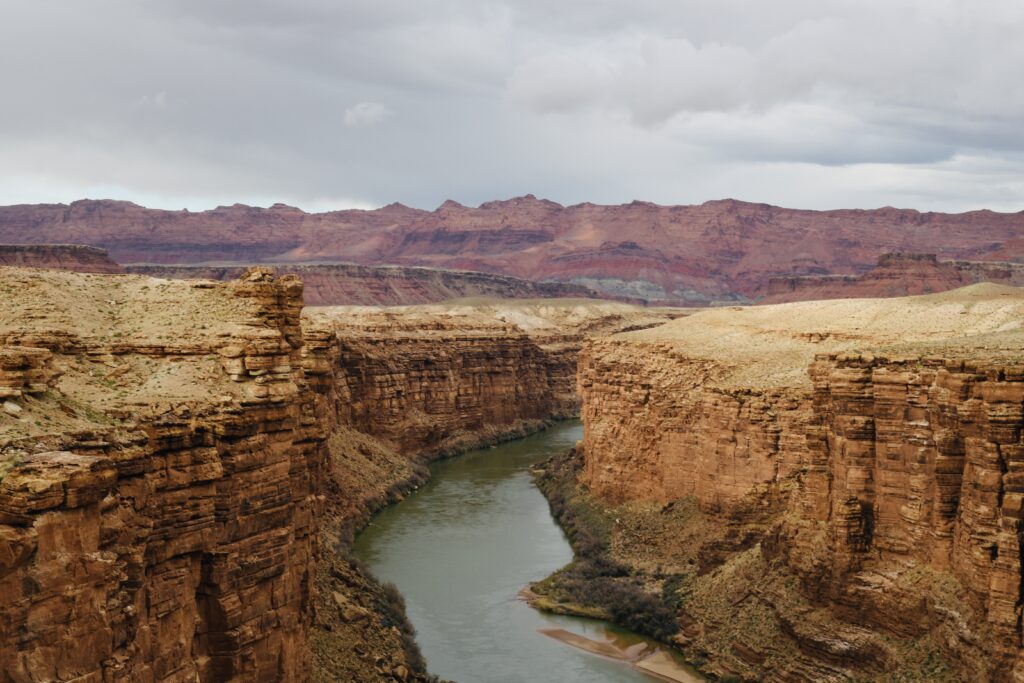The Colorado River from Navajo Bridge near Marble Canyon, Arizona. (Photo by Dennis McKenna)
*This is the first in a series of about a dozen dispatches from Clay Jenkinson we’ll publish over the next several weeks chronicling his recent journey following the Colorado River and neighboring region. Clay’s two-week road trip with two traveling companions began in Vail, Colorado, as an unusually snowy winter lingered into spring. Their route tracked the meandering river through plateau country, eventually reaching Kanab, Utah. It crossed territory that had remained essentially unmapped until John Wesley Powell led a crew down the Green and Colorado Rivers in four wooden dories in 1869. After Kanab, they took a final jog north to visit conditions at the Great Salt Lake. The journey aimed to explore the state of water, or the absence of it, in the West.* *This expedition is one of many ongoing road trips at the heart of Listening to America. Our mission is to “light out for the territories,” traveling less visited byways and taking time to see this immense, extraordinary country with fresh eyes while listening to the many voices of America’s past, present, and future. You can follow Clay’s journey, his dispatches, essays, photos, and podcasts on this topic through the tab “Water in the West.”*
> **“To grasp the meaning of it all we require a science with room for more than data and information, a science that includes sympathy for the object under study, and more than sympathy, love.”**
>
> **Edward Abbey**
Altogether we traveled 1,620 miles and we barely made a dent in canyon country, hardly even a dent in Utah. Our rig was a gray Ford 150 super cab pickup. Dennis and Frank sat in front. I delivered up snacks from the back seat, including a careful rationing of outstanding chocolate chip cookies provided by Frank’s wife Georgie.
Dennis, now retired from a successful career as the CEO of a publishing and research company, lives in the shadow of the [Aquarius Plateau](https://www.brycecanyoncountry.com/aquarius-plateau/) in southern Utah. He’s in charge. Frank is a mapmaker, former park ranger, tour operator, and now owner and chief dishwasher of a food truck in nearby Escalante, Utah. He claims he knows everyone west of the Mississippi, and apparently he does. He’s our chief scout. I’m the humanities scholar and writer, or what is derisively called “the talent” by those in front. In the media world, “the talent” is never a term of respect. That’s why I am opening bags of chips with my teeth and putting together salami and cheese sandwiches for the boys up front, using my AAA credit card for a cheese knife.
As we moved purposefully but without urgency from one place to the next in southern Utah, western Colorado, and a bit of Arizona and New Mexico, we saw dozens, even scores of side roads we would have liked to explore. To find out where they went and what they revealed. We stopped to take photographs a few times per hour, eight or nine times per day. The rule was, any one of the three of us could call an unscheduled pee break, a coffee break, or a photo stop.
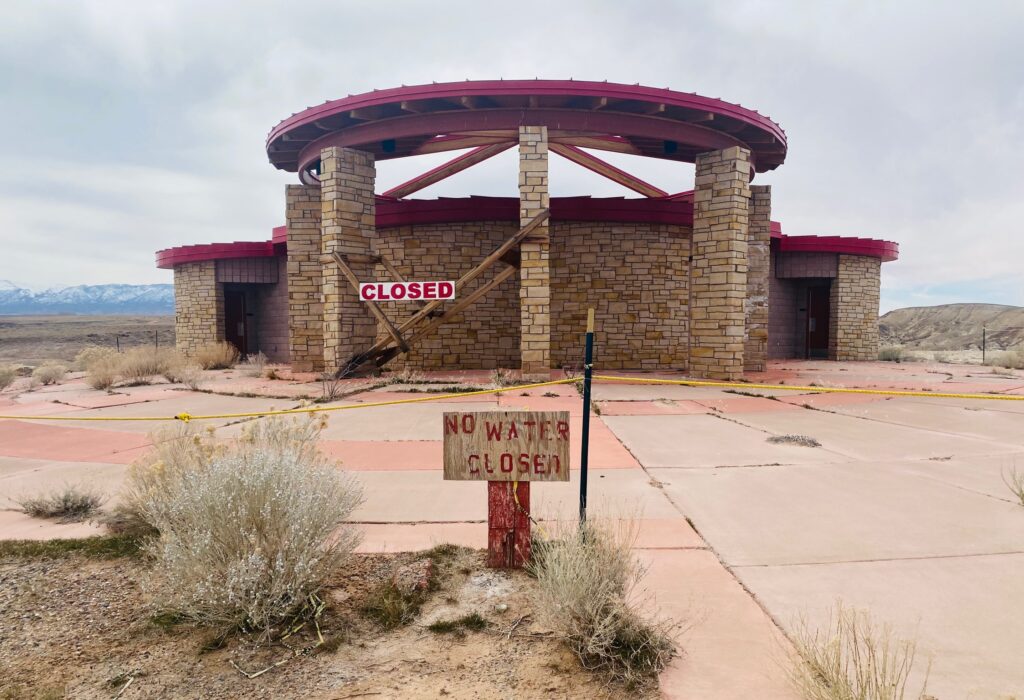Facilities at Four Corners, where the borders of Colorado, New Mexico, Arizona and Utah meet. (Photo by Dennis McKenna)
We were wandering with purpose to study the water situation in the American West. Our mission was a little more refined than that, not much. We came in believing that the West was in a grave water crisis and what we are told to believe will be a permanent water crisis. Three factors, perhaps related, have contributed to the crisis. First, the [Colorado River system](https://www.usgs.gov/mission-areas/water-resources/science/colorado-river-basin-focus-area-study) is over-allocated. So much water has to be drawn out of the system each year now, regardless of the snowpack or the annual flow, that even in “normal times” there is not quite enough river to go around. In other words, the two great reservoirs are down because we are drawing too much water out of them. Second, we’re in a sustained drought. There is some talk of a 1,200-year drought. I automatically reject that number as exaggerated (at least unverifiable), but everyone we meet agrees that it is a very prolonged drought. Flows have been mostly below average for the past 20 years. In other words, however high or low the reservoirs are, the watershed is not feeding it enough water to handle all the existing allocations. Third, we must factor in whatever it is we mean by global climate change: not just below-average flows but changes in the mountain environments — evaporation without melting, premature rains, etc. — that will impair the flows in new ways. Needless to say, as the temperature in the Southwest rises, surface evaporation in the great reservoirs will increase.
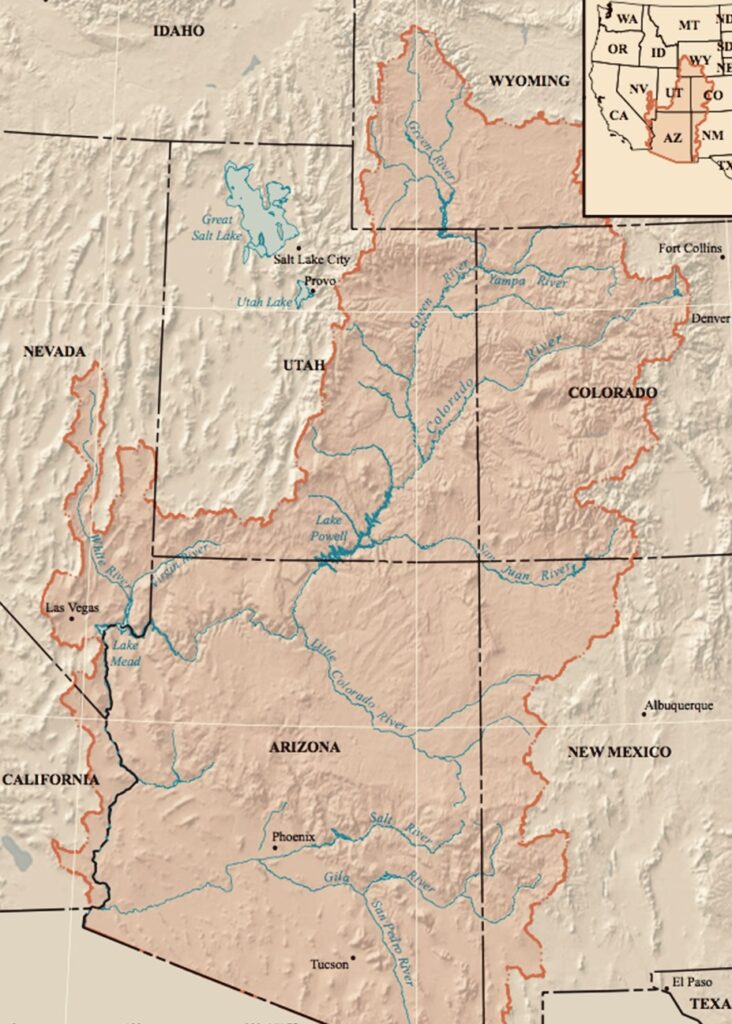Map of the Colorado River Basin
As we began our near two-week journey at the end of March 2023, we were aware that the 2022-23 winter has bestowed one of the great snowpacks all across the trans-Missouri West. That will certainly change the story later this summer when Lake Powell is expected to rise by perhaps as many as 70 feet and Lake Mead by perhaps 23-30 feet. Thus, we are pinioned in a paradox. The story “feels” like it is one of potentially catastrophic drought coupled with the necessity of a paradigm shift about how we manage the Colorado River. But it is at least possible that the drought is now ending or that we may have a run or two or three unusually wet winters *within* a generally worsening drought. We don’t know. Among the people we meet (a dozen or more per day) even the most optimistic speak of this summer’s rise in the reservoir levels with a kind of sheepish caution. They want to feel wildly optimistic, but they have been chastened by the dramatics of the last few years. Everyone says the big winter will help, but not enough to end the crisis.
We could spend the full year studying this subject and even at that we would be ignoring many important “tributary” stories that would help us understand the vastness, variability, and complexity of the Water and the West theme. So, we have to choose. At least we have to choose which places we want to visit now, which individuals we can really only interview in person, on location, in *place*.
We wanted to get beyond the apocalyptic trope and the bathtub ring. That’s where this story is stuck in national media and the minds of most Americans. We wanted to see this issue from a Native American perspective. We wanted to meet indigenous people and listen hard. We wanted to bring a historical perspective to our travels (that’s where I come in) and an archaeological perspective. For that we would spend a day at the [Crow Canyon Archaeological Center](https://www.crowcanyon.org) in Cortez, Colorado. We wanted to get off the beaten path, wherever that was possible. We wanted to explore. We wanted to listen to a wide range of voices. We wanted to drink in the beauty of canyon country. We were going to need more homemade cookies.
What we discovered on this journey — to jump ahead for the purposes of clarity — was that the story is more complicated than we had expected. The two great reservoirs may be unprecedentedly low, but there is still *a helluva lot of water* in them both, as our Lake Powell boat captain Randy Reed told us several times in several ways. We learned, too, that Lake Powell — even at 175 feet down, with stranded marinas and all that bathtub ring — is still astonishingly beautiful. It’s even beautiful in new ways made possible by the dramatic drop in the lake level. It’s tempting to say Lake Powell is unique on Earth. Third, we learned that the southern Utah and northern Arizona economy is not as dependent on Lake Powell recreation as we would have thought. Our Page, Arizona, host Brady Budd explained that Page is at the center of the great circle route featuring the Grand Canyon, several National Parks, a nearly infinite pair of National Monuments, the Navajo and Hopi nations, *and* Lake Powell, which still contains “a helluva lot of water” (hereafter HLW). We learned that many Native Americans feel the satisfaction of continuing to practice dryland corn agriculture in a way that produces results even in a time of unusual aridity.
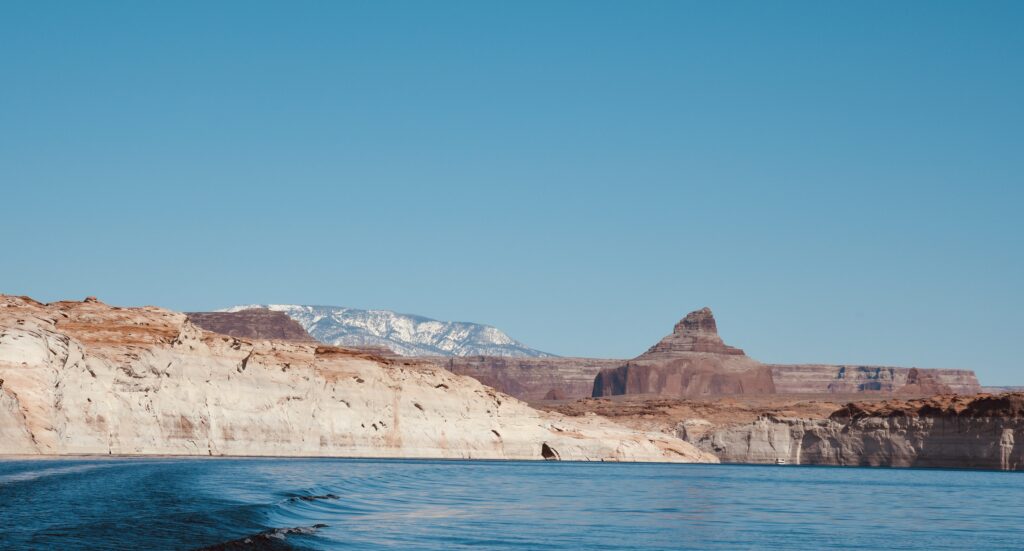Lake Powell with snow covered Navajo Mountain in the distance and Border Butte (right of center), marking the Utah, Arizona state line. (Photo by Dennis McKenna)
The beauty of the landscape of southern Utah is staggering. You can if you wish, gravitate to the designated National Parks and within them to the photo op and “scenic view” signs. Utah has the third largest number of national parks at five. California (of course) has nine and Alaska eight. But Utah has the second largest National Park and monument acreage (after Alaska). Impressive. But what is astonishing is how many landscapes there are in every direction seemingly forever that would be national parks *in any other state*. The question — aside from sagebrush politics — is what *does not* qualify for National Park status on the Colorado Plateau.
For example, I discovered the [Henry Mountains](https://www.utah.com/destinations/natural-areas/henry-mountains/) on this journey. I suppose I have seen them before from some long distance, and I knew they were named, by members of the second Powell expedition in canyon country, for Joseph Henry, the first director of the Smithsonian. But that was all I knew. On this journey I saw them from almost every angle and from a wide range of distances. They were covered with snow in the way you would more likely associate with Mount Shasta than the Colorado Plateau. If they were relocated somewhere less dramatic — say Nebraska — they would be the number one scenic destination in the state. They are the pyramidal remnants of a giant laccolith that pressed up from below like a bubble or blister millions of years ago.
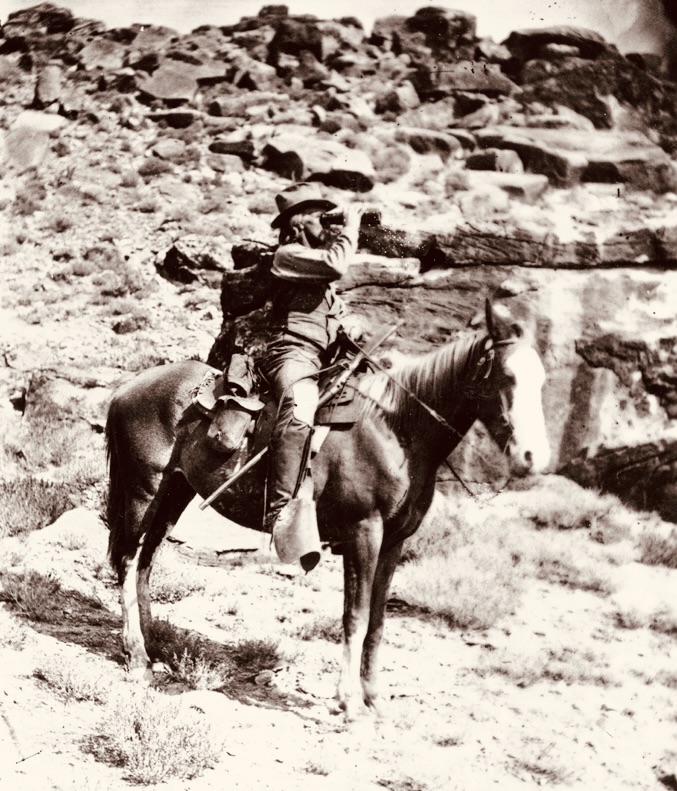Almon Thompson, a member of J.W. Powell’s second expedition, with his horse “Old Ute,” 1872. (USGS Photographic Library)
The names of the Henry Mountains are all of historical interest to us. The second Powell expedition (1870-71) passed through the Henries, which Powell’s brother-in-law [Almon Thompson](https://www.knau.org/earth-notes/2017-01-25/earth-notes-western-explorer-almon-thompson) first called the Dirty Devil Mountains. Mount Ellen (the highest at 11,522 feet) is named for the [Thompson’s wife](https://www.nps.gov/articles/000/ellen-powell-thompson.htm). [John Karl Hillers](https://americanart.si.edu/artist/john-k-hillers-6691) (Mount Hillers) was the photographer of the second Powell Expedition (1870-71). He lugged his 1,000+ pound camera gear up and down the canyon walls. Mount Holmes is named for [William Henry Holmes](https://siarchives.si.edu/history/artists/william-henry-holmes), an artistic genius, whose stratigraphic illustrations of canyon country, including the Grand Canyon, are almost unbelievably beautiful. Mount Pennell is named for [Joseph Pennell](https://www.nga.gov/collection/artist-info.2678.html), an illustrator Almon Thompson admired but who was not on either of the Powell expeditions.
Our intrepid guide, scout, and adviser Frank informed us that the Bureau of Land Management (BLM) maintains a herd of approximately 350 bison along the lower slopes of the Henrys. Who knew? The Henry Mountains Bison Herd is one of only three free-roaming buffalo herds in America (along with Yellowstone and Wind Cave National Park in South Dakota). I made a note to come back to the Henrys to camp, hike, and (if possible) observe those free bison. What you learn on a trip like this is how little you know even about things you thought you knew pretty well. You learn how much America there is to explore, and how much more there is than you reckon from your easy chair back home. Every time we hurtled past a promising side road we felt a little sad. You learn that Steinbeck was right: it is a “monster country,” and no person can get to know much of it even in a lifetime of wandering and reading.
The Henries — or the [Vermillion Cliffs](https://www.blm.gov/national-conservation-lands/arizona/vermilion-cliffs) or the[ Lukachukai Mountains](https://whereeaglesfly.tv/lukachukai_mountains/) or the lower Paria canyon or [Navajo Mountain](https://navajomountain.navajochapters.org) or the Book Cliffs or Zion or Bryce or Canyonlands or [Cedar Mesa](https://www.utah.com/destinations/natural-areas/cedar-mesa/) or Antelope Canyon or Grand Staircase Escalante…. It’s paradise in every direction. Every journey of this sort needs to be regarded as a menu, a series of aching invitations for return journeys and new itineraries. As I say, we are going to need more cookies.
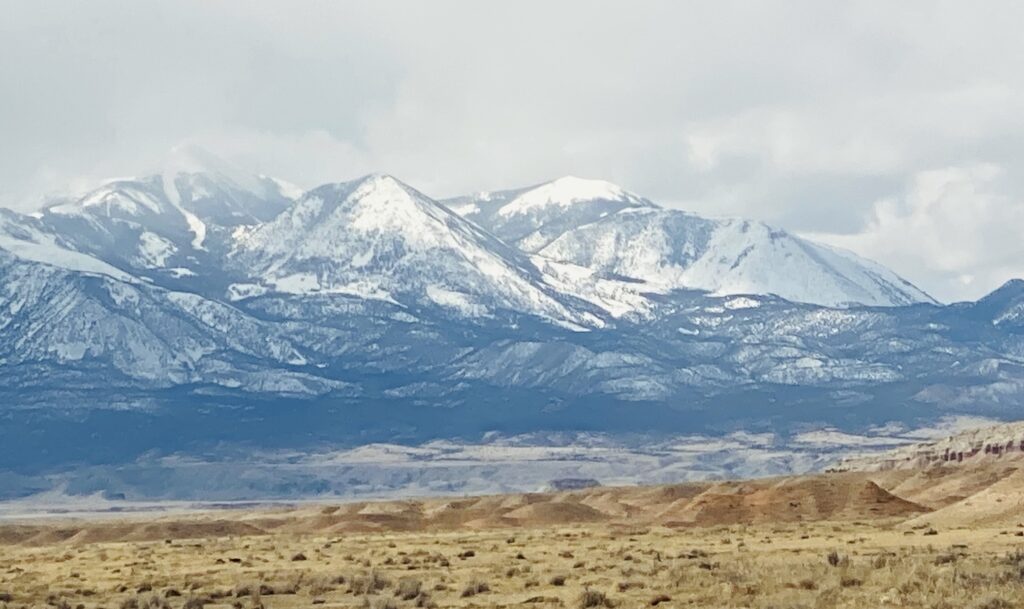The Henry Mountains in Southern Utah. (Photo by Clay Jenkinson)
Fill in the blank: if there were only one state it would have to be \_\_\_\_\_. Utah is always in the top three. Short list: Montana, Colorado, Utah, California, Washington. Or perhaps it is as one of my professors once said when I asked him which novel by Charles Dickens he liked best: “I suppose it depends on the one you have most recently read.” Wherever you go in southern Utah, it feels as if you might still be in a National Park.
The only downside of southern Utah is that the towns all seem a bit forlorn. There are some superb local restaurants scattered here and there, but there is a dusty, windswept, low-amenity feel to most of the towns, as if they were, like Page, thrown up for a temporary industrial purpose (the building of Glen Canyon Dam) and then eventually insulation was added to the houses for the long run.
So on we drove.
---
*Editor’s Note: You can track Clay’s dispatches on this Colorado River Journey by following the links from his route and itinerary below. You can also keep up with all LTA’s dispatches, essays, photos, and podcasts on this topic through the tab “Water in the West.” This is one of many ongoing road trips at the heart of Listening to America. Our mission is to “light out for the territories,” traveling less visited byways and taking time to see this immense, extraordinary country with fresh eyes while listening to the many voices of America’s past, present, and future.*
**Water in the West — Routes and Itinerary**
- **Introduction: A Colorado River Journey, The Trek Begins**.
- **[Day One, Friday: I-70 Vail to Green River; Utah 24 to Torrey; Utah 12 to Boulder, Utah.](https://ltamerica.org/on-the-open-road-a-colorado-river-journey/)**
- **[Day Two, Saturday: Boulder, Utah. ](https://ltamerica.org/boulder-utah-a-colorado-river-journey/)**
- [**Day Three, Sunday: Utah 12 to Torrey; Utah 24 to Hanksville; Utah 95 to Natural Bridges National Monument; Utah 261 to Mexican Hat; U.S. 163 to Bluff; Utah 162 to Aneth; Indian Route 5068/Arizona County Road G to Cortez.**](https://ltamerica.org/deep-in-canyon-country-a-colorado-river-journey/)
- [**Day Four, Monday: Crow Canyon Archaeological Center, Cortez, Colorado.**](https://ltamerica.org/crow-canyon-archaeological-center-a-colorado-river-journey/)
- **[Day Five, Tuesday: Colorado 160/491 to Chimney Rock; Colorado 160 to Teec Nos Pos; Colorado 160 to Mexican Water; U.S. 191 Tsaile; Arizona 64 to Chinle.](https://ltamerica.org/a-visit-to-ute-mountain-a-detour-and-the-four-corners-controversy/)**
- **[Day Six, Wednesday: Canyon de Chelly; U.S. 191 to Burnside; Arizona 264 to Second Mesa.](https://ltamerica.org/navajo-nation-and-canyon-de-chelly-a-colorado-river-journey/)**
- **[Day Seven, Thursday: Hopi Cultural Center; Arizona 264 to Tuba City; U.S. 160 to U.S. 89; U.S. 89 to Bitter Springs; U.S. 89A to Marble Canyon.](https://ltamerica.org/the-way-of-the-hopi-a-colorado-river-journey/)**
- **[Day Eight, Friday: U.S. 89A to Bitter Springs; U.S. 89 to Page, Arizona.](https://ltamerica.org/a-different-view-of-glen-canyon-and-the-colorado-river/)**
- **[Day Nine, Saturday: Lake Powell; U.S. 89 to Kanab.](https://ltamerica.org/a-day-on-lake-powell-a-colorado-river-journey/)**
- [**Days 10 & 11, Sunday/Monday: U.S. 89 to Utah 20; Utah 20 to I-15; I-15 to Salt Lake City.**](https://ltamerica.org/farewell-to-our-intrepid-guide-a-water-in-the-west-reading-list/)
- **[Days 12 & 13, Tuesday/Wednesday: Salt Lake City.](https://ltamerica.org/circumnavigating-the-great-salt-lake-in-a-kayak/)**
- **[Reflections on A Colorado River Journey.](https://ltamerica.org/reflections-on-a-colorado-river-journey/)**
---
## ***Discover more on these topics at Listening to America***
[North Carolina](https://ltamerica.org/tag/north-carolina/ "3 topics")[U.S. Presidents](https://ltamerica.org/tag/u-s-presidents/ "71 topics")[South Dakota](https://ltamerica.org/tag/south-dakota/ "16 topics")[Walden](https://ltamerica.org/tag/walden/ "1 topics")[Thoreau](https://ltamerica.org/tag/thoreau/ "5 topics")[Ohio](https://ltamerica.org/tag/ohio/ "2 topics")[paintings](https://ltamerica.org/tag/paintings/ "0 topics")[Podcast](https://ltamerica.org/tag/podcast/ "1 topics")[Washington](https://ltamerica.org/tag/washington/ "2 topics")[Wisconsin](https://ltamerica.org/tag/wisconsin/ "0 topics")[Oppenheim](https://ltamerica.org/tag/oppenheim/ "0 topics")[Tennessee](https://ltamerica.org/tag/tennessee/ "1 topics")[Reading](https://ltamerica.org/tag/reading/ "1 topics")[Video](https://ltamerica.org/tag/video/ "51 topics")[Pennsylvania](https://ltamerica.org/tag/pennsylvania/ "1 topics")[Virginia](https://ltamerica.org/tag/virginia/ "7 topics")[Travel](https://ltamerica.org/tag/travel/ "1 topics")[Sports](https://ltamerica.org/tag/sports/ "2 topics")[Texas](https://ltamerica.org/tag/texas/ "4 topics")[State Parks](https://ltamerica.org/tag/state-parks/ "2 topics")[U.S. Constitution](https://ltamerica.org/tag/u-s-constitution/ "1 topics")[Oppenheimer](https://ltamerica.org/tag/oppenheimer/ "1 topics")[Republics](https://ltamerica.org/tag/republics/ "1 topics")[North Dakota](https://ltamerica.org/tag/north-dakota/ "53 topics")[William Shirer](https://ltamerica.org/tag/william-shirer/ "1 topics")[Utah](https://ltamerica.org/tag/utah/ "11 topics")[Republic](https://ltamerica.org/tag/republic/ "0 topics")[Steinbeck Travels](https://ltamerica.org/tag/steinbeck-travels/ "75 topics")[Thomas Jefferson](https://ltamerica.org/tag/thomas-jefferson/ "34 topics")[Rome](https://ltamerica.org/tag/rome/ "1 topics")[Poetry](https://ltamerica.org/tag/poetry/ "1 topics")[The Constitution](https://ltamerica.org/tag/the-constitution/ "1 topics")[New York](https://ltamerica.org/tag/new-york/ "8 topics")[New Mexico](https://ltamerica.org/tag/new-mexico/ "3 topics")[Vermont](https://ltamerica.org/tag/vermont/ "1 topics")[Wyoming](https://ltamerica.org/tag/wyoming/ "4 topics")[South Carolina](https://ltamerica.org/tag/south-carolina/ "1 topics")[New England](https://ltamerica.org/tag/new-england/ "1 topics")[Space Exploration](https://ltamerica.org/tag/space-exploration/ "8 topics")[Theodore Roosevelt](https://ltamerica.org/tag/theodore-roosevelt/ "16 topics")[Water in the West](https://ltamerica.org/tag/water-in-the-west/ "24 topics")[Oregon](https://ltamerica.org/tag/oregon/ "4 topics")[Rivers](https://ltamerica.org/tag/rivers/ "3 topics")[north daktoa](https://ltamerica.org/tag/north-daktoa/ "0 topics")[Road Trips](https://ltamerica.org/tag/road-trips/ "18 topics")
**Categories:** Dispatches from the Road
**Tags:** Colorado River, John Wesley Powell, Water in the West
---
### [Thunderstorms, Cottonwoods on the Great Plains](https://ltamerica.org/thunderstorms-cottonwoods-on-the-great-plains/)
**Published:** June 1, 2023
**Author:** Clay Jenkinson
**Excerpt:** Typically we don’t get genuine punishing thunderstorms until after Memorial Day. I sat in a camp chair on the porch and studied the sky.
**Content:**
Bismarck, N.D. — Recently while I was reading, I heard a low rumble outside. At first, I could not make sense of it, but then I realized it was the first thunder of the year. I dropped what I was doing and exited my porch, which points south and west. West is where the thunderstorms come from on the Great Plains.
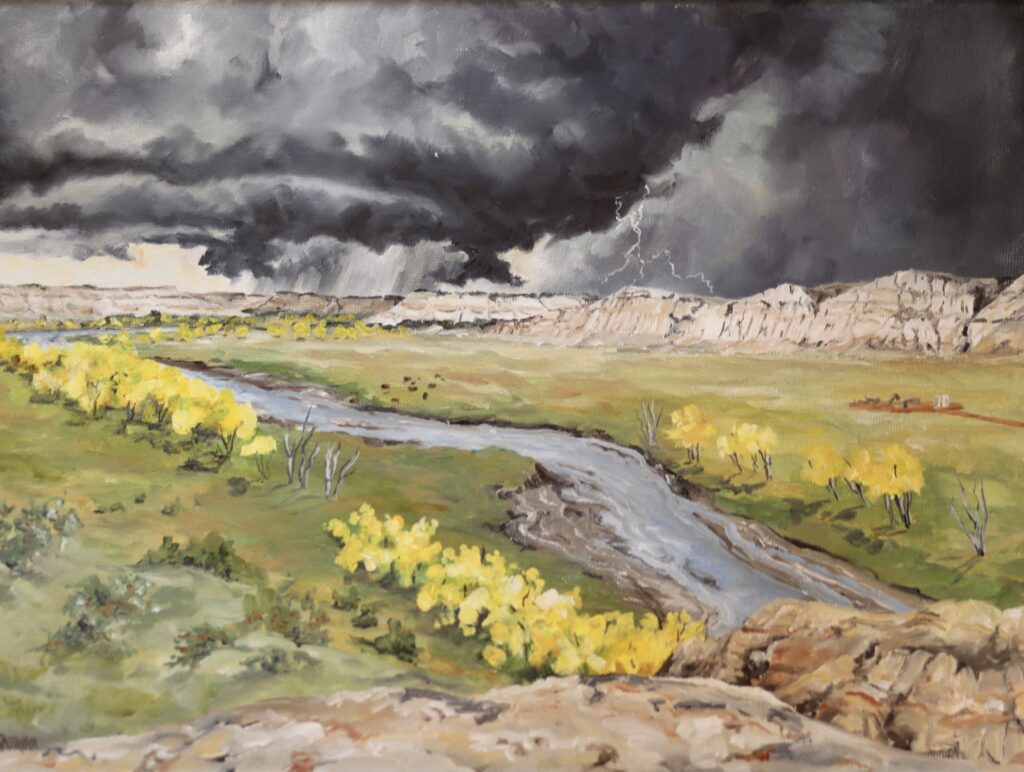Clay asked an artist friend Katrina Case to paint the cover of his book about North Dakota, *The Language of Cottonwoods*. He asked for badlands, the Little Missouri River, cottonwoods in the autumn, and a thunderstorm coming in from the West. Katrina produced a beautiful image. Then he asked that some of the cottonwoods be dead. Katrina complied. Then he asked for an oil pad and an oil rig. She complied and then got an unlisted phone number.
It was a lazy “starter” thunderstorm, almost half-hearted. Typically we don’t get genuine punishing thunderstorms until after Memorial Day. I sat in a camp chair on the porch and studied the sky. It was dead calm. The storm was mostly south of the part of North Dakota where I live, and I was getting just the edge of it. Every five or six minutes, I’d hear the rumble approach, and the clouds would brighten. But it was not even heat lightning. I read for some more, hoping the storm would improve.
It got too dark to read — still dead calm. I went inside to do some work.
About 40 minutes later, the wind picked up. I returned to the porch. There is a cottonwood, not 15 feet from where I was sitting. I planted that cottonwood about 10 years ago. They are hard to grow, and they take root where they want to take root, by Nature’s dynamics, and they resist humans trying to play tree god. But this one took root and — what is even more important — found water a few feet below the surface. It grew like a weed. It’s 40 feet tall now, more vertical than most cottonwoods.
Now the leaves were dancing, and the great branches of the tree were swaying away from the wind. Ten days ago, when the leaves first expressed themselves out from the buds, they were small, the size of postage stamps, and so new to the world that they were almost translucent. I love cottonwoods in all of their moods, but I love them most twice a year — when they first appear in late April or early May and when they turn in late September — translucent in May, fiery yellow and gold and saffron in the autumn. In the autumn, I find my way to giant cottonwoods — there are three special stands within two hours of my home — and lie under them for hours at a time, my hands cradled behind my head, Huck Finn-like, just experiencing the symphony of a cottonwood so large that different parts of it dance in the breeze at different times.
As I sat watching the orgiastic movement of these young cottonwood leaves, I had the urge to talk with them, so I did, out loud. I said, “Well, welcome to the Great Plains. You’ve had a peaceful beginning this year. Now you are experiencing your first storm, and though you are designed for these moments for tens of millions of years, this must come as a kind of shock, even a body blow, to you. But I can assure you that you will get through this and experience much more thunderstorm drama before the fall.”
They did not reply. Last week, I asked a trusted scientist if she thought trees have consciousness. “Duh,” she replied. That’s a technical term, but I’m not sure. They may have consciousness and communicate, but not to me, not in a language I have yet learned to speak.
One of my favorite moments of the year is camping when a giant thunderstorm comes through. You can see them building for tens of miles on the western horizon. As they slowly move towards you, you try to reckon if they will veer off south, north, or peter out before they get to you. But they finally come, and the storm’s power is magnificent. It’s a good storm if you get a little scared. Twice in my life, I have been out camping on the undulations of the Great Plains and I have known without a doubt that I was as likely to die right there that night, struck by lightning. That is a thrilling moment. You flatten out in a hollow of the grass and count the seconds between the flash and the thunder.
This is one of the most extraordinary experiences, and you cannot have it at home because when the storm reaches its most potent, you go inside. But you have to take what it gives out on the prairie in a flimsy poly tent. There is no escape, and too far to the car. No shelter in any direction. “Thy will be done.”
And then the intensity begins to lessen and you know you have survived the storm. But you are as awake as you ever get to be. I thank God I live in such a biosphere. I would feel cheated if we lived on a planet without thunderstorms and blizzards. We had one or two annual thunderstorms when I lived in Reno for seventeen years. I moved back to Dakota in 2005 for all the right (or is it wrong?) reasons:
– Thunderstorms
– Ground blizzards
– Sockdolager blizzards
– The smell of agriculture, particularly silage
– The endless mid-June evenings when the light doesn’t want to go away
– Cottonwoods in the fall after the first freeze but before the advancing winter sweeps them away
– The sound of the meadowlark
– The crooning of the coyotes
– And the sacred Little Missouri River out in the badlands
Last night’s storm was the warmup band for what is to come. I sat out again this morning reading the news, and the cottonwood tree close to my porch looked different. The leaves were no longer translucent and had been shaken into maturity. The growing season in Dakota is short, and you must grow up fast.
I have a big yard. When I bought the house, one cottonwood was in place on the north side, and I have planted all the rest. Now the house is flanked by two giants, like sentinels. I hope they don’t blow down on my roof during my watch. And there is one way out back that is equally tall. Sometimes I go out into the open yard with a camp chair and just feel gratitude to Nature.
**Categories:** Dispatches from the Road
**Tags:** North Dakota
---
### [A Day With Three Extraordinary Missile Men](https://ltamerica.org/a-day-with-three-extraordinary-missile-men/)
**Published:** August 6, 2023
**Author:** Clay Jenkinson
**Excerpt:** I spent the day with three extraordinary men at the Minuteman Missile National Historic Site learning the “on the ground” operations of Intercontinental Ballistic Missiles during the Cold War.
**Content:**
## Day Two: I-94 Sioux Falls to Wall, South Dakota
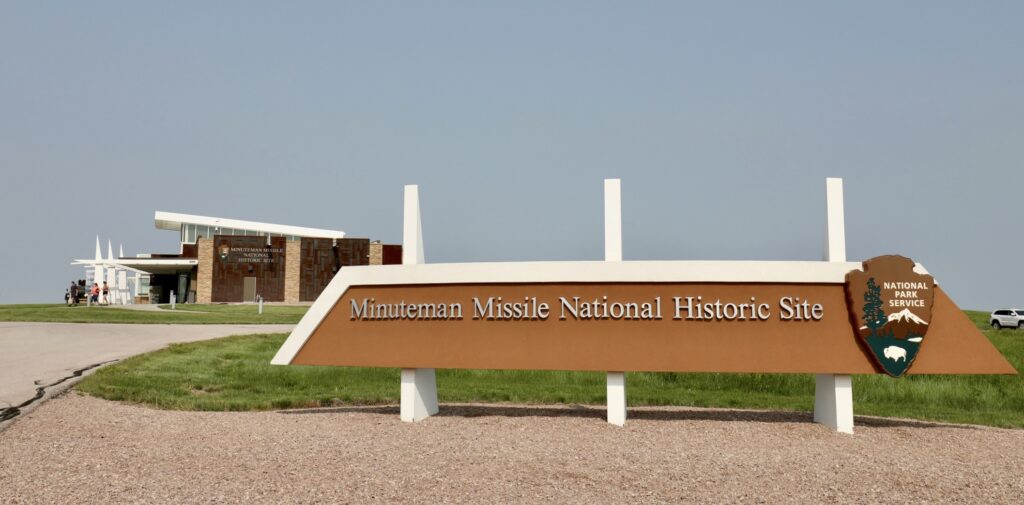The Minuteman Missile National Historic Site Visitor Center near Wall, South Dakota. (Photo by Clay Jenkinson)
*Clay visits the Minuteman Missile National Historic Site and learns how an extraordinary but unsung group of U.S. Air Force missileers operated on the front lines of America’s nuclear defense during the Cold War.* *This is day two in Clay’s road trip from Bismarck to Vail, Colorad*o.
I drove from Sioux Falls to the outside of Wall, South Dakota, at sunrise.
I spent the day with three extraordinary men there to discuss the history of intercontinental ballistic missiles during the Cold War. Jim Boensch, my principal host, formerly a missileer, now an interpretive ranger; Tim Pavek, the “father” of the National Historic Site; and Al Hall, a former member of the maintenance crew at the S.D. missile wing.
Jim Boensch gave me a detailed tour of the whole complex, above and below ground. The site restricts the number of people who can tour the underground missile site because the elevator only holds six people at a time. I’ve visited a similar missile complex at Cooperstown, North Dakota a few times, and a dear friend and a long-ago missileer gave me his amazing tour. But it was good to be there with Jim Boensch, who was doubly knowledgeable. Jim spent a career in the U.S. Air Force’s atomic branch and has served as an interpreter at the Wall site longer than he can remember. Jim has a great sense of humor.
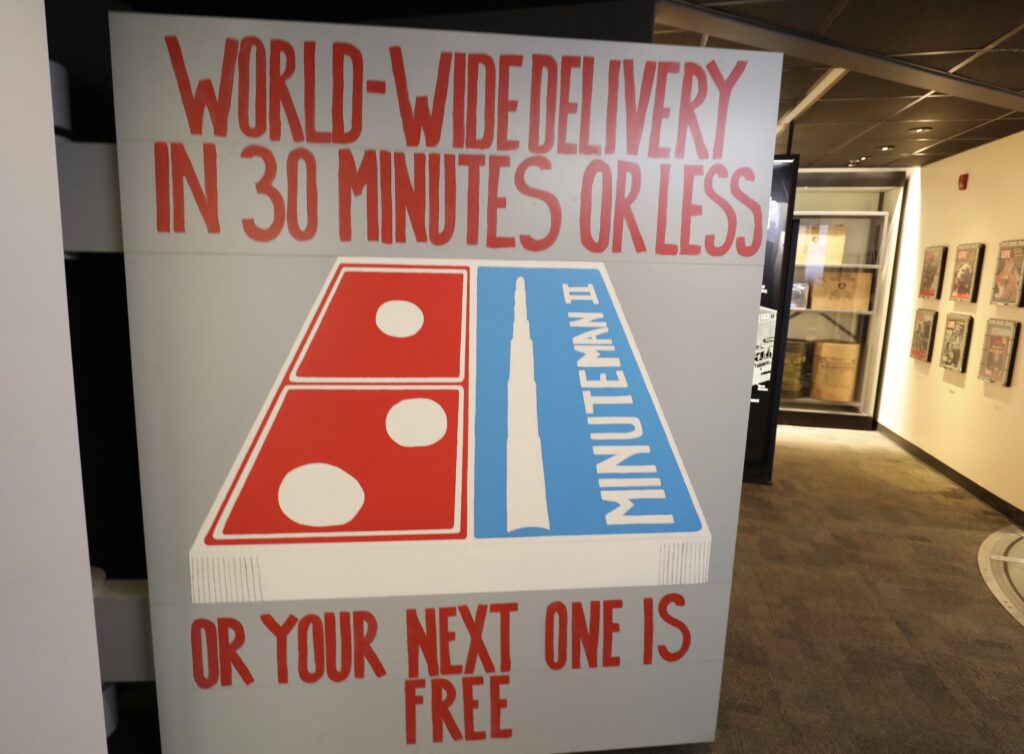Sign on the bunker of ICBM site reads: “World-wide delivery in 30 minutes or less … or your next one is free.” (Photo by Clay Jenkinson)
There are dentist jokes (“Gee Doc, you’re looking down in the mouth”) and banker jokes (“Bankers do it with interest,”) and plumber jokes (“For thirty years I told my work partner to get the lead out and all that time he thought I was talking about pipes.”) So, of course, there are nuclear missile jokes. Some of Jim’s shtick is so polished that it has taken years to perfect, but I laughed out loud every time and instantly liked Jim and his colleagues. Their favorite joke (also painted in the bunker) is the top of a Domino’s Pizza box saying “World-Wide Delivery in 30 Minutes or Less.” Pause. “Or Your Next One is Free.”
## **A Very Brief U.S. Ballistic Missile History**
At one time, the U.S. maintained a thousand intercontinental ballistic missile sites. There were three warheads on many missiles, each with explosive power, making Hiroshima seem like a hand grenade. Today there are 400 ICBM missiles. The ICBMs are one arm of America’s nuclear triad: ICBMs, long-range bombers, and submarines. Each ICBM missile is in a hardened underground site. A massive cover on the missile silo is blown instantaneously off in the event of war. The missile in the silo contains solid fuel propellant, so it shoots like a bottle rocket, with no prep time needed, unlike the liquid fuel rockets we associate with NASA that rise slowly in the first couple of seconds. Every Launch Control Center (LCC) manages ten missiles spread out over the near landscape. Every five LCCs make up a missile squadron. Three squadrons make up a missile wing. Today my home state of North Dakota has 150 ICBMs operating out of the Minot Air Force Base. The Ellsworth AFB near Rapid City once had 150 ICBMs, too, but they were deactivated, erased from the landscape after the Berlin Wall came down. Thanks to the work of some determined individuals, one of the Ellsworth LCCs was saved from removal or destruction and one fortified missile silo. It was a long hard slog, but the Congress of the United States finally designated it as the Minuteman Missile National Historic Site in 1999.
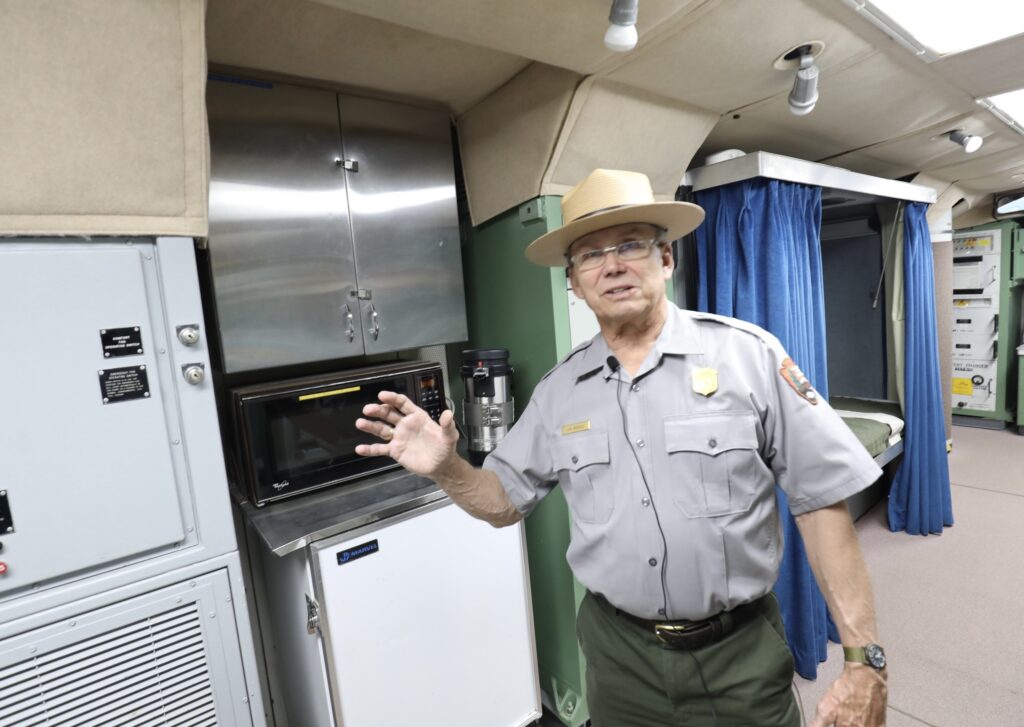Jim Boensch a former U.S. Air Force missileer and now interpretive ranger tours Clay through an underground bunker at the Minuteman Missile National Historic Site.
The LCC (Launch Control Center) has facilities above and below ground. Above ground is the equivalent of a very low-budget Super 8 Motel. Several people worked every day in the above-ground facility. There were bedrooms, bathrooms, a commons, a TV room, offices, and a kitchen with a cook. But only two Air Force officers were down in the hole, a submarine-like capsule sitting on colossal shocks. Two Air Force officers were in that bunker at all times, from 1961 until deactivation and in the remaining missile wings in other states to this day. That’s how much we feared nuclear war: we had tens of thousands of men and women worldwide on alert, waiting for the call that never came. The protocols for the early era when the Ellsworth wing was established were more spartan than the next generation of bunkers. The one I toured had only one bunk. And the kind of steel toilet you’d associate with a jail cell — no essential privacy.
The two individuals were always of the same gender. This put women at a decided disadvantage because the first all-female crew would be two women who had never worked in the bunker before, no matter how proficient the training program. But they persevered.
The two missileers cannot start a nuclear war by themselves. They are passive in every way until the alert comes from the president of the United States. Then they must open separate lock boxes, each knowing only one combination. Then they must confirm receipt of their orders. They have no idea where the missiles are going. But suppose the process survives all the checks and hurdles designed to prevent a rogue missileer or an accidental nuclear war. In that case, each of the two needs to turn a separate key into one of two locks separated so far that no one person could ever turn both keys at the same time. Then the missile takes over, and the men in the hole have done their work.
After my tour, I had lunch with the staff at the historic site. Everyone had brought some part of the meal because it was the last day for their supervisor, who was moving on to another NPS facility in the southwest — baked potatoes with chili, chips and salsa, salads, and good desserts. When I tried to do the tour two years ago and stupidly showed up without a reservation, I envisioned the Minuteman Missile National Historic Site staff as haughty and all business. But of course, the team is a community and, out here in the big empty, almost family.
Then Jim gathered Tim and Al in the conference room. I turned on my miniature digital recorder and sat back to hear their stories. It was an utterly fascinating afternoon.
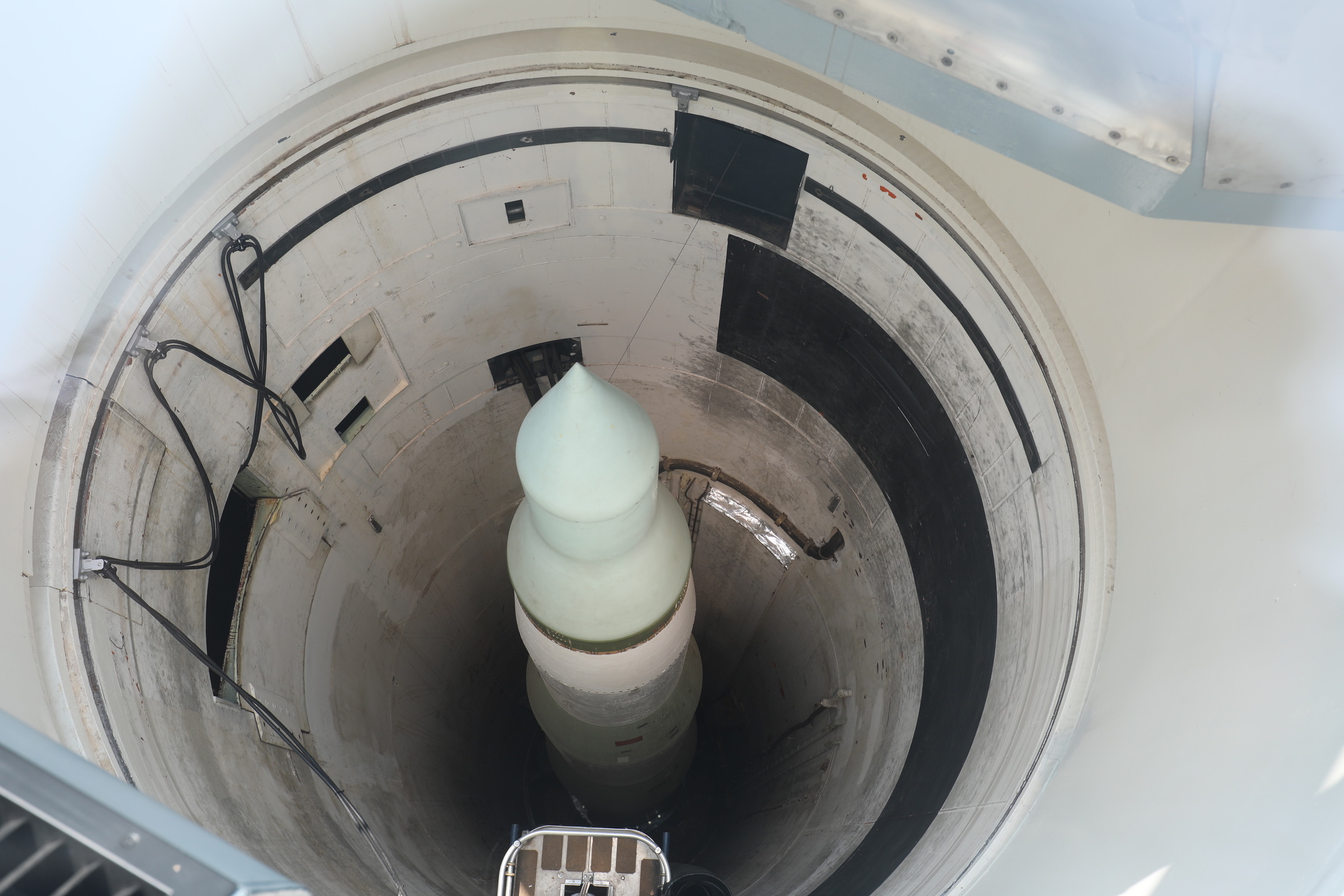A mock intercontinental ballistic missile in its silo. At one time, the U.S. maintained a thousand of such ICBMs in silos throughout the Great Plains. (Photo by Clay Jenkinson)
## **Making the Minuteman Missile National Historic Site a Reality**
One of the things I have learned in my study of Theodore Roosevelt is that while he deserves nearly infinite credit for setting aside 230 million acres of America as permanent national park, national monument, national wildlife refuge, national game preserve, and national forest, it is also true that each of those conservation properties was the favorite cause of a person or persons who gave hundreds and even thousands of hours of their lives to doing all the incredible amount of work that happens before a president names a national monument or Congress creates a new national historic site. Most proposals for any of these designations fail to launch.
Tim Pavek is the man who made the Minuteman Missile National Historic Site happen. He is the first to interrupt to say that he is only one of many individuals who worked for this, and that it would not have occurred without … and no one person can ever achieve … all that. And he meant it. He was as humble about his achievement as it was possible to be. I got him to say just once in the interview, while he was trying to get to something else, “I guess you could say that I am the father of this place,” but it was said in an indisputable fact, not as a boast.
To make something like this national historic site happen, you must convince the town. You have to persuade the U.S. Air Force. You have to convince the U.S. Department of Transportation, the National Park Service. And you have to convince Congress. You have to find a member of the state’s congressional delegation willing to carry water for the project, probably over many years. You have to involve the governor. And then it almost gets done a couple of times and yet doesn’t, and at times it seems as if it just won’t ever get done. Tim Pavek is the man who kept the dream alive long enough to reach fruition. To launch.
And now it’s a permanent monument to a short but unbelievably tense period of human history. I find the Cold War more interesting than World War II (which is unendingly interesting). I was more or less born with the atomic bomb. Nearly every president since 1945 has alluded to or referred to nuclear nightmare and nuclear responsibility in his inaugural address.
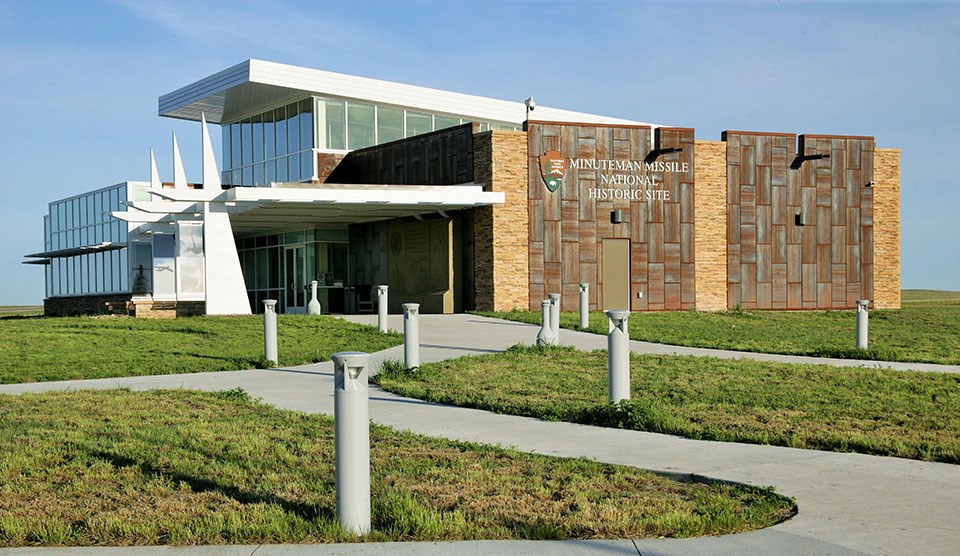The Minuteman Missile National Historic Site honors the men and woman who, largely unacknowledged, served the country through the long Cold War. (Photo NPS/Rob Swanson)
What I loved most about these three men in the rural heart of South Dakota was their combination of modesty and deep pride. When I asked them why the Minuteman Missile National Historic Site is important, they each said, in a different way, that it honors the men and women who protected this country through the long Cold War at the missile triad of our nuclear strategy. They said the hotshot Air Force flyers get more respect and adulation than the guys down in the missile sites, which are not — to the untrained eye, at least — as sexy as submarines. In his excellent book *Command and Control*, Eric Schlosser writes, “In the hierarchy of Air Force officers, the fighter and bomber pilots each claimed to be at the top. Despite their intense rivalry, the pilots agreed on at least one thing: missileers occupied a rung far below them. Serving in an underground control center lacked the glamour of flying sorties into enemy territory or gaining command of the skies.” The men and women I met near the site just east of Wall, S.D., see the Minuteman Missile National Historic Site as a fitting tribute to the entire American missile community. Thousands of men and women, most of whom have long retired. Each at ground zero, waiting and wondering if there will ever come a signal to commence firing.
Al Hall was out there as a maintenance man on November 9, 1979, when NORAD sent an alert signaling that the United States was under attack.
Historian [Eric Schlosser](https://www.penguinrandomhouse.com/authors/27189/eric-schlosser/) describes the moment:
Klaxons were sounded at SAC bases nationwide. Bomber crews ran to their planes, and missile crews were put on heightened alert. Fighter interceptors took off to look for signs of a Soviet attack. The National Emergency Airborne Command Post left Andrews Air Force Base — without President Carter on board. And air traffic controllers throughout the country prepared to clear America’s airspace for military flights, warning every commercial airliner that it might soon have to land.
It turns out it was a training tape accidentally loaded onto one of NORAD’s floor-length computers. Al and another man were at a missile doing some routine work. When they got the signal, they went straight into their training protocol. They were to drive a mile away from the site immediately but to keep sight of it and wait. This was to make sure that the evildoers were not hacking the system and poised to take possession the instant they fled. As they stood there contemplating the end of the world, Al said, “I’m supposed to get married next week.”
Al did get married a week later. And he loves to tell that story. I made the mistake of saying, “Well, there probably would never have been a wedding if that alert were true,” but he liked the story the way he told it.
According to Eric Schlosser, in his book **Command and Control: Nuclear Weapons the Damascus Accident and the Illusion of Safet**y, in the investigation that followed, “twenty-three security officers assigned to the Combat Operations Center inside Cheyenne Mountain \[Colorado Springs\] were stripped of their security clearances … the security force responsible for protecting the nerve center of America’s command-and-control system was using LSD, marijuana, cocaine, and amphetamines.”
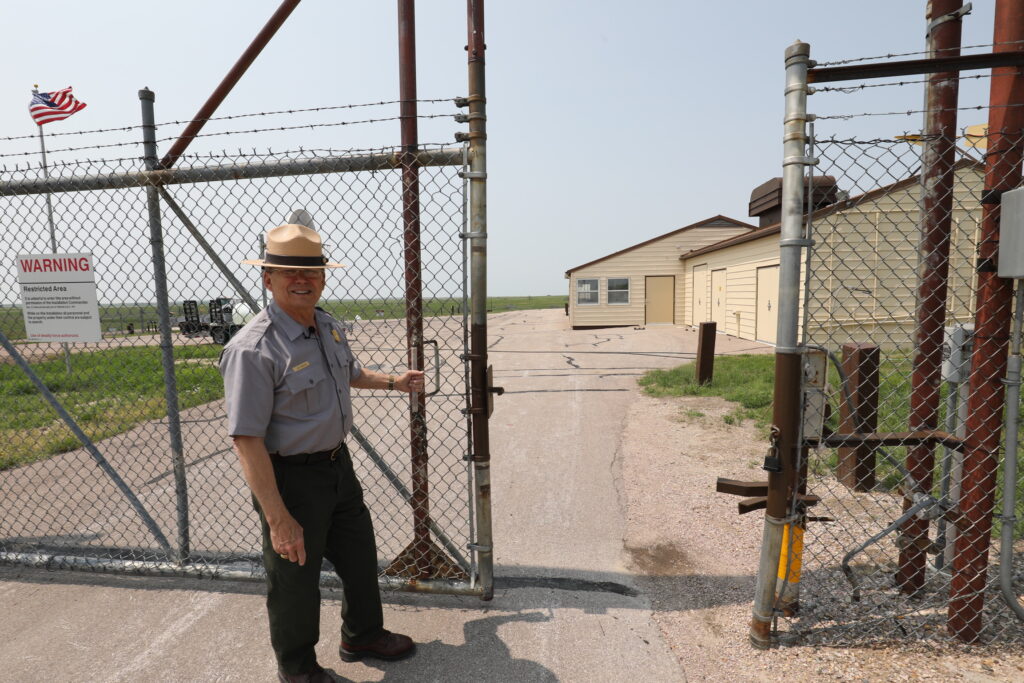Jim Boensch takes Clay to some of the above ground facilities at the former Air Force ICBM site.
Jim Boensch told me many officers earned their masters while working in the hole. Plenty of free time, nowhere to go, no internet or TV or commercial radio. He said he did a lot of professional and personal reading during those years. He could remember what it was like to be down there when the Cold War really rattled America. A whiff of nostalgia. Probably he would not return to it, but it was a peak experience in his life, and nostalgia became a factor.
It’s worth doing some reading about this aspect of the Cold War. I recommend Schlosser’s *[Command and Control: Nuclear Weapons the Damascus Accident and the Illusion of Safety.](https://www.npr.org/2014/08/11/339131421/nuclear-command-and-control-a-history-of-false-alarms-and-near-catastrophes)* He’s the guy who wrote *Fast Food Nation*. First, he turned me off the Big Mac, now NORAD’s invincibility!
I’ve written an entire chapter about North Dakota’s ICBM missiles in my last book, *[The Language of Cottonwoods: Essays on the Future of North Dakota](https://www.amazon.com/Language-Cottonwoods-Essays-Future-Dakota/dp/1646630998)*. If you’re interested, I invite you to read my book.
---
**In June, Clay drove from his home in Bismarck, North Dakota to Vail, Colorado. A focus of Clay’s two-week road trip was exploring little-remembered sites of tragic encounters between Native Americans and an expanding, westward-moving white population of the 1860-1880s. Clay’s stops included a [battle site at Whitestone Hill](https://ltamerica.org/the-forgotten-battle-of-whitestone-hill-north-dakota-2/) in North Dakota in 1863, as well as the [spot in Nebraska where Crazy Horse was killed](https://ltamerica.org/visiting-the-cabin-where-crazy-horse-was-killed/) in 1877, and Colorado sites commemorating the [Sand Creek Massacre](https://ltamerica.org/the-tragic-history-of-sand-creek-colorado/) in 1864. Along the way, Clay also visited the Minuteman Missile National Historic Site, the [U.S. National Grasslands](https://ltamerica.org/jackalopes-black-footed-ferrets-and-big-big-sky/), and a [forgotten mountainside in western Colorado](https://ltamerica.org/nuking-the-rocky-mountains/), where the federal government detonated a nuclear bomb in 1969 in an experiment to explore the peaceful use of atomic weapons. And — as in all good journeys — unexpected and unrelated roadside distractions provided plenty of ways to think about America.**
---
## ***Discover more on these topics at Listening to America***
[Reading](https://ltamerica.org/tag/reading/ "1 topics")[Rivers](https://ltamerica.org/tag/rivers/ "3 topics")[The Constitution](https://ltamerica.org/tag/the-constitution/ "1 topics")[Texas](https://ltamerica.org/tag/texas/ "4 topics")[Theodore Roosevelt](https://ltamerica.org/tag/theodore-roosevelt/ "16 topics")[north daktoa](https://ltamerica.org/tag/north-daktoa/ "0 topics")[Water in the West](https://ltamerica.org/tag/water-in-the-west/ "24 topics")[Video](https://ltamerica.org/tag/video/ "51 topics")[Steinbeck Travels](https://ltamerica.org/tag/steinbeck-travels/ "75 topics")[Space Exploration](https://ltamerica.org/tag/space-exploration/ "8 topics")[Poetry](https://ltamerica.org/tag/poetry/ "1 topics")[Ohio](https://ltamerica.org/tag/ohio/ "2 topics")[Sports](https://ltamerica.org/tag/sports/ "2 topics")[Rome](https://ltamerica.org/tag/rome/ "1 topics")[Oppenheimer](https://ltamerica.org/tag/oppenheimer/ "1 topics")[North Dakota](https://ltamerica.org/tag/north-dakota/ "53 topics")[New Mexico](https://ltamerica.org/tag/new-mexico/ "3 topics")[Wyoming](https://ltamerica.org/tag/wyoming/ "4 topics")[State Parks](https://ltamerica.org/tag/state-parks/ "2 topics")[Republic](https://ltamerica.org/tag/republic/ "0 topics")[Virginia](https://ltamerica.org/tag/virginia/ "7 topics")[Podcast](https://ltamerica.org/tag/podcast/ "1 topics")[South Carolina](https://ltamerica.org/tag/south-carolina/ "1 topics")[Republics](https://ltamerica.org/tag/republics/ "1 topics")[North Carolina](https://ltamerica.org/tag/north-carolina/ "3 topics")[William Shirer](https://ltamerica.org/tag/william-shirer/ "1 topics")[Thomas Jefferson](https://ltamerica.org/tag/thomas-jefferson/ "34 topics")[Pennsylvania](https://ltamerica.org/tag/pennsylvania/ "1 topics")[New England](https://ltamerica.org/tag/new-england/ "1 topics")[Oppenheim](https://ltamerica.org/tag/oppenheim/ "0 topics")[Travel](https://ltamerica.org/tag/travel/ "1 topics")[Walden](https://ltamerica.org/tag/walden/ "1 topics")[Oregon](https://ltamerica.org/tag/oregon/ "4 topics")[Thoreau](https://ltamerica.org/tag/thoreau/ "5 topics")[Vermont](https://ltamerica.org/tag/vermont/ "1 topics")[U.S. Constitution](https://ltamerica.org/tag/u-s-constitution/ "1 topics")[Wisconsin](https://ltamerica.org/tag/wisconsin/ "0 topics")[Utah](https://ltamerica.org/tag/utah/ "11 topics")[Tennessee](https://ltamerica.org/tag/tennessee/ "1 topics")[South Dakota](https://ltamerica.org/tag/south-dakota/ "16 topics")[paintings](https://ltamerica.org/tag/paintings/ "0 topics")[New York](https://ltamerica.org/tag/new-york/ "8 topics")[Washington](https://ltamerica.org/tag/washington/ "2 topics")[U.S. Presidents](https://ltamerica.org/tag/u-s-presidents/ "71 topics")[Road Trips](https://ltamerica.org/tag/road-trips/ "18 topics")
**Categories:** Dispatches from the Road
**Tags:** Atomic West, National Parks, South Dakota
---
### [Jackalopes, Black-Footed Ferrets and Big, Big Sky](https://ltamerica.org/jackalopes-black-footed-ferrets-and-big-big-sky/)
**Published:** August 14, 2023
**Author:** Clay Jenkinson
**Excerpt:** On Clay’s third day from Bismarck to Vail, he travels through Wall, South Dakota and visits the U.S. National Grasslands Visitor Center and Badlands National Park.
**Content:**
## Day Three: Wall, South Dakota, National Grasslands and Badlands National Park
Possibly the worlds largest walk-in, multi-story jackalope. Located in Wall, South Dakota. (Photo by Clay Jenkinson)
*On Clay’s third day* *on the road from Bismarck to Vail, he travels through Wall, South Dakota and visits the U.S. National Grasslands Visitor Center and Badlands National Park.*
When you wake up in Wall, South Dakota, you must make a choice. More [Wall Drug](https://www.walldrug.com), or get the heck out of there? I had a breakfast certificate at a downtown restaurant. Still, I didn’t want Annie Oakley shooting up my orange juice or a guy in a Sitting Bull costume on a stool next to me ordering a caramel macchiato with vanilla oat milk. I won’t say that when you have seen one [jackalope](https://www.hcn.org/articles/books-the-legend-of-the-horned-rabbit-of-the-west), you have seen them all. That would be blasphemy. But you’re topped up on the elusive jackalope when you have seen a hundred in a single hour. The only thing I still wanted to do in Wall was go to the Grasslands Visitor Center.
And yet, as I drove around the village of Wall, I happened on what can be called the World’s Largest Jackalope, constructed on a side street by a chainsaw sculptor. Now I’m a lover of the world’s largests, and I have visited as many of them in America as any other person, but this one I found intimidating. I stopped the car to take photographs. A woman was opening the door at the base of the jackalope, which you can enter and ascend to its top, like the Statue of Liberty. She invited me to “come on in.” But I didn’t. If you enter the maw of the World’s Largest Jackalope, how do you know you will ever come out? What goes on in there?
## **U.S. National Grasslands**
The [U.S. National Grasslands](https://www.publiclands.com/blog/a/discover-the-beauty-of-our-national-grasslands) are one of the great legacies of the New Deal. Economic collapse and the severest drought in American history impacted the Great Plains more than any other region. FDR stepped in with programs and agencies designed to bring economic and environmental stability to the marginal and sub-marginal lands of the trans-Mississippi West. One result was the Soil Conservation Service (SCS). Another was the Bankhead-Jones Act (1935). The U.S. government bought up bankrupt and eroded farms and ranches and abandoned properties, began restoring them to pasture, and then — this is the most remarkable part of the story — leased those lands back to the farmers and ranchers who had gone bust and dust.
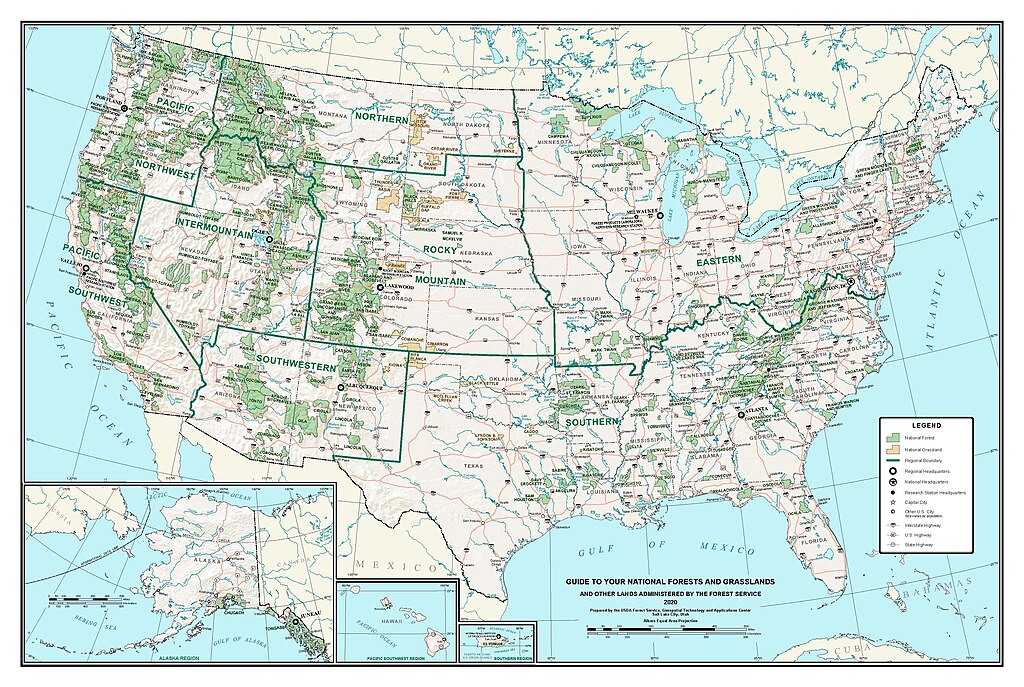U.S. National Grasslands shown in yellow, National Forests in green. (U.S. Forest Service map)
My North Dakota has three National Grasslands units, including the largest one in the system, the 1.2-million-acre Little Missouri National Grasslands. They envelop the three units of Theodore Roosevelt National Park like a conservation buffer. Almost every public acre is leased to a rancher and used for grazing cattle. It’s fenced. It’s not open land the way a National Forest is open.
The only [Grasslands Visitor Center](https://www.fs.usda.gov/recarea/nebraska/recarea/?recid=10639) for the entire national system is in Wall, South Dakota.
I ran the gauntlet of Wall’s main street to reach the center precisely at 8 a.m. But it was closed. The center had recently suffered extensive water damage. But a FEMA-like trailer parked on the curb served as the temporary visitor’s center. I clunked up the metal ramp and entered. There was the usual high counter with maps pressed under glass and a cheerful ranger in full uniform with brightly painted and pointed fingernails. There were racks of maps. There were some pelts (coyote, fox, etc.) you were invited to fondle. And, of course, even in so small a center, there was the obligatory 18-minute orientation video — a few books for sale, of which I bought two.
A map purchased at the visitor center had a sticker saying the following:
*This product may contain geographic feature names declared derogatory through the U.S. Department of the Interior Secretarial Orders 3404 & 3405. … For a list of declared derogatory names and official replacement names visit*: *https://www.usgs.gov/us-board-on-geographic-names.*
The film was about the greatness of the black-footed ferret. These ferrets are cute; I’ll give them that. They are the [meerkats](https://kids.nationalgeographic.com/animals/mammals/facts/meerkat) of the Great Plains. They are almost always on the brink of extinction. Grasslands experts would like to re-introduce them. The ferrets live with and dine on prairie dogs. This is the kind of federal program that annoys most ranchers. Ranchers are not friendly to prairie dogs, which crop the grass and create a dangerous labyrinth of holes in the ground that horses and cattle can trip in. In a ranch town recently, on that notice board near the restrooms, I saw a handwritten sign that said, “Looking for youngsters to come shoot prairie dogs on my ranch. Call …” Black-footed ferrets are also susceptible to bubonic plague (the one that killed a quarter of Europe in the fourteenth century). But mostly ranchers worry that if they cooperate with the federal grasslands biologists, allowing an endangered species to be introduced on their ranch, their every move will be monitored and regulated. If the ferrets are thriving on the hay flat, they won’t be permitted to cut hay.
And, as you might expect, ranchers have other things to do than to bring new vibrancy to the prairie dog towns on their range. The ranch community that leases federal grass is always bracing itself for the next federal employee who drives up to introduce “an exciting new program” cooked up by someone who has never fixed a fence, lifted a bale, or pulled a calf in the middle of the night. I’m all for the re-introduction of the black-footed ferret. I’d like to see the re-introduction of many species on the federal grasslands, but I try to remember that FDR’s purpose was to restore the range and stabilize the rural economy to keep good people on the land.
I groaned when I saw the new National Grasslands decal has a lovely ferret peaking at the top.
## **Badlands National Park**
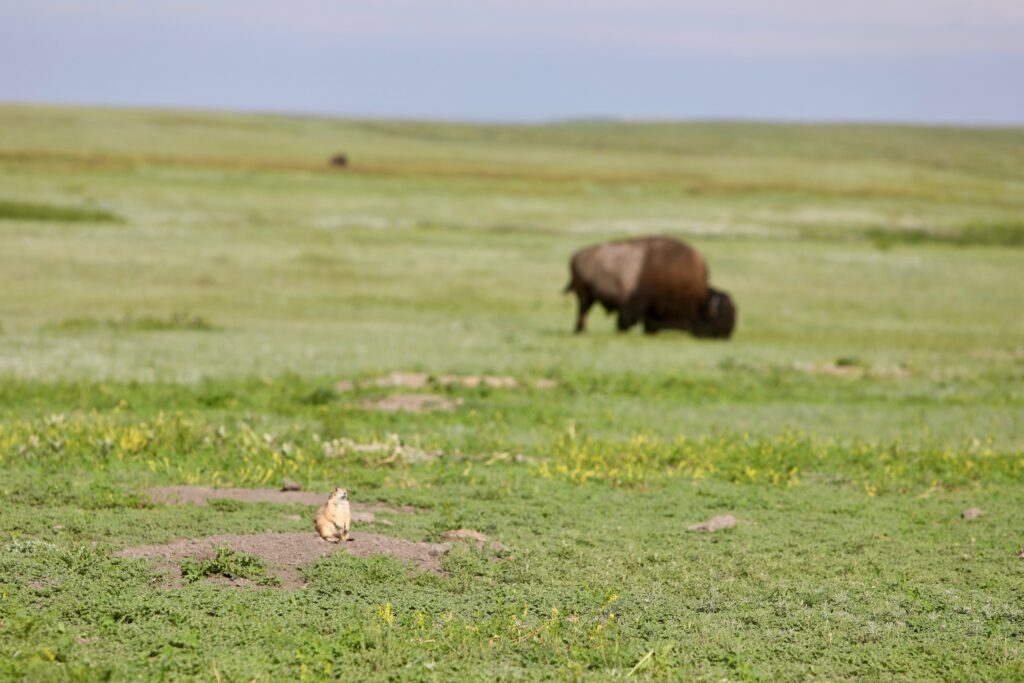Prairie dogs and bison pose for photographers at the entrance to Badlands National Park. (Photo by Clay Jenkinson)
I drove south into [Badlands National Park](https://www.blackhillsbadlands.com/parks-monuments/badlands-national-park). Within a few hundred feet, eight cars were parked, with people crouching on the grass taking photographs of prairie dogs and about a dozen bison. At the gate, I whipped out my Geezer Pass, the [NPS Senior Pass](//www.nationalparks.org/connect/blog/understanding-national-park-senior-pass-rate-increase) that gives you nearly universal access to National Parks, National Monuments, and more. All for $80. Not per annum, but for as long as your heart keeps ticking! It’s the greatest bargain in America.
I drove the rim road on the northern plateau of the badlands to [Scenic](https://www.onlyinyourstate.com/south-dakota/scenic-abandoned-town-sd/), population 52, just above the Pine Ridge Indian Reservation, home of the Oglala Lakota. At the Badlands National Park Visitors Center at Scenic, I studied a line of black and white portraits of Lakota leaders who survived the Wounded Knee Massacre. That’s a remarkable approach to the massacre — not the 250 who died there on December 29, 1890, but those who survived. I don’t think I have ever once previously thought about the survivors. One of the most persistent themes in Native American commentary, here or at the National Museum of the American Indian in Washington, D.C., is “we’re still here.” All those furious attempts by white people to erase Native American culture or Native Americans per se ([“Kill the Indian, Save the Man,”](https://www.ou.edu/gaylord/exiled-to-indian-country/content/remembering-the-stories-of-indian-boarding-schools) said Richard Platt, the founder of the Carlisle Indian School in Pennsylvania), failed. The resilience of Native Americans is impressive, given the odds and the land lust of the white invaders. Resilience is, in my opinion, the single most important characteristic of Native Americans.
## **Pondering What Is Sacred**
When I am alone exploring and wandering on backroads, I stop whenever I want to take photographs. Every time I got out of the car into that June morning, the nearest meadowlark sang its glorious song. I regard the meadowlark song as the quintessential sound of the Great Plains. And these were smug National Park meadowlarks who knew their habitat was forever secure. They sang like chanticleers in the glory of the morning. It was thrilling.
And then I noticed the sky. A huge, isolated anvil of a cumulous cloud was building from slightly north or west, backed by the slate gray of a possible thunderstorm later in the day. It was one of the largest clouds I have ever seen, alone in the sky like a cosmic battleship. And pure white. Building. Log.
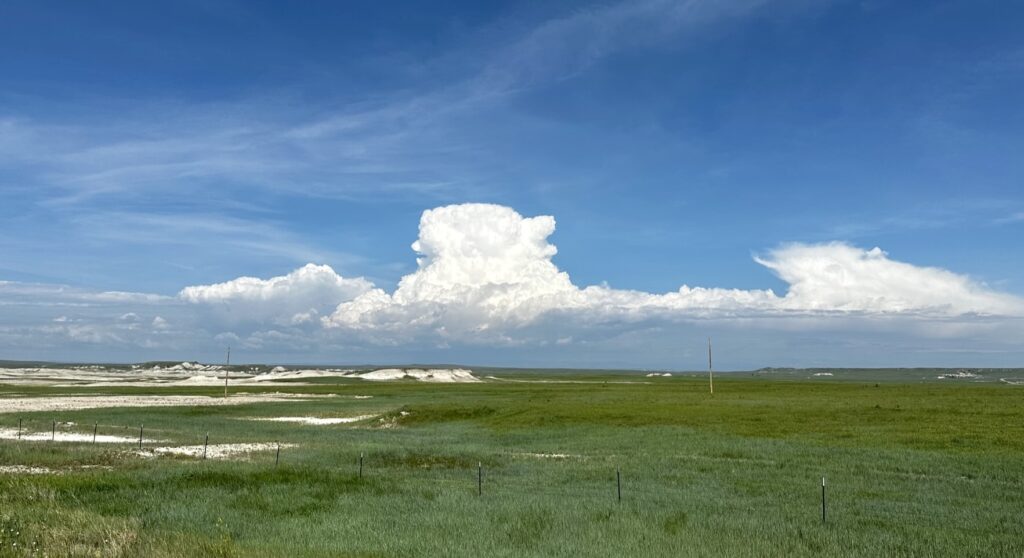A massive, cosmic battleship of a cloud rises above the plains. (Photo by Clay Jenkinson)
We spend most of our lives inside, in temperature-controlled buildings with fluorescent lights and ceiling panels. How much time do we spend gazing at the sky? Not nearly enough. Now I was in the heart of the Lakota (Sioux) *homeland*, and the sky was *alive*. I use each of these words, homeland and alive, deliberately.
First, *homeland*. From a white man’s jurisdictional point of view, I was not on the Pine Ridge Indian Reservation. Still, from a Lakota point of view, I was a visitor to their sovereign national homeland. The Lakota have never accepted the abrogation of the [Great Sioux Treaty of 1868](https://www.archives.gov/education/lessons/sioux-treaty), which guaranteed them all western South Dakota forever. They are playing the long game. They believe the U.S. courts will increasingly support their just claims. They intend to press their claims against the National Parks, many of which, including this one, were carved out of Native homelands. This includes the possibility of Native Americans co-managing parts of some National Parks. They have some residual hope that a more enlightened era of white government will do justice in Indian Country. Meanwhile, they are “buying back” parcels of their homelands lost through the [Dawes Severalty Act](https://www.nps.gov/articles/000/dawes-act.htm) (1887).
Native Americans are playing the long game. And meanwhile, every Native American nation sends its most promising young people off to colleges and universities to get degrees in law, medicine, nursing, politics, anthropology, and business. Already the first great wave of those young people, Lakota and Cheyenne, Arapahoe, and others are in the arena, challenging the white world to make amends and embrace justice.
Now, ***alive***. I have no adequate language to describe how watching that colossal cloud inch toward me felt. I felt deep envy for cultures that live under the open sky. You cannot be an insurance adjuster in Rapid City and know the sky the way it deserves to be known unless you go way out of your way. You get some of that sky power if you are a rancher. But if you were a Lakota or Mandan living during the golden age of the horse (1725-1870), you lived between the earth and sky, which had meaning far beyond the meteorological.
The sky was alive that morning in western South Dakota. To regard the sky as a series of phenomena that can be described with a spectrometer or a nomenclature — Cirrus, Altocumulous, is to miss the point, fail to see and be open to the spiritual.
I thank God that I live on the Great Plains of America. They are, to me, and perhaps to everyone, difficult at times. But the plains and the culture they support are deeply fascinating, occasionally in a cringey way. But there is so much good in the less settled West. You can try to leave it behind in the rearview mirror, but you can never get it out of your soul. The plains are where you go to get swallowed up by grass and sky.
The cloud above me continued to grow with each passing minute. I would have liked to set up a camping chair on a grassy hill and spend the day just watching it, waiting for the first hint of heat lightning. I learned again for the umpteenth time that you must get yourself out there to really know it. You cannot pretend to love it from your sanctuary of urban life. It’s out where the grass grows. It’s where there are distant ridges. It’s where you suddenly feel alone in a universe of grass, a touch of the savannah that both thrills and terrifies us all at once.
The massive cloud in the northwest sky was slowly darkening. I stood out in front of my car for a long time, trying to make sense of it. The word rattling around in my brain was “sacred,” but that is a big word that should not be tossed about lightly, especially by someone from a largely despiritualized society.
---
*In June, Clay drove from his home in Bismarck, North Dakota to Vail, Colorado. A focus of Clay’s two-week road trip was exploring little-remembered sites of tragic encounters between Native Americans and an expanding, westward-moving white population of the 1860-1880s. Clay’s stops included a [battle site at Whitestone Hill](https://ltamerica.org/the-forgotten-battle-of-whitestone-hill-north-dakota-2/) in North Dakota in 1863, as well as the [spot in Nebraska where Crazy Horse was killed](https://ltamerica.org/visiting-the-cabin-where-crazy-horse-was-killed/) in 1877, and Colorado sites commemorating the [Sand Creek Massacre](https://ltamerica.org/the-tragic-history-of-sand-creek-colorado/) in 1864. Along the way, Clay also visited the [Minuteman Missile National Historic Site](https://ltamerica.org/a-day-with-three-extraordinary-missile-men/), the U.S. National Grasslands, and a [forgotten mountainside in western Colorado](https://ltamerica.org/nuking-the-rocky-mountains/), where the federal government detonated a nuclear bomb in 1969 in an experiment to explore the peaceful use of atomic weapons. And — as in all good journeys — unexpected and unrelated roadside distractions provided plenty of ways to think about America.*
---
## ***Discover more on these topics at Listening to America***
[Walden](https://ltamerica.org/tag/walden/ "1 topics")[Podcast](https://ltamerica.org/tag/podcast/ "1 topics")[New York](https://ltamerica.org/tag/new-york/ "8 topics")[Poetry](https://ltamerica.org/tag/poetry/ "1 topics")[U.S. Constitution](https://ltamerica.org/tag/u-s-constitution/ "1 topics")[North Carolina](https://ltamerica.org/tag/north-carolina/ "3 topics")[Republic](https://ltamerica.org/tag/republic/ "0 topics")[Theodore Roosevelt](https://ltamerica.org/tag/theodore-roosevelt/ "16 topics")[paintings](https://ltamerica.org/tag/paintings/ "0 topics")[Wisconsin](https://ltamerica.org/tag/wisconsin/ "0 topics")[Water in the West](https://ltamerica.org/tag/water-in-the-west/ "24 topics")[Reading](https://ltamerica.org/tag/reading/ "1 topics")[South Carolina](https://ltamerica.org/tag/south-carolina/ "1 topics")[Travel](https://ltamerica.org/tag/travel/ "1 topics")[The Constitution](https://ltamerica.org/tag/the-constitution/ "1 topics")[Sports](https://ltamerica.org/tag/sports/ "2 topics")[Steinbeck Travels](https://ltamerica.org/tag/steinbeck-travels/ "75 topics")[William Shirer](https://ltamerica.org/tag/william-shirer/ "1 topics")[Ohio](https://ltamerica.org/tag/ohio/ "2 topics")[U.S. Presidents](https://ltamerica.org/tag/u-s-presidents/ "71 topics")[North Dakota](https://ltamerica.org/tag/north-dakota/ "53 topics")[Oppenheimer](https://ltamerica.org/tag/oppenheimer/ "1 topics")[South Dakota](https://ltamerica.org/tag/south-dakota/ "16 topics")[Space Exploration](https://ltamerica.org/tag/space-exploration/ "8 topics")[Republics](https://ltamerica.org/tag/republics/ "1 topics")[Video](https://ltamerica.org/tag/video/ "51 topics")[Thomas Jefferson](https://ltamerica.org/tag/thomas-jefferson/ "34 topics")[New England](https://ltamerica.org/tag/new-england/ "1 topics")[Rivers](https://ltamerica.org/tag/rivers/ "3 topics")[Thoreau](https://ltamerica.org/tag/thoreau/ "5 topics")[Washington](https://ltamerica.org/tag/washington/ "2 topics")[Rome](https://ltamerica.org/tag/rome/ "1 topics")[Wyoming](https://ltamerica.org/tag/wyoming/ "4 topics")[State Parks](https://ltamerica.org/tag/state-parks/ "2 topics")[Oregon](https://ltamerica.org/tag/oregon/ "4 topics")[New Mexico](https://ltamerica.org/tag/new-mexico/ "3 topics")[Vermont](https://ltamerica.org/tag/vermont/ "1 topics")[Road Trips](https://ltamerica.org/tag/road-trips/ "18 topics")[Tennessee](https://ltamerica.org/tag/tennessee/ "1 topics")[north daktoa](https://ltamerica.org/tag/north-daktoa/ "0 topics")[Texas](https://ltamerica.org/tag/texas/ "4 topics")[Virginia](https://ltamerica.org/tag/virginia/ "7 topics")[Pennsylvania](https://ltamerica.org/tag/pennsylvania/ "1 topics")[Oppenheim](https://ltamerica.org/tag/oppenheim/ "0 topics")[Utah](https://ltamerica.org/tag/utah/ "11 topics")
**Categories:** Dispatches from the Road
**Tags:** National Parks, Native Americans, North Dakota, South Dakota
---
### [At Gate A6 on 22nd Anniversary of September 11](https://ltamerica.org/at-gate-a6-on-22nd-anniversary-of-september-11/)
**Published:** September 11, 2023
**Author:** Clay Jenkinson
**Excerpt:** I’m sitting at gate A6 at Jacksonville International Airport in Florida. Today is the 22nd anniversary of the attacks on the World Trade Center and the Pentagon.
**Content:**
I’m sitting at gate A6 at Jacksonville International Airport in Florida. Today is September 11, 2023. Two days ago, I was supposed to fly to Athens, Greece, on September 9, but that is a long and frustrating story.
Today is the 22nd anniversary of the September 11, 2001, attacks on the World Trade Center and the Pentagon.
I paused to thank the TSA officer who checked my ID this morning at 6:14 a.m. even though I have read that a: a relatively large number of lethal items routinely get through security and b: that the TSA security system is primarily window dressing designed to give the American people the illusion that they are safe.
He was surprised and gratified.
Nearly 3,000 people died on 9/11.
Last night, at the bright lobby bar at my hotel in Jacksonville, I nibbled at a quesadilla and sipped a glass of Sauvignon Blanc. There were half a dozen other stragglers at the bar. We half-watched an NFL football game (week one). Then the game ended, *60 Minutes* came on, with a deeply moving tribute to the NYFD firefighters who sacrificed their lives to rescue as many people trapped in the towers as possible.
Oblivious to the date (really even the month) after several harrowing days of delayed flights, canceled flights, pilots “timing out,” long hours watching the departure screens in several airports for updates, the obfuscations of the beleaguered flight agents, late-night Ubers to airport hotels, and the antics of angry passengers, I wondered why CBS would do an entire hour on that dreadful day now.
And then it came to me that it was the eve of the 22nd anniversary of 9/11. It crept up on me unannounced this year. It’s been nearly a quarter century now! How could that have happened? I remember that day as if it were yesterday. I was in Phoenix. Getting home was an ordeal, but the only thing I wanted in this world was to fold my seven-year-old daughter in my arms.
We bar stragglers watched *60 Minutes* for a couple of segments. Then the bartender said, “Would you consider me an a-hole if I changed the channel? This is pretty depressing.” We all agreed, and she found the Sunday Night Football game, which we quarter-watched. But whatever joy we had felt earlier in the evening was now gone.
That terrible day.
For more than a year afterward, I had a “plan” for what I would do if a plane I was on were hijacked, and I carried a few items in my backpack that might be useful somehow.
Today, on another 9/11, I will fly first to Washington Dulles and then, with any luck, from D.C. to Athens in Greece, where that same daughter, now 29, waits to fold me in *her* arms. I have no anxiety about flying today. That “long war against Islamic terrorism” that President Bush promised us has faded and fizzled, and the FBI tells us that the greatest terror threat of this period is domestic.
9/11 commemoration television has now joined the ranks of the Kennedy assassination. Once a year, we revisit the trauma. Both the Zapruder film, which I have seen 100 or more times over the years, and the images of the planes striking the Towers are too hard to watch. I try to imagine how these commemorations affect families who lost loved ones on those catastrophic days.
How many of my fellow passengers at A6, A7, A8, A9, and A10, now numbering more than 200, are lost in reflection this morning? And I wonder who, if anyone, is plotting Death to America this bright and sunny September morning.
**Categories:** Dispatches from the Road
---
### [Jefferson and Marshall: Two Very Different Virginians ](https://ltamerica.org/jefferson-and-marshall-two-very-different-virginians/)
**Published:** February 4, 2023
**Author:** Clay Jenkinson
**Excerpt:** John Marshall’s service with George Washington at Valley Forge helped shape his very different view of America’s new republic than that of Thomas Jefferson.
**Content:**
## John Marshall’s service with George Washington at Valley Forge helped shape his very different view of America’s new republic than that of Thomas Jefferson.
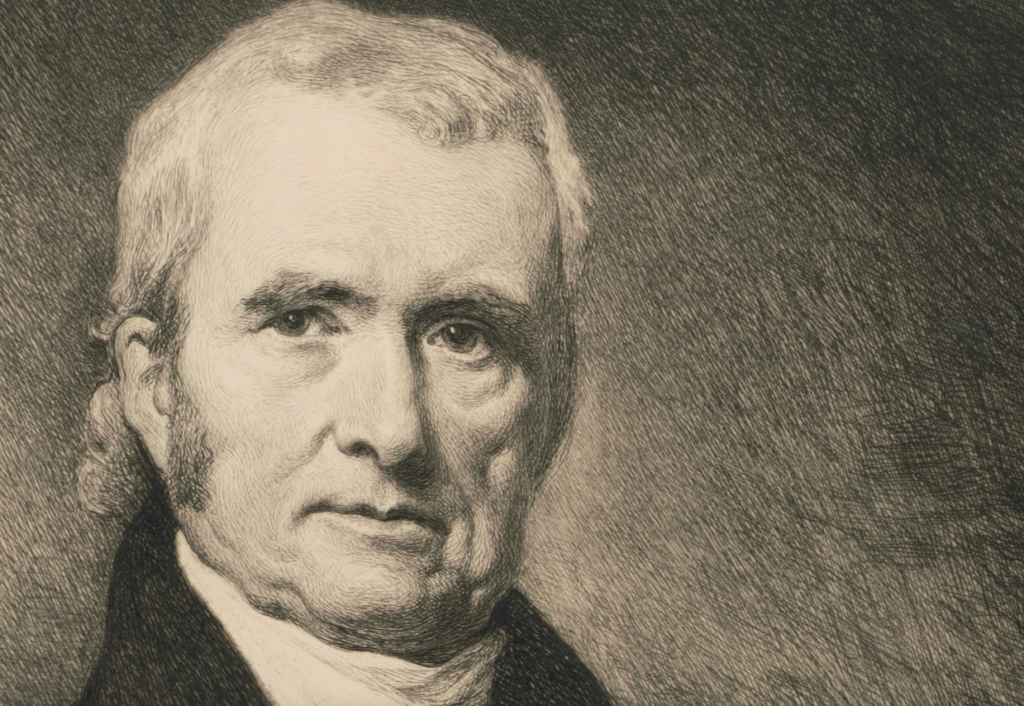
John Marshall served as Chief Justice of the U.S. Supreme Court and was a longtime rival of Thomas Jefferson. (Library of Congress)
*Thomas Jefferson’s rivalries with [Alexander Hamilton](https://www.mountvernon.org/library/digitalhistory/digital-encyclopedia/article/alexander-hamilton/) and [John Adams](https://www.whitehouse.gov/about-the-white-house/presidents/john-adams/) stand among American history’s most studied examples of partisan politics. Jefferson’s contrasting views with these two high [Federalists](https://www.history.com/topics/early-us/federalist-party) sparked a great deal of bitterness and still fuel debate after more than two centuries. But while Hamilton and Adams emerged from different worlds, a third Jefferson antagonist was not only a fellow Virginian but a blood relative of the third president. John Marshall was appointed as Chief Justice of the Supreme Court by John Adams in the final months of his administration. During his 35-year tenure on the high court, Marshall was involved in decisions that clashed with Jefferson’s beliefs, including many that confirmed the federal government’s supremacy over the states. That judicial record, however, wasn’t the only source of the friction between Marshall and Jefferson. Clay and [Lindsay Chervinsky](https://www.lindsaychervinsky.com/) sat down to discuss why these two Virginia cousins never seemed to agree. The following interview was edited for length and clarity.*
**Clay Jenkinson:** John Marshall and Thomas Jefferson were third cousins once removed. They were both Virginians and plantation owners, and both had fathers who were surveyors. And yet these two men did not like each other. Jefferson said of Marshall that he was a man with “[lax lounging manners](https://founders.archives.gov/documents/Jefferson/01-28-02-0417).” Marshall not only goes to taverns, complained Jefferson, but he had been seen playing billiards.
**Lindsay Chervinsky:** This reveals so much about both of their characters. Marshall was friends with everyone, including [Madison](https://www.whitehouse.gov/about-the-white-house/presidents/james-madison/), [Gallatin](https://home.treasury.gov/about/history/prior-secretaries/albert-gallatin-1801-1814), and [John Randolph](https://history.house.gov/People/Listing/R/RANDOLPH,-John-(R000047)/); these were much more radical Republicans than Jefferson. Marshall was also friends with the highest of High Federalists, who criticized him and Adams for their moderate stances. And yet he hated Jefferson, and the feeling was mutual. It’s my sense that Jefferson resented how easily Marshall got along with everyone. Marshall was easygoing and genial and good with the jokes. He was so effective at socializing that people called him Mr. Barbecue. Jefferson, despite his brilliance, was uncomfortable in larger groups, and he probably resented Marshall’s ease with crowds.
**Clay Jenkinson**: Jefferson was shy and aloof. He was a little socially awkward, especially on first meeting. He didn’t like crowds. He didn’t attend balls. He preferred to be at his fortress of solitude in Virginia. He didn’t have any of those loose lounging tavern capacities. The eminent American historian [Jean Edward Smith](https://www.nytimes.com/2019/09/13/books/jean-edward-smith-dead.html) said of the two men: “An exemplary aristocrat who advocated democracy, Jefferson was never comfortable associating with the common man. Marshall, who distrusted democracy, never lost the common touch. Jefferson opposed an energetic central government as a danger to individual liberty. Marshall saw the government in Washington as the keystone of national well-being. Jefferson identified with Virginia and Marshall with the United States. Jefferson favored agriculture and advocated the virtues of rural life. Marshall, an avid farmer himself, was more attuned to the needs of commerce and industry. In some respects, the differences involved the classic tension between the man of ideas and the man of affairs. Jefferson was at his best when articulating a philosophy of government, Marshall when applying one.”
**Lindsay Chervinsky:** A perfect description.
#### The Constitution vs. Articles of Confederation
**Clay Jenkinson:** They were two titans, Marshall over at the Supreme Court and Jefferson, the third president of the United States. Marshall’s decisions between 1801 and 1835 pushed the country into a more centralized national constitutional order. You could even say that he in some sense distorted the Constitution to make it still more powerful than it was, whereas Jefferson was always uneasy about the Constitution and preferred the [Articles of Confederation](https://www.archives.gov/milestone-documents/articles-of-confederation). That has to be one source of trouble.
**Lindsay Chervinsky**: It’s certainly ideological. They had very different views of the world, the nation, and what the government should be. They had different views of mankind and took different approaches to life. And sometimes, people aren’t a good match, and there are times when someone rubs you the wrong way. Some of it was situational. They were both in Virginia, so they couldn’t get away from each other. Each had to constantly grapple with the other’s existence. They were oil and water.
**Clay Jenkinson:** I think Jefferson believed that all Virginians should be like him. That is, if you’re from Virginia, you’re from the most important, most populated, and richest state. It bothered him deeply that there could be an extraordinarily talented Virginian like John Marshall who belonged to the enemy, to the Federalist Party, the party of New England, and the Northern states. To Jefferson, Marshall had betrayed his birthright and destiny by not being a good Virginian.
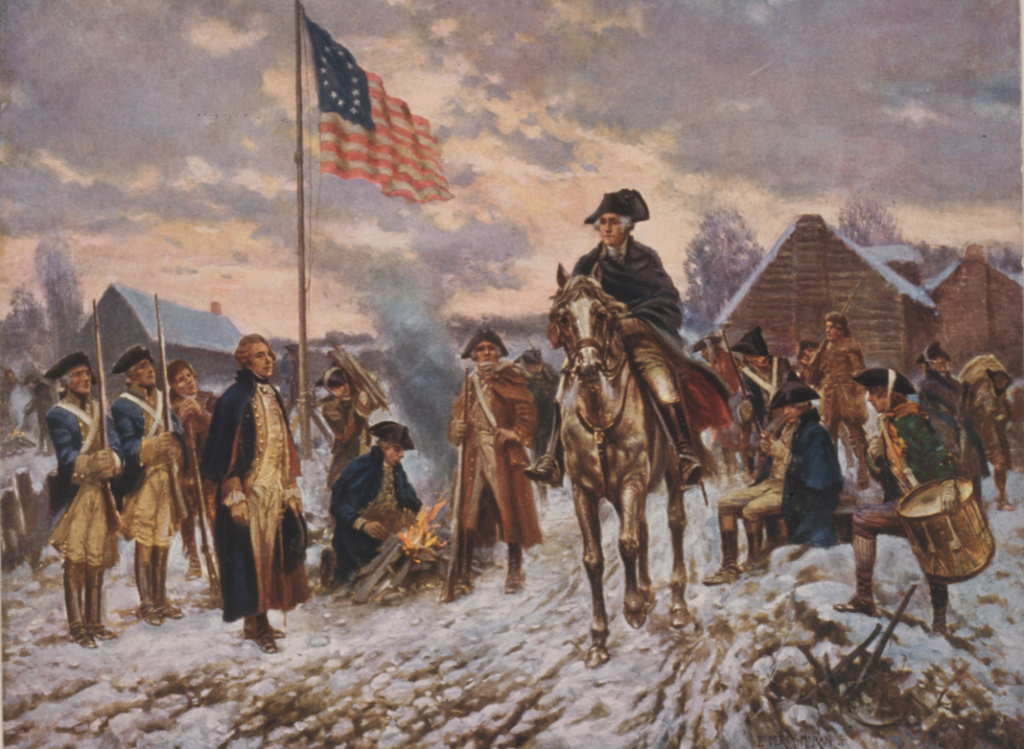General Washington at Valley Forge by E. Percy Moran. (Library of Congress)
**Clay Jenkinson:** There were two bands of brothers. One was the Adams and Jefferson band of statesmen, the legislators, the people at the [Second Continental Congress](https://www.history.com/topics/american-revolution/the-continental-congress), who helped formulate the ideas that became America. And then there was the band of brothers who fought the war. If you didn’t fight the war, as was the case with Jefferson and Adams, it didn’t mean that people didn’t respect you, but there was something that others had that you didn’t have. There was a subtle demarcation between these two camps. Jefferson was not only not a warrior and didn’t serve, but he was widely regarded as a weak wartime governor in Virginia. This gave the people that didn’t like or trust Jefferson another reason for thinking he was not one of them. He couldn’t appreciate the need for a strong national government because he wasn’t there trying to hold a ragtag army together with the protocols of the Articles of Confederation. He doesn’t know how difficult it was for Washington to hold an army together through those years.
**Lindsay Chervinsky:** It’s not to say that those who served in the more diplomatic corps didn’t suffer. They did. They sacrificed, and they were often away from home, and travel across the Atlantic was no picnic. So there was sometimes resentment among that band that their sacrifice wasn’t appreciated in the same way.
**Clay Jenkinson:** Marshall was part of that diplomatic core as well. He was one of the three American diplomats in the famous [XYZ Affair](https://history.state.gov/milestones/1784-1800/xyz), along with Elbridge Gerry and Charles Cotesworth Pinckney. The US was sort of involved in an undeclared naval war with France, and Adams sent this trio over to try to work out this and other disputes. That’s when Marshall became a national figure when everyone realized that he was a man of great substance.
**Lindsay Chervinsky:** Absolutely. On his return, he was welcomed and celebrated across the nation. It was a defining point for Marshall and the Adams administration, and it had a splintering effect on the Republican party and the Federalist Party.
#### Jefferson to Marshall: Don’t Be Late for My Inaugural
**Clay Jenkinson:** One of my favorite stories is about Jefferson’s first inauguration. Marshall had to administer the oath to his enemy, and Jefferson had to take the oath from his enemy. Marshall was famous for not being prompt, so [Jefferson wrote him](https://founders.archives.gov/documents/Jefferson/01-33-02-0102) the day before to remind him to be there promptly at noon. And Marshall had written to others that Jefferson was wholly unfit and couldn’t think of anything worse that could happen to the country than to have as its president this Jacobin, this radical, this small-d Democrat. Then, after he administered the oath, Marshall said that he found [Jefferson’s inaugural address](https://www.presidency.ucsb.edu/documents/inaugural-address-20) pretty good and conciliatory. Marshall admitted that he tended to put Republicans into one of two camps – theoretical visionaries or absolute terrorists – and he didn’t think Jefferson was a terrorist. How great that moment must have been with these two colossal figures having to go through this ceremony together. And both behaved properly. That’s what I love about the early national period.
**Lindsay Chervinsky:** They did. And let me add one additional element. Jefferson needed Marshall’s assistance through the transition. He was taking over at a moment when international relations were complex. Marshall wrote him a report and sent one of his clerks to help Jefferson as his private secretary. And then Jefferson asked Marshall to stay on as Secretary of State until Madison could get into town, which he did. So not only did they behave properly in public when everyone’s eyes were watching, but they also behaved privately behind the scenes and did what was right for the nation to ensure the peaceful transfer of power. And that was essential.
---
If you would like to hear to the entire episode you can find it here: **[\#1536 Ten Things: Jefferson and John Marshall](https://jeffersonhour.bandcamp.com/track/1536-jefferson-and-john-marshall)**.
---
## ***Discover more on these topics at Listening to America***
[Road Trips](https://ltamerica.org/tag/road-trips/ "18 topics")[Rome](https://ltamerica.org/tag/rome/ "1 topics")[William Shirer](https://ltamerica.org/tag/william-shirer/ "1 topics")[Thoreau](https://ltamerica.org/tag/thoreau/ "5 topics")[north daktoa](https://ltamerica.org/tag/north-daktoa/ "0 topics")[Poetry](https://ltamerica.org/tag/poetry/ "1 topics")[Sports](https://ltamerica.org/tag/sports/ "2 topics")[paintings](https://ltamerica.org/tag/paintings/ "0 topics")[Wyoming](https://ltamerica.org/tag/wyoming/ "4 topics")[Vermont](https://ltamerica.org/tag/vermont/ "1 topics")[Reading](https://ltamerica.org/tag/reading/ "1 topics")[Video](https://ltamerica.org/tag/video/ "51 topics")[Ohio](https://ltamerica.org/tag/ohio/ "2 topics")[Theodore Roosevelt](https://ltamerica.org/tag/theodore-roosevelt/ "16 topics")[Walden](https://ltamerica.org/tag/walden/ "1 topics")[Texas](https://ltamerica.org/tag/texas/ "4 topics")[Thomas Jefferson](https://ltamerica.org/tag/thomas-jefferson/ "34 topics")[Wisconsin](https://ltamerica.org/tag/wisconsin/ "0 topics")[Pennsylvania](https://ltamerica.org/tag/pennsylvania/ "1 topics")[Tennessee](https://ltamerica.org/tag/tennessee/ "1 topics")[South Carolina](https://ltamerica.org/tag/south-carolina/ "1 topics")[New York](https://ltamerica.org/tag/new-york/ "8 topics")[South Dakota](https://ltamerica.org/tag/south-dakota/ "16 topics")[Republic](https://ltamerica.org/tag/republic/ "0 topics")[North Dakota](https://ltamerica.org/tag/north-dakota/ "53 topics")[New Mexico](https://ltamerica.org/tag/new-mexico/ "3 topics")[Travel](https://ltamerica.org/tag/travel/ "1 topics")[Republics](https://ltamerica.org/tag/republics/ "1 topics")[U.S. Presidents](https://ltamerica.org/tag/u-s-presidents/ "71 topics")[The Constitution](https://ltamerica.org/tag/the-constitution/ "1 topics")[Virginia](https://ltamerica.org/tag/virginia/ "7 topics")[Oppenheimer](https://ltamerica.org/tag/oppenheimer/ "1 topics")[Rivers](https://ltamerica.org/tag/rivers/ "3 topics")[North Carolina](https://ltamerica.org/tag/north-carolina/ "3 topics")[Steinbeck Travels](https://ltamerica.org/tag/steinbeck-travels/ "75 topics")[Washington](https://ltamerica.org/tag/washington/ "2 topics")[State Parks](https://ltamerica.org/tag/state-parks/ "2 topics")[Utah](https://ltamerica.org/tag/utah/ "11 topics")[New England](https://ltamerica.org/tag/new-england/ "1 topics")[U.S. Constitution](https://ltamerica.org/tag/u-s-constitution/ "1 topics")[Podcast](https://ltamerica.org/tag/podcast/ "1 topics")[Oregon](https://ltamerica.org/tag/oregon/ "4 topics")[Space Exploration](https://ltamerica.org/tag/space-exploration/ "8 topics")[Oppenheim](https://ltamerica.org/tag/oppenheim/ "0 topics")[Water in the West](https://ltamerica.org/tag/water-in-the-west/ "24 topics")
**Categories:** Features
---
### [The Story Behind a Famous White House Dinner](https://ltamerica.org/the-story-behind-a-famous-white-house-dinner/)
**Published:** July 26, 2023
**Author:** Clay Jenkinson
**Excerpt:** Christopher Nolan’s acclaimed new film has ignited a fascination with Robert Oppenheimer. Clay reflects on a surprising connection between Oppenheimer, John F. Kennedy, and “America’s da Vinci,” Thomas Jefferson.
**Content:**
## Christopher Nolan’s acclaimed new film has ignited a fascination with Robert Oppenheimer. As a historian who has studied the life of the noted physicist and American presidents, Clay reflects on a surprising connection between Oppenheimer, John F. Kennedy, and “America’s da Vinci,” Thomas Jefferson.
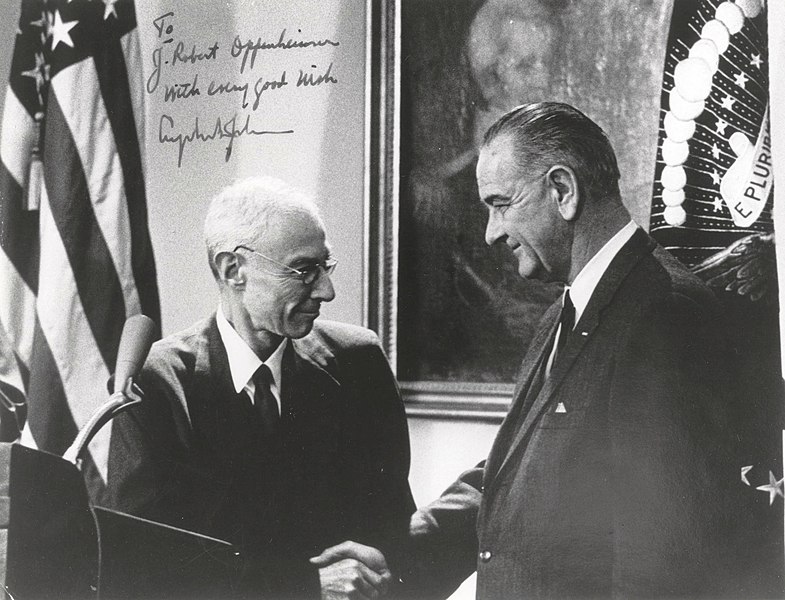Robert Oppenheimer receiving Enrico Fermi award from President Lyndon Johnson on December 2, 1963, ten days after the death of President Kennedy. (Photo: U.S. Dept. of Energy)
Director Christopher Nolan’s summer film sensation has me thinking about a delightful connection between three amazing Americans: Robert Oppenheimer, John F. Kennedy and Thomas Jefferson.
But first, to review: Oppenheimer built the atomic bomb. He became the most prominent scientist in the United States. He had doubts about the ethics of a hydrogen bomb. The hardliners of the Cold War wanted him silenced. His security clearance was stripped and he endured a humiliating security “hearing” in the spring of 1954, which more resembled a Soviet show trial. After his fall, he retreated to the Institute for Advanced Study at Princeton. Over time, and particularly with the election of John F. Kennedy, Oppenheimer was carefully rehabilitated in the national arena.
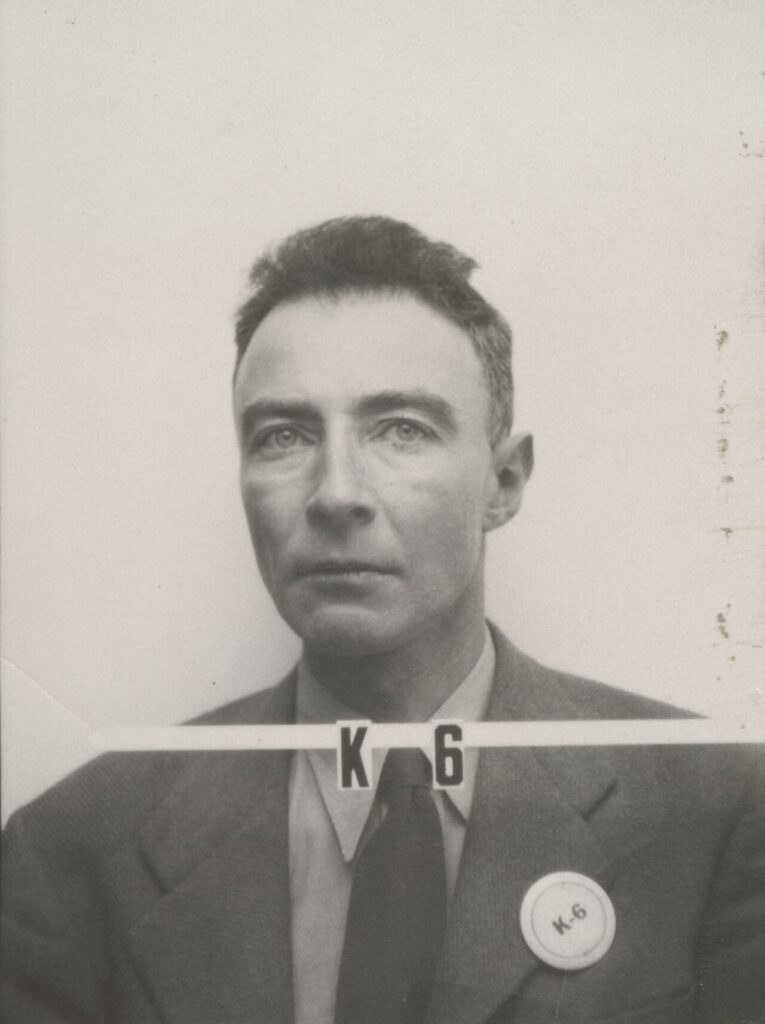Robert Oppenheimer’s identification badge while at Los Alamos Laboratory. (Photo: Los Alamos National Labs)
Oppenheimer was a genius. A highly complex man. A searching humanist. A student of other cultures and languages. An arrogant man who did not suffer fools. He had spent time with American members of the Communist Party in his early Berkeley years. He was not fastidious enough about his contacts with radicals who were his friends during and after the Manhattan Project.
As 1960 unfolded, a Massachusetts senator named John F. Kennedy sought the presidency. He was a political doppelganger to Oppenheimer in some ways. They both loved to read, and only some of what they read was instrumental to their career paths. They loved a good cocktail. They sometimes gravitated toward women who were not their wives. They both loved to talk about geopolitics and were obsessed with the threat of nuclear war. They both had excellent wit, a lively sense of irony, and a winning habit of self-deprecation.
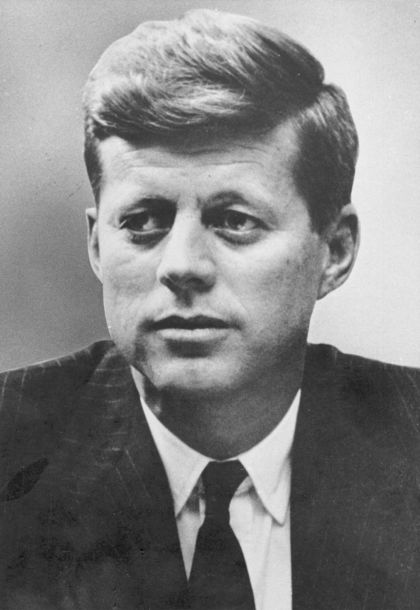John F. Kennedy, when serving as a U.S. Senator from Massachusetts. (Photo: Senate Historical Office)
Kennedy was cautious about rehabilitating Oppenheimer. He was a serious Cold Warrior, and periodically belittled by the hawks and hardliners among the American security community, JFK had to exhibit considerable bravado about national security issues. He wanted to do what he could for Oppenheimer but did not want to detonate a costly political backlash from that part of America that believed he was too young and urbane to be tough enough to lead the nation.
So, as a political trial balloon, Kennedy invited Oppenheimer to a state dinner for America’s Nobel Prize winners on April 29, 1962. Oppenheimer never won the Nobel Prize but knew many of the 49 men in the room. In addition, Oppenheimer mingled that night with John Glenn, Robert Frost, the widow of Ernest Hemingway, Pearl Buck, George C. Marshall, and other national luminaries.
That’s when Kennedy made his famous tribute to Thomas Jefferson: he called the evening “the most extraordinary collection of talent, of human knowledge, that has ever been gathered together at the White House, with the possible exception of when Thomas Jefferson dined alone.”
Drop the mic.
> “I think this is the most extraordinary collection of talent, of human knowledge, that has ever been gathered together at the White House, with the possible exception of when Thomas Jefferson dined alone.”
>
> President John F. Kennedy, April 29, 1962
Jefferson was the only president about whom that wild compliment could be spoken. It might be more strictly accurate if it were John Quincy Adams or Theodore Roosevelt dining alone, but Thomas Jefferson was America’s da Vinci, the closest we have had to a universal scholar. Kennedy’s bon mot would have been less powerful and delightful if it had not been Jefferson.
When I perform as Jefferson, afterward, some man (always a male) comes up and says, “I don’t know if you have ever heard this, but John F. Kennedy was hosting a group of \[this varies with the telling\], and he said …
I usually respond to this the same way. “Well, it’s of course, a logically nonsensical thing for JFK to say even with qualifying disclaimer, ‘possible exception.’ These were 49 of the smartest men in America, any one of whom probably had more brain power than Jefferson, the enlightened amateur.” And then I say, “Besides, when did Jefferson ever dine alone?”
Oppenheimer was there that night! What would Jefferson and Oppenheimer have talked about if they had met? How would Jefferson react to the limits of Newtonian mechanics? How would he react when Oppenheimer told him that light is both a wave and a particle and that you cannot cling to either definition and understand the universe? What would Jefferson have said about Schrödinger’s Cat? Maybe his head would have exploded like the computers in early Star Trek episodes. What would a Black Hole mean to someone who disbelieved in extinction and reckoned boldly that the universe might be as many as 60,000 years old?
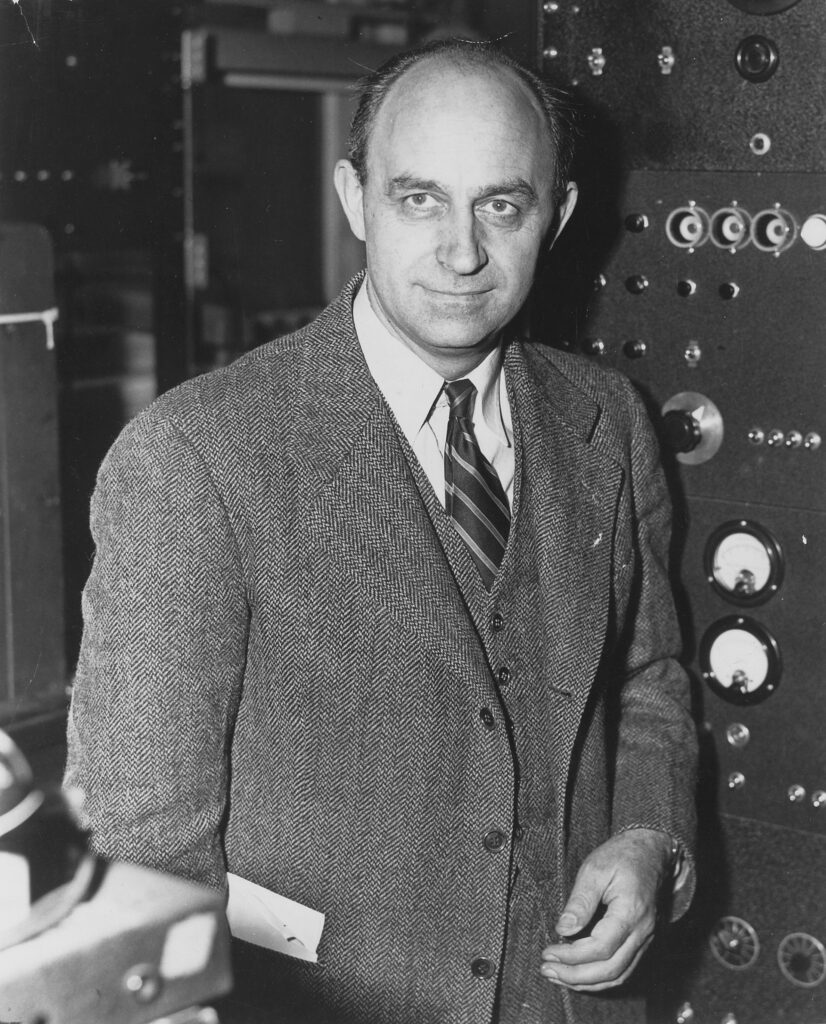Enrico Fermi, Nobel Prize winning physicist and supporter of Robert Oppenheimer. (National Archives)
The Kennedy-Oppenheimer story doesn’t end there, however. In 1963 the Kennedy administration, now with the willing cooperation of the Atomic Energy Commission, decided to award Oppenheimer the highest honor reserved for a physicist in America, the [Enrico Fermi Award](https://about.lanl.gov/awards-achievements/enrico-fermi-award/). This was a more courageous and dramatic rehabilitation of Oppenheimer. The award would signify that our long national nightmare of McCarthyism and the black-listing of intellectuals and Hollywood actors had ended.
The award was to be presented to Oppenheimer in a White House ceremony on Monday, December 2, 1963.
And it was.
But we all know what happened. …
In the wake of the assassination, the new president, Lyndon Johnson, decided to proceed with the award ceremony as planned. December 2, 1963, was 21 years to the day after Enrico Fermi’s [atomic pile went critical under Staggs Field](https://ahf.nuclearmuseum.org/ahf/history/chicago-pile-1/) at the University of Chicago. Great though the award ceremony was for Robert Oppenheimer, he must have been grieving as much as celebrating when the president presented him the Fermi medal, and of course LBJ was no JFK. To have received that medal from the hands of John Kennedy would have been one of the supreme moments of Oppenheimer’s life. With unusual grace, LBJ said giving Oppenheimer the coveted award was “one of President Kennedy’s most important acts.”
In his brief acceptance remarks — it would be wrong to call it a speech — Oppenheimer closed the loop with Thomas Jefferson. He said that President Jefferson “often wrote of the brotherly spirit of science. … It is in part because, with countless other men and women, we are engaged in this great enterprise of our time, testing whether men can both preserve and enlarge life, liberty, and the pursuit of happiness, and live without war as the great arbiter of history.”
As he prepared his remarks before the event, perhaps Oppenheimer remembered JFK’s Nobel laureate quip about Jefferson dining alone with his self-contained genius. Maybe not. Then Oppenheimer turned to Johnson himself and said: “I think it is just possible, Mr. President, that it has taken some charity and some courage for you to make this award today. That would seem to me a good augury for all our futures.”
Augury is a curious word for a scientist to utter. Augury hearkens back to the ancient world when priests studied the entrails of animals to advise Rome’s leaders about great public decisions and acts. But then Robert Oppenheimer was no typical scientist. He learned Italian to read Dante and Sanskrit to read the Hindu sacred texts, including the[ Bhagavad Gita](https://www.worldhistory.org/Bhagavad_Gita/), which lifted him into immortality with the phrase, “I am become Death, the Shatterer of Worlds.”
I saw John Kennedy’s famous Jefferson witticism on the actual document from the Nobel Prize dinner. It was on public display decades later at the National Archives. What made it so fabulous is that the speech originally had some much less interesting introduction. In his own handwriting, it was Kennedy himself who wrote in the margin of his copy the glorious trope of Jefferson alone in the White House a couple of hundred years earlier.
It made the hair on my arm stand up.
If the super-sophisticated JFK had lived to present the award and then perhaps had invited Dr. Oppenheimer back to the private quarters of the White House to share a martini or two, imagine what sort of conversation these two highly literate intellectuals would have shared.
---
## ***Discover more on these topics at Listening to America***
[Pennsylvania](https://ltamerica.org/tag/pennsylvania/ "1 topics")[Wisconsin](https://ltamerica.org/tag/wisconsin/ "0 topics")[Utah](https://ltamerica.org/tag/utah/ "11 topics")[Virginia](https://ltamerica.org/tag/virginia/ "7 topics")[Reading](https://ltamerica.org/tag/reading/ "1 topics")[Ohio](https://ltamerica.org/tag/ohio/ "2 topics")[U.S. Presidents](https://ltamerica.org/tag/u-s-presidents/ "71 topics")[Space Exploration](https://ltamerica.org/tag/space-exploration/ "8 topics")[paintings](https://ltamerica.org/tag/paintings/ "0 topics")[Tennessee](https://ltamerica.org/tag/tennessee/ "1 topics")[Oppenheim](https://ltamerica.org/tag/oppenheim/ "0 topics")[Water in the West](https://ltamerica.org/tag/water-in-the-west/ "24 topics")[Poetry](https://ltamerica.org/tag/poetry/ "1 topics")[New Mexico](https://ltamerica.org/tag/new-mexico/ "3 topics")[The Constitution](https://ltamerica.org/tag/the-constitution/ "1 topics")[Theodore Roosevelt](https://ltamerica.org/tag/theodore-roosevelt/ "16 topics")[North Dakota](https://ltamerica.org/tag/north-dakota/ "53 topics")[Travel](https://ltamerica.org/tag/travel/ "1 topics")[U.S. Constitution](https://ltamerica.org/tag/u-s-constitution/ "1 topics")[Podcast](https://ltamerica.org/tag/podcast/ "1 topics")[Thoreau](https://ltamerica.org/tag/thoreau/ "5 topics")[Washington](https://ltamerica.org/tag/washington/ "2 topics")[South Carolina](https://ltamerica.org/tag/south-carolina/ "1 topics")[Oregon](https://ltamerica.org/tag/oregon/ "4 topics")[State Parks](https://ltamerica.org/tag/state-parks/ "2 topics")[New York](https://ltamerica.org/tag/new-york/ "8 topics")[William Shirer](https://ltamerica.org/tag/william-shirer/ "1 topics")[Sports](https://ltamerica.org/tag/sports/ "2 topics")[Republics](https://ltamerica.org/tag/republics/ "1 topics")[Road Trips](https://ltamerica.org/tag/road-trips/ "18 topics")[New England](https://ltamerica.org/tag/new-england/ "1 topics")[Thomas Jefferson](https://ltamerica.org/tag/thomas-jefferson/ "34 topics")[South Dakota](https://ltamerica.org/tag/south-dakota/ "16 topics")[north daktoa](https://ltamerica.org/tag/north-daktoa/ "0 topics")[Republic](https://ltamerica.org/tag/republic/ "0 topics")[North Carolina](https://ltamerica.org/tag/north-carolina/ "3 topics")[Oppenheimer](https://ltamerica.org/tag/oppenheimer/ "1 topics")[Rome](https://ltamerica.org/tag/rome/ "1 topics")[Vermont](https://ltamerica.org/tag/vermont/ "1 topics")[Texas](https://ltamerica.org/tag/texas/ "4 topics")[Walden](https://ltamerica.org/tag/walden/ "1 topics")[Rivers](https://ltamerica.org/tag/rivers/ "3 topics")[Steinbeck Travels](https://ltamerica.org/tag/steinbeck-travels/ "75 topics")[Wyoming](https://ltamerica.org/tag/wyoming/ "4 topics")[Video](https://ltamerica.org/tag/video/ "51 topics")
**Categories:** Features
**Tags:** Atomic West, Thomas Jefferson, U.S. Presidents
---
### [President Jefferson and the Big Cheese](https://ltamerica.org/president-jefferson-and-the-big-cheese/)
**Published:** September 5, 2023
**Author:** Clay Jenkinson
**Excerpt:** The recent record-setting auction of a $32,000 Spanish cheese reminds Clay of the curious tale of Thomas Jefferson’s 1,235-pound Mammoth Cheese.
**Content:**
## The recent record-setting auction of a $32,000 Spanish cheese brings to mind the curious tale of Thomas Jefferson’s 1,235-pound Mammoth Cheese.
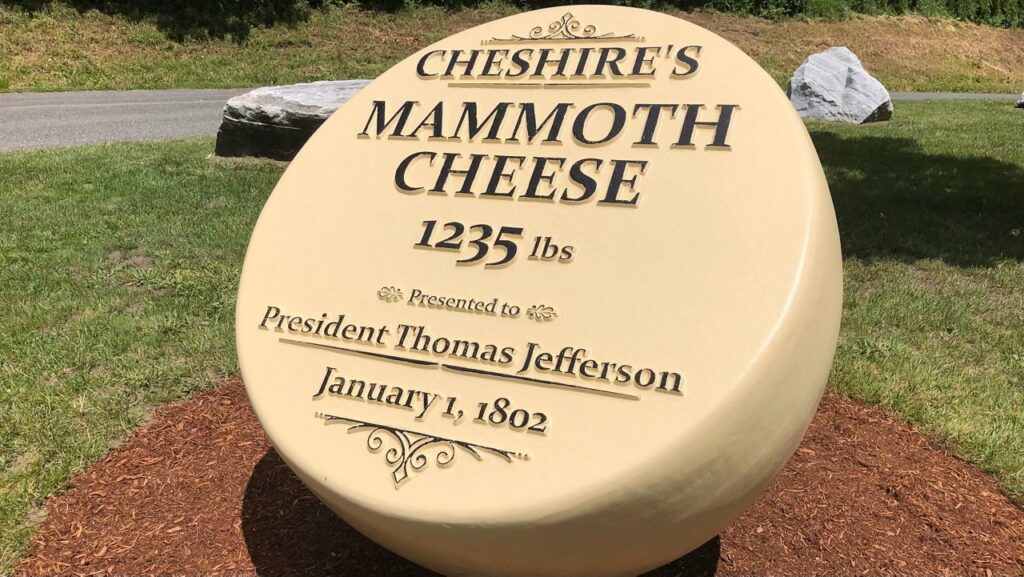Life-size replica of Cheshire’s (Massachusetts) Mammoth Cheese that was presented to President Thomas Jefferson at the White House, January 1, 1802. Weighing some 1,235 pounds, the big cheese was a gift to celebrate Jefferson’s doctrine of separation of church and state.
I read recently that a Spanish [cabrales blue cheese](http://cheese.com/cabrales/) has [sold at auction ](https://www.surinenglish.com/spain/30000-euros-for-kilos-this-spanish-cheese-20230830123012-nt.html)for more than $32,000. The 4.8 pound wheel was created by Guillermo Pendás at a family factory in Los Puertos. It was aged in a mountain cave at Asturias in northern Spain. The cheese was named best Cabrales cheese at Las Arenas’ 51st annual cheese competition.
Diamonds are forever, but a cheese is classified among the perishables. Under the right circumstances you can age certain cheeses a long time, but at some point, its only value is in eating it. That’s $32,000 down the … let’s say drain. The award-winning cheese was purchased by Iván Suárez, the owner of the [Llagar de Colloto](http://www.llagardecolloto.es/) restaurant near Oviedo (northern Spain).
Spanish cabrales blue cheese. ([Wikimedia Commons](https://commons.wikimedia.org/wiki/File:Cabrales.jpg))
I’ve had some very fine cheeses on a barge on the [Canal du Midi](https://whc.unesco.org/en/list/770/) in southern France, and of course I deplore American cheeses, along with American bread, American olives, and other things (like tomatoes) that we manipulate for long shelf life rather than deliciousness. I’ve made some goat cheese in my day, back when I was a western Kansas goat farmer — perhaps hobby farmer would be more precise. My friend Patti Perry was a sadist. She gave my wife and me two dairy goats for a wedding gift and a cheese press. Here’s an insight about keeping dairy animals. They just keep producing milk! On the first day we had two quarts of milk. By the third day the accumulated total was two gallons. By a month later we were drowning in goat milk. We could not sell it. We gave it away to anyone who would take it. We spent a lot of time convincing new parents that their children were probably cow-milk intolerant. We fed pigs. We made yogurt. But within a short time, we were drowning in goat milk. We finally just left the state.
## **Meanwhile Back at Thomas Jefferson’s White House**
The prize Spanish cheese reminds me of Thomas Jefferson’s mammoth cheese. To celebrate Jefferson’s doctrine of separation of church and state, an enlightened reverend named [John Leland of the Cheshire Baptist Church](https://wiltonhistorical.org/2017/09/thomas-jefferson-mammoth-cheese/) in Cheshire, Massachusetts, organized local farmers to donate milk to produce a massive cheese for the third President. The 1,235-pound cheese was delivered “in a wagon drawn by six horses” to the White House on January 1, 1802. Leland claimed that 900 cows — none of them Federalist cows — had contributed to the cheese, which had a diameter of 4 feet and a depth of 15 inches. Affixed to it was Jefferson’s motto: “Rebellion to Tyrants is Obedience to God.”
The cheese was so heavy and so large that the logistics of transporting it from Massachusetts to the District of Columbia (386 miles by land, more by water) represented a heavier burden than the cheese itself. Cheshire had to hire a sleigh to get it to a barge on the Hudson River. After floating down the Hudson to New York City, the cheese was loaded onto a sloop en route to Baltimore. At Baltimore it was loaded onto a stout wagon for the last leg of its epic journey.
*“Ode to the Mammoth Cheese ”* a [nine-stanza poem](https://wiltonhistorical.org/2017/09/thomas-jefferson-mammoth-cheese/) presented to Thomas Jefferson by Thomas Kennedy.
There is even a Paul Revere in this story. The teamster who delivered the cheese to Washington, D.C., hastened to the White House ahead of the gift to warn Mr. Jefferson. When he was shown into the President, he said, “Say, there’s a whopping big cheese come from Cheshire. Knowing it might be a surprise I came to prepare you.” When Jefferson asked his name, the teamster replied, “Fredrick Dunham at your service. I brought down the cheese myself. No small job but I did it. It’s a likely cheese and brought by a likely man, if I do say so.” Jefferson was charmed.
The Reverend Leland delivered a short address at the White House on New Year’s Day, under the title, “The Greatest Cheese in America for the Greatest Man in America.” During his visit, Leland also delivered a sermon in the nation’s capital, which President Jefferson attended. Reverend Leland’s Biblical text was from Matthew 12:42, “And behold a greater than Solomon is here.” This was laying it on a little thick, the kind of praise that made Federalists gag.
Once the ceremonials were over, there was nothing left to do but sample the cheese. Here is an eyewitness report:
“*The steward of the White House then, on a signal from the president, advanced with a huge and glittering knife and carved the monster cheese in the presence of the president and cabinet, foreign diplomats and many distinguished men and women of ancient note. Its color was a beautiful annotto \[sic, an orange-red\], somewhat variegated in shade owing to the mixture of so many different curds, and it was the object of the greatest curiosity. Great slices were served up with bread to the president, cabinet, diplomatic representatives in the order of their rank and station, and to others, until all had been feasted*.”
Jefferson’s detractors regarded him as a bubble-headed crackpot and particularly ridiculed his fascination with the mastodon and the woolly mammoth (that era’s “dinosaurs”). They immediately began to call it the Mammoth Cheese. In fact, historians of the English language say that this was the first time “mammoth” was used as an adjective.
Reverend Leland was an abolitionist. In the accompanying letter to the slave-holding president, the people of Cheshire declared that “the cheese was procured by the personal labor of freeborn farmers with the voluntary and cheerful aid of their wives and daughters, without the assistance of a single slave.” Ouch. Probably Jefferson would have said he agreed with both the sentiment and the implied criticism. He would have written one of his characteristic “Nobody wishes more than I …” letters about the eventual eradication of slavery from American life. But not quite yet.
Jefferson was a true small-r republican. Not wishing to accept gifts from the American people or others to avoid even the slightest appearance of conflict of interest, Jefferson promptly sent the people of Cheshire a cheque for $200. That comes to more than $4,000 today. No wonder Jefferson died bankrupt.
Reports on the quality of the cheese vary. As you might expect, Jefferson’s Republicans pronounced it delicious, and the Federalists declared that it was inedible. When your goal is size not quality, you are probably not going to win any culinary awards. The record is a little uncertain about how long the cheese occupied the White House. One report has it still “aging” as late as New Year’s Day 1805. Other accounts confirm that it was still being served at public occasions as late as 1803. One report says that a large chunk (if that is the correct technical term) was presented to Congress in March 1804. I’ve read accounts of members of Congress coming to dine with Jefferson quietly asking his aides if they could be ushered in to see the famous cheese. Although White House staff dutifully and repeatedly discarded the rancid outside parts of the decaying cheese, thus seriously reducing its enormous bulk, some of it was eventually dumped into the Potomac.
Early 19th century drawing of a Mammoth. (WikiCommons/Public Domain)
The Federalists had a field day with the whole incident. A Mammoth Cheese in the Mammoth Room (i.e., East Room) of the White House for the Mammoth President, who believed that the Woolly Mammoth might still be grazing on the Serengeti of Montana. Jefferson’s blank vocabulary grid that he sent with Meriwether Lewis in 1804 includes the word Mammoth, in the hopes that Lewis would encounter a tribe that had a living memory of the great quadruped.
After the New Year’s Day festival of 1802, one Federalist newspaper wrote:
“*No circumstance which has attended the Mammoth Cheese is so strange and ridiculous, as the sending it under the convoy of John Leland, a clergyman of the Baptist persuasion. He was probably the penman too of the wonderful address to the President on the presentation of the Cheese. That a minister of the gospel should leave the duties of his office, travel several hundred miles, undergo ‘perils of waters, perils of robbers, and perils in the city,’ merely to guard a cheese, one knows not whether to laugh at the sight, or be filled with indignation at the prostitution of his profession. One would think that his brains were either made of curds, or that they had become maggots. … A man who can so far depart from the propriety and dignity of the ministerial character, ought to be divested of it, and suffered to follow that to which his talents seem to have a fitter, and his inclination leads him, the business of a CHEESEMONGER*.”
So, on the political front, nothing has changed since 1802!
---
## ***Discover more on these topics at Listening to America***
[Thomas Jefferson](https://ltamerica.org/tag/thomas-jefferson/ "34 topics")[Sports](https://ltamerica.org/tag/sports/ "2 topics")[U.S. Constitution](https://ltamerica.org/tag/u-s-constitution/ "1 topics")[Theodore Roosevelt](https://ltamerica.org/tag/theodore-roosevelt/ "16 topics")[Space Exploration](https://ltamerica.org/tag/space-exploration/ "8 topics")[U.S. Presidents](https://ltamerica.org/tag/u-s-presidents/ "71 topics")[The Constitution](https://ltamerica.org/tag/the-constitution/ "1 topics")[Oppenheim](https://ltamerica.org/tag/oppenheim/ "0 topics")[Steinbeck Travels](https://ltamerica.org/tag/steinbeck-travels/ "75 topics")[Water in the West](https://ltamerica.org/tag/water-in-the-west/ "24 topics")[Pennsylvania](https://ltamerica.org/tag/pennsylvania/ "1 topics")[Reading](https://ltamerica.org/tag/reading/ "1 topics")[Utah](https://ltamerica.org/tag/utah/ "11 topics")[North Carolina](https://ltamerica.org/tag/north-carolina/ "3 topics")[New York](https://ltamerica.org/tag/new-york/ "8 topics")[State Parks](https://ltamerica.org/tag/state-parks/ "2 topics")[North Dakota](https://ltamerica.org/tag/north-dakota/ "53 topics")[New Mexico](https://ltamerica.org/tag/new-mexico/ "3 topics")[William Shirer](https://ltamerica.org/tag/william-shirer/ "1 topics")[Wyoming](https://ltamerica.org/tag/wyoming/ "4 topics")[Road Trips](https://ltamerica.org/tag/road-trips/ "18 topics")[South Dakota](https://ltamerica.org/tag/south-dakota/ "16 topics")[Virginia](https://ltamerica.org/tag/virginia/ "7 topics")[Rivers](https://ltamerica.org/tag/rivers/ "3 topics")[Rome](https://ltamerica.org/tag/rome/ "1 topics")[New England](https://ltamerica.org/tag/new-england/ "1 topics")[Oppenheimer](https://ltamerica.org/tag/oppenheimer/ "1 topics")[Thoreau](https://ltamerica.org/tag/thoreau/ "5 topics")[Texas](https://ltamerica.org/tag/texas/ "4 topics")[Podcast](https://ltamerica.org/tag/podcast/ "1 topics")[Tennessee](https://ltamerica.org/tag/tennessee/ "1 topics")[Walden](https://ltamerica.org/tag/walden/ "1 topics")[Wisconsin](https://ltamerica.org/tag/wisconsin/ "0 topics")[Washington](https://ltamerica.org/tag/washington/ "2 topics")[Republics](https://ltamerica.org/tag/republics/ "1 topics")[Video](https://ltamerica.org/tag/video/ "51 topics")[Oregon](https://ltamerica.org/tag/oregon/ "4 topics")[Ohio](https://ltamerica.org/tag/ohio/ "2 topics")[Republic](https://ltamerica.org/tag/republic/ "0 topics")[Poetry](https://ltamerica.org/tag/poetry/ "1 topics")[paintings](https://ltamerica.org/tag/paintings/ "0 topics")[Travel](https://ltamerica.org/tag/travel/ "1 topics")[South Carolina](https://ltamerica.org/tag/south-carolina/ "1 topics")[north daktoa](https://ltamerica.org/tag/north-daktoa/ "0 topics")[Vermont](https://ltamerica.org/tag/vermont/ "1 topics")
**Categories:** Features
**Tags:** Massachusetts, Thomas Jefferson, U.S. Presidents
---
### [Some Thoughts on the Near-Extinction of the Buffalo](https://ltamerica.org/some-thoughts-on-the-near-extinction-of-the-buffalo/)
**Published:** October 17, 2023
**Author:** Clay Jenkinson
**Excerpt:** Ken Burns’ new documentary The American Buffalo airs this week on PBS. Like everyone I’m eager to see how he explores the history surrounding this iconic creature.
**Content:**
## Ken Burns’ new documentary *The American Buffalo* airs this week on PBS. Like everyone I’m eager to see how he explores the history surrounding this iconic creature.
A lone buffalo faces an early winter snowfall in Yellowstone National Park. (Photo by Clay Jenkinson)
Like everyone else, I will be eager to see how [Ken Burns’ new documentary on the buffalo](https://www.pbs.org/show/the-american-buffalo/) will explore the issue. I’m in the film. How much, I do not know. I’m told modestly in the first episode and then quite a bit in the second. We’ll see. By the time you read this, I will have seen the first episode (2 hours) and have a better sense of his purposes and priorities. I’m not even sure what I talked about in my interview for the film. It was several years ago.
I’m planning a drinking game. I hope to get blotto. More likely, a slight buzz of joy and pride and longing.
Yesterday, Sunday, October 15, I helped lead a group of well-wishers to Theodore Roosevelt’s [Elkhorn Ranch](https://www.nps.gov/thro/learn/historyculture/elkhorn-ranch.htm), approximately 35 miles north of Medora, North Dakota. This was one of two ranches Roosevelt developed in the Little Missouri River Valley. He built a 30×60’ cottonwood ranch headquarters there. It’s gone, except for the foundation stones that mark its perimeter. And thank goodness, there is no proposal to rebuild the house on the site. It is one of America’s greatest shrines to conservation. A few cottonwood trees surrounding the house footprint might have been there when TR ranched and played cowboy in Dakota Territory (1883-1890).
Someone asked me how well buffalo do during the harsh Dakota winters. I answered that they have evolved over many millennia to be hearty enough to endure the long, windy, raw winters and thrive in them. They don’t move any more than they have to during the winter. This saves critically essential energy. They paw the snow away to get to what grass there is. They have thick protective skulls and grow long, dense hair (fur) to protect their vital body heat. Instead of turning away from the Arctic blasts of intense cold or the snow pressing in from the west, they turn into the storm and stand as still as possible for as long as it rages. Domestic cattle are wimps by comparison.
No wonder the Lakota and other Native Nations regarded the buffalo as sacred. It was not a quick-thinking and witty creature but had a profound baseline wisdom. It was the central species of Great Plains life for Native Americans. It supplied food, shelter, clothing, tools, agricultural implements, cooking pots, suitcases, fly swatters, glue, and more. And it was the center of Native American religious life. The Lakota myth of the White Buffalo Calf Woman is its central origin story. When the settler colonialists (American frontiersmen and their allies) extirpated nearly the entire buffalo population (once 35 or more million, eventually fewer than 500 critters), they destroyed the Native equivalent of the construction industry, the hardware store, the grocery store, the clothing industry, and the church or temple. They knew what they were doing. They were knocking out the structural pillars of the Native American world.
Fortunately, a few far-seeing individuals, including Theodore Roosevelt and William Hornaday, stepped in to save the buffalo from extinction. Native Americans played an important role, but most tribes were trying to survive during this period (1886-1930), and they were largely helpless to engage in rescue conservation initiatives. (It will be interesting to see how Ken Burns and his partner Dayton Duncan handle this). Today, there are more than half a million buffalo in North America. And the numbers are growing. Most western Native Nations now have buffalo herds.
I’m fortunate to live in the state of North Dakota. Any North Dakotan can see a free-ranging buffalo on any given day. You need to get yourself either to Theodore Roosevelt National Park, north or south unit (but not the Elkhorn unit), or to the MHA Indian Reservation in west central N.D. or the Standing Rock Lakota Reservation south of Bismarck on the Missouri spanning the N.D./S.D. border. And a few other places.
As I drove home yesterday in a strange and mysterious fog, I saw three buffalo standing amid a prairie-dog town looking as still as monuments. In a sense, they are. It would have been an ideal time to photograph them in that glorious state, but I had miles to go before I slept and promises to keep. I’m providing here a similar photograph of buffalo in “winter” (this was October) in Yellowstone National Park. Again, I am struck by their massive size, majesty, and placidity.
Buffalo in Yellowstone National Park. Once numbering the the tens of millions there are about 500,000 now in North America. (Photo By Clay Jenkinson)
## **Three Observations on the Near-Extinction of the Buffalo**
As I wait to see what Ken Burns has created, I want to stress three thoughts about the near-extinction of the buffalo.
First, it may have been the de facto policy of the U.S. government to exterminate the buffalo as a way of ending Native resistance to frontier intrusion, but it was never the overt policy of the government. Everyone understood that the best way to “pacify” plains tribes was to undercut their entire economy — their entire lifeway — by killing off at least the great majority of buffalo. U.S. Army officers spoke openly about the benefits the disappearance of the buffalo would bring. They encouraged the slaughter, but it is important to remember that the extermination of the buffalo was never formally adopted as U.S. Indian Policy.
Second, it is easy enough to condemn the wanton killing of buffalo by men (and some women) traveling over the western railroads. To our mind, it seems unconscionable. Individuals who committed this crime against Nature were encouraged to shoot at buffalo out of Pullman windows with rifles often provided by the railroads. They were told that it was perfectly acceptable to do so. They were told that the numbers of buffalo were so large as to be practically infinite and that killing a few dozen here and there would not make any material difference and that every dead buffalo hastened the time when “peace would come to the plains.” One of the severest problems in the history of America is the Myth of Endless Abundance. If there is an infinity of trees, why restrict the timber corporations? If there is an infinity of salmon, let the market decide how many to harvest each year. If there is an infinity of passenger pigeons, take your shot. If there is an infinity of fertile land to the west, why practice genuine stewardship in Virginia or Pennsylvania? There will always be new land in the West, and the nation’s government will help extinguish Native title to the lands in question. Little boys even now routinely kill pocket gophers or shoot dozens of prairie dogs in a single day with .22 caliber rifles. It is a relatively easy leap to the most majestic quadruped of North America.
The sad and banal fact is that the buffalo’s disappearance had more to do with opportunistic capitalism than any philosophy of western expansion. As historian [Sara Dant](https://www.weber.edu/History/saradant.html) puts it in *Losing Eden*, “Industrial America prized bison leather for making machine belts to power steam engines, as well as for furniture upholstery, lap robes for carriages, flannel-lined coats, shoes, and so on, and aggressive hide hunters and increasingly market-oriented Indians fanned out across the plains in pursuit of these lucrative animals.” At first, the buffalo were prized by frontiersmen for their meat. Then, their robes. Then, in the 1870s, new industrial techniques were developed (first in England) to fashion leather machine belts out of buffalo hides. This was the great industrial leap forward in buffalo extraction. Now, without government intervention, it was only a matter of time. Legislative attempts to restrain the slaughter, including those requiring the buffalo killer to harvest the meat from the carcass, were defeated, tabled, or vetoed throughout the western states and in Congress. Such tepid laws as were enacted were seldom enforced.
America has always been about the extraction of wealth from the natural resources of the West — those below the surface, those on the surface, and those above the surface. In America, virtually everything is fungible. From the dis-enchantment of the world that came with the Scientific Revolution, Anglo-Europeans looked at everything in Nature as potentially an object of wealth-creation, irrespective of its beauty, ecological importance, or right to exist.
The buffalo was a nuisance to American-style civilization. It was a lifeline for Native America. But the incentive to kill them all was pure plain profit-seeking.
Combine human acquisitiveness with American zeal for extraction with the law vacuum of the frontier with an acquiescent national government with the juggernaut of industrial extraction tools (the tractor, bulldozer, chain saw, 18-wheel truck, the railroad, and the Sharps rifle), and you are going to butt up against extinction. How many redwood trees would exist in America if local, state, and national conservation measures did not protect them?
You could probably cut down as many trees as you wished forever if your only tool was an axe, but once steam and diesel power came to the forest, the “skinning of the earth,” as Theodore Roosevelt called it, was entirely possible. Roosevelt rightly realized that only government supervision of the public forests could bring something like a sustained yield to the American timber industry. There were once so many salmon in the Columbia River basin that nobody thought they could ever be endangered.
I hope Theodore Roosevelt gets the praise he deserves in Ken Burns’ documentary. I know I emphasized his outlook, his role, and his greatness in the saving of the buffalo, which was only one element of the vast conservation agenda he brought to his time in power: 230 million acres of National Forest, National Monument, National Game Preserve, National Bird Sanctuary (National Wildlife Refuge), and National Park, the most significant conservation achievement of any president. Would the buffalo have been saved without Theodore Roosevelt? Probably, but not certainly.
The largest herd of buffalo in America now is at Yellowstone National Park, approximately 6,000. But the great achievement of the 21st century will be the [American Prairie Reserve](https://americanprairie.org) in east-central Montana. The APR already has ca. 3,500 buffalo, with a goal of 10 or more times that number. It’s a marvelous public-private partnership that may give the world a 3.5 million-acre buffalo commons on the Upper Missouri. If they succeed — and they almost certainly will — it will be one of the most enlightened achievements in American history.
Thank goodness for Theodore Roosevelt — William Hornaday, Scotty Philip, Charles Goodnight, Samuel Walking Coyote, and even William F. Cody. And thank goodness for Ken Burns and Dayton Duncan of Florentine Films.
---
## ***Discover more on these topics at Listening to America***
[Pennsylvania](https://ltamerica.org/tag/pennsylvania/ "1 topics")[State Parks](https://ltamerica.org/tag/state-parks/ "2 topics")[Water in the West](https://ltamerica.org/tag/water-in-the-west/ "24 topics")[U.S. Presidents](https://ltamerica.org/tag/u-s-presidents/ "71 topics")[Rome](https://ltamerica.org/tag/rome/ "1 topics")[New York](https://ltamerica.org/tag/new-york/ "8 topics")[William Shirer](https://ltamerica.org/tag/william-shirer/ "1 topics")[U.S. Constitution](https://ltamerica.org/tag/u-s-constitution/ "1 topics")[Road Trips](https://ltamerica.org/tag/road-trips/ "18 topics")[Texas](https://ltamerica.org/tag/texas/ "4 topics")[The Constitution](https://ltamerica.org/tag/the-constitution/ "1 topics")[north daktoa](https://ltamerica.org/tag/north-daktoa/ "0 topics")[Oppenheim](https://ltamerica.org/tag/oppenheim/ "0 topics")[Thomas Jefferson](https://ltamerica.org/tag/thomas-jefferson/ "34 topics")[Reading](https://ltamerica.org/tag/reading/ "1 topics")[South Carolina](https://ltamerica.org/tag/south-carolina/ "1 topics")[Wisconsin](https://ltamerica.org/tag/wisconsin/ "0 topics")[Tennessee](https://ltamerica.org/tag/tennessee/ "1 topics")[Republic](https://ltamerica.org/tag/republic/ "0 topics")[Wyoming](https://ltamerica.org/tag/wyoming/ "4 topics")[Theodore Roosevelt](https://ltamerica.org/tag/theodore-roosevelt/ "16 topics")[New Mexico](https://ltamerica.org/tag/new-mexico/ "3 topics")[Utah](https://ltamerica.org/tag/utah/ "11 topics")[South Dakota](https://ltamerica.org/tag/south-dakota/ "16 topics")[Thoreau](https://ltamerica.org/tag/thoreau/ "5 topics")[Rivers](https://ltamerica.org/tag/rivers/ "3 topics")[Travel](https://ltamerica.org/tag/travel/ "1 topics")[Podcast](https://ltamerica.org/tag/podcast/ "1 topics")[Space Exploration](https://ltamerica.org/tag/space-exploration/ "8 topics")[Vermont](https://ltamerica.org/tag/vermont/ "1 topics")[Ohio](https://ltamerica.org/tag/ohio/ "2 topics")[Steinbeck Travels](https://ltamerica.org/tag/steinbeck-travels/ "75 topics")[Poetry](https://ltamerica.org/tag/poetry/ "1 topics")[Walden](https://ltamerica.org/tag/walden/ "1 topics")[Oppenheimer](https://ltamerica.org/tag/oppenheimer/ "1 topics")[Virginia](https://ltamerica.org/tag/virginia/ "7 topics")[Washington](https://ltamerica.org/tag/washington/ "2 topics")[Republics](https://ltamerica.org/tag/republics/ "1 topics")[paintings](https://ltamerica.org/tag/paintings/ "0 topics")[Oregon](https://ltamerica.org/tag/oregon/ "4 topics")[Video](https://ltamerica.org/tag/video/ "51 topics")[North Dakota](https://ltamerica.org/tag/north-dakota/ "53 topics")[Sports](https://ltamerica.org/tag/sports/ "2 topics")[New England](https://ltamerica.org/tag/new-england/ "1 topics")[North Carolina](https://ltamerica.org/tag/north-carolina/ "3 topics")
**Categories:** Features
**Tags:** National Parks, Native Americans, North Dakota
---
### [Theodore Roosevelt's Literary Mastery](https://ltamerica.org/theodore-roosevelts-literary-mastery/)
**Published:** October 3, 2023
**Author:** Clay Jenkinson
**Excerpt:** Roosevelt was a serious writer and one of America’s great readers — in addition to being the 26th president of the United States, the Governor of New York, Police Commissioner of New York, a U.S. Civil Service Commissioner, and the hero of San Juan Hill.
**Content:**
## Roosevelt was a serious writer and one of America’s great readers — in addition to being the 26th president of the United States, the Governor of New York, Police Commissioner of New York, a U.S. Civil Service Commissioner, and the hero of San Juan Hill.
Theodore Roosevelt was both a prolific reader and writer. The British biographer, Edmund Morris, once said of him “I wonder if you Yanks will ever have another president who can write like this.”
We all know how much Theodore Roosevelt wrote — somewhere between 35 and 40 books, depending on how you count, 155,000 letters, innumerable op-ed pieces, articles, and newspaper columns. He did all of this while also pursuing a breakneck life of adventure and strenuosity — hunting on four continents, giving a zillion stump speeches on his many journeys through America, leading friends and family on his punishing point-to-point hikes, and rowing in the bay with his wife Edith, not to mention climbing the Matterhorn on his honeymoon.
Theodore Roosevelt was a serious writer and intellectual and one of America’s great readers — in addition to being the 26th president of the United States, the Governor of New York, Police Commissioner of New York, a U.S. Civil Service Commissioner, and the hero of San Juan Hill.
How he did all of this — almost entirely without the help of ghost writers — is hard to figure. When did he sleep?
Roosevelt at his writing desk in Cuba during the Spanish-American War.
Take the letters alone. Roosevelt lived 60 years — 155,000 letters comes to more than 2,500 per year. Surely the great bulk of those were dictated to secretaries, including William Loeb, while TR served as president of the United States. Even, so that’s 6.8 letters per day, year in and year out. Many of the letters can be characterized as notes: thanks for the rifle; Edith and I hope you’ll come to Sagamore on Thursday. But the great bulk of his correspondence is rich in length and detail. When he returned from his 1903 presidential romp around America, he wrote his Secretary of State John Hay a letter of 36 typewritten pages, recounting his 14,000-mile journey, full of real and often exaggerated tales of his time on the Dakota frontier back in the 1880s.
But what is most impressive is how well he wrote. Several passages in his three books about his experiences in the badlands of Dakota Territory, the great chapter “In Cowboy Land” in his 1913 *Autobiography*, and many letters written in and about his Dakota experiences, represent the best that has ever been written on the subject. And the hard thinking *behind* the muscular and straightforward prose was prescient. He understood that open range ranching represented an ephemeral stage in the development of the western plains, soon to be displaced by homesteaders. He recognized that the cattle barons were overgrazing the commons and that some form of regulation — preferably local grazing associations — would be necessary to sustain the grasslands. He realized that the once-infinite buffalo herds of the West were incompatible with any significant level of white settlement. And he wrote about all of that in clear, forceful, often magical prose.
I remember hearing Roosevelt’s great biographer Edmund Morris speaking in 2007 at the dedication of the U.S. Forest Service’s acquisition of the east range of the Elkhorn Ranch north of Medora. In the Burning Hills Amphitheater on a hot summer day, the elegant Kenya-born Morris, looking up at the crowd through his half-glasses, read the opening passage from “In Cowboy Land,” in which Roosevelt wrote, “It was still the Wild West in those days, the Far West, the West of Owen Wister’s stories and Frederic Remington’s drawings, the West of the Indian and the buffalo-hunter, the soldier and the cow-puncher. … It was a land of vast silent spaces, of lonely rivers, and of plains where the wild game stared at the passing horseman.”
After beautifully reading the passage in his impeccable British colonial accent, Morris looked up and said, “I wonder if you Yanks will ever have another president who can write like this.” A murmur swept through the audience, not sure whether to be offended or to applaud the undoubted truth of what Morris said.
A great president who was also a great writer. Who else? Jefferson, Lincoln, possibly JFK.
> **“I wonder if you Yanks will ever have another president who can write like this.”**
>
> **Biographer Edmund Morris**
How did he write so much? The key to writing books is perseverance, doggedness, and discipline. The British curmudgeon Dr. Johnson said, “a man may write at any time, if he will set himself doggedly to it.” That was Roosevelt. He wrote his major speeches weeks before he had to deliver them. On safari and on his life-threatening exploration of the River of Doubt, he capped off days of pain and sheer exhaustion by writing up the latest adventures in triplicate with a thick pencil. Because he was not writing for literary effect, not attempting complex Ciceronian sentences, not experimenting with figurative language, not straining at purple prose, but just getting it all down on paper, he never suffered from writer’s block, never failed to meet his deadlines.
He also needed the money — at least until he became an accidental president in September 1901. Dr. Johnson also said, “No man but a blockhead ever wrote except for money.” Although TR let his friends and family know that he needed to publish books to support his lifestyle, his six children, and his beloved home at Sagamore Hill, he would probably have been a prolific author if he had been rich beyond monetary concerns. He had a lot to say. His confidence was enormous. He wanted to pull the American people into the 20th century, onto the world stage, and he knew that his words were an essential tool of his leadership, at home and abroad.
Roosevelt did not think of himself as a great writer. He told his closest friend Henry Cabot Lodge that he was essentially a journeyman — a “literary feller.” Reviewing TR’s *Gouverneur Morris* in 1887, *The New York Times* said, “Mr. Roosevelt has no style as style is understood,” but “his meaning is never to be mistaken.” Roosevelt’s prose was muscular, straightforward, and lucid. He piled sentence upon sentence until he had completed his task. What perhaps he did not recognize was that it was the unadorned simplicity and virility of his prose that makes him a great writer. He was practicing a square deal with the English language. He knew his adventures would carry the prose, not the other way around. He always regarded himself as an average man with a huge internal furnace. He would make up in discipline and exuberance what he lacked in literary talent. He believed his “averageness” gave him unique rapport with the vast bulk of the American people.
A dedicated reader could probably work through all of Roosevelt’s works in a single year. That would be worth doing, with several Excel charts open through the process. One would compile a list of every metaphor, simile, or rhetorical flourish he employed in the books and letters. It would, I believe, be a short list. Another would list the stories and arguments he repeats numerous times. A third might be a chart of his exaggerations of the number of years he spent on the Dakota frontier. Was it three, five, eight, 10, or 15 as he once claimed? (It was three.) A fourth would list all the books this most bookish of presidents referred to in his writings. Roosevelt spends more time writing about the books he is reading than any historical figure I know — more than Thomas Jefferson, America’s first great bibliophile, more than John Adams, who seems to have read more than Jefferson.
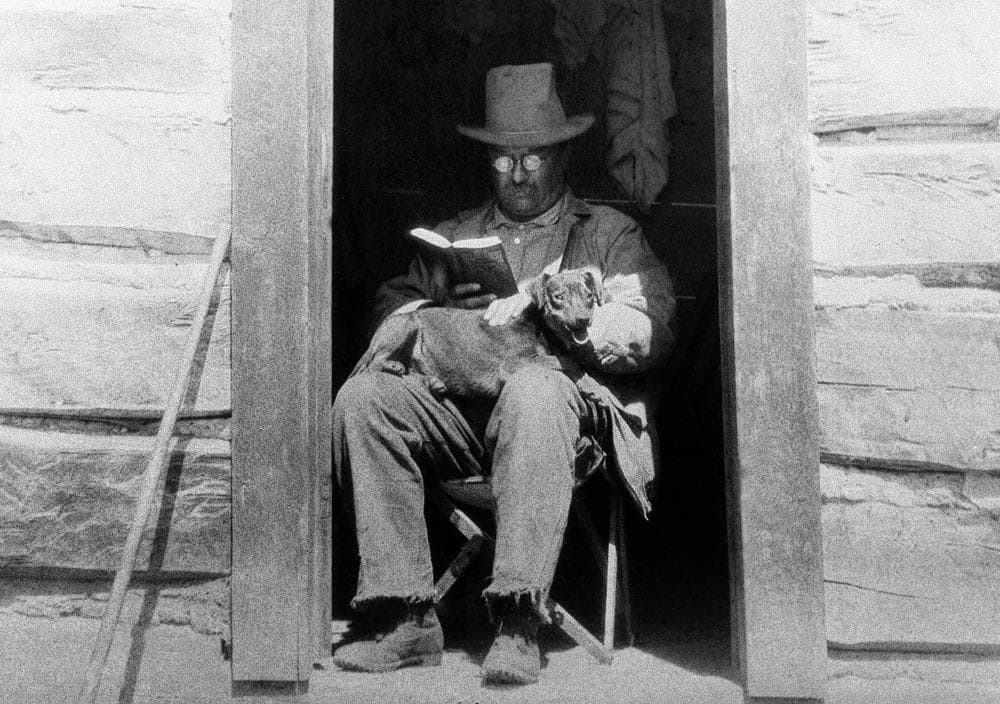Wherever he found himself Teddy Roosevelt was reading or writing.
He seems to have read something like a book a day. In an astonishing letter to Nicholas Murray Butler on November 4, 1903, among other things, President Roosevelt tried to list the books he had read in the last two years. The total is staggering: scores of books, some of them multi-volume histories of faraway places, classics of Greek and Latin literature, all of the Greek historian Polybius, Herodotus, Macaulay’s essays, Hay and Nicolay’s multi-volume biography of Lincoln, a number of Shakespeare’s plays, portions of the German epic *Nibelungenlied*. And on and on and on. While serving as the most energetic president of the United States.
Reading all of Roosevelt would be a strenuous project illuminating the life and mind of the most strenuous of presidents. Contrary to conventional wisdom, I believe one’s respect for Roosevelt would be greatly enhanced by such a project. One essential purpose of the Theodore Roosevelt Center at Dickinson State University is to insist that Roosevelt’s greatness lies as much in his mind, his thought, his writing, his understanding of the world’s literature, and his grasp of history and world affairs, as in his many public and private adventures. He said, “Happiness … lies in the joy of achievement, in the thrill of creative effort.”
On August 24, 1884, out on the trail somewhere near the Powder River in Wyoming, TR took the time to write to his new friend Henry Cabot Lodge. Among other things, the 900-word letter discussed a veto by Grover Cleveland of New York; the many requests TR was getting to give political speeches; the strenuous joys of frontier life; his dislike of the mugwumps; critical reviews of Lodge’s latest book *Studies in History*; TR’s belief that Lodge was wrong to blame Cornwallis for the debacle at Yorktown; the character of George III; and his antagonism to the Republican presidential candidate James Blaine. But here’s what is chiefly interesting. Here’s the opening paragraph of the letter:
My dear Lodge, You must pardon the paper and general appearance of this letter, as I am writing out in camp, a hundred miles or so from any house; and indeed whether this letter is, or is not, ever delivered depends partly on Providence, and partly on the good will of an equally inscrutable personage, either a cowboy or a horse thief, whom we have just met, and who has volunteered to post it — my men are watching him with anything but friendly eyes, as they think he is going to try to steal our ponies.”
That’s a true man of letters. That’s the greatness of Theodore Roosevelt.
---
## ***Discover more on these topics at Listening to America***
[South Carolina](https://ltamerica.org/tag/south-carolina/ "1 topics")[Oppenheimer](https://ltamerica.org/tag/oppenheimer/ "1 topics")[Thoreau](https://ltamerica.org/tag/thoreau/ "5 topics")[Poetry](https://ltamerica.org/tag/poetry/ "1 topics")[U.S. Presidents](https://ltamerica.org/tag/u-s-presidents/ "71 topics")[The Constitution](https://ltamerica.org/tag/the-constitution/ "1 topics")[Rome](https://ltamerica.org/tag/rome/ "1 topics")[Theodore Roosevelt](https://ltamerica.org/tag/theodore-roosevelt/ "16 topics")[Oppenheim](https://ltamerica.org/tag/oppenheim/ "0 topics")[William Shirer](https://ltamerica.org/tag/william-shirer/ "1 topics")[north daktoa](https://ltamerica.org/tag/north-daktoa/ "0 topics")[South Dakota](https://ltamerica.org/tag/south-dakota/ "16 topics")[Wyoming](https://ltamerica.org/tag/wyoming/ "4 topics")[Washington](https://ltamerica.org/tag/washington/ "2 topics")[Sports](https://ltamerica.org/tag/sports/ "2 topics")[North Dakota](https://ltamerica.org/tag/north-dakota/ "53 topics")[Rivers](https://ltamerica.org/tag/rivers/ "3 topics")[Virginia](https://ltamerica.org/tag/virginia/ "7 topics")[Steinbeck Travels](https://ltamerica.org/tag/steinbeck-travels/ "75 topics")[Wisconsin](https://ltamerica.org/tag/wisconsin/ "0 topics")[Walden](https://ltamerica.org/tag/walden/ "1 topics")[Space Exploration](https://ltamerica.org/tag/space-exploration/ "8 topics")[Travel](https://ltamerica.org/tag/travel/ "1 topics")[New York](https://ltamerica.org/tag/new-york/ "8 topics")[U.S. Constitution](https://ltamerica.org/tag/u-s-constitution/ "1 topics")[Vermont](https://ltamerica.org/tag/vermont/ "1 topics")[Road Trips](https://ltamerica.org/tag/road-trips/ "18 topics")[paintings](https://ltamerica.org/tag/paintings/ "0 topics")[Utah](https://ltamerica.org/tag/utah/ "11 topics")[Republic](https://ltamerica.org/tag/republic/ "0 topics")[New England](https://ltamerica.org/tag/new-england/ "1 topics")[Ohio](https://ltamerica.org/tag/ohio/ "2 topics")[Podcast](https://ltamerica.org/tag/podcast/ "1 topics")[Oregon](https://ltamerica.org/tag/oregon/ "4 topics")[Tennessee](https://ltamerica.org/tag/tennessee/ "1 topics")[New Mexico](https://ltamerica.org/tag/new-mexico/ "3 topics")[Republics](https://ltamerica.org/tag/republics/ "1 topics")[Reading](https://ltamerica.org/tag/reading/ "1 topics")[Video](https://ltamerica.org/tag/video/ "51 topics")[State Parks](https://ltamerica.org/tag/state-parks/ "2 topics")[Water in the West](https://ltamerica.org/tag/water-in-the-west/ "24 topics")[Thomas Jefferson](https://ltamerica.org/tag/thomas-jefferson/ "34 topics")[Texas](https://ltamerica.org/tag/texas/ "4 topics")[North Carolina](https://ltamerica.org/tag/north-carolina/ "3 topics")[Pennsylvania](https://ltamerica.org/tag/pennsylvania/ "1 topics")
**Categories:** Features
**Tags:** Books, Theodore Roosevelt, U.S. Presidents
---
### [A Visit to the Center(s) of the Nation](https://ltamerica.org/a-visit-to-the-centers-of-the-nation/)
**Published:** September 26, 2023
**Author:** Dennis McKenna
**Excerpt:** Clay files a video report from the geographic center of the USA on the wind-swept plains outside of Belle Fourche, South Dakota.
**Content:**
*Clay reports from the geographic center of the USA on the wind-swept plains outside of Belle Fourche, South Dakota.* *(Video by Nolan Johnson)*Sign welcoming visitors to the geographic center of the U.S. (Photo Wikimedia)
As noted on a historical sign in town, Belle Fourche, South Dakota is the little-known and even less visited geographical center of the USA. The quiet village is about 30 miles north of better-known Sturgis, S.D., which draws 500,000 visitors to its famous motorcycle rally each summer.
Belle Fourche, whose name means “beautiful fork” in French, earned the distinction as the national bullseye in 1959 when Alaska and Hawaii joined the Union, shifting the country’s center some 500 miles northwest from its previous site in Lebanon, Kansas.
While Belle Fourche celebrates its national centrality with an impressive granite marker, the more accurate geographic center of the country sits modestly about twenty miles outside of town.
Clay, who wrote on the question of the heart of the nation (both literally and figuratively) in his latest book, *[The Language of Cottonwoods](https://a.co/d/75SA4Xi)*, recently visited Belle Fourche with Listening to America’s intrepid videographer and drone pilot Nolan Johnson.
An impressive marker noting the almost center of the country in Belle Fourche, South Dakota. (Photo by Clay Jenkinson)A simple cairn marks the more precise geographic location outside of town. (Photo by Clay Jenkinson)
---
## ***Discover more on these topics at Listening to America***
[Podcast](https://ltamerica.org/tag/podcast/ "1 topics")[Poetry](https://ltamerica.org/tag/poetry/ "1 topics")[Ohio](https://ltamerica.org/tag/ohio/ "2 topics")[Texas](https://ltamerica.org/tag/texas/ "4 topics")[Republic](https://ltamerica.org/tag/republic/ "0 topics")[north daktoa](https://ltamerica.org/tag/north-daktoa/ "0 topics")[Thomas Jefferson](https://ltamerica.org/tag/thomas-jefferson/ "34 topics")[Rivers](https://ltamerica.org/tag/rivers/ "3 topics")[Virginia](https://ltamerica.org/tag/virginia/ "7 topics")[Vermont](https://ltamerica.org/tag/vermont/ "1 topics")[New York](https://ltamerica.org/tag/new-york/ "8 topics")[Sports](https://ltamerica.org/tag/sports/ "2 topics")[U.S. Constitution](https://ltamerica.org/tag/u-s-constitution/ "1 topics")[Wisconsin](https://ltamerica.org/tag/wisconsin/ "0 topics")[Walden](https://ltamerica.org/tag/walden/ "1 topics")[Republics](https://ltamerica.org/tag/republics/ "1 topics")[Road Trips](https://ltamerica.org/tag/road-trips/ "18 topics")[Theodore Roosevelt](https://ltamerica.org/tag/theodore-roosevelt/ "16 topics")[U.S. Presidents](https://ltamerica.org/tag/u-s-presidents/ "71 topics")[Travel](https://ltamerica.org/tag/travel/ "1 topics")[South Carolina](https://ltamerica.org/tag/south-carolina/ "1 topics")[New England](https://ltamerica.org/tag/new-england/ "1 topics")[Reading](https://ltamerica.org/tag/reading/ "1 topics")[North Dakota](https://ltamerica.org/tag/north-dakota/ "53 topics")[Tennessee](https://ltamerica.org/tag/tennessee/ "1 topics")[Oppenheimer](https://ltamerica.org/tag/oppenheimer/ "1 topics")[The Constitution](https://ltamerica.org/tag/the-constitution/ "1 topics")[Thoreau](https://ltamerica.org/tag/thoreau/ "5 topics")[North Carolina](https://ltamerica.org/tag/north-carolina/ "3 topics")[South Dakota](https://ltamerica.org/tag/south-dakota/ "16 topics")[New Mexico](https://ltamerica.org/tag/new-mexico/ "3 topics")[Oregon](https://ltamerica.org/tag/oregon/ "4 topics")[William Shirer](https://ltamerica.org/tag/william-shirer/ "1 topics")[Water in the West](https://ltamerica.org/tag/water-in-the-west/ "24 topics")[Pennsylvania](https://ltamerica.org/tag/pennsylvania/ "1 topics")[Utah](https://ltamerica.org/tag/utah/ "11 topics")[Video](https://ltamerica.org/tag/video/ "51 topics")[Rome](https://ltamerica.org/tag/rome/ "1 topics")[Wyoming](https://ltamerica.org/tag/wyoming/ "4 topics")[Space Exploration](https://ltamerica.org/tag/space-exploration/ "8 topics")[Steinbeck Travels](https://ltamerica.org/tag/steinbeck-travels/ "75 topics")[State Parks](https://ltamerica.org/tag/state-parks/ "2 topics")[Oppenheim](https://ltamerica.org/tag/oppenheim/ "0 topics")[paintings](https://ltamerica.org/tag/paintings/ "0 topics")[Washington](https://ltamerica.org/tag/washington/ "2 topics")
**Categories:** Dispatches from the Road
**Tags:** Books, South Dakota
---
### [A Detour to the Home of American Writer Hamlin Garland](https://ltamerica.org/a-detour-to-the-home-of-american-writer-hamlin-garland/)
**Published:** August 1, 2023
**Author:** Clay Jenkinson
**Excerpt:** As I continued my drive and not far into South Dakota, I visited the homestead of the Pulitzer Prize winning author Hamlin Garland.
**Content:**
## Day One, Afternoon: Bismarck to Sioux Falls
A large rock and brass plaque mark the homestead of the noted Pulitzer Prize winning American writer Hamlin Garland. (Video by Clay Jenkinson)
*Leaving the Whitestone Hill battle site, Clay continues south to Sioux Falls in the afternoon, stopping* *at the one-time homestead of American author Hamlin Garland.*
As I continued my drive that day and not far into South Dakota, I visited the one-time homestead of the author Hamlin Garland. Hamlin Garland (1860-1940) wrote *Main-Travelled Roads, A Son of the Middle Border*, *Rose of Dutcher’s Coolly,* and much more. Garland received the [Pulitzer Prize](https://www.pulitzer.org/winners/hamlin-garland) in for biography in 1922. He grew up partly north of Aberdeen, South Dakota. In my view, *A Son of the Middle Border* is tied for best autobiography of someone from the Great Plains with Eric Sevareid’s *[Not So Wild a Dream](https://www.theatlantic.com/magazine/archive/1946/12/not-so-wild-a-dream/656120/)*. They are different but somehow linked. [Sevareid](https://www.britannica.com/biography/Eric-Sevareid), who became an iconic CBS news correspondent, was a gentle Nordic prophet. He grew up partly in North Dakota (Velva), left, and rarely ever returned, but he never got that small-town Midwestern friendliness out of his system. At the end of *Not So Wild a Dream*, which closes with the detonation of nuclear devices at Hiroshima and Nagasaki, Sevareid says maybe the world would be a better place if it were more like Velva, North Dakota. Even now, it is a surprising end and a tremendous endorsement of small-town life.
I diverted from my route to make the Garland pilgrimage. I had looked up the address a day earlier, so I got within a couple of miles before I started to slow down and keep my eye out. Keep your eye out for the sign! I was told. And there it was, a giant glacial boulder the size of an old VW sitting on a neatly manicured farmer’s front yard. And on it was a bronze plaque explaining that Garland lived here: “*Hamlin Garland, who rose to distinction in American letters, resided on this spot 1881-1884. Here stood the Garland homestead where he began his first book, Main Travelled Roads*.”
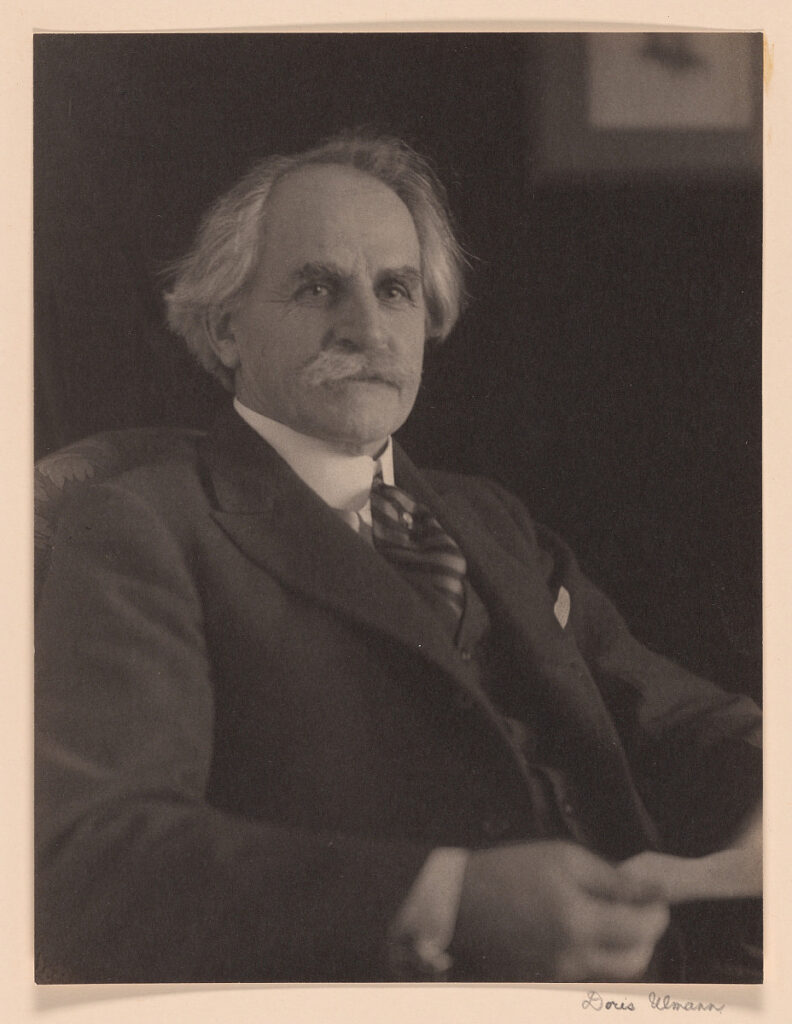Hamlin Garland, 1860 -1940. (National Portrait Gallery)
[*Main-Travelled Roads* ](https://www.goodreads.com/en/book/show/635241)(1891) is a compassionate tribute to how homestead women toiled, suffered, and endured loneliness out on the prairies of America. It’s a collection of stories set in a place like northeastern South Dakota. And the subject is farm women. Garland was not nearly as dark as O.E. Rolvaag, whose *[Giants in the Earth](http://plainshumanities.unl.edu/encyclopedia/doc/egp.ea.014)* (1927) is easily the greatest classic of Great Plains literature, and that includes Willa Cather’s [*My Antonia!* ](https://www.goodreads.com/book/show/17150.My_ntonia)But things in *A Son of the Middle Border* break my heart with lovely nostalgia every time I read it. Garland wrote:
> *“Whenever the pressure of our complex city life thins my blood and numbs my brain, I seek relief in the trail; and when I hear the coyote wailing to the yellow dawn, my cares fall from me – I am happy.”*
I got out to take photographs. Then I saw someone inching along in an ancient yellow tractor. I walked up to say hello. The driver shut off the tractor and leaned down a little for our talk. He said he has only owned the farm for a couple of years, and the man who was responsible for erecting and maintaining the sign (from Fargo, he thought) was insistent that as the new owner, he must take special care of the sign and be comfortable with hordes of literary tourists who will be driving through. The new owner was glad to do so. And the plaque looked perfect, beautifully plated! I asked him if he had ever had the chance to read any of Garland’s books. No, but he’d read some articles about him. He was still settling in at the ranch and had not yet had time to learn much about Garland. Next time I’m there, I will bring him a copy of *Main-Travelled Roads*.
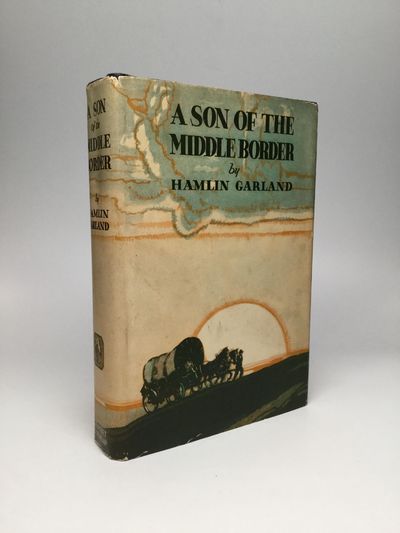*A Son of the Middle Border* by Hamlin Garland, 1917.
I’ve done some Hamlin Garland proselytizing in my life and urged at least a hundred people to read *A Son of the Middle Border*. But so far, nobody has ever told me they read the book. A few started. But I’m not giving up. The book is beautiful and carefully modulated between seeing the homesteads of the plains as a new Eden or the fourth level of Dante’s Inferno. I asked my host if there were any Hamlin Garland festivals nearby. They did something at the college in Aberdeen a while back but other than that, no. Just a few cars per year, maybe even a dozen, stop. “I don’t see them all of course, when I’m in town or over to the shop.”
Later that evening, I checked into a conference hotel in Sioux Falls. It’s the same conference hotel you see in 300 American cities: the open atrium, glass elevator, and long alleyway to the Convention Center, where you may present your talk in Room A or C or the Wilson Room and the Roosevelt Room. I rode down the glass elevator four or five times that evening. Each time, a big group at a big table in the lobby bar pointed up at me, and each time — given the number of rounds they consumed — more boisterous. They did not know me, and I did not know them, but they regarded a man in a glass elevator as fair game.
---
*In June, Clay drove from his home in Bismarck, North Dakota to Vail, Colorado. A focus of Clay’s two-week road trip was exploring little-remembered sites of tragic encounters between Native Americans and an expanding, westward-moving white population of the 1860-1880s. Clay’s stops included a [battle site at Whitestone Hill](https://ltamerica.org/the-forgotten-battle-of-whitestone-hill-north-dakota-2/) in North Dakota in 1863, as well as the [spot in Nebraska where Crazy Horse was killed](https://ltamerica.org/visiting-the-cabin-where-crazy-horse-was-killed/) in 1877, and Colorado sites commemorating the [Sand Creek Massacre](https://ltamerica.org/the-tragic-history-of-sand-creek-colorado/) in 1864. Along the way, Clay also visited the [Minuteman Missile National Historic Site](https://ltamerica.org/a-day-with-three-extraordinary-missile-men/), the [U.S. National Grasslands](https://ltamerica.org/jackalopes-black-footed-ferrets-and-big-big-sky/), and a [forgotten mountainside in western Colorado](https://ltamerica.org/nuking-the-rocky-mountains/), where the federal government detonated a nuclear bomb in 1969 in an experiment to explore the peaceful use of atomic weapons. And — as in all good journeys — unexpected and unrelated roadside distractions provided plenty of ways to think about America.*
---
## ***Discover more on these topics at Listening to America***
[Thoreau](https://ltamerica.org/tag/thoreau/ "5 topics")[Tennessee](https://ltamerica.org/tag/tennessee/ "1 topics")[Rome](https://ltamerica.org/tag/rome/ "1 topics")[New Mexico](https://ltamerica.org/tag/new-mexico/ "3 topics")[Vermont](https://ltamerica.org/tag/vermont/ "1 topics")[Reading](https://ltamerica.org/tag/reading/ "1 topics")[Texas](https://ltamerica.org/tag/texas/ "4 topics")[State Parks](https://ltamerica.org/tag/state-parks/ "2 topics")[Washington](https://ltamerica.org/tag/washington/ "2 topics")[New England](https://ltamerica.org/tag/new-england/ "1 topics")[Space Exploration](https://ltamerica.org/tag/space-exploration/ "8 topics")[Walden](https://ltamerica.org/tag/walden/ "1 topics")[Video](https://ltamerica.org/tag/video/ "51 topics")[North Carolina](https://ltamerica.org/tag/north-carolina/ "3 topics")[South Carolina](https://ltamerica.org/tag/south-carolina/ "1 topics")[Virginia](https://ltamerica.org/tag/virginia/ "7 topics")[Wisconsin](https://ltamerica.org/tag/wisconsin/ "0 topics")[William Shirer](https://ltamerica.org/tag/william-shirer/ "1 topics")[South Dakota](https://ltamerica.org/tag/south-dakota/ "16 topics")[Water in the West](https://ltamerica.org/tag/water-in-the-west/ "24 topics")[Steinbeck Travels](https://ltamerica.org/tag/steinbeck-travels/ "75 topics")[Pennsylvania](https://ltamerica.org/tag/pennsylvania/ "1 topics")[Sports](https://ltamerica.org/tag/sports/ "2 topics")[U.S. Presidents](https://ltamerica.org/tag/u-s-presidents/ "71 topics")[Thomas Jefferson](https://ltamerica.org/tag/thomas-jefferson/ "34 topics")[Republic](https://ltamerica.org/tag/republic/ "0 topics")[Ohio](https://ltamerica.org/tag/ohio/ "2 topics")[Road Trips](https://ltamerica.org/tag/road-trips/ "18 topics")[Theodore Roosevelt](https://ltamerica.org/tag/theodore-roosevelt/ "16 topics")[North Dakota](https://ltamerica.org/tag/north-dakota/ "53 topics")[Oppenheim](https://ltamerica.org/tag/oppenheim/ "0 topics")[Rivers](https://ltamerica.org/tag/rivers/ "3 topics")[New York](https://ltamerica.org/tag/new-york/ "8 topics")[Poetry](https://ltamerica.org/tag/poetry/ "1 topics")[north daktoa](https://ltamerica.org/tag/north-daktoa/ "0 topics")[Utah](https://ltamerica.org/tag/utah/ "11 topics")[Oregon](https://ltamerica.org/tag/oregon/ "4 topics")[U.S. Constitution](https://ltamerica.org/tag/u-s-constitution/ "1 topics")[paintings](https://ltamerica.org/tag/paintings/ "0 topics")[The Constitution](https://ltamerica.org/tag/the-constitution/ "1 topics")[Wyoming](https://ltamerica.org/tag/wyoming/ "4 topics")[Republics](https://ltamerica.org/tag/republics/ "1 topics")[Podcast](https://ltamerica.org/tag/podcast/ "1 topics")[Travel](https://ltamerica.org/tag/travel/ "1 topics")[Oppenheimer](https://ltamerica.org/tag/oppenheimer/ "1 topics")
**Categories:** Dispatches from the Road
**Tags:** Books, North Dakota, South Dakota
---
### [Visiting the Cabin Where Crazy Horse Was Killed](https://ltamerica.org/visiting-the-cabin-where-crazy-horse-was-killed/)
**Published:** August 15, 2023
**Author:** Clay Jenkinson
**Excerpt:** Leaving South Dakota, I drove south to Fort Robinson in Nebraska, the site where the great Oglala leader Crazy Horse died. He was killed unnecessarily on September 5, 1877, at about 33.
**Content:**
## Day Three, Afternoon: Fort Robinson, Nebraska
Site where Crazy Horse was killed on September 5, 1877. (Photograph by Clay Jenkinson)
*Leaving Badlands National Park Clay stops at Fort Robinson in Nebraska as he continues his drive from Bismarck to Vail, Colorado.*
Leaving South Dakota, I drove south to [Fort Robinson](https://stateparks.com/fort_robinson_state_park_in_nebraska.html) in Nebraska, the site where the great Oglala leader [Crazy Horse](https://www.history.com/topics/native-american-history/crazy-horse) died. He was killed unnecessarily on September 5, 1877, at about 33. The history of the “Indian Wars,” as they used to be known, makes you think about that day repeatedly. The great Oglala leader had finally surrendered, though he had never been defeated in battle. After a long winter of dawn attacks up and down the plains by the U.S. Army, he would not let his people suffer any longer. He lived peacefully but restlessly in his uncle Spotted Tail’s camp 30 miles to the east. Rumors passed like wildfire that he was about to break out, disappear in the night, maybe round up some like-minded young men. He was under intense pressure from all sides of this complicated story — the accommodationists, the absolutists, and everyone in between — and he clearly was not cut out to be a loafer-about-the-fort. He had been promised a reservation on his beloved Powder River in today’s Wyoming. The U.S. government did not attempt to keep that promise. He was so eager to return to the intermountain plains that he told one of his white supervisors that he would be willing to scout in America’s war against the Nez Perce in 1877.
A U.S. postal stamp honoring Crazy Horse was issued in January 1982.
Back in Chicago and Washington, D.C., the government decided that Crazy Horse must be arrested and taken as far away as possible from the Great Plains. They made this decision without communicating with those in the arena, and they knew that Crazy Horse would never agree to this. They’d have to lie to him and lure him into Fort Robinson on pretense. Then they would grab him and spirit him away forever. They planned to maroon him in the Dry Tortugas off the coast of Florida — a free man who had spent his life on the semi-arid Great Plains. He rode reluctantly into Fort Robinson with an ominous escort. When he got to the log structure where he was “to have a parley with the soldier chief,” as the poet [John Neihardt](https://www.neihardtcenter.org/biography) put it, Crazy Horse immediately realized what would happen. So, he whipped out a butcher knife and threw himself into the crowd that had gathered there — to escape or die trying to escape. A common soldier thrust a bayonet into Crazy Horse’s kidney from behind. That was enough to extinguish the life of the great strange man of the Oglala.
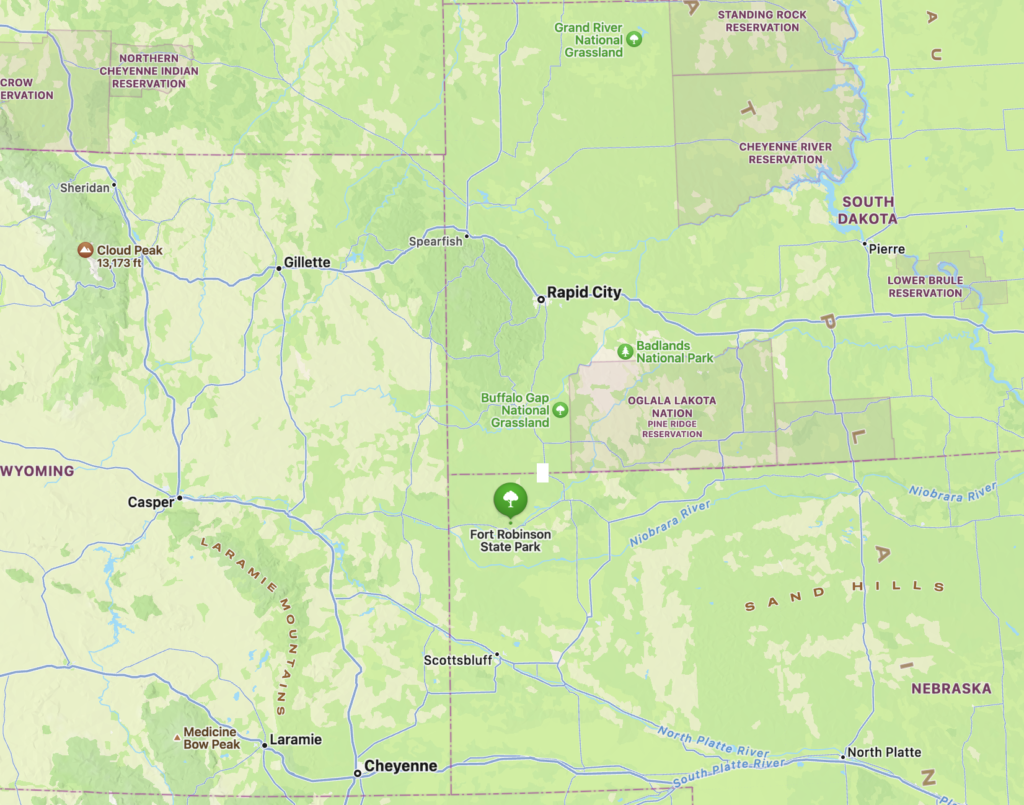Fort Robinson Nebraska, site of cabin where Crazy Horse was killed. (Apple Maps)
I go to the site of his death whenever I am nearby. I visit the killing site because it reminds me in a very stark way of the “cost of empire,” what white America chose to displace to remake the continent in its image. If you are trying to describe the Resistance to the white conquest of North America, the Lakota seem to take their place as the leading trope. This story embodies the whole with tragic nobility and a profoundly compelling narrative.
As I sat in what is now a state park and recreation center, I remembered lines from John Neihardt’s great poem, The Death of Crazy Horse. I couldn’t recite it smoothly, but throughout the rest of the day, I could put it back together in my memory. Neihardt, the poet laureate of Nebraska, gave much of his genius to the challenge of understanding Native American culture and writing about its fatal encounter with the Europeanization of the continent.
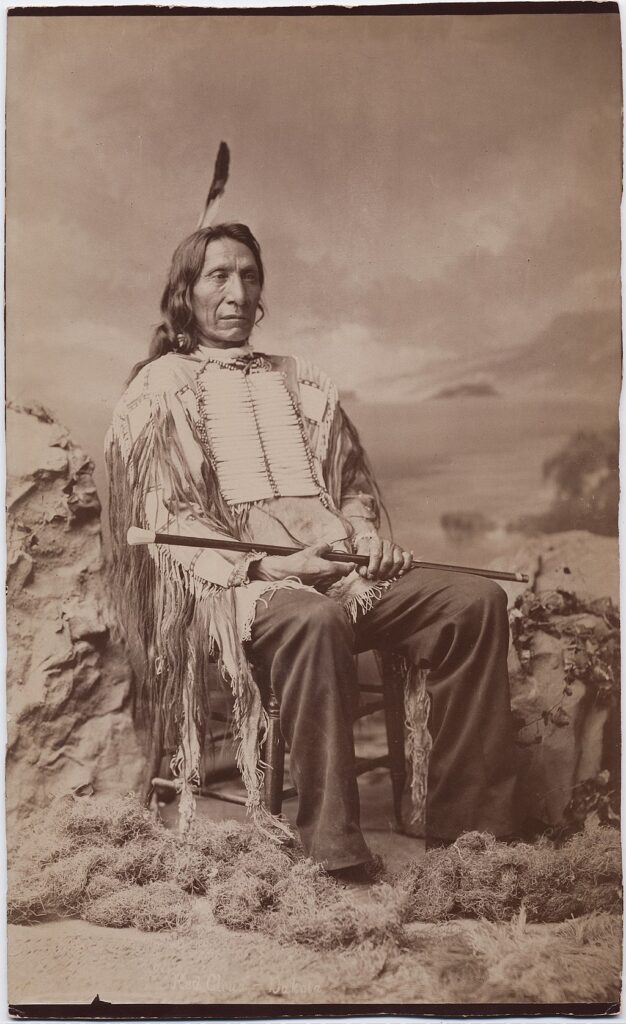Portrait of Red Cloud, Chief of the Oglala Lakota Sioux. Taken at Washington D.C. by the American photographer John K. Hillers (1843-1925).
I have severe doubts about the wisdom of rebuilding the log structures at the assassination site. For one thing, I’m not sure I want to mar the open grass space on which the killing occurred. I’m for rebuilding Lewis and Clark‘s Fort Clatsop and other forts and compounds in the West. But the parade ground of Fort Robinson seems like a sacred space. Nor do I relish the idea of fort buffs — and they are legion — rolling up to the rebuilt structures and imagining life in the good old West. This is a place of solemnity.
Crazy Horse has become the national symbol of the Resistance. But he needs to be seen as one part of a triumvirate of Lakota leaders who were trying to find a way to survive the coming of the white juggernaut. [Red Cloud](https://www.britannica.com/biography/Red-Cloud-Sioux-chief) (1822-1909) was the great Oglala war leader during the [Powder River War](https://www.legendsofamerica.com/red-clouds-war/) in 1868. He humiliated the U.S. Army on the Bozeman Trail. He won the war with considerable help from young Crazy Horse. The U.S. had to withdraw from its forts on the Bozeman Trail and enter a treaty with the Lakota (the Great Sioux Treaty of 1868), as generous to a Native people as any American treaty has ever been on paper. But after his stunning victory, Red Cloud dedicated the rest of his life to diplomacy. He was done fighting wars against the white interlopers. Today he is usually characterized as an “accommodationist.” However, that term does not do justice to his continual and often successful advocacy for his people against impossible odds. The second member of this triumvirate was [Sitting Bull](https://www.history.com/topics/native-american-history/sitting-bull) (1831-1890), the Hunkpapa leader who was one of the masterminds of the victory at the Little Bighorn in 1876. Sitting Bull was a great warrior but was more critical as a seer and civilian leader. He fought the white armies when necessary and held on just as long as he could in Canada. In the end, Sitting Bull surrendered on July 20, 1881, and took up a cabin at the far end of the Standing Rock Indian Reservation. He believed that he could live out his life on the margins of white civilization, having made as few accommodations to white demands as possible. He was killed in a bungled arrest attempt at dawn on December 15, 1890. He was minding his own business.
Sitting Bull, Hunkpapa Lakota leader photographed by David F. Barry ca. 1883.
Thus, Crazy Horse was cut down — as irredeemable — in 1877. Sitting Bull was cut down — as irredeemable — in 1890, just two weeks before the Wounded Knee Massacre. Red Cloud, the diplomat, lived until December 10, 1909. He met Theodore Roosevelt and other Presidents of the United States. He died the same year the Whitestone Hill monument was thrown up by the settler civilization of North Dakota.
I go to see the death site of Crazy Horse (as I go to Sitting Bull’s cabin site on the North and South Dakota border because they represent the Resistance. I don’t identify with the Resistance, but I respect it deeply. I know my complicities. And I find it impossible not to feel a stirring of the deepest admiration for the Lakota’s refusal to bow to the inevitable.
---
*In June, Clay drove from his home in Bismarck, North Dakota to Vail, Colorado. A focus of Clay’s two-week road trip was exploring little-remembered sites of tragic encounters between Native Americans and an expanding, westward-moving white population of the 1860-1880s. Clay’s stops included a [battle site at Whitestone Hill](https://ltamerica.org/the-forgotten-battle-of-whitestone-hill-north-dakota-2/) in North Dakota in 1863, as well as the spot in Nebraska where Crazy Horse was killed in 1877, and Colorado sites commemorating the [Sand Creek Massacre](https://ltamerica.org/the-tragic-history-of-sand-creek-colorado/) in 1864. Along the way, Clay also visited the [Minuteman Missile National Historic Site](https://ltamerica.org/a-day-with-three-extraordinary-missile-men/), the [U.S. National Grasslands](https://ltamerica.org/jackalopes-black-footed-ferrets-and-big-big-sky/), and a [forgotten mountainside in western Colorado](https://ltamerica.org/nuking-the-rocky-mountains/), where the federal government detonated a nuclear bomb in 1969 in an experiment to explore the peaceful use of atomic weapons. And — as in all good journeys — unexpected and unrelated roadside distractions provided plenty of ways to think about America.*
---
## ***Discover more on these topics at Listening to America***
[Republics](https://ltamerica.org/tag/republics/ "1 topics")[U.S. Constitution](https://ltamerica.org/tag/u-s-constitution/ "1 topics")[Poetry](https://ltamerica.org/tag/poetry/ "1 topics")[Steinbeck Travels](https://ltamerica.org/tag/steinbeck-travels/ "75 topics")[Walden](https://ltamerica.org/tag/walden/ "1 topics")[North Dakota](https://ltamerica.org/tag/north-dakota/ "53 topics")[Podcast](https://ltamerica.org/tag/podcast/ "1 topics")[Republic](https://ltamerica.org/tag/republic/ "0 topics")[Texas](https://ltamerica.org/tag/texas/ "4 topics")[Oppenheim](https://ltamerica.org/tag/oppenheim/ "0 topics")[Thomas Jefferson](https://ltamerica.org/tag/thomas-jefferson/ "34 topics")[Water in the West](https://ltamerica.org/tag/water-in-the-west/ "24 topics")[Rome](https://ltamerica.org/tag/rome/ "1 topics")[Oppenheimer](https://ltamerica.org/tag/oppenheimer/ "1 topics")[Wisconsin](https://ltamerica.org/tag/wisconsin/ "0 topics")[Sports](https://ltamerica.org/tag/sports/ "2 topics")[North Carolina](https://ltamerica.org/tag/north-carolina/ "3 topics")[William Shirer](https://ltamerica.org/tag/william-shirer/ "1 topics")[Wyoming](https://ltamerica.org/tag/wyoming/ "4 topics")[Washington](https://ltamerica.org/tag/washington/ "2 topics")[Utah](https://ltamerica.org/tag/utah/ "11 topics")[New York](https://ltamerica.org/tag/new-york/ "8 topics")[South Dakota](https://ltamerica.org/tag/south-dakota/ "16 topics")[north daktoa](https://ltamerica.org/tag/north-daktoa/ "0 topics")[Theodore Roosevelt](https://ltamerica.org/tag/theodore-roosevelt/ "16 topics")[Reading](https://ltamerica.org/tag/reading/ "1 topics")[Road Trips](https://ltamerica.org/tag/road-trips/ "18 topics")[Oregon](https://ltamerica.org/tag/oregon/ "4 topics")[Tennessee](https://ltamerica.org/tag/tennessee/ "1 topics")[The Constitution](https://ltamerica.org/tag/the-constitution/ "1 topics")[paintings](https://ltamerica.org/tag/paintings/ "0 topics")[New England](https://ltamerica.org/tag/new-england/ "1 topics")[Thoreau](https://ltamerica.org/tag/thoreau/ "5 topics")[Virginia](https://ltamerica.org/tag/virginia/ "7 topics")[Video](https://ltamerica.org/tag/video/ "51 topics")[Space Exploration](https://ltamerica.org/tag/space-exploration/ "8 topics")[Ohio](https://ltamerica.org/tag/ohio/ "2 topics")[South Carolina](https://ltamerica.org/tag/south-carolina/ "1 topics")[State Parks](https://ltamerica.org/tag/state-parks/ "2 topics")[Pennsylvania](https://ltamerica.org/tag/pennsylvania/ "1 topics")[U.S. Presidents](https://ltamerica.org/tag/u-s-presidents/ "71 topics")[New Mexico](https://ltamerica.org/tag/new-mexico/ "3 topics")[Vermont](https://ltamerica.org/tag/vermont/ "1 topics")[Rivers](https://ltamerica.org/tag/rivers/ "3 topics")[Travel](https://ltamerica.org/tag/travel/ "1 topics")
**Categories:** Dispatches from the Road
**Tags:** Native Americans, Nebraska
---
### [Nuking the Rocky Mountains](https://ltamerica.org/nuking-the-rocky-mountains/)
**Published:** August 22, 2023
**Author:** Clay Jenkinson
**Excerpt:** Clay and two colleagues met near the town of Rifle in western Colorado to visit the spot where the federal government set off a nuclear device in 1969 to test the feasibility of using atomic bombs in oil “fracking.”
**Content:**
## Day Seven: In and around the town of Rifle in Western Colorado
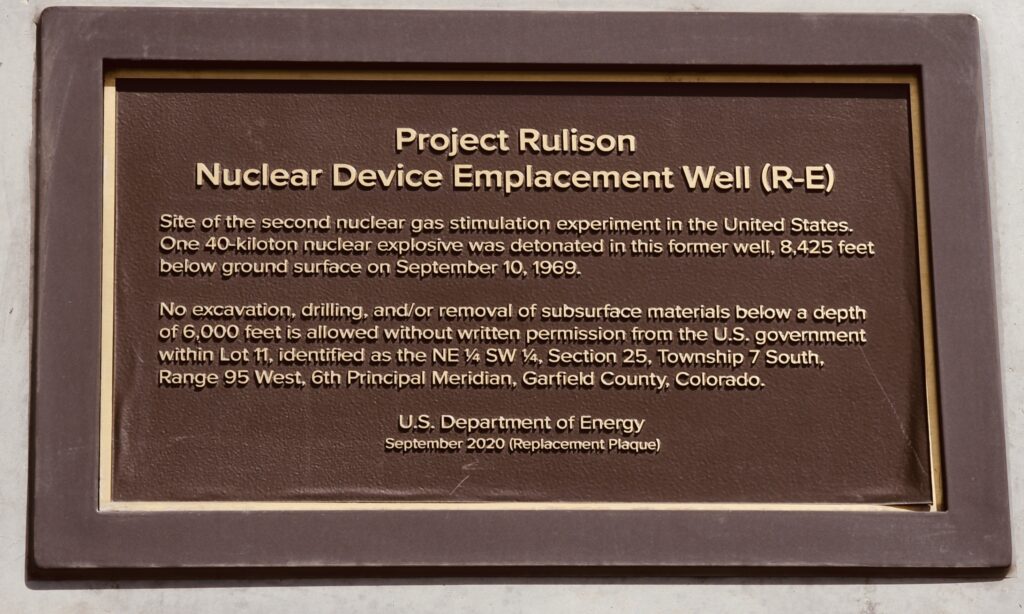Plaque noting the site where on September 10, 1969 the U.S. government detonated a 40-kiloton nuclear bomb in order to explore the peaceful uses of atomic energy. (Photo by Dennis McKenna)
*Clay and two colleagues met near the town of Rifle in western Colorado to visit the spot where the federal government set off a nuclear device in 1969 to test the feasibility of using atomic bombs in oil “fracking.” Later in the day, they visited the gravestone of Western legend Doc Holliday and searched unsuccessfully for the local restaurant owned by Colorado Congresswoman Lauren Boebert. This is the final entry in Clay’s *seven* day road trip from Bismarck to Vail, Colorado.*
We met in Rifle because we wanted to drive up to the site of an underground atomic detonation on September 10, 1969. I’ve known about the Rulison site for many years but never visited.
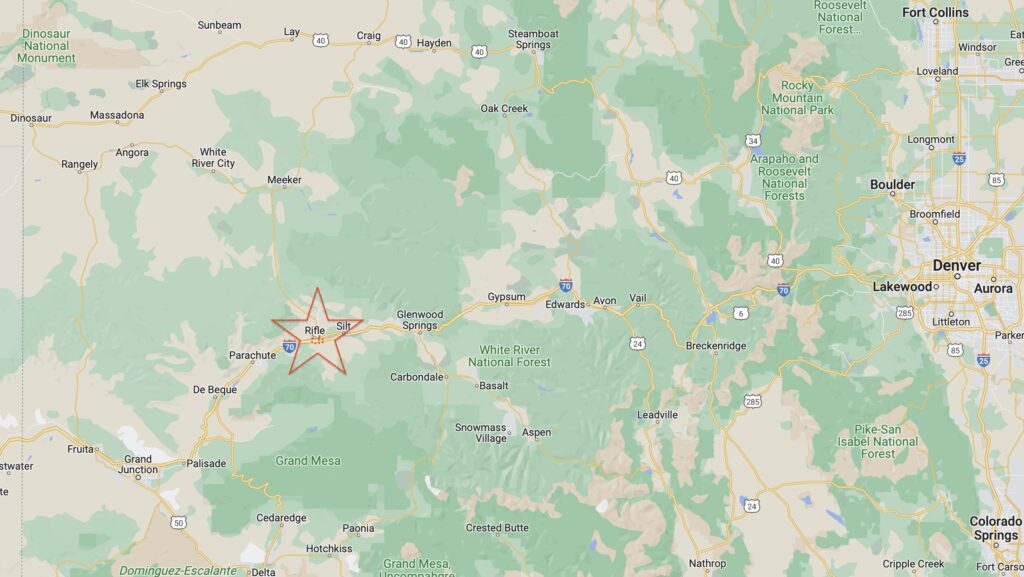The town of Rifle in western Colorado off of I-70. (Google Maps)
The backstory to this detonation begins with the federal government’s efforts between 1957 and 1977 to find peaceful uses for nuclear bombs. The Atomic Energy Commission’s chairman [Lewis Strauss](https://www.history.com/news/lewis-strauss-nuclear-program-oppenheimer) (a man I revile for his efforts to destroy J. Robert Oppenheimer), boldly declared that the [Plowshares Project](https://st.llnl.gov/news/look-back/plowshare-program) was created to “highlight the peaceful applications of nuclear explosive devices and thereby create a climate of world opinion that is more favorable to weapons development and tests.”
Wait a minute. Read that again. Project Plowshares (1958-1975) was created to experiment with peaceful applications of nuclear fission, and the chair of the AEC says that he hopes that the project will “create a climate of world opinion that is more favorable to weapons development and tests.” Not peaceful uses of nuclear detonations for the betterment of humankind or development of infrastructure, but to build public support for weapons development.
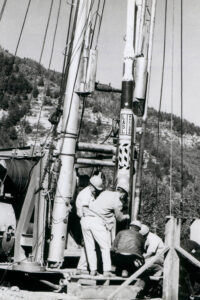Nuclear device being lowered into place at Rulison test site on August 14 1969.
Wild ideas were tossed about by scientists and officials at the time. What about building a new sea-to-sea canal using a pearl necklace of atomic blasts? One wit suggested it be called the Pan-Atomic Canal. What about creating an artificial harbor in Alaska? What about propelling spaceships to Mars and beyond with a series of small nuclear detonations at the end of the rockets? And the most preposterous proposal of all: detonating a nuclear device on the surface of the Moon.
Throughout the program’s life, some 35 warheads were detonated in 27 separate tests, one of them at Rifle, Colorado.
The Rulison test involved a relatively small nuclear device, 40 kilotons, just over twice the potency of the Hiroshima bomb. It was detonated at 8,400 feet below the surface. Its purpose was to fracture (frack) oil and gas-bearing shale. It fracked all right, but there was too much radiation in the gas that was released, and the quantity was disappointing. Thank goodness it didn’t work. I know people in the oil industry today who would frack all of America with nuclear devices if they had access to the device. The U.S. government did not give up yet. One final test occurred on May 17, 1973, 45 miles north of Grand Junction, Colorado. It was called the Rio Blanco test. Three 30-kiloton detonations occurred simultaneously at 5,768, 6,152, and 6,611 feet below the surface — actual plans called for using hundreds of such devices if the fracking was successful. Fortunately, the three blast cavities did not interconnect as the engineers had hoped, and the gas was — you guessed it — radioactive, NOT too toxic to be approved by the AEC, but too potent for the public, who made it clear they did not want to be running atomic gas through their water heaters and stoves.
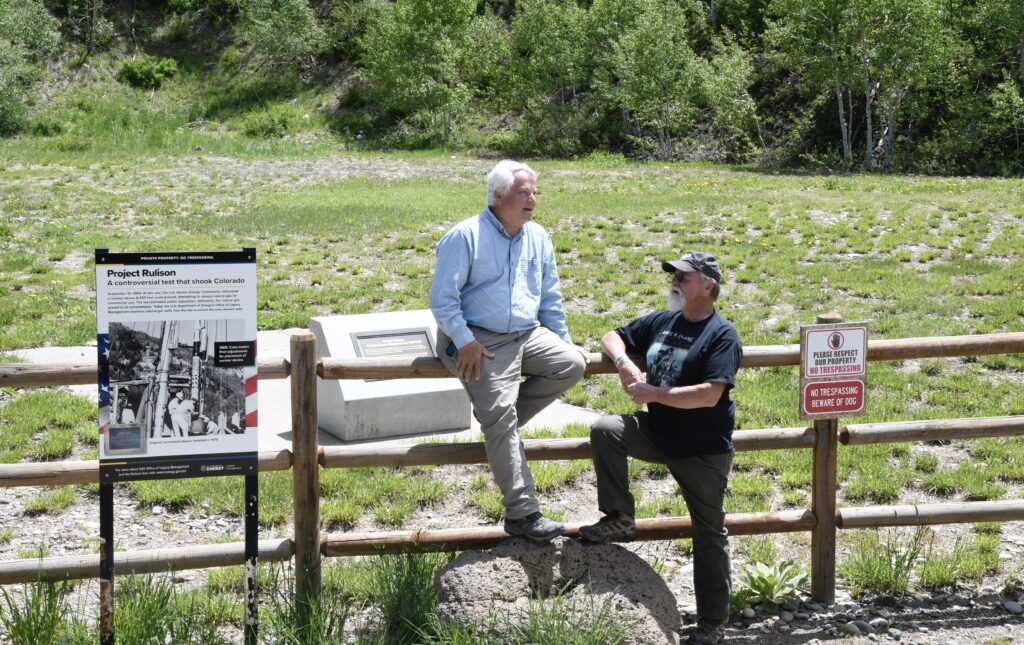Clay and Frank at the Rulison nuclear test site in the mountains of western Colorado. The plaque marking the site is now on private property but can be viewed from a nearby gravel road. (Photo by Dennis McKenna)
I don’t know what I expected the landscape at the Rulison site to be, but I pictured a vast and desolate plateau with distant mountains on the horizon, a pre- and post-detonation wasteland. But it wasn’t that at all! The Rulison test took place on the north side of an astonishingly beautiful mountain. There are hundreds of such mountain valleys from British Columbia through Mexico, but Colorado specializes in them. They are knee-saggingly beautiful. If you had called me in 1969 and asked me to find a place somewhere in the American West to detonate an underground nuclear device, I would never have chosen the Rulison site, even if it were one of the largest gas storage mountains in the world.
Fortunately, the underground test did not rearrange the surface landscape. There were a series of modest earthquakes in the months afterward. But no three-headed bats were born at the site. And if you did not know it was there, confirmed by signage and a plaque, you would never guess that the most destructive thing humans have ever done blew out the basement of this Edenic mountain.
A Los Alamos Scientific Laboratory film on Project Rulison.
## **A Stop at Doc Holliday’s Grave**
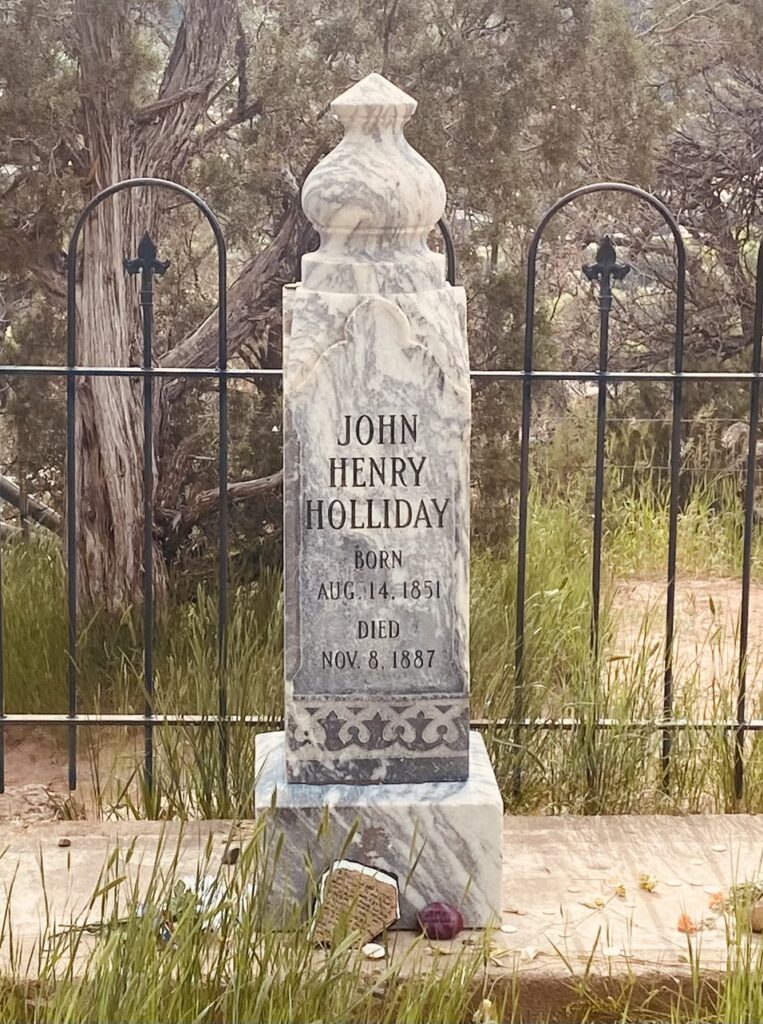Gravestone of Doc Holliday in Linwood Cemetery, Glenwood Springs, Colo. Holliday, a compatriot of lawman Wyatt Earp, was immortalized by Val Kilmer in the film, *Tombstone*.
As we drove back to Rifle for dinner, we spotted a sign in Glenwood Springs pointing to Doc Holliday’s grave. Doc Holliday’s grave! We all wanted to see that, so we turned off and found the parking lot. The graveyard where he is buried is at the end of a half-mile hike uphill. Moderately strenuous. Frank took one look at the trail and said he and Holliday had quarreled late in the gunslinger’s life and he had no interest in making the pilgrimage to his grave. So, Dennis and I chugged our way up the hill.
We knew very little about John Henry Holliday (1851-1877). He was a dentist, a gambler, a killer, a friend of Wyatt Earp. Holliday was with Earp at the infamous gunfight at the OK Corral in Tombstone, Arizona (October 26, 1881). He came west hoping that the dry climate would alleviate his tuberculosis, from which he died at the Hotel Glenwood on November 8, 1887. He was just 36 years old. We all agreed that Val Kilmer IS Doc Holliday and Doc Holliday is Val Kilmer.
## **Searching for Lauren Boebert’s Restaurant in Downtown Rifle**
That evening we wanted to have dinner at Lauren Boebert’s restaurant in downtown Rifle, the aptly named Shooters. We found the location but discovered that Shooters had closed. The owner of the building had declined to renew the lease. It was now a Mexican restaurant. We were crestfallen, for who does not want one’s server to be packing a live .358 magnum? We wound up at a Thai and sushi place down the street. The food was excellent. We reviewed the day and planned future Listening to America expeditions. Frank hoarded the Pad Thai.
Congresswoman Lauren Boebert represents Colorado’s Third District and is from Rifle, Colo. (Photo – Lauren Boebert via Twitter)
Here’s what we know about Ms. Boebert. She is 36 years old. She is a rootin’ tootin’ gun rights advocate. She has owned and managed three restaurants in Rifle, all of which have failed. She won re-election to a second Congressional term in 2022 by just 546 votes. She believes that Donald Trump won the 2020 presidential election. She is anti-abortion, anti-sex education, and against same-sex marriage. She describes herself as a born-again Christian and declares she is “tired of this separation of church and state junk.” This would suggest a weak understanding of the First Amendment of the U.S. Constitution and Article II, Section IV of the Colorado Bill of Rights. Her highest education achievement was a GED in 2020.
But as I walked along the main street of Rifle, studying its shops and keeping a mental tab of the town’s amenities, including on side streets, I gained a measure of respect for Ms. Boebert. It’s not about her politics. It’s the fact that after an unsettled beginning in life, without great family stability, she decided to run for the Congress of the United States. It takes work to be elected to Congress. You have to want it in a big way, have to raise money, have to listen to a lot of people you don’t care much about, have to construct a simple but compelling personal narrative, have to be able to say a few things about the issues, and you have to entrust yourself to intense public scrutiny. Some of it is going to be ugly. But young Lauren Boebert did it. She won. I’ve never been elected to Congress, or the state legislature, or to the city council or to the neighborhood recreational board. She beat a candidate from Aspen, Colorado, one of North America’s four or five most privileged places. It is a small-town girl made good story. Whether you approve or strongly disapprove of her politics and her methods, she won. That’s how democracy works. Many young people struggle to get out of such towns and fall back. She not only got out, but she is now in a position to do good things for her big chunk of Colorado (approximately half). In the end, constituent services are more important than public rhetoric.
Let’s say that I gained some respect for Lauren Boebert. Then she got into a bickering incident on the floor of the U.S. House of Representatives with Georgia’s Marjorie Taylor Green.
## **Wedding Crashers**
My friend Dennis and I happened upon a happening at the county fairgrounds. We turned in to see what had brought hundreds of cars and trucks together. It was a Hispanic wedding. We approached shyly just as the bride and groom danced the first dance out in the middle of the vast hard dirt floor — to thundering music. On each side of the enormous dance arena, scores of tables were covered with wedding tablecloths and ornaments. One giant line of food trays and those aluminum one-time-use dishes. Huge cattle troughs full of iced cans of Modelo. If we were boys out of Kerouac, we would have made creeping advances on the buffet line and helped ourselves to a wonderful feast. But we didn’t have the right stuff. We didn’t think we could pull it off. We rehearsed our wedding crasher’s narratives, whether we were friends or only former business partners with the groom’s late grandfather. We didn’t want to intrude.
A large wedding at the fairgrounds in Rifle, Colo. (Photo by Clay Jenkinson)
We observed all that happiness for half an hour. Hardy men carried gigantic coolers the size of hay bales into the mix. It was hard to see the band through the haze, some of it caused by indoor fireworks effects, but we could hear it. Eight or 10 musicians had the sound up high and were rocking that metal prefab building like a Chautauqua tent on a breezy afternoon. At one point, a long song took place during which the groom was unceremoniously hefted onto the shoulders and extended hands of about a dozen of his “closest friends.” He flailed happily and leaped from a horizontal position to the beat of the music.
It was the largest wedding I’ve ever been near. It was as joyous a celebration as you could ever imagine. Talk about life-affirming. I could not have guessed that such a wedding would take place at Rifle, Colorado, but that’s an indictment of me, an indication of my ignorance and poverty of my imagination. It shows how fundamentally sheltered my life has been. We were filled with admiration and wonder. Walking to the parking lot, I felt like the squarest Anglo in Garfield County. It was clear that the party phase of the evening was just getting started. Children were dancing in circles all over the floor. Mothers told them to settle down and then gave up.
We headed back to the parking lot as I was soon due up I-70 a bit, in Vail, Colorado.
---
*In June, Clay drove from his home in Bismarck, North Dakota to Vail, Colorado. A focus of Clay’s two-week road trip was exploring little-remembered sites of tragic encounters between Native Americans and an expanding, westward-moving white population of the 1860-1880s. Clay’s stops included a [battle site at Whitestone Hill](https://ltamerica.org/the-forgotten-battle-of-whitestone-hill-north-dakota-2/) in North Dakota in 1863, as well as the [spot in Nebraska where Crazy Horse was killed](https://ltamerica.org/visiting-the-cabin-where-crazy-horse-was-killed/) in 1877, and Colorado sites commemorating the [Sand Creek Massacre](https://ltamerica.org/the-tragic-history-of-sand-creek-colorado/) in 1864. Along the way, Clay also visited the [Minuteman Missile National Historic Site](https://ltamerica.org/a-day-with-three-extraordinary-missile-men/), the [U.S. National Grasslands](https://ltamerica.org/jackalopes-black-footed-ferrets-and-big-big-sky/), and a forgotten mountainside in western Colorado, where the federal government detonated a nuclear bomb in 1969 in an experiment to explore the peaceful use of atomic weapons. And — as in all good journeys — unexpected and unrelated roadside distractions provided plenty of ways to think about America.*
---
## ***Discover more on these topics at Listening to America***
[Washington](https://ltamerica.org/tag/washington/ "2 topics")[Tennessee](https://ltamerica.org/tag/tennessee/ "1 topics")[paintings](https://ltamerica.org/tag/paintings/ "0 topics")[Wisconsin](https://ltamerica.org/tag/wisconsin/ "0 topics")[Travel](https://ltamerica.org/tag/travel/ "1 topics")[Utah](https://ltamerica.org/tag/utah/ "11 topics")[Pennsylvania](https://ltamerica.org/tag/pennsylvania/ "1 topics")[Reading](https://ltamerica.org/tag/reading/ "1 topics")[Republics](https://ltamerica.org/tag/republics/ "1 topics")[Thoreau](https://ltamerica.org/tag/thoreau/ "5 topics")[Virginia](https://ltamerica.org/tag/virginia/ "7 topics")[north daktoa](https://ltamerica.org/tag/north-daktoa/ "0 topics")[Podcast](https://ltamerica.org/tag/podcast/ "1 topics")[William Shirer](https://ltamerica.org/tag/william-shirer/ "1 topics")[Thomas Jefferson](https://ltamerica.org/tag/thomas-jefferson/ "34 topics")[Video](https://ltamerica.org/tag/video/ "51 topics")[Space Exploration](https://ltamerica.org/tag/space-exploration/ "8 topics")[New England](https://ltamerica.org/tag/new-england/ "1 topics")[Ohio](https://ltamerica.org/tag/ohio/ "2 topics")[Oregon](https://ltamerica.org/tag/oregon/ "4 topics")[Sports](https://ltamerica.org/tag/sports/ "2 topics")[Republic](https://ltamerica.org/tag/republic/ "0 topics")[Wyoming](https://ltamerica.org/tag/wyoming/ "4 topics")[New York](https://ltamerica.org/tag/new-york/ "8 topics")[Poetry](https://ltamerica.org/tag/poetry/ "1 topics")[Walden](https://ltamerica.org/tag/walden/ "1 topics")[Texas](https://ltamerica.org/tag/texas/ "4 topics")[Road Trips](https://ltamerica.org/tag/road-trips/ "18 topics")[U.S. Presidents](https://ltamerica.org/tag/u-s-presidents/ "71 topics")[North Carolina](https://ltamerica.org/tag/north-carolina/ "3 topics")[Vermont](https://ltamerica.org/tag/vermont/ "1 topics")[Rivers](https://ltamerica.org/tag/rivers/ "3 topics")[Oppenheim](https://ltamerica.org/tag/oppenheim/ "0 topics")[New Mexico](https://ltamerica.org/tag/new-mexico/ "3 topics")[South Carolina](https://ltamerica.org/tag/south-carolina/ "1 topics")[Steinbeck Travels](https://ltamerica.org/tag/steinbeck-travels/ "75 topics")[The Constitution](https://ltamerica.org/tag/the-constitution/ "1 topics")[State Parks](https://ltamerica.org/tag/state-parks/ "2 topics")[Water in the West](https://ltamerica.org/tag/water-in-the-west/ "24 topics")[Oppenheimer](https://ltamerica.org/tag/oppenheimer/ "1 topics")[South Dakota](https://ltamerica.org/tag/south-dakota/ "16 topics")[U.S. Constitution](https://ltamerica.org/tag/u-s-constitution/ "1 topics")[Theodore Roosevelt](https://ltamerica.org/tag/theodore-roosevelt/ "16 topics")[Rome](https://ltamerica.org/tag/rome/ "1 topics")[North Dakota](https://ltamerica.org/tag/north-dakota/ "53 topics")
**Categories:** Dispatches from the Road
**Tags:** Atomic West, Colorado
---
### [The Tragic History of Sand Creek, Colorado](https://ltamerica.org/the-tragic-history-of-sand-creek-colorado/)
**Published:** August 20, 2023
**Author:** Clay Jenkinson
**Excerpt:** Clay drives into eastern Colorado to spend time at the site of the 1864 Sand Creek Massacre and then to Denver to see an exhibit on the tragic event at the History Colorado Center. .
**Content:**
## Days Four to Six: Laramie, Wyoming to Sand Creek and Denver, Colorado
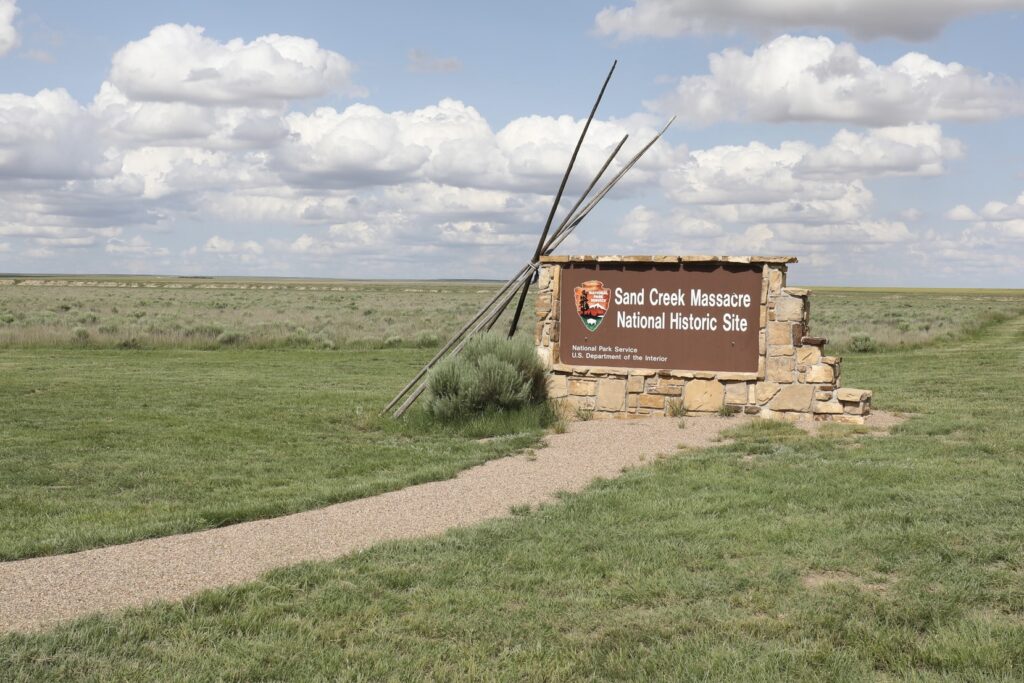Sand Creek National Historic site in remote eastern Colorado. (Photo by Clay Jenkinson)
*Clay drives into eastern Colorado to spend time at the site of the 1864 Sand Creek Massacre and then to Denver to visit an exhibit on the tragic event at the History Colorado Center. This was part of Clay’s extended road trip from Bismarck to Vail, Colorado.*
To visit the [Sand Creek Massacre](https://www.nps.gov/sand/index.htm) site, far out on the eastern plains of Colorado, you must want to make the trip. It is not on the road to anything. I’m a child of the plains, but the plains of eastern Colorado seem infinite in every direction — narrow blacktop roads with little traffic. CO 96 is one of my top five roads in America; stark. Here, a hopeless village every 20 or 40 miles, with a grain elevator, a bar or two, perhaps a school, a couple of gas stations, maybe a grocery store with wilted lettuce, and — stunningly — marijuana dispensaries in every town!
Google Maps.
I got to the Sand Creek site shortly before it closed for the day. Imagine an endless sea of grass in every direction. In the distance, a thin line of cottonwoods and willows like a dark green thread undulating across a sea of grass. This is Big Sandy Creek. And here, on November 29, 1864,[ Colonel John Chivington](https://www.nps.gov/sand/learn/historyculture/john-chivington-biography.htm) and 675 members of his Colorado militia attacked a sleeping village of mostly Cheyenne and Arapahoe women and children. The men were out hunting at the time, according to Native tradition. And even though the Cheyenne had been granted a kind of guaranteed asylum far on the open plains, 175 miles from the village of Denver, Governor John Evans issued a proclamation in 1864 making it legal for anyone to kill Native Americans in Colorado. Denver, at the time, had a population of approximately 3,700 people. They had come as gold seekers.
The sign at the gate of the Sand Creek site calls on visitors to “respect sacred ground.” I stood alone on the open plain beneath the sky dome for a long time, trying to make sense of “the Sand Creek Massacre.” Here’s what happened that day: a dawn attack, no warning, hundreds killed, women and children butchered, body parts carved out and taken back to Denver as trophies. We know why it happened. White people were going to take the continent, and anyone who got in the way would be neutralized or made to disappear. But what we don’t know is why it had to happen. I tried to imagine what it would be to want Native Americans exterminated, to violate treaties with a shrug. I tried to imagine the bloodlust and the desire to bring back a woman’s body parts as a trophy and be cheered for by adoring crowds in Denver. I tried to understand the mindset of the editors of the *Rocky Mountain News*, who wrote heroic editorials to celebrate the atrocity. A few soldiers refused to participate in the massacre, openly protested, and later wrote candid accounts of what happened. They were regarded as traitors and punished for challenging the Colorado leaders, civilian and military, who organized the slaughter.
A 2019 National Park Service video by ranger John Launius introducing visitors to the story of the Sand Creek Massacre.
It took a long, long time, but on [December 3, 2014](https://www.denverpost.com/2014/12/03/gov-hickenlooper-apologizes-to-descendants-of-sand-creek-massacre/), Colorado Governor John Hickenlooper stood on the steps of the Colorado State Capitol and apologized to the Cheyenne and Arapahoe people for the Sand Creek massacre. He did not understate the issue: “We should not be afraid to criticize and condemn that which is inexcusable,” Hickenlooper said, “so I am here to offer something that has been a long time coming. On behalf of the good, peaceful, loving people of Colorado, I want to say we are sorry for the atrocity that our government and its agents visited upon your ancestors.” Atrocity is a big word. Still, the Governor took less criticism from the Right for “atrocity” than for “apologizing for America.”
## **History Colorado Center: A Right and Wrong Approach to Historical Interpretation**
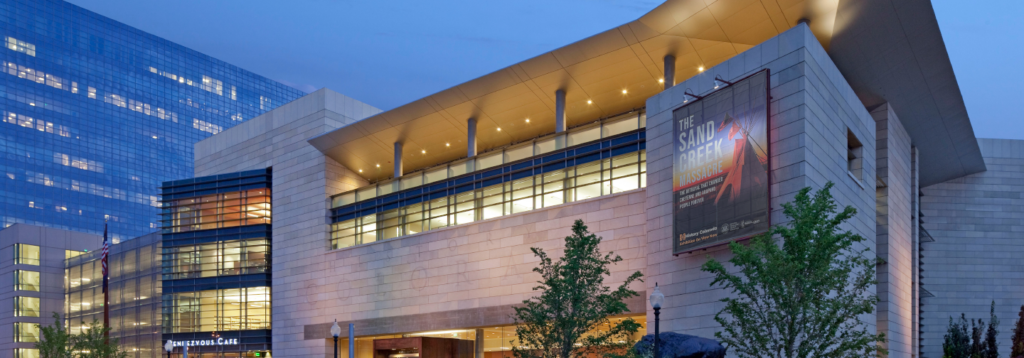The History Colorado Center in Denver. Home to the Sand Creek Massacre exhibit.
I returned to my car and drove west to Denver. I wanted to see the [Sand Creek Massacre exhibit](https://www.historycolorado.org/exhibit/sand-creek-massacre-betrayal-changed-cheyenne-and-arapaho-people-forever) at the [History Colorado Center](https://www.historycolorado.org/history-colorado-center). I was the first to arrive on a Saturday morning.
It’s a fabulous exhibit. Dark. Dark in its recounting of the atrocity and dark in its exhibit aesthetics. The story is told entirely by the Cheyenne and the Arapahoe. The “We” that appears on every panel are the Cheyenne and the Arapahoe. The minute you walk into the special section of the History Colorado Center, you have to rethink who “We” are.
The current exhibit has its own extraordinary origin story. The history center mounted a previous Sand Creek exhibit in 2012, but — if you can imagine it — it did so without any significant consultation with the Cheyenne and Arapahoe. This was 2012, not 1980. That exhibit emphasized a “clash of cultures,” as if the History Colorado Center administrators’ only excuse was that they were too busy at the time developing new presentations to inaugurate a new building. The tribes protested vigorously, and officials removed the exhibit in 2013.
The current exhibit opened in 2022. Although the Cheyenne and Arapahoe hesitated to participate in what they first assumed would be another whitewash, they soon understood that the history center had learned from its mistake and truly wanted fundamental Native input. Every detail, image, and word was vetted and approved by the descendants of the people who fought and died there in 1864.
The new exhibit pulls no punches. One of the first panels explains: “We commemorate the family members who were killed that day, even as we continue living with the unresolved trauma the massacre left behind for Cheyenne and Arapahoe people.” Strong words. Still unresolved trauma, 159 years later. Then: “This exhibit tells the stories of the worst betrayal that ever happened to Cheyenne and Arapahoe people.”
The titles of the exhibit panels tell the story:
```
Invasion
The Illegal City of Denver
Discarded Treaties and Broken Promises
We Tried to Make Peace Again and Again
Massacre
Weapons of Mass Destruction
Massacre, Not a Battle
Aftermath
They Were Never Punished
A Sickening Parade of Horrific Atrocities
Reparations Withheld
```
Some believe this exhibit goes too far in the other direction, that it is too hard on the white frontier civilization that did this. But how could it be said to go too far?
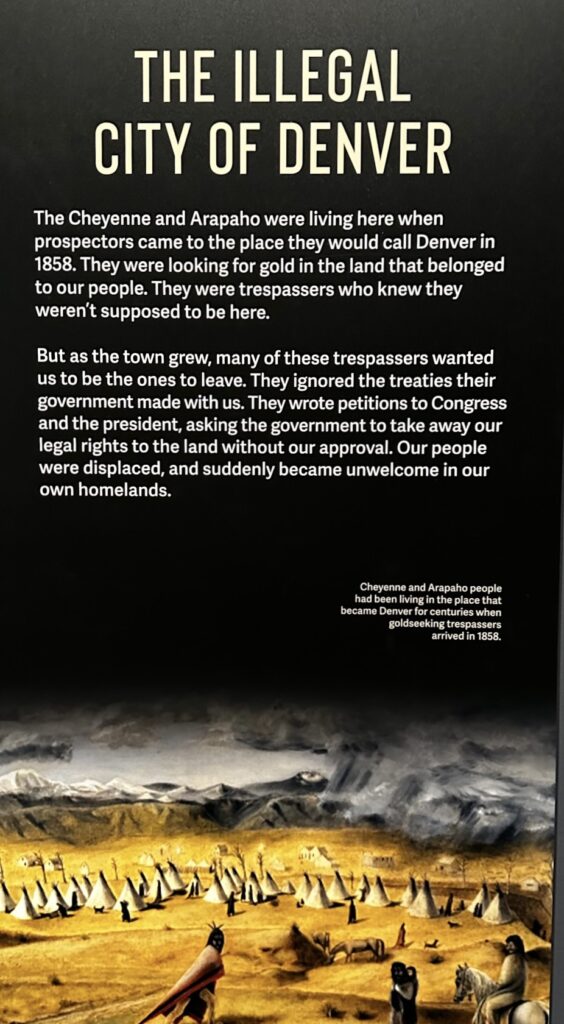A panel from the Sand Creek Massacre exhibit at the History Colorado Center. (Photo by Clay Jenkinson)
Native Americans displaced from their homeland, now living 175 miles from the village of Denver, minding their own business, under a peace flag protecting them from molestation, attacked without warning in a genocidal mission bearing the official stamp of the Colorado government. Women and children butchered and cut up as war trophies
The best you could say is that the white folks thought they had a manifest license to take the West as politely as possible but as ruthlessly as necessary from the Natives.
But there is good news. The exhibit is not only winning national acclaim, but it is a template and invitation for other enlightened institutions to follow suit, allowing Native Americans to tell their story. A new era is dawning, and we are beginning to see results, some highly discomforting. This is a necessary part of healing, of the “truth and reconciliation commissions” that can lead to a more harmonious future. I’m glad I lived to see it. I know this leads to discomfort, including for me. Where the heart is good, forgiveness and reconciliation can follow.
And the story at History Colorado ends with a panel entitled Running to Heal. Every year since 1999, Arapahoe and Cheyenne people, mostly young people, have begun at the massacre site and run to Denver, a distance of 173 miles. Scores of people join the Sand Creek Massacre Spiritual Healing Run every year, sometimes hundreds.
---
*In June, Clay drove from his home in Bismarck, North Dakota to Vail, Colorado. A focus of Clay’s two-week road trip was exploring little-remembered sites of tragic encounters between Native Americans and an expanding, westward-moving white population of the 1860-1880s. Clay’s stops included a [battle site at Whitestone Hill](https://ltamerica.org/the-forgotten-battle-of-whitestone-hill-north-dakota-2/) in North Dakota in 1863, as well as the [spot in Nebraska where Crazy Horse was killed](https://ltamerica.org/visiting-the-cabin-where-crazy-horse-was-killed/) in 1877, and Colorado sites commemorating the Sand Creek Massacre in 1864. Along the way, Clay also visited the [Minuteman Missile National Historic Site](https://ltamerica.org/a-day-with-three-extraordinary-missile-men/), the [U.S. National Grasslands](https://ltamerica.org/jackalopes-black-footed-ferrets-and-big-big-sky/), and a [forgotten mountainside in western Colorado](https://ltamerica.org/nuking-the-rocky-mountains/), where the federal government detonated a nuclear bomb in 1969 in an experiment to explore the peaceful use of atomic weapons. And — as in all good journeys — unexpected and unrelated roadside distractions provided plenty of ways to think about America.*
---
## ***Discover more on these topics at Listening to America***
[Wyoming](https://ltamerica.org/tag/wyoming/ "4 topics")[Reading](https://ltamerica.org/tag/reading/ "1 topics")[Walden](https://ltamerica.org/tag/walden/ "1 topics")[South Carolina](https://ltamerica.org/tag/south-carolina/ "1 topics")[William Shirer](https://ltamerica.org/tag/william-shirer/ "1 topics")[Oregon](https://ltamerica.org/tag/oregon/ "4 topics")[New England](https://ltamerica.org/tag/new-england/ "1 topics")[U.S. Constitution](https://ltamerica.org/tag/u-s-constitution/ "1 topics")[North Carolina](https://ltamerica.org/tag/north-carolina/ "3 topics")[Tennessee](https://ltamerica.org/tag/tennessee/ "1 topics")[paintings](https://ltamerica.org/tag/paintings/ "0 topics")[South Dakota](https://ltamerica.org/tag/south-dakota/ "16 topics")[Texas](https://ltamerica.org/tag/texas/ "4 topics")[Republic](https://ltamerica.org/tag/republic/ "0 topics")[Steinbeck Travels](https://ltamerica.org/tag/steinbeck-travels/ "75 topics")[Thomas Jefferson](https://ltamerica.org/tag/thomas-jefferson/ "34 topics")[Oppenheimer](https://ltamerica.org/tag/oppenheimer/ "1 topics")[U.S. Presidents](https://ltamerica.org/tag/u-s-presidents/ "71 topics")[Thoreau](https://ltamerica.org/tag/thoreau/ "5 topics")[Theodore Roosevelt](https://ltamerica.org/tag/theodore-roosevelt/ "16 topics")[Video](https://ltamerica.org/tag/video/ "51 topics")[Oppenheim](https://ltamerica.org/tag/oppenheim/ "0 topics")[New York](https://ltamerica.org/tag/new-york/ "8 topics")[Washington](https://ltamerica.org/tag/washington/ "2 topics")[Podcast](https://ltamerica.org/tag/podcast/ "1 topics")[Poetry](https://ltamerica.org/tag/poetry/ "1 topics")[Wisconsin](https://ltamerica.org/tag/wisconsin/ "0 topics")[Republics](https://ltamerica.org/tag/republics/ "1 topics")[Sports](https://ltamerica.org/tag/sports/ "2 topics")[Virginia](https://ltamerica.org/tag/virginia/ "7 topics")[Space Exploration](https://ltamerica.org/tag/space-exploration/ "8 topics")[Travel](https://ltamerica.org/tag/travel/ "1 topics")[Water in the West](https://ltamerica.org/tag/water-in-the-west/ "24 topics")[New Mexico](https://ltamerica.org/tag/new-mexico/ "3 topics")[The Constitution](https://ltamerica.org/tag/the-constitution/ "1 topics")[Road Trips](https://ltamerica.org/tag/road-trips/ "18 topics")[Rivers](https://ltamerica.org/tag/rivers/ "3 topics")[north daktoa](https://ltamerica.org/tag/north-daktoa/ "0 topics")[Vermont](https://ltamerica.org/tag/vermont/ "1 topics")[Ohio](https://ltamerica.org/tag/ohio/ "2 topics")[State Parks](https://ltamerica.org/tag/state-parks/ "2 topics")[Pennsylvania](https://ltamerica.org/tag/pennsylvania/ "1 topics")[Rome](https://ltamerica.org/tag/rome/ "1 topics")[Utah](https://ltamerica.org/tag/utah/ "11 topics")[North Dakota](https://ltamerica.org/tag/north-dakota/ "53 topics")
**Categories:** Dispatches from the Road
**Tags:** Colorado, National Parks, Native Americans
---
### [At Lake Powell, a "Lost National Park" is Being Slowly Revealed ](https://ltamerica.org/at-lake-powell-a-lost-national-park-is-being-slowly-revealed/)
**Published:** June 3, 2023
**Author:** Clay Jenkinson
**Excerpt:** Like it or not, says the Executive Director at Glen Canyon Institute, Lake Powell is dying. But we can take advantage of the opportunities provided by its demise.
**Content:**
## Like it or not, says the executive director at Glen Canyon Institute, Lake Powell is dying. But we can take advantage of the opportunities provided by its demise, he insists, by instilling a degree of adaptability, into our water management in the West.
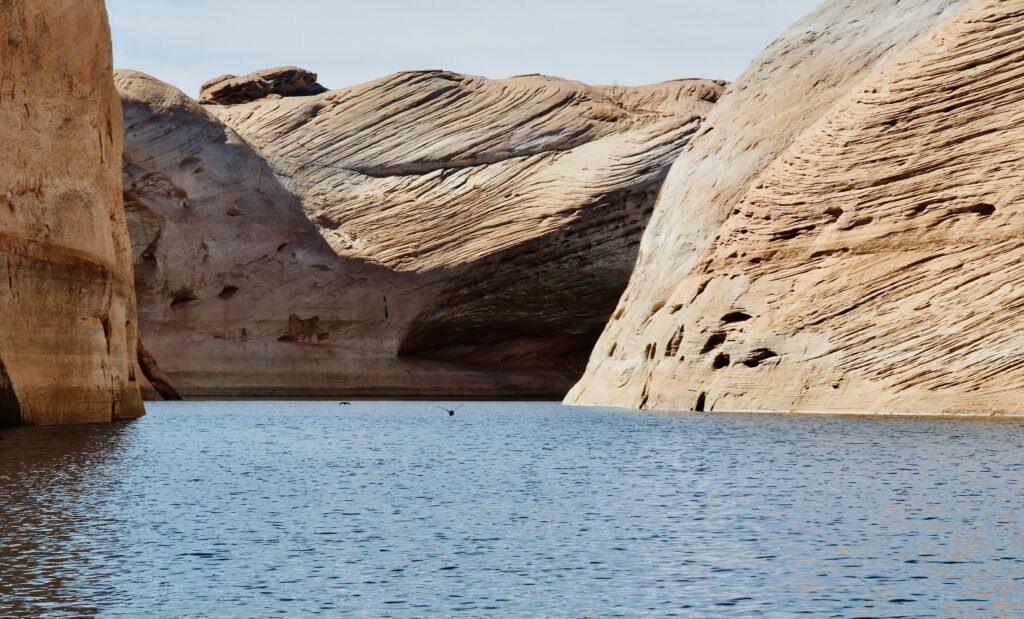Waterfowl fly above the surface of Lake Powell. (Photo by Dennis McKenna)
*The striking contrast between the shimmering blues of its surface and the deep weathered oranges of its meandering canyon shoreline embodies the contradictions that have surrounded Lake Powell since it first began to fill behind the Glen Canyon Dam in 1963. For some, it’s a lake, a place for recreation and tourism. For others, it’s a source of hydroelectric power and a reservoir for that scarcest of Western resources: water. And yet, for many, Lake Powell represents more than anything the inundation of what Edward Abbey called “a portion of earth’s original paradise.” Controversy has surrounded Glen Canyon Dam since it was little more than an idea, and calls from environmentalists to drain the lake and even to deconstruct the dam have ebbed and flowed throughout its 60-year history. But the lake’s future is now shifting out of the hands of activists and politicians and into those of nature. While record snowfall this winter in the Colorado River basin has brought a reprieve from April’s historic low water level in the reservoir, a long-term drought and climate change may bring a reckoning that many thought was centuries away. Clay recently spoke with Eric Balken, executive director at the Glen Canyon Institute, about the latest contrast on Lake Powell: the slow death of the lake and the accompanying ecological rebirth in Glen Canyon.*
*This interview has been edited for length and clarity. It is part of a [series](https://ltamerica.org/?p=2761) on Water in the West, chronicling a trip Clay Jenkinson and two colleagues took through Colorado River country in the spring of 2023.*
**Clay:** Tell us about the [Glen Canyon Institute](https://www.glencanyon.org/).
**Eric Balken:** Our mission is to restore Glen Canyon and a free-flowing [Colorado River](https://www.americanrivers.org/river/colorado-river-2/) through the Grand Canyon. I got involved in 2006. That was a time in which [Lake Mead](https://www.nps.gov/lake/planyourvisit/lake-mead.htm) and [Lake Powell](https://grcahistory.org/sites/beyond-park-boundaries/lake-powell/) were both brimming full, and it was a few years before we recognized that climate change would have an impact on the Western water supply. Glen Canyon Dam has always been the most controversial dam in the United States, and also one of the most damaging, so when [Rich Ingebretsen](https://vimeo.com/306758252) founded the Institute in 1996, he was trying to carry the work of earlier Glen Canyon environmentalists into the modern era.
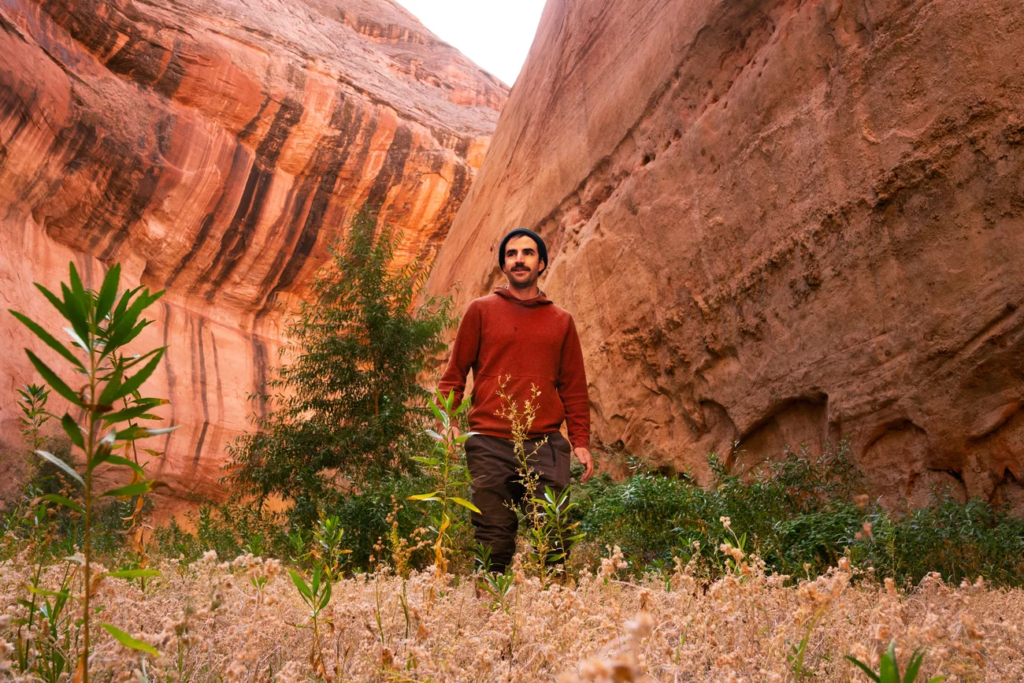Eric Balken, executive director of the the Glen Canyon Institute advocates for a free flowing Colorado River.
**Clay:** Is the goal to dismantle [Glen Canyon Dam](https://www.usbr.gov/uc/water/crsp/cs/gcd.html)?
**Eric Balken:** It’s not. We advocate for re-engineering the dam. You would have gates or tunnels drilled around the dam that would effectively allow water managers to operate it as a [run-of-river](https://energyeducation.ca/encyclopedia/Run-of-the-river_hydroelectricity) facility. This would be expensive, and it would be a very big deal. It would change the dynamics of Western water, but I would argue that it would change it for the better. What Western water needs right now is more adaptability. It needs to be more dynamic. It needs operational flexibility. Glen Canyon Dam was not designed to operate at today’s water levels. And given the hydrology and the impact of climate change that we’re seeing, we know that there’s not enough water to keep Powell and Mead both full. The reasons that the dam was built are no longer valid. It’s going to become a liability. There might have been some benefits in the past — water storage, hydropower, reservoir recreation — but we’re transitioning out of all of those. Regardless of what environmentalists or anyone else thinks, there is a need to re-engineer Glen Canyon Dam. We should allow for a free-flowing river with sediment to flow into the Grand Canyon. Sediment is the life force of river ecosystems. It carries the nutrients that feed the bugs and the plants and everything. We have a sediment accumulation problem in Glen Canyon, and we have a sediment depletion problem in the Grand Canyon downstream. We cannot continue to ignore this.
**Clay:** How much water does Glen Canyon Dam store?
**Eric Balken:** It has the capacity to store almost 25 million [acre-feet](https://www.watereducation.org/general-information/whats-acre-foot), which is huge. It’s the second largest reservoir in the country, but right now it’s only 22% full. And hydrologic projections and climate scientists say that it’s never going to be full again. We’re only using 30% of the available storage in Lake Powell and Lake Mead. If we were to completely drain Lake Powell and put that water into Lake Mead today, Mead would still only be about 50% full. It’s very unlikely that we will ever need that second reservoir, but it could be used as a backup facility.
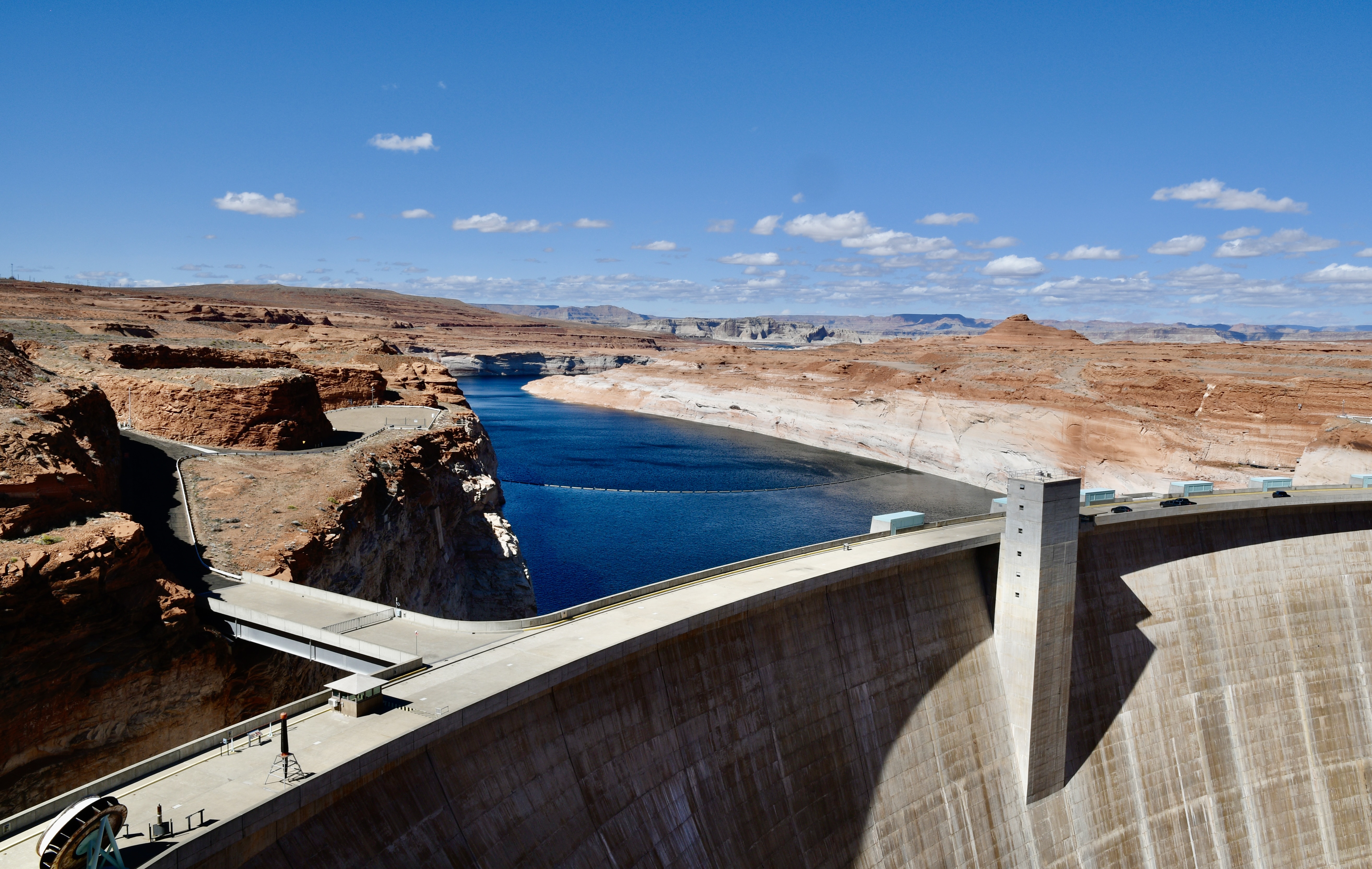Glen Canyon Dam. (Photo by Dennis McKenna)
**Clay:** If we took that course, there would be a river where today there is Lake Powell.
**Eric Balken:** Exactly. And that’s already happening. When it was full, Lake Powell inundated about 186 miles of the Colorado River. Today it’s closer to 146 miles. On the upper stretches of the Colorado main stem, you now have almost 40 miles of free-flowing river, and that river is coming back to life. Cultural sites are returning, and ecosystems are coming back to life. And that’s just on the main stem. Glen Canyon is the heart of the Colorado River ecosystem, and there’s so much riparian restoration occurring as the water levels in the reservoir fall.
**Clay**: Many people that I have talked with on and around Lake Powell insist that it’s never going away.
**Eric Balken:** Are they looking at the reservoir? It’s the lowest it’s ever been. The reservoir is on life support. It would already be below a minimum power pool if it weren’t for really extraordinary actions taken by the Bureau of Reclamation. They’ve released a ton of water out of upstream reservoirs over the past year to prop up Lake Powell. I understand where those folks are coming from. When you visit the dam, it seems very permanent. It’s one of the crowning achievements of the Bureau of Reclamation. From an engineering standpoint, it’s marvelous. It’s hard to imagine the reservoir not being there, but it’s happening. Go to the visitor’s center and look over the edge. It’s jaw dropping. It’s changing, whether people like it or not.
**Clay:** You’re saying this is now beyond politics. It’s happening — period.
**Eric Balken:** Exactly. And it’s not happening because any environmental group wants it to. It’s a function of the over-allocation of the river. This has been written about ad nauseum for decades. When the [Colorado River Compact](https://www.watereducation.org/aquapedia-background/colorado-river-compact) was signed in 1922, they knew it was over-allocated. They chose to go with a higher number even though they knew it was wrong. They allocated 17 million acre-feet when they knew it was a 13-millon-acre-foot river. They chose the higher number because it made it easier to get the legislation passed. We always knew there would be a reckoning, but we thought it would be further down the road. Climate change sped up the process. There’s just not enough water to fill both of those reservoirs. And when it comes down to it, Lake Mead is more important.
**Clay:** What’s the future for Glen Canyon if we drain Lake Powell?
**Eric Balken:** There are so many opportunities for Glen Canyon beyond what it was as a reservoir. We have to remember where this place is. It’s surrounded by the most loved and protected places in America. [Canyonlands National Park](https://www.nps.gov/cany/index.htm) is to its north, [Grand Canyon National Park](https://www.nps.gov/grca/index.htm) is to the south, [Bears Ears National Monument](https://www.blm.gov/visit/bears-ears-national-monument) is to the east, and [Grand Staircase National Monument](https://www.blm.gov/programs/national-conservation-lands/utah/grand-staircase-escalante-national-monument) is to the west. It sits in the center of the most prized and celebrated parks and monuments in the American West. It’s a significant place for a lot of indigenous people who were there for thousands of years: the [Hopi](https://www.hopi-nsn.gov/), the [Navajo](https://www.navajo-nsn.gov/), the [Paiute](https://pitu.gov/), the [Zuni](https://www.ashiwi.org/). As we think about transition, we have to consider it as a moment of rebirth for some of those tribes.
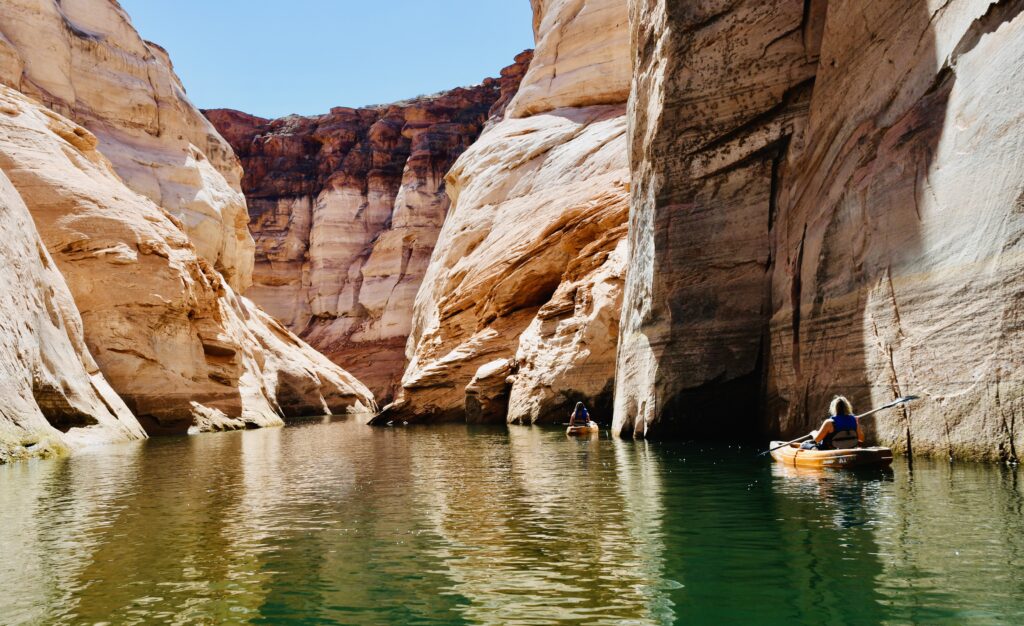Kayakers paddle a side canyon on Lake Powell. (Photo by Dennis McKenna)
**Clay:** What you’re describing seems to be a win-win situation. Why hasn’t this argument gained traction?
**Eric Balken:** That’s starting to change, and it’s because people are getting to see Glen Canyon. The most impactful work that we’ve done is simply taking stakeholders down there and showing it to them. I don’t have to say anything. We had that great article from [Elizabeth Kolbert in *The New Yorker*](https://www.newyorker.com/magazine/2021/08/16/the-lost-canyon-under-lake-powell). I had the opportunity to take CBS down there, and [Nate Rott from NPR](https://www.npr.org/2022/01/07/1067716380/western-megadrought-climate-lake-powell-glen-canyon-reservoir). When they see it, I don’t need to make the argument. It feels like a national park. The reason that the broader American public is not warming to the idea yet is that they just haven’t seen it, and that’s going to take time. You can go anywhere in the world and people know about the Grand Canyon, but they don’t know about Glen Canyon. The focus of our work is raising awareness, documenting the change that’s happening, gathering data on this ecological rebirth that’s taking place, and showing the public. We’re happy to see the needle slowly start to shift.
**Clay:** What about those who say, “We’ve got 40 million people downstream that depend upon this system. Are they supposed to depopulate?”
**Eric Balken:** The 40 million people that rely on the system don’t necessarily rely on Glen Canyon Dam specifically. That gets lost in the discussion. Many say that five million people rely on Glen Canyon’s power. That’s not true. Five million people get a portion of their electricity from Glen Canyon Dam. If it went offline, most of them wouldn’t notice. There are other sources of electricity on the grid. The dam is already producing much less than it has in the past. People look at the water infrastructure and assume that every part of it is critical, but we have a lack of water, not a lack of storage. We just don’t need the reservoir anymore. Also, our values have evolved. When the dam was commissioned in 1956, there were no environmental laws, no [Endangered Species Act](https://www.epa.gov/laws-regulations/summary-endangered-species-act), no [NEPA](https://www.doi.gov/nepa), no [Clean Water Act](https://www.epa.gov/laws-regulations/summary-clean-water-act). Nor was there consideration of the impact to cultural sites and to Indigenous people. In thinking about the infrastructure changes on the Colorado River, we have to consider our value changes and how we think about the value of water economically. We have to evolve our system so that it doesn’t incentivize people to use water at all costs.
**Clay:** How do you see all of this playing out?
**Eric Balken:** I’m an optimistic person. When I look at what’s happening on the Colorado River, I don’t see doom and gloom. I don’t think that life in the West is coming to an end. We just have to adapt. But we have been very dumb with water in the West, and I think that’s lost on a lot of people. There’s lots of low hanging fruit that we could easily pick to begin solving these problems. John Wesley Powell had some prescient ideas. He said we should build dams that are no more than fifty feet high. He thought we should divide up communities by their basins, their water drainages. His ideas — living within the means of the hydrology — were provocative. Most of our water is used for agriculture. Most of that agriculture is growing hay for cattle. We’ve incentivized water waste in the West. This made sense a hundred years ago when the federal government wanted to encourage people to move out west, but it doesn’t make sense anymore. There are economic alternatives. We need to adapt. We have the tools to do it, and I’m sure that we will do it.
*Clay’s interview with Eric Balken is part of a [series](https://ltamerica.org/beyond-the-apocalypse-and-bathtub-rig-a-colorado-river-journey-we-begin-2/) on an exploration of Water in the West. You can follow our dispatches, essays, photos, and podcasts on this topic through the tag “Water in the West.”*
---
If you would like to hear to the entire episode you can find it here: [\#1550 The Death of Glen Canyon Dam](https://jeffersonhour.bandcamp.com/track/1550-the-death-of-glen-canyon-dam).
---
## ***Discover more on these topics at Listening to America***
[State Parks](https://ltamerica.org/tag/state-parks/ "2 topics")[U.S. Presidents](https://ltamerica.org/tag/u-s-presidents/ "71 topics")[Republics](https://ltamerica.org/tag/republics/ "1 topics")[The Constitution](https://ltamerica.org/tag/the-constitution/ "1 topics")[Texas](https://ltamerica.org/tag/texas/ "4 topics")[New Mexico](https://ltamerica.org/tag/new-mexico/ "3 topics")[Ohio](https://ltamerica.org/tag/ohio/ "2 topics")[Video](https://ltamerica.org/tag/video/ "51 topics")[Sports](https://ltamerica.org/tag/sports/ "2 topics")[Washington](https://ltamerica.org/tag/washington/ "2 topics")[Podcast](https://ltamerica.org/tag/podcast/ "1 topics")[Thomas Jefferson](https://ltamerica.org/tag/thomas-jefferson/ "34 topics")[Tennessee](https://ltamerica.org/tag/tennessee/ "1 topics")[South Dakota](https://ltamerica.org/tag/south-dakota/ "16 topics")[Reading](https://ltamerica.org/tag/reading/ "1 topics")[Poetry](https://ltamerica.org/tag/poetry/ "1 topics")[Republic](https://ltamerica.org/tag/republic/ "0 topics")[Vermont](https://ltamerica.org/tag/vermont/ "1 topics")[Steinbeck Travels](https://ltamerica.org/tag/steinbeck-travels/ "75 topics")[South Carolina](https://ltamerica.org/tag/south-carolina/ "1 topics")[Travel](https://ltamerica.org/tag/travel/ "1 topics")[Rome](https://ltamerica.org/tag/rome/ "1 topics")[north daktoa](https://ltamerica.org/tag/north-daktoa/ "0 topics")[Theodore Roosevelt](https://ltamerica.org/tag/theodore-roosevelt/ "16 topics")[paintings](https://ltamerica.org/tag/paintings/ "0 topics")[Virginia](https://ltamerica.org/tag/virginia/ "7 topics")[Wyoming](https://ltamerica.org/tag/wyoming/ "4 topics")[New York](https://ltamerica.org/tag/new-york/ "8 topics")[North Dakota](https://ltamerica.org/tag/north-dakota/ "53 topics")[Road Trips](https://ltamerica.org/tag/road-trips/ "18 topics")[U.S. Constitution](https://ltamerica.org/tag/u-s-constitution/ "1 topics")[Wisconsin](https://ltamerica.org/tag/wisconsin/ "0 topics")[North Carolina](https://ltamerica.org/tag/north-carolina/ "3 topics")[New England](https://ltamerica.org/tag/new-england/ "1 topics")[Pennsylvania](https://ltamerica.org/tag/pennsylvania/ "1 topics")[Walden](https://ltamerica.org/tag/walden/ "1 topics")[Rivers](https://ltamerica.org/tag/rivers/ "3 topics")[William Shirer](https://ltamerica.org/tag/william-shirer/ "1 topics")[Oppenheimer](https://ltamerica.org/tag/oppenheimer/ "1 topics")[Space Exploration](https://ltamerica.org/tag/space-exploration/ "8 topics")[Oregon](https://ltamerica.org/tag/oregon/ "4 topics")[Water in the West](https://ltamerica.org/tag/water-in-the-west/ "24 topics")[Thoreau](https://ltamerica.org/tag/thoreau/ "5 topics")[Utah](https://ltamerica.org/tag/utah/ "11 topics")[Oppenheim](https://ltamerica.org/tag/oppenheim/ "0 topics")
**Categories:** Features
**Tags:** Arizona, Colorado River, Utah, Water in the West
---
### [Artificial Intelligence: A Collision of Opportunity and Challenge](https://ltamerica.org/artificial-intelligence-a-collision-of-opportunity-and-challenge-2/)
**Published:** July 4, 2023
**Author:** Clay Jenkinson
**Excerpt:** Machines, it turns out, think and learn in pretty much the same ways that humans do. They also possess some of the same weaknesses. Clay explores the topic of artificial intelligence with futurist, David Horton.
**Content:**
## Machines, it turns out, think and learn in pretty much the same ways that humans do. They also possess some of the same weaknesses.
*The arrival of ChatGPT has thrust artificial intelligence into the public consciousness, but AI is already deeply entrenched in our lives. So much so, says* *[David Horton](https://www.radford.edu/content/csat/home/about/dean-staff.html), a futurist and administrator at Radford University in western Virginia, that any thoughts of legislating it out of existence are completely unrealistic. That’s not necessarily a bad thing to Horton, who acknowledges the challenges ahead but ultimately comes down on the side of optimism. He recently shared with Clay some of the ways in which AI will impact our future, and how that future depends a great deal on the present-day establishment of rules of engagement. This interview has been edited for length and clarity.*
David Horton, Administrator and Futurist at Radford University also serves as Mayor for the City of Radford, Va.
**Clay**: What do we mean when we say artificial intelligence?
**David Horton**: Artificial intelligence is primarily centered around machine learning, where computers detect patterns in data sets and create iterative plans. Here at [Radford University](https://www.radford.edu/), we have a program that focuses on the collection, organization, and utilization of data to create useful outcomes. We’re talking about terabytes of data. An airplane flight of several hours, for example, can generate data that allows an airline to extrapolate out when tires need to be changed or when pieces of the plane need to be modified or adjusted, minimizing downtime for the plane. That’s what artificial intelligence is: taking data sets, looking for patterns, developing what can be extrapolated, and then producing something useful.
**Clay**: Many have come to view AI as a dangerous and even sinister thing. [Yuval Harari](https://www.ynharari.com/), the author of Homo Deus, says that we should move to [outlaw AI](https://www.economist.com/by-invitation/2023/04/28/yuval-noah-harari-argues-that-ai-has-hacked-the-operating-system-of-human-civilisation?utm_medium=cpc.adword.pd&utm_source=google&ppccampaignID=17210591673&ppcadID=&utm_campaign=a.22brand_pmax&utm_content=conversion.direct-response.anonymous&gclid=Cj0KCQjwnMWkBhDLARIsAHBOftpZkDZC8Fa6X-PbNfwYLcoUicB1IKj4Aj_cpuEjHQ_ZIBRVE7UiP64aAnZREALw_wcB&gclsrc=aw.ds) while we still can.
**David Horton**: Like any tool, it comes with both opportunities and challenges. One of those challenges is to determine the rules of engagement. It’s much like the atomic energy revolution of the early to mid-20th century that provided the opportunity to power entire cities, but also brought great destructive power. It depends on how it’s used. For years the science fiction trope has been that artificial intelligence and robots are a threat to humanity because we deploy human faults and traits onto those things. There are hyped stories about chatbots gone awry, but so far it hasn’t really gone that way. We’re just at the dawn of the day with artificial intelligence. In the next few years and over the next few decades, we’re going to see changes in every facet of life.
**Clay**: [ChatGPT](https://openai.com/blog/chatgpt) is currently getting a lot of media attention.

**David Horton**: ChatGPT is a wonderful imitative software package that scours the internet, searching through millions of posts and articles. It points to existential issues about the definition of original thought and the way in which we learn. Much of what we as individuals produce is based on what we’ve read, what we’ve experienced, what we’ve learned from others, and that’s how machine learning and artificial intelligence is modeled. So you should not be surprised if at some point you recognize some exact language from your own work in a ChatGPT-produced article.
**Clay**: In other words, our brains do the same type of networking, but on a much more intuitive and smaller scale.
**David Horton**: That’s right. Artificial intelligence hasn’t quite made that leap to original thought. It may occur with the development of quantum computing, which creates multifaceted, multi-armed relationships where things are connecting in different ways all at once. We have to realize, however, that ChatGPT productions can contain inaccurate statements. You have to be knowledgeable enough to evaluate what you’re getting from an artificial intelligence. For example, I serve as mayor of the city of Radford, so I asked ChatGPT to write a press release about my tenure in that office. It did a pretty good job through a couple of paragraphs, but then it went off the rails and included things with which I never had any involvement. But that same exact thing can be said of items created by people. We are fed information all day from a variety of sources, and we process that information to discern what we think is the truth. Artificial intelligence works the same way.
> **“We have to realize that people today are reading and watching and listening to things generated by AI, and they have no idea of the degree of artificial intelligence that was involved.”**
>
> **David Horton**
**Clay**: There’s been a lot of talk about the implications of all of this for higher education.
**David Horton**: Just as there are tools for creating documents, there are [tools for detecting artificial intelligence](https://www.eweek.com/artificial-intelligence/ai-detector-software/) as the source of documents. This is an evolving process, but it doesn’t exist in a vacuum. When a student submits a piece of work, you know things about that individual and the way in which they communicate. You know things about students that don’t necessarily match up to the end product. That’s one big piece of this. Another is the way in which we make those assignments. If a topic is truly universal enough to lend itself to this sort of writing, you might instruct students to write something “based on what we’ve discussed in class,” or “based on your experiences.” Require them to explain their reasoning. It becomes a very different kind of essay. It’s not impossible for that to be replicated by an artificial intelligence, but it integrates the person and the experience more into the process.
**Clay**: One area where it seems that AI could have a positive and even revolutionary effect would be healthcare delivery.
**David Horton**: Without a doubt. Time is everything in diagnosis, and AI can look at patterns and detect the propensity for a specific cancer 20 or 30 years prior to actual diagnosis. With just a small treatment, you’d be able to totally avoid what would ultimately have been a cancer diagnosis. And with chemotherapy, imagine drug delivery systems smart enough to analyze cells and know exactly where to deploy the medicine. We’ll be able to take an almost molecular-sized robot called a [nanobot](https://www.azonano.com/article.aspx?ArticleID=5761), fill it with an atomic medicine that is the cure for a particular cancer, and send it in to destroy those cells. Chemotherapy now affects both healthy and cancerous cells, but these nanobots will only deploy the medicine when they recognize the cancerous cells.
**Clay**: The manipulation of photography has been around for a long time, but it seems that AI could take that to new levels?
**David Horton**: We’ll see exponential growth with this. There’s already the ability to create an amalgam of yourself based on pictures. You upload 10 or 20 pictures of yourself, and AI can create images that look like photographs of you in different settings. You can be a superhero, a warrior, whatever you want. There are new things coming on the market every day that allow for the original generation of images, voices, music, scripts, etc. We will likely see a fully AI-generated movie within the next five to ten years. We could have Clark Gable and Arnold Schwarzenegger and Marilyn Monroe appearing in this film, with voice and image completely and originally generated.
**Clay**: A number of years ago there was a machine-written symphony that was performed for a live audience that loved it until they were told that it was machine-generated. They became very angry when they were made aware of how the music was created, arguing that it offended the notion of the creative spirit.
**David Horton**: That symphony was created by feeding the computer thousands of symphonies and letting it process the patterns of pieces that were considered to be great works. One part of the perceived offense is that you no longer require a human to craft and create the work. It’s no longer someone’s story, someone’s experience. The other problem goes back to using the works of other artists to generate this new thing. Are there credits or permissions involved? Also, when a machine creates something, listeners have an easier time criticizing it because they perceive it as the output of a coldhearted machine. But we will learn to live with that as we move forward. We have to realize that people today are reading and watching and listening to things generated by AI, and they have no idea of the degree of artificial intelligence that was involved.
> **“I would not be surprised to see us turn to an artificial intelligence to help us figure out how to deal with artificial intelligence.”**
>
> **David Horton**
**Clay**: What about intellectual property issues? Consider an artist like Prince. Though he died in 2016, machines will eventually be capable of writing hundreds of new “Prince” songs. They wouldn’t be his, but they would sound as if they were.
**David Horton**: That’s happening now, and it does present all kinds of challenges. The dark side is that AI can be used to steal intellectual property and utilize it in ways that artists never intended. It can be used to present misinformation. It can be used in all kinds of nefarious ways. The United Nations is beginning to address this on a global level. There’s a website – [AI 4 Good](https://ai4good.org/) — that will take you to the UN-sponsored [AI for Good Global Summit](https://aiforgood.itu.int/summit23/) taking place in July. They’re essentially trying to create the rules for engagement. It’s a struggle because the genie is already out of the bottle on so much of this, but we have to look at how we can use this to better the world without allowing the destructive elements to take control.
**Clay**: As individuals we learn to use common sense and to give proper weight to the evidence in order to make reliable evaluations of the material we encounter. Are the machines going to become sophisticated enough to do that sort of weighting?
**David Horton:** The machine will be always be a tool that some will use to push an agenda. At one time, Walter Cronkite was the most trusted man in America. If Walter said it, it must be true. That sort of trust is going to become much more valuable as we move forward. The individuals who bring us the news will matter that much more. We will be relying on their judgment and their trustworthiness to help us in this process. Critical thinking is going to become even more crucial. When you’re a journalist, an educator, an historian, an author, any kind of expert, you’ll have to multi-source things and evaluate each piece. Those sorts of individuals are going to become that much more important in this world where so much information can appear to be factual.
**Clay**: Can this be regulated?
**David Horton**: They are going to try, but as I said, the genie is already out of the bottle. People will have the ability to use AI regardless of what we do through law or treaty. Still, we have to do our best. I would not be surprised to see us turn to an artificial intelligence to help us figure out how to deal with artificial intelligence. There’s no single solution. It will be interesting to see the outcomes of the UN global summit and what the rules of engagement begin to look like. It will be impossible to make AI go away. It has already existed far longer in reality than it has in the public consciousness. It’s just now becoming apparent to us, but it has many layers and has been going on for many years. I don’t automatically see it as a doomsday scenario, but it’s a challenge we’ve got to face.
---
You can listen to the full episode here: [\#1554 Artificial Intelligence and the Future of Civilization.](https://jeffersonhour.bandcamp.com/track/1554-artificial-intelligence-and-the-future-of-civilization)
---
## ***Discover more on these topics at Listening to America***
[North Dakota](https://ltamerica.org/tag/north-dakota/ "53 topics")[North Carolina](https://ltamerica.org/tag/north-carolina/ "3 topics")[Road Trips](https://ltamerica.org/tag/road-trips/ "18 topics")[Texas](https://ltamerica.org/tag/texas/ "4 topics")[Theodore Roosevelt](https://ltamerica.org/tag/theodore-roosevelt/ "16 topics")[Vermont](https://ltamerica.org/tag/vermont/ "1 topics")[Thomas Jefferson](https://ltamerica.org/tag/thomas-jefferson/ "34 topics")[Virginia](https://ltamerica.org/tag/virginia/ "7 topics")[Travel](https://ltamerica.org/tag/travel/ "1 topics")[Oregon](https://ltamerica.org/tag/oregon/ "4 topics")[Republic](https://ltamerica.org/tag/republic/ "0 topics")[Washington](https://ltamerica.org/tag/washington/ "2 topics")[Oppenheim](https://ltamerica.org/tag/oppenheim/ "0 topics")[Wisconsin](https://ltamerica.org/tag/wisconsin/ "0 topics")[New England](https://ltamerica.org/tag/new-england/ "1 topics")[New York](https://ltamerica.org/tag/new-york/ "8 topics")[paintings](https://ltamerica.org/tag/paintings/ "0 topics")[Poetry](https://ltamerica.org/tag/poetry/ "1 topics")[New Mexico](https://ltamerica.org/tag/new-mexico/ "3 topics")[State Parks](https://ltamerica.org/tag/state-parks/ "2 topics")[Oppenheimer](https://ltamerica.org/tag/oppenheimer/ "1 topics")[U.S. Presidents](https://ltamerica.org/tag/u-s-presidents/ "71 topics")[South Carolina](https://ltamerica.org/tag/south-carolina/ "1 topics")[Reading](https://ltamerica.org/tag/reading/ "1 topics")[South Dakota](https://ltamerica.org/tag/south-dakota/ "16 topics")[Walden](https://ltamerica.org/tag/walden/ "1 topics")[Rivers](https://ltamerica.org/tag/rivers/ "3 topics")[U.S. Constitution](https://ltamerica.org/tag/u-s-constitution/ "1 topics")[Steinbeck Travels](https://ltamerica.org/tag/steinbeck-travels/ "75 topics")[Podcast](https://ltamerica.org/tag/podcast/ "1 topics")[Rome](https://ltamerica.org/tag/rome/ "1 topics")[Space Exploration](https://ltamerica.org/tag/space-exploration/ "8 topics")[Thoreau](https://ltamerica.org/tag/thoreau/ "5 topics")[north daktoa](https://ltamerica.org/tag/north-daktoa/ "0 topics")[Water in the West](https://ltamerica.org/tag/water-in-the-west/ "24 topics")[Pennsylvania](https://ltamerica.org/tag/pennsylvania/ "1 topics")[Republics](https://ltamerica.org/tag/republics/ "1 topics")[Tennessee](https://ltamerica.org/tag/tennessee/ "1 topics")[Utah](https://ltamerica.org/tag/utah/ "11 topics")[William Shirer](https://ltamerica.org/tag/william-shirer/ "1 topics")[Sports](https://ltamerica.org/tag/sports/ "2 topics")[Wyoming](https://ltamerica.org/tag/wyoming/ "4 topics")[The Constitution](https://ltamerica.org/tag/the-constitution/ "1 topics")[Video](https://ltamerica.org/tag/video/ "51 topics")[Ohio](https://ltamerica.org/tag/ohio/ "2 topics")
**Categories:** Features
---
### [Remembering the Great Charles Wilkinson](https://ltamerica.org/remembering-the-great-charles-wilkinson/)
**Published:** July 17, 2023
**Author:** Clay Jenkinson
**Content:**
## A beloved educator and leader in environmental and Native American law, Professor Charles Wilkinson of Colorado University, Boulder had a profound impact throughout the American West and beyond.
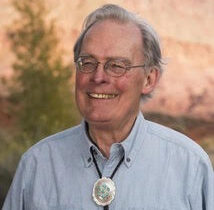Professor and author Charles Wilkinson.
The death of the great [Charles ](https://www.colorado.edu/law/2023/06/12/memoriam-charles-wilkinson-trailblazer-justice-earth-and-american-indian-law)[Wilkinson](https://www.colorado.edu/law/2023/06/12/memoriam-charles-wilkinson-trailblazer-justice-earth-and-american-indian-law) has come as a terrible blow to the environmental and Native American law community. Wilkinson died in Boulder, Colorado, on June 6, 2023. He was 81. His work on environmental law policy and Native American law is regarded as some of the best work in those fields of the last generation. He was a charismatic law professor, mentor to scores of talented students, and a scholarly environmental activist.
I knew him a little. My former wife, Etta Walker was one of his beloved students. It worked both ways. She took his famous water law class at CU Boulder, during which there was a two-week field study down in Arizona. This was one of Wilkinson’s most coveted courses. Every year he chose a river or bioregion. The students assembled immense dossiers on every aspect of that watershed (geology, geography, economy, Native American traditions, politics, meteorology, literature, etc.). I saw one of these class studies, all in big loose-leaf binders, stretching together across an 8-foot-wide bookshelf. And when the dossiers were complete, the class — armed with all that information — took to the road to go see the watershed for themselves. My wife and Professor Wilkinson bonded for life on that trip. Whenever over the years they found themselves in the same zip code they invariably recounted the barbed conversations they had in pubs and seminar rooms of the American outback. Probably a hundred of his former students tell much the same story of those field trips.
I brought Professor Wilkinson to Portland for a symposiums on the Lewis and Clark Expedition around the year 2006. He gave a beautiful lecture about the world Lewis and Clark encountered and how it has been reshaped and repopulated in the 200 years since they passed through American Serengeti. At one point Charles talked about the salmon in the Columbia in 1805. He said “Think of it. There was a time when there were so many millions of salmon in the Columbia that you could almost walk across their backs from one shore to the other.” As he said this, his voice choked, and he turned his head away for a few seconds before he could finish his lecture. It was a beautiful moment. Everyone was loving what he had to say, and suddenly they got a glimpse of the depths of Wilkinson’s passion for the integrity of western landscapes, his deep sense of loss for what we have erased.
On stage, before an audience of 350, I asked Charles if it is possible to exaggerate Theodore Roosevelt’s contributions to American conservation.
“No,” he said, and went on to talk about the ways in which Roosevelt, a blue blood from New York City, fell in love with the American West beginning in 1883 and went on to set aside 230 million acres of the public domain as National Park, National Monument, National Game Preserve, Nation Forest, and National Wildlife Refuge. Roosevelt invented the National Wildlife Refuge system in 1903 when he used an executive order to create Federal Bird Sanctuaries, beginning with Pelican Island in the Indian River in Florida.
On another occasion, this one at CU Boulder, I gave a lecture on [John Wesley Powell](https://ltamerica.org/following-the-ghost-of-john-wesley-powell/). I was about a third of the way through my talk. Charles was sitting behind me on a dais. I recited a passage by Powell in which he says that he and the boys had lunch on the brink of the canyon and dangled their feet over a precipice of at least 2,000 feet. At the end of the passage, Powell says, “And yet I can not look on and see another do the same. I must either tell him to come away or turn my head.” When I said that I heard a little gasp of recognition from Charles. He knew exactly what Powell was saying. He had lived it with close friends and a son. Sitting on the lip of a canyon is an inherently dangerous thing to do, and yet we are drawn to the experience. But to watch your son sitting over the abyss …
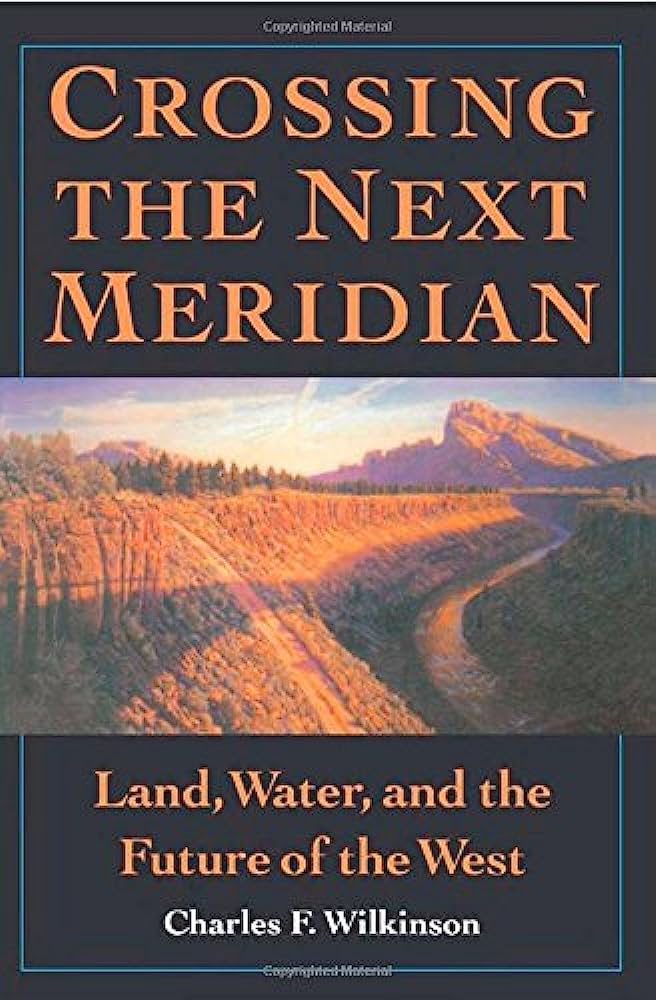One of 14 books written by Professor Charles Wilkinson over his long career.
He was a prolific writer: 14 books. I particularly admired *Crossing the Next Meridian: Land, Water, and the Future of the American West* (1993), *Blood Struggle: The Rise of Modern Indian Nations* (2006), and his seminal *American Indians, Time, and the Law*. His most personal book is *Eagle Boy*.
It’s true that Wilkinson wrote important and well-regarded books, some essential for any study of “Indian law.” But his true greatness was in his teaching, mentoring, and inspiring law students. He’s had an enormous, almost incalculable impact on environmental law studies. His students went on to important and remarkable careers in public land policy, conservation organizations, and university faculties. There are hundreds of Wilkinsonites in important and often powerful positions in the larger land use and environmental world.
Part of the Wilkinson magic was in his style. He was a handsome man with a great smile, half smirk, a little wan, but genuine and generous. His round glasses always seemed too small, as if his learning, wit, and insights were funneling from his brain through those spectacles. Some of his books recount his actual adventures in the American West, so there is a whiff of Thoreau-Edward Abbey in some of his writings, but the dominant persona is a man who spent most of his time writing and teaching at a distinguished law school. So, it is a scholar who might be seen with his legs dangling over the lip of Grand Canyon or hiking the Utah plateau, rather than an Abbey-like figure who lives the full wilderness life but can also write books.
Wilkinson played an important role in the creation of [Grand Staircase Escalante National Monument](https://www.utah.com/destinations/national-monuments/grand-staircase-escalante-national-monument/) (September 18, 1996) and [Bears Ears National Monument](https://www.whitehouse.gov/briefing-room/presidential-actions/2021/10/08/a-proclamation-on-bears-ears-national-monument/) (December 28, 2016).
In an article in the Arizona State law review, “‘AT BEARS EARS WE CAN HEAR THE VOICES OF OUR ANCESTORS IN EVERY CANYON AND ON EVERY MESA TOP’: The Creation of the First Native National Monument,” Wilkinson provided a brilliant explanation of the reasons why the monument was so important, and emphasized not only the importance of that 1.3 million acre landscape to a large number of Native tribes, but he reminded us several times that this was America’s first “Native American Monument,” a much overdue departure from the previous top-down protocols of national monument designation. Native Americans drove the project. They were at the table in every room where decisions were made.
Wilkinson wrote:
> “Further, the tone and tenor of the (Monument) Proclamation is central to its meaning. The writing is powerful and often lyrical. Far more than any earlier proclamation, this one, because of the tribes’ deep involvement in its development, is truly an Indian national monument. Although not explicitly stated, the purpose, best understood, of the Bears Ears National Monument is to honor the land; the tribes, past and present; and the tribes’ relationship to the land.”
This is properly modest but a little disingenuous. A goodly portion of that poetic proclamation found its way to paper through Wilkinson’s pen, though he would be the first to say he was mostly just shaping Native thoughts and Native language formulations as an amanuensis.
Wilkinson could have done constitutional law or the law of contracts. He could have made millions of dollars working in a commercial law firm. But he taught at a public university, gave his mighty energies and his first-rate mind to the betterment (and empowerment) of the lives of Native Americans and the protection and celebration of America’s public lands. He had become the grand lama of these fields.
That’s the kind of achievement worthy of the National Medal of Honor. Where’s the lifetime achievement award for someone of such significance?
---
## ***Discover more on these topics at Listening to America***
[The Constitution](https://ltamerica.org/tag/the-constitution/ "1 topics")[New England](https://ltamerica.org/tag/new-england/ "1 topics")[Ohio](https://ltamerica.org/tag/ohio/ "2 topics")[paintings](https://ltamerica.org/tag/paintings/ "0 topics")[Theodore Roosevelt](https://ltamerica.org/tag/theodore-roosevelt/ "16 topics")[Walden](https://ltamerica.org/tag/walden/ "1 topics")[Oregon](https://ltamerica.org/tag/oregon/ "4 topics")[Texas](https://ltamerica.org/tag/texas/ "4 topics")[Oppenheim](https://ltamerica.org/tag/oppenheim/ "0 topics")[Rivers](https://ltamerica.org/tag/rivers/ "3 topics")[Oppenheimer](https://ltamerica.org/tag/oppenheimer/ "1 topics")[State Parks](https://ltamerica.org/tag/state-parks/ "2 topics")[north daktoa](https://ltamerica.org/tag/north-daktoa/ "0 topics")[Virginia](https://ltamerica.org/tag/virginia/ "7 topics")[Wyoming](https://ltamerica.org/tag/wyoming/ "4 topics")[Reading](https://ltamerica.org/tag/reading/ "1 topics")[New York](https://ltamerica.org/tag/new-york/ "8 topics")[U.S. Presidents](https://ltamerica.org/tag/u-s-presidents/ "71 topics")[Thomas Jefferson](https://ltamerica.org/tag/thomas-jefferson/ "34 topics")[Podcast](https://ltamerica.org/tag/podcast/ "1 topics")[South Dakota](https://ltamerica.org/tag/south-dakota/ "16 topics")[Utah](https://ltamerica.org/tag/utah/ "11 topics")[William Shirer](https://ltamerica.org/tag/william-shirer/ "1 topics")[Washington](https://ltamerica.org/tag/washington/ "2 topics")[Vermont](https://ltamerica.org/tag/vermont/ "1 topics")[Poetry](https://ltamerica.org/tag/poetry/ "1 topics")[Wisconsin](https://ltamerica.org/tag/wisconsin/ "0 topics")[South Carolina](https://ltamerica.org/tag/south-carolina/ "1 topics")[Road Trips](https://ltamerica.org/tag/road-trips/ "18 topics")[Space Exploration](https://ltamerica.org/tag/space-exploration/ "8 topics")[North Carolina](https://ltamerica.org/tag/north-carolina/ "3 topics")[Republic](https://ltamerica.org/tag/republic/ "0 topics")[Pennsylvania](https://ltamerica.org/tag/pennsylvania/ "1 topics")[U.S. Constitution](https://ltamerica.org/tag/u-s-constitution/ "1 topics")[Water in the West](https://ltamerica.org/tag/water-in-the-west/ "24 topics")[Steinbeck Travels](https://ltamerica.org/tag/steinbeck-travels/ "75 topics")[Republics](https://ltamerica.org/tag/republics/ "1 topics")[Tennessee](https://ltamerica.org/tag/tennessee/ "1 topics")[North Dakota](https://ltamerica.org/tag/north-dakota/ "53 topics")[Sports](https://ltamerica.org/tag/sports/ "2 topics")[New Mexico](https://ltamerica.org/tag/new-mexico/ "3 topics")[Rome](https://ltamerica.org/tag/rome/ "1 topics")[Video](https://ltamerica.org/tag/video/ "51 topics")[Travel](https://ltamerica.org/tag/travel/ "1 topics")[Thoreau](https://ltamerica.org/tag/thoreau/ "5 topics")
**Categories:** Features
**Tags:** Colorado, Native Americans
---
### [My Favorite Photographs of Robert Oppenheimer](https://ltamerica.org/my-favorite-photographs-of-robert-oppenheimer/)
**Published:** July 31, 2023
**Author:** Clay Jenkinson
**Excerpt:** Inspired by the new Oppenheimer film here are a few of my favorite photographs of the noted physicist.
**Content:**
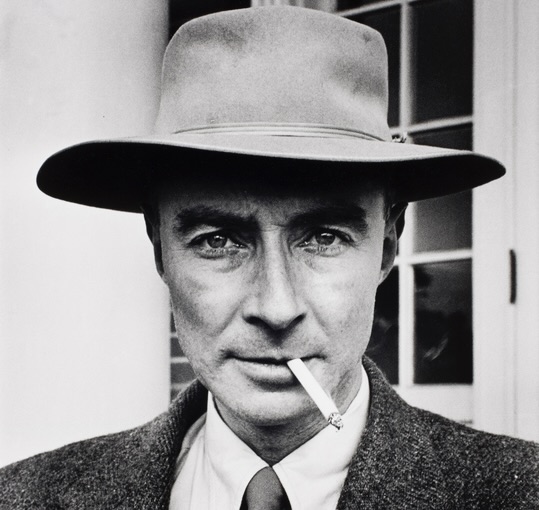Robert Oppenheimer in his porkpie hat by the famous photographer Alfred Eisenstaedt.
Robert Oppenheimer is everywhere these days, thanks to the blockbuster film directed by Christopher Nolan and the outstanding acting by Cillian Murphy, Emily Blunt, and Robert Downey, Jr. For most Americans, Cillian Murphy is now going to be what they “see” when they think of Robert Oppenheimer. The actor’s metamorphosis into the brilliant and complicated physicist is masterful. Murphy gets the tilt of the head right, the downcast eyes right, the gestures right, his slightly hesitating manner of speaking right, and it is said he limited his food consumption during production to a single almond per day to maintain the kind of extreme leanness of Oppenheimer.
I hope everyone will spend some time looking at photographs of J. Robert Oppenheimer. There are hundreds available at Google Images.
Oppenheimer was a fabulous subject to photograph. He was a man of many moods. He had an enormously expressive face. There was something unusual about his visage that calls up adjectives like “elfin,” “eerie,” “ethereal,” “bemused,” even “alien.” We all develop a photographic persona, a manner of posing, a “look,” and Oppenheimer, who lived so much of his life as the invariable center of attention, knew how, as one of his favorite poets, T.S. Eliot, put it, to prepare a face to meet the faces that he met.
Here are a few of the best photographs of Robert Oppenheimer.
## **Vindication, 1963**
One of my favorite of all the thousands of photographs taken of Oppenheimer was made in the spring of 1963 when he was informed by the White House that he was to be awarded the prestigious Enrico Fermi Award. He was 59 years old. He had been disgraced nine years earlier when the Cold War military industrial establishment withdrew his security clearance. There had been years of domestic exile at the Institute for Advanced Study at Princeton. He had suffered grievously.
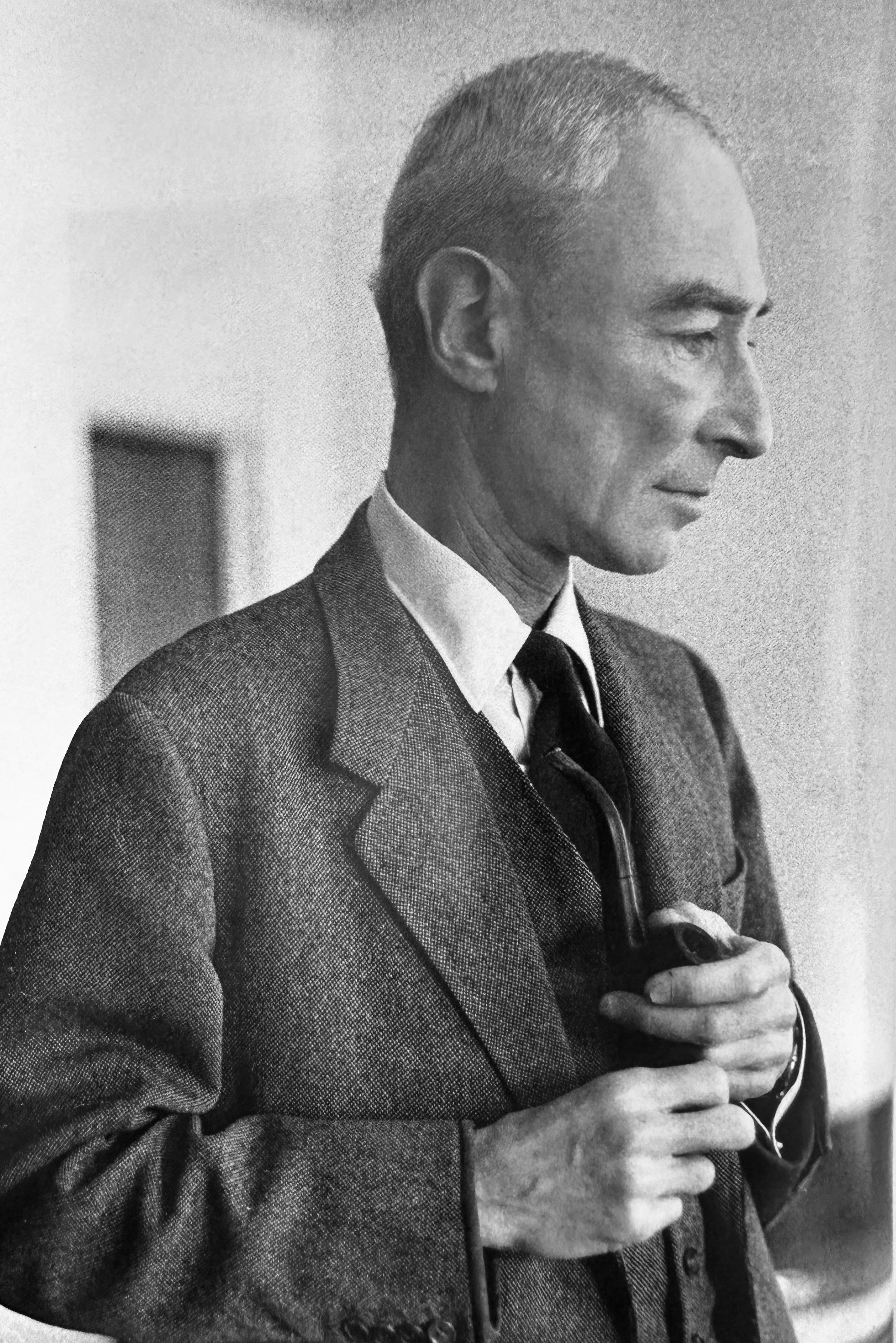Oppenheimer photograph by Ulli Steltzer.
When he heard the news of the award, Oppenheimer called his Princeton neighbor and friend Ulli Steltzer (1923-2018), to come over and take his picture. Born in Frankfurt, Germany, in 1923, Steltzer moved to Princeton, New Jersey in 1953, and immediately began taking photographs of the local worthies, of whom there were plenty at the university and the Institute for Advanced Studies, America’s equivalent to Oxford’s All Souls College. She went on to become an important photographer of the Civil Rights Movement in the United States and Indigenous peoples, mostly in Canada. She relocated to Vancouver, British Columbia, in 1972.
Steltzer’s Oppenheimer looks like a man who has been vindicated. He is calm, confident, looking down and forward at the same time. He is rail thin, wearing an elegant three-piece suit, and as usual is holding his pipe, this time in his left hand. Oppenheimer is perfectly groomed, a gentleman of science. He looks as if he is still processing the telephone call informing him of the award, which was to be presented to him by President John F. Kennedy on December 2, on the anniversary of the first successful chain reaction, in Chicago, in 1942.
There is no note of triumph here. It’s almost as if we see him “placing” this vindication in the long crisis of his career. His mind is visibly at work. He is elegant, self-contained, reflective. Questions: how many exposures did Ms. Steltzer take that day? Did he or Steltzer choose the final image? Steltzer told a historian that she had taken Oppenheimer’s picture four times over the years. “The first time I was so excited that all the pictures were out of focus. … He was shy of the camera, and I never got more than 12 shots. … He asked me to come and take the picture at different times and occasions, but I never stayed longer than eight or 10 minutes because he would soon say that it was enough.”
## **The Brilliance and Whimsy of Philippe Halsman**
Albert Einstein photographed by Philippe Halsman.
[Philippe Halsman ](https://npg.si.edu/exh/halsman/intro.htm)(1906-1979) took two amazing photographs of Oppenheimer. Born in today’s Latvia, then a part of the Russian Empire, in September 1928 he was sentenced to four years in prison for murdering his father, though he professed his innocence. The evidence was circumstantial. Pardoned in 1930, he relocated in France, where he became a celebrated portrait photographer.
In 1947, Halsman took one of the finest photographs of Albert Einstein. In doing so, he essentially locked in the world’s permanent impression of Einstein — wild hair, the knitted brow, the sense that he carried the whole relativistic world on his shoulders. Halsman said the photograph embodied Einstein’s regret that he had had anything to do with the dawning of the epoch of nuclear weapons.
Halsman brought his family to America in 1940. In fact, Einstein helped Halsman get an emergency visa.
J. Robert Oppenheimer. (Philippe Halsman)
Halsman took two remarkable photographs of Robert Oppenheimer. His formal portrait of Oppenheimer staring right into the camera, holding his pipe in his right hand but with the stem in his mouth, and a black chalkboard behind him with mathematical symbols in chalk, may be the single most iconic photograph of the “Father of the Atomic Bomb.” The left side of Oppenheimer’s lean face is partly in shadow. There is sorrow in his face. His eyes are a little watery. There is pride too, and an intense purposefulness. This is the portrait of a man with profound worldly cares. His right hand is holding the pipe delicately, and yet you can see tension in his beautiful fingers. His ears are pointy like Mr. Spock’s from *Star Trek*. His hair is thin and a little grizzled, as if he too has been radiated. This looks like the portrait of the man who created a weapon of mass destruction and now has to spend the rest of his life bearing that burden. Take the pipe away or the math squibs on the blackboard, you get the same visage but not the same significance.
Halsman also took a photograph of Oppenheimer in the same room, jumping. Yes. Jumping. In the 1940s Halsman got it into his head that by taking photographs of prominent people jumping up he would reveal their character. “Every face I see seems to hide the mystery of another human being,” he said. “When you ask a person to jump, his attention is mostly directed toward the act of jumping and the mask falls so that the real person appears.”
Once Halsman settled on this idea, he somehow talked a wide range of important people into jumping for him. It makes sense for Jerry Lewis and Dean Martin to be seen jumping, but how did he talk the stuffy Duke and Duchess of Windsor into elevating before his lens? Or Richard Nixon? His finest jump photos feature Marilyn Monroe, Sophia Loren, Liberace, Audrey Hepburn, Jackie Gleason, and Shirley MacLaine.
His most famous jump photo is entitled *Dali Atomicus*. It was taken in 1948. It features [Salvador Dali ](https://thedali.org/about-the-museum/timeline/)jumping, paintbrush in hand, surrounded by a levitating easel, three flying cats, a cascade of water, and a flying chair. It took 28 time consuming takes before Halsman got the image he wanted. The photograph embodies Dali’s surrealist view of the world. It is a masterpiece in a world before Photoshop.
Salvador Dali in *Dali Atomicus* by Philippe Halsman in 1948.
It’s hard to imagine Halsman talking the famously self-possessed Oppenheimer into jumping for the camera. The result is not one of Halsman’s finest jump photos, but it somehow captures the soul of Oppenheimer.
Oppenheimer jumping by Philippe Halsman.
It should not surprise us that Oppenheimer even manages to jump elegantly. His suitcoat is blousing around him. His legs are as straight as a gymnast’s. His right arm is pointing straight up, his finger almost touching the ceiling, and his left arm hangs down, a finger pointed toward the floor. This is one of those rare photographs in which we do not see Oppenheimer’s amazingly expressive face, but Halsman is right that it *reveals* Oppenheimer clearly and says a great deal about the man.
## **With Einstein**
Oppenheimer and Albert Einstein were never close. For one thing, Einstein was 25 years older than Oppenheimer. Einstein was deeply skeptical of quantum physics; Oppenheimer embraced the new physics and brought quantum theory to Berkeley. It is important to remember, too, that Einstein’s major work was finished by 1920, when Oppenheimer was merely 16 years old. Einstein had nothing to do with the actual creation of atomic weapons (except his famous 1939 letter to FDR), unless you remember that the power of the atomic bomb was the ultimate proof and application of the most famous equation in the history of science, Einstein’s E = MC2.
Although Einstein was persuaded by Leo Szilard to send his “new developments in physics” letter to President Roosevelt on August 2, 1939, he was a lifelong pacifist. As the scientific triumph of the splitting of the atom transmogrified into the nuclear nightmare of Hiroshima, Nagasaki, and the Cold War, with its Mutually Assured Destruction (MAD), Einstein began to distance himself from the Szilard letter and from his own agency in alerting America’s wartime president of the possibility of an atomic bomb. Einstein’s elusiveness on this issue — some said his caginess — caused some of his colleagues to lose respect for him. He genuinely regretted what he had done, but Szilard, Teller, and others, including Robert Oppenheimer, believed that there had been an absolute imperative for the United States to beat Adolf Hitler to the atomic bomb. One only has to ask what Hitler would have done with the bomb, had Heisenberg made him one, at Moscow or Stalingrad, or as a revenge bombing of London when it was clear that the war was lost. Einstein also knew that, but in the eyes of some he glided away from the implications of the weapon he helped to birth.
The August 1939 Szilard-Einstein letter warned President Roosevelt that “the element uranium may be turned into a new and important source of energy in the immediate future. Certain aspects of the situation which has arisen seem to call for watchfulness and if necessary, quick action on the part of the Administration. … This new phenomenon would also lead to the construction of bombs, and it is conceivable — though much less certain — that extremely powerful bombs of this type may thus be constructed. A single bomb of this type, carried by boat and exploded in a port, might very well destroy the whole port together with some of the surrounding territory.”
The *Oppenheimer* film invents two meetings between Oppenheimer and Einstein: one, early on, about the possibility that the atomic device might ignite the nitrogen in the atmosphere and destroy the world, in which Oppenheimer asks Einstein to work the calculations. The other, at the end of the film, features a conversation in 1947 (that never happened) in which Oppenheimer tells Einstein ruefully that the arms race precipitated by the invention of atomic weapons might very well be the “chain reaction” that destroys life on earth. None of this is grounded in historical evidence.
It is true that when Oppenheimer was crushed by the paranoia and mania of the Cold War, Einstein suggested that he might just wish to repudiate a nation that would treat him so cruelly and relocate in Europe. They were colleagues at the Institute for Advanced Study in Princeton. Their friendship — if it can justly be called that — didn’t really get traction until the 1960s in New Jersey. Einstein said, “The trouble with Oppenheimer is that he loves a woman who doesn’t love him — the United States government.”
In this clearly posed photograph, a very respectful Oppenheimer listens intently as a more cheerful Einstein explains something to him. Einstein is his usual disheveled self. Every day was a bad hair day for Albert Einstein. Oppenheimer is buttoned up as usual. It is clear from the composition of the photograph that Einstein is the international celebrity and Oppenheimer the respectful acolyte. Oppenheimer’s powers of concentration were legendary.
## **The Man of Sorrows: The Genius of Alfred Eisenstaedt**
My favorite photograph of Oppenheimer is one that I have framed and displayed in my house in North Dakota. Every time I gaze at it I am sucked into the vortex of Oppenheimer’s greatness and his status as a genuinely tragic figure.
Oppenheimer by Alfred Eisenstaedt.
This haunting photograph was taken by [Alfred Eisenstaedt ](https://www.icp.org/browse/archive/constituents/alfred-eisenstaedt?all/all/all/all/0)(1898-1995), one of the great photographers of the 20th century. Eisenstaedt is best known for his photographs of Marilyn Monroe, Sophia Loren, and Einstein, and for the iconic image of a sailor kissing a nurse in Times Square on V-J Day in 1945. More than a hundred of Eisenstaedt’s photographs graced the cover of *Life* magazine. One of my personal favorites shows a uniformed drum major practicing his high-kicking prance on the University of Michigan campus, as children march behind him, attempting to imitate his lurching legs. It’s the stuff of the 1962 film, *The Music Man*. It makes you long for a lost age of innocence in America.
This photograph is the ultimate portrayal of Oppenheimer the Man of Sorrows. It speaks for itself. It’s as if Oppenheimer is carrying not just Hiroshima and Nagasaki and the threat of nuclear apocalypse on his shoulders, in his brain and heart and soul, but also the Battle of the Marne, Auschwitz, Dresden, Tokyo, the Great Ukrainian Famine (1932-33), Bataan, Iwo Jima, My Lai, and Abu Ghraib. One of the themes of *Oppenheimer* is *eros* and *thanatos*, the paradoxical union of the life principle and the death principle. When Oppenheimer famously said, “I am become Death, the destroyer of worlds,” at the moment of his greatest intellectual and scientific achievement, he was drilling down into the incredible core problem of our species. All that genius, all that madness. All that progress, all that destruction. One of the greatest geniuses in modern history, the inventor of a weapon that vaporized scores of thousands of innocent people instantaneously. The triumph of mind, the surrender to bestiality. There is no final resolution of the problem of J. Robert Oppenheimer.
The Eisenstaedt masterpiece has been hanging in my bedroom for the last 10 years — well, until now. My daughter was visiting. She stepped into my bedroom and said, “What do you think the chances are that you ever again have a date, Dad?” I moved the heavy frame down to my basement library.
## **Oppenheimer on NBC**
Oppenheimer on NBC in 1965.
No survey of the Oppenheimer images is complete without screenshots (not photographs) of his 1965 appearance on NBC on the 20th anniversary of Hiroshima and Nagasaki. This is the famous moment when the phrase, “I am become Death, the destroyer of worlds” first became the eight-words-that-sum-up J. Robert Oppenheimer and the creation of the atomic bomb. We know that Oppenheimer did not actually utter those words at dawn on July 16, 1945, at Alamogordo, New Mexico, when the “gadget,” as it was called, was successfully tested for the first time. Just when that passage from the *Bhagavad Gita* first became for Oppenheimer the matrix for his narrative of the thing he had done is unclear.
He was a great physicist but an equally devoted student of the humanities. He learned Italian to read Dante’s *Divine Comedy* in the original, and he learned some Sanskrit so that he could read the Hindu sacred texts. Here’s a paradox: the tragedy of J. Robert Oppenheimer is that he was so well educated, so deeply read not just in Western traditions but world culture, so intricately wired in ethical consciousness, so densely cultured, that he brought to his great technological achievement a soul too complicated for the leaders of the country he served. What Teller said of Oppenheimer at the security hearing in 1954 articulated what most people who knew him felt at one time or another, that “his actions, frankly, appeared to me confused and complicated.”
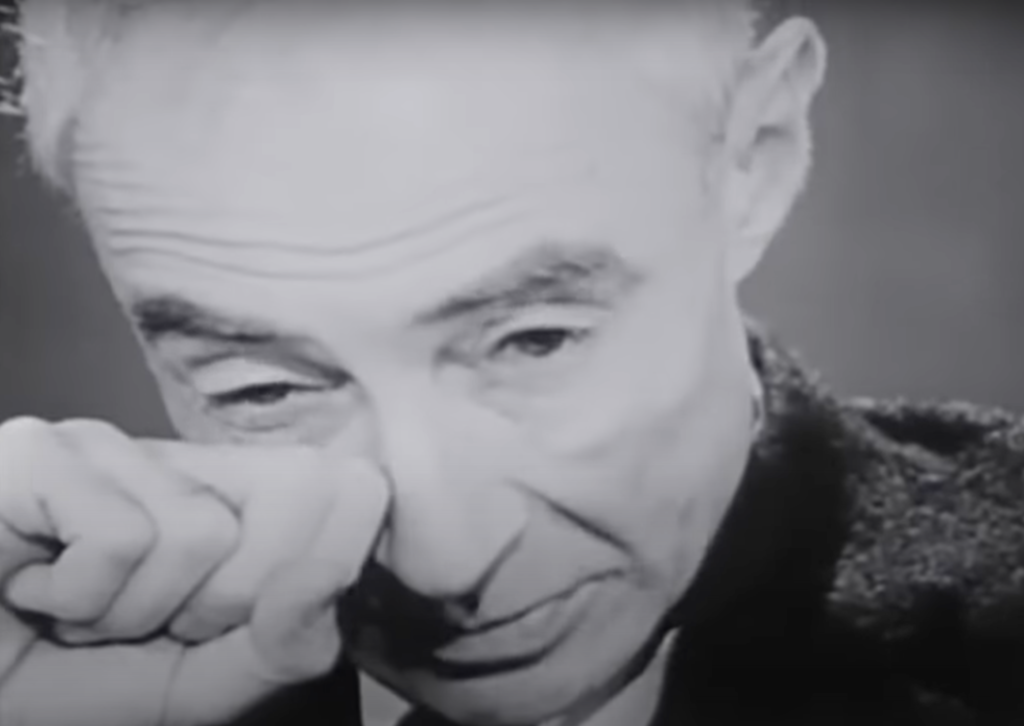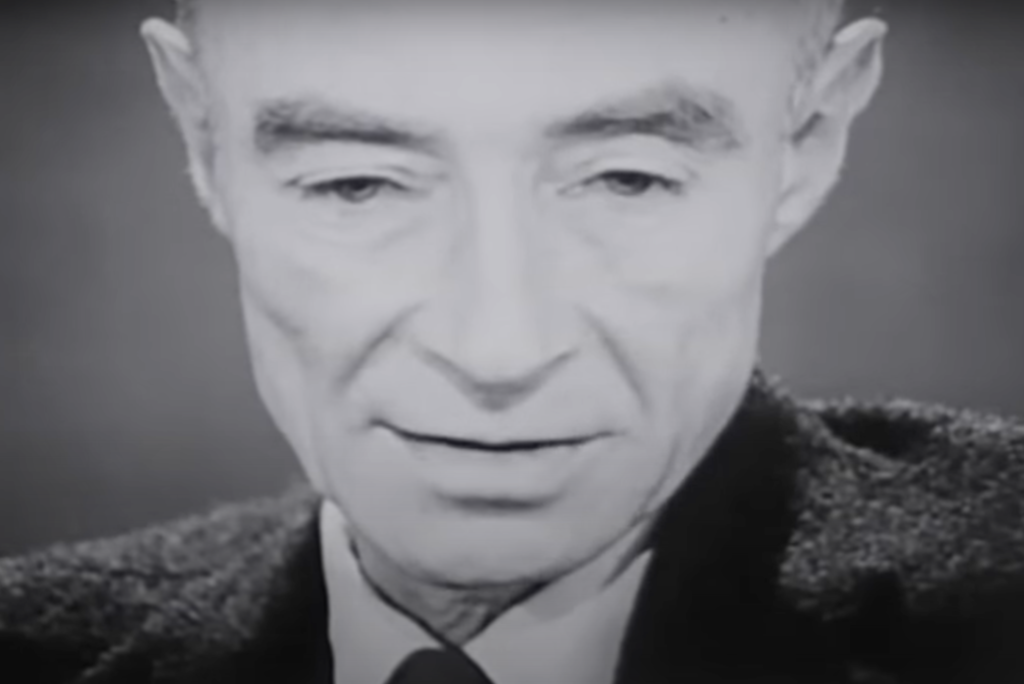
In 1965, on the anniversary of the great atomic summer of 1945, Oppenheimer brought his most fully matured narrative to the cameras of NBC News. He looked haunted. He was desperately thin. The cancer that would kill him was already ravaging his frail body. This was the Oppenheimer of the last years, vindicated by the Kennedy administration, but never again granted a security clearance. This was just three years after the horrifying Cuban Missile Crisis of October 1962, when the world edged as close to the abyss as it ever has since the invention of the bomb. This was just two years after the assassination of JFK, one of the most shattering events of the postwar era. This was not the Robert Oppenheimer of July 17, 1945, when he returned from the Trinity test and cupped his hands over his head in a gesture of unambiguous triumph.
Here’s what he said on NBC:
We knew the world would not be the same. A few people laughed, a few people cried, most people were silent. I remembered the line from the Hindu scripture, the *Bhagavad-Gita*. Vishnu is trying to persuade the Prince that he should do his duty and to impress him takes on his multi-armed form and says, “Now, I am become Death, the destroyer of worlds.” I suppose we all thought that one way or another.
One question that hovers over Oppenheimer is how much of what he did was a pose? Don’t get me wrong. I regard Oppenheimer as a great man, an American hero, and an authentic leader who had the gall to question not only what the United States was doing with the invention he helped create, but to spend the last 22 years of his life brooding over his own agency in the creation. The burden did not destroy him or paralyze him. But there could not have been more than a few hours in those two decades when he did not remember and reflect that he had been the father of the atomic bomb. How do you live with that? Whatever narrative you choose — if I hadn’t done it, somebody else would have stepped up; scientists show what’s possible, it’s the policy makers who decide what to do with it; the bomb saved lives; the bomb was so terrible that perhaps the world will know enough to stay away from the abyss — you remain the man who made it happen. Nor did Truman’s famous Oval Office rebuke — “he may have built the bomb, but I’m the one who fired it off” — lift the burden from Oppenheimer’s shoulders.
The *Oppenheimer* film asks the same question. To what degree did Oppenheimer self-fashion himself in the post Nagasaki world as the Man of Sorrows? To what extent did he shape himself as the world’s atomic alchemist, the sorcerer’s apprentice, the atomic scapegoat, who would take on civilization’s guilt for the promethean hubris of toying with the internal dynamics of the universe? In the film Kitty asks, “Did you think if you let them tar and feather you, the world would forgive you?” She was referring to the Soviet-style kangaroo court that stripped his security clearance in 1954. Oppenheimer’s reply was perfect (in the film), “We’ll see.”
Without in any way wanting to question the agonies of Robert Oppenheimer, I believe there is sometimes a whiff of moral posturing in his public face after 1945. This is what caused a number of intelligent and responsible individuals to feel uneasy about him at times. Nobody doubts his sincerity or his agonies.
But there is some little radiation of anxiety about the way he prepared his face to meet the faces that he met.
---
## ***Discover more on these topics at Listening to America***
[North Carolina](https://ltamerica.org/tag/north-carolina/ "3 topics")[William Shirer](https://ltamerica.org/tag/william-shirer/ "1 topics")[South Carolina](https://ltamerica.org/tag/south-carolina/ "1 topics")[State Parks](https://ltamerica.org/tag/state-parks/ "2 topics")[Virginia](https://ltamerica.org/tag/virginia/ "7 topics")[Space Exploration](https://ltamerica.org/tag/space-exploration/ "8 topics")[Thomas Jefferson](https://ltamerica.org/tag/thomas-jefferson/ "34 topics")[Rivers](https://ltamerica.org/tag/rivers/ "3 topics")[Steinbeck Travels](https://ltamerica.org/tag/steinbeck-travels/ "75 topics")[South Dakota](https://ltamerica.org/tag/south-dakota/ "16 topics")[Podcast](https://ltamerica.org/tag/podcast/ "1 topics")[Sports](https://ltamerica.org/tag/sports/ "2 topics")[north daktoa](https://ltamerica.org/tag/north-daktoa/ "0 topics")[Thoreau](https://ltamerica.org/tag/thoreau/ "5 topics")[New York](https://ltamerica.org/tag/new-york/ "8 topics")[Vermont](https://ltamerica.org/tag/vermont/ "1 topics")[Wisconsin](https://ltamerica.org/tag/wisconsin/ "0 topics")[Texas](https://ltamerica.org/tag/texas/ "4 topics")[Pennsylvania](https://ltamerica.org/tag/pennsylvania/ "1 topics")[Washington](https://ltamerica.org/tag/washington/ "2 topics")[U.S. Constitution](https://ltamerica.org/tag/u-s-constitution/ "1 topics")[Water in the West](https://ltamerica.org/tag/water-in-the-west/ "24 topics")[Tennessee](https://ltamerica.org/tag/tennessee/ "1 topics")[Reading](https://ltamerica.org/tag/reading/ "1 topics")[U.S. Presidents](https://ltamerica.org/tag/u-s-presidents/ "71 topics")[Video](https://ltamerica.org/tag/video/ "51 topics")[Poetry](https://ltamerica.org/tag/poetry/ "1 topics")[Rome](https://ltamerica.org/tag/rome/ "1 topics")[Utah](https://ltamerica.org/tag/utah/ "11 topics")[The Constitution](https://ltamerica.org/tag/the-constitution/ "1 topics")[Ohio](https://ltamerica.org/tag/ohio/ "2 topics")[New Mexico](https://ltamerica.org/tag/new-mexico/ "3 topics")[Walden](https://ltamerica.org/tag/walden/ "1 topics")[Oppenheim](https://ltamerica.org/tag/oppenheim/ "0 topics")[Oppenheimer](https://ltamerica.org/tag/oppenheimer/ "1 topics")[Theodore Roosevelt](https://ltamerica.org/tag/theodore-roosevelt/ "16 topics")[Oregon](https://ltamerica.org/tag/oregon/ "4 topics")[Wyoming](https://ltamerica.org/tag/wyoming/ "4 topics")[paintings](https://ltamerica.org/tag/paintings/ "0 topics")[New England](https://ltamerica.org/tag/new-england/ "1 topics")[Republic](https://ltamerica.org/tag/republic/ "0 topics")[Road Trips](https://ltamerica.org/tag/road-trips/ "18 topics")[North Dakota](https://ltamerica.org/tag/north-dakota/ "53 topics")[Travel](https://ltamerica.org/tag/travel/ "1 topics")[Republics](https://ltamerica.org/tag/republics/ "1 topics")
**Categories:** Features
---
### [The Kindness of Strangers: Penniless Across America](https://ltamerica.org/the-kindness-of-strangers-penniless-across-america/)
**Published:** July 9, 2023
**Author:** Clay Jenkinson
**Excerpt:** In 1994 San Francisco journalist Mike McIntyre got it into his head to try to cross the county with no money. No money whatsoever. With a borrowed 50-70 pound backpack, he traveled literally penniless for 4,223 miles from San Francisco to Cape Fear, North Carolina. That's fourteen states, 82 rides, five laundry loads, and one golf round.
**Content:**
## Book Review, Mike McIntyre, *The Kindness of Strangers: Penniless Across America*
*The Kindness of Strangers: Penniless Across America*, by Mike McIntyre. First published in 1996.
In 1994 San Francisco journalist Mike McIntyre got it into his head to try to cross the county with no money. No money whatsoever. With a borrowed 50-70 pound backpack, he traveled literally penniless for 4,223 miles from San Francisco to Cape Fear, North Carolina. That’s fourteen states, 82 rides, five laundry loads, and one golf round. He wondered if the people he met along the way would show kindness to him, provide rides, offer him, or buy him some food, let him sleep in his tent in their backyards for the night, or maybe even in their homes. Along the way, several people tried to press money into his hands or his pocket, but he steadfastly refused (politely) to accept their money. The quest was to see if you could cross the United States without spending a single cent. You can, he did, but it’s not quite Jack Kerouac’s beatific adventure.
McIntyre’s test was successful. John Steinbeck’s Ma Joad was right: “If your \[sic\] in trouble or hurt or need — go to poor people. They’re the only ones that’ll help — the only ones.” McIntyre got a few rides from well-off people, but they provided no stories that survived into his book. He is continually surprised, even at times alarmed, by how much poor people, who have little, will offer a complete stranger.
The scores of people who gave him rides tended to be individuals who had had difficult lives, had known trouble, and endured setbacks, some severe. His rides came more often from men than women. Still, it was women who tended to bring him into their homes, including several who had had terrible, even violent, previous experiences with strangers.
McIntyre received hospitality from several preachers or former pastors. They were all on the evangelical end of the spectrum, from which they literally and quickly asked him if he accepted Jesus as his personal savior. I wonder if mainline churches and their ministers would have been as friendly? Certainly, most Presbyterian or Lutheran pastors would not have asked him if he had had his encounter with the Nazarene.
The book made me feel queasy. Every time McIntyre accepts a ride, he had to wonder if they planned to rob him, rape him, ransom him, or murder him. Only once in the book does he appear to have dodged that bullet. He’s a little reticent about men who seemed perhaps to hint that they might be willing to engage in a sexual exchange. A few women he met made it clear — or so he thought — that they might share their beds with him. He was attracted to several of these women but determined to remain faithful to his girlfriend back in the Bay Area. If she had dumped him before he embarked on the transcontinental journey, perhaps he would have occasionally accepted that form of hospitality, too. Though just writing that sentence makes me think: that way madness lies.
Most people he met would be classified as “broken” Americans. Perhaps we are all broken differently: divorces, desertions, domestic violence, drugs, depression. People were willing to tell McIntyre their stories, no matter how desperate or discreditable. He usually told them he was on a penniless quest, but not always. It made me sad to think that the people who are most broken are most kind and understanding, and the people doing well accelerate as they pass the hitchhiker. This shouldn’t come as a surprise, but it’s a lesson we need to relearn. What some people he met had been through seems so grave that it’s unclear how they found it possible to go on. Nor does it sound like much fun to be around them, to see and hear their pain. So many of the trusting women had been betrayed (or beaten) by men, and so often, that it makes you sick for humanity. You want to see the human condition in America? Hitchhike across the country.
If you only had the evidence in the book to evaluate, you’d say Americans are kinder, friendlier, and more generous than you might think. They are less fearful. More trusting.
McIntyre met no homophobes on his journey but some victims of homophobia. 1994 was a full generation ago, on the other side of one of American history’s most breathtaking cultural revolutions. I think of the millions of men who lived closeted lives until the last decade or two, who are now free to explore or express their identity in a nation that has come to understand that the choices of consenting adults are nobody’s business but their own.
McIntyre met a fair number of racists. Some willing to spew the n-word in front of a stranger. He got away from such folks as quickly as possible, but when you are hitchhiking, you must take what you get and you are, for the duration of the ride, a captive audience. He met a fair number of people who live outside the IRS economy. He met a couple of criminals, including a perfectly healthy man who stood by the side of the road with a cardboard sign indicating that he was homeless. The man eventually forced a couple of McDonalds’ cheeseburgers into McIntyre’s hands. To his credit, the minute the man drove around the corner, McIntyre threw them into the trash with disgust. As someone who has done some food-deprivation adventures, I know how difficult that must have been. Hunger was a persistent issue for McIntyre.
This is a good book, but it could have been a better book. McIntyre keeps things close to the surface. He repeatedly lets us know that he could depend on the kindness of strangers, but one feels that he left a lot of spiritual possibility on the table. He does not join such writers as Jack Kerouac (*[On the Road](https://www.goodreads.com/book/show/70401.On_the_Road)*) or Lease Heat-Moon (*[Blue Highways](https://www.goodreads.com/en/book/show/63832)*), or Robert Pirsig (*[Zen and the Art of Motorcycle Maintenance](https://www.goodreads.com/book/show/629.Zen_and_the_Art_of_Motorcycle_Maintenance)*) in using a journey story to ask and attempt to answer some big questions. With Least Heat Moon, Pirsig, or Steinbeck, you feel yourself in the presence of a big soul and a fine prose stylist. They would not settle for the basic narrative that McIntyre provides, which makes his great adventure — for truly it was great — seem more like a feat than a spiritual journey.
---
## ***Discover more on these topics at Listening to America***
[Wisconsin](https://ltamerica.org/tag/wisconsin/ "0 topics")[Steinbeck Travels](https://ltamerica.org/tag/steinbeck-travels/ "75 topics")[Rivers](https://ltamerica.org/tag/rivers/ "3 topics")[Space Exploration](https://ltamerica.org/tag/space-exploration/ "8 topics")[Walden](https://ltamerica.org/tag/walden/ "1 topics")[North Dakota](https://ltamerica.org/tag/north-dakota/ "53 topics")[Republics](https://ltamerica.org/tag/republics/ "1 topics")[Vermont](https://ltamerica.org/tag/vermont/ "1 topics")[New England](https://ltamerica.org/tag/new-england/ "1 topics")[Podcast](https://ltamerica.org/tag/podcast/ "1 topics")[New York](https://ltamerica.org/tag/new-york/ "8 topics")[Theodore Roosevelt](https://ltamerica.org/tag/theodore-roosevelt/ "16 topics")[Wyoming](https://ltamerica.org/tag/wyoming/ "4 topics")[Poetry](https://ltamerica.org/tag/poetry/ "1 topics")[State Parks](https://ltamerica.org/tag/state-parks/ "2 topics")[Republic](https://ltamerica.org/tag/republic/ "0 topics")[Oregon](https://ltamerica.org/tag/oregon/ "4 topics")[Road Trips](https://ltamerica.org/tag/road-trips/ "18 topics")[Tennessee](https://ltamerica.org/tag/tennessee/ "1 topics")[Sports](https://ltamerica.org/tag/sports/ "2 topics")[Ohio](https://ltamerica.org/tag/ohio/ "2 topics")[Utah](https://ltamerica.org/tag/utah/ "11 topics")[Oppenheimer](https://ltamerica.org/tag/oppenheimer/ "1 topics")[U.S. Constitution](https://ltamerica.org/tag/u-s-constitution/ "1 topics")[Travel](https://ltamerica.org/tag/travel/ "1 topics")[U.S. Presidents](https://ltamerica.org/tag/u-s-presidents/ "71 topics")[Rome](https://ltamerica.org/tag/rome/ "1 topics")[Virginia](https://ltamerica.org/tag/virginia/ "7 topics")[Video](https://ltamerica.org/tag/video/ "51 topics")[north daktoa](https://ltamerica.org/tag/north-daktoa/ "0 topics")[Thomas Jefferson](https://ltamerica.org/tag/thomas-jefferson/ "34 topics")[South Dakota](https://ltamerica.org/tag/south-dakota/ "16 topics")[William Shirer](https://ltamerica.org/tag/william-shirer/ "1 topics")[North Carolina](https://ltamerica.org/tag/north-carolina/ "3 topics")[The Constitution](https://ltamerica.org/tag/the-constitution/ "1 topics")[Thoreau](https://ltamerica.org/tag/thoreau/ "5 topics")[Washington](https://ltamerica.org/tag/washington/ "2 topics")[paintings](https://ltamerica.org/tag/paintings/ "0 topics")[Pennsylvania](https://ltamerica.org/tag/pennsylvania/ "1 topics")[Oppenheim](https://ltamerica.org/tag/oppenheim/ "0 topics")[South Carolina](https://ltamerica.org/tag/south-carolina/ "1 topics")[New Mexico](https://ltamerica.org/tag/new-mexico/ "3 topics")[Water in the West](https://ltamerica.org/tag/water-in-the-west/ "24 topics")[Reading](https://ltamerica.org/tag/reading/ "1 topics")[Texas](https://ltamerica.org/tag/texas/ "4 topics")
**Categories:** Books
**Tags:** Books
---
### [Lands of Lost Borders](https://ltamerica.org/lands-of-lost-borders/)
**Published:** June 4, 2023
**Author:** Clay Jenkinson
**Excerpt:** Because I am gearing up for years of travel across America, especially the West, I am reading books of adventure travel. I have reread Travels with Charley of course, and the published journal of John Wesley Powell’s 1869 descent of the Green and Colorado Rivers.
**Content:**
## Book Review, Kate Harris, *Lands of Lost Borders: A Journey on the Silk Road*, New York, 2018.
Because I am gearing up for years of travel across America, especially the West, I am reading books of adventure travel. I have reread *[Travels with Charley](https://www.penguinrandomhouse.com/books/324476/travels-with-charley-in-search-of-america-by-john-steinbeck-introduction-by-jay-parini/)* of course, and the published journal of John Wesley Powell’s [1869 descent of the Green and Colorado Rivers](https://geology.utah.gov/map-pub/survey-notes/powell-1869-river-journey/). I’m making a somewhat disappointed run at James and Deborah Fallows’ *[Our Towns: A 100,000 mile Journey into the Heart of America](https://www.theatlantic.com/our-towns/)*, and I will follow that with William Least Heat Moon’s *[Blue Highways](https://studsterkel.wfmt.com/programs/discussing-book-blue-highways-journey-america-william-least-heat-moon)*.
I was heading out the door the other day when I spotted [Kate Harris’](https://www.penguinrandomhouse.ca/authors/2135936/kate-harris) *[Lands of Lost Borders: A Journey on the Silk Road](https://www.penguinrandomhouse.ca/books/538575/lands-of-lost-borders-by-kate-harris/9780345816788)* (2018) on one of my bookshelves. Maybe I noticed it the way you notice a new vocabulary word, thanks to the word “borders” in the title, because I’ve read so much recently about the ways in which even the United States is coming apart at the seams, with serious talk about regional secession and a redrawing of state borders. I read about half the book on airplanes while making my way to Norfolk, VA, and finished it a few days ago when I came up for air. It’s an account of Harris’ bicycle trek on the [Silk Road](https://education.nationalgeographic.org/resource/silk-road/) from the eastern frontier of Europe into the heart of Asia. She traveled with Melissa Yule, an old friend, from Istanbul to Kashmir through Turkey, Georgia, Armenia, Azerbaijan, Kazakhstan, Uzbekistan, Tajikistan, Kyrgyzstan, Tibet, Nepal, and India. Border crossings become one of the main threads of the book: natural borders, artificial borders, metaphoric borders, psychological borders, the border of self. Two young women on a very long journey on heavily laden bicycles through difficult and sometimes dangerous and violent landscapes, including several semi-clandestine transits of parts of Tibet, with checkpoints of the sort you associate with [Checkpoint Charlie](https://www.visitberlin.de/en/checkpoint-charlie). What could go wrong?
Adventurer and author, Kate Harris. (Photo by Pisa Kortsalo, Penguin Random House Canada)
Amazingly, they not only survive but prevail. It’s a story of gritty endurance, and Harris makes no attempt to romanticize the journey. What makes this book great is not the journey story per se, but the quality of mind of the author. A Rhodes Scholar born in Ontario and now living in an off-the-grid cabin in British Columbia near the Yukon border, Harris’ story is not so much the day-to-day work of traveling thousands of miles on a low budget in capricious terrains as it is an account of how a remarkable, well-read, and thoughtful person transforms what might be regarded as a feat into a journey in the fullest sense of the term. We meet not just the [Dalai Lama](https://www.dalailama.com/) but also the Turkish reformist [Ataturk](https://www.umass.edu/gso/tgsa/turkey/ataturk.htm) and the [Sufi poet Rumi](https://www.poetryfoundation.org/poets/jalal-al-din-rumi). The British romantic poet [Shelley](https://poets.org/poet/percy-bysshe-shelley) makes a brief appearance, as do the contemporary novelist [Michael Ondaatje](https://www.poetryfoundation.org/poets/michael-ondaatje) and the philosopher [Simone Weil](https://www.americanweilsociety.org/about_weil). Harris wears her erudition lightly.
Lest you begin to fantasize, Harris reminds us, fairly often, that these two young women sometimes went days without a shower. Their clothes were often rank. They were occasionally too exhausted at the end of a long day on the road to do more than throw down their sleeping bags and pass out. She reports that by the end of the immense journey, their legs looked like sticks with a wad of chewing gum stuck on the back. There were moments of tension between them. “After nearly a year on the road, it was a wonder anything still worked, especially our friendship. … Both of us craved solitude as much as company, and more than anything it was this ability to be alone together that let us survive the trip” (Page 282).
Among other things, Harris is an excellent writer. It is a pleasure to drink in her prose. As I read through the book, I admitted to myself that I am not particularly interested in the Silk Road, in part because it tends to draw semi-wealthy Europeans and Americans who “do the Silk Road” by way of expensive outfitted tours that drop into and then quickly off of the actual trail. If I were going on a big life-risking trek it would not be there. But the excellence of *Lands of Lost Borders* is not finally about the physical journey, but about what happens to an interesting young intellectual and adventurer who chooses to undertake such a physical journey. Listen to this early sentence: “Travelling by bicycle is a life of simple things taken seriously: hunger, thirst, friendship, the weather, the stutter of the world beneath you” (Page 2). Simple things taken seriously. All the best travel does just that.
Harris had me at my first conscious exposure to the word “[heliopause](https://theplanets.org/the-heliopause/)” (Page 12), “the outermost boundary of our solar system.” Because she had the benefit of a superb education — UNC, Oxford, MIT — she is able to evoke other explorers with grace. Her references to [Lewis and Clark](https://www.lewisandclark.org/learn/story.php) (with whom, somewhat vaguely, she claims some family relation), [Alexandra David-Néel](https://tricycle.org/magazine/alexandra-david-neel/), [Charles Darwin](https://education.nationalgeographic.org/resource/charles-darwin/), [Carl Sagan](https://www.smithsonianmag.com/science-nature/why-carl-sagan-truly-irreplaceable-180949818/), and [Marco Polo](http://www.silk-road.com/artl/marcopolo.shtml/) deepen the discourse without ever being distracting or pretentious. Harris is pretty hard on Darwin, who was seasick for much of his famous five-year journey on the *Beagle*, and who settled down to a bland and sedentary life after returning to Britain. There is a good deal of self-warning here. Of course, Darwin also changed the way the world sees life, but who’s counting? And Harris becomes increasingly disillusioned with poor Marco Polo, who was more interested in commercial matters than she reckons a great explorer should be. Childhood heroes seldom hold up against scrutiny.
## **Making Sense of Carl Sagan’s Golden Record**
The *Sounds of Earth* golden record cover from Voyager 1 and 2 space crafts.
Harris twice attempts to make sense of Professor Sagan’s work on the [Golden Record](https://voyager.jpl.nasa.gov/golden-record/), the 12-inch gold plated copper disk featuring sounds of the Earth that was attached to the Voyager I spacecraft. Assuming that superior aliens first of all encountered Voyager I, and secondly figured out how to “play” the record, they’d hear Bach, Azeri bagpipes, Morse code, a Navajo chant, Blind Willie Johnson, Beethoven, the sound of a humpback whale, Azerbaijani folk music, and much more, including spoken greetings in 55 ancient and modern languages. The record also includes 115 images, mathematical symbols, and [much more](https://voyager.jpl.nasa.gov/golden-record/whats-on-the-record/). Maybe the best moment in this excellent book reflects on narrative and the Golden Record. “The farther I traveled along the Silk Road, the more the Golden Record seemed a lie. … Far more revealing than what was included in that cosmic message-in-a-bottle, I’d come to realize, is what Sagan and his committee left out, namely details like women twitching alone on sidewalks. In fact, the record doesn’t contain any hint of war or greed or death or cruelty. … Sagan’s committee passed countless judgments on what was meaningful about life on Earth, and ultimately decided to present, with few exceptions, our best and brightest side to the cosmos. As a result, Golden Record reads like a sanitized encyclopedia of earthly existence.” (Page 267). Harris knows, of course, why a more truthful recording of what it is to be human on earth would never have been approved by NASA or the U.S. government. But she is surely right that reform and revolution must begin with the courage to tell the truth. She is equally hard on the “[Overview Effect](https://www.theatlantic.com/magazine/archive/2023/01/astronauts-visiting-space-overview-effect-spacex-blue-origin/672226/),” where astronauts ritually rhapsodize that from space there are no distinctions worth fighting over. With a little more than her characteristic snark, Harris writes, “Astronauts rave about how they can’t see any borders from low Earth orbit, yet the whole enterprise of space exploration is fueled by a rapid nationalism. The same loyalty to arbitrary lines that sparked the Cold War also launched humans to the moon” (Page 162). In fact, had I been her editor, I would have suggested that the title be not *Lands of Lost Borders*, but *Loyalty to Arbitrary Lines*.
Harris’ writing is almost always a real delight to consume. Page 19, for example, contains the best use of “ilk” I have ever read. “The middle-aged cashier had seen our ilk before.” Or this excellent sentence: “… the paved highway we faced, edged by enormous powerlines that made the sound of knuckles cracking” (Page 239). And how about this great passage: “Around every bend in the road I braced myself for a police convoy, a glimpse of the plateau, a woolly mammoth. Nothing would have surprised me, for the world seemed less unknown than unknowable, wavering around me like a half-formed thought.” There, just as the passage was beginning to feel a little abstract, she adds. “Then I realized I was dizzy with thirst” (Page 24). Or how about, “Mel and I biked up the pass side by side, barely speaking, sent into parallel solitudes by the effort of the climb” (Page 27). Or — even better and getting at one of the central themes of the book — “What if borders at their most basic are just desires written onto lands and lives, trying to foist permanence on the fact of flux?” (Page 33).
You don’t just write like that. You have to bring a very interesting consciousness (serious education, the hard reading, endless honing of writing skills, and an understanding how to condense big thoughts into a small handful of words) to produce such passages. There was, inevitably, a lot of thinking time on the great bicycle trek, but what it suggested to me was that the trek itself — from one flat tire to the next, one iffy hostel to another — was in some ways the least interesting thing about this book.
Kate Harris and Mel Yule. (From kateharris.ca)
Harris wanted to experience Tibet, which is not an easy quest for a random person to accomplish. Thank goodness she is not Richard Gere, making an [impassioned statement](https://www.youtube.com/watch?v=kZy6Q8l2aOY) about China’s oppressions in Tibet at the 1993 Academy Awards. There is such rigor in Harris’ experience of things that she avoids the common tropes. Most movies and books, she says, “depicted a lush, paradisiacal Himalayan aerie hidden in Tibet, falsely fixing the place in popular imagination as a kind of [prelapsarian](https://www.collinsdictionary.com/us/dictionary/english/prelapsarian) refuge, a place of mystical innocence and immortality.” Prelapsarian. Splendid. Then this: “The real Tibetan Plateau, or at least the western corner we’d biked so far, was by contrast, ‘beyond doubt among the world’s bleakest stretches.’” She’s quoting Nehru here. With similar commitment to truth, Harris writes, “perhaps because searching for wildness on civilization’s oldest was a flawed premise from the start” (Page 91).
## **The Nature of Exploration**
As a Lewis and Clark scholar, I found myself making notes in the margins about the nature of exploration. Each of Harris’ passages on this subject helped me to think about the issue in a new way. Here’s her cut-through-the-red-tape description of the [Doctrine of Discovery](https://doctrineofdiscovery.org/what-is-the-doctrine-of-discovery/) (recently [repudiated by Pope Francis](https://www.npr.org/2023/03/30/1167056438/vatican-doctrine-of-discovery-colonialism-indigenous)): “By contrast, greed and ego — both on the individual and national scale — were the driving forces of exploration, with everyone gunning to claim all they could of the world before someone beat them to it” (Page 57). Or in a more personal mode, years earlier gazing at a poster of Mount Everest: “I stared at the poster with a mountain-shaped hole in my heart and longed to be anywhere in that wildness, that slant of light so intense you could lean into it and be held” (Page 61). This is another of Harris’ gifts as a writer. I would be hard pressed to provide a prosaic paraphrase of the last fourteen words of this passage, but I immediately understood what she was feeling.
Oxford taught Harris that “The history of exploration … was basically synonymous with imperial expansion and indigenous repression — a rather cringe-worthy legacy for an endeavour I once deemed so essentially wondrous and searching” (Page 62). This generalization is too harsh. I found myself wanting to get into a long conversation with Harris over a cup of one of the many exotic teas she consumed as gifts of Central Asian people who lived in what we would call abject poverty. Was [Captain James Cook’s journey to Tahiti](https://naturalhistory.si.edu/research/botany/about/historical-expeditions/first-voyage-captain-james-cook) to observe the 1769 [Transit of Venus](https://science.nasa.gov/science-news/science-at-nasa/2004/28may_cook) about “imperial expansion and indigenous repression”? Lewis and Clark may have been the tip of the spear of several hundred years of dispossession and cultural genocide, but even critics of colonialism give them largely high marks for a kind of Enlightenment-era innocence. You have to strain the evidence a bit — in our post-colonial righteousness — to see Lewis and Clark as agents of empire, though assuredly they were just that from a certain perspective. A sentence from page 218 perfectly sums up the distinction between Meriwether Lewis and William Clark: “… the fact that the same road leads different people different places.” In [my book](https://wsupress.wsu.edu/product/the-character-of-meriwether-lewis/) on the subject, I say, “Lewis and Clark may have made the same trip, but were on very different journeys.” “Nobody is perfect,” Harris writes, “not even explorers, which doesn’t mean they aren’t worthy of a selective kind of worship” (Page 192). Agreed. And worship is not too strong a term. The only historical gaff in Harris’ periodic references to Lewis and Clark is that she succumbs to the tenacious Sacagawea myth: “he and William Clark followed Sacajawea across the American continent to the Pacific Ocean and back” (Page 189.) Emissary maybe, guide not.
Harris spends some time defending [Neil Armstrong](https://www.nasa.gov/centers/glenn/about/bios/neilabio.html) for being a dull explorer. She’s right, of course, that an explorer who sees wonders can never really find the language to describe the sublime to sedentary interlocutors who never leave asphalt. “*What was it like to be first?* I would’ve done the same had I ever met him, knowing even as I voiced such questions that they were profoundly unoriginal, but wouldn’t any other line of small talk seem frivolous?” (Page 182).
Perhaps without knowing it, Harris attends to the post-exploratory letdown that has beset many of the most notable explorers, including [Buzz Aldrin](https://www.nasa.gov/sites/default/files/atoms/files/aldrin_buzz.pdf) (when you’ve been to the Moon, what’s left?) and Meriwether Lewis, about whom I have written extensively and always with a sense of saddened awe. She writes, “The true risks of travel are disappointment and transformation: the fear you’ll be the same person when you go home, and the fear you won’t” (Page 272). Both Lewis and Aldrin had severe re-entry problems. Poor Buzz wound up on *Dancing with the Stars* — from the “magnificent desolation” of the Moon to the mindless mediocrity of allowing oneself to be lured into a television dance contest. Lewis could never find a post-expeditionary equilibrium. He took his own life just four years after bestriding the source of the “mighty and heretofore deemed endless Missouri River.” Lewis never wrote the required three-volume account of his great journey. Harris reminds us that Polo wisely *dictated* his account. Eventually, she concludes, “*All explorers must die of heartbreak*” (her italics, Page 246).
Harris’ environmental concerns are clear throughout the book, but never strident. Like this: “After all, glaciers everywhere are vulnerable to the slow devastation of climate change, the war that extravagant lifestyles in North America and Europe are waging daily against ice” (Page 221).
Just three thoughts in conclusion. First, I cannot emphasize enough how much I urge you to read this book. Second, at its best it is not really about a bike trip, which is merely the clothesline on which Harris gracefully hangs a great deal of fascinating, sometimes profound and pertinent meditation. You don’t even have to own a bike to love this book! Third, I hope she writes more, much more, and I hope her next book is not about a wild adventure, a Kate Harris sequel journey. What I want is more of her densely populated and evolving consciousness.
---
## ***Discover more on these topics at Listening to America***
[U.S. Presidents](https://ltamerica.org/tag/u-s-presidents/ "71 topics")[Sports](https://ltamerica.org/tag/sports/ "2 topics")[Washington](https://ltamerica.org/tag/washington/ "2 topics")[Steinbeck Travels](https://ltamerica.org/tag/steinbeck-travels/ "75 topics")[Space Exploration](https://ltamerica.org/tag/space-exploration/ "8 topics")[Travel](https://ltamerica.org/tag/travel/ "1 topics")[Vermont](https://ltamerica.org/tag/vermont/ "1 topics")[Oppenheimer](https://ltamerica.org/tag/oppenheimer/ "1 topics")[Theodore Roosevelt](https://ltamerica.org/tag/theodore-roosevelt/ "16 topics")[Rome](https://ltamerica.org/tag/rome/ "1 topics")[Wisconsin](https://ltamerica.org/tag/wisconsin/ "0 topics")[Road Trips](https://ltamerica.org/tag/road-trips/ "18 topics")[Oppenheim](https://ltamerica.org/tag/oppenheim/ "0 topics")[William Shirer](https://ltamerica.org/tag/william-shirer/ "1 topics")[The Constitution](https://ltamerica.org/tag/the-constitution/ "1 topics")[New York](https://ltamerica.org/tag/new-york/ "8 topics")[Reading](https://ltamerica.org/tag/reading/ "1 topics")[Texas](https://ltamerica.org/tag/texas/ "4 topics")[Poetry](https://ltamerica.org/tag/poetry/ "1 topics")[South Dakota](https://ltamerica.org/tag/south-dakota/ "16 topics")[Tennessee](https://ltamerica.org/tag/tennessee/ "1 topics")[Wyoming](https://ltamerica.org/tag/wyoming/ "4 topics")[Thomas Jefferson](https://ltamerica.org/tag/thomas-jefferson/ "34 topics")[North Carolina](https://ltamerica.org/tag/north-carolina/ "3 topics")[Rivers](https://ltamerica.org/tag/rivers/ "3 topics")[U.S. Constitution](https://ltamerica.org/tag/u-s-constitution/ "1 topics")[Oregon](https://ltamerica.org/tag/oregon/ "4 topics")[paintings](https://ltamerica.org/tag/paintings/ "0 topics")[New England](https://ltamerica.org/tag/new-england/ "1 topics")[Republics](https://ltamerica.org/tag/republics/ "1 topics")[North Dakota](https://ltamerica.org/tag/north-dakota/ "53 topics")[State Parks](https://ltamerica.org/tag/state-parks/ "2 topics")[New Mexico](https://ltamerica.org/tag/new-mexico/ "3 topics")[Pennsylvania](https://ltamerica.org/tag/pennsylvania/ "1 topics")[Utah](https://ltamerica.org/tag/utah/ "11 topics")[Water in the West](https://ltamerica.org/tag/water-in-the-west/ "24 topics")[Republic](https://ltamerica.org/tag/republic/ "0 topics")[Ohio](https://ltamerica.org/tag/ohio/ "2 topics")[South Carolina](https://ltamerica.org/tag/south-carolina/ "1 topics")[Podcast](https://ltamerica.org/tag/podcast/ "1 topics")[north daktoa](https://ltamerica.org/tag/north-daktoa/ "0 topics")[Video](https://ltamerica.org/tag/video/ "51 topics")[Thoreau](https://ltamerica.org/tag/thoreau/ "5 topics")[Walden](https://ltamerica.org/tag/walden/ "1 topics")[Virginia](https://ltamerica.org/tag/virginia/ "7 topics")
**Categories:** Books
**Tags:** Books, Lewis and Clark
---
### [Cadillac Desert: The American West and its Disappearing Water](https://ltamerica.org/cadillac-desert-the-american-west-and-its-disappearing-water/)
**Published:** May 29, 2023
**Author:** Clay Jenkinson
**Excerpt:** Marc Reisner’s Cadillac Desert has been around for a long time — since 1986 — but it continues to be the best introduction to the subject of Water in the West.
**Content:**
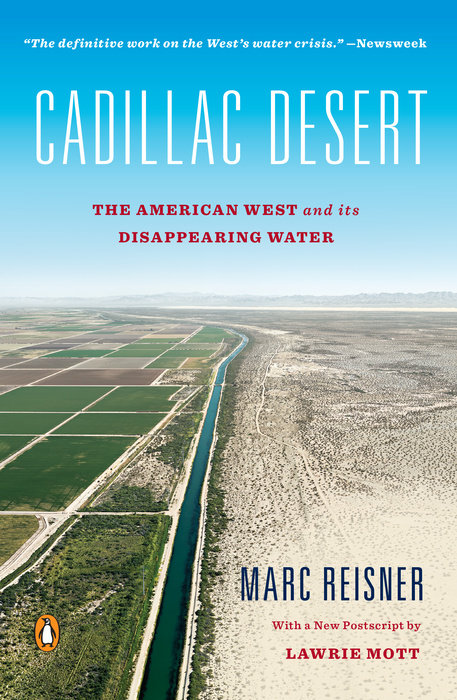*Cadillac Desert* by Mark Reisner.
Marc Reisner’s [*Cadillac Desert* ](https://www.penguinrandomhouse.com/books/323685/cadillac-desert-by-marc-reisner/)has been around for a long time — since 1986 — but it continues to be the best introduction to the subject of Water in the West. [Reisner (1948-2000)](https://www.nytimes.com/2000/07/25/arts/marc-reisner-author-on-the-environment-dies-at-51.html) should be alive today to help us piece our way through the profound water crisis still developing in the American West. Just at the time when the country was beginning to consider [decommissioning some of its dams](https://www.opb.org/article/2022/09/30/lower-snake-river-dams-removal-salmon-protections-federal-report/), particularly those that have decimated the [salmon runs](https://stateofsalmon.wa.gov/executive-summary/challenges/hydropower-and-dams/) in the Columbia River Basin, we now hear talk of building new dams and finding a way to [pipe water from the Columbia](https://columbiainsight.org/for-drought-plagues-california-diverting-columbia-river-water-is-a-pipe-dream-for-now/) (or beyond) to the American Southwest.
*Cadillac Desert* explores the water issues on the [Colorado River](https://www.americanrivers.org/river/colorado-river-2/), the [Columbia](https://www.americanrivers.org/river/columbia-river/), the [Platte](https://www.nwf.org/Educational-Resources/Wildlife-Guide/Wild-Places/Platte-River), the [Snake](https://www.americanrivers.org/river/snake-river/), and the [Missouri](https://www.americanrivers.org/river/missouri-river/), but the best of this book is about California — the [Owens Valley](https://www.inyowater.org/documents/reports/owens-valley-water-history-chronology/), diversions of the Colorado River, the incredibly complex hydrological infrastructure of the most populated state, and the sixth largest economy in the world. Reisner also devotes a superb chapter to the [Ogallala Aquifer](http://plainshumanities.unl.edu/encyclopedia/doc/egp.wat.018), a lake the size of Lake Huron that underlies the Texas Panhandle, western Kansas and Nebraska, plus the eastern edge of Colorado and Wyoming.
When I read a book that I depend on to make me better informed (as opposed to a novel by Charles Dickens, for example), I read first the chapter about something I already know well. In this case, it’s the Missouri River. I live not more than two miles east of it in Bismarck, N.D. I’m a Lewis and Clark scholar and editor. For more than 20 years I have led a cultural tour on the White Cliffs section of the Missouri southeast of Fort Benton, Montana. I have read the Missouri River literature, including [Stanley Vestal’s](https://www.okhistory.org/publications/enc/entry?entry=VE006) classic for the Rivers of America series, [*The Missouri* ](https://rowman.com/ISBN/9781493040100/Rivers-of-America-The-Missouri)(1945).
Here’s my report. Reisner is not only spot-on about the Lewis and Clark Expedition (Sacagawea is not a guide), but he writes movingly about the [holocaust](https://www.culturalsurvival.org/publications/cultural-survival-quarterly/taking-garrison-dam-and-tribal-taking-area) that the building of Garrison Dam became for the Mandan, Hidatsa, and Arikara, who were not consulted before the best river bottomlands (more than 150,000 acres) on which their economy depended were inundated. Reisner rightly reports that the dam was re-engineered (lowered 20 feet) to prevent the reservoir from having any negative impact on the white city of Williston, N.D., population ca. 7,000 then, but the Corps of Engineers summarily refused to relocate the dam to protect reservation lands. “Virtually every productive acre of bottomland the tribe owned would go under” he writes. Reisner tells the heartbreaking story of the tribal business council chairman, George Gillette, [bursting into tears](https://newsroom.ap.org/editorial-photos-videos/detail?itemid=890cd80c1e28424ba8dba8da304f29b2&mediatype=photo) in Washington, D.C., on May 20, 1948, when the pathetic compensation agreement was signed. “Right now,” he said, “the future does not look good to us.”
Whether Reisner’s conclusion that “The Fort Berthold Indians \[Mandan, Hidatsa, Arikara\] have never recovered from the trauma they underwent,” needs some revision (under consultation with the MHA Nation itself) is unclear, but Garrison Dam has rightly been called “the greatest crime against American Indians of the twentieth century.”
The Missouri River is not the heart of this excellent book, however. California is the true “Cadillac desert.” Because Reisner is such a good writer — clear, jargon-free, on focus, often witty, occasionally sardonic — it is a pleasure to read the “*[Chinatown](https://archive.nytimes.com/green.blogs.nytimes.com/2012/04/25/the-water-fight-that-inspired-chinatown/)”* story of LA’s theft of the water of the Owens River on the east slope of the Sierra Nevada Mountains. He’s outstanding on the heroic industrial efforts it took to create an irrigation empire in a Southern California desert that became known as the Imperial Valley after its ca. four inches of rain per year were pieced out with the industrial delivery of millions of acre feet of the Colorado River. Reisner has less to say about the Columbia River, which has been brilliantly analyzed by Blaine Harden’s [*A River Lost: The Life and Death of the Columbia*](https://www.penguinrandomhouse.ca/books/404287/a-river-lost-revised-and-updated-by-blaine-harden/9780393342567).
## **The Ogallala Aquifer**
I have a particular interest in the Ogallala Aquifer, since I lived on top of it in northwestern Kansas for a time, and my in-laws (of the time) were pioneer irrigators with nine miles of underground pipe. I did some pipe hauling on blistering summer days, when the 8-inch by 20-foot aluminum pipes were not only scorching but quarter-filled with sand brought up by the massive pumps.
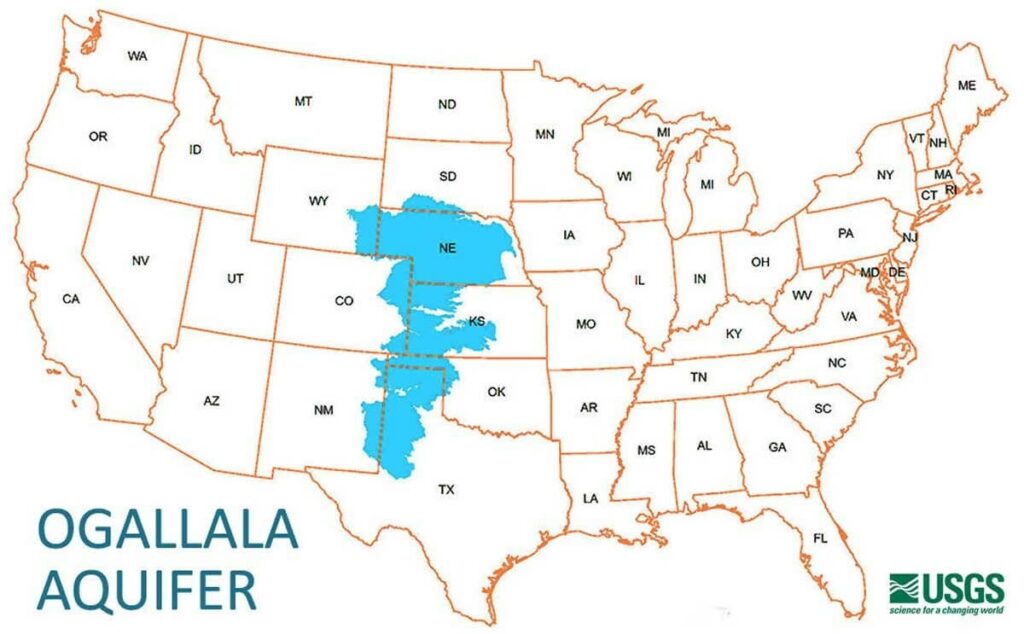
Reinser’s account of the discovery, tapping, and sprinkling of that vast body of water over the High Plains is one of the best things in the book. The Ogallala makes 112 million acres of semi-arid grass country “bloom,” as the nation’s irrigation boosters described it at the end of the nineteenth century. Unfortunately, the Ogallala does not recharge. It is fossil water. When it’s gone, it’s going to be gone. Already irrigation farms up and down the region have “gone dry” because there is either not enough water left in the Ogallala there or it is now too expensive to pump up to the surface. As with all such entities, institutions, and habits in America, reform is coming but at such a glacial pace that things are likely to move into a crisis mode. Jefferson was so right. If humans don’t proactively reform their world, the change will come anyway but only in the wake of disaster. I have a brother-in-law out there who is doing all the right things to conserve what he has. He has shut down several fields, installed state-of-the-art drop nozzles in his center pivot systems, planted crops that need less water, rethought the cash flow of his farm.
Reisner’s pen portraits of important men (all men) in the hydroelectric industrialization of the West are superb. I particularly respect his biographical treatments of [John Wesley Powell](https://www.usgs.gov/staff-profiles/john-wesley-powell), [Floyd Dominy](https://www.usbr.gov/history/CommissBios/dominy.html), [William Mulholland](https://waterandpower.org/museum/Mulholland_Biography.html), [David Brower](https://browercenter.org/about/who-was-david-brower/), [Wayne Aspinall](https://www.environmentandsociety.org/mml/politics-western-water-congressional-career-wayne-aspinall), and [Mike Straus](https://www.usbr.gov/history/CommissBios/straus.html). He gets a little personal with Dominy, who is clearly the villain for most conservationists’ narrative of the damming of western rivers.
Marc Reisner.
Reisner was handsome, soft spoken, suave when he made his public appearances. He had a ready sense of humor, and it was easier to hear the sarcasms and the ironies when he spoke than when we only had the book before us.
*Cadillac Desert* is where you must start if you want to understand Water in the West. The Revised Edition has an excellent afterward by Lawrie Mott, a former staff member of the Natural Resources Defense Council. She brings things up to date. It would be an understatement to say that a lot has happened since *Cadillac Desert* was published in 1988.
And yet the paradox and tragedy of the American West is that so little has happened.
## **Coda**
I just reread Reisner’s final chapter, “A Civilization if You Can Keep It.” It’s tremendous.
He quotes Floyd Dominy testifying before Congress, and lets Dominy ask, “Could one imagine what the West would be like if there hadn’t been a Bureau of Reclamation? If the rivers hadn’t been turned out of their beds and allowed to remake that pitiless landscape?”
Reisner generously writes, “It is a question worth thinking about,” and then reminds us that much of the West would be like Nevada with its myriad of ghost towns and just a handful of places where people actually live.”
Later in the chapter Reisner writes, “The government — the Bureau and the Corps of Engineers — first created a miraculous abundance of water, then sold it so cheaply that the mirage filled the horizon.”
The miracle of western industrial water development, Reisner writes, has been “amazingly fruitful in the short run \[but\] leaves everyone and everything more vulnerable in the end.” After my [two weeks on the Colorado Plateau](https://ltamerica.org/beyond-the-apocalypse-and-bathtub-rig-a-colorado-river-journey-we-begin-2/), I can report that that is how everyone feels (at different levels of anxiety).
---
## ***Discover more on these topics at Listening to America***
[Video](https://ltamerica.org/tag/video/ "51 topics")[Steinbeck Travels](https://ltamerica.org/tag/steinbeck-travels/ "75 topics")[Republics](https://ltamerica.org/tag/republics/ "1 topics")[Oppenheim](https://ltamerica.org/tag/oppenheim/ "0 topics")[Rome](https://ltamerica.org/tag/rome/ "1 topics")[U.S. Presidents](https://ltamerica.org/tag/u-s-presidents/ "71 topics")[Ohio](https://ltamerica.org/tag/ohio/ "2 topics")[north daktoa](https://ltamerica.org/tag/north-daktoa/ "0 topics")[Republic](https://ltamerica.org/tag/republic/ "0 topics")[Poetry](https://ltamerica.org/tag/poetry/ "1 topics")[Oppenheimer](https://ltamerica.org/tag/oppenheimer/ "1 topics")[Virginia](https://ltamerica.org/tag/virginia/ "7 topics")[South Dakota](https://ltamerica.org/tag/south-dakota/ "16 topics")[Travel](https://ltamerica.org/tag/travel/ "1 topics")[New England](https://ltamerica.org/tag/new-england/ "1 topics")[New York](https://ltamerica.org/tag/new-york/ "8 topics")[Oregon](https://ltamerica.org/tag/oregon/ "4 topics")[Reading](https://ltamerica.org/tag/reading/ "1 topics")[Wisconsin](https://ltamerica.org/tag/wisconsin/ "0 topics")[Space Exploration](https://ltamerica.org/tag/space-exploration/ "8 topics")[Washington](https://ltamerica.org/tag/washington/ "2 topics")[Utah](https://ltamerica.org/tag/utah/ "11 topics")[The Constitution](https://ltamerica.org/tag/the-constitution/ "1 topics")[William Shirer](https://ltamerica.org/tag/william-shirer/ "1 topics")[Podcast](https://ltamerica.org/tag/podcast/ "1 topics")[Texas](https://ltamerica.org/tag/texas/ "4 topics")[Sports](https://ltamerica.org/tag/sports/ "2 topics")[Thomas Jefferson](https://ltamerica.org/tag/thomas-jefferson/ "34 topics")[Rivers](https://ltamerica.org/tag/rivers/ "3 topics")[New Mexico](https://ltamerica.org/tag/new-mexico/ "3 topics")[Thoreau](https://ltamerica.org/tag/thoreau/ "5 topics")[South Carolina](https://ltamerica.org/tag/south-carolina/ "1 topics")[U.S. Constitution](https://ltamerica.org/tag/u-s-constitution/ "1 topics")[Walden](https://ltamerica.org/tag/walden/ "1 topics")[paintings](https://ltamerica.org/tag/paintings/ "0 topics")[North Carolina](https://ltamerica.org/tag/north-carolina/ "3 topics")[Road Trips](https://ltamerica.org/tag/road-trips/ "18 topics")[Wyoming](https://ltamerica.org/tag/wyoming/ "4 topics")[Water in the West](https://ltamerica.org/tag/water-in-the-west/ "24 topics")[Pennsylvania](https://ltamerica.org/tag/pennsylvania/ "1 topics")[Theodore Roosevelt](https://ltamerica.org/tag/theodore-roosevelt/ "16 topics")[North Dakota](https://ltamerica.org/tag/north-dakota/ "53 topics")[State Parks](https://ltamerica.org/tag/state-parks/ "2 topics")[Vermont](https://ltamerica.org/tag/vermont/ "1 topics")[Tennessee](https://ltamerica.org/tag/tennessee/ "1 topics")
**Categories:** Books
**Tags:** Books, Colorado River, John Wesley Powell, Water in the West
---
### [The Life and Times of Sitting Bull](https://ltamerica.org/the-life-and-times-of-sitting-bull/)
**Published:** March 12, 2023
**Author:** Clay Jenkinson
**Content:**
*The Lance and The Shield: The Life and Times of Sitting Bull* by Robert M. Utley, first published in 1994.
Bismarck, N.D. — I’m reading a biography of Sitting Bull (1831 – 1890). Among other things, I am ashamed I know so little about him. He’s an amazing man, at once a superb warrior who won distinction in the warrior societies among the Hunkpapa, a Lakota holy man who had prophetic dreams, and a generous community leader who took a particular interest in children, widows, the lame, and those in need.
In American memory, we lock him into the events at the [Little Bighorn ](https://www.nps.gov/libi/learn/historyculture/battle-story.htm)in June 1876. That’s a mistake. He had a big life, and the Custer fight was just something that happened after the discovery of gold in the Black Hills of South Dakota and Wyoming.
What has impressed me most in reading Robert Utley’s *The Lance and The Shield: The Life and Times of Sitting Bull* is the Lakota way of war. It bears almost no resemblance to the wars of the whites, as exemplified by the Battle of the Bulge or Verdun.
War was more individualistic for the Lakota. It seems to echo the heroic warfare we see in Homer’s [*Iliad*](https://www.worldhistory.org/iliad/). More than anything, the Lakota prized [counting coup](http://plainshumanities.unl.edu/encyclopedia/doc/egp.war.013). A warrior won acclaim by approaching his enemy so closely that he could touch (or club) him. This was the great expression of bravery and courage. Killing the enemy was less important than getting body to body with him.
Sitting Bull belonged to the elite Akicita society. These carefully chosen individuals, painted in their medicine colors, carried a stake and rope into war. When they encountered the enemy, they staked themselves to the ground. At this point, they must defeat their combatant, die, or be rescued by fellow Lakota, but they could not pull up the stake and withdraw from the hand-to-hand combat.
This is the stuff of the Iliad, not General Ulysses S. Grant’s Union army.
When we talk about the “Indian Wars,” we need to remember that war meant very different things to the two cultures who met on the Great Plains between 1854–1890. War for the Lakota meant something like “a horse raid that might include violence,” “a limited skirmish characterized by heroic individual feats,” or “a limited exchange of violence to win honor and make a point, but the killing was not always the main objective” or “limited revenge for the thing they did to us last winter.” Lakota warriors were hard to discipline because they had been trained from their earliest childhood to seek glory in hand-to-hand combat. They did not usually submit to a battle strategy or battle orders offered by a Lakota leader. There is a world of difference between a handmade bow and set of handmade arrows on the one hand and a howitzer or Gatling Gun on the other.
Sitting Bull c. 1884 (LOC)
Throughout his life, Sitting Bull did strange and wonderful things in battle. His approach to war has no analog in the industrial warfare of white people after the invention of gunpowder. On one occasion in eastern Montana, he walked out and sat down well within rifle range of the U.S. Army. He leisurely smoked his pipe, and U.S. soldiers repeatedly shot at him. Sitting Bull finished smoking, got up, and returned to the Hunkpapa lines. It was a bold, risky, possibly suicidal thing to do. But it deeply impressed everyone, white and Native. It proved to the Hunkpapa that Sitting Bull had great medicine and spiritual protection.
As a North Dakotan, I should know this story better than I do. Sitting Bull was born in South Dakota, just south of the N.D.–S.D. border. He eventually surrendered in northwestern North Dakota near the Canadian border. The reservation Sitting Bull spent his last years on straddles the North Dakota–South Dakota line. He often camped on the Little Missouri River during the winter and visited Bismarck (on the Northern Pacific RR line) many times. He was, for many recent years, a central figure in North Dakota’s tourism portfolio.
At this point, we should want two things. First, every North Dakotan and American should know more about the 200-year encounter of Euro-Americans and the Native peoples of an ever-receding American West. This needs to be granular, not just an annotated timeline of the fights and the massacres. It would be easy to assemble a brief bibliography of ten books every American should read, or even three if necessary. We must lift people out of their childhood memories of “cowboys and Indians” if we want to make any progress. I wonder how many white people would agree to do this?
Second, we need to make some amends. We should formally apologize and invest in programs Native people believe will be useful to their communities. We should deed back some lands. Even a modest return of lands to their Native sovereigns would indicate a serious commitment by the white community. We should do a lot of listening.
---
## ***Discover more on these topics at Listening to America***
[Republic](https://ltamerica.org/tag/republic/ "0 topics")[Video](https://ltamerica.org/tag/video/ "51 topics")[Tennessee](https://ltamerica.org/tag/tennessee/ "1 topics")[Sports](https://ltamerica.org/tag/sports/ "2 topics")[Travel](https://ltamerica.org/tag/travel/ "1 topics")[Reading](https://ltamerica.org/tag/reading/ "1 topics")[Rivers](https://ltamerica.org/tag/rivers/ "3 topics")[North Dakota](https://ltamerica.org/tag/north-dakota/ "53 topics")[New York](https://ltamerica.org/tag/new-york/ "8 topics")[Washington](https://ltamerica.org/tag/washington/ "2 topics")[Thomas Jefferson](https://ltamerica.org/tag/thomas-jefferson/ "34 topics")[Road Trips](https://ltamerica.org/tag/road-trips/ "18 topics")[North Carolina](https://ltamerica.org/tag/north-carolina/ "3 topics")[Virginia](https://ltamerica.org/tag/virginia/ "7 topics")[Space Exploration](https://ltamerica.org/tag/space-exploration/ "8 topics")[New Mexico](https://ltamerica.org/tag/new-mexico/ "3 topics")[Rome](https://ltamerica.org/tag/rome/ "1 topics")[Wyoming](https://ltamerica.org/tag/wyoming/ "4 topics")[Poetry](https://ltamerica.org/tag/poetry/ "1 topics")[paintings](https://ltamerica.org/tag/paintings/ "0 topics")[Walden](https://ltamerica.org/tag/walden/ "1 topics")[Utah](https://ltamerica.org/tag/utah/ "11 topics")[Wisconsin](https://ltamerica.org/tag/wisconsin/ "0 topics")[Steinbeck Travels](https://ltamerica.org/tag/steinbeck-travels/ "75 topics")[South Carolina](https://ltamerica.org/tag/south-carolina/ "1 topics")[Thoreau](https://ltamerica.org/tag/thoreau/ "5 topics")[Oppenheim](https://ltamerica.org/tag/oppenheim/ "0 topics")[Ohio](https://ltamerica.org/tag/ohio/ "2 topics")[Pennsylvania](https://ltamerica.org/tag/pennsylvania/ "1 topics")[Theodore Roosevelt](https://ltamerica.org/tag/theodore-roosevelt/ "16 topics")[north daktoa](https://ltamerica.org/tag/north-daktoa/ "0 topics")[Oppenheimer](https://ltamerica.org/tag/oppenheimer/ "1 topics")[South Dakota](https://ltamerica.org/tag/south-dakota/ "16 topics")[Podcast](https://ltamerica.org/tag/podcast/ "1 topics")[The Constitution](https://ltamerica.org/tag/the-constitution/ "1 topics")[Vermont](https://ltamerica.org/tag/vermont/ "1 topics")[U.S. Presidents](https://ltamerica.org/tag/u-s-presidents/ "71 topics")[New England](https://ltamerica.org/tag/new-england/ "1 topics")[Republics](https://ltamerica.org/tag/republics/ "1 topics")[State Parks](https://ltamerica.org/tag/state-parks/ "2 topics")[William Shirer](https://ltamerica.org/tag/william-shirer/ "1 topics")[Oregon](https://ltamerica.org/tag/oregon/ "4 topics")[Texas](https://ltamerica.org/tag/texas/ "4 topics")[Water in the West](https://ltamerica.org/tag/water-in-the-west/ "24 topics")[U.S. Constitution](https://ltamerica.org/tag/u-s-constitution/ "1 topics")
**Categories:** Books
**Tags:** Books
---
### [Why Read Moby Dick?](https://ltamerica.org/why-read-moby-dick/)
**Published:** February 25, 2023
**Author:** Clay Jenkinson
**Content:**
*Why Read Moby-Dick?* By Nathaniel Philbrick, 2011.
Bismarck, N.D. — I’m reading Herman Melville’s *Moby Dick*. I’ll be teaching it at one of my literary retreats come next January, but I wanted to read it anyway. It has been maybe fifteen years since I read it through. This is a matter of some shame to me. While I was scouring for something else this morning in my basement library, a true library of more than 10,000 books, I came upon the Melville section and found Nathaniel Philbrick’s short book, [*Why Read Moby-Dick?*](https://www.nathanielphilbrick.com/why-read-moby-dick) Perfect. I decided to read it today because there is no really pressing thing I have to do this afternoon. I thought it might be something I would recommend to the 25 people who have signed up for the winter retreat.
After just a few pages I came upon this:
*“To write timelessly about the here and now, a writer must approach the present indirectly. The story has to be about more than it at first seems. Shakespeare used the historical sources of his plays as a scaffolding on which to construct detailed portraits of his own age. The interstices between the secondhand historical plots and Shakespeare’s startlingly original insights into Elizabethan England are what allow his work to speak to us today.”*
First of all, *interstices* are nice. He means the gaps, the spaces between lines, as in grillwork.
But is this true? If it is true, I have completely failed to read Shakespeare correctly. I have read the plays under the assumption that Shakespeare was not looking for a mask behind which to try to make sense of his own age, but that he was, as a consummate entertainer, interested in trying to bring those stories to life. Of course, he was exploring human nature and the human condition by way of plots about a jealous Moor or a predatory government official, but I did not think Shakespeare was writing about Elizabethan England per se. You can say that classical ’50s Westerns in American film were about the Cold War, but is that what they are mostly about? I thought *Dr. Strangelove, The Manchurian Candidate,* and *Fail Safe* were about the Cold War and *High Noon* was about the frontier era of American history.
My sense is that Philbrick may have misstated his point somewhat. Honestly, I think I am closer to the intentions of Shakespeare than he is. But I know, too, that my education in Elizabethan and Jacobean literature came before [Historicism](https://www.newworldencyclopedia.org/entry/Historicism) and the [New Historicism](https://www.newworldencyclopedia.org/entry/New_Historicism). Since I was never taught to wear that lens — essentially to investigate the ways in which literature is informed by, negotiates with, and reveals contemporary history — maybe I am just blind.
There is only one way to find out. I’m going to choose a play I don’t know well and read it with a historicist’s lens. Maybe it will suddenly make perfect sense to me. I am going to select *Troilus and Cressida*, written sometime around 1602, about the same time as *Hamlet*. I have read it maybe three times in my life and that was very long ago.
So, I’ll report back. First *Moby Dick* and then *Troilus and Cressida*. Two roads diverged in a wood. …
Nathaniel Philbrick talks about Herman Melville and the American literary classic, *Moby Dick*.
---
## ***Discover more on these topics at Listening to America***
[Rivers](https://ltamerica.org/tag/rivers/ "3 topics")[South Dakota](https://ltamerica.org/tag/south-dakota/ "16 topics")[Water in the West](https://ltamerica.org/tag/water-in-the-west/ "24 topics")[Steinbeck Travels](https://ltamerica.org/tag/steinbeck-travels/ "75 topics")[Oregon](https://ltamerica.org/tag/oregon/ "4 topics")[Pennsylvania](https://ltamerica.org/tag/pennsylvania/ "1 topics")[State Parks](https://ltamerica.org/tag/state-parks/ "2 topics")[paintings](https://ltamerica.org/tag/paintings/ "0 topics")[Vermont](https://ltamerica.org/tag/vermont/ "1 topics")[New York](https://ltamerica.org/tag/new-york/ "8 topics")[Thomas Jefferson](https://ltamerica.org/tag/thomas-jefferson/ "34 topics")[Travel](https://ltamerica.org/tag/travel/ "1 topics")[Reading](https://ltamerica.org/tag/reading/ "1 topics")[north daktoa](https://ltamerica.org/tag/north-daktoa/ "0 topics")[Virginia](https://ltamerica.org/tag/virginia/ "7 topics")[New Mexico](https://ltamerica.org/tag/new-mexico/ "3 topics")[Washington](https://ltamerica.org/tag/washington/ "2 topics")[Sports](https://ltamerica.org/tag/sports/ "2 topics")[Republics](https://ltamerica.org/tag/republics/ "1 topics")[Republic](https://ltamerica.org/tag/republic/ "0 topics")[U.S. Presidents](https://ltamerica.org/tag/u-s-presidents/ "71 topics")[North Carolina](https://ltamerica.org/tag/north-carolina/ "3 topics")[The Constitution](https://ltamerica.org/tag/the-constitution/ "1 topics")[Tennessee](https://ltamerica.org/tag/tennessee/ "1 topics")[Utah](https://ltamerica.org/tag/utah/ "11 topics")[Theodore Roosevelt](https://ltamerica.org/tag/theodore-roosevelt/ "16 topics")[Video](https://ltamerica.org/tag/video/ "51 topics")[Walden](https://ltamerica.org/tag/walden/ "1 topics")[Texas](https://ltamerica.org/tag/texas/ "4 topics")[New England](https://ltamerica.org/tag/new-england/ "1 topics")[U.S. Constitution](https://ltamerica.org/tag/u-s-constitution/ "1 topics")[Poetry](https://ltamerica.org/tag/poetry/ "1 topics")[Oppenheim](https://ltamerica.org/tag/oppenheim/ "0 topics")[William Shirer](https://ltamerica.org/tag/william-shirer/ "1 topics")[Wisconsin](https://ltamerica.org/tag/wisconsin/ "0 topics")[Podcast](https://ltamerica.org/tag/podcast/ "1 topics")[Oppenheimer](https://ltamerica.org/tag/oppenheimer/ "1 topics")[Road Trips](https://ltamerica.org/tag/road-trips/ "18 topics")[North Dakota](https://ltamerica.org/tag/north-dakota/ "53 topics")[Ohio](https://ltamerica.org/tag/ohio/ "2 topics")[Wyoming](https://ltamerica.org/tag/wyoming/ "4 topics")[Thoreau](https://ltamerica.org/tag/thoreau/ "5 topics")[Space Exploration](https://ltamerica.org/tag/space-exploration/ "8 topics")[South Carolina](https://ltamerica.org/tag/south-carolina/ "1 topics")[Rome](https://ltamerica.org/tag/rome/ "1 topics")
**Categories:** Books
**Tags:** Books
---
### [Book Review — Our Story of Eagle Woman, Sacagawea: They Got It Wrong](https://ltamerica.org/our-story-of-eagle-woman-sacagawea-they-got-it-wrong/)
**Published:** February 23, 2023
**Author:** Clay Jenkinson
**Content:**
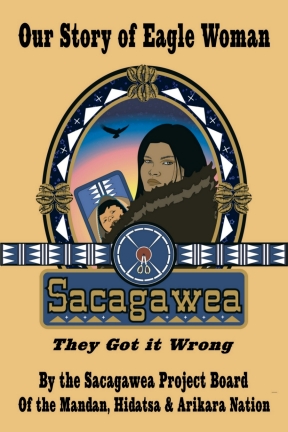*Out Story of Eagle Woman, Sacagawea: They Got it Wrong*. By Gerard Baker, Calvin Grinnell, Bernard Fox, Carol Fredericks Newman, and Wanda Fox Sheppard. The Paragon Agency, 2021.
Over several decades, when I have encountered my friend [Gerard Baker](https://protectnps.org/centennial-biographies-2/gerard-baker/) of the [Mandan-Hidatsa](https://www.mhanation.com), he has invariably said, “You know Sacagawea was Hidatsa.” The Hidatsa (Lewis and Clark’s Minnetarees) believe that Sacagawea was always Hidatsa, that she had an important relationship with the Shoshone, but that she was not genetically Shoshone. The Hidatsa believe that Lewis and Clark “got it wrong.” Now they have published a book to make their case, *[Our Story of Eagle Woman: Sacagawea: They Got it Wrong](https://www.specialbooks.com/namericans.htm).*
This is a very difficult book to review for several reasons. First, its argument, its insistence, contradicts everything we thought we knew about Sacagawea. We thought Sacagawea was born Shoshone, captured by the Hidatsa, acculturated into the Hidatsa world, given a Hidatsa name (Bird Woman), and that Lewis and Clark took her with them in April 1805 to help secure horses from her natal people, the Shoshone. According to Gerard Baker, the [Sacagawea Project Board](https://www.mhatimes.press/2021/08/18/sakakawea-of-hidatsa-crow-descent-did-history-get-it-wrong/), Calvin Grinnell, Bernard Fox, Carol Fredericks Newman, and Wanda Fox Sheppard, solid Hidatsa oral tradition confirms that she was Hidatsa all along, and the Lewis and Clark world needs to accept the truth and correct the record.
Second, Gerard Baker, Calvin Grinnell, and the others involved in this project are formidable people, who have earned the right to be taken very seriously. Grinnell is a distinguished Mandan-Hidatsa elder and historian who has worked extensively with the State Historical Society of North Dakota for many years. Baker is a distinguished, even celebrated, Mandan-Hidatsa elder who had a remarkable career in the National Park Service. He served as Superintendent of Mount Rushmore National Monument, Superintendent of the Little Bighorn National Monument, and, during the Bicentennial of the Lewis and Clark Expedition, as Superintendent of the Lewis and Clark National Historic Trail. They do not enter this debate lightly.
Third, the authors of this book are Hidatsa. It is *their* tradition. Lewis and Clark were Anglo outsiders who passed through the world of the Upper Missouri carrying a great deal of Eurocentric cultural baggage, who might have misunderstood the basic facts of Sacagawea’s biography. Half a century ago, it was routine in white historical circles to dismiss oral tradition as unworthy of scholarly respect. For example, the testimony of one of Sally Hemings’ sons, Madison Hemings, as told to an Ohio newspaperman in 1873, that Thomas Jefferson was his father and the father of several of his siblings, was summarily dismissed by Jefferson historians, including the great[ Dumas Malone](https://www.washingtonpost.com/archive/local/1986/12/28/dumas-malone-94-biographer-of-jefferson-dies/fc7cecfd-316e-42b5-8a79-6b53855d767c/), until around 1980, *even though it was the recorded testimony of the son of Sally Hemings.* All that has changed. We have learned to take oral tradition much more seriously than we used to. It is not that oral traditions are invariably 100 percent accurate, but nor are more traditional document-based histories. And even when oral traditions don’t hold up in all of their details, they usually reveal some important truth about the people telling the stories that must be respectfully factored into our analysis of historical events.
## **The Hidatsa Account**
Here, as carefully as I can piece it together, is the Hidatsa story. The woman we call Sacagawea would more accurately be known as Eagle Woman. She was born on Night Walker Butte, near the confluence of the Little Missouri and Missouri Rivers (the confluence now drowned by Lake Sakakawea). The men of the Awatixa Hidatsa village were out hunting when a raiding party of the Shoshone attacked the village. Eagle Woman was taken back to the Shoshone world as a captive, along with a number of other Hidatsa children. She refused to forget her Hidatsa life and often looked longingly towards the east. An old Shoshone woman noticed her intense homesickness and offered to help her escape. The old woman escorted her some ways east of the Shoshone village and gave her essential advice. Eagle Woman was to let herself be led home by wolves that would appear to her each night and lead her towards the Hidatsa. At first light the wolf would disappear and Eagle Woman must hide through the day. The journey was an immense undertaking. Altogether four wolves would be needed to get her home. The Hidatsa acknowledge that “four” is a symbolic number (like the creation over six days in the book of Genesis) and that it might have taken much longer than four days for Eagle Woman to cross Montana and get home.
This is known as the Strong Jaw Story, first written down by the white historian and ethnologist Alfred Bowers in the 1930s. There are several other variations of the story. There is, for example, the Bull’s Eye version, in which Bird Woman was taken by her father on a visit to the Shoshone, during which she established relationships with several individuals, whom thereafter she called “brother” or “sister,” in the wider kinship definitions of the Hidatsa and other Native American tribes. In another version she may have been more Crow-Hidatsa than Hidatsa, which would make the distances less gigantic. The Hidatsa and Crow were linguistic and cultural cousins. They had once all lived on the Missouri River in North Dakota, but after a dispute, part of the Hidatsa relocated along the Yellowstone River in Montana.
Most Hidatsa accounts have Eagle Woman (Sacagawea) dying on Sand Creek near Wolf Point, Montana, at the age of approximately 86. That tradition rejects both the December 1812 death story (at Fort Manuel on the North Dakota-South Dakota border) and the Wind River Indian Reservation April 9, 1884, death story, as indicated by a grave marker at Fort Washakie, Wyoming.
I confess that I am skeptical of the full Hidatsa claim.
## **What Degree of Skepticism is Proper?**
It needs to be acknowledged, however, that the Hidatsa have already been remarkably successful in claiming Sacagawea. The really old view that she was a Shoshone girl named Sacajawea who was captured by the Hidatsa, but who returned to her people in company with the Lewis and Clark Expedition, has mostly been retired, except in parts of the Shoshone world. Led by the Hidatsa, and particularly Gerard Baker, by the time the Bicentennial was underway, the new view was that while she may have been born Shoshone and may even have been called Sacajawea in her childhood, her Lewis and Clark name was unmistakably Hidatsa, and she had been largely culturally absorbed by the Hidatsa by the time the Corps of Discovery arrived at the mouth of the Knife River in October 1804. The giant reservoir behind Garrison Dam in North Dakota is named [Lake Sakakawea](https://lakesakakawea.com/about-us/) (as if to emphasize the point as powerfully as possible!). The Knife River Indian Villages National Historic Site calls one of the earthlodge villages, Awatixa, the Sakakawea village.
In other words, what the Hidatsa have already accomplished represents a serious revision (almost a revolution) in our thinking about Sacagawea. Their more extreme claim that she was Hidatsa all along has to overcome some formidable evidence in the journals of the expedition.
Let me explain.
## **How Lewis and Clark Saw It**
Before May 20, 1805, the woman in question was invariably called the “interpreter’s wife,” the “interpreter,” the “interpretess,” the “squar,” or Charbonneau’s “woman.”
For example, on the day she gave birth to her first child, February 11, 1805, Captain Lewis wrote a 200-word account of the day, almost all of which was devoted to her prolonged and difficult labor, which may or may not have been relieved by a rattlesnake rattle concoction suggested by the French Mandan interpreter Rene Jusseaume. In the course of this entry, Lewis refers to the woman in question as “one of the wives of [Charbono](https://lewisandclarkjournals.unl.edu/search?people=Charbonneau%2C%20Toussaint),” as “this woman,” “the woman,” and “she” (twice), but never by name. I think it is quite possible, even likely, that Lewis did not know her name in February 1805. She was just the “wife” of Toussaint Charbonneau, *à la façon du pays* (in the accepted coupling manner of the outback).
On the day of the spring mustering, departure day, April 7, 1805, Lewis lists all of the members of the 1805 exploration party, including, in his subordinate list, “an Indian Woman wife to [Charbono](https://lewisandclarkjournals.unl.edu/search?people=Charbonneau%2C%20Toussaint) with a young child.” William Clark makes a similar list in his journal entry for the day, including “[Shabonah](https://lewisandclarkjournals.unl.edu/search?people=Charbonneau%2C%20Toussaint) and his *Indian Squar* to act as an Interpreter & interpretress for the snake Indians — one [Mandan](https://lewisandclarkjournals.unl.edu/search?lc_native_nation_ss=Mandan%20Indians) & [Shabonahs infant](https://lewisandclarkjournals.unl.edu/search?people=Charbonneau%2C%20Jean%20Baptiste). [*Sah-kah-gar we â*](https://lewisandclarkjournals.unl.edu/search?people=Sacagawea).” Editor Gary Moulton, who studied the original journals painstakingly, provides a footnote suggesting that [*Sah-kah-gar we â*](https://lewisandclarkjournals.unl.edu/search?people=Sacagawea) was added in at some later point. “[Sacagawea’s](https://lewisandclarkjournals.unl.edu/search?people=Sacagawea) name may have been added as an afterthought, or perhaps later, after [Clark](https://lewisandclarkjournals.unl.edu/search?people=Clark%2C%20William) came to know her better.” Precisely: when he “came to know her better.”
So, whatever Lewis and Clark called the woman in question during the winter and spring of 1805, they seem not to have known her name — or perhaps were unable to pronounce or write her name, which, if you have ever heard the Hidatsa pronounce it, is difficult and guttural. She was the wife of Charbonneau. Their view of her was pragmatic and instrumental, “interpretress for the snake Indians.” At this early point in their relationship with her, they seem to have regarded her as something more than a camp follower but less than a full member of the Corps of Discovery.
Then something happened.
On May 14, 1805, in eastern Montana, near today’s Snow Creek Bay now inundated by Fort Peck Reservoir, the White Pirogue nearly sank during a sudden squall on the Missouri River. Charbonneau, who was at the rudder, panicked when the wind nearly overturned the pirogue, threw up his hands in prayer, and only got control of the boat when Pierre Cruzatte threatened to shoot him.
The two captains were both on shore far across the river at the time of the incident. They watched in helpless anguish. If the White Pirogue had gone down, the Expedition would have been severely compromised, and might have collapsed altogether. As Lewis wrote, we “were too far distant to be heard or to do more than remain spectators of her fate; in this perogue were embarked, our papers, Instruments, books medicine, a great part of our merchandize and in short almost every article indispensibly necessary to further the views, or insure the success of the enterprize in which we are now launched to the distance of 2200 miles.”
In this dramatic account of the accident, Lewis makes no mention of Sacagawea. In his entry for the same day, Clark does mention her, but only in the usual manner. Matter-of-factly, Clark writes, “the articles which floated out was nearly all caught by the Squar who was in the rear.” The Squar. Two days later, however, viewing the incident in retrospect, Lewis added “the Indian woman” to the story. “\[T\]he loss we sustained was not so great as we had at first apprehended; our medicine sustained the greatest injury, several articles of which were intirely spoiled, and many others considerably injured; the ballance of our losses consisted of some gardin seeds, a small quantity of gunpowder, and a few culinary articles which fell overboard and sunk, [the Indian woman](https://lewisandclarkjournals.unl.edu/search?people=Sacagawea) to whom I ascribe equal fortitude and resolution, with any person onboard at the time of the accedent, caught and preserved most of the light articles which were washed overboard.”
“Fortitude and resolution” are high praise, but even so, “the Indian woman” is not accorded a name.
That moment came just four days later. On May 20, 1805, Lewis writes, “about five miles abe the mouth of shell river a handsome river of about fifty yards in width discharged itself into the shell river on the Stard. or upper side; this stream we called [Sâh-câ-gar me-âh \[*NB: Sah ca gah we a*\]](https://lewisandclarkjournals.unl.edu/search?places=Sacagawea%20River)or [bird woman’s River](https://lewisandclarkjournals.unl.edu/search?places=Sacagawea%20River), after [our interpreter the Snake woman](https://lewisandclarkjournals.unl.edu/search?people=Sacagawea).” The bracketed \[NB…\] is Nicholas Biddle’s attempt to get even closer to the true pronunciation of her name.
Now, more than five months after they first met her at the Fort Mandan building site, Sacagawea finally has a name, and the beginnings of an origin story. The care with which Lewis tries to spell her name phonetically is unmistakable. You can almost hear someone, perhaps Charbonneau, repeating her name again — and again — while Lewis tries to render it in the roman alphabet. **Sâh câ gar me âh.** Note: it is possible that Lewis wrote a **w** rather than an **m** in the journal, and that Biddle later got the right pronunciation from Clark or George Shannon. Lewis also learned the translation of her name on May 20: Bird Woman. Not Boat Launcher or She Who Carries Burdens, but Bird Woman, which establishes beyond debate that what he was given on that day in Montana was Sacagawea’s Hidatsa name. (Just how Biddle brought the variant Sacajawea into the world of the 1814 edition of Lewis and Clark is still a mystery, one that we would give a great deal to sort out. And Lewis clearly identifies her here as a Snake or Shoshone woman (by birth).
This much seems clear. First, Sacagawea first got named in the journals almost immediately after her resolute and heroic behavior in the potentially disastrous White Pirogue incident. Second, Lewis had to make enquiries before he put ink to paper. Third, he worked hard to get the facts right. There is nothing haphazard or informal about this journal entry. Fourth, Sacagawea got a river named for her precisely because she had performed an important service for the Corps of Discovery, the more impressive because she could not have known at the time how essential those papers, instruments, books, and medicine she plucked out of the river were to the success of the voyage.
Today’s Hidatsa are certainly not going to dispute the name Sah ca gar we a or the translation Bird Woman on May 20, 1805. They surely believe that she deserved to have a river named for her, more than a slack water reservoir in North Dakota that nearly destroyed the lifeway of the Mandan, Hidatsa, and Arikara in the 1950s. (Today the tributary in Montana is usually known as Crooked Creek, though attempts have been made to restore the name Sacagawea River.) It’s Lewis’ words “Snake woman” the Hidatsa dispute.
Later in the summer of 1805, Lewis provided more information about Sacagawea’s back story. On July 28, 1805, not far southwest of the three forks of the Missouri, Lewis wrote: “Our present camp is precisely on the spot that the [Snake](https://lewisandclarkjournals.unl.edu/search?lc_native_nation_ss=Shoshone%20Indians) Indians were encamped at the time the [Minnetares](https://lewisandclarkjournals.unl.edu/search?lc_native_nation_ss=Hidatsa%20Indians) of the [Knife R.](https://lewisandclarkjournals.unl.edu/search?places=Knife%20River) first came in sight of them five years since. from hence they retreated about three miles up [Jeffersons river](https://lewisandclarkjournals.unl.edu/search?places=Jefferson%20River%20%28North%2C%20Southwest%20Fork%29) and concealed themselves in the woods, the [Minnetares](https://lewisandclarkjournals.unl.edu/search?lc_native_nation_ss=Hidatsa%20Indians) pursued, attacked them, killed 4 men 4 women a number of boys, and mad prisoners of all the females and four boys, [*Sah-cah-gar-we-ah*](https://lewisandclarkjournals.unl.edu/search?people=Sacagawea) or Indian woman was one of the female prisoners taken at that time.”
Again, this seems authoritative. Lewis had no reason to distort whatever was told to him by Charbonneau or Sacagawea through Charbonneau. On a number of occasions in “Our Story of Eagle Woman, Sacagawea,” the authors suggest that Charbonneau may have made up the Shoshone origin story in order to secure the contract of accompanying Lewis and Clark with one or both of his “Shoshone” wives. According to this far-fetched account, Charbonneau was worried that if he correctly identified Sacagawea as Hidatsa or Hidatsa-Crow, the captains of the Expedition might not have been persuaded that they needed Sacagawea to secure Shoshone horses. Because Charbonneau was a very resourceful opportunist (I agree heartily with this view) and because he was not particularly wedded to the truth, he fabricated the Hidatsa capture story to get the contract and assumed that he would be able to finesse things somehow once the Expedition arrived at the Shoshone camps. Too late to turn back now! When Charbonneau struck his wife on the evening of August 14, 1805, the authors offer this explanation: “Sacagawea was most likely under constant threat of being struck if she didn’t do as Charbonneau said. He may have seen her as not following his cover story that she was Shoshone.” This is so speculative as to be meaningless. Isn’t it more likely, by far, that Charbonneau was sometimes just a brute?
The authors of the book attempt to weaken the Shoshone origin story by arguing that Sacagawea did not really know the Shoshone language. Because Lewis used the problematic word *tab-ba-bone* (meaning stranger or possibly enemy) when he came within earshot of the Shoshone, the authors conclude that Sacagawea gave Lewis an imprecise word because her “Shoshone language ability was questionable.” This seems like a stretch. Lewis must have asked her what a good word for white man would be, and she gave him the nearest equivalent in Shoshone, stranger, which indeed he was. He should have asked for the Shoshone word for friend.
When, on August 17, 1805, Lewis writes, “acordingly about 4 P. M. we called them together and through the medium of [Labuish](https://lewisandclarkjournals.unl.edu/search?people=Labiche%2C%20Fran%C3%A7ois), [Charbono](https://lewisandclarkjournals.unl.edu/search?people=Charbonneau%2C%20Toussaint) and [Sah-cah-gar-weah](https://lewisandclarkjournals.unl.edu/search?people=Sacagawea), we communicated to them fully the objects which had brought us into this distant part of the country, in which we took care to make them a conspicuous object of our own good wishes and the care of our government,” the authors of *Our Story of Eagle Woman, Sacagawea* write, “Note that it took several to interpret between the party and the Shoshones, not just Sacagawea who was to be the interpreter. She was not fluent in Shoshone.” Thus, in a couple of pages she has gone from having “questionable” Shoshone language skills to the more severe liability of being “not fluent” in the language.
But this is to miss the point entirely. If Lewis wanted to explain to Cameahwait the Expedition’s needs and purposes, he would have to speak in his only language, English. Then Francois Labiche would translate from English to French, and Charbonneau, who was apparently weak in both English and Hidatsa, would translate into the language he shared with his wife Sacagawea, Hidatsa. She then (and only then) could communicate the words of Lewis to her relatives. There was no way to make this chain of interpretation any easier. Sacagawea could not be expected to speak on behalf of the Expedition’s purposes without explicit instructions from Lewis himself through such interpreters as he was able to assemble. It wasn’t that Sacagawea was weak in Shoshone, though she had been away for a long time, but that at least two other translators stood between her and whatever it was that Captain Lewis was attempting to communicate.
*Our Story of Eagle Woman, Sacagawea* is a fascinating book and it is an important book, even if it is wrong about the identity and biography of Sacagawea. We need more Native books about Lewis and Clark. The authors of this book have gathered into one place all the accumulated oral tradition the Hidatsa have about Sacagawea. The stories they tell are extraordinarily interesting, even if they are not all explicitly about the woman in question. The book has excellent short summaries of Mandan, Hidatsa, and Arikara history before and after the Lewis and Clark Expedition. Any earnest Native perspective about what happened in the American West between May 14, 1804, and September 23, 1806, is important to add to our evolving understanding of the story. The authors of *Our Story* may possibly be right. We all know that the life and character and achievement of Sacagawea is characterized more by mystery, perplexity, and confusion than by any unchallengeable conclusion. She is an enigma, and she has been loaded over 220 years with all sorts of nonsense about her life, *most of it promulgated by white historians, novelists, fantasists, and mythmakers*! It’s not Native Americans, certainly not the Hidatsa, who have made her be the guide of the expedition, the diplomat, the exemplar of domesticity, the pioneer suffragist. What we actually know about this fascinating and elusive woman would not fill a passport book, and yet she has been swollen, almost entirely by white people, into one of the most “recognized” Native American women in our history. But most of what has ever been said or written about her cannot be substantiated.
Where was Sacagawea born? We don’t actually know.
When and where did she die? We don’t actually know.
What happened to her after the expedition ended? We know a little, but not much.
What exactly did she contribute or add to the expedition that would not have happened if she had never met Lewis and Clark? This is much harder to formulate than you might think.
When she met Lewis and Clark, was she primarily Shoshone and partly Hidatsa? Or was she by now mostly Hidatsa and yet still partly Shoshone? Or was she solely Hidatsa? Or Hidatsa-Crow?
Each of us has a name we go by, no matter what name our parents or family gave us. If the woman in question were here today and we asked her, what is your preferred name, what would she say? For all we know it was something other than Sacajawea, Sacagawea, Sakakawea, or Janey.
We need all the thoughtful contributions we can muster in our effort to understand the Lewis and Clark story. I marked scores of passages in *Our Story of Eagle Woman, Sacagawea*, and learned a great deal about the nation that claims her. My hope is that I can sit down with Calvin Grinnell and Gerard Baker and ask a hundred questions. For the rest of my life, when I think about Sacagawea, I will now have no choice but to include the Hidatsa origin story in my imagining of this elusive and remarkable woman who lifts the Lewis and Clark story into the empyrean of American memory and mythology.
And I would give anything to be led by wolves to my true home, wherever that is.
---
## ***Discover more on these topics at Listening to America***
[U.S. Presidents](https://ltamerica.org/tag/u-s-presidents/ "71 topics")[Republics](https://ltamerica.org/tag/republics/ "1 topics")[Virginia](https://ltamerica.org/tag/virginia/ "7 topics")[Wyoming](https://ltamerica.org/tag/wyoming/ "4 topics")[Pennsylvania](https://ltamerica.org/tag/pennsylvania/ "1 topics")[Road Trips](https://ltamerica.org/tag/road-trips/ "18 topics")[New York](https://ltamerica.org/tag/new-york/ "8 topics")[Oppenheim](https://ltamerica.org/tag/oppenheim/ "0 topics")[The Constitution](https://ltamerica.org/tag/the-constitution/ "1 topics")[State Parks](https://ltamerica.org/tag/state-parks/ "2 topics")[Utah](https://ltamerica.org/tag/utah/ "11 topics")[New Mexico](https://ltamerica.org/tag/new-mexico/ "3 topics")[Poetry](https://ltamerica.org/tag/poetry/ "1 topics")[U.S. Constitution](https://ltamerica.org/tag/u-s-constitution/ "1 topics")[Walden](https://ltamerica.org/tag/walden/ "1 topics")[Video](https://ltamerica.org/tag/video/ "51 topics")[Sports](https://ltamerica.org/tag/sports/ "2 topics")[Space Exploration](https://ltamerica.org/tag/space-exploration/ "8 topics")[Thoreau](https://ltamerica.org/tag/thoreau/ "5 topics")[Republic](https://ltamerica.org/tag/republic/ "0 topics")[Texas](https://ltamerica.org/tag/texas/ "4 topics")[North Dakota](https://ltamerica.org/tag/north-dakota/ "53 topics")[South Dakota](https://ltamerica.org/tag/south-dakota/ "16 topics")[Washington](https://ltamerica.org/tag/washington/ "2 topics")[Travel](https://ltamerica.org/tag/travel/ "1 topics")[Oppenheimer](https://ltamerica.org/tag/oppenheimer/ "1 topics")[Vermont](https://ltamerica.org/tag/vermont/ "1 topics")[Reading](https://ltamerica.org/tag/reading/ "1 topics")[Oregon](https://ltamerica.org/tag/oregon/ "4 topics")[north daktoa](https://ltamerica.org/tag/north-daktoa/ "0 topics")[Water in the West](https://ltamerica.org/tag/water-in-the-west/ "24 topics")[Theodore Roosevelt](https://ltamerica.org/tag/theodore-roosevelt/ "16 topics")[North Carolina](https://ltamerica.org/tag/north-carolina/ "3 topics")[Thomas Jefferson](https://ltamerica.org/tag/thomas-jefferson/ "34 topics")[Rivers](https://ltamerica.org/tag/rivers/ "3 topics")[South Carolina](https://ltamerica.org/tag/south-carolina/ "1 topics")[Podcast](https://ltamerica.org/tag/podcast/ "1 topics")[Tennessee](https://ltamerica.org/tag/tennessee/ "1 topics")[Steinbeck Travels](https://ltamerica.org/tag/steinbeck-travels/ "75 topics")[New England](https://ltamerica.org/tag/new-england/ "1 topics")[paintings](https://ltamerica.org/tag/paintings/ "0 topics")[Wisconsin](https://ltamerica.org/tag/wisconsin/ "0 topics")[Rome](https://ltamerica.org/tag/rome/ "1 topics")[Ohio](https://ltamerica.org/tag/ohio/ "2 topics")[William Shirer](https://ltamerica.org/tag/william-shirer/ "1 topics")
**Categories:** Books
**Tags:** Books, Lewis and Clark
---
### [Down the Salmon: A River Journal](https://ltamerica.org/down-the-salmon-a-river-journal/)
**Published:** September 19, 2023
**Author:** Clay Jenkinson
**Excerpt:** Every summer I lead a cultural tour on the Lewis and Clark Trail in Montana and Idaho. Usually, we canoe through the White Cliffs section of the Missouri for a couple of days, regroup, head west, and then climb up to the ancient Lolo Trail. But occasionally we switch things up by floating the Salmon, the “River of No Return.” This was such a summer.
**Content:**
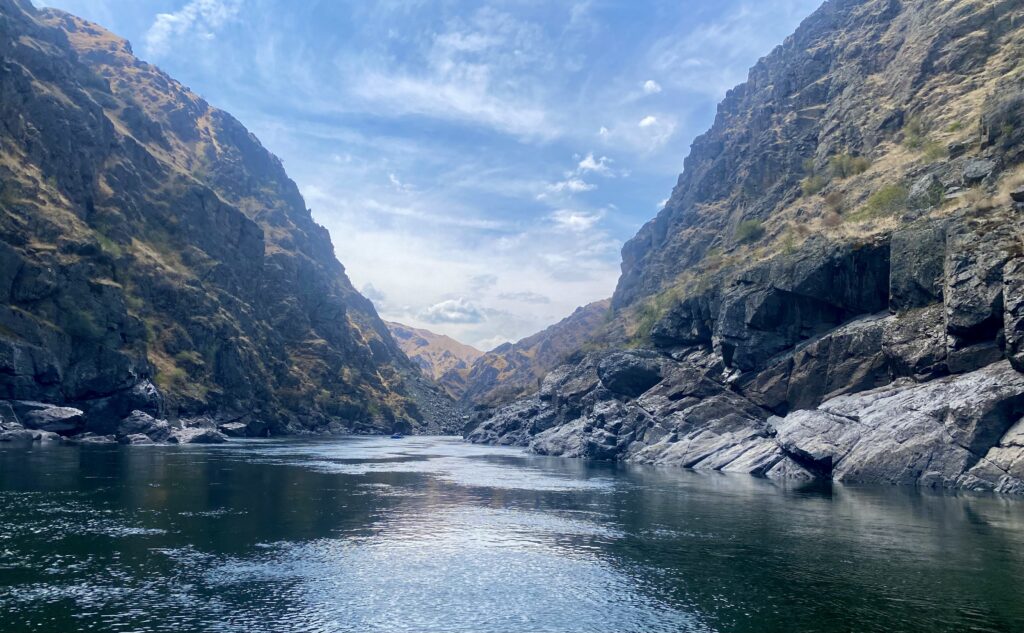Blue Canyon on the lower section of the Salmon River, Idaho. (Photo Dennis Mckenna)
> **“Who hears the rippling of rivers will not utterly despair of anything.”**
>
> **Henry David Thoreau**
## **Part One: The Best Laid Plans**
Every summer I lead a cultural tour on the Lewis and Clark Trail in Montana and Idaho. Usually, we canoe through the White Cliffs section of the Missouri for a couple of days, regroup, head west, and then climb up the “Wendover Death March” to the ancient Lolo Trail along which Lewis and Clark slogged their way to navigable waters of the Columbia River system. But occasionally we switch things up by floating the Salmon, the “River of No Return.” This was such a summer. We usually put in at Corn Creek and take out at Riggins, Idaho.
We gathered in Three Forks, Montana, where we stayed at the [Sacajawea Hotel](https://www.sacajaweahotel.com/). Meriwether Lewis named the three forks of the Missouri for members of the Jefferson administration: the Madison, after the secretary of state, the Gallatin, after the secretary of the treasury, and the Jefferson, after Lewis’ patron, the third president of the United States.
The Sacajawea Hotel. Here’s the short course on how to name and think about the Native American woman who accompanied Lewis and Clark from the Mandan-Hidatsa villages to the Pacific (and back). In western Montana, Idaho, and Wyoming, she’s called SACKaJaWEa, and her name seems to mean “she who pushes” or “she who carries burdens.” In most of Montana and in the Dakotas she is known as Sah-KA-ga-WE-a, which translates as “Bird Woman.” The official pronunciation in America is now Sah-KA-ga-WE-a, and the overwhelming consensus is that she was born Shoshone around 1787, was captured by a Hidatsa raiding party when she was perhaps 11 or 12 years old, taken to the Hidatsa villages on the Knife River in today’s North Dakota where she was absorbed into the Hidatsa world. When Lewis and Clark met her, on or near November 4, 1804, she was pregnant. Lewis named a tributary river in Montana after her on May 20, 1805. That was when he explained how to pronounce her name and laid out what little he knew of her origin story.
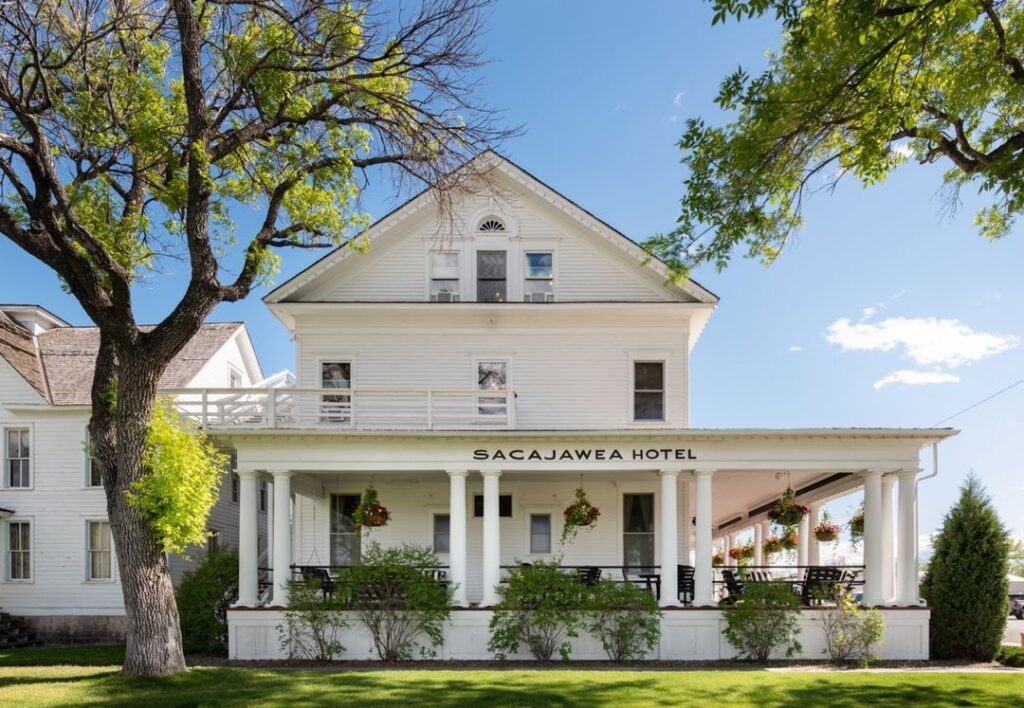The Sacajawea Hotel in Three Forks, Montana.
The Sacajawea Hotel served us champagne when we checked in.
As we prepared for dinner on the night before we embarked on the river, we got a call from our outfitter Wayne Fairchild in Missoula announcing that the U.S. Forest Service had just closed the main reach of the Salmon because of a forest fire there. This was disturbing news, since we had 25 people from all over the country who had paid a considerable amount of money to take this raft trip. What to do? Cancel and try again next year? Ditch the river and do a more traditional Lewis and Clark bus tour? Or find another river?
Wayne Fairchild has owned [Lewis and Clark Trail Adventures](https://trailadventures.com/) for decades. He’s as dedicated an outfitter as one could ever ask for. I would feel much less comfortable using any other outfitter on the Salmon and particularly on the Missouri. As long as he has cell service and a team of young rapscallions ready to fan out across the landscape, Wayne can make just about anything happen. His flexibility is legendary. I’ve never seen him fret in a crisis. He invariably says, “On it!” and finds a way.
Before we could even divulge the situation to the registered participants at dinner, Wayne had solved the problem. He got an emergency temporary license to launch farther west at Hammer Creek and take out at Heller Bar. We’d be floating the lower Salmon not the main. There was no fire threat in the lower Salmon. The river was open. So far so good. Then, rather than driving us to the new put-in point in a yellow school bus, Wayne rented enough SUVs to get us there without rattling our bones. It was a perfect bonus amenity for our participants, who were naturally a little nervous about how this adventure would play out. The crew and the rafts were repositioned at the new put-in site.
It seemed effortless. Wayne works his miracles because he is a resourceful and disciplined man. But also, because he has made a career of treating other outfitters, hoteliers, rental car agents, and law enforcement agents with respect. He plays by the rules of the rivers. He has a reputation for integrity. He’s paid it forward countless times when another outfitter gets into a jam. In other words, he’s built up a lot of goodwill. When he needs help, other good folks who belong to the river community don’t hesitate.
Tell him what you need.
“On it!”
Looking back on the river trip, you’d be hard pressed to be aware of anything out of the ordinary. We launched on the Salmon River just as we had planned for more than a year — just at another put-in point downstream. Nothing was left behind in the scramble except one participant’s dry bag. What looked like a disaster at the Sacajawea Hotel became a seamless adventure. When I think of the ways in which this could have been a disaster or a disappointment, I shudder.
## **No Salmon on the Salmon**
The great dams on the Columbia and Snake rivers may have helped the United States win World War II, but they decimated and nearly destroyed the salmon runs on the Columbia and its tributaries. The old cliché was that before the dams you would walk across the Columbia on the backs of salmon. Today the Salmon River has virtually no salmon. This is partly because of the laws of unintended consequences — the dam advocates were thinking of power, navigation, irrigation, but not fish — and partly because the steps taken to preserve the salmon runs — fish ladders, fish hatcheries, trucking smelt around the dams, etc. — have not been very effective.
The same paradox haunts the landscape through which the Missouri River flows east of Fort Benton, Montana. It looks pristine; some visitors say it could be 1805, it feels that the Lewis and Clark flotilla could round the bend in the river at any time. But once you begin to reckon what has been erased in 200 years — buffalo, grizzly bears, wolves, elk, Native Americans — that arcadian trope begins to break down. Even many of the grasses are transplants from Eurasia.
The Salmon River system drains a huge watershed, one of the wildest and least densely populated parts of America. The river is 425 miles long, depending on how you count, since there are a number of important forks along the way. The Salmon drops 7,000 feet from its headwaters. It is sometimes called the longest undammed river in the American West. That’s not precisely true of the Salmon, just as it is not precisely true of the longer Yellowstone, which is mostly but not 100% undammed. But compared to the Colorado, the Snake, the Missouri, and the Columbia, the Salmon is wonderfully uncompromised by America’s love of concrete.
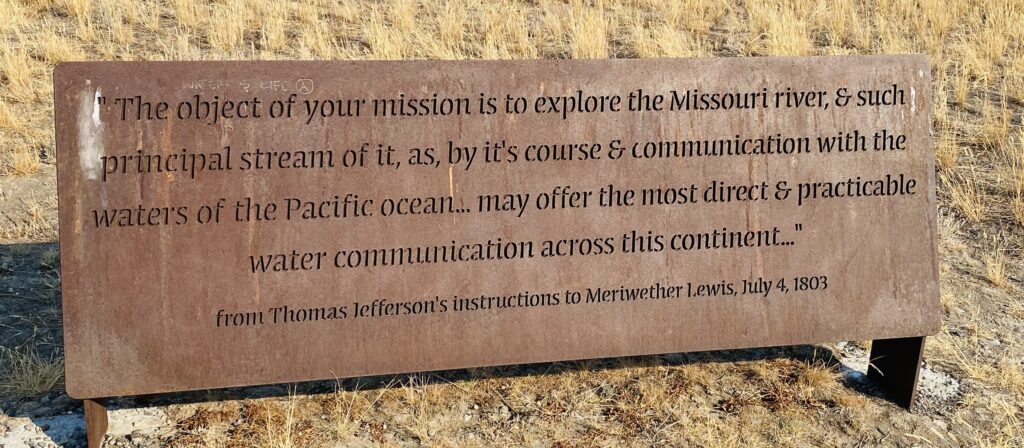Signage at Missouri Headwaters State Park, Three Forks Montana.
Lewis and Clark were instructed by Thomas Jefferson to follow the Missouri all the way to its source, portage over whatever mountains separated it from the Pacific watershed, then find navigable waters of the Columbia (the River of the West) and float down to the ocean. They were hoping that the river on the west side of Lemhi Pass (7,373 feet) would be as navigable as the Jefferson-Beaverhead tributary of the Missouri on the east side. What they discovered, however, was that the Salmon would not cooperate! It was too shallow and full of rocks and rapids to be floated anywhere near Lemhi Pass, and when Clark ventured a few days down into the Salmon watershed, he discovered that the river was hemmed in on both sides by nearly vertical cliffs. The Salmon was, in short, unsuitable for their purposes. In the end, they had to bushwhack north all the way up to today’s Lolo (near Missoula) before they found a trail that could take them far enough west to find *navigable* waters of the “Columbia.” At today’s Orofino, Idaho (Canoe Camp), they finally found the trees they needed to make dugouts and enough water to float them. By now they were in the Lochsa-Clearwater-Snake branch of the Columbia River.
If Lewis and Clark had found an easy portage, they would have been able to confirm to Mr. Jefferson that they had discovered “the most direct & practicable water communication across this continent for the purposes of commerce,” as the president put it in his famous instructions of June 18, 1803. In other words, the fabled Northwest Passage. When he got back to St. Louis in the autumn of 1806, Captain Lewis had to report that “the passage by land of 340 miles from the Missouri to the Kooskooske \[Clearwater\] is the most formidable part of the tract proposed across the Continent; of this distance 200 miles is along a good road, and 140 over tremendious mountains which for 60 mls. are covered with eternal snows.”
So much for the Northwest Passage.
The Salmon has several deep gorges. They seem to beg for giant hydro dams. How the Salmon avoided being dammed is a mystery. The twin dynamos of Bureau of Reclamation Director [Floyd Dominy](https://www.usbr.gov/history/CommissBios/dominy.html) and Colorado’s water-working Congressman Wayne Aspinall would surely have wanted to dam the Salmon in two or three places. By some miracle of preservation, they never did. Guides on the main Salmon sometimes point out drill holes on the canyon walls where tests were made during what water historian Marc Reisner calls “the go-go years,” 1934-1976.
We saw a few ancient sturgeons and some dimpling trout, but no salmon in the Salmon. It seems to me that one of the goals of the 21st century should be restoring the salmon runs in the Salmon — or change its name to Sans Salmon River.
## **Woke Up, Fell Out of Bed, Dragged No Comb Across My Head**
Summertime and the living is easy.
Out on the river, every day is different in all sorts of ways, but every day is the same, too. There are tents, but most of our guests have preferred just to throw their sleeping bags and thick sleeping pads on the beach sand.
We wake up. The crew has already made coffee, without which most of our guests would get a little edgy. One woman from out East, smart, thoughtful, is brewing her own French press coffee and giving small, highly valued, samples to other guests.
Some people pull down their tents right away, shake out their sleeping bags, stow away their personal gear, and bring their stuff down to the river. Others wait until they have had coffee and breakfast. It takes the crew a couple of hours to perform all the morning tasks, including the big one — packing everything back onto our five rafts.
The food is hearty, fresh and plenty.
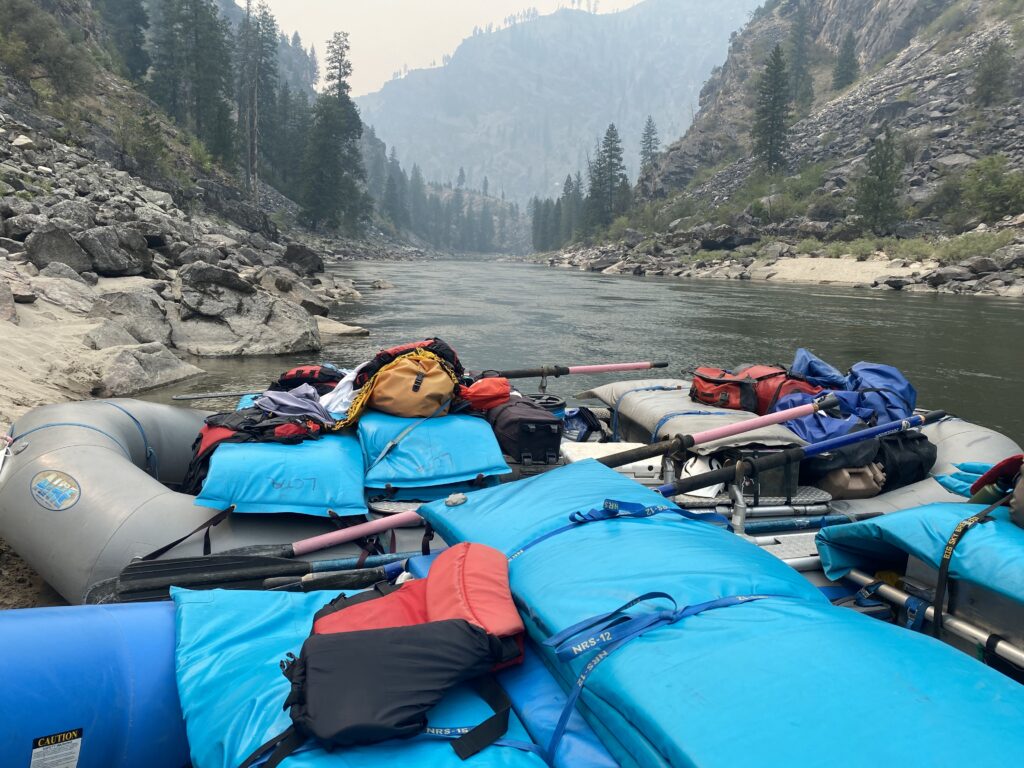Rafts, packed and ready to go on the Salmon River.
The crew breaks camp. We clamor onto the rafts and down we go for 8-20 miles. There is plenty of white water and even more slack water, of course. We laze 0ur way down the river, sometimes chattering, noticing, commentating, remembering, but sometimes, for quite long periods, drifting in silence.
The weather is perfect: 85-90 degrees under the sun, but the river is perfect for swimming, and there are enough rapids to give everyone a thorough soaking a few times per day.
About 4 p.m. we find a good flat beach. Folks lug their tents and dry bags up to whatever sleeping site they have chosen. Pretty soon appetizers and wine are set out while the crew cooks dinner. We sit in camp chairs and recount the events of the day, other river trips, other vacations, other adventures.
Rinse and repeat.
We tumble over Class II rapids several dozen times per day, over Class III a couple of times per day, and Class IV just two or three times in five days. Nobody fell out. About half the people swam alongside the rafts for portions of the float. Part of the fun — given the change of river venues — is that none of the crew members have been over these rapids, either.
We saw river otters, deer, hawks, eagles, blue herons, a sturgeon or two, but the highlight was three bighorn sheep moments. In one, in a protected bay of the river, eight sheep stood perfectly still as in a tableau. In another, half a dozen kids trailed their mothers up what appeared to be 85-degree cliffs.
For almost everyone, the bighorn sightings will be one of the highlights of the trip.
Evenings, I talk about Jefferson, Thoreau, John Muir, Aldo Leopold, Edward Abbey. I’m interested in the paradoxes of western civilization: our capacity to crack the DNA code and land men on the moon, to perform heart transplants and to build replacement teeth with 3-D printers; and at the same time vaporize 65,000 citizens of Hiroshima instantaneously and so damage the biosphere that we cannot rule out mass extinctions of species, possibly our own. All praise to these lonely conservationists who have attempted to warn us that we must find ways to limit our ingenuity so that we don’t wind up destroying the world. All praise to Theodore Roosevelt for initiating the great conservation movement of the 20th century, and setting aside 230 million acres as National Park, National Monument, National Wildlife Refuge, National Forest (some of which we are gliding through), and National Game Preserve.
I suppose some of my fixation on this issue comes from a confluence. We are rafting a river that somehow escaped the industrial world’s obsession with turning the sublime into profit, and I had just seen the Hollywood film *Oppenheimer* three times in short order. Whether Oppenheimer’s “I am become Death, the destroyer of worlds,” will be the epitaph of Western civilization remains to be seen. Which precipices are we willing to back away from — to survive, to live more lightly on the planet, to forge a sustainable lifeway? Where will the wisdom come from at a time when the major religions have ceased to chasten human pride?
There is a limited appetite for discussions of this sort, particularly on a river adventure that is overwhelmingly delightful and relaxing.
## **The Rules of Rivers**
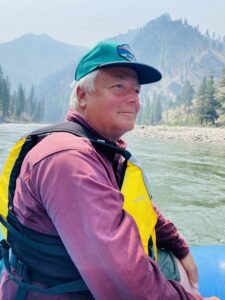Clay on the Salmon River.
Rivers are natural and inevitable metaphors. As Thoreau put it, “time is but a stream I go a fishing in.” The philosopher [Heraclitus](https://plato.stanford.edu/entries/heraclitus/) (ca. 540-480 BCE) famously said no one can step in the same river twice. It’s not the same river and you’re not the same person. In my experience, rivers are even better provocations for life meditation than campfires. Every day at some point I sit in the river feeling the tug of gravity pulling me toward the Pacific. The more you let yourself think about rivers, the more mysterious they become. A serious hydrologist can explain the hydrodynamics of a stream, but even s/he has to concede that some river actions are hard to explain, and that rivers seem at times to have what can only be called intentionality or even, if you are a mystic, something approaching consciousness.
## **Where Does All That Water Come From and Where Does It Go?**
As with almost everything I encounter, I am mostly aware of my ignorance, or more precisely my ignorances. I can name a few stars and some constellations and can describe the Greek legends behind some, but I can’t really read the sky. What I know about geology could be contained in a passport book. I tried to explain river hydrology to myself as we glided along, but the truth is that I don’t really know very much, and I have little capacity to “read the river.” Rapids roar over rocks. I pledge, for the umpteenth time, before I return again, to master the star charts and penetrate the mystery of rivers. The best laid plans …
At some point during the trip, in our evening conversation circle, I recited Meriwether Lewis’ famous 31st birthday meditation, recorded on August 18, 1805.
“This day I completed my thirty first year, and conceived that I had in all human probability now existed about half the period which I am to remain in this Sublunary world. I reflected that I had as yet done but little, very little indeed, to further the hapiness of the human race, or to advance the information of the succeeding generation. I viewed with regret the many hours I have spent in indolence, and now soarly feel the want of that information which those hours would have given me had they been judiciously expended. but since they are past and cannot be recalled, I dash from me the gloomy thought and resolved in future, to redouble my exertions and at least indeavour to promote those two primary objects of human existance, by giving them the aid of that portion of talents which nature and fortune have bestoed on me; or in future, to live for *mankind,* as I have heretofore lived *for myself.*—”
After I recite this, I invariably comment that Lewis is being a little hard on himself. A few days earlier (August 12) he bestrode a feeder creek of “the mighty and heretofore deemed endless Missouri.” He has also made successful contact with the critically important (because horse rich) Shoshone. With any luck, he will reach the Pacific coast sometime later that fall. From almost any perspective, the expedition he commands has been a success. Only one man has died, probably of a ruptured appendix. The expedition is “go” for trans Rockies insertion.
We have nightly talks around the fire pit. Unfortunately, fires were prohibited this year, even in fire pans, and we were asked sternly by the sheriff’s deputies to extinguish the one fire we made, in ignorance of lower Salmon protocols. No great loss. I’d talk for a while about Lewis and Clark or about America’s long history of managing public lands, but soon the conversation would drift away from Lewis and Clark, and we’d find ourselves talking about America, about our national political and constitutional crisis, and eventually about Life.
Everyone who self-selected for the adventure had a story (and stories) to tell. It was a rich mix.
## **Channeling Our Inner John Wesley Powell**
On the afternoon of the third to last day, we were working quickly down the river. It was time to camp. The problem was that with so many regular and refugee outfits on the river, good beaches were hard to secure. The crew member in the raft I was in didn’t see the signal to land in time. It was clear that we might well miss the landing site, in which case there could be no turning around and fighting the river. He pulled with all his might, his biceps bursting, but even with that heroic effort we slipped past the beach and headed into the rapids.
It was a scene right out of John Wesley Powell’s 1869 journey down the Green and Colorado rivers. Just 10 days into the 99-day journey, one of the four wooden boats, the No Name, missed a landing signal and was swept into the worst rapid (so far!). All three men on board were tossed into the Green River rapids. The boat struck a rock sideways and broke into two. Fully a third of the expedition’s provisions were lost. Major Powell looked on helplessly from the shore. The three exhausted and terrified crew members were rescued. As Powell assessed the damage, he briefly considered trying to walk out to Salt Lake City to resupply. What was rescued from the wreckage was redistributed in the other three boats and the sobered expedition members began their journey on the remaining 90% of the Green and Colorado canyons. Before long, the Powell expedition became a race against starvation.
In our infinitely safer journey on the lower Salmon, 154 years after Powell’s famous voyage, our crew members from the other rafts came running. Lines were thrown. Fortunately, we had run up against a large rock jutting out of the river. The raft was held up there, at least temporarily. After some strenuous tugging, mixed messaging, and cursing, we were pulled by yellow polyethylene ropes back up stream a dozen yards to the beach. Brendo, our river guide, was exhausted and a little abashed. If we had been swept through the rapids, the rest of the boats would have had to follow suit, as we had key equipment for the dinner, and it was important that we all stay together. That would have made for a tense evening downstream. We might have had to share a beach as disgraced refugees.
While this little drama was playing out, as in slow motion, I was drawn into my memory to Powell’s journey in 1869. They were in wooden dories. Because they were explorers, they had no idea what was around the next bend. None of Powell’s crew had ever run a rapid before. When the Colorado River proved too menacing, they portaged their baggage around the rapids or falls, and then lined the boats down with such river-weakened ropes as they still had in their possession. When the canyons hemmed them in, as was the case with us on this occasion, they had to climb high up on the rocks to piece out a portage route. Powell was one-armed. If we had had to do just that, scramble up 200 feet, crab-foot it over the rocks to a place above the beach, and then scramble back down, there would have been grumpy customers and plenty of chances to get hurt.
All’s well that ends well.
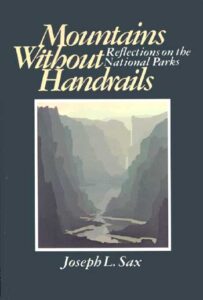*Mountains Without Handrails* by Joseph Sax.
One evening around the inert fire pit, I talked about a book by Joseph Sax called *[Mountains Without Handrails: Reflections on the National Parks](https://www.nps.gov/parkhistory/online_books/sax/index.htm)*. The thesis of the book is simple enough. Humans deepen their experience when they limit their use of gross technology to achieve their ends. Thus someone who throws a grenade into a trout stream and kills 75 fish in an instant, is less a sportsman than the individual who has mastered fly fishing and pulls a gibbering trout out of a stream after hours of casting. Someone who kills an elephant with a bazooka is not sporting. Sax’s point is that we ennoble ourselves when we recognize that we must not simply surrender to industrialization. If we use all of our technological advantage, the poetry of life will be as deranged as the biosphere. When humans restrain their industrial mastery over nature, dignity is possible. So is spiritual awakening, spiritual growth. The couple in the canoe is more interesting to me than the six buddies in the jet boat hurtling upstream against the current, blaring music from onboard woofers against the cosmos, slugging beers the way Popeye eats a can of spinach. There is nothing poetic about a jet ski or a jetboat or an ATV on public lands. They just make noise.
We all understand the problem. Political paralysis in the national arena and in many of the states. A widespread feeling that the country is going down the wrong path, from both sides of the political spectrum. Runaway materialism. The waning of the humanities and civic engagement. The most dynamic nation in the world ruled by octogenarians. The consequences of a profoundly carbon-extraction economy have caught up with us. But we cannot quite see what life in a more sustainable system would be. We want to maintain the same lifestyle, the same easy access to all the fruits of life, with the hope of a techno-fix of our problems.
But, as Major Powell put it, “the river rolls on in quiet majesty.” And the stars are magnificent when I get up in the night to pee.
## **The Groover**
Speaking of which, there are no bathrooms on the Salmon. Every outfitter brings along a crude, but efficient receptacle (often brightly colored) called The Groover. The only difference between The Groover and your toilet at home is that nothing gets flushed away. You do the math. Including the crew, a total of 30 people for six days, each person defecating once or twice a day into a receptacle no bigger than your home toilet bowl. That’s a steaming pile of poop. Given the accumulating bulk, the toilet paper is thin as tissue paper. A bottle of hand sanitizer possibly makes a difference, and there is a wash bucket down the hill, but nobody doubts that strict hygiene is an approximate science under such conditions.
## **The Lochsa River Compact**
On the last day of the tour, we had a discussion in the morning about how America might choose to commemorate its 250th birthday: July 4, 2026. It was a rich discussion. Because we were people who had assembled from all over the United States, we all heard things we have not previously considered. After lunch, some people napped, others packed, but about 10 of us wound up siting on camp chairs *in* the Lochsa River. A few drank a beer or two, others, flavored water. At some point I was asked to explain my occasional river comment, “We’re doomed.” The question was whether it was just an Anglo way of saying *oy vey* or the Nordic *uffda*. In the space of 10 minutes, sitting knee deep in the fabulous upstream waters of the Columbia watershed, I laid out four or five deep problems the U.S. must at some point address: 1) the few and the many; 2) the costs of higher education, including the gargantuan mountain of student debt we have allowed to accumulate; 3) our incomplete national health care system; 4) immigration; 5) the loss of our national narrative; the persistence of racism. …
Then someone said, “Ok, we get it. We ARE doomed. But if you could choose one idea or program that might turn things around, what would it be?”
After a pause I said, National Service for all 18-year-olds, 18 months, or two years, away from one’s home community, living in dormitories, and a generous “GI Bill of Rights” as a reward for anyone who completes the program.
Suddenly, the river exploded into conversation. Suddenly, everyone was talking. We made a list of all the different ways you can define national service: VISTA, AmeriCorps, the Peace Corps, CCC camps, Red Cross, interning in inner city schools, border services, and the branches of the U.S. military. Nobody would be forced to carry a gun.
The enthusiasm was so great that we decided to form a **Lochsa River Compact**. Each of us would write to our Congress representative and our two Senators, to urge them to create a comprehensive National Service program as soon as possible. We could think of no better place to put the Archimedean lever that will lift the United States back to something closer to a republic. (It was not lost on us, of course, that we were mostly senior citizens planning years of service for people younger than our children.)
The idea for national service surfaces every few years, but never seems to reach a critical mass. Members of both political parties say they endorse the idea, but nothing ever comes of it. This is not 1934, they say. The unions oppose it, they say. It would be too costly, they say. Who is it who said, “men will sit around talking about the end of the world and never make an attempt to get up”?
Stay tuned. There is nothing original about our proposal, but the time is ripe for dramatic measures. It’s hard to concentrate on America’s great problems on a glorious white-water river trip, but traveling together in this way reminded all of us how privileged we are and how much might be lost if we don’t do whatever we can to turn things around.
## **OK, It Was My Dry Bag**
The lost dry bag was mine. Thanks to the cooperation and the camaraderie of the river outfitters, the bag caught up with me on the second day. No harm no foul. Nobody could figure out how the bag was left behind at the put-in, but I have a hunch, and as Francis Bacon says, “Revenge is a dish best served cold.” Actually, I didn’t really care. I’ve been on 20-some journeys of this sort and in each case, no matter how little I put into the dry bag, it is more than I need or use. Our little river community rallied around me as we bedded down the first night. Lindy gave me a spare toothbrush, only slightly used. Another woman gave me a hoodie. One of the crew members lent me a spare sleeping bag. I recognized it as having been left behind by my old friend “Woody,” who has been on a dozen of my cultural tours and who, one summer, worked for Wayne’s outfitting business. I was on that trip. Woody turned out to be a double agent, slipping away from the crew kitchen to tell us insider stories about certain crew members, and then slipping back to the grill to say this year’s customers were a decidedly inferior lot! A double agent. He took me aside on the third day. I asked him how he liked sleeping out on the ground with no tent in the company of half a dozen 20-somethings. He loved it, he said, but he wasn’t sure what kind of funny cigarettes they were smoking after the guests had gone to sleep.
I was glad it was my dry bag that got delayed, not a guest’s. That might have been less agreeable. As I bedded down under the dubious materials that had been handed to me by crew and company, I realized that aside from my razor, my headlamp, and the book I was hoping to read (for four minutes per night before falling asleep exhausted), I did not really need anything that was not readily available to me. Plenty of food. The Groover. A raft to ride the waves. “A man is rich,” Thoreau wrote, “in proportion to the number of things which he can afford to let alone.”
When I got my bag, I changed into Teva river shoes, and brushed my teeth more rigorously. By the end of the journey, there was one night when I was glad to have a proper sleeping bag.
## **And in the End …**
Now I am back in “civilization” and life is taking its revenge for my short interlude off the grid. But when I close my eyes, I can hear the river cascading over the rocks near our camp. I can see the confluence of the Salmon and the Snake — one of the most beautiful places I have ever been, which I would not have seen had not the best laid plans of our trip changed one night at the champagne-soaked Sacajawea Hotel. My goal now is to keep the vistas and the impressions and the incidents and the meditations of the journey present in my mind through the year, without failing to be present at all the other adventures that beckon.
---
## ***Discover more on these topics at Listening to America***
[Podcast](https://ltamerica.org/tag/podcast/ "1 topics")[Wisconsin](https://ltamerica.org/tag/wisconsin/ "0 topics")[Oregon](https://ltamerica.org/tag/oregon/ "4 topics")[Poetry](https://ltamerica.org/tag/poetry/ "1 topics")[State Parks](https://ltamerica.org/tag/state-parks/ "2 topics")[North Carolina](https://ltamerica.org/tag/north-carolina/ "3 topics")[Theodore Roosevelt](https://ltamerica.org/tag/theodore-roosevelt/ "16 topics")[Wyoming](https://ltamerica.org/tag/wyoming/ "4 topics")[North Dakota](https://ltamerica.org/tag/north-dakota/ "53 topics")[Space Exploration](https://ltamerica.org/tag/space-exploration/ "8 topics")[Reading](https://ltamerica.org/tag/reading/ "1 topics")[Video](https://ltamerica.org/tag/video/ "51 topics")[New York](https://ltamerica.org/tag/new-york/ "8 topics")[U.S. Constitution](https://ltamerica.org/tag/u-s-constitution/ "1 topics")[Steinbeck Travels](https://ltamerica.org/tag/steinbeck-travels/ "75 topics")[Republics](https://ltamerica.org/tag/republics/ "1 topics")[Oppenheimer](https://ltamerica.org/tag/oppenheimer/ "1 topics")[north daktoa](https://ltamerica.org/tag/north-daktoa/ "0 topics")[Ohio](https://ltamerica.org/tag/ohio/ "2 topics")[Water in the West](https://ltamerica.org/tag/water-in-the-west/ "24 topics")[Oppenheim](https://ltamerica.org/tag/oppenheim/ "0 topics")[Sports](https://ltamerica.org/tag/sports/ "2 topics")[Road Trips](https://ltamerica.org/tag/road-trips/ "18 topics")[Walden](https://ltamerica.org/tag/walden/ "1 topics")[Texas](https://ltamerica.org/tag/texas/ "4 topics")[Thomas Jefferson](https://ltamerica.org/tag/thomas-jefferson/ "34 topics")[Rivers](https://ltamerica.org/tag/rivers/ "3 topics")[The Constitution](https://ltamerica.org/tag/the-constitution/ "1 topics")[Travel](https://ltamerica.org/tag/travel/ "1 topics")[New England](https://ltamerica.org/tag/new-england/ "1 topics")[paintings](https://ltamerica.org/tag/paintings/ "0 topics")[U.S. Presidents](https://ltamerica.org/tag/u-s-presidents/ "71 topics")[William Shirer](https://ltamerica.org/tag/william-shirer/ "1 topics")[Virginia](https://ltamerica.org/tag/virginia/ "7 topics")[Vermont](https://ltamerica.org/tag/vermont/ "1 topics")[Utah](https://ltamerica.org/tag/utah/ "11 topics")[Washington](https://ltamerica.org/tag/washington/ "2 topics")[South Dakota](https://ltamerica.org/tag/south-dakota/ "16 topics")[Tennessee](https://ltamerica.org/tag/tennessee/ "1 topics")[Thoreau](https://ltamerica.org/tag/thoreau/ "5 topics")[Pennsylvania](https://ltamerica.org/tag/pennsylvania/ "1 topics")[Rome](https://ltamerica.org/tag/rome/ "1 topics")[South Carolina](https://ltamerica.org/tag/south-carolina/ "1 topics")[Republic](https://ltamerica.org/tag/republic/ "0 topics")[New Mexico](https://ltamerica.org/tag/new-mexico/ "3 topics")
**Categories:** Features
**Tags:** Idaho, Lewis and Clark, Montana, Native Americans, Washington, Water in the West
---
### [What Tree Rings Can Tell Us About Climate Change and the Future of the West](https://ltamerica.org/what-tree-rings-can-tell-us-about-climate-change-and-the-future-of-the-west/)
**Published:** May 23, 2023
**Author:** Clay Jenkinson
**Excerpt:** In an effort to predict the future, scientists are piecing together an astonishingly precise and far-reaching record of the past.
**Content:**
## **In an effort to predict the future, scientists are piecing together an astonishingly precise and far-reaching record of the past.**
Ben Bellorado, an expert in dating historical climate events through the examination of tree rings, working at an archaeological site with a student near Bear’s Ears National Monument. (Photo courtesy of Ben Bellorado)
*In these uncertain times of drought and ever-falling reservoirs and aquifers, the ability to anticipate climate change has taken on new importance. Knowing where we’re heading requires knowing where we have been, yet our grasp of climatic history is incomplete and imprecise. However, significant gaps are being filled in through the ever-evolving study of tree rings. Dendrochronology is a nearly century-old science extending and fine-tuning our knowledge of the planet’s history. [Ben Bellorado](https://www.crowcanyon.org/people/bellorado_benjamin/), Laboratory Director at the [Crow Canyon Archaeological Center](https://www.crowcanyon.org) in southwestern Colorado, is part of that effort. He recently talked with Clay about his work and what tree rings say about our burgeoning water crisis.*
*This article is part of a series on Water in the West. The interview has been edited for length and clarity.*
**Clay**: Let’s start with the basics. What is [dendrochronology](https://www.environmentalscience.org/dendrochronology-tree-rings-tell-us), and how is it useful?
**Ben Bellorado**: Dendrochronology is the study of tree time. It breaks up in Latin to *dendro* meaning tree, *chronos* meaning time, and then *-ology* meaning “the study of.” There are subfields, including dendroarchaeology, dendrohydrology, and dendroecology, but dendrochronology is the broader term. Its development was spearheaded back in the 1920s by a man named [Andrew Douglass](https://www.ltrr.arizona.edu/~cbaisan/Vermont/Erica/AED.pdf). He started as an astronomer, but while he was working at the [Lowell Observatory](https://lowell.edu/) in Flagstaff, he and a colleague saw the potential of using tree rings to date archeological sites. He had access to the tools of an astronomer, so he actually started off looking at tree rings from across the room with a telescope. Working with other scientists, he figured out that not only did most tree species add a ring every year, but that by looking at the relative thickness of those rings, you could tell things like how much precipitation fell in that year or if a warmer or colder climate had affected the growth of that tree. Once you’ve examined a tree, you try to locate other trees from the same area but from different eras, and this allows you to work your way further and further back in time. Here in the [Four Corners](https://www.usgs.gov/geology-and-ecology-of-national-parks/four-corners-region) area of the United States, our oldest chronology goes back to about 212 B.C., but in the [White Mountains](https://www.peakbagger.com/range.aspx?rid=13354) of California, it goes back about 10,000 years. Central Europe also has chronologies going back five to ten thousand years.
> **Dendrochronology is the study of tree time. It breaks up in Latin to *dendro* meaning tree, *chronos* meaning time, and then *-ology* meaning “the study of.”**
>
> **Ben Bellorado**
**Clay**: Is it accurate then to think of dendrochronology as the history of the planet as viewed through a tree-ring lens?
**Ben Bellorado**: Exactly. It’s the most accurate and finely controlled way we have to track changing conditions through time across the world. Potentially you have not only annual resolution but sub-annual and even seasonal resolution. When we’re really lucky, we can tell you not just the year that a tree was cut down, but whether it was cut down in the fall or the spring or mid-summer. And we can learn about certain events that occurred during its lifetime. You can date the occurrence of events such as avalanches and rockslides or the eruption of volcanoes.
**Clay**: What happens in the tree ring record when these events occur? How does the eruption of a volcano create possibilities for future dendrochronologists?
Ben taking core sample from live tree. (Photo courtesy of Ben Bellorado)
**Ben Bellorado**: We can actually look at the different isotopes that are present in different parts of the tree’s life. Local trees that aren’t immediately wiped out by the magma are going to take in a lot of the chemicals and gases and such that are released with the volcano. And then there are ripple effects. The volcano can put so much ash into the air that you have dramatic cooling events, what we might call “little ice ages.” Throughout a lot of North America in the 1400s, for example, there was a really cold period that lasted about fifty years. By looking at these large data sets that we’ve put together, we’ve been able to tie that period of extreme cold to the eruption of volcanoes. We’ve built massive data sets and we’re able to share them across the world. We can look at how certain parts of the world were affected by extreme weather events in the past, and then hopefully improve our ability to predict what will happen in the future. Predicting things is difficult, but understanding what’s happened in the past is still a good place to start.
**Clay**: How complete and dependable are these records that you can extract from tree rings?
**Ben Bellorado**: As an archaeologist, I have to be careful. Obviously, it’s only the things that get preserved in the archeological or natural record that we can recover and know about. A lot of trees and plants decay and go away. Our window into ancient times is limited to things that were preserved. We call that preservation bias, and we have to remain aware of it. And then there is recovery bias. Our understanding of the archeological distribution is dependent on what sites we select for study. And sometimes a road might go in somewhere and things get destroyed before we have the chance to look.
Tree ring measuring system with computerized high magnification microscope at Crow Canyon Archaeological Center. (Photo courtesy of Ben Bellorado)
**Clay**: How do you approach a new sample? Suppose for example that you observe rings with expected widths in the early years of a tree’s life, but notice that they suddenly grow abnormally thin. What questions do you begin to ask?
**Ben Bellorado**: The thickness of the ring is reflective of the precipitation and the temperature. If the tree grows at low elevation, the first thing I’m going to think of is that there was a downturn in the precipitation. If it is one ring, I will think it was a dry year. If it’s multiple years in a row, then I’m going to say there was a pretty significant downturn in the climate. But you have to also think about where you are in the cross section. Trees always have bigger rings in the early years of their life. There’s an expected age-related growth trend. But if you see a big separation from that trend, then you know that something else is going on. Another thing to consider is where this tree was growing. If you have a dense forest, all those trees are competing with each other for nutrients, precipitation, and for light. So if there’s a big event like a landslide that cleans out a bunch of trees all at once, the surviving trees that are growing on the edge of that destruction are going to suddenly have a lot more nutrients and sun. In that case the rings are going to get bigger. You have to think about things like that.
Highly magnified charred tree ring sample. (Photo courtesy of Ben Bellorado)
**Clay**: How has this work informed your thoughts about the drought that we’re in the midst of?
**Ben Bellorado**: We can accurately and precisely track the changes. We can see exactly what’s happening. We have to stop polluting the environment, and we have to stop using so much water. Even if we manage to do those things, there will still be major issues. If we can’t turn it around, or if the climate doesn’t turn around on its own, big parts of North America are not going to be habitable. There’s only so much water, and there’s not a way to make new water. We are going to be forced to seriously think about where and how we are living. It wouldn’t surprise me if in the next hundred years, there are not as many people living in places like Phoenix and parts of California. That’s my personal point of view. I don’t think we’ve made the effort required to prevent people from having to move. That’s something that has happened throughout human history, but the scale of it now would be astronomical because we have such high populations that are so sedentary and entrenched. It’s going to be hard. There’s going to be political and social strife, and the systems we have now might not survive that. I’m just thinking realistically after looking at those ancient cultures. Like us, they thought they were permanent, but they peaked, waned, and went away, and others replaced them. From a climate point of view, I just don’t see an easy way out for any of us. Still, I do think there’s a lot of really intriguing science that could help us. One thing that fascinates me right now is the idea of putting floating electric generators in the ocean so that the tides and the movement of the water generate electricity. We should be putting so much more time and energy and money into that type of research.
**Clay**: The [snowpack was up this winter](https://www.nytimes.com/2023/04/03/climate/california-storms-snowpack.html?searchResultPosition=2), as much as 200% in some places. What do the trees tell us about the significance of this? Could we be at the beginning of forty wet years?
**Ben Bellorado**: Potentially we could be, but there are spikes in the driest of droughts, and when you look at the average, it doesn’t change much. This year’s snowpack is helpful, but it doesn’t solve the situation. It’s a blip, a drop in the bucket. We need 20 years or more of these winters to refill all the reservoirs and all the aquifers. It’s the long-term depletion of these water systems that is the problem.
Live tree core sample. (Photo courtesy of Ben Bellorado)
**Clay**: As an archaeologist, it seems that you hang out all day in the middens of civilizations that have collapsed, but on the other hand you know from the work you do that this too will pass, and other things will come along. Are you an optimist or a pessimist, or do you oscillate between the two?
**Ben Bellorado**: Just ask my therapist. Seriously, we do see the waxing and the waning of these different cultures. I’m hopeful that human civilization won’t go away. Humans are resilient. Culture is the most beautiful and amazing thing. We all do the stupidest things at times, but it’s a beautiful system that we’ve put together. It’s constantly changing and adapting. Look at indigenous people around the world. They can adapt in what seem to us to be the most inhospitable places in the world. In northern Canada you have folks living in igloos with fur suits and oil lamps, and they’re happy. They have a thriving culture. It gives me a sense of wonder, but it also makes me aware of things we are doing that are less than advantageous. Sometimes we do things that initially help us out, but down the road there are unintended consequences.
---
## ***Discover more on these topics at Listening to America***
[Theodore Roosevelt](https://ltamerica.org/tag/theodore-roosevelt/ "16 topics")[Rome](https://ltamerica.org/tag/rome/ "1 topics")[Space Exploration](https://ltamerica.org/tag/space-exploration/ "8 topics")[Podcast](https://ltamerica.org/tag/podcast/ "1 topics")[North Dakota](https://ltamerica.org/tag/north-dakota/ "53 topics")[Road Trips](https://ltamerica.org/tag/road-trips/ "18 topics")[Video](https://ltamerica.org/tag/video/ "51 topics")[Walden](https://ltamerica.org/tag/walden/ "1 topics")[Travel](https://ltamerica.org/tag/travel/ "1 topics")[U.S. Presidents](https://ltamerica.org/tag/u-s-presidents/ "71 topics")[Oppenheimer](https://ltamerica.org/tag/oppenheimer/ "1 topics")[South Dakota](https://ltamerica.org/tag/south-dakota/ "16 topics")[Oregon](https://ltamerica.org/tag/oregon/ "4 topics")[New England](https://ltamerica.org/tag/new-england/ "1 topics")[State Parks](https://ltamerica.org/tag/state-parks/ "2 topics")[Tennessee](https://ltamerica.org/tag/tennessee/ "1 topics")[The Constitution](https://ltamerica.org/tag/the-constitution/ "1 topics")[Water in the West](https://ltamerica.org/tag/water-in-the-west/ "24 topics")[Republic](https://ltamerica.org/tag/republic/ "0 topics")[Poetry](https://ltamerica.org/tag/poetry/ "1 topics")[Oppenheim](https://ltamerica.org/tag/oppenheim/ "0 topics")[Rivers](https://ltamerica.org/tag/rivers/ "3 topics")[Wyoming](https://ltamerica.org/tag/wyoming/ "4 topics")[Texas](https://ltamerica.org/tag/texas/ "4 topics")[New York](https://ltamerica.org/tag/new-york/ "8 topics")[paintings](https://ltamerica.org/tag/paintings/ "0 topics")[Virginia](https://ltamerica.org/tag/virginia/ "7 topics")[Wisconsin](https://ltamerica.org/tag/wisconsin/ "0 topics")[Pennsylvania](https://ltamerica.org/tag/pennsylvania/ "1 topics")[Sports](https://ltamerica.org/tag/sports/ "2 topics")[William Shirer](https://ltamerica.org/tag/william-shirer/ "1 topics")[North Carolina](https://ltamerica.org/tag/north-carolina/ "3 topics")[New Mexico](https://ltamerica.org/tag/new-mexico/ "3 topics")[Steinbeck Travels](https://ltamerica.org/tag/steinbeck-travels/ "75 topics")[Washington](https://ltamerica.org/tag/washington/ "2 topics")[Thoreau](https://ltamerica.org/tag/thoreau/ "5 topics")[South Carolina](https://ltamerica.org/tag/south-carolina/ "1 topics")[Reading](https://ltamerica.org/tag/reading/ "1 topics")[Ohio](https://ltamerica.org/tag/ohio/ "2 topics")[U.S. Constitution](https://ltamerica.org/tag/u-s-constitution/ "1 topics")[Utah](https://ltamerica.org/tag/utah/ "11 topics")[Vermont](https://ltamerica.org/tag/vermont/ "1 topics")[Republics](https://ltamerica.org/tag/republics/ "1 topics")[Thomas Jefferson](https://ltamerica.org/tag/thomas-jefferson/ "34 topics")[north daktoa](https://ltamerica.org/tag/north-daktoa/ "0 topics")
**Categories:** Features
**Tags:** Colorado, Colorado River, Water in the West
---
### [Crow Canyon Archaeological Center — A Colorado River Journey](https://ltamerica.org/crow-canyon-archaeological-center-a-colorado-river-journey/)
**Published:** May 22, 2023
**Author:** Clay Jenkinson
**Excerpt:** This is the fifth in a series of dispatches from Clay Jenkinson chronicling his recent journey with two compatriots following the Colorado River and neighboring region. The day was spent at the Crow Canyon Archaeological Center
**Content:**
## Day Four, Monday: Crow Canyon Archaeological Center, Cortez, Colorado.
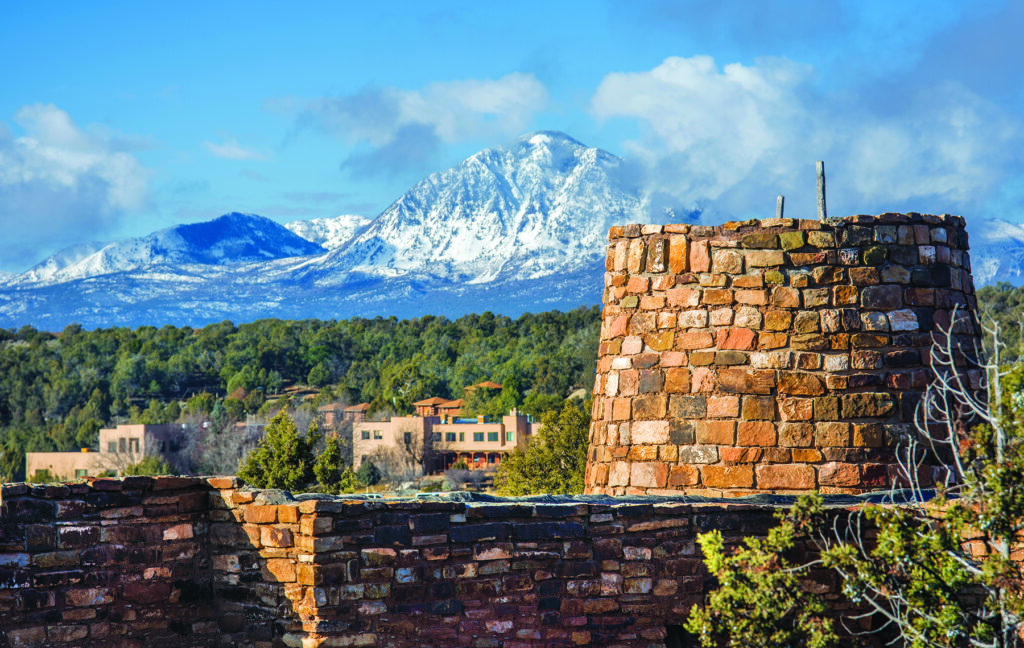Crow Canyon Archaeological Center, Cortez, Colorado. Sleeping Ute Mountain in the background. (Photo by Crow Crow Canyon Archaeological Center)
*This is the fifth in a [series](http://ltamerica.org/beyond-the-apocalypse-and-bathtub-rig-a-colorado-river-journey-we-begin-2/) of dispatches from Clay Jenkinson chronicling his recent journey with two compatriots following the Colorado River and neighboring region. The day was spent at the Crow Canyon Archaeological Center.* *The two-week expedition explored the state of water, or the absence of it, in the West.*
The Retro Inn in Cortez, Colorado.
I took my shower this morning in a retro motel (aptly named the [Retro Inn](https://www.retroinnmesaverde.com)) with that small pink-tiled bathroom with the pink and reddish brown floor “treatment,” the toilet just a little too close to the wall, and the original tub shower. The clerk who checked us in told us proudly that the showers were excellent. When I stepped into the tub this morning, after adjusting the temperature, I turned the spigot to force the water up into the showerhead. What I expected was that small “misting” shower head that seems to supply two parts air for each part water, and you almost must jump around to get everything wet. I hate such showerheads, and I always leave my morning ablutions at such places a little grumpy. But no: what we have is one-foot-square rain showerheads! I was soon laved by a shower you might expect in a swanky New York hotel or in Paris. So, Cortez seems not particularly concerned about water conservation, at least not in the 1956 Elvis Room, with its painting of Marilyn Monroe at her most seductive, James Dean looking off the frame in existential alienation, and Elvis checking out Ms. Monroe’s legs.
When I open my door — yes, it’s a motel where you can drive up to your room! — I see snow on Dennis’ truck this morning, but the windshield is clear. He has been out in search of a better cup of coffee. Dennis has high standards for coffee. At the level of daily Grail Quest. He sometimes comes into my room to pick up a book or file and glares disdainfully at the Keurig rig placed there by the hotel. There are wine snobs. There are beer snobs (worse). There are cigar snobs (worst of all). And there are coffee snobs.
## **A Visit to the Crow Canyon Archaeological Center**

We spent the whole day at the [Crow Canyon Archaeological Center](https://www.crowcanyon.org). The mission statement is lovely: “Crow Canyon’s mission is to empower present and future generations by making the human past accessible and relevant through archaeological research, experiential education, and American Indian knowledge.” We were there because Frank told us it would be the best way to prepare for the visits to Ute, Navajo, and Hopi communities over the next few days. He was right. I won’t say I’m not interested in archaeology, because that’s not true, but it is not one of the primary lenses through which I explore the American West. But our day with these gifted archaeologists, biologists, educators, and dendrochronologists was incredibly helpful and gratifying. Like all enlightened institutions these days, the Center has a land acknowledgement statement on its website:
> *T**he Crow Canyon Archaeological Center acknowledges the Pueblo, Ute, Diné (Navajo), Jicarilla Apache, and Paiute people on whose traditional homelands this institution sits.***
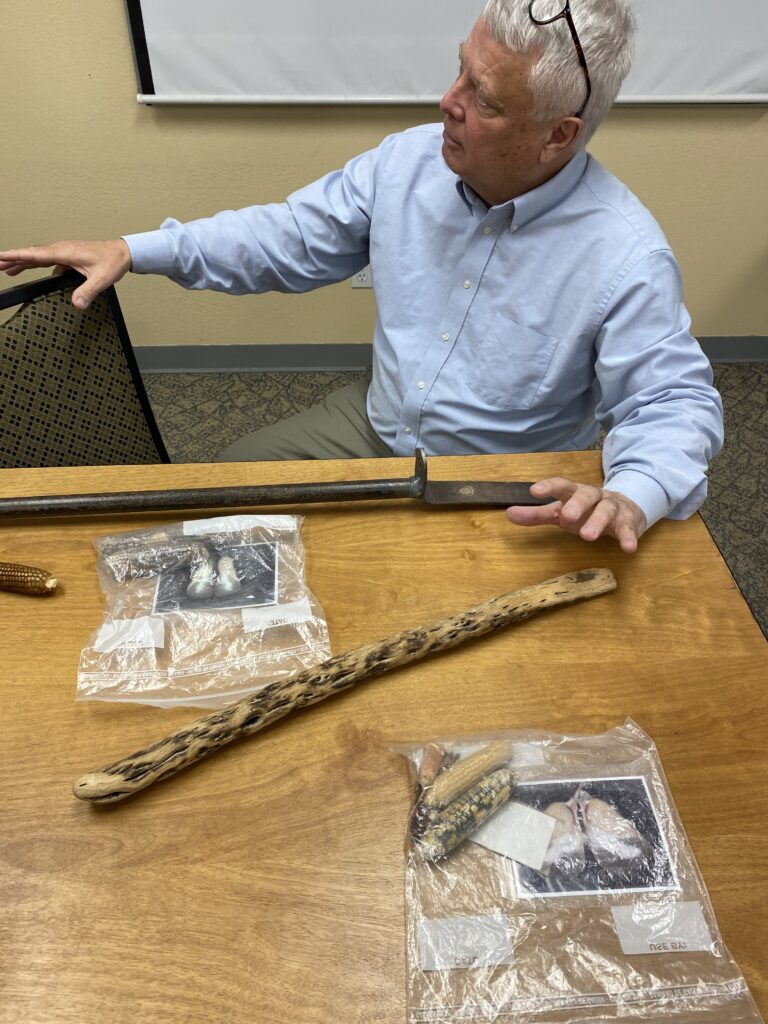Clay discusses traditional Hopi corn planting methods at Crow Canyon Archaeological Center. In the center of the table is a traditional Hopi digging stick called a say’ya along with ancient corn samples.
Once we had met some of the staff, we were taken into a classroom, where [Paul Ermigiotti ](https://www.crowcanyon.org/people/ermigiotti_paul/)told us about a Crow Canyon initiative being conducted with elder corn growers of the Hopi nation. Hopi men have been coming over the last few years to Cortez to plant corn in the traditional way using a digging stick called a sa’ya. Using heritage seed stock that may date back hundreds of years, the Hopi men plant kernels deep in the soil — eight to fifteen inches deep — to connect with the moisture there. The Hopi farmers are a long way from home in Cortez and yet they are able to “read” the land to know precisely where the corn should be planted.
After the harvest, Hopi women control the yield. The next spring, it is the women who select the seeds for planting. Everything depends on water, of course, but over the centuries the Hopi have mastered the growing of corn in arid country. The scale of their agriculture is modest. It yields subsistence. It enabled a steady state economy, but it did not in most years provide the kind of surpluses-for-market Euro-Americans regard as the meaning of agriculture or, better, agri-production. As the planet heats up and drought becomes the central story of the American West, could we learn from the Hopi and other practitioners of traditional subsistence agriculture? Certainly, but it would require a paradigm shift that white people seem unable to contemplate.
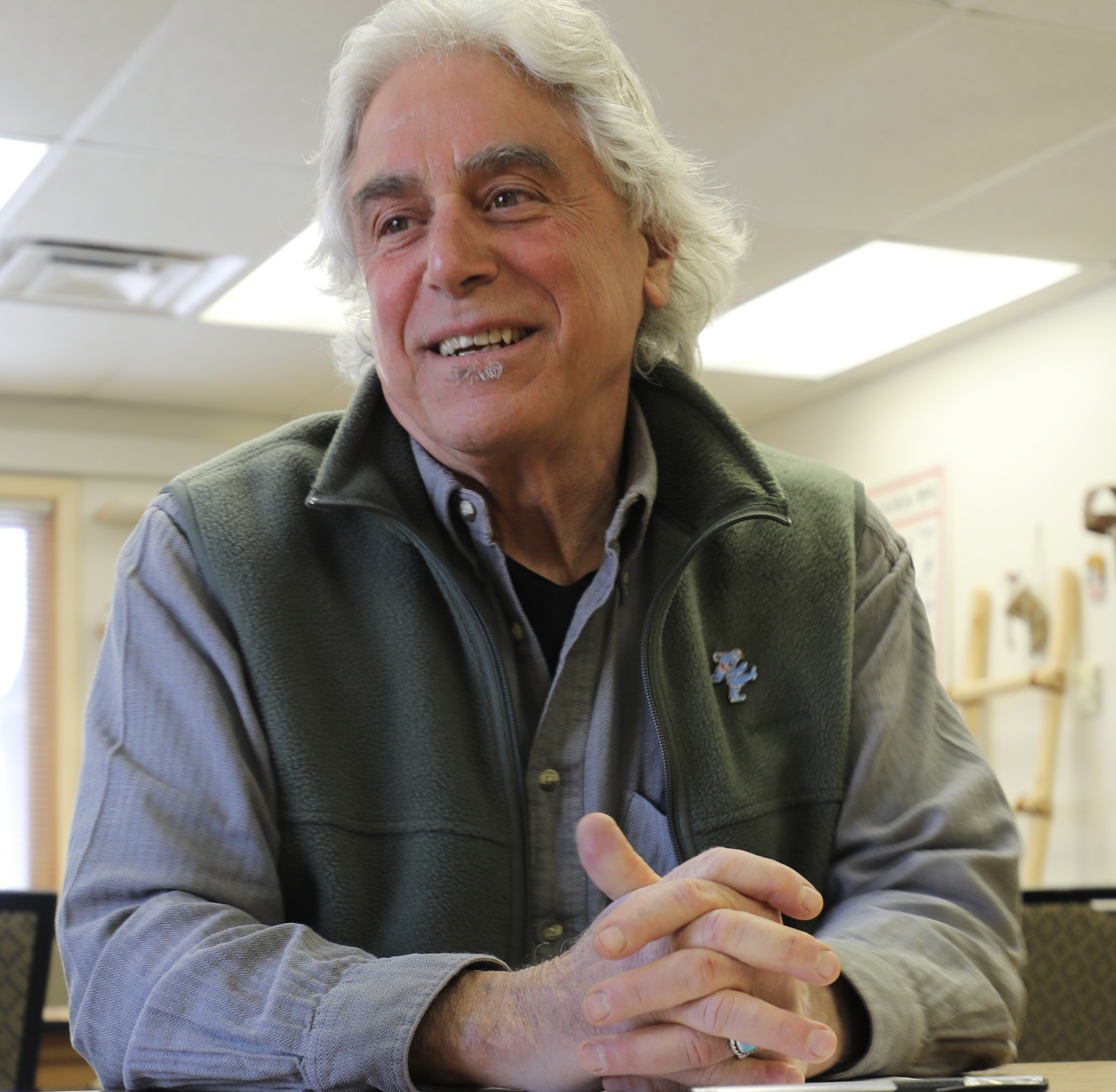Paul Ermigiotti helps lead the Pueblo Farming Project at Crow Canyon.
It was all fascinating and to me, at least, entirely new knowledge. Paul provided a briefing that prepared us for our encounter with a traditional Hopi farmer two days later.
## **After Lunch: Water, The West and Future of Civilization**
After lunch we returned to the classroom and started to talk about the American West. There were nine or ten of us now, including [Susan Ryan](https://www.crowcanyon.org/people/ryan_susan/), the Stuart Struever Chair in Research as well as the executive vice president of the institute. She sat quietly in the back listening to all the talk. A recent University of Colorado Ph.D., [Amorina Lee Martinez ](https://www.crowcanyon.org/people/lee_martinez_amorina/)spoke passionately about our need to undergo a fundamental paradigm shift in the way we see nature, natural resources, the Colorado River, agriculture, and Native people. She was fortunate to study at CU under the great Patricia Limerick, whose book, *[Legacy of Conquest](https://www.goodreads.com/en/book/show/1012690)*, rocked the world of western history when it was published in 1987. Our afternoon discussion was also graced by the presence of [Craig Childs](http://www.houseofrain.com), the author of more than a dozen fine books about canyon country, including *The* *Secret Knowledge of Water* (2000), *Apocalyptic Planet: Field Guide to the Future of the Earth* (2012), and *Grand Canyon: Time Below the Rim* (1999). I know his work, but I had never met him. I felt fortunate to be in the room with such a writer and thinker. Like most great writers, he mostly listened to everyone else. And like most prolific writers, he said he was fighting several losing battles with deadlines.
Inevitably we talked about water. And the future. And John Wesley Powell. And the two great reservoirs. And the dams. And Native Americans. And Native American farming practices. And the future of civilization. And the meaning of life. You know, get a dozen over-educated readers and lovers of the West into the same room and the conversation will be essentially the same.
Although everyone in the discussion was a devoted professional doing work, they found gratifying and important, it turns out that the consensus was that civilization, or at least American civilization, is doomed. The great dams should never have been built. Well, certainly, Glen Canyon Dam should not have been built. Human generated global climate change was probably going to nip the whole species one of these days. In geologic time, it made no significant difference. Our civilization was fatally flawed by greed, corruption, materialism, colonialism, toxicity, toxic masculinity, and a few other problems. We were on a profoundly unsustainable path. We were soon going to hit the wall. Without a fundamental paradigm shift, we were going to break the planet’s capacity to support our species, at least as it is exhibited in the Euro-American consciousness. Maybe a few giant shocks to the system — 9-11, a global pandemic, mass violence every week now in America — would force us to change our ways. So far not.
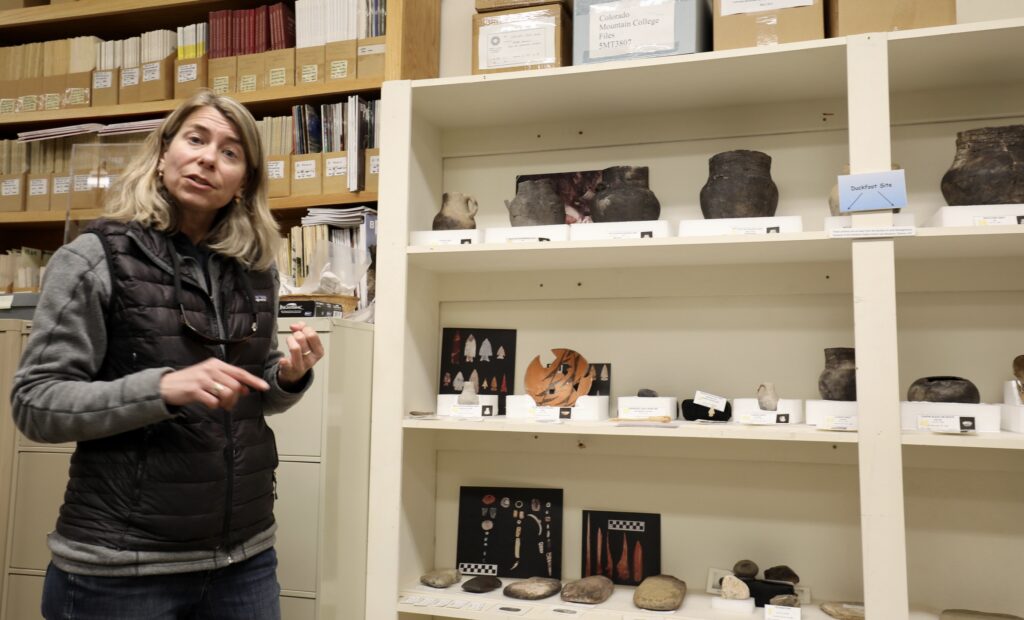Dr. Susan C. Ryan, Executive Vice President at Crow Canyon Archaeological Center Research Institute, explains some of the Center’s collections. (Photo by Clay Jenkinson)
I remember thinking, wow, this must be what it is to be an archaeologist. Every civilization they study is defunct. They sort through the garbage dumps (middens) of dead civilizations. The geology all around us, even thousands of feet thick with countless layers of sediment, cannot devote even a hundredth of an inch to the entire species run of homo sapiens. The geology is that deep. Time is that vast. The human way of counting time may work for a Tuesday appointment at the dentist, or remembering when the first atomic bomb was dropped, but it is essentially a worthless scale in the face of even a modest river canyon. You can almost see these archaeologists imagining the thousands of feet of sediment that will soon bury us like the mute clams and turtles that are petrified in ancient rocks. It’s hard to know whether their mantra is “eat, drink, and be merry, for tomorrow you shall die,” or “why bother, we’re ephemeral?” I’m seldom the most cheerful person in any room, but I half wanted to stand up and sing “God Bless the USA.” “We will blunder on, my friends, as humans tend to do!”
In short, we all worked ourselves into a funk. [Edward Abbey](https://wilderness.net/learn-about-wilderness/edward-abbey.php) and [David Brower ](https://browercenter.org/about/who-was-david-brower/)were right. We should have listened. But humans don’t listen. That’s why the Greeks invented the [myth of Cassandra](https://www.britannica.com/topic/Cassandra-Greek-mythology) — the prophet who was always right but never once believed.
As we circled the drain of human optimism, finally director Ryan spoke for just one sentence. “We have to remember,” she said, “that humans are an invasive species — with tools.” Not to put too fine a point on it! What she said was both sadly true and immensely clever. I had never heard it before, but I guessed that this is a view held by others in science. Either that or this Ryan is a genius. Or both. Of course, to make sense of her koan, you must have a fairly long conversation about what constitutes an invasive species, but it is certainly true that humans have carried their DNA to every continent, nation, every state, every country, every township, every square foot of the planet and set up housekeeping in some really inhospitable places. I live in one of them. North Dakota. And oh how Frank makes that his punching bag!
> **“We have to remember that humans are an invasive species — with tools.”**
>
> **Susan Ryan, *Crow Canyon Archaeological Center***
It’s a great joy to be with a group of people so committed to figuring things out, getting things right, listening to the land, paying daily respect to the people who have lived on these landscapes for millennia. We are all so beleaguered by what passes for our national discourse — who’s hired or fired in major media, whether the current President is demented and the former one deranged, whether the nation’s descent into mass violence will peak and begin to fade or just take us deeper into Dante’s Inferno — that we sometimes forget how many tens of thousands of extraordinary people are quietly and without fanfare doing extraordinary things throughout this vast country. It’s heartwarming and a little heartbreaking to witness so much good faith and integrity as we found among the unsung staff of the Crow Canyon Archaeological Center, and to realize, again, that this, too, is America. In fact, this must surely be a better representation of America than the poison blather on nightly cable.
We could have spent several days with them. They were the perfect beginning to everything that followed over the next week.
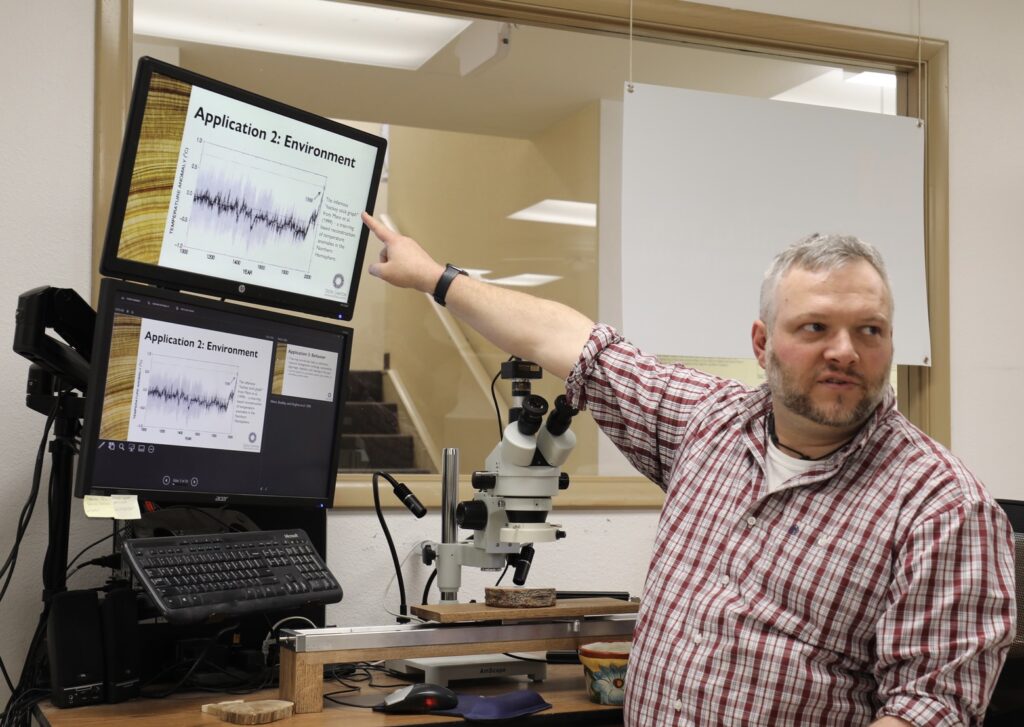Ben Bellorado, a dendrochronologist, is expert in dating environmental change and past events through the study of annual growth of tree rings. (Photo by Clay Jenkinson)
The conversation broke up and we got a tour of the labs and storage rooms in the basement of the center. The house dendrochronologist [Ben Bellorado](https://ltamerica.org/what-tree-rings-can-tell-us-about-climate-change-and-the-future-of-the-west/) showed us a microscope that blows tree rings up to the size of a hoola hoop. He showed us a ring of a very old tree that indicated an early frost on the plateau. I wanted to learn so much more from him so I set up a Zoom interview for after my return to North Dakota.
We said our goodbyes, regrouped at our retro motel, and then went to dinner at a restaurant where Frank’s fourth cousin twice removed, who was briefly married to John Wayne’s stepdaughter, shot a movie in 1948, with Frank’s college roommate as the chief cinematographer. Or something like that. I may be wrong in one or two details, but I am pretty close. I think Gandhi was in the mix somewhere. Or was it Tom Mix? I pre-ordered a couple of rounds of drinks. By the time we pushed our chairs back from the table, we had each confessed that we think human civilization is on the whole a good thing and it has a chance to survive.
---
*Editor’s Note: You can track Clay’s dispatches on this Colorado River Journey by following the links from his route and itinerary below. You can also keep up with all LTA’s dispatches, essays, photos, and podcasts on this topic through the tab “Water in the West.” This is one of many ongoing road trips at the heart of Listening to America. Our mission is to “light out for the territories,” traveling less visited byways and taking time to see this immense, extraordinary country with fresh eyes while listening to the many voices of America’s past, present, and future.*
**Water in the West — Routes and Itinerary**
- [**Introduction: A Colorado River Journey, The Trek Begins**.](https://ltamerica.org/beyond-the-apocalypse-and-bathtub-rig-a-colorado-river-journey-we-begin-2/)
- [**Day One, Friday: I-70 Vail to Green River; Utah 24 to Torrey; Utah 12 to Boulder, Utah.**](https://ltamerica.org/on-the-open-road-a-colorado-river-journey/)
- **[Day Two, Saturday: Boulder, Utah.](https://ltamerica.org/boulder-utah-a-colorado-river-journey/)**
- **[Day Three, Sunday: Utah 12 to Torrey; Utah 24 to Hanksville; Utah 95 to Natural Bridges National Monument; Utah 261 to Mexican Hat; U.S. 163 to Bluff; Utah 162 to Aneth; Indian Route 5068/Arizona County Road G to Cortez.](https://ltamerica.org/deep-in-canyon-country-a-colorado-river-journey/)**
- **Day Four, Monday: Crow Canyon Archaeological Center, Cortez, Colorado.**
- **[Day Five, Tuesday: Colorado 160/491 to Chimney Rock; Colorado 160 to Teec Nos Pos; Colorado 160 to Mexican Water; U.S. 191 Tsaile; Arizona 64 to Chinle.](https://ltamerica.org/a-visit-to-ute-mountain-a-detour-and-the-four-corners-controversy/)**
- **[Day Six, Wednesday: Canyon de Chelly; U.S. 191 to Burnside; Arizona 264 to Second Mesa.](https://ltamerica.org/navajo-nation-and-canyon-de-chelly-a-colorado-river-journey/)**
- **[Day Seven, Thursday: Hopi Cultural Center; Arizona 264 to Tuba City; U.S. 160 to U.S. 89; U.S. 89 to Bitter Springs; U.S. 89A to Marble Canyon.](https://ltamerica.org/the-way-of-the-hopi-a-colorado-river-journey/)**
- **[Day Eight, Friday: U.S. 89A to Bitter Springs; U.S. 89 to Page, Arizona.](https://ltamerica.org/a-different-view-of-glen-canyon-and-the-colorado-river/)**
- **[Day Nine, Saturday: Lake Powell; U.S. 89 to Kanab.](https://ltamerica.org/a-day-on-lake-powell-a-colorado-river-journey/)**
- [**Days 10 & 11, Sunday/Monday: U.S. 89 to Utah 20; Utah 20 to I-15; I-15 to Salt Lake City.**](https://ltamerica.org/farewell-to-our-intrepid-guide-a-water-in-the-west-reading-list/)
- **[Days 12 & 13, Tuesday/Wednesday: Salt Lake City.](https://ltamerica.org/circumnavigating-the-great-salt-lake-in-a-kayak/)**
- **[Reflections on A Colorado River Journey.](https://ltamerica.org/reflections-on-a-colorado-river-journey/)**
---
## ***Discover more on these topics at Listening to America***
[U.S. Constitution](https://ltamerica.org/tag/u-s-constitution/ "1 topics")[Steinbeck Travels](https://ltamerica.org/tag/steinbeck-travels/ "75 topics")[Wyoming](https://ltamerica.org/tag/wyoming/ "4 topics")[Water in the West](https://ltamerica.org/tag/water-in-the-west/ "24 topics")[State Parks](https://ltamerica.org/tag/state-parks/ "2 topics")[South Carolina](https://ltamerica.org/tag/south-carolina/ "1 topics")[Travel](https://ltamerica.org/tag/travel/ "1 topics")[Rome](https://ltamerica.org/tag/rome/ "1 topics")[paintings](https://ltamerica.org/tag/paintings/ "0 topics")[Sports](https://ltamerica.org/tag/sports/ "2 topics")[Republic](https://ltamerica.org/tag/republic/ "0 topics")[William Shirer](https://ltamerica.org/tag/william-shirer/ "1 topics")[Thoreau](https://ltamerica.org/tag/thoreau/ "5 topics")[Theodore Roosevelt](https://ltamerica.org/tag/theodore-roosevelt/ "16 topics")[Virginia](https://ltamerica.org/tag/virginia/ "7 topics")[Wisconsin](https://ltamerica.org/tag/wisconsin/ "0 topics")[Utah](https://ltamerica.org/tag/utah/ "11 topics")[Walden](https://ltamerica.org/tag/walden/ "1 topics")[New Mexico](https://ltamerica.org/tag/new-mexico/ "3 topics")[Podcast](https://ltamerica.org/tag/podcast/ "1 topics")[Video](https://ltamerica.org/tag/video/ "51 topics")[Road Trips](https://ltamerica.org/tag/road-trips/ "18 topics")[The Constitution](https://ltamerica.org/tag/the-constitution/ "1 topics")[Vermont](https://ltamerica.org/tag/vermont/ "1 topics")[Republics](https://ltamerica.org/tag/republics/ "1 topics")[Oppenheimer](https://ltamerica.org/tag/oppenheimer/ "1 topics")[South Dakota](https://ltamerica.org/tag/south-dakota/ "16 topics")[North Carolina](https://ltamerica.org/tag/north-carolina/ "3 topics")[North Dakota](https://ltamerica.org/tag/north-dakota/ "53 topics")[Oppenheim](https://ltamerica.org/tag/oppenheim/ "0 topics")[New York](https://ltamerica.org/tag/new-york/ "8 topics")[Ohio](https://ltamerica.org/tag/ohio/ "2 topics")[New England](https://ltamerica.org/tag/new-england/ "1 topics")[Washington](https://ltamerica.org/tag/washington/ "2 topics")[Tennessee](https://ltamerica.org/tag/tennessee/ "1 topics")[U.S. Presidents](https://ltamerica.org/tag/u-s-presidents/ "71 topics")[Poetry](https://ltamerica.org/tag/poetry/ "1 topics")[Space Exploration](https://ltamerica.org/tag/space-exploration/ "8 topics")[Oregon](https://ltamerica.org/tag/oregon/ "4 topics")[Rivers](https://ltamerica.org/tag/rivers/ "3 topics")[Texas](https://ltamerica.org/tag/texas/ "4 topics")[Thomas Jefferson](https://ltamerica.org/tag/thomas-jefferson/ "34 topics")[north daktoa](https://ltamerica.org/tag/north-daktoa/ "0 topics")[Reading](https://ltamerica.org/tag/reading/ "1 topics")[Pennsylvania](https://ltamerica.org/tag/pennsylvania/ "1 topics")
**Categories:** Dispatches from the Road
**Tags:** Colorado River, Water in the West
---
### [Deep in Canyon Country — A Colorado River Journey](https://ltamerica.org/deep-in-canyon-country-a-colorado-river-journey/)
**Published:** May 21, 2023
**Author:** Clay Jenkinson
**Excerpt:** Today we get officially underway. Frank’s wife Georgie dropped him off around 9 a.m. As we began the great adventure, she handed us a Ziplock bag full of homemade chocolate chip cookies.
**Content:**
## Day Three, Sunday: Utah 12 to Torrey; Utah 24 to Hanksville; Utah 95 to Natural Bridges National Monument; Utah 261 to Mexican Hat; U.S. 163 to Bluff; Utah 162 to Aneth; Indian Route 5068/Arizona County Road G to Cortez.
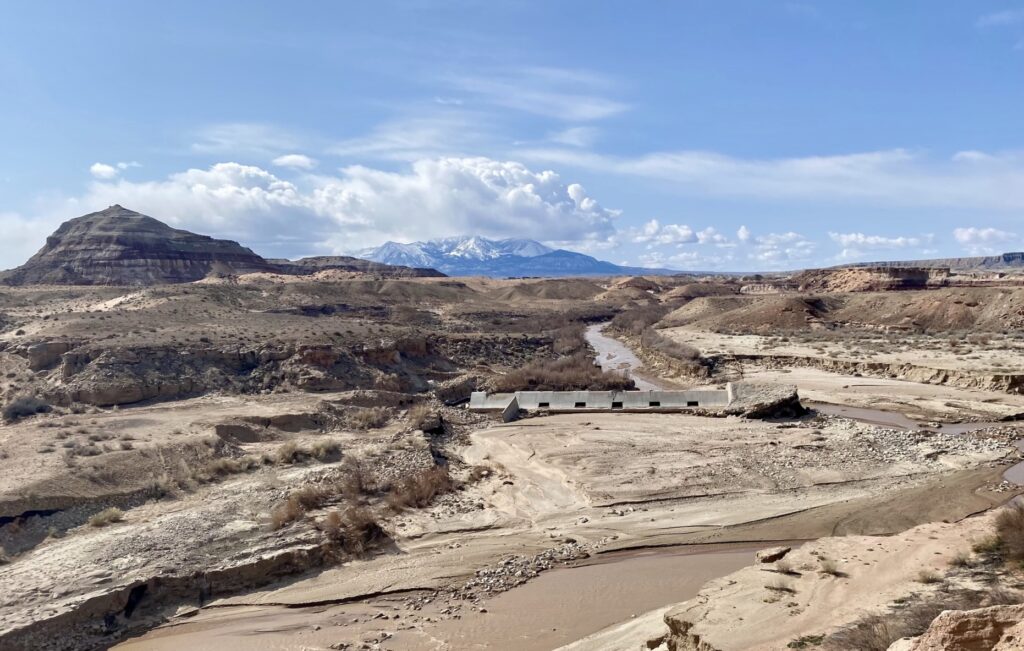A diversion dam on the Fremont River that was blown-out by heavy rains and flash-flooding in 2021. Near Hanksville, Utah. Henry Mountains in the background. (Photo by Clay Jenkinson)
*This is the fourth in a [series](https://ltamerica.org/beyond-the-apocalypse-and-bathtub-rig-a-colorado-river-journey-we-begin-2/) of dispatches from Clay Jenkinson chronicling his recent journey with two compatriots following the Colorado River and neighboring region. The day was spent deep in the canyon country of Utah, Arizona and Colorado. The two-week expedition explored the state of water, or the absence of it, in the West.*
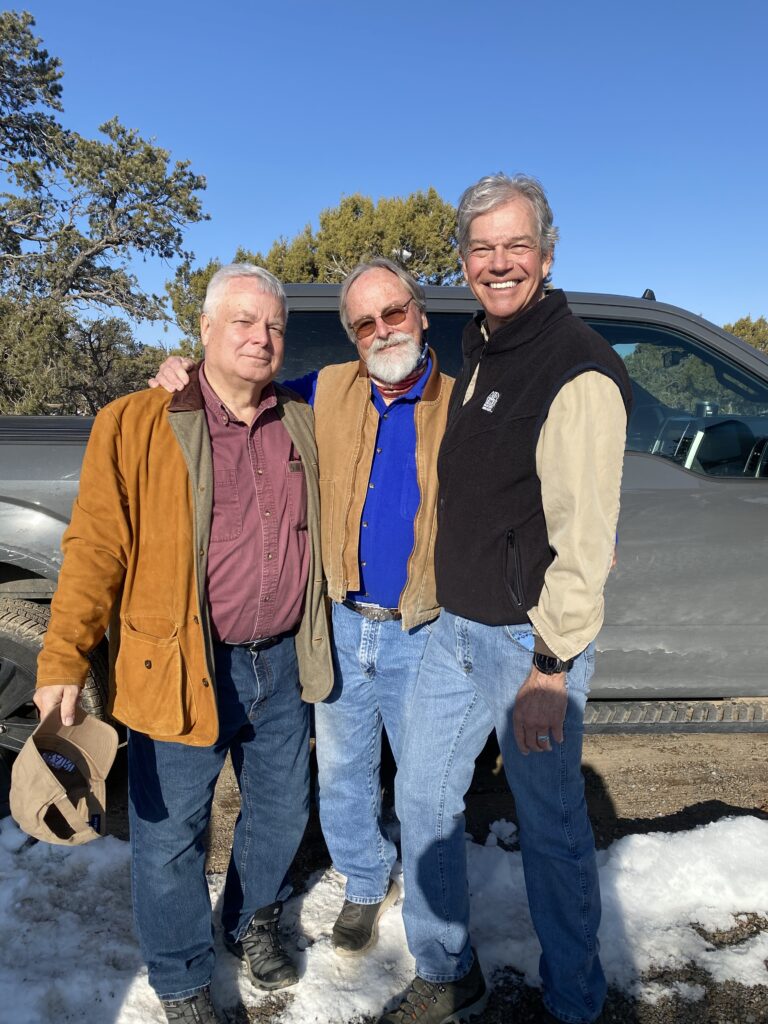Clay Jenkinson (left), Frank Lister (center) and Dennis McKenna.
Today we get officially underway. Frank’s wife Georgie dropped him off around 9 a.m. As we began the great adventure, she handed us a Ziplock bag full of homemade chocolate chip cookies. Dennis and Frank know southern Utah, so as we drove away, they traded identifications, histories, and stories that were all new to me.
Whether Frank is the best-connected guide in human history, or we met all ten people he happens to know in canyon country is unclear, but he seems to know everyone. He seems to be the Forrest Gump of greater Utah. As John Quincy Adams once said of Thomas Jefferson, “he tells large stories.” Frank issues a lot of sentences per day that a skeptic might characterize as what are technically known as “whoppers.” Except for his claim that he dragged Edmund Hillary the last steps up Everest in 1953 and that he once played for the Dallas Cowboys, Frank’s stories tend to check out. I Googled the first few dozen. They were all true. So, I gave up being a Frank skeptic and just rolled with it.
We stopped first at a blown-out check dam on the Fremont River. During sudden heavy rains and [major flooding](https://www.insiderutah.com/articles/hanksville-looks-to-prevent-future-flooding-after-devastating-2021-flood/) a couple of years ago (2021) the usually placid Fremont blew the dam right out of its base. I remember reading years ago that when you double the volume of a river, you square its capacity to carry mass. Thus, a river that seems entirely tame and perhaps even pitiful on a normal day can, when the big waters come, carry boulders the size of automobiles. We took pictures from every possible angle. As Edward Abbey noted several times in his great book *[Desert Solitaire](https://www.goodreads.com/en/book/show/214614)*, the Southwest is a region where there is far too little water most of the time, and then suddenly far too much for a very short amount of time. If, ten years ago, you asked 1,000 visitors to this site what it would take to blow out that dam, they would say dynamite or a small atomic device. And yet, after one of the late summer monsoon rains here, the modest Fremont just plucked it off its foundation. When the engineers nearly lost Glen Canyon Dam in 1983, they feared two things. First, if the water actually spilled over the top of the dam it might do extensive damage on the downstream face of the dam. That’s why they erected a continuous series of plywood panels on top of the dam to keep the rising reservoir from spilling. They succeeded — narrowly. Second, they discovered that the water they were diverting through the tunnels was eating away at the concrete down where they made an L-shaped turn. As the crisis deepened, concrete and rebar spewed out of the tunnels like so much popcorn in an air popper. Engineers feared that these gigantic flows through the tunnels might be eating away at the sandstone abutments of the dam. It could not be completely ruled out that the dam might be pulled loose just like the little check dam on the Fremont. As soon as the crisis was over, the Bureau of Reclamation went in to inspect and repair the tunnels. They were astonished by what they observed. I don’t suppose this should surprise us. The unbelievable power of water can be seen in every canyon in the American Southwest, most dramatically in the Grand Canyon, which at times, as John Wesley Powell put it, is “a mile into the depths of the earth.” Our journey is about the scarcity of water in the West, but it is also about the power of water.
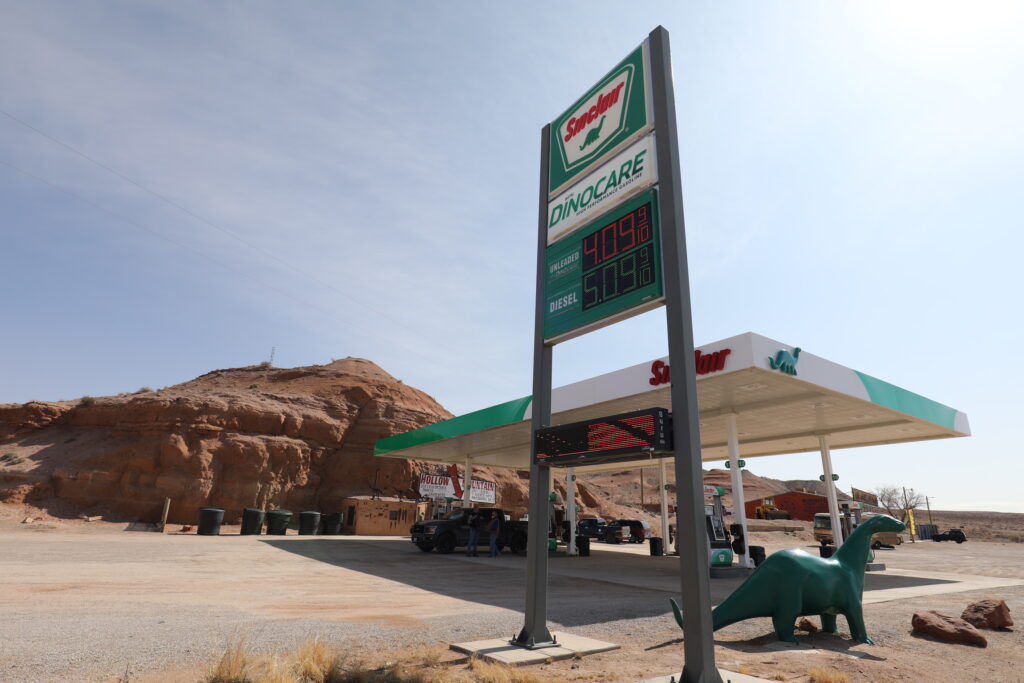Hollow Mountain Sinclair gas station in Hanksville, Utah. (Photo by Clay Jenkinson)
We stopped for gas and soda at the Hollow Mountain convenience store and Sinclair station, not far from Hanksville, Utah. After taking the requisite pictures and stretching, we walked into the hollow mountain. As I opened the door, I heard someone preaching. I paused, trying to figure out what was going on, not wishing to disturb what I reckoned was a local church service in an unusual place. But I soon realized that the clerk behind the desk was watching a service on television. I asked an innocuous question about what she was watching. “I’m LDS, that’s the Church of Jesus Christ of Latter Day Saints,” she said. “It’s Conference. You go if you can. Otherwise, you watch it on TV.” She was a little defensive/defiant, as if I might make a joke about Joseph Smith or polygamy. But I have spent a lot of time in LDS country and I have done a lot of reading about Smith, Brigham Young, the ex post facto proxy baptism of the Founding Fathers, including the Deist and unitarian Thomas Jefferson. Maybe she saw some half-suppressed smirk in me of which I was unaware. My view of the LDS world is overwhelmingly favorable, actually, and of course another person’s religious views are none of my business. Many see the Declaration of Independence as Thomas Jefferson’s greatest hit, but I believe that honor belongs to his Virginia Statute for Religious Freedom (1786), which separated church and state in America. I had never heard of “Conference,” but Frank explained it when we got back into the pickup. It seemed like a lonely existence out here near Hite and Hanksville. The Hollow Mountain store was a throwback to the Route 66 era of American roadster tourism, when you could stay in a motel in the shape of a teepee or a space rocket.
We drove through gorgeous canyons all day long. All I could do was press my face up against the windows of the pickup and take reference photos every time I was especially wowed. We were driving through canyons that are nearly nameless, certainly not named in recognizable ways.

When I looked up at the scores of canyon walls and cliffs through which we threaded our way to Cortez on that early spring Sunday I realized once again how ignorant I am. I don’t know Precambrian from Pretoria, Mesozoic from Minneapolis. I know that there are countless layers of mostly sedimentary rock jammed together by eons of accumulation and the force of gravity. I can identify Navajo sandstone and desert varnish and that’s about it. It’s worse than that. Once every five or six years I decide that I should get up to speed with at least basic geological knowledge. I buy new books. My library includes the *Roadside Geology of Colorado*, of Arizona, of Utah, of Wyoming, and of Montana. But when I start to read these books, including *Geology for Dummies*, it doesn’t take more than half an hour for my brain to cloud over. Either I am too lazy to do the hard work of learning basic geology or for all but a handful of specially gifted people the world of geology is tedious and impenetrable.
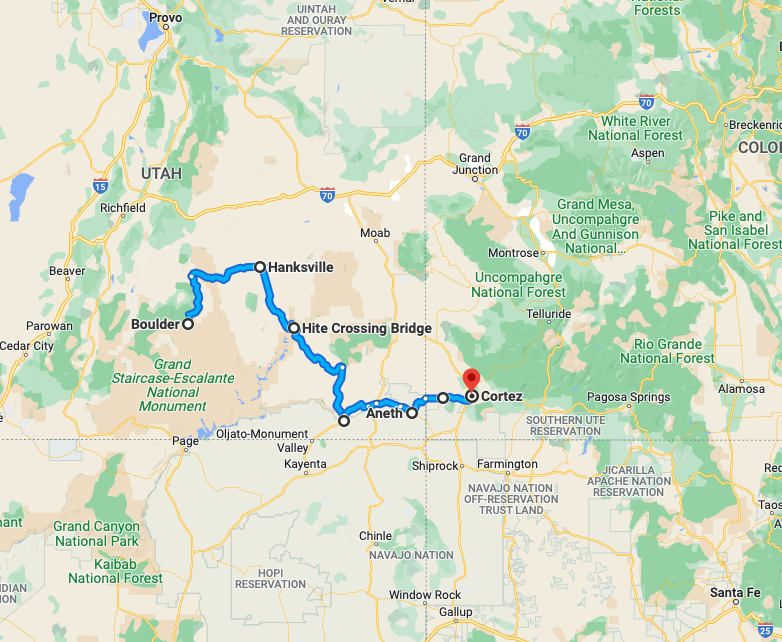(Google Maps)
This puts me at a real disadvantage in canyon country. You can only see what you have eyes to see. The lens you wear determines what you can see. If you don’t know any constellations when you look into the night sky, you see only zillions of stars. According to the experts, you can see approximately 5,000 stars with the naked eye if you live where there is real night darkness. But if you know Cassiopeia, the two dippers, Orion, and a few others, and such planets as are available for viewing at any given season, your pleasure in sky watching increases. I wish I were able to “read” the canyons, but since I have been too lazy to learn the working vocabulary, I’m just stuck at awe. My two colleagues, who are more advanced in this science than I am, don’t know much more than I do. We know we are driving through deep time. We recognize folds. I know some of John Wesley Powell’s contributions to geology, but what little I know belongs to the science of geomorphology rather than what a 3,500-foot cliff signifies.
You could spend a lifetime learning to read the Grand Canyon or the Vermillion Cliffs. If my two Utah friends took a new 10-mile hike every day within a half hour’s drive from their homes, how long would it take them to exhaust even their small bit of the West? If on that hike you wanted to be able to identify every plant you saw, how long would that take? How long would it take you to determine which plants were edible, which not, which useful in healing and which toxic? Alexander von Humboldt designed a circular color wheel to be able to describe the skies of South America with scientific accuracy and to build a taxonomy of variations of the color blue. How long would it take to learn to identify all the animal tracks one sees in an average day’s hike? What can a non-expert learn about these things in a lifetime, when there are other things one must do and other things one needs to know?
We stopped at an overlook above the marina at Hite, now marooned far from the Colorado River thanks to drought years that go back well before the current crisis. We were so fixated on the deserted marina that we nearly failed to observe the confluence of the Colorado and the Dirty Devil River, a largely insignificant stream that played a role in the drama of the 1869 Powell Expedition.
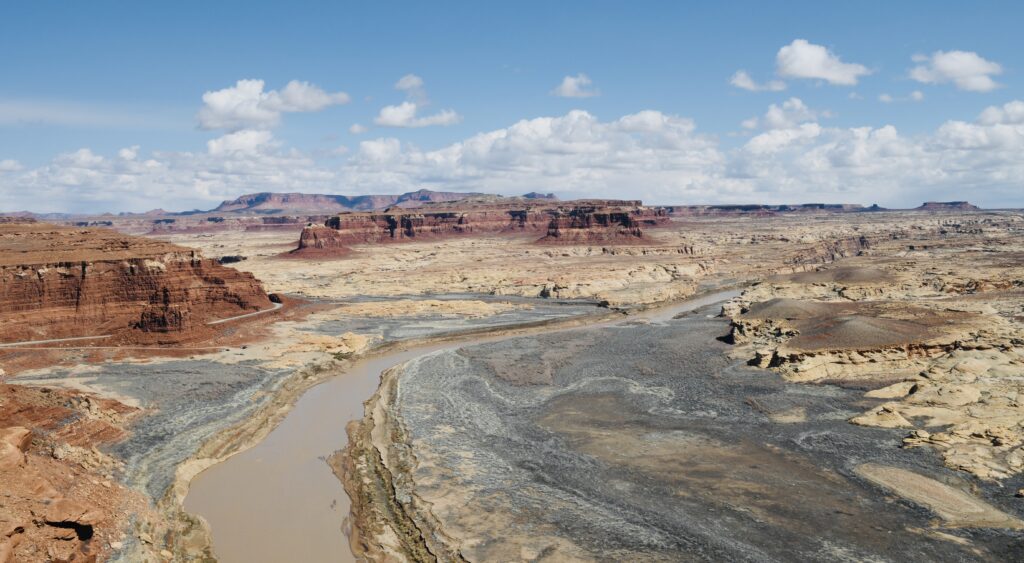The Colorado River near Hite Bridge and marina. This section of the river was long submerged until diminished water levels caused Lake Powell to recede. (Photo by Clay Jenkinson)
---
*Editor’s Note: You can track Clay’s dispatches on this Colorado River Journey by following the links from his route and itinerary below. You can also keep up with all LTA’s dispatches, essays, photos, and podcasts on this topic through the tab “Water in the West.” This is one of many ongoing road trips at the heart of Listening to America. Our mission is to “light out for the territories,” traveling less visited byways and taking time to see this immense, extraordinary country with fresh eyes while listening to the many voices of America’s past, present, and future.*
**Water in the West — Routes and** **Itinerary**
- [**Introduction: A Colorado River Journey, The Trek Begins**.](https://ltamerica.org/beyond-the-apocalypse-and-bathtub-rig-a-colorado-river-journey-we-begin-2/)
- [**Day One, Friday: I-70 Vail to Green River; Utah 24 to Torrey; Utah 12 to Boulder, Utah.**](https://ltamerica.org/on-the-open-road-a-colorado-river-journey/)
- [**Day Two, Saturday: Boulder, Utah.**](https://ltamerica.org/boulder-utah-a-colorado-river-journey/)
- **Day Three, Sunday: Utah 12 to Torrey; Utah 24 to Hanksville; Utah 95 to Natural Bridges National Monument; Utah 261 to Mexican Hat; US 163 to Bluff; Utah 162 to Aneth; Indian Route 5068/Arizona County Road G to Cortez.**
- **[Day Four, Monday: Crow Canyon Archaeological Center, Cortez, Colorado.](https://ltamerica.org/crow-canyon-archaeological-center-a-colorado-river-journey/)**
- **[Day Five, Tuesday: Colorado 160/491 to Chimney Rock; Colorado 160 to Teec Nos Pos; Colorado 160 to Mexican Water; U.S. 191 Tsaile; Arizona 64 to Chinle.](https://ltamerica.org/a-visit-to-ute-mountain-a-detour-and-the-four-corners-controversy/)**
- **[Day Six, Wednesday: Canyon de Chelly; U.S. 191 to Burnside; Arizona 264 to Second Mesa.](https://ltamerica.org/navajo-nation-and-canyon-de-chelly-a-colorado-river-journey/)**
- **[Day Seven, Thursday: Hopi Cultural Center; Arizona 264 to Tuba City; U.S. 160 to U.S. 89; U.S. 89 to Bitter Springs; U.S. 89A to Marble Canyon.](https://ltamerica.org/the-way-of-the-hopi-a-colorado-river-journey/)**
- **[Day Eight, Friday: U.S. 89A to Bitter Springs; U.S. 89 to Page, Arizona.](https://ltamerica.org/a-different-view-of-glen-canyon-and-the-colorado-river/)**
- **[Day Nine, Saturday: Lake Powell; U.S. 89 to Kanab.](https://ltamerica.org/a-day-on-lake-powell-a-colorado-river-journey/)**
- [**Days 10 & 11, Sunday/Monday: U.S. 89 to Utah 20; Utah 20 to I-15; I-15 to Salt Lake City.**](https://ltamerica.org/farewell-to-our-intrepid-guide-a-water-in-the-west-reading-list/)
- **[Days 12 & 13, Tuesday/Wednesday: Salt Lake City.](https://ltamerica.org/circumnavigating-the-great-salt-lake-in-a-kayak/)**
- **[Reflections on A Colorado River Journey.](https://ltamerica.org/reflections-on-a-colorado-river-journey/)**
---
## ***Discover more on these topics at Listening to America***
[Washington](https://ltamerica.org/tag/washington/ "2 topics")[Wyoming](https://ltamerica.org/tag/wyoming/ "4 topics")[Poetry](https://ltamerica.org/tag/poetry/ "1 topics")[Oppenheimer](https://ltamerica.org/tag/oppenheimer/ "1 topics")[Vermont](https://ltamerica.org/tag/vermont/ "1 topics")[Road Trips](https://ltamerica.org/tag/road-trips/ "18 topics")[Podcast](https://ltamerica.org/tag/podcast/ "1 topics")[Pennsylvania](https://ltamerica.org/tag/pennsylvania/ "1 topics")[North Dakota](https://ltamerica.org/tag/north-dakota/ "53 topics")[Video](https://ltamerica.org/tag/video/ "51 topics")[U.S. Presidents](https://ltamerica.org/tag/u-s-presidents/ "71 topics")[Tennessee](https://ltamerica.org/tag/tennessee/ "1 topics")[paintings](https://ltamerica.org/tag/paintings/ "0 topics")[Ohio](https://ltamerica.org/tag/ohio/ "2 topics")[Thomas Jefferson](https://ltamerica.org/tag/thomas-jefferson/ "34 topics")[north daktoa](https://ltamerica.org/tag/north-daktoa/ "0 topics")[Utah](https://ltamerica.org/tag/utah/ "11 topics")[South Carolina](https://ltamerica.org/tag/south-carolina/ "1 topics")[Rome](https://ltamerica.org/tag/rome/ "1 topics")[The Constitution](https://ltamerica.org/tag/the-constitution/ "1 topics")[Oregon](https://ltamerica.org/tag/oregon/ "4 topics")[U.S. Constitution](https://ltamerica.org/tag/u-s-constitution/ "1 topics")[Oppenheim](https://ltamerica.org/tag/oppenheim/ "0 topics")[Texas](https://ltamerica.org/tag/texas/ "4 topics")[Walden](https://ltamerica.org/tag/walden/ "1 topics")[Republic](https://ltamerica.org/tag/republic/ "0 topics")[Reading](https://ltamerica.org/tag/reading/ "1 topics")[Theodore Roosevelt](https://ltamerica.org/tag/theodore-roosevelt/ "16 topics")[Rivers](https://ltamerica.org/tag/rivers/ "3 topics")[Water in the West](https://ltamerica.org/tag/water-in-the-west/ "24 topics")[Sports](https://ltamerica.org/tag/sports/ "2 topics")[South Dakota](https://ltamerica.org/tag/south-dakota/ "16 topics")[Travel](https://ltamerica.org/tag/travel/ "1 topics")[State Parks](https://ltamerica.org/tag/state-parks/ "2 topics")[Steinbeck Travels](https://ltamerica.org/tag/steinbeck-travels/ "75 topics")[William Shirer](https://ltamerica.org/tag/william-shirer/ "1 topics")[New England](https://ltamerica.org/tag/new-england/ "1 topics")[Republics](https://ltamerica.org/tag/republics/ "1 topics")[Virginia](https://ltamerica.org/tag/virginia/ "7 topics")[Space Exploration](https://ltamerica.org/tag/space-exploration/ "8 topics")[Thoreau](https://ltamerica.org/tag/thoreau/ "5 topics")[New York](https://ltamerica.org/tag/new-york/ "8 topics")[New Mexico](https://ltamerica.org/tag/new-mexico/ "3 topics")[North Carolina](https://ltamerica.org/tag/north-carolina/ "3 topics")[Wisconsin](https://ltamerica.org/tag/wisconsin/ "0 topics")
**Categories:** Dispatches from the Road
**Tags:** Arizona, Colorado, Colorado River, John Wesley Powell, Utah, Water in the West
---
### [Boulder, Utah — A Colorado River Journey](https://ltamerica.org/boulder-utah-a-colorado-river-journey/)
**Published:** May 18, 2023
**Author:** Clay Jenkinson
**Excerpt:** This is the third in a series of dispatches from Clay Jenkinson chronicling his recent journey with two compatriots following the Colorado River and neighboring region. The day was spent in and around Boulder, Utah (population, 248; elevation 6700’).
**Content:**
## Day Two: Saturday; Boulder, Utah and the Escalante River.
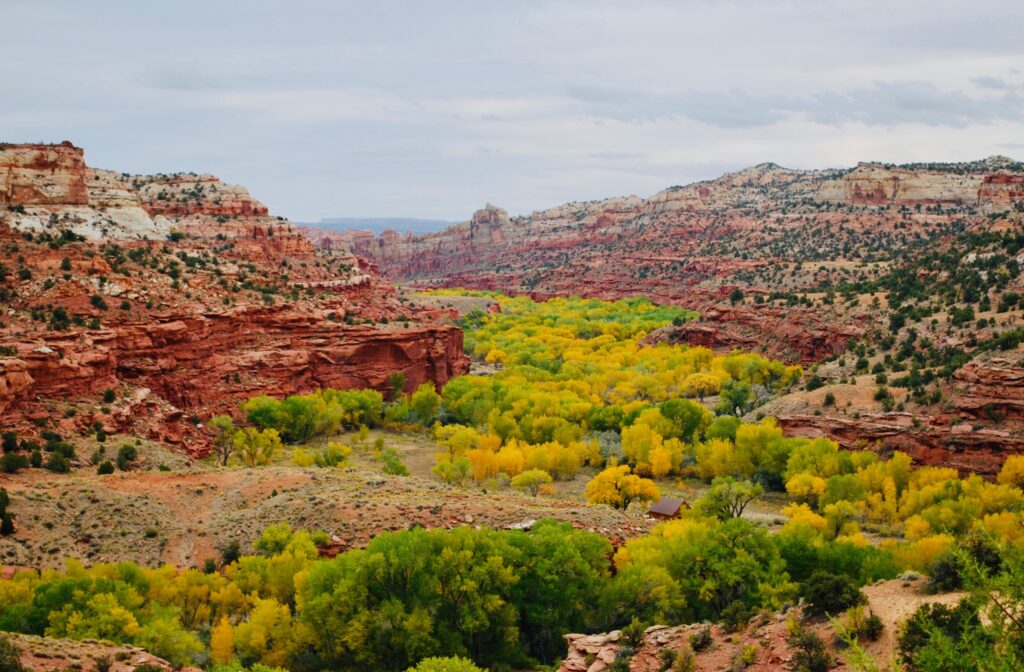View of the Escalante River, from the Kiva Koffeehouse near Boulder, Utah. (Photo by Dennis McKenna)
*This is the third in a [series](https://ltamerica.org/beyond-the-apocalypse-and-bathtub-rig-a-colorado-river-journey-we-begin-2/) of dispatches from Clay Jenkinson chronicling his recent journey with two compatriots following the Colorado River and neighboring region. The day was spent in and around Boulder, Utah (population, 248; elevation 6700’). The two-week expedition explored the state of water, or the absence of it, in the West.*
I conducted an online humanities class by Zoom Saturday morning. Then we ventured out to see the near countryside and to talk logistics. Dennis brought along a map that we kept leaving in the car. That morning he said, “There’s a coffeehouse not far from here where I thought we could have lunch and spread out the maps.” I don’t know what I had in mind, but what I imagined was closer to Starbucks (in a run-down adobe building) than where he took me. [Kiva Koffeehouse](https://www.facebook.com/kivakoffee/) was the name of the place. It’s on a small mesa top above the Escalante River on Utah highway 12. It must be on the list of the top 10 “most beautiful coffee houses in the world.” We ordered locally grown food and drank the off-brand sodas and waters you get in such places, where asking for a Diet Coke gets you a condescending look. Exquisite soup. This would become a minor revelation of our journey. All sorts of hidden gem shops, restaurants, and lodges scattered over the immense plateau. It’s not like Aspen or Sedona or Jackson Hole where there are superb amenities all the way up and all the way down the streets. Out here it’s Subway and Dairy Queen (if you are lucky) most everywhere, and then a marvelous little hole in the wall bistro with a five-star rating in some village that could not by itself possibly support it. Such places live for the tourists, often enough from Europe or Asia.
After lunch we stopped at a turnoff at the upper reach of [Escalante River](https://www.nps.gov/glca/planyourvisit/floating-the-escalante-river.htm). John Wesley Powell’s 1872 survey expedition named the river to honor Father Escalante — a leader of the [1776 Dominguez-Escalante Expedition](https://ilovehistory.utah.gov/1776-the-dominguez-escalante-expedition/) that searched for a trade route from Santa Fe, New Mexico, to Monterey, California. We walked a hundred yards along the river, which was already flowing in a lovely way, apparently aware that it’s a wet year, but not yet doing any serious eroding. A lot of our talk is about making sense of the canyons, the cliffs, the mesas, the isolated mountain ranges, the creeks and washes and rivulets and springs. We’ve been reading about these things all our lives, and we have individually spent a fair amount of time up and down the Colorado basin, but the density and the ubiquity of dramatic landscape features weigh on us like a burden. Thomas Jefferson thought the whole West was likely to be an extension of the Ohio Valley, well-watered and rolling terrain. Imagine what he might have thought in seeing the confluence of the Green and Colorado in [Canyonlands National Park](https://www.utah.com/destinations/national-parks/canyonlands-national-park/). At Virginia’s impressive but modest Natural Bridge, Jefferson got a “violent head ache” when he stood on top of the arch. He had to get down on his hands and knees to “peep over the parapet.” There is a reason that the West has such a grip on the world’s imagination — Europeans cannot get enough of it. The West is not just one epitome of America, but also the magical platform on which the frontier dynamics unfolded, with gunfights at high noon, rustlers and vigilance committees, saloon girls, card games, lonely settlers out beyond Dodge City, women going mad in tiny clapboard huts during the endless Dakota winters, and Native Americans who resisted the invasion and the confiscations, but with inherent nobility. In other words, this is the epicenter of one of the world’s most potent modern myths: the Myth of the American Frontier.
For dinner, we ate exquisite locally sourced beefsteaks, and wine from very far away.
---
*Editor’s Note: You can track Clay’s dispatches on this Colorado River Journey by following the links from his route and itinerary below. You can also keep up with all LTA’s dispatches, essays, photos, and podcasts on this topic through the tab “Water in the West.” This is one of many ongoing road trips at the heart of Listening to America. Our mission is to “light out for the territories,” traveling less visited byways and taking time to see this immense, extraordinary country with fresh eyes while listening to the many voices of America’s past, present, and future.*
**Water in the West — Routes and Itinerary**
- [**Introduction: A Colorado River Journey, The Trek Begins**.](https://ltamerica.org/beyond-the-apocalypse-and-bathtub-rig-a-colorado-river-journey-we-begin-2/)
- [**Day One, Friday: I-70 Vail to Green River; Utah 24 to Torrey; Utah 12 to Boulder, Utah.**](https://ltamerica.org/on-the-open-road-a-colorado-river-journey/)
- **Day Two, Saturday: Boulder, Utah.**
- **[Day Three, Sunday: Utah 12 to Torrey; Utah 24 to Hanksville; Utah 95 to Natural Bridges National Monument; Utah 261 to Mexican Hat; U.S. 163 to Bluff; Utah 162 to Aneth; Indian Route 5068/Arizona County Road G to Cortez.](https://ltamerica.org/deep-in-canyon-country-a-colorado-river-journey/)**
- **[Day Four, Monday: Crow Canyon Archaeological Center, Cortez, Colorado.](https://ltamerica.org/crow-canyon-archaeological-center-a-colorado-river-journey/)**
- **[Day Five, Tuesday: Colorado 160/491 to Chimney Rock; Colorado 160 to Teec Nos Pos; Colorado 160 to Mexican Water; U.S. 191 Tsaile; Arizona 64 to Chinle.](https://ltamerica.org/a-visit-to-ute-mountain-a-detour-and-the-four-corners-controversy/)**
- **[Day Six, Wednesday: Canyon de Chelly; U.S. 191 to Burnside; Arizona 264 to Second Mesa.](https://ltamerica.org/navajo-nation-and-canyon-de-chelly-a-colorado-river-journey/)**
- **[Day Seven, Thursday: Hopi Cultural Center; Arizona 264 to Tuba City; U.S. 160 to U.S. 89; U.S. 89 to Bitter Springs; U.S. 89A to Marble Canyon.](https://ltamerica.org/the-way-of-the-hopi-a-colorado-river-journey/)**
- **[Day Eight, Friday: U.S. 89A to Bitter Springs; U.S. 89 to Page, Arizona.](https://ltamerica.org/a-different-view-of-glen-canyon-and-the-colorado-river/)**
- **[Day Nine, Saturday: Lake Powell; U.S. 89 to Kanab.](https://ltamerica.org/a-day-on-lake-powell-a-colorado-river-journey/)**
- [**Days 10 & 11, Sunday/Monday: U.S. 89 to Utah 20; Utah 20 to I-15; I-15 to Salt Lake City.**](https://ltamerica.org/farewell-to-our-intrepid-guide-a-water-in-the-west-reading-list/)
- **[Days 12 & 13, Tuesday/Wednesday: Salt Lake City.](https://ltamerica.org/circumnavigating-the-great-salt-lake-in-a-kayak/)**
- **[Reflections on A Colorado River Journey.](https://ltamerica.org/reflections-on-a-colorado-river-journey/)**
---
## ***Discover more on these topics at Listening to America***
[Utah](https://ltamerica.org/tag/utah/ "11 topics")[Theodore Roosevelt](https://ltamerica.org/tag/theodore-roosevelt/ "16 topics")[Space Exploration](https://ltamerica.org/tag/space-exploration/ "8 topics")[South Dakota](https://ltamerica.org/tag/south-dakota/ "16 topics")[Sports](https://ltamerica.org/tag/sports/ "2 topics")[north daktoa](https://ltamerica.org/tag/north-daktoa/ "0 topics")[U.S. Constitution](https://ltamerica.org/tag/u-s-constitution/ "1 topics")[Oppenheimer](https://ltamerica.org/tag/oppenheimer/ "1 topics")[Vermont](https://ltamerica.org/tag/vermont/ "1 topics")[Podcast](https://ltamerica.org/tag/podcast/ "1 topics")[Tennessee](https://ltamerica.org/tag/tennessee/ "1 topics")[New York](https://ltamerica.org/tag/new-york/ "8 topics")[Wyoming](https://ltamerica.org/tag/wyoming/ "4 topics")[The Constitution](https://ltamerica.org/tag/the-constitution/ "1 topics")[Rivers](https://ltamerica.org/tag/rivers/ "3 topics")[Oregon](https://ltamerica.org/tag/oregon/ "4 topics")[Poetry](https://ltamerica.org/tag/poetry/ "1 topics")[Pennsylvania](https://ltamerica.org/tag/pennsylvania/ "1 topics")[Video](https://ltamerica.org/tag/video/ "51 topics")[New Mexico](https://ltamerica.org/tag/new-mexico/ "3 topics")[Travel](https://ltamerica.org/tag/travel/ "1 topics")[North Carolina](https://ltamerica.org/tag/north-carolina/ "3 topics")[Water in the West](https://ltamerica.org/tag/water-in-the-west/ "24 topics")[Steinbeck Travels](https://ltamerica.org/tag/steinbeck-travels/ "75 topics")[Texas](https://ltamerica.org/tag/texas/ "4 topics")[South Carolina](https://ltamerica.org/tag/south-carolina/ "1 topics")[Ohio](https://ltamerica.org/tag/ohio/ "2 topics")[Wisconsin](https://ltamerica.org/tag/wisconsin/ "0 topics")[William Shirer](https://ltamerica.org/tag/william-shirer/ "1 topics")[North Dakota](https://ltamerica.org/tag/north-dakota/ "53 topics")[Thomas Jefferson](https://ltamerica.org/tag/thomas-jefferson/ "34 topics")[Oppenheim](https://ltamerica.org/tag/oppenheim/ "0 topics")[U.S. Presidents](https://ltamerica.org/tag/u-s-presidents/ "71 topics")[New England](https://ltamerica.org/tag/new-england/ "1 topics")[Rome](https://ltamerica.org/tag/rome/ "1 topics")[State Parks](https://ltamerica.org/tag/state-parks/ "2 topics")[Washington](https://ltamerica.org/tag/washington/ "2 topics")[Thoreau](https://ltamerica.org/tag/thoreau/ "5 topics")[Republic](https://ltamerica.org/tag/republic/ "0 topics")[Road Trips](https://ltamerica.org/tag/road-trips/ "18 topics")[Virginia](https://ltamerica.org/tag/virginia/ "7 topics")[Reading](https://ltamerica.org/tag/reading/ "1 topics")[Walden](https://ltamerica.org/tag/walden/ "1 topics")[Republics](https://ltamerica.org/tag/republics/ "1 topics")[paintings](https://ltamerica.org/tag/paintings/ "0 topics")
**Categories:** Dispatches from the Road
**Tags:** Water in the West
---
### [On the Open Road — A Colorado River Journey](https://ltamerica.org/on-the-open-road-a-colorado-river-journey/)
**Published:** May 18, 2023
**Author:** Clay Jenkinson
**Excerpt:** Dennis and I left Vail, Colorado, at 9:30 a.m. We drove Interstate 70 to Grand Junction, where Dennis wanted some healthy groceries. I’m from North Dakota — the land of Velveeta — so I am just along for the ride. Dennis and I have known each other for 25 years and our life dreams have found their confluence in Listening to America.
**Content:**
## Day One: I-70 to Green River; Utah 24 to Torrey; Utah 12 to Boulder.
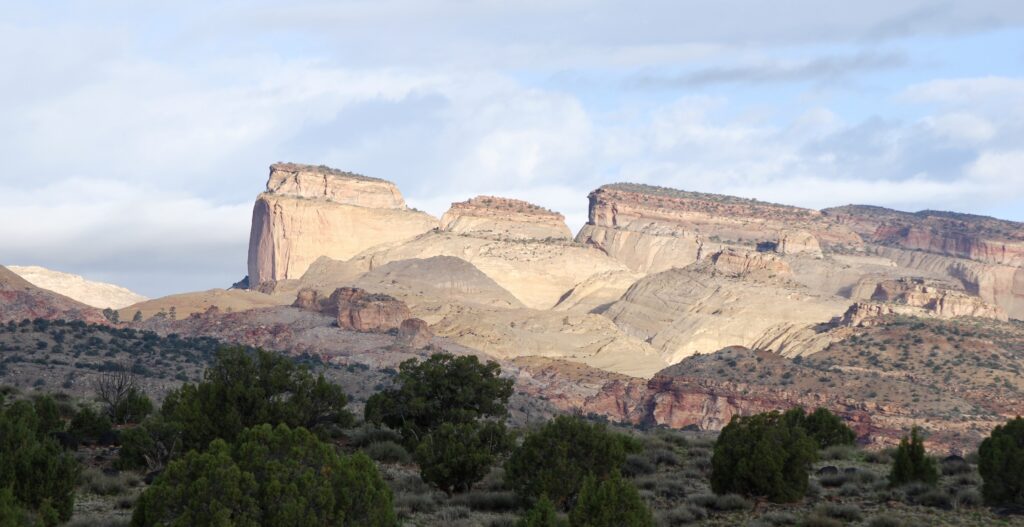Domes of Navajo Sandstone at Capitol Reef National Park. (Photo by Dennis McKenna)
*This is the second in a [series](https://ltamerica.org/beyond-the-apocalypse-and-bathtub-rig-a-colorado-river-journey-we-begin-2/) of dispatches from Clay Jenkinson chronicling his recent journey with two compatriots following the Colorado River and neighboring region. Travel day one, the trip begins in Vail, Colorado, headed southeast through Capitol Reef National Park and then over the Aquarius Plateau in southern Utah. The two-week expedition explored the state of water, or the absence of it, in the West.*
Dennis and I left Vail, Colorado, at 9:30 a.m. We drove Interstate 70 to Grand Junction, where Dennis wanted some healthy groceries. I’m from North Dakota — the land of Velveeta — so I am just along for the ride. Dennis and I have known each other for 25 years and our life dreams have found their confluence in [**Listening to America**.](https://ltamerica.org/about-listening-to-america/) If you want conversation that is serious, intentional, nuanced, and gets to the heart of things without getting ponderous, Dennis McKenna is your man.
I-70 west of Denver is not dreary and utilitarian like most of the Interstate system in America. The stretch through Glenwood Canyon (through which the Colorado River flows) is one of the most beautiful highways in America — elegant, elongated s-curves of concrete on graceful stilts, the powerful river storming through the canyon on the left, impossibly beautiful views of geological chaos, a triumph — rare in the 1970s — of aesthetically compelling engineering. A triumph of style over dynamite. The driver of the vehicle is at a disadvantage because he must pay attention to the road, and the poor shotgun guy is snapping away with his camera not like Ansel Adams or Edward S. Curtis but just to record the magnificence of the canyon to jog the memory later.
I-70 picks up the Colorado River at Dotsero, west of Vail and Edwards, coming down from its source high up in Rocky Mountain National Park. Dotsero has a population of 950. I always light up when I cross the I-70 bridge there and see the Colorado River for the first time. It is a considerable mountain stream by this point, but it is hard to believe that this is the great contested river that fills (or attempts to fill) 15 reservoirs, including two of the giants, behind Glen Canyon and Hoover dams. There are three finalists for the prize of “most industrialized river of America” — the Missouri, the Columbia, and the Colorado. Of the three — all tamed by concrete nearly beyond recognition — only the Colorado gets literally used up before it reaches its mouth. The Missouri delivers millions of acre feet into the Mississippi at St. Charles, near St. Louis, and the Columbia’s flow at Astoria is beyond comprehension. But way down in the Gulf of California, the flow of what’s left of the Colorado amounts to little more than moist sand and seepage.
Up here not 150 miles from its source, the Colorado River is all promise. It’s as clear as any mountain stream. Sometime after we drove through the town of Rifle the river suddenly turned brown and red and now it was recognizable as the fabled Colorado. The shift from clear to turbid happened so suddenly that both of us exclaimed at the same time.
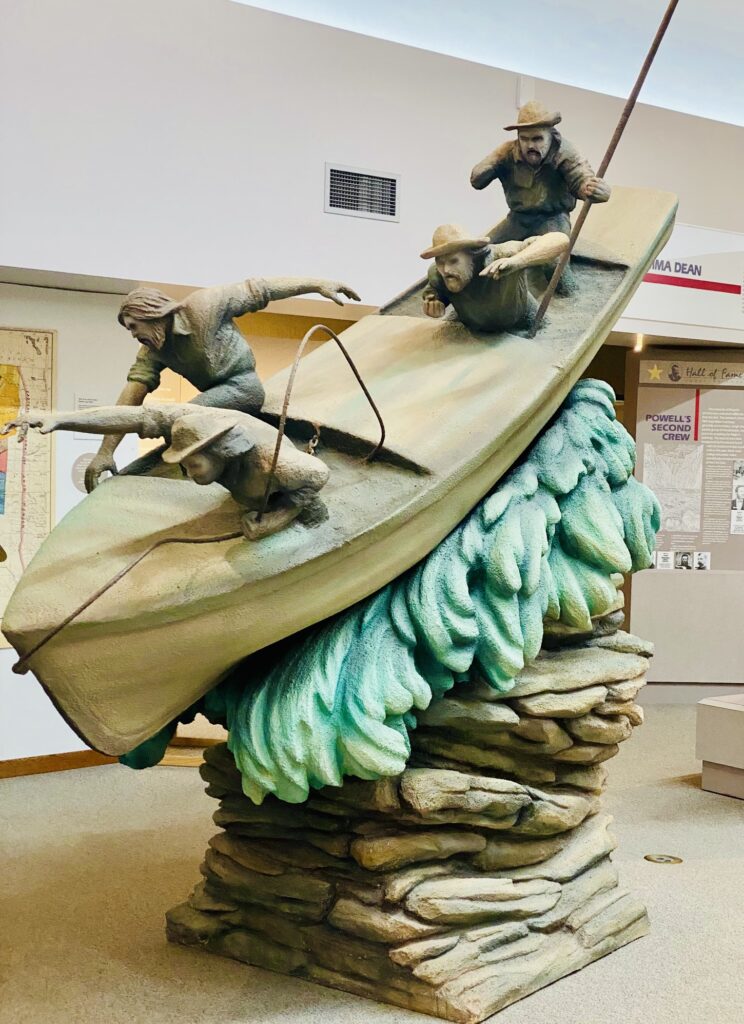Statue at the John Wesley Powell River History Museum in Green River Utah. (Photo by Clay Jenkinson)
We were in a hurry to get to Boulder, Utah, where Dennis lives so we spent just a quick hour at the [John Wesley Powell River History Museum](https://www.visitutah.com/places-to-go/cities-and-towns/green-river/john-wesley-powell-river-museum) at Green River, Utah. We’d both been there before several times, but you can never get enough of Major Powell, one of my heroes, the one-armed Civil War veteran who floated the Green and Colorado rivers in 1869. It’s a great museum, except for the orientation film and the animatron with the big “frontier” voice. The orientation film belongs to the old Wilford Brimley and William Conrad era of documentaries with the faux western voice that registers somewhere between Festus and Walter Brennan. A voice never used in real life by anyone, ever, and yet standard when we try to recreate the feel of the frontier. The orientation film deserves a remake, with more emphasis on Native Americans and environmental concerns. The robot is popular with children, so maybe if they just turn the volume down a little. The “Hey, pardner what brung you to these here parts” stuff is a little disconcerting. John Wesley Powell was mostly an autodidact but he was one of the most thoughtful men ever to explore the West and he was equally at home around a Northern Paiute campfire or a Congressional subcommittee.
The museum has an excellent vertical statue group of Powell and his colleagues on the river, with outstanding bas reliefs of scenes from the 1869 adventure. The signage throughout the interpretive center is uniformly accurate and insightful. We bought books, of course. The shop has one of the better western book selections in the country. The Green River, just west of the museum, is unimpressive here. But give it time downstream.
Utah 24 connects I-70 to Capitol Reef National Park.
Once we left the freeway and descended into the heart of southern Utah, we went mostly silent, filled with awe. I suppose if you live there long enough you could come to take it for granted, the way people who live in the flight path near airports learn to tune out the industrial roar. But there is no place quite like it in the United States or the world for that matter. My nose is pressed to the windshield. I want to move through the scene at three miles per hour, like the people of Powell’s time.
A few of the many fruit trees at Capitol Reef National Park.
On the way to Boulder, we drove through a section of [Capitol Reef National Park](https://capitolreefcountry.com). Dennis explained the presence of hundreds of fruit trees in the park, many heirloom varieties and part of a historic settlement called [Fruita](https://www.nps.gov/places/fruita-orchards.htm#:~:text=Today%2C%20the%20orchards%20are%20preserved,almond%2C%20pecan%2C%20and%20walnut.), inside the Park. Today, visitors are permitted to come in season and harvest a couple of bushels for home use. Sometimes we forget that the National Parks are dedicated to conserving the *cultural heritage*, the built environment, within their boundaries, too. An inholding here, an original strand of barbed wire there, a crude chapel built of loose stones — such things are *also* what a National Park exists to commemorate and protect.
We stopped at a giant cottonwood tree. Bare. No buds yet. It was easily the largest cottonwood tree I have ever seen. Just as the pronghorn antelope is my Great Plains fetish animal, so the cottonwood is my favorite plains tree. Every year I spend as many days lying under a rustling cottonwood as I can squeeze out of my schedule. If Dennis and I had tried to hug the tree, we two would have been three persons short of a closed circle of hands. I so want to be back at that tree when it has fully bloomed but when the leaves are still delicate and nearly translucent; and again, when the leaves all turn yellow golden in late September. What must such a tree drink per day from that seemingly dry wash? How old must this tree be? Hundreds of years, I think.
We reached our destination well before dusk.
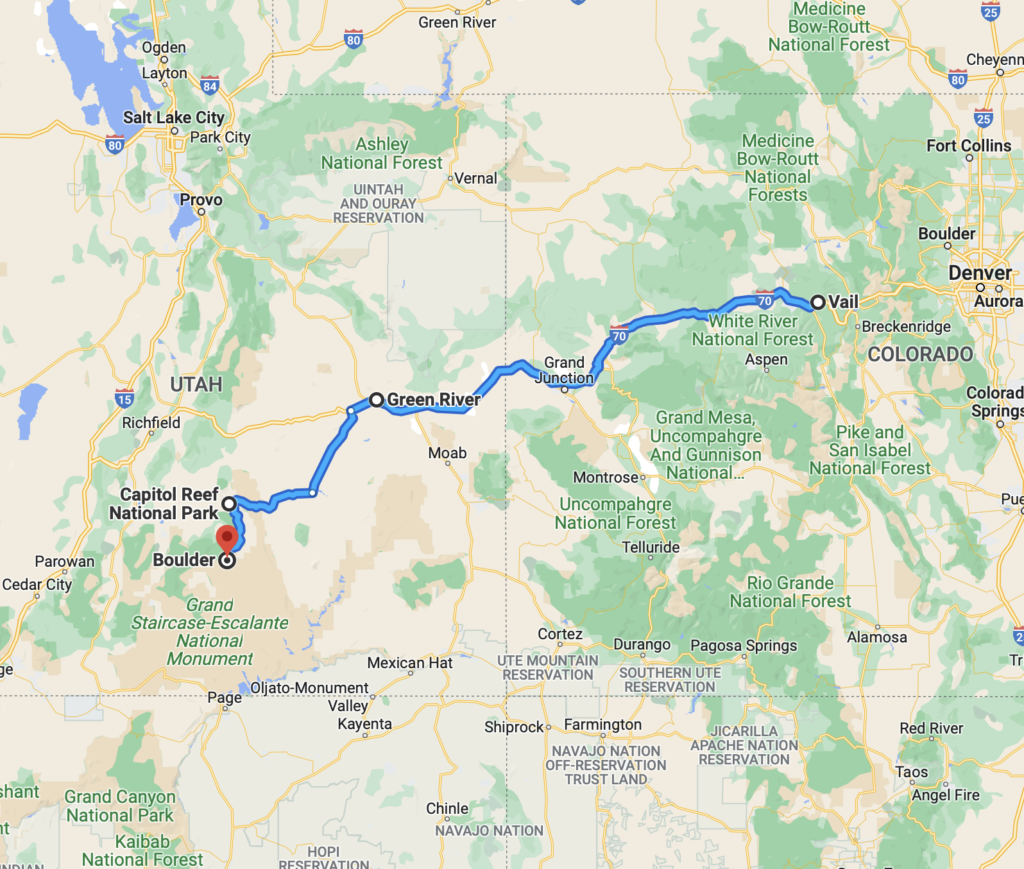(Google Maps)
---
*Editor’s Note: You can track Clay’s dispatches on this Colorado River Journey by following the links from his route and itinerary below. You can also keep up with all LTA’s dispatches, essays, photos, and podcasts on this topic through the tab “Water in the West.” This is one of many ongoing road trips at the heart of Listening to America. Our mission is to “light out for the territories,” traveling less visited byways and taking time to see this immense, extraordinary country with fresh eyes while listening to the many voices of America’s past, present, and future.*
**Water in the West — Routes** and **Itinerary**
- [**Introduction: A Colorado River Journey, The Trek Begins**.](https://ltamerica.org/beyond-the-apocalypse-and-bathtub-rig-a-colorado-river-journey-we-begin-2/)
- **Day One, Friday: I-70 Vail to Green River; Utah 24 to Torrey; Utah 12 to Boulder, Utah.**
- **[Day Two, Saturday: Boulder, Utah. ](https://ltamerica.org/boulder-utah-a-colorado-river-journey/)**
- [**Day Three, Sunday: Utah 12 to Torrey; Utah 24 to Hanksville; Utah 95 to Natural Bridges National Monument; Utah 261 to Mexican Hat; U.S. 163 to Bluff; Utah 162 to Aneth; Indian Route 5068/Arizona County Road G to Cortez.**](https://ltamerica.org/deep-in-canyon-country-a-colorado-river-journey/)
- **[Day Four, Monday: Crow Canyon Archaeological Center, Cortez, Colorado.](https://ltamerica.org/crow-canyon-archaeological-center-a-colorado-river-journey/)**
- **[Day Five, Tuesday: Colorado 160/491 to Chimney Rock; Colorado 160 to Teec Nos Pos; Colorado 160 to Mexican Water; U.S. 191 Tsaile; Arizona 64 to Chinle.](https://ltamerica.org/a-visit-to-ute-mountain-a-detour-and-the-four-corners-controversy/)**
- **[Day Six, Wednesday: Canyon de Chelly; U.S. 191 to Burnside; Arizona 264 to Second Mesa.](https://ltamerica.org/navajo-nation-and-canyon-de-chelly-a-colorado-river-journey/)**
- **[Day Seven, Thursday: Hopi Cultural Center; Arizona 264 to Tuba City; U.S. 160 to U.S. 89; U.S. 89 to Bitter Springs; U.S. 89A to Marble Canyon.](https://ltamerica.org/the-way-of-the-hopi-a-colorado-river-journey/)**
- **[Day Eight, Friday: U.S. 89A to Bitter Springs; U.S. 89 to Page, Arizona.](https://ltamerica.org/a-different-view-of-glen-canyon-and-the-colorado-river/)**
- **[Day Nine, Saturday: Lake Powell; U.S. 89 to Kanab.](https://ltamerica.org/a-day-on-lake-powell-a-colorado-river-journey/)**
- [**Days 10 & 11, Sunday/Monday: U.S. 89 to Utah 20; Utah 20 to I-15; I-15 to Salt Lake City.**](https://ltamerica.org/farewell-to-our-intrepid-guide-a-water-in-the-west-reading-list/)
- **[Days 12 & 13, Tuesday/Wednesday: Salt Lake City.](https://ltamerica.org/circumnavigating-the-great-salt-lake-in-a-kayak/)**
- **[Reflections on A Colorado River Journey.](https://ltamerica.org/reflections-on-a-colorado-river-journey/)**
---
## ***Discover more on these topics at Listening to America***
[north daktoa](https://ltamerica.org/tag/north-daktoa/ "0 topics")[New England](https://ltamerica.org/tag/new-england/ "1 topics")[Texas](https://ltamerica.org/tag/texas/ "4 topics")[Wisconsin](https://ltamerica.org/tag/wisconsin/ "0 topics")[Republic](https://ltamerica.org/tag/republic/ "0 topics")[Video](https://ltamerica.org/tag/video/ "51 topics")[Oppenheimer](https://ltamerica.org/tag/oppenheimer/ "1 topics")[U.S. Presidents](https://ltamerica.org/tag/u-s-presidents/ "71 topics")[New York](https://ltamerica.org/tag/new-york/ "8 topics")[Thoreau](https://ltamerica.org/tag/thoreau/ "5 topics")[Virginia](https://ltamerica.org/tag/virginia/ "7 topics")[Water in the West](https://ltamerica.org/tag/water-in-the-west/ "24 topics")[Oregon](https://ltamerica.org/tag/oregon/ "4 topics")[Wyoming](https://ltamerica.org/tag/wyoming/ "4 topics")[Oppenheim](https://ltamerica.org/tag/oppenheim/ "0 topics")[Thomas Jefferson](https://ltamerica.org/tag/thomas-jefferson/ "34 topics")[Vermont](https://ltamerica.org/tag/vermont/ "1 topics")[North Carolina](https://ltamerica.org/tag/north-carolina/ "3 topics")[paintings](https://ltamerica.org/tag/paintings/ "0 topics")[Podcast](https://ltamerica.org/tag/podcast/ "1 topics")[The Constitution](https://ltamerica.org/tag/the-constitution/ "1 topics")[Rivers](https://ltamerica.org/tag/rivers/ "3 topics")[Republics](https://ltamerica.org/tag/republics/ "1 topics")[North Dakota](https://ltamerica.org/tag/north-dakota/ "53 topics")[Sports](https://ltamerica.org/tag/sports/ "2 topics")[Poetry](https://ltamerica.org/tag/poetry/ "1 topics")[Travel](https://ltamerica.org/tag/travel/ "1 topics")[Steinbeck Travels](https://ltamerica.org/tag/steinbeck-travels/ "75 topics")[South Dakota](https://ltamerica.org/tag/south-dakota/ "16 topics")[Walden](https://ltamerica.org/tag/walden/ "1 topics")[William Shirer](https://ltamerica.org/tag/william-shirer/ "1 topics")[U.S. Constitution](https://ltamerica.org/tag/u-s-constitution/ "1 topics")[Tennessee](https://ltamerica.org/tag/tennessee/ "1 topics")[Theodore Roosevelt](https://ltamerica.org/tag/theodore-roosevelt/ "16 topics")[Washington](https://ltamerica.org/tag/washington/ "2 topics")[Pennsylvania](https://ltamerica.org/tag/pennsylvania/ "1 topics")[Ohio](https://ltamerica.org/tag/ohio/ "2 topics")[Utah](https://ltamerica.org/tag/utah/ "11 topics")[Reading](https://ltamerica.org/tag/reading/ "1 topics")[Rome](https://ltamerica.org/tag/rome/ "1 topics")[South Carolina](https://ltamerica.org/tag/south-carolina/ "1 topics")[Space Exploration](https://ltamerica.org/tag/space-exploration/ "8 topics")[New Mexico](https://ltamerica.org/tag/new-mexico/ "3 topics")[Road Trips](https://ltamerica.org/tag/road-trips/ "18 topics")[State Parks](https://ltamerica.org/tag/state-parks/ "2 topics")
**Categories:** Dispatches from the Road
**Tags:** Colorado River, Utah, Water in the West
---
### [Following the Ghost of John Wesley Powell](https://ltamerica.org/following-the-ghost-of-john-wesley-powell/)
**Published:** May 16, 2023
**Author:** Clay Jenkinson
**Excerpt:** A recent journey following the Colorado River has Clay and his colleagues tracing a trail first mapped by the great American explorer and scientist John Wesley Powell between 1869 and 1875.
**Content:**
## A recent journey following the Colorado River has Clay and his colleagues tracing a trail first mapped by the great American explorer and scientist John Wesley Powell between 1869 and 1875.
Hite Marina, now marooned by low water levels on the eastern end of Lake Powell. (Photo by Dennis McKenna)
*This article is part of [series](https://ltamerica.org/?p=2761) on Water in the West, chronicling a trip Clay Jenkinson and two colleagues took through Colorado River country in the spring of 2023.*
[John Wesley Powell](https://www.usgs.gov/staff-profiles/john-wesley-powell) and his crew of eight arrived at the mouth of Dirty Devil Creek on July 28, 1869, 65 days into their 100-day journey down the Green and Colorado Rivers. They had just worked their way through the treacherous Cataract Canyon. It had been a harrowing experience. The pilot boat, the *Emma Dean* had swamped, lost three oars. All three of the remaining boats were beginning to disintegrate from the incessant battering of the river. Near the mouth of Dirty Devil Creek, they stopped to caulk the boats and make new oars.
From the plateau above, we look down on the deserted marina at Hite. If you are trying to illustrate the disastrous drop in Lake Powell over the last quarter century, this is one of the prime photo sites. Here, at the tail end of Lake Powell, the Colorado has completely receded to its traditional riverbed, a couple of hundred yards from the lowest concrete slab of the marina. You can see the outline of where the lake once was because the “footprint” is marked by dead foliage. The gray flats signify what was once the upper end of Lake Powell. The abandoned bottoms are gray and ugly. Hite is deserted. The motto of the marina might be “abandon all hope ye who enter here.”
The Dirty Devil is barely visible from up on the cliff. Our eyes are riveted to the deserted marina.
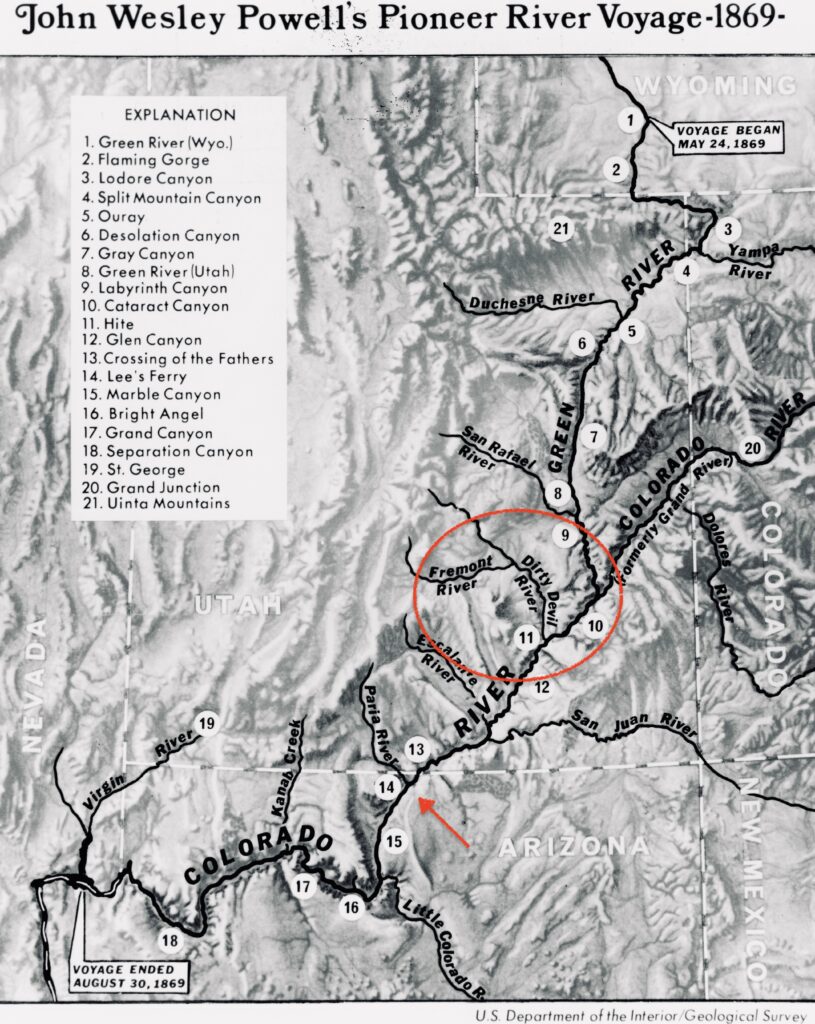Map of John Wesley Powell’s 1869 Colorado River voyage. Red highlights mark where the Dirty Devil and Paria Rivers join the Colorado. (USGS)
The Dirty Devil River is only 80 miles long. It is formed near Hanksville, Utah where we stopped for gas and drinks, by the confluence of the Fremont River and Muddy Creek. The canyon through which it flows is often 2,000 feet deep. The river’s average flow is 446 cfs.
Jack Sumner, who was essentially second in command of the Powell Expedition, wrote, “The water is about as filthy as the washing from the sewers of some large, dirty city.” The stream “stinks bad enough to be the sewer from Sodom and Gomorrah, or even hell. I thought I had smelt some pretty bad odors on the battlefield two days after action, but they were not up to the standard of that miserable little stream.” Most of the men of the Powell expedition were veterans of the Civil War. That’s one reason they were drifters in the American West, one reason why Powell was able to recruit them on short notice to undertake the dangerous adventure. Here is Powell’s explanation for the naming of the Dirty Devil. “One of the men in the boat following, seeing what we have done, shouts to Dunn and asks whether it is a trout stream. Dunn replies, much disgusted, that it is ‘a dirty devil,’ and by this name the river is to be known hereafter.”
Thus, Powell named the tributary almost certainly because the river stank. But later, long after the mutiny at Separation Rapids, Billy Hawkins and Jack Sumner hinted that Powell had named the river as a deliberate insult to Bill Dunn, one of the three “deserters.” Wallace Stegner, in his excellent book [*Beyond the Hundredth Meridian* ](https://www.goodreads.com/en/book/show/10802)thinks this is unlikely. The river stank like dead bodies on Civil War battlefields. End of story.
The wooden boat Powell took down the Colorado River. Note the chair fixed to the deck. (USGS)
It is true that by this point in the journey, tempers were beginning to flare. The spirit of the group was beginning to fray. George Bradley wrote that Powell gave the river the name Dirty Devil “in keeping with his whole character which needs only a short study to be read like a book.” It’s not clear what this means, but the tone of derision and contempt is clear enough. Here’s my best analysis of what was happening to the esprit de corps of the expedition at the end of July. Their food supply was running short. What food there was — flour, bacon, coffee, dried apples — was in poor shape from countless dunkings in the river. Their clothes were now not much more than rags. Powell was annoying. At every stop he wanted to go off “geologizing,” and he often suspended travel at midday in pursuit of science. In the eyes of the other men, there was no longer time for arbitrary stoppages. They were racing against the clock. Science was a luxury they could no longer afford. Nobody knew how far they were from their final destination. This is the biggest challenge of exploration and is hardest for us to understand 153 years later: they had no idea what challenges they still had to face or how far they were from the end. We know they hadn’t even entered the Grand Canyon yet — the real ordeal was yet to come. There was tension in the ranks. Powell blamed William Dunn for the disaster at Disaster Falls, which destroyed one of their boats and swept a third of their gear down river. He also blamed Dunn for losing maps and documents along the way. Everyone just wanted to be done with the journey. They were all bewildered and frightened, even Powell. He called the deepening canyons “our prison.”
Here at the mouth of the Dirty Devil, however, expedition members managed to kill two bighorn sheep — a very rare and welcome manna of fresh meat. Powell writes: “We lash our prizes \[the sheep carcasses\] to the deck of one of the boats and go on for a short distance; but fresh meat is too tempting for us, and we stop early to have a feast. And a feast it is! Two fine young sheep! We care not for bread or beans or dried apples tonight; coffee and mutton are all we ask.”
On our recent journey to the area we didn’t give much time to the Dirty Devil. We gave more time a few days later to the Paria River. The Paria slides its tan chocolate contents into the Colorado at Lee’s Ferry, which did not exist in Powell’s time, though Powell knew [Jacob Hamblin](http://archives.lib.byu.edu/agents/people/3095) (the Mormon frontiersman), who found the crossing for his theocratic boss Brigham Young.
The Colorado River, running clear and silt free just below Glen Canyon Dam, is joined by the muddy Paria River near Lee’s Ferry Arizona. (Video by Dennis McKenna)
The Powell Expedition reached the Paria on August 4, 1869. Powell seems to have missed the confluence during the trip itself, but he had figured things out by the time he wrote his [*Exploration of the Colorado River and its Canyons*](https://archive.org/details/explorationofcol1961powe/page/n5/mode/2up) in 1875. The Paria’s sludgy silt load winds up in the Colorado as does the silt load of the Little Colorado. The rest of the Colorado’s tributaries drop their silt in the backwaters of the reservoirs at Flaming George and Glen Canyon.
Cottonwood trees begin to leaf out in early spring along the Colorado River. (photo by Clay Jenkinson)
We got out of the truck and fanned out, each of us looking for a good photograph of the confluence, which exhibits the contrast between a typical lower-Colorado tributary and the clear, silt-filtered waters of today’s Colorado River. What struck me most there, however, were the cottonwood trees. They were just beginning to leaf out on the shores of the Colorado. They had that lemony, almost translucently green look of early cottonwood leaves. The sun seemed to cast a golden green aura over the little copse. Cottonwood leaves are at their most beautiful in the first and last weeks of their annual life. This was our first glimpse of the spring that is coming to the southwest. But I couldn’t get a photograph that even began to do justice to the delicacy and the subtlety of these trees. Most of the best things in life are beyond photography, and yet we’d give anything to have photographs of the Lewis and Clark Expedition, the first Powell Expedition, the Battle of the Little Bighorn.
For several decades I’ve been told that the Paria canyon is one of the great hikes in America. I don’t doubt it, but I’m guessing there are several hundred, perhaps several thousand, outstanding hikes in southern Utah. The Paria is only 95 miles long. Buckskin Gulch is considered one of the premier slot canyons in the West.
Painting by Henry C. Pitz showing John Wesley Powell and his party going through the Grand Canyon. (USGS)
There are two extremely important truths about Powell’s 1869 descent of the Green and the Colorado. First, they could not know what was ahead. They had been shaken enough and frightened enough during the journey *so far* that a significant level of gnawing apprehension was a constant factor. Powell would later say, “only during the few hours of deep sleep, consequent on hard labor, has the roar of the waters been hushed.” Second, and perhaps more important, by the time they arrived at the gateway of the Grand Canyon, even by the time they arrived at the mouth of the Paria, they were spent. They were nearly naked. They were eating slender rations of unleavened biscuits, rancid bacon, coffee, and some dried apples. They were beginning to lose some muscle mass. They were physically just worn out. They were out of mojo — they were spiritually spent, and their hearts were no longer in the journey. It’s not clear how many of the nine would have pressed the button if in doing so they could be airlifted out of the canyon to a splendid meal above, no shame attached, but it is at least three of the crew and maybe as many as six. They did not know how many more rapids were before them, and how dramatic they were likely to be. If they had been able to exit the river for a few weeks, get some new supplies, including fresh clothing, rest their weary bones and recover their equanimity, and come back refreshed at the portal of the Grand Canyon, all that followed might have been different, better, less harrowing. They began their transit of the Grand Canyon when they had run out of everything that mattered, including the exhilaration of exploration. That’s no way to float the Grand Canyon.
## **John Wesley Powell and Glen Canyon Dam**
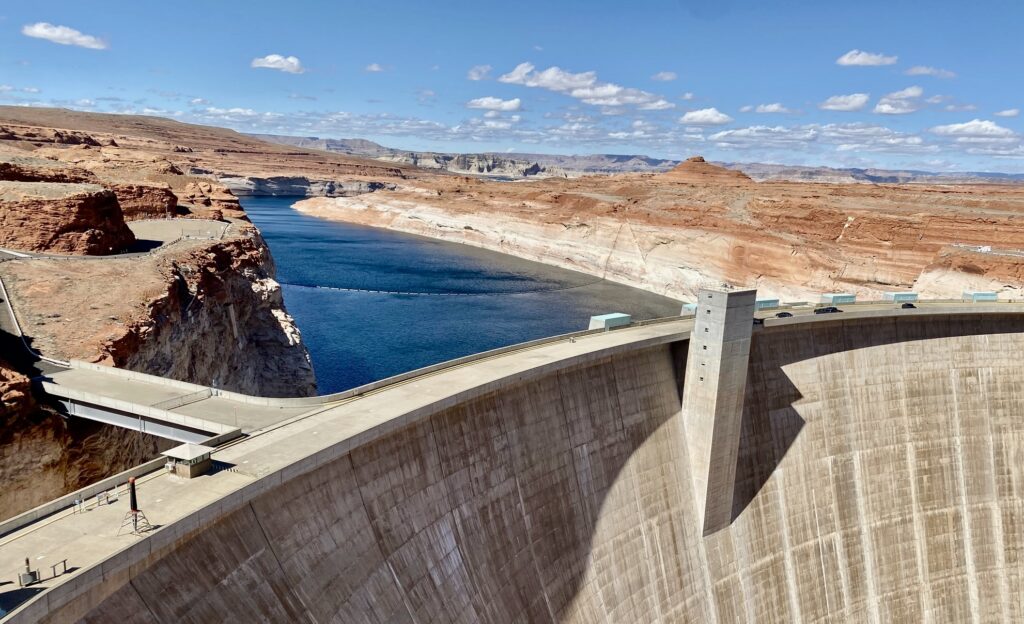Glen Canyon Dam holds back the Colorado River creating Lake Powell in Page, Arizona. The whitewashed sandstone visible on the right of the canyon wall, often called the lake’s bathtub ring, indicates the dropping water level in the reservoir. (Photo by Clay Jenkinson)
People are always asking me two questions about John Wesley Powell. What would he have thought of Glen Canyon Dam? And how would he feel about the reservoir that drowned Glen Canyon, including the Music Temple? I don’t know the answer to these questions. Like everything else, it’s complicated. Powell was a utilitarian. He essentially believed that any cubic inch of water that reaches the ocean has been wasted. At the least, he wanted to divert as much volume of the western rivers as possible up onto irrigated landscapes in the immediate watershed. The greatest good for the greatest number seems to spell Glen Canyon Dam. In his subsequent work for the U.S. Geological Survey, Powell “located” more than 200 good dam sites in the American West, several in the lower Colorado canyons. I’d like to believe that Powell would prefer the old Glen Canyon to the new reservoir. That seems to square with his canyon country aesthetics. But you cannot be sure on that one. If pressed, I’d admit that I believe Powell would have been in favor of Glen Canyon and Hoover dam, but with some serious caveats. He wanted dams to be low — say maxing out at 50 feet not 700! Second, he did not like the implications of industrial gigantism. He didn’t want capitalism to build the dams and he didn’t like the idea of big government. What he envisioned — surely quaint by today’s assumptions — were local cooperatives that would build the dams themselves. “I say to the government, hands off!” he wrote.
Like so many others of his generation, he wanted to make the desert bloom. It is Thoreau who says, “A man is rich in proportion to the number of things he can afford to let alone.” But Thoreau is the outlier, Powell an advocate for transforming nature to serve human needs.
> “**A man is rich in proportion to the number of things he can afford to let alone.”**
>
> **Henry David Thoreau**
But would Powell be pleased that the lake was named for him? I think almost certainly not. Powell preferred not to name things in the southwest after his colleagues and friends and heroes. His preferred method of naming was descriptive, and he was very good at it: Flaming Gorge, Beehive Point, Marble Canyon, Desolation, Labyrinth, Cataract, and Glen. “Glen” is one of the last words one would think to designate anything in desert country, but it turns out to be a nearly perfect name. Or rather it was. Glen Canyon is gone. And everybody we talked to on our journey, across the political spectrum, agreed: *it ain’t never comin’ down*. Glen Canyon makes sense, Glen Lake not. At this point, it’s hard to think of the place as anything but Lake Powell. Given the assassination of JFK in November 1963, when the dam was just high enough to begin impounding water, it’s a little surprising that it did not wind up as Lake Kennedy. That would have been wildly inappropriate. Whatever else he was, John F. Kennedy was not an outdoor adventurer. Try to imagine Kennedy camping with Edward Abbey, the way Theodore Roosevelt camped with John Muir in Yosemite for three nights. Just try. “This is moh vigah than I had in mind, Ed.”
Major John Wesley Powell. Photograph taken about 1872. (USGS)
Powell’s adventures on the Colorado River served as the launching point for a brilliant thirty-year career as a government scientist, a land and water reformer, and a visionary. He gave the middle decades of his life to ethnology (he knew half a dozen Native languages, mostly of the Great Basin); to geology (he added materially to the science and the nomenclature); to cartography (today’s USGS maps use his conventions); to the study and taxonomy of Native languages; to the establishment of proper management practices for the arid lands; to relations between ethnologists and native people (he refused to travel with a military escort).
In 1878 Powell published his[ *Arid Lands Report*](https://pubs.usgs.gov/unnumbered/70039240/report.pdf), one of the most important (and ignored) documents in the history of the lands beyond the hundredth meridian. Among other things, he called for prior classification of all remaining western lands *before* they were deeded out. This was to prevent individuals or corporations from buying up key dam and canal sites and then monopolizing the distribution of water in their districts. But it was also to prevent innocent homesteaders from failing — or worse — on lands that could not support a family farm. He said irrigation farms should be limited to 80 acres of the public domain, but pasturage farms (i.e., ranches) should have a minimum of 2,560 acres (four sections). He furthermore wanted every homestead in arid country to have access to a watercourse that could at least water 20 acres. Powell advocated the creation of local grazing associations to self-police ranch management and local irrigation associations to supervise the distribution and use of water.
Perhaps most important, he argued that we should abandon Jefferson’s checkerboard cadastral survey grid system in favor of a more sinuous approach to land distribution, based on the long lot system used in French Canada, and he urged the U.S. government to consider forming holistic basin republics rather than the blockish rectangular states that Jefferson preferred. Only if an entire watershed or key portion of that watershed was under a single jurisdiction would incessant litigation and water wars be avoided. He called his proposed states watershed commonwealths.
It’s worth taking the time to read the *Arid Lands Report* carefully. Had we listened to Major Powell, we might have developed the lands beyond the hundredth meridian more responsibly.
But we did not listen.
Powell’s key insights about water scarcity in the American West are as important now as they were then, but in the century and a half since he explored the West, we have attempted to defy nature and the carrying capacity of America’s semi-arid and arid lands, and baked in just the sort of water crises he gave his life to prevent. Powell said:
-two fifths of continental USA is too arid for normal dryland agriculture;
-the 100th Meridian is the line of demarcation between lands that can support traditional agriculture and those that must be supported by irrigation;
-if we diverted all the available water in the American West, you would be able to irrigate no more than 3-12% of the land;
-if you don’t pre-classify these lands before turning white people loose on them, you are inviting endless trouble.
John Wesley Powell was a scientist and a realist. His idealism was tempered by an unblinking dedication to data, to the facts, to the limits of what humans can bring about by way of engineering.
## **If Powell Returned Today**
If Powell returned today, what would he see? He was at heart a Jeffersonian, by which we mean that he wanted the West to be the home and haven of average American farmer citizens. I think Powell would marvel at our water works — the beauty and power of the great dams; the endless concrete canals and delivery systems as far away as Phoenix and Tucson and Los Angeles; center pivot irrigation, now with water conserving drop nozzles; the growth and size of the great cities of the southwest; air conditioning; rafts so stable that it’s difficult to flip one. I think, however, Powell would be alarmed at the ways in which the West has become a playground for the super-rich, the ways the reclamation laws have been corrupted to support giant corporate farms, and the locking up of some of the most beautiful landscapes by the most privileged Americans, people who visit their second or third or fourth homes for perhaps three weeks per year but fence the rest of us out. Powell would certainly be alarmed by the over-allocation of western waters, particularly the Colorado. And, as a scientist, he would want to get up to speed as rapidly as possible on the data about global climate change and its ramifications.
Powell came from the baseline of the American social structure. He was what [Hamlin Garland](https://www.britannica.com/biography/Hamlin-Garland) called a son of the Middle Border. In the decades following his famous adventure, he became the most powerful scientist in the United States. He was at the same time the director of the US Bureau of Ethnology (from 1871), the director of the US Geological Survey (from 1883), one of the founders of the Cosmos Club and one of the founders of the National Geographic Society. For a short period, he was the water czar of the United States. But he never forgot his roots in the world of midwestern homesteads. His vision was to remake the arid West into a landscape that could support countless families just like his own. He was not an agent for the rich, for the special interests, for the most privileged sectors of the American social system. He grudgingly located potential mineral extraction sites in his surveys of the West, but he never emphasized mining, because it wasn’t Jeffersonian.
**Post script:** Late in his career, Powell gave a speech at an irrigation conference in Los Angeles, California. His remarks, unpopular and heckled at the time, still haunt us in 2023 —
> **“When all the rivers are used, when all the creeks in the ravines, when all the brooks, when all the springs are used, when all the reservoirs along the streams are used, when all the canyon waters are taken up, when all the artesian waters are taken up, when all the wells are sunk or dug that can be dug, there is still not sufficient water to irrigate all this arid region. \[Crowd boos\] What matters it whether I am popular or unpopular? I tell you, gentlemen, you are piling up a heritage of conflict and litigation over water rights, for there is not sufficient water to supply these lands.”**
>
> **John Wesley Powell, Los Angeles, California 1893**
---
*Editor’s Note: You can track Clay’s dispatches on this Colorado River Journey by following the links from his route and itinerary below. You can also keep up with all LTA’s dispatches, essays, photos, and podcasts on this topic through the tab “Water In the West.”*
**Water in the West — Routes** **and** **Itinerary**
- **[Introduction: A Colorado River Journey, The Trek Begins](https://ltamerica.org/beyond-the-apocalypse-and-bathtub-rig-a-colorado-river-journey-we-begin-2/)**.
- [**Day One, Friday: I-70 Vail to Green River; Utah 24 to Torrey; Utah 12 to Boulder, Utah.**](https://ltamerica.org/on-the-open-road-a-colorado-river-journey/)
- **[Day Two, Saturday: Boulder, Utah. ](https://ltamerica.org/boulder-utah-a-colorado-river-journey/)**
- [**Day Three, Sunday: Utah 12 to Torrey; Utah 24 to Hanksville; Utah 95 to Natural Bridges National Monument; Utah 261 to Mexican Hat; U.S. 163 to Bluff; Utah 162 to Aneth; Indian Route 5068/Arizona County Road G to Cortez.**](https://ltamerica.org/deep-in-canyon-country-a-colorado-river-journey/)
- [**Crow Canyon Archaeological Center, Cortez, Colorado.**](https://ltamerica.org/crow-canyon-archaeological-center-a-colorado-river-journey/)
- **[Day Five, Tuesday: Colorado 160/491 to Chimney Rock; Colorado 160 to Teec Nos Pos; Colorado 160 to Mexican Water; U.S. 191 Tsaile; Arizona 64 to Chinle.](https://ltamerica.org/a-visit-to-ute-mountain-a-detour-and-the-four-corners-controversy/)**
- **[Day Six, Wednesday: Canyon de Chelly; U.S. 191 to Burnside; Arizona 264 to Second Mesa.](https://ltamerica.org/navajo-nation-and-canyon-de-chelly-a-colorado-river-journey/)**
- **[Day Seven, Thursday: Hopi Cultural Center; Arizona 264 to Tuba City; U.S. 160 to U.S. 89; U.S. 89 to Bitter Springs; U.S. 89A to Marble Canyon.](https://ltamerica.org/the-way-of-the-hopi-a-colorado-river-journey/)**
- **[Day Eight, Friday: U.S. 89A to Bitter Springs; U.S. 89 to Page, Arizona.](https://ltamerica.org/a-different-view-of-glen-canyon-and-the-colorado-river/)**
- **[Day Nine, Saturday: Lake Powell; U.S. 89 to Kanab.](https://ltamerica.org/a-day-on-lake-powell-a-colorado-river-journey/)**
- [**Days 10 & 11, Sunday/Monday: U.S. 89 to Utah 20; Utah 20 to I-15; I-15 to Salt Lake City.**](https://ltamerica.org/farewell-to-our-intrepid-guide-a-water-in-the-west-reading-list/)
- **[Days 12 & 13, Tuesday/Wednesday: Salt Lake City.](https://ltamerica.org/circumnavigating-the-great-salt-lake-in-a-kayak/)**
- **[Reflections on A Colorado River Journey.](https://ltamerica.org/reflections-on-a-colorado-river-journey/)**
---
## ***Discover more on these topics at Listening to America***
[North Dakota](https://ltamerica.org/tag/north-dakota/ "53 topics")[Utah](https://ltamerica.org/tag/utah/ "11 topics")[Sports](https://ltamerica.org/tag/sports/ "2 topics")[Republic](https://ltamerica.org/tag/republic/ "0 topics")[Steinbeck Travels](https://ltamerica.org/tag/steinbeck-travels/ "75 topics")[Republics](https://ltamerica.org/tag/republics/ "1 topics")[Water in the West](https://ltamerica.org/tag/water-in-the-west/ "24 topics")[Oppenheimer](https://ltamerica.org/tag/oppenheimer/ "1 topics")[Rome](https://ltamerica.org/tag/rome/ "1 topics")[north daktoa](https://ltamerica.org/tag/north-daktoa/ "0 topics")[Thomas Jefferson](https://ltamerica.org/tag/thomas-jefferson/ "34 topics")[Oppenheim](https://ltamerica.org/tag/oppenheim/ "0 topics")[North Carolina](https://ltamerica.org/tag/north-carolina/ "3 topics")[U.S. Presidents](https://ltamerica.org/tag/u-s-presidents/ "71 topics")[Tennessee](https://ltamerica.org/tag/tennessee/ "1 topics")[State Parks](https://ltamerica.org/tag/state-parks/ "2 topics")[Texas](https://ltamerica.org/tag/texas/ "4 topics")[South Dakota](https://ltamerica.org/tag/south-dakota/ "16 topics")[Virginia](https://ltamerica.org/tag/virginia/ "7 topics")[Walden](https://ltamerica.org/tag/walden/ "1 topics")[Space Exploration](https://ltamerica.org/tag/space-exploration/ "8 topics")[Poetry](https://ltamerica.org/tag/poetry/ "1 topics")[Vermont](https://ltamerica.org/tag/vermont/ "1 topics")[Rivers](https://ltamerica.org/tag/rivers/ "3 topics")[Reading](https://ltamerica.org/tag/reading/ "1 topics")[Podcast](https://ltamerica.org/tag/podcast/ "1 topics")[Thoreau](https://ltamerica.org/tag/thoreau/ "5 topics")[Theodore Roosevelt](https://ltamerica.org/tag/theodore-roosevelt/ "16 topics")[U.S. Constitution](https://ltamerica.org/tag/u-s-constitution/ "1 topics")[Washington](https://ltamerica.org/tag/washington/ "2 topics")[Video](https://ltamerica.org/tag/video/ "51 topics")[New Mexico](https://ltamerica.org/tag/new-mexico/ "3 topics")[Oregon](https://ltamerica.org/tag/oregon/ "4 topics")[The Constitution](https://ltamerica.org/tag/the-constitution/ "1 topics")[Road Trips](https://ltamerica.org/tag/road-trips/ "18 topics")[paintings](https://ltamerica.org/tag/paintings/ "0 topics")[William Shirer](https://ltamerica.org/tag/william-shirer/ "1 topics")[New England](https://ltamerica.org/tag/new-england/ "1 topics")[Travel](https://ltamerica.org/tag/travel/ "1 topics")[Wyoming](https://ltamerica.org/tag/wyoming/ "4 topics")[Ohio](https://ltamerica.org/tag/ohio/ "2 topics")[Wisconsin](https://ltamerica.org/tag/wisconsin/ "0 topics")[New York](https://ltamerica.org/tag/new-york/ "8 topics")[South Carolina](https://ltamerica.org/tag/south-carolina/ "1 topics")[Pennsylvania](https://ltamerica.org/tag/pennsylvania/ "1 topics")
**Categories:** Features
**Tags:** Colorado River, John Wesley Powell, Water in the West
---
### [Salvaging History with the "Yukon Paleontologist"](https://ltamerica.org/salvaging-history-with-the-yukon-paleontologist/)
**Published:** March 17, 2023
**Author:** Clay Jenkinson
**Content:**
## In the harsh conditions of the Arctic, Dr. Grant Zazula leads an ongoing race against time and nature to save the rich paleontological treasures relinquished by thawing permafrost.
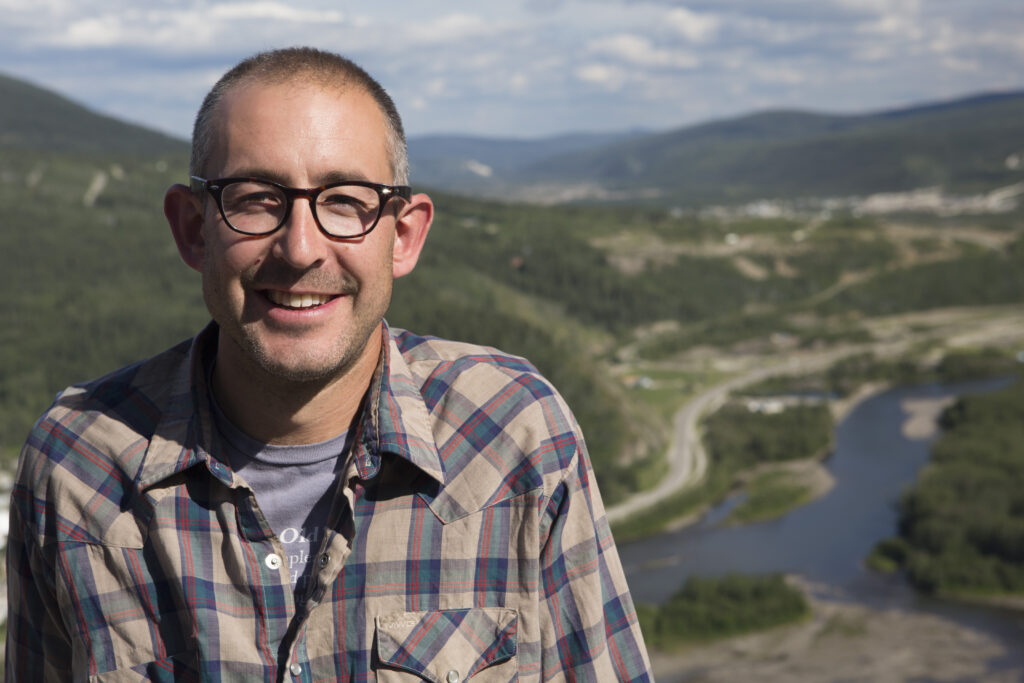 *Dr. Grant Zazula, known as the “Yukon Paleontologist*.”
*Gold mining operations have been blasting away at the [Yukon permafrost](https://geocryology.files.wordpress.com/2013/05/permafrost-in-the-yukon-territory.pdf) since the late 19th century, and global climate change has now joined in that [assault](https://service.yukon.ca/permafrost/). This one-two punch unearths thousands of fossils and bones each summer, and on rare occasions even the mummified remains of an ancient animal. When miners come across these treasures, they contact [Dr. Grant Zazula](https://www.arcus.org/researchers/37724/display), known as the “Yukon Paleontologist.” This call is the first step in a race against time and elements to extract and preserve the specimen, a process that Dr. Zazula refers to as “salvage paleontology.” Clay recently spoke with Dr. Zazula about the challenges and rewards of this work, and how a couple of recent finds have been more than a boon to scientific knowledge; they’ve prompted the indigenous people of Yukon to engage more intimately with both paleontology and their past. The following interview was edited for length and clarity.*
**Clay Jenkinson**: The work you are doing is thrilling, but it’s also what we might call rescue paleontology. It’s only possible because [placer mining](https://www.nps.gov/yuch/learn/historyculture/placer-mining.htm) is breaking down whole walls of the [permafrost](https://education.nationalgeographic.org/resource/permafrost/).
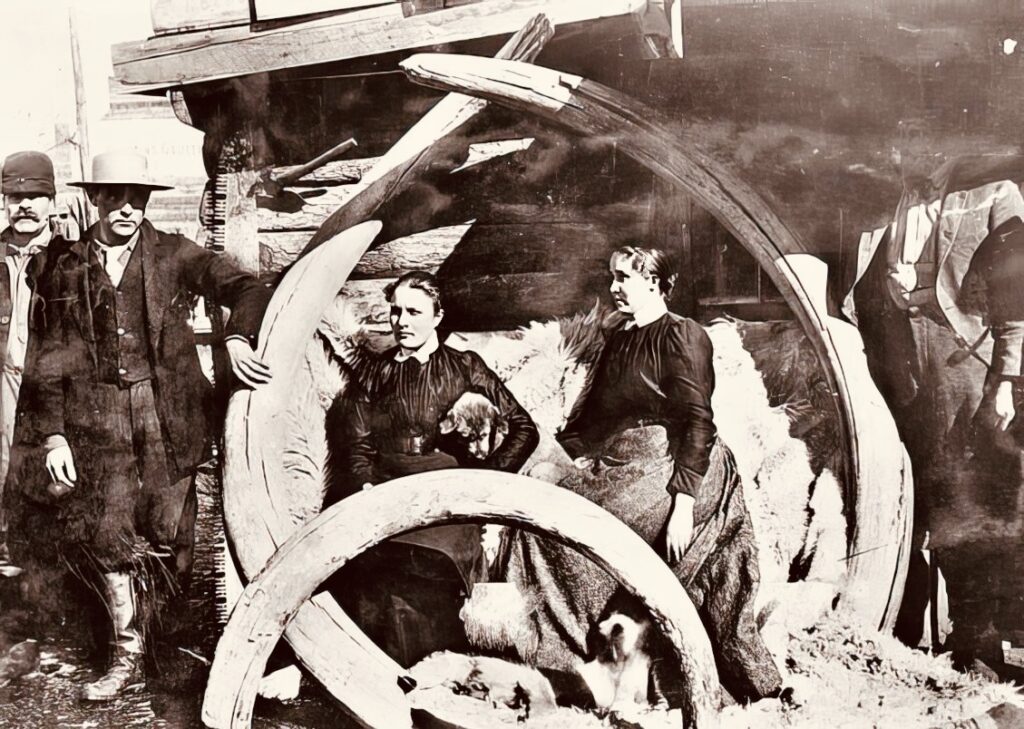Prospectors with Mammoth Tusks in the Yukon Territory c. 1900 (MacBride Museum/Yukon News).
**Grant Zazula**: Without the gold mining, there would be no exposure into these hillsides. It’s an interesting relationship with gold miners that goes back right to the [gold rush of 1898](https://www.nps.gov/klgo/learn/goldrush.htm). There are amazing photos of [old timers with mammoth tusks](https://cdnhistorybits.wordpress.com/2017/03/28/the-klondike-bone-rush/). Fortunately, Yukon has legislation that protects archeological sites and paleontological sites. We also have land claims with the indigenous community. From our perspective, we’re just trying to recover this material before it gets lost. It’s a short summer in the Yukon, so miners are working day and night for four or five months. We put a lot of our effort into building relationships with the miners, letting them know how important this is not only for science and the Yukon, but across the globe. And we have fairly good buy-in with the mining community. When they uncover this material, they generally put it aside, and if they see something spectacular, they give us a call. Every once in a while, you get some pretty amazing stuff. And we’re good PR for them. Since they’re blasting away hillsides of permafrost, they get a lot of pressure from various environmental groups.
Increasingly over the last couple years, the [First Nations](https://www.thecanadianencyclopedia.ca/en/article/first-nations) have shown greater interest and capacity in helping. When our team recovered a [mummified wolf pup](https://arstechnica.com/science/2020/12/yukon-gold-miner-unearths-a-mummified-ice-age-wolf-pup/) in 2016, it was a game changer. The two clans in the Yukon are [the Wolf and the Crow](http://lss.yukonschools.ca/introduction-to-yukon-first-nations.html), so having this relationship with the wolf pup really captured their interest. That wolf was 57,000 years old, and it really got the wheels churning in terms of their relationship to paleontology. Things then reached a new pinnacle when [Nun Cho Ga](https://www.smithsonianmag.com/history/well-preserved-30000-year-old-baby-woolly-mammoth-emerges-from-yukon-permafrost-180980388/) was found.
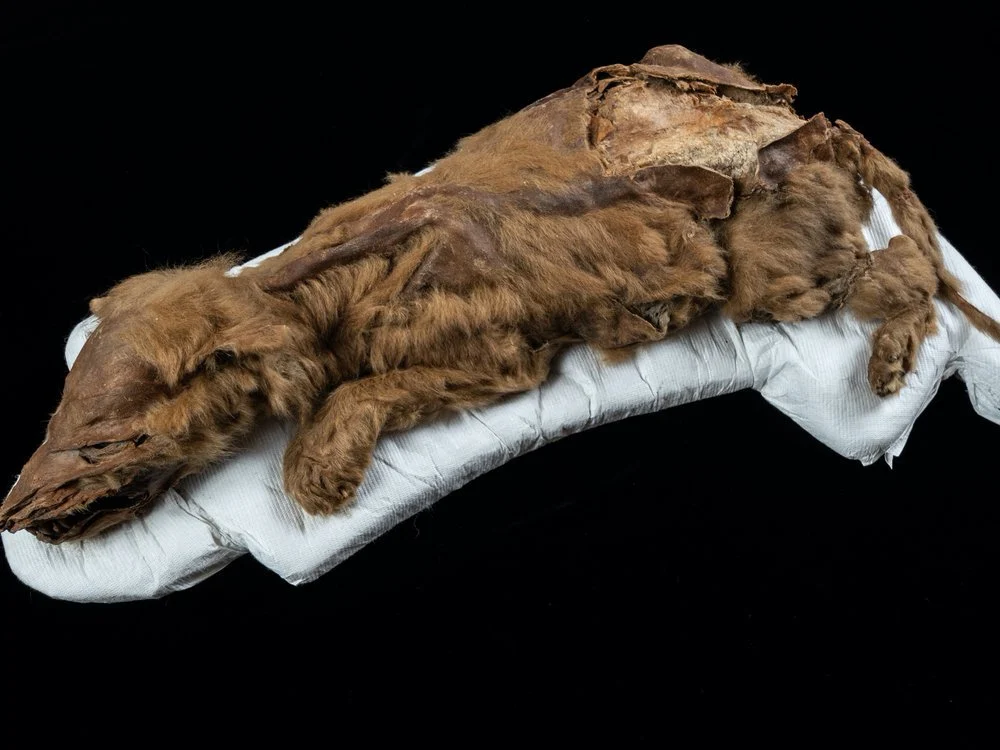A young female wolf pup who died in the Yukon some 57,000 years ago. (Government of Yukon).
**Clay Jenkinson**: Do indigenous people have any cultural memory of the [mastodon](https://www.nps.gov/articles/000/mammut_americanum.htm) and the [mammoth](https://www.worldhistory.org/Woolly_Mammoth/)?
**Grant Zazula**: They do. We work very closely with a community of about 250 people called [Old Crow.](https://www.travelyukon.com/en/discover/regions/northern-arctic-yukon/old-crow) It’s in the northernmost Yukon. First Nation people are hunters and trappers. Their knowledge of skeletal anatomy is incredible, so when they’re going up and down the rivers and they see a three-foot femur bone, they know right away that it’s a leg bone of a big animal. They know it’s not a moose. So these stories about ancient monsters became deeply embedded in the community. There’s this notion that these animals were frozen into the ground in a sort of purgatory, neither alive nor dead. And there are stories about mammoths harassing communities. We know now that there were probably small pockets of mammoth still living in the Yukon up until five or six thousand years ago. We also know that oral histories amongst indigenous people in North America go back thousands of years. So there were people in these places at that time, and they were almost certainly running into these animals. These may have been residual populations left over from the end of the Ice Age, but I’m sure they left their mark on people. The cultural knowledge of those animals was certainly passed on for thousands of years. I’m convinced that some of these stories are legitimate and can tell us a lot about the history of the mammoth.
**Clay Jenkinson**: What is the difference between [fossilized remains](https://education.nationalgeographic.org/resource/fossil/) and [mummified remains](https://maxs-blogo-saurus.com/2022/10/01/a-beginners-guide-to-mummified-fossils-part-one/)?
**Grant Zazula**: A fossil is any remains from an ancient plant or animal. But mummified remains are the things that bring the whole story to life for you. Every summer our program collects up to 7,000 individual bones, but mummified remains are incredibly rare. I never thought I would see a real mummified woolly mammoth. You can learn a lot scientifically from these mummified animals. They bring the ice age to life. You can show someone a mammoth tusk or a tooth, and they might say, “Oh, that’s nice.” But when you show them the whole animal, something that’s been extinct for thousands of years, it brings the whole picture together. It’s a real privilege to interact with a mummified mammoth, to touch it and to look it in the eye. It’s something very few people have an opportunity to do. It changes you. It’s really visceral. It’s humbling. Seeing the impact that Nun Cho Ga had on the First Nation community is something I’ll never forget. I saw an elder at the site bend over and pick up a piece of mammoth hair from the spot where the mammoth came from. That kind of connection between people and land and ancient animals is really profound.
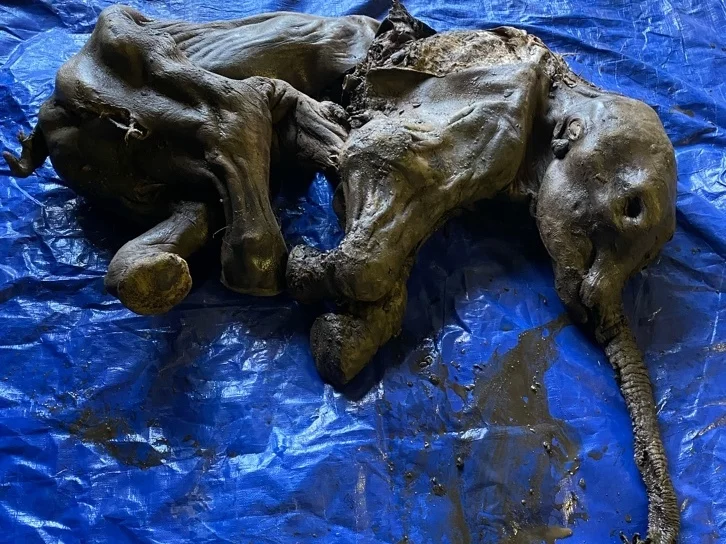A 30,000 year old infant wooly mammoth, named *Nun Cho Ga*, (which means “Big Baby Animal” In the Han Language). It was found by miners in the Yukon permafrost in 2022. (Government of Yukon).
**Clay Jenkinson**: Thomas Jefferson had a childlike wonder for the mammoth. The mastodon and the mammoth were to his time what the dinosaur is to our time, these gigantic, fascinating, now gone creatures that fill us with wonder and make us imagine a world unlike anything we see today.
**Grant Zazula**: The difference is that we’re not connected to dinosaurs. That was 65 million years ago. But the mammoth and the mastodon were here just yesterday. We’re so closely connected to them. Our ancestors hunted and interacted with these giant, Ice Age megafauna. That’s the appeal, and that’s also the connection to climate change. These fossils are evidence of changes in recent earth history.
> “The difference is that we’re not connected to dinosaurs. That was 65 million years ago. But the mammoth and the mastodon were here just yesterday. We’re so closely connected to them.”
>
> DR. GRANT ZAZULA
**Clay Jenkinson**: If global climate change is as dramatic as some believe that it will be, there are going to be more of these treasures that need to be preserved. They’re not going to be okay just sitting out there in the middle of nowhere.
**Grant Zazula**: Once it comes out of the ground, it needs to be collected and dealt with. It’s like salvage paleontology. As climate change ramps up, there’s a lot more permafrost melting in areas like the Arctic Coast and Siberia. That’s going to create a need for more monitoring. We need to get to it before it gets eaten or lost or buried or simply forgotten about. Archeological sites and paleontological objects are best protected in the ground. They’ve been there for thousands of years. Once they get exposed, that’s when the work starts.
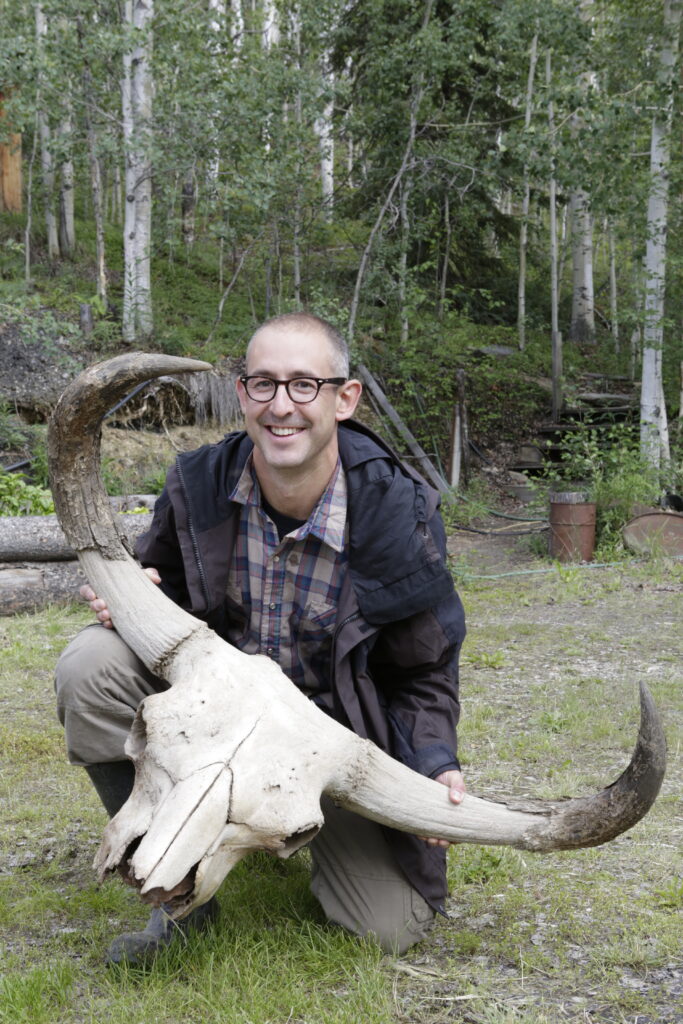Dr. Zazula with a bison skull. (Photo by Florian Breier).
**Clay Jenkinson**: What are you anticipating for this summer’s work?
**Grant Zazula**: Because of the discovery of Nun Cho Ga, we’re involved in discussions with the local First Nation about how that is going to work. What I’m hoping for is a growing connection between the First Nation community and our program, working a lot more collaboratively. Embracing this mammoth as they have is going to bring a lot to the First Nation community. And, by extension, so will embracing the whole topic of the Ice Age. This provides amazing opportunities for young people to learn about science, to learn about their own heritage, and to learn about their connection to the land. We’ve put a lot of effort into building a relationship with the gold miners, and it’s equally important to build these First Nation connections.
**Clay Jenkinson**: What about the Jurassic Park concept of rebuilding something like this from its DNA? Is that something that people like you actually think about?
**Grant Zazula**: We definitely think about it, and a lot of my colleagues are heavily involved. There’s a company called [Colossal Biosciences](https://colossal.com/) that is trying to revive the [dodo](https://www.cnn.com/2023/01/31/world/dodo-bring-back-from-extinction-colossal-scn/index.html). The next thing on their list is a [woolly mammoth](https://www.npr.org/2021/09/14/1036884561/dna-resurrection-jurassic-park-woolly-mammoth). For me personally, I feel that with the terrible stuff we’re doing to the environment and to living animals today, we should put our efforts into taking care of what we have rather than trying to replace what was once gone. If we don’t pay more attention to the current biodiversity crisis, we’re just leading the way to more extinctions.
## **Colossal Laboratories and Biosciences**, the “De-Extinction” Company.
Colossal Laboratories and Biosciences is working on “De-Extinction” of the woolly mammoth, dodo and other species.
---
If you would like to hear to the entire episode you can find it here: [\#1542 The Quest for the Wooly Mammoth](https://jeffersonhour.bandcamp.com/track/1542-the-quest-for-the-wooly-mammoth).
---
## ***Discover more on these topics at Listening to America***
[Ohio](https://ltamerica.org/tag/ohio/ "2 topics")[Rivers](https://ltamerica.org/tag/rivers/ "3 topics")[Oregon](https://ltamerica.org/tag/oregon/ "4 topics")[Tennessee](https://ltamerica.org/tag/tennessee/ "1 topics")[Thoreau](https://ltamerica.org/tag/thoreau/ "5 topics")[Road Trips](https://ltamerica.org/tag/road-trips/ "18 topics")[Utah](https://ltamerica.org/tag/utah/ "11 topics")[South Dakota](https://ltamerica.org/tag/south-dakota/ "16 topics")[Republic](https://ltamerica.org/tag/republic/ "0 topics")[Theodore Roosevelt](https://ltamerica.org/tag/theodore-roosevelt/ "16 topics")[New York](https://ltamerica.org/tag/new-york/ "8 topics")[Water in the West](https://ltamerica.org/tag/water-in-the-west/ "24 topics")[Walden](https://ltamerica.org/tag/walden/ "1 topics")[New Mexico](https://ltamerica.org/tag/new-mexico/ "3 topics")[north daktoa](https://ltamerica.org/tag/north-daktoa/ "0 topics")[Republics](https://ltamerica.org/tag/republics/ "1 topics")[paintings](https://ltamerica.org/tag/paintings/ "0 topics")[Poetry](https://ltamerica.org/tag/poetry/ "1 topics")[North Carolina](https://ltamerica.org/tag/north-carolina/ "3 topics")[Vermont](https://ltamerica.org/tag/vermont/ "1 topics")[The Constitution](https://ltamerica.org/tag/the-constitution/ "1 topics")[Reading](https://ltamerica.org/tag/reading/ "1 topics")[Virginia](https://ltamerica.org/tag/virginia/ "7 topics")[Podcast](https://ltamerica.org/tag/podcast/ "1 topics")[Travel](https://ltamerica.org/tag/travel/ "1 topics")[Steinbeck Travels](https://ltamerica.org/tag/steinbeck-travels/ "75 topics")[Space Exploration](https://ltamerica.org/tag/space-exploration/ "8 topics")[Pennsylvania](https://ltamerica.org/tag/pennsylvania/ "1 topics")[Oppenheim](https://ltamerica.org/tag/oppenheim/ "0 topics")[Wyoming](https://ltamerica.org/tag/wyoming/ "4 topics")[South Carolina](https://ltamerica.org/tag/south-carolina/ "1 topics")[Thomas Jefferson](https://ltamerica.org/tag/thomas-jefferson/ "34 topics")[Video](https://ltamerica.org/tag/video/ "51 topics")[Oppenheimer](https://ltamerica.org/tag/oppenheimer/ "1 topics")[State Parks](https://ltamerica.org/tag/state-parks/ "2 topics")[Texas](https://ltamerica.org/tag/texas/ "4 topics")[New England](https://ltamerica.org/tag/new-england/ "1 topics")[U.S. Presidents](https://ltamerica.org/tag/u-s-presidents/ "71 topics")[Wisconsin](https://ltamerica.org/tag/wisconsin/ "0 topics")[Rome](https://ltamerica.org/tag/rome/ "1 topics")[U.S. Constitution](https://ltamerica.org/tag/u-s-constitution/ "1 topics")[North Dakota](https://ltamerica.org/tag/north-dakota/ "53 topics")[Washington](https://ltamerica.org/tag/washington/ "2 topics")[William Shirer](https://ltamerica.org/tag/william-shirer/ "1 topics")[Sports](https://ltamerica.org/tag/sports/ "2 topics")
**Categories:** Features
**Tags:** Canada
---
### [A Visit to Camp Disappointment](https://ltamerica.org/redeeming-camp-disappointment/)
**Published:** March 12, 2023
**Author:** Clay Jenkinson
**Excerpt:** Browning, Mont. — Wandering about what is called the “Hi-Line,” U.S. 2 and the tracks of the Great Northern Railway, I came upon this obelisk monument to Lewis and Clark.
**Content:**
Monument marking Camp Disappointment in today’s Glacier County, Montana. The northernmost point of their expedition, Meriwether Lewis established a camp here in July 1806, while exploring the headwaters of the Marias River on their return journey. (Photo by Bryan Hall)
BROWNING, Mont. — Wandering about what is called the “Hi-Line,” U.S. 2 and the tracks of the Great Northern Railway, I came upon this obelisk monument to Lewis and Clark. It was erected on a hill a quarter mile north of the highway. I drove by it before I had the good sense to investigate. It marks an area where U.S. Army Captain Meriwether Lewis and three of his men realized that the Marias River (named for Lewis’ cousin Mariah) did not originate north of the 49th parallel and, therefore would not drive back the Canadian (British) border. Under the provisions of the [Louisiana Purchase treaty](https://www.senate.gov/artandhistory/history/common/image/LouisianaPurchaseTreaty.htm), the U.S. was entitled to the entire watershed of the Missouri River. If Lewis could find a “Canadian” tributary of the Missouri, the U.S. would be entitled to reduce the amount of land claimed by Britain in the northwest.
The obelisk is one of the less well-known monuments on the [Lewis and Clark Trail](https://www.nps.gov/lecl/index.htm) and it was — and still is — erected in the heart of [Blackfeet](https://www.umt.edu/this-is-montana/columns/stories/blackfeet.php) country. Lewis and his undermanned crew learned this the hard way on July 27, 1806, when the eight young Blackfeet men they were camping with (more out of necessity than choice) jumped the sleeping expedition members at first light and attempted to abscond with their firearms and horses. In the skirmish that ensued, Lewis and his men killed two of the young Blackfeet men, probably still well within their teens. This was the only bloodshed on the entire Lewis and Clark Expedition, which was notable for its largely harmonious relations with the 50-plus Native tribes they encountered.
The obelisk is a kind of eerie reminder of that trespass. Local revisionists have defaced the monument in several ways to make sure the Blackfeet narrative is commemorated. With spray paint someone has written “Pikuni Blackfeet Land.”
However much one may lament the disfiguring of the obelisk, it seems to me appropriate that the Blackfeet people insist that visitors be aware of their narrative. A nearby highway sign, so far unrevised, explains that the Great Northern Railway erected the obelisk in 1925 to commemorate the farthest northern penetration of the Lewis and Clark Expedition. The highway sign makes no mention of the sovereignty dispute between a people who had been on that land for centuries, perhaps longer, and the brash newcomers who believed that a white man in France who had never been to America could sell 828,000 square miles of land to a white man in Virginia who never traveled farther than 75 miles west of his birthplace.
The Blackfeet might have plucked the obelisk down or blasted it with dynamite. So far, they have settled for black spray paint. One question is who owns the West. Another question of more immediate importance is who owns the narrative.
---
## ***Discover more on these topics at Listening to America***
[Reading](https://ltamerica.org/tag/reading/ "1 topics")[Washington](https://ltamerica.org/tag/washington/ "2 topics")[Pennsylvania](https://ltamerica.org/tag/pennsylvania/ "1 topics")[South Dakota](https://ltamerica.org/tag/south-dakota/ "16 topics")[Oregon](https://ltamerica.org/tag/oregon/ "4 topics")[Travel](https://ltamerica.org/tag/travel/ "1 topics")[north daktoa](https://ltamerica.org/tag/north-daktoa/ "0 topics")[Wisconsin](https://ltamerica.org/tag/wisconsin/ "0 topics")[The Constitution](https://ltamerica.org/tag/the-constitution/ "1 topics")[State Parks](https://ltamerica.org/tag/state-parks/ "2 topics")[Utah](https://ltamerica.org/tag/utah/ "11 topics")[North Dakota](https://ltamerica.org/tag/north-dakota/ "53 topics")[Space Exploration](https://ltamerica.org/tag/space-exploration/ "8 topics")[Walden](https://ltamerica.org/tag/walden/ "1 topics")[New England](https://ltamerica.org/tag/new-england/ "1 topics")[Water in the West](https://ltamerica.org/tag/water-in-the-west/ "24 topics")[North Carolina](https://ltamerica.org/tag/north-carolina/ "3 topics")[Thomas Jefferson](https://ltamerica.org/tag/thomas-jefferson/ "34 topics")[Vermont](https://ltamerica.org/tag/vermont/ "1 topics")[Road Trips](https://ltamerica.org/tag/road-trips/ "18 topics")[Rivers](https://ltamerica.org/tag/rivers/ "3 topics")[Thoreau](https://ltamerica.org/tag/thoreau/ "5 topics")[Virginia](https://ltamerica.org/tag/virginia/ "7 topics")[Ohio](https://ltamerica.org/tag/ohio/ "2 topics")[Rome](https://ltamerica.org/tag/rome/ "1 topics")[South Carolina](https://ltamerica.org/tag/south-carolina/ "1 topics")[U.S. Presidents](https://ltamerica.org/tag/u-s-presidents/ "71 topics")[Tennessee](https://ltamerica.org/tag/tennessee/ "1 topics")[Podcast](https://ltamerica.org/tag/podcast/ "1 topics")[Video](https://ltamerica.org/tag/video/ "51 topics")[Steinbeck Travels](https://ltamerica.org/tag/steinbeck-travels/ "75 topics")[paintings](https://ltamerica.org/tag/paintings/ "0 topics")[New York](https://ltamerica.org/tag/new-york/ "8 topics")[William Shirer](https://ltamerica.org/tag/william-shirer/ "1 topics")[Poetry](https://ltamerica.org/tag/poetry/ "1 topics")[Wyoming](https://ltamerica.org/tag/wyoming/ "4 topics")[U.S. Constitution](https://ltamerica.org/tag/u-s-constitution/ "1 topics")[Theodore Roosevelt](https://ltamerica.org/tag/theodore-roosevelt/ "16 topics")[Republic](https://ltamerica.org/tag/republic/ "0 topics")[Republics](https://ltamerica.org/tag/republics/ "1 topics")[Texas](https://ltamerica.org/tag/texas/ "4 topics")[Oppenheim](https://ltamerica.org/tag/oppenheim/ "0 topics")[New Mexico](https://ltamerica.org/tag/new-mexico/ "3 topics")[Sports](https://ltamerica.org/tag/sports/ "2 topics")[Oppenheimer](https://ltamerica.org/tag/oppenheimer/ "1 topics")
**Categories:** Dispatches from the Road
**Tags:** Lewis and Clark, Montana
---
### [The Luxury of Reading the Lewis and Clark Journals](https://ltamerica.org/the-luxury-of-reading-the-lewis-and-clark-journals/)
**Published:** February 28, 2023
**Author:** Clay Jenkinson
**Content:**
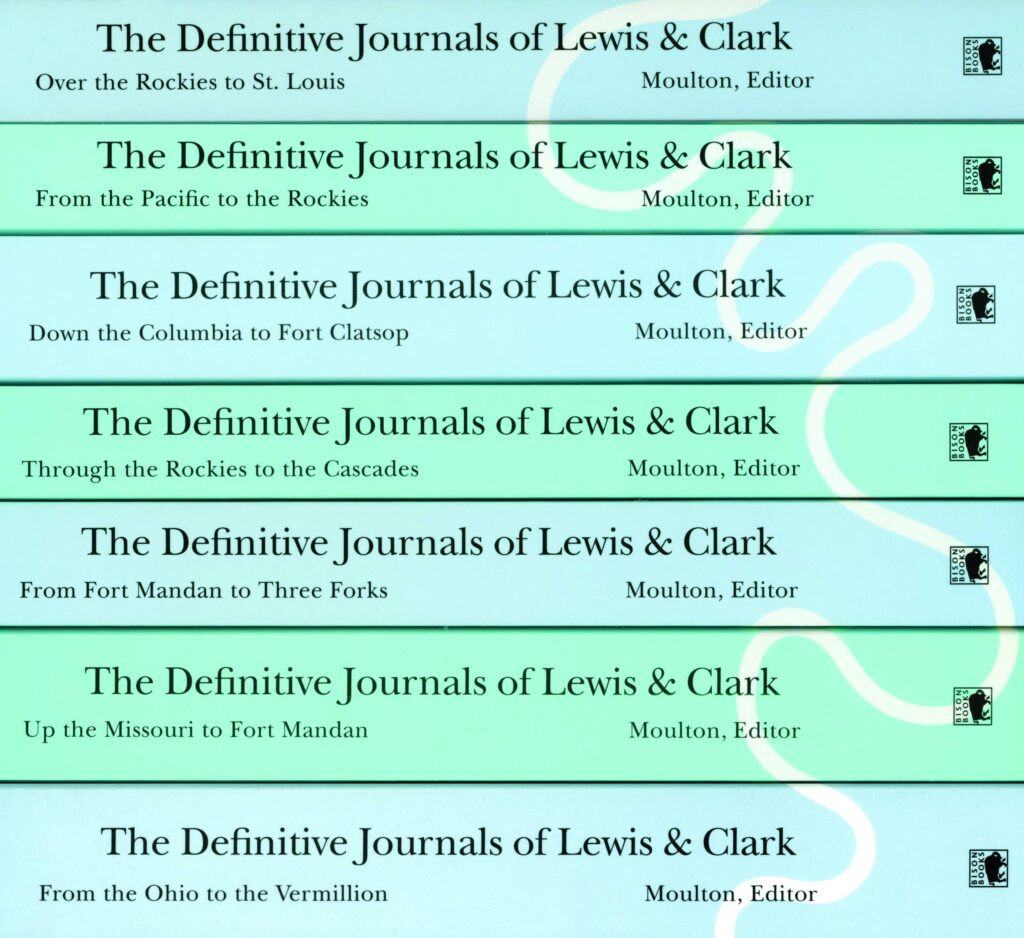Gary Moulton edited a definitive thirteen volume set of the Lewis and Clark expedition journals.
Over the Christmas holidays, because I was alone this year, I decided to read all the journals of Lewis and Clark, [John Ordway](https://lewis-clark.org/members/john-ordway/), and [Patrick Gass](https://lewis-clark.org/members/patrick-gass/) for the return journey of the Corps of Discovery, from March 23 to September 23, 1806. If [Whitehouse](https://www.nps.gov/articles/000/whitehouse-journals.htm) kept a journal for this portion of the trek (probably), it has been lost. I read the captain’s first, then Patrick Gass. I wanted to see what Gass wrote in isolation, to try to get a better sense of him as an individual, not just as the expedition’s carpenter.
First, what a joy! I took extensive notes, traded emails and texts with my esteemed friend [David Nicandri](https://www.amazon.com/River-Promise-Lewis-Clark-Columbia/dp/0874224152/ref=sr_1_3?qid=1677589869&refinements=p_27%3ADavid+Nicandri&s=books&sr=1-3) about the things I was learning or pondering, and I made lists. There is nothing more satisfying to me than having ample time to give to a project of this sort. I’d read for a couple of hours, type out some notes, then turn to something else (reading Dostoevsky, baking a batch of cookies, looking for some book in my home library). And later, another round of Patrick Gass. It has been blizzard time on the plains of North Dakota, so I had plenty of reason to stay indoors with my books and notebooks.
Second, I thought I knew this story well, but by reading the journals consecutively and with great care, I discovered things I did not know, or (alas) once knew and forgot. To discover something new in Lewis and Clark, if only for oneself, after years of study, is pure joy. Here are just two examples.
I knew that when Clark took his contingent to Camp Fortunate (now under Clark Canyon Reservoir), “the most of the Party with me being Chewers of Tobacco become So impatient to be chewing it that they Scercely gave themselves time to take their Saddles off their horses before they were off to the deposit.… I gave to each man who used tobacco about two feet off a part of a role.” Several journal keepers indicate that the men suffered far more from running out of tobacco — at Fort Clatsop or shortly thereafter — than running out of whiskey on July 4, 1805, at the Great Falls.
But now this. When (June 18, 1806) Sergeant Gass took a couple of men to the Lower Portage Camp to check on the cache there and the status of the white pirogue, which had been left behind back in June 1805, the men with him opened the cache, saw that it was intact, extracted some tobacco from the varied things that had been deposited there, and then re-covered the cache! In other words, *their* quest was simple: tobacco.
It is details like this that humanize the great transcontinental expedition.
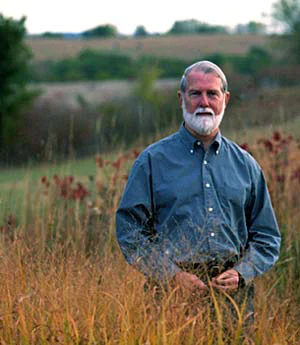Professor Gary E. Moulton.
We all owe [Gary Moulton](https://lewisandclarkjournals.unl.edu/item/lc.mult.moulton) immense gratitude for the hard and painstaking work he undertook on behalf of American history, in gathering into one set of volumes all of the extant journals of the expedition, not just establishing the authoritative text, a common resource for every serious student of Lewis and Clark, but providing thousands of accurate and helpful annotations, some of which must have cost him days or even weeks of research and communication with the experts he attracted to the project. Plants, minerals, names of Native American tribes, names of individuals, the correct Native orthography for things the captains garbled in their transcriptions, campsites, geographic landmarks, minor tributaries of modest tributaries of the great rivers, medicines, notations on scientific instruments, corrections or affirmations of minor details they included for the animals they described. Professor Moulton did all this for all of us. Now we owe it to him and to ourselves to read the journals in his thirteen splendid volumes in the way he has presented the great story to us. There is, as I am rediscovering, so much to learn — or relearn.
Here’s another great moment. We all know that the expedition was essentially bankrupt when it turned back towards the United States in March 1806. Lewis said that everything they now had to trade with Native people — for firewood, food, ferrying services, horses, guidance — could be contained in two handkerchiefs. It is so important to keep this in mind as we think about the 1806 return. They were about to make a 3,500-mile journey without “money.” Lewis had not had the opportunity to cash in his universal letter of credit in one of the Columbia River’s bays to resupply the expedition with trade goods. Desperately needing an additional canoe, on March 17, 1806, Lewis had to give up his last military dress coat to close the deal with the canoe’s owner. With more than a little pique, Lewis wrote, “I think the U’ States are indebted to me another Uniform coat, for that of which I have disposed on this occasion was but little woarn.” All this I remembered. He collected, by the way, after he returned to Washington, D.C.
On June 22, 1806, on the western base of the Bitterroot Mountains, delayed by deep snow and the obscured Lolo Trail, the expedition’s focus was in getting enough food to feed everyone. The hunters were returning empty-handed. Then this by William Clark: “we gave [whitehouse](https://lewisandclarkjournals.unl.edu/search?people=Whitehouse%2C%20Joseph) a fiew beeds which I unexpectedly found in one of my waistcoat pockets to purchase the fish.” This must have been a joyful moment — a handful of beads carelessly thrust at some earlier and more prosperous moment into the pocket of that vest, forgotten, but now discovered at a time of real need. It’s like the joy we feel when we find a $20 or $100 bill in the pocket of a sports jacket or an old purse. Free money! The expedition left St. Louis in May 1804 with at least fifty pounds of beads. Now they were reduced to a “fiew beads” scrounged out of an unlikely place.
But now those few beads helped feed the expedition.
From Gass we learn that not every member of the expedition was regarded as a hunter. We learn, if Gass understood things correctly, that Clark was not entirely sure when the party split up at Traveler’s Rest that he would float the Yellowstone. We have access to [David M’Keehan’s](http://www2.vcdh.virginia.edu/lewisandclark/biddle/page2.html) intelligent, useful, occasionally erroneous annotations of Gass’ narrative. In other words, M’Keehan, best known for his vicious 1807 newspaper attack on Meriwether Lewis, was not invariably snarky!
Without the herculean labors of Gary Moulton, this sort of intense study would have been much more difficult, and some of it simply impossible.
---
## ***Discover more on these topics at Listening to America***
[Thomas Jefferson](https://ltamerica.org/tag/thomas-jefferson/ "34 topics")[Sports](https://ltamerica.org/tag/sports/ "2 topics")[New England](https://ltamerica.org/tag/new-england/ "1 topics")[Virginia](https://ltamerica.org/tag/virginia/ "7 topics")[Rome](https://ltamerica.org/tag/rome/ "1 topics")[Theodore Roosevelt](https://ltamerica.org/tag/theodore-roosevelt/ "16 topics")[Ohio](https://ltamerica.org/tag/ohio/ "2 topics")[Video](https://ltamerica.org/tag/video/ "51 topics")[The Constitution](https://ltamerica.org/tag/the-constitution/ "1 topics")[Reading](https://ltamerica.org/tag/reading/ "1 topics")[Rivers](https://ltamerica.org/tag/rivers/ "3 topics")[Wyoming](https://ltamerica.org/tag/wyoming/ "4 topics")[South Dakota](https://ltamerica.org/tag/south-dakota/ "16 topics")[Republics](https://ltamerica.org/tag/republics/ "1 topics")[U.S. Presidents](https://ltamerica.org/tag/u-s-presidents/ "71 topics")[William Shirer](https://ltamerica.org/tag/william-shirer/ "1 topics")[Vermont](https://ltamerica.org/tag/vermont/ "1 topics")[Tennessee](https://ltamerica.org/tag/tennessee/ "1 topics")[North Dakota](https://ltamerica.org/tag/north-dakota/ "53 topics")[north daktoa](https://ltamerica.org/tag/north-daktoa/ "0 topics")[Road Trips](https://ltamerica.org/tag/road-trips/ "18 topics")[U.S. Constitution](https://ltamerica.org/tag/u-s-constitution/ "1 topics")[New York](https://ltamerica.org/tag/new-york/ "8 topics")[Wisconsin](https://ltamerica.org/tag/wisconsin/ "0 topics")[Oppenheim](https://ltamerica.org/tag/oppenheim/ "0 topics")[Oregon](https://ltamerica.org/tag/oregon/ "4 topics")[Pennsylvania](https://ltamerica.org/tag/pennsylvania/ "1 topics")[Utah](https://ltamerica.org/tag/utah/ "11 topics")[State Parks](https://ltamerica.org/tag/state-parks/ "2 topics")[Space Exploration](https://ltamerica.org/tag/space-exploration/ "8 topics")[Steinbeck Travels](https://ltamerica.org/tag/steinbeck-travels/ "75 topics")[Thoreau](https://ltamerica.org/tag/thoreau/ "5 topics")[Podcast](https://ltamerica.org/tag/podcast/ "1 topics")[Texas](https://ltamerica.org/tag/texas/ "4 topics")[Walden](https://ltamerica.org/tag/walden/ "1 topics")[Washington](https://ltamerica.org/tag/washington/ "2 topics")[Poetry](https://ltamerica.org/tag/poetry/ "1 topics")[South Carolina](https://ltamerica.org/tag/south-carolina/ "1 topics")[New Mexico](https://ltamerica.org/tag/new-mexico/ "3 topics")[Water in the West](https://ltamerica.org/tag/water-in-the-west/ "24 topics")[Oppenheimer](https://ltamerica.org/tag/oppenheimer/ "1 topics")[Travel](https://ltamerica.org/tag/travel/ "1 topics")[Republic](https://ltamerica.org/tag/republic/ "0 topics")[paintings](https://ltamerica.org/tag/paintings/ "0 topics")[North Carolina](https://ltamerica.org/tag/north-carolina/ "3 topics")
**Categories:** Books
**Tags:** Books, Lewis and Clark
---
### [Just Who Is Buried on the Wind River Reservation?](https://ltamerica.org/just-who-is-buried-on-the-wind-river-reservation/)
**Published:** February 25, 2023
**Author:** Clay Jenkinson
**Excerpt:** Sacagawea has become a giant figure in American memory and mythology. There are more statues of her than any other woman in America. But we know little about the facts of her actual life.
**Content:**
## Sacagawea has become a giant figure in American memory and mythology. There are more statues of her than any other woman in America. But we know little about the facts of her actual life.
Explorers Lewis and Clark, Sacagawea, her son Jean Baptiste and husband Charbonneau at the mouth of the Columbia River, 1805. Drawing by Frederic Remington in Collier’s Magazine, 1906. (LOC).
Driving recently from Salida, Colorado, to Cody, Wyoming, I realized I was within range of the grave of [Sacagawea](https://www.nps.gov/knri/learn/historyculture/sacagawea.htm) on the [Wind River Indian Reservation](https://windriver.org/destinations/wind-river-indian-reservation/) near Lander, Wyoming. I was in a bit of a hurry, but how many times in a life do you get close to a little visited Lewis and Clark memorial?
I had never been to this Sacagawea grave before, though I had driven the splendid state highway, WYO 789, between Lander and Thermopolis, Wyoming, a dozen or more times. After the usual small difficulties, I found the cemetery west of [Fort Washakie](https://www.legendsofamerica.com/fort-washakie/). It was about 7 p.m. on a perfect Great Plains day — a soothing breeze, a giant blue sky with high wispy clouds. I had seen photographs of the grave marker before, but I tiptoed through the dry grass of an acre of graves, mostly Native, to a statue of a young, beautiful woman leaning into the future. It had to be her.
A 40-something white couple was studying the signage, holding a video camera. It soon became clear that the woman was intending to record a video for her “podcast.” I said, “You know that she is also buried in another place, don’t you?” “Yeah, we heard something about that,” the man said. I said, “The other site is on the North Dakota-South Dakota border, at the confluence of the Missouri and the Grand Rivers.” They listened politely but I could tell that my commentary was unhelpful, even annoying.
Sacagawea gravestone on the Wind River Reservation in Wyoming. The two shorter grave makers on either side are for her two sons. (Photo by Clay Jenkinson).
Finally, I said, “Is this the actual grave?” I was pretty sure it wasn’t, but the woman solemnly informed me that this was exactly where she was buried, right under our feet. Saw it on the internet. I took some photographs of the memorial, from every angle, including the signage, and sat for a few minutes thinking about the rich tangled maze of the Sacagawea story. The fact is we don’t know for certain where she is buried. We don’t know for certain where or when she was born. And though we know some of the things she did in the course of the Lewis and Clark Expedition, and a few of the things that happened to her along the way, we still don’t know quite how to characterize her contributions to its success. And we still don’t know quite how to define her role, official or unofficial, between November 4, 1804, and August 18, 1806.
## **Sacagawea Is “A Riddle, Wrapped in a Mystery, Inside an Enigma.”**
Statue of Sacagawea at the Wind River Reservation cemetery. There are more statues of Sacagawea than any woman in America. (Photo by Clay Jenkinson).
All that we know about Sacajawea/Sacagawea/Sakakawea/Janey ([Lewis and Clark spelled her name over a dozen ways](https://www.oregonencyclopedia.org/articles/sacagawea/#.Y_lgJi-B2_U)) would not fill a passport book. She gave birth to what Lewis called “a fine boy” at or near [Fort Mandan](https://www.history.nd.gov/historicsites/mandan/) on February 11, 1805. She got very sick near the Great Falls of the Missouri; Lewis thought she might die. She gave William Clark two dozen weasel’s tails for Christmas 1805 at [Fort Clatsop](https://www.nps.gov/lecl/learn/historyculture/fort-clatsop.htm), near Astoria, Oregon. She insisted on seeing the beached whale on the Pacific Coast. She showed poise and resourcefulness when her inept husband Charbonneau nearly sank the White Pirogue on May 14, 1805, in eastern Montana. She appears to have done quite a bit of craft work along the trail, some of which she traded for a horse. She had a blue beaded belt that the captains appropriated to purchase “a roab made of 2 Sea Otter Skins” from the Chinooks. She danced for joy when she was reunited with the Shoshone near today’s Salmon, Idaho.
Was she born Shoshone, captured by the Hidatsa, acculturated into Hidatsa traditions, and given a Hidatsa name — *[Sâh-câ-gar me-âh](https://www.history.nd.gov/exhibits/sakakawea/history9.html)* as Lewis thought he heard it — and married off to [Toussaint Charbonneau](https://www.oregonencyclopedia.org/articles/charbonneau_toussaint/#.Y_liKC-B2_U)? Or as the distinguished Hidatsa elder Gerard Baker and other Knife River historians [insist](https://www.goodreads.com/book/show/62061388-our-story-of-eagle-woman-sacagawea-they-got-it-wrong), was she Hidatsa (or possibly Crow) all along, captured by the Shoshone, but safely back in the Hidatsa world by the time the Expedition reached the Mandan and Hidatsa villages at the end of October 1804? Did she die young, on December 22, 1812, at [Fort Manual Lisa](https://lewis-clark.org/fur-trade/lisas-forts/) on the Upper Missouri, of what a local official called “putrid fever;” or did she live for many decades after Lewis and Clark left the scene, become a much-respected holy woman, spend time among the Comanche, and die, at the age of 100 or more, on April 9, 1884, on the Wind River Indian Reservation?
Nobody knows for sure. Such inconclusive evidence as we have favors Sacagawea’s early death. That was how William Clark understood it.
Sacagawea Golden Dollar minted between 2000–2008. It was the first dollar made with an outer layer of manganese brass, giving it a golden color.
The historians and the interpreters of the Lewis and Clark Bicentennial did their best to retire the traditional view that Sacagawea *guided* Lewis and Clark to the Pacific and back, but they were not successful. The website [RoadsideAmerica.com](https://www.roadsideamerica.com/) begins, “Indian guide Sacajawea helped lead Lewis and Clark’s expedition to the Pacific Ocean.” In our national memory, the first or second most famous Native woman in American history will always be pointing towards the pass, towards Beaverhead Rock, towards Shoshone Cove, towards the Pacific, or — more accurately — towards Bozeman Pass. However erroneous this idea is, it has extraordinary tenacity, in part because it conforms to our desire to believe a comely and cooperative Native woman showed us the way to create Mr. Jefferson’s “empire for liberty such as the world has never previously seen.”
As I sat at the monument thinking about all of this, it became clear that the woman with the video camera was not going to record her podcast as long as I was within earshot. She seemed to think I would be a podcast killjoy, raising my eyebrow at whatever quirky, postmodern, free-floating, and ahistorical commentary she recorded at the site. I would have liked to have heard it, but since she wanted privacy, I moseyed on down to the actual grave marker (“actual” is a contested term here) to pay my respects.
Eva Emery Dye, American writer and historian. Author of “The Conquest – The True Story of Lewis and Clark,” published in 1902.
Whatever she actually was between 1787-1812 (or 1884), Sacagawea has become a giant figure in American memory and mythology. There are more statues of her than of any other woman in America. The modesty of the fact base has not prevented novelists, beginning with [Eva Emery Dye](https://osupress.oregonstate.edu/book/eva-emery-dye) and more recently [Anna Lee Waldo](https://www.goodreads.com/author/show/274225.Anna_Lee_Waldo), from writing heavy tomes about her life. Nature abhors a vacuum. We would give anything to be carried back in a time machine to an average day on the Lewis and Clark trail — to describe how she looked, how she dressed, when or if she smiled, how much she spoke, including how much English she picked up along the way, to observe her with her young son and her old husband.
That would be a cultural revolution. But when that time traveler came back from the trail, even if possessing what Jefferson called [“a fidelity to truth so scrupulous that whatever he should report would be as certain as if seen by ourselves,”](https://founders.archives.gov/documents/Jefferson/03-06-02-0341-0002) would we choose to accept and absorb that testimony, or just continue to load onto her undoubtedly strong back whatever cultural baggage most satisfied us at any given time: guide, suffragette, Native diplomat, embodiment of peaceful intentions, exemplar of domesticity, or — as she has more recently been described — survivor, woman of pluck and resourcefulness, like the cliché about [Ginger Rogers](https://www.tcm.com/tcmdb/person/164119%7C61650/Ginger-Rogers/#overview), doing all that they did, but in high heels and dancing backward?
---
## ***Discover more on these topics at Listening to America***
[Theodore Roosevelt](https://ltamerica.org/tag/theodore-roosevelt/ "16 topics")[Oppenheim](https://ltamerica.org/tag/oppenheim/ "0 topics")[Republics](https://ltamerica.org/tag/republics/ "1 topics")[Sports](https://ltamerica.org/tag/sports/ "2 topics")[Steinbeck Travels](https://ltamerica.org/tag/steinbeck-travels/ "75 topics")[Podcast](https://ltamerica.org/tag/podcast/ "1 topics")[Pennsylvania](https://ltamerica.org/tag/pennsylvania/ "1 topics")[South Dakota](https://ltamerica.org/tag/south-dakota/ "16 topics")[New York](https://ltamerica.org/tag/new-york/ "8 topics")[North Carolina](https://ltamerica.org/tag/north-carolina/ "3 topics")[New England](https://ltamerica.org/tag/new-england/ "1 topics")[Oppenheimer](https://ltamerica.org/tag/oppenheimer/ "1 topics")[North Dakota](https://ltamerica.org/tag/north-dakota/ "53 topics")[Rome](https://ltamerica.org/tag/rome/ "1 topics")[Texas](https://ltamerica.org/tag/texas/ "4 topics")[Oregon](https://ltamerica.org/tag/oregon/ "4 topics")[Road Trips](https://ltamerica.org/tag/road-trips/ "18 topics")[Poetry](https://ltamerica.org/tag/poetry/ "1 topics")[Washington](https://ltamerica.org/tag/washington/ "2 topics")[Wisconsin](https://ltamerica.org/tag/wisconsin/ "0 topics")[South Carolina](https://ltamerica.org/tag/south-carolina/ "1 topics")[Walden](https://ltamerica.org/tag/walden/ "1 topics")[Tennessee](https://ltamerica.org/tag/tennessee/ "1 topics")[Vermont](https://ltamerica.org/tag/vermont/ "1 topics")[U.S. Constitution](https://ltamerica.org/tag/u-s-constitution/ "1 topics")[Republic](https://ltamerica.org/tag/republic/ "0 topics")[William Shirer](https://ltamerica.org/tag/william-shirer/ "1 topics")[Rivers](https://ltamerica.org/tag/rivers/ "3 topics")[north daktoa](https://ltamerica.org/tag/north-daktoa/ "0 topics")[Wyoming](https://ltamerica.org/tag/wyoming/ "4 topics")[Space Exploration](https://ltamerica.org/tag/space-exploration/ "8 topics")[U.S. Presidents](https://ltamerica.org/tag/u-s-presidents/ "71 topics")[Ohio](https://ltamerica.org/tag/ohio/ "2 topics")[State Parks](https://ltamerica.org/tag/state-parks/ "2 topics")[Thoreau](https://ltamerica.org/tag/thoreau/ "5 topics")[Travel](https://ltamerica.org/tag/travel/ "1 topics")[paintings](https://ltamerica.org/tag/paintings/ "0 topics")[Virginia](https://ltamerica.org/tag/virginia/ "7 topics")[New Mexico](https://ltamerica.org/tag/new-mexico/ "3 topics")[Video](https://ltamerica.org/tag/video/ "51 topics")[Water in the West](https://ltamerica.org/tag/water-in-the-west/ "24 topics")[Reading](https://ltamerica.org/tag/reading/ "1 topics")[Thomas Jefferson](https://ltamerica.org/tag/thomas-jefferson/ "34 topics")[The Constitution](https://ltamerica.org/tag/the-constitution/ "1 topics")[Utah](https://ltamerica.org/tag/utah/ "11 topics")
**Categories:** Features
**Tags:** Lewis and Clark, Wyoming
---
### [Happy Birthday John Steinbeck](https://ltamerica.org/1797-2/)
**Published:** February 27, 2023
**Author:** Clay Jenkinson
**Content:**
Bismarck, N.D. — Normally I don’t observe the birthdays of my literary and historical heroes. I know Jefferson’s birthday (April 13, 1743) and Shakespeare’s (April 23, 1564), and Bertrand Russell’s (May 18, 1872), and Samuel Johnson’s (September 18, 1709), and not many more, at least by day of month.
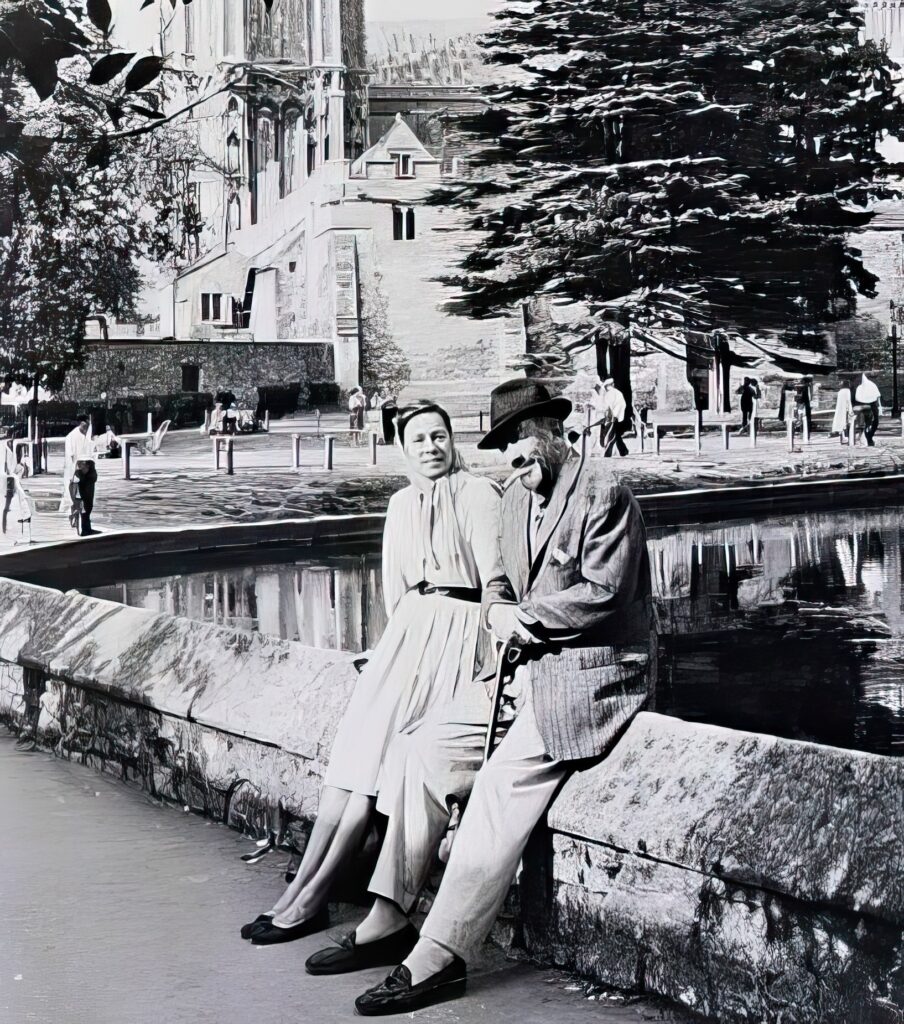John Steinbeck and his wife Elaine in Somerset, England, 1959.
Today is John Steinbeck’s birthday. I had never really thought about this before. That makes him a Pisces, if that counts in any way. My sister was a Pisces and one of my girlfriends. Both depended on the kindness of strangers and were in some important respects helpless alone. If this is not just gibberish.
I’m observing this day by reading about Steinbeck and the [*Morte d’Arthur*](https://www.bl.uk/collection-items/thomas-malorys-le-morte-darthur), the 15th century prose romance about the Arthurian world. Steinbeck attempted to translate the *Morte* into a slightly archaized modern English. He failed. He claimed that his failure brought on a stroke in the winter of 1959.
I have a very close friend who loves Steinbeck but has trouble with the *Morte*. I want to help him get over the hump with this book, because once you find the key that unlocks its genius, you never feel quite the same way about any other piece of literature again. I first read the *Morte* in the late 1970s, in Wiltshire, England, not far from Salisbury. I was spending the summer as a paying guest of a middle class Wiltshire family that needed the extra cash. That summer I spent five hours a day struggling to learn to read Homer in the original Greek. They cleared out a 17th century stable for me and we fashioned a desk. There I sat with the West’s first great poem and a word list and a cheater’s translation ([Richmond Lattimore](https://press.uchicago.edu/ucp/books/book/chicago/I/bo5811519.html)). Later in the day, after a good walk, I read Malory. It took maybe three weeks. I’m sure I took extensive notes, but I have no idea where they are, if they still exist.
Today, almost fifty years later (arghhh) I am reading a book called [*An Introduction to Malory*](https://www.barnesandnoble.com/w/introduction-to-malory-terence-mccarthy/1101993492) by Terence McCarthy. McCarthy teaches foreign literature at Dijon, France. I looked that up just now. I would have expected him to be either at a South Carolina university or in a red brick English university like Manchester or Reading. But no. Dijon. I should have guessed by the single “r” in Terence.
McCarthy is talking about how difficult first reading of the *Morte* can be. Which is precisely my friend’s challenge. And then he says this: “Let us say that for twentieth century readers it is easier to read the *Morte Darthur* \[he spells it thus\] for the first time if we have already read it once.” Page 2.
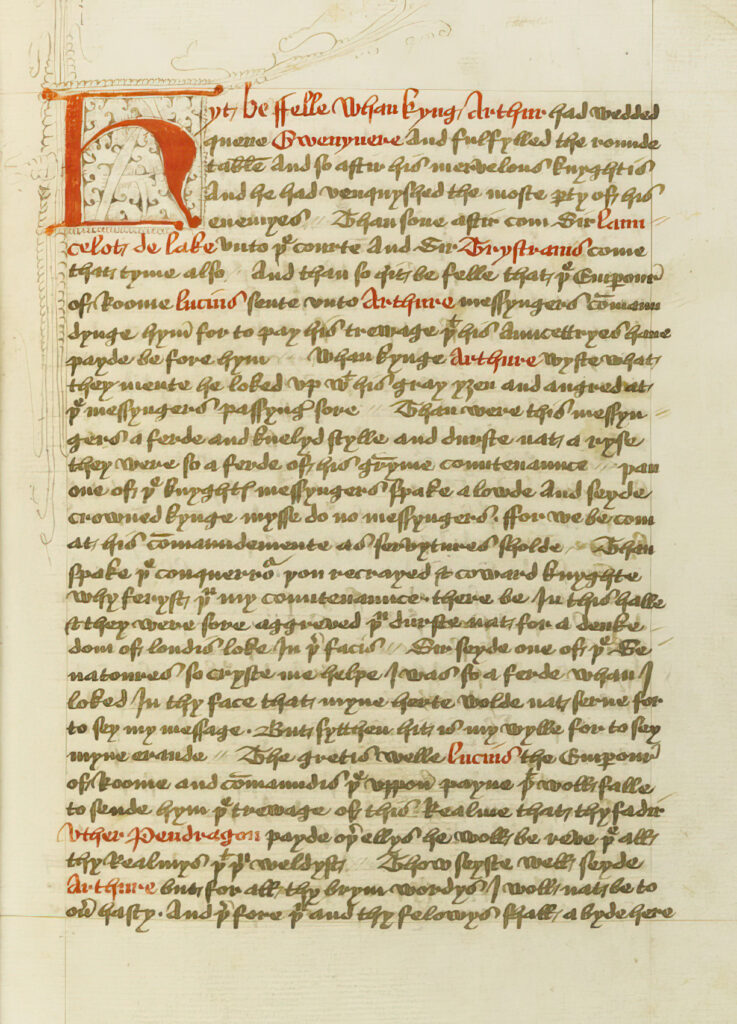A page from the sole surviving manuscript copy of Thomas Malory’s legends of King Arthur and his Knights — *Le Morte d’Arthur* (The Death of Arthur) c. 1471.
Exactly! I had to stand up when I read this, because it resonates with a koan that I often offer those who sign up for my humanities retreats, my Smithsonian talks, or my online courses. I say, you have to read a great book for the first time, and struggle with it, before you are really ready to read it. The first time we read *The Epic of Gilgamesh*, or the *Iliad*, or Dante’s *Divine Comedy*, or even *Moby Dick*, we are just trying not to drown. I feel serious sympathy for the college freshman suddenly in a great works course trying to read the *Iliad* or *The Wife of Bath’s Tale* for the first time. There are so many obscurities — gods and goddesses, names of major and lesser heroes, battle implements we have never encountered before, literary conventions, tropes, allusions and references, and syntax that is not our own — that many students just drown. This turns them off of great literature — “it’s just too hard,” or “it doesn’t speak to me,” or “I can’t get into it” — and they usually never return. And their professors don’t do them much service, either. In my experience, professors usually wind up just browbeating their students and wringing their hands about the decline of cultural literacy and capacity.
I repeat: “Let us say that for twentieth century readers it is easier to read the *Morte Darthur* for the first time if we have already read it once.” My way of saying that is that I ache to read *Hamlet* again for the first time, and I long to read *Huckleberry Finn* again for the first time.
But we cannot. In reading *Crime and Punishment* again recently, for the fifth time, I understood the novel so much better than on my first couple of encounters, but I felt the deep sadness of recognizing that something had been lost even as I understood more. The first time you read of Raskolnikov and Sonia alone in the dark room lit by the dying candle, sitting across from each other at a small deal table, the murderer and the harlot, you are overwhelmed with the magnificence of the scene, the mastery of Dostoevsky. That’s just how I felt the first time I read of Miss Havisham’s sallow bridal room in *Great Expectations*. And the first time I heard Lear say, “Thou art the thing itself. Unaccommodated man is nothing but such a poor, bare, forked animal as thou art.”
I can read those scenes a hundred times, even at full attention, but they never again deliver what they did the first time I encountered them. Realizing this produces one of the sharpest pains of my life. I sometimes say that I wish we had that gadget from the *Men in Black* movies, which blanks out the consciousness of the person who is zapped. But then, of course, reading *Hamlet* for the first time would be like reading it THE first time, with all the bewilderment and insecurity we felt when we were eighteen.
I’m going to order a copy of this book and send it to my friend the Steinbeckian, in the hopes that a: he has time to give it some attention, and b: that it alters the trajectory of his reading life. I believe it will. That would be the greatest gift of friendship I could ever offer him. You cannot tell when you do something like this if it will work. He may be too busy, may set it aside for next week and never come to it. We have all done that in the face of the encouragements of even our closest friends. But I reckon he will rise to the occasion. I must send the book to him by U.S. Postal Service. To have it sent by Amazon.com is not the same. It will automatically mean more to him when he sees that I chose to take more trouble with the gift.
Clay Jenkinson on a windy day at the site of King Arthur’s tomb in Glastonbury, England.
---
## ***Discover more on these topics at Listening to America***
[Washington](https://ltamerica.org/tag/washington/ "2 topics")[U.S. Constitution](https://ltamerica.org/tag/u-s-constitution/ "1 topics")[North Dakota](https://ltamerica.org/tag/north-dakota/ "53 topics")[William Shirer](https://ltamerica.org/tag/william-shirer/ "1 topics")[Rome](https://ltamerica.org/tag/rome/ "1 topics")[South Carolina](https://ltamerica.org/tag/south-carolina/ "1 topics")[Thoreau](https://ltamerica.org/tag/thoreau/ "5 topics")[Road Trips](https://ltamerica.org/tag/road-trips/ "18 topics")[New Mexico](https://ltamerica.org/tag/new-mexico/ "3 topics")[Steinbeck Travels](https://ltamerica.org/tag/steinbeck-travels/ "75 topics")[Travel](https://ltamerica.org/tag/travel/ "1 topics")[Republic](https://ltamerica.org/tag/republic/ "0 topics")[Texas](https://ltamerica.org/tag/texas/ "4 topics")[north daktoa](https://ltamerica.org/tag/north-daktoa/ "0 topics")[Reading](https://ltamerica.org/tag/reading/ "1 topics")[Republics](https://ltamerica.org/tag/republics/ "1 topics")[Theodore Roosevelt](https://ltamerica.org/tag/theodore-roosevelt/ "16 topics")[Poetry](https://ltamerica.org/tag/poetry/ "1 topics")[Podcast](https://ltamerica.org/tag/podcast/ "1 topics")[Ohio](https://ltamerica.org/tag/ohio/ "2 topics")[Wisconsin](https://ltamerica.org/tag/wisconsin/ "0 topics")[Walden](https://ltamerica.org/tag/walden/ "1 topics")[State Parks](https://ltamerica.org/tag/state-parks/ "2 topics")[New England](https://ltamerica.org/tag/new-england/ "1 topics")[Utah](https://ltamerica.org/tag/utah/ "11 topics")[The Constitution](https://ltamerica.org/tag/the-constitution/ "1 topics")[Video](https://ltamerica.org/tag/video/ "51 topics")[Tennessee](https://ltamerica.org/tag/tennessee/ "1 topics")[New York](https://ltamerica.org/tag/new-york/ "8 topics")[Pennsylvania](https://ltamerica.org/tag/pennsylvania/ "1 topics")[Vermont](https://ltamerica.org/tag/vermont/ "1 topics")[Oppenheim](https://ltamerica.org/tag/oppenheim/ "0 topics")[paintings](https://ltamerica.org/tag/paintings/ "0 topics")[Oppenheimer](https://ltamerica.org/tag/oppenheimer/ "1 topics")[U.S. Presidents](https://ltamerica.org/tag/u-s-presidents/ "71 topics")[Rivers](https://ltamerica.org/tag/rivers/ "3 topics")[Water in the West](https://ltamerica.org/tag/water-in-the-west/ "24 topics")[Wyoming](https://ltamerica.org/tag/wyoming/ "4 topics")[North Carolina](https://ltamerica.org/tag/north-carolina/ "3 topics")[Oregon](https://ltamerica.org/tag/oregon/ "4 topics")[South Dakota](https://ltamerica.org/tag/south-dakota/ "16 topics")[Space Exploration](https://ltamerica.org/tag/space-exploration/ "8 topics")[Thomas Jefferson](https://ltamerica.org/tag/thomas-jefferson/ "34 topics")[Sports](https://ltamerica.org/tag/sports/ "2 topics")[Virginia](https://ltamerica.org/tag/virginia/ "7 topics")
**Categories:** Dispatches from the Road
**Tags:** Books, John Steinbeck
---
### [To Be or Not To Be On I-94](https://ltamerica.org/to-be-or-not-to-be-on-i-94/)
**Published:** February 17, 2023
**Author:** Clay Jenkinson
**Excerpt:** Bismarck, N.D. — I was having a conversation about death and the afterlife with a friend the other day. The question: is death the end — oblivion and complete disintegration — or is it the portal to something else? And if something else, what does that something else entail?
**Content:**
> *“The undiscovered country from whose bourn*
> *No traveler returns, puzzles the will…”*
>
> Hamlet – Willam Shakespeare

BISMARCK, N.D. — I was having a conversation about death and the afterlife with a friend the other day. The question: is death the end — oblivion and complete disintegration — or is it the portal to something else? And if something else, what does that something else entail? She said she wanted to believe there is an afterlife and that we would meet our friends and family there. She’s not sure about any of this, but this is the world she hopes for. I believe that death is the Big Sleep, period, end of consciousness, memory, existence, anything that could be identified with me as a distinct being. At some point in this lovely conversation between trusted friends, I quoted from Hamlet’s “[To be or not to be](https://poets.org/poem/hamlet-act-iii-scene-i-be-or-not-be),” arguably the most famous soliloquy in the world: “the undiscovered country from whose bourn no traveler returns.” I suppose I have read this 100 times, maybe more, and have voiced the speech at least half as many. I had never thought about it except as signifying “the other side.” But this time, in east central Montana, on Interstate 94, with the Yellowstone River snaking in and out of our viewshed in graceful s-curves, the ridgelines and the broken hills dusted with snow, I suddenly realized that Shakespeare was writing Hamlet in the great age of [Elizabethan exploration](https://tudorstuartperspectives.wordpress.com/2015/12/07/elizabeths-age-of-exploration/). This was the time of [Francis Drake](https://www.historic-uk.com/HistoryUK/HistoryofEngland/Sir-Francis-Drake/) and [Walter Raleigh](https://www.hrp.org.uk/tower-of-london/history-and-stories/sir-walter-raleigh/#gs.psrv9x), the English settlement at Jamestown, and the mapping and conquest of the Caribbean islands. When Hamlet speaks of the undiscovered country, we should be aware of the Renaissance’s voyages of discovery and exploration; the European sense of bewilderment, wonder, and terror as new worlds forced themselves into their consciousness. Shakespeare lived in a world undergoing breathtaking change.
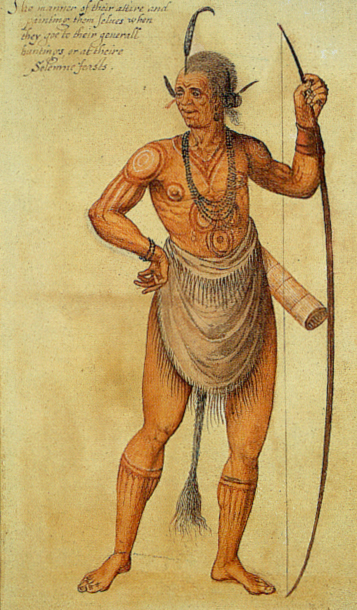Manteo, Croatan Native American Leader in North Carolina. Watercolor painted by John White in in 1585.
Imagine what Londoners thought when Raleigh’s team brought back two “Indians,” [Manteo and Wanchese](https://www.ncdcr.gov/blog/2014/04/19/wanchese-and-manteo-conclude-visit-to-london-1585), from the outer banks of North Carolina. They were [Algonquians](https://www.nps.gov/articles/carolinaalgonquian.htm). They were beings from far away whose appearance was human, but their ways dramatically different. They had not had the opportunity to know of Christ. They knew nothing of metallurgy. Their concepts of property were peculiar. Manteo and Wanchese were among the first natives brought back to the Old World. They and others touched off a 500-year crisis in Western civilization. What to make of these exotics? In some ways, they seemed happier than we were. They lived in cultures that were intriguing and, in some ways, seemingly superior to our own. However much we were attracted to the siren call of their societies, we chose resolutely to cling to our paradigm. The crisis of indigenous cultures continues. Native Americans, cut off from their traditions as they have been made to be, now explore their pre-contact cultures in part to relearn them after a long hiatus.
All that percolated through my mind as we drove along the Eisenhower Defense Highway, which, in eastern Montana, is one of the most beautiful and joy-delivering roads in the world. So now, when I read or recite To Be or Not To Be, I will invariably think not only of the Elizabethan explorers peeking tentatively into a new world but of my drive with a dear friend through Montana on a perfect January day.
---
## ***Discover more on these topics at Listening to America***
[Republic](https://ltamerica.org/tag/republic/ "0 topics")[Thoreau](https://ltamerica.org/tag/thoreau/ "5 topics")[Road Trips](https://ltamerica.org/tag/road-trips/ "18 topics")[Texas](https://ltamerica.org/tag/texas/ "4 topics")[Steinbeck Travels](https://ltamerica.org/tag/steinbeck-travels/ "75 topics")[New York](https://ltamerica.org/tag/new-york/ "8 topics")[Pennsylvania](https://ltamerica.org/tag/pennsylvania/ "1 topics")[Rome](https://ltamerica.org/tag/rome/ "1 topics")[William Shirer](https://ltamerica.org/tag/william-shirer/ "1 topics")[Oppenheim](https://ltamerica.org/tag/oppenheim/ "0 topics")[North Dakota](https://ltamerica.org/tag/north-dakota/ "53 topics")[Tennessee](https://ltamerica.org/tag/tennessee/ "1 topics")[Reading](https://ltamerica.org/tag/reading/ "1 topics")[Sports](https://ltamerica.org/tag/sports/ "2 topics")[Virginia](https://ltamerica.org/tag/virginia/ "7 topics")[Poetry](https://ltamerica.org/tag/poetry/ "1 topics")[Wisconsin](https://ltamerica.org/tag/wisconsin/ "0 topics")[Washington](https://ltamerica.org/tag/washington/ "2 topics")[Thomas Jefferson](https://ltamerica.org/tag/thomas-jefferson/ "34 topics")[Podcast](https://ltamerica.org/tag/podcast/ "1 topics")[Republics](https://ltamerica.org/tag/republics/ "1 topics")[Oppenheimer](https://ltamerica.org/tag/oppenheimer/ "1 topics")[Ohio](https://ltamerica.org/tag/ohio/ "2 topics")[Vermont](https://ltamerica.org/tag/vermont/ "1 topics")[North Carolina](https://ltamerica.org/tag/north-carolina/ "3 topics")[State Parks](https://ltamerica.org/tag/state-parks/ "2 topics")[Travel](https://ltamerica.org/tag/travel/ "1 topics")[Walden](https://ltamerica.org/tag/walden/ "1 topics")[north daktoa](https://ltamerica.org/tag/north-daktoa/ "0 topics")[The Constitution](https://ltamerica.org/tag/the-constitution/ "1 topics")[U.S. Constitution](https://ltamerica.org/tag/u-s-constitution/ "1 topics")[South Carolina](https://ltamerica.org/tag/south-carolina/ "1 topics")[Theodore Roosevelt](https://ltamerica.org/tag/theodore-roosevelt/ "16 topics")[Rivers](https://ltamerica.org/tag/rivers/ "3 topics")[New England](https://ltamerica.org/tag/new-england/ "1 topics")[Water in the West](https://ltamerica.org/tag/water-in-the-west/ "24 topics")[Wyoming](https://ltamerica.org/tag/wyoming/ "4 topics")[Oregon](https://ltamerica.org/tag/oregon/ "4 topics")[U.S. Presidents](https://ltamerica.org/tag/u-s-presidents/ "71 topics")[Space Exploration](https://ltamerica.org/tag/space-exploration/ "8 topics")[paintings](https://ltamerica.org/tag/paintings/ "0 topics")[Video](https://ltamerica.org/tag/video/ "51 topics")[South Dakota](https://ltamerica.org/tag/south-dakota/ "16 topics")[New Mexico](https://ltamerica.org/tag/new-mexico/ "3 topics")[Utah](https://ltamerica.org/tag/utah/ "11 topics")
**Categories:** Dispatches from the Road
---
### [32,000 Feet Over the Pine Ridge](https://ltamerica.org/32000-feet-over-the-pine-ridge/)
**Published:** February 10, 2023
**Author:** Clay Jenkinson
**Excerpt:** EDWARDS, Colo. — I flew from Bismarck, N.D., to Denver the other day to give a lecture. After the usual delays, the plane left Bismarck at about 10:30 a.m.
**Content:**
The Pine Ridge and the River Platte, from 32,000 Feet
> ***“In the United States there is more room where nobody is than where anybody is. That is what makes America what it is.”***
>
> ***Gertrude Stein***
EDWARDS, Colo. — I flew from Bismarck, N.D., to Denver the other day to give a lecture. After the usual delays, the plane left Bismarck at about 10:30 a.m. About half an hour into the flight, between reading and dozing and typing some notes, for no apparent reason I glanced out the window. As if by synchronicity, there below me at that random moment was one of the most romantic and alluring places on the Great Plains — the Pine Ridge country that separates the northern plains from the high plains. In the snowscape below me I recognized the North Platte River and the broken country at and near the Pine Ridge. The massacre site at Wounded Knee could not be far off this patch of wild landscape. In this photograph (above) you are looking at an area of about forty miles by twenty miles. You can see a couple of roads, one of them prominent on the north side of the river. And you can see a handful of ranches and shelter belts, planted under grants from the Soil Conservation system. This photograph takes in all that my camera could embrace through the small, semi-opaque window of the regional jet hurtling over the plains at 400 miles per hour.
What struck me more than anything else was how empty the landscape was. Deer, rabbits, coyotes, pronghorn antelope, prairie dogs, foxes, owls, eagles, and maybe a few wolves live there, but almost no humans. Immediately I thought of John Steinbeck’s statement, early in *Travels with Charlie*, that we Americans live in a “monster country.” Or as Gertrude Stein put it, “In the United States there is more room where nobody is than where anybody is. That is what makes America what it is.” Thanks to the wizardry of today’s technology a: I was able instantly to take a photograph of what I saw below me (try that in 1984); and b: I was able to text the photo to a friend more than a thousand miles away who would immediately understand what the photograph signified with a caption, without accompanying text.
This is most of America, especially beyond the Mississippi River. There are vast essentially uninhabited sections of the country, and you don’t have to get very far away from the coasts to experience them. What is left of the romance of America is tightly bound up with these vast and empty spaces.
When I see them from the air, or for that matter see the side roads snaking off the highway I am on in my car, my urge is to turn off and explore these places. Even in my home state of North Dakota, which is merely the nineteenth largest state, I’m guessing that I have seen no more than 10 percent of it. There are paved roads I have never been on — a source of sadness to me. There are countless gravel roads that I have never been on. And yet I take out of the way roads everywhere I travel with the express purpose of getting to know North Dakota as much as I possibly can.
Stein is right. This IS America. And even in a modest little city like Bismarck, it is possible to forget that fact most of the time. As Thoreau might say, if I had remembered that, I might have avoided some mistakes.
---
## ***Discover more on these topics at Listening to America***
[Virginia](https://ltamerica.org/tag/virginia/ "7 topics")[Thoreau](https://ltamerica.org/tag/thoreau/ "5 topics")[Water in the West](https://ltamerica.org/tag/water-in-the-west/ "24 topics")[Rome](https://ltamerica.org/tag/rome/ "1 topics")[Reading](https://ltamerica.org/tag/reading/ "1 topics")[Texas](https://ltamerica.org/tag/texas/ "4 topics")[William Shirer](https://ltamerica.org/tag/william-shirer/ "1 topics")[South Carolina](https://ltamerica.org/tag/south-carolina/ "1 topics")[Wyoming](https://ltamerica.org/tag/wyoming/ "4 topics")[Oregon](https://ltamerica.org/tag/oregon/ "4 topics")[Travel](https://ltamerica.org/tag/travel/ "1 topics")[Rivers](https://ltamerica.org/tag/rivers/ "3 topics")[Pennsylvania](https://ltamerica.org/tag/pennsylvania/ "1 topics")[north daktoa](https://ltamerica.org/tag/north-daktoa/ "0 topics")[Ohio](https://ltamerica.org/tag/ohio/ "2 topics")[Tennessee](https://ltamerica.org/tag/tennessee/ "1 topics")[Sports](https://ltamerica.org/tag/sports/ "2 topics")[Space Exploration](https://ltamerica.org/tag/space-exploration/ "8 topics")[Walden](https://ltamerica.org/tag/walden/ "1 topics")[Utah](https://ltamerica.org/tag/utah/ "11 topics")[U.S. Presidents](https://ltamerica.org/tag/u-s-presidents/ "71 topics")[North Carolina](https://ltamerica.org/tag/north-carolina/ "3 topics")[Poetry](https://ltamerica.org/tag/poetry/ "1 topics")[New Mexico](https://ltamerica.org/tag/new-mexico/ "3 topics")[Video](https://ltamerica.org/tag/video/ "51 topics")[Road Trips](https://ltamerica.org/tag/road-trips/ "18 topics")[Podcast](https://ltamerica.org/tag/podcast/ "1 topics")[U.S. Constitution](https://ltamerica.org/tag/u-s-constitution/ "1 topics")[paintings](https://ltamerica.org/tag/paintings/ "0 topics")[Oppenheim](https://ltamerica.org/tag/oppenheim/ "0 topics")[Republic](https://ltamerica.org/tag/republic/ "0 topics")[The Constitution](https://ltamerica.org/tag/the-constitution/ "1 topics")[Thomas Jefferson](https://ltamerica.org/tag/thomas-jefferson/ "34 topics")[Vermont](https://ltamerica.org/tag/vermont/ "1 topics")[Oppenheimer](https://ltamerica.org/tag/oppenheimer/ "1 topics")[Steinbeck Travels](https://ltamerica.org/tag/steinbeck-travels/ "75 topics")[New England](https://ltamerica.org/tag/new-england/ "1 topics")[New York](https://ltamerica.org/tag/new-york/ "8 topics")[Wisconsin](https://ltamerica.org/tag/wisconsin/ "0 topics")[Theodore Roosevelt](https://ltamerica.org/tag/theodore-roosevelt/ "16 topics")[Republics](https://ltamerica.org/tag/republics/ "1 topics")[North Dakota](https://ltamerica.org/tag/north-dakota/ "53 topics")[South Dakota](https://ltamerica.org/tag/south-dakota/ "16 topics")[State Parks](https://ltamerica.org/tag/state-parks/ "2 topics")[Washington](https://ltamerica.org/tag/washington/ "2 topics")
**Categories:** Dispatches from the Road
---
### [Missing McCullough and a Rich Immersion in the Humanities](https://ltamerica.org/missing-mccullough-and-a-rich-immersion-in-the-humanities/)
**Published:** August 23, 2022
**Author:** Clay Jenkinson
**Content:**
**BISMARCK, N.D. — The death of David McCullough on Aug. 7, 2022, at the age of 89 is a terrible loss. It seems almost fitting that as the American republic totters near the edge of the abyss, our most civil of public historians has taken his exit.**

McCullough seems like a creature from an earlier, more innocent, more attractive era of American life. Soft-spoken, unendingly polite, thoughtful, generous, wry and fair-minded, McCullough gave his life to the notion that we can know and learn from our history. He will forever be remembered as the voice of Ken Burns’ documentary on the Civil War. Choosing McCullough to perform the narration was one of the smartest things Burns has ever done.
I had dinner with Mr. McCullough once in Washington, D.C. We were both going to testify the next day before a congressional subcommittee on funding for the National Endowment for the Humanities. I was just a callow young punk and he was eminent and I was just thrilled to be in his presence. He has said many times that he feels blessed that his parents wanted him to have a full immersion in the humanities. I feel precisely the same way, but it was not my parents who showed me the way. In fact, I think it possible to argue that the decline of American civic culture has coincided with the decline of emphasis on the humanities and liberal arts in our colleges and universities.
McCullough famously insisted on writing his books on his typewriter long after that was no longer an efficient way to get words into print. Just as the last World War II veteran is sure to die in the next 20 years, and the last of the Beatles is sure to die probably sooner than that, and just as Donald Trump is certain to die before 2040 and probably much sooner, so we can be sure that the last book written on a typewriter is just around the corner. From a word processing point of view, it’s irrational (maybe insane) to write a book, particularly a footnoted book, on a typewriter, when Microsoft Word and the miraculous bibliographical tool WorldCat are available alternatives. I still have my gray-green portable Hermes 3000 typewriter, a high school graduation gift from my parents, and I drag it out at least twice a year when I need to write something I regard as gravely important. My daughter, now 28, grew up somehow knowing how to type without ever taking typing lessons in school, and she once asked for a typewriter the way one might seek to buy a clunky old Schwinn bicycle.
McCullough wrote dozens of books. To my mind, the best of them are his *Truman* (1992), *John Adams* (2002), and *Mornings on Horseback* (1982) (about young Theodore Roosevelt), even though his psychological theory about TR’s asthma is no longer regarded as helpful. He won the Pulitzer Prize twice and the National Book Award. In 2006 he was awarded the Presidential Medal of Freedom.
---
## ***Discover more on these topics at Listening to America***
[Rome](https://ltamerica.org/tag/rome/ "1 topics")[Podcast](https://ltamerica.org/tag/podcast/ "1 topics")[Oregon](https://ltamerica.org/tag/oregon/ "4 topics")[Oppenheim](https://ltamerica.org/tag/oppenheim/ "0 topics")[Rivers](https://ltamerica.org/tag/rivers/ "3 topics")[Wyoming](https://ltamerica.org/tag/wyoming/ "4 topics")[New York](https://ltamerica.org/tag/new-york/ "8 topics")[Water in the West](https://ltamerica.org/tag/water-in-the-west/ "24 topics")[Walden](https://ltamerica.org/tag/walden/ "1 topics")[Steinbeck Travels](https://ltamerica.org/tag/steinbeck-travels/ "75 topics")[north daktoa](https://ltamerica.org/tag/north-daktoa/ "0 topics")[Tennessee](https://ltamerica.org/tag/tennessee/ "1 topics")[Road Trips](https://ltamerica.org/tag/road-trips/ "18 topics")[Thoreau](https://ltamerica.org/tag/thoreau/ "5 topics")[South Carolina](https://ltamerica.org/tag/south-carolina/ "1 topics")[South Dakota](https://ltamerica.org/tag/south-dakota/ "16 topics")[Oppenheimer](https://ltamerica.org/tag/oppenheimer/ "1 topics")[Space Exploration](https://ltamerica.org/tag/space-exploration/ "8 topics")[Vermont](https://ltamerica.org/tag/vermont/ "1 topics")[Sports](https://ltamerica.org/tag/sports/ "2 topics")[The Constitution](https://ltamerica.org/tag/the-constitution/ "1 topics")[Theodore Roosevelt](https://ltamerica.org/tag/theodore-roosevelt/ "16 topics")[Washington](https://ltamerica.org/tag/washington/ "2 topics")[Pennsylvania](https://ltamerica.org/tag/pennsylvania/ "1 topics")[Wisconsin](https://ltamerica.org/tag/wisconsin/ "0 topics")[Poetry](https://ltamerica.org/tag/poetry/ "1 topics")[Virginia](https://ltamerica.org/tag/virginia/ "7 topics")[Ohio](https://ltamerica.org/tag/ohio/ "2 topics")[Reading](https://ltamerica.org/tag/reading/ "1 topics")[U.S. Presidents](https://ltamerica.org/tag/u-s-presidents/ "71 topics")[Thomas Jefferson](https://ltamerica.org/tag/thomas-jefferson/ "34 topics")[paintings](https://ltamerica.org/tag/paintings/ "0 topics")[William Shirer](https://ltamerica.org/tag/william-shirer/ "1 topics")[North Dakota](https://ltamerica.org/tag/north-dakota/ "53 topics")[Republic](https://ltamerica.org/tag/republic/ "0 topics")[New England](https://ltamerica.org/tag/new-england/ "1 topics")[Texas](https://ltamerica.org/tag/texas/ "4 topics")[Video](https://ltamerica.org/tag/video/ "51 topics")[Travel](https://ltamerica.org/tag/travel/ "1 topics")[North Carolina](https://ltamerica.org/tag/north-carolina/ "3 topics")[State Parks](https://ltamerica.org/tag/state-parks/ "2 topics")[Republics](https://ltamerica.org/tag/republics/ "1 topics")[New Mexico](https://ltamerica.org/tag/new-mexico/ "3 topics")[U.S. Constitution](https://ltamerica.org/tag/u-s-constitution/ "1 topics")[Utah](https://ltamerica.org/tag/utah/ "11 topics")
**Categories:** Dispatches from the Road
**Tags:** Humanities
---
### [Slings and Arrows of Teaching Shakespeare](https://ltamerica.org/slings-and-arrows-of-teaching-shakespeare/)
**Published:** September 7, 2023
**Author:** Clay Jenkinson
**Excerpt:** One Florida school system will only allow classroom study of excerpts from some Shakespeare plays in its high school curriculum because it is afraid they will violate the new state laws forbidding the inclusion of taboo issues in the curriculum.
**Content:**

Can this be serious? One Florida school system will [only allow classroom study of excerpts](http://nationalreview.com/news/florida-school-district-claims-shakespeare-runs-afoul-of-state-law-but-the-state-education-department-explicitly-suggests-his-plays/) from some Shakespeare plays in its high school curriculum because it is afraid they will violate the new state laws forbidding the inclusion of taboo issues in the curriculum. Is Shakespeare really regarded as too racy for the young people of Florida? Who has ever been corrupted by reading the plays and poems of the greatest writer in the English language? Do we want our professional teachers and librarians looking over their shoulders as they prepare to teach our children?
People have been inspired by reading Shakespeare. People have had the opportunity to wrestle with the great questions of Life by reading Shakespeare: love, friendship, marriage, death, jealousy, grief, loss, doubt, religious ecstasy, and more. Thousands of young people have decided to become writers, teachers, actors, set designers, and filmmakers after their exposure to Shakespeare. Reading Shakespeare has lifted people into a higher stage of human consciousness. I am one of those people.
I can understand why parents and other citizens are concerned about what our public schools teach. Education is one of the most essential things in a civilization, and parents surely have the right to express their concerns about course content, particularly what is age-appropriate. It would be a mistake to expect parents to shrug their shoulders about what their children are being exposed to, particularly young children.
Still, Shakespeare?
Instead of removing Shakespeare from school curricula, it might be more productive to wring our hands about the poor reading skills of high school graduates in Florida and elsewhere. In many cases, including in community college courses I have lectured in, students can no longer read Shakespeare with any facility. That, I believe, should set off national alarm bells. The problem with our educational system is not that it is corrupting our children but that it is failing to make enough demands of them. It is failing to prepare them for the mystery of Life.
It takes a bold politician to take on the greatest writer in the English language. Shakespeare is just the greatest of a pantheon of great writers that includes Emily Dickinson, Chaucer, Jane Austen, Milton, Thoreau, Melville, John Keats, Wordsworth, George Eliot, W.E.B. Dubois, Mark Twain, T.S. Eliot, James Baldwin, and a thousand others. If we cleanse the classics of what is perceived as prurient matter, we are in for a long process.
Is it possible to be corrupted by being exposed to *Romeo and Juliet*, *A Midsummer Night’s Dream, Julius Caesar, Hamlet, King Lear*, *Macbeth*, and *Twelfth Night*? How, exactly?
Yes, of course, there is some sexual punning and sexual innuendo in Shakespeare’s plays, but most high school students struggle to understand Shakespeare’s basic plots and poetry. Most of the puns and innuendoes soar right over their young minds.
## **Thomas Bowdler and *The Family Shakespeare***

History is never kind to the censors. In the 19th century, a British man, Thomas Bowdler, decided Shakespeare was too risqué for young people and Christian families. The result was [*The Family Shakespeare*,](https://www.smithsonianmag.com/smart-news/bowdlers-wanted-clean-shakespeare-not-become-byword-censorship-180963945/) published in 1807, covering 20 of Shakespeare’s 37 plays. In 1818, he published an expanded edition of *The Family Shakespeare*, cleansing the rest of the plays.
Bowdler assured his readers that “those words and expressions are omitted which cannot with propriety be read aloud in a Family.” To this, Bowdler added, “My great objects in this undertaking are to remove from the writings of Shakespeare some defects which diminish their value.”
Bowdler’s misguided, puritanical, and righteous maiming of Shakespeare generated a new word in the English language: **Bowdlerize**. Here’s just one definition of Bowdlerize: “Remove material that is considered improper or offensive from (a text or account), especially with the result that the text becomes weaker or less effective.”
As a profound lover of the humanities, I hope we will all calm down and work harder at teaching young people how to read with pleasure and discernment and somewhat less on what to read.
---
## ***Discover more on these topics at Listening to America***
[Oppenheimer](https://ltamerica.org/tag/oppenheimer/ "1 topics")[Thomas Jefferson](https://ltamerica.org/tag/thomas-jefferson/ "34 topics")[The Constitution](https://ltamerica.org/tag/the-constitution/ "1 topics")[paintings](https://ltamerica.org/tag/paintings/ "0 topics")[Video](https://ltamerica.org/tag/video/ "51 topics")[North Carolina](https://ltamerica.org/tag/north-carolina/ "3 topics")[Pennsylvania](https://ltamerica.org/tag/pennsylvania/ "1 topics")[U.S. Presidents](https://ltamerica.org/tag/u-s-presidents/ "71 topics")[Space Exploration](https://ltamerica.org/tag/space-exploration/ "8 topics")[South Dakota](https://ltamerica.org/tag/south-dakota/ "16 topics")[Ohio](https://ltamerica.org/tag/ohio/ "2 topics")[State Parks](https://ltamerica.org/tag/state-parks/ "2 topics")[Walden](https://ltamerica.org/tag/walden/ "1 topics")[Tennessee](https://ltamerica.org/tag/tennessee/ "1 topics")[Virginia](https://ltamerica.org/tag/virginia/ "7 topics")[north daktoa](https://ltamerica.org/tag/north-daktoa/ "0 topics")[Rome](https://ltamerica.org/tag/rome/ "1 topics")[Republic](https://ltamerica.org/tag/republic/ "0 topics")[North Dakota](https://ltamerica.org/tag/north-dakota/ "53 topics")[Water in the West](https://ltamerica.org/tag/water-in-the-west/ "24 topics")[Thoreau](https://ltamerica.org/tag/thoreau/ "5 topics")[Wisconsin](https://ltamerica.org/tag/wisconsin/ "0 topics")[Travel](https://ltamerica.org/tag/travel/ "1 topics")[Rivers](https://ltamerica.org/tag/rivers/ "3 topics")[Oregon](https://ltamerica.org/tag/oregon/ "4 topics")[Podcast](https://ltamerica.org/tag/podcast/ "1 topics")[Road Trips](https://ltamerica.org/tag/road-trips/ "18 topics")[Sports](https://ltamerica.org/tag/sports/ "2 topics")[Steinbeck Travels](https://ltamerica.org/tag/steinbeck-travels/ "75 topics")[South Carolina](https://ltamerica.org/tag/south-carolina/ "1 topics")[New York](https://ltamerica.org/tag/new-york/ "8 topics")[Utah](https://ltamerica.org/tag/utah/ "11 topics")[Washington](https://ltamerica.org/tag/washington/ "2 topics")[New England](https://ltamerica.org/tag/new-england/ "1 topics")[Theodore Roosevelt](https://ltamerica.org/tag/theodore-roosevelt/ "16 topics")[Reading](https://ltamerica.org/tag/reading/ "1 topics")[Wyoming](https://ltamerica.org/tag/wyoming/ "4 topics")[Texas](https://ltamerica.org/tag/texas/ "4 topics")[Republics](https://ltamerica.org/tag/republics/ "1 topics")[Oppenheim](https://ltamerica.org/tag/oppenheim/ "0 topics")[Poetry](https://ltamerica.org/tag/poetry/ "1 topics")[William Shirer](https://ltamerica.org/tag/william-shirer/ "1 topics")[Vermont](https://ltamerica.org/tag/vermont/ "1 topics")[New Mexico](https://ltamerica.org/tag/new-mexico/ "3 topics")[U.S. Constitution](https://ltamerica.org/tag/u-s-constitution/ "1 topics")
**Categories:** Features
**Tags:** Books, Humanities
---
### [The Professor Who Changed My Life](https://ltamerica.org/the-professor-who-changed-my-life/)
**Published:** August 12, 2023
**Author:** Clay Jenkinson
**Excerpt:** I was leaving Three Forks, Montana, when I got the call. My beloved English professor Thomas Clayton died this morning, August 9, 2023. He was 90 years old and an exceptional educator who made all the difference.
**Content:**
## Remembering Thomas Clayton, an exceptional man and educator who made all the difference.
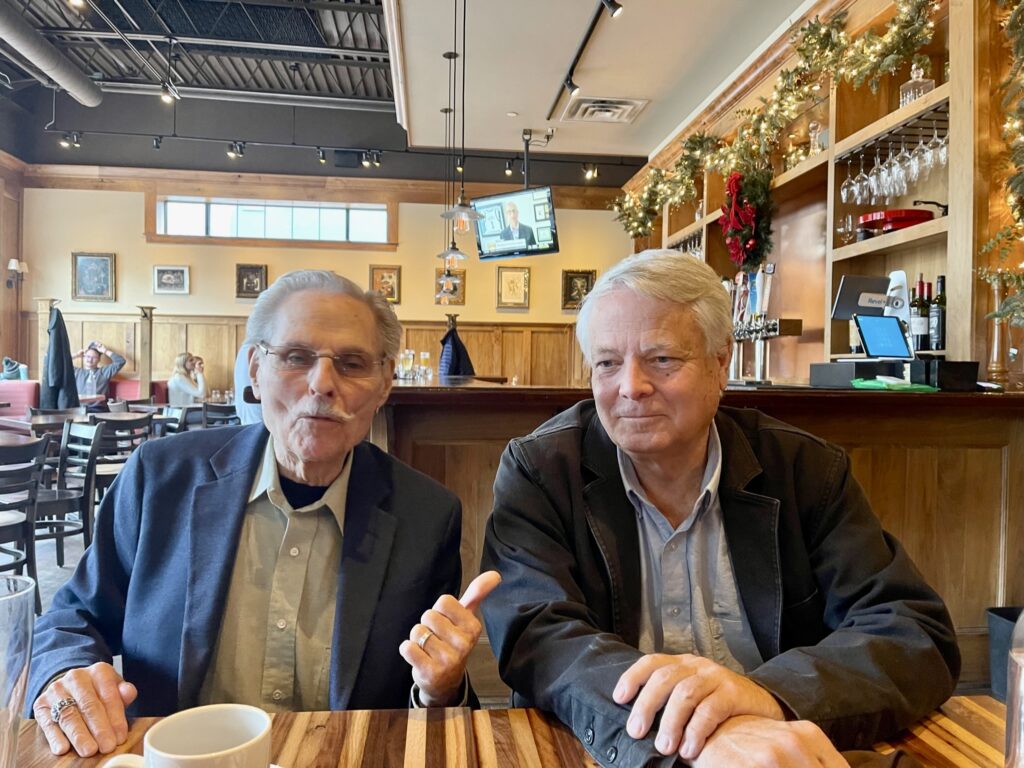Professor Thomas Clayton and Clay meet in Minneapolis in 2022. (Photo by Catherine Jenkinson)
I was leaving Three Forks, Montana, when I got the call. My beloved English professor [Thomas Clayton](https://www.researchgate.net/profile/Tom-Clayton) died this morning, August 9, 2023. He was 90 years old.
Thomas Jefferson said his William and Mary College mentor [William Small](https://www.wm.edu/as/physics/about_physics/williamsmall/index.php), “set the destinies of my life.” The same is true of Thomas Swoverton Clayton, classicist, Rhodes scholar, one of the leading experts on 17th-century poetry. One of the handful of regents professors of English at the University of Minnesota.
He was the single most impressive person I ever met. He had a Vandyke beard and a rapier wit. The first time I encountered him he was introducing [Stephen Booth](https://shaksper.net/current-postings/33850-stephen-booth-1933-2020) (1933-2020), who was at the University of Minnesota to lecture on Shakespeare’s sonnets. I was a callow sophomore English major taking my first courses in English literature. Mr. Clayton entered the small auditorium like a whirlwind, found the podium, made several self-effacing asides, each with a grimace that might have been self-satisfied, but in fact was just his public and private style. He spoke at about double normal human speed, with a series of brief, learned digressions that evoked appreciative laughter from the cognoscenti in the room but soared right over my head.
I was mesmerized. He was the embodiment of the life of the mind. Although he was wearing a dark suit and tie, he looked as if he had walked straight out of a Restoration drama. He was a compact man. He wore several rings, one with a death’s head.
Stephen Booth gave a good lecture. Afterward I did something I had never done before. I was extremely shy in those days, and pretty sure I was an onion that, once peeled, revealed nothing of value inside. I walked up to the dais and without introducing myself said, “I want to take whatever you are teaching next semester.” He looked at me with sardonic amusement. “Well, it’s Advanced Shakespeare, and it is only open to graduate students. I’m afraid it’s not possible.” I refused to give up. With even greater unprecedented boldness I said, “Wait, how can I convince you to let me into the course?” He studied me for a moment and said, “Write an explication of any passage in *Macbeth* this weekend and slip it under my door on Monday morning. I make no guarantees. In fact, I think you should consider yourself cashiered.”
First, I had to read *Macbeth*! I labored over that 2,500-word explication from Friday night to about 3 a.m. Monday, then typed it up and got it under his office door.
A day or two later I turned up at his office hours. I had prepared a hangdog look. “Well, it wasn’t very good, to be blunt, but I’ll take you in the course for your pluck. See you in January.”
Professor Thomas Clayton of the University of Minnesota.
I took five or six courses from Professor Clayton: Advanced Shakespeare; Seventeenth Century Poetry, Practical Criticism, another Shakespeare. I worked harder for him than I ever did before or after for anyone. In class I was usually stupefied by his erudition. I often did voluntary all-nighters to prepare for his class. Occasionally I would have something to say in class (invariably imprecise) and afterwards, I would walk from Temporary South Court Engineering (home of the English Department) to the plaza before Northrup Auditorium, but it was more like kicking myself across campus than walking. “Next time, I am going to say something he values.” And then I would go home and begin to prepare for the class two days hence. I was determined to earn his respect. He was — and is — the gold standard in my mind of the humanities professor.
If he so much as mentioned a book that might be worth reading, I rushed to the bookstore or the university library.
A 17th century portrait of John Donne.
Above all he taught me how to read hard poetry. He taught me later Shakespeare, Herbert, Lovelace, Marvel, Jonson, and Webster. Above all he taught me [John Donne](https://poets.org/poet/john-donne). I went on to do all my graduate work on the 17th century and wrote about Donne’s sermons and their relation to [St. Augustine](https://plato.stanford.edu/entries/augustine/). During *his* time at Wadham College, Oxford, young Clayton had studied under the great [Dame Helen Gardner](https://www.st-hildas.ox.ac.uk/content/dame-helen-gardner-1908-1986-english-1926) (1908-1986), even now one of the greatest scholars of 17th century literature. She, too, was a legendary figure and Mr. Clayton spoke of her with his mix of bemusement and deep respect. He found humor (or at least irony) in everything. When I studied at Oxford, my supervisor was the great John Carey, who was himself a protégé of Dame Helen. Mr. Clayton was a little critical of John Carey, one of the few times I believe he was mistaken. He’s one of Britain’s greatest academic and at the same time greatest public intellectuals.
One day, in my junior year, when I was in Mr. Clayton’s office he said to me, “Have you ever thought about studying at Oxford?” I had not. I knew where Oxford was, and that it had a global reputation, plus ancient spires, but that was it. “I think you would compete well for a [Rhodes Scholarship](https://www.rhodeshouse.ox.ac.uk/scholarships/the-rhodes-scholarship/),” said he. I was barely aware of what that was.
And he made it happen. No Thomas Clayton, no four years at Oxford. They were in some ways the best years of my life. I was in love for the first time there. Two of my greatest friendships began in Radcliffe Square. Now my daughter is there, finishing up a doctorate on the Tower of London in the Age of Elizabeth I and James I.
Later, a number of roads diverged and I took paths that led away from university life. I feel I let Mr. Clayton down. I feel I let myself down. As Richard II says, “I wasted time and now doth time waste me.”
John Donne is one of the greatest poets in English. At one time, for about 10 years, his writings were the very center of my existence. Thomas Clayton gave me John Donne. And Donne is precisely his kind of poet — witty, learned, reverent and irreverent (usually in the same poem). Passionate. Paradoxical. Brilliant.
## **Hamlet at the Old Guthrie Theater**
In 2006 the splendid old Guthrie Theater in Minneapolis closed, much lamented, and never adequately replaced by the new Guthrie. Because its first production had been *Hamlet*, so too was its last. I love last things. I have been to many last performances, including the Spearfish (S.D.) *Passion Play*, and the last performance (at least back then) of the Grand Ole Opry at the Ryman Auditorium in Nashville.
I was pretty sure Mr. Clayton would decline my invitation to take him to the finale. But he said yes. Said yes in his usual way: “I don’t expect I will find much to admire in the production but come early enough to the house so we can have a glass of grog of some sort and we’ll take it from there.” In fact, he did not like the production much, but — hey — it was *Hamlet*, which I have by now seen two dozen times in production and in countless film reruns. When I arrived (with three plus ones for protection) he was watching the Minnesota Gophers play basketball on television. What is worse, he knew all the players, had a big NCAA basketball vocabulary. I was a little shocked. Until this moment I had always regarded him as someone who was beyond the diurnal things of life. Of course, he provided wry and disillusioned commentary about the hapless Minnesota Gophers, but seeing him griping at the television screen made me realize that he was human after all.
Here is a tiny sample of Mr. Clayton’s voice as a literary critic:
*“A textual critic engaged upon his business is not at all like Newton investigating the motions of the planets; he is much more like a dog hunting for fleas. If a dog hunted for fleas on mathematical principles, basing his researches on statistics of area and population, he would never catch a flea except by accident. They require to be treated as individuals; and every problem which presents itself to the textual critic must be regarded as possibly unique.”*
This is characteristically brilliant and bemused.
About 18 months ago, my daughter and I drove from Bismarck, N.D., to Minneapolis to have lunch with Mr. Clayton. I have been telling her since she was 10 years old that one of my principal goals was to make sure she met Thomas Clayton. He named the pub. Although his health was not good, he came in late like a dervish and began to say clever things out of the side of his mouth even before he sat down. The wait staff knew him and brought him his favorite ale unbidden. I was on the edge of tears through the entire lunch, which lasted a couple of hours. Catherine (my daughter) immediately experienced his intellectual charisma and charm. When I stepped out to use the restroom Mr. Clayton spoke in high praise of me in an over-generous way, and that brought *her* nearly to tears. As he walked off that winter afternoon, I wondered if I would ever see him again. I had regarded him as immortal, but now that my own mortality was a factor, I knew the day would come when I would get the call.
All my life I have tried to live up to the standard of Thomas Clayton, Regents Professor of English (and Classical Studies) at the University of Minnesota.
I end this elegy with two quotations from the 17th century, both frequently invoked by Professor Clayton. This is why we have the humanities — to provide artistic context with and through which we make sense of the mysteries of life.
From my beloved John Donne:
> *No man is an Iland, intire of itselfe; every man*
>
> *is a peece of the Continent, a part of the maine;*
>
> *if a Clod bee washed away by the Sea, Europe*
>
> *is the lesse, as well as if a Promontorie were, as*
>
> *well as if a Manor of thy friends or of thine*
>
> *owne were; any mans death diminishes me,*
>
> *because I am involved in Mankinde;*
>
> *And therefore never send to know for whom*
>
> *the bell tolls; It tolls for thee.*
>
> John Donne
That’s from Meditation XVII from Donne’s *Devotions Upon Emergent Occasions*, which the poet wrote when he thought he was dying in December 1623. I regard it as one of the greatest passages ever written. Mr. Clayton might raise an eyebrow just a smidgen at that claim.
The second is from his beloved *Hamlet*. Says Horatio to the dying Hamlet:
*Good night, sweet prince, and flights of angels sing thee to thy rest.*
He’d like that one.
Farewell, Professor Clayton. You made all the difference.
---
## ***Discover more on these topics at Listening to America***
[Oppenheimer](https://ltamerica.org/tag/oppenheimer/ "1 topics")[paintings](https://ltamerica.org/tag/paintings/ "0 topics")[New Mexico](https://ltamerica.org/tag/new-mexico/ "3 topics")[Travel](https://ltamerica.org/tag/travel/ "1 topics")[Republics](https://ltamerica.org/tag/republics/ "1 topics")[Reading](https://ltamerica.org/tag/reading/ "1 topics")[Podcast](https://ltamerica.org/tag/podcast/ "1 topics")[Space Exploration](https://ltamerica.org/tag/space-exploration/ "8 topics")[Pennsylvania](https://ltamerica.org/tag/pennsylvania/ "1 topics")[North Carolina](https://ltamerica.org/tag/north-carolina/ "3 topics")[South Dakota](https://ltamerica.org/tag/south-dakota/ "16 topics")[North Dakota](https://ltamerica.org/tag/north-dakota/ "53 topics")[Oregon](https://ltamerica.org/tag/oregon/ "4 topics")[Wyoming](https://ltamerica.org/tag/wyoming/ "4 topics")[Wisconsin](https://ltamerica.org/tag/wisconsin/ "0 topics")[Texas](https://ltamerica.org/tag/texas/ "4 topics")[Utah](https://ltamerica.org/tag/utah/ "11 topics")[Tennessee](https://ltamerica.org/tag/tennessee/ "1 topics")[Theodore Roosevelt](https://ltamerica.org/tag/theodore-roosevelt/ "16 topics")[The Constitution](https://ltamerica.org/tag/the-constitution/ "1 topics")[Thoreau](https://ltamerica.org/tag/thoreau/ "5 topics")[Walden](https://ltamerica.org/tag/walden/ "1 topics")[Rivers](https://ltamerica.org/tag/rivers/ "3 topics")[Road Trips](https://ltamerica.org/tag/road-trips/ "18 topics")[South Carolina](https://ltamerica.org/tag/south-carolina/ "1 topics")[New York](https://ltamerica.org/tag/new-york/ "8 topics")[Water in the West](https://ltamerica.org/tag/water-in-the-west/ "24 topics")[Republic](https://ltamerica.org/tag/republic/ "0 topics")[State Parks](https://ltamerica.org/tag/state-parks/ "2 topics")[Washington](https://ltamerica.org/tag/washington/ "2 topics")[U.S. Presidents](https://ltamerica.org/tag/u-s-presidents/ "71 topics")[north daktoa](https://ltamerica.org/tag/north-daktoa/ "0 topics")[Rome](https://ltamerica.org/tag/rome/ "1 topics")[Sports](https://ltamerica.org/tag/sports/ "2 topics")[William Shirer](https://ltamerica.org/tag/william-shirer/ "1 topics")[Oppenheim](https://ltamerica.org/tag/oppenheim/ "0 topics")[Steinbeck Travels](https://ltamerica.org/tag/steinbeck-travels/ "75 topics")[Virginia](https://ltamerica.org/tag/virginia/ "7 topics")[Poetry](https://ltamerica.org/tag/poetry/ "1 topics")[Thomas Jefferson](https://ltamerica.org/tag/thomas-jefferson/ "34 topics")[New England](https://ltamerica.org/tag/new-england/ "1 topics")[U.S. Constitution](https://ltamerica.org/tag/u-s-constitution/ "1 topics")[Ohio](https://ltamerica.org/tag/ohio/ "2 topics")[Vermont](https://ltamerica.org/tag/vermont/ "1 topics")[Video](https://ltamerica.org/tag/video/ "51 topics")
**Categories:** Features
---
### [The Long Dreamed Airstream Joins the Listening to America Team](https://ltamerica.org/the-long-dreamed-airstream-joins-the-listening-to-america-team/)
**Published:** August 28, 2023
**Author:** Clay Jenkinson
**Excerpt:** A new chapter in my life begins. For the next several years, I plan to spend about half of the year on the road with my new Airstream trailer for our big humanities initiative, Listening to America. My plan is to get out on the open road, see the vastness of America and report my findings to you.
**Content:**
Clay and his new Airstream arrive safely at a campground in the shadow of Devils Tower National Monument, Wyoming. (Photo by Clay Jenkinson)
A new chapter in my life begins. For the next several years, I plan to spend about half of the year on the road with my new Airstream trailer for our big humanities initiative, [**Listening to America**](https://ltamerica.org).
My plan is to get out on the open road, see the vastness of America, visit historic sites, national parks and monuments, interview all sorts of people, and above all listen: listen … in the hope that I can learn something about the mood of America as we approach our 250th birthday on July 4, 2026. And report my findings to you.
Just how does one do this? Well, first you must have the Airstream and a vehicle strong enough to pull it around America. Thanks to the almost unbelievable generosity of a family in the lower Chesapeake of Virginia, I now have a 23-foot Flying Cloud Airstream. I already owned a GMC Sierra pickup. Today I registered the rig at the North Dakota DOT.
## **Picking up the Airstream**
In mid-August I was speaking for the [Vail Symposium](https://vailsymposium.org/?s=clay+jenkinson) in Colorado, and the Airstream was parked in Silt, Colorado. When the work was done, I drove my pickup over to Silt (79.8 miles), where I met my co-conspirators Dennis and Frank. Dennis is the brains of the outfit and Frank the intrepid scout. The woman who sold us the Airstream met us and explained the systems: water heater, awning, toilet, the typically persnickety refrigerator, the stabilizer bars on the hitch, storage bins, stabilizer struts, etc.
We said goodbye and eased the rig out of the holding pen, found a big parking lot across town, and did some pirouettes, backed it up, checked its turning ratio, fiddled with the hitch. Then we drove it to a nearby KOA campground. After we registered, we backed the trailer into our designated slot in just under 45 minutes of pure Keystone comedy — now back, now forward, in and out of the driver’s seat, cursing under the breath, “I said left, not right,” cursing openly, “not that much left!” weeping, gnashing teeth, glaring with wrath and utter frustration. And then we were parked. A good start.
Three amigos (left to right), Dennis, Frank and Clay outside Clay’s Airstream.
My colleagues asked me if I needed anything and then they sped away like rats from a sinking ship. My plan was to spend the night in Silt and then — after a good night’s sleep — wend my way to North Dakota. A shakedown cruise.
Fortunately, this was not my first rodeo. I owned a pickup camper for a couple of years. This gave me the opportunity to learn the essentials. A: Everything inside needs to be battened down before you move. B: You are working with new height restrictions. C: If you think about the cost of gas, you’ll lose your joy. D: Take advantage of public facilities whenever possible.
## **Day One: Rifle, Colo. to Casper, Wyo.**
My goal for the first day was to drive more than 300 miles, to see how the rig performed on the road, to see how *I performed* on the road. I drove north from Rifle, Colorado, up some backcountry highways towards Wyoming. I needed to see how quickly this bulky little convoy can accelerate and how long it takes to slow it down at stop signs and crossroads.
Luckily, I chose a road with frequent passing lanes. Nothing is more frustrating to other motorists, including long haul truckers, than the geezer in the RV driving 57 miles per hour when the speed limit is 65 or 70. I did not want to be *that* guy. I spent a lot of time looking through the rearview mirrors and looking for places to pull over to let the traffic pass. I don’t intend to spend my road years on the interstate highways except when necessary, so I want to get into the habit of being a courteous driver.
About 5 p.m. I pulled into an RV park in Casper that was in the drab industrial part of town. Every community of any size has that district on the edge of town, where you can buy a hitch, weld a strut, rent a U-Haul, buy a tractor tire. The industrial-quarter RV park was all that was available, but I am glad I stayed there. Once I found my slot, it soon became clear that this was a place where most of the occupants were renting space for a long period of time — workers temporarily located in Casper, or couples desperate for work and hanging out at this camp until something turned up.

I had made a rookie mistake when I left Silt that morning. I had closed the refrigerator door but I had not pushed the door hard enough to *latch*. Therefore, when I opened the rig I found a large fruit salad smashed all over the floor, plus five broken eggs. It took about 45 minutes to clean all that up. Raw eggs are sicky things. While on my hands and knees I found several new gauges and panels to try to make sense of. The episode reminded me of several comic scenes from the 1954 film [*The Long, Long Trailer*](https://www.imdb.com/title/tt0047191/) starring Lucille Ball and Desi Arnaz. Just imagine. Anyone who is thinking of renting or buying an RV should watch this film, and of course the 2006 movie [*RV*,](https://www.imdb.com/title/tt0449089/) starring Robin Williams and Cheryl Hynes. Or [*Nomadland*](https://www.imdb.com/title/tt9770150/) (2020), starring one of my favorite actors, Frances McDormand.
## **Day Two: Casper to Devils Tower, Wyoming**
By now I am an Airstream veteran. I know at least how to shower and shave in the rig and work the fans to avoid the air conditioner when possible. I was able to batten up the rig and get on the road in less than half an hour. I have a checklist. Refrigerator: latched! Shower door: locked. Entry steps: retracted. Hitch: double checked. Brake lights and turn signals: checked.
I drove 187 miles from Casper to Devils Tower National Monument. Now the real adventure began. Devils Tower was America’s first National Monument (September 24, 1906), established by America’s greatest conservation president, Theodore Roosevelt. I’ve been there many times and yet every time I get my first glimpse of it, rising 867 feet above the surrounding plain, I am so filled with wonder and love of America that I almost burst into tears. When I lived abroad, the thing I missed most was the American outback. No such thing in England.
Our intrepid scout Frank had reserved a pull-through slot for me at the Devils Tower KOA ([Kampgrounds of America](https://koa.com)), which is located almost directly outside the entrance station of the monument. He insisted upon a slot with a view of the tower. I checked in at the gate.
From my road journal:
*I’m all aflutter worrying about the daily itinerary after I was checked in by a truly friendly white-haired woman in a yellow polo shirt. She warned me that I would have to make some tough choices. Miniature golf is free, and you can play as many rounds as you want. There will be a hay wagon ride for those who wish to view Devils Tower from a perfect location. There will also be an evening showing of **Close Encounters of the Third Kind**, starring Richard Dreyfus. Lest I might shrug that off, she reminded me that the movie was about Devils Tower and it was partly filmed here. And there will be a campfire. As with Disneyland you cannot do it all.*
The KOA corporation must have profited mightily from the pandemic. I’ve met several people who bought a rig during the pandemic, seldom used it then, and now feel less eager to drive around the country looking for full hookups. All this to the tune of “At the time, it seemed like a good idea.” In the old days, you could just show up at a KOA campground and get a slot. These days you need to make your reservations well in advance. When I called one a few days ago and asked if it was full, the woman on the phone snorted and said, “Oh, honey. …”
Note — I do not intend to explore America by way of KOA campgrounds. I’ve had two previous sustained RV experiences in my life and what I’ve concluded is that what you want is either a state park campground or possibly a National Park campground (hard to get these days), or — better yet — a National Forest or BLM campground. Some of my happiest experiences have been at lightly populated National Forest sites next to a stream in the high country of Colorado. I don’t particularly want to be all alone in the outback, but I don’t want to venture through America from trailer park to trailer park either.
More from the road journal:
*I write this at a perfect time of night. The sun is about half an hour from setting over the very top of Devils Tower. It’s cloudy enough to diffuse the sun’s light, and the campground is now mostly in shade. It’s quiet. My hope — soon to be dashed — is that everyone is here who is going to be here tonight. Nothing worse than the rig that pulls in at 11:15 p.m. and disrupts everything as the couple tries to do the many logistical things in the dark, often with a little domestic tension thrown in.*
*The wind comes and the wind goes. There is a peacefulness here, strangely, that I don’t think you can expect at a National Park campground. Maybe it is just the comparative quiet of Sunday night at the base of Devils Tower.*
*I’ve got to cook pretty soon, but I hate to break this spell.*
*I cook outside on a lovely little tabletop grill not much bigger than a hot plate or a cigar box. Spaghetti. A wee salad. A couple of glasses of white wine.*
After I settled myself in early afternoon, I walked to the KOA shop to buy some Tabasco sauce. As I walked by a giant RV the size of a country music star’s tour bus, I saw a man sitting outside on a camp chair watching *Wheel of Fortune*. (Ok, just stop for a moment to think about this. At some appalling cost, in the $400k range, he and his spouse have turned up in a luxury coach RV at one of the most beautiful places in America. Where he is watching Vanna and Pat chat up three average Americans who are trying to solve word puzzles, on an outside television array that deployed electrically from a side panel on the coach. At Devils Tower.) I asked him how he liked his rig? Loves it of course? I asked him if there is a television inside. Four.
Four, five with the outside home (away from home) theater. I said, “Do you mind if I ask what kind of mileage you get in that thing?” He said, “Six, well, five if I step on it.” Step on it to get to the campground in time for *Wheel of Fortune?*
From my journal:
*Well, Devils Tower looms over me at dusk on a Sunday night in August in America. From a KOA campground it doesn’t feel sacred. It feels like Item 46 on the Must Tour of America’s Scenic Wonders. If your question is whether to buy your firewood from a convenience store down the road or to pay the higher price here at the campground store, or whether it is worth seeing Close Encounters of the Third Kind in situ, as it were, you are probably not thinking about the sacred traditions of the Cheyenne or the need to protect the sublimity of the American West from those would privatize it in one way or another.*
*No wild music in camp. Nobody is annoying everyone with campsite country rock blaring around the camp. Everyone is exquisitely polite, which I’m guessing is why we come to the Number One corporate campground brand in the country.*
*The Moon is magnificent tonight. Setting just to the south of Devils Tower with high gray clouds half obscuring its brilliance. To be here at all is glorious. To know that America has chosen to preserve and protect some of these landscapes. Thank you, Theodore Roosevelt. To see the new moon setting in all its serenity, entirely unconcerned with the little dramas of humankind. To breathe the fresh air. It’s redemptive. You want the person you love to be beside you, or to find a person to love who shares your values and principles.*
*I’m sitting at my picnic table sipping box white wine, and one RV’s lights after the next blink out. Probably my new friend down the road is watching the 9 o’clock news and then plans to climb into bed.*
*I feel blessed to be alive. I love that I live in a nation that has kept some of its primordial landscapes for seed. When I have lived abroad, it is the American West that has most called me home. I would not be happy with better wine. But conversation …?*
## **Day Three:** **Devils Tower to Bismarck**
Clay’s previous Airstream.
The only drama of this day was when my Google app sent me on a 43-mile shortcut north of the Black Hills on a gravel road. I wasn’t ready for gravel or cattle guards or tire ruts and the washboard effect. I gripped the wheel and drove at 40 mph hoping, almost praying, that I would not meet anyone on the road. But I did — a huge 18-wheel grain truck. I would say we inched past each other, but it was more like centimeters. By the time I got to Camp Crook, South Dakota, I was a nervous wreck. I bought gas (ruinously expensive) and drove the rest of the way home without stopping. When I got home at last, I was half afraid to open the door to the trailer. Sure enough, even though it is new, and Airstream is famous for tight window seals, there was a film of Great Plains dust over everything.
So, what have I learned? Well, I didn’t total the rig. I wasn’t arrested. I managed to drive 838.5 miles without incident. I slept well. I wasn’t killed, mugged, roughed up, or flipped off. I listened to a whole audio book on the American South, and I caught up on the latest national political news. Indictments, innuendoes, idiocies, interviews. I averaged 15.6 miles per gallon, which is not quite as appalling as I expected. I’m comfortable hauling the rig, sleeping in the rig, reading in and out of the rig, typing at the dinette table.
My only regret is that I cannot right now begin my big journeys across what Steinbeck called “this monster land.” But it was a very good start. Time to take off the training wheels. Here I come, America in my shining Airstream in the dark!
The rig and Clay’s pickup out front of his home in Bismarck, N.D. (Photo by Clay Jenkinson)
---
## ***Discover more on these topics at Listening to America***
[U.S. Presidents](https://ltamerica.org/tag/u-s-presidents/ "71 topics")[Reading](https://ltamerica.org/tag/reading/ "1 topics")[William Shirer](https://ltamerica.org/tag/william-shirer/ "1 topics")[north daktoa](https://ltamerica.org/tag/north-daktoa/ "0 topics")[Thoreau](https://ltamerica.org/tag/thoreau/ "5 topics")[Podcast](https://ltamerica.org/tag/podcast/ "1 topics")[Thomas Jefferson](https://ltamerica.org/tag/thomas-jefferson/ "34 topics")[Vermont](https://ltamerica.org/tag/vermont/ "1 topics")[Sports](https://ltamerica.org/tag/sports/ "2 topics")[New Mexico](https://ltamerica.org/tag/new-mexico/ "3 topics")[Utah](https://ltamerica.org/tag/utah/ "11 topics")[North Dakota](https://ltamerica.org/tag/north-dakota/ "53 topics")[Video](https://ltamerica.org/tag/video/ "51 topics")[South Dakota](https://ltamerica.org/tag/south-dakota/ "16 topics")[Ohio](https://ltamerica.org/tag/ohio/ "2 topics")[Space Exploration](https://ltamerica.org/tag/space-exploration/ "8 topics")[Washington](https://ltamerica.org/tag/washington/ "2 topics")[Pennsylvania](https://ltamerica.org/tag/pennsylvania/ "1 topics")[North Carolina](https://ltamerica.org/tag/north-carolina/ "3 topics")[State Parks](https://ltamerica.org/tag/state-parks/ "2 topics")[Republic](https://ltamerica.org/tag/republic/ "0 topics")[paintings](https://ltamerica.org/tag/paintings/ "0 topics")[Rome](https://ltamerica.org/tag/rome/ "1 topics")[Wyoming](https://ltamerica.org/tag/wyoming/ "4 topics")[Rivers](https://ltamerica.org/tag/rivers/ "3 topics")[Oregon](https://ltamerica.org/tag/oregon/ "4 topics")[Oppenheimer](https://ltamerica.org/tag/oppenheimer/ "1 topics")[Road Trips](https://ltamerica.org/tag/road-trips/ "18 topics")[Wisconsin](https://ltamerica.org/tag/wisconsin/ "0 topics")[Virginia](https://ltamerica.org/tag/virginia/ "7 topics")[Theodore Roosevelt](https://ltamerica.org/tag/theodore-roosevelt/ "16 topics")[U.S. Constitution](https://ltamerica.org/tag/u-s-constitution/ "1 topics")[Texas](https://ltamerica.org/tag/texas/ "4 topics")[South Carolina](https://ltamerica.org/tag/south-carolina/ "1 topics")[Travel](https://ltamerica.org/tag/travel/ "1 topics")[Republics](https://ltamerica.org/tag/republics/ "1 topics")[Walden](https://ltamerica.org/tag/walden/ "1 topics")[Oppenheim](https://ltamerica.org/tag/oppenheim/ "0 topics")[Water in the West](https://ltamerica.org/tag/water-in-the-west/ "24 topics")[Poetry](https://ltamerica.org/tag/poetry/ "1 topics")[The Constitution](https://ltamerica.org/tag/the-constitution/ "1 topics")[Tennessee](https://ltamerica.org/tag/tennessee/ "1 topics")[Steinbeck Travels](https://ltamerica.org/tag/steinbeck-travels/ "75 topics")[New York](https://ltamerica.org/tag/new-york/ "8 topics")[New England](https://ltamerica.org/tag/new-england/ "1 topics")
**Categories:** Dispatches from the Road
**Tags:** Colorado, National Parks, North Dakota, U.S. Presidents
---
### [India's First Lunar Landing and America's Sense of Wonder](https://ltamerica.org/indias-lunar-landing-and-americas-sense-of-wonder/)
**Published:** August 24, 2023
**Author:** Clay Jenkinson
**Excerpt:** Today, I read in my news feed that India has successfully landed a probe on the south pole of the moon. Chandrayaan-3 touched down at 8:30 a.m. EDT, August, 23, 2023. U.S. news of the event seemed decidedly matter-of-fact.
**Content:**
## India made history this week with the successful landing of the unmanned spacecraft Chandrayaan-3, on the moon’s south pole.
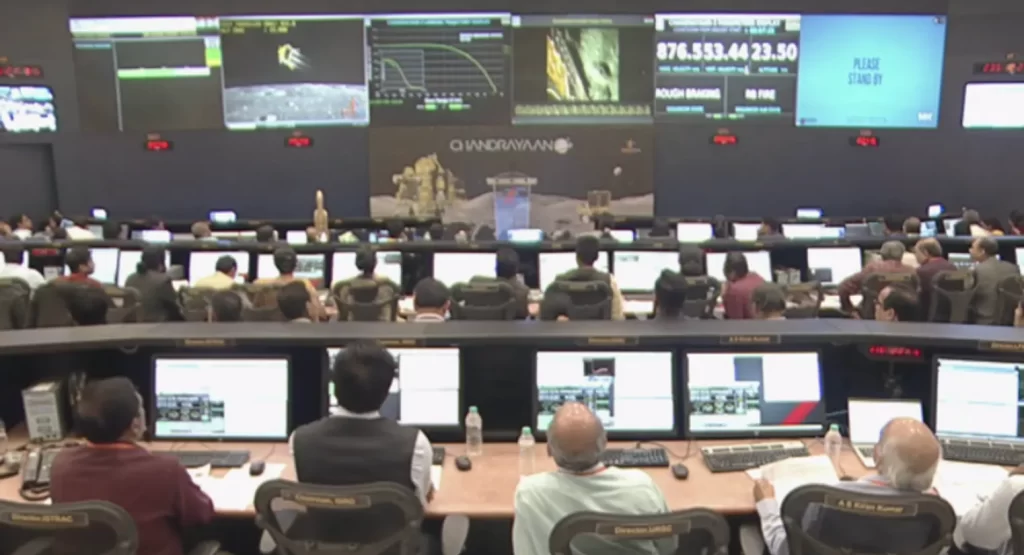Mission control for India’s successful lunar landing on August, 23, 2023. (YouTube)
Today, I read in my routine smartphone news feed that India successfully landed a probe on the south pole of the moon. Chandrayaan-3 touched down at 8:30 a.m. EDT, August, 23, 2023. The mission, streamed live on [YouTube](https://www.youtube.com/watch?v=DLA_64yz8Ss), was India’s second attempt to land on the moon. U.S. news of the event seemed decidedly matter-of-fact.
What happened to our sense of wonder? When John Glenn returned from his historic [Mercury Friendship 7 mission](https://history.nasa.gov/friendship7/) in 1962, President John F. Kennedy traveled to Florida to greet him. Glenn was the first American to orbit the Earth, just ten months after the Soviet cosmonaut Yuri Gagarin became the [first human to orbit Earth](https://www.esa.int/About_Us/ESA_history/50_years_of_humans_in_space/Yuri_Gagarin) in April 1961.
Glenn addressed a joint session of Congress in Washington. In New York, 4 million people turned out to watch his ticker tape parade on March 1, 1962.
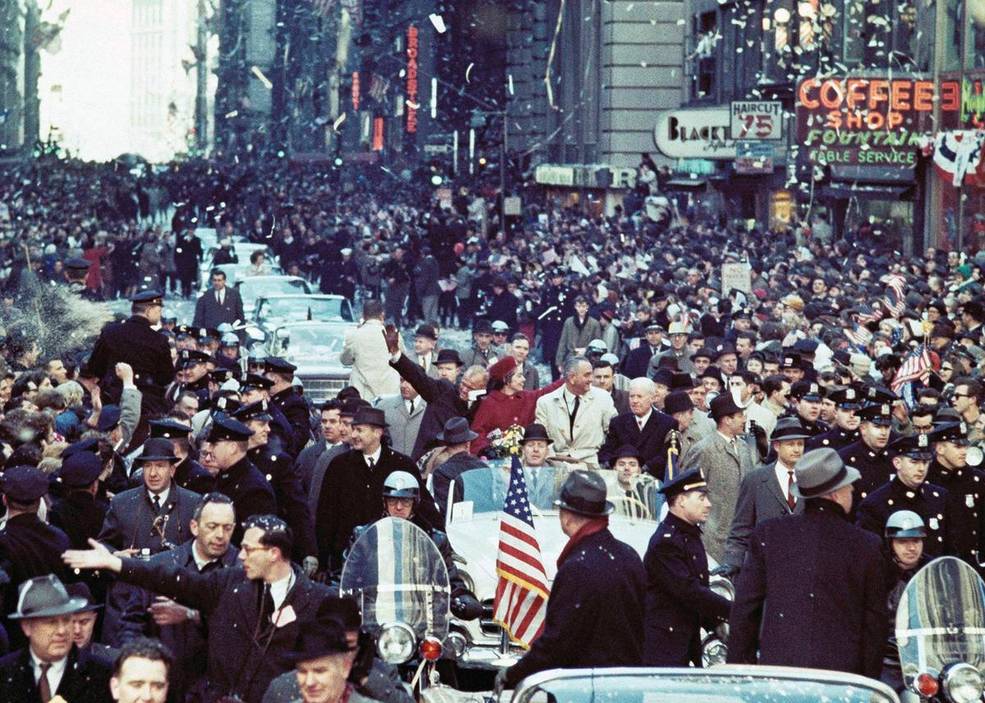Astronaut John H. Glenn, his wife Annie with Vice President Johnson, at a March 1, 1962 ticker tape parade attended by some 4 million people in New York City. Glenn was the first American to orbit the Earth, circling it three times in February, 1962. (Photo NASA)
Glenn was America’s national hero. He exemplified JFK’s New Frontier. He was invited to join 49 Nobel Prize laureates for the largest White House dinner during the Kennedy Administration on April 29, 1962. Partly at the urging of JKF’s brother, Attorney General Robert F. Kennedy, Glenn ran successfully for a U.S. Senate seat in 1974. He held the seat until 1999.
President John Kennedy, left, presents John Glenn with the NASA Distinguished Service Medal.
When I was a child, the news of another nation landing a probe on the moon would have dominated the news cycle for weeks or months, would have provoked emergency meetings at the highest levels of the American government, and even forced prolonged national hand-wringing about America’s status in the world.
If you think I’m exaggerating, read any account of America’s reaction to the Soviet launch of the world’s first satellite, Sputnik, in 1957. As journalist Thomas O’Toole wrote in 1982, “Except for Pearl Harbor, no single event in history assaulted America’s image of itself as did Sputnik. So rudely did the 184-pound sphere undermine the idea that the United States was the world’s leader in military, economic, and technological might that it changed the way Americans did research, supported universities, and taught their children.”
That was then. Today’s news is great for India, science, exploration, and ho-hum in the United States. No hand-wringing. No urgent need to compete with India’s achievement.
## **What Happened?**
Well, first, the Cold War is over. At least that Cold War is over. Although India is the most populous nation in the world (now ahead of China), it is no existential threat to the United States or the West. Most Americans are perfectly indifferent to the fate of India, which — if they think about it at all — they associate with poverty, computer help lines, and Salmon Rushdie. If China had landed the probe, the conversation would be more intense. Russia’s most recent space venture, [Luna-25](https://www.nature.com/articles/d41586-023-02659-6), crashed on the moon on August 20, 2023, 47 years after its last successful moon mission. Nobody paid much attention in America. The failed mission confirmed our belief that Russia is a nation in decline.
Second, space travel is no longer tightly associated in America with our national destiny. NASA still exists and has ambitious plans to return to the moon, but the dynamism of space exploration is now in private hands. Elon Musk, Jeff Bezos, Paul Allen; SpaceX, Blue Origin, Virgin Galactic. … Most Americans (65%) say they want NASA to continue playing an important role in space activity and exploration, but they no longer associate space flight with America’s national identity. Even the most impressive private space ventures now attract only momentary attention. I doubt that teachers roll out televisions in the classroom to watch these launches and landings, as they routinely did during the 1960s.
The most important factor, I believe, is American disillusionment. John F. Kennedy’s inaugural address exemplified a heroic vision of America. “Pay any price, bear any burden, meet any hardship, support any friend, oppose any foe.”
On September 12, 1962, JFK said, “We choose to go to the moon in this decade and do the other things, not because they are easy, but because they are hard.” But there was more. “Because that goal will serve to organize and measure the best of our energies and skills, because that challenge is one that we are willing to accept, one we are unwilling to postpone, and one which we intend to win.”
Ask not. Who would respond to that call today?
Glenn said of his New Concord, Ohio upbringing, “Love of country was a given. Defense of its ideals was an obligation. The opportunity to join in its quests and explorations was a challenge not only to fulfill a sacred duty, but to join a joyous adventure.”
## **That Was Then**.
Since 1960, the American people have lost much of their respect for all the key institutions: the presidency, Congress, the courts, public education, universities, the press, even the role of the church in American life.
John Glenn was a fabulous national hero in 1962. We live on the other side of the assassinations, Vietnam, Watergate, the revelations about America’s covert interference in other countries’ destinies, Bill Clinton’s libido, police shootings, the Teflon immunity of Wall Street, the Iraq wars, and — most recently — the Trump years.
It’s hard to know what would light the American people up now. We’ve become not just disillusioned but jaded. Our characteristic historical idealism seems squeezed out of the national psyche. Even the euphoria over our first African American president’s election was short-lived.
India’s moon mission is a great triumph. India’s Prime Minister Narendra Modi [got it right](https://www.yenisafak.com/en/news/india-makes-history-with-successful-moon-landing-3669464). “India’s successful moon mission is not just India’s alone. This success belongs to all of humanity. And it will help moon missions by other countries in the future.”
I write this on the morning of the first presidential primary debate of the 2024 election. Will any of the eight individuals on the stage in Milwaukee tonight congratulate India and call upon the American people to regain a sense of national identity and grandeur? I hope so.
Nothing good can follow when a people lose respect for its institutions and national narrative. We must find a way to claw out of this slough of cynicism, jadedness, and disillusionment. It’s hard to believe we can meet the challenges of the 21st century unless we find a way to restore the American spirit.
The fire will need to be lit by the people, not its current leaders. There is no JFK on the horizon. The spark is going to have to come from the bottom up.
---
## ***Discover more on these topics at Listening to America***
[Pennsylvania](https://ltamerica.org/tag/pennsylvania/ "1 topics")[Ohio](https://ltamerica.org/tag/ohio/ "2 topics")[Virginia](https://ltamerica.org/tag/virginia/ "7 topics")[Sports](https://ltamerica.org/tag/sports/ "2 topics")[North Carolina](https://ltamerica.org/tag/north-carolina/ "3 topics")[Wisconsin](https://ltamerica.org/tag/wisconsin/ "0 topics")[Republic](https://ltamerica.org/tag/republic/ "0 topics")[Theodore Roosevelt](https://ltamerica.org/tag/theodore-roosevelt/ "16 topics")[Road Trips](https://ltamerica.org/tag/road-trips/ "18 topics")[Video](https://ltamerica.org/tag/video/ "51 topics")[Steinbeck Travels](https://ltamerica.org/tag/steinbeck-travels/ "75 topics")[Reading](https://ltamerica.org/tag/reading/ "1 topics")[Texas](https://ltamerica.org/tag/texas/ "4 topics")[New Mexico](https://ltamerica.org/tag/new-mexico/ "3 topics")[South Carolina](https://ltamerica.org/tag/south-carolina/ "1 topics")[Podcast](https://ltamerica.org/tag/podcast/ "1 topics")[State Parks](https://ltamerica.org/tag/state-parks/ "2 topics")[New York](https://ltamerica.org/tag/new-york/ "8 topics")[Oppenheim](https://ltamerica.org/tag/oppenheim/ "0 topics")[U.S. Constitution](https://ltamerica.org/tag/u-s-constitution/ "1 topics")[North Dakota](https://ltamerica.org/tag/north-dakota/ "53 topics")[Water in the West](https://ltamerica.org/tag/water-in-the-west/ "24 topics")[New England](https://ltamerica.org/tag/new-england/ "1 topics")[William Shirer](https://ltamerica.org/tag/william-shirer/ "1 topics")[South Dakota](https://ltamerica.org/tag/south-dakota/ "16 topics")[Utah](https://ltamerica.org/tag/utah/ "11 topics")[Wyoming](https://ltamerica.org/tag/wyoming/ "4 topics")[Tennessee](https://ltamerica.org/tag/tennessee/ "1 topics")[Vermont](https://ltamerica.org/tag/vermont/ "1 topics")[Republics](https://ltamerica.org/tag/republics/ "1 topics")[Thoreau](https://ltamerica.org/tag/thoreau/ "5 topics")[Walden](https://ltamerica.org/tag/walden/ "1 topics")[north daktoa](https://ltamerica.org/tag/north-daktoa/ "0 topics")[Thomas Jefferson](https://ltamerica.org/tag/thomas-jefferson/ "34 topics")[The Constitution](https://ltamerica.org/tag/the-constitution/ "1 topics")[Oregon](https://ltamerica.org/tag/oregon/ "4 topics")[Space Exploration](https://ltamerica.org/tag/space-exploration/ "8 topics")[Oppenheimer](https://ltamerica.org/tag/oppenheimer/ "1 topics")[Rivers](https://ltamerica.org/tag/rivers/ "3 topics")[Travel](https://ltamerica.org/tag/travel/ "1 topics")[Rome](https://ltamerica.org/tag/rome/ "1 topics")[Washington](https://ltamerica.org/tag/washington/ "2 topics")[Poetry](https://ltamerica.org/tag/poetry/ "1 topics")[U.S. Presidents](https://ltamerica.org/tag/u-s-presidents/ "71 topics")[paintings](https://ltamerica.org/tag/paintings/ "0 topics")
**Categories:** Features
**Tags:** Space Exploration, U.S. Presidents
---
### [Super-Infinite: The Transformations of John Donne](https://ltamerica.org/super-infinite-the-transformations-of-john-donne/)
**Published:** September 1, 2023
**Author:** Clay Jenkinson
**Excerpt:** Katherine Rundell’s new book on the great English writer and cleric, John Donne is, among other things, a work of evangelism. Rundell says one of her goals is to get everyone to read some of Donne’s poetry. I could not agree more.
**Content:**
## Book Review, Katherine Rundell, *Super-Infinite: The Transformations of John Donne*, Farrar, Straus and Giroux, 2022
*Super-Infinite: The Transformations of John Donne* by Katherine Rundell.
Katherine Rundell’s new book on the great English writer and cleric, [John Donne](https://poets.org/poet/john-donne) is, among other things, a work of evangelism. Rundell says one of her goals is to get everyone to read some of[ Donne’s poetry](https://www.poetryfoundation.org/poets/john-donne). I could not agree more. Start with *The Sun Rising*, *The Funeral*, *The Flea*, or *The Apparition*, and dip into the exquisite prose of Donne’s *Devotions Upon Emergent Occasions*.
John Donne (1572-1631) was my first great love. My beloved mentor [Thomas Clayton](https://ltamerica.org/the-professor-who-changed-my-life/) of the University of Minnesota English Department turned me on to Donne back in 1976. I wish I could say I never looked back, but I have allowed my life and career to waft and drift. At one time I was one of the world’s leading authorities on the sermons of John Donne. He was the most famous preacher of his era in London. He was dean of [St. Paul’s Cathedral](https://www.stpauls.co.uk) from 1621 until his death in 1631.
Donne was a contemporary of Shakespeare, Edmund Spenser, Christopher Marlowe, George Herbert, Ben Jonson, and Robert Herrick. You could spend the rest of your life reading the poetry of the 17th century and never exhaust its intense genius.
For more than a decade I studied Donne’s sermons with heroic obsessiveness. I read all 160 sermons again and again and made a list of Donne’s 641 references in the sermons to the work of the greatest of the Christian church fathers St. Augustine.
With a background like that I keep my eye out for new books on Donne. Katherine Rundell’s, published in 2022, has been lavishly praised. The test of a book largely devoted to explicating many of the 200 or so poems of Donne is whether the analysis illuminates those poems, explains the difficulties of those poems, opens those poems up, and sends you to your anthology to read those poems. I find Rundell’s explications spotty. It feels at times that she is more interested in being clever and provocative than in really helping the reader understand Donne. She sees him as a showman, a creator of verbal pyrotechnics, a master of intense effects; the same, I believe, could be said of her. It takes a lifetime of wrestling with the complexities of the 17th century to elucidate Donne.
Donne’s greatest critic is another mentor of mine, Oxford’s [John Carey](http://www.johncarey.org/about.html), who was Merton Professor of English until his retirement in 2002. His 1981 book, *John Donne: Life, Mind, and Art*, is the gold standard of Donne studies. Several critics have said Ms. Rundell’s book now takes its place next to Carey’s book. I disagree. Don’t get me wrong. I enjoyed her book, marked passages, took notes, and will read it again. But it has some of the weaknesses of the militantly informal postmodern time in which we live. It feels glib to me at times, and even a little vulgar.
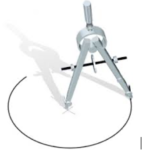
Professor Carey’s fascination with the twists and quirks of Donne’s feverish imagination came as close to elucidating Donne’s genius as anyone since the English 18th century critic Samuel Johnson, who was annoyed by Donne. He famously said of Donne’s wild wit, “The most heterogeneous ideas are yoked by violence together; nature and art are ransacked for illustrations, comparisons, and allusions; their learning instructs, and their subtilty surprises; but the reader commonly thinks his improvement dearly bought, and, though he sometimes admires, is seldom pleased.” Donne wrote a seduction poem arguing that since his intended lover has permitted a flea to prick her and draw blood, why not the poet himself! The most famous (though not his best) of his *metaphysical conceits* (wild analogies, often based in science) compares a traveling male lover to a geometrical compass in which the “fixed foot” is the woman who stays at home; and though her lover travels, her stationary fixity ensures that he is drawn back home, as a compass is when it completes its circle. As usual Donne works in a sexual pun:
> *And though it in the center sit,
> Yet when the other far doth roam,
> It leans and hearkens after it,
> And grows erect, as that comes home.*
>
> John Donne
I agree with Columbia professor [James Shapiro’s review](//www.nytimes.com/2022/09/08/books/review/super-infinite-katherine-rundell.html) of *Super-Infinity*. “Rundell’s own style can dazzle, though at times the wit feels a bit strained, as when she describes Donne’s unreadable tract ‘Pseudo-Martyr’ as ‘so dense it would be swifter to eat it than to read it.’”
Award winning author Katherine Rundell is a Fellow of All Souls College, Oxford, where she works on Renaissance literature.
Rundell is a vivid writer, but I am not convinced that this book will stand the test of time. She often affects a racy, irreverent, deliberately provocative style, which, to use an English phrase, often seems “too clever by half.” On page 5, for example, she says Donne’s writing “if allowed under your skin can offer joy so violent it kicks the metal out of your knees, and sorrow large enough to eat you.” No good editor would have let this go unchallenged. On page 11, she argues that if we let Donne’s poetry slip out of our common literary memory, that “would be as foolish as discarding a kidney or a lung.” Really? What about the billions of people who have never had an encounter with John Donne? Nor probably would wish to. She seems to have felt that a book on the most intense, provocative, and witty of English poets must itself be intense, provocative, and witty.
## **England: Volatile History and Rich Language**
Donne lived in one of the most volatile periods of English history, and certainly in the richest period of the English language. Like so many of his countrymen and women, Donne was born Roman Catholic, but after he had experienced the sometimes lethal hostility that the new Anglican establishment used against inflexible Catholics (called Recusants), he transferred his religious allegiance to the Anglican Church. Or did he? One of the questions that John Carey wrestles with better than anyone before or since is whether Donne was a sincere convert or merely an opportunistic one. Was he truly an Anglican for the bulk of his life or did he remain a crypto-Catholic. My view is that he genuinely believed that the Anglican “settlement” of the last decades of the 16th century and the first decades of the 17th was truer to the letter and the spirit of the Bible than the debased Catholicism of the late medieval period. Several members of his extended family refused to conform to the Anglican paradigm and paid for it with their lives. Donne’s own brother Henry died in a fetid prison after being incarcerated for sheltering a Jesuit in his lodgings.
The English writer John Donne in 1616.
When Donne was born in 1572, Queen Elizabeth I had been on the throne for 14 years. She was a decided Protestant, but she tried not to meddle in people’s religious faith as long as they worshipped quietly without calling undo attention to themselves. Elizabeth was the last of the Tudor dynasty. After her death in 1603, the Stuarts came to the throne for the next century. Donne preached under the reign of James I of Scotland, and Charles I, who would be beheaded 18 years after Donne’s death. Each of these three monarchs was a Protestant, but with quite different views of emphasis and tolerance. If there was a hint of opportunism in Donne’s conformity with the Anglican settlement, in that era when religion was the central fact of life, that is certainly understandable. You could lose your head then for espousing unacceptable religious views.
## **The Renaissance Obsession With Death**
The Renaissance obsession with death is hard to fathom, and nobody of that era in England was as obsessed with death as John Donne. In the weeks before he died, he posed in his own funeral shroud and had his portrait painted *as if dead*. His final sermon “Death’s Duell,” preached on February 25, 1631, less than a month before his death, was so fixated on death and dying that those present agreed with his first biographer Isaac Walton that “he had preached his own funeral sermon.”
Here’s a little taste of the death trope in Donne:
*And thy skin shall come to that absolute corruption. As that, though a hundred years after thou art buried one may find thy bones and say, this was a tall man, this was a strong man, yet we shall soon be past saying upon any relic of thy skin, this was a fair man; corruption seizes the skin, all outward beauty quickly. … When of the whole body there is neither eye nor ear nor any member left, where is the body? And what should an eye do there where there is nothing to be seen but loathsomeness? Or a nose there where there is nothing to be smelt but putrefaction? Or an ear where in the grave they do not praise God? Doth not that body that boasted but yesterday of that privilege above all creatures that it only could go upright, lie today so flat upon the earth as the body of a horse or of a dog?*
John Donne in his funeral shroud, engraved by Martin Droeshout, 1633.
Cheerful, huh? In our age of facelifts and tummy tucks, postponing death, denying death, pretending death is no factor in our lives, this sort of passage seems not just morbid but sick and maybe insane. But I could quote 500 passages of equal potency in Donne’s sermons. People flocked to them. Sometimes his parishioners in St. Paul’s murmured their admiration for 15 minutes after one of his great passages on “the littleness of man.”
I’ve thought about the Renaissance obsession with death for the last 30 years off and on. It had something to do with the fact that death was more omnipresent in Donne’s time than in ours. Our recent pandemic killed a little over 2% of humanity worldwide. The plagues (plural) of Donne’s era routinely killed one in 10, one in eight. Deformity and birth defects were a pervasive fact of life in the Renaissance. Hygiene was appalling. Human waste ran down gutters in the streets. Dead animals putrefied throughout London.
Death also seemed especially bitter in the Renaissance because — after nearly a thousand years of cultural darkness — the people of the time got a transfusion of optimism from the rediscovery of the classical world. The scientific revolution and the rise of rationalism, coupled with the shattering of the monolith of Christianity, made the world seem less like a vale of tears than a place where humans might possibly find a way to flourish. But death was as pervasive as ever and its omnipresence found its way to the new secular literature made available by the invention of the printing press. In other words, death seemed more appalling now that humanity had done some cheering up.
There was perhaps one final factor. The Reformation was answered by the Catholic Church by what is known as the Counter Reformation or the Catholic Reformation. One of the central positions of the Counter Reformation was that Renaissance humanism and neoclassicism were too cheerful, too optimistic about the human project. Artists and writers were instructed to focus on death, judgment, and human depravity. You can see this shift in its starkest formulation in the difference between the ceiling of the Sistine Chapel (completed 1612, about the time Shakespeare retired to Stratford) and the gigantic Last Judgment Michelangelo painted 25 years later. Death became a central leitmotiv of post-Renaissance art. Donne may have been absorbing and reflecting the change of focus of these years.
However we attempt to explain this, it is certain that you cannot spend much time with Donne’s secular poetry, his sacred poetry, or his letters and sermons, without a pretty full-on encounter with death and dissolution. As Rundell puts it, “Donne grew up knowing you were supposed to meet death with a flourish: he never forgot it, right to the end.” Somehow, I find all that refreshing, even when it is macabre and a little horrifying.
*Super-Infinite* is an excellent introduction to John Donne. It is a quick and lively read. Better yet, read John Carey. Better still, read Donne.
---
## ***Discover more on these topics at Listening to America***
[Pennsylvania](https://ltamerica.org/tag/pennsylvania/ "1 topics")
[Vermont](https://ltamerica.org/tag/vermont/ "1 topics")
[Rome](https://ltamerica.org/tag/rome/ "1 topics")
[Steinbeck Travels](https://ltamerica.org/tag/steinbeck-travels/ "75 topics")
[Oregon](https://ltamerica.org/tag/oregon/ "4 topics")
[State Parks](https://ltamerica.org/tag/state-parks/ "2 topics")
[Theodore Roosevelt](https://ltamerica.org/tag/theodore-roosevelt/ "16 topics")
[Texas](https://ltamerica.org/tag/texas/ "4 topics")
[Virginia](https://ltamerica.org/tag/virginia/ "7 topics")
[Reading](https://ltamerica.org/tag/reading/ "1 topics")
[North Carolina](https://ltamerica.org/tag/north-carolina/ "3 topics")
[Thoreau](https://ltamerica.org/tag/thoreau/ "5 topics")
[New York](https://ltamerica.org/tag/new-york/ "8 topics")
[South Carolina](https://ltamerica.org/tag/south-carolina/ "1 topics")
[The Constitution](https://ltamerica.org/tag/the-constitution/ "1 topics")
[Republics](https://ltamerica.org/tag/republics/ "1 topics")
[Republic](https://ltamerica.org/tag/republic/ "0 topics")
[William Shirer](https://ltamerica.org/tag/william-shirer/ "1 topics")
[Ohio](https://ltamerica.org/tag/ohio/ "2 topics")
[South Dakota](https://ltamerica.org/tag/south-dakota/ "16 topics")
[paintings](https://ltamerica.org/tag/paintings/ "0 topics")
[Walden](https://ltamerica.org/tag/walden/ "1 topics")
[Travel](https://ltamerica.org/tag/travel/ "1 topics")
[Poetry](https://ltamerica.org/tag/poetry/ "1 topics")
[U.S. Constitution](https://ltamerica.org/tag/u-s-constitution/ "1 topics")
[Oppenheimer](https://ltamerica.org/tag/oppenheimer/ "1 topics")
[Space Exploration](https://ltamerica.org/tag/space-exploration/ "8 topics")
[North Dakota](https://ltamerica.org/tag/north-dakota/ "53 topics")
[Washington](https://ltamerica.org/tag/washington/ "2 topics")
[Sports](https://ltamerica.org/tag/sports/ "2 topics")
[Thomas Jefferson](https://ltamerica.org/tag/thomas-jefferson/ "34 topics")
[Water in the West](https://ltamerica.org/tag/water-in-the-west/ "24 topics")
[north daktoa](https://ltamerica.org/tag/north-daktoa/ "0 topics")
[Tennessee](https://ltamerica.org/tag/tennessee/ "1 topics")
[Utah](https://ltamerica.org/tag/utah/ "11 topics")
[Podcast](https://ltamerica.org/tag/podcast/ "1 topics")
[Oppenheim](https://ltamerica.org/tag/oppenheim/ "0 topics")
[U.S. Presidents](https://ltamerica.org/tag/u-s-presidents/ "71 topics")
[New England](https://ltamerica.org/tag/new-england/ "1 topics")
[Rivers](https://ltamerica.org/tag/rivers/ "3 topics")
[New Mexico](https://ltamerica.org/tag/new-mexico/ "3 topics")
[Wisconsin](https://ltamerica.org/tag/wisconsin/ "0 topics")
[Video](https://ltamerica.org/tag/video/ "51 topics")
[Wyoming](https://ltamerica.org/tag/wyoming/ "4 topics")
[Road Trips](https://ltamerica.org/tag/road-trips/ "18 topics")
**Categories:** Books
**Tags:** Books, Poetry
---
### [The Forgotten Battle of Whitestone Hill, North Dakota](https://ltamerica.org/the-forgotten-battle-of-whitestone-hill-north-dakota-2/)
**Published:** July 31, 2023
**Author:** Clay Jenkinson
**Excerpt:** My first stop was the lonely Whitestone Hill, a grass hill in south central, North Dakota. It is the site of the bloodiest battle in North Dakota history in 1863.
**Content:**
## Day One: Bismarck to Sioux Falls
On July 4, 1942 a monument was dedicated to Native Americans who fought and died at Whitestone Hill. Some ancestors of those killed in the battle attended the dedication. This is thought to be the first United States monument commemorating Native American who fought and died in a battle. (N.D. State Historical Society)
*In June, Clay drove from his home in Bismarck, North Dakota to Vail, Colorado. A focus of Clay’s two-week road trip was exploring little-remembered sites of tragic encounters between Native Americans and an expanding, westward-moving white population of the 1860-1880s. Clay’s stops included a battle site at Whitestone Hill in North Dakota in 1863, as well as the spot in Nebraska where Crazy Horse was killed in 1877, and Colorado sites commemorating the Sand Creek Massacre in 1864. Along the way, Clay also visited the Minuteman Missile National Historic Site, the U.S. National Grasslands, and a forgotten mountainside in western Colorado, where the federal government detonated a nuclear bomb in 1969 in an experiment to explore the peaceful use of atomic weapons. And — as in all good journeys — unexpected and unrelated roadside distractions provided plenty of ways to think about America.*
This June I had a speaking engagement in Sioux Falls, South Dakota and another in Vail, Colorado. In the spirit of Listening to America, I decided to drive rather than fly. There were several places I wanted to visit along the way. So, I packed my car with camping equipment, cameras, books aplenty, camp chairs, and my favorite blue Yeti cooler, one of the miracles of modern chemistry and engineering. On Monday, June 12, I drove out of Bismarck and into the American heartland.
My first stop was [Whitestone Hill](https://www.history.nd.gov/historicsites/whitestone/index.html), where a mostly forgotten battle took place between the U.S. Army and a village of Lakota Indians.
Whitestone Hill is a grass hill in south central, North Dakota, near the South Dakota border. It is the site of the bloodiest battle in North Dakota history. On September 3, 1863, [U.S. General Albert Sully](https://www.usdakotawar.org/history/alfred-h-sully) attacked a large peaceful Lakota encampment here. He killed more than 200 Lakota and took another 156 as prisoners of war.
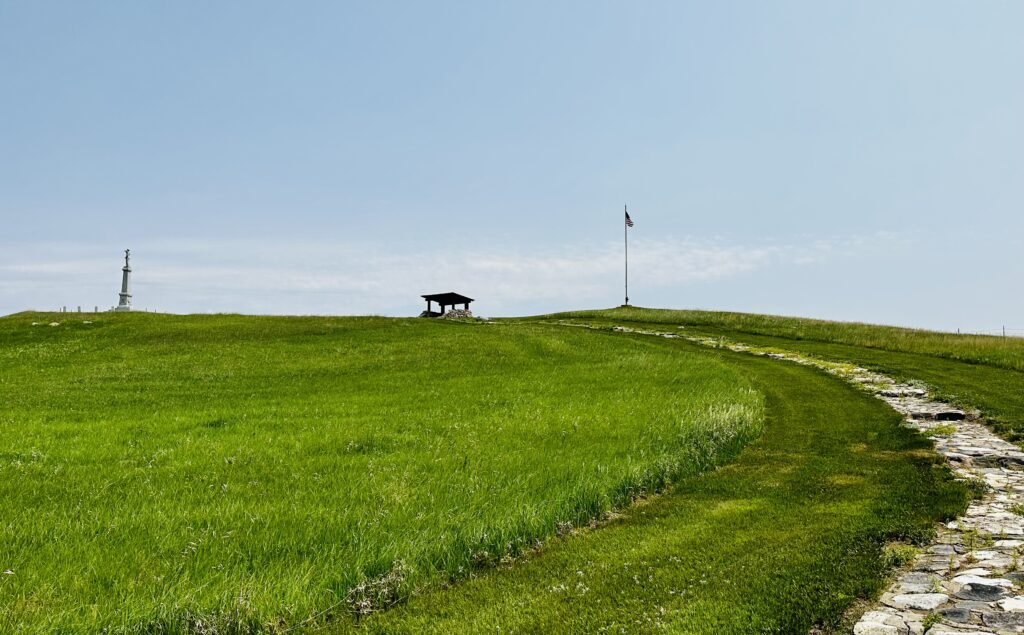Battle site at Whitestone Hill, N.D. (Photo by Clay Jenkinson)
Why the attack at Whitestone Hill? As this story unfolds, 99% of the population of what is now North Dakota was Indigenous. Nomadic Natives, the “Sioux,” the Assiniboine, the Ojibwe, moved across an infinity of grass prairie with no fixed permanent home. Sedentary Natives, the Mandan, Hidatsa, and Arikara, had semi-permanent towns along the Missouri River and lived in domed earth lodges, grew corn and other crops, and sent out hunting parties for fresh supplies of meat. The white population in 1863 was no more than a few hundred. Significant white settlement of North Dakota would not commence for another 20 years.
The people we used to call the “Sioux,” called themselves the Dakotah, which translates as “the people.” They spoke a roughly common language with distinct regional dialects. The Dakota lived more towards the east, in Minnesota and Wisconsin and northeastern North Dakota. The Lakota were the classical “western Sioux,” and they lived mostly west and south of the Missouri River. They never came together in one immense encampment. The Minnesota “Sioux” consisted of several subgroups. For the purposes of this story, it makes sense to think of the *Dakota* Indians as living mostly in Minnesota and the *Lakota* as living in central and western North Dakota. They were related and there was considerable interchange, but they were clearly distinct.
## **Backstory: Why Was the United States Army Carrying War Across the Red River Into North Dakota in 1863?**
If you squeeze a people ruthlessly enough, and treat them as subhuman, when they can no longer find a way to eat, they are going to burst into a spasm of desperation violence. That’s what happened to the Santee Dakota of Minnesota. By the time of the Minnesota Uprising of 1862, the Santee Nation had been coerced or pressured into signing away the great majority of their territory and were confined in a very narrow reservation along the St. Peter’s or Minnesota River near today’s New Ulm or Redwood Falls. The full reservation was just 20 miles wide, 10 on either side of the river.
The white invasion of Minnesota had been sudden and profound with the white population of the Minnesota Territory growing from 6,077 in 1850 to 172,072 in 1860.
By this point most of the Santee were dependent on the U.S. government for their basic subsistence. In exchange for their homelands, they had been promised regular rations. Those rations were often late, sometimes ruinously late, and the traders and agents were overall a corrupt lot.
The late Stephen Ambrose wrote about this in *[Crazy Horse and Custer](https://www.penguinrandomhouse.com/books/2799/crazy-horse-and-custer-by-stephen-e-ambrose/)*, my favorite of all his books. He said the pattern was set early and it never wavered. Push them. Press them. Surround them. Bully them. Insult them. Until finally some little incident touches off a brief fierce spasm of grief, rage, resentment, and longing. Then the government tells the American people that the “Indians have committed border depredations that must not go unpunished.” And then there is war, after which the U.S. wrings even more concessions and cessions out of the Native Americans. Here’s Ambrose:
> *“From the time of the first landings at Jamestown, the game went something like this: you push them, you shove them, you ruin their hunting grounds, you demand more of their territory, until finally they strike back, often without an immediate provocation so that you can say ‘they started it.’ Then you send in the Army to beat a few of them down as an example to the rest. It was regrettable that blood had to be shed, but what could you do with a bunch of savages?”*
Informed of the Natives’ suffering, the Minnesota trader, [Andrew Jackson Myrick](https://dp.la/exhibitions/history-of-survivance/conflict) channeled his inner Marie Antoinette. “So far as I am concerned, if they are hungry, let them eat grass or their own dung.” Whether Myrick voiced those exact words is disputed, but his statement went viral. On August 17, 1862, five young Santee men killed five white settlers in Acton, Minnesota. Now the Santee leadership decided that because the whites were going to respond to the killings with violent reprisals, maybe the best course of action would be to strike the white invaders with a spasm of violence. The warring faction was led by a man named [Little Crow](https://www.usdakotawar.org/history/taoyateduta-little-crow). His hope was to drive the white settlers out of the Minnesota River Valley altogether. The Santee struck hard. They killed hundreds of white settlers (some say over 750), burned down homesteads, barns and mounds of hay. The settlers and the Minnesota militia killed many Natives. Eventually 2,000 Santee surrendered or were taken into custody. Of these, at least 1,658 were noncombatants.
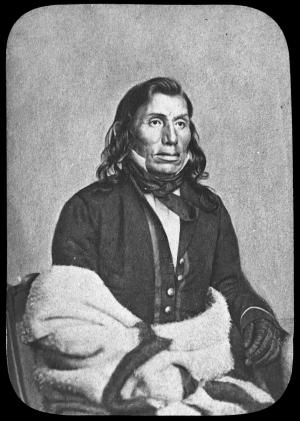Little Crow, 1862.
Little Crow and 150-250 followers fled to the plains of what would become North and South Dakota, and parts of Canada. This western migration was one source of all the sorrow that was to follow. A military commission composed of officers from the Minnesota militia, spent just under six weeks trying the Natives, who usually did not have counsel, did not know the charges that were leveled against them, could not speak English, and may have had nothing to do with the uprising — the records show that in at least a few of these cases a completely innocent man was condemned to death. The commission sentenced 303 Dakota men to death. Fortunately, [President Lincoln took an interest in the case](https://www.uis.edu/news/abraham-lincoln-overrules-death-sentence-264-dakota-indians-convicted-murder-andor-rape), reviewed the files carefully, and reduced the number of men to be executed to 39.
On December 26, 1862, 38 Santee men were hanged in Mankato, Minnesota, in a specially constructed mass scaffold. What happened in Mankato that day remains the largest mass execution in American history. The rage of the white settler population is understandable. The rage of the Santee Dakota is understandable. The war was not inevitable. It was brought on by white indifference and malfeasance. The reprisals in 1863 and 1864 which carried the “Indian wars” out onto the plains of Dakota for the first time, were unnecessary. They did more damage than good. Instead of ending warfare between whites and representatives of the great Lakota-Dakota world, they brought on 30 years of bloody struggle.
In the wake of the uprising, Congress passed legislation authorizing severe reprisal and punishment. The eastern Dakota reservation in Minnesota was abolished. Congress declared any previous treaties with the Santee null and void. The government rounded up all the Dakota individuals it could find and placed them on riverboats bound for what’s now South Dakota.
That’s the necessary background to better understand what happed at Whitestone Hill. In 1863 and again in 1864 the government of the United States and Minnesota sent out punitive military expeditions to drive all Sioux-related Natives farther west on the plains of the Dakotas, and to attack Native encampments. The idea was to hit the Dakota-Lakota with such force that they would never wage war against white America again.
## **September 3, 1863**
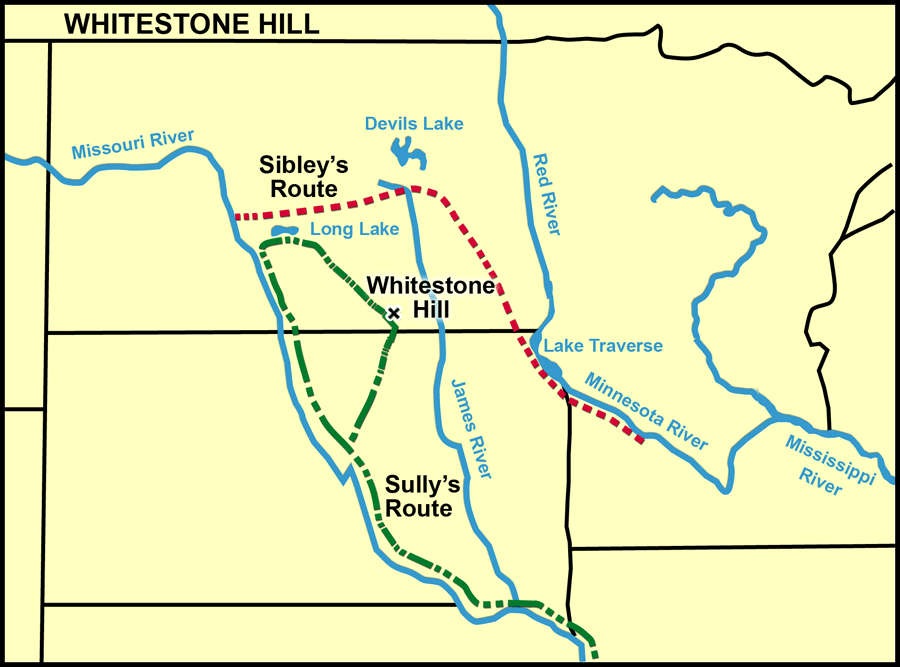Two military expeditions entered Dakota Territory in the summer of 1863. One column of soldiers was led by General Henry H. Sibley. The other expedition was commanded by General Alfred Sully and culminated in the Battle of Whitestone Hill. (Map N.D. Historical Society)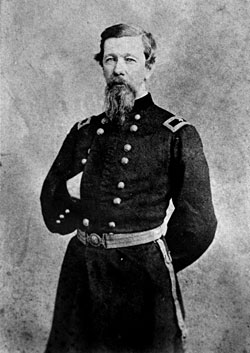U.S. General Alfred Sully.
It was on September 3, 1863, that Brigadier General Alfred Sully attacked a village at a grass knoll known as Whitestone Hill. It’s located near today’s Kulm, North Dakota. Sully’s force of 1,200 soldiers, about half of which engaged in the battle, attacked the Dakota-Lakota village. Sully and his men killed more than 200 Natives, including women and children. He took 156 prisoners and destroyed every bit of Native baggage, food, and shelter — according to historians — 500,000 pounds of material. It may be that several Santee who had played active roles in the Minnesota Uprising were mingled among the Lakota at Whitestone Hill. But the great majority of the people Sully attacked were entirely innocent of the events of Minnesota. They were aware that the U.S. Army was stirred up and likely to lash out indiscriminately, but they believed they were beyond harm’s way, and they were minding their own business on a grassland hundreds of miles from the Minnesota River Valley.
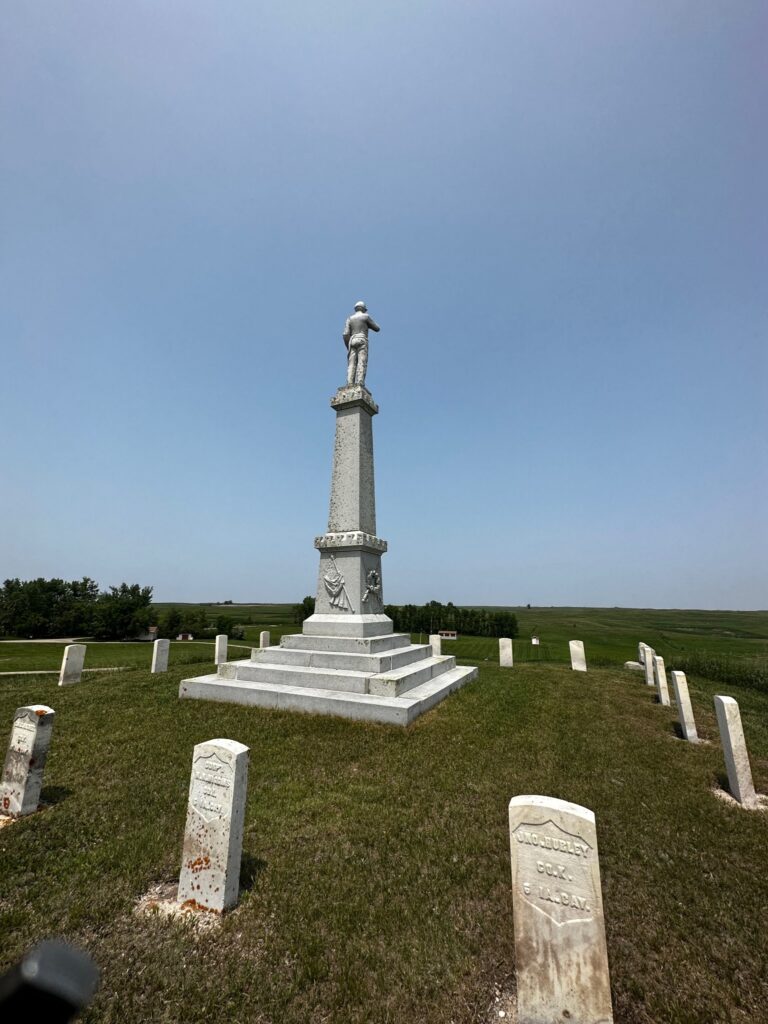Erected in 1909, an obelisk lifting a trumpeter high into the sky, surrounded by 20 white gravestones commemorates Army soldiers killed at Whitestone Hill. (Photo by Clay Jenkinson)
I spent about an hour at the Whitestone battle site. A close friend on staff at the State Historical Society of North Dakota informed me that the agency has new signage ready to go up at Whitestone Hill. That is good news. Because if a person who knew nothing of American history landed there, s/he would have to conclude that a glorious battle had occurred there and that the victors had chosen to monumentalize their great victory. S/he would see an impressive stone monument to the white soldiers who participated in the battle at Whitestone Hill, some of whom are buried there. At the apex of the hill is an obelisk lifting a trumpeter high into the sky, surrounded by 20 white lozenge gravestones in a square just below the pedestal. No Native graves are discernible at the site.
The Battle of Whitestone Hill (called a massacre by many), was just the beginning. A year later Sully returned with an even larger force, built a fort near the mouth of the Cannonball River and carried punitive war deeper into western North Dakota and eastern Montana, a world away from the events in Minnesota in 1862. [The Battle of Killdeer Mountain (July 27-28, 1864)](https://www.history.nd.gov/historicsites/kmb/index.html) and the Battle of the Badlands (August 7-9) must be seen as quasi-genocidal. As far as General Sully was concerned, and no doubt his superiors back east agreed, a “Sioux Indian is a Sioux Indian,” which meant that the Lakota, distant cousins of the Santee, were effectively just as guilty as the men who attacked white settlers in Minnesota
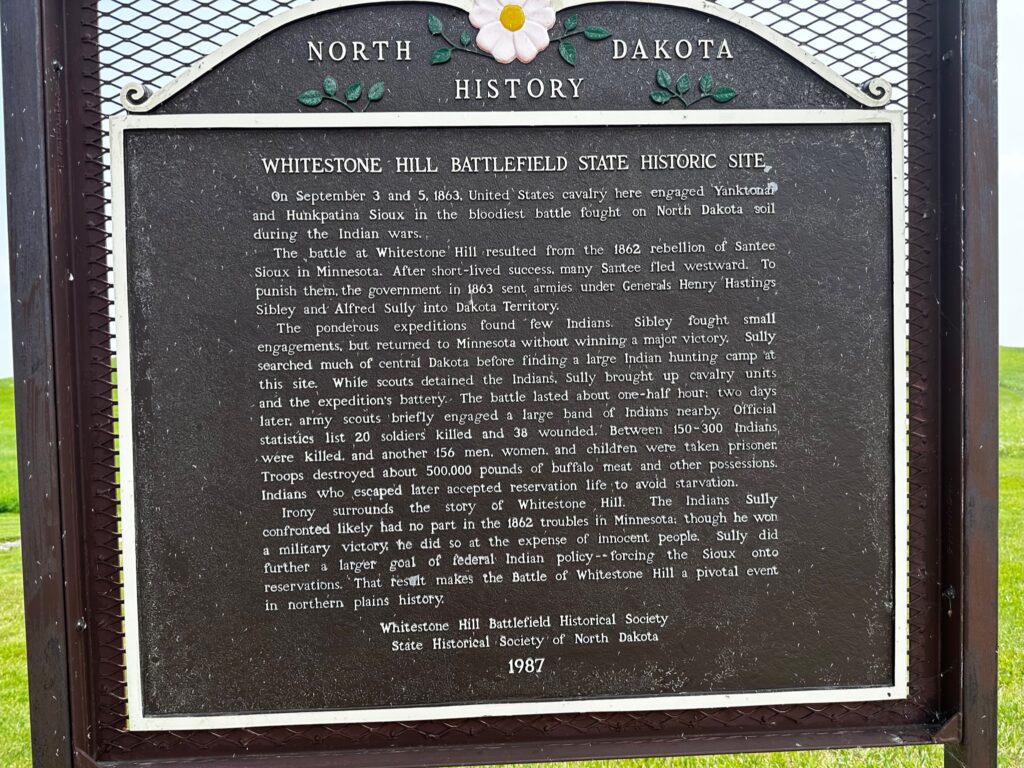Photo by Clay Jenkinson
The existing State Historical Society sign is quite good. It was erected in 1987. It starts by acknowledging that this was the “bloodiest battle fought on North Dakota soil during the Indian wars.” It rightly characterizes the reprisal campaigns as “ponderous expeditions.” It notes that after the battle, the U.S. troops “destroyed about 500,000 pounds of buffalo meat and other possessions.”
Most importantly, the sign acknowledges that General Sully was attacking the wrong “Indians.” “Irony surrounds the story of Whitestone Hill. The Indians Sully confronted likely had no part in the 1862 troubles in Minnesota: though he won a military victory, he did so at the expense of innocent people.”
That’s good signage, fair, generous, slightly revisionist, but it is one poster-sized feature of what seems like a monumental tribute to the white soldiers who participated in the *ironic* attack. The obelisk went up in 1909, when there were no ironies about Native American resistance.
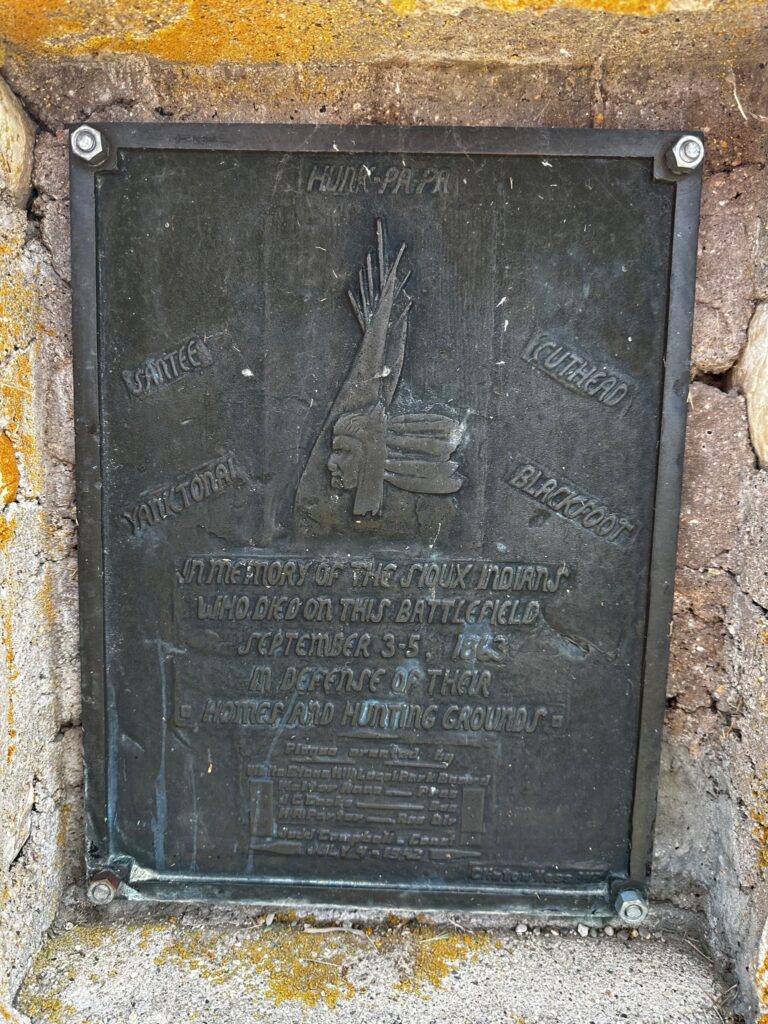A small plaque erected at Whitestone Hill on July 4, 1942 reads: “In memory of the Sioux Indians who died on this battlefield September 3-5, 1863, in defense of their homes and hunting grounds.” (Photo by Clay Jenkinson)
Fortunately, there is one more interpretive panel at Whitestone Hill. On a rock near the parking lot a small metal plaque has been affixed. It was erected “In memory of the Sioux Indians who died on this battlefield September 3-5, 1863, in defense of their homes and hunting grounds.” It went up on July 4, 1942. Strangely, it gives nearly equal space at the bottom to a list of members of the Whitestone Hill Park Board who erected the sign, all white.
Most North Dakotans have never been to the site and are unaware of the battle of Whitestone Hill. Nobody would erect the white monument today. We are discovering in the 21st century that monument-making and erecting is inherently problematic. What one generation or sliver of the larger American community wishes to commemorate may become an embarrassment to future generations. I’m not for taking down the obelisk and the trumpeter or removing the existing signage.
When the new interpretive panels go up, they will be the latest layer that reveals a great deal about the evolution of American memory and our national understanding of the “Indian wars.” When people visit the site, they will see the “phases” of historical interpretation. By leaving everything in place, we invite visitors to reflect on the inadequacy of any single interpretation of complex historical events. History is a series of negotiations about the past. The people who come after, in 2123, may have a perspective on the events of the 1860s on the Great Plains that we cannot now envisage. And that is good.
---
*In June, Clay drove from his home in Bismarck, North Dakota to Vail, Colorado. A focus of Clay’s two-week road trip was exploring little-remembered sites of tragic encounters between Native Americans and an expanding, westward-moving white population of the 1860-1880s. Clay’s stops included a battle site at Whitestone Hill in North Dakota in 1863, as well as the [spot in Nebraska where Crazy Horse was killed](https://ltamerica.org/visiting-the-cabin-where-crazy-horse-was-killed/) in 1877, and Colorado sites commemorating the [Sand Creek Massacre](https://ltamerica.org/the-tragic-history-of-sand-creek-colorado/) in 1864. Along the way, Clay also visited the [Minuteman Missile National Historic Site](https://ltamerica.org/a-day-with-three-extraordinary-missile-men/), the [U.S. National Grasslands](https://ltamerica.org/jackalopes-black-footed-ferrets-and-big-big-sky/), and a [forgotten mountainside in western Colorado](https://ltamerica.org/nuking-the-rocky-mountains/), where the federal government detonated a nuclear bomb in 1969 in an experiment to explore the peaceful use of atomic weapons. And — as in all good journeys — unexpected and unrelated roadside distractions provided plenty of ways to think about America.*
**Categories:** Dispatches from the Road
**Tags:** Native Americans, North Dakota
---
### [Mother’s Day](https://ltamerica.org/mothers-day/)
**Published:** May 15, 2023
**Author:** Clay Jenkinson
**Excerpt:** My mother has been dead for five years now. She died at 86, without spending a single night in a hospital.
**Content:**
Clay’s mother, the formidable Mil Jenkinson.
My mother has been dead for five years now. She died at 86, without spending a single night in a hospital. She always said she wanted to die with her boots on. My mother had a lifelong crush on westerns and cowboys. She taught “Westerns as Literature” at the public high school in Dickinson, North Dakota for 24 years, and she had been retired for that long, too. She died suddenly. In fact, I was out of the country when she died. She had intended to drive me to the airport for my trip to Britain, but she called that morning and said I had better take a cab, because she was feeling “punky.” I got the call at the British Museum. By the time I got home to North Dakota, she had been dead for a day. My daughter got to Bismarck about the same time, from New York. She looked like Eva Peron in her coffin.
Mother liked to be contacted on Mother’s Day, but she was not sentimental about such things. I always called and sent a card, and occasionally flowers. But flowers did not mean much to her. If I were close by, say within 200 miles, I would drive to Dickinson and spend the day with her. If I got there in time to go to church with her, she was genuinely pleased. As we left the church, where by now she was one of 40 surviving members, she would thank me in an explicit way. She was not worried about my salvation status. And she was not sorry that I do not routinely go to church. She just liked having me with her there once in a while. She knew that I would not have chosen to go to church if I had been alone.
Then she would make *me* a lovely Mother’s Day dinner. She was a master and a bully in the kitchen, so nobody was ever really allowed to participate. She’d say, “I’ll let you chop this onion,” or “I’ll let you take the garbage out, it needs it,” or “I’ll let you get out the big frying pan.” She’d make what she called Swiss Steak for me, with a salad and French dressing, some scalloped potatoes on the side and a vegetable. And she’d pour me a glass of white wine from one of a dozen open bottles of wine, white and red, in her back refrigerator. I would invariably say, “Mother, you know that wine is not like ketchup or vinegar, you can’t just expect half-consumed bottles of wine from New Year’s to be any good.” But she never adjusted this habit.
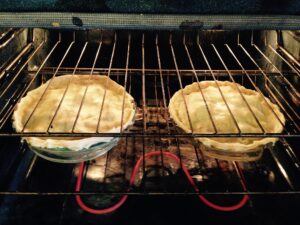Clay’s homemade rhubarb pie in the oven. (Photo by Clay Jenkinson)
Whenever possible, I baked a pie for my mother for Mother’s Day. I think gifts that take some effort are the best. And she and I share a love of rhubarb pie. The first thing I did when I moved back to North Dakota in 2005 was drive the 300 miles to Fergus Falls, Minnesota, to my grandparents’ dairy farm, long since abandoned. There I dug up rhubarb from a long row of trees they had planted as a shelter belt. I regarded these rhubarb plants as my[ *lares* and *penates*](https://www.merriam-webster.com/dictionary/lares%20and%20penates) of my new home. The ancient Romans had a little shrine at the entrance to their houses, and the household gods were placed there to protect the family.
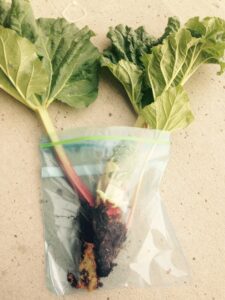Jenkinson family “heritage” rhubarb. (Photo by Clay Jenkinson)
So on the Saturday of Mother’s Day I’d go cut some rhubarb and make my mother a homemade pie. I can do good crusts. I’m not a great crust maker (I have known some), but I’m competent. Nor would I ever buy a grocery store crust. This was an area of dispute between my mother and me. She hated to roll out anything. She was not only beyond the period in her life when she would make a homemade crust, but in fact there had never been a time when she regarded that as a worthy pursuit. So, just to tease her a bit, I’d make my pie with a homemade crust. And the many imperfections in my crusts pleased her. In several ways, some of them positive.
Once she was in Bismarck (100 miles east) to spend the weekend with me. She wanted to drive home at mid-day on Mother’s Day because she had a hair appointment or something equally grave on Monday morning. So, I made our traditional family Sunday brunch — a cheese, onion, and green pepper omelet, ring sausage, orange juice, and toast. She invariably bought white bread, pre-sliced. She’d get out the butter tray for me — brown plastic, ca. 1965, and the special electric frying pan (why?), and she’d line up the first two slices of bread in their toaster slots. She’d pour us each a glass of orange juice in little repurposed dried beef jars. She always exclaimed over my omelets though they weren’t anything more than competent. And before she left town, we’d share a piece of rhubarb pie. Maybe with ice cream.
She loved that Mother’s Day pie. And it was a gift that really mattered to her, much more than some book I would have sent by way of Amazon.com or some kitchen gadget.
Two times over the years she wrote me an email the next day full of this and that, including gratitude that I had gone to church with her. And then she said (twice in non-consecutive years), “I have to confess that I sat down in the evening and ate the whole darn thing!”
I loved that. She was on the whole a temperate woman but when one of her appetites was aroused, she could devour a whole pie in a single evening, preferably watching something in which Tom Selleck starred. And later she’d say, “I had a good laugh over it.”
We were very good friends in addition to everything else. I’m glad she died in her late prime. I remember her in all her strength. Although the winter was very late here this year, I’m going to go out and check on my rhubarb supply, right after I make a slender version of the family memorial Sunday brunch.
**Categories:** Dispatches from the Road
---
### [A Visit to Ute Mountain, a Detour to the Holy Grail: Four Corners!](https://ltamerica.org/a-visit-to-ute-mountain-a-detour-and-the-four-corners-controversy/)
**Published:** May 26, 2023
**Author:** Clay Jenkinson
**Excerpt:** This is six in a series of dispatches from Clay Jenkinson chronicling his recent journey with two compatriots following the Colorado River and neighboring region.
**Content:**
## Day Five, Tuesday: Colorado 160/491 to Chimney Rock; Colorado 160 to Teec Nos Pos; Colorado 160 to Mexican Water; U.S. 191 Tsaile; Arizona 64 to Chinle.
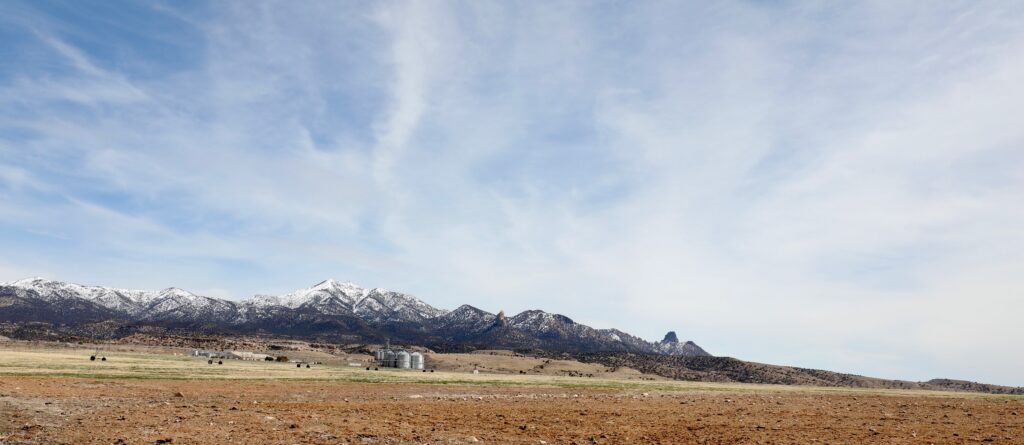The Ute Mountain Ute Tribe Farm and Ranch sits at the foot of Sleeping Ute Mountain southwest of Cortez, Colorado. (Photo by Clay Jenkinson)
*This is six in a series of dispatches from Clay Jenkinson chronicling his recent journey with two compatriots following the Colorado River and neighboring region. Traveling south from Cortez, Colorado the team stopped to visit the 7,700 acre Ute Mountain Ute Farm and Ranch. Later that day they traveled through Four Corners, eventually reaching Chinle, Arizona, on the Navajo Nation, adjacent to Canyon de Chelly.* *The two-week expedition explored the state of water, or the absence of it, in the West.*
The [Ute Mountain Ute Tribe Farm and Ranch Enterprise](https://www.utemtn.com) is nestled up against Ute Mountain and its related peaks, a couple of dozen miles south and west of Cortez, Colorado. It was our first stop on Tuesday. The Ute Mountain Ute tribe manages a non-traditional 7,700 acre farm there. Thanks to a 1988 agreement with the U.S. Government, the Ute Mountain Ute are now entitled to a 24,517 acre-foot allocation of water per annum. That doesn’t mean they always get their full share, especially in recent years when there has not been enough water in McPhee Reservoir to meet all its users’ needs. The tribe has 110 center pivot sprinklers, but only a fraction of them have been used in recent years as the drought in the American West deepens.
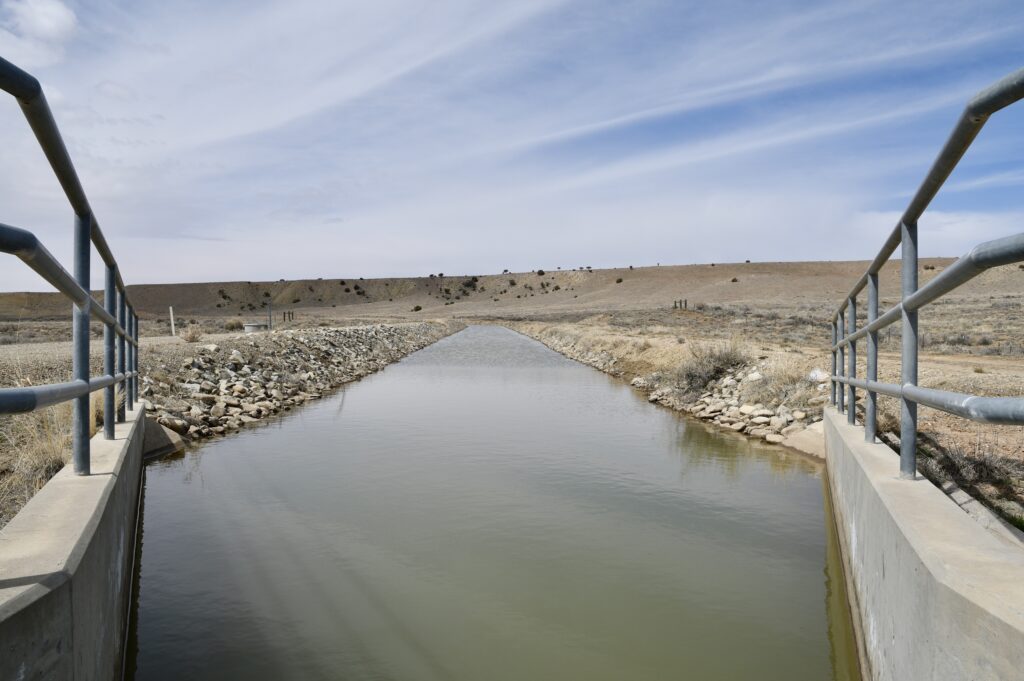A canal from the McPhee Reservoir provides water to the Ute Mountain Ute Farm and Ranch. (Photo by Dennis McKenna)
Under the 1988 Colorado Ute Indian Water Rights Settlement Act, the Bureau of Reclamation agreed to supply municipal, industrial, and irrigation water to the 2,000-member Ute Mountain Ute tribe as part of the Dolores Project. The basis for the agreement was the 1908 Supreme Court case Winters v. United States, in which the court determined that when the U.S. government “reserved” parts of the West as Indian reservations, they were obligated to reserve enough water to supply the reasonable needs of the Native Americans who lived there. Native Americans sometimes counter that it was they who “reserved” a small portion of their ancestral homelands from total appropriation by the white occupiers.
We spent a couple of hours in the offices of the farm with Simon Martinez, who is the director and manager of the operation. He explained the origins of the farm (and ranch). Simon was in a celebratory mood but also extremely busy when we visited because the tribe has been informed that it should be able to get its full allotment of water this year. The tribe is scrambling to open several fields that have been fallow in recent years.
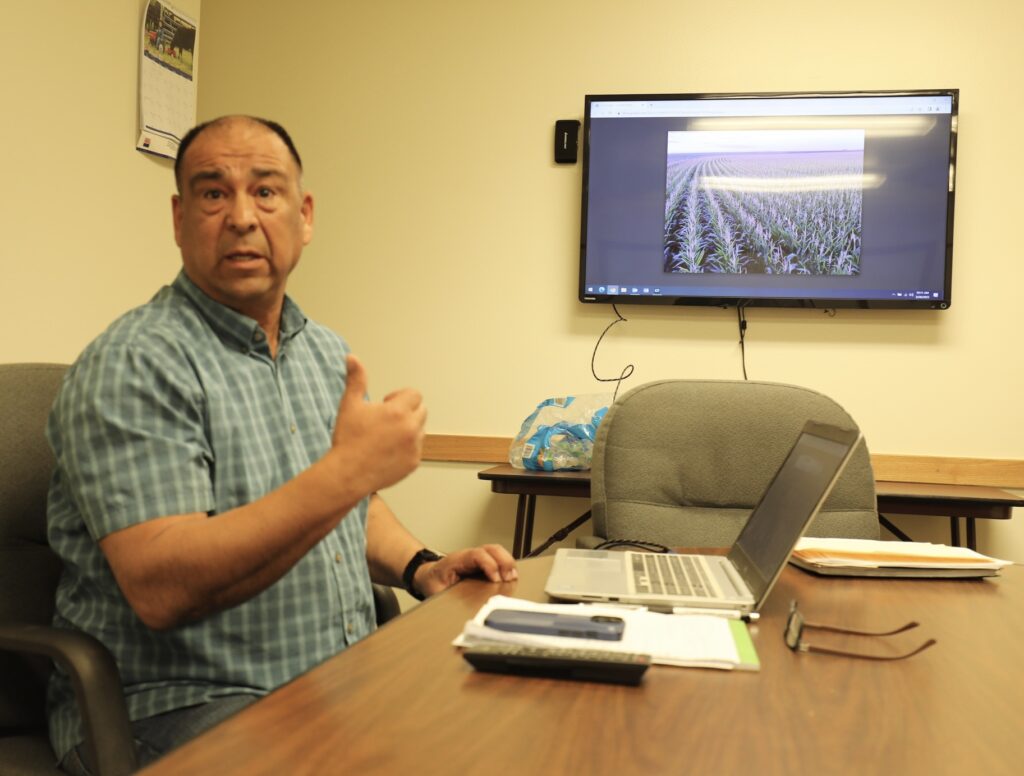Simon Martinez, director and manager farm and ranch operations. (Photo by Clay Jenkinson)
Simon explained that the farm tries to make sure that 60% of its workforce is Indigenous. In his careful and thoughtful way, he explained that a good portion of his work involves the nurturing of the careers of Indigenous workers. All personnel managers in all enterprises have complicated relations with their work staff, of course, but in Indian Country it takes extraordinary skill, patience, delicacy, and commitment to make sure Native workers have every chance to succeed in their work. The legacy of conquest and the brokenness of many Native American communities in America require extraordinary leadership. When we left at mid-day, all three of us immediately wanted to discuss this. What we had learned is that the Ute Mountain Ute Tribe Farm and Ranch is a social development program and not just a capitalist enterprise.
In addition to the farm, the enterprise operates a milling operation called Bow & Arrow Brand, opened in 2014. The mill sells cornmeal, including non-GMO, gluten-free and kosher products to grocery stores and other niche markets. The cornmeal is used to make chips, polenta, pasta, grits, and cornbread. We toured the mill with the help of the farm’s irrigation manager Michael Vicenti and mill manager David Pettigrew. The noise was deafening but the cornmeal was just beautiful.
The farming methods at Ute Mountain Ute Farm and Ranch are industrial: tractors, planters, cultivators, combines, eighteen-wheel grain trucks, some of them soon to be satellite driven. This is an irrigation farm watering desert lands with imported water and center pivot sprinklers. The farm uses best conservation practices, however, including drop nozzles along the pivots, and several micro hydropower units that turn some of the flow in the feeder canals to electricity, which in turn, offsets some of the power needs of the farm. Michael Vicenti drove us out to one of them and explained its workings. It was not running at the moment, because the fields have not been planted yet.
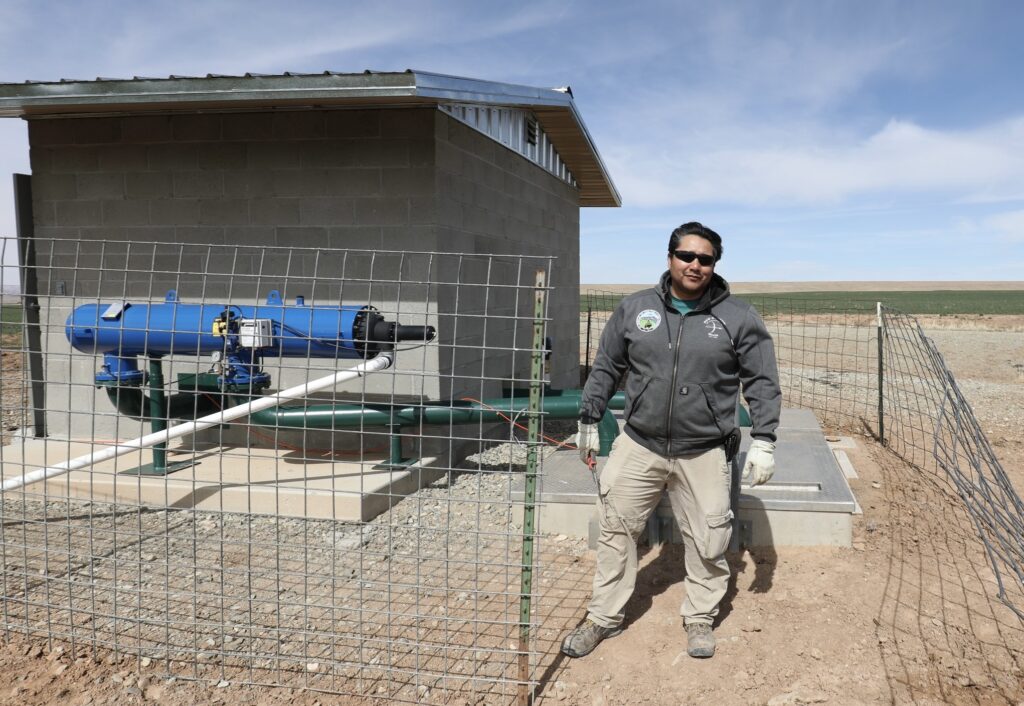Michael Vicenti, who oversees irrigation at the farm, explains innovative micro hydropower units that turn water flow in the feeder canals to electricity, which offsets some of the power needs of the farm. (Photo by Clay Jenkinson)
Our time with Simon Martinez was deeply gratifying. He’s an amazing man with a huge and complicated management portfolio. And yet, he seemed perfectly relaxed in our two hours together, even though he had several Council Zoom meetings before and after our arrival.
It’s not clear how important the proceeds of the farm operation are to the Ute Mountain Ute budget, but the farm is a major employer of Native Americans in the Cortez area, and its psychological benefits are mighty and deeply significant. The unemployment rate in the Ute world is high. During our time on the farm, we met several men in their 30s and 40s who started out, years ago, performing the most basic work of the farm, hauling rocks out of the fields, and now hold important management positions that they earned through hard work and discipline.
After several centuries of colonial oppression and exploitation, and the crushing of Native traditions as a deliberate political strategy of the United States government and its settler communities, Native American communities of the twenty-first century are making a remarkable comeback. There are still a great deal of poverty and poverty-related social challenges in the Ute world, but enterprises like this have a significance far beyond their profit and loss sheets. We came away from our tour feeling good about the future.
We all agreed that we want to return to the farm during harvest, to see all that corn abundance come off the land and make its way into bags ready to ship to retailers around the United States. We made our visit just when the spring operations at Ute Mountain Ute Farm were beginning to heat up.
---
## **A Detour and Search for the True Four Corners**
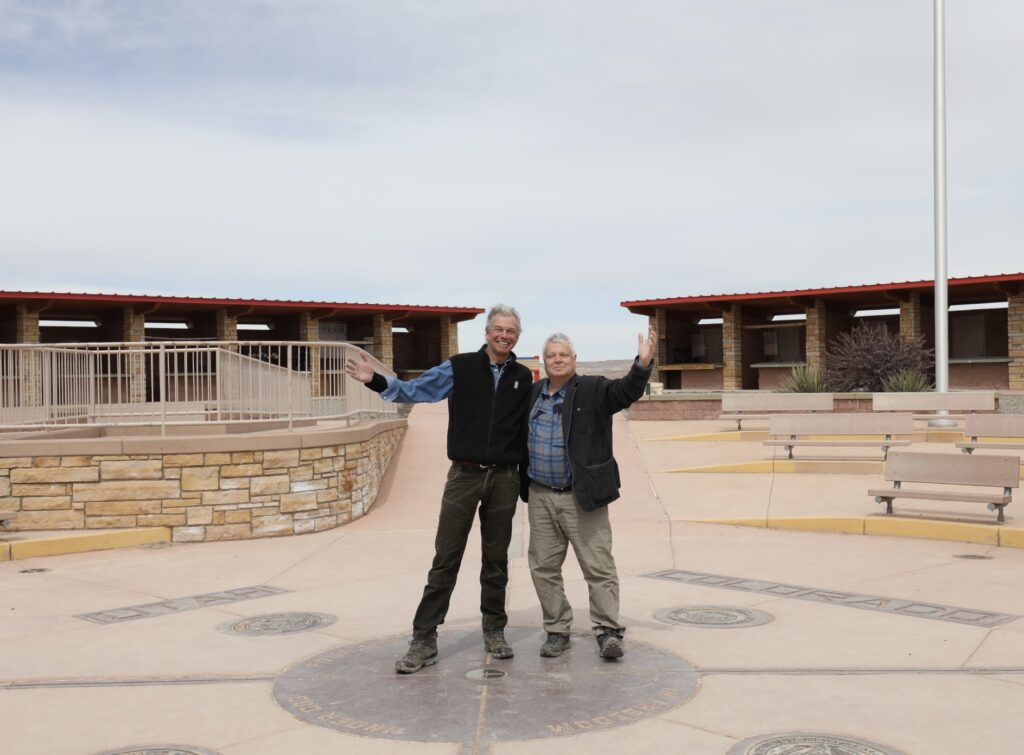Dennis (left) and Clay at the official Four Corners marker, the “purported” intersection of Colorado, New Mexico, Utah and Arizona. (Photo by Frank Lister)
Leaving Sleeping Ute Mountain and driving south I had to beg my two colleagues to visit Four Corners. They were snooty about it. As we closed in on the turnoff in mid-afternoon, they both looked into the back seat in the hope that I was asleep. But no. So, we paid our fare and bounced up to the parking lot. I don’t know what I expected, but this celebrated place had a seedy and neglected feel. It was still just March, of course.
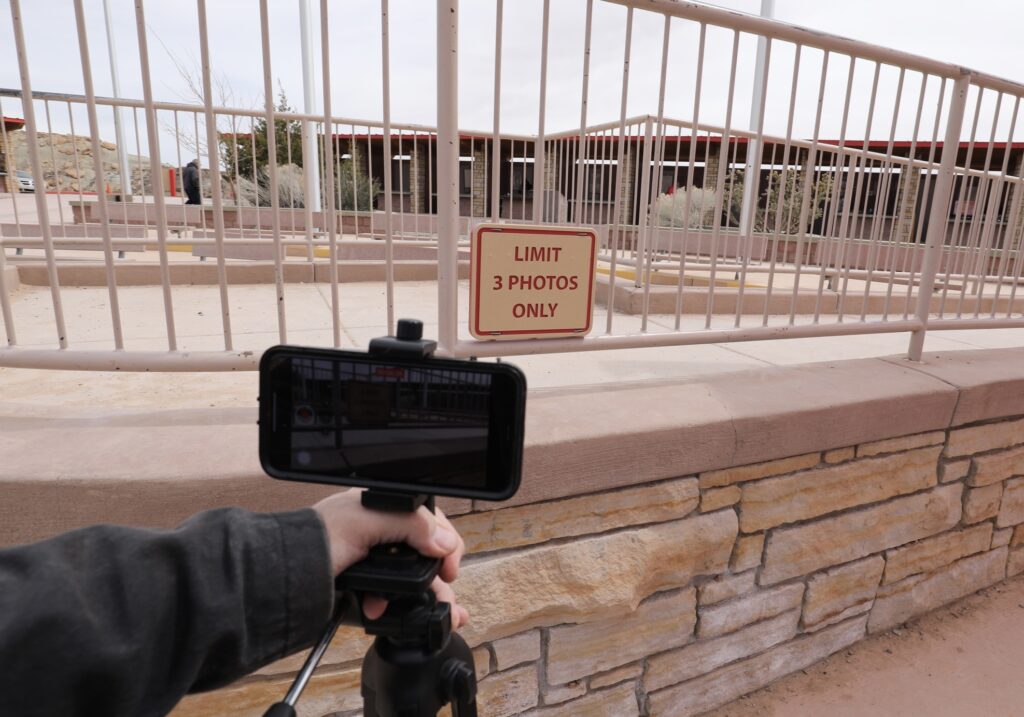Crowd management signage at Four Corners. (Photo by Clay Jenkinson)
We hustled up to the plaza to get to the exact meeting point of four sovereign states: Utah, Colorado, Arizona, and New Mexico. Surely some kind of cosmic vortex was there, I reckoned, waiting to electrify my consciousness. I’ve wanted to visit Four Corners all my adult life, and more so after seeing the new National Lampoon’s *Vacation* movie a few years ago. I took photographs of tourists figuring out ways to be photographed in all four states simultaneously. It was like a game of Twister on cold concrete. One man in sweats attempted the yoga wheel pose, tummy arched up to heaven, two hands in two states, two feet in two others. On this 45 degree spring day, there were not more than 50 people on the whole site. There was no line at the plaza, but a nearby sign said, “Limit Three Photos Only.”
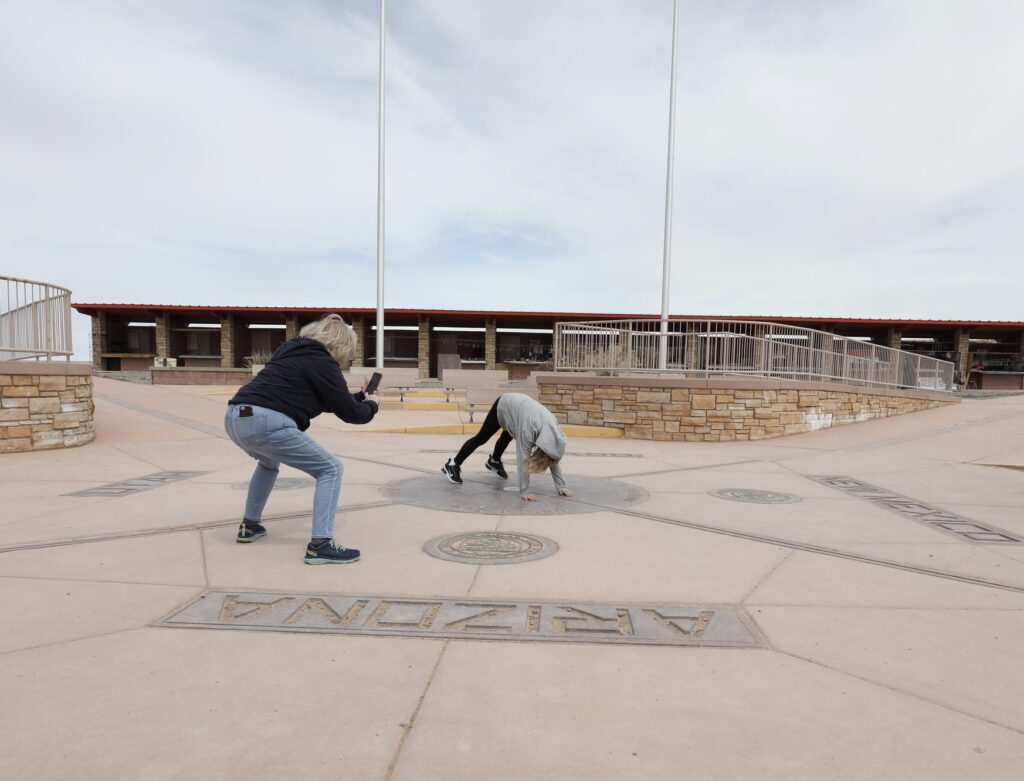A visitor with outstretched hands and feet is photographed in four states simultaneously. (Photo by Clay Jenkinson)
Perhaps six or seven vendor windows were open in the huge ring of kiosk slots that circle the square, with a range of t-shirts, Four Corners trinkets, and some Navajo jewelry. My spirits were elevated. I was thanking Thomas Jefferson for insisting on rectangular states in the Ohio country and beyond. In his landmark 1784 *Plan for the Government of the Western Territories*, Jefferson laid out two rows of square states west of the Appalachians and gave them cool names like Polypotamia and Sylvania and Cherronesus. His vision was that every western state would be square and identical in size until we reached California with its sad irrational coastline. You can see Jefferson’s sameness-of-size template in the tier of Great Plains states: North Dakota, South Dakota, Nebraska, Kansas, and Oklahoma, each embracing two degrees of latitude. And you can see true rectangles in Colorado and Wyoming and approximations of rectangles in Utah, New Mexico, and Arizona. It can be argued, therefore, that Four Corners is the “most Jeffersonian place in America,” as well as the most purely *rational* place in America. Put it this way — remove the signage and the concrete map and who would ever recognize the boundaries of these states? These are merely artificial lines in a sinuous and undifferentiated landscape that sweeps off to the horizon in every direction. At least if you place your border at the Rio Grande or Lake Michigan or the Red River of the North, you recognize it when you get there. In Jefferson’s fantasyland, every line is straight even if it bisects a lake or mountain or gulch. As I looked on in a daze of admiration for Jefferson, I was also wishing we would adopt the European metric system — finally.
But just then, in the middle of my revery, Frank, with a twinkle of malice in his eye, informed us that the monument is *approximately* at the true intersection of four states, but not *precisely*. The actual intersection, he said with authority, is approximately 1,800 feet west of the plaza. I suppose because Frank could not talk me out of the Four Corners detour, he reveled instead in shattering my illusions about the place. So much for the spiritual vortex.
A view toward the precise geographic intersection of the Four Corner States, 1800 feet west of the official marker, according to Listening to America scout and sometime cartographer, Frank Lister. (photo by Clay Jekinson)
Things like the Prime Meridian in Greenwich, England, Four Corners in the southwest, and the Geographic Center of North America in North Dakota matter to me. The Enlightenment replaced the old metes and bounds system of land surveying (the rock where the creek comes in, or the giant apple tree on the corner of the lot) with pure geometry. Latitude (easy) and longitude (very difficult). America’s adoption of the rectangular survey grid system (thank you, Mr. Jefferson) was a triumph of the Enlightenment and maybe the most influential thing Jefferson ever did. Townships, square miles, quarter sections, section lines. So what good does it do to put up a monument *approximately* where pure mathematics says it needs to be? You can put up an interpretive center *near* Thoreau’s Walden cabin and nobody suffers. But if you fudge the exact this or the exact that, you have defeated the whole purpose. I’m quite serious. One chapter of my most recent book, *the Language of Cottonwoods: Essays on the Future of North Dakota*, is about this issue. Get it right or get out of the arena! For fifty years the Geographic Center of North America, Rugby, N.D., where hundreds of thousands of people have had their photo taken, was a fraud. The *actual* center of the continent was approximately fourteen miles to the south and west of Rugby, in the middle of a pond (a slough as we say in Dakota). Rugby (population 2,509) is merely *the nearest town of any size* to the geographic center of North America. And now, the reigning champion of the geographic center competition has been shown to be scores of miles west and south of Rugby or the slough. When I discovered this a couple of years ago I was both crestfallen and a little angry.
And that’s how I feel about Four Corners — now, thanks to Frank (aka Beelzebub). The view in every direction is essentially infinite sagebrush country. It wasn’t as if the exact site was unavailable for the erection of a monument. But the exact site would have required some moderate landscaping. And the exact site would have been a little farther from U.S. 160. I wanted to find a picnic table and create a counter sign with a magic marker and a survey stick, and plant it by the gate, warning people: “DON’T BE FOOLED!” “ACTUAL FOUR CORNERS FIVE MINUTES AWAY, EASY HIKE.”
As I studied this question, I found a website belonging to the National Geodetic Survey. One whole page of single-spaced type strains in every possible way to justify the *approximate* siting of the monument. Listen to this incomprehensible argument:
> *“Finally, we cannot overemphasize the fact that the aforementioned technical geodetic details are absolutely moot when considering any question of the correctness or validity of the Four Corners monument in marking the intersection of the four states.”*
Which is to say, science doesn’t matter — approximate is sufficient? This in a publication by the National Geodetic Survey. But the author goes on:
> *“Indeed, the monument marks the exact spot where the four states meet.”*
It decidedly does not, as the writer admits elsewhere in the essay:
> *“A basic tenet of boundary surveying is that once a monument has been established and accepted by the parties involved … the location of the physical monument is the ultimate authority in delineating a boundary. Issues of legality trump scientific details* \[say what???\], *and the intended location of the point becomes secondary information.”*
Did Frank write this essay?
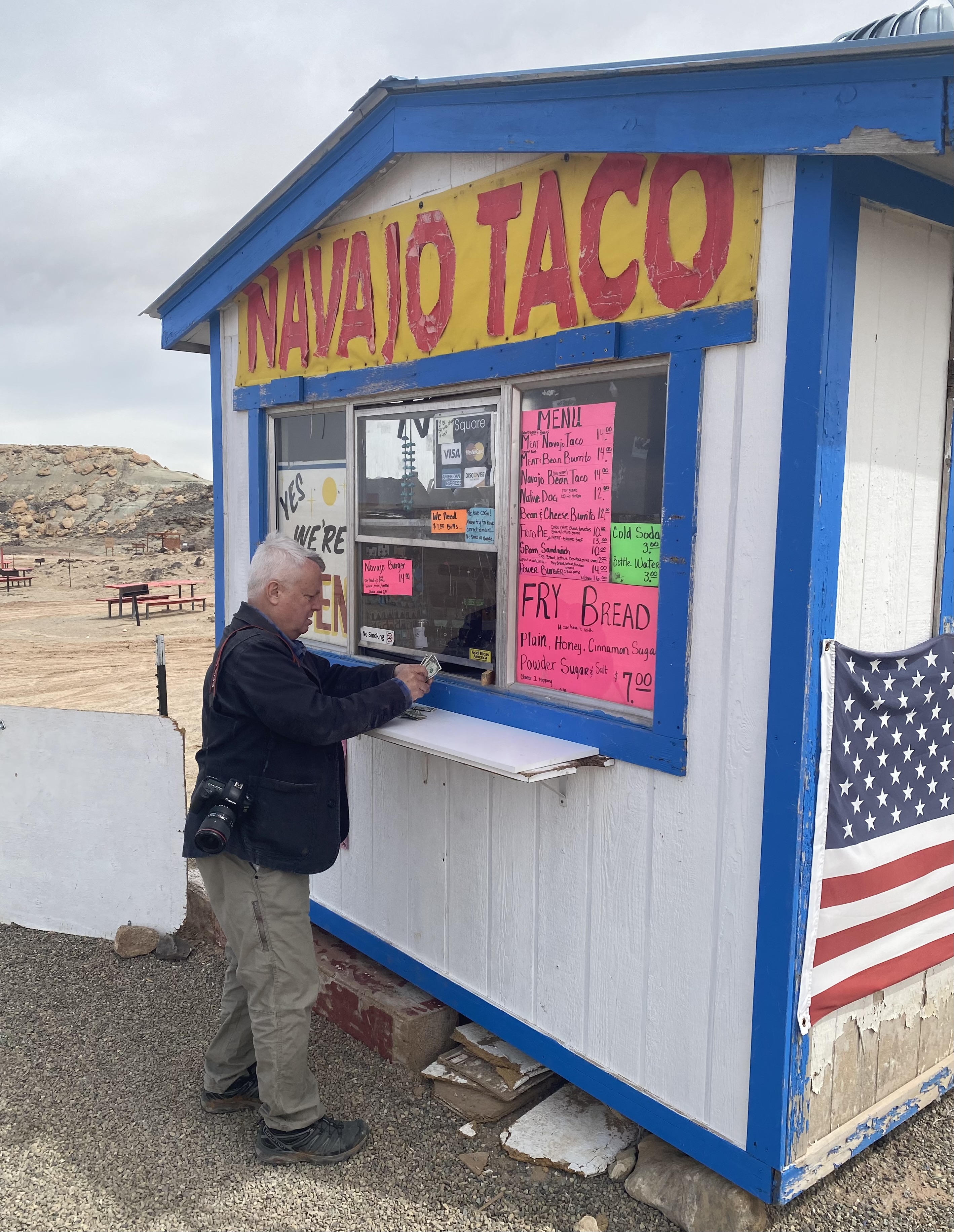
Frank and I bought Navajo frybread with powdered sugar at one of two food kiosks open at the site so early in the season. To lighten the blow of his geographic revisionism he bought me a two-inch hand-painted magnet with each state presented in a different color. $1.50. He presented it to me with great ceremony. But I cannot be bought off so easily. We drove on. As I sat in the back seat contemplating the utter absurdity of human existence, Frank whistled and chortled up front.
Towards sundown we wound up at [Thunderbird Lodge](https://thunderbirdlodge.com) at Chinle, Arizona on the Navajo Nation.
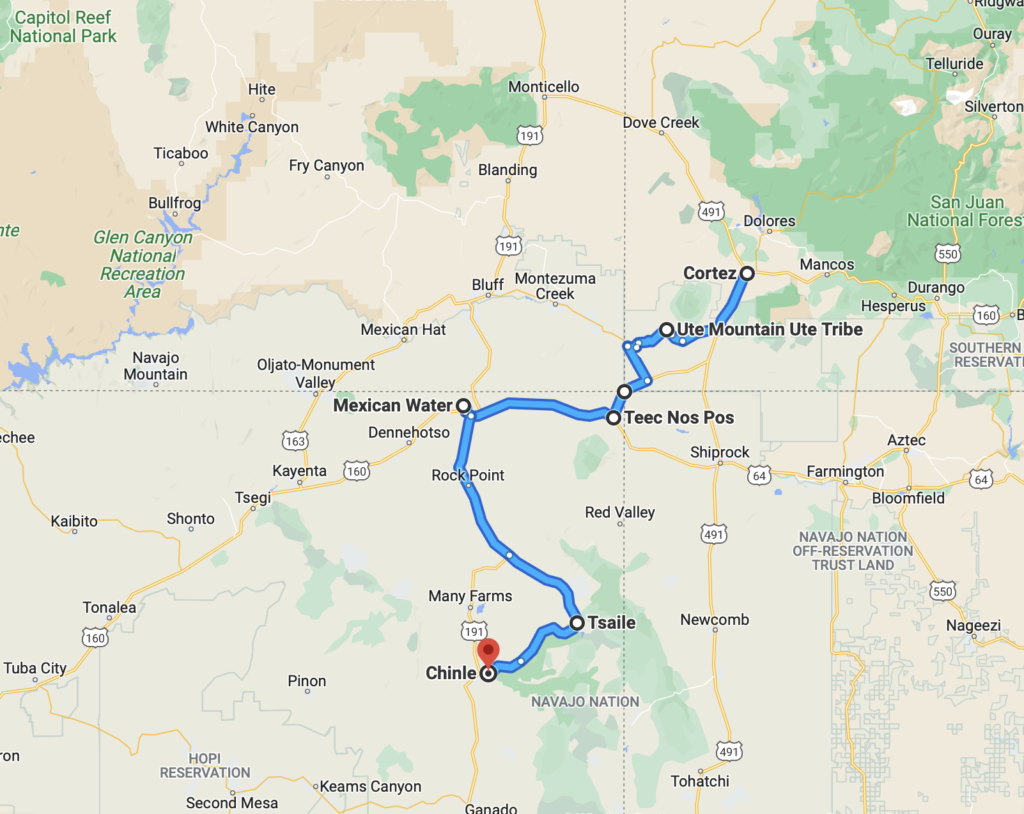(Google Maps)
---
*Editor’s Note: You can track Clay’s dispatches on this Colorado River Journey by following the links from his route and itinerary below. You can also keep up with all LTA’s dispatches, essays, photos, and podcasts on this topic through the tab “Water in the West.” This is one of many ongoing road trips at the heart of Listening to America. Our mission is to “light out for the territories,” traveling less visited byways and taking time to see this immense, extraordinary country with fresh eyes while listening to the many voices of America’s past, present, and future.*
**Water in the West — Routes** **and Itinerary**
- [**Introduction: A Colorado River Journey, The Trek Begins**.](https://ltamerica.org/beyond-the-apocalypse-and-bathtub-rig-a-colorado-river-journey-we-begin-2/)
- [**Day One, Friday: I-70 Vail to Green River; Utah 24 to Torrey; Utah 12 to Boulder, Utah.**](https://ltamerica.org/on-the-open-road-a-colorado-river-journey/)
- **[Day Two, Saturday: Boulder, Utah.](https://ltamerica.org/boulder-utah-a-colorado-river-journey/)**
- [**Day Three, Sunday: Utah 12 to Torrey; Utah 24 to Hanksville; Utah 95 to Natural Bridges National Monument; Utah 261 to Mexican Hat; U.S. 163 to Bluff; Utah 162 to Aneth; Indian Route 5068/Arizona County Road G to Cortez.**](https://ltamerica.org/deep-in-canyon-country-a-colorado-river-journey/)
- **[Day Four, Monday: Crow Canyon Archaeological Center, Cortez, Colorado.](https://ltamerica.org/crow-canyon-archaeological-center-a-colorado-river-journey/)**
- **Day Five, Tuesday: Colorado 160/491 to Chimney Rock; Colorado 160 to Teec Nos Pos; Colorado 160 to Mexican Water; U.S. 191 Tsaile; Arizona 64 to Chinle.**
- **[Day Six, Wednesday: Canyon de Chelly; U.S. 191 to Burnside; Arizona 264 to Second Mesa.](https://ltamerica.org/navajo-nation-and-canyon-de-chelly-a-colorado-river-journey/)**
- **[Day Seven, Thursday: Hopi Cultural Center; Arizona 264 to Tuba City; U.S. 160 to U.S. 89; U.S. 89 to Bitter Springs; U.S. 89A to Marble Canyon.](https://ltamerica.org/the-way-of-the-hopi-a-colorado-river-journey/)**
- **[Day Eight, Friday: U.S. 89A to Bitter Springs; U.S. 89 to Page, Arizona.](https://ltamerica.org/a-different-view-of-glen-canyon-and-the-colorado-river/)**
- **[Day Nine, Saturday: Lake Powell; U.S. 89 to Kanab.](https://ltamerica.org/a-day-on-lake-powell-a-colorado-river-journey/)**
- [**Days 10 & 11, Sunday/Monday: U.S. 89 to Utah 20; Utah 20 to I-15; I-15 to Salt Lake City.**](https://ltamerica.org/farewell-to-our-intrepid-guide-a-water-in-the-west-reading-list/)
- **[Days 12 & 13, Tuesday/Wednesday: Salt Lake City.](https://ltamerica.org/circumnavigating-the-great-salt-lake-in-a-kayak/)**
- **[Reflections on A Colorado River Journey.](https://ltamerica.org/reflections-on-a-colorado-river-journey/)**
**Categories:** Dispatches from the Road
**Tags:** Colorado, Water in the West
---
### [Navajo Nation and Canyon de Chelly — A Colorado River Journey](https://ltamerica.org/navajo-nation-and-canyon-de-chelly-a-colorado-river-journey/)
**Published:** May 30, 2023
**Author:** Clay Jenkinson
**Content:**
## Day Six, Wednesday: Canyon de Chelly; U.S. 191 to Burnside; Arizona 264 to Second Mesa.
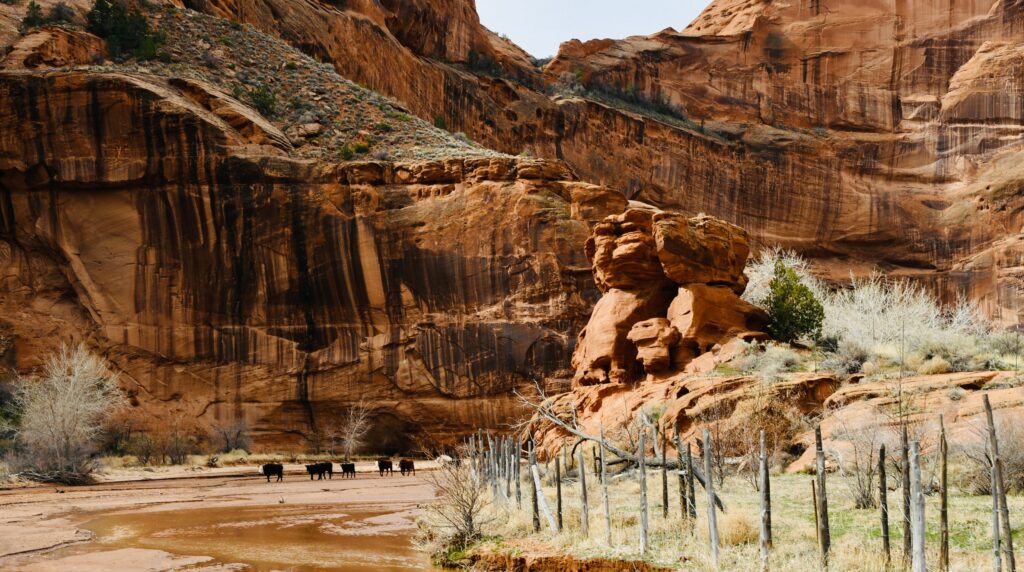Cattle traveling the Chinle Wash in Canyon de Chelly, part of the Navajo Nation. (Photo by Dennis McKenna)
*This is the seventh in a [series](https://ltamerica.org/beyond-the-apocalypse-and-bathtub-rig-a-colorado-river-journey-we-begin-2/) of dispatches from Clay Jenkinson chronicling his recent journey with two compatriots following the Colorado River and neighboring region. The day was spent at Canyon de Chelly* *on the Navajo Nation.* *The two-week expedition explored the state of water, or the absence of it, in the West.*
The writer, [Timothy Egan](https://www.timothyeganbooks.com) calls Canyon de Chelly “the garden spot of Navajo land, where rock, sun, wind, water and the ages had produced one of the world’s singular places.”
Canyon de Chelly is one of America’s most magical places. I first visited it 35 years ago with my closest friend Douglas. We were traveling from southern California to Colorado Springs, and we detoured a few hours to see it. I remember being overwhelmed with awe: the green cottonwood trees embraced by the pink and red canyon walls; how contained, almost miniature the canyon is, the elegance of the ruins, the desert varnish. It had an air of mystery about it then that I didn’t feel this time through. You can only see Canyon de Chelly for the first time once. As you can only read *Hamlet* for the first time once.
The canyon is hidden, and you come upon it from above with such suddenness, and its twin reaches are so modest in length (30 miles) and remote that Canyon de Chelly is essentially a magic portal into an alternative America. It doesn’t have the depth or the grandeur of the Grand Canyon. It doesn’t overwhelm you as much as it seems to invite you to hide out from the world. It feels mystical. [Hampton Sides](https://hamptonsides.com) writes, “It was, the Diné believed, protected by supernatural powers no white man could touch.”
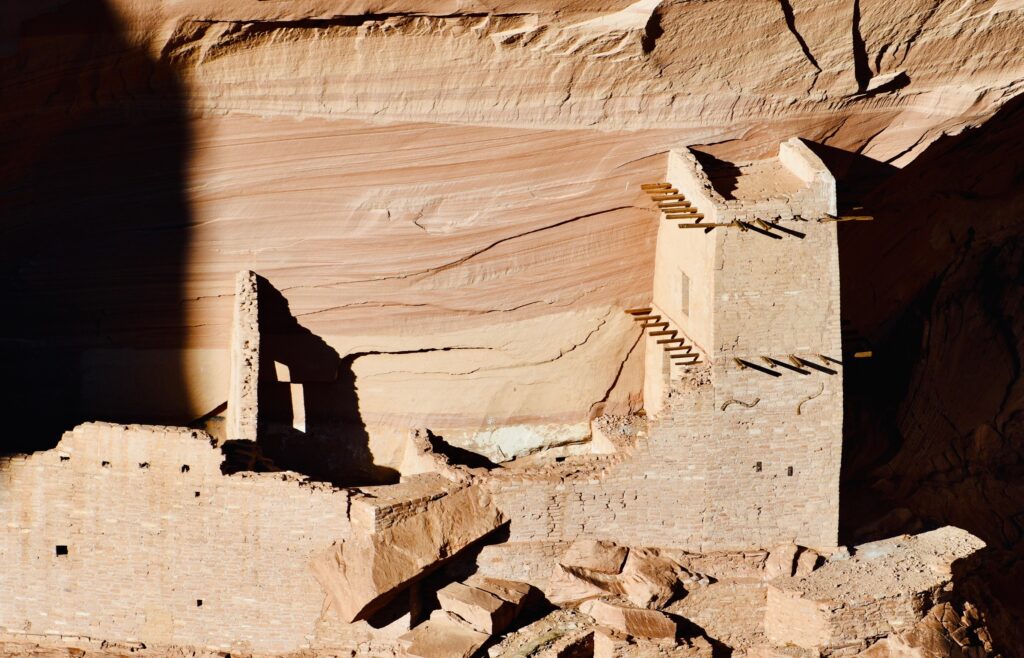800 year old multistory Ancestral Puebloan cliff dwelling, part of Mummy Cave, in Canyon de Chelly National Monument. (Photo by Dennis McKenna)
Part of me wishes it were still hidden away and only the Navajo and the Hopi knew of it. I’m with John Muir that some places in America should be protected forever from economic intrusion — that some places should never be visited by humans unless they hike in over a series of days with a minimum of gear. This place maybe should be off limits to non-Natives. It was a sanctuary rudely violated by the U.S. Army in the 1860s and ’70s. Sides writes of this tragic episode, “In their heart of hearts the Diné had always regarded Canyon de Chelly as their last stronghold and sanctuary, the one place where they felt truly safe. When their wider world was in turmoil, when they could find no relief from pestilence or harrying foes, they had always fallen back here, to hide in the timeless folds.”
We not only wrested the Indigenous people out of the canyon, but did everything in our power to disrupt, destroy, and desecrate one of their most sacred places. Why? What did we have to gain? This is not the island of Manhattan or the shore of Lake Michigan. Why did we have to conquer it and cut its life throat?
The name de Chelly is a Spanish garbling of the Navajo word *Tsegi*, “rock canyon.”
I did not know back then when I first came here that the U.S. government harried the Navajo relentlessly, especially in 1864, defeated them in their canyon redoubts, and hustled them off to a truly wretched reservation at [Bosque Redondo](https://nmhistoricsites.org/bosque-redondo). Mountain man and scout Kit Carson was tasked with flushing the Navajo out of Canyon de Chelly. He expressed his reluctance and then did what he was expected to do. As he undertook his campaign, Carson assured his commanding officer James Carleton, “Of one thing the General may be assured … before my return, all that is connected with this canyon will cease to be a mystery. It will be thoroughly explored \[with\] perseverance and zeal.” After he defeated the Navajo in a series of small skirmishes, he ordered his subordinates to “lay waste to everything: every hogan, every brush arbor, every animal, every store of grain. It was to be more scorched earth, in other words, only this time the work was to be carried out right in the high church of the Navajos,” as Sides puts it.
Among other things, Kit Carson had his men cut down and burn literally thousands of the Navajo’s peach trees in the Canyon. Although this was nothing as horrible as his killing of any Navajo who resisted, Carson’s willingness to cut down all those fruit trees somehow carries a special moral opprobrium. It feels like an atrocity. Eventually, the Navajo were permitted to return to their ancestral homeland by way of what is remembered as “the Long Walk of the Navajo,” but when they arrived, they had to start from scratch in their orchards. The U.S. government, having appropriated or killed off the Navajo’s great sheep herds, now provided a modest new starter herd. All of this is superbly handled in Hampton Sides’ book, *[Blood and Thunder: The Epic Story of Kit Carson and the Conquest of the American West](https://hamptonsides.com/writing/blood-and-thunder/)*.
What struck me on my most recent visit is the preciousness of water. Because it has been a wet winter in the West, all the creeks are running, and the streams, and the Chinle Wash at the bottom of the canyon. Running water in a desert country is lifeblood in a way that cannot be exaggerated. And it is better felt than described. We were fortunate to be visiting at a time when the earth was flush with the flow of lifegiving water. Everyone we met in the canyon was in a good mood. Water is life. When the canyon is bone dry, it can feel like an oven. The dust whips up with the wind. In a parched August there is a kind of lunar serenity, but not much life stirring. But let the wash run like a river, slosh around in it in childlike joy, and all the life in the canyon begins to stir. A big year like this can make up for a prolonged series of dry years. Most of America can afford to take water for granted. Turn on the faucet, out comes clean potable water. We regard water as an entitlement, a taken for granted fact of life. But out in desert country, water is something you never dare take for granted, even in a wet year like this. Edward S. Curtis visited the canyon twice. He loved its peacefulness and serenity.
## **Touring the Canyon**
After breakfast we paid our fee and joined a tour group in three-axle Austrian vehicles. We three joined two couples, one of which appeared to be the sort of earnest senior citizens who travel America in search of enlightenment. The other couple was late. They had flown in that morning in a private plane solely for the purpose of seeing the canyon. I wanted to dislike them for their wealth and sense of entitlement, for keeping us waiting, but the canyon was so magical that I couldn’t stay grumpy very long.
We got off the gear-grinding vehicle a couple of times to pee and stretch. I bought a lovely vase from a shy Navajo woman. When I said I was traveling she shouted across the wash for another woman to bring a box and something to stuff around the fragile vase. All this in one of the most isolated places in America.
At the time of our visit, the canyon floor was a real river. We splashed or slogged through it several dozen times on the four-hour tour. Early on, an identical vehicle ahead of us got stuck in the wash — quicksand is everywhere and unpredictable we were told — and another vehicle had to winch it out.
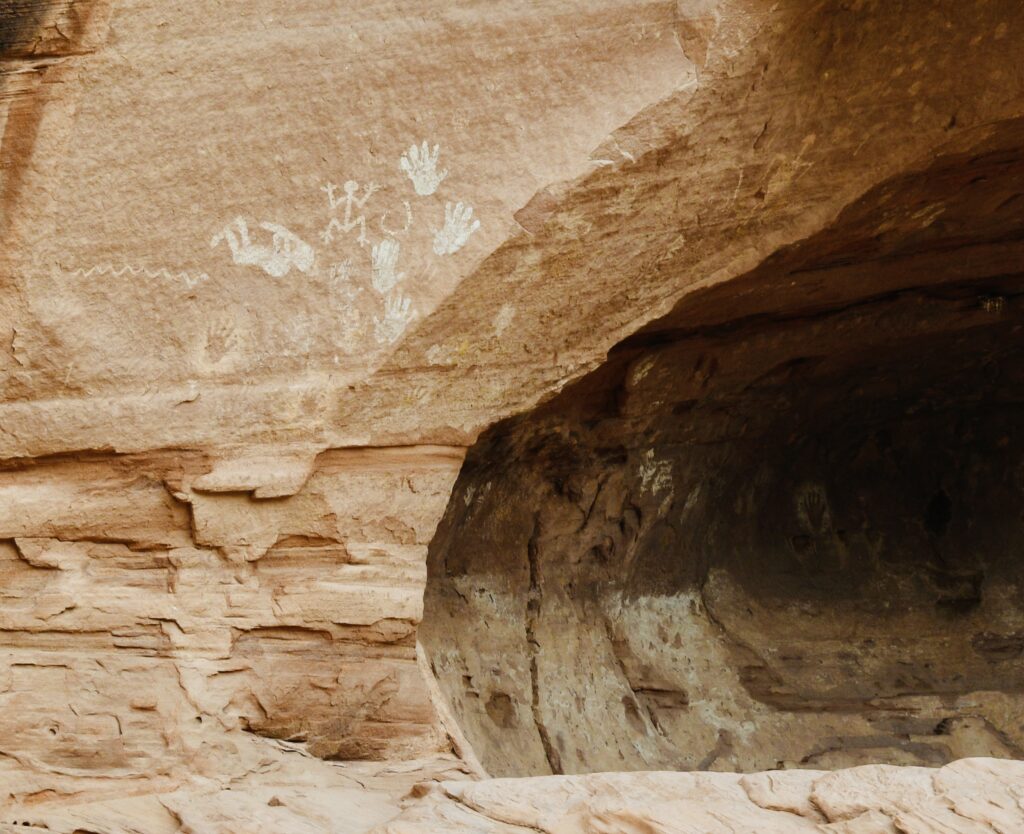There are many examples of ancient rock art throughout the canyon. (Photo by Dennis McKenna)
Our Navajo guide stopped six or seven times during the tour. He pointed out ruins we might otherwise have missed. He used a pocket mirror as a pointer to show us rock art, and to trace the outline of giant figures etched into the sandstone walls. I asked about the location of several of the famous photographs taken in Canyon de Chelly by [Edward S. Curtis](https://www.si.edu/spotlight/edward-sheriff-curtis). Our guide said the location of the photograph of the horsemen moving slowly through the canyon was currently inaccessible because of the high water. I showed him a greeting card we had purchased in the motel shop of the photograph in question. He shrugged. It did not seem to me that the work of Curtis was one of his concerns. And he was right. Satisfying as it was to us to visit the canyon in the footsteps of Curtis, and to try to line up his famous photographs with the contemporary landscape, we were mediating the experience. Instead of just drinking in Canyon de Chelly in all its challenging sacredness, we (mostly I) were grooving on the work of a white man who turned up in 1904 as he lived and worked among the Diné.
Why did I feel uneasy in the canyon and wonder if it should not be off limits to white people? We venture in, spend a bit of time, leave behind some money, take some photographs, buy a souvenir, and venture out again. In a certain sense we were privileged white people having our way with Canyon de Chelly. If the Euro-American history of the American West is the history of exploitation and extraction, weren’t we more squarely in that tradition than is comfortable to contemplate? Weren’t we extracting pleasure and a kind of cache of virtue by going there? I have noticed over the years that when people talk about visiting Canyon de Chelly (I am one of them), they lower their voices a little because it means they belong to a special club. It’s a much greater mark of enlightened travel than, say, Yellowstone or Yosemite. Saying you have visited Canyon de Chelly carries a bit of virtue signaling.
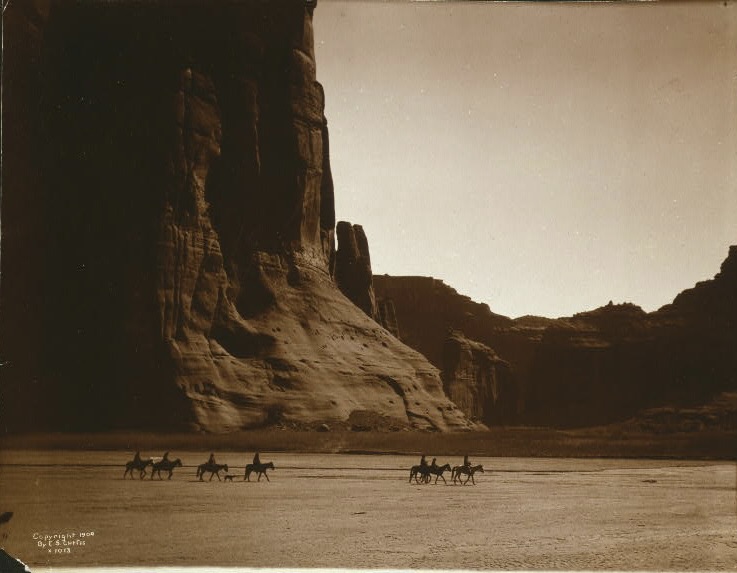Edward S. Curtis’ iconic photograph taken at Canyon de Chelly. (LOC)
Even a cursory reading of the history of the place reveals that it was a profound sanctuary for the Navajo. It was and is one of their most sacred places. Even with the vehicular limitations now observed in the canyon and a touring price that was not inexpensive, there was a lot of roar and rumble on the canyon floor. In four hours, we saw scores of pickups. We could only get through the saturated gravels of the wash with extremely powerful industrial vehicles. It felt a little like we were part of an Indiana Jones movie. Our guide was clearly bored with us. We were, of course, just group x. In fact, when he dropped us off back at the motel, the next tour group jumped right into the vehicle and off they went for the two o’clock.
What have I done to deserve to penetrate this sanctuary? In what sense do I deserve to be here? You can say that we visitors bring much needed income to the Navajo. You can say that choosing to come here and not Disneyland indicates something good about our values and priorities. You can say that calling attention to the nineteenth century desecration of the canyon and the conquest of the Navajo can contribute to a new understanding of the history of the American West. But what really have we done to earn this experience? We drove into Chinle in one of the finest machines western civilization can produce. Then we rumbled through the canyon in a specialty vehicle designed for difficult terrain. Somewhere in Dakota or Texas or Saudi Arabia an oil well bought us our tickets. In the course of the day, we did not walk more than 200 yards. If we had had to walk into the canyon in waders, five, then, twenty miles, would we have done so? If the canyon was only available by horseback, would we have spent the day in the saddle?
Aren’t we in some way still *occupying* Canyon de Chelly? Isn’t our very presence disruptive and disturbing? When it became a National Monument by executive order in 1931 (Herbert Hoover), were the Navajo consulted, compensated, considered? If, as we learn from the administrative history, President Hoover made it a national monument to preserve the ancestral pueblo ruins from poaching and pot hunting and vandalism, did that necessarily imply that it should become a tourist destination, too? The monument was closed during the pandemic. I try to imagine the serenity of those 477 days. Think of how many critters came down into the wash to drink.
Don’t get me wrong. I loved my second visit to Canyon de Chelly. And I would probably visit it again. But it felt a little violative.
When we got back to the lodge, we piled into the pickup and headed towards the Hopi mesas.
## **A Final Note: Writing (and Reading) American History**
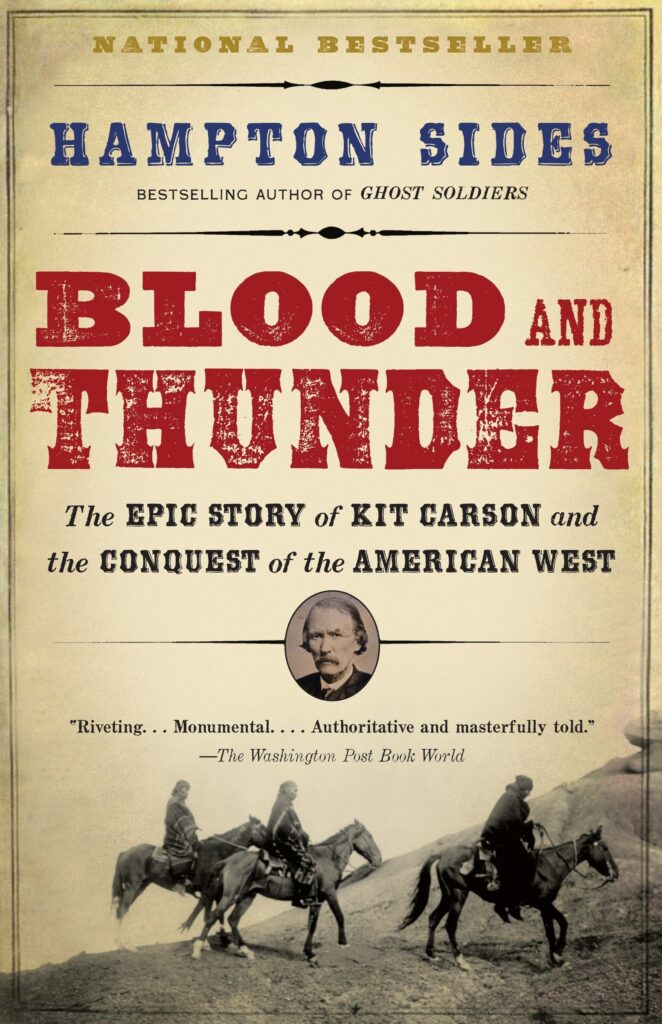Hampton Sides’ *Blood and Thunder*.
One last note. In the months before our visit, I read two books about Kit Carson, Hampton Sides’ *Blood and Thunder* (mentioned above) and Stanley Vestal’s *Kit Carson: The Happy Warrior of the Old West*. Sides’ book was published in 2006. He’s entirely a product of our time — especially sympathetic to Native peoples and the environment. He would not have written a full-length book about Kit Carson if he were not fascinated by the mountain man, explorer, scout, Indian agent, and Indian fighter. And there is a great deal to admire in Carson. He got the somewhat bumbling John C. Fremont to South Pass and was as important as anyone for his success as the great white explorer of the mid-nineteenth century. My favorite Carson moment occurs in 1849 when he comes into the abandoned camp of Ann White who had been kidnapped on the Santa Fe Trail. Carson found a dime novel portraying the legendary “Kit Carson.” According to the New Yorker’s [Jill Lapore](https://scholar.harvard.edu/jlepore/home), “White was killed just moments before Carson and his party reached her. Rummaging through the abandoned Apache camp where White had been prisoner, Carson found a copy of Averill’s just published ‘Kit Carson’; Ann White had carried it with her all the way from Missouri. ‘The book was the first of its kind I had ever seen, in which I was made a great hero, slaying Indians by the hundred,’ Carson recalled, ruefully. ‘I have often thought that as Mrs. White would read the same, and knowing that I lived near, she prayed for my appearance and that she would be saved.’”
Stanley Vestal (1887-1957) was a prolific Oklahoma historian, the author of books on Sitting Bull, Jim Bridger, the Old Santa Fe Trail, and one of the classics of the Rivers of America series, *The Missouri* (1945). He was Oklahoma’s first Rhodes Scholar (1904). He was generally sympathetic to Native Americans, and he did hard pioneering work in Indian Country, including interviewing contemporaries and colleagues of the Lakota holy man Sitting Bull. But he was, like the rest of us, a man of his time. He devotes only a short final chapter to Kit Carson’s mayhem in Canyon de Chelly. There Vestal writes, “the conquest of the Navajo is unquestionably one of his greatest achievements.” He does not mention the slaughter of the quadrupeds of the canyon, and he never mentions the holocaust of the peach trees. He concludes his narrative with, “The Gibraltar of the Navajo was taken, and from that day they have been quiet, thrifty, law-abiding citizens, increasing in number and wealth from year to year.”
Two conclusions. First, thank goodness the historiography of the American West has evolved into a more generous, multicultural, culturally sensitive narrative over the last two generations. We all owe a great debt of gratitude to Patricia Limerick of the University of Colorado, whose revolutionary book, *[Legacy of Conquest: The Unbroken Past of the American West](https://www.goodreads.com/en/book/show/1012690)* (1987) inaugurated a new era in our understanding of frontier history. Second, it is essential that we who study these things today respond to these paradigm shifts in history with humility rather than righteousness. Every generation is alert to some things and blind to others, and every generation tends to run the zeitgeist in which it comes to maturity. What will they say of us in 2075 or 2123?
We drove on to the [Hopi Cultural Center](https://hopiculturalcenter.com) on the Second Mesa.
Early spring morning traveling the Chinle Wash on the floor of the canyon in a three-axle Austrian open air tour truck. (Video by Clay Jenkinson)
---
*Editor’s Note: You can track Clay’s dispatches on this Colorado River Journey by following the links from his route and itinerary below. You can also keep up with all LTA’s dispatches, essays, photos, and podcasts on this topic through the tab “Water in the West.” This is one of many ongoing road trips at the heart of Listening to America. Our mission is to “light out for the territories,” traveling less visited byways and taking time to see this immense, extraordinary country with fresh eyes while listening to the many voices of America’s past, present, and future.*
**Water in the West — Routes** and **Itinerary**
- [**Introduction: A Colorado River Journey, The Trek Begins**.](https://ltamerica.org/beyond-the-apocalypse-and-bathtub-rig-a-colorado-river-journey-we-begin-2/)
- [**Day One, Friday: I-70 Vail to Green River; Utah 24 to Torrey; Utah 12 to Boulder, Utah.**](https://ltamerica.org/on-the-open-road-a-colorado-river-journey/)
- **[Day Two, Saturday: Boulder, Utah.](https://ltamerica.org/boulder-utah-a-colorado-river-journey/)**
- **[Day Three, Sunday: Utah 12 to Torrey; Utah 24 to Hanksville; Utah 95 to Natural Bridges National Monument; Utah 261 to Mexican Hat; U.S. 163 to Bluff; Utah 162 to Aneth; Indian Route 5068/Arizona County Road G to Cortez.](https://ltamerica.org/deep-in-canyon-country-a-colorado-river-journey/)**
- [**Day Four, Monday: Crow Canyon Archaeological Center, Cortez, Colorado.**](https://ltamerica.org/crow-canyon-archaeological-center-a-colorado-river-journey/)
- **[Day Five, Tuesday: Colorado 160/491 to Chimney Rock; Colorado 160 to Teec Nos Pos; Colorado 160 to Mexican Water; U.S. 191 Tsaile; Arizona 64 to Chinle.](https://ltamerica.org/a-visit-to-ute-mountain-a-detour-and-the-four-corners-controversy/)**
- **Day Six, Wednesday: Canyon de Chelly; U.S. 191 to Burnside; Arizona 264 to Second Mesa.**
- **[Day Seven, Thursday: Hopi Cultural Center; Arizona 264 to Tuba City; U.S. 160 to U.S. 89; U.S. 89 to Bitter Springs; U.S. 89A to Marble Canyon.](https://ltamerica.org/the-way-of-the-hopi-a-colorado-river-journey/)**
- **[Day Eight, Friday: U.S. 89A to Bitter Springs; U.S. 89 to Page, Arizona.](https://ltamerica.org/a-different-view-of-glen-canyon-and-the-colorado-river/)**
- **[Day Nine, Saturday: Lake Powell; U.S. 89 to Kanab.](https://ltamerica.org/a-day-on-lake-powell-a-colorado-river-journey/)**
- [**Days 10 & 11, Sunday/Monday: U.S. 89 to Utah 20; Utah 20 to I-15; I-15 to Salt Lake City.**](https://ltamerica.org/farewell-to-our-intrepid-guide-a-water-in-the-west-reading-list/)
- [**Days 12 & 13, Tuesday/Wednesday: Salt Lake City.**](https://ltamerica.org/circumnavigating-the-great-salt-lake-in-a-kayak/)
- **[Reflections on A Colorado River Journey.](https://ltamerica.org/reflections-on-a-colorado-river-journey/)**
**Categories:** Dispatches from the Road
**Tags:** Arizona, Colorado River, Navajo, Water in the West
---
### [The Way of the Hopi — A Colorado River Journey](https://ltamerica.org/the-way-of-the-hopi-a-colorado-river-journey/)
**Published:** June 5, 2023
**Author:** Clay Jenkinson
**Excerpt:** Snow was on the ground when we awoke on the second Hopi mesa. We feared a snowstorm, possibly a blizzard. We slipped and lurched to a remote coffee house that Dennis and Frank had scoped out the previous evening and then drove back to the Hopi Cultural Center, where we met Donald Dawahongnewa.
**Content:**
## Day Seven, Thursday: Arizona 264 to Tuba City; U.S. 160 to U.S. 89; U.S. 89 to Bitter Springs; U.S. 89A to Marble Canyon.
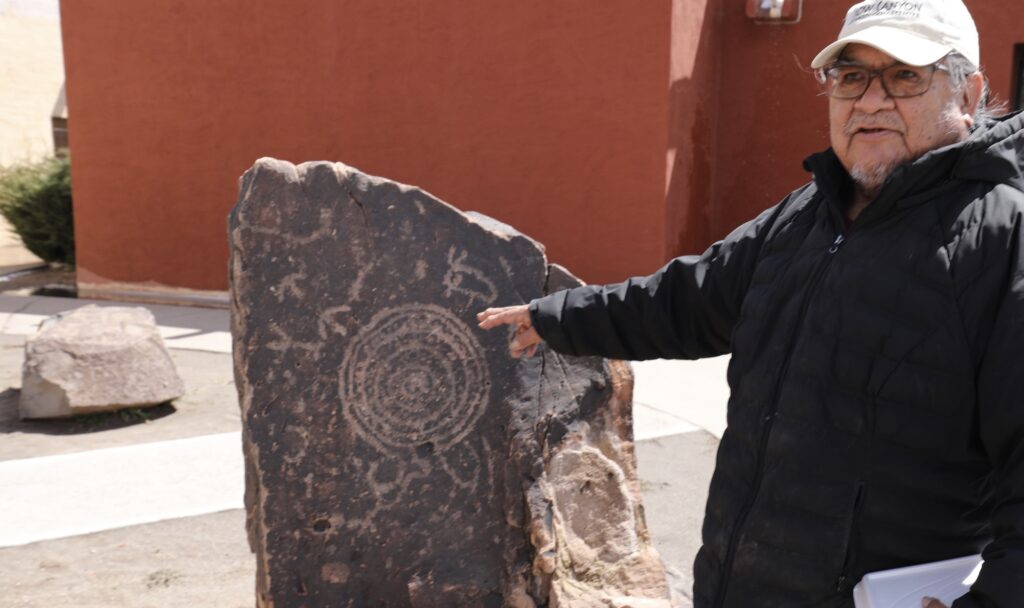Donald Dawahongnewa explains the meaning of rock art at Hopi Cultural Center on Second Mesa, Hopi Reservation. (Photo by Clay Jenkinson)
*Clay **Jenkinson*** *and his colleges spent the day on the [Hopi](https://www.hopieducationfund.org/about-hopi) Reservation with Donald Dawahongnewa, learning about traditional dry farming practices and visiting the three Mesas that comprise the Reservation. *This is the eighth in a [series](https://ltamerica.org/beyond-the-apocalypse-and-bathtub-rig-a-colorado-river-journey-we-begin-2/) of dispatches from Clay chronicling his recent journey with two compatriots following the Colorado River and neighboring region* exploring the state of water, or the absence of it, in the West.*
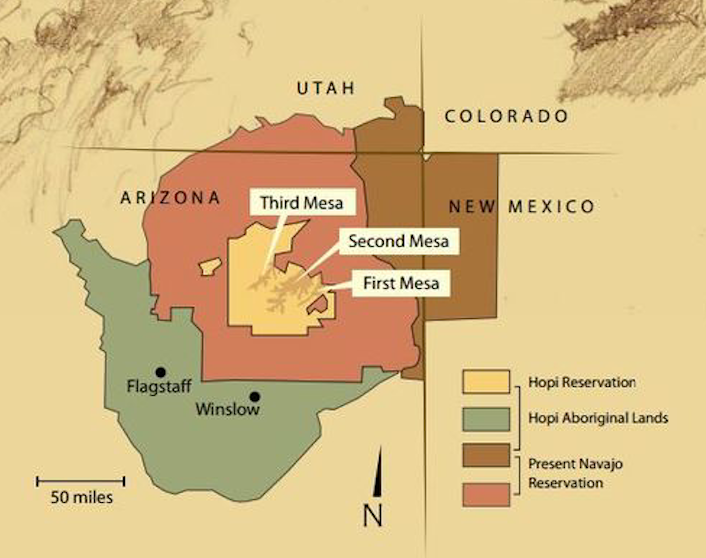Hopi contemporary and historic tribal lands.(Wikimedia)
Snow was on the ground when we awoke on the second Hopi mesa. We feared a snowstorm, possibly a blizzard. We slipped and lurched to a remote coffee house that Dennis and Frank had scoped out the previous evening and then drove back to the [Hopi Cultural Center](https://hopiculturalcenter.com/#crafts), where we met Donald Dawahongnewa. Before long, the snow and ice had all melted, and a wan late-winter sun came out.
Donald Dawahongnewa is a humble Hopi farmer. His pickup had a problem, so he asked us to pick him up at his home in [Shungopavi](https://traditionalhopi.org/). We got a little lost, but he talked us in on his cell phone and stood outside when we rolled up. We took him back to the Hopi Cultural Center and moved toward the room where we did the interview. In the middle of a plaza at the Cultural Center, he stopped at a pyramid about eight feet high. He explained that this was a time capsule containing several objects and documents important to the Hopi people, erected in 1972 but not to be opened until 2072. Its purpose was to pass knowledge to future generations important to the Hopi people of the late twentieth century. Donald had been part of the group that constructed the time capsule, filled it with significance, and dedicated it.
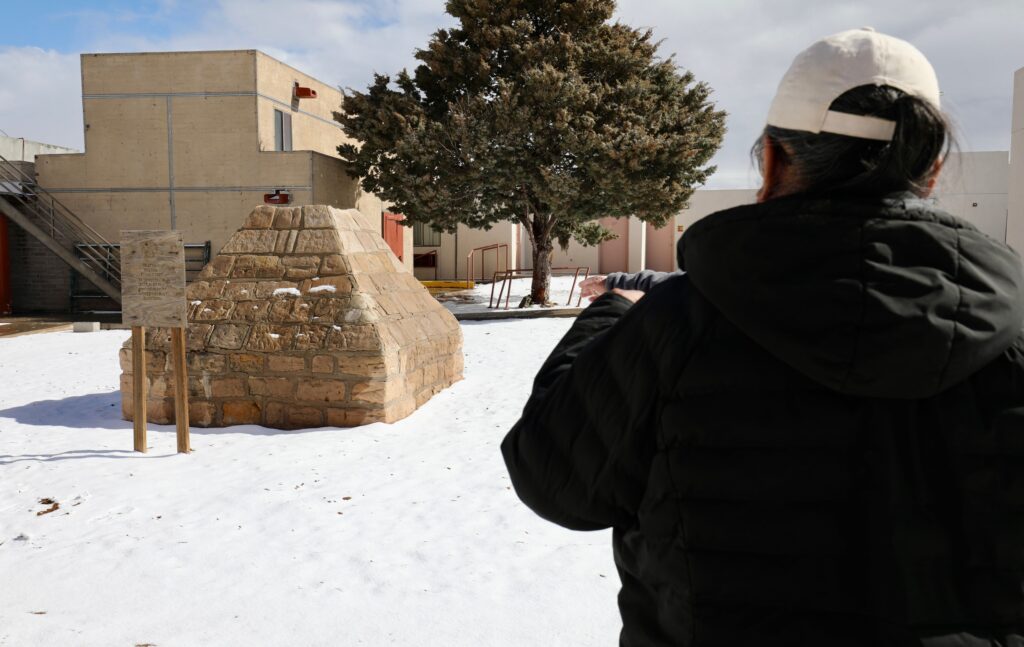Donald points out time capsule at Hopi Cultural Center. (Photo by Clay Jenkinson)
We had been well-prepared for this interview by[ Paul Ermigiotti back at Crow Canyon](https://ltamerica.org/crow-canyon-archaeological-center-a-colorado-river-journey/), but Donald took us much deeper, in a humble and even nonchalant way. He described the traditional Hopi corn planting rhythms throughout a calendar year. He grinned from ear to ear when he said he hated the tractor because it had seduced many other Hopi away from traditional planting methods. I asked many questions about water; some he would answer, some not. He talked about the springs on the Hopi mesas — springs that were first discovered hundreds, even thousands of years ago.
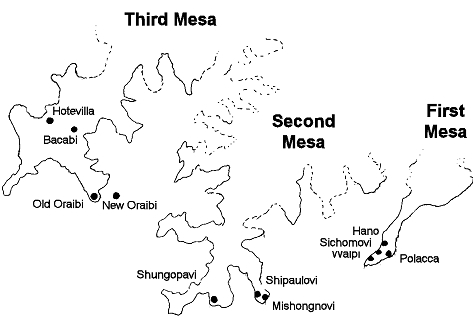Primary Hopi villages on the Three Mesas.
After lunch at the Center, he took us to several villages on the mesa. At some, we were welcome; at others not. Most villages had security checkpoints that linger on as the Covid 19 pandemic wanes worldwide. At one station, he assured the guard we would not get out of the vehicle. He took us to some of the oldest structures on the mesas and pointed out ancient and some recent kivas. He showed us one of the places where the great [Pueblo Revolt of 1680](https://indianpueblo.org/a-brief-history-of-the-pueblo-revolt/) played out. It was as important to his sense of Hopi history as Valley Forge is to white Americans. When we drove past [Walpi Village,](https://www.wmf.org/project/walpi-village) I perked up in the backseat. [Edward S. Curtis](https://www.si.edu/spotlight/edward-sheriff-curtis) took several of his most beautiful portraits at Walpi. Donald would not take us there. He gave several reasons, but we sensed that he had sufficient but not disclosed reasons for remaining below.
It’s the 21st century, 400 years since the Pueblo Revolt. Yet here, in a very remote place in the Americas through which highways leave their threadlike trace, and most tourists are either unaware that there are villages on top of the mesas or are simply indifferent to their existence, an ancient people continue to pursue their lives. Donald and seemingly every other mesa dweller lived in what would be regarded as extreme modesty and a considerable amount of clutter in the white world. He has a pickup, a telephone, electricity, and running water. But he has these things in their more basic form. It feels not like poverty — though there is plenty of poverty here — but more like a deliberate choice to make as few concessions to the white materialist paradigm as possible. Not to eschew the comforts and amenities of modern American life but to keep them in their place. The agriculture Donald practices are unchanged since before first contact with the Spanish: the digging stick, the heritage seeds, the zigzag rows, the water rituals, the prayers and songs, the planting and the harvest festivals, the control of the seeds by Hopi women. He told us he knows it is time to plant when certain birds sing to him. He said strangers bring rain, which is why the Hopi are so generous to strangers. He said the Hopi hate war now and always and do everything in their power to remain at peace with everyone, no matter how serious the provocation. Clearly, if Donald did not have a truck, he would simply walk to his fields. You get the feeling that when American civilization collapses, when the faucets in Phoenix and Scottsdale run dust, when the highways break up, and the electrical grid goes down, these traditional Hopi will go about their business, shaking their heads at the newcomers who were so sure their ways and means were a permanent settlement of the American West.
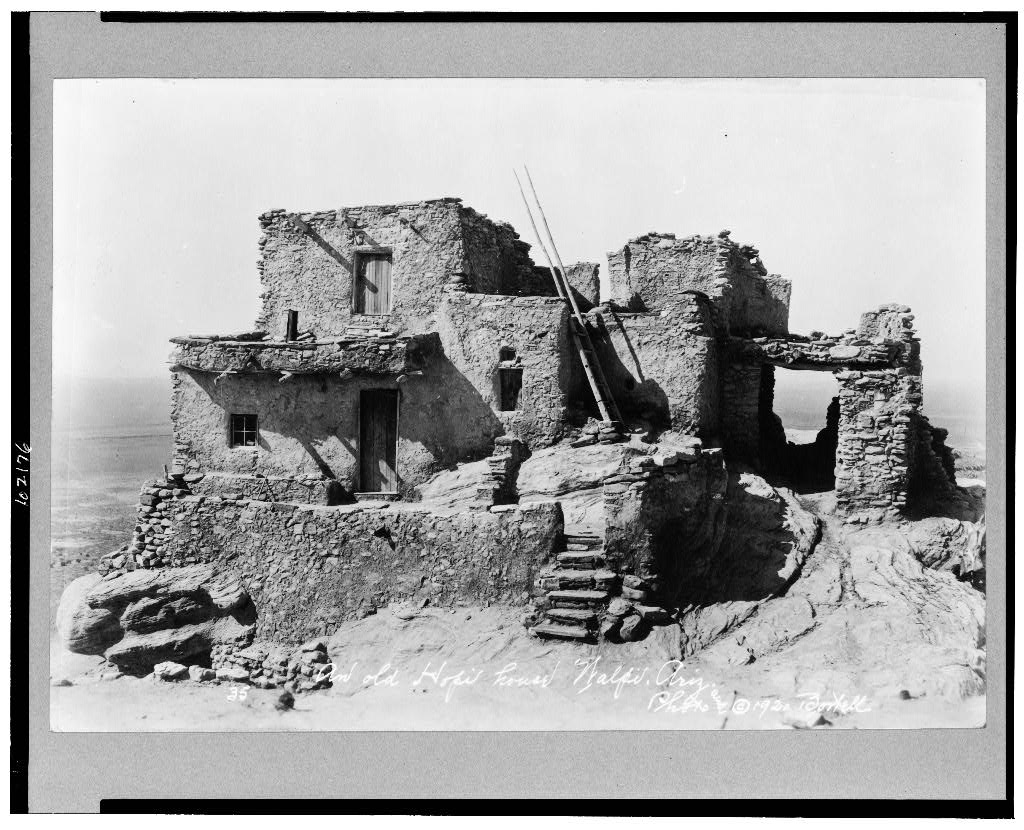An old Hopi house in the village of Walpi on the First Mesa, Hopi Reservation. (Photo by Bostell c1920, LOC)
The Hopi mesas are a little eerie and unsettling. Although there is a perfectly logical reason why a people would choose to live on plateaus high above the surrounding countryside, we still could not help wondering why a people would choose to live on top of mesas in the 21st century. There are hundreds of sizable mesas in Utah, Arizona, and New Mexico, yet most do not support inhabited villages. Of all the places we visited, I felt the least legitimacy in being there. It felt like another world within a world I thought I knew. I have spent time on the Lakota reservations in the Dakotas, the Absaroka and Flathead and Blackfeet reservations in Montana, and the Nez Perce reservation in Idaho, and though I always remember that I am a guest in another people’s sovereign land — the way I feel in France, for example — I nevertheless have the sense that I belong in those places. The Hopi world seemed a little forbidding to me. Now that I have been there, I want very much to return, see Donald again, be a little bolder with my questions, and find a way, if permitted, to get up to Walpi.
It was one of those days we won’t forget.
We were sorry to say goodbye, and he said he expected to see us again. We headed to Marble Canyon. By then the winds were so strong that they were shoving the big gray pickup all over the highway. Or maybe it was just Frank’s driving.
Dry farmed corn field. (Photo by Clay Jenkinson)
---
*Editor’s Note: You can track Clay’s dispatches on this Colorado River Journey by following the links from his route and itinerary below. You can also keep up with all LTA’s dispatches, essays, photos, and podcasts on this topic through the tab “Water in the West.” This is one of many ongoing road trips at the heart of Listening to America. Our mission is to “light out for the territories,” traveling less visited byways and taking time to see this immense, extraordinary country with fresh eyes while listening to the many voices of America’s past, present, and future.*
**Water in the West — Routes** **and** **Itinerary**
- [**Introduction: A Colorado River Journey, The Trek Begins**.](https://ltamerica.org/beyond-the-apocalypse-and-bathtub-rig-a-colorado-river-journey-we-begin-2/)
- [**Day One, Friday: I-70 Vail to Green River; Utah 24 to Torrey; Utah 12 to Boulder, Utah.**](https://ltamerica.org/on-the-open-road-a-colorado-river-journey/)
- **[Day Two, Saturday: Boulder, Utah.](https://ltamerica.org/boulder-utah-a-colorado-river-journey/)**
- **[Day Three, Sunday: Utah 12 to Torrey; Utah 24 to Hanksville; Utah 95 to Natural Bridges National Monument; Utah 261 to Mexican Hat; U.S. 163 to Bluff; Utah 162 to Aneth; Indian Route 5068/Arizona County Road G to Cortez.](https://ltamerica.org/deep-in-canyon-country-a-colorado-river-journey/)**
- [**Day Four, Monday: Crow Canyon Archaeological Center, Cortez, Colorado.**](https://ltamerica.org/crow-canyon-archaeological-center-a-colorado-river-journey/)
- **[Day Five, Tuesday: Colorado 160/491 to Chimney Rock; Colorado 160 to Teec Nos Pos; Colorado 160 to Mexican Water; U.S. 191 Tsaile; Arizona 64 to Chinle.](https://ltamerica.org/a-visit-to-ute-mountain-a-detour-and-the-four-corners-controversy/)**
- **[Day Six, Wednesday: Canyon de Chelly; U.S. 191 to Burnside; Arizona 264 to Second Mesa.](https://ltamerica.org/navajo-nation-and-canyon-de-chelly-a-colorado-river-journey/)**
- **Day Seven, Thursday: Hopi Cultural Center; Arizona 264 to Tuba City; U.S. 160 to U.S. 89; U.S. 89 to Bitter Springs; U.S. 89A to Marble Canyon.**
- **[Day Eight, Friday: U.S. 89A to Bitter Springs; U.S. 89 to Page, Arizona.](https://ltamerica.org/a-different-view-of-glen-canyon-and-the-colorado-river/)**
- **[Day Nine, Saturday: Lake Powell; U.S. 89 to Kanab.](https://ltamerica.org/a-day-on-lake-powell-a-colorado-river-journey/)**
- [**Days 10 & 11, Sunday/Monday: U.S. 89 to Utah 20; Utah 20 to I-15; I-15 to Salt Lake City.**](https://ltamerica.org/farewell-to-our-intrepid-guide-a-water-in-the-west-reading-list/)
- **[Days 12 & 13, Tuesday/Wednesday: Salt Lake City.](https://ltamerica.org/circumnavigating-the-great-salt-lake-in-a-kayak/)**
- **[Reflections on A Colorado River Journey.](https://ltamerica.org/reflections-on-a-colorado-river-journey/)**
**Categories:** Dispatches from the Road
**Tags:** Arizona, Edward S. Curtis, Hopi, Water in the West
---
### [A Different View of Glen Canyon and the Colorado River](https://ltamerica.org/a-different-view-of-glen-canyon-and-the-colorado-river/)
**Published:** June 12, 2023
**Author:** Clay Jenkinson
**Excerpt:** I’ve read about Lee’s Ferry all my life. Among other things, it is the portal for float trips in the Grand Canyon. Countless stories feature Lee’s Ferry or originate there. I watched several groups tuck their gear into rafts as they embarked on the great adventure. I was filled with envy and a kind of apprehension.
**Content:**
## Day Eight, Friday: U.S. 89A to Bitter Springs; U.S. 89 to Lee’s Ferry and Page, Arizona.
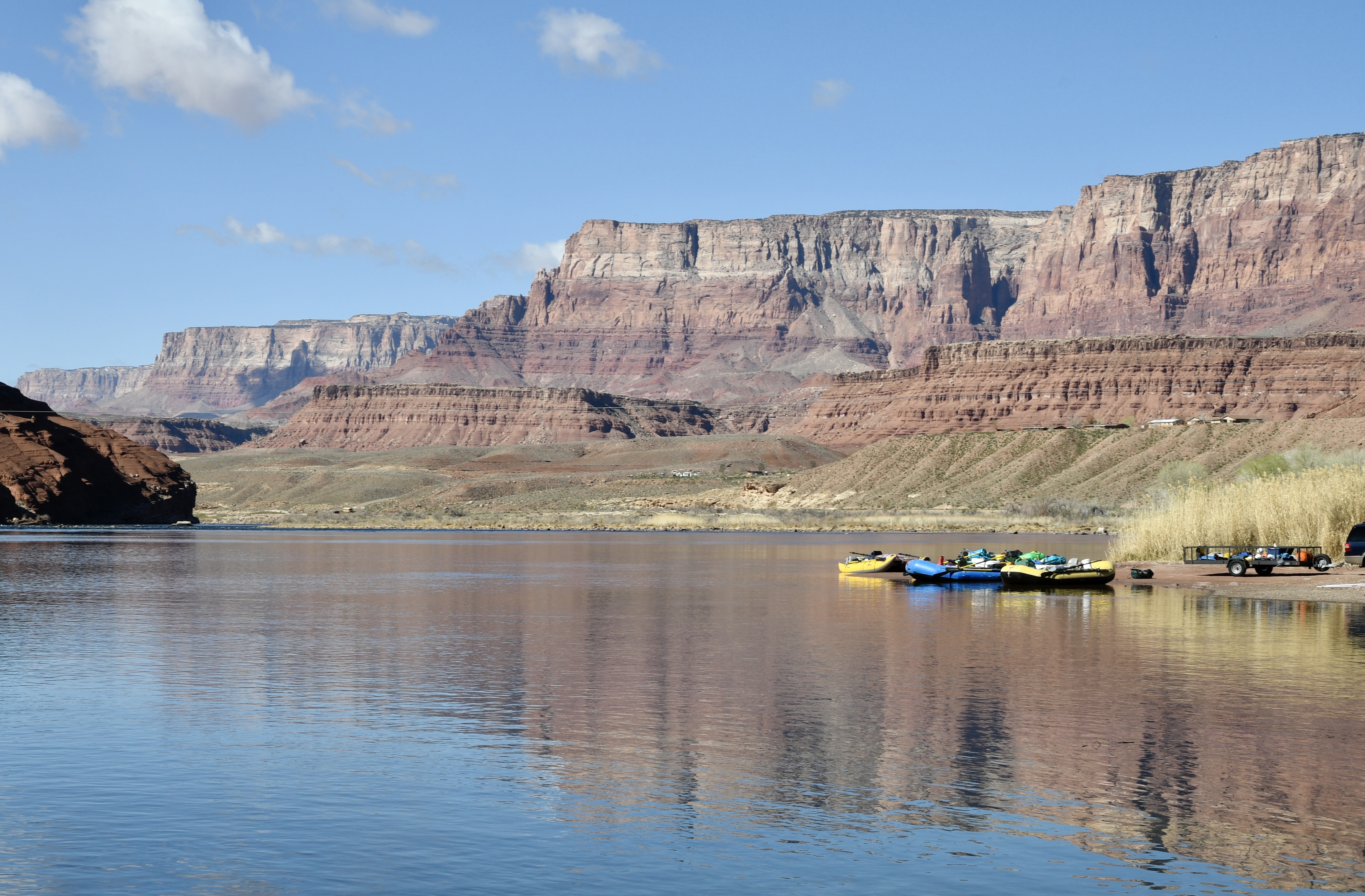Rafts putting in for a journey down the Colorado River at Lee’s Ferry, Arizona. (Photo by Dennis McKenna)
*Clay* *makes a first ever visit to the historic Lee’s Ferry; meets with a long time Page, Ariz. entrepreneur for insights on the region, and encouraged by our intrepid scout, Frank, has dinner at the famous Dam Bar. This is the ninth in a [series](https://ltamerica.org/beyond-the-apocalypse-and-bathtub-rig-a-colorado-river-journey-we-begin-2/) of dispatches from Clay chronicling his recent journey with two compatriots following the Colorado River and neighboring region exploring the state of water, or the absence of it, in the West.*
I’ve read about Lee’s Ferry all my life. Among other things, it is the portal for float trips in the Grand Canyon. Countless stories feature Lee’s Ferry or originate there. I watched several groups tuck their gear into rafts as they embarked on the great adventure. I was filled with envy and a kind of apprehension. Even with the safe, outstanding modern rafts, professional guides, superb life jackets, and helicopters up on the canyon rim waiting for the call, floating the Grand Canyon is not for the faint of heart. A friend of mine’s mother had to be helicoptered out after she suffered from heat stroke. My favorite recent story is narrated superbly by Kevin Fedarko in [*The Emerald Mile*](https://www.simonandschuster.com/books/The-Emerald-Mile/Kevin-Fedarko/9781439159866). In 1983, the year of the big water in the Colorado that endangered the integrity of Glen Canyon Dam, three heroic knuckleheads, Kenton Grua, Rudi Petschek, and Steve Reynolds, pushed off illegally from Lee’s Ferry in a wooden dory. They cascaded through the 277-mile Grand Canyon in 36 hours, 38 minutes, and 29 seconds, breaking the previous record of just under 48 hours set in 1980. Some of the other river runners at Lee’s Ferry, grounded by order of the National Park Service, looked on with outrage and admiration as the three wild and crazy adventurers slipped around the corner in moonlight. When they came out at Grand Wash Cliffs, they were promptly arrested.
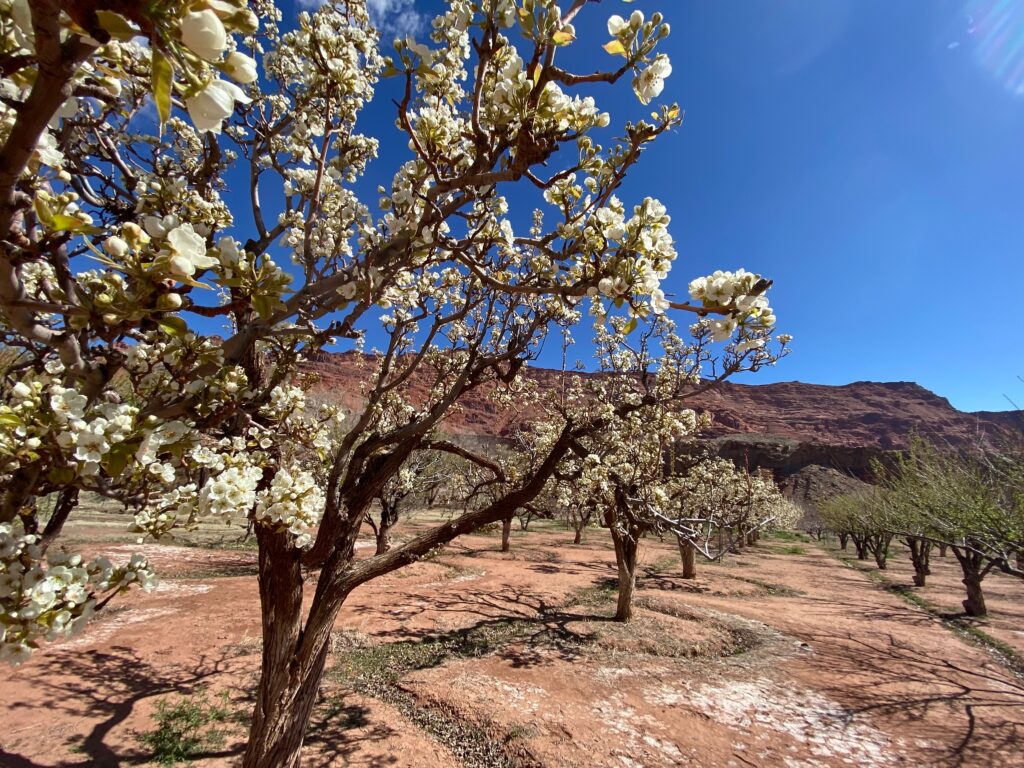Fruit trees at Lonley Dell Ranch near Lee’s Ferry, Ariz. (Photo by Clay Jenkinson)
The ford at Lee’s Ferry was discovered in 1864 by [Jacob Hamblin](https://greaterzion.com/articles/history-jacob-hamblin/), whom Brigham Young sent to find river crossings in canyon country. The location is named for John Doyle Lee, the adopted son of Brigham Young, one of the participants in the Mountain Meadows Massacre (September 7, 1857). Lee was sent in 1871 to operate a ferry at the crossing. Lee had sixty children. He was executed by firing squad in 1877. The ferry operated until June 7, 1928, when it collapsed, drowning three men. [The Lonely Dell Ranch](https://www.nps.gov/places/lonely-dell-ranch-historic-site.htm) and the ferry were operated by a series of LDS families, beginning with the Lees. Now it is maintained by the National Park Service as Lonely Dell Ranch Historic Site. Visitors are encouraged to harvest a modest amount of fruit from the orchards at the site. We spent an hour strolling around the ranch, taking deep breaths amid the fruit trees and trying to get photographs of the whole pastel scene. It is one of the most serene places I have ever been. Anyone who lived there before modern automobile traffic had plenty of time for meditation!
We drove to Page and spent the usual amount of time trying to decide where to lodge. Frank wanted us to stay in some historic clapboard barracks thrown up when the dam was built in the late 50s: musty, spare, stick furniture, weak internet, old pipes. Long on atmosphere, short on amenities. Perfect! Fortunately, the inn had no room, and I vetoed the manger down the street. We wound up on chain motel row, not far from church row, but we wouldn’t be spending much time in our rooms.
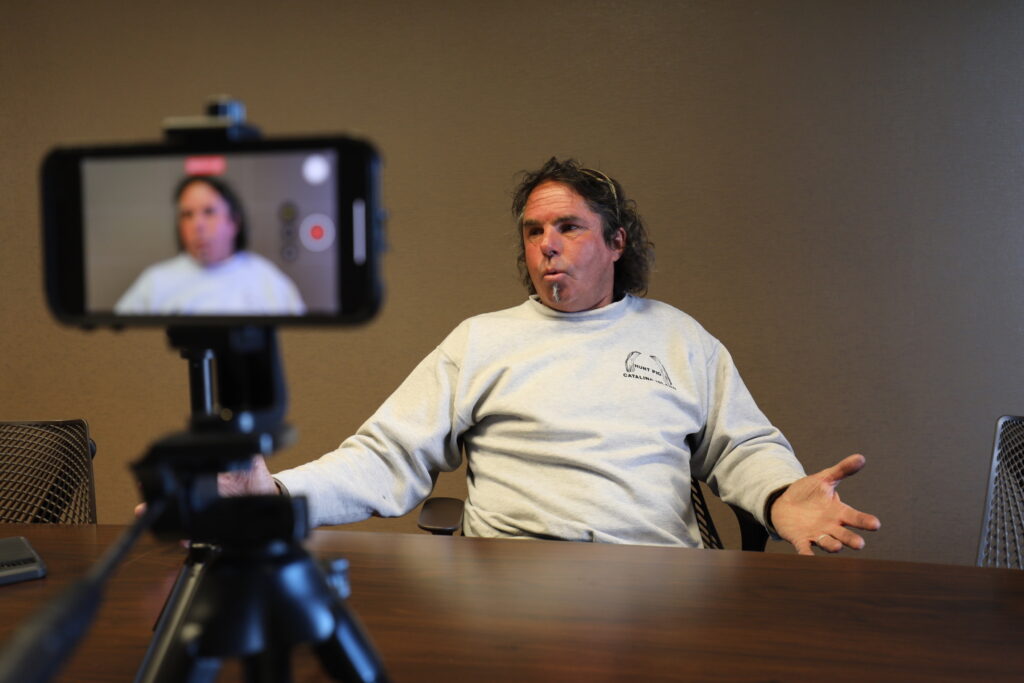Entrepreneur, sportsman, collector and raconteur, Brady Budd. (Photo by Clay Jenkinson)
Frank knows a Page entrepreneur named Brady Budd. They had a chance encounter five years ago; as Frank put it, they’d “clicked.” Frank assured us that Brady would be a perfect person to interview, and for once, he was right. He was always right, but you know how annoying that can be. Brady came to the hotel. He had a wild and crazy look, like a character from a Hunter S. Thompson book. He was one of the single most energetic men I have ever met. He had big hair and a world-class smile. He was incredibly articulate and forthcoming. He was also extremely knowledgeable and upbeat. We spent more than an hour listening to his views of Page (which he loves), of the dam, which he sees as a done deal (ain’t no turning back now), the prolonged drought (that’s why there’s a dam and a huge reservoir), the local economy (not solely dependent on the lake), the future (bright). He acknowledged that that dramatic drop in Lake Powell was a concern. Still, he reminded us that there had been previous periods of too much water and too little water in the Colorado basin and that things had a way of evening out over the long run. He was by no means naïve about this. He accepted the two big facts: that the waters of the Colorado have been over-allocated (too many users, too little water) and that global climate change has complicated the situation. He said there is plenty to be gained by way of thoughtful conservation. He did not believe that a continued drought cycle or a permanent diminution of the flow would lead to such drastic results as depopulation of parts of Phoenix or Tucson or parched throats in LA. So much of the basin’s water feeds alfalfa fields in the high country and the row crops of Imperial Valley down near El Centro, California, that if things get desperate, the farmers will inevitably have to yield to municipal uses of water. He said, too, that while Lake Powell may be the jewel of the region, it was by no means the sole attraction. The Grand Canyon, [Utah’s five National Parks](https://www.visitutah.com/places-to-go/parks-outdoors/the-mighty-5), and other scenic wonders meant that Page would always be just fine, even if things get worse on the Colorado.
I asked him if his views were skewed by the big winter just ending, with 150 to 200% snowpack throughout the American West. Yes, probably, he said, but he was equally concerned that the wet winter and the subsequent rise in Lake Powell (50-80 feet) would “just put everyone to sleep again” and lower the urgency to adopt more significant water conservation measures in the Southwest.
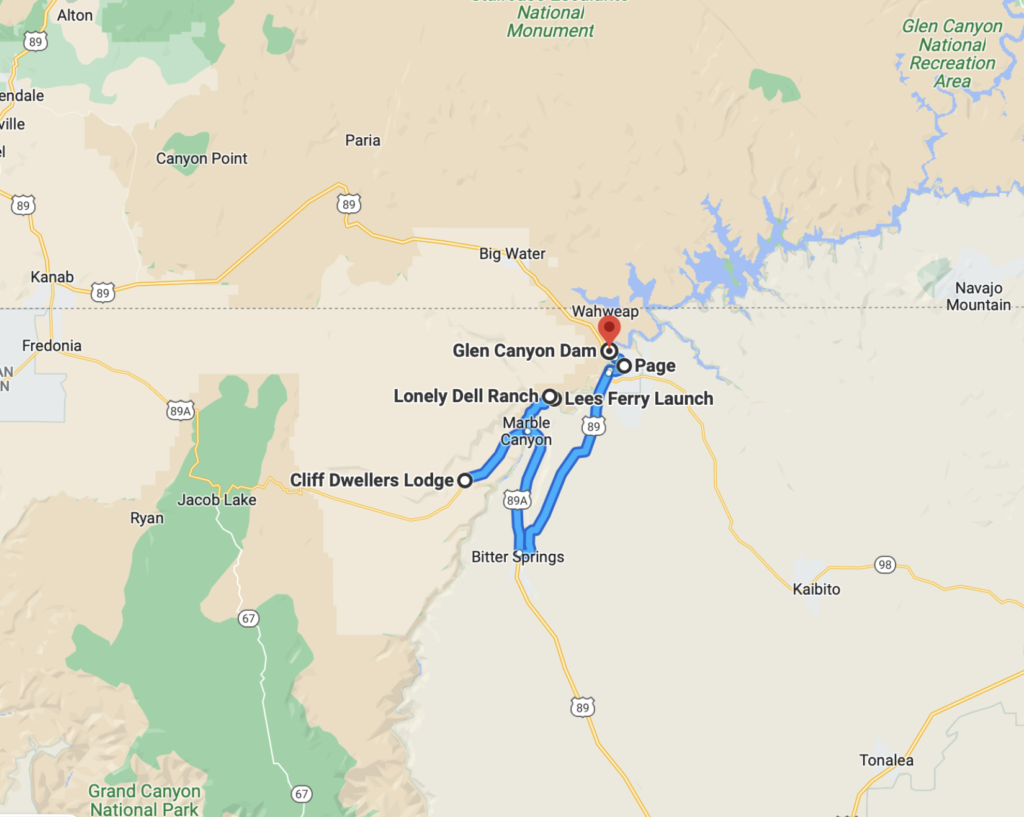(Google Maps)
Brady and his friend Randy Reed changed our narrative. They both criticized the national media for exaggerating the crisis. They acknowledged cause for some concern, but to fixate on the precipitous drop in the levels of Lake Powell and Lake Mead is to observe the system in too foreshortened a time frame. If the drought reasserts itself after this wet year and the lake drops another hundred or more feet in the next few years, then it will be time to get deeply concerned. They both said they had been around long enough to know that cycle follows cycle and that any confident predictions of where things are headed will likely be shattered by experience. They urged us not to make too much or too little of this single wet year. This year could mark the end of the drought. On the other hand, this could merely be a blip and after one or two years of good water, the drought will reassert itself. Nor should we make too much of the likely rise in the lakes this year. Even 70 feet is about a third of what is needed to refill the reservoirs and that, if history is any indication, is very unlikely to happen.
When we asked all our questions and Brady Budd answered them with joy and thoughtfulness, he took us to his private museum across town. He’s had many lives. He rode motocross. He competed internationally in sidecar competitions. Brady’s been injured in all sorts of ways. He also lived on Santa Catalina Island off the coast of California. His museum houses several dozen motorcycles, some of them famous. He has a large collection of historic Glen Canyon Dam photographs and other materials. There is a loft apartment above the museum. There are photographs of famous racing figures posing with gorgeous blondes. He has concrete core samples from back when the dam was built. On the wall was a plywood-incised map of Lake Powell that he had dremeled years ago, attempting to get every side canyon just right.
## **The Dam Bar**
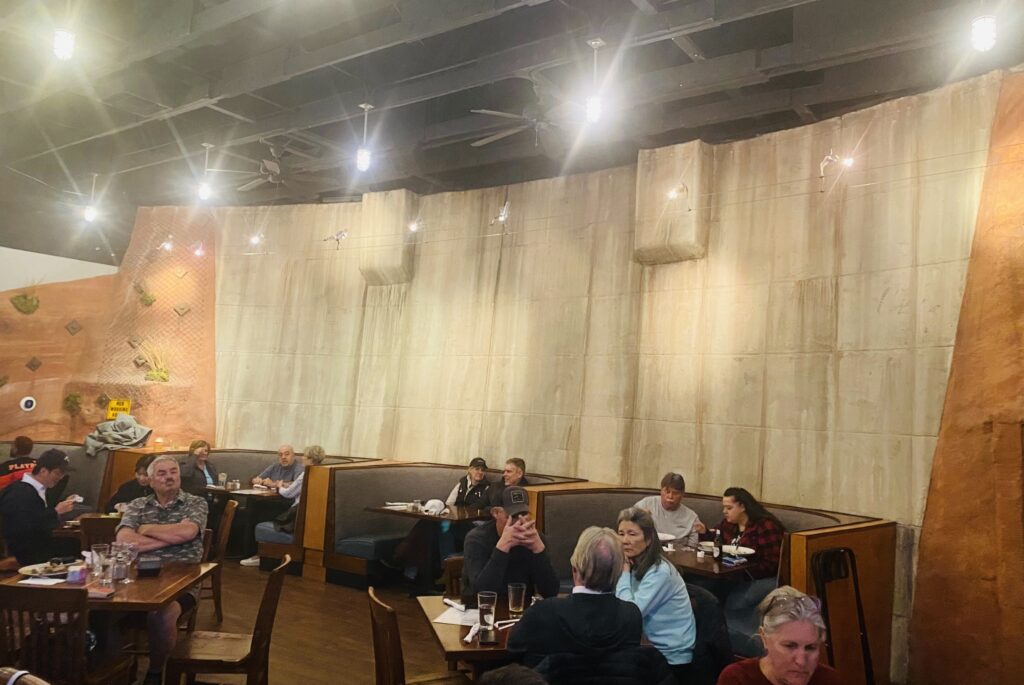Inside the “world famous” Dam Bar, a must visit, according to our intrepid scout Frank, when visiting Page, Arizona. (Photo by Clay Jenkinson)
Frank assured us it would be a mistake and a loss not to eat dinner at the Dam Bar. He said we could expect to find one whole wall painted to look like the face of Glen Canyon Dam. That’s usually my criterion for fine dining. It’s tucked away in a strip mall along with several more promising restaurants, but we were on a water quest, and we were, truth told, a little excited to see the hydro dam accouterments inside. The place was so popular that we had to wait 20 minutes to get a table. Even seats at the huge horseshoe bar were reserved for special guests — nothing special about us. The whole restaurant evoked the dam. A full-size aluminum boat was poised near the entrance, and some electric transmission coil was 10 feet high blinking neon. All the walls had framed photographs of the construction of the dam. Between sections, there were hanging glass dividers with dam scenes gracefully etched onto the surface.
(Photo by Clay Jenkinson)
Fortunately, we had a superb server who engaged us, rather than the other way around, about the purposes of our travels. She told us of her adventures on Lake Powell, where she spends nearly every summer weekend. She urged us to look at several photographs of the dam when we made our way to the men’s room, including one of two workers gazing up into one of the giant diversion tunnels.
The whole experience was like an industrial version of Pulp Fiction. I was hoping that the menu would sport the “Floyd Dominy” slab steak and the “David Brower” tofu bowl, a drink called “the High Scaler,” and another called the “Coffer Dam Cosmopolitan.” For the young, the “Tailrace.” It would have taken Uma Thurman to make things right.
But no.
*Editor’s Note: You can track Clay’s dispatches on this Colorado River Journey by following the links from his route and itinerary below. You can also keep up with all LTA’s dispatches, essays, photos, and podcasts on this topic through the tab “Water in the West.” This is one of many ongoing road trips at the heart of Listening to America. Our mission is to “light out for the territories,” traveling less visited byways and taking time to see this immense, extraordinary country with fresh eyes while listening to the many voices of America’s past, present, and future.*
---
**Water in the West — Routes and Itinerary**
- [**Introduction: A Colorado River Journey, The Trek Begins**.](https://ltamerica.org/beyond-the-apocalypse-and-bathtub-rig-a-colorado-river-journey-we-begin-2/)
- [**Day One, Friday: I-70 Vail to Green River; Utah 24 to Torrey; Utah 12 to Boulder, Utah.**](https://ltamerica.org/on-the-open-road-a-colorado-river-journey/)
- **[Day Two, Saturday: Boulder, Utah.](https://ltamerica.org/boulder-utah-a-colorado-river-journey/)**
- **[Day Three, Sunday: Utah 12 to Torrey; Utah 24 to Hanksville; Utah 95 to Natural Bridges National Monument; Utah 261 to Mexican Hat; U.S. 163 to Bluff; Utah 162 to Aneth; Indian Route 5068/Arizona County Road G to Cortez.](https://ltamerica.org/deep-in-canyon-country-a-colorado-river-journey/)**
- [**Day Four, Monday: Crow Canyon Archaeological Center, Cortez, Colorado.**](https://ltamerica.org/crow-canyon-archaeological-center-a-colorado-river-journey/)
- **[Day Five, Tuesday: Colorado 160/491 to Chimney Rock; Colorado 160 to Teec Nos Pos; Colorado 160 to Mexican Water; U.S. 191 Tsaile; Arizona 64 to Chinle.](https://ltamerica.org/wp-admin/post.php?post=3172&action=edit)**
- **[Day Six, Wednesday: Canyon de Chelly; U.S. 191 to Burnside; Arizona 264 to Second Mesa.](https://ltamerica.org/navajo-nation-and-canyon-de-chelly-a-colorado-river-journey/)**
- **[Day Seven, Thursday: Hopi Cultural Center; Arizona 264 to Tuba City; U.S. 160 to U.S. 89; U.S. 89 to Bitter Springs; U.S. 89A to Marble Canyon.](https://ltamerica.org/the-way-of-the-hopi-a-colorado-river-journey/)**
- **Day Eight, Friday: U.S. 89A to Bitter Springs; U.S. 89 to Page, Arizona.**
- **[Day Nine, Saturday: Lake Powell; U.S. 89 to Kanab.](https://ltamerica.org/a-day-on-lake-powell-a-colorado-river-journey/)**
- [**Days 10 & 11, Sunday/Monday: U.S. 89 to Utah 20; Utah 20 to I-15; I-15 to Salt Lake City.**](https://ltamerica.org/farewell-to-our-intrepid-guide-a-water-in-the-west-reading-list/)
- **[Days 12 & 13, Tuesday/Wednesday: Salt Lake City.](https://ltamerica.org/circumnavigating-the-great-salt-lake-in-a-kayak/)**
- **[Reflections on A Colorado River Journey.](https://ltamerica.org/reflections-on-a-colorado-river-journey/)**
**Categories:** Dispatches from the Road
**Tags:** Arizona, Colorado River, Water in the West
---
### [A Quest for an Ancient Tree](https://ltamerica.org/a-quest-for-an-ancient-tree/)
**Published:** June 16, 2023
**Author:** Clay Jenkinson
**Excerpt:** I co-led a hike in the North Unit of Theodore Roosevelt National Park recently. There were about a dozen of us. Our goal was a very old cottonwood tree in an obscure corner of the park down by the Little Missouri River. The tree is said to date to 1641.
**Content:**
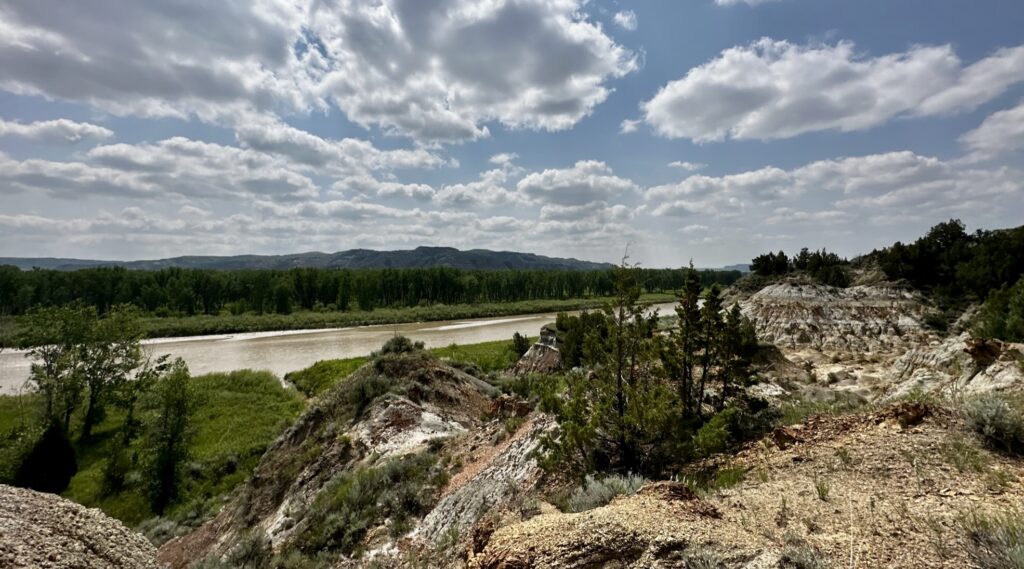The Little Missouri River from an overlook in North Unit of Theodore National Park, North Dakota. (Photo by Clay Jenkinson)
I co-led a hike in the [North Unit of Theodore Roosevelt National Park](https://www.ndtourism.com/articles/theodore-roosevelt-national-park-north-unit-scenic-byway) recently. There were about a dozen of us. Our goal was a very old cottonwood tree in an obscure corner of the park down by the Little Missouri River. The tree is said to date to 1641. That’s the year the English Civil War began when King Charles I was forced to flee the throne. That’s just 20 years after the Pilgrims landed in Massachusetts. That’s a hundred years before Thomas Jefferson was born.
We drove to the rendezvous point in the North Unit near Watford City, N.D., from all directions. It was an outing of the [Badlands Conservation Alliance](https://www.badlandsconservationalliance.org/). We had a group campsite to ourselves. The only problem with that is that the “comfort station” was lit up all night long and every time anybody went into either the women’s or men’s bathroom, loud bathroom fans started up for a full 30 minutes. It seems to me inexplicable that the National Park hasn’t devised a better technology than this, because to light it this way and make it emit gross industrial noise is to damage the National Park experience. We go to the parks to limit or eliminate our industrial advantage for a day or two or three. The parks should encourage solemnity and serenity and silence.
It was a perfect day. Temperature about 75, a light breeze. Dry. We drove to the put-in site and our participants geared up as if we were beginning an ascent of Kilimanjaro. You know: vests with 20 pockets; hiking sticks; double tying stiff hiking boots; Camelbacks and electrolytes and power bars; binoculars snugged up against the chest.
We took the wrong trail. As the Nixon boys put it, “mistakes were made.” This meant that for parts of our hike we were forced to bushwhack. There was plenty to trip over. We had to scramble a bit, keep our eyes alert for buffalo trails that might lead us down the bluffs in the gentlest possible way. Some people were getting a little frustrated, not sure they wanted to pursue this hike to wherever the dubious leaders were trying to take it. When we finally tumbled into the meadow next to the river, we were a little tired. About half of our group decided to hike out on the principle that when you’ve seen one ancient cottonwood you have seen them all.
Clay searches for an ancient Great Plains cottonwood in Theodore Roosevelt National Park.
Eventually, we remnants found the approximate location of the venerable tree, but it is not marked or identified, and — to be perfectly honest — there were half a dozen or more cottonwoods that deserve to be candidates for the title. Park officials are not that eager to direct people to the tree, lest some vandal burn or chop it down. So, we fanned out and took pictures and each group provided a wee report. I think Carl and I found the tree in question, but I wouldn’t swear on it. It was certainly the biggest in circumference. It was no less than a couple of hundred years old and it has had a very dramatic life. It looks as if it broke in half at some point and then new trunks sprang up from the tub of what was still anchored in the ground. It wasn’t carrying as many leaves as you would expect of a tree of that size, but it was still sending out thousands of leaves annually after 600 or more previous years of doing just that.
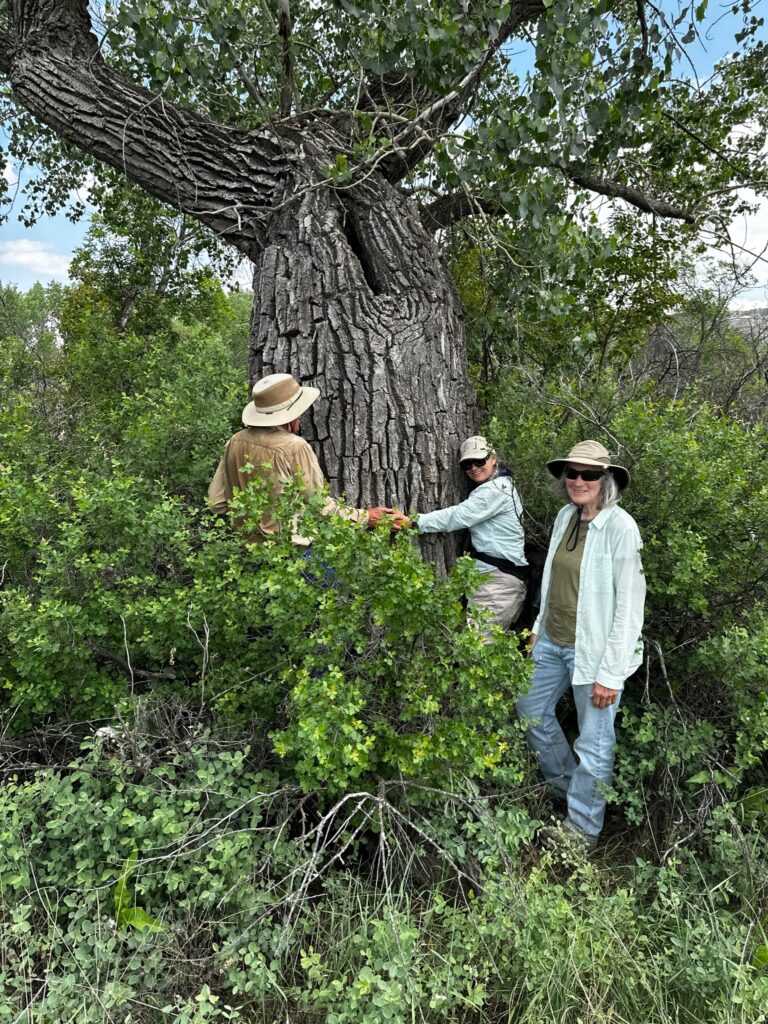A group with the Badlands Conservation Alliance hugs an ancient cottonwood in Theodore Roosevelt National Park, N.D. (Photo by Clay Jenkinson)
We took pictures. We formed a circle and held hands hugging the tree. My view was that we may as well prove our reputation, since in the heartland, in Red America, to be an active conservationist is to be a “damned environmentalist,” and a “tree hugger.” For me it is this simple. I love trees. I particularly love cottonwood trees. I believe trees have being. In fact, I believe they have a kind of consciousness. I believe trees can communicate, though not seemingly with humans. I don’t believe it does the tree much good when we hug it, but hugging it brings good to us as humans who constantly need to be reminded that it is not Us against the rest of creation. We are part of a larger creation. We have many siblings and cousins among other species. In other words, I think a tree is likely to do more good for me than I for it. And why should we lionize s/he who killed an elk, but ridicule him or her who embraced a tree? Thomas Jefferson told his friend Margaret Bayard Smith that he regarded any unnecessarily killing of a tree as a kind of murder.
Theodore Roosevelt loved the badlands. He played cowboy and rancher in Dakota Territory between 1883-1887. The cottonwood trees on the perimeter of his ranch house at the [Elkhorn Ranch](https://www.theodorerooseveltcenter.org/Learn-About-TR/TR-Trail/Theodore-Roosevelt-in-North-Dakota/Elkhorn-Ranch) are still alive. Some of them at least. The house is long gone, but sandstone cornerstones articulate the perimeter. A mile or so north of his Elkhorn ranch house there is an isolated patch of very old cottonwoods — but their age is less than 200 years, surely. At no point did Roosevelt suggest that posterity create a national park in his honor. Or that the badlands should be protected by the U.S. government. Roosevelt saw the badlands as the last frontier. He reckoned that the cowboy era would yield to homesteaders and their barbed wire fences. He even thought that was the right evolution. It’s not clear what he would think of a national park named in his honor. For a man of heroic ego, he was surprisingly humble about the idea of monuments memorialized in his honor. Roosevelt had read enough history to know that oblivion swallows up 99.9999% of all human beings and leaves no historical trace.
Roosevelt might have ridden his favorite horse Manitou past the ancient tree in those badlands years. We were hiking about 20 miles downriver from his ranch. He’s not a regular noticer of cottonwoods in his badlands writings. If he knew for sure it was one of the oldest trees on the Great Plains, he would surely have paused to reflect.
But he would not have hugged a tree.
We camped two nights in [Juniper Campground](https://www.nps.gov/thro/planyourvisit/juniper-campground.htm) in the national park. The gin and tonic flowed. A man named Shannon grilled cheeseburgers and brats. His girlfriend Spring brought homemade potato salad and rhubarb dessert. We sipped wine until dark, which at this time of year in North Dakota is about 10:45 p.m. I lay in my sleeping bag flat on my back gazing up into the cosmos, and just listening to the nightlong rustle of the cottonwoods.
## **The Symphony of Cottonwoods**
I have a special love affair with the cottonwood. If you’re interested, you’ll find my love song to the cottonwood in the last chapter of my book, *[The Language of Cottonwoods: Essays on the Future of North Dakota](https://www.amazon.com/Language-Cottonwoods-Essays-Future-Dakota/dp/1646630998)*. Every year, without question, I get myself under a grove of old cottonwoods in late September when the leaves have turned. There is a magical mystical symphony that happens, with the metaphoric equivalent of “woodwinds,” “brass,” “strings,” etc. Different sections of the tree start to make sounds at different times. It’s as if the symphony conductor was nodding now at the violins and a couple of minutes later to the woodwinds. I can watch the dance of the cottonwood leaves for hours. The experience is heightened by the certainty that the first little warmup blizzard is no more than a month away, and probably much closer. You feel like you are living on borrowed time. The light has an autumnal melancholy to it.
This weekend cottonwoods were at their most lifebursting. They have plenty of water so far. There have been no ruinous thunderstorms yet. No periods of extreme heat. I must admit that I like them a bit more when they look a little “weathered,” a little beleaguered by the high windstorms of a North Dakota summer, and maybe a few weeks on short water rations. On the Little Missouri, which can run some respectable water every 10 or 15 years, you see not a continuous line of cottonwoods, but small groves of four to 12 trees along the bank of the river here, the bank of the river there, spaced apart by hundreds of yards, and often miles. When you get to one of those minimalist copses, you usually find that on two or three of the trees there are dead branches, even dead sections. That somehow speaks Great Plains, but it also speaks to the toughness of the cottonwood. It can stand a very large amount of abuse and still put forth leaves and new branches. I’ve seen an old tree 95% dead, shattered by lightning, maybe even fully bent over at the halfway mark; and yet from that part of the trunk that landed on the grass, the next year new shoots. To the point that I have seen some cottonwood trees that have come back from that catastrophe to send up a 45-foot resurrection.
In those little copses, I find a perfect place to camp for the night. Usually there is a dead cottonwood trunk on the ground, the bark entirely gone and thousands of tiny holes dug by whatever insects are repurposing all that biomass. You can sit on it or use it as a plate or a platform for a small gas stove. Or you can sit on the grass with your back against the trunk. If I were asked to define happiness, the campsite on the Little Missouri under tough old cottonwoods is certainly in my top five scenarios.
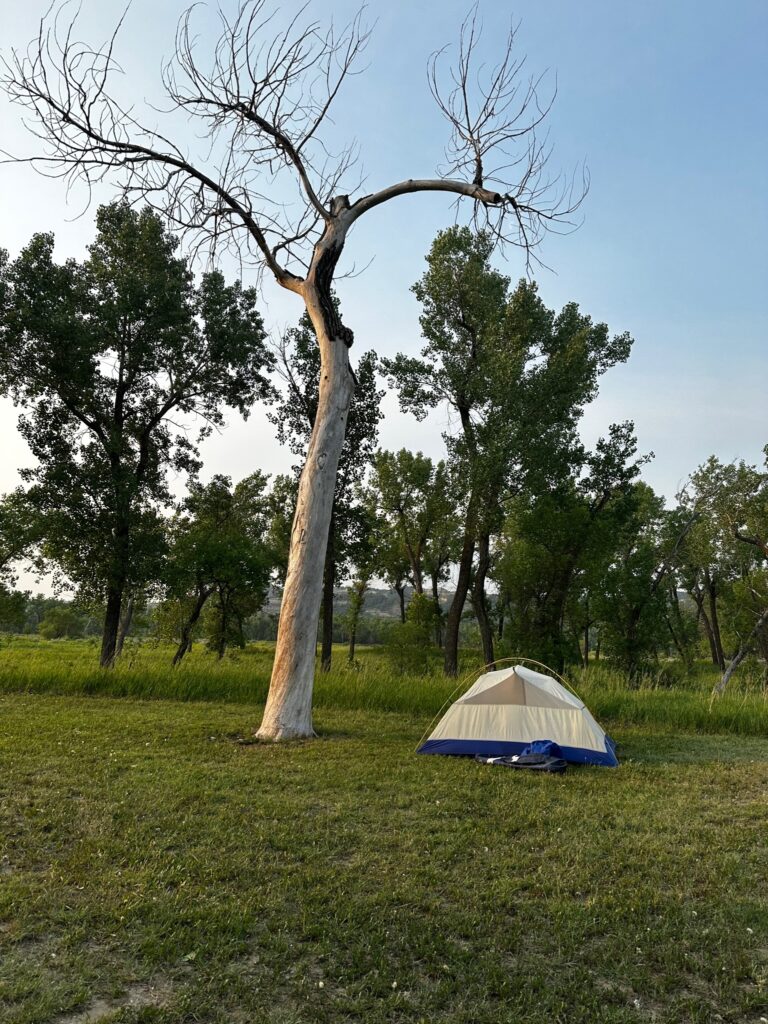Clay pitched his tent below a standing dead cottonwood. He shared the tree with an industrious red woodpecker that was early to rise and late to retire. (Photo by Clay Jenkinson)
This weekend I pitched my Sierra Designs tent under a standing dead cottonwood in the group camping unit of the National Park. The price I paid for that was the industry of the red headed woodpecker late in the evening and first thing in the morning. My colleagues told me they had seen a big bull snake shinning up the bald trunk of the tree in search of woodpecker food. Still, I was close enough to the other 35 cottonwoods in the camping space or its immediate environs to be able to listen to them rustle and dance all night long. It was a deeply agreeable sound, and every five minutes or so the breeze would get strong enough to billow my tent a little and lave me with sweet slightly chilled air.
I use the word “lave,” but I am not happy with it. How do you describe that moment when the breeze suddenly comes, but gently, and it flows almost lovingly across your face? I think of the word “caress,” almost “kiss” or “feather.” “Lave” seems to come closest. It comes from a Latin word meaning wash, but today’s meaning is on the light gentle side of the idea of washing. Like using the tip of a washcloth to wipe away tears in a crying child.
It was a splendid weekend. I had hoped to do more field work for the book I am writing about the history of Theodore Roosevelt National Park. What I chiefly learned was that the trail we used to come up from the ancient tree is one of the best designed National Park trails I have ever been on. It distributes the vertical climb perfectly. At no point do you feel compelled to stop. You do stop four or five times to breathe and rest, but you would not have to if you were in any kind of hurry. Once you climb out of the canyon, the trail threads its way through a 1.5 mile plain of grass to the parking lot. In a single hike you get equal measures of the badlands and the plains.
When I get home from one of these excursions, I keep my Yeti iced up in the back seat of my Honda for a couple of days, and I get my cold water and soda out of the Yeti. This really makes no sense, but it pleases me. It makes the adventure linger a little. The soda is colder than it would be out of the refrigerator. I feel I get a little extra *camp time* before the world sucks me back in.
**Categories:** Dispatches from the Road
**Tags:** North Dakota, Theodore Roosevelt
---
### [A Day on Lake Powell — A Colorado River Journey](https://ltamerica.org/a-day-on-lake-powell-a-colorado-river-journey/)
**Published:** June 17, 2023
**Author:** Clay Jenkinson
**Excerpt:** Clay and colleagues spend a glorious day on Lake Powell, a popular recreation destination with over 2,000 miles of shoreline, which hosts over 3 million visitors annually.
**Content:**
## Day Nine, Saturday: Lake Powell; U.S. 89 to Kanab.
A windy day at Glen Canyon Dam and Lake Powell. Completed in 1963, the dam, rising 710 feet above the Colorado River, created Lake Powell which has a water storage capacity of 27 million acre-feet of water and is 186 miles long.
*Clay* *and colleagues spend a glorious day on Lake Powell. A reservoir on the Colorado River, Lake Powell is a popular recreation destination hosting over 3 million visitors annually and is part of the Glen Canyon National Recreation Area. The reservoir, named for the explorer John Wesley Powell, has some 2,000 miles of shoreline, with countless beautiful side canyons. This *dispatch* is the 10th in a* [*series*](https://ltamerica.org/beyond-the-apocalypse-and-bathtub-rig-a-colorado-river-journey-we-begin-2/) *from Clay chronicling his recent journey with two compatriots following the Colorado River and neighboring region exploring the state of water, or the absence of it, in the West.*
I hosted my weekly online class in my hotel room while Dennis and Frank sought out coffee worthy of their palates.
As soon as my morning work was over, we hopped into the truck and drove to the [Wahweap Marina](https://www.lakepowellmarinas.com/wahweap-marina/overview/) west of Page, west of the dam. Randy Reed was waiting for us way down at lake level beyond the concrete, down where a floating quay permitted us to put our gear into his boat. I had never been on Lake Powell before. Frankly, I had no previous interest in getting on the reservoir behind Glen Canyon Dam. Everything I have read — from *[Cadillac Desert](https://ltamerica.org/cadillac-desert-the-american-west-and-its-disappearing-water/)* to Donald Worster’s *[Rivers of Empire](https://www.goodreads.com/en/book/show/340502)* made me at the very least wish that Glen Canyon with its grottos, exquisite slot canyons, hidden pools, and the Music Temple had never been inundated. But I know a fairly large number of people who rave about their vacations on the lake. I was eager now to see what the fuss is about. A work assignment!
Randy Reed owns and operates a Lake Powell excursion company. He’s somewhere in his late 50s or early 60s. He has lived at Lake Powell for most of his adult life. He agreed to take us to some places only accessible again now because of the huge drop in the level of Lake Powell and to provide his own perspective on the future of the reservoir.
Randy Reed on Lake Powell. (Photo by Clay Jenkinson)
Randy had intimate knowledge of the lake and its many dazzling secrets. He knew a fair amount about the history of the place, but he freely admitted that when he first came to Page the lake was already more than half full, so he never experienced it in its pre-industrial state. In other words, he never knew Glen Canyon; he knows only Lake Powell. He is aware of the [Edward Abbey](https://www.glencanyon.org/edward-abbey/)–[David Brower](https://vault.sierraclub.org/sierra/199703/brower.asp) position, that it was a tragic mistake to flood Glen Canyon, and he has some respect for that position. But Lake Powell is now a fact of life. Tens of millions of people depend on it. About 35-40 million people downstream in Arizona and California and Mexico. There is no turning back. Maybe the case can be made that the dam should never have been built, but we don’t have the luxury of considering an alternative. The only position that bothers him is the naïve insistence, by a few, that the dam should be dismantled and if that means that Phoenix and Tucson have to depopulate, well, too bad. Whatever your position on decisions made half a century ago at another time in what in some ways was another America, if you don’t acknowledge that Lake Powell is astonishingly beautiful, you just aren’t telling the truth.
Houseboats on Lake Powell at Antelope Point Marina. (Photo by Dennis McKenna)
I want to disagree, but I cannot. If it weren’t for this water initiative we’ve undertaken, I doubt that I would ever have floated on Lake Powell, certainly not in a power boat. But here we were, and we were having a great time with a really good guy on a great day on a fabulous lake, which, thanks to the earliness of the recreation season, we had more or less to ourselves. Millions of Americans love Lake Powell. If Glen Canyon had never been inundated, given the popularity of Colorado River river trips, surely thousands would float “natural” Glen Canyon every year, perhaps hundreds of thousands. “Industrial” Lake Powell draws more than [2 million visitors per year](https://www.arizona-leisure.com/lake-powell-facts.html) and brings several billion dollars to the local economy. Most of them visit the lake by way of the internal combustion engine. We saw a few kayakers on side canyons. Surely, we could have spared Glen Canyon, but we didn’t and the result is not merely a water and power engine but what you have to admit is one of the scenic wonders of the world. Like almost every other American, I am addicted to the fruits of modern life as delivered by the military-petroleum-industrial-Costco complex: strawberries in February, private automobiles, air conditioning, flights to London and Athens — such material abundance at affordable prices that we are choking ourselves with stuff — smartphones and home entertainment centers. One of the foundations of our hyper-materialist way of life is Glen Canyon Dam, and — if not that particular dam — dams, highways, canals, shopping malls that come from the same mindset and the same belief that nature can be made to serve human aspirations without a sufficient blowback to cause us to pause and think.
Paddleboarders enjoy one of the countless side canyons on Lake Powell. (Photo by Frank Lister)
As we churned towards the distant Labyrinth Canyon, a lateral off Lake Powell, we noticed that the boat had a monster sound system. So, we asked Randy how often he was hired for parties. Answer: often. Bachelor parties, family parties, bachelorette parties, business retreats, and a range of other celebrations. He said occasionally people brought along so many coolers of beer and other delights that there was almost no room to move around in the boat. We had brought a few cans of beer which we did not exhaust. When we were stopped in a lovely gentle alcove, alone on Lake Powell, he turned the music system on to give a sense of the power and the fidelity of the system. He gave us merely 10% of what the amp could produce. The music — country western — was not obnoxious per se, but it felt like a desecration in so solemn and beautiful a place. He turned it off and the silence re-enveloped the boat. I tried to imagine the Fourth of July.
We really liked Randy. He was rational, knowledgeable, and never peevish about dam detractors. He provides a service at a very high level of competence and customer satisfaction. We could not have been better taken care of. And we had a really great time.
Eventually he brought us back to the dock and we got our only exercise of the day by climbing up the long hill to the parking lot.
Randy Reed heads home after an amazing day on Lake Powell. (Photo by Dennis McKenna)
## **A Fabulous Italian Dinner at a Wonderful French Restaurant in Kanab, Utah.**
We drove to Kanab after our excursion on Lake Powell mostly because we did not want a second night in Page, and because we heard from Randy that there is an excellent French restaurant there, [Vermillion 45](http://vermillion45.com). What? This is the weirdness of desert country. Mostly what you get to eat in this vast region is grub — good grub — but scattered here and there are gems of restaurants that appear to operate more from love than profit. We are running a bit late but there is no way we are going to forego a French restaurant, so we let Google take us directly there.
We are seated next to a long table of more than a dozen Ukrainian women. Frank tries to do his magic with them, tells them in broken Serbo-Croatian that he knew Marshal Tito and once flew sorties over Sarajevo (or something), but they want nothing to do with us. In the end, Frank and I order Pasta alla Norcina, Dennis, Bolognese, none of these French (hey, we’d be happy with an Italian restaurant *anywhere* in canyon country). We drink good wine. We talk about the paradox of Lake Powell: problematic in so many ways and yet absolutely stunning. The Ukraine girls really knocked us out. We wondered what brought them into the southwest of America and we wondered about the burden of being Ukrainians in 2023.
Separation Rapid on the Colorado River, before being inundated by the slack water of Lake Mead. (Northern Arizona Univ. Cline Library)
This is as close as we are going to get this trip to the north rim of the Grand Canyon. I have never been there. We’re about 60 miles from the river. We are only a couple of miles from the Kanab-Paiute Indian Reservation. That makes me think of John Wesley Powell, who studied the Paiute more than any other people of the plateau and the Great Basin. After dinner, in a comfortable bed with high quality sheets (my criterion for travel), because, as Powell famously said, “the excitement of the day has not yet worn off,” I remember that the three members of the 1869 expedition who left at [Separation Rapids](https://grcahistory.org/sites/colorado-river-corridor/separation-rapid/) — William Dunn, Oramel and Seneca Howland — and scrambled up the north rim to strike out for some Mormon settlement, were killed by Shivwits Indians. Nobody knows quite where that happened, but almost certainly their death came between Kanab and the canyon. I wish we had time to spend a whole day wandering around trying to pick up that vibe. Powell returned to the north rim country the following year to investigate the death of those three men, whom he loved despite everything. He discovered, at least to his own satisfaction, that they had been killed by Shivwits, who blamed them for the molestation and murder of a woman of their tribe. Powell made friends with the Shivwits and let the matter drop. He was certain that Dunn and the Howlands were incapable of such a crime.
---
*Editor’s Note: You can track Clay’s dispatches on this Colorado River Journey by following the links from his route and itinerary below. You can also keep up with all LTA’s dispatches, essays, photos, and podcasts on this topic through the tab “Water in the West.” This is one of many ongoing road trips at the heart of Listening to America. Our mission is to “light out for the territories,” traveling less visited byways and taking time to see this immense, extraordinary country with fresh eyes while listening to the many voices of America’s past, present, and future.*
**Water in the West — Routes** **and** **Itinerary**
- [**Introduction: A Colorado River Journey, The Trek Begins**.](https://ltamerica.org/beyond-the-apocalypse-and-bathtub-rig-a-colorado-river-journey-we-begin-2/)
- [**Day One, Friday: I-70 Vail to Green River; Utah 24 to Torrey; Utah 12 to Boulder, Utah.**](https://ltamerica.org/on-the-open-road-a-colorado-river-journey/)
- **[Day Two, Saturday: Boulder, Utah.](https://ltamerica.org/boulder-utah-a-colorado-river-journey/)**
- **[Day Three, Sunday: Utah 12 to Torrey; Utah 24 to Hanksville; Utah 95 to Natural Bridges National Monument; Utah 261 to Mexican Hat; U.S. 163 to Bluff; Utah 162 to Aneth; Indian Route 5068/Arizona County Road G to Cortez.](https://ltamerica.org/deep-in-canyon-country-a-colorado-river-journey/)**
- [**Day Four, Monday: Crow Canyon Archaeological Center, Cortez, Colorado.**](https://ltamerica.org/crow-canyon-archaeological-center-a-colorado-river-journey/)
- **[Day Five, Tuesday: Colorado 160/491 to Chimney Rock; Colorado 160 to Teec Nos Pos; Colorado 160 to Mexican Water; U.S. 191 Tsaile; Arizona 64 to Chinle.](https://ltamerica.org/a-visit-to-ute-mountain-a-detour-and-the-four-corners-controversy/)**
- **[Day Six, Wednesday: Canyon de Chelly; U.S. 191 to Burnside; Arizona 264 to Second Mesa.](https://ltamerica.org/navajo-nation-and-canyon-de-chelly-a-colorado-river-journey/)**
- **[Day Seven, Thursday: Hopi Cultural Center; Arizona 264 to Tuba City; U.S. 160 to U.S. 89; U.S. 89 to Bitter Springs; U.S. 89A to Marble Canyon.](https://ltamerica.org/the-way-of-the-hopi-a-colorado-river-journey/)**
- **[Day Eight, Friday: U.S. 89A to Bitter Springs; U.S. 89 to Page, Arizona.](https://ltamerica.org/a-different-view-of-glen-canyon-and-the-colorado-river/)**
- **Day Nine, Saturday: Lake Powell; U.S. 89 to Kanab.**
- [**Days 10 & 11, Sunday/Monday: U.S. 89 to Utah 20; Utah 20 to I-15; I-15 to Salt Lake City.**](https://ltamerica.org/farewell-to-our-intrepid-guide-a-water-in-the-west-reading-list/)
- **[Days 12 & 13, Tuesday/Wednesday: Salt Lake City.](https://ltamerica.org/circumnavigating-the-great-salt-lake-in-a-kayak/)**
- **[Reflections on A Colorado River Journey.](https://ltamerica.org/reflections-on-a-colorado-river-journey/)**
**Categories:** Dispatches from the Road
**Tags:** Arizona, Colorado River, Utah, Water in the West
---
### [Farewell to Our Intrepid Guide and a Water in the West Reading List](https://ltamerica.org/farewell-to-our-intrepid-guide-a-water-in-the-west-reading-list/)
**Published:** June 23, 2023
**Author:** Clay Jenkinson
**Content:**
## Days 10 and 11, Sunday/Monday: U.S. 89 to Utah 20; Utah 20 to I-15; I-15 to Salt Lake City.
*A sad farewell as Frank, our scout and chief raconteur for the last 10 days, heads home to Escalante, Utah, and Clay and Dennis continue north to visit the Great Salt Lake. This is the 11th dispatch in a* [*series*](https://ltamerica.org/beyond-the-apocalypse-and-bathtub-rig-a-colorado-river-journey-we-begin-2/) *from Clay chronicling his recent journey with two compatriots following the Colorado River and neighboring region exploring the state of water, or the absence of it, in the West.*
Clay, Frank and Dennis near Red Canyon, Utah. (Photo by Georgie Lister)
Our extraordinary guide Frank now needed to get back to Escalante. We could not have asked for a better scout. In sports terms, Dennis was the player-coach, I was the play-by-play announcer, and Frank was the color commentator. No matter where we stopped, if only to snap a quick photograph, Frank ran into someone he knew or who knew someone he knew. In Frank’s America, there are only one or two degrees of separation. Of the three of us, I am the most introverted, Dennis second, and Frank, well he is one of those rare people who can strike up a conversation with anyone. At Navajo Bridge, on the windiest day of our tour, Dennis and I were taking photographs on the old 1929 bridge, but Frank just walked up to a guy near the interpretive center who was studying something on the bridge. It turned out he was a condor expert and there was a young black condor resting on one of the girders. Thus, I had my first ever condor encounter thanks to Frank’s extroversion. I use the word “extroversion,” because it sounds clinical! Frank is a wealth of information, and he knows how to network with complete strangers. He’s a very talented mapmaker, and word on the street is that the restaurant he owns in Escalante with his wife Georgie, is outstanding. It’s true that we brought him along mostly for the cookies, but he turned out to be our canyon country leatherstocking. We grimaced or rolled our eyes almost every time he opened his mouth, but his stories always check out. Only once did we balk. He claimed that his father knew the British paleoanthropologist Louis Leakey and got to hold the skull of [Lucy](https://www.khanacademy.org/humanities/big-history-project/early-humans/how-ancestors-evolved/a/lucy-and-the-leakeys) before her existence was revealed to the world. Somewhere in Africa. I was hoping that it was Frank who suggested the name Lucy, for a girl he fancied on an eighth grade field trip on Khyber Pass.

We rendezvoused with Frank’s wife Georgie at a trading post near [Red Canyon](https://www.visitutah.com/Places-To-Go/Parks-Outdoors/Red-Canyon) at the junction U.S. 89 and Utah 12. We lingered in the parking lot kicking up pebbles in an aw shucks farewell. We were sorry to see him go. Georgie brought another big Ziplock bag full of cookies. They had a big pickup. We had a big pickup. I felt like a kid finally getting to ride shotgun in the front seat. We gushed about Frank’s excellence for a hundred miles and then settled in on I-15 to get to Salt Lake before the snowstorm that was predicted.
## **A Day off in Salt Lake City**
Something we had planned for today didn’t materialize, so we had a comparatively free day in Salt Lake City. Naturally we sought out a bookstore and landed at the wonderful “new, used and rare” [Weller Book Works](https://www.wellerbookworks.com) in Trolley Square. And we had some good urban food. I did some writing. Dennis attended to business. I did laundry. I’ve had a lot of experience in life with coin laundries on three continents, and the ratio of good to miserable experiences runs about 1:25. This was an easy one. In a rare moment of clarity, I had packed back in Dakota a plastic bag full of quarters. In the bookstore I found only ten books I wanted to purchase, and then purchased only one. Dennis bought half a dozen, but he didn’t have to fly home at the end of the trip.
## **Further Reading on Water and the West**
Speaking of bookstores, there are many excellent books on the West and, more particularly, Water in the West. At the risk of overlooking titles we should have included, a bibliography for our Colorado River Country trip is listed below. Many are classics, and most are terrific reads. If you only have time for one, pick up *[Cadillac Desert ](https://ltamerica.org/cadillac-desert-the-american-west-and-its-disappearing-water/)*by Marc Reisner.
Edward Abbey. *Desert Solitaire.*

Erika Marie Bsumek. *The Foundations of Glen Canyon Dam: Infrastructure of Dispossession on the Colorado Plateau.*
Craig Childs. *House or Rain: Tracking a Vanished Civilization Across the American Continent.*
Edward Dolnick. *Down the Great Unknown: John Wesley Powell’s 1869 Journey of Discovery and Tragedy Through the Grand Canyon.*
Timothy Egan. *Short Nights of the Shadow Catcher: The Epic Life and Immortal Photographs of Edward Curtis.*
Michael Engelhard. *Where the Rain Children Sleep: A Sacred Geography of the Colorado Plateau.*

Kevin Fedarko. *The Emerald Mile: The Epic Story of the Fastest Ride in History Through the Heart of the Grand Canyon.*
Heather Hansman. *Down River: Into the Future of Water in the West*.
Norris Hundley, Jr. *Water and the West: The Colorado River Compact and the Politics of Water in the American West.*
Russell Martin. *A Story that Stands Like a Dam: Glen Canyon and the Struggle for the Soul of the West*.
David Owen. *Where the Water Goes: Life and Death Along the Colorado River.*
James Lawrence Powell. *Dead Pool: Lake Powell, Global Warming, and the Future of Water in the West.*

John Wesley Powell. *The Grand Canyon Expedition: Exploration of the Colorado River and its Canyons.*
Marc Reisner. *Cadillac Desert: The American West and Its Disappearing Water.*
Rob Schultheis. *The Hidden West: Journey in the American Outback*
Hampton Sides. *Blood and Thunder: The Epic Story of Kit Carson and the Conquest of the American West.*
Wallace Stegner. *Beyond the Hundredth Meridian: John Wesley Powell and the Second Opening of the West.*
Donald Worster. *Rivers of Empire: Water, Aridity & the Growth of the American West.*
---
**Water in the West — Routes and Itinerary**
- [**Introduction: A Colorado River Journey, The Trek Begins**.](https://ltamerica.org/beyond-the-apocalypse-and-bathtub-rig-a-colorado-river-journey-we-begin-2/)
- [**Day One, Friday: I-70 Vail to Green River; Utah 24 to Torrey; Utah 12 to Boulder, Utah.**](https://ltamerica.org/on-the-open-road-a-colorado-river-journey/)
- **[Day Two, Saturday: Boulder, Utah.](https://ltamerica.org/boulder-utah-a-colorado-river-journey/)**
- **[Day Three, Sunday: Utah 12 to Torrey; Utah 24 to Hanksville; Utah 95 to Natural Bridges National Monument; Utah 261 to Mexican Hat; U.S. 163 to Bluff; Utah 162 to Aneth; Indian Route 5068/Arizona County Road G to Cortez.](https://ltamerica.org/deep-in-canyon-country-a-colorado-river-journey/)**
- [**Day Four, Monday: Crow Canyon Archaeological Center, Cortez, Colorado.**](https://ltamerica.org/crow-canyon-archaeological-center-a-colorado-river-journey/)
- **[Day Five, Tuesday: Colorado 160/491 to Chimney Rock; Colorado 160 to Teec Nos Pos; Colorado 160 to Mexican Water; U.S. 191 Tsaile; Arizona 64 to Chinle.](https://ltamerica.org/wp-admin/post.php?post=3172&action=edit)**
- **[Day Six, Wednesday: Canyon de Chelly; U.S. 191 to Burnside; Arizona 264 to Second Mesa.](https://ltamerica.org/navajo-nation-and-canyon-de-chelly-a-colorado-river-journey/)**
- **[Day Seven, Thursday: Hopi Cultural Center; Arizona 264 to Tuba City; U.S. 160 to U.S. 89; U.S. 89 to Bitter Springs; U.S. 89A to Marble Canyon.](https://ltamerica.org/the-way-of-the-hopi-a-colorado-river-journey/)**
- **[Day Eight, Friday: U.S. 89A to Bitter Springs; U.S. 89 to Page, Arizona.](https://ltamerica.org/a-different-view-of-glen-canyon-and-the-colorado-river/)**
- **[Day Nine, Saturday: Lake Powell; U.S. 89 to Kanab.](https://ltamerica.org/a-day-on-lake-powell-a-colorado-river-journey/)**
- **Days 10 & 11, Sunday/Monday: U.S. 89 to Utah 20; Utah 20 to I-15; I-15 to Salt Lake City.**
- **[Days 12 & 13, Tuesday/Wednesday: Salt Lake City.](https://ltamerica.org/circumnavigating-the-great-salt-lake-in-a-kayak/)**
- **[Reflections on A Colorado River Journey.](https://ltamerica.org/reflections-on-a-colorado-river-journey/)**
**Categories:** Dispatches from the Road
**Tags:** Books, Colorado River, Utah, Water in the West
---
### [Circumnavigating the Great Salt Lake in a Kayak](https://ltamerica.org/circumnavigating-the-great-salt-lake-in-a-kayak/)
**Published:** June 26, 2023
**Author:** Clay Jenkinson
**Content:**
## Days 12 and 13, Tuesday/Wednesday: Salt Lake City
*Clay visits Salt Lake City to talk with Scott Baxter a passionate advocate and student of the Great Salt Lake. Not long ago, Scott and a colleague circumnavigated the 180-mile lake in handmade kayaks, perhaps the first two to make such a journey. Scott shares his long love affair with the lake and concerns for its future. This dispatch is the 12th in a* [*series*](https://ltamerica.org/beyond-the-apocalypse-and-bathtub-rig-a-colorado-river-journey-we-begin-2/) *from Clay chronicling his recent journey with two compatriots following the Colorado River and neighboring region exploring the state of water, or the absence of it, in the West.*
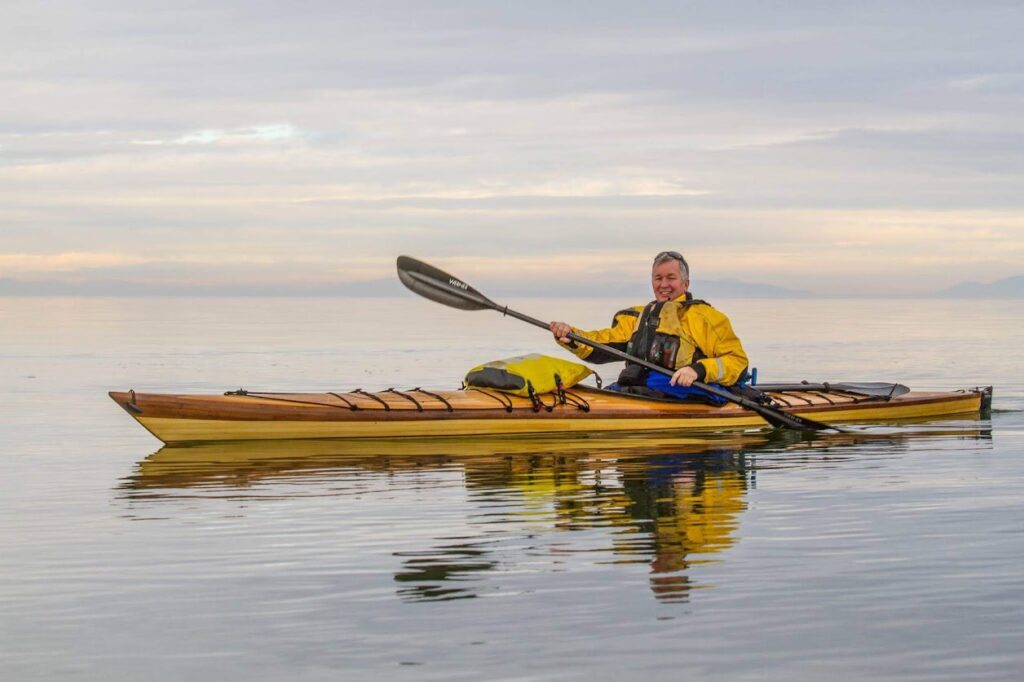Scott Baxter in one of his handmade kayaks on the Great Salt Lake. (Photo courtesy of Scott Baxter)
We spent the morning interviewing Scott Baxter about the death of the Great Salt Lake. Baxter is one of Great Salt Lake’s greatest friends — and yet he comes at the lake not as the head of a foundation or an advocacy group. He is technically retired from a life of international business, consulting, and project management. He is extremely well informed about water issues in Utah and it is clear that he loves Great Salt Lake deeply and in a very personal way.
He believes the lake may die. What we learned was that the lake could die well before it dries up entirely. The delicate ecosystem of brine shrimp and brine flies and tens of millions of migratory birds that come to feed on this rich source of protein is already severely compromised.
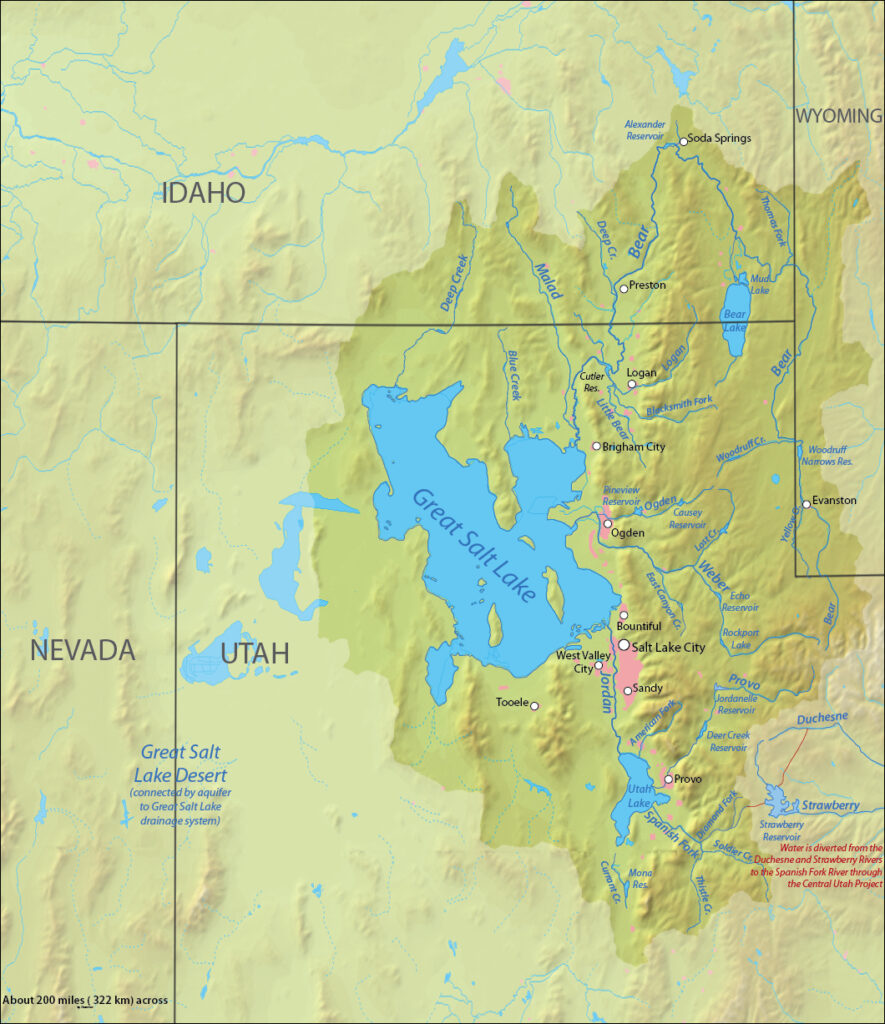The Great Salt Lake and its drainage. ([Wikimedia Commons](https://commons.wikimedia.org/wiki/File:Great_salt_lake_drainage_map.jpg).)
Great Salt Lake is a remnant arm of the gigantic [ancient Lake Bonneville](https://geology.utah.gov/popular/great-salt-lake/) that once covered about a third of today’s Utah. Its cousins in the Great Basin — Pyramid Lake, Walker Lake, and Mono Lake — are all terminal lakes — water comes in with all that it carries, no water runs out, and evaporation increases the mineral density over time. Think of the Dead Sea in Israel. When Great Salt Lake is at its normal fill, it is approximately 75 miles in length and 35 in width. These days it is down 11 feet and, if it were not for this year’s exceptionally wet winter in the West, its obituary would be in sight.
Scott believes global climate change is a significant factor in the shrinking of the lake, but not *the* factor. “The biggest factor is the water we take for irrigation,” he said, not from the lake itself, but from “every river that goes into the lake: Bear River, Weber River, the Provo and Jordan Rivers.” Some water is diverted for municipal use on the Wasatch front, but almost 80% is used for irrigation.
The Church of Jesus Christ of Latter Day Saints recently [determined to devote 20,000 acre-feet](https://www.sltrib.com/news/environment/2023/03/15/lds-church-permanently-donate/) of water per annum to attempt to stabilize and refresh the lake. Although Scott said that he regarded this as a modest contribution that cannot itself save Great Salt Lake, it was a great start, and the stature of the LDS Church in Utah will not only lead to other water returns but will convince thousands of Utah residents of the seriousness of the crisis.
I asked him if he agreed that most Americans, even most citizens of Utah, take Great Salt Lake for granted and don’t regard its diminution as particularly important. He agreed. Plenty of people he knows just shrug when they hear about the lake’s plight. He said the lake has been a dumping ground for a range of toxins, tailings, and sewage.
## **Circumnavigating the Great Salt Lake in Handmade Kayaks**
A couple of years ago, Baxter decided to circumnavigate the lake in one of his exquisite handmade kayaks, “before it was too late.” He convinced his daughter’s boyfriend, Matt Kahabka, to join him in what would be a difficult and possibly dangerous adventure. His story is fascinating. During our interview, when Scott talked about the collapsing ecosystem along the lake’s 180-mile circumference, he choked up. “The Great Salt Lake is somewhat of a spiritual experience for me. When I paddle on the lake, and experience the vast emptiness that’s out there, it gives me a chance to clear out my mind and to start focusing on things that maybe matter more in life than things we focus on every day.” Scott and Matt bonded deeply in their circumnavigation adventure. Scott reckons they are the only two people ever to make the journey.
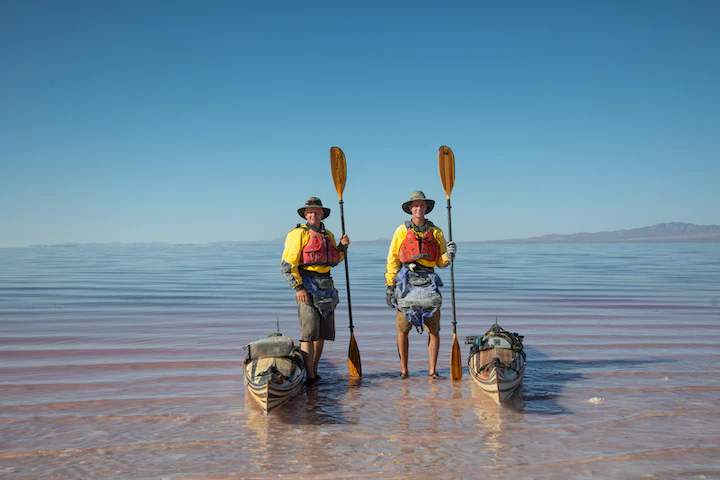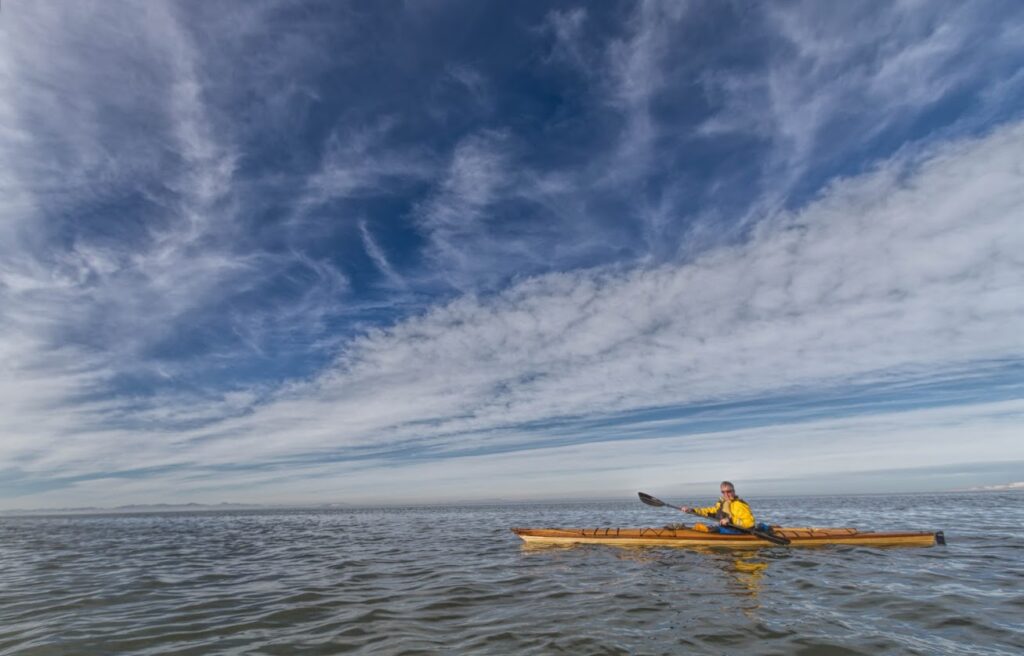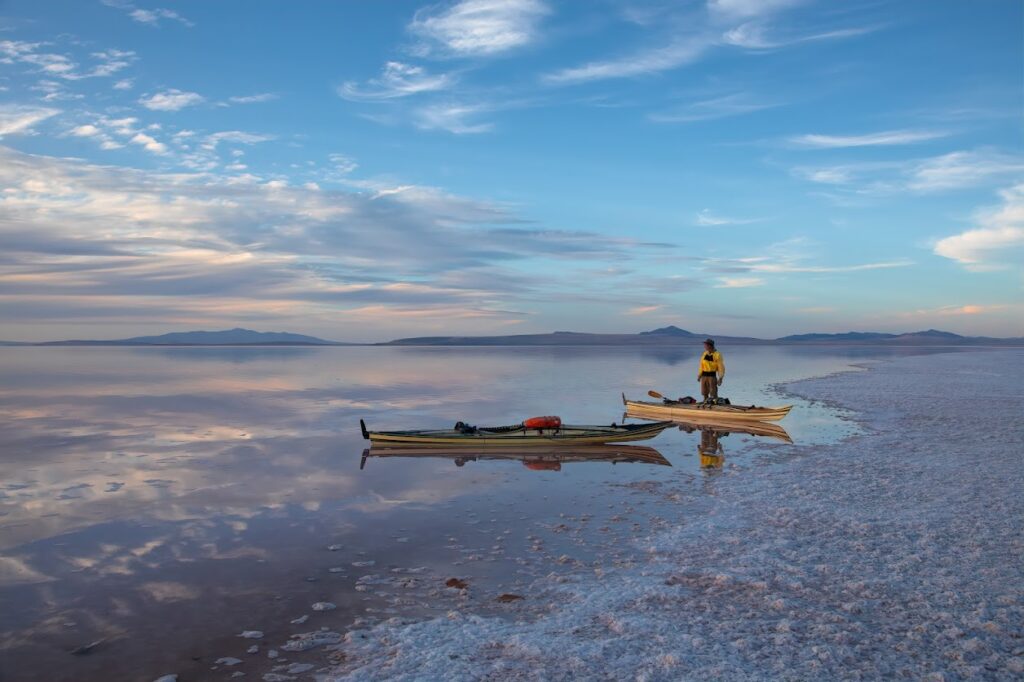
###### Photographs of Scott and Matt’s kayak circumnavigation of the Great Salt Lake. (Images courtesy of Scott Baxter)
I asked him if he would grieve if the lake dies. “I will grieve the lake and the relationship I had. But more than that, I will grieve … it’s one more loss where as a society, we haven’t learned anything. I think that’s what I will grieve the most.”
As we wrapped up the interview and Scott gathered up his things to drive home, I so wanted to beg for an opportunity to do some kayaking with him, on Great Salt Lake, in one of his exquisite wooden kayaks. Maybe that day will come. It’s clear that the lake is Scott Baxter’s Walden Pond. He knows it as well as anyone alive. He’s writing a book about it. The things about it that repel some others are manna to him.
I know we will keep in touch.
## **Day 13, Wednesday**; **Delta Airlines Salt Lake City to Minneapolis; Minneapolis to Bismarck.**
The following day, it was time for Dennis and me to say goodbye and head in different directions toward our respective homes. We talked for several hours at the hotel, attempting to synthesize the last two weeks and this first chapter in our Water in the West expedition. And we talked about future Listening to America initiatives, particularly our plans for an Edward S. Curtis Elders Project. Around 11 a.m., the snow and ice on the roads clear, Dennis drove home to southern Utah. I made my way by trolley to Salt Lake International Airport.
---
*Editor’s Note: You can track Clay’s dispatches on this Colorado River Journey by following the links from his route and itinerary below. You can also keep up with all LTA’s dispatches, essays, photos, and podcasts on this topic through the tab “Water in the West.” This is one of many ongoing road trips at the heart of Listening to America. Our mission is to “light out for the territories,” traveling less visited byways and taking time to see this immense, extraordinary country with fresh eyes while listening to the many voices of America’s past, present, and future.*
**Water in the West — Routes and Itinerary**
- [**Introduction: A Colorado River Journey, The Trek Begins**.](https://ltamerica.org/beyond-the-apocalypse-and-bathtub-rig-a-colorado-river-journey-we-begin-2/)
- [**Day One, Friday: I-70 Vail to Green River; Utah 24 to Torrey; Utah 12 to Boulder, Utah.**](https://ltamerica.org/on-the-open-road-a-colorado-river-journey/)
- **[Day Two, Saturday: Boulder, Utah.](https://ltamerica.org/boulder-utah-a-colorado-river-journey/)**
- **[Day Three, Sunday: Utah 12 to Torrey; Utah 24 to Hanksville; Utah 95 to Natural Bridges National Monument; Utah 261 to Mexican Hat; U.S. 163 to Bluff; Utah 162 to Aneth; Indian Route 5068/Arizona County Road G to Cortez.](https://ltamerica.org/deep-in-canyon-country-a-colorado-river-journey/)**
- [**Day Four, Monday: Crow Canyon Archaeological Center, Cortez, Colorado.**](https://ltamerica.org/crow-canyon-archaeological-center-a-colorado-river-journey/)
- **[Day Five, Tuesday: Colorado 160/491 to Chimney Rock; Colorado 160 to Teec Nos Pos; Colorado 160 to Mexican Water; U.S. 191 Tsaile; Arizona 64 to Chinle.](https://ltamerica.org/a-visit-to-ute-mountain-a-detour-and-the-four-corners-controversy/)**
- **[Day Six, Wednesday: Canyon de Chelly; U.S. 191 to Burnside; Arizona 264 to Second Mesa.](https://ltamerica.org/navajo-nation-and-canyon-de-chelly-a-colorado-river-journey/)**
- **[Day Seven, Thursday: Hopi Cultural Center; Arizona 264 to Tuba City; U.S. 160 to U.S. 89; U.S. 89 to Bitter Springs; U.S. 89A to Marble Canyon.](https://ltamerica.org/the-way-of-the-hopi-a-colorado-river-journey/)**
- **[Day Eight, Friday: U.S. 89A to Bitter Springs; U.S. 89 to Page, Arizona.](https://ltamerica.org/a-different-view-of-glen-canyon-and-the-colorado-river/)**
- **[Day Nine, Saturday: Lake Powell; U.S. 89 to Kanab.](https://ltamerica.org/a-day-on-lake-powell-a-colorado-river-journey/)**
- **[Days 10 & 11, Sunday/Monday: U.S. 89 to Utah 20; Utah 20 to I-15; I-15 to Salt Lake City.](https://ltamerica.org/farewell-to-our-intrepid-guide-a-water-in-the-west-reading-list/)**
- **Days 12 & 13, Tuesday/Wednesday: Salt Lake City.**
- **[Reflections on A Colorado River Journey.](https://ltamerica.org/reflections-on-a-colorado-river-journey/)**
**Categories:** Dispatches from the Road
**Tags:** Utah, Water in the West
---
### [Sorting Myth From Fact: Can We Truly Know Sacagawea? ](https://ltamerica.org/sorting-myth-from-fact-can-we-truly-know-sacagawea/)
**Published:** July 11, 2023
**Author:** Clay Jenkinson
**Excerpt:** You cannot think about the Lewis and Clark story without trying to come to terms with Sacagawea. She is the most statued woman in American history. And she is one of the two most prominent Native American women in American memory. And yet, to borrow Winston Churchill’s famous description of the Soviet Union, “she is a riddle, wrapped in a mystery, inside an enigma.”
**Content:**
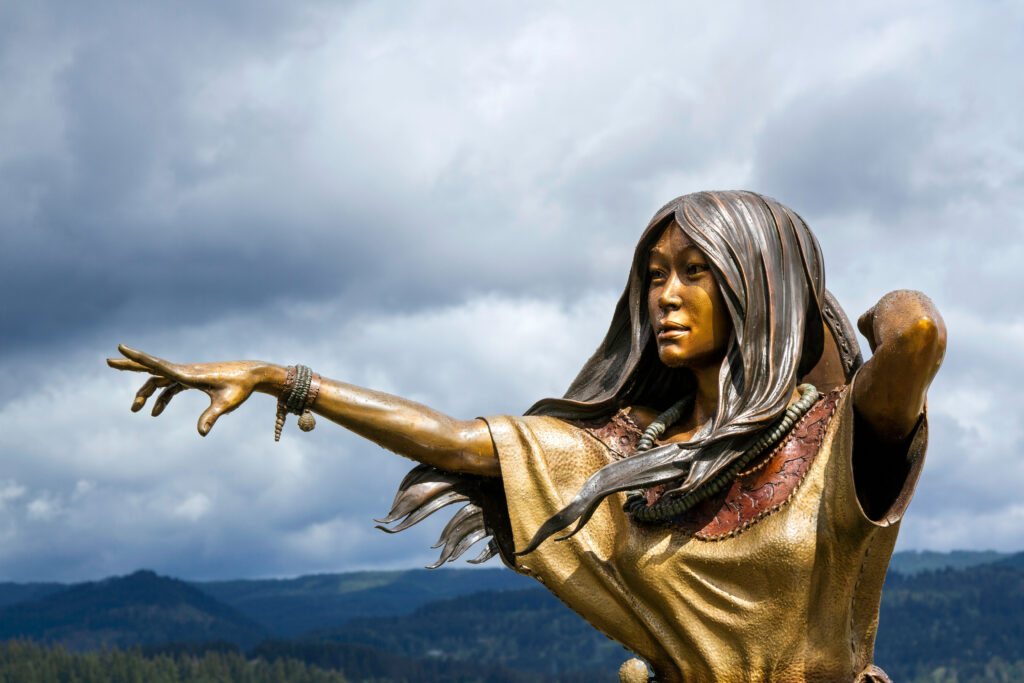Is this how she looked?! A Bronze statue of a fetching Sacajawea located in Cascade Locks marina, Columbia River Gorge, Oregon.
I’ve spent much of my life studying and thinking about the [Lewis and Clark Expedition](https://www.history.com/topics/19th-century/lewis-and-clark). I’ve portrayed [Meriwether Lewis](https://lewis-clark.org/members/meriwether-lewis/biography/), been part of several documentary films on the subject, edited the journals of the expedition for the North Dakota phases *([A Vast and Open Plain: The Writings of the Lewis and Clark Expedition in North Dakota, 1804-1806](https://www.amazon.com/Vast-Open-Plain-Expedition-1804-1806/dp/1891419285)),* and written a serious book about [the character of Meriwether Lewis](https://wsupress.wsu.edu/product/the-character-of-meriwether-lewis/).
You cannot think about the Lewis and Clark story without trying to come to terms with [Sacagawea](https://www.womenshistory.org/education-resources/biographies/sacagawea).
She is the most statued woman in American history. And she is one of the two most prominent Native American women in American memory.
And yet, to borrow Winston Churchill’s famous description of the Soviet Union, “she is a riddle, wrapped in a mystery, inside an enigma.” We think we know her, know about her, but most of what we think we know belongs more to mythology, fantasy, speculation, and even fiction than to rigorous history. How can it be that Anna Lee Waldo wrote a 1,359-page [book about Sacagawea](https://www.nytimes.com/1979/08/26/archives/anna-lee-waldo-behind-the-best-sellers.html) and yet what we actually know about her would not fill a passport book?
Recently I made a list of the significant references to Sacagawea in all of the million-plus words of [the journals of Lewis and Clark](https://lewisandclarkjournals.unl.edu/). The list is thin gruel. She dug up some roots and collected some berries along the way. She was still nursing her son [Jean Baptiste Charbonneau](https://lewis-clark.org/members/jean-baptiste-charbonneau/) at the end of the expedition. By now he was eighteen months old. She put her foot down in Oregon when a group of the men were heading to the coast to see a beached whale, saying that she had crossed the continent and was not going to be left behind now when they were heading to see the monstrous fish. She pointed the way through [Bozeman Pass](https://www.nps.gov/places/bozeman-pass.htm) for Clark on the return journey. She played a role — how significant we don’t know — in obtaining horses for the expedition from her natal people the Lemhi Shoshone.
She left no journal. The whale incident is the only instance of something like a real [Sacagawea quotation](https://lewisandclarkjournals.unl.edu/item/lc.jrn.1806-01-06#lc.jrn.1806-01-06.03):
> The last evening [Shabono](https://lewisandclarkjournals.unl.edu/search?people=Charbonneau%2C%20Toussaint) and [his Indian woman](https://lewisandclarkjournals.unl.edu/search?people=Sacagawea) was very impatient to be permitted to go with me, and was therefore indulged; She observed that She had traveled a long way with us to See the great waters, and that now that monstrous fish was also to be Seen, She thought it verry hard that She Could not be permitted to See either (She had never yet been to the Ocian).
>
> Clark, January 6, 1806
Such oral traditions as have emerged, principally among the [Shoshone](https://lewis-clark.org/native-nations/lemhi-shoshones/) and the [Hidatsa](https://lewis-clark.org/native-nations/lemhi-shoshones/), are hard to reconcile with the facts as they were recorded by Meriwether Lewis on May 20, 1805, when he [named a river for her](https://lewisandclarkjournals.unl.edu/item/lc.jrn.1805-05-20#lc.jrn.1805-05-20.01) in eastern Montana and reported her life story (she was only 17 or 18) as he heard it through somewhat imperfect translation.
We don’t know for certain when she was born (or maybe where). We don’t know for certain when she died (or where). We are not even 100% sure of her tribal identity. She appears to have been born Shoshone, but she was captured by the Hidatsa (we think) when she was around 11 or 12-years-old near Three Forks, Montana, and taken 580 miles east to the [Knife River earth lodge villages](https://www.nps.gov/knri/learn/historyculture/earthlodge.htm) of the Hidatsa. By the time Lewis and Clark met her on November 4, 1804, she had been acculturated into the Hidatsa world (we think). You can get into an argument, maybe a shouting match, about all of this at any Lewis and Clark event, especially in Idaho.
So, who was she then? What does she signify? How can we make sense of her, given that almost all we know or think we know about her comes from official U.S. Army records written by busy white men on an imperial mission who were carrying around a good deal of Eurocentric and male-centric baggage about Native Americans, women, and the West?
All those statues are scattered around the country. In [Portland](https://www.nps.gov/articles/sacagawea-statue-in-portland-or.htm) she is pointing the way to Asia. In [Charlottesville](https://lewisandclarknews.com/about-sacagawea-and-the-charlottesville-statue/) she was (the statue has been removed) crouching behind William Clark as if needing the two captains for protection. On the 2000-2008 U.S. dollar coin she is confident and comely, perhaps a little bemused, looking back at us as if interrupted in her own journey. At [Cascade Locks](https://www.portofcascadelocks.org/art-in-the-park) in Oregon she is lithe with an erotic allure, a kind of white male’s fantasy of Miss Indian America 1805.
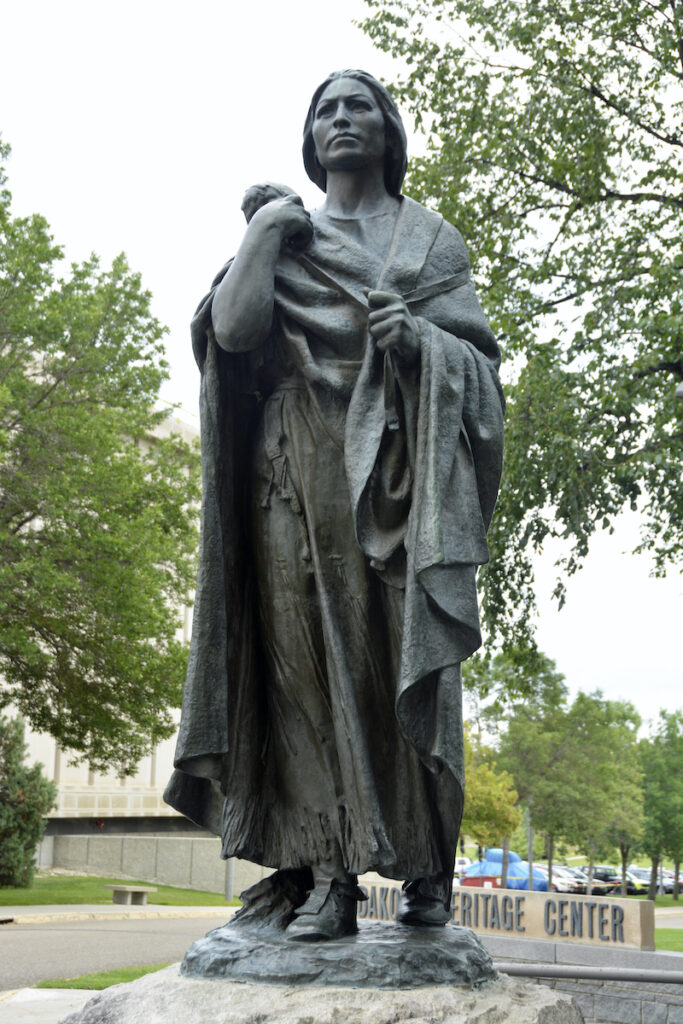Leonard Crunelle’s superb statue of Sacagawea and her child Jean Baptiste on the capitol grounds in Bismarck, North Dakota. 1909.
By far my favorite statue of Sacagawea stands proud on the grounds of the state capitol in [Bismarck, North Dakota](https://www.aoc.gov/explore-capitol-campus/art/sakakawea-statue). It was sculpted by [Leonard Crunelle](https://www.myjournalcourier.com/news/article/Sculptor-Crunelle-s-work-is-monumental-17428597.php) just after the centennial of the Lewis and Clark Expedition. His model was a Hidatsa woman, perhaps a descendant, named Mink (also known as Hannah Levings Grant). Crunelle’s Sacagawea is tall, proud, and independent. She is wearing a full-length deerskin dress. Her infant Jean Baptiste Charbonneau is on her back, cradled in a shawl. Sacagawea has a blanket or robe over her right arm. Her hair hangs loosely over her upper back.
The journals of Lewis and Clark tell us nothing about Sacagawea’s physique. We don’t know if she was tall or short, lean or not, beautiful or otherwise — and who decides what is beautiful across cultures or even in our own? We don’t know if she ever laughed or ever cried. We don’t know if she stayed on the periphery or integrated herself into the Corps of Discovery. But when I close my eyes and think about Sacagawea, I see Crunelle’s strong woman standing tall. She is not fussing over her baby, but she is taking good care of him, with one arm checking on his status in the cradle shawl.
I’ve taken scores of photographs of the Crunelle statue over the years, but it is very difficult to do it justice on its pedestal on the capitol grounds. It tends either to silhouette out against the sky, or lose its clear sculptural lines against the trees in the background, both in the summer when the leaves are flourishing or in the long winter when the branches are what Shakespeare called “bared ruined choirs” against the leaden skies.
Can we get any closer to the historical Sacagawea?
David Swenson of [Makoche Recording Studio](http://www.makoche.com/) in Bismarck directed audio recordings of a contemporary young Hidatsa woman singing a traditional corn song that was also recorded a hundred years ago on [a cylinder disk by Frances Densmore](https://www.lakotasongs.com/) (1867-1957), a brilliant ethnomusicologist from Minnesota. Even though the contemporary Hidatsa woman did not know quite what she was singing, it dovetailed beautifully with the Densmore recording. If Densmore recorded that song around 1912, sung by an elderly Hidatsa woman named Scattered Corn, it is at least remotely possible that Scattered Corn was a little girl when Sacagawea was still living at the earth lodge villages near the mouth of the Knife River. Probably not, but the resonance (the musical echo and fidelity) of the Hidatsa oral song tradition is so remarkable that it is certainly possible that Sacagawea heard (or sang!) that song or a variant of it when she was tending the Hidatsa corn plots in the bottomlands of the Missouri. When I first heard David tell that story, it made the hair on my arms stand up.
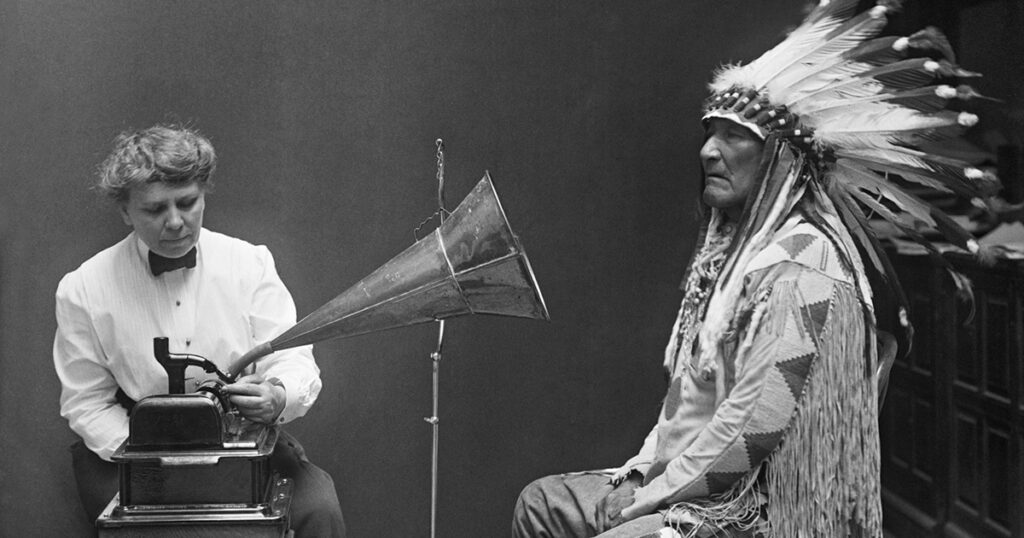Frances Densmore recording a Native American on the northern plains, ca. 1912.
That is probably as close as we are likely to get to Sacagawea.
My friend [Shane Balkowitsch](http://sharoncol.balkowitsch.com/wetplate.htm) of Bismarck took up [collodion wet glass plate photography](https://www.pbs.org/wgbh/americanexperience/features/eastman-wet-plate-photography/) about a decade ago. Once he mastered the difficult technique, which was the best photo technology between ca. 1855-1880, he began to make portraits of Native Americans. He has now taken photographs of 718 individuals. His goal is to take at least 1,000 portraits, perhaps more. A few weeks ago I called Shane to ask him if he would be willing to take a photograph of the Crunelle statue. He jumped at the chance. The statue was unveiled in October 1910, just over 100 years after the Lewis and Clark Expedition. With wet plate technology dating back to the 1850s, I wanted the photographic technique to get as close to the life of Sacagawea as possible.
I’ve walked many times around the Knife River village where Sacagawea lived in the years before Lewis and Clark showed up out of nowhere. I’ve lain in several of the depressions left by the earth lodges that have long since disappeared. I’ve kicked up glass seed beads there that date to the early and mid-19th century. I’ve met Hidatsa women who can pronounce Sah-cah-gar-we-a’s name in ways that I could never emulate. I’ve been to [Lower Portage Camp](https://lewis-clark.org/the-trail/falls-of-the-missouri/lower-portage-camp/) where she nearly died of some gynecological infection in late June 1805 and to the [sulphur spring](https://lewis-clark.org/the-trail/falls-of-the-missouri/sulpher-spring/) where Lewis obtained mineral water that he hoped might save her life. I’ve read every book I can get my hands on about what little we know of her life. I have written extensively about her, attempted to imagine her countless times, and puzzled over every journal entry that pertains to her as if I were studying the [Kabballah](https://reformjudaism.org/beliefs-practices/spirituality/what-kabbalah).
But for all of that, despite Scatter Corn’s scratchy and airy song, and Shane’s attempt to match time and technique, Sacagawea remains a mystery, wrapped in a riddle, and definitely an enigma. We continue to colonize her for our historical memory, and we construct her from such small fragments as we have.
**Categories:** Dispatches from the Road
**Tags:** Lewis and Clark, Native Americans
---
### [I Was First in Line To See the New Oppenheimer Film](https://ltamerica.org/i-was-first-in-line-to-see-the-new-oppenheimer-film/)
**Published:** July 24, 2023
**Author:** Clay Jenkinson
**Excerpt:** I sat in the theater Friday for three hours and was mesmerized. The film is historically accurate. Oppenheimer is one of the best movies I have ever seen.
**Content:**
Robert Oppenheimer and Manhattan Project Director, General Leslie Groves. Photo Department of Energy Archive
Some thoughts on the J. Robert Oppenheimer film. First, I predict that Robert Downey, Jr. will win the Academy Award for best supporting actor. It is a stunning performance as Lewis Strauss, the nemesis of Oppenheimer. The film will win half a dozen Oscars at minimum, including perhaps best supporting actress for Emily Blunt as Kitty Oppenheimer.
I got home from a **Listening to America** trip to the Black Hills and the Pine Ridge Indian Reservation on the evening of Thursday, July 20. I was scheduled to see the movie with friends on Sunday. But when I woke up Friday morning, I realized I couldn’t wait. The first showing in Bismarck, N.D., was at noon Friday. I got to the metroplex at 11:35. The doors were still locked! Fifteen or so people stood around waiting for the theater to open. The local TV station was there, but they only wanted to talk with people who were there to see *Barbie*.
I bought the first ticket for Oppenheimer in Bismarck. I was the first in the theater. I chose the ideal seat.
In my strange career, I have portrayed perhaps a dozen different historical characters. Because I was the director of the Great Basin Chautauqua in Reno, Nev., I had to select themes and take on characters to fit those themes. One year we did World War II characters. I chose Oppenheimer.
Why? My background in physics was merely (pathetically) Physics for Poets in my first year of college. But I had somewhere read that when the test bomb went off, Oppenheimer said, quoting the [*Bhagavad Gita*,](https://www.worldhistory.org/Bhagavad_Gita/) “I am become Death, the Destroyer of Worlds.” This is precisely why I chose to portray him in Chautauqua. Someone who could say that, could quote that, whose mind worked like that, who had that soul — I wanted to try to understand. So, I studied Oppenheimer. The first book I read was Peter Goodchild’s *[J. Robert Oppenheimer: Shatterer of Worlds](https://www.goodreads.com/en/book/show/399299)*. And then many more. Eventually the splendid *[American Prometheus](https://www.pulitzer.org/winners/kai-bird-and-martin-j-sherwin).* I still have the notes I wrote in reading Goodchild’s book, much of it one day in Arles, France, where I was leading a cultural tour about Jefferson there.
As I got to know Oppenheimer — a complicated genius — I learned for the first time that he had been destroyed by the military industrial complex because he was insufficiently supportive of the American quest to build a hydrogen fusion device. He believed that an H-bomb could only be seen as a weapon of mass destruction. I learned of the security clearance hearing in the spring of 1954. The learning curve was straight up.
I even attempted to learn something about quantum mechanics. I read four or five books, including the *Tao of Physics* and some more serious accounts, but every time I thought I was just about to understand, my mind fell back into Newtonian ruts. I was a little relieved when I read that Niels Bohr (the greatest of quantum physicists) had said, “If anybody says he can think about quantum problems without getting giddy, that only shows he has not understood the first thing about them.” I was awash in [Heisenberg’s uncertainty principle](https://scienceexchange.caltech.edu/topics/quantum-science-explained/uncertainty-principle), [Schrödinger’s Cat](https://www.techtarget.com/whatis/definition/Schrodingers-cat), one atom at one end of the universe tickling another faster than the speed of light. …
It wasn’t until I realized that Oppenheimer was a tragic figure that I fell in love with him. Aristotle’s formulation is that a tragic figure is a great man (or woman) who winds up being complicit in his fall. As Hamlet puts it:
> So oft it chances in particular men
> That for some vicious mole of nature in them
> As in their birth (wherein they are not guilty
> Since nature cannot choose his origin),
> By the o’ergrowth of some complexion
> Oft breaking down the pales and forts of reason
> Or by some habit that too much o’erleavens
> The form of plausive manners — that these men
> Carrying I say, the stamp of one defect
> Being nature’s livery or fortune’s star
> Their virtues else (be they as pure as grace,
> As infinite as man may undergo)
> Shall in the general censure take corruption
> From that particular fault.
>
> Hamlet, William Shakespeare
Oppenheimer contributed to his fall. He was arrogant. He did not suffer fools and by his intellectual standards, most people were fools. He treated others to what someone called his Blue Glare Treatment. He arrogated to himself the right to determine what constituted a security breach. He spent the night with an old girlfriend during the project while he was married and she was a communist party member. He mishandled the notorious Chevalier Incident. From a certain point of view, he was security nightmare.
Hubris. Oppenheimer had hubris. When his enemies decided to destroy him, they found that he had handed them the hammer.
As a humanities scholar, I am drawn to individuals who have a fissure at the center of their being: **Jefferson** (race and slavery), **Meriwether Lewis** (who could not reenter civilized life), **Steinbeck** (who fundamentally believed he was mediocre), **John Donne** (worldly Jack Donne, otherworldly John Donne the divine), **Hamlet** (what a piece of work is a man, and yet what to me is this quintessence of dust?), and **Oppenheimer**, who could not reconcile his capacity to build a weapon of mass destruction with the ethical consciousness he had assiduously developed over a lifetime of hard reading. I’m fascinated by the divided self. I suppose I have taken on historical characters because I have a divided self. Not that we all don’t, but most people find ways to live in cheerful denial, except when they are drunk, terminally exhausted, or over the line of acceptable human conduct. I seek out the fractured.
Oppenheimer at Oak Ridge, Tennessee, circa 1946. Photo Department of Energy Archive
But if we accept that Oppenheimer had significant faults, and that he contributed to his demise, the truth emerged in my research that he was victimized by some of the worst dynamics of American life: intolerance for eccentricity, intolerance for views that are not squarely within the establishment’s worldview, demonization of irony and nuance, distrust of intellectuals, anti-intellectual smugness, fear of the cosmopolitan. … This is the spirit of Joseph McCarthy, Richard Nixon, Barry Goldwater, Sean Hannity, and countless others not worth naming in an historical essay. The American Cold War establishment destroyed Robert Oppenheimer because they wanted to live in a Manichaean world of black and white, good and evil, simpleton “values,” heroes and demons. They destroyed him because he was a fully evolved human being with a rich and delicious moral and ethical consciousness, and they wanted merely to call the Soviet Union an evil empire. So, too, when John F. Kennedy gave his fabulous peace speech at American University on June 10, 1963, wherein he said that the Russians were people just like us and though we disagreed profoundly with their political and economic system, we need to realize that they love their children just as we do, that there is more we have in common than that which divides us and we must learn to share the world — as soon as he said those words, the bullets were finding their way into rifles on the streets of Dallas. Because we could not tolerate such a man in a position of power.
[David Lilienthal said of Oppenheimer](https://www.governing.com/context/the-rehabilitation-of-j-robert-oppenheimer-cleared-of-a-black-mark-after-68-years), “It is worth living a lifetime just to know that mankind has been able to produce such a being.” Although I love Jefferson and Meriwether Lewis and take great joy in Theodore Roosevelt, Oppenheimer is the role of a lifetime. He’s my favorite character. This startles some people, but if you know my fatal attraction to unresolved human great ones, it makes perfect sense.

I sat in the theater Friday for three hours, and though at some point I had to pee, I would not let myself leave even for four minutes. I was mesmerized. The film is historically accurate. In fact, it precisely quotes some of the most important utterances of Oppenheimer and everyone around him. There is no significant historical problem in the film. I will review it here as soon as I finish this personal account of my experience, but what I expected — that I would be shaking my fist at the screen, outraged over Hollywood’s inability to let a story stand — never happened, not even slenderly.
*Oppenheimer* is one of the best movies I have ever seen. I had expected to feel peevish about Cillian Murphy because *I am J. Robert Oppenheimer*, but of course that was ridiculous. He nailed it. His existential loneliness. The downcast eyes. The embrace of martyrdom. The unresolvable paradox of his agency in killing 200,000 people and his revulsion at what he had unleashed.
I have a strange personal connection with Oppenheimer, along the lines of the first chapters of [Laurence Sterne’s *Tristram Shandy*](https://www.bl.uk/works/tristram-shandy), that what is going on in the minds of your parents when they conceived you is significant. My father was a brilliant liberal alcoholic, a young man when Oppenheimer was rejected and shamed. My father was something of a [Kerouacian](https://www.yourdictionary.com/kerouacian) in the years just after the war. He had served in the Army at [White Sands](https://www.nationalparks.org/explore/parks/white-sands-national-park) when [Wernher von Braun](https://www.nasa.gov/centers/marshall/history/vonbraun/bio.html) was there. He saw missiles rocket out of White Sands. I know he would have been appalled by the government’s treatment of Oppenheimer and even living in a small North Dakota town he would have been riveted by the security hearings, outraged by the verdict. He might have tried to talk to my mother about these things, but back then, at least, she would not have done more than listen without fully comprehending what was at stake. I mean no criticism of my mother. She was a Minnesota farm girl then raising her first child. On the night they conceived me, Oppenheimer was in the Inferno of the Cold War in America. I was born with my father deeply concerned about America. Just saying …
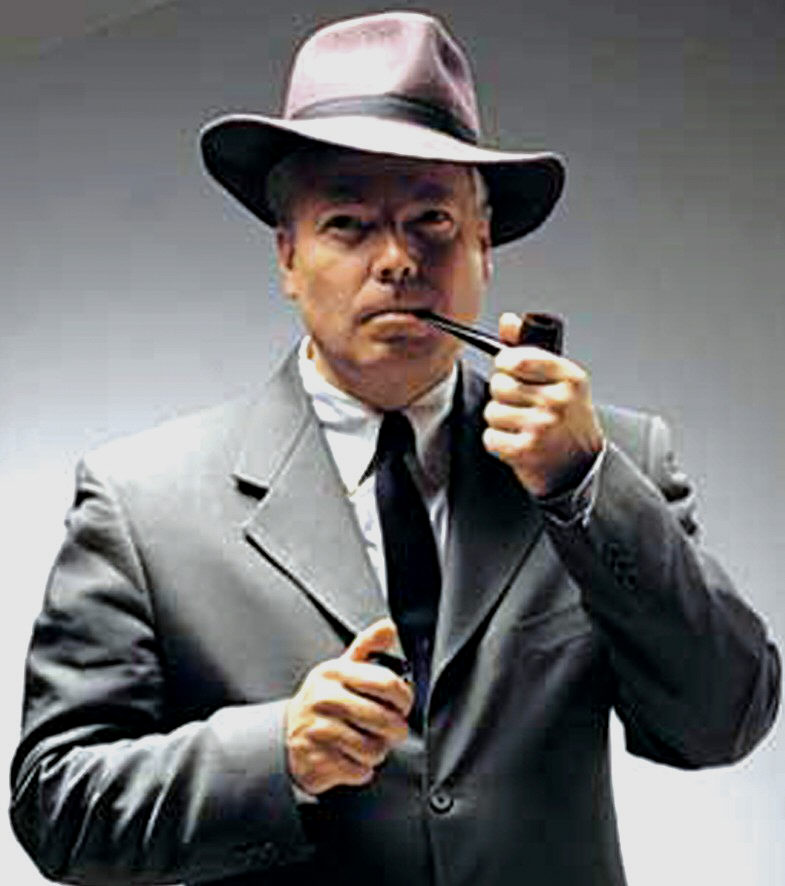Clay Jenkinson portraying Robert Oppenheimer.
I would love to tour the country performing Oppenheimer. I have several performances lined up. Last night I ordered a new 1940s gray suit. My porkpie hat is ready on the shelf in my closet. I have my slide rule handy. I have my father’s pipe. I’m re-reading the two finest books about Oppenheimer: *American Prometheus* by Kai Bird and Martin Sherwin, and Mark Wolverton’s [*A Life in Twilight: The Final Years of J. Robert Oppenheimer*. ](https://www.publishersweekly.com/9780312374402)
I burst into tears two and a half times in the film. First, when Oppenheimer names the test site *Trinity* after a sonnet by my favorite poet John Donne, “Batter My Heart Three-Person’d God.” Why? Because of my lost youth. I remembered the young man I was when I first came away from Oxford University — the world was all before me — and I grieved the loss of that promising young scholar. Second, when Oppenheimer (C. Murphy) was all alone in the cosmos while his Los Alamos colleagues danced and cheered orgiastically at the success of the bomb. And third, the half-choked moment, when Emily Blunt as Kitty Oppenheimer unleashed her fury on the government’s prosecutor Roger Robb near the end of the film. (Robb is mischaracterized by Jason Clark.)
This morning, I pulled the [Sermons of John Donne](https://lib.byu.edu/collections/john-donne-sermons/about/) off my Renaissance literature shelf — after an interminable, inexcusable absence.
**Categories:** Dispatches from the Road
**Tags:** Atomic West, Books
---
### [With the Lewis and Clark Trail Heritage Foundation](https://ltamerica.org/with-the-lewis-and-clark-trail-heritage-foundation/)
**Published:** July 4, 2023
**Author:** Clay Jenkinson
**Excerpt:** As the editor of the Lewis and Clark quarterly journal, We Proceeded On, I attended the Lewis and Clark Trail Heritage Foundation annual meeting in Missoula at the end of June.
**Content:**
As the editor of the Lewis and Clark quarterly journal, *We Proceeded On*, I attended the Lewis and Clark Trail Heritage Foundation annual meeting in Missoula at the end of June. About 200 lovers of Lewis and Clark gathered at the Holiday Inn downtown for four days of lectures, performances (including by Lewis’ fetching mother Lucy Marks!), round table discussions, one of which I led, awards ceremonies, walking tours, and bus tours to LC-related landscapes within school bus distance of Missoula.
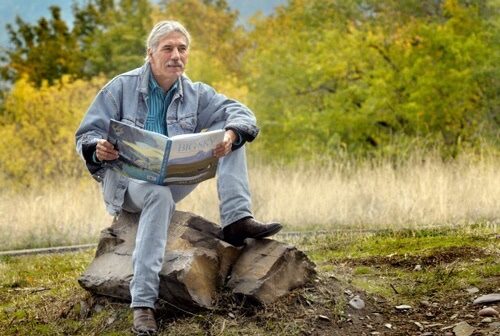Author, Dan Flores
If you are interested in Lewis and Clark, I invite you to become members of the Trail Heritage Foundation, which gets you a subscription to *[We Proceeded On](https://lewisandclark.org)* (WPO).
The keynote address was given by one of my favorite writers, Dan Flores. He’s the author of several outstanding books, most recently *[Wild New World: The Epic Story of Animals and People in America](https://wwnorton.com/books/9781324006169)*. My favorite of his books is *[The Natural West: Environmental History in the Great Plains and Rocky Mountains](https://www.oupress.com/9780806135373/the-natural-west/)*. But [*American Serengeti* ](https://kansaspress.ku.edu/9780700622283/)is also a must read.
Flores is a warm and gentle man. He has a ponytail and a slightly grizzled look — just enough to remind you these books aren’t written in a library tower.
His talk began with a sobering account of the ways in which Industrial Man has denuded the planet, forced a large number of animals into extinction, with more to come. Just the day he spoke I read about the seals and dolphins dying off the coast of southern California — victims of toxic algae thanks to global warming. It seems that every month we learn of a new way in which human-caused-or-accelerated climate change is wreaking havoc on the biosphere — giant forest fires, savage tornadic waves, atmospheric rivers. …
Because he was in front of Lewis and Clark obsessives, he told the story of the expedition’s encounters with the grizzly bear, which Lewis for a time thought he might name the “variegated bear.” I can hear it on CBS: “There was another variegated bear attack on a tourist at Yellowstone today. …” Lewis famously discounted the ferocity of the grizzly bear, confident in the lethal firepower of 1805 rifles and muskets. But after a couple of harrowing bear fights, during which several of his expedition members (once including himself) might well have been mauled or killed, Lewis said, “I find that the curiosity of our party is pretty well satisfied with respect to this animal. He has staggered the resolution of several of them.” At the Great Falls of the Missouri, on June 14, 1805, Lewis had a harrowing encounter with a variegated bear which propelled him into the river holding his spear (espontoon) in a defensive position. The bear menaced Lewis but declined water combat.
When Flores recounted grizzly bear stories, the banquet audience laughed happily. He was talking to us about us!
His point was not lost in the nods and chuckling. Lewis and Clark encountered their first grizzly bear on October 20, 1804, just south of today’s Bismarck, N.D. Grizzly bears were a plains creature not particularly a denizen of the mountains. Industrial Man forced them up into the recesses of the mountains, along with a range of other species that once flourished in the American Serengeti. Flores estimated that there were once 58,000 grizzlies in the lower 48 states. Lewis and Clark did not run into many grizzlies (minding their own business) until they reached today’s eastern Montana.
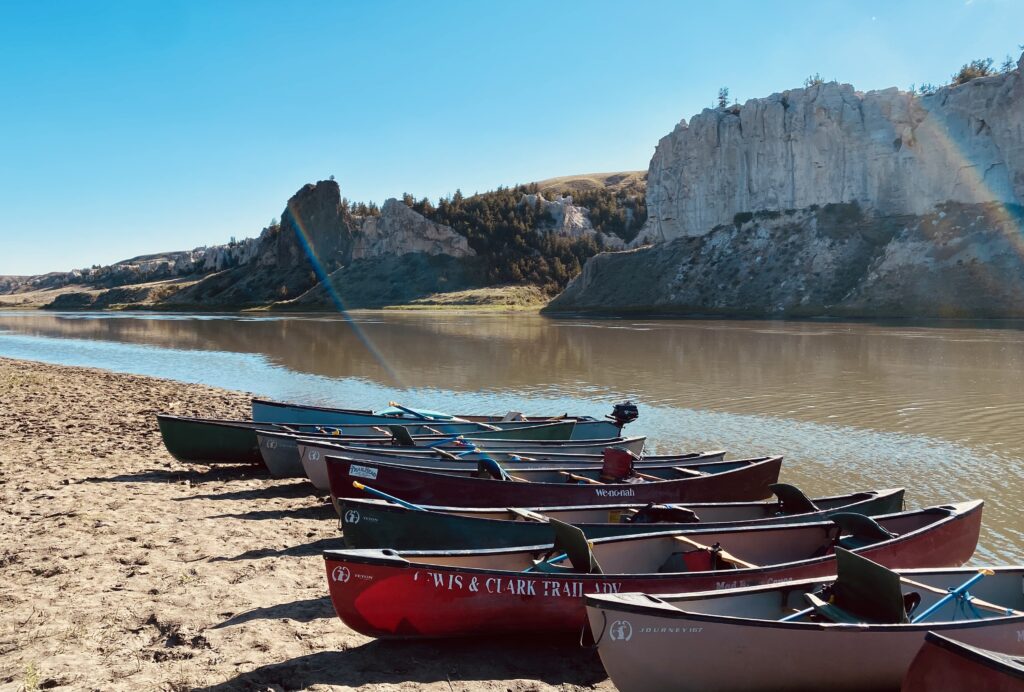Upper Missouri River Breaks National Monument, Southeast of Fort Benton, Montana.
When I take cultural tour groups on my annual canoe trip in the White Cliffs section of the Missouri River southeast of Fort Benton, Mont., we are so far from “civilization” that cell phones don’t work and there is no way out until the mouth of the Judith River. Off the grid. Imagine the great river s-curving its majestic way towards North Dakota, a breathtaking blue. And then copses of cottonwoods dotting the river on either bank. Some deer, more eagles and hawks. Few signs of white settlement — some barbed wire fencing, a broken-down log cabin here and there. At some point on the second day, someone says, “It looks unchanged since 1805.” Well, yes and no. Mostly no. No Costco, no asphalt bike path, no wind turbines. But …
The grasses are at least half imports from Eurasia. No bison. No elk. No wolves. No grizzly bears. No Native Americans.
Dan Flores reminded us of how massively and ruthlessly Industrial Man has erased one West and substituted another; and even the places like the White Cliffs where you can still get a whiff of what it once was, those places have been saved from industrial ravagement by concerted efforts of small numbers of American people who want to save something for seed, something for the soul, something that we can agree to leave alone. Thoreau, remember, says “A man is rich in proportion to the number of things he can afford to let alone.”
Author and historian, Sara Dant.
Flores knows whereof he speaks. He and his wife Sara Dant (an excellent historian with a new book called *[Losing Eden](https://www.nebraskapress.unl.edu/nebraska/9781496229540/)*) served as advisers to Ken Burns’ [forthcoming documentary on the Buffalo](https://kenburns.com/films/the-american-buffalo/) (October 2023). He’s prominent in the film. I’m in there somewhere, too, but I don’t know how much or how many banalities I uttered!
At the end of his talk, Flores spoke movingly about the passage of the Endangered Species Act in 1973 — during the Nixon administration. A full 46 species, including the Humpback Whale, the Grizzly Bear, the Condor, and Bald Eagles have been a least modestly “restored” under the terms of the Endangered Species Act, and more than 200 species have been saved from extinction. There are periods in history when humans come together to do the right thing. That was one of them.
Wilderness Act
Emissions Standards
National Environmental Policy Act
Clean Air Act
Clean Water Act
Endangered Species Act
1964
1965
1970
1970
1972
1973
Not to mention the National Endowment for the Arts and the National Endowment for the Humanities (1965).
It was a lovely talk by an amazing man and a fine writer. There was an implied cautionary note: don’t be so devoted to your great journey story of the past that you forget the conservation imperatives of the present and future. What you love about your story is endangered. Focus some of your zeal on making sure the West is available to your great grandchildren.
My hope is to spend a couple of days wandering the Sangre de Cristo Mountains (or some others) with Flores in the next year. There is so much to talk about, and what better companion/guide than Flores?
**Categories:** Dispatches from the Road
**Tags:** Books, Lewis and Clark
---
### [Reflections on A Colorado River Journey](https://ltamerica.org/reflections-on-a-colorado-river-journey/)
**Published:** July 2, 2023
**Author:** Clay Jenkinson
**Excerpt:** Conditions are changing so fast in the Colorado River watershed that it is impossible now to keep up. I write this on April 14, 2023. In two successive days since I returned to North Dakota, my news feed has served up stories on Great Salt Lake.
**Content:**
*Back in Bismarck, North Dakota,* *Clay reflects on his two week journey of the Four Corners region this spring. This is the final dispatch in a [series](https://ltamerica.org/beyond-the-apocalypse-and-bathtub-rig-a-colorado-river-journey-we-begin-2/) chronicling his sojourn following the Colorado River exploring the state of water, or the absence of it, in the West.*
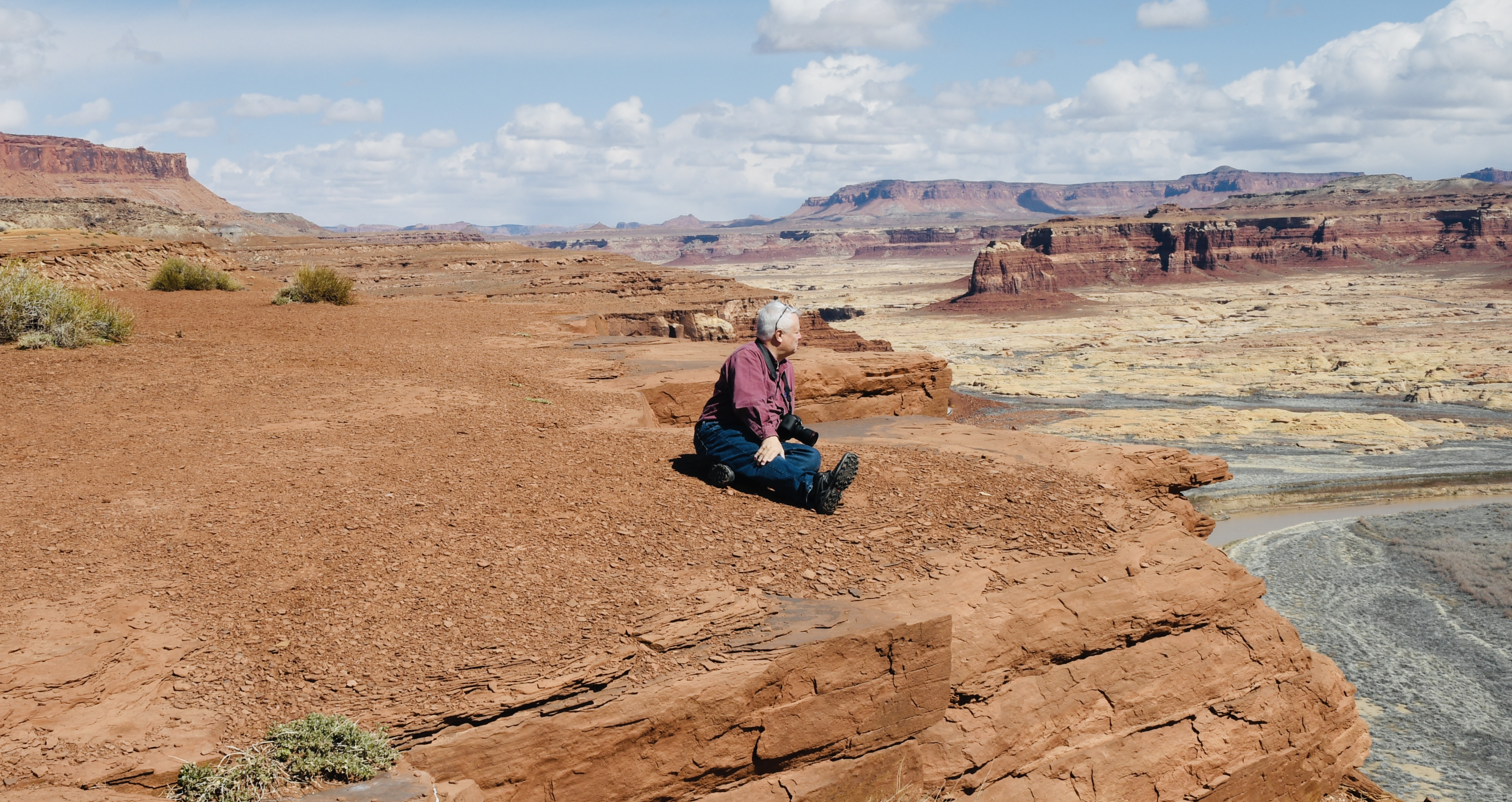Clay looking out over the junction of the Colorado and Dirty Devil Rivers in the Colorado Plateau region of Southern Utah. (Photo by Dennis McKenna)
Conditions are changing so fast in the Colorado River watershed that it is impossible now to keep up. I write this on April 14, 2023. In two successive days since I returned to North Dakota, my news feed has served up stories on Great Salt Lake. The first one suggested that the enormous snowpack in the Wasatch Mountains means that the lake is likely to make a dramatic comeback in the summer of 2023. The second one, a day later, warned that Great Salt Lake is still in extreme danger of dying in the next ten years. Maybe the crisis of Great Salt Lake is over — certainly the immediate catastrophe has been averted (by God not by man). Maybe the 2023 reprieve will make only a modest difference in the long-term health of the lake. We’ll need to stay tuned.
I remember the drought of the late 1970s. The sober and reliable *Minneapolis Tribune* ran a series of stories about the crisis under the banner headline, “The West Runs Dry.” One of the articles quoted a water expert who said the reservoirs of the Far West, particularly in California, “might never refill.” One year later, they filled to capacity and in some cases their spillways were needed to shunt off excess water.
It is very clear that this decade’s version of The West Runs Dry is an ongoing story.
I learned long ago to be suspicious of all apocalyptic thinking. The Rapture just never comes. When the redoubtable [Bill McKibben](https://billmckibben.com/bio.html) declares on national television that we have no more than 10 years to turn things around and save the biosphere, I feel like rolling my eyes. I certainly agree that we humans have done great damage to the planet and that the consequences are likely to be grave, but I also believe from such reading as I have done over the years, that the earth is a self-correcting organism.
I am alarmed by global climate change, but I am not an alarmist. I may well be wrong, but I know that we humans tend to aggrandize our domination of nature and our impact. You cannot look at all those cliff ruins or pot shards dating back many thousands of years without some awareness that we might blink out like the [Minoans](https://www.worldhistory.org/Minoan_Civilization/) and the [Mycenaeans](https://www.worldhistory.org/Mycenaean_Civilization/) in Greece, the Ancestral Pueblos of the Southwest, and similar prehistorical peoples around the world. It doesn’t take much strain to imagine a future time when New York and Washington, D.C. are in ruins and abandoned, and archaeologists of the 28th century will be picking their way through *our* middens. As Ms. Ryan put it, we are an invasive species, with tools. But who am I? Bill McKibben has given a large portion of his life to understanding what is at stake for the Earth, and I am just a dabbler who reads the *New York Times*. In fact, I am guessing McKibben would say I am a part of the problem — too smart to be so stupid — and by doubting the apocalypse I am giving aid and comfort to others who may be under the mistaken notion that I know something.
When I returned to North Dakota there were still two feet of snow around my house. The temperature was in the mid-40s. Ten days later all the snow is gone — poof! And yet there was almost no runoff in the streets. This is something I have never seen in my 60+ years. The snow seems to have evaporated rather than melted and found the storm sewer system. My fear (and my hunch) is that in the end Lake Powell will rise by between 25-40 feet this year and experts will puzzle about where all that snow went.
The French essayist Montaigne ends some of his musings with the words, “Que sçay-je?” What do I know? What the heck do I know? What do I know, anyway?
I’d say all bets are off. Whether Lake Powell will fill this summer and we will all be grinning sheepishly — or this recent rush of optimism will turn out to have been premature, is unknowable. Maybe by September we will have greater cause for panic. I’m guessing that as the facts on the ground play out, the situation will give nobody much satisfaction. But I know I would not at this point bet on any outcome. I am as curious as anyone else.
Stay tuned. We’ll file updates as this extraordinary summer progresses.
We met a lot of people in our travels — thanks to Frank — and we listened for hours to what everyone had to say. We mean it when we say we are determined to **Listen** to America. Our hosts and informants were uniformly generous with their time and their insights. We never had a bad interview or a bad encounter. Our first sustained foray into the American heartland vindicated our philosophy: that most of America lives well between the goalposts of MSNBC on the one hand and FOX on the other. Never in all our encounters — with experts and restaurant servers or moteliers or perfect strangers — did we hear the word Trump or the word Biden. We managed to get through nearly two weeks of life without hearing about January 6 or the debt ceiling or Hunter’s laptop or the border. The American people care about these things, but most of them do not dwell on those faraway affairs. They are leading their lives. Every time we turned around, we met someone doing their job, living their life, meeting their friends, walking their dog, pursuing their avocations, examining a tree ring, participating in their communities. Many were doing highly creative things — making their own kayaks, curating their private museums, growing their heritage corn, building equity to buy a houseboat, or making exquisite food and chocolate chip cookies. We didn’t do a lot of talking because it would have gotten in the way of a lot of listening. We learned. We learned — and I suppose we always will in Listening to America — that things are more complicated than they seem and that one’s early assumptions — from reading and watching media — are often premature or just plain wrong.
We continue to believe the future of water in the West is in great jeopardy, and we assume that global climate change is going to cause an ongoing series of severe water crises in what John Wesley Powell called the Land Beyond the Hundredth Meridian.
Keep them cookies coming. We are just getting started!
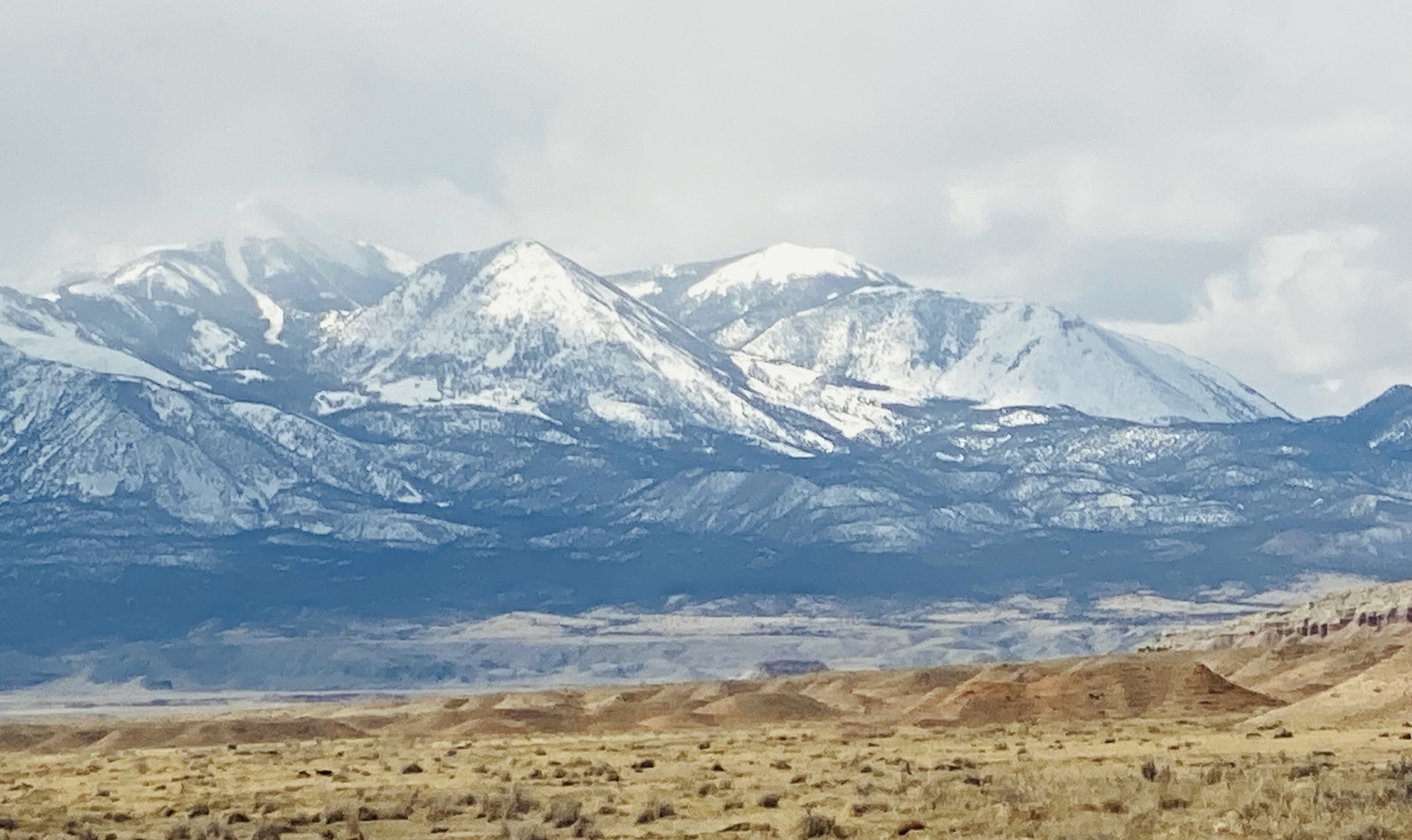
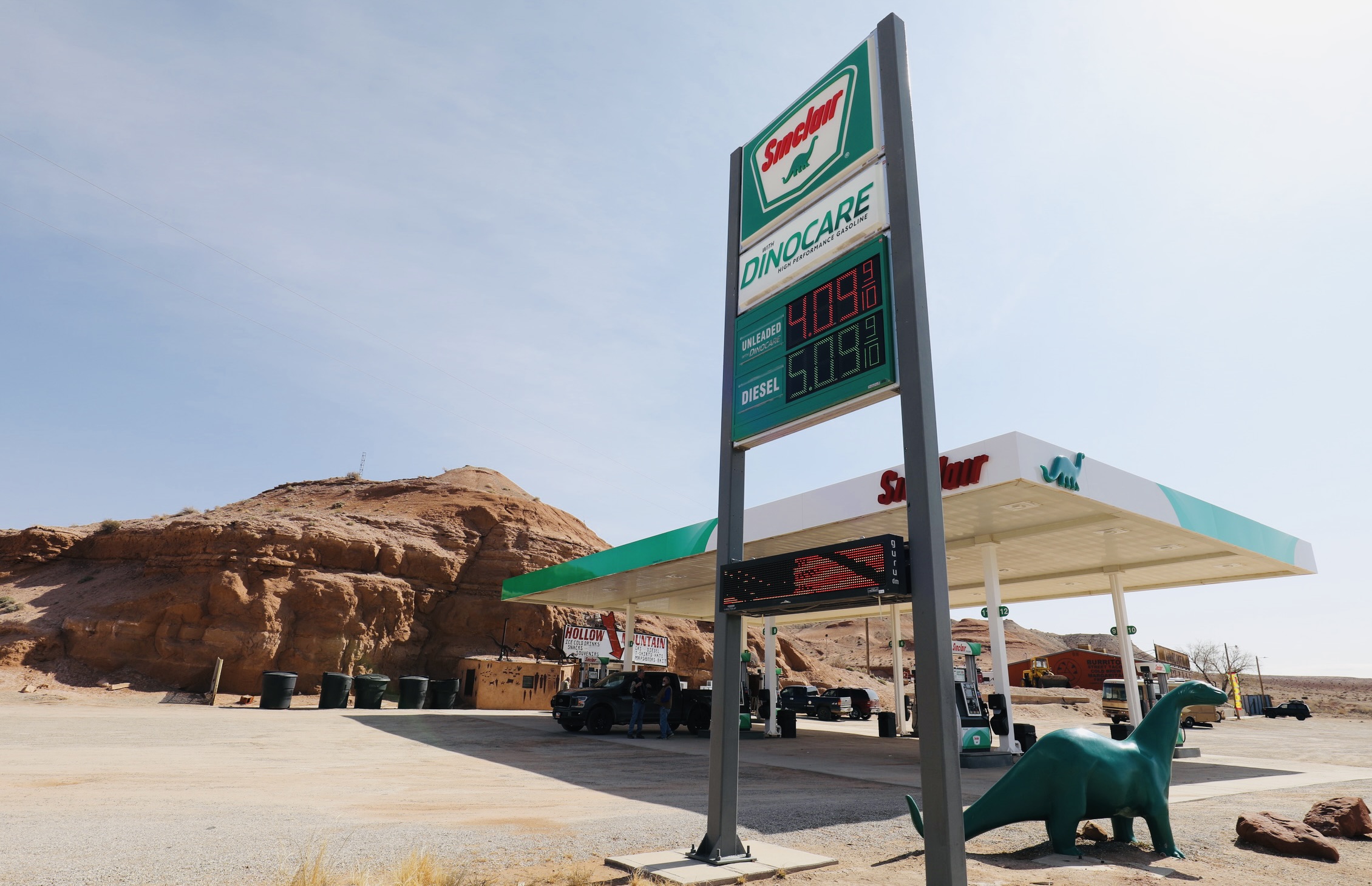
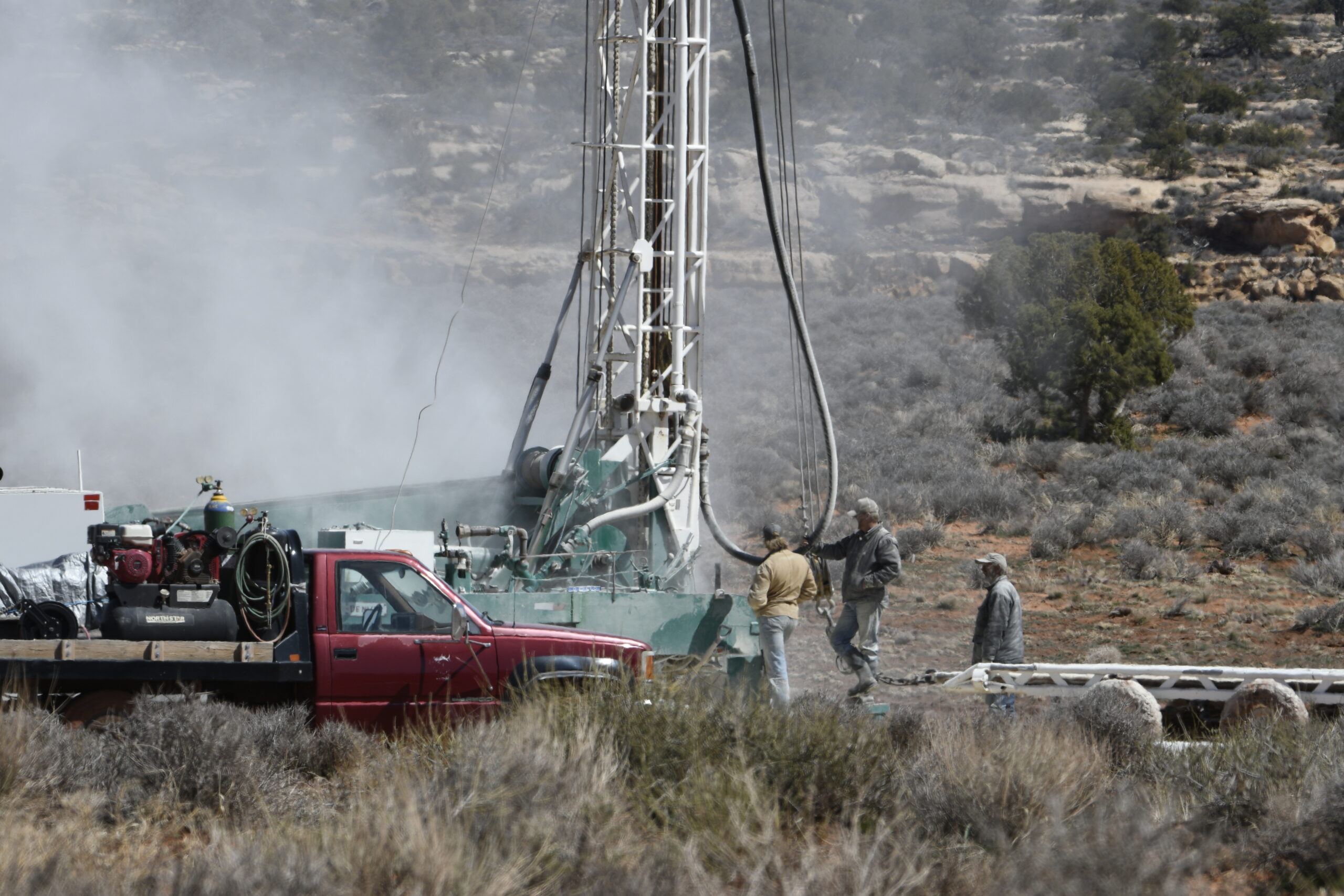


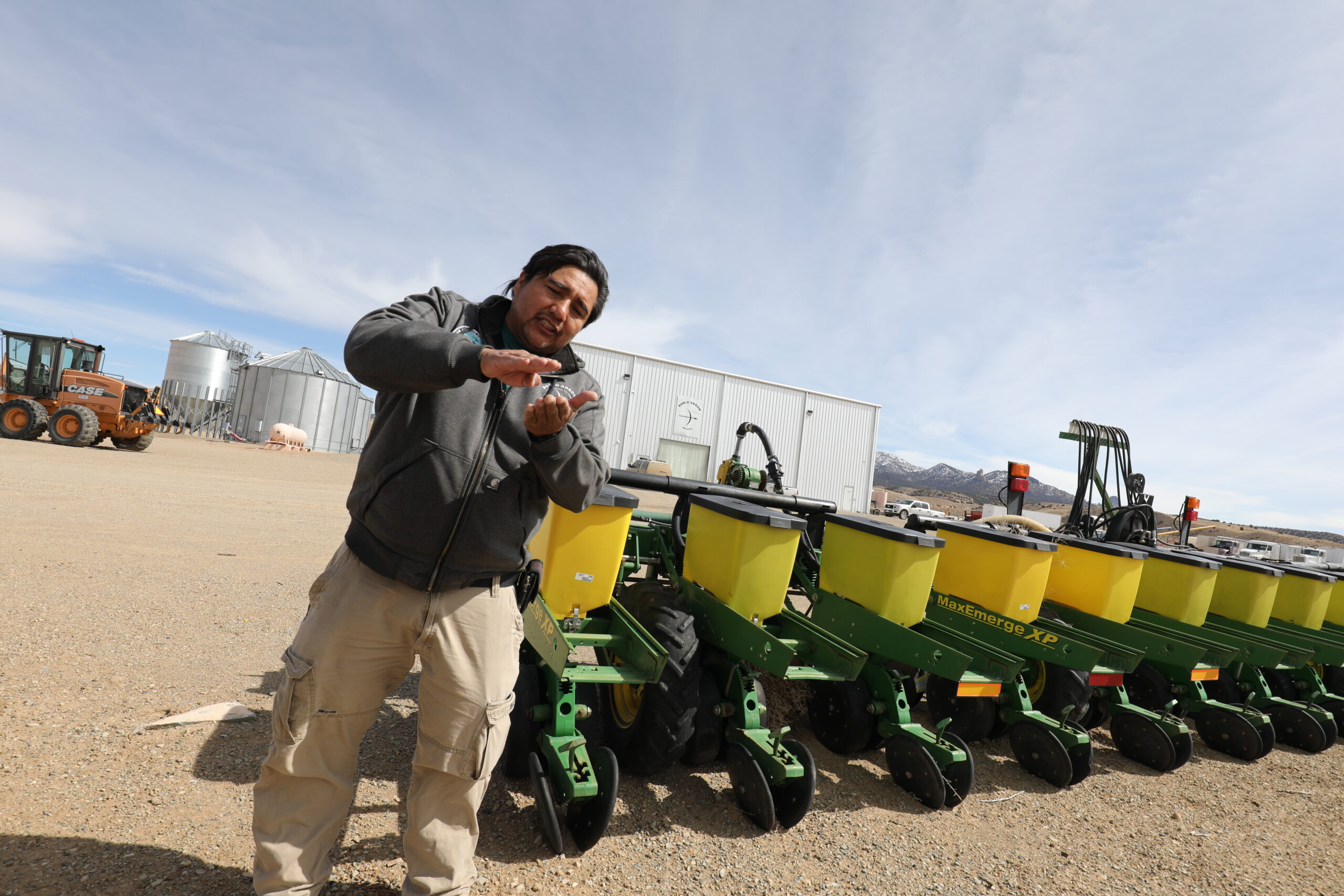
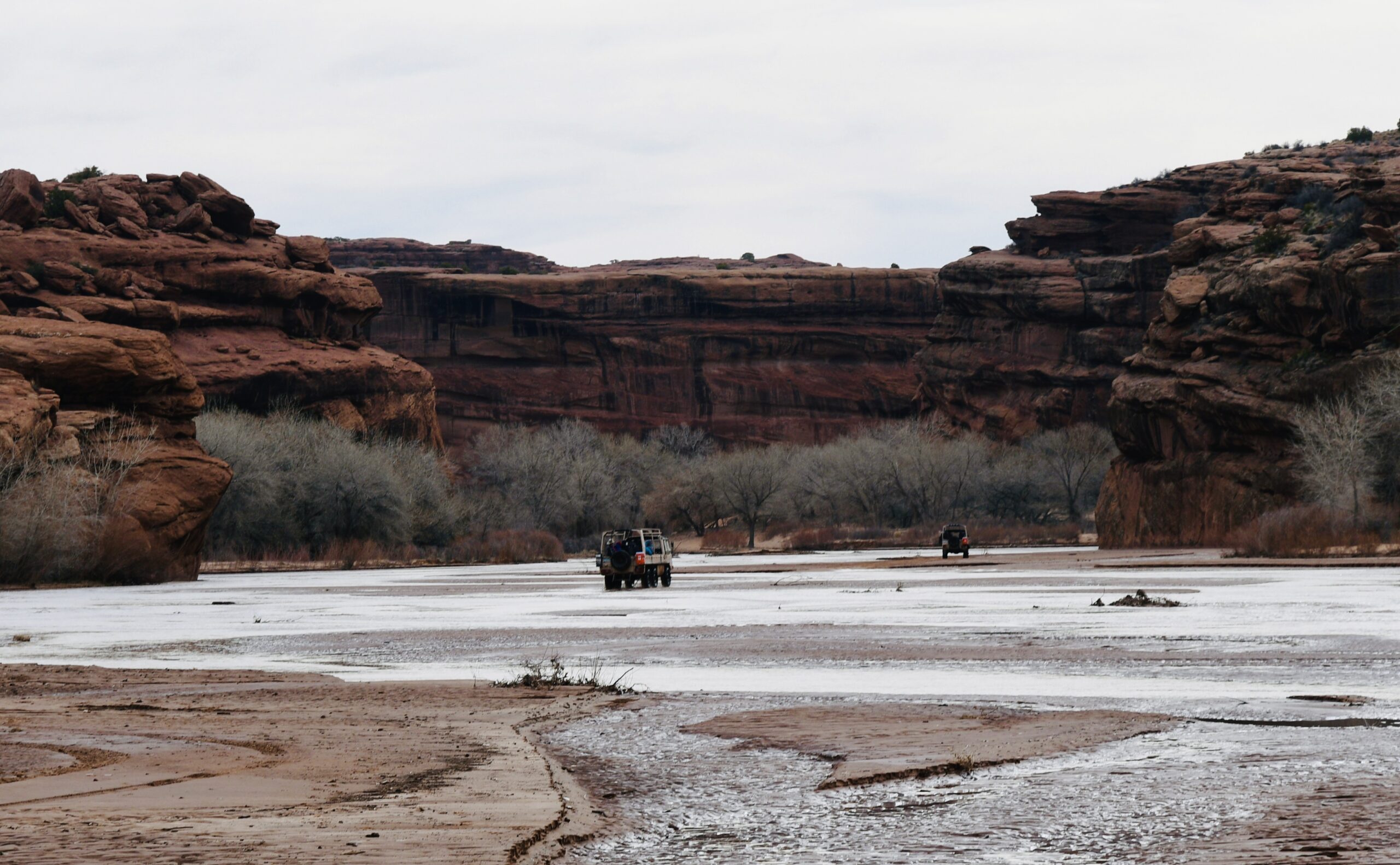

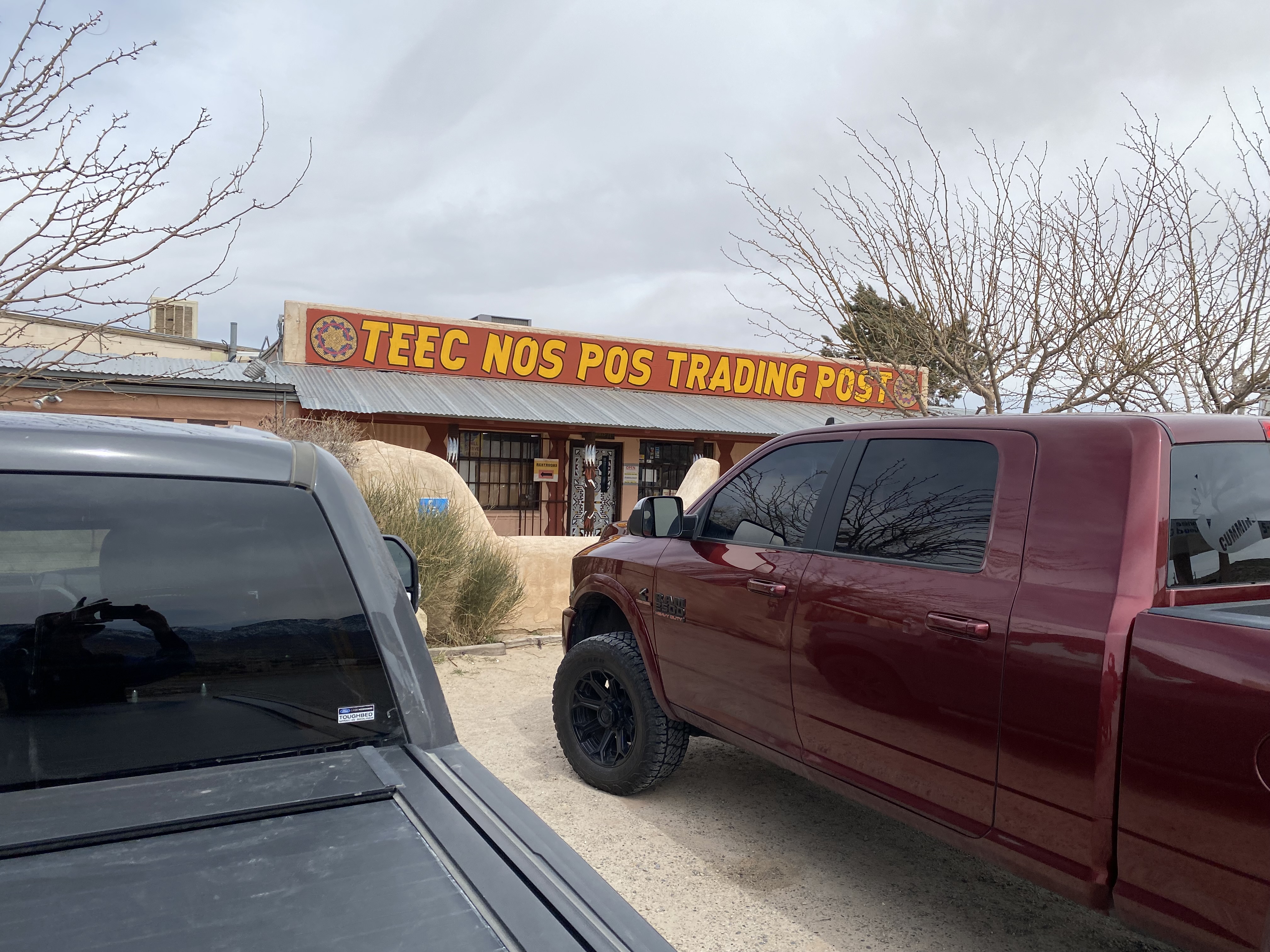
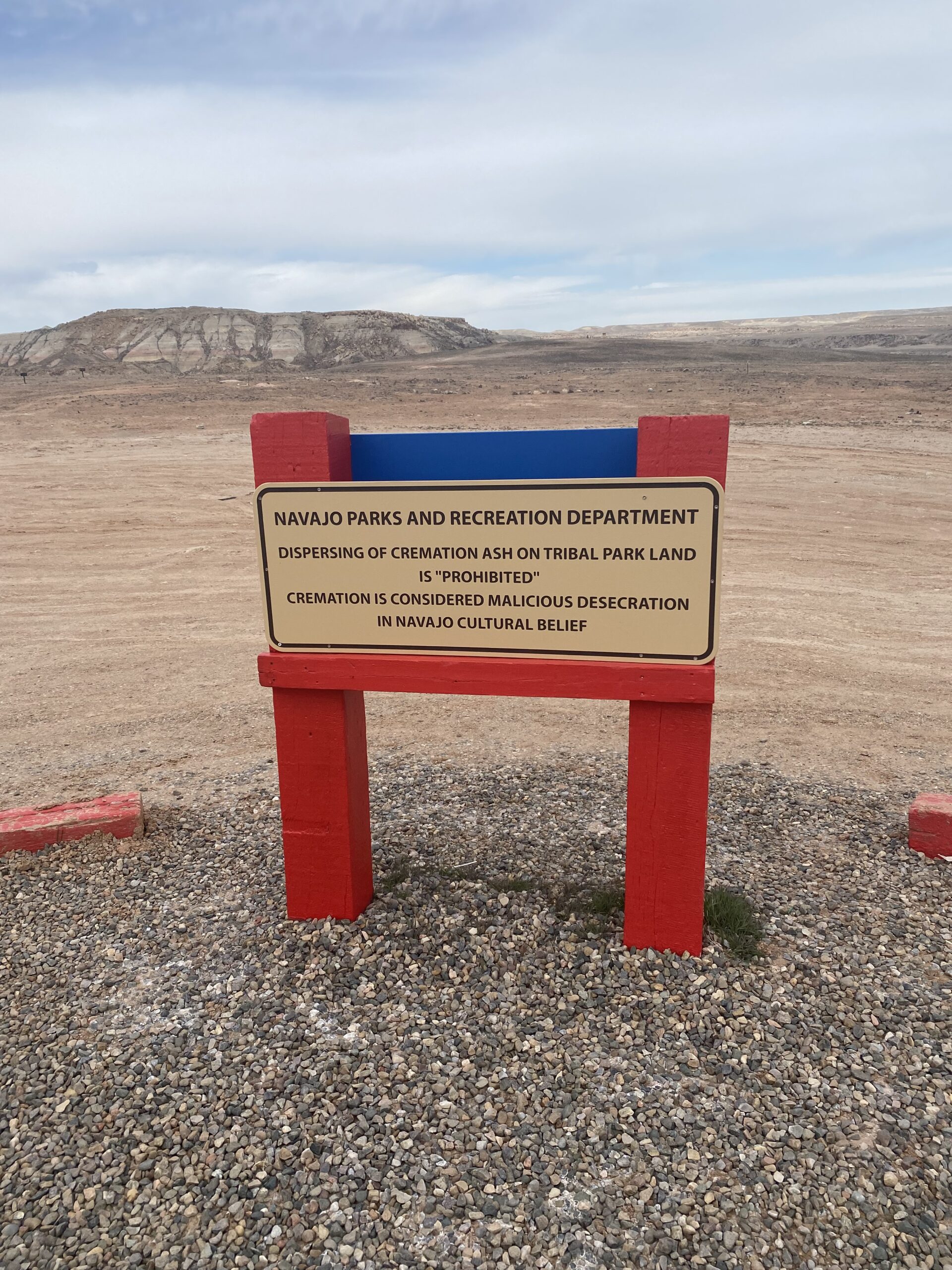
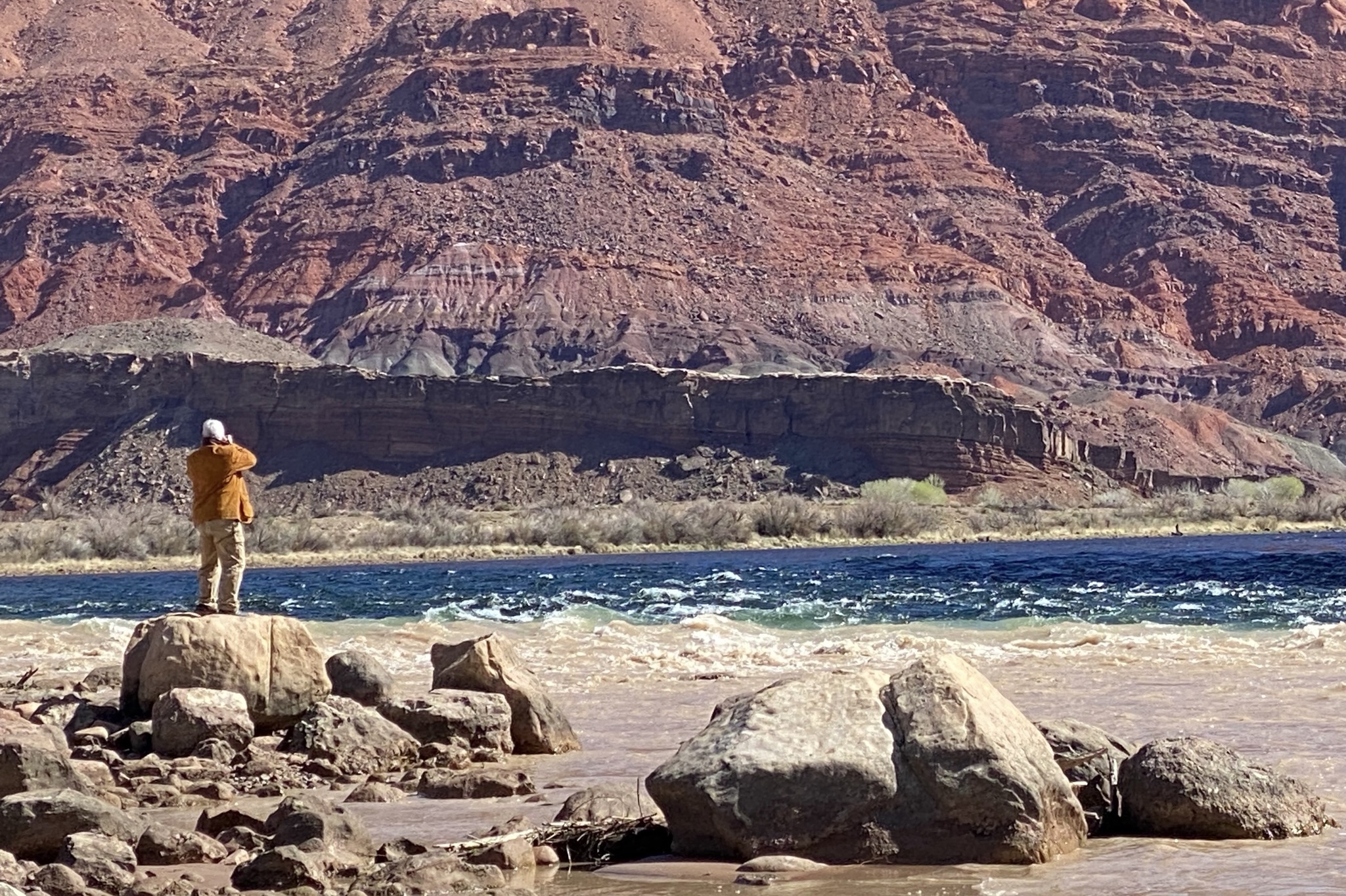
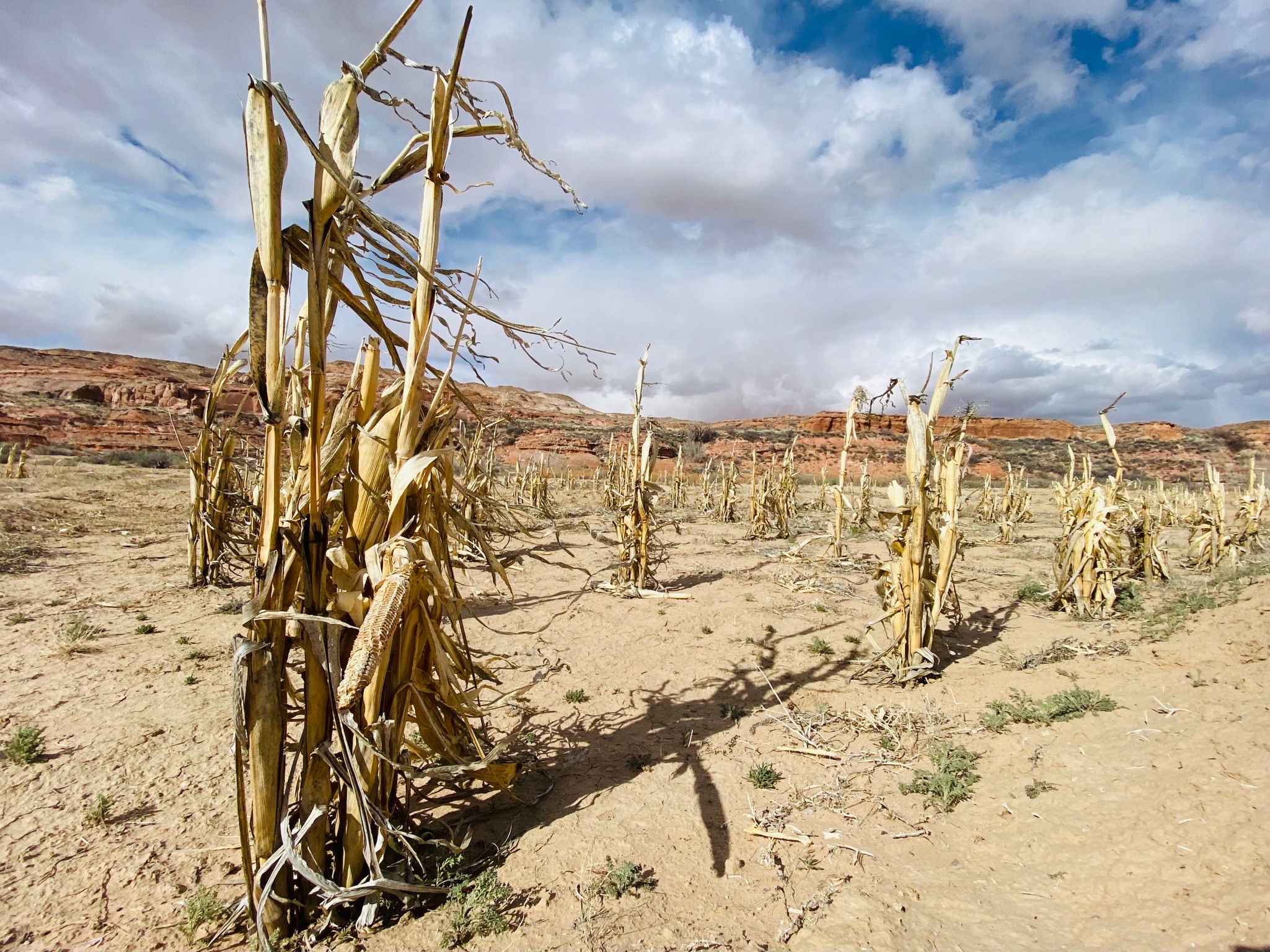
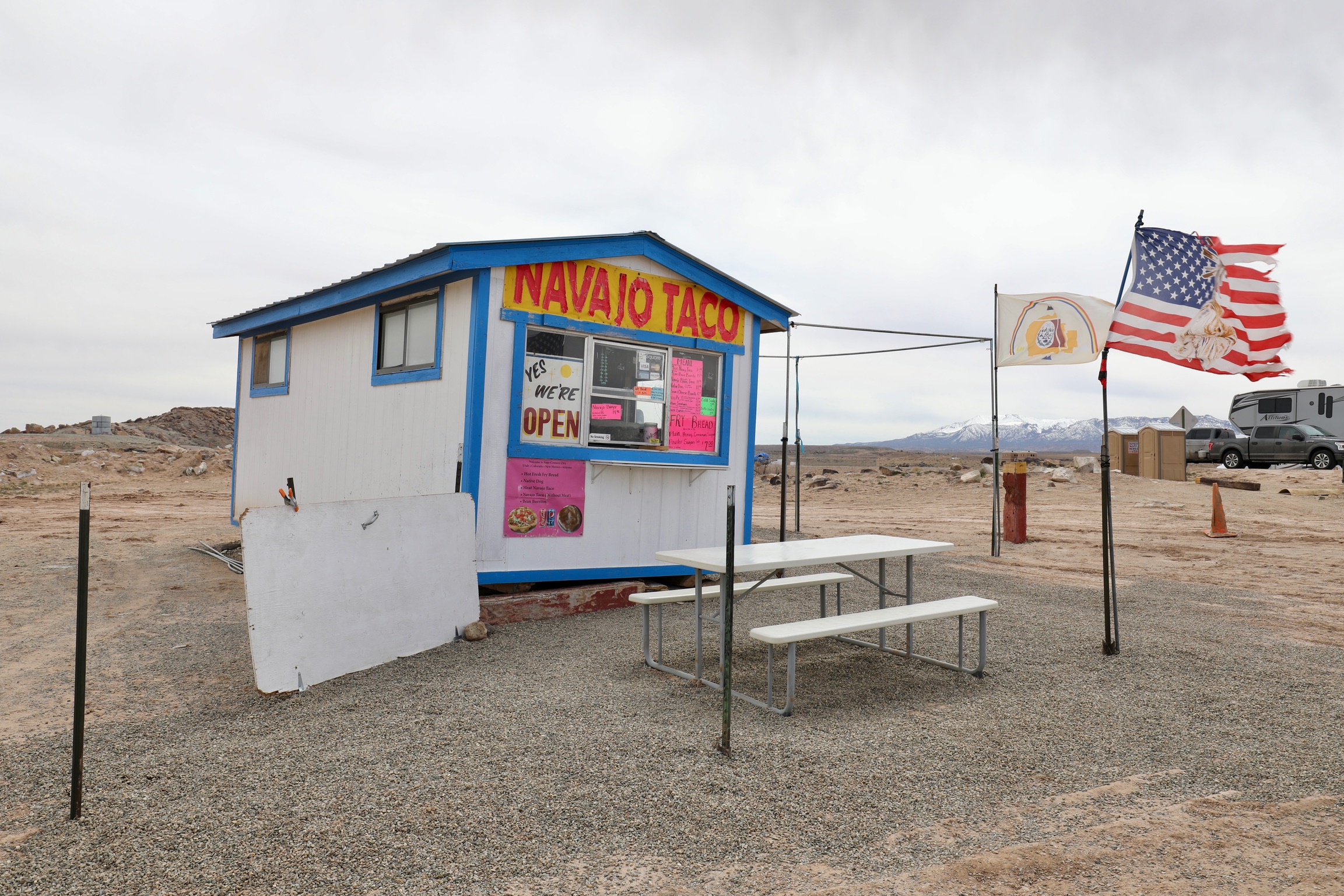

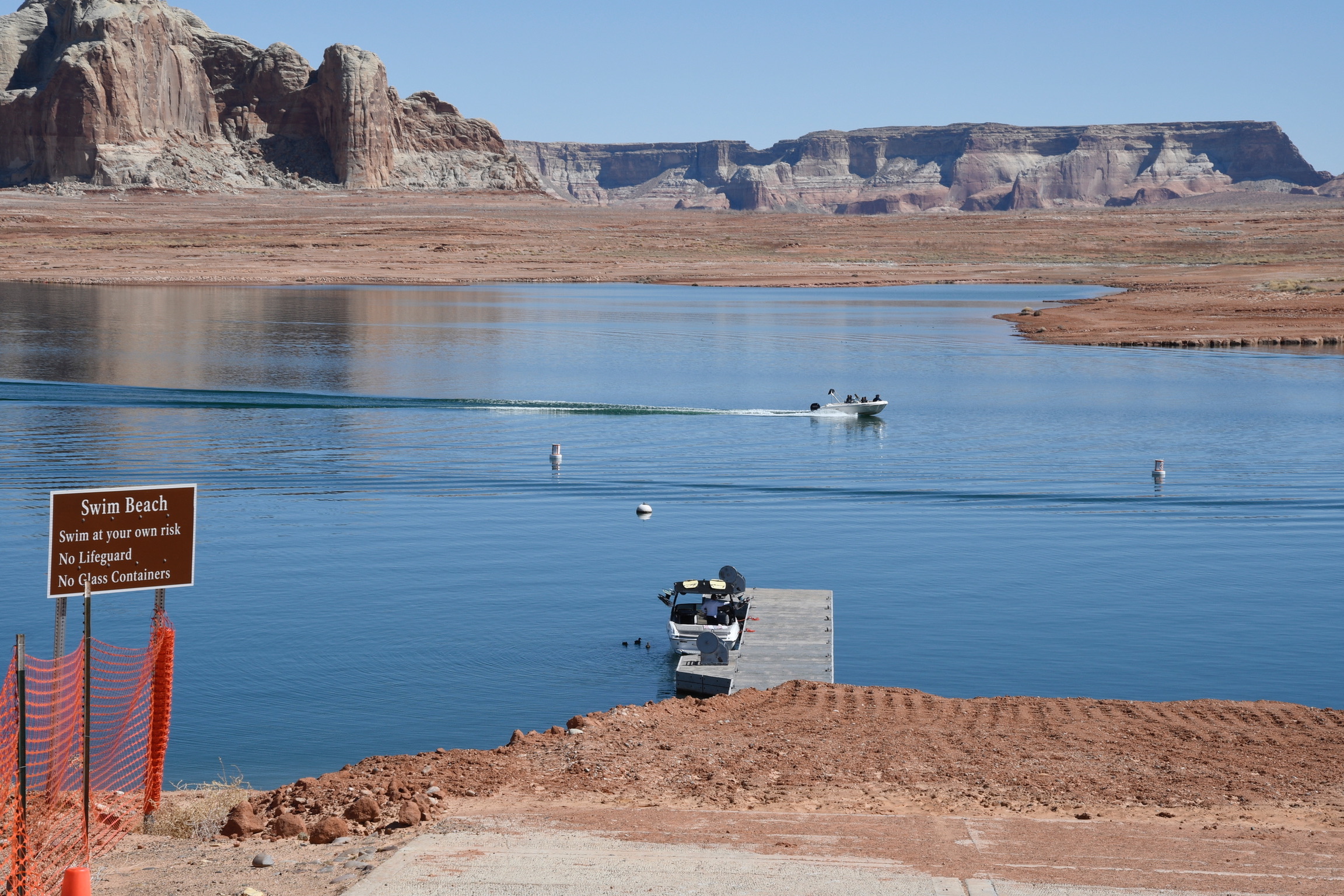
---
*Editor’s Note: You can read all of Clay’s dispatches on this Colorado River Journey by following the links below. You can also keep up with all LTA’s dispatches, essays, photos, and podcasts on this topic through the tab “Water in the West.” This is one of many ongoing road trips at the heart of Listening to America. Our mission is to “light out for the territories,” traveling less visited byways and taking time to see this immense, extraordinary country with fresh eyes while listening to the many voices of America’s past, present, and future.*
**Water in the West — Routes and Itinerary**
- [**Introduction: A Colorado River Journey, The Trek Begins**.](https://ltamerica.org/beyond-the-apocalypse-and-bathtub-rig-a-colorado-river-journey-we-begin-2/)
- [**Day One, Friday: I-70 Vail to Green River; Utah 24 to Torrey; Utah 12 to Boulder, Utah.**](https://ltamerica.org/on-the-open-road-a-colorado-river-journey/)
- **[Day Two, Saturday: Boulder, Utah.](https://ltamerica.org/boulder-utah-a-colorado-river-journey/)**
- **[Day Three, Sunday: Utah 12 to Torrey; Utah 24 to Hanksville; Utah 95 to Natural Bridges National Monument; Utah 261 to Mexican Hat; U.S. 163 to Bluff; Utah 162 to Aneth; Indian Route 5068/Arizona County Road G to Cortez.](https://ltamerica.org/deep-in-canyon-country-a-colorado-river-journey/)**
- [**Day Four, Monday: Crow Canyon Archaeological Center, Cortez, Colorado.**](https://ltamerica.org/crow-canyon-archaeological-center-a-colorado-river-journey/)
- **[Day Five, Tuesday: Colorado 160/491 to Chimney Rock; Colorado 160 to Teec Nos Pos; Colorado 160 to Mexican Water; U.S. 191 Tsaile; Arizona 64 to Chinle.](https://ltamerica.org/a-visit-to-ute-mountain-a-detour-and-the-four-corners-controversy/)**
- **[Day Six, Wednesday: Canyon de Chelly; U.S. 191 to Burnside; Arizona 264 to Second Mesa.](https://ltamerica.org/navajo-nation-and-canyon-de-chelly-a-colorado-river-journey/)**
- **[Day Seven, Thursday: Hopi Cultural Center; Arizona 264 to Tuba City; U.S. 160 to U.S. 89; U.S. 89 to Bitter Springs; U.S. 89A to Marble Canyon.](https://ltamerica.org/the-way-of-the-hopi-a-colorado-river-journey/)**
- **[Day Eight, Friday: U.S. 89A to Bitter Springs; U.S. 89 to Page, Arizona.](https://ltamerica.org/a-different-view-of-glen-canyon-and-the-colorado-river/)**
- **[Day Nine, Saturday: Lake Powell; U.S. 89 to Kanab.](https://ltamerica.org/a-day-on-lake-powell-a-colorado-river-journey/)**
- **[Days 10 & 11, Sunday/Monday: U.S. 89 to Utah 20; Utah 20 to I-15; I-15 to Salt Lake City.](https://ltamerica.org/farewell-to-our-intrepid-guide-a-water-in-the-west-reading-list/)**
- **[Days 12 & 13, Tuesday/Wednesday: Salt Lake City.](https://ltamerica.org/circumnavigating-the-great-salt-lake-in-a-kayak/)**
- **Reflections on A Colorado River Journey**.
**Categories:** Dispatches from the Road
**Tags:** Colorado River, Water in the West
---
## Pages
### [Home](https://ltamerica.org/)
**Published:** July 26, 2022
**Author:** Francisco Molina
---
### [WEEKLY PODCAST](https://ltamerica.org/listen-2/)
**Published:** July 7, 2023
**Author:** Francisco Molina
**Content:**
Subscribe to Listening to America on your favorite podcast player.
#### \#1729 2026 Elections: What Just Happened?
November 9, 2026
Host David Horton and Clay attempt to make sense of the cataclysmic midterm election of 2026. If the election directly repudiated President Trump and the Republican Party, did it also end the MAGA movement? How did Donald Trump go from an improbable comeback victory in 2024 to the 2026 debacle? Will President Trump pull back from the excesses of his second term and realign his administration with the decided will of the American people, or will he double down on such unpopular policies as his fight with Canada and America’s allies, his undeclared war against Iran, and the paramilitary actions of the Immigration and Customs Enforcement service (ICE)? What will the next two years bring as the country begins to think about the 2028 Presidential Election? This episode was recorded on November 4, 2026.
#### \#1728 The Law and National Monuments
November 2, 2026
Clay interviews Professor Mark Squillace of the University of Colorado Boulder’s law school about the history and future of the National Monuments. When Congress created the National Monuments system in 1906, did they consider what the maximum size should be for a presidential proclamation of a new National Monument? Since a president can create a National Monument by executive order, can a later president reduce or eliminate that National Monument? Did the men who created the Antiquities Act understand that many National Monuments, like the Grand Canyon, would later graduate into full National Park status? With the Trump administration paring down some National Monuments, will a test case go to the Supreme Court to determine who, if anyone, has the authority to reduce the size of an already dedicated National Monument? And what was Theodore Roosevelt’s role in our interpretation of the Antiquities Act? This episode was recorded on August 6, 2026.
#### \#1727 Thomas Jefferson, Theodore Roosevelt: Two Very Different Presidents
October 26, 2026
Host David Horton asks Clay to discuss how two very different presidents, Theodore Roosevelt and Thomas Jefferson, viewed power. Both were ardent believers that the United States must control the North American continent. But Jefferson wanted to limit presidential power to ensure the legislative branch of the national government led on almost every public matter. Theodore Roosevelt was much more comfortable with power than Jefferson because he believed the 1787 Constitution was an outmoded, inefficient social compact for the problems of the 20th century. But even Roosevelt would have been startled by the idea of a Unitary Executive of essentially unlimited authority. Has the pendulum reached its limit, and are the people of the United States ready to move back toward regular order, or is the current flirtation with autocracy likely to become the new norm? This episode was recorded on October 25, 2026.
#### \#1726 The November Elections and the End of Summer
October 19, 2026
David Horton and Clay discuss the likelihood of a calm transfer of power during and after the November midterm elections. Does anyone believe there will be no allegations of election rigging, of votes by undocumented workers, or charges of election fraud in a few weeks? Time will tell, but Clay and David make a few careful predictions before the election. They also discuss Clay’s recent cultural tour of Thomas Jefferson’s France — Paris, Dijon, Nimes, the Pont du Gard, and the celebrated Canal du Midi that connects the Mediterranean and the Atlantic. France highly regards Jefferson as one of America’s greatest ambassadors. Was the French Revolution in any way a cousin to the American Revolution a little more than a decade earlier? And why was Thomas Jefferson so cheerful about bloody revolution? This episode was recorded on October 17, 2026.
#### \#1725 Mesa Verde, Bears Ears and National Monuments
October 12, 2026
Host David Horton debriefs Clay on his recent cultural tour of the National Monuments of the Four Corners area. Clay teamed up with his friend Dr. Susan Ryan to visit Mesa Verde National Park, Bears Ears National Monument, and Canyon of the Ancients National Monument with a group of 20 participants from across the U.S. The goal was to explore the history and current status of America’s National Monuments in the wake of President Trump’s executive orders reducing the size of Bears Ears by more than 90%. Susan Ryan was an outstanding cultural tour lead, explaining how Southwestern archaeology is changing in the 21st century to show much greater respect for Indigenous communities. Clay performed as the 26th president, Theodore Roosevelt, and helped lead discussions of the 1906 Antiquities Act text and its several important ambiguities. This episode was recorded on October 9, 2025.
#### \#1724 Great Censorship Legal Cases
October 5, 2026
Clay Jenkinson gives four or five lectures annually for the Smithsonian Associates. In his most recent talk, he analyzed three notorious 20th-century censorship cases, all involving books once regarded as obscene. First, the case against James Joyce’s novel *Ulysses*, thought by some to be the greatest novel of the century, went to trial in 1933. Second, the trial of D.H. Lawrence’s *Lady Chatterley’s Lover* in 1960, banned in England not just for its explicit sex scenes, but because the adulterous affair was between an aristocratic woman and a mere working-class gardener. And finally, Allen Ginsberg’s Beat Generation poem *Howl*, published by City Lights Bookstore in San Francisco, was tried in 1957. Each case was full of dramatic twists, irony, and humor, and in each case a judge or jury decided these amazing works of literature were not legally obscene. This episode was recorded on August 15, 2026.
#### \#1723 On the Trail of Marco Polo
September 28, 2026
Author and explorer Denis Belliveau talks with Clay about his epic journey along the entire Silk Road in the footsteps of Marco Polo. Polo (ca. 1254-1324) traveled from Venice to the far end of China between 1271 and 1295 AD. He visited Kublai Khan in the legendary Xanadu. Denis Belliveau and his traveling companion, Francis O’Donnell, needed 70 visas to make the immense journey, none of it by airplane, much of it on foot, horse, camel, and such fortunate rides they could cadge along the way. They traveled with what Belliveau calls “reckless bravado and a lot of testosterone,” through Turkey, Iran, Afghanistan, India, Tibet, and China, among other nations. They were, so far as anyone knows, the first people ever to retrace the entire Marco Polo journey. The result was a PBS documentary and excellent book, *[In the Footsteps of Marco Polo](https://www.amazon.com/Footsteps-Marco-Polo-Companion-Television/dp/0742556832)*. You can also learn more at his website: [In the Footsteps.](https://inthefootsteps.org/) This episode was recorded on April 8, 2026.
#### \#1722 September 11, 25 Years Later
September 21, 2026
Host David Horton asks Clay Jenkinson what we have learned from the 9/11 attacks on the World Trade Center, the Pentagon, and all that has transpired since 2001. Clay offers six lessons — beware of overreacting; avoid endless wars that have little to do with the terror attack; keep your eye on the geopolitical ball and don’t be distracted by temporary sex scandals; work harder to sustain the national unity that follows a catastrophe; Islam is not our enemy, and it is not the problem; and accept some responsibility for how American actions in the world frustrate and enrage others. Clay argues that America’s isolation from Europe and the rest of the world has made us complacent about how our actions and policies inspire violent reactions. This episode was recorded on September 11, 2026.
#### \#1721 Jefferson and Adams: A Fresh Interpretation
September 14, 2026
Clay’s conversation with historian [Jim Rasenberger,](https://www.jimrasenberger.com/jim-rasenberger-writer) the author of *A Perfect Coincidence: The Extraordinary Friendship and Astonishing Deaths of John Adams and Thomas Jefferson*. Jefferson and Adams collaborated on the Declaration of Independence in 1776, served together as diplomats in France for the United States in the 1780s, and cherished each other’s friendship. Then the heated politics of their time came between them, until by 1800, they were enemies. Fortunately, they patched their friendship back together when they were safely retired from public life and died on the same day, the Fourth of July 1826, in lovely harmony, one in Virginia, the other in Massachusetts. This episode was recorded on May 22, 2026.
#### \#1720 The Declaration of Independence: The Days After Adoption
September 7, 2026
Host David Horton interviews the third president of the United States, Thomas Jefferson, about the days and weeks following the Fourth of July 1776. How quickly did the printed texts of the Declaration circulate? What was the information network of the time that enabled most Americans to read the Declaration (or hear it read in public) within a few weeks? The final copy had to go to an engraver to become the beautiful presentation document we still revere today. At the time, the Founders did not know that the Declaration would become the most important document in the history of human liberty. Meanwhile, George Washington came very close to losing the war — and perhaps the independence movement — after getting bottled up by the British on Manhattan. This episode was recorded on August 14, 2026.
#### \#1719 Reinventing America’s Educational System
August 31, 2026
Clay interviews David Osborne, author of the 1992 bestseller *Reinventing Government*, about the challenges of the American public education system. How well are we preparing young people for the mid-21st century? Why is the United States slipping behind many other nations in educational metrics? David has spent the last few years focused on how we can reinvent public education. His new documentary film *[Turnaround: The Reinvention of the New Orleans Public Education System](https://kinema.com/films/turnaround-the-reinvention-of-new-orleans-public-education-system-bhdj6h)* chronicles the astonishing success of charter schools in historically problematic school districts. How much does the survival of our republic depend on better schools for all Americans? This episode was recorded on April 27, 2026.
#### \#1718 Clay’s Summer Odyssey and Listener Mail
August 24, 2026
David Horton sits down with Clay Jenkinson to retrace a whirlwind summer of travel, history and adventure. Clay’s journey began in May with a trek to ancient Troy and continued across the American West, following the trail of Theodore Roosevelt. Along the way came an unusual Independence Day in Italy, stops in Las Vegas and California, and a meandering journey along the Missouri River in the footsteps of Lewis and Clark.
Clay and David explore the history, surprises and memorable side trips that shaped the journey — and respond to questions and comments from listeners. This episode was recorded on August 6, 2026.
#### \#1717 Optimism and American Success
August 17, 2026
Clay interviews [Richard Battle](https://richardbattle.com "Richard Battle") of Texas about his series of books about the can-do spirit of America. Three of the books tell feel-good stories of character and gumption in the 18th, 19th, and 20th centuries. Mr. Battle believes that the current malaise in the American spirit is caused by a weak education system that fails to tell the story of how much America has achieved and against what odds. When we are tempted to criticize America, Mr. Battle asks, “compared to what?” What other country has as much freedom and opportunity as still exists in the United States? He regards George Washington as the greatest American for holding the independence movement together against nearly impossible odds. He forgives Jefferson for his failures in the larger context of his achievement in the Declaration of Independence. This episode was recorded on July 21, 2026.
#### \#1716 Once More Down the River and Over the Mountains!
August 10, 2026
Guest host Russ Eagle and Clay talk about the annual Lewis and Clark Cultural tour, just ended, after three days on the White Cliffs section of the Missouri River in Montana and then three days up in the Bitterroot Mountains on the Lolo or Nez Perce Trail. Twenty guests from around the U.S. and the world joined us for Russ’ 14th Lewis and Clark tour and Clay’s 26th. The weather was perfect. The river was cool, refreshing, and powerful. Clay and Russ discuss Thomas Jefferson, Lewis and Clark, Native American history, and the status and future of America’s public lands. Lewis and Clark crossed the continent between 1803 and 1806. The Expedition is the most famous of all American exploration stories until at least the Apollo Moon landing program of the 1960s. The Lewis and Clark Cultural Tour is physically strenuous. Still, everyone made it up the Wendover Death March, and we had a joyous farewell banquet at Lochsa Lodge west of Missoula. This episode was recorded on August 3, 2026.
#### \#1715 Can We Save Great Salt Lake?
August 3, 2026
Clay interviews Dr. Ben Abbott of Brigham Young University about the crisis of Great Salt Lake. Great Salt Lake is a terminal lake, which means that water comes in but does not flow out. It’s a remnant of ancient Lake Bonneville. The volume of the lake is now down by 70% and the surface area it covers is down 60%. Abbott believes we are not more than half a dozen years from the lake’s ecological collapse, which would severely damage the brine shrimp industry, expose a large number of toxic chemicals to the Utah winds with devastating effects on human health, and severely impair Utah’s important winter ski industry. The good news is that Dr. Abbott believes we can solve this problem and that the people of Utah are sufficiently aware of the crisis to make the lifestyle changes (none dire) that will save and refresh the lake. Ben Abbott says a U.N. agency has recently declared a Global Water Bankruptcy, but that saving Great Salt Lake can serve as a template for a much wider set of water-use reforms in the United States and beyond. This episode was recorded on July 23, 2026.
#### \#1714 Christopher Nolan’s *Odyssey*
July 27, 2026
Host David Horton interviews Clay about Christopher Nolan’s new blockbuster film on Homer’s *Odyssey*. How closely does it follow the Homeric original? What changes in theme and character did Nolan make to turn the ancient poem into a film for our time? What should we make of the culture war dispute over the casting of a Black woman as Helen of Troy and a transgender actor as Sinon of the Wooden Horse episode? Since Homer makes the story a triumphant homecoming of the last of the heroes of Troy, why does Nolan make Odysseus a man of regret for the role he played in ending the heroic age and bringing on the long Greek Dark Ages? Is Matt Damon an adequate Odysseus? How about Charlize Theron as the goddess Calypso? What themes was Nolan attempting to wrestle with, and how successful was he? Does it help to have a deep background in the Homeric epics, or is it best to see the film with little or no familiarity with the epic tradition? This episode was recorded on July 23, 2026.
#### \#1713 The Magic of Joshua Jay
July 20, 2026
Clay and his travel partner, Russ Eagle, interview the world-renowned sleight of hand magician [Joshua Jay](https://www.joshuajay.com/#about) in Las Vegas. In addition to wowing audiences across the United States, Joshua Jay performs in America’s prisons and encourages criminals, including hardened ones, to take up magic. He has just returned from a tour of war-torn Ukraine, where he lightened the burden of the Ukrainian people, fighting for their national survival against Russian aggression. Clay gave Joshua Jay the tuxedo of one of the 20th century’s greatest sleight of hand magicians, Channing Pollock, for Jay’s museum of magic in northwest Las Vegas, which also includes Houdini’s straitjacket and his famous needle swallowing apparatus. This episode was recorded on July 14, 2026.
#### \#1712 The Changing Face of Hollywood
July 13, 2026
Clay welcomes Sandra Murray to talk about her 40-year career behind the scenes of major Hollywood film productions. Sandra has worked on over 250 films, including *Titanic, King Kong, Les Misérables*, and *The Lord of the Rings* trilogy, most often creating the “Making of the Movie” features that accompany distribution. She has worked with some of the major filmmakers of the last half-century, including her friend Clint Eastwood. The American film industry is undergoing a revolutionary set of changes, not all of them, in her opinion, good. Movie theaters are increasingly empty. Streaming is king. Artificial Intelligence and CGI (Computer-Generated Imagery) are transforming special effects. Independent films are easier and less expensive to make, but much harder to distribute. So many films are produced across so many platforms that there is no longer a common body of movies most Americans have seen. Nobody is quite sure where the film industry is headed, but Sandra Murray shares her insights. This episode was recorded on April 10, 2026.
#### \#1711 Pulitzer Prize-Winning Historian Joe Ellis on America at 250
July 6, 2026
Clay welcomes Pulitzer Prize-winning historian Joe Ellis to the program to discuss America at 250. Ellis is the author of more than a dozen books about the Early National Period. He has been in several Ken Burns documentaries and a wide range of other media projects. Ellis believes the American republic is in grave danger and could still collapse. Still, he hopes that the American people are waking up to the threat to their now-fragile constitutional order. Clay and Joe examine the debate between Thomas Jefferson, who believed in the goodness of humankind and our ability to govern ourselves rationally, and John Adams’ view that human nature crossed the Atlantic Ocean with the colonists of the 17th century, and that human passions and selfishness must be factored into any political system that can survive in the long run. This episode was recorded on June 19, 2026.
#### \#1710 President Jefferson Reads the Declaration
June 29, 2026
Host David Horton interviews the third president, Thomas Jefferson, about the circumstances surrounding the writing of the most important document in American history. Arguably the most important document in human history. Jefferson insisted that he was only trying to articulate what every American was thinking in the early summer of 1776. David Horton asks Mr. Jefferson to read the entire text of the Declaration, including the 27-point indictment of King George III and the Parliament of England. Jefferson always reminds us that if the other Founders had known how famous this document would become, Jefferson, just 33, and the youngest member of the Virginia delegation to the Continental Congress, would probably not have been chosen to write the Declaration. This episode was recorded on April 24, 2026.
#### \#1709 America at 250: Historian Lindsay Chervinsky
June 22, 2026
Clay welcomes one of his favorite guests, Dr. Lindsay Chervinsky, to talk about America at 250. Many Americans are bewildered and frightened by the current state of the Union, unsure how things got so partisan and paralyzed. Instead of offering our personal opinions on the current crisis, we, as historians, attempt to contextualize the present moment within the broad sweep of American history, beginning, of course, with the Founding Fathers. What would Adams and Jefferson say about the world of 2026? Would they be disappointed with us? And what would they urge us to reform as we move forward into the next 50, 100, and 250 years? And Clay asks Lindsay to point to the Golden Age of American life. You may be surprised by her answer. This episode was recorded on June 18, 2026.
#### \#1708 The Amazing Explorations of Francisco Coronado
June 15, 2026
Clay interviews Peter Stark, the author of a new book on the 1540 exploration of what would eventually become the United States by Spanish Conquistador Francisco Coronado. [*The Lost Cities of El Norte* ](https://www.harpercollins.com/products/the-lost-cities-of-el-norte-peter-stark?variant=43996179464226)is a remarkable examination of an expedition that took place 250 years before Lewis and Clark. The book chronicles Coronado’s search for the famed Seven Cities of Cibola, rumored to house untold wealth somewhere in the American Southwest. Coronado’s ambitious expedition, one of the largest ever of the New World, traveled as far north as present-day Kansas. Although Coronado pledged to treat indigenous people with respect, that humanitarian impulse soon broke down. But the good news is that the indigenous Puebloan people outfoxed him at every turn, representing one of the earliest successful attempts at native resistance to European imperialism. Stark’s previous book*,* [*Astoria*](https://www.harpercollins.com/products/astoria-peter-stark?variant=32122181812258), told the story of the American fur trade after the Lewis and Clark Expedition. This episode was recorded on May 20, 2026.
#### \#1707 Teddy Roosevelt, National Monuments and Devils Tower, Wyoming
June 8, 2026
From Devils Tower in northwestern Wyoming, host David Horton and Clay Jenkinson discuss Theodore Roosevelt’s conservation achievements. When the National Monuments and Antiquities Act was passed in 1906, President Roosevelt lost no time in setting aside what would become 18 National Monuments, starting with Devils Tower just west of the Black Hills. Roosevelt had little to do with the creation of the Antiquities Act, but he made the most of it, culminating in his colossal designation of Grand Canyon National Monument in 1908. In the course of his two-term presidency, Roosevelt set aside a whopping 230 million acres of National Park, National Forest, National Monument, National Wildlife Refuge, and National Game Preserve. No president has done more. David asked Clay to outline his three-phase Roosevelt conservation tour for 2026. First, South Dakota, Wyoming, and Colorado; later, Montana and Idaho; and in the fall, all of Roosevelt’s conservation designations in the Four Corners region of the Southwest. This episode was recorded on May 28, 2026.
#### \#1706 Books About the Declaration of Independence
June 1, 2026
Clay and his frequent guest, the redoubtable Lindsay Chervinsky, discuss books written about Jefferson’s declaration, arguably the most important document in the history of liberty. Among the titles discussed are Walter Isaacson’s recent *[The Greatest Sentence Ever Written](https://www.amazon.com/dp/1982181311?ref=cm_sw_r_ffobk_cp_ud_dp_XQYNP00FCR3NW28HJZAA&ref_=cm_sw_r_ffobk_cp_ud_dp_XQYNP00FCR3NW28HJZAA&social_share=cm_sw_r_ffobk_cp_ud_dp_XQYNP00FCR3NW28HJZAA&bestFormat=true)*, which celebrates the preamble of the Declaration of Independence, to Garry Wills’ award-winning 1978 *Inventing America*, which locates the inspiration in the Scottish Enlightenment, and Pauline Meier’s 1997 *American Scripture: Making the Declaration of Independence*, which examines local and regional declarations that contributed to Jefferson’s great national document. Could any of the other Founding Fathers have written so magnificent a declaration? What role did Jefferson’s famous “felicity for expression” play in the historical fame of America’s mission statement? This episode was recorded on May 19, 2026.
#### \#1705 Free Expression and Political Repression: Stephen Colbert’s Exit
May 25, 2026
Host David Horton interviews Thomas Jefferson about freedom of expression in America. Did the Founding Fathers know what they were doing when they ratified the extraordinary First Amendment of the Constitution? What limits, if any, should there be in the expression of ideas in a free society? When, if ever, can government suppress press freedom? What protections do American citizens have against malicious attacks on their character? When Jefferson retires and humanities scholar Clay Jenkinson takes the microphone, Horton asks Clay about the final episode of Stephen Colbert’s *Late Show*, which among other things, gave Paul McCartney the last word with a fabulous rendition of the Beatles song *Hello-Goodbye*. This episode was recorded on May 22, 2026.
#### \#1704 A New Perspective and Book on Lewis and Clark
May 18, 2026
Clay interviews Craig Fehrman, the author of an important new book on Lewis and Clark, [*This Vast Enterprise: A New History of Lewis and Clark*](https://www.simonandschuster.com/books/This-Vast-Enterprise/Craig-Fehrman/9781982174248). Fehrman approaches the great story of the Lewis and Clark Expedition by viewing it through the eyes of the often-overlooked participants: Sergeant John Ordway, Clark’s enslaved valet York, and Sacagawea. Rigorously researched and grounded in actual historical discoveries, this book will be essential reading for students of the Lewis and Clark Expedition. In his footnotes, Fehrman begins with a truly remarkable short essay on his methods and historiography. These essays, which amount to 40,000 words, are alone proof that his work needs to be taken seriously. And he’s great fun to interview. This episode was recorded on April 9, 2026.
#### \#1703 Russia and America Today: A Journey Down the Volga River
May 11, 2026
Clay’s conversation with Italian journalist Marzio Mian about his new book, *[Volga Blues: A Journey into the Heart of Russia](https://wwnorton.com/books/9781324111030)*. Mian and his photographer spent four weeks following the Volga River from its source northwest of Moscow to its mouth on the Caspian Sea. The Volga River is considered the mother and the flowing heart of Russia. Traveling by car with two sometimes dubious Russian guides, Marzio and his partner attempted to stay below the radar of the paranoid Russian government, now grinding through its fourth year of war against its neighbor, Ukraine. In this extraordinary interview, Marzio explains that the Russian people don’t see the world as we do in the West. They believe they are fighting a defensive war in Ukraine against NATO, Europe, and the U.S., defending the sacred homeland from western aggression, territorial ambition, and cultural decadence. His goal was to encounter ordinary Russian people, to learn how they see the war in Ukraine, how they view Vladimir Putin now, in the 26th year of his dictatorship, and how they regard the Volga River, the spiritual artery of an ancient and mysterious civilization. This episode was recorded on February 14, 2026.
#### \#1702 Thomas Jefferson on British Royalty
May 4, 2026
Guest host David Horton interviews President Thomas Jefferson about his strong anti-royalist principles. In the Declaration of Independence, Jefferson lambasted King George III for his crimes against the American colonists. Jefferson did not go quite as far as Thomas Paine, who called George III “the royal brute of England,” but he wanted to eliminate all echoes of monarchism in American public life. Jefferson met George III once in 1786 and came away even more disillusioned than he had been previously with the ways of kings. In France, he met Louis XVI several times and generally liked him, but found him woefully out of touch with the suffering of the great mass of French people. David Horton wondered how Mr. Jefferson would react to the American fascination with British royalty in our time. This episode was recorded on April 28, 2026.
#### \#1701 Thomas Jefferson in France
April 27, 2026
Frequent guest host David Horton interviews the third president of the United States, Thomas Jefferson, about his five years in France between 1784 and 1789. After the death of his wife in 1782, Jefferson permitted his closest friend, James Madison, to propose that he be sent to Europe to negotiate commercial treaties. When Jefferson assimilated his diplomatic post, Dr. Benjamin Franklin finally retired and returned to the United States. At that point, Jefferson became the American Minister to the Court of Louis XVI, which he called a school in humility after the legendary Franklin ceased to grace the French court. Jefferson worked hard to open markets to American products, especially tobacco. Before he returned to the United States in 1789 to become the first Secretary of State, Jefferson witnessed the beginnings of the French Revolution, which he defended for the rest of his life, including the excesses of what is called the Reign of Terror. This episode was recorded on February 25, 2026.
---
**[Find past episodes of Listening to America and The Thomas Jefferson Hour](https://jeffersonhour.bandcamp.com/audio)**
---
### [Friends of LTA Zoom Archive 2](https://ltamerica.org/friends-of-lta-zoom-archive-2/)
**Published:** October 24, 2025
**Author:** Francisco Molina
**Content:**
**Friends of LTA Zoom Archive**
We’ll be posting all of the Zoom meetings here so you can watch them any time!
#### Friends of LTA Members Meetings
#### Book Club Meetings
###### Book Club Meeting: October 22,2026
###### Members Meeting: October 7, 2026
###### Book Club Meeting: May 21,2026
###### Members Meeting: March 11, 2026
###### Book Club Meeting: March 17, 2026
###### Members Meeting: November 20, 2025
###### Book Club Meeting: October 15, 2025
###### Members Meeting: October 2, 2025
###### Book Club Meeting: August 21, 2025
###### Members Meeting: June 19, 2025
###### Book Club Meeting: July 10, 2025
---
### [Listening to America Book Club](https://ltamerica.org/book-club/)
**Published:** April 5, 2025
**Author:** Francisco Molina
**Content:**
You are unauthorized to view this page.
Username
Password
\*
Remember Me
[ Forgot Password ](https://ltamerica.org/login/?action=forgot_password "Click here to reset your password")
---
### [Member Section](https://ltamerica.org/member-section/)
**Published:** March 28, 2025
**Author:** Francisco Molina
**Content:**
You are unauthorized to view this page.
Username
Password
\*
Remember Me
[ Forgot Password ](https://ltamerica.org/login/?action=forgot_password "Click here to reset your password")
---
### [Cultural Tours](https://ltamerica.org/cultural-tours/)
**Published:** January 10, 2023
**Author:** Francisco Molina
**Content:**
# Online Classes
# Tours
**Cultural Tour:** Lewis & Clark Trail — Registration open
July 25–August 3, 2027
*[learn more](https://ltamerica.org/2027-lewis-clark-tour/)*
# Winter Retreats
The Beatles in Four Albums — **This Retreat is now filled to capacity.**
January 3–8, 2027
[*Learn more*](https://ltamerica.org/2027-winter-retreat-the-beatles-in-four-albums/)
Thoreau and the American Dream — **This Retreat is now filled to capacity**.
January 10–15, 2027
[*Learn more*](https://ltamerica.org/2027-winter-retreat-thoreau-and-the-american-dream/)
The Novels of Jane Austen — **This Retreat is now filled to capacity**.
January 17–22, 2027
[*Learn more*](https://ltamerica.org/2027-winter-retreat-the-novels-of-jane-austen/)
# Register your interest in one of our tours/retreats
Tours & Retreats \*
Please select which event(s) you are interested in.
The Beatles in Four Albums Retreat: January 3–8, 2027 ($2,795/person)Thoreau and the American Dream Retreat: January 10–15, 2027 ($2,795/person)The Novels of Jane Austen Retreat: January 17–22, 2027 ($2,795/person)Lewis & Clark Cultural Tour: August 25-September 3, 2027 ($5,650/person)Other
Our cultural tours manager will be happy to answer any questions you may have.
How did you hear about this tour or retreat?
—Please choose an option—Radio or podcastFacebookInstagramFriendOther
Δ
---
### [2027 Winter Retreat — The Novels of Jane Austen](https://ltamerica.org/2027-winter-retreat-the-novels-of-jane-austen/)
**Published:** February 18, 2026
**Author:** Raina Hall
**Content:**

#### Winter Retreat
##### **The Novels of Jane Austen**
#### January 17–22, 2027
Lochsa Lodge, Idaho
[Filled to Capacity!](mailto:learn@ltamerica.org)
## **The Novels of Jane Austen**
We’ll read them all! There are only six, and they are accessible and relatively short. The focus will be on the novels, of course, but we will also talk about the background to her work, the social structure of early 19th-century England, and the place of her work in the larger context of the novel as an emerging genre in literature. Austen was a great storyteller, but she was also a subtle satirist. We’ll particularly want to examine how her irony enriches the novels. There will be clips from film adaptations, particularly several versions of *Pride and Prejudice*, but including some of the unusual recent adaptations, like Aishwarya Rai’s *Bride and Prejudice*, and *Pride and Prejudice and Zombies*.
## **Clay’s Recommended reading**
Clay recommends the Norton Critical editions for all six novels.
- *Sense and Sensibility* (1811)
- *Pride and Prejudice* (1813)
- *Mansfield Park* (1814)
- *Emma* (1815)
- *Northanger Abbey* (1817)
- *Persuasion* (1817)
## **Price & Information**

#### **The Novels of Jane Austen**
January 17–22, 2027
Lochsa Lodge, Lolo, Montana
$2,795/person
$500 non-refundable deposit per person
$900 single supplement fee
Your retreat begins and ends in Missoula, Montana. Your package includes a professional tour director, discussions led by humanities scholar Clay S. Jenkinson, all activities, lodging, meals, ground transportation, state and local taxes, USFS fees, and hotel and restaurant gratuities. Airfare is not included. A $500 non-refundable deposit will secure your reservation. Please read our Terms & Conditions carefully. Contact us with your questions. Price is per-person based on double occupancy. Traveling single? No problem. We can easily match you with a roommate. Or, if you prefer a cabin of your own, you have the option of paying our single supplemental fee (availability is limited).
[Filled to Capacity!](mailto:learn@ltamerica.org)
## **Frequently Asked Questions**
#### Q: How do I know I won’t feel intimidated by all those gathered intellectuals?
Clay: Most retreat guests are Listening To America listeners. The group conversations are both playful and serious without being pretentious. I pass out a “Conversation Bill of Rights” during orientation specifying the “rules of engagement,” so that people listen carefully to each other, avoid trying to dominate, avoid showing off, etc. I like to keep the tone very informal. In 95% of the retreats we have hosted, everyone speaks.
#### Q: Do I really have to read all the books?
Clay: Well, there are no pop quizzes! Of course, I hope you will read everything and come eager to discuss these books. The more you read in advance the better you will enjoy the retreat. Most participants read everything or nearly so. Some read the bulk of it. A few (you know who you are!) read a bit. It’s like everything else: the more you give to it, the more you will get from it.
#### Q: Are there any assignments?
Clay: Yes, read the books! I often urge people to write reflections that they may or may not share with the rest of us. A couple of times per day I urge everyone to think about some idea or question or to reread a passage from one of the books during the down time. But once you are there, you are unlikely to be asked to do anything but take part in the discussions.
#### Q: How cold does it get?
Clay: Not cold. I’m from North Dakota. We know cold. I’m always pleasantly surprised by how temperate it is at Lochsa Lodge. It often snows, but I don’t recall ever being there when there was wind or seriously cold. It feels like a winter paradise.
#### Q: Should I bring winter gear?
Clay: Yes, bring gloves or mittens, a parka, a stocking cap, perhaps a scarf, and boots. Don’t rush to REI for new gear. We don’t spend that much time outdoors. But you will want to stay warm, especially if you are from a warm climate. Anyone from the Midwest will find it balmy. We do ask folks to bring YakTrax or something similar to slip-on traction cleats for boots when walking in the ice. It does get icy on the road, parking lot, and on the trail to Warm Springs. The lodge has a limited supply of hiking poles — if you want poles and they are easy for you to pack along, feel free to bring them, otherwise the lodge can likely lend them.

#### Q: How much time do we spend outdoors?
Clay: Well, you have to walk a short distance between your cabin and the lodge where all the activity is. On the first afternoon we walk about three quarters of a mile (one way) to visit an important Lewis and Clark site. We walk on a graded road, but it can sometimes be a bit icy. We often go to a hot spring during the course of the retreat. It’s entirely optional, of course, but our guests love it. From the parking lot on U.S. 12 we hike about three quarters of a mile to the hot pools. There is plenty of free time during the retreat. Some people hike every day. Others relax in their cabins or in the lodge. You can spend a good deal of time outdoors while you are there, or a relatively modest amount.
#### Q: What’s the rhythm of each day?
Clay: We like to be casual. We gather about 9:30 a.m. in the lodge. We talk until noon or 12:30, then lunch. Afterwards we usually have some rest time, then talk more in the afternoon. Guests tend to regroup in their cabins before we gather again for dinner. After dinner we sometimes watch a film (if there is a pertinent one), or we meet around a huge fire pit out overlooking the Lochsa River. It’s winter, and it’s magical.
#### Q: Is there Internet at Lochsa Lodge?
Clay: If you sit in the corner of the bar you may get internet, but plan to be offline for the four days you are there. You can make calls out from the lodge phone if necessary. Most people are able to get online a couple of times during their time at the lodge, but you cannot absolutely count on it.
#### Q: Where is the nearest store?
Clay: Missoula. Once you get to Lochsa Lodge, you are really quite “off the grid” for a few days. If necessary, we can get you to Missoula, but there has never been a need. There is a lodge store with a limited selection of soda, beer, lip gloss, shampoo, etc.
#### Q: Can the lodge handle my unique dietary regimen?
Clay: Of course. Just let us know well in advance. We’ve had vegetarians, vegans, gluten-free, you name it. The Lochsa staff can accommodate your needs, but we need to know well prior to your arrival.

#### Q: How do the meals work?
Clay: Our guests order breakfasts off the menu, charged to the tour. Lunch and dinner are set meals prepared by the lodge chef: typically a meat or fish protein, starch and vegetables, a glass of wine if you choose. Hearty mountain meals, but well prepared and presented. We eat at a large rectangular table, family style. There is always plenty of food.
#### Q: What about alcohol?
Clay: We serve wine with dinner. Any additional alcoholic drinks are your responsibility. Some may choose to bring along a bottle of wine or liquor for their own moderate consumption after dinner. Please only have these around the fire or in the cabins, not in the main lodge.
#### Q: Do the cabins have central heat?
Clay: Yes, most do. There are a few cabins with wood stoves that you feed a couple of times per day. If you want to get closer to nature and rough it a bit with a wood-fired stove, make sure you let us know and we can arrange it.
#### Q: What about bathrooms?
Clay: Virtually all the cabins have full bathrooms.
#### Q: Is Clay there the whole time?
Clay: Yes. Alpha to Omega. There is no respite, no relief! One of my favorites once said, “That’s a lot of Clay.”
#### Q: How do I know I will enjoy this?
Clay: Think of it as the book club you have always wished existed. If you enjoy Listening to America and my approach to ideas, history, and literature, you are likely to enjoy this. We do a good deal of laughing. Friendships spring up at these retreats. Many people have come again and again. There is no source of tension. We have most of Lochsa Lodge to ourselves, though some locals come in to dine and some hunters usually come.

##### **Terms & Conditions**
#### 2027 Winter Retreats
#### Deposits and Payments
A non-refundable deposit of $500 per person will reserve the retreat of your choice. Full payment is due in our office at least 75 days prior to departure.
#### Refunds and Cancellation Policy
We recommend you purchase travel insurance to protect you if for some reason you must cancel your reservation.
You will receive your full refund less your deposit and credit card transaction fees up to 75 days prior to the tour, a 50% refund if you cancel within 75 days prior to the event, minus any additional hotel or supplier expenses, which cannot be recovered by LTA Tours. No refunds in the last 30 days prior to tour departure. Full refund (less transaction fees) is always available if you can find a replacement traveler.
#### Travel Insurance
LTA Tours is not an insurance provider. If you are interested in purchasing travel insurance, please notify your travel insurance company at the time of your initial payment. Travel insurance information can be obtained from your local travel agency.
#### Tour Cancellation
In the event a tour must be canceled by us as the tour provider, we will refund all monies paid to us.
#### Participation Courtesy
We ask there be no audio or video taping of presentations without the prior consent of the individual presenters. Participants are requested to refrain from smoking or vaping inside all modes of transportation, during group meals, and lectures or events.
#### Itinerary or Program Modifications
The itinerary, as contained in this packet of information, is subject to modifications and change. Every effort will be made to carry out the program as planned, but alterations may still occur after the final itinerary is sent.
#### Responsibility
LTA Tours acts only as the agent in making arrangements for the owner or operators of such transportation, accommodations, services or facilities engaged in our tours. Our responsibility is limited to that of an agent. We accept no responsibility for accidents, injuries, property damage or personal loss to you or to those traveling with you in connection with any accommodations, transportation or other travel or outfitter and guide services, or resulting directly or indirectly from any occurrences or conditions beyond our control, including but not limited to acts of terrorism, defects in vehicles, breakdown in equipment, strikes or theft.
---
### [2027 Winter Retreat — Thoreau and the American Dream](https://ltamerica.org/2027-winter-retreat-thoreau-and-the-american-dream/)
**Published:** February 18, 2026
**Author:** Raina Hall
**Content:**

#### Winter Retreat
##### **Thoreau and the American Dream**
#### January 10–15, 2027
Lochsa Lodge, Idaho
[Filled to Capacity!](mailto:learn@ltamerica.org)
## **Thoreau and the American Dream**
Thoreau’s *Walden* is one of America’s greatest books, but it needs to be read in the context of his role as philosophical gadfly in the mid-19th century Concord, Massachusetts, and his status as one of the great radical minds in American history. We’ll read *Walden*, of course but also *A Week on the Concord and Merrimack Rivers*, *On Civil Disobedience,* *Life without Principle*, and excerpts from his famous 2-million-word journal.
Clay is one of the principal talking heads in this year’s Ken Burns documentary on Thoreau. By the time of this retreat he will have completed the second year in his own adventure of radical downsizing, and seeking to find achievable ways to live more deliberately, “to suck out all the marrow of life.”
This is the fifth version of the most popular of Clay’s winter retreats, back by popular demand.
## **Clay’s Recommended Reading**
- The Modern Library version of **Walden and other Writings.**
## **Price & Information**

#### ****Thoreau and the American Dream****
January 10–15, 2027
Lochsa Lodge, Lolo, Montana
$2,795/person
$500 non-refundable deposit per person
$900 single supplement fee
Your retreat begins and ends in Missoula, Montana. Your package includes a professional tour director, discussions led by humanities scholar Clay S. Jenkinson, all activities, lodging, meals, ground transportation, state and local taxes, USFS fees, and hotel and restaurant gratuities. Airfare is not included. A $500 non-refundable deposit will secure your reservation. Please read our Terms & Conditions carefully. Contact us with your questions. Price is per-person based on double occupancy. Traveling single? No problem. We can easily match you with a roommate. Or, if you prefer a cabin of your own, you have the option of paying our single supplemental fee (availability is limited).
[Filled to Capacity!](mailto:learn@ltamerica.org)
## **Frequently Asked Questions**
#### Q: How do I know I won’t feel intimidated by all those gathered intellectuals?
Clay: Most retreat guests are Listening to America listeners. The group conversations are both playful and serious without being pretentious. I pass out a “Conversation Bill of Rights” during orientation specifying the “rules of engagement,” so that people listen carefully to each other, avoid trying to dominate, avoid showing off, etc. I like to keep the tone very informal. In 95% of the retreats we have hosted, everyone speaks.
#### Q: Do I really have to read all the books?
Clay: Well, there are no pop quizzes! Of course, I hope you will read everything and come eager to discuss these books. The more you read in advance the better you will enjoy the retreat. Most participants read everything or nearly so. Some read the bulk of it. A few (you know who you are!) read a bit. It’s like everything else: the more you give to it, the more you will get from it.
#### Q: Are there any assignments?
Clay: Yes, read the books! I often urge people to write reflections that they may or may not share with the rest of us. A couple of times per day I urge everyone to think about some idea or question or to reread a passage from one of the books during the down time. But once you are there, you are unlikely to be asked to do anything but take part in the discussions.
#### Q: How cold does it get?
Clay: Not cold. I’m from North Dakota. We know cold. I’m always pleasantly surprised by how temperate it is at Lochsa Lodge. It often snows, but I don’t recall ever being there when there was wind or seriously cold. It feels like a winter paradise.
#### Q: Should I bring winter gear?
Clay: Yes, bring gloves or mittens, a parka, a stocking cap, perhaps a scarf, and boots. Don’t rush to REI for new gear. We don’t spend that much time outdoors. But you will want to stay warm, especially if you are from a warm climate. Anyone from the Midwest will find it balmy. We do ask folks to bring YakTrax or something similar to slip-on traction cleats for boots when walking in the ice. It does get icy on the road, parking lot, and on the trail to Warm Springs. The lodge has a limited supply of hiking poles — if you want poles and they are easy for you to pack along, feel free to bring them, otherwise the lodge can likely lend them.

#### Q: How much time do we spend outdoors?
Clay: Well, you have to walk a short distance between your cabin and the lodge where all the activity is. On the first afternoon we walk about three quarters of a mile (one way) to visit an important Lewis and Clark site. We walk on a graded road, but it can sometimes be a bit icy. We often go to a hot spring during the course of the retreat. It’s entirely optional, of course, but our guests love it. From the parking lot on U.S. 12 we hike about three quarters of a mile to the hot pools. There is plenty of free time during the retreat. Some people hike every day. Others relax in their cabins or in the lodge. You can spend a good deal of time outdoors while you are there, or a relatively modest amount.
#### Q: What’s the rhythm of each day?
Clay: We like to be casual. We gather about 9:30 a.m. in the lodge. We talk until noon or 12:30, then lunch. Afterwards we usually have some rest time, then talk more in the afternoon. Guests tend to regroup in their cabins before we gather again for dinner. After dinner we sometimes watch a film (if there is a pertinent one), or we meet around a huge fire pit out overlooking the Lochsa River. It’s winter, and it’s magical.
#### Q: Is there Internet at Lochsa Lodge?
Clay: If you sit in the corner of the bar you may get internet, but plan to be offline for the four days you are there. You can make calls out from the lodge phone if necessary. Most people are able to get online a couple of times during their time at the lodge, but you cannot absolutely count on it.
#### Q: Where is the nearest store?
Clay: Missoula. Once you get to Lochsa Lodge, you are really quite “off the grid” for a few days. If necessary, we can get you to Missoula, but there has never been a need. There is a lodge store with a limited selection of soda, beer, lip gloss, shampoo, etc.
#### Q: Can the lodge handle my unique dietary regimen?
Clay: Of course. Just let us know well in advance. We’ve had vegetarians, vegans, gluten-free, you name it. The Lochsa staff can accommodate your needs, but we need to know well prior to your arrival.

#### Q: How do the meals work?
Clay: Our guests order breakfasts off the menu, charged to the tour. Lunch and dinner are set meals prepared by the lodge chef: typically a meat or fish protein, starch and vegetables, a glass of wine if you choose. Hearty mountain meals, but well prepared and presented. We eat at a large rectangular table, family style. There is always plenty of food.
#### Q: What about alcohol?
Clay: We serve wine with dinner. Any additional alcoholic drinks are your responsibility. Some may choose to bring along a bottle of wine or liquor for their own moderate consumption after dinner. Please only have these around the fire or in the cabins, not in the main lodge.
#### Q: Do the cabins have central heat?
Clay: Yes, most do. There are a few cabins with wood stoves that you feed a couple of times per day. If you want to get closer to nature and rough it a bit with a wood-fired stove, make sure you let us know and we can arrange it.
#### Q: What about bathrooms?
Clay: Virtually all the cabins have full bathrooms.
#### Q: Is Clay there the whole time?
Clay: Yes. Alpha to Omega. There is no respite, no relief! One of my favorites once said, “That’s a lot of Clay.”
#### Q: How do I know I will enjoy this?
Clay: Think of it as the book club you have always wished existed. If you enjoy Listening to America and my approach to ideas, history, and literature, you are likely to enjoy this. We do a good deal of laughing. Friendships spring up at these retreats. Many people have come again and again. There is no source of tension. We have most of Lochsa Lodge to ourselves, though some locals come in to dine and some hunters usually come.

##### **Terms & Conditions**
#### 2027 Winter Retreats
#### Deposits and Payments
A non-refundable deposit of $500 per person will reserve the retreat of your choice. Full payment is due in our office at least 75 days prior to departure.
#### Refunds and Cancellation Policy
We recommend you purchase travel insurance to protect you if for some reason you must cancel your reservation.
You will receive your full refund less your deposit and credit card transaction fees up to 75 days prior to the tour, a 50% refund if you cancel within 75 days prior to the event, minus any additional hotel or supplier expenses, which cannot be recovered by LTA Tours. No refunds in the last 30 days prior to tour departure. Full refund (less transaction fees) is always available if you can find a replacement traveler.
#### Travel Insurance
LTA Tours is not an insurance provider. If you are interested in purchasing travel insurance, please notify your travel insurance company at the time of your initial payment. Travel insurance information can be obtained from your local travel agency.
#### Tour Cancellation
In the event a tour must be canceled by us as the tour provider, we will refund all monies paid to us.
#### Participation Courtesy
We ask there be no audio or video taping of presentations without the prior consent of the individual presenters. Participants are requested to refrain from smoking or vaping inside all modes of transportation, during group meals, and lectures or events.
#### Itinerary or Program Modifications
The itinerary, as contained in this packet of information, is subject to modifications and change. Every effort will be made to carry out the program as planned, but alterations may still occur after the final itinerary is sent.
#### Responsibility
LTA Tours acts only as the agent in making arrangements for the owner or operators of such transportation, accommodations, services or facilities engaged in our tours. Our responsibility is limited to that of an agent. We accept no responsibility for accidents, injuries, property damage or personal loss to you or to those traveling with you in connection with any accommodations, transportation or other travel or outfitter and guide services, or resulting directly or indirectly from any occurrences or conditions beyond our control, including but not limited to acts of terrorism, defects in vehicles, breakdown in equipment, strikes or theft.
---
### [Newsletter Archives](https://ltamerica.org/newsletter-archives/)
**Published:** April 5, 2025
**Author:** Francisco Molina
**Content:**
You are unauthorized to view this page.
Username
Password
\*
Remember Me
[ Forgot Password ](https://ltamerica.org/login/?action=forgot_password "Click here to reset your password")
---
### [2027 Lewis & Clark Tour](https://ltamerica.org/2027-lewis-clark-tour/)
**Published:** August 31, 2026
**Author:** Editor
**Content:**

##### Cultural Tour
##### Lewis & Clark Trail With Clay Jenkinson
#### July 25 – August 3, 2027
[Contact Us to Register!](mailto:learn@ltamerica.org)
Join humanities scholar and author Clay Jenkinson on an exploration of the two remaining pristine portions of the Lewis and Clark Trail — the stunning White Cliffs region of the Missouri River in Montana, and the Lolo (Nez Perce) Trail in Idaho’s Bitterroot Mountains. This exclusive adventure includes hiking, canoeing, swimming, exploration of historic sites, star-gazing, and nightly campfires with singing and storytelling as you experience the journey of American history’s best known exploration party.
#### Lewis & Clark Trail With Clay Jenkinson
***10 days, 9 nights (5 nights lodging, 4 nights camping)
July 25 – August 3, 2027
Pricing: $5,650/person based on double occupancy***
#### Canoe and Hike While Camping in Style
The tour begins in Great Falls, Montana, and ends in Missoula, Montana. It is a fairly strenuous week of paddling on the Missouri and hiking in the White Cliffs and the Bitterroots, but it is also a week of witty and historical commentary, conversation, interpretation, storytelling, wit, and serious discussion of the American West, all led by acclaimed Jefferson and Lewis & Clark scholar Clay Jenkinson. The tour includes expert guide services, all equipment for canoeing and four nights of camping (except sleeping bag), all activities, lodging, transportation, USFS fees, state and local taxes, and gratuities. Airfare is not included. Our bus will pick you up with your luggage in Great Falls, Montana on July 25. We will take care of everything from that point until we drop you at the Missoula airport on August 3.

We’ll spend our first night at the historic Grand Union Hotel, the oldest in Montana, on the banks of the Missouri River in Fort Benton. This location puts us in perfect position to hit the river on the following morning. Over three days we’ll canoe about 50 miles, camping along the way at authentic Lewis and Clark campsites. We’ll return to the Grand Union for a night of fine dining and musical entertainment before boarding a luxury motorcoach for the scenic drive across Montana to Missoula. From there we’ll go over the divide at Lolo Pass and down to historic Lochsa Lodge for a much-needed night of relaxation before taking on the Bitterroots. Our three days of mountain hiking begin the next morning with the 3,800-foot climb — in the footsteps of the Corps of Discovery — up Wendover Ridge to join the Lolo Trail.
We’ll spend two nights up on the trail, again staying at authentic Lewis and Clark campsites. Our final day includes a seven-mile hike down to the Lochsa River, the perfect place to relax and cool off after three days of mid-summer hiking. A short bus ride will get us back to Lochsa Lodge for two more nights, culminating in a fabulous farewell dinner and one last evening around a fire. Our outfitters are the best in all of Montana and Idaho, and each night on the trail you will arrive in camp to find not only a tent and sleeping pad waiting, but cold drinks, hearty hors d’oeuvres, and the aroma of dinner already on the fire.
**NOTE: This is a strenuous tour. Participants in this tour should be in good physical condition. You must be able and willing to paddle a canoe for 50 miles over a three-day period, and to climb 3,800 feet along a rugged 8-mile hiking trail.**
COST: $5,650 per person, based on double occupancy. A $1,250 non-refundable deposit per guest is required to secure your spot(s) on the tour, and final payment is required within 75 days of the beginning of the tour (May 10, 2027). If you are traveling alone, we are happy to match you with a roommate. If you prefer your own hotel room, lodge cabin, and tent throughout the trip, there is a single supplement fee of $1,400.
[Email Us to Register!](mailto:learn@ltamerica.org)

#### **Basic Itinerary: **July 25-August 3, 202****7
**Day One:** Arrive in Great Falls, Montana. Bus transfer to Grand Union Hotel in Fort Benton (leave Great Falls at 1 p.m.)
**Day Two:** Embark in Canoes on the Missouri River. Camp at Eagle Creek Campsite.
**Day Three:** After a day of canoeing and hiking, camp at Slaughter Creek Campsite.
**Day Four:** Half day of canoeing and bus ride back to Grand Union Hotel for a celebratory night of music and fine dining.
**Day Five:** Scenic luxury coach ride across Montana, over the Continental Divide, and down into Idaho’s famous Lochsa Lodge.
**Day Six:** Climb up Wendover Ridge to the Lolo Trail. Camp at Snow Camp.
**Day Seven:** Hiking along the ridgeline to a number of historic sights before camping at Dry Camp.
**Day Eight:** Hike down from the Lolo Trail to the Lochsa River. Return to Lochsa Lodge.
**Day Nine:** A day of rest and leisure and celebration around the Lodge and the Lochsa River, capped by a fabulous farewell feast.
**Day 10:** Bus ride to Missoula, Montana Airport.
**For a more detailed itinerary, [click here.](#fullitinerary)**
**NOTE: This is a strenuous tour. Participants in this tour should be in good physical condition. You must be able and willing to paddle a canoe for 50 miles over a three-day period, and to gain 3,800 feet in altitude along a rugged 8-mile hiking trail.**
**Dates: July 25-August 3, 2027
All-inclusive except for airfare
10 days and 9 nights
Cost per person: $5,650
$1,250 nonrefundable deposit secures your spot
Balance is due 75 days before beginning of trip (May 10, 2027)**
Price includes expert guide service by Montana’s finest outfitters, all equipment except sleeping bag for camping and canoeing, all activities, lodging, meals, transportation, fees, hotel baggage handling, state and local taxes, USFS fees, and all hotel, restaurant, and guide gratuities.
Price is based on double occupancy. If you are traveling alone, we can easily match you with another guest as a roommate.
If you prefer a hotel room and cabin and tent of your own throughout the trip, the single supplemental fee is $1,400.
**Ready to reserve your spot? Have general tour questions? [Contact us](mailto:learn@ltamerica.org)!**

The tour begins in Great Falls, Montana at 1 p.m. on Sunday, July 25. We strongly recommend that you arrive in Great Falls a day early and stay at a local hotel, as airline travel has become more and more susceptible to cancellations and delays in recent years. The important thing is that you are in Great Falls and ready to board the bus with your luggage by 1 p.m. on July 25.
The tour ends in Missoula, Montana at approximately 10 a.m. on August 3. We will drop you and your luggage off at Missoula International Airport or at the local hotel of your choice at that time.
Silence and solitude and the natural world are large parts of this trip. We have the following requirements for crew and guests:
- No vaping, cigars, chewing tobacco, pipes, or cigarettes.
- No portable speakers
We highly recommend that you purchase travel insurance for your protection in case of unexpected events that might force you to cancel. And again, we strongly urge you to consider coming in at least one day early to Great Falls so that you have a backup itinerary in case things go awry on your flights.
One final note. Climate change is real. We are occasionally forced to make itinerary adjustments because of fire danger in the Bitterroot Mountains. Our outfitter Wayne Fairchild of Lewis and Clark Trail Adventures of Missoula, Montana, is amazingly resourceful, so no matter what happens we can promise you a great adventure along the Lewis and Clark Trail.
#### **Reading List**
No advance reading is required, but if you want to hit the ground running, here are some books to read about Lewis and Clark in Montana and Idaho.
- Stephen Ambrose. [*Undaunted Courage*: *Meriwether Lewis, Thomas Jefferson, and the Opening of the American West.*](https://amzn.to/2Dbjnja)
- Donald Jackson. [*Thomas Jefferson and the Stony Mountains: Exploring the West from Monticello*.](https://amzn.to/2GnzRrM)
- Clay Jenkinson. [*The Character of Meriwether Lewis: Explorer in the Wilderness*.](https://amzn.to/2t6wptE)
- James Ronda. [*Lewis and Clark Among the Indians*.](https://amzn.to/2BmYphf)
- Gary E. Moulton, ed. *The Journals of the Lewis and Clark Expedition*, volume IV: April 7-July 27, 1805.
- Gary E. Moulton, ed. *The Lewis and Clark Journals (Abridged Edition): An American Epic of Discovery.* (An excellent one-volume distillation of the journals).
You may wish to read:
- Donna Kessler. [*The Making of Sacagawea: A Euro-American Legend.*](https://amzn.to/2MMTk6k)
- David Nicandri. [*River of Promise: Lewis and Clark on the Columbia.*](https://amzn.to/2HPUfEd)
- Ralph S. Space. *[The Lolo Trail: A History and a Guide to the Trail of Lewis and Clark.](https://www.amazon.com/Lolo-Trail-History-Guide-Lewis/dp/096633552X/ref=as_li_ss_tl?ie=UTF8&qid=1549297812&sr=8-1&keywords=The+Lolo+Trail.&linkCode=sl1&tag=makoche-20&linkId=a610cb39ee11a228cf8bc76e6d3a1f60&language=en_US)*

##### Full Itinerary
#### Lewis & Clark Trail With Clay Jenkinson
#### **Full Itinerary**
**Day 1: Sunday, July 25**
Welcome to Great Falls, Montana! Fly in on this morning, or come in a day early and enjoy Great Falls and the Lewis and Clark Interpretive Center, the Charlie Russell Museum, Sacagawea Springs, the First People’s Buffalo Jump, the Great Falls themselves, as well as hiking and other activities along the Missouri River. At 1 p.m. our bus will leave Great Falls for Fort Benton and the historic Grand Union Hotel. You have a little time to settle in or explore the town before we meet for a short orientation meeting with our outfitter. Dinner will follow in the Lewis and Clark banquet room of the Grand Union, and we will spend the late afternoon and early evening getting to know one another.
Lodging: Grand Union Hotel in Fort Benton
Meal: Dinner
**Day 2: Monday, July 26**
After breakfast we’ll board a bus and head to our put-in point on the Missouri. Along the way we’ll hike up to Decision Point, high above the confluence of the Missouri and Marias Rivers. It was here in early June of 1805 that the Corps of Discovery was forced to make a critical decision: Which river was the Missouri? Decision Point is one of the great photo ops of the entire trail, and once we reach the top of the overlooking bluff, Clay will provide insights not only on Lewis and Clark but also the burdens of discovery.
From Decision Point it is a short drive to Coal Banks Landing, where you will find your gear and canoe ready and waiting to push off. We stop along the river for lunch, followed by a little hiking that will include teepee rings on the bluffs above the river. An afternoon of canoeing will get us to Eagle Camp, one of the most magical places on the entire Lewis and Clark Trail. While the crew is cooking dinner we’ll visit a nearby slot canyon, a stunning white sandstone labyrinth carved by wind and water. Then it is back to camp for dinner by the river, followed by informal discussions with Clay around the campfire.
Campsite: Eagle Creek
Meals: Breakfast, lunch, dinner

**Day 3: Tuesday, July 27**
Early morning coffee, a hot breakfast, and the beginning of one of the most adventurous days of the trip. As we head down river in our canoes, we’ll pass the famous igneous plug named La Barge, looming high over the riverbank. La Barge is called the gateway to the White Cliffs, and we will spend the day canoeing through what Meriwether Lewis called “scenes of visionary enchantment.” We will paddle past the same stunning hoodoos, igneous dikes, and sandstone formations that Lewis and Clark saw both coming and going along the Missouri. We’ll stop for lunch at one of the most recognizable landmarks on the river, the Hole-in-the-Wall, and while lunch is being prepared, we will hike up to the actual hole in the cliff wall, another great photo op for those brave enough to shimmy up the last 20 or so feet of the climb. The view from the Hole-in-the-Wall is a highlight of the trip, and the only way to get it is to earn it with your legs.
After lunch we’ll get back into our canoes and head down to Slaughter Camp. Many guests over the years have opted to don a lifejacket and bob down the river for the last mile before camp, the perfect opportunity to feel the gentle but inexorable tug of one of the world’s great rivers. It’s the perfect way to cool off on a hot and dry afternoon while experiencing geomorphology at the molecular level. Slaughter Camp is a camp that Lewis and Clark used on both westward and eastward journeys, and it provides another sublime setting for dinner and fireside conversations.
Campsite: Slaughter Creek
Meals: Breakfast, lunch, dinner

**Day 4: Wednesday, July 28**
This is your last day paddling a canoe. After breakfast and a leisurely paddle of about 12 miles, we will take out of the river at Judith Landing. This is the point where the Judith River flows gently into the Missouri. William Clark named the Judith for his future wife, Julia (Judith) Hancock. The mouth of the Judith is now part of the American Prairie Reserve, a project dedicated to creating a vast buffalo commons and grassland park in the American West.
At Judith Landing we will have lunch before bussing back to the Grand Union Hotel for that long-awaited shower and a chance to relax or walk around town. In the early evening we will gather on the hotel terrace for hors d’oeuvres and a performance by the Lucky Valentines, a Montana-based duo that has been entertaining Clay’s guests for well over a decade. Then it’s back to the Lewis and Clark banquet room in the hotel for an evening of fine dining and reflection on our river journey.
Lodging: Grand Union Hotel in Fort Benton
Meals: Breakfast, lunch, dinner
**Day 5: Thursday, July 29**
Today is what is known on the Chautauqua circuit as “jump day.” After breakfast in the hotel dining room, we’ll hop onto our luxury motorcoach and head for Idaho. There’s a lot to do along the way, however, beginning with a stop at the Ryan Dam and the Great Falls of the Missouri River. We will dip back into Great Falls for lunch at a local restaurant before a scenic afternoon journey across Montana, up and over the Continental Divide at Lolo Pass, and then down along the Lochsa River to Lochsa Lodge. This is Clay’s favorite resort in America, with just enough frills to be satisfying and yet rustic enough to feel authentic. There’s great food at the Lodge, a bar, a patio, trails, and the unbelievably beautiful Lochsa River is just a short walk from your cabin.
The Lodge is the perfect place to relax and dine, and you will need to eat and rest well tonight. Tomorrow is the famous hike up Wendover Ridge, and we’ll have a short orientation around the fire tonight in preparation.
Lodging: Lochsa Lodge
Meals: Breakfast, lunch, dinner
**Day 6: Friday, July 30**
This has long been known as the “day of days” on Clay’s annual Lewis and Clark trip. Back in the summer of 1805, Captain Lewis discovered that the Corps’ Shoshone guide had delivered them not to the Lolo Trail but to the Lochsa River valley down below. The Captain immediately ordered the company to head straight up along the ridge line in order to intersect the trail. It was a climb of 3,500 feet, and Lewis and Clark and the Corps did it with thousands of pounds of provisions and a herd of horses. We have an easier time — all you have to carry is a day’s worth of hydration and your lunch, but it’s a strenuous day. Years ago one of our guests was found screaming along the trail at mile four, “Didn’t those morons understand @#!&$#@ switchbacks?” And you will know that you are walking exactly in their footsteps, because there is really only one way up the ridgeline.
Lewis and Clark found snow (in September) at the top, and that’s why our camping spot tonight is known as Snow Camp. The celebratory mood that permeates this trip will be at its peak in the late afternoon as, one-by-one and two-by-two, hikers make their way into camp. The fireside tonight will be filled with the pure joy of living what Theodore Roosevelt called “the strenuous life.” Deer and elk will wander through the camp all night, and the night skies are spectacular.
Lodging: Snow Camp
Meals: Breakfast, lunch, dinner

**Day 7: Saturday, July 31**
This day is spent wandering west along the Lolo (Nez Perce) Trail. We will travel by both foot and van, and we will visit at least a half dozen Lewis and Clark and Native American sites. This is the heart of the Lewis and Clark Trail, a remote part that Lewis described as “range after range of impenetrable mountains in every direction.” Among the sites we’ll visit are Indian Post Office, Lonesome Cove, the Sinque Hole, and Smoking Place. We will end the day at what Lewis and Clark called Dry Camp, and as usual, our tents and gear will be waiting on us upon arrival, along with hot food and cold drinks. Tonight is Greek night, with Greek salad, kabobs, and spanakopita, topped off with a little baklava by the fire.
Lodging: Dry Camp
Meals: Breakfast, lunch, dinner
**Day 8: Sunday, August 1**
Having climbed up 7 miles to reach the Lolo Trail just two days ago, it is now time to hike 7 miles back down. We’ll have a leisurely morning after breakfast, and we’ll pack ourselves a lunch before driving to the trail head. The hike down is along Sherman Creek, and once again it is a strenuous hike. The scenery is breathtaking from top to bottom, and a cooler of cold drinks and the even cooler Lochsa River are the motivations that rest at the end of the trail. Once everyone has had their fill of swimming and relaxing in or by the river, we will bus back to Lochsa Lodge for a shower and dinner on the patio.
Lodging: Lochsa Lodge
Meals: Breakfast, lunch, dinner
**Day 9: Monday, August 2**
After a hot breakfast in the Lodge, we’ll gather for an early morning talk with Clay. The afternoon is yours to enjoy the Lodge, the bar, the river, the woods and trails, and the coziness of your cabin. The day ends with a festive farewell banquet in the Lodge Library. Darkness brings one last fireside chat out behind the Lodge, and Clay will share some stories of re-entry among the Lewis and Clark expedition as we all prepare for our own real-world re-entry.
Lodging: Lochsa Lodge
Meals: Breakfast, lunch, dinner
**Day 10: Tuesday, August 3**
Today we are homeward bound. After your last huckleberry pancake at Lochsa Lodge, we will board one last bus for the trip to the Missoula International airport. We will have you there in plenty of time to make outbound flights of noon or later. If you’re staying another night or two in Missoula, we can drop you at your hotel instead.
Meal: Breakfast
---
#### **Terms and Conditions**
**Deposits and Payments**
A nonrefundable deposit of $1,250 per person will reserve your spot on the tour. Full payment is due in our office at least 75 days prior to departure.
**Refunds and Cancellation Policy**
If you cancel on or before May 10, 2027, you will receive a full refund less your $1,250 deposit and any transaction fees that we incur.
If you cancel between May 11, 2027 and June 24, 2027, you will receive a 50% refund less your $1,250 deposit, transaction fees that we incur, and any hotel or supplier expenses which we cannot recover.
No refunds will be issued for cancellation on or after June 25, 2027.
We recommend you purchase travel insurance to protect you if for some reason you must cancel your reservation.
**Travel Insurance**
We are not an insurance provider. If you are interested in purchasing travel insurance, please notify your travel insurance company at the time of your initial payment. Travel insurance information can be obtained from your local travel agency.
**Tour Cancellation**
We do not like to cancel tours. In the event a tour must be canceled, we will refund all monies paid to us.
**Participation Courtesy**
We ask there be no audio or video taping of presentations without the prior consent of the individual presenters. Participants are requested to refrain from smoking inside all modes of transportation, during group meals, and lectures or events.
**Itinerary or Program Modifications**
The itinerary is subject to modifications and change. Every effort will be made to carry out the program as planned, but alterations may still occur after the final itinerary is sent.
**Responsibility**
Our company acts only as the agent in making arrangements for the owner or operators of such transportation, accommodations, services or facilities engaged in our tours. Our responsibility is limited to that of an agent. We accept no responsibility for accidents, injuries, property damage or personal loss to you or to those traveling with you in connection with any accommodations, transportation or other travel or guide services, or resulting directly or indirectly from any occurrences or conditions beyond our control, including but not limited to acts of terrorism, defects in vehicles, breakdown in equipment, strikes or theft.
[Contact Us to Register!](mailto:learn@ltamerica.org)
---
### [2027 Winter Retreat — The Beatles in Four Albums](https://ltamerica.org/2027-winter-retreat-the-beatles-in-four-albums/)
**Published:** January 31, 2026
**Author:** Raina Hall
**Content:**

#### Winter Retreat
##### **The Beatles in Four Albums**
#### January 3–8, 2027
Lochsa Lodge, Idaho
This Retreat is now filled to capacity.
## **The Beatles in Four Albums**
We’ll explore the life and work of the Beatles by way of four albums: *Revolver, Sgt. Pepper’s Lonely Hearts Club Band, The White Album,* and *Abbey Road.* Inevitably, we’ll listen to and discuss songs from the entire catalog but our focus will be these four albums, recorded between 1966 and 1969. We’ll discuss the back stories for each album and in many cases each song. We’ll try to “place” the work of the Beatles against other music of the decade, to tease out the genius of their music, and to examine the complexities of the relationship between the four band members, particularly John and Paul. We’ll show clips from Peter Jackson’s *Get Back* documentary, and clips from *Let it Be*, *Help!,* and *A Hard Day’s Night*.
## **Clay’s Recommended Reading:**
- Ian Leslie: *John & Paul: A Love Story in Songs.*
- Mark Lewisohn: *Tune In (All These Years).*
- Bruce Spizer: *The Beatles Album Series,* specifically *The Beatles: Get Back to Abbey Road.*
- Tim Riley: *Tell Me Why: The Beatles — Album by Album, Song by Song.*
## **Price & Information**

#### The Beatles in Four Albums
January 3–8, 2027
Lochsa Lodge, Lolo, Montana
$2,795/person
$500 non-refundable deposit per person
$900 single supplement fee
Your retreat begins and ends in Missoula, Montana. Your package includes a professional tour director, discussions led by humanities scholar Clay S. Jenkinson, all activities, lodging, meals, ground transportation, state and local taxes, USFS fees, and hotel and restaurant gratuities. Airfare is not included. A $500 non-refundable deposit will secure your reservation. Please read our Terms & Conditions carefully. Contact us with your questions. Price is per-person based on double occupancy. Traveling single? No problem. We can easily match you with a roommate. Or, if you prefer a cabin of your own, you have the option of paying our single supplemental fee (availability is limited).
[Questions? Contact Liz.](mailto:learn@ltamerica.org)
## **Frequently Asked Questions**
#### Q: How do I know I won’t feel intimidated by all those gathered intellectuals?
Clay: Most retreat guests are Listening To America listeners. The group conversations are both playful and serious without being pretentious. I pass out a “Conversation Bill of Rights” during orientation specifying the “rules of engagement,” so that people listen carefully to each other, avoid trying to dominate, avoid showing off, etc. I like to keep the tone very informal. In 95% of the retreats we have hosted, everyone speaks.
#### Q: Do I really have to read all the books?
Clay: Well, there are no pop quizzes! Of course, I hope you will read everything and come eager to discuss these books. The more you read in advance the better you will enjoy the retreat. Most participants read everything or nearly so. Some read the bulk of it. A few (you know who you are!) read a bit. It’s like everything else: the more you give to it, the more you will get from it.
#### Q: Are there any assignments?
Clay: Yes, read the books! I often urge people to write reflections that they may or may not share with the rest of us. A couple of times per day I urge everyone to think about some idea or question or to reread a passage from one of the books during the down time. But once you are there, you are unlikely to be asked to do anything but take part in the discussions.
#### Q: How cold does it get?
Clay: Not cold. I’m from North Dakota. We know cold. I’m always pleasantly surprised by how temperate it is at Lochsa Lodge. It often snows, but I don’t recall ever being there when there was wind or seriously cold. It feels like a winter paradise.
#### Q: Should I bring winter gear?
Clay: Yes, bring gloves or mittens, a parka, a stocking cap, perhaps a scarf, and boots. Don’t rush to REI for new gear. We don’t spend that much time outdoors. But you will want to stay warm, especially if you are from a warm climate. Anyone from the Midwest will find it balmy. We do ask folks to bring YakTrax or something similar to slip-on traction cleats for boots when walking in the ice. It does get icy on the road, parking lot, and on the trail to Warm Springs. The lodge has a limited supply of hiking poles — if you want poles and they are easy for you to pack along, feel free to bring them, otherwise the lodge can likely lend them.

#### Q: How much time do we spend outdoors?
Clay: Well, you have to walk a short distance between your cabin and the lodge where all the activity is. On the first afternoon we walk about three quarters of a mile (one way) to visit an important Lewis and Clark site. We walk on a graded road, but it can sometimes be a bit icy. We often go to a hot spring during the course of the retreat. It’s entirely optional, of course, but our guests love it. From the parking lot on U.S. 12 we hike about three quarters of a mile to the hot pools. There is plenty of free time during the retreat. Some people hike every day. Others relax in their cabins or in the lodge. You can spend a good deal of time outdoors while you are there, or a relatively modest amount.
#### Q: What’s the rhythm of each day?
Clay: We like to be casual. We gather about 9:30 a.m. in the lodge. We talk until noon or 12:30, then lunch. Afterwards we usually have some rest time, then talk more in the afternoon. Guests tend to regroup in their cabins before we gather again for dinner. After dinner we sometimes watch a film (if there is a pertinent one), or we meet around a huge fire pit out overlooking the Lochsa River. It’s winter, and it’s magical.
#### Q: Is there Internet at Lochsa Lodge?
Clay: If you sit in the corner of the bar you may get internet, but plan to be offline for the four days you are there. You can make calls out from the lodge phone if necessary. Most people are able to get online a couple of times during their time at the lodge, but you cannot absolutely count on it.
#### Q: Where is the nearest store?
Clay: Missoula. Once you get to Lochsa Lodge, you are really quite “off the grid” for a few days. If necessary, we can get you to Missoula, but there has never been a need. There is a lodge store with a limited selection of soda, beer, lip gloss, shampoo, etc.
#### Q: Can the lodge handle my unique dietary regimen?
Clay: Of course. Just let us know well in advance. We’ve had vegetarians, vegans, gluten-free, you name it. The Lochsa staff can accommodate your needs, but we need to know well prior to your arrival.

#### Q: How do the meals work?
Clay: Our guests order breakfasts off the menu, charged to the tour. Lunch and dinner are set meals prepared by the lodge chef: typically a meat or fish protein, starch and vegetables, a glass of wine if you choose. Hearty mountain meals, but well prepared and presented. We eat at a large rectangular table, family style. There is always plenty of food.
#### Q: What about alcohol?
Clay: We serve wine with dinner. Any additional alcoholic drinks are your responsibility. Some may choose to bring along a bottle of wine or liquor for their own moderate consumption after dinner. Please only have these around the fire or in the cabins, not in the main lodge.
#### Q: Do the cabins have central heat?
Clay: Yes, most do. There are a few cabins with wood stoves that you feed a couple of times per day. If you want to get closer to nature and rough it a bit with a wood-fired stove, make sure you let us know and we can arrange it.
#### Q: What about bathrooms?
Clay: Virtually all the cabins have full bathrooms.
#### Q: Is Clay there the whole time?
Clay: Yes. Alpha to Omega. There is no respite, no relief! One of my favorites once said, “That’s a lot of Clay.”
#### Q: How do I know I will enjoy this?
Clay: Think of it as the book club you have always wished existed. If you enjoy Listening to America and my approach to ideas, history, and literature, you are likely to enjoy this. We do a good deal of laughing. Friendships spring up at these retreats. Many people have come again and again. There is no source of tension. We have most of Lochsa Lodge to ourselves, though some locals come in to dine and some hunters usually come.

##### **Terms & Conditions**
#### 2027 Winter Retreats
#### Deposits and Payments
A non-refundable deposit of $500 per person will reserve the retreat of your choice. Full payment is due in our office at least 75 days prior to departure.
#### Refunds and Cancellation Policy
We recommend you purchase travel insurance to protect you if for some reason you must cancel your reservation.
You will receive your full refund less your deposit and credit card transaction fees up to 75 days prior to the tour, a 50% refund if you cancel within 75 days prior to the event, minus any additional hotel or supplier expenses, which cannot be recovered by LTA Tours. No refunds in the last 30 days prior to tour departure. Full refund (less transaction fees) is always available if you can find a replacement traveler.
#### Travel Insurance
LTA Tours is not an insurance provider. If you are interested in purchasing travel insurance, please notify your travel insurance company at the time of your initial payment. Travel insurance information can be obtained from your local travel agency.
#### Tour Cancellation
In the event a tour must be canceled by us as the tour provider, we will refund all monies paid to us.
#### Participation Courtesy
We ask there be no audio or video taping of presentations without the prior consent of the individual presenters. Participants are requested to refrain from smoking or vaping inside all modes of transportation, during group meals, and lectures or events.
#### Itinerary or Program Modifications
The itinerary, as contained in this packet of information, is subject to modifications and change. Every effort will be made to carry out the program as planned, but alterations may still occur after the final itinerary is sent.
#### Responsibility
LTA Tours acts only as the agent in making arrangements for the owner or operators of such transportation, accommodations, services or facilities engaged in our tours. Our responsibility is limited to that of an agent. We accept no responsibility for accidents, injuries, property damage or personal loss to you or to those traveling with you in connection with any accommodations, transportation or other travel or outfitter and guide services, or resulting directly or indirectly from any occurrences or conditions beyond our control, including but not limited to acts of terrorism, defects in vehicles, breakdown in equipment, strikes or theft.
---
### [Crow Canyon Tour](https://ltamerica.org/crow-canyon-tour/)
**Published:** January 19, 2026
**Author:** Editor
**Content:**

##### Monumental Decisions: Antiquities Act of 1906

**LTA is pleased to announce a special tour through our partnership with the [Crow Canyon Archaeological Center](https://crowcanyon.org)** **September 13–19, 2026**
*7 days, 6 nights*
[Book Now!](https://crowcanyon.wetravel.com/trips/monumental-decisions-antiquities-act-of-1906-crow-canyon-archaeological-center-48110681?source=widget_trips)
In the mid-to-late 1800s, archaeology played a significant role in shaping the development of the Antiquities Act of 1906, one of the first major pieces of U.S. legislation passed by congress and signed into law by President Theodore Roosevelt and designed to protect our nation’s cultural and natural heritage.
Join us for an unforgettable week as we delve into the history, impact, and ongoing relevance of the Antiquity Act, gain a deeper understanding of the challenges surrounding land rights, development, and protections, and hear the perspectives of diverse stakeholders who share our public lands.
This Cultural Exploration blends engaging scholarship, rich storytelling, and immersive experiences in the Southwest’s most iconic and culturally significant landscapes. Travel with a small group of learners, enjoy comfortable accommodations, and share meals that foster conversation and camaraderie. Activities include presentations, roundtable discussions, guided tours, short hikes, and exclusive museum access. Some days involve longer drives through scenic terrain, offering time to reflect and connect with the land. Whether listening to President Roosevelt brought to life in Chautauqua style, walking among ancient cliff dwellings, or hearing Indigenous voices share perspectives on stewardship, you’ll gain a nuanced understanding of the Antiquities Act’s enduring impact.
## **Featured Speakers and Hosts**

[**Davina Smith**](https://crowcanyon.org/people/smith-davina/) is Diné (Navajo) from Monument Valley, Utah, born to the Ta’chii’ nii (Red Running into the Water) clan and born for the Ta’ baa ha’ (Edgewater) clan. She serves as Co-Chair of the Bears Ears Intertribal Coalition.

**Clay Jenkinson** is a distinguished public humanities scholar, prolific author of 13 books, and renowned historical impersonator (Chautauquan), widely recognized for his portrayals of figures such as Thomas Jefferson, Theodore Roosevelt, Meriwether Lewis, and other historical figures.

[**Susan C. Ryan**](https://crowcanyon.org/people/ryan-susan/), Executive Vice President of the Research Institute at the Crow Canyon Archaeological Center is an anthropological archaeologist with nearly three decades of experience in research, collaborative projects, and public education.
>
## **Highlights At-A-Glance**


**Bears Ears National Monument**: Learn from the Intertribal Coalition about Indigenous leadership and the first co-managed monument.
**Mesa Verde National Park**: Explore the site that ignited national debate over looting and directly led to the 1906 Antiquities Act.
**Ute Mountain Ute Tribal Park**: Experience Tribal stewardship as an alternative to federal management and its role in shaping government-to-government relationships.
[For Questions and Booking Click Here!](https://crowcanyon.wetravel.com/trips/monumental-decisions-antiquities-act-of-1906-crow-canyon-archaeological-center-48110681?source=widget_trips)
This tour is offered through our partner: [Crow Canyon Archaeological Center](https://crowcanyon.org)
## **Tour Pricing**
Monumental Decisions: Antiquities Act of 1906
**September 13–19, 2026**
*7 days, 6 nights*
*$5,100 / person double occupancy*
*$5,610 single occupancy*
## **Full Itinerary**
**Day 1 — Sunday, September 13**
Arrival & Orientation at Crow Canyon
Arrive at [**Crow Canyon’s campus**](https://crowcanyon.org/campus/), located in the great sage plain, and dive straight into the adventure! We’ll begin with introductions, a delicious dinner, and an overview designed to spark your curiosity for the week ahead.
*Overnight: Holiday Inn Express, Cortez Colorado*
**Day 2 — Monday, September 14**
Crow Canyon & a Presidential Encounter
Immerse yourself in the 170-acre wonderland of Crow Canyon as we learn about the Mesa Verde region’s ancestral farmers and the pivotal, 19th-century events that set the stage for the passage of the Antiquities Act. Participate in an interactive, dynamic Q&A with “President Theodore Roosevelt” (portrayed by Clay Jenkinson) and discuss his vision for the preservation, conservation, and use of public lands. Throughout the day we will stretch our legs on scenic nature trails to a reconstructed pithouse and pueblo. We’ll cap off this incredible day with a stimulating roundtable discussion.
*Overnight: Holiday Inn Express, Cortez Colorado*
**Day 3 — Tuesday, September 15**
Mesa Verde’s Cliff Dwellings & Sunset Reflections
Travel to[ **Mesa Verde National Park**](https://www.nps.gov/meve/index.htm) and spend the day exploring 800-year-old ancestral villages. Discuss the influence and impacts of the Wetherill family and Gustaf Nordenskiöld with respect to the national narrative surrounding cultural preservation. While Mesa Verde’s establishment as a national park in 1906 was hailed as a preservation triumph, it also restricted Indigenous access to sacred homelands still central to traditional and ceremonial life. Visit the park’s museum to learn how the Antiquities Act was leveraged to support the nation’s first in-park cultural museum. After checking into the historic Far View Lodge perched at Mesa Verde’s highest point, enjoy dinner at the Metate Room and reflect on the day’s lessons beneath a starlit sky.
*Overnight: Far View Lodge in Mesa Verde National Park*
**Day 4 — Wednesday, September 16**
Ute Mountain Ute Tribal Park \| A Journey into Ancestral Lands
Adjacent to Mesa Verde, embark on a unique and unforgettable journey to the[ **Ute Mountain Tribal Park**](https://www.utemountaintribalpark.info/) and learn about the Ute Mountain Ute Tribe’s connection to, and stewardship of, traditional landscapes. The Tribal Park reflects the Ute Mountain Ute people’s sovereignty and self-determination in caring for ancestral lands. This experience highlights contrasting models of land care — federal authority versus Indigenous governance — that continue to shape public land policy. Later, enjoy a behind-the-scenes curation tour at the [**Mesa Verde Visitor and Research Center**](https://www.nps.gov/meve/planyourvisit/meve_vc.htm) with a discussion focusing on the repatriation of ancestors and their belongings removed by Gustav Nordenskiöld and transported to Helsinki, Finland in 1891. After a delicious dinner in Cortez, we make our way to Bluff, Utah, our home for the next two nights.
*Overnight: Desert Rose Inn; Bluff, Utah*
**Day 5 — Thursday, September 17**
Bears Ears National Monument
Visit the[ **Bears Ears Education Center**](https://bearsearspartnership.org/education-center) to learn about the Bears Ears Intertribal Coalition’s role in establishing the first U.S. monument in U.S. history co-managed by Indigenous nations — a transformative model for reimagining preservation policy in ways that honor living cultural connections to the land and correct exclusions of the past. Explore ancestral places in[ **Bears Ears National Monument**](https://www.blm.gov/visit/bears-ears-national-monument) and engage in thought-provoking conversations and multifaceted issues surrounding land use, including ranching, mining, tourism, and the cultural heritage preservation.
*Overnight: Desert Rose Inn; Bluff, Utah*
**Day 6 — Friday, September 18**
A Tapestry of Lands \| Unraveling the Complexities of Public Land Use
Traverse the backroads of Utah and Colorado, crossing a mosaic of Ute, Diné, private, and federal lands to visit[ **Canyons of the Ancients National Monument**](https://www.blm.gov/programs/national-conservation-lands/colorado/canyons-of-the-ancients). Discuss how monuments affect local economies and Indigenous continuity, including access to sacred places, traditional practices, and oral histories. These voices expand the conversation about what “public land” truly means. Return to Cortez for a celebratory dinner and a final discussion, reinforcing the connections and insights gained throughout the journey.
*Overnight: Holiday Inn Express, Cortez*
**Day 7 — Saturday, September 19**
Farewell \| Lasting Impressions
Crow Canyon provides airport shuttles to Cortez and Durango airports. Depart with lasting memories and a deeper understanding of cultural stewardship.
---
What’s included
- All accommodations
- All meals
- Transportation to and from local airport
What’s not included
- Travel insurance
- Alcohol
- When available, accommodations will be made for you to purchase your own alcohol
[For Questions and Booking Click Here!](https://crowcanyon.wetravel.com/trips/monumental-decisions-antiquities-act-of-1906-crow-canyon-archaeological-center-48110681?source=widget_trips)
---
### [2026 Lewis & Clark Trail](https://ltamerica.org/2026-lewis-clark-trail/)
**Published:** August 15, 2025
**Author:** Bryan Hall
**Content:**

##### Cultural Tour
##### Lewis & Clark Trail With Clay Jenkinson
#### July 25 – August 3, 2026
[This Tour is booked to capacity](mailto:learn@ltamerica.org)
Join humanities scholar and author Clay Jenkinson on an exploration of the two remaining pristine portions of the Lewis and Clark Trail — the stunning White Cliffs region of the Missouri River in Montana, and the Lolo (Nez Perce) Trail in Idaho’s Bitterroot Mountains. This exclusive adventure includes hiking, canoeing, swimming, exploration of historic sites, star-gazing, and nightly campfires with singing and storytelling as you experience the journey of American history’s best known exploration party.
#### Lewis & Clark Trail With Clay Jenkinson
*10 days, 9 nights (5 nights lodging, 4 nights camping)
July 25 – August 3, 2026
Pricing: $5,295/person based on double occupancy*
#### Canoe and Hike While Camping in Style
The tour begins in Great Falls, Montana, and ends in Missoula, Montana. It is a fairly strenuous week of paddling on the Missouri and hiking in the White Cliffs and the Bitterroots, but it is also a week of witty and historical commentary, conversation, interpretation, storytelling, wit, and serious discussion of the American West, all led by acclaimed Jefferson and Lewis & Clark scholar Clay Jenkinson. The tour includes expert guide services, all equipment for canoeing and four nights of camping (except sleeping bag), all activities, lodging, transportation, USFS fees, state and local taxes, and gratuities. Airfare is not included. Our bus will pick up you and your luggage in Great Falls, Montana on July 25. We will take care of everything from that point until we drop you at the Missoula airport on August 3.

We’ll spend our first night at the historic Grand Union Hotel, the oldest in Montana, on the banks of the Missouri River in Fort Benton. This location puts us in perfect position to hit the river on the following morning. Over three days we’ll canoe about 50 miles, camping along the way at authentic Lewis and Clark campsites. We’ll return to the Grand Union for a night of fine dining and musical entertainment before boarding a luxury motorcoach for the scenic drive across Montana to Missoula. From there we’ll go over the divide at Lolo Pass and down to historic Lochsa Lodge for a much-needed night of relaxation before taking on the Bitterroots. Our three days of mountain hiking begins the next morning with the 3,800-foot climb — in the footsteps of the Corps of Discovery — up Wendover Ridge to join the Lolo Trail.
We’ll spend two nights up on the trail, again staying at authentic Lewis and Clark campsites. Our final day includes a seven-mile hike down to the Lochsa River, the perfect place to relax and cool off after three days of mid-summer hiking. A short bus ride will get us back to Lochsa Lodge for two more nights, culminating in a fabulous farewell dinner and one last evening around a fire. Our outfitters are the best in all of Montana and Idaho, and each night on the trail you will arrive in camp to find not only a tent and sleeping pad waiting, but cold drinks, hearty hors d’oeuvres, and the aroma of dinner already on the fire.
**NOTE: This is a strenuous tour. Participants in this tour should be in good physical condition. You must be able and willing to paddle a canoe for 50 miles over a three-day period, and to climb 3,800 feet along a 8-mile hiking trail.**
COST: $5,295 per person, based on double occupancy. A $1,250 non-refundable deposit per guest is required to secure your spot(s) on the tour, and final payment is required within 75 days of the beginning of the tour (May 10, 2026). If you are traveling alone, we are happy to match you with a roommate. If you prefer your own hotel room, lodge cabin, and tent throughout the trip, there is a single supplement fee of $1,250.
[This Tour is booked to capacity](mailto:learn@ltamerica.org)

#### **Basic Itinerary: **July 25-August 3, 2026****
**Day One:** Arrive in Great Falls, Montana. Bus transfer to Grand Union Hotel in Fort Benton (leave Great Falls at 2 p.m.)
**Day Two:** Embark in Canoes on the Missouri River. Camp at Eagle Creek Campsite.
**Day Three:** After a day of canoeing and hiking, camp at Slaughter Creek Campsite.
**Day Four:** Half day of canoeing and bus ride back to Grand Union Hotel for a celebratory night of music and fine dining.
**Day Five:** Scenic luxury coach ride across Montana, over the Continental Divide, and down into Idaho’s famous Lochsa Lodge.
**Day Six:** Climb up Wendover Ridge to the Lolo Trail. Camp at Snow Camp.
**Day Seven:** Hiking along the ridgeline to a number of historic sights before camping at Dry Camp.
**Day Eight:** Hike down from the Lolo Trail to the Lochsa River. Return to Lochsa Lodge.
**Day Nine:** A day of rest and leisure and celebration around the Lodge and the Lochsa River, capped by a fabulous farewell feast.
**Day Ten:** Bus ride to Missoula, Montana Airport.
**NOTE: This is a strenuous tour. Participants in this tour should be in good physical condition. You must be able and willing to paddle a canoe for 50 miles over a three-day period, and to gain 3,800 feet in altitude along an 8-mile hiking trail.**
**For detailed itinerary, [click here.](#fullitinerary)**
Dates: July 25-August 3, 2026
All-inclusive except for airfare
10 days and 9 nights
Cost per person: $5,295
$1,250 nonrefundable deposit secures your spot
Balance is due 75 days before beginning of trip (May 10, 2026)
Single supplement — If you are traveling alone, we are happy to match you with a roommate. If you prefer your own hotel room, lodge cabin, and tent throughout the trip, there is a single supplement fee of $1,250.
Price includes expert guide service by Montana’s finest outfitters, all equipment except sleeping bag for camping and canoeing, all activities, lodging, meals, transportation, fees, hotel baggage handling, state and local taxes, USFS fees, and all hotel, restaurant, and guide gratuities.
Price is based on double occupancy. If you are traveling alone, we can easily match you with another guest as a roommate. If you prefer a hotel room and cabin and tent of your own throughout the trip, the single supplemental fee is $1,250.
**Ready to reserve your spot? Have general tour questions? [Contact us](mailto:tjhourtours@gmail.com)!**

The tour begins in Great Falls, Montana at 2 p.m. on Sunday, July 25. We strongly recommend that you arrive in Great Falls a day early and stay at a local hotel, as airline travel has become more and more susceptible to cancellations and delays in recent years. The important thing is that you are in Great Falls and ready to board the bus with your luggage by 2 p.m. on July 25.
The tour ends in Missoula, Montana at approximately 10 a.m. on August 3. We will drop you and your luggage off at Missoula International Airport or at the local hotel of your choice at that time.
Silence and solitude and the natural world are large parts of this trip. We have the following requirements for crew and guests:
- No vaping, cigars, chewing tobacco, pipes, or cigarettes.
- No portable speakers
We highly recommend that you purchase travel insurance for your protection in case of unexpected events that might force you to cancel. And again, we strongly urge you to consider coming in at least one day early to Great Falls so that you have a backup itinerary in case things go awry on your flights.
One final note. Climate change is real. We are occasionally forced to make itinerary adjustments because of fire danger in the Bitterroot Mountains. Our outfitter Wayne Fairchild of Lewis and Clark Trail Adventures of Missoula, Montana, is amazingly resourceful, so no matter what happens we can promise you a great adventure along the Lewis and Clark Trail.
#### **Reading List**
No advance reading is required, but if you want to hit the ground running, here are some books to read about Lewis and Clark in Montana and Idaho.
- Stephen Ambrose. [*Undaunted Courage*: *Meriwether Lewis, Thomas Jefferson, and the Opening of the American West.*](https://amzn.to/2Dbjnja)
- Donald Jackson. [*Thomas Jefferson and the Stony Mountains: Exploring the West from Monticello*.](https://amzn.to/2GnzRrM)
- Clay Jenkinson. [*The Character of Meriwether Lewis: Explorer in the Wilderness*.](https://amzn.to/2t6wptE)
- James Ronda. [*Lewis and Clark Among the Indians*.](https://amzn.to/2BmYphf)
- Gary E. Moulton, ed. *The Journals of the Lewis and Clark Expedition*, volume IV: April 7-July 27, 1805.
- Gary E. Moulton, ed. *The Lewis and Clark Journals (Abridged Edition): An American Epic of Discovery.* (An excellent one-volume distillation of the journals).
You may wish to read:
- Donna Kessler. [*The Making of Sacagawea: A Euro-American Legend.*](https://amzn.to/2MMTk6k)
- David Nicandri. [*River of Promise: Lewis and Clark on the Columbia.*](https://amzn.to/2HPUfEd)
- Ralph S. Space. *[The Lolo Trail: A History and a Guide to the Trail of Lewis and Clark.](https://www.amazon.com/Lolo-Trail-History-Guide-Lewis/dp/096633552X/ref=as_li_ss_tl?ie=UTF8&qid=1549297812&sr=8-1&keywords=The+Lolo+Trail.&linkCode=sl1&tag=makoche-20&linkId=a610cb39ee11a228cf8bc76e6d3a1f60&language=en_US)*

##### Full Itinerary
#### Lewis & Clark Trail With Clay Jenkinson
#### **Full Itinerary**
**Day 1: **Saturday, July 25****
Welcome to Great Falls, Montana! Fly in on this morning, or come in a day early and enjoy Great Falls and the Lewis and Clark Interpretive Center, the Charlie Russell Museum, Sacagawea Springs, the First People’s Buffalo Jump, the Great Falls themselves, as well as hiking and other activities along the Missouri River. At 2 p.m. our bus will leave Great Falls for Fort Benton and the historic Grand Union Hotel. You have a little time to settle in or explore the town before we meet for a short orientation meeting with our outfitter. Dinner will follow in the Lewis and Clark banquet room of the Grand Union, and we will spend the late afternoon and early evening getting to know one another.
Lodging: Grand Union Hotel in Fort Benton
Meal: Dinner
**Day 2: **Sunday, July 26****
After breakfast we’ll board a bus and head to our put-in point on the Missouri. Along the way we’ll hike up to Decision Point, high above the confluence of the Missouri and Marias Rivers. It was here in early June of 1805 that the Corps of Discovery was forced to make a critical decision: Which river was the Missouri? Decision Point is one of the great photo ops of the entire trail, and once we reach the top of the overlooking bluff, where Clay will provide insights not only on Lewis and Clark but also the burdens of discovery.
From Decision Point it is a short drive to Coal Banks Landing, where you will find your gear and canoe ready and waiting to push off. We stop along the river for lunch, followed by a little hiking that will include teepee rings on the bluffs above the river. An afternoon of canoeing will get us to Eagle Camp, one of the most magical places on the entire Lewis and Clark Trail. While the crew is cooking dinner we’ll visit a nearby slot canyon, a stunning white sandstone labyrinth carved by wind and water. Then it is back to camp for dinner by the river, followed by informal discussions with Clay around the campfire.
Campsite: Eagle Creek
Meals: Breakfast, lunch, dinner

**Day 3: **Monday, July 27****
Early morning coffee, a hot breakfast, and the beginning of one of the most adventurous days of the trip. As we head down river in our canoes, we’ll pass the famous igneous plug named La Barge, looming high over the riverbank. La Barge is called the gateway to the White Cliffs, and we will spend the day canoeing through what Meriwether Lewis called “scenes of visionary enchantment.” We will paddle past the same stunning hoodoos, igneous dikes, and sandstone formations that Lewis and Clark saw both coming and going along the Missouri. We’ll stop for lunch at one of most recognizable landmarks on the river, the Hole-in-the-Wall, and while lunch is being prepared, we will hike up to the actual hole in the cliff wall, another great photo op for those brave enough to shimmy up the last 20 or so feet of the climb. The view from the Hole-in-the-Wall is a highlight of the trip, and the only way to get it is to earn it with your legs.
After lunch we’ll get back into our canoes and head down to Slaughter Camp. Many guests over the years have opted to don a lifejacket and bob down the river for the last mile before camp, the perfect opportunity to feel the gentle but inexorable tug of one of the world’s great rivers. It’s the perfect way to cool off on a hot and dry afternoon while experiencing geomorphology at the molecular level. Slaughter Camp is a camp that Lewis and Clark used on both westward and eastward journeys, and it provides another sublime setting for dinner and fireside conversations.
Campsite: Slaughter Creek
Meals: Breakfast, lunch, dinner

**Day 4: ******Tuesday, July 28********
This is your last day paddling a canoe. After breakfast and a leisurely paddle of about 12 miles, we will take out of the river at Judith Landing. This is the point where the Judith River flows gently into the Missouri. William Clark named the Judith for his future wife, Julia (Judith) Hancock. The mouth of the Judith is now part of the American Prairie Reserve, a project dedicated to creating a vast buffalo commons and grassland park in the American West.
At Judith Landing we will have lunch before bussing back to the Grand Union Hotel for that long-awaited shower and a chance to relax or walk around town. In the early evening we will gather on the hotel terrace for hors d’oeuvres and a performance by the Lucky Valentines, a Montana-based duo that has been entertaining Clay’s guests for well over a decade. Then it’s back to the Lewis and Clark banquet room in the hotel for an evening of fine dining and reflection on our river journey.
Lodging: Grand Union Hotel in Fort Benton
Meals: Breakfast, lunch, dinner
**Day 5: **Wednesday, July 29****
Today is what is known on the Chautauqua circuit as “jump day.” After breakfast in the hotel dining room, we’ll hop onto our luxury motorcoach and head for Idaho. There’s a lot to do along the way, however, beginning with a stop at the Ryan Dam and the Great Falls of the Missouri River. We will dip back into Great Falls for lunch at a local restaurant before a scenic afternoon journey across Montana, up and over the Continental Divide at Lolo Pass, and then down along the Lochsa River to Lochsa Lodge. This is Clay’s favorite resort in America, with just enough frills to be satisfying and yet rustic enough to feel authentic. There’s great food at the Lodge, a bar, a patio, trails, and the unbelievably beautiful Lochsa River is just a short walk from your cabin.
The Lodge is the perfect place to relax and dine, and you will need to eat and rest well tonight. Tomorrow is the famous hike up Wendover Ridge, and we’ll have a short orientation around the fire tonight in preparation.
Lodging: Lochsa Lodge
Meals: Breakfast, lunch, dinner
**Day 6: **Thursday, July 30****
This has long been known as the “day of days” on Clay’s annual Lewis and Clark trip. Back in the summer of 1805, Captain Lewis discovered that the Corps’ Shoshone guide had delivered them not to the Lolo Trail but to the Lochsa River valley down below. The Captain immediately ordered the company to head straight up along the ridge line in order to intersect the trail. It was a climb of 3,500 feet, and Lewis and Clark and the Corps did it with thousands of pounds of provisions and a herd of horses. We have an easier time — all you have to carry is a day’s worth of hydration and your lunch, but it’s a strenuous day. Years ago one of our guests was found screaming along the trail at mile four, “Didn’t those morons understand @#!&$#@ switchbacks?” And you will know that you are walking exactly in their footsteps, because there is really only one way up the ridgeline.
Lewis and Clark found snow (in September) at the top, and that’s why our camping spot tonight is known as Snow Camp. The celebratory mood that permeates this trip will be at its peak in the late afternoon as, one-by-one and two-by-two, hikers make their way into camp. The fireside tonight will be filled with the pure joy of living what Theodore Roosevelt called “the strenuous life.” Deer and elk will wander through the camp all night, and the night skies are spectacular.
Lodging: Snow Camp
Meals: Breakfast, lunch, dinner

**Day 7: **Friday, July 31****
This day is spent wandering west along the Lolo (Nez Perce) Trail. We will travel by both foot and van, and we will visit at least a half dozen Lewis and Clark and Native American sites. This is the heart of the Lewis and Clark Trail, a remote part that Lewis described as “range after range of impenetrable mountains in every direction.” Among the sites we’ll visit are Indian Post Office, Lonesome Cove, the Sinque Hole, and Smoking Place. We will end the day at what Lewis and Clark called Dry Camp, and as usual, our tents and gear will be waiting on us upon arrival, along with hot food and cold drinks. Tonight is Greek night, with Greek salad, kabobs, and Spanakopita, topped off with a little baklava by the fire.
Lodging: Dry Camp
Meals: Breakfast, lunch, dinner
**Day 8: **Saturday, August 1****
Having climbed up 7 miles to reach the Lolo Trail just two days ago, it is now time to hike 7 miles back down. We’ll have a leisurely morning after breakfast, and we’ll pack ourselves a lunch before driving to the trail head. The hike down is along Sherman Creek, and once again it is a strenuous hike. The scenery is breathtaking from top to bottom, and a cooler of cold drinks and the even cooler Lochsa River are the motivations that rest at the end of the trail. Once everyone has had their fill of swimming and relaxing in or by the river, we will bus back to Lochsa Lodge for a shower and dinner on the patio.
Lodging: Lochsa Lodge
Meals: Breakfast, lunch, dinner
**Day 9: **Sunday, August 2****
After a hot breakfast in the Lodge, we’ll gather for an early morning talk with Clay. The afternoon is yours to enjoy the Lodge, the bar, the river, the woods and trails, and the coziness of your cabin. The day ends with a festive farewell banquet in the Lodge Library. Darkness brings one last fireside chat out behind the Lodge, and Clay will share some stories of re-entry among the Lewis and Clark expedition as we all prepare for our own real-world re-entry.
Lodging: Lochsa Lodge
Meals: Breakfast, lunch, dinner
**Day 10: **Monday, August 3****
Today we are homeward bound. After your last huckleberry pancake at Lochsa Lodge, we will board one last bus for the trip to the Missoula International airport. We will have you there in plenty of time to make outflying flights of noon or later. If you’re staying another night or two in Missoula, we can drop you at your hotel instead.
Meal: Breakfast
---
#### **Terms and Conditions**
**Deposits and Payments**
A nonrefundable deposit of $1,250 per person will reserve your spot on the tour. Full payment is due in our office at least 75 days prior to departure.
**Refunds and Cancellation Policy**
If you cancel on or before May 10, 2026, you will receive a full refund less your $1,250 deposit and any transaction fees that we incur.
If you cancel between May 11, 2026 and June 24, 2026, you will receive a 50% refund less your $1,250 deposit, transaction fees that we incur, and any hotel or supplier expenses which we cannot recover.
No refunds will be issued for cancellation on or after June 25, 2026.
We recommend you purchase travel insurance to protect you if for some reason you must cancel your reservation.
**Travel Insurance**
We are not an insurance provider. If you are interested in purchasing travel insurance, please notify your travel insurance company at the time of your initial payment. Travel insurance information can be obtained from your local travel agency.
**Tour Cancellation**
We do not like to cancel tours. In the event a tour must be canceled, we will refund all monies paid to us.
**Participation Courtesy**
We ask there be no audio or video taping of presentations without the prior consent of the individual presenters. Participants are requested to refrain from smoking inside all modes of transportation, during group meals, and lectures or events.
**Itinerary or Program Modifications**
The itinerary is subject to modifications and change. Every effort will be made to carry out the program as planned, but alterations may still occur after the final itinerary is sent.
**Responsibility**
Our company acts only as the agent in making arrangements for the owner or operators of such transportation, accommodations, services or facilities engaged in our tours. Our responsibility is limited to that of an agent. We accept no responsibility for accidents, injuries, property damage or personal loss to you or to those traveling with you in connection with any accommodations, transportation or other travel or guide services, or resulting directly or indirectly from any occurrences or conditions beyond our control, including but not limited to acts of terrorism, defects in vehicles, breakdown in equipment, strikes or theft.
[This Tour is booked to capacity](mailto:learn@ltamerica.org)
---
### [10 Insights Into Henry David Thoreau](https://ltamerica.org/10-insights-into-henry-david-thoreau/)
**Published:** February 27, 2026
**Author:** Editor
**Content:**

## With the new Ken Burns documentary on Henry David Thoreau now airing on PBS, Clay will be sharing 10 essential insights into one of America’s most original thinkers.
## **Introduction**
## **\#1 To Live Deliberately**
## **\#2 Obscure Passages**
## **\#3 Thoreau and the Laundry Controversy**
## **\#4 What Did He Mean by Quiet Desperation?**
## **\#5 Determining Our Grossest Groceries**
## **\#6 Why Didn’t He Stay Out There?**
## **\#7 The Railroad**
## **\#8 What Did He Learn?**
## **\#9 Don’t Say “Journaling”**
## **\#10 The Resume**
## **\#11 Freud**
## **\#12 The Rap Against Thoreau**
## **\#13 Downsizing**
## **\#14 Hallmark Card**
---
### [Team Bios](https://ltamerica.org/team-bios/)
**Published:** December 10, 2024
**Author:** Raina Hall
**Content:**

# Meet the Listening to America Team

**Clay Jenkinson — Editor-in-Chief and Ringleader** Clay is a public humanities scholar, writer, master interviewer and moderator, documentary filmmaker, and historical impersonator (a Chautauquan). He is the author of 13 books spanning topics from Thomas Jefferson, the Lewis and Clark Expedition, Theodore Roosevelt, and his beloved North Dakota. He is frequently [featured](https://ltamerica.org/special-projects/) as an expert commentator on historical documentaries, collaborating with Ken Burns, Doris Kearns Goodwin, and others. Clay has received humanities scholar of the year awards in Kansas, Nevada, and North Dakota, as well as the coveted National Humanities Medal, formerly known as the [Charles Frankel Prize](https://www.neh.gov/about/awards/charles-frankel-prize).
Clay has climbed Mount Whitney and hiked the entire course of the Little Missouri River (Devils Tower to west-central North Dakota) twice. He is happiest making loopy auto trips through the American West, hiking, camping, visiting small towns, and exploring not just the Blue Highways but the gravel roads that lead off into the middle of nowhere. He lives in Bismarck, North Dakota because he loves the stark Great Plains with its badlands, buttes, spectacular plains rivers, and silhouetted ridgelines.

**Dennis McKenna — President and Editor** Dennis is a successful publisher, editor, and entrepreneur. He was the co-founder and CEO of a national media, research, and event firm focused on the intersection of technology and government. In addition to investing in and leading tech and media startups, Dennis has advised and spoken to groups throughout the U.S. and internationally on technology and public policy.
Dennis now makes his home in the heart of Colorado Plateau country and enjoys exploring the past, present, and future of the American Southwest. He recently teamed up with long-time friend and colleague Clay Jenkinson to launch Listening to America.

**Raina Hall — Managing Editor**
Born in New York City to working artists, a writer/publisher grandmother and an accomplished painter and antiquities dealer grandfather, Raina grew up in dynamic, eclectic, and aesthetic environments. Raina has nearly two decades experience with nonprofits helping to organize training programs and manage day-to-day operations dedicated to community improvement. These experiences have shaped a deep understanding of organizational needs, people-centered solutions, and effective project management. Until joining Listening to America, most recently Raina worked in the entertainment industry in Los Angeles for actors and writer/producers in executive capacities and project management and coordination.

**David Horton — Show Co-host and Producer**
David Horton is a veteran broadcaster, educator, and civic leader from Radford, Virginia. With more than 40 years in radio, he has hosted programs on regional stations including WVRU 89.9 FM. He currently serves as co-host and producer for *Listening to America*, where he helps facilitate thoughtful conversations about American history, democracy, and civic life.
A longtime public servant, David was elected Mayor of Radford in 2018 and re-elected in 2022. He has also held leadership roles at Radford University and numerous regional organizations, with a career focused on community engagement, education, and strengthening civic dialogue.
Deeply rooted in Southwest Virginia’s Appalachian culture, David brings a warm, conversational style and a genuine commitment to connecting people through storytelling and shared history.

**Frank Lister — Chief Scout** Frank has spent much of his life on the Colorado Plateau. His life experiences are as varied as they come. Frank has been a park ranger, archaeologist, park planner, developer of a Native American tribal park, Peace Corps volunteer, seismographic surveyor, map publisher, farmer, and cafe owner. These experiences have given Lister a unique view of the Southwest its cultures, and landscapes. He has spent many years on various nonprofit boards working to promote and protect public lands in the Four Corners area of the Southwest. Frank’s broad background and experiences bring unique insight to Listening to America as a researcher, writer, trip planner, and organizer.

**Liz Eagle — Membership and Tours Coordinator**
Liz retired from the University of North Carolina at Charlotte following an award-winning, 20-year career as a math instructor. Today she organizes, manages, and hosts Clay’s humanities retreats. While on the trail with Clay over the past decade, she has completed the infamous Wendover hike nine times and canoed and rafted more than 700 miles on the Missouri and Salmon Rivers. Liz is a dog lover whose interests include Sherlock Holmes, traveling, St. Louis Cardinals baseball, cooking, and hanging out with her five grandchildren.

**Francisco Molina — Webmaster** Fran is passionate about creating digital solutions that bring ideas to life. As a seasoned website designer and computer resource specialist, he has more than 21 years of experience in IT and web design. His business is based in Davis, California, and offers effective computer-oriented solutions to clients of all sizes in industries nationwide.
## **Board of Directors**

**Sara Vollmer — Chairman** Sara is a cattle rancher on the Great Plains near Wing, North Dakota. Sara and her husband,Troy, live on a four generation purebred Angus cattle operation started by Troy’s grandparents. They have three grown daughters and one son-in-law. Their family spends their summers on horseback at the ranch and competing at rodeos. Sara has been an EMT for over 25 years, volunteering for a rural ambulance service. She holds a bachelor’s degree in agriculture from North Dakota State University and a master’s degree from the University of South Dakota. In her role at Bismarck State College, she oversees the workforce division of the college, including TrainND Southwest, conference management, community programs, non-credit career pathways, and the OSHA Consultation program. Sara finds joy in family, friends, travel, and great conversation.

**Russ Eagle — Treasurer**
Russ is a board member of LTA and is its senior editor. He is a scholar of the life and achievements of the novelist John Steinbeck. He is currently working on a study of Steinbeck’s 1945 novella *Cannery Row*. Russ is a retired public school assistant superintendent and director of finance in Salisbury, North Carolina. He has summited Mount Whitney twice and is currently the record holder for the fastest ascent of the infamous Wendover hike in the Bitterroot Mountains along the Lewis and Clark Trail. His interests include reading, writing, hiking, travel, St. Louis Cardinals baseball, and music. He has one daughter, Tina, and three grandchildren.

**Bob Graves — Board Member**
Bob co-founded a media company in the 1980s, where he served as chief administrative officer and president, ensuring that the company’s growth kept pace with new research and online publishing. His interest in clean and sustainable communities led him to co-found a nonprofit in 2006, where he helped produce three international “Governors Global Climate Summits” with the team from the California governor’s office. Bob holds a master’s degree in nutrition/physiology from UC Davis. He lives with his wife, Judy, in Monterey, California, and enjoys outdoor life, music, travel, and photography.

**Joe Lovell — Board Member** Joe is a trial lawyer from Amarillo, Texas, where he has practiced since 1987. He was born and raised in the Texas Panhandle, and twice educated at Texas Tech University in Lubbock, Texas. He is married to his high school sweetheart, has two fine sons, and two wonderful granddaughters. He loves to try cases and help folks. He also loves to wander the Plains, explore the West, and read Books, which led him to know the Editor-in-Chief and Ringleader of this operation. He summitted Mt. Whitney, too!
---
### [2026 Online Class — Rewriting the Constitution: A More Perfect Union](https://ltamerica.org/2026-online-class-rewriting-the-constitution-a-more-perfect-union/)
**Published:** February 6, 2026
**Author:** Raina Hall
**Content:**

#### **Rewriting the Constitution: A More Perfect Union**
## **Online class with Clay Jenkinson**
****Rewriting the Constitution: A More Perfect Union****
May 23 – June 13, 2026
*$400 per person*
There is no need to have attended any previous class.
Scholarships are available to practitioners, historians, and students of the U.S. Constitution.
For more information or to request a scholarship please contact [Liz Eagle](mailto:learn@ltamerica.org).
**Rewriting the Constitution: A More Perfect Union**
Our self-selected group will go through the 4,543-word Constitution Article by Article and line by line, for the following purposes:
- To clarify clauses that have bedeviled the U.S. court system. E.g., what is a “cruel and unusual punishment”? What is a religious “establishment”? What is a “high crime or misdemeanor”?
- To redefine such concepts as impeachment, emoluments, pardons, Habeas Corpus, etc.
- To redefine the presidency to meet the needs of our time (not a three mile per hour world but one that travels at 186,000 miles per second), by erecting guardrails to ensure that the new executive “stays in his or her lane.”
- To wrestle with the problem of representation. (Do we want two Senators per state? Are 435 House members enough? Should the Electoral College be abolished?)
As we work our way through the Constitution, for each major clause we will take a series of votes (before we begin at all; as we first address each clause; as we end our deliberations on that clause; and when the whole revision process is over.)
[Register Here!](https://ltamerica.org/payment-page-online-class/)
## **Class Schedule**
Saturday mornings via Zoom
May 23 – June 13, 2026 (10 a.m. to noon Central)
Optional Zoom office hours: Wednesday evenings, 7 p.m. Central
**Orientation:** Wednesday, May 20, 2026
7 p.m. Central
---
Questions? Contact [Liz Eagle](mailto:leagle@ltamerica.org).
*Online courses are conducted by Dakota Sky Education with fees paid to Dakota Sky Education.*
*The courses are an educational service, enrollment fees are not tax deductible*.
---
### [Jefferson's France — Cultural Tour](https://ltamerica.org/jeffersons-france-cultural-tour/)
**Published:** August 12, 2025
**Author:** Bryan Hall
**Content:**

#### Jefferson’s France
Cultural Tour With Clay Jenkinson
**Jefferson’s France
September 20 – October 2, 2026
*Paris — Loire Valley — Dijon — Nimes — Carcassonne*
13 days, 12 nights
$7,699 / person, double occupancy
$2,100 single room supplement (single rooms are limited and must be requested)
Price does not include airfare**.
***NOTE: Your passport MUST be valid for 6 months AFTER the end of this trip.***
**A deposit of $698 per person is due upon reservation. Final Payment is due on Jun 22, 2026.**
Our travel team can arrange all air travel and transfers at additional cost. We also offer travel insurance through Collette at additional cost.
[**Contact us to register**!](mailto:learn@ltamerica.org)
France in 2026! What better way to celebrate the sesquicentennial of the United States. The Declaration was written in part to secure foreign recognition of the New Republic and to win financial support for the revolution. That was mostly the work of Benjamin Franklin, but without the French alliance it is not clear how long the war of independence would have lasted and if it would have been successful.
Thomas Jefferson believed that France was America’s most congenial ally. He said that every person’s first country must be their own but every rational person’s second country must be France.
Jefferson spent five years in France between 1784-1789. He was the American minister (ambassador) to the court of Louis XVI on the eve of the French Revolution. Although he was a disciplined diplomat, he found time in 1787 to make a sweeping wine tour of France, as well as an excursion on the famous Canal du Midi to gain as much knowledge as he could about the building and operation of canals, which were just beginning to be built in the United States.
Jefferson had been widowed for four years when he met an Anglo-Italian musician, painter, and celebrated beauty Maria Cosway in Paris. She was famous for causing men to fall in love with her. Jefferson was immediately smitten. Before long she was too. The light romance (romance lite!) brought Jefferson joy and pain. Mrs. Cosway was married (not happily). She was a Catholic. And Jefferson soon realized that what happens in Paris really needs to stay in Paris. They corresponded by fits and starts for the rest of Jefferson’s life. She eventually left her dissolute husband and — in the end — opened a convent school near Milan.
Our itinerary includes plenty of time in Paris; time in wine country; a foray into the south of France, where classical Roman remains abound, including, at Nimes, the site of an intact Roman temple, the Maison Carree, which Jefferson called the most precious morsel of antiquity. In fact, Jefferson designed the new state capitol in Richmond based on his deep admiration for the second century CE (AD) temple.

## **Itinerary at a Glance**
Day 1: Overnight Flight
Days 1 – 3: Le Meridien Etoile, Paris
Days 4 – 5: Relais de Chambord, Loire Valley
Days 6 – 7: Grand Hotel La Cloche MGallery, Dijon
Days 8 – 9: Maison Albar Hotel L’Imperator, Nimes
Day 10: Hotel de la Cite Carcassonne, Carcassonne
Day 11: Canal du Midi
Day 12: Bezier
Day 13: Toulouse — Tour Ends
\*On some dates alternate hotels may be used.
[Questions?](mailto:learn@ltamerica.org)
**HIGHLIGHTS … *Paris, River Seine Cruise, Leonardo da Vinci’s Home, Loire Valley, Dijon, Pont du Guard, Maison Carrée, Jardins de la Fountaine, Canal du Midi***
Working with Russ and Liz Eagle, I’ve designed this journey to have some special stops and special features that are not usually included in packaged tours of France. I’ve taken groups to France three or four times before, always Jefferson’s France, but thanks to a new European outfitter and a lot of hard work from the LTA Travel staff, I think this journey is going to be the best of the lot.
We’ll have enough time in France to relax into the experience. Knowing French is a bonus, but we’ll have an on-coach interpreter and most French people speak enough English to accommodate our needs. The food will be outstanding, the wines superb.
You don’t need to bring anything but your good will and curiosity, but if you want to read to prepare, I recommend the following books.
1. *In Pursuit of Jefferson: Traveling through Europe with the Most Perplexing Founding Father*. Derek Baxter.
2. *Thomas Jefferson’s Paris*. Howard Rice.
3. *Thomas Jefferson’s Travels in Europe, 1784-1789.* George Shackleford.
You’ll want to have your passport up to date, of course. You may be concerned about how Europeans regard Americans these days, but my experience has always been that they like and admire Americans but not always the American government. (Which is more or less how I feel!)
This is going to be a great adventure. I’m glad you want to join us. I’ll lecture a bit every day. There will be time for group discussions. You’ll have ample time on your own to explore things of particular interest to you.
I hope you will join us.
Clay Jenkinson

## **Jefferson’s France — Full Itinerary**
**September 20 – October 2, 2026
13 days and 12 nights
(B, L, D signify meals included)**

**Day 1** — Sunday, September 20
Depart your home airport for overnight flight to Paris. (D)
**Day 2** — Monday, September 21
Welcome to Paris! As arrival times will vary, there is no scheduled sightseeing today. Spend the day as you wish, exploring the city independently, and join an orientation walk around your hotel’s neighborhood. This evening, gather with your fellow travelers for a welcome dinner featuring wine and music. (D)

**Day 3** — Tuesday, September 22
Take in Paris’ most iconic sights and follow connections to Jefferson’s time in the City of Light. Join a local expert on a panoramic city tour, seeing the Arc de Triomphe, Champs- Elysees, Notre Dame Cathedral, Palais Garnier, and more. Later, delve into Jefferson’s Paris with visits to the site of Hotel Langeac at 92, Avenue des Champs-Élysées, Palais Royale, Hotel de Salm, the Statue of Thomas Jefferson, and the location of the Abbaye Royale de Panthemont, the Catholic school attended by Jefferson’s daughter. (B, D)

**Day 4** — Wednesday, September 23
Paris Start the day with a group discussion at the hotel. Enjoy the morning and lunch on your own, exploring Paris at your leisure. In the afternoon, take a scenic cruise on the River Seine, followed by a tour of Parisian monuments including the Place de la Concorde, La Madeleine, and the Champs-Elysees. (B)

**Day 5** — Thursday, September 24
Paris – Amboise – Loire Valley: travel by train to the Loire Valley, a region known for its stunning châteaux and vineyards. Visit Château du Clos Lucé in Amboise, where Leonardo da Vinci lived and worked in his final years. Enjoy dinner at La Cave Aux Fouees, a unique and friendly local restaurant serving traditional French cuisine. (B, D)

**Day 6** — Friday, September 25
Loire Valley Spend the day exploring the Loire Valley and visit Château de Chenonceau, a jewel of Renaissance architecture. Enjoy your afternoon at leisure and perhaps visit the Château de Chambord during your free time. (B)

**Day 7** — Saturday, September 26
Today, travel from the Loire Valley to Dijon, the capital of the Burgundy region. Perhaps you will explore the Burgundy wine region or visit the Hospices de Beaune, a historic hospital known for its stunning architecture and wine auction during your free time. (B)

**Day 8** — Sunday, September 27
Begin with a group meeting in the morning. Then spend the day exploring Dijon, with visits to Ducal Palace, the Museum of Fine Arts, and the Church of Notre-Dame of Dijon. (B, D)

**Day 9** – Monday, September 28
Travel to Nîmes on the TGV train, enjoying the scenic journey through the French countryside. Upon arrival, make a quick trip to Pont du Gard, the largest remaining aqueduct in France, showcasing Roman engineering prowess. (B, L)

**Day 10** – Tuesday, September 29
Take a walking tour of Nimes, visiting the Jardins de la Fontaine, Tour Magne, Temple de Diane, Amphitheatre of Nimes, and Maison Carrée. (B, D)

**Day 11** – Wednesday, September 30
Head to Béziers for a day of relaxation and exploration. Enjoy a half-day cruise with lunch on the Canal du Midi, a UNESCO World Heritage site. Spend the afternoon exploring the locks, Béziers Cathedral, and other local sites. (B, L)

**Day 12** – Thursday, October 1
Today, enjoy a free day in Béziers. Perhaps you will visit the Béziers Cathedral, Plateau des Poètes, or the local markets. Conclude the day with a farewell dinner at a local restaurant in Carcassonne, celebrating the end of your journey through France. (B, D)

**Day 13** – Friday, October 2
Tour ends. Set out for home with many magnificent memories. (B)
---
## **Tour Information & Pricing**

[Contact us to register!](mailto:learn@ltamerica.org)
**Jefferson’s France
September 20 – October 2, 2026**
*Paris — Loire Valley — Dijon — Nimes — Carcassonne*
13 days, 12 nights
$7,699 / person, double occupancy
$2,100 single room supplement (single rooms are limited and must be requested)
A deposit of $698 per person is due upon reservation. Final Payment is due on June 22, 2026.
Price does not include airfare
*NOTE: Your passport MUST be valid for 6 months AFTER the end of this trip.*
*Note the difference in arrival & departure cities:*
Our tour begins in **Paris** and ends in **Toulouse**, France.
We are pleased to offer air travel and hotel/airport transfers through our partner, Collette Tours.
**Included:**
- Historical commentary by Clay Jenkinson throughout duration of tour
- Experienced tour guides
- Accommodations, meals, entrance fees, and river cruise fees outlined in itinerary
- Gratuities to tour guide and coach driver
**Not Included:**
- Airfare to/from France with airport/hotel transfers (available for additional fee when you make your deposit)
- Travel insurance (available for an additional fee when you make your deposit)
- Meals not specified in the itinerary
- Items of personal nature — laundry, in-room hotel purchases, etc.
**Questions? Please contact [Liz Eagle](http://mailto%22learn@ltamerica.org) for help.**
---
## **Terms and Conditions**
**Deposits and Payments**
A non-refundable deposit of $698 per person will reserve your spot on this tour. Full payment is due 90 days prior to departure. All payments will be processed directly through our tour operator, Collette Tours.
**Refunds and Cancellation Policy**
Our international tour operator Collette will provide refund and cancellation terms and conditons before accepting your deposit.
**Travel Insurance**
We highly recommend you purchase travel insurance. Collette will offer you travel insurance before accepting your deposit. If you have your own preferred insurance partner, we recommend contacting them before paying any deposits.
**Participation Courtesy**
We ask there be no audio or video taping of presentations without the prior consent of the individual presenters. Participants are to refrain from smoking or vaping inside all modes of transportation, during group meals, and lectures or events.
**Itinerary or Program Modifications**
The itinerary is subject to our modifications and changes. Every effort will be made to carry out the program as planned, but alterations may still occur after the final itinerary is sent.
**Responsibility**
Our company acts only as the agent in making arrangements for the owner or operators of such transportation, accommodations, services or facilities engaged in our tours. Our responsibility is limited to that of an agent. We accept no responsibility for accidents, injuries, property damage or personal loss to you or to those traveling with you in connection with any accommodations, transportation or other travel or outfitter and guide services, or resulting directly or indirectly from any occurrences or conditions beyond our control, including but not limited to acts of terrorism, defects in vehicles, breakdown in equipment, strikes or theft.
---
### [Payment](https://ltamerica.org/payment/)
**Published:** February 27, 2026
**Author:** Francisco Molina
**Content:**
**You don’t need a PayPal account to pay!**
(If you have a PayPal account you may need to log out first.)
**On the PayPal screen, simply click “Pay with a debit or credit card.”**

### Questions? Contact Us
Please contact us with any questions that might arise.
We will be happy to answer any questions you may have.
You can [contact us here](https://ltamerica.org/contact-us/) or email us [here](mailto:leagle@ltamerica.org).
---
### [Retreat payment page 2027](https://ltamerica.org/retreat-payment-page-2027/)
**Published:** February 22, 2026
**Author:** Francisco Molina
**Content:**
Your name
Your email
Your phone number
Deposit $500 (per person)Other
If other please explain
Δ
---
### [Make A Payment](https://ltamerica.org/make-a-payment/)
**Published:** September 14, 2023
**Author:** Francisco Molina
**Content:**
# Make a Payment
Please use the Payment Information box below to tell us what you’re making a payment towards.
Then, click the Pay Now button to follow the link to PayPal, where you’ll be able to enter the amount you’ll be paying in the “Price per Item” field.
You don’t need a PayPal account to pay! On the PayPal screen, simply click “Pay with a debit or credit card.”
| Payment Information |
|---|
| |

### Questions? Contact Us
Please feel free to contact us with any questions that might arise.
We will be happy to answer any questions you may have.
You can [contact us here](https://ltamerica.org/contact-us/) or email us [here](mailto:dakotaskyeducation@gmail.com).
---
### [Membership Signup](https://ltamerica.org/membership-2/)
**Published:** March 30, 2025
**Author:** Francisco Molina
---
### [Charitable](https://ltamerica.org/charitable/)
**Published:** January 22, 2026
**Author:** Francisco Molina
**Content:**
**A $100 Simple Give is an easy and effective way to support LTA’s mission. We’re deeply grateful for your support in this essential work.**
Simple Give: $100 / one time donation
---
### [Payment Tours Page](https://ltamerica.org/payment-page/)
**Published:** November 26, 2023
**Author:** Francisco Molina
**Content:**
Your name
Your email
Your phone number
Lewis & Clark Deposit $1,250 (per person)Lewis & Clark Remaining balance $4,400 (per person)Lewis & Clark Remaining balance with single supplement $5,800 (per person)Other
If other please explain
Δ
---
### [2025 Online Class — Constitution Vulnerabilities & Flashpoints](https://ltamerica.org/2025-online-class-constitution-vulnerabilities-flashpoints/)
**Published:** October 14, 2025
**Author:** Raina Hall
**Content:**

#### The U.S. Constitution: Vulnerabilities and Flashpoints
## **Online class with Clay Jenkinson**
**The U.S. Constitution: Vulnerabilities and Flashpoints** November 22 – December 20, 2025
*$400 per person*

Thomas Jefferson expected the Constitution to be revised or replaced once every generation. George Washington thought it would be effective for a quarter of a century, perhaps a bit longer. We are now 238 years into this constitution and it is clearly fraying. It was written by 55 white men in wigs and buckled shoes. When a constitution ceases to address the questions of human freedom, rights, and effective governance, mischief inevitably follows. Well before the current administration, we have had unitary executives and runaway presidential authority.
We’ll read the Constitution together with an eye to its original intentions, its evolution through the course of American history, and its current problematic status in American life.
Among other things we will examine the makeup of the Senate, the purpose of the emoluments clause, the Electoral College, the pardon clause, the impeachment clause, the amendment process, the Bill of Rights, and much more.
[Register Here!](https://ltamerica.org/payment-page-online-class/)
## **Class Schedule**
November 22 – December 20, 2025 (10 a.m. to noon Central)
Sessions will be Saturday mornings via Zoom
(\*Note — there will be no class on December 3rd and 6th)
Optional Zoom office hours Wednesday evenings at 7 p.m. Central
Orientation:
Wednesday, November 19, 2025
7 p.m. Central
---
## **What We’ll Be Reading**

- U.S. Constitution
- Jill Lepore’s excellent new book, *We the People: A History of the U.S. Constitution*
- Edward Watts’ outstanding *Mortal Republic: How Rome Fell into Tyranny*
---
Questions? Contact [Liz Eagle](mailto:leagle@ltamerica.org).
*Online courses are conducted by Dakota Sky Education with fees paid to Dakota Sky Education.*
*The courses are an educational service, enrollment fees are not tax deductible*.
---
### [Payment Page Online Class](https://ltamerica.org/payment-page-online-class/)
**Published:** December 4, 2023
**Author:** Francisco Molina
**Content:**
Your name
Your email
Your phone number
The Logistics of a Constitutional Convention: April 11 – May 2, 2026 ($400/person)Rewriting the Constitution: A More Perfect Union: May 23 – June 13, 2026 ($400/person)Both Classes ($800/person)Other
If other please explain
You will need to add payment amount in the next window before submitting.
Δ
---
### [Friends of LTA Zoom Archive](https://ltamerica.org/friends-of-lta-zoom-archive/)
**Published:** June 9, 2025
**Author:** Francisco Molina
---
### [members preview](https://ltamerica.org/members-preview/)
**Published:** June 18, 2025
**Author:** Francisco Molina
**Content:**
##### **Friends of LTA Special Members Section**
---
Welcome new Friends of Listening to America!
We are excited to launch our new Book Club and meet with you in person on our Zoom calls. We will be adding new Members-Only content regularly — see Clay’s Notebook for written articles, Videos for Behind the Scenes and travel extras, Book Club for reading lists and discussion boards, and more.
As a Friend of LTA you also have easy access to our Archives — Newsletters, Podcasts, Members and Book Club Zoom calls.
We look forward to Listening to America with you!
Cheers from the LTA Team
# Login
Username
Password
\*
Remember Me
[ Forgot Password? ](https://ltamerica.org/login/?action=forgot_password "Click here to reset your password")
---
### [Podcast Archive](https://ltamerica.org/podcast-archive/)
**Published:** June 9, 2025
**Author:** Francisco Molina
---
### [Clay’s Notebook](https://ltamerica.org/clays-notebook/)
**Published:** April 5, 2025
**Author:** Francisco Molina
**Content:**
You’ll find Members-Only content here — articles.
You are unauthorized to view this page.
Username
Password
\*
Remember Me
[ Forgot Password ](https://ltamerica.org/login/?action=forgot_password "Click here to reset your password")
---
### [Forum](https://ltamerica.org/community/)
**Published:** June 8, 2025
**Author:** Francisco Molina
**Content:**
- [Forums](https://ltamerica.org/community/)
- [Members](https://ltamerica.org/participants/)
- [Recent Posts](https://ltamerica.org/community/recent/)
[Forums](# "Forums")
Notifications
Clear all
# Listening To America Forum
[ Unread Posts
](https://ltamerica.org/community/recent/?view=unread)
\|
[ Forums
](https://ltamerica.org/wp-cron.php?type=rss2&forum=g "Forums RSS Feed")
\|
[ Topics
](https://ltamerica.org/wp-cron.php?type=rss2&forum=g&topic=g "Topics RSS Feed")
Main Category
[ Main Forum ](https://ltamerica.org/community/main-forum/)
0 \| 0
Status
Author
Topics
Forum
Replies
Views
Last Post
Load More Topics
Share:
[
](https://www.facebook.com/sharer/sharer.php?u=https%3A%2F%2Fltamerica.org%2Fcommunity%2F)
[
](https://twitter.com/intent/tweet?text=&url=https%3A%2F%2Fltamerica.org%2Fcommunity%2F)
[
](https://web.whatsapp.com/send?text=Listening+To+America+Forum%20URL:%20https%3A%2F%2Fltamerica.org%2Fcommunity%2F)
Forum Information
[ Tags](https://ltamerica.org/community/tags/)
- 1
Forums
- 0
Topics
- 0
Posts
- 0
Online
- 159
Members
Our newest member: [Steve Janda](https://ltamerica.org/participant/steve-jandagmail-com/ "Steve Janda")
Forum Icons:
Forum contains no unread posts
Forum contains unread posts
Topic Icons:
Not Replied
Replied
Active
Hot
Sticky
Unapproved
Solved
Private
Closed
[ Powered by wpForo version 3.2.5](https://wordpress.org/plugins/wpforo/)
---
### [Ask Clay](https://ltamerica.org/ask-clay/)
**Published:** April 5, 2025
**Author:** Francisco Molina
**Content:**
Submit questions for Clay and the LTA Team. We look forward to hearing from you!
You are unauthorized to view this page.
Username
Password
\*
Remember Me
[ Forgot Password ](https://ltamerica.org/login/?action=forgot_password "Click here to reset your password")
---
### [ABOUT CLAY](https://ltamerica.org/about-clay-jenkinson/)
**Published:** August 17, 2022
**Author:** Francisco Molina
**Content:**
##### **About Clay**

Clay Jenkinson is a public humanities scholar, a writer, a master interviewer and moderator, documentary filmmaker, and a historical impersonator (a Chautauquan). He is the author of 13 books spanning topics from Thomas Jefferson, the Lewis and Clark Expedition, Theodore Roosevelt, the literature of pandemics, and his beloved North Dakota. He is frequently [featured](https://ltamerica.org/special-projects/) as an expert commentator on historical documentaries, collaborating with the likes of Ken Burns and Doris Kearns Goodwin.


As a public humanities scholar, Clay travels the country extensively, giving lectures, leading seminars and colloquia, performing historical characters, and participating in documentary film projects. He teaches online humanities courses and leads historically grounded cultural tours in the U.S. and abroad.
National Humanities Medal
As one of the pioneers of the [modern Chautauqua movement](https://www.britannica.com/topic/chautauqua-movement), Clay portrays Thomas Jefferson, Meriwether Lewis, J. Robert Oppenheimer, John Steinbeck, Theodore Roosevelt, and John Wesley Powell, among others, for audiences across the nation. For nine years he was the director of the Great Plains Chautauqua (a traveling humanities tent show) and for 17 years of the Great Basin Chautauqua in Nevada. He has performed for wide-ranging audiences, from Supreme Court justices and members of U.S. Congress to elementary school students and incarcerated individuals in the prison system. For his work in the public humanities, Clay has won humanities scholar of the year awards in Kansas, Nevada, and North Dakota, as well as the coveted National Humanities Medal, then known as the [Charles Frankel Prize](https://www.neh.gov/about/awards/charles-frankel-prize).

He is the creator and host of the widely acclaimed nationally syndicated public radio program and podcast *The Thomas Jefferson Hour*, which provides the grounding for the new Listening to America initiative. He is the host and moderator of the annual Theodore Roosevelt public humanities symposium at Dickinson State University in western North Dakota, the editor of the Lewis and Clark quarterly journal [*We Proceeded On*](https://lewisandclark.org/wpo/), and the founding scholar of the [Theodore Roosevelt Center](https://www.theodorerooseveltcenter.org) at Dickinson State University, which is gathering and processing all of the Roosevelt papers in what will become the nation’s first comprehensive digital presidential library. Clay also serves as an editor-at-large for the distinguished online journal [*Governing.com*](https://www.governing.com/context?promo_code=topnav).
Trained in English Renaissance literature at the University of Minnesota and Oxford where he was a Rhodes and Danforth scholar, Clay is an expert on Henry David Thoreau, Shakespeare, John Donne, Steinbeck, the tragedy of J. Robert Oppenheimer, Great Plains literature, the history of the Nonpartisan League, North Dakota, Homer, and the U.S. Constitution. He has a deep interest in such plains figures as Willa Cather, Hamlin Garland, John Neihardt, Mari Sandoz, and Eric Sevareid, who was also one of the inventors of the modern news roundup.
Clay has climbed Mount Whitney and hiked the entire course of the Little Missouri River (Devils Tower to west central North Dakota) twice. He is happiest making loopy auto trips through the American West, hiking, camping, visiting small towns, and exploring not just the Blue Highways but the gravel roads that lead off into the middle of nowhere.
He lives in Bismarck, North Dakota, because he loves the stark Great Plains with its badlands, buttes, spectacular plains rivers, and its silhouetted ridgelines.
Clay was recently featured on the *Megyn Kelly Show* discussing President Thomas Jefferson.
## **Books and CDs by Clay**
[***The Language of Cottonwoods***](https://www.amazon.com/Language-Cottonwoods-Essays-Future-Dakota/dp/1646630998)***:*** *Essays on the Future of North Dakota* (2021)
[***Donald Trump and the Death of American Integrity***](https://www.amazon.com/Donald-Trump-Death-American-Integrity/dp/B08NDXFDRX/ref=sr_1_1?crid=UYRLSF0K7U2U&keywords=Donald+Trump+and+the+Death+of+American+Integrity&qid=1662585954&s=books&sprefix=donald+trump+and+the+death+of+american+integrity%2Cstripbooks%2C165&sr=1-1)*: An Autopsy and a Path Forward* (2020)
[***Repairing Jefferson’s America****:*](https://www.amazon.com/Repairing-Jeffersons-America-Enlightened-Citizenship-ebook/dp/B084R9G8NT/ref=sr_1_1?crid=3BVXUSPJOJP8N&keywords=Repairing+Jefferson%27s+America%3A&qid=1662586032&s=books&sprefix=repairing+jefferson%27s+america+%2Cstripbooks%2C120&sr=1-1) *A Guide to Civility and Enlightened Citizenship* (2020)
[***Bring Out Your Dead****:*](https://www.amazon.com/Bring-Out-Your-Dead-Literature/dp/B089M2H5WV/ref=sr_1_1?crid=9UKNC1GYOJ20&keywords=Bring+Out+Your+Dead%3A+The+Literature+and+History+of+Epidemics&qid=1662586084&s=books&sprefix=bring+out+your+dead+the+literature+and+history+of+epidemics+%2Cstripbooks%2C132&sr=1-1) *The Literature and History of Epidemics* (2020)
[***Theodore Roosevelt, Naturalist in the Arena***](https://www.amazon.com/Theodore-Roosevelt-Naturalist-Arena-Miller/dp/1496213149/ref=sr_1_1?crid=PVHJGE9MLU47&keywords=Theodore+Roosevelt%2C+Naturalist+in+the+Arena&qid=1662586143&s=books&sprefix=theodore+roosevelt%2C+naturalist+in+the+arena+%2Cstripbooks%2C123&sr=1-1) *edited by Char Miller and Clay S. Jenkinson* (2020)
[***For the Love of North Dakota and Other Essays***](https://www.amazon.com/Love-North-Dakota-Other-Essays/dp/0983405913/ref=sr_1_1?crid=15O72XA9R1ILT&keywords=For+the+Love+of+North+Dakota+and+Other+Essays%3A+Sundays+with+Clay+in+the+Bismarck+Tribune&qid=1662586482&s=books&sprefix=for+the+love+of+north+dakota+and+other+essays+sundays+with+clay+in+the+bismarck+tribune+%2Cstripbooks%2C141&sr=1-1)*: Sundays with Clay in the Bismarck Tribune* (2012)
[***The Character of Meriwether Lewis***](https://www.amazon.com/Character-Meriwether-Lewis-Explorer-Wilderness/dp/0982559720/ref=sr_1_1?crid=22LGIIK2DJQLR&keywords=The+Character+of+Meriwether+Lewis%3A+Explorer+in+the+Wilderness&qid=1662586538&s=books&sprefix=the+character+of+meriwether+lewis+explorer+in+the+wilderness+%2Cstripbooks%2C119&sr=1-1)*:*[ ](http://amzn.to/2jWu5Qm)*Explorer in the Wilderness* (2011)
[***Message on the Wind****:*](https://www.amazon.com/Message-Wind-Spiritual-Odyssey-Northern/dp/1930806124) *A Spiritual Odyssey on the Northern Plains*(2011)
[***A Free and Hardy Life****:*](https://www.amazon.com/Free-Hardy-Life-Theodore-Roosevelts/dp/098255978X) *Theodore Roosevelt’s Sojourn* *in the American West* (2011)
[***Becoming Jefferson’s People***](https://www.amazon.com/Becoming-Jeffersons-People-Re-Inventing-Twenty-First/dp/1930806221)*: Re-Inventing the American Republic in the Twenty-First Century* (2005)
***[Talking Out of Tights](https://jeffersonhour.com/tights)***: *CD of Clay’s Live Comedy Performance at the Roper Theater, Norfolk VA.* (2020)
## **Thomas Jefferson’s America**
[The Thomas Jefferson Hour](https://jeffersonhour.bandcamp.com/album/2022)
[The Jefferson Watch](https://jeffersonhour.com/jeffersonwatch)
## **Cultural Tours**
Join scholar and author Clay Jenkinson in exploring America and abroad with our humanities-focused cultural tours and retreats. All tours are customized for small groups to Clay’s exacting specifications, allowing access to experiences unmatched by larger travel companies. Clay provides just the right amount of historical commentary to make the tours richly satisfying, with a continuous effort to put our guests “in the landscape.” From Lewis and Clark’s Montana and Idaho to Jefferson’s Virginia (or France), and more, these tours focus on a central theme while drinking in local culture. We take pride in the fact that many of our tour guests are repeat travelers, returning for another one-of-a-kind adventure with Clay again and again.
## **Contact Clay**
Your name
Your email
Subject
Your message
Δ
Book or hire Clay for your event or project.
- [Facebook](https://www.facebook.com/clay.jenkinson)
- [Twitter](https://twitter.com/ClayJenkinson)
---
### [2026 Winter Retreat — The Novels of Cormac McCarthy](https://ltamerica.org/2026-winter-retreat-cormac-mccarthy/)
**Published:** January 21, 2025
**Author:** Raina Hall
**Content:**

#### Winter Retreat
##### The Novels of Cormac McCarthy
#### January 11-16, 2026
Lochsa Lodge, Idaho
[Contact us to be added to the waiting list](mailto:learn@ltamerica.org)
A note from Clay: Cormac McCarthy (1933-2023) is one of the best regarded novelists of our time. His books are written in an uncanny style, without the kind of punctuation we count on in works of fiction. His books also explore the raw and often violent world of the American borderlands. It helps to read his novels together. His personal life has recently come under close scrutiny. We will want to talk about how the lives and the works of creative people complicate our response to their art. We’ll watch together the Coen Brothers’ 2007 film adaptation of *No Country for Old Men*.

## **Clay’s Recommended Reading**
- *Blood Meridian* (1985)
- *All the Pretty Horses* (1992)
- *No Country for Old Men* (2005)
- *The Road* (2006)
## **Price & Information**
#### The Novels of Cormac McCarthy — this Retreat is now full
January 11–16, 2026
Lochsa Lodge, Lolo, Montana
$2,595/person
$500 non-refundable deposit per person
$800 single supplement fee
Your retreat begins and ends in Missoula, Montana. Your package includes a professional tour director, discussions led by humanities scholar Clay S. Jenkinson, all activities, lodging, meals, ground transportation, state and local taxes, USFS fees, and hotel and restaurant gratuities. Airfare is not included. A $500 non-refundable deposit will secure your reservation. Please read our Terms & Conditions carefully. Contact us with your questions. Price is per-person based on double occupancy. Traveling single? No problem. We can easily match you with a roommate. Please inquire about our single supplemental fee if you would prefer a cabin of your own (availability is limited).
[Contact us to be added to the waiting list](mailto:learn@ltamerica.org)
## **Frequently Asked Questions**
#### Q: How do I know I won’t feel intimidated by all those gathered intellectuals?
Clay: Most retreat guests are Listening To America listeners. The group conversations are both playful and serious without being pretentious. I pass out a “Conversation Bill of Rights” during orientation specifying the “rules of engagement,” so that people listen carefully to each other, avoid trying to dominate, avoid showing off, etc. I like to keep the tone very informal. In 95% of the retreats we have hosted, everyone speaks.
#### Q: Do I really have to read all the books?
Clay: Well, there are no pop quizzes! Of course, I hope you will read everything and come eager to discuss these books. The more you read in advance the better you will enjoy the retreat. Most participants read everything or nearly so. Some read the bulk of it. A few (you know who you are!) read a bit. It’s like everything else: the more you give to it, the more you will get from it.
#### Q: Are there any assignments?
Clay: Yes, read the books! I often urge people to write reflections that they may or may not share with the rest of us. A couple of times per day I urge everyone to think about some idea or question or to reread a passage from one of the books during the down time. But once you are there, you are unlikely to be asked to do anything but take part in the discussions.
#### Q: How cold does it get?
Clay: Not cold. I’m from North Dakota. We know cold. I’m always pleasantly surprised by how temperate it is at Lochsa Lodge. It often snows, but I don’t recall ever being there when there was wind or seriously cold. It feels like a winter paradise.
#### Q: Should I bring winter gear?
Clay: Yes, bring gloves or mittens, a parka, a stocking cap, perhaps a scarf, and boots. Don’t rush to REI for new gear. We don’t spend that much time outdoors. But you will want to stay warm, especially if you are from a warm climate. Anyone from the Midwest will find it balmy. The lodge has a limited supply of hiking poles — if you want poles and they are easy for you to pack along, feel free to bring them, otherwise the lodge can likely lend them.
#### Q: How much time do we spend outdoors?

Clay: Well, you have to walk a short distance between your cabin and the lodge where all the activity is. On the first afternoon we walk about three quarters of a mile (one way) to visit an important Lewis and Clark site. We walk on a graded road, but it can sometimes be a bit icy. We often go to a hot spring during the course of the retreat. It’s entirely optional, of course, but our guests love it. From the parking lot on U.S. 12 we hike about three quarters of a mile to the hot pools. There is plenty of free time during the retreat. Some people hike every day. Others relax in their cabins or in the lodge. You can spend a good deal of time outdoors while you are there, or a relatively modest amount.
#### Q: What’s the rhythm of each day?
Clay: We like to be casual. We gather about 9:30 a.m. in the lodge. We talk until noon or 12:30, then lunch. Afterwards we usually have some rest time, then talk more in the afternoon. Guests tend to regroup in their cabins before we gather again for dinner. After dinner we sometimes watch a film (if there is a pertinent one), or we meet around a huge fire pit out overlooking the Lochsa River. It’s winter, and it’s magical.
#### Q: Is there Internet at Lochsa Lodge?
Clay: If you sit in the corner of the bar you may get internet, but plan to be offline for the four days you are there. You can make calls out from the lodge phone if necessary. Most people are able to get online a couple of times during their time at the lodge, but you cannot absolutely count on it.
#### Q: Where is the nearest store?
Clay: Missoula. Once you get to Lochsa Lodge, you are really quite “off the grid” for a few days. If necessary, we can get you to Missoula, but there has never been a need. There is a lodge store with a limited selection of soda, beer, lip gloss, shampoo, etc.
#### Q: Can the lodge handle my unique dietary regimen?
Clay: Of course. Just let us know well in advance. We’ve had vegetarians, vegans, gluten-free, you name it. The Lochsa staff can accommodate your needs, but we need to know well prior to your arrival.

#### Q: How do the meals work?
Clay: Our guests order breakfasts off the menu, charged to the tour. Lunch and dinner are set meals prepared by the lodge chef: typically a meat or fish protein, starch and vegetables, a glass of wine if you choose. Hearty mountain meals, but well prepared and presented. We eat at a large rectangular table, family style. There is always plenty of food.
#### Q: What about alcohol?
Clay: We serve wine with dinner. Any additional alcoholic drinks are your responsibility. Some may choose to bring along a bottle of wine or liquor for their own moderate consumption after dinner.
#### Q: Do the cabins have central heat?
Clay: Yes, most do. There are a few cabins with wood stoves that you feed a couple of times per day. If you want to get closer to nature and rough it a bit with a wood-fired stove, make sure you let us know and we can arrange it.
#### Q: What about bathrooms?
Clay: Virtually all the cabins have full bathrooms.
#### Q: Is Clay there the whole time?
Clay: Yes. Alpha to Omega. There is no respite, no relief! One of my favorites once said, “That’s a lot of Clay.”
#### Q: How do I know I will enjoy this?
Clay: Think of it as the book club you have always wished existed. If you enjoy Listening to America and my approach to ideas, history, and literature, you are likely to enjoy this. We do a good deal of laughing. Friendships spring up at these retreats. Many people have come again and again. There is no source of tension. We have most of Lochsa Lodge to ourselves, though some locals come in to dine and some hunters usually come.

##### **Terms & Conditions**
#### For the 2026 Winter Retreats
#### Deposits and Payments
A non-refundable deposit of $500 per person will reserve the retreat of your choice. Full payment is due in our office at least 75 days prior to departure.
#### Refunds and Cancellation Policy
We recommend you purchase travel insurance to protect you if for some reason you must cancel your reservation.
You will receive your full refund less your deposit and credit card transaction fees up to 75 days prior to the tour, a 50% refund if you cancel within 75 days prior to the event, minus any additional hotel or supplier expenses, which cannot be recovered by LTA Tours. No refunds in the last 30 days prior to tour departure. Full refund (less transaction fees) is always available if you can find a replacement traveler.
#### Travel Insurance
LTA Tours is not an insurance provider. If you are interested in purchasing travel insurance, please notify your travel insurance company at the time of your initial payment. Travel insurance information can be obtained from your local travel agency.
#### Tour Cancellation
In the event a tour must be canceled by us as the tour provider, we will refund all monies paid to us.
#### Participation Courtesy
We ask there be no audio or video taping of presentations without the prior consent of the individual presenters. Participants are requested to refrain from smoking or vaping inside all modes of transportation, during group meals, and lectures or events.
#### Itinerary or Program Modifications
The itinerary is subject to modifications and change. Every effort will be made to carry out the program as planned, but alterations may still occur after the final itinerary is sent.
#### Responsibility
LTA Tours acts only as the agent in making arrangements for the owner or operators of such transportation, accommodations, services or facilities engaged in our tours. Our responsibility is limited to that of an agent. We accept no responsibility for accidents, injuries, property damage or personal loss to you or to those traveling with you in connection with any accommodations, transportation or other travel or outfitter and guide services, or resulting directly or indirectly from any occurrences or conditions beyond our control, including but not limited to acts of terrorism, defects in vehicles, breakdown in equipment, strikes or theft.
---
### [Podcasts](https://ltamerica.org/podcasts/)
**Published:** April 6, 2025
**Author:** Francisco Molina
**Content:**
Special podcasts clips, cutting room floor, extra content and more!
You are unauthorized to view this page.
Username
Password
\*
Remember Me
[ Forgot Password ](https://ltamerica.org/login/?action=forgot_password "Click here to reset your password")
---
### [Video](https://ltamerica.org/video/)
**Published:** April 5, 2025
**Author:** Francisco Molina
**Content:**
Welcome to our Members-Only Video section. You’ll find videos, behind the scenes clips, photos, and more!
You are unauthorized to view this page.
Username
Password
\*
Remember Me
[ Forgot Password ](https://ltamerica.org/login/?action=forgot_password "Click here to reset your password")
---
### [Travels With Charley Road Trip](https://ltamerica.org/travels-with-charley-road-trip/)
**Published:** March 17, 2025
**Author:** Raina Hall
**Content:**
## *Beginning in May 2024, noted historian and humanities scholar Clay Jenkinson will trace John Steinbeck’s 10,000-mile trek around the USA. Steinbeck immortalized his 1960 cross-country excursion in his classic book Travels with Charley.*

***You can follow Clay’s adventures here at LTAmerica.org, on our Facebook page, and by subscribing*** ***to our [newsletter](https://ltamerica.org/newsletter/)*.**
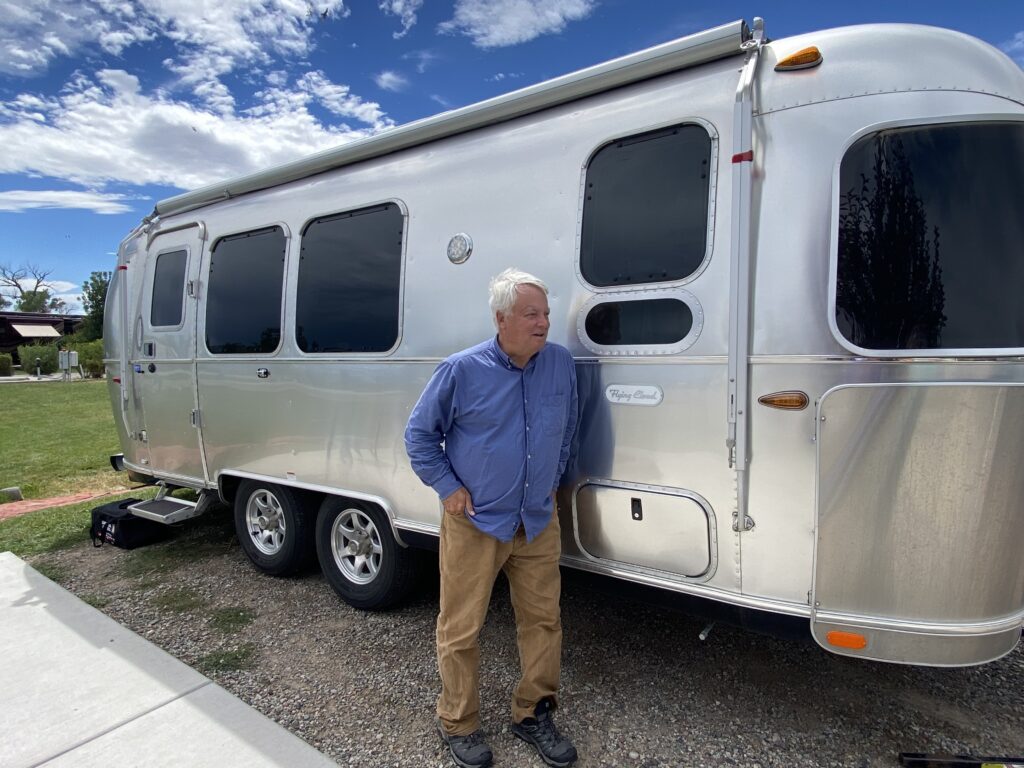
*Traveling in a 23 foot Airstream and making a few detours of his own, Clay’s expedition is a central part of LTA’s big initiative to explore the country and take the pulse of America as it approaches its 250th birthday.*
**In his own words, Clay lays out some of the why and how of his ambitious and exciting Steinbeck** ***Travels With Charley*** **journey:**
- **First**, to follow Steinbeck around this “monster country,” as he called it, from Long Island to Seattle, from Seattle to San Diego, from San Diego to New Orleans, New Orleans to Manhattan. But I won’t be doing this slavishly. I will hew close to his route, but not with an obsession to be on every road and stop in every place we can ascertain he stopped.
- **Second**, to search for America’s soul as we approach the 250th birthday of the United States. The emphasis will be as much on trying to make sense of this “monster country” as on retracing Steinbeck’s 1960 journey. We are a different nation now. He made his journey on the other side of the Civil Rights Movement, Vietnam, Women’s Liberation, and Watergate. His book can seem quaint in the face of all that has changed and the social and cultural revolutions of the last 60 years.
- **Third**, I want to occasionally venture away from the route to see things he didn’t see. Doing too much of this would dilute the journey and the theme, but doing none of this would be approaching the journey too literally, with too much constriction.
- **Fourth**, I intend to read everything Steinbeck wrote during the trip. The journey will be the trajectory on which I read through Steinbeck, from his first short stories and *Cup of Gold* (1929) to his last published book, *America and Americans*(1966). Thanks to iPad technology, I can carry Steinbeck’s complete works with me without ruining the shocks on the rig!
- **Fifth**, thanks to the digital revolution, I’ll post podcasts, interviews, photographs, and other reports from the road. Followers can join the trip vicariously and suggest people I should meet, places I should visit, and things I should consider as I travel.
I won’t do the journey in one fell swoop. I plan to break it into shorter journeys, then come home for a few weeks to process the materials, do my laundry, and regroup.
\[mapster\_wp\_map id=”11585″\]
## **Projected Segments:**
## I — Sag Harbor (Long Island) to Bismarck, North Dakota
Steinbeck left his home on Long Island on September 23, 1960, and arrived at Bismarck, “where the map should be folded,” on October 12. He drove to the top of Maine because he had a whim to get to the upper extreme of the continental U.S., then traveled along the Great Lakes briefly in Canada and arrived in North Dakota on Columbus Day.
---
## II — Bismarck to Monterey
This journey will go from the capital of North Dakota to Puget Sound and then down past San Francisco to Monterey. I hope to spend as little time on the interstate highway system as possible.
---
## I — Sag Harbor (Long Island)
to Bismarck, North Dakota
Steinbeck left his home on Long Island on September 23, 1960, and arrived at Bismarck, “where the map should be folded,” on October 12. He drove to the top of Maine because he had a whim to get to the upper extreme of the continental U.S., then traveled along the Great Lakes briefly in Canada and arrived in North Dakota on Columbus Day.
---
## II — Bismarck to Monterey
This journey will go from the capital of North Dakota to Puget Sound and then down past San Francisco to Monterey. I hope to spend as little time on the interstate highway system as possible.
---
## II — Bismarck to Monterey
This journey will go from the capital of North Dakota to Puget Sound and then down past San Francisco to Monterey. I hope to spend as little time on the interstate highway system as possible.
## III — Monterey to Amarillo
This segment goes through the Imperial Valley, beyond San Diego to the Salton Sea and the U.S.-Mexico border — a place of much greater national interest in our time than in Steinbeck’s. Then, eastward, using as much of Route 66 as possible, to Amarillo, where Steinbeck met Elaine for Thanksgiving 1960.
## IV — Amarillo to New Orleans
Texas is a big state. I’ve never had the opportunity to drive all the way across and visit Lyndon Johnson’s home country, Galveston, Dallas, Fort Worth (with an emphasis on Steinbeck’s friend JFK), and much more. New Orleans was the nadir of the great journey. Steinbeck lost heart for his journey after witnessing a kind of primitive racism and met several African Americans who represented different Black attitudes to segregation, integration, race relations, and the future. At this stage of the journey, I will try to make sense of what has changed and what has not yet changed in race relations in the United States.
## V — New Orleans to Manhattan
At this point, tired and weary of the road, Steinbeck was ready to fold himself into the arms of his wife Elaine. Steinbeck rushed home. However, I will take the time to wander up the east coast of the United States with stops all along the way, including Jefferson’s Virginia, the Outer Banks, Richmond, Philadelphia, and Baltimore. I intend to drive across the Hudson to New York City. After a day or two at the J.P. Morgan Library examining the original manuscript of *Travels with Charley*, I’ll make my way home to Dakota.
Send us a suggestion!
## **Buttons for CTAs — donations, suggestions (Frank)**
Donate to Clay’s TWC journey
## **FB link**
## **legend and route on map — traveled vs upcoming maybe approx dates? Copy for every page or edit builder this page so we can pull all of the videos and articles for the trip (talk to Fran)**
I intend to see much that Steinbeck saw back in 1960 but with 21st-century eyes and to see much that he did not take time to see in his somewhat rushed journey.
Steinbeck’s themes were American restlessness, regionalism, the coming of fast food culture, loss of American integrity, race, and the realization that “you can’t go home again.” Some of those dynamics continue to characterize the America of 2024.
We will publish articles, videos, and audio interviews throughout the journey. Like Steinbeck, I will stay in motels often enough to do laundry, but mostly — and more than J.S. — I will sleep in the rig in campgrounds and national forests, on BLM land, and from time to time in Walmart parking lots, assuming the corporation still permits overnight stays.
I won’t take a dog because it would be an incumbrance, and I cannot keep a Chia Pet alive. I’ll take other road books on the journey, including Kerouac’s *On the Road*, Least Heat Moon’s *Blue Highways*, Pirsig’s *Zen and the Art of Motorcycle Maintenance* and others.
I recently spoke with a man who operates a historical site in South Dakota. No sooner had I explained my purposes than he said, “Can I come along?” Steinbeck was right about that.
---
[
](https://www.facebook.com/177261178973088)
#### Listening to America
Arts & Humanities Website
32K
LTA aims to “light out for the territories,” listening to voices of America’s past & present to share balanced, humanities-based perspectives on this great nation. Join us! LTAmerica.org
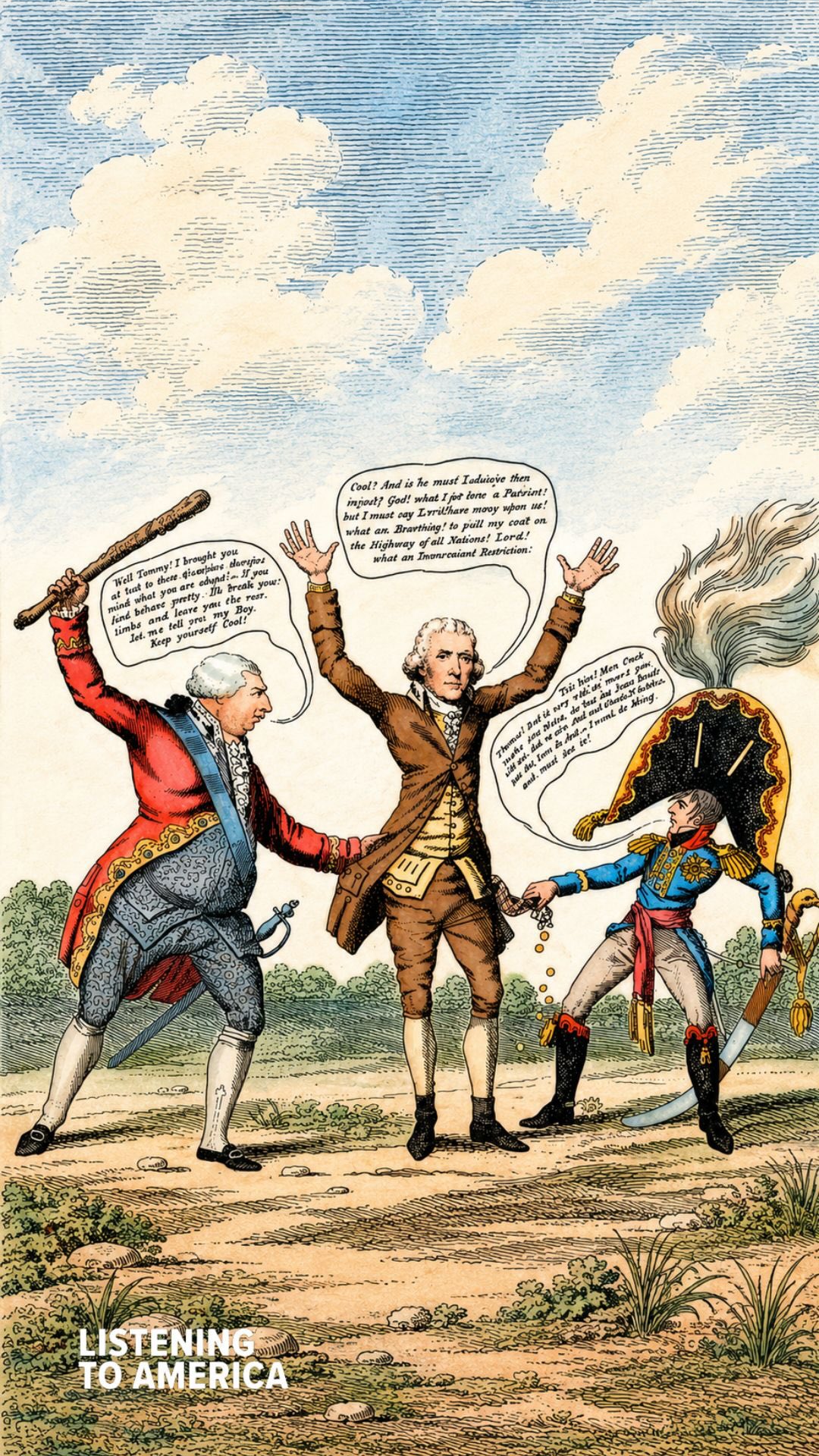
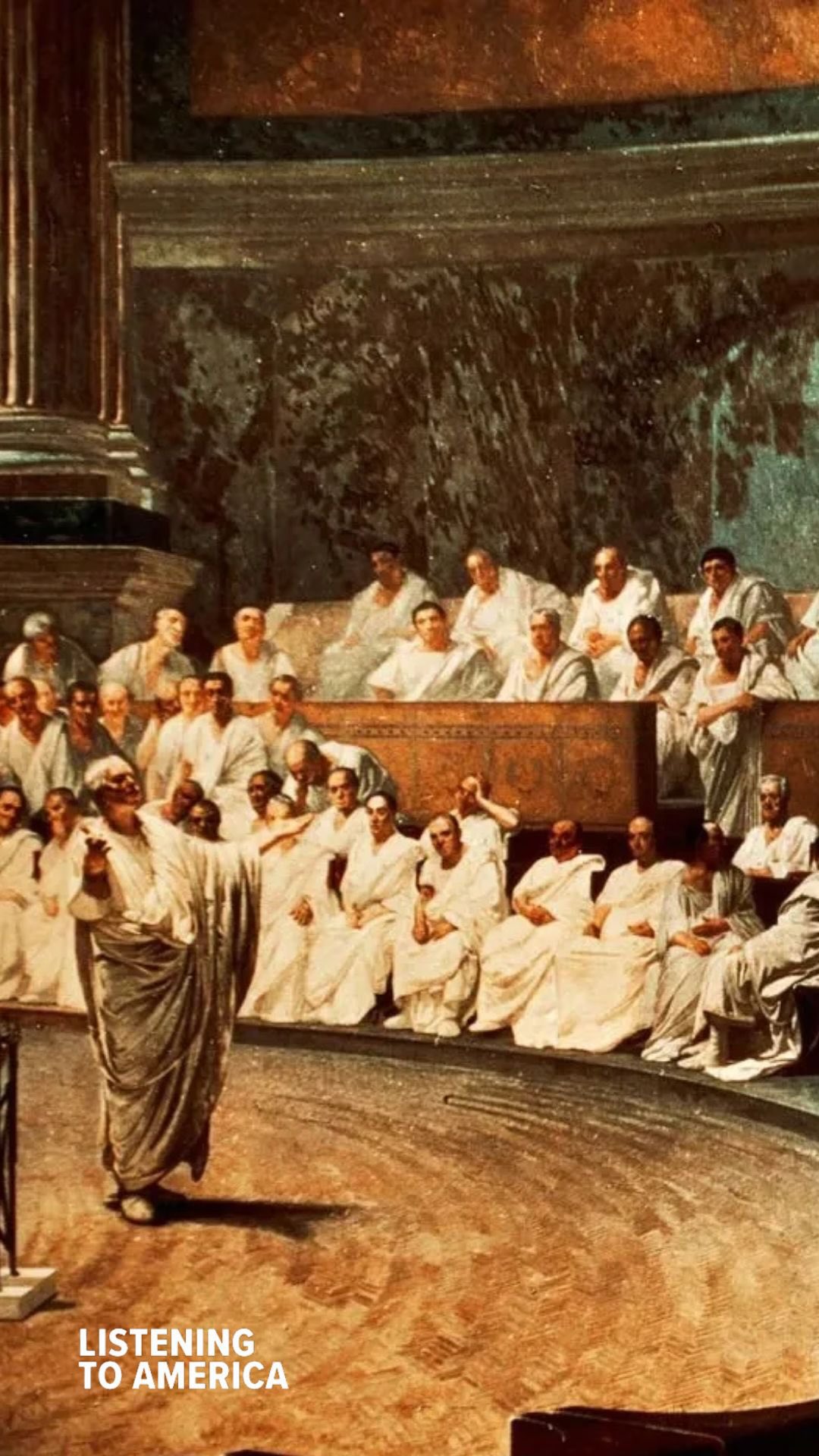
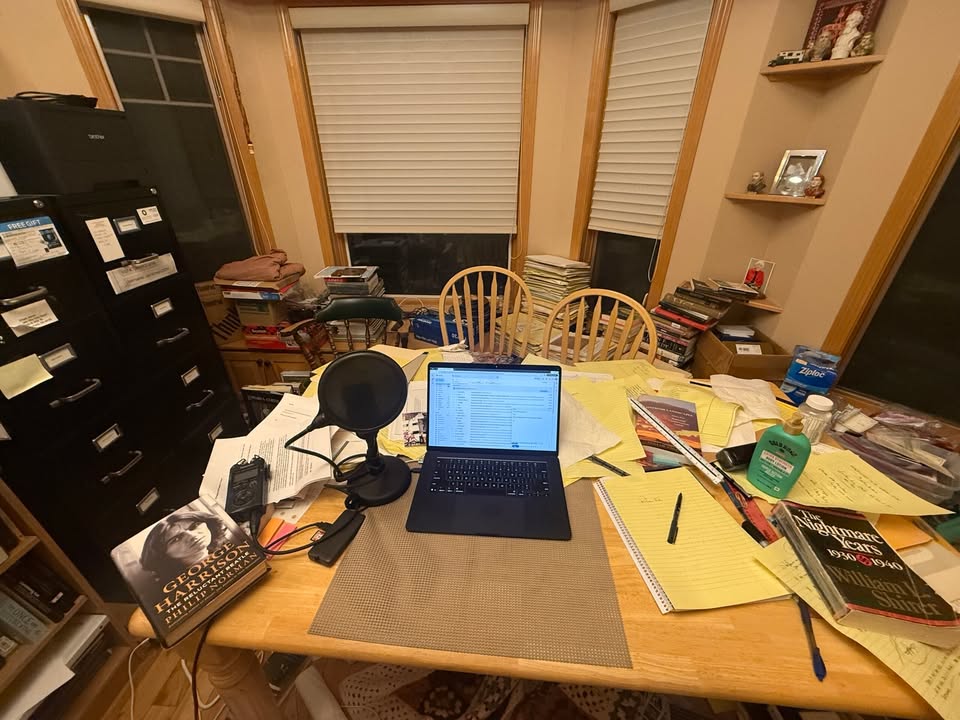

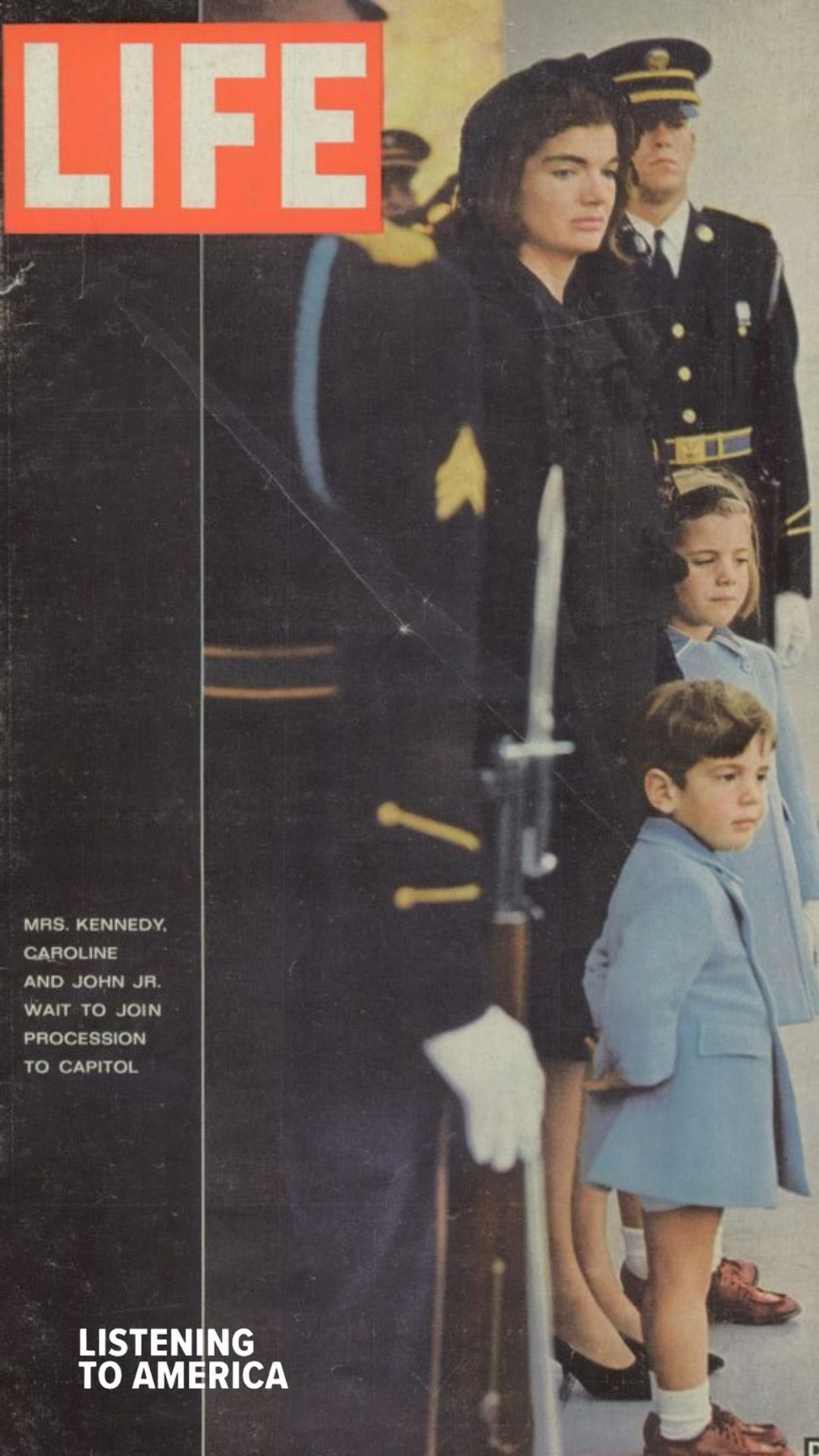
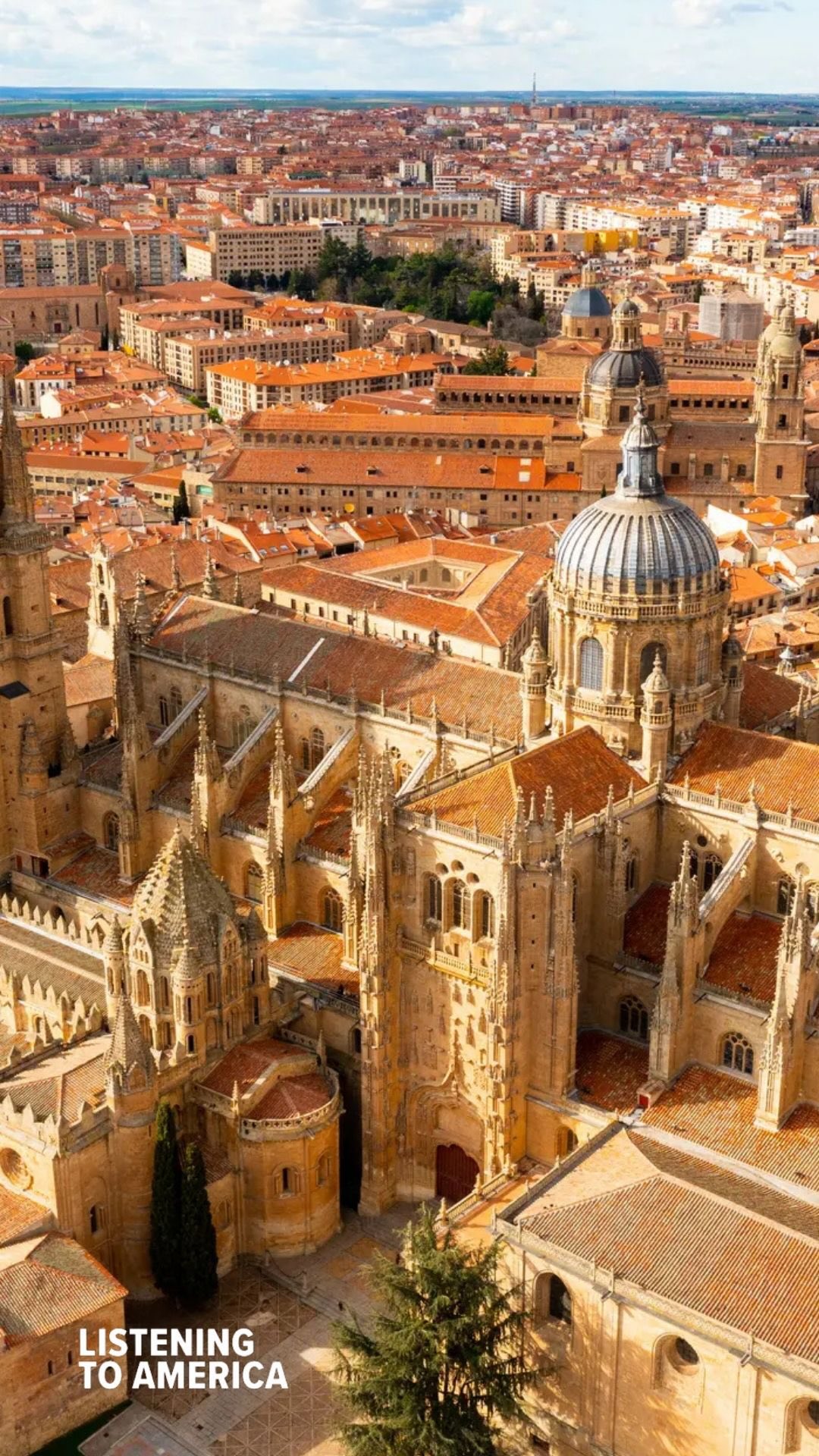
---
### [Lewis & Clark Cultural Tour](https://ltamerica.org/lewis-clark-cultural-tour/)
**Published:** October 28, 2024
**Author:** Raina Hall
**Content:**

##### Cultural Tour
##### Lewis & Clark Trail With Clay Jenkinson
#### July 20 – 29, 2025
[Add me to the waiting list](mailto:learn@ltamerica.org)
**This Tour is SOLD OUT**.
Join humanities scholar and author Clay Jenkinson on an exploration of the two remaining pristine portions of the Lewis and Clark Trail — the stunning White Cliffs region of the Missouri River in Montana, and the Lolo (Nez Perce) Trail in Idaho’s Bitterroot Mountains. This exclusive adventure includes hiking, canoeing, swimming, exploration of historic sites, star-gazing, and nightly campfires with singing and storytelling as you experience the journey of American history’s best known exploration party.
#### Lewis & Clark Trail With Clay Jenkinson
*10 days, 9 nights (5 nights lodging, 4 nights camping)
July 20 – 29, 2025
Pricing: $4,995/person based on double occupancy*
#### Canoe and Hike While Camping in Style
The tour begins in Great Falls, Montana, and ends in Missoula, Montana. It is a fairly strenuous week of paddling on the Missouri and hiking in the White Cliffs and the Bitterroots, but it is also a week of witty and historical commentary, conversation, interpretation, storytelling, wit, and serious discussion of the American West, all led by acclaimed Jefferson and Lewis & Clark scholar Clay Jenkinson. The tour includes expert guide services, all equipment for canoeing and four nights of camping (except sleeping bag), all activities, lodging, transportation, USFS fees, state and local taxes, and gratuities. Airfare is not included. Our bus will pick up you and your luggage in Great Falls, Montana on July 20. We will take care of everything from that point until we drop you at the Missoula airport on July 29.

We’ll spend our first night at the historic Grand Union Hotel, the oldest in Montana, on the banks of the Missouri River in Fort Benton. This location puts us in perfect position to hit the river on the following morning. Over three days we’ll canoe about 50 miles, camping along the way at authentic Lewis and Clark campsites. We’ll return to the Grand Union for a night of fine dining and musical entertainment before boarding a luxury motorcoach for the scenic drive across Montana to Missoula. From there we’ll go over the divide at Lolo Pass and down to historic Lochsa Lodge for a much-needed night of relaxation before taking on the Bitterroots. Our three days of mountain hiking begins the next morning with the 3,500-foot climb — in the footsteps of the Corps of Discovery — up Wendover Ridge to join the Lolo Trail.
We’ll spend two nights up on the trail, again staying at authentic Lewis and Clark campsites. Our final day includes a seven-mile hike down to the Lochsa River, the perfect place to relax and cool off after three days of mid-summer hiking. A short bus ride will get us back to Lochsa Lodge for two more nights, culminating in a fabulous farewell dinner and one last evening around a fire. Our outfitters are the best in all of Montana and Idaho, and each night on the trail you will arrive in camp to find not only a tent and sleeping pad waiting, but cold drinks, hearty hors d’oeuvres, and the aroma of dinner already on the fire.
**NOTE: This is a strenuous tour. Participants in this tour should be in good physical condition. You must be able and willing to paddle a canoe for 50 miles over a three-day period, and to climb 3,500 feet along a 7-mile hiking trail.**
COST: $4,995 per person, based on double occupancy. There is an additional supplement of $1,200 if you prefer a hotel room, lodge cabin, and tent of your own. A $1,200 non-refundable deposit per guest is required to secure your spot(s) on the tour, and final payment is required within 75 days of the beginning of the tour (May 6, 2025). If you are traveling alone, we are happy to match you with a roommate. If you prefer your own hotel room, lodge cabin, and tent throughout the trip, there is a single supplement fee of $1,200.

#### **Basic Itinerary: July 20-29, 2025**
**Day One:** Arrive in Great Falls, Montana. Bus transfer to Grand Union Hotel in Fort Benton (leave Great Falls at 2 p.m.)
**Day Two:** Embark in Canoes on the Missouri River. Camp at Eagle Creek Campsite.
**Day Three:** After a day of canoeing and hiking, camp at Slaughter Creek Campsite.
**Day Four:** Half day of canoeing and bus ride back to Grand Union Hotel for a celebratory night of music and fine dining.
**Day Five:** Scenic luxury coach ride across Montana, over the Continental Divide, and down into Idaho’s famous Lochsa Lodge.
**Day Six:** Climb up Wendover Ridge to the Lolo Trail. Camp at Snow Camp.
**Day Seven:** Hiking along the ridgeline to a number of historic sights before camping at Dry Camp.
**Day Eight:** Hike down from the Lolo Trail to the Lochsa River. Return to Lochsa Lodge.
**Day Nine:** A day of rest and leisure and celebration around the Lodge and the Lochsa River, capped by a fabulous farewell feast.
**Day Ten:** Bus ride to Missoula, Montana Airport.
**For detailed itinerary, [click here.](#fullitinerary)**
Dates: July 20-29, 2025
All-inclusive except for airfare
10 days and 9 nights
Cost per person: $4,995
$1,200 nonrefundable deposit secures your spot
Balance is due 75 days before beginning of trip (May 6, 2025)
Single supplement — If you are traveling alone, we are happy to match you with a roommate. If you prefer your own hotel room, lodge cabin, and tent throughout the trip, there is a single supplement fee of $1,200.
Price includes expert guide service by Montana’s finest outfitters, all equipment except sleeping bag for camping and canoeing, all activities, lodging, meals, transportation, fees, hotel baggage handling, state and local taxes, USFS fees, and all hotel, restaurant, and guide gratuities.
Price is based on double occupancy. If you are traveling alone, we can easily match you with another guest as a roommate. If you prefer a hotel room and cabin and tent of your own throughout the trip, the single supplemental fee is $1,200.
**Ready to reserve your spot? Have general tour questions? [Contact us](mailto:tjhourtours@gmail.com)!**

The tour begins in Great Falls, Montana at 2 p.m. on Sunday, July 20. We strongly recommend that you arrive in Great Falls a day early and stay at a local hotel, as airline travel has become more and more susceptible to cancellations and delays in recent years. The important thing is that you are in Great Falls and ready to board the bus with your luggage by 2 p.m. on July 20.
The tour ends in Missoula, Montana at approximately 10 a.m. on July 29. We will drop you and your luggage off at Missoula International Airport or at the local hotel of your choice at that time.
Silence and solitude and the natural world are large parts of this trip. We have the following requirements for crew and guests:
- No vaping, cigars, chewing tobacco, pipes, or cigarettes.
- No portable speakers
Due to our high guide-to-guest ratio, our small group size, and the award-winning historical interpretation and entertainment by Clay Jenkinson, our tours tend to fill up quickly. If it becomes necessary, we can put you on a wait list upon request.
We highly recommend that you purchase travel insurance for your protection in case of unexpected events that might force you to cancel. And again, we strongly urge you to consider coming in at least one day early to Great Falls so that you have a backup itinerary in case things go awry on your flights.
One final note. Climate change is real. We are occasionally forced to make itinerary adjustments because of fire danger in the Bitterroot Mountains. Our outfitter Wayne Fairchild of Lewis and Clark Trail Adventures of Missoula, Montana, is amazingly resourceful, so no matter what happens we can promise you a great adventure along the Lewis and Clark Trail.
#### **Reading List**
No advance reading is required, but if you want to hit the ground running, here are some books to read about Lewis and Clark in Montana and Idaho.
- Stephen Ambrose. [*Undaunted Courage*: *Meriwether Lewis, Thomas Jefferson, and the Opening of the American West.*](https://amzn.to/2Dbjnja)
- Donald Jackson. [*Thomas Jefferson and the Stony Mountains: Exploring the West from Monticello*.](https://amzn.to/2GnzRrM)
- Clay Jenkinson. [*The Character of Meriwether Lewis: Explorer in the Wilderness*.](https://amzn.to/2t6wptE)
- James Ronda. [*Lewis and Clark Among the Indians*.](https://amzn.to/2BmYphf)
- Gary E. Moulton, ed. *The Journals of the Lewis and Clark Expedition*, volume IV: April 7-July 27, 1805.
- Gary E. Moulton, ed. *The Lewis and Clark Journals (Abridged Edition): An American Epic of Discovery.* (An excellent one-volume distillation of the journals).
You may wish to read:
- Donna Kessler. [*The Making of Sacagawea: A Euro-American Legend.*](https://amzn.to/2MMTk6k)
- David Nicandri. [*River of Promise: Lewis and Clark on the Columbia.*](https://amzn.to/2HPUfEd)
- Ralph S. Space. *[The Lolo Trail: A History and a Guide to the Trail of Lewis and Clark.](https://www.amazon.com/Lolo-Trail-History-Guide-Lewis/dp/096633552X/ref=as_li_ss_tl?ie=UTF8&qid=1549297812&sr=8-1&keywords=The+Lolo+Trail.&linkCode=sl1&tag=makoche-20&linkId=a610cb39ee11a228cf8bc76e6d3a1f60&language=en_US)*

##### Full Itinerary
#### Lewis & Clark Trail With Clay Jenkinson
#### **Full Itinerary**
**Day 1: Sunday, July 20**
Welcome to Great Falls, Montana! Fly in on this morning, or come in a day early and enjoy Great Falls and the Lewis and Clark Interpretive Center, the Charlie Russell Museum, Sacagawea Springs, the First People’s Buffalo Jump, the Great Falls themselves, as well as hiking and other activities along the Missouri River. At 2 p.m. our bus will leave Great Falls for Fort Benton and the historic Grand Union Hotel. You have a little time to settle in or explore the town before we meet for a short orientation meeting with our outfitter. Dinner will follow in the Lewis and Clark banquet room of the Grand Union, and we will spend the late afternoon and early evening getting to know one another.
Lodging: Grand Union Hotel in Fort Benton
Meal: Dinner
**Day 2: Monday, July 21**
After breakfast we’ll board a bus and head to our put-in point on the Missouri. Along the way we’ll hike up to Decision Point, high above the confluence of the Missouri and Marias Rivers. It was here in early June of 1805 that the Corps of Discovery was forced to make a critical decision: Which river was the Missouri? Decision Point is one of the great photo ops of the entire trail, and once we reach the top of the overlooking bluff, where Clay will provide insights not only on Lewis and Clark but also the burdens of discovery.
From Decision Point it is a short drive to Coal Banks Landing, where you will find your gear and canoe ready and waiting to push off. We stop along the river for lunch, followed by a little hiking that will include teepee rings on the bluffs above the river. An afternoon of canoeing will get us to Eagle Camp, one of the most magical places on the entire Lewis and Clark Trail. While the crew is cooking dinner we’ll visit a nearby slot canyon, a stunning white sandstone labyrinth carved by wind and water. Then it is back to camp for dinner by the river, followed by informal discussions with Clay around the campfire.
Campsite: Eagle Creek
Meals: Breakfast, lunch, dinner

**Day 3: Tuesday, July 22**
Early morning coffee, a hot breakfast, and the beginning of one of the most adventurous days of the trip. As we head down river in our canoes, we’ll pass the famous igneous plug named La Barge, looming high over the riverbank. La Barge is called the gateway to the White Cliffs, and we will spend the day canoeing through what Meriwether Lewis called “scenes of visionary enchantment.” We will paddle past the same stunning hoodoos, igneous dikes, and sandstone formations that Lewis and Clark saw both coming and going along the Missouri. We’ll stop for lunch at one of most recognizable landmarks on the river, the Hole-in-the-Wall, and while lunch is being prepared, we will hike up to the actual hole in the cliff wall, another great photo op for those brave enough to shimmy up the last 20 or so feet of the climb. The view from the Hole-in-the-Wall is a highlight of the trip, and the only way to get it is to earn it with your legs.
After lunch we’ll get back into our canoes and head down to Slaughter Camp. Many guests over the years have opted to don a lifejacket and bob down the river for the last mile before camp, the perfect opportunity to feel the gentle but inexorable tug of one of the world’s great rivers. It’s the perfect way to cool off on a hot and dry afternoon while experiencing geomorphology at the molecular level. Slaughter Camp is a camp that Lewis and Clark used on both westward and eastward journeys, and it provides another sublime setting for dinner and fireside conversations.
Campsite: Slaughter Creek
Meals: Breakfast, lunch, dinner

**Day 4: Wednesday, July 23**
This is your last day paddling a canoe. After breakfast and a leisurely paddle of about 12 miles, we will take out of the river at Judith Landing. This is the point where the Judith River flows gently into the Missouri. William Clark named the Judith for his future wife, Julia (Judith) Hancock. The mouth of the Judith is now part of the American Prairie Reserve, a project dedicated to creating a vast buffalo commons and grassland park in the American West.
At Judith Landing we will have lunch before bussing back to the Grand Union Hotel for that long-awaited shower and a chance to relax or walk around town. In the early evening we will gather on the hotel terrace for hors d’oeuvres and a performance by the Lucky Valentines, a Montana-based duo that has been entertaining Clay’s guests for well over a decade. Then it’s back to the Lewis and Clark banquet room in the hotel for an evening of fine dining and reflection on our river journey.
Lodging: Grand Union Hotel in Fort Benton
Meals: Breakfast, lunch, dinner
**Day 5: Thursday, July 24**
Today is what is known on the Chautauqua circuit as “jump day.” After breakfast in the hotel dining room, we’ll hop onto our luxury motorcoach and head for Idaho. There’s a lot to do along the way, however, beginning with a stop at the Ryan Dam and the Great Falls of the Missouri River. We will dip back into Great Falls for lunch at a local restaurant before a scenic afternoon journey across Montana, up and over the Continental Divide at Lolo Pass, and then down along the Lochsa River to Lochsa Lodge. This is Clay’s favorite resort in America, with just enough frills to be satisfying and yet rustic enough to feel authentic. There’s great food at the Lodge, a bar, a patio, trails, and the unbelievably beautiful Lochsa River is just a short walk from your cabin.
The Lodge is the perfect place to relax and dine, and you will need to eat and rest well tonight. Tomorrow is the famous hike up Wendover Ridge, and we’ll have a short orientation around the fire tonight in preparation.
Lodging: Lochsa Lodge
Meals: Breakfast, lunch, dinner
**Day 6: Friday, July 25**
This has long been known as the “day of days” on Clay’s annual Lewis and Clark trip. Back in the summer of 1805, Captain Lewis discovered that the Corps’ Shoshone guide had delivered them not to the Lolo Trail but to the Lochsa River valley down below. The Captain immediately ordered the company to head straight up along the ridge line in order to intersect the trail. It was a climb of 3,500 feet, and Lewis and Clark and the Corps did it with thousands of pounds of provisions and a herd of horses. We have an easier time — all you have to carry is a day’s worth of hydration and your lunch, but it’s a strenuous day. Years ago one of our guests was found screaming along the trail at mile four, “Didn’t those morons understand @#!&$#@ switchbacks?” And you will know that you are walking exactly in their footsteps, because there is really only one way up the ridgeline.
Lewis and Clark found snow (in September) at the top, and that’s why our camping spot tonight is known as Snow Camp. The celebratory mood that permeates this trip will be at its peak in the late afternoon as, one-by-one and two-by-two, hikers make their way into camp. The fireside tonight will be filled with the pure joy of living what Theodore Roosevelt called “the strenuous life.” Deer and elk will wander through the camp all night, and the night skies are spectacular.
Lodging: Snow Camp
Meals: Breakfast, lunch, dinner

**Day 7: Saturday, July 26**
This day is spent wandering west along the Lolo (Nez Perce) Trail. We will travel by both foot and van, and we will visit at least a half dozen Lewis and Clark and Native American sites. This is the heart of the Lewis and Clark Trail, a remote part that Lewis described as “range after range of impenetrable mountains in every direction.” Among the sites we’ll visit are Indian Post Office, Lonesome Cove, the Sinque Hole, and Smoking Place. We will end the day at what Lewis and Clark called Dry Camp, and as usual, our tents and gear will be waiting on us upon arrival, along with hot food and cold drinks. Tonight is Greek night, with Greek salad, kabobs, and Spanakopita, topped off with a little baklava by the fire.
Lodging: Dry Camp
Meals: Breakfast, lunch, dinner
**Day 8: Sunday, July 27**
Having climbed up 7 miles to reach the Lolo Trail just two days ago, it is now time to hike 7 miles back down. We’ll have a leisurely morning after breakfast, and we’ll pack ourselves a lunch before driving to the trail head. The hike down is along Sherman Creek, and once again it is a strenuous hike. The scenery is breathtaking from top to bottom, and a cooler of cold drinks and the even cooler Lochsa River are the motivations that rest at the end of the trail. Once everyone has had their fill of swimming and relaxing in or by the river, we will bus back to Lochsa Lodge for a shower and dinner on the patio.
Lodging: Lochsa Lodge
Meals: Breakfast, lunch, dinner
**Day 9: Monday, July 28**
After a hot breakfast in the Lodge, we’ll gather for an early morning talk with Clay. The afternoon is yours to enjoy the Lodge, the bar, the river, the woods and trails, and the coziness of your cabin. The day ends with a festive farewell banquet in the Lodge Library. Darkness brings one last fireside chat out behind the Lodge, and Clay will share some stories of re-entry among the Lewis and Clark expedition as we all prepare for our own real-world re-entry.
Lodging: Lochsa Lodge
Meals: Breakfast, lunch, dinner
**Day 10: Tuesday, July 29**
Today we are homeward bound. After your last huckleberry pancake at Lochsa Lodge, we will board one last bus for the trip to the Missoula International airport. We will have you there in plenty of time to make outflying flights of noon or later. If you’re staying another night or two in Missoula, we can drop you at your hotel instead.
Meal: Breakfast
#### **Terms and Conditions**
**Deposits and Payments**
A nonrefundable deposit of $1,200 per person will reserve your spot on the tour. Full payment is due in our office at least 75 days prior to departure.
**Refunds and Cancellation Policy**
We recommend you purchase travel insurance to protect you if for some reason you must cancel your reservation.
You will receive your full refund less your deposit and credit card transaction fees up to 75 days prior to the tour; a 50% refund if you cancel within 75 days prior to the event, minus any additional hotel or supplier expenses, which cannot be recovered. No refunds in the last 30 days prior to tour departure. Full refund is always available if you can find a replacement traveler.
**Travel Insurance**
We are not an insurance provider. If you are interested in purchasing travel insurance, please notify your travel insurance company at the time of your initial payment. Travel insurance information can be obtained from your local travel agency.
**Tour Cancellation**
We do not like to cancel tours. In the event a tour must be canceled, we will refund all monies paid to us.
**Participation Courtesy**
We ask there be no audio or video taping of presentations without the prior consent of the individual presenters. Participants are requested to refrain from smoking inside all modes of transportation, during group meals, and lectures or events.
**Itinerary or Program Modifications**
The itinerary is subject to modifications and change. Every effort will be made to carry out the program as planned, but alterations may still occur after the final itinerary is sent.
**Responsibility**
Our company acts only as the agent in making arrangements for the owner or operators of such transportation, accommodations, services or facilities engaged in our tours. Our responsibility is limited to that of an agent. We accept no responsibility for accidents, injuries, property damage or personal loss to you or to those traveling with you in connection with any accommodations, transportation or other travel or guide services, or resulting directly or indirectly from any occurrences or conditions beyond our control, including but not limited to acts of terrorism, defects in vehicles, breakdown in equipment, strikes or theft.
---
### [2026 Winter Retreat — The West of Thomas Jefferson](https://ltamerica.org/2026-winter-retreat-jefferson/)
**Published:** January 21, 2025
**Author:** Raina Hall
**Content:**

#### Winter Retreat
##### The West of Thomas Jefferson
#### January 18–23, 2026
Lochsa Lodge, Idaho
[Add me to the waiting list](mailto:learn@ltamerica.org)
## **This Retreat is Filled to Capacity**
Thomas Jefferson’s “footprint” on the American West can hardly be exaggerated. The portico at Monticello faced westward. He purchased the Louisiana Territory from Napoleon, calling it “an empire for liberty such as the world has never previously seen.” He sent his protege Meriwether Lewis on what became the greatest land exploration mission of the era. He helped design the rectilinear survey grid system (of square miles and townships) that brought nearly every acre of the West into domestication. He advocated for square or at least rectilinear new states in the West: e.g. Four Corners where Colorado, New Mexico, Arizona, and Utah meet. He championed family farmers as “the chosen people of God.”
At the same time, Jefferson’s republican utopianism carried myths and serious errors across the Appalachian Mountains. He thought the entire West was an extension of the Ohio Valley — well watered, nicely contoured, fertile. He believed in the principle of “symmetrical geography,” that the West would parallel the mountains (including their height) of the eastern half of the nation. He believed the western rivers would “cooperate” to enable watercraft to float from the Atlantic to the Pacific with a portage of no more than a few days. He set in motion the twin rollers of American Indian policy: temporary (voluntary) separation, followed by assimilation that would blend all of us into a remarkable new strain of humanity. And he worked hard to extend slavery into the new territories and states being created or carved out of the West.
## **Books to Read**
There will be three primary texts:
- *Thomas Jefferson: Writings : Autobiography / Notes on the State of Virginia / Public and Private Papers / Addresses / Letters,* Library of America.
- *Thomas Jefferson and the Stony Mountains,* Donald Jackson*.*
- *Thomas Jefferson and the Indians: The Tragic Fate of the First Americans,* Anthony F.C. Wallace*.*
We will also spend a good deal of time on the Lewis and Clark Expedition, so you might wish to read Gary Moulton’s superb one-volume abridgement of the Journals*, The Lewis and Clark Journals: An American Epic of Discovery.*

## **Price & Information**
#### The West of Thomas Jefferson
**January 18–23, 2026
Lochsa Lodge, Lolo, Montana**
**$2,595/person**
**$500 non-refundable deposit per person**
**$800 single supplement fee**
Your retreat begins and ends in Missoula, Montana. Your package includes a professional tour director, discussions led by humanities scholar Clay S. Jenkinson, all activities, lodging, meals, ground transportation, state and local taxes, USFS fees, and hotel and restaurant gratuities. Airfare is not included. A $500 non-refundable deposit will secure your reservation. Please read our Terms & Conditions carefully. Contact us with your questions. Price is per-person based on double occupancy. Traveling single? No problem. We can easily match you with a roommate. Please inquire about our single supplemental fee if you would prefer a cabin of your own (availability is limited).
[Add me to the waiting list](mailto:learn@ltamerica.org)
## **Frequently Asked Questions**
#### Q: How do I know I won’t feel intimidated by all those gathered intellectuals?
Clay: Most retreat guests are Listening To America listeners. The group conversations are both playful and serious without being pretentious. I pass out a “Conversation Bill of Rights” during orientation specifying the “rules of engagement,” so that people listen carefully to each other, avoid trying to dominate, avoid showing off, etc. I like to keep the tone very informal. In 95% of the retreats we have hosted, everyone speaks.
#### Q: Do I really have to read all the books?
Clay: Well, there are no pop quizzes! Of course, I hope you will read everything and come eager to discuss these books. The more you read in advance the better you will enjoy the retreat. Most participants read everything or nearly so. Some read the bulk of it. A few (you know who you are!) read a bit. It’s like everything else: the more you give to it, the more you will get from it.
#### Q: Are there any assignments?
Clay: Yes, read the books! I often urge people to write reflections that they may or may not share with the rest of us. A couple of times per day I urge everyone to think about some idea or question or to reread a passage from one of the books during the down time. But once you are there, you are unlikely to be asked to do anything but take part in the discussions.
#### Q: How cold does it get?
Clay: Not cold. I’m from North Dakota. We know cold. I’m always pleasantly surprised by how temperate it is at Lochsa Lodge. It often snows, but I don’t recall ever being there when there was wind or seriously cold. It feels like a winter paradise.
#### Q: Should I bring winter gear?
Clay: Yes, bring gloves or mittens, a parka, a stocking cap, perhaps a scarf, and boots. Don’t rush to REI for new gear. We don’t spend that much time outdoors. But you will want to stay warm, especially if you are from a warm climate. Anyone from the Midwest will find it balmy. The lodge has a limited supply of hiking poles — if you want poles and they are easy for you to pack along, feel free to bring them, otherwise the lodge can likely lend them.
#### Q: How much time do we spend outdoors?

Clay: Well, you have to walk a short distance between your cabin and the lodge where all the activity is. On the first afternoon we walk about three quarters of a mile (one way) to visit an important Lewis and Clark site. We walk on a graded road, but it can sometimes be a bit icy. We often go to a hot spring during the course of the retreat. It’s entirely optional, of course, but our guests love it. From the parking lot on U.S. 12 we hike about three quarters of a mile to the hot pools. There is plenty of free time during the retreat. Some people hike every day. Others relax in their cabins or in the lodge. You can spend a good deal of time outdoors while you are there, or a relatively modest amount.
#### Q: What’s the rhythm of each day?
Clay: We like to be casual. We gather about 9:30 a.m. in the lodge. We talk until noon or 12:30, then lunch. Afterwards we usually have some rest time, then talk more in the afternoon. Guests tend to regroup in their cabins before we gather again for dinner. After dinner we sometimes watch a film (if there is a pertinent one), or we meet around a huge fire pit out overlooking the Lochsa River. It’s winter, and it’s magical.
#### Q: Is there Internet at Lochsa Lodge?
Clay: If you sit in the corner of the bar you may get internet, but plan to be offline for the four days you are there. You can make calls out from the lodge phone if necessary. Most people are able to get online a couple of times during their time at the lodge, but you cannot absolutely count on it.
#### Q: Where is the nearest store?
Clay: Missoula. Once you get to Lochsa Lodge, you are really quite “off the grid” for a few days. If necessary, we can get you to Missoula, but there has never been a need. There is a lodge store with a limited selection of soda, beer, lip gloss, shampoo, etc.
#### Q: Can the lodge handle my unique dietary regimen?
Clay: Of course. Just let us know well in advance. We’ve had vegetarians, vegans, gluten-free, you name it. The Lochsa staff can accommodate your needs, but we need to know well prior to your arrival.

#### Q: How do the meals work?
Clay: Our guests order breakfasts off the menu, charged to the tour. Lunch and dinner are set meals prepared by the lodge chef: typically a meat or fish protein, starch and vegetables, a glass of wine if you choose. Hearty mountain meals, but well prepared and presented. We eat at a large rectangular table, family style. There is always plenty of food.
#### Q: What about alcohol?
Clay: We serve wine with dinner. Any additional alcoholic drinks are your responsibility. Some may choose to bring along a bottle of wine or liquor for their own moderate consumption after dinner.
#### Q: Do the cabins have central heat?
Clay: Yes, most do. There are a few cabins with wood stoves that you feed a couple of times per day. If you want to get closer to nature and rough it a bit with a wood-fired stove, make sure you let us know and we can arrange it.
#### Q: What about bathrooms?
Clay: Virtually all the cabins have full bathrooms.
#### Q: Is Clay there the whole time?
Clay: Yes. Alpha to Omega. There is no respite, no relief! One of my favorites once said, “That’s a lot of Clay.”
#### Q: How do I know I will enjoy this?
Clay: Think of it as the book club you have always wished existed. If you enjoy Listening to America and my approach to ideas, history, and literature, you are likely to enjoy this. We do a good deal of laughing. Friendships spring up at these retreats. Many people have come again and again. There is no source of tension. We have most of Lochsa Lodge to ourselves, though some locals come in to dine and some hunters usually come.

##### **Terms & Conditions**
#### For the 2026 Winter Retreats
#### Deposits and Payments
A non-refundable deposit of $500 per person will reserve the retreat of your choice. Full payment is due in our office at least 75 days prior to departure.
#### Refunds and Cancellation Policy
We recommend you purchase travel insurance to protect you if for some reason you must cancel your reservation.
You will receive your full refund less your deposit and credit card transaction fees up to 75 days prior to the tour, a 50% refund if you cancel within 75 days prior to the event, minus any additional hotel or supplier expenses, which cannot be recovered by LTA Tours. No refunds in the last 30 days prior to tour departure. Full refund (less transaction fees) is always available if you can find a replacement traveler.
#### Travel Insurance
LTA Tours is not an insurance provider. If you are interested in purchasing travel insurance, please notify your travel insurance company at the time of your initial payment. Travel insurance information can be obtained from your local travel agency.
#### Tour Cancellation
In the event a tour must be canceled by us as the tour provider, we will refund all monies paid to us.
#### Participation Courtesy
We ask there be no audio or video taping of presentations without the prior consent of the individual presenters. Participants are requested to refrain from smoking or vaping inside all modes of transportation, during group meals, and lectures or events.
#### Itinerary or Program Modifications
The itinerary is subject to modifications and change. Every effort will be made to carry out the program as planned, but alterations may still occur after the final itinerary is sent.
#### Responsibility
LTA Tours acts only as the agent in making arrangements for the owner or operators of such transportation, accommodations, services or facilities engaged in our tours. Our responsibility is limited to that of an agent. We accept no responsibility for accidents, injuries, property damage or personal loss to you or to those traveling with you in connection with any accommodations, transportation or other travel or outfitter and guide services, or resulting directly or indirectly from any occurrences or conditions beyond our control, including but not limited to acts of terrorism, defects in vehicles, breakdown in equipment, strikes or theft.
---
### [Missouri Breaks Canoe Adventure trip](https://ltamerica.org/missouri-breaks-canoe-adventure-trip/)
**Published:** January 30, 2025
**Author:** Francisco Molina
**Content:**
Your name
Your email
Your message (optional)
$500 deposit$2000 remaining balance$2300 remaining balance with single supplement
Δ
---
### [Cuban-American History Tour](https://ltamerica.org/cuba-historical-cultural-tour/)
**Published:** September 21, 2024
**Author:** Raina Hall
**Content:**

## **Cuban-American History Tour**
**Ernest Hemingway — Theodore Roosevelt — The Bay of Pigs**
**February 23 – March 6, 2025**
**Miami’s Little Havana, Santiago de Cuba, Camaguey, Trinidad, Playa Giron (Bay of Pigs), Playa Larga, Havana
12 days / 11 nights
$6,695 per person, double occupancy
$1,200 single room supplement**
[Add me to the waiting list](mailto:tjhtours@gmail.com)
**THIS TOUR IS NOW FILLED TO CAPACITY AND REGISTRATION IS CLOSED.**
There are already many ways you can experience the island nation, but few opportunities to dive deep into the most momentous times and places in U.S.-Cuba history. Our Cuban-American History Tour covers more than 500 years of history. With historian Clay Jenkinson and a select group of English-speaking Cuban guides, you will experience first-hand the history and culture of this incredible island.
When Clay began planning trips to Cuba with Wayne Fairchild, he insisted on three things. He wanted to see where the Castro revolution began and where Castro is buried. He wanted to see Ernest Hemingway’s villa Finca Vigia, preserved untouched since he left on June 25, 1960. And he wanted to go the Bay of Pigs. Then Wayne discovered a Bay of Pigs Museum in Miami that gives voice to the expats who wish the revolution had succeeded and still have fading dreams of going back someday. So before leaving Miami for Santiago de Cuba, we visit the Bay of Pigs Museum in Little Havana. The old men of the museum are gentle and charming and proud and a little dreamy. It’s so important to see that perspective (which, by the way, is the dominant American view) before we arrive in Cuba and experience the Bay of Pigs from a Cuban viewpoint as an imperial episode in their history.

From Miami we fly to Holguin, Cuba. From there we’ll head for Santiago de Cuba, the nation’s “Second City,” stopping along the way to visit the Castro family ranch. We will visit the site of the Battle of Las Guasimas, where Theodore Roosevelt and the Rough Riders saw their first action of the Spanish-American War, then travel to San Juan Hill, where Roosevelt famously overrode orders and led a successful charge that led to U.S. victory. We’ll see the pouch-shaped Caribbean bay outside of Santiago where the U.S. Navy pummeled the vaunted Spanish fleet, leading to Spain’s ultimate surrender.
Then we’ll take a few days to travel through the heart of the island towards Havana, Cuba’s capital city, with a stop at Bay of Pigs to explore the site of perhaps the biggest near-disaster in American history — and to take advantage of the world-class swimming and snorkeling there.
Once in Havana, we will visit Finca Vigia, where Ernest Hemingway lived and wrote some of his most memorable works. We’ll also direct you to some of Papa Hemingway’s favorite watering holes such as La Floridita and La Bodeguita del Medio. We’ll visit the Hotel Nacional de Cuba, site of the infamous Havana Conference, a meeting of mafia bosses memorably dramatized by Francis Ford Coppola in *The Godfather Part II*.

Tour includes ground transportation, and some excellent casa particulars (the Cuban version of B&B’s) as well as other 4-star accommodations. For all of our in-country logistics we have teamed up with Experience Cuba, owned by Joslin Fritz. A long-time traveler and international guide, Joslin began leading people-to-people exchange programs to Cuba in 2012. Travel with us and experience an unparalleled, hassle-free dive into the rich history and culture of Cuba!
**Please note that this is an active tour requiring a spirit of adventure and flexibility**. While comfortable motorized transportation is provided where possible, all guests should expect to walk 1-2 miles per day on varied surfaces including cobblestone streets, uneven sidewalks, gravel, and stairs. Our accommodations are very comfortable, but some amenities typical in the United States such as in-room WIFI or king size beds may not be available at every casa particular. Cell service is limited and costly. No United States bank credit cards work. While we make every effort to accommodate dietary restrictions, food variety is limited in Cuba and dietary alternatives may not always be available. Much of the food is grown or raised on the island so you see a lot of what is in season, but it will always be prepared with love and generosity.
As we travel under the *Support for Cuban* *People* visa, we will have many opportunities to engage with (and spend our travel dollar with) local business owners and artisans. Cultural visits to artisans, business owners, markets, and more will be included in our itinerary. We expect all guests to engage with our lodging hosts, restaurant proprietors, and guides with appreciation and respect.

**Clay’s Notes:**
My interest in Cuba is fourfold. First, and most important, Cuba has been a problem for the United States since 1959. The Bay of Pigs and the Cuban Missile Crisis were key moments in the Cold War. Virtually every president from Eisenhower to Bush 41 had to worry about Cuba and Castro. You cannot make sense of the Cold War without factoring in Cuba, almost as much as Berlin.
Second, Theodore Roosevelt and the Rough Riders. TR had to jump over half a dozen hurdles, a few of them remarkably challenging, to get himself to San Juan Hill in 1898. He called his heroics there “my crowded hour.” San Juan Hill propelled TR into the governorship of New York and, soon enough, into the presidency. Cuba is one of the handful of most important places in Roosevelt’s biography. I want to scale those heights.
Third, Ernest Hemingway. Hemingway was one of the handful of greatest American writers of the 20th century. We associate him with Key West, the Caribbean, and Cuba. His footprint in that region is considerable, and it helps to illuminate his art and his life. I hope everyone will read the *Nick Adams Stories*, *A Farewell to Arms*, and *The Sun Also Rises* before we gather. We will spend some time in Cuba talking about Hemingway’s writing.
Finally, now’s the time to visit Cuba before the gates burst open and Costco rushes in. Because of Castro, the communist movement, the Cold War, and America’s implacable refusal to come to terms with Cuba’s independent way of being a Western Hemisphere country, Cuba has been in many respects frozen in time. Now is the moment to see it in that state — before it’s transformed by corporate capitalism.
I’ve got my TR scarf and my copy of the short stories of Hemingway. Let us go, before it’s too late, and see the nation that was once a principal taboo to Americans.

**February 23–March 6, 2025**
**Itinerary is subject to change. Travel in Cuba is an adventure, and we have learned to expect the unexpected.**
Locations: Little Havana in Miami, Santiago de Cuba, Camaguey, Trinidad, Playa Giron (Bay of Pigs), Playa Larga, Havana
Length: 12 days, 11 nights, including 10 days, 9 nights, in Cuba.
Meals: B, L, D signify meals included on the daily itinerary.
Note: Travelers are encouraged to bring donations for local organizations and individuals we are scheduled to meet.
[Contact us to to be added to a wait list](mailto:tjhourtours@gmail.com)
**THIS TOUR IS NOW FILLED TO CAPACITY AND REGISTRATION IS CLOSED.**
## **Itinerary**

**February 23 — Day 1: Arrive in Miami**
- Arrive at Miami International Airport and check into nearby Sheraton.
- Dinner on your own (the Rickenbacker is in the hotel and we will provide a list of nearby restaurants).
- Introductory get-together at 7 pm at the hotel.

**February 24 — Day 2: Little Havana and the U.S. Bay of Pigs Museum (B, L, D)**
- Breakfast at hotel.
- Mid-morning orientation meeting in hotel.
- Bus to Bay of Pigs Museum for exhibits, conversations, and lunch.
- Dinner at Cafe La Trova in Little Havana.

**February 25 — Day 3: Arrive Santiago de Cuba (B, L, D)**
- Shuttle to Miami International Airport for early morning flight to Cuba.
- Arrive in Holguin Airport in Cuba.
- Pick up luggage and clear customs, meet your local guide and driver outside of the airport.
- Bus to Santiago de Cuba, stopping along the way at Castro family homestead.
- Check into your accommodations (private bed and breakfasts — La Hiedra and surrounding homes).
- Enjoy dinner with your group at a local paladar. Review the trip itinerary with your guide and ask any questions you may have.

**February 26 — Day 4: Santiago de Cuba (B, L, D)**
- Explore Cuban/Spanish-American War sites including Siboney, Las Guasimuas, El Caney, San Juan Hill, the Surrender Tree Monument. A local expert will lead the tour and share a Cuban perspective of the battles.
- Lunch at a private paladar with a spectacular view of Morro Fort.
- Visit Morro Fort to discuss the naval portion of the battle with a local expert and get the Cuban interpretation.
- Afternoon visit with a lively private dance troupe. Enjoy a presentation of traditional Cuban dances. Afterwards, chat with the dancers and learn about their work and inspiration.
- Dinner in a private paladar.

**February 27 — Day 5: Santiago de Cuba (B, L)**
- After breakfast head to Gran Piedra National Park. Tour the park with a local guide. Stop at a coffee farmer’s house and learn more about coffee cultivation. Learn about local flora and fauna from an expert guide.
- Lunch in the Gran Piedra Park at a local paladar.
- Walking tour of Santiago de Cuba with a local expert guide. Here we will stop at various private enterprises to talk with entrepreneurs and small business owners.
- Dinner on your own, with a list of recommended private paladars.

**February 28 — Day 6: Santiago to Camaguey (B, L, D)**
- Drive to Camaguey (6 hours). On the bus you’ll have time to chat with your guide about culture, history and politics of Cuba.
- Lunch in Camaguey at a local paladar.
- Enjoy a fun bici-taxi ride through Camaguey to visit all four town plazas. Due to its narrow streets, a bici-taxi is the best way to explore this town.
- Visit Martha Jiminez Artist Studio and talk one-on-one with the artist about her work.
- Dinner in Camaguey at a private paladar. You’ll have an opportunity to talk with the restaurateur about his business and the challenges of operating a restaurant in Central Cuba.
- Overnight stay in private bed and breakfasts in Camaguey.

**March 1 — Day 7: Camaguey to Trinidad (B, L, D)**
- After breakfast travel to Trinidad from Camaguey (4 hours).
- Visit former sugar plantation Iznaga Manaca and learn about the importance sugar production played in this region. Learn how sugar cane juice is made from a local private enterprise worker, and try some of this delicious juice yourself.
- On arrival to Trinidad, enjoy lunch at a local paladar.
- Visit Plaza Mayor and tour the UNESCO World Heritage site.
- Visit a women’s crochet cooperative that employs nearly 30 women from around the island.
- Check into your private bed and breakfasts for the night.
- Dinner in a local paladar.

**March 2 — Day 8: Trinidad to Playa Larga (B, L, D)**
- Travel to Playa Larga (1.5 hours).
- Tour the Bay of Pigs Museum with a local guide who will share his unique Cuban perspective.
- Lunch at a local paladar.
- Go snorkeling and swim in a cenote and learn about coral restoration from a local expert guide.
- Check into private bed and breakfasts.
- Dinner as a Group.

**March 3 — Day 9: Havana (B, L, D)**
- After breakfast depart for Havana (2 hours).
- Enjoy lunch at a private paladar with a community center dedicated to providing activities to neighborhood seniors. Interact with members and employees to learn more about their services.
- Visit Hemingway’s home Finca Vigia. Tour with a local expert guide.
- Continue onto Havana.
- Check into accommodations in Havana (private bed and breakfasts).
- Dinner as a group in a private paladar.

**March 4 — Day 10: Havana (B, L)**
- After breakfast visit a car restoration workshop and talk with the entrepreneurial couple of the private business. Afterwards enjoy riding in a few of their classic cars to areas of Havana less frequented by travelers.
- Lunch in a private paladar.
- Visit Cabana Fortress on the way back to town and learn the history of the fortress from your local guide.
- Dinner on your own.

**March 5 — Day 11: Havana (B, L, D)**
- Enjoy a morning walking tour of Old Havana with an expert guide. Visit various private enterprises and talk with entrepreneurs partaking in independent businesses.
- Enjoy lunch in a charming Old Havana paladar with a chance to chat with the owner afterwards.
- Visit the Museum of Revolution and tour with a local guide. Take an opportunity to visit the Fidel Museum, newly opened in 2021.
- Farewell dinner at a paladar.
**March 6 — Day 12: Travel Day (B)**
- After breakfast depart for your flight back to the States.

[Add me to the waiting list](mailto:jhtours@gmail.com)
**THIS TOUR IS NOW FILLED TO CAPACITY AND REGISTRATION IS CLOSED.**
**Cost: $6,695 per person**
**Deposit: $1,500 per person deposit secures your spot.**
**Final payment due by December 3, 2024.**
**Single supplement: $1,200 (for those traveling alone who prefer not to have a roommate.)**
Not Included:
- All airfares.
- Travel and medical insurance.
- Meals not specified in itinerary.
- Items of personal nature: laundry, internet, etc.
---
## **SPECIAL NOTICE CONCERNING THE RECENT COUNTRY-WIDE POWER OUTAGES IN CUBA**:
**There have been several country-wide power outages in Cuba in recent days and we understand this may raise concerns if you are considering this trip. We are in year-round contact with our associates and guides in Cuba and some of our staff will visit Cuba in early November to assess the situation.**
**In the meantime, we have received the following assurances from our partners in Cuba:**
*We wanted to take a moment to address the recent country-wide power outages in Cuba. We understand that this news may raise concerns for your upcoming trip.*
*Cuba has faced ongoing energy challenges for the past decade, even longer in fact than a decade. While the current situation is certainly concerning, it is important to note that many properties, including government hotels, private properties, and restaurants, are successfully operating with generators. This allows travelers to continue enjoying their experience on the island, even amidst the power challenges.*
*We have operated successful trips to Cuba during the past nine years, and we have received much positive feedback from travelers who appreciate the resilience and hospitality of the Cuban people. We are optimistic that with fuel deliveries expected soon and ongoing repairs at the main thermoelectric plant, we can look forward to the stabilization of the energy situation as we approach the upcoming travel season. This is an evolving situation that we are monitoring closely on the ground, and we will continue to be in touch with any updates or changes that should affect your trip.*
*We remain committed to ensuring that our travelers have a memorable and enjoyable experience in Cuba.*
---
## **Terms and Conditions**
**Deposits and Payments**
A nonrefundable deposit of $1,500 per person will reserve your spot on the tour. Full payment is due in our office at least 75 days prior to departure.
**Refunds and Cancellation Policy**
We recommend you purchase travel insurance to protect you if for some reason you must cancel your reservation.
You will receive your full refund less your deposit and credit card transaction fees up to 75 days prior to the tour; a 50% refund if you cancel within 75 days prior to the event, minus any additional hotel or supplier expenses, which cannot be recovered. No refunds in the last 30 days prior to tour departure. Full refund is always available if you can find a replacement traveler.
**Travel Insurance**
We are not an insurance provider. If you are interested in purchasing travel insurance, please notify your travel insurance company at the time of your initial payment. Travel insurance information can be obtained from your local travel agency.
**Tour Cancellation**
We do not like to cancel tours. In the event a tour must be canceled, we will refund all monies paid to us.
**Participation Courtesy**
We ask there be no audio or video taping of presentations without the prior consent of the individual presenters. Participants are requested to refrain from smoking inside all modes of transportation, during group meals, and lectures or events.
**Itinerary or Program Modifications**
The itinerary is subject to modifications and change. Every effort will be made to carry out the program as planned, but alterations may still occur after the final itinerary is sent.
**Responsibility**
Our company acts only as the agent in making arrangements for the owner or operators of such transportation, accommodations, services or facilities engaged in our tours. Our responsibility is limited to that of an agent. We accept no responsibility for accidents, injuries, property damage or personal loss to you or to those traveling with you in connection with any accommodations, transportation or other travel or guide services, or resulting directly or indirectly from any occurrences or conditions beyond our control, including but not limited to acts of terrorism, defects in vehicles, breakdown in equipment, strikes or theft.
---
### [Thank You](https://ltamerica.org/thank-you/)
**Published:** November 17, 2024
**Author:** Francisco Molina
**Content:**
Transaction not found
---
### [Account](https://ltamerica.org/account/)
**Published:** November 17, 2024
**Author:** Francisco Molina
**Content:**
You are unauthorized to view this page.
# Login
Username
Password
\*
Remember Me
[ Forgot Password? ](https://ltamerica.org/login/?action=forgot_password "Click here to reset your password")
---
### [Login](https://ltamerica.org/login/)
**Published:** November 17, 2024
**Author:** Francisco Molina
**Content:**
# Login
Username
Password
\*
Remember Me
[ Forgot Password? ](https://ltamerica.org/login/?action=forgot_password "Click here to reset your password")
---
### [Online Class — John Donne](https://ltamerica.org/online-class-john-donne/)
**Published:** October 12, 2024
**Author:** Raina Hall
**Content:**

#### **John Donne and the English Renaissance**
## **Online class with Clay Jenkinson**
November 16 – December 7, 2024
*$350 per person*
[Register Now!](https://ltamerica.org/payment-online-class/)
John Donne (1572–1631) is one of the greatest English poets. He was also the greatest preacher of his era. His poems and sermons have been called “metaphysical,” in that he employs highly unusual similes and metaphors, borrowed from science, engineering, philosophy, theology, and the Age of Exploration to explore the human condition.
Donne is Clay Jenkinson’s favorite English poet, and the subject of his graduate work at Oxford University. Our goal is twofold. First, to learn to read and enjoy Donne’s poetry and prose. Second, to explore the birth of modernity (including the modern cosmological outlook) through the work of Donne.
## **Class Schedule**
Sessions will be held via Zoom on Saturday mornings for four weeks
November 16 – December 7, 2024
11 am Eastern / 8 am Pacific
Optional Zoom office hours Wednesday evenings at 7 pm Central
Orientation: Wednesday, November 13 (evening time to be announced)
## **What We’ll Be Reading**
- *John Donne: The Major Works: Including Songs and Sonnets and Sermon. Oxford World Classics*.
- A PDF reader of some items not in *The Major Works* (supplied by Clay).
**Week One**
How to Read a Poem
An Introduction to John Donne
Metaphysical Poetry
**Readings**
“A Valedictory Forbidding Mourning”
“The Flea”
“The Sun Rising”
“Batter My Heart, Three-Person’d God”
**Week Two**
The Greatness of John Donne
Donne the Erotic Poet
**Readings**
TBA
Selections from *Meditations upon Emergent Occasions*
**Week Three**
John Donne and the New Philosophy
The Revolution in Western Cosmology
**Readings** Shakespeare’s “order” speech in *Troilus and Cressida*
“The First Anniversary”
**Week Four** The Sermons of John Donne
Donne and the Anglican Settlement
**Readings** Selections from Donne’s 160 sermons
“Death’s Duel”

## **How to Get Started**
- Register using the button above.
- Find and read poetry.
- Take notes.
- Make lists of your questions and thoughts so that we can make our sessions rich in discussion.
---
*Online courses are conducted by Dakota Sky Education with fees paid to Dakota Sky Education.*
*The courses are an educational service, enrollment fees are not tax deductible*.
---
### [NEWSLETTER](https://ltamerica.org/newsletter/)
**Published:** January 10, 2023
**Author:** Francisco Molina
**Content:**
##### Listening to America weekly e-newsletter — sign up today!

## **Follow Clay Jenkinson and the LTA crew on their** **journey of listening to America by signing up for our free weekly e-newsletter. No spam, just a weekly email with humanities-based viewpoints on this great nation of ours.**
## Subscribe
\* indicates required
Email Address \*
First Name
Last Name
Zip Code
# Thank you for subscribing.
---
### [Join a Live Zoom Call With Lindsay and Clay!](https://ltamerica.org/join-a-live-zoom-call-with-lindsay-and-clay/)
**Published:** August 16, 2024
**Author:** Raina Hall
**Content:**

**Date**: Wednesday, September 11, 2024
**Time**: 5 p.m. Pacific, 6 p.m. Mountain, 7 p.m. Central, 8 p.m. Eastern
***The first half hour of the call will be devoted to those of you who have already purchased Lindsay’s book.***
## **Register below to participate in this Zoom call!**
## 1. Fill in your name and email address
2. Give our team some time to register you
4. Our team will email your Zoom link
## **Registration for this event is now closed.**
## About the Book:
**An authoritative account of the second president of the United States that shows how John Adams’s leadership and legacy defined the office for those who followed and ensured the survival of the American republic.**

The United States of 1797 faced enormous challenges, provoked by enemies foreign and domestic. The father of the new nation, George Washington, left his vice president, John Adams, with relatively little guidance and impossible expectations to meet. Adams was confronted with intense partisan divides, debates over citizenship, fears of political violence, potential for foreign conflict with France and Britain, and a nation unsure that the presidency could even work without Washington at the helm.
*Making the Presidency* is an authoritative exploration of the second U.S. presidency, a period critical to the survival of the American republic. Through meticulous research and engaging prose, Lindsay Chervinsky illustrates the unique challenges faced by Adams and shows how he shaped the office for his successors. One of the most qualified presidents in American history, he had been a legislator, political theorist, diplomat, minister, and vice president — but he had never held an executive position. Instead, the quixiotic and stubborn Adams would rely on his ideas about executive power, the Constitution, politics, and the state of the world to navigate the hurdles of the position. He defended the presidency from his own often obstructionist cabinet, protected the nation from foreign attacks, and forged trust and dedication to election integrity and the peaceful transfer of power between parties, even though it cost him his political future.
Offering a portrait of one of the most fascinating and influential periods in U.S. history, *Making the Presidency* is a must-read for anyone interested in the evolution of the presidency and the creation of political norms and customs at the heart of the American republic.
---
## Haven’t purchased your copy yet?
No problem — buy it [here](https://a.co/d/8VVgyRv)!
---
### [Literary England Cultural Tour With Clay Jenkinson](https://ltamerica.org/literary-england-cultural-tour-with-clay-jenkinson/)
**Published:** February 7, 2024
**Author:** Raina Hall
**Content:**

#### Literary England
Cultural Tour With Clay Jenkinson
**Literary England** September 22–29, 2024
*London — Bath — Stratford Upon Avon — Oxford*
Eight days and seven nights
$4,772/person, double occupancy
$1,371 single room supplement (single rooms are limited and must be requested)
Registration is closed
**This tour is now filled to capacity.**
Join Clay and Catherine Jenkinson on a guided tour through literary England. The journey begins in London with a guided tour of the Tower of London, St. Paul’s Cathedral, and other places familiar with the likes of John Donne, Charles Dickens, Samuel Johnson, and more. Enjoy a Shakespeare performance at the reconstructed Globe Theatre before traveling to Bath and the Jane Austen Centre. Step into Shakespeare’s world in Stratford Upon Avon, visiting landmarks connected with the Bard before attending another Shakespeare performance. Join Clay on a guided tour of Oxford University and its famous Bodleian Library, where both Clay and Catherine studied, before returning to London.

**A note from Clay:**
Welcome to our 2024 international cultural tour: Literary England. It’s a vast subject, so we have to make some choices. My particular interests for this trip are Shakespeare, John Donne, John Keats, Charles Dickens, Jane Austen, and the Great Nile Debate that was to take place in Bath on September 16, 1864, between John Speke and Sir Richard Francis Burton.
You don’t need to do anything but show up, but I encourage you to read some of Keats’ sonnets and odes, a Dickens novel (or two), some poetry by John Donne, and Jane Austen’s *Persuasion*, which is partly set in Bath. The best book on the Burton-Speke controversy (utterly fascinating) is Fawn Brodie’s *The Devil Drives*. We’ll be joined by my daughter Catherine, just now submitting her doctoral dissertation at Oxford University on the Tower of London. She would not want to miss this.I love these journeys. We have been to France and Greece. This is our first Britain tour. My only regret is that we don’t have a month to spend soaking up literary England. I hope you join us.

## Itinerary
**September 22–29, 2024
Eight days and seven nights
(B, L, D signify meals included)**

**Day 1** — Sunday, Sept. 22: ARRIVE LONDON, ENGLAND
Welcome to London! Upon arrival, we will arrange transfer from airport to your hotel. This evening join Clay Jenkinson for tour orientation, then a three-course dinner followed by a private cruise on the River Thames to admire some of the capital’s beautiful illuminated sights. (D)

**Day 2** — Monday, Sept. 23: LONDON
Start the day with a tour of the Tower of London, home to Sir Walter Raleigh for 13 years, his epic *History of the World* was written in his rooms in the Bloody Tower. Next to St. Paul’s Cathedral, Sir Christopher Wren’s masterpiece built between 1675 and 1708, where John Donne gave sermons. After lunch, a refreshment at Ye Olde Cheshire Cheese, the oldest pub in London (and a favorite of Dickens) before meandering to Dr. Johnson’s house nearby. Finally, an afternoon walking tour of the Inns of Court to discover the secret world of legal London that shaped much of the work of Dickens. (B)
**Day 3** — Tuesday, Sept. 24: LONDON
After breakfast, we take a guided tour of Westminster Abbey including the Poets’ Corner and royal tombs. After time for lunch on your own, on to the National Portrait Gallery and the British Museum with Clay before settling into dinner and finally enjoying a performance at Shakespeare’s Globe Theatre. (B, D)

**Day 4** — Wednesday, Sept. 25: BATH
Today travel to the beautiful Georgian city of Bath, visiting the Roman Baths, built nearly 2,000 years ago. Walk by the Royal Mineral Water Hospital, which was to be the site of the Speke-Burton debate on the origins of the Nile before Speke’s mysterious death. Later tour the Jane Austen Centre to explore Jane’s time in this city. (B)
**Day 5** — Thursday, Sept. 26: STRATFORD-UPON-AVON
After breakfast, depart Bath for a restful day in the English countryside. On our way to Stratford-Upon-Avon, we’ll stop in the village of Bourton-On-The-Water for time at leisure to explore. Enjoy a beautiful drive through the Cotswolds to arrive in Stratford-Upon-Avon, where we will dine at the hotel and enjoy a Shakespeare lecture by Clay with a glass of sherry in the evening. (B, D)

**Day 6** — Friday, Sept. 27: STRATFORD-UPON-AVON
Today explore the beautiful hometown and final resting place of Stratford’s most famous son, William Shakespeare. Stop first for photographs at Anne Hathaway’s Cottage, the 500-year-old farmhouse where the Bard courted his future wife. Then, visit Shakespeare’s birthplace, where he grew up and lived the first years of his married life. Before the evening festivities, enjoy a private lecture by Clay. Enjoy dinner at a local pub then onto the Royal Shakespeare Theatre for a memorable performance by the Bard himself. (B, D)

**Day 7** — Saturday, Sept. 28: OXFORD
Before returning to London we will get an insider’s look at the prestigious Oxford University. Visit the Merton College Library, the oldest library in England, and the Bodleian Library. In the afternoon, enjoy some time on your own — we’ll suggest spots you may be interested in, such as Blackwell’s bookstore or Christ Church Cathedral with its Harry Potter ties. Upon our return to London, we will dine well and toast our journey together as we say farewell. (B, D)
**Day 8** — Sunday, Sept. 29: DEPART LONDON
Your tour comes to an end after breakfast. You may choose to continue your own travels of England, or we’ll arrange transfer for you to the airport. (B)
This tour is now filled to capacity.
## **Tour Information & Pricing**

**Literary England** September 22-29, 2024 (8 days, 7 nights)
Cost per person: $4,772
A $750 nonrefundable deposit secures your spot. Balance is due 90 days prior to trip (June 24, 2024)**.** Price is based on double occupancy. If you are traveling alone, we can match you with another guest as a roommate. If you prefer your own hotel room throughout the trip, there is a single supplemental fee of $1,371. Single accommodations are limited in number.
**Included:**
- Historical commentary by Clay Jenkinson throughout duration of tour
- Experienced tour guides
- Accommodations, meals, entrance fees, and river cruise fees outlined in itinerary
- All ground transportation outlined in itinerary, including airport ground transfer from London airport to hotel and back
- Gratuities to tour guide and coach driver
**Not Included:**
- Airfare to/from London
- Travel and medical insurance
- Meals not specified in itinerary
- Items of personal nature — laundry, in-room hotel purchases, etc.
## **Terms and Conditions**
**Deposits and Payments**
A non-refundable deposit of $750 per person will reserve your spot on this tour. Full payment is due 90 days prior to departure. Payments for the remaining balance due will be processed directly through our tour operator, Globus Tours.
**Refunds and Cancellation Policy**
We recommend you purchase travel insurance to protect you if for some reason you must cancel your reservation. For cancellations, deposit is non-refundable. For any remaining balance paid, you will receive your full refund up to 120 days prior to the tour, 80% refund of total price up to 30 days prior, 50% up to the day prior to departure, and no refund if cancelling on departure day or later. In the event we must cancel a tour, we will refund all monies paid to us.
**Travel Insurance**
We are not an insurance provider. If you are interested in purchasing travel insurance, please notify your preferred travel insurance company. Our international tour operator Globus also has a travel insurance partner, if you are interested in more information.
**Participation Courtesy**
We ask there be no audio or video taping of presentations without the prior consent of the individual presenters. Participants are to refrain from smoking or vaping inside all modes of transportation, during group meals, and lectures or events.
**Itinerary or Program Modifications**
The itinerary is subject to our modifications and changes. Every effort will be made to carry out the program as planned, but alterations may still occur after the final itinerary is sent.
**Responsibility**
Our company acts only as the agent in making arrangements for the owner or operators of such transportation, accommodations, services or facilities engaged in our tours. Our responsibility is limited to that of an agent. We accept no responsibility for accidents, injuries, property damage or personal loss to you or to those traveling with you in connection with any accommodations, transportation or other travel or outfitter and guide services, or resulting directly or indirectly from any occurrences or conditions beyond our control, including but not limited to acts of terrorism, defects in vehicles, breakdown in equipment, strikes or theft.
---
### [Winter Retreat: Thoreau’s Walden and Edward Abbey’s Desert Solitaire](https://ltamerica.org/winter-retreat-thoreaus-walden-and-edward-abbeys-desert-solitaire/)
**Published:** February 23, 2024
**Author:** Raina Hall
**Content:**

#### Winter Retreat
##### Thoreau’s *Walden* and
Edward Abbey’s *Desert Solitaire*
#### January 5–10, 2025
Lochsa Lodge, Idaho
Booked to capacity
**This tour is currently booked to capacity.**
**To be added to the waiting list,** **please contact us at: tjhourtours@gmail.com.**
---
Back by popular demand, Clay Jenkinson’s *Walden* retreat, not so much for the excellent nature writing, but for Thoreau’s challenge to each of us to live deliberately, simplify, downsize, and spend more time on the works of the soul and less on getting and spending.
*Walden* (1854) did not sell many copies in Thoreau’s lifetime but has become one of a handful of the most important books ever published in America. We will also read together Thoreau’s essay *Walking* and his deeply influential essay *Civil Disobedience.*
More than 100 years later, Edward Abbey wrote a remarkable “reply” to Thoreau, based on his years as a ranger at what was then Arches National Monument. Abbey also wrote an essay called *Down the River with Thoreau*, which explores the conversation he wished he could have with the great New England transcendentalist.
There could be no better place in America to talk about Thoreau and Abbey than Lochsa Lodge in the heart of the Bitterroot Mountains.
## **Books to Read**
Clay recommends the Modern Language Edition of *Walden*, and the Ballantine Books edition of *Desert Solitaire*.

## **Price & Information**
#### Thoreau’s *Walden* and Edward Abbey’s *Desert Solitaire*
**January 5–10, 2025
Lochsa Lodge, Lolo, Montana
$2,495/person**
Your retreat begins and ends in Missoula, Montana. Your package includes a professional tour director, discussions led by humanities scholar Clay S. Jenkinson, all activities, lodging, meals, ground transportation, state and local taxes, USFS fees, and hotel and restaurant gratuities. Airfare is not included. A $500 non-refundable deposit will secure your reservation. Please read our Terms & Conditions carefully. Contact us with your questions. Price is per-person based on double occupancy. Traveling single? No problem. We can easily match you with a roommate. Please inquire about our single supplemental fee if you would prefer a cabin of your own (availability is limited).
**B**ooked to capacity
## **Frequently Asked Questions**
#### Q: How do I know I won’t feel intimidated by all those gathered intellectuals?
Clay: Most retreat guests are Listening To America listeners. The group conversations are both playful and serious without being pretentious. I pass out a “Conversation Bill of Rights” during orientation specifying the “rules of engagement,” so that people listen carefully to each other, avoid trying to dominate, avoid showing off, etc. I like to keep the tone very informal. In 95% of the retreats we have hosted, everyone speaks.
#### Q: Do I really have to read all the books?
Clay: Well, there are no pop quizzes! Of course, I hope you will read everything and come eager to discuss these books. The more you read in advance the better you will enjoy the retreat. Most participants read everything or nearly so. Some read the bulk of it. A few (you know who you are!) read a bit. It’s like everything else: the more you give to it, the more you will get from it.
#### Q: Are there any assignments?
Clay: Yes, read the books! I often urge people to write reflections that they may or may not share with the rest of us. A couple of times per day I urge everyone to think about some idea or question or to reread a passage from one of the books during the down time. But once you are there, you are unlikely to be asked to do anything but take part in the discussions.
#### Q: How cold does it get?
Clay: Not cold. I’m from North Dakota. We know cold. I’m always pleasantly surprised by how temperate it is at Lochsa Lodge. It often snows, but I don’t recall ever being there when there was wind or seriously cold. It feels like a winter paradise.
#### Q: Should I bring winter gear?
Clay: Yes, bring gloves or mittens, a parka, a stocking cap, perhaps a scarf, and boots. Don’t rush to REI for new gear. We don’t spend that much time outdoors. But you will want to stay warm, especially if you are from a warm climate. Anyone from the Midwest will find it balmy. The lodge has a limited supply of hiking poles — if you want poles and they are easy for you to pack along, feel free to bring them, otherwise the lodge can likely lend them.
#### Q: How much time do we spend outdoors?

Clay: Well, you have to walk a short distance between your cabin and the lodge where all the activity is. On the first afternoon we walk about three quarters of a mile (one way) to visit an important Lewis and Clark site. We walk on a graded road, but it can sometimes be a bit icy. We often go to a hot spring during the course of the retreat. It’s entirely optional, of course, but our guests love it. From the parking lot on U.S. 12 we hike about three quarters of a mile to the hot pools. There is plenty of free time during the retreat. Some people hike every day. Others relax in their cabins or in the lodge. You can spend a good deal of time outdoors while you are there, or a relatively modest amount.
#### Q: What’s the rhythm of each day?
Clay: We like to be casual. We gather about 9:30 a.m. in the lodge. We talk until noon or 12:30, then lunch. Afterwards we usually have some rest time, then talk more in the afternoon. Guests tend to regroup in their cabins before we gather again for dinner. After dinner we sometimes watch a film (if there is a pertinent one), or we meet around a huge fire pit out overlooking the Lochsa River. It’s winter, and it’s magical.
#### Q: Is there Internet at Lochsa Lodge?
Clay: If you sit in the corner of the bar you may get internet, but plan to be offline for the four days you are there. You can make calls out from the lodge phone if necessary. Most people are able to get online a couple of times during their time at the lodge, but you cannot absolutely count on it.
#### Q: Where is the nearest store?
Clay: Missoula. Once you get to Lochsa Lodge, you are really quite “off the grid” for a few days. If necessary, we can get you to Missoula, but there has never been a need. There is a lodge store with a limited selection of soda, beer, lip gloss, shampoo, etc.
#### Q: Can the lodge handle my unique dietary regimen?
Clay: Of course. Just let us know well in advance. We’ve had vegetarians, vegans, gluten-free, you name it. The Lochsa staff can accommodate your needs, but we need to know well prior to your arrival.

#### Q: How do the meals work?
Clay: Our guests order breakfasts off the menu, charged to the tour. Lunch and dinner are set meals prepared by the lodge chef: typically a meat or fish protein, starch and vegetables, a glass of wine if you choose. Hearty mountain meals, but well prepared and presented. We eat at a large rectangular table, family style. There is always plenty of food.
#### Q: What about alcohol?
Clay: We serve wine with dinner. Any additional alcoholic drinks are your responsibility. Some may choose to bring along a bottle of wine or liquor for their own moderate consumption after dinner.
#### Q: Do the cabins have central heat?
Clay: Yes, most do. There are a few cabins with wood stoves that you feed a couple of times per day. If you want to get closer to nature and rough it a bit with a wood-fired stove, make sure you let us know and we can arrange it.
#### Q: What about bathrooms?
Clay: Virtually all the cabins have full bathrooms.
#### Q: Is Clay there the whole time?
Clay: Yes. Alpha to Omega. There is no respite, no relief! One of my favorites once said, “That’s a lot of Clay.”
#### Q: How do I know I will enjoy this?
Clay: Think of it as the book club you have always wished existed. If you enjoy Listening to America and my approach to ideas, history, and literature, you are likely to enjoy this. We do a good deal of laughing. Friendships spring up at these retreats. Many people have come again and again. There is no source of tension. We have most of Lochsa Lodge to ourselves, though some locals come in to dine and some hunters usually come.

##### **Terms & Conditions**
#### For the 2025 Winter Retreats
#### Deposits and Payments
A non-refundable deposit of $500 per person will reserve the retreat of your choice. Full payment is due in our office at least 75 days prior to departure.
#### Refunds and Cancellation Policy
We recommend you purchase travel insurance to protect you if for some reason you must cancel your reservation.
You will receive your full refund less your deposit and credit card transaction fees up to 75 days prior to the tour, a 50% refund if you cancel within 75 days prior to the event, minus any additional hotel or supplier expenses, which cannot be recovered by LTA Tours. No refunds in the last 30 days prior to tour departure. Full refund is always available if you can find a replacement traveler.
#### Travel Insurance
LTA Tours is not an insurance provider. If you are interested in purchasing travel insurance, please notify your travel insurance company at the time of your initial payment. Travel insurance information can be obtained from your local travel agency.
#### Tour Cancellation
In the event a tour must be canceled by us as the tour provider, we will refund all monies paid to us.
#### Participation Courtesy
We ask there be no audio or video taping of presentations without the prior consent of the individual presenters. Participants are requested to refrain from smoking or vaping inside all modes of transportation, during group meals, and lectures or events.
#### Itinerary or Program Modifications
The itinerary, as contained in this packet of information, is subject to modifications and change. Every effort will be made to carry out the program as planned, but alterations may still occur after the final itinerary is sent.
#### Responsibility
LTA Tours acts only as the agent in making arrangements for the owner or operators of such transportation, accommodations, services or facilities engaged in our tours. Our responsibility is limited to that of an agent. We accept no responsibility for accidents, injuries, property damage or personal loss to you or to those traveling with you in connection with any accommodations, transportation or other travel or outfitter and guide services, or resulting directly or indirectly from any occurrences or conditions beyond our control, including but not limited to acts of terrorism, defects in vehicles, breakdown in equipment, strikes or theft.
---
### [SUPPORT](https://ltamerica.org/support/)
**Published:** January 10, 2023
**Author:** Francisco Molina
**Content:**
# Donate to Listening to America
**Ongoing listener support through regular contributions is essential to our funding for Listening to America. We are deeply grateful to all who have and do support this endeavor. Thank You!**
---
You can make a one-time or recurring donation by clicking the PayPal button below. You don’t need a PayPal account to donate with a debit or credit card.
You can also mail your contribution to:
*Listening to America 1900 Burnt Boat Dr. Ste. 102
Bismarck, ND 58503
Please note “Donation” on your check or money order.*
Listening to America is a 501(c)(3) tax-exempt non-profit organization under tax ID #46-5726534.
---
### [Lewis & Clark Trail](https://ltamerica.org/cultural-tour-lewis-clark-trail/)
**Published:** October 17, 2023
**Author:** Raina Hall
**Content:**

##### Cultural Tour
##### Lewis & Clark Trail With Clay Jenkinson
#### July 21 – 30, 2024
Join humanities scholar and author Clay Jenkinson on an exploration of the two remaining pristine portions of the Lewis and Clark Trail — the stunning White Cliffs region of the Missouri River in Montana, and the Lolo (Nez Perce) Trail in Idaho’s Bitterroot Mountains. This exclusive adventure includes hiking, canoeing, star-gazing, and nightly campfires with storytelling as you experience the journey of American history’s best known exploration party.
#### Lewis & Clark Trail with Clay Jenkinson
*10 days, 9 nights (5 nights lodging, 4 nights camping)
July 21 – 30, 2024
Pricing: $4,595/person based on double occupancy*
#### Canoe and Hike while Camping in Style
The tour begins in Great Falls, Montana, and it ends in Missoula, Montana. It is a fairly strenuous week of paddling on the Missouri and hiking in the White Cliffs and the Bitterroots, but it is also a week of witty and historical commentary, conversation, interpretation, storytelling, wit, and serious discussion of the American West, all led by acclaimed Jefferson and Lewis & Clark scholar Clay Jenkinson. Our outfitters are the best in all of Montana and Idaho. Each night on the trail you will arrive in camp to find not only a tent and sleeping pad waiting, but cold drinks, hearty hors d’oeuvres, and the aroma of dinner already on the fire.

We’ll spend our first night at the historic Grand Union Hotel, the oldest hotel in Montana, on the banks of the Missouri River in Fort Benton. Over three days we’ll canoe the Missouri River, camping at authentic Lewis and Clark campsites. We’ll return to the Grand Union for a night of fine dining and musical entertainment before boarding a luxury motorcoach for the scenic drive through Missoula, over the divide at Lolo Pass, and to historic Lochsa Lodge for a much-needed night of relaxation before taking on the Bitterroots. Our three days of mountain hiking begins the next morning with the 3,500-foot climb — in the footsteps of the Corps of Discovery — up Wendover Ridge. We’ll spend two nights up on the trail, and finally a seven-mile hike down to the Lochsa River, the perfect place to relax and cool off. We’ll return to Lochsa Lodge for two more nights, culminating in a fabulous farewell dinner and one last evening around a fire.
The tour includes expert guide services, all equipment for canoeing and four nights of camping (except sleeping bag), all activities, lodging, transportation, USFS fees, state and local taxes, and gratuities. Airfare is not included. Our bus will pick up you and your luggage in Great Falls, Montana on July 21. We will take care of everything from that point until we drop you at the Missoula airport on July 30.
**NOTE: This is a strenuous tour. Participants in this tour should be in good physical condition, comfortable with long stretches of canoeing and hiking in rugged conditions.**
**COST:** $4,595 per person, based on double occupancy. There is an additional supplement of $1,200 if you prefer a hotel room, lodge cabin, and tent of your own. A $1,200 non-refundable deposit per guest is required to secure your spot(s) on the tour, and final payment is required within 75 days of the beginning of the tour (May 7, 2024).

#### **Basic Itinerary: July 21-30, 2024**
**Day One:** Arrive in Great Falls, MT. Bus transfer to Grand Union Hotel in Fort Benton leaves Great Falls at 2 pm.
**Day Two:** Embark in Canoes on the Missouri River. Camp at Eagle Creek Campsite.
**Day Three:** After a day of canoeing and hiking, camp at Slaughter Creek Campsite.
**Day Four:** Half day of canoeing, following by bus ride back to Grand Union Hotel for a celebratory night of music and fine dining.
**Day Five:** Scenic luxury coach ride across Montana, over the Continental Divide, and down into Idaho’s Lochsa Lodge.
**Day Six:** Climb up Wendover Ridge to the Lolo Trail. Camp at Snow Camp.
**Day Seven:** Hiking along the ridgeline to a number of historic sights before camping at Dry Camp.
**Day Eight:** Hike down from the Lolo Trail to the Lochsa River. Return to Lochsa Lodge.
**Day Nine:** A day of rest and leisure and celebration around the Lodge and the Lochsa River, capped by a fabulous farewell feast.
**Day 10:** Bus ride to Missoula Airport.
**For detailed itinerary, [click here](#fullitinerary).**
#### **Tour Information and Pricing**
Dates: July 21-30, 2024
All-inclusive except for airfare
Ten days and nine nights
Cost per person: $4,595
$1,200 nonrefundable deposit secures your spot.
Balance is due 75 days before beginning of trip (May 7, 2024).
The price above includes expert guide service by Montana’s finest outfitters, all equipment except sleeping bag for camping and canoeing, all activities, lodging, meals, transportation, fees, hotel baggage handling, state and local taxes, USFS fees, and all hotel, restaurant, and guide gratuities.
The price above is based on double occupancy. If you are traveling alone, we can match you with another guest as a roommate. If you prefer a hotel room and cabin and tent of your own throughout the trip, the single supplemental fee is $1,200.
Ready to reserve your spot? Have general tour questions? [Contact us](mailto:tjhourtours@gmail.com)!

The tour begins in Great Falls, Montana at 2 pm on July 21. You must be in Great Falls by that time. The majority of our guests choose to come into Great Falls a day early and stay at a local hotel, but our only requirement is that you are in Great Falls and ready to board the bus with your luggage by 2 pm.
The tour ends in Missoula, Montana at approximately 10 am on July 30. We will drop you and your luggage off at Missoula International Airport or at the local hotel of your choice.
Silence and solitude and the natural world are large parts of this trip. We have the following requirements for crew and guests:
- No vaping, cigars, chewing tobacco, pipes, or cigarettes.
- No portable speakers
Due to our high guide-to-guest ratio, our small group size, and the award-winning historical interpretation and entertainment by Clay Jenkinson, our tours tend to fill up quickly. If it becomes necessary, we can put you on a wait list upon request. We highly recommend that you purchase travel insurance for your protection in case of unexpected events that might force you to cancel.
#### **Reading List**
No advance reading is required, but if you want to hit the ground running, here are some books to read about Lewis and Clark in Montana and Idaho.
- Stephen Ambrose. [*Undaunted Courage*: *Meriwether Lewis, Thomas Jefferson, and the Opening of the American West.*](https://amzn.to/2Dbjnja)
- Donald Jackson. [*Thomas Jefferson and the Stony Mountains: Exploring the West from Monticello*.](https://amzn.to/2GnzRrM)
- Clay Jenkinson. [*The Character of Meriwether Lewis: Explorer in the Wilderness*.](https://amzn.to/2t6wptE)
- James Ronda. [*Lewis and Clark Among the Indians*.](https://amzn.to/2BmYphf)
- Gary E. Moulton, ed. *The Journals of the Lewis and Clark Expedition*, volume IV: April 7-July 27, 1805.
- Gary E. Moulton, ed. *The Lewis and Clark Journals (Abridged Edition): An American Epic of Discovery.* (An excellent one-volume distillation of the journals).
You may wish to read:
- Donna Kessler. [*The Making of Sacagawea: A Euro-American Legend.*](https://amzn.to/2MMTk6k)
- David Nicandri. [*River of Promise: Lewis and Clark on the Columbia.*](https://amzn.to/2HPUfEd)
- Ralph S. Space. [*The Lolo Trail.*](https://amzn.to/2DimhD5)

##### Full Itinerary
#### Lewis & Clark Trail with Clay Jenkinson
#### **Full Itinerary**
**Day 1: Sunday, July 21**
Welcome to Great Falls, Montana! Fly in on this morning or come in a day early and enjoy Great Falls and the Lewis and Clark Interpretive Center, the Charlie Russell Museum, Sacagawea Springs, the First People’s Buffalo Jump, the Great Falls themselves, as well as hiking and other activities along the Missouri River. At 2:00 pm our bus will leave Great Falls for Fort Benton and the historic Grand Union Hotel. You have a little time to settle in or explore the town before we meet for a short orientation meeting with our outfitter. Dinner will follow in the Lewis and Clark banquet room of the Grand Union, and we will spend the late afternoon and early evening getting to know one another.
Lodging: Grand Union Hotel in Fort Benton
Meals: Dinner
**Day 2: Monday, July 22**
After breakfast we’ll board a bus and head to our put-in point on the Missouri. Along the way we’ll hike up to Decision Point, high above the confluence of the Missouri and Marias Rivers. It was here in early June of 1805 that the Corps of Discovery was forced to make a critical decision: Which river was the Missouri? Decision Point is one of the great photo ops of the entire trail, and once we reach the top of the overlooking bluff, where Clay will provide insights not only on Lewis and Clark but also the burdens of discovery.
From Decision Point it is a short drive to Coal Banks Landing, where you will find your gear and canoe ready and waiting to push off. We stop along the river for lunch, followed by a little hiking that will include teepee rings on the bluffs above the river and petroglyphs along some of the canyon walls. An afternoon of canoeing will get us to Eagle Camp, one of the most magical places on the entire Lewis and Clark Trail. While the crew is cooking dinner we’ll visit a nearby slot canyon, a stunning white sandstone labyrinth carved by wind and water. Then it is back to camp for dinner by the river, followed by informal discussions with Clay around the campfire.
Campsite: Eagle Creek
Meals: Breakfast, lunch, dinner

**Day 3: Tuesday, July 23**
Early morning coffee, a hot breakfast, and the beginning of one of the most adventurous days of the trip. As we head down river in our canoes, we’ll pass the famous igneous plug named La Barge, looming high over the riverbank. La Barge is called the gateway to the White Cliffs, and we will spend the day canoeing through what Meriwether Lewis called “scenes of visionary enchantment.” We will paddle past the same stunning hoodoos, igneous dikes, and sandstone formations that Lewis and Clark saw both coming and going along the Missouri. We’ll stop for lunch at one of most recognizable landmarks on the river, the Hole-in-the-Wall, and while lunch is being prepared, we will hike up to the actual hole in the cliff wall, another great photo op for those brave enough to shimmy up the last twenty or so feet of the climb. The view from the Hole-in-the-Wall is a highlight of the trip, and the only way to get it is to earn it with your legs.
After lunch we’ll get back into our canoes and head down to Slaughter Camp. Many guests over the years have opted to don a lifejacket and bob down the river for the last mile before camp, the perfect opportunity to feel the gentle but inexorable tug of one of the world’s great rivers. It’s the perfect way to cool off on a hot and dry afternoon while experiencing geomorphology at the molecular level. Slaughter Camp is a camp that Lewis and Clark used on both westward and eastward journeys, and it provides another sublime setting for dinner and fireside conversations.
Campsite: Slaughter Creek
Meals: Breakfast, lunch, dinner

**Day 4: Wednesday, July 24**
This is your last day paddling a canoe. After breakfast and a leisurely paddle of about 12 miles, we will take out of the river at Judith Landing. This is the point where the Judith River flows gently into the Missouri. William Clark named the Judith for his future wife, Julia (Judith) Hancock. The mouth of the Judith is now part of the American Prairie Reserve, a project dedicated to creating a vast buffalo commons and grassland park in the American West.
At Judith Landing we will have lunch before bussing back to the Grand Union Hotel for that long-awaited shower and a chance to relax or walk around town. In the early evening we will gather on the hotel terrace for hors d’oeuvres and a performance by the Lucky Valentines, a Montana-based duo that has been entertaining Clay’s guests for well over a decade. Then it’s back to the Lewis and Clark banquet room in the hotel for an evening of fine dining and reflection on our river journey.
**Day 5: Thursday, July 25**
Today is what is known on the Chautauqua circuit as “jump day.” After breakfast in the hotel dining room, we’ll hop onto our luxury motorcoach and head for Idaho. There’s a lot to do along the way, however, beginning with a stop at the Ryan Dam and the Great Falls of the Missouri River. We will dip back into Great Falls for lunch at a local restaurant before a scenic afternoon journey across Montana, up and over the Continental Divide at Lolo Pass, and then down along the Lochsa River to Lochsa Lodge. This is Clay’s favorite resort in America, with just enough frills to be satisfying and yet rustic enough to feel authentic. There’s great food at the Lodge, a bar, a patio, trails, and the unbelievably beautiful Lochsa River is just a short walk from your cabin.
The Lodge is the perfect place to relax and dine, and you will need to eat and rest well tonight. Tomorrow is the famous hike up Wendover Ridge, and we’ll have a short orientation around the fire tonight in preparation.
Lodging: Lochsa Lodge
Meals: Breakfast, lunch, dinner
**Day 6: Friday, July 26**
This has long been known as the “day of days” on Clay’s annual Lewis & Clark trip. Back in the summer of 1805, Captain Lewis discovered that the Corps’ Shoshone guide had delivered them not to the Lolo Trail but to the Lochsa River valley down below. The Captain immediately ordered the company to head straight up along the ridge line in order to intersect the trail. It was a climb of 3,500 feet, and Lewis and Clark and the Corps did it with thousands of pounds of provisions and a herd of horses. We have an easier time — all you have to carry is a day’s worth of hydration and your lunch, but it’s a strenuous day. Years ago one of our guests was found screaming along the trail at mile four, “Didn’t those morons understand @#!&$#@ switchbacks?” And you will know that you are walking exactly in their footsteps, because there is really only one way up the ridgeline.
Lewis and Clark found snow (in September) at the top, and that’s why our camping spot tonight is known as Snow Camp. The celebratory mood that permeates this trip will be at its peak in the late afternoon as, one-by-one and two-by-two, hikers make their way into camp. The fireside tonight will be filled with the pure joy of living what Theodore Roosevelt called “the strenuous life.” Deer and elk will wander through the camp all night, and the night skies are spectacular.
Lodging: Snow Camp
Meals: Breakfast, lunch, dinner

**Day 7: Saturday, July 27**
This day is spent wandering west along the Lolo (Nez Perce) Trail. We will travel by both foot and van, and we will visit at least a half dozen Lewis and Clark and Native American sites. This is the heart of the Lewis and Clark Trail, a remote part that Lewis described as “range after range of impenetrable mountains in every direction.” Among the sites we’ll visit are Indian Post Office, Lonesome Cove, the Sinque Hole, and Smoking Place. We will end the day at what Lewis and Clark called Dry Camp, and as usual, our tents and gear will be waiting on us upon arrival, along with hot food and cold drinks. Tonight is Greek night, with Greek salad, kabobs, and Spanakopita, topped off with a little baklava by the fire.
Lodging: Dry Camp
Meals: Breakfast, lunch, dinner
**Day 8: Sunday, July 28**
Having climbed up 7 miles to reach the Lolo Trail just two days ago, it is now time to hike seven miles back down. We’ll have a leisurely morning after breakfast, and we’ll pack ourselves a lunch before driving to the trail head. The hike down is along Sherman Creek, and once again it is a strenuous hike. The scenery is breathtaking from top to bottom, and a cooler of cold drinks and the even cooler Lochsa River are the motivations that rest at the end of the trail. Once everyone has had their fill of swimming and relaxing in or by the river, we will bus back to Lochsa Lodge for a shower and dinner on the patio.
Lodging: Lochsa Lodge
Meals: Breakfast, lunch, dinner
**Day 9: Monday, July 29**
After a hot breakfast in the Lodge, we’ll gather for an early morning talk with Clay. The afternoon is yours to enjoy the Lodge, the bar, the river, the woods and trails, and the coziness of your cabin. The day ends with a festive farewell banquet in the Lodge Library. Darkness brings one last fireside chat out behind the Lodge, and Clay will share some stories of re-entry among the Lewis and Clark expedition as we all prepare for our own real world re-entry.
Lodging: Lochsa Lodge
Meals: Breakfast, lunch, dinner
**Day 10: Tuesday, July 30**
Today we are homeward bound. After your last huckleberry pancake at Lochsa Lodge, we will board one last bus for the trip to the Missoula International airport. We will have you there in plenty of time to make outflying flights of noon or later. If you’re staying another night or two in Missoula, we can drop you at your hotel instead.
Meal: Breakfast
#### **Terms and Conditions**
**Deposits and Payments**
A nonrefundable deposit of $1,200 per person will reserve your spot on the tour. Full payment is due in our office at least 75 days prior to departure.
**Refunds and Cancellation Policy**
We recommend you purchase travel insurance to protect you if for some reason you must cancel your reservation.
You will receive your full refund less your deposit and credit card transaction fees up to 75 days prior to the tour; a 50% refund if you cancel within 75 days prior to the event, minus any additional hotel or supplier expenses, which cannot be recovered. No refunds in the last 30 days prior to tour departure. Full refund is always available if you can find a replacement traveler.
**Travel Insurance**
We are not an insurance provider. If you are interested in purchasing travel insurance, please notify your travel insurance company at the time of your initial payment. Travel insurance information can be obtained from your local travel agency.
**Tour Cancellation**
We do not like to cancel tours. In the event a tour must be canceled, we will refund all monies paid to us.
**Participation Courtesy**
We ask there be no audio or video taping of presentations without the prior consent of the individual presenters. Participants are requested to refrain from smoking inside all modes of transportation, during group meals, and lectures or events.
**Itinerary or Program Modifications**
The itinerary is subject to modifications and change. Every effort will be made to carry out the program as planned, but alterations may still occur after the final itinerary is sent.
**Responsibility**
Our company acts only as the agent in making arrangements for the owner or operators of such transportation, accommodations, services or facilities engaged in our tours. Our responsibility is limited to that of an agent. We accept no responsibility for accidents, injuries, property damage or personal loss to you or to those traveling with you in connection with any accommodations, transportation or other travel or guide services, or resulting directly or indirectly from any occurrences or conditions beyond our control, including but not limited to acts of terrorism, defects in vehicles, breakdown in equipment, strikes or theft.
---
### [America at 250](https://ltamerica.org/america-at-250/)
**Published:** February 8, 2024
**Author:** Raina Hall
**Content:**

#### **America at 250:**
##
**How Did We Get Here? Where Are We Headed?**
## **Online class with Clay Jenkinson**
March 9–30, 2024
*$300 per person*
Registration is now closed
## **America will observe its 250th birthday on July 4, 2026. How can we employ the humanities to think about this important milestone in the history of the United States?**
During four online class sessions with humanities scholar Clay Jenkinson, we will explore the following questions:
- What did the Founders have in mind and how well are we living that dream?
- Are we Rome? Is the American republic circling the drain?
- What are the core American values and principles that we still share?
- Do we have an agreed-upon national narrative?
- How did America become a world power and what is the future of our global leadership?
- What are the challenges the U.S. must overcome as we move into the second 250 years of our national experiment?
Two books will help us explore these questions. Clay has selected an abridged (!) edition of Alexis de Tocqueville’s essential *Democracy in America*, perhaps the best book ever written about the United States by a foreigner; and Geert Mak’s book *In America: Travels with John Steinbeck*.
## **Class Schedule**
Sessions will be held via Zoom on Saturday mornings for four weeks:
March 9–30, 2024
11 a.m. Eastern / 8 a.m. Pacific
Optional Zoom office hours will be offered.
## **What We’ll Be Reading**

- ***Democracy in America*** by Alexis de Tocqueville. We recommend the Harper Perennial edition with introduction by Scott Sandage. Note we will be focusing on selections of Tocqueville’s lengthy volume, not the entire text.
- ***In America: Travels with John Steinbeck*** by Geert Mak.
- Additional excerpts may be provided to the class for further reading and reflection.

## **How to Get Started**
- Order the books either on your reading device or through your local book seller. Start reading.
- Take notes.
- Make lists of your questions and thoughts so that we can make our sessions rich in discussion.
---
*Online courses are conducted by Dakota Sky Education with fees paid to Dakota Sky Education.*
*The courses are an educational service, enrollment fees are not tax deductible*.
---
### [Retreat payment page](https://ltamerica.org/retreat-payment-page/)
**Published:** February 27, 2024
**Author:** Francisco Molina
**Content:**
Your name
Your email
Your phone number
The Novels of Cormac McCarthy Deposit $500 (per person)The Novels of Cormac McCarthy Remaining balance $2,095 (per person)The Novels of Cormac McCarthy Remaining balance with single supplement $2,895The West of Thomas Jefferson Deposit $500 (per person)The West of Thomas Jefferson Remaining balance $2,095 (per person)The West of Thomas Jefferson Remaining balance with single supplement $2,895Other
If other please explain
Δ
---
### [Winter Retreat: Classic Shakespeare: King Lear and As You Like It](https://ltamerica.org/winter-retreat-classic-shakespeare-king-lear-and-as-you-like-it/)
**Published:** February 23, 2024
**Author:** Raina Hall
**Content:**

#### Winter Retreat
##### Classic Shakespeare:
*King Lear* and *As You Like It*
#### January 12–17, 2025
Lochsa Lodge, Idaho
[Contact us to reserve your seat!](mailto:tjhourtours@gmail.com)
Two of Shakespeare’s greatest plays, the tragedy of *King Lear* (ca. 1605), and the mature comedy *As You Like It* (ca. 1599). In addition to being among Shakespeare’s greatest plays, exhibiting his literary genius at its best, these two plays explore issues that are newly important to us. Among other things, *Lear* explores end of life issues — loss of mental acuity, the distribution of wealth among quarreling children, loss of dignity and self. … *As You Like It* is perhaps Shakespeare’s most spirited exploration of the conventions of romance and courtship, but it also evokes discussion about gender construction, transgendering, and the masks we wear as we go “to meet the faces that we meet,” as T.S. Eliot puts it. We’ll watch one complete video production of each play, and excerpts from a wide range of productions.
## **Books to Read**
We will work from the Pelican paperback editions of *King Lear* and *As You Like It*. Clay also recommends *No Fear Shakespeare* editions, because they feature Shakespeare’s text on the left and a good paraphrase of each passage on the right. Clay also encourages participants to read Jane Smiley’s *A Thousand Acres* as a modern adaptation of key themes in *King Lear*.

## **Price & Information**
#### Classic Shakespeare: *King Lear* and *As You Like It*
**January 12–17, 2025
Lochsa Lodge, Lolo, Montana
$2,495/person**
Your retreat begins and ends in Missoula, Montana. Your package includes a professional tour director, discussions led by humanities scholar Clay S. Jenkinson, all activities, lodging, meals, ground transportation, state and local taxes, USFS fees, and hotel and restaurant gratuities. Airfare is not included. A $500 non-refundable deposit will secure your reservation. Please read our Terms & Conditions carefully. Contact us with your questions. Price is per-person based on double occupancy. Traveling single? No problem. We can easily match you with a roommate. Please inquire about our single supplemental fee if you would prefer a cabin of your own (availability is limited).
[**Contact us to make your reservation**](mailto:tjhourtours@gmail.com)
## **Frequently Asked Questions**
#### Q: How do I know I won’t feel intimidated by all those gathered intellectuals?
Clay: Most retreat guests are Listening To America listeners. The group conversations are both playful and serious without being pretentious. I pass out a “Conversation Bill of Rights” during orientation specifying the “rules of engagement,” so that people listen carefully to each other, avoid trying to dominate, avoid showing off, etc. I like to keep the tone very informal. In 95% of the retreats we have hosted, everyone speaks.
#### Q: Do I really have to read all the books?
Clay: Well, there are no pop quizzes! Of course, I hope you will read everything and come eager to discuss these books. The more you read in advance the better you will enjoy the retreat. Most participants read everything or nearly so. Some read the bulk of it. A few (you know who you are!) read a bit. It’s like everything else: the more you give to it, the more you will get from it.
#### Q: Are there any assignments?
Clay: Yes, read the books! I often urge people to write reflections that they may or may not share with the rest of us. A couple of times per day I urge everyone to think about some idea or question or to reread a passage from one of the books during the down time. But once you are there, you are unlikely to be asked to do anything but take part in the discussions.
#### Q: How cold does it get?
Clay: Not cold. I’m from North Dakota. We know cold. I’m always pleasantly surprised by how temperate it is at Lochsa Lodge. It often snows, but I don’t recall ever being there when there was wind or seriously cold. It feels like a winter paradise.
#### Q: Should I bring winter gear?
Clay: Yes, bring gloves or mittens, a parka, a stocking cap, perhaps a scarf, and boots. Don’t rush to REI for new gear. We don’t spend that much time outdoors. But you will want to stay warm, especially if you are from a warm climate. Anyone from the Midwest will find it balmy. The lodge has a limited supply of hiking poles — if you want poles and they are easy for you to pack along, feel free to bring them, otherwise the lodge can likely lend them.
#### Q: How much time do we spend outdoors?

Clay: Well, you have to walk a short distance between your cabin and the lodge where all the activity is. On the first afternoon we walk about three quarters of a mile (one way) to visit an important Lewis and Clark site. We walk on a graded road, but it can sometimes be a bit icy. We often go to a hot spring during the course of the retreat. It’s entirely optional, of course, but our guests love it. From the parking lot on U.S. 12 we hike about three quarters of a mile to the hot pools. There is plenty of free time during the retreat. Some people hike every day. Others relax in their cabins or in the lodge. You can spend a good deal of time outdoors while you are there, or a relatively modest amount.
#### Q: What’s the rhythm of each day?
Clay: We like to be casual. We gather about 9:30 a.m. in the lodge. We talk until noon or 12:30, then lunch. Afterwards we usually have some rest time, then talk more in the afternoon. Guests tend to regroup in their cabins before we gather again for dinner. After dinner we sometimes watch a film (if there is a pertinent one), or we meet around a huge fire pit out overlooking the Lochsa River. It’s winter, and it’s magical.
#### Q: Is there Internet at Lochsa Lodge?
Clay: If you sit in the corner of the bar you may get internet, but plan to be offline for the four days you are there. You can make calls out from the lodge phone if necessary. Most people are able to get online a couple of times during their time at the lodge, but you cannot absolutely count on it.
#### Q: Where is the nearest store?
Clay: Missoula. Once you get to Lochsa Lodge, you are really quite “off the grid” for a few days. If necessary, we can get you to Missoula, but there has never been a need. There is a lodge store with a limited selection of soda, beer, lip gloss, shampoo, etc.
#### Q: Can the lodge handle my unique dietary regimen?
Clay: Of course. Just let us know well in advance. We’ve had vegetarians, vegans, gluten-free, you name it. The Lochsa staff can accommodate your needs, but we need to know well prior to your arrival.

#### Q: How do the meals work?
Clay: Our guests order breakfasts off the menu, charged to the tour. Lunch and dinner are set meals prepared by the lodge chef: typically a meat or fish protein, starch and vegetables, a glass of wine if you choose. Hearty mountain meals, but well prepared and presented. We eat at a large rectangular table, family style. There is always plenty of food.
#### Q: What about alcohol?
Clay: We serve wine with dinner. Any additional alcoholic drinks are your responsibility. Some may choose to bring along a bottle of wine or liquor for their own moderate consumption after dinner.
#### Q: Do the cabins have central heat?
Clay: Yes, most do. There are a few cabins with wood stoves that you feed a couple of times per day. If you want to get closer to nature and rough it a bit with a wood-fired stove, make sure you let us know and we can arrange it.
#### Q: What about bathrooms?
Clay: Virtually all the cabins have full bathrooms.
#### Q: Is Clay there the whole time?
Clay: Yes. Alpha to Omega. There is no respite, no relief! One of my favorites once said, “That’s a lot of Clay.”
#### Q: How do I know I will enjoy this?
Clay: Think of it as the book club you have always wished existed. If you enjoy Listening to America and my approach to ideas, history, and literature, you are likely to enjoy this. We do a good deal of laughing. Friendships spring up at these retreats. Many people have come again and again. There is no source of tension. We have most of Lochsa Lodge to ourselves, though some locals come in to dine and some hunters usually come.

##### **Terms & Conditions**
#### For the 2025 Winter Retreats
#### Deposits and Payments
A non-refundable deposit of $500 per person will reserve the retreat of your choice. Full payment is due in our office at least 75 days prior to departure.
#### Refunds and Cancellation Policy
We recommend you purchase travel insurance to protect you if for some reason you must cancel your reservation.
You will receive your full refund less your deposit and credit card transaction fees up to 75 days prior to the tour, a 50% refund if you cancel within 75 days prior to the event, minus any additional hotel or supplier expenses, which cannot be recovered by LTA Tours. No refunds in the last 30 days prior to tour departure. Full refund is always available if you can find a replacement traveler.
#### Travel Insurance
LTA Tours is not an insurance provider. If you are interested in purchasing travel insurance, please notify your travel insurance company at the time of your initial payment. Travel insurance information can be obtained from your local travel agency.
#### Tour Cancellation
In the event a tour must be canceled by us as the tour provider, we will refund all monies paid to us.
#### Participation Courtesy
We ask there be no audio or video taping of presentations without the prior consent of the individual presenters. Participants are requested to refrain from smoking vaping inside all modes of transportation, during group meals, and lectures or events.
#### Itinerary or Program Modifications
The itinerary, as contained in this packet of information, is subject to modifications and change. Every effort will be made to carry out the program as planned, but alterations may still occur after the final itinerary is sent.
#### Responsibility
LTA Tours acts only as the agent in making arrangements for the owner or operators of such transportation, accommodations, services or facilities engaged in our tours. Our responsibility is limited to that of an agent. We accept no responsibility for accidents, injuries, property damage or personal loss to you or to those traveling with you in connection with any accommodations, transportation or other travel or outfitter and guide services, or resulting directly or indirectly from any occurrences or conditions beyond our control, including but not limited to acts of terrorism, defects in vehicles, breakdown in equipment, strikes or theft.
---
### [Oppenheimer's New Mexico Cultural Tour](https://ltamerica.org/oppenheimers-new-mexico-cultural-tour/)
**Published:** December 3, 2023
**Author:** Raina Hall
**Content:**

#### Oppenheimer’s New Mexico
Cultural Tour with Clay Jenkinson
**Oppenheimer’s New Mexico** April 11-15, 2024
*Albuquerque — Santa Fe — Los Alamos*
Five days and four nights
$2,295 per person
This tour is filled to capacity
**Please [email](mailto:tjhourtours@gmail.com) us if you would like to be added to the waitlist.**

Join Clay Jenkinson as he travels to the heart of New Mexico, where history, science, and literature converge in a captivating exploration of the life of J. Robert Oppenheimer and the making of the Atomic Bomb.
On this small group tour, explore the remarkable life, work, and character of Oppenheimer *—* quantum physicist, student of Eastern religions, expert on the poetry of John Donne, and victim of the ideological excesses of the Cold War. Immerse yourself in the secrets and innovations that took place in Los Alamos from 1942-1945, where discoveries in nuclear physics led to the successful creation of atomic weapons. In addition to our tours in Los Alamos, we will also visit a key atomic site in Santa Fe and the National Museum of Nuclear Science and History in Albuquerque.
- Clay recommends all participants read *American Prometheus: The Triumph and Tragedy of J. Robert Oppenheimer* prior to the tour.

## **Itinerary**

Day 1: Welcome to Albuquerque! We’ll pick you up at the airport. After hotel check-in, settle in for an orientation meeting over dinner with Clay Jenkinson, then enjoy free time in the evening exploring Old Town Plaza.
Day 2: After breakfast and a personal guided tour of Albuquerque’s National Museum of Nuclear Science and History, we travel to Santa Fe, stopping at 107 West Palace Avenue, where new Manhattan Project hires would check in to start employment. Enjoy lunch at a traditional New Mexican restaurant in Santa Fe before continuing on to Los Alamos for an afternoon lecture and dinner.

Day 3: Today we walk in the steps of Oppenheimer at Manhattan Project National Historic Park. After a guided tour of Bathtub Row, we’ll spend the afternoon at the historic Fuller Lodge with a wide-ranging discussion on the nuclear program.
Day 4: After breakfast, a return to Albuquerque. Enjoy lunch on your own and free time in the afternoon before our farewell dinner.
Day 5: Travel day! Back to the airport.
Click [here](mailto:tjhourtours@gmail.com) to register your interest in this tour.
---
## **Tour Information and Pricing**

Dates: April 11-15, 2024
All-inclusive except for airfare
Five days and four nights
Cost per person: $2,295
A $500 nonrefundable deposit secures your spot. Balance is due 75 days before beginning of trip (January 26, 2024).
Tour begins and ends in Albuquerque. Your tour fee includes hotel, ground transportation, museum entry fees, guided interpretation and lectures by Clay Jenkinson, and meals as denoted in the itinerary. Airfare is not included.
The price is based on double occupancy. If you are traveling alone, we can match you with another guest as a roommate. If you prefer your own hotel room throughout the trip, there is a single supplemental fee of $500.
## **Terms and Conditions**

**Deposits and Payments
A non-refundable deposit of $500 per person will reserve your spot on the tour. Full payment is due in our office at least 75 days prior to departure.
**Refunds and Cancellation Policy
We recommend you purchase travel insurance to protect you if for some reason you must cancel your reservation.
You will receive your full refund less your deposit and credit card transaction fees up to 75 days prior to the tour; a 50% refund if you cancel within 75 days prior to the event, minus any additional hotel or supplier expenses, which cannot be recovered. No refunds in the last 30 days prior to tour departure. Full refund is always available if you can find a replacement traveler.
**Travel Insurance
We are not an insurance provider. If you are interested in purchasing travel insurance, please notify your travel insurance company at the time of your initial payment. Travel insurance information can be obtained from your local travel agency.
**Tour Cancellation
We do not like to cancel tours. In the event a tour must be canceled, we will refund all monies paid to us.
**Participation Courtesy
We ask there be no audio or video taping of presentations without the prior consent of the individual presenters. Participants are requested to refrain from smoking inside all modes of transportation, during group meals, and lectures or events.
**Itinerary or Program Modifications
The itinerary is subject to modifications and change. Every effort will be made to carry out the program as planned, but alterations may still occur after the final itinerary is sent.
**Responsibility
Our company acts only as the agent in making arrangements for the owner or operators of such transportation, accommodations, services or facilities engaged in our tours. Our responsibility is limited to that of an agent. We accept no responsibility for accidents, injuries, property damage or personal loss to you or to those traveling with you in connection with any accommodations, transportation or other travel or guide services, or resulting directly or indirectly from any occurrences or conditions beyond our control, including but not limited to acts of terrorism, defects in vehicles, breakdown in equipment, strikes or theft.
---
### [Religion and the Space Program](https://ltamerica.org/religion-and-the-space-program/)
**Published:** December 3, 2023
**Author:** Raina Hall
**Content:**

####
#### **Religion and the Space Program**
## **Online class with Clay Jenkinson**
January 27 – February 17, 2024
*$300 per person*
Registration is closed for this class
The crew of Apollo 8 read the first 10 verses of the Book of Genesis on Christmas Eve in lunar orbit. Buzz Aldrin took communion on the Moon! Edgar Mitchell conducted ESP experiments with friends on Earth from deep space. Many astronauts came back to Earth with a deepened spiritual consciousness. Some became evangelical ministers. Although the space program was a triumph of hard mathematics and Newtonian mechanics, there was a surprising amount of spiritual activity during and after flights. Consider the Overview Effect — the sense that once you had seen the entire earth in a single gaze you graduated to a higher consciousness and could never look at the world in the same way again.
During four online class sessions with Clay Jenkinson, we’ll discuss all of this generally — and these instances of spiritual activity and observance one by one. We’ll compare the American space program with the Russian experience and (now) the Chinese. And we’ll talk about the “gazing mutinies” that took place on several U.S. manned missions, particularly on Skylab.
## **Class Schedule**
Sessions will be held via Zoom on Saturday mornings for four weeks, January 27 – February 17, 2024 at 11 am Eastern / 8 am Pacific.
Optional Zoom office hours Wednesday evenings.
## **What We’ll Be Reading**
- *To Touch the Face of God: The Sacred, the Profane, and the American Space Program 1957-1975* by Kendrick Oliver.
- *A Man on the Moon: The Voyages of the Apollo Astronauts* by Andrew Chaikin.
- If you only have time to read one book in preparation for this class, prioritize *To Touch the Face of God.*
- Also suggested films to prepare: *Apollo 13, Gravity* (less than stellar dialogue, but useful in other ways), and *The Martian*.
## **How to Get Started**
- Order the books either on your reading device or through your local book seller. Start reading.
- Take notes.
- Make lists of your questions and thoughts so that we can make our sessions rich in discussion.
Clay will provide some questions and discussion prompts and may pre-select passages to discuss.
---
*Online courses are conducted by Dakota Sky Education with fees paid to Dakota Sky Education.*
*The courses are an educational service, enrollment fees are not tax deductible*.
---
### [Special projects 2](https://ltamerica.org/special-projects-2-2/)
**Published:** January 20, 2024
**Author:** Francisco Molina
---
### [Register Your Interest](https://ltamerica.org/register-your-interest/)
**Published:** January 27, 2023
**Author:** Francisco Molina
---
### [Contact Us](https://ltamerica.org/contact-us/)
**Published:** August 30, 2023
**Author:** Francisco Molina
**Content:**
If you are sending a donation, please follow this [link](https://ltamerica.org/support/) or mail your contribution to:
*The Thomas Jefferson Hour
1900 Burnt Boat Dr. STE 102
Bismarck, ND 58503*
The Thomas Jefferson Hour, Inc., is a 501(c)(3) tax-exempt non-profit organization under tax ID #46-5726534.
---
Your Name (required)
Last Name (required)
Your email (required)
Subject (required)
Your message (required)
May we use your name and read & discuss your question on the program?
SelectYesNo
Pronunciation (Please help us pronounce your name correctly! If you would like to include a phonetic spelling, we would be grateful.)
How do you listen to the show?RadioPodcastOther
If you listen on the radio, what’s your local station?
I understand that this message will be received by Listening to America with Clay Jenkinson (required)YesNo
Δ
---
### [WINTER RETREAT: LEWIS & CLARK](https://ltamerica.org/winter-retreat-lewis-clark/)
**Published:** January 10, 2023
**Author:** Francisco Molina
**Content:**
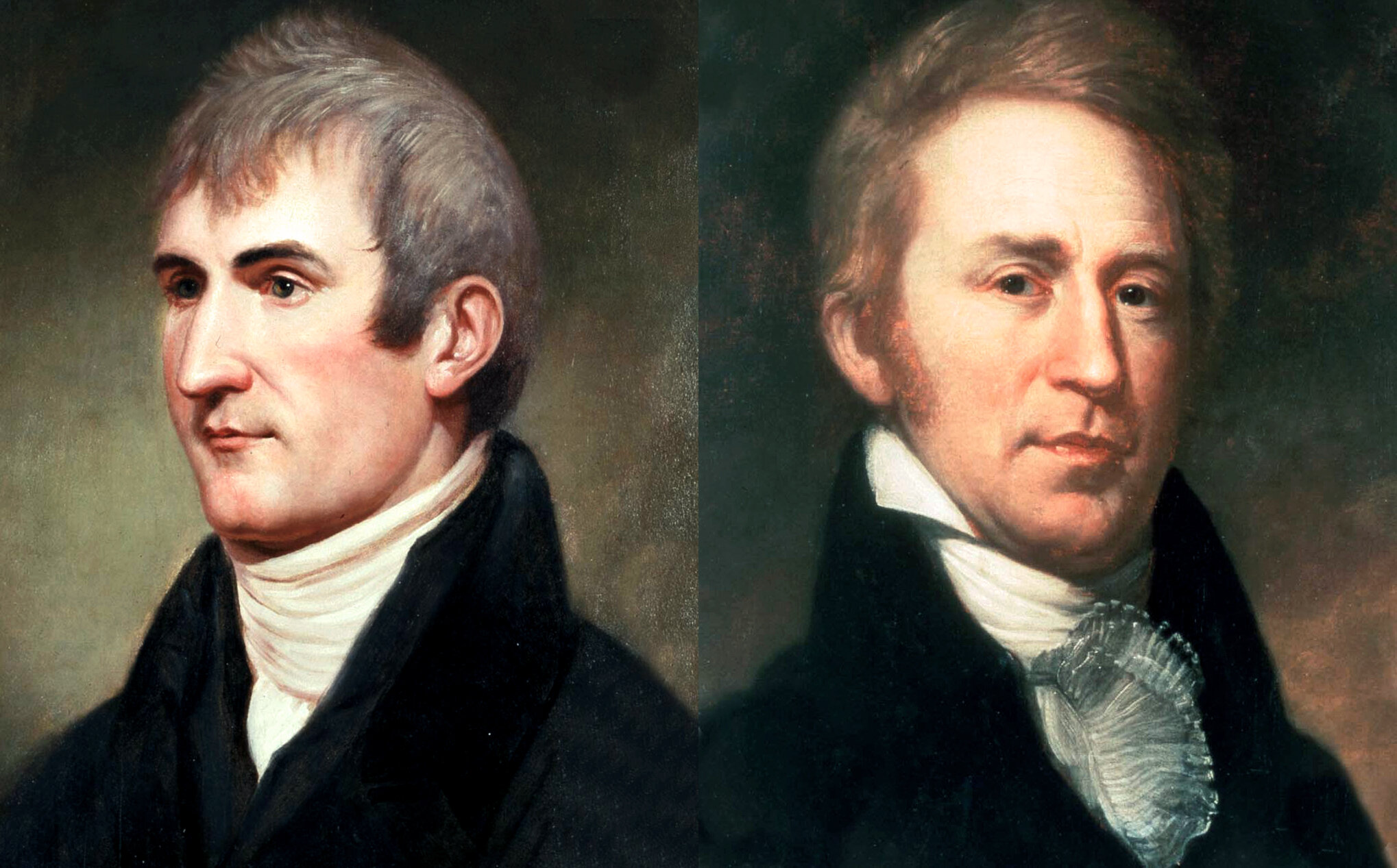
#### Winter Retreat
##### **The Return Journey of Lewis and Clark**
#### January 8 – 13, 2023
#### Lochsa Lodge, Idaho
**This retreat is currently booked to capacity.
To add yourself to the waiting list, please fill out our** [**online contact form**](https://jeffersonhour.com/reserve) **or email us at** [**tjhourtours@gmail.com**](mailto:%20tjhourtours@gmail.com)
#### The Return Journey of Lewis and Clark
The outbound journey of Meriwether Lewis & William Clark has been superbly examined by Stephen Ambrose, David Lavender, and others. The return journey, March 23-September 23, 1806, tends to be summarized in a few paragraphs—because the Corps of Discovery was back-pedaling, because the author has run out of pages or mojo. And yet the return is not only interesting in itself for all sorts of reasons, but knowing what happened in 1806 helps us understand the aftermath of the Lewis and Clark Expedition, including, of course, the death of Meriwether Lewis on October 11, 1809. During this humanities retreat, we’ll study the return journey journals and David Nicandri’s outstanding book, *River of Promise: Lewis and Clark on the Columbia*. Highlights will include the “gunfight” on Two Medicine Creek; Clark’s vacation on the Yellowstone; the wounding of Meriwether Lewis in northwestern North Dakota; the farewell to Sacagawea; and the complications of re-entry.
**January 8-13, 2023
Lochsa Lodge, Lolo, MT
All-Inclusive
$2,295/person**
Your retreat begins and ends in Missoula, Montana. Your package includes a professional tour director, discussions led by humanities scholar Clay S. Jenkinson, recreation equipment if necessary, all activities, lodging, meals, transportation, journals, gifts, state and local taxes, USFS fees, and hotel and restaurant gratuities. Airfare is not included. A $400 deposit will secure your reservation. Please read our Terms & Conditions carefully. Contact us with your questions. Price is per-person based on double occupancy. Traveling single? No problem. We can easily match you with a roommate. Please inquire about our single supplemental fee if you would prefer a cabin of your own.
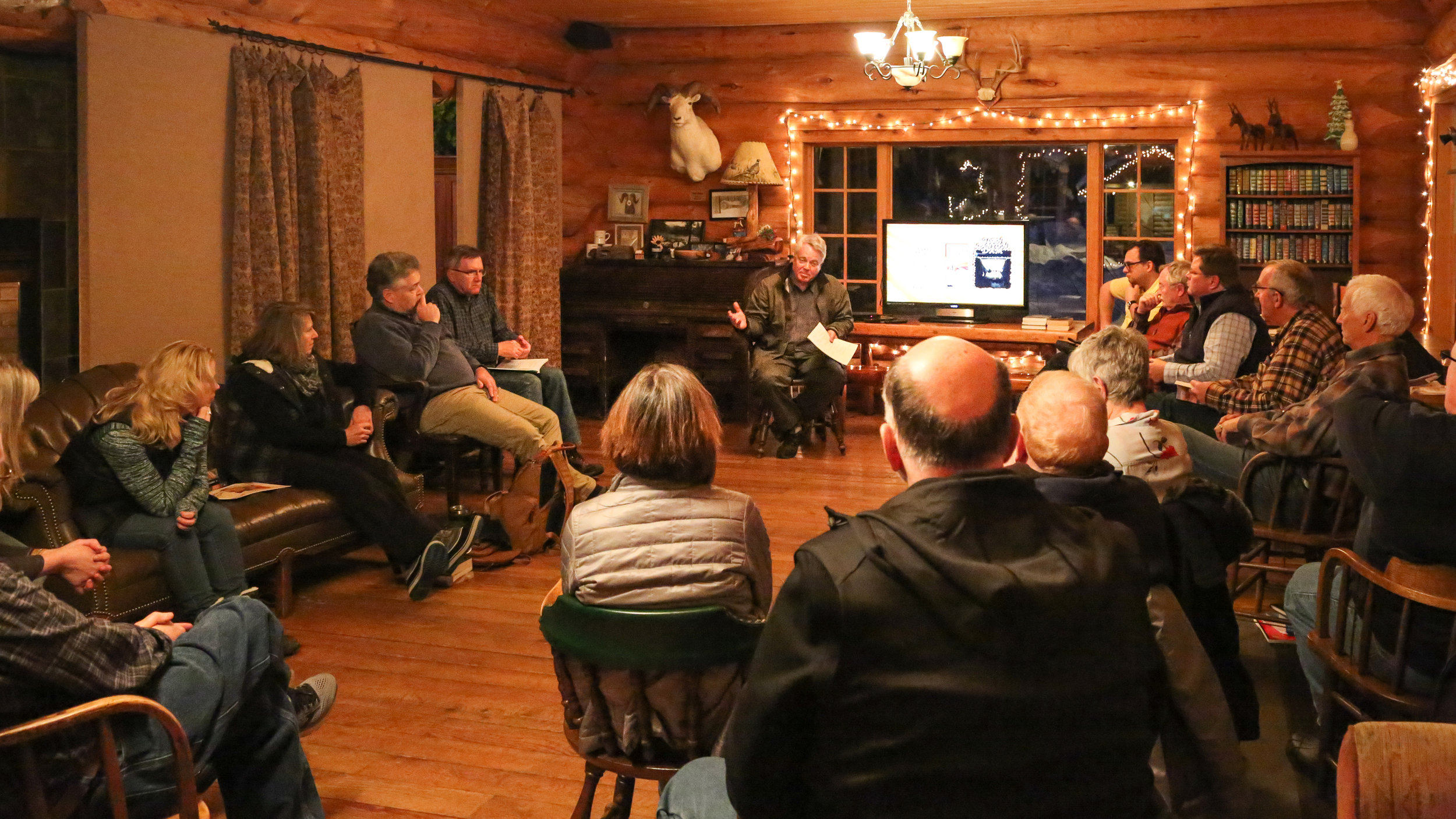
##### **Frequently Asked Questions**
#### For the Winter Humanities Retreats
#### **Q: How do I know I won’t feel intimidated by all those gathered intellectuals?**
Clay: Most of the people who come to these retreats are Jefferson Hour listeners. The group conversations are informal, entertaining, playful, and serious without being pretentious. One of the things I do is pass out a “Conversation Bill of Rights” during the evening orientation. It specifies the “rules of engagement,” so that people listen carefully to each other, avoid trying to dominate, avoid showing off, etc. I like to keep the tone very informal. In 95% of the retreats I have hosted, everyone speaks.
#### **Q: Do I really have to read all the books?**

Clay: Well, there are no pop quizzes! Of course, I hope you will read everything and come eager to discuss these books. The more you read in advance the better you will enjoy the retreat. Most participants read everything or nearly so. Some read the bulk of it. A few (you know who you are!) read a bit. It’s like everything else: the more you give to it the more you will get from it.
#### **Q: Are there any assignments?**
Clay: Yes, Read the books! I often urge people to write poems, or paragraphs that they may or may not share with the rest of us. A couple of times per day I urge everyone to think about some idea or question or to reread a passage from one of the books during the down time. But once you are there, you are unlikely to be asked to do anything but take part in the discussions.
#### **Q: Are there any security issues in staying in cabins?**
Clay: None. It’s perfectly safe. The cabins are fairly closely clustered. We’ve never had an incident of any sort. The doors lock as they would in your house.
#### **Q: How cold does it get?**
Clay: Not cold. I’m from North Dakota. We know cold. I’m always so pleasantly surprised by how temperate it is at Lochsa Lodge. It often snows while we are there, but I don’t recall ever being there when there was wind or seriously cold. It feels like a winter paradise.
#### **Q: Should I bring winter gear?**
Clay: Yes, you should have gloves or mittens, a parka, a stocking cap, perhaps a scarf, and boots. Don’t rush to REI to get all sorts of new gear. We don’t spend that much time outdoors. But you will want to stay warm, especially if you are from a warm climate. Anyone from the Midwest will find it balmy. We will supply hiking sticks, and if you want to snowshoe, we have gear.
#### **Q: How much time do we spend outdoors?**
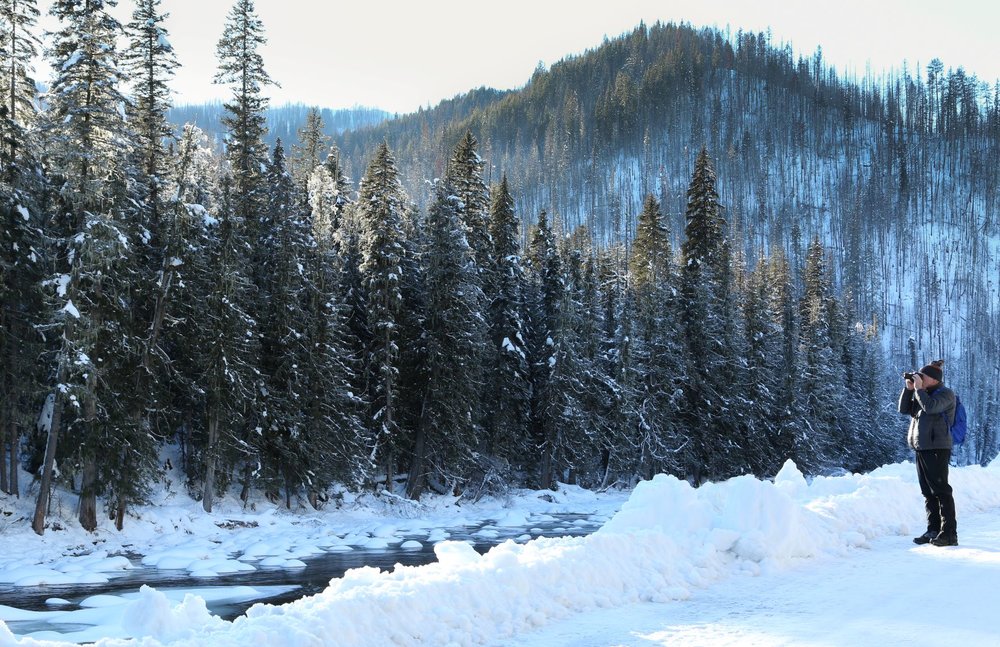
Clay: Well, you have to walk a short distance between your cabin and the lodge where all the activity is. On the first afternoon we walk about ¾ of a mile (one way) to visit an important Lewis and Clark site. We walk on a graded road, but it can sometimes be a bit icy. We often go to a hot springs during the course of the retreat. It’s entirely optional, of course, but people love it. From the parking lot on US12 we hike about ¾ of a mile to the hot pools. There is plenty of free time during the retreat. Some people hike every day or run. Others just relax in their cabins or in the lodge or in the bar. So, you can spend a good deal of time outdoors while you are there, or a relatively modest amount.
#### **Q: What’s the rhythm of each day?**
Clay: We like to be casual. We gather about 9:30 a.m. in the lodge. We talk until noon or 12:30 with a break in the middle. Then we eat. Afterwards we usually have some rest time. We talk for two or three more hours in the afternoon. Then people tend to regroup in their cabins or get a glass of wine. After dinner we sometimes watch a film (if there is a pertinent one), or we gather around a huge fire pit out overlooking the Lochsa River. It’s winter, but its magical. Sometimes I tell a story or two around the fire.
#### **Q: Is there Internet at Lochsa Lodge?**
Clay: Yes and mostly no. If you sit in the corner of the bar you may get Internet. You should really plan not to be online for the four days you are there. You can make calls out from the lodge phone if necessary. Most people are able to get online a couple of times during their time at the lodge, but you cannot absolutely count on it.
#### **Q: Where is the nearest store?**
Clay: Missoula. Once you get to Lochsa Lodge, you are really quite “off the grid” for a few days. If necessary, we can get you to Missoula. But this has in fact never happened. There is a limited lodge store with soda, beer, lip gloss, shampoo, etc., but it has a kind of retro feel.
#### **Q: Can the lodge handle my unique dietary regimen?**
Clay: Of course. Just let us know well in advance. We’ve had vegetarians, vegans, gluten-free, paleo, you name it. Andrea and the Lochsa staff can accommodate whatever your particular needs are, but after you get to Missoula it will be too late to let us know.
#### **Q: How do the meals work?**
Clay: Order breakfasts off the menu, just charge to Jefferson Hour Tours. Same with lunch. The evening meals are set meals (so make sure we know your dietary restrictions): beef, chicken, pork, potatoes, vegetables, bread, corn bread, that sort of thing. Hearty. We eat at a large rectangular table family style. There is always a great plenty of food.
#### **Q: What about alcohol?**
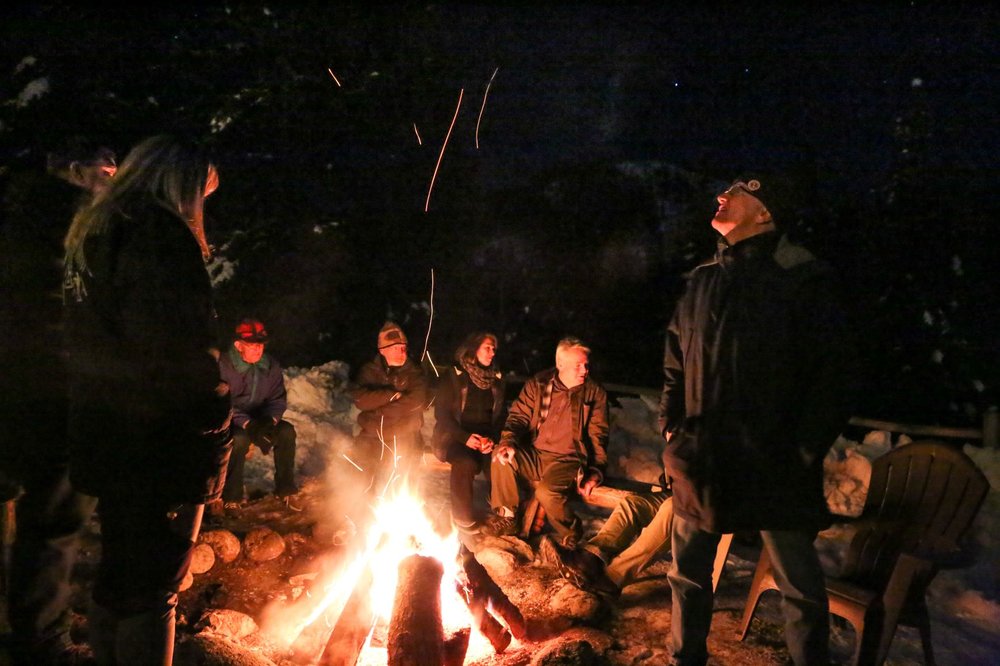
Clay: We serve wine with dinner. Any additional alcoholic drinks are your responsibility. Some may choose to bring along a bottle of wine or liquor for their own moderate consumption after dinner.
#### **Q: Do the cabins have central heat?**
Clay: It varies. Most do. Some have wood stoves that you feed a couple of times per day. Make sure you let us know what your preferences are. Some people like to rough it a bit. Others seek the usual comforts.
#### **Q: What about bathrooms?**
Clay: Virtually all the cabins have full bathrooms.
#### **Q: Is Clay there the whole time?**
Clay: Yes. Alpha to Omega. There is no respite, no relief! One of my favorites once said, “That’s a lot of Clay.”
#### **Q: How do I know I will enjoy this?**
Clay: Think of it as the book club you have always wished existed. If you enjoy the Thomas Jefferson Hour and my approach to ideas, history, and literature, you are likely to enjoy this. We do a good deal of laughing. Friendships spring up at these retreats. Many people have come again and again. There is no source of tension. We have most of Lochsa Lodge to ourselves, though some locals come in to dine and some hunters usually come.
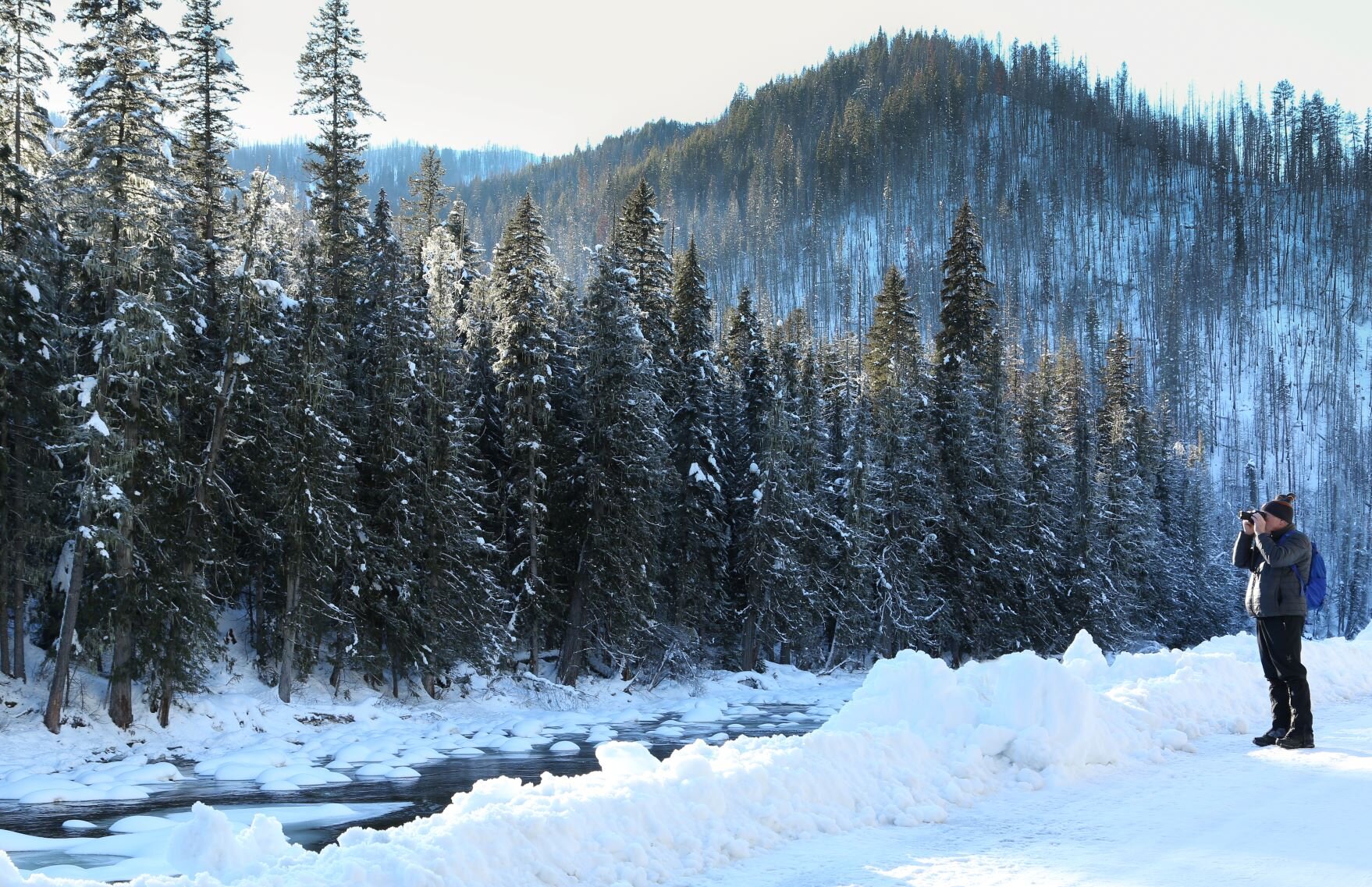
##### **Terms & Conditions**
#### For the 2023 Winter Retreats
#### Deposits and Payments
A deposit of $400 per person will reserve the tour of your choice. Full payment is due in our office at least 75 days prior to departure.
#### Refunds and Cancellation Policy
We recommend you purchase travel insurance to protect you if for some reason you must cancel your reservation.You will receive your full refund less your deposit and credit card transaction fees up to 75 days prior to the tour, a 50% refund if you cancel within 75 days prior to the event, minus any additional hotel or supplier expenses, which cannot be recovered by TJ Hour Tours. No refunds in the last 30 days prior to tour departure. Full refund is always available if you can find a replacement traveler.
#### Travel Insurance
TJ Hour Tours is not an insurance provider. If you are interested in purchasing travel insurance, please notify your travel insurance company at the time of your initial payment. Travel insurance information can be obtained from your local travel agency.
#### Tour Cancellation
TJ Hour Tours does not like to cancel tours. In the event a tour must be canceled, we will refund all monies paid to us.
#### Participation Courtesy
We ask there be no audio or video taping of presentations without the prior consent of the individual presenters. Participants are requested to refrain from smoking inside all modes of transportation, during group meals, and lectures or events.
#### Itinerary or Program Modifications
The itinerary, as contained in this packet of information, is subject to modifications and change by TJ Hour Tours. Every effort will be made to carry out the program as planned, but alterations may still occur after the final itinerary is sent.
#### Responsibility
TJ Hour Tours acts only as the agent in making arrangements for the owner or operators of such transportation, accommodations, services or facilities engaged in our tours. Our responsibility is limited to that of an agent. We accept no responsibility for accidents, injuries, property damage or personal loss to you or to those traveling with you in connection with any accommodations, transportation or other travel or outfitter and guide services, or resulting directly or indirectly from any occurrences or conditions beyond our control, including but not limited to acts of terrorism, defects in vehicles, breakdown in equipment, strikes or theft.
---
### [About Listening to America](https://ltamerica.org/about-listening-to-america/)
**Published:** August 17, 2022
**Author:** Francisco Molina
**Content:**
##### About Listening to America
White Cliffs on Upper Missouri River, Montana, Lewis and Clark National Historic Trail.
> **Listening to America aims to “light out for the territories,” traveling less visited byways and taking time to see this immense, extraordinary country with fresh eyes while listening to the many voices of America’s past, present, and future.**
>
> **We invite you to join us on this journey.**
**Listening to America** is an educational and journalistic initiative dedicated to helping Americans better understand one another through exploring our shared past and collective present. Our goal is to enable citizens find more inclusive ground and build a better future together. Listening to America is an evolution of the long-time and popular public radio program and podcast, The Thomas Jefferson Hour.
Led by noted historian and humanities scholar [Clay Jenkinson](https://ltamerica.org/about-clay-jenkinson/), Listening to America travels the country’s less visited byways, from national parks and forests to historic sites to countless under-recognized rural and urban places. Through this exploration, Clay and team find and tell the overlooked historical and contemporary stories that shape America’s people and places. Stories about the future of family farms and agriculture, the water crisis in the West, the changing nature of work, the decline of rural America and more.
LTA is interested in how American history, the places, and the geography where it has played out can inform Americans as we struggle with shared challenges. We aim to tackle big, complex subjects by telling smaller stories. As Clay says, “this initiative is part Kerouac, part Charles Kuralt (without the schmaltz), part Steinbeck, all with a serious humanities perspective.”
You can follow Clay and our work through our weekly podcast/radio program, [newsletter](https://ltamerica.org/newsletter/), and at [LTAmerica.org](https://ltamerica.org).
The Listening to America Project, is a 501(c)(3) tax-exempt non-profit organization.
####
**Contact Listening to America**
Your name
Your email
Subject
Your message (optional)
Δ
---
### [WINTER RETREAT: DOSTOEVSKY](https://ltamerica.org/winter-retreat-dostoevsky/)
**Published:** January 10, 2023
**Author:** Francisco Molina
**Content:**

#### Winter Retreat
##### **Two by Dostoevsky**
#### January 15 – 20, 2023
#### Lochsa Lodge, Idaho
**This retreat is currently booked to capacity.
To add yourself to the waiting list, please fill out our** [**online contact form**](https://jeffersonhour.com/reserve) **or email us at** [**tjhourtours@gmail.com**](mailto:%20tjhourtours@gmail.com)
Some say Tolstoy’s *Anna Karenina* is the greatest of all novels. Others say *The Brothers Karamazov*. Clay’s nomination is *Crime and Punishment*. We’ll spend our days studying Fyodor Dostoevsky’s celebrated novels, *Crime and Punishment* and *The Brothers Karamazov*, plus excerpts from *Notes from Underground*, *The House of the Dead*, and *The Gambler*. With guidance and materials from your humanities retreat host Clay Jenkinson, participants will gain confidence that the great Dostoevsky is not only accessible but magnificent.
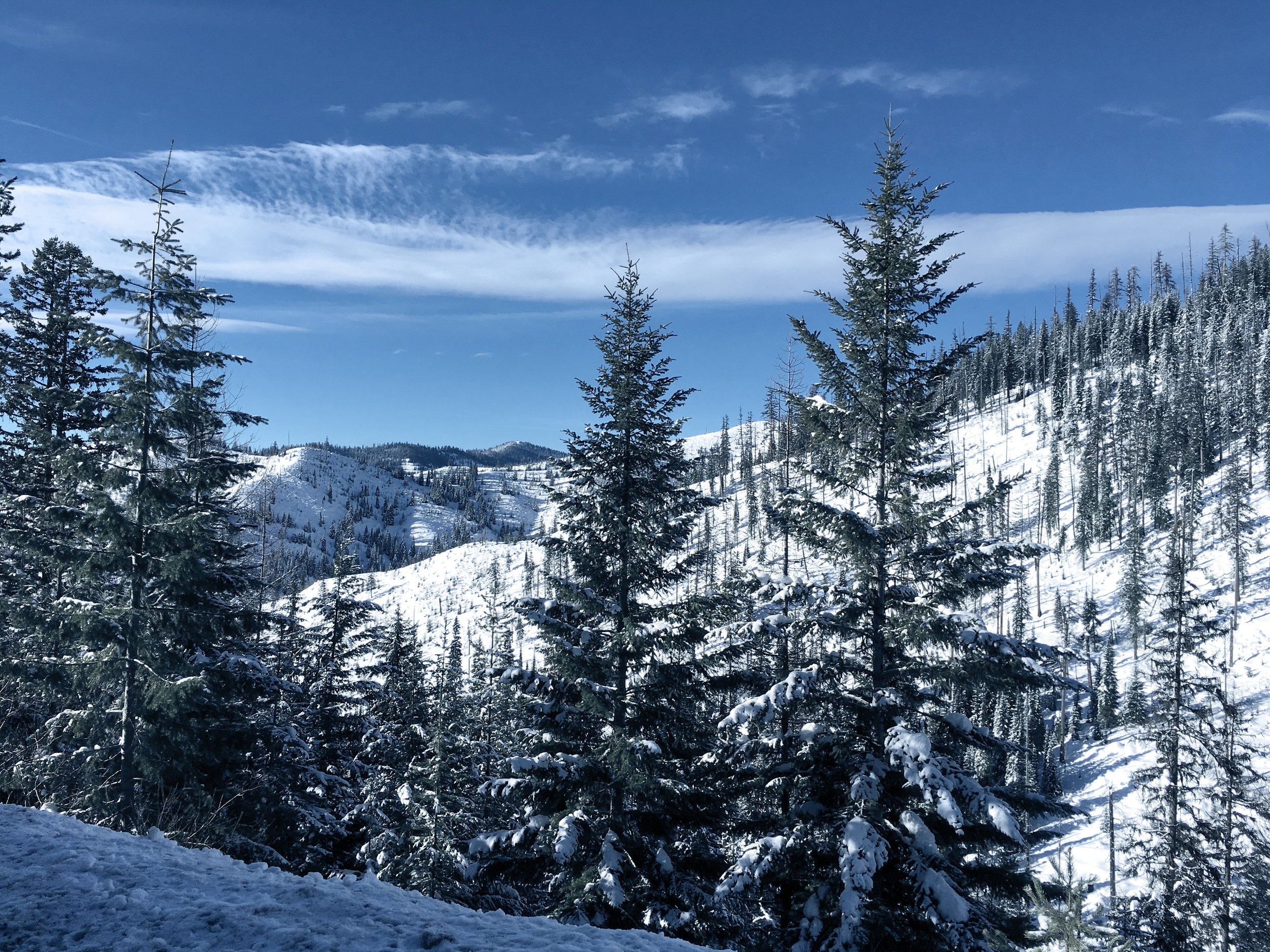
#### **Price & Information**
##### Two by Dostoevsky
#### January 15 – 20, 2023
**January 15-20, 2023
Lochsa Lodge, Lolo, MT
All-Inclusive
$2,295/person**
Your retreat begins and ends in Missoula, Montana. Your package includes a professional tour director, discussions led by humanities scholar Clay S. Jenkinson, recreation equipment if necessary, all activities, lodging, meals, transportation, journals, gifts, state and local taxes, USFS fees, and hotel and restaurant gratuities. Airfare is not included. A $400 deposit will secure your reservation. Please read our Terms & Conditions carefully. Contact us with your questions. Price is per-person based on double occupancy. Traveling single? No problem. We can easily match you with a roommate. Please inquire about our single supplemental fee if you would prefer a cabin of your own.

##### **Frequently Asked Questions**
#### For the Winter Humanities Retreats
#### **Q: How do I know I won’t feel intimidated by all those gathered intellectuals?**
Clay: Most of the people who come to these retreats are Jefferson Hour listeners. The group conversations are informal, entertaining, playful, and serious without being pretentious. One of the things I do is pass out a “Conversation Bill of Rights” during the evening orientation. It specifies the “rules of engagement,” so that people listen carefully to each other, avoid trying to dominate, avoid showing off, etc. I like to keep the tone very informal. In 95% of the retreats I have hosted, everyone speaks.
#### **Q: Do I really have to read all the books?**

Clay: Well, there are no pop quizzes! Of course, I hope you will read everything and come eager to discuss these books. The more you read in advance the better you will enjoy the retreat. Most participants read everything or nearly so. Some read the bulk of it. A few (you know who you are!) read a bit. It’s like everything else: the more you give to it the more you will get from it.
#### **Q: Are there any assignments?**
Clay: Yes, Read the books! I often urge people to write poems, or paragraphs that they may or may not share with the rest of us. A couple of times per day I urge everyone to think about some idea or question or to reread a passage from one of the books during the down time. But once you are there, you are unlikely to be asked to do anything but take part in the discussions.
#### **Q: Are there any security issues in staying in cabins?**
Clay: None. It’s perfectly safe. The cabins are fairly closely clustered. We’ve never had an incident of any sort. The doors lock as they would in your house.
#### **Q: How cold does it get?**
Clay: Not cold. I’m from North Dakota. We know cold. I’m always so pleasantly surprised by how temperate it is at Lochsa Lodge. It often snows while we are there, but I don’t recall ever being there when there was wind or seriously cold. It feels like a winter paradise.
#### **Q: Should I bring winter gear?**
Clay: Yes, you should have gloves or mittens, a parka, a stocking cap, perhaps a scarf, and boots. Don’t rush to REI to get all sorts of new gear. We don’t spend that much time outdoors. But you will want to stay warm, especially if you are from a warm climate. Anyone from the Midwest will find it balmy. We will supply hiking sticks, and if you want to snowshoe, we have gear.
#### **Q: How much time do we spend outdoors?**

Clay: Well, you have to walk a short distance between your cabin and the lodge where all the activity is. On the first afternoon we walk about ¾ of a mile (one way) to visit an important Lewis and Clark site. We walk on a graded road, but it can sometimes be a bit icy. We often go to a hot springs during the course of the retreat. It’s entirely optional, of course, but people love it. From the parking lot on US12 we hike about ¾ of a mile to the hot pools. There is plenty of free time during the retreat. Some people hike every day or run. Others just relax in their cabins or in the lodge or in the bar. So, you can spend a good deal of time outdoors while you are there, or a relatively modest amount.
#### **Q: What’s the rhythm of each day?**
Clay: We like to be casual. We gather about 9:30 a.m. in the lodge. We talk until noon or 12:30 with a break in the middle. Then we eat. Afterwards we usually have some rest time. We talk for two or three more hours in the afternoon. Then people tend to regroup in their cabins or get a glass of wine. After dinner we sometimes watch a film (if there is a pertinent one), or we gather around a huge fire pit out overlooking the Lochsa River. It’s winter, but its magical. Sometimes I tell a story or two around the fire.
#### **Q: Is there Internet at Lochsa Lodge?**
Clay: Yes and mostly no. If you sit in the corner of the bar you may get Internet. You should really plan not to be online for the four days you are there. You can make calls out from the lodge phone if necessary. Most people are able to get online a couple of times during their time at the lodge, but you cannot absolutely count on it.
#### **Q: Where is the nearest store?**
Clay: Missoula. Once you get to Lochsa Lodge, you are really quite “off the grid” for a few days. If necessary, we can get you to Missoula. But this has in fact never happened. There is a limited lodge store with soda, beer, lip gloss, shampoo, etc., but it has a kind of retro feel.
#### **Q: Can the lodge handle my unique dietary regimen?**
Clay: Of course. Just let us know well in advance. We’ve had vegetarians, vegans, gluten-free, paleo, you name it. Andrea and the Lochsa staff can accommodate whatever your particular needs are, but after you get to Missoula it will be too late to let us know.
#### **Q: How do the meals work?**
Clay: Order breakfasts off the menu, just charge to Jefferson Hour Tours. Same with lunch. The evening meals are set meals (so make sure we know your dietary restrictions): beef, chicken, pork, potatoes, vegetables, bread, corn bread, that sort of thing. Hearty. We eat at a large rectangular table family style. There is always a great plenty of food.
#### **Q: What about alcohol?**

Clay: We serve wine with dinner. Any additional alcoholic drinks are your responsibility. Some may choose to bring along a bottle of wine or liquor for their own moderate consumption after dinner.
#### **Q: Do the cabins have central heat?**
Clay: It varies. Most do. Some have wood stoves that you feed a couple of times per day. Make sure you let us know what your preferences are. Some people like to rough it a bit. Others seek the usual comforts.
#### **Q: What about bathrooms?**
Clay: Virtually all the cabins have full bathrooms.
#### **Q: Is Clay there the whole time?**
Clay: Yes. Alpha to Omega. There is no respite, no relief! One of my favorites once said, “That’s a lot of Clay.”
#### **Q: How do I know I will enjoy this?**
Clay: Think of it as the book club you have always wished existed. If you enjoy the Thomas Jefferson Hour and my approach to ideas, history, and literature, you are likely to enjoy this. We do a good deal of laughing. Friendships spring up at these retreats. Many people have come again and again. There is no source of tension. We have most of Lochsa Lodge to ourselves, though some locals come in to dine and some hunters usually come.

##### **Terms & Conditions**
#### For the 2023 Winter Retreats
#### Deposits and Payments
A deposit of $400 per person will reserve the tour of your choice. Full payment is due in our office at least 75 days prior to departure.
#### Refunds and Cancellation Policy
We recommend you purchase travel insurance to protect you if for some reason you must cancel your reservation.You will receive your full refund less your deposit and credit card transaction fees up to 75 days prior to the tour, a 50% refund if you cancel within 75 days prior to the event, minus any additional hotel or supplier expenses, which cannot be recovered by TJ Hour Tours. No refunds in the last 30 days prior to tour departure. Full refund is always available if you can find a replacement traveler.
#### Travel Insurance
TJ Hour Tours is not an insurance provider. If you are interested in purchasing travel insurance, please notify your travel insurance company at the time of your initial payment. Travel insurance information can be obtained from your local travel agency.
#### Tour Cancellation
TJ Hour Tours does not like to cancel tours. In the event a tour must be canceled, we will refund all monies paid to us.
#### Participation Courtesy
We ask there be no audio or video taping of presentations without the prior consent of the individual presenters. Participants are requested to refrain from smoking inside all modes of transportation, during group meals, and lectures or events.
#### Itinerary or Program Modifications
The itinerary, as contained in this packet of information, is subject to modifications and change by TJ Hour Tours. Every effort will be made to carry out the program as planned, but alterations may still occur after the final itinerary is sent.
#### Responsibility
TJ Hour Tours acts only as the agent in making arrangements for the owner or operators of such transportation, accommodations, services or facilities engaged in our tours. Our responsibility is limited to that of an agent. We accept no responsibility for accidents, injuries, property damage or personal loss to you or to those traveling with you in connection with any accommodations, transportation or other travel or outfitter and guide services, or resulting directly or indirectly from any occurrences or conditions beyond our control, including but not limited to acts of terrorism, defects in vehicles, breakdown in equipment, strikes or theft.
---
### [Quotes](https://ltamerica.org/quotes/)
**Published:** February 23, 2023
**Author:** Francisco Molina
**Content:**
# QUOTES FROM THE ROAD
> “*Once a journey is designed, equipped, and put in process, a new factor enters and takes over. A trip, a safari, an exploration, is an entity, different from all other journeys. It has personality, temperament, individuality, uniqueness. A journey is a person in itself; no two are alike. And all plans, safeguards, policing, and coercion are fruitless. We find after years of struggle that we do not take a trip; a trip takes us.”*
>
> John Steinbeck
> *Travels with Charley*
---
> *“We shall not cease from exploration*
> *And the end of all our exploring*
> *Will be to arrive where we started*
> *And know the place for the first time.”*
>
> T.S. Eliot
---
> *“Whither goest thou*, *America, in thy shiny car in the night*?”
>
> Jack Kerouac
---
> *“Of the gladdest moments in human life, methinks, is the departure upon a distant journey into unknown lands. Shaking off with one mighty effort the fetters of Habit, the leaden weight of Routine, the cloak of many Cares and the slavery of Hope, one feels once more happy. The blood flows with the fast circulation of childhood. . . . A journey, in fact, appeals to the Imagination, to Memory, to Hope — the three sister Graces of our moral being.”*
>
> Richard Francis Burton
---
---
### [J. Robert Oppenheimer and the Making of the Atomic Bomb](https://ltamerica.org/j-robert-oppenheimer-and-the-making-of-the-atomic-bomb/)
**Published:** March 5, 2023
**Author:** Francisco Molina
**Content:**

#### Winter Retreat
##### J. Robert Oppenheimer and the Making of the Atomic Bomb
#### January 7 – 12, 2024
#### Lochsa Lodge, Idaho
This retreat is currently booked to capacity. To add your name to our waiting list, please email us as [**tjhourtours@gmail.com**](mailto:tjhourtours@gmail.com).
**$2,395/person**.
Robert Oppenheimer was a genius, one of America’s first quantum theorists when he was chosen in 1942 by the U.S. Army to direct the building of the Atomic Bomb. At Los Alamos he brought the project in on time and under budget, and the “gadget,” as he called it, worked on its first trial at Alamogordo, New Mexico, on July 16, 1945. Oppenheimer became a national celebrity and the nation’s leading scientific adviser, but less than 10 years later he was stripped of his security clearance by the most paranoid figures of the Cold War. It’s a true tragedy: Oppenheimer contributed to his own fall through some questionable personal behavior and what Aristotle called *hubris*.
Your retreat begins and ends in Missoula, Montana. Your package includes a professional tour director, discussions led by humanities scholar Clay S. Jenkinson, recreation equipment if necessary, all activities, lodging, meals, ground transportation, state and local taxes, USFS fees, and hotel and restaurant gratuities. Airfare is not included. A $500 non-refundable deposit will secure your reservation. Please read our Terms & Conditions carefully and contact us with your questions. Price is per-person based on double occupancy. Traveling single? No problem. We can easily match you with a roommate. Please inquire about our single supplemental fee if you would prefer a cabin of your own (availability is limited).
## Terms and Conditions
#### Deposits and Payments
A non-refundable deposit of $500 per person will reserve the tour of your choice. Full payment is due in our office at least 75 days prior to departure.
#### Refunds and Cancellation Policy
We recommend you purchase travel insurance to protect you if for some reason you must cancel your reservation. You will receive your full refund less your deposit and credit card transaction fees up to 75 days prior to the tour, a 50% refund if you cancel within 75 days prior to the event, minus any additional hotel or supplier expenses, which cannot be recovered by TJ Hour Tours. No refunds in the last 30 days prior to tour departure. Full refund minus credit card processing fees is always available if you can find a replacement traveler.
#### Travel Insurance
TJ Hour Tours is not an insurance provider. If you are interested in purchasing travel insurance, please notify your travel insurance company at the time of your initial payment. Travel insurance information can be obtained from your local travel agency.
#### Tour Cancellation
TJ Hour Tours does not like to cancel tours. In the event a tour must be canceled, we will refund all monies paid to us.
#### Participation Courtesy
We ask there be no audio or video taping of presentations without the prior consent of the individual presenters. Participants are requested to refrain from smoking inside all modes of transportation, during group meals, and lectures or events.
#### Itinerary or Program Modifications
The itinerary, as contained in this packet of information, is subject to modifications and change by TJ Hour Tours. Every effort will be made to carry out the program as planned, but alterations may still occur after the final itinerary is sent.
#### Responsibility
TJ Hour Tours acts only as the agent in making arrangements for the owner or operators of such transportation, accommodations, services or facilities engaged in our tours. Our responsibility is limited to that of an agent. We accept no responsibility for accidents, injuries, property damage or personal loss to you or to those traveling with you in connection with any accommodations, transportation or other travel or outfitter and guide services, or resulting directly or indirectly from any occurrences or conditions beyond our control, including but not limited to acts of terrorism, defects in vehicles, breakdown in equipment, strikes or theft.
## Winter Retreat FAQs
#### Q: How do I know I won’t feel intimidated by all those gathered intellectuals?
Clay: Most of the people who come to these retreats are Jefferson Hour listeners. The group conversations are informal, entertaining, playful, and serious without being pretentious. One of the things I do is pass out a “Conversation Bill of Rights” during the evening orientation. It specifies the “rules of engagement,” so that people listen carefully to each other, avoid trying to dominate, avoid showing off, etc. I like to keep the tone very informal. In 95 percent of the retreats I have hosted, everyone speaks.
#### Q: Do I really have to read all the books?
Clay: Well, there are no pop quizzes! Of course, I hope you will read everything and come eager to discuss these books. The more you read in advance the better you will enjoy the retreat. Most participants read everything or nearly so. Some read the bulk of it. A few (you know who you are!) read a bit. It’s like everything else: the more you give to it the more you will get from it.
#### Q: Are there any assignments?
Clay: Yes, read the books! I often urge people to write poems, or paragraphs that they may or may not share with the rest of us. A couple of times per day I urge everyone to think about some idea or question or to reread a passage from one of the books during the down time. But once you are there, you are unlikely to be asked to do anything but take part in the discussions.
#### Q: Are there any security issues in staying in cabins?
Clay: None. It’s perfectly safe. The cabins are fairly closely clustered. We’ve never had an incident of any sort. The doors lock as they would in your house.
#### Q: How cold does it get?
Clay: Not cold. I’m from North Dakota. We know cold. I’m always so pleasantly surprised by how temperate it is at Lochsa Lodge. It often snows while we are there, but I don’t recall ever being there when there was wind or seriously cold. It feels like a winter paradise.
#### Q: Should I bring winter gear?
Clay: Yes, you should have gloves or mittens, a parka, a stocking cap, perhaps a scarf, and boots. Don’t rush to REI to get all sorts of new gear. We don’t spend that much time outdoors. But you will want to stay warm, especially if you are from a warm climate. Anyone from the Midwest will find it balmy. We will supply hiking sticks, and if you want to snowshoe, we have gear.
#### Q: How much time do we spend outdoors?
Clay: Well, you have to walk a short distance between your cabin and the lodge where all the activity is. On the first afternoon we walk about three quarters of a mile (one way) to visit an important Lewis and Clark site. We walk on a graded road, but it can sometimes be a bit icy. We often go to a hot spring during the course of the retreat. It’s entirely optional, of course, but people love it. From the parking lot on US12 we hike about three quarters of a mile to the hot pools. There is plenty of free time during the retreat. Some people hike every day or run. Others just relax in their cabins or in the lodge or in the bar. So, you can spend a good deal of time outdoors while you are there, or a relatively modest amount.
#### Q: What’s the rhythm of each day?
Clay: We like to be casual. We gather about 9:30 a.m. in the lodge. We talk until noon or 12:30 with a break in the middle. Then we eat. Afterwards we usually have some rest time. We talk for two or three more hours in the afternoon. Then people tend to regroup in their cabins or get a glass of wine. After dinner we sometimes watch a film (if there is a pertinent one), or we gather around a huge fire pit out overlooking the Lochsa River. It’s winter, but it’s magical. Sometimes I tell a story or two around the fire.
#### Q: Is there internet at Lochsa Lodge?
Clay: Yes and mostly no. If you sit in the corner of the bar you may get internet. You should really plan not to be online for the four days you are there. You can make calls out from the lodge phone if necessary. Most people are able to get online a couple of times during their time at the lodge, but you cannot absolutely count on it.
#### Q: Where is the nearest store?
Clay: Missoula. Once you get to Lochsa Lodge, you are really quite “off the grid” for a few days. If necessary, we can get you to Missoula. But this has in fact never happened. There is a limited lodge store with soda, beer, lip gloss, shampoo, etc., but it has a kind of retro feel.
#### Q: Can the lodge handle my unique dietary regimen?
Clay: Of course. Just let us know well in advance. We’ve had vegetarians, vegans, gluten-free, paleo, you name it. Andrea and the Lochsa staff can accommodate whatever your particular needs are, but after you get to Missoula it will be too late to let us know.
#### Q: How do the meals work?
Clay: Order breakfasts off the menu, just charge to Jefferson Hour Tours. Same with lunch. The evening meals are set meals (so make sure we know your dietary restrictions): beef, chicken, pork, potatoes, vegetables, bread, corn bread, that sort of thing. Hearty. We eat at a large rectangular table, family style. There is always a great plenty of food.
#### Q: What about alcohol?
Clay: We serve wine with dinner. Any additional alcoholic drinks are your responsibility. Some may choose to bring along a bottle of wine or liquor for their own moderate consumption after dinner.
#### Q: Do the cabins have central heat?
Clay: It varies. Most do. Some have wood stoves that you feed a couple of times per day. Make sure you let us know what your preferences are. Some people like to rough it a bit. Others seek the usual comforts.
#### Q: What about bathrooms?
Clay: Virtually all the cabins have full bathrooms.
#### Q: Is Clay there the whole time?
Clay: Yes. Alpha to Omega. There is no respite, no relief! One of my favorites once said, “That’s a lot of Clay.”
#### Q: How do I know I will enjoy this?
Clay: Think of it as the book club you have always wished existed. If you enjoy the Thomas Jefferson Hour and my approach to ideas, history, and literature, you are likely to enjoy this. We do a good deal of laughing. Friendships spring up at these retreats. Many people have come again and again. There is no source of tension. We have most of Lochsa Lodge to ourselves, though some locals come in to dine and some hunters usually come.
---
### [Gilgamesh and Moby Dick: Two Epics Just 4,000 Years Apart](https://ltamerica.org/gilgamesh-and-moby-dick-two-epics-just-4000-years-apart/)
**Published:** March 6, 2023
**Author:** Raina Hall
**Content:**
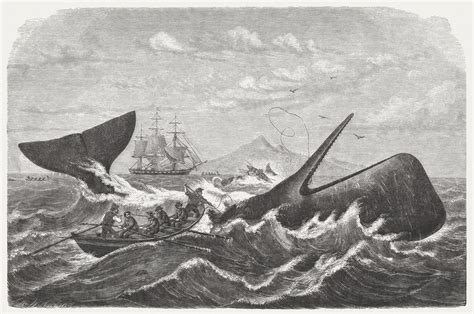
#### Winter Retreat
##### Gilgamesh and Moby Dick: Two Epics Just 4,000 Years Apart
#### January 14 – 19, 2024
#### Lochsa Lodge, Idaho
**Space is limited. To register, please fill out our online contact form and make a deposit to reserve your spot.**
The “Epic of Gilgamesh” is maybe western civilization’s oldest book, dating to about 2150 BC. It’s the story of a semi-divine hero, two thirds god and one third human, who goes on an epic quest for immortality. “Moby Dick,” published in 1851, is the story of a one-legged ship captain who goes in quest of the white whale that maimed him. Both are great journey stories. Both are about the restless of humankind, the quest for fame and immortality, the refusal of humans to accept the limits assigned to us by fate and biology.
#### Price and Information
Your retreat begins and ends in Missoula, Montana. Your package includes a professional tour director, discussions led by humanities scholar Clay S. Jenkinson, recreation equipment if necessary, all activities, lodging, meals, ground transportation, state and local taxes, USFS fees, and hotel and restaurant gratuities. Airfare is not included. A $500 non-refundable deposit will secure your reservation. Please read our Terms & Conditions carefully. Contact us with your questions. Price is per-person based on double occupancy. Traveling single? No problem. We can easily match you with a roommate. Please inquire about our single supplemental fee if you would prefer a cabin of your own (availability is limited).
## Terms and Conditions
#### Deposits and Payments
A non-refundable deposit of $500 per person will reserve the tour of your choice. Full payment is due in our office at least 75 days prior to departure.
#### Refunds and Cancellation Policy
We recommend you purchase travel insurance to protect you if for some reason you must cancel your reservation.
You will receive your full refund less your deposit and credit card transaction fees up to 75 days prior to the tour, a 50% refund if you cancel within 75 days prior to the event, minus any additional hotel or supplier expenses, which cannot be recovered by TJ Hour Tours. No refunds in the last 30 days prior to tour departure. Full refund is always available if you can find a replacement traveler.
#### Travel Insurance
TJ Hour Tours is not an insurance provider. If you are interested in purchasing travel insurance, please notify your travel insurance company at the time of your initial payment. Travel insurance information can be obtained from your local travel agency.
#### Tour Cancellation
TJ Hour Tours does not like to cancel tours. In the event a tour must be canceled, we will refund all monies paid to us.
#### Participation Courtesy
We ask there be no audio or video taping of presentations without the prior consent of the individual presenters. Participants are requested to refrain from smoking inside all modes of transportation, during group meals, and lectures or events.
#### Itinerary or Program Modifications
The itinerary, as contained in this packet of information, is subject to modifications and change by TJ Hour Tours. Every effort will be made to carry out the program as planned, but alterations may still occur after the final itinerary is sent.
#### Responsibility
TJ Hour Tours acts only as the agent in making arrangements for the owner or operators of such transportation, accommodations, services or facilities engaged in our tours. Our responsibility is limited to that of an agent. We accept no responsibility for accidents, injuries, property damage or personal loss to you or to those traveling with you in connection with any accommodations, transportation or other travel or outfitter and guide services, or resulting directly or indirectly from any occurrences or conditions beyond our control, including but not limited to acts of terrorism, defects in vehicles, breakdown in equipment, strikes or theft.
## Winter Retreat FAQs
#### Q: How do I know I won’t feel intimidated by all those gathered intellectuals?
Clay: Most of the people who come to these retreats are Jefferson Hour listeners. The group conversations are informal, entertaining, playful, and serious without being pretentious. One of the things I do is pass out a “Conversation Bill of Rights” during the evening orientation. It specifies the “rules of engagement,” so that people listen carefully to each other, avoid trying to dominate, avoid showing off, etc. I like to keep the tone very informal. In 95 percent of the retreats I have hosted, everyone speaks.
#### Q: Do I really have to read all the books?
Clay: Well, there are no pop quizzes! Of course, I hope you will read everything and come eager to discuss these books. The more you read in advance the better you will enjoy the retreat. Most participants read everything or nearly so. Some read the bulk of it. A few (you know who you are!) read a bit. It’s like everything else: the more you give to it the more you will get from it.
#### Q: Are there any assignments?
Clay: Yes, read the books! I often urge people to write poems, or paragraphs that they may or may not share with the rest of us. A couple of times per day I urge everyone to think about some idea or question or to reread a passage from one of the books during the down time. But once you are there, you are unlikely to be asked to do anything but take part in the discussions.
#### Q: Are there any security issues in staying in cabins?
Clay: None. It’s perfectly safe. The cabins are fairly closely clustered. We’ve never had an incident of any sort. The doors lock as they would in your house.
#### Q: How cold does it get?
Clay: Not cold. I’m from North Dakota. We know cold. I’m always so pleasantly surprised by how temperate it is at Lochsa Lodge. It often snows while we are there, but I don’t recall ever being there when there was wind or seriously cold. It feels like a winter paradise.
#### Q: Should I bring winter gear?
Clay: Yes, you should have gloves or mittens, a parka, a stocking cap, perhaps a scarf, and boots. Don’t rush to REI to get all sorts of new gear. We don’t spend that much time outdoors. But you will want to stay warm, especially if you are from a warm climate. Anyone from the Midwest will find it balmy. We will supply hiking sticks, and if you want to snowshoe, we have gear.
#### Q: How much time do we spend outdoors?
Clay: Well, you have to walk a short distance between your cabin and the lodge where all the activity is. On the first afternoon we walk about three quarters of a mile (one way) to visit an important Lewis and Clark site. We walk on a graded road, but it can sometimes be a bit icy. We often go to a hot spring during the course of the retreat. It’s entirely optional, of course, but people love it. From the parking lot on US12 we hike about three quarters of a mile to the hot pools. There is plenty of free time during the retreat. Some people hike every day or run. Others just relax in their cabins or in the lodge or in the bar. So, you can spend a good deal of time outdoors while you are there, or a relatively modest amount.
#### Q: What’s the rhythm of each day?
Clay: We like to be casual. We gather about 9:30 a.m. in the lodge. We talk until noon or 12:30 with a break in the middle. Then we eat. Afterwards we usually have some rest time. We talk for two or three more hours in the afternoon. Then people tend to regroup in their cabins or get a glass of wine. After dinner we sometimes watch a film (if there is a pertinent one), or we gather around a huge fire pit out overlooking the Lochsa River. It’s winter, but it’s magical. Sometimes I tell a story or two around the fire.
#### Q: Is there internet at Lochsa Lodge?
Clay: Yes and mostly no. If you sit in the corner of the bar you may get internet. You should really plan not to be online for the four days you are there. You can make calls out from the lodge phone if necessary. Most people are able to get online a couple of times during their time at the lodge, but you cannot absolutely count on it.
#### Q: Where is the nearest store?
Clay: Missoula. Once you get to Lochsa Lodge, you are really quite “off the grid” for a few days. If necessary, we can get you to Missoula. But this has in fact never happened. There is a limited lodge store with soda, beer, lip gloss, shampoo, etc., but it has a kind of retro feel.
#### Q: Can the lodge handle my unique dietary regimen?
Clay: Of course. Just let us know well in advance. We’ve had vegetarians, vegans, gluten-free, paleo, you name it. Andrea and the Lochsa staff can accommodate whatever your particular needs are, but after you get to Missoula it will be too late to let us know.
#### Q: How do the meals work?
Clay: Order breakfasts off the menu, just charge to Jefferson Hour Tours. Same with lunch. The evening meals are set meals (so make sure we know your dietary restrictions): beef, chicken, pork, potatoes, vegetables, bread, corn bread, that sort of thing. Hearty. We eat at a large rectangular table, family style. There is always a great plenty of food.
#### Q: What about alcohol?
Clay: We serve wine with dinner. Any additional alcoholic drinks are your responsibility. Some may choose to bring along a bottle of wine or liquor for their own moderate consumption after dinner.
#### Q: Do the cabins have central heat?
Clay: It varies. Most do. Some have wood stoves that you feed a couple of times per day. Make sure you let us know what your preferences are. Some people like to rough it a bit. Others seek the usual comforts.
#### Q: What about bathrooms?
Clay: Virtually all the cabins have full bathrooms.
#### Q: Is Clay there the whole time?
Clay: Yes. Alpha to Omega. There is no respite, no relief! One of my favorites once said, “That’s a lot of Clay.”
#### Q: How do I know I will enjoy this?
Clay: Think of it as the book club you have always wished existed. If you enjoy the Thomas Jefferson Hour and my approach to ideas, history, and literature, you are likely to enjoy this. We do a good deal of laughing. Friendships spring up at these retreats. Many people have come again and again. There is no source of tension. We have most of Lochsa Lodge to ourselves, though some locals come in to dine and some hunters usually come.
---
### [FAQs](https://ltamerica.org/faqs/)
**Published:** June 27, 2023
**Author:** Francisco Molina
---
### [Online Courses](https://ltamerica.org/online-classes-2/)
**Published:** April 11, 2023
**Author:** Francisco Molina
**Content:**
# Thank you for your interest in our online courses. When the next course becomes available, we will update this page.
---
### [ONLINE CLASSES](https://ltamerica.org/online-classes/)
**Published:** January 10, 2023
**Author:** Francisco Molina
**Content:**
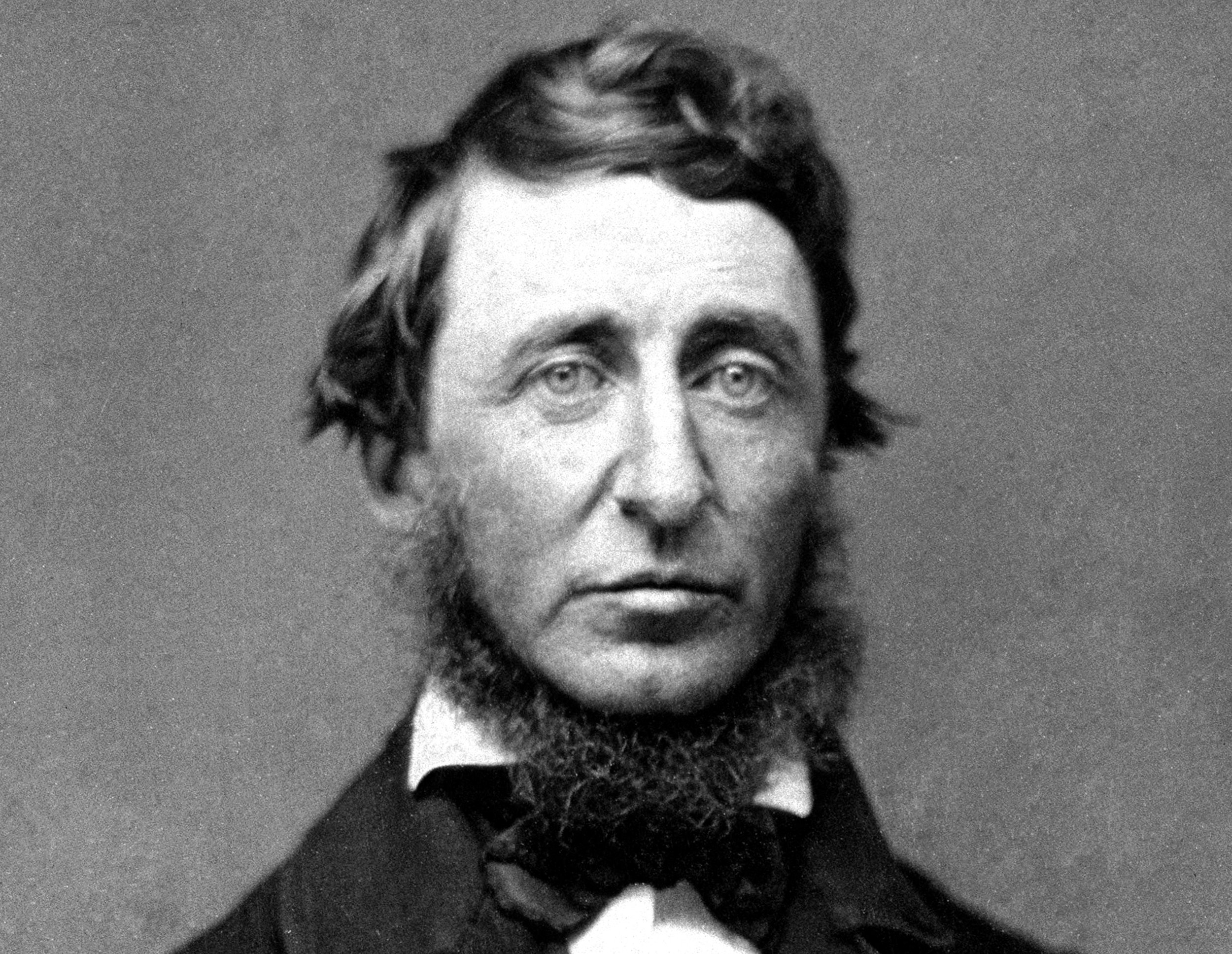
##### **Thoreau and the Quest to Live Deliberately**
#### An Online Humanities Course with Clay Jenkinson
#### January 28 – February 11
#### **Registration for this online class is now closed.**
January 28 – February 11, 2023
$250/person
Henry David Thoreau’s *Walden* is one of the most important books ever written in America. It’s an anthem for those who march to a different drummer, a poetic defense of loitering, walking, huckleberry gathering, a superb critique of the coming of the Industrial Revolution, and a how-to book about how to regain your life and soul. Thoreau went to the woods on July 4, 1845, “to live deliberately,” to conduct an experiment in learning to live simply. Thoreau’s argument was that we burden, even bury, our essential souls with material accumulation and “getting and spending,” and that we wake up, perk up, and begin to live again when we voluntarily limit our addiction to distraction and the gathering of “stuff.” He called it an attempt to determine what our “grossest groceries” are, the things we simply must have to live, and then to add on to that a few things that make us happy or creative or complete. He reckoned a wise person could work for just six weeks per year and yet thrive. *Walden* is the greatest American text about the importance of nature and wildness to human happiness.
Many people find it hard to “get into” *Walden* and some are annoyed that Thoreau was not John Muir. Clay Jenkinson will guide you through the essential first chapter of *Walden,* “Economy,” and explore the ways in which Thoreau speaks to us in this time of American disillusionment. We will also discuss his seminal essay, “Civil Disobedience,” which has had an enormous influence on nonviolent protest in the United States, including in the work of Martin Luther King, Jr.
#### Class Schedule
Class sessions will be held via Zoom on Saturday mornings for three weeks, January 28 – February 11, 2023 (time TBD).
Optional Zoom office hours Wednesday evenings.
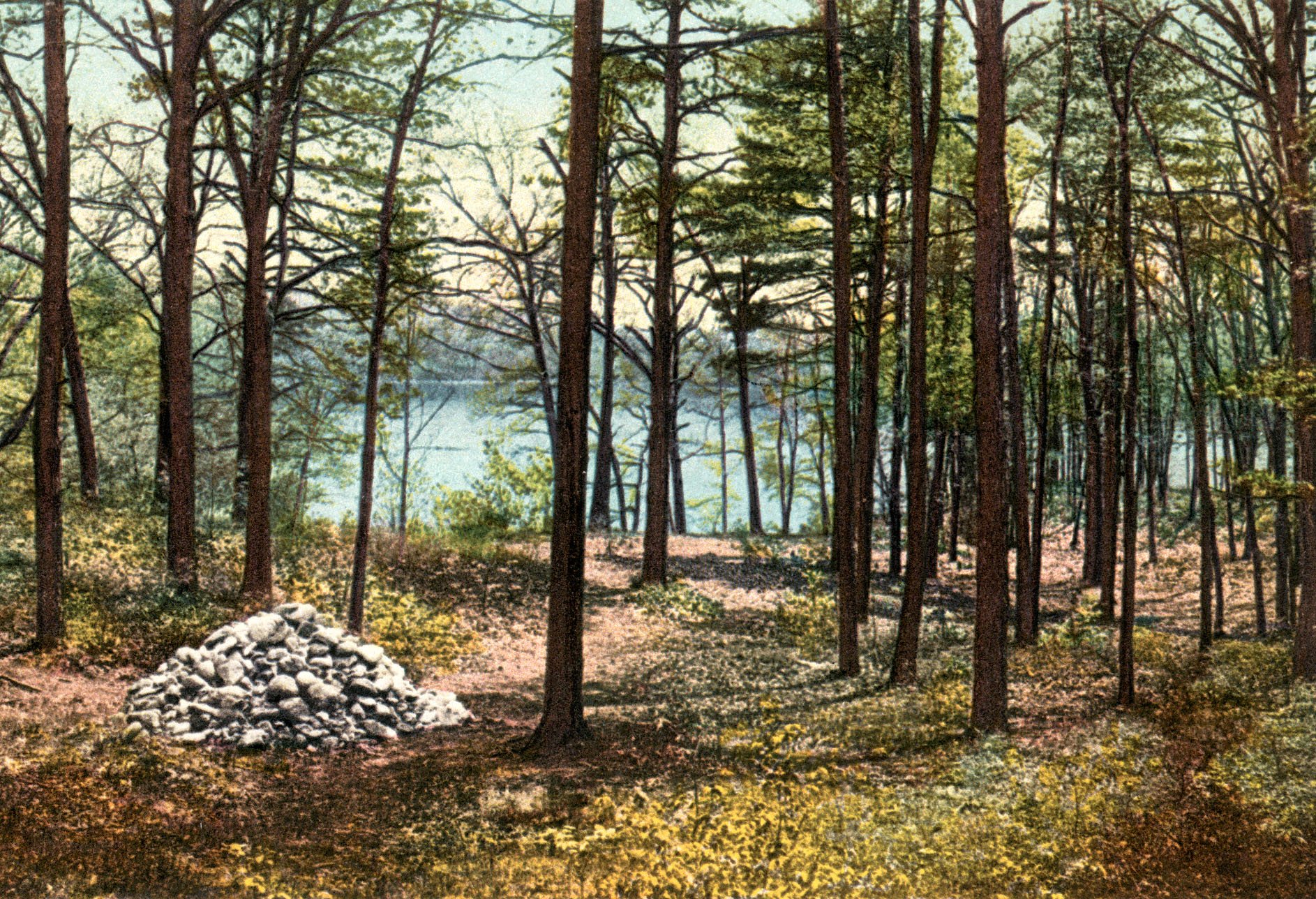
#### **What We’ll Be Reading**
##### Thoreau and the Quest to Live Deliberately
#### January 28 – February 11
#### ***Walden* by Henry David Thoreau**
#### ***Civil Disobedience* by Henry David Thoreau**
---
### [Ancient and Homeric Greece](https://ltamerica.org/ancient-and-homeric-greece/)
**Published:** January 10, 2023
**Author:** Francisco Molina
---
## Legal Pages
### [Terms and Conditions](https://ltamerica.org/termsfeed/terms-and-conditions/)
**Published:** March 11, 2026
**Author:** Francisco Molina
**Content:**
# Terms and Conditions
Last updated: March 11, 2026
Please read these Terms and Conditions carefully before using Our Service.
## Interpretation and Definitions
### Interpretation
The words whose initial letters are capitalized have meanings defined under the following conditions. The following definitions shall have the same meaning regardless of whether they appear in singular or in plural.
### Definitions
For the purposes of these Terms and Conditions:
- **Affiliate** means an entity that controls, is controlled by, or is under common control with a party, where “control” means ownership of 50% or more of the shares, equity interest or other securities entitled to vote for election of directors or other managing authority.
- **Account** means a unique account created for You to access our Service or parts of our Service.
- **Country** refers to: North Dakota, United States
- **Company** (referred to as either “the Company”, “We”, “Us” or “Our” in this Agreement) refers to Listening To America Project Inc., 1900 Burnt Boat Drive, Suite 102 Bismarck, ND 58503.
- **Device** means any device that can access the Service such as a computer, a cell phone or a digital tablet.
- **Goods** refer to the items offered for sale on the Service.
- **Orders** mean a request by You to purchase Goods from Us.
- **Service** refers to the Website.
- **Terms and Conditions** (also referred as “Terms”) mean these Terms and Conditions that form the entire agreement between You and the Company regarding the use of the Service.
- **Third-party Social Media Service** means any services or content (including data, information, products or services) provided by a third-party that may be displayed, included or made available by the Service.
- **Website** refers to Listening To America, accessible from <https://ltamerica.org>
- **You** means the individual accessing or using the Service, or the company, or other legal entity on behalf of which such individual is accessing or using the Service, as applicable.
## Acknowledgment
These are the Terms and Conditions governing the use of this Service and the agreement that operates between You and the Company. These Terms and Conditions set out the rights and obligations of all users regarding the use of the Service.
Your access to and use of the Service is conditioned on Your acceptance of and compliance with these Terms and Conditions. These Terms and Conditions apply to all visitors, users and others who access or use the Service.
By accessing or using the Service You agree to be bound by these Terms and Conditions. If You disagree with any part of these Terms and Conditions then You may not access the Service.
You represent that you are over the age of 18. The Company does not permit those under 18 to use the Service.
Your access to and use of the Service is also conditioned on Your acceptance of and compliance with the Privacy Policy of the Company. Our Privacy Policy describes Our policies and procedures on the collection, use and disclosure of Your personal information when You use the Application or the Website and tells You about Your privacy rights and how the law protects You. Please read Our Privacy Policy carefully before using Our Service.
## Placing Orders for Goods
By placing an Order for Goods through the Service, You warrant that You are legally capable of entering into binding contracts.
### Your Information
If You wish to place an Order for Goods available on the Service, You may be asked to supply certain information relevant to Your Order including, without limitation, Your name, Your email, Your phone number, Your credit card number, the expiration date of Your credit card, Your billing address, and Your shipping information.
You represent and warrant that: (i) You have the legal right to use any credit or debit card(s) or other payment method(s) in connection with any Order; and that (ii) the information You supply to us is true, correct and complete.
By submitting such information, You grant us the right to provide the information to payment processing third parties for purposes of facilitating the completion of Your Order.
### Order Cancellation
We reserve the right to refuse or cancel Your Order at any time for certain reasons including but not limited to:
- Goods availability
- Errors in the description or prices for Goods
- Errors in Your Order
We reserve the right to refuse or cancel Your Order if fraud or an unauthorized or illegal transaction is suspected.
#### Your Order Cancellation Rights
Any Goods you purchase can only be returned in accordance with these Terms and Conditions and Our Returns Policy.
Our Returns Policy forms a part of these Terms and Conditions. Please read our Returns Policy to learn more about your right to cancel Your Order.
Your right to cancel an Order only applies to Goods that are returned in the same condition as You received them. You should also include all of the product’s instructions, documents and wrappings. Goods that are damaged or not in the same condition as You received them or which are worn simply beyond opening the original packaging will not be refunded. You should therefore take reasonable care of the purchased Goods while they are in Your possession.
We will reimburse You no later than 14 days from the day on which We receive the returned Goods. We will use the same means of payment as You used for the Order, and You will not incur any fees for such reimbursement.
You will not have any right to cancel an Order for the supply of any of the following Goods:
- The supply of Goods made to Your specifications or clearly personalized.
- The supply of Goods which according to their nature are not suitable to be returned, deteriorate rapidly or where the date of expiry is over.
- The supply of Goods which are not suitable for return due to health protection or hygiene reasons and were unsealed after delivery.
- The supply of Goods which are, after delivery, according to their nature, inseparably mixed with other items.
- The supply of digital content which is not supplied on a tangible medium if the performance has begun with Your prior express consent and You have acknowledged Your loss of cancellation right.
### Availability, Errors and Inaccuracies
We are constantly updating Our offerings of Goods on the Service. The Goods available on Our Service may be mispriced, described inaccurately, or unavailable, and We may experience delays in updating information regarding our Goods on the Service and in Our advertising on other websites.
We cannot and do not guarantee the accuracy or completeness of any information, including prices, product images, specifications, availability, and services. We reserve the right to change or update information and to correct errors, inaccuracies, or omissions at any time without prior notice.
### Prices Policy
The Company reserves the right to revise its prices at any time prior to accepting an Order.
The prices quoted may be revised by the Company subsequent to accepting an Order in the event of any occurrence affecting delivery caused by government action, variation in customs duties, increased shipping charges, higher foreign exchange costs and any other matter beyond the control of the Company. In that event, You will have the right to cancel Your Order.
### Payments
All Goods purchased are subject to a one-time payment. Payment can be made through various payment methods we have available, such as Visa, MasterCard, Affinity Card, American Express cards or online payment methods (PayPal, for example).
Payment cards (credit cards or debit cards) are subject to validation checks and authorization by Your card issuer. If we do not receive the required authorization, We will not be liable for any delay or non-delivery of Your Order.
## User Accounts
When You create an account with Us, You must provide Us information that is accurate, complete, and current at all times. Failure to do so constitutes a breach of the Terms, which may result in immediate termination of Your account on Our Service.
You are responsible for safeguarding the password that You use to access the Service and for any activities or actions under Your password, whether Your password is with Our Service or a Third-Party Social Media Service.
You agree not to disclose Your password to any third party. You must notify Us immediately upon becoming aware of any breach of security or unauthorized use of Your account.
You may not use as a username the name of another person or entity or that is not lawfully available for use, a name or trademark that is subject to any rights of another person or entity other than You without appropriate authorization, or a name that is otherwise offensive, vulgar or obscene.
## Intellectual Property
The Service and its original content (excluding Content provided by You or other users), features and functionality are and will remain the exclusive property of the Company and its licensors.
The Service is protected by copyright, trademark, and other laws of both the Country and foreign countries.
Our trademarks and trade dress may not be used in connection with any product or service without the prior written consent of the Company.
## Links to Other Websites
Our Service may contain links to third-party web sites or services that are not owned or controlled by the Company.
The Company has no control over, and assumes no responsibility for, the content, privacy policies, or practices of any third party web sites or services. You further acknowledge and agree that the Company shall not be responsible or liable, directly or indirectly, for any damage or loss caused or alleged to be caused by or in connection with the use of or reliance on any such content, goods or services available on or through any such web sites or services.
We strongly advise You to read the terms and conditions and privacy policies of any third-party web sites or services that You visit.
## Termination
We may terminate or suspend Your Account immediately, without prior notice or liability, for any reason whatsoever, including without limitation if You breach these Terms and Conditions.
Upon termination, Your right to use the Service will cease immediately. If You wish to terminate Your Account, You may simply discontinue using the Service.
## Limitation of Liability
Notwithstanding any damages that You might incur, the entire liability of the Company and any of its suppliers under any provision of this Terms and Your exclusive remedy for all of the foregoing shall be limited to the amount actually paid by You through the Service or 100 USD if You haven’t purchased anything through the Service.
To the maximum extent permitted by applicable law, in no event shall the Company or its suppliers be liable for any special, incidental, indirect, or consequential damages whatsoever (including, but not limited to, damages for loss of profits, loss of data or other information, for business interruption, for personal injury, loss of privacy arising out of or in any way related to the use of or inability to use the Service, third-party software and/or third-party hardware used with the Service, or otherwise in connection with any provision of this Terms), even if the Company or any supplier has been advised of the possibility of such damages and even if the remedy fails of its essential purpose.
Some states do not allow the exclusion of implied warranties or limitation of liability for incidental or consequential damages, which means that some of the above limitations may not apply. In these states, each party’s liability will be limited to the greatest extent permitted by law.
## “AS IS” and “AS AVAILABLE” Disclaimer
The Service is provided to You “AS IS” and “AS AVAILABLE” and with all faults and defects without warranty of any kind. To the maximum extent permitted under applicable law, the Company, on its own behalf and on behalf of its Affiliates and its and their respective licensors and service providers, expressly disclaims all warranties, whether express, implied, statutory or otherwise, with respect to the Service, including all implied warranties of merchantability, fitness for a particular purpose, title and non-infringement, and warranties that may arise out of course of dealing, course of performance, usage or trade practice. Without limitation to the foregoing, the Company provides no warranty or undertaking, and makes no representation of any kind that the Service will meet Your requirements, achieve any intended results, be compatible or work with any other software, applications, systems or services, operate without interruption, meet any performance or reliability standards or be error free or that any errors or defects can or will be corrected.
Without limiting the foregoing, neither the Company nor any of the company’s provider makes any representation or warranty of any kind, express or implied: (i) as to the operation or availability of the Service, or the information, content, and materials or products included thereon; (ii) that the Service will be uninterrupted or error-free; (iii) as to the accuracy, reliability, or currency of any information or content provided through the Service; or (iv) that the Service, its servers, the content, or e-mails sent from or on behalf of the Company are free of viruses, scripts, trojan horses, worms, malware, timebombs or other harmful components.
Some jurisdictions do not allow the exclusion of certain types of warranties or limitations on applicable statutory rights of a consumer, so some or all of the above exclusions and limitations may not apply to You. But in such a case the exclusions and limitations set forth in this section shall be applied to the greatest extent enforceable under applicable law.
## Governing Law
The laws of the Country, excluding its conflicts of law rules, shall govern this Terms and Your use of the Service. Your use of the Application may also be subject to other local, state, national, or international laws.
## Disputes Resolution
If You have any concern or dispute about the Service, You agree to first try to resolve the dispute informally by contacting the Company.
## Severability and Waiver
### Severability
If any provision of these Terms is held to be unenforceable or invalid, such provision will be changed and interpreted to accomplish the objectives of such provision to the greatest extent possible under applicable law and the remaining provisions will continue in full force and effect.
### Waiver
Except as provided herein, the failure to exercise a right or to require performance of an obligation under these Terms shall not affect a party’s ability to exercise such right or require such performance at any time thereafter nor shall the waiver of a breach constitute a waiver of any subsequent breach.
## Translation Interpretation
These Terms and Conditions may have been translated if We have made them available to You on our Service. You agree that the original English text shall prevail in the case of a dispute.
## Changes to These Terms and Conditions
We reserve the right, at Our sole discretion, to modify or replace these Terms at any time. If a revision is material We will make reasonable efforts to provide at least 30 days’ notice prior to any new terms taking effect. What constitutes a material change will be determined at Our sole discretion.
By continuing to access or use Our Service after those revisions become effective, You agree to be bound by the revised terms. If You do not agree to the new terms, in whole or in part, please stop using the website and the Service.
## Contact Us
If you have any questions about these Terms and Conditions, You can contact us:
- By email: rhall@ltamerica.org
---
### [Privacy Policy](https://ltamerica.org/termsfeed/privacy-policy/)
**Published:** March 11, 2026
**Author:** Francisco Molina
**Content:**
Last updated: March 11, 2026
This Privacy Policy describes Our policies and procedures on the collection, use and disclosure of Your information when You use the Service and tells You about Your privacy rights and how the law protects You.
We use Your Personal data to provide and improve the Service. By using the Service, You agree to the collection and use of information in accordance with this Privacy Policy.
## Interpretation and Definitions
### Interpretation
The words whose initial letters are capitalized have meanings defined under the following conditions. The following definitions shall have the same meaning regardless of whether they appear in singular or in plural.
### Definitions
For the purposes of this Privacy Policy:
- **Account** means a unique account created for You to access our Service or parts of our Service.
- **Affiliate** means an entity that controls, is controlled by, or is under common control with a party, where “control” means ownership of 50% or more of the shares, equity interest or other securities entitled to vote for election of directors or other managing authority.
- **Business**, for the purpose of CCPA/CPRA, refers to the Company as the legal entity that collects Consumers’ personal information and determines the purposes and means of the processing of Consumers’ personal information, or on behalf of which such information is collected and that alone, or jointly with others, determines the purposes and means of the processing of consumers’ personal information, that does business in the State of California.
- **CCPA** and/or **CPRA** refers to the California Consumer Privacy Act (the “CCPA”) as amended by the California Privacy Rights Act of 2020 (the “CPRA”).
- **Company** (referred to as either “the Company”, “We”, “Us” or “Our” in this Agreement) refers to Listening To America Project Inc., 1900 Burnt Boat Drive, Suite 102 Bismarck, ND 58503.
For the purposes of the GDPR, the Company is the Data Controller.
- **Consumer**, means a natural person who is a California resident. A resident, as defined in the law, includes (1) every individual who is in the USA for other than a temporary or transitory purpose, and (2) every individual who is domiciled in the USA who is outside the USA for a temporary or transitory purpose.
- **Cookies** are small files that are placed on Your computer, mobile device or any other device by a website, containing the details of Your browsing history on that website among its many uses.
- **Country** refers to: North Dakota, United States
- **Data Controller**, for the purposes of the GDPR (General Data Protection Regulation), refers to the Company as the legal person which alone or jointly with others determines the purposes and means of the processing of Personal Data.
- **Device** means any device that can access the Service such as a computer, a cell phone or a digital tablet.
- **Do Not Track** (DNT) is a concept that has been promoted by US regulatory authorities, in particular the U.S. Federal Trade Commission (FTC), for the Internet industry to develop and implement a mechanism for allowing Internet users to control the tracking of their online activities across websites.
- **GDPR** refers to EU General Data Protection Regulation.
- **Personal Data** is any information that relates to an identified or identifiable individual.
For the purposes of GDPR, Personal Data means any information relating to You such as a name, an identification number, location data, online identifier or to one or more factors specific to the physical, physiological, genetic, mental, economic, cultural or social identity.
For the purposes of the CCPA/CPRA, Personal Data means any information that identifies, relates to, describes or is capable of being associated with, or could reasonably be linked, directly or indirectly, with You.
- **Service** refers to the Website.
- **Service Provider** means any natural or legal person who processes the data on behalf of the Company. It refers to third-party companies or individuals employed by the Company to facilitate the Service, to provide the Service on behalf of the Company, to perform services related to the Service or to assist the Company in analyzing how the Service is used.
For the purposes of the GDPR, Service Providers are considered Data Processors.
- **Usage Data** refers to data collected automatically, either generated by the use of the Service or from the Service infrastructure itself (for example, the duration of a page visit).
- **Website** refers to Listening To America, accessible from <https://ltamerica.org>
- **You** means the individual accessing or using the Service, or the company, or other legal entity on behalf of which such individual is accessing or using the Service, as applicable.
Under GDPR, You can be referred to as the Data Subject or as the User as you are the individual using the Service.
## Collecting and Using Your Personal Data
### Types of Data Collected
#### Personal Data
While using Our Service, We may ask You to provide Us with certain personally identifiable information that can be used to contact or identify You. Personally identifiable information may include, but is not limited to:
- Email address
- First name and last name
- Phone number
- Address, State, Province, ZIP/Postal code, City
- Usage Data
#### Usage Data
Usage Data is collected automatically when using the Service.
Usage Data may include information such as Your Device’s Internet Protocol address (e.g. IP address), browser type, browser version, the pages of our Service that You visit, the time and date of Your visit, the time spent on those pages, unique device identifiers and other diagnostic data.
When You access the Service by or through a mobile device, We may collect certain information automatically, including, but not limited to, the type of mobile device You use, Your mobile device’s unique ID, the IP address of Your mobile device, Your mobile operating system, the type of mobile Internet browser You use, unique device identifiers and other diagnostic data.
We may also collect information that Your browser sends whenever You visit Our Service or when You access the Service by or through a mobile device.
#### Tracking Technologies and Cookies
We use Cookies and similar tracking technologies to track the activity on Our Service and store certain information. Tracking technologies We use include beacons, tags, and scripts to collect and track information and to improve and analyze Our Service. The technologies We use may include:
- **Cookies or Browser Cookies.** A cookie is a small file placed on Your Device. You can instruct Your browser to refuse all Cookies or to indicate when a Cookie is being sent. However, if You do not accept Cookies, You may not be able to use some parts of our Service. Unless you have adjusted Your browser setting so that it will refuse Cookies, our Service may use Cookies.
- **Web Beacons.** Certain sections of our Service and our emails may contain small electronic files known as web beacons (also referred to as clear gifs, pixel tags, and single-pixel gifs) that permit the Company, for example, to count users who have visited those pages or opened an email and for other related website statistics (for example, recording the popularity of a certain section and verifying system and server integrity).
Cookies can be “Persistent” or “Session” Cookies. Persistent Cookies remain on Your personal computer or mobile device when You go offline, while Session Cookies are deleted as soon as You close Your web browser.
We use both Session and Persistent Cookies for the purposes set out below:
- **Necessary / Essential Cookies**
Type: Session Cookies
Administered by: Us
Purpose: These Cookies are essential to provide You with services available through the Website and to enable You to use some of its features. They help to authenticate users and prevent fraudulent use of user accounts. Without these Cookies, the services that You have asked for cannot be provided, and We only use these Cookies to provide You with those services.
- **Cookies Policy / Notice Acceptance Cookies**
Type: Persistent Cookies
Administered by: Us
Purpose: These Cookies identify if users have accepted the use of cookies on the Website.
- **Functionality Cookies**
Type: Persistent Cookies
Administered by: Us
Purpose: These Cookies allow us to remember choices You make when You use the Website, such as remembering your login details or language preference. The purpose of these Cookies is to provide You with a more personal experience and to avoid You having to re-enter your preferences every time You use the Website.
- **Tracking and Performance Cookies**
Type: Persistent Cookies
Administered by: Third Parties
Purpose: These Cookies are used to track information about traffic to the Website and how users use the Website. The information gathered via these Cookies may directly or indirectly identify you as an individual visitor. This is because the information collected is typically linked to a pseudonymous identifier associated with the device you use to access the Website. We may also use these Cookies to test new pages, features or functionality of the Website to see how our users react to them.
- **Targeting and Advertising Cookies**
Type: Persistent Cookies
Administered by: Third Parties
Purpose: These Cookies track your browsing habits to enable Us to show advertising which is more likely to be of interest to You. These Cookies use information about your browsing history to group You with other users who have similar interests. Based on that information, and with Our permission, third party advertisers can place Cookies to enable them to show adverts which We think will be relevant to your interests while You are on third party websites.
For more information about the cookies we use and your choices regarding cookies, please visit our Cookies Policy or the Cookies section of our Privacy Policy.
### Use of Your Personal Data
The Company may use Personal Data for the following purposes:
- **To provide and maintain our Service**, including to monitor the usage of our Service.
- **To manage Your Account:** to manage Your registration as a user of the Service. The Personal Data You provide can give You access to different functionalities of the Service that are available to You as a registered user.
- **For the performance of a contract:** the development, compliance and undertaking of the purchase contract for the products, items or services You have purchased or of any other contract with Us through the Service.
- **To contact You:** To contact You by email, telephone calls, SMS, or other equivalent forms of electronic communication, such as a mobile application’s push notifications regarding updates or informative communications related to the functionalities, products or contracted services, including the security updates, when necessary or reasonable for their implementation.
- **To provide You** with news, special offers, and general information about other goods, services and events which We offer that are similar to those that you have already purchased or inquired about unless You have opted not to receive such information.
- **To manage Your requests:** To attend and manage Your requests to Us.
- **For business transfers:** We may use Your information to evaluate or conduct a merger, divestiture, restructuring, reorganization, dissolution, or other sale or transfer of some or all of Our assets, whether as a going concern or as part of bankruptcy, liquidation, or similar proceeding, in which Personal Data held by Us about our Service users is among the assets transferred.
- **For other purposes**: We may use Your information for other purposes, such as data analysis, identifying usage trends, determining the effectiveness of our promotional campaigns and to evaluate and improve our Service, products, services, marketing and your experience.
We may share Your personal information in the following situations:
- **With Service Providers:** We may share Your personal information with Service Providers to monitor and analyze the use of our Service, to contact You.
- **For business transfers:** We may share or transfer Your personal information in connection with, or during negotiations of, any merger, sale of Company assets, financing, or acquisition of all or a portion of Our business to another company.
- **With Affiliates:** We may share Your information with Our affiliates, in which case we will require those affiliates to honor this Privacy Policy. Affiliates include Our parent company and any other subsidiaries, joint venture partners or other companies that We control or that are under common control with Us.
- **With business partners:** We may share Your information with Our business partners to offer You certain products, services or promotions.
- **With other users:** when You share personal information or otherwise interact in the public areas with other users, such information may be viewed by all users and may be publicly distributed outside.
- **With Your consent**: We may disclose Your personal information for any other purpose with Your consent.
### Retention of Your Personal Data
The Company will retain Your Personal Data only for as long as is necessary for the purposes set out in this Privacy Policy. We will retain and use Your Personal Data to the extent necessary to comply with our legal obligations (for example, if we are required to retain your data to comply with applicable laws), resolve disputes, and enforce our legal agreements and policies.
The Company will also retain Usage Data for internal analysis purposes. Usage Data is generally retained for a shorter period of time, except when this data is used to strengthen the security or to improve the functionality of Our Service, or We are legally obligated to retain this data for longer periods.
### Transfer of Your Personal Data
Your information, including Personal Data, is processed at the Company’s operating offices and in any other places where the parties involved in the processing are located. It means that this information may be transferred to — and maintained on — computers located outside of Your state, province, country or other governmental jurisdiction where the data protection laws may differ from those from Your jurisdiction.
Your consent to this Privacy Policy followed by Your submission of such information represents Your agreement to that transfer.
The Company will take all steps reasonably necessary to ensure that Your data is treated securely and in accordance with this Privacy Policy and no transfer of Your Personal Data will take place to an organization or a country unless there are adequate controls in place including the security of Your data and other personal information.
### Delete Your Personal Data
You have the right to delete or request that We assist in deleting the Personal Data that We have collected about You.
Our Service may give You the ability to delete certain information about You from within the Service.
You may update, amend, or delete Your information at any time by signing in to Your Account, if you have one, and visiting the account settings section that allows you to manage Your personal information. You may also contact Us to request access to, correct, or delete any personal information that You have provided to Us.
Please note, however, that We may need to retain certain information when we have a legal obligation or lawful basis to do so.
### Disclosure of Your Personal Data
#### Business Transactions
If the Company is involved in a merger, acquisition or asset sale, Your Personal Data may be transferred. We will provide notice before Your Personal Data is transferred and becomes subject to a different Privacy Policy.
#### Law enforcement
Under certain circumstances, the Company may be required to disclose Your Personal Data if required to do so by law or in response to valid requests by public authorities (e.g. a court or a government agency).
#### Other legal requirements
The Company may disclose Your Personal Data in the good faith belief that such action is necessary to:
- Comply with a legal obligation
- Protect and defend the rights or property of the Company
- Prevent or investigate possible wrongdoing in connection with the Service
- Protect the personal safety of Users of the Service or the public
- Protect against legal liability
### Security of Your Personal Data
The security of Your Personal Data is important to Us, but remember that no method of transmission over the Internet, or method of electronic storage is 100% secure. While We strive to use commercially reasonable means to protect Your Personal Data, We cannot guarantee its absolute security.
## Detailed Information on the Processing of Your Personal Data
The Service Providers We use may have access to Your Personal Data. These third-party vendors collect, store, use, process and transfer information about Your activity on Our Service in accordance with their Privacy Policies.
### Analytics
We may use third-party Service providers to monitor and analyze the use of our Service.
**Google Analytics**
Google Analytics is a web analytics service offered by Google that tracks and reports website traffic. Google uses the data collected to track and monitor the use of our Service. This data is shared with other Google services. Google may use the collected data to contextualize and personalize the ads of its own advertising network.
You can opt-out of having made your activity on the Service available to Google Analytics by installing the Google Analytics opt-out browser add-on. The add-on prevents the Google Analytics JavaScript (ga.js, analytics.js and dc.js) from sharing information with Google Analytics about visits activity.
For more information on the privacy practices of Google, please visit the Google Privacy & Terms web page: <https://policies.google.com/privacy>
## GDPR Privacy
### Legal Basis for Processing Personal Data under GDPR
We may process Personal Data under the following conditions:
- **Consent:** You have given Your consent for processing Personal Data for one or more specific purposes.
- **Performance of a contract:** Provision of Personal Data is necessary for the performance of an agreement with You and/or for any pre-contractual obligations thereof.
- **Legal obligations:** Processing Personal Data is necessary for compliance with a legal obligation to which the Company is subject.
- **Vital interests:** Processing Personal Data is necessary in order to protect Your vital interests or of another natural person.
- **Public interests:** Processing Personal Data is related to a task that is carried out in the public interest or in the exercise of official authority vested in the Company.
- **Legitimate interests:** Processing Personal Data is necessary for the purposes of the legitimate interests pursued by the Company.
In any case, the Company will gladly help to clarify the specific legal basis that applies to the processing, and in particular whether the provision of Personal Data is a statutory or contractual requirement, or a requirement necessary to enter into a contract.
### Your Rights under the GDPR
The Company undertakes to respect the confidentiality of Your Personal Data and to guarantee You can exercise Your rights.
You have the right under this Privacy Policy, and by law if You are within the EU, to:
- **Request access to Your Personal Data.** The right to access, update or delete the information We have on You. Whenever made possible, you can access, update or request deletion of Your Personal Data directly within Your account settings section. If you are unable to perform these actions yourself, please contact Us to assist You. This also enables You to receive a copy of the Personal Data We hold about You.
- **Request correction of the Personal Data that We hold about You.** You have the right to have any incomplete or inaccurate information We hold about You corrected.
- **Object to processing of Your Personal Data.** This right exists where We are relying on a legitimate interest as the legal basis for Our processing and there is something about Your particular situation, which makes You want to object to our processing of Your Personal Data on this ground. You also have the right to object where We are processing Your Personal Data for direct marketing purposes.
- **Request erasure of Your Personal Data.** You have the right to ask Us to delete or remove Personal Data when there is no good reason for Us to continue processing it.
- **Request the transfer of Your Personal Data.** We will provide to You, or to a third-party You have chosen, Your Personal Data in a structured, commonly used, machine-readable format. Please note that this right only applies to automated information which You initially provided consent for Us to use or where We used the information to perform a contract with You.
- **Withdraw Your consent.** You have the right to withdraw Your consent on using your Personal Data. If You withdraw Your consent, We may not be able to provide You with access to certain specific functionalities of the Service.
### Exercising of Your GDPR Data Protection Rights
You may exercise Your rights of access, rectification, cancellation and opposition by contacting Us. Please note that we may ask You to verify Your identity before responding to such requests. If You make a request, We will try our best to respond to You as soon as possible.
You have the right to complain to a Data Protection Authority about Our collection and use of Your Personal Data. For more information, if You are in the European Economic Area (EEA), please contact Your local data protection authority in the EEA.
## CCPA/CPRA Privacy Notice (California Privacy Rights)
This privacy notice section for California residents supplements the information contained in Our Privacy Policy and it applies solely to all visitors, users, and others who reside in the State of California.
### Categories of Personal Information Collected
We collect information that identifies, relates to, describes, references, is capable of being associated with, or could reasonably be linked, directly or indirectly, with a particular Consumer or Device. The following is a list of categories of personal information which we may collect or may have been collected from California residents within the last twelve (12) months.
Please note that the categories and examples provided in the list below are those defined in the CCPA/CPRA. This does not mean that all examples of that category of personal information were in fact collected by Us, but reflects our good faith belief to the best of Our knowledge that some of that information from the applicable category may be and may have been collected. For example, certain categories of personal information would only be collected if You provided such personal information directly to Us.
- **Category A: Identifiers.**
Examples: A real name, alias, postal address, unique personal identifier, online identifier, Internet Protocol address, email address, account name, driver’s license number, passport number, or other similar identifiers.
Collected: Yes.
- **Category B: Personal information categories listed in the California Customer Records statute (Cal. Civ. Code § 1798.80(e)).**
Examples: A name, signature, Social Security number, physical characteristics or description, address, telephone number, passport number, driver’s license or state identification card number, insurance policy number, education, employment, employment history, bank account number, credit card number, debit card number, or any other financial information, medical information, or health insurance information. Some personal information included in this category may overlap with other categories.
Collected: Yes.
- **Category C: Protected classification characteristics under California or federal law.**
Examples: Age (40 years or older), race, color, ancestry, national origin, citizenship, religion or creed, marital status, medical condition, physical or mental disability, sex (including gender, gender identity, gender expression, pregnancy or childbirth and related medical conditions), sexual orientation, veteran or military status, genetic information (including familial genetic information).
Collected: No.
- **Category D: Commercial information.**
Examples: Records and history of products or services purchased or considered.
Collected: No.
- **Category E: Biometric information.**
Examples: Genetic, physiological, behavioral, and biological characteristics, or activity patterns used to extract a template or other identifier or identifying information, such as, fingerprints, faceprints, and voiceprints, iris or retina scans, keystroke, gait, or other physical patterns, and sleep, health, or exercise data.
Collected: No.
- **Category F: Internet or other similar network activity.**
Examples: Interaction with our Service or advertisement.
Collected: Yes.
- **Category G: Geolocation data.**
Examples: Approximate physical location.
Collected: No.
- **Category H: Sensory data.**
Examples: Audio, electronic, visual, thermal, olfactory, or similar information.
Collected: No.
- **Category I: Professional or employment-related information.**
Examples: Current or past job history or performance evaluations.
Collected: No.
- **Category J: Non-public education information (per the Family Educational Rights and Privacy Act (20 U.S.C. Section 1232g, 34 C.F.R. Part 99)).**
Examples: Education records directly related to a student maintained by an educational institution or party acting on its behalf, such as grades, transcripts, class lists, student schedules, student identification codes, student financial information, or student disciplinary records.
Collected: No.
- **Category K: Inferences drawn from other personal information.**
Examples: Profile reflecting a person’s preferences, characteristics, psychological trends, predispositions, behavior, attitudes, intelligence, abilities, and aptitudes.
Collected: No.
- **Category L: Sensitive personal information.**
Examples: Account login and password information, geolocation data.
Collected: Yes.
Under CCPA/CPRA, personal information does not include:
- Publicly available information from government records
- Deidentified or aggregated consumer information
- Information excluded from the CCPA/CPRA’s scope, such as:
- Health or medical information covered by the Health Insurance Portability and Accountability Act of 1996 (HIPAA) and the California Confidentiality of Medical Information Act (CMIA) or clinical trial data
- Personal Information covered by certain sector-specific privacy laws, including the Fair Credit Reporting Act (FRCA), the Gramm-Leach-Bliley Act (GLBA) or California Financial Information Privacy Act (FIPA), and the Driver’s Privacy Protection Act of 1994
### Sources of Personal Information
We obtain the categories of personal information listed above from the following categories of sources:
- **Directly from You**. For example, from the forms You complete on our Service, preferences You express or provide through our Service.
- **Indirectly from You**. For example, from observing Your activity on our Service.
- **Automatically from You**. For example, through cookies We or our Service Providers set on Your Device as You navigate through our Service.
- **From Service Providers**. For example, third-party vendors to monitor and analyze the use of our Service, or other third-party vendors that We use to provide the Service to You.
### Use of Personal Information
We may use or disclose personal information We collect for “business purposes” or “commercial purposes” (as defined under the CCPA/CPRA), which may include the following examples:
- To operate our Service and provide You with Our Service.
- To provide You with support and to respond to Your inquiries, including to investigate and address Your concerns and monitor and improve our Service.
- To fulfill or meet the reason You provided the information. For example, if You share Your contact information to ask a question about our Service, We will use that personal information to respond to Your inquiry.
- To respond to law enforcement requests and as required by applicable law, court order, or governmental regulations.
- As described to You when collecting Your personal information or as otherwise set forth in the CCPA/CPRA.
- For internal administrative and auditing purposes.
- To detect security incidents and protect against malicious, deceptive, fraudulent or illegal activity, including, when necessary, to prosecute those responsible for such activities.
- Other one-time uses.
Please note that the examples provided above are illustrative and not intended to be exhaustive. For more details on how we use this information, please refer to the “Use of Your Personal Data” section.
If We decide to collect additional categories of personal information or use the personal information We collected for materially different, unrelated, or incompatible purposes, We will update this Privacy Policy.
### Disclosure of Personal Information
We may use or disclose and may have used or disclosed in the last twelve (12) months the following categories of personal information for business or commercial purposes:
- Category A: Identifiers
- Category B: Personal information categories listed in the California Customer Records statute (Cal. Civ. Code § 1798.80(e))
- Category F: Internet or other similar network activity
Please note that the categories listed above are those defined in the CCPA/CPRA. This does not mean that all examples of that category of personal information were in fact disclosed, but reflects our good faith belief to the best of our knowledge that some of that information from the applicable category may be and may have been disclosed.
When We disclose personal information for a business purpose or a commercial purpose, We enter a contract that describes the purpose and requires the recipient to both keep that personal information confidential and not use it for any purpose except performing the contract.
### Sharing of Personal Information
We may share, and have shared in the last twelve (12) months, Your personal information identified in the above categories with the following categories of third parties:
- Service Providers
- Our affiliates
- Our business partners
- Third party vendors to whom You or Your agents authorize Us to disclose Your personal information in connection with products or services We provide to You
### Sale of Personal Information
As defined in the CCPA/CPRA, “sell” and “sale” mean selling, renting, releasing, disclosing, disseminating, making available, transferring, or otherwise communicating orally, in writing, or by electronic or other means, a Consumer’s personal information by the Business to a third party for valuable consideration. This means that We may have received some kind of benefit in return for sharing personal information, but not necessarily a monetary benefit.
We do not sell personal information as the term sell is commonly understood. We do allow Service Providers to use Your personal information for the business purposes described in Our Privacy Policy, for activities such as advertising, marketing, and analytics, and these may be deemed a sale under CCPA/CPRA.
We may sell and may have sold in the last twelve (12) months the following categories of personal information:
- Category A: Identifiers
- Category B: Personal information categories listed in the California Customer Records statute (Cal. Civ. Code § 1798.80(e))
- Category F: Internet or other similar network activity
Please note that the categories listed above are those defined in the CCPA/CPRA. This does not mean that all examples of that category of personal information were in fact sold, but reflects our good faith belief to the best of Our knowledge that some of that information from the applicable category may be and may have been shared for value in return.
### Sale of Personal Information of Minors Under 16 Years of Age
We do not sell the personal information of Consumers We actually know are less than 16 years of age, unless We receive affirmative authorization (the “right to opt-in”) from either the Consumer who is between 13 and 16 years of age, or the parent or guardian of a Consumer less than 13 years of age. Consumers who opt-in to the sale of personal information may opt-out of future sales at any time. To exercise the right to opt-out, You (or Your authorized representative) may submit a request to Us by contacting Us.
If You have reason to believe that a child under the age of 13 (or 16) has provided Us with personal information, please contact Us with sufficient detail to enable Us to delete that information.
### Your Rights under the CCPA/CPRA
The CCPA/CPRA provides California residents with specific rights regarding their personal information. If You are a resident of California, You have the following rights:
- **The right to notice.** You have the right to be notified which categories of Personal Data are being collected and the purposes for which the Personal Data is being used.
- **The right to know/access.** Under CCPA/CPRA, You have the right to request that We disclose information to You about Our collection, use, sale, disclosure for business purposes and share of personal information. Once We receive and confirm Your request, We will disclose to You:
- The categories of personal information We collected about You
- The categories of sources for the personal information We collected about You
- Our business or commercial purposes for collecting or selling that personal information
- The categories of third parties with whom We share that personal information
- The specific pieces of personal information We collected about You
- If we sold Your personal information or disclosed Your personal information for a business purpose, We will disclose to You:
- The categories of personal information categories sold
- The categories of personal information categories disclosed
- **The right to say no to the sale or sharing of Personal Data (opt-out).** You have the right to direct Us to not sell Your personal information. To submit an opt-out request, please see the “Do Not Sell My Personal Information” section or contact Us.
- **The right to correct Personal Data.** You have the right to correct or rectify any inaccurate personal information about You that We collected. Once We receive and confirm Your request, We will use commercially reasonable efforts to correct (and direct our Service Providers to correct) Your personal information, unless an exception applies.
- **The right to limit use and disclosure of sensitive Personal Data.** You have the right to request to limit the use or disclosure of certain sensitive personal information We collected about You, unless an exception applies. To submit, please see the “Limit the Use or Disclosure of My Sensitive Personal Information” section or contact Us.
- **The right to delete Personal Data.** You have the right to request the deletion of Your Personal Data under certain circumstances, subject to certain exceptions. Once We receive and confirm Your request, We will delete (and direct Our Service Providers to delete) Your personal information from our records, unless an exception applies. We may deny Your deletion request if retaining the information is necessary for Us or Our Service Providers to:
- Complete the transaction for which We collected the personal information, provide a good or service that You requested, take actions reasonably anticipated within the context of our ongoing business relationship with You, or otherwise perform our contract with You.
- Detect security incidents, protect against malicious, deceptive, fraudulent, or illegal activity, or prosecute those responsible for such activities.
- Debug products to identify and repair errors that impair existing intended functionality.
- Exercise free speech, ensure the right of another consumer to exercise their free speech rights, or exercise another right provided for by law.
- Comply with the California Electronic Communications Privacy Act (Cal. Penal Code § 1546 et. seq.).
- Engage in public or peer-reviewed scientific, historical, or statistical research in the public interest that adheres to all other applicable ethics and privacy laws, when the information’s deletion may likely render impossible or seriously impair the research’s achievement, if You previously provided informed consent.
- Enable solely internal uses that are reasonably aligned with consumer expectations based on Your relationship with Us.
- Comply with a legal obligation.
- Make other internal and lawful uses of that information that are compatible with the context in which You provided it.
- **The right not to be discriminated against.** You have the right not to be discriminated against for exercising any of Your consumer’s rights, including by:
- Denying goods or services to You
- Charging different prices or rates for goods or services, including the use of discounts or other benefits or imposing penalties
- Providing a different level or quality of goods or services to You
- Suggesting that You will receive a different price or rate for goods or services or a different level or quality of goods or services
### Exercising Your CCPA/CPRA Data Protection Rights
Please see the “Do Not Sell My Personal Information” section and “Limit the Use or Disclosure of My Sensitive Personal Information” section for more information on how to opt out and limit the use of sensitive information collected.
Additionally, in order to exercise any of Your rights under the CCPA/CPRA, and if You are a California resident, You can contact Us:
- By email: rhall@ltamerica.org
Only You, or a person registered with the California Secretary of State that You authorize to act on Your behalf, may make a verifiable request related to Your personal information.
Your request to Us must:
- Provide sufficient information that allows Us to reasonably verify You are the person about whom We collected personal information or an authorized representative
- Describe Your request with sufficient detail that allows Us to properly understand, evaluate, and respond to it
We cannot respond to Your request or provide You with the required information if We cannot:
- Verify Your identity or authority to make the request
- And confirm that the personal information relates to You
We will disclose and deliver the required information free of charge within 45 days of receiving Your verifiable request. The time period to provide the required information may be extended once by an additional 45 days when reasonably necessary and with prior notice.
Any disclosures We provide will only cover the 12-month period preceding the verifiable request’s receipt.
For data portability requests, We will select a format to provide Your personal information that is readily usable and should allow You to transmit the information from one entity to another entity without hindrance.
### Do Not Sell My Personal Information
As defined in the CCPA/CPRA, “sell” and “sale” mean selling, renting, releasing, disclosing, disseminating, making available, transferring, or otherwise communicating orally, in writing, or by electronic or other means, a Consumer’s personal information by the Business to a third party for valuable consideration. This means that We may have received some kind of benefit in return for sharing personal information, but not necessarily a monetary benefit.
We do not sell personal information as the term sell is commonly understood. We do allow Service Providers to use Your personal information for the business purposes described in Our Privacy Policy, for activities such as advertising, marketing, and analytics, and these may be deemed a sale under CCPA/CPRA.
You have the right to opt-out of the sale of Your personal information. Once We receive and confirm a verifiable consumer request from You, we will stop selling Your personal information. To exercise Your right to opt-out, please contact Us.
The Service Providers we partner with (for example, our analytics or advertising partners) may use technology on the Service that sells personal information as defined by the CCPA/CPRA law. If you wish to opt out of the use of Your personal information for interest-based advertising purposes and these potential sales as defined under CCPA/CPRA law, you may do so by following the instructions below.
Please note that any opt out is specific to the browser You use. You may need to opt out on every browser that You use.
#### Website
If applicable, click “Privacy Preferences”, “Update Privacy Preferences” or “Do Not Sell My Personal Information” buttons listed on the Service to review Your privacy preferences and opt out of cookies and other technologies that We may use. Please note that You will need to opt out from each browser that You use to access the Service.
Additionally, You can opt out of receiving ads that are personalized as served by our Service Providers by following our instructions presented on the Service:
- The NAI’s opt-out platform: <http://www.networkadvertising.org/choices/>
- The EDAA’s opt-out platform <http://www.youronlinechoices.com/>
- The DAA’s opt-out platform: <http://optout.aboutads.info/?c=2&lang=EN>
The opt-out will place a cookie on Your computer that is unique to the browser You use to opt out. If you change browsers or delete the cookies saved by Your browser, You will need to opt out again.
#### Mobile Devices
Your mobile device may give You the ability to opt out of the use of information about the apps You use in order to serve You ads that are targeted to Your interests:
- “Opt out of Interest-Based Ads” or “Opt out of Ads Personalization” on Android devices
- “Limit Ad Tracking” on iOS devices
You can also stop the collection of location information from Your mobile device by changing the preferences on Your mobile device.
### Limit the Use or Disclosure of My Sensitive Personal Information
If You are a California resident, You have the right to limit the use and disclosure of Your sensitive personal information to that use which is necessary to perform the services or provide the goods reasonably expected by an average consumer who requests such services or goods.
We collect, use and disclose sensitive personal information in ways that are necessary to provide the Service. For more information on how We use Your personal information, please see the “Use of Your Personal Data” section or contact us.
## “Do Not Track” Policy as Required by California Online Privacy Protection Act (CalOPPA)
Our Service does not respond to Do Not Track signals.
However, some third-party websites do keep track of Your browsing activities. If You are visiting such websites, You can set Your preferences in Your web browser to inform websites that You do not want to be tracked. You can enable or disable DNT by visiting the preferences or settings page of Your web browser.
## Children’s Privacy
Our Service does not address anyone under the age of 13. We do not knowingly collect personally identifiable information from anyone under the age of 13. If You are a parent or guardian and You are aware that Your child has provided Us with Personal Data, please contact Us. If We become aware that We have collected Personal Data from anyone under the age of 13 without verification of parental consent, We take steps to remove that information from Our servers.
If We need to rely on consent as a legal basis for processing Your information and Your country requires consent from a parent, We may require Your parent’s consent before We collect and use that information.
## Links to Other Websites
Our Service may contain links to other websites that are not operated by Us. If You click on a third party link, You will be directed to that third party’s site. We strongly advise You to review the Privacy Policy of every site You visit.
We have no control over and assume no responsibility for the content, privacy policies or practices of any third party sites or services.
## Changes to this Privacy Policy
We may update Our Privacy Policy from time to time. We will notify You of any changes by posting the new Privacy Policy on this page.
We will let You know via email and/or a prominent notice on Our Service, prior to the change becoming effective and update the “Last updated” date at the top of this Privacy Policy.
You are advised to review this Privacy Policy periodically for any changes. Changes to this Privacy Policy are effective when they are posted on this page.
## Contact Us
If you have any questions about this Privacy Policy, You can contact us:
- By email: rhall@ltamerica.org
---
## Products
### [Fan Monthly](https://ltamerica.org/register/fan/)
**Published:** December 9, 2024
**Author:** Francisco Molina
**Content:**
Name:\*
First Name\*
Last Name\*
First Name Required
Last Name Required
Billing Address
Address Line 1:\*
Address Line 1 is Required
Address Line 2:
Address Line 2 is not valid
City:\*
City is Required
Country:\*
Country is Required
\-- Select Country --AfghanistanÅland IslandsAlbaniaAlgeriaAndorraAngolaAnguillaAntarcticaAntigua and BarbudaArgentinaArmeniaArubaAustraliaAustriaAzerbaijanBahamasBahrainBangladeshBarbadosBelarusBelgiumBelauBelizeBeninBermudaBhutanBoliviaBonaire, Saint Eustatius and SabaBosnia and HerzegovinaBotswanaBouvet IslandBrazilBritish Indian Ocean TerritoryBritish Virgin IslandsBruneiBulgariaBurkina FasoBurundiCambodiaCameroonCanadaCape VerdeCayman IslandsCentral African RepublicChadChileChinaChristmas IslandCocos (Keeling) IslandsColombiaComorosCongo (Brazzaville)Congo (Kinshasa)Cook IslandsCosta RicaCroatiaCubaCuraÇaoCyprusCzech RepublicDenmarkDjiboutiDominicaDominican RepublicEcuadorEgyptEl SalvadorEquatorial GuineaEritreaEstoniaEthiopiaFalkland IslandsFaroe IslandsFijiFinlandFranceFrench GuianaFrench PolynesiaFrench Southern TerritoriesGabonGambiaGeorgiaGermanyGhanaGibraltarGreeceGreenlandGrenadaGuadeloupeGuatemalaGuernseyGuineaGuinea-BissauGuyanaHaitiHeard Island and McDonald IslandsHondurasHong KongHungaryIcelandIndiaIndonesiaIranIraqRepublic of IrelandIsle of ManIsraelItalyIvory CoastJamaicaJapanJerseyJordanKazakhstanKenyaKiribatiKuwaitKyrgyzstanLaosLatviaLebanonLesothoLiberiaLibyaLiechtensteinLithuaniaLuxembourgMacao S.A.R., ChinaMacedoniaMadagascarMalawiMalaysiaMaldivesMaliMaltaMarshall IslandsMartiniqueMauritaniaMauritiusMayotteMexicoMicronesiaMoldovaMonacoMongoliaMontenegroMontserratMoroccoMozambiqueMyanmarNamibiaNauruNepalNetherlandsNetherlands AntillesNew CaledoniaNew ZealandNicaraguaNigerNigeriaNiueNorfolk IslandNorth KoreaNorwayOmanPakistanPalestinian TerritoryPanamaPapua New GuineaParaguayPeruPhilippinesPitcairnPolandPortugalPuerto RicoQatarReunionRomaniaRussiaRwandaSaint BarthélemySaint HelenaSaint Kitts and NevisSaint LuciaSaint Martin (French part)Saint Martin (Dutch part)Saint Pierre and MiquelonSaint Vincent and the GrenadinesSan MarinoSão Tomé and PríncipeSaudi ArabiaSenegalSerbiaSeychellesSierra LeoneSingaporeSlovakiaSloveniaSolomon IslandsSomaliaSouth AfricaSouth Georgia/Sandwich IslandsSouth KoreaSouth SudanSpainSri LankaSudanSurinameSvalbard and Jan MayenSwazilandSwedenSwitzerlandSyriaTaiwanTajikistanTanzaniaThailandTimor-LesteTogoTokelauTongaTrinidad and TobagoTunisiaTurkeyTurkmenistanTurks and Caicos IslandsTuvaluUgandaUkraineUnited Arab EmiratesUnited Kingdom (UK)United States (US)UruguayUzbekistanVanuatuVaticanVenezuelaVietnamWallis and FutunaWestern SaharaWestern SamoaYemenZambiaZimbabwe
State/Province:\*
State/Province is Required
Zip/Postal Code:\*
Zip/Postal Code is Required
Username:\*
Invalid Username
Email:\*
Invalid Email
Password:\*
Invalid Password
Password Confirmation:\*
Password Confirmation Doesn't Match
Password Strength
*Password must be "Medium" or stronger*
\*

Stripe
Pay with your Credit Card via Stripe Checkout
JavaScript is disabled in your browser. You will not be able to complete your purchase until you either enable JavaScript in your browser, or switch to a browser that supports it.
No val

Please fix the errors above
# Pay Listening To America
$20 / Month

**Terms:** $20 / Month
- 
Fan Monthly – Initial Payment
$20 / Month
$20.00
Total
$20.00
---
### [Fan Yearly](https://ltamerica.org/register/fan-yearly/)
**Published:** December 9, 2024
**Author:** Francisco Molina
**Content:**
Name:\*
First Name\*
Last Name\*
First Name Required
Last Name Required
Billing Address
Address Line 1:\*
Address Line 1 is Required
Address Line 2:
Address Line 2 is not valid
City:\*
City is Required
Country:\*
Country is Required
\-- Select Country --AfghanistanÅland IslandsAlbaniaAlgeriaAndorraAngolaAnguillaAntarcticaAntigua and BarbudaArgentinaArmeniaArubaAustraliaAustriaAzerbaijanBahamasBahrainBangladeshBarbadosBelarusBelgiumBelauBelizeBeninBermudaBhutanBoliviaBonaire, Saint Eustatius and SabaBosnia and HerzegovinaBotswanaBouvet IslandBrazilBritish Indian Ocean TerritoryBritish Virgin IslandsBruneiBulgariaBurkina FasoBurundiCambodiaCameroonCanadaCape VerdeCayman IslandsCentral African RepublicChadChileChinaChristmas IslandCocos (Keeling) IslandsColombiaComorosCongo (Brazzaville)Congo (Kinshasa)Cook IslandsCosta RicaCroatiaCubaCuraÇaoCyprusCzech RepublicDenmarkDjiboutiDominicaDominican RepublicEcuadorEgyptEl SalvadorEquatorial GuineaEritreaEstoniaEthiopiaFalkland IslandsFaroe IslandsFijiFinlandFranceFrench GuianaFrench PolynesiaFrench Southern TerritoriesGabonGambiaGeorgiaGermanyGhanaGibraltarGreeceGreenlandGrenadaGuadeloupeGuatemalaGuernseyGuineaGuinea-BissauGuyanaHaitiHeard Island and McDonald IslandsHondurasHong KongHungaryIcelandIndiaIndonesiaIranIraqRepublic of IrelandIsle of ManIsraelItalyIvory CoastJamaicaJapanJerseyJordanKazakhstanKenyaKiribatiKuwaitKyrgyzstanLaosLatviaLebanonLesothoLiberiaLibyaLiechtensteinLithuaniaLuxembourgMacao S.A.R., ChinaMacedoniaMadagascarMalawiMalaysiaMaldivesMaliMaltaMarshall IslandsMartiniqueMauritaniaMauritiusMayotteMexicoMicronesiaMoldovaMonacoMongoliaMontenegroMontserratMoroccoMozambiqueMyanmarNamibiaNauruNepalNetherlandsNetherlands AntillesNew CaledoniaNew ZealandNicaraguaNigerNigeriaNiueNorfolk IslandNorth KoreaNorwayOmanPakistanPalestinian TerritoryPanamaPapua New GuineaParaguayPeruPhilippinesPitcairnPolandPortugalPuerto RicoQatarReunionRomaniaRussiaRwandaSaint BarthélemySaint HelenaSaint Kitts and NevisSaint LuciaSaint Martin (French part)Saint Martin (Dutch part)Saint Pierre and MiquelonSaint Vincent and the GrenadinesSan MarinoSão Tomé and PríncipeSaudi ArabiaSenegalSerbiaSeychellesSierra LeoneSingaporeSlovakiaSloveniaSolomon IslandsSomaliaSouth AfricaSouth Georgia/Sandwich IslandsSouth KoreaSouth SudanSpainSri LankaSudanSurinameSvalbard and Jan MayenSwazilandSwedenSwitzerlandSyriaTaiwanTajikistanTanzaniaThailandTimor-LesteTogoTokelauTongaTrinidad and TobagoTunisiaTurkeyTurkmenistanTurks and Caicos IslandsTuvaluUgandaUkraineUnited Arab EmiratesUnited Kingdom (UK)United States (US)UruguayUzbekistanVanuatuVaticanVenezuelaVietnamWallis and FutunaWestern SaharaWestern SamoaYemenZambiaZimbabwe
State/Province:\*
State/Province is Required
Zip/Postal Code:\*
Zip/Postal Code is Required
Username:\*
Invalid Username
Email:\*
Invalid Email
Password:\*
Invalid Password
Password Confirmation:\*
Password Confirmation Doesn't Match
Password Strength
*Password must be "Medium" or stronger*
\*

Stripe
Pay with your Credit Card via Stripe Checkout
JavaScript is disabled in your browser. You will not be able to complete your purchase until you either enable JavaScript in your browser, or switch to a browser that supports it.
No val

Please fix the errors above
# Pay Listening To America
$240 / Year

**Terms:** $240 / Year
- 
Fan Yearly – Initial Payment
$240 / Year
$240.00
Total
$240.00
---
### [Explorer Monthly](https://ltamerica.org/register/explorer-monthly/)
**Published:** December 9, 2024
**Author:** Francisco Molina
**Content:**
Name:\*
First Name\*
Last Name\*
First Name Required
Last Name Required
Billing Address
Address Line 1:\*
Address Line 1 is Required
Address Line 2:
Address Line 2 is not valid
City:\*
City is Required
Country:\*
Country is Required
\-- Select Country --AfghanistanÅland IslandsAlbaniaAlgeriaAndorraAngolaAnguillaAntarcticaAntigua and BarbudaArgentinaArmeniaArubaAustraliaAustriaAzerbaijanBahamasBahrainBangladeshBarbadosBelarusBelgiumBelauBelizeBeninBermudaBhutanBoliviaBonaire, Saint Eustatius and SabaBosnia and HerzegovinaBotswanaBouvet IslandBrazilBritish Indian Ocean TerritoryBritish Virgin IslandsBruneiBulgariaBurkina FasoBurundiCambodiaCameroonCanadaCape VerdeCayman IslandsCentral African RepublicChadChileChinaChristmas IslandCocos (Keeling) IslandsColombiaComorosCongo (Brazzaville)Congo (Kinshasa)Cook IslandsCosta RicaCroatiaCubaCuraÇaoCyprusCzech RepublicDenmarkDjiboutiDominicaDominican RepublicEcuadorEgyptEl SalvadorEquatorial GuineaEritreaEstoniaEthiopiaFalkland IslandsFaroe IslandsFijiFinlandFranceFrench GuianaFrench PolynesiaFrench Southern TerritoriesGabonGambiaGeorgiaGermanyGhanaGibraltarGreeceGreenlandGrenadaGuadeloupeGuatemalaGuernseyGuineaGuinea-BissauGuyanaHaitiHeard Island and McDonald IslandsHondurasHong KongHungaryIcelandIndiaIndonesiaIranIraqRepublic of IrelandIsle of ManIsraelItalyIvory CoastJamaicaJapanJerseyJordanKazakhstanKenyaKiribatiKuwaitKyrgyzstanLaosLatviaLebanonLesothoLiberiaLibyaLiechtensteinLithuaniaLuxembourgMacao S.A.R., ChinaMacedoniaMadagascarMalawiMalaysiaMaldivesMaliMaltaMarshall IslandsMartiniqueMauritaniaMauritiusMayotteMexicoMicronesiaMoldovaMonacoMongoliaMontenegroMontserratMoroccoMozambiqueMyanmarNamibiaNauruNepalNetherlandsNetherlands AntillesNew CaledoniaNew ZealandNicaraguaNigerNigeriaNiueNorfolk IslandNorth KoreaNorwayOmanPakistanPalestinian TerritoryPanamaPapua New GuineaParaguayPeruPhilippinesPitcairnPolandPortugalPuerto RicoQatarReunionRomaniaRussiaRwandaSaint BarthélemySaint HelenaSaint Kitts and NevisSaint LuciaSaint Martin (French part)Saint Martin (Dutch part)Saint Pierre and MiquelonSaint Vincent and the GrenadinesSan MarinoSão Tomé and PríncipeSaudi ArabiaSenegalSerbiaSeychellesSierra LeoneSingaporeSlovakiaSloveniaSolomon IslandsSomaliaSouth AfricaSouth Georgia/Sandwich IslandsSouth KoreaSouth SudanSpainSri LankaSudanSurinameSvalbard and Jan MayenSwazilandSwedenSwitzerlandSyriaTaiwanTajikistanTanzaniaThailandTimor-LesteTogoTokelauTongaTrinidad and TobagoTunisiaTurkeyTurkmenistanTurks and Caicos IslandsTuvaluUgandaUkraineUnited Arab EmiratesUnited Kingdom (UK)United States (US)UruguayUzbekistanVanuatuVaticanVenezuelaVietnamWallis and FutunaWestern SaharaWestern SamoaYemenZambiaZimbabwe
State/Province:\*
State/Province is Required
Zip/Postal Code:\*
Zip/Postal Code is Required
Username:\*
Invalid Username
Email:\*
Invalid Email
Password:\*
Invalid Password
Password Confirmation:\*
Password Confirmation Doesn't Match
Password Strength
*Password must be "Medium" or stronger*
\*

Stripe
Pay with your Credit Card via Stripe Checkout
JavaScript is disabled in your browser. You will not be able to complete your purchase until you either enable JavaScript in your browser, or switch to a browser that supports it.
No val

Please fix the errors above
# Pay Listening To America
$50 / Month

**Terms:** $50 / Month
- 
Explorer Monthly – Initial Payment
$50 / Month
$50.00
Total
$50.00
---
### [Explorer Yearly](https://ltamerica.org/register/explorer-yearly/)
**Published:** December 9, 2024
**Author:** Francisco Molina
**Content:**
Name:\*
First Name\*
Last Name\*
First Name Required
Last Name Required
Billing Address
Address Line 1:\*
Address Line 1 is Required
Address Line 2:
Address Line 2 is not valid
City:\*
City is Required
Country:\*
Country is Required
\-- Select Country --AfghanistanÅland IslandsAlbaniaAlgeriaAndorraAngolaAnguillaAntarcticaAntigua and BarbudaArgentinaArmeniaArubaAustraliaAustriaAzerbaijanBahamasBahrainBangladeshBarbadosBelarusBelgiumBelauBelizeBeninBermudaBhutanBoliviaBonaire, Saint Eustatius and SabaBosnia and HerzegovinaBotswanaBouvet IslandBrazilBritish Indian Ocean TerritoryBritish Virgin IslandsBruneiBulgariaBurkina FasoBurundiCambodiaCameroonCanadaCape VerdeCayman IslandsCentral African RepublicChadChileChinaChristmas IslandCocos (Keeling) IslandsColombiaComorosCongo (Brazzaville)Congo (Kinshasa)Cook IslandsCosta RicaCroatiaCubaCuraÇaoCyprusCzech RepublicDenmarkDjiboutiDominicaDominican RepublicEcuadorEgyptEl SalvadorEquatorial GuineaEritreaEstoniaEthiopiaFalkland IslandsFaroe IslandsFijiFinlandFranceFrench GuianaFrench PolynesiaFrench Southern TerritoriesGabonGambiaGeorgiaGermanyGhanaGibraltarGreeceGreenlandGrenadaGuadeloupeGuatemalaGuernseyGuineaGuinea-BissauGuyanaHaitiHeard Island and McDonald IslandsHondurasHong KongHungaryIcelandIndiaIndonesiaIranIraqRepublic of IrelandIsle of ManIsraelItalyIvory CoastJamaicaJapanJerseyJordanKazakhstanKenyaKiribatiKuwaitKyrgyzstanLaosLatviaLebanonLesothoLiberiaLibyaLiechtensteinLithuaniaLuxembourgMacao S.A.R., ChinaMacedoniaMadagascarMalawiMalaysiaMaldivesMaliMaltaMarshall IslandsMartiniqueMauritaniaMauritiusMayotteMexicoMicronesiaMoldovaMonacoMongoliaMontenegroMontserratMoroccoMozambiqueMyanmarNamibiaNauruNepalNetherlandsNetherlands AntillesNew CaledoniaNew ZealandNicaraguaNigerNigeriaNiueNorfolk IslandNorth KoreaNorwayOmanPakistanPalestinian TerritoryPanamaPapua New GuineaParaguayPeruPhilippinesPitcairnPolandPortugalPuerto RicoQatarReunionRomaniaRussiaRwandaSaint BarthélemySaint HelenaSaint Kitts and NevisSaint LuciaSaint Martin (French part)Saint Martin (Dutch part)Saint Pierre and MiquelonSaint Vincent and the GrenadinesSan MarinoSão Tomé and PríncipeSaudi ArabiaSenegalSerbiaSeychellesSierra LeoneSingaporeSlovakiaSloveniaSolomon IslandsSomaliaSouth AfricaSouth Georgia/Sandwich IslandsSouth KoreaSouth SudanSpainSri LankaSudanSurinameSvalbard and Jan MayenSwazilandSwedenSwitzerlandSyriaTaiwanTajikistanTanzaniaThailandTimor-LesteTogoTokelauTongaTrinidad and TobagoTunisiaTurkeyTurkmenistanTurks and Caicos IslandsTuvaluUgandaUkraineUnited Arab EmiratesUnited Kingdom (UK)United States (US)UruguayUzbekistanVanuatuVaticanVenezuelaVietnamWallis and FutunaWestern SaharaWestern SamoaYemenZambiaZimbabwe
State/Province:\*
State/Province is Required
Zip/Postal Code:\*
Zip/Postal Code is Required
Username:\*
Invalid Username
Email:\*
Invalid Email
Password:\*
Invalid Password
Password Confirmation:\*
Password Confirmation Doesn't Match
Password Strength
*Password must be "Medium" or stronger*
\*

Stripe
Pay with your Credit Card via Stripe Checkout
JavaScript is disabled in your browser. You will not be able to complete your purchase until you either enable JavaScript in your browser, or switch to a browser that supports it.
No val

Please fix the errors above
# Pay Listening To America
$600 / Year

**Terms:** $600 / Year
- 
Explorer Yearly – Initial Payment
$600 / Year
$600.00
Total
$600.00
---
### [Champion Monthly](https://ltamerica.org/register/champion-monthly/)
**Published:** December 9, 2024
**Author:** Francisco Molina
**Content:**
Name:\*
First Name\*
Last Name\*
First Name Required
Last Name Required
Billing Address
Address Line 1:\*
Address Line 1 is Required
Address Line 2:
Address Line 2 is not valid
City:\*
City is Required
Country:\*
Country is Required
\-- Select Country --AfghanistanÅland IslandsAlbaniaAlgeriaAndorraAngolaAnguillaAntarcticaAntigua and BarbudaArgentinaArmeniaArubaAustraliaAustriaAzerbaijanBahamasBahrainBangladeshBarbadosBelarusBelgiumBelauBelizeBeninBermudaBhutanBoliviaBonaire, Saint Eustatius and SabaBosnia and HerzegovinaBotswanaBouvet IslandBrazilBritish Indian Ocean TerritoryBritish Virgin IslandsBruneiBulgariaBurkina FasoBurundiCambodiaCameroonCanadaCape VerdeCayman IslandsCentral African RepublicChadChileChinaChristmas IslandCocos (Keeling) IslandsColombiaComorosCongo (Brazzaville)Congo (Kinshasa)Cook IslandsCosta RicaCroatiaCubaCuraÇaoCyprusCzech RepublicDenmarkDjiboutiDominicaDominican RepublicEcuadorEgyptEl SalvadorEquatorial GuineaEritreaEstoniaEthiopiaFalkland IslandsFaroe IslandsFijiFinlandFranceFrench GuianaFrench PolynesiaFrench Southern TerritoriesGabonGambiaGeorgiaGermanyGhanaGibraltarGreeceGreenlandGrenadaGuadeloupeGuatemalaGuernseyGuineaGuinea-BissauGuyanaHaitiHeard Island and McDonald IslandsHondurasHong KongHungaryIcelandIndiaIndonesiaIranIraqRepublic of IrelandIsle of ManIsraelItalyIvory CoastJamaicaJapanJerseyJordanKazakhstanKenyaKiribatiKuwaitKyrgyzstanLaosLatviaLebanonLesothoLiberiaLibyaLiechtensteinLithuaniaLuxembourgMacao S.A.R., ChinaMacedoniaMadagascarMalawiMalaysiaMaldivesMaliMaltaMarshall IslandsMartiniqueMauritaniaMauritiusMayotteMexicoMicronesiaMoldovaMonacoMongoliaMontenegroMontserratMoroccoMozambiqueMyanmarNamibiaNauruNepalNetherlandsNetherlands AntillesNew CaledoniaNew ZealandNicaraguaNigerNigeriaNiueNorfolk IslandNorth KoreaNorwayOmanPakistanPalestinian TerritoryPanamaPapua New GuineaParaguayPeruPhilippinesPitcairnPolandPortugalPuerto RicoQatarReunionRomaniaRussiaRwandaSaint BarthélemySaint HelenaSaint Kitts and NevisSaint LuciaSaint Martin (French part)Saint Martin (Dutch part)Saint Pierre and MiquelonSaint Vincent and the GrenadinesSan MarinoSão Tomé and PríncipeSaudi ArabiaSenegalSerbiaSeychellesSierra LeoneSingaporeSlovakiaSloveniaSolomon IslandsSomaliaSouth AfricaSouth Georgia/Sandwich IslandsSouth KoreaSouth SudanSpainSri LankaSudanSurinameSvalbard and Jan MayenSwazilandSwedenSwitzerlandSyriaTaiwanTajikistanTanzaniaThailandTimor-LesteTogoTokelauTongaTrinidad and TobagoTunisiaTurkeyTurkmenistanTurks and Caicos IslandsTuvaluUgandaUkraineUnited Arab EmiratesUnited Kingdom (UK)United States (US)UruguayUzbekistanVanuatuVaticanVenezuelaVietnamWallis and FutunaWestern SaharaWestern SamoaYemenZambiaZimbabwe
State/Province:\*
State/Province is Required
Zip/Postal Code:\*
Zip/Postal Code is Required
Username:\*
Invalid Username
Email:\*
Invalid Email
Password:\*
Invalid Password
Password Confirmation:\*
Password Confirmation Doesn't Match
Password Strength
*Password must be "Medium" or stronger*
\*

Stripe
Pay with your Credit Card via Stripe Checkout
JavaScript is disabled in your browser. You will not be able to complete your purchase until you either enable JavaScript in your browser, or switch to a browser that supports it.
No val

Please fix the errors above
# Pay Listening To America
$200 / Month

**Terms:** $200 / Month
- 
Champion Monthly – Initial Payment
$200 / Month
$200.00
Total
$200.00
---
### [Champion Yearly](https://ltamerica.org/register/champion-yearly/)
**Published:** December 9, 2024
**Author:** Francisco Molina
**Content:**
Name:\*
First Name\*
Last Name\*
First Name Required
Last Name Required
Billing Address
Address Line 1:\*
Address Line 1 is Required
Address Line 2:
Address Line 2 is not valid
City:\*
City is Required
Country:\*
Country is Required
\-- Select Country --AfghanistanÅland IslandsAlbaniaAlgeriaAndorraAngolaAnguillaAntarcticaAntigua and BarbudaArgentinaArmeniaArubaAustraliaAustriaAzerbaijanBahamasBahrainBangladeshBarbadosBelarusBelgiumBelauBelizeBeninBermudaBhutanBoliviaBonaire, Saint Eustatius and SabaBosnia and HerzegovinaBotswanaBouvet IslandBrazilBritish Indian Ocean TerritoryBritish Virgin IslandsBruneiBulgariaBurkina FasoBurundiCambodiaCameroonCanadaCape VerdeCayman IslandsCentral African RepublicChadChileChinaChristmas IslandCocos (Keeling) IslandsColombiaComorosCongo (Brazzaville)Congo (Kinshasa)Cook IslandsCosta RicaCroatiaCubaCuraÇaoCyprusCzech RepublicDenmarkDjiboutiDominicaDominican RepublicEcuadorEgyptEl SalvadorEquatorial GuineaEritreaEstoniaEthiopiaFalkland IslandsFaroe IslandsFijiFinlandFranceFrench GuianaFrench PolynesiaFrench Southern TerritoriesGabonGambiaGeorgiaGermanyGhanaGibraltarGreeceGreenlandGrenadaGuadeloupeGuatemalaGuernseyGuineaGuinea-BissauGuyanaHaitiHeard Island and McDonald IslandsHondurasHong KongHungaryIcelandIndiaIndonesiaIranIraqRepublic of IrelandIsle of ManIsraelItalyIvory CoastJamaicaJapanJerseyJordanKazakhstanKenyaKiribatiKuwaitKyrgyzstanLaosLatviaLebanonLesothoLiberiaLibyaLiechtensteinLithuaniaLuxembourgMacao S.A.R., ChinaMacedoniaMadagascarMalawiMalaysiaMaldivesMaliMaltaMarshall IslandsMartiniqueMauritaniaMauritiusMayotteMexicoMicronesiaMoldovaMonacoMongoliaMontenegroMontserratMoroccoMozambiqueMyanmarNamibiaNauruNepalNetherlandsNetherlands AntillesNew CaledoniaNew ZealandNicaraguaNigerNigeriaNiueNorfolk IslandNorth KoreaNorwayOmanPakistanPalestinian TerritoryPanamaPapua New GuineaParaguayPeruPhilippinesPitcairnPolandPortugalPuerto RicoQatarReunionRomaniaRussiaRwandaSaint BarthélemySaint HelenaSaint Kitts and NevisSaint LuciaSaint Martin (French part)Saint Martin (Dutch part)Saint Pierre and MiquelonSaint Vincent and the GrenadinesSan MarinoSão Tomé and PríncipeSaudi ArabiaSenegalSerbiaSeychellesSierra LeoneSingaporeSlovakiaSloveniaSolomon IslandsSomaliaSouth AfricaSouth Georgia/Sandwich IslandsSouth KoreaSouth SudanSpainSri LankaSudanSurinameSvalbard and Jan MayenSwazilandSwedenSwitzerlandSyriaTaiwanTajikistanTanzaniaThailandTimor-LesteTogoTokelauTongaTrinidad and TobagoTunisiaTurkeyTurkmenistanTurks and Caicos IslandsTuvaluUgandaUkraineUnited Arab EmiratesUnited Kingdom (UK)United States (US)UruguayUzbekistanVanuatuVaticanVenezuelaVietnamWallis and FutunaWestern SaharaWestern SamoaYemenZambiaZimbabwe
State/Province:\*
State/Province is Required
Zip/Postal Code:\*
Zip/Postal Code is Required
Username:\*
Invalid Username
Email:\*
Invalid Email
Password:\*
Invalid Password
Password Confirmation:\*
Password Confirmation Doesn't Match
Password Strength
*Password must be "Medium" or stronger*
\*

Stripe
Pay with your Credit Card via Stripe Checkout
JavaScript is disabled in your browser. You will not be able to complete your purchase until you either enable JavaScript in your browser, or switch to a browser that supports it.
No val

Please fix the errors above
# Pay Listening To America
$2,400 / Year

**Terms:** $2,400 / Year
- 
Champion Yearly – Initial Payment
$2,400 / Year
$2,400.00
Total
$2,400.00
---
## Groups
### [All memberships](https://ltamerica.org/plans/all-memberships/)
**Published:** December 9, 2024
**Author:** Francisco Molina
**Content:**
#### **Help keep American history and the humanities alive**
Your membership makes Listening to America and Clay Jenkinson’s ongoing work in American
history and the humanities possible.
Fan
$20 / Month
[ Sign Up ](https://ltamerica.org/register/fan/)
Fan Yearly
$240 / Year
[ Sign Up ](https://ltamerica.org/register/fan-yearly/)
Explorer Monthly
$50 / Month
[ Sign Up ](https://ltamerica.org/register/explorer-monthly/)
Explorer Yearly
$600 / Year
[ Sign Up ](https://ltamerica.org/register/explorer-yearly/)
Champion Monthly
$200 / Month
[ Sign Up ](https://ltamerica.org/register/champion-monthly/)
Champion Yearly
$2,400 / Year
[ Sign Up ](https://ltamerica.org/register/champion-yearly/)
---
## Campaigns
### [LTA](https://ltamerica.org/campaigns/simple-1-column/)
**Published:** January 22, 2026
**Author:** Dennis McKenna
**Content:**
**A $100 Simple Give is an easy and effective way to support LTA’s mission. We’re deeply grateful for your support in this essential work.**
---
## Page Layouts
### [Header Transparent](https://ltamerica.org/layout_manager/header-transparent/)
**Published:** July 13, 2017
**Author:** Francisco Molina
---
## Page Builder Smart Areas
### [Footer](https://ltamerica.org/znpb_template_mngr/footer/)
**Published:** July 10, 2017
**Author:** Francisco Molina
---
## Categories
### [Uncategorized](https://ltamerica.org/category/uncategorized/)
---
### [Features](https://ltamerica.org/category/features/)
**Description:** FEATURES
---
### [Dispatches from the Road](https://ltamerica.org/category/dispatches-from-the-road/)
**Description:** DISPATCHES FROM THE ROAD
---
### [Books](https://ltamerica.org/category/books/)
**Description:** BOOKS
---
### [Videos](https://ltamerica.org/category/videos/)
---
### [Video Dispatches](https://ltamerica.org/category/video-dispatches/)
---
### [Clay's Notebook](https://ltamerica.org/category/clays-notebook/)
---
### [LTA Friends Videos](https://ltamerica.org/category/lta_friends_videos/)
---
### [LTA Friends Book Club](https://ltamerica.org/category/lta-friends-book-club/)
---
## Tags
### [Lewis and Clark](https://ltamerica.org/tag/lewis-and-clark/)
**Description:** 2025 ROADTRIP — RETRACING THE LEWIS AND CLARK TRAIL Kicking off on May 6th at Thomas Jefferson’s Poplar Forest in Lynchburg, Virginia, Clay set out to retrace Lewis and Clark’s celebrated 1804-1806 expedition across the continent. Clay will trace the Lewis and Clark expedition from Virginia, where it was conceived in the imagination of Thomas Jefferson, all the way down the Ohio River, up the Mississippi and Missouri, over the Bitterroot Mountains, down the Clearwater, Snake, and Columbia rivers — and back again. Traveling in a 23-foot Airstream, Clay’s expedition is a central part of LTA’s big initiative to take the pulse of America as it approaches its 250th birthday. You can follow Clay’s Lewis and Clark adventure in the stories and videos linked below and on the LTA Facebook site. Also, subscribe to our newsletter.
---
### [Wyoming](https://ltamerica.org/tag/wyoming/)
---
### [Books](https://ltamerica.org/tag/books/)
---
### [John Steinbeck](https://ltamerica.org/tag/john-steinbeck/)
**Description:** LTA’S 2024 TRAVELS WITH CHARLEY ROAD TRIP Beginning this spring, Clay is following John Steinbeck’s 10,000-mile trek around the USA (and making a few fascinating detours of his own). Traveling in a 23-foot Airstream, Clay’s expedition is a central part of LTA’s big initiative to take the pulse of America as it approaches its 250th birthday. You can follow Clay’s Steinbeck-related adventures in the stories and videos linked below and on the LTA Facebook site. Also, subscribe to our newsletter. Map of Steinbeck’s 1960 journey around the USA on display at the National Steinbeck Center in Salinas, Calif.
---
### [Montana](https://ltamerica.org/tag/montana/)
---
### [Canada](https://ltamerica.org/tag/canada/)
---
### [Water in the West](https://ltamerica.org/tag/water-in-the-west/)
---
### [Utah](https://ltamerica.org/tag/utah/)
---
### [Colorado River](https://ltamerica.org/tag/colorado-river/)
---
### [Native Americans](https://ltamerica.org/tag/native-americans/)
---
### [Arizona](https://ltamerica.org/tag/arizona/)
---
### [Colorado](https://ltamerica.org/tag/colorado/)
---
### [John Wesley Powell](https://ltamerica.org/tag/john-wesley-powell/)
---
### [Navajo](https://ltamerica.org/tag/navajo/)
---
### [Hopi](https://ltamerica.org/tag/hopi/)
---
### [Edward S. Curtis](https://ltamerica.org/tag/edward-s-curtis/)
---
### [North Dakota](https://ltamerica.org/tag/north-dakota/)
---
### [Theodore Roosevelt](https://ltamerica.org/tag/theodore-roosevelt/)
---
### [South Dakota](https://ltamerica.org/tag/south-dakota/)
---
### [Atomic West](https://ltamerica.org/tag/atomic-west/)
---
### [Thomas Jefferson](https://ltamerica.org/tag/thomas-jefferson/)
---
### [U.S. Presidents](https://ltamerica.org/tag/u-s-presidents/)
---
### [National Parks](https://ltamerica.org/tag/national-parks/)
---
### [Nebraska](https://ltamerica.org/tag/nebraska/)
---
### [Space Exploration](https://ltamerica.org/tag/space-exploration/)
---
### [Poetry](https://ltamerica.org/tag/poetry/)
---
### [Massachusetts](https://ltamerica.org/tag/massachusetts/)
---
### [Rivers](https://ltamerica.org/tag/rivers/)
---
### [Humanities](https://ltamerica.org/tag/humanities/)
---
### [Idaho](https://ltamerica.org/tag/idaho/)
---
### [Washington](https://ltamerica.org/tag/washington/)
---
### [California](https://ltamerica.org/tag/california/)
---
### [Airstream](https://ltamerica.org/tag/airstream/)
---
### [Holiday](https://ltamerica.org/tag/holiday/)
---
### [Road Trips](https://ltamerica.org/tag/road-trips/)
---
### [Great Plains](https://ltamerica.org/tag/great-plains/)
---
### [State Parks](https://ltamerica.org/tag/state-parks/)
---
### [Sports](https://ltamerica.org/tag/sports/)
---
### [Oppenheimer](https://ltamerica.org/tag/oppenheimer/)
---
### [America at 250](https://ltamerica.org/tag/america-at-250/)
---
### [Oregon](https://ltamerica.org/tag/oregon/)
---
### [Virginia](https://ltamerica.org/tag/virginia/)
---
### [Thoreau](https://ltamerica.org/tag/thoreau/)
---
### [New Mexico](https://ltamerica.org/tag/new-mexico/)
---
### [New York](https://ltamerica.org/tag/new-york/)
---
### [Illinois](https://ltamerica.org/tag/illinois/)
---
### [Video](https://ltamerica.org/tag/video/)
**Description:** VIDEOS
---
### [Minnesota](https://ltamerica.org/tag/minnesota/)
---
### [Steinbeck Travels](https://ltamerica.org/tag/steinbeck-travels/)
**Description:** LTA’S 2024 TRAVELS WITH CHARLEY ROAD TRIP Beginning this spring, Clay is following John Steinbeck’s 10,000-mile trek around the USA (and making a few fascinating detours of his own). Traveling in a 23-foot Airstream, Clay’s expedition is a central part of LTA’s big initiative to take the pulse of America as it approaches its 250th birthday. You can follow Clay’s Steinbeck-related adventures in the stories and videos linked below and on the LTA Facebook site. Also, subscribe to our newsletter. Map of Steinbeck’s 1960 journey around the USA on display at the National Steinbeck Center in Salinas, Calif.
---
### [Iowa](https://ltamerica.org/tag/iowa/)
---
### [Maine](https://ltamerica.org/tag/maine/)
---
### [William Shirer](https://ltamerica.org/tag/william-shirer/)
---
### [Alaska](https://ltamerica.org/tag/alaska/)
---
### [Hawaii](https://ltamerica.org/tag/hawaii/)
---
### [Vermont](https://ltamerica.org/tag/vermont/)
---
### [New England](https://ltamerica.org/tag/new-england/)
---
### [Ohio](https://ltamerica.org/tag/ohio/)
---
### [Carl Sandburg](https://ltamerica.org/tag/carl-sandburg/)
---
### [Reading](https://ltamerica.org/tag/reading/)
---
### [North Carolina](https://ltamerica.org/tag/north-carolina/)
---
### [John Adams](https://ltamerica.org/tag/john-adams/)
---
### [England](https://ltamerica.org/tag/england/)
---
### [Texas](https://ltamerica.org/tag/texas/)
---
### [Missippi](https://ltamerica.org/tag/missippi/)
---
### [Mississippi](https://ltamerica.org/tag/mississippi/)
---
### [Civil Rights](https://ltamerica.org/tag/civil-rights/)
---
### [Holidays](https://ltamerica.org/tag/holidays/)
---
### [Louisiana](https://ltamerica.org/tag/louisiana/)
---
### [Missouri](https://ltamerica.org/tag/missouri/)
---
### [Podcast](https://ltamerica.org/tag/podcast/)
---
### [Walden](https://ltamerica.org/tag/walden/)
---
### [Hemingway](https://ltamerica.org/tag/hemingway/)
---
### [Florida](https://ltamerica.org/tag/florida/)
---
### [Cuba](https://ltamerica.org/tag/cuba/)
---
### [Alabama](https://ltamerica.org/tag/alabama/)
---
### [Georgia](https://ltamerica.org/tag/georgia/)
---
### [South Carolina](https://ltamerica.org/tag/south-carolina/)
---
### [Pennsylvania](https://ltamerica.org/tag/pennsylvania/)
---
### [Tennessee](https://ltamerica.org/tag/tennessee/)
---
### [Rome](https://ltamerica.org/tag/rome/)
---
### [Republics](https://ltamerica.org/tag/republics/)
---
### [The Constitution](https://ltamerica.org/tag/the-constitution/)
---
### [Art](https://ltamerica.org/tag/art/)
---
### [Culture](https://ltamerica.org/tag/culture/)
---
### [Leonardo da Vinci](https://ltamerica.org/tag/leonardo-da-vinci/)
---
### [Travel](https://ltamerica.org/tag/travel/)
---
### [U.S. Constitution](https://ltamerica.org/tag/u-s-constitution/)
---
### [In My Life](https://ltamerica.org/tag/in-my-life/)
---
### [Guest Essay](https://ltamerica.org/tag/guest-essay/)
---
## Media Tags
### [Henry Wallace and President Franklin Roosevel](https://ltamerica.org/media_tag/henry-wallace-and-president-franklin-roosevel/)
---
### [Lochsa Lodge in Idaho](https://ltamerica.org/media_tag/lochsa-lodge-in-idaho/)
---
### [Wolfman Jack](https://ltamerica.org/media_tag/wolfman-jack/)
---
### [Herb Jepko](https://ltamerica.org/media_tag/herb-jepko/)
---
### [Alan Berg](https://ltamerica.org/media_tag/alan-berg/)
---
### [SiriusXM Prime Country.](https://ltamerica.org/media_tag/siriusxm-prime-country/)
---
### [Lochsa Lodge in winter.](https://ltamerica.org/media_tag/lochsa-lodge-in-winter/)
---
### [The Spymasters by Chris Whipple](https://ltamerica.org/media_tag/the-spymasters-by-chris-whipple/)
---
### [Scribner 2021.](https://ltamerica.org/media_tag/scribner-2021/)
---
### [The Lochsa River in the Bitterroot Mountains near the Montana](https://ltamerica.org/media_tag/the-lochsa-river-in-the-bitterroot-mountains-near-the-montana/)
---
### [Idaho boarder.](https://ltamerica.org/media_tag/idaho-boarder/)
---
### [In America: Travels with John Steinbeck by Danish author Geert Mak](https://ltamerica.org/media_tag/in-america-travels-with-john-steinbeck-by-danish-author-geert-mak/)
---
### [2014](https://ltamerica.org/media_tag/2014/)
---
### [One of the Jerry Johnson Hot Springs in the Bitterroot Mountains.](https://ltamerica.org/media_tag/one-of-the-jerry-johnson-hot-springs-in-the-bitterroot-mountains/)
---
### [William Least Heat Moon in 2008. (Photo by Joe Mabel)](https://ltamerica.org/media_tag/william-least-heat-moon-in-2008-photo-by-joe-mabel/)
---
### [John Steinbeck](https://ltamerica.org/media_tag/john-steinbeck/)
---
### [Travels With Charley](https://ltamerica.org/media_tag/travels-with-charley/)
---
### [1962.](https://ltamerica.org/media_tag/1962/)
---
### [Elizabeth Otis. John Steinbeck](https://ltamerica.org/media_tag/elizabeth-otis-john-steinbeck/)
---
### [The Hailstorm Thomas Hart Benton](https://ltamerica.org/media_tag/the-hailstorm-thomas-hart-benton/)
---
### [Daughters of Revolution by Grant Wood](https://ltamerica.org/media_tag/daughters-of-revolution-by-grant-wood/)
---
### [1932.](https://ltamerica.org/media_tag/1932/)
---
### [his dog Charley and his camper rig](https://ltamerica.org/media_tag/his-dog-charley-and-his-camper-rig/)
---
### [Coe College](https://ltamerica.org/media_tag/coe-college/)
---
### [Captain James Cook](https://ltamerica.org/media_tag/captain-james-cook/)
---
### [John Weber](https://ltamerica.org/media_tag/john-weber/)
---
### [Captain Cook](https://ltamerica.org/media_tag/captain-cook/)
---
### [Joan Weber](https://ltamerica.org/media_tag/joan-weber/)
---
### [Apollo VIII astronauts Frank Borman](https://ltamerica.org/media_tag/apollo-viii-astronauts-frank-borman/)
---
### [Bill Anders and Jim Lovell (left to right).](https://ltamerica.org/media_tag/bill-anders-and-jim-lovell-left-to-right/)
---
### ["Earthrise" photograph](https://ltamerica.org/media_tag/earthrise-photograph/)
---
### [Carl Sandburg is best know as a poet and Lincoln biographer.](https://ltamerica.org/media_tag/carl-sandburg-is-best-know-as-a-poet-and-lincoln-biographer/)
---
### [NASA](https://ltamerica.org/media_tag/nasa/)
---
### [Space](https://ltamerica.org/media_tag/space/)
---
### [Desert Solitaire](https://ltamerica.org/media_tag/desert-solitaire/)
---
### [Edward Abbey](https://ltamerica.org/media_tag/edward-abbey/)
---
### [Maple River](https://ltamerica.org/media_tag/maple-river/)
---
### [North Dakota](https://ltamerica.org/media_tag/north-dakota/)
---
### [Westminster at dawn](https://ltamerica.org/media_tag/westminster-at-dawn/)
---
### [London Pub](https://ltamerica.org/media_tag/london-pub/)
---
### [Meteor Crater Arizona](https://ltamerica.org/media_tag/meteor-crater-arizona/)
---
### [Meteor Crater](https://ltamerica.org/media_tag/meteor-crater/)
---
### [Henry Stimpson](https://ltamerica.org/media_tag/henry-stimpson/)
---
### [Books on Shelf](https://ltamerica.org/media_tag/books-on-shelf/)
---
### [Glenwood Canyon](https://ltamerica.org/media_tag/glenwood-canyon/)
---
### [Clay near Delicate Arch in Arches National Park](https://ltamerica.org/media_tag/clay-near-delicate-arch-in-arches-national-park/)
---
### [outside of Moab](https://ltamerica.org/media_tag/outside-of-moab/)
---
### [UT.](https://ltamerica.org/media_tag/ut/)
---
### [Lee Harvey Oswald](https://ltamerica.org/media_tag/lee-harvey-oswald/)
---
### [Texas School Book Depository](https://ltamerica.org/media_tag/texas-school-book-depository/)
---
### [Confluence of Green and Colorado Rivers](https://ltamerica.org/media_tag/confluence-of-green-and-colorado-rivers/)
---
### [Big Texan Steak Ranch](https://ltamerica.org/media_tag/big-texan-steak-ranch/)
---
### [Amarillo](https://ltamerica.org/media_tag/amarillo/)
---
### [TX](https://ltamerica.org/media_tag/tx/)
---
### [Clay Jenkinson](https://ltamerica.org/media_tag/clay-jenkinson/)
---
### [Bill Steigerwald](https://ltamerica.org/media_tag/bill-steigerwald/)
---
### [holding a copy of his book](https://ltamerica.org/media_tag/holding-a-copy-of-his-book/)
---
### [Dogging Steinbeck.](https://ltamerica.org/media_tag/dogging-steinbeck/)
---
### [Lochsa Lodge in Idaho's Bitterroot Mountains and site of Clay's annual hummanites retreats.](https://ltamerica.org/media_tag/lochsa-lodge-in-idahos-bitterroot-mountains-and-site-of-clays-annual-hummanites-retreats/)
---
### [Cable news logos](https://ltamerica.org/media_tag/cable-news-logos/)
---
### [Walter Cronkite](https://ltamerica.org/media_tag/walter-cronkite/)
---
### [President Kennedy and Adlai Stevenson in the Oval Office.](https://ltamerica.org/media_tag/president-kennedy-and-adlai-stevenson-in-the-oval-office/)
---
### [John Steinbeck receiving the Nobel Prize for Literature.](https://ltamerica.org/media_tag/john-steinbeck-receiving-the-nobel-prize-for-literature/)
---
### [John Steinbeck delivering his Nobel Prize Speech.](https://ltamerica.org/media_tag/john-steinbeck-delivering-his-nobel-prize-speech/)
---
### [Cover of Life magazine](https://ltamerica.org/media_tag/cover-of-life-magazine/)
---
### [September](https://ltamerica.org/media_tag/september/)
---
### [1961.](https://ltamerica.org/media_tag/1961/)
---
### [A family bomb shelter in the early 1960s.](https://ltamerica.org/media_tag/a-family-bomb-shelter-in-the-early-1960s/)
---
### [Shakespeare & Company](https://ltamerica.org/media_tag/shakespeare-company/)
---
### [the famous English-language bookshop in the heart of Paris.](https://ltamerica.org/media_tag/the-famous-english-language-bookshop-in-the-heart-of-paris/)
---
### [Digital display on the Chunnel between England and France.](https://ltamerica.org/media_tag/digital-display-on-the-chunnel-between-england-and-france/)
---
### [The Chunnel](https://ltamerica.org/media_tag/the-chunnel/)
---
### [a high speed rail connection between Britain and France.](https://ltamerica.org/media_tag/a-high-speed-rail-connection-between-britain-and-france/)
---
### [An American Express Travelers Cheque](https://ltamerica.org/media_tag/an-american-express-travelers-cheque/)
---
### [once indispensable to the international traveler.](https://ltamerica.org/media_tag/once-indispensable-to-the-international-traveler/)
---
### [The frigate](https://ltamerica.org/media_tag/the-frigate/)
---
### [The Boston](https://ltamerica.org/media_tag/the-boston/)
---
### [which John Adams sailed to England.](https://ltamerica.org/media_tag/which-john-adams-sailed-to-england/)
---
### [Sainte-Chapelle in Paris](https://ltamerica.org/media_tag/sainte-chapelle-in-paris/)
---
### [A Starbucks mug from Paris.](https://ltamerica.org/media_tag/a-starbucks-mug-from-paris/)
---
### [A Kentucky Fried Chicken outlet in Oxford](https://ltamerica.org/media_tag/a-kentucky-fried-chicken-outlet-in-oxford/)
---
### [England.](https://ltamerica.org/media_tag/england/)
---
### [France](https://ltamerica.org/media_tag/france/)
---
### [President Thomas Jefferson](https://ltamerica.org/media_tag/president-thomas-jefferson/)
---
### [Cuba](https://ltamerica.org/media_tag/cuba/)
---
### [Thomas Jefferson's Imperial Dreams](https://ltamerica.org/media_tag/thomas-jeffersons-imperial-dreams/)
---
### [Clay Jenkinson Bay of Pigs Museum](https://ltamerica.org/media_tag/clay-jenkinson-bay-of-pigs-museum/)
---
### [May 10](https://ltamerica.org/media_tag/may-10/)
---
### [1963](https://ltamerica.org/media_tag/1963/)
---
### [Jose Martí in New York](https://ltamerica.org/media_tag/jose-marti-in-new-york/)
---
### [1885](https://ltamerica.org/media_tag/1885/)
---
### [A young Fidel Castro on his arrest after the 1953 attack on the Moncada Barracks in Santiago de Cuba.](https://ltamerica.org/media_tag/a-young-fidel-castro-on-his-arrest-after-the-1953-attack-on-the-moncada-barracks-in-santiago-de-cuba/)
---
### [Fidel Castro Biran Cuba](https://ltamerica.org/media_tag/fidel-castro-biran-cuba/)
---
### [Musicians in Havana Cuba](https://ltamerica.org/media_tag/musicians-in-havana-cuba/)
---
### [Havana Cuba Clay Jenkinson](https://ltamerica.org/media_tag/havana-cuba-clay-jenkinson/)
---
### [A statue of Don Quixote by the Cuban artist Sergio Martinez in Havana](https://ltamerica.org/media_tag/a-statue-of-don-quixote-by-the-cuban-artist-sergio-martinez-in-havana/)
---
### [Cuba: An American History](https://ltamerica.org/media_tag/cuba-an-american-history/)
---
### [by Ava Ferrer.](https://ltamerica.org/media_tag/by-ava-ferrer/)
---
### [Baseball has long been popular in Cuba.](https://ltamerica.org/media_tag/baseball-has-long-been-popular-in-cuba/)
---
### [Clay and his guests at the memorial to the USS Maine in Havana](https://ltamerica.org/media_tag/clay-and-his-guests-at-the-memorial-to-the-uss-maine-in-havana/)
---
### [Historic town of Trinidad in central Cuba.](https://ltamerica.org/media_tag/historic-town-of-trinidad-in-central-cuba/)
---
### [doing a historical presentation as Theodore Roosevelt in Santiago](https://ltamerica.org/media_tag/doing-a-historical-presentation-as-theodore-roosevelt-in-santiago/)
---
### [Cuba. 2024](https://ltamerica.org/media_tag/cuba-2024/)
---
### [Theodore Roosevelt in Cuba](https://ltamerica.org/media_tag/theodore-roosevelt-in-cuba/)
---
### [1898.](https://ltamerica.org/media_tag/1898/)
---
### [TR and his Rough Riders](https://ltamerica.org/media_tag/tr-and-his-rough-riders/)
---
### [Santiago](https://ltamerica.org/media_tag/santiago/)
---
### [1899 (LOC)](https://ltamerica.org/media_tag/1899-loc/)
---
### [John W. Powell's wooden boat on the Colorado River.](https://ltamerica.org/media_tag/john-w-powells-wooden-boat-on-the-colorado-river/)
---
### [Map of John Wesley Powell Pioneer River voyage 1869Map of John Wesley Powell Pioneer River voyage 1869](https://ltamerica.org/media_tag/map-of-john-wesley-powell-pioneer-river-voyage-1869map-of-john-wesley-powell-pioneer-river-voyage-1869/)
---
### [J. Powell Watershed Map](https://ltamerica.org/media_tag/j-powell-watershed-map/)
---
### [Sketch of Cataract Canyon from J.W.Powell's Exploration of the Colorado River of the West and its Tributaries](https://ltamerica.org/media_tag/sketch-of-cataract-canyon-from-j-w-powells-exploration-of-the-colorado-river-of-the-west-and-its-tributaries/)
---
### [1875.](https://ltamerica.org/media_tag/1875/)
---
### [Cataract Canyon Powell](https://ltamerica.org/media_tag/cataract-canyon-powell/)
---
### [National Steinbeck Center](https://ltamerica.org/media_tag/national-steinbeck-center/)
---
### [Clay Jenkinson Point Lobos Ca.](https://ltamerica.org/media_tag/clay-jenkinson-point-lobos-ca/)
---
### [Louis L'Amour Beau L'Amour](https://ltamerica.org/media_tag/louis-lamour-beau-lamour/)
---
### [L'Amour Novles](https://ltamerica.org/media_tag/lamour-novles/)
---
### [Louis L'Amour novel](https://ltamerica.org/media_tag/louis-lamour-novel/)
---
### [L'Amour Education of a Wandering Man](https://ltamerica.org/media_tag/lamour-education-of-a-wandering-man/)
---
### [Louis L'Amour at work](https://ltamerica.org/media_tag/louis-lamour-at-work/)
---
### [A hardcover UK edition of The Daybreakers.](https://ltamerica.org/media_tag/a-hardcover-uk-edition-of-the-daybreakers/)
---
### [Leonard Peltier Shane Balkowitsch](https://ltamerica.org/media_tag/leonard-peltier-shane-balkowitsch/)
---
### [Wounded Knee](https://ltamerica.org/media_tag/wounded-knee/)
---
### [Shane Balkowitsch with Leonard Peltier](https://ltamerica.org/media_tag/shane-balkowitsch-with-leonard-peltier/)
---
### [Shane Balkowitsch Leonard Peltier Chad Nodland.](https://ltamerica.org/media_tag/shane-balkowitsch-leonard-peltier-chad-nodland/)
---
### [with his US Certificate of Citizenship](https://ltamerica.org/media_tag/with-his-us-certificate-of-citizenship/)
---
### [isaac](https://ltamerica.org/media_tag/isaac/)
---
### [isaac-fargo](https://ltamerica.org/media_tag/isaac-fargo/)
---
### [Clay Airstream](https://ltamerica.org/media_tag/clay-airstream/)
---
### [Thomas Jefferson's Poplar Forrest](https://ltamerica.org/media_tag/thomas-jeffersons-poplar-forrest/)
---
### [Lynchburg](https://ltamerica.org/media_tag/lynchburg/)
---
### [Va](https://ltamerica.org/media_tag/va/)
---
### [Clay's Oxford English Dictionary.](https://ltamerica.org/media_tag/clays-oxford-english-dictionary/)
---
### [Plesiosaur](https://ltamerica.org/media_tag/plesiosaur/)
---
### [Protesters Belle Fourche S.D.](https://ltamerica.org/media_tag/protesters-belle-fourche-s-d/)
---
### [Oxford English Dictionary](https://ltamerica.org/media_tag/oxford-english-dictionary/)
---
### [Winslow Arizona](https://ltamerica.org/media_tag/winslow-arizona/)
---
### [Route 66](https://ltamerica.org/media_tag/route-66/)
---
### [Continental Divide](https://ltamerica.org/media_tag/continental-divide/)
---
### [LTA Airstream at Poplar Forest](https://ltamerica.org/media_tag/lta-airstream-at-poplar-forest/)
---
### [Natural](https://ltamerica.org/media_tag/natural/)
---
### [Bridge](https://ltamerica.org/media_tag/bridge/)
---
### [Virginia](https://ltamerica.org/media_tag/virginia/)
---
### [Notes on the State of Virginia](https://ltamerica.org/media_tag/notes-on-the-state-of-virginia/)
---
### [Mastodon skeleton](https://ltamerica.org/media_tag/mastodon-skeleton/)
---
### [the enslaved man who was a member of the Lewis and Clark Expedition](https://ltamerica.org/media_tag/the-enslaved-man-who-was-a-member-of-the-lewis-and-clark-expedition/)
---
### [york](https://ltamerica.org/media_tag/york/)
---
### [Ohio River Falls.](https://ltamerica.org/media_tag/ohio-river-falls/)
---
### [An artists depiction ofJohn Colter's famous run.](https://ltamerica.org/media_tag/an-artists-depiction-ofjohn-colters-famous-run/)
---
### [Lewis and Clark historian](https://ltamerica.org/media_tag/lewis-and-clark-historian/)
---
### [James Ronda.](https://ltamerica.org/media_tag/james-ronda/)
---
### [Animatronic depiction of York at the Lewis and Clark Interpretive Center in Sioux City](https://ltamerica.org/media_tag/animatronic-depiction-of-york-at-the-lewis-and-clark-interpretive-center-in-sioux-city/)
---
### [Iowa](https://ltamerica.org/media_tag/iowa/)
---
### [Lewis Clark dog Seaman](https://ltamerica.org/media_tag/lewis-clark-dog-seaman/)
---
### [Fort Mandan North Dakota](https://ltamerica.org/media_tag/fort-mandan-north-dakota/)
---
### [Jefferson Peace Medal](https://ltamerica.org/media_tag/jefferson-peace-medal/)
---
### [Joshua Jay Magician](https://ltamerica.org/media_tag/joshua-jay-magician/)
---
### [The confluence of the Allegheny](https://ltamerica.org/media_tag/the-confluence-of-the-allegheny/)
---
### [Monongahela and Ohio rivers at Pittsburg](https://ltamerica.org/media_tag/monongahela-and-ohio-rivers-at-pittsburg/)
---
### [PA](https://ltamerica.org/media_tag/pa/)
---
### [The Ohio River ca1840](https://ltamerica.org/media_tag/the-ohio-river-ca1840/)
---
### [Major rivers of the United States.](https://ltamerica.org/media_tag/major-rivers-of-the-united-states/)
---
### [Source of Ohio River](https://ltamerica.org/media_tag/source-of-ohio-river/)
---
### [Pittsburg](https://ltamerica.org/media_tag/pittsburg/)
---
### [At the RV Park](https://ltamerica.org/media_tag/at-the-rv-park/)
---
### [dog RV](https://ltamerica.org/media_tag/dog-rv/)
---
### [LTA Map and Airstream](https://ltamerica.org/media_tag/lta-map-and-airstream/)
---
### [Weed Patch Camp](https://ltamerica.org/media_tag/weed-patch-camp/)
---
### [Kern Ca. 1936.](https://ltamerica.org/media_tag/kern-ca-1936/)
---
### [Big RVs](https://ltamerica.org/media_tag/big-rvs/)
---
### [Clay Jenkinson at the confluence of the Mississippi and Missouri Rivers](https://ltamerica.org/media_tag/clay-jenkinson-at-the-confluence-of-the-mississippi-and-missouri-rivers/)
---
### [River Horse by William Least Heat-Moon](https://ltamerica.org/media_tag/river-horse-by-william-least-heat-moon/)
---
### [Least Heat-Moon’s boat](https://ltamerica.org/media_tag/least-heat-moons-boat/)
---
### [Nikawa](https://ltamerica.org/media_tag/nikawa/)
---
### [Author](https://ltamerica.org/media_tag/author/)
---
### [William Least Heat-Moon.](https://ltamerica.org/media_tag/william-least-heat-moon/)
---
### [The River and I](https://ltamerica.org/media_tag/the-river-and-i/)
---
### [by John Neihardt.](https://ltamerica.org/media_tag/by-john-neihardt/)
---
### [DMV Waiting Room](https://ltamerica.org/media_tag/dmv-waiting-room/)
---
### [Lewis and Clark](https://ltamerica.org/media_tag/lewis-and-clark/)
---
### [Lewis and Clark Keelboat](https://ltamerica.org/media_tag/lewis-and-clark-keelboat/)
---
### [Meriwether Lewis](https://ltamerica.org/media_tag/meriwether-lewis/)
---
### [Meriwether Lewis journals](https://ltamerica.org/media_tag/meriwether-lewis-journals/)
---
### [The Allegheny and Monongahela Rivers](https://ltamerica.org/media_tag/the-allegheny-and-monongahela-rivers/)
---
### [Vail Symposium Clay Jenkinson](https://ltamerica.org/media_tag/vail-symposium-clay-jenkinson/)
---
### [philosopher Denis Diderot.](https://ltamerica.org/media_tag/philosopher-denis-diderot/)
---
### [Clay Jenkinson Belt Creek Great Falls MT](https://ltamerica.org/media_tag/clay-jenkinson-belt-creek-great-falls-mt/)
---
### [sulfur spring Meriwether Lewis Sacagawea](https://ltamerica.org/media_tag/sulfur-spring-meriwether-lewis-sacagawea/)
---
### [Iron Frame Boat Lewis and Clark](https://ltamerica.org/media_tag/iron-frame-boat-lewis-and-clark/)
---
### [Ryan Dam Great Falls](https://ltamerica.org/media_tag/ryan-dam-great-falls/)
---
### [Montana.](https://ltamerica.org/media_tag/montana/)
---
### [Sip and Dip Great Falls Montana](https://ltamerica.org/media_tag/sip-and-dip-great-falls-montana/)
---
### [Clay cools his feet at Great Springs State Park.](https://ltamerica.org/media_tag/clay-cools-his-feet-at-great-springs-state-park/)
---
### [C.M. Russell Museum](https://ltamerica.org/media_tag/c-m-russell-museum/)
---
### [Mighty Missouri Coffee](https://ltamerica.org/media_tag/mighty-missouri-coffee/)
---
### [Nolan Johnson](https://ltamerica.org/media_tag/nolan-johnson/)
---
### [Sand Bar Missouri River](https://ltamerica.org/media_tag/sand-bar-missouri-river/)
---
### [Camping on the Missouri River](https://ltamerica.org/media_tag/camping-on-the-missouri-river/)
---
### [Brian Jackson](https://ltamerica.org/media_tag/brian-jackson/)
---
### [CEO of Mighty Missouri Coffee](https://ltamerica.org/media_tag/ceo-of-mighty-missouri-coffee/)
---
### [Nolan Jonhson and Brain Jackson Bismarck ND](https://ltamerica.org/media_tag/nolan-jonhson-and-brain-jackson-bismarck-nd/)
---
### [clouds over the river were magnificent](https://ltamerica.org/media_tag/clouds-over-the-river-were-magnificent/)
---
### [Fort Rice](https://ltamerica.org/media_tag/fort-rice/)
---
### [ND.](https://ltamerica.org/media_tag/nd/)
---
### [Two Medicine Creek Fight Site Montana](https://ltamerica.org/media_tag/two-medicine-creek-fight-site-montana/)
---
### [Meriwether Lewis Blackfeet Fight Site Montana](https://ltamerica.org/media_tag/meriwether-lewis-blackfeet-fight-site-montana/)
---
### [Two Medicine Creek](https://ltamerica.org/media_tag/two-medicine-creek/)
---
### [a tributary of the Marias River](https://ltamerica.org/media_tag/a-tributary-of-the-marias-river/)
---
### [Missouri River Slot Canyon](https://ltamerica.org/media_tag/missouri-river-slot-canyon/)
---
### [White Cliffs Missouri River Montana](https://ltamerica.org/media_tag/white-cliffs-missouri-river-montana/)
---
### [Thomas Jefferson Maria Conway Missouri River](https://ltamerica.org/media_tag/thomas-jefferson-maria-conway-missouri-river/)
---
### [Hell Roaring Creek Montana Missouri River](https://ltamerica.org/media_tag/hell-roaring-creek-montana-missouri-river/)
---
### [Clay Jenkinson at Hell Roaring Creek Southern Montana.](https://ltamerica.org/media_tag/clay-jenkinson-at-hell-roaring-creek-southern-montana/)
---
### [Montana Map Lewis and Clark](https://ltamerica.org/media_tag/montana-map-lewis-and-clark/)
---
### [Lemhi Pass](https://ltamerica.org/media_tag/lemhi-pass/)
---
### [Cumberland Gap Lemhi Pass](https://ltamerica.org/media_tag/cumberland-gap-lemhi-pass/)
---
### [Missouri Headwaters State Park](https://ltamerica.org/media_tag/missouri-headwaters-state-park/)
---
### [Meriwether Lewis at Lemhi Pass. (](https://ltamerica.org/media_tag/meriwether-lewis-at-lemhi-pass/)
---
### [Meriwether Lewis Shot In Buttocks](https://ltamerica.org/media_tag/meriwether-lewis-shot-in-buttocks/)
---
### [Jim Fuglie](https://ltamerica.org/media_tag/jim-fuglie/)
---
### [Dismal Nitch Lewis and Clark](https://ltamerica.org/media_tag/dismal-nitch-lewis-and-clark/)
---
### [Beach](https://ltamerica.org/media_tag/beach/)
---
### [Oregon](https://ltamerica.org/media_tag/oregon/)
---
### [Sacagawea Cannon](https://ltamerica.org/media_tag/sacagawea-cannon/)
---
### [For Peck Dam Construction Site](https://ltamerica.org/media_tag/for-peck-dam-construction-site/)
---
### [Fort Peck Dam](https://ltamerica.org/media_tag/fort-peck-dam/)
---
### [Coyote Warrior Paul VanDevelder.](https://ltamerica.org/media_tag/coyote-warrior-paul-vandevelder/)
---
### [Life Magazine Fort Peck Dam](https://ltamerica.org/media_tag/life-magazine-fort-peck-dam/)
---
### [Garrison Dam Agreement](https://ltamerica.org/media_tag/garrison-dam-agreement/)
---
### [Water is Life](https://ltamerica.org/media_tag/water-is-life/)
---
### [Water is Life Protest](https://ltamerica.org/media_tag/water-is-life-protest/)
---
### [Gavins Point Dam South Dakota](https://ltamerica.org/media_tag/gavins-point-dam-south-dakota/)
---
### [Major dams Missouri River.](https://ltamerica.org/media_tag/major-dams-missouri-river/)
---
### [Missouri River Clay Jenkinson](https://ltamerica.org/media_tag/missouri-river-clay-jenkinson/)
---
### [Chief Joseph Missouri River](https://ltamerica.org/media_tag/chief-joseph-missouri-river/)
---
### [Illustration of the "Hero's Journey"](https://ltamerica.org/media_tag/illustration-of-the-heros-journey/)
---
### [Salvator Rosa](https://ltamerica.org/media_tag/salvator-rosa/)
---
### [Jimmy Kimmel Live](https://ltamerica.org/media_tag/jimmy-kimmel-live/)
---
### [Mark Twain portrait by A.F. Bradley](https://ltamerica.org/media_tag/mark-twain-portrait-by-a-f-bradley/)
---
### [1907.](https://ltamerica.org/media_tag/1907/)
---
### [Philadelphia Aurora newspaper](https://ltamerica.org/media_tag/philadelphia-aurora-newspaper/)
---
### [Lewis and Clark National Historic Trail](https://ltamerica.org/media_tag/lewis-and-clark-national-historic-trail/)
---
### [Those Tremendous Mountains](https://ltamerica.org/media_tag/those-tremendous-mountains/)
---
### [The Grinder House where Meriwether Lewis died Natchez Trace](https://ltamerica.org/media_tag/the-grinder-house-where-meriwether-lewis-died-natchez-trace/)
---
### [Statue of Seaman](https://ltamerica.org/media_tag/statue-of-seaman/)
---
### [Fort Mandan](https://ltamerica.org/media_tag/fort-mandan/)
---
### [Burial of the dead after the Battle of Wounded Knee](https://ltamerica.org/media_tag/burial-of-the-dead-after-the-battle-of-wounded-knee/)
---
### [S.D.](https://ltamerica.org/media_tag/s-d/)
---
### [Lakota seer](https://ltamerica.org/media_tag/lakota-seer/)
---
### [Black Elk](https://ltamerica.org/media_tag/black-elk/)
---
### [Arapaho Ghost Dance Shirt.](https://ltamerica.org/media_tag/arapaho-ghost-dance-shirt/)
---
### [Ghost Dance by the Oglala Lakota at Pine Ridge Agency](https://ltamerica.org/media_tag/ghost-dance-by-the-oglala-lakota-at-pine-ridge-agency/)
---
### [Joshua Jay](https://ltamerica.org/media_tag/joshua-jay/)
---
### [Charley](https://ltamerica.org/media_tag/charley/)
---
### [Rocinante](https://ltamerica.org/media_tag/rocinante/)
---
### [Steinbeck Vietnam](https://ltamerica.org/media_tag/steinbeck-vietnam/)
---
### [Viktor Nekrasov Soviet writer dissident](https://ltamerica.org/media_tag/viktor-nekrasov-soviet-writer-dissident/)
---
### [Inside Steinbeck's writing hut](https://ltamerica.org/media_tag/inside-steinbecks-writing-hut/)
---
### [Meriwether Lewis monument](https://ltamerica.org/media_tag/meriwether-lewis-monument/)
---
### [A National Park Service video on the last days of Meriwether Lewis.](https://ltamerica.org/media_tag/a-national-park-service-video-on-the-last-days-of-meriwether-lewis/)
---
### [Clay Jenkinson books](https://ltamerica.org/media_tag/clay-jenkinson-books/)
---
### [Nat and Mikey Canoeing](https://ltamerica.org/media_tag/nat-and-mikey-canoeing/)
---
### [The Gadget Alamogordo](https://ltamerica.org/media_tag/the-gadget-alamogordo/)
---
### [New Mexico](https://ltamerica.org/media_tag/new-mexico/)
---
### [President Trump Oval Office](https://ltamerica.org/media_tag/president-trump-oval-office/)
---
### [Proposed design for the new White House East Wing ballroom.](https://ltamerica.org/media_tag/proposed-design-for-the-new-white-house-east-wing-ballroom/)
---
### [London's famous Tower Bridge](https://ltamerica.org/media_tag/londons-famous-tower-bridge/)
---
### [Cathrine Jenkinson graduation](https://ltamerica.org/media_tag/cathrine-jenkinson-graduation/)
---
### [Sheldonian Theatre Oxford](https://ltamerica.org/media_tag/sheldonian-theatre-oxford/)
---
### [John Donne Poet](https://ltamerica.org/media_tag/john-donne-poet/)
---
### [American flag at half-mast.](https://ltamerica.org/media_tag/american-flag-at-half-mast/)
---
### [Jefferson Advertisment](https://ltamerica.org/media_tag/jefferson-advertisment/)
---
### [Governor George Wallace Nicholas Katzenbach](https://ltamerica.org/media_tag/governor-george-wallace-nicholas-katzenbach/)
---
### [Jackie Robinson](https://ltamerica.org/media_tag/jackie-robinson/)
---
### [1954.](https://ltamerica.org/media_tag/1954/)
---
### [Professor John Carey Oxford](https://ltamerica.org/media_tag/professor-john-carey-oxford/)
---
### [Time's 2025 "Year in Review"](https://ltamerica.org/media_tag/times-2025-year-in-review/)
---
### [Clay's Books](https://ltamerica.org/media_tag/clays-books/)
---
### [US Constitution.](https://ltamerica.org/media_tag/us-constitution/)
---
### [Doug Burgum](https://ltamerica.org/media_tag/doug-burgum/)
---
### [Beatles Mural Clay Jenkinson](https://ltamerica.org/media_tag/beatles-mural-clay-jenkinson/)
---
### [Children playing on a Red Army tankChildren playing on a Red Army tank](https://ltamerica.org/media_tag/children-playing-on-a-red-army-tankchildren-playing-on-a-red-army-tank/)
---
### [Italian journalist and author Marzio Mian.](https://ltamerica.org/media_tag/italian-journalist-and-author-marzio-mian/)
---
### [Photograph by Alessandro Cosmelli.](https://ltamerica.org/media_tag/photograph-by-alessandro-cosmelli/)
---
### [Robert Frost JFK Inauguration](https://ltamerica.org/media_tag/robert-frost-jfk-inauguration/)
---
### [Poet Emily Dickinson](https://ltamerica.org/media_tag/poet-emily-dickinson/)
---
### [English poet Rudyard Kipling.](https://ltamerica.org/media_tag/english-poet-rudyard-kipling/)
---
### [Historian Edward Watts](https://ltamerica.org/media_tag/historian-edward-watts/)
---
### [grave site of Julius Caesar.](https://ltamerica.org/media_tag/grave-site-of-julius-caesar/)
---
### [Cicero Catiline's conspiracy](https://ltamerica.org/media_tag/cicero-catilines-conspiracy/)
---
### [Nuclear](https://ltamerica.org/media_tag/nuclear/)
---
### [Ship](https://ltamerica.org/media_tag/ship/)
---
### [Warship](https://ltamerica.org/media_tag/warship/)
---
### [Military](https://ltamerica.org/media_tag/military/)
---
### [Signing US Constitution](https://ltamerica.org/media_tag/signing-us-constitution/)
---
### [Author Kevin Fedarko](https://ltamerica.org/media_tag/author-kevin-fedarko/)
---
### [Martha Jefferson](https://ltamerica.org/media_tag/martha-jefferson/)
---
### [Jefferson home Monticello](https://ltamerica.org/media_tag/jefferson-home-monticello/)
---
### [James Madison](https://ltamerica.org/media_tag/james-madison/)
---
### [Model of Jefferson’s home at Monticello](https://ltamerica.org/media_tag/model-of-jeffersons-home-at-monticello/)
---
### [Jefferson’s home Monticello](https://ltamerica.org/media_tag/jeffersons-home-monticello/)
---
### [American Flag & US Constitution](https://ltamerica.org/media_tag/american-flag-us-constitution/)
---
### [constitution_pocket_guide](https://ltamerica.org/media_tag/constitution_pocket_guide/)
---
### [US Constitution book](https://ltamerica.org/media_tag/us-constitution-book/)
---
### [Artemis II Crew](https://ltamerica.org/media_tag/artemis-ii-crew/)
---
### [Trajectory for Artemis II](https://ltamerica.org/media_tag/trajectory-for-artemis-ii/)
---
### [Orion spacecraft NASA](https://ltamerica.org/media_tag/orion-spacecraft-nasa/)
---
### [Liftoff of the SLS rocket carrying NASA's Artemis II mission to the moon. April 1](https://ltamerica.org/media_tag/liftoff-of-the-sls-rocket-carrying-nasas-artemis-ii-mission-to-the-moon-april-1/)
---
### [2026.](https://ltamerica.org/media_tag/2026/)
---
### [Saturn V rocket on display at the Kennedy Space Center](https://ltamerica.org/media_tag/saturn-v-rocket-on-display-at-the-kennedy-space-center/)
---
### [circa 1982. (NASA)](https://ltamerica.org/media_tag/circa-1982-nasa/)
---
### [Teddy Roosevelt and Big Stick](https://ltamerica.org/media_tag/teddy-roosevelt-and-big-stick/)
---
### [Theodore Roosevelt reading](https://ltamerica.org/media_tag/theodore-roosevelt-reading/)
---
### [NASA’s Orion spacecraf](https://ltamerica.org/media_tag/nasas-orion-spacecraf/)
---
### [NASA Artemis Astronauts](https://ltamerica.org/media_tag/nasa-artemis-astronauts/)
---
### [Astronaut Frank Borman](https://ltamerica.org/media_tag/astronaut-frank-borman/)
---
### [Artemis II recovered](https://ltamerica.org/media_tag/artemis-ii-recovered/)
---
### [The Artemis II crew](https://ltamerica.org/media_tag/the-artemis-ii-crew/)
---
### [US Presidents](https://ltamerica.org/media_tag/us-presidents/)
---
### [Butler Pennsylvania assassination attempt](https://ltamerica.org/media_tag/butler-pennsylvania-assassination-attempt/)
---
### [Senator Church CIA poison dart gun](https://ltamerica.org/media_tag/senator-church-cia-poison-dart-gun/)
---
### [Heinrich Schliemann Archeologist](https://ltamerica.org/media_tag/heinrich-schliemann-archeologist/)
---
### [Mask of Agamemnon](https://ltamerica.org/media_tag/mask-of-agamemnon/)
---
### [Map of the World of the Iliad](https://ltamerica.org/media_tag/map-of-the-world-of-the-iliad/)
---
### [c. 1200 BCE.](https://ltamerica.org/media_tag/c-1200-bce/)
---
### [Mediterranean Sea Map](https://ltamerica.org/media_tag/mediterranean-sea-map/)
---
### [Archaeological Site of Troy](https://ltamerica.org/media_tag/archaeological-site-of-troy/)
---
### [Troy](https://ltamerica.org/media_tag/troy/)
---
### [the wooden horse](https://ltamerica.org/media_tag/the-wooden-horse/)
---
### [Map Turkey](https://ltamerica.org/media_tag/map-turkey/)
---
### [Archaeological Site of Ancient Troy](https://ltamerica.org/media_tag/archaeological-site-of-ancient-troy/)
---
### [Poppies in bloom at Ancient Troy](https://ltamerica.org/media_tag/poppies-in-bloom-at-ancient-troy/)
---
### [Clay with the Black Sea in the background.](https://ltamerica.org/media_tag/clay-with-the-black-sea-in-the-background/)
---
### [Ruins of Ancient Troy](https://ltamerica.org/media_tag/ruins-of-ancient-troy/)
---
### [Helen of Troy by Evelyn De Morgan](https://ltamerica.org/media_tag/helen-of-troy-by-evelyn-de-morgan/)
---
### [Robert Flaxman’s bronze sculpture of the Shield of Achilles](https://ltamerica.org/media_tag/robert-flaxmans-bronze-sculpture-of-the-shield-of-achilles/)
---
### [Burning Coal Vein](https://ltamerica.org/media_tag/burning-coal-vein/)
---
### [Teddy Roosevelt](https://ltamerica.org/media_tag/teddy-roosevelt/)
---
### [1888.](https://ltamerica.org/media_tag/1888/)
---
### [T.R. on a roundup](https://ltamerica.org/media_tag/t-r-on-a-roundup/)
---
### [Burning Coal Vein National Forest](https://ltamerica.org/media_tag/burning-coal-vein-national-forest/)
---
### [N.D](https://ltamerica.org/media_tag/n-d/)
---
### [outfitted for the Wild West.](https://ltamerica.org/media_tag/outfitted-for-the-wild-west/)
---
### [Wind Cave National Park](https://ltamerica.org/media_tag/wind-cave-national-park/)
---
### [Wind Cave](https://ltamerica.org/media_tag/wind-cave/)
---
### [Park Ranger preparing for Wind Cave tour.](https://ltamerica.org/media_tag/park-ranger-preparing-for-wind-cave-tour/)
---
### [Down inside the enormous Wind Cave.](https://ltamerica.org/media_tag/down-inside-the-enormous-wind-cave/)
---
### [Devils Tower Wyoming](https://ltamerica.org/media_tag/devils-tower-wyoming/)
---
### [Native Prayer Bundles at Devils Tower National Monument](https://ltamerica.org/media_tag/native-prayer-bundles-at-devils-tower-national-monument/)
---
### [Devils Tower view through trees.](https://ltamerica.org/media_tag/devils-tower-view-through-trees/)
---
### [Close Encounters DVD Cover](https://ltamerica.org/media_tag/close-encounters-dvd-cover/)
---
### [Signage at Devils Tower](https://ltamerica.org/media_tag/signage-at-devils-tower/)
---
### [Battle of Mill Creek](https://ltamerica.org/media_tag/battle-of-mill-creek/)
---
### [Meeker Masacre](https://ltamerica.org/media_tag/meeker-masacre/)
---
### [Nathan Meeker](https://ltamerica.org/media_tag/nathan-meeker/)
---
### [Brunot Agreement](https://ltamerica.org/media_tag/brunot-agreement/)
---
### [Meeker Massacre Site](https://ltamerica.org/media_tag/meeker-massacre-site/)
---
### [Meeker Hotel Lobby](https://ltamerica.org/media_tag/meeker-hotel-lobby/)
---
### [Signage at Milk Creek battle site.](https://ltamerica.org/media_tag/signage-at-milk-creek-battle-site/)
---
### [Thomas Jefferson Cheese](https://ltamerica.org/media_tag/thomas-jefferson-cheese/)
---
### [A gander pull from an illustration by Frederic Remington.](https://ltamerica.org/media_tag/a-gander-pull-from-an-illustration-by-frederic-remington/)
---
### [Eye gouging event](https://ltamerica.org/media_tag/eye-gouging-event/)
---
### [Gander Pull at Monticello.](https://ltamerica.org/media_tag/gander-pull-at-monticello/)
---
### [Chief Joseph Edward Curtis](https://ltamerica.org/media_tag/chief-joseph-edward-curtis/)
---
### [Sitting Bull](https://ltamerica.org/media_tag/sitting-bull/)
---
### [Apache leader and medicine man Geronimo](https://ltamerica.org/media_tag/apache-leader-and-medicine-man-geronimo/)
---
### [LTA at Crazy Horse Memorial](https://ltamerica.org/media_tag/lta-at-crazy-horse-memorial/)
---
### [Artist George Catlin](https://ltamerica.org/media_tag/artist-george-catlin/)
---
### [Russel Means](https://ltamerica.org/media_tag/russel-means/)
---
### [an Oglala Lakota activist](https://ltamerica.org/media_tag/an-oglala-lakota-activist/)
---
### [Crazy Horse Memorial](https://ltamerica.org/media_tag/crazy-horse-memorial/)
---
### [Dwight D. Eisenhower](https://ltamerica.org/media_tag/dwight-d-eisenhower/)
---
### [Jefferson Memorial](https://ltamerica.org/media_tag/jefferson-memorial/)
---
### [Washington D.C](https://ltamerica.org/media_tag/washington-d-c/)
---
### [Happy Birthday America.](https://ltamerica.org/media_tag/happy-birthday-america/)
---
### [canoes on the Upper Missouri River](https://ltamerica.org/media_tag/canoes-on-the-upper-missouri-river/)
---
### [Cesare Beccaria.](https://ltamerica.org/media_tag/cesare-beccaria/)
---
### [Pantheon in Rome.](https://ltamerica.org/media_tag/pantheon-in-rome/)
---
### [A view looking out from the Villa La Rotonda.](https://ltamerica.org/media_tag/a-view-looking-out-from-the-villa-la-rotonda/)
---
### [Lunch](https://ltamerica.org/media_tag/lunch/)
---
### [the Italian way.](https://ltamerica.org/media_tag/the-italian-way/)
---
### [Grand Staircase-Escalante National Monument.](https://ltamerica.org/media_tag/grand-staircase-escalante-national-monument/)
---
### [Map showing reduction in boundaries to the Grand Staircase-Escalante National Monument as a result of President Trump's January 13](https://ltamerica.org/media_tag/map-showing-reduction-in-boundaries-to-the-grand-staircase-escalante-national-monument-as-a-result-of-president-trumps-january-13/)
---
### [2026 executive order.](https://ltamerica.org/media_tag/2026-executive-order/)
---
### [A drilling rig near Glen Canyon in Southern Utah.](https://ltamerica.org/media_tag/a-drilling-rig-near-glen-canyon-in-southern-utah/)
---
### [Matt Damon as the hero Odysseus in Christopher Nolan’s new film epic Odyssey.](https://ltamerica.org/media_tag/matt-damon-as-the-hero-odysseus-in-christopher-nolans-new-film-epic-odyssey/)
---
### [Vase of Odysseys and the sirens.](https://ltamerica.org/media_tag/vase-of-odysseys-and-the-sirens/)
---
### [Map showing Odysseus’s ten-year journey home across the eastern Mediterranean. (World History Encyclopedia.](https://ltamerica.org/media_tag/map-showing-odysseuss-ten-year-journey-home-across-the-eastern-mediterranean-world-history-encyclopedia/)
---
### [Cyclops in The Odyssey.](https://ltamerica.org/media_tag/cyclops-in-the-odyssey/)
---
### [White Cliffs](https://ltamerica.org/media_tag/white-cliffs/)
---
### [Upper Missouri River](https://ltamerica.org/media_tag/upper-missouri-river/)
---
### [Canoes along the White Cliffs section of the Missouri River.](https://ltamerica.org/media_tag/canoes-along-the-white-cliffs-section-of-the-missouri-river/)
---
### [Shoving off for Lewis and Clark Tour.](https://ltamerica.org/media_tag/shoving-off-for-lewis-and-clark-tour/)
---
### [Clay at Marais and Missouri Rivers.](https://ltamerica.org/media_tag/clay-at-marais-and-missouri-rivers/)
---
### [A model of Sputnik 1](https://ltamerica.org/media_tag/a-model-of-sputnik-1/)
---
### [The Beatles perform "All You Need Is Love" during the historic live global satellite television broadcast](https://ltamerica.org/media_tag/the-beatles-perform-all-you-need-is-love-during-the-historic-live-global-satellite-television-broadcast/)
---
### [The Beatles perform on The Ed Sullivan Show in 1964.](https://ltamerica.org/media_tag/the-beatles-perform-on-the-ed-sullivan-show-in-1964/)
---
### [Praire Potholes](https://ltamerica.org/media_tag/praire-potholes/)
---
### [Vollmer Family Ranch](https://ltamerica.org/media_tag/vollmer-family-ranch/)
---
### [Bertrand Russell Letter](https://ltamerica.org/media_tag/bertrand-russell-letter/)
---
### [A letter from Teddy Roosevelt to his 10-year-old son Quentin.](https://ltamerica.org/media_tag/a-letter-from-teddy-roosevelt-to-his-10-year-old-son-quentin/)
---
### [Doris Kearns Goodwin and President LBJ](https://ltamerica.org/media_tag/doris-kearns-goodwin-and-president-lbj/)
---
### [Richard Godwin and Robert Kennedy on the campaign plane in 1968.](https://ltamerica.org/media_tag/richard-godwin-and-robert-kennedy-on-the-campaign-plane-in-1968/)
---
### [The Bully Pulpit Kearns Goodwin](https://ltamerica.org/media_tag/the-bully-pulpit-kearns-goodwin/)
---
### [LBJ Voting Rights Act](https://ltamerica.org/media_tag/lbj-voting-rights-act/)
---
### [Doris and Richard Goodwin](https://ltamerica.org/media_tag/doris-and-richard-goodwin/)
---
### [\\Historian Doris Kearns Goodwin in Vail CO](https://ltamerica.org/media_tag/historian-doris-kearns-goodwin-in-vail-co/)
---
### [American and European Bison](https://ltamerica.org/media_tag/american-and-european-bison/)
---
### [Bison in Britan](https://ltamerica.org/media_tag/bison-in-britan/)
---
### [Bison at Smithsonian](https://ltamerica.org/media_tag/bison-at-smithsonian/)
---
### [Bernard and Avis DeVoto](https://ltamerica.org/media_tag/bernard-and-avis-devoto/)
---
### [Harper's Magazine Cover](https://ltamerica.org/media_tag/harpers-magazine-cover/)
---
### [This America of Ours by Nate Schweber.](https://ltamerica.org/media_tag/this-america-of-ours-by-nate-schweber/)
---
### [Bernard DeVoto](https://ltamerica.org/media_tag/bernard-devoto/)
---
### [Dr Susan Ryan Crow Canyon](https://ltamerica.org/media_tag/dr-susan-ryan-crow-canyon/)
---
### [Guests on Crow Canyon Tour.](https://ltamerica.org/media_tag/guests-on-crow-canyon-tour/)
---
### [Clay Jenkinson at Mesa Verde National Park.](https://ltamerica.org/media_tag/clay-jenkinson-at-mesa-verde-national-park/)
---
### [Clay in Four Corners region.](https://ltamerica.org/media_tag/clay-in-four-corners-region/)
---
### [Maison Carrée](https://ltamerica.org/media_tag/maison-carree/)
---
### [Clay in Paris](https://ltamerica.org/media_tag/clay-in-paris/)
---
### [Canal du Midi](https://ltamerica.org/media_tag/canal-du-midi/)
---
### [The writer Charles Dickens. Portrait by Jeremiah Gurney](https://ltamerica.org/media_tag/the-writer-charles-dickens-portrait-by-jeremiah-gurney/)
---
### [David Copperfield Novel](https://ltamerica.org/media_tag/david-copperfield-novel/)
---
### [Clay at the ancient Roman temple in Nîmes](https://ltamerica.org/media_tag/clay-at-the-ancient-roman-temple-in-nimes/)
---
### [Carcassonne to Bismarck](https://ltamerica.org/media_tag/carcassonne-to-bismarck/)
---
### [David Copperfield](https://ltamerica.org/media_tag/david-copperfield/)
---
### [The Pont du Gard.](https://ltamerica.org/media_tag/the-pont-du-gard/)
---
### [Agrippa](https://ltamerica.org/media_tag/agrippa/)
---
### [by Robert Harris.](https://ltamerica.org/media_tag/by-robert-harris/)
---
### [South Elevation of the Rotunda at the University of Virginia.](https://ltamerica.org/media_tag/south-elevation-of-the-rotunda-at-the-university-of-virginia/)
---
### [1936 Public Execution](https://ltamerica.org/media_tag/1936-public-execution/)
---
### [British Broadside](https://ltamerica.org/media_tag/british-broadside/)
---
### [Bears Ears National Monument](https://ltamerica.org/media_tag/bears-ears-national-monument/)
---
### [Bears Ears Map Grand Canyon Trust](https://ltamerica.org/media_tag/bears-ears-map-grand-canyon-trust/)
---
### [Spa city Bath](https://ltamerica.org/media_tag/spa-city-bath/)
---
### [England. 1805](https://ltamerica.org/media_tag/england-1805/)
---
### [historian (and Jane Austen fan)](https://ltamerica.org/media_tag/historian-and-jane-austen-fan/)
---
### [David Nicandri.](https://ltamerica.org/media_tag/david-nicandri/)
---
### [Portrait of Ellen Wayles Randolph Coolidge (1796–1876)](https://ltamerica.org/media_tag/portrait-of-ellen-wayles-randolph-coolidge-1796-1876/)
---
### [the granddaughter of U.S. President Thomas Jefferson](https://ltamerica.org/media_tag/the-granddaughter-of-u-s-president-thomas-jefferson/)
---
### [painted in 1836 by artist Francis Alexander.](https://ltamerica.org/media_tag/painted-in-1836-by-artist-francis-alexander/)
---
### [Jane Austen](https://ltamerica.org/media_tag/jane-austen/)
---
### [A Penguin Classics Jane Austen collection.](https://ltamerica.org/media_tag/a-penguin-classics-jane-austen-collection/)
---
### [Portrait of Thomas Jefferson by Rembrandt Peale.](https://ltamerica.org/media_tag/portrait-of-thomas-jefferson-by-rembrandt-peale/)
---
### [Clay Jenkinson and Frank Lister](https://ltamerica.org/media_tag/clay-jenkinson-and-frank-lister/)
---
### [Navajo Bridge Frank Lister](https://ltamerica.org/media_tag/navajo-bridge-frank-lister/)
---
### [Dennis McKenna and Clay Jenkinson at Four Corners.](https://ltamerica.org/media_tag/dennis-mckenna-and-clay-jenkinson-at-four-corners/)
---
### [Frank Lister](https://ltamerica.org/media_tag/frank-lister/)
---
### [leading an LTA scout on Lake Powell in 2023.](https://ltamerica.org/media_tag/leading-an-lta-scout-on-lake-powell-in-2023/)
---
### [Dennis](https://ltamerica.org/media_tag/dennis/)
---
### [Frank (center) and Clay](https://ltamerica.org/media_tag/frank-center-and-clay/)
---
### [taking delivery of the LTA Airstream near Rifle](https://ltamerica.org/media_tag/taking-delivery-of-the-lta-airstream-near-rifle/)
---
### [CO.](https://ltamerica.org/media_tag/co/)
---
### [Voting Booths](https://ltamerica.org/media_tag/voting-booths/)
---
### [Clay's desk](https://ltamerica.org/media_tag/clays-desk/)
---
### [etc.](https://ltamerica.org/media_tag/etc/)
---
### [Clay's AI Desk](https://ltamerica.org/media_tag/clays-ai-desk/)
---
### [Anthony_Trollope](https://ltamerica.org/media_tag/anthony_trollope/)
---