
How did the Lewis and Clark Expedition stack up against the model for the classic journey? Clay makes his assessment.
“Good fortune is what happens when opportunity meets with planning.”
Thomas Edison
Journey stories follow a consistent pattern. Out — Adventure — Return. John Jakle, the author of more than a dozen books about roadside culture in America, developed a journey template consisting of the following eight elements: Predisposition to Travel; Trip Preparation; Departure; Outward Movement; Turnaround; Homeward Movement; Return; Trip Recollection. I have found this outline useful in thinking about others’ journeys (Steinbeck, 1960; Least Heat Moon, 1978; Armstrong and Aldrin, 1969) and my own.
As I wrap up my 2025 transcontinental journey in the footsteps (in the wake) of Lewis and Clark, I thought the Jakle grid might help me sum up some of my thoughts about the great 1803–06 expedition.
Predisposition to travel: President Jefferson chose wisely; Meriwether Lewis had wanderlust. When the Lewis and Clark expedition left Fort Mandan in today’s North Dakota on April 7, 1805, Captain Meriwether Lewis wrote a heroic journal entry to declare that he was walking off the map of the known world. Lewis believed that the Mandan villages (1610 river miles from St. Louis) were the farthest outpost of “civilization,” and that he was now embarking upon the true discovery phase of the expedition. After writing that “we were now about to penetrate a country at least two thousand miles in width, on which the foot of civillized man had never trodden,” Lewis expressed his intense personal satisfaction: “entertaing as I do, the most confident hope of succeading in a voyage which had formed a da[r]ling project of mine for the last ten years, I could but esteem this moment of my departure as among the most happy of my life.” Lewis was 30 years old. He may have been speaking generally (ten years not 11½) and he may have been rounding up or down, but if he is telling the truth (and who would doubt this?) he’s been thinking of this journey since he was 20 or 21 years old.
When Thomas Jefferson came to write a biographical tribute to Lewis in 1813, he reported that Lewis had developed a roving disposition from earliest childhood: Lewis was, Jefferson says, “remarkable even in infancy for enterprise, boldness & discretion. When only eight years of age, he habitually went out, in the dead of night, alone with his dogs, into the forest to hunt the raccoon & opossum, which, seeking their food in the night, can then only be taken. In this exercise, no season or circumstance could obstruct his purpose, plunging thro’ the winter’s snows and frozen streams, in pursuit of his object.”
John Adams did not have a predisposition to travel. Nor did James Madison. Nor for that matter did Jefferson, who was squeamish at sea and who never ventured west more than 70 miles from his birthplace in Virginia. If Jefferson had ordered James Monroe to lead the expedition, he would have done an admirable job, but he would not have been a natural, because he did not share Lewis’ roving disposition.
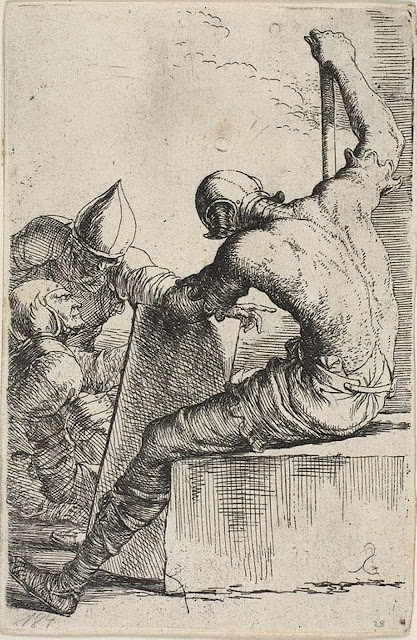
Trip preparation: Thomas Edison said, “Good fortune is what happens when opportunity meets with planning.” The Lewis and Clark expedition was extremely well planned. This should not be surprising when we remember that this was a pet project of President Thomas Jefferson, one of the most organized and visionary men of American history. It is clear from the available records that a great deal of thought went into every aspect of the journey: arms and ammunition; tools; scientific instruments; medical needs; gifts for Natives; a limited supply of trade goods; journal paper; clothing; sovereignty tokens; kegs of flour, pork, and whiskey; a small portable reference library…. When Lewis returned to the national capital in December 1806, President Jefferson asked him what he would do differently if he were to begin the expedition anew. Lewis said he would take more blue beads. Beads: inexpensive, light in weight, easy to transport, prized by Natives, especially if blue, a pigment they had a hard time manufacturing. The only other thing that was missing from the planning was the possibility that an illustrator or artist might join the expedition. When he found himself face to face with the great waterfall of the Missouri, Lewis decided his attempt to capture the moment with his pen was inadequate, even pitiful. He wished “for the pencil of Salvator Rosa or the pen of Thompson, that I might be enabled to give to the enlightened world some just idea of this truly magnifficent and sublimely grand object, which has from the commencement of time been concealed from the view of civilized man.”
Rosa was an Italian landscape painter, James Thomson was one of the most popular Scottish poets of the Era. Beyond that, they had everything they needed.
By the time the expedition reached home in September 1806, the men were destitute of nearly everything, except for gunpowder and lead from which to fashion bullets. In fact, there was enough lead and powder to make the entire journey over again. Lewis knew his frontier volunteers could live out there without boots or bacon, but firearms, gunpowder, and ammunition were essential to their survival. The Jefferson–Lewis team planned and prepared for the great journey masterfully.
Departure: It used to be common to say the Lewis and Clark expedition departed on May 14, 1804, from St. Charles, Missouri. More recently, the departure has been moved back to August 31, 1803, when Lewis pried the expedition’s new 55-foot keelboat from the drunken boat maker’s slip in Pittsburgh and began his descent of the Ohio River. The late Stephen Ambrose, in his semi-heroic book Undaunted Courage, says the Lewis and Clark expedition began on October 15, 1803, when Lewis landed at the Falls of the Ohio and made contact with his partner in discovery, William Clark. “When they shook hands,” Ambrose wrote, “the Lewis and Clark Expedition began.” In 2019, Congress extended the National Lewis and Clark Trail from St. Louis to Pittsburgh. While they were at it, I wish the sponsors of the legislation had extended the trail right up to the top of Jefferson’s “little mountain” (i.e., Monticello) or to Washington, D.C., or to Philadelphia, where Lewis got a short course on Enlightenment science from the savants of the city.
After spending time at the mouth of the Missouri this summer, watching its enormous load of water and silt surge into the Mississippi River, I imagined what those first days of travel in May 1804 must have been like for the enlisted men of the expedition. Excitement, curiosity, and exhilaration to be finally underway after a long winter at training camp. But when they turned their three big boats and 60,000 pounds of freight into the current of the Missouri, some of the men, at least, must have wondered what they had gotten themselves into. The sheer awesome power of the Missouri must have intimidated them all, or all except the seasoned French and mixed-blood watermen hired for the first year of travel. The men’s muscles were not nearly as strong as they would be after a few weeks of travel. There must have been groans, expletives, sharp comments, and some nervous laughter about what they were about to experience.
As the great journey began, Lewis did not say that this was one of the greatest days of his life. He was saving that for the moment when he crossed over into true terra incognita.
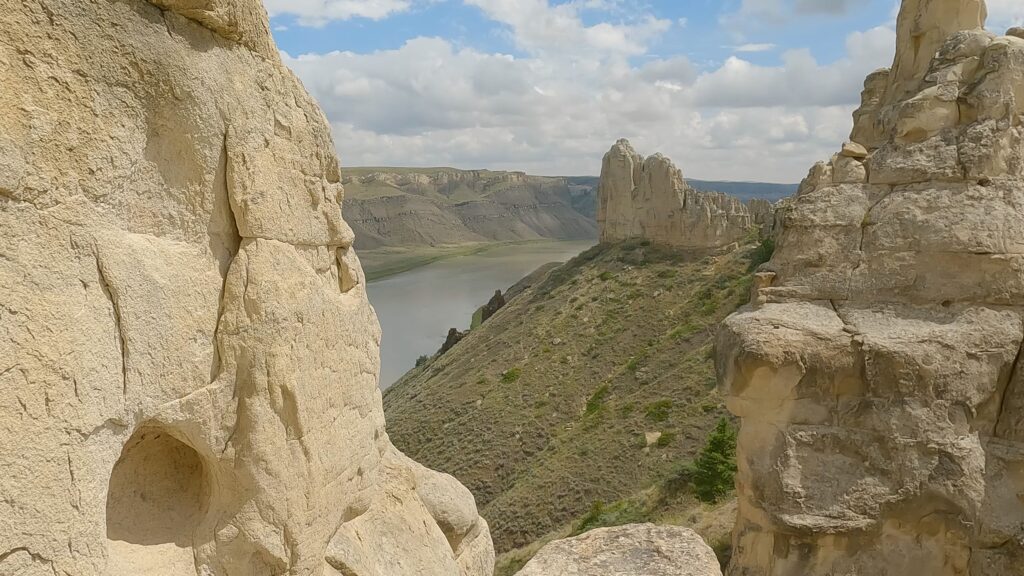
Outward Movement: This is the part of the story best known to the American people. Most books about the expedition devote most of their attention to the period between May 14, 1804, and October 15, 1805, when the expedition finally navigated through the Bitterroot Mountains and reached a bioregion in which they would float downstream. Most histories of the expedition give waning attention to the return journey of 1806; some begin to summarize and push toward a conclusion after the Missouri River portion of the journey.
In the first year of travel, the expedition reached the Mandan and Hidatsa earthlodge villages in North Dakota. In the second year, a smaller party (temps and troublemakers having been sent downriver) reached all the way to the Pacific Ocean. Most of the great incidents of the expedition occurred on the outbound journey, particularly on the eastern side of the continental divide. Indeed, most of the great journal entries from the expedition come from this period.
To summarize: Lewis and Clark made their way from St. Louis to the Pacific with few real difficulties — a tense few days with the Teton Lakota near today’s Pierre, South Dakota; the monthlong 18¼ mile portage around the five great falls; and the ordeal in the Bitterroots. As with most long journeys, the going out was more satisfying than the return. I believe that if Lewis could have snapped his fingers at Fort Clatsop and been transponded back to the White House or Philadelphia, he would have done so at Fort Clatsop.
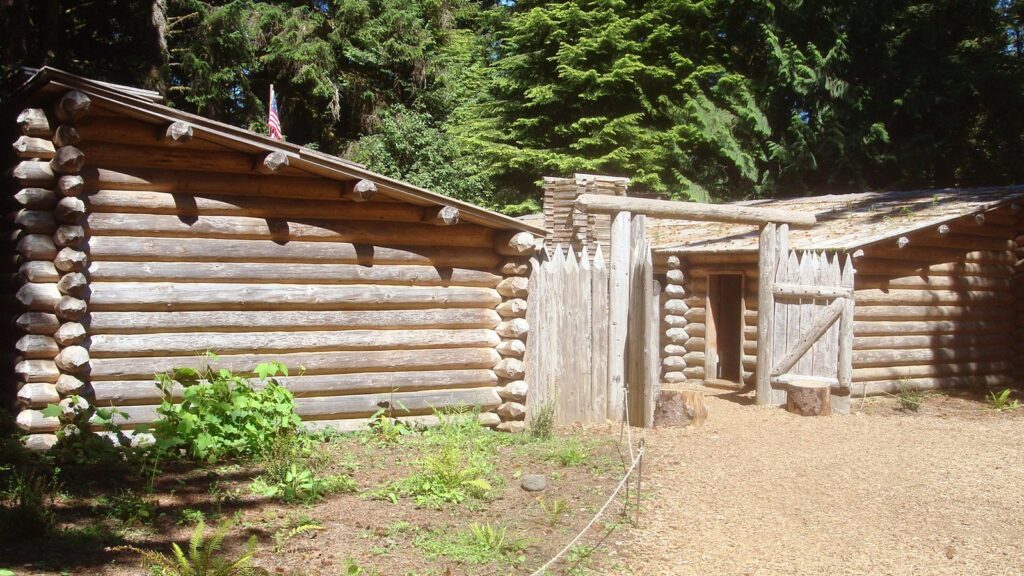
Turnaround: Here is an irony. The men of the Lewis and Clark expedition enjoyed their 1804–05 winter on the sub-Arctic plains of today’s North Dakota more than their 1805–06 winter at Fort Clatsop in the Pacific Northwest Rain Forest out near today’s Astoria, Oregon. The dry, cold, even extreme cold of the Dakotas was preferable to the incessantly soggy and dismal weather at the mouth of the Columbia, where it rains more than 125 inches per year. At Fort Mandan, there was plenty to eat, much of it animal but some of it vegetable, thanks to the Mandan people, who supplied corn and squash from their productive farms in the Missouri River bottomlands. At Fort Clatsop, the expedition fed on lean (often spoiled) elk and an insipid swamp potato called Wapato Root. On Christmas Day 1805, William Clark lamented, “our Diner concisted of pore Elk, So much Spoiled that we eate it thro’ mear necessity, Some Spoiled pounded fish and a fiew roots.” Yum.
The expedition found the Natives in the vicinity of Fort Clatsop frustrating. They charged too much in trade. They showed all the tragic signs of an indigenous people whose contact with white traders had disturbed their ways and means, and debased their health. Some of the women — sought nevertheless by the young men of the expedition — were disfigured by venereal disease. By comparison, the Mandan and even the Hidatsa at Fort Mandan had been hospitable, respectful, and decorous.
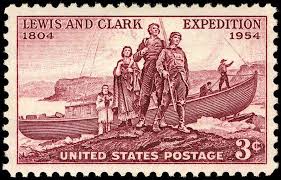
Everyone was eager to get out of the rain, away from the poor elk and Wapato root diet, back into the “fat buffalo plains” of Montana, and on to St. Louis, where they could reconnect with the world they left behind in 1803.
So Lewis and Clark left the Pacific Coast prematurely, on March 23, 1806, just wanting to press upriver where there might be better food and a less inhospitable climate. Because they left their winter encampment too early, they reached the Bitterroot Mountains too soon, when the winter snows were still twenty or more feet deep. The expedition hit that snow wall twice in the spring and early summer of 1806. Winters in the northern Rockies linger. It took most of two months of precious expedition time for the snow to melt enough in the Bitterroots for the men to straggle-wind their way through.
A premature departure. They were lucky this did not have darker implications for the journey home.
Homeward Movement: The return from the mouth of the Columbia was difficult in a variety of ways. The expedition was semi-bankrupt of trade goods or trinkets to use in their relations with Native Americans. The conventional wisdom takes its cues from Lewis’ journal entry of March 16, 1806: “Two handkerchiefs would now contain all the articles of merchandize which we possess.” In fact, as I have learned by reading the return journals with painstaking care, they still had quite a bit to trade — coats, a sword, cloth, pistols, lead, canoes, epaulettes, etc. But they had to be very careful in the spending and distribution of what little they had left to them. At Fort Mandan, the expedition had set up an ironmongery to manufacture items of value to their Native hosts. On the Columbia and Snake rivers in 1806, the captains established a frontier walk-in clinic, where they treated Native Americans for a wide variety of ailments. The captains knew most of their “remedies” were of no value, but they pledged at least to do them no harm.
The way home might have been a relatively relaxed portion of the journey had the party not split up at Travelers’ Rest, on the eastside base of the Bitterroots. Lewis and about half of the men went back to the Great Falls and the Missouri country. Clark took the other half (including Sacagawea, Charbonneau, and their son Pomp) over to the Yellowstone River.
Misfortune dominated Lewis’ return. When the cache pits at the great falls were opened, Lewis discovered that water had ruined a very large and ambitious collection of plant specimens he had been gathering since April 1805. Lewis’ hope that the Marias River had a Canadian source was disappointed. His attempt to get latitude and longitude at the upper reaches of the Marias (Two Medicine Creek) was thwarted by a heavy multi-day cloud cover. His encounter with eight young Blackfeet men up near the eastern portal of Glacier National Park ended with the death of at least one of those young Piegan men, maybe two. A couple of weeks later, Lewis was accidentally shot in the buttocks by one of his men in a botched hunting scene.
Meanwhile, Clark’s journey was almost like a modern Montana float trip. Some of their horses were stolen, but it didn’t make much of a difference. They passed through herds of buffalo in the tens and hundreds of thousands. The Clark party had no time-consuming and potentially dangerous encounters with Natives. They were floating downhill!
The two strands eventually caught up with each other just east of the confluence of the Missouri and the Yellowstone near today’s Williston, North Dakota.
Return: The expedition reached St. Louis on September 23, 1806. A witness at the dock said the men of the expedition looked like characters out of Daniel Defoe’s Robinson Crusoe. That’s a fabulous analogy.
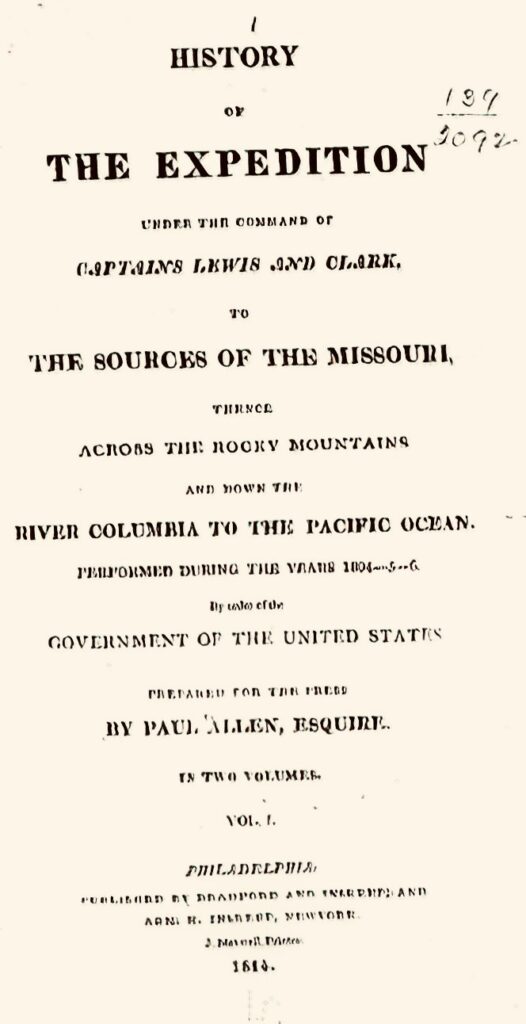
Captain Lewis held up the post so he could dispatch a letter to President Jefferson announcing the expedition’s safe return and providing preliminary observations about the “most direct and practicable water communication across this continent.”
The two captains immediately visited a tailor to obtain some gentlemen’s clothes. The men were paid off. Most of them disappeared into their lives and eventually oblivion. About ten of them continued to seek adventures (or wealth) on the upper Missouri, and a few would meet their death there, while trespassing on Blackfoot ground. All of the expedition’s equipment (from boats on down) was unceremoniously abandoned or sold off, apparently with no sense of regret. (Today, every item they disposed of would be worth vast sums of money. Imagine what a national Lewis and Clark interpretive center could put on display.) What we would regard as sacred relics, they saw as army surplus. As I always say, they did not know we’d care.
The African American enslaved man, York, owned by Clark, apparently asserted himself in St. Louis as someone now deserving more than common slave status. However, Clark scoffed that off with great intensity, a glimpse of the deeply embedded racism passed from one generation to the next in the South. At one point Clark gave York what he called a trouncing.
Congress voted the two captains a very generous compensation package, and the enlisted men and private contractors were well rewarded, both with land and money.
Trip Recollection: I prefer to call this one Re-entry. Lewis was expected to publish a book or books about his journey. In the spring of 1807, he issued the prospectus of the grand publishing project he was undertaking. Three volumes of journals, maps, essays, policy papers, ethnography, Indian vocabularies, and hard science. First volume to appear later this year! From the moment the ink dried on Lewis’ ambitious and somewhat pretentious prospectus, the publishing project was bound to fail. The excellent historian David Nicandri makes the case that the United States did not possess the intellectual infrastructure at the time to make such a project possible. When the English explorer Captain James Cook returned from his voyages, a large team of talented people in London worked the journals and illustrations of the journey into an impressive multivolume report to the Admiralty and to the learned world. In 1807, the U.S. had only the rudiments of that necessary intellectual infrastructure. The American Philosophical Society was not the Royal Society or the Royal Geographic Society.
So, Lewis promised far more than was necessary and (more to the point) far more than he could deliver. This set him up for failure. And he did fail. Even if Lewis had promised only a single volume of his polished and toned-up journal entries, it is not clear that he would have been able to see it through to publication. There was something deeper going on.
Meriwether Lewis found re-entry very difficult. Thanks to his errand in the wilderness, he was now somehow unfitted for a sedentary life. He tried to find a woman to marry him, but could not. He was drinking too much, and at times taking laudanum (opioid) to numb the pain (of living). His public and private finances collapsed. He had a troubled governorship of Upper Louisiana, a truly thankless task for which Lewis was not well suited. He descended into silences that bewildered, annoyed, and then angered those back east who were counting on hearing from him — on important official government matters. Lewis made the unconscionable mistake of not communicating with his most powerful protector, Thomas Jefferson.
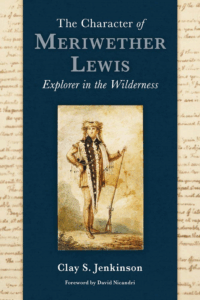
Lewis never found a way to re-integrate into Jefferson’s America. He took his own life on October 11, 1809. I have written extensively about this in a chapter called “Why?” in my book of Lewis’ complexities: The Character of Meriwether Lewis: Explorer in the Wilderness. Why did Lewis have such intense (and finally fatal) re-entry issues? After thinking about Lewis’ decline and death for decades, I am still uncertain of what exactly transpired in the mind of Lewis in those post-expedition years, but the late Barry Lopez (one of the extraordinary writers of our time) provided the most helpful clue to this mystery when we had dinner once in Portland. I asked him, “What is it about Meriwether Lewis?” Just that. He paused and then said, “How far can you go out and still come back?”
Conclusion: Good planning. Good leaders. Good selection of personnel. Good native hosts and guides. Good luck.
I hope you have found this report (based on the Jakle outline) as interesting as I have. It has allowed me to see the expedition with a fresh lens and to note some of the Lewis and Clark issues I have been wrestling with. Moreover, it has allowed me to put structural closure on a year that has been so brimming with stimulations that my brain and heart are a bit numbed out, a little overwhelmed.
Follow Clay and the LTA Airstream as he retraces the famous Lewis & Clark Trail from 1804-1806 across the continent. This 2025 expedition is a central part of LTA’s big initiative to explore the country and take the pulse of America as it approaches its 250th birthday. Be sure to follow Clay’s adventures here and on Facebook — and subscribe to our newsletter.